
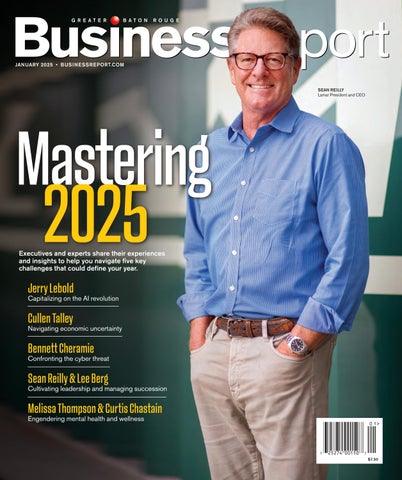
Executives and experts share their experiences and insights to help you navigate five key challenges that could define your year.
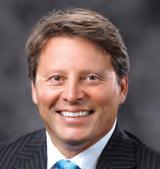
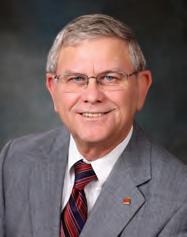
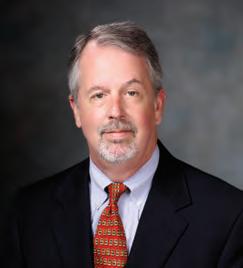
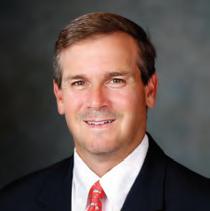
Jerry Lebold
Capitalizing on the AI revolution
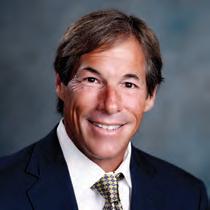
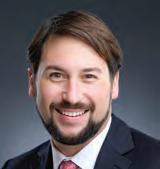
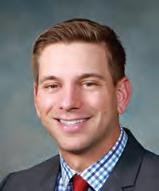
Cullen Talley
Navigating economic uncertainty
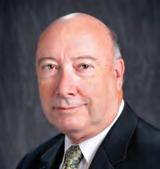
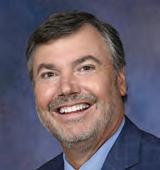
Bennett Cheramie
Confronting the cyber threat
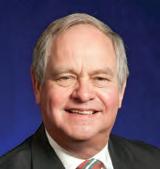
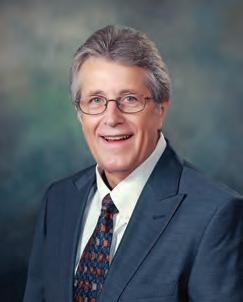
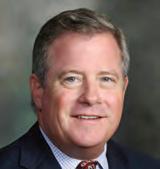
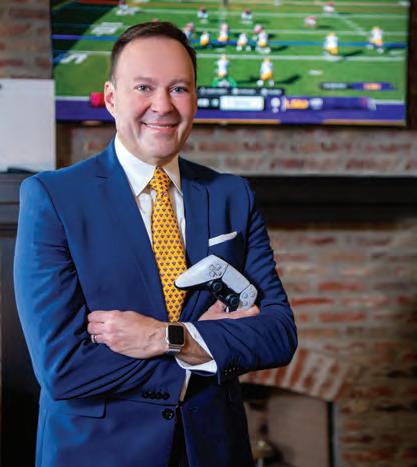
Sean Reilly & Lee Berg
Cultivating leadership and managing succession
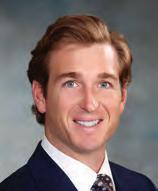
Melissa Thompson & Curtis Chastain
Engendering mental health and wellness





journeys and gave them the mindset to
Pipeline companies are engaged in fierce disputes over prime routes in the race to south Louisiana’s LNG market.




Executives and experts share their experiences and insights to help you navigate five key challenges that could define your
Photography: Don Kadair
Design: Hoa Vu SPECIAL ADVERTISING SECTIONS
Solutions from Cells to Society Pennington Biomedical: World-class scientists shaping the future of global wellness
Page 25
The Roundtable
Connections, solutions, ideas Page 49
2025 Presidents’ Forecasts
Business owners, CEOs and other leaders in the Capital Region share their views on what to expect in the coming year. Page 74


Today, she and her team are using music therapy to heal and comfort.
Their work is improving memory, stroke recovery, motor function and so much more.
With Our Lady of the Lake Health and LSU behind them, imagine the mysteries of the mind they will unlock next.
That’s the impact of champions.
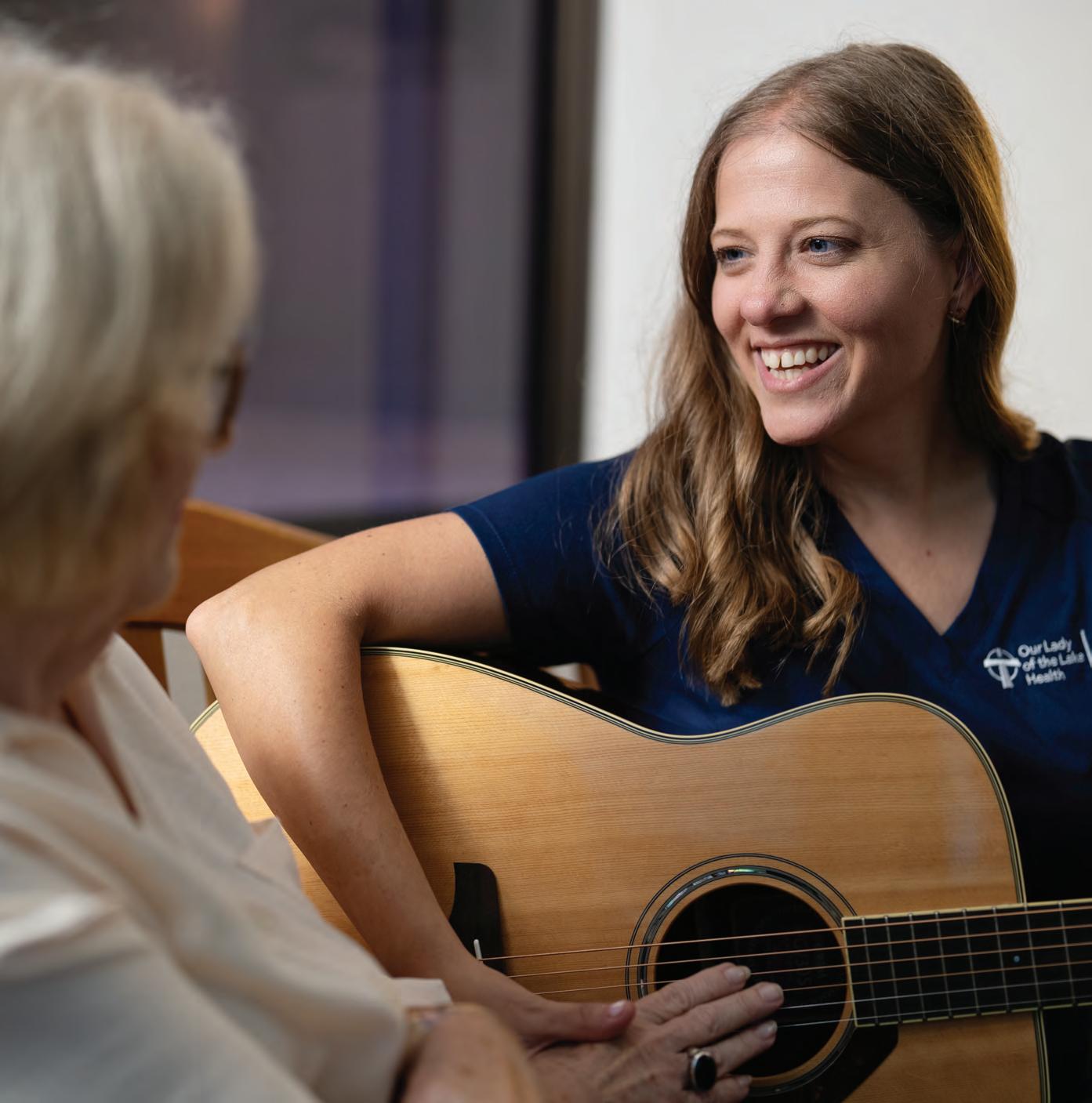
Medical Music Therapist, Our Lady of the Lake Health Adjunct Instructor, LSU
Learn how we are improving the health of Louisiana.
RESILIENCE. It’s the secret sauce that separates the great from the good, the winners from the also-rans. And in today’s dynamic business climate, resilience isn’t a nice-to-have but a fundamental necessity.
Look, challenges are coming at us faster than ever. Whether it’s the threat of a cyberattack that could cripple your operations, the ongoing struggle to find and retain top talent, or the relentless march of AI transforming the way we work, every business owner in the Capital Region will have a full plate in 2025. Add to that the imperative to address employee wellness and scale your business amid economic uncertainty, and it’s no wonder so many of us are losing sleep contemplating our best next move.
But here’s the thing: Challenges aren’t going away. If anything, they’re going to get more complex. And in that environment, resilience isn’t about avoiding difficulties—it’s about leaning into them, facing them head-on and coming out stronger on the other side. And let’s be clear: Resilience isn’t just for the tough times. It’s an everyday discipline, a muscle you’ve got to exercise constantly.
So how do you build resilience in your organization? Start with your people. The best strategies and technologies won’t matter if your team isn’t equipped to weather the storm. Invest in them. Make
wellness a priority—physical, mental and emotional. Equip them with the skills to adapt to change, whether that’s through training, mentorship, or just creating an environment where innovation thrives.
Next, stay laser focused on what matters most: your mission and your customers. Economic uncertainty might force tough decisions, but keeping your team aligned around a shared purpose will help you navigate the turbulence. And finally, don’t go it alone. As leaders, we often feel the weight of the world on our shoulders. But resilience is a team sport. Leverage your networks. Talk to your peers. Learn from others who’ve been through the fire.
The cover story in this issue of Business Report highlights five areas to help us “master 2025,” and it’s a must-read, with meaningful insights from some of the Capital Region’s top CEOs and subject experts. But as you dive into those challenges, remember: The answer isn’t to try to eliminate risk or avoid uncertainty. It’s to embrace resilience, build a team that’s prepared for anything, and lead with confidence—no matter what comes next.

Julio Melara, Publisher
Publisher: Julio Melara
Associate Publisher: Erin Pou
EDITORIAL
Executive Editor: Penny Font
Managing Editor: Allan Schilling
News Editor: Holly Duchmann
Staff Writers: Jordan Arceneaux, Cynthea Corfah, Dillon Lowe
Multimedia Editor/News Producer: Oscar Tickle
Contributing Writers: Sam Barnes, Kelli Bozeman, Emily Hebert, Maggie Heyn Richardson
Contributing Photographers: Don Kadair, Tim Mueller, Collin Richie
ADVERTISING
Assistant Manager/Sales & Marketing Operations: Kynley Lemoine
Senior Multimedia Marketing Consultant & Team Leader: Kelly Lewis
Multimedia Marketing Consultants: Rachel Andrus, Nicole Crochet, Emma Dubuc, Ethan Shipp
Digital Operations Manager: Devyn MacDonald
Partner Success Manager: Matt Wambles
Digital Operations Coordinator: Sydney Deville
Special Projects Coordinator: DJ Burton
Content Strategist: Emily Hebert
STUDIO E
Creative Director: Timothy Coles
Custom Content Editor: Lisa Tramontana
Business Development Manager: Manny Fajardo
Multimedia Marketing Consultant/Custom Publishing: Judith LaDousa
MARKETING
Marketing & Events Assistant: Mallory Romanowski
ADMINISTRATION
Business Manager: Tiffany Durocher
Business Associate: Kirsten Milano
Office Coordinator: Donna Curry
Receptionist: Cathy Varnado Brown
CREATIVE SERVICES
Director of Creative Services: Amy Vandiver
Art Director: Hoa Vu
Senior Graphic Designers: Melinda Gonzalez Galjour, Sidney Rosso
Digital Graphic Designer: Ellie Gray
AUDIENCE DEVELOPMENT
Audience Development Director and Digital Manager: James Hume
Audience Development Coordinator: Ivana Oubre
Audience Development Associate: Catherine Albano
Customer Experience Coordinator: Kathy Thomas
A publication of Melara Enterprises, LLC
Chairman: Julio Melara
Executive Assistant: Brooke Motto
Vice President-Sales: Elizabeth McCollister Hebert
Chief Content Officer: Penny Font
Chief Digital Officer: Erin Pou
Chief Operating Officer: Guy Barone
Circulation/Reprints/Subscriptions/Customer Service
225-928-1700 • email: circulation@businessreport.com
Volume 41 - Number 30




The East Baton Rouge School System students and sta will learn e ective social-emotional coping strategies and trauma-informed approaches in prevention education. I CARE will advocate for safe, drug-free schools while empowering schools and families with resources, tools, and training in evidence-based prevention education.


The Mission of the I CARE Program is to provide prevention education in the areas of alcohol, tobacco, other drugs, and violence, to all students and families within the Baton Rouge schools and community.


The goal of I CARE is to equip Pre-K through 12th grade students and families in participating EBR public and nonpublic schools with the knowledge and skills to make healthy lifestyle choices.

Louisiana’s five deep draft ports on the Lower Mississippi River represent “one of the busiest port complexes in the world.”
In a coordinated effort, these five ports have commissioned an independent firm to develop a market analysis and strategic plan to identify new cargo opportunities and expand international trade.
This historic cooperative undertaking will be led by Martin Associates Economic & Transportation Consultants

under the direction of the World Trade Center New Orleans.
Cargos in the analysis include containerized cargo, break bulk and project cargo, as well as bulk cargo. Interviews with key maritime stakeholders, the market analysis, and logistics cost analysis will help create a cargo development strategy to help the five ports along the Lower Mississippi River to successfully compete regionally and internationally.













Business Report is now accepting nominations for its 2025 Influential Women in Business recognition. The awards annually honor professional women in the Capital Region who have distinguished themselves in business or through government or nonprofit work. The deadline for nominations is 5 p.m. Friday, Feb. 7. Honorees will be profiled in the May 2025 issue of Business Report and will be honored at an event that same month. Get the details at businessreport.com/ events







B1Bank President and CEO Jude Melville delves into how the homegrown bank has managed its strategic expansion into Texas as well as banking and finance trends for 2025 in the January episode of “Strictly Business,” airing Wednesday, Jan. 15, at 11 a.m. Register at strictlybusiness.businessreport.com.
$43.8M
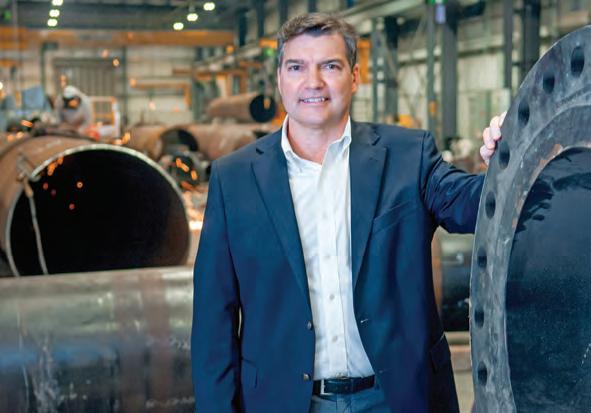
Sale price of the 70-acre swath of land in Livingston Parish that is home to Bernhard Capital Partners-backed Epic Piping. The buyer was global investment firm Fortress Investment Group, whose majority equity owner is one of the sovereign wealth funds of the United Arab Emirates government. Read more about Bernhard Capital Partners’ infrastructure investment strategy on page 59.





$225,000
Total amount of money Louisiana is paying to LSU athletes via NIL deals for an anti-vaping campaign aimed at teens and adults under the age of 21. Louisiana Attorney General Liz Murrill is launching the initiative, funded by a settlement from e-cigarette maker Juul Labs. Another $56,000 will go to athletes at other state universities. Louisiana law doesn’t restrict public funds going to NIL deals.

Calvin Mills, a consultant who has helped lead Nexus Louisiana since the departure of former President and CEO Genevieve Silverman in June 2022, abruptly resigned and withdrew his name from consideration for the permanent CEO role. Nexus Louisiana Executive Director Stephen Loy—a fixture in the organization for more than two decades—departed in September for a position with LSU-led FUEL. Virtual interviews with candidates for the CEO position begin on Jan. 16.

$12.35M
Amount that will be spent to remediate a 19-mile stretch of the Interstate 12 median wall that may have worsened flooding in East Baton Rouge and Livingston parishes during the historic August 2016 flood. The money is derived from the settlement in a class-action lawsuit blaming several prominent Capital Region engineering firms, including ABMB Engineers Inc. (now known as Stantec Consulting Services Inc.), EvansGraves Engineers Inc., Gilchrist Construction Co., James Construction Group, Volkert Inc. and GEC Inc. Get the details at businessreport.com.

$8,000
The cost of a front-row tier one RV parking spot for tailgating at LSU home football games next fall, which includes the contribution to the Tradition Fund. Season ticket holders last month got a reminder that this year marks the second of a two-year price hike for game day parking Fans have until March 7 to renew
Jordan Piazza, who owns The Colonel’s Club restaurant, was incorrectly identified in Business Report‘s Business Lunch in the December 2024 edition. Business Report regrets the error.

AS YOU ARE designing your customer insight system, I’d recommend you check out the work done by Clayton Christensen and his team around his “jobs to be done” theory.
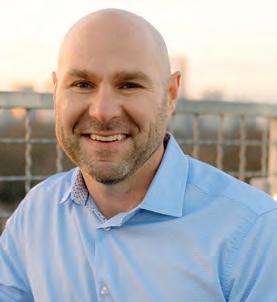
SCOTT WOZNIAK, CEO of Swoz Consulting, consults with leaders from Silicon Valley to family enterprises. He loves to help others apply what he learned from working inside legendary brands, including eight years working on companywide upgrades at Chick-fil-A. His latest book debuted at No. 1 on Amazon in its category. To learn more, visit ScottWozniak.com.
Christensen, a Harvard Business School professor, summarizes his theory by saying, “People don’t simply buy products or services, they hire them to make progress in specific circumstances.” To put it simply, they don’t want your stuff; they want how your stuff makes their lives better.
One of my favorite applications of their work is the milkshake project Clayton and his team did. They were hired by a fastfood company to increase milkshake sales. No, that company was not Chick-fil-A, and Christensen wouldn’t say who it was. I think I know who it was, and if you live in the U.S., you may make the same guess after you hear the story.
In America, the vast majority of milkshake sales happen in the evening. It’s considered an evening dessert, consumed with dinner or enjoyed after dinner as a treat. However, this company wasn’t satisfied with that. It had an asset (milkshake machine) that was largely idle all day. So, in an attempt to increase milkshake sales, it started creating new flavors.
After a lot of testing with custom ers, it identified a few flavors that peo ple loved. The company rolled out the product to all its locations, ran a major national ad campaign, and the custom ers didn’t really care. Sales went up only a little—and most of them were still in the evening.
Realizing it had missed some thing, the company leaders brought in Clayton and his team. They didn’t start with the product; they started by watching the customers. Particularly, they wanted to see the few customers who did buy milkshakes during the morning and afternoon.

“job” they were “hiring” the milkshake to do?
It turned out that most of the customers buying milkshakes in the afternoon were grandparents and parents buying them for their children.
The buyer was not the drinker. This insight changed everything. See, these customers weren’t “hiring” the milkshake to taste good. As surprising as it might sound, they didn’t really care what flavor they got. They were hiring the milkshake to make their kids like them. (And maybe to distract them for a little bit, too.) They had been saying no all day long and wanted the chance to say yes and be the hero.

I confess, I have done this for my kids. There is a Wendy’s on the way home from my kids’ school, and when I was the one to bring them home, they would ask if they could stop and get a Frosty (the name of their milkshake). Sometimes I said yes because I wanted to make them happy—and make them like me. Of course, sometimes I said no. Why? Because I felt bad about pumping sugar down their throats too often. What was the brilliant solution to this customer problem? How did this customer insight help increase sales? Clayton and his team suggested that this restaurant company make a mini-milkshake. I can say yes to my kids while not feeling so bad about the amount of sugar I’m giving them. Flavor isn’t a factor, because tasting good is not the “job” I’m hiring the milkshake to do. The flavor had to be just good enough that my kids like it, and the original flavor was good enough for that.
By the way, sales of mini-milkshakes grew substantially, especially before dinner.
Who were they? What did they do before, during and after the milkshake purchase? Where did it fit into their lives? What was the
What might you learn from observing your customers in action? Do you know what “job” your customers are hiring you to do in their life? Do you know if the person who makes the purchase decision is the same person who will use your service?
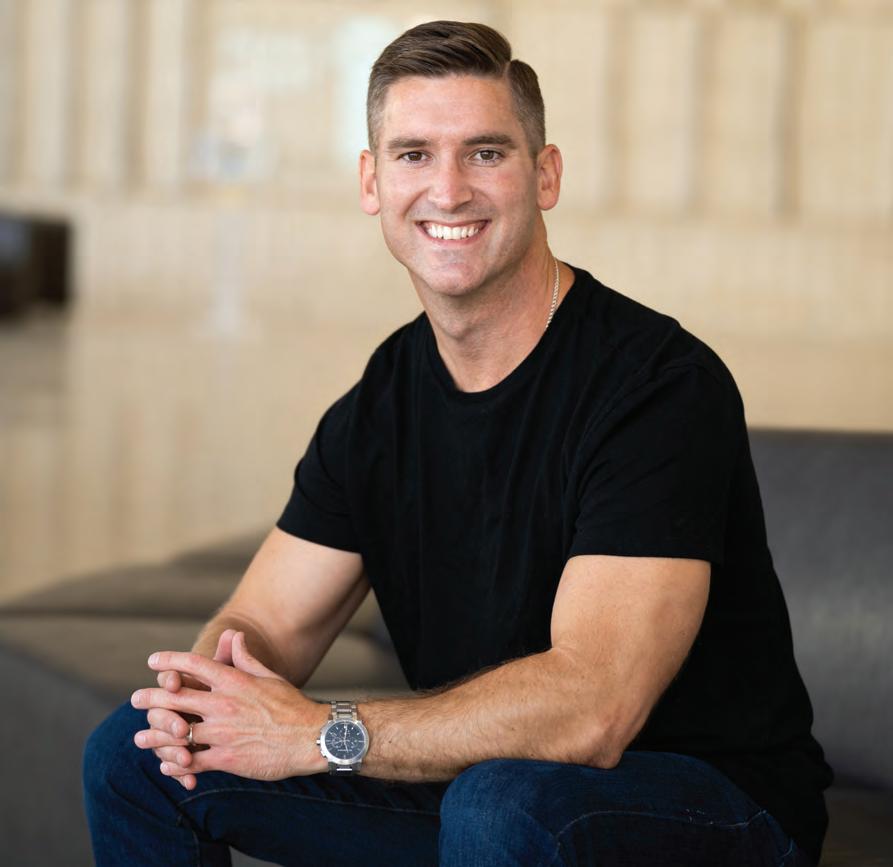
WHETHER YOU WORK from a C-suite office or a cubicle, genuine encouragement from leaders and peers can significantly boost your mood and productivity. Jordan Montgomery—a bestselling author, performance coach, and speaker—will discuss the art of encouragement at the upcoming Elevate Your Leadership and Your Team 2025 event hosted by Baton Rouge Business Report on Feb. 19 at the Healing Place Arena. Get details and tickets at businessreport.com/events/elevate2025. Inspired by his bestselling book, The Art of Encouragement: How to Lead Teams, Spread Love and Serve from the Heart, Montgomery will explain why encouragement is vital for building strong teams and how to implement authentic encouraging practices at your business. Business Report sat down with Montgomery ahead of the event to get an advance peek at some of his insights.
Cynthea Corfah
1
WE’RE ALL EQUIPPED TO DELIVER ENCOURAGEMENT. Encouragement is not a style. It’s a choice. Some people think, ‘Well, I’m not a super encouraging person or that’s not my style to share warm, fuzzy words.’ I see that with a lot of men specifically. I want to challenge that. We all understand the language of encouragement and everyone can speak it. We just have to be intentional.
2
The art of encouragement is really important if you want to retain great people in your culture. If you want to build a great culture, stand out and recruit top talent, you have to have a real thoughtful strategy about how you make people feel known, seen, valued and understood. If you encourage people, you help them to feel appreciated and they’re far more likely to stay at a company.
4 5 3
YOU CAN OVERCOME THE BARRIERS.
Part of it is not slowing down to consider the impact that encouragement has or assuming that people already know how we feel. The cost of under-communicating is more significant than the cost of over-communicating. I’d rather have people be annoyed with how many times I appreciate them than wonder if I care. People sometimes worry that it might be awkward because they’re going out of their way to share what’s on their hearts. I don’t think most companies and people are sharing enough appreciation and encouragement, which means when you do it, it will probably feel abnormal and a little unique and different.
TWO EASY WAYS TO MAKE YOUR TEAM FEEL APPRECIATED AND ENCOURAGED IN THE WORKPLACE.
Encourage the who over the do. We live in a culture that makes a really big deal out of what people do and not a big enough deal about who people are. It’s not that the results aren’t important. Results are very important. As leaders, we have to get really good at encouraging not just the results but the choices, the decisions, the character and the values of the people responsible for leading and impacting.
So many of us are quick to say, “Good job.” Instead, I could say “I appreciate you because X, Y, and Z.” When you’re specific, you’re a lot more believable and it comes across as much more authentic. If you’re being sincere, genuine and authentic, the specifics should come out.
Meet the six honorees who will be recognized at the 2025 Business Awards & Hall of Fame, hosted by Business Report and Junior Achievement in March. These are this year’s winners, as selected by a panel of independent community judges.







Hall of Fame Laureate
Associated Grocers
Hall of Fame Laureate
Jairo Alvarez
Founder, Alvarez Construction (posthumous)
Executive of the Year
Kristin Wall
President & CEO, LWCC
Young Businessperson of the Year
Founder & Owner, Eggie Salon Studio




Company of the Year (fewer than 100 employees)

Company of the Year (100 or more employees)



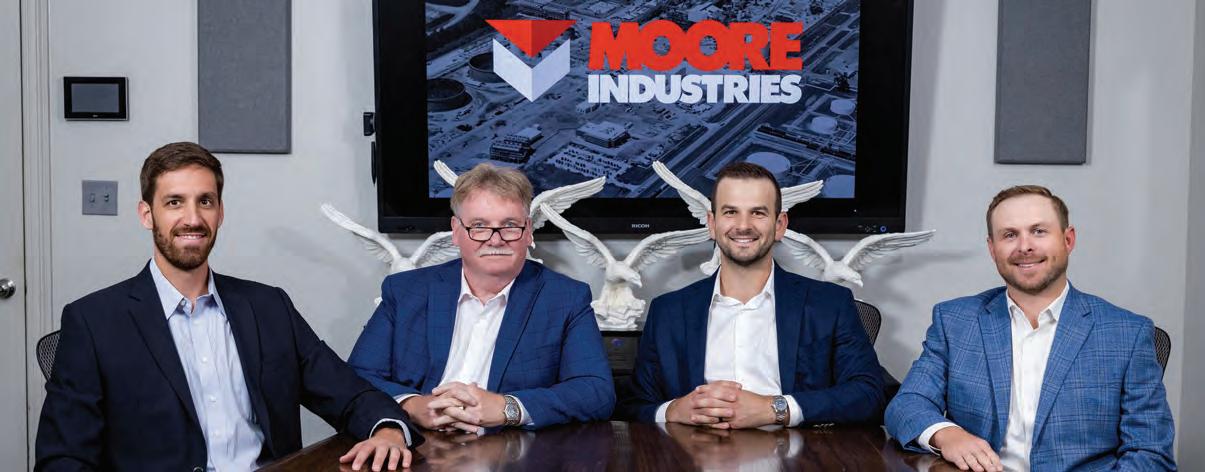
After 40 years in the construction industry, Moore Industries is embarking on an exciting new chapter. With fresh services, enhanced leadership, and an expanded geographic reach, the company is stepping into its next phase, ready to deliver successful outcomes for clients nationwide.
“Our company is operating on a whole new level,” says President Tyler Moore. “We have proven our resiliency by being in business for 40 years but realize we must continuously reassess who we are and strive to get better every day. We have worked hard to put the right people in the right positions and enhance our processes to position ourselves for sustainable growth. We are more ready than ever to embrace that growth.”
At the heart of this transformation is a dynamic leadership team driving the company’s future. Three Vice Presidents—David Miller, Michael Kleinpeter, and Paul Frischhertz—have taken the reins, each bringing unique expertise and vision to steer Moore Industries forward.
Historically, Moore Industries spent the bulk of its career as a building contractor, primarily serving industrial clients in the petrochemical sector. However, in the past decade, the company has embraced its evolution into a diverse general contractor with self-perform capabilities. This shift has opened doors to new opportunities beyond buildings, allowing Moore Industries to become more versatile and adaptable.
“We have the ability to be nimble, and we’re
committed to going above and beyond for our clients,” says Moore. “We deeply understand their needs, identify areas where we can add value, and build upon the relationships we’ve cultivated over the years.”
In this new era, Moore Industries can now serve a broader range of clients and projects by possessing a more comprehensive suite of capabilities with concentrations in industrial buildings, civil, industrial HVAC, and facility maintenance.
“We work closely with our clients to understand their goals for each project, tailoring our services to provide options that best support their objective,” says Kleinpeter. “We recognize that each client and project is unique, and that we must possess the resources and capabilities necessary to adapt to the needs of each client. This versatility allows us to reduce risk and maximize value to our clients. We are not afraid of change.”
A recent project in California serves as a testament to Moore’s willingness and ability to adapt. Despite the challenges that come with entering new territories, Moore did not shy away from the challenge. “Ultimately, our agility and commitment to our client resulted in a successful project and led to a second project awarded in the same location,” says Frischhertz.
With project bid opportunities across the country and licenses in 22 states, Moore Industries is well positioned for growth. But the company’s new chapter also includes growth on the home front. “We have fostered a culture that promotes growth
in all areas of the company … not just in the sense of size but also in the sense of development and improvement. Collectively, as an organization, we are committed to the continuous development of our people and improvement of our processes. The consistent growth in the size of the company that we have experienced is a natural byproduct of that commitment,” says Kleinpeter.
“Career advancement opportunities within Moore Industries are limitless,” says Moore. “As we grow, so do the possibilities for our people. There’s tremendous opportunity which creates an exciting and energetic environment.”
Kleinpeter echoes this sentiment, adding, “Our employees have a direct hand in shaping the future of the company. In doing so, they are generating opportunities for themselves to grow within the organization and achieve their personal goals. The sky’s the limit for them and the company as a whole.”
With its sights set on new horizons, Moore Industries is entering a new era that promises to leave lasting impacts on its employees, clients and communities. “As long as we remain focused on growth and improvement, we will be well positioned to capitalize on opportunities as they arise. We are poised for success and excited about the future,” Moore concludes.
This is the story of Moore Industries—a company rooted in passion, resilience and a vision for the future that knows no boundaries.
CEO/Co-Founder, The Alliance Managing Partner, Trility Partners

CAUSES I’M PASSIONATE ABOUT
First Tuesday, First United Methodist Church Youth and Manners of the Heart
HOBBY OR INTEREST
Youth volunteering and coaching my daughters in softball
ADVICE TO MY YOUNGER SELF
Fail faster, and be honest with yourself when things are not working out.

LAST BOOK THAT MADE AN IMPACT
Buy Back Your Time, by Dan Martell. This book really helps entrepreneurs prioritize tasks that align with their values and goals, leading to more effective time management and results.
HOW I STAY HEALTHY
Morning routine: Workout, scripture, journaling, gratitude and coffee
DESTINATION OF CHOICE
North Carolina

MOST VALUABLE LESSON FROM A DIFFICULT EXPERIENCE
That no matter how bad the situation or how big of a challenge, God is in my corner and I will be OK. It took many years to realize this and I have to be constantly reminded of it.
QUIRKY TALENT
I can say the alphabet backwards.


BEVERAGE OF CHOICE Coffee
FAVORITE LOCAL RESTAURANT MEAL
Brisket street tacos at Superior Grill

FAVORITE MOVIE CHARACTER
Frank “The Tank” Ricard
QUOTE THAT HAS STUCK WITH ME
If you want to go fast, go alone. If you want to go far, go together.

MOST ADVENTUROUS THING I’VE DONE
I was a foreign exchange student in Costa Rica in 2001. It was an amazing experience that still has impact on my worldview today.
MEMORABLE PIECE OF WISDOM I’VE RECEIVED
The greatest wisdom I’ve received came from watching the leaders and coaches in my life that I admired and respected who were humble, transparent, vulnerable and kind. Their words of wisdom were reinforced by the actions of their lives.
SUPERPOWER OF CHOICE
To be able to see into people’s hearts, speak to those troubles and help them find a way forward
MOST UNUSUAL JOB
When I was a kid, I worked at my godfather’s Christmas tree farm in Covington. I loved every minute of it.

2024
This Q&A is extended content from the Capital Region 500, a special edition produced by Business Report that profiles the Capital Region’s most powerful and influential business leaders. Visit try.businessreport.com/capitalregion500/ for more information.

What sets truly great leaders apart? According to Primal Leadership: Unleashing the Power of Emotional Intelligence, byDaniel Goleman, Richard Boyatzis and Annie McKee, it’s not just strategy or intellect—it’s the ability to harness the power of emotions. Their groundbreaking book reveals how emotional intelligence, or EI, is the secret weapon for driving performance, innovation and loyalty in any organization. Explore six distinct leadership styles—visionary, coaching, affiliative, democratic, pacesetting, and commanding—and learn how to apply them effectively. With real-world examples and practical strategies, the book demonstrates how leaders can use self-awareness, empathy and relationship management to inspire their teams, navigate challenges and foster a culture of collaboration and growth. If you’re ready to elevate your leadership and build an organization that thrives on engagement and trust, Primal Leadership is master class in the art of leading with heart and purpose.
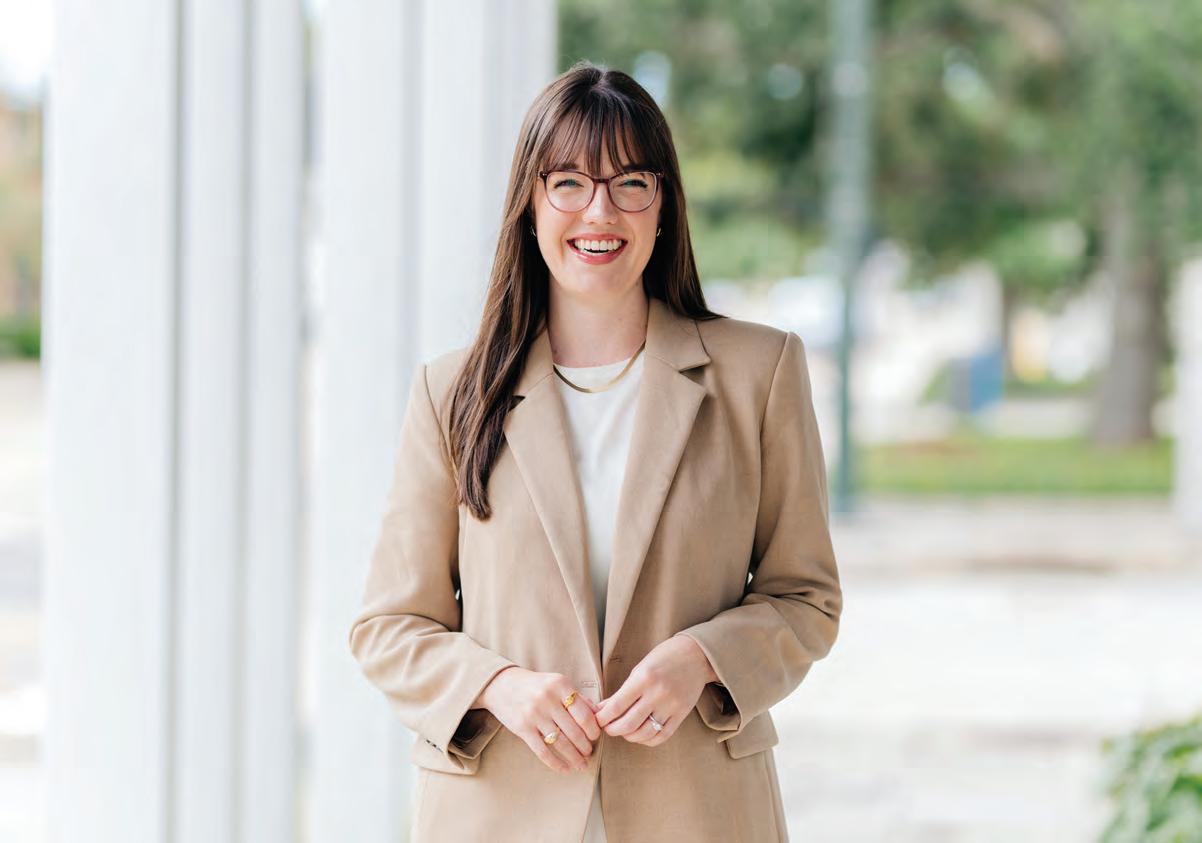
If you’re familiar with the Baton Rouge Area Chamber’s brand, you’re seeing the work of MORGAN ALMEIDA. The senior vice president of marketing oversees the organization’s recognition and familiarity among locals, investors and site selectors. She also spearheads BRAC’s primary talent attraction marketing strategy, overseeing a multichannel marketing campaign tailored to different audiences. BRAC’s annual suite of events is also in her purview. In the community, Almeida was a founder and organizer of TEDxBatonRouge and a past president of Forum 225.
“‘Be bold.’ It’s a phrase my mom has long used to encourage me to leave my hesitations behind, and instead take action. It has never failed me.”

“Employees are so much more important than anything else, because ultimately, if you treat your employees well, everything else falls into place. When a potential customer comes through your door, and they see everybody going out of their way, it makes that customer want to work with you.”
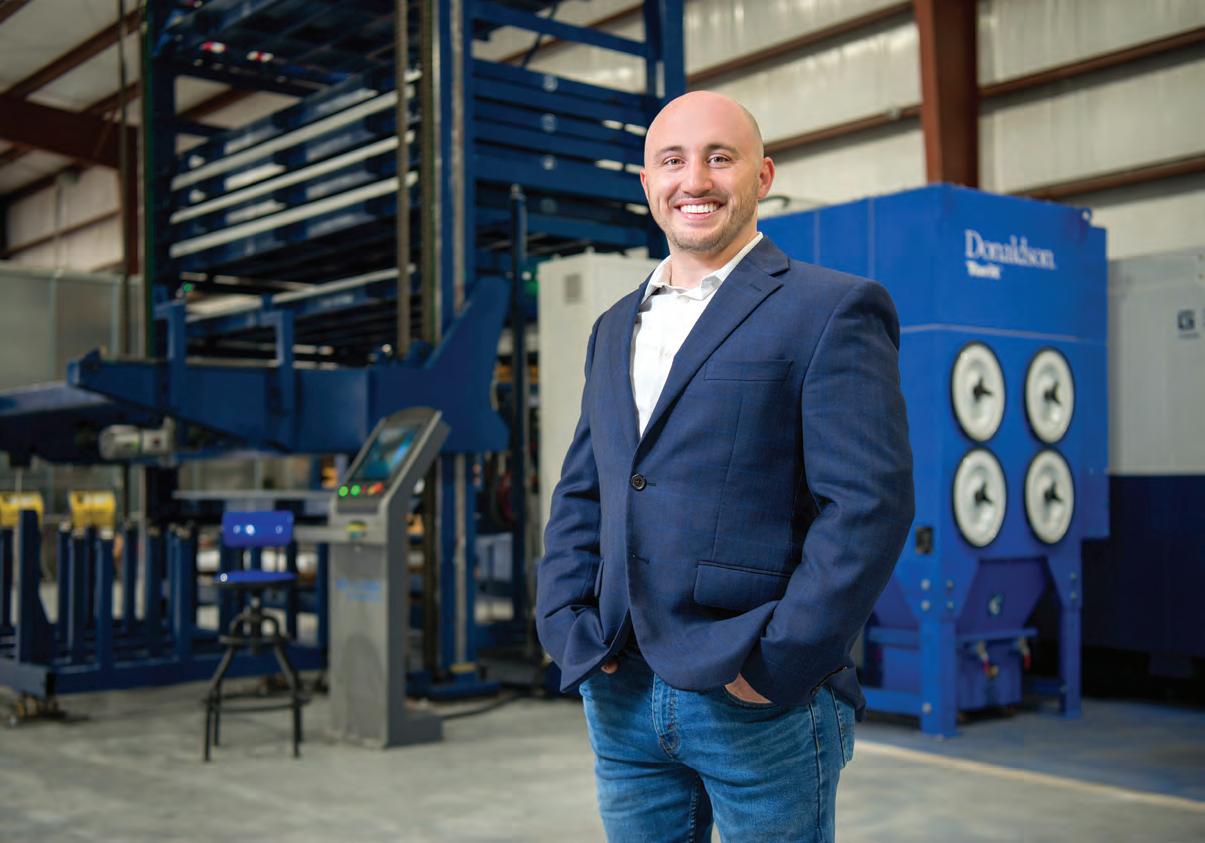
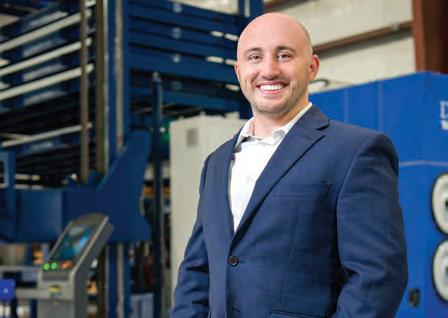
FROM ITS WALKER location, recently launched Metal Fab Guys turns out custom metal fabrication using best-in-class laser technology.
Co-founder Richard Stewart says the homegrown venture differentiates itself from regional competitors with highly precise equipment that can cut lines as thin as human hair—a $2.5 million investment.
The company is on par with about 10 other manufacturers nationwide, Stewart says.
The seed for Metal Fab Guys was planted back in 2020 when Stewart led product development for the Baton Rouge-based outdoor cooking equipment company BBQGuys. Solely dependent on sheet metal from China to produce its catalog of products, the company’s production screeched to a halt after widespread supply chain delays.
“There wasn’t anywhere to get products made in America that wasn’t already at max capacity,” recalls Stewart, 32. “It was just this huge issue.”
BBQGuys was sold shortly after the pandemic, and Stewart later left to pursue a new idea. He teamed up with his mentor, BBQGuys founder Mike Hackley, to address the void in domestic sheet metal production. In late 2023, the two formed Metal Fab Guys.
Original equipment manufacturers in need of high-
volume custom sheet metal are the target market.
Stewart says the time-consuming end of production is in the design, but once that’s done, Metal Fab Guys’ equipment can punch out products fast.
“We want the repetitious work,” he says. “Instead of chasing every dollar for every custom job, we want to be efficient and do less drawing and more largescale cutting.”
Stewart says one of his top priorities has been to create a positive workplace culture that values attention to detail. That includes outdoor landscaping.
“We like to call out the flowers in the garden and say, ‘How many fab shops or manufacturers do you see that pay attention to their garden?’ That’s part of the sales pitch.”
Showing employees how much they’re valued is also a guiding tenet. Meals are routinely brought in to keep staff fed while working. Most importantly, 1% of a job’s profits are shared with team members, provided they hit productivity targets.
“I take employee sentiment very seriously,” Stewart says. “They’re practically my family. We spend a lot of time together at work, and it only makes sense they like what they do.”
—Maggie
Heyn Richardson

Jones Walker LLP is committed to helping clients address today’s challenges, maximize opportunities, and set the stage for future success. We practice in key industries — from energy, real estate, and tax and estates, to banking and finance, intellectual property, and other rapidly changing, technology-driven industries.
Our attorneys practice law at the highest levels of creativity and efficiency, with an emphasis on delivering the best possible legal representation no matter the market condition or specific situation. It’s no wonder that BTI Consulting has repeatedly recognized Jones Walker as a member of its Client Service 30 list.
Brandon K. Black, Office Head
bblack@joneswalker.com
225.248.2000
Suite 800
445 North Boulevard
Baton Rouge, LA 70802
Attorney Advertising. No representation is made that the quality of legal services to be performed is greater than the quality of legal services performed by other attorneys.
SURVEY SAYS
Ever wonder what CEOs and entrepreneurs were doing before they climbed the corporate ladder? From head trashman or termite scooper to actress Julia Roberts’ personal assistant, the path to the top can be as unpredictable as it is inspiring. We asked some of Baton Rouge’s top executives to reveal the quirkiest jobs that shaped their careers.


“Head trashman at Southdowns Shopping Center for Steve Carville. I cleaned the parking lot in the early mornings. Or at least I was supposed to be there every morning, but college life had other plans. This was the first time I got fired from a job.”
STEPHEN
HIGHTOWER, executive, University Club


“Julia Roberts’ personal assistant.”
BRUMBY BROUSSARD, founder/ owner, BLDG 5 Market | Kitchen | Patio & BLDG 5 Lemonade

“Working for the Gap in the mid-’90s at Cortana Mall while I was a student at LSU. You couldn’t tell me that I wasn’t styling with my argyle socks, classic Gap button-down shirt and denim jeans.”


“I had the fine pleasure of being a puppet maker for an independent film in college. To this day, it was one of the most satisfying paychecks I’ve ever earned.”
ADRIAN
OWEN
JONES
, partner, Success Labs



ERIN MONROE, market vice president, Cox Communications
“While in college, I worked in an oil refinery as a painter. The strenuous nature of the work convinced me to focus more on college and take that opportunity seriously.”
TOMMY LEJEUNE, managing partner, Faulk & Winkler



“Making personal appearances as Ronald McDonald while working at McDonald’s in college.”
JERRY JOLLY, managing partner, KPMG
“Working at Popeyes while in college at the University of South Alabama.”
WILL CAMPBELL, director, b1 Foundation


“My college roommate and I heard about a one-week job over winter break to earn $2,000 with Terminix. That was equal to $1 million to us back then! Once we arrived on-site, we learned we had to excavate under a house with a shovel and a sled to remove the dirt from a 12-inch gap between the house and the ground due to termite invasion. It took us 14 hours per day for five days working nonstop.”
SCOTT MCCALLISTER, regional vice president, Coca-Cola Bottling Company United


“Plucking a chicken for dinner. Grandma would clean it and fry it. My job was to kill it and pluck it. I was 5 to 6 years old.”
DONNA SAURAGE, sole manager, Community Coffee


“I worked at a tire recycling place for a summer ‘throwing tires.’”


PARKER KILGORE, partner, Jones Walker





Danielle Brown
Global Head of Influencer Marketing at Google | YouTube
The leadership strategies I value most are a blend of conviction, empathy and self-accountability, which together create an environment for positive change and growth. Conviction of unwavering belief in vision provides a clear direction and inspires others to act. Empathy within a team fosters strong relationships and inclusivity, crucial for collaboration and navigating change and ambiguity. And lastly, self-accountability ensures leaders hold themselves to the same standards they expect of others. By embodying these principles, leaders can empower others, build high functioning teams and drive meaningful change and impact.

Vice President | G.E.C. Inc.
At a leadership institute I attended, one session featured an icebreaker with the statement, “The most successful leaders spend more time with their employees rather than doing work.” We were asked to choose between “true” or “false,” but I was firmly convinced that the correct answer was “it depends.” My team had to give a majority vote, and I was the lone soldier. The instructor playfully targeted me, repeatedly questioning my answer with a mix of humor and challenge. By the end of the session, it turned out that my perspective was indeed correct—it depends. This experience underscored the importance of flexibility in leadership. The ability to adapt to different work environments, personalities and the evolving needs of your team is essential. It’s also crucial to balance the need to spend time with employees versus focusing on tasks, and knowing this can vary based on context, staff experience and current needs. Being responsive to these dynamics ensures you address the unique demands of your workforce and foster a more effective and supportive leadership approach.
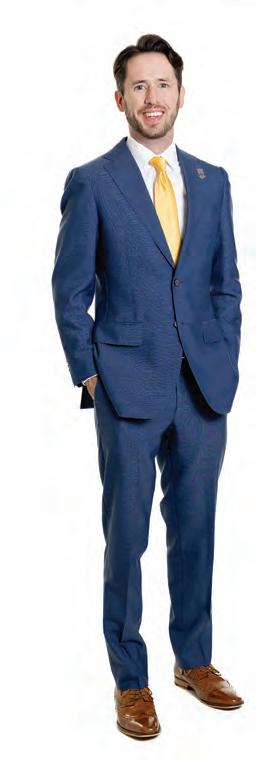
Senior Vice President, Chief Operating Officer |
Our Lady of the Lake Health
Be driven by data, not feelings or anecdotes. It is easy to get caught up in personal feelings or anecdotal experiences provided by various sources. If you instead rely on the objective data, you will ensure that the foundation for your decisionmaking is sound.










World-class scientists shaping the future of global wellness

Over the past 35 years, researchers have never lost sight of their mission: to discover the triggers of chronic diseases in order to improve human health across the lifespan.
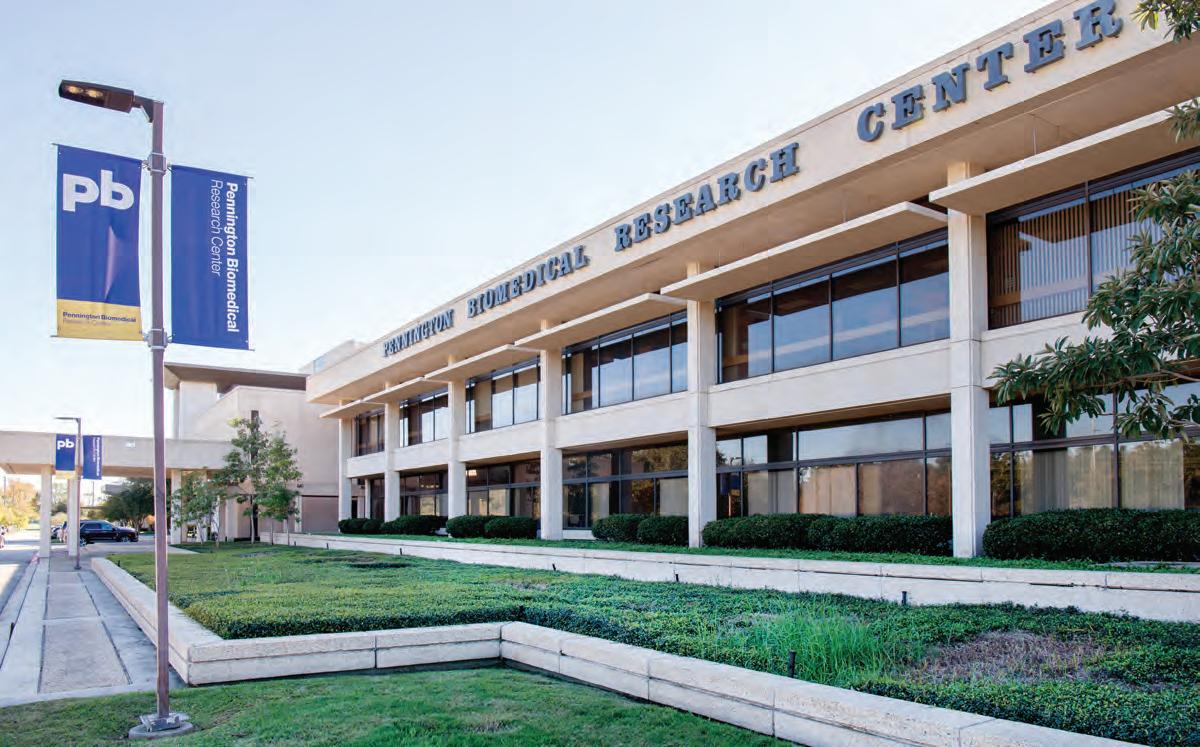
WHEN “DOC” PENNINGTON funded the creation of the Pennington Biomedical Research Center in the 1980s, he had one clear goal: become the biggest and best nutrition research center in the country. Since its inception, the center has attracted the world’s brightest minds and fostered an environment where they can explore the complexities of
human health and the future of medicine. Pennington Biomedical’s researchers have made groundbreaking discoveries in metabolic health, obesity, and a wide range of chronic diseases. Faculty include specialists in neuroscience, stem cell biology, skeletal muscle biology, statistical genetics, behavior modification, eating disorders and other areas. They have helped revolutionize
the understanding of how metabolism affects disease, driving the development of prevention strategies and real-world treatments. Through clinical, translational and community-engaged research, Pennington Biomedical’s scientists are delivering solutions from cells to society, working beyond the walls of the center to take research out of the laboratory and into a variety of settings,
44
including communities, schools, medical clinics and the military. From discovering new insights into obesity to contributing to global health strategies, Pennington Biomedical remains at the forefront of scientific innovation.
At Pennington Biomedical, research is not just about understanding health today—it’s about shaping the future of global wellness.
$215M total value of current grant portfolio

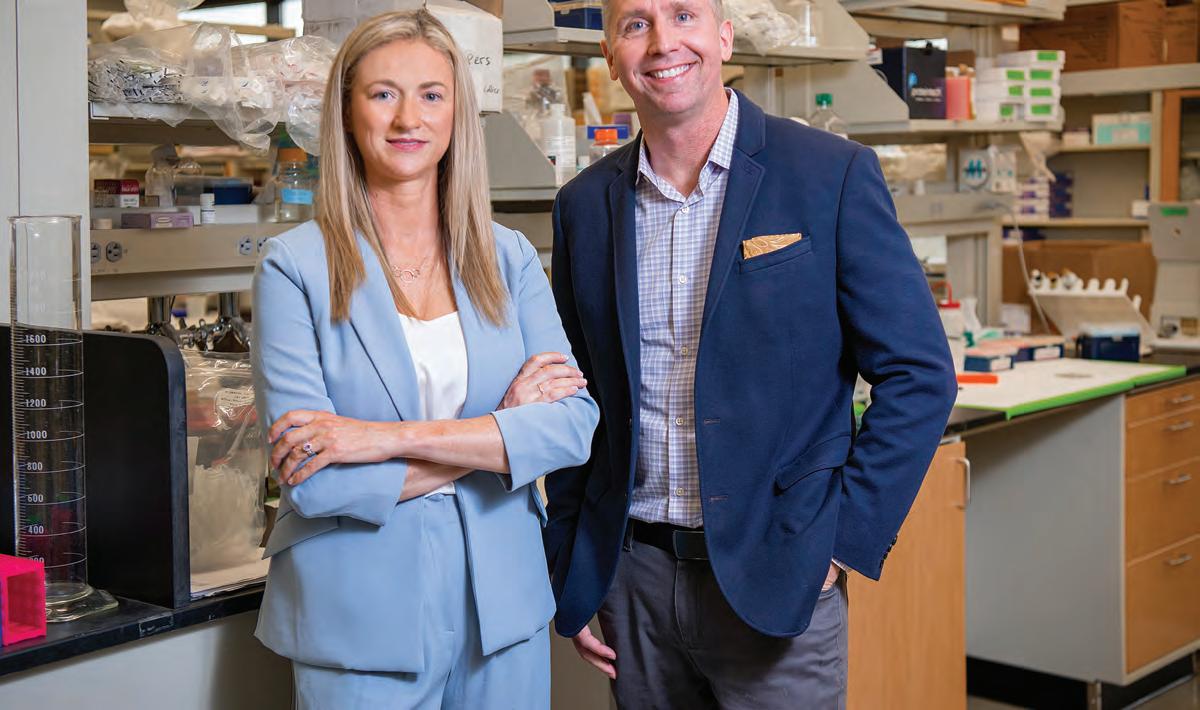
“Each individual experiment could be thought of as a puzzle piece for a 10,000-piece jigsaw puzzle.”
—Associate Professor Jason Collier, Ph.D.
“Pennington Biomedical is a truly unique institution because we can take a research question and study that concept from cells to society.”
—Assistant Professor Susan Burke, Ph.D.
EACH DAY WHEN Jason Collier arrives at his office, he sees a poster of a child with hundreds of needles across their arms and legs. The image represents how many insulin shots that child would need over a several-month period to control their blood glucose. “That’s a very big motivating factor to solve the problems that are in front of us,” he says.
Jason and his wife, Susan Burke, are both researchers at Pennington Biomedical Research Center, where they share a unique partnership as a married couple and researchers of diabetes. Their individual expertise spans critical areas of diabetes research. Together, they embody the power of collaborative science in tackling complex health challenges.
As director of the Immunogenetics Lab, Susan explores the mechanisms through which beta
cells—cells in the pancreas that produce insulin—help regulate blood glucose levels. “Every groundbreaking discovery that we have in medicine, it’s important to remember that it all started in the lab,” she says.
Jason, director of the Islet Biology Lab, studies how the immune system targets beta cells, a key factor in the development of type 1 diabetes. “We try to understand how the body’s immune system attacks that cell and limits its function and reduces its total number
that leads to this type of diabetes,” he says.
Both emphasize the collaborative environment at Pennington Biomedical, vital for advancing both basic science and clinical research. “Pennington Biomedical is a truly unique institution, because we can take a research question and study that concept from cells to society,” says Susan.
A core principle that drives the couple’s work is the celebration of small milestones in research.
“Each individual experiment
Researchers at PBRC have contributed to and tested nearly every weight loss and diabetes medication on the market today.
could be thought of like a piece for a 10,000-piece jigsaw puzzle,” says Jason. “Eventually, when the picture comes into focus, that’s something that potentially could be targeted as a therapy to help treat a disease.”
Susan and Jason’s partnership extends beyond their professional roles. “I think when you have two scientists who are married to each other, it’s hard to not talk about science outside of the lab,” says Susan. “It’s quite common for us to just bring our work home.”
Together, they not only push the boundaries of diabetes research but also embody the spirit of mentorship and collaboration that defines Pennington Biomedical. Their commitment to science and training of the next generation makes them a powerful force in the ongoing battle against diabetes.
DR. STEVEN HEYMSFIELD, a professor at Pennington Biomedical Research Center, has had a distinguished career in obesity research and drug development. He has played a pivotal role in advancing treatments that target one of the most pressing public health challenges of our time. With a background that includes significant work at a pharmaceutical company developing obesity drugs, the trajectory of Dr. Heymsfield’s research experience ultimately led him to Pennington Biomedical, where he continues his extensive research.
As Director of the Metabolism & Body Composition Laboratory, one of Dr. Heymsfield’s key contributions is his involvement in the discovery and development of GLP-1 receptor agonists, a class of drugs that have become a major breakthrough in obesity treatment. The origins of GLP-1 drugs trace back to a fascinating source—a compound found in the saliva of the Gila monster, a venomous lizard native to the American Southwest. This compound, known as exenatide, mimics the effects of GLP-1, a hormone that plays a critical role in appetite suppression, insulin secretion and glucose metabolism.
“The application of these drugs in millions of people who are overweight and obese and leading them to lose weight is a remarkable observation,” he says. “I’ve worked in the field for many years, and this is the first time we’ve seen a drug that’s not only very effective, but is safe even in children and adolescents with severe obesity.”
At Pennington Biomedical, Dr. Heymsfield emphasizes the importance of long-term, rigorous research in developing safe and effective treatments.
He notes that it can take 10

“We’re
seeing many new applications of these weight loss drugs, so their full impact is not completely recognized yet, but they’re going to have a major impact on public health.”
—Pennington Biomedical Professor Steven Heymsfield, M.D.
79 patents issued

A class of drugs that mimic a hormone in the body to help control blood glucose levels and insulin. They are used to treat type 2 diabetes and weight loss, and some are also approved for heart disease. Trade names include Ozempic, Wegovy, Victoza, Mounjaro and Trulicity, among others. The first GLP- 1 medication (Exenatide) was approved in 2005 by the U.S. Food & Drug Administration, so GLP-1 research has been ongoing for over 20 years.
7,879 total publications
402,818 scientific literature citations
Pennington Biomedical is the first in the nation to introduce a collaborative, centralized approach to weight loss with obesity medicine, lifestyle interventions, and surgery under one roof with the Metamor Institute.

or more years to develop a new drug—and often drugs fail. Phase 3 clinical trials, which test new treatments in larger groups of people, are particularly crucial in ensuring that a drug works as intended and has minimal side effects.
The impact of GLP-1 drugs on public health has already been profound. With the obesity epidemic contributing to rising rates of diabetes, heart disease and other chronic conditions, GLP-1 therapies represent a potential
turning point in the fight against these diseases. Dr. Heymsfield is especially hopeful that these drugs can help prevent type 2 diabetes, offering a proactive approach to metabolic health.
“GLP-1s will have a major impact on public health over the years to come,” he says. “They can improve weight loss and health and reduce mortality. We’re excited about the many new applications of these drugs.”
Kytara Gaudin Christophe and her daughter, Chloe, share their experiences as Pennington Biomedical trial participants.
Q: Why did you choose to become a participant at Pennington Biomedical?
A: (Kytara) You get to learn so many different things about yourself and your health based on what study you participate in. You get labs and MRIs and many things that insurance might not cover. Most of all, you help the experts gain important knowledge about health and medicine.
Q: How did you first hear about a clinical trial opportunity at Pennington?
A: (Kytara) It was right before the pandemic that I learned about an obesity study, and I was excited to be a part of that. The study focused on semaglutide … some participants got a placebo and some got the drug … but no one knows which they’re receiving because it’s a double blind study. I actually lost weight during the trial, but I was on the placebo, so that told me that I was able to lose weight on my own.
A: (Chloe) Well, my mom encouraged me … at first I was apprehensive, but I researched the studies and found a lot that interested me. Now I’m very comfortable participating.
Q: What is most rewarding about being in the studies?
A: (Kytara) It’s personal for me. In that first study, I learned about the effects of my lifestyle habits … for instance, what I was eating too much of or not enough of. But beyond that, I liked the idea that I might have a part in changing things for the better. Maybe in the future, we might not have an

“In a small way, I can make a global impact and contribute to better health for everyone in the future. It’s an amazing opportunity.”
—Kytara Gaudin Christophe
obese society as we do now. And that would be partly because of the findings from the Pennington Biomedical trials. That first study was in 2020 and now, semaglutide medications are everywhere. It’s cool to think, ‘I was part of that research.’
Q: Describe the process.
A: (Kytara) Pennington Biomedical is a world-renowned research center, but it’s really just like going to your own family medical clinic or your own hometown health unit. You are not just another number, you are a person. The more often you participate, the more you’re recognized and people remember you. Your identity is private, and if you ever want to
stop or if you’re uncomfortable with something, you don’t have to continue. It’s completely up to you.
A: (Chloe) Science can be intimidating, but it’s not like that at Pennington Biomedical. It’s a great environment to be in. You get all of your information upfront, and the staff and nurses are very transparent. They prioritize your comfort and describe everything they’re doing—from blood work to EKGs to cognitive tests, they communicate the studies in detail.
Q: What would you tell a friend who might want to sign up for a study?
A: (Chloe) Go for it. Do it to contribute to the future of medicine and to help yourself and others.
A: (Kytara) Look at the website, see what studies are available, what interests you, and sign up. It’s an amazing opportunity to contribute to science. That’s why I keep coming back. To discover information that can make us healthier and then share it nationwide or even worldwide … that’s exciting and it motivates me. In a small way, I can make a global impact and contribute to better health for everyone in the future.
65,874 people have been screened to participate in a clinical trial
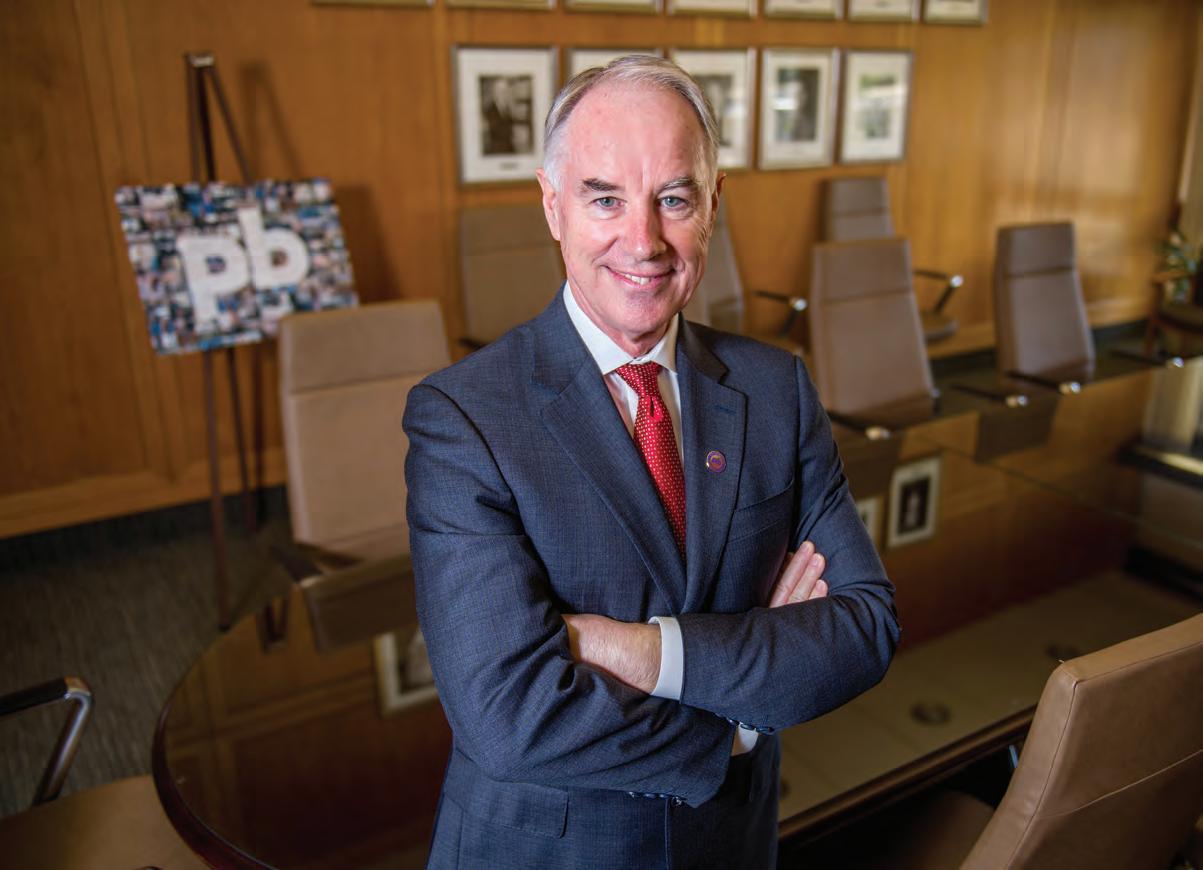
“The reach and relevance of our work are a testament to the dedication of our scientists, clinicians, and support teams, who are united by a shared commitment to improving human health.”
—John Kirwan, Ph.D., Executive Director
AT THE PENNINGTON
Biomedical Research Center, our work extends beyond the walls of our labs and the bounds of the Baton Rouge community—it reaches across the globe, improving lives and redefining what is possible in health and wellness. As Executive Director, I have the immense privilege of witnessing the life-changing impact of our work every day, and it fills me with pride and gratitude to be part of such an extraordinary institution.
Our Center was founded with a
bold vision: to combat the rising tide of obesity and chronic disease through innovative research and groundbreaking science. Today, that vision is a reality. From landmark studies on diabetes prevention to pioneering advances in the understanding of metabolism, Pennington Biomedical is leading the charge in tackling the most pressing health challenges of our time.
This year alone, we’ve launched innovative clinical trials, expanded our global collaborations to address
health disparities, and continued to develop tools that help people live longer, healthier lives. The reach and relevance of our work are a testament to the dedication of our scientists, clinicians, and support teams, who are united by a shared commitment to improving human health.
While we celebrate these successes, our work is far from finished. Chronic illnesses like obesity, diabetes, and heart disease continue to rise globally, but Pennington Biomedical Research
Center is uniquely equipped to tackle these challenges.
As I reflect on the progress we’ve made, I’m filled with anticipation for what lies ahead. The future of health science is bright, and Pennington Biomedical is leading the way.
John Kirwan, Ph.D.
Executive Director
Pennington Biomedical Research Center

Business Report’s Selling Academy will SHARPEN your sales skillset, RE-ENERGIZE you and most importantly UNLOCK your confidence in new ways to achieve your selling goals.


Executives and experts share their experiences and insights to help you navigate five key challenges that could define your year.
Capitalizing on the AI revolution
Cullen Talley
Navigating economic uncertainty
Bennett Cheramie
Confronting the cyber threat
Sean Reilly & Lee Berg
Cultivating leadership and managing succession
Melissa Thompson & Curtis Chastain
Engendering mental health and wellness
CYBER THREATS. Growth and scaling in a time of economic uncertainty. The AI revolution. Talent management and succession. Engendering mental health and wellness.
Any one of these business challenges is enough to give a CEO a 365-day case of insomnia.
But in 2025, all five are poised to be at the top of the agenda for executives in the Capital Region and beyond.
To help you navigate them, we’ve gathered insights from seasoned leaders who have faced these pressures firsthand—as well as frontline consultants—to share their proven strategies and best practices.
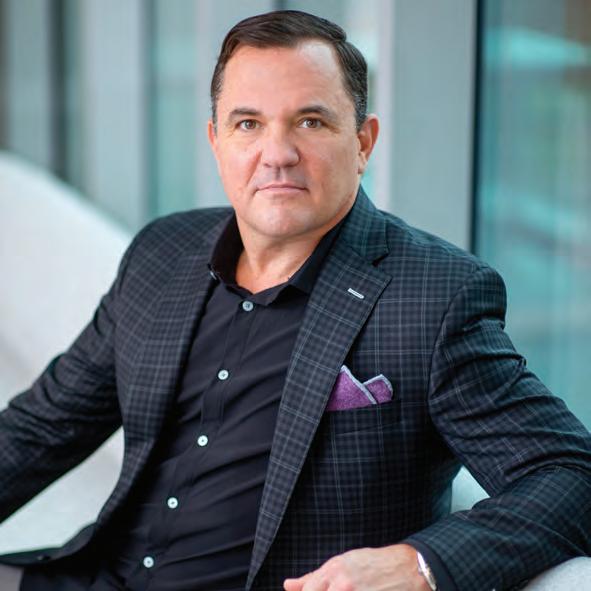
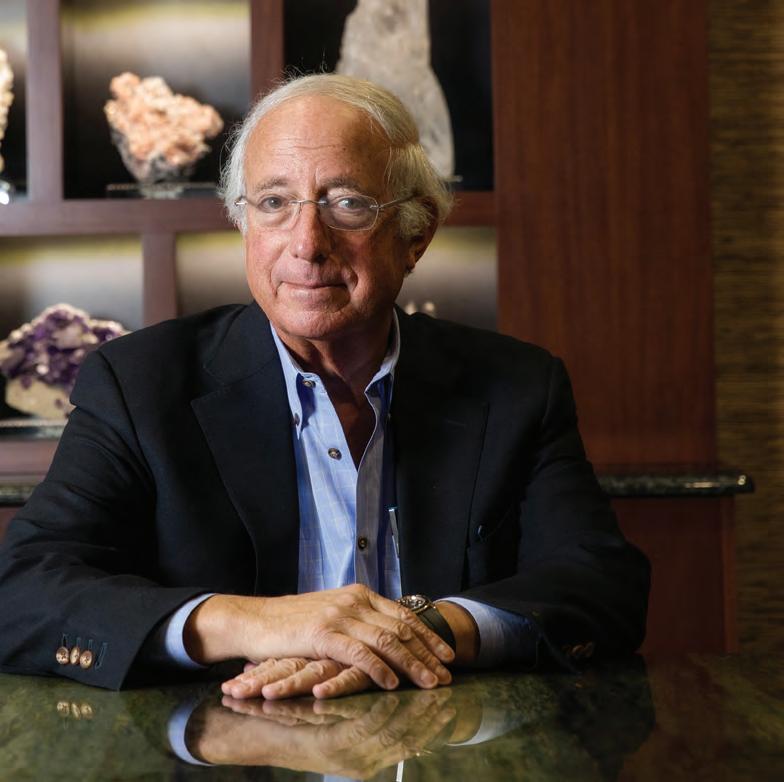
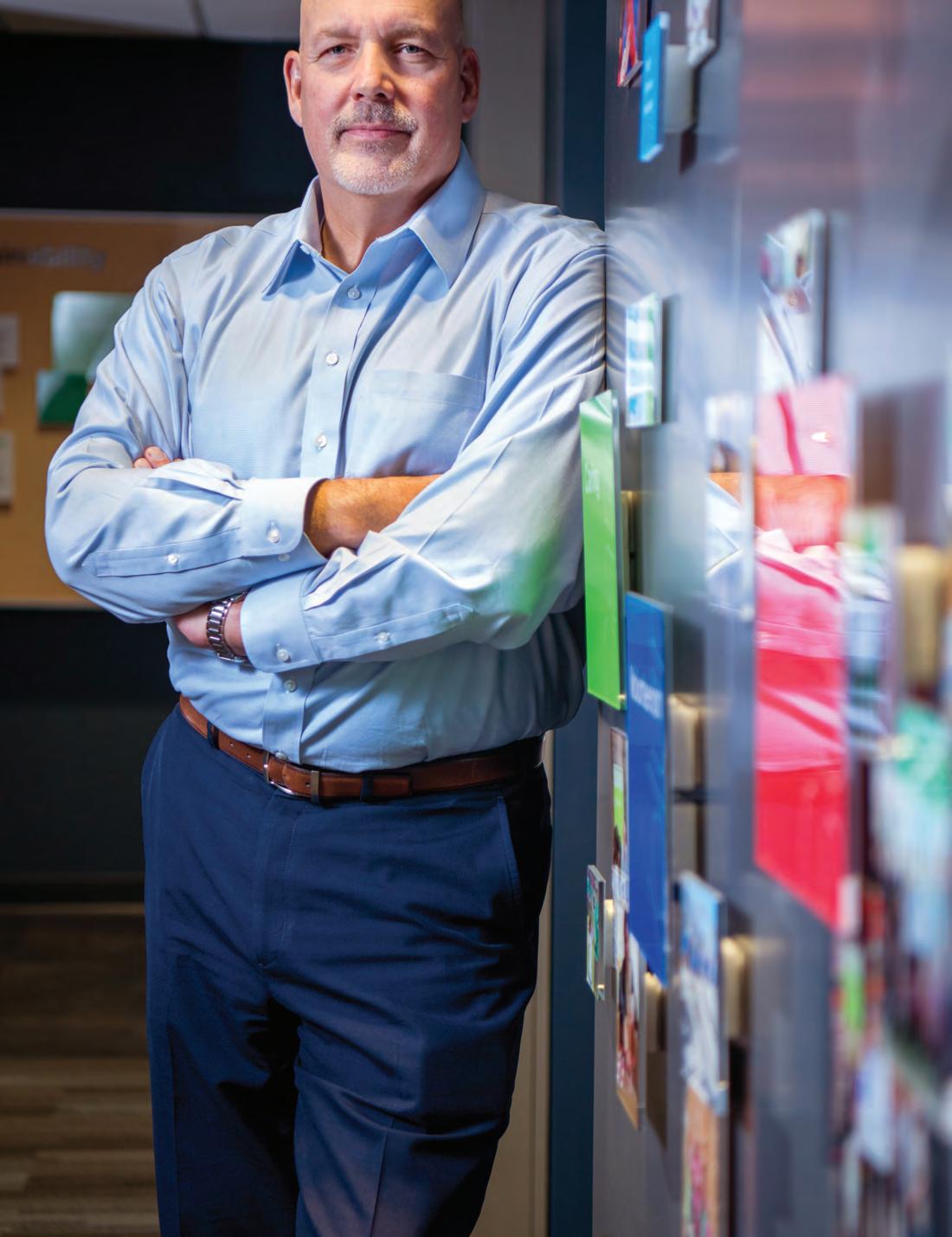
Baton Rouge General Chief Information Officer Bennett Cheramie and General Informatics CEO Donald Monistere share their strategies for tackling the rising threat of cyberattacks with strategies to safeguard critical business systems. BASF Senior Vice President Jerry Lebold and Our Lady of the Lake Health CIO Will Landry break down how they’re leveraging cutting-edge AI technology to solve complex challenges and enhance efficiency.
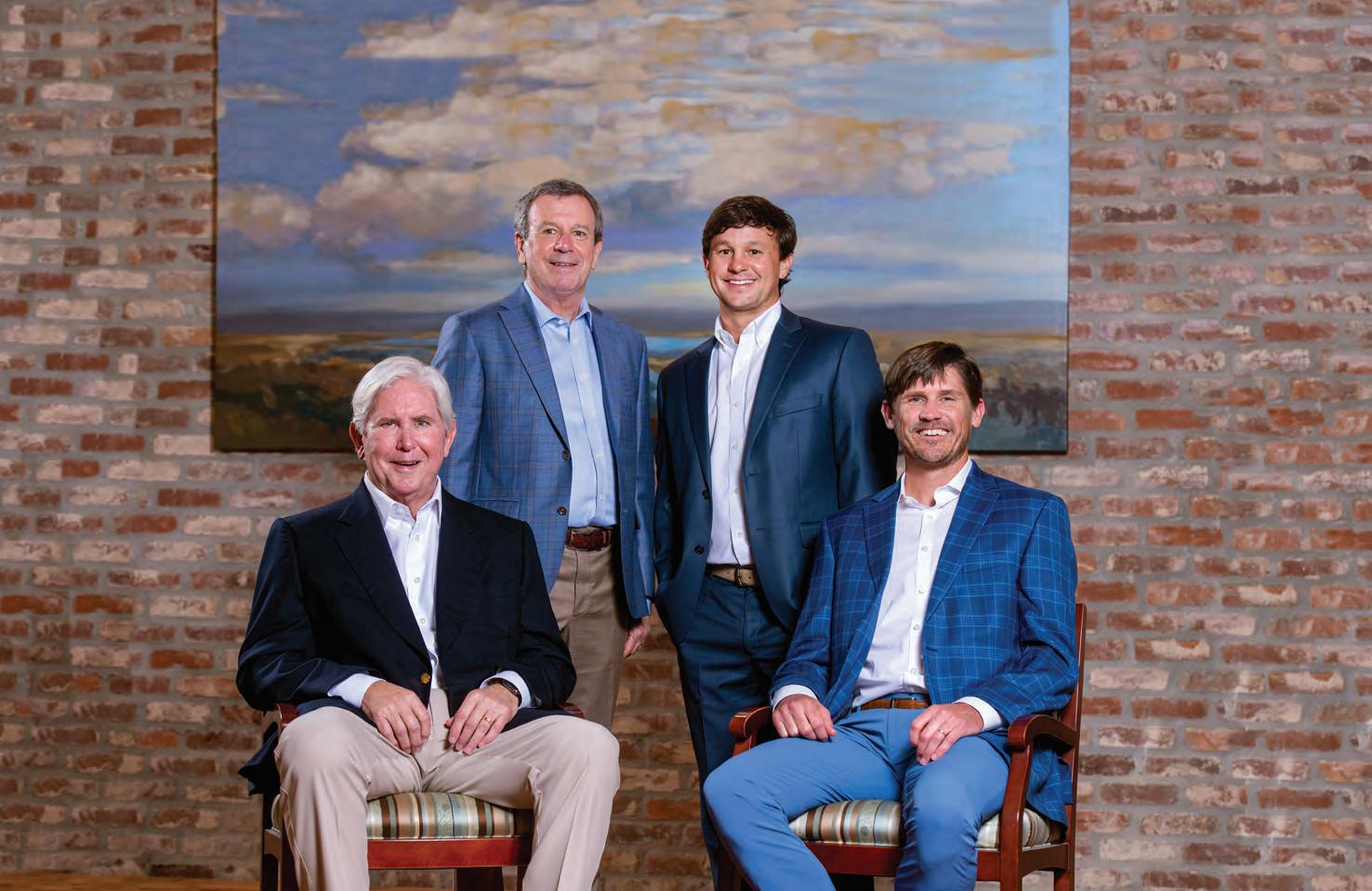
Lee Michaels Fine Jewelry founder Lee Michael Berg and Lamar CEO Sean Reilly provide insights into mentoring the next generation of leadership and laying the groundwork for a successful transition that ensures long-term growth and stability.
Highland Wealth partner Gavin Filasek explains how he’s overcoming economic challenges with a fresh approach to scaling operations and achieving sustained success.
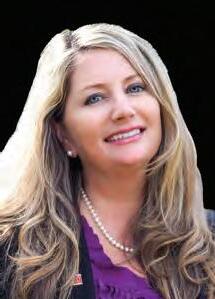
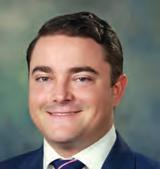
And Success Labs partner Melissa Thompson and Dr. Curtis Chastain explore innovative solutions to empower your team by addressing mental health and well-being in meaningful ways.
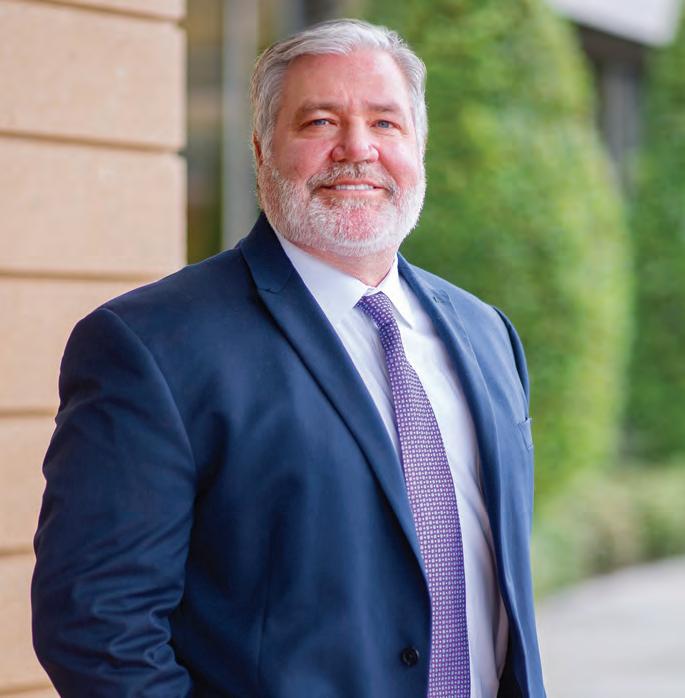
Ahandful of forwardthinking Baton Rouge-area companies have quickly overcome any initial trepidations and are taking deep dives into the world of artificial intelligence. They’re finding particular value in the use of large language models, or LLMs, for managing voluminous amounts of data.
Our Lady of the Lake Health, for example, is set to launch its own internal AI platform in early 2025 that will enable it to search through mountains of insurance provider documents, reducing search times from hours or days to mere minutes. BASF’s Geismar plant is on a similar timeline as it readies to launch its own AI product that will allow it to search through millions of site-specific documents in record time.
Both applications were born out of a unique collaboration between LSU and the business community, whereby students and businesses work together in a classroom setting to develop customized LLM models that solve specific, real world problems.
Roy Haggerty, executive vice president and provost of LSU, says the collaborative AI class comprises some 30 handpicked computer science and business majors and is one of the first in the country. Given his background in computer science, Haggerty is spearheading the initiative. “So far, we’ve completed 12 projects and they’ve all been successful,” the executive says.
James Ghawaly, a teacher in the class and researcher in LSU’s Division of Computer Science & Engineering, hopes the course will serve as a catalyst for growing a local and regional AI economy. “There’s a lot of opportunity for us to make progress quite quickly in that area,” Ghawaly says. “I’m especially motivated by Meta’s recent decision to build an AI data center in the state. We’re definitely moving in the right direction.
“I’m already seeing students in our
BY SAM BARNES
class creating startup companies that will develop solutions for businesses in the state and the Gulf Coast,” he adds. “We’re training the next generation and putting them in direct contact with the companies that can hire them.”
Will Landry, a senior vice president and chief information officer at OLOL Health, is optimistic that a new internal AI platform, developed with LSU’s help and currently in beta testing, will enable the health care provider to more easily search through insurance provider documents.
“We have thousands of payer contracts for various providers such as BlueCross, Medicaid, Medicare, United Healthcare, etcetera,” Landry says. “It takes a lot of time to analyze the different contracts to determine who pays what. We’re leveraging this technology to analyze and summarize the data to provide quicker responses. What would take hours or days for a human now takes only minutes.”
He expects to implement the program by the second quarter of 2025. “We feel patients will benefit from faster claims and estimates,” he says. “In many cases, the AI will be unknown to the patients, but it will improve their experience.”
OLOL Health is phasing the implementation of the technology as it weighs the benefits with the cost.
“When it is used, it is extremely valuable, but there is a cost whether you’re using it or not,” Landry says. “Therefore, we’re rolling it out slowly. When they use it, we’re seeing value, but when they don’t, we’re just spending money.”
OLOL is also holding off on any largescale implementations of AI in a clinical setting as it waits for expected federal regulations that will govern its use. Nevertheless, ambient listening technologies are already gaining traction, whereby AI uses voice recognition to automatically create clinical notes during patient-provider interactions. AI can
also be used to flag and prioritize items in a radiological image, for example.
OLOL plans to continue pursuing new AI projects with the help of the LSU program. “Our strategy with AI is strictly about staff augmentation,” Landry says. “It’s not about staff replacement. At the end of the day, we want to be able to do things faster and more efficiently for the benefit of the patient.”
With the help of LSU, BASF’s Geismar plant is currently beta testing a new tool dubbed “File Finder,” which will help it quickly analyze millions of documents that were previously unsearchable.
The LSU/BASF team used a small subset of 20,000 documents—there are an estimated 5 million documents on the plant’s servers—to develop and test the new program, which is set to launch in early 2025 with help of a new $60,000 server.
“It’s essentially modern knowledge management,” says Kerr Wall, BASF digitalization manager. “Knowledge management is a concept that companies have struggled with for decades, but these AI tools will enable us to do it at an unprecedented rate.
“In the process, our hope is that we won’t lose valuable knowledge as people retire from the company,” he adds. “As long as they’ve captured it in some document somewhere, we’ll be able to find it again.”
Eric Dixon, a production engineer at BASF, says he’s also working with LSU on a promising new LLM application that can decipher diagrams and images. “We were able to conceptualize pictures that contain very few words so that we could still find them using an AI chatbot,” Dixon says. “Previously, it might’ve been more about the text; now we’re moving into the visual realm. Within 90 seconds it can find a specific schematic that might be buried 10 folders deep and labeled with only digits.”
Continued on page 46

“I quickly recognized the value AI brings to chemical manufacturing.”
JERRY LEBOLD, senior vice president, BASF Geismar

Source: 2024 Forbes Advisor survey
BY DILLON LOWE
Understanding how to best navigate economic uncertainty has become something of a prerequisite for sustainable success in business, and the topic is as relevant now as it has ever been.
Fluctuating interest rates, labor shortages and supply chain disruptions are keeping business leaders on edge, and recent inflation woes have added to the pressure. And as newly elected President Donald Trump steps into office, the stakes are even higher: A change in administration will always bring with it some degree of economic uncertainty.
So what can companies do to grow and scale despite all the unpredictability?
According to Cullen Talley, founder of Baton Rouge business coaching and strategic planning firm Exit Momentum, businesses face two main challenges in times of economic uncertainty.
The first is distraction. Talley, who is also Exit Momentum’s head coach, says many companies often let external factors dominate their decision-making, distracting them from their core competencies.
“They start creating a narrative that’s completely false,” he says, “because they can’t predict the future.”
The solution? Focus on what you can control. Business leaders should tune out external noise (within reason) and align their teams around achievable goals and measurable results.
The second challenge, Talley says, is a lack of financial clarity. In his role, he has found that many companies—especially midsized ones—operate without a deep understanding of their financial metrics.
“I think that there’s a lack of financial literacy and financial rigor among midsized companies,” he says. “It’s like flying a plane in the clouds without instruments.”
To address that issue, Talley recommends adopting a disciplined
approach to financial planning. Companies should not only be diligent when it comes to budgeting but also develop robust forecasting models. These tools allow business leaders to simulate various scenarios and make informed decisions based on potential outcomes.
Diversification is another factor to consider. When economic uncertainty is present, some companies— driven by a desire for a quick fix or a fear of stagnation—rush to diversify their offerings or enter new markets.
Talley says to be cautious about doing so, as such moves are often “expensive and unpredictable.” He advocates for a measured approach, referencing Jim Collins’ “fire bullets, then cannonballs” concept.
That strategy is designed to minimize risk while identifying opportunities for growth. First, fire bullets—low-cost, low-distraction, low-risk experiments—to determine what works, calibrating your line of sight by taking small shots. Once you have “empirical validation,” fire a cannonball by concentrating significant resources on your calibrated line of sight.
“Typically, when businesses go too wide, margins get compressed and carrying costs go up,” Talley says. “From my perspective, you just have to be careful.”
In essence, the business coach encourages companies to adopt a proactive mindset. By focusing on what you can control and leveraging your strengths, you can navigate economic uncertainty with clarity and purpose, turning challenges into opportunities for growth and innovation.
One local business that has been able to scale effectively despite recent challenges in its sector is Highland Wealth.
In 2024, the wealth management firm—one of Exit Momentum’s clients—saw its assets under management balloon, its team grow and its geographic reach expand, all while shifting market dynamics have made
scaling operations in the financial sector increasingly complex.
Highland Wealth’s assets under management rose from about $385 million to some $505 million in 2024—a roughly 27% uptick. To support that growth, the firm added four advisers to its Baton Rouge office and brought on a new head of sales to oversee adviser training, development and accountability.
Highland Wealth also expanded its geographic footprint, adding advisers in the Lafayette and Thibodaux markets. Another adviser will be added in Mandeville in early 2025. Partner Gavin Filasek says the plan is to keep expanding eastward and westward from those markets as time goes on.
“Our goal is to become a Southeastern regional firm,” he says. To that end, the firm expects to expand into Jackson, Mississippi, in the next 12 to 18 months, and it’s eyeing further expansion opportunities in Alabama, Georgia and Texas that could materialize in the next 12 to 24 months.
Filasek says Highland Wealth, founded in 2007, is also in talks to acquire two books of business in Q1 2025—one in Lafayette and one in Mandeville—that would add a combined $160 million to its assets under management.
According to Filasek, Exit Momentum has played a significant role in his firm’s ability to scale over the course of the past year. He and his colleagues meet with Talley on a quarterly basis to address challenges, develop strategies and set goals. These sessions are aimed at ensuring Highland Wealth’s team remains accountable and aligned.
“Each quarter,” the executive says, “we look at our goals and make sure that we’re holding ourselves accountable to reaching them—hiring the amount of people that we should be hiring and bringing on the amount of business that we should be bringing on based on what our goals are— while also remaining profitable.”
In times of economic uncertainty, small businesses face unique challenges. Adam McCloskey, director of the Louisiana Small Business Development Center at LSU, shares his tips for overcoming them.
1. Know your value proposition. Understand why your customers choose you over your competitors. Dive into what drives customer loyalty and use the insights you glean to refine your offerings. By focusing on the value you bring rather than solely competing on price points, you can better anticipate demand and make more informed decisions about your company’s future.
2. Maintain financial discipline. Managing cash flow effectively is vital. Ensure that you’re collecting payments promptly and avoid extending too much credit. Also consider setting up a revolving line of credit with your bank to act as an emergency fund. This credit can provide liquidity during cash crunches, especially for companies with long payment cycles.
3. Invest in long-term strategic planning. Having a robust long-term strategic plan in place can help you anticipate challenges and quickly adapt to them. Build flexibility into your plan by considering potential scenarios and establishing contingency measures. Whether you’re facing an economic downturn or a natural disaster, being proactive can help mitigate risks.
4. Leverage expertise and resources. Building an external support network can provide valuable insights and support. Work with a trusted banker to explore financing options, a trusted lawyer to navigate regulatory changes and a trusted accountant to optimize your tax strategy. Also consider taking advantage of resources like the Small Business Development Center, which offers assistance in financial analysis, industry benchmarking and marketing.
5. Enhance cybersecurity measures. Cyber threats to small businesses are becoming increasingly frequent and increasingly sophisticated. Many assume they’re too small to be targeted, but this mindset can leave them vulnerable. Consider engaging in local programs like those offered by LSU’s Cybersecurity Clinic to assess your risks and create a plan.


“It’s like flying a plane in the clouds without instruments.”
CULLEN TALLEY, founder of Exit Momentum, on business owners who operate without a deep understanding of their financial metrics
“Managing this was like managing a natural disaster.”
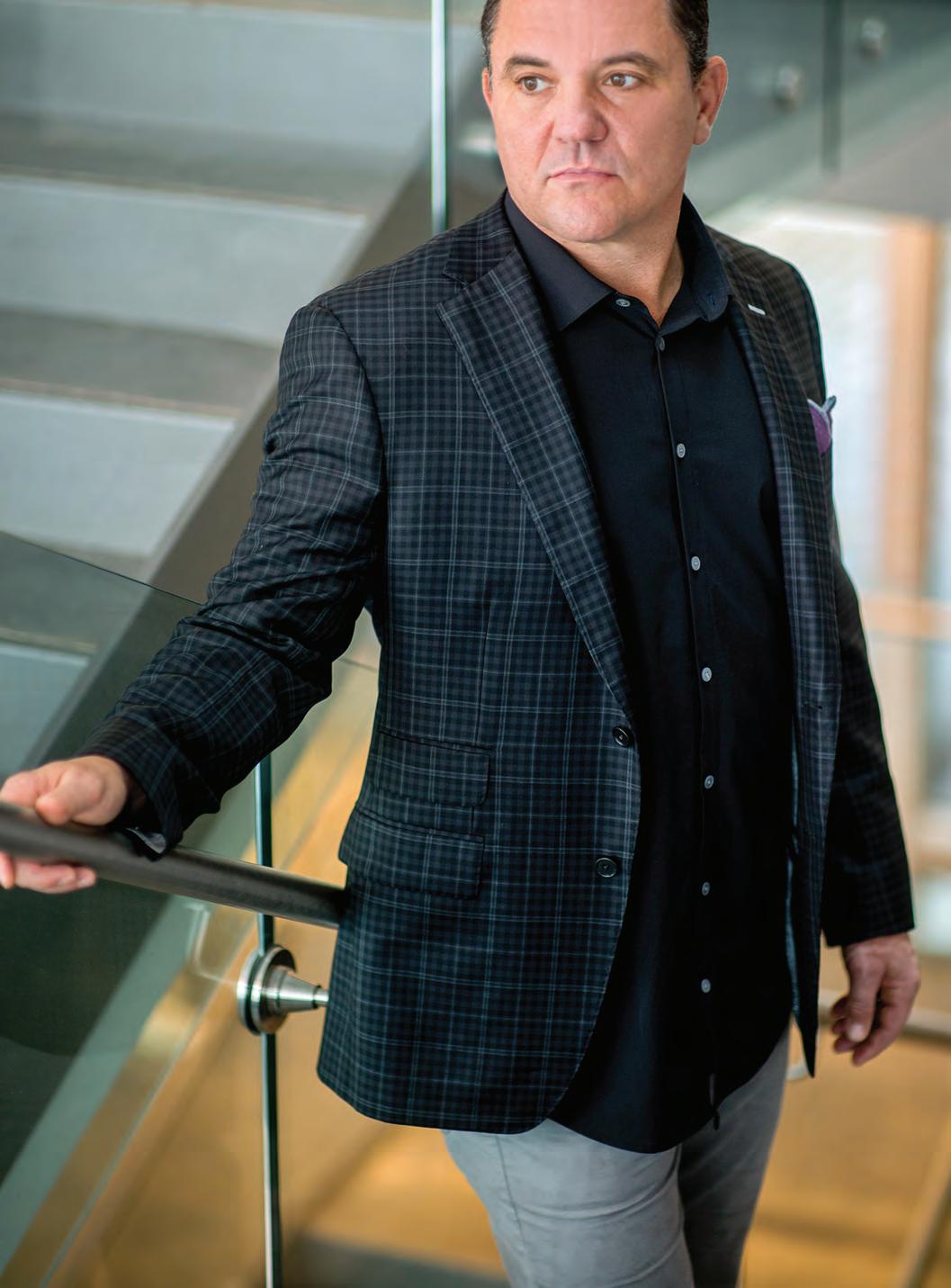
BENNETT CHERAMIE, vice president and chief information officer, Baton Rouge General

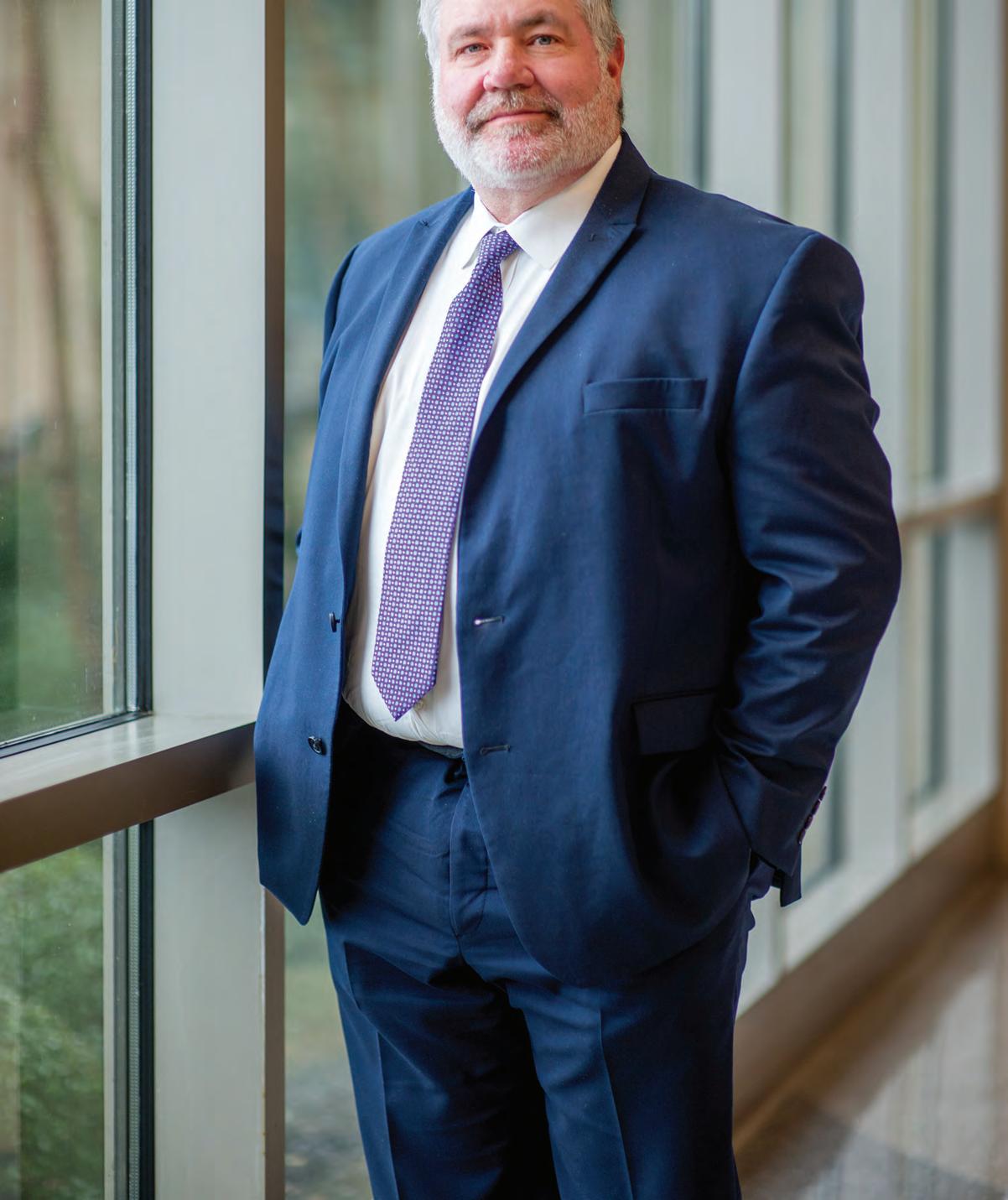
1. Practice good password hygiene with regular updates and multifactor authentication.
2. Implement strong procedures for recognizing threats.
3. When it comes to cyber, there are two key questions every business leader should ask: One, what is my risk tolerance? And two, what is my risk exposure?
BY MAGGIE HEYN RICHARDSON
It’s a company’s worst nightmare. Critical systems or customer data are suddenly inaccessible, held hostage by ransomware demanding cryptocurrency payments to unlock the paralyzed infrastructure.
Seem unlikely? Think again, cybersecurity experts say. Profit-driven cybercriminals as well as nation-state adversaries increasingly possess the capability to shut down supply chains, steal intellectual property and sell customer information on the dark web.
Staying ahead of cyber threats should be top of mind for every business leader, says Donald Monistere, CEO and president of Baton Rouge-based General Informatics, a managed services provider with 11 locations and nationwide customers.
“There’s no question the attacks have increased,” Monistere says, “[Four years ago], we might see a breach two or three times a year, and today that’s more like two or three times a month.”
Such breaches affect not only General Informatics’ managed services clients, but also other companies seeking emergency technical support after a hack. Security services are the fastest-growing segment of the company’s offerings, Monistere says.
Across the country, complaints about internet crimes and their associated costs have surged since 2019, according to the FBI’s Internet Crime Complaint Center, or IC3, which tracks such data. Between 2019 and 2023, the financial impact of internet crimes skyrocketed from $3.5 billion to $12.5 billion, IC3’s 2023 annual report states.
High-profile cases have also struck Baton Rouge. In May 2023, a breach of the Office of Motor Vehicles’ system exposed Social Security numbers and other personal data of individuals who had applied for Louisiana driver’s licenses, identification cards and vehicle registrations. The breach occurred via OMV’s software vendor, Progress Software Corporation, according to an OMV statement.
In 2022, Baton Rouge General also experienced a cyberattack. Vice President and Chief Information Officer Bennett Cheramie says the incident coincided with a sharp rise in cyberattacks targeting the health care sector during the COVID-19 pandemic.
“Health care was really focused on how to manage COVID,” he says, “and [the sector]
saw an uptick in cybercrimes.”
Cheramie would not disclose specifics about the data breach, or the hospital’s response, citing the need to avoid revealing strategies to potential criminals. However, he likened the response to natural disaster preparedness.
“One of the key learnings I had is that managing this was like managing a natural disaster,” he says. “Those same methodologies parallel an event like this.”
That included updating preparedness plans and running mock cyber threat drills, he says.
Cheramie says the incident also prompted collaboration among regional health care leaders.
“We banded together to talk about how we are managing this, and that persists today,” he says. “We have high-level leaders who get together and discuss these issues and what we’re doing to mitigate them.”
Cheramie says a key strategy has been to improve the “human firewall,” or training employees to recognize phishing and other social engineering tactics. Many cyberattacks start with an email or text prompting the receiver to divulge sensitive information, like passwords. Cheramie emphasizes that educating employees to recognize such schemes is vital, especially as phishing evolves.
“Cybercriminals are getting very good with the stuff they do, including the way they leverage AI to trick people into clicking or giving up a piece of information,” Cheramie says. “This is something we include in our preparedness now. Teaching our employees to stay vigilant is really our best defense on the human side.”
Employees who report suspicious activity are publicly recognized.
Creating a robust information assurance program to equip employees to identify cyber threats is important for prevention, says Matthew McKey, cyber and emerging threats executive officer for the Governor’s Office of Homeland Security.
“One of the costliest types of attacks orchestrated against a business is a business email compromise.” McKey says. “Educating the workforce is key.”
While financial gain is the motivation of most cybercrimes, some attacks are driven by
geopolitics. Monistere says GI noticed a notable increase in nation-state-sponsored attacks prior to the war in Ukraine.
“If you told me 30 years ago when I started my career in IT that I would be, on the regular, talking to Homeland Security and the FBI, I would have thought, ‘why would I be doing that?’ But there are folks who get up and go to work every day just like you and me. Except they happen to be doing things that are illegal.”
Determining how much to invest in cybersecurity infrastructure is a critical decision for business leaders, says GI Regional Manager Stephen Cavell.
“The number one thing we see is customers trying to balance operations needs with security and risk needs,” Cavell says. “Every dollar you spend on security could have been spent on sales and marketing, or a new building or adding headcount, or operations— things that help you generate revenue.”
But without adequate security, a cyberattack could halt operations and freeze revenue streams until systems are restored.
“Businesses have to figure out two things: What is their risk appetite and what is their risk exposure,” Cavell says.
Security services providers can assist companies in identifying vulnerabilities, detecting compromised credentials on the dark web and developing a plan to prevent future hacks.
Businesses can also purchase cybersecurity insurance, though rates have risen and insurers now require more stringent risk management practices. Having good tools in place, however, can help lower premiums.
Don’t expect the cost of cybersecurity to come down in 2025, since it takes a lot of man hours to develop software products that attempt to stay ahead of cybercriminals, Monistere says.
“Our costs are skyrocketing,” he says. “One tool we use in our advanced security stack is up 27% in the last year.”
Regardless of the measures a company adopts, assuming that a breach is unlikely is reckless, Monistere warns.
“This is not something you can defer, or not be informed about. It’s just not an option anymore,” he says. “To say, ‘Oh that’s the IT guy’s job,’—to me, that’s dereliction of duty.”
Lee Michael Berg has discovered the “secret sauce” to succession planning, at least for the jewelry business he founded some 46 years ago. Today, his three sons have sole ownership of Lee Michaels Fine Jewelry, and even though they live in different cities they’ve managed to grow the business into a $125 million-a-year operation with 10 stores from New Mexico to Mississippi.
It wasn’t by accident. Berg began sowing the seeds of succession many years ago. “You essentially have two choices as an owner—sell the business or figure out how succession works,” he says. When his sons were still young, Berg began conducting quarterly family meetings with the assistance of an outside succession consultant, then after they married he invited their spouses to attend.
“We opened up the books and talked about the volume, the profit, the problems, the growth opportunities … everything was on the table,” Berg says. “The meetings lasted an entire day. My chief financial officer would give a report, and I would bring in other businesses that had transitioned successfully as well as businesses that had failed. I wanted them to understand how difficult the process was going to be.”
He also made his sons aware at an early age that they weren’t entitled to anything. If they wanted to work for the company, they would have to abide by certain prescribed guidelines. “First of all, they had to get a college degree,” Berg says. “They also had to graduate from the Gemological Institute of America in Carlsbad, California, and they had to work somewhere else other than Lee Michaels for two years.
“I didn’t promise them ownership and didn’t promise them stock. … I didn’t promise them anything except a job. And when they began working for me, they came in at the very bottom level and at the bottom pay. What they did with that job would determine if they had ownership in the business one day.”
Today, communication remains central to the company’s success. The Bergs
BY SAM BARNES
hold Zoom meetings twice a week, during which the three brothers, along with their father in an advisory capacity, hash out decisions.
“It sometimes takes a long time to make decisions, and the conversations can become heated, but the decisions they’re making are better decisions than I was making,” Berg says. “They get more involved in the details, ask more questions of each other and they hold each other accountable.”
They’re now bringing the third generation into the loop, even though the oldest of Berg’s grandchildren is only 21. He admits that it will be a more difficult and complex process as the family grows.
“We’ve hired a consultant to help us with what we call G3 [the third generation],” Berg says. “We’ve scheduled a family meeting for half a day with all of my grandchildren over the age of 13, as well as my sons and daughters-in-law.”
Nevertheless, Berg says a good succession plan should never be crafted solely with the family in mind.
“The most important thing to me was always that the company was taken care of and the employees were taken care of,” he says. “I always say that I won’t be judged by the company I built or the company I ran, but by the company I transitioned.”
Unfortunately, Berg’s example is more the exception than the rule. Many business owners postpone the development of a succession plan until a major life event occurs, such as a health scare, says Lance Kinchen, a partner at Breazeale, Sachse & Wilson in Baton Rouge. About half of Kinchen’s work deals with estate planning, successions, wills and trusts.
“Succession is not an easy topic to discuss, since it forces an owner to confront their own mortality, he says. “They’re also so busy with the day-today stuff that they don’t take the time to delegate it out to someone, or to meet with the attorney, CPA, financial adviser, etc. “Nevertheless, they need to have those discussions with their family, business associates and others, and make them aware of their wishes, as
well as the dangers and the pitfalls.”
For the transition to have the best chance at success, owners should lay the groundwork early and begin cultivating future leadership. “It’s hard to transition when the parents haven’t made their children come up through the business,” Kinchen notes. “You can’t just put little Johnny in the big seat when dad retires. Nobody will know who he is and he won’t know what he’s doing.”
The best time for creating a succession plan really depends upon the current size and profitability of the business. Typically, the process will involve, at a minimum, an attorney and CPA. Kinchen has also been involved in larger succession planning teams that include financial advisers, insurance agents and succession advisers.
No matter the approach, owners shouldn’t think that a plan must be perfect. A plan can be revisited when family dynamics change, such as following a divorce, or when there are potentially impactful changes in the tax code or other regulations. A CPA can be a vital resource in that regard, as they can alert an owner of any impending changes.
“Create a plan that works for you today, then adjust it when situations change,” Kinchen says. “If you never act, you’re going to get caught one day and your family is going to be at a real disadvantage.”
Lamar Advertising has been run exclusively by the Reilly family over the last few decades.
But there’s no guarantee the 122-yearold outdoor advertising company will stay that way. “We’re publicly owned, so we can’t preordain who is going to manage the company,” Reilly says. “They must earn that spot. You must have credibility with your internal constituents if you’re going to take the reins, and you must have credibility externally with shareholders, customers, etc.”
Nevertheless, the Reilly name continues to figure prominently in the running of Lamar. Sean Reilly has been CEO of
Continued on page 47
“It really is Lamar homegrown leadership.”

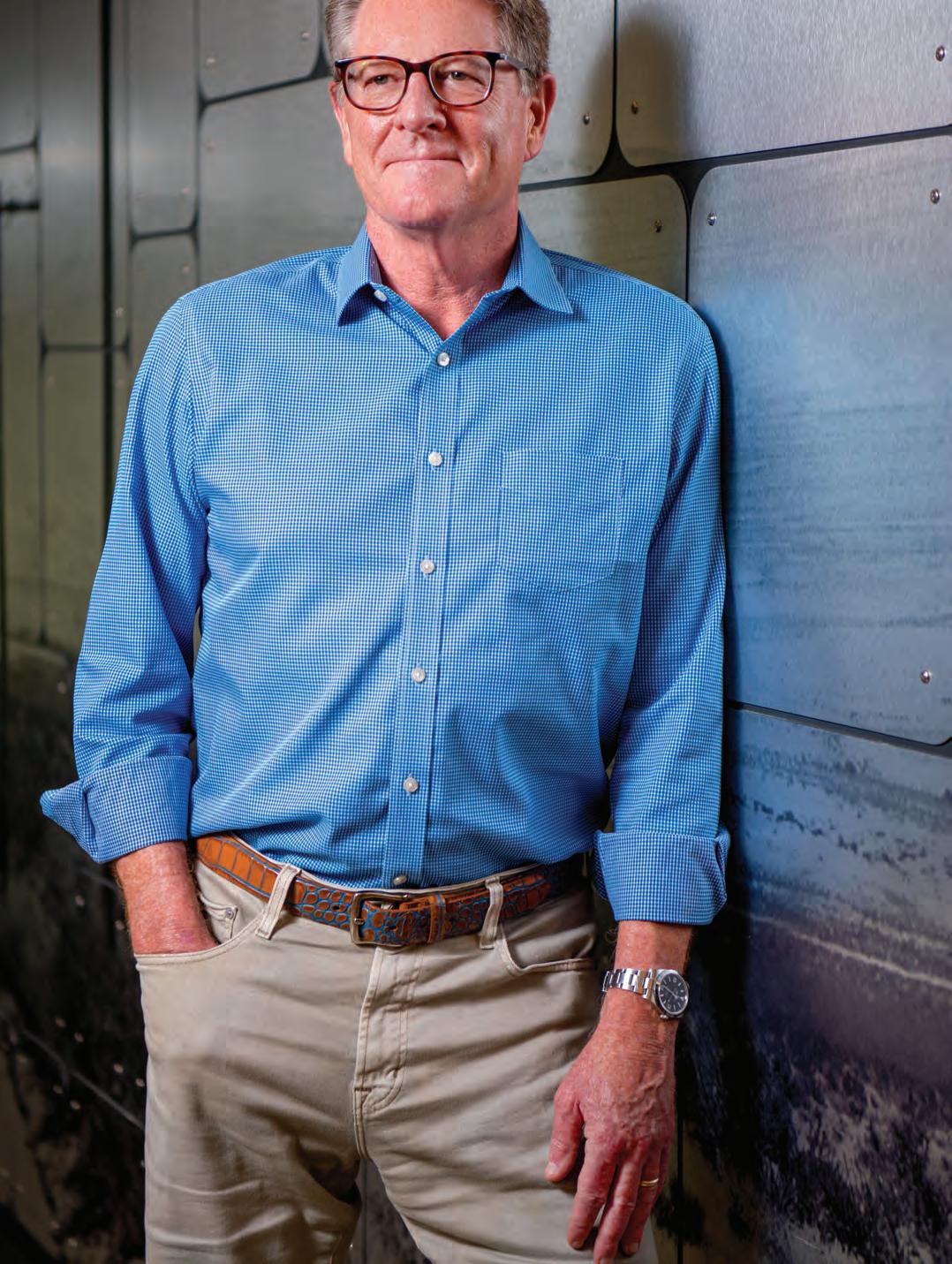
SEAN REILLY, president and CEO, Lamar Advertising
Assuming success will extend to other positions. A leader’s success in one position doesn’t necessarily mean success in other positions.
Focusing solely on the executive level. All levels of the organization should be addressed in a succession plan.
Keeping succession plans private. There should be “buy in” among all stakeholders.
Lack of a strategy. A succession plan with no discernible strategy could cause more harm than good.
Lack of support for a new leader. New leaders need ongoing support to be successful.
One-size-fits-all approach. Succession plans should be catered specifically to your business and situation.
Outdated plans. Succession plans should be regularly updated to remain relevant.
Poor communication. Employees might become confused and begin to speculate without clear messages.
Underestimating change. Succession plans should consider the changing business landscape.

SOURCE: TK

• Give yourself mandatory microbreaks that are hardwired into your schedule to do activities supporting your physical and mental health.
• Put your phone on “do not disturb” with an automated message sent to people who call or text when you need a phone break and don’t want to feel guilty about not responding.
• Get better sleep by de-stimulating your brain before bed. Some ways to get better sleep include: Avoid eating and exercising late. Read a book instead of being on your phone. Don’t drink fluids for up to an hour and empty your bladder before going to bed. Overthe-counter Melatonin also works for some people.
• Seek support from a physician, licensed therapist, professional or someone you can trust to identify the root cause of your fatigue.
SOURCE: Dr. Curtis Chastain

“The stigma is being removed from mental health issues.”
MELISSA THOMPSON, partner, Success Labs
As mental health awareness continues to grow and mental health resources become more accessible, there is a growing expectation for business executives to support their employees’ mental health and wellness in the workplace.
More than three-quarters of employees say supervisors, HR and senior leadership should be responsible for helping employees feel comfortable discussing mental health at work, according to a 2024 survey by the National Alliance of Mental Illness and global market research firm Ipsos.
“The stigma is being removed from mental health issues,” says Success Labs partner Melissa Thompson. “Therapy used to be a last resort when you were at the breaking point. Now it’s more preventive. Just like a workout needs to happen consistently, so does any kind of therapy or coaching around whatever you’re facing.”
With seemingly endless meetings, invoices and commitments, how can business leaders meet the needs of their employees’ mental health and wellness, let alone their own?
Thompson says the best way to get ahead of mental health issues in the workplace is to be proactive. She recommends business leaders start by creating an open line of communication by asking their teams more questions and genuinely listening.
Before implementing a new policy or providing mental health services, the leader should have a sincere understanding of what their employees need. Thompson says business leaders error by not having mental health programming in place or thinking they have to do it all themselves.
While many employers offer employee assistance programs, some companies and business leaders are seeking out-of-the-box solutions. Success Labs has experienced an uptick in inquiries to book on-demand coaching calls for corporate clients.
This service provides employees, whose companies are contracted with
Success Labs, with 30-minute to an hour coaching calls about professional development and work issues often affecting their mental health. It offers employees a neutral party who is not a therapist or a part of the company to brainstorm and problem-solve with. Thompson says it helps her clients feel heard and like they are progressing toward a solution.
The mental health of employees can affect talent retention, company culture and productivity. The majority of employees say mental health care coverage is important to creating a positive workplace culture, according to the 2024 NAMI and Ipsos survey.
‘GOTTEN AWAY FROM RESTING’
Dr. Curtis Chastain, director of Our Lady of the Lake Men’s Health Center and Executive Wellness Program, says he has seen a growing number of patients with anxiety stemming from sleep deprivation, which can often lead to substance abuse. Fatigue leads to depression, depression leads to low productivity, and low productivity leads to anxiety, Chastain says.
Company leaders set the tone for mental health discussions in the workplace, he says. When leaders are transparent and vulnerable enough to share personal experiences that employees can relate to, it normalizes employee experiences. How leaders establish their own work-life boundaries and mental health practices also influences the team.
“We have painted ourselves into the proverbial corners of not having rest,” Chastain says. “There are never opportunities where there’s nothing to do. We have gotten away from resting. I have to ritualize it in my daily work.”
The medical director schedules two 15-minute breaks in his workday. Every morning and afternoon, he pauses work and won’t use his phone or computer. During the protected time, he does leisurely activities like reading, playing guitar and listening to music to boost his mood and get reenergized.
“What’s 30 minutes in the grand
BY CYNTHEA CORFAH
scheme of things?” Chastain asks. “We have to take our time back.”
Tonja Myles, a mental health advocate, certified peer recovery specialist and CEO of the nonprofit Set Free Indeed Ministry, helps companies and organizations connect their employees with mental health and substance abuse resources. She encourages leaders to destigmatize mental health and substance abuse in the workplace by providing employers and employees with tools to recognize warning signs and respond effectively.
“It starts from leadership,” Myles says. “Companies have a responsibility to create the best environment for their employees. Being trauma-informed is key so they can thrive.”
Myles collaborated with H&E Rentals CEO Brad Barber to develop a 12-month marketing campaign highlighting the dangers of fentanyl and a mandatory mental health training for employees that is adaptable for various companies. Myles and Barber helped a large company after four employees died by suicide in one month. Together, they connected the company with resources to offer healing circles, training sessions and ongoing support.
“We have to invest more in the mental health of the people who do the work,” Myles says. “Until we address it, we’re going to continue to have a crisis in our community.”
More than one in five U.S. adults will live with a mental illness, according to the National Institute of Mental Health. and they can affect professionals in every position, department and industry. Educating employees about mental health resources is just as vital as discussing company medical and dental benefits. Healthier employees lead to a healthier workplace, resulting in a more fruitful company.
Notes Thompson: “As millennials start to step into more leadership roles and there’s this transfer of power, we’re going to have a mindset shift around how to take care of your people, not just as employees but as humans.”
Continued from page 36
Wall says BASF is taking a measured approach to implementation. “We wanted to start small,” he says. “That’s why we randomly selected a small subset for the initial run. That allowed us to work through some of the workflows and slowly and methodically bring in more documents.
Wall and Dixon have been encouraged by the willingness of BASF’s upper management to use AI—despite industry concerns over its security—and hope to eventually integrate their work with the chemical company’s other global digitalization initiatives.
“I quickly recognized the value AI brings to chemical manufacturing and jumped at the chance to explore opportunities,” says Jerry Lebold, BASF senior vice president in Geismar. “I see focused efforts to address security concerns our industry has voiced with the use of AI and feel confident that it can be implemented in a fully secured environment.
Issue Date: Jan 2025 Ad proof #2
• Please respond by e-mail or phone with your approval or minor revisions.
• AD WILL RUN AS IS unless approval or final revisions are received within 24 hrs from receipt of this proof. A shorter timeframe will apply for tight deadlines.
“In the coming years, our hope is for the continued smart use of AI to transform the chemical manufacturing industry, with BASF at the helm.”

• Additional revisions must be requested and may be subject to production fees.
Carefully check this ad for: CORRECT ADDRESS • CORRECT PHONE NUMBER • ANY TYPOS This ad design © Melara Enterprises, LLC. 2024. All rights reserved. Phone 225-928-1700



Continued from page 42
the Baton Rouge-based company for nearly 14 years—twice as long as the average work lifespan of a CEO. Prior to that, his brother Kevin Reilly Jr., and father Kevin Reilly Sr. were CEOs. And there are others in the family waiting in the wings. “There are 11 young adults between me and my siblings that understand what the company does, and a few of them actually work in various aspects of the business … but at the end of the day it’s understood that they have to earn a position here.”
leadership. They really are the best in the industry at what they do.”
Lamar’s general managers essentially run their branches like businesses, and they’re made to feel like owners.
“We have a flat, decentralized organizational chart, whereby the general managers have complete autonomy,” Reilly says. “They hire, they fire, they turn on the lights, turn off the lights, they have profit sharing, etc. And when you treat them like complete businesspeople, they become complete businesspeople.”
Reilly credits that philosophy with grooming the company’s management and preparing Lamar for any successful leadership transition.
• Please respond by e-mail or phone with your approval or minor revisions.
• AD WILL RUN AS IS unless approval or final revisions are received within 24 hrs from receipt of this proof. A shorter timeframe will apply for tight deadlines.
Lamar also rigorously promotes from within the organization and trains internally for future leadership roles. As many as eight division presidents and regional managers, with an average tenure of more than 25 years, oversee some 200 offices across the country in a variety of markets. “For many of them, their first job was as a Lamar account executive,” Reilly says. “It really is Lamar homegrown
“We just find the people who have worked their way up and who really get Lamar, get our culture and get how we do business,” he says. “Those that really understand what makes us tick.”
• Additional revisions must be requested and may be subject to production fees.
Carefully check this ad for: CORRECT ADDRESS • CORRECT PHONE NUMBER • ANY TYPOS
This ad design © Melara Enterprises, LLC. 2024. All rights reserved. Phone 225-928-1700




Advanced Office Systems has been putting customers first for over 40 years. As a family-owned and operated business, we believe that when we get it right with our people they will get it right with our customers.
With service built on reliability and trust, our dedicated team of highly experienced technicians works to exceed expectations to keep your business running at peak performance.


24 JAN 15 | 11AM
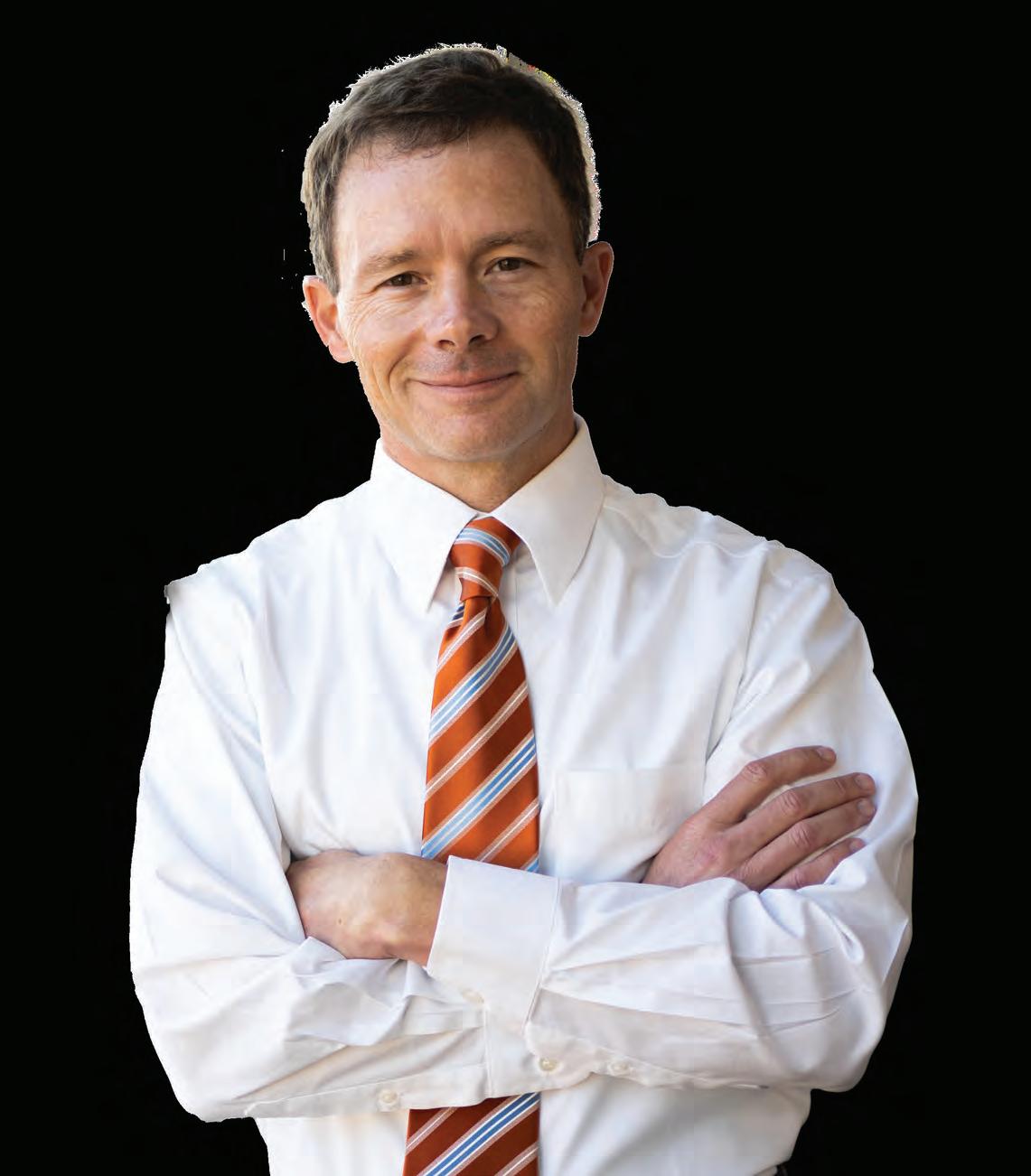
B1BANK PRESIDENT AND CEO
TOPIC OF DISCUSSION
STRATEGIC EXPANSION CONSOLIDATION AND COMPETITION
BANKING TRENDS FOR 2025 SPONSORED BY:



SPONSORED BY:




Imagine a world where every purchase brings you closer to your dreams. From your morning coffee to your weekend shopping, every swipe earns points that can be transformed into travel experiences, sought-after gifts or cash back. But it’s not just about rewards - enjoy peace of mind with NO annual fee, cash advance fee or balance transfer fee, zero liability protection and exclusive offers from popular brands. Turn your everyday spending into extraordinary possibilities - because with Campus Rewards Mastercard, your next adventure is just a purchase away.

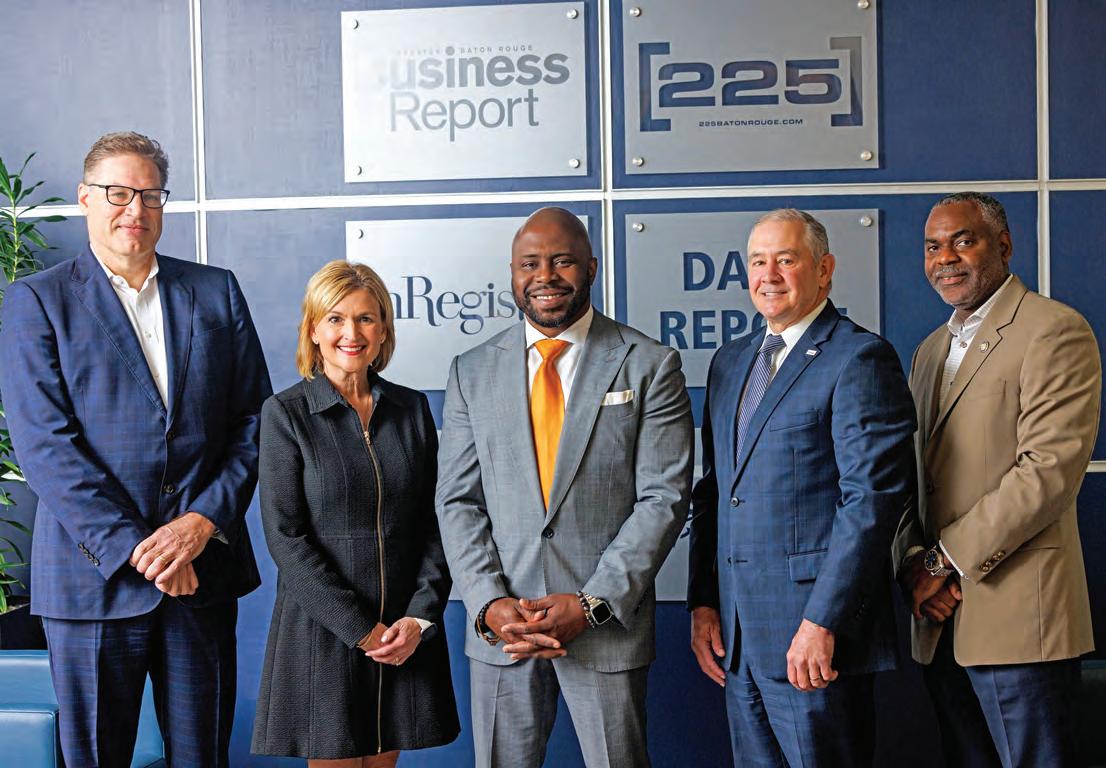
Carlo MacDonald President & CEO
Exigo
Technology Services
Jane Verret President & CEO Campus Federal Credit Union
Clay
Chuck Daigle CEO for Ochsner Baton Rouge and Lake Charles
Young (center) Moderator
BATON ROUGE STANDS at a pivotal moment in its journey. From navigating economic uncertainty to adapting to rapid technological advancements and shifting workforce dynamics, the city’s leaders have faced extraordinary challenges. Through resilience and innovation, they continue to pave the way for a stronger, more sustainable future.
As 2025 approached, Business Report hosted its seventh annual Roundtable.
The event provides a space for Baton Rouge’s visionaries to reflect on the hurdles they’ve overcome and share insights into the strategies shaping their industries. This year’s discussions will focus on future-proofing businesses, leveraging new technologies, attracting
LA
and retaining top talent, and ensuring long-term growth.
This edition features insights from leaders focused on shaping Baton Rouge’s future. They discuss the challenges they’ve tackled, the lessons they’ve learned, and the bold steps they are taking to ensure a thriving tomorrow for our city.
What do you see as the most pressing issue for the Capital Region in 2025, and why do you feel it will be critical for us as a community? If you were tasked with leading us through this issue, what direction would you go?
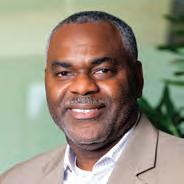
Health care, economic development, media and technology, faith based, governmental, and educational leaders all have a role in shaping the future of our community. Establishing strong relationships with local, state, and federal leaders in the Capital Region is essential. By working together and reaching a consensus on what we want our community to look like, we can align efforts and resources to achieve shared goals.
The critical piece is ensuring that leaders at all levels understand the importance of long-term vision. The decisions we make today may not fully materialize for 20 years, but the impact will shape future generations. It’s about contributing to a legacy and playing a meaningful role in building a better tomorrow.
—Mayor Lionel Johnson
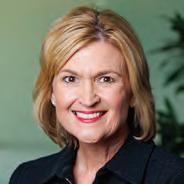
We’ve all touched on the importance of building a skilled and adaptable workforce that meets the region’s needs to ensure growth and success. The challenge lies in replacing retirees and attracting younger professionals to not only move to the area but also to establish their careers here.
This has been a longstanding issue for Baton Rouge, but I’ve noticed significant progress recently. There’s been a lot of emphasis and resources directed toward addressing this challenge, which is encouraging. If we want the region to thrive and achieve greater success in the future, these efforts will remain critical.
At Campus Federal, we support this transition by offering both financial education and tailored products to help young people manage their money and plan for the future. Our financial literacy programs reach LSU students, staff, and other campuses statewide, providing virtual and in-person training to equip them with the tools for financial success. We also offer incredible resources on our website that help with understanding and managing finances, improving your credit position, and reaching financial goals. As a trusted financial partner, Campus Federal is committed to empowering individuals and businesses with the resources and education they need to thrive in an evolving economy.
—Jane Verret
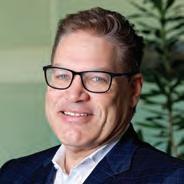
In my 30 years of business in Baton Rouge, one thing has remained consistent: when young people graduate from college, they often leave, seeking excitement in other cities. But inevitably, many return to Baton Rouge when they start families because it’s a fantastic place to raise children and build a life. That’s part of why I’ve stayed here despite opportunities elsewhere, including in places like Silicon Valley. The challenge is convincing young professionals right out of college that Baton Rouge can be a “cool” place to live and thrive.
From a technology standpoint, making Baton Rouge a desirable, modern, and forward-thinking city is essential. I think we’ve made great strides, particularly with smart city initiatives. For instance, Baton Rouge recently received recognition as a leading digital city in the country, which is an encouraging step. However, infrastructure and long-term planning for 2025 and beyond are crucial to attracting both young talent and big businesses. Big companies bring the resources to fund public schools, public spaces, and overall development.
To achieve this, I’d like to see the city renew efforts toward smart city advancements. While there have been meetings and initiatives, they haven’t fully realized their potential. Establishing a dedicated smart city board—similar to the Louisiana Public Broadband Council— could help align government agencies, private companies, and community stakeholders toward meaningful progress. Baton Rouge was once the fastest-growing wireless city in the country, according to Intel in 2003. That foundation exists. Now, we need to focus on becoming a truly innovative smart city, leveraging technology and collaboration to differentiate ourselves and build a future-ready community.
—Carlo MacDonald
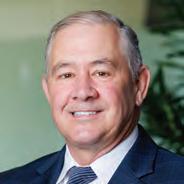
Acouple of weeks ago, we held a Healthy State Conference where leaders from Louisiana’s workforce and economic development sectors discussed a troubling statistic: 35 to 40 percent of our citizens are either unemployed or not actively seeking work. While we need a safety net system, it’s crucial that we focus on creating pathways to employment and developing a talent pool that will help attract new businesses and drive economic growth.
Institutions like Southern University, Baton Rouge Community College, LSU, the Chamber of Commerce, and the Baton Rouge Area Foundation all share the same goals. The challenge is to bring these organizations together and develop a long-term plan that will ensure Louisiana is an attractive destination for new technology companies and other industries in the future.
—Chuck Daigle
What is the biggest leadership challenge you anticipate in 2025, and how are you preparing to address it?
One of the things I’m focused on—and that we as an organization are prioritizing—is succession planning. It ties in with some of the challenges we’ve all identified for our region, particularly developing a strong pipeline of leaders. We want to ensure these leaders are not only familiar with the business but also equipped with the skills to sustain our culture, drive innovation, and keep pace with advancing technology.
Things are becoming increasingly challenging, so identifying high-potential individuals and equipping them with the necessary tools is a significant focus for us. At Campus Federal, we’re investing in leadership
There are three key challenges facing leadership in our industry right now: staffing, the surge in mergers and acquisitions, and shifting perceptions of what IT and technology firms offer.
Staffing remains a priority, and as I’m not getting any younger, I’m focused on training and educating our next generation of leaders to carry forward what we’ve built over the last 30 years. We’ve started engaging with industry experts to guide our team members and instill the principles that
Investing in leadership development and career progression is critical. For example, helping clinicians advance from medical assistants to LPNs, RNs, and even into management positions requires clear career tracks and targeted support. It’s not just about individual growth—it’s essential for retention. We’re in a competitive environment for talent, and investing in both partnerships to develop new talent and in our existing team
The biggest leadership challenge for me in 2025 revolves around managing growth while navigating new tax structures and maintaining key relationships. We must actively monitor legislative changes to understand the nuances of the new tax laws. This will help us anticipate the impact on our municipal budget and the local economy.
Additionally, ensuring that growth is sustainable by focusing on long-term planning is essential. Investing
development programs, mentorship, and crossdepartmental training. These are fairly standard initiatives, but we’re also emphasizing areas like technical expertise and less traditional skills, such as emotional intelligence and strategic thinking. These competencies are critical for preparing leaders to navigate the future effectively.
By fostering a culture of knowledge-sharing and collaboration, we’re ensuring emerging leaders are prepared to take on greater responsibilities and support Campus Federal’s continued growth and success.
—Jane Verret
have been central to our success. Back in the 1990s and early 2000s, we spent a lot of time speaking at LSU to inform students about the opportunities in Baton Rouge. Surprisingly, many didn’t even know technology companies existed here. That’s something we’ve been addressing recently with events like job fairs and campus marketing to show local students they don’t need to move to Austin or Nashville to find great opportunities—they’re right here in Baton Rouge.
—Carlo MacDonald
members is crucial. By fostering growth and providing development opportunities, we can retain team members who embody our values and want to advance within the organization. This focus on internal growth is far more prevalent today than it was in the early 1990s when I started my career, and it’s a positive shift. That said, there’s still tremendous potential for further progress in this area.
—Chuck Daigle
in infrastructure, technology, and talent to meet the needs of our growing population is key.
By addressing these areas through thorough planning, clear communication, and ongoing collaboration with key stakeholders, we can navigate the challenges of 2025 and position leadership to drive sustainable growth and opportunities for the community.
—Mayor
Lionel Johnson
There are still many customer internal processes that need monitoring and compliance management. In 2025, we plan to increase our security compliance management solutions through new technology tools that automatically track our customers’ compliance requirements and keep their insurance companies happy. In the early 2000s, we built some of the first citywide systems using wireless technology, allowing cameras to be placed in areas without needing a physical presence, especially for law enforcement. Major enhancements in keeping all of us safe using AI will continue to grow in the coming year. AI is at the top of everyone’s mind, and that includes security systems utilizing AI to fight the bad guys.
For our own internal systems, AI is being implemented to help our support teams quickly answer questions from our customers, which in turn will improve our customer satisfaction.
From a hardware standpoint, I don’t foresee major innovations in 2025 around hardware other than increased computing power. Apple and others may release new devices, but the bigger concern will be businesses facing a wave of hardware replacements, as many systems are due for upgrades within the typical five-year cycle. Companies will need to decide whether their employees need full laptops, tablets, or simpler mobile devices based on their roles.
—Carlo MacDonald
What technologies are you exploring to improve operational efficiency or customer experience in 2025?
Iwant to highlight a few advancements in the medical field. Recently, we deployed two new robotic platforms. One is an advanced robotic system for general and gynecological surgeries, offering surgeons improved tactile feedback and a more realistic surgical feel from the console. The other is the Ion robotic platform, which specializes in detecting and removing small lung nodules and lesions. This technology plays a critical role in early detection and treatment of lung cancers, showcasing the continuous evolution of medical innovation.
On the operational side, workforce challenges, like clinician shortages, persist. However, we’ve implemented a virtual nursing platform on the inpatient side, particularly for discharges. Discharge processes often involve detailed instructions, medication management, and education, which can be timeintensive for nurses managing multiple patients. With our system, a team of 24/7 remote nurses handle the discharge process from a centralized location.
This approach allows for better patient education, more thorough medication reviews, and ultimately, improved outcomes. The process has significantly reduced readmission rates while creating more efficiency and balance for on-site nurses, enhancing both the patient and staff experience.
—Chuck Daigle
We are focused on apps to make our processes more efficient and user-friendly, particularly for paying bills and completing applications.
In our police department, we’ve invested in LPRs, or license plate readers, and other software capabilities, allowing us to quickly obtain vehicle owner information, criminal history (outstanding warrants), and determine if this is a vehicle of interest. We’ve now covered the entire perimeter of our city limits, so if a vehicle enters St. Gabriel, we know just about everything we need to know within seconds.
Currently, we are exploring the legalities of integrating home security systems with our police systems. While we are making technological advances, it’s crucial that we remain within legal boundaries.
—Mayor Lionel Johnson
Over a decade ago, we adopted interactive teller machines (ITMs), becoming one of the first credit unions in Louisiana to implement this technology. These machines have provided significant benefits, including extended service hours and disaster recovery capabilities. With branches in Shreveport, New Orleans, and Baton Rouge, we can, for example, run ITMs from Shreveport during hurricane threats in southern Louisiana, keeping operations running while ensuring staff safety.
We continue to focus on technologies that enhance operational efficiencies and improve the member experience. For instance, our online chat system offers members several options: connecting via video, opting for an audio call, requesting a call-back, or interacting via text—eliminating the need to wait on hold.
Looking ahead, we’re integrating artificial intelligence to handle routine tasks, such as balance inquiries, allowing us to free up personnel for more complex member needs. These advancements help us operate more efficiently and positively impact our members while keeping their confidential data protected.
—Jane Verret

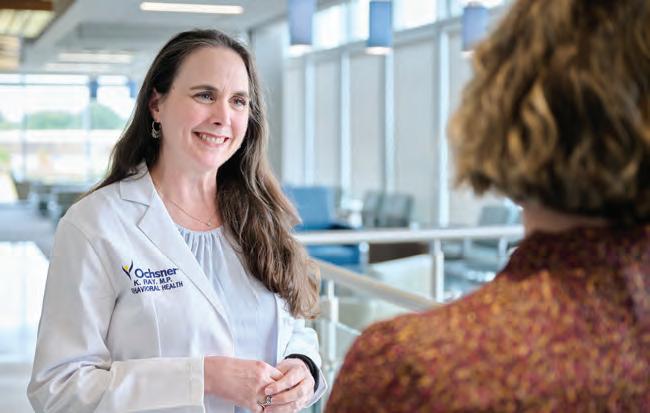
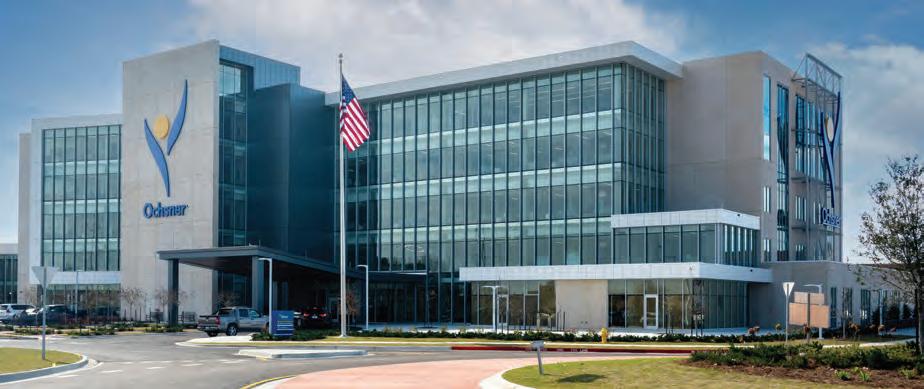
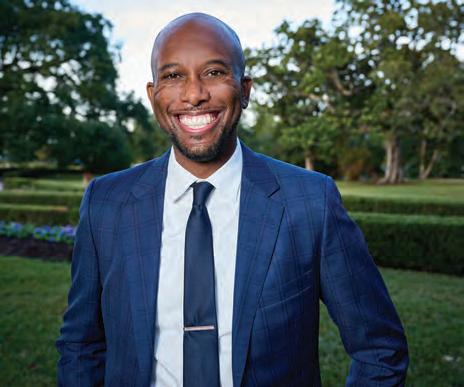
For decades, we’ve been keeping you healthy. With more than 400 local providers in 30+ specialties and 25+ locations, Ochsner Baton Rouge has you covered for all of your health and wellness needs. Our specialists are fully integrated with our hospital, outpatient, and short-stay surgery facilities, providing a personalized approach to your care in a comfortable setting. Offering digital medicine programs, virtual visits and extended hours, we are focused on making excellent healthcare convenient and accessible here in Baton Rouge.
Our promise to Baton Rouge’s future fuels our determination, as well as partnerships that create new opportunities. These include the Southern University “Jag Mobile” mobile health unit, Ochsner Community Wellness Center on the LSU campus and the Baton Rouge Ochsner Discovery School, all for the health of our community.
Visit ochsner.org/batonrouge to learn more.
What emerging trends in your industry do you foresee having the biggest impact in 2025?
On the technology side, we’re doing some exciting work in precision medicine and gene therapy, particularly within our large cancer center that spans Louisiana and Mississippi. The team is focused on genetic testing and targeted therapies, using patients’ genetic makeup to predict their risk for various cancers, like breast or colorectal cancer. Through partnerships, including one with MD Anderson, we’re advancing genomic testing and
It’s interesting that cybersecurity came up because, in our sphere, while we focus heavily on ethics and harassment, cybersecurity has now become a new priority and focus.
We’re evaluating our operations to make them more efficient while integrating technological solutions— whether it’s paying bills, applying for permits online, or similar processes. At the same time, we’re prioritizing the safety of the information our constituents provide.
Cybersecurity is a huge focus for our industry— and probably for many of yours too. We’re investing heavily in robust systems to counter threats, including advanced threat detection systems and extensive employee training. Employee mistakes, like clicking on the wrong link, are often the weakest link when it comes to breaches, regardless of the security measures you have in place.
We’re also engaging in ongoing conversations with regulators and security providers to stay
For me, it comes back to promoting Baton Rouge as a smart city — a place with accessible public spaces, widespread Wi-Fi, and the kind of infrastructure that attracts talent. Even though we operate nationwide, we’d much rather hire in Baton Rouge. This is where we’re growing, and investments in these kinds of initiatives help us tremendously.
From a health care standpoint, I remain bullish on home health care. If we can make improvements and create more initiatives around the home health care environment, it’s going to drive business growth. It’s a natural extension of what we do. When we started exploring this area, I compared it to managed services.
predictive analytics. This allows us to analyze family history and genetic codes to provide more precise predictions of disease potential. Additionally, our cancer group is heavily involved in clinical trials and research to push the boundaries of medicine and bring more predictive, data-driven approaches to patient care.
—Chuck Daigle
We want to ensure they aren’t receiving fraudulent text messages or other scams due to a breach on our end. The biggest trend we’re seeing now is cybersecurity as it relates to our operations. If someone hacks our system or gains unauthorized access, the potential consequences could be catastrophic due to the wide range of data we manage.
—Mayor Lionel Johnson
informed about emerging trends and to make smarter investments. Where do we spend the money? The fear factor can push organizations to overspend. It all comes back to making the right choices— finding the right advisors to guide us on what will make the biggest difference. Where do we allocate funds to achieve the most effective protection? While nothing seems foolproof in today’s environment, the goal is to minimize the damage and reputation risk.
—Jane Verret
In our industry, the model has shifted. Most businesses no longer pay hourly rates for IT support — they pay a fixed amount, and it’s on us to deliver reliable service.
Now, apply that concept to home health care. It’s not about providing medical care, but about delivering the infrastructure that makes it possible. If someone is being monitored at home, broadband connectivity must be flawless. Think about what happens if the connection goes down. If a critical heartbeat signal is missed, and something goes wrong, the consequences are catastrophic.
—Carlo MacDonald




GABRIEL IS A POWERHOUSE OF INDUSTRIAL ACTIVITY. With numerous chemical plants and other facilities, St. Gabriel is the starting point for a wide variety of products that are critical to the everyday lives of people around the globe. We are positioned perfectly off the I-10 corridor with enough green space for expansion and continued growth for the industries that keep our community moving.


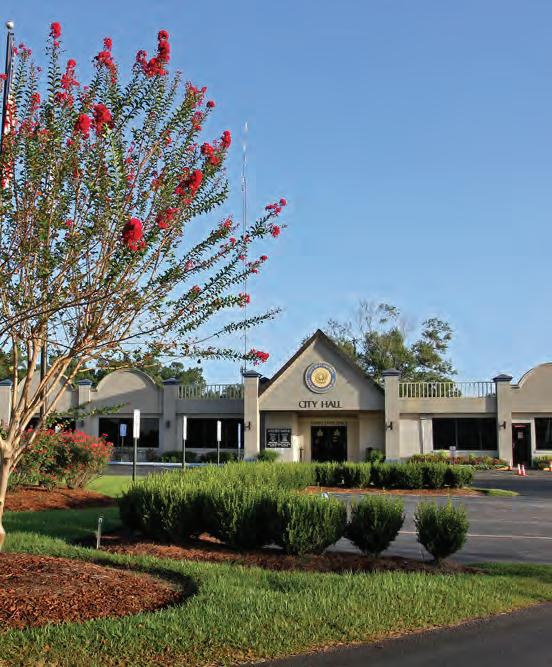


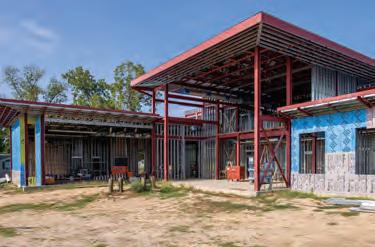
In 2025, my focus is primarily on retail and commercial growth. We’re actively working to strengthen relationships with the Baton Rouge Area Chamber and Louisiana Economic Development (LED). An article I read just this morning about data centers in North Louisiana caught my attention. I see potential for similar opportunities in St. Gabriel, and that’s on my radar.
We’re actively working to expand our retail sector. The City Council has been very proactive in this area. For instance, we’re planning to attend a national grocers’ convention as well as visit Madison, Wisconsin, to learn from their municipally funded grocery store model. These efforts are geared toward boosting the retail and commercial space in St. Gabriel.
—Mayor Lionel Johnson
If you could focus on one major initiative to future-proof your business or organization, what would it be and why?
From Ochsner Health’s standpoint, 2025 will continue to focus on growth and expansion within the region. This past year, we invested approximately $20 million in capital projects, including advancements in technology and new care venues. Key developments include our Ochsner Orthopedics and Sports Medicine Institute at Elite Training Complex on Burbank Drive, which houses a sports medicine and performance training institute, and our outpatient infusion center on Bluebonnet Boulevard, serving patients requiring intravenous treatments for neurological or infectious diseases. Investments in MRIs, robotic platforms, and other cutting-edge technologies remain a priority as we advance care delivery.
—Chuck Daigle
We’re deeply involved in the home health care space, which is a personal passion of mine. From a technology standpoint, we’ve been collaborating with several large home health care agencies to develop tools that improve care for aging adults and pediatric patients in their homes. It’s exciting to explore how we can extend innovations like those Chuck described into the home environment. For the past five or six years, we’ve been working with insurance providers, and the results are clear—keeping patients out of hospitals and cared for at home saves money and enhances efficiency.
—Carlo MacDonald
Technology has been our primary focus for a long time. We were actually the first credit union in Louisiana to offer online banking in 1997—which feels like forever ago now. Our current goal is to leverage technology to improve both efficiency and the member experience.
We’re investing in mobile banking enhancements, including chatbots, to handle routine tasks. This allows our staff to focus on more meaningful interactions, like providing personalized solutions for members. By transferring these smaller, manual tasks to technology, we create space for deeper conversations and individualized service. That’s a key part of delivering a better overall experience.
It’s critical for us to determine where to allocate funds wisely— figuring out which chatbots or routine tasks to automate makes the most sense for us. These are some of the detailed, practical decisions we’re working through to maximize value for our members.
—Jane Verret
What strategies are you employing to attract and retain top talent in an increasingly competitive labor market?
At Campus Federal, we place a lot of emphasis on culture and ensuring consistency throughout our organization. We focus on building a strong culture and reinforcing its core competencies. We have organizational promises that everyone knows and practices regularly in our work.
Of course, we also prioritize things like being competitive with compensation and offering career development opportunities. Career growth is especially important for younger employees, as Chuck mentioned earlier. They often want to advance more quickly than is realistic, but it’s crucial to show them that there’s a clear path forward beyond entrylevel positions. We help by providing growth opportunities and showing employees the ‘why’ and ‘how’ of reaching the next level.
The pandemic really showed us that we can operate entirely remotely. The challenge we faced, at least from our perspective, was that we lost a lot of our culture because everyone had their own little world going on at home. Now, what we’re seeing—and promoting—is the use of tools like Microsoft Teams to stay connected. In the past, if you had a problem, you’d walk over to someone and say, ‘Hey, I’ve got a client with this issue. How do you fix it?’ That in-person collaboration made a big difference. Today’s technology, even with Teams, isn’t quite there yet. We’re exploring other products to help foster collaboration and maintain culture.
There are tools out there, like online games and other
There’s a lot to that question, but I think it all starts with culture, as Jane mentioned. Culture is critical. It’s about creating an organization where you hire people who align with your values—whether that’s putting patients first, showing compassion, or maintaining integrity. These are general but vital values, and it’s important to ensure people subscribe to them.
It’s also about fostering inclusivity—valuing individuals from different walks of life and with diverse opinions. If someone aligns with our core values of care, compassion, kindness, and humility, we welcome different perspectives because they make us a stronger organization. Culture isn’t
We’re working to improve our HR department, focusing on expanding our social media presence and enhancing employee empowerment. Part of this initiative involves ensuring all employees are affiliated with a professional organization and monitoring their professional growth. At our last employee empowerment meeting, I specifically emphasized that my goal is for every employee to be part of a professional organization. We want to track their growth and create a plan for them to progress through the
Retention has always been a key focus for us. Our average employee tenure is 9.8 years, and just last week, we celebrated a 45th anniversary, a record for our credit union. We host milestone anniversary celebrations, with this year’s ranging from 10 to 45 years of service.
Finally, we prioritize making the workplace enjoyable. We host events like Family Day and Employee Appreciation Month to keep things fun. It’s more challenging now, as many employees prefer working remotely, but we’ve had to get creative in maintaining our culture and encouraging in-person interactions.
While we haven’t mastered all of this yet, we’re trying a variety of approaches and seeing success along the way.
—Jane Verret
engagement platforms, that can help bring teams together. That’s one of our key focuses—keeping our remote workers engaged. We do promote remote work, but we also encourage getting employees into the office a few times a week. It’s essential because, without offering remote options, you simply can’t attract the best talent anymore. Another priority is promoting our company here in Baton Rouge—making people aware of who we are and what we do, not just from a customer perspective but also for recruitment. We’ve started reaching out to local universities to introduce ourselves and highlight the opportunities available within our organization.
—Carlo MacDonald
static. It evolves and breathes within the organization, and we work hard to nurture that.
We’ve also enhanced benefits to reflect modern needs, including more flexibility and options like paternity leave. Additionally, we’ve strengthened our talent acquisition efforts, forming partnerships with vo-tech schools, two-year colleges, and four-year universities across Louisiana to attract talent. We’re even engaging with grade schools to expose students to career opportunities in health care.
While we haven’t mastered all of this yet, we’re trying a variety of approaches and seeing success along the way.
—Chuck Daigle
organization. The aim is for employees to see a clear path forward, rather than retire after 30 years at the same level. Our biggest area of focus has been law enforcement. We’re increasing pay, providing take-home units, and covering the cost of POST certification—about $10,000 per employee. Additionally, we’re participating in state programs that offer one-time supplements for individuals entering law enforcement.
—Mayor Lionel Johnson
Improving Healthcare Through Secure, Compliant, and Scalable IT Solutions.

New Care Models Require New Technologies.



We provide critical IT solutions for your healthcare organization:
Infrastructure & Application Managed Services
24/7 User Support for your Clinicians & Caregivers
Cybersecurity & Compliance Management Services
Healthcare Archives™: Legacy EMR Data Storage & Migration
Application Development, 3rd-Party Data Integration & Advanced Data Analytics
Unified Communications & Call Center Systems
Cloud Migration and Management
Healthcare IT Consulting

Exigo’s cloud infrastructure and application development teams truly understand the importance of technology in today’s healthcare environment, and they consistently deliver results.
CHAD SCOTT MANAGING PARTNER CORE OCCUPATIONAL MEDICINE


“There’s a scarcity of middle market private equity infrastructure investment firms in the United States. We saw that as an opportunity.”
JEFF JENKINS, co-founder and partner, Bernhard Capital Partners, with Managing Director Julius Bedford
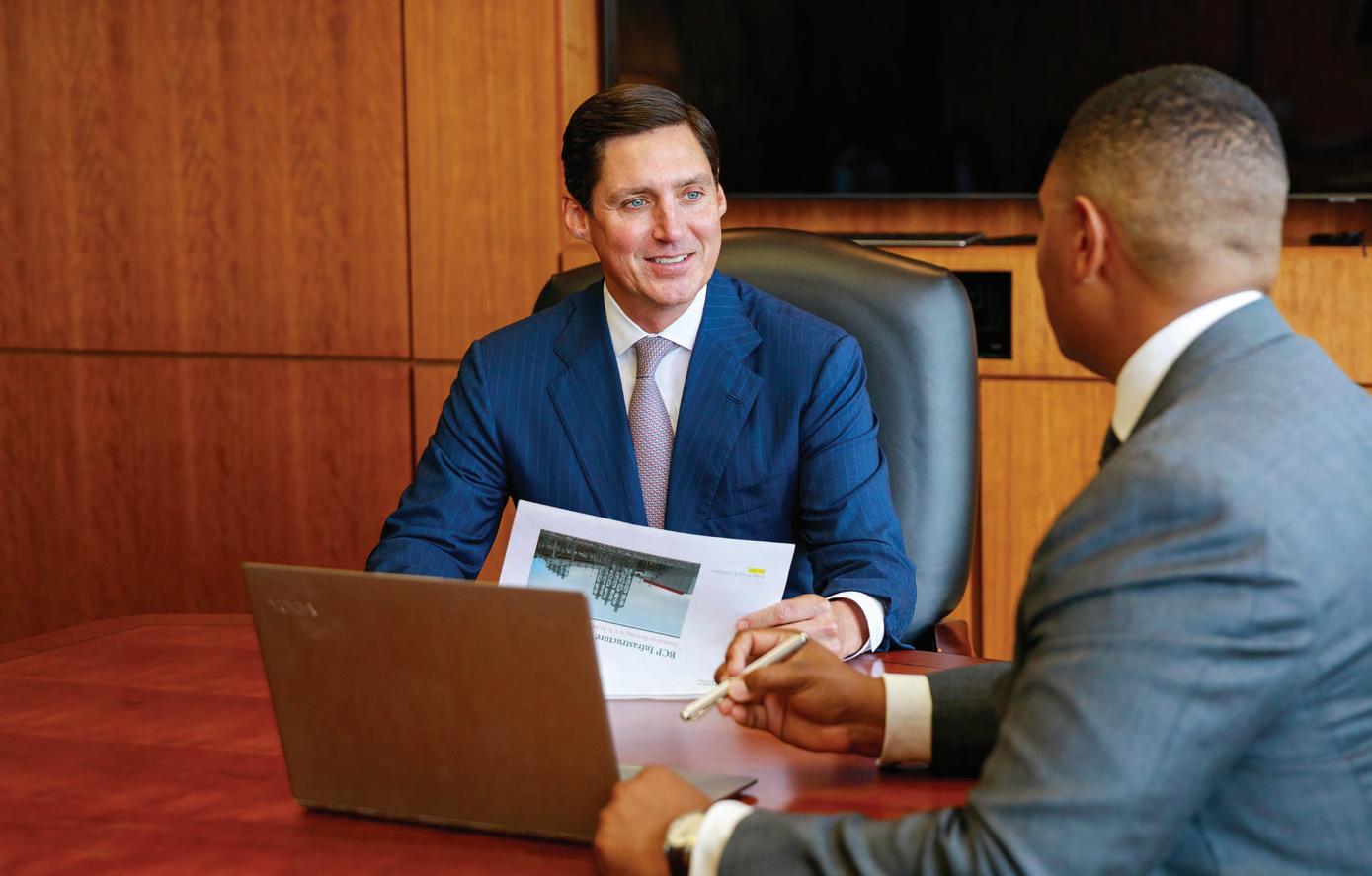
BY DILLON LOWE
BERNHARD CAPITAL Partners is building something big.
The Baton Rouge private equity firm has, over the course of the past few years, invested heavily in the realm of infrastructure. Through a series of strategic acquisitions, BCP has begun crafting a robust portfolio of energy and water assets.
But what’s the motivation behind that push, and how do all of the individual pieces of the puzzle fit together?
According to co-founder and partner Jeff Jenkins, the vision is simple.
“The vision is to be the clear leader in the middle market with respect to infrastructure services and value-added infrastructure investments,” he says.
At the heart of BCP’s investment strategy are two classes of funds: infrastructure services
and value-added infrastructure investments.
The term “infrastructure services” refers to the various types of essential services that support critical infrastructure systems.
BCP’s first infrastructure services fund was established in 2014 and closed in 2016 with capital commitments of $750 million.
Lemoine and United Utility as well as companies across state lines like New York-based RailWorks, the nation’s largest rail maintenance company.
22,000
Number of workers employed at Bernhard Capital Partners in the firm’s 15 infrastructure services portfolio companies. Of those, 7,000 are based in Louisiana.
The firm’s second infrastructure services fund closed in 2019 at $1.2 billion, and its third fund in that category closed late last year at $1.5 billion.
Investments under the umbrellas of those three funds include Louisiana companies like Allied Power, Brown & Root, Epic Piping,
Jenkins says he’s proud of the impact BCP has had in this space.
“We have 15 companies that provide infrastructure services between the three funds, and those portfolio companies equal about 22,000 employees that we employ,” Jenkins says. “And we’re very proud of the fact that 7,000 of those employees are based here in Louisiana.”
As for value-added infrastructure investments, BCP has deployed capital in two funds, the first of which
got its start in 2020. Through those funds, the firm invests in the “actual infrastructure itself,” Jenkins says, targeting assets across various sectors.
BCP has made some major acquisitions in this space thus far, some of which still require state and federal approval: ClearCurrent, a water and wastewater utility; Delta Utilities and New Mexico Gas Co., both natural gas utilities; Elevation, the operator of a fully integrated residential energy solutions platform; and National Water Infrastructure, a wastewater utility. The firm also reached an agreement with Entergy in October 2023 to acquire the company’s Baton Rouge and New Orleans gas distribution networks.
The assets under management across all five of BCP’s funds total over $5 billion.






EPIC LAND DEAL: Epic
Piping—a part of Bernhard Capital Partners’ investment portfolio since 2014—provides pre-engineered fabricated piping systems and components used in the power generation, pipeline transmission, offshore/subsea, structural steel, and mining markets. In mid-December, the 70-acre property on which its facility sits was sold to New York-based Fortress Investment Group for $43.8 million. United Weld Holdings CEO Remi Bonnecaze tells Business Report that the real estate transaction will allow Epic to continue to expand its global capacity.

BCP’s expansion into value-added infrastructure investments, Jenkins says, came about in large part due to an unfilled niche in the market.
“There’s a scarcity of middle market private equity infrastructure investment firms in the United States,” he says. “We saw that as an opportunity.”
According to Jenkins, BCP’s leadership team boasts a “significant amount of experience” in the utilities market—experience that lends itself well to navigating the operational demands and regulatory complexities of large-scale infrastructure investments. This expertise enables the firm to ensure each potential investment not only meets compliance standards but also aligns with BCP’s long-term vision.
$5B
that effort, as BCP regards natural gas as a “bridge” fuel that can provide reliable, lower-emission energy while renewable infrastructure matures. And by acquiring natural gas assets, Jenkins says the firm is helping utilities build up capital to invest in areas with high-growth potential like decarbonization, electrification and grid resilience against climate-related challenges.
Total assets under management across all five of Bernhard Capital Partners’ funds
“We believe that natural gas is the key ingredient to the energy transition in North America,” he says. “Natural gas, in our opinion, is a clean fuel that will continue to fuel homes—especially across the southeastern part of the United States—for the next 50 years at least and probably for the next 100 years. … We couldn’t be more proud of the position we’re in.”
understanding of the interplay between data and power demand. As data centers grow in both number and size, their energy needs will strain existing infrastructure, making it imperative for utilities to evolve. While U.S. power demand has been relatively flat for the past 20 years, the power grid will need to double its capacity over the next 12 or 13 years to keep pace with digital infrastructure growth. BCP is looking to strategically position itself at this intersection, investing in assets that will help utilities better position themselves for growth in this sector.
“We’re very excited about the convergence of data centers and power,” Jenkins says. “A lot of ancillary infrastructure is going to need to be developed for these new hyperscale data centers.”
Jenkins says BCP is particularly excited about the opportunities that exist in the backup generation solutions, cooling systems and substations that data centers require, and he’s optimistic about the role Louisiana will play in this burgeoning space.
“The intersection of digital infrastructure and power is changing in a big way, and I think Louisiana stands to benefit with companies like Entergy and others in the region that have a huge amount of nuclear power availability,” he says.
“I think there are some exciting things to come. … The public market is paying a lot of attention to this theme, and we’re proud to be right in the middle of it because we prepared ourselves in 2020.”
Looking forward, it seems likely that BCP’s infrastructure portfolio will only continue to grow. In October, Jenkins told PE Hub, a publication covering the private equity market, that the firm is interested in pursuing further utility acquisitions between $350 million and $1.75 billion in asset value, and that BCP could co-invest or partner with another firm to fund larger purchases if any enticing prospects emerge in one of its key markets.
A regulated water and wastewater utility that serves Currituck County, North Carolina, and Dearborn County, Indiana
Delta Utilities
One of the core components of that long-term vision is the role BCP will play in the energy transition, or the shift away from fossil fuels and toward more sustainable sources of power.
BCP aims to build an infrastructure portfolio that not only aligns with present energy needs but also lays the groundwork for a balanced, gradual shift toward renewables. The firm’s investments in regulated natural gas utilities are central to
Jenkins says BCP also sees a “generational investment opportunity” in powering the nation’s growing number of data centers.
Data centers have become essential to almost every sector of the economy due to the nearly ubiquitous demand for AI technologies and cloud computing. The U.S. data center market was valued at $61.09 billion in 2023 and is expected to reach $211.06 billion by 2034, according to Precedence Research.
BCP’s approach to digital infrastructure is driven by a holistic
A regulated natural gas utility that serves New Orleans
Elevation
The operator of a residential energy platform providing whole-home solutions through a combination of solar, energy efficiency, energy monitoring and energy storage technologies headquartered in Chander, Arizona
National Water Infrastructure
A regulated wastewater utility that serves Ascension, East Baton Rouge and Livingston parishes
New Mexico Gas Co.
A regulated natural gas utility that serves over 545,000 customers across New Mexico
GIVING BACK: The Brother Donnan Berry S.C. Student Center, completed in 2020, was the first new construction in over a decade on the historic Baton Rouge campus. Charles and Nancy Valluzzo, for whom the 600-seat Student Union is named, are high-level supporters of Catholic High School as are sons Chris and John, both graduates of the institution.

How the iconic high school provides a leg up in business.
WHEN ASKED THE question, “Where’d you go to school,” John Meek doesn’t respond with where he graduated from college.
10,566
“It means high school around here,” says Meek, co-founder of Faulk & Meek general contractors in Baton Rouge. “Every time I hear that, I’m going to answer, ‘Catholic High.’ I might get to LSU after that, but that’s what people mean when they ask.”
Number of Catholic High School living alumni
in south Louisiana. The phenomenon is well known in Greater New Orleans, where an affiliation with all-male Catholic high schools like Brother Martin, Jesuit and Archbishop Rummel also serves as social currency. In Baton Rouge, Catholic High trades on its 130-year history, boasting an extensive web of successful alumni with deep pockets and institutional fealty.
Episcopal School of Baton Rouge, The Dunham School, Baton Rouge Magnet High School, Catholic’s all-female counterpart, St. Joseph’s Academy, and others offer alumni networks ready to be mined.
BY MAGGIE HEYN RICHARDSON
The tendency to place what might seem to the rest of the country as outsized value on high school affiliation has special resonance
Catholic is by no means the only high school in Baton Rouge whose local graduates parlay alumni networks into business connections. University High School, The
But Catholic High has made this part of its brand, says director of advancement J.P. Kelly, a 1992 graduate. The institution’s tagline, “It’s more than 4. It’s a lifetime,” points to a belief that the school’s graduates will see lasting benefit from a CHS diploma.
“A quote I always heard was, ‘Having the Catholic High alumni
badge will open doors for you that other people may not have the opportunity to have,” says financial adviser and state Rep. Dixon McMakin, a 2005 graduate. “But then how you interact with people individually decides if you get to stay in that room.”
7,850
Number of living Catholic High School alumni who are still engaged with the school
Less likely to happen in cities with transient populations, the Catholic High brand is fueled by a demographic quirk in Louisiana. The state has one of the highest


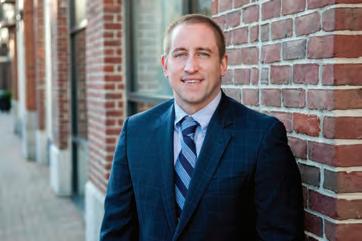
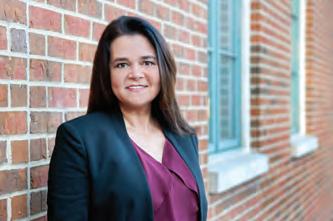
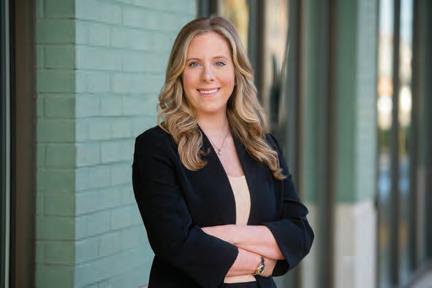
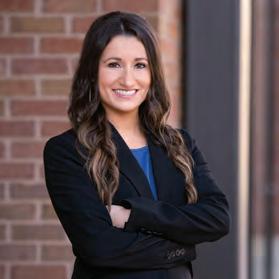
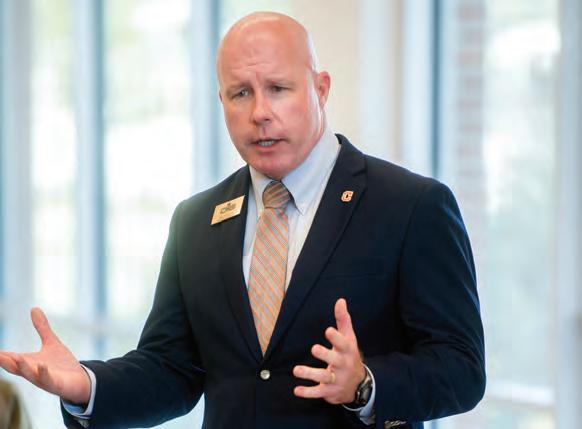
percentages of native-born residents in the country. Some 77% of Louisiana’s residents were born in the state, according to 2023 U.S. census data. A shared high school has the power to unlock business connections in a city with a critical mass of alums.
“Who’s my lawyer? Catholic High grad. My insurance agent? Catholic High grad. Who do I buy my cars from? Catholic High grad. Who’s going to look at my roof? Who’s my plumber? Who’s
my doctor? All Catholic High grads.”
J.P. KELLY, director of advancement, Catholic High School and Class of 1992
Catholic High grads,” he says
marketplace in which alums seek out goods, services and business opportunities from others affiliated with the school.
Kelly ticks off his own list.
Issue Date: Jan 2025 Ad proof #4
“It’s not forced,” Kelly continues. “It’s just that there are so many of us out there. Almost everywhere I look I see them.”
Rouge in 1894, then known as St. Vincent Academy. In 1957, Catholic High moved from its original downtown Baton Rouge location to its current site on Hearthstone Drive. Since then, it has continued to expand with several major capital projects that support both academics and athletics.
“We’re fortunate that a lot of our graduates are extremely successful,” Kelly says. “The opportunities to fundraise here are plentiful.”
The school’s endowment has topped $26 million, he says.
The current student population stands at 1,105 across grades eight through 12. Kelly says numbers are up despite a competitive local educational landscape and annual tuition of nearly $14,000.
1,105
• Please respond by e-mail or phone with your approval or minor revisions.
• AD WILL RUN AS IS unless approval or final revisions are received within 24 hrs from receipt of this proof. A shorter timeframe will apply for tight deadlines.
Kelly even points to what he calls the “Catholic High economy” in Baton Rouge, an ad hoc
“Who’s my lawyer? Catholic High grad. My insurance agent? Catholic High grad. Who do I buy my cars from? Catholic High grad. Who’s going to look at my roof? Who’s my plumber? Who’s my doctor? All
• Additional revisions must be requested and may be subject to production fees. Carefully check this ad for: CORRECT ADDRESS • CORRECT PHONE NUMBER • ANY TYPOS
At press time, Catholic High had 10,566 living alums; 7,850 of whom are engaged with the school, according to school data.
Current enrollment at Catholic High School across grades 8 through 12
The Brothers of the Sacred Heart founded the school in Baton

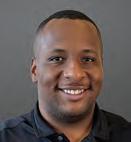
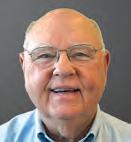
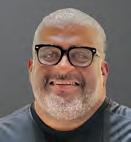
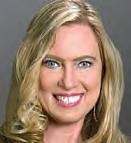

Meek, a general contractor and 1987 graduate, went into business in 2008 with fellow Catholic High alum David Faulk. He credits another graduate of the school, Henry Carville of Baton Rouge architecture firm Bani,
Rebuilding Together
Baton Rouge is a 501(c) (3) nonprofit and part of a national network of over 130 affiliates.
We provide free home repairs to help elderly, veteran, and disabled low-income homeowners live safely and independently.
Over the past 20 years, we’ve completed thousands of repairs in the Baton Rouge area, valued at over $4 million. As the only local organization offering these services, we rely on support from community partners, volunteers, and donors.
Carville & Brown, for giving the two their big break.
“That really helped us get off the ground in business, because Henry knew the foundation we had as Catholic High grads. We had worked with him previously,” Meek says. “The relationships that we made as a result of our Catholic High School education were a real catalyst for us plowing our own field.”
Alums have the opportunity to participate in numerous year-round events that foster relationships across generations of graduates and also support the school. Moreover, Catholicism itself— practiced by 22% of the state and its largest single religion—is part of the glue that makes Catholic High relationships stick, Meek says.
“What you go through in developing into a young man, and how you share that bond with everyone that’s been through that, too, I think is what separates it from college or other groups you’re part of,” says McMakin, who calls Catholic High football games and is known as the “Voice of the Bears.”
$14,000
Catholic High School annual tuition
“I think all high schools have an aspect of that,” he adds. “But because our high school is based off something bigger, and spiritual, it’s a uniquely different experience.”
McMakin says his parents were sold on Catholic’s ability to help him build business connections. He says they valued the network that going to Catholic would bring their son if he remained in Baton Rouge as an adult.
in 2023 when McMakin ran for the District 68 seat in the Louisiana House. McMakin says he crossreferenced his Catholic High directory with voter rolls to identify those in the district he believed would be likely to vote for him.
“I can remember walking up
to someone’s house in North Oak Hills and he said, ‘Hey, I saw you went to Catholic. I did, too. Good luck to you. You got my vote.’”
“The relationships that we made as a result of our Catholic High School education were a real catalyst for us plowing our own field.”
JOHN MEEK, co-founder, Faulk & Meek
“You run into people at church who went to Catholic,” he says.
McMakin suggests another reason why alums promote their Catholic High affiliation is because high school is such a formative time.
“They actually instilled that in me before I got to Catholic High about why they were going to send me there versus other schools— the value of those interactions,” McMakin says.
It worked on the campaign trail
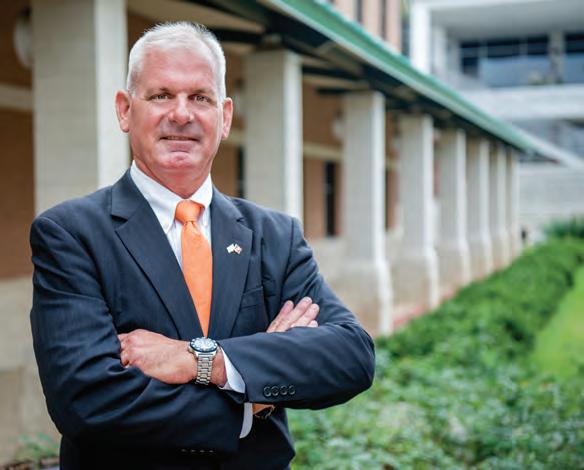

These LSU athletes turned sports skills into entrepreneurial success.
BY JORDAN ARCENEAUX
FOR MANY FORMER athletes, transitioning from sports to entrepreneurship is a natural next step. Three standout LSU alumni—Ryan Theriot, Blair Barbier and Russell Shepard—share how sports shaped their entrepreneurial journeys and gave them the mindset to also succeed off the field.
“I called [Baltimore Ravens] coach [John] Harbaugh and told him what I was about to do and you could hear a pin drop thousands of miles away.”
RUSSELL SHEPARD, on launching his company one week before he was scheduled to report to training camp with the Baltimore Ravens
“The [athletes] that do a really good job from a business standpoint are the ones that can find something that replaces their focus and it’s something they love the same way that they did their sport.”
RYAN THERIOT, co-owner, Parish Construction, with project manager Matt Quebedeaux

Russell Shepard knew the importance of having options outside of football from an early age.
Sheppard, who arrived at LSU as a much-heralded quarterback recruit from Houston in 2009, would go on to play three different positions for the Tigers while earning a degree in general studies.
After graduating from LSU, Shepard began his entrepreneurial journey during his NFL rookie season with the Tampa Bay Buccaneers in 2013, partnering with his parents to start a dump truck company. He remained in business with them until he sold his shares in 2016 while exploring new ventures.
In August 2020, Shepard, along with some other partners, launched Shep Boys Waste Management, which specializes in supplying industries such as construction
and real estate with portable restrooms. In addition, the company offers hand wash stations, holding tanks, RVs, and office septic pumping services.
Shep Boys, which serves the Houston area and now has 15 employees, was launched one week before Shepard was to report to training camp with the Baltimore Ravens.
“I called coach [John] Harbaugh and told him what I was about to do and you could hear a pin drop thousands of miles away,” Shepherd, now 34, says. “He told me good luck, and I knew once I hung up that phone with him, it was over for me in the NFL because you don’t tell the NFL no unless you’re Aaron Donald or Aaron Rodgers.”
Shep Boys’ yearly revenue increased from $475,000 in 2021 to $1.25 million in 2023 and was projected to reach $2.2 million in 2024. The company has also
expanded its operations to include disaster relief and helped in the aftermath of Hurricane Francine.
“It’s about learning on the move, trying to figure out how to hire right and trying to figure out how to find financial support, whether it’s a bank or its partners,”
Shepard says. “You have to figure out what the problem is in the industry and how you can correct it so you can continue to serve your customers.”
Shepard says athletes looking to branch out into business need to develop a sense of self outside of their respective sports.
“We’re built for this,” he says.
“Entrepreneurship is not easy. It’s hard whether your company is doing good or bad. There are ups and downs that come with it, and you have to be able to weather the storm. It’s no different than going through a football or baseball season.”
“The [athletes] that do a really good job from a business standpoint are the ones that can find something that replaces their focus and it’s something they love the same way that they did their sport.”
RYAN THERIOT, co-owner, Parish Construction, with project manager Matt Quebedeaux

‘A
For Ryan Theriot, a member of LSU’s 2000 national championship baseball team who would go on to play shortstop for three different major league teams, a love of business first began to take shape in grade school in Baton Rouge.
“I’ve always had a business itch,” he says. “Even as a kid, I could remember buying a pack of Now and Later [candy] and flipping them at Broadmoor Elementary. I always had that business entrepreneurial spirit. I just so happen to be able to hit a curve ball.”
Theriot’s first business endeavor was becoming a partner in Traction Sports Performance on Burbank Drive.
“It was tough to start my first venture while playing,” Theriot, 45, says. “It was hard because I had to learn to let go a little, but the people I surrounded myself with were the real MVPs. I got some great advice upon retirement from [six-time MLB All-Star] Will Clark. He told me to invest in things I love. I like watching things being built.”
After retiring from baseball, Theriot
Ateammate and fellow infielder with Theriot on LSU’s 2000 national championship team, Blair Barbier credits a mentor with helping him transition from baseball to business.
“I quickly realized I didn’t know much about the business world coming out of baseball and I needed to play catch-up,” Barbier says. “I was probably 27 at that time. The good Lord put a mentor in my life and he was a partner at Accenture.”
That mentor was Tommy Mann.
“He [Mann] was able to provide a knowledge base and he made a lot of really smart and successful people available to me.”
Though Mann died in 2017, the connections remained and Barbier leveraged that foundation to launch a consulting firm, eventually managing projects in the oil and gas sector including for ConocoPhillips.
Barbier would go on to serve as a finance officer for SEM, a New Orleansbased consulting firm that oversees laboratories, before joining the leadership team at SweetSpot, a sports equipment company co-founded by Joe Lawrence of Marucci Sports.
began a deeper dive into construction and related industries. He holds ownership in several companies, including T3 Industrial Solutions and Parish Construction. The companies have 30 to 40 direct employees and hundreds of contract laborers on the construction side. Some of Theriot’s partners include Richard Tilley, Trent Davis, Rick Ward, Joe Morales, Jim Woodworth and Ron Pollock.
“When you’re playing sports, you start the dedication to that sport at a very early age, and to reach the pinnacle of your sport, you’re one of the best in the world at what you do if you’re playing professionally,” Theriot says.
“That takes a lot of dedication, work and focus. When you transfer into the business world, former athletes have to replace that void somehow. The ones that do a really good job from a business standpoint are the ones that can find something that replaces their focus and it’s something they love the same way that they did their sport.”
In 2024, the backyard sports brand launched a fundraising round led by Elysian Park Ventures, the private investment arm affiliated with the Los Angeles Dodgers ownership group, with participation from Hockey Hall of Famer Wayne Gretzky.
Another figure Barbier, 46, points to as providing inspiration for his business success is legendary LSU baseball coach Skip Bertman.
“He [Bertman] just felt that if he had better people, then he would have more trustworthy people out there in those championship games,” Barbier says.
“The lessons that he t aught all apply in business. What I gained by playing baseball at LSU under Skip Bertman will be everlasting. It was a treasure of my life.”
“I quickly realized I didn’t know much about the business world coming out of baseball and I needed to play catch-up.”
BLAIR BARBIER, chief financial officer, SweetSpot
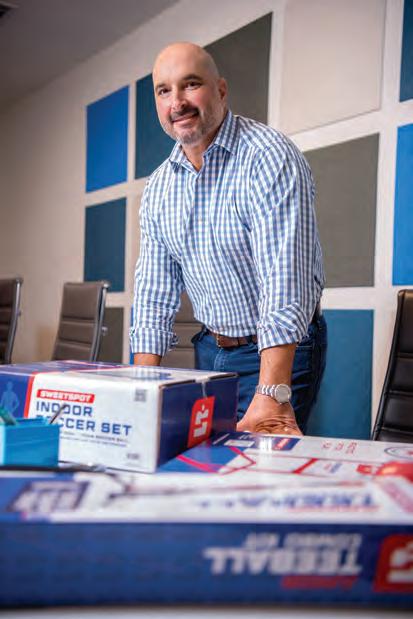
Pipeline companies are engaged in fierce disputes over prime routes in the race to south Louisiana’s LNG market.
BY SAM BARNES
IRRESPECTIVE OF THE current LNG permitting pause, existing demand and a readily available supply are fueling the construction of thousands of miles of new natural gas pipelines from the Haynesville and Permian shale plays.
As many as eight pipeline projects continue to advance across Texas and Louisiana to feed five LNG export projects currently under construction along the Gulf Coast, according to the most recent data provided by the U.S. Energy Information Administration’s Natural Gas Pipeline Project Tracker.
That equates to more than 20 billion cubic feet per day of new capacity to feed liquefaction trains coming online through the end of the decade.
And there’s no sign that things are slowing down. Gordon Gorrie, vice president of oil and gas research at Industrial Info Resources in Houston, is currently tracking 155 projects totaling $22 billion in natural gas pipelines and compressor stations across the two states that are either planned, designed or
under construction.
Gorrie, who monitors oil and gas investment worldwide, says most of the pipelines are making a beeline for the Gulf Coast to serve LNG facilities in Texas and Louisiana.
“The vast majority in Louisiana are coming out of the Haynesville Shale play, but the Permian Basin has opened up a bit, too,” Gorrie says. “Those come down to the Houston area and go from there across to Louisiana.
“And when a project is announced in Texas or Louisiana, there’s a good chance that it will move forward,” he adds. “The citizens of those two states are generally favorable toward putting in new pipelines, unlike in the Northeast and other places.”
Market dynamics favor a robust pipeline market in the long term, says Greg Upton, executive director of LSU’s Center for Energy Studies. That’s because U.S. oil and gas production is expected to grow for decades.
“Globally, it’s going to be driven by the developing world,” Upton says. “If we’re going to connect

production all over the U.S. with markets all over the world, midstream assets are going to be part of that connection. So as long as those longer trends persist, there
“Much of the time, these disputes are about territory rights.”
ERIC SMITH, director, Tulane Energy Institute
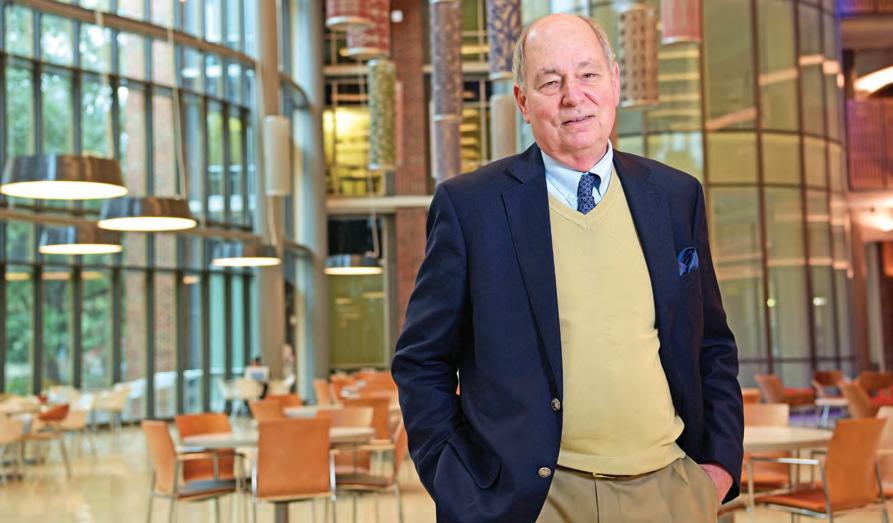
are going to be investments in these midstream assets to get product down to the Gulf Coast.”
The race to get natural gas from the Haynesville Shale to the southwest Louisiana LNG market has created an intensely competitive market as companies such as Energy Transfer, DT Midstream, Williams Cos. and New Generation Gas Gathering (NG3) battle for the same land space.
“Much of the time, these disputes are about territory rights,” says Eric Smith, director of the Tulane Energy Institute. “A pipeline is essentially a business that moves product from point A to point B, and if two companies are drawing on the same field or supplying the same terminal, there has to be some sort of agreement as to how that can be done in an orderly manner. Otherwise, they’re going to fight tooth and nail.”
Case in point: After months of
READY, SET, GO: The race to get natural gas from the Haynesville Shale to the southwest Louisiana LNG market has created an intensely competitive market as companies such as Energy Transfer, DT Midstream, Williams Cos. and New Generation Gas Gathering (NG3) battle for the same land space.

legal wrangling, Williams Cos. received the legal green light in late July to continue building its 1.8 billion-cubic-feet-per-day Louisiana Energy Gateway, or LEG, project—a natural gas pipeline that will fuel LNG export terminals with Haynesville Shale gas. That’s after a court threw out an Energy Transfer attempt to halt construction.
The two companies had been in a dispute in which Energy Transfer contested having the LEG line cross under its pipeline in DeSoto and Sabine parishes. Ultimately, the 42nd Judicial District Court in DeSoto Parish ruled that Energy Transfer could not block Williams from constructing the pipeline.
“Construction can begin in earnest on the Louisiana Energy Gateway, which is expected to be in service by the second half of 2025,” a Williams spokesperson said in a written statement.
LEG was just the latest project to overcome Energy Transfer’s crossing objections. DTM found an alternative route for its Louisiana Energy
Access Project after a court ruled against it last year. And Momentum Midstream recently settled its crossing dispute to move forward with its 1.7 bcf/d New Generation Gas Gathering LLC pipeline.
But the long-term threat to pipeline development isn’t legal infighting, but rather the external roadblocks thrown up by the federal government and courts, Upton says. In particular, the current LNG export facility permitting pause could have significant impacts on pipeline development for years.
“When an LNG facility owner signs a long-term contract to export gas produced on the Gulf Coast, they must line up every single part of that supply chain,” he notes. “You need to have the producer to produce the gas and the midstream assets to get it to the Gulf Coast … so when you throw in uncertainty over permitting, it has a ripple effect on everything because all these assets must come online at the right time.”

Continue growing your Louisiana businessand spend less time on busyness.
HR isn’t easy, but getting HR assistance is. Insperity’s team will help lessen your load, so you can do more for your business.
• Payroll and HR compliance
• Employee benefits
• Talent development
• HR best practices guidance
Are you running your business – or is it running you? Personalized HR support from Insperity can help.


Tulane’s Smith says environmental groups and the Federal Energy Regulatory Commission, or FERC, appear determined to disrupt new or expanded LNG export capability.
“Our best chances are with intrastate pipelines that remain within Louisiana, which don’t require FERC approval,” Smith says. “But, even in that case, NEPA [the National Environmental Policy Act] interpretations provide plenty of room for activists to meaningfully delay projects.”
The approval process becomes exponentially more complicated for interstate pipelines.
“A pipeline system can become very convoluted in the U.S.,” he adds. “If you want to ship natural gas from Oklahoma to Tennessee, for example, and you have a buyer and a seller, you still must have the approval of Arkansas. That doesn’t always happen.”
That has made transporting the gas to Mexico’s fledgling LNG market an attractive option for Permian gas producers.
And while there is an available supply of shale gas in Mexico, “extracting it is more trouble than it’s worth when the Americans are
selling it to them,” Smith says. “As a result, natural gas shipments from the Permian to Mexico have tripled in the last 10 years.”
More recently, New Fortress Energy Inc. completed an offshore LNG liquefaction terminal, known as Fast LNG 1, near Altamira, Mexico, that is shipping LNG from Mexico to Puerto Rico for less cost than shipping from Louisiana.
For now, most of the pipelines feeding Louisiana LNG facilities will come from the Haynesville Shale play, not the Permian. The pipelines benefit not only from being state based, but the gas they’re transporting is “LNG ready.”
“Haynesville’s main advantage is that it supplies ‘dry’ gas,” Smith says. “You can take that gas straight out of the ground, put it in a pipeline and it would meet all the specs. In Texas, they produce associated or ‘wet’ gas that comes from oil, and how much they produce is tied directly to oil demand.”
Wet gas also contains other gas liquids such as ethane, propane and butane that must be removed before transport through a pipeline.

Pipeline and Hazardous Materials Safety Administration.
“When you’re building pipelines over long distances, it’s not cheap.”
GREG UPTON, executive director, LSU Center for Energy Studies
“There are just fewer hoops to jump through,” Smith adds. “Crossing state lines brings FERC and all these other people into the act. And if an environmental group doesn’t like the answer they get from FERC, they immediately go to the circuit court in Washington [which adjudicates disputes with government agencies] and they usually get what they want.”
There are economic considerations as well. “When you’re building pipelines over long distances, it’s not cheap,” says LSU’s Upton. “These are expensive things, and you must deal with landowners, so proximity is an advantage.”

And generally, intrastate pipelines have fewer regulatory hurdles to clear, other than state approvals and permitting through the
Nevertheless, pipeline activity in the Permian is expected to increase, as the incentive to transport and sell the gas increases. “The market dynamics are there,” Upton says, “and these companies have made environmental commitments regarding flaring. Not only is it a valuable product, but they’ve also made all these commitments to minimize their carbon footprint.”
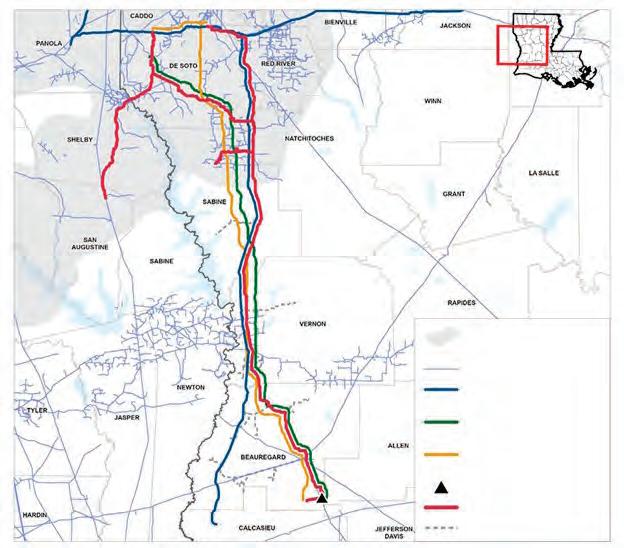


Wednesday, April 16, 2025 6:30 AM Buffet Breakfast 7:30 AM Program Begins Crowne Plaza Executive Center 61 ST
Please join the Louisiana Governor’s Prayer Breakfast Steering Committee in opening the 2025 legislative session with prayer for our Governor and all of Louisiana’s elected o cials. To purchase sponsorships or for more information, visit: www.LAGPB.org



OPPORTUNITY. OUTLOOK. CHALLENGES. GROWTH.
In this special section, business owners, CEOs and other leaders in the Capital Region share their opinions on what to expect in the coming year.
• Please respond by e-mail or phone
MAYOR-PRESIDENT
City of BR/East BR Parish
AS WE WELCOME a new East Baton Rouge Mayor-President, I am proud that we lead the state in the fastest absolute metropolitan area job growth rate, with 16,000 new jobs predicted to be added over the next two years.
In 2024, our new $200 million Amazon Fulfillment Center opened, hiring more than 1,400 people. Our 2025 City-Parish budget has kept public safety the top priority, representing more than half of General Fund appropriations. The budget funds two new police academies, a new firefighters’ academy, and 11 new positions within EMS. Over the past eight years, we provided Baton Rouge police officers with three pay raises, totaling a 13% increase.
We move into this new era in East Baton Rouge Parish proposing no layoffs of current City-Parish employees and maintaining 3% merit raises for eligible employees. Starting from a 5% contract rate with minority-, womenand veteran-owned businesses, today MovEBR — the largest transportation improvement project in our history — has awarded 27% of its contract dollars, more than $51 million, to these growing small businesses. We are also building more than 1,500 new affordable housing units to strengthen families and neighborhoods across the parish. The future here in East Baton Rouge is indeed bright.
WHAT I AM READING RIGHT NOW: THE NEW LOCALISM: HOW CITIES CAN THRIVE IN THE AGE OF POPULISM
BRUCE KATZ
AND JEREMY NOWAK

Local leaders are today’s problem solvers. The authors explain how the power to drive change and build successful communities is shifting from national governments to local levels, where public, private, and civic actors collaborate. We must adopt this new approach to problem-solving so our communities can become more economically competitive and socially inclusive – welcoming places that offer opportunities for all.
PARISH PRESIDENT
Ascension Parish
ECONOMIC GROWTH REMAINS STEADY in Ascension Parish, with a positive outlook projected for the next five years. In commercial and industrial capital investment, construction on $2 billion worth of projects is set to wrap up in the first quarter of 2025. Meanwhile, work has just begun with $6 billion in new projects, and decisions are pending on an additional $14 billion in potential investments. Over the past five years, employment has increased by 7%, while wages have risen by an impressive 19%, with manufacturing occupations leading the way in offering the highest wages.
Recently, Ascension Parish was ranked the Best Place to Live (Niche), the Healthiest Parish in LA (Robert Wood Johnson Foundation), the second-longest life expectancy in LA (Stacker), the highest median household income in the state, and the top-performing sizeable public school district. Ascension Parish Government is committed to enhancing the quality of life for our residents and the business community by continually raising expectations and positive outcomes.

I’m excited about a new podcast our communications team is producing for the Ascension Chamber of Commerce, Connecting Ascension. The hosts do a fantastic job diving deep into what makes the leaders in our community tick—how they got their start, their best business advice, and a bit about what makes them unique.Each guest brings something new, whether it’s insights into overcoming challenges, lessons on mentorship, or simply their passion for giving back to the community.
•
Carefully

CEO Kish Consulting
WITH TECHNOLOGY ADVANCING at a rapid pace, 2025 is shaping up to be the year when emotional intelligence becomes one of the most valuable assets in the workforce. When business owners, leaders, and employees use new technology with empathy, they become uniquely equipped to make a significant impact on those around them.
If I could give one piece of advice for the new year, it would be this: focus on your conversations. As much as you work to stay up to date with the latest technology, challenge yourself to master the best practices for building connection and empathy in your interactions.
Here are three simple steps to set yourself up for success in 2025:
Take time to prepare. It’s easy to skip the basics, but a few minutes of intentional preparation before important conversations can uncover valuable insights.
∙ Tell more stories. Stories create instant empathy and help build meaningful connections.
∙ Be accountable. Check in with yourself and don’t get complacent.
STEVE MELLOR
You can tackle every skill, course, and program on the planet, but if you’re not willing to work on yourself, you’ll never see the growth you strive for. Massive growth starts with massive self-awareness and improvement.
10X
2X
DAN SULLIVAN
Believing in yourself enough to go for the massive leaps is the hardest part of exponential growth. Once you lock in that belief, anything is possible.

Carefully check this ad for: CORRECT
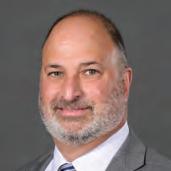
DAVID POLITZ PRESIDENT & CEO
Associated Grocers, Inc.
THE INDEPENDENT GROCER offers a unique value proposition to the consumer with competitive pricing, local, quality products with an emphasis on perishable, and a level of service that stands out against the bigger competitors. To the anxious consumer who has been strained by rising costs in nearly every aspect of their lives, their local Associated Grocers’ (AG) independent retail store offers the assurance that their food dollars are spent wisely, and they don’t have to worry about the quality or safety of their grocery purchase.
Regarding the economy, the consumer continues to be impacted as an expected easing of inflation has proven stubborn. I believe that the new administration’s energy policies will drive overall energy costs down, which should have a positive impact on grocery prices, as well as countless other industries relying on trucking and freight.
From a policy perspective, there is increased optimism amongst small business for an easing of government regulations and favorable tax policy. It will be interesting to see what impact Robert F. Kennedy Jr. as Secretary of Health and Human Services, has in raising our collective “food IQ.” Whether it be through legislation, regulation, or just a heightened awareness regarding the quality of our food supply, I think there could be a potential shift in consumer buying habits in favor of fresher products and simpler ingredients. Fresh, quality foods are squarely in the wheelhouse of the independent grocer and Associated Grocers. As the longest-running SQF-certified grocery distributor in Louisiana, AG and our grocers remain fully committed to maximizing food safety in and on behalf of today’s consumers.

I just finished reading Leonardo da Vinci by Walter Isaacson. Among da Vinci’s incredible talents, he was a master of observation with an insatiable curiosity. In today’s world, we spend so much time in a quest to be entertained—whether it’s TV, movies, sporting events, or other activities—that we are seldom alone with our thoughts, let alone in pursuit of our own natural curiosities.
•
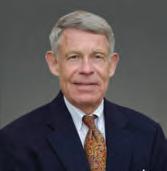
ED SILVEY CEO
Rouge Clinic
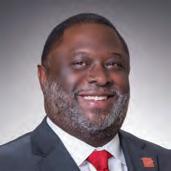
OVER THE PAST YEAR, The Baton Rouge Clinic, AMC has experienced remarkable growth, highlighted by the opening of new locations, the introduction of new services and the addition of exceptional physicians to our team. At the start of 2024, we expanded into Ascension Parish with the opening of a new office in Prairieville. In the fall, we ventured to Ouachita Parish by adding five new clinics in Monroe, and in December, we opened a new urgent care facility, strengthening our ability to serve patients not only in Baton Rouge but by bringing our trusted care to even more families throughout Louisiana—always striving to be close to home, no matter where you call home.
As we reflect on the past year, one of the most inspiring developments has been the welcoming of a new generation of physicians. Among them are individuals who are proudly carrying forward the legacy of their parents and continuing a tradition of delivering the highest quality of care. Not only do they bring fresh perspectives and innovative approaches to patient care, but they also build on the strong foundation previously established. Their presence, in conjunction with our Mayo Clinic Care Network affiliation, ensures the continuance of our commitment to providing exceptional patient care while bringing the latest advancements in health care to our community.
As we embrace the new year, The Baton Rouge Clinic, AMC remains steadfast in its readiness to confront the evolving health care challenges of our community. For nearly 80 years, our clinic has been a beacon of health care excellence, nurturing the dream of our founders through our unwavering commitment to serving our patients and our community.
MARK ANGELO
This book is a blueprint for better outcomes in population health. I also frequently read “Don’t sweat the small stuff, and it’s all small stuff”

WILLIE SMITH, ED.D CHANCELLOR
Baton Rouge Community College
AS WE LOOK ahead to 2025, Baton Rouge Community College (BRCC) reflects on an extraordinary year of growth and achievement. In 2024, we reached a historic enrollment of 17,625 students—the largest in our history—showing that our community continues to recognize BRCC as a foundation for accessible, highquality education. This achievement inspires us to keep expanding opportunities for individuals of all ages, backgrounds and professional aspirations.
We’re excited about the upcoming completion of the Our Lady of the Lake Nursing and Allied Health Building at BRCC. Scheduled to open by early summer, the new state-of-the-art facility will elevate our healthcare programs and position BRCC as a premier training ground for the next generation of skilled professionals. We’ll also break ground on the new Construction Trades Outdoor Training Lab, enhancing hands-on learning and expanding workforce development capacity.
In the coming year, we’ll focus on growing our credit and workforce training programs, along with dual enrollment and adult basic education classes. By refining our academic offerings, we aim to help more students overcome barriers and achieve their educational and career goals.
In 2025, BRCC reaffirms its commitment to serving, empowering and uplifting this community.

While it’s primarily about sports and pop culture, I’ve found it offers more than just hot takes on the game. It’s a source of honest, unfiltered opinions that challenge the status quo—something I value as a leader. Stephen A.’s willingness to speak candidly, question assumptions, and demand accountability serves as a reminder that, in higher education, we should do the same. We need to welcome honest dialogue, encourage critical thinking, and hold ourselves accountable to the communities we serve.
Baton Rouge General Foundation •
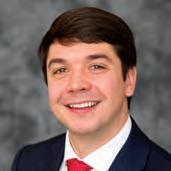
PRESIDENT
AS WE RING IN THE NEW YEAR, I’m excited about the future and the opportunities 2025 will bring to our city.
I’m proud to call Baton Rouge home and honored to work for such an incredible hospital system. In the year ahead, our foundation is eager to build on the success of Baton Rouge General’s mobile health unit program.
Since launching BRG Care on the Go in September, we’ve witnessed the tremendous impact of bringing our medical resources directly to those who need us most.
The Baton Rouge General Foundation is honored to work with so many generous individuals, corporations, and foundations in order to support our medical system. Through their support, we look forward to helping provide the best medical care possible this year and beyond to everyone we serve.

DIRECTOR OF AVIATION
Baton Rouge Metropolitan Airport
AS WE REFLECT ON 2024, it’s clear things are better in BTR, and 2025 promises continued growth and opportunity. Baton Rouge Metropolitan Airport (BTR) saw a 12% increase in passenger volume, solidifying its position as Louisiana’s second-largest airport. This success stems from the launch of nonstop American Airlines service to Washington Reagan National Airport and increased airline seating capacity—both made possible by your support.
BTR is served by the world’s three largest airlines— American, Delta, and United—with daily nonstop flights to five major hubs: Atlanta, Charlotte, Dallas-Fort Worth, Houston, and Washington. These connections offer seamless access to global destinations from your hometown airport.
Beyond flights, BTR is a growing hub for business development. With hundreds of acres available for lease and competitive ground rates, it’s an ideal location for aeronautical and non-aeronautical projects.
As an enterprise fund generating its own revenue, BTR operates at no cost to local taxpayers, delivering a $1.1 billion annual economic impact and supporting 4,500 jobs. In 2025, we’ll continue providing better service, better connections, and better opportunities for the Capital Area.
WHAT I AM READING RIGHT NOW: THE TRILLION DOLLAR COACH
ERIC SCHMIDT, JONATHAN
ROSENBERG, AND ALAN EAGLE
Bill Campbell, a former football coach at Columbia University went on to become a mentor to some of Silicon Valley’s most successful executives including Steve Jobs, Tim Cook, and Sheryl Sandberg. Bill focused heavily on the importance of leading with empathy, building personal relationships, and teamwork as the foundation for successful leadership in any industry. Even today his “people first” mentality still impacts some of the biggest and most respected companies in the world.
WHAT I AM LISTENING TO RIGHT NOW: LIBBY AUDIO BOOKS

I’m not currently listening to a Podcast, but while I’m navigating Baton Rouge traffic, I enjoy listening to audio books on Libby. Libby is an app offered by the East Baton Rouge Parish Library, and I highly recommend you download it. All you need is a library card, and you can access thousands of audiobooks free of charge.
• Please respond by e-mail or phone with your approval or minor revisions.
•
•
Carefully
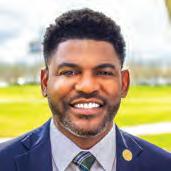
COREY WILSON SUPERINTENDENT
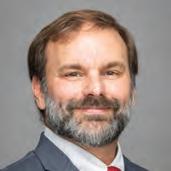
AS BREC TRANSITIONS from the second Imagine Your Parks plan (2015-2024) to the new Imagine Your Parks 3 plan, this year promises to be a significant one for the park system. We are excited to engage residents of East Baton Rouge Parish as we plan for a more sustainable portfolio of recreation centers and operations while maintaining a Gold Medal standard of quality moving into the next decade.
This year, among many planned projects, we will break ground on the first phase of Airline Highway Community Park and celebrate grand openings for the newly constructed, state-of-the-art recreation center and pool at Howell Community Park and the new Nature Center at Frenchtown Conservation Area. We will also continue construction on the Freedom Heritage Trail, which will connect north Baton Rouge to south Baton Rouge, enhancing connectivity for pedestrians and bicyclists. Our commitment to providing exceptional parks, trails, natural resources, and recreational experiences remains steadfast, and we are eager to work alongside our community to make 2025 a landmark year for BREC.

I primarily read current news articles and executive leadership pieces from outlets such as the Harvard Business Review I’m also an avid listener of sports talk media, where I gain valuable insights on teamwork, leadership, culture development, collaboration, planning, winning and losing, and other key takeaways that help me in my role as superintendent of our large park system.
H. BROOKS LEWIS, CCIM PRESIDENT & CEO Citizens Bank & Trust
AS WE LOOK AHEAD TO 2025, Citizens Bank is optimistic about the opportunities the new year will bring. Our commitment remains steadfast in what has always set us apart: building strong relationships with our customers and providing tailored solutions to meet their unique financial needs.
In an ever-changing economic environment, we anticipate rate cuts throughout the year, potentially creating favorable conditions for businesses and individuals alike. Whether it’s expanding access to credit, optimizing savings strategies or supporting growth investments, our team is ready to guide you through these opportunities with expertise and personalized care.
As a community bank, our success depends on the trust you place in us. We will continue to invest in understanding your goals and delivering the exceptional service you deserve.
We wish all our customers a safe, healthy and prosperous 2025.
JEFF OLSON

This book illustrates that success or failure is not a sudden event but the cumulative outcome of small, consistent actions compounded over time. The Slight Edge emphasizes the importance of discipline, incremental progress, and daily commitment to simple yet vital tasks that often go unnoticed. These actions, repeated consistently, may seem insignificant in the moment but are key to long-term success.
•
•
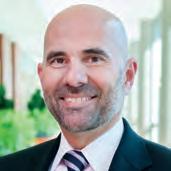
EDGARDO TENREIRO PRESIDENT & CEO
Baton Rouge General
LOUISIANA’S HEALTHCARE LANDSCAPE faces both hurdles and opportunities in 2025. State-level tax reform and potential budget deficits may strain the sector, while federal shifts such as Medicaid cuts, changes to the Affordable Care Act, and reduced Medicare reimbursements could compound challenges. Efforts to reduce government spending add further pressure.
Technological advancements, particularly in artificial intelligence, offer a chance to revolutionize care. AI can enhance diagnostics, predictive analytics, and personalized treatment, but smaller practices may struggle to adopt these innovations. Workforce shortages, especially in nursing and physician roles, remain a pressing issue. Aging populations and chronic conditions increase demand, yet structural barriers limit talent pipelines. Industry consolidation continues to reshape healthcare as organizations grow larger to address systemic issues. At Baton Rouge General, we’re addressing these challenges head-on. We’re investing in AI infrastructure and collaborating with the East Baton Rouge School System to expand Medical Focus Choice schools, inspiring North Baton Rouge students to explore healthcare careers. Our BRG Nursing School continues to grow, and our partnership with the Edward Via College of Osteopathic Medicine strengthens residency programs.
As a locally governed health system, we prioritize physician-patient relationships and partner with likeminded institutions to build the healthcare system of the future.
BATON ROUGE GENERAL MEDICAL CENTER

We talk to physicians and patients about what happens behind the scenes in the healthcare industry.

DIRECTOR
East Baton Rouge Parish Library
FOR 85 YEARS, the East Baton Rouge Parish Library has been dedicated to strengthening businesses, promoting workforce development, and supporting entrepreneurship across the parish. We’re committed to enhancing technology services, databases, and online resources, offering cutting-edge training tools and initiatives to help businesses compete globally. With a library card, you can access free premium resources through ebrpl.com/ DigitalLibrary, including employment training courses, educational programs, and business databases, along with eBooks, movies, magazines, music, language lessons, and more.
Our Small Business Service offers free programs and tools to help businesses thrive, including consultations with business librarians who can guide you in using powerful tools like Data Axle, Mergent Intellect, and Gale Business: Plan Builder. We’ve also added Skill Mill and Transfr for VR and AR job training. Need staff training? Our concierge service curates collections of continuing education courses tailored to your team’s needs. The library is here to help professionals and their families enhance their quality of life and succeed in today’s competitive world.
Contact us at smallbusiness@ebrpl.com to get started.
WHAT I AM READING RIGHT NOW: THE SOURCE
EAST BATON ROUGE PARISH LIBRARY NEWSLETTER

Most of my current reading material consists of professional journal articles. It’s important to stay on top of trends in my field and learn new ideas and strategies to help achieve our library’s goals.
•
•
Carefully
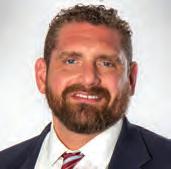
TOM KUSLIKIS CEO EFCU Financial
AS WE APPROACH 2025, the financial landscape for credit unions is set for significant transformation. The year ahead will bring both challenges and opportunities as we navigate economic pressures, technological advances, and evolving member expectations.
Rising interest rates and inflation will continue to impact borrowing and saving behaviors. Members will seek personalized financial guidance, presenting credit unions with an opportunity to strengthen relationships through tailored solutions and education.
Technological innovation will be key. Artificial intelligence and machine learning will enhance member experiences, from personalized banking to streamlined lending processes. Credit unions that invest in these technologies will lead in convenience and trust.
Meanwhile, regulatory scrutiny will grow as concerns about data privacy and cybersecurity intensify. Credit unions must ensure strong compliance frameworks while maintaining their reputation as safe, ethical institutions.
Above all, our commitment to community and inclusion remains vital. In 2025, credit unions can reaffirm their role as trusted partners, driving financial accessibility and community-driven initiatives. It will be a year to lead with innovation, resilience and purpose.
•
•
• Additional revisions must be requested and may be subject to production fees.
Carefully check this ad for: CORRECT ADDRESS • CORRECT PHONE NUMBER • ANY TYPOS This ad design © Melara Enterprises, LLC. 2024. All rights reserved. Phone 225-928-1700
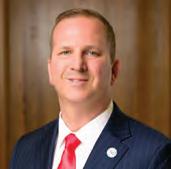
Iberville Parish Government
AS WE STEP INTO 2025 , I am optimistic and excited about the opportunities ahead for Iberville Parish. Building on the successes of 2024, this year will be pivotal as we prepare for transformative projects and long-term growth.
A top priority remains the Mississippi River Bridge. With the environmental impact study set to be completed in early 2025, we will soon learn the chosen location for this critical infrastructure in Iberville Parish. This bridge will be a game-changer, easing traffic congestion and opening new corridors for economic development. We continue to advocate for funding and collaboration at the state and federal levels.
We are also focused on implementing a comprehensive master plan to ensure sustainable and innovative growth. Supporting small businesses, fostering innovation, and prioritizing residents’ needs will guide every decision. With our economy thriving and sales tax revenues at record highs, we have a strong foundation to turn plans into action.
The future of Iberville Parish is bright. Together, we’ll seize the opportunities of 2025 to build a community that serves generations to come. Let’s move forward with determination and vision.
Happy New Year!
WHAT I AM READING RIGHT NOW: GOOD TO GREAT JIM COLLINS
A few takeaways are as follows:
• Level 5 Leadership: Great companies are led by humble yet determined leaders who prioritize the success of the organization over personal ambition.

• Right People, Right Seats: Building a great team starts with having the right people in the right roles, even before setting the strategy.
• The Hedgehog Concept: Focus on what you’re deeply passionate about, what drives your economic engine, and what you can be the best at.
• Culture of Discipline: Success comes from disciplined people, thought, and action, supported by a clear vision and accountability.
WHAT I AM LISTENING TO NOW: LOUISIANA CONSIDERED PODCAST

Louisiana Considered brings in-depth news and lively conversations about the stories that matter most to South Louisiana. The news magazine airs Monday through Friday at noon and features top journalists, newsmakers and artists from the region. The show is produced by the WWNO and WRKF newsrooms and airs in both New Orleans and Baton Rouge.
• Please respond by e-mail or phone with your approval or minor revisions.
• AD WILL RUN AS IS unless approval or final revisions are received within 24 hrs from receipt of this proof. A shorter timeframe will apply for tight deadlines.
• Additional revisions must be requested and may be subject to production fees.
Carefully
RONALD J. FALGOUST PRESIDENT & CEO
First American Bank and Trust
FIRST AMERICAN BANK AND TRUST celebrates 115 years of service to the citizens, businesses and organizations of Southeast Louisiana. Strength, independence and innovation are the pillars supporting the bank as it looks toward the future. The board of directors is committed to making the region stronger while maintaining its core value of customer service. This commitment has helped expand the bank’s footprint from a single branch in St. James Parish to serving 11 parishes with 25 offices. The bank’s mission is to meet the financial needs of Southeast Louisiana’s businesses and residents while delivering high-quality customer service. The bank has always been a place where values of honesty, loyalty and trust matter and where every customer can expect to receive friendly, personalized service. First American has become a leader in community banking by offering innovative products equal to those of national banks, but with the personal touch that only a local bank can provide. Today, First American Bank provides a comprehensive suite of financial products and services to customers across the region. It remains a fully independent bank with more than 200 employees and over $1.3 billion in assets. For more than a century, First American Bank has helped countless customers achieve their dreams, from buying their first home to starting a business. The bank’s leadership and employees take an active role in supporting local civic groups, charities and projects. They take ownership of the relationships cultivated through bank partnerships. While the bank has grown over the years, it has never lost the heart of its business: local relationships. It’s the spirit of First American, a banking tradition since 1910.
WHAT I AM READING RIGHT NOW: THE NIGHT AGENT MATTHEW QUIRK

I would recommend The Night Agent for its intense, fast-paced storytelling and its intricate blend of political intrigue, espionage, and thrilling action. The novel keeps readers on the edge of their seat with unexpected twists, high stakes, and well-drawn characters. It effectively combines the tension of a conspiracy with the depth of its protagonists, making it a gripping read for fans.
JEFF KLEINPETER OWNER
Kleinpeter-Kennedy Pool Builders, LLC
THE OLDER I GET; the faster January 1st arrives. As we learn to navigate change, we continue striving to improve customer service, strengthen our employees, and adapt to ever-increasing government regulations. We must keep our chins up, report with enthusiasm each day, and look to the horizon as a team.
The year 2024 was challenging, but as another January 1st approaches, I am filled with excitement and anticipation for new opportunities. We started with one client, cleaning their pool and handling repairs. Today, we serve 300 weekly clients and repair approximately 130 pools each week. In addition, under our recently formed Kleinpeter Family Pool Builders, LLC, we now build and remodel pools.
Opportunity is all around us—often right under our noses. Sometimes, we just need to pause and appreciate it. A great team is no accident. It requires constant training, open communication, and a commitment to growth. When it all comes together, the rewards are tenfold. We remain dedicated to satisfying our clients. Do we drop the ball sometimes? Unfortunately, yes—but we work hard to learn from our mistakes and do better next time.
Thank you, Louisiana, for giving our family this incredible opportunity.
WHAT
I watch the news at least 5 times per day. Especially WBRZ and FOX News.
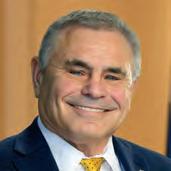
2024 WAS A YEAR of major progress for Livingston Parish. We made significant strides in disaster preparedness by upgrading our Emergency Operations Center, enhancing technology and expanding readiness across the parish. To address a longstanding issue, we launched our Litter Abatement Division, taking direct action to clean up our communities. Livingston Parish’s first master drainage plan is officially in motion, laying the groundwork for meaningful improvements to drainage parishwide. We also made progress toward establishing comprehensive animal control services and advanced critical desnagging projects on the Amite River, Old River, Petite Amite River and Blind River.
In 2025, we’re focused on keeping this momentum going. We’ll complete the current river projects and start new ones, further improving flood resilience. Plans are on track to expand our animal control facility and roll out a parishwide animal control service. We’re also launching multiple parish road overlay projects to improve infrastructure and connectivity. Additionally, we’re working to improve our Community Rating System (CRS) score, which will directly reduce flood insurance costs for residents.
We’ve accomplished a lot this year, but there’s more to do. Together, we’re building a stronger, safer and cleaner Livingston Parish for the future.
WHAT I AM LISTENING TO RIGHT NOW: MAXWELL LEADERSHIP PODCAST
One of my staff recommended it, and it’s perfect for my schedule—it’s short, direct and packed with practical education. The latest episode I tuned into was all about influence. It reinforced something I already believe: Leadership isn’t about your title or position; it’s about your ability to positively impact others. Another key takeaway? Growth starts with self-discipline. If you want to lead others effectively, you’ve got to lead yourself first. It’s not flashy, it’s not complicated, but it’s powerful. The podcast cuts through the noise and gives you tools you can actually use. That’s what I look for —something I can apply to make myself and the people around me better.
• Please
•
•
Carefully
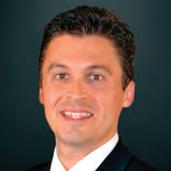
EXECUTIVE DIRECTOR
Louisiana Associated General Contractors
AS WE EAGERLY EMBRACE 2025, the sentiment is one of cautious optimism. Consider these facts. According to the Bureau of Labor Statistics, national construction employment grew at 2.6% year-over-year, nearly double the pace of total nonfarm payroll employment. In Louisiana, that number is an impressive 6.7%, ranking near the top among neighboring states. Overall, 41 states showed an increase.
Construction wages have outpaced the private sector since 2022, and most contractors report actively hiring and seeking workers. The Dodge Momentum Index, a leading indicator for nonresidential building projects, rose 13% year-over-year. Supply chain issues have improved, with some pricing rising, though less volatile.
Funding for construction has increased over the past two years and is expected to remain elevated for the next 2-3 years. While there are concerns over tariffs, immigration policy, and rising deficits, the new leadership in state agencies and tax code reform offer hope for improvement.
Looking ahead, the construction community is cautiously optimistic that 2025 will bring progress, and we stand ready to advocate for these advancements.
HARDCORE HISTORY
DAN CARLIN

Hardcore History – I enjoy learning about how and why certain things came about. Reminds me of the phrase, “Learn from the past mistakes, so we don’t repeat them.” Also Work / Life by Adam Grant – constant struggle to achieve some balance between the two, Ted Talks Daily – learning and growing to try and become a better version of myself. I’m currently reading Rethinking America’s Highways & Green Lights.
•
Carefully
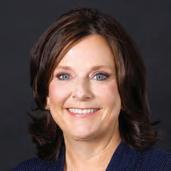
KRISTIN WALL PRESIDENT & CEO LWCC
2025 BRINGS AN OPPORTUNITY for us as business leaders to look back at what we should keep doing, and to look ahead and consider what we could be doing. It’s a time to reflect on what truly drives business success. For LWCC, our non-negotiables are clear: our customers are the most important stakeholder to the business, our employees are the most important stakeholder in the business, and providing for injured workers is the reason for our business. Everything else—processes, strategies, and structures—is open to innovation. Embracing an innovation mindset enables businesses to adapt to changing societal values, helping them stay relevant and thrive. It allows us to dream big, asking “how might we” while staying grounded in our core principles. Balancing principles and an openness to evolve is how we continue to grow and succeed in an ever-changing world, and businesses who can align innovation with purpose will lead the way.
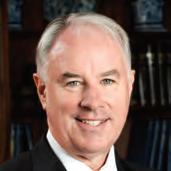
JOHN KIRWAN, PHD EXECUTIVE DIRECTOR
Pennington Biomedical Research Center
PENNINGTON BIOMEDICAL RESEARCH CENTER has established Louisiana as a global leader in metabolic health research and innovation. With a mission to eliminate chronic diseases like obesity and diabetes, we’re not just conducting research—we’re creating real-world solutions that impact lives and drive economic growth. In 2024, we secured new funding, bringing our total to more than $215 million in active grants and contracts. These funds fuel cutting-edge research with transformative potential for individuals, communities, and healthcare systems. We also strengthened our team by recruiting globally recognized scientists and enhancing our business development division to turn breakthroughs into marketready solutions.
This year, we expanded our community impact with the launch of Small Shifts and Greaux Healthy, initiatives supported by the State of Louisiana. These programs translate our scientific expertise into actionable tools and resources, addressing Louisiana’s most pressing health challenges and reducing healthcare costs.
As we look to 2025, we’re deepening our focus on solving major health problems, fostering public-private partnerships, and creating lasting impact. We’re excited to shape a healthier, more prosperous Louisiana.
WHAT I AM LISTENING TO RIGHT NOW: PURPOSE & PROFIT
DAVE RALEY AND CARLY BERNA

I’ve been listening to Purpose & Profit. It offers valuable insights on aligning business strategies with meaningful purpose to drive sustainable success. The podcast underscores the importance of embedding purpose into a company’s core mission, emphasizing that organizations that prioritize purpose alongside profit tend to foster stronger brand loyalty, employee engagement, and long-term growth.

With access to over 50,000 educational videos and the ability to connect with fellow clinicians around the globe, this platform keeps me up to date on advances in science and medicine.

EXECUTIVE DIRECTOR
Port of Greater Baton Rouge
2024 HAS BEEN ANOTHER STRONG YEAR for the Port of Greater Baton Rouge, driven largely by the performance of private sector tenants continuing to expand and improve their cargo-handling capabilities. Carrying this momentum into 2025 will result in added liquid bulk cargo transfer capacity through the addition and rehabilitation of another deep-draft berth on the Mississippi River, the construction of conveyance to improve grain-handling efficiencies at the grain elevator, and the modernization and strengthening of the port’s oldest deep-water dock.
Also contributing will be the finalization of a collaborative study by the lower Mississippi River ports to identify import and export cargo opportunities, not only for the Mississippi River but for the entire state of Louisiana. These developments, coupled with the U.S. Army Corps of Engineers’ ongoing project to deepen the Mississippi River to a maintained 50-foot depth to Baton Rouge, and the Port of New Orleans’ progress on building the Louisiana International Terminal, provide a very positive economic outlook for the coming year.
The Port of Greater Baton Rouge has partnered with the Port of New Orleans in recent years to shuttle full containers downriver from Baton Rouge to New Orleans for overseas exports. With the completion of the Louisiana International Terminal, the port will be able to shuttle even more full containers downriver in the future.
As in the past, the staff and commissioners of the port will pursue new maritime opportunities that contribute to the growth and economic viability of the region and the state of Louisiana.
CARGO MARKET ANALYSIS AND STRATEGY FOR THE LOWER
This study sets the stage for identifying strategic directions for potential maritime market growth and the expansion of cargo markets along the Lower Mississippi River. It also includes recommendations on how best to grow Louisiana’s maritime industry. It was an intriguing and insightful read and will be extremely helpful in making decisions as they pertain to how to best administer the Port of Greater Baton Rouge.
•
•
Carefully

STAN LEVY FOUNDER & CEO SASSO
SASSO, A LEADING BRANDING AND MARKETING AGENCY, continues to deliver powerful business growth for clients across industries. With an extensive background in healthcare, retail, food and beverage, financial services, industrial, and technology sectors, the agency thrives on turning challenges into opportunities.
As the marketing landscape evolves, SASSO stays at the forefront, leveraging emerging technologies like AI-driven tools to transform how brands connect with audiences. These innovations enable personalized experiences and measurable results. But SASSO doesn’t just adapt to change — it leads, equipping clients to succeed in a dynamic market.
This year’s achievements highlight SASSO as more than a marketing, advertising, and communications company. It is a trusted partner in its clients’ success. Driven by a team of passionate creatives and strategic thinkers, SASSO crafts compelling brand stories, solves complex challenges, and fosters meaningful connections. From emerging businesses to established brands, SASSO consistently delivers growth at every step.
LEIF
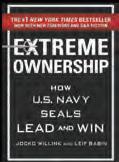
This book emphasizes the importance of fostering a culture of ownership while empowering individuals to make decisions, learn from mistakes, and overcome challenges. Some of the most impactful takeaways include:
∙ There are no bad teams, only bad leaders.
∙ Prioritize and execute.
∙ Keep things simple.
•
Carefully

JEFF KLEINPETER OWNER Kleinpeter-Kennedy
PRESIDENT & CEO
The Celtic Group
THE U.S. MARITIME LOGISTICS SECTOR, including barge and ocean freight, is expected to grow in 2025, supported by increasing global trade and investments in port infrastructure. Despite challenges such as regulatory compliance, workforce shortages, and port congestion, Celtic Marine & Logistics is prepared to deliver innovative solutions to ensure seamless operations for clients navigating this evolving market.
The trucking industry is poised for significant growth, driven by e-commerce expansion and the demand for efficient domestic transportation. Advances in supply chain technology and the push for sustainable logistics are fueling fleet management innovation. Celtic Inland Logistics remains agile, addressing challenges like driver shortages and infrastructure constraints to provide strategic, dependable service.
Film production in Louisiana is set to surge in 2025, spurred by increased demand for streaming content and strong incentives for on-location shoots. This growth will create jobs and support local businesses. Celtic Studios is ready to back this dynamic industry, further cementing its role as an economic driver in the state.
The Celtic Group remains committed to fostering innovation, growth, and value across all sectors, driving success into the future.
JOCKO WILLINK, LEIF BABIN

This book showcases how U.S. Navy seals lead & win. Some key takeaways from my reading include:
· Take Responsibility for Everything.
· Lead with Clear Communication.
· Focus on Simple Execution.
· Empower and Trust Your Team.
· Discipline Equals Ultimate Freedom.
•
•
•
Carefully check this ad for: CORRECT ADDRESS
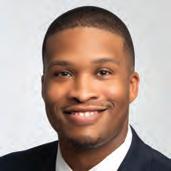
CARL DILLON JR. PRESIDENT & CEO
Urban Restoration Enhancement Corporation (UREC)
URBAN RESTORATION ENHANCEMENT CORPORATION remains committed to providing opportunities and resources that empower Baton Rouge families to build assets and create generational wealth.
In 2025, we look forward to expanding our efforts in homebuyer readiness, rehabilitating homeowneroccupied properties, and developing affordable housing communities in areas primed for growth.
UREC’s work in youth development can be summarized in one word: impact. A recent survey of alumni who completed UREC’s ACT prep programs revealed that participants earned an average ACT score higher than state and national averages. Additionally, 100% of respondents attended college or a technical training program after high school graduation.
Their success is the highlight of our mission, and we remain dedicated to empowering local youth through our ACT prep, pre-law, entrepreneurship, Certified Nursing Assistant, and technology institutes for high school students. To learn more, support, or invest in our community and youth development initiatives, visit www.urecbr.com or call (225) 356-8871.
NATIONAL ASSOCIATION OF LOCAL HOUSING FINANCE AGENCIES

Affordable housing is an important aspect of our work, as is staying abreast of trends and advancements in this area. The Affordable Housing podcast hosted by the National Association of Local Housing Finance Agencies offers a wealth of information on financing for affordable housing initiatives.
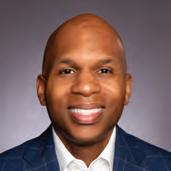
JERELL THOMAS PRESIDENT
AS WE APPROACH 2025, the home improvement market is positioned for steady growth despite economic challenges. With interest rates expected to remain high, many homeowners are likely to stay in their current homes rather than incur the costs of purchasing new ones. This trend is driving increased investment in home improvements, as customers focus on enhancing comfort, energy efficiency, and curb appeal.
Industry forecasts predict annual spending on home improvements and maintenance will rise from $472 billion today to $477 billion by the third quarter of 2025. At Window World, we anticipate strong demand for energyefficient products and upgrades that add both value and functionality.
While new home sales may slow, this environment presents a unique opportunity to support homeowners in making meaningful upgrades to their homes. Customers are expected to prioritize quality and reliability in their investments, reinforcing the importance of our “quality first” commitment.
As a leader in replacement windows, doors, and siding, Window World will continue to adapt to these trends. By offering innovative solutions, exceptional service, and unmatched value, we are ready to meet the needs of customers choosing to renovate rather than move. Together, we can make 2025 another year of growth and success.
REID HOFFMAN

A key takeaway is the importance of embracing scalable systems while maintaining the human touch that fosters trust and loyalty. The podcast highlights the need to stay adaptable, learn from failures, and keep moving forward. For us at Window World, it’s a powerful reminder to focus on building processes that grow with our business while prioritizing the customer experience at every step.


HALL OF FAME LAUREATES
Jay Campbell Associated Grocers
Jairo Alvarez Founder, Alvarez Construction | Posthumous
EXECUTIVE OF THE YEAR
Kristin Wall President & CEO, LWCC
YOUNG BUSINESSPERSON OF THE YEAR
Rachel Eggie Owner, Eggie Salon Studio
BUSINESS OF THE YEAR
(FEWER THAN 100 EMPLOYEES): Core Boiler & Mechanical Services
BUSINESS OF THE YEAR
(100 OR MORE EMPLOYEES): MAPP

TO PURCHASE SCAN HERE OR EMAIL EVENTS@MELARAENTERPRISES.COM
PRESENTING SPONSORS: Wednesday, March 19 6:30 p.m. | Crowne Plaza Hotel




IT’S BEEN eight years since Baton Rouge has had a new mayor-president. Congratulations to Mayor Sid Edwards. He is a good and humble man whose election victory shocked political pundits, the establishment and incumbent Mayor Sharon Weston Broome. Edwards ran as the “change candidate” in a city and parish desperately needing change.
But will our parish accept transformation? Let's hope so.
When Broome first took the oath of mayor-president, I wrote about optimism and the need to seize on our incredible potential. Still, I warned that the election results amplified the fact that East Baton Rouge was a divided parish. So what has changed in eight years?
Editor’s note: The author is a member of Mayor-President Sid Edwards’ transition team.
Rolfe McCollister Jr. is a contributing columnist. The viewpoints expressed are those of the author and do not necessarily reflect those of Business Report or its staff.
Have we healed those divisions and now work as one team? Have we fulfilled our potential as a great city? No, and no. Due to failed leadership, we are still at square one in the Capital City—and the voters made it clear in the December election that they were fed up going nowhere.
Edwards must bring “the change,” disrupting the stale management and stagnant thinking that has kept Baton Rouge languishing in mediocrity. Coach Sid, as he prefers to be called, must hit the portal and recruit dynamic talent committed to change and winning. He must focus on quality over quantity, and all of us must be willing to pay for that high-level talent. Change the rules. Break the mold. Get results.
The first order of business and promise made will be the hiring of 100 new police officers to reduce crime. It was Edwards’ first campaign plank and the top priority for residents. It’s a big challenge.
This feature is a tribute in honor of Business Report founders, Rolfe McCollister Sr. & Rolfe McCollister Jr.
At the same time, there could be a Department of Government Efficiency, or DOGE, squad to disrupt City Hall and chart a new path away from “the way we’ve always done business before.” That may upset some. So what?
It would be wise for the new Edwards administration to review a 2019 report by Management Partners that identified millions in savings. Sadly, many of the recommendations were never implemented.
There’s also a study by SSA that began in 2022 and is two-thirds complete that’s examining numerous areas of city-parish government, including:
• A staffing analysis.
• An analysis of the 11 policing agencies in East Baton Rouge, with an eye toward eliminating possible redundancies.
• An assessment of current economic development activities, looking for ways to enhance opportunities, potentially with state or federal assistance.
• A high-level review of the school system, BREC and the Capital Area Transit System—managed by separate boards—to bring best practices to the city-parish.
• An analysis of the funding model that pays for government services in the parish.
• Any possible legislative changes that would help bring best practices to the city-parish.
Edwards will find no shortage of studies done and paid for. Now we need a leader—and a talented city manager and team—with the skill, courage and political will to execute and make change happen
Broome, eight years ago, and former Mayor Tom Ed McHugh, in 1989, were each presented with the opportunity to hire a nationally
THE STARTING BLOCKS of all things becoming new is becoming a new creation. Notice 2 Corinthians, 5:17: “Therefore, if anyone is in Christ, he is a new creature; the old things passed away; behold, new things have come.” The next two verses explain two things that are new. We have become reconciled to God. Also, He does not count our trespasses against us, for they are forgiven. Verse 21 proclaims one of the greatest exchanges and greatest mysteries ever
recognized, professional city manager. Yet both declined to pay for talent, opting for a status quo CAO rather than embracing disruption and innovation. We all paid for their failures.
Edwards needs to hire a pro to ensure our parish runs as a well-oiled machine. This executive should have experience running a $1 billion operation with 4,500 employees. And yes, that person will have a higher salary than the mayor. So what? Every NFL quarterback makes more than their coach, but they are vital to winning.
Just as the quarterback needs talent around him, Edwards will need talent around the CAO. This is a tough job if you want Baton Rouge to excel—something it has not done over the last eight years.
The disruption could include changing personnel and creating new positions like the "Department of Government Efficiency" in Washington, D.C. Last year, I tossed out some potential new positions to disrupt City Hall and hold people accountable. (Eliminate other jobs to cover the expense.) I have passed these on to Edwards.
The government efficiency team should continue to meet during his term because change doesn’t stop. Baton Rouge must keep evolving to be competitive and meet the needs of residents and businesses. Our competition is fierce. It never stops. So, like eight years ago, I am optimistic as a new mayor-president begins the journey. I pray Edwards will be very successful as the CEO— but he must be accountable. In four years, I want to write about fulfilled potential in a united city—not repeating the same old story of missed opportunities and mediocrity. Let’s finally make change a reality by building a top talented team with the right mindset, experience, drive and grit to win.
pronounced. “The Father made Christ to become sin on our behalf, so that we might become the righteousness of God in Him.” At our very nature and spirit we are no longer sinners, but we have become the righteousness of God at our core. Because we are now righteous, we can behave/act righteously according to our new spiritual nature. An orange tree produces oranges because it is its nature to do so.
—Jeff Mitchell, Retired COL and Army Chaplain
Ranked by local accountants and CPAs
1 NR KPMGLLP 301 Main St., Suite 2150, Baton Rouge70801 225-344-4000| kpmg.com
2 2 Hannis T. BourgeoisLLP 2322 Tremont Drive, Baton Rouge70809 225-928-4770| htbcpa.com
3 1 EisnerAmper 8550 United Plaza Blvd., Suite 1001, Baton Rouge70809 225-922-4600| eisneramper.com
4 3 Faulk & WinklerLLC 6811 Jefferson Highway, Baton Rouge70806 225-927-6811| fw-cpa.com
5 4 LaPorte APAC dba LaPorte CPAs & Business Advisors 8555 United Plaza Blvd., Suite 400, Baton Rouge70809 225-296-5150| laporte.com
6 8 TWRU CPAs & Financial Advisors 527 E. Airport Ave., Baton Rouge70806 225-926-1050| twru.com
7 6 Daigrepont & Brian APAC 910 S. Acadian Thruway, Baton Rouge70806 225-927-3760| dnbcpas.com
8
9 9 The Levy Co.APC 412 N. Fourth St., Suite 200, Baton Rouge70802 225-343-5123|




The Surgical Specialty Center of Baton Rouge has transformed its facility. Two minor procedure rooms have been converted into large laminar flow operating suites, equipped with state-ofthe-art video integration and ergonomic designs. A new sterile processing department spans 3,353 square feet. The center performs outpatient and complex surgical procedures.
Baton Rouge Community College’s Automotive Training program has earned ASE Training Program accreditation from the National Institute for Automotive Service Excellence for maintenance and light repair. The McKay Automotive Training Center is an 83,000 square-foot state-of-the-art training facility that opened in 2017 on Ardendale Boulevard in Baton Rouge.
The Louisiana Community and Technical College System and the Louisiana Office of Juvenile
Justice are partnering to provide justice-involved youth with access to educational and workforce training opportunities, equipping them with the skills needed to succeed in high-demand, high-wage careers. The agreement provides a framework for LCTCS to deliver workforce training and credit-bearing courses on the Baton Rouge Community College campus that lead to industry-based certifications, preparing participating youth ages 14 and older for meaningful employment.


North Oaks Health System has named general surgeon Dr. Daniel Linarello as its 2024 Physician of the Year and Physician Assistant Marc E. Pitre as its 2024 Advanced


Practitioner of the Year. As chair of the North Oaks Surgical Service Executive Committee, Linarello champions innovative treatment options such as minimally invasive robotic surgery and was instrumental in establishing the North Oaks Wound Care Center in 2022. Pitre joined North Oaks Physician Group in 2012. He initially worked with North Oaks Neurosurgery before transitioning to North Oaks Orthopaedic Specialty Center.
ExxonMobil leaders Douglas Melancon and Stephanie Cargile have been honored with Most Valuable Player awards from the Louisiana Chemical Association. Melancon is the state environment and regulatory adviser. This is his fifth MVP award. Cargile is the Southeast Region government affairs adviser for the company. This is her third MVP award; she has been with ExxonMobil in Baton Rouge for more than two decades.
Pennington Biomedical Research Center’s Steven Heymsfield and Peter Katzmarzyk have been


recognized as being among the most influential researchers in the world. That’s according to Clarivate Analytics’ 2024 List of Highly Cited Researchers, which highlights those whose work has had significant global influence, as evidenced by their exceptional citation records in leading scientific publications. Heymsfield and Katzmarzyk are internationally recognized for their contributions to obesity research, physical activity, and public health.
Our Lady of the Lake Cancer Institute has been named a Center of Excellence by GO2 for lung cancer. for its ongoing commitment to providing the Baton Rouge community with patient-centered, evidence-based lung cancer care. GO2 centers designated in lung cancer care are committed to the principles of patient-centered communication and decision-making across the entire care pathway.
PHILANTHROPY
Hannis T. Bourgeios is marking its centennial by establishing The 1924 Fund, an employee-directed





















endowment that will make annual donations to nonprofit organizations that benefit the communities in which HTB operates: Baton Rouge, New Orleans, Denham Springs, Hammond and Alexandria. Donations will focus on three areas: education, family support and culture.
The Louisiana Health Care Quality Forum has established a board of directors position in honor of the late Gov. Kathleen Blanco. Beginning Jan. 1, Kathy Kliebert will serve in the newly created position. She is a health care consultant with more than 30 years of experience as a clinical social worker and serves on the boards for the Bridge Center for Hope, Behavioral Health Services and other organizations.
LSU associate professor of mechanical and industrial engineering Manas Ranjan Gartia is among 170 newly elected fellows to the National Academy of Inventors. Gartia is a prolific inventor whose
research focus includes creating imaging tools to study scarring in heart and lung tissues, how different diseases cause lipid and metabolomic changes in cells and tissues, and synthesizing new materials for biomedical, energy and X-ray/gamma-ray detection. Gartia holds seven U.S. patents and three foreign patents that have been licensed to two companies. He is also the founder of a startup.

Thomas
Renita Williams
Thomas has been appointed by the Louisiana Attorney Disciplinary Board to serve as a non-lawyer member for two years, beginning Jan. 1. Williams Thomas is the CEO and principal owner of In Loving Arms HealthCare for Kids, a day care for medically fragile children. Prior to In Loving Arms, she was the early phase clinical trials infrastructure project manager at Mary Bird Perkins Cancer Center, working to bring clinical trials to south Louisiana.

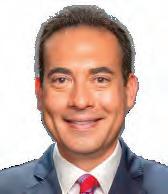

Caleb Prejean has been promoted to president of Capitol City Produce. He has served as the company’s vice president of operations since 2015. Prejean is credited with developing customer service models for the company’s expansion into Alabama and Florida.
InvestigateTV reporter Chis Nakamoto will be joining the news team of WAFB-TV in Baton Rouge in January as chief investigative reporter. He will also co-anchor the 5 p.m. news with anchor Tisha Powell. The New Orleans native worked for two decades as a reporter at WBRZ-TV before leaving the station a year ago.
Clean Hydrogen Works has named Dale Reppond plant director for Ascension Clean Energy. He has 40 years of experience in ammonia plant operations for major producers such as LSB Industries, Mosaic, CF Industries and Koch. Clean Hydrogen Works is working to build a $7.5 billion blue ammonia plant on the west bank of Ascension Parish.
Our Lady of the Lake Health Vice President of Physician Executive Emergency Services Dr. Christopher Trevino was promoted to the rank of colonel in the Louisiana National Guard at a ceremony in November.

You’re free to live your life out loud! Because you’ve got the compassion of the cross, the security of the shield, and the comfort of Blue behind you.

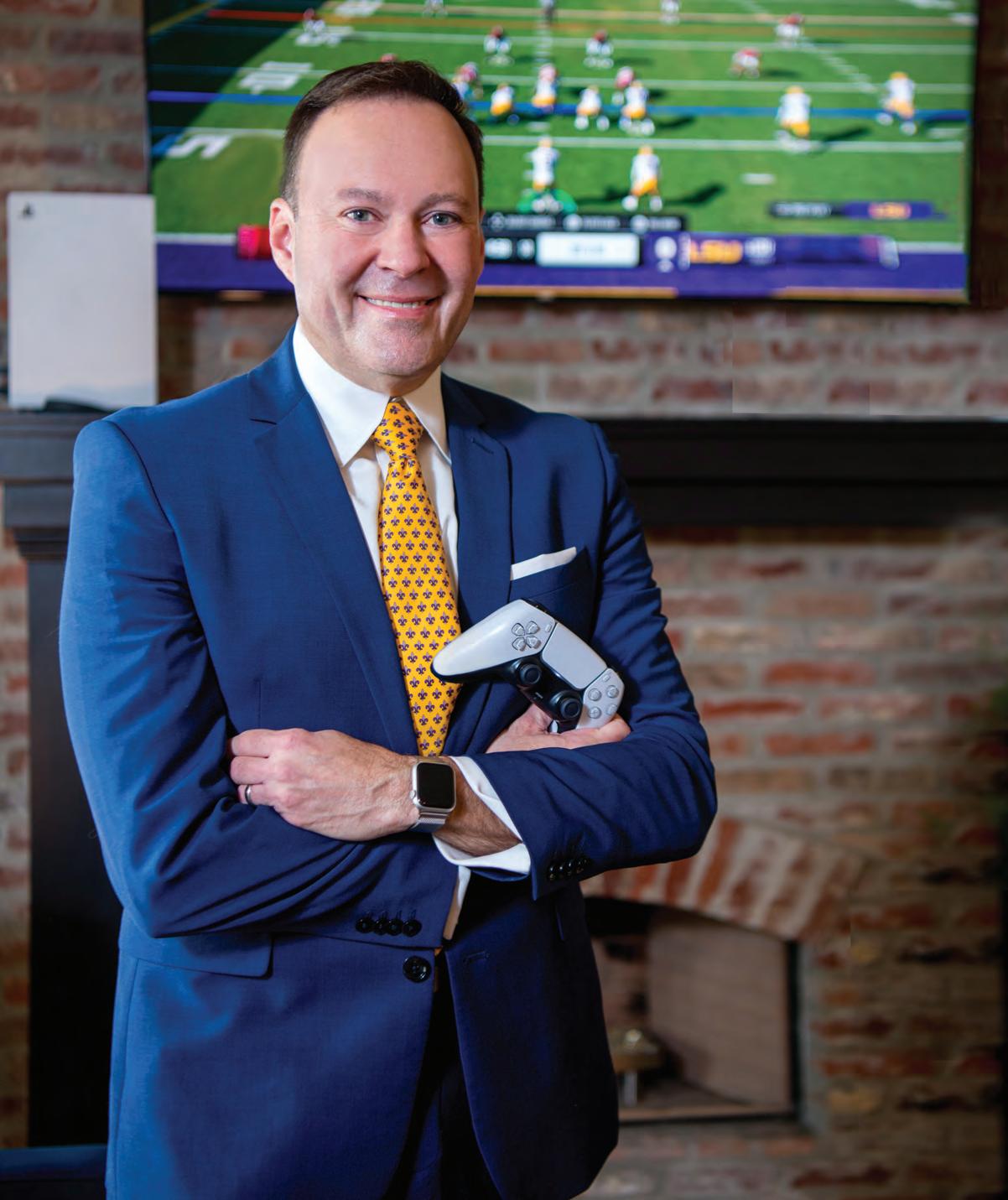
Dean of the College of Humanities and Social Sciences and Professor of Sociology, LSU
“Between my roles as dean and dad of three (two humans and one golden retriever), it isn’t easy to find more than 30 minutes at a time to recharge. Fortunately, this is just enough time to beat Alabama with the LSU Tigers in EA Sports NCAA College Football 2025.”

The Library brings value to your small business or non-profit by helping you find the tools and resources to keep it moving forward. Stop by one of our locations, search our digital library, call a librarian, or even text our team with your top challenges and questions.