13 minute read
Camille Manning-Broome Taking the risk on a sustainable future


Taking the risk on a sustainable future
Building a better Baton Rouge starts with making the changes necessary so that it’s a thriving,
climate-resilient city. BY CAMILLE MANNING-BROOME
COLLIN RICHIE
Camille Manning-Broome, president and CEO of the Center for Planning Excellence, is internationally recognized for her expertise in resilience and adaptive planning. AS A CITY PLANNER, a Baton Rouge native, and a parent, I spend a lot of time thinking about the future of this place that I love. I worry about building a safe, healthy community where all residents can thrive, and where newcomers can find plentiful opportunities. I want to leave behind a strong and resilient city, where my kids and grandkids can enjoy a vibrant, productive life. Baton Rouge, if we are to achieve all this, we first must understand our history, our current challenges and our future opportunities.
Over the past 40 years Baton Rouge’s population has grown by 200%, our infrastructure has expanded throughout the parish and new developments have continued to proliferate on the periphery. We have grown into a bustling, culturally rich, midsized Gulf Coast city—and our challenges around flood risk, poverty, congestion, water resources, and infrastructure maintenance have grown as well. Looking ahead to the next 40 years, I feel a deep responsibility to ensure that my two children inherit a city that’s better than the one I grew up in—but the planning and development patterns we’ve established are not going to get us there. Providing a bright future for all of our kids requires understanding our past, being clear-eyed about our challenges and working together to create a climate-resilient, economically equitable place where the next generation can thrive.
We have once-in-a-generation opportunities within our reach to create the future that so many of us have envisioned for Baton Rouge: a city that is resilient, safe, inclusive, and economically thriving; with walkable, bikeable neighborhoods characterized by a special sense of place and a wide variety of opportunities that brings in (and retains) top talent. Achieving this vision will also require doing something difficult, courageous and necessary: addressing the risks we face as a city on the front lines of climate change.
According to the data presented in the International Panel on Climate Change’s fourth assessment report, over the next 10-30 years Baton Rouge will experience almost three times as many extreme heat events, increases in flash flooding, and eight times as many extreme rain events annually. These challenges will greatly exacerbate Baton Rouge’s long-standing problems, while making it almost impossible to achieve our potential—unless we are intentional about making climate resilience a key feature of our future city. But first, it must be said: To build a future where our children and grandchildren can thrive, we must denounce the political division on this topic and direct our efforts toward ensuring that we are making the right land use, transportation, water management, housing, and economic development investments, using the best available data and science.
There is greater consensus around our climate realities than we might think. According to the Baton Rouge Area Foundation’s 2021 CityStats, 55% of Baton Rouge residents think global warming is an “important” issue, and an additional 25% believe it is “somewhat important.” Over 70% of the representative sample of respondents support changes to our built environment, tax incentives and energy investments that will help address climate change impacts. The next step is to understand that the public investments of the past (expansive highways and sprawling, car-centric suburbs) are no longer sustainable for our future. With historic levels of funding available from both the Infrastructure Investment and Jobs Act and the Inflation Reduction Act, we can seize the opportunity to set a new, more sustainable course. Let’s talk about a few of the key actions we need to take to ensure that Baton Rouge can successfully adapt, evolve and progress as a leading Gulf Coast city. What follows is by no means an exhaustive list, but would represent a great start.
• Update our land use and mobility practices for a greener, more sustainable future
During the ‘50s and ‘60s, government investments overwhelmingly backed the expansion of our highway infrastructure, which effectively drove and subsidized sprawl. The consequences of this car-centric, sprawling development have been well-documented—we now have cities that are struggling with long commutes, outsized congestion, degraded air quality, health issues associated with sedentary lifestyles and unmanageable infrastructure expenses. This pattern also accelerated racial and economic disparities along neighborhood borders.
Instead of investing in central, connected neighborhoods and commercial corridors seen in older parts of the city, like the Garden District, Mid City and Beauregard Town, we have continually expanded Baton Rouge’s
periphery and built subdivisions that are disconnected from one another and from daily destinations like work, school and shopping. Baton Rouge drivers lose 62 hours every year to traffic, and one ranking puts us fourth in the nation for traffic congestion, just behind New York, Los Angeles and Miami. While a strong majority of our residents support the development of bicycle, pedestrian and transit networks as part of our climate solution, only 44% support changing zoning “to encourage building denser communities to reduce vehicle trips.” Density is vital for preserving green space and facilitating the travel options that people want. It doesn’t mean that everyone must live in a high-rise—there are many ways to achieve the benefits of density while still offering a wide range of housing choices.
A key strategy for Baton Rouge would include retrofitting existing suburban areas to create 20-minute neighborhoods, where daily needs and destinations can be reached by walking, biking or public transit in 20 minutes or less. This type of investment has the additional benefit of limiting the proliferation of impervious surfaces, enabling us to reserve natural areas for managing stormwater instead of paving them over for new developments. By incentivizing growth toward existing infrastructure and ensuring that all public investments deliver multiple benefits for our climate, city and people, we can accomplish so much for the future of Baton Rouge, including curbing sprawl, reducing flood risk, decreasing vehicle travel (and associated emissions), lowering infrastructure costs, and improving our health and quality of life.
• Diversify our economy to create high-quality opportunities for all
As we look ahead to the next 40 years, we already know that our city will be transformed by climate change, economic shifts and population movement. It’s no secret that Baton Rouge-area businesses struggle to attract new hires, and natives are encouraging their kids to build their futures elsewhere. Young people are looking for places to live and raise their families that offer economic opportunity and are also safe. We must ensure that Baton Rouge’s transformation brings new economic opportunities and greater security for everyone in our shared future.
As the state capital, Baton Rouge has been at the center of decades of economic policies that have supported high-carbon industries. Oil and gas have been pillars of our economy and created pathways to opportunity for many people in our region. Globally, those industries are now taking big steps to transition to what they know is the future: cleaner energy sources and renewables such as wind, solar and hydro. Locally, we
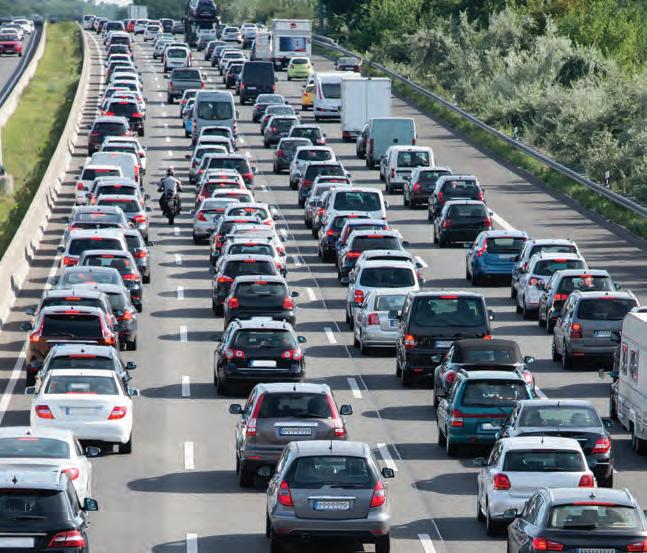
Highway-enabled sprawl has created traffic nightmares and disconnected neighborhoods.
A CONSTRUCTION TRADITION BORN IN 1957
CONTINUING TODAY
Harvey Honore, Sr.
2015 Business Report Hall of Fame Inductee
From humble beginnings, Harvey Honore, Sr sought out to build a construction company focused on honesty, integrity & quality work. Over 65 years later, his son Harvey Honore, Jr & grandson Aaron Honore have found success following the same guiding principles.
10245 Siegen Ln., Suite C | Baton Rouge, LA 70810 225.766.6624 | Honoreenterprises.com
can work with oil and gas industry stakeholders to ensure that the Baton Rouge region is well-positioned to lead this transition and capitalize on the new opportunities it will yield. Given our wealth of natural resources, skilled workforce and existing industrial infrastructure, we have the capacity right here to provide clean energy to residents and businesses, provide jobs for the energy workers we have today and expand opportunities for the many people in Baton Rouge who need entry into the workforce. As energy markets shift, we must also open the door for new innovators and investors. Going forward, it will be essential to further diversify our economy, cultivating new industries beyond the energy sector to reduce our vulnerability to volatile markets and increase our overall economic resilience.
• Modernize and future-proof our energy grid
Issue Date: Sept 2022 Ad proof Our energy grid is fundamen- #3 • Please respond by e-mail or fax with your approval or minor revisions. tal to community resilience. Over • AD WILL RUN AS IS unless approval or final revisions are received within 24 hours 100 years ago, we built this vital from receipt of this proof. A shorter timeframe will apply for tight deadlines. • Additional revisions must be requested and may be subject to production fees. infrastructure to distribute power Carefully check this ad for: CORRECT ADDRESS • CORRECT PHONE NUMBER • ANY TYPOS This ad design © Louisiana Business, Inc. 2022. All rights reserved. Phone 225-928-1700 • Fax 225-926-1329
to neighborhoods so that our residents could enjoy a higher quality of life and more comfortable, healthier home environments. Today, that infrastructure is antiquated and vulnerable to increasingly severe weather events. It’s past time for another transformational investment in our energy infrastructure. We can improve the ability of our existing grid to withstand extreme heat events and storms while providing affordable energy to households experiencing increased demands. Strategic infrastructure upgrades can also support the development of renewable energy like wind and solar, along with policies that facilitate private investment and empower our residents and businesses to share equitably in the benefits. As Louisiana stands to receive billions of dollars in federal funds, we must pursue these essential investments. We can’t let this moment pass us by.
• Foster bold leadership and effective governance to address our greatest challenges and opportunities
Without strong leaders and good governance, the transformational changes we need will not happen. We must recalibrate the capacity of our governance structures to match the scale, scope and complexity of our challenges and opportunities. One way to achieve this is by designing operations that allow us to adapt to changing circumstances. Systems that facilitate data-informed, adaptive, collaborative and transparent decision-making will be better positioned to address climate disasters as they arise. Incorporating projections of future environmental, social and economic conditions into decision-making processes will help Baton Rouge prepare for the chronic stressors of climate change and leverage individual investments toward a clear vision for the future. Our processes for designing infrastructure must facilitate cross-sector collaboration that results in multi-benefit projects that result in a higher quality of life. We must use the data and planning tools at our disposal to understand future risk, cultivate champions for change and build processes that help us adapt to the change we know is coming.
CELEBRATING 30 YEARS
of providing technology to Baton Rouge!
Carlo MacDonald,
President We deliver industry leading solutions to help you stay competitive in a changing world.

Application Development
Managed Security Managed Services
Unified Communications
40under Forty
1992 – 2022 2003 2022 BE DIFFERENT. THINK DIFFERENT. EXECUTE DIFFERENT.


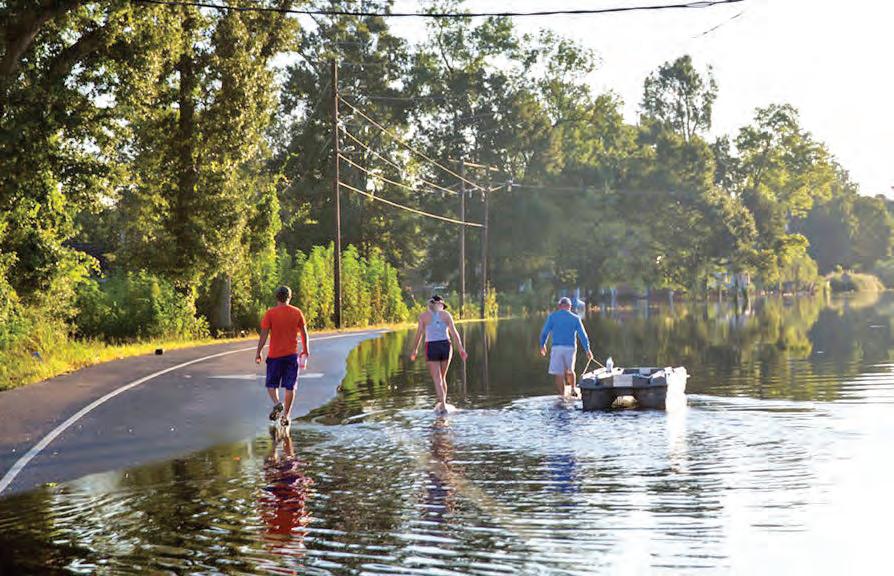
Increased severe weather is exacerbating many of Baton Rouge’s long-standing problems.
COLLIN RICHIE
I’m ready to double down on my commitment to Louisiana and hope to do so hand in hand with leaders old and new, from all sectors, who are willing to step forward and help build the future that we want and need. We must be courageous, innovative, compassionate and unafraid to disrupt the status quo in service of the greater good. Many of these leaders are already among us, working day in and day out to Issue Date: Sept 2022 Ad proof help our region build an equita- #2 • Please respond by e-mail or fax with your approval or minor revisions. ble and resilient future. Some of • AD WILL RUN AS IS unless approval or final revisions are received within 24 hours these leaders will probably come from receipt of this proof. A shorter timeframe will apply for tight deadlines. • Additional revisions must be requested and may be subject to production fees. from other places, bringing fresh Carefully check this ad for: CORRECT ADDRESS • CORRECT PHONE NUMBER • ANY TYPOS This ad design © Louisiana Business, Inc. 2022. All rights reserved. Phone 225-928-1700 • Fax 225-926-1329
perspectives and new ideas. We should be ready to welcome and support them.
• Investing in our future
Our city-parish government is faced with limited resources and tough choices to make every single day. In order to make the best use of our resources, every public dollar invested should deliver multiple benefits to our communities—for example, parks that provide healthy recreation and are also designed for flood mitigation during heavy rain events. In order to synchronize and expand the efforts that are already underway, we need a robust resilience planning effort that will engage our community in a discussion about our values, priorities and future goals. A comprehensive approach is critical—siloed efforts to address narrowly defined problems can get us only so far. To move the needle in a meaningful way on the issues that are standing between the Baton Rouge of today and the Baton Rouge we envision, our challenges must be addressed in concert by a diverse, committed group of multisector stakeholders.
In many ways, the path has already been laid for us. In 1998, Plan Baton Rouge was launched to revitalize our downtown. City leaders and diverse stakeholders came together, strategic partnerships were developed and private resources were deployed to leverage public investment in smart growth. Today, downtown Baton Rouge is a major employment center that is home to thriving businesses and restaurants, hotels, residential property, public art and cultural events, parks, and beautiful, flood-mitigating green space.
We have another model in Louisiana’s Climate Action Plan— the Gulf South’s first plan to address our climate challenges, with action steps for reducing greenhouse gases and achieving net-zero emissions by 2050. With these efforts already underway, Louisiana and Baton Rouge are well-positioned to lead through this challenging time of change and opportunity.
Climate change impacts are transforming communities everywhere and forcing people to make decisions differently. In so many places, families that have invested in their communities for generations are pulling up stakes and leaving to find opportunities elsewhere—like Baton Rouge. Climate-driven migration is only going to escalate in the coming years. We have the choice to make the most of this change by making sure our city stands tall as a safe, resilient place, where new and old residents thrive together.
Baton Rouge is home to a lot of wonderful people, rich culture and history, and a wealth of natural assets—and it’s worth fighting for. In order to preserve the things we love about our city, we must be willing to do some things differently, seize new opportunities and address our challenges with the urgency they call for. Let’s kick off Baton Rouge’s next 40 years by setting the table, inviting all the diverse voices that make up our city to have a seat, and tackle this moment with optimism, hope and bold vision. Future generations will thank us.
THANK YOU, LOUISIANA!
Celebrating 100 years and the grand opening of our new headquarters in Baton Rouge.
Louisiana Farm Bureau is proud to serve farmers, ranchers, and rural residents on a local, state, and national level.
The Voice of Louisiana Agriculture®
7000 Commerce Circle | Baton Rouge, LA LAFARMBUREAU.ORG