PLUS:
BUILDING FOR BATTLE
GIVING BACK BIG FOCUS ON WORKFORCE
PLUS:
BUILDING FOR BATTLE
GIVING BACK BIG FOCUS ON WORKFORCE
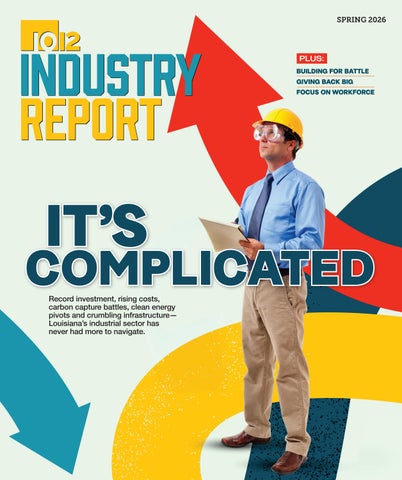
Record investment, rising costs, carbon capture battles, clean energy pivots and crumbling infrastructure— Louisiana’s industrial sector has never had more to navigate.


For over four decades, Delta Machine and Ironworks has been a leading Louisiana manufacturer of custom pipe supports, piping accessories, and plate products. Large enough to deliver thousands of custom products each month. Nimble enough to scale rapidly whenever our customers need us.
Kean Miller has long been known as a go-to law firm for the energy and petrochemical industries throughout the energy belt region. Our legal acumen spans every aspect of upstream, midstream, and downstream activity and the myriad businesses and service providers that support them.
As the industry evolves, so do we. By continuously refining our legal approach, we help clients navigate complex challenges, seize new opportunities, and build for the future.
Rediscover us at KeanMiller.com.




Record investment, rising costs, carbon capture battles, clean energy pivots and crumbling infrastructure— Louisiana’s industrial sector has never had more to navigate.


75 Next in line
As Louisiana’s industrial boom accelerates, schools and companies ramp up efforts to prepare the professionals who will lead it.
80 Not enough hands
LNG, data centers and the petrochemical sector are chasing the same workers—and the crunch is just getting started.
102 Our maps of the projects driving industrial growth
110 Toughest Challenge
Ryan Kerrigan learns that courage and humility are key to change.
Publisher: Julio Melara
Associate Publisher: Erin Pou
EDITORIAL
Executive Editor: Penny Font
Editor: Sam Barnes
Contributing Photographers: Cheryl Gerber, Don Kadair, Leroy Tademy
ADVERTISING
Senior Consultant & Assistant Manager: Emma Walker
Multimedia Marketing Consultant/Custom Publishing: Judith LaDousa, Manny Fajardo, Liz Bowen, Kelly Lewis
Sales Intern: Blair LeBlanc
Marketing Director: Ashleigh Ward
Digital Operations Manager: Devyn MacDonald
Partner Success Manager: Matt Wambles
Data Analyst: Sydney Deville
Content Creator: Londyn White
Content Strategist: Emily Hebert
Sales & Marketing Operations: Kynley Lemoine
STUDIO E
Corporate Communications Strategist: Mark Lorando
Custom Content Editor: Lisa Tramontana
Video Lead: Taylor Stoma
Production Coordinator: Angelle Theriot
ADMINISTRATION
Chief Technology Officer: James Hume
Business Manager: Tiffany Durocher
Business Associate: Kirsten Milano
Business & Office Assistant: Sarah Kleinpeter
Receptionist: Cathy Varnado Brown
CREATIVE SERVICES
Julia
How
21 Leaders of Industry
10/12 Industry Report shines a light on companies and organizations that make an impact in their fields and in their communities.
43 The Executive Roundtable
Leaders from Louisiana’s booming industrial sector explore the state’s economic momentum and workforce challenges.
85 Tangipahoa: Potential, Progress, Prosperity Tangipahoa Parish offers endless opportunities thanks to its infrastructure, workforce and welcoming business climate
107 Presidents Forecast Opportunity. Outlook. Challenges. Growth. In this special section, business owners, CEOs and other leaders in the Capital Region share their opinions on what to expect in the coming year.
Scan here for a free 10/12 Industry Now subscription and receive the latest news on Louisiana industry.
Creative Services Manager: Ellie Gray
Art Director: Hoa Vu
Senior Graphic Designers: Melinda Gonzalez Galjour, Sidney Rosso
Graphic Designers: Aniya Dunn, Lea Showers
AUDIENCE DEVELOPMENT
Circulation and Client Experience Manager: Ivana Oubre
A PUBLICATION OF MELARA ENTERPRISES, LLC
Chairman: Julio Melara
Executive Assistant: Brooke Motto
Vice President, Sales: Elizabeth McCollister Hebert
Chief Content Officer: Penny Font
Chief Digital Officer: Erin Pou
Chief Operating Officer: Guy Barone
Circulation/Reprints/Subscriptions/Customer Service 225-928-1700 • email: circulation@businessreport.com
Volume 11 - Number 1





SAM BARNES
Louisiana is in a state of perpetual giddiness over the glut of billion-dollar-plus projects announced in the last 12 to 18 months. Nevertheless, at this crossroads in time some rather big questions hover over the industrial space.
Topping the list is an age-old but worsening dilemma: Just where to find the thousands of skilled craftspeople who will be needed to build and operate these new plants and facilities? The demand will be high, and industry groups have been answering the call in some rather unique ways. They’re forging alliances, implementing new programs and constructing new training facilities to stay ahead of the curve.
It’s also a perception problem, so groups such as the Greater Baton Rouge Industrial Alliance, Lake Area Industry Alliance in Lake Charles and others are launching marketing campaigns that target middle and high schoolers via career days, educator externship programs and ad campaigns.
These groups hope to spark their interest in an industrial career by showcasing the abundance of jobs, the pay associated with most of them, and the purpose-driven work and upward mobility that they afford.
Read “Not enough hands” on page 80 for all the details. Meanwhile, universities are more focused on cultivating the next generation of leaders. Academia actively seeks out the help of industrial and energy owners as they craft curriculum and develop new degrees that
prepare students to lead in a seemingly ever-changing industrial landscape.
For example, Tulane University frequently adapts its Masters in Energy Management program to prepare students and earlycareer professionals to tackle relevant and current issues across the entire energy spectrum. The program has a strong focus on the business of energy, and covers both traditional and renewable sources through practical, industry-driven curriculum. Get the details in “Next in line,” beginning on page 75.
Of course, the need to attract new blood to the industrial sector will never be over and done. Keeping up with workforce demand will be a fluid process that requires that these various entities respond and adapt to a market that is perpetually in flux.
As our cover story in this edition notes, there are a host of other questions waiting for answers in the industrial sector.
The tenuous future of carbon capture, the fate of clean energy initiatives, the impact of flipflopping environmental regulations and the ongoing and persistent threat of inflation are all areas of uncertainty.
And as any economist will tell you, uncertainty is not a good thing in the business world, as it leads to a hesitancy to invest. Owners are far more likely to wait until the smoke clears. We lay it all out in “It’s complicated” on page 35.
Unfortunately, economists also agree that “certainty” and “stabil-
ity” do not describe the last 14 months or so, from a national perspective at least.
Therefore, kudos to Louisiana Economic Development for making things happen anyway. Perhaps no other year has witnessed such a lengthy list of billion-dollar projects to reach FID. Data centers, LNG plants and a grassroots steel manufacturing facility are among them, all moving in tandem toward becoming reality.
The five deepwater ports on the lower Mississippi River have collaborated time and again on various endeavors, but they’ve behaved more like “frenemies” than partners in the marine space.
That’s beginning to change, in part due to pressure at the state level for them to create a more unified voice that benefits the whole of Louisiana.
In response, the ports began meeting in 2025 to develop a collaborative marketing strategy aimed at increasing international trade, driving economic growth and attracting new business. Until now, there has never been a formalized, structured agreement among all of them.
It will be an ongoing process. Louisiana’s lower Mississippi ports have been described as “five restaurants with completely different menus,” so finding a common voice has been challenging. Nevertheless, their hope is to turn the informal collaborations of the past into something more permanent, enabling them to evolve as needs arise. We lay out the strategy on page 68.



Since his appointment as secretary in September, Dustin Davidson has busily gone about the task of transforming the Department of Conservation and Energy by removing layers of unnecessary bureaucracy and beefing up key offices.
Many Louisiana residents still mistakenly refer to his department as DNR, the shortened version of the Department of Natural Resources. That was its moniker for decades before it changed to the Department of Energy and Natural Resources in early 2024, then again to the Department of C&E last fall.
The most recent iteration is more than simply a name change. Davidson is overseeing a major modernization of the agency, which now includes centralized offices for permitting, enforcement and an expanded Office of Energy.
Before his state-level roles, Davidson was the director of government relations at Waterways Council Inc., where he secured federal funding for critical Louisiana infrastructure, including lock and dam modernizations.
He spent several years on Capitol Hill, serving as a professional staff member for the House Select Committee on the Climate Crisis and as a legislative assistant to Congressman Garret Graves. In those roles, he focused on energy revenue-sharing, ecosystem protection and the Water Resources Development Act. He has also been a key advocate for carbon sequestration and updated regulatory frameworks to balance economic growth with environmental protection.
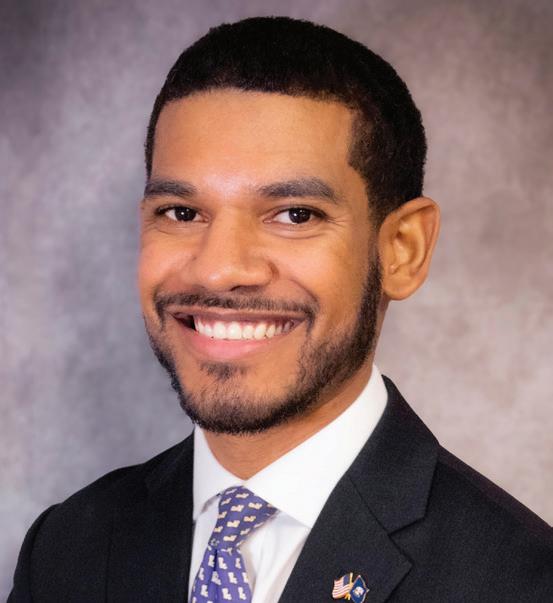
10/12 Industry Report recently posed these questions to Davidson to discuss the numerous changes at the department over the last six months, as well as his future aspirations.
Why the most recent name change?
Our focus is on conserving the quantity of our resources. We want to make sure that we produce them responsibly and conserve them for future generations so that Louisiana can continue to be an energy provider, not only to the nation but the world. When we boil it down, those are the two main missions of the department. We felt that it was most important to home in on that conservation and energy role and how they work hand in hand.
What specific organizational changes are helping you achieve that goal?
The biggest change was getting rid of the role of commissioner of conservation and removing the separation between what was previously the Department of Energy and Natural Resources and the Department of Conservation.
They were two separate offices in the same building, effectively on the same payroll, but performing different functions and not really communicating with each other.
If you were pursuing oil and gas development in the coastal area, you would go to Conservation to get your oil and gas permit and then you’d have to go to the Office of Coastal Management to get your coastal use permit. Same building, two different permits, two different departments, and it made no sense.
There were just layers and layers of bureaucracy that we felt weren’t necessary. Through the reorganization, we identified how we could put all our permitting aspects into one office, known as the Permitting Compliance Office.
Additionally, we’re focusing all our enforcement mechanisms into one Office of Enforcement, and we also handle the leasing of state lands for energy development through the State Mineral and Energy Board. Everything is becoming a one-stop shop.
Any other changes that would be of interest to the industrial sector?
We also expanded our Office of Energy. If you look at the federal Department of Energy, they don’t really make regulations or enforce laws. They operate more like a think tank, and in doing that they allow for new technologies, new developments and new projects to get off the ground through grant funding, or through the collection of data and using that data to better inform decisions.
We want to do the same thing
here, where we have all our state data as it relates to energy development or power generation so that it can be used to drive better decisions. If the City of New Orleans wants to produce more solar power, for example, we want to be able to have that information here to provide to the city of New Orleans and tell them what makes sense and what doesn’t.
Tell us a little more about the process.
Before I came on board, the Office of Energy was receiving about a billion dollars in federal grants from the Infrastructure Bill and Inflation Reduction Act, but the office was not set up to handle grants of that size.
Previously, the office had about six staffers handling about a billion dollars’ worth of grants. We expanded that from six to 28. We also located our GIS department there. We have an entire team solely dedicated to data and an entire team solely dedicated to policy and rules.
Currently, we are going through some of these grant programs that have been funded and creating pilot projects throughout the state. Our website has all the information related to applying for those projects, and Amanda McClinton, executive director of that office, and her staff are getting the message out that we have this money and we want to use it for good projects.
—Sam Barnes
Read the full interview with Dustin Davidson online at 1012IndustryReport.com.
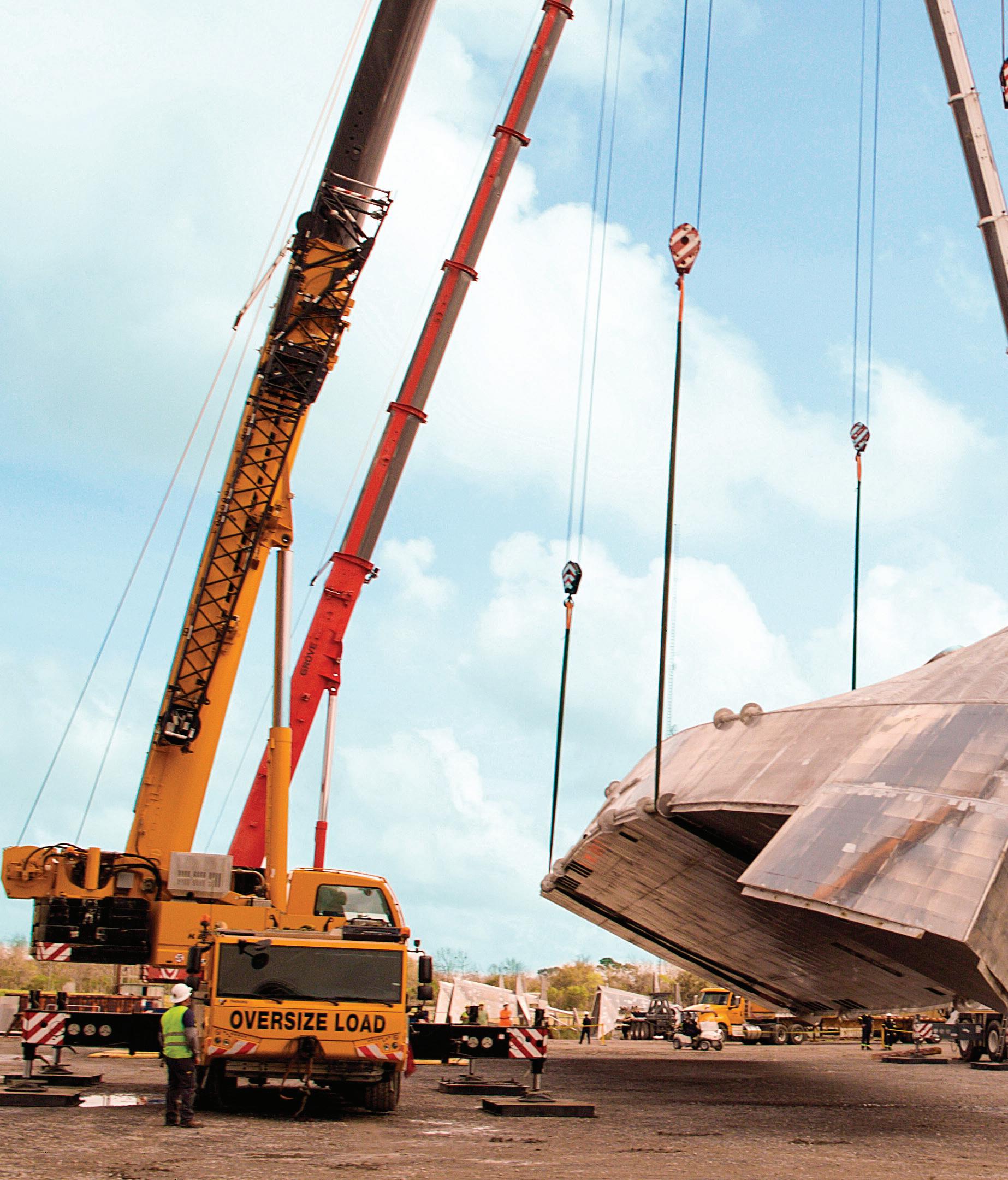
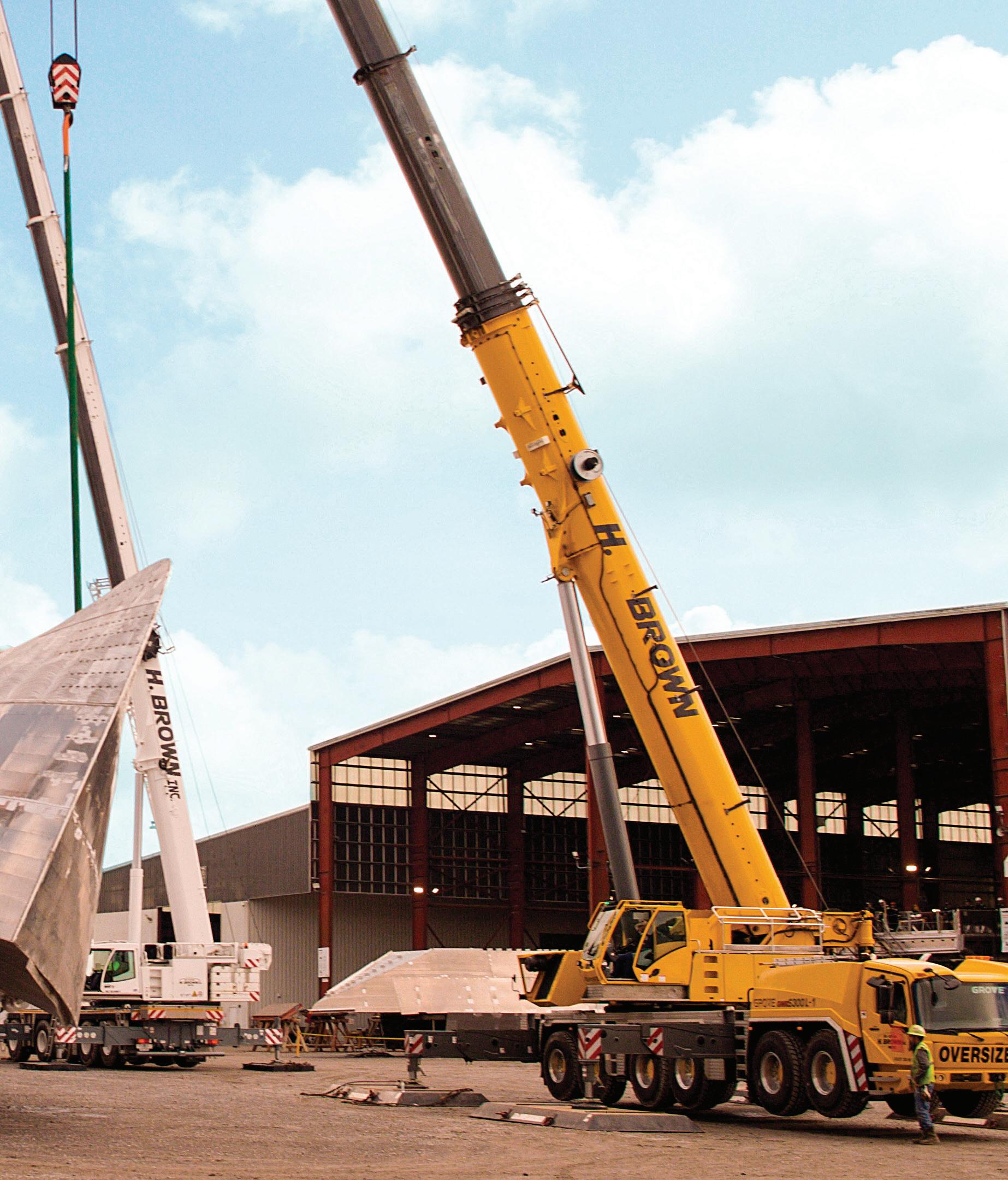
When Saronic completed the hull flip of its first Marauder uncrewed surface vessel at its Franklin shipyard, the moment marked far more than a construction milestone. From initial design to full structural completion in just six months, the Marauder is now a platform ready for outfitting, systems integration, and waterborne testing — a progression that signals serious momentum for a program building an entirely new class of autonomous ships.
Saronic is not a traditional shipbuilder. The Austin, Texas-based company pairs advanced autonomy development with in-house vessel production, giving it the ability to design, build, and refine ships under one roof. That integrated model drives an iteration speed rarely seen in the industry and positions Saronic to deliver autonomous maritime capability at a pace — and price point — that legacy shipbuilding simply cannot match.
Read more about
This Franklin shipyard is no amateur to these complicated moves. The facility boasts more than 30 years of shipbuilding experience and over 60 hull flips to its name. Saronic acquired the yard from Gulf Craft in April and has since announced a $300 million investment to expand its capacity there — a commitment that signals Franklin is becoming a cornerstone of the company’s long-term production strategy.
At the time of this flip, Saronic was already building Marauder 2, and the lessons from the first vessel are paying off fast — production efficiency is up 25%. A third vessel went into production in January, and it will reflect an evolved 180-foot design with greater operational reach, payload capacity, and mission flexibility. Each hull that comes out of Franklin is making the next one faster, smarter, and more capable.
The Baton Rouge Area Foundation has assumed ownership of The Newtron Group, completing a succession plan that founder Newton B. Thomas designed before his death to preserve the company’s culture and community impact.
The move announced in April places ownership of the Baton Rouge-based electrical construction firm under the Newton B. Thomas Support Foundation, a supporting organization within BRAF. The structure allows Newtron to operate independently under a tax-exempt governance model.
Thomas, an LSU Hall of Famer who died in July at 81, spent more than 50 years building Newtron into
a nationally operating company with more than $1 billion in annual revenue. His succession plan was designed to keep the company intact rather than sell it to outside interests.
The Newtron Group will continue under its existing leadership and operational model, with no personnel changes announced. Governance will emphasize alignment with Thomas’s founding values alongside financial performance. The arrangement is structured to sustain the company’s longstanding charitable giving in communities.
BRAF President and CEO Chris Meyer noted the transition reflects a broader trend of business owners seeking to embed their values into lasting institutions.
BY THE NUMBERS

$1.4B
The amount Southern Energy Renewables will invest to develop a green methanol and sustainable aviation fuel production facility in St. Charles Parish that will convert woodwaste biomass into some of the lowest lifecycle-carbon fuels on the market. The new production facility, located near hydrogen supply and key logistics infrastructure, is Southern’s first commercial-scale development in Louisiana as it prepares for a proposed merger with DevvStream, a carbon management and monetization firm. Construction is expected to begin in late 2027 with production anticipated in late 2029.
$3.4B
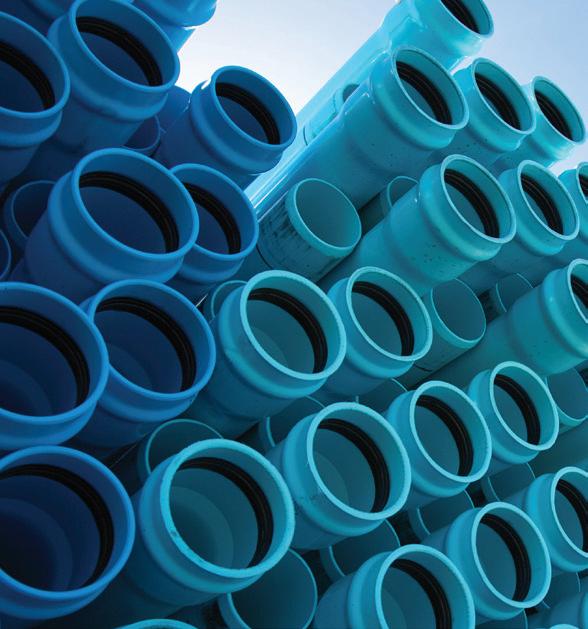
The amount Shintech Louisiana will spend to expand its manufacturing complex in Iberville Parish. The expansion includes construction of a second ethylene unit and a fourth chlor-alkali and vinyl chloride monomer unit at the company’s existing facility in Plaquemine. Construction will occur in phases, with the first phase expected to be completed in 2030.

DID YOU KNOW?
Meta’s Richland Parish data center is about to get a lot more power — and a lot more gas plants.
The company announced a deal with Entergy Louisiana in April to fund 5.2 gigawatts of new gas power to support its Hyperion data center complex, the equivalent of powering several cities. That brings the total number of gas plants slated to support the site to 10, adding seven to the three already announced.
Meta will cover the full cost of the new energy infrastructure, meaning existing Entergy customers won’t see added charges. The deal also includes funding for bill assistance programs, energy efficiency initiatives and expanded renewable energy development.
Hyperion is Meta’s largest planned data center development.

Louisiana wants a piece of the aerospace boom — and the Legislature appears to be helping set the table.
A cluster of House bills filed just before this session’s introduction deadline would create a package of incentives, protections and exemptions tailored specifically to aerospace companies. The bills hit the usual notes: tax rebates, liability limits, public records carve-outs, security designations. Together they make Louisiana a more attractive landing spot for large-scale aerospace investment.
Louisiana Economic Development spokesperson Emma Wagner notes aerospace and defense is one of the state’s seven priority sectors, with activity up more than 77% over five years. The state already has a foothold through NASA’s Michoud Assembly Facility in New Orleans, and officials say Louisiana’s focus aligns with federal priorities around onshoring manufacturing and defense production.
Get the details at 1012industryreport.com.


THEY SAID IT
“It’s musical chairs, and not everybody’s finding a chair right now.”
Evan Scroggs of Lee & Associates, on the tight industrial warehouse market in Ascension Parish. Much of the demand is coming from out-of-market users — particularly firms based in Houston and Dallas — competing for a limited number of available sites.
BY SIDE
How the two states compare in projected energy manufacturing investments—including LNG, non-LNG and transition—from 2025 to 2031
billion
Texas $112.91 billion
Total Gulf Coast ...... $272.68 billion
SOURCE: 2026 Gulf Coast Energy Outlook, LSU Center for Energy Studies
Louisiana’s ranking in the American Legislative Exchange Council’s latest Energy Affordability Report, which measures average retail electricity prices across residential, commercial, industrial and transportation sectors. Its average retail price dropped to 8.8 cents per kilowatt-hour in 2024 — down from 10.41 cents and well below the national average of 13.69 cents. The state jumped 16 spots, the largest single-year climb of any state, driven largely by stable in-state natural gas generation.
STATUS REPORT
PROJECT: High-purity manganese sulfate monohydrate production facility to supply a critical component for EV batteries
INVESTOR: Element 25 (Australia)
PROPOSED LOCATION: Ascension Parish (Burnside site); possibly Baton Rouge
ANNOUNCED INVESTMENT: $480 million across two phases creating 220 jobs averaging $90,000+ in salary annually
ORIGINALLY EXPECTED ONLINE: 2026
SIGNIFICANCE: Would be the first facility of its kind in the Western Hemisphere
PREVIOUS STATUS: In 2024, Element 25 entered into a binding term sheet with Veolia North America to secure a site in Burnside for its facility. The 35-acre site is adjacent to Veolia’s existing sulfuric acid production and regeneration facility, which was expected to

supply sulfuric acid to the Element 25 facility via pipeline at agreed contract rates over a 20-year term.
CURRENT STATUS: In limbo. Ascension Economic Development Corp. confirms Element 25 was unable to secure a site in Ascension Parish. A Baton Rouge site is reportedly under consideration, but the Greater Baton Rouge Economic Partnership declined to comment. Element 25 had not responded to requests for comment as of publication.

Hyundai’s planned $5.8 billion steel mill in Ascension Parish is one of the biggest industrial projects Louisiana has landed in years.
Under development in the RiverPlex MegaPark near Donaldsonville, the facility will be the South Korean automaker’s first North American steel plant. It’s expected to create 1,300 permanent jobs and produce 2.7 million metric tons of steel annually, largely for Hyundai and Kia factories in Alabama and Georgia. First steel is targeted for 2029.
10/12 Industry Report sat down with Hyundai executives “Charles” Chul Soon Jang and Hyo Joon Park to discuss how the project is shaping up. Below are five quick insights from that meeting.
The workforce challenge may be the project’s biggest hurdle.
Hyundai executives were blunt about one issue: Ascension does not currently have a ready-made steel workforce. That’s why Hyundai and River Parishes Community College have partnered to launch a training center in Donaldsonville designed to feed locals into steel-focused tracks. One executive acknowledged that Ascension will see “a lot of Koreans coming in” until the operation is stable, at which point newly trained locals will begin replacing them.
Construction could feel like a small city setting up shop.
The permanent job count is big, but the construction job count is bigger. Executives said the buildout will involve 4,800 construction workers, and they noted that CF Industries is working on its own multibillion-dollar project right next door, bringing in hundreds more. Traffic is a con-
cern, as is housing. Asked directly about worker lodging or a possible “man camp” setup, executives said they expect much of the housing demand to be met by the local market rather than by Hyundai itself.
Hyundai talks a lot about hydrogen, but natural gas comes first.
The plant would be better described as “hydrogen ready” than hydrogen powered, at least at launch. Executives said they ultimately want to use hydrogen in production but made it clear that they will start out using natural gas, as hydrogen is not yet available at a competitive price. The hydrogen story is real, but it’s a future-facing strategy, not a day-one reality.
Hyundai’s presence is already being felt in the community.
Though the project is still years
away from operation, Hyundai’s local presence is already becoming a story of its own. Executives have been making themselves unusually accessible for a project of this scale, meeting regularly with residents in Donaldsonville and Modeste. A handful of Korean restaurants are going up in the area, and one executive was even made king of a Donaldsonville Mardi Gras parade.
Ascension won the project because of logistics, logistics, logistics.
Why Ascension? Hyundai’s answer was straightforward: The parish gives the company a rare combination of river access, rail connectivity and proximity to its Southern auto factories. The plant will import 3.6 million metric tons of raw materials per year and will rely heavily on rail to move finished product.

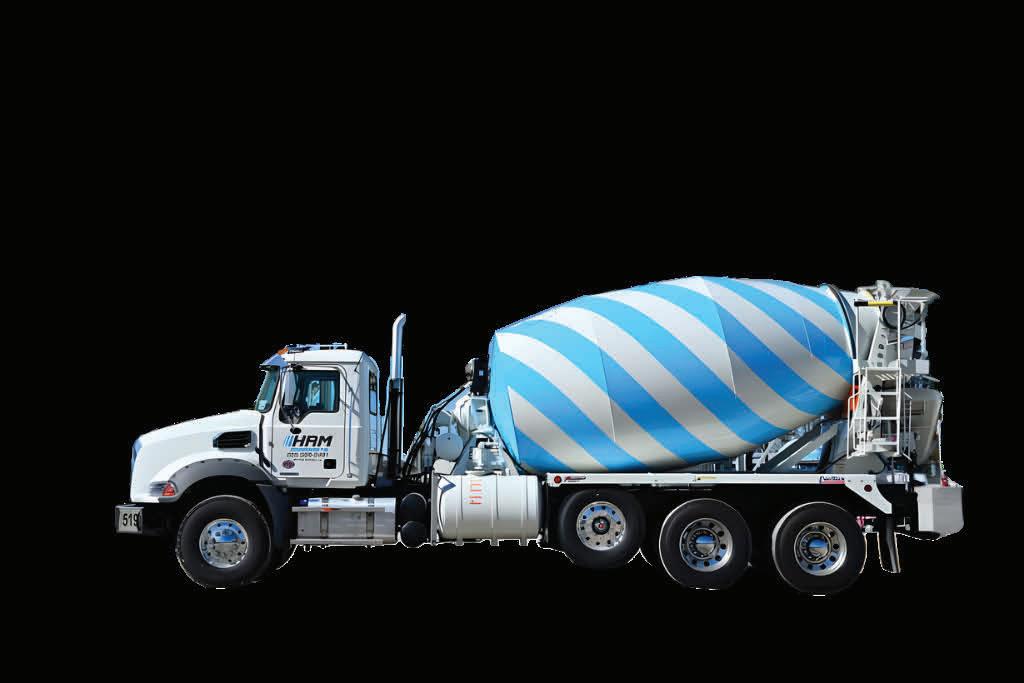
HRM Concrete strives to be the premier provider and manufacturer for all your ready-mix needs. We have experienced professionals to assist you with all your commercial, residential, industrial, or municipal concrete requirements.
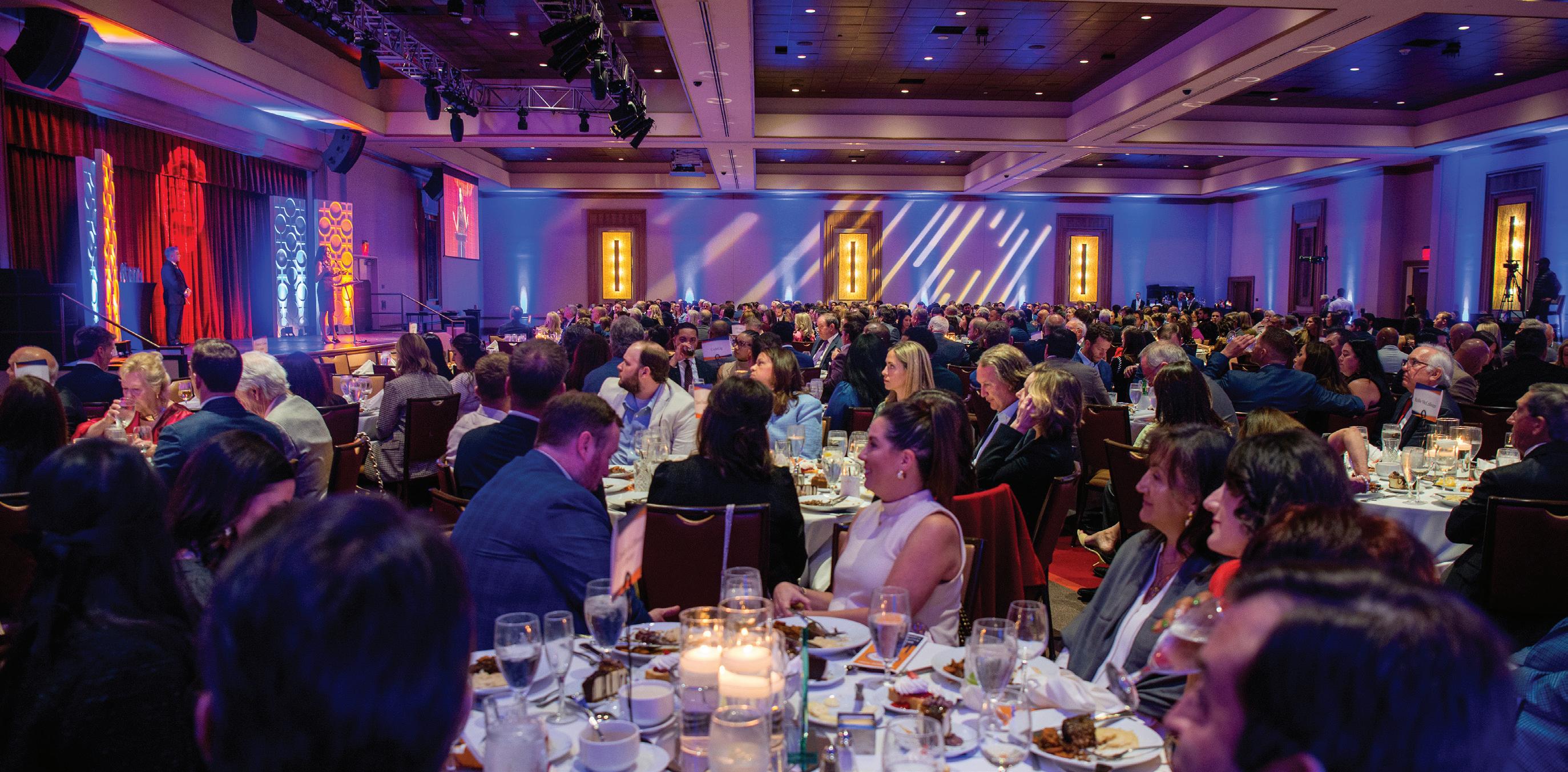
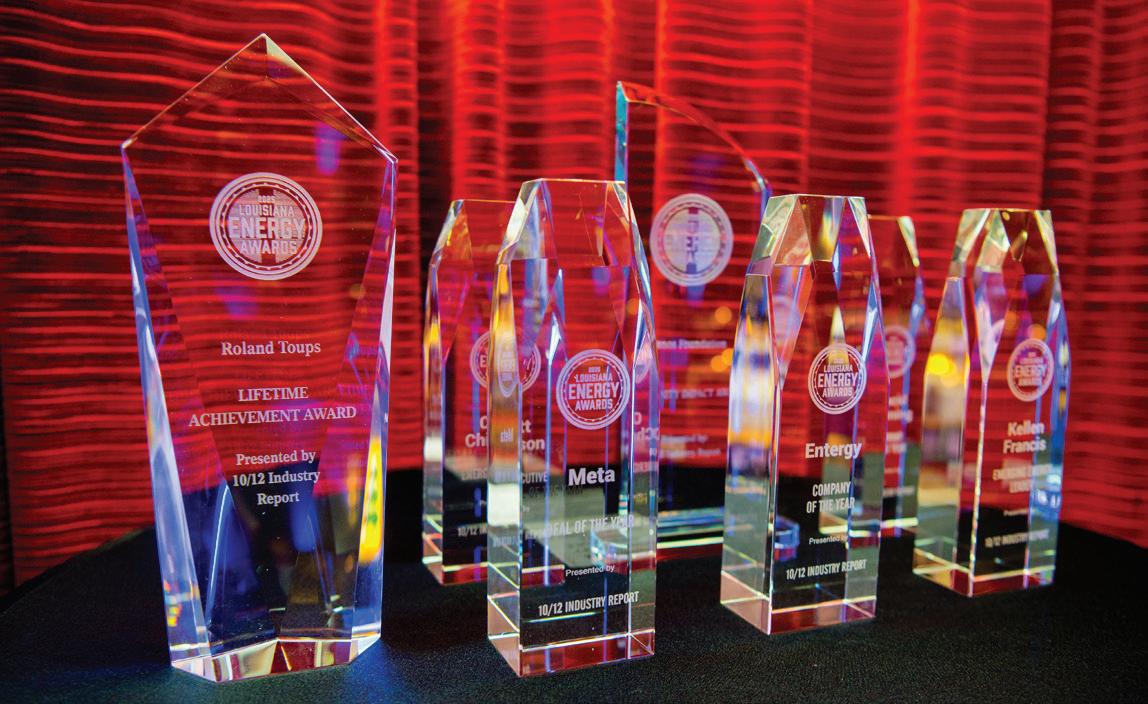
Nominations are now open for the second annual Louisiana Energy Awards, recognizing the leaders, companies and projects shaping one of the nation’s most dynamic energy economies.
The program celebrates achievement across Louisiana’s full energy landscape — from deepwater Gulf operations and petrochemical production to carbon capture, LNG export and emerging renewable investments. Seven award categories are open for nomination:
• Lifetime Achievement
• Energy Executive of the Year
• Emerging Energy Leader (under 40)
• Energy Company of the Year (250+ employees)
• Energy Company of the Year (small/mid-sized)
• Energy Deal of the Year
• Community Impact Award
Nominations are open through June 15. Eligible nominees must have a strong connection to Louisiana’s energy economy.
Finalists and honorees will be featured in the fall edition of 10/12 Industry Report. The awards will be presented at a formal dinner and ceremony in Baton Rouge on October 22 at L’auberge Casino Hotel in Baton Rouge.
The Louisiana Energy Awards are sponsored by USA Industries, Louisiana Chemistry Association, Delta Machine & Ironworks, Kean Miller, Lard Oil Company, Turner Industries, Pipe & Steel Industrial, HRM Concrete and L’auberge Casino Hotel.
Scan the QR code for details and to nominate.
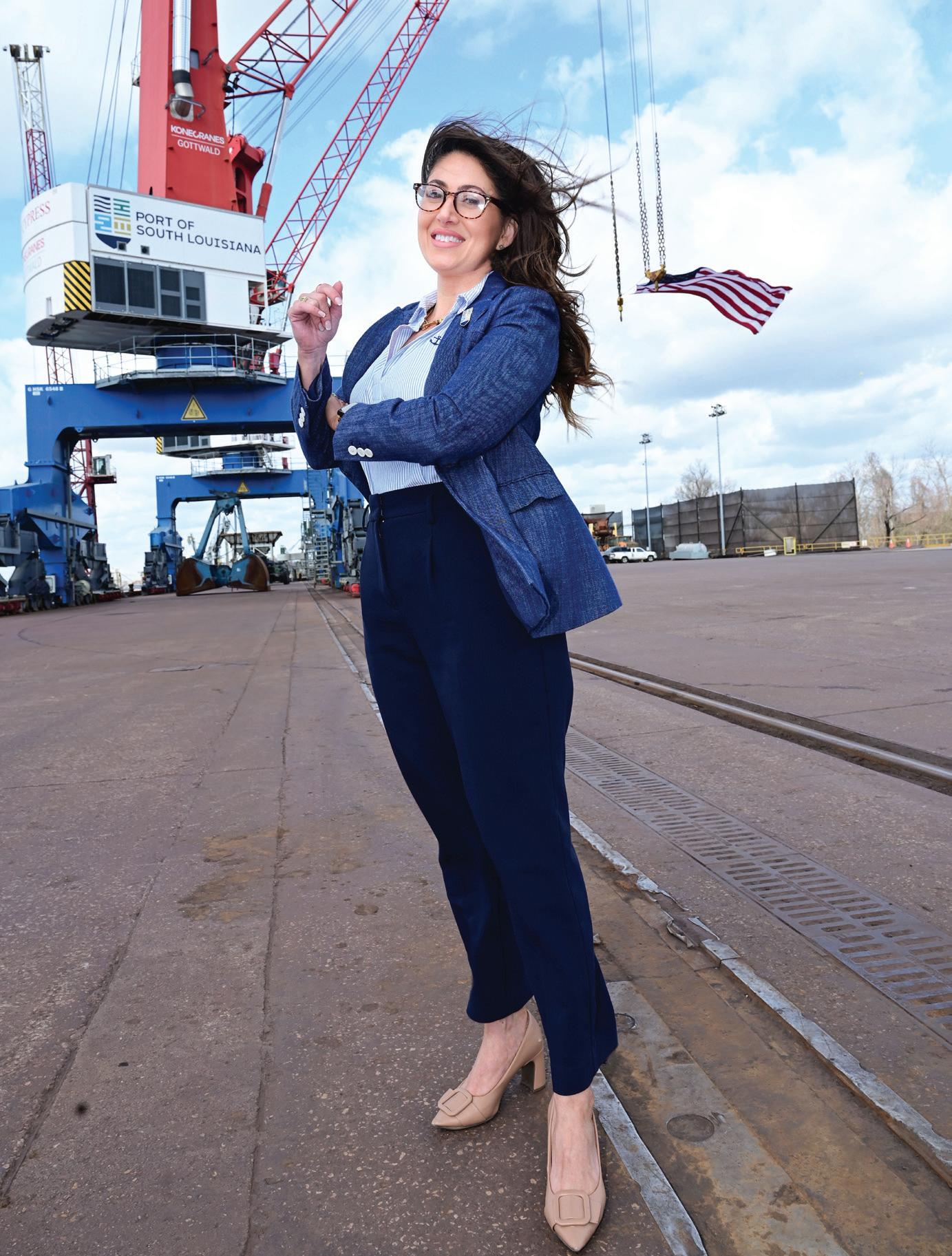
Over the last five years or so, Julia FisherCormier’s roles in local and state government have come in quick succession. She’s been in high demand, having gained a reputation for getting things done quickly and with little fanfare.
She’d already cut her teeth in public service on the St. Charles Parish Council when first appointed to the Port of South Louisiana as chief commercial officer in 2020.
While there, Fisher-Cormier helped drive more than $1 billion in new foreign investment, retain and expand key tenants, revitalize the Globalplex Intermodal Facility and reverse a decade-long decline in tonnage with consecutive years of growth.
Then in 2024, Gov. Jeff Landry tapped her to lead the Office of Multimodal Commerce, where as commissioner she oversaw funding and policy for Louisiana’s ports, waterways, rail, aviation and trucking systems.
She also managed more than $120 million in port and aviation infrastructure funding, advanced state-supported passenger rail initiatives and secured a federal planning grant benefiting Louisiana’s 32 active ports. “One of the governor’s priorities was that the ports collaborate more,” she adds. “He was hoping for someone to help push that initiative forward, so that was my task.”
BY SAM BARNES
and misunderstandings, and in addition to that, the legislators all had their opinions about what we should do.
It was kind of messy, but we worked through it. We had a lot of conversations with the various stakeholders, and we worked to find a common ground where everyone felt comfortable. It felt like they threw me into the sharks almost on day one, but we got it done.
The passage of that bill was a momentous occasion for all of Louisiana. It gave us a directive to create a strategic plan for the ports, which we had never had in Louisiana. We just gathered together, talked about how we could make this make sense and broke it down into smaller bites.
What are you most excited about in your new role at the port?
The next year, DOTD Secretary Glenn Ledet made her another offer: Become deputy secretary of the department and lead his newly established Office of Transformation, where she would oversee initiatives to streamline operations, reduce regulatory barriers, modernize agency practices and improve fiscal efficiency.
Ultimately, though, returning to the Port of South Louisiana as its new executive director in December felt a lot like coming home for Fisher-Cormier. She’d grown up a mere stone’s throw from the Monsanto plant in Luling (now Bayer), and she still lives in St. Charles Parish today. 10/12 Industry Report recently interviewed her about the port’s recent successes and her goals.
What has been the toughest career challenge over the last few years?
About two weeks into my position at the Office of Multimodal Commerce, a bill in the legislature created the Louisiana Ports and Waterways Investment Commission. Several legislators had tried to bring about more collaboration among the ports in the past, but until that moment there had been no strategic plan.
As a result, all 41 ports in the state were coming at me from different directions with different thoughts and opinions. Our staff was also very divided due to years and years of miscommunication
The Port of South Louisiana is rooted in agriculture. We have seven of the nine grain terminals in the state of Louisiana in our jurisdiction, so we’re feeding the world. Of course, another big piece of our pie is in petrochemicals and energy, and we want to continue to foster that development. We have a lot of heavy hitters in our stakeholder portfolio up and down this river, and we’re here to help expand and grow those and help them pivot if needed.
We know that energy has taken a couple of different winding turns and we want to be available to help. Are there funding efforts you need? Is there some sort of government entity that you’re having trouble with? Can we help you develop something new or different or to expand?
We also have the opportunity to bring in new business because of our thousands of acres of riverfront property available for
development. Some, in fact, are close to fruition so we’ll be able to go public with that soon and talk about what we’re doing.
Of course, we have to make sure that we have the right infrastructure for development. We’ve got to make sure we have our basics in place and that our road connections are sufficient.
What, specifically, is the port doing to improve its infrastructure?
Over the past six or seven years, we’ve been diligently whittling away at several transportation, infrastructure and drainage projects, not only around our port facility in Reserve, but up and down the tri-parish region (St. James, St. John and St. Charles).
In St. John Parish, there is an I-10 interstate connector that would connect directly to our Globalplex facility. That helps from a safety perspective, because we’ll be able to get our trucks out of residential areas. Then in St. Charles, there’s a Highway 90/I310 project. We have a lot of truck traffic that comes through Highway 90 from different ports and this would alleviate that traffic. Ultimately, we’re getting behind all three parishes and trying to help in any way we can to positively impact these areas.
What differentiates the Port of South Louisiana from others in the state?
accept larger planes and pushing for additional expansions to appeal to the cargo side of aviation. It would be a pretty large undertaking because we’d have to add an additional runway. We may be moving on that in the next couple of years.
It ultimately could be used by shipping companies such as FedEx. We’ve had some interest in the past, so I think it’s time to rejuvenate that conversation.
Are there any challenges to achieving your goals?
but didn’t necessarily have the resources to handle the dockside development.
Both ports came to a very amicable agreement that we were going to split the project up. The Port of South Louisiana rose to the challenge, and I just feel honored and privileged to be part of the team that did that. DOTD, LED and DEQ were all at the table, as well as the two ports, and the various experts and partners. It was just the epitome of collaboration, and it seems to be paying off.
Issue Date: Spring 2024 Ad proof #1
We own an executive airport about two miles north of our Reserve headquarters. It makes us unique among Louisiana’s ports because we have all four modes of transportation (ship, truck, rail and aviation) available to us.
• Please respond by e-mail or phone with your approval or minor revisions.
• AD WILL RUN AS IS unless approval or final revisions are received within 24 hrs from receipt of this proof. A shorter timeframe will apply for tight deadlines.
• Additional revisions must be requested and may be subject to production fees.
In St. James Parish, the widening of Highway 3127 will be critical to our future functionality. It’s a two-lane highway now, but it’s heavily utilized by our truck traffic. We’re pushing for that, not only from an ease-of-use standpoint, but from a safety perspective.
It’s currently just general aviation, but we’re expanding the runway by about 1,500 feet to

The challenge is keeping up with the numbers of opportunities that are headed our way. I feel very strongly that we have the resources, staff and ability to keep up with the pace that LED and the state have set.
A pretty large share of it is right under our noses and there’s more to come. For example, when Hyundai came to town, the Port of Greater Baton Rouge made it very clear that they could handle the landside development
Looking ahead, we have 108 miles of river frontage that we can potentially develop and there’s a lot of room to grow. I really see that it’s going to be pivotal for us to continue to work with this whole-of-government approach. For many years, the port was very siloed and some of the other ports were as well.
I think if we continue to work lockstep with government agencies, we are going to be set for success.
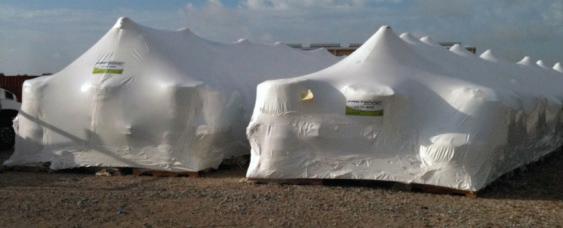
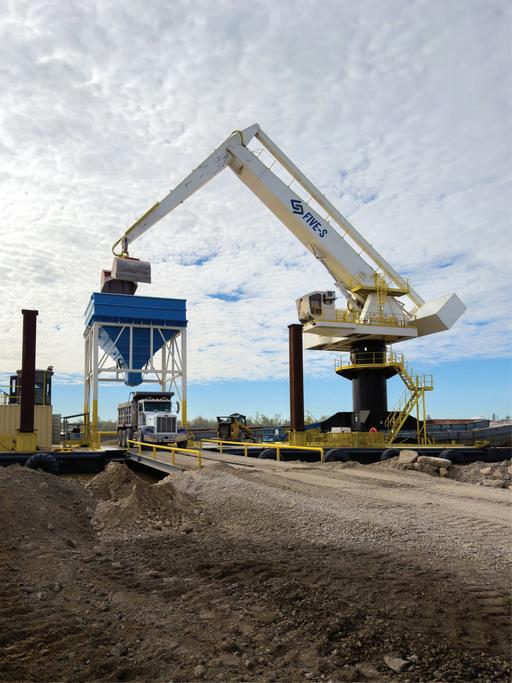
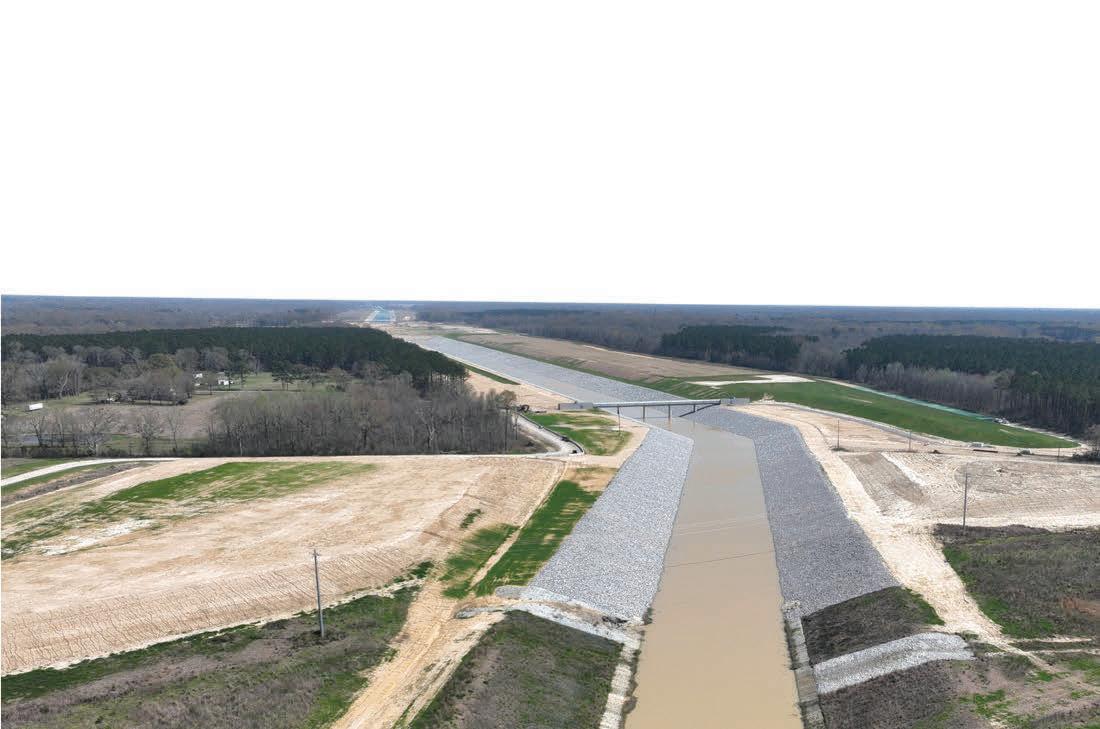

10 / 1 2 Industry Report shines a light on L ouisiana companies and organizations that are d riving economic growth and str engthening communities.
LARD OIL COM P ANY | LOUISIANA CHEMISTRY ASSOCI A TION

The Louisiana Chemistry Association is marking a new chapter with a subtle but strategic rebrand and a physical move that allows it to better serve one of the state’s cornerstone industries.
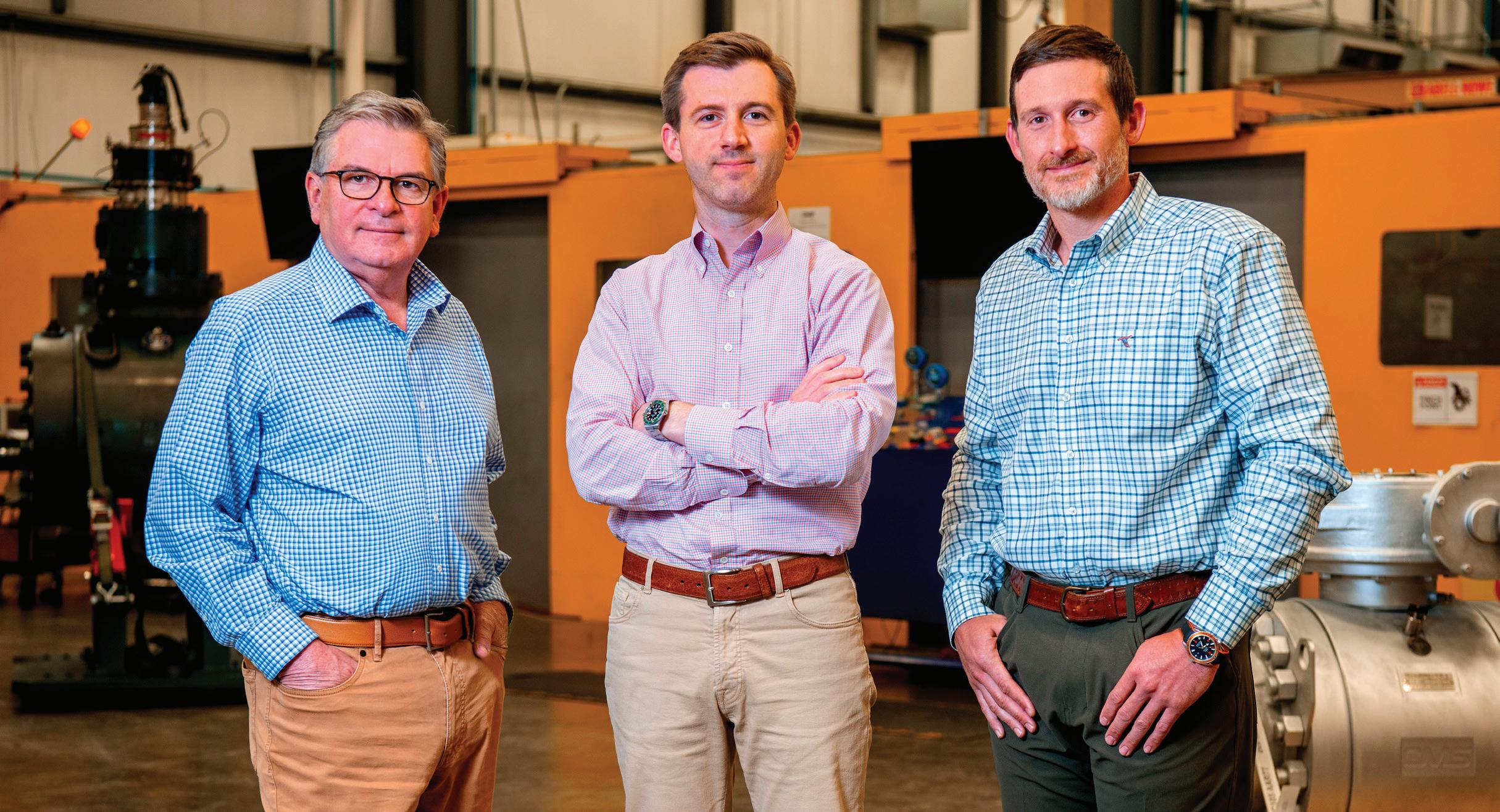
Founded in 1959 to promote a favorable business climate for chemical manufacturing, the organization formerly known as the Louisiana Chemical Association represents 70 member companies operating more than 100 sites across the state. Together with the Louisiana Chemistry Industrial Alliance and related organizations, it focuses on advocacy, regulatory engagement, and sustaining the long-term economic growth of Louisiana’s petrochemical manufacturing base.
“We thought it was appropriate to change our name to more closely reflect what happens at our member company facilities across the state,” President and CEO David Cresson says. “And what
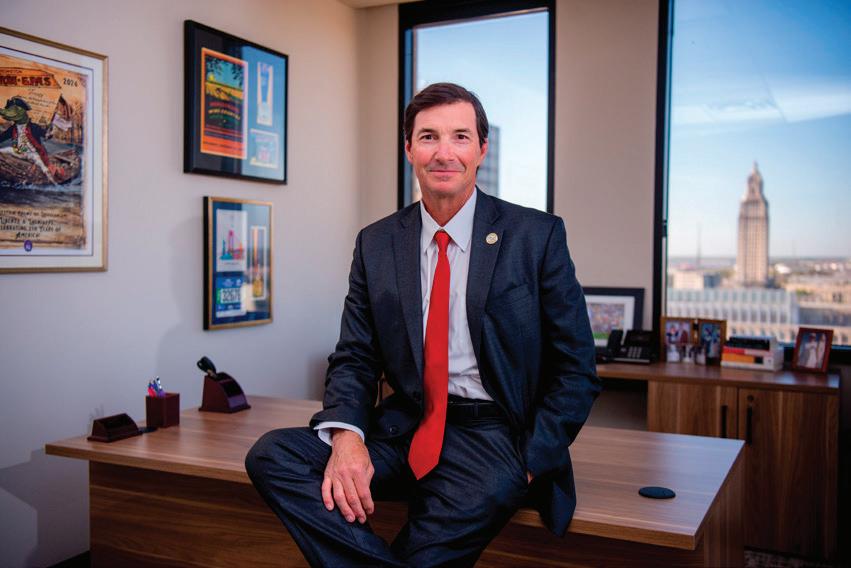
happens at those facilities is chemistry and using science and technology to create products that make the world better.”
The rebrand coincides with another visible shift: a new headquarters in downtown Baton Rouge. After decades in One American Place, the organization relocated to the 18th floor of the Rivermark Two tower, transforming a dated office space into a modern, member-focused hub.
“It was a functional space for a long time and served its purpose, but we decided that it was time to transition to a new space,” Cresson says, framing the move as part of a broader evolution.
“We wanted a space that was reflective of our organization, which is bright and fresh and clean
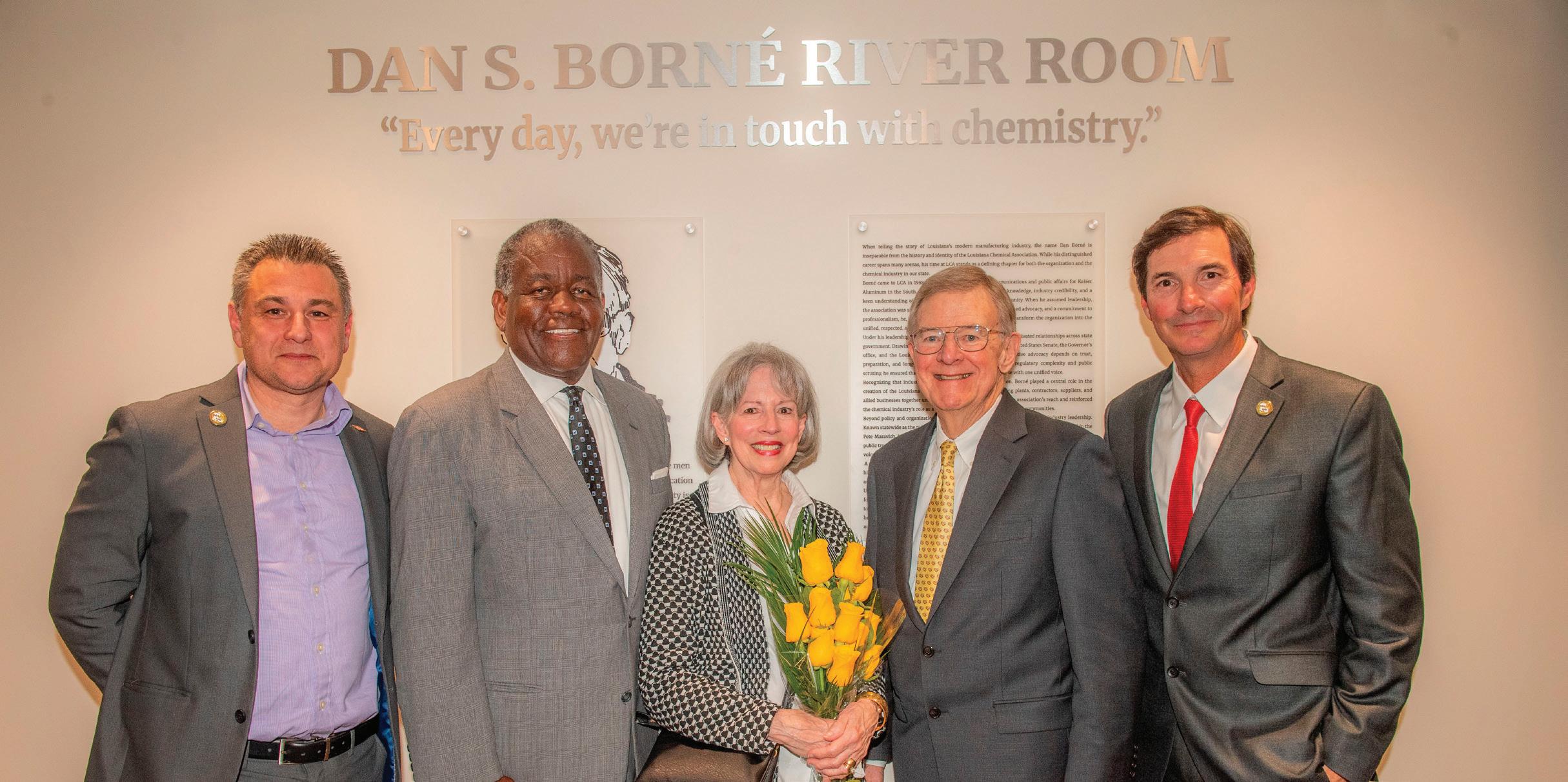
and open—a home for our member companies to be proud of.”
The new headquarters doubles as a gathering place for the industry. Its largest meeting space is named after a previous longtime LCA President. The Dan S. Borne River Room can host up to 100 people and offers expansive views of the Mississippi River.
A secondary executive space, the Performance Contractors Capitol Room, provides a more intimate setting with a view of the State Capitol and its industrial backdrop.
“Performance Contractors is one of the many member companies that stepped up at a very significant level,” Cresson notes, describing a mix of room sponsors and general contributors that helped fund the renovation.
Equally important is how the space will be used. “Any of our member companies gets free access to the space for their own meetings at no charge,” he says.
Taken together, the rebrand and relocation reflect an organization positioning itself for a bright future fueled by business expansion, new capital investment and a growing appreciation for chemical manufacturing’s important contributions to our state and our world.
“We’re an organization that’s moving forward, looking towards the future,” Cresson says. “And we feel like this space is a home that reflects that forward-looking mentality and will provide a home for the industry for many, many years.”
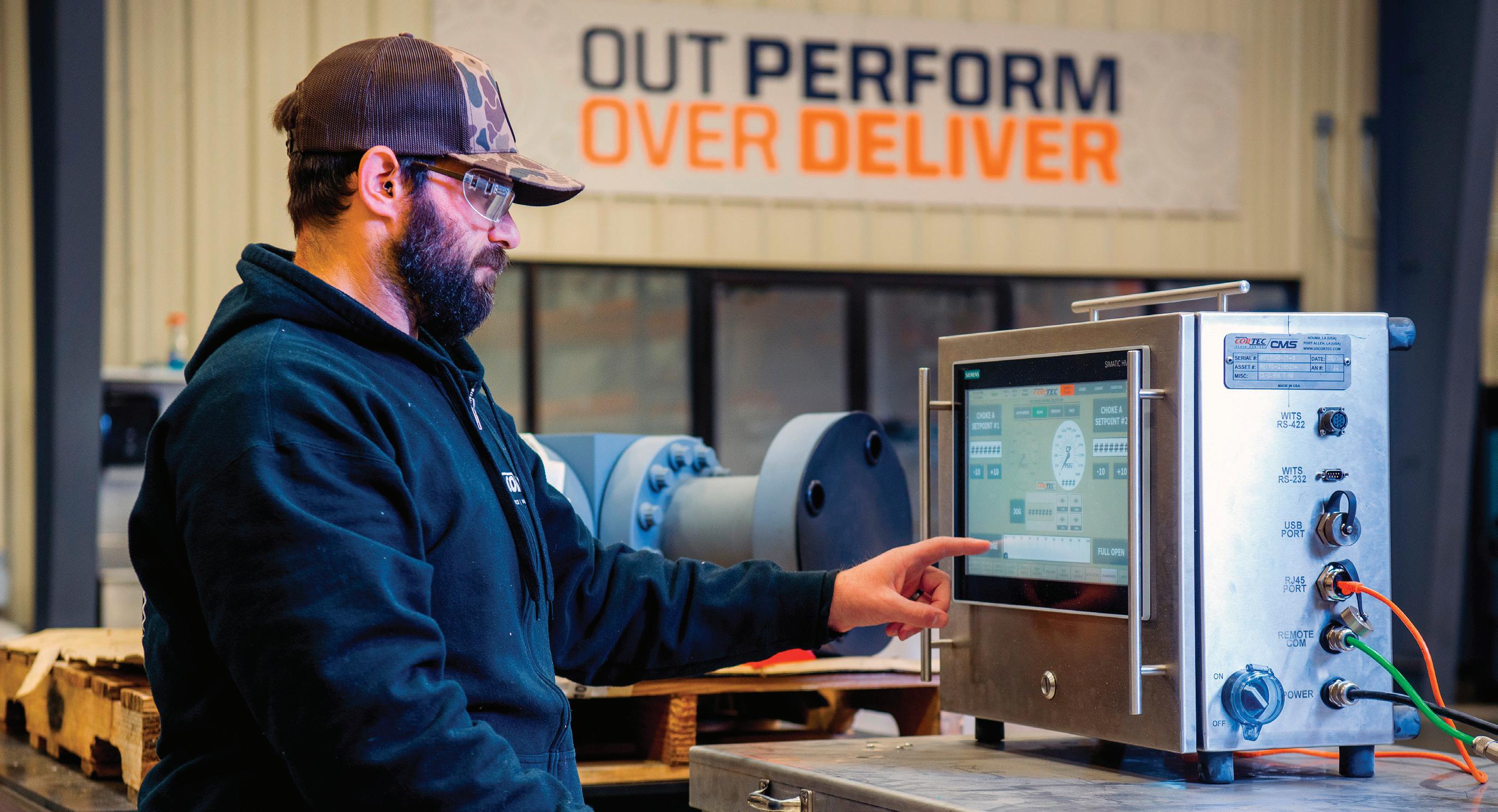
Louisiana-based manufacturer CORTEC operates in a pocket of the oil and gas sector most people never see, yet it is the backbone of the entire system.
At a high level, the company designs and manufactures equipment for upstream oil and gas operations, particularly for drilling, well control and production operations. That includes chokes, valves and integrated controls and piping systems built to perform in extreme environments where failure is not an option.
From offshore platforms and shale fields across North America and around the world, its products sit at critical pressure points, ensuring oil and gas move safely, efficiently and predictably
from reservoir to market. That simple function of controlling flow sits at the heart of CORTEC’s business. In practice, it involves a complex interplay of engineering, materials science and field conditions that widely vary.
“There are many applications within the energy sector that demand performance and reliability to ensure the safety and continuance of operations,” says Stephen Corte, the company’s vice president of business development and marketing. “Our team takes great pride in being the ‘go-to’ manufacturer within the industry where end users have the peace of mind regarding the integrity of their equipment.”
Headquartered in Houma, with major operations
in Port Allen and Houston, CORTEC has spent over two decades building a reputation as a specialized manufacturer in the energy ecosystem. The company is structured around three core divisions: CORTEC Fluid Control (CFC), CORTEC Manifold Systems (CMS), CORTEC Power Chokes™.
Across those divisions, the unifying theme is performance under pressure. The company’s client list reflects the stakes. Globally, major operators, drilling contractors and service providers rely on CORTEC equipment to deliver consistent results in demanding conditions around the clock.
CORTEC also positions itself as a highly specialized, engineering-driven manufacturer, distinguishing itself from commodity-oriented
producers that may compromise on quality.
“Our customers come to us when they need something reliable, done to specifications and that is easy to work with,” Corte says. “We’re not doing large-scale assembly line manufacturing.”
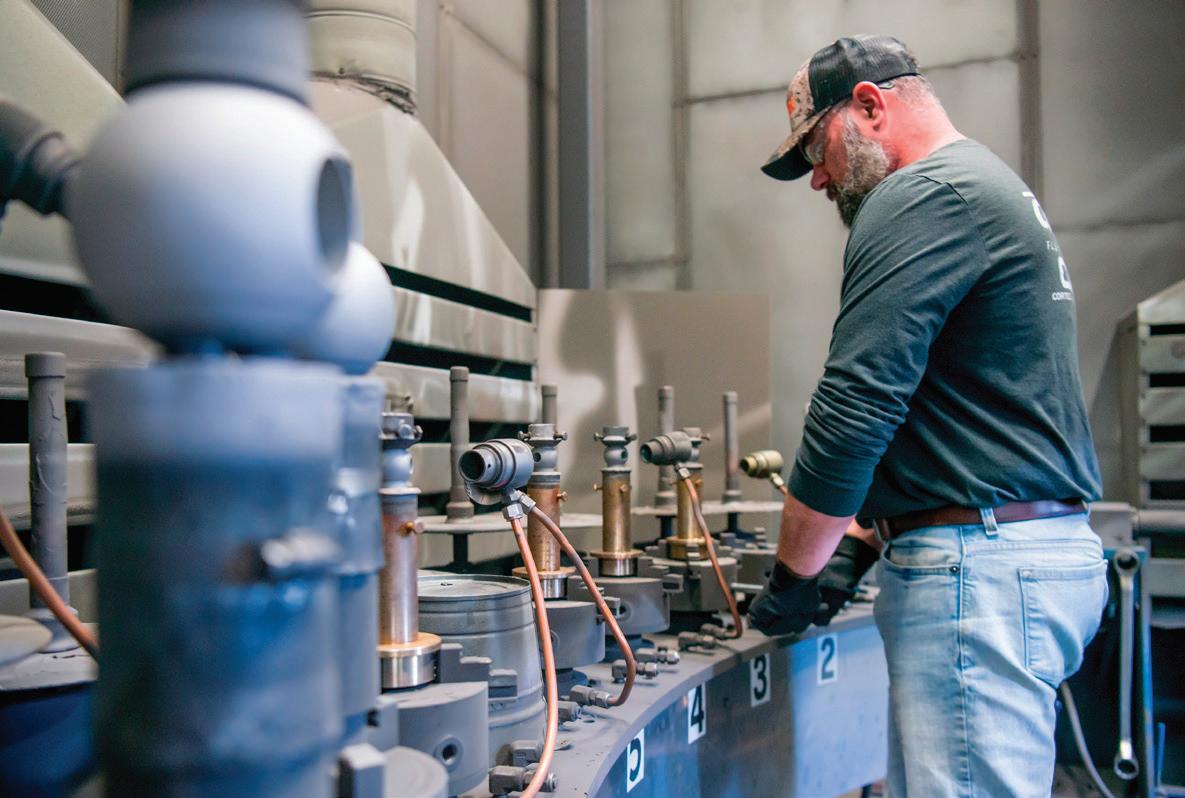
This key differentiator aligns with the company’s commitment to vertical integration. Unlike most competitors that outsource significant portions of production overseas, CORTEC performs nearly all of its work in-house, allowing for tighter quality control, faster turnaround and purpose-built customization.
“Our products go through multiple layers of inspection, all within our own facilities,” Corte says.
The company’s tagline, “crafted for confidence,” captures that mindset.
“We don’t use this slogan to boost our ego,” Corte says, “we do it for the confidence of our customers to know they can source products which will boost their operational success.”
Automation, electrification and data integration are reshaping how wells are monitored and managed and how equipment must perform.
“Probably the most significant trend we see across all sectors is automation,” Corte says. “Everything is becoming real-time and remotely controlled.”
Where operators once dispatched crews to adjust well sites, they now rely on centralized systems that monitor and control dozens of wells simultaneously. That shift is driving demand for
smarter and more connected equipment.
CORTEC has responded by building in-house automation capabilities, integrating actuators and control systems into its valves and chokes. The company also invests in digital infrastructure internally.
Artificial intelligence and predictive analytics are emerging areas of focus, particularly in monitoring equipment performance and anticipating maintenance needs.
In addition to evolving technology, CORTEC operates in one of the most cyclical industries in the global economy. Oil and gas markets are notoriously volatile, shaped by geopolitical events and supplydemand balances.
“When my father started the company, the Gulf of Mexico was dominated by fixed platforms,” Corte says. “Then we saw the emergence of shale and fracking, which shifted activity onshore.”
The rise of deepwater drilling introduced another layer of complexity, raising the bar for reliability and engineering precision.
“When you’re on a floating facility 100 miles
offshore,” Corte says, “you don’t have room for failure.”
For all its technical complexity and global footprint, CORTEC remains deeply tied to Louisiana. Its facilities in Houma and Port Allen anchor the company in a region synonymous with oil and gas production.
“Being a Louisiana company is a big part of our identity,” Corte says. “As we engage with our industry peers, we take great pride in representing a true U.S., Louisiana-made product. Our team embodies a warmth and can-do attitude that has become synonymous with this place we are fortunate to call home.”
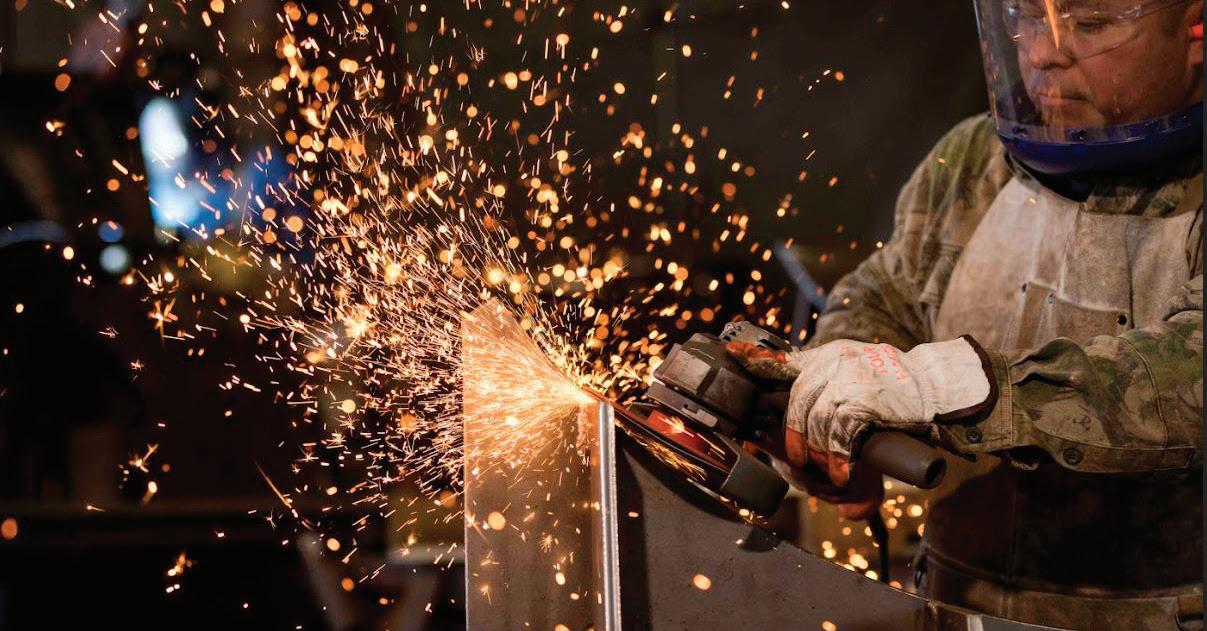
Delta Machine & Ironworks didn’t grow into a major industrial player by accident. It did it by designing its business around one promise: deliver exactly what customers need, exactly when they need it. In industrial construction, delays are often accepted as inevitable—and pipe supports are frequently a bottleneck. Delta builds on its success by rejecting that assumption and delivering relentlessly on a single, foundational position: service excellence means showing up on time, every time.
That service-first mindset has driven rapid growth for the Baton Rouge-based manufacturer as it expanded beyond its small-shop roots. Today, Delta supports large-scale industrial improvement and expansion projects, staying engaged from
early planning through final installation, often as a go-to partner for post-startup plant maintenance teams.
Delta started out in 1984 as a small machine shop and has continued to service all those longterm partners. Along the way, the company has emerged as a leader in pipe support fabrication, deliberately strengthening its planning and project management team to ensure schedules are met, not missed, removing delays that traditionally plague this part of the supply chain.
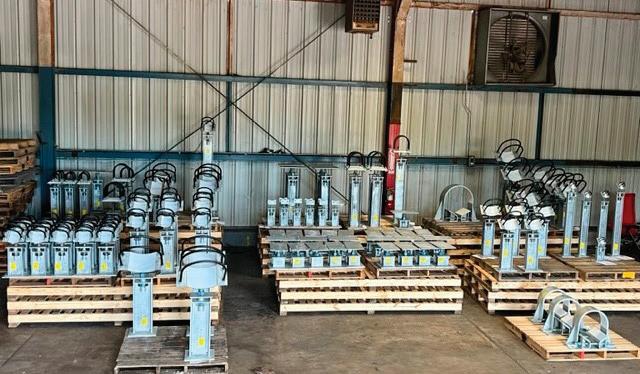
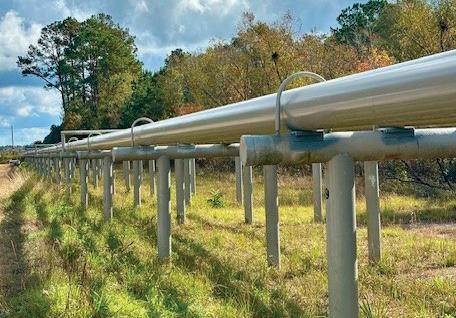
Adaptability has been key. In 2025, Delta invested $6.2 million to modernize product offerings, fabrication, logistics, technology and office infrastructure. Central to that effort was acquiring and scaling LIFT-OFF Pipe Supports, a
Top Executives: Cody Odom, Owner & President; Heidi Holmes, Director
non-metallic corrosion-prevention solution. Rather than continuing to depend on outside suppliers— and their lead times—Delta took ownership of the product line, forged an excellent raw material supplier relationship and backed it with deep inventory and additional molds to ensure supports are ready when customers need them, not weeks later.
Physical expansion followed the same service logic. A new flagship office on a nine-acre site in Zachary will anchor operations across Baton Rouge, Prairieville and Denham Springs. Meanwhile, upgrades at the Choctaw fabrication facility added under-roof floor space for staging, packaging and organizing ever-expanding modular work and outbound shipments, allowing supports
to move faster and more predictably.
To reinforce accountability, Delta focused on transparency. Its “Project Hard Net” fiber network upgrade enables real-time tracking across the facility, providing customers with detailed automated updates on production status and milestones, eliminating guesswork and reducing risk. The goal, says Director of Engineering & Technology Heidi Holmes, is to give customers confidence that everything promised is actually happening. The goal is simple: do exactly what was promised without customers having to worry.
Delta also addressed the final mile.
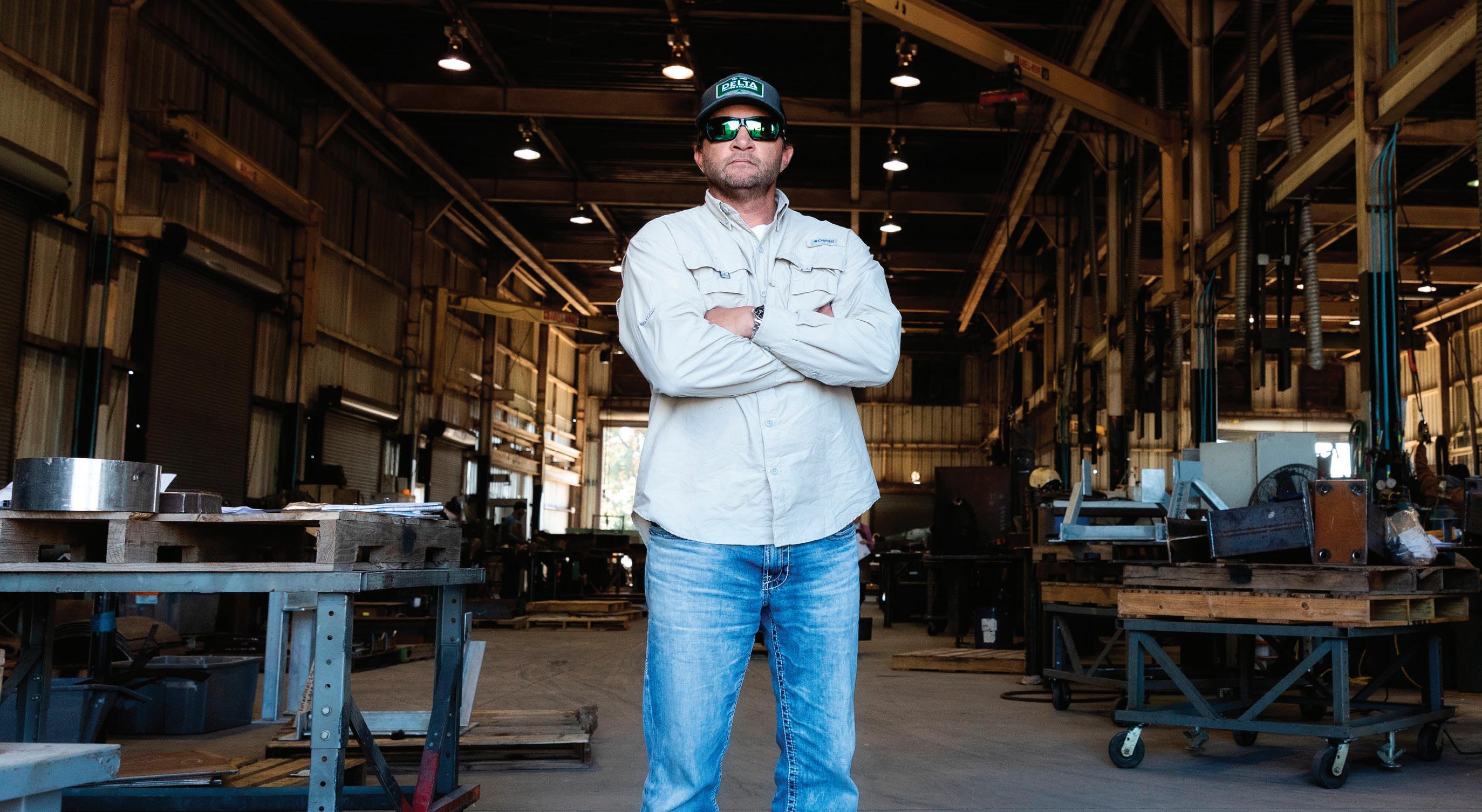
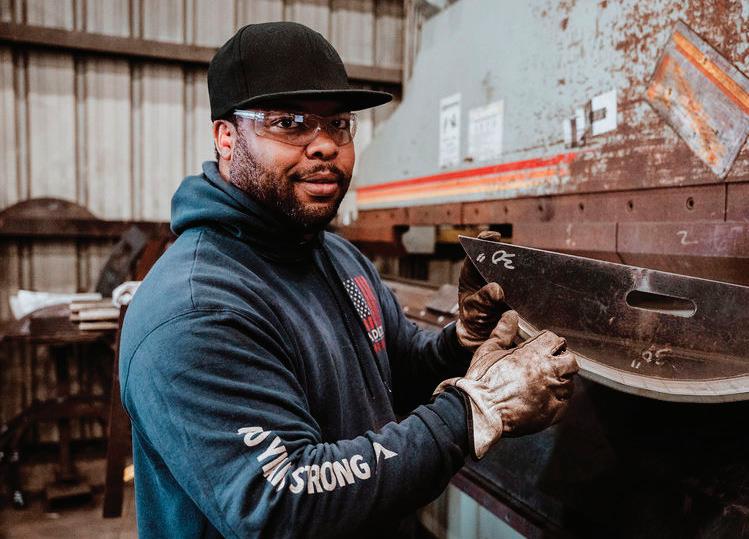
Fleet upgrades prevent aging trucks from threatening delivery schedules, and strict quality controls keep the reject rate under .01 percent. Through it all, leadership stays hands-on. President Cody Odom is frequently on the shop floor, monitoring critical projects firsthand, communicating with clients and calling shots to make sure the team stays on point.
“For years, supports were ordered late and delivered later,” Holmes says. “We’ve built our operation to make sure they’re ready before they become a problem.” At Delta, service excellence is measured in days saved—not excuses made.
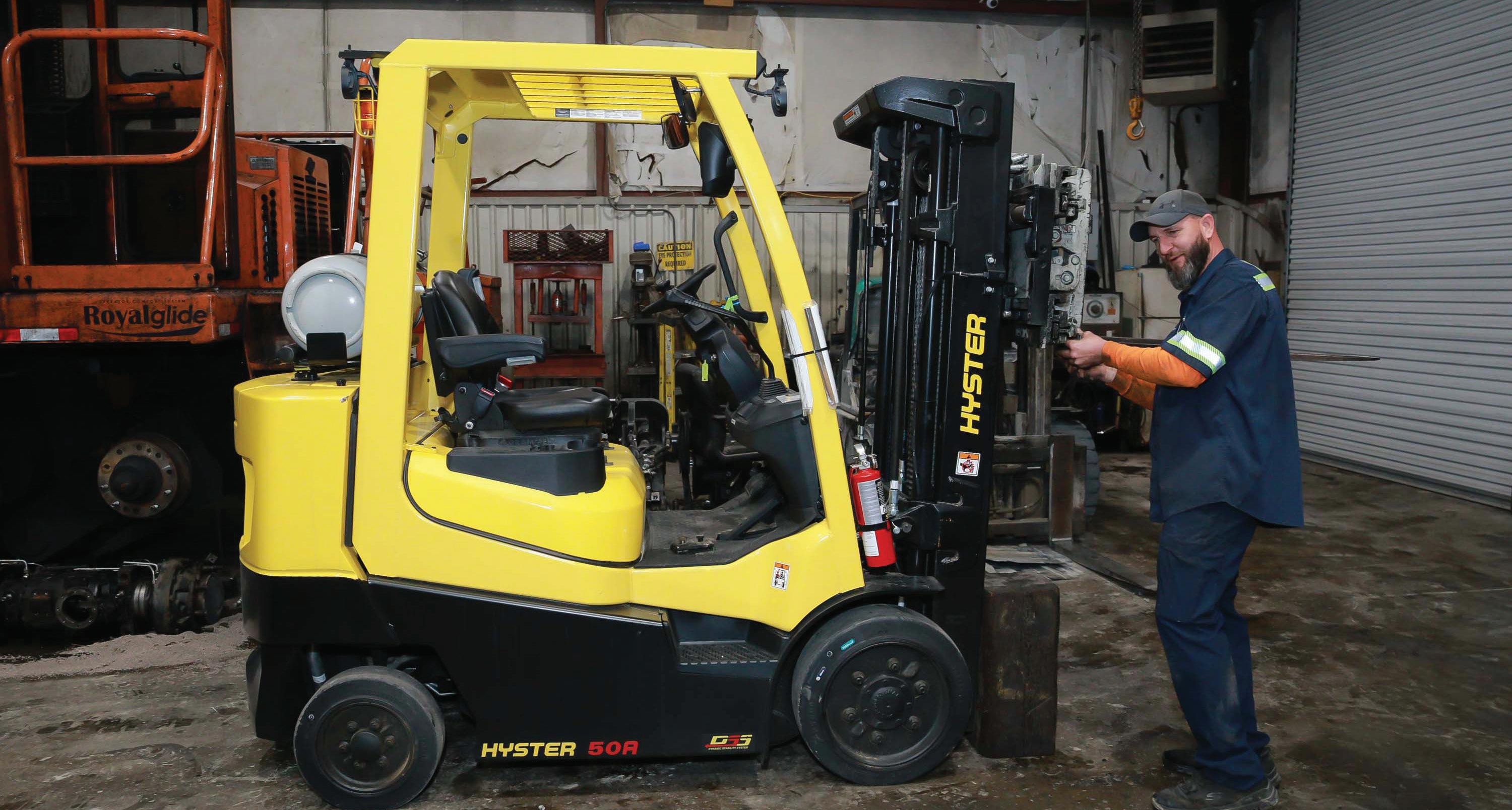
It’s easy to find Deep South Equipment’s Lafayette location; just look for the gorilla. The Louisiana-based equipment dealer and service provider opened at 122 Southpark Road in late 2024 and decided to keep the well-known gorilla statue from the previous owner, George’s Lift Trucks.
Keeping the statue just made sense. It’s a local landmark and represents Deep South’s desire to be part of the community. For years, their technicians have traveled across the region—from Port Allen to the Texas border—helping customers on-site. As business continued to grow, it became clear they needed a physical location in Lafayette.
Since opening its doors, Deep South’s Lafayette branch has grown quickly, increasing business by about 25 percent in 2025 as they expand their work in the industrial, oil and gas markets.
The newly renovated service facility includes a fully equipped shop and fully stocked parts department. From this location, the team handles equipment sales, rentals, parts, service and training. They specialize in Hyster forklifts, JCB construction equipment, TICO terminal tractors, FECON forestry equipment, PowerBoss scrubber sweepers and Columbia utility vehicles.
One thing that sets Deep South apart is consistency across all locations. Their technicians are factory-trained and certified, and they all follow the same “customer comes first” philosophy. They are rarely confined to the office; more than 75 percent of their service is performed in the field. Deep South also offers on-site operator training for lift trucks.
With 11 locations across four states, Deep South
manages about 2,000 rental units. If needed, their Port Allen location can quickly send equipment to Lafayette. They are also quick to embrace new technologies for the benefit of their customers.
Deep South is the trusted supplier for many business owners. The Lafayette branch stocks parts for all makes of forklifts through their aftermarket program. They are always readily available when customers need them. Customers can pick up parts at the office, have them shipped to the jobsite, or have a technician deliver them during a service call.
In just one year, the Lafayette branch is already ingrained in the local community. As Operations Manager Randall Kent says, “It’s been a natural fit. It feels like we’ve been here all along.”
Top Executives: John Parsons, Owner & President; Patrick Parsons, VP of Used Truck Sales and JCP Construction Equipment; Lindsey Hernandez, VP of New Truck Sales; Gerald Boudreaux, CFO; Randall Kent, COO
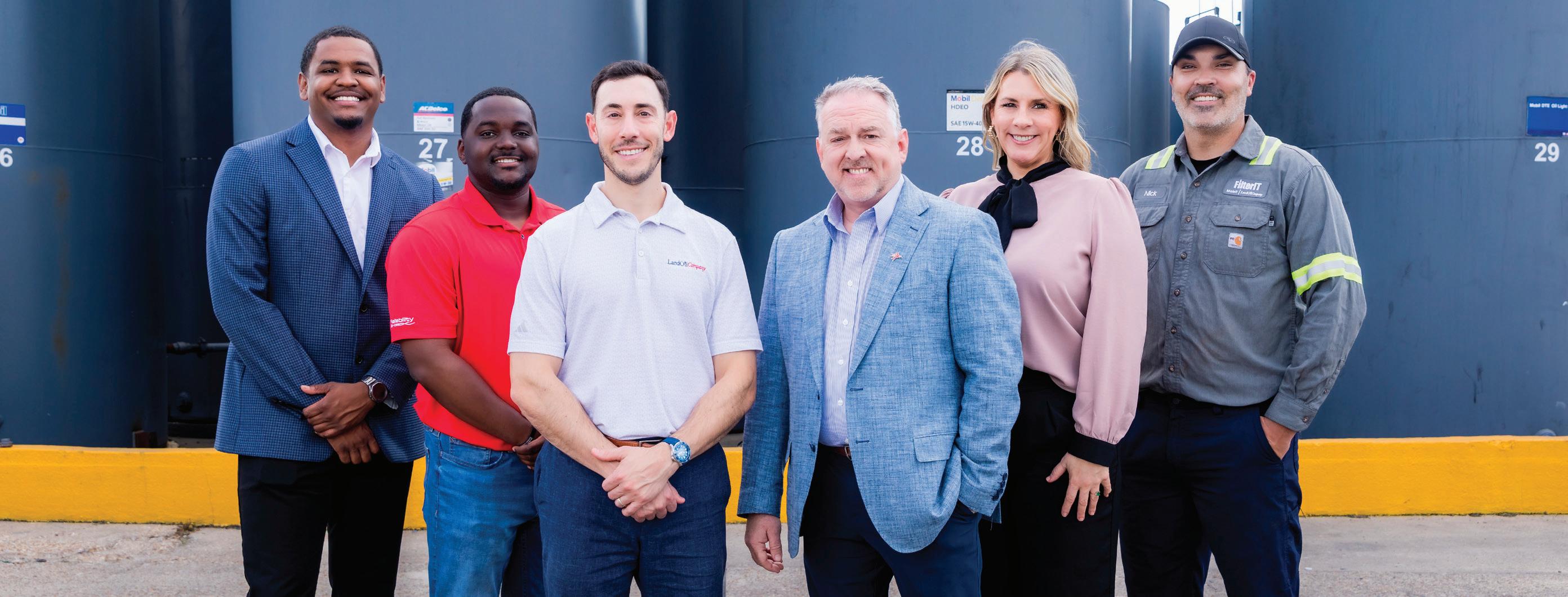
For more than a century, Lard Oil Company has quietly built one of Louisiana’s most deep-rooted energy businesses, evolving from a traditional fuel distributor into a full-service petroleum distributor, convenience store operator and reliability solutions enterprise. These all carry a culture of safety and customer reliability.
Today, that evolution is accelerating, driven by energy expansion in the Gulf South and a deepening partnership with ExxonMobil. Lard Oil’s footprint reflects the economic engine of Louisiana itself. The company operates convenience stores, supports distribution networks and supplies lubricants, fuels and reliability services to commercial, industrial, automotive, and marine customers across Louisiana, Mississippi and into Florida’s Panhandle.
“That growth is no accident,” said Mike Ezell, director of commercial, industrial and marine business. “Louisiana remains one of the most resilient energy markets in the country and we’re fortunate to operate here. For more than four decades it has been one of the most stable and fastest-growing markets I’ve seen, driven largely by petrochemical, energy and marine activity.”
Lard Oil’s recent growth has centered in the Southwest Louisiana and Greater New Orleans
Area, where liquefied natural gas development is reshaping demand.
“LNG really drove the move into that market,” Ezell said. “We needed to be there in a bigger way to support our growth and the businesses around it.”
At the same time, Lard Oil has expanded its marine distribution network, now covering Louisiana, Mississippi, Alabama and the panhandle of Florida. The segment represents a significant opportunity for the company’s future.
“I expect we’re going to see a lot of growth in the marine industry for us,” Ezell said. “It’s an expansion for us and we’re continuing to build that presence.”
A defining feature of Lard Oil’s history is its longstanding alignment with ExxonMobil, a relationship that dates back to 1922.
“They’ve always been a part of who we are,” Ezell said. “We work in tandem as partners. We are its conduit to the customer and the market.”
That partnership extends beyond petroleum products into technology, data and operational strategy, helping Lard Oil stay competitive in an evolving energy landscape. To support growth, the company is investing heavily in logistics, workforce and advanced services.
Top Executive: Johnny Milazzo, CEO
“We’re planning years out,” Ezell said. “We’re looking at 2028 and 2029 in terms of infrastructure, staffing and equipment.”
That includes hiring engineers, expanding logistics technology and assets as well as investing in the most reliable and efficient oil purification systems to extend product life and reduce waste. The company is also leaning into automation and AI to improve efficiency. Ezell expects continued growth across traditional energy sectors, with emerging demand tied to data centers and infrastructure development.
“I think we’re just hitting the tip of the iceberg,” he said. “There’s a lot more to come. Through larger economic investment, you see demand growth in our automotive, commercial, and convenience store business as well.”
Through it all, the company’s foundation remains unchanged.
“We work for the customer,” Ezell said. “But at the end of the day, our success is a story about our people. It takes a lot of committed and driven people to do what we do every day. The real heart of it is our people and our passion. That passion comes from having an emotional connection to our coworkers, partners and clients.”
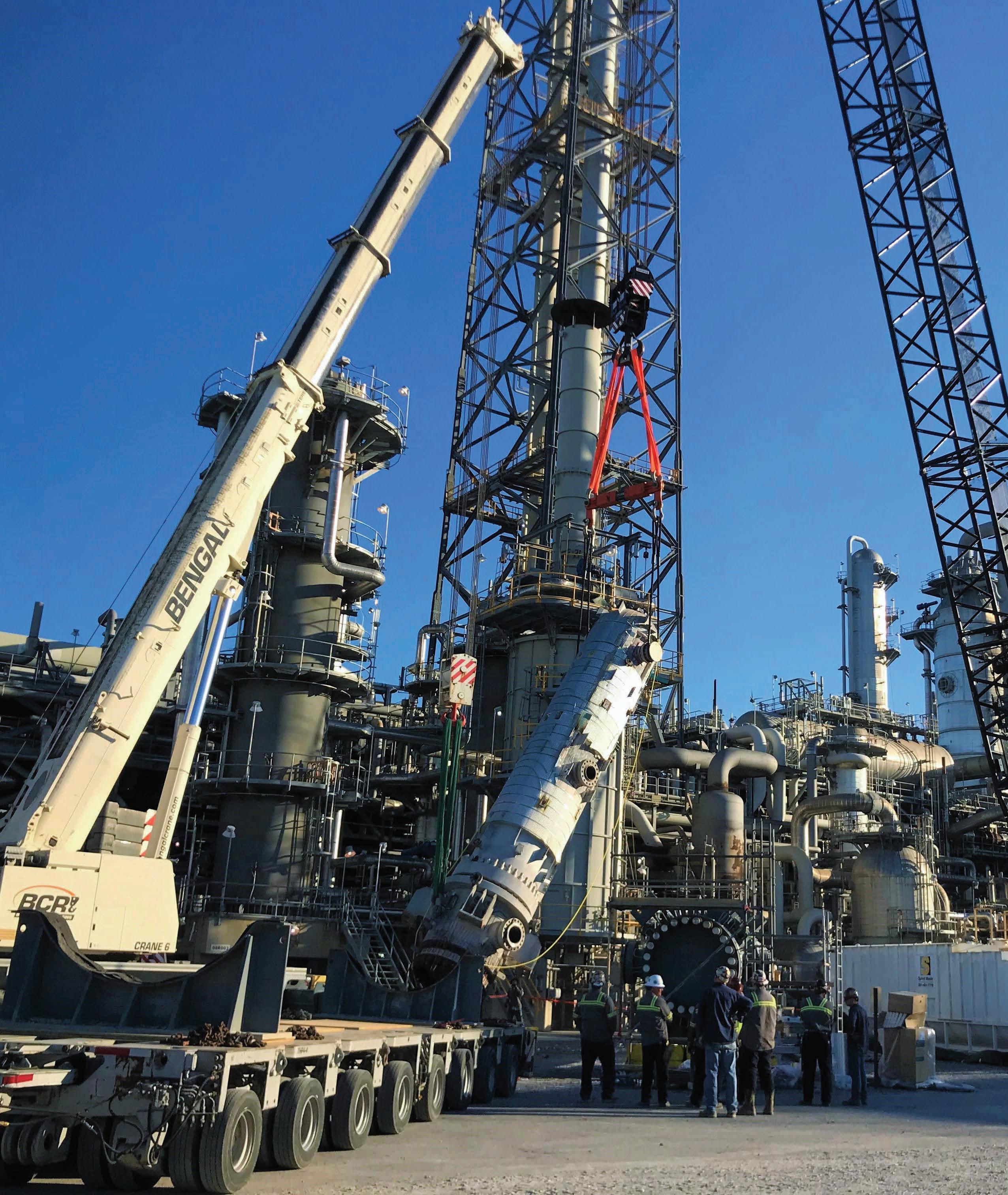
From concept to completion, engineering, logistics, lifting, and execution handled by one team.






BY SAM BARNES
Record investment, rising costs, carbon capture battles, clean energy pivots and crumbling infrastructure— Louisiana’s industrial sector has never had more to navigate.
It has been a bipolar year for Louisiana’s industrial complex. The elation over a tsunami of new investments, lower tax rates and softening regulations has been dampened in many ways by ever-changing tariffs, consistently high interest rates and across-the-board inflation.
That’s causing the price tags of many of the record-breaking $61 billion in announced industrial projects—as well as the $100 billion in active investments— to skyrocket and creating just as many questions as answers.
These conflicting economic realities are set against a backdrop of increasing ambiguity and uncertainty in everything from carbon capture and renewable energy to infrastructure and environmental regulation. 10/12 Industry Report takes a deep dive into several key issues that industry is facing to find out what leaders are saying and how the industrial sector is responding.



Cost instability brought about by fluctuating tariffs and persistent inflation threw a sizeable monkey wrench into many large investments over the last year.
“Uncertainty is the bane of economic growth,” says Loren Scott, an economist with Loren C. Scott & Associates in Baton Rouge.
ENDANGERED PROJECTS: In February, Gov.
for
Source: Associated General Contractors of America
“The Trump administration lowered the tax rates and lowered regulations, and that’s all very good for economic growth … but then they imposed tariffs, which are very bad for economic growth. The policies just don’t match.”
In some cases, it has prompted local leaders to act. In February,
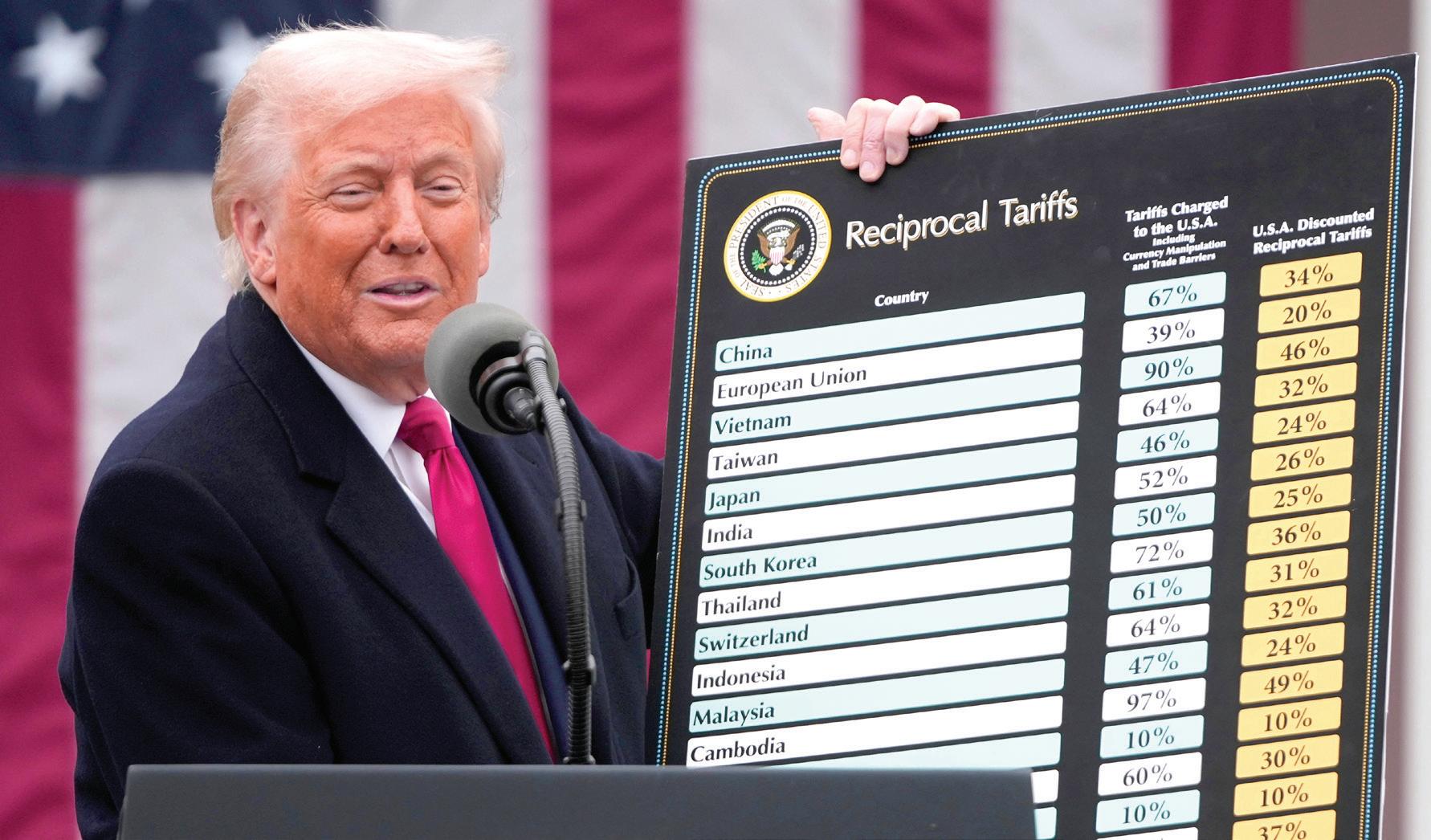
Gov. Jeff Landry lobbied the Trump administration for targeted tariff relief when it became obvious that the steel tariff posed a significant threat to south Louisiana’s biggest project—Hyundai Steel’s planned $5.8 billion facility in Ascension Parish.
Scott compares tariffs to an anchor being dragged by a ship. “The Louisiana LNG project went from $16 billion to $17.2 billion just because of the steel and aluminum tariffs,” he adds. “At some point, an owner’s going to say this is impacting the rate of return too much and they’ll pull the plug.”
Fortunately, tariffs are a “onetime hit,” whereas inflation poses a more persistent threat—not
only inflating input costs (lumber, steel, aluminum and copper) but also raising interest rates. “Many of these projects are financed,” he adds. “They’re getting loans to get these projects going. In effect, it’s yet another factor that can impact the rate of return on a project. Inflation remaining high causes the interest rates to remain high.”
Forecasts don’t predict much movement over the next 12 months either. “That’s not good for industry,” Scott says. “The Federal Reserve can lower the rates all they want; that’s not going to do much. The market dictates what the rate should be.”
Ken Simonson, chief economist with the Associated General
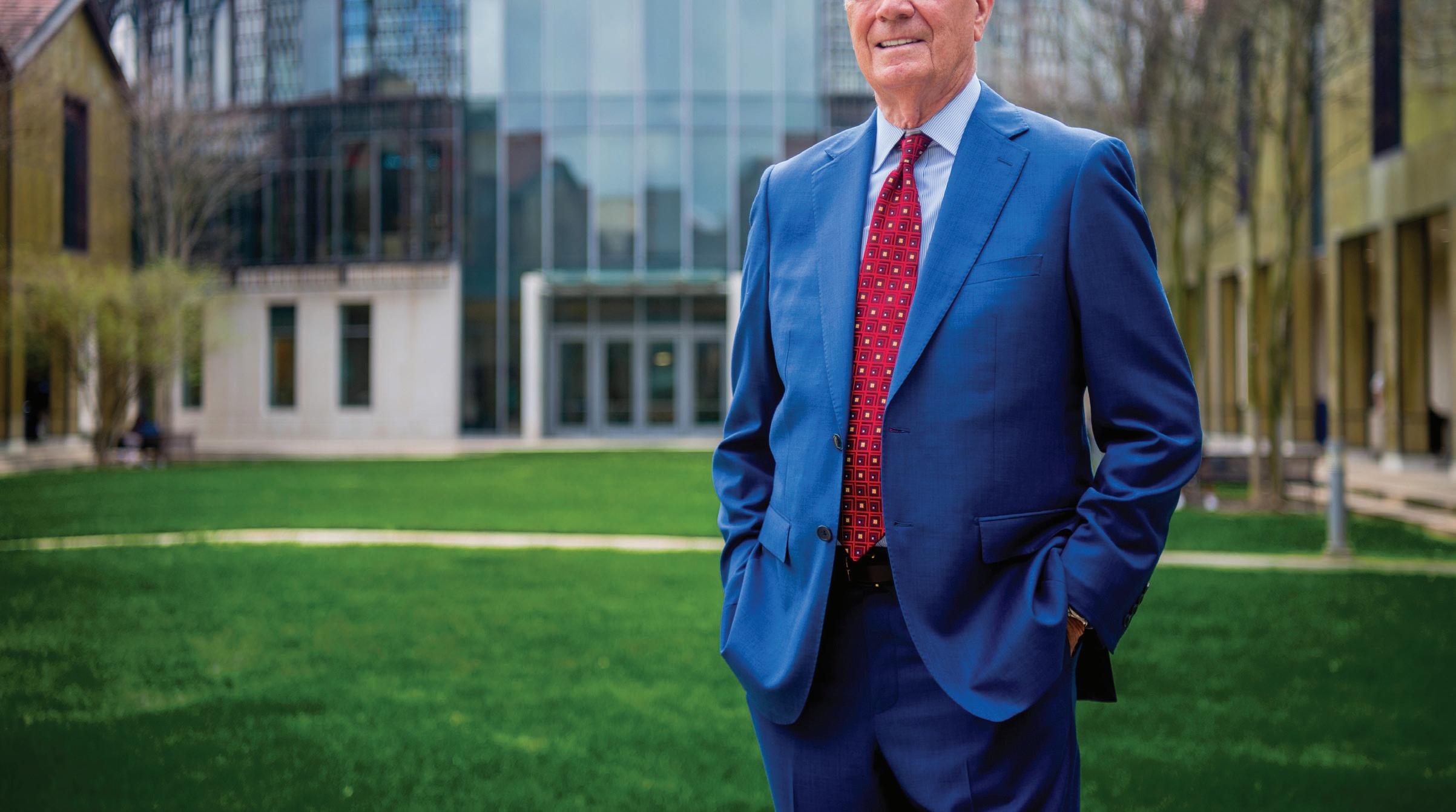
“Uncertainty is the bane of economic growth.”
LOREN SCOTT, economist, Loren C. Scott & Associates
Contractors of America, says the impacts of the tariffs have been widespread and significant. In a recent analysis, he found that aluminum went up by some 30% and steel products by 17% in 2025. “This is a direct result of the tariffs,” Simonson says. The
steel tariffs were not impacted by a recent U.S. Supreme Court decision, as it specifically addressed and invalidated tariffs imposed under the International Emergency Economic Powers Act.
Sage Policy Group’s Anirban Basu, a Baltimore-based econo-
mist consultant for Associated Builders and Contractors, says the tariffs have done little to accelerate the movement of production to the U.S., as they were partly intended to do.
“It takes years for a manufacturer to shift their production here,
and by the time they do that the current administration won’t be in power anymore,” Basu says. “That means they could potentially spend a lot of money moving into the U.S., then suddenly become a high-cost producer paying higher wages with stiffer environmental regulations (should the next administration ramp up the regulatory environment). In turn, that would enable their competitors to undercut them. It’s just too risky for them.”
17%
Rise in the cost of steel products in 2025
Source: Associated General Contractors of America
The granting of regulatory primacy over Class VI well permits to Louisiana in 2025 seemed to green-light a host of carbon sequestration projects.
However, public and bipartisan legislative opposition has surged, and Gov. Landry subsequently imposed a moratorium on new permits, capping the number of permits at the Department of Energy and Natural Resources, or DENR, at 31.
At press time, only two projects had been approved—the Hackberry Carbon Sequestion LLC site in Cameron project and the Strategic Biofuels site in Caldwell Parish.
Public perception has been a growing problem, and several bills introduced in the current legislative session could hamper the ability of new CCS projects to move forward.
Unfortunately, that tilts the playing field in favor of Texas— which was also granted primacy—for landing billions of dollars in carbon capture and industrial carbonization investments.
“Texas is sprinting to get permits
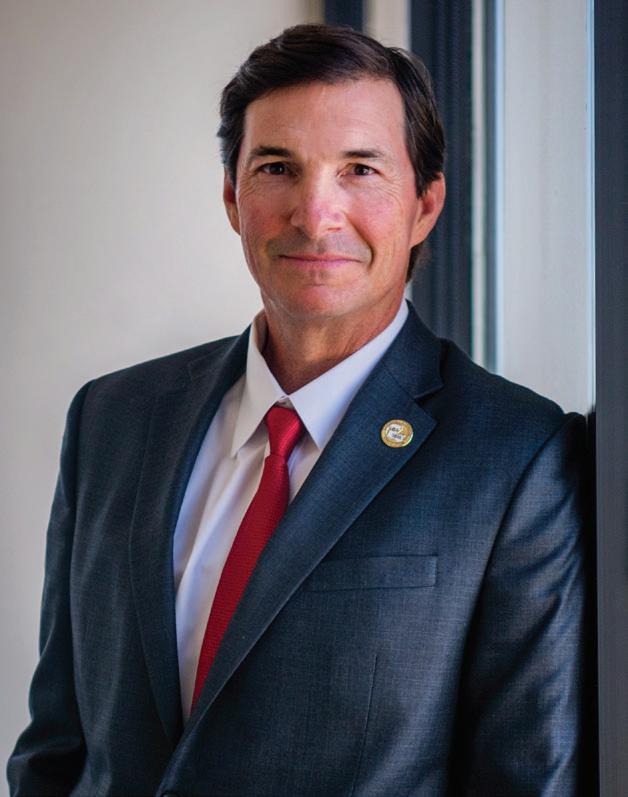

approved,” says David Cresson, president and CEO of the Louisiana Chemistry Association. “If we’re not careful, we’ll be looking up at Texas again and that’s not where we want to be.”
Dustin Davidson, secretary of DENR, says there remain some 29 projects under review by a 21-person team in his department’s engineering division.
“If we’re not careful, we’ll be looking up at Texas again and that’s not where we want to be.”
DAVID CRESSON, president and CEO, Louisiana Chemistry Association
“We’ve tried to focus on prioritizing our review based on how well an application is put together from a technical standpoint,” Davidson says. “We’re also looking at the economic development side of it, working with Louisiana Economic Development to determine the ad valorum tax that it would generate, how many jobs it would generate, etc.”
Carbon capture remains profitable from an economics standpoint, thanks to the continuation of the 45Q credit in the “One Big Beautiful Bill,” albeit with modifications. “The Inflation Reduction Act under the prior administration increased the 45Q tax credit to $85 per ton of carbon (captured and stored), with a lower tax credit for enhanced oil recovery (a process where techniques are used to extract more oil from a reservoir),” says Greg Upton, executive director of the LSU Center for Energy Studies.
“More recently, the One Big Beautiful Bill Act also increased
the tax credit for enhanced oil recovery.”
Upton’s office recently created a dashboard to track current Class VI well applications and their review status. His team is also conducting an economic impact analysis, financed by ExxonMobil, on the potential of carbon capture/sequestration statewide—partly to gauge the effectiveness of CCS at reducing emissions.
“Our technical team is looking at all facilities that are currently operating and have economically capturable emissions,” he says. “We’ll determine how much carbon they could all potentially produce, in total, then determine the amount of carbon that could be sequestered with all the permits that have been submitted so … just to put it into perspective.
“What you find out is that there is so much sequestration potential in the state relative to the plausible emissions that are out there.”

Shifting environmental regulations driven by federal rollbacks and new state-level initiatives are reshaping Louisiana’s industrial, oil and gas markets. Most significantly, perhaps, has been a statewide reduction in severance taxes for new oil wells, and the re-opening of the Gulf to federal offshore lease sales.
In 2025, the state lowered the severance tax rate (HB 600) from 12.5% to 6.5% for new oil wells in a bold move to improve Louisiana’s competitiveness with neighboring Texas.
“Before, it wasn’t a hard decision,” says Mike Moncla, president of the Louisiana Oil and Gas Association. “You could either drill in Texas and pay only 4.6% or
cross the border and pay 12.5% in Louisiana. Lowering the severance rate makes us more competitive, so we were very pleased to get that done. We wish it could have been across the board for all production (not just new wells), but the fiscal note for the state would have been astronomical.”
The restart of offshore lease sales—previously halted by the Biden administration—has further fueled optimism in the oil and gas sector. The “One Big Beautiful Bill” scheduled the first in-person lease sale in New Orleans in December, with a second in March.
Over the long term, though, the federal government’s dramatic shifts in the handling of offshore oil will remain a threat, given that
the next administration could undo much of what has been done.
“People want certainty in their investments, and offshore is a big investment,” Moncla says. “Look at Venezuela right now. It sounds great for another three years, but to gear up in Venezuela takes three years. Companies have already lost billions over there.”
And while two offshore lease sales are scheduled every year for the next 15 years “another president could come in and change all of that,” he adds. “We’re so divided as a country, and no one is changing their mind. It’s sad for our industry.”
In the petrochemical sector, the decision by the Trump Administration to rescind the Endanger-
ment Finding of 2009—the legal basis for EPA protections limiting and regulating greenhouse gas pollutants—essentially dismantled the agency’s authority to set emission standards for industrial sources, including oil and gas facilities and chemical plants.
But regardless of the decision, Louisiana’s petrochemical complex won’t likely change course. “Many of our companies are American owned but many are not, and in general our companies are going to respond to the demands of the global market,” says David Cresson, president and CEO of the Louisiana Chemistry Association and the Louisiana Chemistry Industrial Alliance. “Regardless of what U.S. regulations might be, they’re going to build products that the global market demands. Our companies hold themselves to the highest standards because they want to be good stewards of the resources while also providing products that the global market wants.”
As with the offshore oil and gas market, flipflopping regulations breeds uncertainty in the petrochemical space and makes it difficult for owners to invest and plan.
“Our members are spending capital to meet certain regulatory requirements,” Cresson says, “and if they’re spending capital to reach a requirement that won’t be there in a year, how do you decide whether you go ahead and spend that capital or not?
“It’s difficult when the goal posts move. If you attract companies based on one set of rules, and then once they’re committed you decide you’re going to change those rules that creates issues.”
GOING BLUE: Blue hydrogen projects are advancing. Hyundai Steel’s proposed $5.8 billion steel mill in Ascension Parish is designed as a “hydrogen-integrated” facility that will eventually rely on blue hydrogen to produce low-carbon steel. But carbon capture and sequestration are essential to the process.
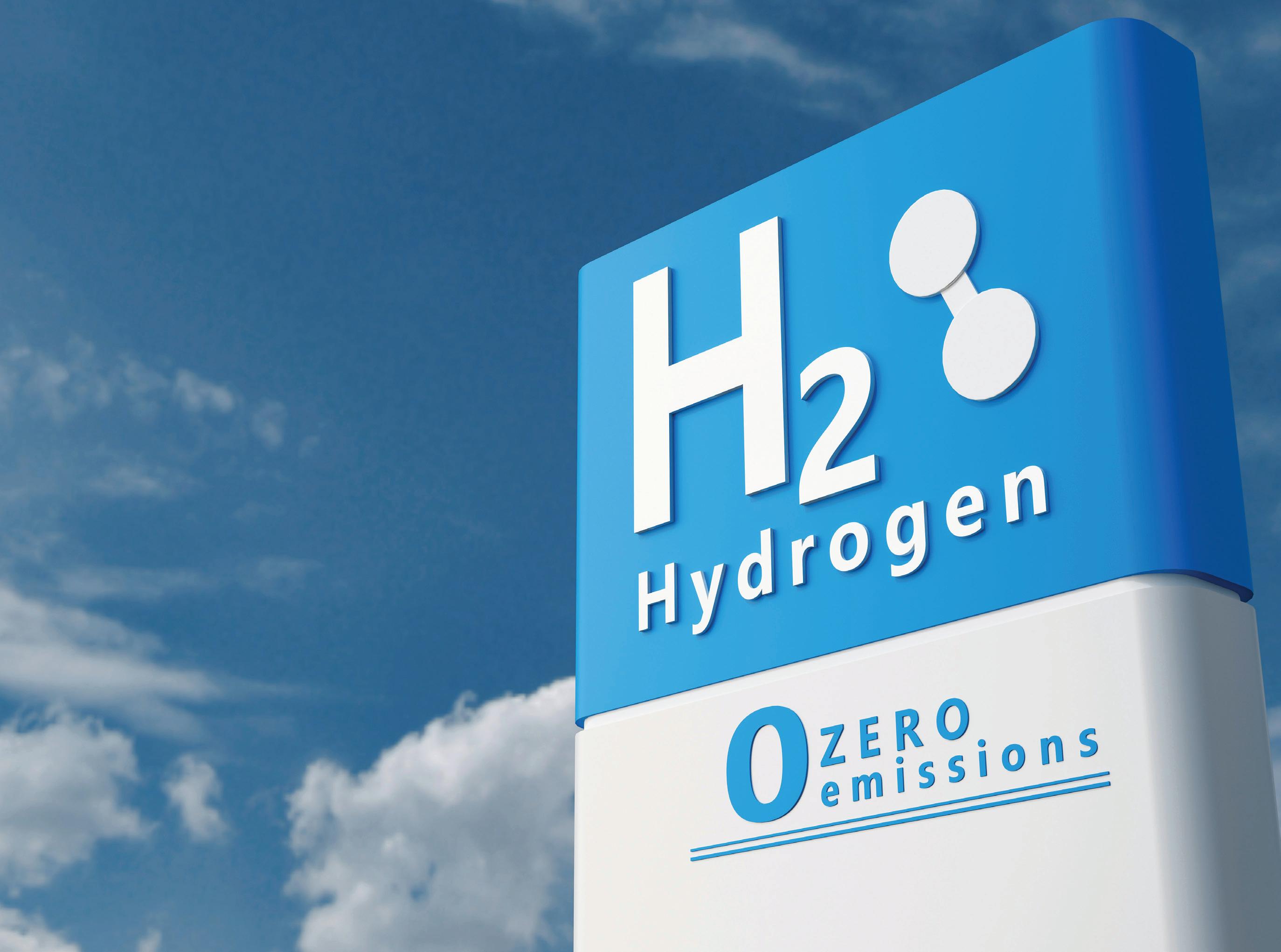
While federal policy changes over the past year have placed an increased emphasis on traditional fossil fuels, economists say clean energy will remain a priority due to global market demands.
“These things aren’t going away,” says Mark Zappi, executive director of the Energy Institute of Louisiana at University of Louisiana at Lafayette. “Companies should never build their business plans around presidential policy because it can be quite dramatic from one election to another, as the last two election cycles have proven.”
It boils down to economics. The solar energy market, for example, continues to pursue utility
scale projects, since it remains cost-competitive with natural gas. And while there continues to be energy storage issues, the technology is maturing. “It’s still very viable,” Zappi adds. “It’s on a steady course; not quite on the same trajectory but it is moving forward.”
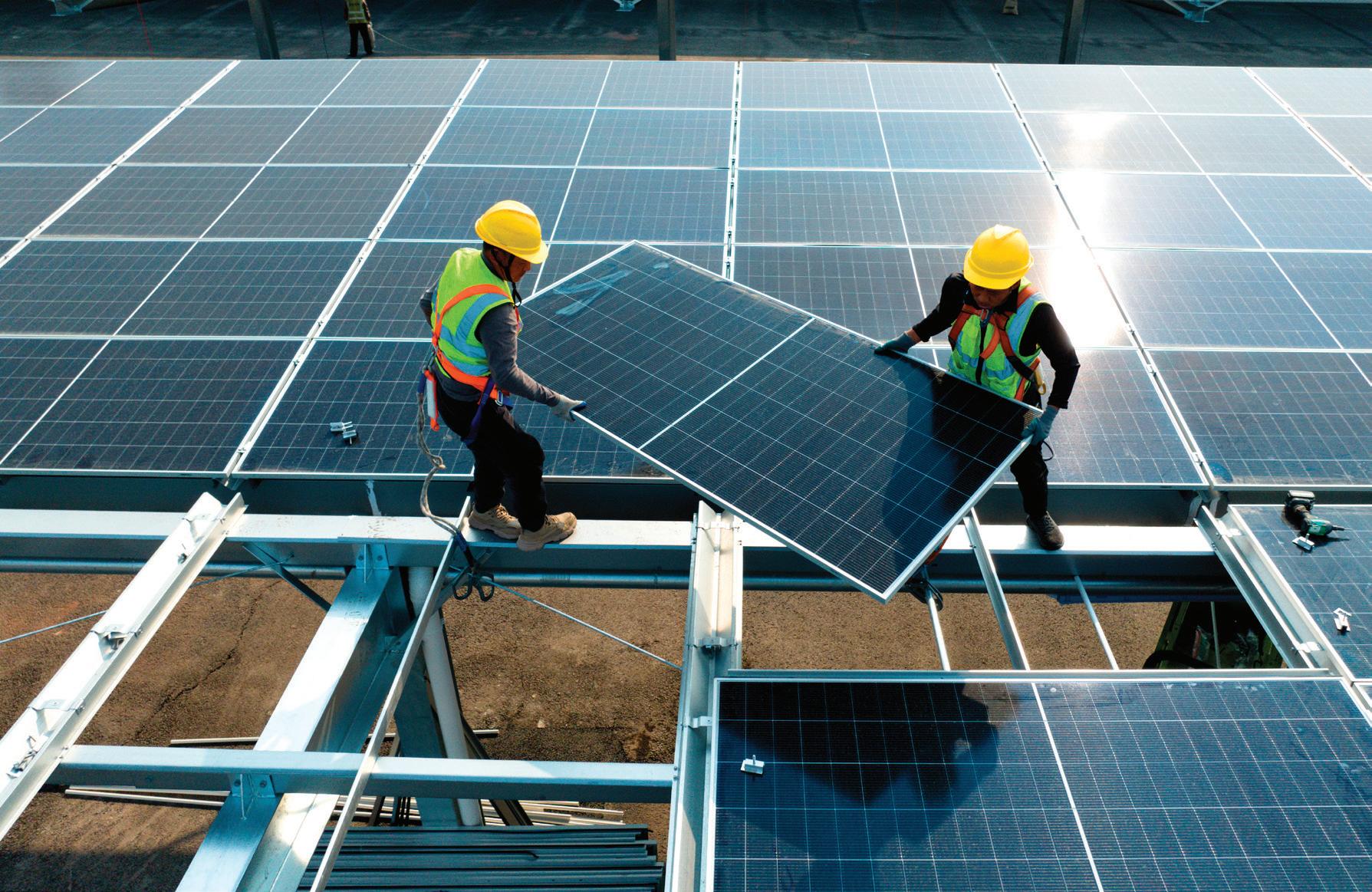
Public resistance to solar has been the biggest surprise, culminating in the passage of HB 459 in 2025, which sets state-level solar siting standards for projects that are 75 acres or larger beginning in 2026. The law mandates that solar facilities must have a 300-foot setback from the property line of adjacent residential homes (although parishes can request to use their own standards).
“Companies should never build their business plans around presidential policy because it can be quite dramatic from one election to another.”
MARK ZAPPI, executive director, Energy Institute of Louisiana, University of Louisiana at Lafayette
“It’s one of the larger distances that you’ll see in the country,” Zappi says.
Blue hydrogen projects are also advancing. Hyundai Steel’s proposed $5.8 billion steel mill in Ascension Parish is designed as a “hydrogen-integrated” facility that will eventually rely on blue hydrogen to produce low-carbon steel. Carbon capture and sequestration are essential to the process.
“A lot of these new installations are tied to blue hydrogen,” Zappi says, “but it all ties back to carbon capture and sequestration. If we don’t have CCS, then we don’t have those projects.”
Meanwhile, H2theFuture—a GNO Inc.-led initiative to establish a sustainable clean hydrogen cluster—has notched some impressive wins since its launching in late 2022.
Josh Tatum, vice president of retention and growth at GNO Inc., says H2theFuture’s five workstreams have served as a springboard for numerous projects, facilitating the creation of Future Use of Energy in Louisiana, or FUEL, at LSU and propping up tech hubs
such as NEXUS innovation in New Orleans and Newlab New Orleans.
And in 2024, officials broke ground on the Louisiana Future Energy Center the University of New Orleans, which will serve as H2theFuture’s physical headquarters in fall 2026.
“Through our workforce development work stream, some 2,600 students have already ben-
“The demand is now in other regions and we’ve moved our team to working on turbines that are currently spinning today.”
JAMES MARTIN, CEO, Gulf Wind Technology in New Orleans
SOLAR RESTRICTIONS: Public resistance to solar culminated in the passage of HB 459 in 2025, which sets state-level solar siting standards for projects that are 75 acres or larger beginning in 2026.
an industrial pilot scale. Additionally, the LSU Petroleum Engineering Research, Training & Testing Lab at LSU commonly known as known as PERTT is set to begin drilling a CO2-capable research well this spring, with the help of H2theFuture funding.
“That’s bringing together major corporate partners, and will give students, researchers and regulators the ability to study CO2 in all its phases,” Tatum notes.
efitted from training at Delgado Community College, Nunez Community College, Northshore Technical Community College … and others in the LCTCS system,” Tatum says.
H2the Future also facilitated the development of a green hydrogen test bed at the University of Louisiana at Lafayette, which will provide industry with a location to test green hydrogen products at
Of course, offshore wind hasn’t fared nearly as well as others in the clean energy space. It was slammed hard by a total and complete reversal in federal support, bringing many projects to a screeching halt as they were no longer financially viable. RWE
Offshore U.S. Gulf LLC, the sole award recipient of the first-ever offshore wind lease sale in 2023, has completely paused its offshore wind activities in the U.S., including its project off the coast of Louisiana, due to regulatory uncertainty.
James Martin, CEO of Gulf Wind Technology in New Orleans, says he’s also delayed the installation of a much-heralded test wind turbine at Port Fourchon. The turbine was meant to demonstrate and test their rotor and blade technology for potential use in an offshore application, as well as provide some power to the port.
The demand for GWT’s “low wind speed” blades (primarily for southern waters) was simply no longer there.
“The demand is now in other regions,” Martin says, “and we’ve moved our team to working on turbines that are currently spinning today. There are about 100,000 onshore wind turbines in the U.S. that can benefit from the technologies that we’ve developed for the Gulf.”
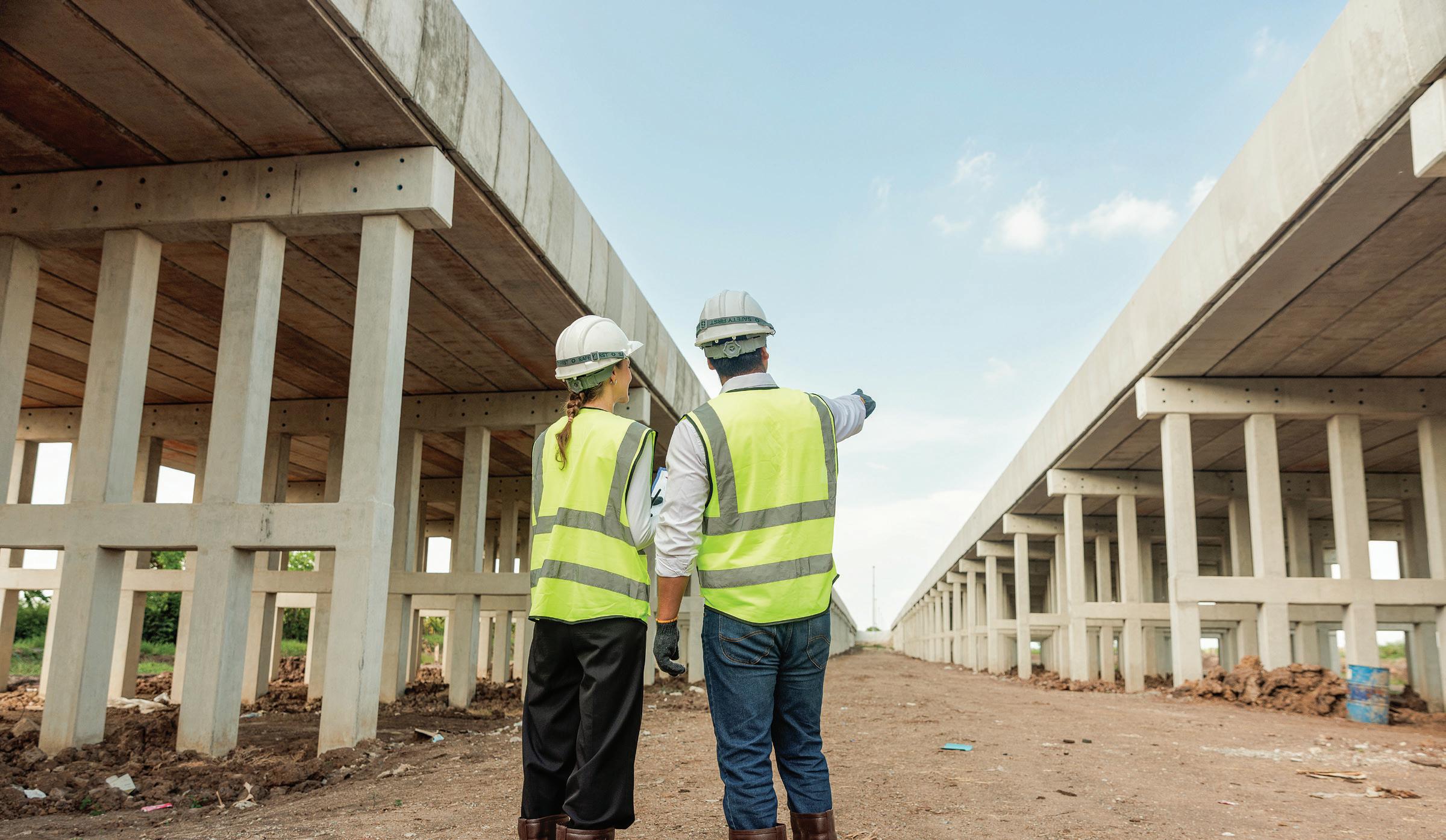
Louisiana’s highways and byways are vital to the industrial sector, but budget shortfalls and aging infrastructure have long impeded the ability of many companies to operate efficiently.
Hoping to change that dynamic, Glenn Ledet, secretary of the Louisiana Department of Transportation and Development, began transforming DOTD operations in 2025 to improve project delivery times and departmental efficiency.
“We’re looking at our processes to find innovations and tools that can help us achieve those goals, while learning from the successes of other states,” Ledet says.
The goal is to make meaningful progress on the state’s persistent backload of projects, many of which are of particular significance to industry.
“You need to enhance all three corridors for the long-term success of Baton Rouge.”
SCOTT KIRKPATRICK, executive
director, CRISIS, of the I-10 corridor expansion, Mississippi River Bridge South and a northern corridor to incorporate the Huey
P Long Bridge.

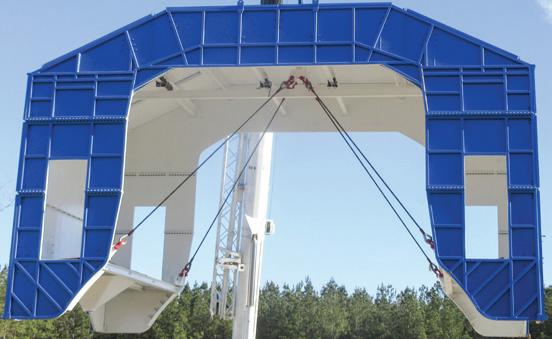
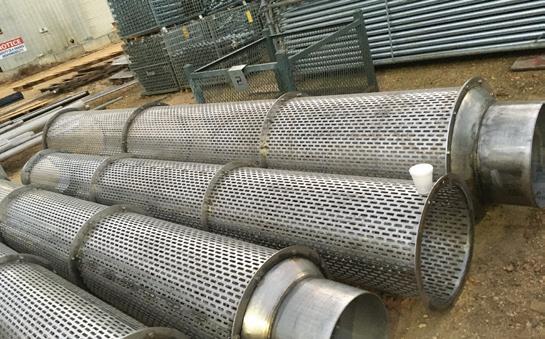
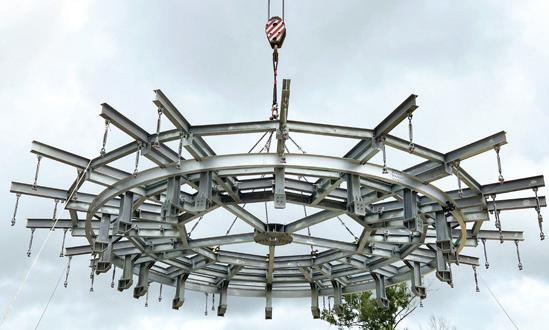
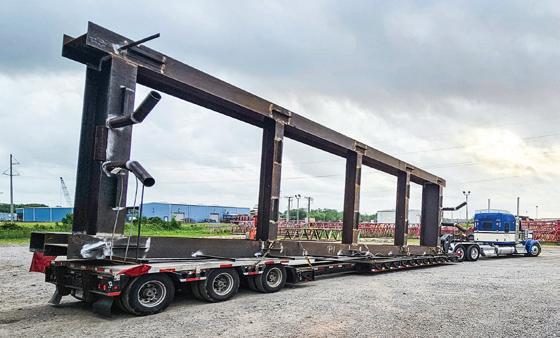
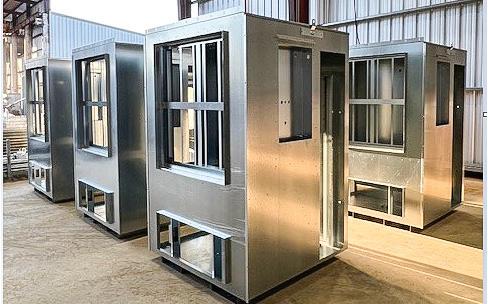
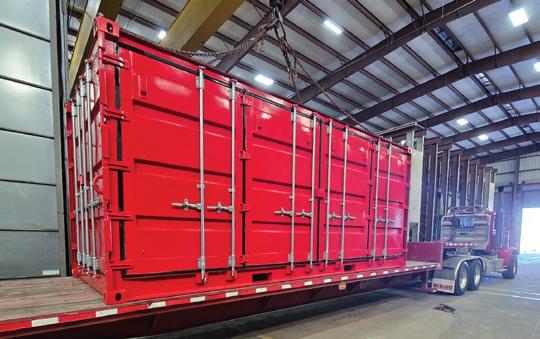
From refining and petrochemical to shipyard, offshore, natural gas, and nuclear industries, Deltak Manufacturing delivers cutting-edge fabrication solutions. With advanced technology, skilled professionals, and an unwavering commitment to quality, we bring your most complex projects to life.
• Robotic welding, modular fabrication, and automated beam/pipe processing
• Custom steel fabrication, ASME pressure vessels, structural and piping systems
• Blasting & coating, and tailored insulation solutions
• Electrical & instrumentation manufacturing services
• Advanced design solutions with AutoCAD and SOLIDWORKS for precision manufacturing
• 178,000 sq. ft. facility on 140 acres
• Over 140 expert employees
• Equipped with 10 CNC fully-programmable welding robots, Bystronic lasers, press brakes, laser and plasma cutters, and more
• 150,000 sq. ft. of fabrication facilities on 47 acres
• Climate-controlled blasting and coating workshop
• Waterfront access with open-cell bulkhead featuring 6,000-ton load-out capacity
• Modular fabrication capabilities for pipe racks, production skids, and structural systems
Our operations prioritize safety and rigorous quality control, ensuring 100% traceability in every project. Coupled with outstanding customer service, Deltak delivers trusted solutions tailored to your needs.
Johnny Curtis | Managing Director | johnny.curtis@deltakmfg.com Walker, LA: Eddie Hilbert | (225) 435-7400 New Iberia, LA: Billy Sullivan | (225) 435-7420 www.deltakmfg.com
Several mega projects, in fact, are currently in various stages of planning, design and construction:
DOTD has narrowed the possible locations for the estimated $2 billion Mississippi River bridge south of Baton Rouge down to three and is awaiting the completion of a National Environmental Policy Act review before naming the final location and developing a project timeline.
Once the environmental assessment is complete, typically a 12-month process, the agency will select the location with the least environmental impact to the region. Just how the bridge will be funded remains undetermined, although it will likely incorporate a public-private partnership. A toll is also being considered.
liest highway project in state history, the bridge will take about six years to complete. “We’re currently working on the acquisition of rights of way and property as it needs to be realigned north of the existing bridge,” Ledet says. The project will significantly alleviate traffic loads in the area once completed, a long-standing problem for industry.
The $500 million, 8.3-mile stretch of elevated LA 1 between Golden Meadow and Leeville is about 70% complete, with a projected opening in fall 2027. Once completed, the much-anticipated project will provide a resilient, elevated route for the energy corridor, as traffic will be able to travel unimpeded from Golden Meadow to Port Fourchon.
• Please respond by e-mail or phone with your approval or minor revisions.
Estimated to cost a staggering $1 billion, this P3-funded mega project will support Port NOLA’s Louisiana International Terminal and
• AD WILL RUN AS IS unless approval or final revisions are received within 24 hrs from receipt of this proof. A shorter timeframe will apply for tight deadlines.
The long-anticipated $2.3 billion I-10 bridge in Lake Charles, north of the existing bridge, is expected to break ground in late April. The cost-
• Additional revisions must be requested and may be subject to production fees.
Carefully check this ad for: CORRECT ADDRESS • CORRECT PHONE NUMBER • ANY TYPOS This ad design © Melara Enterprises, LLC. 2026. All rights reserved. Phone 225-928-1700
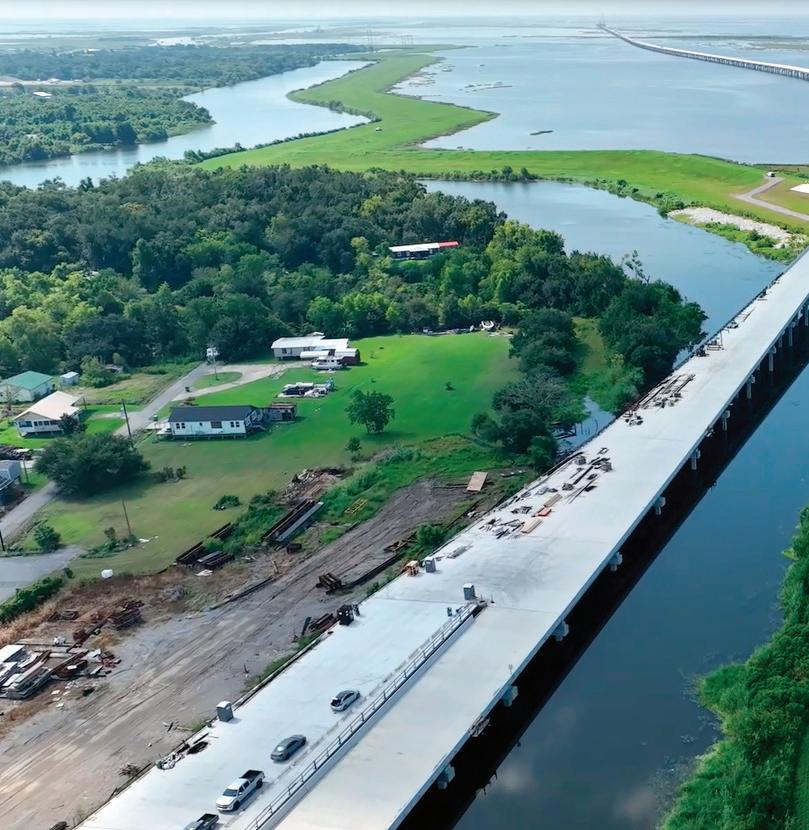

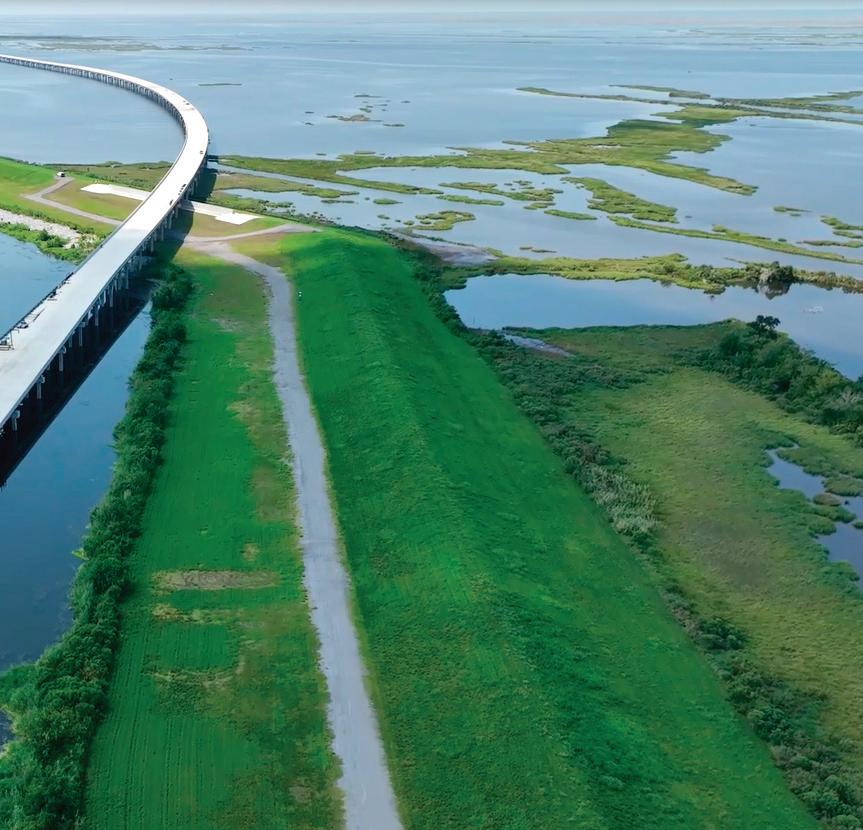
is currently in the preliminary phases of study. “We’ve finished the pre-NEPA work and we’re moving into a comprehensive environmental review process … that’s kicking off next month,” Ledet says. The review will take about 24 months to complete.
At nearly $400 million, the LA 1/LA 415 project in West Baton Rouge will include a new four-lane connector road stretching from LA 1 to the LA 415 interchange and span the Intracoastal Canal with a new four-lane bridge. “It will significantly relieve traffic congestion on LA 1 and I-10,” Ledet says. The project is expected to break ground in late fall or early winter 2026.
The I-10 widening project in Baton Rouge is a multi-year construction endeavor spanning from Perkins Road to the I-110 interchange and is expected to be
completed in 2031. Work also includes improvements to the Perkins Road corridor, and in 2025 contractors began widening the I-10 westbound flyover at the I-110 split.
CRISIS, an industrial advocacy group and one of the early proponents of the project, is currently promoting the enhancement of Baton Rouge’s three primary corridors—the I-10 corridor expansion currently under way, Mississippi River Bridge South and the eventual development of a northern corridor to incorporate the Huey P. Long Bridge.
“You need to enhance all three corridors for the long-term success of Baton Rouge,” says Scott Kirkpatrick, executive director of the group and a lobbyist for K2 Advocacy.
“We are making sure that businesses remain engaged in the process,” he adds. “We’re also continuing to work with our legislative delegation to get the funding to complete those projects.”
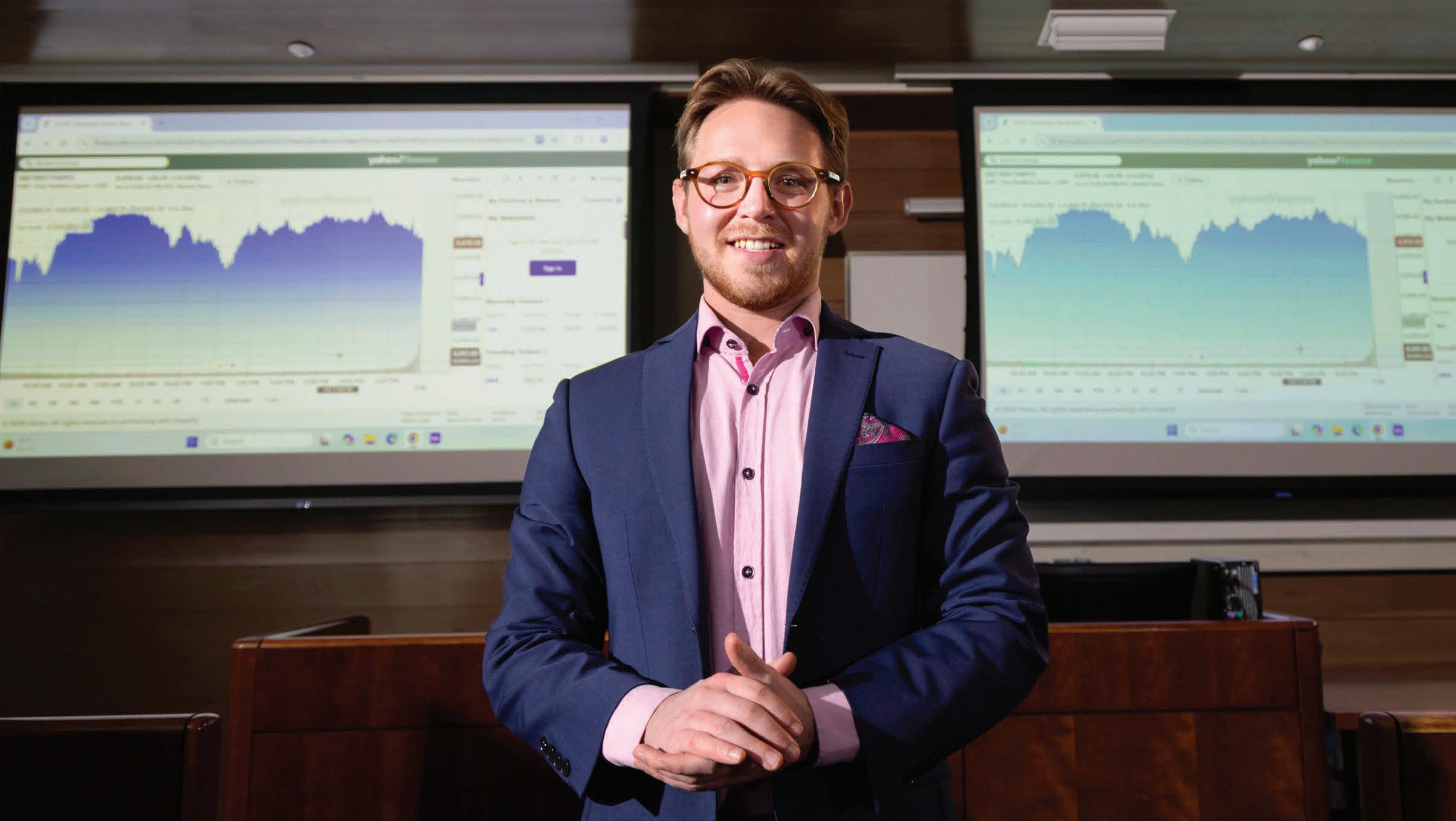

Leaders from Louisiana’s booming industrial sector join the 10/12 Industry Report Roundtable to explore the state’s economic momentum and workforce challenges.



SPONSORED BY:

WE’LL HELP YOU BUILD A ROBUST TRAINING MATRIX.
• Basic Orientation Plus® Reimagined
• Employee Orientations
• Site-Specific Training
• SAF Course Library
• OSHA-Authorized Courses
• COSS® – Certified Occupational Safety Specialist
• COSM® – Certificate for Occupational Safety Managers
• HAZWOPER Training
Learn with us online or at one of our six locations!
NEDERLAND, TX SULPHUR, LA BATON ROUGE, LA GONZALES, LA ADDIS, LA WALKER, LA
• ReadyDriver + FleetDefense® Training




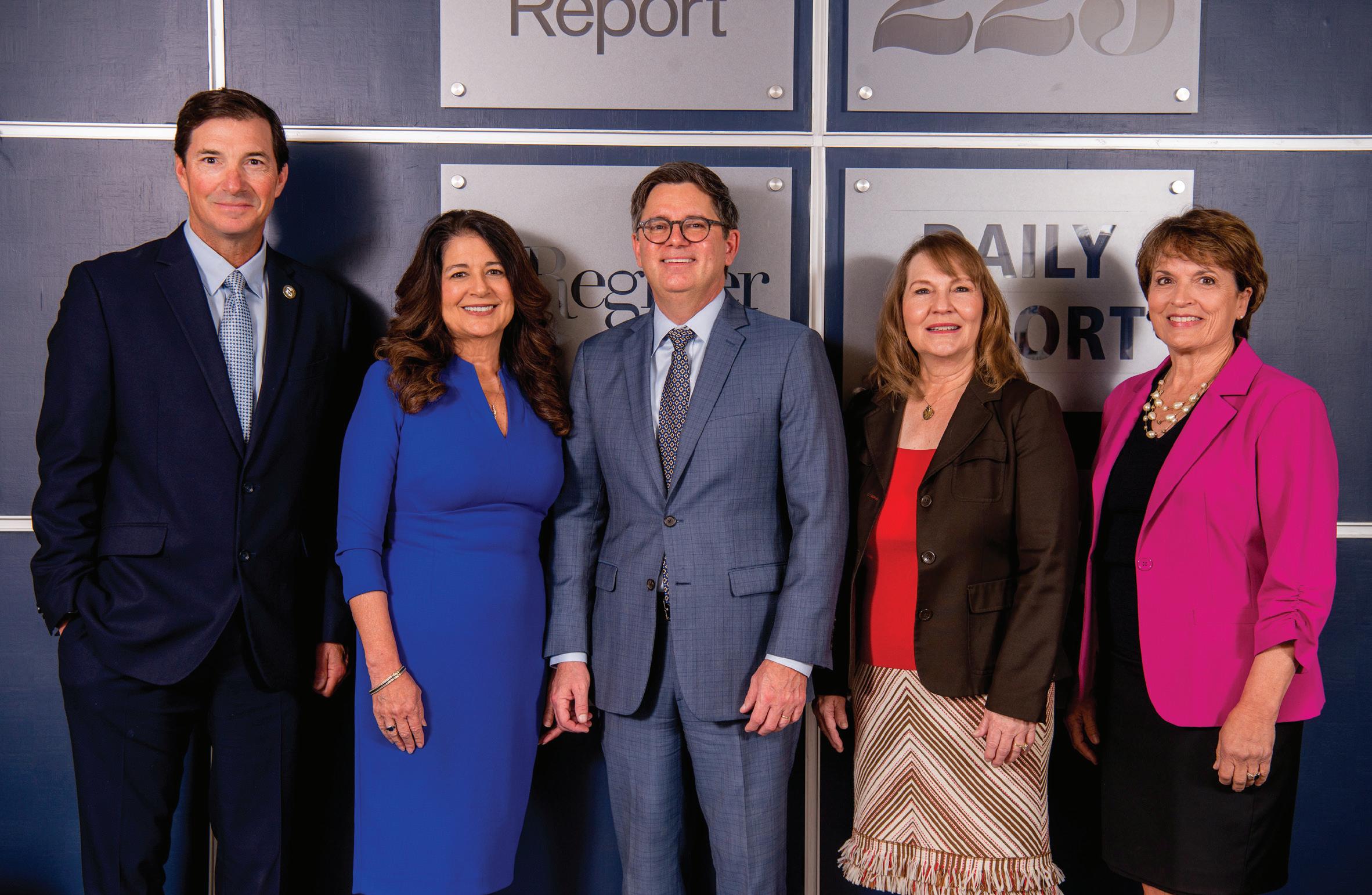
INVESTMENT IN LOUISIANA is skyrocketing, and industry is leading the charge. What are the drivers of this multi-billion-dollar expansion of the state’s economy? What new challenges is success bringing? What steps should our legislative leaders take to sustain
the momentum and maximize its impact? Leaders of industry, workforce and economic development gathered in the Melara Enterprises Executive Conference Room to answer those and other questions. Their consensus: Industry is helping to move Louisiana
forward. But the hard work is just beginning. Edited excerpts of the discussion begin on page 47.
Dig deeper online at 1012IndustryReport.com/Roundtable.
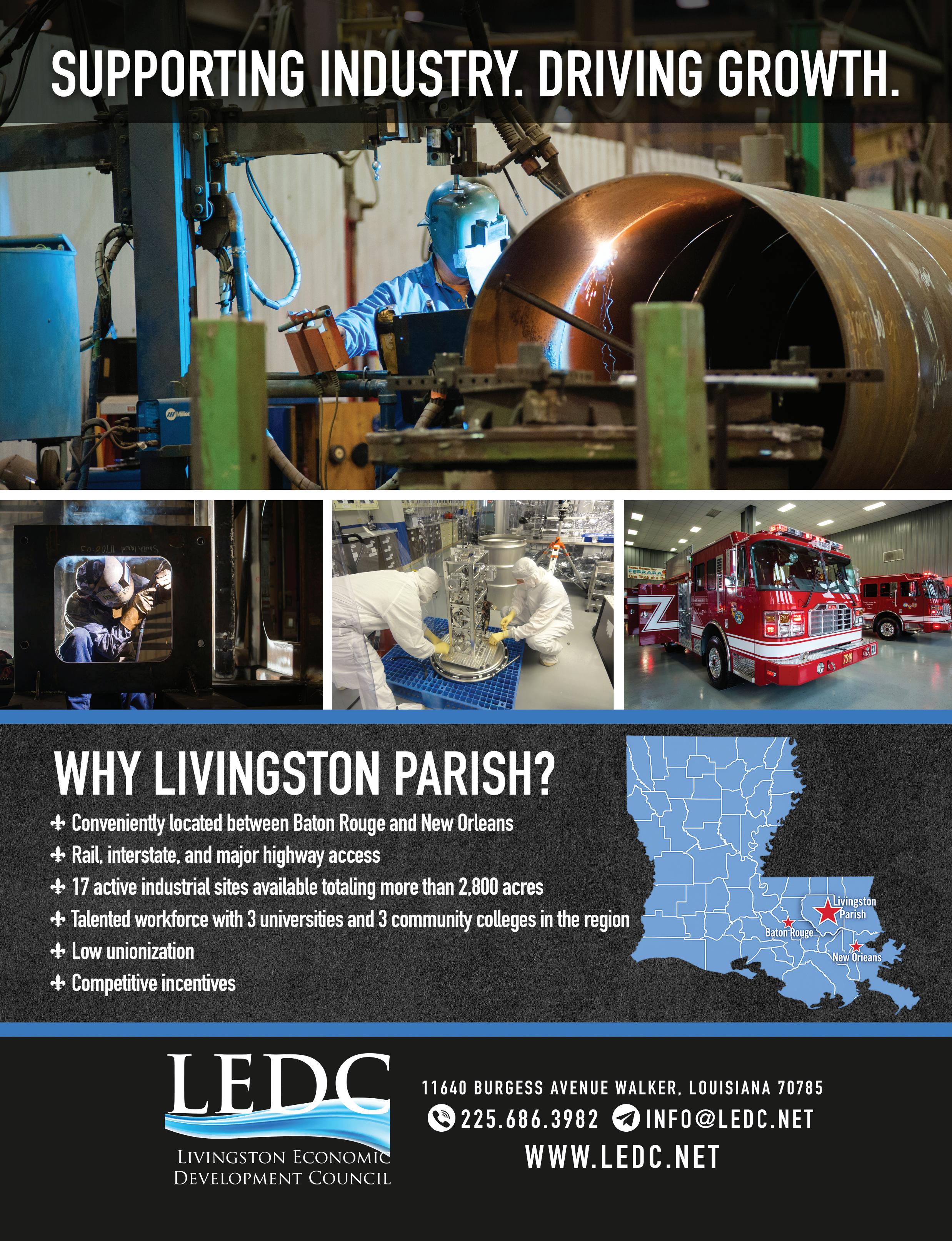
For Livingston Parish, it’s really about our location. Being between Baton Rouge and New Orleans and so close to the industrial corridor along the Mississippi River makes us attractive for investment, not necessarily for the heavy industry that’s located there, but for the support industries they require. We are the concrete, the pipe, the steel, the professional services, and the workforce that feed into all of those industries. For example, some of our concrete companies won contracts with Meta and, as a result, may triple their sales in the next year or two because of that work. So, where we are seeing growth is in those support industries, because heavy industry can’t operate, they can’t be built, without our companies’ products and services. Over this last year, all of our project announcements have been from our existing companies. We are seeing them reinvesting and expanding where they already have a successful workforce and thriving business environment in place. For Livingston Parish specifically, we benefit from being part of that larger ecosystem of heavy industry. Being right on the interstate helps, as does rail. Our transportation infrastructure helps tie us into that ecosystem and benefits us all.
—Melody Lockwood

Ithink that the current growth that we’re seeing is a culmination of several different things. It started around 2012 when fracking opened up natural gas. That alerted the whole world that Louisiana is competitive globally, and we were able to attract projects due to the low price of natural gas. More recently, I think some of the incentives that the government has passed for new energy are driving new investments, along with new technologies, in being able to compress LNG and natural gas so that it can be exported. Natural gas was very much of a local market until they were able to compress it. And we actually had plants built to import natural gas, and they flipped those plants and made them into export facilities, and it changed everything. And now this administration has been doing many things differently to enable expansion of industry in Louisiana. I think the state is doing a great job of landing new projects.
Baton Rouge is in a unique and strategic location. We have the infrastructure as well as strong logistics support on the lower Mississippi. All of these elements have come together to create opportunities for significant growth. Louisiana Economic Development (LED) has brought in a wave of new projects, generating a great deal of excitement across the region. The questions now are: Can we build the workforce infrastructure that’s going to support the talent pipeline for these projects? Can we quickly identify workforce gaps and train people to fill them? This is something we haven’t fully solved. It’s been a persistent challenge throughout my more than 30 years in industry. We’ve always faced skilled workforce shortages. If we don’t prepare our workers for what’s coming, we’ll continue what’s already happening in northeast Louisiana, where companies are bringing in workers from elsewhere to complete projects. We must be intentional about strengthening our local workforce infrastructure to support these facilities so we can execute these new projects with a trained, local workforce, rather than utilizing workers from outside of our region. This keeps both the jobs and economic impact here at home. If we can connect the systems within our state that support the workforce infrastructure, we will have a powerful way to identify gaps in training. Add AI assistance to this model and we can direct our workers to the jobs needed and relevant training to qualify for those jobs quickly because we don’t have much time to get ready.
Industrial projects in Louisiana – new and expanding – are booming. What is driving that growth, and what will the impact be?
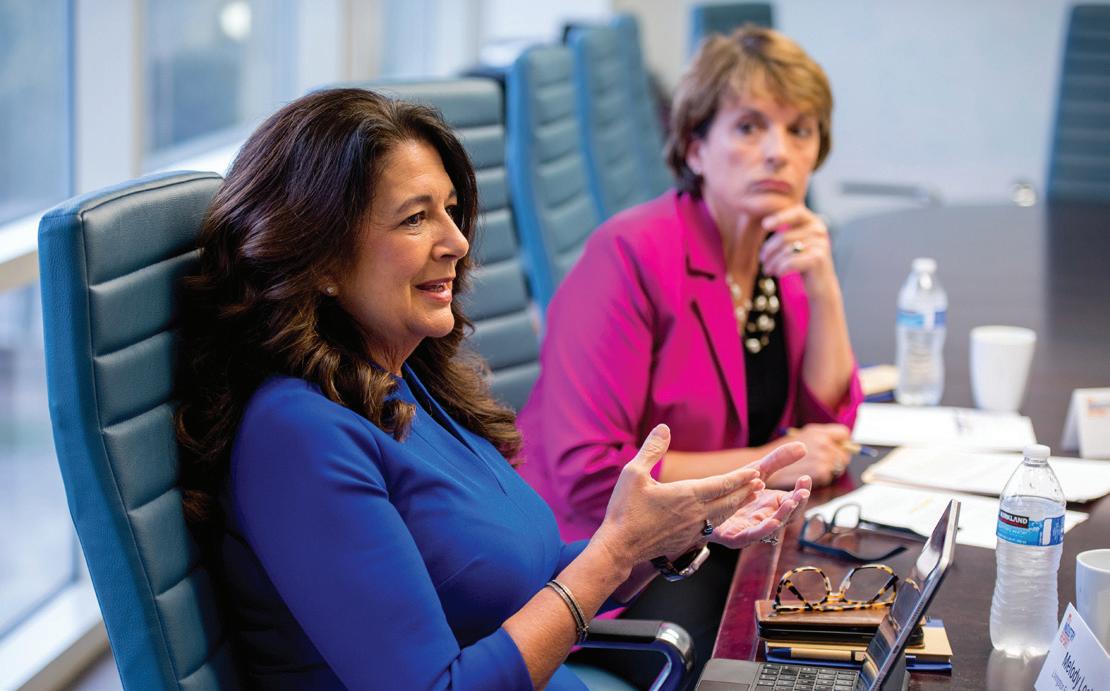

I—Kathy Trahan
t’s the natural resources, it’s the river, it’s the great workforce we have here, it’s the infrastructure. We’ve got a governor and an administration who has made it clear to the world that we’re open for business. The other thing that we don’t talk about enough here in Louisiana is that we have available and affordable power that these companies all need. The state has proven that we can deliver on that. Louisiana has some of the most affordable industrial power in the country, and that is an enormous consideration as companies make plans. The other thing we have several of the top industrial contractors in the world, based right here in Louisiana and Baton Rouge. That is a tremendous resource for the state. We’ve got this attitude that we are open for business, we’ve got incredible resources, we’ve got infrastructure, an amazing port system, and this outstanding network of industrial contractors that make it all go.
—Connie
Fabre
—David Cresson
It’s not unique to Louisiana. The entire country faces workforce challenges. The good news is that we see strong collaboration between industry, government, and our education partners – both higher ed and our public school system. They are working together to align training with the actual skills employers need. Livingston Parish has one of the highest participation rates in the state for the apprenticeship/internship program. We also have an opportunity with LSU’s enrollment—37% are out-of-state students. If we can find a way to keep those students here, that is a tremendous opportunity. A lot of the companies have said, if you can get them to us, we will train them on how we do things; we just need them to come in the door. We want to show our students and their parents that modern manufacturing and industrial careers are high-paying, high-tech, and provide a stable future. Where we need urgency is scale—training enough people quickly enough to meet the demand from new and expanding projects.
—Melody Lockwood
Workforce development, especially skilled craft workforce development, is the cornerstone of what GBRIA was built on. And I’ve had the fortunate position to be here for over 20 years, and it’s been very interesting to watch how changes have taken place. When I started, there was mostly just Associated Builders and Contractors providing skilled craft training at night. Now schools are required to offer career and technical education, and students are required to choose their career pathway by the ninth grade. Even the Department of Education is requiring students to complete an internship in high school for their final graduation. So, the focus on career development has completely shifted over this time. One of the current projects that we’re working on with LA Works is to get more Louisiana citizens to be able to work in industry, including offering training for those on SNAP and ENT benefits. The state has made huge investments over the last 15 years in the community and technical college system, and they’ve been a key player and done a great job of responding and putting in new training programs.
Workforce development is a continuum; it’s not a siloed process. Communication around available jobs has been too generalized. We say we need a workforce, but no one is focusing on defining how many skilled workers are needed to fill these jobs. For every project, depending on the type, there’s a ratio of how many craftspeople and laborers are required. Because of the population distribution, we have a shortage of workers in the Gen X segment. It takes 18 years to build a skilled worker. It’s not going to happen overnight. So, we must ask: “How many workers do we need, with what prescribed skills, in order to determine the steps we need to take to get them ready in time for the upcoming jobs?” This requires significant pre-planning and focused coordination between the state, the education system, and industry. The surge in LNG and data center projects is increasing the demand for skilled labor. We are not fully prepared for this level of demand. With tools like AI, we can now move much faster and can identify the needs more precisely instead of funding broad programs. We need to be more intentional — both in how we train people and incentivize workers to enter and stay on those paths. Our workforce infrastructure is going to make or break us in the next couple of decades.
Meeting the increasing demand for skilled workers is a monumental challenge. Where do you see progress being made, and where do you seek greater urgency from state, regional and local leaders?
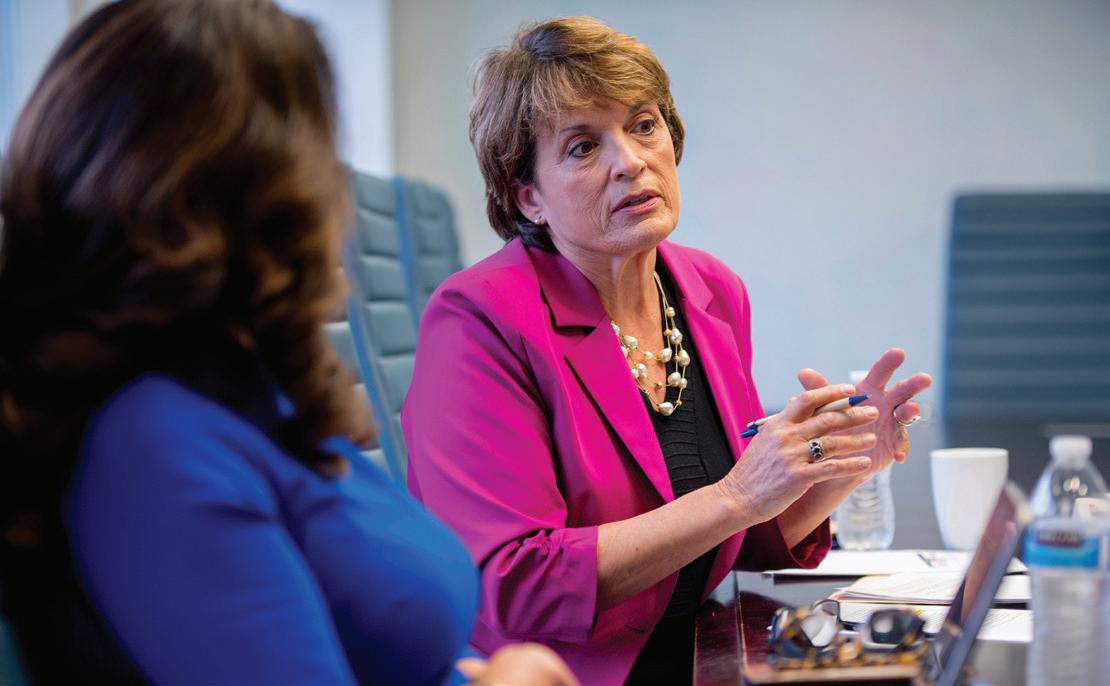
E—Kathy Trahan
very company prioritizes its workforce, whether it has been here for decades or is still in the construction phase. People are the foundation of these operations, and Louisiana’s skilled talent pool continues to attract companies looking to invest in our state. We have seen an influx of new projects and investment come into Louisiana that bring with them a need for an even larger, highly skilled workforce. These projects will create thousands of new jobs and we as a state must make sure we provide our communities with resources needed to meet these demands. There is a strong focus on coordination across state leadership, from Susie Schowen at LA Works to Secretary Susan Bourgeois at LED, to expand training opportunities and strengthen workforce development initiatives, and our legislature is currently working through multiple bills to help meet these new demands. We will continue to work with our Louisiana Leadership to ensure that 10 years from now, when these projects are up and running, it is the people of Louisiana who are filling those jobs and supporting these operations.
—Connie Fabre
—David Cresson
This can be one of the answers to the state’s workforce problem. Technology is not eliminating jobs, but creating more opportunities. The World Economic Forum forecast that AI will displace 92 million jobs but generate 170 million new ones by 2030. It’s really changing the skill sets that are required. Any manufacturing is advanced manufacturing now, using technology for data analysis, 3D printing and more. Additive manufacturing is amazing. Instead of 17 different parts, you may bring that down to two or three. When it’s all one part, you don’t have the same failure risks, and there’s much less waste because you’re only using what you need.
We’re also seeing AI used in business operations. Software is learning how companies present bids and building that knowledge into future estimates. The possibilities are endless. It’s fascinating, even if it’s a little terrifying. While some jobs may be eliminated, it’s opening up many more opportunities and helping solve some workforce challenges through efficiency.
—Melody Lockwood
TTEnergy, manufacturing, process industries and other industrial sectors are operating on the leading edge of the technological revolution.
How is the integration of AI and other emerging technologies playing out for you and your stakeholders?
his is an exciting new area, and in our strategic planning meeting this past year, our board said we need to double down on helping companies share best practices with respect to implementing technologies. Some examples of things we’re seeing that companies are researching are things like how to use swarms of drones to go out and do inspections in the plant, identifying different things, and communicating with each other. We’re also seeing the use of gaming technology to develop digital twin models much more quickly. Additive manufacturing is another major development. It’s not just plastic parts anymore— they can print metal components that meet stringent requirements. Companies that used to keep parts in stock or source them globally can now just print them on demand. New technologies aren’t all digital either. Companies are using rope access instead of building scaffolding, which is a completely different way of thinking about work. And then there’s quantum computing. AI is just the tip of the iceberg. Quantum computing is already being used to solve major problems like logistics, and by 2029, it’s going to be out of the gate.
echnology isn’t going to replace jobs; it’s going to change them. This shift makes it even more important to invest in workforce infrastructure. We’re already seeing AI drive operational efficiency in meaningful ways—from predictive analytics around equipment, to intelligent scheduling and identifying risks on the critical path of projects. In safety, AI is being used to monitor ergonomics and detect hazards in real time, immediately notifying workers if something needs attention. We’re also seeing training evolve as well. Instead of a one-size-fits-all approach, AI enables training to adapt to how individuals learn—visual, aural, reading or hands-on—and adjust in real time to improve retention. We’re also seeing innovations in automation and robotics, like the technology that couples a camera with a robotic hydroblasting system to clean rail cars without sending workers into confined spaces. These advancements allow us to do more with fewer people while making work significantly safer. At the same time, even as technology advances, we must continue teaching foundational skill sets that our industry depends on.
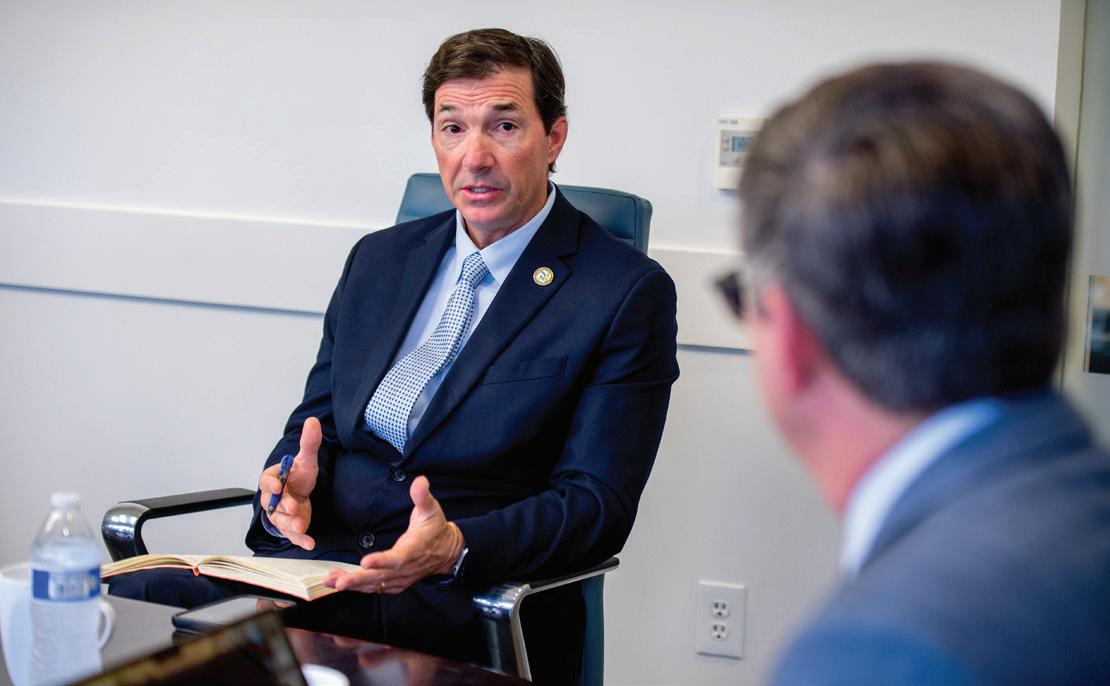
I—Kathy Trahan
don’t think there’s a business sector more committed to technological advancements than the petrochemical manufacturing industry. These are some of the biggest companies in the world, and some of the technologies they are using are mind-blowing. In health and safety alone, advances in facility monitoring are absolutely stunning. Drones, for example, have become a major part of facility operations. Instead of sending a person into a potentially dangerous area, you send a drone that can take pinpoint accurate readings. It’s not about replacing jobs—it’s about making them safer. These companies are going to use every available technology to ensure the safety of their people and the health of the communities. Our industry is only continuing to advance. Technologies like carbon management, nuclear and hydrogen are going to reshape how we operate. We’re going to have to embrace these new technologies if we are going to sustain this momentum that has been created and move the state forward.
—David Cresson
—Connie Fabre

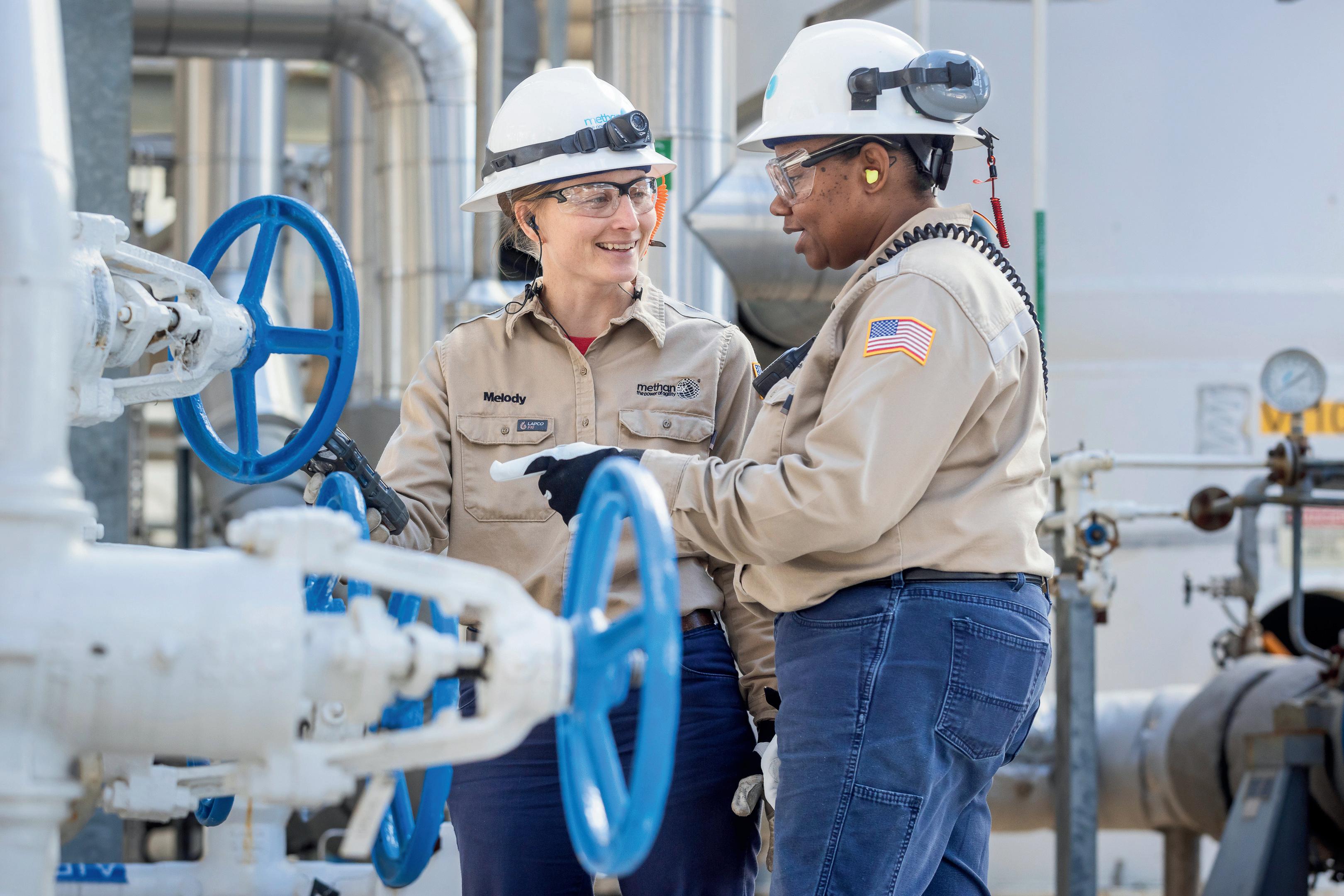

The business rankings do matter, whether you put much stock in them or not. Louisiana is moving up, and I think a lot of that is based on policy changes. Companies are looking for predictability and continuity, and that’s something we are finally moving toward as a state. But we still have a long way to go—especially on insurance. We’ve got companies leasing warehouses in other states because they can’t get insurance on vehicles operating here. In some cases, if trucks cross into Louisiana, they’re no longer insured. That’s a huge hindrance to business on all levels. Insurance is also a major factor in workforce retention.
People can go elsewhere and pay half or less for insurance, and they’re willing to pay more in property taxes to avoid that burden. For Livingston Parish, eliminating the inventory tax would be a big benefit. We’re not as reliant on it, and we see that as a way to support companies and attract more investment. Right now, we’re seeing organic growth from existing companies, but I’d like to see more new investment coming in, and some of these policy issues are still barriers.
—Melody Lockwood
Abig recent win that we’ve been collaborating with LA Works on is to improve access to training and employment. The move toward a more coordinated, onestop approach is making it easier for people to connect to opportunities. There’s also been a lot of progress in aligning education with industry needs. Work on industry-based credentials and engagement with high schools is helping ensure that what students are learning actually feeds into available jobs. From a policy standpoint, tools like the industrial property tax exemption remain critical for attracting investment. And just as important as any specific policy is stability—companies need to understand the rules of the game and trust that they’re not going to change unpredictably. Carbon sequestration is another area with significant potential economic impact, though it comes with public perception challenges. A big part of the work right now is helping educate communities and navigate that conversation. At the end of the day, consistency, coordination and clarity in policy are what will sustain momentum and continue attracting industry to Louisiana.
If we align targeted incentives for these high-demand jobs—such as tax credits—it could help keep our talent in Louisiana while encouraging people to prepare for those roles. When high-demand careers are clearly identified and tied to earning potential, it creates a pathway that supports workforce development and keeps dollars circulating in our state. Another factor to consider is how our policies compare to those in other states. Take homestead protection, for example. In Louisiana, only $35,000 of your home’s equity is protected against creditors. In states like Texas or Florida, 100% of your home’s equity is protected. These policy differences have real consequences; they directly impact decisions about where people choose to build their lives and careers. So, when we talk about workforce and economic development, it’s not just about creating jobs. It’s about creating an environment where people feel financially secure enough to stay, invest, and build their futures here.
The state has made significant policy changes in an effort to better support the industries that invest in our communities. What have been the biggest policy wins for industry, and what should be the top policy priority moving forward?
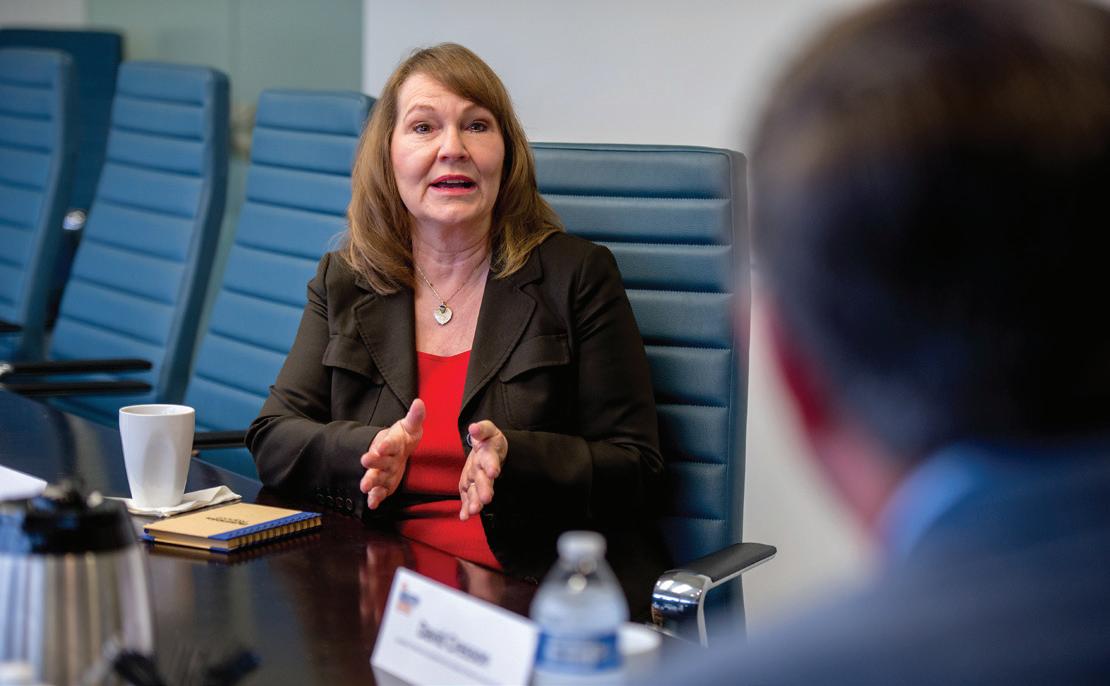
A—Kathy Trahan
few years ago, Louisiana became one of the first states in the nation to get primacy on Class IV injection wells, then took legislative action to create a framework around permitting and managing those projects. This helped usher in a tremendous amount of investment, which is obviously great for our state, local companies and our communities. But companies need certainty, and misguided attempts to derail recent momentum by moving the regulatory goalposts have given potential investors a reason to pause. While some of these attempts may be derived from genuine concern, it is worth noting that they are completely consistent with the anti-industry NGO agenda. They are also just the tip of the iceberg. If we allow these attempts to succeed, we will set the table for the next obstruction campaign on the next great industrial opportunity for our state. It’s already happening, and industry must pull together to ensure that these antiindustry, anti-Louisiana tactics fail. As for other legislative priorities, workforce development is at the top of the list. As projects are announced in our state, whether they are new projects or expansions to existing operations, we must fill the jobs created by those projects with as many Louisianans and locals as possible. As a state, we must provide a pathway to high-quality, affordable training to anyone who would like it, and provide ways for them to overcome barriers to that training, whatever those may be.
—David Cresson
—Connie Fabre
Amajor challenge is perception—both the perception of Louisiana externally and the perception of industry within our own communities. We’ve worked for years to change how Louisiana is viewed, but if you don’t give people a new story to tell, they’ll keep repeating the old one. Even as the state has grown and evolved, we haven’t always done a good job of telling that story. Social media has made that more difficult. Misinformation and misconceptions can spread quickly, and they don’t have to be based in fact—they just have to generate a reaction. Meanwhile, industry has to respond with accurate, science-based information, often from a defensive position. That’s a tough place to be, especially in public settings where opposition voices can dominate the conversation. The opportunity is education. We’ve been hosting informational sessions to help people understand complex issues— whether it’s state programs or topics like carbon management—by focusing on the science and giving people the information they need to form their own opinions. Because many people aren’t opposed—they just don’t understand. And if we can better inform them, we can start to shift both perception and the broader conversation around industry in Louisiana.
—Melody Lockwood
TOWhat is the most critical challenge–and most exciting opportunity–affecting your organization in 2026?
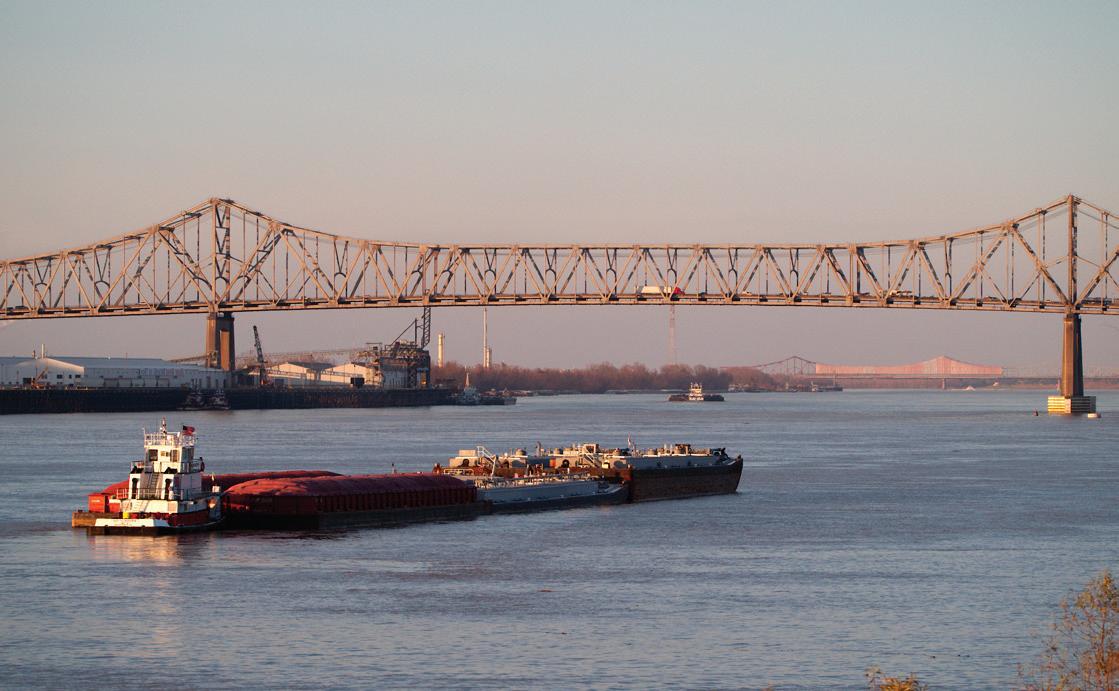
il & gas and petrochemical companies provide tens of thousands of direct jobs and a quarter million contractor, supplier and related jobs. We pay 20% of the state’s wages and make up about 25% of the state’s GDP. We pay a large percentage of local taxes in parishes where we operate, in some cases as much as 90%. While we do this, we operate cleaner and safer than we ever have, and provide untold amounts of support to the communities where we operate. At the same time, LCA’s recently released website, louisianahealthfacts.com, shows that health outcomes in Louisiana’s industrial corridor are actually better than the rest of the state, including cancer incidents, cancer mortality, life expectancy and more. Yet we still deal with the false narrative regarding these health outcomes. As a state, we must stand up against the misinformation that has long plagued our industries and our Louisiana workers. We must let those responsible for that information know that we reject their false narrative, and won’t allow it to sidetrack our way of life. LCA has been around the state educating officials and local citizens on this information, and will continue to do so. In doing so, we have had the opportunity to build relationships in these local communities. We have committed to be a resource to locals where our member companies operate, and we plan to double down on that commitment in coming years. It’s been a rewarding effort.
—David Cresson
he biggest challenge for our members right now is the disparity among the standard entry requirements to get onto worksites. The lack of standardization makes getting onto the sites painstaking. To create internal efficiencies, some large industrial employers are attempting to move toward a prescribed vendor across all sites nationwide. By doing this, they are creating a domino effect for the contractor companies that work across the Gulf Coast. Because the industrial contractor’s workforce travels across the country, they are sensitive to having to pay for redundant services and, therefore, start to migrate to the vendor that meets most of the facilities’ requirements because it’s “once and done” across multiple facilities. This has created tendencies leaning toward a limited competitive environment, which is not the intent of these larger employers. It also increases costs, reduces customer service, and creates even more delays. Contractors are waiting in line, and in some cases, they’re losing jobs because they can’t get through the “preferred” vendor process fast enough. What these companies don’t often realize is that with today’s technology, especially APIs, you can connect with multiple providers and still meet the same requirements. In fact, allowing multiple providers fosters a competitive environment that drives better pricing and higher levels of customer service. When vendors operate on a standardized playing field, success is determined by performance and value — not by the size of their sales force or their entertainment budget. Giving vendors standards to comply with and contractors options that meet those standards improves service and removes unnecessary friction from the process.

—Kathy Trahan
Amajor challenge—and opportunity—is community support for industry. There have always been activists, but what’s changed in recent years is the level of funding and organization behind those efforts. We’re seeing large-scale, well-funded campaigns that bring people from outside communities into local hearings, generate thousands of letters and create a very visible opposition presence. That doesn’t always reflect the views of local residents, but it does influence outcomes. We’ve seen projects delayed or derailed even after significant investment because of that pressure. That creates real uncertainty for companies looking to invest in Louisiana. The opportunity is for industry and its workforce to become more engaged. Elected officials are asking for more visible support from the people who actually live and work in these communities. That doesn’t necessarily mean speaking at hearings—it can be as simple as showing up, being present and demonstrating that there is community support for these projects. At the end of the day, it’s about people understanding that these decisions affect their jobs, their communities and their future—and getting involved accordingly.
—Connie Fabre

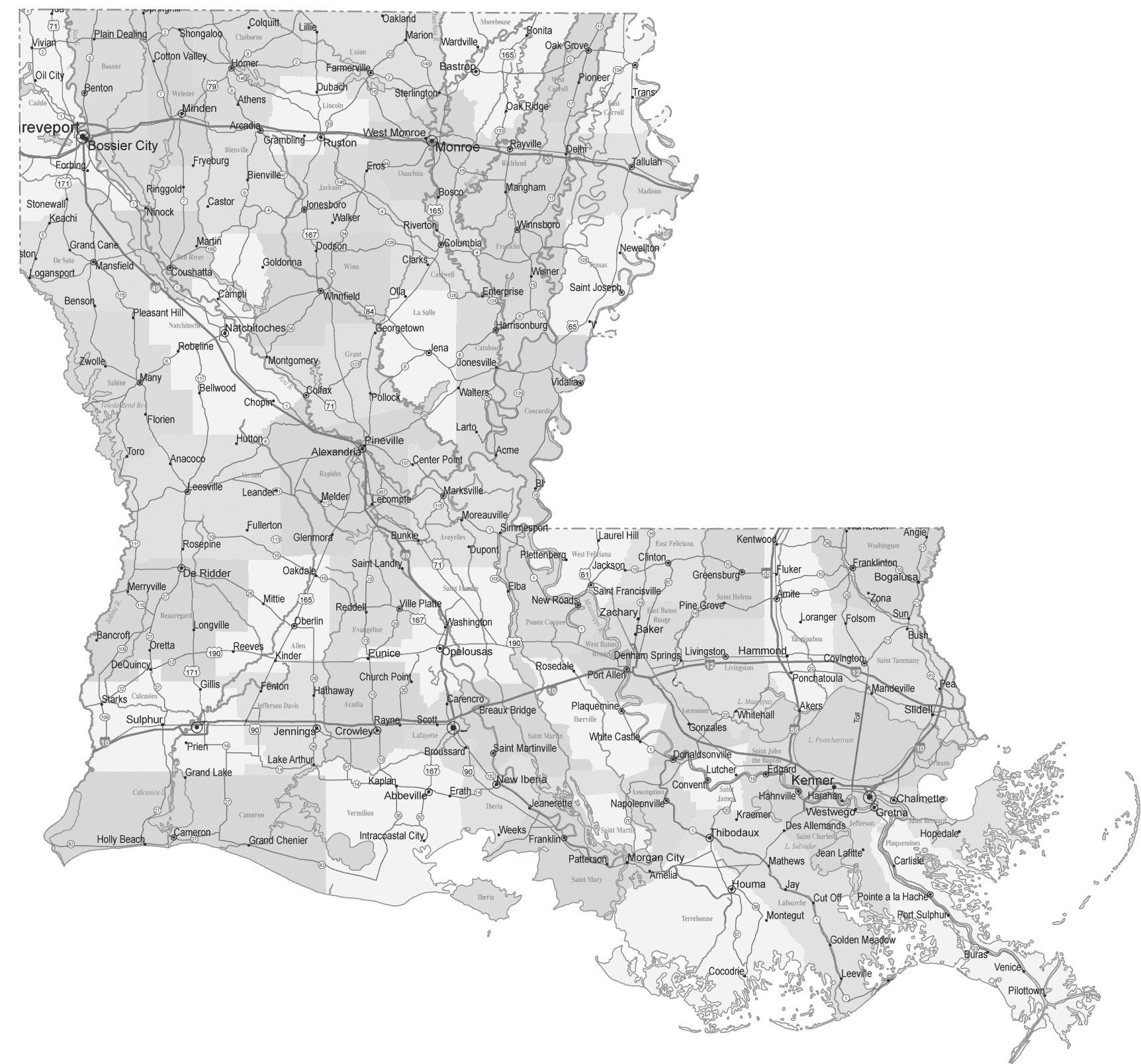
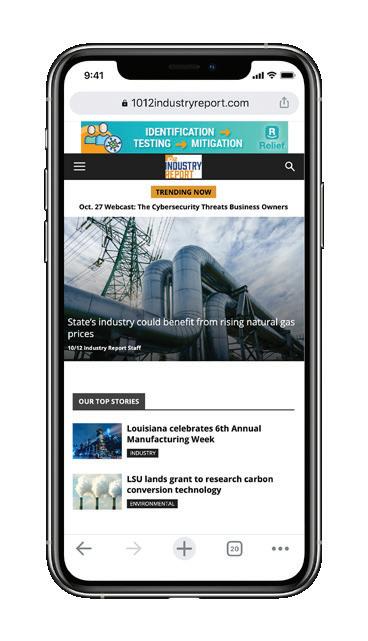
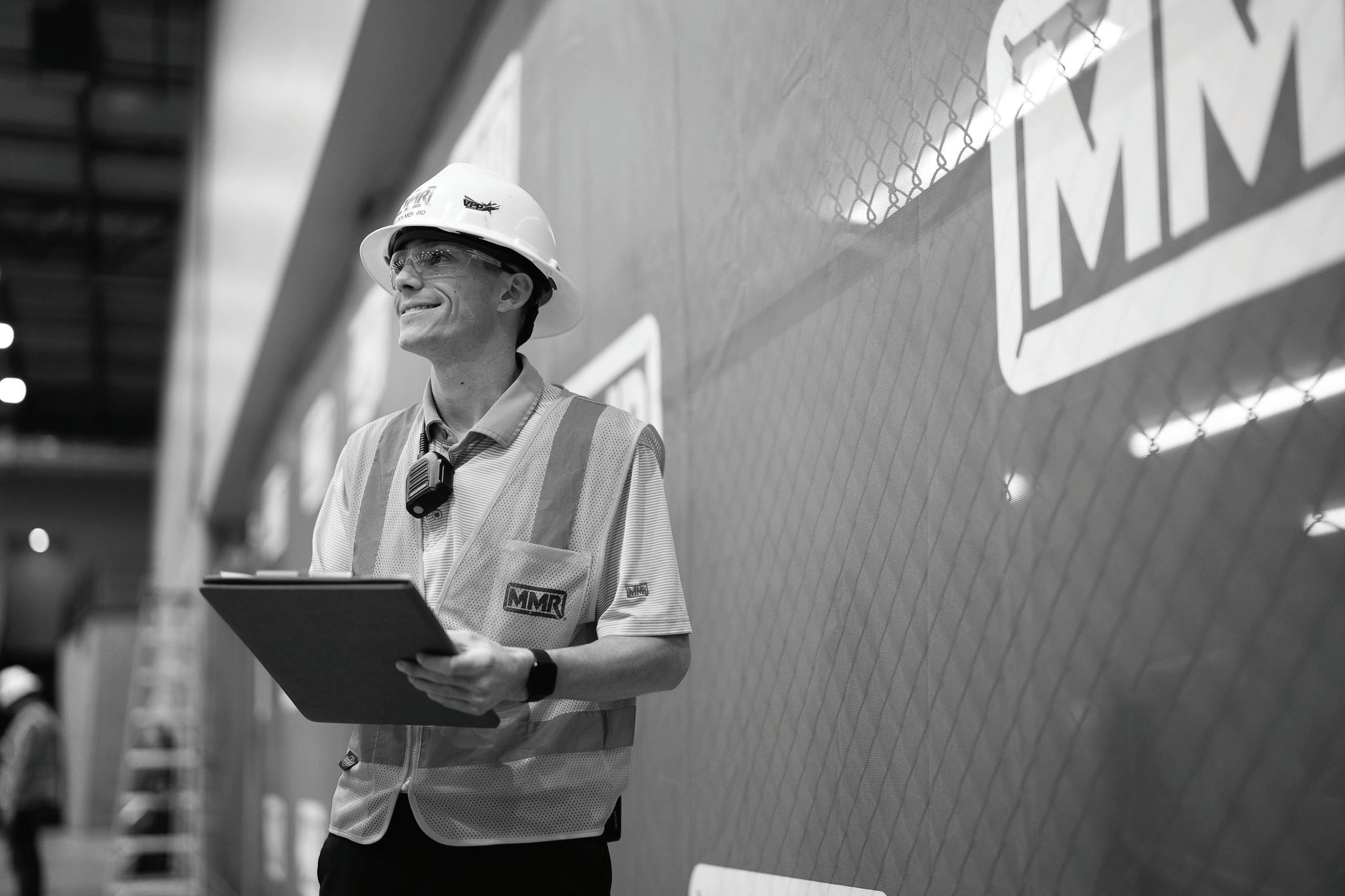

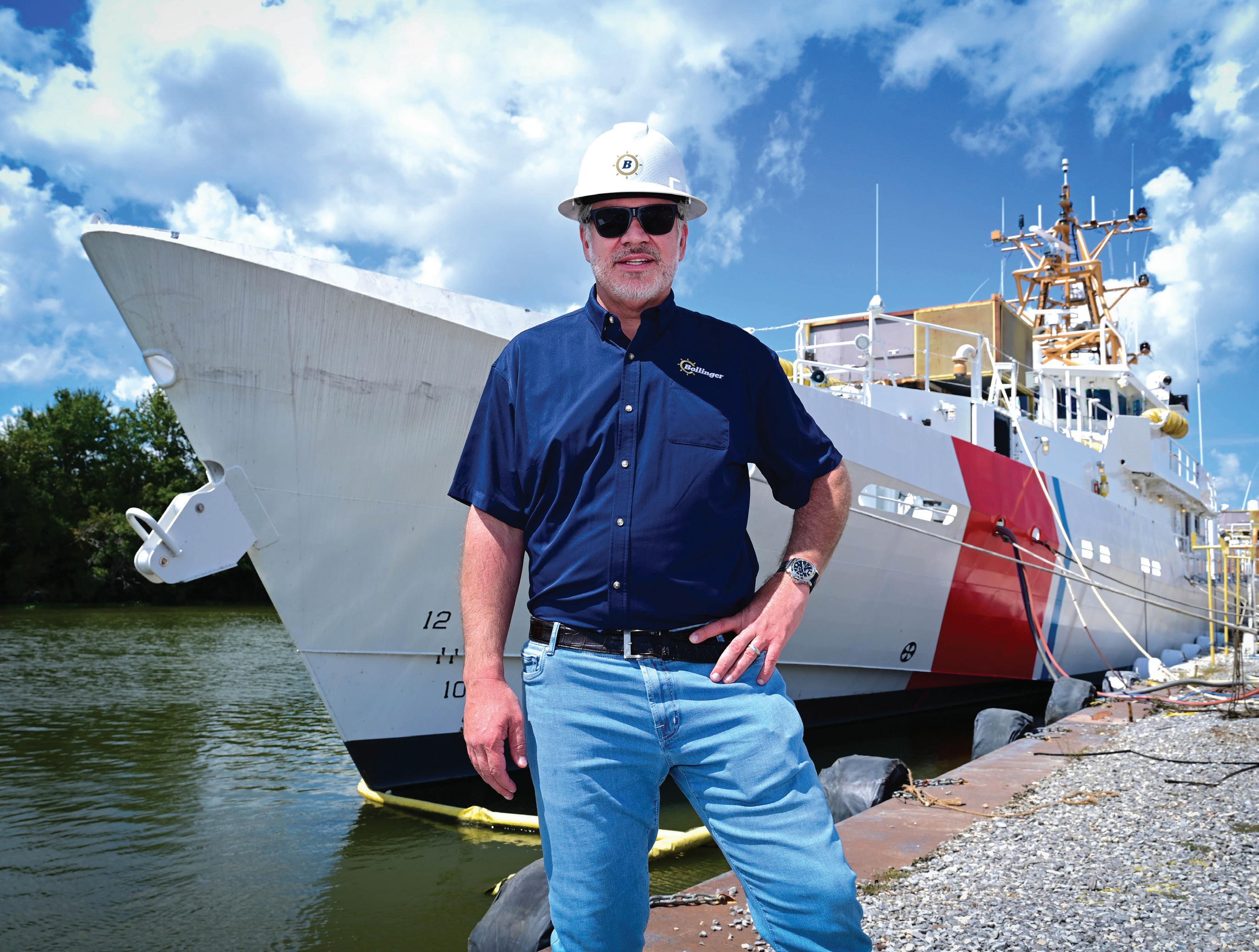
BY SAM BARNES
A proliferation of federal contracts transforms Louisiana into a shipbuilding powerhouse.
In a welcome turnabout, south Louisiana’s fabrication industry is enjoying an unexpected renaissance, thanks to a proliferation of government shipbuilding contracts for everything from ice cutters to autonomous military vessels.
It has revitalized existing fabricators and attracted new ones, while leaving behind a decades-old dependence upon the offshore oil and gas market. And while there’s a fair share of traditional boat building in the
mix, the introduction of a new type of ship is getting most of the recent attention. In 2025, federal dollars began fueling the production of a variety of autonomous and AI-enabled vessels, and many local fabricators were quick to jump on board.
In December, Saronic Technologies made a big splash when it announced a $300 million, 300,000-square-foot expansion at its Franklin facility that will enable it to significantly upscale its production of Autonomous Surface Vehicles, or ASVs. Saronic,
which acquired the facility from Gulf Craft in early 2025, expects construction to be completed by the end of 2026, with expanded operations beginning in 2027. About 1,500 jobs will be created in the process.
Chris Johnson, Saronic’s shipyard director in Franklin, says the company is executing the expansion while continuing production of other large autonomous vessels.
“Once the expansion is complete, the shipyard will have the capacity to produce up to 20 of the vessels (called Marauders)
annually, strengthening domestic shipbuilding throughput and reinforcing our ability to deliver at speed and scale,” Johnson said in an emailed response.
Saronic has also partnered with Hornbeck Offshore Services in Covington to integrate autonomous vessels and advanced maritime software into offshore energy, defense and services operations, beginning with pilot deployments of the Marauder vessel.
Johnson doesn’t expect to have difficulty finding the workers he needs.
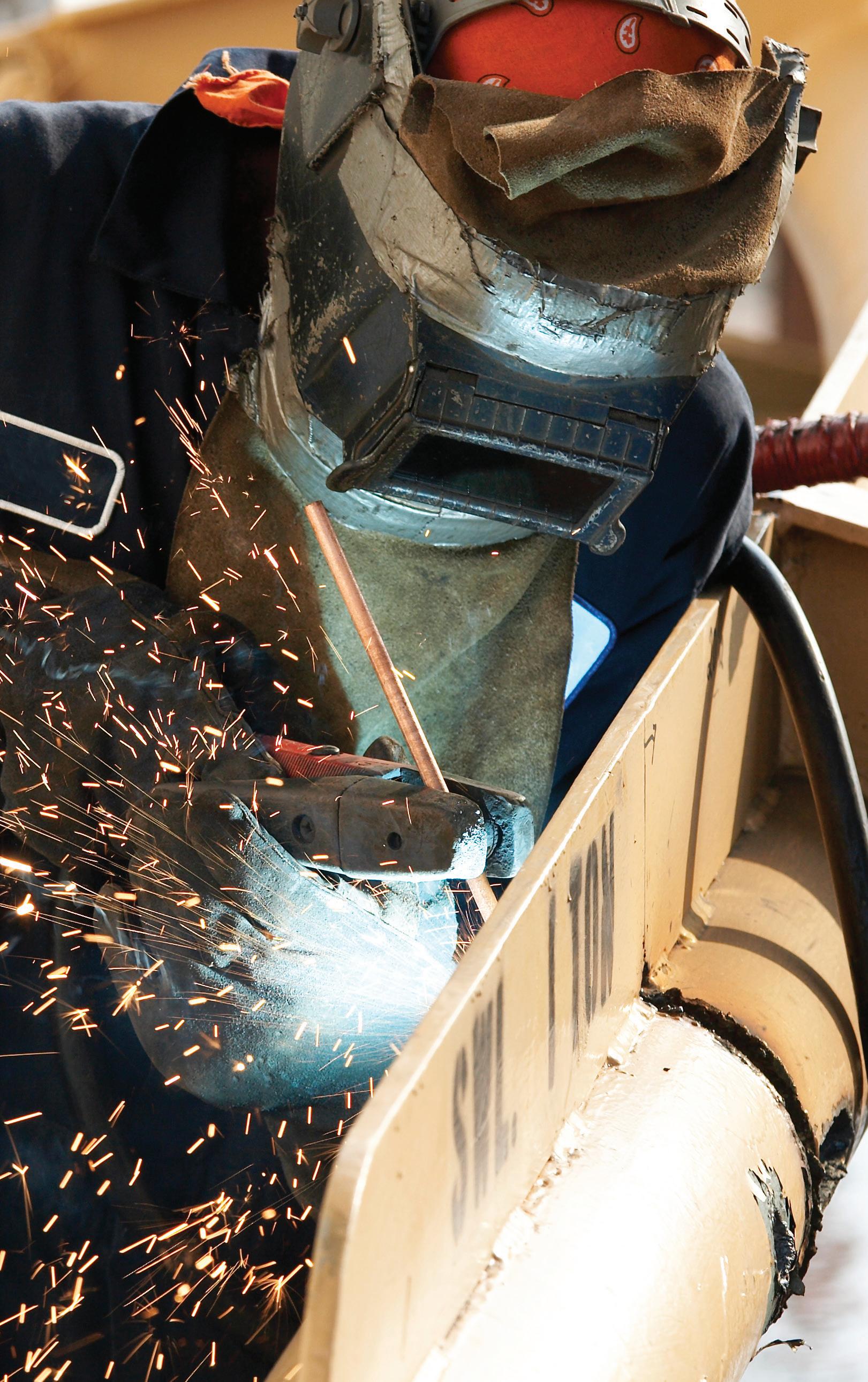
“As production capacity at regional shipyards has declined over the years, a significant amount of that talent was left underutilized, creating both a gap in opportunity and a deep bench of experience ready to be reactivated,” he notes.
Meanwhile, Metal Shark’s Jeanerette and Franklin facilities are benefitting from its January acquisition by Miami-based Magnet Defense, which is expected to strengthen the shipbuilder’s ability to produce autonomous maritime platforms at scale and accelerate the production of AI-enabled vessels.
Magnet Defense develops autonomous unmanned surface vessels to support U.S. national security and allied maritime operations, while Metal Shark designs and builds mission-specific vessels for the U.S. Navy, U.S. Coast Guard and military forces from allied nations. By integrating Metal Shark’s facilities, workforce and manufacturing expertise, Magnet Defense plans to transition from prototype development to sustained, high-volume production.
In Lockport, Thoma-Sea Marine Constructors is also building advanced high-tech vessels, including two NOAA oceanographic ships capable of deploying uncrewed systems and drones, as well as conducting autonomous, data-driven research.
And in Amelia, Conrad Shipyard has entered into a production agreement with Boston-based Blue Water Autonomy to deploy autonomous surface vessels at fleet scale for the U.S. Navy.
Federal shipbuilding contracts aren’t limited to autonomous vessels, however, as Bollinger Shipyards in Lockport recently landed a sizeable contract with the U.S. Coast Guard.
“For years, Bollinger has built Fast Response Cutters for the Coast Guard,” says Loren Scott, an economist with Loren C. Scott & Associates in Baton Rouge.
“Then in December, they were awarded another huge contract that could increase their workforce from 650 to nearly 1,000.”
NICHOLLS STATE UNIVERSITY finds itself uniquely positioned to both serve and benefit from the local shipbuilding boom.
In 2024, the Thibodaux university received state authorization to create The Universities of Louisiana Maritime Academy, which will ultimately become one of only seven in the U.S. to offer a four-year bachelor’s degree in marine transportation.
Once operational in Fall 2027, the academy will also prepare students to obtain their Third Mate Unlimited Tonnage Merchant Mariner’s license, supplying the next generation of vital deck officers who are third in command and serve as the safety officer on large commercial vessels.
The university already offers a maritime management concentration in the College of Business Administration, which prepares students for shore-based management careers in the oil, gas and shipping industries.
Brad Clare, executive director of the academy and a retired U.S. Coast Guard captain, says the academy will serve the maritime industry at large with new licensed mariners while also creating a vital workforce pipeline for local industry.
“Shipbuilders aren’t just fabricators,” Clare says. “In the maritime industry you need mariners, so it’s very common to have someone go ‘shoreside’ and work in a shipyard supporting their operations. Through our maritime management program, we’ve already had several graduates move into the shoreside operations of all these companies.”
In January, Clare hired full-time curriculum specialists to accelerate the program’s development. Once completed and approved by the National Maritime Center, the courseload will include a mix of maritime and general education classes, followed by demonstrations of competence on a simulator or actual ship.
In support of the academy, Nicholls also plans to construct a nearly $35 million College of Business and School of Marine Transportation on campus. The building will house the academy’s administrative offices, shared classrooms with the College of Business and a simulator wing. “We expect about 25-30 students to enroll in the first class,” Clare says, “but they’re going to be off campus a lot as well. They’ll need to get ‘sea time’ and a lot of that time will be on actual ships (with the remainder on simulators).”
Dr. Jay Clune, president of Nicholls, credits local fabrication industry leaders such as Bollinger Enterprises CEO Donald “Boysie” Bollinger and Bollinger Shipyards CEO Ben Bordelon for promoting the academy and helping turn it into reality.
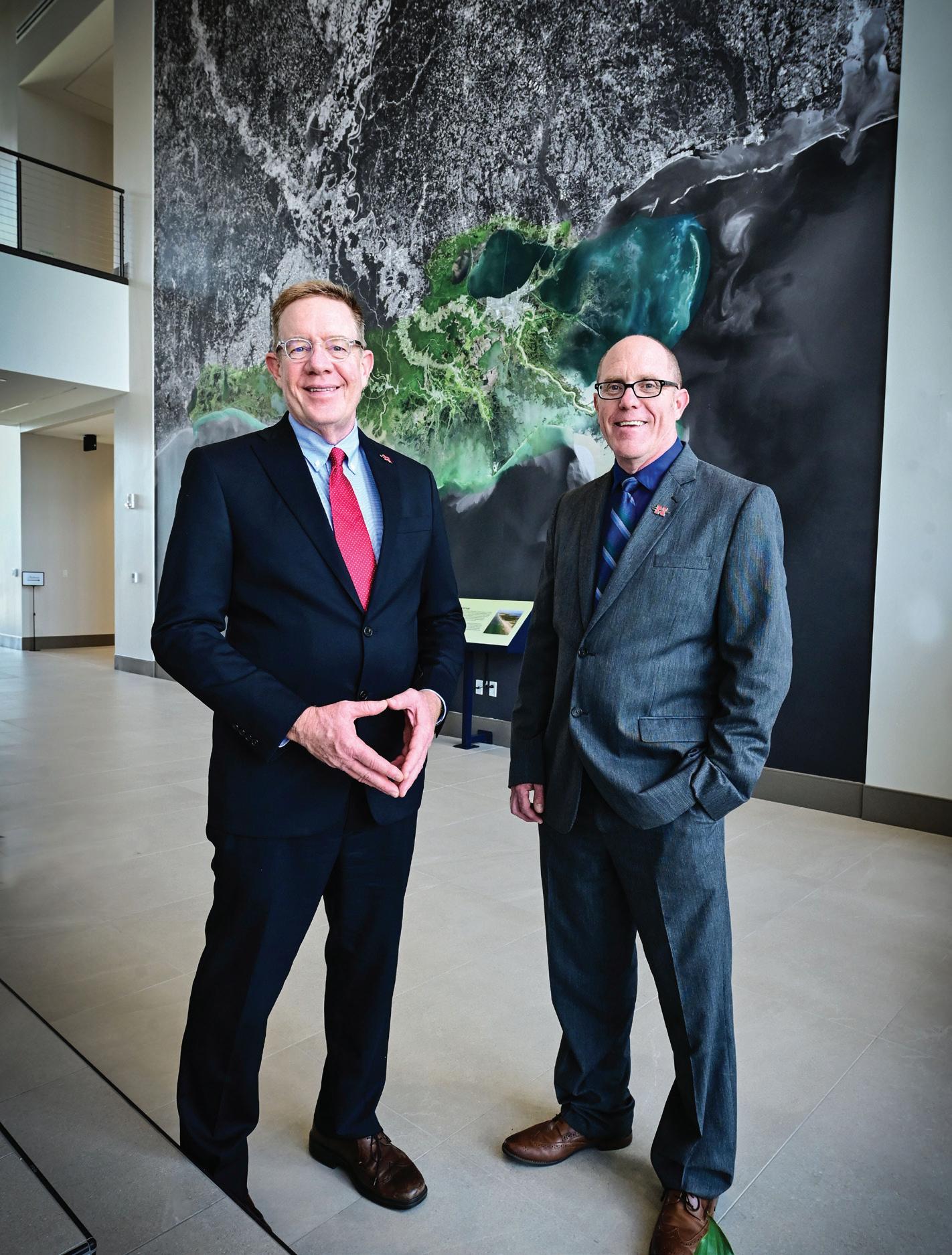
“The only way we’re going to be successful is by having these partnerships. It will be a vital part of this effort.”
Nicholls State University President DR. JAY CLUNE (left), with CAPT. BRAD CLARE, on the collaboration between higher education and corporations to grow the shipbuilding workforce
“The region has suffered a great deal from hurricanes, land loss, rising insurance rates and out-migration,” Clune says. “Both Boysie and Ben recognized the importance of infusing this region with something new.”
In conjunction with the marine transportation degree, the school is also developing the framework for a marine engineering degree in collaboration with UNO. Additionally, it is collaborating with nearby Fletcher Technical Community College, which plans to open a new Maritime & Safety Training Facility
through a partnership with Maersk Training.
The facility will offer industry-accredited courses to support the local offshore oil, gas and maritime industries.
“There has already been a lot of coordination with local industry,” Clune says. “Edison Chouest Offshore, which does everything from building the ships to sailing them, has a world-class training center that they’ve offered to let us use. The only way we’re going to be successful is by having these partnerships. It will be a vital part of this effort.”
Authorized by 2025’s “One Big Beautiful Bill,” the contract calls for the fabrication of a fleet of Arctic Security Cutters, or ASCs, which is a new class of medium polar icebreakers that will expand the U.S. operational presence in the Arctic.
“The bill put another $1 billion into the FRC program and $2.1 billion for the ASCs,” Scott notes. “That’s been great for Bollinger. They have this great record of building these ships; now they’re getting even more work.”
Nevertheless, some regional leaders fear the rapid ramp up across nearly the entirety of Louisiana’s shipbuilding industry could lead to an unprecedented strain on the area’s pool of welders.
“We have so many defense contracts coming out of the Bayou Region that it blows my mind,” says Christy Zeringue, president and CEO of COLAB, a regional economic development organization in Thibodaux. “The primary challenge will be filling all those positions.”
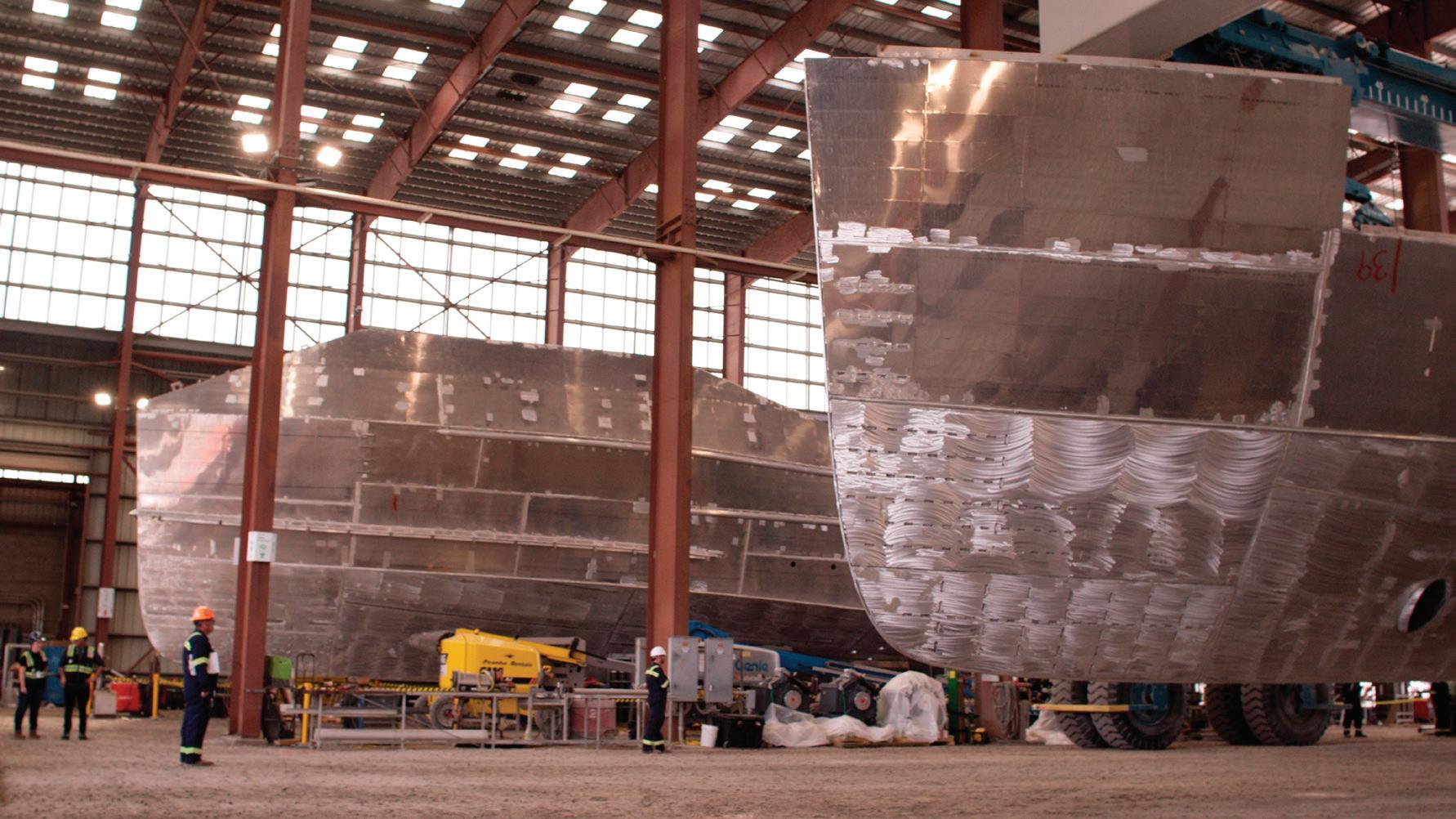
To proactively tackle the issue, area technical colleges have begun collaborating with local fabricators to determine future needs.
“I know of one plan to train 500 welders in five years,” Zeringue says. “They’re just looking for the
“We have so many defense contracts coming out of the Bayou Region that it blows my mind.”
CHRISTY ZERINGUE, president and CEO, COLAB
people to fill those positions.”
For existing welders, though, it should be a relatively easy transition. “Whether you’re welding an offshore rig or a Coast Guard cutter, a welder is a welder … that’s
why we’re so uniquely positioned for diversification in this area,” she notes. “We’re able to take those same skills and either re-skill or upskill so that businesses have a steady stream of workers.”
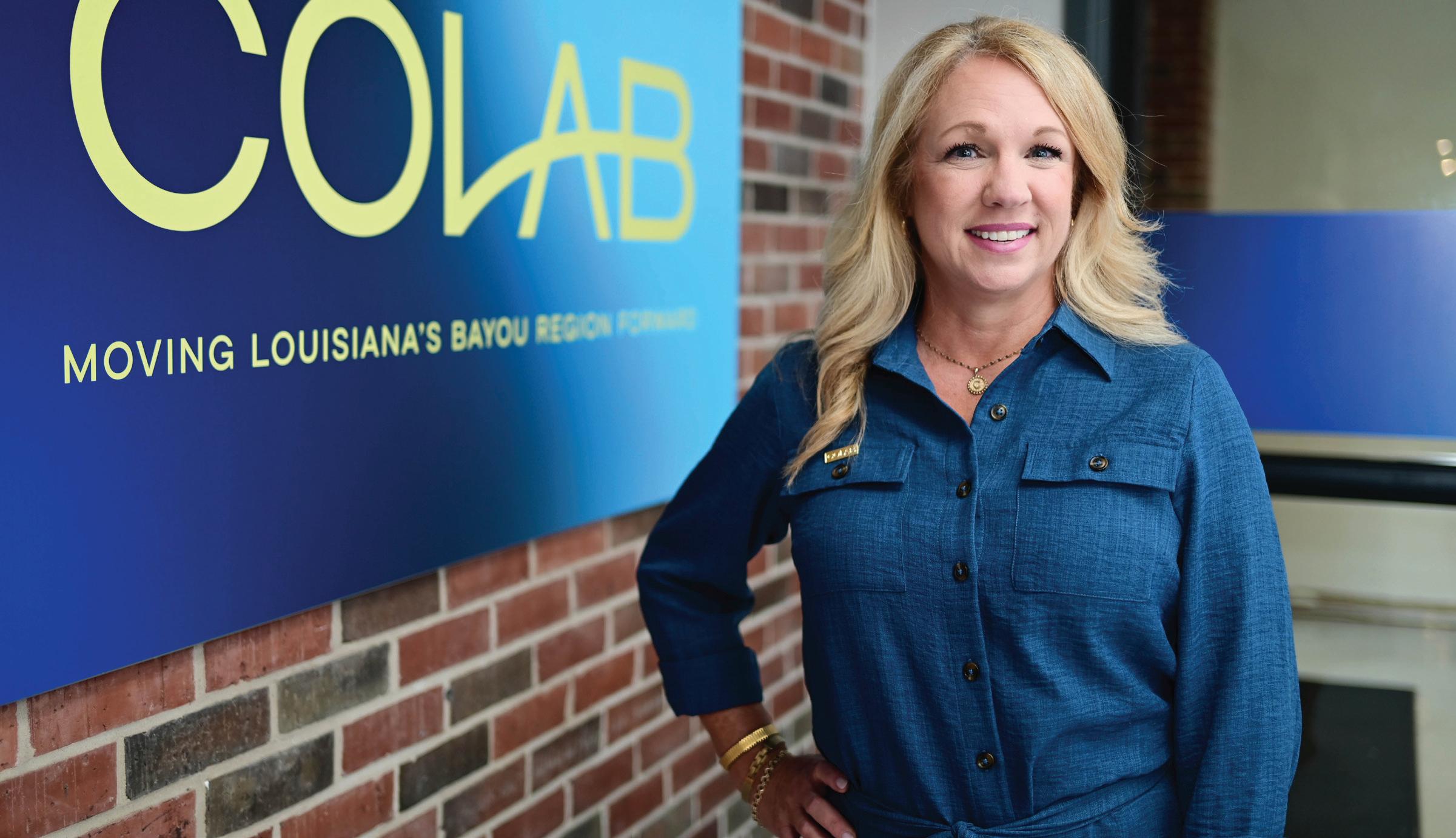
Energy made here doesn’t just travel the world, it comes back as opportunity, investment and support for the people of Southwest Louisiana. For 26 years, the Lake Area Industry Alliance has connected industry and community, bringing together 29 member companies committed to progress, safety and stewardship – with billions invested, more than $250 million paid in property and sales taxes annually, nearly 9,000 local jobs and millions given back through education, workforce development and community initiatives. Industry isn’t just operating here. It’s making life better here.


















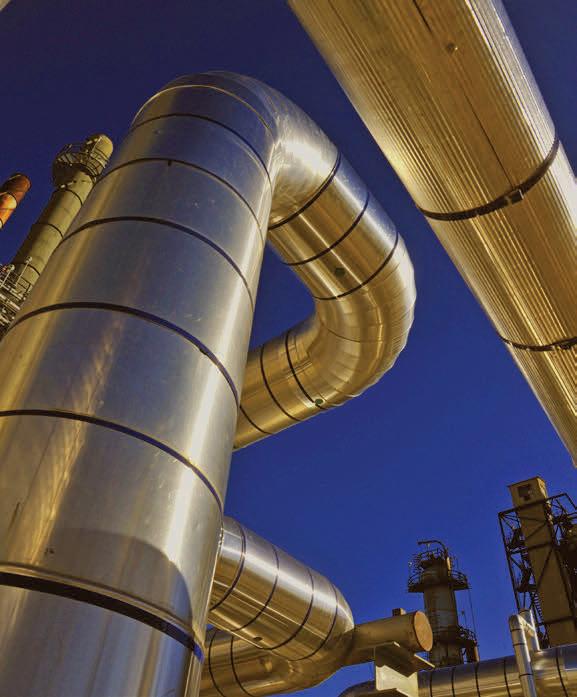
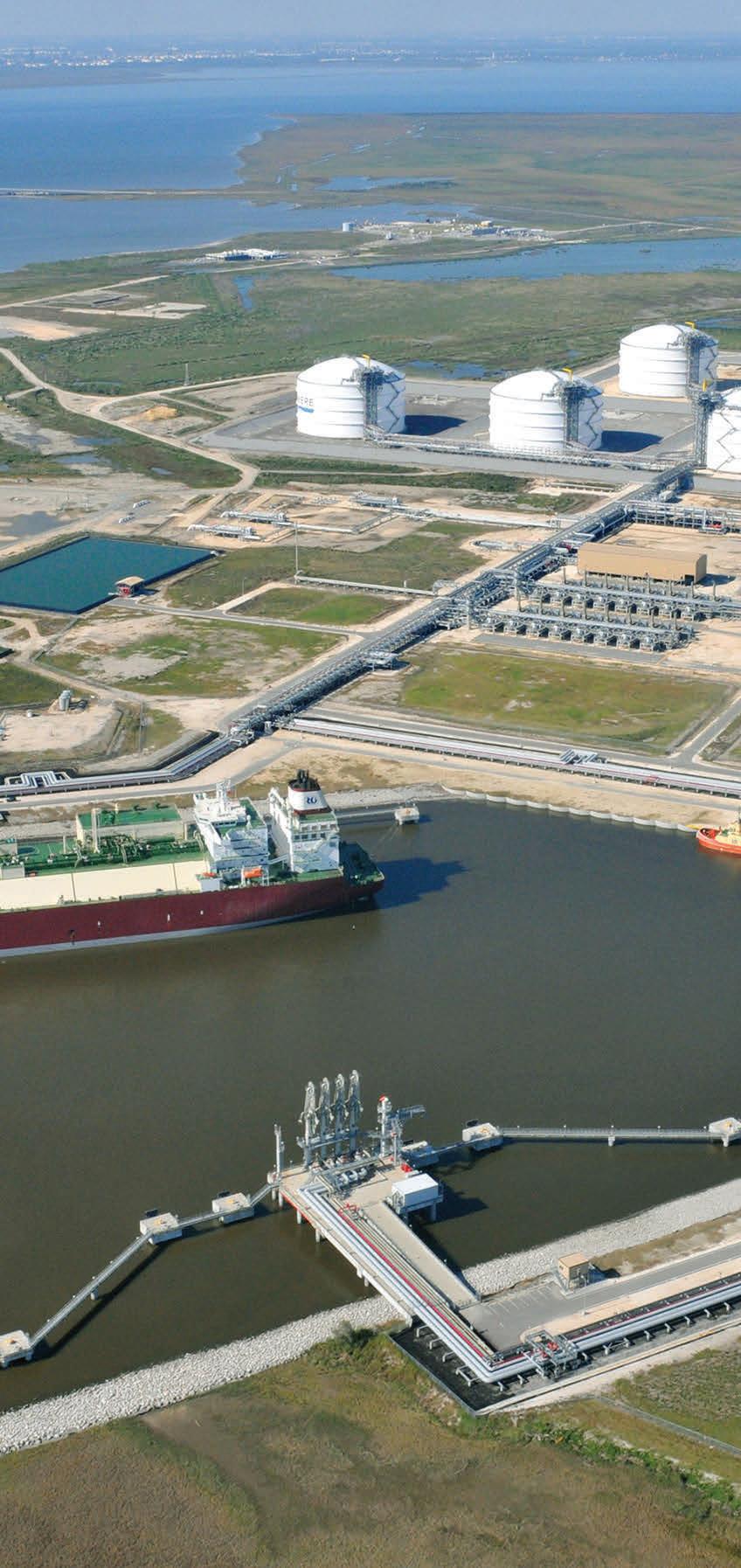
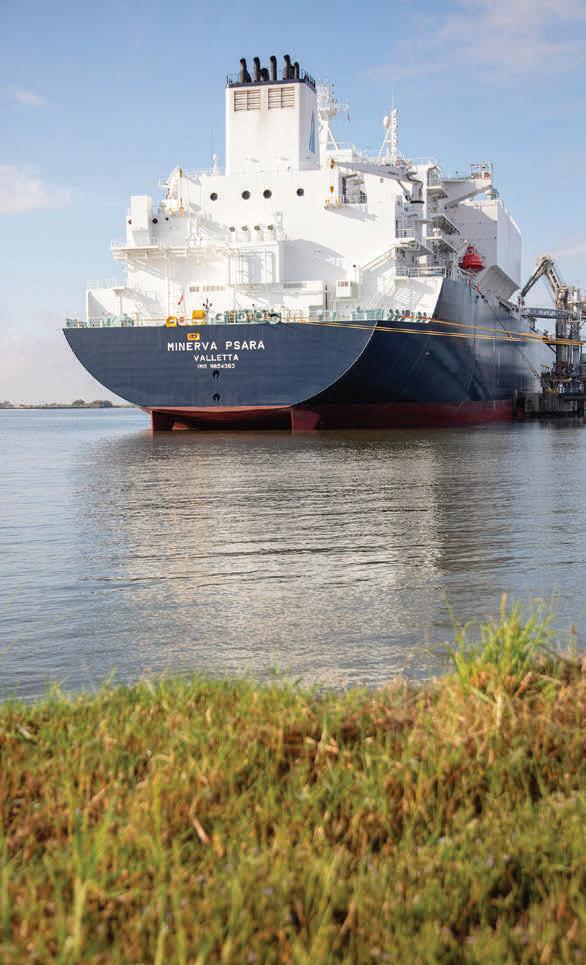
BY SAM BARNES


South Louisiana’s industrial economy has created more than jobs and investment—it has also produced some of the region’s most influential philanthropists. Across the region, executives who built their careers in energy, construction and maritime industries are channeling their success back into the communities and institutions that helped shape them.
Often, their giving helps strengthen the very ecosystem that sustains Louisiana’s industrial sector.
Among them is former Shell executive Greg Guidry, whose philanthropy has focused heavily on advancing engineering

education at the University of Louisiana at Lafayette. Baton Rouge industrial contractor Art Favre has directed major gifts toward LSU’s construction management program and regional health care institutions, while New Orleans business leader Donald “Boysie” Bollinger has supported everything from maritime education to youth-focused nonprofits and cultural institutions across the region.
The stories that follow explore what motivates these three leaders to give, how their philanthropic priorities have evolved over time and why many see charitable investment as a natural extension of the industries that built their success.
As Greg Guidry’s income was getting slammed with a nearly 65% tax rate as he worked for Shell in Europe, he began to appreciate one very notable— and stark—contrast between the U.S. and most other countries.
“Outside of this country, there’s not a lot of charitable giving because that’s not their model,” Guidry says. “Instead, those governments do the job for them by providing free health care, free education, subsidized housing etc., and in turn assess very high tax rates. Our country’s ‘true capitalism’ model literally requires charitable giving for it to be sustainable. So for me, it’s an obligation, not a choice.”
Since retiring from Shell in 2018, Guidry has funneled much of his time and money into his alma mater, the University of Louisiana at Lafayette. In November, the Abbeville native and his wife, Alexis, donated $1.6 million to the university with the hope of transforming the College of Engineering.
The investment is being used, in part, to establish the Greg Guidry Energy Systems Lab, a new facility in mechanical engineering designed to provide students with hands-on technical training. Additionally, the money will go toward the Engineering Innovation Endowed Chair, aimed at attracting and retaining world-class faculty, and the Engineering Center of Excellence Fund, intended to bridge the gap between academic learning and real-world industrial demands.
The Center of Excellence will eventually
reside within a new $55 million Engineering Student-Centered Collaborative Building, currently under construction and scheduled for completion later this year. The center intends to go beyond classical skills building. “It focuses more on critical thinking, on communication and teamwork,” Guidry says, “as well as community service and on study abroad to enhance a global mindset.”
Guidry, who currently chairs the College of Engineering Dean’s Advisory Council, has been “blown away” by the growth in the College of Engineering in terms of research funding, enrollment and profile. “ULL punches above its weight,” he says. “The cost is reasonable and you learn more than just the classical fundamentals of engineering.”
Soon after graduating from the university in 1982, he found himself competing against “Ivy Leaguers” and graduates of some of the best universities in the world. “It wasn’t purely academics that enabled me to succeed,” he says. “It went way beyond that in terms of leadership capability, and I very much credit my experience there.”
Guidry, therefore, views philanthropy as a return on investment. He cites a study by Lightcast, a global leader in labor market analytics, which estimates that every $1 invested in ULL results in $7 of incremental income for the state of Louisiana. “I have a lot of options in terms of philanthropy,” he says, “but this gives me the ability to actually bring some of the things I learned while in industry to this campus.”
Our country’s ‘true capitalism’ model literally requires charitable giving for it to be sustainable.
Baton Rouge-based industrial contractor Performance Contractors has experienced exponential growth in the years since its founding in 1979. Over that time, founder and owner Art Favre began to realize that he had an opportunity that most others did not: The ability to make consequential life-changing donations that impacted the lives of his employees, the construction industry and community.
“I feel I’ve become more mature about my giving,” Favre says. “There are a lot of people who can give $100 here and $100 there, but there aren’t a lot of people who can give seven figures toward something that’s going to change the dynamic of the community and touch many people.”
Favre has become a notable philanthropist in the Baton Rouge area, with higher education being a particular passion. In 2024, he presented a $15 million gift to LSU for the design and construction of a new $107 million standalone Construction & Advanced Manufacturing Building, enabling work on the project to begin earlier than planned. The building is scheduled to break ground in 2027.
It has been a deeply personal endeavor. Favre, MMR Group President and CEO James “Pepper” Rutland, ISC co-founder Eddie Rispone and a handful of others were among LSU’s first graduates in construction management in the early 1970s. Today, it is the largest single department in the College of Engineering, with nearly 2,000 enrolled.
“It’s dear to all of our hearts because we’ve been very blessed over the years to go from startup companies to where we are today,” Favre
says. “All of us have had a lot of success.”
He also leads the fundraising effort for the project, having helped secure some $45 million of the remaining $60 million needed in private donations.
“This is a project that I and others in the construction industry have been wanting for about 30 years,” Favre says. “When we first started talking, we probably weren’t ready to get our own school to be honest. We weren’t a big enough group to do it, but we always knew that we were going to grow into it. We just planted the seed.”
Favre’s other big passions are Pennington Biomedical Research Center and Mary Bird Perkins Cancer Center. About three years ago, he made a sizeable donation to Mary Bird Perkins that enabled the facility to purchase a new adaptive radiation therapy machine—a “gamechanger” in regional cancer treatment. Today, it remains the only machine of its type in the Gulf South.
Favre credits his Christian upbringing for his desire to help the less fortunate. He didn’t grow up surrounded by wealth, and his parents worked hard their entire lives to make ends meet.
“We didn’t have a lot, but we got by,” he says. “One thing they instilled in us—that we had to go to college and get a good education. Neither one of them had a college education, and they saw it as a ticket to a better way of life.
“Then, when I got out of college and started having some success, it was pretty easy to put two and two together,” he adds. “I had been fortunate in my success, so it felt only natural to give those same opportunities to others.”
There aren’t a lot of people who can give seven figures toward something that’s going to change the dynamic of the community and touch many people.
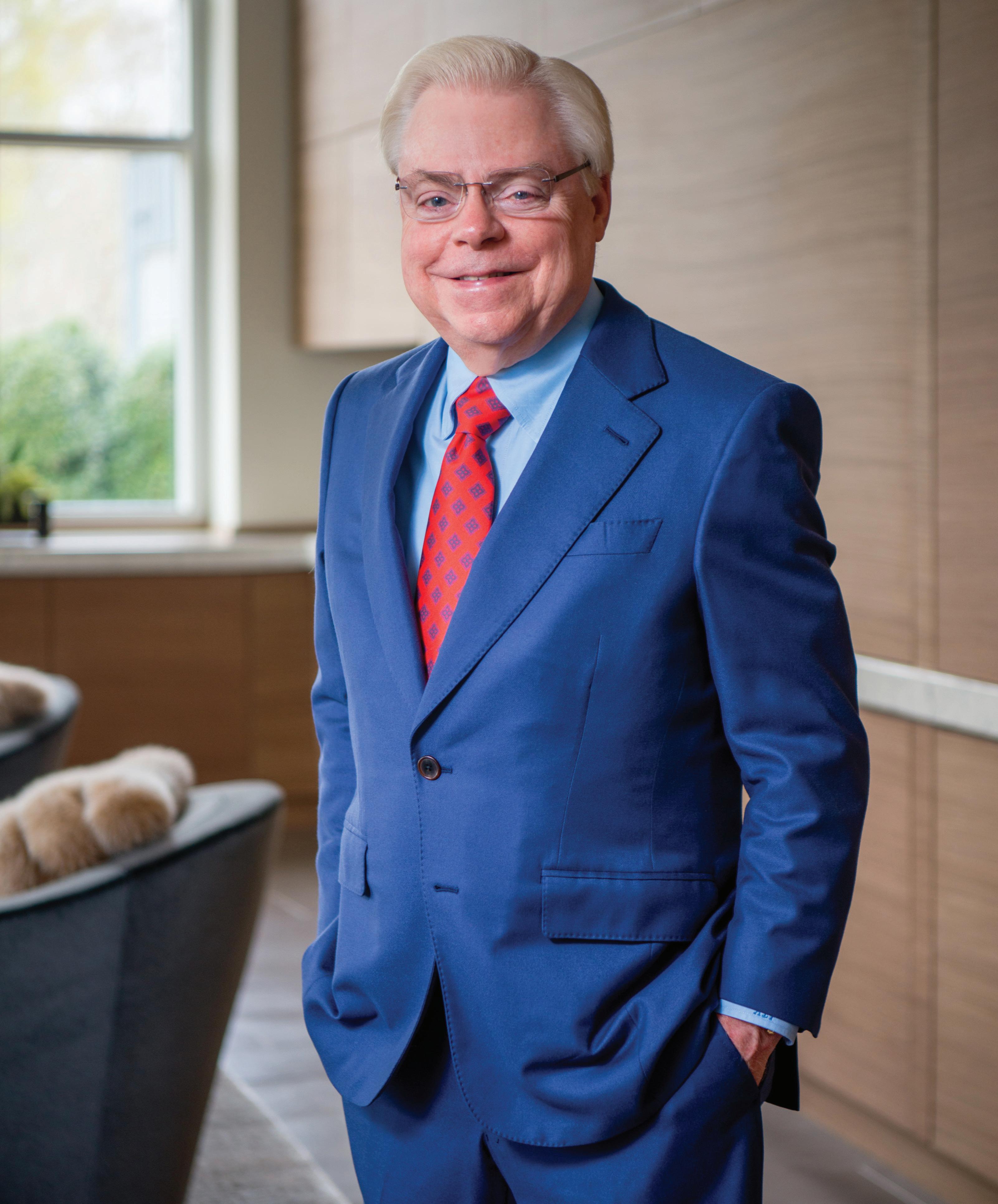
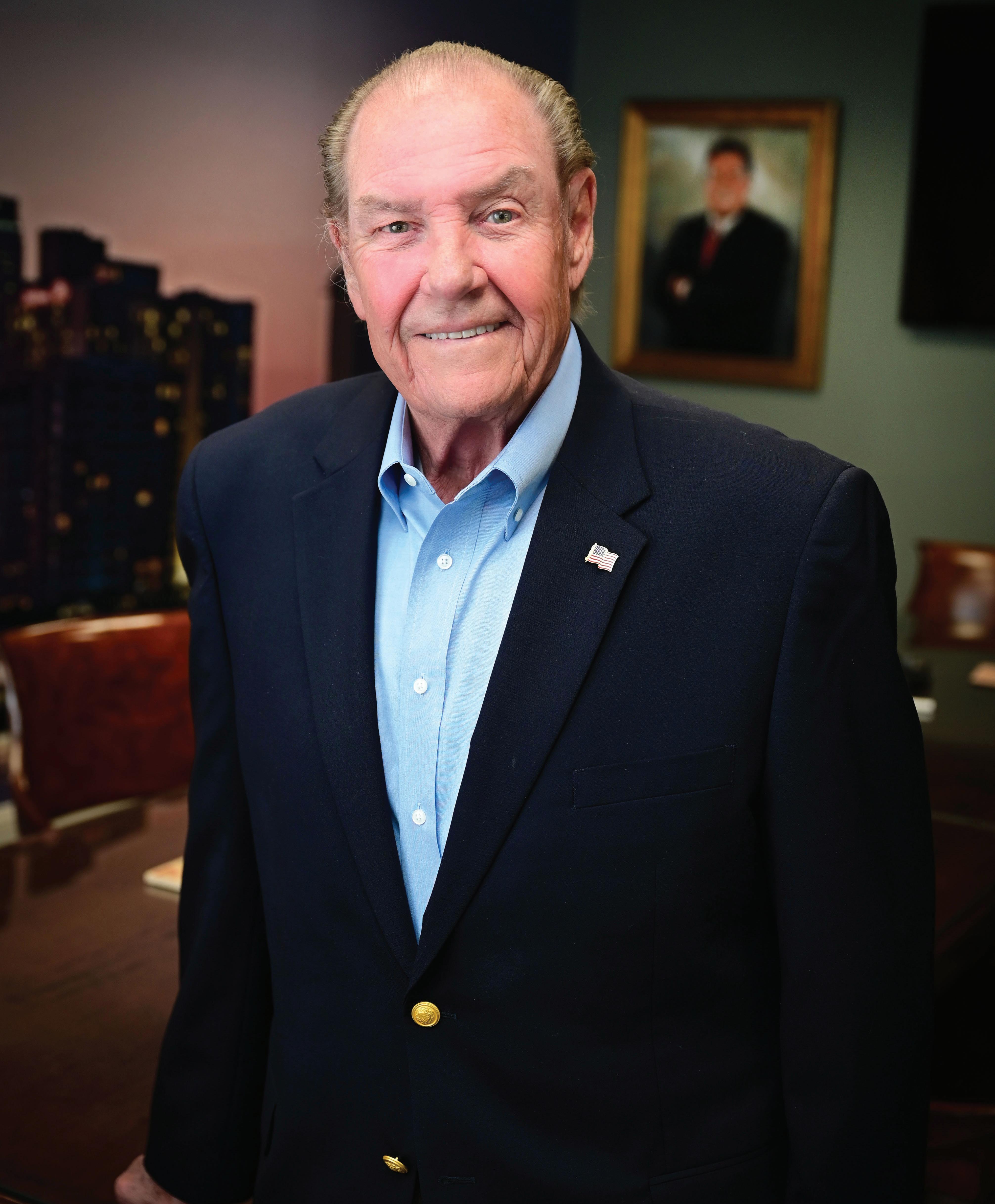
Donald “Boysie” Bollinger rarely turns down a meeting with someone needing help.
The chairman and CEO of Bollinger Enterprises in New Orleans wants to change lives, so he intentionally seeks out low-income facilities that can provide opportunities for better community outcomes. He has a particular soft spot for schools and programs, and has given extensively to institutions such as Anna’s Place NOLA, Good Shepherd School and the Youth Empowerment Project, all of which cater to at-risk children.
After selling Bollinger Shipyards Inc. in 2014, the Bollinger family forged Bollinger Enterprises to handle their private and public equity investments, along with a “fair amount” of philanthropy.
“My sisters and I observed our parents growing up, and they were very much the philanthropists,” Bollinger says. “My dad always taught us all that we had to give back. To those who are given much, much is expected. I think we all absorbed that. All three of us have been generous with funds to support causes that we believe in.”
One of his biggest and earliest passions was The National WWII Museum. Shortly after selling his business, Bollinger donated $20 million to the museum—at the time the largest private gift in its history—and has served on the museum’s board of directors since 1996.
Bollinger also champions the industry that gave him his livelihood. In 2021, he donated $3 million to the University of New Orleans School of Naval Architecture and Marine Engineering, which his father and uncle helped create in the 1970s.
The school was renamed the Boysie Bollinger School of Naval Architecture and Marine Engineering in recognition of the gift.
“Over the years, we’ve hired a lot of the graduates from that program,” he says. “It deserves our support.”
The Audubon Nature Institute is another passion. In 2016, Bollinger gave $5 million to fund a new African lion habitat—the largest single gift in the zoo’s history—and he recently committed to another $2 million.
Not surprisingly, many causes and institutions in New Orleans have learned to seek Bollinger out whenever there’s a need. He’s usually willing to listen and will typically visit a facility to see how they operate.
“I get a lot of inquiries and take almost every meeting,” he says. “I like to learn, and every meeting teaches me something that’s going on in this community. I don’t support everything, obviously, but sometimes I support things I didn’t think I was going to support, and sometimes I don’t support things that I thought I would support.
“Learning about them is part of the process.”
My sisters and I observed our parents growing up, and they were very much the philanthropists. My dad always taught us all that we had to give back.
By SAM BARNES
Louisiana ports are breaking down long-standing barriers to move as one—but a deep funding backlog still stands in the way.
Shifting market dynamics, unresolved systemic issues and funding backlogs have forced the state’s five lower Mississippi River ports to abandon old paradigms and instead join forces to create a more unified strategy.
It represents a seismic shift for the ports, as they’ve historically behaved more like friendly competitors than collaborators.
Nevertheless, local and state leaders were becoming increasingly concerned that the old way of doing things might be costing the state business.
During the 2023 and 2024 sessions, state legislators passed Senate Bill 214 to create the Office of Port Development within Louisiana Economic Development, and House Bill 971 to create the Louisiana Ports and Waterways Investment Commission, which would oversee the development of a unilateral marketing strategy.
“It wasn’t hard to read between the lines,” says Joe Toomy, former chairman of the Port of New Orleans and an early proponent of port collaboration. “The Legislature wanted the ports working together.”
In 2025 under Toomy’s direction, they began collaboratively developing a marketing strategy aimed at expanding international trade, driving economic growth and attracting new business.
Finding a common voice, however, was a challenge in the beginning. “We’re a lot like five restaurants serving different types of food 60 miles apart,” says Jay Hardman, executive director of the Port of Greater Baton Rouge. “We had to figure out how to market all five of them effectively.”
To assist them in the effort, the group authorized port and maritime economic consulting firm Martin Associates of Lancaster, Pennsylvania to conduct a cargo analysis of products and cargo movements in and out of the state, with all five ports—Port of Greater Baton Rouge, Port of New Orleans, Port of South Louisiana, St. Bernard Port and Louisiana Gateway Port—contributing to the cost.
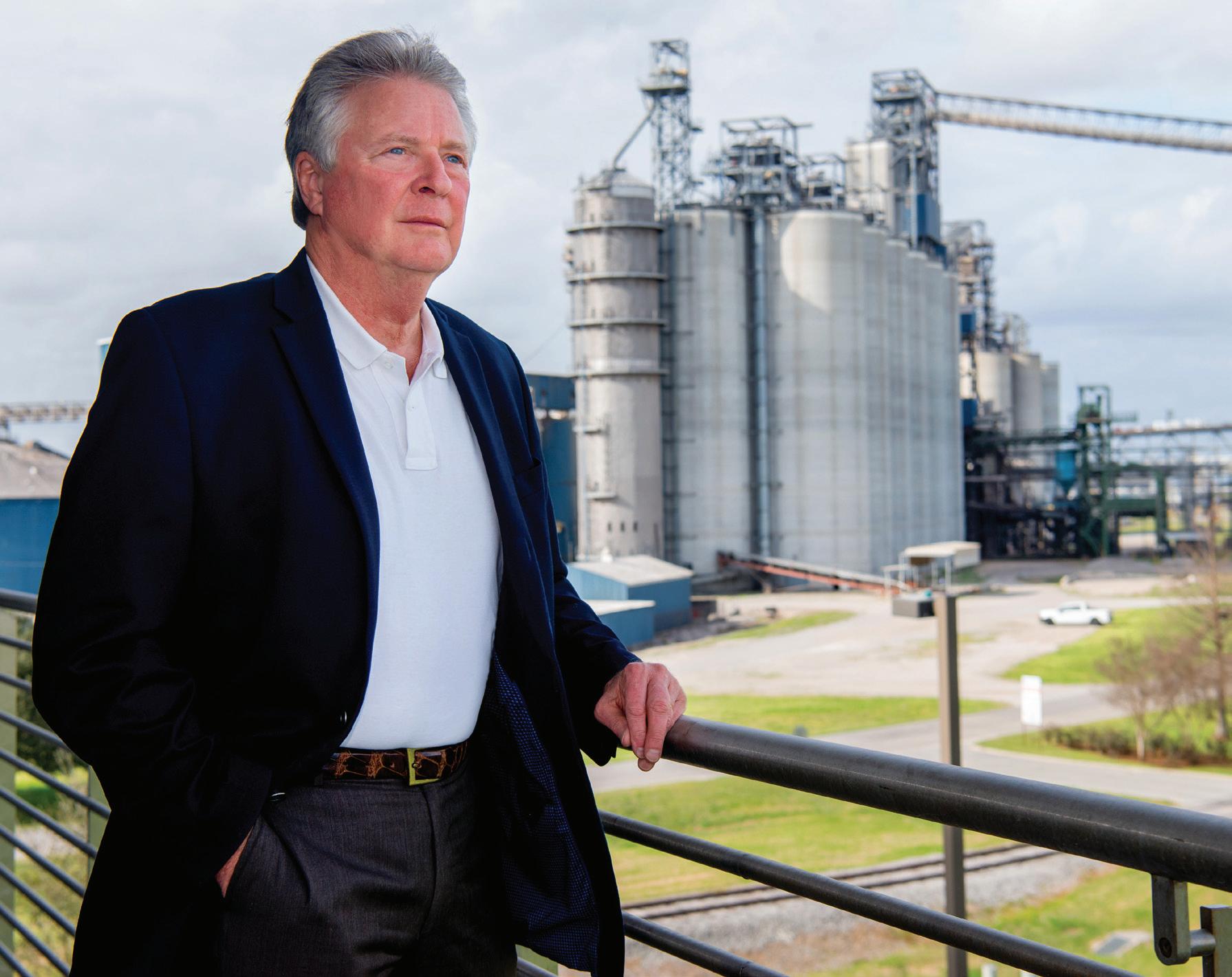
The analysis will help identify new cargo opportunities and develop scenarios to capture potential cargo.
In turn, Polaris Analytics & Consulting was enlisted to help develop a new, unified marketing strategy.
“Ultimately, we’re creating a better brand and streamlined messaging for the international community,” Toomy says. “That sends a loud message to them and gives (Louisiana Economic Development) a stronger message as they put together economic development initiatives. We hope to create a more consistent, unified voice for the lower Mississippi River that will attract future investments and additional jobs.”
The final rollout of the plan is planned this spring.
There is evidence that their efforts might already be bearing fruit. Recently, the Port of Greater Baton Rouge allowed the Port of South Louisiana, through a cooperative endeavor agreement, to work directly with Hyundai
Steel in Ascension Parish (which falls within the Port of Greater Baton Rouge’s jurisdiction) in the development of their dock system. That’s significant, as the dock will facilitate the offloading of approximately 4 million tons per year of iron ore to support the $5.8 billion facility’s production of 3 million tons of ultra-low-carbon steel sheets.
Port directors hope their recent collaborations will produce additional returns by strengthening their collective ability to attract funding. Port infrastructure investment is a stated priority at LED, but the Port Priority Fund consistently lags far behind demand.
“The backlog on projects approved and in line to be funded is $200 million, and the state’s Port Priority Fund gets just $39 million a year … so just do the math,” Hardman says. “If you get approval now, you’re probably five years out before you can see any funding.”
a full-time grant writer to assist the ports in pursuing and winning federal grants.
The agency is currently waiting for the proper “signoffs” from Louisiana State Civil Service, with hopes that it will be approved sometime later this year. That would be particularly helpful for the smaller ports that don’t have the staff to pursue the grants.
“We’re a lot like five restaurants serving different types of food 60 miles apart. We had to figure out how to market all five of them effectively.”
JAY HARDMAN, executive director, Port of Greater Baton Rouge
As a result, the state’s ports must often craft some rather complex funding arrangements just to make projects happen. Typically, they’ll use their own funds for reimbursement later or get loans and/or bonds for temporary financing. Tenants also commonly help finance projects that will directly benefit them.
Port NOLA, for example, is financing its new $1.8 billion Louisiana International Terminal mega-project in St. Bernard Parish through a public-private partnership between Port NOLA, the State of Louisiana, New Jersey-based Ports America and Geneva, Switzerland-based Mediterranean Shipping Co. (through its terminal development and investment arm Terminal Investment Limited).
The Louisiana Office of Multimodal Commerce under the Louisiana Department of Transportation & Development is searching for ways to remedy the Port Priority Fund shortfall, most recently proposing the hiring of
Finding additional state money, however, will be trickier. “A subcommittee of the Ports and Waterways Investments Commission is looking into that,” says Andrew Kilshaw, commissioner of the Office of Multimodal Commerce, “but whatever we pursue would have to be approved during a fiscal session of the legislature. Of course, we must do it in a way that’s a political reality. You can’t take any money from highways and bridges, since they’ve got a backlog of their own. And you can’t necessarily go find something on the river and just tax it … then you’ll run into issues with the federal government.”
Increasing the gas tax and dedicating some of the money to the ports could be one option, but nothing can be proposed until the next fiscal session of the Legislature.
Meanwhile, the state’s ports are moving forward with their own plans. The Port of Greater Baton Rouge, for example, is currently revamping its strategic plan for the first time in 15 years, and expects to have a draft of the plan—along with an economic impact study—completed by the third quarter of this year.
It’s also working with grain elevator operator Louis Dreyfus Co. to begin accepting crushed soybean meal by rail and barge.
“It will enable the rail delivery of about 1 million-plus tons per year of the product,” Hardman says. “That fits well with the elevator’s utilization cycle … we get a big surge of product during the harvest season for corn and soybeans, then we hit a lull. That’s
just when the crushed soybeans (exported as animal feed) begin to move.”
The overall cost of the infrastructure improvements is nearly $30 million to upgrade conveyance equipment and rail dumps where the rail cars are emptied. The project is currently in the early design phase, with an anticipated completion in late 2027.
And at the Port of South Louisiana in Reserve, the development of infrastructure both on- and off-site tops its list of priorities.
“We’re making sure that we have the right infrastructure,” says port Executive Director Julia Fisher-Cormier. “We’ve got to make sure we have our basics in place and that our road connections are sufficient.”
Over the last six to seven years,
that port has been advocating for several transportation, infrastructure and drainage projects. Its large footprint gives it significant potential for growth—at present, some 108 miles of river frontage could be developed—and infrastructure will be a key component for making that happen.
“In St. James Parish, the widening of Highway 3127 will be critical to our future functionality,” she says. “It’s a two-lane highway now, but it’s heavily utilized by our truck traffic. We’re pushing for that, not only from an ease-of-use standpoint, but from a safety perspective.”
Additionally, an I-10 interstate connector in St. John Parish would connect directly to the port’s Globalplex facility, and in St. Charles Parish improve -
“Ultimately, we’re creating a better brand and streamlined messaging for the international community.”






ments to Highway 90/I-310 are underway.
“We have a lot of truck traffic that comes through Highway 90 from different ports, and this would alleviate that traffic,” Fisher-Cormier adds. “Ultimately, we’re getting behind all three parishes and trying to help in any way we can to positively impact these areas.”
More state funding always helps, but the Lake Charles Harbor & Terminal District currently finds itself benefiting from a proliferation of LNG “throughput” revenue—a fee charged to LNG based for their exports— lease revenue and hurricane-related FEMA funding.
The port has some 5,500 acres in its jurisdiction, the majority of which is used by industry, LNG, casinos and port terminals. And the ship tonnage going down the Calcasieu Ship Channel—at 64 million tons—ranks it at No. 10 among largest ports in the U.S.
“About 18 million of that is just our tenants,” says Ricky Self, executive director of the Lake Charles Harmor & Terminal District.
In fact, the port has broken new records in tonnage every
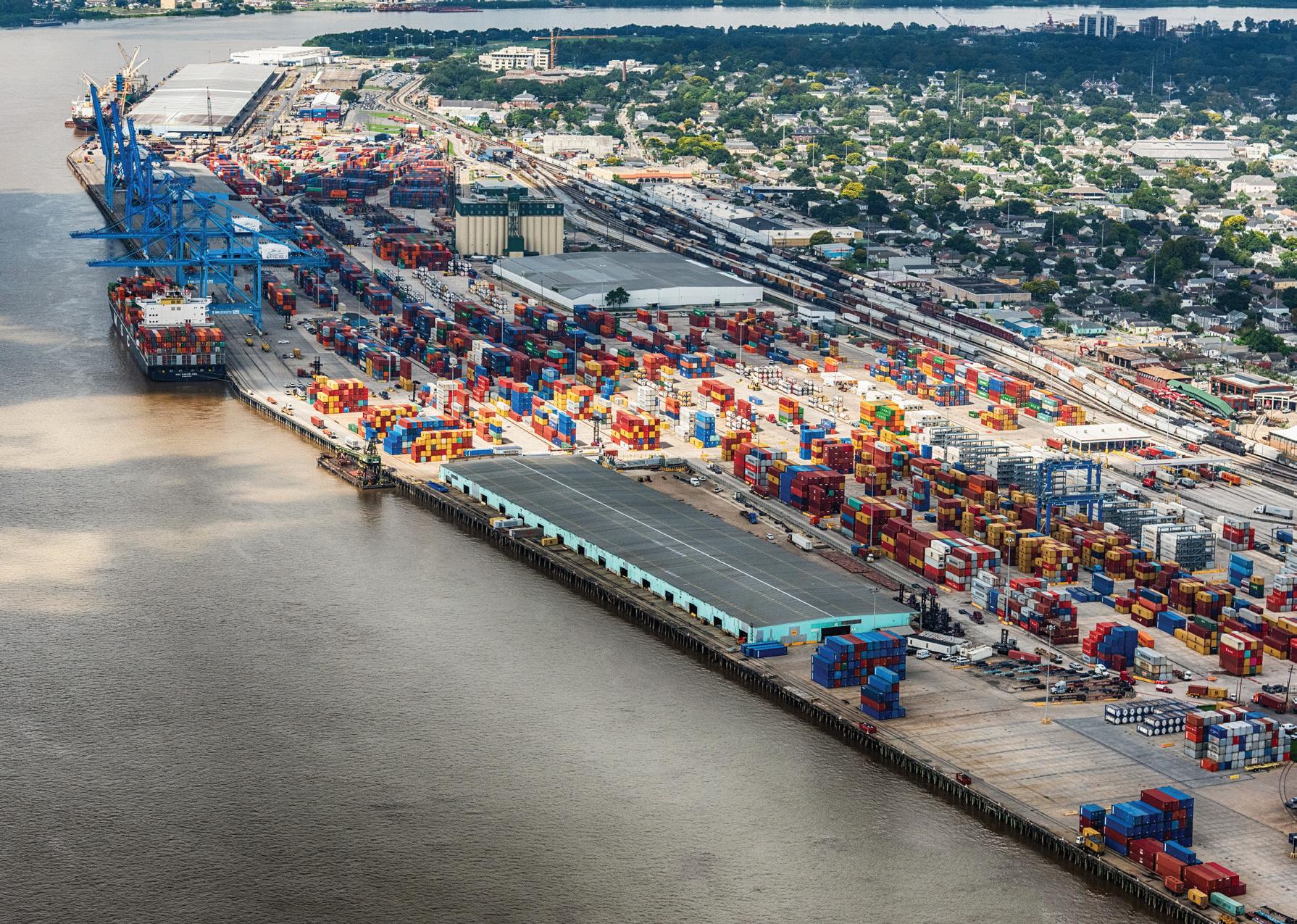
year since 2022. “Our projected tonnage this year and revenues will surpass 2025, which was a previous record,” he says. At present, Cameron LNG (one of its tenants) exports a minimum of 16 ships per month, but its monthly average is 18.
In turn, the port is using its
increasing revenue stream to repair assets on site, much of which was damaged by the previous hurricanes.
“Looking at both new and existing projects over 2026 to 2030, we expect to spend some $437 million,” Self says. “That’s a lot for us. To accomplish that, we’re
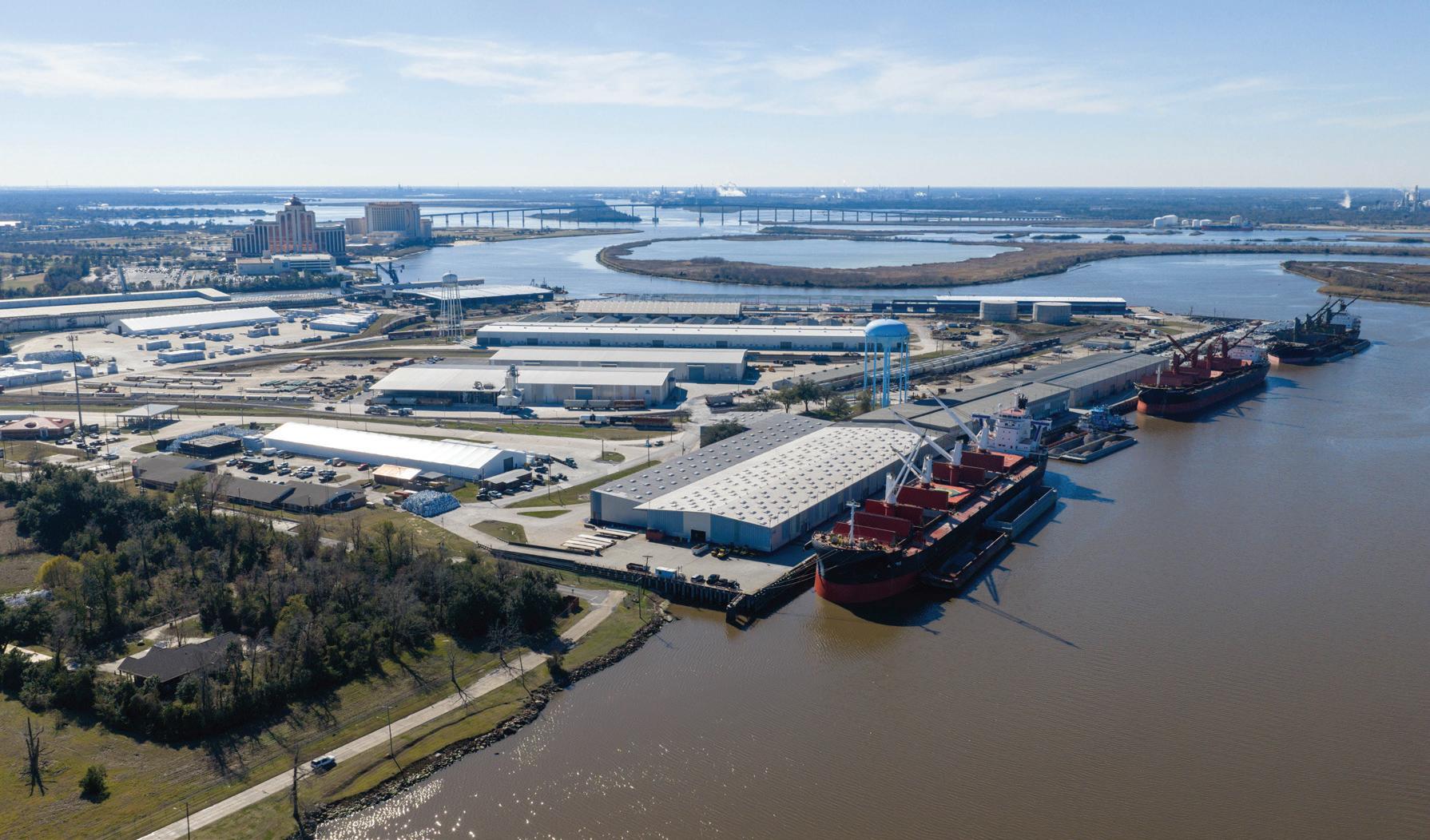
utilizing a significant amount of our cash reserves, as well as borrowing about $50 million. Other funds have come from FEMA, because of hurricanes Laura and Delta, capital outlay funding and the Ports Priority Program.”
Two projects currently in the beginning stages of study are included in the Water Resources Development Act: one to deepen the ship channel to 45 feet; the other to extend the eastern jetty.
Timelines and costs for the projects have yet to be determined.
“Our entire channel will ultimately go down to 45 feet,” Self says. “That will allow even deeper draft vessels.”
While the LNG industry can easily operate with the current draft, the additional depth would give them more under-keel clearance and eliminate any navigational concerns.
That will be critical as the LNG market grows. “Louisiana LNG just announced a $17.5 billion project on port property,” the port executive adds. “That market will continue to grow, and we’ll be ready for them.”

As Louisiana’s industrial boom accelerates, schools and companies ramp up efforts to prepare the professionals who will lead it.
BY SAM BARNES
“We put a lot of effort into educating students about the role played by policy in setting the stage for successful endeavors.”
ERIC SMITH, associate director, Tulane Energy Institute, of the university’s Master of Management in Energy program that emphasizes financial modeling, risk management and trading
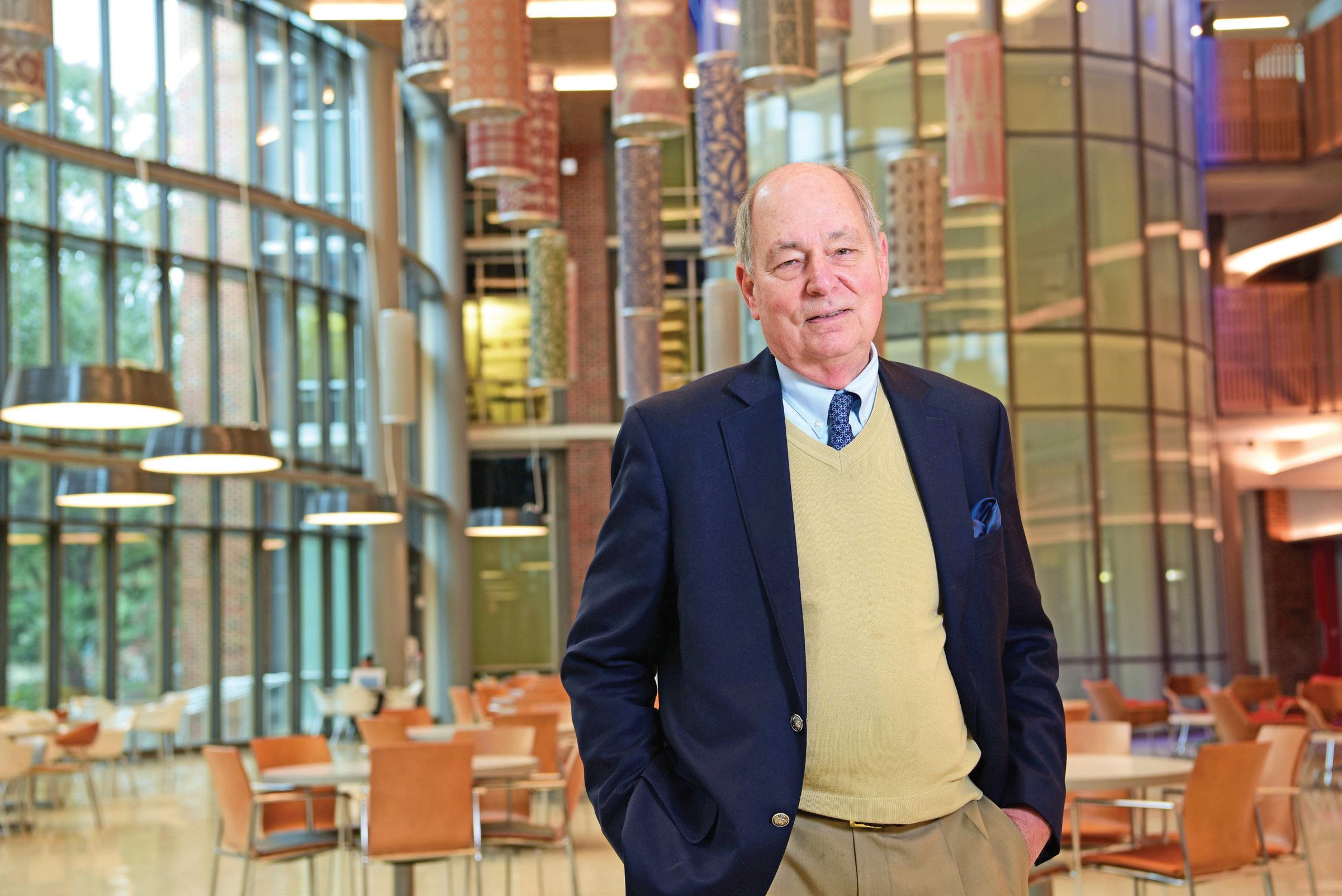
Much has been made about the impending industrial boom and the corresponding strains on Louisiana’s skilled labor workforce, but there is an equally pressing need for professionals to lead them.
It’s not a new problem.
Enrollment numbers have been increasing in the state’s industry-related engineering and management programs for years, growing in tandem with the sector’s expanding footprint.
For example, what used to be a relatively small cohort of construction management graduates at LSU has grown exponentially to some 2,000 students, prompting the university to approve its first-ever School of Construction in December.
The school will reside within a new $107 million,
148,000-square-foot Construction & Advanced Manufacturing Building, scheduled to break ground in 2027.
And in Lafayette, the University of Louisiana at Lafayette has begun funneling additional money into its College of Engineering.
By year’s end, they expect to complete a new $55 million, 70,000-square-foot Engineering Student-Centered Collaborative Building, designed to modernize engineering education and foster interdisciplinary collaboration.
Companies are also filling the void. In 2023, MMR Group in Baton Rouge launched MMR University, or MMR-U—an internal learning and development program tailored to augment higher education and professional skillsets over a 2.5-year period.
Complemented by new classroom facilities at MMR’s Baton Rouge headquarters, MMR-U
combines in-person instruction with hands-on lessons, virtual learning opportunities, field experience and personal mentorship from MMR professionals.
Meanwhile, Tulane University is promoting its own distinctly unique program: a one-year, specialized STEM-designated graduate program housed at the Freeman School of Business that prepares students for leadership roles in both traditional and renewable energy sectors.
Launched in 2011, the Master of Management in Energy, or MME, focuses heavily on the “business of energy,” emphasizing financial modeling, risk management and trading.
“The whole point of the program is to focus on the business of energy,” says Eric Smith, a
teacher in the MME program and associate director of the Tulane Energy Institute. “While this does require teaching students about the economic tools used to screen projects, we also put a lot of effort into educating students about the role played by policy in setting the stage for successful endeavors.”
Perhaps most unusual is the program’s degree of cross-collaboration with the university’s science, engineering and law schools.
“We also interface heavily with local energy companies ranging from LLOG to Sempra and Entergy, all of which receive regular visits from our students,” Smith adds. “We interface with smaller companies as well, on consulting projects designed to assist local companies in making smart energy decisions.”
Another differentiator is its connection to Tulane’s Freeman Business School.
STRATEGIC COLLABORATION DRIVES MARITIME GROWTH.
Louisiana’s five Lower Mississippi River deepwater ports have joined forces to develop their first-ever unified marketing strategy. Partnering with Polaris Analytics & Consulting, this forwardlooking initiative is designed to attract new international trade opportunities, draw foreign investment, and strengthen Louisiana’s position as a premier global gateway for commerce.
A SHARED VISION FOR THE FUTURE. Supported by Governor Landry and the Louisiana Ports and Waterways Investment Commission, the plan builds on the March 2025 Cargo Market Analysis and Strategy for the Lower Mississippi River Ports report.

It will evaluate each port’s unique strengths, identify competitive advantages, and create a unified value proposition. This will be paired with a comprehensive marketing roadmap to present the ports to the world as a single, coordinated force for growth.
“This collaborative marketing strategy amongst Louisiana’s deepwater ports on the Mississippi River will harness the collective strength of these vital maritime hubs, amplifying their reach and appeal,” said Jay Hardman, Executive Director of the Port of Greater Baton Rouge.
“By uniting resources, our ports can attract broader trade opportunities, enhance visibility, and position ourselves as a unified, efficient gateway for global commerce.”
“The biggest personal driver for me is to show young professionals that they can advance in the energy industry here, and that there is work in Louisiana.”


As a result, the curriculum places a strong emphasis on energy and finance.
“We’re training students to think about energy from a business perspective and to manage the businesses of energy,” says Pierre Conner, executive director of the Tulane Energy Institute. “It’s intended to get students to understand the fundamentals of the energy business.”
A relatively small cohort of 30 enroll in the program annually, comprised of students with undergraduate degrees in finance and business, those returning from the workforce to transition into the energy space, or a variety of other backgrounds.
The experiential program covers the entire scope of “all things energy.” Rather than depending upon textbooks that might be outdated, students work on real-world, real-time projects.
“We work with industry and develop a capstone that includes projects that they are working on, and the students apply the culmination of their coursework to these industry projects,” Conner says. “In that way, we’re clearly modifying the program to the current markets and situation.”
Twice annually, he gets input from a 35-member Executive Advisory Council comprised of representatives from across the industrial landscape. “They give me feedback on what’s important,” he adds, “and that helps me identify where there’s a need.
“In the end, we place students in power jobs, trading jobs, and in upstream, midstream, downstream operations, as well as power, utilities and renewables.”
Alejandro Rengifo, a current MME student at Tulane and president of the newly created Tulane Energy Institute Club, left his job
at a brokerage firm to enroll in the program in 2025.
The native of Columbia plans to return to the workforce as a commodity and energy trader after graduating in May, armed with an extensive amount of first-hand industry knowledge.
Rengifo is currently performing in-depth research on LNG projects across Louisiana, Texas, Mexico, South America and Africa. “We’ve been analyzing supply chains, infrastructure development and market entry opportunities,” Rengifo says.
As a student in the program, he has gained first-hand exposure to the energy sector by visiting several Louisiana energy facilities, including Waterford 3, Cameron LNG and Chalmette Refining.
“Through the MME program, there’s collaboration with a wide array of players in the industry,” he adds. “Much of my research has
required that I work with project owners in Colombia. I’ve also had a chance to talk to some representatives of Mexico who wanted to do business with U.S. companies.”
Beyond school, there is a growing interest among young professionals in continuing their education and maintaining connections with other like-minded professionals.
In New Orleans, membership in the local chapter of Young Professionals in Energy, or YPE, has been steadily increasing, and the national chapter of the group has grown to more than 40,000 members.
In essence, YPE provides a platform for networking, career development and knowledge sharing to foster professional growth. Members of the New Orleans Chapter of YPE come from more
than 200 diverse companies across the region, including Shell, Adams and Reese, Gasology, Tulane University, Worley, Laborde Marine, the Grow Louisiana Coalition and others.
“If you have something in your line of work that ties to the energy industry in south Louisiana, you can be a part of this group,” says Noah Taliancich, a sales executive at Crescent Power Systems in New Orleans. Taliancich, who holds a bachelor’s degree in management and an MME from Tulane, serves as a co-chair for the local chapter.
YPE hosts events throughout the year, typically in a continuing education format led by industrial or energy owners or university faculty.
In one recent seminar, Tulane’s Conner and Smith led a discussion on geopolitical events and their impacts on the energy industry, and gave updates on renewable energy developments and new technologies.
“During one session, we had some folks from Entergy Louisi-
ana talk about resource planning and what their internal resources look like for staffing,” Taliancich says. “They also discussed their plans for handling the demand for the electrical load that’s needed in the next five to 10 years.”
Of course, networking is another primary attraction for YPE members. When Taliancich initially joined the group and met current chapter President Kyle Kincaid, they discovered their companies were working on the same project. “It was just one of those ‘small world’ instances where our companies are already working together and we didn’t even know about it,” he says.
Ultimately, Taliancich hopes that YPE will expose young professionals to the number of opportunities in the state’s energy space.
“The biggest personal driver for me, as a Louisiana native, is to show young professionals that they can advance in the energy industry here, and that there is work in Louisiana,” he adds. “We just need to show them.”
“We’re training students to think about energy from a business perspective and to manage the businesses of energy.”
PIERRE CONNER, executive director, Tulane Energy Institute




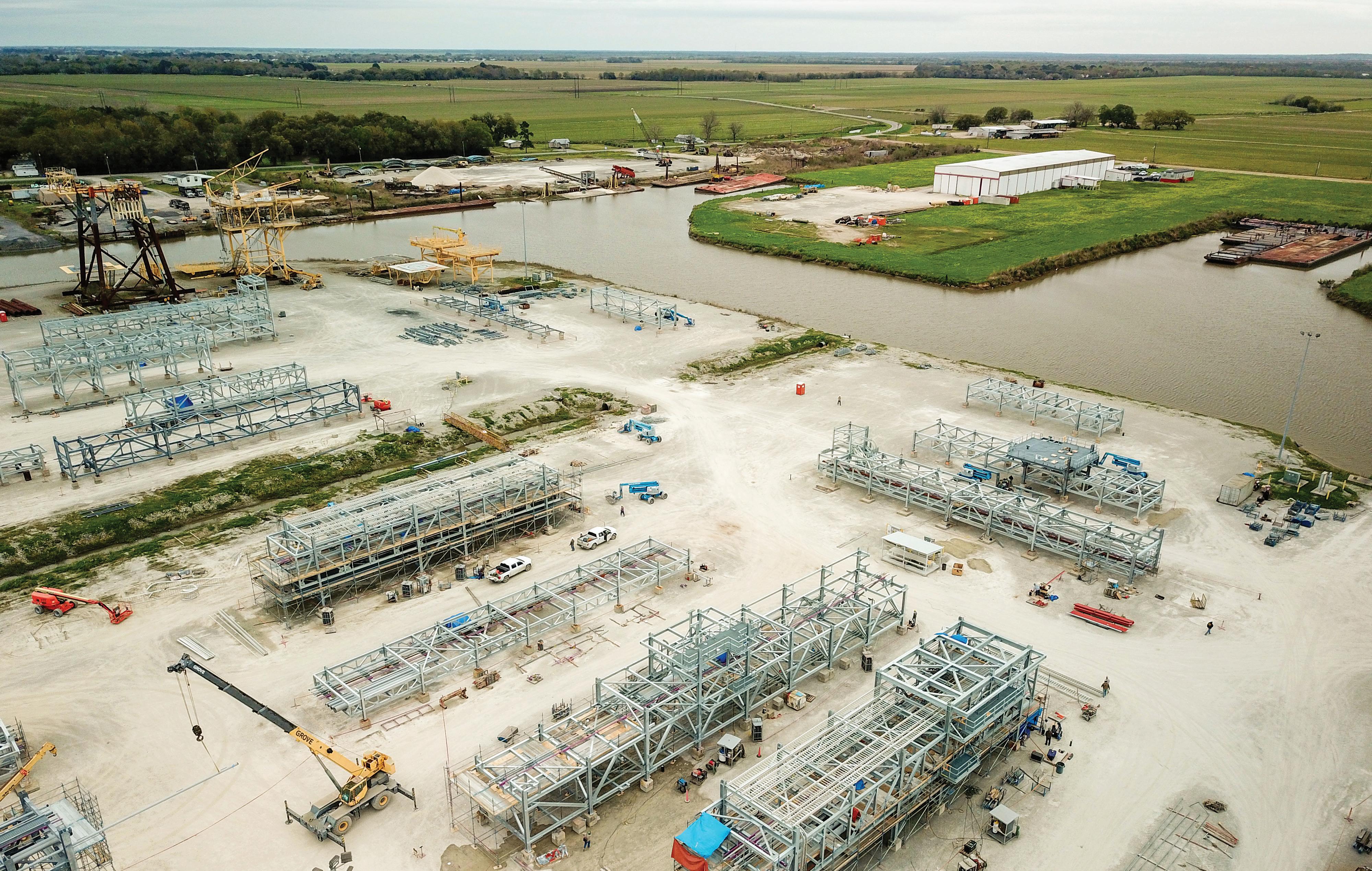
LNG, data centers and the petrochemical sector are chasing the same workers — and the crunch is just getting started.
The recent entry of AI data centers into the mix has added a new wrinkle to Louisiana’s age-old workforce shortage dilemma.
While not strictly industrial in nature, Meta’s massive facility in the northeast corner of the state and other data centers scattered across the south are already stealing skilled laborers from the south Louisiana labor pool.
It’s a trend only expected to accelerate as projects ramp up and a host of other projects get under way in the LNG, petrochemical, steel manufacturing and shipbuilding sectors.
The problem isn’t exclusive to the industrial sector. As economist Loren Scott of Loren C. Scott & Associates prepared his annual
forecast last year, one commonality stood out among nearly all markets.
“No matter what industry or area of the state someone might be, everyone complains about labor issues,” Scott says. “That’s been exacerbated somewhat by recent federal actions to more aggressively remove undocumented aliens from the workforce.”
Nevertheless, a changing dynamic in the way projects are executed could help alleviate, or at least dilute, the problem. The increasing prevalence of modular construction whereby industrial units are constructed in modules at off-site locations will likely spread worker demand more evenly across the region.
Over the last handful of years, these remote fabrication facili-
By SAM BARNES
ties have popped up in St. Mary, Iberia, Lafourche and Terrebonne parishes. For example, Turner Industries, Cajun Industries and Chart Industries operate major modular fabrication/manufacturing facilities at the Port of Iberia; and Performance Contractors has a facility in Amelia.
“What you’re seeing is the demand for workers becoming more broadly spread across the area,” Scott says. That’s a good thing, as it creates more efficient jobsites and eases the localized workforce problems of the past.
“During the big industrial boom in Lake Charles a decade ago, contractors were having to compete with their own customers for workers,” he adds. “Everything was ‘stick built’ back then. That’s not the case today.”
And while these Acadianaarea module fabricators must still compete with existing fabricators and shipyards for welders, pipefitters and electricians “so far they’ve been able to find workers,” he adds. “Often, they have to pay higher wage rates or better per diems to get them, but they can get them.”
The move to modularization is particularly good news for areas such as Lake Charles and Ascension Parish, which are each shaping up to become epicenters of industrial construction in the coming years.
Dan Groft, director of the H.C. Drew Center for Business and Economic Analysis at McNeese State University, says the impacts of the data centers will be the biggest question mark in the coming months and years.
“There’s also these semi-conductor chip facilities that will need to be constructed across the nation,” Groft says. Wage rates are likely to increase as a result, as contractors compete for a shrinking pool of workers.
In Lake Charles, housing will be another concern. Hurricane Laura decimated the residential market, leaving the city incapable of handling a significant surge in population.
“The city of Lake Charles is currently conducting a housing study to determine if they’re going to need more housing or apartments,” Groft says. “Ultimately, we’re going to have to have some housing for these people, because so much of the stock was destroyed.”
He’s also noticing another interesting development: increasing competition between the LNG industry and the city’s existing petrochemical owners for process technicians and operators.
“The LNG plants pay well, so they’re attracting a lot of workers,” he adds. “The others must
compete with that. In other words, the industrial base is competing against itself.”
That’s led to growing demand for additional training at places such as SOWELA Technical Community College, McNeese State University and the soon-toopen LNG Center of Excellence.
“Owners are just trying to keep their workforce pipeline flowing,”
Groft says.
Later this year,
Associated Builders and Contractors’ Pelican Chapter will open a new $20 million, 40,000-square-foot training center on 14 acres of donated Sasol land in Lake Charles.
LNG facilities going to market,” says David Helveston, president and CEO of ABC Pelican Chapter. “We’re well positioned to begin training next fall, just in time for those facilities that will be the midst of these massive construction projects. In a typical year, we’re expecting several hundred students to go through the facility.”
Estimated number of new welders that might be needed as Louisiana’s shipbuilding industry expands in the wake of a rising number of federal contracts
SOURCE: COLAB
The two-building facility will include a large welding lab, classrooms, computer labs and administrative spaces. Outside will be a small process facility and a large area for equipment training.
“It’s timed well with these big
Growing demand for welders, pipefitters and machinists is the biggest concern for the Bayou Region, says Christy Zeringue, president and CEO of COLAB in Thibodaux. She projects as many as 500 new welders could be needed as the shipbuilding industry expands in the wake of a rising number of federal contracts.
To stay ahead of the problem, COLAB conducts “business retention and expansion visits” as many as 80 are planned in
2026 to gauge workforce needs in the area.
“We’re trying to figure out how we can sustain the labor in our region for all of the regional growth coming up even as the data center work and all these other projects are going on elsewhere,” Zeringue says. “It’s a huge concern.”
Information gathered during the visits is communicated to area community and technical colleges and partners. COLAB also meets regularly with ABC’s Bayou Chapter in New Orleans to collaborate on future training needs.
While the Baton Rouge market has been a little slow over the past year, the city’s largest industrial contractors are already sending workers to other places in support of LNG and data center work. The result has been a tightening labor market.
“These data center projects, while not being strictly industrial in nature, still pull off that same skilled trade pool,” says Brandon
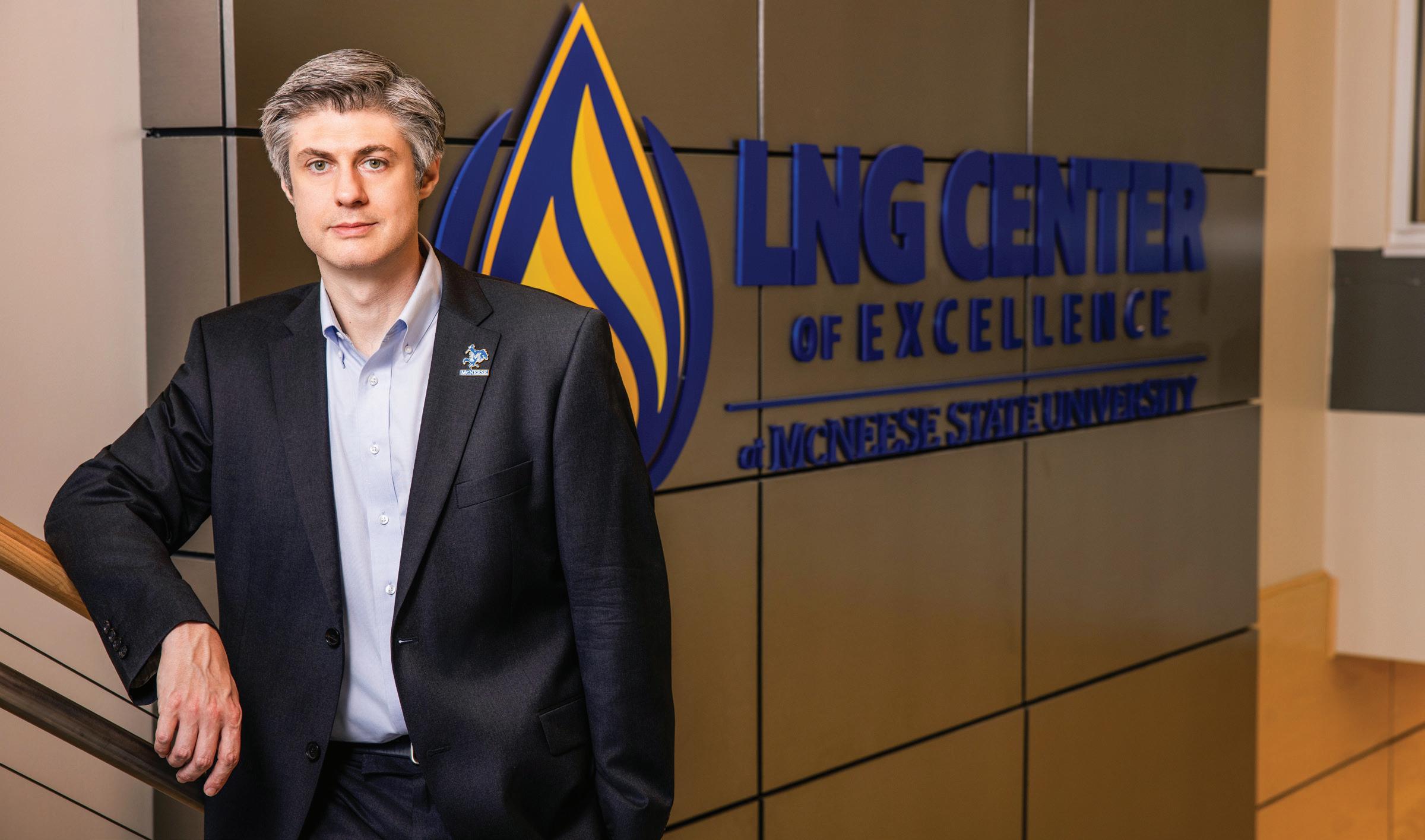
“The LNG plants pay well, so they’re attracting a lot of workers. The others must compete with that. In other words, the industrial base is competing against itself.”
DANIEL GROFT, director, H.C. Drew Center for Business and Economic Analysis at McNeese State University
MCNEESE STATE UNIVERSITY in Lake Charles is readying itself for the anticipated surge in LNG job demand with the opening of the LNG Center for Excellence this month.
Operations Director Nikos Kiritsis says the university will also offer a post baccalaureate certificate in LNG engineering through the center. The 15-credit, five-course certificate will be available to professionals who already possess a bachelor’s degree in engineering, or a degree in any STEM field with experience in a related industry.
The first course will be available this fall and will be 100% online. Instruction will be delivered in flexible one-hour units in nine different intervals to make it more attractive to engineers and other professionals. Says Kiritsis: “We set it up that way so that it could be offered exclusively to those professionals already working in industry.”
Within three years, center’s faculty hope to convert the online curriculum into a face-to-face format so that it can be taken as a minor by McNeese chemical and mechanical engineering students.
Virtual reality and simulation laboratories also will be offered, enabling students to walk through an LNG facility or simulate a process. “We have plans for an outdoor training facility as well,” he adds, “which will be built in four different units that represent processes that you find in the LNG industry.
“Ultimately, this will be an adaptable facility capable of responding to the needs of the LNG market.”
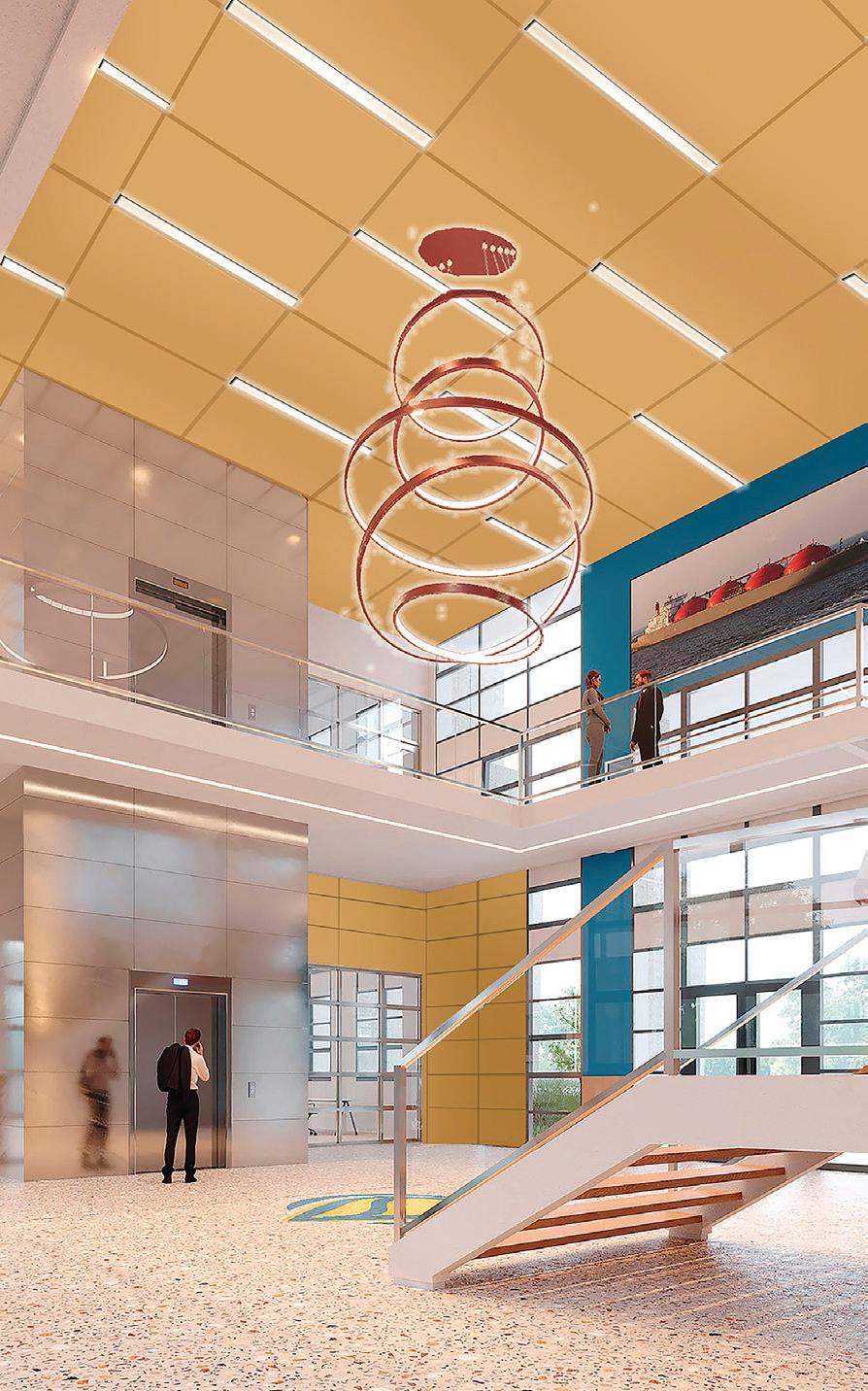
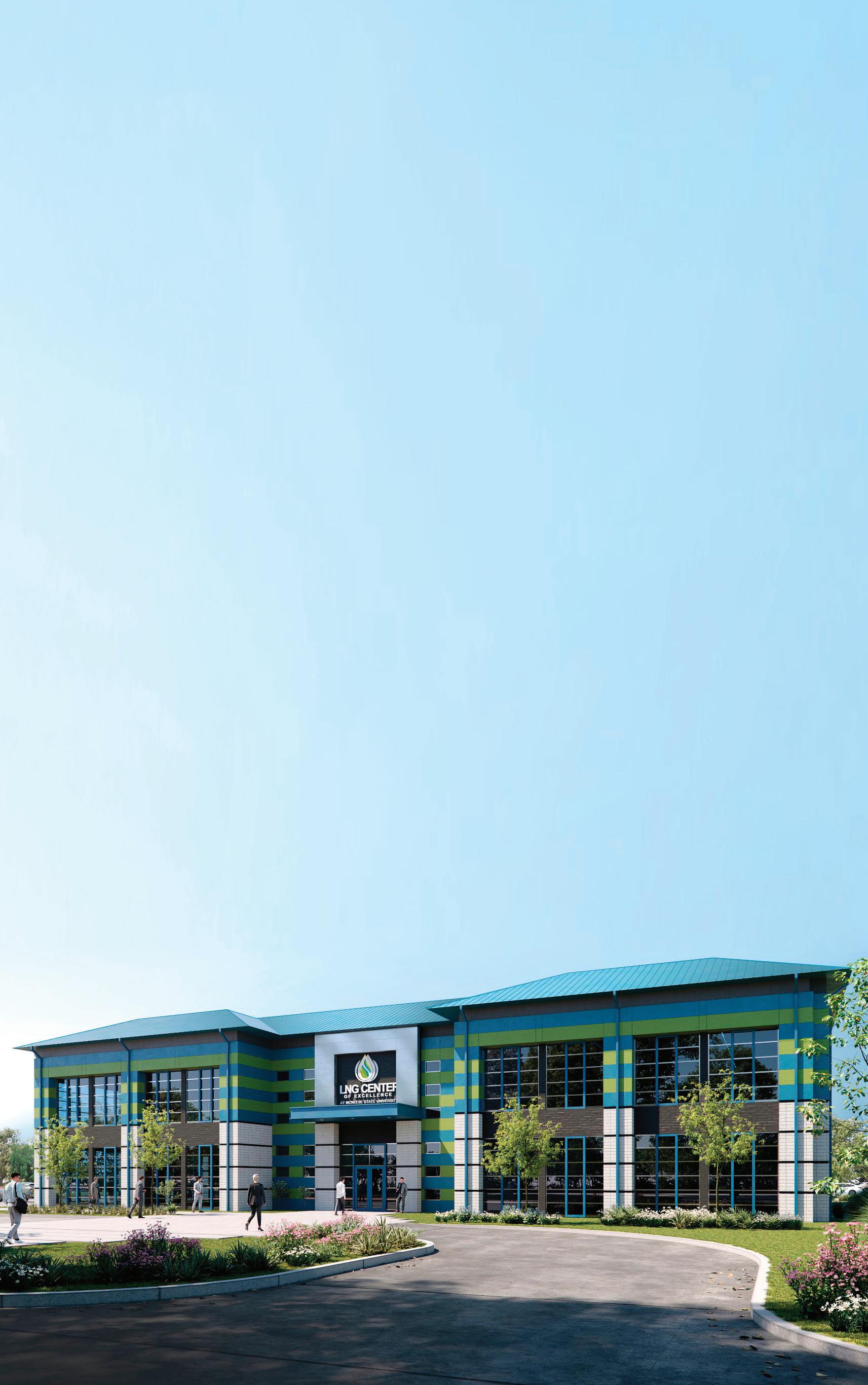
Smith, director of safety, workforce development and operational strategy for the Greater Baton Rouge Industry Alliance, or GBRIA. “Industrial contractors are bidding and winning those jobs too. That could strain the system.”
GBRIA gets its statewide and regional labor data from Construction Industry Resources, which it in turn provides to its members. “Our gold and platinum annual partners get the full report so that they can see when peak demand is expected based on announced projects,” Smith says. “That enables them to plan better for future work.”
Currently, the most pressing need in the Baton Rouge market is for welders, millwrights and pipefitters. ABC’s Helveston also expects a surge in demand for electricians and instrument fitters due to the data center work. “We’ll need to backfill some of those positions locally,” he says.
ABC’s spring enrollment is up from last year at more than 1,100 students, and it’s expected to rise. In preparation, the organization is setting up satellite locations across Baton Rouge, including welding, electrical and millwright classes at the West Baton Rouge Career Academy and Central High School.
Recognizing that it’s also an awareness problem, ABC Pelican is creating partnerships and programs to attract younger workers to the market. It recently partnered with Junior Achievement of Greater Baton Rouge to raise awareness among middle school-age students in East Baton Rouge and Ascension parishes, and at the state level is partnering with Louisiana Works in developing a statewide career awareness campaign.
Meanwhile, GBRIA launched its sister organization the New Orleans Region Industry Alliance, or NORIA in 2025 and unlocked additional resources and funding for workforce development in the greater New Orleans area.
“It’s exciting to see what’s happening there,” says Smith, who
also oversees workforce development at NORIA.
In 2025, the group expanded its Educator Externship Program to New Orleans and also opened up the program to teachers from Livington Parish and Northshore areas, with the help of a $100,000 Future Use of Energy in Louisiana grant. The program is a three-day paid professional development experience for middle and high school teachers, held in June in Baton Rouge and in July in New Orleans.
GBRIA also sponsored a Women in Industry Forum for girls in grades 11 and 12, and on April 2 launched “Journey to Industry,” giving 200 10th graders hands-on exposure to careers that don’t require a four-year degree.
To tackle the problem at the state level, Act 376 of the 2025 state legislative session provided for a new income tax credit intended to support employers who provide work-based learning experiences for apprentices, interns and youth workers. The new law repeals two existing and underutilized credits and replaces them with the new and enhanced Work-Based Learning Tax Credit.
That credit is available to businesses who make eligible hires in 2026. They can claim the credit on their tax returns beginning in 2027. For the current tax year, the total tax credit available to be claimed is $1 million, which is allowed to grow to a maximum of $7.5 million in future years based on utilization.
“Unfortunately, Louisiana lags well behind other southern states in the number of young people participating in internship and apprenticeship programs, even though they can be an important component in the workforce pipeline,” said Adam Knapp, CEO of Leaders for a Better Louisiana, in a statement.
“That’s why we want Louisiana businesses to be aware of this new credit and learn more about how it can help them meet their workforce needs.”
“We’re well positioned to begin training next fall, just in time for those facilities that will be the midst of these massive construction projects.”
president
CEO,
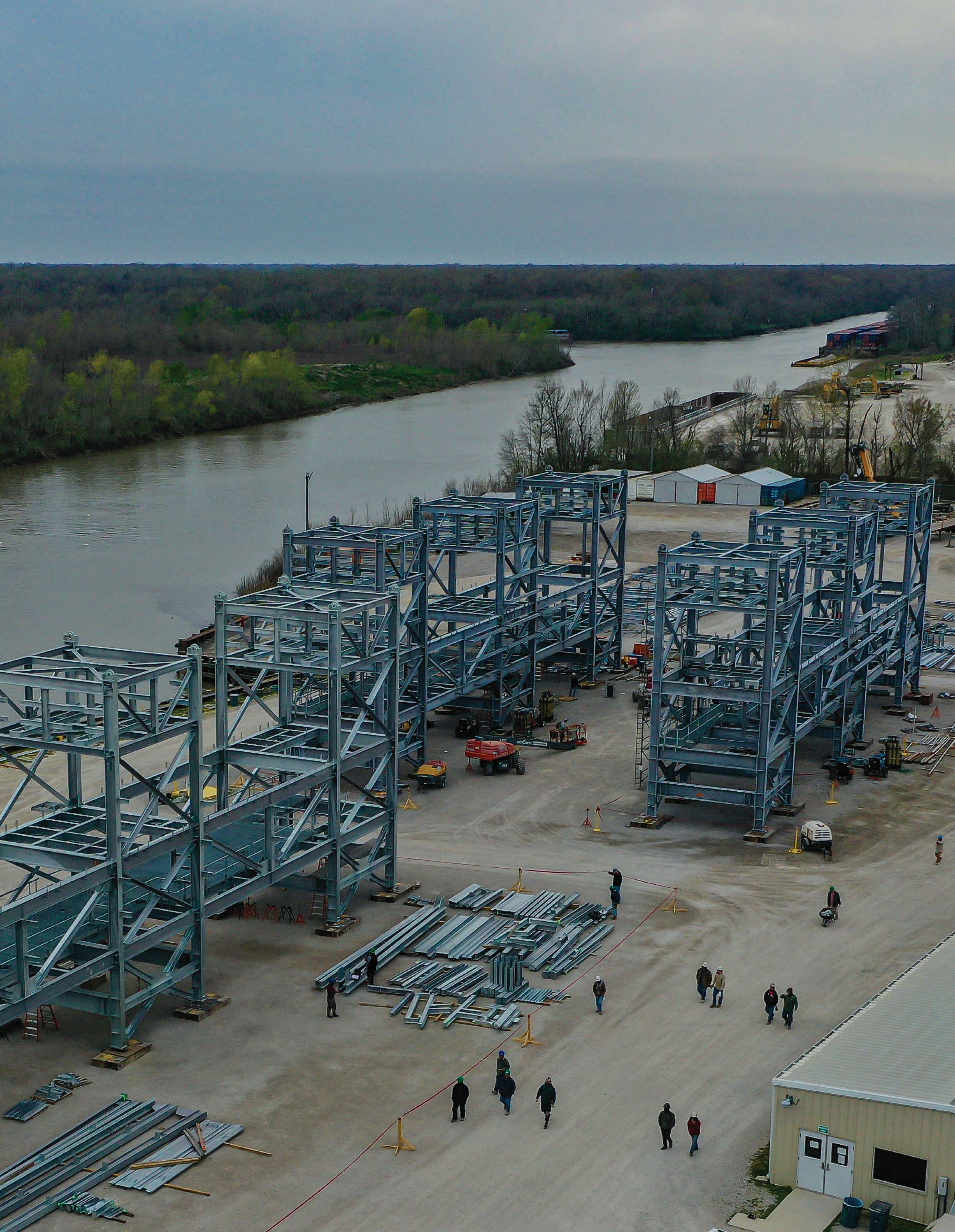

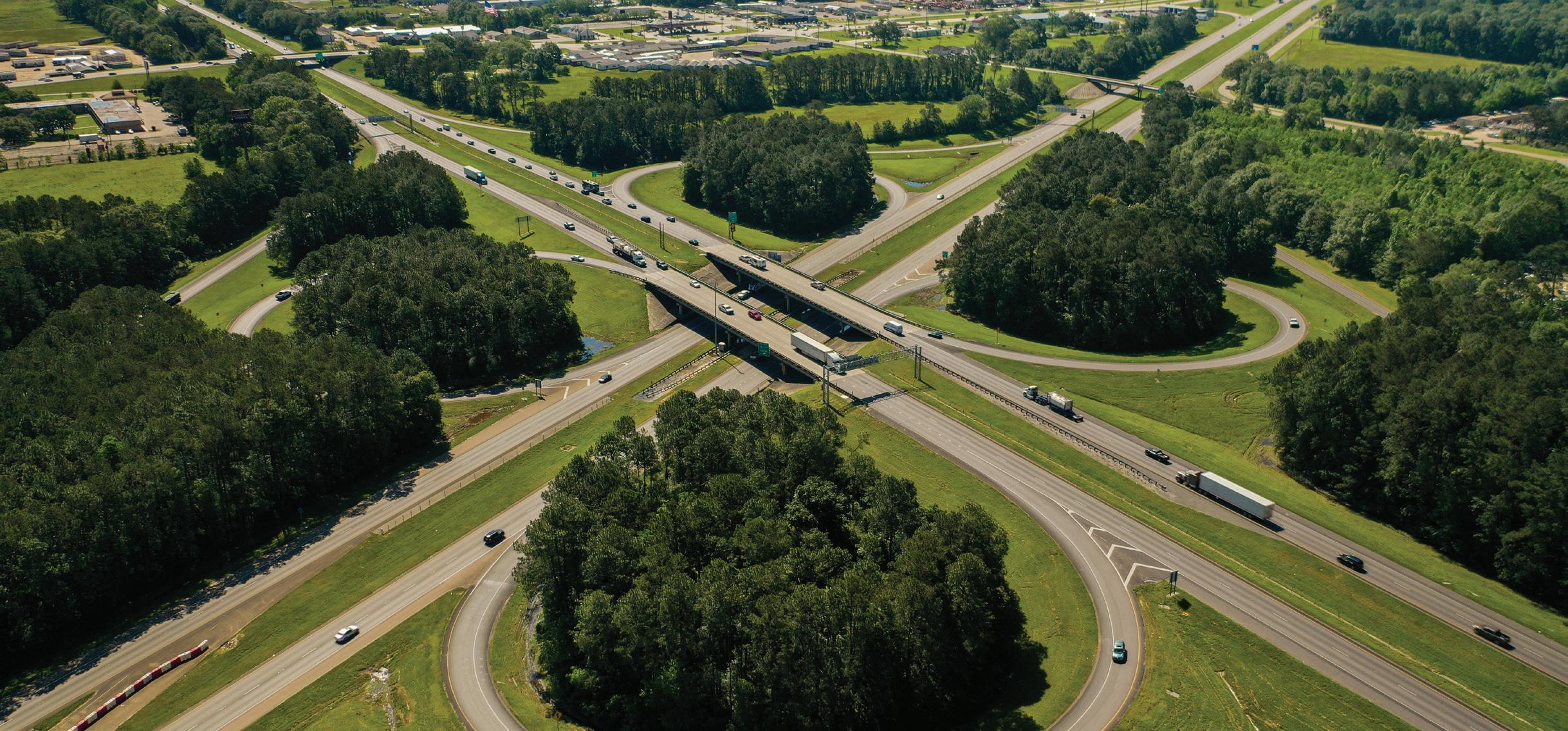
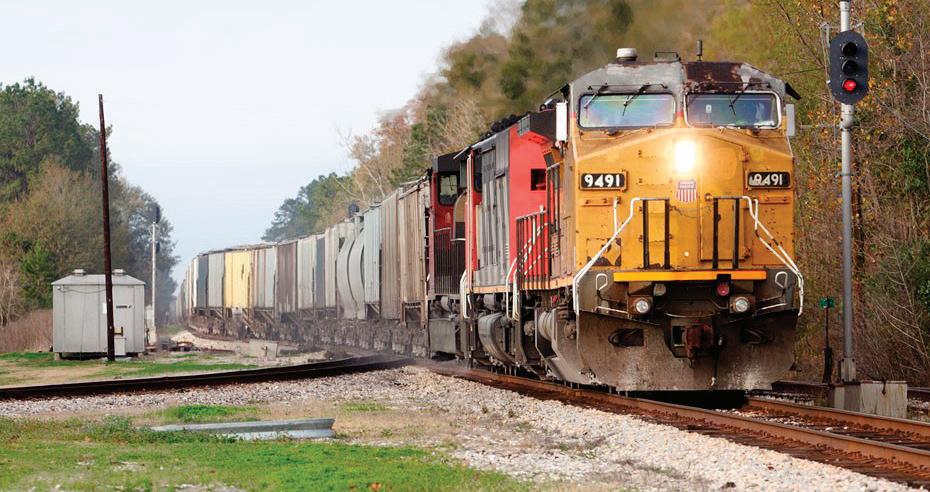




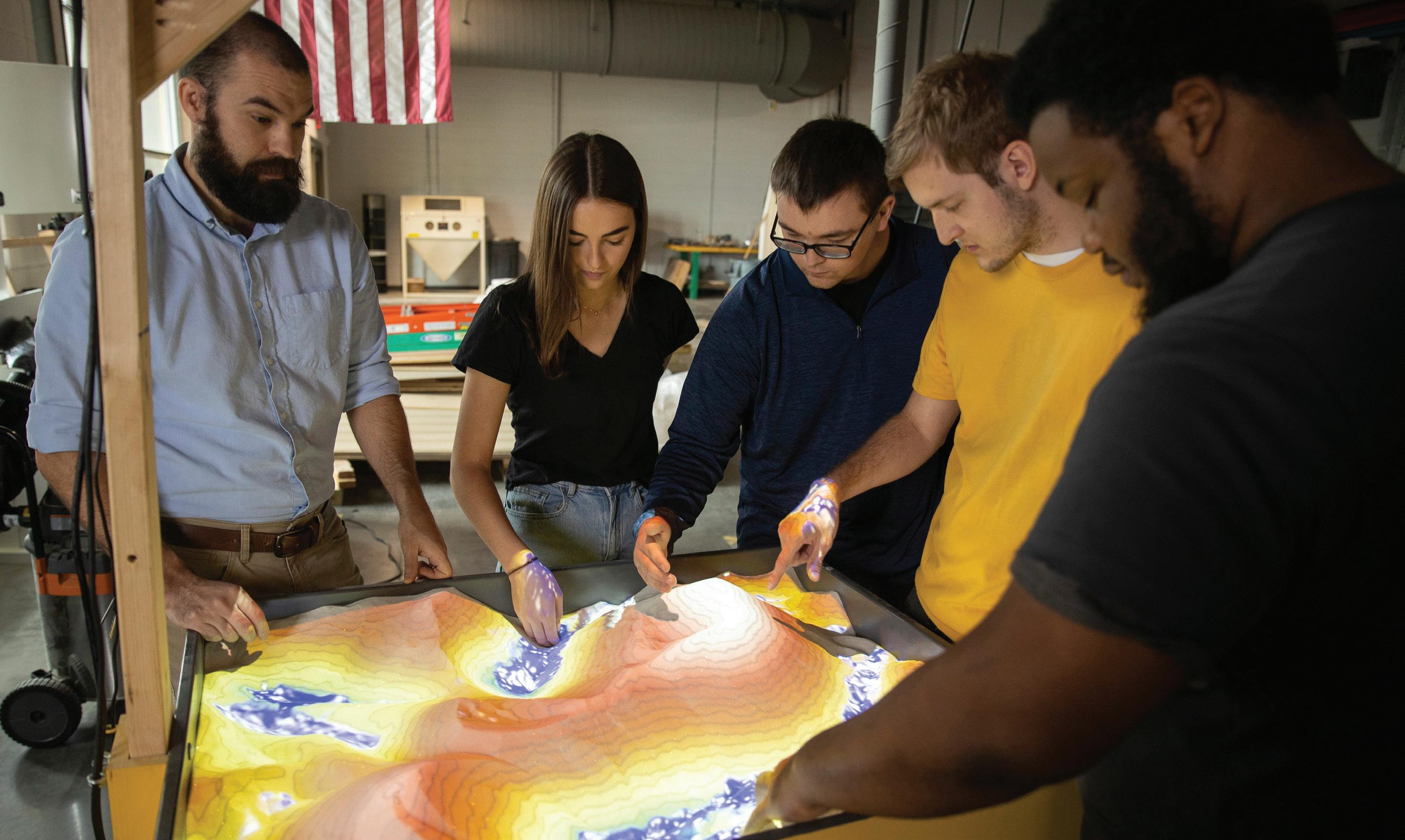
An Economic and Workforce Engine for the Region in annual economic impact
$1+ BILLION graduates per year 2,000+ of graduates remain in Louisiana 75%
Nationally ranked academic programs in workforce-needed disciplines
Largest spring enrollment in university history this year
here’s something remarkable happening in Tangipahoa Parish. Over the last eight years, the parish has grown in population, attracted more than $1 billion in investment and created some 5,000 new jobs—even while enduring some of the same challenges as neighboring parishes.
The unprecedented business boom is not simply good luck. When Tangipahoa Parish President Robby Miller took office a decade ago, he set about the task of changing the organizational structure, as well as the attitude, of government to turn it into a more
streamlined organization literally set up to support business.
It was a deliberate process. The parish revamped its permitting and approval processes to reduce approval timelines while also ensuring public input. They also established a collaborative “all-hands-ondeck” process that would facilitate quick decisions. “We wanted to welcome people and businesses to Tangipahoa Parish,” Miller says. “I firmly believe that you’re either growing or dying, and that includes our business and industry folks.”
Today, there’s very little standing in the way of business development. Ginger Cangelosi, executive director of Tangipahoa
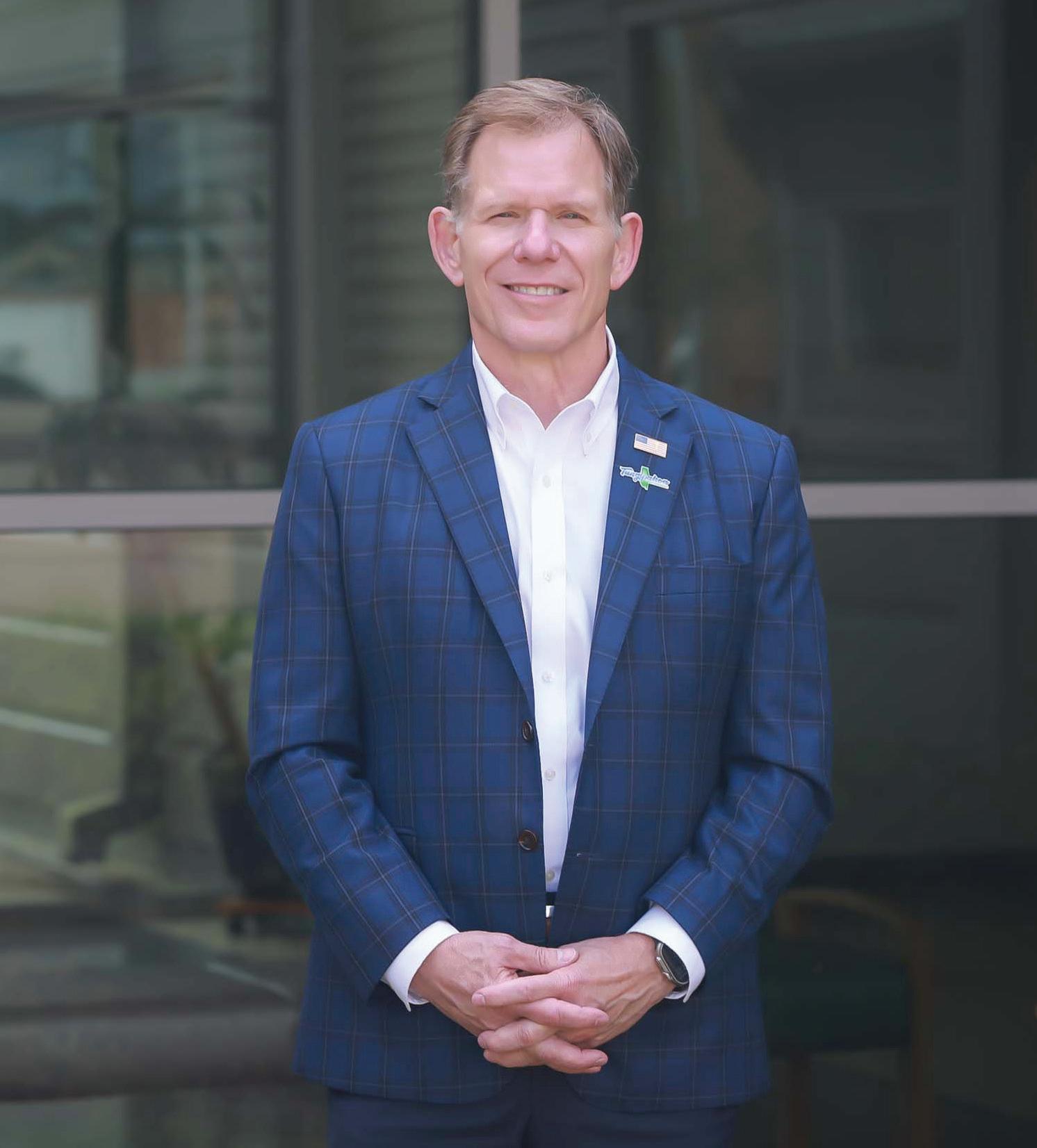
When
Economic Development (TED), doesn’t tell people why they can’t do business in the parish; she finds a way to make it happen.
“My job is to help people find their way to a ‘yes,’ no matter the situation,” Cangelosi says.
Since TED is a department within parish government, she reports directly to the parish president; that provides continuity of purpose. “We’re always headed in the same direction,” she adds. “We have the same goals and objectives, and technology-wise we are way more advanced than a decade ago. That helps all of us do our jobs better and more efficiently.”
TED can easily assemble a cross-collab-

“My job is to help people find their way to a ‘yes,’ no matter the situation.”
— Ginger Cangelosi, Executive Director of Tangipahoa Economic Development
orative team to quickly get questions answered. That’s a big selling point for new businesses coming to the state, as well as those relocating to the Northshore. “There’s never a question that we can’t answer,” Cangelosi says.
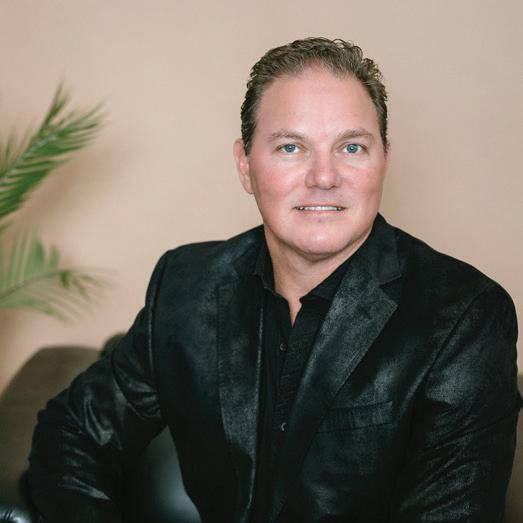
Daniel Laborde, current board president of the TED Foundation, a 501c3 created as an independent body of local business leaders, says the parish’s ideal location—reinforced by its proactive attitude toward business—has made all the difference. In its role, the 13-member TEDF board seeks to create opportunities and a better quality of life for the community through job creation. “We are almost smack dab in the middle of the Gulf South,” Laborde says, “so there’s no reason why we can’t be a very diverse community of businesses, whether that be for logistics, distributing, shipping, manufacturing etc.”
Nevertheless, attracting businesses to the parish is rarely an issue. “We’re naturally becoming a logistics hub because of our location at the ‘crossroads of the south,’ the I-55 and I-12 intersection,” Cangelosi says. “You can literally access any area of the country from here.” Additionally, rail systems run both east and west and north and south, Hammond Northshore Regional Airport is available to support both corporate and private air travel, and property taxes are relatively low. There’s also Southeastern Louisiana University and Northshore Technical Community College nearby to help with workforce training needs. That’s all reinforced by a desirable quality of life, including a variety of health care options and an abundance of retail, restaurants, green spaces and parks.
It’s only natural that distribution centers, transportation and advanced manufacturing companies are finding their way to the parish. That’s translated into good business for the 30-plus-year-old Hammond-based Encore Development, which operates a significant number of large commercial warehouses ranging
The physical geography of the parish makes it attractive to businesses in many sectors. Located at the crossroads of Interstate 12 and Interstate 55, it is within an hour’s drive of New Orleans and Baton Rouge.
The parish is also home to the Hammond Northshore Regional Airport and features availability of north-south and east-west railroad systems, which plays a role in moving goods throughout Louisiana and the region.
from 20,000 to 250,000 square feet. “We’re constantly building a building, whether we lease it or not,” says Encore founder Ed Hoover. “When someone comes along that has a need, we just give them the keys and they’re happy.”
His tenants are particularly attracted to properties north of I-12 due to the lower insurance premiums and minimal hurricane risk, and they’re only couple of hours from several major metro areas. “We’re at the crossroads
of I-55 and I-12, we’ve got a great airport, good leadership in the parish and they’re flexible in helping businesses grow,” he adds.
Hoover used to own property in other parishes but now operates exclusively in Tangipahoa. He says it’s just easier. “When CEOs or presidents come here, I say to them, ‘Just tell us what it’s going to take to get you here and let us work our magic.’ If you can’t deal with Tangipahoa Parish, you can’t deal with anybody.”
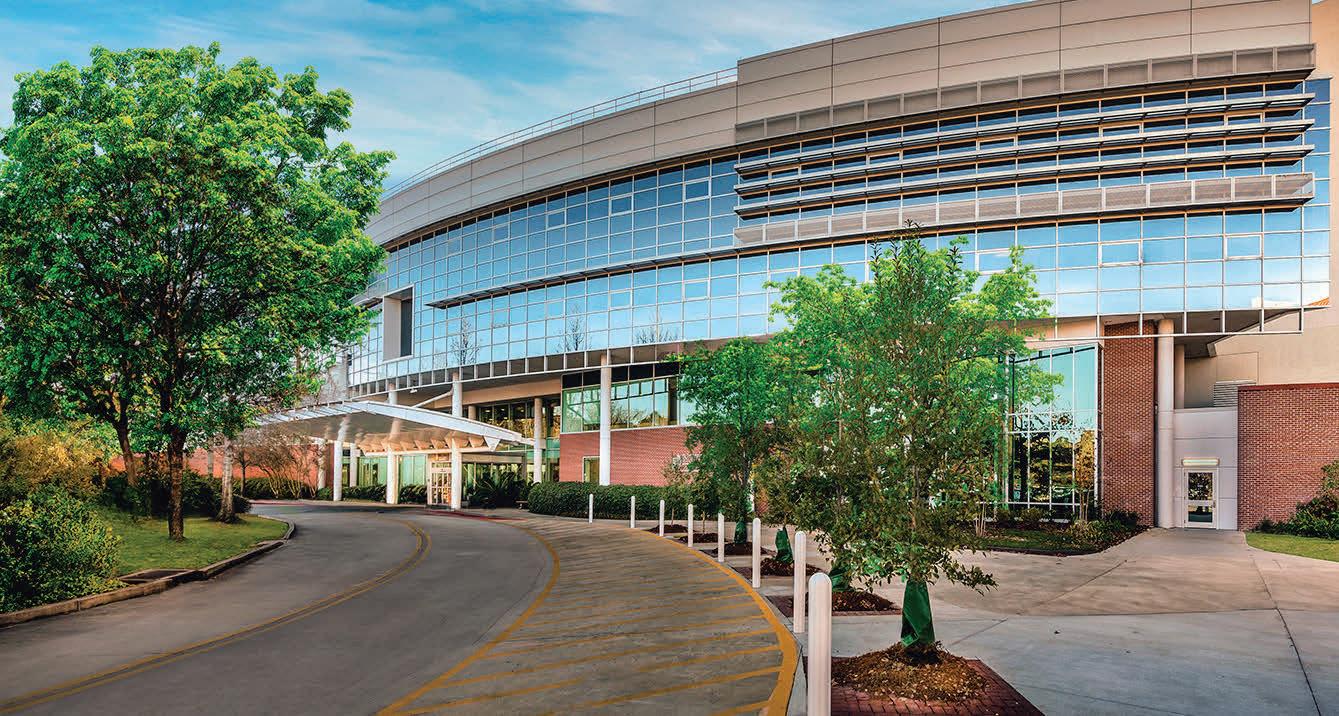
For over 65 years, North Oaks has had the privilege of serving the Florida Parishes. As the second largest employer in Tangipahoa Parish, our health system is comprised of 3,000+ employees. We are more than just healthcare professionals – we are your neighbors, family, and friends, dedicated to delivering compassionate and innovative care. We believe that the health of our region is our greatest legacy.


ONE OF ENCORE’S current tenants is RSP North America Inc., a German-owned manufacturer of dry vacuum excavators who leases a 12,000-square-foot warehouse on Airport Road with an option to lease another 12,000 square feet for production space. Managing Director Troy Tardy says once the decision was made to locate there, everything moved quickly. They leased the site in May 2025, renovated the office warehouse, then held a grand opening in November, working closely with Tangipahoa Economic Development throughout the process. “The accessibility to grow, the employment pool here and proximity to an airport … we love everything about being here,” Hardy says.
Another company, Gulf South Metal Works, was attracted by the parish’s proximity to two interstate systems and the local government’s common-sense guidelines around manufacturing and warehouse buildings. Gulf South specializes in pre-engineered steel buildings, architectural wall panels, metal fabrication and structural steel erection. “The parish is very easy to do business with,” says Gulf South’s
Kyle Kent. “They communicated clearly about what was needed and required to get through the entire process. They truly followed up and helped navigate each step so we could be in our building as expected with no delays.”
There are numerous similar stories. One of those is Graham Packaging, a leading company in the plastic container industry, focusing on innovation and sustainable solutions. The company recently invested some $35 million in modernizing its Hammond plant, a project expected to be completed by 2027. The investment will upgrade production equipment and retain over 100 jobs at the facility, which specializes in sustainable plastic container manufacturing.

Energy Resources, began operating in 2025, and there have been inquiries about additional solar developments. It prompted the parish to begin developing a 2045 master comprehensive land-use plan, which is nearing completion.
The growth of renewable energy projects in Tangipahoa Parish has perhaps been the biggest surprise. The $160 million Amite Solar Energy Center, operated by NextEra
There are other changes coming to the parish. Given its ideal location as a logistics hub, parish leaders expect to benefit significantly from the opening of the Port of New Orleans’ new Louisiana International Terminal in 2028. “It’s going to have a monumental effect on the Northshore,” Cangelosi says, “and we’ve been getting ready for that for years.”


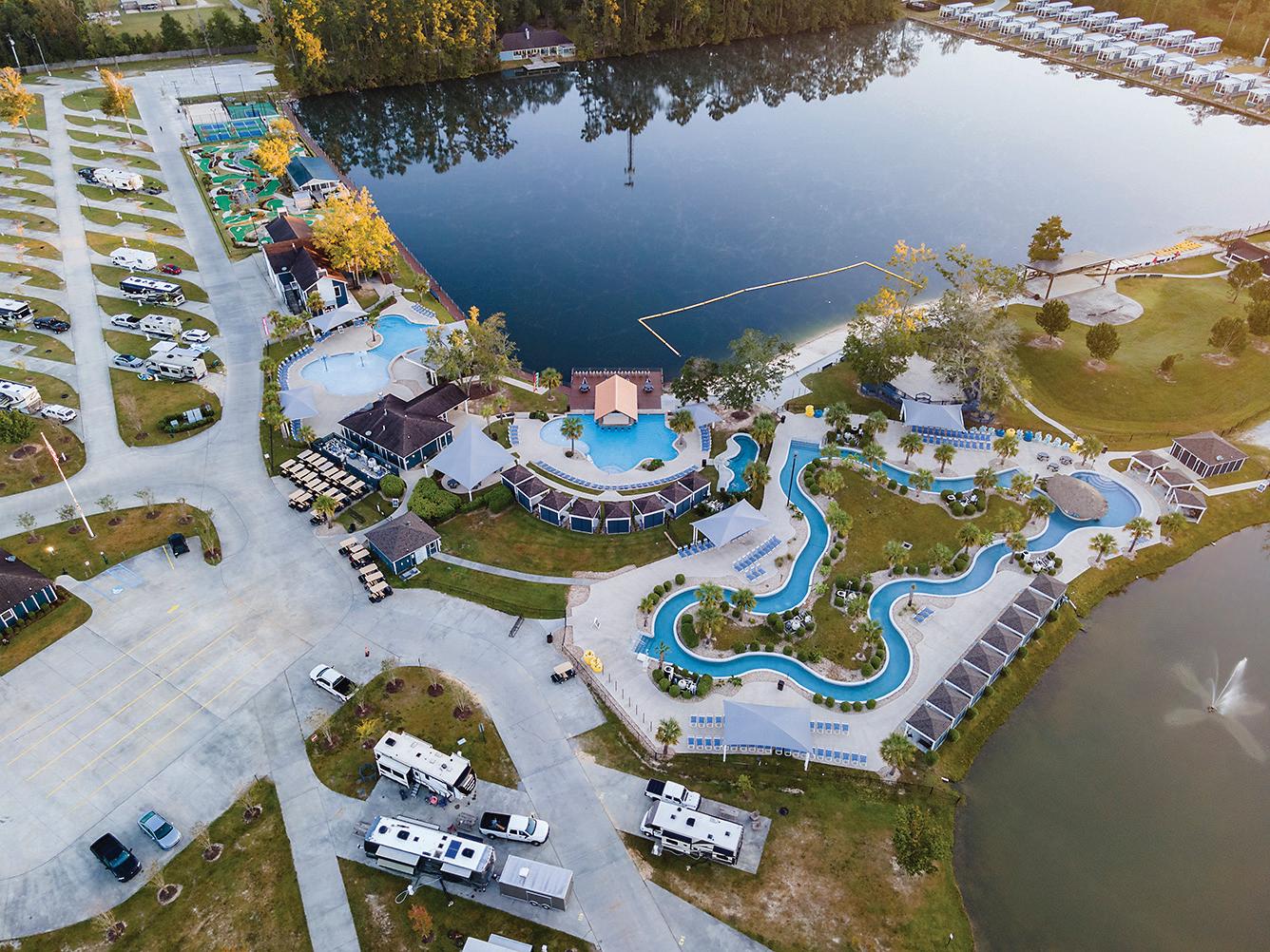





Ideally situated as a central hub in the Gulf South, Tangipahoa Parish offers key logistical advantages for distributors and manufacturers. Not surprisingly, the parish has evolved into the epicenter of manufacturing in the Florida Parishes, driven by its strategic location and easy access to skilled training.
These facilities have become some of the region’s biggest job creators:
Niagara Bottling operates a high-speed, $160 million manufacturing facility in Robert that produces over 5.5 million bottles per day. The facility was built to strengthen the local beverage manufacturing sector and provide high-efficiency jobs, and is highly automated, using robots for high-speed production. As a leading family-owned, private-label water supplier, the company employs approximately 64 people.
Since 2023, Medline has operated a $72 million, 650,000-square-foot medical distribution center in Hammond. As Louisiana’s largest medical supply facility, it employs more than 300 people and serves healthcare providers across Louisiana, Mississippi and Texas. The facility is part of Medline’s wider efforts to strengthen its supply chain in the Gulf Coast region.
Primarily an online retailer, Wayfair operates a distribution facility in Hammond that is part of a broader, mostly non-retail, corporate and logistics network.
A growing component of Tangipahoa’s manufacturing sector, advanced manufacturing is experiencing rapid growth, largely attributable to the parish’s easy access to New Orleans and Baton Rouge, proximity to Hammond Northshore Regional Airport and the availability of north-south and east-west railroad systems. There’s also readily available technician training through partnerships with local institutions.
Intralox, a global leader in conveyor belting solutions, operates a major manufacturing and distribution facility in Hammond that is worldwide in scale and scope. Over the past several years, the company has invested in multiple expansions, most recently completing a $60 million project to support the e-commerce and food processing industries. The company is known for its role in e-commerce, with many products touching Intralox technology on conveyor systems during shipping.
Elmer Chocolate, founded in 1855 in New Orleans and relocating to Ponchatoula in 1970, uses advanced technology to produce millions of candies. The facility spans more than 400,000 square feet and produces nearly 5 million pieces of candy daily using high-tech robotic systems. It’s the second-largest heart box manufacturer in the country.

Manufacturers and distributors find a welcoming partner when they connect with Tangipahoa Economic Development, whose job is to help new businesses “find their way to yes.” By building strong relationships with partners at the state, regional and local level, TED has seen many Tangipahoa industries experience rapid growth and potential, including:
Construction
Healthcare
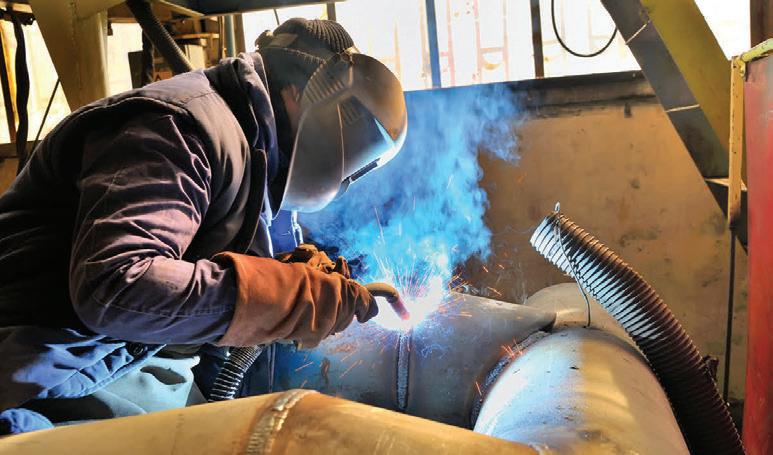



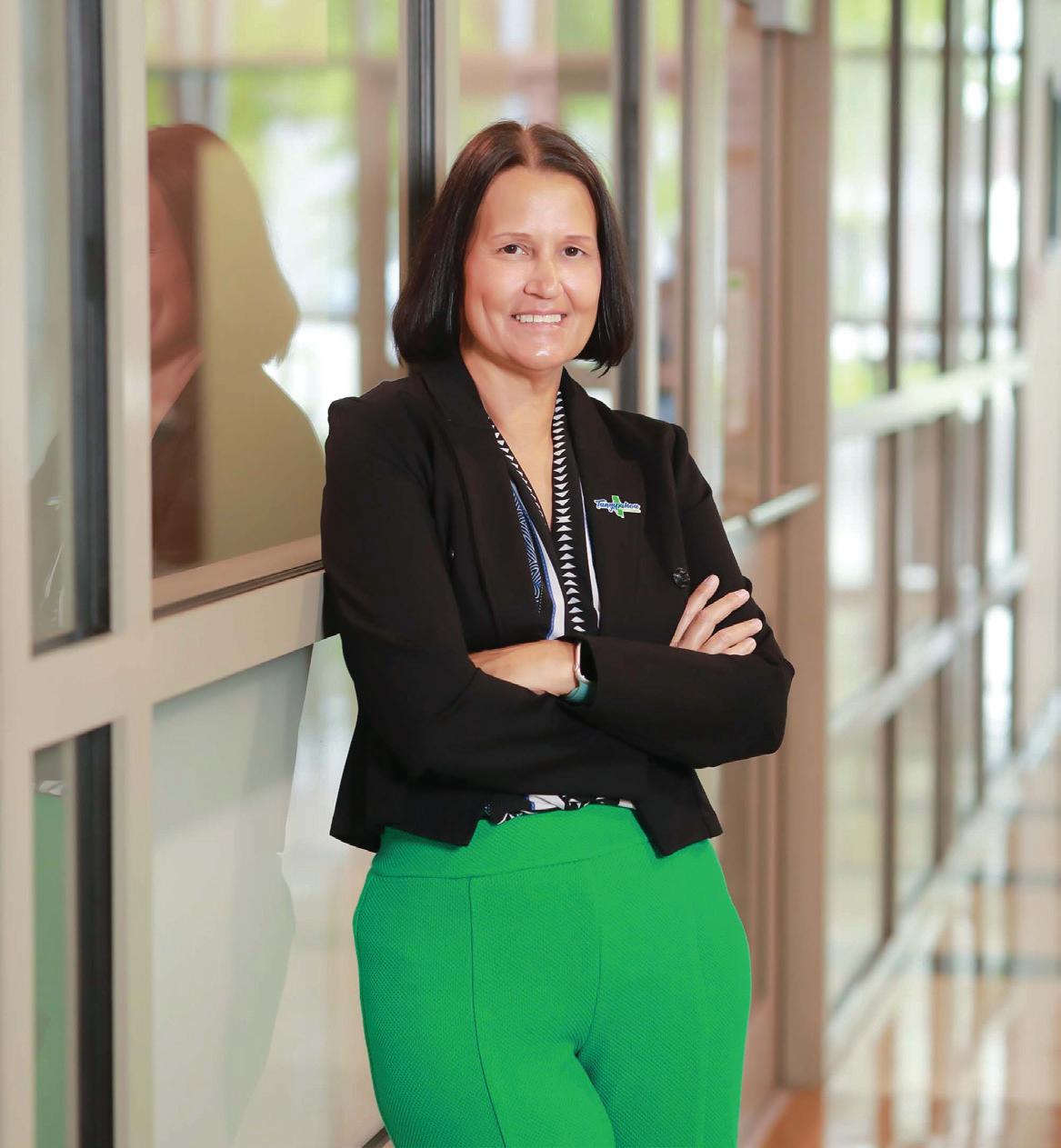
TANGIPAHOA PARISH is quite literally ground zero for workforce development in the Florida Parishes. As the designated parish for managing the federally funded WIOA (Workforce Innovation and Opportunity Act) program, there are very few needs that Tina Roper, workforce development director, can’t meet from her Hammond office.
Roper manages a 10-parish area and has multiple offices across the region. That gives her certain advantages when a company has a training need, as she has access to a wide array of resources. Program funding is provided by U.S. Department of Labor and distributed by Louisiana Works. “I provide workforce for everything from strawberry farmers to Dow Chemical,” she says. “I go everywhere.”
Typically, when a business is considering the area, Tangipahoa Economic Development will contact Roper to gauge her ability
to help, typically in the fields of construction, transportation, IT, advanced manufacturing and health care. Roper’s office works with many schools across the region—Southeastern Louisiana University, Northshore Technical & Community College, River Parishes Community College and Baton Rouge Community College—and has the workforce directors of each of the schools on speed dial.
Her office can either find people to fill positions immediately or they’ll work with a provider to get workers trained for when a business opens its doors. “We’re essentially the conveyor of the workforce system,” Roper says. “We’re the glue in the middle that keeps the businesses connected to the job seekers to make sure that the demand is met when they come into our area.
“At the end of the day, we have only two customers … the employer and the job seeker.”

IT WOULD BE DIFFICULT to find a more ideal location in terms of transportation infrastructure than Tangipahoa Parish. The parish is perfectly positioned as a regional logistics hub, given its interstate system and easy access to major metropolitan areas. It’s all anchored by Hammond Northshore Regional Airport, which has become a major hub for general, corporate and military aviation on the Northshore of Lake Pontchartrain.
With more than 900 acres of space and over 200-plus aircraft already based here, there’s still plenty of room to grow. Even better, the airport sits next to a growing industrial park with direct interstate and rail access, making it an ideal location for aviation businesses.
With its rich military aviation history, the airport is currently experiencing significant growth in private aviation services:
Sky X
Sky X Aviation, a new, high-tech, vertically integrated aeronautics company based at the airport, recently completed a $15 million expansion that includes three 30,000-square-foot hangars and a new 10,000-square-foot facility. The company now provides premier full-service
FBO (Fixed Base Operations) services, and offers some 110,000 square feet of hangar space, aircraft maintenance and chartered flights.
Top Gun Aviation
Top Gun Aviation is the largest FBO at the airport, providing 24/7 fueling, hangar space and comprehensive support services. As a family-owned, third-generation business operating since 1989, they are recognized for high-quality service and quick turnarounds.
Hammond Northshore Regional Airport supports the only manned aircraft control tower in the region and the largest air traffic control training facility in the nation. The tower was constructed in 2014 to handle increased executive aircraft operations and was part of a broader improvements program that included runway rehabilitations and taxiway upgrades to accommodate larger aircraft.
The airport supports several hangar spaces that offer secure storage, maintenance, and repair, with new developments designed to accommodate large private jets.
Tangipahoa Parish has quickly become a desired location for renewable energy projects, particularly solar, due to its available land, strong community partnerships with local cooperatives and significant economic incentives. The growth in that sector, in fact, prompted the parish to recently develop a 2045 master comprehensive land-use plan.
“I realized that this industry was coming and we needed to do it right,” says Ginger Cangelosi, executive director of Tangipahoa Economic Development. Tangipahoa Parish ultimately became the first in the state to draft parish ordinances around solar farms, with the assistance of NextEra Energy and public input.
That has created a road map for both existing and future developments as the commercial-scale solar farm sector continues to grow:
Amite Solar Energy Center
Owned by a subsidiary of NextEra Energy Resources, the 100-megawatt Amite Solar Energy Center became fully operational in March 2025, marking a significant boost to utility-scale solar in the region. The project highlights a shift toward solar to meet rising power demands and supports the decarbonization goals of local utility providers.
Amite Solar Energy represents a substantial investment in Louisiana’s renewable infrastructure, utilizing Tangipahoa’s capacity to host large-scale solar generation. The utility-scale facility is currently under a 25-year agreement to provide low-cost, fixed-price solar energy to DEMCO, a local electric cooperative, and is one of NextEra’s first major utility-scale solar projects in the state.
5 CNC Lathes 3 CNC Mills
2 CNC Horizontal CNC VTL
5 Face BridgeMill
Our capabilities extend beyond machining. We offer turnkey fabrication services with comprehensive, start-to-finish solutions—giving our customers a seamless process from initial concept to final product delivery.
Reverse engineering | Turnkey fabrication | 17,000 sq. ft. of climate-controlled facility.

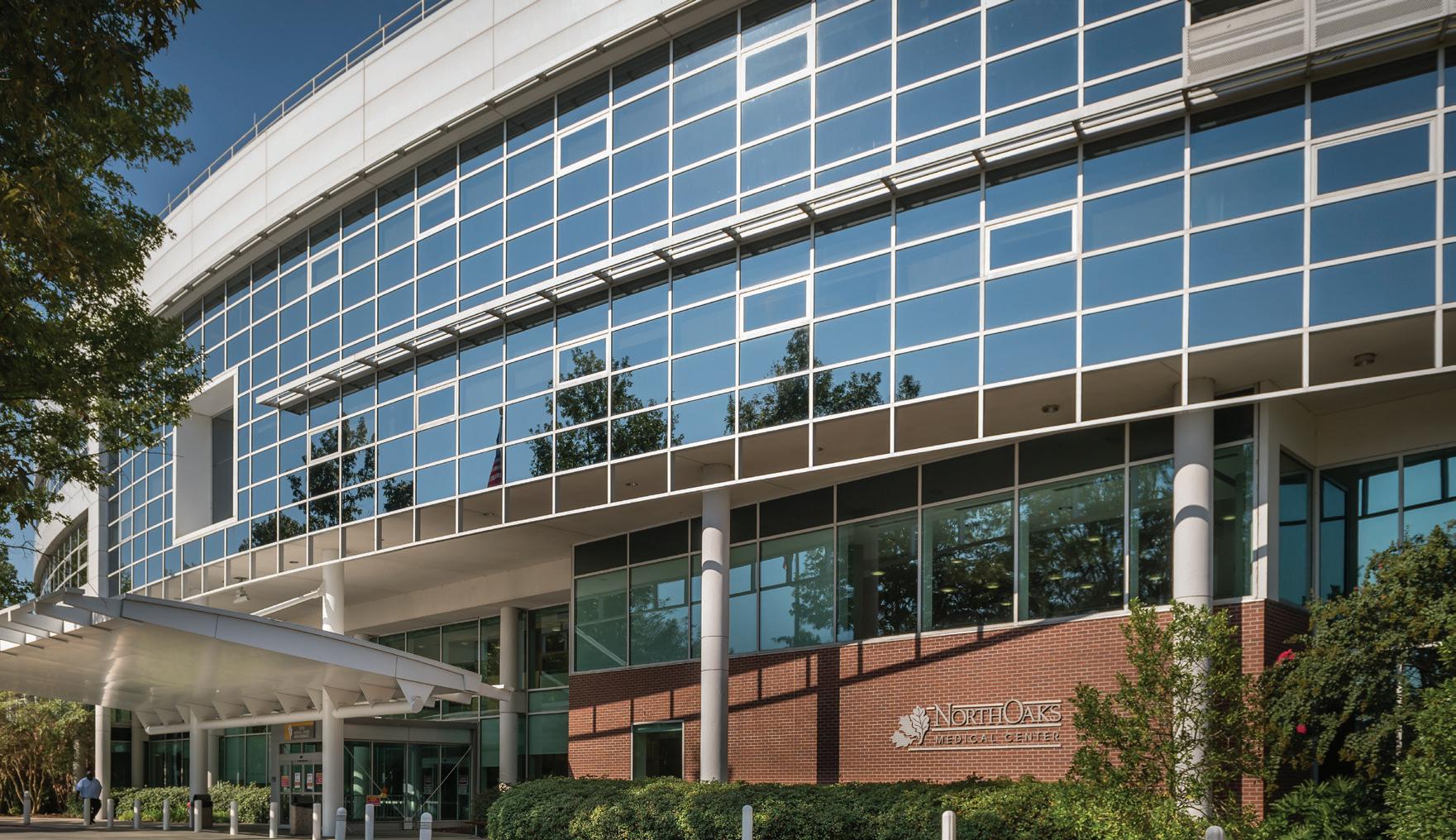
SYSTEM was founded in Hammond 66 years ago, few could have imagined the community cornerstone it would become as it grew from neighborhood hospital to regional medical center. Not only has it elevated healthcare in the area, but it is a valuable economic driver in the region.
In just the last three years, North Oaks has added 900 positions, creating jobs for support staff, administrative, clinical, and technical employees. The hospital also added a 5-story clinic with 96,000 square feet to provide better access to patient care. Overall, North Oaks generates $3.2 billion in economic impact annually on the parish.
Thanks to forward-thinking leadership and strategic growth, North Oaks provides many patients the opportunity to receive medical care closer to home, a benefit that leads to shorter stays in the hospital, faster recovery time, and better patient outcomes.
The 330-bed hospital offers a full range of healthcare services—labor and delivery, diagnostic testing, oncology, open heart and robotic surgery, orthopedic procedures, rehabilitation, hospice and much more.
“Our physicians are able to provide cutting-edge services and specialized treatments in an area that covers 540,000 people,” says President and CEO Michele K. Sutton, FACHE.
“With four cath labs, we can offer a complete range of cardiac care, including a comprehensive structural heart program for both inpatient and outpatient services. North Oaks Medical Center is also a STEMI receiving center, a designated Primary Stroke Center and a Level II Trauma Center.”
With an eye to the future, North Oaks is dedicated to developing the next generation of healthcare professionals. Through partnerships with Southeastern Louisiana University and Northshore Technical Community College, the hospital has helped sponsor new facilities, provided internships and educational training programs, and hired graduates to launch their careers at North Oaks.
The community’s health and well-being has always been North Oaks’ passion and purpose. Aside from the hope and healing it provides to patients, it also creates stability and supports broader economic growth in its community.
“You can’t recruit businesses without a robust healthcare system,” says Sutton. “We are the catalyst for that … not just for providing jobs, but for delivering healthcare to the families that choose to live here. In that respect, we are a great partner for the parish.”
(For more details, visit northoaks.org.)
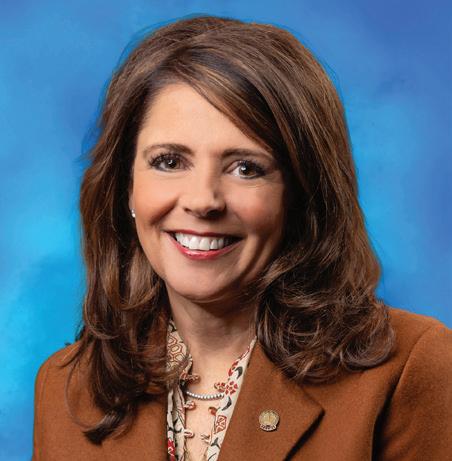
“You can’t recruit businesses without a robust healthcare system. We are the catalyst for that … not just for providing jobs, but for delivering healthcare to the families that choose to live here. In that respect, we are a great partner for the parish.”
— Michele Sutton, President & CEO of North Oaks Medical Center
Additional healthcare facilities in Tangipahoa Parish include:
• Cypress Pointe Surgical Hospital in Hammond
• Hood Memorial Hospital in Amite
• Lallie Kemp-LSU Regional Medical Center in Independence

FROM SPORTS TO FOOD to festivals, there are plenty of ways to enjoy life in Tangipahoa Parish, which is within an hour’s drive to New Orleans and Baton Rouge. Although it has a small-town feel, the area boasts revitalized downtowns, family attractions, and unique festivals that celebrate the parish’s cultural influences and food.
Top attractions include Global Wildlife Center in Folsom, home to more than 3,500 free-roaming exotic, endangered and threatened animals from all over the world, and Covey Rise Lodge in Husser, with shooting facilities, guided hunting excursions, deluxe cabin rentals, on-site dining and event space.
Top reasons to visit include some of the most unique festivals anywhere.
• The Strawberry Festival in Ponchatoula draws huge crowds each year and is the largest free festival in the state.
• The Tangipahoa Parish Fair is the oldest fair in the state, operating since 1888.
• The Louisiana Renaissance Festival boasts authentic professional performers who transport guests back to the 14th century. More than 50 shows take place over six weekends in the late fall.
• In the spring, the Independence Sicilian Heritage Festival and the Amite Oyster Festival kick things off in March.
• The Italian Festival in Tickfaw is a full weekend of celebrating Italian food, culture and music.

“As part of Team Tangi, we work hand-in-hand with parish government and all of our local leaders to promote our parish and ensure every visitor feels welcomed and enjoys a memorable stay.”
— Carla Tate, President and CEO of the Tangipahoa Parish Convention and Visitors Bureau

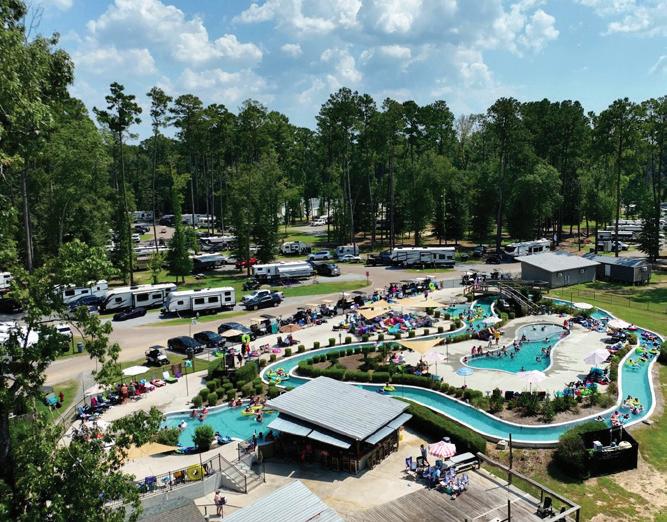
In the culinary scene, Middendorf’s is a parish staple, with people planning their trips to football games in New Orleans around stopping at Middendorf’s for lunch to enjoy its thin-cut fried catfish. The parish’s downtown areas are also thriving. Downtown Hammond offers more than 30 restaurants and bars, and downtown Ponchatoula is popular with tour groups for its charm, walkability, boutiques and restaurants.
As the parish seat, the restaurant scene in Amite bustles during the work week with Mike’s Catfish Inn, a staple for more than 35 years, and The Boston Restaurant, serving seafood, steak and sushi for the past 10 years. The Cafe in Kentwood is another great choice on the northern end of the parish.
Hammond Square is the second-largest open-air shopping center in the state, at 902,000 square feet and offering more than 40 national and local retailers, shops and restaurants. Stirling Properties redeveloped
Hammond Square between 20072009 and currently manages and leases the center. Restaurants like Walk-On’s Sports Bistreaux, Chipotle, Five Guys and others have opened locations at Hammond Square more recently.
Housing is also readily available in the parish, with the average price of a single-family home around $220,000. All land in Tangipahoa Parish is considered rural so home buyers can apply for a USDA Rural Development loan with 0 percent financing.
“Living in Tangipahoa Parish, you can literally work 15 to 20 minutes from your home,” says Parish President Miller. “You can have a great career and be able to enjoy your family because you’re not having to drive 2.5 hours a day to and from work. You get that time back. You get to be involved in your children’s schools and your church. You get to be involved in the various organizations around the community. That creates the quality of life that we’re all looking for.”



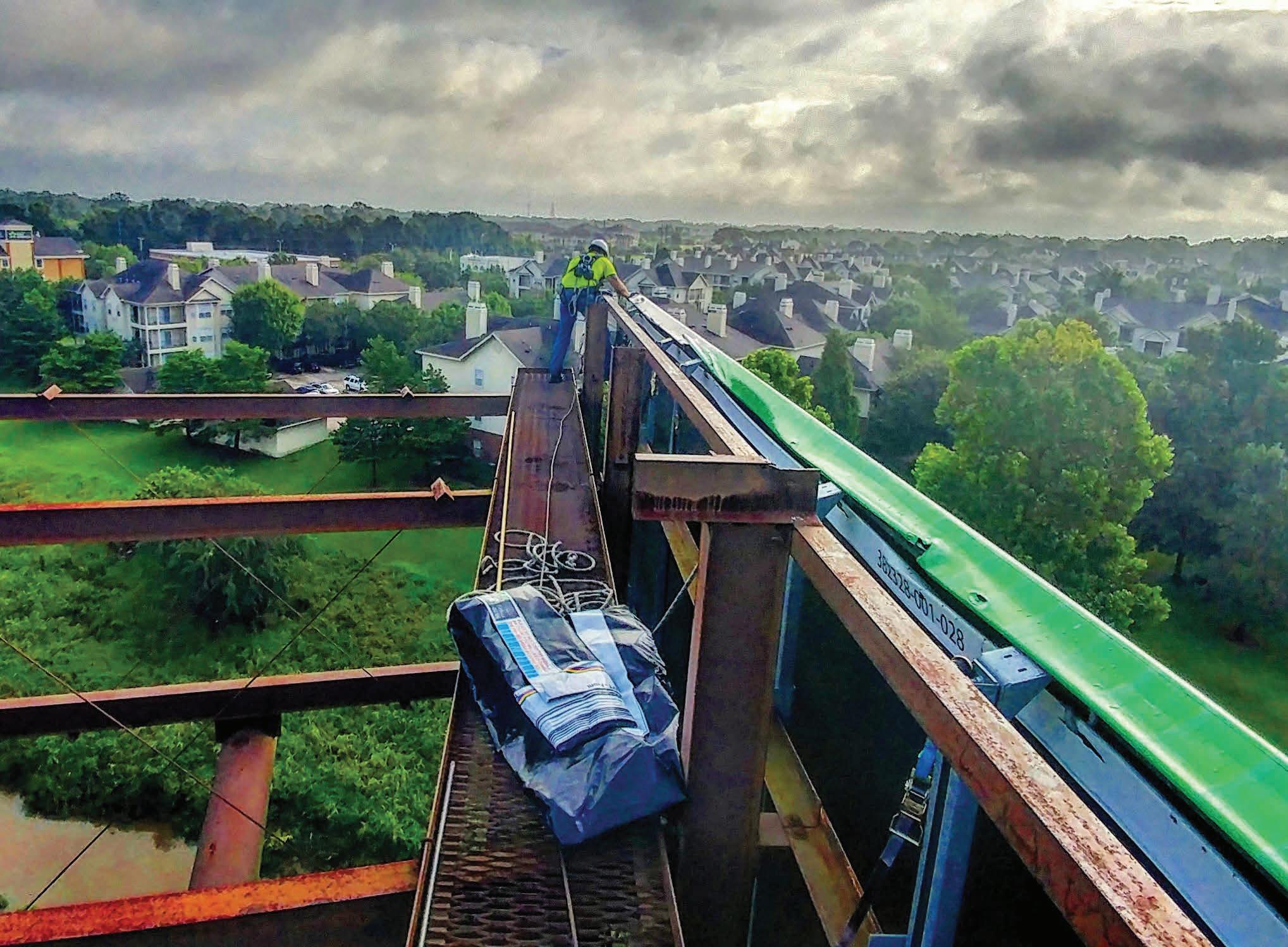
For over 100 years, Lamar Advertising has been a cornerstone of Louisiana communities. We provide more than just visibility, we provide a trusted resource. By driving local economic growth, enhancing public safety, and supporting the communities where we live, work, and play, we ensure that our reach serves a higher purpose.
Nationally Known. Locally Committed.
Active Louisiana industrial projects announced or proposed, with projected capital investment of $25 million to $975 million. Second line shows projected capital investment and direct new jobs. List is representative, not complete; statuses and costs change frequently.
1 Element USA rare earth and critical minterals refining factory
$850M | 200 jobs
Location: St. John Parish Status: Construction begins 2027
2 AtmosClear carbon capture facility
$800M | 75 jobs
Location: Port of Greater Baton Rouge
Status: Construction 2026; commercial operations 2029
3 Project Cypress carbon capture hub
$603M | 100 jobs
Location: Southwest Louisiana Status: Pending
4 Southern Spirit transmission poject/HVDC converter station + transmission line
$600M | N/A
Location: DeSoto Parish
Status: Completion 2029; operational 2032
5 Westlake Chemicals expansion
$512M | 12 jobs
Location: Geismar Status: Pending
6 UBE Corp. lithium ion battery components
$500M | 60 jobs
Location: Waggaman Cornerstone Complex Status: Operations early 2027
7 APM Container Terminal
$500M | 56 jobs
Location: Plaquemines Parish Status: Pending
8 Entergy upgrades: Commodore Substation + others
$498M | N/A
Location: Iberville Parish, etc. Status: Pending
9 Element 25 manganese sulfate monphydrete production
$480M | N/A
Location: Pending
Status: Pending
10 Louisiana Gateway Port/ Plaquemines Port & Harbor Terminal expansion
$467M | N/A
Location: West Bank of the Mississippi River, Plaquemines Parish
Status: In progress
11 Monarch Energy green hydrogen
$426M | 44 jobs
Location: Donaldsonville
Status: FID 2025
12 Koura Global retrofit
$400M | N/A
Location: St. Gabriel
Status: Operational in 2026
13 Linde Air separation unit
$400M | N/A
Location: St. Gabriel
Status: Under construction
14 CapChem Technology
rechargeable battery plant
$350M | 95 jobs
Location: St. Gabriel
Status: Construction underway
15 Saronic Technologies Franklin shipyard expansion
$300M | 1,500 jobs
Location: St. Mary Parish
Status: Operational in 2027
16 River Parish Sequestration CCS project
$250M | N/A
Location: RiverPlex MegaPark, Ascension Parish
Status: Construction 2028
17 Air Liquide air separation unit
$200M | N/A
Location: St. Charles Parish
Status: Completion in 2027
18 Shell catalyst plant output boost
$121.7M | 17 jobs
Location: Port Allen
Status: Under construction
19 Hood Industries mill upgrade
$118M | N/A
Location: St. Francisville
Status: In progress
20 Green Fuels Operating PC net zero emissions technology factory
$110M | 60 jobs
Location: Acadia Parish
Status: Construction fall 2025; completion 2026
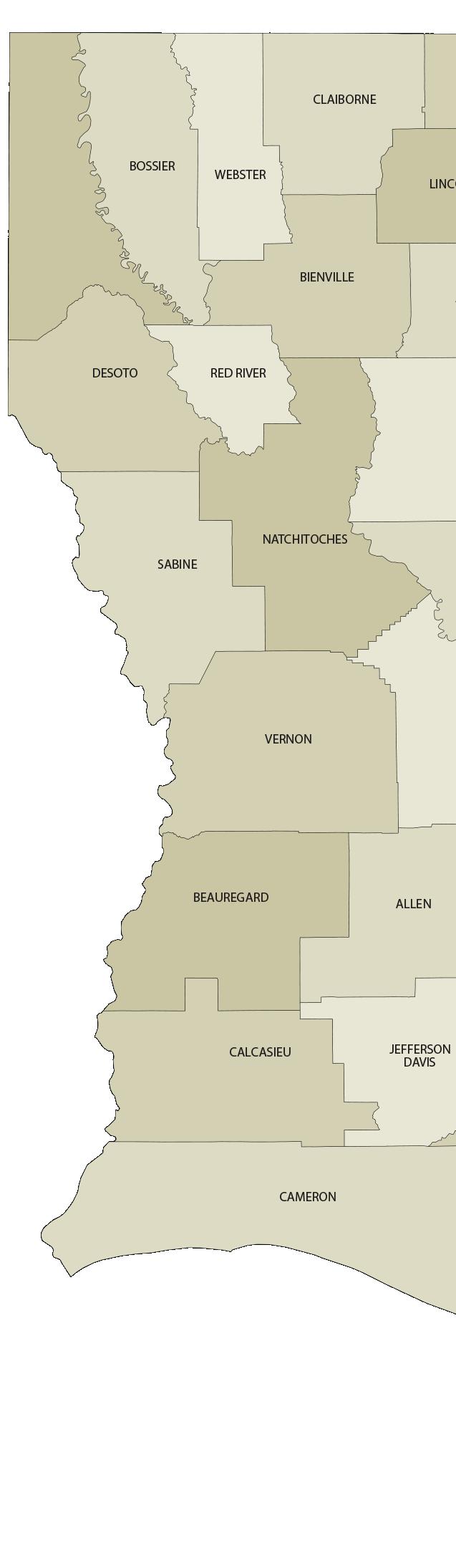
21 Exxon Mobil facility upgrades for isopropyl alcohol production
$100M | N/A
Location: Baton Rouge Status: Completion in 2027
22 Climeworks Project Cypress
DAC Hub
$100M | 140 jobs
Location: Calcasieu Parish Status: FID Q3 2026; operations end of 2027
23 Heirloom direct air capture
$100M | 100 jobs
Location: Port of Caddo-Bossier Status: Under construction
24 Honeywell Project Zeus
$72.5 | N/A
Location: Baton Rouge Status: In progress
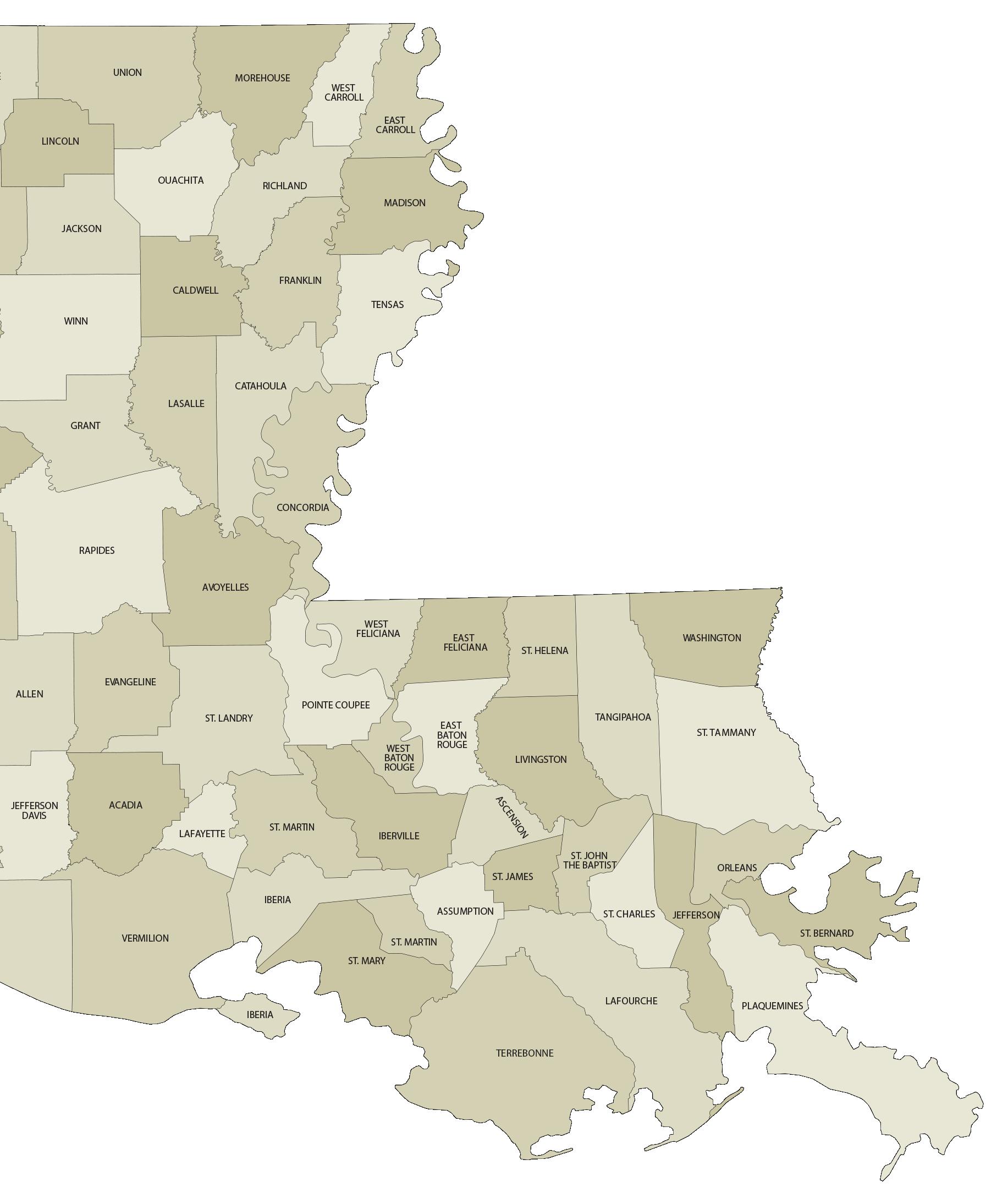
25 CF Industries upgrades $75M | 2 jobs
Location: Donaldsonville Status: 2025 completion
26 Boise Cascade $75M | 30 jobs
Location: Allen Parish Status: In progress
27 John H. Carter/ControlWorx Center for Industrial Excellence
$69M | 175 jobs
Location: Gonzales Status: Operational in early 2027
28 Placid Refining Headquarters Port Allen facility modernization $66M | 20 new jobs; 215 retained jobs
Location: Baton Rouge, Port Allen Status: 2027 completion
29 Plastipak Packaging
$53.8M | 40 jobs
Location: Pineville Status: Completion Q4 2026
30 Ascentek facility enhancement $50M | N/A
Location: Shreveport Status: Construction Q4 2025
31 Life for Tyres Group tire recycling plant $46M | N/A
Location: Port of South Louisiana Status: Pending
32 SLB advanced manufacturing hub
$30M | 60 jobs
Location: Caddo Parish Status: In progress
33 Katoen Natie Baton Rouge polymers expansion
$25M | 13 jobs
Location: Baton Rouge Status: Completion October 2026
Active Louisiana industrial projects announced or proposed, with projected capital investment of $975 million or more. Includes projects that are underway, awaiting FID, and proposed. Second line shows projected capital investment and direct new jobs. List is representative, not complete; statuses and costs change frequently.
1 Venture Global LNG export terminal
$23.5 billion | 400 jobs
Location: Louisiana Gateway Port, Plaquemines Parish Status: Under construction
2 Venture Global 24-train facility
$18 billion | N/A
Location: Plaquemines Parish Status: FID mid-2027
3 Woodside Energy Louisiana LNG (formerly Driftwood LNG)
$17.5 billion | N/A
Location: Calcasieu Parish Status: Under construction
4 Venture Global CP2 LNG export facility
$15.1B billion | N/A
Location: Calcasieu Parish Status: FID announced
5 Amazon data center
$12B | 540 jobs
Location: Caddo and Bossier parishes Status: In progress
6 Commonwealth LNG
$11B | N/A
Location: Lake Charles Status: Pending
7 Meta data center
$10B | N/A
Location: Richland Parish Status: Projected completion 2030
8 Hut 8 data center
$10B | 50 jobs
Location: West Feliciana Parish Status: In progress
9 Energy Transfer LNG
$10B | 250 jobs
Location: Lake Charles Status: Permitting complete
10 Formosa Sunshine Project
$9.4B | 1,200 jobs
Location: St. James Parish Status: Pending
11 Grön Fuels renewable diesel facility
$9.4B | 1,025 jobs
Location: Port of Greater Baton Rouge Status: Pending
12 Delta LNG + Delta Express Pipeline
$8.5B | 300 jobs
Location: Plaquemines Parish Status: Pending
13 Air Products Blue Hydrogen Complex
$8B | 170 jobs
Location: Burnside Status: Construction underway
14 St. Charles Clean Fuels
$7.5B | N/A
Location: St. Rose Status: In progress
15 Ascension Clean Energy Complex
$7B | 350 jobs
Location: Burnside Status: FEED process
16 Delfin LNG
$7B | 400 jobs
Location: Off the coast of Cameron Parish Status: FID pending
17 Hyundai steel plant
$5.8B | 1,400 jobs
Location: RiverPlex MegaPark, Ascension Parish
Status: Construction complete in 2029
18 Argent LNG export terminal
$5B | 350 jobs
Location: Port Fourchon Status: Pending
19 DG Fuels
$4.96B | 650 jobs
Location: St. Rose
Status: Pending
20 Lake Charles Methanol
$4.6B | 200 jobs
Location: Calcasieu
Ship Channel Status: In progress
21 Magnolia LNG
$4.6B | 70 jobs
Location: Calcasieu Ship Channel Status: Pending
22 St. Charles Clean Fuels
blue ammonia facility
$4.6B | 220 jobs
Location: Port of South Louisiana Status: In progress
23 CF Industries blue ammonia plant
$4B | 103 jobs
Location: RiverPlex MegaPark, Ascension Parish
Status: Construction 2026
24 Cameron LNG Train No. 4
$4B (estimated) | N/A
Location: Cameron Parish
Status: FERC approved
25 Louisiana Green Fuels
$4B | N/A
Location: Caldwell Parish
Status: Construction 2026
26 Gulf Stream LNG
$3.5B to $4B (estimated | N/A
Location: Louisiana Gateway Port, Plaquemines Parish Status: FERC process underway
27 IGP Methanol
Gulf Coast Methanol Park
$3.6B | 325 jobs
Location: Plaquemines Parish near Myrtle Grove
Status: Pending
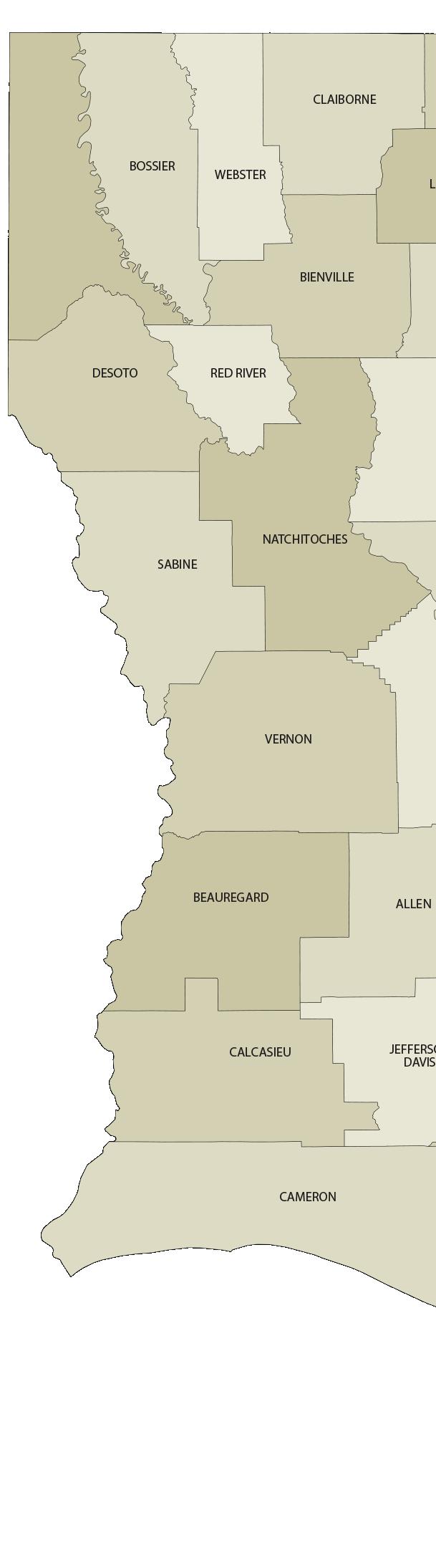
28 Shintech Louisiana expansion
$3.4B |123 jobs
Location: Iberville Parish Status: Phase 1 complete in 2030
29 Lake Charles Methanol manufacturing plant
$3.24B |163 jobs
Location: Port of Lake Charles Status: Announced
30 Entergy Franklin Farms
$3.2B | N/A
Location: Richland Parish Status: Pending
31 CF Industries + Posco blue ammonia plant
$2B | 50 jobs
Location: RiverPlex MegaPark, Ascension Parish Status: FID 2026
32 Element USA rare earth extraction plant
$2B | 200+ jobs
Location: Gramercy Status: Pending
33 Indorama blue ammonia plant
$2B | N/A
Location: Ascension Parish Status: FEED work in progress

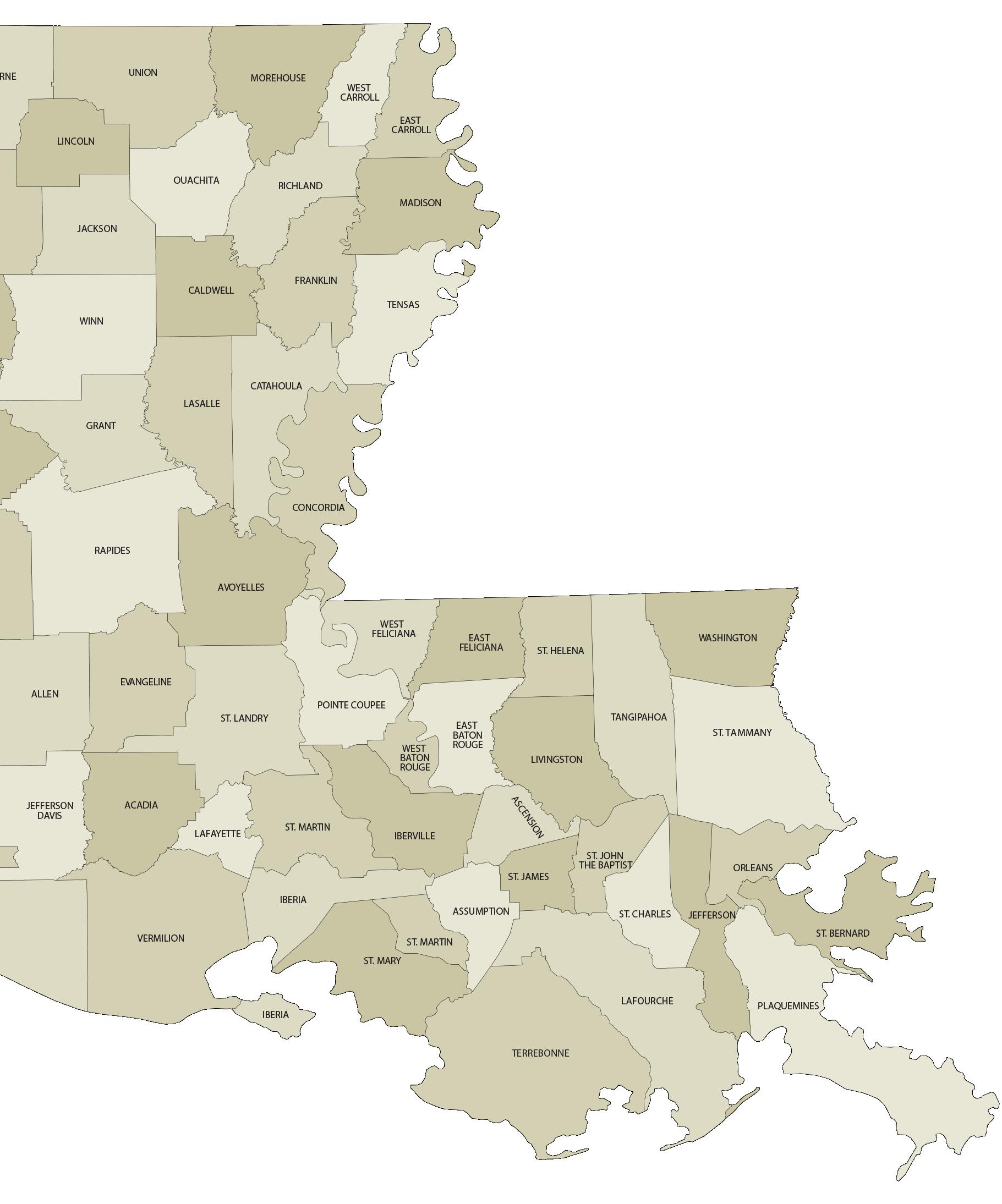
Sources: LED, LEO, 10/12 research
34 Port NOLA
Louisiana International Terminal
$1.8 billion | N/A
Location: Violet, St. Bernard Parish Status: Construction in 2025; first berth opens in 2031.
35 Southern Energy Renewables
$1.4B | 514 jobs
Location: St. Charles Parish Status: Commercial operations 2029
36 Shell Chemical olefins facility expansion
$1.4B | 12 jobs
Location: Geismar Status: Pending
37 Woodland Biofuels
$1.35B | 60
Location: Port of South Louisiana Globalplex, Reserve Status: FID Q4 2025
38 Shell renewable diesel and sustainable aviation fuels facility
$1.3B | 42 jobs
Location: Convent Status: 2027 construction
39 Shintech PVC production expansion
$1.3B | 42 jobs
Location: Convent Status: 2026 operational
40 Entergy gas-fired power plant to support the Meta Data Center
$1.3B | N/A
Location: St. Charles Status: Statup pending
41 First Solar panel plant
$1.1B | 700 jobs
Location: Acadiana Regional Airport Status: 2025 completion

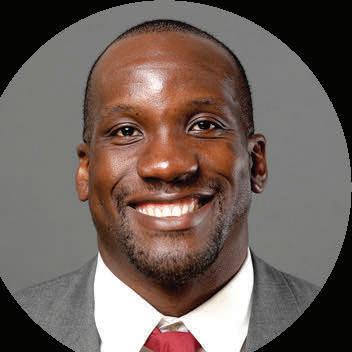

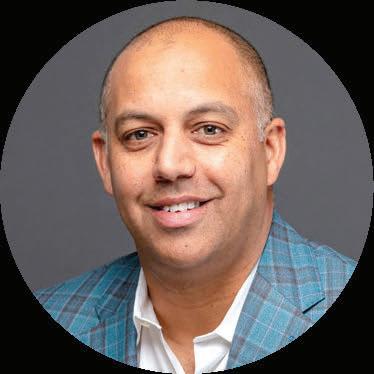



Carefully check


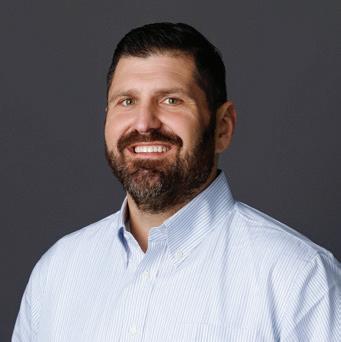
PRESIDENT Bengal Crane Logistics Transportation
THE OUTLOOK FOR our organization and the Baton Rouge Capital Region in 2026 is extremely positive. South Louisiana continues to be one of the most important industrial corridors in North America, with ongoing investments in petrochemical, energy, manufacturing, and infrastructure projects. These investments are creating strong demand for skilled labor, heavy construction, and specialized services such as crane, rigging, and industrial logistics. At Bengal, we see continued growth as our region expands its role in supporting major industrial facilities along the Mississippi River corridor. Our focus remains on safety, workforce development, and investing in modern equipment and technology that improves project execution and reliability for our customers. Baton Rouge is also benefiting from increased economic diversification. In addition to traditional energy and chemical industries, we are seeing growth in manufacturing, technology, logistics and small business entrepreneurship. These developments strengthen the local economy and create new opportunities for companies like ours to support largescale construction and industrial projects. Looking ahead to 2026, we believe the Capital Region is well positioned for continued growth. By investing in workforce training, infrastructure improvements, and regional collaboration between industry, education, and government, Baton Rouge can remain a leading hub for industrial development in the Gulf South. We are proud to contribute to that progress and remain committed to supporting the region’s economic growth, job creation, and long-term prosperity.
One of our proudest accomplishments in 2025 was continuing to strengthen our workforce and invest in the long-term future of Bengal. We expanded our team, enhanced training programs, and continued investing in modern equipment to safely support the growing industrial demands of the Gulf Coast region. Our employees are the backbone of our company, and their dedication to safety, professionalism, and quality work allows us to successfully execute complex projects for our customers.
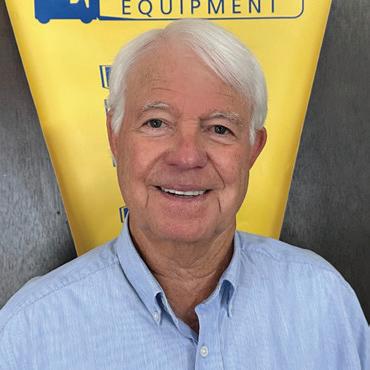
AS WE LOOK AHEAD IN 2026, our focus at Deep South Equipment is simple: We want to stay financially strong, continue bringing in talented people, and serve even more customers across the Capital Region. Baton Rouge is seeing steady growth in construction, logistics, manufacturing, and small business activity, and we expect equipment demand and service needs to increase along with it. As a family-owned company built over three generations, we take a long-term approach to growth. In 2026, we will continue investing in our employees, our facilities, and our inventory so we can respond quickly and reliably to our customers’ needs. With 10 locations across four states, our goal is to be a dependable partner for the businesses that keep this region moving. We have always believed in taking care of our people and our customers. That mindset will continue to guide us as we grow alongside Baton Rouge and the surrounding communities in 2026.
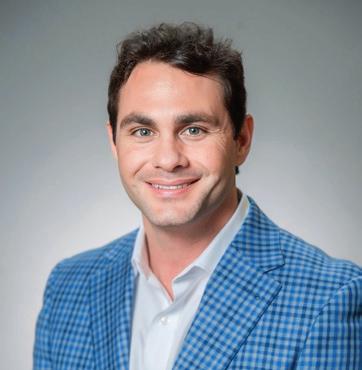
PRESIDENT & CEO FIVE-S GROUP
AS WE LOOK AHEAD TO 2026, I am excited about the forthcoming wave of growth and transformation for Five-S Group and the Capital Region. With the energy, technology, and infrastructure market demands at an all-time high, Five-S Group has established itself as a leader in delivering safety and quality during the vital site development phases of major projects. In 2026, several monumental projects in Louisiana are set to break ground. Five-S Group is primed to provide exceptional heavy civil site development services and marine construction services, along with fill and aggregate supply to our clients. Together, we will build the robust foundation these ambitious projects deserve. Five-S Group looks forward to expanding its services vertically, expanding our territory, and growing our team next year.

In 2025, we were proud to celebrate 35 years in business. What began in 1990 as a small, family-owned operation has grown into a company supported by more than 350 employees, many of whom have been with us for a long time. That longevity speaks to our culture and the people who make up our team. Opening our Lafayette branch in December 2024 and watching it expand and gain momentum throughout 2025 was another proud accomplishment. We are honored to be recognized as a Top Hyster-Yale dealer and a Dealer of Distinction for 10 years straight. Our success continues to come from the good people who make up this company.
2025 was a milestone year for Five-S Group. Our company was ranked 25th on Business Report’s Top 100 private companies; we added two new office locations; and we were ranked No. 157 on ENR’s Top 600 Specialty Contractors list. We were recognized again as one of Baton Rouge’s best places to work by Business Report and will have hired over 150 new employees before the end of the year. We gave back to our communities by sponsoring several events for organizations such as Sky High for Kids, St. Jude’s, Down Syndrome Awareness Group, American Cancer Society, and more. Our largest achievement was maintaining our number one core value: Safety. Five-S completed the year with zero OSHA recordable incidents.
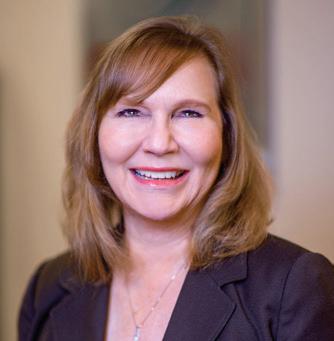
CONNIE FABRE PRESIDENT AND CEO
Baton Rouge Industry Alliance
IN 2026, the Greater Baton Rouge Industry Alliance (GBRIA) is positioned to play an even more influential role in shaping the Capital Region’s industrial and economic landscape. With a membership base representing chemical manufacturing, oil refining, energy and emerging industrial sectors, GBRIA will continue to serve as a central connector between industry, workforce, and community priorities. Regionally, industrial investment is expected to remain strong, driven by continued demand for specialty chemicals, sustainable fuels, and advanced manufacturing. Many facilities are expanding into lower-carbon technologies, carbon capture, and digitalized plant operations. These shifts create opportunities for GBRIA to lead on workforce development, contractor safety excellence, technology, and best practice sharing across member companies. Workforce needs will stay at the forefront. The region is projected to experience tight labor markets, making GBRIA’s training partnerships, careerawareness initiatives, and contractor benchmarking programs even more critical. Expect increased collaboration with education systems and service providers to strengthen pipelines for craft, engineering and technical roles. Community expectations around safety, environmental stewardship and transparency will continue to rise. GBRIA members’ strong performance in safety and operational reliability will remain a differentiator, fostering public trust and supporting ongoing capital investment. Overall, 2026 will be a year of modernization, workforce innovation and expanded leadership for GBRIA, positioning the alliance as a regional catalyst for safe, sustainable, and competitive industrial growth.

Our proudest accomplishment of 2025 was growing membership by formalizing the New Orleans Region Industry Alliance (NORIA) under our umbrella. This allowed us to strengthen the region’s industrial workforce pipeline, expand training and industry education partnerships for regional workforce alignment, and reach more residents than ever before.
Carefully check this ad for: CORRECT ADDRESS • CORRECT PHONE NUMBER • ANY TYPOS
This ad design © Melara Enterprises, LLC. 2026. All rights
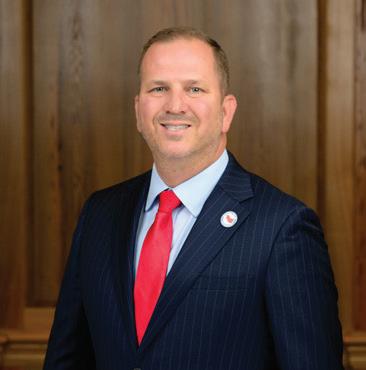
LOOKING AHEAD IN 2026, Iberville Parish is positioned for a year of significant momentum and measurable progress. The parish will continue advancing the priorities that shaped 2025, with a sharpened focus on infrastructure, economic development and long-term community planning. In the coming year, we expect major movement in the Mississippi River Bridge project as the NEPA study reaches key decision points. This milestone will strengthen regional collaboration and reinforce the Baton Rouge area’s commitment to improving mobility, reducing congestion, and supporting sustained economic growth across the Capital Region. Locally, Iberville will continue implementing foundational components of One Iberville: Shaping Tomorrow Together, our first comprehensive Master Plan in more than two decades. This blueprint will guide responsible development, protect our natural assets, and ensure our communities are prepared for future opportunities. We also anticipate continued expansion of industry investment along the Mississippi River corridor, supporting job creation and strengthening the regional economy. Paired with improved parish amenities — from enhanced recreation access to expanded public services — Iberville is positioned to contribute meaningfully to the Capital Region’s competitiveness. The new year will bring renewed focus on resilience, innovation and connectivity. Together, we will build on the progress of 2025 and step confidently into a year defined by partnership, strategic vision and shared prosperity for all who call Iberville home.

My proudest accomplishment of 2025 was helping position Iberville Parish for long-term success. This year, we advanced the Mississippi River Bridge project into the federal NEPA phase, a milestone that reflects years of advocacy and regional collaboration. We also launched the One Iberville Master Plan update—the first in more than 20 years—setting a clear vision for responsible growth, stronger services, and a more connected parish. Together, these efforts mark a transformative step forward for our community.
BY SAM BARNES
Throughout his decades-long career, Ryan Kerrigan has built a broad foundation across the polymers, olefins and refining value chains, serving in engineering, technical, safety/health and process leadership roles. His experience spans both standalone sites and highly integrated manufacturing complexes, giving him a deep understanding of operational excellence, risk management and cross-functional team leadership.
In addition to his operational background, Kerrigan has held roles in polymers product management and global strategic planning for ExxonMobil’s chemicals portfolio. Currently, he is responsible for site strategy, organizational development, operational discipline and the safe, reliable production of high-quality polymer products.
In recent years, Kerrigan has come to expect his toughest challenge to always be the next. Change is constant in the polymers business, and business has been booming due to changing markets, new technologies, shifting workforce expectations and rising global competitiveness.
“Usually, my role requires that I plan out the next five to 10 years, but you never know what this business is going to throw at you,” Kerrigan says. “Today’s environment is very dynamic. The manufacturing landscape is changing fast.”
Through it all, Kerrigan must ensure that his employees successfully navigate the uncertainty and have a clear understanding of the “whys and hows” of every change. He strives to paint a clear vision of the future for them, despite his own uncertainty.
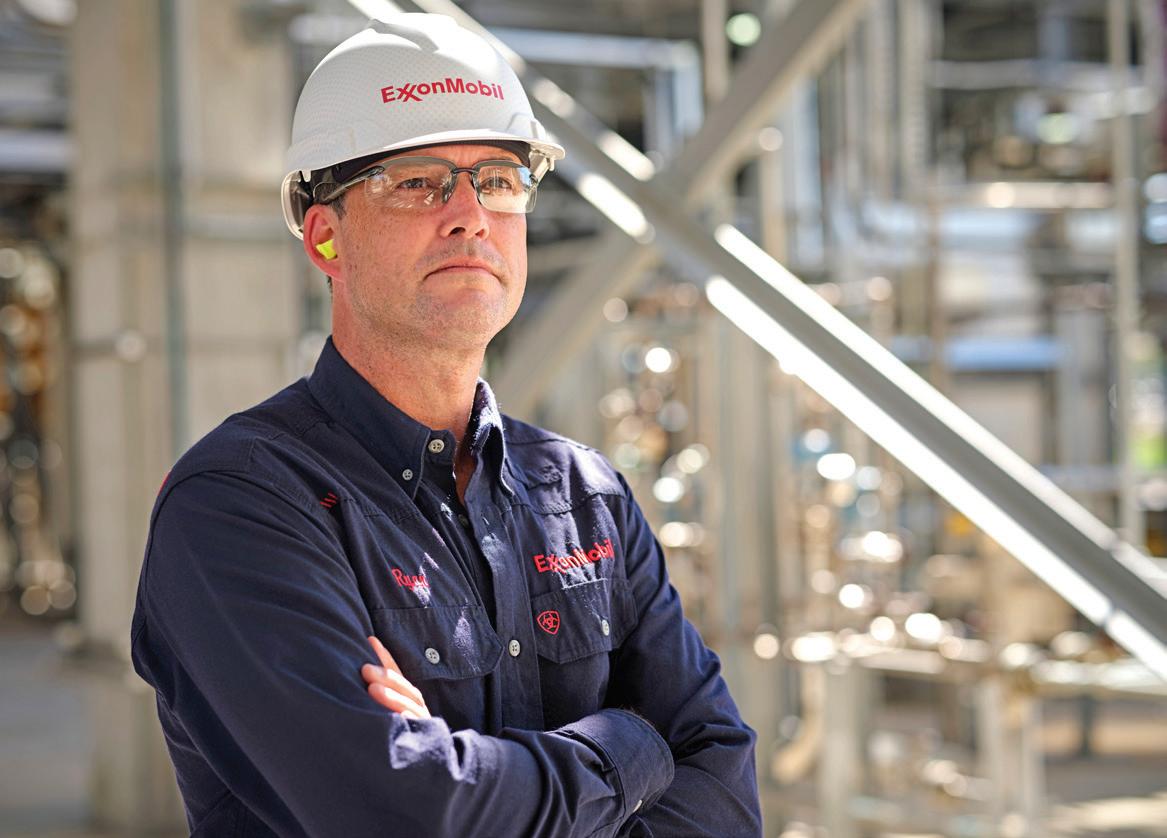
“That’s what people require from their leaders,” he adds. “How do we weather this storm? How do we shift resources? How do we adapt?”
That was especially true during the integration of ExxonMobil’s polymer plants in Baton Rouge in tandem with completing the Polypropylene Growth Project in 2023.
Ensuring a seamless transition was paramount, as each plant had different cultures and methods of work. “Integration is an easy word to say but hard to execute,”
Kerrigan says. “It requires difficult choices. How do we position the site and the company for the long run and remain competitive for decades to come?
“The integration piece of it was the real challenge—bringing our people along and bringing clarity as to why the change was necessary.”
Kerrigan ensured that everyone kept their focus on the company’s two primary goals: keeping people safe and remaining competitive.
“We are a standards-driven organization, and we use our systems to ensure we stay compliant to the
POSITION: Site manager, Baton Rouge Polymers North facility
COMPANY: ExxonMobil
WHAT THEY DO: ExxonMobil’s BRPN is a major petrochemical plant specializing in the production of high-density polyethylene and polypropylene. It is part of a large, integrated complex that recently underwent a $500 million-plus expansion to double its polypropylene capacity by 450,000 metric tons per year. Some 500 employees and 400 contractors work in the facility.
Kerrigan says. “How do we take our products and leverage our scale to make them more affordable for the world?”
fundamentals,” he says. “We had to identify the enablers that help us do that—the technology, the tools, etc. That’s how you create the foundation for high performance.”
Kerrigan found that the simple act of listening was critical to the process, and he made a practice of challenging assumptions and being purposefully self-critical.
“As a leader, you must have courage and discipline, but you must also have humility … because you don’t have all the answers,” he says. “The best answers don’t come from the administration building. They come from triangulating what’s going on in the field, listening to their ideas, then incorporating them when necessary.”
It’s equally important for large organizations to avoid being inwardly focused. ExxonMobil is a dominant player in the polymers world, so the company proactively searches for new ways to leverage its technology, size and expertise. It is currently implementing some new business lines, including graphite and a specialized epoxy resin.
“That’s where the fun lies,”
THE TAKEAWAY
In a commodities business, companies must continuously evolve and grow or risk losing their relevance. The polymers market is particularly competitive and robust, so ExxonMobil remains mindful of the basics of competition.
“In global operations and manufacturing, you’re continuously being challenged by your neighbor down the street or somewhere around the world to supply your product to the market in the most efficient way,” Kerrigan says.
“We are still a commodity provider, and the goal is to provide a low-cost solution,” he adds. “Despite our growth and dominance in the market, the rules of supply and demand remain the same.”
The key to survival in the next 10 years, he notes, will be using available tools and technologies to lower costs over the long run and implementing changes “that we can’t even begin to predict right now.” And that will require a unique type of leadership, one that isn’t afraid of change but also isn’t afraid to listen.

LOUISIANA ENERGY AWARDS - NOMINATIONS NOW OPEN

From the oil fields to the offshore platforms, from renewables to the providers powering the data centers of tomorrow — Louisiana's energy professionals have been shaping the future of American energy for generations. Now it's time to recognize them.
• Lifetime Achievement Award
• Energy Executive of the Year
• Emerging Energy Leader (under 40)
• Energy Company of the Year
Large (250+ employees)
• Energy Company of the Year
Small to Mid-Sized
• Energy Deal of the Year
• Community Impact Award
Know someone who’s led a game-changing deal, built a company that gives back, or mentored the next generation of energy talent? Nominate them today.
Please join us in celebrating the projects and innovators shaping what’s next in your industry. Mark your calendars and join us on October 22 at L’Auberge Casino & Hotel Baton Rouge for the second annual Louisiana Energy Awards.