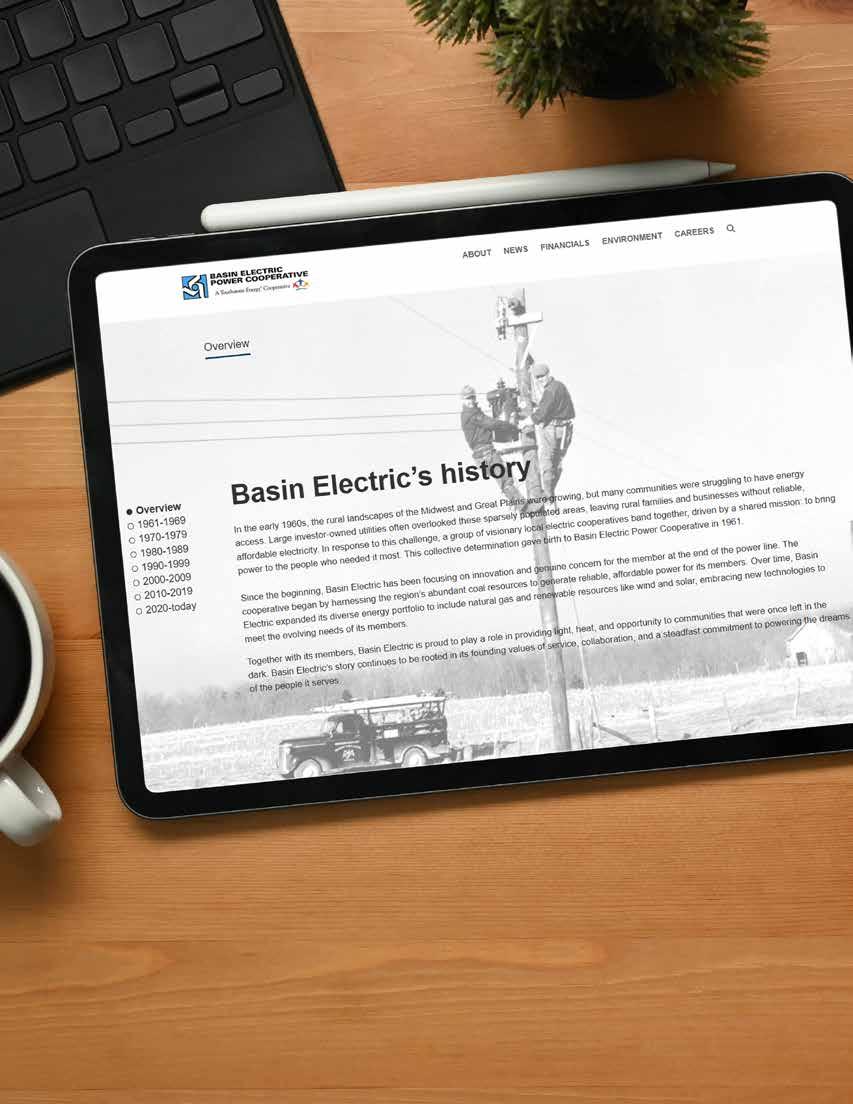
Basin Electric’s new interactive timeline brings our history to life, one milestone at a time. Step back and explore how the cooperative’s past continues to power the future.
Dive in on basinelectric.com.

Basin Electric’s new interactive timeline brings our history to life, one milestone at a time. Step back and explore how the cooperative’s past continues to power the future.
Dive in on basinelectric.com.
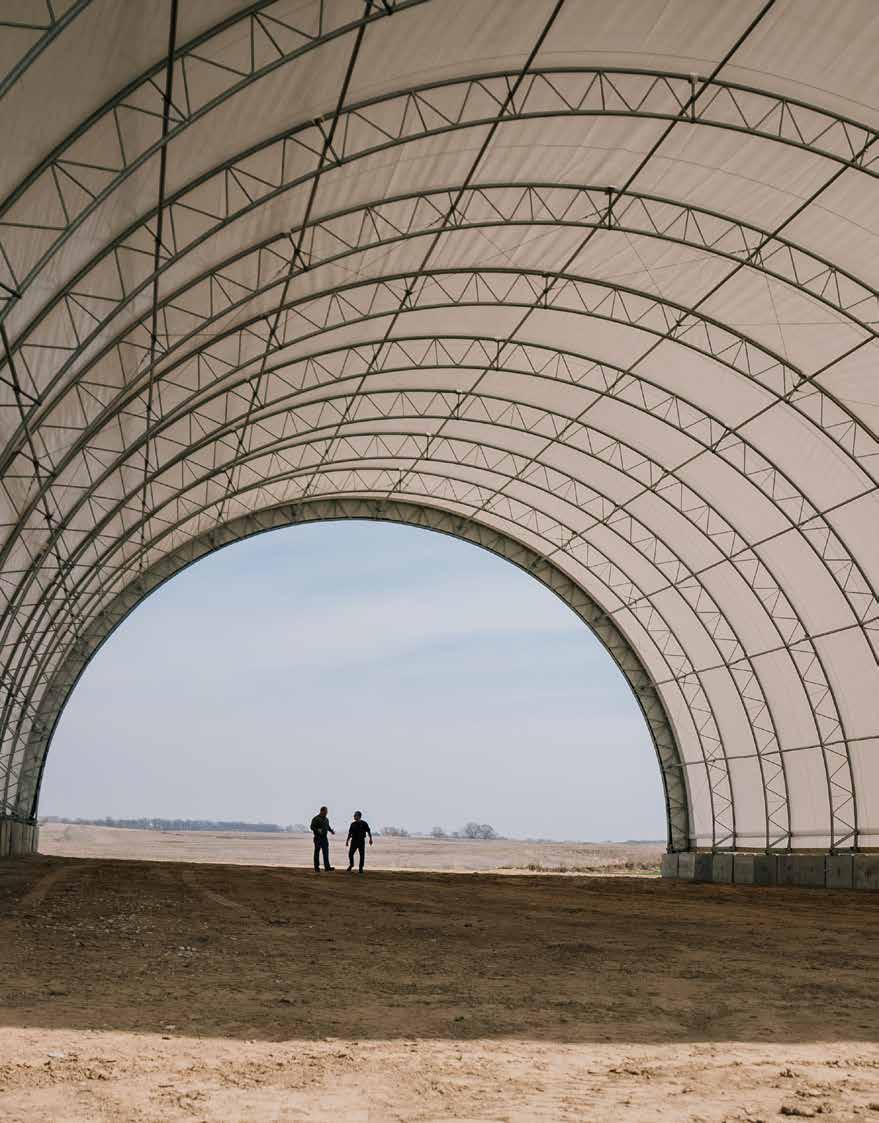
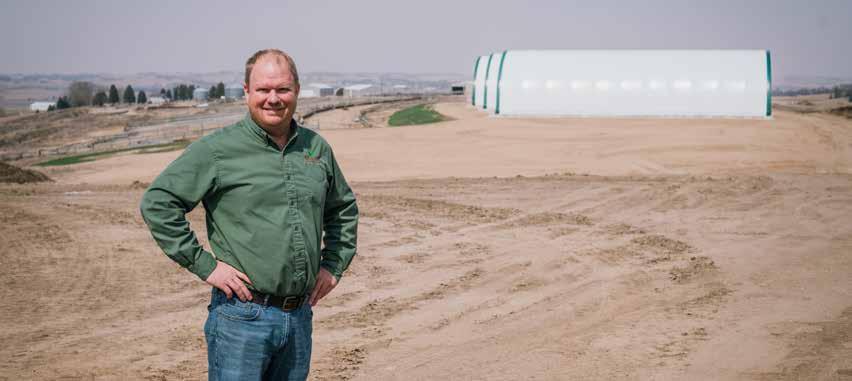
Abe Sandquist, president of Natural Fertilizer Products, and Kert Barnum, economic development director at Basin Electric class C member Harrison County Rural Electric Cooperative, tour the construction site of a new WINR Center in western Iowa. Short for Waste Into Nutrient Recovery, this facility will be served by Harrison County REC and is designed to return nutrients from organic materials back to the soil in a consistent, controlled, and efficient manner.
Learn more about the project on page 8.
Photo credit: Rachel Rogers, communications specialist at Northwest Iowa Power Cooperative
2 CEO column: planning with purpose, building with confidence
4 In brief
8 Member focus
10 How we serve
13 Employee highlights
FEATURE STORIES
6 Planning power for tomorrow: Basin Electric’s IRP team
7 Investing Together: Understanding Basin Electric’s Member Investment Program
12 Mike McQuistion: Remembering a legacy of service
CONTRIBUTORS
Editor: Kalli Senske (communications@bepc.com)
Graphic designer: Joy Schnabel
Photographers: Joy Schnabel, Juan Thomas, Greg Wheeler
Writers: Erin Becker, Jenifer Gray, Dana Hager, Alison Kirsch, Kelly Miller
Scan the QR code with your cell phone to view stories online.
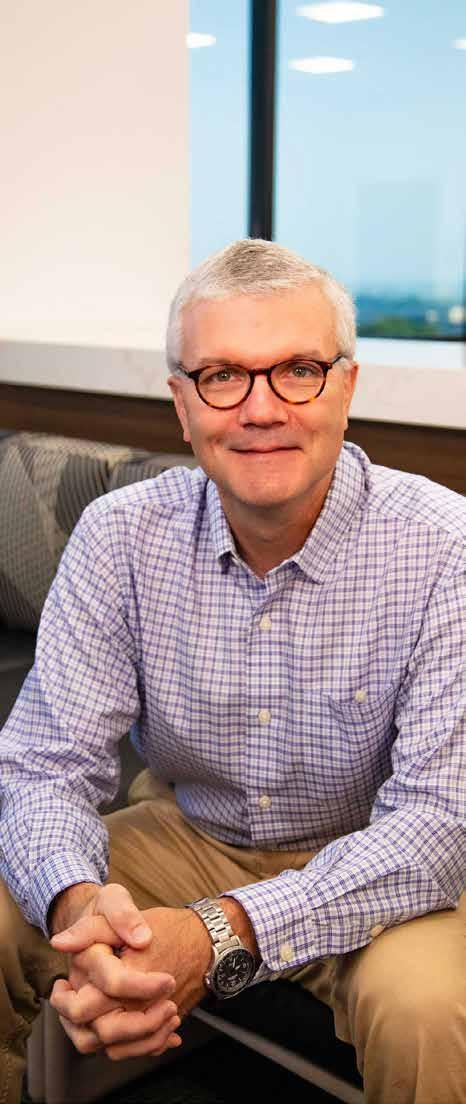
Sixty-five years ago, Basin Electric was formed by people who understood the value of thinking ahead. Rural families and businesses came together to bring reliable, affordable electricity to communities where demand for electricity would soon outstrip supply. They planned with intention and built with confidence.
That same mindset continues to guide us today.
Across our service territory, we are seeing growing demand for electricity and rising expectations for reliability. While the energy landscape continues to evolve, one thing remains constant: the need for a strong, dependable system that our members can count on every day.
At Basin Electric, we believe the strongest energy systems are built by thinking ahead and acting deliberately. That belief is reflected not only in the projects we are building today, but also in the work we are doing to prepare for tomorrow.
A recent example is the front-end engineering and design (FEED) study underway at Dry Fork Station. Located near Gillette, Wyoming, Dry Fork is a coal-based generating facility that began operation in 2011.
Last fall, Basin Electric was awarded $4 million by the Wyoming Energy Authority, with approval from Governor Mark Gordon, to support this effort. The study is funded through Energy Matching Funds provided by the Wyoming Legislature and reflects a shared interest in exploring reliable energy solutions for the region.
The current FEED study helps us evaluate, with a datadriven approach, what it would take to expand a facility by adding a second coal-fired unit. It examines key factors such as design, cost, and feasibility using current data and today’s realities before making any long-term investment decisions.
What makes this effort unique is that Dry Fork was originally designed with the foresight of accommodating a second unit. That original planning accounted for key considerations like available space, fuel supply, and water resources – positioning the cooperative with valuable flexibility for the future.
Today, we are thoughtfully revisiting that opportunity. This does not represent a final decision, but rather a disciplined step in understanding what is possible and what is prudent. The study is expected to be completed in early 2027 and will help inform future decisions as we continue to evaluate our system needs.
Similar planning and studies in the past are being put into action today.
The Bison Generation Station in northwest North Dakota is a clear example of that commitment.
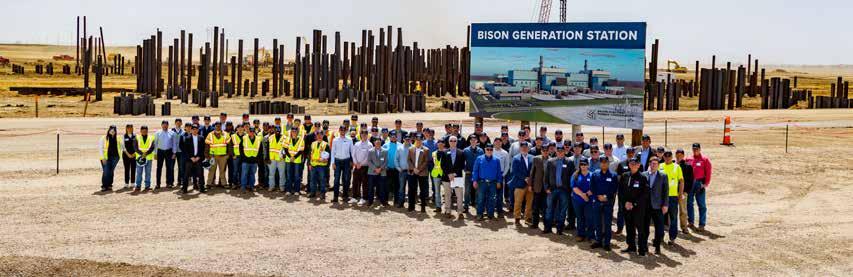
On May 11, 2026, Basin Electric marked an important milestone in that effort as we officially broke ground on
the largest generation investment in our history. Groundbreakings are more than a ceremonial moment in history; they represent the transition from planning to action. Years of study, permitting, engineering, and partnership come together in a single moment that signals progress and purpose.
Projects like Bison are made possible by the dedication of our employees, the expertise of our contractors, and the strong partnerships we have built within the communities we serve. Together, they reflect the confidence our members place in Basin Electric to deliver on our commitments.
When you look at these efforts side by side, they tell a larger story.
On one hand, we are planning thoughtfully for the future, evaluating opportunities like Dry Fork with discipline and care. On the other hand, we are actively building and investing in the resources needed to ensure reliability today.
This balanced approach has defined Basin Electric since the beginning. It is how we honor our responsibility to our current members while positioning our cooperative to serve future generations of members.
We remain committed to powering rural America – not just for today, but for generations to come.

TODD BRICKHOUSE CEO and general manager
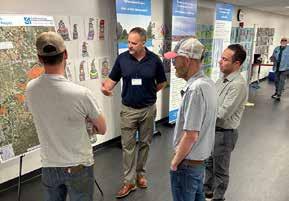
On April 22-23, Basin Electric hosted two open houses for landowners, community members, and other interested parties to learn about the proposed Pioneer-to-Patent Gate 345-kilovolt (kV) transmission line project.
The open houses — held in Alexander, North Dakota, and Williston, North Dakota — were an opportunity to share information and gather input on the proposed project, which includes approximately 50 miles of new high voltage transmission line between the Pioneer Generation Station substation near Williston, North Dakota, and the Patent Gate substation near Arnegard, North Dakota.
https://bit.ly/Pioneer-to-Patent-Gate-Open-Houses
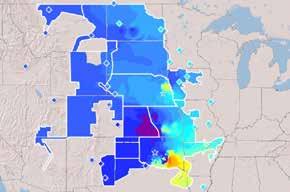
On April 1, Southwest Power Pool (SPP) expanded its service territory into the Western Interconnection, one of three major electrical power grids in North America. This expansion made SPP the first regional transmission organization (RTO) to offer services across two interconnections, broadening operational and market benefits for member organizations.
Basin Electric has been a member of the SPP Integrated Marketplace since October 2015 and is one of
the utilities expanding its participation to the Western Interconnection.
“We already operate in SPP’s Eastern Interconnection, and we’re able to apply much of that experience to the Western Interconnection,” Alycia Kramer, director of market analytics and strategy at Basin Electric, said. “Our team is actively building knowledge of the new market areas so we can effectively operate within each area.”
https://bit.ly/SPP-expansion
Basin Electric filed its initial debt registration with the U.S. Securities and Exchange Commission (SEC) on April 15, 2026, marking a significant step in the cooperative’s “all-of-the-above” financing strategy designed to responsibly fund long-term infrastructure needs.
“Basin Electric’s SEC filing supports our commitment to strong governance and transparency as a member-owned cooperative,” Chris Johnson, senior vice president and chief financial officer at Basin Electric, said. “This registration also gives Basin access to lower rates and a larger investor pool, ultimately benefiting our member-owners.”
https://bit.ly/BasinElectric-SEC
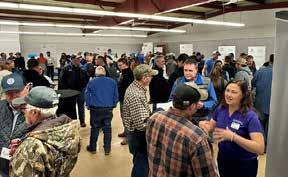
Basin Electric, in partnership with NextEra Energy Resources, is exploring the development of the River Run Energy Center, a 1,450-megawatt combined-cycle natural gas generation facility and associated multi-gigawatt data center campus in Mercer County, North Dakota.
As part of their extensive outreach program, including opportunities for the community to learn more about the project, share their perspectives, and to ask questions, the public was invited to attend an open house on March 30 highlighting the River Run Energy Center.
Basin Electric and NextEra Energy Resources staff hosted stations covering project overviews, technical details, environmental considerations, construction plans, and site information, and were available throughout the event to answer questions.
https://bit.ly/Open-House-For-Proposed-RiverRun-Energy-Center
The North Dakota Public Service Commission (PSC) recently held two public meetings on Basin Electric’s corridor compatibility and route permit applications for the Tande-and Wheelock-to-Saskatchewan 230-kilovolt (kV) transmission line project.
The project includes two new transmission circuits:
• The Wheelock-to-Saskatchewan circuit - approximately 53 miles long, connecting Basin Electric’s existing Wheelock substation, located near Ray, North Dakota, to the United States/Canadian border, near Crosby, North Dakota.
• The Tande-to-Saskatchewan circuit - approximately 58 miles long, connecting Basin Electric’s existing Tande substation, located near Tioga, North Dakota, to the United States/Canadian border, near Crosby, North Dakota.
https://bit.ly/Tande-Wheelock-Sask
Construction began on Basin Electric’s Crane Creek substation as part of the Leland Olds Station (LOS)to-Tande 345-kV transmission project. This project was deemed necessary by Southwest Power Pool to ensure the reliability of the transmission system, provide more reliable service to electric cooperative customers, and diversify power resources across the larger transmission system. Crane Creek substation will consist of:
• Two 345-kV terminals connecting LOS and Tande substations, which are part of the East Loop transmission project.
• A 345-kV terminal connecting a proposed 345-kV substation planned for the Logan area as part of the LOS-Burkley-Crane Creek transmission project.
• Four 115-kV terminals at Crane Creek for memberowned lines.
https://bit.ly/Crane-Creek-Construction
/basinelectric
Read Basin Today online @ basinelectric.com/BasinToday
Read Basin Electric news online @ basinelectric.com/NewsBriefs


basin_electric /company/basin-electricpower-cooperative /basinelectric
@basin_electric
By Alison Kirsch
When Basin Electric talks about planning for the future, it’s not just about keeping the lights on – it’s about making sure every member, from the smallest rural home to the largest industrial load, has reliable, affordable power for decades to come. That’s where the Integrated Resource Plan, or IRP, comes in.
An IRP is essentially the cooperative’s long-range roadmap: a detailed look at how Basin Electric will meet future electricity needs while balancing cost, reliability, and regulatory requirements. It’s the tool that helps protect members from unnecessary financial risk while ensuring the system can handle everything from rapid growth to extreme weather.
“Basin Electric has historically completed an IRP every five years,” Ben Hertz, Basin Electric manager of power supply planning, says. “Our last IRP was developed in 2023, but with the pressures we’re seeing and the dynamic growth environment, we see value in doing them more frequently – maybe every three to four years.”
Between major IRP cycles, Basin Electric performs annual updates to track progress, adjust action plans, and document what has changed since the last baseline.
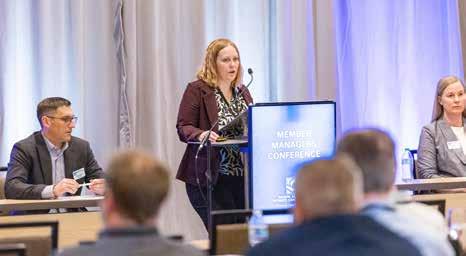
But the upcoming 2027 IRP marks a shift in both timing and approach.
“One of our biggest goals with the 2027 IRP is increasing member communication and feedback along the way,” Hertz says.
To support that goal, Basin Electric recently launched a dedicated IRP page on its members’ website. The page houses materials, updates, and opportunities for members to interact directly with the IRP team.
“Members are often curious about what Basin Electric is planning for the future,” Hertz says. “This webpage gives them a place to start. It provides a focused and transparent way to understand what we are working on without having to track down individual conversations.”
Hertz leads a multidisciplinary team of analysts, modelers, and planners who study load forecasts, market trends, and regulatory shifts. Their work is equal parts data science and strategy, and every decision they make is rooted in protecting members from risk while preparing the cooperative for the future. Hertz describes the team as collaborative and analytical, a combination he says is essential as Basin Electric navigates rapid growth and an evolving energy landscape.
“The energy landscape is changing quickly, and our members deserve clarity about how we’re preparing for that,” Hertz says. “This IRP is our opportunity to show the work behind the decisions and demonstrate how we’re positioning the cooperative for the future.”
The IRP is more than a regulatory requirement. It is a living strategy that shapes the cooperative’s future. As Basin Electric navigates unprecedented load growth, evolving energy markets, and shifting federal policies, the IRP will help ensure that every decision made today supports a reliable tomorrow.
By Erin Becker
The Member Investment Program is not new to Basin Electric; rather, it’s been an essential part of how the cooperative does business. Born of the idea that members invest in the cooperative they own, the program helps support Basin Electric’s financial strength and long-term stability. In the Q&A below, we speak with Kayla Konschak, financial analyst III at Basin Electric, who administers the program.
Q: Please explain Basin Electric’s Member Investment Program:
A: Basin Electric’s Member Investment Program is an alternative investment resource for many of our members. A little history – during the 1970s, generation and transmission (G&T) cooperatives like Basin Electric began seeking opportunities to finance the construction of their power supply systems. Significant increases in interest expenses drove Basin Electric to explore alternative options. In 1976, the Basin Electric Board of Directors approved the establishment of this short-term capital borrowing program from its member cooperatives to avoid borrowing at market rates.
Q: What makes the Member Investment Program an attractive alternative investment resource for member cooperatives?
A: Basin Electric can offer investment rates to member participants that are usually higher than members could obtain through their own resources. When an
investment matures, principal and interest are made available back to the member. It’s the member’s choice to either reinvest the funds, pay their power bill, or have their funds returned to them.
Q: Does the Member Investment Program contribute to Basin Electric’s overall financial stability?
A: Yes, as money is received from our members, it’s combined with Basin Electric’s General Fund, providing additional liquidity. Additional liquidity contributes to Basin Electric’s goal of maintaining a stable and reliable power supply to its membership at the lowest possible cost.
Q: How can members feel confident that their investments are safe and performing well?
A: Clear communication and transparency are key to building trust with members. It’s important that they feel confident their investments are being managed thoughtfully and transparently. Our team encourages questions and makes sure members feel informed and confident in their decisions. The ultimate goal is to create an informed, confident, and well-supported member experience.
For more information on Basin Electric’s Member Investment Program, contact: Kayla Konschak Phone: (701) 557-5407
By Kalli Senske
For thousands of years, nutrients cycled naturally between livestock, crops, and soil. Today, that cycle is harder to maintain — especially in southwestern Iowa where agricultural and food processing is abundant, but livestock manure is increasingly limited. Abe Sandquist, president of Natural Fertilizer Products, sees that imbalance as an opportunity to rebuild a more complete system.
“Between Omaha and Sioux City there is a tremendous amount of agricultural and food processing, which creates organic by-products that still contain valuable nutrients,” Sandquist explains. “At the same time, this region has less livestock manure available than other parts of Iowa. That gap is where the opportunity is.”
That realization traces back to a defining moment early in Sandquist’s career. While working as a soil conservationist with USDA Natural Resources Conservation Service, he saw firsthand how nutrients were leaving the farm system and not making their way back to the soil.
“That was really the lightbulb moment for me,” he says. “We were managing nutrients on the farm side, but there was a whole stream of valuable nutrients outside of agriculture that weren’t being returned. I started thinking about how we could connect those dots.”
Nearly 20 years ago, Sandquist founded Natural Fertilizer Products with a focus on doing just that — bringing nutrients back into the system in a practical, agronomically sound way.
“Composting and stabilizing organic materials allows us to complete the nutrient cycle and make better use of resources that already exist,” Sandquist says.
The company’s natural fertilizers contain organic matter, carbon, micronutrients, and biological activity that improve soil structure, water infiltration, and nutrient efficiency over time.
“We’re not just feeding a crop for one season,” he says. “We’re building a system that improves the soil and helps every input work better.”
The business began with manure management and composting, creating customized blends for local farms. As the company grew, Sandquist saw an opportunity to expand that model and bring more organic nutrient streams back into agriculture in a responsible way.
A WINR Center — short for Waste Into Nutrient Recovery — is designed to capture nutrients from organic materials
and return them to the soil in a consistent, controlled, and efficient manner. Sandquist is building two WINR Centers in western Iowa, including one served by Basin Electric class C member Harrison County Rural Electric Cooperative (REC) headquartered in Woodbine. Construction on the first two facilities began this spring, and land has been secured for a third site to serve the surrounding region.
Each WINR Center operates within a localized footprint, collecting materials from nearby sources and returning finished compost to area farms. This approach keeps value close to home while reducing transportation needs and improving efficiency.
The facilities use advanced processing systems to transform a wide range of organic materials into high-quality soil inputs. A de-packaging system separates materials from containers and packaging, allowing nutrients to be recovered and reused.
Inside multiple aerated buildings, compost is placed on specialized concrete floors where controlled airflow accelerates the natural decomposition process. This system significantly reduces composting time while maintaining consistency and lowering emissions. Automated controls for oxygen, temperature, and moisture ensure a highquality, reliable product.
WINR Centers track incoming materials and produce targeted nutrient blends so products can be applied where they provide the most value. The result is a system that supports farmers, improves soil health, and strengthens the broader agricultural economy.
“When people see the initiative it takes to build something like this, it inspires them to think differently and explore new possibilities,” Kert Barnum, economic development director at Harrison County REC, says.
That innovation carries through to the local economy. From construction to long-term operations, the project supports jobs in trucking, operations, agronomy, and procurement, along with local contractors and service providers.
Reliable electricity is a critical component of the WINR Centers expansion.
Harrison County REC has supported the project from early planning stages — helping evaluate power needs, design
service infrastructure, and ensure dependable electricity as the project moves forward.
“Without strong rural power infrastructure, projects like this would be much more difficult to operate,” Sandquist says.
He credits the cooperative’s understanding of agriculture and rural business as a key factor.
“Harrison County REC has been a great partner,” he says. “They’ve taken the time to understand what we’re building and what it requires, and they’ve been proactive in helping us get there.”
For the cooperative, the project aligns closely with its mission.
“For us, it’s about living the Cooperative Principle of Concern for Community,” Kristi Travis, director of communications and IT at Harrison County REC, shares. “We’re fortunate this is in our service territory, but we support economic development regardless of location. Projects like this give people the opportunity to build a life here, stay here, and thrive here.”
With that commitment to community in mind, Barnum emphasizes that developments like the WINR Centers are key to maintaining a strong rural system. He encourages Basin Electric’s member cooperatives to embrace new projects like Sandquist’s.
“For our cooperative to remain strong and keep rates steady, we rely on new services,” he says. “We’re always excited to bring on loads like this because they provide value and help keep things sustainable for our members.”
For Harrison County REC and the communities it serves, the WINR Centers represent more than new electric load; they represent a long-term investment in agriculture, soil health, and rural vitality.
By returning nutrients to the soil and keeping that value local, Sandquist’s approach helps rebuild a system that benefits farmers, communities, and the future of agriculture.
The first facility is expected to begin processing in July 2026, marking another step forward in completing the nutrient cycle.
By Erin Becker
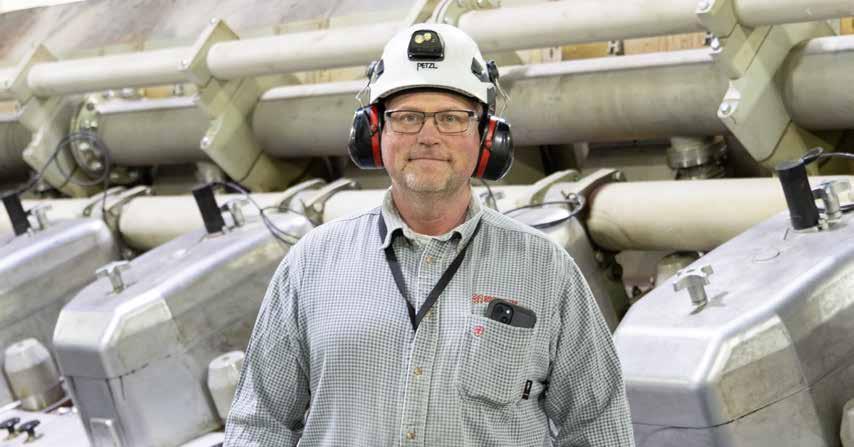
When the electric grid calls for power, there’s no margin for error. Engines need to start, systems must respond, and equipment must perform exactly as designed — often in extreme weather conditions with high demand. Behind that reliability are daily maintenance, safety, and preparedness tasks at Basin Electric’s generation stations.
For the past three years, Taylor Erdmann has worked as one of seven mechanical technicians at Basin Electric’s Pioneer Generation Station located near Williston, North Dakota. Erdmann attended North Dakota State College of Science, earning a degree in diesel mechanics, which laid the foundation for the complex, high-energy equipment he now maintains.
At Pioneer Generation Station, Erdmann focuses on equipment maintenance, troubleshooting, and operational support for the station’s new Wärtsilä reciprocating engines. These natural gas-fueled units are
among the most flexible in Basin Electric’s fleet, capable of ramping up quickly when the grid needs power fast. Keeping them healthy is a responsibility Erdmann takes seriously.
A typical day for Erdmann starts with a team meeting where safety comes first, maintenance priorities are set, and the latest updates on plant operations are shared. From there, technicians report to their designated areas. For Erdmann, that means checking the engines, reviewing readings, and making sure every system is running smoothly and efficiently.
Erdmann’s work spans everything from preventive maintenance to complex hands-on troubleshooting. On any given day, that might mean replacing valves, gaskets, filters, or motors; overhauling compressors or engines; responding to alarms; and monitoring equipment performance. Much of this work happens outdoors, at the mercy of the weather, around heavy
industrial machinery. It’s demanding, highly technical, and essential to plant safety and reliability.
Mechanical technicians across Basin Electric play a critical role in ensuring reliability, and reliability is the backbone of safe, continuous power generation. Even small mechanical issues can escalate into costly outages or safety risks if not caught early.
“I place a strong emphasis on reliability,” Erdmann explains. “When the demand is there for my engines, I need to ensure the members can count on them ramping up.”
This is especially important during extreme cold or heat, when the grid relies on natural-gas units, like those at Pioneer Generation Station, to respond quickly. They’re currently the only major power source that can increase generation on demand, and that flexibility depends on their mechanical systems being ready to perform.
“I’m lucky I’ve had the opportunity to work side by side with the Wärtsilä contractors that installed the new reciprocating engines and the ones performing warranty maintenance,” Erdmann says. “It helped me better understand the units I’m working with and see
firsthand the techniques and best practices that keep these units running at their best.”
Keeping the plant running smoothly requires clear communication and effective teamwork. Mechanical technicians work closely with operations, electricians, and instrumentation staff, often coordinating tasks across loud, high-energy environments where clear communication is critical to safety and efficiency.
“Our team works really well together,” Erdmann says. “We’ve all worked with each other for years, and our work flows naturally. Because we’re around loud, heavy equipment, it’s important that we have a good game plan before we go into the engine hall. This helps us stay coordinated and safe.”
Erdmann says maintenance work is more than simply replacing and maintaining parts; it’s about protecting the equipment that powers homes, hospitals, and businesses across Basin Electric’s service territory—and being ready when the grid needs it most. “By doing my job well and safely, we keep expenses low and reliability up, ensuring the members have access to the reliable power they depend on.”
BY DOING MY JOB WELL AND SAFELY, WE KEEP EXPENSES LOW AND RELIABILITY UP, ENSURING THE MEMBERS HAVE ACCESS TO THE RELIABLE POWER THEY DEPEND ON.
Taylor Erdmann, mechanical technician at Pioneer Generation Station
By Jenifer Gray
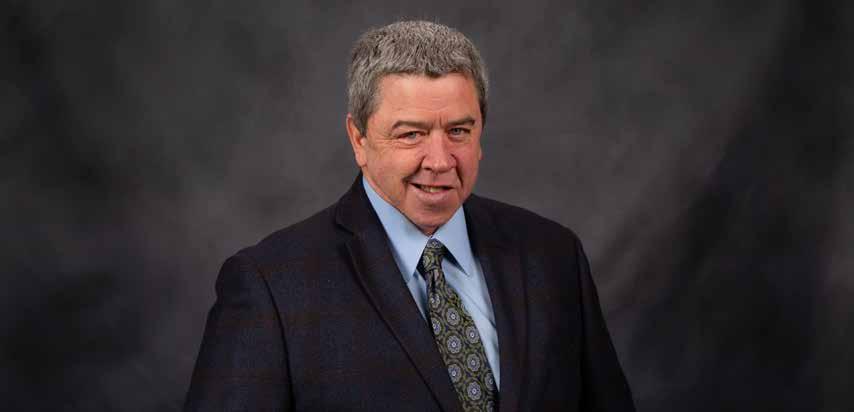
On Feb. 17, 2026, the cooperative family lost a dedicated leader and friend. Committed to service and responsibility, Mike McQuistion had a long history with rural electric cooperatives. His unwavering service, which spanned nearly three decades, left a lasting mark on Basin Electric, its member cooperatives, and the communities they serve.
McQuistion was elected to the West Central Electric Cooperative board in 1996 at just 26 years old and quickly discovered a passion for cooperative leadership. In the years that followed, he also served on the boards of Rushmore Electric Cooperative and the South Dakota Rural Electric Association, earning respect as a thoughtful leader and committed advocate for cooperative members in South Dakota.
In 2013, McQuistion joined the Basin Electric Board of Directors representing District 7. There, he continued the work that had defined his career: helping ensure reliable, affordable power was available for the rural communities he knew so well. Though the challenges facing the energy industry grew more complex over time, McQuistion never lost sight of the cooperative mission. As he often said, the goal remained simple: keep the lights on and the rates down.
Those who worked alongside McQuistion knew him as someone who approached every issue with a practical
perspective shaped by agriculture and rural life. Like the ups and downs farmers face each year, he understood that the energy industry also experiences cycles. His steady outlook and willingness to listen made him a valued voice at the board table, where discussion and collaboration were at the heart of cooperative governance.
“Mike was more than just a fellow director,” Wayne Peltier, board president and District 9 representative, says. “He was a devoted friend to all of us and the first one to be there when you needed someone.”
Director Anthony Larson, who represents District 8, says he’s thankful for the business and personal relationship he had with McQuistion and appreciates the positive impact he had on Basin Electric. “Mike’s voice was soft in volume, but it spoke loudly toward the cooperative principles and his commitment to serving the members at the end of the line.”
There’s no question that McQuistion’s knowledge, dedication, and service will leave a lasting imprint on Basin Electric and the members he supported, but it’s his commitment to cooperative principles, thoughtful leadership, and deep respect for rural America that will continue to influence the cooperative family for years to come.
By Alison Kirsch
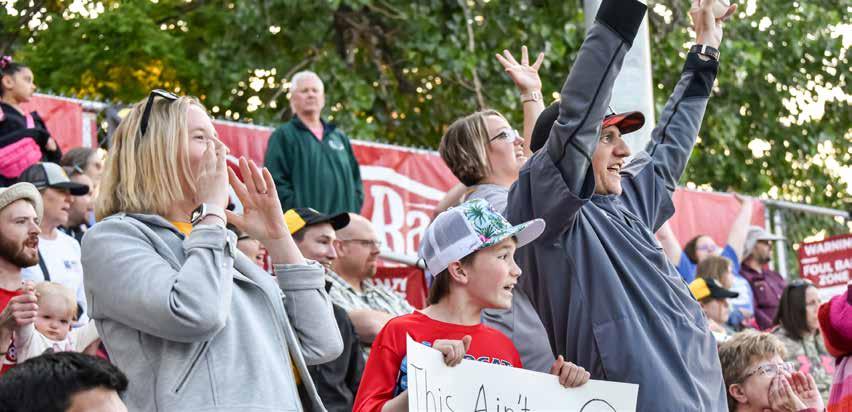
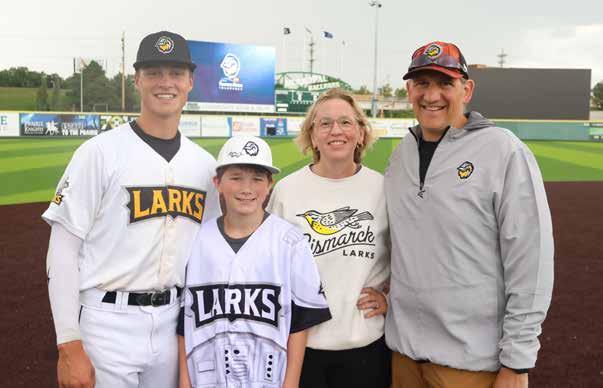
When summer rolls around, the rhythm inside Chad Kuntz and Casey Jacobson’s home shifts. Baseball schedules appear on the fridge, extra chairs gather around the dinner table, and before long, players from the Bismarck Larks baseball team are settling into the guest room. For this Basin Electric couple, hosting Larks players has become a tradition they look forward to all year.
The Bismarck Larks, part of the Northwoods League, bring top collegiate baseball players from across the country—and sometimes across the world—to Bismarck, North Dakota, each summer. Because these athletes relocate for the season, the team relies on its Host Family Program, where local families open their homes to provide a supportive place to live during the busy May-August schedule. Basin Electric is a proud partner of the Larks, sponsoring community nights, ballpark events, and family-focused activities throughout the season. For employees like Kuntz, electrical engineering supervisor, and Jacobson, senior staff counsel, that
partnership adds an extra layer of meaning: the team they support at work is the same team they welcome into their home.
Their hosting adventure began the way many good things do—with a friend’s suggestion. “We first learned about it from the former host family coordinator, who we were friends with,” Jacobson says. That connection eventually led her to take on the role herself. “Now, I am the host family coordinator, which is a volunteer position responsible for recruiting new host families and matching the players up with our approximately 20 host families.” As coordinator, she helps pair players with the right homes. Families and players are matched based on factors such as whether they want a roommate, have any allergies, whether they’re comfortable living with kids, and their shared interests or hobbies.
The decision to host came from a mix of passion and parenting. “We both really enjoy baseball,” Jacobson
explains. Hosting has also had a big impact on their son, Gus. Each summer, the players become something close to older brothers, and the influence they have on him is one of Kuntz and Jacobson’s favorite parts of hosting. Jacobson says the moments that stand out most are the ones that happen right at home or around town. “We’ve watched players give him pointers on his swing in the driveway, join him at baseball practice to hit grounders to all the kids, take him to the batting cage to work on hitting and fielding, and show him the effort they put into lifting, nutrition, and practice,” she says. “They spend time with him like older brothers and let him be a small part of their world.”
Over their three summers as a host family, they’ve welcomed 11 players from all over the world, including France, Puerto Rico, Florida, California, Hawaii, Colorado, and Ohio. Each summer brings its own rhythm. “We’re busy attending baseball games and integrating new schedules into the house,” Jacobson says. The players, she notes, are “incredibly respectful of our house and very serious about baseball and playing well.”
Helping players settle into Bismarck is something the family has mastered. “We give ideas of places to eat, places to go in their free time, and invite them to family dinners so everyone can get to know each other,” Jacobson says. Before long, the players feel like part of the family, and the connection often lasts long after the season ends. “Most of our players stay in touch
with us,” Two of their earliest players have each gotten engaged, and another played in the College World Series for Arizona last summer, a moment the family watched proudly on TV.
Some memories have turned into family legends. Kuntz recalls the night their kitchen overflowed with players talking baseball, the campfire where they introduced their player from France to his first s’more, and a Lake Sakakawea fishing trip capped off with a surprisingly large catfish. And of course, there was the unforgettable summer of the player who ate 11 eggs a day. “We had no idea the amount of food young men eat,” the couple says.
Hosting feels even more meaningful because of Basin Electric’s partnership with the Larks. “Last year Basin Electric hosted their annual family night at a Bismarck Larks game,” Jacobson says. “It was special seeing so many employees there.” With Basin Electric’s season tickets circulating among employees, the family often spots coworkers in the stands.
With another season on the horizon, the family is excited to open their door once again. What began as a love of baseball has grown into a tradition of community and connection, stretching far beyond the ballpark. Each summer brings a new player, a new story, and another chance to grow their baseball family.

Michael Petera retired from his position as electrical engineer III at Laramie River Station on Feb. 19, concluding a 13-year career with the cooperative.
Petera joined Laramie River Station on July 2, 2012, where he supported selective catalytic reduction, selective non-catalytic reduction projects, and conducted electrical safety presentations for all Laramie River Station personnel.
A licensed professional engineer in Wyoming, Petera holds a bachelor’s degree in electrical engineering from the University of Wyoming and is the inventor of three patents in liquid crystal display technology.
“Mike is an intelligent electrical engineer with many years of experience,” Jerrod Isaak, plant engineer at Laramie River Station, says. “It seemed no matter what someone wanted to do relating to electrical tasks, Mike was willing to help and rarely said, ‘We can’t do that.’ He was always game to try new things.”
“I will miss his many stories of his time growing up in Jackson, Wyoming, and his stories about his father


who was a game warden in the Jackson area,” Isaak expressed. “Mike was always good for conversation on many subjects.”
Following his retirement, Petera plans to spend time “hiking and exploring Arizona and the West in general,” and pursuing his hobby as a ham radio operator (call sign N7IX).

Bruce Sloan retired from his position as shift supervisor at Dry Fork Station on March 6 after 25 years with the cooperative.
A Velva, Nort h Dakota, native, Sloan began working at Dakota Gasification Company on Sept. 25, 2000, as a boiler operator.
“Bruce has been a reliable and dedicated member of the team throughout his career at Basin Electric,” Eli Klein, operations superintendent at Dry Fork Station, says. “His knowledge, work ethic, and willingness to help others have made a lasting impact. We thank Bruce for his service (and jokes) and wish him all the best in retirement.”


Derik


Jon Dronen


Russel

Marsha Morgen


Over the past year, these Basin Electric and Dakota Gasification Company employees earned degrees from accredited institutions of higher learning. We congratulate them on this significant achievement.


Isaac Anderson, mechanical engineer I at Dakota Gas, finished his bachelor’s degree in mechanical engineering from the University of Mary in April 2025.
Terri Seyfang, administrative assistant III at Laramie River Station, achieved her master’s degree in human resource management from Western Governors University in April 2025.
Sheetal Bandari, IT SAP EAM functional system analyst II at Headquarters, achieved her master’s degree in computer science from Rivier University in May 2025.
Jason Evans, safety coordinator at Laramie River Station, graduated with an associate’s degree in occupational health and safety from Columbia Southern University in May 2025.
Nicole Ferebee, IT ETRM system administrator I at Headquarters, completed her bachelor’s degree in management information systems from Minot State University in May 2025.


Rudy Kummer, load forecast analyst I at Headquarters, graduated with a bachelor’s degree in economics with minors in accounting, banking, and business administration from North Dakota State University in May 2025.
Gayatri Manne, construction coordinator I at Headquarters, earned her master’s degree in construction management and technology from Arizona State University in May 2025.
Cade Olson, mechanical engineer I at Antelope Valley Station, received his bachelor’s degree in mechanical engineering from the University of Wyoming in May 2025.
Ryan Ulrich, member revenue specialist I at Headquarters, earned his bachelor’s degree in finance from the University of Minnesota in May 2025.
Braden Fagenbush, plant manager at Pioneer Generation Station, completed his Master of Business Administration from Chardon State College in December 2025.