We are a safe, environmentally responsible cooperative that provides reliable, affordable power, products, and services to sustain the quality of life for our member-owners across rural America.
VALUES
COMMUNITY: Serving our neighbors.
INTEGRITY: Doing the right thing. Always.
RELIABILITY: Keeping the lights on.
TEAMWORK: Working together for the success of our members.
SAFETY: Driving our culture.
ADAPTABILITY: Supporting our members, today and into the future.
ON THE COVER
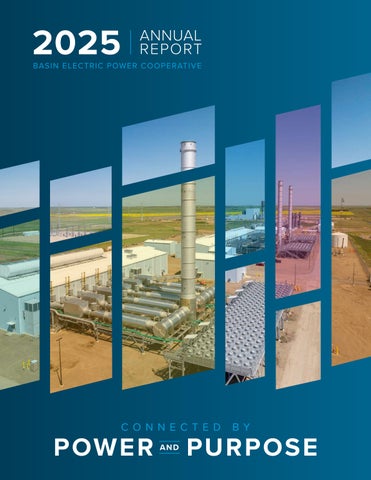
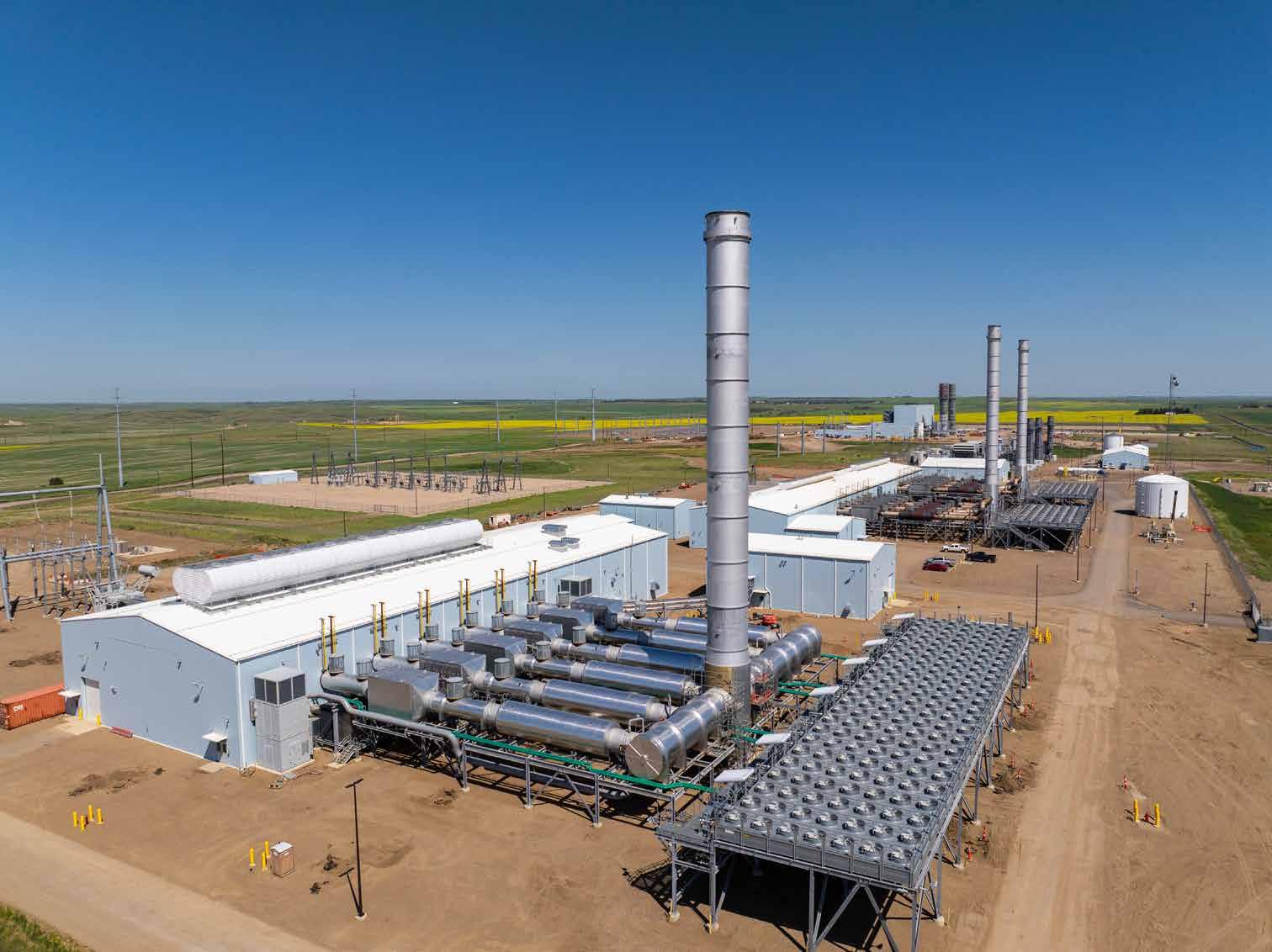
A new era of generation begins at the Pioneer Generation Station Phase IV with the installation of reciprocating engines designed for speed, efficiency, and reliability. These units can start within minutes, respond quickly to changing grid conditions, and provide the dependable power our members rely on.
IN MEMORIAM
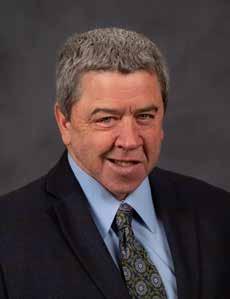
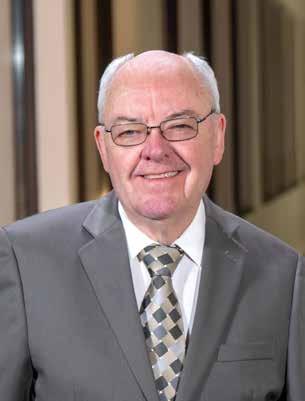
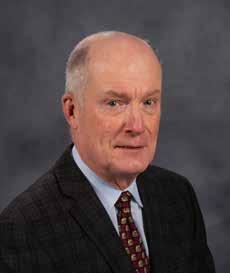
Director Mike McQuistion passed away on February 17, 2026. McQuistion joined the Basin Electric Board of Directors in 2013. Representing District 7, he served members of both Rushmore Electric Power Cooperative and West Central Electric Cooperative as a director since 1996. Over the course of his many years of service, McQuistion showed an unwavering commitment to the cooperative principles and to the members and communities he served. His leadership and dedication to strengthening and guiding rural electric co-ops will be remembered across the cooperative family.
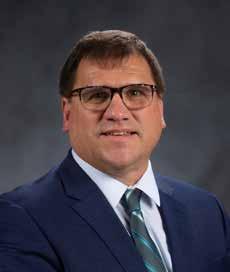
Mike McQuistion
Editor: Dana Hager (dhager@bepc.com)
Graphic Designer: Janene Pudwill
Photographers: Joy Schnabel, Juan Thomas, and Greg Wheeler
Basin Electric Power Cooperative Strategic Planning and Communications 1717 East Interstate Avenue Bismarck, ND 58503-0564 Phone: 701-223-0441 basinelectric.com
CONNECTED BY PURPOSE
PRESIDENT’S MESSAGE
What connects us goes beyond the services we provide. It’s a shared purpose built on cooperation, responsibility, and long-term commitment to the communities we serve. Since our founding in 1961, when the cooperative was formed to deliver reliable and affordable electricity to communities others would not serve, that sense of purpose has guided Basin Electric and continues to shape who we are today. For many of those communities, dependable power meant more than convenience; it meant safer homes, functioning hospitals, reliable water systems, and the ability to respond in emergencies. By pooling resources and sharing risk, our members built a generation and transmission cooperative designed to meet local needs, protect lives, and support long-term growth.
That strong foundation taught us that the decisions we make today matter for the future. It’s about finding the right balance between reliability and affordability, while also being thoughtful stewards and embracing innovation. It means working together, valuing every member’s voice, and respecting the role each person plays. Our cooperative model brings people together through shared successes and challenges and by setting priorities based on what our members need most.
This shared purpose is evident in everything we do at Basin Electric. It's demonstrated in the infrastructure we build, the services we provide, and the dedication our employees bring to their work every day. Alongside our members, we continue building a strong foundation of reliable service, strategic longterm investments, and a commitment to providing electricity for members at the end of the line today and the generations to come.
Staying connected by purpose also means focusing on doing what’s right, not what’s easy. Even as the energy landscape changes, we stay grounded in our cooperative values, making thoughtful, transparent decisions to deliver reliable and affordable power.
The 2025 Annual Report is one way we share this story and demonstrate how our purpose is put into action. It reflects our commitment to transparency and accountability by showing that our decisions align with our cooperative values and the needs of the communities we serve.
Looking ahead, our purpose remains clear. By staying connected through our shared mission and values, we’ll continue to create opportunities, support one another, and build a strong, resilient future for Basin Electric and our members.
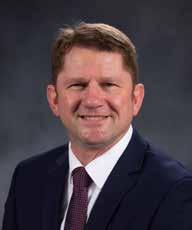
WAYNE PELTIER President
CONNECTED BY POWER
GENERAL MANAGER’S MESSAGE
For 65 years, Basin Electric has been guided by a simple yet powerful idea: we are connected by reliable power—to each other, to our communities, and to the shared purpose of delivering affordable electricity every day. Today, that connection spans approximately 3 million consumer-members, served through 138 member cooperatives across nine states, covering nearly 500,000 square miles, or about 13% of the United States. With such a vast service territory, the infrastructure of Basin Electric and our members plays a critical role in supporting the United States’ economy.
In 2025, Basin Electric made significant progress in strengthening the system that powers and connects our members and the country. The completion of Pioneer Generation Station Phase IV added approximately 560 megawatts of dispatchable generation capacity, reinforcing reliability and supporting continued growth across our service territory. At the same time, we completed major transmission infrastructure with Leland Olds Station substation, a 19.5-acre facility designed with long-term expansion in mind, enhancing grid strength and providing the flexibility needed to meet future energy demands.
These investments are part of a 10-year, $11 billion capital expenditure program that will more than double our balance sheet. To fund this program, we made two strategic financing transactions in 2025. In the middle of the year, we reentered the Rural Utilities Service (RUS) program, which we believe will also provide us greater regulatory certainty. In the fall, we issued $700 million of public bonds, which will ultimately be registered with the Securities and Exchange Commission (SEC). Pairing access to the RUS program and the ability to issue SEC registered debt with our $1.25 billion revolving credit facility and commercial paper program fully diversifies how we can access capital to support the scale and pace of Basin Electric’s capital expenditure program.
While these investments are designed to support future reliability and affordability, Basin Electric is also focused on delivering value and strong financial performance in the present. In 2025, our consolidated net margins were $116.3 million. Our average rate increased 6.5% in 2025 to $62.92 per megawatt-hour. It is also notable that our unit sales to members increased 1.7% in 2025, which is a deceleration from the growth experienced in recent years. This deceleration is due to a combination of factors including milder weather and slower sales growth to ethanol producers and the oil and gas industry.
The progress highlighted in the following pages of this report reflects a year of both achievement and intentional planning. In addition to infrastructure projects completed on schedule and budget in 2025, Basin Electric advanced major new generation and transmission projects, strengthened its financial position, enhanced member relations, and continued to position the cooperative to be prepared for the future.
None of this work would be possible without the leadership of our board of directors, the dedication of our employees, the support of our members, and investments from our financial stakeholders. Together, we are connected by reliable power—strengthening communities, supporting economic growth, and delivering reliable, affordable electricity across the heart of rural America.
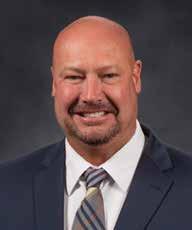
TODD BRICKHOUSE CEO and General Manager
POWERING WHAT’S NEXT
HOW BASIN ELECTRIC PLANS, BUILDS, FINANCES, AND OPERATES A RELIABLE SYSTEM
In 2025, Basin Electric experienced a year of increased power demand and disciplined decision-making. Through deliberate, forwardlooking steps, the cooperative strengthened system reliability and resilience for the members it serves. The year was defined by the energization of key generation projects, continued innovation, and financing strategies aligned to support future energy needs.
Growth alone does not define Basin Electric’s strategy. How projects are planned, financed, and prioritized matters just as much as what is built, and always with member ownership at the center of every decision.
POWER IN ACTION: STRENGTHENING SYSTEM READINESS WITH STRATEGIC INVESTMENTS
New generation resources play a critical role in maintaining system stability as load demand grows and energy needs evolve. Basin Electric’s recent investments reflect long-term asset planning focused on dependable capacity and operational flexibility.
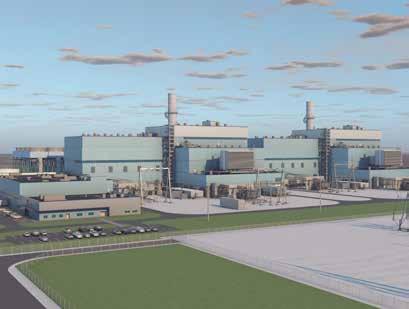
Announced in January 2025, Bison Generation Station represents a significant step forward in Basin Electric’s generation portfolio. Located near the towns of Epping and Ray in Williams County, North Dakota, the Bison Generation Station project is one of the largest investments in generation ever undertaken by Basin Electric and is designed to support rising traditional electricity demand across the region. Once complete, the two natural gas-fired combined-cycle generation units are expected to generate up to 1,490 megawatts of electricity.
After years of careful planning, construction, and coordination, Pioneer Generation Station Phase IV (PGSIV), Basin Electric’s largest generation project since the 1980s, became fully operational in August 2025, adding critical capacity at a time of significant load growth. The approximately 560-megawatt natural gas-fueled facility, located in Williams County, North Dakota, was completed on time, under budget, and with an outstanding safety record. The project combines combustion turbine and reciprocating engine units, allowing Basin Electric to respond quickly to changing system conditions and peak demand periods.
Notably, site work at Bison Generation Station began the same day Basin Electric celebrated the completion of PGSIV, a symbol of the continuity and forward momentum in the cooperative’s long-term planning.
Artist rendering of Bison Generation Station.
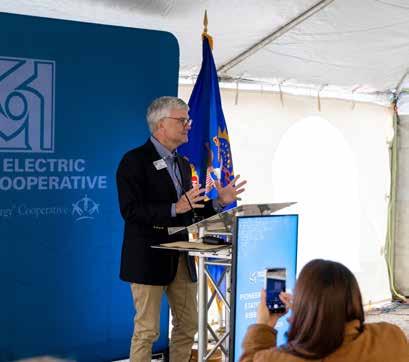
Todd Brickhouse addresses the audience at the PGSIV ribbon cutting ceremony.
TRANSMISSION: CONNECTING POWER TO MEMBERS
Reliable electricity depends not only on generation, but on the ability to deliver power where it is needed. Strategic transmission investments strengthen the grid, reduce congestion, improve operational resilience, and connect new and existing resources to member load.
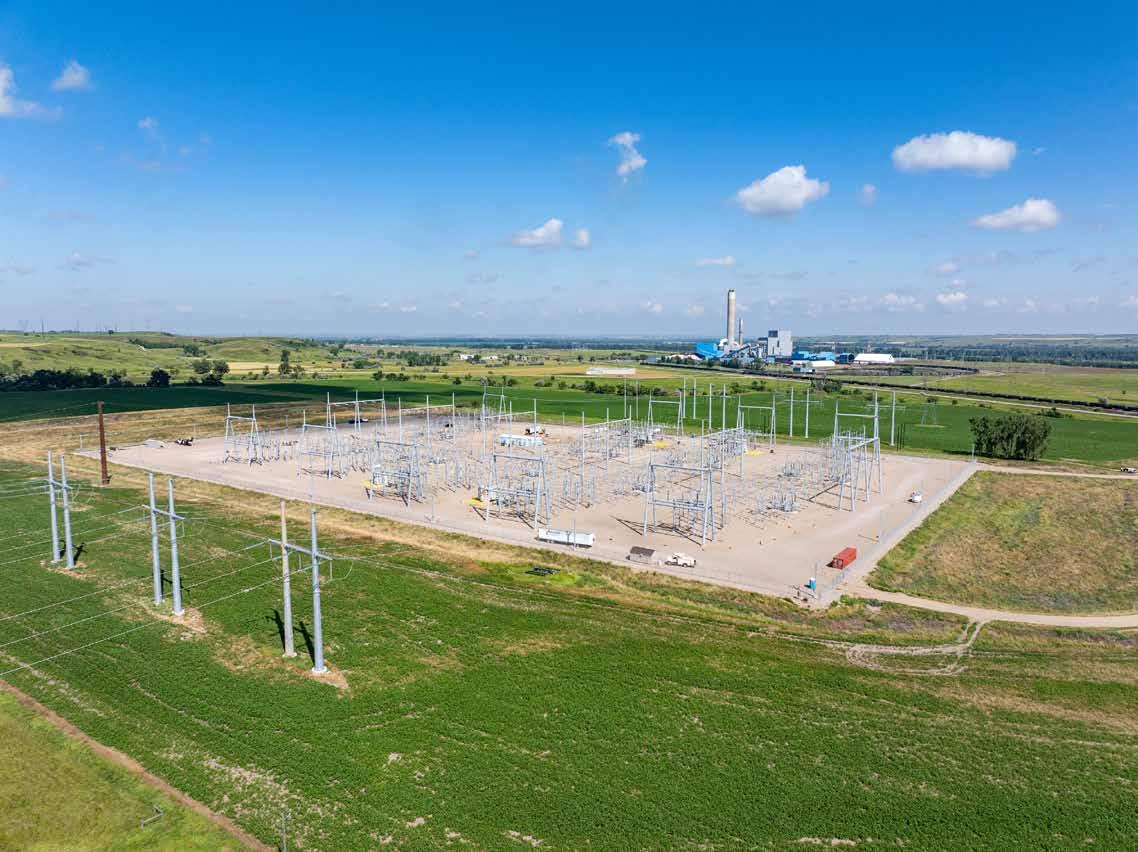
Construction on Basin Electric’s new Leland Olds Station substation was completed in November 2025. Located near Stanton, North Dakota, the 19.5-acre facility is one of the cooperative’s largest substations and supports multiple 230-kilovolt (kV) and 345-kV transmission lines and is designed with future demand in mind.
Construction on the Leland Olds Station-to-Tande transmission line began in June 2025. When energized in 2026, the 162-mile, 345-kV line will add capacity, reduce congestion, and improve redundancy across the region, strengthening Basin Electric’s ability to deliver reliable power during periods of growth and severe weather.
Environmental protection has always been a priority at Basin Electric, carrying a responsibility to the land and communities it serves. In 2025, Basin Electric advanced reclamation work along transmission corridors, including the 32.5-mile Roundup-toKummer Ridge 345-kV transmission line. Restoration efforts focused on erosion control, reseeding, and land repair, with the goal of returning disturbed areas to conditions that are as good a condition or better than before construction began.
DISPATCHABLE GENERATION: RELIABLE AND RESPONSIBLE PLANNING
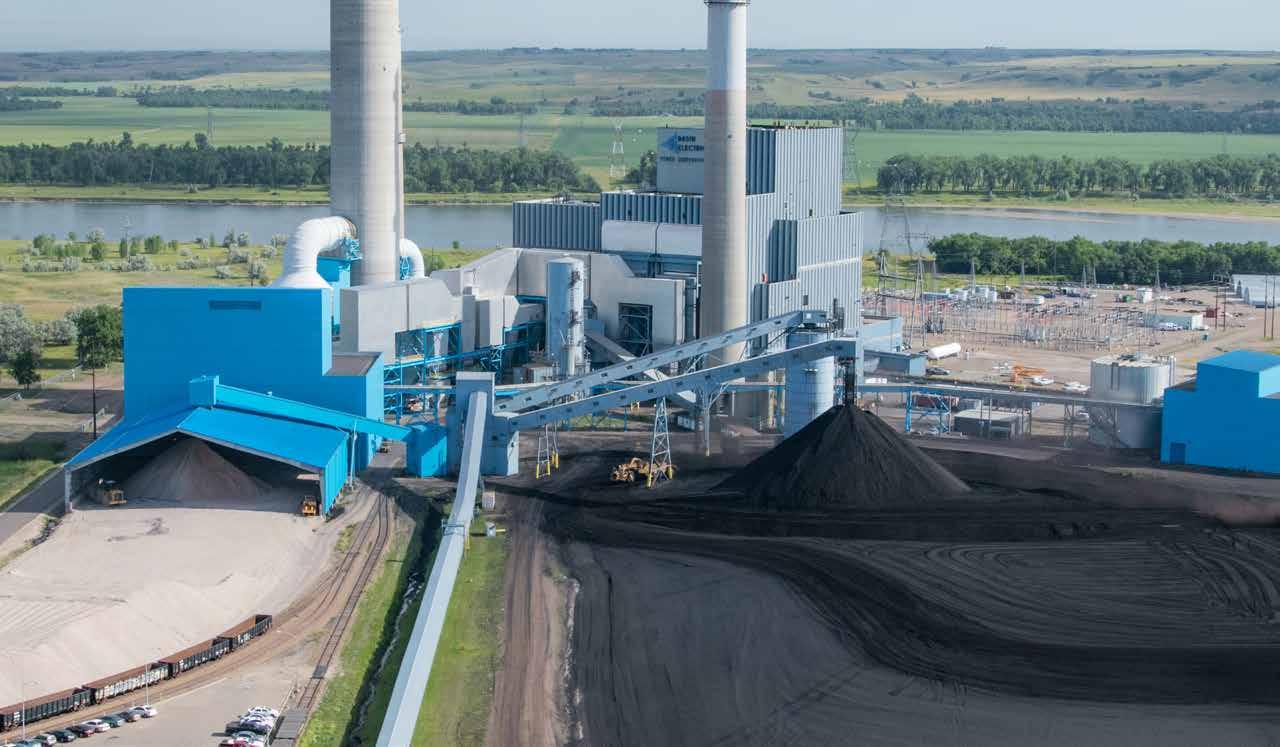
Dispatchable generation remained a cornerstone of Basin Electric’s all-of-the-above energy strategy in 2025. Coal-fired generation continued to provide essential baseload power, supporting system reliability during extreme weather and high demand while ensuring dependable service for members.
That role was reinforced in April, when Basin Electric CEO and General Manager Todd Brickhouse attended the signing of executive orders at the White House emphasizing the importance of reliable baseload generation to support economic growth, grid stability, and emerging energy-intensive industries. During the same month, Basin Electric received a two-year Presidential Exemption from the Mercury and Air Toxics Standards regulations for the cooperative’s four coal-fired power plants, providing regulatory relief while the U.S. Environmental Protection Agency (EPA) reviews and reconsiders the rule’s impacts on coal-based generation.
Basin Electric also continued its long-standing commitment to forward-looking energy leadership in October by securing $4 million from Wyoming Energy Authority and Wyoming Governor Mark Gordon to conduct a front-end engineering and design study examining the potential addition of a second unit at Dry Fork Station near Gillette. The study will evaluate technical feasibility and costs, reflecting Basin Electric’s disciplined, data-driven approach to long-term resource planning.
In November, the EPA approved North Dakota’s Coal Combustion Residuals permit program, allowing the state to oversee regulation of coal combustion byproducts under federal standards. This approval supports continued operation of Basin Electric’s coal fleet under consistent environmental requirements, enabling the cooperative to maintain reliable baseload generation while meeting regulatory obligations.
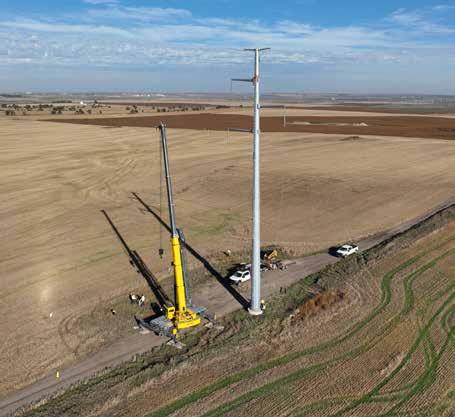
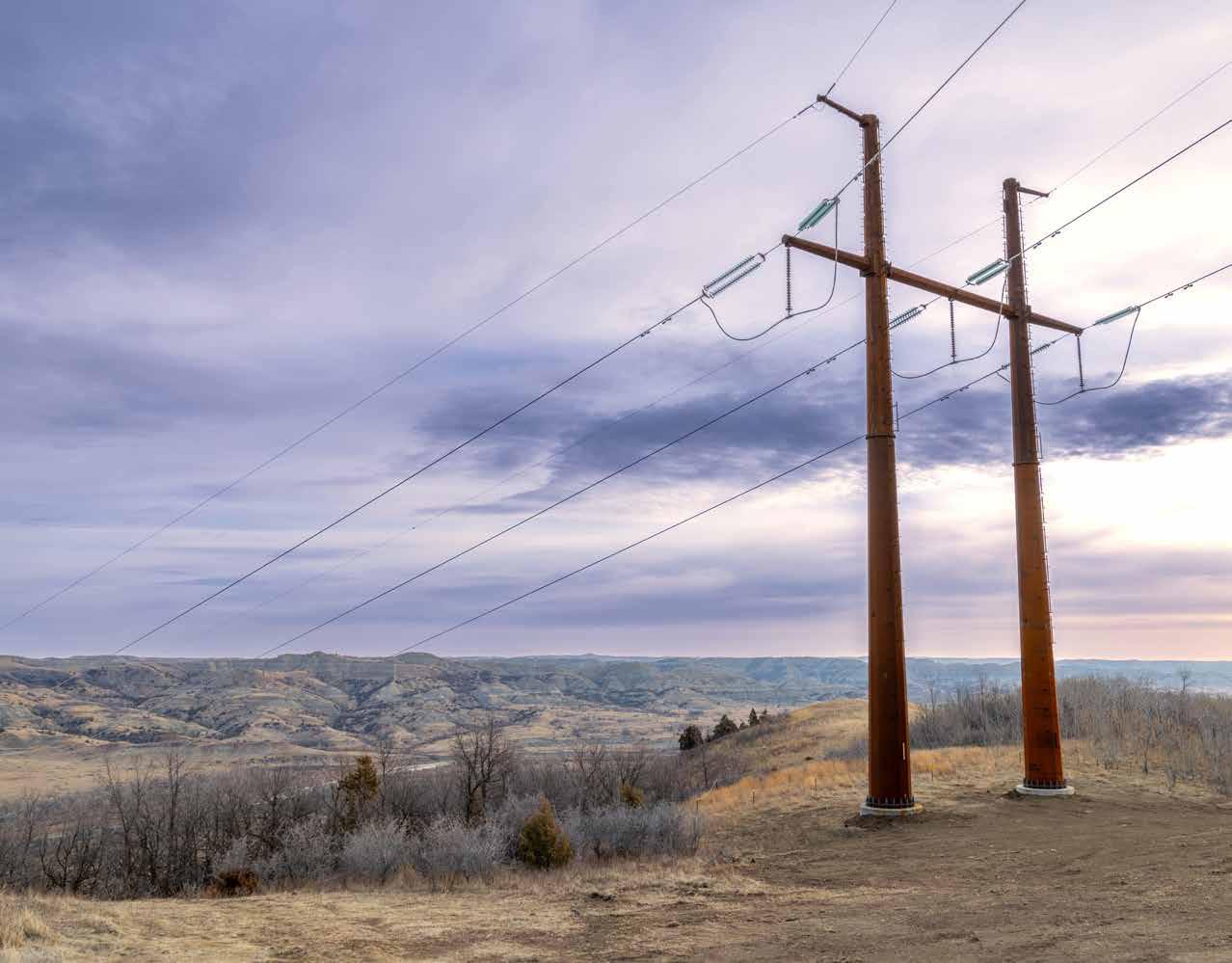
The Roundup-to-Kummer Ridge 345-kV transmission line stands tall against the wide-open skies in northwest North Dakota.
ALL-OF-THE-ABOVE FINANCING
FINANCIAL STRENGTH, LEADERSHIP, AND STABILITY
Reliable power systems are built on more than steel and wire, they require strong balance sheets and strong leadership. In 2025, Basin Electric demonstrated financial discipline while advancing one of the most significant investment periods in its history, using an all-of-the-above financing strategy designed to support longterm affordability for members.
In October 2025, Basin Electric issued $700 million in public bonds, marking only the second such issuance in the cooperative’s history. The issuance included U.S. Securities and Exchange Commission registration rights, a voluntary step that enhances transparency, strengthens investor confidence, and expands access to capital markets.
Investor demand was strong, with the offering significantly oversubscribed, allowing Basin Electric to issue the bonds at a lower interest rate than projected in the 2025 budget and 2026 financial forecast.
In 2025, the coal industry reached a pivotal moment as President Trump signed a series of executive orders prioritizing coal production, rolling back federal regulations, and designating coal as a national energy priority.
RETURNING TO COOPERATIVE RATE OVERSIGHT
In 2025, Basin Electric began the process of transitioning its rate oversight back to the Rural Utilities Service (RUS) from the Federal Energy Regulatory Commission (FERC), marking an important step in aligning regulatory oversight with the cooperative’s long-term financial and operational needs.
The decision reflects several factors, including access to lowinterest RUS financing, an increasingly important consideration as Basin Electric works to meet growing capital requirements. Returning to RUS oversight also supports more timely and predictable rate decisions and overall strengthens Basin Electric’s ability to manage costs, support long-term investment, and maintain transparency and accountability.
PATRONAGE DISTRIBUTION
$ 48.9 MILLION
At the end of 2025, Basin Electric distributed $48.9 million in patronage capital, approximately one-thirtieth of the cooperative's patronage balance.
This action brings the amount returned to members in the past three years to approximately $138 million in patronage capital distributions.
147.7 MILLION
STANDARD CUBIC FEET PER DAY
ALL-TIME WORLD RECORD FOR CO2 SEQUESTRATION
Set by Dakota Gasification Company, this milestone was achieved three days in a row in August 2025 demonstrating the reliability, scale, and readiness of Dakota Gasification Company’s carbon capture and sequestration infrastructure.
LARGE LOAD COMMERCIAL PROGRAM
Basin Electric experienced unprecedented interest from large energy users across its service area and proactively responded by developing the Large Load Commercial Program. The program is designed to support nontraditional economic development while insulating existing members from the costs and risks associated with serving new large electric loads. These loads cover a large share of the upfront costs to construct or acquire the assets needed to serve them.
Approved by Basin Electric’s Board of Directors in June 2025, the framework provides a consistent, transparent process for evaluating and serving large loads responsibly while balancing shared opportunities with system reliability and long-term affordability for members.
MINIMIZES RATE IMPACTS TO BASIN ELECTRIC MEMBERS
Insulates existing members from the costs and risks of serving non traditional new loads such as data centers.
SHARED OPPORTUNITY
Strengthens local economies and all members share in member growth, cost savings, and returns.
SAFEGUARDS FINANCIAL STRENGTH
Reduces the risk of stranded assets, protects Basin Electric’s credit rating, and supports responsible capital investment.
ENABLES FLEXIBILITY
Provides a clear process that supports system growth while prioritizing member interests.
A LEGACY OF LEADERSHIP AND SERVICE
After decades of service, two respected leaders—Dale Johnson and Mark Foss— retired in 2025, leaving behind legacies that helped shape Basin Electric and its subsidiaries during periods of growth, challenge, and innovation.
Dale Johnson retired from Dakota Gasification Company (Dakota Gas) after 40 years of service, most recently as plant manager. Johnson began his career before Basin Electric acquired Dakota Gas and played a central role in the plant’s operations, leadership, and long-term success. His tenure spanned decades of change and innovation, and he was known for both his technical expertise and his commitment to people.
Mark Foss retired after 47 years with Basin Electric, most recently serving as senior vice president and general counsel. Over the course of his career, Foss helped guide the cooperative through complex regulatory, financial, and legal decisions, often breaking new ground in the energy industry. Among his proudest achievements was structuring the leveraged leases for Antelope Valley Station in the 1980s—an industry-first transaction that strengthened Basin Electric’s financial foundation. Foss continues to serve in a quasi-retirement arrangement as senior legal counsel.
Their careers reflect the cooperative values of stewardship, dedication, and leadership that continue to guide Basin Electric and its subsidiaries.
Dale Johnson served Dakota Gas for nearly 40 years before retiring in March 2025.
Mark Foss served Basin Electric and its members for 47 years before retiring.
MEMBERSHIP
Members as of May 2026
2025 BYLAW REVIEW COMMITTEE
General Managers
Bob Sahr, District 1
Troy Metzger, District 2
Tom Meland, District 3
Matthew Washburn, District 4
Duane Highley, District 5
Doug Hardy, District 6
Kory Hammerbeck, District 7
Jeremy Mahowald, District 8
Kevin Mikkelsen, District 9
Bill Mertz, District 10
Jacob Olberding, District 11
Directors
Alan Vedvei, District 1
Scott Thiesse, District 2
Mark Brehm, District 3
Louis C. Reed, District 4
Tim Rabon, District 5
Russ Bloom, District 6
Dwight Rossow, District 7
David Sigloh, District 8
Casey Wells, District 9
Jim Collins, District 10
Dave Onken, District 11
2025 RESOLUTIONS COMMITTEE
Directors
Gary Bachman, District 1
Scott Thiesse, District 2
Mark Brehm, District 3
Louis C. Reed, District 4
Bob Frankmore, District 5
Russ Bloom, District 6
Dwight Rossow, District 7
David Sigloh, District 8
Deborah Erickson, District 9
Phillip Habeck, District 10
Dave Onken, District 11
Anthony Larson, Board Representative
BOARD OF DIRECTORS
GENERATION FACILITIES
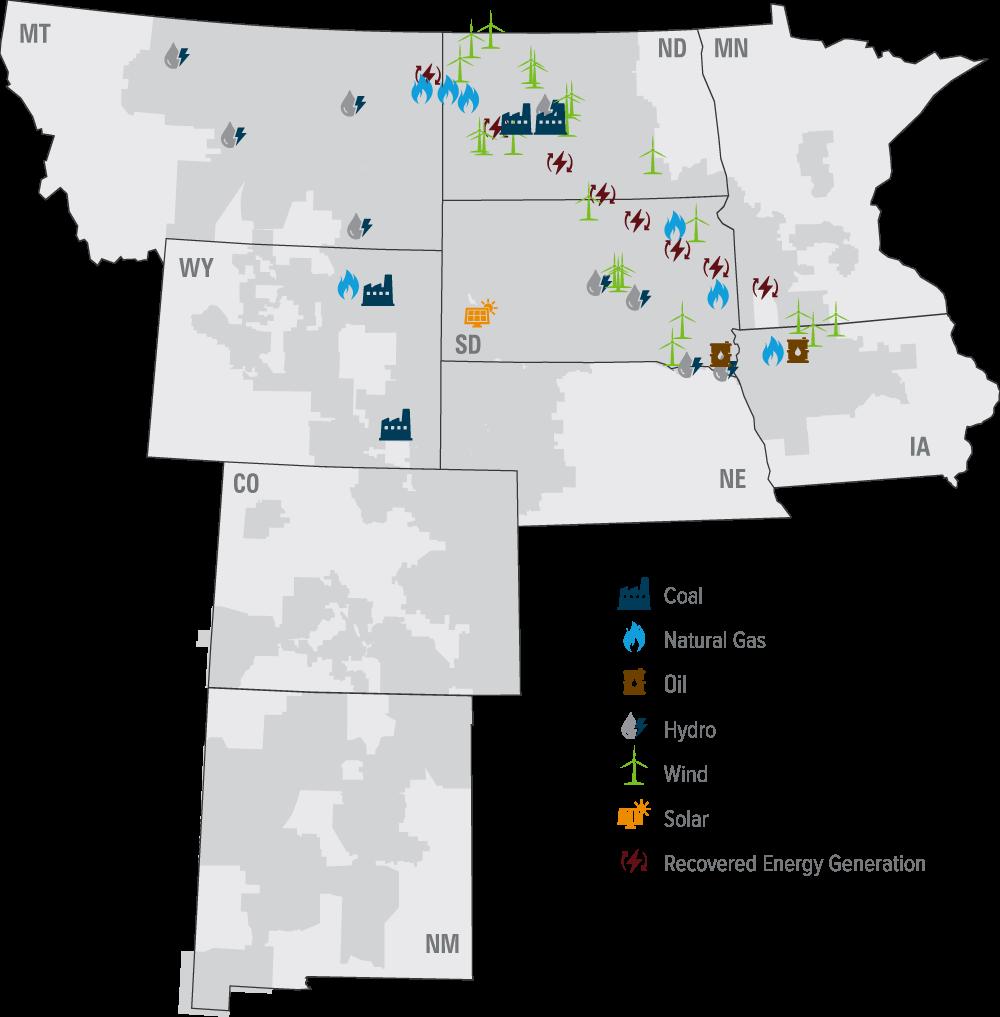
Basin Electric’s resource portfolio is fueled by a diverse energy supply across a vast geographical area in both the Eastern Interconnection and the Western Interconnection. The cooperative’s all-of-the-above energy strategy will continue to provide reliable, affordable, and responsible electricity to our membership. At the end of 2025, Basin Electric operated 5,779 megawatts (MW) of maximum winter generating capacity and had 9,035 MW of generating capacity within its resource portfolio. The map includes all facilities within Basin Electric’s resource portfolio, both currently operating and projects with which Basin Electric has executed power purchase agreements.
DIVERSIFYING OUR PORTFOLIO
Basin Electric takes a responsible approach through a diverse energy supply and growth that manages risks to our member-owners. The cooperative is focused on a resilient and reliable infrastructure that meets the needs of its members while adapting to the challenges of a rapidly changing energy landscape. The capacity bar graphs below show Basin Electric’s investment in added fuel diversity over the past two decades; they depict facilities built to generate electricity.
Note: Megawatts based on winter season net generating capacity as of Dec. 31, 2025, across the entire service territory.
OWNED AND OPERATED
NATURAL GAS
CULBERTSON GENERATION STATION
Culbertson, Montana • 95 MW • 1 unit
DEER CREEK STATION
Elkton, South Dakota • 297 MW • 1 unit
EARL F. WISDOM STATION UNIT 2
Spencer, Iowa • 40 MW • 1 unit
Megawatts noted reflect Basin Electric’s 50% ownership share of an 80-MW generation station. Operated by Corn Belt Power Cooperative.
GROTON GENERATION STATION
Groton, South Dakota • 188 MW • 2 units
LONESOME CREEK STATION
Watford City, North Dakota • 270 MW • 6 units
PIONEER GENERATION STATION
Williston, North Dakota • 804 MW • 23 units
WYOMING DISTRIBUTED GENERATION
Hartzog, Arvada, and Barber Creek, Wyoming 48 MW • 8 units
COAL
ANTELOPE VALLEY STATION
Beulah, North Dakota • 900 MW
2 units
DRY FORK STATION
Gillette, Wyoming • 405 MW • 1 unit
LARAMIE RIVER STATION
Wheatland, Wyoming • 720 MW • 3 units
Megawatts noted reflect Basin Electric’s 42.27% ownership share of a 1,700-MW generation station.
LELAND OLDS STATION
Stanton, North Dakota • 660 MW • 2 units
OIL
SPIRIT MOUND STATION
Vermillion, South Dakota • 120 MW • 2 units
Note: Megawatts based on winter season net generating capacity as of Dec. 31, 2025, across the entire service territory.
EXECUTIVE LEADERSHIP TEAM
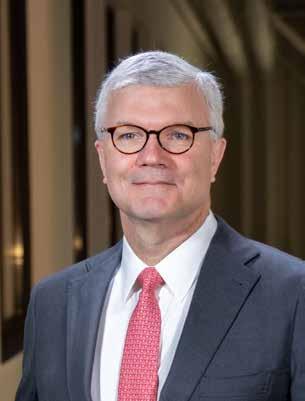
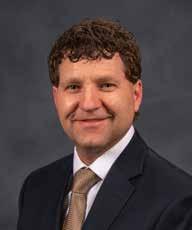
TODD BRICKHOUSE
Chief Executive Officer and General Manager
Employed with Basin Electric since 2022; finance, risk management, strategic planning, and leadership experience in the utility industry since 2000; background in securities trading, investment banking, and investment management; B.A. Economics and Business, Virginia Military Institute, Lexington.
CHRIS JOHNSON
Senior Vice President and Chief Financial Officer
Employed with Basin Electric since 2024; 30 years of finance and accounting experience in the utility industry; M.B.A., University of Georgia, Athens; B.B.A. Accounting, Georgia State University, Atlanta.
JIM HORAN
Senior Vice President and General Counsel
Employed with Basin Electric since 2025; experience at distribution, statewide, regional, and national cooperative utility entities; B.A., Saint Mary’s University of Minnesota; J.D., William Mitchell College of Law, St. Paul, Minnesota; M.P.S., Fort Hays State University, Hays, Kansas.
GAVIN MCCOLLAM
Senior Vice President and Chief Operating Officer
Employed with Basin Electric since 1989; Masters in Systems Management, University of Southern California, Los Angeles; B.S. Mechanical Engineering, North Dakota State University, Fargo; registered Professional Engineer.
CHRIS BAUMGARTNER
Senior Vice President of Member and External Relations
Employed with Basin Electric and member cooperatives since 1992; cooperative business, strategic planning, policy, and leadership focus; M.B.A., Master of Management, and B.S., University of Mary, Bismarck, North Dakota.
MILES MCGREW
Senior Vice President and Chief Human Resources Officer
Employed with Basin Electric since 2022; more than 25 years of experience in human resources, international labor relations, and organizational development and design; Masters in Public Health, University of Illinois Springfield; B.S. Labor Relations, Sangamon State University, Springfield.
VALERIE WEIGEL
Senior Vice President of Energy Markets and Dakota Coal Company Operations
Employed with Basin Electric since 1998; experience in accounting, finance, commodities, risk management and market operations; M.B.A., University of North Dakota, Grand Forks; B.S. Business Administration, University of Mary, Bismarck, North Dakota.
TRINITY TURNBOW
Vice President and Plant Manager at Dakota Gasification Company
Employed with Basin Electric and Dakota Gas since 2008; 24 years of experience in the oil field and chemical engineering field; more than 17 years of leading engineering and operations; B.S. Chemical Engineering, University of Minnesota, Twin Cities.
BUSINESS OVERVIEW AND RESULTS
OVERVIEW
Basin Electric Power Cooperative (Basin Electric) was incorporated in 1961 as a not-for-profit generation and transmission (G&T) cooperative corporation under North Dakota law. Headquartered in Bismarck, North Dakota, we provide wholesale electric services to our member cooperatives (members), supplying the capacity and energy they need beyond what they receive from other sources.
One primary source available to our members is the Western Area Power Administration (WAPA), a U.S. Department of Energy agency that provides hydroelectric power on a preferential basis. To meet additional demand, we serve our members through long-term wholesale power contracts.
Through our members, Basin Electric provides electricity to approximately 3 million member-owners across nine states: Colorado, Iowa, Minnesota, Montana, Nebraska, New Mexico, North Dakota, South Dakota, and Wyoming.
We employ an all-of-the-above energy strategy to meet our members’ power needs. Basin Electric’s power supply portfolio includes owned generation, long-term power purchase agreements, and short-term and spot market energy purchases. Our generating resources are fueled by a diverse mix of natural gas, coal, wind, hydro, solar and fuel oil.
We participate in multiple energy markets:
• Eastern Interconnection: Midcontinent Independent System Operator (MISO) and the Southwest Power Pool (SPP).
• Western Interconnection: Energy imbalance markets, including SPP’s Western Energy Imbalance Service and California Independent System Operator's Western Energy Imbalance Market, through various transmission providers.
Basin Electric is wholly owned by our members, who are also our wholesale or retail customers. In 2025, we had 139 members, categorized into four membership classifications, as outlined below.
In general, a cooperative is a business owned by its members, who are also its wholesale or retail customers. Cooperatives exist to help members meet their collective needs more effectively than they could independently. As not-for-profit organizations, cooperatives operate on a cost-effective basis, eliminating the need to generate excess
returns on equity. Any margins earned by a cooperative that are not distributed to members become patronage capital, which serves as the cooperative’s principal source of equity. Patronage capital is held for members without interest and returned when deemed appropriate by the board of directors.
COOPERATIVE STRUCTURE
BASIN ELECTRIC POWER COOPERATIVE
GASIFICATION COMPANY
SOURIS VALLEY PIPELINE
DAKOTA COAL COMPANY Division: Wyoming Lime Producers MONTANA LIMESTONE COMPANY
BASIN COOPERATIVE SERVICES
Basin Electric has three wholly owned, for-profit subsidiaries:
• Dakota Gasification Company – Converts lignite coal into pipeline-quality synthetic natural gas, carbon dioxide, anhydrous ammonia, urea, diesel exhaust fluid, and other products.
• Dakota Coal Company – Supplies coal for Antelope Valley Station, Leland Olds Station, and the Great Plains Synfuels Plant.
• In January 2026, Nemadji River Generation exited Nemadji Trail Energy Center.
MEMBERS
In 2025, Basin Electric is part of a three-tiered electric cooperative. The top tier consists of 119 distribution cooperatives and municipal utilities. These members are the “last mile of line” that provide electricity directly to homes, farms, and businesses. These cooperatives are owned by their end-use members, and their boards are democratically elected by those they serve. The second tier consists of 11 districts (Class A members), including 10 generation
DAKOTA
and transmission (G&T) cooperatives that supply power to distribution cooperatives and municipal utilities. The 11th district, while not a G&T cooperative itself, is composed of nine distribution cooperatives and one municipal utility association identified in the top tier. The G&T cooperatives are owned by their members and each of these 11 districts elects a representative to serve on Basin Electric’s board. The third tier is Basin Electric, which generates and transmits power to its Class A members through wholesale power contracts.
Basin Electric’s membership classifications ensure fair representation, local decision-making, and reliable power delivery to the communities we serve. Our four classifications of members consist of:
CLASS A MEMBERS consist of 10 wholesale G&T cooperatives, eight distribution cooperatives, and one wholesale municipal provider. They purchase power directly from Basin Electric through long-term power contracts and serve our nine-state region. We supply power directly to and receive revenue directly from our Class A members. Electric sales to our Class A members account for approximately 91% of our electric sales revenue.
CLASS B MEMBERS include any municipality or association of municipalities operating within a Class A member’s service area and purchase power through that Class A member. Basin Electric has one Class B member and does not sell power directly to or receive revenue directly from this member.
CLASS C MEMBERS consist of distribution cooperatives and public power districts that are members of our G&T Class A cooperatives. In 2025, Basin Electric has 118 Class C members, but they do not purchase power directly from us—they buy from their respective G&T Class A cooperatives.
CLASS D MEMBERS include electric cooperatives that purchase power directly from Basin Electric but on a basis other than the allsupplemental requirements contracts used by our Class A members. Basin Electric has one Class D member.
Our distribution cooperatives and municipal utility members provide electric services to residential, farm, commercial, industrial, and
irrigation consumers. They also power major industries that include oil and gas, pipelines, ethanol production, mining, livestock, and agriculture.
The table below presents energy sales and revenue by customer class for the year 2024 (the latest year information is available) for our distribution Class A members and the distribution members of our G&T Class A members.
WHOLESALE POWER CONTRACTS
Our financial relationships with Class A members are defined by wholesale power contracts for the sale of capacity and energy. Most of our wholesale power contracts with Class A members extend through 2075, with the exception of contracts with Tri-State G&T, Minnesota Valley Electric Cooperative, Wright-Hennepin Cooperative Electric Association, and Wyoming Municipal Power Agency, which extend through 2050.
In 2025, revenues from electric sales to members with wholesale power contracts expiring in 2050 account for approximately 10% of our total member sales. Some of our Class A members are G&T cooperatives, whose members include our Class B and C members. With limited exceptions, the wholesale power contracts between our Class A members and their members align with the same expiration dates as our contracts with Class A members.
RATE REGULATION OF MEMBERS
Of the nine states in our service territory, Colorado and Wyoming have statutes regulating electric distribution cooperative associations operating at the state level. In Wyoming, the distribution members of our G&T Class A members are subject to rate regulation by the respective state regulatory authorities. In Colorado, a 1983 law allowed distribution cooperatives the option to opt out of rate regulation by the Colorado Public Utilities Commission through a majority vote of their members before July 1, 1984. All but one of our Class C members in Colorado chose to opt out.
In addition to the state-level regulation, two of our Class A members— Upper Missouri Power Cooperative and Tri-State G&T—are subject to rate regulation by the Federal Energy Regulatory Commission (FERC). The information in this table has been compiled by Basin Electric from information obtained from the Annual Statistical Report Rural Electric Borrowers (Publication 201.1) and Rural Utilities Service or Cooperative Finance Corporation, and does not include Wyoming Municipal Power Agency, Tri-State G&T, nor the members of either. We have not independently verified this information.
2024 Sales by Distribution Members of Basin Electric’s
Members and
POWER SUPPLY
In 2025, we sold 34.4 million megawatt-hours (MWh) of energy to our members, reaching a system peak of 5,150 MW. To satisfy these energy demands, we own or lease a diversified portfolio of generation assets (see page 11) and operate over 2,600 miles of high-voltage transmission lines.
When power demand exceeds what our owned or leased resources can generate or when favorable economic conditions exist, we source additional energy and capacity through various long-term, short-term, and spot market purchases from multiple suppliers.
In addition to our owned transmission facilities, we rely on a variety of transmission systems to serve our members’ power requirements. The U.S. electric transmission system is separated into two major alternating current electrical power grids, the Eastern Interconnection and the Western Interconnection. A key challenge of this separation is limited power transfer capability from one interconnection to the other. Since Basin Electric provides service to members in both interconnections, we maintain access to several DC ties to help bridge this gap and ensure reliable power delivery.
In the Eastern Interconnection, we are members of SPP and MISO, both regional transmission organizations. In the Western Interconnection, our transmission needs are satisfied through:
• Common Use System – A joint transmission system between Black Hills Power, Powder River Energy Corporation, and Basin Electric.
• Basin Electric’s West Side Transmission System – Includes Basin Electric’s Western Interconnection Missouri Basin Power Project transmission facilities.
• Various transmission contracts – Agreements with WAPA and other entities.
In 2025, approximately 76.8% of our member MWh sales were in the SPP Integrated Marketplace, 8.9% in MISO’s energy market, and 14.3% in the Western Interconnection.
RATE REGULATION
Basin Electric provides electric power to our Class A members at rates established by our board of directors. Our wholesale power contracts with our Class A members require that the board establish sufficient rates—along with revenue from other sources—to meet the costs of operation and maintenance of the generating plants, transmission system, and related facilities; the cost of any power and energy purchased for resale; the cost of transmission service; the cost of lease payments; interest expenses and debt repayments; and to provide reasonable reserves for financial stability.
As a borrower of the U.S. Department of Agriculture’s Rural Utilities Service (RUS) program, Basin Electric’s rates are subject to review and approval by the RUS. Any proposed rate changes are submitted to the RUS at least 30 days before the change. The RUS must also review any changes to the existing loan contract between Basin Electric and the United States of America (acting by and through the Administrator of the RUS) or amendments or modifications to the Wholesale Power Contracts between Basin Electric and its Class A and D members.
CREDIT RATINGS
DAKOTA GAS PRODUCT REVENUE
Basin Electric owns and operates the Great Plains Synfuels Plant through its for-profit subsidiary, Dakota Gasification Company. Located near Beulah, North Dakota, the Synfuels Plant has been owned and operated by Dakota Gas since 1988. It is the only commercial-scale coal gasification plant in the United States that manufactures natural gas using Lurgi gasification technology. The Synfuels Plant gasifies lignite coal to produce valuable products. The plant is capable of producing 13 products, including up to 170 million standard cubic feet per day of natural gas, which is sent through the Northern Border pipeline to market.
DAKOTA GASIFICATION COMPANY PRODUCTS
Below is each commodity produced and sold, and examples of its end use. In addition, the percentage of revenue attributed to each product is noted.
• liquid CO2: carbonation for beverages, food processing, water pH balancing
ANHYDROUS AMMONIA
• agricultural fertilizer, power plant NOx abatement
2025 TOTAL PRODUCT REVENUE
$491 MILLION
NATURAL GAS
• fuel • power generation
UREA
• agricultural fertilizer, power plant NOx abatement
DIESEL EXHAUST FLUID
• diesel engine NOx emissions reduction, power plant NOx abatement
Does
MAINTAINING RELIABILITY
For electricity to be reliable, transmission must be available to move the electricity from the generators to the people and businesses who use it. Basin Electric owns and/or maintains thousands of miles of high-voltage transmission across seven states of our nine-state service territory in both the Eastern and Western Interconnections. Because the cooperative has generation and transmission on both sides, and access to the DC ties that permit electricity to flow from one side to the other, Basin Electric is in a unique geographical position for serving members’ electricity needs.
TRANSMISSION OWNED AND MAINTAINED
* Basin Electric includes its entitlement share over the Missouri Basin Power Project transmission facilities located in the Eastern Interconnection in the Southwest Power Pool transmission tariff.
** The Basin Electric Power Cooperative West Side Transmission System (BEPW) represents Basin Electric’s entitlement share over the Missouri Basin Power Project transmission facilities located in the Western Interconnection.
ALL-TIME SYSTEM PEAKS
As Basin Electric’s membership grows, the system sets new peaks as determined by member billing processes. The chart below shows that the cooperative has reached eight new all-time peaks since 2018. Widespread hot or cold weather is often a driver of the peak, as well as new sales to members and new loads in the system.
for the years ended December 31 (dollars in thousands)
at year end December 31 (dollars in thousands)
The completion of the Leland Olds Station substation paves the way for continued growth and innovation, reinforcing Basin Electric’s commitment to delivering safe, affordable, and sustainable energy to its members.
Scan the QR code or visit basinelectric.com for the 2025 Independent Auditor’s Report and Consolidated Financial Statements
CONNECT WITH US 2025 INDEPENDENT AUDITOR ′ S REPORT AND CONSOLIDATED FINANCIAL STATEMENTS