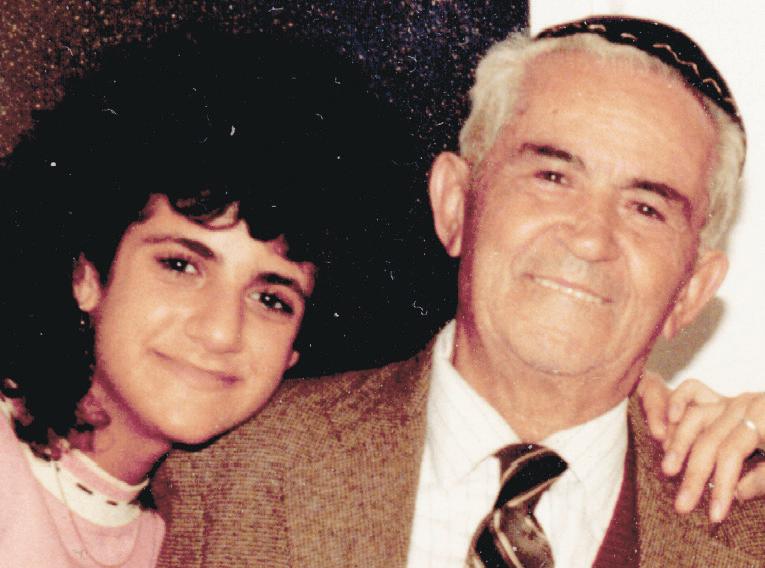
Thirteen-year-old Ethan Bloom is supposed to be preparing for his bar mitzvah — but despite his Jewish family, Ethan is convinced his spiritual calling is with the Catholic Church, where he secretly finds solace under the guidance of Father Diaz (Carlos Ponce).
Through the wisdom of an unconventional rabbi (Rachelle Lefevre), the love of his complicated father (Joshua Malina), and his first romance with a cowboy-boot-wearing girl who can put him in a headlock, Ethan must confront his lies and grief to discover that faith isn’t about choosing sides — it’s about honoring all the messy, beautiful pieces of who we are.
Dessert reception after movie
To purchase tickets and to view the full 2026 Film Fest lineup, visit jewishdayton.org.
May 2026
JEWISH
PUBLISHER ($1,000 +)
Elaine Goldberg and Bernie Rabinowitz
Theresa Lieberman and Marc Smith
EDITOR ($500 +)
Robert and Vicky Heuman
Henry and Marlene Maimon
Mary Rita and Norman Weissman
POET ($250 +)
Beth Adelman
Jim and Margaret Brooks
Gary and Irene Fishbein
Marni Flagel
Lynn and David Goldenberg
Gary M. Holstine – Stifel Investments
Linda and Steve Horenstein
Dr. Martin Jacobs and Dr. Martha Moody Jacobs
Joseph and Marsha Johnston
Helen and Mark Jones
Gayle and Irvin Moscowitz
WRITER ($100 +)
Ann and Skip Becker
Jack and Maryann Bernstein
Ken and Lisa Blum
Leslie Stein Buerki
Alan and Judy Chesen
Marcia Cox
Tara and Adam Feiner
Pam and Mike Feldman
Francesco and Kathleen Ferrante
Lynn Foster
Neil Friedman
Dr. Felix Garfunkel
Kim and Shelley Goldenberg
Art and Joan Greenfield
Joel and Judi Guggenheimer
Dr. Franklin and Renee Handel
Meredith Moss Levinson
Cheryl and Franklin Lewis
Beverly A. Louis
Barbara Mendelson
Halle and Scott Miller (in Memory of Cheryl L. Greenhut)
Vicki Minor
Roberta and Frank Mugford
Linda Novak
Walter H. Rice and Bonnie Beaman Rice
Alice and Burt Saidel
Judy Schwartzman and Mike Jaffe
Joni and Ralph Watson
Judy Woll and Ron Bernard
PATRON ($36 +)
Joyce and Jim Anderson
Stanley and Connie Blum
Dena Briskin
Sophia Cohen
Phil and Louisa Dreety
Lenora Elbaum
Paula Gessiness and Jay Holland
Arlene Graham
Neil Katz and Karin Hirschkatz
Jane and Gary Hochstein
Janice and Bob Kohn
Candy and Kim Kwiatek
Edie Pequignot (z”l)
Andrea Raizen
Donald and Susan Zulanch
FRIEND ($18 +)
Mark Bergsman
Eva Clair
Ann Schenking and Michael Herrlein
Register online by scanning the QR code.
Camp Shalom is hiring!
Camp Shalom is on the lookout for AMAZING Summer Camp Counselors! We’re now accepting applications for caring, energetic Summer Camp Counselors who are excited to help our campers shine.
Ready to be part of something special?
Email your resume to Jennifer Holman at jholman@jfgd.net.
Questions? Contact Jennifer Holman at jholman@jfgd.net
Join us for a night of axe-throwing fun as we wrap up the year with our final BBYO event before summer. For safety, all participants must wear closed-toe shoes in order to take part in axethrowing. Please also bring money if you’d like to purchase snacks.We can’t wait to end the year on a high note with you!
$20 per person. RSVP by April 30 at jewishdayton.org/events.
For more information, please contact Jennifer Holman at jholman@jfgd.net.
The JCC Preschool offers childcare from infants up to kindergarten, providing a warm, nurturing environment where children can learn, play, and grow at every stage of early development.
To book a guided tour today, contact Rebecca Levi at 937-610-1794 or rlevi@jfgd.net. Come see the difference for yourself!
Legacies, Tributes, & Memorials
JEWISH FEDERATION OF GREATER DAYTON ENDOWMENT FUND
In memory of Marla Harlan
Gayle and Irvin Moscowitz
JEWISH COMMUNITY RELATIONS
COUNCIL
In honor of Bonnie Beaman Rice being named one of the Dangerous Dames by the League of Women Voters
Diane and James Duberstein
JOAN AND PETER WELLS AND REBECCA LINVILLE FAMILY, CHILDREN AND YOUTH FUND
In honor of Ralph Heyman and Steve Harlan’s special birthdays
In memory of Rebecca Wells Linville
In honor of Hubert Levinson’s bar mitzvah
Joan and Peter Wells
CAROLE RABINOWITZ CAMP FUND
In celebration of Renate Frydman and her book and play, Anschel
In honor of Cindy Burick’s special birthday
Gary Holstine
JEWISH FAMILY SERVICES
In memory of Irene Bressler
Cathy Gardner
Did you know you can honor a friend or family member through a Legacy, Tribute or Memorial?
A donation to one of the Jewish Foundation's many endowment funds benefits our Jewish community while honoring a loved one. For more information, please call 937-610-1555.
Guided by Jewish traditions, Jewish Family Services of Greater Dayton provides individuals and families in the Miami Valley with the tools and services to lead happy and healthy lives.
If you or someone you know is in need of assistance, please contact Jewish Family Services at 937-401-1551 or email us at kscarpero@jfgd.net.
Beth Jacob Jewish Women Inspiring Jewish Women
Beth Jacob's Sixth Jewish Women Inspiring Jewish Women luncheon will be held at 11 a.m., Sunday, June 14 with speakers Sandy Sloane-Brenner, Renate Frydman, Judy Heller, Lori Lipp, Cantor Andrea Raizen, and Mary 'Mahira' Rogers. The cost is $26. Beth Jacob is located at 7020 N. Main St., Harrison Township. RSVP by June 5 to bethjacob1@ aol.com or 937-274-2149.
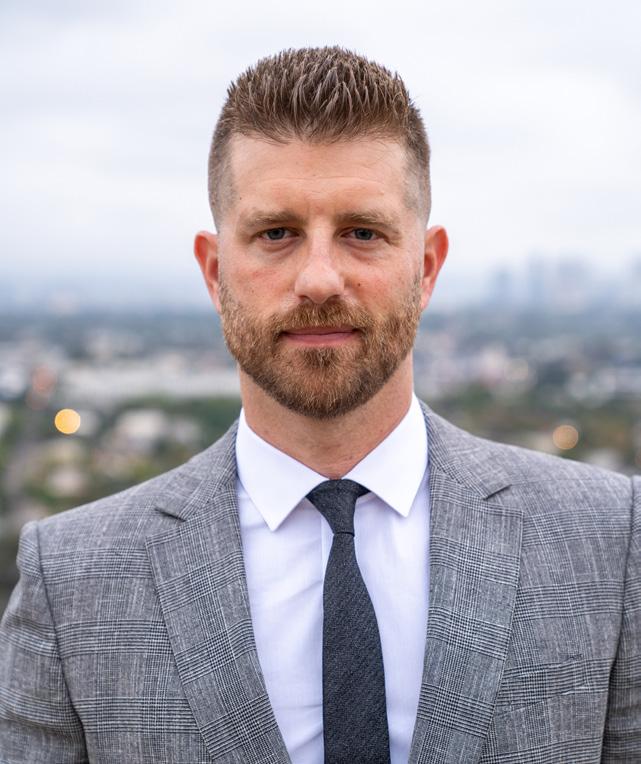
Ohio Jewish Communities announced it has hired Josh Kramer as its new CEO beginning June 1. A Cleveland native and Ohio State University graduate, Josh returns to Ohio from his work as director of the American Jewish Committee New York Regional Office.
With AJC, he led advocacy initiatives fighting antisemitism, strengthening U.S.-Israel relations, as well as government engagement and public diplomacy. Prior to his work at AJC, Kramer held senior roles in government and nonprofit sectors, including at University Hospitals in the Cleveland area.
He began his career in public service with the Ohio Department of Higher Education and the Ohio House of Representatives and has remained engaged in Jewish communal leadership through board and volunteer roles in Cleveland and beyond. Josh has also studied abroad at The Hebrew University of Jerusalem and at Vilnius University.
He takes over at OJC from
Howie Beigelman, who served as its CEO for more than a decade; Howie and his family have made aliyah (immigrated to Israel).
OJC is the lobbying arm of Ohio’s eight Jewish Federations.
Meryl Goldman serves as Dayton's representative on the OJC board.
Sonny Saeks is spearheading the launch of the newly revived Greater Cincinnati Jewish Genealogical Society. Born and raised in Dayton, Sonny began tracing his own family tree decades ago. “I want to help others in Cincinnati discover their roots, preserve their family stories, and feel the same deep connection to the generations that came before,” he explained. Miami Valley Jewish Genealogy & History, a project of the Jewish Federation of Greater Dayton, is a cosponsor of its inaugural event, Ancestry Meets AI: Tracing Your Roots Using the Latest Hi-Tech Tools, with MyHeritage Chief Genealogist Officer Daniel Horowitz, 7 p.m., Monday, April 27 at Adath Israel Congregation in
Cincinnati.
Sam Kessler, chief and managing editor of Fulcrum Global, the publishing arm of The Society for Defense and Strategic Studies at American Military University, has published the essay, Staying sane and resilient in a cognitive and information warfare environment, at fulcrumglobal.us. Sam is president of SDSS and one of the founders of Fulcrum Global, which aims to foster a nonpartisan environment to study and enhance advocacy, research, and knowledge pertaining to complex national security issues.
Mah-jongg mavens take note and get your sets ready: All The Best Delicatessen will host mah-jongg games Wednesdays, 2-4 p.m. and Thursdays, 6-8 p.m. beginning May 6 and 7. Single players and groups at all skill levels are encouraged to join by making reservations to the deli in advance. Players will also receive discounts on meals before or after their games.
Send your Mazel Tov announcements to mweiss@jfgd.net.
Sandy SloaneBrenner Renate Frydman
Mary 'Mahira' Rogers Cantor Andrea Raizen
Judy Heller Lori Lipp
Josh Kramer
Classes
Beth Jacob Classes: W. Rabbi Agar on Zoom. Call to register, 937-274-2149. Tuesdays, 7 p.m.: Torah Tuesdays. Thursdays, 7 p.m.: Thursdays of Thought.
Chabad Classes: Wednesdays, 7:30 p.m.: Talmud Class in person & Zoom. Call for Zoom link & location. Fridays, 9:30 a.m.: Women’s Class. Call for location. 2001 Far Hills Ave, Oakwood. 937-643-0770.
Temple Beth Or Classes: Sat., May 9, 23, 10 a.m.: Apocryphal Study in person & Zoom. Thurs., May 21, 6 p.m.: Navigating Loss w. Andy Chaet. Wed., May 27, 7 p.m.: The Jewish Short Story. Register at templebethor.com/calendar. 5275 Marshall Rd., Wash. Twp. 937-435-3400.
Temple Israel Classes: Wednesdays, 10 a.m.: Torah Study Commentary in person & Zoom. For Zoom info., email info@tidayton.org. Saturdays, 9:15 a.m.: Virtual Torah Study on Zoom. For Torah Study Zoom info., email Fran Rickenbach, franwr@gmail. com. Sun., May 3, 11:30 a.m.: Service Leading & Liturgy Class w. Rabbi Bodney-Halasz. Fri., May 8, 11 a.m.: Living w. Loss. Thurs., May 14, 3:30 p.m.: Living w. Ambiguous Loss. Sat., May 16, 9:15 a.m.: Torah Study in person & Zoom. tidayton.org/calendar. 130 Riverside Dr., Dayton. RSVP to 937-496-0050.
Family
Beth Abraham Rhythm ‘N’ Ruach: Fri., May 8, 5:30-6:15 p.m. At Temple Israel, 130 Riverside Dr., Dayton. 937-2939520.
Temple Israel Prayer & Play: Fri., May 8, 5:30 p.m. Infants–2nd grade. 130 Riverside Dr., Dayton. 937-496-0050.
Hillel Academy’s Tiny Tinkerers STEAM Kitchen: Sun., May 17, 10 a.m. Free. Parents & children 2-5. Contact Meryl Hattenbach, mhattenbach@
My
Continued from Page 17
the kind of open, contested, sometimes painful intellectual environment that the House Committee professes to be protecting while actually working to undermine.
Sarah Lawrence is not a perfect institution. No college
daytonhillel.org, for info. & RSVP or visit jewishdayton. org/events. 5275 Marshall Rd., Wash. Twp.
Youths & Teens
Dayton BBYO Senior SendOff: Sun., May 3, 5:30 p.m. $30. Email Jennifer Holman for more info., jholman@jfgd. net. RSVP at jewishdayton.org/ events. On Par Entertainment, 4464 Indian Ripple Rd., Beavercreek. 937-610-1555.
BBYO Axe-citing Summer Send-off: Thurs., May 7, 5:30 p.m. $20. Email Jennifer Holman for more info., jholman@ jfgd.net. RSVP at jewishdayton. org/events. Wild Axe Throwing, 3251 Seajay Dr., Beavercreek. 937-610-1555.
BBYO 2026 Board Elections: Tues., May 12, 5 p.m. RSVP by May 11 at jewishdayton.org/ events. For questions or more info., email Jennifer Holman, jholman@jfgd.net. Boonshoft CJCE, 525 Versailles Dr., Centerville. 937-610-1555.
Chabad CKids Shavuot - The Sinai Climb: Tues., May 19, 4 p.m. Free. Ages 5-12. RSVP at chabaddayton.com/ckids. 2001 Far Hills Ave., Oakwood. 937643-0770.
Adults
Ancestry Meets AI: Tracing Your Roots Using the Latest Hi-Tech Tools: Mon., April 27, 7 p.m. Free. W. MyHeritage Chief Genealogist Officer Daniel Horowitz. Sponsored by Greater Cincinnati Jewish Genealogical Society & Miami Valley Jewish Genealogy & History. RSVP to Sonny Saeks, ssaeks@icloud.com. Adath Israel Cong., 3201 E. Galbraith Rd., Amberley.
Black & Jewish America
Screening & Panel: Wed., April 29, 6 p.m. Free. U.S. District Judge Walter H. Rice moderates panel w. Temple Israel's Rabbi Karen Bodney-Halasz & Omega Baptist Church's Pastor Joshua D. Ward. Presented by ThinkTV & PBS in partnership w. Jewish Federation & Miami
college or university is. But it is one where Jewish life is visible, valued and genuinely diverse. My Jewish students learn by arguing with each other, challenging each other, and engaging across lines of political disagreement. The truth about Jewish life is almost always more complicated than people with clear-cut political aims
CALENDAR
Valley Urban League. Register at thinktv.org/black-and-jewishamerica-screening-and-discussion. The Tank at the Dayton Arcade, 31 E. 4th St. Dayton.
Temple Israel Sacred Stitching: Weds., May 13, 27, 11:30 a.m. Make items for donation w. JCRC’s Upstander initiative. For info., email Alexandria King, garyuzzking@hotmail. com. 130 Riverside Dr., Dayton. 937-496-0050.
Temple Israel So a Rabbi Walks into a Bar: Thurs., May 14, 5:30 p.m. First round on Rabbi Bodney-Halasz. Warped Wing Brewing Co., 26 Wyandot St., Dayton. 937-496-0050.
Finding Your Jewish Roots: An Intro. to Jewish Genealogy: Thurs., May 14, 6 p.m. W. Dayton Metro Library Genealogy Librarian Lori Rotterman & Miami Valley Jewish Genealogy & History Project Dir. Marshall Weiss. For more info., email Melissa Groveman, mgroveman@daytonmetrolibrary.org. Dayton Metro Library Kettering-Moraine Branch, 3496 Far Hills Avenue, Kettering. 937-463-2665.
Jewish War Veterans Post 587 Brunch: Sun., May 17, 10:30 a.m. $10. W. League of Women Voters' Julie Grunwald. JWV Post members & partners free. RSVP to Ira Segalewitz, isegalewitz@gmail.com or 937-287-2948. Temple Beth Or, 5275 Marshall Rd., Wash. Twp.
Jewish Federation Presidents Dinner: Sun., May 17, 5 p.m. $125 person. W. speaker Jonah Platt. RSVP by May 7 at jewishdayton.org/events or call 937-610-1555. Boonshoft CJCE, 525 Versailles Dr., Centerville.
Women
Chabad Rosh Chodesh Society: Sun. May 17, 10 a.m. $15. Freeing & Implementing Our Potential. RSVP at chabaddayton.com/rcs. 2001 Far Hills Ave., Oakwood. 937643-0770.
would have us believe. That complexity isn't a problem to be managed or a weakness to be exploited. It is at the very center of what a liberal arts education is supposed to be about.
Joel Swanson is an assistant professor of religion and Jewish studies at Sarah Lawrence College. Distributed by Forward.
Chabad Women’s Circle End of Year BBQ: Sun., May 24, 6 p.m. $36. RSVP at chabaddayton.com/cwc. 2001 Far Hills Ave., Oakwood. 937-643-0770.
Men
Chabad Bagels, Lox & Tefillin: Sun., May 3, 9:30 a.m. 13+ welcome. 2001 Far Hills Ave., Oakwood. 937-643-0770.
Community
Temple Israel’s Jewish Cultural Festival: Sun., May 31, 11 a.m.-6 p.m. Free admission. Details at tidayton.org/festival. 130 Riverside Dr., Dayton. 937496-0050.
Lag B'Omer
Chabad Lag B’Omer BBQ Celebration: Tues., May 5, 5:30 p.m. $20 adult, $10 child. RSVP at chabaddayton.com/ calendar. 2001 Far Hills Ave., Oakwood. 937-643-0770.
Shavuot
Beth Abraham Tikun Leil Shavuot: Thurs., May 21, 6-8 p.m. Sessions w. Rabbi Glazer & Elyssa Wortzman. Dairy dinner & dessert. Sugar Camp campus, Oakwood. RSVP by May 18, 937-293-9520.
Chabad Shavuot Ten Commandments & Ice Cream: Fri., May 22, 5:30 p.m. $10 adult, $5 child. RSVP at chabaddayton.com/calendar. 2001 Far Hills Ave., Oakwood. 937-643-0770.
Beth Jacob Shabbat Shavuot Jeoparty: Fri., May 22, 6 p.m. $18. Dairy dinner, Torah trivia, davening. RSVP by May 10 to bethjacob1@aol.com or 937274-2149. 7020 N. Main St., Harrison Twp.
WORSHIP SERVICES
Beth Abraham Synagogue
Conservative Rabbi Aubrey L. Glazer Saturdays, 9:30 a.m. 937-293-9520
May worship services at Temple Israel, 130 Riverside Dr., Dayton. bethabrahamdayton.org.
Beth Boruk Temple Reform
Cantor Andrea Raizen 2810 Southeast Pkwy., Richmond, Ind. bethboruk@yahoo.com. Friday night Shabbat service monthly, September through May. For schedule, go to bethboruktemple.com.
Beth Jacob Congregation
Modern Orthodox Rabbi Leibel Agar Saturdays, 9:30 a.m. Evening minyans upon request. 7020 N. Main St., Dayton. 937-274-2149. bethjacobcong.org
Chabad of Greater Dayton Rabbi Nochum Mangel
Associate Rabbi Shmuel Klatzkin Youth & Prog. Dir. Rabbi Levi Simon. Beginner educational service Saturdays, 9:30 a.m. 2001 Far Hills Ave. 937-643-0770. chabaddayton.com
Temple Anshe Emeth Reform
Worship led by Jese Shell Fri., May 8, 7:30 p.m. 320 Caldwell St., Piqua. Contact Steve Shuchat, 937-7262116, ansheemeth@gmail.com. ansheemeth.org
Yellow Springs Havurah Independent Antioch College Rockford Chapel. 1st & 3rd Saturday each month. Contact Len Kramer, 937-5724840 or len2654@gmail.com.
RELIGION
Why ripening religion still matters
(even if Hitchens thought it’s all hogwash)
By Rabbi Aubrey L. Glazer
Beth
Abraham Synagogue
Everybody regales how Christopher Hitchens never met a sacred cow he didn’t try to turn into brisket. In God Is Not Great, he famously declared that “religion poisons everything,” a line he delivered with the confidence of a man who has never coaxed anything into ripening except his own indignation.
If he’d lived in a shtetl, he’d have been the fellow standing in the marketplace shouting, “These figs are a menace!” while the rest of us were just trying to tie a little reed around the first one we saw.
who could spot human foolishness from 50 paces and still hit it with a slingshot. He once wrote in Following the Equator, “Man is the only animal that blushes. Or needs to.”
If he’d been standing next to Hitchens, he might have added, “And he’s the only animal who insists the fruit is rotten before he’s even planted the tree.”
And that, oddly enough, is where Jeff Tweedy strolls into the field, guitar in hand, looking like he’s been waiting for someone to notice the flowers all along.
Perspectives
And that’s precisely how the Mishnah imagines the beginning of religious life — not with thunder, not with dogma, but with a farmer whispering over an unripe fig.
“A seeker who sees a first ripening fig or pomegranate ties a reed rope around it and says: ‘Behold, this is first fruits (Mishnah Bikkurim 3:1).’”
That’s not poison. That’s tenderness. That’s a human being saying, "I don’t have much yet, but what I have, I offer."
Hitchens wanted religion to show up fully baked, wearing a tuxedo, and carrying a notarized certificate of rationality.
But the Judaism of Shavuot begins with the opposite instinct: bless the beginnings, honor the unripe, trust the slow work of becoming.
In honoring the unripe, it behooves us to recall Mark Twain,
Candle Lightings
Shabbat, May 1: 8:13 p.m.
Shabbat, May 8: 8:20
Shabbat, May 15: 8:27 p.m.
Erev Shavuot, May 21: 8:32 p.m.
Shabbat, 2nd Eve Shavuot May 22: 8:33 p.m.
Shabbat, May 29: 8:39 p.m.
Tweedy has always been a songwriter of beginnings — of the tremble before the bloom. In one Wilco song, he murmurs, “one tiny flower,” a line so small you could miss it if you blink. But that’s the point.
His flowers, as the text puts it, “are never triumphant; they are confessions disguised as petals.” Born in Belleville, Ill. in 1967, raised Catholic, shaped by punk, alt-country, and the long arc of recovery, Tweedy ripened musically from the raw earnestness of Uncle Tupelo to the experimental flowering of Wilco to the stripped down honesty of Tweedy.
His quiet, sincere conversion to go on the road with the journey of Judaism in midlife — undertaken not for spectacle but for love, family, and integrity — makes his sojourning also one of humility.
He entered the tradition the way his songs approach flowers: gently, without presumption, willing to be shaped. If Hitchens had been paying attention, he might have noticed
that this is what religion looks like when it’s not trying to be great. It’s just trying to grow a soul — which, incidentally, is harder than writing a polemic and pays considerably less.
Now imagine Luce Irigaray wandering into the orchard, shawl blowing like a philosophical flag, looking as though she’s about to scold the apple trees for internalized patriarchy. Born in Belgium in 1930, trained as a linguist, psychoanalyst, and philosopher, Irigaray spent decades telling Western civilization to slow down, breathe, and stop trying to dominate everything that moves.
She argues that we’ve forgotten how to grow. Plants insist on slowness, reciprocity, and the patient unfolding of form. To think vegetally is to honor the subtle, the seasonal, the interdependent. Tweedy’s flowers embody this. Bikkurim (first fruits) ritualizes it. The Bible's Ruth personifies it. And Shavuot becomes the festival that teaches us to trust the slow work of becoming.
May • Iyar/Sivan
Torah Portions
May 2: Emor (Lev. 21:1-24:23)
May 9: Behar-Bechukotai (Lev. 25:1-27:34)
May 16: Bamidbar (Num. 1:1-4:20)
May 30: Naso (Num. 4:21-7:89)
Irigaray, if only because she would have told him that the trouble with people is they want peaches in January and wisdom by lunchtime — and he would have agreed, lit a cigar, and blamed Congress.
Then there’s Reb Nachman of Breslov, great-grandson of the Baal Shem Tov, born in Medzhybizh in 1772, who fused Chasidic ecstasy with psychological depth.
He insisted that every blade of grass sings its own melody.
“To walk through a field,” as the text puts it, “is to walk through a choir.” Reb Nachman would have listened to Hitchens for about three minutes, smiled sadly, and said, “My friend, you’re listening for thunder. Try listening for grass.” And Shalom Aleichem would have added, “And if the grass is singing, it’s probably complaining about the weather.”
Shavuot becomes the festival that teaches us to trust the slow work of becoming.
Furthering that process of honoring the unripe, we could also turn to James Fowler, born in 1940, a Methodist minister and developmental psychologist at Emory, who became famous for his “stages of faith.”
People often misuse his model as a spiritual staircase — climb high enough and you get a diploma in enlightenment.
Twain would have loved
But Fowler’s real insight is simply that faith ripens. It softens. It becomes more porous, more relational, more capable of holding complexity without panic. The early stages — external, inherited, rule-bound — are the hard, green fruit the Continued on Page 25
Lag B’Omer • 33rd Day of Omer • May 5 • 18 Iyar
The 33rd day of the Omer breaks up the seven weeks of semimourning between Passover and Shavuot. It marks the end of a plague among Rabbi Akiva’s students and a victory of BarKokhba’s soldiers over the Romans 2,000 years ago. Celebrated with picnics and sports.
Shavuot • Festival of Weeks, Giving of the Torah • May 22-23 • 6-7 Sivan Marks the end of the counting of the Omer, a 49-day period that begins on the second night of Passover, and recalls the giving of the Torah at Sinai. In Israel, it falls at the end of the spring harvest. An all-night study session called a tikun, originally a mystical practice, is held at some synagogues.
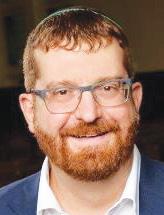
Rabbi Aubrey L. Glazer
A ripening fig
FOOD
Cream Puffs with Candied Pecan & Date Honey Custard
A stunning dessert for Shavuot from an iconic Jerusalem bakery
The Nosher Kadosh bakery and café in Jerusalem is practically a city landmark. The establishment got its start back in 1967 and has been in the Kadosh family ever since.
Now run by husband and wife pastry chef team Itzik and Keren Kadosh, the place preserves the European café culture of the family’s Hungarian roots, while having modernized the menu to include Israeli treats, sourdough breads, French pastries, and fresh pastas, all handmade.
This is an exclusive recipe we got from the legendary pastry chefs for Paris-Brest, a donut-shaped cream puff, filled with a candied pecan and date honey pastry cream.
Prep Time: 30 minutes + 2 hours chill time
For the choux pastry
½ cup full-fat milk
½ cup water
8 Tbsp. butter
1 tsp. salt
1 Tbsp. + 1 tsp. sugar
1 cup + 2 Tbsp. sifted allpurpose flour
4 large eggs
For the garnish
2 Tbsp. sliced almonds
1 tsp. egg white
½ tsp. powdered sugar
For the pecan and date honey custard filling
¼ cup cornstarch
1 cup + 1 Tbsp. full-fat milk
3 egg yolks
scant ¼ cup sugar
½ vanilla bean (or 1½ tsp. vanilla extract)
scant 1 cup chopped honeyroasted or candied pecans
¼ cup date honey
½ cup whipped heavy cream
Preheat oven to 350 degrees. To make the choux pastry:
In a pan, bring the milk, water, sugar, salt, and butter to a boil. Immediately take the pan off the heat and add the full flour amount all at once.
Mix with a wooden spoon, put the pan back on a medium low flame, and cook until the mixture starts to dry out and the dough pulls away from the sides of the pan to form a ball around your spoon. Take the mixture off the heat and let the mixture cool slightly.
In a mixer on low speed (or in a medium bowl by hand), add the eggs one at a time, beating until each egg is thoroughly combined, before adding the next egg. (The mixture will curdle initially, but then come back together as you beat it.)
Prep a baking sheet by lining with baking paper, and tacking the paper down with a small dot of the choux pastry mixture on the underside of each corner.
Fill a large pastry bag with the mixture, and using a 6-inch round cookie cutter to guide you, pipe a fat 7-inch circle. The circle should be a bit raised, and not completely flat. Mix the almonds, egg white, and powdered sugar and spread it on top of the piped circles.
Bake for 40 minutes, until deep golden brown, take out of the oven, and set aside to let
cool.
To make the pecan and date honey custard: Dissolve cornstarch in ¼ cup cold milk. Add the egg yolks and sugar, and lightly beat into a fully combined mixture.
Pour the rest of the milk (3/4 cup + 1 Tbsp.) into a sauce pan. Add the vanilla bean and bring to a boil. Remove the vanilla bean from the pot with a slotted spoon, split, and with the help of a spoon, scrape the seeds into the sauce pan. Return the vanilla pod to the pot, and lower the heat.
Add a third of the hot milk to the egg yolk mixture and beat well. Pour the tempered egg yolk mixture back into the hot milk mixture and cook over a low flame, stirring constantly for about two minutes, or until the mixture thickens, and can coat the back of a spoon.
Remove the empty vanilla pod, add chopped pecans and date honey, and mix to combine.
Pour the mixture to a bowl, and cover with a piece of plastic wrap directly covering the surface of the custard. Let cool to room temperature, then transfer to the fridge to chill for two hours.
After chilling, whisk the custard for about half a minute to get a smooth mixture without clumps. Whip cream, fold into the custard mixture, and transfer to a piping bag fitted with a large round piping tip.
To assemble: Cut the cooled choux pastries in half lengthwise, pipe a fat layer of custard, seal with the other half like a sandwich. Sift powdered sugar over the top as a garnish.
Arts&Culture
Two women race to save Persian Jewish music
Galeet Dardashti performing traditional Persian Jewish music.
Janice Rubin
Using tapes of their grandfathers singing in Iran, Galeet Dardashti and Jacqueline Rafii transcribe and adapt songs that echo centuries of tradition
By Simone Saidmehr, Forward
In the 1950s, Younes Dardashti, a Jewish man from Tehran’s Jewish ghetto, became one of Iran’s most celebrated singers. As the country underwent rapid secularization under the shah, Jewish communities that had long been pushed to the margins found new opportunities. Dardashti’s piercing, unmistakable voice filled Iranian airwaves, exclusive concert halls, and the shah’s palace, earning him the title “Nightingale of Iran.”
Years after Younes Dardashti’s death, his granddaughter Galeet is still singing with him in New York.
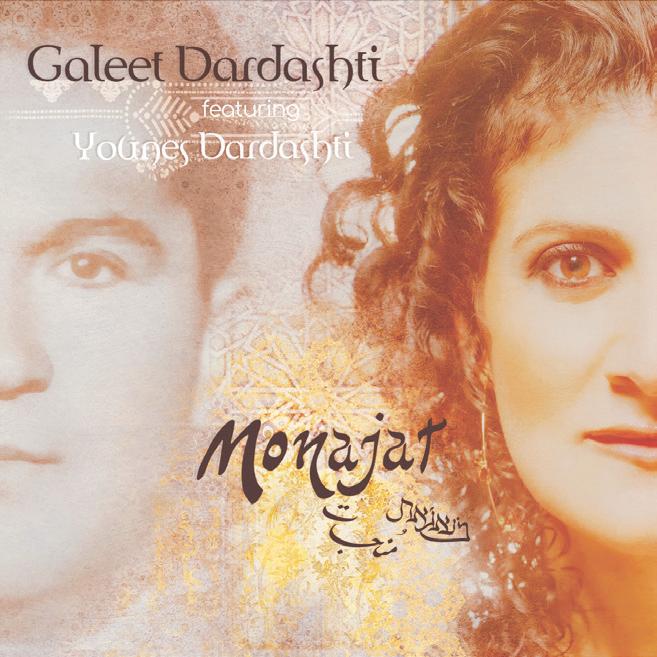
Using archival recordings of her grandfather’s voice, Galeet Dardashti created her album Monajat — meaning an intimate conversation with God — layering her vocals over decades-old tapes of him singing Selichot, religious poetry chanted nightly before the Jewish New Year.
While in cantorial school, Rafii rediscovered cassette tapes made of her grandfather leading a Passover Seder in Tehran. When her family was forced to flee the country following the Islamic Revolution in 1979, they brought that cassette tape with them.
“It was like a time capsule,” Rafii said.
Across the country in Los Angeles, Jacqueline Rafii — senior cantor of Valley Beth Shalom, one of the largest Conservative synagogues in the U.S. — is also working to preserve her Iranian grandfather’s traditional Persian Jewish music.
She realized that those grainy and distorted recordings captured a Persian Jewish musical tradition that had only ever been passed down orally from generation to generation. In the diaspora, Rafii worried, they might disappear. She sat at the piano with her father to turn what she heard on those old cassette tapes into sheet music so that others might replicate the music Iranian Jews have been singing for centuries.
“We were trying to take this distorted tape from the ’70s and plunk out the notes,” Rafii said. “To write something that had never been written before.”
What began with a single tape became a larger project. She put out a call on social media to try to find people who remembered Jewish prayers from Iran. She found Dardashti, who taught Continued on Page 24
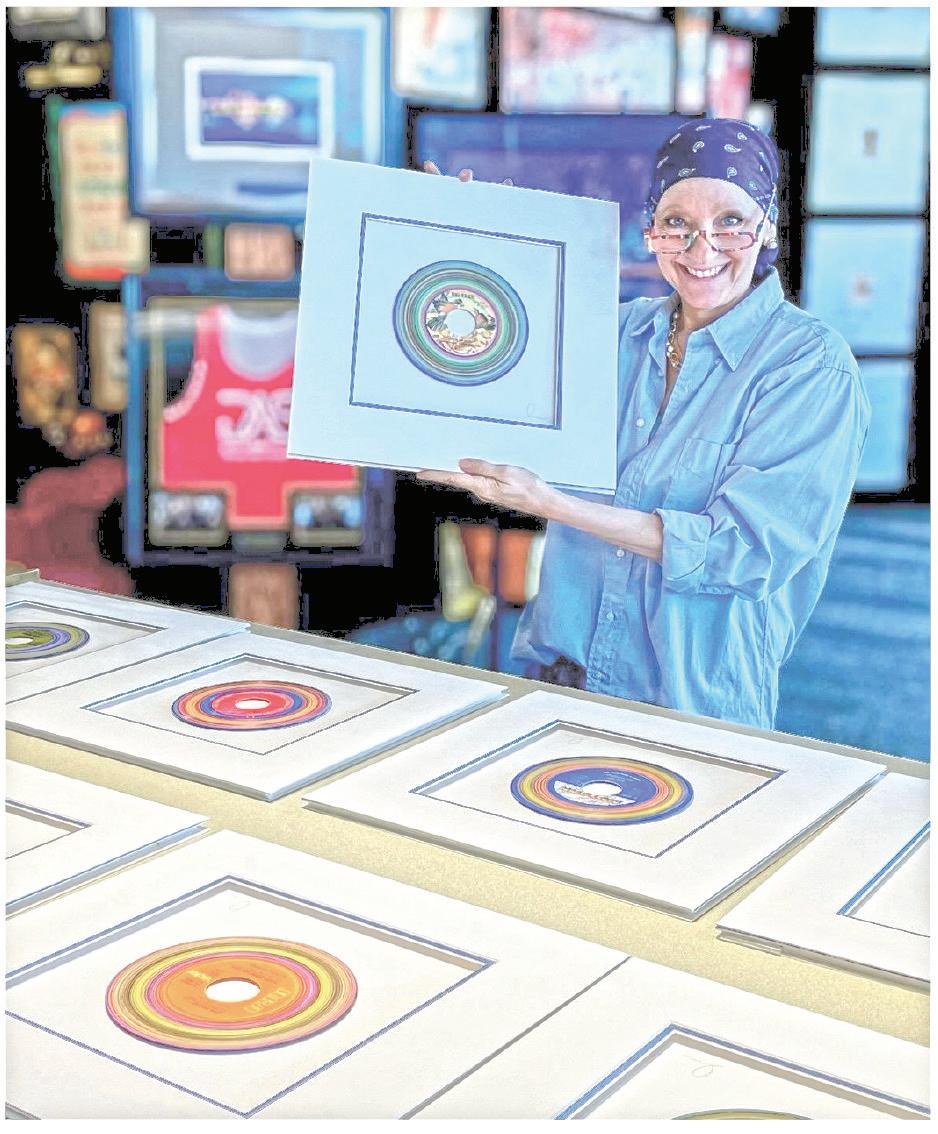
PHOTO: LYNN MARIE, OWNER OF HIPSTORIC ART
The Time Is Now.
Several years ago, the community came together and created Jewish Cemeteries of Greater Dayton to protect and preserve the eternal homes of our loved ones.
Research showed the need to raise $5 million for an endowment fund. Thanks to the boards of Beth Abraham, Beth Jacob and Temple Israel, as well as hundreds of donations, we are just $200,000 away from reaching our goal.
Once completed, JCGD will ensure the sanctity of our cemeteries and financial security for each congregation.
You can turn our dream into reality.
Now is the time to make your pledge.
pledge
Persian Jewish music
Continued from Page 23
Rafii her grandfather’s Yom Kippur melody for El Nora Alila (God, Awesome in Deeds), as well as others who recited the songs they remembered from Iran to Rafii, who painstakingly notated them all. Eventually, Rafii turned her work into a 150-page master’s thesis, collecting and notating seven Persian Jewish melodies.
A transcription challenge
According to Dardashti, who holds a Ph.D. in anthropology and specializes in Mizrahi (Eastern Jewish) culture and music, Jews have played an important role in Persian musical life for centuries.
After the 7th century, when Muslim forces conquered Persia, there were periods during which nonreligious music was restricted under Islamic law. Because Jews were classified as najis, or “impure,” they faced limitations on the types of occupations they could legally pursue. Music, being a marginalized and often stigmatized profession, was typically avoided by Muslims. This made it a particularly viable livelihood for Jews who often performed the jobs that were restricted to Muslims.
Because of this, religious minorities — namely Jews, Zoroastrians, and Christians — were responsible for sustaining Persian musical traditions when Muslims could not.
Classical Persian music often features singers interpreting the poetry of figures like Hafez or Rumi. One of its defining features is tahrir, a rapid oscillation in the voice that can sound like a controlled break or yodel, used to convey emotional intensity.
women’s public singing. Now in the diaspora, that chain of transmission has begun to break down, with fewer and fewer Iranian Jews learning the songs their parents and grandparents once sang.
Rafii, one of only a handful of Persian women who are ordained cantors, says she has faced obstacles in “expressing her cantorial pursuits” to more traditional members of the Persian Jewish community, particularly in religious settings where women’s singing is restricted. Still, she says, much of Los Angeles’ Persian Jewish community has come to embrace her role as a cantor and to deeply appreciate her work preserving Iranian Jewish culture.
For Dardashti, singing Persian Jewish music as a woman is just another layer of the reinvention that has been a feature of Persian Jewish music for generations. Though she too does not perform her music in Orthodox Iranian Jewish settings, she embraces the unique role she can play in leading services for Reform and Conservative Iranian Jews, for whom music in the Ashkenazi (Jewish Eastern European) style is often the default.
The music relies on modal systems and tonal structures distinct from Western scales. It also includes microtones — notes that fall between the pitches used in Western scales and cannot be easily represented on a standard musical staff. To make the melodies accessible, Rafii notates them “in a format that would be compatible with Western music,” eliminating some (but not all) of those microtones, adding chords to mimic their sound, and establishing a regular meter.
Persian Jewish music draws directly from this tradition, applying its musical forms to Jewish liturgy — Torah chanting, High Holiday prayers, and religious poetry — as well as to songs about daily life written in Judeo-Persian.
“It’s really about interpreting a text,” Dardashti said. “Just as a Persian classical singer would interpret a poem, in Persian Jewish music, you’re interpreting Hebrew liturgy in a very similar way.”
For centuries, this music was transmitted entirely orally, passed down from generation to generation, with each singer adding their own interpretation and stylistic flair.
During the reign of Shah Mohammad Reza Pahlavi from the 1940s through 1979, Jews enjoyed a golden age in Iran. Jewish musicians, who often came from lineages of family members who had been making music for centuries, moved to the fore and became nationally recognized stars. Dardashti’s grandfather was perhaps the most prominent. Because Israel and Iran had good relations at the time, he frequently traveled between the two countries to share his talents.
Younes Dardashti became a cantor at synagogues across Tehran. Because his chanting was done in a musical style that Iranians of all faiths were used to hearing on the radio, Galeet Dardashti says, non-Jews would press their ears to the doors of the synagogue to hear her grandfather’s voice.
A tradition passed down by men
Traditionally, Persian Jewish liturgical music was preserved and performed almost exclusively by men because of Jewish religious norms that limited
“I feel like right now this community needs me; there aren’t many people who can do this work and are willing to do it in an egalitarian setting,” Dardashti said. For the last few years, she has led High Holiday services in the traditional Persian style at Kanisse, an egalitarian Jewish community for Sephardic and Mizrahi Jews in New York City.
Though both Rafii and Dardashti are Iranian, neither grew up immersed in Persian Jewish musical traditions.
Like many Iranian Jews who came to the United States after the revolution, their families entered a Jewish landscape dominated by Ashkenazi practice. Dardashti’s father, himself a cantor, trained at Jewish Theological Seminary, where the focus was almost entirely Ashkenazi. “I grew up the daughter of a Persian cantor who was singing Ashkenazi music,” Dardashti said.
“In order to learn Persian Jewish music, I had to start from scratch,” she added. “I knew nothing.”
She turned to her father, asking him to teach her the melodies he had grown up with in Iran but had not performed formally since coming to the U.S.
Her work, while rooted in a desire to preserve Persian Jewish music, is not without experimentation. Dardashti adds her own flair to her grandfather’s music, laying his vocals over her band and arrangement.
“I’m also reinventing, because music isn’t static. Cultural transmission is messy — everyone changes things. So I lean into that messiness.”
Connecting cantors across cultures
Rafii also continues to transmit Persian Jewish music in an unconventional way by bringing it to Ashkenazi audiences. When she entered cantorial school, she said, there were no formal pathways to train in non-European musical traditions. Now, she says cantors from across the country — “in particular, Ashkenazic cantors” — have reached out to her for Persian Jewish sheet music and guidance on incorporating these melodies into their services.
“They want to share how diverse the Jewish family is,” she said. “Now that there’s sheet music for Persian Jewish music, it’s accessible, and they can offer it to their community.”
Dozens of non-Persian cantors have already begun including these melodies in their services.
At Valley Beth Shalom, a largely Ashkenazi congregation in Los Angeles, Rafii sees her cantorial work as serving a spectrum of Jewish traditions, regularly singing her grandfather’s Persian tunes alongside Yiddish music and classic chazanut (cantorial singing).
“I like to include them as part of an everyday service,” she said. “Why don’t we just combine the melodies and make this part of the American Jewish experience?”
Galeet Dardashti and her grandfather, Younes.
Ripening religion
Continued from Page 20
farmer marks with a reed. The individuative stage, where the soul begins to question, is the moment the fruit softens and the flower opens — Tweedy’s terrain of trembling honesty.
And the post critical stage — where paradox becomes a companion rather than a threat — is the ripening itself.
But Chasidism, especially in its metamodern rereading, knows that ripening is not a one-way street. Fruit over ripens. It falls. It composts. It begins again. Revelation is not a stage but a pulse. The soul does not graduate from simplicity; it circles back to it with new tenderness.
Hitchens wanted religion to be a finished product. But the Judaism of Shavuot says: finished products are for factories. Souls are for fields.
We live in a moment of spiritual exhaustion. Certainty has become a performance art. Outrage is a competitive sport. And the loudest voices — religious and secular alike — tend to be the least ripened.
Shavuot offers a counter practice: tie a reed around what is beginning, bless what is unripe, trust what is still becoming.
This is not naïve. It is disciplined hope. It is the courage to say: I am not finished, and that is not a flaw. It is a feature of being human.
While I appreciate any thoughtful skepticism, Hitchens doth protest too much in arguing that religion poisons
everything — really?!? Alas, if we are honest, what poisons us today is not religion. It is the refusal to grow. The refusal to soften. The refusal to admit that we are all, in one way or another, unripe fruit tied with a reed.
Twain would have said, “The problem with people isn’t that they’re unripe. It’s that they insist they’re peaches when they’re still green as cucumbers.”
Shalom Aleichem would have nodded and said, “And then they blame the rabbi.”
So Shavuot as the Feast of Weeks gives us three gestures — not commandments, not dogmas, just three small, stubborn practices.
First, name one place in your life where your faith, courage, or compassion is still unripe — and bless it.
Second, nurture one fragile beginning with deliberate tenderness.
Third, offer something unfinished to the world. An apology not yet perfected. A creative spark not yet polished. A gesture of repair not yet complete. This is the wit of Shavuot: the only way to grow a sweet fruit is to risk sharing a sour one.
And in the end, the promise is simple. They are the promise that even one tiny flower — whether in a field, a song, or a soul — can be enough to begin a harvest.
Hitchens never understood that religion is not great. It’s growing. And that is its greatness (even if Hitchens thinks it’s all hogwash) — stubborn, slow, and, like all good fruit, impossible to rush, forever ripening.
MAY 5 - 10
William Harvey Fenberg, April 18, 1948 – April 7, 2026. William Harvey Fenberg, known as Bill to many, passed away at the age of 77 in Dayton. Born on April 18, 1948, in Findlay, Ohio, he grew up in northwest Ohio and spent much of his life in Toledo and Dayton. Bill devoted his professional life to caring for others as a family practice physician. Patients knew him as a thoughtful and compassionate doctor who took the time to listen. Caring for people — whether family, friends, or patients — was central to who he was. He is remembered fondly as a classic family doctor in the truest sense, with his traditional black bag in hand, available for house calls, and caring for families across generations. He grew to appreciate traveling and seeing the American West while attending the University of Arizona for his undergraduate studies. Afterward,
Over a Century of Trust.
he returned to Ohio to earn his medical degree from The Ohio State University College of Medicine and completed his residency at St. Elizabeth in Covington, Ky. Bill was the youngest of four children born to Max Fenberg and Dora (Sax) Fenberg. Although the youngest sibling, “Billy” often took on the quiet responsibility of looking after the rest of the family — a role that reflected his deep instinct for caretaking that defined both his family life and his career as a physician. Although he suffered from a lifelong respiratory disease, he rarely complained and always prioritized the needs and well-being of others. He was known to diligently adhere to a healthy lifestyle that allowed him to enjoy a full life of activities with family and friends. He shared a lifelong bond with his wife, Harriet. The two first met as children in Sunday school in Toledo, though they did not exchange many words until they began dating years later, after Bill’s mother and Harriet’s father conspired to set them up. After three weeks of dating, they concluded they “made a good team” and got engaged. Their partnership became the center of his life and family for nearly 52 years. Above all, Bill loved his family deeply. He found joy in simple things: tending to his cherry tomato plants, making popcorn and homemade pizza for movie nights, cheering on Ohio State football, and relaxing with a dog sleeping next to him. Those everyday rituals reflected his warmth and the care he put into creating a home for the people he loved. He is survived by his wife, Harriet Schwartz Fenberg; his children, Michele Greenberg (Jared),
OBITUARIES
Phillip Fenberg (Christina), and Stephen Fenberg (Lindsay); his grandchildren, Ava, Benny, Sasha, Isa, Marlow, and Reuben; his sister, Susan Barrett; and many nieces and nephews. Bill was preceded in death by his brother Gerald Fenberg and sister Bonnie Witas. Bill was a dependable and calm man whose life was defined by kindness, devotion to family, and a sense of responsibility to care for those around him. His family, friends, and patients will remember him for his generosity of spirit and the quiet, steady kindness he shared with everyone in his life. Charitable donations may be made in Bill’s honor to Temple Beth Or or a charity of your choice.
Beth Harlan, 75, of Sheffield, Mass. and Salisbury, Conn., passed away on March 2 in New York City. Her son, Zachariah Harlan Warner, and daughter-in-law, Olivia Baribeau, were by her side. Born on July 22, 1950, in Dayton, Beth brought a wonderful combination of energy, intellect, and humor to those around her. She earned her associate’s degree from Stephens College in Missouri in 1970, followed by a Bachelor of Science in
Ohio bill
Continued from Page 10
cidents in 2024, 237 incidents in 2023, and 61 incidents in 2022, according to a report from the Anti-Defamation League.
Ohio Gov. Mike DeWine signed an executive order in 2022 that used the International Holocaust Remembrance Alliance definition of antisemitism.
Wisconsin recently became the 38th state to adopt the IHRA definition working definition of antisemitism.
Bill’s opposition
More than 250 Jewish Ohioans have signed an online petition against the bill, said Emily Kichler, who is with Ohio Divest Coalition, a group that advocates for the statewide divestment from Israel Bonds.
Communications from Emerson College in Boston in 1972, and a Master in Social Work from the University of Connecticut in 1993. After college, her travels and life experiences included time in Ohio, Los Angeles, Atlanta, and New York City before ultimately setting roots in the Salisbury, Conn. area in 1980. During these travels, Beth explored her creative side, dabbling as a television personality with on-air appearances in Ohio and Atlanta and pursuing stand-up comedy in Los Angeles where she took acting classes alongside Robin Williams. While at Emerson College, she was a member of a comedy group that included Jay Leno, and her comedic nature stayed with her throughout her life. Beth ultimately settled professionally as a social worker, demonstrating her empathy for others and her ability to listen, but her most treasured and defining role was that of a mother to her beloved son, Zach. Her love for him was constant and unwavering, and she took immense pride in her time as a mother to Zach and all that life brought to them along the way.
As Beth was fighting pancreatic cancer, the dedication and spirit that she demonstrated to ultimately be a part of Zach’s wedding this past September were remarkable and demonstrated her grit and spirit. Beth is also survived by Zachariah’s wife, Olivia Baribeau of New York City; as well as her brother, Dr. Stephen H. Harlan, DDS of Dayton; her nephews, Chad Harlan of New York City and Paula and Seth Harlan of Cleveland; her stepchildren, Silas Warner of West Hartford, Conn., Ian and Beth Warner of West Barnstable, Mass., and Eugenie Warner of Lakeville, Conn.; her ex-husband, Scott Warner of Southern Pines, N.C.; and other extended family, all of whom she held close to her heart. Beth will be remembered for her energy, intellect, and her sense of humor. Please consider a contribution in Beth’s memory to the Perlmutter Cancer Center at NYU Langone Health Center, which graciously assisted Beth with her cancer treatment this past year. A celebration of life will be held in Salisbury, Conn. at a later, yet to be determined, date.
Jewish Voice for Peace’s Cleveland chapter.
“It’s an unconstitutional encroachment on our rights of free speech at the most fundamental level,” he said. “No nation in the world should be above criticism.”
Some of those examples listed in the bill do not have to do with the Jewish faith, Daniels said.
Ohio State was vandalized in November 2023.
“We see people who are engaging in classic examples of antisemitism,” Grossman said. “I think (the bill) goes a long way to ensuring that Jewish students and Jewish citizens of Ohio are protected...This bill does not eliminate criticism of Israel by any means.”
Larry S. Glickler, Director
Larry
Dayton’s ONLY Jewish Funeral Director
Larry S. Glickler, Director
Dayton’s ONLY Jewish Funeral Director 1849 Salem Avenue, Dayton, Ohio 45406-4927 (937) 278-4287 lgfuneralhome@gmail.com
1849 Salem Avenue, Dayton, Ohio 45406-4927 (937) 278-4287 lgfuneralhome@gmail.com
Glickler, Director Dayton’s ONLY Jewish Funeral Director 1849 Salem Avenue, Dayton, Ohio 45406-4927 (937) 278-4287
“(The bill) has really nothing to do with antisemitism and has everything to do with protecting Israel,” Kichler said, who is also with Jewish Voice for Peace, which identifies as an anti-Zionist organization.
Ohio lawmakers should not be serving the interests of the nation of Israel, said Sean Abbott-Klafter, who is with
“It has to do with the state of Israel and the government of Israel, and that’s not the same as the Jewish faith,” he said. “It’s free speech to hate another person. Holocaust denial... that’s protected free speech, no matter how unwelcome it is to those that are on the receiving end of that speech.”
Bill’s support
DeWine signed an executive order in 2022 that used the IHRA definition of antisemitism.
Hatred against the Jewish community has continued to rise in the last decade, Ashed said.
“I think universities, businesses, (and) state governments are more comfortable identifying (antisemitism), but this just gives them another tool in the tool belt to be able to do it,” Ashed said.
The bill would help ensure Jewish students are safe on college campuses, said Nathaniel Grossman, director of external relations at Hillel at The Ohio State University.
Two Ohio State students were assaulted and Hillel at
There is already a definition of antisemitism in Ohio because of DeWine’s executive order.
“The importance of codifying it is not making it an issue that every four years can be repealed or opened up again,” Ashed said. “We just wanted to make this a permanent law.”
Subscriber
One-year subscription to The Observer and acknowledgment in The Observer ($18 value)
Double Chai
One-year subscription, acknowledgment in The Observer and one free one-column holiday greeting ($33 value)
One-year subscription, acknowledgment in The Observer and one free three-column holiday greeting ($63 value) $36
One-year subscription, one-year acknowledgment in The Observer and three free three-column holiday greetings ($153 value)
appear in The Observer:
First-Place Rockower Award for Excellence in News Reporting (Magazines & Monthly Newspapers), American Jewish Press Association
$1,000 Champion
One-year subscription, one-year acknowledgment in The Observer and three free three-column holiday greetings ($153 value)
All listed in Guardian Angel, plus the gratitude of knowing how much you help support Jewish journalism in the Miami Valley. ($153 value)
a gift subscription for someone special: Make
Sustainers
Susan & Jonas Gruenberg
Renewing Guardian Angel
Marni Flagel
Renewing Angels
Jeffrey Kantor
Perry & Renata Lubens
Double Chai
Mel & Jan Berman
Irene & Gary Fishbein
Current Champions + Joan Knoll
Howard Michaels
Andrea Scher Rabiner
Current Champions
Elaine & John Gaglione
Harriet Klass
William Marwil
Milton Nathan
Lee and Patti Schear
Laurence and Olive Lasky
Steven Adler
Roger Chudde
Dr. Douglas & Mrs. Bethany Einstein
Tara & Adam Feiner
Bruce & Debbie Feldman
Marc & Cindy Fox
Bella Freeman
Marsha & Stephen Goldberg
Debby & Bob Goldenberg
Carol Graff
Robert & Vicky Heuman
Linda & Steve Horenstein
Laurie & Eddie Leventhal
Todd & Gabriele Leventhal
Judy Lipton
Gary Pacernick & Peggy Weller
Bernard Rabinowitz
Brenda Rinzler
Susan & Nathaniel Ritter
Zerla Stayman
Steve & Shara Taylor
Temple Anshe Emeth
Joan & Peter Wells
Ted Wendeln
Current Angels
Jeffrey Abrahams
Elaine Abramson
Karen & Steve Arkin
K.W. Baker & Assoc., LLC
Skip & Ann Becker
Jack & Maryann Bernstein
Sylvia Blum & Family
Tara & Dan Brodbeck
Judith & Steven Carne
Mr. & Mrs. Matt Carper
Keri & Don Cohen
Natalie R. Cohn
Thomas & Katherine Cruse
Scot & Linda Denmark
Judge Susan Dlott
Bill & Melinda Doner
Marilyn Donoff
Phil & Louisa Dreety
Diane & Jim Duberstein
Howard & Sue Ducker
Irwin Dumtschin
Beverly Farnbacher
Phyllis Finkelstein
Lynn Foster
Jeff Froelich, Cindy Pretekin & Families
Renate Frydman Ph.D
Dr. Felix Garfunkel
Mr. Roger J. Gebhart
Donna D. Gibson
Mrs. Jack Goldberg
Lynn & David Goldenberg
Kim & Shelley Goldenberg
Judi & George Grampp
Art & Joan Greenfield
Harold & Melissa Guadalupe
Joel & Judi Guggenheimer
Dr. Stephen Harlan
Ralph E. & Sylvia S. Heyman
Rachel Jacobs
Michael Jaffe
David & Susan Joffe
Joseph & Marsha Johnston
Ronald & Mary Kahn
Linda Ohlmann Kahn &
Dennis Kahn
Susan & Stanley Katz
Elli Kent
Debbie & Norbert Klopsch
Beth Kolotkin
Edye Leuin
Iris Levi
Meredith Moss Levinson
Levy Family
Ellie Lewis
Beverly A. Louis
Helen Markman
Marvin & Susan Mason
Scott & Brenda Meadow
Bonnie Mendelson
Suzi & Jeff Mikutis
Kristen Mitchem
Robin & Tim Moore
Irvin & Gayle Moscowitz
Bobbie & Jack Myers
Nora & Bob Newsock
Lori Ohlmann
Ann Paddock
Karyn & Robert Posner
Roberta & Richard Prigozen
Susan Kahn Rapoport
Sharyn Reger
Steven Rothstein
Sumner Saeks
Alice & Burt Saidel
Linda Schoonover
Annie & Craig Self
Felice Shane
Katherine Sher & Jared Serota
Michael & Marcie Sherman
Diane Lieberman Slovin
Sue & Bruce Soifer
Susan Spiegel & Lisa Hanauer
Jerome Spiegel
Jeff & Cathy Startzman
Myron Stayman
Maggie Stein
Rina Thau & Col. Jeffrey Thau, USAF, (Ret.)
Bob & Suzanne Thum
Rex & Louise Tincher
The Waldman Family
Ronald Wasserstrom
Judith Weber
Barbara Sanderow Les Sandler
Donald & Caryl Weckstein
Paula Schwartz Weiss
Mr. Michael & Mrs. Karen
Weprin
Ronald Bernard & Judy Woll
SUNDAY, MAY 17
5PM at THE BOONSHOFT CENTER FOR JEWISH CULTURE & EDUCATION 525 Versailles Drive, Centerville, 45459
Jonah Platt is one of America’s most trusted voices on modern Jewish identity, culture, and current events. He hosts the award-winning podcast Being Jewish with Jonah Platt, known for deeply honest and personal conversations with notable Jewish figures and allies. With a combined social media following of over 400,000 and millions of engagements, Jonah uses his platform to empower, educate, and explore issues affecting the Jewish community – with his signature positivity, nuance, and compassion.
A celebrated entertainment multi-hyphenate, Jonah’s credits span screen, stage, and studio – from acting in the Oscar-nominated Being the Ricardos and Broadway’s Wicked to writing for multiple TV comedies, voicing beloved animated characters, and producing his first feature film, The Mensch, shooting this fall. He is also a sought-after singer and musician, award-winning vocal arranger, director of improv and theater, and is cowriting the musical adaptation of Lois Lowry’s bestselling novel, THE GIVER.