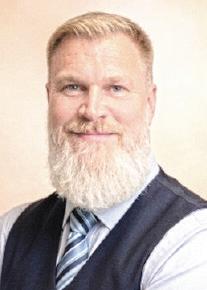
Playwright Michael London presents two readings of his new play, Those English Girls — 6:30 p.m., Thursday, June 25 at Wright Memorial Public Library in Oakwood, and 6:30 p.m., Wednesday, July 1 at the Boonshoft Center for Jewish Culture and Education in Centerville.
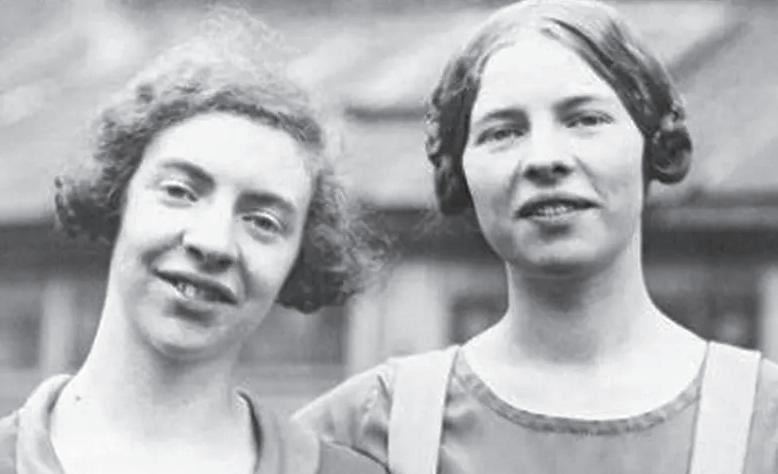
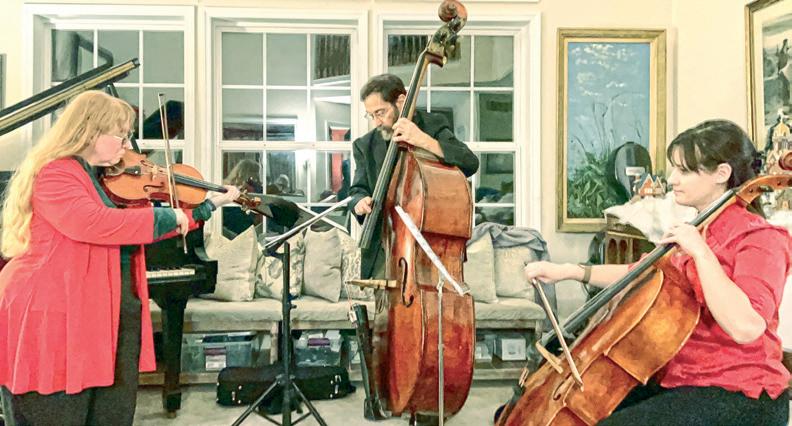
Through their love of attending operas in Austria and Germany, English sisters Ida and Louise Cook helped 29 Jews escape the Nazis in the lead-up to World War II.
Those English Girls completes London's Resilience Trilogy series of Holocaustrelated plays.
The first is Anschel, based on the book Anschel’s Story by Renate Frydman about her late husband Charlie Frydman's survival in Nazi-occupied Poland
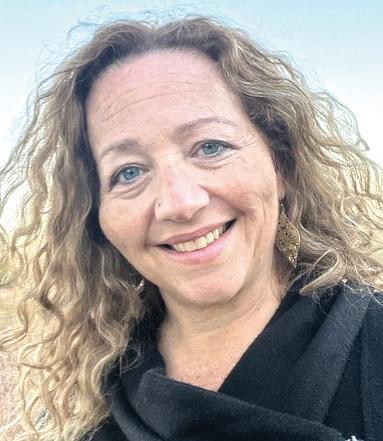
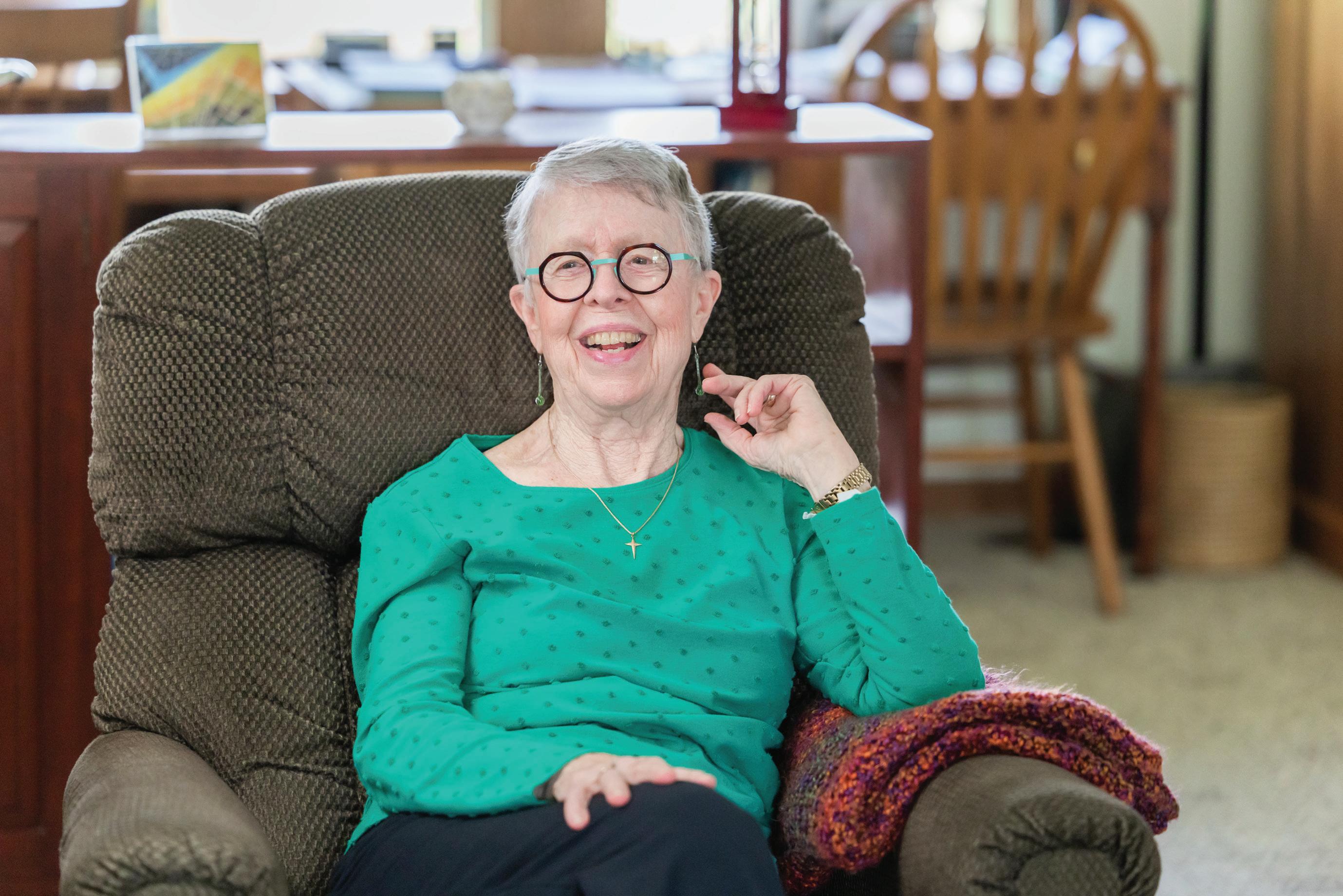
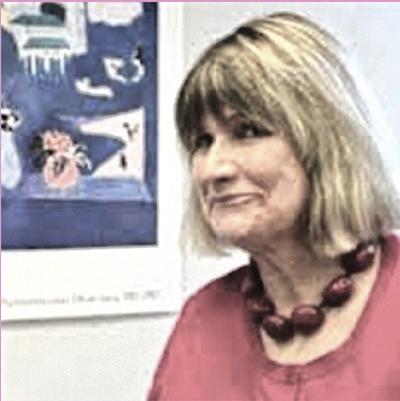
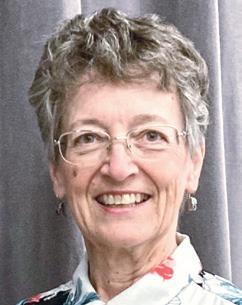
English sisters Ida and Louise Cook
as a slave laborer and then as a partisan fighter when he was a youth.
The second, Varian, focuses on American writer and editor Varian Fry’s time in Vichy France during World War II. There, Fry helped rescue anti-Nazis and Jews, including artists Marc Chagall and Max Ernst, writer and poet André Breton, and philosopher Hannah Arendt.
The development process for The English Girls is sponsored by the Dayton Holocaust Resource Center with a grant from the Montgomery County Arts District through Culture Works.
Wright Memorial Public Library is located at 1776 Far Hills Ave.
Registration is required for the reading at the Boonshoft CJCE, 525 Versailles Dr., at daytonholocaustresourcecenter@ gmail.com.
The
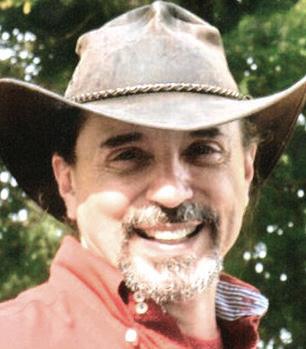
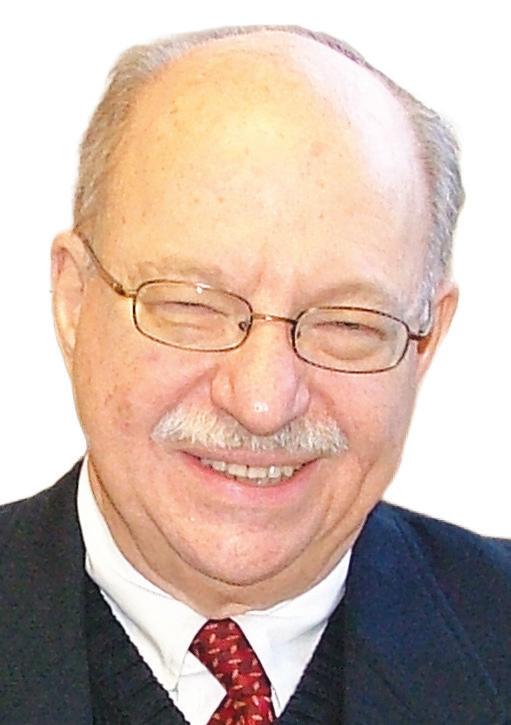
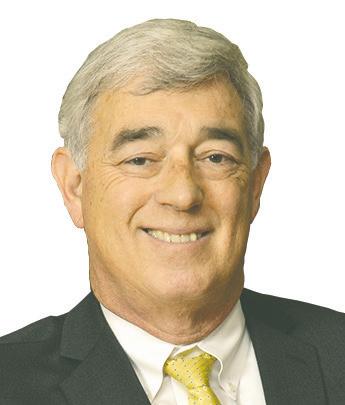
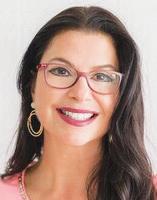
Playwright Michael London
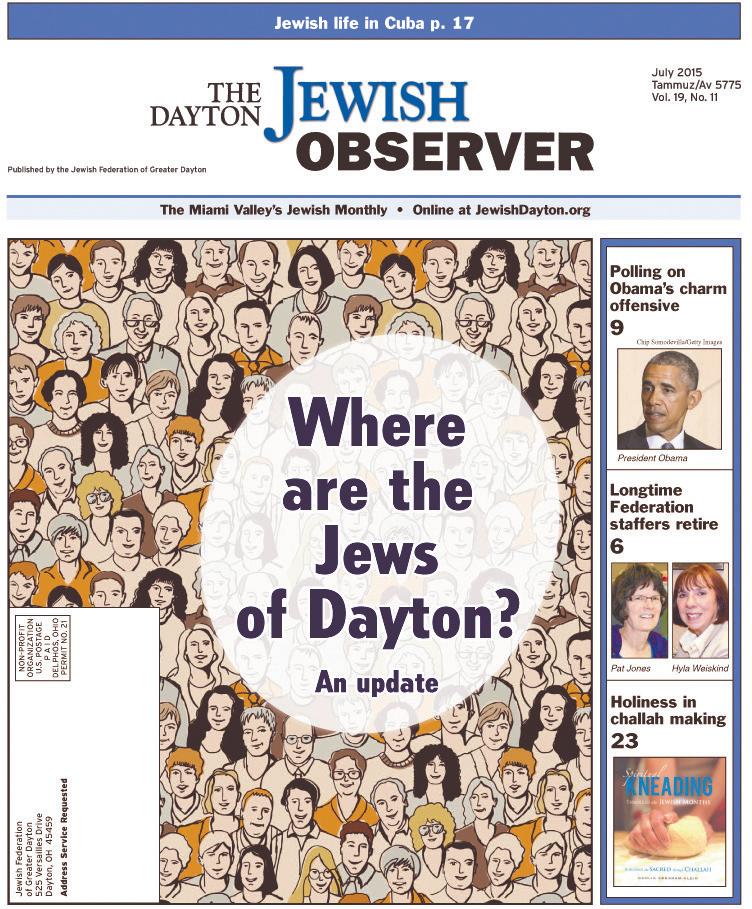
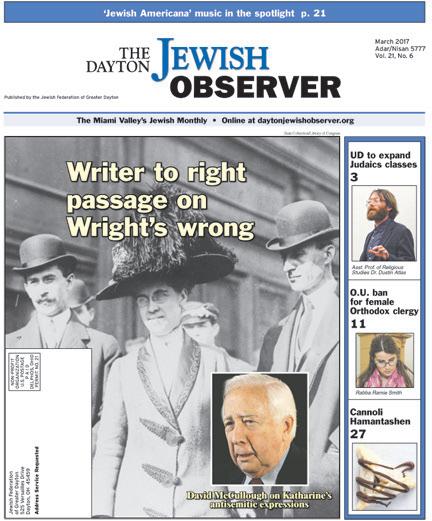
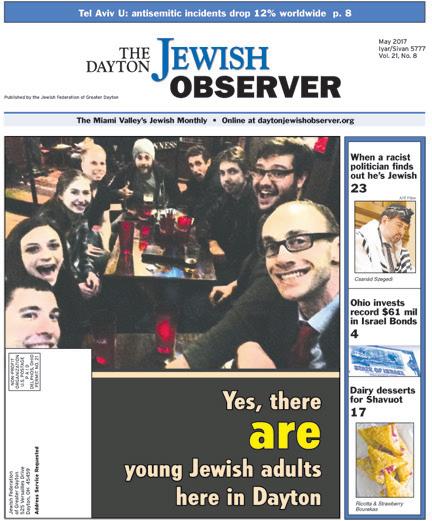
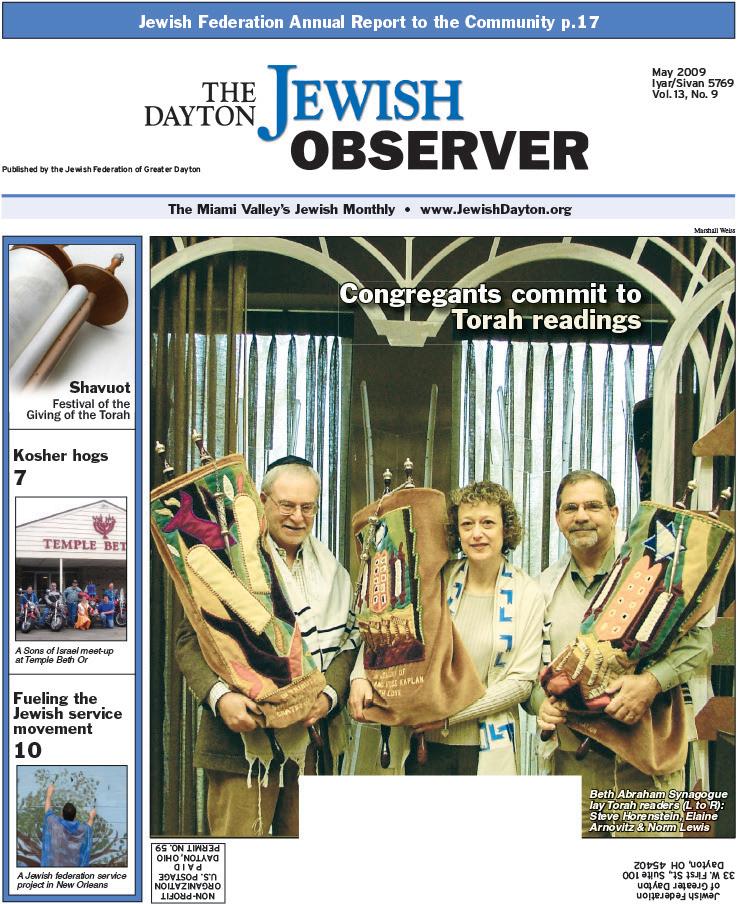
To celebrate Observer at 30, Federation funds digitization
3-year project includes predecessor local Jewish papers, back to 1944
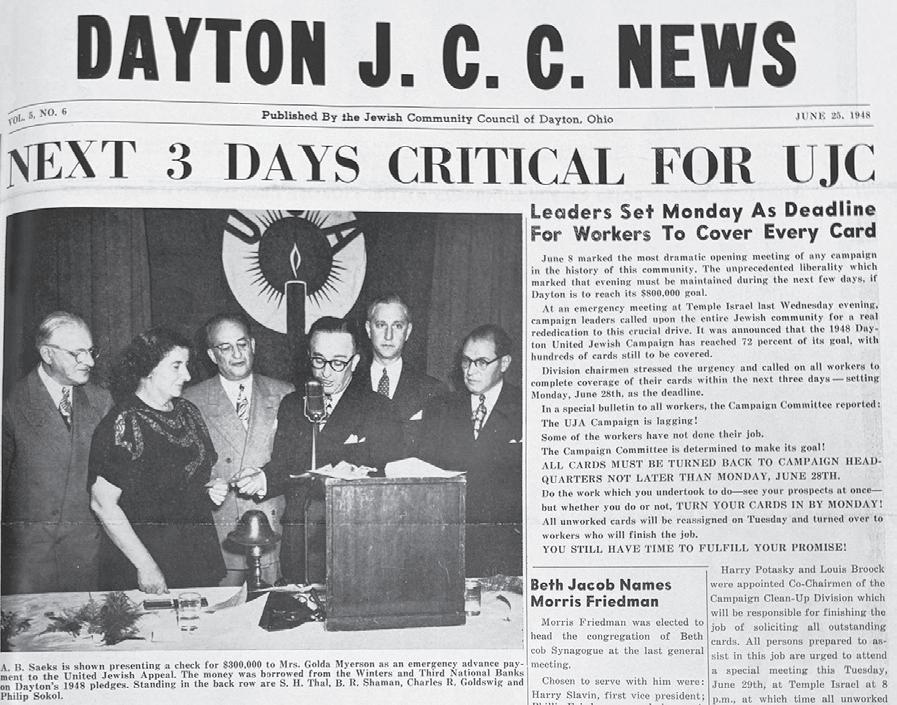
Dayton J.C.C. (Jewish Community Council) News, June 25, 1948, after Golda Meir's visit to Dayton.
By Marshall Weiss, The Observer
Thanks to funding from the Jewish Federation of Greater Dayton, the full 30-year run of The Dayton Jewish Observer to date and the complete runs of the Dayton Jewish Chronicle (1958-1995) and Jewish Federation News (1944-1995) will be digitized, searchable, and accessible to the public for free.
The three-year project, under the auspices of Ohio History Connection, is scheduled to be completed by the end of 2028.
Access to these publications will also be available for free via the Historical Jewish Press website of Tel Aviv University and the National Library of Israel.
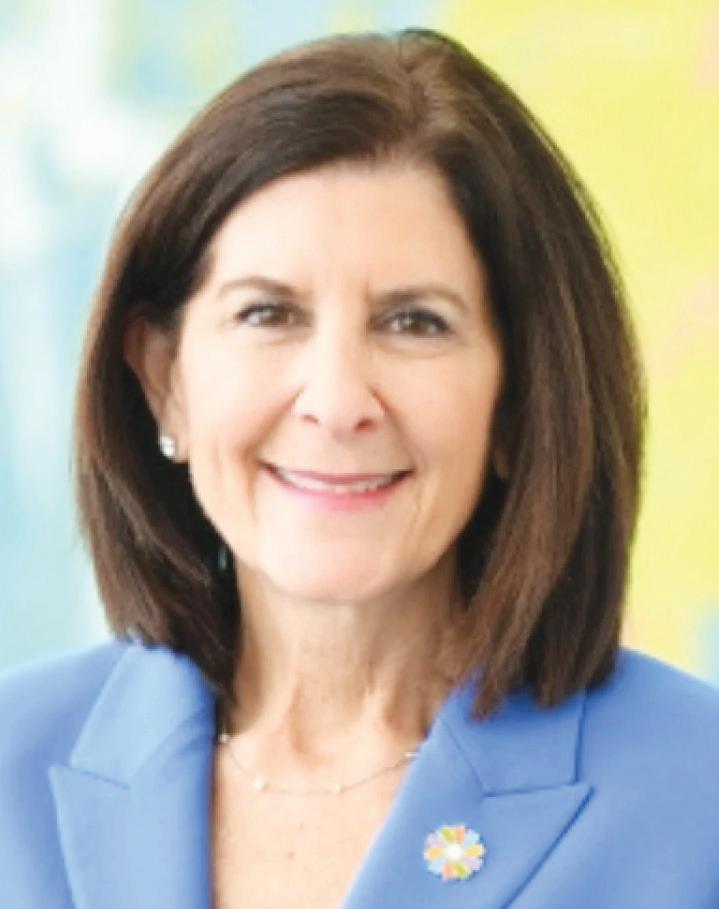
Jewish Federation CEO Cathy Gardner said it's the Federation's gift to the community in honor of The Observer's 30th anniversary.
The Observer is published by the Jewish Federation.
"Keeping our community up
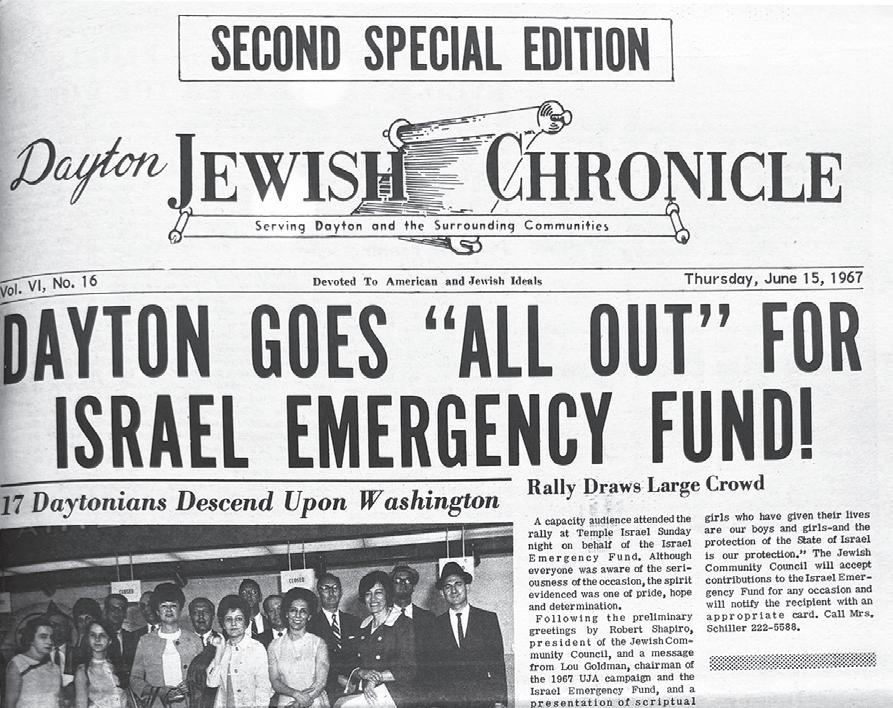
Dayton Jewish Chronicle's local coverage connected to the Six-Day War, June 15, 1967.
to date on Jewish news in our region has always been The Observer's highest priority," Gardner said. "Another very important role The Observer plays — as did our predecessor local Jewish news publications —is to provide a historic record of Jewish life here in our region. This digitization project will bring our Jewish history alive, from generation to generation."
The first third of the digitization project is underway in partnership with Dayton Metro Library, which is loaning its complete Dayton Jewish Chronicle collection to Ohio History Connection for scanning.
Dayton Jewish Chronicle
In 1958, the Ohio Jewish Chronicle, based in Columbus, began publishing a Dayton edition. Daytonian Anne Hammerman became its editor and in 1961 started publishing it as the Dayton Jewish
When I started production on this 30th anniversary edition of The Observer, the news came that Peter Wells had died.
Toward the end of 1995, I left a voicemail message with him, looking for work. Peter called me back. He told me about the newspaper his Jewish Federation was planning to publish for Dayton's Jewish community. What struck me about Peter when I met him a few weeks later — he profoundly cared about helping young professionals in the Jewish communal field.
As the executive vice president of our Jewish Federation, Peter changed the trajectory of my life. As a friend, he was always there to offer encouragement, fatherly wisdom, and often, just to listen. He stayed in touch with all of us – everyone whose lives he had touched.
What I learned from Peter is that people come first. Thank you, Peter. Your memory is surely for a blessing.
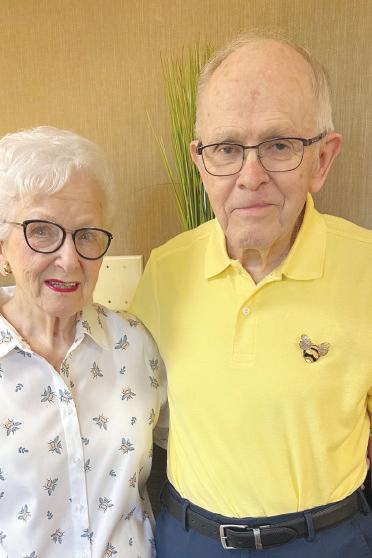
We’re celebrating our Queen and King Bee at OLP, Janie & Arlen Bee!
After 24 years of military life, they’ve found a true sense of community at OLP. Janie, Chair of the Welcome Committee, helps new residents feel right at home. They are active and love OLP dining, transportation services, and friends.
Their favorite memory?
Janie joining the annual carnival pie-throwing fun!
Active residents like the Bees help make One Lincoln Park even sweeter.
If you can’t be happy at OLP, you can’t be happy anywhere!
Marshall Weiss
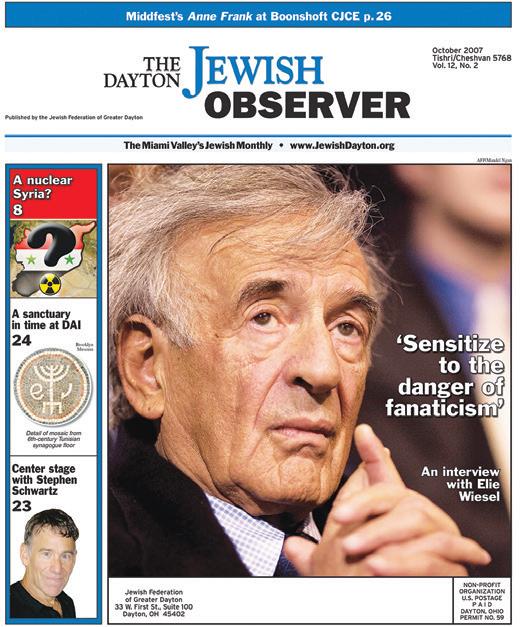
The Dayton Jewish Observer's interviews with Elie Wiesel and Stephen Schwartz, October 2007. Continued on Page Five
'Looking for new ways to continue to make a difference'
An interview with outgoing Dayton Children's President & CEO Deborah A. Feldman
By Marshall Weiss The Observer
After 14 years as president and CEO of Dayton Children's, Deborah A. Feldman retires June 30. She came into the role after 30 years with Montgomery County, the last 16 as county administrator.
To celebrate Feldman's contributions to the region, Dayton Children's has named its new urgent care clinic in West Dayton the Feldman Center for Healthy Children; the University of Dayton presented her with an honorary degree at its May 10 graduation ceremony.
Here, the Washington, D.C. native and Jewish Federation of Greater Dayton past president talks about why it's time to retire, the greatest challenges she's faced at Children's, and her plans for the future. This interview has been edited for length and clarity.
How did you decide to retire at this time?
It was a really difficult decision because I love what I do. I love the mission, and I love seeing the kids and families every day. But I felt that at this point in my life that it was time for me to find some flexibility. I've been in full-time work for 45 years. It was time to really think about different ways of finding meaning. And particularly my
grandchildren are at key ages at 12, 10, 5, and 2, and I really wanted to be able to have some more time to spend with them.
The world threw you some curves that no hospital administrator could ever prepare for. How did you navigate that?
I don't think any of us ever really thought that we would see the world shut down the way it did. But we never shut down here at Dayton Children's. I came to work every single day. I never worked from home. You learn a lot about yourself. You learn a lot about the people that you work with. And what I learned was that I worked with an incredible team that was so secure in what we did here that our goal was to keep it going. Leaders don't know all the answers and you have to be willing to admit that, but communication is absolutely critical.
I spent a tremendous amount of time on virtual town halls communicating what we knew, when we knew it, always saying that this could change tomorrow because none of us really knew. And I knew from the beginning that we had to take care of our staff. We never laid anyone off here at Dayton Children's. We paid everybody, we continued to pay everyone because we knew these people
had committed themselves to us and we were going to be committed to them. But we did ask them to do some different things. We had people come in to be screeners and temperature takers that would normally not be doing that kind of work. But we really kept our staff engaged. We kept our staff compensated, and I think that paid dividends in the end.
What were some of the toughest decisions you had to make during the Covid pandemic?
One of the toughest decisions was shutting down surgeries. The governor had required we do that. Children were getting sick and there was this sense of, why can't we continue business as usual? Sending staff home, even though they were going to be paid, was incredibly difficult. The hardest decision of the entire time was the vaccine. And we made the decision to mandate the vaccine here at Dayton Children's. It really came, frankly, as a great surprise to me that everybody didn't want the vaccine, because I wanted the vaccine. We had a small but strong minority of employees that did not want to take the vaccine.
We felt strongly that we
owed it to the community that when they brought their children here, that they would be safe, and that we owed it to our staff that had believed that the vaccine was something that would keep them safe, that their colleagues would also be. And so we mandated it. There were a lot of difficult conversations. I spent time rounding in the hospital, trying to just listen. Two of our employees died of Covid, one before the vaccine and one after. And that was just so tragic.
Was Covid the most difficult challenge that you've experienced at Children’s?
Oh, for sure. No question about it. It's in its own category from everything else that we've done here. I wasn't overly comfortable with remote work and Continued on Page 10
The Dayton Jewish Observer, Vol. 30, No. 11. The Dayton Jewish Observer is published monthly by the Jewish Federation of Greater Dayton, a nonprofit corporation, 525 Versailles Dr., Dayton, OH 45459.
Views expressed by columnists, in readers’ letters, and in opinion pieces do not necessarily reflect the opinion of staff or layleaders of The Dayton Jewish Observer or the Jewish Federation of Greater Dayton. Acceptance of advertising neither endorses advertisers nor guarantees kashrut.
The Dayton Jewish Observer Mission Statement To support, strengthen and champion the Dayton Jewish community by providing a forum and resource for Jewish community interests.
Goals
• To encourage affiliation, involvement and communication.
• To provide announcements, news, opinions and analysis of local, national and international activities and issues affecting Jews and the Jewish community.
• To build community across institutional, organizational and denominational lines.
• To advance causes important to the strength of our Jewish community including support of Federation agencies, its annual campaign, synagogue affiliation, Jewish education and participation in Jewish and general community affairs.
• To provide an historic record of Dayton Jewish life.
Deborah A. Feldman
Digitization
Continued from Page Three
Chronicle. Subsequent publishers of the weekly were Irene Seiden, and Philip Zukowsky and Leslie Zukowsky.
Jewish Federation News
When Dayton's Jewish Federation reorganized itself as the Jewish Community Council in 1944, it began publishing a newsletter, the J.C.C. News
In the absence of a local Jewish newspaper — and with the extent of the Holocaust beginning to come into focus — the council looked to Max Kohnop to serve as its editor.
Kohnop was the Sunday editor of the Dayton Daily News from 1939 to 1964. He would continue as editor of the J.C.C. News for 43 years, until 1987, by which time the council had returned to the name Jewish Federation.
Kohnop's successors as Jewish Federation News editors were Federation employees Linda Patterson and Don Cohen. It was Cohen in his role as Jewish Community Relations Council director who staffed a Federation committee chaired by Ellen Faust to start a new monthly Jewish newspaper for the Dayton area.
Federation President Ralph Heyman and Executive Vice President Peter H. Wells fasttracked it as a priority.
The Dayton Jewish Observer
When I arrived to start the publication in 1996, it already had a name — The Dayton Jewish Advocate — the winner of a name-the-newspaper contest the Federation held months before.
Until I received a call from the publisher of The Jewish Advocate newspaper in Boston, no one here knew the phrase Jewish Advocate was trademarked by that publication.
Before we changed to The Dayton Jewish Observer, I called every publication with Jewish Observer in their names to confirm they had no objections.
At our website, daytonjewishobserver.org, you can search for stories from The Dayton Jewish Observer dating to 2009. You can also find electronic versions of our print publications dating to 2014.
And in a few years, you'll be able to see and search for everything we've ever run in print.
We'll keep adding to our digitized collection as long as there is a Dayton Jewish Observer.
Beth Jacob is hosng Acve Shooter Training on Sunday, July 12, 2026 from 1-3 PM
Beth Jacob is hosting Active Shooter Training on Sunday, July 12, 2026 from 1-3 PM
Beth Jacob is hosng Acve Shooter Training on Sunday, July 12, 2026 from 1-3 PM
Led by Jewish Federaon of Greater Dayton’s own John Davis, a 36-year veteran of law enforcement and current Security Director for the JFGD. Director Davis is a naonally recognized trainer who has trained thousands of people in Response to Acve Shooters / Threats, as well as Physical and Personal Security to audiences across the country.
Led by Jewish Federation of Greater Dayton’s own John Davis, a 36-year veteran of law enforcement and current Security Director for the JFGD. Director Davis is a nationally recognized trainer who has trained thousands of people in Response to Active Shooters/Threats, as well as Physical and Personal Security to audiences across the country.
Led by Jewish Federaon of Greater Dayton’s own John Davis, a 36-year veteran of law enforcement and current Security Director for the JFGD. Director Davis is a naonally recognized trainer who has trained thousands of people in Response to Acve Shooters / Threats, as well as Physical and Personal Security to audiences across the country.
Response to Active Shooters/Threats.
Response to Acve Shooters / Threats
Response to Acve Shooters / Threats
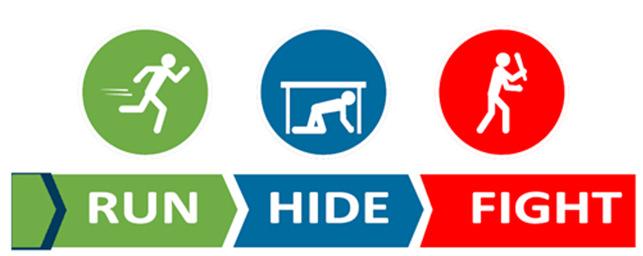
Enhance your ability to understand, recognize and react to an acve shooter/threat situaon. What you do can have a profound effect on the outcome. If you’ve never thought this scenario through, thinking about it in that moment is TOO LATE. This program outlines and provides the proper context for the Department of Homeland Security’s Run, Hide, Fight program. Aendees will also be provided with best pracces to deal with the aermath of an acve shooter / threat with valuable informaon on the training and supplies that you will need to make a difference.
Enhance your ability to understand, recognize and react to an active shooter/threat situation. What you do can have a profound effect on the outcome. If you’ve never thought this scenario through, thinking about it in that moment is TOO LATE. This program outlines and provides the proper context for the Department of Homeland Security’s Run, Hide, Fight program. Attendees will also be provided with best practices to deal with the aftermath of an active shooter/threat with valuable information on the training and supplies that you will need to make a difference.
Enhance your ability to understand, recognize and react to an acve shooter/threat situaon. What you do can have a profound effect on the outcome. If you’ve never thought this scenario through, thinking about it in that moment is TOO LATE. This program outlines and provides the proper context for the Department of Homeland Security’s Run, Hide, Fight program. Aendees will also be provided with best pracces to deal with the aermath of an acve shooter / threat with valuable informaon on the training and supplies that you will need to make a difference.
All are welcome to aend, please RSVP by Thursday 7/9/26 to the synagogue office by calling 937-274-2149.
All are welcome to attend, please RSVP by Thursday 7/9/26 to the synagogue office by calling 937-274-2149.
Retired Federation Exec. VP Peter H. Wells dies at 86
By Marshall Weiss, The Observer
Peter H. Wells, who served as executive vice president of the Jewish Federation of Greater Dayton from 1978 until his retirement in 2005, died June 3 in Indiana. He was 86. He and his wife, Joan, had recently moved from Sarasota, Fla. to Fishers, Ind. to live near their daughter, Jennifer Ramos, and her family.
Wells led the Jewish Federation and its agencies during a golden age for Dayton's Jewish community, when approximately 6,000 Jews were affiliated with Jewish congregations and programs.
He expanded the Jewish Federation's offerings to its peak, navigated Jewish population shifts from the suburbs northwest of Dayton to the suburbs in the south, and ultimately oversaw difficult cuts to programs and services when Jewish affiliation numbers declined, a trend seen across the United States.
He was at the helm when Dayton's Jewish Federation resettled nearly 200 Jews from the former Soviet Union between 1989 and 1992 as part of United Jewish Appeal's Operation Exodus.
Dayton Metro Library supports digital equity. Our 17 branches and website offer loanable laptops, public desktop computers, wireless hotspots, streaming services, adaptive technology, and more. Learn more at DaytonMetroLibrary.org or by calling the Ask Me Desk at 937.463.2665.
rabbinic program in Cincinnati in 1962. Two years later, his father died of a heart attack. Wells returned to New York to support his mother and sister and run the family’s insurance business.
He also became the principal and youth director of the Greenwich Village Temple. This led to his work in regional director positions with B'nai B'rith Youth Organization in Ohio, Indiana, and Kentucky.
"He went out of his way to take care of the people who needed to be helped," said Bernie Rabinowitz, a past Jewish Federation president. "He was a true mensch. He tried to treat everybody as fairly as possible and give everybody the benefit of the doubt."
Wells' activism was ingrained in his upbringing. His parents fled Nazi-occupied Vienna shortly after Kristallnacht. Wells was born in a refugee camp in Trinidad. As a child, he grew up in Queens, N.Y. and attended Temple Emanuel.
A Hunter College graduate, Wells enrolled in Hebrew Union College-Jewish Institute of Religion's
It was a friend's father — the director of Youngstown's Jewish Federation — who convinced Wells to apply for an assistant director job opening with Dayton's Jewish Federation. Wells and his wife, Joan, arrived here in 1973.
When his predecessor, Robert Fitterman, retired as executive vice president in 1978, Wells became responsible for the Dayton Jewish Federation and its newly completed Jewish Community Center and five-year-old Jewish nursing facility on a 75-acre campus in Trotwood with nearly 200 employees.
His needs assessments in partnership with layleaders and staff brought about a low-income housing apartment complex on the campus, transportation and kosher lunch site/delivery programs for seniors, the Jewish Foundation of Greater Dayton, The Dayton Jewish Observer, and the Boonshoft Center for Jewish Culture and Education in Centerville.
“We need to be driven by the heart in our efforts,” Wells told The Observer in 2005. “My greatest joy on the job is helping people in need. This community has historically taken risks on all kinds of projects in relation to services. We have to continue to reach out and take risks so that people are truly serviced.”
Peter H. Wells, 1939-2026
Pastrami & rye
It was up, up, and oy vey when All The Best Delicatessen made its first takeout delivery via drone, thanks to a Dexa autonomy delivery aircraft, June 2. Just in time for lunch, the drone set a takeout box with a pastrami sandwich at the home of Jon Klein, about a mile southwest of the Washington Township deli.
'This demo is a glimpse into the future of how technology will help restaurants and retailers serve customers at a completely new level,' noted Beth Flippo, CEO of Dexa, which is FAA certified and based in Dayton.
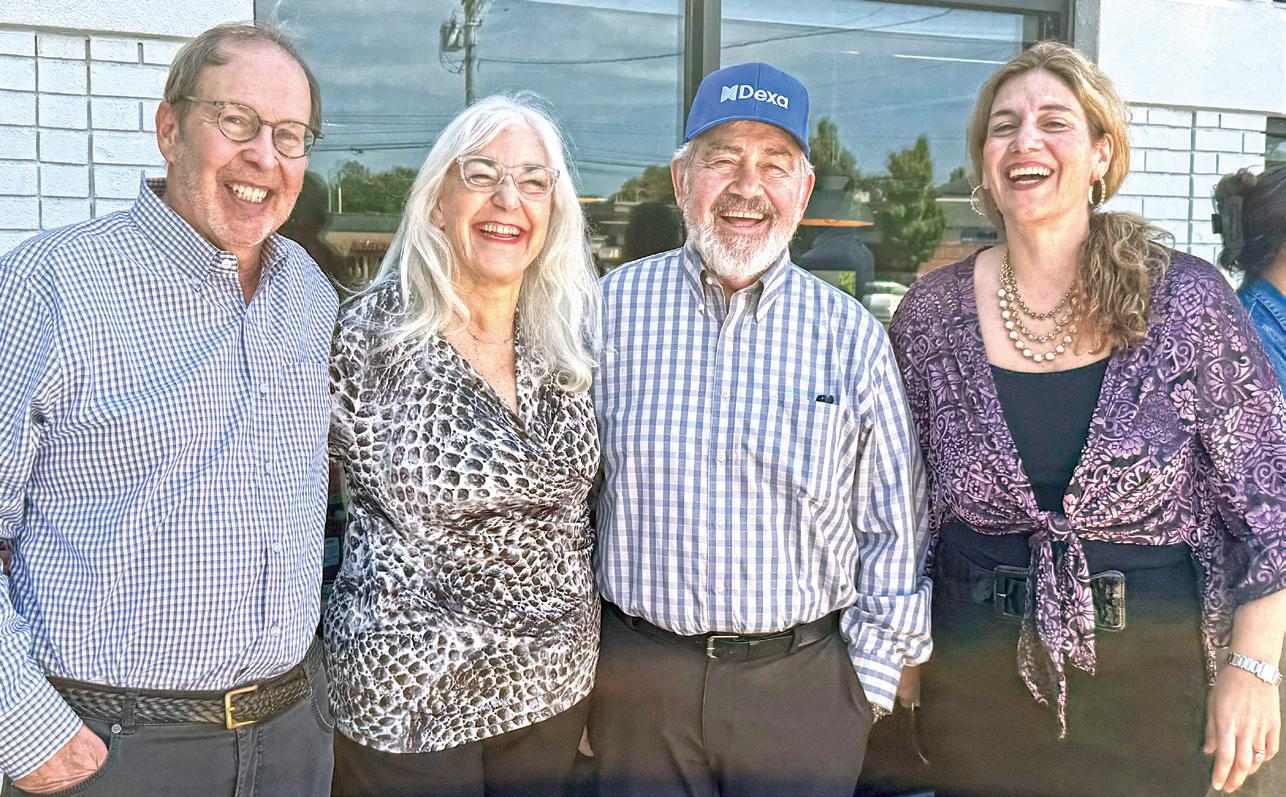
Shown here after sandwich liftoff are (from R) Flippo with her parents, Igal and Gloria Sharret, who came from New Jersey for the demo, and All The Best owner Lee Schear.
- Jay W.
advertise in The Observer.
Photos: Marshall Weiss
FBI charges 8 tied to U of Michigan pro-Palestinian movement with threatening officials, Jewish Federation
By Jackie Hajdenberg and Andrew Lapin, JTA
The FBI arrested eight pro-Palestinian demonstrators connected to the University of Michigan June 10, charging them with conspiracy to threaten university leaders and their families as part of a pressure campaign to get the school to divest from Israel.
The charges were filed May 20 and unsealed June 10 following arrests in multiple states. According to the charging documents, the defendants “used encrypted messages, social media platforms, and overseas collaboration platforms to research, target, and attack their victims.”
replied that the group needed to “get into that house then burn it down.”
The Jewish Federation of Metropolitan Detroit was included in the indictment as one target of the demonstrators.
The charging documents allege the eight defendants hunted down information about multiple targets; described to each other how they would “kill,” “torment,” and “terrorize” their targets; and carried out some of their plans.
In one message, Ahmet Korkaya, who was at the time a medical student, allegedly wrote to another defendant about a member of the university’s Board of Regents that he would “poison her ass slowly.”
His co-defendant allegedly
“In America, we rule by law not by fear. These alleged threats and attempts to terrorize government officials, businesses, and the Jewish Federation are anti-American,” U.S. Attorney Jerome F. Gorgon Jr., of the FBI’s Detroit office said in a statement.
The eight people charged include three men and five women between ages 21 and 28. They were arrested in multiple locations in Michigan as well as Chicago and Milwaukee.
The indictment alleges the defendants were responsible for vandalism of the Jewish Federation building on Oct. 7, 2024, the first anniversary of the Hamas attack on Israel.
In addition, the targets named in the indictment include the university’s former
president, Santa Ono; its chief investment officer and provost; members of its Board of Regents and their businesses; a campus police officer; and multiple companies.
The TAHRIR Coalition, a pro-Palestinian collective at the University of Michigan that has coordinated much of the campus’s protest activity, rallied supporters June 10 to protest outside courthouses in Detroit and Milwaukee where the suspects had been detained.
Jordan Acker, a Jewish university regent, is not named in the indictment. But one of the incidents described is the vandalism of his law office in June 2024. (Acker’s car was also vandalized with proPalestinian graffiti while he and his children were home, a few months later.)
Acker did not return a JTA request for comment. A spokesperson for the Jewish Federation declined to comment.
Federal and state authorities raided three homes belonging to campus protesters in April 2025 as part of a federal probe into acts of vandalism cited in the indictment.
The unsealed indictment represents the second major set of charges made against a group of pro-Palestinian protesters at the university.
In May 2025, Michigan Attorney General Dana Nessel dropped state charges she had filed against seven proPalestinian student protesters — a different group from those arrested June 10.
Nessel’s charges, brought the previous September, were related to the protesters’ participation in university encampments in May 2024.
The attorney who defended the protesters, Amir Makled, bested Acker for the state Democratic Party’s nomination for a university oversight position this spring.
Nessel’s office was listed by the FBI as having provided “assistance” on the investigation. Reached for comment, a spokesperson for the state attorney general told JTA the office “was not involved in today’s warrant operations.”
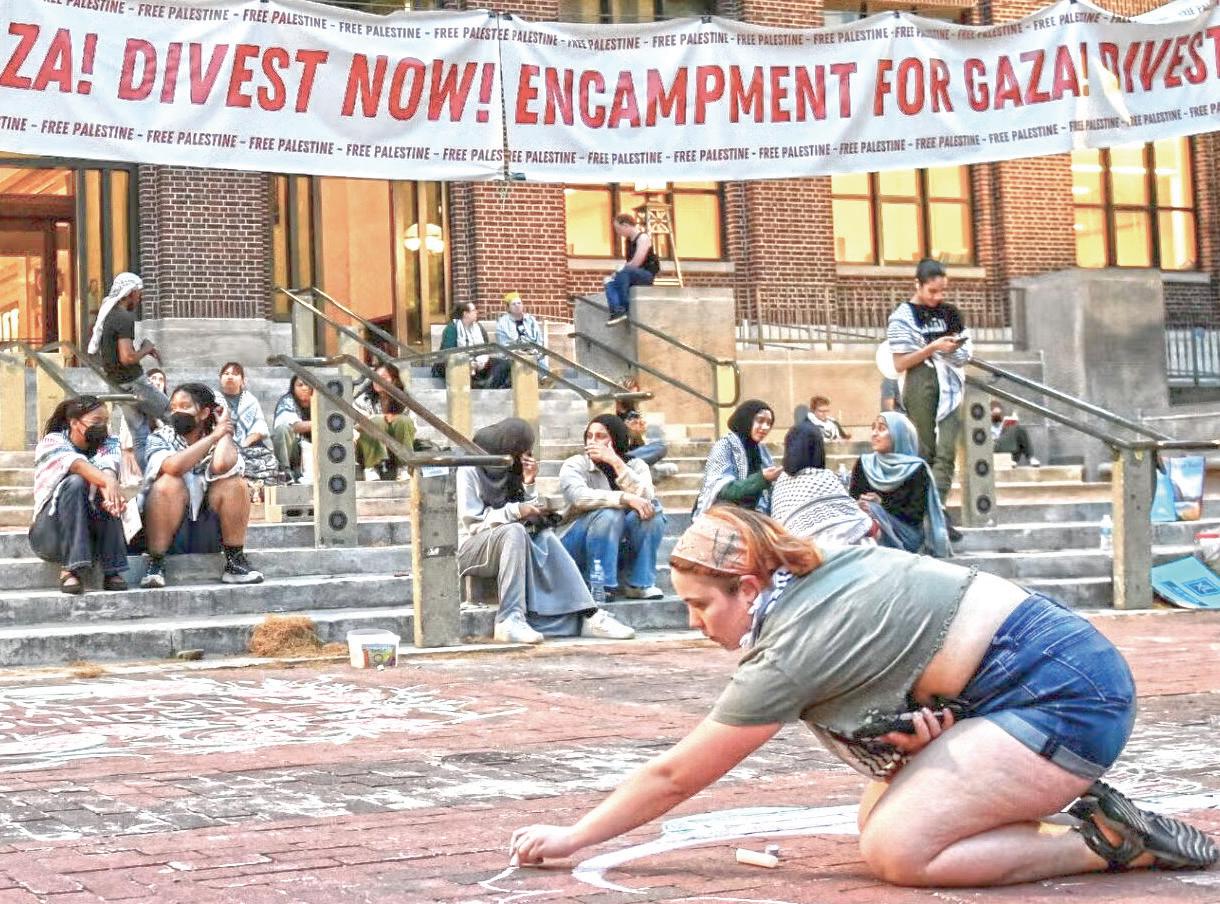
Protesters at the pro-Palestinian encampment at the University of Michigan, May 13, 2024, Ann Arbor.
Adam J. Dewey/Anadolu via Getty Images
Hebrew Union College claims Ohio’s charitylaw suit violates its 1st Amendment rights
By Andrew Lapin, JTA
The Reform movement’s central rabbinical seminary filed a motion to dismiss Ohio’s lawsuit against the school June 12, claiming the suit violates “foundational Jewish religious doctrine.” It's the latest escalation in a pitched battle between Hebrew Union College and the state attorney general’s office, which has accused HUC of violating nonprofit law by shuttering degree-granting programs on its historic Cincinnati campus. The suit, HUC argues, “violates the First Amendment by entangling government and religion.”
The suit was originally filed in April by thenOhio AG Dave Yost — his second against the college related to its controversial plan to wind down its Cincinnati operations in favor of its New York and Los Angeles campuses.
Yost claimed HUC’s actions in Cincinnati misled its donors by leaving a city where they were actively fundraising to support operations, and also violated its charter, which states that the school would “permanently maintain” a residence there.
The state seeks to seize HUC’s assets in Ohio and redirect them to a new, yet-to-be-decided nonprofit with a similar mission; an upstart rabbinical school founded by HUC alumni says it wants them. Such a move “is an unconstitutional and illegal governmental assault upon religion,” HUC’s strongly worded motion reads.
It continues, “The Attorney General has no role in dictating the religious affairs of institutions like HUC. The Court should reject his overreach into religious matters and should dismiss the Complaint because it is unconstitutional and unlawful.”
HUC also argues its vote to shutter the Cincinnati campus was done in full compliance with the law, adding it intends to maintain the campus’s other assets, including the Klau Library, the American Jewish Archives and the Skirball Museum. In addition, citing a passage in the Torah that states “God will come to his people wherever they welcome him,” the school argues that considering “Jewish demographic realities” is part of its religious mission.
“These decisions were made thoughtfully and responsibly to ensure the long-term success of the institution and our ability to continue graduating strong Jewish leaders,” HUC president Andrew Rehfeld said in a statement accompanying the motion. The lawsuit, he added, “improperly seeks to interfere in the decisions of a religious organization, and this cannot be allowed to go unchallenged.”
Yost himself resigned as AG in June to join the Alliance Defending Freedom, a conservative Christian legal group that, in 2022, represented a Tennessee adoption agency that refused to foster a child to a Jewish couple. The suit against HUC continues under the state AG’s office.
THANK YOU to Our Lead JCF Sponsors
BUSINESS SPONSORS
The Pookie and Charles Weprin Legacy Fund • Louis S. Cantor, Rose Sorokin Cantor, Samuel L. Cantor and Lena Cantor Temple Israel and Jewish Federation of Greater Dayton, Inc. Fund
Economy Linen & Towel Services
Jewish Federation of Greater Dayton Rieck Services
Bernstein’s Fine Catering • Dayton Optometric • Reflections Hard Surfaces Restoration
A & A Safety • Boost Engagement • Houser Asphalt & Concrete • Oldies 97.3
GOLD AMBASSADORS AND AMBASSADORS
Rabbi Karen Bodney-Halasz and Scott Halasz
John and Elaine Gaglione
David and Lynn Goldenberg
Robert and Deborah Goldenberg
Carol Graff
Michael and Teri Halasz
Joan Knoll
Fran Rickenbach
The Rose Family Foundation
Mitchell and Sara Faust
Jonathan and Heidi Freeman
Alan and Julie Halpern
The Sobo Family
Continued from Page Four
was anxious to have staff come back. We still do have some staff who are remote in their roles, and it's fine.
What are the other great challenges you've faced?
The biggest challenge I faced was when I came to Dayton Children's, frankly, we were not thriving as an organization. We had very stiff competition from Cincinnati Children's to our south and Nationwide Children's to our east. We had a lot of difficulty attracting physicians, and we didn't offer all of the services that our families needed.
So what we needed was to have a clear North Star of why. Why did we exist? We believe that every child in the Dayton region deserves a great children's hospital close to home. Our mission is the relentless pursuit of optimal health for every child within our reach.
We became laser focused on what the needs of the Dayton region were and what the needs of the children of the Dayton region were. And so we had a very aggressive strategic plan. We've gone from 47 employed physicians to over 260 employed physicians.
We've added 12 specialties. We have become a Level 1 trauma center. We've become a Magnet hospital, which is the highest nursing designation a hospital could have. We're a Level 1 pediatric surgery center.
The most important thing that I had to do here at Dayton Children's was constantly communicate where we were going, constantly rally people around our strategies. We knew that in order to really succeed against a stiff competitor who was an excellent hospital, we had to provide what we call above-andbeyond experience. Getting families in quickly and then providing them with an exceptional experience, we believe is sort of our secret sauce. And we have amazing physicians here. Once we get those families in, we usually keep them.
The result was that we're 300% bigger than we were when we started this, and we certainly don't have 300% more children in the Dayton region. We have convinced our families that this is the place that they can come if their children need pediatric healthcare, that they should look to us first. We know we're not always going to be able to meet their needs, but then we want to be the very best connector of care possible.
One area you've significantly expanded is mental health services.
It's definitely something that has dramatically increased in our kids. Certainly there was always some mental illness, and certainly some of it was undiagnosed. No question about that.
But the volume that we're seeing is due to the changing nature, frankly, of our society and of our kids. And it is serious. It is the healthcare crisis of this generation.
When I came to Dayton Children's, we did not employ one psychiatrist. We did not have any inpatient beds for
behavioral health or mental health. We have 24 pediatric child psychiatrists at Dayton Children's now and 48 inpatient beds, and they are almost usually full. What we know is that with early intervention and treatment, most of this can be resolved. But that if it goes unresolved, it will end up being a serious adult or lifelong adult mental illness.
We know that 50% of all adult mental illness begins in childhood. If we can address that early, we can change that trajectory.
Children's healthcare issues have been greatly politicized in recent years. How have you navigated that?
We will support any initiative from either party that supports kids. But we also know that we are the trusted pediatric advisors of this community and it is our responsibility to be science-based. There are times when we take positions that we believe are rooted in science that may not be ones that make some of our elected officials happy. And of course, the one that has been focused on the most is vaccines.
We are strong supporters of childhood vaccines. We support the American Academy of Pediatrics vaccine schedule, and we share that with our families.
That said, we respect our families as well, and we believe the key is to keep the conversation going. We don't want to shut our families down, but we try to provide them with the most sciencebased information that we can.
And then we hope that over time, those that are reluctant will eventually feel that they want to follow our advice. We know that's not always the case. But we don't take positions just because we have opinions. We take positions based in science.
How have you maintained your own emotional health?
It's really important to be able to compartmentalize. It's not always easy, but it's important that you enjoy each segment of your life. I have been blessed with an incredible family and two amazing children and a friendship group that has been really so supportive of me, and blessed to be in the Dayton Jewish community.
I've always been active in the Jewish community here in Dayton. And I get a lot of my enjoyment from participating in our activities. The Dayton Jewish community grounded me in a place where I felt like I really belonged.
What will you be up to now?
I am going to spend more time with the grandkids. And we are going to travel. But I am looking for what's the next role and how I can make a difference. I’m definitely not stepping back from my interest in the well-being of children and the Dayton community and other interests that I have, more nationally.
I'm just going to be looking for new ways to continue to make a difference and further what interests me. But I'm going to do it with a little bit more flexibility. I am looking forward to that.
UPCOMING EVENTS
SUNDAY,
July 2026
DAYTON & ITS AGENCIES
The Heuman Scholarship Awarded
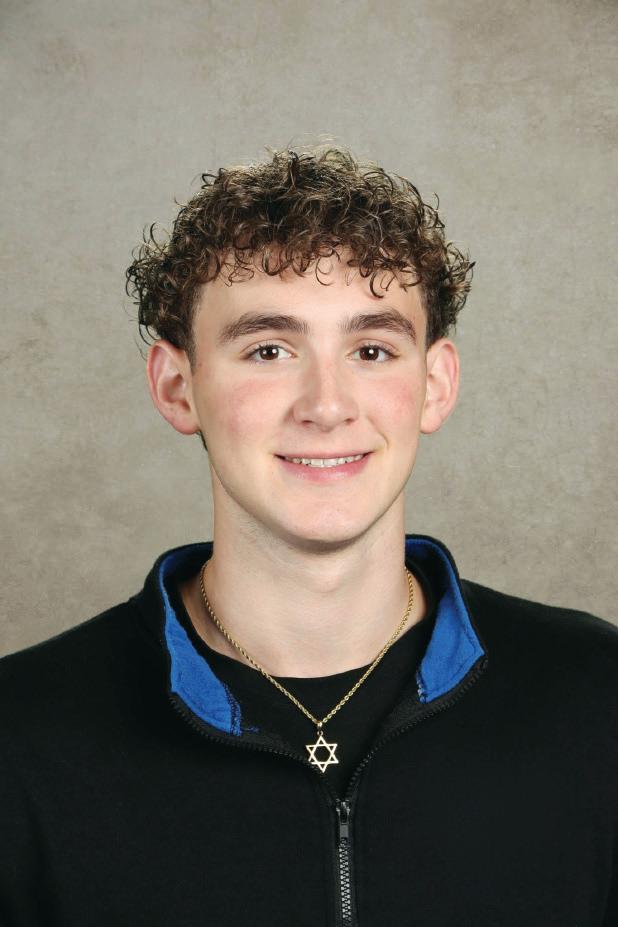
The Jewish Foundation of Greater Dayton is pleased to announce Avi Gilbert has been named this year’s recipient of the Heuman Scholarship.
Avi attended Hillel Academy and is a recent graduate of Centerville High School. He will attend The Ohio State University this fall, majoring in marketing.
In high school, Avi was a member of DECA (Distributive Education Clubs of America) and the National Honor Society. When asked why attending a post-secondary school is important to him, Avi said, “Beyond academics, higher education provides an environment where students are challenged to explore new perspectives, collaborate with diverse groups of people, and engage in real-world problem solving. I am excited by the idea of learning not only from professors, but also from peers whose experiences and ideas will push me to think more broadly and creatively.”
Outside of academics, Avi’s involvement in the Dayton Jewish community and beyond is vast. Avi attends Temple Beth Or, where he is currently a song leader. Over the years, he has participated in BBYO, NFTY, Maccabi, and the JCC’s Children’s Theatre. He attended Goldman Union Camp Institute (GUCI) from 2016 – 2023. Most recently, Avi traveled to Israel, an experience he said deepened his connection to Jewish history, culture, and identity. Avi intends to be an active member of The Ohio State University’s Jewish student body through participation in its Hillel programs. Avi’s parents are Dr. Heath Gilbert and Rachel Haug Gilbert.
Mazel tov, Avi!
The Heuman Scholarship is made possible through a fund established by Bob and Vicky Heuman. Since its creation in 2006, the Heuman Scholarship has been awarded annually to an undergraduate or graduate student who demonstrates both academic achievement and financial need. The scholarship is open to Jewish students who reside in the Dayton area.
DINE OUT
Sunday, June 28, 5:00 – 6:30PM Thai 9
11 Brown St., Dayton, 45402
Meet up with the JCC Boomers for a fun night out! We will go to Thai 9 before the JCC Film Festival movie, Matchmaking 2 The movie starts at 7:30PM at The Neon. Purchase JCC Film Festival movie tickets separately – seating is limited, get your tickets early!
Cost of Dinner: On your own RSVP by June 26 at jewishdayton.org/events. Questions? contact Stacy Emo at semo @jfgd.net or 937-610-5513.
DAY AT THE
Sunday, July 26, 1 – 4PM Day Air Ballpark
220 N. Patterson Street, Dayton, 45402
Join us for Jewish Community Day at Day Air Ballpark! Join friends, family, and community members for an afternoon of fun. Come for the ballpark food, stay for the games and activities, and don’t forget – there’s even a baseball game!
Cost is $18.32 per person. RSVP by June 27. For more information, visit jewishdayton.org/events 50% of the proceeds will support JCC family programming.
Questions? Contact Jennifer Holman at jholman@jfgd.net.
July
2026
Legacies, Tributes, & Memorials
LINDA RUCHMAN MEMORIAL FUND
In memory of Julie Ruchman
Sheila Myers
JEWISH CEMETERIES FUND
In memory of Marilyn (Myrnie) Moscowitz
Heath Gilbert
Donna and Marshall Weiss
Marcia and Eddie Kress
Andi Rabiner, Jodie and Gary Scher
HOLOCAUST PROGRAMMING FUND
In memory of Marilyn (Myrnie) Moscowitz
Adam Levin
In honor of Helene Gordon’s 70th birthday
Samantha Daniel
JOE BETTMAN MEMORIAL TZADIK AWARD
In memory of Marilyn (Myrnie) Moscowitz
In memory of Julie Ruchman
Jean and Todd Bettman
JEWISH CHORALE FUND
In honor of Cantor Andrea Raizen for her dedication to training Torah readers Anonymous
FILM FESTIVAL
In memory of Joseph Jacob
Bill and Claudia Fried
In honor of a speedy recovery for Judy Chesen
Samantha Daniel
JEWISH FAMILY SERVICES ENDOWMENT FUND
In memory of Herman Glaser
Donna and Marshall Weiss
JEWISH FAMILY SERVICES DISCRETIONARY FUND
In honor of Helene Gordon’s 70th birthday
Janice and Bob Kohn
In memory of Julie Ruchman
Cathy Gardner
Did you know you can honor a friend or family member through a Legacy, Tribute or Memorial?
A donation to one of the Jewish Foundation's many endowment funds benefits our Jewish community while honoring a loved one. For more information, please call 937-610-1555.
When you don't know where to turn, turn to JFS.
Guided by Jewish traditions, Jewish Family Services of Greater Dayton provides individuals and families in the Miami Valley with the tools and services to lead happy and healthy lives.
If you or someone you know is in need of assistance, please contact Jewish Family Services at 937-401-1551 or email Licensed Social Worker Kate Scarpero at kscarpero@jfgd.net.
A Jewish way to mark the 250th: A close reading of America’s ‘sacred’ texts
With democracy under pressure in the U.S. and Israel, the Pardes Institute and Faith250 ask Americans to read the founding documents the way they would a verse of Torah.
By Andrew Silow-Carroll
Fireworks, parades, a mixed martial arts smackdown on the White House lawn. Those are a few of the ways Americans are marking the country’s 250th birthday.
A Jerusalem-based yeshiva and an interfaith project started by a rabbi are suggesting a different idea: a little learning. What if you celebrated America by studying the Declaration of Independence the way Jewish tradition treats its most sacred texts: poring over it, arguing with it, putting it in conversation with ancient sources?
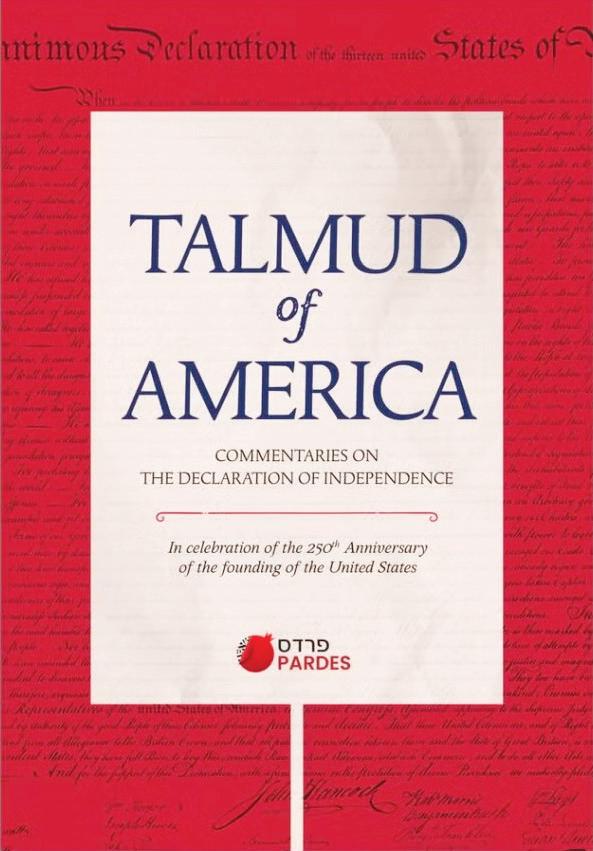
That’s the similar idea behind Talmud of America, a collection of four essays published by the Pardes Institute of Jewish Studies, and Faith250, the brainchild of Rabbi Michael Holzman of Northern Virginia.
“The Torah is a living document,” Rabbi Leon Morris, president of Pardes, told me recently. “Classic Jewish texts have something fresh and relevant to say about everything — including the Declaration of Independence.”
The four essays in Talmud of America — on equality, on “life, liberty and the pursuit of happiness,” on the right of rebellion and on ideas of sacrifice and civic engagement — are written by Pardes faculty members Yiscah Smith, Leah Rosenthal, David I. Bernstein, and Rabbi Rahel Berkovits. Each was born in America and lives in Israel.
Talmud of America applies the techniques of the beit midrash — the Jewish study hall — to America’s founding document. The Talmud preserves its arguments, including the minority opinions and the unresolved disputes, because the wrestling matters as much as the conclusions.
The idea for seeking common ground over “sacred” American documents arrives at a fraught moment. Liberal democracy is under pressure in the United States and in Israel, with rising authoritarian tendencies, deep polarization, and the fraying of norms that once connected the two countries. With many also seeing the erosion of the wall between church and state, is reading American texts from the perspective of any faith group a helpful exercise?
Holzman, a rabbi of the Northern
So, what do you think?
Virginia Hebrew Congregation in Reston, Va., insists it is.
Faith250 encourages churches, synagogues, mosques, and temples to come together and read America’s “sacred texts” — including the Declaration and Emma Lazarus’ Statue of Liberty poem The New Colossus — as affirmations of shared civic values. So far, 246 congregations have signed up.
“We desperately need a sense of dignity between American citizens at a moment when all of the cultural forces are pushing us towards conflict,” Holzman said. “So we decided to try out this methodology of studying American documents the way we study scripture, and then see how people react to encounters with their neighbors over these shared treasured documents.”
Holzman called the conversations he attended “magical.”
“It’s something to behold because people walk in with this really profound sense of anxiety that they’re going to talk about America with a bunch of strangers,” he said. “And then you see them interact with each other over dinner (and study) and you just watch the anxiety evaporate right in front of you.”
Although not by design, most of the participants have been Jewish and mainline Protestant, with fewer Catholic, African American, and Latter-day Saint congregations.
insist on the “Hebraic echoes” in the American political tradition, the Pardes project isn’t out to prove that America is founded on Jewish ideas.
Instead, the authors offer close readings of the Declaration of Independence and bring in Jewish texts for exercises in compare and contrast.
“We didn’t want to produce something that just said, ‘Oh, all these great American ideals? We had them in the Torah first,’” said Morris. “We wanted it to be filled with nuance and tension.”
Morris was also careful to say the project is not driven by a political agenda; nonetheless, each essay deals with concepts bedeviling Americans — and to some extent Israelis — on the milestone birthday.
Evangelical churches tend not to engage in interfaith work, Holzman said. “The Evangelical church, although it’s a very loose term, has broadly embraced MAGA Republicanism,” he said. “They’ve opted out.”
A project like Faith250 acts in some ways as a counterweight to efforts to put a distinctly Christian stamp on the anniversary, as seen at the National Jubilee of Prayer, Praise & Thanksgiving hosted by the Trump administration in May. That modestly attended event on the National Mall featured mostly Christian pastors from the religious right.
Critics of the “Jubilee” event said it reinforced a one-sided Christian narrative at the expense of the First Amendment, a theme of a number of efforts this year by groups on the Christian right.
In April, the Evangelical Liberty University hosted an academic conference to explore America’s “Christian heritage” and to assert the “biblical principles” presenters say animated the founders.
Although some Jewish scholars
Berkovits, in her essay on equality, traces “all men are created equal” to the creation story in Genesis — but then, as Talmud scholars are wont to do, runs into a textual problem: Are some more equal than others? A famous passage in Mishnah Sanhedrin declares each person “a world entire,” which in its original form applied to all human beings, Jew and non-Jew alike. Later, however, editors added the words “from Israel,” narrowing the universal to the particular. Similarly, the Founding Fathers limited their conception of equality, in their case excluding women and enslaved people from their grand proclamations. Berkovits suggests both traditions were subject to a human problem that hasn’t been resolved, either in 250 years or two millennia.
In her essay on “life, liberty and the pursuit of happiness,” Smith argues that America is still dealing with tensions that arise over the notion of rights.
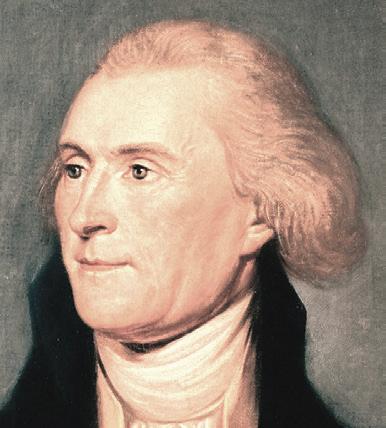
The Declaration’s conception of “rights,” Smith contends, was very different from the rabbis’. Where Thomas Jefferson describes rights as “inalienable,” Jewish tradition insists rights have to be earned through merit and fulfilling obligations.
As a result, Smith worries that too many Americans, out of a sense of entitlement, have chosen self-gratification over a life of service and focusing on the needs of others.
“I’m not convinced that 250 years ago people were as self-centered and selfabsorbed as now,” she said. “I’m going to be 75, and I can tell you: When I was in college protesting the Vietnam War, I didn’t hear as many people saying ‘you’re violating my rights’ the way I hear it today.”
Rosenthal asks what may be the most crucial question in these divisive times: What are the limits on resistance to an unjust government, and when does the
accumulation of injustice justify overturning established authority?
A late-2025 Public Religion Research Institute poll reported that 20% of Americans agreed with the statement that “true American patriots may have to resort to violence in order to save our country.” A separate PBS News/NPR/ Marist poll found that number closer to 30%, showing a sharp rise from previous years across all political affiliations.
Rosenthal’s essay compares the Declaration’s justification for legitimate rebellion — “a long train of abuses and usurpations” — to a Talmudic debate over when the rulings of a court can be overturned.
In contrast to the Declaration’s calls for rebellion, Rosenthal paraphrases a “more nuanced position” by the Talmudic sage Rav Nachman: “He resists a system in which every dissatisfaction becomes grounds for reversal. Stability requires a measure of acceptance, even in the face of imperfect outcomes.”
Bernstein, meanwhile, finds a point of convergence between American and Jewish texts. Both traditions call for sacrifice, even martyrdom, in service of a higher cause. But they also insist that citizenship is not only about heroic action, but the daily work of living in and creating a just society. “Both traditions converge on a profound insight: the ultimate test of commitment is not only what one is willing to die for, but how one chooses to live,” he writes.
As for when these ideals fall short, Morris noted that the founding documents of both Israel and the United States are “incredibly aspirational” texts, and that a society that stops wrestling with them is a society in trouble. He floated a future project: a Torah commentary on Israel’s Declaration of Independence. “It’s really the basis of a constitution that we don’t yet have,” he said.
Smith said Jews have a particular need to revisit America’s founding ideals. Having just returned from a speaking tour in the United States, Smith encountered a Jewish community gripped by fear of antisemitism, anti-Zionism, and a cultural climate in which Jewish identity feels increasingly embattled.
“American Jews need to know they can be American and they can be Jewish,” Smith said. “The whole Declaration of Independence is very much inspired and affected by core Jewish values. That really needs to be brought to their attention. I think we’re at the right place at the right time.”
Talmud of America is available for free to synagogues, JCCs, educators, and anyone who is interested.
Andrew Silow-Carroll is editor at large of the New York Jewish Week and managing editor of Ideas for JTA.
Classes
Beth Jacob Classes: W. Rabbi Agar on Zoom. Call to register, 937-274-2149. Tuesdays, 7 p.m.: Torah Tuesdays. Thursdays, 7 p.m.: Thursdays of Thought.
Chabad Classes: Wednesdays, 7:30 p.m.: Talmud Class in person & Zoom. Call for Zoom link & location. Fridays, 9:30 a.m.: Women’s Class. Call for location. Mondays, July 13-Aug. 3, 7 p.m.: $54. JLI-For Sinai & Civics, in person & Zoom. Register at
CALENDAR
chabaddayton.com/calendar. 2001 Far Hills Ave, Oakwood. 937-643-0770.
Temple Beth Or Classes:. Thurs., July 16, 6 p.m.: Navigating Loss w. Andy Chaet. Register at templebethor.com/ calendar. 5275 Marshall Rd., Wash. Twp. 937-435-3400.
Beth Abraham Rhythm ‘N’ Ruach: Fri., July 10, 5:306:15 p.m. At Temple Israel, 130 Riverside Dr., Dayton. 937-2939520.
JCC Camp Shalom: Through Fri., July 24. For info., contact Jennifer Holman, jholman@ jfgd.net. At Temple Beth Or, 5275 Marshall Rd., Wash. Twp.
Chabad Camp Gan Israel: Mon., July 20-Fri., Aug. 7, 9 a.m.-3:30 p.m. Ages 5-12. Register at cgidayton.com/ register. 2001 Far Hills Ave., Oakwood. 937-643-0770.
Adults
Temple Israel Classes: Wednesdays, 10 a.m.: Torah Study Commentary in person & Zoom. For Zoom info., email info@tidayton.org. Saturdays, 9:15 a.m.: Virtual Torah Study on Zoom. For Torah Study Zoom info., email Fran Rickenbach, franwr@gmail.com. Thurs., July, 9, 16, 23, 30, noon: Talmud Study in person & Zoom. Sat., July 18, 9:15 a.m.: Torah Study in person and Zoom. tidayton.org/calendar. 130 Riverside Dr., Dayton. RSVP to 937-496-0050.
Family
PJ Library Picnic in the Park: Sun., June 28, 5:30 p.m. Free. RSVP by June 26. Email Kate Elder for more info., kelder@ jfgd.net. Iron Horse Park, 6161 Millshire Dr., Centerville.
Those English Girls play readings: By Michael London. Thurs., June 25, 6:30 p.m.: At Wright Memorial Library, 1776 Far Hills Ave., Oakwood. Free. Wed., July 1, 6:30 p.m.: At Boonshoft CJCE, 525 Versailles Dr., Centerville. Free. Registration for July 1 reading required at daytonholocaust resourcecenter@gmail.com.
Temple Israel Sacred Stitching: Wed., July 8, 22, 11 a.m. Make items for donation w.
Beth Jacob Active Shooter Training: Sun., July 12, 1 p.m. Free. W. Jewish Federation Security Dir. John Davis. RSVP to 937-274-2149. 7020 N. Main St., Harrison Twp.
Temple Beth Or, Art & the Bible: Classic to Contemporary: Sun., July 26, 10 a.m. Free. Includes breakfast. W. Carol Salus. Registration required at 937-435-3400. 5275 Marshall Rd, Wash. Twp.
Community
Jewish Community Day at the Ballpark: Sun., July 26, 1:05 p.m. $18.32. RSVP by June 27 at jewishdayton.org/ events. Day Air Ballpark, 220 N. Patterson Blvd., Dayton.
Beth Abraham Shabbat Under the Stars: Fri., July 31, 7:15 p.m. W. Cantor Kevin McIntyre. Beth Abraham patio. RSVP to bas@bethabrahamdayton.org. 305 Sugar Camp Cir., Oakwood.
Four stalwart Temple Israel staffers retire this summer.
Executive Director Suzanne Shaw completes 22 years of service at the end of June. Also retiring in June are 12-year employee Annette Stogdill, the temple's receptionist, and Marketing and Communications Manager Jodi Phares, at the temple since 2023 following nearly 20 years with the Jewish Federation. Administrative Assistant Ellen Finke-McCarthy, a 15-year employee, retires in July.
John Hunter began his work as Temple Israel's new executive director in May. An Air Force veteran, John received a dual master's degree in emergency and disaster management as well as homeland security from American Military University. He served as Crime Free Multi-Housing coordinator of the Colorado Springs Police Department, and with Dayton's St. Vincent de Paul Society as manager of safety and security, director of shelter ministries, and most recently as chief of operations.
The American Heart Association honored Dr. Gary Fishbein at the Dayton Heart Ball in May for his work as an interventional cardiologist and researcher with Premier Health.
Martin Foster, copresident of Economy Linen & Towel Service, has been named to the Boys & Girls Club of Dayton Board of Directors.
MAZEL TOV!
1981 by Holocaust survivors. It supports the well-being of IDF soldiers, veterans, and their families. A native of Akko, Israel, Sigler started in the IDF as a combat engineering soldier. He completed his service as a reserve brigade officer. Sigler has served as Hebrew and Judaic coordinator at Akiva Academy in Youngstown.
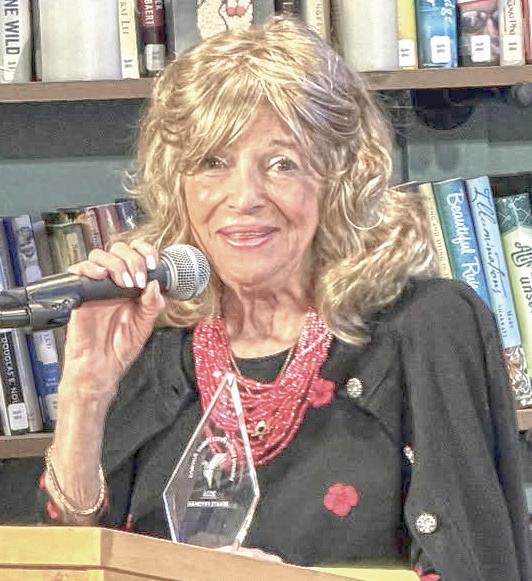
The International Peace Museum presented Dayton Holocaust Resource Center’s founder and director, Renate Frydman, with its 2026 Miami Valley Peace Maker Award for "transforming remembrance into action, educating generations about the Holocaust while inspiring individuals to stand up for dignity, justice, and peace."
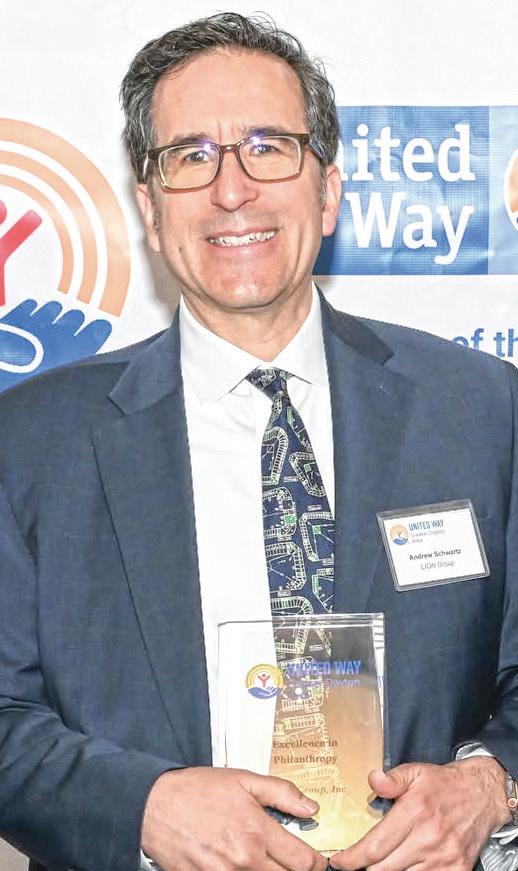
The United Way of the Greater Dayton Area presented Lion Group with its Excellence in Philanthropy Award. LION matches 50% of United Way workplace campaign employee donations. Accepting the award for the family-owned business was Andy Schwartz, corporate counsel and chief procurement officer. Andy's brother, Steve Schwartz, is LION's CEO.
Send your Mazel Tov announcements to mweiss@jfgd.net.
We’re not just a law firm that’s ready for the future. We’re shaping it with our clients. With business‑minded insight, genuine relationships and exceptional service, we’re dedicated to collaborating with clients to fuel their success. Congratulations to The Dayton Jewish Observer on their 30th Anniversary.
Ohio Friends of the Israel Defense Forces has named Kobi Sigler director of its Southern Ohio Chapter, overseeing Columbus, Dayton, and Cincinnati. Ohio FIDF was founded in
Suzanne Shaw
John Hunter
Martin Foster
Dr. Gary Fishbein
Renate Frydman
International Peace Museum
Andy Schwartz
United Way of the Greater Dayton Area
Temple Israel
Ellen Finke-McCarthy (L) and Jodi Phares
Annette Stogdill
WORSHIP SERVICES
Beth Abraham Synagogue
Conservative
Rabbi Aubrey L. Glazer
Saturdays, 9:30 a.m.
937-293-9520
Check website for location, bethabrahamdayton.org.
Beth Boruk Temple Reform
Cantor Andrea Raizen
2810 Southeast Pkwy., Richmond, Ind. bethboruk@yahoo.com. Friday night Shabbat service monthly, September through May. For schedule, go to bethboruktemple.com.
Beth Jacob Congregation
Modern Orthodox Rabbi Leibel Agar Saturdays, 9:30 a.m. Evening minyans upon request. 7020 N. Main St., Harrison Twp. 937-274-2149. bethjacobcong.org
Chabad of Greater Dayton Orthodox
Rabbi Nochum Mangel
Associate Rabbi Shmuel Klatzkin Youth & Prog. Dir. Rabbi Levi Simon. Beginner educational service Saturdays, 9:30 a.m. 2001 Far Hills Ave., Oakwood. 937-643-0770. chabaddayton.com
Temple Anshe Emeth Reform
Worship led by Jese Shell 320 Caldwell St., Piqua.
Contact Steve Shuchat, 937-7262116, ansheemeth@gmail.com. ansheemeth.org
Yellow Springs Havurah Independent Antioch College Rockford Chapel. 1st & 3rd Saturday each month. Contact Len Kramer, 937-5724840 or len2654@gmail.com.
RELIGION
Beth Abraham $300K post-flood campaign to bridge gaps, cover future maintenance needs now
Only a month after President Julie Liss-Katz announced the launch of a special $300,000 campaign at Beth Abraham's annual meeting May 13, the congregation had already raised $258,600, with 100% board participation. Liss-Katz said the campaign bridges the gap between insurance coverage and restoration needs from the Feb. 19 sprinkler pipe break that flooded Beth Abraham's building. She said the campaign also extends to tackling upcoming maintenance needs now.
"While the ceilings and the walls were exposed for restoration, we decided we would look at everything that might need repair. That way, we wouldn't have to, in the near future, break down a wall or take down a ceiling."
Liss-Katz anticipates the synagogue will wrap up the fundraising campaign by the High Holidays. "We're not going to do a Yom Kippur appeal," she said. "We're doing very well. This is going to supersede that."
Middletown temple reduces service schedule
Destructed but not destroyed
By Rabbi Leibel Agar Beth Jacob Congregation
As Shavuot fades into the background of our minds, one cannot help but begin thinking of summer. For some of us, it means trips to the beach, amusement parks, and other fun-time destinations. For others, it means hot and sultry nights spent with neighbors at a backyard barbecue.
For me, summer always meant spending a few weeks away from home at Camp Mogen Avraham or NCSY Camp East. It was a great time of year, full of friendship and fun, a chance to just be a kid,
Perspectives
without the hectic “school, homework, sleep, repeat” drudgery that settled into my soul from September until June.
However, it is another aspect of the summer that I wish to share with you — one which begins with difficulty, but ends with a head held just a bit higher and a back just a bit straighter.
Imagine, if you will, you have a special house. You spent many weeks renovating the structure, getting it exactly the way you wanted it. You spared no expense to get exactly the right marble for the countertops and exactly the right shade of bricks for the fireplace.
Everything has to be perfect or it is simply no good. Finally, the house is ready and you are about to move in.
However, the night before, an earthquake rolls by and destroys the house. Imagine how sad you would be to see the once beautiful structure reduced to nothing but a pile of rubble.
Worse still, you have to wait for a Divine signal before you are allowed to rebuild. That, my friends, is small potatoes compared to the loss of the Temple.
During the summer, we Jews face one of the darkest periods of our liturgical year: that period of the Three Weeks, which marks the anniversary of the siege of Jerusalem and the destruction of both Holy Temples.
Declining membership and low attendance have led Temple Beth Sholom in Middletown to cut its service schedule beginning June 1 from every other Friday night to only the High Holidays, Chanukah, and Passover. Rabbi Haviva Horvitz, who serves the 123-year-old congregation on a part-time basis, will continue to lead those services and officiate at life-cycle ceremonies for its 17 memberships. The Reform temple's president, Rachel S. Lewitt, said congregants are able to schedule and lead additional services. "Through a lot of generosity, we are able to remain in our building," she said. "At this time, our largest issue is membership. Temple Beth Sholom is just such a huge part of my life and my heart, as it is with all of our board members, and I cannot be more grateful for the time they all put into our little temple that can and will survive."
Shabbat Candle Lightings
July 3: 8:50 p.m.
July 10: 8:48 p.m.
July 17: 8:44 p.m.
July 24: 8:39 p.m.
July 31: 8:33 p.m.
July • Tammuz/Av
Torah Portions
July 4: Pinchas (Num. 25:10-30:1)
July 11: Matot-Masei (Num. 30:2-36:13)
July 18: Devarim (Deut. 1:1-3:22)
July 25: Vaetchanan (Deut. 3:23-7:11)
We are taught about this sad period in our history from the time we are children, but it often does not really sink in.
After all, how can a child (or even many adults for that matter) feel the pain of a loss we know nothing about? We have never experienced life with the Holy Temple, so how can we truly understand what it means to lose it?
However, not all is lost. One retaining wall still remains. We can gather at its base and allow it to remind us of the glory which was the Holy Temple. We stand together, Jews of all colors, backgrounds, religiosity, and political leanings, praying as one. We are all united as “One People, One Heart” as we ask our Father in Heaven to redeem us and once again dwell in His house. We mourn for what we have lost, but do not fall victim to despair; rather, we use it as a catalyst to push us closer to God.
It is this hidden strength which has carried us for nearly 2,000 years, and enables us to say with a full heart, “May we merit to see the redemption swiftly and soon.”
Fast of the 17th of Tammuz July 2
Commemorating numerous calamities that fell on the Jewish people on this day, this fast is observed from dawn until dusk. Among the calamities were the breach of the walls of Jerusalem by the Babylonians in 586 B.C.E. and by the Romans in 70 C.E. Marks the beginning of the Three Weeks, a period of mourning for the destruction of the First and Second Temples in Jerusalem, culminating on the Ninth of Av.
Tisha B’Av Ninth Day of Av • July 23
The day of fasting to mark the destruction of the First and Second Temples, the loss of Jewish sovereignty, and numerous other tragedies said to have fallen on this day. The Book of Eicha (Lamentations) is read.
Temple Israel
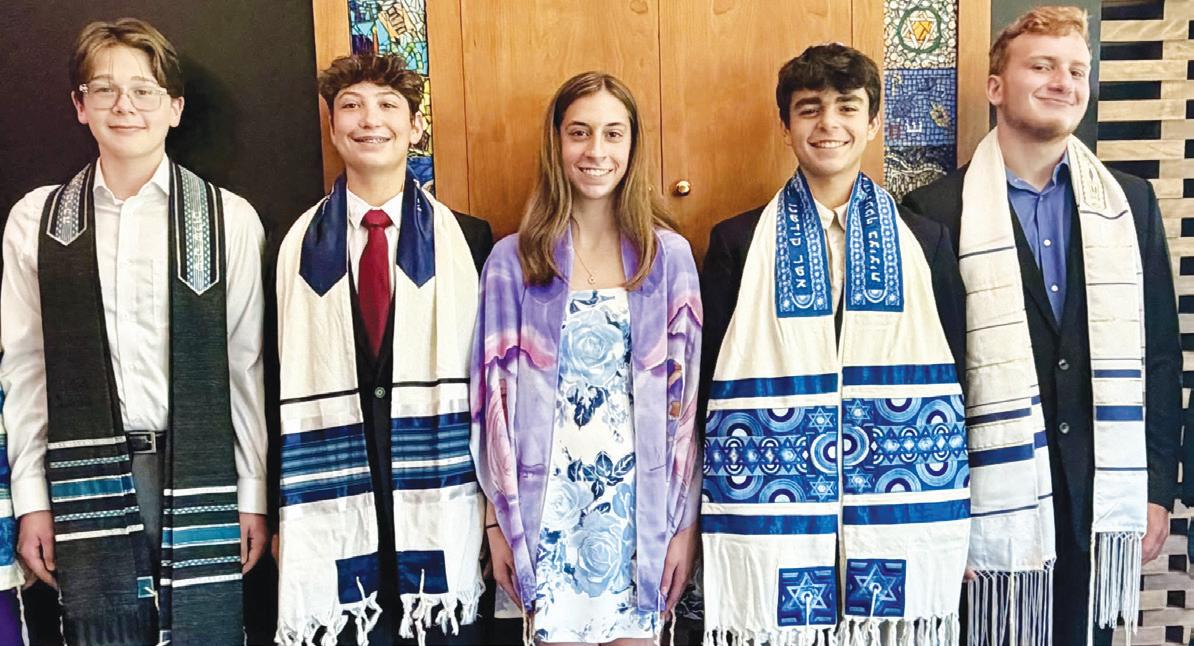
Mazel tov to Temple Israel's 2026 confirmands (L to R): Beau Kleinholt, Jonah Halasz, Hillary Katchman, Jonah Dritz, and Matteo Chaiten.
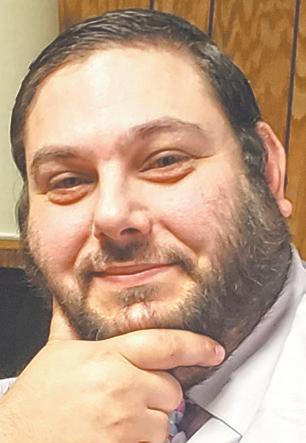
Rachel S. Lewitt
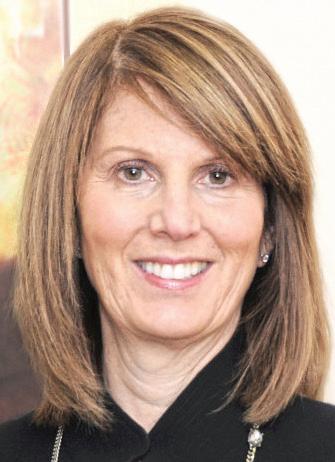
Julie Liss-Katz
Rabbi Leibel Agar
Grandma's Giant Potato Knish
By Ronnie Fein The Nosher
To feed the 13 of us, my grandma would make one giant, doughwrapped dish, cut into rectangles.
She called them knishes even though she used strudel dough. It was her knish filling recipe, so knishes they were!
And when I discovered puff pastry, I did what my grandma did: make it even easier.
Note: This freezes well for up to two months. Bake it first, let it cool, then enclose it in plastic wrap.
When it’s time to serve, let it thaw in the fridge and bake it in a preheated 375-degree oven for about 12 minutes until heated through.
Time: 2 hours. Yield: 2 rolls.
3 lbs. all-purpose potatoes, such as Yukon Gold
4 Tbsp. vegetable oil (I use avocado oil), divided
2 medium onions, sliced
1 large egg
salt and freshly ground black pepper to taste
2 sheets frozen puff pastry
Preheat the oven to 375 degrees. Lightly grease a baking sheet.
Peel the potatoes, cut them into chunks, and boil them for about 15 minutes, or until they are cooked through.
Drain the potatoes and place them in a large mixing bowl.
Add two tablespoons of vegetable oil and mash the potatoes until they are fluffy. While the potatoes are cooking, heat the remaining two tablespoons of vegetable oil in a sauté pan over medium heat. Add the onions and cook for 12 to 15 minutes or until lightly browned.
Add the onions to the potatoes. Add the egg, salt, and pepper and stir gently to mix
Using one sheet of puff pastry at a time, roll the dough slightly thinner (about 13 X 9).
Place half the potato filling down the center of the dough, using up the middle third of the dough and leaving a 1-inch margin at both of the short ends.
Enclose the filling: place one side of the dough over the filling, then place the other side of the dough over the filling, slightly overlapping. Press the short ends to enclose the filling at the top and bottom.
Place the roll, seam side down, on the prepared baking sheet. Repeat with the remaining ingredients. Refrigerate for about 30 minutes or until the dough feels cool and firm.
Bake for 30 to 35 minutes, or until golden brown. Cut with a serrated knife.
Mazel Tov to The Dayton Jewish Observer
on its 25th birth-
'Seek the welfare of the city'
America 250 — In the news series
Jews, Judaism, and the American Founding. The Jewish Impact on the Founding of America. Meet the Jews who played pivotal roles in American history.
There is a common misconception that the Jewish American story began with the massive migration waves of the late 19th and early 20th centuries.
This era often conjures vivid images of the estimated 2.5 million Eastern European Jewish immigrants fleeing recurrent pogroms, crushing poverty, and political persecution.
Crowding ships’ rails and spilling down wooden gangplanks, they packed the tenements of New York’s Lower East Side, creating the most densely populated neighbor-
hood on earth.
Similar scenes played out in smaller numbers but with equal intensity in Boston, Philadelphia, Baltimore, and even Galveston, Texas.
The reality is that Jews were deeply woven into the fabric of early America long before steamships arrived.
Their presence dates back to 1492 when, to escape the Spanish Inquisition, the multilingual converso Luis de Torres (born Yosef ben HaLevi HaIvri) joined Christopher Columbus on his first voyage.
Certain he would encounter traders and diplomats in Asia who spoke Hebrew, Aramaic, and Arabic, Columbus welcomed de Torres as his interpreter. At least five other conversos were also part of the crew, and some historians believe Columbus himself shared their ancestry.
After months of exploring the Caribbean, Columbus went back to Spain, while de Tor-
Commercial HVAC & Refrigeration
Kettering, Ohio 45429 • 937-604-2049
Tim Crafton, Owner • storchvacr@gmail.com
Mazel Tov to The Jewish Observer on 30 years!
res stayed behind with about three dozen sailors tasked with building a fort at La Navidad on Hispaniola (present-day Dominican Republic and Haiti).
Upon his return many months later, however, Columbus found that infighting and an attack by local tribes had wiped out the whole garrison.
Today, de Torres is remembered as the Americas’ first Jewish resident, described by Forward culture reporter P. J. Grisar as “a refugee of faith… the first of the pilgrims.”
Hall of
Despite the tragic fate of Hispaniola's earliest European pioneers, the Caribbean became a sanctuary for conversos in the 1500s.
Although the Spanish Crown had strict prohibitions against "New Christians" and those with Jewish ancestry settling in the Americas, thousands migrated there anyway.
Among them was Hernando de Castro, who arrived in Cuba in the 1520s.
When many of the settlers abandoned Cuba for the mainland in search of gold, the island’s population shrank and its economy floundered.
Seeking to reverse these declines, de Castro sent a direct petition to the King of Spain in 1543 for approval to construct a sugar cane mill, which de Castro eventually built.
This initiative provided a vital economic lifeline, laying the groundwork for Cuba’s foundational role in the 16thcentury Caribbean sugar boom.
These two stories of early pioneers highlight vastly different ways of encountering a new land.
The experiences mirror the prophet Jeremiah’s directive to the exiled Israelites in Babylon: “Seek the welfare of the city to which I have exiled you… for in its prosperity you shall prosper.”
At La Navidad, Luis de Torres’ contingent ignored this call. Instead of building relationships, they treated the indigenous population as servants and property, triggering a violent backlash that destroyed the garrison.
Conversely, Hernando de Castro embodied Jeremiah’s call to invest in the common good. Rather than exploiting or abandoning Cuba, he sustained it by establishing a vital sugar mill, tying his personal future to the island's survival. He clearly demonstrated that the well-being of the Jewish Diaspora was inextricably linked to the prosperity of their new home.
Jeremiah’s imperative took root on the North American mainland through countless pioneers who dedicated their talents, resources, and labor to the common good.
The 1654 refugees: Arriving destitute in New Amsterdam from Recife, Brazil, where under new Portuguese rule the Inquisition was reemerging, 23 Jewish refugees fought Director-General Peter Stuyvesant’s opposition by promising to contribute capital and labor.
Winning the right to stay, they propelled forward the notion of religious tolerance in
Literature to share
A Promised Land: Jewish Patriots, the American Revolution, and the Birth of Religious Freedom by Adam Jortner. This exceptionally readable and timely work delivers a lively, story-driven look at how early Jewish citizens shaped the nation’s founding. It immediately hooks the reader with fascinating biographical vignettes and engaging chapters like The Rabbi of the Revolution and The Jew Bill. Seamlessly blending rigorous research with the pacing of a great storyteller, A Promised Land completely refreshes our understanding of early American life and liberty.
the colonies while linking New Amsterdam to major Caribbean and European commercial hubs.
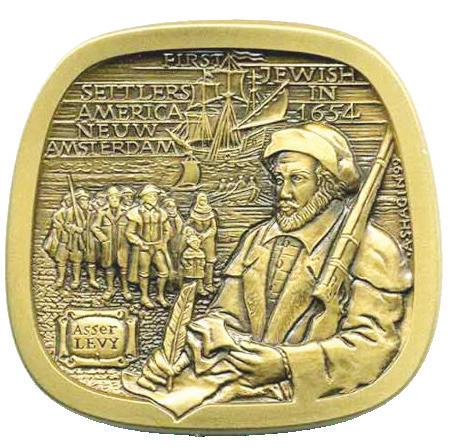
Asser Levy: When New Amsterdam barred Jewish residents from the volunteer burgher (citizen) guard, Levy successfully petitioned for the right to military service, proving public safety is a shared civic duty.
His continued advocacy for his Jewish compatriots secured more rights for others as well — citizenship, property and business ownership, and trade — laying the groundwork for broader ethnic tolerance.
Abigail and Abraham Minis: Arriving in Savannah in July 1733, the Minis family anchored the fragile, newly founded Georgia frontier. By developing land, establishing merchant networks, and securing critical trade supplies, they wove themselves into the permanent economic fabric of the American South.
Aaron Lopez: A Portuguese religious refugee, Lopez transformed Newport into a powerhouse of international trade. He built a massive shipping fleet, established whale oil manufacturing, and became the town’s highest taxpayer by the early 1770s, funding vital civic spaces and public infrastructure.
From the Caribbean to the North American mainland, these and other early American Jews transformed Jeremiah’s ancient directive into a tangible reality.
They did not merely seek shelter; they actively sought the welfare of the cities that reluctantly received them. Their enduring legacy challenges us today to take note of their example, reminding us that our own future remains deeply bound to how well we invest in the common good.
Next month: Let freedom ring!
The Boston Chocolate Party by Tami LehmanWilzig and Rabbi Deborah R. Prinz, illustrated by Fede Combi. This delightful picture book weaves together the history of the American Revolution and Sephardic Chanukah traditions for readers ages 5 to 9. Through a story of friendship and resilience, it serves as a delicious and inspiring way to introduce children to a lesser-known chapter of American colonial history. It also includes valuable end notes featuring detailed historical summaries about Sephardic settlers and authentic recipes for colonial hot chocolate and traditional buñuelos.
Candace R. Kwiatek
Jewish-American
Fame's bronze medal to honor Asser Levy, one of the first Jewish settlers in New Amsterdam in 1654.
Arts&Culture
In The First Salute, Philadelphia’s Weitzman Museum reframes the nation’s 250th birthday through a global, Jewish lens
By Andrew Silow-Carroll, JTA PHILADELPHIA
— At a moment when institutions across the country are asking how to celebrate America’s 250th birthday, the Weitzman National Museum of American Jewish History is putting Jews at the center of the origin story.
Its new exhibition, The First Salute, is about the tiny Caribbean island of Sint Eustatius and the relative handful of Sephardic Jewish merchants who were at the center of what became a pivotal moment in the Revolutionary War.
The show opens with a cinematic retelling of Nov. 16, 1776, when the American brig Andrew Doria sailed into the island’s harbor flying the Grand Union flag, an early iteration of what became the Stars and Stripes. After firing a 13-gun salute, it received a return volley from the Dutch governor — an exchange widely regarded as the first formal recognition of the fledgling United States by a foreign power.
American Jewish studies who helped shape the exhibit’s focus around those objects, the exhibit’s power lies in its insistence on interconnectedness.
“Early American history didn’t happen in isolation,” she said. “It was shaped by global migrations, by diasporas, by people who moved goods and ideas across borders. Jewish merchants were central to that story.”
Tadmor, its president and CEO.
As a result, it is not subject to the efforts by the Trump administration to shape what can and can’t be said about slavery, the treatment of Native Americans, and other reminders of the nation’s founding paradox.
Steps away from the Weitzman is the President’s House monument, where efforts by the administration to remove panels that deal bluntly with George Washington and the enslaved people in his household have landed in the courts.
But as the exhibit makes clear, the diplomatic demonstration was the culmination of a commercial and cultural drama in which Jews played an outsized role.
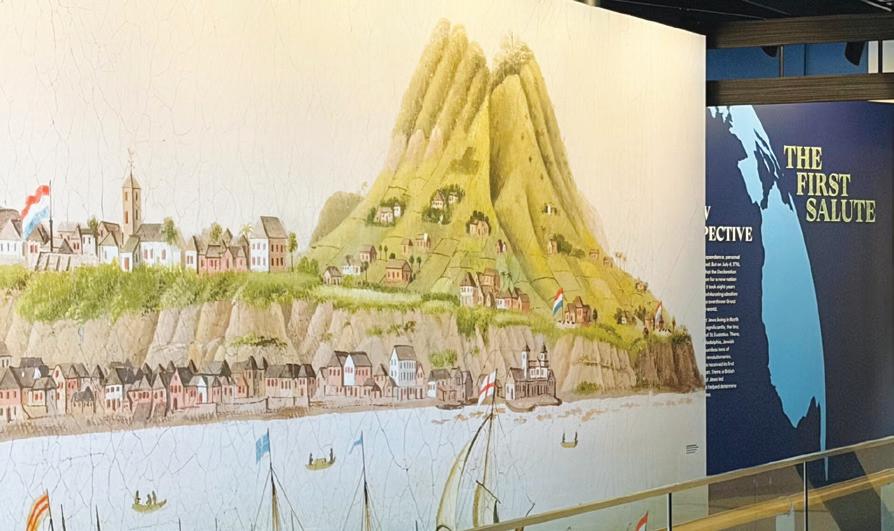
By the eve of the American Revolution, Sint Eustatius — known as the “Golden Rock” — had become one of the busiest free ports in the Atlantic world.
Sugar, textiles, rum and, crucially, arms and gunpowder passed through its docks. Sephardic Jewish merchants, many of them descendants of refugees from Iberian persecution, had built far-flung family and business networks stretching from Amsterdam to the Caribbean.
“These were people who understood statelessness, vulnerability and opportunity all at once,” said Jonathan Sarna, one of the historians who consulted on the exhibit, which opened April 23. “They leveraged those networks not
only to survive, but to participate in what they recognized as a revolutionary moment.”
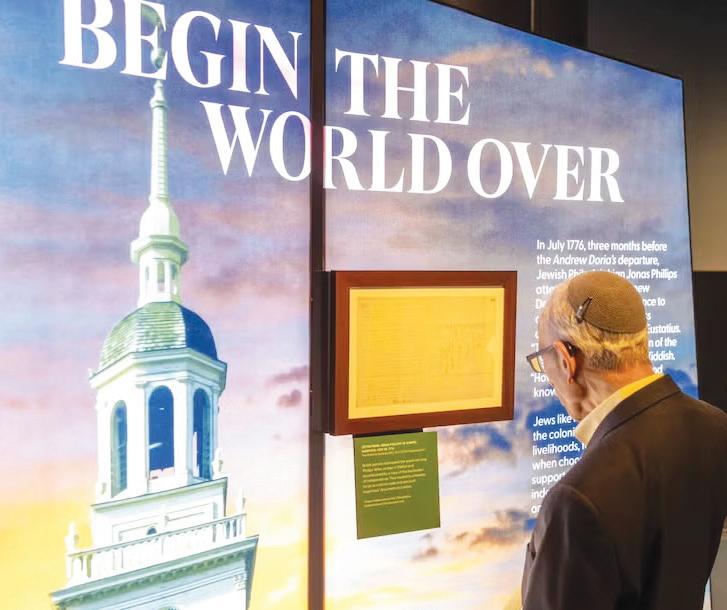
The exhibition, on view through April 2027, argues that Jewish mer chants on St. Eustatius were instru mental in supplying the American colonies with the materials needed to sustain their war against Britain — a risky proposition that would eventually invite British retaliation.
In 1781, British forces under Admiral George Rodney seized the island, tar geting its Jewish population for plunder and deportation.
According to one of three major videos that anchor the exhibit, Rod ney’s obsession with what he called the island’s “nest of vipers” allowed unhindered French ships to trap the British Army at Yorktown, forcing the surrender that effectively ended the Revolution.
Also central to the story is race. A display that includes wrist shackles used by slave owners notes that enslaved Africans were “a significant part of the island’s population and economy.” It cites a 1781 census recording that Jews on the island owned 86 people, or 6.4% of the island’s total population.
Although the Weitzman is a Smithsonian “affiliate,” the museum is au-
“We must say honestly — the freedoms practiced on its shores did not extend equally to all who lived there,” said Alida Francis, the island governor of Sint Eustatius, in her remarks at the opening. “But history is rarely simple, and the truth does not become weaker when we tell it fully.”
Leibman, who has written extensively about the Jews in the Caribbean, said it was important to talk about the anniversary, and the Jewish community, in all its complexity and contradictions.
The exhibit also includes a Torah scroll from Suriname, where by 1800 about half of the Jewish community had at least one African ancestor, making it
The show is organized as a journey — beginning with the Sephardic diaspora, moving through the Revolutionary era in both the colonies and the Caribbean, and ending with a coda that asks what independence meant in practice for those who had helped secure it.
Multimedia installations place visitors in the bustling port of Sint Eustatius; 18thcentury portraits come “alive” to explain the tense geopolitics of the late 18th century. Artifacts from around the world — many on view in the United States for the first time — reinforce the narrative: shipping records, personal correspondence, ritual objects carried across oceans.
For Laura Arnold Leibman, the Princeton professor of
Historian Jonathan Sarna views a facsimile of a letter from 18th-century German Jewish trader Jonas Phillips in The First Salute exhibit at the Weitzman National Museum of American Jewish History, Philadelphia, April 22.
Shoot from Within
The Dutch municipality Sint Eustacius was a major port in the 18th century, and the site of the first recognition of the breakaway 13 colonies by a major power.
PHOTO: TONI DUNBAR, DESIGNER AND OWNER OF IMME & MORE
The Time Is Now.
Several years ago, the community came together and created Jewish Cemeteries of Greater Dayton to protect and preserve the eternal homes of our loved ones.
Research showed the need to raise $5 million for an endowment fund. Thanks to the boards of Beth Abraham, Beth Jacob and Temple Israel, as well as hundreds of donations, we are now only $100,000 away from reaching our goal.
Once completed, JCGD will ensure the sanctity of our cemeteries and financial security for each congregation.
You can turn our dream into reality.
Now is the time to make your pledge.
Arts&Culture
Graphic novel illustrates story of first synagogue in U.S.
By Olivia Haynie, Forward Remnants by Julian Voloj & Andre Deniz FairSquare Graphics, 14 pages, $13.99
Graphic novelist Julian Voloj was walking through Manhattan’s Chinatown when he stumbled across the cemetery of the oldest Jewish community in the United States, Shearith Israel. This inspired him to write Remnants, an interpretation of the story of 23 Jews from Brazil who established North America’s first congregation.
Remnants sheds light on the Sephardic immigration that introduced Judaism to the Americas. These Jews were originally from the Iberian Peninsula and had fled to the Netherlands during the Portuguese and Spanish Inquisitions that lasted from around the middle of the 15th century to the 19th century.
When the Dutch began occupying Recife, Brazil in 1630, several Jews immigrated to that new South American colony and founded the first synagogue in the Americas, Kahal Zur Israel.
Through the eyes of a young girl, Remnants recounts how they had to flee for their lives again in 1654, when Recife was seized by the Portuguese, who banished all Jewish and Dutch settlers. This group of Jews eventually arrived in New Amsterdam, now New York. Although there had been a community of crypto-Jews in Mexico as far back as the 16th century, historians are not sure they were an organized community; Shearith Israel is widely recognized as North America’s first organized congregation.
Voloj challenges assumptions about the homogeneity of Jewish identity in his work. His graphic novel Ghetto Brother told the story of a Puerto Rican gang member living in the Bronx who finds out later in life that he comes from a family of cryptoJews. Recently, Voloj cocreated the graphic novel Hyphen: Jewish Stories in Our Own Words, which features a dozen personal stories of Jews from across the globe. In Remnants, vibrantly illustrated by Brazilian comic book creator Andre Diniz, Voloj turns his attention to the diversity of American Jewish history.
their petition was refused, Levy later successfully petitioned the government of Holland as an individual and was allowed to serve as a soldier. Barsimon and other Jews later successfully appealed to Holland to overrule Director-General Peter Stuyvesant’s discriminatory practices against the Jewish people.
Voloj weaves together multiple Jewish stories in Remnants. The young female narrator is a fictionalized daughter of Asser Levy (stylized in Remnants as Asher Levy), America’s first kosher butcher and an early advocate for Jewish civil liberties.
Voloj challenges assumptions about the homogeneity of Jewish identity in his work.
Although Levy was one of the first Jews to arrive in New Amsterdam, there are differing accounts of what ship he arrived on and it is unknown if he was on the ship with the group from Recife. He was originally from Vilna, then part of the Polish-Lithuanian Commonwealth. Asser Levy Place, a section of Avenue A in Manhattan that spans 23rd to 25th Street, and the Asser Levy Recreation Center are named for him.
Jacob Barsimon, another Jew who arrived in New Amsterdam a month before the group from Recife, features prominently. In Remnants, he is the main advocate for the newly arrived Jews after they are jailed for allegedly not paying the ship that brought them to New Amsterdam. This is a slight historical liberty — it’s not known if Barsimon was directly involved with freeing the Jews from prison. But he did partner with Levy to abolish the ban on Jews serving in the military and the exemption tax imposed on them. Though
It’s not just bigotry that puts the Jews in Remnants in danger; during their migration out of Recife, they face terror on the open waters when their ship is seized by pirates. The scene is inspired by a historical report from a Venetian rabbi, Saul Levi Morteira, although historians have debated whether or not these captured Jews were the same ones who arrived in New Amsterdam. If what Morteira wrote is accurate, the Jewish hostages were eventually saved by the French. However, in Remnants, the Jews find salvation in a different, unexpected source — another piece of Jewish history that Voloj has woven into the tale.
Although it’s a complex history, Voloj and Diniz’s illustrative approach helps make the story of America’s first Jewish congregation accessible to readers of all ages. Through the optimistic perspective of Levy’s daughter, the story of Recife’s Jews is not solely about the tragedies of exile and discrimination, but a tale of strength, resilience, and the occasional miracle. Although Voloj takes some liberties to bring the different historical narratives into one storyline, Remnants provides a well-timed look into America’s Jewish history. With the U.S. Semiquincentennial, Jewish institutions across the country are creating programming about the stories of Jews in America. Remnants takes readers back to the colorful beginning.
Laura Michelle Holzinger, 58, beloved wife of Michael Levin, happily married for over 21 wonderful years; adored daughter of Martin and Joan Holzinger; much loved sister of Debbie (Kevin) Mattis; dear sister inlaw of Robin Levin, Andrew (Ruchel) Levin and Ellen (Jeffery) Rasof; cherished aunt of Julia and Joey Mattis, Joshua, Jordan and Jacob Rasof and Sonya Haber-Levin; and treasured friend to many — passed away June 7. Laura was the brightest ray of light in so many lives. She dedicated her 30-plusyear career as a medical social worker at UChicago Medicine to serving others at the most critical moments of their lives. She was an endless delight to her family and friends, always filled with love and generosity — and sometimes a little bit of mischief. When Laura wasn’t bringing people together in her beautiful home or the latest restaurant, she traveled the world, always seeking new adventures and experiences. Donations may be made to The UChicago Medicine Transplant Patient
First Salute
Continued from Page 21
perhaps “the most multiracial Jewish community at the time, but also, honestly, today,” Leibman said.
The exhibit also reframes patriotism — rejecting the “heritage American” idea championed by JD Vance and others, which defines Americanness by ancestry. Instead, the exhibit celebrates an identity rooted in an adherence to a set of universal principles, including religious liberty.
In The First Salute, the Jews represent all of the newcomers, who, as one of the exhibit’s films puts it, “leverage their trade networks and family ties for a risky and revolutionary cause: freedom.”
Sarna pointed to a facsimile of a letter written by Jonas Phillips, a German Jewish trader who arrived in the New World as an indentured servant.
In a letter home, written in Yiddish, Phillips included a copy of the newly issued Declaration of Independence. Sharing news of the newly created country, he also suggested that the Revolution offered new and
and Family Assistance Fund, inspired directly by Laura’s decades of service as a medical social worker. Laura helped create this fund, hoping to establish a legacy of continued support for patients and their families in need, and/or the Cholangiocarcinoma Foundation, which is dedicated to finding a cure and improving the quality of life for those affected by bile duct cancer. Interment was at Shalom Memorial Park, Arlington Heights, Ill.
Peter Wells, 86, a dedicated community leader and champion of Jewish causes worldwide, passed away peacefully June 3 in Indiana. Born in Port of Spain, Trinidad, Oct. 16, 1939 to Herta and Egon Werberg, Peter's life began amid his parents' courageous flight from Vienna to escape Nazi persecution. Several months after his birth, the family reached the United States, changed their surname to Wells, and settled in Queens, N.Y., where Peter grew up in Sunnyside and later Rego Park. Peter attended Hunter College in the Bronx and continued his studies at Hebrew Union College-Jewish Institute of
OBITUARIES
Religion in Cincinnati until the passing of his father led him to take over the family insurance business. On Aug. 25, 1968, he married the love of his life, Joan Levitt Wells, and the very next day they embarked on a new adventure together in northwest Indiana. Peter's career was marked by tireless service to Jewish communities across the Midwest. He served as regional director for BBYO, first covering Indiana, Kentucky and southern Ohio, then the northern Ohio territory based in Cleveland. In 1973, the family moved to Dayton, where Peter worked in community relations and campaigning before becoming executive director of the Jewish Federation in 1978, a position he held with distinction until his retirement in 2005.
A passionate advocate for Israel and Jewish communities worldwide, Peter traveled extensively throughout his life, making over 40 visits to Israel, Eastern Europe, and former Soviet republics. He and Joan shared a love of travel, exploring destinations from Europe to Alaska to Southeast Asia during their 57 years of marriage. In retirement, Peter continued his life's work
through consulting for various Jewish and Israeli organizations. He served on the boards of Save A Child's Heart, The Western Galilee Health Center, and the Jewish Federation of SarasotaManatee. In 2010, Peter and Joan moved to Sarasota, Fla., before returning to Indiana in early 2026. Peter is remembered by all who knew him as smart, kind, caring, thoughtful, and generous — a true friend to everyone he met. His radiant smile could light up even the darkest of places. Countless people whose lives he touched along his magnificent journey referred to him as a precious gift. The world was undoubtedly a better place for having him in it. Peter is survived by his beloved wife of 57 years, Joan Levitt Wells; his daughter, Jennifer Ramos, and sons-in-law, Jose Ramos and Kyle Linville; his granddaughters, Madeline and Lauren Linville. His daughter, Rebecca Linville, preceded him in death. Interment was at Indianapolis Hebrew Congregation North Cemetery. A celebration of life will be held in Dayton in the coming weeks. Arrangements are still pending. Memorial contributions may be made to Save a Child's Heart or the Jewish Federation of Greater Dayton. May his memory be for blessing.
exciting business opportunities.
For Sarna, professor of Jewish history at Brandeis University and one of the museum’s founding historians, Phillips’ correspondence is distinctly American, written at a time when Jews were offered rights in Europe only at the indulgence of its various governments and sovereigns.
“It’s all wrapped up here in the rags-to-riches story that is so American,” Sarna said. “A lot of people came to America with that (economic) hope, but also of liberty. So you have in one little Yiddish handwritten letter all sorts of ideas that are going to be central” to the idea of America.
That framing is not incidental. The Weitzman, located just blocks from Independence Hall, has since its opening in 2010 positioned itself, and by extension the Jews, at the center of American history. With The First Salute, it doubles down on that mission, using the semiquincentennial to argue that the story of American independence cannot be fully told without its Jewish protagonists.
“For these merchants, commerce and ideology were inter-
twined,” said Pamela Nadell, the American University historian who specializes in American Jewish history. “They were not simply neutral traders. They were people whose own histories of exile and exclusion made the American cause legible and compelling.”
With the growth of Christian nationalism, which insists that the United States was founded as an explicitly Christian nation, that message is more important
than ever, Tadmor said.
“There was an overlap between core Jewish values and the values of the founding fathers,” he said.
“The idea that America was founded as a Christian nation is based on a misconception and a lie. The founding fathers, who were Christian men, founded this country on religious liberty and not on any denomination or specific faith. So all of that is in here.”
With deep sorrow, we announce the sudden passing of our beloved daughter, sister, aunt, and friend, Julie Elizabeth Ruchman. Born on July 12, 1965, Julie passed away on May 20, 2026, leaving her family and friends heartbroken. Julie is remembered for her quick wit, warm humor, and remarkable gift for storytelling. She had a special way of turning ordinary moments into cherished memories that brought laughter and joy to everyone around her. Julie embraced life with passion and joy. She was especially proud of her nephews — Brad, Bryce, and Heath — and loved sharing their accomplishments and adventures with family and friends. She also treasured time with her 21-month-old niece, Logan. Julie was a devoted fan of The Ohio State University, and on game days she could always be found in her OSU sweatshirt or T-shirt, enthusiastically cheering on the Buckeyes, whether on TV or on her phone. Julie was preceded in death by her mother, Linda Wasserman Ruchman. She is survived by her father, Marshall (Judy Aronoff) Ruchman, and her brothers, John (Bibsy) and Todd (Cindy) Ruchman. Interment was at Riverview Cemetery. A Celebration of Life is tentatively scheduled for July 12 in Atlanta, with details to follow. Donations in Julie’s memory may be made to the Susan G. Komen Breast Cancer Fund. Those interested in participating in the Celebration of Life may contact Judy Eichel at judyeichel6@ gmail.com. Julie’s memory will remain a blessing to all who knew and loved her.
Dayton’s ONLY Jewish Funeral Director 1849 Salem Avenue, Dayton, Ohio 45406-4927 937-278-4287 • lgfuneralhome@gmail.com Mazel tov to The Jewish Observer on 30 years.
From Generation To Generation.
From Generation To Generation.
Larry S. Glickler, Director
Since 1913
Larry S. Glickler, Director
Larry S. Glickler, Director
Dayton’s ONLY Jewish Funeral Director 1849 Salem Avenue, Dayton, Ohio 45406-4927 (937) 278-4287 lgfuneralhome@gmail.com
Dayton’s ONLY Jewish Funeral Director 1849 Salem Avenue, Dayton, Ohio 45406-4927 (937) 278-4287 lgfuneralhome@gmail.com
We don't say we bring you excellent journalism. They do.
One-year subscription to The Observer and acknowledgment in The Observer ($18 value)
One-year subscription, acknowledgment in The Observer and one free one-column holiday greeting ($33 value)
2025 Best Monthly in Ohio & Best Religion Reporting (Small Newspapers), Ohio Society of Professional Journalists Awards
2025 First-Place Rockower Award for Excellence in News Reporting (Magazines & Monthly Newspapers), American Jewish Press Association
Ad sales and Jewish Federation support only cover a portion of our expenses to bring you The Observer.
One-year subscription, acknowledgment in The Observer and one free three-column holiday greeting ($63 value) $36
One-year subscription, one-year acknowledgment in The Observer and three free three-column holiday greetings ($153 value)
$500 Sustainer
One-year subscription, one-year acknowledgment in The Observer and three free three-column holiday greetings ($153 value)
$1,000 Champion All listed in Guardian Angel, plus the gratitude of knowing how much you help support Jewish journalism in the Miami Valley. ($153 value)