An Anglican community inspiring every learner every experience every day
Vision
To be a leader in Christian education that is characterised by a global vision that inspires hope
Values
Commitment
Compassion
Courage
Integrity
Respect
From the Head of Barker College
Welcome to the exciting opportunities for Professional Growth at Barker in 2021.
After the extensive consultation processes of our Director of Professional Learning, Ms Sarah Clifton and the Curriculum Team, a comprehensive schema for Professional Learning opportunities has been drawn together in a ready guide. I commend it to all colleagues as together we seek to grow in capacity to meet the challenge of serving a new generation of learners.
The past year of COVID challenges generated numerous studies from professional bodies. In the UN Policy Brief on Education during COVID-19 and beyond (August 2020), the authors drew attention to the massive and rapid shift that was forced upon education systems because of the pandemic. They observed:
The massive efforts made in a short time to respond to the shocks to education systems remind us that change is possible. We should seize the opportunity to find new ways to address the learning crisis and bring about a set of solutions previously considered difficult or impossible to implement. The following entry points could be to the fore of our efforts: focus on addressing learning losses and preventing dropouts, particularly of marginalized groups; offer skills for employability programmes; support the teaching profession and teachers’ readiness; expand the definition of the right to education to include connectivity; remove barriers to connectivity; strengthen data and monitoring of learning; strengthen the articulation and flexibility across levels and types of education and training.
UN Policy Brief – Education during COVID-19 and beyond. August 2020 – Part 4.
The lived experience of transformation during the COVID time suggests, however, that the “shocks to education systems” have occurred largely without the vitally important foundation of professional learning and collaboration. Therefore, transformation risks being like the proverbial house built upon the sand, one that will not withstand the shocks that might still lie ahead of us.
As a result of the COVID experience, this generation can choose preferred solutions to besetting challenges in school education. The careful thought invested in Blended Learning at Barker in 2018-2019 bore unexpected fruit in 2020. From the Communicorp Research conducted in that same period teaching staff and Heads of Department alike observed the need for a more cohesive and inclusive strategy for Professional Learning across the School. If we are to consolidate the gains made from the COVID experience and to advance the School’s objectives in learning and teaching, we need to enhance our Professional Learning capacity.
With much enthusiasm I commend this booklet to you with the sincere expectation that its contents will enable and empower you towards ever greater personal and professional fulfilment as we serve the Great Cause of education at Barker.
Head of Barker College
Professional Learning and The Strategic Plan
Professional learning at Barker is framed by our Mission, Vision and Values:
Mission An Anglican community inspiring each learner, every experience, every day
Vision To be a leader in Christian education that is characterised by a global vision that inspires hope Values Commitment, Compassion, Courage, Integrity, and Respect
Strategic Plan
2020 - 2023
Academic Outcomes Teacher Quality and Training Co-curricular Life
and Robotics
Experiential and Outdoor Education
Education
Engagement Enrolments
Professional learning at Barker targets goals within the five areas of the Strategic Plan 2020 – 2023:
• Teaching and Learning
• Beyond the Classroom
• Communities
• Care
• Resources
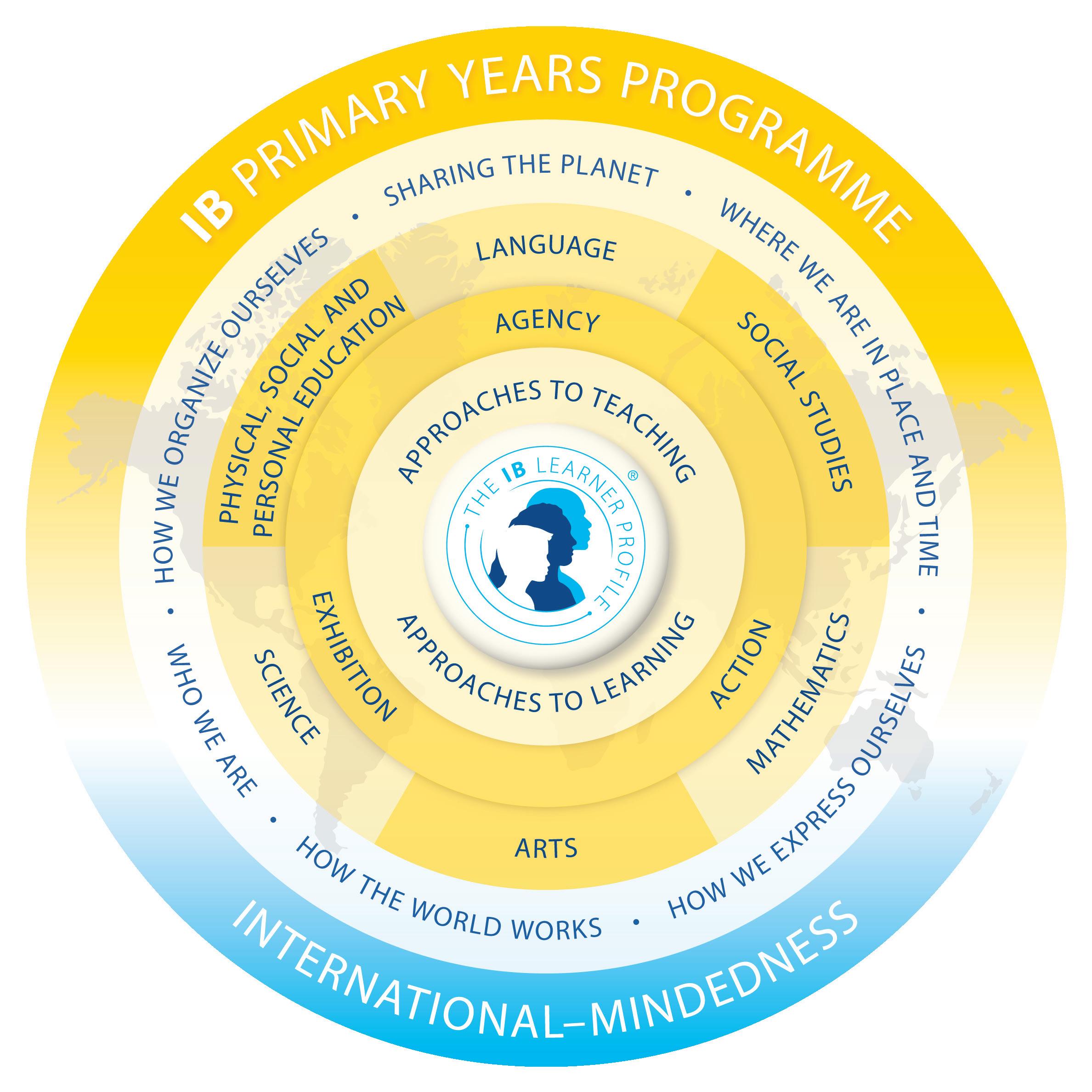
The professional learning program actions the PYP and Teaching and Learning frameworks to target academic outcomes and teacher quality. Founded on evidence of effective teaching practice from global educational research, Barker prioritises and provides a structure for ongoing teacher growth. This includes personal reflection, feedback and professional conversations aimed at ongoing learning.
Professional learning across the School includes engaging with leading innovative pedagogical researchers and thinkers through whole school professional learning days and externally provided courses. Modes of learning include, but are not limited to, face-to-face presentations, Teacher Learning Communities and online courses. Barker staff expertise is an integral element of the program design, as colleagues have the opportunity to contribute to the professional learning of their peers and grow as leaders.
Along with a focus on teaching and learning, strands of professional learning have been provided to support teacher development beyond the classroom, within communities, to ensure care and best utilise resources.
Staff and Student Wellbeing
Safety
Barker Professional Learning
Sarah Clifton is is in her second year as the Director of Professional Learning at Barker College. Prior to this appointment she led a large department and drove curriculum as the Head of PDHPE. Sarah has an interest in developing student confidence through the explicit teaching of writing and played an integral role in the Writing Across the School Program at Barker. Sarah is a passionate classroom teacher and experienced basketball coach. She is keen to drive the mission to inspire every learner, every experience, every day through the Barker professional learning program.
Sarah Clifton Director of Professional Learning
Professional learning at Barker is valued and recognised as a major contributing factor for improving the learning outcomes of students.
A carefully considered program has been designed for staff, to support ongoing professional learning that develops skills, knowledge and understanding. Opportunities provided are both formal and informal, individual and shared. Professional discourse, interaction, practice, reflection and analysis through face-to-face presentations, online courses and other modes of delivery combine to provide an innovative, evidence based, practical and inspiring learning experience.
The program has been designed to be:
• Relevant: to the Barker context and individual staff needs.
• Challenging: evidence focused.
• Collaborative: delivered by internal and external presenters with opportunities to observe, converse and reflect with colleagues.
• Practice based: supportive of the strategic plan and embedded in day to day work practice.
• Future focused: targets current and emerging trends so that staff can confidently adapt to future developments in teaching.
The Barker Professional Learning Program supports the expectation that all staff members at Barker continually grow in their practice by:
• Participating in professional learning across varying aspects of work.
• Reflecting on practice.
• Contributing to the professional learning of colleagues.
I look forward to sharing in the professional learning journey throughout 2021.
Sarah Clifton Director of Professional
Learning
Barker Institute
Dr Matthew Hill is the Director of The Barker Institute with a focus on professional learning, research, and innovation in the school. He teaches Science, Physics and the new Science Extension course at the School which introduces students to scientific academic research. Matthew’s doctorate reflects his passion for science education focussing on Representational Fluency amongst physics students at school and university. He has published in leadership, education, and science journals and been involved in course development and teaching at The University of Sydney and The University of Western Sydney. He has also completed a Graduate Diploma in Divinity at Ridley College in Melbourne.
Dr Matthew Hill Director of the Barker Institute
The Head of Barker College, Mr Phillip Heath AM, established the Barker Institute in 2014, combining the existing teaching, learning and research initiatives of the School with emerging trends in education.
The Barker Institute exists to use the rich intellectual resources of Barker College to facilitate learning and growth through the School and the wider community.
As a research centre the Barker Institute conducts education research and offers consultancy services to individuals, departments, and leaders in the School to assist decision making and reviews using research methods bespoke to the Barker context.
In 2021, staff can collaborate with the Barker Institute for support in
• connecting their initiatives to scholarly research,
• designing and implementing research and evaluation methods for teaching and learning activities (e.g. student and parent surveys),
• offering external evaluation of activities, ideas and opportunities, and
• facilitating formal and informal action research processes for individuals and groups.
As a publication house the Barker Institute provides and facilitates dissemination opportunities for staff, students, academics and community members to share their work in various forms internally and externally in journals and at conferences and events.
In 2021, staff can benefit from the services of the Barker Institute including
• developing skills in academic writing,
• reviewing of academic writing and guidance regarding publication,
• disseminating innovation and research through internal and external events, and
• publishing staff writing in the annual Barker Institute Journal.
As a learning hub the Barker Institute enables professional learning and support for staff in schools, especially associated with research activities. Students, teachers and community members come together as learners at Barker Institute events.
In 2021, staff can learn through the Barker Institute through
• pastoral and wellbeing community evening events (for parents and educators),
• academic and expert talks on various topics, and
• curriculum based professional learning
To get involved, please contact Matthew Hill, Director of the Barker Institute.
Email: mhill@barker.nsw.edu.au
Jacqui is a passionate teacher with 20 years teaching experience at Barker College. She is a leader in innovation and evidence based teaching in the Mathematics faculty. Jacqui has held a variety of leadership roles at Barker that have included: Tutor, President of the Staff Association, Director of Pastoral Care & Social Education, Acting Dean of Senior School and Head of Boarding. She has been a champion of the School’s wellbeing programs for students and staff. In the past five years Jacqui’s focus has centered on the development of the College of Teachers organisation that supports the development of teacher coaching and staff professional learning. She has been working with teachers across the Secondary and Junior Schools to develop their teaching skills aiming for ‘their personal best’. Jacqui has been studying with the Growth Coaching International organisation to develop her coaching qualifications: Growth Coaching Accreditation Program (CAP) 4 Phase and Solution Focus Master Class.
Jacqui McLachlan
Teacher Coach
Len is a teacher/coach, Economics and Business Studies teacher, sports coach, author and university lecturer. He sees his role as a coach of one of fostering pedagogical and pastoral conversations with staff. The aim is to help the professional development of a staff member through a solutions based approach.
Len Nixon Teacher Coach
College of Teachers
The College of Teachers aims to inspire teaching quality and continuous professional learning, realising the Barker mission of “inspiring every learner, every experience, every day.”
The College of Teachers (CoT) brings together the skills and experiences of Barker teachers to lead educational change and support teachers across the School. Using a coaching model based upon the Growth and Solution Focused frameworks, the CoT has the clear vision of improving outcomes for all learners by creating a coaching culture that facilitates teacher selfdirected learning. This is being developed through an environment of shared practice, open discussion, reflection and observation, in the School from Pre-K - 12.
Coaching focuses on relationship building and the development of partnerships that work towards unlocking potential and developing an individual’s teaching practices. The coaching team work hard to develop trust and rapport with their coaches, assisting them to be motivated to move towards positive change and the attainment of personally set goals.
The College of Teachers is an important component of the professional learning opportunities and conversations that need to occur in a school. At Barker, through the development of the College of Teachers we are seeking to enhance the many strengths that exist in our community.
As a component of their ongoing professional learning, Barker teachers are encouraged to be involved in regular coaching conversations with one of the Lead Teacher Coaches or any of Teacher Coaches of the College of Teachers. Click on the link for information about our Barker Teacher Coaches.
Formalised training in coaching frameworks, is a requirement for admission into the College of Teachers.
For further information please contact Sarah Clifton, Director of Professional Learning.
Email - sclifton@barker.nsw.edu.au
New Teacher Coaching Initiative
Barker teacher coaching course. (10 hours)
Develop your skills as a teacher coach and consider coaching as a career pathway.
Why is coaching so important? Does it work and what does it involve? These questions and more will be answered. The course will address strategic and operational aspects of coaching. A brief overview as to why coaching is important will be focus. While the “what” or the “nuts and bolts” aspects of the course will focus on having “conversations.” Underpinning the process of having a conversation is how you engender trust, honesty, integrity within a self-determined solution base Growth framework.
Applications by nomination only. See Len Nixon or Jacqui McLachlan for more details.
Teacher Accreditation
Greg Cunningham teaches English and he has been the Head of Gifted and Talented Education, Director of Teaching and Learning and now the Director of Accreditation at Barker. Greg has been involved at State level in teacher accreditation consultation and assessment with the NSW Institute of Teachers, NESA and the Association of Independent Schools (NSW). He is accredited as a Lead Teacher. He is also a member of the AITSL HALT network.
Dr Greg Cunningham Director Accreditation
Proficient Teacher
The Director of Accreditation supports and monitors the accreditation status of teachers at Barker College including the National accreditation levels of Proficient, Highly Accomplished and Lead Teacher and the Maintenance of Accreditation at those levels.
The role also includes teachers working towards Experienced Teacher, the accreditation level linked to remuneration within the AISMEA. Barker College provides strong support that enables teachers at the School to gain understanding of the NESA accreditation responsibilities as well as a professional learning program that embeds NESA professional development requirements.
Proficient Teacher Process
During the first six months
During the following six to twelve months
The final three months
Report Submission
Accreditation Completed
During the induction process, the Director of Accreditation will meet with all new staff. He will discuss the process and timetable for those who need to complete teacher accreditation at the level of proficient teacher.
Teachers undertaking accreditation collect, collate and prepare evidence for assessment. They also are observed as part of the accreditation process.
The supervisor, Head of Department in the Secondary School or the Head of the Junior School in the Junior School prepares the Accreditation Report.
The report is then submitted to the Head of Barker College (Barker College’s TAA Prime Authorised Delegate). Once an accreditation decision has been made, these documents are submitted to NESA.
Once NESA has made the initial decision on a new teacher’s accreditation status, Barker College TAA’s Prime Authorised Delegate will authorise the accreditation.
Maintaining Proficient Teacher Accreditation
Teachers accredited at Proficient Teacher level are required to maintain their accreditation while teaching in NSW. Ongoing accreditation is a condition of employment in any NSW school. Maintaining Proficient Teacher accreditation involves participating in high-quality professional development that assists to improve teaching practice on an ongoing basis. Maintenance of Proficient Teacher Accreditation is a five year cycle (if employed full-time) or seven years (if employed parttime/casual). The process involves continued demonstration of competent teaching practice.
Changes in 2021
New requirements for accrediting professional development (PD) courses were announced at the end of 2020 and will be phased in from 2021.
Teachers still need to complete 100 hours of PD linked to the Standard Descriptors at Proficient Teacher of the Australian Professional Standards for Teachers including:
• at least 50 hours of NESA Accredited PD across the priority areas if you are accredited at Proficient teacher; or
• at least 20 hours of NESA Accredited PD across the priority areas and 20 hours of professional commitment if you are accredited at HALT
• the remaining hours can be a combination of NESA Accredited and Elective PD.
The priority areas are:
• delivery and assessment of NSW Curriculum/Early Years Learning Framework (as applicable)
• student/child mental health
• students/children with disability
• Aboriginal education and supporting Aboriginal students/ children.
Keeping NESA accreditation fees up to date
It is a teacher’s responsibility to inform NESA if they have moved schools, home or changed their name. Teachers are expected to log in regularly to their online eTAMS account to keep track of their accreditation details.
The Director of Accreditation monitors teachers’ progress in maintaining their accreditation at all of these levels. Maintenance of Experienced Teacher (an AIS level of accreditation) is not required.
Accreditation is coordinated by the Director of Accreditation. For any inquiries, please contact Dr Greg Cunningham.
Email: gcunningham@barker.nsw.edu.au
Commencing Teaching at Barker
Induction and Probation
Staff new to Barker are required to participate in induction and probation processes. The School provides support by providing a mentor, a staff buddy and an opportunity for teacher coaching.
Director of Accreditation, Dr Greg Cunningham, meets with new teaching staff to assist the Head of Department/Grade Co-Ordinator regarding the probationary process and any accreditation requirements
Teacher Coaches, Jacqui McLachlan and Len Nixon, organise mentoring, staff buddies and teacher coaching through the College of Teachers.
Induction:
• Staff appointed to Barker undertake a number of online induction courses coordinated through Human Resources prior to their arrival at the School.
• Should new staff commence at the start of the new school year, 2- 3 days induction and orientation are conducted. At other times of the year, it is the responsibility of the Head of Department/Head of Junior School to co-ordinate an induction process in liaison with the Deputy Head, the Head of Human Resources and the Director of Accreditation.
New Staff to Barker Mandatory Online Courses
Compliance Courses Through CompliLearn
• General Induction Course
• Child Protection
Prior to commencement
Staff Orientation Barker 101 On CANVAS
Barker Professional Learning
After orientation prior to 1st day of teaching
Digital Learning Courses On CANVAS
Barker Professional Learning
• Teaching with Canvas (3-12)
• Teaching with SeeSaw (PreK-2)
During probation
Junior School Commencing Teaching at Barker
All staff new to the Junior School are required to complete The Introduction to PYP Barker module via the online learning management system (Canvas) that is presented as three pillars of learning. Successful completion of the course provides 5 hours of professional learning. Teachers are required to complete the online component by the end of their probationary period.
In addition to the online modules staff are required to complete official IB recognised training and complete the Making the PYP Happen Category One workshop. This is a requirement of all teaching staff in IB PYP Schools. The cost of training is covered by Barker College.
New Staff to Barker Support Programs
Mentor
New staff are assigned a mentor by the Head of Department (Secondary School) or Grade Co-ordinator (Junior School). The mentor’s role is to provide subject/ grade specific guidance and support new staff with the day-to-day workings of the school.
Buddy
All staff new to Barker will be assigned a Buddy from outside of their faculty/ grade area. The staff buddy has volunteered to provide holistic support and a different point of contact for new staff to seek advice and support.
Coaching
All staff are encouraged to access professional feedback from trained teacher coaches to enhance the efficacy of teaching practice at Barker. The coaching discussions are confidential to the participating pairs.
Band 1 Teachers Commencing at Barker
All Band 1 teachers commencing at Barker will be assigned a teacher coach as a support mechanism for integration to teaching at the School. To assist teachers in the dynamic world of teaching at Barker, a coach will support new staff through:
• Regular coaching conversations with a teacher trained in coaching.
• TWO 5 – 10 minute observations per term in the 1st year of teaching at Barker.
• A termly group meeting with other new graduate teachers commencing at Barker.
• Further support on request.
New Staff Probationary Process
The New Staff Probationary Process focuses on the successful completion of a period of probation. This is generally a sixmonth process to confirm that the new member of staff is progressing well, is a competent teacher and is able to contribute to the life of the School.
The process includes the following documentation:
1. Classroom observation reports:
A minimum of four classroom visit reports including:
i. a mentor visit (usually the first classroom visit)
ii. observation by an experienced departmental/grade colleague (report required)
iii. observation by an executive staff member (report required)
iv. final observation by the Head of Department/Grade Coordinator (report required)
The classroom observation proforma is available from the Director of Accreditation who also makes the document available to the teacher undertaking the probation process.
2. A reflection statement (500 words) written by the new teacher addressing the following areas:
• the opportunities and the challenges of the position
• areas that could have improved orientation and induction
• immediate short-term goals for the second semester at Barker
3. A report on co-curricular involvement (where applicable):
Person-in-charge/co-curricular coordinator provides a short report on the teacher’s participation, attendance and rapport with students. This may be in the form of an email from the co-curricular coordinator to the staff member. This should be downloaded and included as a hard copy with the rest of the probation documentation.
4. A report on participation in the Connect Program (where applicable):
The Head of House supplies a short report on the teacher’s participation in House activities, engagement in the Thrive program and rapport with students. Again, this may be in the form of an email to the teacher. A hard copy of this report needs to be included with the rest of the documentation.
5. Head of Department’s/Head of Junior School’s report
Once all documentation is received, the teacher hands to the Head of Department/Head of Junior School who then completes the HOD/Head’s report (template available from the Director of Accreditation). The teacher is required to sign off on the report. The HOD/Head of Junior School returns all documentation (including HOD/Head of Junior School report) to the teacher.
Submission format: All documents are then placed in a folder and handed to the Director of Accreditation who liaises with the Deputy Head. Final submission date for all documentation is typically before the end of Term 2, but that will depend on the point of employment.
6. Conclusion of the Probation Period
Following submission of the documentation, the Deputy Head (or delegate), will conduct an interview with the member of staff. In consultation with the HOD/Head of Junior School, the staff member will then be advised of the outcome of the Probation. Should the Probation Period not be successful, the Head of Department liaises with the Director of Accreditation who will in turn seek an appropriate course of action with the Deputy Head and the Head of Human Resources.
New Staff Probation Process is coordinated by the Director of Accreditation. For any inquiries, please contact Dr Greg Cunningham.
Email - gcunningham@barker.nsw.edu.au
Teaching and Learning Framework
The Barker Professional Learning Program is guided by the Teaching and Learning Framework. This translates Barker’s mission, vision and values into an evidence based, practical guide for teachers, students and parents. It also captures the Thrive Framework which is defined by the four pillars of Service, Gratitude, Inquiry and Rhetoric.
At the centre of the teaching and learning framework is the learner. Barker seeks to develop the learner by;
• Creating a learning ENVIRONMENT that is inclusive and based on mutually respectful relationships between students and teachers.
• Understanding that the acquisition and application of KNOWLEDGE is crucial as deep knowledge allows students to problem-solve, to think critically and to communicate with confidence.
• Valuing and seeking opportunities to provide FEEDBACK and REFLECTION that is designed to move the learner forward and to provide the teacher with a direction for future instruction.
• Focusing on INQUIRY and RHETORIC supported by the PYP and Guided Inquiry Design framework, for students to investigate areas of personal interest, to pursue authentic problems and to develop the mental structures to think deeply and creatively.
Underpinning all of these aspects is a focus on SERVICE and GRATITUDE. A focus on gratitude encourages students to live and develop through thankfulness. Service encourages the individual to grow, personally and intellectually, by investing time in the service of others. In a teaching and learning sense, service and gratitude will support positive learning environments, thankfulness for opportunities to learn and perseverance in learning.
Promoting curiosity and providing opportunities to connect and apply ideas to create new knowledge.
Holding ideas and beliefs and persuading with knowledge and clarity of thought.
An attitude of thankfulness for what we have been given - by God, by our parents, by others. Investing in relationships and valuing people and learning opportunities.
Seeking to understand the needs of others and taking purposeful action; noticing and acting, listening and following through.
Creating the optimum conditions and relationships for
Valuing deep disciplinary and inter-disciplinary
PYP Curriculum Model
Mental Health First Aid Course
Mental Health First Aid Course
With a long term vision to create a mentally healthy workplace in which our staff thrive, we are delighted to launch the initiative of Mental Health First Aid.
With a long term vision to create a mentally healthy workplace in which our staff thrive, we are delighted to continue Mental Health First Aid initiative.
With a long term vision to create a mentally healthy workplace in which our staff thrive, we are delighted to launch the initiative of Mental Health First Aid.
The workplace presents a unique opportunity to reduce the impact and severity of mental illness by raising awareness, decreasing stigma and normalising mental health discussions.
The workplace presents a unique opportunity to reduce the impact and severity of mental illness by raising awareness, decreasing stigma and normalising mental health discussions.
The workplace presents a unique opportunity to reduce the impact and severity of mental illness by raising awareness, decreasing stigma and normalising mental health discussions.
This 12 hour course teaches you mental health first aid strategies for adults who are experiencing a mental health crisis or developing a mental health problem.
This 12 hour course teaches you mental health first aid strategies for people who are experiencing a mental health crisis or developing a mental health problem.
The Mental Health First Aid (MHFA) course is based on international MHFA guidelines. These guidelines were developed using consensus of mental health consumers, carers and professionals from English speaking developed countries.
Undertaking the MHFA course can provide you with:
Undertaking the MHFA course can provide you with:
• Skills in how to recognise the signs and symptoms of mental health problems;
Undertaking the MHFA course can provide you with:
• Skills in how to recognise the signs and symptoms of mental health problems;
• Skills in how to recognise the signs and symptoms of mental health problems;
• Knowledge of the possible causes or risk factors for these mental health problems;
• Knowledge of the possible causes or risk factors for these mental health problems;
• Knowledge of the possible causes or risk factors for these mental health problems;
• Awareness of the evidenced based medical, psychological and alternative treatments available;
• Awareness of the evidenced based medical, psychological and alternative treatments available;
This 12 hour course teaches you mental health first aid strategies for adults who are experiencing a mental health crisis or developing a mental health problem.
The Mental Health First Aid (MHFA) course is based on international MHFA guidelines. These guidelines were developed using consensus of mental health consumers, carers and professionals from English speaking developed countries.
• Awareness of the evidenced based medical, psychological and alternative treatments available;
• Skills in how to give appropriate initial help and support someone experiencing a mental health problem;
The Mental Health First Aid (MHFA) course is based on international MHFA guidelines. These guidelines were developed using consensus of mental health consumers, carers and professionals from English speaking developed countries.
The Course Outline
The Course Outline
The course is 12 hours (4 modules, each 3 hours) and run over two days. Course participants receive a copy of the Standard MHFA Manual to keep and a Certificate of Completion.
The course is 12 hours (4 modules, each 3 hours) and run over two days. Course participants receive a copy of the Standard MHFA Manual to keep and a Certificate of Completion.
• Skills in how to give appropriate initial help and support someone experiencing a mental health problem;
• Skills in how to give appropriate initial help and support someone experiencing a mental health problem;
• Skills in how to take appropriate action if a crisis situation arises involving suicidal behaviour, panic attack, stress reaction to trauma, overdose or threatening psychotic behaviour.
• Skills in how to take appropriate action if a crisis situation arises involving suicidal behaviour, panic attack, stress reaction to trauma, overdose or threatening psychotic behaviour.
• Skills in how to take appropriate action if a crisis situation arises involving suicidal behaviour, panic attack, stress reaction to trauma, overdose or threatening psychotic behaviour.
Trainer: Alison Binet
For further information please contact Human Resources. Email - HR@barker.nsw.edu.au
Trainer: Alison Binet
No. of Participants: Between 10 - 15 per course
Date: 14 & 17 January 2019
No. of Participants: Between 10 - 15 per course
Date: 14 & 17 January 2019
Target Audience: Support Staff
Target Audience: Support Staff
Alison has delivered this standard Mental Health First Aid course throughout the 44 Catholic Schools in the Broken Bay diocese (to support staff, teaching staff and executive staff) since 2015.
Alison has delivered this standard Mental Health First Aid course throughout the 44 Catholic Schools in the Broken Bay diocese (to support staff, teaching staff and executive staff) since 2015.
Barker Global
Sophie Mynott is the Director of Barker Global Partnerships, responsible for the School’s Indigenous education and global engagement strategies. She has developed an Indigenous education strategy for the School and assists teachers to bring Indigenous histories, cultures and perspectives into their classroom. She also works with Indigenous communities and organisations to improve access to education for Indigenous students, and to develop the understanding of and commitment to reconciliation of non-Indigenous students and teachers. She has assisted Barker to set up two schools – Ngarralingayil Barker in Wollombi (2020) and Dhupuma Barker in Gunyangara, NT (2021). Her other experiences in education have involved roles at the NSW Education Standards Authority and as an academic at the University of New South Wales. She is the President of the Legal Studies Association of NSW, and lectures students and delivers professional development to teachers across NSW.
Sophie
Mynott
Director of Barker Global Partnerships
As our School community becomes increasingly diverse, we seek to benefit from the contributions and perspectives of people from all the cultures represented in our School.
There are currently 22 different first languages spoken by students at Barker, and we view this as a strength, just as we have long aspired for our students to look ‘beyond the Mint Gates’ both whilst they are at the School and in their lives beyond.
The Barker Global team aims to achieve this and develop Barker College as a world-leader in the wholistic, globally minded education of young people. This includes:
• the provision of intercultural engagement for those at every Barker campus
• support for Barker’s diverse student and staff population
• establishing partnerships with communities and schools throughout Australia and around the world
None of these goals can be achieved without an educated staff who are supported to effectively and confidently communicate across cultures and who possess an awareness of the importance of intercultural engagement for the future of our students, our School and the world. Professional Learning delivered by the Barker Global team aims to develop our teaching and support staff’s understanding of and engagement with cultural diversity in the School, for the betterment of our students and the broader community.
Barker Global will be offering a series of professional learning opportunities appropriate for Junior and Secondary teachers, in person and online.
To begin engaging online with the Indigenous Education courses, please click on the relevant tab in the Barker Professional Learning Canvas course or follow this link: https://canvas.barker.college/courses/9852. We recommend you start with the Acknowledging Country, Peoples and Culture and/or Teaching First Nations Students units.
For further information please contact Sophie Mynott, Director of Barker Global Partnerships.
Email - smynott@barker.nsw.edu.au
Support Staff Professional Learning
Professional Learning Support Staff
Alison Binet is the Head of Human Resources at Barker College. She joined Barker in 2018 and has 20 years experience in the Education Industry. Alison has a passion for the creation of safe and healthy workplaces through sustainable wellbeing strategies. This includes a strategic approach to enabling all staff to thrive in their roles through embedding a culture of feedback, professional development opportunities and strong leadership support.
Alison Binet
Head
of Human Resources
The ongoing professional development of each staff member is highly valued. Effective professional development builds the knowledge, skills and qualities of staff to ultimately improve the outcomes for student life at Barker.
Support Staff play a vital role in facilitating teaching and learning and in providing the optimum environment for students. Roles are wide and complex, and a suite of professional development is required to meet the needs of individuals, to encourage professional growth and to enable staff to thrive in their work within a culture of continuous improvement. The School is developing opportunities for Support Staff and this will continue to grow over the next few years.
New Staff Probationary Process
• Thrive at Barker Staff Reflection Form and growth conversations
• Professional conversation with Head of Department or Manager
• Whole School Professional Learning Days
• Assigned training courses in Child Protection and Work Health and Safety
Barker Professional Learning Modes
Whole School Professional Learning Days
Throughout the year, all staff participate in whole school professional learning days. Each day has a specific focus in teaching and learning, wellbeing or other aspects of the School.
Online Professional Learning
To provide some flexibility for staff in professional learning, many courses are now provided for staff online through Canvas, Complispace and other platforms
Presentations
Throughout the year, Barker staff will have the opportunity to learn from and contribute to the professional learning of their colleagues by attending and/or delivering presentations in areas of expertise. Choose Your Own Adventure!
Professional Learning Courses
Within the professional learning program is the opportunity to apply to attend a variety of recommended, externally provided courses.
Coaching
Staff have the opportunity, through the College of Teachers, to be coached by qualified coaches using the Coaching Growth Model. External coaching is also available upon request to Human Resources.
Barker Institute
The focus of the Barker Institute is to contribute to the local, national and global discussion about education, while also offering ongoing professional learning to staff and the broader Barker community. It offers consultancy and research support for individual and groups in the School, publishes and disseminates student and staff innovation, and runs courses and events for staff and external participants.
Barker Individual Feedback and Reflection Process
Thrive at Barker Staff Reflection Form
• Completed by: Week 8 Term 1 2021
At the commencement of a school year, all support staff are required to complete the Thrive@Barker Reflection Form. This includes reflection on strengths and challenges in their role, nominating focus areas and goals, the support that may be needed and their career aspirations. Before the end of the year, staff are required to complete a brief written reflection. This form will be discussed as part of the professional conversations with the assigned manager.
Giving and Receiving Feedback
• Conducted: Once in 2021
A new feedback process is being piloted in 2021 to support the growth and development of Support Staff. This is being supported by Educator Impact’s unique framework of best practice. In the first year of implementation, all staff will participate in a course on how to give and receive feedback, and effective 360 feedback. This prepares the way for self-reflection and the receipt of feedback in order to set appropriate goals to encourage continual improvement and professional growth.
Professional conversation with Head of Department/Manager
• Conducted: Once per Semester
Each Semester, every staff member will participate in a professional conversation with the Head of Department or assigned Manager to discuss their role, professional growth and career development. Professional conversations and coaching conversations should focus on the goals nominated in the Thrive@ Barker Reflection Form.
Professional Learning Support Staff
Whole School Professional Learning Days
Term 1
Monday 25 January
8:30am - 10:30am
Whole School Chapel and Meeting 2021 Overview
11:00 – 3:20 exact time to be confirmed (one hour session)
Support Staff Professional Learning
Term 2
Monday 19 April
First day of Term 2 8:30am – 12:30pm
Cognitive Science – Guest presenter Jared Cooney Horvath (optional for Support Staff)
Term 3
Monday 12 July First day of term
Wellbeing at Barker Guest Speakers / Staff Conference Style
Friday 17 September Last day of term 8:30am – 3:20pm exact time to be confirmed
Support Staff Professional Learning
Whole School Professional Learning Days
Term 1, Week 1: Monday 25 January
Welcome to 2021
Term 1
Week 1 Monday 25 January
8:30am – 12:30pm
Introduction to Professional Development
Term 1
Week 1 Monday 25 January
1:20pm – 2.30pm (TBC)
Term 4
Wednesday 8 December Last day of term
Description
All staff join together for a welcome and overview of 2021 from our school leaders.
Description
Strategy for professional development will be provided,
• The 2018/2019 Mentally Healthy Workplace Strategic Review findings
• Thrive@ Barker Reflection Process
• Embedding Feedback into Culture
Whole School Professional Learning Days
Term 2, Week 1: Monday 19 April
Guest Presenter
Jared Cooney Horvath (PhD, Med) Jared is a cognitive psychologist and behavioural neuroscientist. He has worked with over 100 schools both nationally and internationally. Much of Jared’s work focuses on translating basic science for effective teaching and learning practices. He has a particular interest in linking teaching strategies to engender deep learning and conceptualisation. Jared presents on concepts surrounding attention, memory, engagement, and assessment. He has also published four books including: Stop Talking, Start Influencing: 12 Insights from Brain Science to Make Your Message Stick.
Barker Quality Teaching and Learning Framework
A focus for professional learning at Barker in 2021 is directed towards exploring the theory and application of the three strands within the Barker Quality Teaching and Learning Framework. This presentation has a key focus on the Knowledge strand with specific links to explicit teaching as well as understanding memory and retrieval.
Foundations of Learning and the Learning Trajectory
Description Professional Learning
5 Hours
Term 2 - Week 1
Monday 19 April
Addressed Standard Descriptors
TBC
How do human beings take in, embody, and utilise new information and ideas? In this session, we will explore this process. Using Learning Objectives as a through line, we will consider how to walk students from Shallow into Deep learning. In addition, we will take a look at transfer and discuss why moving skills between contexts is so tricky
LME Global 2018,LME Global, Learning made easy, Scotsdale, viewed 10 November 2020, <https://www.lmeglobal.net/>
This presentation has a key focus on the Knowledge strand with specific links to explicit teaching as well as understanding memory and retrieval.
Target Audience - Whole School
Whole School Professional Learning Days 2021
Term 3, Week 1: Monday 12 July
Wellbeing at Barker
Guest Speakers/Staff Conference Style.
Support Staff are welcome to join for the morning Keynote Session and the relevant workshops 11:00am – 12:30pm.
Further details to be announced closer to the date.
This staff professional learning day will focus on whole school wellbeing and what wellbeing looks like in theory and in practice. Whole school wellbeing focuses on school wide culture, practices and policies that impact the entire school community. Wellbeing becomes a whole school priority when the community has a shared vision of what wellbeing means and how it underpins all relationships and learning outcomes for young people. Whole school wellbeing practices considers the place of social and emotional learning (SEL) as key skills for the future success of students. Consideration of SEL in all facets of school life such as outdoor education, sport, early education, co-curricular programs, the classroom experience, rites of passage, assessment, reporting, service, leadership and even the buildings and facilities at Barker is essential in creating and maintaining a thriving school.
Staff will engage in collaborative, cross curricular professional conversations, hear from leading wellbeing researchers and attend wellbeing workshops and seminars to develop theoretical understandings of wellbeing and take away practical strategies for their everyday practice.
Whole School Professional Learning Days 2021
Term 3, Week 10: Monday 17 September
Professional Learning
Details TBA
Professional Learning Support Staff
Whole School Professional Learning Day
Term 4, Week 10: Wednesday 8 December
Celebrate the last day of Term
Externally provided courses run at Barker
Mental Health First Aid Support Staff
Course 1 – July Holidays
Day 1 Tuesday 6 July and Day 2 Thursday 8 July
Course 2 - August
Day 1 – Tues 10 Aug 2021
Day 2 – Tues 17 Aug 2021
Day 3 – Thurs 26 Aug 2021
Day 4 – Thurs 2 Sept 2021
Description
The Mental Health First Aid course teaches mental health first aid strategies in this context to support staff. Mental health first aid is the help provided to a person who is developing a mental health problem, experiencing a worsening of a mental health problem, or in a mental health crisis.
Presenters
Alison Binet - Head of HR
External leadership courses run at Barker
Management and Leadership Program – 2021
In 2019, Heads of Departments from our Secondary School and Junior School teaching staff and during 2020 Heads of Departments from our Support Staff participated in a program delivered by Guy Williams from The Training Guys. This program will be extended to other Support Staff in 2021.
Leadership Program
Guy Williams
Description
Guy is an enthusiastic and expert facilitator who commenced his career as a High School Teacher in the UK and moved into the corporate training arena in 2005 focusing on management and leadership development. He has worked with the executive teams on strategic planning and management at several NSW and ACT Schools with excellent feedback. The program will incorporate workshops and high-quality workbooks and support materials. There will be takeaway material, ‘cheat sheets’ and action plans to ensure the techniques and skills discussed are understood and actively incorporated within ongoing leadership roles.
• The Differences between Leadership and Management
• Managing Our Time, and running Effective Meetings
• The Importance of Interpersonal Skills and Communication
• Conducting One-on-One Conversations with Your Staff
• Managing Staff Performance; Creating a Culture of Feedback
• Dealing with Different and Difficult Colleagues, Staff and Parents
• Fostering a Successful Team
• You have to be able to Delegate!
• Leading Through Change
Junior School Professional Learning
Junior School Professional Learning
As a school, we have a shared responsibility to improve student learning and wellbeing outcomes. To do this we have the responsibility as teachers to review our practice and identify key areas for improvement. Teaching is a dynamic profession and, as new research emerges, teacher must use it to continually refine their expertise and skills.
Professional learning needs to be a normal part of every teacher’s daily routine rather than something extra that teachers are required to do. Therefore, Barker Junior School professional learning program has been designed to be school-based and directly relevant to the daily work of teachers with a focus on:
• Student outcomes linked to NESA outcomes and PYP Standards and Practices.
• Embedding professional learning in teacher practice and into the daily work routine.
• Guided by research through the Barker Teaching and Learning Framework.
• Reflection and targeted goal setting supported by student and colleague feedback.
• Acknowledging the responsibility of individuals and the whole school in professional learning.
Each Wednesday is set aside for whole Junior School Professional Learning from 3:00 - 4:30pm.
Other opportunities for professional working party groups may arise throughout the year and provide staff with clear links to their own professional goals and passion areas.
Junior School Professional Learning Program 2021
Mandatory Professional Learning
• Thrive at Barker Staff Reflection Form and growth conversations
• Professional conversation
• Whole School Professional Learning Days
• Wednesday Junior School Professional Learning 3:00 – 4:30pm
Barker Individual Feedback and Reflection Process
Thrive @ Barker Reflection Form
Completed by: Semester 1 2021
Description
At the commencement of a school year, all teaching staff are required to complete the Thrive@ Barker Reflection Form. This includes reflection on strengths and challenges in teaching, nominating focus areas and goals. Before the end of the year, teachers are required to complete a written reflection. This form and process will be discussed as part of the professional learning during Semester 1.
Externally provided courses run at Barker
Mental Health First Aid
Junior School
Term 1
All sessions 3:30 – 6:00pm
Session 1
Tuesday 16 February
Session 2
Monday 22 February
Session 3
Tuesday 2 March
Session 4
Monday 8 March
Description
The Mental Health First Aid course teaches mental health first aid strategies in this context to support staff. Mental health first aid is the help provided to a person who is developing a mental health problem, experiencing a worsening of a mental health problem, or in a mental health crisis.
Presenter
Alison Binet - Head of HR
Venue
Junior School Library
Secondary School Professional Learning
Secondary School Professional Learning Overview
As a school, we have a shared responsibility to improve student learning and wellbeing outcomes. To do this we have the responsibility as teachers to review our practice and identify key areas for improvement. Teaching is a dynamic profession and, as new research emerges, teachers must use it to continually refine their expertise and skills.
Professional learning needs to be a normal part of every teacher’s daily routine rather than something extra that teachers are required to do. Therefore, Barker Secondary School professional learning program has been designed with opportunities to participate in regular school-based professional learning that are directly relevant to the School’s strategic direction and of a practical nature so that teachers can embed the learning in their day to day work. The program has a focus on:
• Student outcomes.
• Embedding professional learning in teacher practice and into the daily work routine.
• Guided by research through the Barker Teaching and Learning Framework.
• Reflection and targeted goal setting supported by student and colleague feedback.
• Acknowledging the responsibility of individuals and the whole school in professional learning.
• Provision of holistic professional learning across different areas of the School.
• AITSL standards and NESA accreditation requirements.
Barker Professional Learning Home
The Barker Professional Learning Canvas course is the new home for all professional learning. This includes:
• Professional learning documentation including this 2021 professional learning booklet which will be regularly updated.
• Schedule and Registration for Barker professional learning presentations.
• Thrive feedback and reflection forms.
• All online learning courses including digital learning, teaching and learning, wellbeing, intercultural understanding, and Barker procedural self-paced courses.
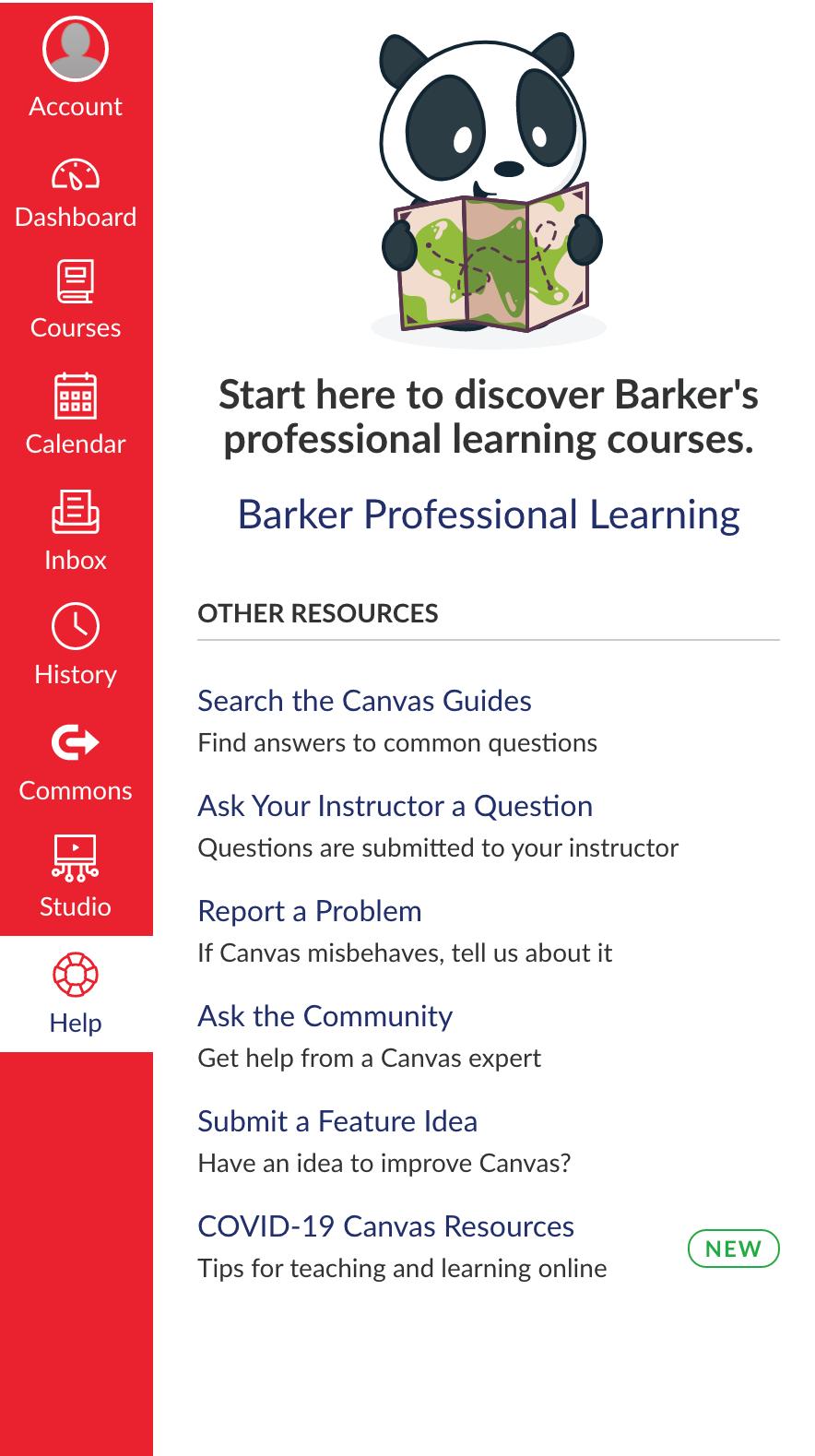
The professional learning course can be accessed by clicking on the Help menu in Canvas, then selecting Barker Professional Learning
Secondary School Professional Learning Program 2021
Mandatory Professional Learning
• Thrive at Barker Staff Reflection Form and growth conversations
• Teaching and Learning Framework Student Feedback Survey (Pilot)
• Professional conversation with Head of Department
• Whole School Professional Learning Days
• Teaching and Learning Communities
Mandatory 10 Hours of Additional Professional Learning
Individual staff choice from the range of Barker Professional Learning offerings.
• 10 hours of additional professional learning in teaching and learning, wellbeing, leadership, intercultural understanding, and/or digital learning.
• Professional learning strands provide opportunity to follow a pathway to support career progression.
• Undertake an action research project
• Participate in new teacher coaching initiative (nomination only)
Strands
Teaching and Learning Professional learning targeting classroom teaching.
Teacher Coaching
New teacher coaching initiative.
Action Research
Wellbeing Professional learning in wellbeing in curriculum and pastoral programs.
Leadership Professional learning in educational leadership
Digital Learning Professional learning targeting current and future digital learning needs for classroom teachers.
Why is coaching so important? Does it work and what does it involve? These questions and more will be answered. The course will address strategic and operational aspects of coaching. A brief overview as to why coaching is important will be a focus. While the “what” or the “nuts and bolts” aspects of the course will focus on having “conversations.” Underpinning the process of having a conversation is how you engender trust, honesty, integrity within a self-determined solution base Growth framework. Applications by nomination only.
Undertake an action research project supported by the Barker Institute. Participants will learn about the action research process, implement and evaluate a change in their discipline, and produce an article for the Barker Institute Journal.
Intercultural Understanding
The Barker Global division aims to uphold and develop Barker College as a world-leader in the holistic, globally minded education of young people. This includes:
• the provision of intercultural engagement for those at every Barker campus
• support for Barker’s diverse student and staff population
• establishing partnerships with communities throughout Australia and around the world.
Barker Global will be offering a series of professional learning opportunities in person and online.
Secondary School Professional Learning Program 2021
Barker Professional Learning Modes
Whole School Professional Learning Days
Throughout the year, all staff participate in whole school professional learning days. Each day has a specific focus in teaching and learning, wellbeing or other aspects of the school.
Teacher Learning Communities
TLCs involve collaborative learning, where small groups of teachers meet for four sessions across Terms 2 and 3 to learn and reflect. The focus of the TLC for 2021 will support the three strands of the Teaching and Learning Framework environment, knowledge, and feedback and reflection.
Online Professional Learning
To provide some flexibility for staff in professional learning, many courses are now provided online through the Barker Professional Learning course on Canvas.
Presentations
Barker staff will have the opportunity to learn from colleagues and guest presenters by attending specific presentations and teachmeets that will be held each term in weeks 3, 6 and 9, from 3:40 – 4:30pm.
Professional Learning Courses
Within the professional learning program is the opportunity to apply to attend a variety of recommended, externally provided courses. Along with the suite of offerings in this booklet, subject specific professional learning is available and is coordinated at a faculty level by each Head of Department.
Coaching
Staff have the opportunity, through the College of Teachers, to be trained as teacher coaches run by two staff appointed teacher coaches. All staff can also access coaching on request. New graduates are assigned a teacher coach for the first year of teaching.
Barker Institute
The focus of the Barker Institute is to contribute to the local, national and global discussion about education, while also offering ongoing professional learning to staff and the broader Barker community. It offers consultancy and research support for individual and groups in the school, publishes and disseminates student and staff innovation, and runs courses and events for staff and external participants.
Accreditation
New requirements for accrediting professional development (PD) courses were announced at the end of 2020 and will be phased in from 2021. The professional learning program will adapt to these requirements once greater clarity has been provided.
• Professional learning can be identified as either NESA Accredited or Elective PD.
• at least 50 hours of NESA Accredited PD across the priority areas if you are accredited at Proficient teacher. The priority areas are:
» delivery and assessment of NSW Curriculum/Early Years Learning Framework
» student/child mental health
» students/children with disability
» Aboriginal education and supporting Aboriginal students/children
• The remaining hours can be a combination of NESA Accredited and Elective PD.
Mandatory Professional Learning Secondary School
Barker Individual Feedback and Reflection Process
Thrive at Barker Staff Reflection Form
• Completed by: Week 4 Term 1 2021
At the commencement of a school year, all teaching staff are required to complete the Thrive@Barker Reflection Form. This includes reflection on strengths and challenges in teaching, nominating focus areas and goals based on the teaching and learning framework, the support that may be needed and career aspirations. Before the end of the year, teachers are required to complete a written reflection. This form will be discussed as part of the professional conversations with the assigned faculty leader.
Teaching and Learning Framework Student Feedback Survey
• Conducted: Once per Semester
A new feedback process is being piloted in Semester 1 2021 to support the teaching and learning framework. Questions have been designed to focus on the three key strands of the T&L framework: Environment, Knowledge, and Feedback & Reflection and the subcomponents of each strand. This feedback from students will provide each individual teacher with evidence of teaching effectiveness in the areas that research suggests are most vital to student learning. Professional conversations and coaching conversations should focus on teacher goals nominated in the Thrive@Barker Reflection Form.
Professional conversation with Head of Department
• Conducted: Once per Semester
Each Semester, teachers will participate in a professional conversation with the Head of Department, Assistant Coordinator or direct manager to discuss teaching and learning growth and career development.
Mandatory Professional Learning Secondary School
Barker Teaching and Learning Framework Student Feedback Survey
Below is the T&LF student feedback survey. Teachers will be informed during Term 1 of the process for implementation of the survey. The feedback gained from the survey is for each individual teacher to use to inform their teaching and on which to begin growth conversations. The questions have been designed based on the teaching and learning framework and aim to collect feedback from each student about their learning within the specific class. From this feedback, teachers will have information on which they can reflect on the effectiveness of their teaching and make any adjustments required to move the learner forward.
Focus Areas
Positive Relationships
High Expectations
Use of Learning Space and technology
• I feel known and valued in this class
• Help is welcomed and willingly provided
• I am encouraged that I can improve in this subject
• It is expected that I engage actively in this class
• There are high expectations for behaviour in this class
4. Create and maintain supportive and safe learning
• I feel I have access to deep subject knowledge when desired
• I am able to understand and learn in this class
• Activities in this class require me to think
• Activities in this class are not too difficult for me
• I feel that I am sufficiently challenged in this class
Australian Professional Standard for Teaching
1. Know students and how they learn
2. Know the content and how to teach it
3. Plan for and implement effective teaching and learning
Strand 3 Feedback & Reflection
Professional Standard for Teaching Focus Areas
Moving the student forward Tracking and using data
Student reflection and action
• Feedback provided is useful for me to improve
• I am given regular and timely feedback
• I am required to reflect and act on teacher feedback
5. Assess, provide feedback and report on student learning
Strand
Whole School Professional Learning Days 2021
Term 1, Week 1: Monday 25 January
Welcome to 2021
Elective PD Hours
Term 1
Week 1 Monday 25 January
8:30am – 12:30pm
Subject Specific Professional Learning
Elective PD Hours
Term 1
Week 1 Monday 25 January 1:20pm – 3:20pm
Description
All staff join together for a welcome and overview of 2021 from our school leaders.
Description
Heads of Department will lead their team in subject specific meetings.
Whole School Professional Learning Days 2021
Term 1, Week – 1: Wednesday 27 and Thursday 28 January
CPR Update
Elective PD Hours
90 minutes
Term 1
Week 1 Wednesday 27 or Thursday 28
Teaching and Learning 2021
Elective PD Hours
90 minutes
Term 1
Week 1 Wednesday 27 or Thursday 28
Compulsory Annual CPR update.
External Provider: All Aid
Addressed Standard Descriptors
TBC
Description
Faculties will be assigned a time slot on either Wednesday 27th or Thursday 28th January
Description
All staff (excluding HoH) will participate in a 90 minute session with a focus on teaching and learning overview and goals for 2021.
• T & L Overview 2021
• T & L in the Middle School Progressive Reporting
• T & L in the Senior School
• Wellbeing in Teaching and Learning
• Digital Learning Tools 2021
• Intercultural understanding
Staff will participate in faculties at the assigned time slot on either Wednesday 27 or Thursday 28 January
Target Audience - Secondary School teachers.
Mandatory Professional Learning Secondary School
Whole School Professional Learning Days 2021
Term 2, Week 1: Monday 19 April
Jared Cooney Horvath (PhD, Med)
Guest Speakers
Jared is a cognitive psychologist and behavioural neuroscientist. He has worked with over 100 schools both nationally and internationally. Much of Jared’s work focuses on translating basic science for effective teaching and learning practices. He has a particular interest in linking teaching strategies to engender deep learning and conceptualisation. Jared presents on concepts surrounding attention, memory, engagement, and assessment. He has also published four books including: Stop Talking, Start Influencing: 12 Insights from Brain Science to Make Your Message Stick.
Barker Quality Teaching and Learning Framework
The focus for professional learning at Barker in 2021 is directed towards exploring the theory and application of the 3 strands within the Barker Quality Teaching and Learning Framework. This presentation has a key focus on the Knowledge strand with specific links to explicit teaching as well as understanding memory and retrieval.
Foundations of Learning and the Learning Trajectory
Professional Learning
5 Hours
Term 2 - Week 1
Monday 19 April
Addressed Standard Descriptors
TBC
Description
How do human beings take in, embody, and utilise new information and ideas? In this session, we will explore this process. Using Learning Objectives as a through line, we will consider how to walk students from Shallow into Deep learning. In addition, we will take a look at transfer and discuss why moving skills between contexts is so tricky LME Global 2018,LME Global, Learning made easy, Scotsdale, viewed 10 November 2020, <https://www.lmeglobal.net/>.
This presentation has a key focus on the Knowledge strand with specific links to explicit teaching as well as understanding memory and retrieval.
Target Audience - Whole School
Whole School Professional Learning Days 2021
Term 3, Week 1: Monday 12 July
Wellbeing at Barker
Guest Speakers/Staff Conference Style. Support Staff are welcome to join for the morning Keynote Session and the relevant workshops 11:00am – 12.30pm.
Further details to be announced closer to the date.
This staff professional learning day will focus on whole school wellbeing and what wellbeing looks like in theory and in practice. Whole school wellbeing focuses on school wide culture, practices and policies that impact the entire school community. Wellbeing becomes a whole school priority when the community has a shared vision of what wellbeing means and how it underpins all relationships and learning outcomes for young people. Whole school wellbeing practices considers the place of social and emotional learning (SEL) as key skills for the future success of students. Consideration of SEL in all facets of school life such as outdoor education, sport, early education, co-curricular programs, the classroom experience, rites of passage, assessment, reporting, service, leadership and even the buildings and facilities at Barker is essential in creating and maintaining a thriving school.
Staff will engage in collaborative, cross curricular professional conversations, hear from leading wellbeing researchers and attend wellbeing workshops and seminars to develop theoretical understandings of wellbeing and take away practical strategies for their everyday practice.
Whole School Professional Learning Days 2021
Term 3, Week 10: Monday 17 September
Professional Learning
Details TBA
Whole School Professional Learning Day
Term 4, Week 10: Wednesday 8 December
Celebrate the last day of Term
Teaching and Learning Communities 2021
Session 1: Term 2 May
Session 2: Term 2 June
Session 3: Term 3 July
Session 4: Term 4 August
Professional Learning Hours: Completing ALL four sessions will contribute six hours of PL.
In 2021 the TLCs will continue to focus on implementing the Teaching and Learning Framework. Each meeting will include a short professional learning section where an aspect of the T&L Framework will be explored.
Acknowledging feedback received from staff following the 2020 TLCs, meetings will continue to be run in departmental time in faculty groups as determined by the relevant Head of Department. The TLC sessions will occur throughout Term 2 and Term 3 with four meetings in total.
TLC 2021: Embedding the Teaching and Learning Framework
TLC Session 1
Term 2
Faculty Meeting
Term 2 May
TLC Session 2
Term 2
Faculty Meeting
Term 2 June
TLC Session 3
Term 3
Faculty Meeting
Term 3 July
TLC Session 4
Term 3
Faculty Meeting
Term 4 August
Attendance at TLC meetings is compulsory. Teachers who complete all FOUR meetings will be able to be able to document 6 hours of professional learning. Teachers who miss a meeting will be able to document the balance of hours. If a teacher cannot make a meeting for some reason, then effort should be made to attend the corresponding meeting with another faculty. Alternatively, an online option will also be available.
Mandatory 10 Hours of Additional Professional Learning
In 2021, to support Secondary School teaching staff in a high quality regular professional learning cycle, a Barker professional learning program has been developed to continue to grow a vibrant professional learning community.
Alongside the professional learning days, all staff are required to complete an additional 10 hours of Barker professional learning from the suite of additional opportunities provided.
The Barker designed professional learning program targets specific strands that aim to provide opportunity for growth across the many diverse aspects that make up the role of a teacher. Staff are to choose from the schedule of face-to-face presentations and/ or online courses that have been designed to target focus areas within the secondary school. This schedule provides choice of professional learning strands as well as flexibility in when and what form of professional learning is undertaken.
Strands
• Teaching and Learning
• Wellbeing
• Leadership
• Digital Learning
• Intercultural Understanding
Mandatory 10 Hours Additional Professional Secondary School
Barker Additional Professional Learning 2021 Presentation Schedule
Presentations and forums will be held every term in week 3, week 6 and week 9.
These sessions will be approximately 50 minutes in length with an individual reflection post session. Each session will provide 1 hour of professional learning and is included towards the 10 hours of additional Barker PL.
Registration for each session is via Canvas through the Barker Professional Learning course. At the time of printing, the following sessions were locked in. Additional sessions may be added throughout the year. These will be advertised through the Monday Bulletin and an online version of the professional learning booklet will be kept up to date. We invite colleagues to share their expertise through this forum.
Week 3
Monday 8 Feb
Week 6
Monday 1 March
Week 6
Tuesday 2 March
Week 6
Wednesday 3 March
Week 9
Monday 22 March and
Wednesday 24 March
Teaching and Learning Moving the learner forward. Setting students up for success.
Wellbeing
Intercultural Understanding
Wellbeing for Learning: Wellbeing 101 for teachers
Cultural diversity in the classroom
Digital Learning TeachMeet - Digital Learning
Leadership
Term Date Category
Week 3A
Monday 3 May
Week 6B
Wednesday 26 May
Week 6B
Thursday 27 May
Week 9A
Tuesday 15 June
Week 9A
Wednesday 16 June
Teaching and Learning
Wellbeing
The Barker Experience Hear from our Barker Leaders
This session will be run across two afternoons – details on scheduled presenters TBA closer to the date.
Sarah Clifton
Greg Longney
Jacqui McLachlan
Jon Rheinberger
Guest Presenter
Jo Dwyer from WISA
Rowena Dudgeon
Sophie Mynott et al
Andy Mifsud
Stephen Liseo
Mel Brady
Matthew Macoustra
Nat Potent
Nicole Bailey
Jimmy Todd-Hill
Sophie Mynott Jon Rheinberger
Moving the learner forward. Progressive Reporting Reflection and showcase.
Caring for the learner: Supporting the wellbeing of students with social and emotional needs.
Intercultural Understanding Reconciliation
Intercultural Understanding
Sarah Clifton
Greg Longney
Guest teachers
Rowena Dudgeon
TBC
Celebrating Indigenous cultures and perspectives TBC
Digital Learning TeachMeet - Digital learning
Andy Mifsud
Stephen Liseo
Week 3B
Monday 26 July
Week 3B
Tuesday 27 July
Week 6A
Monday 16 August
Week 6A
Wednesday 18 August
Week 9B
Monday 6 September
Teaching and Learning Moving the learner forward. Year 12 -preparing students for the HSC post trials
Scott Graham Jeremy Whitney Jason Cooper
Intercultural Understanding Cultural diversity across the School Sophie Mynott et al
Digital Learning TeachMeet - Digital learning Andy Mifsud Stephen Liseo
Wellbeing Wellbeing for Life
Teaching and Learning/ Coaching Q & A Register a topic
TBC
Sarah Clifton
Jeremy von Einem
Greg Longney
Week 3B
Monday 18 October
Week 3B
Tuesday 19 October
Week 6A
Monday 8 November
Leadership and Wellbeing
Leading Wellbeing AIS (TBC) Presenters TBC
Digital Learning TeachMeet – Digital Learning Andy Mifsud Stephen Liseo
Teaching and Learning Celebrate successes of 2021 Curriculum Team
Barker Additional Professional Learning Strand: Teaching and Learning
Greg is a History teacher and former Head of History. Greg has oversight for the School’s approach to student learning through the teaching and learning framework which he hopes will provide clarity and direction about the School’s approach to classroom practice.
Greg Longney Director of Teaching and Learning
Barker Teaching and Learning Presentations
At the beginning of 2020, the ambitious goal was set for teachers to aim for every student to achieve every learning outcome. We continue to strive for this and are guided by the Barker Teaching and Learning Framework with a focus on environment, knowledge, and feedback and reflection.
Professional learning in 2021 continues to focus on moving the learner forward by embedding the teaching and learning framework. With the introduction of progressive reporting in the Middle School, professional learning will continue to focus on effective formative assessment and feedback, along with other targeted aspects of the framework including the principles of cognitive science.
Setting Students up for Success Description
Professional Learning
1 Hour
Term 1: Week 3
Monday 8 February 3:40 – 4:30pm
Addressed Standard
Descriptors
2.2.2, 2.2.5, 3.1.2, 3.2.2, 4.1.2, 4.2.2
Starting the year is crucial. Setting expectations, learning routines, encouraging active learning in lessons and providing an environment where students feel comfortable to seek support are all essential in moving each learner forward. This presentation discusses and offers practical strategies to support student learning that can be modified to suit all abilities, subjects and year groups. Opportunity to share ideas with colleagues and ask questions will be provided.
Presenters: Sarah Clifton, Greg Longney, Jacqui McLachlan, Jon Rheinberger
Target Audience - Secondary School teachers.
Progressive Reporting Reflection and Showcase
Professional Learning 1 Hour
Term 2 Week 3
Monday 3rd May
3:40 – 4:30pm
Addressed Standard Descriptors
5.1.2, 5.2.2, 5.3.2, 5.4.2, 5.5.2
Preparing Students for the HSC Post Trials
Professional Learning 1 Hour
Term 3 Week 3
Monday 26 July
Addressed Standard Descriptors
2.25.2, 3.1.2, 5.2.2, 5.4.2
Q & A
Topic on Demand
Professional Learning 1 Hour
Term 3 Week 9
Monday 6 September 3:40 – 4:25pm
Addressed Standard Descriptors
6.2.2, 6.3.2
Celebrate Successes of 2021
Professional Learning 1 Hour
Term 4 Week 6
Monday 8 November
3:40 – 4:25pm
Addressed Standard Descriptors
3.6.2 6.1.2, 6.2,2, 6.3.2, 6.4.2
Description
Much time is spent by teachers providing feedback to students. How can teachers make sure this feedback is effective in moving the learner forward? This session will discuss feedback by looking at progressive reporting comments and practical feedback strategies. It will also focus on strategies that promote student action on feedback.
Presenters: Sarah Clifton, Greg Longney, Guest Teachers
Target Audience - Secondary School teachers.
Description
50% of the HSC is based on the final examination. In this session we will hear from Heads of Department as to how they prepare their students post trials.
Presenters: Heads of Department
Jeremy Whitney, Scott Graham and Jason Cooper
Target Audience - Secondary School teachers.
Description
Professional learning done differently. The best learning often comes from our peers. Register a topic on teaching and learning and then partake in an open discussion sharing practical ideas and strategies about each topic with colleagues.
Target Audience - Secondary School teachers.
Description
Attendee: In a teach meet style professional learning environment, come and hear your colleagues present a strategy on teaching and learning.
Presenter Register to present a teaching and learning strategy that has supported student learning.
Target Audience - Secondary School teachers.
Barker Additional Professional Learning Strand: Teaching and Learning
Barker Teaching and Learning Online Learning Courses
Online courses will continue to be developed and added to the professional learning Canvas course throughout 2021.
Planning for Progressive Reporting
Professional Learning
3 Hours
Available Term 1
Addressed Standard Descriptors
1.5.2, 2.3.2, 5.1.2, 5.2.2, 5.4.2, 5.5.2
Embedding Study Skills into day-to-day Learning
Professional Learning
2 Hours
Available end of Term 1
Addressed Standard Descriptors
1.2.2, 1.5.2, 2.5.2, 3.1.2, 3.3.2
Effective Feedback Comment for Progressive Reporting
Professional Learning
2 Hours
Available end of Term 1
Addressed Standard Descriptors
5.2.2, 5.5.2,
Cognitive Science
Professional Learning
2 Hours
Available end of Term 2
Addressed Standard Descriptors
1.1.2, 1.2.1, 3.2.2, 3.3.2
Description
This course on Progressive Reporting is a compilation of the TLCs that were undertaken in faculties throughout 2020. For staff new to Barker, this course will assist in providing an understanding of progressive reporting in the Middle School, the importance of planning learning and feedback sequences, and the importance of effective, efficient feedback where student action is required.
Target Audience - New Barker Secondary School only.
Description
Effective learning comes from routines that involve revisiting knowledge retrieval and skill practice over the short and long term. Embedding this practice in lessons and through well sequenced homework plans will assist in ensuring knowledge and skills are committed to long term memory. This course delivers theory through practical classroom strategies and will encourage teachers to think about how they support student learning.
Target Audience - Secondary School teachers.
Description
As the Middle School embarks on progressive reporting, this course provides advice on providing effective feedback including writing comments. This is an ideal course for all Middle School teachers to support the implementation of progressive reporting.
Target Audience - Secondary School teachers.
Description
Term 2 will begin a focus on the cognitive science of learning. The whole school professional learning day with guest presenter Jarod Cooney Horvath will begin the conversation surrounding memory and retrieval. This online course will investigate theory and demonstrate practical teaching and learning strategies that utilise how cognitive science to maximise learning potential.
Target Audience - Secondary School teachers.
External Teaching and Learning Courses Run at Barker
Differentiation Description
Professional Learning
TBC Hours
Presenter Bronwyn McLeod
Venue Barker
Addressed Standard Descriptors
TBC
Target Audience - Junior and Secondary School teachers.
Application: For further information see Greg Longney
Externally Provided Teaching and Learning Online Course
Guided Inquiry Design Description
Professional Learning
24 Hours
Format: Online
Duration: 8 Weeks (24 hours of accredited professional learning)
Start Date: Monday 8 February, 2021
Addressed Standard Descriptors
See course
This popular three day course is now available online, scheduled specifically for Australian educators. The Guided Inquiry Design Institute (Online) will move teams of educators through the theory and into the practice of using the Guided Inquiry Design framework to design a unit of study for a course in any content area.
The course was developed by Dr Leslie Maniotes and includes virtual live and prerecorded sessions so you get the most out of these online professional learning opportunities.
Target Audience - Secondary School teaching teams
Application: For further information see Greg Longney and Sarah Clifton
Barker Additional Professional Learning Strand: Wellbeing
Rowena Dudgeon is the Director of Wellbeing at Baker College. She has worked for over 25 years as an educator in both the public and independent sectors and has a deep passion and interest in the area of learning and wellbeing. Rowena has worked at executive levels in several schools, including as Deputy Principal of Academic Studies at Wenona, Director of Research and Professional Learning at MLC Kew and as Director of Teaching and Learning at Roseville College. Rowena has also held the position as Head of Boarding at Pymble Ladies College and as a Geography teacher there for 11 years.
Rowena Dudgeon Director of Wellbeing
Barker Wellbeing Presentations
Wellbeing for Learning
Professional Learning
1 Hour
Term 1 Week 6
Monday 1 March
3:40 – 4:30pm
Addressed Standard Descriptors
1.1, 1.2, 3.5, 4.1, 4.3, 6.2, 6.3 and 6.4
Caring for the Learner
Professional Learning
1 Hour
Term 2 Week 6
Wednesday 26 May 3:40 – 4:30pm
Addressed Standard Descriptors
1.1, 1.5, 1.6, 4.1, 4.3, 6.2, 6.3 and 6.4
Description
The Wellbeing professional learning strand aims to develop knowledge and understanding of the relationship between wellbeing and learning in the classroom. A whole school wellbeing approach is an important step in developing resilient, engaged and selfconfident learners. There will be a focus on unpacking Barker’s wellbeing framework (CASEL) and how this applies to good teaching and learning and whole school wellbeing, as well as leadership in the wellbeing space and why this is a critical part of the career journey for educators interested in moving into leadership roles in schools.
Wellbeing 101 for teachers (Jo Dwyer from WISA – Wellbeing in Schools Australia and Rowena Dudgeon)
This workshop will help staff to understand the place of wellbeing in the classroom and the research and practice of enhancing whole school wellbeing through social and emotional learning.
Session Focus
• What is SEL and why is it important?
• What does the research say?
• What is the CASEL SEL framework?
• What is Barker’s wellbeing framework?
• How do I use SEL in the classroom to enhance positive student relationships?
Target Audience - All teachers.
Description
Supporting the wellbeing of students with social and emotional needs.
This workshop will provide staff with an opportunity to unpack their experiences working with students with social and emotional needs and how best to engage these learners. Skills and strategies will be shared as well as best practice research in how to engage these students and help with managing difficult behaviours in class.
Target Audience - All teachers.
Wellbeing for Life Description
Professional Learning
1 Hour
Term 3 Week 6
Wednesday 18 August
3:40 – 4:30pm
Addressed Standard Descriptors
TBC
This seminar will focus on work-life balance.
Further details closer to the date.
Target Audience - All staff.
Leading Wellbeing Description
Professional Learning
1 Hour
Term 4 Week 3
Monday 18 October
3:40 – 4:30pm
Addressed Standard Descriptors
TBC
This seminar will focus on leading wellbeing in schools and will involve a Q&A panel and discussion time about the role of a wellbeing leader. There will be scenarios to consider and work through as well as advice for staff interested in furthering their career in this area of education.
Target Audience - Teaching staff interested in a career in pastoral care.
External Wellbeing Courses Run at Barker.
Mental Health First Aid - Youth Description
Professional Learning
14 Hours
Term 1
Mon 22 March and Mon 29 March
Term 2
Mon 10 May and Mon 17 May
Term 3
Mon 26 July and Mon 2 August
Term 4
Fri 22 October and Fri 29 October
Addressed Standard Descriptors
1.1.2, 4.1.2, 4.4.2, 6.2.2., 6.3.2, 7.4.2
The Mental Health First Aid course teaches mental health first aid strategies in this context to teachers. Mental health first aid is the help provided to a person who is developing a mental health problem, experiencing a worsening of a mental health problem, or in a mental health crisis.
Presenters
Alison Binet - Head of HR
Rowena Dudgeon - Director of Wellbeing
Carolyn Johns - School Counsellor
Target Audience - Connect Group Leader
Process - Applications through HR
Barker Additional Professional Learning Strand: Leadership
Barker Leadership Presentations
The Barker Experience Description Professional Learning 1 Hour
Term 1 Week 9
Monday 22 March
3:40 – 4:30pm
Wednesday 24 March
3:40 – 4:30pm
Addressed Standard Descriptors
6.2.2, 6.3.2
Interested in gaining an understanding of leadership in different areas at Barker, in this session, you will hear from your colleagues about the day to day experience of leading.
Presenters
(This will be held across TWO sessions scheduled speakers for each session TBC)
SS HoH – Jimmy Todd Hill
MS HoH – Nicole Bailey
SS Dean – Nat Potent
MS Dean – Jon Rheinberger
Director of Barker Global Partnerships – Sophie Mynott
Director of Co-educational Transition – Mel Brady
Deputy Head Operations – Matt Macoustra
Target Audience - Secondary School teachers.
External Leadership Courses Run at Barker
Management and Leadership Program – 2021
In 2019, Heads of Departments from our Secondary School and Junior School teaching staff and during 2020 Heads of Departments from our Support Staff participated in a program delivered by Guy Williams from The Training Guys. The 2021 Program has been designed for Assistant Coordinators.
2021 Leadership Program Guy Williams
Professional Learning 14 Hours
Wed 3 Feb 2021
2:30pm - 3:30pm
Wed 10 Feb 2021
8:30am - 3:30pm
Wed 10 Mar 2021
1:30pm – 4:30pm
Fri 30 Apr 2021
8:30am – 3:30pm
Mon 31 May 2021
1:30pm – 4:30pm
Mon 19 Jul 2021
8:30am – 3:30pm
Wed 18 Aug 2021
1:30pm – 4:30pm
Mon 11 Oct 2021
8:30am – 3:30pm
Wed 1 Dec 2021
1:30pm – 4:30pm
Addressed Standard Descriptors
6.2.2, 6.3.2
Description
Guy is an enthusiastic and expert facilitator who commenced his career as a High School Teacher in the UK and moved into the corporate training arena in 2005 focusing on management and leadership development. He has worked with the executive teams on strategic planning and management at several NSW and ACT Schools with excellent feedback. The program will incorporate workshops and high-quality workbooks and support materials. There will be takeaway material, ‘cheat sheets’ and action plans to ensure the techniques and skills discussed are understood and actively incorporated within ongoing leadership roles.
• The Differences between Leadership and Management
• Managing Our Time, and running Effective Meetings
• The Importance of Interpersonal Skills and Communication
• Conducting One-on-One Conversations with Your Staff
• Managing Staff Performance; Creating a Culture of Feedback
• Dealing with Different and Difficult Colleagues, Staff and Parents
This two-day program is for teachers aspiring to a middle leader role or seeking to increase their circle of influence in their current role. The program consists of pre-reading and two separate face-to-face days with in-school application of learning in between.
Target Audience - This program is for those who are interested in developing leadership skills within their current circle of influence and those who are interested in future middle leadership. Nomination required by Head of Department or Head of House
Description
This three-day program is designed to challenge middle leaders to see themselves as strategic leaders of their team and as an integral part of their school’s leadership structure. The program supports as well as challenges and participants are engaged in hands on activities and practical opportunities to develop new insights and key skills in the important interpersonal dimensions of leadership. The skills and insights gained from this program will be an asset for those who aspire to more senior leadership roles in the future.
Target Audience - This program is for those who currently hold middle leadership positions in schools. This includes Heads of Department, year and house coordinators and others who liaise and work between senior executives and teaching staff.
Nomination by required by Head of Middle School or Head of Senior School
Description
Drawing on the Open-to-learning Conversation framework (Robinson 2011) and coaching approaches, this masterclass for middle and senior leaders develops the skills and confidence to tackle the tough stuff whilst maintaining and/or enhancing relationships. It includes a 1 1/2 hour online follow up session on (date TBC).
Target Audience - middle and senior leaders
Nomination by required by Head of Middle School, Head of Senior School or Head of Curriculum
NB: NESA accredited hours TBC.
Description
This package consists of six courses, averaging five hours in duration. You may complete as many of these courses as you wish. You will receive NESA recognised professional learning hours on the completion of each course.
Target Audience - Leaders at all levels in schools, whether or not they hold formal leadership positions and titles
Application: For further information see Greg Longney and Sarah Clifton
Barker Additional Professional Learning Strand: Digital Learning
Andy Mifsud is a Digital Learning Leader and Music teacher. He has been interested in using technology to improve his own teaching and develop new opportunities for his students. His passion for education technology has led to action research projects, presentations at national and international conferences, and the development of strategic approaches for using technology across schools. Andy is currently completing his dissertation for a Doctor of Education qualification at the University of Sydney.
Andy Mifsud
Digital Learning Leader
Stephen is part of the Digital Learning Leader team at Barker College. He trained as a Mathematics and Science teacher and has been teaching for over 30 years. He is genuinely excited by the opportunities that technology can bring to learning.
He is the quintessential nerd with a passion for robotics and electronics. He also loves all things science fiction.
Stephen Liseo
Digital Learning Leader
Digital learning at Barker involves the use of blended learning to support the Teaching and Learning Framework. This means we leverage technology to create the optimal learning environment, to help our students with the acquisition of knowledge, and by providing opportunities for feedback and reflection.
A program of professional learning surrounding digital learning includes presentation style forums along with online resources/courses to support implementation of the technology in the classroom including Teams, Canvas and OneNote.
Barker Digital Learning Presentations
Digital Learning TeachMeet 1
Professional Learning
1 Hour
Term 1: Week 6
Wednesday 3 March
3:40 – 4:30pm
Addressed Standard Descriptors TBC
Digital Learning TeachMeet 2
Professional Learning
1 Hour
Term 2: Week 9
Wednesday 15 June 3:40 – 4:30pm
Addressed Standard Descriptors TBC
Digital Learning TeachMeet 3
Professional Learning
1 Hour
Term 3: Week 6
Monday 16 August
3:40 – 4:30pm
Addressed Standard Descriptors TBC
Digital Learning TeachMeet 4
Professional Learning 1 Hour
Term 3: Week 6
Monday 16 August
3:40 – 4:30pm
Addressed Standard Descriptors TBC
Description
Feedback: This session will focus on how teachers can use digital tools to provide students with good feedback. The session will focus on using Canvas, OneNote and Teams.
Presenters
Andy Mifsud
Stephen Liseo
Target Audience - Secondary School teachers.
Description
Environment: This session focuses on the classroom environment and how you can use the blended learning toolkit to give you more control of the time, place and pace of learning. We will cover blended spaces of caves, campfires and watering holes.
Presenters
Andy Mifsud
Stephen Liseo
Target Audience - Secondary School teachers.
Description
Knowledge: This session explores how digital tools can support the development of knowledge in our teaching areas. Topics include looking at using quizzes on Canvas for practice and revision and keeping notes in OneNote.
Presenters
Andy Mifsud
Stephen Liseo
Target Audience - Secondary School teachers.
Description
Reflection: This session explores the way digital tools can be used for reflection. Topic will include digital portfolios, and tools to focus on growth and development.
Presenters
Andy Mifsud
Stephen Liseo
Target Audience - Secondary School teachers.
Barker Additional Professional Learning Strand: Digital Learning
Barker digital learning online learning courses
All courses are online and self-paced, with support from the Digital Learning Leaders. Courses are suitable for teachers in the Junior and Secondary school.
Teaching with Canvas Description
9 Hours
Addressed Standard Descriptors
OneNote Basics
9 Hours
Teaching with Canvas provides teachers with an introduction to the Canvas learning management system. This tool forms a key component of the school’s strategic plan through facilitating and supporting blended learning strategies. Through the course, teachers will gain skills to provide students with differentiated and targeted teaching and learning activities. The course also offers an introduction to the use of assessment and feedback strategies using these digital tools. Teachers who complete this course should expect to have a better understanding of the use of this digital tool to provide flexible learning sequences and targeted, timely student feedback.
1.5.2, 2.3.2, 2.6.2, 3.4.2, 6.2.2, 6.3.2
Description
Addressed Standard Descriptors
Blended Learning Basics
5 Hours
OneNote Basics is a course designed to provide teachers with an introduction to the use of the Microsoft tool, OneNote. The course focuses on the ability for teachers to use OneNote to capture important teaching content created in real-time during class, the ability to distribute work to students as a class and individual, and the use of OneNote as a tool for formative assessment and feedback. Using additional supporting tools of styluses, the course provides teachers with opportunities to learn and practice digital inking techniques to quickly provide students with visual content and feedback.
2.5.2, 2.6.2, 3.2.2, 3.3.2, 6.4.2
Description
Addressed Standard Descriptors
Blended Learning Basics provides an introduction and overview the blended learning strategies developed specifically for K-12 educators. Blended learning is a strategic direction for the School, and is a key component to supporting the School’s Teaching and Learning Framework. Therefore, the focus of the course is ways teachers can use blended learning strategies to support positive learning environments, the acquisition of knowledge and feedback and assessment. The course uses examples of the two main digital tools (Canvas and OneNote) to provide examples and activities that teachers can implement directly into their practice.
1.2.2, 1.5.2, 2.6.2, 3.3.2, 4.5.2
Windows 10 + Digital Ink
Description
5 Hours Windows 10 + Digital Ink is a course designed to provide teachers with the necessary skills to use the Windows 10 platform in their everyday teaching and learning strategies. The course has a strong pedagogical foundation through using digital tools to provide students with timely assessment and feedback opportunities, as well as fostering collaboration and communication. The course includes a focus on using digital ink (primarily through the application, OneNote) to allow teachers to quickly provide their students with visualisations and feedback. By completing this course, teachers will have confidence and skills to use and manage digital tools in and out of the classroom.
Addressed Standard Descriptors
iPadOS + Digital Ink
5 Hours
Addressed Standard Descriptors
Engage
5 Hours
Addressed Standard Descriptors
2.6.2, 6.2.2, 6.3.2, 6.4.2
Description
iPadOS + Digital Ink is a course designed to provide teachers with the necessary skills to use the iPad platform in their everyday teaching and learning strategies. The course has a strong pedagogical foundation through using digital tools to provide students with timely assessment and feedback opportunities, as well as fostering collaboration and communication. The course includes a focus on using digital ink (primarily through the application, OneNote) to allow teachers to quickly provide their students with visualisations and feedback. By completing this course, teachers will have confidence and skills to use and manage digital tools in and out of the classroom.
1.5.2, 2.2.2, 3.2.2, 3.3.2
Description
The Engage course is designed to provide teachers with an important lens into the School mandated student information system. The course allows teachers to develop an understanding of the way Engage can be used to quickly find out important student information related to student academic learning and overall wellbeing. Teachers will provided with opportunities to practice important skills that they will use every day in the classroom to organise and manage student learning. By completing the course, teachers will be ready to ensure important student information is recorded and organised.
2.6.2, 6.2.2, 6.3.2, 6.4.2
Barker Additional Professional Learning Strand: Intercultural Understanding
Barker Global Perspectives Presentations
Cultural Diversity in the Classroom
Professional Learning 1 Hours
Term 1: Week 6
Tuesday 2 March
3:40 – 4:30pm
Addressed Standard Descriptors TBC
Description
Activities and discussion to support teachers to understand the impact and benefits of cultural diversity in the classroom. To provide teachers with tools to address and understand the differing perspectives and worldviews that exist within our community due to the diversity of cultural backgrounds of students and staff at Barker College.
Presenter Sophie Mynott
Target Audience - Junior and Secondary School Teachers
Reconciliation Description
Term 2: Week 6
Thursday 27 May 3:40 – 4:30pm
Addressed Standard Descriptors TBC
NAIDOC Week
Term 2: Week 9
Tuesday 15 June
3:40 – 4:30pm
Addressed Standard Descriptors TBC
During National Reconciliation Week, a guest speaker will present to staff on the meaning of reconciliation, key concepts in reconciliation in the 21st century, and staff will have the opportunity to learn through a Q and A.
Presenters External TBC
Target Audience - All staff
Description
During NAIDOC Week, a guest speaker will present to staff on breaking down deficit mindsets, the significance of NAIDOC, and the celebration of Aboriginal and Torres Strait Islander cultures. Staff will also have the opportunity to learn through a Q and A segment.
Presenters External TBC
Target Audience - All staff
Cultural Diversity Across the School Description
Term 3: Week 3
Tuesday 27 July 3:40 – 4:30pm
Addressed Standard Descriptors TBC
Activities and discussion to support staff to understand the impact and benefits of cultural diversity in the School. Staff will explore opportunities to celebrate the diversity of cultures within our school community.
Presenter Sophie Mynott
Target Audience - Junior and Senior School Teachers
Barker Global Perspectives Presentations
Barker Global offers a series of professional learning opportunities online. We recommend you start with the Acknowledging Country, Peoples and Culture and/or Teaching First Nations Students units.
To begin engaging online with the Indigenous Education courses, please click on the relevant tab in the Barker Professional Learning Canvas course.
OR Follow this link: https://canvas.barker.college/courses/9852
Indigenous Education Description
Professional Learning Hours Register as Elective PD
Addressed Standard Descriptors
TBC
A series of units to support teachers to teach both First Nations students, and Aboriginal and Torres Strait Islander histories, cultures and perspectives. There are units on Acknowledging Country, Peoples and Culture; Teaching First Nations Students; Celebrating First Nations Cultures; Reconciliation; Aboriginal Lives Matter and Colonisation and Australia Day. There are also resources for teachers to use relating to pedagogy and research into Indigenous education, and regularly updated links to articles, videos and other teaching material, organised by subject.
Target Audience - Junior and Secondary School Teachers
Externally provided Barker Global –Indigenous Education Courses
Stronger Smarter Online Module
Professional Learning Hours
See the Director of Barker Global Partnerships for more details.
Addressed Standard Descriptors
See the Director of Barker Global Partnerships for more details.
Description
Dr Chris Sarra’s Stronger Smarter Institute aims to empower teachers to move beyond a deficit mindset to a high expectations, “fair and firm” approach to dealing with all students. This high expectations model provides a practical way teachers can improve outcomes for First Nations students in mainstream schools. The course will also provide you with tools for engaging students of all backgrounds and ability levels.
Target Audience - Junior and Secondary School Teachers
There is a cost associated with this course, so please see the Director of Barker Global Partnerships to ensure there are funds available to support your registration.
Professional Learning External Course Application Process
All professional learning applications for Secondary School teaching staff that involve a cost or absence, are required to follow this application process.
Step 1. Identify the Professional Learning course.
Step 2. Seek pre-approval from your relevant manager
Potential applicants for professional learning MUST seek pre-approval from your relevant manager eg: Head of Department if curriculum or Head of Co-Curricular program. Note: All Teachers MUST seek approval from their Head of Department/s when undertaking any professional learning that impacts teaching responsibilities.
When seeking pre-approval, you will be required to;
i) Justify attendance at professional learning through the lens of whole school, subject, co-curricular and/or additional role responsibilities. Examples include;
• How does the professional learning course support the School’s strategic vision? Eg: Curriculum Quality Teaching and Learning Framework, Wellbeing program, Co-Curricular direction.
• How does the course support departmental goals?
• How will you plan to implement the professional learning as part of your responsibilities at Barker?
ii) Identify any curriculum or co-curricular activities which may be impacted by your attendance.
ii) Any other relevant information. For example: work that will be provided, organisation of internal cover.
STEP 3: Seek Approval from Director of Professional Learning
Approval for attendance at professional learning needs to be discussed with the Director of Professional Learning. This can be done by either the individual staff member or representative manager eg Head of Department. The above justification will be considered by the DoPL. This step will not proceed unless communication with the relevant people stated in Step 2 has occurred.
STEP 4: Logistics checked by Director of Professional Learning
If general approval for professional learning has occurred, then logistics will be investigated by the DoPL. This will include checking the date with calendar events, number of staff with approved leave on that day, cost centre, curriculum and co-curricular requirements. Early discussion of professional learning opportunities will enhance potential opportunity for leave.
STEP 5: Final decision communicated
Director of Professional Learning will communicate final decision to DHO, individual applicant and manager.
STEP 6: Complete electronic professional learning form and book course.
STEP 7: Final check before attending course.
• Check that Engage correctly reflects the date/time of your approved leave.
• If an internal cover has been arranged, make sure this has been communicated with ADoS: Logistics
• Plan and set sufficient, meaningful and appropriate work in advance. Ensure this is located on Engage.
STEP 8: Returning from professional learning.
All staff returning from professional learning are expected to reflect on and present their learning to relevant colleagues. This may be in a department meeting or in other forums.
Steps to follow when applying for Professional Learning
STEP 1: Identify Professional Learning Course.
STEP 2: Pre-approval from relevant manager/s Including Head of Department and coordinator eg Head of Wellbeing
STEP 3: Approval from Director of Professional Learning
STEP 4: Logistics checked by Director of Professional Learning with Assistant Director of Studies: Logistics and Deputy Head: Operations
STEP 5: Final decision communicated Director of Professional Learning to DHO, staff member and manager
STEP 6: Complete electronic PL form and book course
STEP 7: Final check before attending course
Step 8: Returning from Professional Learning Feedback and reflection on Professional Learning