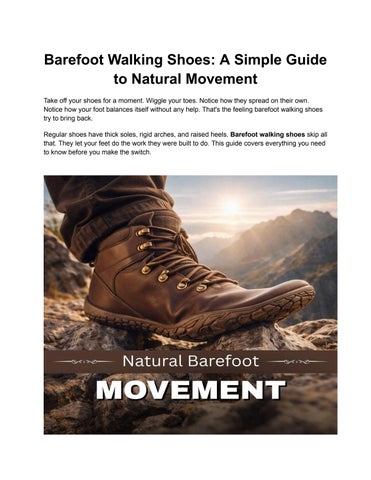
Barefoot Walking Shoes: A Simple Guide to Natural Movement Take off your shoes for a moment. Wiggle your toes. Notice how they spread on their own. Notice how your foot balances itself without any help. That's the feeling barefoot walking shoes try to bring back. Regular shoes have thick soles, rigid arches, and raised heels. Barefoot walking shoes skip all that. They let your feet do the work they were built to do. This guide covers everything you need to know before you make the switch.
What Exactly Are Barefoot Walking Shoes? Barefoot walking shoes feel like a second skin. They protect your feet from the ground. But they don't box your feet in. Here are the common features: ● ● ● ●
A wide toe box that lets toes spread naturally A thin, flexible sole for real ground feedback Zero or minimal heel-to-toe drop Lightweight, breathable materials
These shoes don't remove protection. They just strip away the extra bulk. That bulk usually stops your feet from moving the way they should.
How They Compare to Regular Shoes The Problem With Traditional Footwear Most regular shoes rely on thick cushioning. They also add arch support and raised heels. This can feel good at first. But over time, it weakens the small muscles in your feet. The shoe does the work. Your foot doesn't have to.
The Barefoot Difference Barefoot shoes for walking flip this idea. They let your feet flex and grip the ground. They let your feet sense what's beneath them. This builds better balance. It also builds better posture. Many people feel steadier on their feet. Many also feel less strain in their knees and lower back.
What to Look for When Choosing a Pair Not every "minimalist" shoe gives you a true barefoot feel. Check for these things before you buy: ● ● ● ● ●
Enough toe room so your toes aren't squeezed A sole that folds easily in your hand Thin materials that boost ground feel Breathable fabric for all-day wear Sturdy build, since these shoes offer less built-in support
Fit matters more here than with regular shoes. Too tight, and you lose the benefit. Too loose, and you lose stability.
Choosing Barefoot Walking Shoes for Men
Sizing can vary a lot between brands. This matters when you shop for barefoot walking
shoes for men. Men's feet often need more width through the forefoot. Try shoes on in person when you can. Or study the size chart closely before you order online. Look for a style that works for errands, walks, and casual days out.
Walking Shoes or Running Shoes: Which One Do You Need? It helps to know the difference. Barefoot running shoes are built for higher-impact movement. They often add a bit more structure through the midsole. This helps with faster, repeated strides. Walking shoes are built for slower, steady movement. They focus on all-day comfort. If you walk and jog, some barefoot shoes for walking can handle both. But serious runners may still want a shoe made just for running.
Easing Into the Barefoot Lifestyle Don't rush the switch. Try these tips instead: ● ● ● ●
Start with short walks of 20 to 30 minutes Expect some soreness in your calves or arches at first Add more wear time each week Rotate with your old shoes during the adjustment period
Your feet and calves need time to build strength. This is true even if you've spent years in cushioned shoes.
Final Thoughts Barefoot walking shoes aren't just a trend. They're a chance to walk the way your body was built to walk. Maybe you want better posture. Maybe you want stronger feet. Maybe you just want a more natural stride. Either way, focus on fit, flexibility, and patience. Give your feet room to adjust, and the benefits will follow.