ACTING TALENT GUIDE
Please read the printed schedule given to you for your exact class dates and times. Please note that students must remain in the building during break.
Staple your schedule HERE so you never lose it!

Welcome!
Dear new students & families,
We’re excited to get you started on your journey to success! Our role is to take care of all your questions, needs, or concerns while you are working with us. Every student’s growth in confidence and skill level development is our central focus, and our instructors are prepared to give effective training and positive feedback to guide you in reaching your goals as clearly and quickly as possible. Do remember though, that your success is a team effort. Scheduling time for practice is KEY to your success in building your skill level and confidence as an actor. Practicing at least 10 minutes each day will make a huge improvement in between your workshops. The more you practice, the more excited you’ll be to come to your next workshop and “show your stuff.” Always remember WHY you are coming to these workshops - to be a huge success! Keep your “big picture” dream alive and growing so you enjoy coming to your training. A fun way to do this is to make a collage of your dream life/dream career, or putting a CD together of your favorite music that inspires and motivates you to take action to achieve your dreams TODAY. Writing and journaling is another great way to keep your dream alive. Find role models in your field - your favorite actors, models, singers, or dancers - and write about the kind of career you will create for yourself. By starting your training with us, you have taken the most important step to success that there is - the FIRST step!
“Whatever you can do, or think you can, either way, you are right.”
- Henry Ford
You have the power within you to believe whatever you choose to believe about yourself, your abilities, and what’s possible for you. No matter where you’re starting from - whether you’re brand new to training, or you’re an advanced talent - choose to focus on the positive, and remember that your thoughts create your life!
May your time with us be fun, enriching, enlightening and rewarding. Let the journey begin!
To Your Success,
The Barbizon Education Staff Education@BarbizonNYC.com
WHO’S WHO?
We want your experience at Barbizon to be a wonderful one. Listed below are important “Who’s Who?” numbers to assist you with any questions that may arise during the course of the program.
Contact Information Sheet :
(212) 239-1110 • www.BarbizonNYC.com www.facebook.com/BarbizonNYC
Education Department
Please contact the Education Department with questions or concerns about operation of classes, class projects, scripts, student/parent concerns, make-up classes, missing classes, headshots, and graduation.
Education Office Hours: Monday - Friday 1:00PM - 7:00PM (EST)
Saturday & Sunday 9:00AM - 6:00PM (EST)
(212) 239-1110
Education@BarbizonNYC.com
Registrar Department
Please contact the Registrar Department with questions or concerns regarding student accounts, tuition balance, and method of payments.
Registrar Office Hours: Monday - Friday 1:00PM - 7:00PM (EST)
Saturday & Sunday 9:00AM - 6:00PM (EST)
(212) 239-1110
Registrar@BarbizonNYC.com
Important Notes:
* We make calls during the day, when most people are working. Please let us know which phone number is best to leave a voicemail on. Please understand that we cannot attempt to reach someone by trying 4 different phone numbers! Also, let us know if your address changes by e-mailing us at: education@barbizonNYC.com
* Water is the only beverage allowed in classrooms. No coffee, soda, chewing gum or eating during class (except during designated break times).
* Only students are allowed in classrooms during class time. If a student has a friend or family member who is sincerely interested in auditioning, please call the Education Department at (212) 239-1110. We will help arrange a time to apply with an Admissions Director.
* Parents are welcome to monitor their student’s progress throughout the program. Please call ahead to set up an appointment. And don’t forget about “It’s A Wrap!” for the last 15 minutes of class!
* Any student found vandalizing, stealing or destroying studio property shall be subject to immediate disciplinary action at the discretion of the Education Director. Parents or minors will be responsible for compensating any damages sustained by their student.
* Students may take up to 5 review classes per year at no additional charge subject to class space availability. Students may only review classes in the program that they enrolled in. To take advantage of the lifetime membership, it is the responsibility of the parents and students to keep records of enrollment, talent development agreement, diploma, etc. as proof of attendance. These will be required to review classes. Photo shoot prep and headshots are NOT available for review. Our corporate office in San Francisco only keeps records for 3 years. Make a copy of your agreement and keep the 2nd copy somewhere safe.
* Please direct Student Account questions to registrar@barbizonNYC.com
* Barbizon is a “gossip-free” zone, meaning, focus on your classes, and look for positive traits in your classmates. We are here as a TEAM! Support and encourage your team/classmates, and they will do the same for you. Should any issues arise, please let your instructor know immediately.
new student information
* As aspiring talent, you’re also learning to be a business person. Get into the habit of being prepared ahead of time - 3 to 4 days beforehand for classes, interviews, auditions, & go-sees. Think of your tote bag as your “office” where you keep all your important business papers. Keep your “office” organized and neat so you can function effectively and efficiently. Here’s what to keep in your bag/office (and what to pack for class every week):
1. If you need to make up a class, write the make-up date, time and group number on your schedule so you know where you are going on your make-up day, and so you make up the correct class.
2. Keep all handouts from class in your bag. Especially your commercial, soap, sitcom and monologue scripts! Make copies of your scripts once you receive them.
3. We highly recommend getting a 3-ring binder with tabs to organize your notes and handouts by subject - modeling, acting, career savvy, etc. as you will be referencing these notes throughout your career.
4. Notebook & 3 Pens: Take notes in every class - for our talent ages 13 and older.
5. Assignments/Performance pieces are due. Check your schedule before coming to class each week to know what to bring.
6. Any required items for class (i.e. hairbrush, make-up kit, etc.) Check your schedule.
7. Water & Snack (think healthy! - fruit, veggies, juice, nuts, sandwich, etc.)
8. For Models: Runway shoes (slippery, non-rubber sole, age appropriate & comfortable heel, closed back or sling back.) Bring these to every class, along with your model handbook.
* Packing your bag the day/night before is a good habit to get into. Put it right by the door so you remember to take it to class with you. If spending the night somewhere other than your home on a night before your class, remember to bring an outfit that’s appropriate to class with you.
Bring it to class! new student information
Dresscode
Imagine you’re a top Hollywood agent: you’re looking for a new talent to send out on auditions. What would you expect to see your potential new talent wearing? What clothing would tell you they would represent you well at a go-see or audition? Neat, professional attire, appropriate for a job interview. From your 2nd class and forward, here are the guidelines of our professional dress code for everyone to follow. Those out of dress code on the 2nd day of class or after will be sent home - NO exceptions. Parents: please be aware of what your student is wearing to class.
DO WEAR:
Ladies
Sleeveless tops are OK, but the top of your shoulder must be covered by a band at least 2” wide.
Blouses, button down shirts, sweaters and pullover tops are OK.
Skirts or dresses (may be 2” above the knee - no higher).
Dress pants - full length (they reach to the floor)
Actors ONLY: Solid black jeans are OK provided they are solid black with NO fading, tears or holes.
Nothing above the knee in terms of pants.
Gentlemen
Dress shirts, sweaters, nice polo type shirt and dress slacks. Tuck in your button down shirts.
Wear a belt with your slacks.
Actors ONLY: Solid black jeans are OK provided they are solid black with NO fading, tears or holes. Nothing above the knee in terms of pants.
Shoes
Dress shoes for males and females for every class. Always bring a pair of proper runway shoes for modeling class. Shoes should be polished and in good condition.
DO NOT WEAR:
NO blue jeans (after the first class) for ANY reason
NO denim - jackets, skirts, blue jeans or dresses
NO halter tops, spaghetti straps, bra straps or belly showing tops
NO strapless tops or dresses - NO off the shoulder tops or dresses
NO t-shirts or tank tops with writing or pictures on them. Patterns are OK
NO velour or terry cloth outfits - NO sweatpants or workout clothes
NO shorts or leggings
NO skirts or dresses higher than 2” above the knee
NO corduroy or camouflage (NO army printing)
NO tennis shoes, sandals, flip flops, hiking boots or “Uggs” boots
NO sports hats, team jerseys or team jackets in class
“Professional” in the acting/modeling realm can go from fun and trendy, to businesslike, to “hip.” Hats, scarves, pashmina, belts and jewelry are easy ways to dress up a basic outfit. If you have just one pair of basic dress pants and one/two tops to go with them, that is absolutely fine! You do not need to wear a different outfit to class every week. The main thing is that you know how to dress appropriately for go-sees and auditions.
Those out of dress code will be sent home.
Parents- make it your business to know what your student is wearing to class!
Class Rules
NOTE: Parent or Guardian - please help support us by reviewing this with your student.
• Students always check in - Parents always initial at pick up.
• During your break, you may eat and drink in our classroom!
• What we learn is fun and exciting, but please try not to scream or yell in class.
• Here at Barbizon we NEVER hit – push or pinch.
• We always say “Please” and “Thank You.”
• Running around in the classroom may cause an accident so please do not run.
• If you need to use the bathroom raise your hand and ask. Go two at a time or with a teacher, and hurry so you don’t miss anything!
• No bad language.
• No gum chewing.
• When another classmate is doing an activity you are the audience. You will respect them by listening when it’s their turn, and applaud to support them when they are done.
• Don’t gossip, bully or name call – we are all a team, and here to make new friends and to learn.
Learn these simple rules so we can all have a great, fun experience!
new student information

Class Handouts


Classmate Contact & Info Sheet
Vision Board Project
The “Vision Board Project” is an ongoing project which will be viewed at your graduation and displayed for parents and family to see at your final show.
A Vision Board is an open ended project- meaning you can be as creative as you like- but here are some guidelines for you to get started.
1. You can create the board on a 3 sided “Science Board” like the kind you use in school for science projects or on a large piece of foam core board. You can think of any other way to display your Visions that you like.
2. Next, title on a separate piece of paper 5 or 6 Visions or Goals for your future you would like to work towards and SEE them in your mind.
3. Start to collect photos, sheets from magazines, or from the internet depicting what you want for yourself.
4. You could also draw, collage, or write your visions onto the board. However you want to create this, it’s your choice. Below are a few examples, but the list could go on and on- it is a very individual project: Example: If you want to be a working model in Print, you could have a friend take pictures of you and cut and paste your picture on the cover of your favorite magazine to add to your board.
Example: If you want to improve your health, you could make an area on your board with healthy lifestyle changes.
Example: If college is one of your goals, put the initials for the College or University you want to attend on your board.
Example: A tribute to your favorite model or performer.
5. Once you have your board up and running, you will have a “Vision” of your own personal successful future!
6. Hanging this board in your room where you can see it every day will be a powerful reinforcement for you to stay on track and create your own reality!
Remember- Dreams are great, but making those dreams come true takes planning and discipline and a Vision!
Health and Nutrition for the Performer
Health: The condition of being sound in body, mind and spirit. Free from disease and physical pain.
Nutrition: The act or process of nourishing or being nourished. The sum process by which a plant or animal takes in and utilizes food substances for its growth and well-being.
Question: Does health play a role in you becoming a successful actor, model, singer or dancer?
Answer: Absolutely!
Question: Why is health important for performers?
Answer: The entertainment industry is exciting, but also very fast-paced and demanding and requires you to be at your BEST at ALL TIMES. Successful actors, models, singers, and dancers all exude vitality and are able to maintain high levels of energy during stressful auditions, throughout long days on set or during grueling performances and interviews. They are often in excellent physical shape in addition to being very health conscious.
Question: How do you know you’re healthy?
Answer: You are healthy when you have energy throughout the day (without needing caffeine), when your moods are level (you “feel good” in general), and when you are in good physical health most of the time (you don’t get sick very often, or catch colds or the flu easily).
By the way, “getting sick” is NOT the result of contact with germs (because germs are everywhere), we get sick because our immune system is low. This can be caused by poor nutrition, lack of sleep, stress or lack of exercise.
Health Tips:
1. Never touch your eyes or face with your hands unless you’ve just washed them with hot, soapy water. If you get something in your eye, use a tissue. Touching our eyes, nose, and mouth with dirty hands is a prime cause of illness.
2. Get plenty of sleep: 10-11 hrs per night for 7-12 year olds, 8-9 hrs per night for 12-18 year olds, and 7-8 hrs per night for adults. Avoid caffeine and sugar 6 hours before sleep.
3. Exercise: Work out your heart with aerobic exercise and your muscles with strength training. Doing something you enjoy will make it fun, and you will be more likely to do it regularly. Having a friend with you will make it even more fun!
4. Nutrition: Eat a balanced, varied diet full of fruits and vegetables, and low in saturated fat.
5. De-stress! Talk to someone about your challenges, take deep breaths, take a hot bath, meditate or do yoga…there are lots of ways to “let it go” for a while.
6. Talk to your doctor about taking vitamin and mineral supplements about a healthy eating plan that’s right for you.
If you can remember a time when you were sick and had no energy, then you can appreciate how it feels to feel GOOD and how much more you could accomplish in top physical shape.
There are thousands of books written on the subjects of health and nutrition, and different health professionals may have varying opinions on these topics. Obviously, consult with your doctor with any questions about making major changes to your diet or exercise plans. The bottom line is, you’ve got to do what works for you to look and feel your best. However, much of the information that’s current does agree on what a healthy diet and lifestyle is. By following some very simple guidelines, and choosing to make your health a daily priority, your body will “pay you back” with energy and health throughout your lifetime and improve the quality of your life.
Health Quiz
1. True or False: Our bodies are made up of 50% water.
2. True or False: If you’re trying to lose weight, it’s a good idea to skip a meal or two.
3. True or False: To lose weight, you shouldn’t eat any fat or carbohydrates.
4. True or False: Caffeine is the best way to get more energy.
5. True or False: Your plate should be made up of 50% vegetables and fruit, 25% healthy fat, and 25% protein.
6. True or False: Being overweight is unavoidable if your family is overweight.
(ANSWER KEY IS ON NEXT PAGE)
Answers
1. False – The body is made up of 75-80% water. To know the amount of healthy fluids your body needs per day, follow this simple formula: Body weight (lbs.) / 2 = number of ounces of fluid your body needs to function every day.
Example: 120 lbs. / 2 = 60 oz. of fluid per day. Healthy fluids are water, herbal tea, some vegetable or fruit juice, and very limited milk. Limit sugary sports drinks and sodas to 1 -2 per week and make healthier choices to stay hydrated.
2. False – Skipping meals causes your blood sugar levels to drop and you become too hungry and then overeat at your next meal. It also puts your body in “distress” mode, and it will hold onto fat to survive. Eating regularly with the right combinations and amounts of food will keep your metabolism level and help burn fat.
3. False – When you eat HEALTHY fats (olive oil, nuts, seeds, avocado, salmon, etc.) in small amounts with each meal, it puts your body in a fat burning mode. Eating sugar puts your body in a fat storing mode. Eating HEALTHY carbohydrates gives you energy throughout your day and keeps your brain functioning in peak condition.
4. False – Caffeinated drinks are full of acid, which throws off your body’s pH balance (which leads to all sorts of problems). While you do get some quick energy, drinking healthy fluids will nourish your body for short and long ter m health and energy.
5. True – According to leading nutritionists today, this 50/25/25 proportion of healthy carbs, fat and protein is optimal for good health and wellness.
6. False – While families do tend to follow the same eating and exercise patterns, it is up to the individual to make healthy choices. No matter what your family history is, YOU can choose to eat healthy and get exercise daily to get the results you want.
My Health Power Plan
1. On a scale of 1-10, (10 being the highest level), how do I rate my overall health?
2. On a scale of 1-10, how nutritious is my regular diet?
3. On a scale of 1-10, how physically fit and active am I?
4. On a scale of 1-10, how willing and committed am I to make positive changes in my health?
5. What are 3 reasons that I want to live a healthier lifestyle? (Examples: More energy? To do what? Lose weight? Why? Live longer? Set an example for others?)
1. 2. 3.
6. What are 3 likely consequences to not living a healthy lifestyle? (Examples: Health problems? Like what? Not getting acting roles you want? Low energy? Low self-esteem?) 1. 2. 3.
7. What are 3 specific things I can do or change to bring my health to a level 10? (Examples: More exercise? What kind? Better nutrition? How? More/less sleep?) 1. 2. 3.

Senses Worksheet
What are the Five Senses?
What
is Sensory Work?
Sensory work allows the senses to remember as a technique to access emotion and sharpen focus. Sensory work is personal as no two people react the same way to sensory stimuli. There is no RIGHT or WRONG – only DIFFERENT.
How do we let our senses remember?
When handling an object we let our hands explore the size, weight, and texture. When working on a smell, we let our nose remember the odor or aroma without obviously sniffing the air. When remembering a sight, we visualize and let our eyes remember. When tasting, we don’t smack our lips, be we just allow our mouth and tongue to remember the saltiness, sweetness, spiciness, etc. When hearing a sound, we don’t cock our head or show where the sound is coming from, but we let our ears remember. It’s as if we put our intellect on hold and our senses have memories of their own.
Fill out the chart, identifying something sensory that triggers these basic emotions:
Rules for Improvisation
1. ESTABLISH PLACE: Engage in activity to define the place.
EXAMPLES: Cracking eggs in a bowl – kitchen. Raking leaves – a yard. Putting groceries in a cart – grocery store. Checking makeup in the mirror – bathroom. Stretching – gym.
2. ESTABLISH RELATIONSHIP: The actors need to define their relationship in the first 20 seconds.
EXAMPLES: “Mom, you didn’t tell me Dad lost his job.” “Happy anniversary, honey.” “Mr. Jenkins, I need to speak to you about a raise.” “Jack, we’ve been friends for five years. I thought I could trust you.” “Melinda, you’re my best friend. Tell me if this prom dress is really the one!”
*Avoid creating a scene with a “stranger” so that a relationship is more easily created.
3. YES, AND…: Always agree to the information your partner provides and then try to add more information. When adding information: BE SPECIFIC! The more you know in the first 30 seconds of the improv, the better the scene will be. It’s like building blocks – once the foundation (who, what, where) is established, you can go specifically moment to moment creating a story.
EXAMPLES:
Actor #1: “We never talk anymore.”
Actor #2: “(Yes, and) If you’d stay home more often, honey, maybe we could.”
Actor #1: “Look at all the birds in the sky.”
Actor #2: “(Yes, and) Wow, they must be migrating this time of year. I’m so glad we came to the lake to see this.”
*The actors don’t have to literally say “Yes, and…” but the intention is to build upon each other’s information.
Rules for Improvisation-
4. DON’T DENY: Always agree with any information regarding the given circumstances of the scene (who, what, and where).
EXAMPLE 1: Actor #1: “It’s really snowing hard out there.”
Actor #2: “No it’s not, it’s sunny today.”
*See how this kills the scene and now there is nowhere to go?
EXAMPLE 2: Actor #1: “It’s really snowing hard out there.”
Actor #2: “Sure is, sis. I better get my coat on before we head out to the store.”
*Now we have a scene established with a where (home, snowing outside), who (sisters), and what (about to go shopping).
5. DON’T ASK QUESTIONS: Asking questions doesn’t inform the scene and puts the burden of answering on your partner while not driving the scene forward.
EXAMPLE: “What are you doing?” - This doesn’t establish any given circumstances (who, what, where) but is forcing an answer from your partner.
EXCEPTION: “Why are you asking to borrow another $20 when you haven’t paid me back from last time?” – This question is at least creating circumstances and hints at a relationship, which means this can become a scene.
6. LISTEN/RESPOND/DON’T TRY TO BE FUNNY: The humor will come out of naturally listening and reacting to your partner and staying focused on the scene, not by trying to be funny. Improv scenes won’t always end up being funny, but often will if the actors just stay connected to the given circumstances and each other.
7. RELAX, HAVE FUN, AND TAKE RISKS: Don’t play it safe. Go outside your comfort zone.
Understanding the Voice
Our voice is one of the most important “tools” we have as actors. It is important to understand how to fine-tune our instrument so that we can use it fully to express ourselves and communicate while being easily heard by the audience.
We create vocal sound when we exhale air from our lungs that vibrates through the vocal cords in the larynx (voice box). Each person’s voice is different because the sound is changed by the shape of each person’s mouth and nasal cavity (called resonators – where the sounds waves bounce around before escaping the mouth) and the size of the vocal cords.
Three things that create the voice:
• Air production, which involves the lungs, the diaphragm and the muscles of the chest;
• The air vibration produced by the vocal cords quickly bouncing off each other;
• The resonance (or bouncing around) of this vibration (sound waves) in the mouth and nasal cavity, whose unique shape in each person will change the tone of voice.
Air Production (Breathing)
To have a powerful and stable voice, we must have control of our airflow. This means we must work on controlling the muscles that are involved in our breathing. Much like a swimmer must learn to hold their breath properly, so must an actor learn to breathe with control. If an actor does not have good breath support, they may need to catch their breath in the middle of a line, may not be easily heard by the audience, or may strain and damage their vocal cords.
• The diaphragm is a muscle that stretches across the bottom of the rib cage to separate the lungs and heart cavity from the abdominal cavity (where the stomach, intestines, and other organs reside). When we inhale, the diaphragm contracts down, drawing the lungs down, giving them room to hold more air. This also moves the organs in the abdomen down and out to make room as well. That’s why the tummy should expand on a deep breath.
• The muscles in the rib cage (the intercostals) expand the chest to make more room for air.
• When we exhale, the diaphragm relaxes up and the rib cage relaxes in while the lungs deflate.
•To have greater breath support, both the diaphragm and intercostals muscles must work to contract slowly so air isn’t blown out too quickly.
• Good posture is key to breath support because it allows the lungs to fill properly with air.
Exercises:
*Put your hand on your tummy. Take a deep breath without lifting your shoulders and feel your tummy expand as you breath deep into your lungs.
*Inhale on a count of 3, exhale on a count of 3. Repeat and increase the count each time. Who can control their breath the longest?
*Take a deep breath, and say “Ahhhhh” on the exhale for a count of 5. Repeat and increase the count each time.
Air Vibration
The vibration of the air is carried out by the vocal cords inside of the larynx.
When we breathe, the vocal cords are open and the air passes freely through the larynx.
When we speak or sing the vocal cords contract quickly and repeatedly, bouncing off each other creating many little bursts of air, which then come out as sound. The size of the vocal cords helps to determine what kind of sound is produced (the shorter and thinner the cords – the higher pitched the sound).
Resonance
Resonation is the creation of vocal tone by focusing the sound through different resonating areas. Resonation takes place in the throat, mouth (oral cavity) and nasal passages (see diagram below).
In order to create a rich, full tone, an actor must understand how to shape the voice.
A nasal voice can be quite annoying, while a rich “chest” voice commands attention.
A breathy “head” voice seems weak and mousy, and a rich “head” voice is a soaring soprano.
Exercises:
*Put your hand on your chest. Make a deep sounding “Ahhh” and feel the chest vibrate. This is a chest voice.
*Put your fingers from both hands on your nose/nasal cavity. Make a nasal sounding “Eeeee” and feel the nose vibrate. This is a nasal voice.
*If you were able to feel your skull, making a very high-pitched sound would cause a feeling of vibration at the top of your head. This is heady voice.
The optimal resonance for speaking clearly for a live audience happens when the sound is focused through the “mask” (like a Zorro mask) where the sound comes forward with clarity and roundness.
Exercise:
*Place your index and middle fingers from both hands on either side of your nose. Take a deep breath and with one long breath do the following “Mask” exercise:
• Start with a very nasal sounding “MeMeMeMe”.
• Begin to round out the sound as you pull your hands further away from your “mask” saying a fuller sounding “MayMayMayMay”.
• And finally, finish with a very round, forward and clear “MawMawMawMaw”.
Vocal Warm-ups
Align Posture: Do Rag Doll Drop (drop the head down and curl slowly all the way until your head is hanging freely. Slowly curl up starting by tucking the pelvis under and then stacking each vertebrae on top the other until finally the head comes up and floats on the neck).
Breathe: Focus on the breath as it comes and goes only when you need to. Don’t force the breath.
Sigh on Breath, Sigh on Sound: Open mouth to inhale, then first sigh with just breath. Inhale and then sigh with “ahhh”.
Touch of Sound: Inhale and then exhale on “huh… huh… huh”.
Lips Warm-up: Flutter lips. Use both index fingers to stretch lips to the side.
Facial Muscles Warm-up: Lion and Mouse: Stretch out face and open mouth wide like a lion. Squeeze facial muscles in to pinched like a small mouse.
Tongue Warm-up: Place tip of tongue behind front bottom teeth and roll tongue forward and backwards. Say “ahhh”.
Throat Warm-up: Yawn. Yawn with sigh of sound “ahhh”.
Release the Voice from the Body: Grand Canyon: Imagine you were separated from your friends on a hike in the Grand Canyon. Suddenly you see them on a distant ridge and need to get their attention. Say “Heeeeeeeeeyyyyyy!” extending the sound as long and as with as much volume as possible so they can rescue you! Remember to maintain a relaxed throat and not strain your vocal cords.
Vocal Range: On “hey”, imagine an elevator – beginning in the bottom of your abdomen on a low pitch and ascending up in pitch as you imagine the elevator ascending up your chest, your face, and up to your skull until you hit your highest pitch. On the same deep breath, let the “elevator” and your pitch descend from high to low.
“Mask” Resonance (for clear, forward sounding voices): Place your index and middle fingers from both hands on either side of your nose. Take a deep breath and with one long breath do the following “Mask” exercise:
• Start with a very nasal sounding “MeMeMeMe” focusing at the sides of the nose.
• Begin to round out the sound as you pull your hands further away from your face saying a fuller sounding “MayMayMayMay”.
• And finally, finish with a very round, forward and clear “MawMawMawMaw”.
Articulation: “Buh, Duh, Guh”. “Puh, Tuh, Kuh.” Repeat each set several times going faster and faster.
Tongue Twisters
• Unique New York.
• Red Leather, Yellow Leather.
• Hand. Sand.
• Moon. June.
• She asks the axe and acts.
• Peter Piper picked a peck of pickled peppers.
• She sells seashells by the seashore.
• Can’t you, won’t you, don’t you, William? Did you, would you, could you, William?
• Red bugs blood, black bugs blood, blue bugs blood.
• A cup of proper coffee in a copper coffee pot.
Conquering Stage Fright
Stage fright is the anxiety and fear that a person feels before and/or during a public performance. It is a very common fear for people from all walks of life, including actors and non-actors.
In anticipation of a performance or public speaking, adrenaline kicks in. This bodily response is called “fight or flight” syndrome, which occurs when you feel the need to protect yourself. Some people experience this adrenaline as a rush of excitement while others feel anxious, nervous, and scared.
Causes of Stage Fright
You think that others will judge your performance and that those judging you are significant or important. Their opinions matter a lot to you.
You think you may fail in front of people (forget lines, etc.) and feel pressure to succeed.
You feel a lack of control of the outcome of your performance.
You focus too much on your own behavior and appearance and what people think of it.
Symptoms
Racing heart
Dry mouth
Shaky voice
Blushing
Trembling legs, hands
Sweating
Nausea
Butterflies in the stomach
Solutions
Be prepared! Know your material inside and out. Memorize when possible.
Practice as if it’s the real thing…every time. Rehearse with a coach when possible.
Prepare your body for performance. Get enough sleep, drink plenty of water, have a good breakfast/lunch, but don’t perform on a very full stomach. Stretch your muscles.
Breathe. Take a few minutes before a performance to quiet your mind and do some slow, focused breathing.
Visualize your whole performance from beginning to end and see it going just as you want it to. Know that everything will go as planned and that you’ll enjoy the process.
Stay in the moment and focus on what you’re doing. If you make a mistake, move on!
Know the audience wants you to succeed! They are not there to judge you…they are rooting for you. Think of them as your friends.
Perform as an act of service. If you offer your performance as a gift, you take the focus off of yourself and put it into the process of the performance.
Cold Reading Technique
Read the script 3-4 times. Determine:
1. What is happening in the scene?
2. Who you are and who the other character is and your relationship
3. What your character wants (to convince the other person to do something, to get them to love you, etc.)
• Memorize just the first and last lines of the scene so that you start and finish strong – with your eyes on your reader or the camera. It’s okay to use the script for the rest of the scene, but try to have eye-contact with the reader or scene partner as much as possible.
• Create a “Moment Before.” What happened right before the scene starts? What did your character see, hear, or think before saying the first line? Remember, the life of your character begins before the first line is spoken.
• When performing, hold your script up at a 45-degree angle just off to your side. They will be close enough to glance at, but won’t cover your face. Dropping your script to your side will cause you to look down and search for lines when you can’t remember them, which distracts from your performance.
• Don’t rush your performance, but maintain energy to drive the scene forward.
• Use punctuation as a road map. Stop at periods (.), pause at commas (,), etc.
• If your character is looking at things in the environment or other people, choose specific eye-lines so your eyes don’t wander.
• Use your script as a prop if it makes sense (like a doctor looking down at a medical file, or a lawyer motioning with a legal document). Use your imagination!
• Remember to use your actors’ tools: your voice, gestures, body language, and facial expressions.
• Listen to what the other character says and react authentically and be natural.
• Make bold choices and really go for it during the performance. Just because you just got the material doesn’t mean you should be timid. Strong choices always stand out!
Script Analysis
• HOW TO WORK ON ANY SCENE OR MONOLOGUE •
Breaking a script down and analyzing it will help to make more effective, specific and interesting character choices, which bring the written word, and your character, to life!
Read your script or monologue at least 5 times before beginning analysis.
A. Who am I? – Identify your character based on written clues (given circumstances) and an imagined autobiography. EXAMPLE: I am a football player with a broken leg. I am a bride getting ready for my wedding day. I am a police officer questioning a witness. (Write a one-page autobiography to fill in the details of your character’s life.)
B. Who am I talking to? – What is the relationship of the scene/ monologue? What does this person mean to me? How does this person make me feel? What is our history? Be specific and use a strong substitution (a person in your real life you can “substitute” in for the other character in the scene) to create a real relationship with whom you are speaking. EXAMPLE: I am speaking to my best friend who I just found out has been lying to me. I am talking to my mother who I love and trust.
C. Where am I? – The environment will influence the energy of the scene. EXAMPLE: favorite coffee shop, football stadium, Grandma’s kitchen, beach, doctor’s office.
D. What do I want? (What is my Objective?) – What does your character want in the scene or by the end of the monologue? If you could get the person you’re talking to say or do anything, what would that be? (If there wasn’t a driving Want, then there would be no reason for the scene to take place.) EXAMPLE: I want my friend to apologize to me. I want my dad to tell me how special I am to him. I want my coach to put me in the game.
E. What is the Obstacle/Conflict? – What is in the way of getting what I want? Is it external (someone is saying ‘no’ to giving me what I want), internal (my own fear, mixed emotions, etc.), or situational/circumstantial (the post office is closing and I have to mail the letter, or the weather is causing a problem, etc.). EXAMPLE: My mom won’t drive me to the party until I do my homework. My friend can’t understand how important my studies are to me and keeps pressuring me to hang out even though the test is tomorrow. I’m too scared to ask the cute girl to the dance on Friday. It’s raining so the big game might get cancelled.
F. How will I get what I want? – What tactics (tools/active intentions) will I use to reach my Objective in spite of the Obstacle? EXAMPLE: attack, belittle, charm, dismiss, embarrass, empower, heal, plead, tempt. EXAMPLE: In order to get my mom to give me $20 for the movies, I will reason with her, beg her, guilt her, and charm her. (As each tactic fails to get you what you want, you must change tactics!)
G. What is my Moment Before? – What happened just before the scene/ monologue begins? What did I see/hear/experience/feel that prompts my first line? A character was living his/her life before the scene begins. What are the character’s previous circumstances? What has led to the moment that the audience gets to witness during the scene?
H. What is the Moment After? – What would happen to my character if the scene were to continue after my last line? What thoughts would I continue to think or feelings would I be experiencing after the lines run out? Staying “in character” for a few seconds after your last line allows the audience to feel ready for the scene to end.
I. Chunk it Down. What is the Beginning, Middle, and End of the scene/ monologue? - Remember, you are allowing a story to unfold through your character, so take the audience on the journey. Is there a “button,” or final moment?
How to Select a Monologue
• MUST BE 2-3 MINUTES long…1 minute at least
• Do NOT use any monologues you used for any previous classes. Find a NEW monologue.
• Understand what type of monologue you’re working on in class right now: comedic or dramatic, and select accordingly.
• Keep in mind, the whole purpose of working on monologues is to lear n how to show a RANGE of emotions, and interesting character choices. Choose 3-4 strong emotions to play in your piece. And choose a piece that you can relate to, and LOVE playing.
• Choose the “juiciest” piece of the monologue to perform. You only have 1 to 3 minutes, so make it count! Perform the part that has the most emotion going on. You may have to “cut down” a long monologue. For class purposes, this is ok.
• To memorize your piece faster, write it out, one sentence per line, in BLUE ink, on WHITE paper. Next to each line, write your tactic, need and/ or emotion. This will help you keep the lines “activated”, meaning, full of ENERGY. This energy is what makes your acting exciting and interesting to watch.
• Rehearse your piece at minimum 4 times per week, 30 minutes each time. Memorize it within 3 weeks. Take your practice time seriously so you feel confident and EXCITED to perform for your instructor and fellow talent at your next workshop!
• PICK A MONOLOGUE APPROPRIATE FOR YOUR AGE AND GENDER. Find a piece that fits your personality. And, choose a piece that is appropriate for ALL ages to hear in terms of content and language. (no curse words) Choose current day pieces only - no Shakespeare.
• Once you select your piece, make 5 copies immediately and BRING TWO COPIES TO EVERY CLASS, EVERY TIME, and keep the other 3 at home. Check your bag before leaving your house to make sure ALL scripts for ALL of your workshops are packed!
• If you receive written feedback from your instructor after you perform it in class, keep it, re-read it, and work it into your practice so you can get NEW feedback next time! Your instructors remember the feedback they give you, so use it wisely.
Practicing your monologue and other scripts should be FUN! If you need help making it more fun, ask your instructors for help.
Commercial Auditioning
Types of Commercial
Scene Format Commercial:
There are few different types of scene commercials you may see. The first is “slice of life.” This type of commercial makes the viewer feel they are peeking into a normal life-moment of a character. This is not unlike any other scene you may audition for in television or film. The key is to be natural.
Example: A mother and daughter sit at the kitchen table, drinking a cup of coffee, having a sentimental conversation about her going off to college. They relive a memory and have a laugh (Commercial is for a brand of coffee to show how coffee brings family closer).
Here you don’t hear the actors talk about the coffee, they are just simply enjoying the coffee as a part of their normal day. It’s the story and connection between characters that is important, not the facts about the actual coffee (how it tastes, etc.)
Many commercials will use scripts that will seem more like film or sitcom scripts. Be aware of the style of the commercial and adjust your performance to fit the tone (natural, over-the-top, dry humor, etc.)
M.O.S:
This commercial involves no words spoken by the actors, simply living out their lives in a scene. Auditioning for this type of commercial involves no words, but rather inner monologue and subtle, natural actions and reactions with the face a body.
Example: A girl sits down on a park bench, opens a can of soda, looks up, and notices a cute boy walking by. Her eyes follow him until he is out of view.
• Here our “hero girl” (commercial lingo for the star of the commercial), doesn’t say a single word. Rather her natural body language and facial reaction to seeing the cute boy tell the story. This commercial may imply that opening a can of this soda helps cute boys magically appear!
Spokesperson/Real People Monologue:
This type of commercial employs spokesperson “copy”. There is only one actor talking on camera sharing their experience with the product. The actors used for this style of commercial are very relatable (you feel like you know them, they are a lot like you) and aspirational (you’d like to be like them or feel how they feel). This person had great success with the product and is thrilled to share it with others. They have a strong personal point of view about the product. They aren’t “acting” like they like the product – they really like the product!
If you, the actor, don’t personally feel excited about the product in the commercial, substitute in something you do love! Example: If you’re in a commercial for peanut butter but don’t like it, think about chocolate, which you do love when you’re saying your lines.
The actor must talk to a specific person in their real-life (like mom or a friend) that they want to help by sharing this product with them.
Auditions 101
Slates: The casting director will always prompt you with how they’d like you to slate.
Name: Always say your first and last name clearly and articulately and as if you’re introducing yourself to a new friend. Don’t “present” your name, simply introduce yourself in a friendly and natural way. For commercial auditions only, it’s appropriate to say, “Hi, I’m ___” or something casual and short like it. For theatrical auditions, you would simply say your name.
Hands: In many commercials we see the actor’s hands (they’re eating a burger, typing on a computer, etc.). If the casting director asks to see your hands, place them directly in front of your face (the camera is very tight on you) and show both sides of your hands. This is why it’s a good idea to always maintain clean, well-manicured nails!
Profiles: They often want to see your face from different angles because they will not always be filming you from straight-on. Simply turn to one side, pull hair up and out of your face and smile for a beat looking off camera, look to camera with just your eyes and smile, and turn to the other side and repeat. Remember not to turn your back to camera when you switch sides and to maintain good posture.
360 degrees: They want to get a shot of your whole body, so the camera angle will widen out from the close-up to see you from head to toe. Simply turn all the way around (not rushing), smiling to camera when you are finishing the turn. An easy way to do this is to do two ½ turns. Small step forward, pivot on your toes to look to the back of the room, step forward with the same foot and pivot back to look at camera.
Personality Interview Audition: If there are no lines in a commercial, sometimes they just want to get a feel of your personality. For this type of audition, they will get your slate and ask you a simple question. The point is to answer the question with your genuine personality, with enthusiasm, and maybe a sense of humor. Make sure not to answer with one or two words, but fill out the answer with some details and maybe share a story. Keep it positive! Remember, you want to be as likable as possible!
Spokesperson Monologue Audition: As with working with any copy, you want to have a moment before and after, connect to the camera as if it were your friend you were speaking to, and substitute in something that you genuinely are excited about for the product (unless you really love the product in the commercial)! Keep it natural, and use the words as effectively as possible. Paint a picture with the adjectives. Be clear with the compare and contrast, before and after, problem and solution that is written into the copy.
M.O.S. Audition: Work moment-to-moment with your actions and reactions. Don’t rush, be clear with your eye lines, and keep it subtle and natural.
Accost
Admit
Admonish
Alarm
Allure
Annoy Appeal
Assault Attack
Avoid the Truth
Bait
Befriend Beg Belittle
Berate
Bewitch
Bruise
Cajole Capture
Catch the Eye
Caution Challenge Charm Coach Comfort Command Compromise
Condescend
Confront
Tactics
• HOW TO GET WHAT YOU WANT•
Conquer Console Contest
Convince Criticize
Dazzle
Deceive
Defend
Deflate
Delay Delight Demand
Derail
Devastate
Direct
Discourage Dismiss
Dominate
Embarrass Embolden
Encourage Engage
Enlighten
Entertain Entreat Exalt Excite
Figure Out
Flirt
Flatter
Follow Free Myself
Frighten
Gain Affection
Gain Attention
Get Rid Of
Give Affection
Goad
Guide
Guilt
Harass
Hassle
Have Fun Heal
Humiliate
Humor
Hurt
Impassion
Implore
Impress
Inspire
Insult
Intimidate
Intrigue
Irritate Laugh At Lure
Manipulate
Mock Nag
Nurture
Object
Oblige
Oppose
Order
Pacify
Patronize Plead
Please Praise Pressure Probe Protect Protest Provoke Push Question Quite Reassure
Rebel Against Relax Repel
Resist Scar
Scold
Sell Shame Shock Show Off Support Taunt Tease Tempt
Terrify Threaten
Thrill
Welcome
“So
Tell Me About Yourself!“
In the entertainment industry, an actor is constantly meeting new people, making first impressions, networking, and hopefully building contacts that will lead to future jobs and a successful career. As an actor, you will likely hear, “So, tell me about yourself…” many times in your career. It is helpful to have some answers ready! People expect actors to be outgoing and able to speak about themselves with ease, confidence, and a sense of humor. They are, after all, entertainers!
Why is it so important to be able to speak confidently about yourself?
1. You are your own Marketing Director! You are the President of your own company and the Product and you have to advertise yourself… what product would they purchase if they hire you as an actor? Are you fun and easy to work with? Are you professional and trained? Are you confident in your abilities? Don’t tell them…show them!
2. You teach people how to treat you! If you treat yourself with respect, others will follow suit. If you present yourself with confidence, people will believe in you.
3. You want others to know that you would be very pleasant to work with, whether on a long day on set, over several seasons on a show, or over many years as an agency client. People want to work with people they LIKE!
4. If someone asks to get to know you, they genuinely want to know more about you…be willing to share and open up. Create a connection, develop a friendship, and make them a fan!
Ideas for a great answer to, “So, tell me about yourself…”
1. Talk about things in your life that EXCITE you! Always offer details and put your emotion into discussing things that you are excited about.
• Something in your recent past that was exciting, fun, funny, or a great story.
• Something you are currently excited about in your life (new hobby, class, etc.)
• Something you are excited about doing in the near future (a trip, activity, etc.)
2. Talk about yourself as an actor. Show your passion, excitement and commitment.
• How did you get started? What inspired you to pursue acting? Do you have role models? Favorite films/television shows? BE SPECIFIC!
• What steps have you taken to get your career started? Classes? Workshops? Recent plays or other performances? This is your chance to show your commitment!
• What are your SPECIFIC goals? Don’t just say “film and television”. What genre (comedy, drama, action, etc.) do you see yourself most likely being cast in? Is there a specific show or film you could have seen yourself in? Is there an actor you are very much like or aspire to be like?
3. Talk about yourself on a personal level (but don’t get too personal!)
• Do you have any recent accomplishments that you’re proud of? (Sports achievements, academic awards, creative projects, etc.)
• Did you overcome a personal challenge? Be uplifting, never bring the energy down by focusing on the negative – focus on your resilience. What lessons did you learn from overcoming this challenge?
• Do you have funny story about yourself or something that happened to you? Is there an interesting or unique fact about yourself?
When you are telling a story about yourself, remember that every story has a beginning, middle, and an end. Make sure each story has a conclusion so you don’t just trail off… Remember, information “tells”, STORIES SELL.
Always wrap things up with the person you are speaking with.
• “It’s been great talking with you. Thank you for your time.”
• “It was great to meet you. I look forward to meeting again soon.”
• “Thank you, I look forward to working with you in the future.”
• “I appreciate you taking the time to talk with me. Have a great day!”
• “Thank you for your time. I’ll be in touch very soon!”
• “Thank you. May I get your business card so I can follow up with you in a few days?”
(In a few days, write a hand-written note to thank them and say whatever else is appropriate to say for the situation.)
• If they recommended a book, movie, or other resource for you to look into, let them know you appreciate the recommendation and that you’ll do that. Include your experience with it in your follow up note or future conversation.
Body language:
• Have energy in your voice, face and gestures. Keep it natural – not theatrical.
• Maintain good posture – it conveys confidence!
• Make eye contact, but don’t stare them down.
• Don’t shake hands unless they offer their hand first.
• Just be your natural, wonderful self on a great day. Be friendly and approachable.
• Smile!
Make-up For Actors
STEP-BY-STEP CLEAN LOOK MAKEUP
(This makeup should take no more than 15 to 20 minutes to apply)
• Appropriate look for meetings with agents/managers OR when taking your headshot photo •
1. Start with a clean moisturized/primed face & neck.
2. Apply a foundation – if liquid blend well with a makeup sponge or brush. If powder apply in a swirling motion. Avoid under eye area.
3. Use a concealer two shades lighter than your foundation.
4. Cover any blemishes with a treatment concealer.
5. Powder sparingly with a loose translucent powder.
6. Fill in brows with a pencil or and a powder choose a color a bit lighter than your natural brow.
7. Use a soft natural blush – Smile then swirl around the apples of your cheeks and blend upward.
8. Apply a soft light matte shadow to the entire lid from lash line to brow bone. (This will act as a base and an under the brow bone highlight).
9. Contour with a medium to darker tone in the crease of the eyelid and the outer “V”.
10. Add a touch of luminosity with a very light shadow under brow bone and in the corners of your eyes, make a tiny “V” around the tear duck. (This will brighten up your eyes)
11. Line the upper lid with a brown/gray or soft black eyeliner (a pencil is the easiest and fastest type). Keep line right up against lashes and go from tear ducked starting out very thin to outer getting thicker – soften and blend the line.
12. You may line under bottom lashes with the same color darker tone of eye- shadow you used on your eyes or leave lower lash line without for a cleaner look.
13. Curl lashes gently.
14. Apply mascara (one or two coats) to the upper lashes and just a tiny bit to the lower.
15. Line lips with a neutral color (or you may skip this step)
16. Pick a natural shade of lipstick, lip-gloss or lip stain.
17. Finish with one more quick touch of loose powder to set our look.
CASTING/GO SEES/AUDITION MAKE-UP
NOTE: It’s important to ALWAYS look like YOU! Never drastically change your make-up, causing yourself to look different from your headshot photo.
The only exception to this rule, is if the casting is for a specific character type and you want to play up the role. For example, if the role is for a “dork” or “geek,” you could wear fake glasses. Or, if the role is for a “gothic” character, you might want to wear black eyeliner. You still don’t want to over-do anything. You want the casting director to see a blank canvas that can be styled into the specific character.
On-Camera Techniques
• Screen acting is just as much about reacting as it is about acting… maybe even more so.
• Golden Rule: React before your line. (But don’t let it slow down the pace!)
• React while you’re listening to the other character. Keep your face from going dead.
• If you mess up a line, pause, recover and continue…never say “cut”!!!
• Never look directly into the camera lens unless specifically directed to.
• Only project as far as your microphone, check where it is before each take. Intensity can be increased through pace, not volume.
• “Talk softly. Think loudly.” - Bette Davis
• To come across as believable you need both talent and technique!
When shooting a scene, the classic Hollywood shooting style begins with a shot furthest away from the actors, and ends with the closest shot.
1. Master Shot/Long Shot: Records the scene from beginning to end. It is a big enough frame to include all the action happening. This is where the actors can use the biggest gestures. Remember your blocking and physical movements to repeat in later shots to maintain continuity.
2. Two-Shot/Medium Shot: Records the scene from beginning to end. The frame has gotten smaller, so the audience feels closer to the characters. Gestures and facial expressions become a bit smaller/more natural.
3. Over-the-Shoulder Shot: The camera is shooting behind the shoulder of one actor onto the face of the other actor to capture all reactions and lines. Gestures and facial reactions become more subtle and realistic.
4. Close-Up Shot: The camera is very closely framed on one character’s face. This shot is very intimate and reveals a lot about what that person is thinking or feeling. Gestures and facial reactions are very real…just think it or feel it, don’t “show it”.
• Ask the Camera Operator (not the Director) what the frame is (how close is the camera to you, or how tight are they on you?) to help adjust your performance accordingly.
Some important people on set:
Director: Coordinator of all artistic and technical aspects of any production. Calls “action”, “cut”, “print”, “check the gate”, and “it’s a wrap.”
First A.D. - First Assistant Director: person responsible for the running of the set. Gives instructions to crew and talent, including calling for “second team” or “first team”, “quiet on set”, “rehearsal’s up”, “last looks” (for makeup and wardrobe), “picture’s up”, “sound speed?”, and “take five.”
Director of Photography (D. P. or D. O. P.): Supervises all decisions regarding lighting, camera lenses, color and filters, camera angle set-ups, camera crew and film processing. Their job is to make everything look good!
Sound Operator: In charge of making sure the sound conditions are good (no noises in the background to disrupt the scene). When the sound is good before a shot they call “speed.”

Industry Glossary
ACTION - Command from the director for the scene to begin. It also means that the camera is rolling.
A.D. - Assistant Director.
AD LIB – Not relying on a prepared script.
AFTRA - American Federation Radio & Television Artists – an actors’ union.
ACTING AUDITIONS - Tryout for a film, TV or stage role. Acting Auditions usually involve reading from the script, but can also require improvisation.
BACKGROUND & BACKGROUND PERFORMER - Background performers also known as Extra performers. On the set, “Background!” is a verbal cue for the Extras to start their action.
BACK TO ONE - Verbal cue for performers to return to the mark where they started the scene.
BEST BOY - Assistant to the Chief Electrician, or Head Gaffer.
BLOCKING - Actual physical movements by performers in any scene.
BLUE/GREEN SCREEN - Shooting in a studio against a large blue or green backdrop, which allows a background to be superimposed later on the final image. The actors must imagine the set they are on and be aware of the limitations of their movements.
CALLBACK – Second audition or follow-up interview or audition.
CALL SHEET - Sheet containing the cast and crew call times for a specific day’s shooting.
Scene numbers, the expected day’s total pages, locations, and production needs are also included.
CALL TIME - Actual time an actor is due on the set.
CAMERA OPERATOR - Member of the camera crew who actually looks through the lens during a take. Responsible for panning, tilting and keeping the action within the frame.
CASTING CALLS - Tryout for a film, TV or stage role. Auditions involve reading from the script, but can also require improvisation.
CASTING DIRECTOR – Hired by the producer and responsible for choosing performers for consideration by the producer or director.
CATTLE CALL - Actual time you are due on the set
CHEAT - Actor’s adjustment of body position away from what might be absolutely “natural” in order to accommodate the camera; can also mean looking in a different place from where the other actor actually is.
CHECKING THE GATE - Verbal command to check the lens on the camera; if the lens is OK the cast & crew will move on to the next scene or shot.
CLOSE-UP (CU) - Camera term for tight shot of shoulders and face.
COLD READING - Unrehearsed reading of a scene, usually at an audition.
COMPOSITE - A series of photos on one sheet representing an actor’s different looks.
COPY - Script for a commercial or voice over.
CRAFT SERVICES - On-set beverage and snack table.
CUE - Hand signal by the Stage Manager
CUT - Verbal cue for the action of the scene to stop. At no time, may an actor call, “cut!”
DEMO TAPE/REEL - Actor’s audio or video tape that agents use for audition purposes.
DIALECT - Distinctly regional or linguistic speech pattern.
DIALOGUE - Scripted words exchanged by performers.
DIRECTOR - Coordinator of all artistic and technical aspects of any production.
EXTRA - Background performer, used only in non-principal roles.
FIRST A.D. - First Assistant Director; person responsible for the running of the set. Gives instructions to crew and talent, including calling for “first team,” “quiet,” “rehearsal,” and “take five.”
HOLDING - Designated area to which the Extra Performers report and stay while waiting to go on set.
INDUSTRIAL - Non-broadcast film or video, usually of an educational nature.
IN TIME - Actual call time or start time; also, return time from a break.
MARK - Exact position(s) given to an actor on a set to insure that he/she is in the proper light and camera angle; generally marked on the ground with tape or chalk.
OUT OF FRAME - Actor outside the camera range.
P. A. - Production Assistant.
PICK UP - Starting a scene from a place other than the beginning.
PICTURE’S UP - Warning that the sequence of cues to shoot a scene is about to begin.
PRINCIPAL - Performer with lines.
PRINT - Call from the director at the end of a take meaning that particular take is good enough be printed.
PRODUCER - Person responsible for the day-to-day decision making on a production.
PRODUCTION COMPANY - Company actually making the film or television show.
RESIDUAL - Fee paid to a performers for rebroadcast of a commercial, film or TV program.
RESUME - List of credits, usually attached to an 8x10 or composite.
ROLLING - Verbal cue for the camera film and audio tape to start rolling. “.
SCALE - Minimum payment for services under union contracts.
SCREEN ACTORS GUILD, SAG - Professional actors’ union.
SCRIPT - The written form of a screenplay, teleplay, radio or stage play.
SIDES - Pages or scenes from a script, used in auditions or those scenes being shot that day.
SLATE - Small chalkboard and clapper device, often electronic, used to mark and identify shots on film for editing; also the process of verbal identification by a performer in a taped audition (e.g., “Slate your name!”).
SPEED - Verbal cue that the audio tape is up to speed for recording.
SPIKING THE LENS - Looking directing into the lens during a scene; since it destroys the illusion of realism, actors should never spike the lens unless specifically directed to do so for specific effect.
STAGE RIGHT - To the performer’s right side, to the audience’s left side. Likewise, STAGE LEFT is to the performer’s left, the audience’s right. Stage directions are for actors, not the audience, therefore they are always given from the actor’s point of view to the audience.
STAND-INS - Extra Performers used as substitutes for featured players, for the purpose of setting lights and rehearsing camera moves; also known as the
second team.
STICKS - Slate or clapboard.
STUDIO - Building, recording room or sound stage which accommodates film or TV production.
STUNT PERSON - Specially trained performer who actually performs stunts.
TAKE 5 - Announcement of periodic five minute breaks.
TELEPROMPTER - Name of a device which enables a broadcaster to read a script while looking into the camera lens.
THEATRICAL - TV shows or feature film work, as opposed to commercials.
THREE BELLS - Audible warning for QUIET because a scene is about to be filmed.
UNIONS – Writers Guild of America, WGA, Screen Actors Guild, SAG, American Federation of Television and Radio Artists, AFTRA, Directors Guild of America, DGA,
UP STAGE - Area located at the back of the stage. Down Stage is the area in front of the performer. (b) To draw attention to oneself at the expense of a fellow performer.
V. O. - Voice over. Off-camera voice coming either from an actor who is not in the frame, or from a secondary source, such as a speakerphone or answering machine.
VOUCHER - Time slip with all pertinent information needed for getting paid properly.
WARDROBE - Clothing a performer wears on camera.
WRAP - Completion of a day’s filming or of the entire production.
WRAP PARTY - The end of the production party.
Sources:
Acciardo, Kelli. “Prom Dresses Under $100.” Seventeen Magazine. Web. 26 Jan. 2012. <http://www.seventeen. com/parties/prom/hottest-under-100-prom-dresses>. pg. 56.
National Youth Anti-Drug Media Campaign. “Drug Facts | AlcoholDrug.” AbovetheInfluence.com. MTV. Web. 26 Jan. 2012. <http://www.abovetheinfluence.com/facts/drugsalcohol>. pg. 49.
National Youth Anti-Drug Media Campaign. “Unwasted Weekends.” AbovetheInfluence. com. MTV. Web. 26 Jan. 2012. <http://www.abovetheinfluence.com/?utm_source=google>. pg. 50.
Pressner, Amanda. “Prom Hairstyle Ideas.” Seventeen Magazine. Web. 26 Jan. 2012. <http://www.seventeen. com/parties/prom/prom-hairstyle-inspiration>. pg. 55.
Screen Actors Guild. “Coogan Law.” Screen Actors Guild. Web. 26 Jan. 2012. <http://www.sag.org/content/ coogan-law>. pg. 57.
U.S. Government. “What Is Bullying?” StopBullying.gov. Department of Health & Human Services. Web. 26 Jan. 2012. <http://www.stopbullying.gov/topics/what_is_bullying/index.html>. pg. 51.
U.S. Government. “How to Deal with Being Bullied.” StopBullying.gov. Department of Health & Human Services.
Comedy Skills
Isn’t it great to have a good laugh? Or to make others laugh? Who makes you laugh, and what makes them so funny?
Let’s take a look at what makes us laugh and how to “bring the funny” out of comedic scripts.
THE 4 C’S OF COMEDY
1. CONFLICT: Without it, it’s not funny…so find it! Conflict can arise from differing opinions, lifestyles, personalities, cultures, or any number of things, coming together and clashing. As the audience, we want to see how things that don’t get along naturally will try to work it out.
2. COMEDIC TECHNIQUE: As the actor, it’s your job to “Find the Funny” by using your technique.
3. COMMITMENT: Don’t be shy. Make a bold choice and then GO WITH IT! If your character slips on a banana peel, don’t sorta fall…REALLY fall! If you commit to it, people WILL believe you.
4. CHARACTER: Determine what type of character you’re playing and stick with it. Don’t judge your character. Really believe in the character you’re playing and don’t apologize for this person’s behavior and opinions… “step into your character’s shoes”.
COMEDIC TECHNIQUE
1. RHYTHM: Comedy has a certain rhythm that is written right into the script…you just need to know how to listen and look for it. A comedic script is written like a song - it has a melody that you can see on the page and hear when said out loud.
2. WORDS: Comedic scripts, because of the importance of timing, must be performed word-for-word! If an actor paraphrases (adds, drops or changes words), or forgets a line…the timing of the joke is ruined and it is, therefore, not funny. It is important to use the vowel sounds and consonants of words to your advantage (for example, play with alliteration or elongating vowel sounds to get a point across.) Also, using enough volume when speaking is key. If the audience can’t hear you, they won’t catch the joke.
Scott Sedita- “The Eight Characters of Comedy: A Guide to Sitcom Acting and Writing” - 2006
3. PUNCTUATION: Punctuation marks are an actor’s “roadmap” through a script and have a huge impact on the rhythm. When there is a period… stop (you’ve finished a thought). When there is a comma…pause. Pay attention to ellipses (…), exclamation points (!) and question marks (?) and use them appropriately. Also notice bolded or italicized words or words in ALL CAPS…they need special emphasis.
Example 1: MARK: Follow the punctuation.
SALLY: Follow the…punctuation?
MARK: Yes. Follow the punctuation.
SALLY: The punctuation, you want me to follow?
MARK: Yes! FOLLOW THE PUNCTUATION!
Example 2: PAT: Do you love it? Do you like it? (Beat) You hate it?
KELLY: No I don’t hate it, I think it’s interesting.
PAT: Interesting. Kelly, I’m an artist I’d rather have you hate it!
KELLY: Okay I hate it.
VS. PAT: Do you love it? Do you like it? (Beat) You hate it
KELLY: No I don’t hate it I think it’s interesting.
PAT: Interesting ?! Kelly, I’m an artist I’d rather have you hate it
KELLY: Okay I hate it.
Which one of these is funnier??? (Pssstt…it’s the 2nd one…)
4. TIMING AND PACE: Comedy tends to be faster-paced than drama, but a skilled actor will know when to be quick and when to slow down. Don’t fidget or move aimlessly when delivering lines…this will distract or confuse the audience and break the timing of the joke. Remember to hold for laughs! Be “LOUDER. FASTER. FUNNIER!”
Scott Sedita- “The Eight Characters of Comedy: A Guide to Sitcom Acting and Writing” - 2006
5. THE TURNAROUND or “FLIP”: This is a type of joke that sets up one thing, and then delivers the opposite. Joy turns to fury, love to hate, flirting to disgust, fear to empowerment, disinterest to extreme curiosity, etc.
“I like your shirt. (Beat) But not on you.”
“I hate your shirt. (Beat) Can I borrow it?”
“You, I see a future with. (Beat - to another person) You can get lost.”
6. TRIPLETS: Jokes tend to happen in 3’s: Set up - Set up - Joke. This is a classic pattern that makes the audience expect a certain outcome and then tricks them at the end, which makes them laugh. For example, “Apple. Apple. Gorilla.” The audience would’ve expected “Apple” to follow, but the line “Gorilla” is unexpected and causes a laugh.
JIM: Pssssttt…what does the yellow light mean?
BOBBY: Slow down.
JIM: What…does…the…yellow…light…mean?
An Extended Triplet would be:
Set up - Set up - Set up (Beat) JOKE
An Over-Extended Triplet would be:
Set up - Set up - JOKE (Beat) BIGGER JOKE
7. OTHER TOOLS.
• Sarcasm.
• Impressions (like on Saturday Night Live).
• Verbal jokes (like misusing a big word - malapropism).
• The Spit Take (literally sipping and then spitting something out).
• The Double Take (having to look twice at something to process seeing it).
• The Slow Burn (slowly turning to look at something…maybe something the character doesn’t like or can’t believe they’re seeing).
• Prat Fall (like slipping on the banana peel).
• Sight Gags (when an object becomes part of the humor-like something blowing up or breaking) or physical reactions, like making a funny face.
Scott Sedita- “The Eight Characters of Comedy: A Guide to Sitcom Acting and Writing” - 2006
Character Types
1. The Logical/Smart One: This character has the perspective of the audience. He/she is the voice of reason with common sense and generally good-natured.
Characteristics: Articulate, Honest, Calm, Caring, Grounded, Patient, Intelligent, Reasonable, Quick-witted, Rational, Responsible, Sarcastic, Smart, Tolerant, Well-Spoken, Educated Examples: Debra (mom)- “Everybody Loves Raymond”, Donna -“That 70’s Show”, Will - “Will & Grace”, Jerry - “Seinfeld”, Malcolm - “Malcom in the Middle”
MALCOM: (Frustrated with his family) I did the math once. It turns out, every 17.4 dinners, my family actually has a pleasant meal together.
2. The Lovable Loser: This character is enthusiastic and determined, but often pitiful and impulsive. This character tends to screw things up quite a bit, but the audience is always rooting for them to succeed. This character tries really hard to make money, get the girl, or be a better parent, but finds all of these things very difficult to do well (and we love him or her for it!). We feel for them!
Characteristics: Charming, Childlike, Desperate, Dreamer, Determined, Endearing, Good hearted, Hopeful, Impulsive, Kind, Self-deprecating, Needy, Optimistic, Sweet, Vulnerable
Examples: Eric Forman - “That 70’s Show”, Susan- “Desperate Housewives”, Will Smith - “The Fresh Prince of Bel-Air”, Chandler - “Friends”
CHANDLER: (On being told somebody found him the perfect girl) Ah, you see, ‘perfect’ might be a problem. Had you said ‘co-dependent,’ or ‘selfdestructive’…
3. The Neurotic: This character can often be the most “theatrical” or “over the top”. They tend to be highly intellectual, cultured and analytical. They are also nerdy and high-strung and we laugh when they completely “lose it” when things don’t go the way “they’re supposed to”.
Characteristics: Anxious, Awkward, Controlling, Dorky, Endearing, Follows their own life rule book, Fussy, High-Strung, Insecure, Meticulous, Neat, Perfectionist, Over-achieving
Examples: “Adrian - “Monk”, Grace - “Will & Grace”, George - “Seinfeld”, Frasier and Niles - “Frasier”, Monica and Ross - “Friends”
MONICA: Can you help me fold these napkins?
PHOEBE: Sure.
Scott Sedita- “The Eight Characters of Comedy: A Guide to Sitcom Acting and Writing” - 2006
MONICA: I’m gonna go across the hall and check on the yams. (Notices Phoebe folding the napkins wrong) No! … No, honey … Not like that, we’re not at a barn dance. You want to fold them like swans like I showed you at Christmas, remember?
PHOEBE: Yeah. It all came screaming back to me.
4. The Dumb One: This character tends to be the best friend or sidekick. They are genuine, sweet and simple. They truly provide comedic relief by just coming into a scene and saying or doing something dumb, though they have no idea that they are.
Characteristics: Childlike, Content, Direct, Endearing, Enthusiastic, Excited, Friendly, Genuine, Gullible, Happy, Honest, Imaginative, Innocent, Naïve, Oblivious, Unselfish
Examples: Joey - “Friends”, Kelso - “That 70’s Show”, Homer - “The Simpsons”
HOMER: Are you saying you’re never going to eat any animal again? What about bacon?
LISA: No.
HOMER: Ham?
LISA: No!
HOMER: Pork chops?
LISA: Dad, those all come from the same animal!
HOMER: (Chuckling) Oh yeah, right Lisa…a wonderful magical animal.
5. The Mean One: This character brings spunk and edginess to comedy. They don’t put up with stupidity and tell it like it is. They are famous for their one-liners and wise cracking zingers that leave people gasping. This character is often “the help” (nannies, butlers, maids, servants) or support staff (secretary, assistant). The audience enjoys seeing them make fun of there more well-off superiors.
Characteristics: Biting, Bitter, Condescending, Contemptuous, Cynical, Doesn’t apologize, Dry sense of humor, Intolerant, Manipulative, MeanSpirited, Outspoken, Street Smart, Tough
Examples: Red Forman (dad) - “That 70’s Show”, Stewie - “Family Guy”, Carla - “Cheers”, Niles (butler) - “The Nanny”, Dennis (David Spade) - “Just Shoot Me”
Scott Sedita- “The Eight Characters of Comedy: A Guide to Sitcom Acting and Writing” - 2006
6. The Womanizer/Manizer: This character is a constant flirt with a one-track mind. They tend to objectify people that they could date and are also known for their one-line zingers. They are the Casanovas and Venuses of comedy.
Characteristics: Aggressive, Arrogant, Assertive, Bold, Charming, Cocky, Conceited, Narcissistic, Sarcastic, Shallow, Suave, Superficial, Vain, Well put-together.
Examples: Edie Brit - “Desperate Housewives”, Charlie - “Two and a Half Men”, Samantha - “Sex and the City”, A.C. Slater - “Saved by the Bell”
JESSIE: You macho pig!
SLATER: (Sly smile) Oink, oink, baby!
7. The Materialistic One: This character is pampered and well-to-do. Their main concerns are about fashion and money and cars and jewelry, etc. They don’t have grounded values or take responsibility for themselves.
Characteristics: Above it all, A princess, Full of themselves, In vogue, Judgmental, Oblivious to the less fortunate, Popular, Pouty, Shallow, Snobby, Spoiled, Superficial, Vain, Whiny.
Examples: Jackie - “That 70’s Show”, Rachel - “Friends”, Gabrielle“Desperate Housewives”, Hilary Banks - “The Fresh Prince of Bel-Air”
HILARY: Congratulate me! It took all day, but I finally found the perfect pair of alligator pumps to wear to the “Save the Everglades” dinner tonight.
8. In Their Own Universe: This character is weird, edgy, and says and does just about anything and everything. They often don’t make much sense (except to themselves). They are unpredictable and a lot of fun.
Characteristics: Accepting, Direct, Eccentric, Exciting, Non-judgmental, Odd, Opinionated, Shameless, Skewed train of thought, Unpredictable Examples: Fez - “That 70’s Show”, Jack and Karen - “Will & Grace”, Kramer - “Seinfeld”, Phoebe - “Friends”
PHOEBE: Phoebe. That’s, P, as in Phoebe, H, as in heobe, O as in oebe, E as in ebe, B, as in bebe, and E as in … ‘Ello there mate.
Scott Sedita- “The Eight Characters of Comedy: A Guide to Sitcom Acting and Writing” - 2006
Sitcoms
What makes a sitcom (situation comedy) different than other types of shows?
• A sitcom, or a ½ hour comedy, has a very specific script structure, a heightened (or bigger than life) sense of pacing and volume, and utilizes specific comedy tools to keep the audience laughing throughout the whole episode.
• The show has 22 minutes (not counting commercial breaks) to complete a full story (beginning, middle, and end). There are usually two story lines happening simultaneously (a main plot line, and a sub-plot line). There is always a “blow” or big joke at the end of each scene, with many smaller jokes in between and there is usually a plot twist before the commercial break making the audience want to come back for more. There is also a “tag” as the credits role. This is a short, final scene, which is just like the icing on the cake.
• Multiple cameras are used simultaneously to film the actors in front of a live studio audience. The actors get to hear the audience’s reactions to each joke.
• Single camera is used for on location.
• Sitcoms shoot a new episode every week.
The BEST job on television to be a series regular on TV! It’s the only acting job that’s Monday - Friday 9 - 5
Monday: Table read (actors sit around a table to read the script aloud). This allows the writers to hear the jokes out loud to see if they sound as funny as they thought as they wrote the script. The writers will make quite a few changes to the script as the week progresses.
Tuesday: Rehearsal on set. There may be changes to the script. Actors are not off-book (not memorized).
Wednesday: Rehearsal on set. There may be more changes to the script. Actors come prepared to utilize the set, props, and add physical comedy.
Thursday: Camera blocking (actors rehearse and the cameras rehearse where to follow the actors). Actors should be mostly off-book (memorized), but can still hold their script.
Friday: There is a show-day rehearsal where any last-minute script changes are worked on. After rehearsal, the actors get into hair, makeup, and wardrobe. A live studio audience arrives and is entertained by a warm-up guy (someone getting the audience pumped up and laughing before the show starts). Show time! Scenes are shot in the order of the script (so the audience can follow the story). They are done several times until the director/producers are satisfied, and then they move on to the next scene. After filming is complete, the cast gets to do a live “curtain call” where each actor is announced and gets to come out for audience applause.
Single Camera vs. ComediesMulti-Camera
When writers sit down to pen their comedic pilot script they make the distinction whether it will be shot with a single camera or with multiple cameras (unlike dramatic series and films which always use a single camera to shoot.)
Single Camera Comedies
Single camera shows are shot more like dramas. There is no live audience so typically they air without laugh tracks. They have larger casts, can go to multiple locations and have a greater flexibility as far as lighting, camera use, etc.
The comedy of a single cam show is believed to be a bit more sophisticated. The shooting schedule can span over a number of days, can take place outdoors or indoors, and although ideally it will stick to a set schedule, it can still be grueling on talent and crew alike.
Single camera comedies shoot Monday-Friday from 8am to 8pm. While actors are only required to be there on days and at times when their scenes are shooting, that can easily be a number of 12 hour days in a row.
Multi-Camera Comedies
Multi-cams are shows that are shot in front of a live audience with multiple cameras shooting the scene all at once. They usually air with a laugh track that is made from the actual live audience’s reaction, often sweetened and edited to make the show appear as funny as possible to the viewing audience at home. The common industry belief is that multi-cam shows tend to play to a broader audience.
Typically they take place in limited locations (home, office, cafe, etc.) that are easily created on a sound stage. Because they are shot in front of a live audience, shooting time is limited to just one day, although the day can go for as long as it takes to get every single shot.
Audition Do’s and Don’ts
DO
Always sign in when you arrive and are ready (early of course). Review your material, remind yourself of your objective, tactics, etc. while keeping to yourself.
Research the project and people involved (utilize www.imdb.com). Bathe! Hygiene is important!
Dress in a style appropriate for the character. Always be courteous and respectful to the assistant. Have a current headshot and resume available. Follow the casting director’s lead regarding shaking hands. Follow the CD’s lead regarding conversation (you are a guest!)
Trust the imaginations of the casting director, writers, etc.
If you have questions about the scene, ask!
Prepare emotionally for your audition outside the room. Maintain professional physical distance from the reader. Once you start the read, assume control and command (with respect!)
Handle your mistakes and flubs with ease and light-heartedness. Make a strong choice for the read and stick to it.
Trust yourself and audition with confidence. Exit the room confidently and respectfully.
DON’T
Forget to sign in, arrive late, or leave the waiting area without informing someone.
Chit chat with other actors or distract yourself or others in any other way. Go in the room uniformed.
Wear perfume or cologne or go in having not bathed or groomed. Go to extremes with costumes, makeup, etc.
Ignore the assistant or treat him/her as unimportant or with attitude. Offer the CD a variety of headshot selections, or not bring one. Initiate hand-shaking – ever! (Lots of people are germ sensitive.)
Take over the conversation and make it all about you.
Use props. (A pen, cell phone, and purse are generally acceptable.)
Go overboard with questions. Keep it short and specific. Do obvious emotional prep in front of the casting director. Invade the reader’s personal physical space (6 feet away is good). Give up your power to the casting director or seek their approval. Apologize for yourself, beat yourself up in the room, or throw attitude. Ask if they’d like to “see it another way”. Ask for adjustments or a callback. Linger in the room or make small talk after the read.
Cover Letter Tips
• Use plain white paper and easy-to-read font.
• Tailor each letter to the individual recipient and verify the address before sending.
• Fit the letter onto one page (don’t make it too long or too short).
• Write the letter in first person. Be succinct and stay positive.
• Don’t include anything that is irrelevant and don’t lie or exaggerate anything.
• Keep the tone professional but friendly and inject your personality into the letter.
• Don’t reveal anything too personal in your letter.
• Create an opportunity for future correspondence.
• Edit the letter for any spelling or grammatical errors.
• Don’t forget to include your name and contact information, and sign the letter.
• The parent should write the cover letter if the child actor is less than 14 years old.
• For children’s cover letters, discuss the child’s interest in performance and their personality.
• For children’s cover letters, the parent should include how supportive they are of the career, but don’t come across as a “stage parent”.
• Cover Letters should ideally be three short paragraphs: 1. Introduction, why you are writing, and maybe who referred you.
2. Recent work and training, your strengths and interests for your career.
3. Strong closing with a way to get into contact and a “Thank you.”
Your cover letter AND resume should be printed on plain paper in a regular font.
Proofread both multiple times before sending!
Your Name
Your Address
City, State, Zip Code
Your Telephone Number
Your Email Address
Date
Name of Agency Contact
Name of Agency Address
City, State, Zip Code
Dear Mr./Ms._____________,
SampleCoverLetter
I would like to introduce myself to you, having recently completed my training with Barbizon. I am an actor new to the industry and am looking for representation.
In addition to my professional training experience, I have performed recently on stage at the Two Roads Theatre in a production of “Kiss Me, Kate” and have been involved in my school’s drama program for two years. I am especially strong in comedy and feel that I am perfect for many of the current Disney Channel shows. I am continuing my training at Christina Chen’s studio where I am learning on-camera technique.
I have enclosed a current headshot and resume for your files. I would enjoy meeting with you and would love the opportunity to demonstrate my comedy skills to you. I will call your office next week to arrange a convenient time, or you can contact me at the email address or phone number above.
Sincerely,
(Signature)
Your Name
Resume Tips
• The purpose of your resume is to inform potential clients about your acting experience, training and related skills.
• Create a resume that reflects how professional you are – it should look organized, be easy to read, and have only pertinent information (don’t include your 1st grade talent show if you are 15 years old!).
• Your resume should always be attached to the back of your headshot (stapled or glued), and cut down to fit the 8x10 size.
• Your resume should be updated regularly, adding new bookings, training, or skills as necessary.
• Check for spelling and grammatical errors.
• Use your stage name on your resume (usually just your first and last name).
• Include a current day and evening phone number. Once you have an agent or manager, replace these numbers with your agent’s contact information.
• Do not list your social security number or home address.
• Include your height, weight, hair and eye color. Include your birthday only if you are a child (it is important for them to know your age as it affects your contract).
• Do not list information that is not pertinent to acting (like other jobs you’ve had, or interests or skills that do not relate to acting).
• Use standard, easy-to-read fonts like Times Roman or Arial.
• List your primary interest or area of expertise first (i.e. Theatre, Film, Television, etc.)
• Type your resume on white paper with no borders or fancy designs.
• Only list skills that you are proficient in and could perform for a full day of shooting.
• Do not lie, exaggerate, or stretch the truth on your resume, especially about your height, weight, training, or experience. The longer you stay in the business, the smaller the industry circle becomes.
Height: 5’5”
Weight: 125 lbs
FILM
THE THINGS WE LEAVE
LEAVE THE BEST
Jane Smith SAG/AFTRA/Equity
Hair: Dark Brown
Eyes: Green
Sample
Starring Dir. Ian McGowan
Supporting Dir. Brian Hill AFTERSHOCK Day Player Digital Park/David Jones
TELEVISION
THE FAMILY (pilot)
Series Regular Dan O’Brian/Glenn Frank HOUSE, M.D.
Recurring Co-Star FOX/Sanford Bookstaver DAYS OF OUR LIVES Under 5
CBS/Matt Earl THAT 70’s SHOW Guest Star
FOX/David Wildman MOONLIGHT Co-Star
THEATRE (partial list)
CBS/Fred Klein
MUCH ADO ABOUT NOTHING Beatrice Arizona Theatre Company THE CIDER HOUSE RULES Candy Arizona Theatre Company KISS ME, KATE Ensemble Two Roads Theatre
COMMERCIALS
TRAINING
Barbizon
• Improvisation
On-Camera
Sitcom
Scene Study
List Available Upon Request
• Commercials • Comedy Skills
Christina Chen
Scott Fleming Studios
Los Angeles, CA
Los Angeles, CA
Los Angeles, CA
Playhouse West Los Angeles, CA Shakespeare Dianne Winfred Tucson, AZ
Education: B.F.A. Acting (Honors)
SPECIAL SKILLS
University of Arizona
Improvisation, Public Speaking, Soccer, Softball, Basketball, Volleyball, Gymnastics, Downhill Skiing, Pilates, Yoga, Horseback Riding, Roller- Skating, Stage Combat, Swimming, Billiards, Archery
DANCE: Salsa, Tango, Modern, Flamenco, Waltz, Jazz
VOICE: Alto, Pop/Belt, Folk
MOST DIALECTS: French, New England, Southern, British, Irish
LANGUAGE: Fluent French, Conversational Spanish, Limited Italian AWARDS: 2009 Distinctive Achievement in Acting- San Francisco Film Festival
KRP Talent Agency
2844 North California Street • Burbank, CA 91505 • PH. 818.555.4040 • Fx. 818.555.4050
Dramatic Television Series
There are 3 types of dramatic serials on the air today
Soap Operas
Soap Operas are 30 minutes - 1 hour long and air during the day. These dramas are known as “soap operas” because they were originally radio productions in the 1940’s that were owned by the soap companies who sponsored the productions in exchange for advertising their products. These stories are driven by relationships (how do the characters feel about each other; what do they want from each other, what is their history together).
Examples:
The Bold and the Beautiful, The Young and the Restless and The Days of Our Lives
Dramatic Serials
Dramatic serials are an hour long, airing in prime time, and typically follow main story arcs that span entire television seasons or even the full run of the series (which distinguishes them from traditional episodic television that relies on more stand-alone episodes).
Serial stories are set within a particular world, within a particular fluctuating situation, which may be made up of many inter-related parts. They have a distinct beginning, middle, and end, but it may take several years to make ones way through the full length of the story.
Each episode must be a complete story in its own right, but it will contain threads that cannot be resolved in the single episode. These are called “cliffhangers.” A cliffhanger features a main character in a difficult dilemma, or confronted with a shocking revelation at the end of an episode. A cliffhanger is hoped to ensure the audience will return to see how the characters resolve the dilemma.
Examples: Break Bad, Pretty Little Liars, The Vampire Diaries, Game of Thrones
Procedurals
Procedurals are also an hour long, airing in prime time. “Procedural” refers to a type of program in which a problem is introduced, investigated and solved all within the same episode. These shows tend to be police or crime related or based in hospitals. They will also have an over-arching story that receives focus in many episodes.
Examples: Law and Order, Criminal Minds, NCIS, House, Grey’s Anatomy
The Casting Process
1. Before there can be a casting process, there has to be a project (i.e. a commercial, television show or movie) with a completed script, and funding for the project.
2. When a script is completed and ready to be shot, “breakdowns” (character descriptions) are created and sent through Breakdown Services (an online service exclusive to agents and managers).
3. Agents read the new “breakdowns” on a daily basis and submit the actors on their roster that are appropriate for each role. They do this by providing a headshot and resume, and sometimes a demo reel. They may also “pitch” a particular actor that they think is especially perfect for a role. They pitch the actor by calling the casting office directly to describe the actor and hopefully persuade them to call them in for the audition.
4. If an actor does not have an agent, they can find out about auditions through different actor services or trade publications to submit themselves by sending a headshot/resume.
5. The casting director looks through all the submitted actors and decides which ones to see for an initial audition, or “pre-read”. They make that decision based on the actor’s look, resume, or any number of other factors.
6. At the first audition, or “pre-read”, the actor will generally read with the casting director or a separate “reader” while the casting director watches. Pre-reads may or may not be on camera.
7. After the initial pre-read session, the casting director narrows down the pool of potential actors to those that are best-suited for the role. These actors are invited back for “callbacks”. Callbacks are an audition for the director, producers, and writers. A callback may simply be called a “producer session” in the world of television, or “going to producers”. There may be more than one round of callbacks as they continue to narrow down their top choices.
8. For television pilots (new shows), another step to finalizing which actor will get the part is called “testing” for the Network and then the Studio. At a network or studio test, the best actors read for the Executives that make the final casting decisions.
9. The executives, director and producers all discuss their top choices before making the final selection.
10. When an actor “books” the job, his/her agent begins the negotiation process to determine how much the actor will be paid.
Callback Success & FAQ
What is a Callback?
A “callback” is a 2nd, 3rd, or maybe even 4th additional audition for the same role. After the first audition (“pre-read”), the Casting Director chooses his or her top choices of actors to move forward in the casting process to “read” for the Director and Producers. For larger roles on new shows, or “pilots“, there may be additional callbacks for the television network or movie studio Executives. This is called “testing” for a role.
Why do they have Callbacks?
Callbacks help the Director, Producers, and Executives see only the best actors for a role at one time to help them come to their final casting decisions. For larger roles, they may use the callback to see the best actors “read” with another actor that has already been cast in the show or movie to see the chemistry between them. This is called a “Chemistry Read”.
How many Callbacks is it “normal” to get?
There is no “rule” for what is a normal number of callbacks to receive. It is a smart idea to track how many callbacks you receive compared to your number of auditions. If your percentage of callbacks is lower than you’d like (maybe less than 30%), then taking an auditioning technique class or getting feedback in another way may help you “nail” your auditions to help you stand out.
What are they looking for at the Callback?
One thing to always remember is that the Casting Director wants you to succeed!!! This makes their job easier. They are looking for a professional…someone who is on-time, memorized/prepared, dressed appropriately for the role, and pleasant (someone that would be fun to work with). They are looking for an actor who makes strong character choices. Ultimately, they are looking for the person who is the best fit for the role. One trick is to go to your callback with the thought or feeling that you already “booked” the job – you own it.
Why is a great Callback important?
When you have a great callback, you stand out among the Casting Director’s top picks and have a better chance at “booking” the part! Even if you don’t “book” the role, the Casting Director will remember you and bring you back for future auditions.
How do you prepare for a Callback?
It is important not to change your acting choices between your first audition and your callback, because you may change the reason they liked you in the first place! Just do what you did last time, but keep it fresh and “in-the-moment“. It is smart to prepare your audition with a partner/ friend/coach so you can practice saying your lines aloud with another person. Fully memorize lines (since you’ve had time with your script at this point and it helps with pacing). Research the Director and Producers for the project to see what kinds of projects they’ve worked on before. www. imdb.com (Internet Movie Database) is a good resource to do this. This information may give you clues about what style of acting they like. Also, if auditioning for a television show, try watching an episode before your audition to see the style and pacing of the particular show.
What do you wear to a Callback?
The same thing that you wore to your original audition! It helps to jog their memory of you when you wear the same thing. This way they can say, “Oh, yeah, you were that great actor with the red sweater!” Make sure that your wardrobe is appropriate for the role. Usually, keep it simple, welltailored, flattering, and age-appropriate.
What does it mean if you don’t get the part?
If you don’t get the part it doesn’t mean you didn’t do a great job! There are many factors involved in the casting process. You may have had a great audition, but they may decide later that are looking for someone taller, blonder, older, or a different ethnicity than you. They may even cut the role completely from the script! Just remember that they liked you enough to give you a callback, and will likely want to see you in the future for a different role. It is very important to “leave it in the room”. Just do your best and then forget about it. It’s not healthy to agonize over what you could have done differently. Just move on to the next thing.
What will my agent/manager hear about my Callback?
It depends on how busy the Casting Director is and what kind of relationship your agent or manager has with them, but often times they will not get any feedback about your callback. If they do give feedback, it’s to tell your agent either how great you were, and the specific reason you weren’t cast, or to give them a head’s up about any problems/issues. If you were unprofessional or rude (not that you would ever act like this!), they may let your agent know that you won’t be asked back to their office. What a horrible impression to make! This is why it is so important to always be professional and polite!
The final word on Callbacks:
Think about the acting, not about “booking”. When you focus on your work rather than getting the job…you’re more likely to be successful!!! Now, go break a leg!
WARMUP: Auditioning- Stay in the Movement
INSTRUCTIONS:
All students sit in their seats and, one at a time, come to the front of the room. When it is your turn, remember to relax and simply look at the class and make eye contact with the audience. Remember to keep your eyes off the floor and let yourself feel whatever you feel- you may giggle or squirm, but never stop looking at the audience.
After a short time you may become very self-conscious. Now, the instructor will ask you to silently complete a task, such as counting the ceiling tiles or chairs in the room, writing the alphabet backwards, or anything that demands full focus. You will start to relax and feel more comfortable in front of the group while engaged in a real activity.
Recognize how comfortable and compelling each actor becomes when they are really DOING SOMETHING and not simply SHOWING that they are doing something.
GOALS:
To discover that real activity and focus is very compelling to an audience and that staying focused on a task relaxes you and takes the pressure off “performing.”
Agency Interviews
An important part of getting your career going as an actor is signing with an agent. An agent acts as a liaison between Casting Directors and their clients (you, the actor). It is their job to land you auditions so that you can book work. They don’t get paid a commission (usually 10-15% of what you earn) unless you book work! They want to sign new actors who will make them money, bottom line.
It is vital that your agent “get you”, or understand you as a person and what type of roles you can play. They also need to feel confident in you as a professional, not just someone who thinks acting is a hobby, but someone who takes the business seriously, is in it for the long-haul and willing to do the work necessary to “make it”.
With that in mind, here are some tips for successful interviews with potential agents:
1. Before the interview, do a little research about the company and the person that you will be meeting. Read their website and find out more about the company. This will give you a better idea of who you will be meeting with and give you ideas of potential questions to ask.
2. Dress professionally, age-appropriately, and with your own personal style. Look sharp and stylish, but not over-done. Your clothes should flatter your figure, but not upstage you (take the attention). Make sure that they remember you, not your outfit. Keep makeup fresh and natural looking, your hair should look like it does in your headshot, and keep jewelry to a minimum. Just look as marketable as possible!
3. Plan on arriving about 30 minutes early and allow extra time for traffic, getting lost, etc. so that you arrive calm and not flustered. Arriving late or right on time will start the interview off on the wrong foot. Your first impression should be that you are reliable and professional.
4. Turn off your cell phone. Don’t chew gum. Don’t bring in food or beverages. Check your appearance before you enter the office. Bring a parent if you are under 18 years old.
5. Enter the office with a good attitude and a smile. Let the person at the front desk know who you are and with whom you are meeting. Remember to be polite to everyone you encounter in the office.
6. Have your headshot, resume, and comp cards ready in a neat folder. It’s also a good idea to bring your social security card and photo I.D. in case they want to sign you immediately, and also bring a calendar and notepad to jot down any notes.
7. Be prepared with a dramatic and/or comedic monologue. They may ask you to perform one or both. They may also ask you to cold-read a scene or commercial copy.
8. Don’t think of it so much as an “interview”, but more as a “conversation”. Take the pressure off of yourself to impress them and just present yourself at your best while showing your true personality. Don’t talk to the “title”, talk to the person. Get to know them as they get to know you. This could be the first day of a working relationship that lasts for years!
9. When your interviewer comes to meet you, immediately stand up, make eye-contact, smile, and introduce yourself. Shake hands if they offer their hand only! These first few moments are critical in showing that you are confident and good at relating to new people.
10. Let your enthusiasm show in your eye contact, smile, energy in your voice and even the way you sit in your chair. Feel relaxed but have energy.
11. Stay calm by not fidgeting in your chair and remember to breathe! They took time out of their busy day to meet you because they WANT to! Ultimately, this will be a partnership so don’t feel like they have all the power. It’s a two-way street.
12. Be ready to answer questions like “So, tell me about yourself”, “What are your goals as an actor?”, “What types of roles do you see yourself booking?”, “What makes you unique?”, “What do you love about acting?”, etc. Prepare a question or two that you would like to ask them as well like, “How long have you worked with this agency?” “What do you like about being an agent?” “Do you have a favorite success story of a client of yours?”, etc.
13. At the end of the interview, be clear on whether they will call you or if you should follow up in a few days. Either way, thank them for their time and let them know you enjoyed meeting them. Don’t linger, and exit gracefully and confidently.
14. It’s a good idea to follow up with a written “thank you” note the next day. Be brief and to the point, letting them know you enjoyed meeting them and look forward from hearing from them.
Career Savvy
Now that you’ve gotten some training under your belt, it’s time to start thinking about a career in acting! The Entertainment Industry is one of the most exciting and challenging industries to be a part of. You get to be an artist and a business person. Remember, as an actor, you are the President and CEO of your own company, so it’s important to learn a little about how to run your career as a business! Every actor’s career has its own unique path, so there is no “right way” to become successful. However, there are certain steps and things to know that will help you on your journey.
1. Get trained. The most important thing for career longevity is to have solid training as an actor. Even actors that have been working for years still take classes to sharpen their skills and try new things. Take foundational technique classes, commercial classes, audition technique classes, improv classes, scene study classes, on-camera classes, sketch comedy classes etc. The more you learn, the better you will be.
2. Get informed. Learn the ins and outs and the who’s who of the business by reading publications like Backstage or Backstage West, the Hollywood Reporter, and Variety. There are plenty of books available that also give great overviews about the business. Acting is Everything by Judy Kerr is a good one, but there are many others available with similar information.
3. Get ready. As a business person, you need to have the tools ready to open up shop! Get a great headshot (or several), a professionallooking resume, audition clothes, a computer and phone and other office supplies. Having reliable transportation is a must. It’s also a good idea to have a tote that you carry with you regularly with supplies like extra powder, deodorant, tweezers, hair spray, toothbrush, etc. that you might need as you drive from audition to audition or while working on set. It never hurts to be prepared!
4. Get a team. It’s important to surround yourself with people that are on your team and want you to succeed. At first this will be your family and supportive friends. As you get into classes and work with other actors, make friends with people who are working to get into the business. This network of people will be your support and a source of information. An agent and a manager will also be a vital part of your team.
5. Get going. Since you are the owner of your own company, it is your job to get your career off the ground – no one is going to do it for you! Maintain your health and physical appearance by eating healthy and exercising. Submit yourself for auditions for non-union work until you have an agent to help you find work. Work in theatre to hone your skills and gain exposure. Go to Casting Director workshops to meet people that can cast you directly. Sign up for actor showcases to meet potential agents. Doing a little something every day to further your career will pay off in the long run.
Resources
Casting Networks:
Listings of auditions local workshops, photographers, schools, etc. www.castingnetworks.com
Now Casting:
Free to register. Listings of auditions for non-union work. www.nowcasting.com
Children In Film:
Free to register. Listings of auditions and a wealth of other information and tools. www.childreninfilm.com
Backstage:
A trade publication with many free articles on their website. Subscribe for audition listings. www.backstage.com
Hollywood Reporter
A trade publication with many free articles on their website. www.hollywoodreporter.com
Internet Movie Database:
Current industry news, and listings of who worked on what projects, and much more. www.imdb.com
Your own best resource! START AN AUDITION DIARY
ENTRIES: what audition, where it was, what you wore, who you saw... You need to note what you wear so that you can wear the same thing to a callback (or something similar). Remember - they like what they saw the first time! The same rule applies if you send in a pic/resume. You must walk in looking like the picture they saw.




Important Headshot Information
You will be contacted by the Education Department with specific details regarding your classes’ headshot date, time and location. Below are general rules you should familiarize yourself with when that time comes. Please hold all headshot questions for your teacher until the END of your program.
HEADSHOT DAY
• Parents: You MUST check in WITH your student
• HAIR
Should be washed and styled
Wear your hair in a natural style using suggestions from your hair class. Clean and shiny hair looks best in photography Hair should be trimmed at least three weeks before your shoot date for a fresh, clean look.
Do not wear headbands, bows, or visible hair clips.
• FACE
Wash your face and apply your basic make-up Females (based on your age), apply concealer, foundation, powder, blush, etc.
BRING your mascara & lip stick /gloss. Using an eyelash curler is also highly recommended.
• CLOTHING
DO WEAR (Females & Males)
Long or ¾ length sleeves
ONE Solid Color (Pick a BRIGHT color – red, orange, hot pink, bright green, purple, blue, yellow, etc.)
Flattering necklines – a v-neck, round neck, or button down work well. Your top should look new and be neatly pressed – no wrinkles, stains, “pills” or holes.
DO NOT WEAR
X Do not wear turtlenecks. Females – do not wear low-cut tops.
X Do not wear t-shirts, tank tops, or spaghetti strap tops.
X Do not wear stripes, emblems, or prints.
X Do not wear two different colored tops layered on top of each other.
X Do not wear a top with different colored trim, piping, or lace. ONE color only.
X Do not wear tops with jewels, rhinestones, or sequins.
X Be sure your top is not see-through in bright light.
X DO NOT WEAR BLACK OR WHITE…OR FORMAL WEAR (Tux, Suit, Prom Dress, etc.)
X No visible logos bigger than 1 inch.

• Keep in mind that you will be trying-out for the Showcase right after your headshot. Dress to impress – skirts, dresses, or long dress pants for females, dress slacks for males. Do not wear jeans or denim of any kind.
• Proper runway shoes for males and females are mandatory.
• JEWELRY
Females should wear only 1 (one) set of small earrings in your ears, if desired. NO OTHER JEWELRY.
Males are strongly discouraged from wearing jewelry.
Keep your look as neutral and marketable as possible!
STUDENTS WHO ARRIVE UNPREPARED/IMPROPERLY DRESSED WILL BE SENT HOME.
Note: This photo is for your 8x10 headshot, which is part of your Performing Arts package. Typically known as a “theatrical” or “commercial” photo, this photo is submitted when auditioning or trying-out for TV, film, commercials and theatre. The main purpose of a headshot is to get you Try-outs, Auditions, Go-Sees, and, ultimately, work. The guidelines of what TO wear and what NOT to wear were specifically designed for this type of photo. “Less is more”, in terms of jewelry, fancy shirts, etc. This is not a “fashion shot”; you want the casting person to notice YOU, not your jewelry, make-up, etc. Go for a flattering, polished and professional look. What you wear for your headshot says A LOT about your professionalism and savvy to casting directors, managers and agencies. Make wise choices using what you’ve learned over the past six months during training.
You will receive your selected headshot pose in digital format during your return appointment (provided your student account is up-to-date with our registrar.)
Please inform us immediately if your email, address or phone number has changed.
***********This is a one day event, there are no make up dates!!!!!! *****************





Online Privacy: Managing Your Social Profiles
Tips on using your online profiles to your benefit:
1. Profile picture should ALWAYS be a professional picture or headshot.
2. Your interests should be up-to-date and should not contain anything you would not want a prospect agent, manager or employer to see.
3. If you chose to have an email address, make sure it is a professional one! An agent or manager will not send an email about a modeling or acting gig to: soccerchic@gmail.com. The best professional email to use is yourfirstname.yourlastname@xxxxx. com
The Three Main Rules to Remember:
WHAT YOU PUT ONLINE, STAYS ONLINE
Even if you delete it, there is a chance it might remain on the Internet. Google is a tricky thing! Sometimes just because something is deleted, doesn’t mean Google will let it go. Google often continues to store information allowing it to still be available in a search.
DO NOT FULLY RELY ON PRIVACY SETTINGS
It’s great there are so many customized settings available to keep you safe, but you never know what setting might get overlooked. For example: did you know that just because your pictures, posts and videos are set to private on your main settings, you still have to change the settings on each individual photo album to “friends only?” The main privacy settings for photos are just for tagged photos, not photos you upload yourself.
TAKE CONTROL
Do not blame Facebook if a photo of you doing something unprofessional leeks out and gets back to your parents, school or employer/potential employer. You are in control of your profile, and you should use it to your benefit to promote yourself positively online.


Great example of our graduate, Lyndsy Fonseca, who uses a “fan” Facebook Page in a professional and helpful way! http://www.facebook.com/pages/Lyndsy-Fonseca/183490455041185

Barbizon recommended settings
To begin, log into your Facebook Account, click on “Account in the upper right hand corner and select “Privacy Settings.”
What We Recommend: “Friends Only”
You can take the safe short-cut, and click on the “Friends Only” button for Facebook to automatically change your settings so that ONLY your friends can see your information, postings, etc. However, to be really smart and safe, you should apply the “Friends Only” settings, then go into “customize settings” to make sure nothing is available for all the world to see.
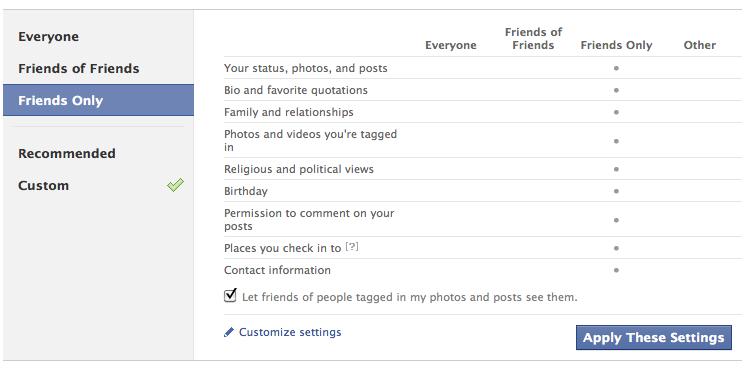
“Recommended” is NOT recommended! Check out how much information is available for the entire public on Facebook to see? You want to make sure those top items in the list are definitely set to “Friends Only!”
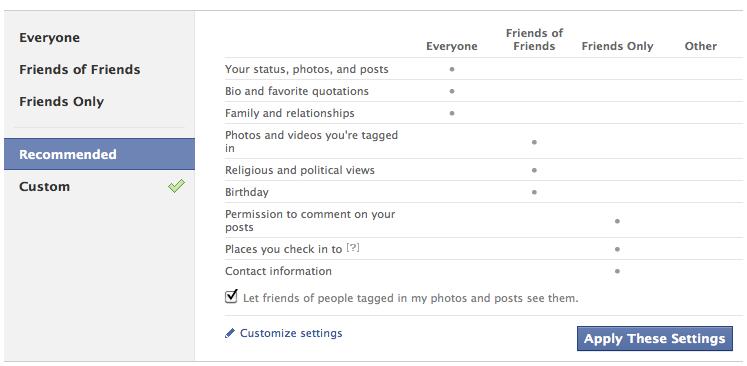
Teen Drinking
ALCOHOL
Alcohol is a depressant that affects every part of your body. The damage it does now can impact the rest of your life.
AKA
Drink, booze, brew, hooch, moonshine
WHAT IS IT?
Alcohol is a depressant derived from the natural fermentation of fruits, vegetables and grains. These are brewed and distilled into a wide range of beverages with various alcohol contents.
THE RISKS
You may hear that it will loosen you up and help you relax. What you may not hear is that it can damage the part of your brain that controls coordination, memory, judgment and decision-making. Straight up, drinking makes you dumber—you may slur your words and lose coordination, and your reactions will become slower.
If you drink a lot and drink fast (binge drinking) you really put yourself in danger. With binge drinking, the depressant (or dumbing) effects of alcohol can overwhelm the body’s defenses. Unable to move and think clearly, you can do stupid, risky and reckless things that are unsafe, or even lethal. Each year, approximately 5,000 people under the age of 21 die as a result of underage drinking. This includes about 1,900 deaths from car accidents, 1,600 homicides, 300 suicides, and hundreds of other deaths due to accidents like falls, burns and drownings.
LONG-TERM EFFECTS
Alcohol travels through your bloodstream and damages your brain, stomach, liver, kidneys and muscles. As a teenager, your body is still developing, so damage done to it now will affect the rest of your life. Over time, drinking destroys your body and your looks, so all that work you’ve done to look good, keep strong and stay fit goes down the drain fast.
THE BOTTOM LINE
Yes, it’s legal for people 21 and older. One reason is that alcohol can have seriously dangerous, long-term impacts on a body and brain that are still developing. Also, statistics show that more teens are killed by alcohol than by all illegal drugs combined.

WEEKENDS ARE TOO GOOD TO WASTE.
Weekends are awesome. And if you want to have a weekend to remember, why waste it by giving in to outside pressures? Like pressure to drink or do drugs. It’s called “getting wasted” for a
COMEBACKS!
........ For when you’re feeling the pressure
“Let’s smoke a bit and do a little off-roading”
YOU: “Nah. That stuff slows your reaction time, and I really don’t need to wrap my car around a tree.”
“I’m bored. Let’s go to the mall and see what we can swipe.”
YOU: “Stealing is so shady. If I got caught, I’d never be able to get a job in any of those stores – they do background checks you know.”
“Wanna cigarette?
YOU: Nah, my mom has better senses than a drug-sniffing dog!”
“It’s your birthday. You’ve got some major drinking to do.”
YOU: “No, thanks. I’d actually like to remember my birthday.”
“You should smoke or drink up a little before your date. It will make things go smoother.”
YOU: “No way, I don’t want her to think I’m an idiot.”
“Let’s get high.”
YOU: No, thanks. If I wanted some I would have asked for it.”
“Want a hit?”
YOU: No way, that’s just an expensive bag of cancer.”
WHEN LIFE GETS YOU DOWN, YOU HAVE TO PULL YOURSELF BACK UP. YOU HAVE THE POWER, NOT DRUGS.
Bullying
Bullying is a widespread and serious problem that can happen anywhere. It is not a phase teens have to go through, it is not “just messing around,” and it is not something to grow out of. Bullying can cause serious and lasting harm.
Although definitions of bullying vary, most agree that bullying involves:
• Imbalance of Power: people who bully use their power to control or harm and the people being bullied may have a hard time defending themselves
• Intent to Cause Harm: actions done by accident are not bullying; the person bullying has a goal to cause harm
• Repetition: incidents of bullying happen to the same the person over and over by the same person or group
Bullying can take many forms. Examples include:
Verbal: name-calling, teasing
Social: spreading rumors, leaving people out on purpose, breaking up friendships
Physical: hitting, punching, shoving
Cyberbullying: using the Internet, mobile phones or other digital technologies to harm others
An act of bullying may fit into more than one of these groups.
Has Someone Called You a Bully?
You may feel pressured to bully others if your friends are doing it. You may think that you will no longer be popular or that you may be bullied yourself if you do not join in.
Sometimes you may think that you are just joking around but your words and your actions may actually be hurting someone.
Did you know that teens who bully are more likely to have poor grades, drop out of school, use drugs, or commit crimes?
Put Yourself in Their Shoes
Consider how they must feel. If it seems like you are hurting them at all, stop. Ask the person being bullied how they feel. Maybe they are afraid or too embarrassed to say something.
Do not let your friends bully others. If your friends are bullying others, help them see how they are hurting others.
Make it Right
Apologize. Sometimes telling someone you are sorry can go a long way. Focus on doing things differently from now on. Although you cannot change what has happened, you can change how you treat others in the future.
Get Help
Talk with an adult. They may have good ideas about what you can do to change how you treat others.
Ask for help. Seeing a counselor or a health professional may be helpful. Sometimes it is good to talk with someone who is not personally involved to help you find solutions.
HOW TO DEAL WITH BEING BULLIED

If you have been bullied, it may affect you in many ways. You may not want to go to school or may find it hard to do your homework. You may be losing sleep, eating more or less than usual, having headaches or stomachaches, or getting sick more often. Know that you do not have to feel this way.
Your Feelings are Important
Do not blame yourself. It is easy to question whether you are the problem. But no matter what someone says or does, you should not be ashamed of who you are or what you feel. Be proud of who you are. No matter what they say, there are wonderful things about you. Keep those in mind instead of the disrespectful messages you get from the people who are bullying you. Do not be afraid to get help. Sometimes it helps to just talk to someone who is not personally involved. Teachers, counselors, and others are there to help. Seeing a counselor or other professional does not mean there is something wrong with you.
What to Do When You Are Being Bullied
The first priority is always your safety. Here are some strategies for you to consider:
Tell them to stop.
Walk away. Do not let them get to you. If you walk away or ignore them, they will not get that satisfaction.
Protect yourself. Sometimes you cannot walk away. If you are being physically hurt, protect yourself so that you can get away.
Tell an adult you trust. Talking to someone could help you figure out the best ways to deal with the problem. In some cases, adults need to get involved for the bullying to stop.
Find a safe place. Go somewhere that you feel safe and secure like the library, a favorite teacher’s classroom, or the office.
Stick together. Stay with a group or individuals that you trust. Find opportunities to make new friends. Explore your interests and join school or community activities such as sports, drama, or art. Volunteer or participate in community service.
For more information, including links to other resources, visit: www.stopbullying.gov

Banking and Credit
As a teenager there are several factors to consider when choosing a bank. Saving money is an important skill to learn early in life; it provides you with a sense of purpose, an ability to interact with the commercial side of life and an opportunity to develop self-discipline about saving and spending money. Choosing the right bank when you are a teenager should be about complementing your needs and meeting your needs with the least amount of hassle, red tape and loss of funds through fees.

Good questions to ask before opening a bank account:
• Is there a minimum balance I have to keep in the account?
• Can I earn interest on this account?
• Is there a charge for the monthly service or for check processing?
• Is there an ATM fee?
• Can I set up an overdraft protection plan/account?
To help establish credit, you should have one credit card in your name with a small balance. You want to ONLY make purchases on the card that you can pay off by the end of the month.
Be careful with racking up balances - you may end up spending more on interest charges then you planned for.


Teen Driving
Before (and after) you take your test, you should practice wherever possible in a relatively empty area. Make sure you have a professional or good driver with you to make sure you’re doing things right.
Practice driving on the test routes. A list of all of these can be found on the Internet. There are normally 10 to 15 per driving test center. An inspector might question you on all of them.
Familiarize yourself with street signs, hand gestures and traffic times of your area beforehand.
Once in the car, adjust the seat to fit your body height and style. You should sit at least 25 centimeters from the steering wheel and your hands should be bent at approximately 45 degrees.
At all times drive at a safe speed, not necessarily the speed limit, as this will show the inspector you are confident in your abilities, but not so confident you’re breaking the law.
Practice with your driving instructor or parent before taking the test. Refresh yourself on parallel parking, backing up straight, and 3 & 4 point turns.
Make sure you arrive at least 10 minutes prior to your appointment. Bring your completed and signed Driver’s Log, Drivers Ed certificate, driving time with an instructor certificate, and your learners permit. Also bring your social security card and birth certificate for identification purposes.
Get in the car with the driving examiner. Relax. You should have already Adjusted your seat, mirrors, and steering wheel with your instructor, so no need to adjust them! Ask any questions that you have prior to the test and in the test if you are confused. The driving examiner will be glad to answer them.
Stop at all stop signs. Use the indicator when necessary. Keep your eyes on the road, gazing to the right and left when going through cross roads and look in centre mirror every 4 seconds to see what’s happening behind you.
Parallel park as best as you can. Make sure you turn on your indicators, as not doing so will likely ensure a failure. Try not to bump the curb, go slowly and carefully, looking to the back and sides as you do so. Remember, it’s OK to slightly bump the curb, just not jump it. You will lose some points, but that’s better than failing the test altogether.
DID YOU KNOW?
You may already have a driver’s license. But, if you are over 18 now (or about to be in a few years), the law will be different for you.
How the law changes for you now that you are 18:
1. You can be employed as a driver
2. You are now held responsible for your actions: At age 18, you assume liability for your own traffic violations or accidents. If it your responsibility to know (and to follow) the rules of the road. Your parents are no longer held legally accountable for some damages or financial losses caused by your actions!
Minors in the Industry

History of the Coogan Law
SCREEN ACTORS GUILD
Notes on Coogan Accounts
The Coogan Law is named for famous child actor Jackie Coogan. Coogan was discovered in 1919 by Charlie Chaplin and soon after cast in the comedian’s famous film, The Kid. Jackie-mania was in full force during the 1920s, spawning a wave of merchandise dedicated to his image. It wasn’t until his 21st birthday after the death of his father and the dwindling of his film career that Jackie realized he was left with none of the earnings he had work so hard for as a child. Under California law at the time, the earnings of the minor belonged solely to the parent.
Coogan eventually sued his mother and former manager for his earnings. As a result, in 1939, the Coogan Law was put into effect, presumably to protect future young actors from finding themselves in the same terrible situation that Jackie Coogan was left in.
The Current Coogan Law
In January 1, 2000, changes in California law affirmed that earnings by minors in the entertainment industry are the property of the minor, not their parents. Since a minor cannot legally control their own money, California Law governs their earnings and creates a fiduciary relationship between the parent and the child. This change in California law also requires that 15% of all minors’ earnings must be set aside in a blocked trust account commonly known as a Coogan Account.
Coogan Trust Accounts
Not all banks offer Coogan Trust Accounts, and even some that do still have employees are not familiar with the term “Coogan Account”. Sometimes explaining that you are opening up a blocked trust account for your minor child will clear up confusion.
Below you will find a partial list of banks, credit unions and brokerage firms that offer Coogan/Trust Accounts. Screen Actors Guild provides this list for information purposes only and does not endorse any particular institution. These financial institutions each have different requirements for opening accounts. Some require a first paycheck to open the account, some a minimum deposit and the interest rates vary. It is important to compare financial institutions and find the best one for you and your child.
AFTRA/SAG Federal Credit Union
Actors Federal Credit Union
Bank of America
Bank of the West
City National Bank
First Entertainment Credit Union
Morgan Stanley/Smith Barney
Union Bank of California
Wells Fargo

Guide to Prom

Ultra-Sleek Pony
How to Get the Look
Step 1: Get hair super-smooth and shiny by spraying heat protectant all over dry strands, then running a flat-iron through your whole head of hair.
Step 2: Make a center part, and gather hair into a low pony. Take a one-inch section of hair from the bottom of your pony; wrap it around the elastic so the band is completely covered. Bobby-pin underneath it to secure.
Step 3: Clip a statement-making pin along your hairline.
Tip: Go for an accessory that’s a different color than your hair for an eye-catching contrast.
Sideswept Updo
How to Get the Look
Step 1: Comb a smoothing serum through damp hair and blow-dry straight. Make a deep part on one side, and pull hair into a low pony on the other side. Secure tightly with an elastic.
Step 2: Split the pony into two sections, and wrap one half around the base and pin to form a bun. Do the same with the other half of the pony, twisting in the opposite direction.
Step 3: Lock in your style with a strong hold hairspray, and polish the look with a fun jeweled hair clip, positioned just above the bun.
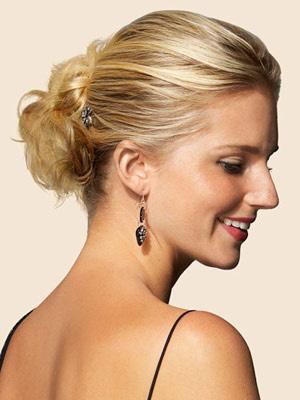
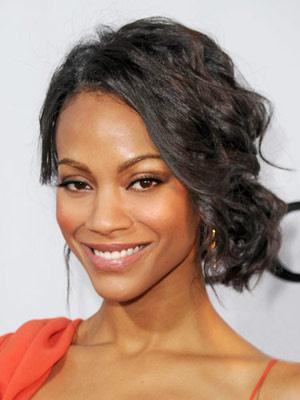
Double-Knotted Updo
How to Get the Look
Step 1: Give your hair grip so the knots don’t slide out: Run a dollop of volumizing cream through damp hair, then give it a rough blow-dry for texture.
Step 2: Divide hair horizontally at the back of your head, and form two ponytails. (Position one a little higher than the other.)
Step 3: Twist each pony into a messy bun, and secure with pins. Finish with a shot of hairspray for all-night hold.
Tip: For a romantic detail, slip a floral clip into each of your knots so they peek out.
Stores
• mygirldress.com
• renttherunway.com
• promgirl.com
• jcp.com
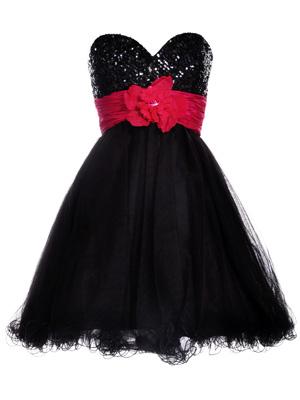

• forever21.com
• unique-vintage.com
• dots.com
• modcloth.com
• gojane.com


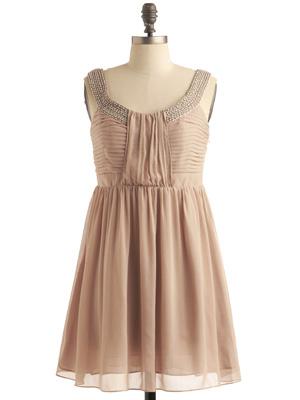
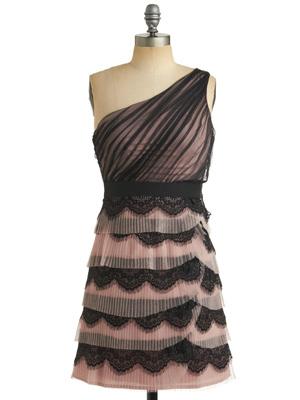


Hey, Guys! You have it easy!
All
TIPS:
•
•
•
•

Bright Star
Just Bead It
Golden Girl
Edgy Blossom
Academy Awards
THE MOVE INDUSTRY’S MOST PRESTIGIOUS HONOR

“Good actors/actresses know the people that came before them.”
- Agent from Clear Talent Group, Los Angeles
Barbizon students are encouraged to research award winning movies, actors, writers, directors and others in the business. This will not only better your craft, but make you a more well-rounded actor.
To learn about the Academy Awards and all the winners in all categories, visit: http://www.oscars.org/index.html
Recent Winners for Best Picture...
2013 12 Years a Slave
2012 Argo
2011 The Artist
2010 The King’s Speech
2009 The Hurt Locker
2008 Slumdog Millionaire
2007 No Country for Old Men
2006 The Departed
2005 Crash
2004 Million Dollar Baby
2003 The Lord of the Rings: The Return of the King
2002 Chicago
2001 A Beautiful Mind
2000 Gladiator
1999 American Beauty
1998 Shakespeare in Love
1997 Titanic
1996 The English Patient
1995 Braveheart
1994 Forrest Gump
1993 Schindler’s List
1992 Unforgiven
1991 The Silence of the Lambs
1990 Dances With Wolves
1989 Driving Miss Daisy
1988 Rain Man
1987 The Last Emperor 1986 Platoon 1985 Out of Africa 1984 Amadeus
1983 Terms of Endearment 1982 Gandhi 1981 Chariots of Fire
Ordinary People 1979 Kramer vs. Kramer
The Deer Hunter
Annie Hall
Rocky 1975 One Flew over the Cuckoo’s Nest
1974 The Godfather Part II
1973 The Sting
Recent Winners for Best Actor...
2013 Matthew McConaughey Dallas Buyer’s Club
2012
2011
2010
2009
2008
2007
2006
2005
Daniel Day-Lewis Lincoln
Jean Dujardin
Colin Firth
Jeff Bridg
The Artist
The King’s Speech
Crazy Heart
Sean Penn Milk
Daniel Day-Lewis
Forest Whitaker
There Will Be Blood
The Last King of Scotland
Philip Seymour Hoffman Capote 2004
2003
2002
Jamie Foxx Ray
Sean Penn
Adrien Brody
Mystic River
The Pianist 2001
Denzel Washington Training Day 2000
Russell Crowe
Kevin Spacey American Beauty
Recent Winners for Best Actress...
2013
Cate Blanchett Blue Jasmine 2012
Jennifer Lawrence Silver Linings Playbook 2011
Meryl Streep The Iron Lady 2010
Natalie Portman Black Swan 2009
2008
2007
2006
2005
2004
2003
2002
2001
Sandra Bullock
Kate Winslet
Marion Cotillard
Helen Mirren
Reese Witherspoon
Hilary Swank
The Blind Side
The Reader
La Vie en Rose
The Queen
Walk the Line
Million Dollar Baby
Charlize Theron Monster
Nicole Kidman
Halle Berry
The Hours
Monster’s Ball 2000
Julia Roberts
Erin Brockovich 1999
Hilary Swank
2013
Boys Don’t Cry
Recent Winner for Best Director...
Alfonso Cuarón Gravity
Ang Lee Life of Pi 2011
Michel Hazanavicius The Artist 2010
Tom Hooper
The King’s Speech 2009
Kathryn Bigelow
The Hurt Locker 2008
2007
2006
Danny Boyle
Joel & Ethan Coen
Martin Scorsese
Slumdog Millionaire
No Country for Old Men
The Departed 2005
2004
2003
2002
2001
Ang Lee
Clint Eastwood
Peter Jackson
Roman Polanski
Ron Howard
Brokeback Mountain
Million Dollar Baby
The Lord of the Rings: The Return of the King
The Pianist
A Beautiful Mind 2000
Steven Soderbergh Traffic 1999
Sam Mendes American Beauty