Toronto for its outstanding academic standards, its steadfast commitment to
Montessori education, and its deep respect for the potential of every child.
Bannockburn Independent School is
fully accredited by Montessori Canada a member of the Conference of Independent Schools (CIS)
an approved candidate school for the
Canadian Accredited Independent Schools (CAIS)
For questions or concerns about this
magazine, please contact Erica Fyvie at e fyvie@bannockburn ca
Issue9
June 2026
Bannockburn Independent School
Magazine
Writer and Editor
Erica Fyvie
Designer
Hetvi Gandhi
We would like to thank all of the
contributors for their time and enthusiasm on this project:
Cody Bear
Gordon Chiu
Jasper Chiu
Wesley Chiu
Samuel Dzialowski
Anne Frank
Mason Freedman
Mila Freedman
Uni Kim
Charlotte McIntosh
Melissa Moore
Shashank Parkhi
Adrian Reuber
Teagan Richardson
Jacqueline Richman
Youchu Yu
Elizabeth Zha
Bannockburn Independent School
3080 Bayview Avenue
North York, ON M2N 5L3
(416) 789-7855
www bannockburn ca
Hand Signs
Pitch & Beat Maps
Whiteboard Notations
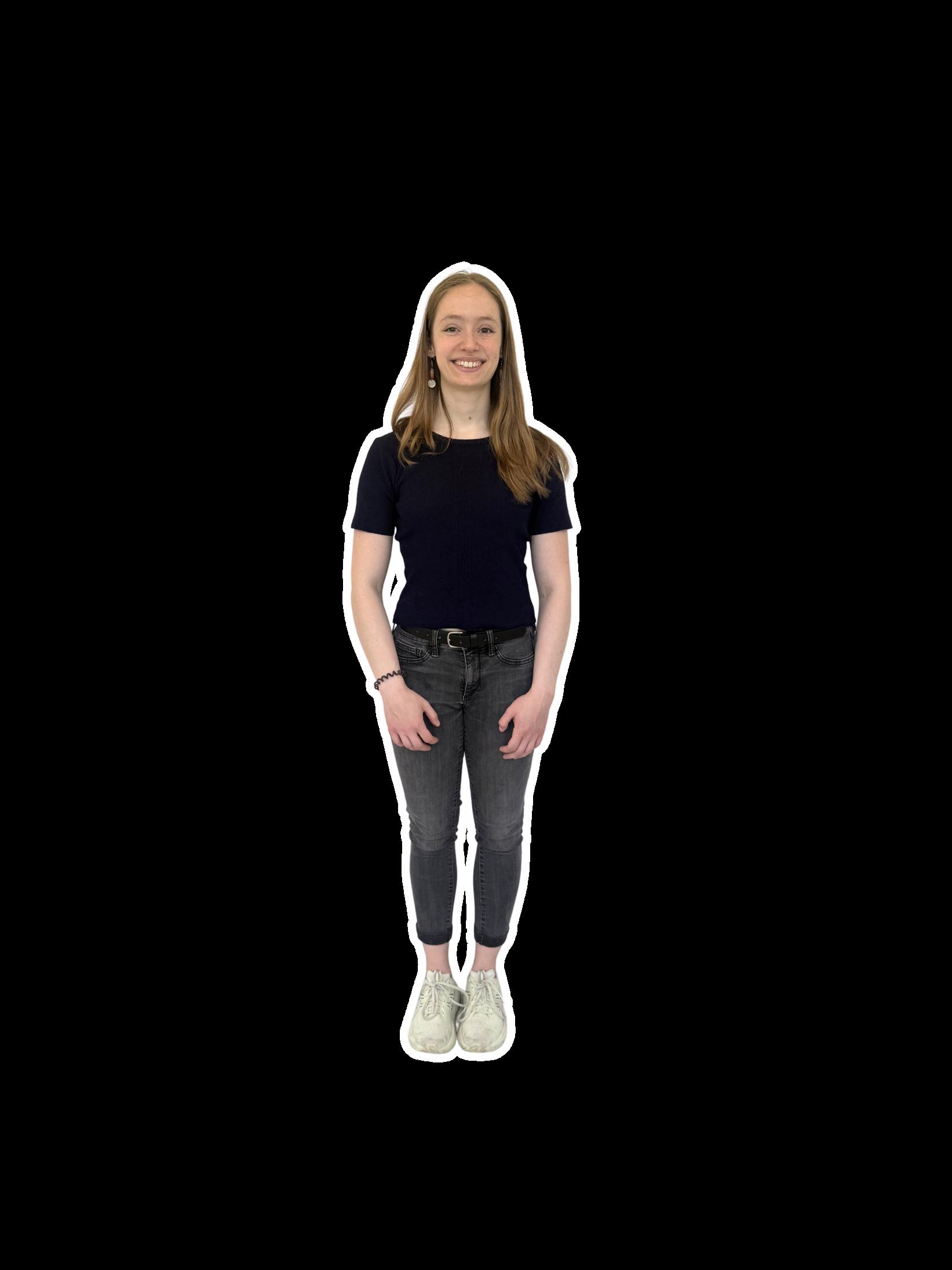
WHATMAKESUPYOUR
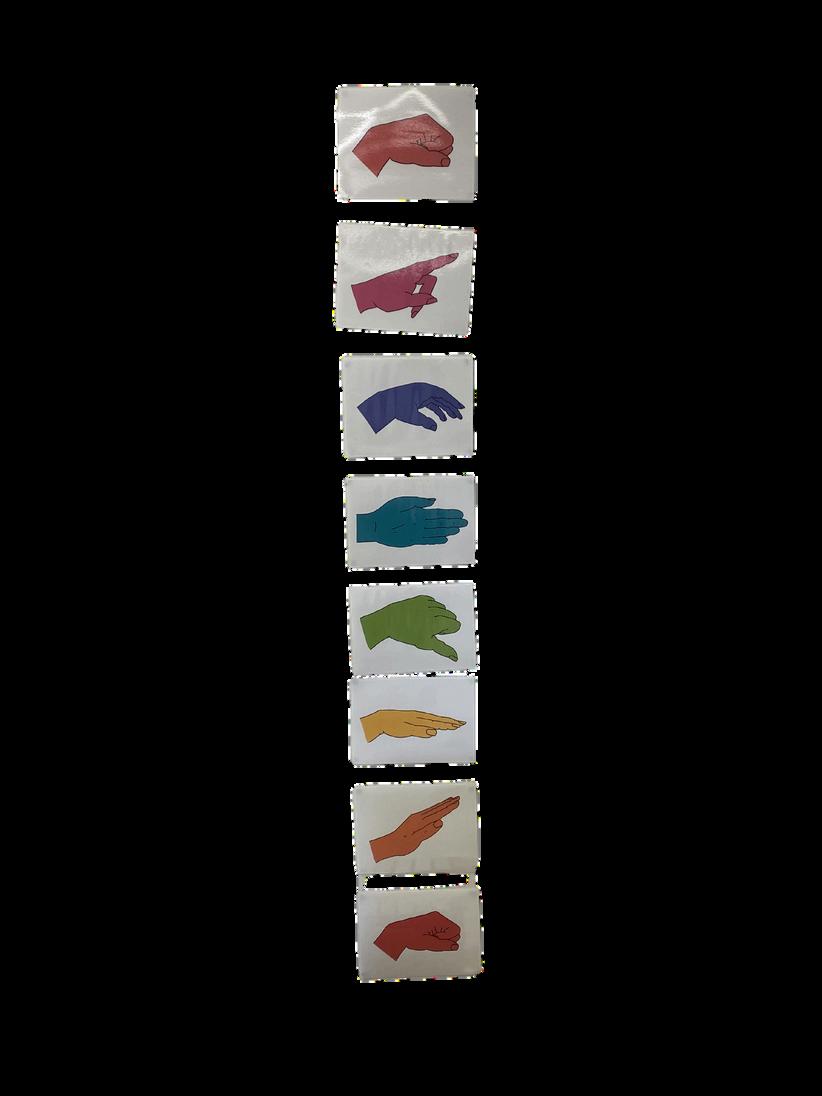
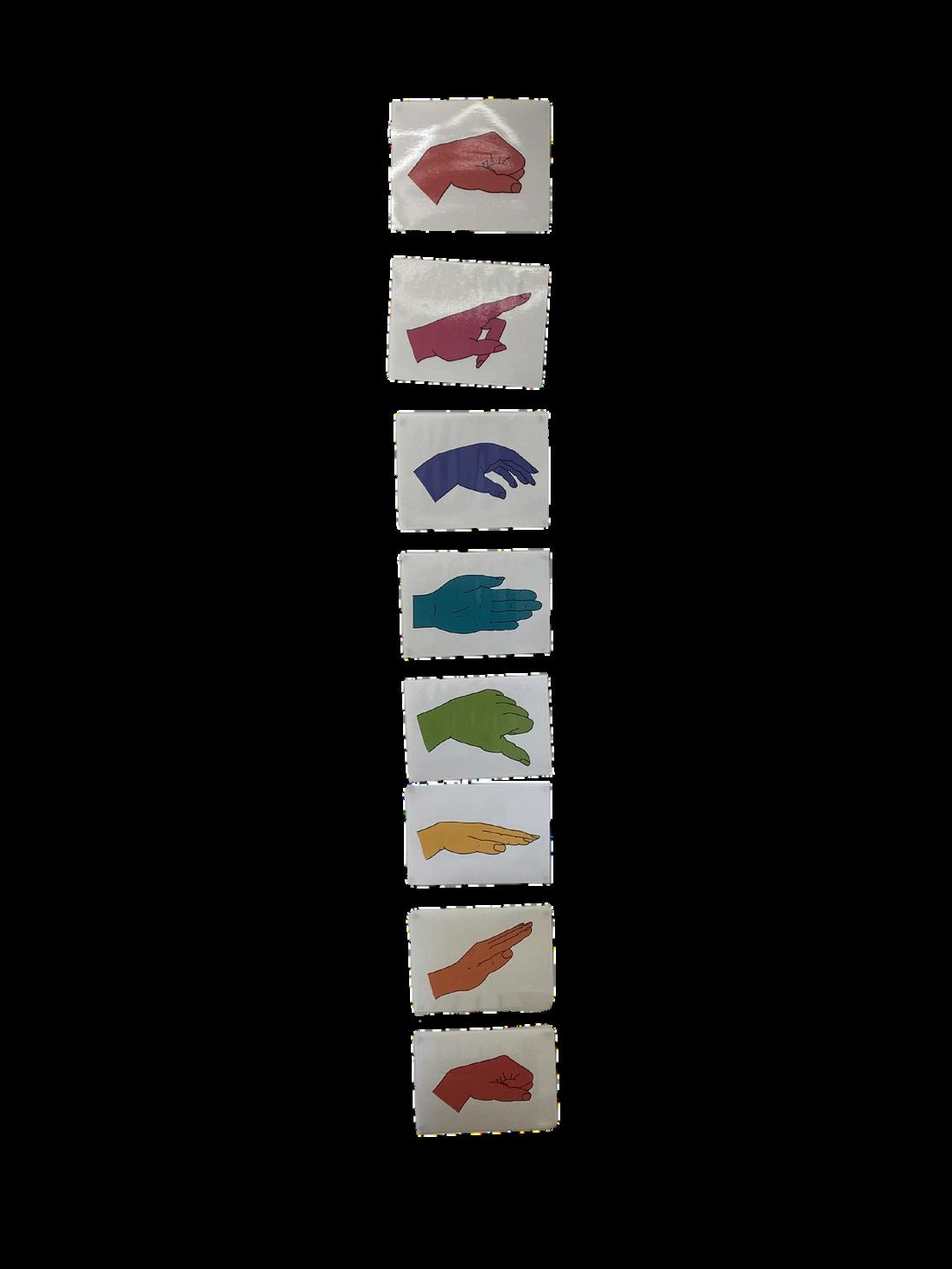
Hand signs
“These hand formations are the Curwen hand signs for
scales They are used to accompany the solfège syllables
that we sing with the notes of the major scale or major
pentatonic scale. In every class we sing a scale to warm up
our voices and we use the hand signs in front of our body
to experience the vertical nature of the pitches ascending
and descending the scale For Lunar New Year, the music
worked with the pentatonic five-note scale. The students
also echo the sound/note I make and it’s a great way to
begin to learn ear training. ”
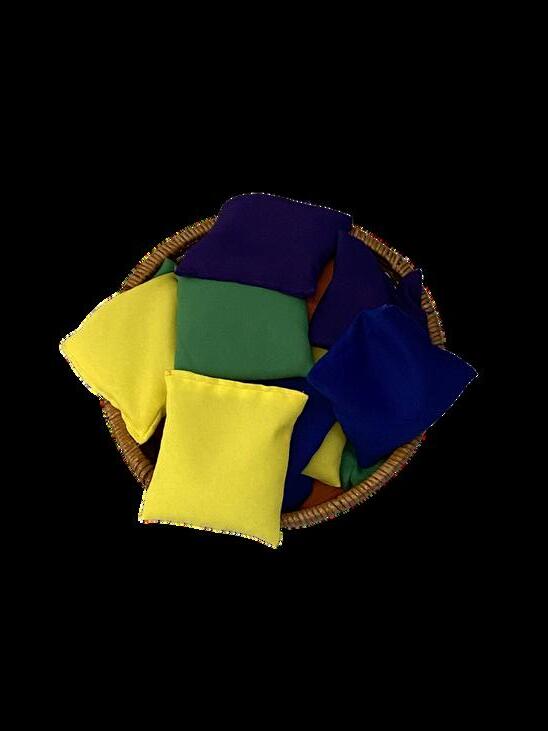
Scarves + beanbags
“The scarves and bean bags are both
excellent tools! The scarves encourage the students to move their bodies to the music, and help build
locomotor movement, or moving
through space while listening We just did a class with ‘Singin’ in the Rain’ and they really enjoyed moving
to that The bean bags provide a new sensory, tactile experience I use
them with musical storytelling to
build gross and fine motor skills, as
well as in cross-body exercises for
rhythm and coordination ”
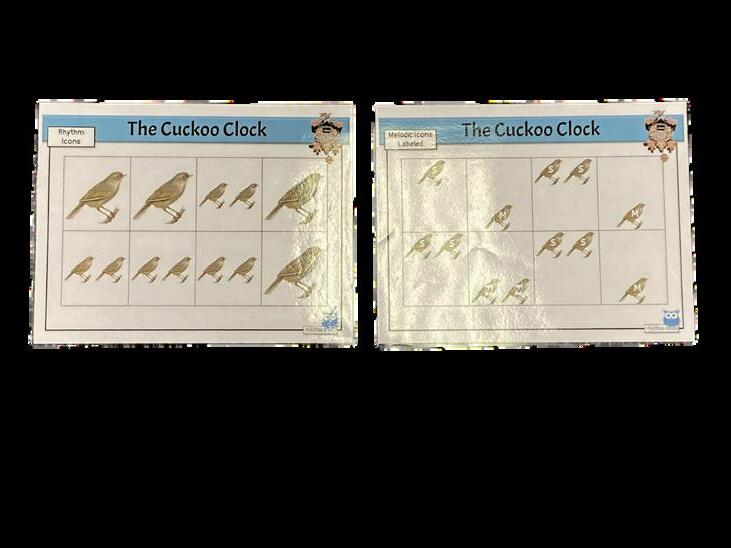
Pitch + beat maps
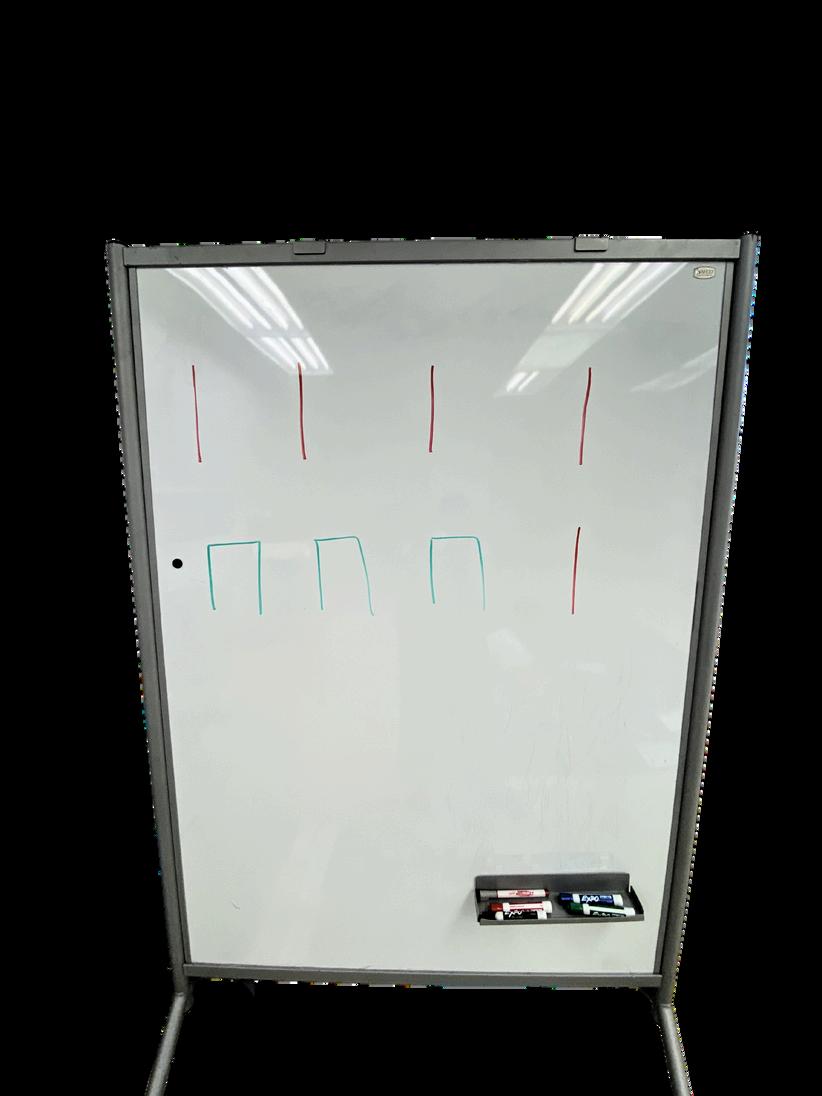
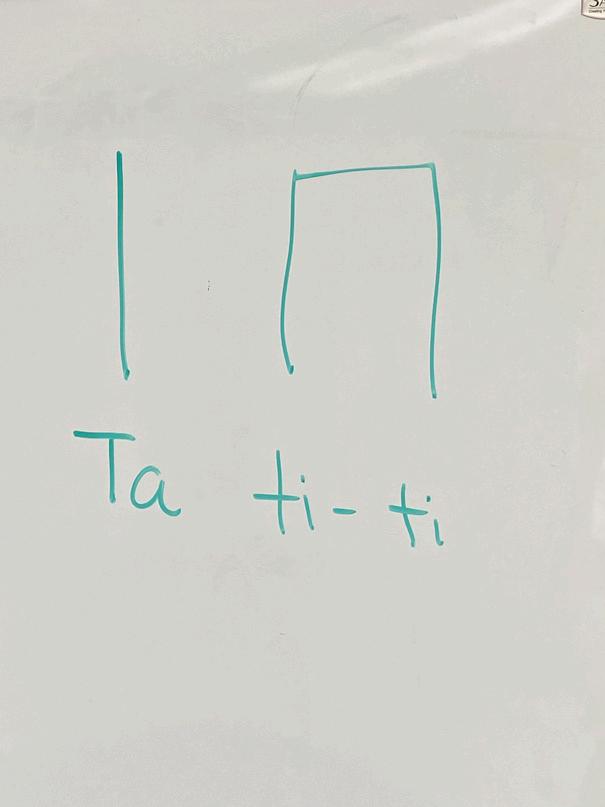
Whiteboard notations
“I use the whiteboard to write out and teach symbols for rhythm training We use stick notation to prepare our learning for reading standard notation We also use our bodies to model the stick notation and rhythm syllables like “ta” for a quarter note and “ti-
ti” for two eighth notes. I also use the
whiteboard to show how a pitch moves up and down throughout a melody with icons and solfège syllables ”
These are grids that represent melodic and rhythmic structures for songs that the kids already know how to sing We prepare a melody or rhythm first by experiencing it in our bodies and voices, then I present the melody or rhythm to the students on
the whiteboard, and then we practice it with our pitch or rhythm
grids that model how actual music notation will work For
example, if an icon is higher or lower on the grid, that represents a higher pitch or a lower pitch We also combine our pitches together with our solfège names do, re, mi, fa, so, la, ti, do and we use our rhythm syllables, ta, ti-ti, ta-ah, and ta-2-3-4
Recorders
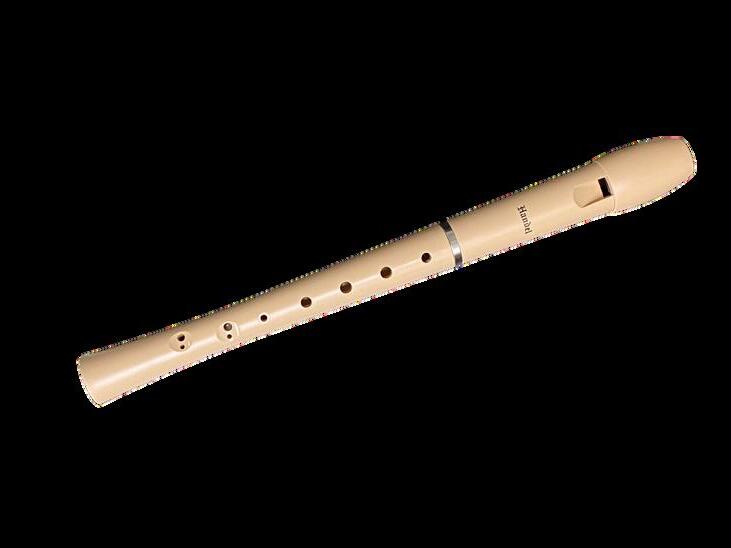
“These new recorders are great They are adaptive
for any new learner, but we’re using them in the
Grade 1 class The keys make it easier to cover the
holes. It looks like a toy, but it’s actually a great tool
for learning a first instrument The students in
Grades 2 and 3 need to be more advanced to play
this other recorder version
Recorders are a great entry instrument because the woodwinds can play in an ensembl
play together.
Brass instruments
Glockenspiel and Xylophone
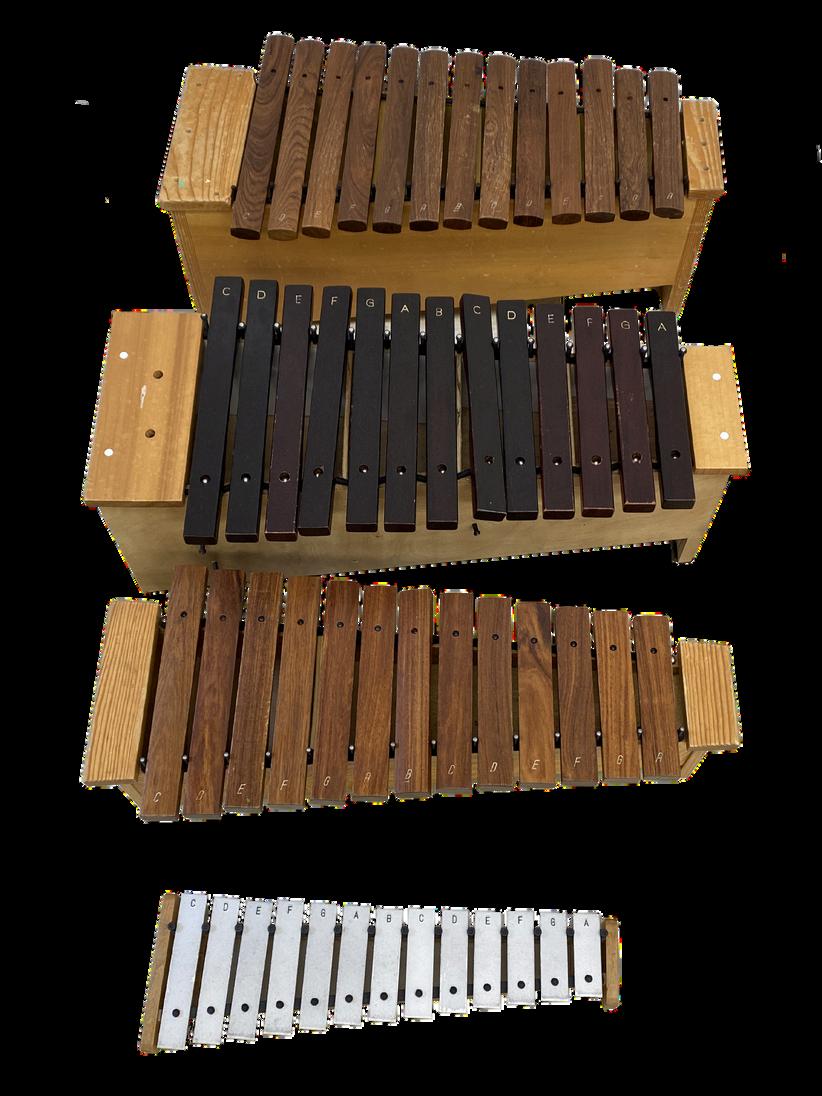
“The glockenspiel is the smaller version of the same instrument It is the highest voice in the mallet percussion ensemble in Orff class Each bigger size of xylophone is an octave lower In
Orff, you can experience music without having to learn complicated technique It can also be a good improvisation and composition tool ”
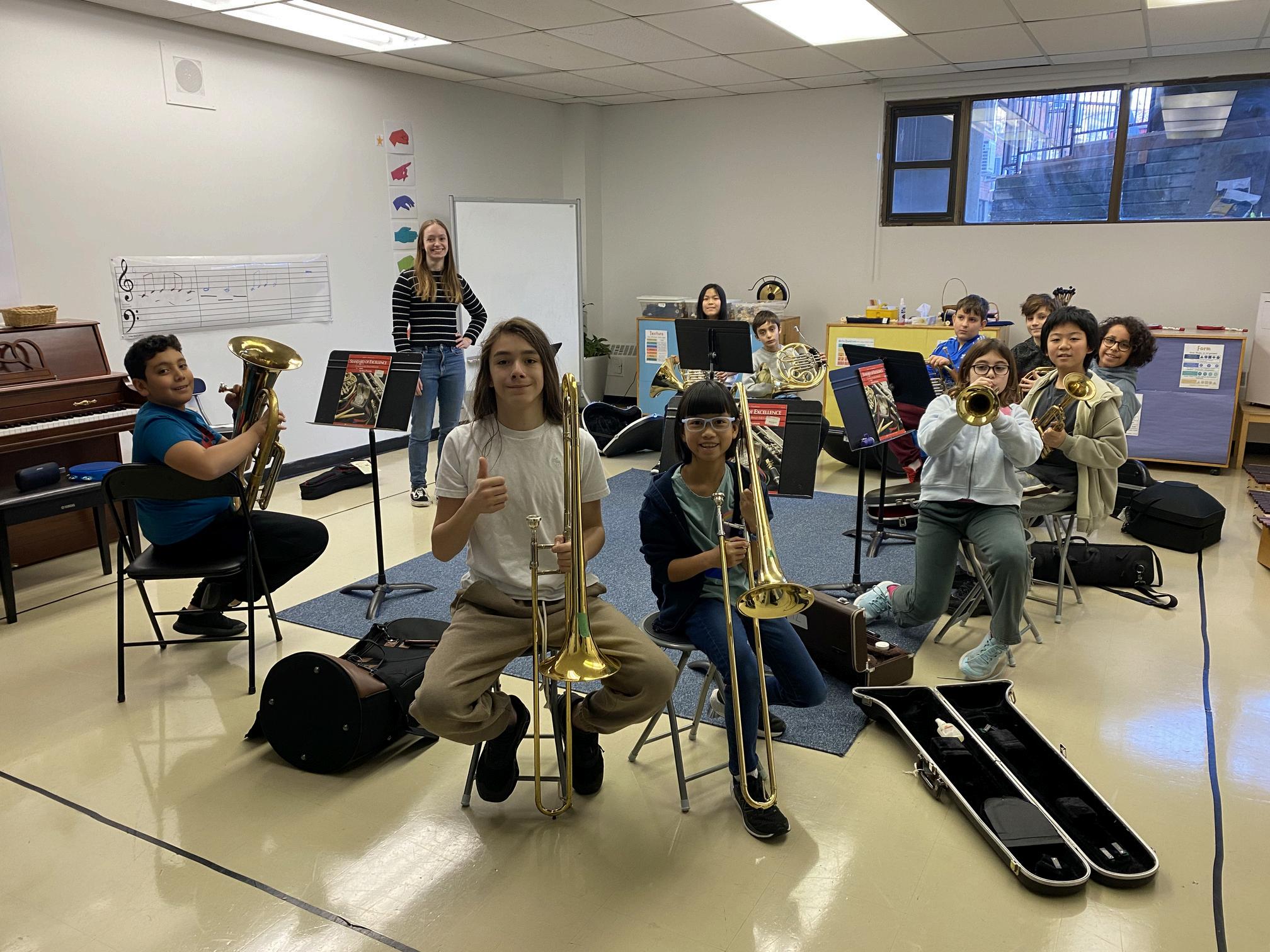
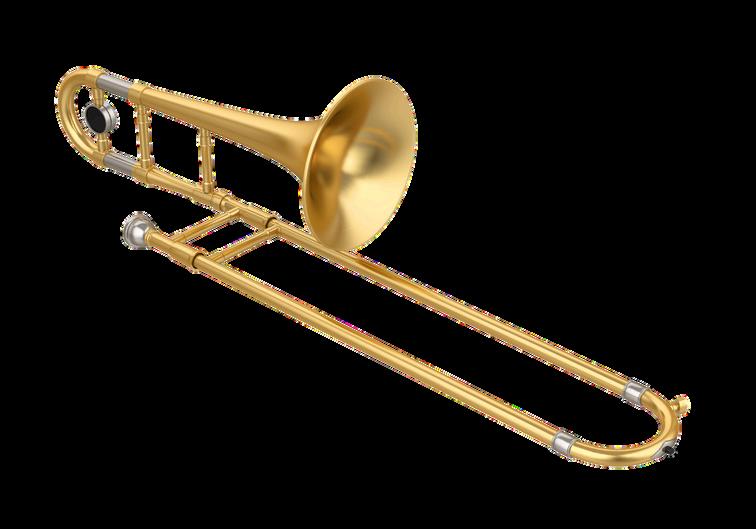
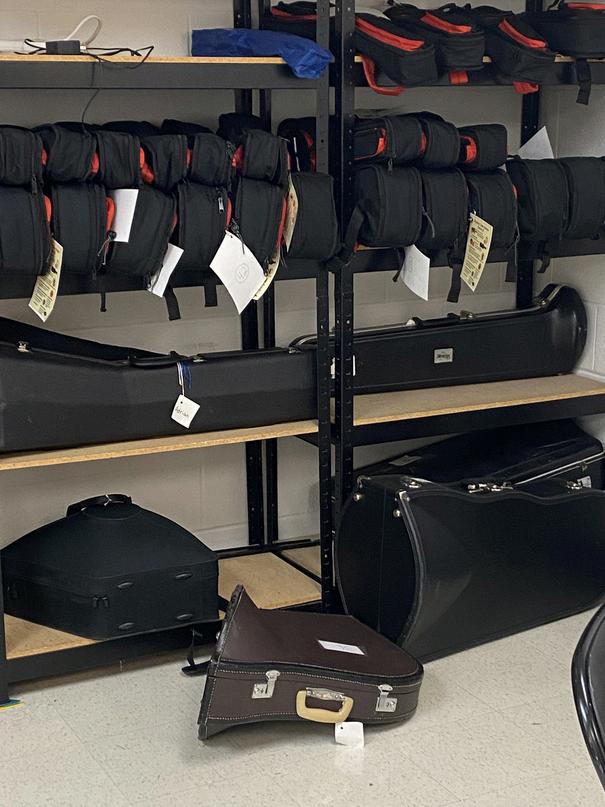
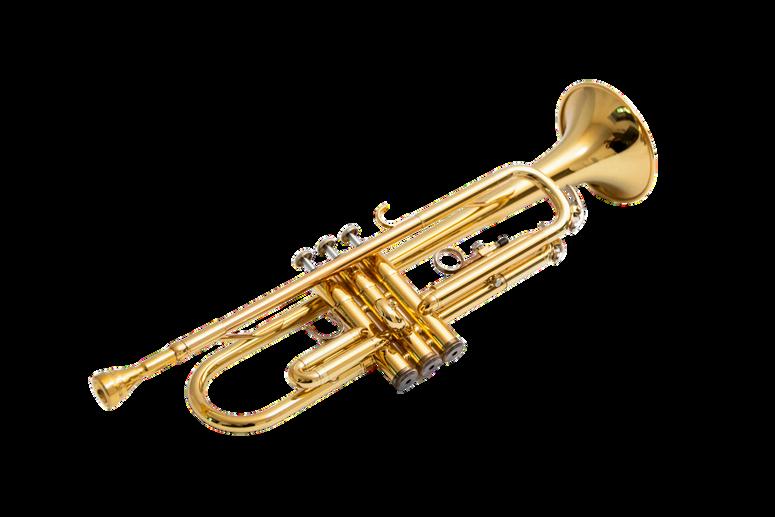
“Students are introduced to brass in UEL because they
require more patience and maturity The most important thing with brass is to develop sound over technique, and the patience and maturity are required because no one
sounds good right away! With three valves in a trumpet and one slide in a trombone, playing them requires a
greater understanding of pitch ”
Tambourine
“I use it throughout my classes. It’s great for establishing a beat and to begin a routine chant. It’s also good for recapturing the class’ attention when need be ”
MMUNReflections
Elizabeth
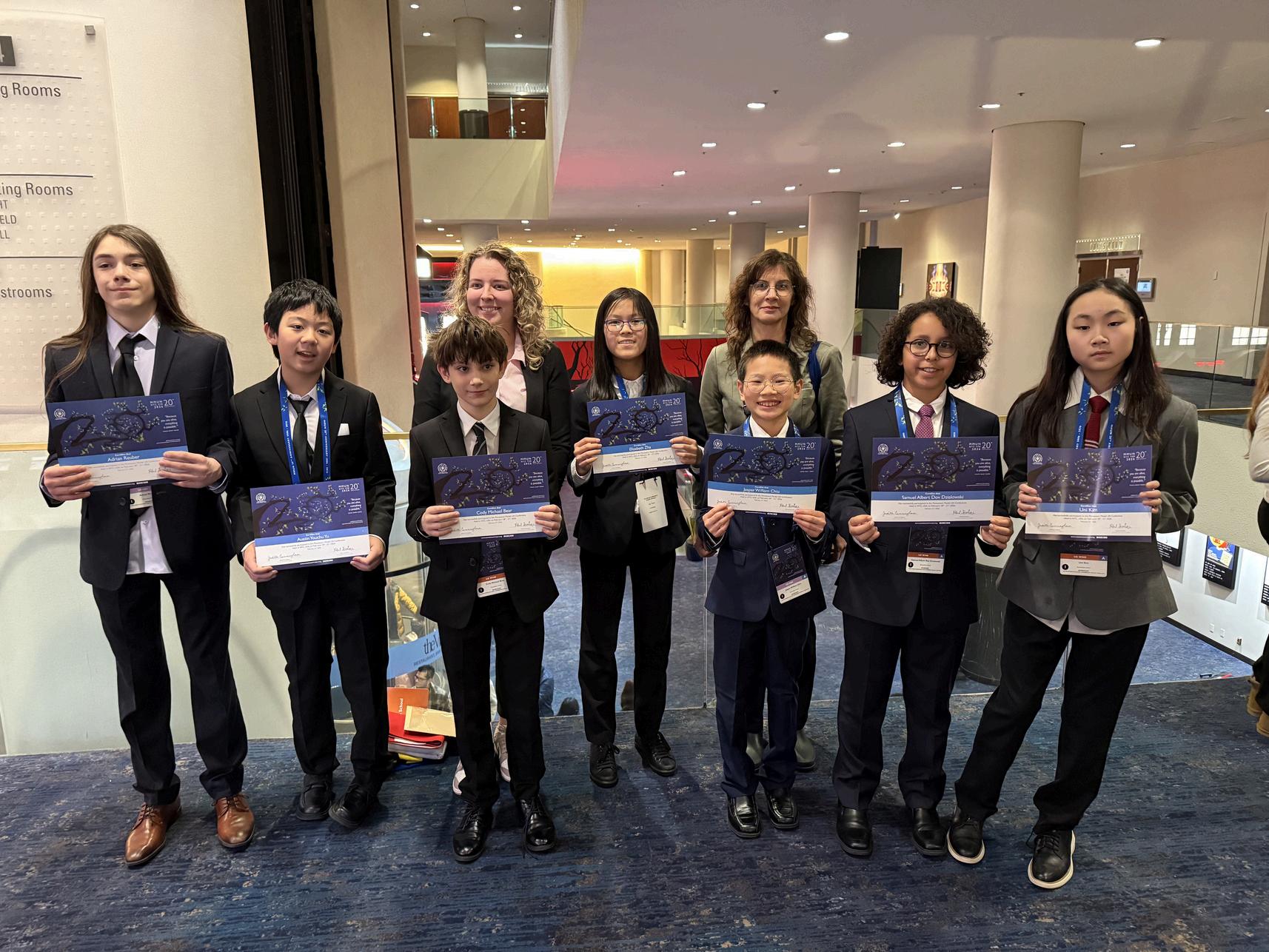
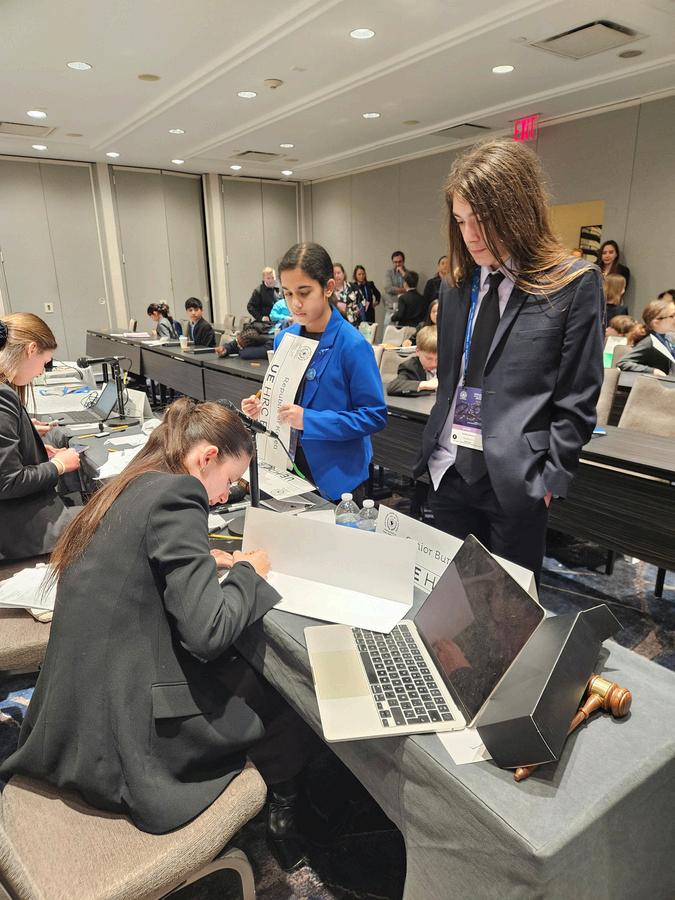
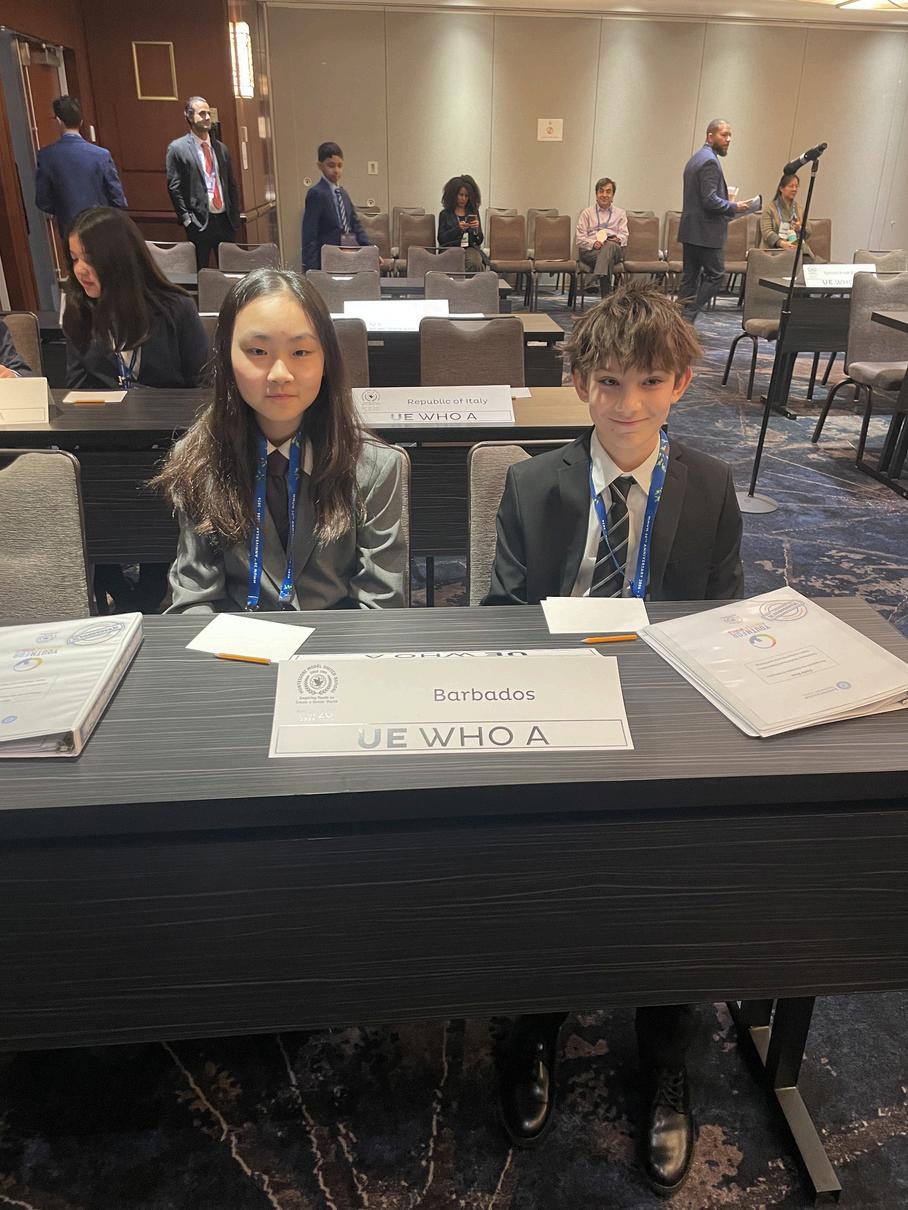
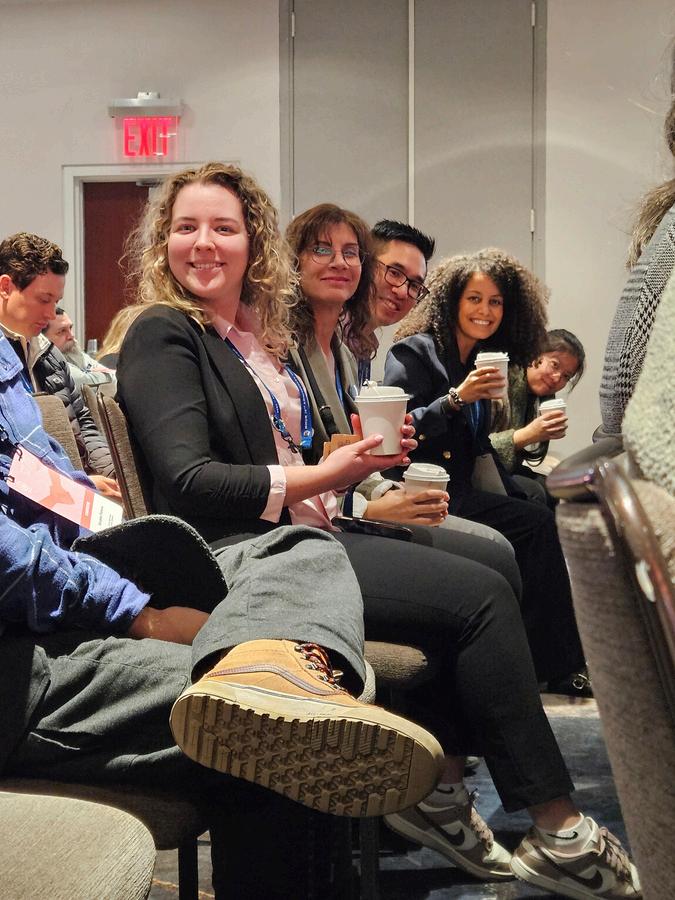
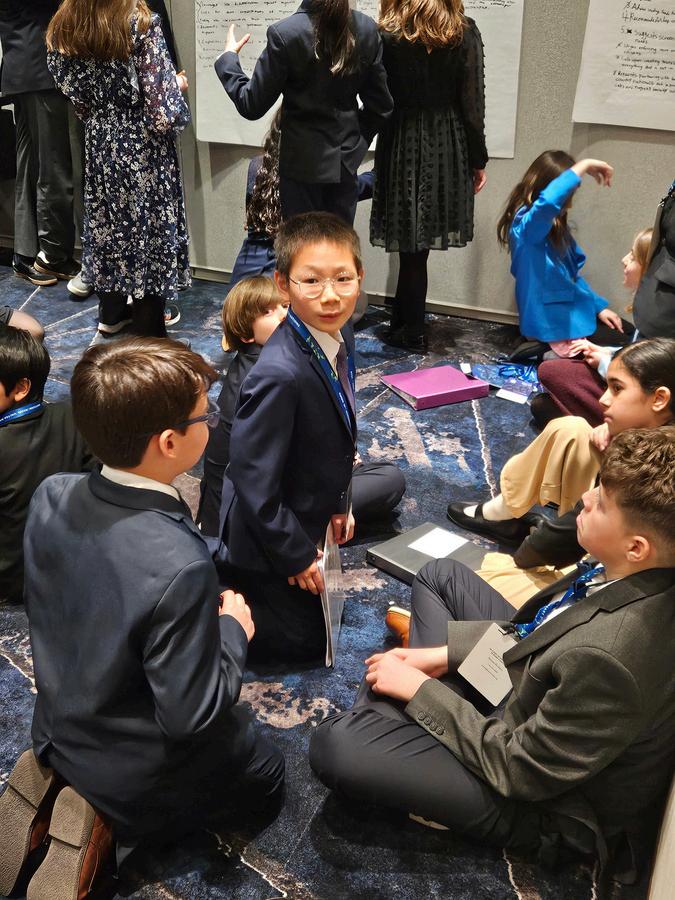
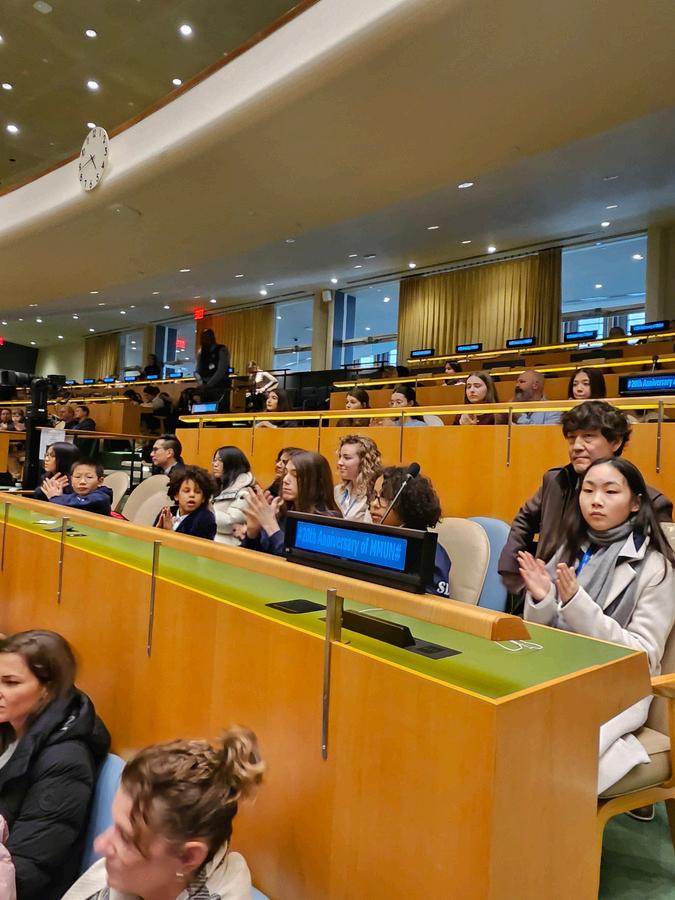
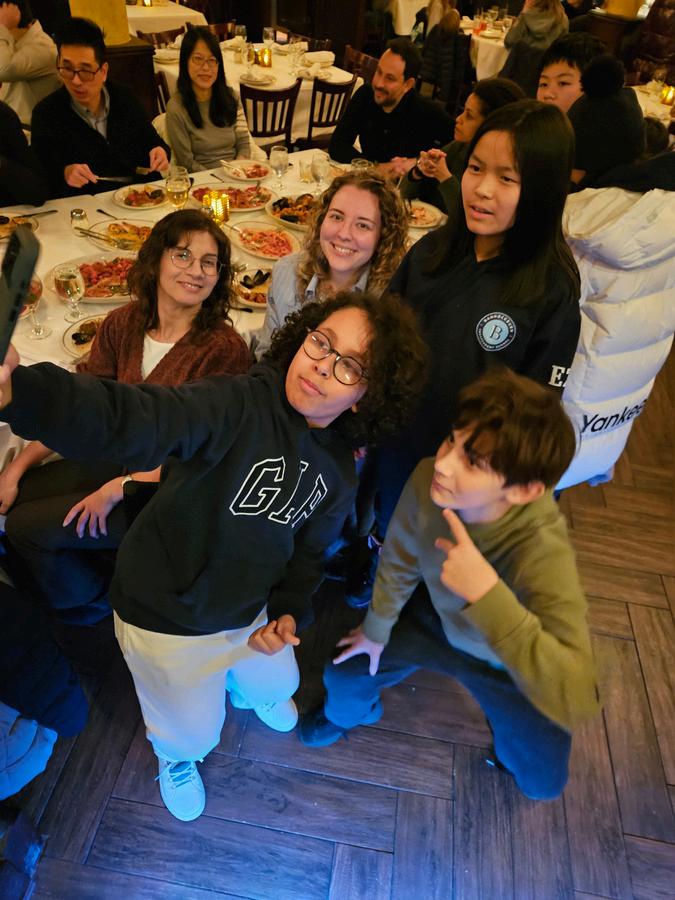
To me, the Montessori Model United Nations was an opportunity to explore world issues and come up with a resolution while working collectively with others Although I felt slightly nervous about giving my speech to a large audience at first, the kind and respectful delegates that were there to listen to my thoughts changed my mind; I felt respected and strangely more relaxed. I made many friends from all over the world, and I found it intriguing to learn about the differences in our daily lives I also enjoyed the dinner with other graduates, teachers, and parents Overall, it felt like a one-of-a-kind experience and one of the trips that changed my graduation year.
Youchu
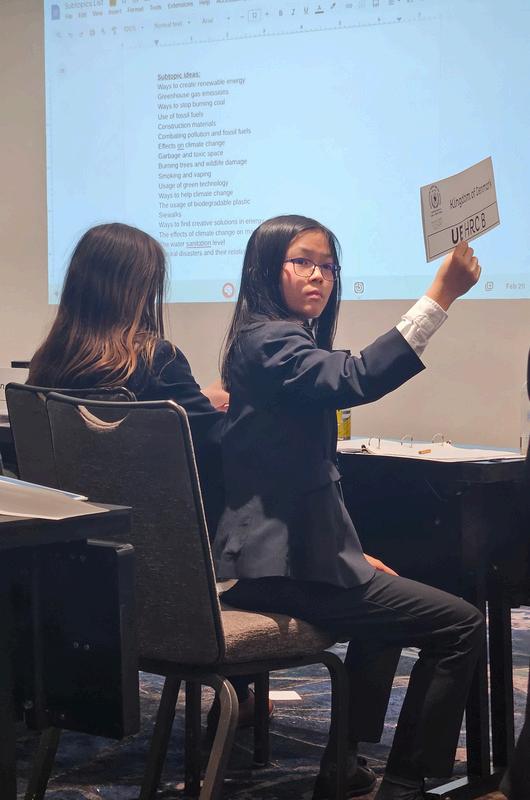
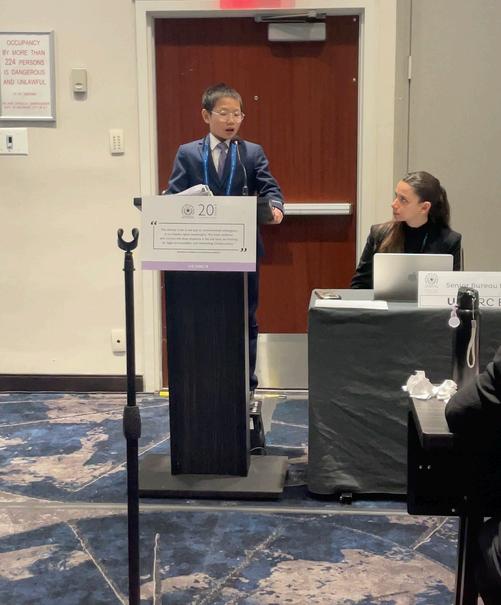
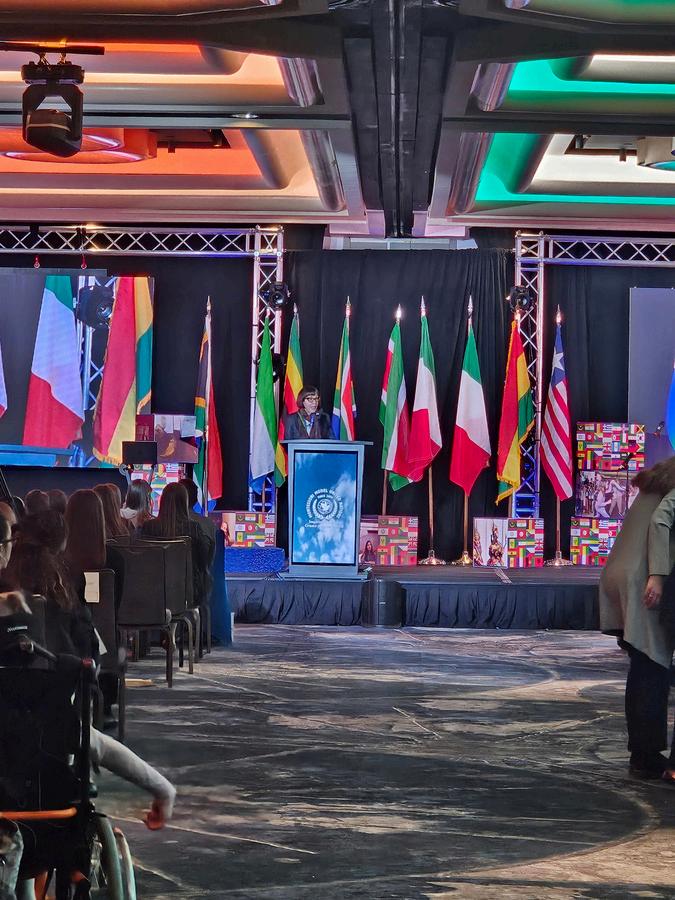
The opening ceremony was interesting because we got to see delegates and other important figures The first day of committee sessions I was nervous as I had to say my speech first, but it was really fun and nothing bad happened On the second day I was more confident because I already knew what was happening I saw Samuel and Uni do their speeches and it went well for both of them, including Cody who did his speech on the first day After lunch I made some friends with people from other countries and it was fun in general This was a memorable experience and I will remember it for the rest of my life.
Jasper
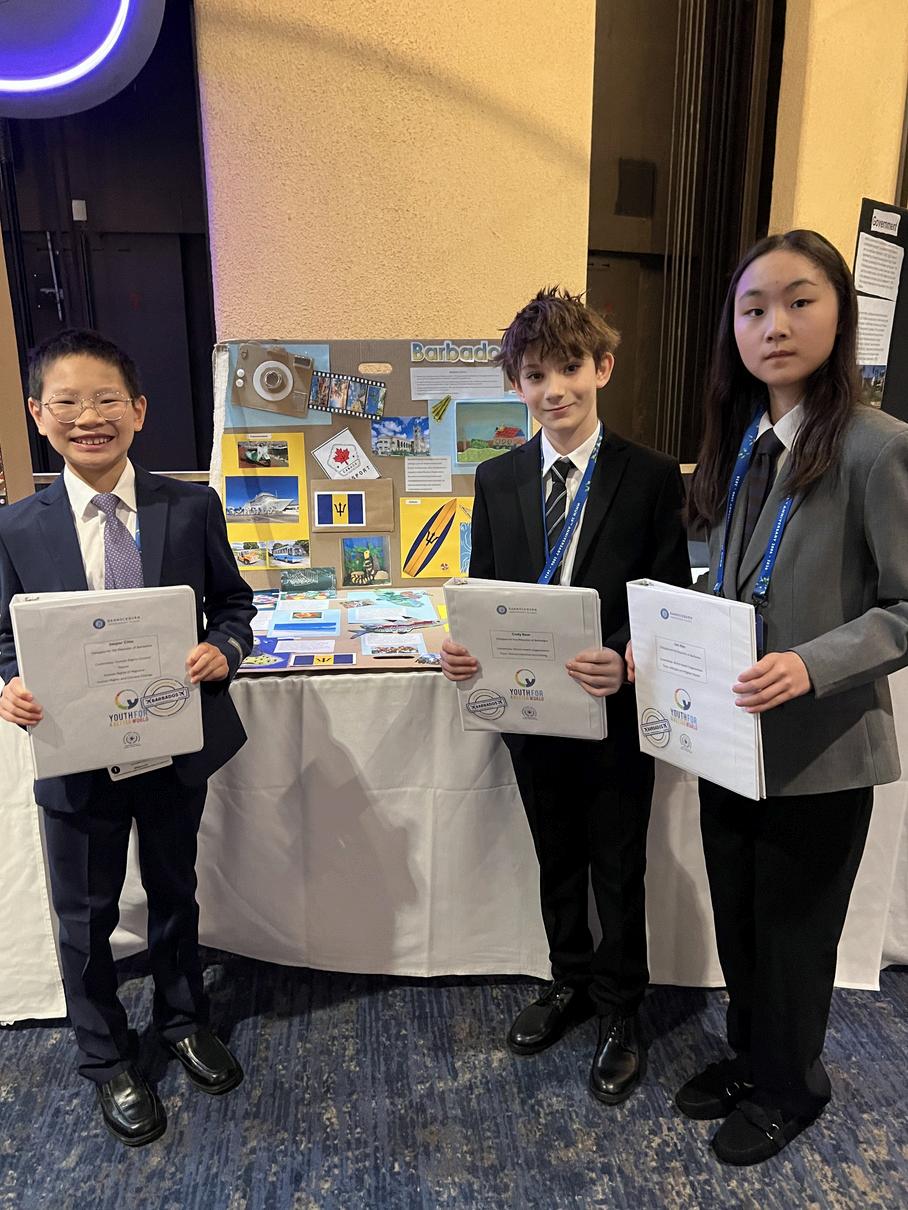
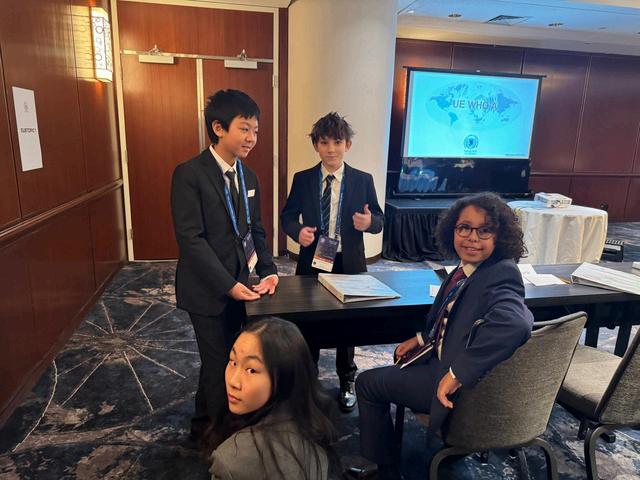
I woke up, put on my suit, set up our country boards, then walked to my committee room, and prepared for
my speech. I was nervous at first, but I overcame my
fear of speaking, and managed to deliver my first
speech I tried to participate for the rest of the day, but it was the same nervousness that held me back It
is safe to say that the next day was the best day of my life so far. I first woke up to the news of where I
will attend school next year and I was able to
celebrate with my classmates Then I was less
nervous in my second speech, and I carried my happy
spirit to the informal discussion I took on a
leadership role, and my hard work got me elected for
the closing bureau, which meant representing their committee in front of all the students participating in MMUN
Along the way, I made many friends from around the
world and even though I won’t see them again, they
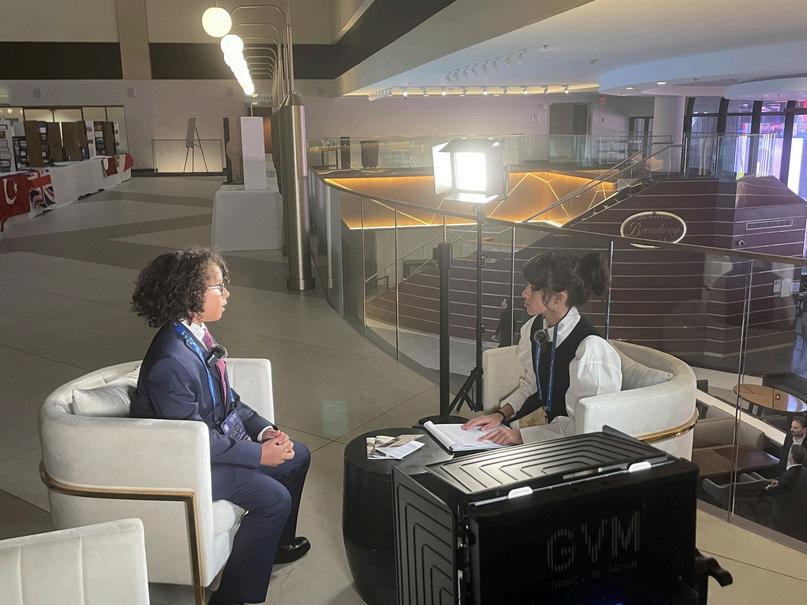
will always have a memory in my heart I presented my closing speech the next morning in front of 2000 people. This time, I was cleansed of nervousness, and when I finished I had a mixture of happiness and sadness I was happy because MMUN was such a fun
experience, and how it was able to help me overcome
my fear of public speaking I would like to do more of
it in the future yet I was also sad to leave my
newfound friends and this amazing place MMUN
changed my life in so many ways Thank you
Cody
After my first MMUN conference in NYC, I could gladly
say it was the best week of my life! I was so nervous
because my topic, Human Genome Editing, was on
the first day and my speech was second! After saying
my speech, I felt proud because it took me a month to
write it I felt like people actually cared and I was
excited for the next day For Day 2, when we got to
the room we did our attendance and then they went
through the speeches with Samuel going first out of the Bannockburn students Uni went shortly after and
everyone did great After the speeches, we went into making subtopic ideas and shortly after we made
topic names for the groups After we finished our paper we debated in teams because the Chair decided to break us into Group A and Group B I was in Group B
After the debates were over, we had to leave but before then I asked people from around the world to
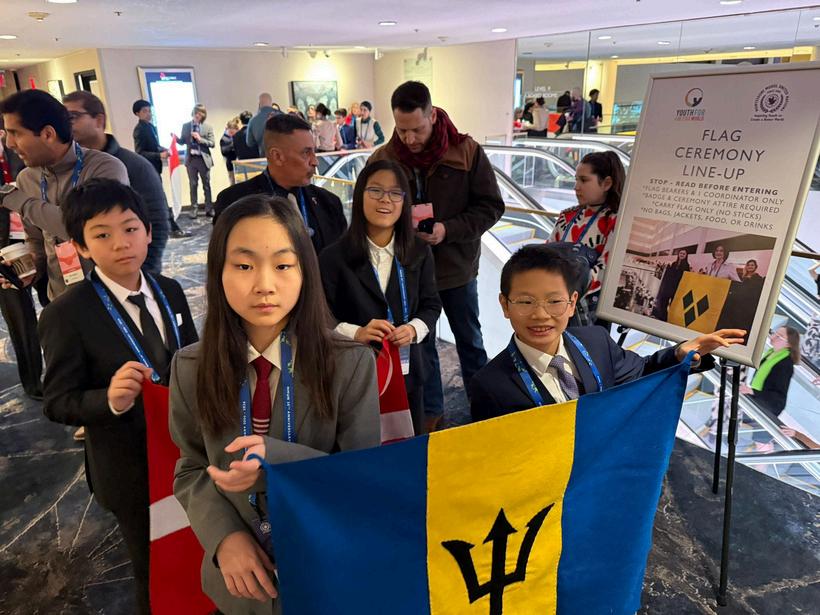
sign my plaque They were from places like Italy, Romania, Japan, China and many more When I got to the closing ceremony and took my seat, the flag bearers started walking with the flags The song made me cry because it was most likely I would never be here again I was sad to leave So, thank you MMUN for inspiring me to do stuff I didn't want to at first but I
realized that there are thousands of delegates with
the same feeling Thank you so much MMUN and hopefully see you in the future!
Samuel
MMUN 2026 was the single best week in my life
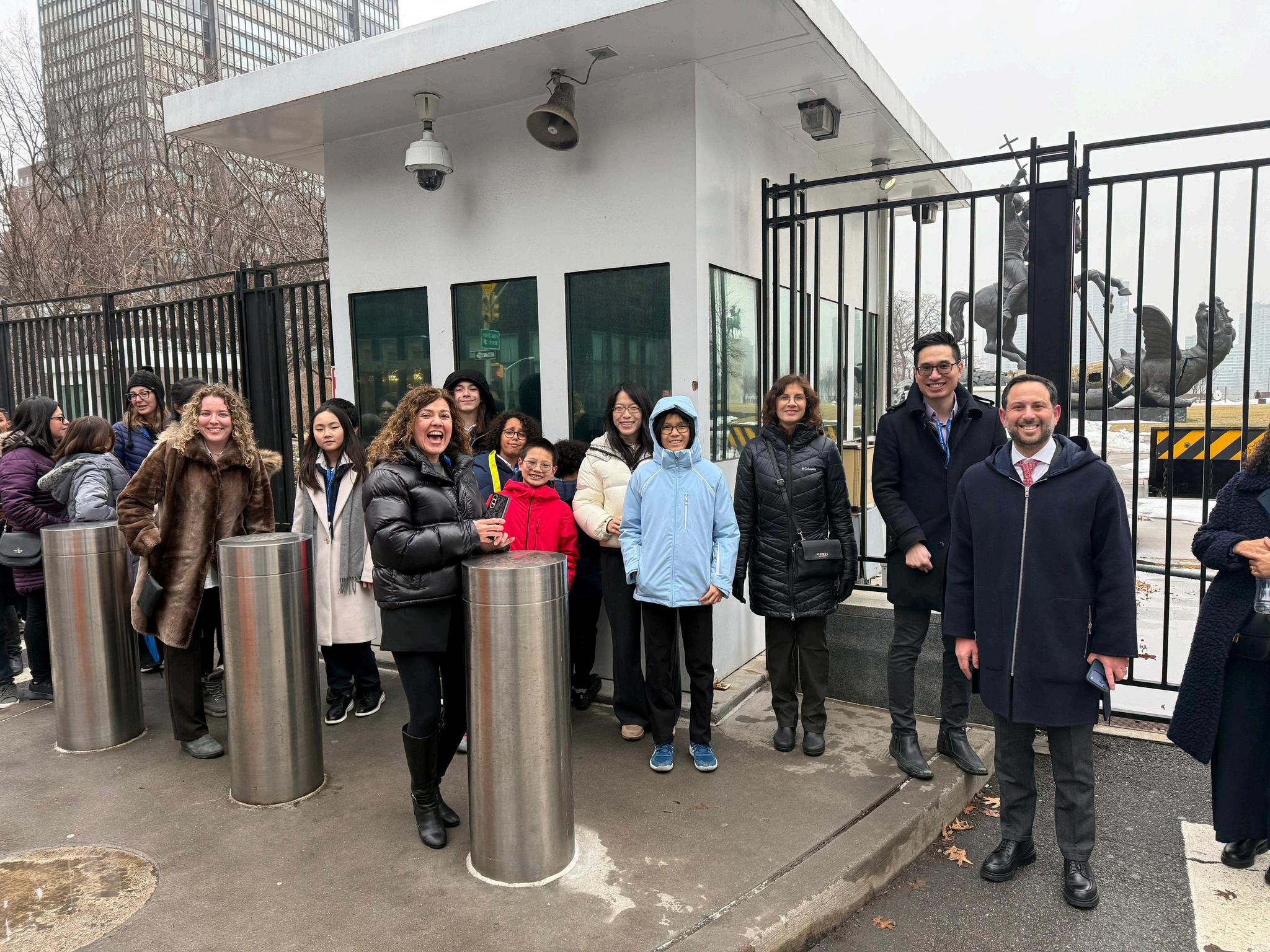
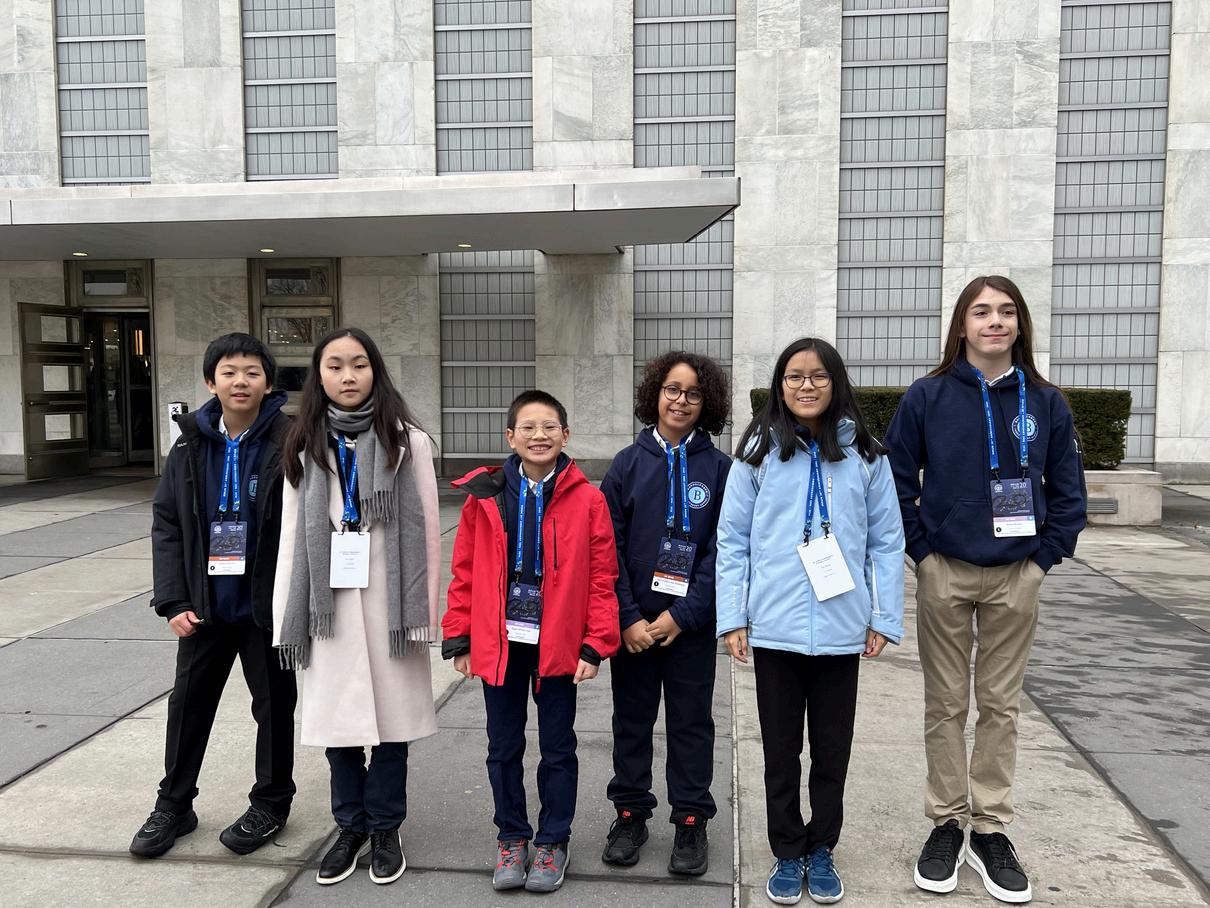
When we first got to the UN building, we went into
the long line that went surprisingly fast. When we got
through security we took an unnecessary amount of
pictures and then finally entered the building We went into the General Assembly and watched as
people like the former president of the Dominican Republic talked about MMUN for two hours. The next day I woke up super nervous Luckily the topic being discussed that day was Human Genome Editing, so I
did not have to say my speech On Friday I got the news I was accepted into every school, which made my day even better We started at 8:45 am again and I did my speech MMUN was definitely the best
Adrian
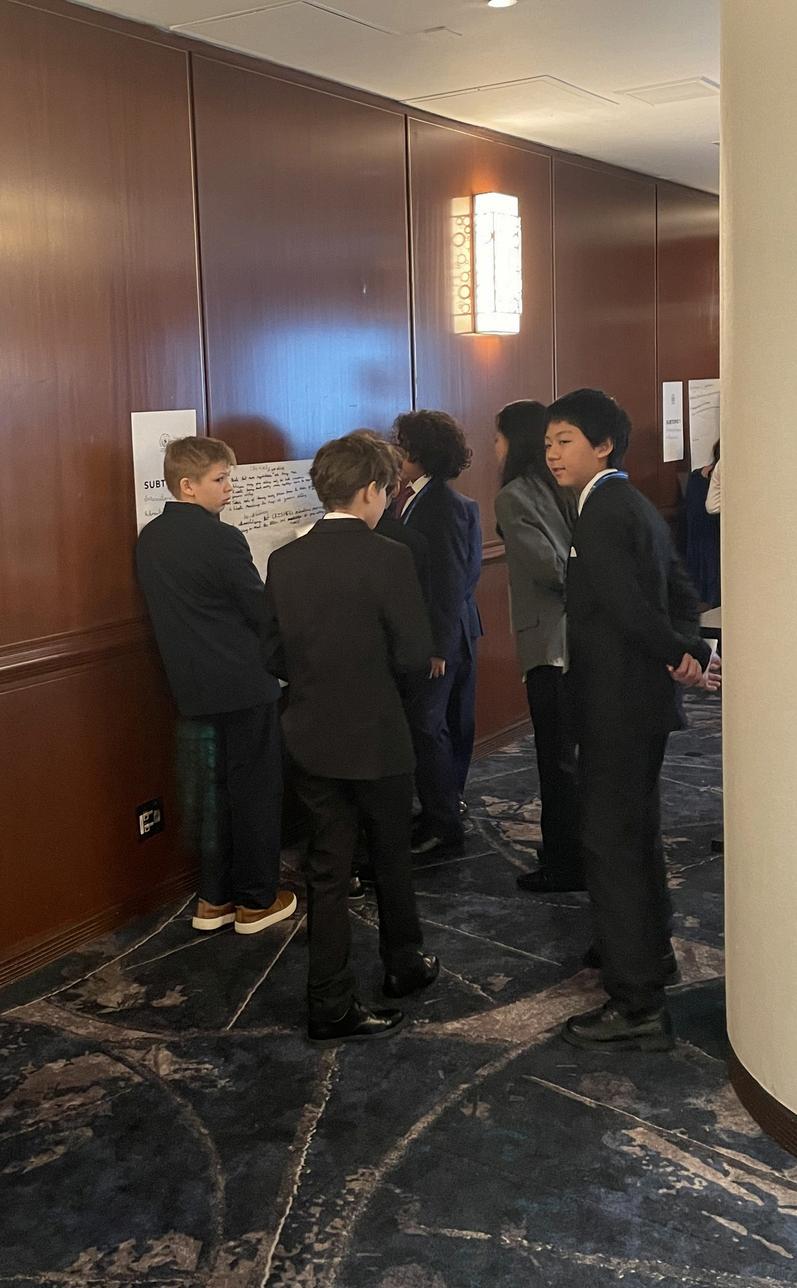
My experience at MMUN was amazing I was nervous about going After speaking with Ms Pattni, I felt more comfortable. At first, when I walked into the room, I was scared and did not want to share the speech that I prepared After spending so much time in our debate room, I met new people and realized it wasn't that bad I realized there was nothing to be nervous about. The debates were pretty exciting. We got split into groups and talked about ideas and solutions and at the end we put them all together into
four subtopics After that we had to come to a
consensus and everyone had to agree on the
solutions we debated All the bureau members were
very nice and also from different countries The so pretty cool All of them y than me, and some even e I like to play. On our last y, the school got an award an 10 years
Uni
MMUN was a remarkable trip, and one to remember
As a grad who went to the actual UN building, I was
inspired. It was very large and interesting as well as
awe-inspiring to actually sit in the UN building for the
opening ceremonies In the conference, it was
exciting to meet people from across the world and work together to create a resolution for a better
planet.
Gordon Chiu - Parent
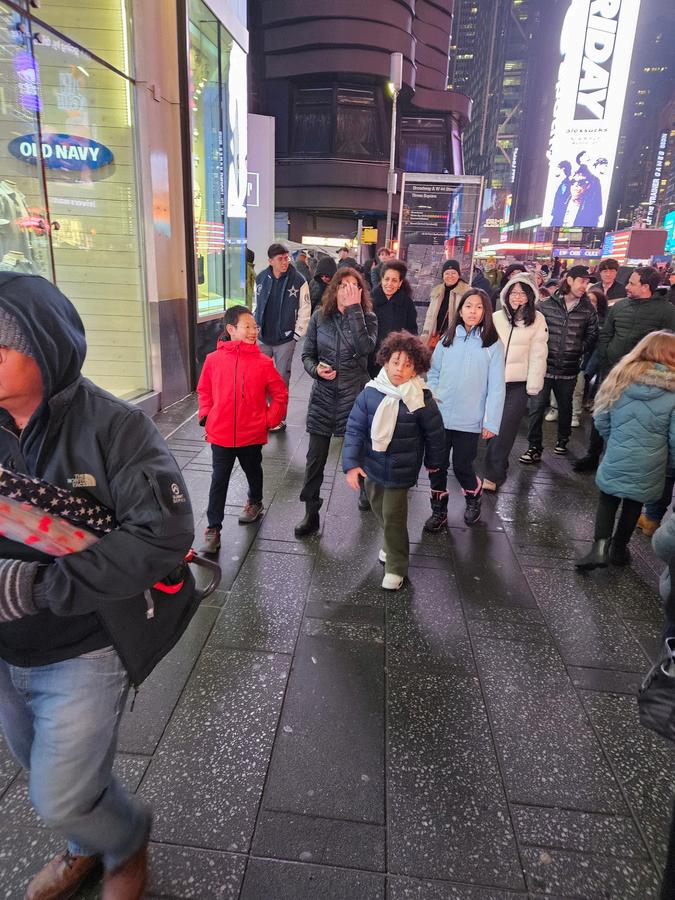
“FLIGHT CANCELLED, ” the text messages read on the eve of our trip to New York City for Montessori
Model UN (MMUN). Parents and teachers scrambled
to make alternate travel arrangements, searching for flights and booking buses We elected to drive and leave immediately, ahead of the early morning ice
storm and snow, because we could not afford to be
late MMUN wasn’t just another school trip It was
the culmination of three years of preparation,
anticipation, and hard work, and missing it was
unthinkable
What struck me most, in the rush to get there, was
how much preparation had gone into this trip The work for MMUN begins in the very first weeks of UEL and is woven throughout the curriculum After
countries are selected, Grade 4s help research and understand them the culture, the geography, the history presenting and celebrating their nations during Odyssey In Grade 5, students assist older students with research for position papers on topics as complex as gender equality, climate change, or migrant rights By Grade 6, grads are writing full position papers of their own, crafting one-minute speeches, and preparing for the big conference in New York City.
From the outside, it is easy to think of MMUN as a single event: a few exciting days in New York, a speech at a podium, students dressed up in suits and carrying flags The experience does begin with a
bit of pageantry: a trip to the real United Nations
General Assembly Hall But I came to realize these moments are only the most visible part of the story
Delegates are divided into committees, each of which begins with one-minute speeches outlining every
country’s position This is the part many students fear and many parents anticipate, yet it is only an introduction to the real work: reaching consensus on a draft resolution A bureau of older students provides structure and support, but crucially leaves
space for the younger delegates to do the work
themselves. They must step forward, advocate for
their countries, negotiate language, build consensus, and broker agreement across the floor
Watching Jasper in that environment, I saw qualities and skills that I had not fully recognized before He
listened carefully, compromised thoughtfully, and spoke with growing confidence He stepped forward
when needed and moved the conversation ahead
with others. At the end of the conference, it was moving to see him entrusted by his peers to represent their work at the full plenary session
What I witnessed was not a transformation compressed into three days, but the public expression of growth shaped by years of Montessori education Positions on climate change or migrant rights may have been researched during the last term, but the curiosity, collaboration, and confidence have been built over years in a Montessori environment: mixed-age groups; student-led learning; and a safe, open space for students to work together The conference simply made that growth visible.
Jasper sat quietly and wistfully in the car as we left New York City via the Lincoln Tunnel, the start of our long drive back to Toronto. It was clear he wished his time in New York wasn’t over Was he reminiscing about the fun adventure with his classmates in the city? The excitement of writing and delivering another speech? Or did he already miss all his new friends, from schools all around the world?
“That was life-changing, ” he said
I agreed It was the journey as much as the destination
QWhat’s the hardest concept for children to
grasp?
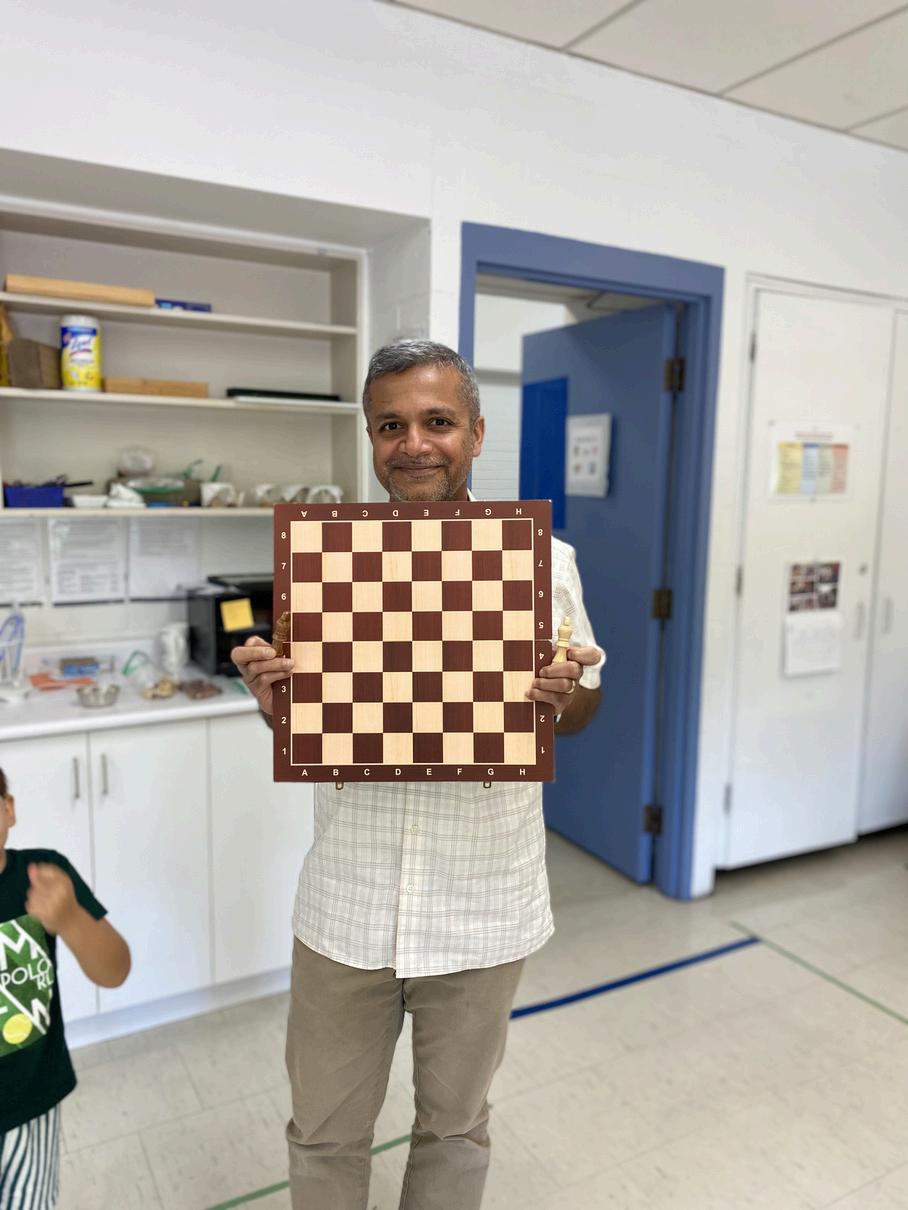
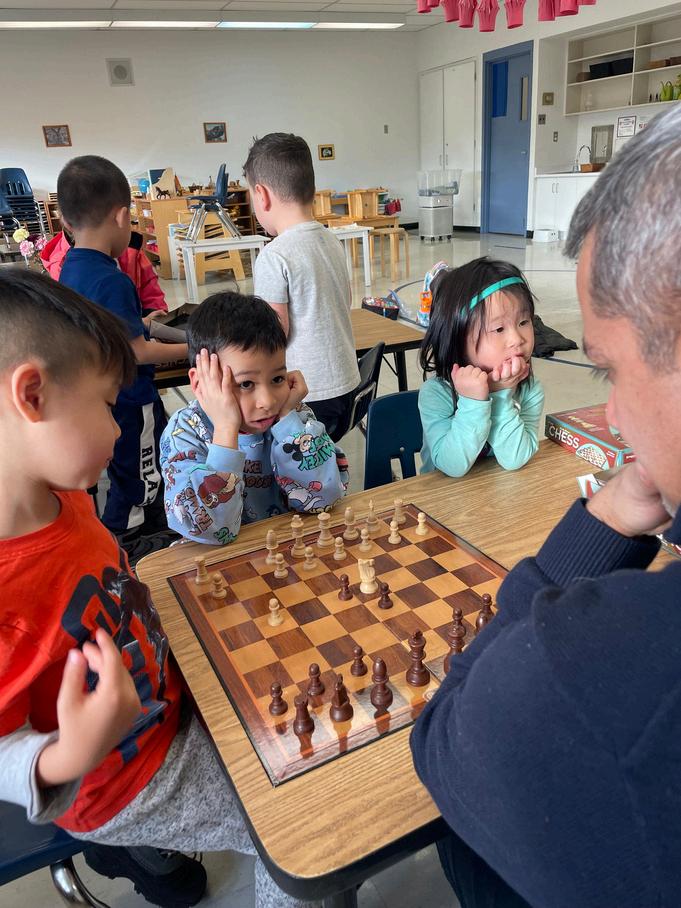
TheWisdomof Chess
Losing is practicing for success
QHow do you introduce chess to kids who have never played before?
The way I introduce chess is by telling stories about the pieces, about medieval and pre-medieval courts and kings and queens In the Middle East and India where chess was introduced, we talk about how horses would move in a gallop they would go straight and then off to the side a little bit And bishops were originally camels, and camels walk in a loping way, diagonally And rooks look like castles, but originally in Indian chess, they were elephants And elephants can only go in straight lines
Through stories, we talk about what the goal is and to capture the other person’s king is ultimately the goal of the game I always make sure to use appropriate terminology, like “capture” instead of “killing” another piece
The other part of the introduction is remembering the names of the pieces. Because it’s Montessori, I can do three-period lessons with the different pieces
That there’s a strategy involved Once they learn how
the pieces move, they just want to start moving the
pieces and I remind them about what the end goal is
It’s usually very reactive initially and not done with
much forethought
QDoes chess teach intention?
That’s what we’re getting to “If you move that piece, why are you doing it? What are the threats to your side? Is something in danger if you do that? Are you going to lose one of your pieces if you do that? And, if you do make that move, are you attacking my side?” So it definitely teaches intention and purpose behind each move
QHow do you adapt your teaching for different attention spans or skill levels?
When I did Primary chess, if someone wasn’t fully engaged I would have them watch and tell me what
to do, or I would ask them to move my piece and that
would build up their concentration They would be
my partner in the game
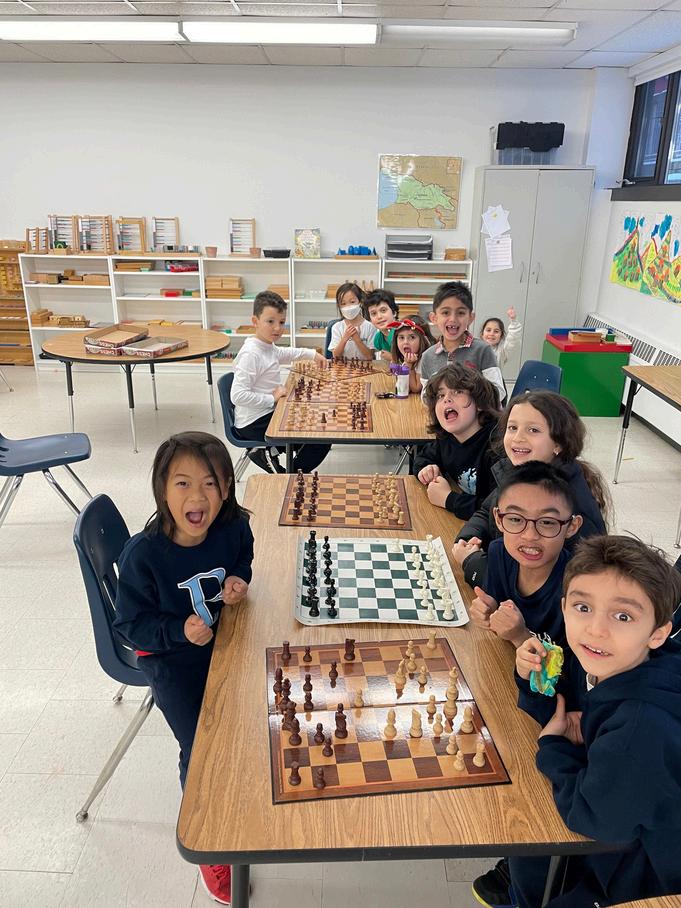
And pairing people in mixed-age groups always helps Even someone a little bit older, that person commands an incredible amount of respect in the eyes of the younger one They will adapt to their focus levels much better than they would if they were just with me
QWhat do you do when a child gets frustrated or loses interest?
The greatest thing that we’re teaching is resilience In chess, a majority of the games end in draws even at the higher levels At this age level there’s going to be a wide variety of experience and the majority of the games will end with somebody losing I let them know that it’s okay to lose
The only thing that losing means is that you’re going to do something differently in the future You’ll make sure that you won’t make that move again, and that you’ll pay attention to where your queen is and that your pieces are protected Losing is practicing for success
QWhat life skills do children gain from learning chess?
Attention, focus it’s all good things It’s also a lot of
fun Recently I introduced them to the idea of freestyle chess, which they went crazy over You
learn that every piece has a specific position, but in freestyle chess you can put the back row in any order
you want It’s incredible to see how much fun they have with that
And then this year I introduced them to rapid chess with a timer We do 10-minute games and some of them love it and others find it intimidating But it
brings in a new level of complexity to the game and encourages them to do better
QWhat’s the most rewarding part of teaching chess to children?
To be honest, the most rewarding thing is to be
beaten by them That’s their ultimate thing I love th game and I love teaching And with the Elementary
kids, I get to spend time with my former students, which is very important to me to maintain that
connection. It’s great for me to continue learning a
to continue playing and to model that
QWho taught you how to play chess?
I learned to play chess when I was seven-years-old at
the public library We used to go to the summer
program and one of the activities was chess During
the course of that summer I must have played 300
games before I even came close to winning one
Some of the players were very competitive and just
wanted to get the game over with quickly Others
would take the time and say, “Are you sure you want
to move that?” And those players were more
gracious about helping me to learn and develop I
learned that everything I did had consequences It
was an incredible learning experience and I’m glad
that I didn’t give up just because I wasn’t winning
Q Who’s your favourite chess partner?
I really enjoy playing with my son. He beat me for the
first time last year and now he consistently wins It
t t hi k th d T t h h
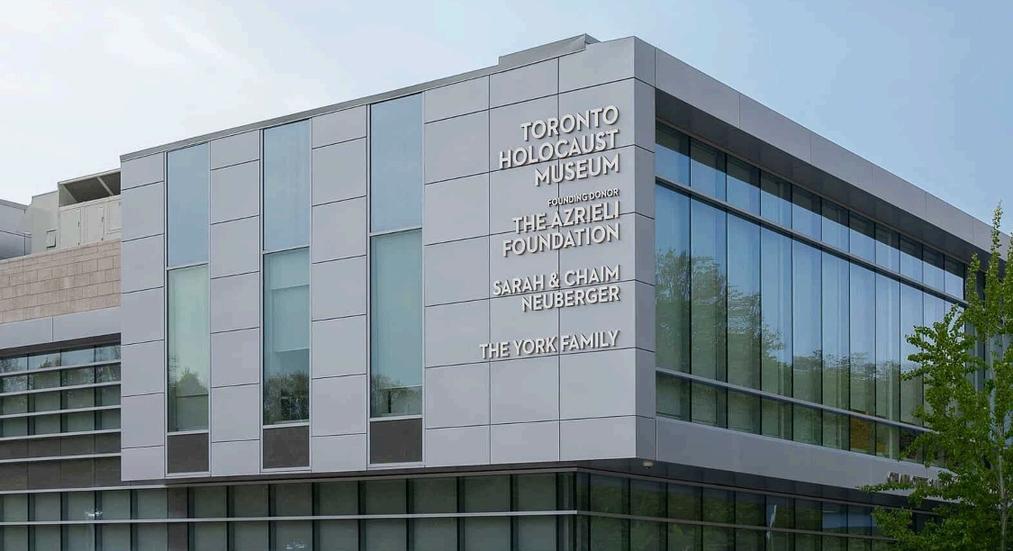
Holocaust Museum
The Holocaust Museum, near Bathurst and Sheppard, is part of an impressive complex that also houses a vibrant Jewish community centre.
Because it is tucked away, it may not be as well
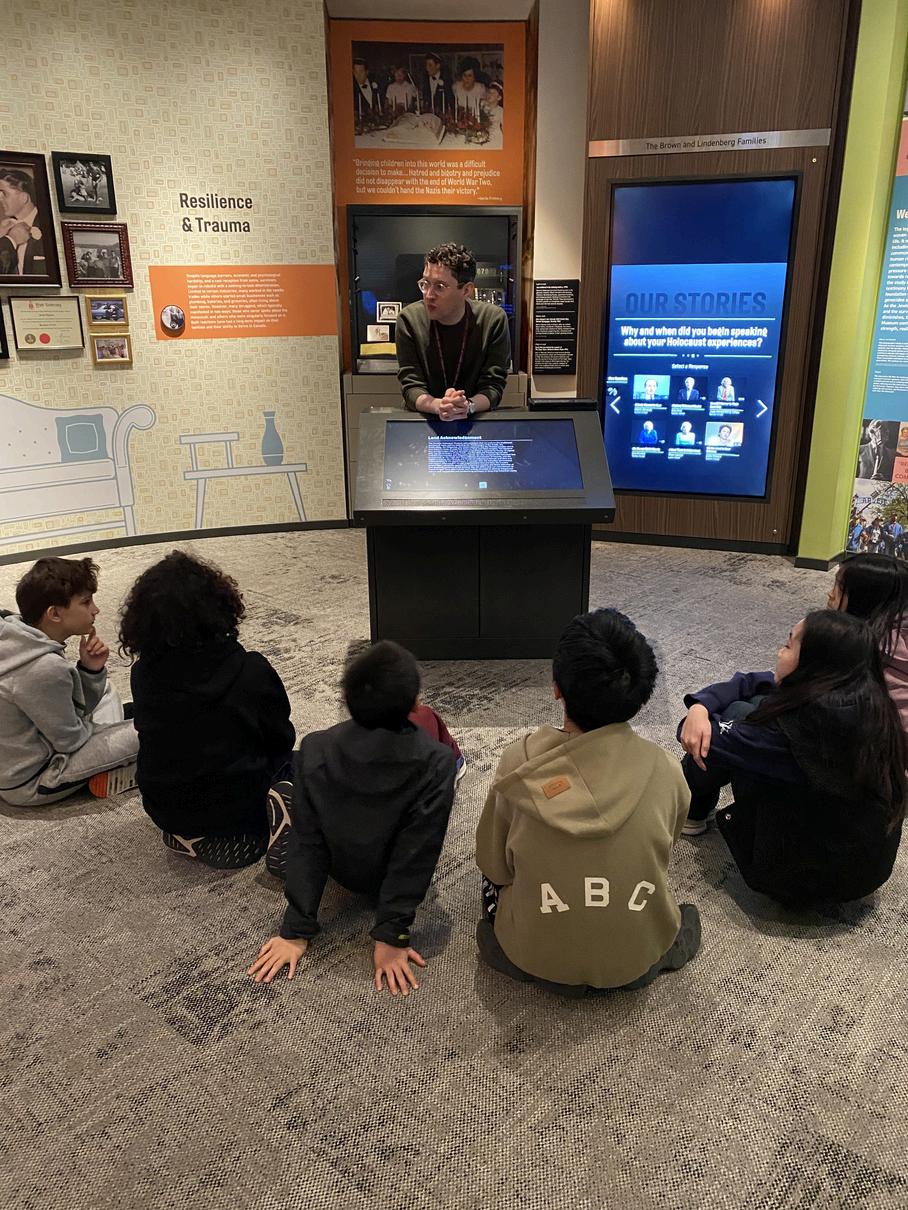
known as other cultural institutions in Toronto, but it is well worth a visit, as our Bannockburn Grads learned on May 6th
In accordance with the Ontario Grade 6 Social
Studies curriculum component on Canada’s role in the global community and diverse communities
within our country, the field trip was intended to develop a further dialogue about their in-class learning and its importance Our tour guide offered some background information about the Holocaust, especially within a Canadian context
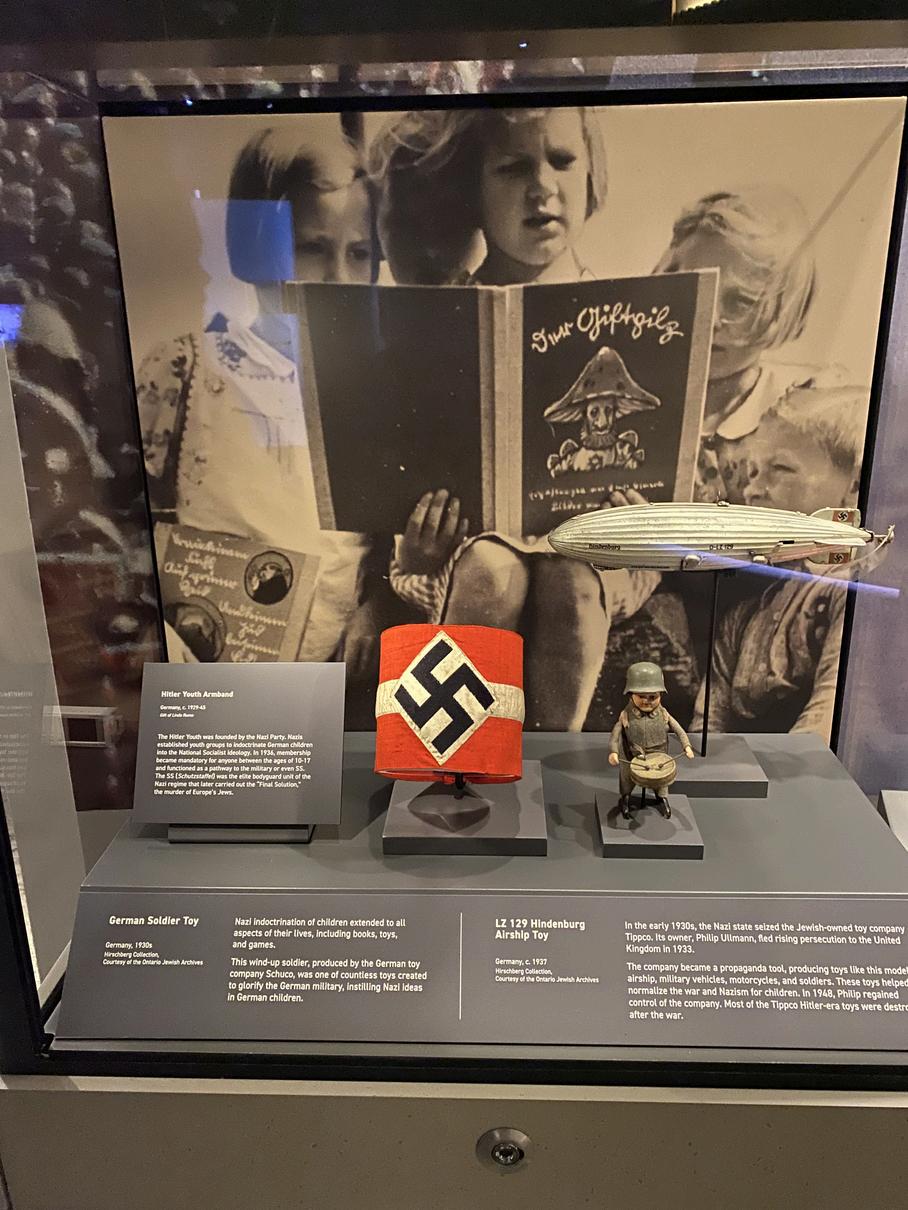
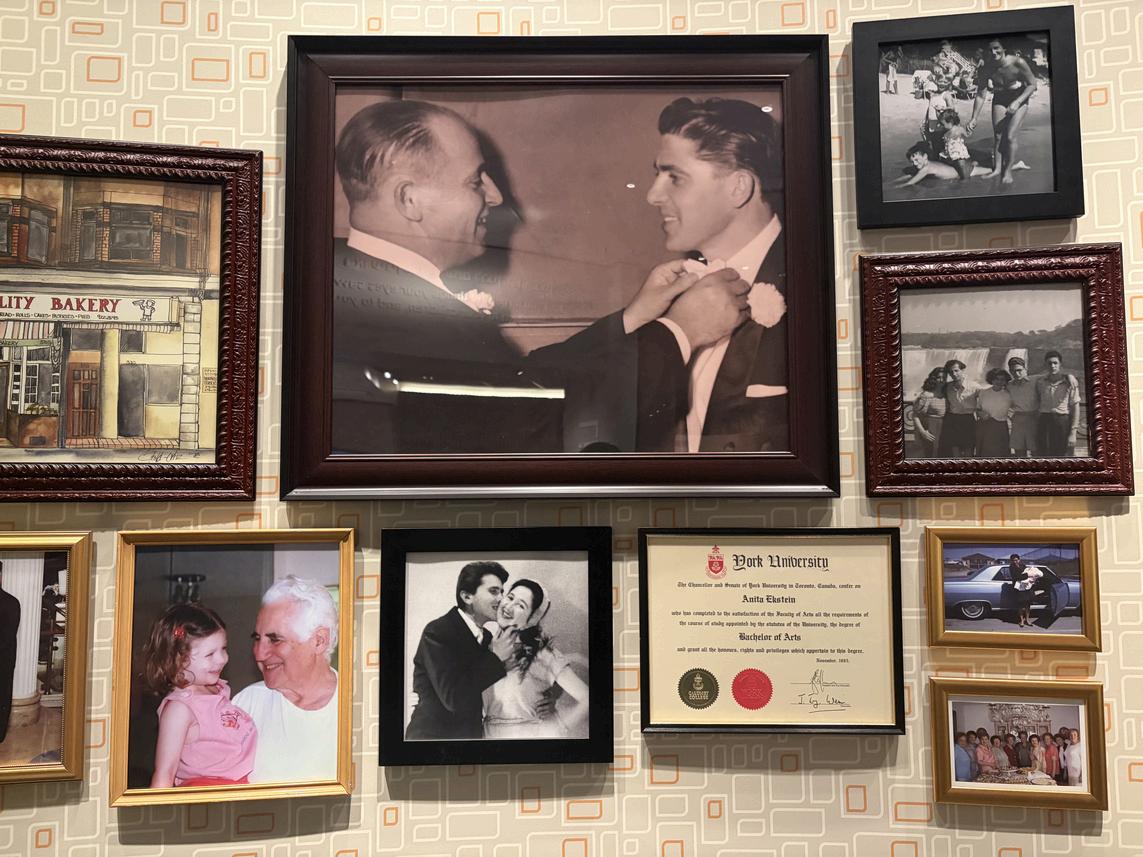
Between 1933-1945, Hitler and his Nazi party put laws into place that functioned outside legal and judicial systems This was a state-sponsored persecution and annihilation of six million Jewish people living in Europe Canada, historically, was not welcoming to Jews, even after this horrific war The Toronto Holocaust Museum is a testament to the trauma and resilience of the Jewish people with a focus on individual stories Roughly 35,000 survivors came to Canada after the war, and in 1985, many of them wanted to share their individual stories As one survivor noted, “The world was silent, and that’s why I cannot stay silent ”
A visit to the museum begins with a short film called “A Tapestry of Moments” about Jewish life in different European countries before the Holocaust The film, projected on a curved wall that lends itself to an immersive viewing experience, captures the richness and diversity of these communities
Historical photographs combined with singing and dancing clips feel like a touching collection of home movies of family life, school, religious celebrations, and holidays
Following that is another short film called “Childhood
Interrupted, ” based on the life of survivor Yael
Cohen, but also intended to share the universal horror experienced by all children ripped from their families and sent to concentration camps
The film uses narration and animation layered atop
actual footage to tell the story The combination of these two short films is profound It feels like a balancing act to educate young people about factual
events while also being truthful and not so shocking
that young viewers will be too scared to learn more
As an important part of our history, teaching
children about the Holocaust is vital The Ontario curriculum expanded to include it in Grade 6 to address issues of critical thinking (like how to challenge discrimination), understanding citizenship (and what it means to strengthen the values of a united nation), and, essentially, how to prevent future atrocities
On the social/emotional scale of learning, lessons of the Holocaust reinforce empathy and tolerance.
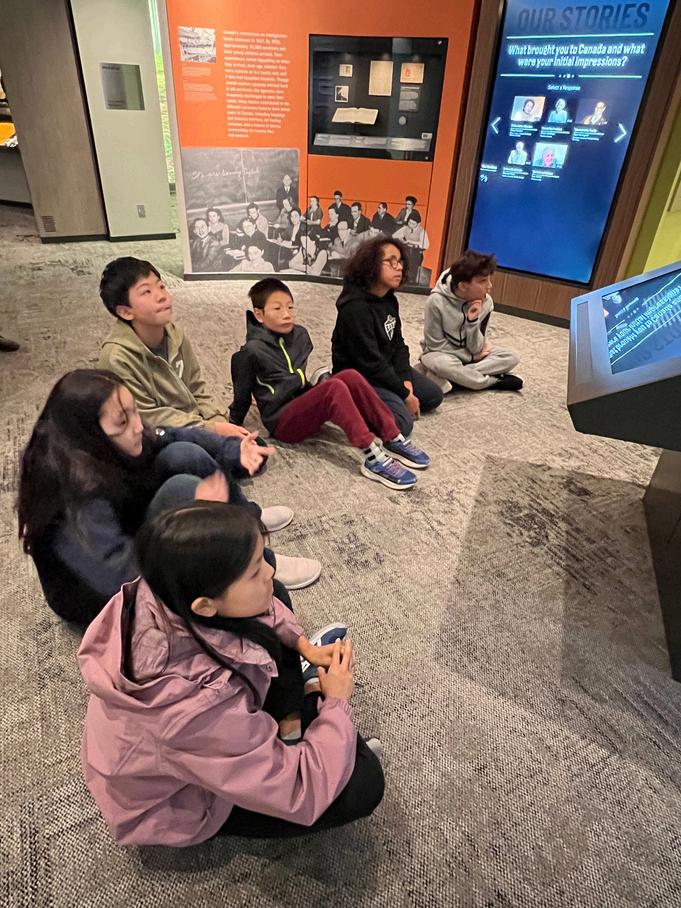
The Bannockburn Grads on this trip showed this in spades: asking thoughtful questions, offering sensitive responses, and respectfully engaging with all the materials in the exhibit.
After the short films, the tour guide gave the students iPads and showed how they could connect with the historical and contextual information There is content on the concentration camp system, Canadian news articles reporting on the war, and specific information on the experience for soldiers, families at home, and the Canadian response The survivor stories, told in their own words, are truly remarkable These former prisoners, starved and abused to near death, came to Canada, had to learn English, get a job, and find a place to live as soon as possible because providing for themselves was a key component of gaining citizenship Many of them spoke of their sadness that their early education was cut short because of the war, a fact that resonated for our students
In the end, the guide shared a story of hope and resilience from Nate Leipciger, a 97-year-old survivor and Member of the Order of Canada. “The legacy is the legacy of humanity, ” he said, and his choice was to live without hatred because that is what began the war in the first place
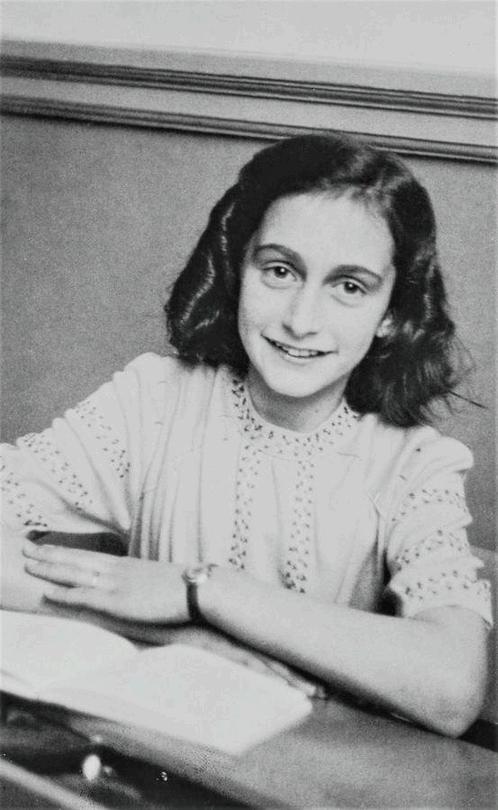
AnneFrank
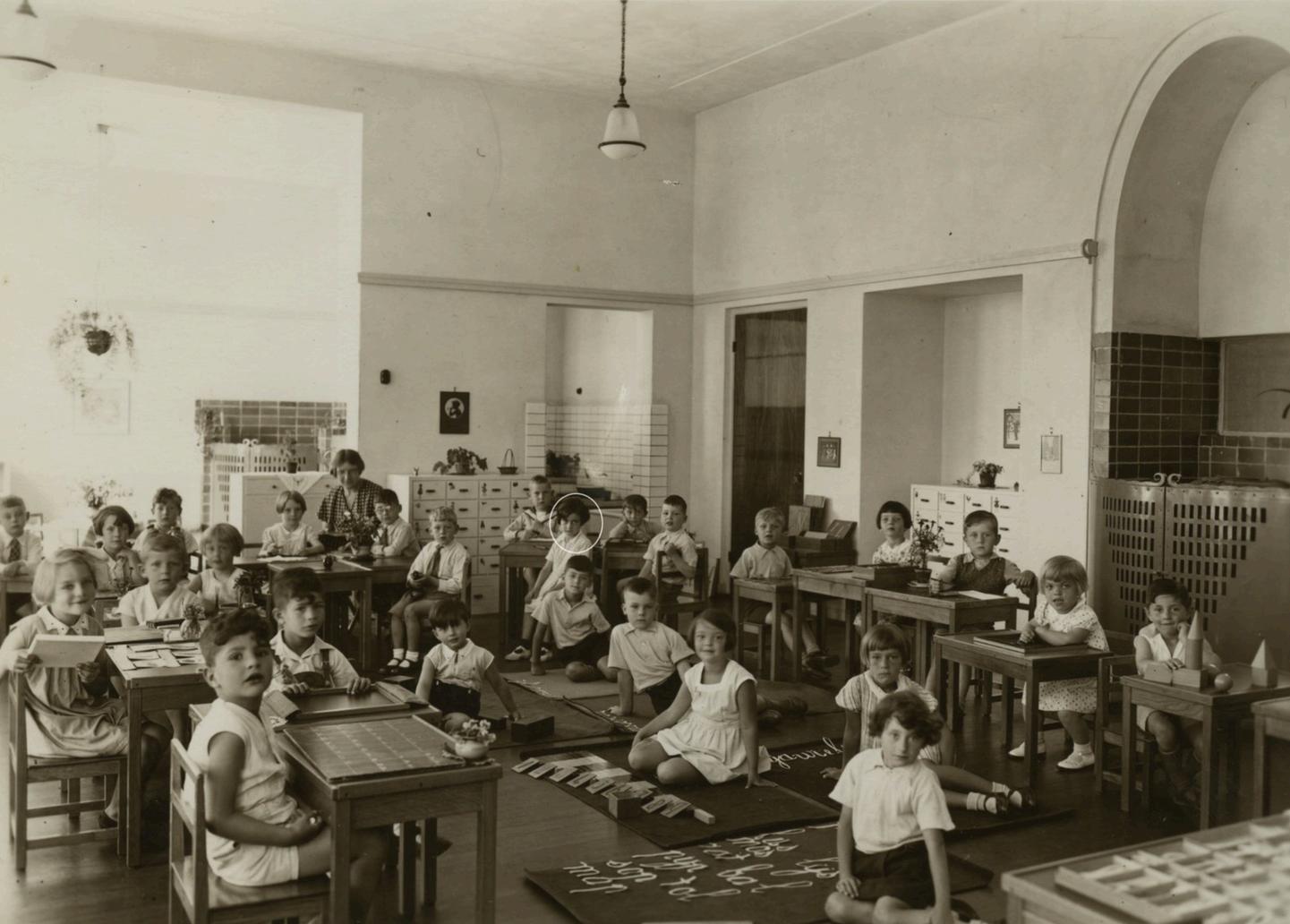
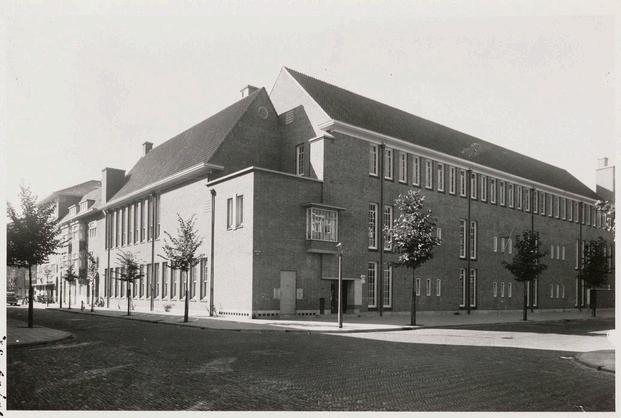
On April 9, 1934, Anne Frank went to kindergarten at the Sixth Montessori School in Amsterdam. The school was only a few blocks away from her house. Anne and her sister Margot attended until 1941.
Headmistress Mrs Kuperus said “Anne Frank had been at the school for six years She was a nice pupil She liked to compose short stories and do pleasant things in class When the children put on little plays, Anne was one of the first to join in She liked to play the principal character Her imagination it was very great I liked her very much ”
She continued about the war that was building around them “In those years we knew that bad things were happening in Germany We knew that Anne’s family and many others had had to leave, but we never believed that it could happen to us It was a happy time innocent. And we teachers were as innocent as the children ”
In the sixth grade, her final year at school, she was in Mr Nan Gelders class He recalled her unique and special presence in his classroom
“She was always interested in the things she did And though she liked to chatter, it was never so that I had
to stop her or make a remark She learned everything quite fast and she was really interested in the things she learned and did She was sociable with the other children and always willing to help
Later, Anne would write in her diary remembering that last year at Montessori the innocence, the mischief, the discovery, the hope “When we were in normal life, everything was tremendous I could tell
[you] about our school life for hours, about our pranks, about the boys in my class ”
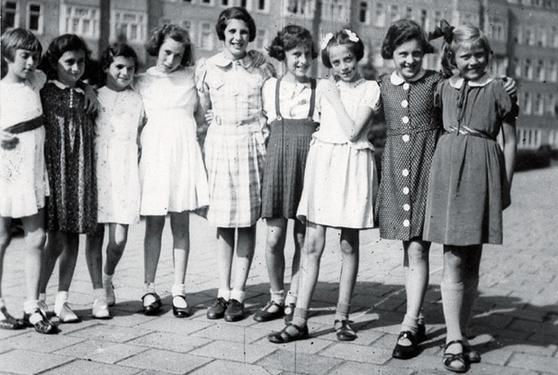
Anne Frank (second from
Anne’s storytelling wisdom was evident from her
early years in school Her first grade teacher said she liked to make up “jolly stories, ” and that she insisted
over and over that one day, she would be a famous
writer Anne often spoke about her father and said that on special occasions like birthdays, he made up poems and so did she
The school register, marking the details of
Anne’s six years at Montessori, still exists,
noting her days present and absent, as well as her profile details:
Name of student: Anne Frank
Address: Merwedeplein 67
Born June 12, 1929
On June 12, 1942, Anne’s 13th birthday, her
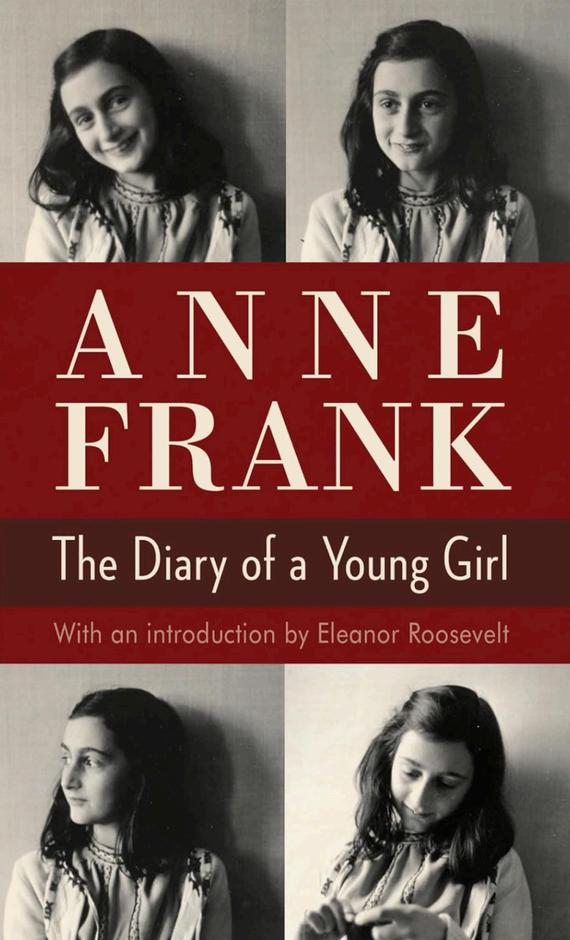
father stopped into a bookshop to buy her a gift before the family went into hiding. Anne Frank: The Diary of a Young Girl began on that day.
“It’s an odd idea for someone like me to keep a diary
It seems to me that neither I, nor for that matter
anyone else, will be interested in the musings of a 13-year-old schoolgirl I hope I shall be able to confide in you completely and I hope you will be a great support and comfort to me ”
“I want to go on living even after my death and therefore I am grateful to God for giving me this gift of writing, of expressing all that is in me ”
The family was found in their hiding place in 1944 and Anne died in a concentration camp in 1945 Her father, Otto Frank, was the lone survivor of his family Anne’s diary was miraculously found after the war in the annex where they hid Published in 1947, it is a harrowing testament of war and the power of the human spirit It has since been translated into more than 70 languages for readers around the world
Cultivating Curiosity Nurturing Potential
Empowering Independence
Bannockburn Mission Statement
Bannockburn develops responsible, nurturing, peaceful young people with self-esteem and respect for others. Bannockburn graduates are selfmotivated, intellectually curious students who love learning and who achieve academic success.
Contact
3080 Bayview Avenue, North York, ON. M2N 5L3
(416) 789-7855 | www bannockburn ca | reception@bannockburn ca