TWhere are the material resources needed to feed Europe’s energy transition?
The raw reality
by Ewa Kochańska
One of the latest reports from the European Court of Auditors (ECA) analyses the strategic importance of critical raw materials (CRMs) to the EU’s goals towards climate neutrality – unsurprisingly revealing a too heavy dependence on imports, with supply chains concentrated in a handful of non-EU countries. This situation exposes the bloc to geopolitical risks and trade disruptions, significantly weakening efforts to strengthen its strategic autonomy. Although recent policy initiatives, including the Critical Raw Materials Act, have provided clearer direction, issues related to data, targets, and implementation still need more attention. foundation is uneven. Although the policy is based on solid data and clear justification, problems show up in how key materials are identified, how targets are defined, and how progress is measured.
he EU’s objectives of reaching net-zero emissions by the middle of this century and significantly expanding renewable energy by 2030 have rapidly increased the demand for wind turbines, batteries, and photovoltaic panels. As these technologies depend on a small group of key raw materials – including lithium, cobalt, nickel, and rare-earth elements – raw material supply security has become the core of both energy and industrial policy. As consumption rises sharply, ensuring reliable and sustainable access to these materials is emerging as one of the defining challenges of the energy transition.
However, ambitions to expand domestic production and improve resource efficiency face persistent structural obstacles. Financial, regulatory, and technological challenges suppress mining, processing, and recycling activities within the EU; permitting procedures are also slow and complex. Circular economy measures and recycling targets offer a pathway to reduce reliance on primary extraction, but market and regulatory constraints hinder their full realisation. Strategy-based projects designed to accelerate progress may ultimately bring about positive outcomes, but they are unlikely to contribute meaningfully before the end of this decade.
Before you build, lay the foundation
The EU’s approach to securing strategic raw materials sets a clear direction, but its
The lists of critical and strategic raw materials help prioritise resources needed for the energy transition, but data limitations and methodological issues affect both the selection of materials and the forecasts of future demand. Gaps in trade data and modelling also undermine confidence in the overall picture, meaning the system for identifying and tracking CRMs is still not fully reliable.
Similar issues appear in the targets and funding that support the policy. The EU has set benchmarks for extraction, processing, recycling, and import diversification, but it is not always clear how these targets were determined or how they link to broader energy and industrial goals. At the same time, significant EU funding has been allocated to raw materials projects, yet its impact on supply is difficult to measure because funding is spread across different programmes and results are not systematically tracked. ECA’s Critical raw materials for the energy transition report therefore recommends improving data quality, making targets more transparent and better aligned with EU objectives, and monitoring funding more closely to understand whether it is actually strengthening the bloc’s raw materials supply.
Results you can hold
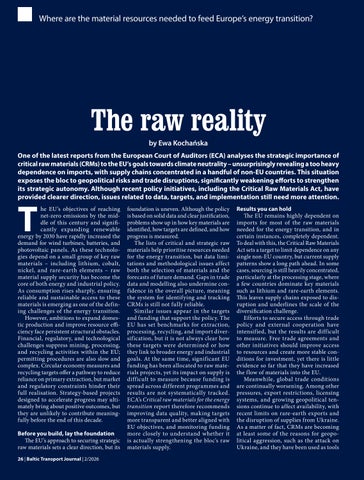
The EU remains highly dependent on imports for most of the raw materials needed for the energy transition, and in certain instances, completely dependent. To deal with this, the Critical Raw Materials Act sets a target to limit dependence on any single non-EU country, but current supply patterns show a long path ahead. In some cases, sourcing is still heavily concentrated, particularly at the processing stage, where a few countries dominate key materials such as lithium and rare-earth elements. This leaves supply chains exposed to disruption and underlines the scale of the diversification challenge.
Efforts to secure access through trade policy and external cooperation have intensified, but the results are difficult to measure. Free trade agreements and other initiatives should improve access to resources and create more stable conditions for investment, yet there is little evidence so far that they have increased the flow of materials into the EU. Meanwhile, global trade conditions are continually worsening. Among other pressures, export restrictions, licensing systems, and growing geopolitical tensions continue to affect availability, with recent limits on rare-earth exports and the disruption of supplies from Ukraine. As a matter of fact, CRMs are becoming at least some of the reasons for geopolitical aggression, such as the attack on Ukraine, and they have been used as tools

ECONOMY
Source: JRC, Supply chain analysis and material demand forecast in strategic technologies and sectors in the EU – A foresight study (2023)
of economic warfare, such as China vs Japan/US/EU. These developments highlight how external factors can quickly reshape access to critical materials.
As such, strategic partnerships with resource-rich countries have been important in the EU’s policy. These agreements are meant to create long-term cooperation along
the value chain, from extraction to processing, instead of just focusing on imports. While they have helped build relationships and set out areas for working together, their
Norway
Belgium
France
Spain
Strontium 99 %
Morocco
Mexico
Bolivia
extraction stage processing stage
Russia Nickel 29 %
Kazakhstan
Chile
Guinea
China
Arsenic 39 %
Baryte 44 %
Gallium 71 %
Germanium 45 %
Magnesium 97 %
Natural graphite 40 %
Tungsten 31 %
South
1 The figure shows the main EU suppliers for 18 out of 26 critical raw materials that are important for the energy transition, for which over 25% of EU supply (2016-20) is concentrated in one country
Source: ECA (based on information from COM)
effect on actual supply has been limited. Many are still at an early stage, with roadmaps lacking clear timelines or measurable outcomes. In practice, trade data show little consistent improvement in import patterns, suggesting that these partnerships, while useful for engagement, are not yet delivering the level of supply security the EU seeks. Here, the ECA report suggests that the European Commission (COM), in order to ensure that its efforts to diversify imports actually result in a more reliable supply of CRMs, must evaluate whether trade agreements that include raw materials provisions are genuinely improving supply security; these findings should then be used to strengthen future agreements. It is also recommended to regularly review strategic partnerships with resource-rich countries
to determine whether they are delivering concrete results in terms of supply. By identifying which co-ops or initiatives work best, the EU could replicate successful approaches and make its external raw materials strategy more effective overall. The suggested implementation date for these changes is 2026.
Oversupply… of red tape
Efforts to build up domestic production of CRMs in the EU continue to face a number of fundamental obstacles. While the Critical Raw Materials Act sets targets to increase both extraction and processing within the bloc, current production remains limited and far below global levels. A key issue is the lack of exploration. Many areas in Europe still need to be properly assessed
for their resource potential, and early-stage exploration has seen little investment for years. Even when deposits are found, turning them into successful mining projects is uncertain, expensive, and risky, which slows progress from the very beginning. Processing presents a similar challenge. Much of the value chain is still outside the EU, particularly for complex materials such as rare-earth elements, where processing capacity is almost entirely concentrated elsewhere. Within Europe, facilities have declined in number, and high energy costs continue to weigh on competitiveness in energy-intensive industries, like smelting and refining. Although new policy initiatives aim to support industrial capacity and reduce energy costs, it is too early to judge whether they will
Fig. 2. Main EU suppliers of
to 15 years
Mining concession valid for 25 years
Mining inspectorate and government
Land use permits
Mining inspectorate and municipalities + financing, construction and start-up
Exploration permit maximum 15 years
Mining inspectorate
Source: ECA (based on information from SVEMIN; 2025)
reverse this trend. The lack of a secure and stable raw material supply makes it harder to justify investment in processing, a cycle that is difficult to break.
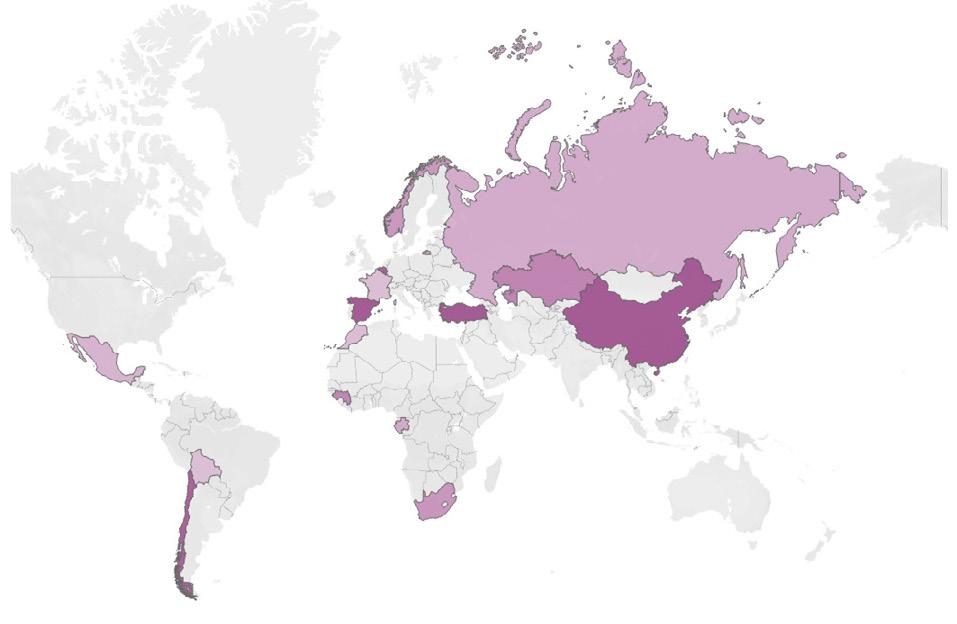
Financing and regulation add more challenges. Many see investment in mining and processing as risky, which makes it hard to attract private money. Public funding is just beginning to grow. Unclear sustainability rules and a want of clear financing guidelines have also slowed progress. On the regulatory side, permitting procedures remain long and complex, with environmental assessments and administrative requirements significantly extending project timelines. In many cases, it can take more than a decade (or a few) for a mining project to move from discovery to production. Recent measures, such as one-stop shops, are intended to simplify the process, but implementation has been rather rough around the edges, and delays continue to hold back the expansion of domestic supply.
According to the ECA report, COM should launch a consultation process to gather evidence and develop practical recommendations on how to make investments easier. Based on the findings, the EU executive should then consider policy measures that could help reduce financial risks and
Environmental permit and Natura 2000 permit if needed
Environmental Court and Supreme Environmental Court
encourage more investment across the raw materials value chain; the recommended target date is 2027.
Untapped (sustainable) potential
Sustainable resource management is expected to play a larger role in reducing the EU’s reliance on primary raw materials, but its potential is still only partly realised. Current policy recognises the importance of improving how materials are used, reused and recovered across their life cycle, and the Critical Raw Materials Act introduces measures to support recycling, efficiency, and substitution. However, there are omissions in how these elements are addressed. In particular, substitution, as in the replacement of critical materials with alternatives, is not fully covered in existing legislation, and delays in implementing key measures are holding back progress. National circularity plans, intended to guide action at the EU Member State level, have yet to materialise because of delays in supporting rules.
Recycling plays a key role in this effort, but current targets and systems do not deliver consistent results for all materials. Some sectors, like battery development, have
stricter requirements, but many important raw materials still do not have clear incentives for recovery. Recycling rates remain low for several materials used in the energy transition, and sometimes they are not recycled at all. Valuable materials embedded in electronic waste are often lost ‘thanks’ to low collection rates and inefficient recovery processes. Existing targets tend to focus on overall volumes rather than individual materials, which limits the incentive to recover smaller or more complex components.
Even where recycling is technically possible, market conditions continue to constrain its development. High processing costs, limited access to feedstock, and technological challenges make it difficult for European recyclers to compete, particularly against larger, more integrated players in other geographies.
Regulatory factors also play a role, with differences in how rules are applied across the EU Member States and restrictions on waste movement reducing economies of scale. Although recent measures aim to improve product design, labelling, and permitting for recycling projects, these steps are still working their way through the system. For now, the business case for recycling many CRMs spells uncertainty,
ECONOMY
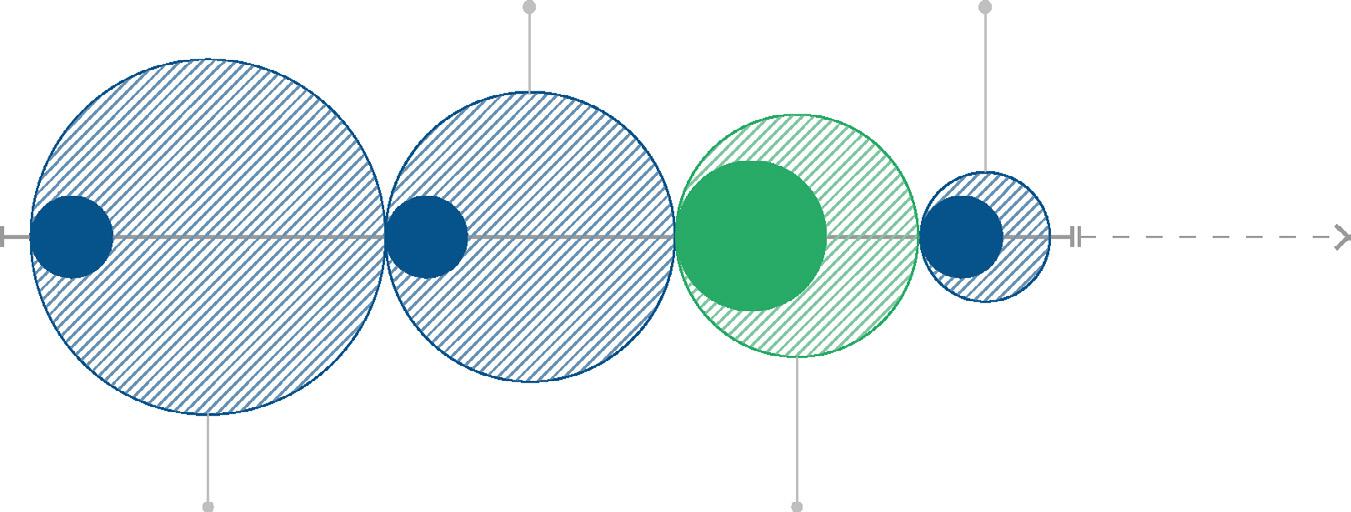
Fig. 4. The patchwork of EU recycling, recovery, and waste collection targets
Material/ waste Regulation/policy (deadline)
CRMA (2030)
Batteries Regulation (2026, 2028, 2031, 2032)
Waste Electrical and Electronic Equipment Directive
(From August 2018 onwards - annually)
Waste Framework Directive (2025, 2030, 2035)
Strategic raw materials
Cobalt, lithium, nickel, copper (recovery target only)
Lithium-ion batteries
nickel-cadmium batteries
Household appliances, IT and telecommunication, photovoltaic panels
Municipal waste
Source: ECA (based on EU legislation)
which slows its expansion as a meaningful source of supply.
Consequently, to reduce the EU’s reliance on newly extracted CRMs, there must
Material-specific targets
General recycling and waste collection targets General SRM target
Recovery of materials
Recyclingbased consumption
be a focus on making better use of recycling, recovery, and substitution. The ECA report suggests that when the Net-Zero Industry Act is reviewed, COM should give
Waste collection Recycling efficiency
Preparation for reuse and recycling
more attention to replacing CRMs with alternative materials, especially by encouraging innovation in product design so that fewer scarce inputs are needed.
Recycled content in new batteries
The ECA report also proposes introducing binding recycling targets for individual CRMs where this is technically possible, along with realistic targets for collecting and recovering waste that contains these materials. Finally, it stresses the need to make recycling more economically viable by making it easier to import relevant waste into the bloc and to transport it between the EU Member States, improving recycling operations. The suggested target date for these improvements is 2029.
The 2030 supply gap
The introduction of the new strategic project label in the Critical Raw Materials Act aims to speed up projects that will help the EU secure important materials. The label brings benefits, like quicker permits and more attention, which has already caught the interest of many in the industry. The first round of applications covered a broad range of activities, from extraction to recycling, and both EU and non-EU projects were selected. However, the rollout has been up-and-down, with fewer calls for projects than originally planned, and the overall framework still evolving as implementation progresses.
On the ground, however, the benefits of the strategic label are constrained by familiar challenges. While permitting procedures may be streamlined, delays
linked to appeals and administrative processes are still present. Financing is another weak point, as the label does not come with dedicated EU funding, leaving many projects to rely on external capital. Furthermore, the scheme’s scope is limited to strategic raw materials, excluding others, though they are important for the energy transition too. Questions have also been raised about project selection, as financial viability is not a requirement, and some projects have faced difficulties even after being granted strategic status.
In the big picture, many of these projects are unlikely to make a meaningful contribution to supply by the next decade. A large share is still at an early stage of development, with uncertain timelines and, here and there, no secured buyers for their output. Although a handful of more advanced projects are expected to move forward, they would likely have done so without the strategic designation. The link between these projects and wider EU partnerships with resource-rich countries also appears weak, limiting their role in reducing supply risks. As a result, while the strategic project instrument may support longer-term development, its impact on near-term supply is uncertain.
The ECA report’s recommendations in this area suggest that COM, during the evaluation of the Critical Raw Materials
Act in 2029, should widen the range of CRMs that can qualify, particularly those important for the energy transition. Priority should be given to projects that already have buyers in the EU, as this would increase the likelihood that the materials actually support European industries. Also, projects with longer development timelines should be allowed, recognising that many raw materials projects take years to become operational.
The EU’s raw materials strategy points the way forward, but its effects will not be immediate. Key issues – among them import dependence, slow project development, recycling limits, and investment risks – are still not solved. A sizeable gap remains between what politicians hope for and what industry can deliver, so the EU will likely stay vulnerable to global markets and geopolitical risks for some time.
The need for speed
Turning strategy into the reality of tangible and secure supply will require better data, clearer priorities, faster permitting, stronger financing, and more effective recycling, as well as the development of complete value chains within Europe. The Critical raw materials for the energy transition report found that without faster progress, raw materials will remain one of the key weak points in the energy transition.
Photos: Canva