JUNE 2023 • PENSACOLAMAGAZINE.COM BUSINESS CLIMATE ON THE MARKET A REAL ESTATE SECTION
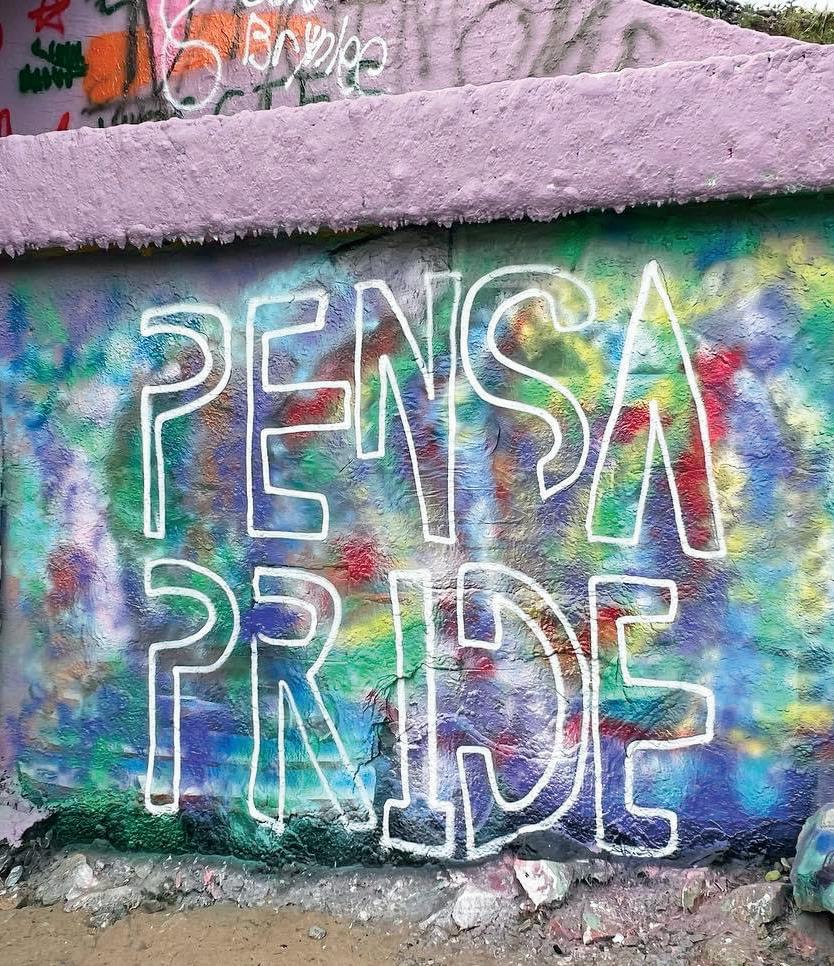
PENSAPRIDE
ALSO IN THIS ISSUE:
SUMMER SIPPERS ART OF THE TACO
Meet Amy. She’s worked at FPL for seven years managing customer outreach for our Storm Secure Underground Program, an initiative that replaces overhead neighborhood power lines with underground lines to improve storm resiliency and reliability. To Amy, family and community are everything. Providing reliable energy is just one of the many ways she feels she can make a real difference for her family and yours. Learn more at FPL.com/Value

CONFERENCE & EVENT
Our corporate customers return again and again because we deliver peerless service, excellent cuisine, access to AV technology and spacious meeting rooms.


The Hilton Garden Inn Pensacola is the perfect venue to host your next meeting or event! Let our experienced on-site banquet manager assist you in coordinating all the details. Our facility features 6 meeting rooms that can accommodate guest counts of 10 to 200. With on-site catering, we can handle everything from casual breaks to formal dinners. Contact our experienced sales team today to book your next event with us!

Amanda Mills - Director of Sales
amills@highpointe.com
850-479-8900 Ext: 604

SPACE
THE CUISINE. THE
THE SERVICE.
1144 Airport Boulevard, Pensacola, FL 32504
SPACE.
GROUNDBREAKING CARE
Gain mobility and experience less pain. Schedule your appointment with the Andrews Institute team, nationally recognized for quality in hip and knee replacements.









Pensacola • Gulf Breeze
Milton • Navarre
Fort Walton Beach
850.916.8700
AndrewsInstitute.com







CONTENTS
FEATURES
14 Y'ALL MEANS ALL PensaPride returns for 2023 LGBTQIA+ celebration
17 CELESTINE BED & BREAKFAST
A new B&B situated in the heart of downtown Pensacola honors a family legacy steeped in excellence, love and hospitality.
20 SHARING THE SHORE
Each year, from May through October, thousands of sea turtles return to the Gulf Coast shorelines for nesting season.
23 SUMMER SIPPERS
These tasty tequila cocktails make the perfect summer sippers.
26 ART OF THE TACO
Local chef and world traveler, Randy Russell, breaks down the art of the taco.
31 IN TACOS WE TRUST
A roundup up Pensacola's tastiest taquerias and taco trucks.
TOPICS
8 Editor’s Note
10 Page 10 with DeeDee Davis
12 Pensacola Scene
37 Event Calendar
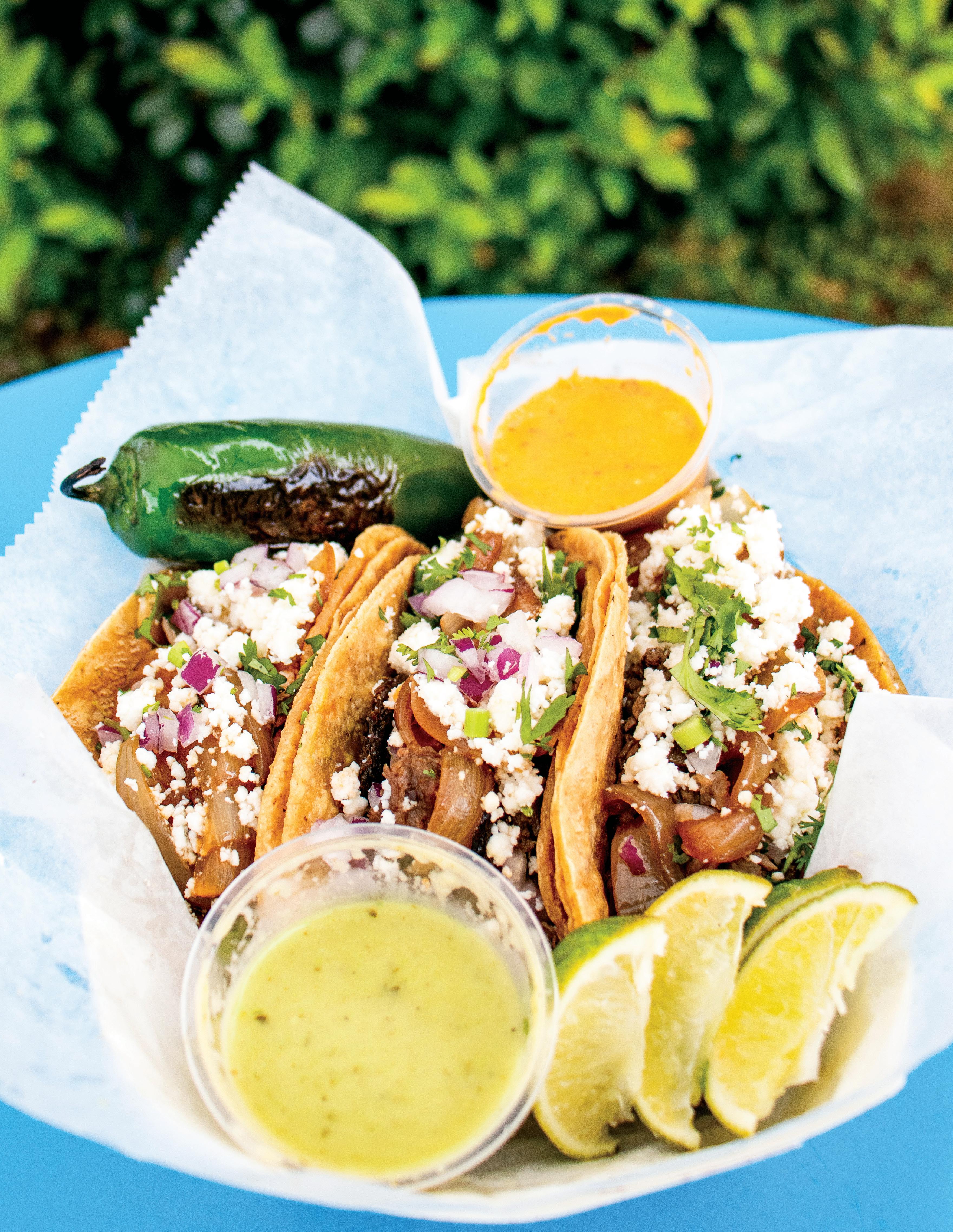
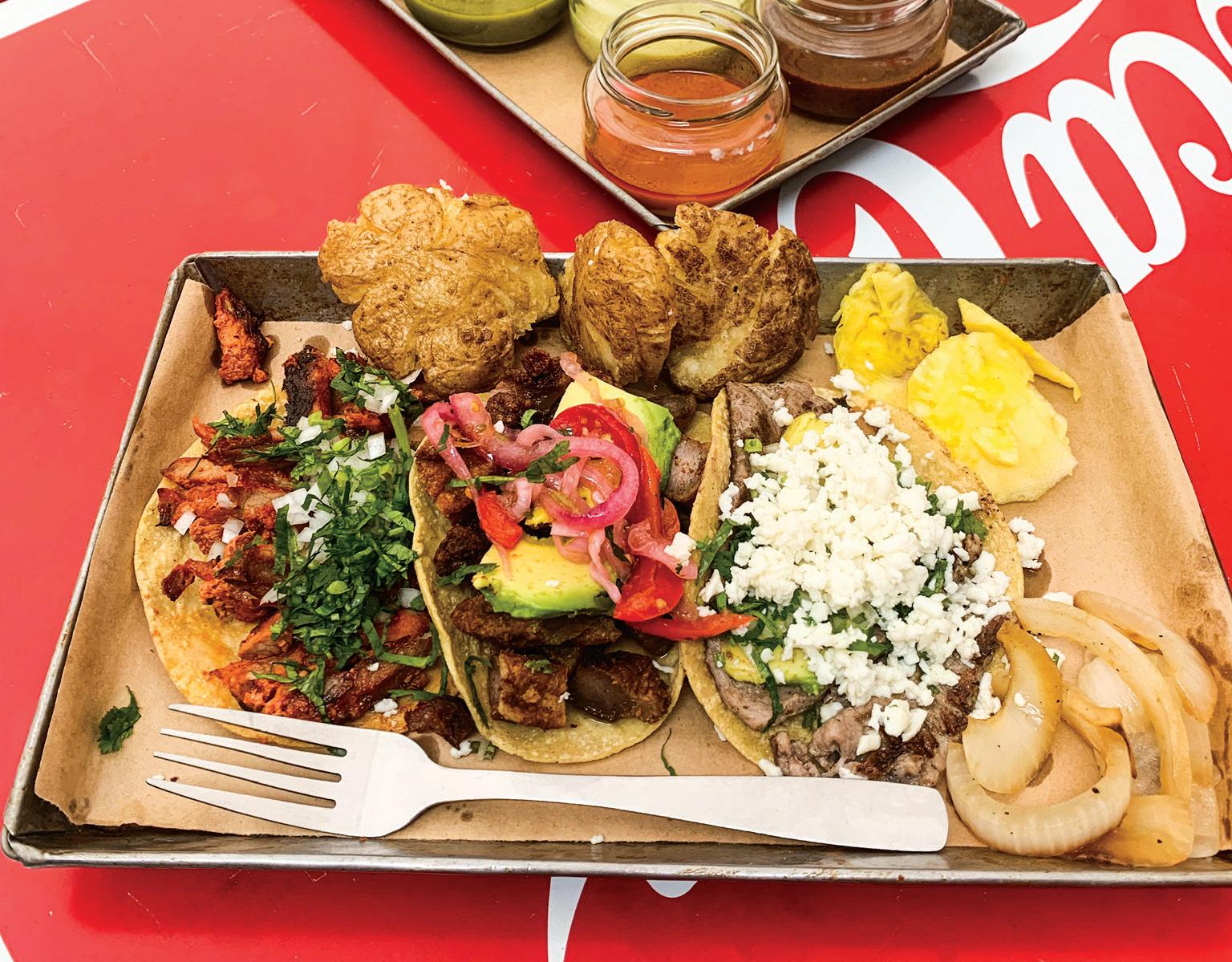
ON THE COVER: Awesome Tacos from Taco Mexicanos
6 | JUNE 2023
BUSINESS
ON THE MARKET
CLIMATE
ALSO IN THIS ISSUE: A REAL ESTATE SECTION
14 26 20 23 17
Photo by Alana Cox
Note
2021 issue survived barrage loss and entire loved ones, kept side, at least will change vaccines coronavirus, some freely
strange spring. The novel in our so far been it from print with time, Escambia Santa quickly once
Note
Obesity, diabetes and heart disease became death sentences for too many people battling Covid. While genetics predispose some to these illnesses, many can be managed or eradicated by lifestyle changes. I’d like to focus on making healthy choices while still enjoying the bad-for-you good stuff in moderation.
JUNE 2023
Owner Malcolm Ballinger
Publisher Malcolm Ballinger malcolm@ballingerpublishing.com
Executive Editor Kelly Oden kelly@ballingerpublishing.com
Art Director Ian Lett ian@ballingerpublishing.com
Passion and Joy
It’s June in Pensacola and the heat is on! Like many people, I find myself less interested in cooking large meals in the summer. It’s just too hot to sweat over the stove after work, so I sometimes grab a salad or order take out. Tacos are a favorite for me because, well, they are delicious, first of all, but they also have so many variations that I can often satisfy all of my cravings in a single meal. Plus, I can order two or three or four depending on my hunger meter, which can go from slightly peckish to hangry in a flash.
The fact is, virus or be symptoms. That is community, stay possible--leaving the idea, too, rather than social via world—phone encourage tribe. We bring and something this.
What has suspect it mental time positive experiences. resolutions Instead, brought home have uncertain. my community. health is our knew it.
in our will see that community groups and safe ways difference distancing. I must outpouring amongst my toilet paper more than to make up applause for our
already? assure you equally— alone. it—the I’m over on a word: over Only suspect. pandemic the stress, distancing and many things can provide more return. Society has had fostering know that always a sweet kitty sounds check page 34. for our with some
first responders and hospital workers? Thank you for putting yourselves on the front lines to keep us as safe as possible. Also, a big shout out to all the teachers out there scrambling to put together online lessons to keep our kids engaged and learning instead of worrying about things they cannot control. We appreciate you!
incredible special-needs pets and owners and she discovered that while these precious babies may take a little more care, the love they give in return is worth every second.
Graphic Designer/Ad Coordinator
Kelly Oden Executive Editor
I don’t know about you, but 2020 offered far too little of either of these to me. I was so consumed with my mom’s illness and then with surviving the grief of her loss and the anxiety of the pandemic and the sorrow of so many national news stories that I took little time for myself.
This month, we enlisted Randy Russell—chef and owner of Nomadic Eats, world traveler and taco connoisseur—to break down the beloved taco. His story on the history, meat varieties, cooking methods, salsas, topping and more is both entertaining and informative. We hope you enjoy his article, Art of the Taco, on page 26.
Alana Cox advertise@ballingerpublishing.com
Editor Morgan Cole morgan@ballingerpublishing.com
If exotic animals are more your thing, head on over to the brand spanking new and significantly enlarged Alabama Gulf Coast Zoo. The new location features all the hands-on, up close interaction as the previous location plus added attractions, amenities and experiences that will make for a wonderful family day out.
This year, I hope to explore creative and personal endeavors that help me rediscover myself and discover new outlets for personal expression.
If Randy’s article makes you hungry, don’t fear. Check out our taqueria roundup, Tacos We Trust, for a sampling of amazing taquerias in the Pensacola area. We have quite a few and they each have their own unique approaches to this versatile cuisine. The list starts on page 31.
Procrastination
On that note, I encourage you to read our COVID-19 Resource Guide, which provides resources for food, business, community and more. The ever-changing nature of this crisis necessitates that I mention that these resources may or may not be available to you by the time you read this issue. I hope it will provide a place to start, some ideas or some inspiration either way.

Assistant Editor Nicole Willis nicole@ballingerpublishing.com
Editorial Interns
Destiny Herbert Molly Callahan
If you’re interested in conservation, check out Dakota Parks story on local Panhandle Rooftop Nesting Biologist, Rebekah Snyder. Through her work with Audubon Florida, Snyder helps to ensure local shorebirds have safe nesting spaces in an increasingly overpopulated region.
And, what goes perfectly with a delicious plate of tacos? A tequila cocktail, of course! We’ve asked a few of our favorite restaurants and bars to offer up tasty tequila-based cocktail recipes for our readers and they didn’t disappoint. Check them out on page 23.
You may also notice that we have some nonpandemic related stories in this issue. We made the call to include already planned articles that might still be helpful, relevant or enjoyable for our readers. We hope you find them useful.
All of this, plus details on sea turtle nesting season—a very special and important part of life on the Gulf Coast. Make sure you follow the “clean, dark and flat” rules and respect the sanctity of this magical event. Learn all about it on page 20.
While many people made glorious headway on home improvement and personal projects in 2020, I did not. I did not organize anything. I did not fix anything. I did not learn a language or a new skill. Nothing. But that’s ok, too. I’m still here. That’s an accomplishment. However, in 2021, I’d like to lighten my load and empty my house of much of the clutter and unnecessary junk that fills it. It’s time to make room for something new.
All of this, plus a few DIY pet treat recipes and some good news from the Florida legislature regarding protection for pets in abusive situations.
Contributing Writers
DeeDee Davis
Jenny Diamond Randy Russell
Sales & Marketing
Paula Rode, Account Executive ext. 28 paula@ballingerpublishing.com

We also bring you the details on PensaPride’s annual celebration of Pride month. Whether you identify as LGBTQ+ or you are an ally, be sure to go out and show your pride and support on June 24.
Geneva Strange, Account Executive ext. 31 geneva@ballingerpublishing.com


In this issue, we’ve covered all of these topics and more to help readers shift their own focus in 2021. We hope you enjoy. Here’s to your health!
So, turn off the news, put down your phone and enjoy these heartwarming tales and adorable of photos of local animals and the folks who care for them. When you’re done, give your kitty a little catnip and throw your dog a bone. It’s these simple pleasures that will keep us all sane.
As for us, Pensacola Magazine has been published under one title or another for more than 40 years. We have no plans on changing that. We will continue to publish and to bring you all the information we can for as long as we can. Please reach out to us with story ideas, inspiration or just a quick hello. We are all working from home and we are missing our water cooler conversations. Stay safe, stay healthy and stay strong, Pensacola!
There is also a new lodging option in town called Celestine Bed & Breakfast and our editor, Morgan Cole, brings you all the info on this unique addition to the North Hill Historic District.
And there you have it—our June edition in a nutshell. We hope you stay cool, eat some tasty tacos and enjoy the issue!
Kelly Oden
 Executive
21 E. Garden St., Ste. 205 Pensacola, FL 32502 850.433.1166 | fax: 850.435.9174 ballingerpublishing.com
Kelly Oden Executive Editor
Kelly Oden Executive Editor

Editor
/pensacolamagazine @pensacola_magazine
Proud member of the
/pensacolamagazine @pensacola_magazine
Renew your subscription now online at www.ballingerpublishing.com: One year $14.95 and two years $22.75.
/pensacolamagazine @pensacola_magazine

subscription now online at www.ballingerpublishing.com: One year $14.95 and two years $22.75.
your subscription now online at www.ballingerpublishing.com: One year $14.95 and two years $22.75.
represent the personal views of the individuals to whom they are attributed and/or the person identified as the author of the article, and they are not necessarily those of the publisher. This magazine accepts no responsibility for these opinions. The publisher reserves the right to edit all manuscripts. All advertising information is the responsibility of the individual advertiser. Appearance in this
does not necessarily reflect endorsement of any products or services by Ballinger Publishing. © 2023
8 | JUNE 2023
EDITOR’S NOTE
Editor’s Note
Editor’s
Subscription expiration date is printed on the address label. Renew your subscription today online at ballingerpublishing.com: One year $14.95 or two years $22.75. FOLLOW US! /pensacolamagazine @pensacola_magazine NW Florida’s Business Climate Magazine and Pensacola Magazine is locally-owned and operated. All Rights Reserved. Reproduction or use of the contents herein is prohibited without written permission from the publisher. Comments and opinions expressed in this
magazine
magazine
Published by Ballinger Publishing:
PENSACOLA MAGAZINE CULTURE + LIFESTYLE


55 or over? Our FOSTER GRANDPARENT program needs YOU to mentor children in Escambia and Santa Rosa counties while earning a stipend, receiving a free annual check-up and other benefits. coawfla.org • (850) 432-1475 Ballinger Pu B lishing . com 850.433.1166
DeeDee Davis, Contributing Writer

I like all kinds of music. And, I am really grateful for the fact that I have lived during the time of some of the greatest musicians in the history of the universe. Frank Sinatra, Elvis, Michael Jackson, The Rolling Stones, Luciano Pavarotti, The Beatles, Aretha Franklin and Joe Cocker are but a few of the worthy legends I put in this category. I almost feel sorry for my grown kids when I hear the music they play. Amateurs! O.A.R.? Mumford & Sons? Oh, they are okay, just not what I would call “lasting.” They appeal to a small segment of the population and then disappear even faster than they emerged. The greats, on the other hand, transcend generations. Their music lives on and is re-recorded throughout eternity by appreciative artists. It also goes without saying that the best of the best certainly had plenty of drama in their lives and their personal transgressions have provided plenty of fodder for the press and the gossip-starved public. Drugs, alcohol, cheating, fast cars, dirt-poor poverty–you name it. A bad hand combined with even more bad decisions makes it tough to survive the business despite a megadose of God-given talent. And, while the list is long of those who checked out early on us, robbing us of more of what they had to give from their souls, one man stands in an absolute league of his own. Hank Williams died the year that I was born. You would never know it in our family. He was and is still discussed as if he lives on. And, I guess in a big way, he does. My family lived in Montgomery, Alabama in the late 1950s. Any Southerner who knows that Lee
fought for the South can tell you about the vast number of landmarks there are to tour in the capital of Dixie. The capitol building itself, the museums, the little capitol of the Confederacy–you get the picture. A salute to days past. When family and friends came to visit us, however, did we go and see any of the Frommer’s sites? Oh, no. We took them to see ol’ Hank’s gravesite. The only history that really matters is that they brought ol’ Hank back to his home state after finding him long gone in his baby blue convertible. Not many folks can name the presidents who are buried at Arlington, but I guarantee you they know where Hank is. To the credit of the wife he done wrong, she certainly didn’t spare a dime of his cash when it came to his monument. Nothing in Oakwood Cemetery Annex comes close to the lavish marble shrine towering over his final resting place. I am not sure who later added the astro turf around the site but they probably wear white shoes after Labor Day. It doesn’t matter what time of the day you stop by, either. Because just as certain as the sun will rise, his gravesite is always littered with fresh beer cans–some empty, some full, but all there as tokens of gratitude, appreciation and heartache. How one skinny bag of bones could deliver the music he did blows my mind. He was only 29 when the drugs and alcohol finally did him in. By that time, he had recorded a lengthy string of hits most can only dream of. What was it that made him so different? Groupies are a way of life in the entertainment business, but the cult following of Hiram King Williams has not died. Maybe it was the modest but memorable lyrics, and maybe it was the raw emotion that oozed from him every time he strummed and sang. Maybe it was his unique twang and the way he turned vowels into sentences. There is no doubt that he was one of the greatest musicians who ever lived, and you don’t have to like country music to appreciate his gift. He was, after all, inducted into both the country and the rock hall of fame. Even Elvis borrowed his songs. We grew up on Hank’s music. For my brothers and sister, we tolerated it at the time. Not that we had much choice. My father would put ol’ Hank on the stereo
and almost go into a trance. Hank had that effect on people. My childhood memories are dotted with Hank’s music. I remember when my parents hauled the five of us out to Lake Martin’s Kawliga Beach for our one and only camping trip. My mother still swears innocence in this vacation disaster, and I do believe my electric blanket loving mom. Picture a thunderstorm, rocks under our thin sleeping bags, relentless mosquitoes, brothers with sticks and a yellow jacket nest, community baths and lake silt with a smell I will never forget. A long weekend turned into one miserable night, but Hank sang through it all on our transistor radio. No wonder early memories of him were unpleasant.
We always had Sunday dinner when we were kids. The big meal was at noon and our house was filled with warmth and the smells of mom’s good home cooking. Of course, Hank was always there with us. Talk about mood music. We get a bit nostalgic thinking of those days because so much good stuff just blends together creating good memories. Hank has been gone now for 70 years. I plan to do a lot this year as I turn the same number. I am still not sure of all that the year holds in store for me, but you can bet your confederate bonds that a trip to Montgomery with a six-pack of beer is high on my list.
10 | JUNE 2023
June Birthdays 7 Clair Montgomery 19 Harry Levin 22 Moose Morris 25 John Peacock 30 Jackie Gheen
Opinion piece: the views expressed in this article are solely of the writer and not representative of Pensacola Magazine Page
0
1





Weekly ½ day and full-day camps Extended care is available from 7:00 a.m. – 5:30 p.m. Email: ce@pensacolastate.edu Tennis Camps with Tighten-Up Tennis Register and pay online kidscollege.pensacolastate.edu/kids-college-courses/ Pensacola State College does not discriminate against any person on the basis of race, ethnicity, national origin, color, gender/sex, age, religion, marital status, pregnancy, disability, Week 6: June 26–30 8:15 a.m. – 11:45 a.m. ages 5–8 year olds Week 8: July 10–14 8:15 a.m. – 11:45 a.m. ages 9–12 year olds Celebrating 33 years of From culture and language to science and the arts… we offer camps for all interests!
this Father’s Day! this Father’s Day! adoptamanatee.org Adopt-AManatee®
Photo ©David Schrichte
PENSACOLA SCENE
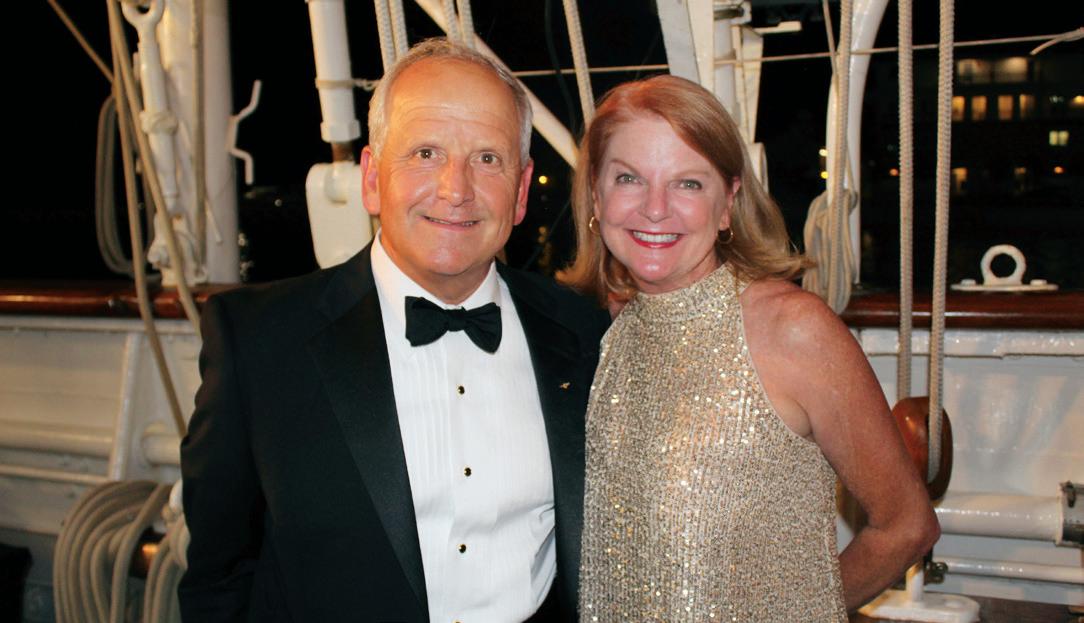
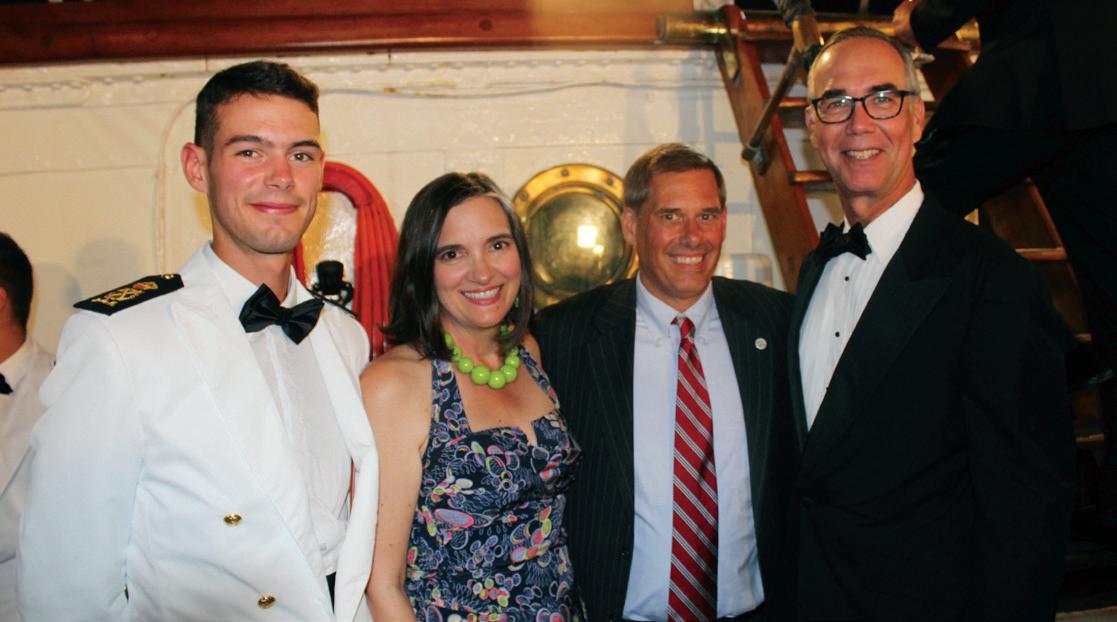
RECEPTION ABOARD THE SPANISH NAVY TRAINING SHIP JUAN SEBASTIÁN DE ELCANO
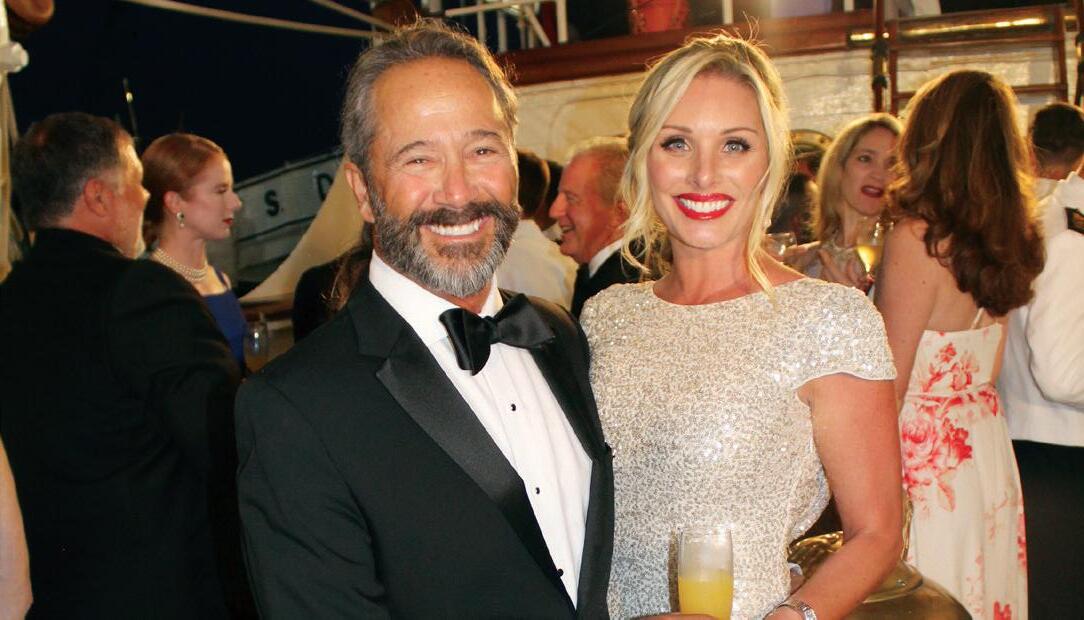

HANGOUT MUSIC FEST 2023





12 | JUNE 2023
Cari Wilson, Sharon Hess & Doug Herrick
Sterling Gilliam & Kim Chope
Alejandro De Rivas, Jena Mélancon, Todd Thomson & David Stafford
Tom Pace & Angie Kennedy








850-432-0202 601 E. Chase Street residenceinnpensacoladowntown.com 850-439-3330 700 E. Chase Street courtyardpensacoladowntown.com 850-476-8383 6000 Cobble Creek Road www.marriott.com/pnsrp 850-474-3777 5049 Corporate Woods Drive pensacolaairport.homewoodsuites.com 850-478-1123 2187 Airport Boulevard pensacolaairport.hamptoninn.com PENSACOLA AIRPORT/CORDOVA MALL PENSACOLA DOWN TOWN Business Vacation Extended Stay HIGHPOINTE.COM A Place for You 850-479-8900 1144 Airport Boulevard pensacolaairportmedicalcenter.hgi.com Call for a free in home design consultation and estimate 850-805-8407 Custom Closets, Garage Cabinets Home Office, Pantries, Laundries Wall Beds, Wall Units, Hobby Rooms, Garage Flooring and more... SPECIAL FINANCING for 12 Months With approved credit. Call or ask your Designer for details. Not available in all areas. PM 40% Off Plus Free Installation 15% Off PLUS TAKE AN EXTRA Imagine your home, totally organized! www.closetsbydesign.com Locally Owned and Operated Follow us *Terms and Conditions: 40% off any order of $1000 or more. 30% off any order of $700-$1000 on any complete custom closet, garage or home office unit. Take an additional 15% off any complete unit order. Not valid with any other offer. Free installation with any complete unit order of $850 or more. With incoming order, at time of purchase only. Expires June 30, 2023 Closets byDesign® 2019© All Rights Reserved. Closets by Design, Inc. Licensed and Insured Serving the entire Emerald Coast!
Y’all Means All!
PensaPride Returns for 2023 LGBTQIA+ Celebration


 by Nicole Willis
June marks the beginning of Pride month, a time of celebration, community and love. As the month continues, LGBTQ+ Pensacolians will bring the Pride party from the beach to the streets of East Hill in Pensacola. For its third year in a row, the annual PensaPride celebration will return for a colorful celebration on June 24 at Cordova Square.
PensaPride is a local Pride celebration that focuses on strengthening and supporting the LGBTQ+ community in Pensacola. Each year in June, the day-long arts and culture festival is hosted during Pride month to bring together members of our local LBGTQ+ community. The goal of this family-friendly event is to celebrate and uplift Pensacola’s queer community by featuring a variety of local LGBTQ+ vendors, artists, musicians and more. Held at Cordova Square located at 12th Ave. and Gonzalez St. in East Hill, the park will be filled with members of the community and allies supporting queer love and equality.
In 2021, the PensaPride event was co-created by local LGBTQ+ nonprofit, Strive, and the ever-popular Pensacola Arts Market. After discussing the need to bring an LBGTQ+-specific arts-focused event to Pensacola for Pride month, the two organizations decided to partner to host their first arts-focused event and celebration that supports the local LGBTQ+ community.
“Our mission is to normalize the inclusion, in an uplifting and encouraging environment, of LGBTQIA+ people in all marginalized groups; especially those with intersections of race, gender, and people with disabilities,” Marri Salt, local artist and owner of Pensacola Arts Market, said. “We value the free and open expression of all LGBTQIA+ people as their authentic selves in our community.”
The festival is a safe space for queer individuals to gather, express themselves creatively and have fun.
Photos courtesy of PensaPride
Since PensaPride strives to be inclusive to everyone, this will be a sober and alcohol-free event. There will be plenty of entertainment provided at the event, including live music, DJs and other fun performances to watch.
“Guests can expect to have a fun day in the park with their community, enjoy local performers, singer-

songwriters, DJs and more. There will be arts and crafts for all ages. There will be an acoustic stage for folks to chill, as well as interactive art stations,” Salt said.
PensaPride will also host a large variety of queer-run and queer-friendly vendors and exhibitors to check out. The many vendors will be selling everything from food, skincare and art to clothing, plants and jewelry.
“We will have over 100 exhibitors including community organizations, local artisans, vintage boutiques, plant boutiques, Melt food truck, Sneaky Tiki Shaved Ice, Moody Mocha, and more,” Salt explained.
While PensaPride is a fun and celebratory event, it also recognizes the hardships that queer individuals go through. To help further support members of the community, several LGBTQ+-focused organizations and groups will also be in attendance, with some offering resources for queer individuals to get the support they may need.

The third annual PensaPride celebration will be held Saturday, June 24, from 10 am to 4 pm at Cordova Square, located at 1101 N. 12th Avenue in Pensacola. For more information on the event, visit @PensaPride on Facebook or Instagram.

Our mission is to normalize the inclusion, in an uplifting and encouraging environment, of LGBTQIA+ people in all marginalized groups; especially those with intersections of race, gender, and people with disabilities,”







T: (850) 944-6805 • E: chopllc@yahoo.com • classichomesofpensacola.com • Parade Winner 2013, 2014, 2015, 2016, 2017, 2018, 2019 • Builder of Dream Home 2015 • Builder Of The Year 2015 Free Design Service Build on our lot or yours! Come visit our furnished model homes Monday - Saturday 10am to 6pm Sunday 1pm to 6pm Just West of the Equestrian Center Now Building Huntington Creek Award Winning Homes! You make it home. We could help make it possible. Renee’ D. Wilhoit NMLS 640470 (850)436-2982 reneewilhoit@synovus.com Lisa Hudson NMLS 664126 (850)436-7842 lisahudson@synovus.com Tracey McClurd NMLS 664145 (850)436-6538 traceymcclurd@synovus.com Charles Thomas NMLS 938537 (850)436-7831 charlesdthomas@synovus.com Karen Welch NMLS 594834 (850)994-2503 karenwelch@synovus.com Synovus Bank, Member FDIC and Equal Housing Lender. Loans subject to approval, including credit approval. Find us online at Synovus.com/mortgage.
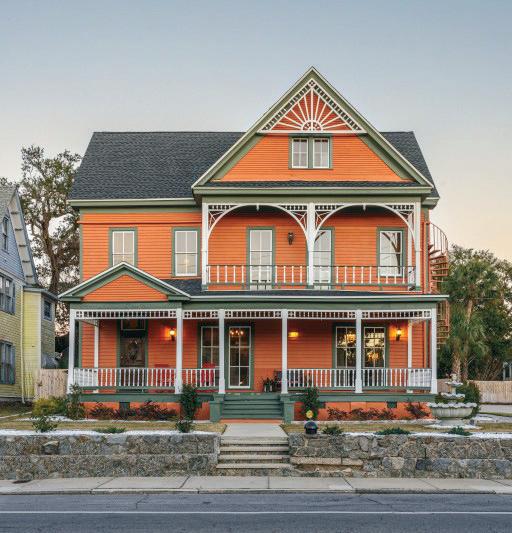
CELESTINE BED & BREAKFAST A House of History
 by Morgan Cole
Cornelia r obinson e dwards and her brother , G erald r obinson , take pride in the fact that their newly opened Celestine Bed & Breakfast situated in the heart of Pensacola’s historic North Hill district elicits a certain reaction from guests. “We have curated an environment where people feel a sense of place and belonging just like they would at home. People tell us they feel
connected to Celestine Bed & Breakfast,” Cornelia Robinson Edwards said.
There’s a good reason the place feels so inviting: family reinforces every wall inside the Celestine Bed & Breakfast—both literally and figuratively. Lovingly named after the owners’ great-grandmother and the matriarch of a family proud of its roots and heritage, each room inside the Celestine Bed & Breakfast honors a family legacy steeped in excellence, love and hospitality.
To Cornelia, hospitality is far more than an industry, it’s a character trait. A trait that her great-grandmother, Celestine Tolliver Harrison, was known for lovingly embracing so well. Born in Pensacola in 1908, Celestine had a big heart and she loved opening her home to guests. Her home was always open with hot dinner on the table for anyone who wanted it.
“Growing up as an only child, Celestine always knew she wanted to have a big family. She and our great-grandfather, Vandybilt Harrison, had five children. Their home was always filled with love and laughter. Celestine would welcome visitors from near and far. She loved to entertain friends, family and strangers. Food was plentiful and hospitality was extended to anyone lucky enough to walk through the front door. The front door was always unlocked and you never knew who would walk in. I guess you could say I was immersed in Southern hospitality from the time I was born,” Cornelia explained.
When Cornelia, her brother, Gerald Robinson II, and her husband, Bronson Edwards, began renovating the 19th century home at 514 N. Baylen Street, there was no question as to what they would name the new B&B. “From the moment we decided to turn this home into a bed and breakfast, there was no other choice for a name,” Cornelia said.
The B&B also pays tribute to Celestine’s husband, Vanderbilt, their five children–Jean, Lois, James, Mary and Horace–and every generation before and after, Cornelia’s husband Bronson, explained.
From the antique upright piano that immediately greets you at the front door to the black and white hand-sketched drawings on the custom wallpaper, each and every room in the B&B has a story to tell. Each of the bedrooms inside the B&B are named after Celestine’s children and personalized accordingly. The cursive signature that serves as the B&B’s logo depicts Celestine’s actual signature, which Cornelia creatively sourced from the back of an old school report card.
One of the defining features inside the B&B (as well as everyone’s favorite) is the custom wallpaper along the stairwell, which was carefully curated by Cornelia over the course of nearly a year and a half. Serving as a storytelling aid to transport guests back to another time, each of the intricate black and white images depict personal milestones and old Pensacola landmarks that anyone who has lived in the area long enough is sure to remember.
In addition to hand-drawn illustrations of family photos, the wallpaper also features an image of the current B&B, the clock that sits outside the current Artel Gallery (formerly the courthouse), old photographs of fish being caught off the bridge and clippings from the Pensacola News Journal reporting the Sacred Heart Hospital’s opening day and 1960s sit-ins opposing segregation.
A few steps over into the eat-in kitchen, a vibrant flamingo wallpaper welcomes you into the cozy breakfast nook, where her greatgrandmother’s original dining room table is elegantly situated with her grandmother’s fine China teacups on top.
Cornelia and Gerald birthed the concept for the B&B together and not a single detail was overlooked during the process of bringing the old home back to life. They purchased the property more than two-anda-half years ago, opened it for guests in December of 2022 and have spent every waking moment in between renovating what Cornelia described as a Victorian home that had been stripped of character.
PENSACOLA MAGAZINE | 17
“We did a full overhaul on this home, which included demolishing certain spaces, adding new plumbing, HVAC, electrical wiring and installing safety and fire suppression systems. From there, we spent a great deal of time working with local and regional designers on the furniture selection and other interior designs decisions,” Cornelia said. Inside, contemporary design elements skillfully merge the old and new, giving it an exciting and purposeful breath of life. “Touches of both family and Pensacola history were integral in the design process. We wanted the space to honor the past and look forward to the future through our design,” Cornelia explained.
The vibe of the B&B is lively, yet elegant. As you walk through the front doors of the home, you immediately notice some tasteful yet unconventional design choices, described by Cornelia “as intentional but also in many ways, unexpected.”
“Our guests appreciate how we’ve managed to intertwine the old with the new. Many of our finishings are luxurious, but we like to say that we’ve redefined southern elegance because we’ve designed the place in a way that is approachable, while also somewhat laid back. It feels like a dream home away from home,” Cornelia said.
The brother-sister real estate duo actually have built a habit of honoring their family, with several smaller properties in downtown Pensacola also named after loved ones the Sherman house (grandfather), the Connie house (grandmother Cornelia’s nickname), the Leonard house (uncle), the History house (a great uncle’s name) and several more.

The name of Cornelia and Gerald's company is actually an address, 117 Barcelona, which was the first known record of their family’s home ownership in Pensacola. No home exists there today. Although the Celestine serves as their first foray into the hospitality industry, Cornelia and her husband Bronson have enthusiastically taken on the role of experience curators, providing each of their guests with uniquely tailored experiences.
“The idea to open the bed and breakfast came to life just before the pandemic. We actually had no intention of opening a bed and breakfast, but it all sort of began with my desire to create travel experiences. My love and experience with both travel and property renovations was the perfect combination to help bring Celestine Bed & Breakfast to life,” Cornelia explained.
Cornelia and Bronson are the first to greet you at the front door with a glass of wine upon arrival, tell you about the stories behind the antique furniture that was expertly restored, preserved or reupholstered during the renovation, or serve up a bounty of Cornelia’s addictive homemade buttermilk biscuits or her tasty French toast with hand-whipped cream and berry compote or Southern-style shrimp and grits.
In the mornings, the smell of Cornelia’s breakfast quickly draws guests out of their rooms and around the table, sharing stories over coffee, replicating a meal shared the way Celestine intended it to be. What sets the Celestine apart from other B&Bs, Bronson said, are the details. They worked with family members and local antique dealers to procure each of the carefully thought out pieces featured inside the home.
In the downstairs Vandybilt room, are tall bookshelves lined with books from the old Washington and Pine Forest High Schools, Cornelia’s degree from Spelman College (who she is named after) and Sherman’s diploma from Booker T. Washington High School (he later went on to become the principal and deputy school superintendent).
On another shelf, sits a glass jar with the letter “R” on it that Cornelia’s parents received when they got married. Inside, are the antique matchbooks from several Pensacola restaurants that no longer exist.

18 | JUNE 2023
Touches of both family and Pensacola history were integral in our design concept. We wanted the space to honor the past and look forward to the future through our design.”
There’s also an edition of The Negro Motorist Green Book on the shelf, which a lot of people are intrigued with, Cornelia said. “The concept of the Green Book was it told you where you were safe to go when you were on a road trip. You could look at the Green Book and say, ‘OK, we can stop at this hotel or this motel, or eat at this restaurant, and we’re going to be safe.”
The room also showcases an an old map of Pensacola before the house was built in 1888 and a set of chairs from the First Presbyterian Church. The original homeowner, James Simpson Reese, was a member of the church and a well-known banker, who went on to become president of The Citizen and Peoples National Bank of Pensacola and the Florida Bankers Association.
Intentionally next to Vandybilt’s room, is the Celestine room. “The rooms were designed to reflect their individual personalities and they work together nicely, but they also stand out on their own, just like our great-grandparents did,” Cornelia explained.
The Horace room is dedicated to the U.S. Air Force veteran who was not only the first Black male to graduate from Pensacola High School but also a participant of the downtown lunch counter sit-ins, which landed him in jail at the age of 15. He was also president of NAACP’s Youth League.
Mary is the name of one of the B&B’s most popular rooms, which Cornelia’s grandmother Mary helped to curate herself. The James and Jean (J&J) suite is the largest.
Although there are four rooms available to book, guests aren’t there just to sleep, Cornelia and Bronson explained. “We curate experiences,” Cornelia said.
She and Bronson have traveled the world together, stepping foot on just about every continent except Antarctica. They have integrated many of those experiences and cultures into their business model, starting with a welcome drink.
“No matter where you are in the world, one thing that’s common among all folks is food and music it transcends,” Bronson explained. “So, those are the types of things we’ve learned, and we want to ensure we are able to create that same experience here for our guests.”
Cornelia and Bronson serve as the resident innkeepers to the Celestine. Their 2022 marriage on the property grounds marked
the beginning of their grand B&B adventure. The two occupy an apartment-sized suite on the third floor but make themselves available as often as guests would like, whether it be for a conversation in the library, a downtown walking tour or an afternoon charcuterie snack in the garden area.
There are four guest rooms in the B&B, each with a private en suite bathroom. One of the bedrooms is a large suite and features separate dining, lounging and dressing space.
Along with concierge-like services, homemade breakfast is also included with every stay. “Whether our guests simply want dinner recommendations or someone to plan a full itinerary, we meet our guests where they are and help them along the way,” Cornelia explained.
The B&B offers an in-house wine menu where guests can purchase wine by the glass or the bottle. “At some of our favorite places in the world, you get a welcome drink when you arrive,” Cornelia said. “It’s something small, but this small gesture makes people feel like, ‘Oh, they were really prepared for me to be here.’”
From cooking and cleaning to all of the behind-the-scenes aspects, both Cornelia and Bronson are intricately involved in the business. Not only does Cornelia share proud stories of her family’s stamp on Pensacola history, she also encourages her guests to share stories of their own. “Because everyone has a story to tell and you never know what you might learn through simple conversation,” Cornelia explained.
The Edwards’ hope that the B&B will be much more than just another boutique lodging option in the downtown area, but rather a meaningful memory.

“We want guests to remember their stay at Celestine and feel cared for. We want them to feel like intention went into planning for their stay and that we’ve created something truly special just for them,” Cornelia said.
For booking rates and more information on the Celestine Bed & Breakfast, visit celestinebedandbreakfast.com or @CelestineBedandBreakfast on Facebook.
PENSACOLA MAGAZINE | 19
Sharing the Shore
Sea Turtle Nesting Season Along the Gulf Coast
 by Jenny Diamond
Conservation Center, is hopeful for another leatherback nest this year, noting that a leatherback has been seen swimming around the Navarre Beach pier nearly every day for the past few weeks. So far in 2023, there have been two loggerhead nests laid on Escambia County land.

Beachgoers can do their part to make sure that the beach is a safe environment for nesting turtles and hatchlings by following the ‘Leave No Trace’ and ‘Clean, Dark, Flat’ initiatives. While graceful in the water, adult turtles are cumbersome on land and can easily become stuck if they fall into a hole or encounter beach debris, so it is important that visitors knock down any sand structures, fill in any holes, and remove chairs, canopies, umbrellas, toys, and trash at the end of each day. Additionally, turtles can be disoriented by artificial lighting, which can range from lights from homes, businesses, and passing cars all the way to flashlights or phone lights on the beach at night; when disoriented, a nesting mother may crawl away from the ocean after laying her eggs and suffer from exposure. As of 2018, a Barrier Island Lighting Ordinance requires all water-facing residential and business structures to use turtle-friendly lighting practices: closing blinds and keeping outdoor lights shielded at night and using low-wavelength amber or ‘Wildlife Friendly’ bulbs available from local retailers for outside lighting. However, Jennifer
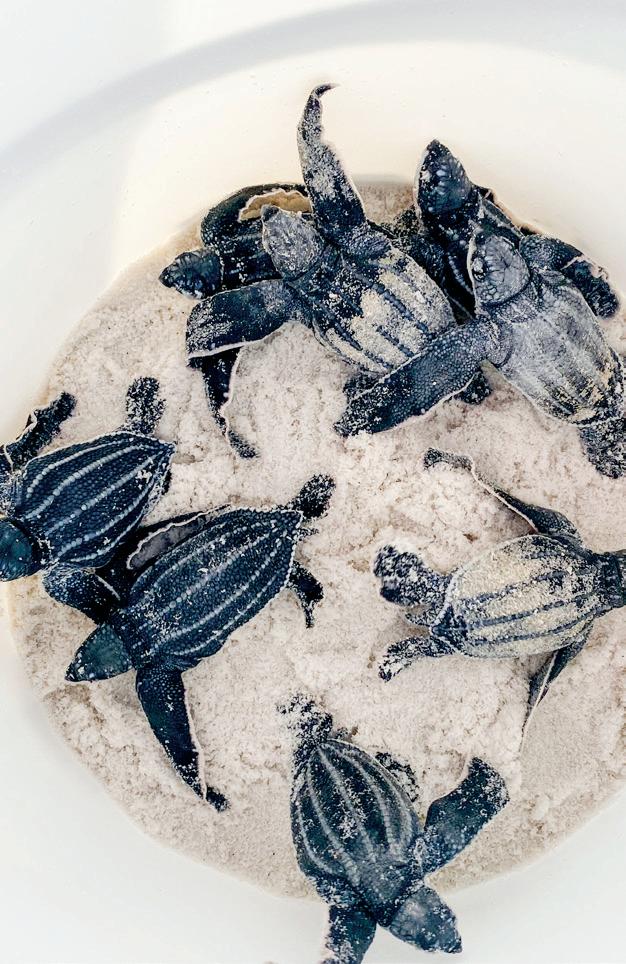
For many loCals alonG the GulF Coast, may means the start oF summer – school is ending, the days are getting warmer and the tourists are flocking to the beaches. However, May also marks the official start of sea turtle nesting season along the Gulf Coast. Female sea turtles drag themselves from the Gulf and use their strong flippers to dig a deep chamber and lay roughly 100 eggs per nest; the turtles will then cover the chamber with sand and return to the water. Nesting almost always happens at night, though some species like the Kemp’s ridley nest during the day. From May 1 through the end of October, dedicated staff and volunteers from the Escambia County Natural Resources Management division, Perdido Key State Park and Gulf Islands National Seashore patrol the beaches each morning to mark new nests, identifiable by the distinct tracks or “crawl” left by the large turtles and work with the public to ensure the safest conditions for turtles along the beaches. After busy hurricane seasons in 2020 and 2021, where continuous rain and high tides inundated many of the nests before the turtles could hatch, the summer of 2022 proved to be a wonderful year for nest numbers in our area. Of the 41 total nests laid on county lands, 32 hatched successfully and a total of 1,549 hatchlings entered the Gulf of Mexico. Though four sea turtle species have been known to nest in the Gulf Coast, the vast majority of nests in our area are laid by loggerheads, with occasional green and Kemp’s ridley nests. However, 2022 saw the first successfully hatched leatherback nest in our area in over two decades. Leatherbacks are the largest sea turtle species in the world, potentially reaching more than 1,000 pounds. The 2022 leatherback, nicknamed “Mabel” by the lucky beachgoer who saw her come ashore and alerted county officials, nested toward the eastern end of county property on Pensacola Beach on May 24. After a 75-day incubation period, one lone hatchling emerged from the nest, and three days later on August 10, the nest had a ‘boil,’ or mass hatch, “and 60 little leatherbacks swarmed up under a full moon and raced to the waves,” notes Melanie Waite, who has been volunteering with the county for more than 30 years. “That hatch made the season for me,” Waite said. Eleven additional live hatchlings were found during the nest evaluation and released into the Gulf according to FWC protocol, making a total of 72 hatchlings. Cathy Holmes, founder of the Navarre Beach Sea Turtle
20 | JUNE 2023
Loggerhead sea turtle crawling on Pensacola Beach
Photo Courtesy of myescambia.com
Manis, biologist at Gulf Islands National Seashore, notes that turtles can be disoriented by “sky glow,” or light effects from buildings far away from the beaches, even as far as the bright lights of the ‘car city’ stretch in Pensacola. According to a 2022 Escambia County Marine Turtle Nest Monitoring Report conducted by Marine Environmental Program Manager Mark Nicholas, 65 percent of nests on Pensacola Beach and 100 percent of nests on Perdido Key were subject to disorientation that drew hatchlings away from the Gulf. In order to support the ‘dark’ element in the ‘Clean, Dark, Flat’ initiative, nighttime beach goers should avoid using bright lights on the beaches; many local businesses sell turtlesafe red-light flashlights or red film covers for cell phone lights. If you do see a turtle on the beach at night, turn off lights, avoid making noise and keep a safe distance to avoid disturbing the nesting process.

In addition to following the ‘Leave No Trace’ and ‘Clean, Dark, Flat’ initiatives, anyone interested in learning more about sea turtles can visit the Navarre Beach Sea Turtle Conservation Center to see Sweet Pea, the resident ‘sea turtle ambassador.’ Sweet Pea is a non-releasable green sea turtle who makes her permanent home in the Center’s 15,000-gallon saltwater pool. The Center is currently undergoing an expansion that will allow for more visitors and more
opportunities for education and interaction. The 1,152-square-foot Conservation Education Area expansion will feature a sea turtle stranding assessment room with viewing windows, secure night housing for resident tortoises, Safari and Flip Flop, a ray and horseshoe crab viewing tank, hydroponic growing station and virtual ‘submarine dives’ to the artificial reef system just off Navarre Beach.
There are several other ways for the public to learn more about sea turtles and their nesting habits. The annual Sea Turtle Baby Shower will take place on June 3 at the Casino Beach Gulfside Pavilion from 9 am to 12 pm. This free, family-friendly event will feature live music, hands-on exhibits and fun for all ages. The Escambia County Natural Resources Management team will also host an interactive summer activity series called “Let’s Go to the Beach!” for kids and families at each branch of the West Florida Public Library system. For more information about these events, visit the Escambia County Natural Resources Facebook page. To report someone disturbing a sea turtle nest or an injured, dead or harassed sea turtle, call Escambia County Marine Resources: (850) 4261257 or Florida Fish and Wildlife Conservation Commission: (888) 404-FWCC (3922).
 Above: Leatherback hatchlings found during nest evaluation Below: Loggerhead tracks and nest Photos by Jenny Diamond


KATHY TANNER 850.982.0755 KELLEY AMOS 850.417.5779 421 E ZARAGOZA ST. “In The Heart of Old Seville since 2003” 850-435-9007 Specializing in Downtown, Waterfront, Historic Properties and Pensacola Beach 1420 Cypress St $625,000 | MLS# 625858 JUSTSOLD 216 S Florida Blanca St $575,000 | MLS# 627130 ForSale 216 E Church St $1,150,000 | MLS# 626665 HC1 245 E Intendencia St $1,195,000 | MLS# 622721 HC1 Seville Square Historical Neighborhood District
Summer Sippers
Sweet, smoky, spicy or sour—these four tasty tequila-based cocktail recipes from local restaurants make the perfect summer sippers.
The Burd is the Word
Courtesy of George Bistro + Bar
“The Burd is the Word” was inspired by the famous “Last Word” cocktail. I’ve always been drawn to herbaceous spirits and this cocktail checks all the boxes for me. It’s bright, super herby, balanced, and is a perfect sipper for summer time.
~ Nicole Greenwell, Beverage Director
Ingredients
3/4 ounce Cimmaron Reposado tequila
3/4 ounce Génépy le Chamois liqueur
3/4 ounce Luxardo liqueur
3/4 ounce lemon juice
2 dashes dandelion burdock bitters
Method
The final preparations of this drink may take a little practice to get the dramatic smoky effect, but it's worth it!

Place rosemary sprig into the rocks glass and add approximately ½ ounce of Génépy. Set aside. In a cocktail shaker, pour tequila, Génépy, Luxardo, lemon juice and dandelion burdock bitters. Add ice and shake. In order to achieve the smoky pour, the next few steps need to happen quickly, so have your strainer and large ice cube ready.
Light the rosemary spring to smoke it and add the ice cube to the glass. Strain the cocktail into the glass over the ice cube.
PENSACOLA MAGAZINE | 23
Spicy Watermelon Margarita
Courtesy of Union Public House
Ingredients
2 ounces fresh pressed watermelon juice
3/4 ounces fresh lime juice
2 ounces El Tequileño tequila
1/4 ounce of Campari
Spicy Salt Rim
1 Tablespoon coarse salt
2 teaspoons Tajin seasoning
Lime wedge
Method
Run lime wedge over the rim of a rocks glass. Mix salt and Tajin on a small plate. Dip the rim of the glass in the spicy salt mixture.
Combine watermelon juice, lime juice, tequila and Campari in a shaker with ice. Shake well and strain over ice into the salted rocks glass.
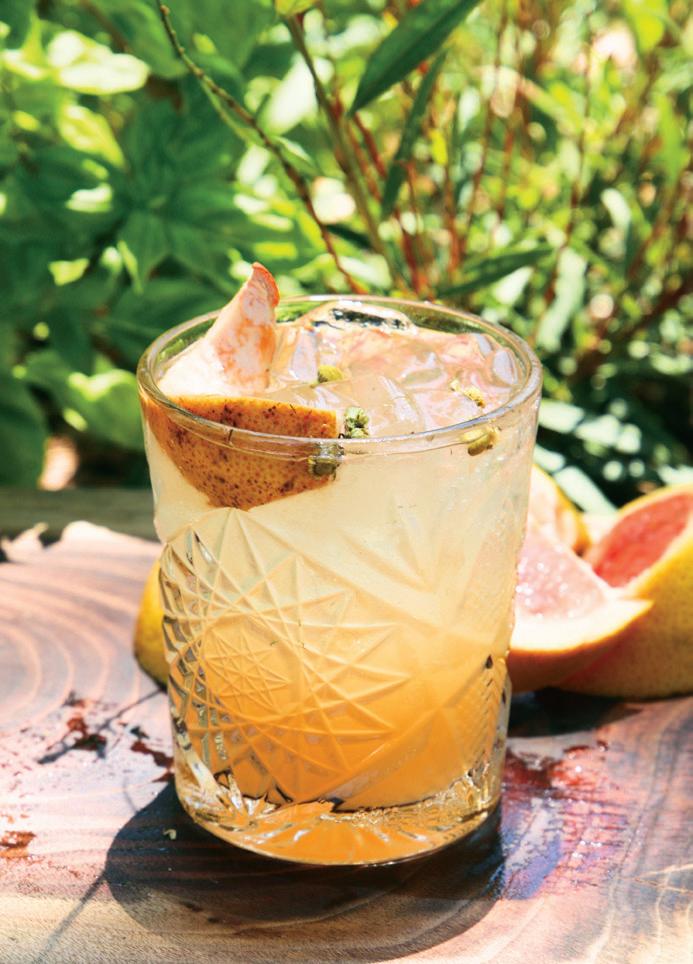
Chamomile Paloma
Courtesy of Agapi Bistro + Garden
With a little tartness from fresh grapefruit, some sweetness from agave and flowery notes from chamomile, this sipper is as refreshing as you want your summer cocktails to be! Infusing fresh chamomile into the tequila brings an extra dimension to one of Agapi's signature cocktails.


Ingredients
2 ounces now-infused chamomile tequila
1/2 ounce agave
1/2 ounce fresh lime juice
2 ounces of fresh squeezed grapefruit juice
Method
Infuse your favorite tequila with dried chamomile flowers for at least 12 hours or overnight. Strain to remove the flowers then proceed (we like Campo Bravo Tequila Blanco). Shake over ice, finish with a splash of soda water and enjoy!
Mestizo
Courtesy of Jackson’s Steakhouse
Ingredients
2 ounces Corralejo Extra Anejo tequila
1/2 ounce house mesquite-smoked orange syrup
3 dashes Angostura bitters
1/4 ounce triple sec
Charred orange garnish
Method
Start with a large ice cube in a rocks glass. Add the tequila, syrup, bitters and triple sec. Stir very well to incorporate all ingredients, garnish with the charred orange and enjoy!
24 | JUNE 2023


Art of the Taco
Unless you grew up near the southern border of Texas, New Mexico or California, your first taco experiences as a kid were most likely the versions from Taco Bell, or those store-bought hard taco kits your parents used to make. Crispy shell, chili powder seasoned ground beef, shredded iceberg lettuce and yellow plastic-like cheese shreds. Let’s not talk about those atrocities and what the U.S. food processing industry did to something so beautiful as a true south of the border taco. Let’s talk about the authentic ones—their history, the varieties and what makes them so special.

First, we have to talk about the tortilla. When you think of real tacos, you think soft corn tortillas. The origin of the corn tortilla dates all the way back to Mayan times in the Mesoamerican region, which is modern day Mexico and Central America. In Mexico, the native plant was a staple to early civilization’s diet in the area. The Mayans learned that if you soak the corn in lime, it separates the skins and allows the kernel to be ground easily into
a paste mixed with water. This process is called nixtamalization. The same process is used today using alkaline solutions, which is how we get masa, the building block of corn tortillas. In the 16th century, the Spanish arrived in the area and took note of the small flat corn cakes being made. In Spanish, torta is the name for a cake, so the Spanish called these “little cakes” and the name “tortilla” has stuck for centuries.
Now, this is where things start getting exciting for me. As an avid world traveler, a chef and lover of cultures and foods from around the world, I quickly learned that very few foods we think of today are purely authentic to the region we associate them to. There’s a lot of bad things that came from colonization and the influences of other cultures around the world, but food is one of the positives we can celebrate and embrace. The Spanish returned to Europe with this newfound tortilla, subsequently wheat flour was then introduced from Europe to Mesoamerica, and the flour tortilla was born. Around the same time, the Greeks used the same method with chickpea meal and made a tortilla with it. From there, the sharing of crops, ingredients and methods took off, and the worldwide culinary explosion began.

26 | JUNE 2023
Al pastor, Mexico City
Story & Photos
by Randy Russell
Local Chef and World Traveler, Randy Russell, Breaks Down the Art of the Taco.
Fun fact: The tomato also originated from the Mexico region, and was introduced to Europe. Italy never even knew what a tomato was until the Spanish brought them from the Americas. Think about what you know about Italian food and ponder that for a moment! Also, almost every chili pepper in the world came from Mexico. Thai Bird's Eye Chili from Thailand? Nope. Mexico. This area was a culinary gold mine when it was discovered, and we can see how the rich complex flavors developed there and had such an influence on the rest of the world.
Let’s talk about the second big component of the taco—the meat! Although there are veggie taco options out there, meats steal the show when it comes to tacos, and their preparation has been more than perfected over time. This is where Mexican cooking stands out to me. We’re talking long marinades and fast cook time, or slow cooking and infusing mountains of flavor. My biggest lesson learning to cook proper Mexican meats was to realize that the meat was not the main star. You’re not grilling a fine cut of steak to enjoy the flavor and texture of it. The meat is a vessel for all the spices—the chilies, the onion and the citrus—to meld and deliver it to you. The main star is the love that’s put into the meat through a combination of all these other spices and vegetables. It’s about finding a rich balance and a proper cooking method to deliver a tender texture bursting with flavor. If you’re getting tacos with bland meats that require lots of salsa to give it flavor, you need to find another taco spot!


While there are seemingly endless types of fillings throughout Mexico’s many regions, let’s talk about the most common and well-known ones. We’ll start with my favorite, Al Pastor. Another gift of cultures trading ideas. Al Pastor’s origin began in the Middle East. Lebanese immigrants settling near Mexico City brought shawarma, which was lamb cooked on a vertical grill and served on pita bread. They adopted the name Tacos Arabes, and you can still find spots serving that style throughout Mexico City. Thin sliced pork replaced the lamb, marinated in an adobo blend of guajillo chilis, achiote, herbs, spices and vinegar. It was then layered on the vertical grill, which was named a trompo, and the best ones are topped with pineapple to let the juices drip down as it spins and cooks. My favorite Al Pastor in town has to be Taqueria El Asador. Although they don’t use a traditional trompo, the smokiness they impart into their al pastor is perfect, and they don’t hold back on the marinade. Tacos El Amigo also makes a good Al Pastor.
Next up is carnitas. This one was born in Mexico, and gets its glory from the slow cooking process of a fat marbled cut of pork simmered in lard until it’s tender and shredded. At its simplest form it is only seasoned with salt, but many spice variations are used. Bonus points go to the ones that get a quick fry to add some crispy bits in there after the slow cook. I love a good mojo style carnitas, with lots of orange and lime and a bit of spice. I usually have to make this one myself, but if I’m grabbing some on the go, I like the ones at Taco Mex, which is a great taqueria attached to the La Mexicana Supermarket.

PENSACOLA MAGAZINE | 27
Al pastor trompo, Mexico City
Nopales (cactus) taco, Mexico City
Cochinita pibil is a less common pork method, but one of my favorites. It comes from the Yucatan, and uses orange juice and achiote (annatto seeds) in the marinade. It is traditionally wrapped in banana leaves and cooked in the ground until tender falling apart. We’ll learn more about this method later when we talk about barbacoa. Mama and Papa’s Tacos on Olive Road offers it, and while I doubt they’re burying it in the ground, they do a decent job.
Rounding out our pork talk, chorizo is another of my go to options anywhere I see it on a menu. Chorizo came from the Iberian Peninsula of Spain and Portugal. It’s a ground pork sausage, originally linked in casings, and gets its distinct flavor from healthy doses of smoked paprika. There are many variations using sweet or spicy paprika, and even cured versions used in charcuterie. The Mexican version we find in tacos is usually made with fresh ground pork and is cooked without casings so we end up with a loose ground seasoned meat to toss into tortillas. Chorizo goes heavy with salt and spices, as it was originally meant to be a cured meat, but that’s what makes it amazing. Once again, a proper quick fry giving it some crispy bits is a bonus! Tacos El Fluffy does a great breakfast chorizo taco, and they also make their own corn and flour tortillas in house, which is very hard to find here in Pensacola.
Moving on to beef—and there’s some magic here. Once again, if you're looking for some secret info on ground beef taco
meat, you’re better off asking someone at your local drive thru. Let’s talk about Barbacoa instead. Barbacoa actually refers to a cooking method. That’s right, you guessed it, barbecue. In fact, modern day BBQ as we know it started in the Caribbean, by an indigenous people called Taino. They dug pits and wrapped meats in large fig leaves, then used the fire pits to slow cook the meats and preserve them. The method eventually made it to Mexico, most probably by the Spanish, and evolved to use heavily marinated lamb or beef, wrapped in agave leaves, then slow cooked with fire and hot stones until tender and shredded. You can still find it done this way in Mexico, but unfortunately, to my knowledge, no one is digging holes and using giant leaves in Pensacola. Tacos El Fluffy has my favorite barbacoa in town, with a close second at Taco Mex.

Most are no stranger to carne asada—that tender marinated cut of steak that we are lucky to have grace a tortilla. As the beef and ranching industry grew in northern Mexico, carne asada became more prevalent. Usually made from skirt or flank steak, with a long marinade including spices, aromatics, lime or other acids to break down the tougher cut of meat, then a quick grill over high heat for some char. Some thin slicing against the grain and it’s taco time. If there’s a taqueria that has mastered the grilling of meats in town, it’s El Asador, and that’s my pick for carne asada!

28 | JUNE 2023
Assorted tacos, Mexico City
Assortment of seafood tacos, Mexico City
Now let’s talk about one that’s become all the trend in the last few years, birria. As most know it, it’s a heavily seasoned and slow cooked beef, served with a broth or consomme left over from the pot. It was originally made with goat. Goats were introduced to Mexico by the Spanish and soon became a problem as they took over, destroying crops and wreaking havoc. As we all know, the best thing to do with your problems is to eat them, and so birria was born. The heavy seasoning and long cook times helped remove the gaminess out of the goat. Other meats such as lamb and beef were eventually used, and beef being the most available here it became the most common. While it’s not on their regular menu, if you see birria pop up as a feature at Misu Street Food, get in line!
Lengua. Many are afraid of this one, but prepared properly, it’s amazing. Cooking cow tongue utilizes the thought of not wasting any part of the animal. I compare it to a slightly gamey roast beef. There’s two ways you’ll find it, cooked until tender and cut into cubes, or cooked until it shreds. I prefer the shredded version, and if made right, it’s like a tender roast beef cooked to the point of falling apart, but with a unique and different flavor. Lengua fans swear by it, and my go-to in Pensacola is El Asador once again and Tacos El Fluffy.
When looking for pollo, chicken tinga is the one that gets me excited. Another one that’s hard to find, but Mama and Papa’s Tacos have it on their menu. A nice aromatic stew of chicken with tomato, chipotle peppers, and adobe seasonings, cooked until it shreds. There are other chicken tacos out there, but if you want an authentic original, look for tinga on the menu.
We can’t talk about tacos and not mention the iconic Baja style fish taco. Brought into the mainstream by Southern California surfers refueling at their local taco stand after hours in the water and on the beach. There’s no better feeling. It’s rumored that Japanese immigrants that populated the northern Mexico fishing industry in the 1930s influenced this taco’s creation. They brought the tempura method of frying fish, using a batter instead of breading or grilling. You will find these with grilled fish, too, but the battered version is superior in my opinion. The classic version adds shredded cabbage or slaw, a crema, and sometimes an avocado salsa. Although there are a million versions out there, the classic Baja-style fish taco deserves its iconic reputation. To my knowledge the only place in town making this style is Gaby’s Taqueria. If there are others near us, please let me know.
Toppings and salsa—the final touch! At its simplest, all a taco needs is onion, cilantro, and lime. This is if the meats have been done with love, and they are bursting with flavor. Now, we’re not going to drown them in salsa are we? Yes we are. Let’s be clear that salsa in this application is not the chunky stuff you dip your tortillas in sitting on the couch. Salsa means sauce, there’s endless varieties, and no two are the same at any given taco stand. The two staples are salsa roja and salsa verde. Roja being tomato or red chili based, and verde being green chili and tomatillo based. We can go on and on about habanero and mango, avocado verde, jalapeño crema, pico de gallo, morita chilis, chile de arbol, serrano… the varieties and creations are endless. In its essence, a good salsa combines a heat element (chili or pepper) with acid (lime or vinegar), along with other vegetables and aromatics. They bring pop and brightness to the fatty meats and tortilla, and balance to the world.
Enjoy your tacos Pensacola.
 Octopus taco on Hoja Santa tortilla, Restaurant Pujol, Mexico City.


You have what it takes to multitask like a boss. And we have the right IT solutions to help you manage it all. From high-speed Internet to managed cloud options, we have IT solutions for every aspect of your business. Because we know what IT takes. coxbusiness.com © 2023 Cox Communications, Inc. All rights reserved. PAD108712-0006 No one crushes crunch time like you With our best agents located in Pensacola, you can be sure you’ll... • Get the most value for your money • Secure protection for your most valued assets • Better understand what coverages you have and what is available • Have access to an experienced agent providing you with personal service throughout Florida Mary Jordan Agent/Owner (850) 384-0593 mary@gcainsurance.com Cassy Smith Operations Manager (850) 497-6810 cassy@gcainsurance.com Taylor Bubert House Agent (850) 497-6810 taylor@gcainsurance.com Vicki Ruschel Personal Lines Manager (850) 497-6810 vicki@gcainsurance.com Speak with one of our agents today! One Great Team, Amazing Service! 700 New Warrington Rd Pensacola, FL 32506 Pensacola O: 850-497-6810 Gulf Coast Insurance gcains.com
In
We Trust
Ask any taco aficionado and they will likely tell you that tacos are the perfect food. They are affordable, they come in an array of types and flavors to suit any palate, they are portable and they are relatively healthy compared to other quick food options. Plus, they have history, they are aesthetically pleasing and they are just plain cool. While Pensacola isn’t known as a taco hotspot, we do have quite a few tasty taquerias for a city our size. From brick-and-mortar taco shops to taco trucks, we’ve rounded up a sampling of some of Pensacola’s most delicious taquerias. ¡Buen provecho!

Taqueria El Asador
7955 N Davis Hwy., Pensacola (Behind the Shell gas station) elasadorpensacola.com
This family-owned taco joint is one of the most popular food trucks in town. Most known for its authentic street tacos and smoky Mexican fare, El Asador has been recognized as one of the top taco spots in the country, with national rankings from Business Insider and Yelp. The truck offers its famous tacos three ways: Taco Regular (meat, cilantro, onion and lime), Taco Supreme (all the regular toppings plus queso fresco, lettuce, tomato and avocado), and Taco Pirata (all the regular toppings plus avocado and melted cheese). Customers can choose from flour or corn tortillas and a variety of proteins such as asada, pastor, pollo, chorizo, campechano and lengua. All meats are grilled over Mexican-imported charcoal. In addition to their authentic Mexican tacos, El Asador also serves other Mexican dishes like burritos, tortas and more. They offer several specials; for Taco Tuesday, the truck offers three tacos for $6. A variety of other specials can be found on their website, including deals for families and students.


Tacos Mexicanos
Locations in East Hill, Downtown & 1014 Underwood Ave (across from PSC) facebook.com/tacosmexicanospensacola
Loved by locals, Tacos Mexicanos is an authentic Mexican taco spot that has grown to include three locations across the city. As one may assume from the shop’s name, Tacos Mexicanos is most known for its tacos. At each location, they serve a variety of tacos from simple street tacos with meat, cilantro and onion, to the popular “Awesome Taco” that has all the fixings. In addition to their beloved tacos, the restaurant serves up burritos, dips and a variety of other Mexican fare. Whether you’re looking to grab something on the go or prefer a sit-down dining experience, each location offers the same delicious menu options.
Gaby’s Taqueria
104 E Gregory St., Pensacola gabystaqueria.com
Established by the owners of Pensacola’s popular Tacos Mexicanos, Gaby’s is a quaint taqueria that’s new to the downtown area. This taqueria is most known for its California-style Mexican dishes including seafood street tacos and tasty breakfast tacos. In addition to the tacos, Gaby’s also offers burritos and fresh-grilled Mexican street corn. Gaby’s breakfast tacos are served all day and include eggs, your choice of meat or veggies, potatoes and cheese. Options for their regular tacos include tasty fish, shrimp, chorizo and chicken tacos.
Mex-N-Go
4454 Gulf Breeze Pkwy., Gulf Breeze mexngofoodtruck.com
This small family-owned and -operated food truck is located in Gulf Breeze and prides itself on serving up delicious authentic Mexican food. The Mex-N-Go food truck is open for both breakfast and lunch, offering specialty tacos, burritos, tamales, fresh salsas and much more. Locals line up in droves for their tasty lunch tacos, and the $3 breakfast tacos are the talk of the town. Mex-N-Go is open Monday through Friday from 6 am to 7 pm and on Saturdays from 8 am to 3 pm.
32 | JUNE 2023
Mama’s & Papa’s Tacos Deliciouso

2256 East Olive Rd., Pensacola mamasandpapastacos.com

Most known for their tasty street tacos, this laid back taco joint dishes up delicious authentic Mexican street foods. In addition to the authentic Mexican fare, Mama’s & Papa’s also offers a number of drink and food specials throughout the week, including $2 street tacos on Taco Tuesdays and two for one margaritas (with your choice of flavor) all day on Mondays, Tuesdays and Thursdays. This family-friendly establishment offers both indoor and outdoor seating options, along with live music on Tuesdays from 6 to 9 pm.
Tacos El Amigo
6201 Tippin Ave., Pensacola facebook.com/Tacos-El-Amigo
Grab a taste of Mexico, El Salvador and Chile all from the tiny counter of the Tacos El Amigo taco truck. Parked in a lot on Tippin Avenue, this establishment also features a spacious outdoor seating area for you to enjoy your meal and soak up some sun. Pair an al pastor, asada taco or a steak quesadilla with their revered, homemade red and green sauces. Tacos El Amigo serves lunch and dinner 11 am to 8 pm, 11 am to 5 pm on Sundays and is closed on Tuesdays.
Rika’s Tacos
(formerly Tacos Del Ray)
5080 Gulf Breeze Pkwy., Gulf Breeze facebook.com/RikasTacos
Formerly known as Tacos Del Ray, this family-owned and -operated food truck serves up some of the tastiest tacos in town. They offer a wide variety of proteins to choose from, including barbacoa, chicken, al pastor, fresh fish and more. Although Rika’s is most known for its authentic Mexican tacos and flavorful Birria, be sure not to leave without trying their scrumptious street corn. You can visit Rika’s food in Gulf Breeze Monday through Saturday from 10:30 am to 7 pm.
Nomadic Eats
9 E Gregory St., Pensacola nomadiceats.com
Don’t have the time or the expenses to travel? Nomadic Eats provides their customers with the experience of backpacking across Latin America and Southeast Asia without them having to go anywhere but their food stall. This fusion food truck’s specialty, aside from its chicken and cauliflower tacos, is its unique rice bowls that feature an array of different proteins, veggies, beans, grains and tantalizing sauces. Don’t forget to also grab one of their original bottled “Jet Lagged” hot sauces for Taco Tuesdays at home.
PENSACOLA MAGAZINE | 33
Taqueria Olgy’s
Restaurant: 5222 North W St., Pensacola
Food Trucks: In Cantonment & Gulf Breeze taqueriaolgyspensacola.com
Serving authentic Mexican cuisine since 2006, this family owned taco stop is a local favorite most known for its flavorful tacos and mouth-watering mulitas. With a stand-alone restaurant in Pensacola and food trucks located in both Gulf Breeze and Cantonment, you don’t have to drive far for a taste of this flavorful fare. Enjoy daily specials at the restaurant and at both food trucks locations, including three tasty tacos for $7 on Taco Tuesdays.
Tacos El Fluffy
707 N Pace Blvd., Pensacola facebook.com/people/Tacos-El-Fluffy
Tacos el Fluffy, is a family-owned authentic Mexican restaurant. Its casual atmosphere as well as its homemade-style flour and corn tortillas will make you feel right at home. Protein options include chicken, pork, and steak, as well as vegan options, and serves breakfast, lunch and dinner. Restaurant doors are open from 9 am to 6 pm from Tuesday to Friday, 9 am to 9 pm on Saturdays and 9 am to 6 pm on Sundays. From tacos, to burritos, to tamales and even soups, the staff at Fluffy Tacos guarantees that you will leave full and feeling like family.
Tacos Rock
913 Gulf Breeze Pkwy. (Unit 20), Gulf Breeze tacorockgb.org
Enjoy a tasty culinary fusion of Mexico City, Nogales and California at this easygoing, family-owned restaurant located in the Harbor Town Shopping Village in Gulf Breeze. This popular local spot is well-known for its delicious puff tacos and their authentic street tacos, which are sure to have you coming back for more! Each dish is homemade and the portions are sure to satisfy even the hungriest of eaters.

Taco Agave

200 S Palafox St., Pensacola agavepcola.com
This bustling establishment with an open tequila and taco bar sports a modern air that appeals to the frequent trotters of Downtown Pensacola. Along with their popular Mexican street tacos, Taco Agave offers more than 80 different tequila-based drink options, which are best taken advantage of during Happy Hour, which is from 4 to 7 pm. Be sure to try their Nashville Hot chicken taco if you like a little spice or the Adobo Lime Shrimp to indulge in an array of unique flavors. The restaurant also has $3 tacos and $5 margaritas on Taco Tuesdays.
Taqueria El Guero
2704 W Avery St., Pensacola
This family-owned and operated food truck serves tasty Mexican staples on-the-go for an affordable price. You can find the mobile restaurant parked in one of Pensacola’s Latin Markets on Avery Street, and can expect to enjoy delectable tacos, tortas, asada fries and more. Taqueria El Guero also offers a specialty menudo dish on the weekends. You can give Taqueria El Guero a taste from 10:30 am to 8 pm Monday through Wednesday, 9:30 am to 8 pm on Saturdays and 9:30 am to 7 pm on Sundays.
34 | JUNE 2023
Calavera Tacos

501 S Palafox St., Pensacola thegardenpensacola.com/kiosks/ calavera-tacos
Calavera dishes out delicious streetstyle tacos and Mexican cuisine. Located in The Garden at Palafox + Main in downtown Pensacola among a collection of other food trucks, enjoy locally loved meals on wheels such as their Paco Taco, which is piled with deep fried Mexican-spiced Mahi Mahi and topped with serrano cabbage, pickled red onion and their famous southwest cilantro white sauce. Another local favorite is their tasty ceviche tacos, which include Mahi and gulf shrimp marinated in lime juice, pico de gallo and avocado with habanero sauce on a corn tortilla. This location provides a wide selection of proteins, and each taco is loaded with an abundance of colorful toppings that are sure to delight your eyes, taste buds and wallet. Calavera is open 11 am to 9 pm Monday through Saturday and 11 am to 6 pm on Sundays.
Tacos La Mixteca
7144 Mobile Hwy., Pensacola
Located off Mobile Highway next to the RFM gas station, this Female-owned and operated food truck dishes up authentic street tacos and tasty Mexican fare. Most known for their scrumptious street tacos and authentic Mexican elotes, this is one taco truck that’s sure to satisfy just about any taco craving. Their tacos come with your choice of protein with fresh and color toppings. Fill up on their large (and cost-effective) portions while you fill up your tank Monday through Saturday from 10 am to 8 pm; look for the red and white kitchen with a motor engine.
Taco Rock 29
5454 Pensacola Blvd., Pensacola facebook.com/tacorockpensacola
Visit the family-owned local favorite Taco Rock for authentic and California-style Mexican cuisine. Though the restaurant is drive-thru only, the food quality along with the friendly staff compensate for the lack of an indoor dining experience. Cars wrap around the building for the chance to try their Birria Tacos, the Puffy Tacos, and their fry-filled Cali Burrito. Taco Rock was established in 1997 and is one of Pensacola’s oldest taco shops. They are located in the heart of the city and the building’s colorfully painted exterior makes it difficult to miss. Stop by Monday through Saturday for lunch and dinner and give this Best of The Bay Award recipient the chance to rock your world with their killer cuisine and customer service.
The Happy Taco
1803 County Rd. 95A, Cantonment facebook.com/happytacopensacola
You can find yummy Mexican classics at this family-friendly Cantonment taco joint, including chimichangas, their “Mind Blowing Fajitas," shrimp tacos, whopping beef burritos and the favored fluffy tacos, which are served in house-fried tortilla shells. This restaurant offers dine-in, takeout and delivery options and 3 for $5 tacos on Taco Tuesday. Visit the Happy Taco any time between 11 am to 8 pm Monday through Saturday; they’re sure to make you happy too.

PENSACOLA MAGAZINE | 35
Lupita’s Mexican Fast Food
Locations at 6890 Pensacola Blvd., 7815 N Davis Hwy. & 8620 Pine Forest Rd. lupitas-mexican-fast-food.business.site
Lupita’s Mexican is a small, locally-owned string of Mexican restaurants located throughout the Pensacola area. At each of their three locations, Lupita’s serves up authentic Mexican food and delicious tacos. The restaurant offers a variety of meats including barbacoa, lengua, camarón and more. They also serve up birria tacos, which are sometimes called “dipping tacos,” as they come with delicious stew to dip the tacos into. Lupita’s also serves breakfast all day long.
Taqueria Emmanuel
1709 North W St., Pensacola facebook.com/people/Taqueria-emmanuel
The authenticity and freshness of the dishes this location serves has locals raving and brings the south of the border directly to your taste buds with their carnitas, lengua tacos and beef soup, which are all made to order. While bargain shopping at the T&W Flea Market be sure to stop in for fresh and filling food that is also just as affordable. You can visit Taqueria Emmanuel from 9 am to 9 pm Monday through Saturday, and 9 am to 5 pm on Tuesdays.
La Barra del Taco
3811 W Navy Blvd., Pensacola labarradeltacos.com
Head over to the freshly revamped La Barra del Taco for an equally refreshing dining experience. This location prides itself on their in-house made meals, sauces, condiments and mixed drinks and their large menu and servings are sure to satiate. Give the La Barra del Taco team a visit on Navy Boulevard for a delicious and affordable chicken fajita, their carne asada or their two-for-one margaritas. Restaurant doors are open from 10:30 am to 10 pm on weekdays, 9 am to 11 pm on Saturdays and 9 am to 9 pm on Sundays.
Latin Markets
Want to try your hand at cooking your own authentic tacos and other Latin fare at home?

You’ll find everything you need for your culinary adventures at these local Latin markets.
Tienda San Pablo Mexican Store and More
6013 Tippin Ave., Ste D, Pensacola (850) 741-2376
This newly established Mexican grocer is family owned and operated and has several locations spanning across the Gulf Coast. The Pensacola location has a great selection of foods, spices, desserts, beverages and personal supplies from beloved and reliable Latin and Hispanic brands. They also prepare their own specialty hot and freshly made tortillas on the weekends.
La Mexicana Supermarket
9101 Pensacola Blvd., Pensacola (850) 479-2815
The La Mexicana Supermarket provides local Latin cuisine lovers with a trifecta of Mexican delights. Operating as not just a grocery store, but a restaurant and a bakery as well. From fresh produce and Mexican seasonings to freshly baked bread and other highquality, imported Mexican goods, La Mexicana has it all.
El Chavo Mexican Store
5428 US-90, Pace (850) 910-4243
Located in Pace, this authentic Mexican grocery retailer has quickly become a local favorite. The store carries a large variety of specialty and imported candies, Mexican drinks and sodas, unique home goods and more. You’ll also find an amazing selection of unique Mexican and Cuban chilies, spices and freshly cut meats.
36 | JUNE 2023


PENSACOLA MAGAZINE | 37 YOUR FUTURE IS CREATED BY WHAT YOU DO TODAY, NOT TOMORROW. The expert in the area on Estate Planning can help you make sure that future generations are taken care of. 921 N Palafox Street Pensacola, FL 32501 • Wills & Trusts • Living Wills • Probate & Trust Administration • Probate & Trust Litigation • Corporate • Guardianships • Tax Planning Gary B. Leuchtman Board Certified in Wills, Trusts & Estates Recognized as a Super Lawyer for 10 + Years Lauren M. Pride Associate Attorney verandapensacola com 850-396-4866 6982 Pine Forest Rd, Pensacola FL 32526 Assisted Living License #11190
EVENT CALENDAR
Pensacola Blue Wahoos Schedule
June home games at Blue Wahoos Stadium
For more information and tickets, visit milb.com/pensacola
June 6 at 6:35 pm - Montgomery Biscuits vs Blue Wahoos
June 7 at 6:35 pm - Montgomery Biscuits vs Blue Wahoos
June 8 at 6:35 pm - Montgomery Biscuits vs Blue Wahoos
June 9 at 6:35 pm - Montgomery Biscuits vs Blue Wahoos
June 10 at 6:05 pm - Montgomery Biscuits vs Blue Wahoos
June 11 at 4:05 pm - Montgomery Biscuits vs Blue Wahoos
June 13 at 6:35 pm - Mississippi Braves vs Blue Wahoos
June 14 at 6:35 pm - Mississippi Braves vs Blue Wahoos
June 15 at 6:35 pm - Mississippi Braves vs Blue Wahoos
June 16 at 6:35 pm - Mississippi Braves vs Blue Wahoos
June 17 at 6:05 pm - Mississippi Braves vs Blue Wahoos
June 18 at 4:05 pm - Mississippi Braves vs Blue Wahoos
Blue Angels Practice Dates
June 6, 7, 13, 14, 20, 21, 27, 28
The world-famous Blue Angels can be seen practicing over the National Naval Aviation Museum at NAS Pensacola select days throughout the year. Department of Defense identification card holders and their guests (active duty service members, retirees, and their families) can visit the National Naval Aviation Museum to watch the Blue Angels practice. The gates will open at 9:30 am. The practice flight demonstrations can also be viewed outside of NAS Pensacola including Fort Pickens, boat cruises, and various points throughout downtown. The Blue Angels will take off around 10:30 am and the practices last for about 55 minutes. Practice schedules are subject to change.
Pensacola Habitat Takeover @ Wahoos Stadium
June 7
Come watch some Pensacola Blue Wahoos baseball and support Pensacola Habitat’s mission. There will be goodies, games, and entertainment for the whole family! Not to mention, the famous Wahoos fireworks show will happen after the 9th inning! All ticket proceeds directly benefit Pensacola Habitat for Humanity. The Pensacola Blue Wahoos Stadium is located at 351 W Cedar Street. For tickets and more information, visit pensacolahabitat.org/merch/ bluewahoos.
World Ocean Day Open House 2023
June 8
World Ocean Day will be a day of environmentally focused games, activities and art projects at the Perdido Key Area Chamber of Commerce and Visitor's Center. The Chamber, along with multiple partner agencies, will be presenting information on protecting our beaches and marine habitat in conjunction with World Ocean Day. The open house will feature presentations including a live feeding of the lionfish which are housed in the educational display tank at the Perdido Key Visitor's Center. The event will run from 10 am to 2 pm and is free to attend. The address of the events is 15500 Perdido Key Drive, Perdido Key Florida. For more information, visit business. perdidochamber.com/events.
Alice's Adventures in Wonderland @ Pensacola Saenger
June 10
Follow Alice down the rabbit hole as she meets the Queen of Hearts, the White Rabbit, Cheshire Cat, and all the other characters from this classic story. Of course, expect the typical LaBelle twist. Featuring the Pensacola Saenger’s older Elementary, Middle, and High School students. The show begins at 6 pm and doors open at 5 pm. The Pensacola Saenger Theatre is located at 118 South Palafox Place. For tickets and more information, visit pensacolasaenger.com.
Alesana @ Vinyl Music Hall
June 17
Alesana is embarking on the second installment of their Trilogy Tour, this year playing the album “A Place Where The Sun Is Silent” in its entirety as a follow up to last year's successful performances of “The Emptiness” across the US. The album includes fan favorites “Lullaby of the Crucified,” “A Gilded Masquerade” and Revolver Magazine's 2011 Song of the Year, “Circle VII: Sins of the Lion.” Alesana will be joined by Limbs, Vampires Everywhere, Across The White Water Tower at Vinyl Music Hall. Doors open at 6 pm and the show begins at 7 pm. Vinyl Music Hall is located at 2 S Palafox Street. For tickets and more information, visit vinylmusichall.com
Rumours @ Vinyl Music Hall
June 24
Formed in 2014, Rumours (also known as Rumours ATL) has taken the U.S. by storm with their stage scorching renditions of Fleetwood Mac songs. Fans from across the nation claim that Rumours is the band to see if you are looking for an authentic recreation of live Fleetwood Mac shows. Doors open at 7 pm and the show begins at 8. The Vinyl Music Hall is located at 2 S Palafox Street. For tickets and more information, visit vinylmusichall.com.
RuPaul's Drag Race Werq the World @ Pensacola Saenger
June 28
RuPaul's Drag Race Werq the World 2023 is coming to the Pensacola Saenger Theatre this June. Perception is not reality… Asia O’Hara, Bosco, DeJa Skye, Jujubee, Lady Camden, Laganja, Vanessa Vanjie and select finalists from Season 15 of RuPaul’s Drag Race are unknowingly trapped in the Netwerq. Free your mind this summer at the world’s largest drag production. Uploaded by Voss Events in collaboration with World of Wonder and MTV. Audience members must be 18+ to attend. Doors open at 7 pm and the show begins at 8 pm. The Pensacola Saenger Theatre is located at 118 South Palafox Place. For tickets and more information, visit pensacolasaenger.com.
38 | JUNE 2023
Pensacola International Billfish Tournament
June 28 - July 2
The Pensacola Big Game Fishing Club will host its Annual Pensacola International Billfish Tournament. For those who have not fished the Pensacola International Billfish tournament hosted by the PBGFC, you are in for a treat. The tournament is during the hottest Billfish action of the season. The event kicks off on June 28 with a captain’s meeting and ends July 2 with an awards banquet. The Pensacola International Billfish Tournament is hosted at the Palafox Pier & Yacht Harbor, located at 997 S Palafox Street. For more information, visit pbgfc.com/ pensacola-international-billfish.
RMHC Firecracker 5K
July 1
The 2023 Firecracker 5K will be held in historic downtown Pensacola and benefits Ronald McDonald House Charities of Northwest Florida. The race starts and ends at Seville Quarter (130 E Government Street) and invites both runners and walkers to join the fun. Celebrate this Fourth of July-themed race by wearing your red, white, and blue. Following the 5K is the Kids Fun Run. Regular registration ends on June 30. Late registration is available after that and can be completed at packet pickup or the morning of the race. For more information or to register, visit runsignup.com/Race/FL/Pensacola/ RMHCFirecracker5K.
Flora-Bama Freedom Run
July 1
Flora-Bama's 3rd Annual Freedom Run will take place on July 1. From ribbons and bows to flags, socks and t-shirts, break out your best red, white and blue attire because we want to make this run scream America! This patriotic run will feature two courses: a 4-mile course and a 1-mile course. Participants can either walk or run, just have fun! The races start at 8 am. The FloraBama is located at 17401 Perdido Key Drive in Pensacola. For more information or to register, visit florabama.com/freedom-run.
Sing Summer in the with the Pensacola

Children's Chorus

Pricing varies
Multi-week discounts available
SPOTLIGHT SERIES
June 19-23 Grades 1- 5
July 5-7
Grades 7-12
SUMMER FESTIVAL
July 24-29
Grades 1-8
July10-14 Grades 6-8
For more information, scan the QR code

PensacolaSings.org
DANCE INTENSIVE



THE 2023 KIA LINEUP TIRES FOR LIFE AND LIFETIME POWERTRAIN WARRANTY REQUIRE ALL FACTORY MAINTENANCE FOR AS LONG AS YOU OWN THE VEHICLE. SEE DEALER FOR DETAILS. KIAAUTOSPORTPENSACOLA.COM 6637 PENSACOLA BLVD. | PENSACOLA, FL 32505 850.457.7772 Movement that inspires Something for Everyone.

PENSACOLA MAGAZINE | 41 NW Florida’s
Climate 43 LeaP for Change 2023 Leadership Pensacola class establishes Care Closet and School Pantry Program to Support Families Across Northwest Florida. 47Around the Region Find out what's happening in business, government and cultural news throughout Pensacola and Northwest Florida. Special Section • June 2023
Business
The









with Chris Bryan • 7AM–8AM



Information-Pop Culture-Lifestyle-Personality! Not many people have the unique bragging rights of local roots, plus an amazing journey of career accomplishments. He says he’s a radical independent and a hostile witness to the baby boomer generation... and every weekday morning on WPNN he proves it. He’s the voice at the intersection of information, pop culture, lifestyle, politics, change, and tradition... and has lived to tell the magic and heartbreak of living in Pensacola and cities around the world. Those who listened to him as a kid on WBSR, G-100, WABB-FM, now tune in to the morning radio host as adults. “Experience is Everything,” working in prestigious markets across America; FOX Television Shows/Los Angeles, (Married with Children, Simpsons, 21 Jump Street, Tracy Ullman and Duet), New York, Denver, New Orleans, Dallas and Mobile. Three-time recipient of the Edward R. Murrow Journalism Award, FEMA Hurricane Certifications, CBS Network Radio, CNN Morning Business Anchor, NBC News, Screen Actors Guild (SAG Los Angeles), National Television of Arts and Sciences-Emmy Awards (NATAS Denver/Los Angeles) and New Orleans Saints Football Broadcast Producer.

Morning Report
Want to advertise? Email info@talk103fm.com or call 850.433.1141 Text Line: 850.790.5300 WPNN 103.7FM • 790AM WWW.TALK103FM.COM Pensacola’s ONLY 24 Hour Information Station WITHPAUL CHESTNUTT S PORTS RO UNDTABL E Download our app WPNN Radio 103.7FM 790AM Scan the QR Code or visit our website to view the daily lineup. Listen online at FoxSportsPensacola.com Download our app Fox Sports Pensacola The Fan Text Line: 850.790.5010
LeaP for Change
2023 Leadership Pensacola Class Supports Families Across Northwest Florida
by Morgan Cole
Helping the community, building relationships and cultivating a better Pensacola community is what each participant of the of the 55-member Leadership Pensacola (LeaP) class of 2023 strives to accomplish.

The LeaP class of 2023 implemented their project, LeaP for Change, which is an initiative that will help provide basic needs including food, hygiene products, clothing, and other necessities to specific local organizations that serve families and children in the Northwest Florida community.
For this initiative, LeaP class members established a Care Closet and School Pantry Program with the hope that the two projects will be sustained upon the current class ending.

The class partnered with C.A. Weis Elementary School to establish the Care Closet, which is available at no cost to students in need of access to basic care including hygiene and personal care, clothing and nutritious foods.
The class also worked with Feeding the Gulf Coast to utilize a multi-tiered approach to address childhood food insecurity through the establishment of their School Pantry Program. Located at the Ebonwood, Brownsville and Wedgewood community centers in Pensacola, the pantries will provide children and families with consistent access to
nutritious meals and other non-perishable food items that can be easily consumed at home, as well as other essential necessities.
On May 3, class members gathered at C.A. Weis Elementary School for the official ribbon cutting and to celebrate the completion of this year’s LeaP for Change project.
LeaP is a program of the Pensacola Chamber Foundation that was founded in 1982, with the first class graduating in 1983. The program is designed to help cultivate community leaders and teach them about existing issues in Pensacola communities and about finding solutions.
The Pensacola Chamber established the program to renew the community’s pool of talented leaders. They understood that the future health of any community is linked to committed, educated leaders who must be equipped to make vigorous, well informed and responsible decisions.
Through the 10-month program, participants gain a deeper understanding of the issues facing the local community and acquire the leadership skills and credentials necessary to resolve them.
Each year’s LeaP class is presented with a choice of potential local nonprofits to partner with for specific projects they are trying to accomplish within the community.
Overall, this year’s class project initiatives are projected to have helped more than 800 households—with a total of 500 families at C.A. Weis and 300 through the School Pantry Program.
“The Leadership Pensacola Class of 2023 had the honor of working directly with our local Community Food Pantries to serve our Pensacola community,” 2023 LeaP class member and director of research and development for Andrews Research Foundation, Jessi Truett said.
Each project initiative served to benefit families residing in the 32505 area code, where 23.5 percent of households are reported to live below the poverty threshold. The area is also classified as an urban food desert, meaning a person must travel more than one mile to access a traditional food retailer or grocery store.
In total, LeaP class members collected more than 4,000 items for use in the new pantry and closet, including soap, toothpaste, toothbrushes, socks, underwear, batteries, cleaning supplies, other toiletries and a variety of nonperishable food items.

In addition to reaching more than 800 households through their community service project initiatives, the class also surpassed its initial fundraising goal of $60,000, collecting a total of $67,000 in donations.
“Our group of 55 Pensacola Leaders from varying backgrounds and experiences worked together for a year to build and fill the pantries with the most needed items for our local families. This amazing experience allowed us to open our eyes to our community needs, and our hearts to help fill those needs,” Truett said.
To date, more than 1,900 individuals have completed the Leadership Pensacola program and have acquired the skills, passion and connections to work effectively as community trustees.
For more about Leadership Pensacola and complete details on this year’s class project, visit pensacolachamber.com/ leadership-pensacola or leapforchangepensacola.org.
44 | JUNE 2023


PALMER LAW FIRM Harbourtown Village, Suite 41 913 Gulf Breeze Pkwy | Gulf Breeze, FL 32561 RAYMOND B. PALMER , ESQ. ATTORNEY AT LAW 850.916.1000 WWW.RPLEGAL.COM Your legal resource for • Probate • Wills & Trusts • 1031 Exchanges • Business & Real Estate Contract Review Estd. 1995 • Member of The Real Property, Probate & Trust Law Section of the Florida Bar




These policies have exclusions and limitations. For cost and complete details of coverage, contact your local insurance agent or Florida Blue. The amount of benefits and premium will vary depending upon the plan selected. Florida Blue is a trade name of Blue Cross and Blue Shield of Florida Inc., an Independent Licensee of the Blue Cross and Blue Shield Association. Torgersen Causey Combined Insurance Services, Inc. is an Independent Broker of Florida Blue. TCBenefitsGroup.com 850.433.9996 Please call us in advance of your benefits renewal for a consultation. 1403 E. Belmont St. Pensacola, FL 32501 Todd
Cherie
Mike
President Executive Vice President Vice President Director of Consumer Markets Account Executive FLORIDA’S TRUSTED PROVIDER FOR: • Employee Benefits • HR Tools & Resources • Payroll Solutions • Individual Plans Father’sDay! from the Team!
Torgersen, CHC Anna Barbee Causey Reid Torgersen
Meguess
White
City Awarded Additional $3.9 Million for American Magic Headquarters at Port of Pensacola
Sunday’s Child Announces 2023 Grant Finalists

The City of Pensacola has been awarded an additional $3.9 million from Gov. Ron DeSantis' Florida Job Growth Grant Fund for a warehouse renovation and expansion at the Port of Pensacola that will allow American Magic to permanently relocate their headquarters to Pensacola. The funding is in addition to the $8.5 million approved by Triumph Gulf Coast on May 11 for the project, which will include significant renovations to Warehouse 10 at the Port of Pensacola.
“Today’s award to the City of Pensacola will strengthen the Port of Pensacola’s infrastructure and promote economic opportunities in the sailing industry for the Florida Panhandle,” Gov. Ron DeSantis said in a news release.
“We believe in making strategic investments that will create job opportunities and ensure Florida’s prosperity for generations to come.”
The additional $3.9 million will allow the City of Pensacola to move forward with the project design.
“Today is the start of something really special for our city,” Pensacola Mayor D.C. Reeves said. “We appreciate Gov. DeSantis and the DEO for recognizing the type of impact American Magic could have on our community, seeing its immense benefit to the state of Florida and for supporting our effort to make Pensacola, Florida the sailing capital of the United States of America.”
The project will include design, renovation and completion of the partially completed Warehouse 10 at the Port of Pensacola. Renovations will include a 50-foot addition, along with design and construction of a dock and boat ramp.
The permanent relocation of American Magic will create 170 jobs in the advanced manufacturing, engineering and design, and high-tech research and development sectors.
American Magic has used the Port of Pensacola on a temporary, seasonal basis since 2018, most recently training on Pensacola Bay in preparation for the 37th America's Cup in Barcelona.

Design and construction of this project is anticipated to take 24 months. Job creation is expected to begin immediately, with a total ramp-up period of 24 months from construction completion.
This project aligns with the publicly approved Portside Vision Plan, and it firmly establishes the Port of Pensacola and the state of Florida as the premier location for cutting-edge watercraft and boatbuilding innovation on a global scale.
For more information about the Port of Pensacola, visit portofpensacola.com.
To learn more about American Magic, visit americanmagic.com.
Sunday’s Child, a Pensacola Bay Area member-based philanthropic group that promotes LGBTQ+ inclusion and equality by awarding grants to significant charitable and economic initiatives, recently announced its 2023 Grant Cycle finalists. The finalists were selected after a thorough vetting process and site visits by Sunday’s Child members. The nonprofits and their projects vying for one of six grants in the amount of $20,000 are:
Washington High Softball Booster Club: Project - If We Build it, They Will Come
Dixon School of Arts and Science: Project - Dixon Cultural Immersion Lab Community Health Northwest Florida: Project - Closing the Treatment Loop for the LGBTQIA+ Bright Bridge Ministries: Project - A Comfortable Space is a Welcoming Place
Re-entry Alliance Pensacola, Inc.: Project - Modernizing an Outdated System
Stamped LGBTQIA Film Festival: Project - Growing Up: Expanding LGBTQIA+ Programs for Children and Families at Stamped Film Festival
Pensacola Little Theatre: Project - On the Same Page: Race and Censorship at the Clark Family Cultural Center
Valerie's House Pensacola Chapter: Project - Gender Neutral Bathrooms Council on Aging of West Florida: Project - Someone Waits for Me, too
Funding for the grants comes from Sunday’s Child members. Since 2014, Sunday’s Child has awarded $764,250 to local charities in the Pensacola Bay Area. Sunday’s Child President Jacey Cosentino announced in January that the 2023 membership drive had resulted in $120,000 raised from among its 182 members that would enable the organization to award six grants of $20,000 each to 501(c)3 nonprofits in Escambia and Santa Rosa counties that demonstrate a commitment to diversity, inclusion and equality. Cosentino stated, “We are so pleased to announce 9 deserving organizations from within our community; each has a shared passion for making everyone feel included and welcomed.”
Sunday’s Child members will select the six grant recipient charities and their projects from among the 9 finalists at its annual meeting on June 25, 2023. For more information on Sunday’s Child and its grant process, visit sundayschild.org.
PENSACOLA MAGAZINE | 47
Region
Around the
Around the Region
activities, including contract oversight, review of all airport design and construction, and overseeing project timelines while collaborating with stakeholders.
Remington recently served as the Executive Director of MillingtonMemphis Airport, responsible for project management, program building and intergovernmental negotiations. He has also served as a Senior Planner for Crawford, Murphy & Tilly.
Remington earned his Bachelor of Science in aeronautics from Saint Louis University and is certified by the American Association of Airport Executives. He was named Airport Business Magazine’s “Top 40 Under 40” in 2022 while also being recognized by the Tennessee Department of Transportation as Airport Manager of the Year. His project oversight was also noted in both the Architectural and Airfield categories by the American Association of Airport Executives.
Jay Tusa
Pensacola International Airport has selected two new assistant directors to organize, plan, implement and manage high-level operations and strategies for the City of Pensacola’s airport. Roy Remington has been selected as the Assistant Airport Director for Planning and Engineering, and Jay Tusa has been selected as the Assistant Airport Director for Strategy and Development. The selection of the two assistant directors brings more than 40 years of combined experience and knowledge to Pensacola International Airport and the City of Pensacola.
"We are incredibly fortunate to acquire the talent and experience that both Mr. Remington and Mr. Tusa will afford Pensacola International Airport," Airport Director Matt Coughlin said. "As we embark on the most expansive period of growth in our history, their presence on the team will certainly help us to meet our vision of a first-rate airport facility." The new assistant directors will both work under the direction of Matt Coughlin.
Roy Remington
Roy Remington has been selected as the new Assistant Airport Director for Planning and Engineering for the City of Pensacola, bringing more than 18 years of aviation experience, including planning and directing strategic initiatives, research, stakeholder coordination, grant management, analysis, and financial planning. In his role as Assistant Airport Director for Planning and Engineering, Remington will be responsible for organizing, coordinating and directing airport project
Pensacola International Airport Announces Two New Assistant Directors United Way of West Florida's VITA Program

United Way of West Florida’s Volunteer Income Tax Assistance (VITA) program processed more than 700 tax returns during this tax season. VITA volunteers worked around 530 hours, saving taxpayers $154,000 in filing fees and securing almost $700,000 in refunds.

“We are so thankful for the volunteers who put in so many hours to help the hard-working people of Escambia and Santa Rosa counties,” United Way of West Florida Financial Stability Manager Mike Eveland said. “This does not happen without their passion and dedication for helping others.”
VITA is funded through grants awarded to United Way of West Florida by the Florida Department of Economic Opportunity, Internal Revenue Service and United Way Worldwide. Additional support is provided by Florida Blue, Pensacola State College and the University of West Florida.
Jay Tusa has been selected as the new Assistant Airport Director for Strategy and Development for the City of Pensacola, bringing 23 years of travel industry experience to the position. His experience includes staff management, policymaking, public-sector tourism development, operational leadership, marketing and relationship-building. In his role as the Assistant Airport Director for Strategy and Development, Tusa will be responsible for assisting with strategic planning, day-to-day air service development, and airport marketing.
Tusa recently served as Director of Marketing for Explore Asheville, where he was responsible for leading an internal marketing team and agency partners, overseeing data-driven creative storytelling leading rebranding efforts. Prior to his tenure in Ashville, Tusa spent six years serving as Executive Director for Visit South Walton and Corporate Director of Hospitality Marketing for the St. Joe Company. He has also served as a board member of the Panama City – Bay County Airport and Industrial District.
Tusa earned his Bachelor of Arts in communications from Loyola University New Orleans and has the following certifications: Certified Destination Management Executive, Travel Marketing Professional, and Certified Travel Industry Specialist.
As the Assistant Airport Director for Strategy and Development, Tusa will lead in identifying opportunities for air service expansion, evaluating and crafting the customer service experience strategy, defining and implementing an integrated marketing strategy, and leveraging existing relationships to identify funding opportunities and partnerships that support airport growth.
48 | JUNE 2023
Produces $850,000+ Impact in Escambia and Santa Rosa Counties
Lissa Dees Selected as City of Pensacola Parking Management Director


Around the Region
"I'm excited to continue working with Mayor Reeves, city leadership and our incredible team of Parking Ambassadors to create the smoothest parking experience possible for Pensacola residents and visitors," Dees said. "I truly have a passion for this community, and I look forward to the opportunity to continue implementing best practices for parking management in the City of Pensacola."
While serving as the Executive Director of the DIB, Dees was responsible for overseeing parking in downtown Pensacola before parking management was transferred from DIB to the City of Pensacola in 2020.

In her role as Parking Management Director, Dees will continue to direct all parking operations for the City of Pensacola, including the Jefferson Street Parking Garage, city-owned parking lots and on-street parking. Her responsibilities will include managing parking staff, overseeing the security and maintenance of parking facilities, planning for future parking needs in the city and recommending improvements in operations as needed.
Dees will work under the direction of Deputy City Administrator Amy Miller and Mayor D.C. Reeves.
Lissa Dees has been selected as the Parking Management Director for the City of Pensacola, responsible for overseeing the daily operation of the city's parking facilities and guiding Pensacola's parking department in a strategic and forward-looking direction.
Dees started at the City of Pensacola in 2020 as the Parking Manager, before being promoted to the Interim Parking Management Director in 2022. She has extensive knowledge and experience working with the City of Pensacola and downtown parking, previously serving as the Executive Director of the Downtown Improvement Board from 2017 to 2020 and the DIB's Assistant to the Executive Director from 2014 to 2017.
"Lissa's dedication to our community and passion for creating a positive parking experience is unparalleled," Mayor D.C. Reeves said. "Lissa has demonstrated a strong work ethic and expertise during her time as the Interim Parking Management Director, and I'm excited to officially have her in this role. I look forward to working with Lissa and her team to continue to improve Pensacola's parking experience." To learn more about City of Pensacola parking, visit parkpensacola.com.
info@nwfl.bbb.org | bbb.org 850.429.0002

ON THE MARKET
a Real Estate Section

PENSACOLA MAGAZINE | 51
56. How to Decide If a Home Remodel Makes Financial Sense For You
58. 4 DIY Project Ideas to Bring New Life to Your Home
62. Buying Without a Home Inspection Can Be a Mistake
64. Reduce, Reuse, Redecorate: Why You Should Shop Pre-Owned for Furniture (and How To Do It Like a Pro)
In This Section
BY THE NUMBERS
A Look at April's Market Highlights
Market Highlights
April sales slipped 12% compared to march, and 33% from last April.
51 DAYS ON MARKET
For Sale
410
The median sale price remained above $300k.
The average DOM for residential and condos combined was 51,virtually unchanged from march. Last April, it was 29.
Both residential and condo inventory posted modest gains in April.
April pending sales were virtually identical to last April.
MEDIAN SALE PRICE
300k PENDING SALES
52 | JUNE 2023
Data courtesy of the Pensacola Association of REALTORS ®




NAI Pensacola 24 West Chase Street Pensacola, FL. 32502 naipensacola.com COMMERCIAL REAL ESTATE SERVICES CAMERON CAULEY, MiCP, CCA,SIOR SENIOR COMMERCIAL ADVISOR President- Property Management 850. 291.3341 cell ccauley@naipensacola.com Closed Transaction Value Exceeding $100MM 1.5 MM SF Property Management Portfolio 100% Satisfaction Rate Cauley working on new.indd 1 12/16/2022 2:54:19 PM Florida’s Top Properties 24 West Chase Street Suite 100 floridastopproperties.com Eric Milstead Senior Residential Real Estate Broker 850-221-0443 Buying or Selling? In today’s tight market you need THE EXPERT. • Over $100 Million in Closed Sales • Seasoned Marketing Specialist • Valuation Expert • Licensed Since 1992 Milstead 20 22.indd 1 4/18/2022 1:18:03 PM

This renovated beauty is historically-accurate and located in the coveted North Hill Preservation District. Built in 1900, on a Revolutionary War battlefield as a private residence then converted to a multi-family rental for 60 years, this home has many connections to local and British history. Fans of “The Crown” will be intrigued to know that the most famous tenant was Wallis Simpson, (former wife of local military legend “Win” Spencer.) She would later create a scandal, when King Edward VIII abdicated the throne of England to marry her thus changing the line of British succession forever! PROUDLY SERVING THE PENSACOLA AREA FOR 40+ YEARS! Connell & Company Realty, Inc. 2107 Airport Blvd | Pensacola, FL 32504 850.478.4141 info@buysellconnell.com BuySellConnell.com
For Sale $1,300,000
52 W Gonzalez St. | MLS 626417
5 bed, 4 bath | 4,784 Sq. Ft. | 0.26 Acre Lot
At almost 5,000 sq ft you will be hard-pressed to find a finer home, with the gorgeous millwork, high ceilings, and beautiful finishes throughout. The home has undergone extensive restoration work from 1977-2023, with the finest attention to detail. You’ll fall in love with the gorgeous gingerbread woodwork/scrollwork, operational pocket doors, beveled/leaded glass in front rooms/reception area, grand stairwell, expansive and updated master suite with dressing area, front and side porches, 4 full baths with vintage details, fullyequipped kitchen with butler’s pantry, energy-saving insulated walls and storm windows, updated plumbing/ electrical, six original fireplaces (with elegant mantles and tile surrounds – one very rare!), fully-finished attic space with tons of storage…plus neat surprises like a Harry Potter room under the stairs & a secret room!


 Allison Brandt, CRS Realtor / Associate
850.530.1916
How to Decide If a Home Remodel Makes Financial Sense For You
There comes a time when every homeowner looks around at their house and ponders a few upgrades. Sometimes, those ideas turn into full-on renovations as you reimagine your space to better meet your lifestyle. But before you start calling contractors, ask yourself: Does remodeling make financial sense?

Here are three tips to help you decide if a home renovation benefits your home and your finances:
Identify your wants vs. needs
How necessary are the improvements you want? Some home projects may end up costing you more than the value they provide. That doesn’t mean certain projects aren’t worthwhile.
“Home renovations come in all shapes and sizes. For some, it may be about the investment and increasing the home value, for a good few it might be about what looks the best, while others might not have a choice,” said Adam
Fingerman, assistant vice president of equity lending at Navy Federal Credit Union. “Whatever the reason, it’s always a good idea to understand how a large renovation might impact your finances and the overall value of your home.”
Know your budget
Consider creating a chart with all of your cost estimates, and include columns for high-, medium- and low-cost options. Don’t forget supplies for doit-yourself projects and always allocate a certain percentage for unexpected expenses.
Also be sure to get estimates from different contractors and compare them. Carefully check references and business licenses.
Explore financing options
Ideally, you’ve already established a home improvement savings plan. But if you’re planning to borrow, explore your financing options through your trusted bank or credit union.
“Think about the size of your project, whether or not you’ll have ongoing expenses, and your current finances,” said Fingerman.
For example, Navy Federal offers members various options for funding home improvement projects, such as home equity loans, home equity line of credit or personal expense loans. Members also have access to a wealth of information to help them make informed decisions about the right financing products for their home improvement goals. Home renovations of any size - large or small - can be overwhelming. Consider these tips to help make it easier and more affordable in the long run.
Navy Federal Credit Union is federally insured by NCUA. Equal housing lender.
56 | AUGUST 2021


David Coate 251-213-8811 david@coateconnection.com scan with your smartphone camera to see explainer video! Get Full Market Value! Get Your Instant Cash Offer Now! Good for Alabama & Florida panhandlecashoffer.com Get An Instant Offer & Get Paid • Skip Showings & Repairs • Move on Your Schedule • Save Your Equity! • Maximize Your Sales Price • Save on Fees • Expert Help At Every Step • Quick Closing Process • Sell It - Full Priced Home Sale List It - With A Certified Agent See Full Explainer Video on Website!
4 DIY Project Ideas to Bring New Life to Your Home
More and more homeowners are taking on the challenge of renovating their homes. According to Statista, homeowners have spent more time and money on home improvement projects over the last two years than ever before.
While you can hire someone else to renovate your home, you can do many DIY projects without any advanced home improvement skills and knowledge. Check out these four simple DIY home renovation projects that can quickly spruce up your home’s interior:
1. Update fixtures
Small but purposeful changes can make a big impact on your home’s decor. An easy and cost-effective DIY project you can do to refresh your spaces is to replace the knobs, handles and pulls on your cabinets, drawers and doors. This design change can be as simple as picking fixtures with different metals or finishes, such as switching out silver kitchen cabinet hardware for brass or gold hues or opting for more colorful and interesting knobs and handles. If your rooms have standard white switch plate covers, consider replacing them with decorative ones.
2. Paint cabinets
Paint can do a lot to change the look of your home. Instead of taking on a large project like repainting every room or the exterior of your home, you can paint smaller furnishings like kitchen and bathroom cabinets.
Repainting cabinets is an approachable DIY home update that can generally be done in a weekend. If you want to brighten up your kitchen, choose a soft green, bright blue or rich yellow to paint your cabinets. For your bathroom cabinets, find deep reds or dark grays and blues for a sophisticated and inviting atmosphere.
3. Put up wallpaper
Wallpaper is a fun alternative to repainting a room. Whether you wallpaper a whole room or just one wall as an accent, you can refresh the look of your bedroom, living room, office or kitchen. There are many wallpaper options to choose from, but if you want something unique that truly expresses
your personal style, consider ordering custom wallpaper. Whether you choose an image or illustration that is special to you or a bespoke pattern, you can quickly change the look and feel of your room. To create your custom wallpaper, make sure you find a business that uses reliable large format printers, like the new Colorado M Series printers from Canon, which use a unique and robust UVgel ink set which even includes white ink for a very unique and wide wallpaper offering.
The Colorado M Series printers can help users create wallpapers with rich color consistency in custom sizes and lengths in matte or gloss finish so you can revamp your home’s interior with high-quality wallcoverings.
4.
Install shelving
Many houses don’t have enough space for all your possessions. You can add more space and visual interest to your home by installing shelving. Installing shelves may seem a bit intimidating, but it’s easier than you may think. You can install a simple, rustic wood plank on metal or wood brackets and arrange books, trinkets or other small objects on them. If you need a more robust storage system, look for fixed bracket or adjustable shelving to organize heavier objects like kitchen appliances, electronics and lamps.
Changing the ambiance and design of your home doesn’t have to be an expensive or time-consuming endeavor. Let these four DIY project ideas inspire your future renovations so you can create a space that you can truly call home.

58 | JUNE 2023









JENNIFER JACKSON REALTOR® 850.261.6241 JENNIFERJACKSONREALTOR.COM *Ask about special reduced rate program qualifications. METHODIST HOMES of Alabama & Northwest Florida An active senior living community in Downtown Pensacola featuring INDEPENDENT and ASSISTED living! your retirement life! up 111 E. Wright Street (850) 941-7329 Pensacola, FL 32501 wesleyhavenvilla.org BallingerPublishing.com 850.433.1166

“
Tabitha helped us sell our home AND simultaneously buy our new one! We built new and it was an absolute breeze! She made all transitions and paperwork as smooth as possible for us. Our home sold in UNDER 8 days!”


 Benjamin R.
“Tabitha is a great agent! She represented us, and our interests, from across the country. When we couldn’t be there, in the immortal words of Michael Jackson, she said “I’ll be there!” And she was. Even after closing escrow she has been there for us, helping get the right contractors and checking the status of various matters when we couldn’t. I just can’t express in words how much we appreciate her and how great she is. Don’t hesitate to work with her if you are in need of a realtor!
 Jess S.
Tabitha Thompson REALTOR® • USAF Veteran, RN, BSN 850.377.0835 TabbySoldMyHome@gmail.com
If you’re looking for experience and exceptional service when buying or selling your home, choose Tabitha!
6706 A Plantation Rd. Unit B Pensacola, FL 32504
MoveUpPensacola.com
Buying Without a Home Inspection Can Be a Mistake
When many buyers purchased homes during the height of the pandemic homebuying frenzy, they may have skipped adding a home inspection in an effort to win bidding wars. While this may have worked out for some, others were hit with hidden problems and expenses that would have been discovered through a proper home inspection. A thorough inspection can reveal hidden issues with a property, allowing you to make an informed decision about whether to proceed with the purchase or negotiate repairs.
“A home inspection is one of the most important steps in the home buying process,” said Adam Bakonis, Mercury Insurance product manager for homeowners. “It helps protect the buyer from purchasing a home with undisclosed problems and then being saddled with costly repairs.”
Licensed home inspectors can help identify potential problems. For example, a home inspector may be able to identify whether a roof requires repair or replacement. They may also find evidence of structural damage from water leaks or rain water drainage issues or evidence of land movement that could indicate a property’s foundation lacks stability.
“I’ve inspected and repaired thousands of buildings that had damages due to earthquakes, landslides, poor engineering designs, and collapse issues from construction defects,” said Kyle Tourje, Structural Assessor for Alpha Structural. “The most obvious signs of structural or foundation damage is visible cracking in walls, ceilings or floors. Any sort of gaps or cracks on the outside of the house that catches the eye should also be noted. If someone who isn’t a trained expert can spot an uneven floor or substantial sloping, that’s a bad sign.”
Researching and creating a home inspection checklist before contacting an inspector will give you a general idea of what to look for. It can help identify significant issues and areas of concern in the house, which you can then discuss with the assessor. This can prepare you for any surprises that may arise and make you more informed about the condition of the home you are considering.
• Inspect the roof: Find out how old the roof is and ask questions about any damage or discoloration you see from ground level. Check to see if any nearby trees make contact with the roof as branches can cause damage to roofing tiles and falling leaves can easily clog gutters or impede the natural flow of water down the roof.
• Look for water damage: Water can rot wood, damage foundations and cause mold to grow. Look to see if anything would cause rainwater to flow onto or under the house. Rain gutters should be clean and direct water away from the property. Water stains on ceilings, walls or floors could indicate a roof or pipe leak. Check for leaks or water stains inside sink cabinets and make sure they drain properly. Bubbling paint on a window frame could be evidence of water intrusion and a poor seal.
• Foundation: Problems with the foundation could prove costly. Watch out for big cracks in the ground, raised foundation or large cracks along the wall. Pay attention to any trees growing close to the house since roots underground can cause damage that you can’t easily see.
• Smart technology: Confirm that any smart home devices left behind by the previous owner including thermostats, security measures and voice-activated systems can be easily cleared and reset for your needs.
• Note the age of the home: Older houses can be charming, but you might need to upgrade certain features. Original plumbing may need replacement and older windows may not be energy efficient. Wiring that has not been modernized could pose a fire hazard and may not be able to accommodate the multiple appliances and systems used in many homes today.
Tips for home inspection day
Bakonis offers some tips to get the most out of your home inspection:

• Be there. You don’t have to go to the inspection, but it is highly advised that you do so you can see any potential problems for yourself.
• Be prepared. Bring an inspection checklist and jot down questions to ask the inspector.
• Check for disclosures. Review any seller disclosures you received before inspection day. Be sure to ask your inspector to look at those areas and verify repairs.
• Let the inspector work. While you may have concerns, avoid unnecessary interruptions during the inspection process.
• Make sure there’s time to ask questions. Set aside some time with your assessor after their initial inspection to go over any questions you may have.
The home inspection process is a crucial step for both buyers and sellers. It provides buyers with peace of mind, knowing that their investment is sound and free of any major issues. For sellers, it can help prevent a deal falling through by being proactive and identifying problems that may require repair.
62 | JUNE 2023
1. Consult with a Mortgage Broker: It is advisable to engage a Mortgage broker who can provide a range of financial options from various lenders. This step is crucial as it enables you to determine your affordability accurately. By doing so, you can save significant time by focusing only on houses that meet your requirements, eliminating the disappointment of viewing properties beyond your financial means. Additionally, being financially prepared is essential, as finding the perfect house without the necessary arrangements in place may result in missing out on opportunities when other buyers make offers.

2. Engage a Real Estate Agent: It is important to select a licensed Real Estate Agent who has undergone extensive training, education, and testing to obtain a state license. Utilizing the services of a professional agent offers several advantages, with the foremost being that it does not incur any costs for the buyer. Contrary to common misconceptions, approaching the listing agent directly in an attempt to save money is misguided. By having a dedicated agent representing your best interests, you benefit from their expertise, negotiation skills, and comprehensive understanding of the real estate market. It is crucial to show respect for your real estate agent, as they handle numerous tasks behind the scenes to ensure your compliance with legal contracts, and their compensation is contingent upon the successful closing of the transaction. Recognizing their efforts and professionalism is essential, as nobody likes to work without remuneration.





3. Conduct a Targeted House Search: Communicate your specific preferences and requirements to your real estate agent, allowing them to identify and present 3-4 listings that closely align with your criteria. Streamlining the selection process by considering each property and making comparisons is crucial. Evaluating between two options and choosing the preferred one eliminates unnecessary confusion and complexity associated with a vast number of choices. This approach, based on personal experience, has proven effective in facilitating decision-making.
4. Craft a Thoughtful Offer: Making an offer on a property is a significant event, akin to an important milestone in life. Although a business transaction, it also carries emotional weight, as the decision to make an offer indicates a genuine desire to acquire the house. During negotiations conducted by your agent with the listing agent, it is advisable to consider terms and conditions that benefit both parties involved. By focusing on mutual advantages, you increase your chances of securing a successful offer. While price plays a role, other factors may also hold importance to the seller. By following these professional steps, you can navigate the process of buying a house with greater confidence and increase the likelihood of a successful transaction.
CONNA O’DONOVAN REAL ESTATE 4 Easy Steps when deciding to purchase a house. I want to be your Realtor! Matt Sines Loan Officer NMLS 706232 C: 240-515-4774 B: 850-329-0951 Matt.Sines@dkmortgage.com | MattSines.com Vinny Matassa Realtor / Agent soldbyvinny@gmail.com 850.343.5720 Check out my bio
B e k a h T e r r y T o m L i c e n s e d i n F L & A L E a c h o f f i c e i s i n d e p e n d e n t l y o w n e d a n d o p e r a t e d O f f i c e : ( 8 5 0 ) 2 8 5 - 0 3 4 1 D i r e c t : ( 6 0 3 ) 5 2 1 - 0 7 7 4 i n f o @ m a h o n e y r e t e a m c o m w w w m a h o n e y t e a m r e a l e s t a t e 2 4 2 5 W 9 M i l e R o a d , S u i t e 1 , P e n s a c o l a , F L 3 2 5 3 4 W a n t t o W a n t t o t a c o ' b o u t t a c o ' b o u t b u y i n g , s e l l i n g , o r b u y i n g , s e l l i n g , o r i n v e s t i n g i n o u r b e a u t i f u l c o m m u n i t y ? i n v e s t i n g i n o u r b e a u t i f u l c o m m u n i t y ? Jenn Cole 850.712.4084 jenncole2003@aol.com YOUR DREAM. MY MISSION. — Live Where You Love —
Reduce, Reuse, Redecorate:
If you’re searching for new ways to make a positive impact on the planet, have you considered how you buy furniture? By opting for pre-owned or used furniture you can save money, plus it’s an excellent way to reduce waste and contribute to a more sustainable future.
Why shop for pre-owned furniture?
Purchasing new furniture can have a significant environmental impact, with production contributing to deforestation, greenhouse gas emissions and waste. According to the Environmental Protection Agency, furniture accounts for 9.8 million tons of waste in landfills annually. By choosing to buy pre-owned, you can help divert usable items from ending up in a landfill and prolong the lifespan of resources that have already been extracted from the earth. But buying pre-owned isn’t just good for the planet; it can also be good for your wallet. Pre-owned furniture is often much more affordable than buying new, so you can save money while still getting quality pieces for your home. Plus, pre-owned shopping can give you access to unique and vintage finds you can’t find elsewhere, and it can make your home feel stylish and unique. Tips for shopping pre-owned furniture
It can feel overwhelming if you’re new to shopping for pre-owned furniture. Here are a few tips to get you started:
• Start with what you have: The most sustainable piece of furniture is the one you already own. So, before browsing for new furniture,
take stock of what you already have. Can you repurpose or upcycle an item to give it new life? Sometimes a fresh coat of paint, new upholstery or modern hardware is all you need to completely transform a piece of furniture.

• Determine your needs: If you still need new furniture, consider what kind of furniture you’re looking for before shopping. Consider the size and style of the piece, as well as any specific features or details you’re looking for. What is your budget? Knowing what you want will help you refine your search and make the process less daunting.
• Shop locally: If you still need new furniture, consider shopping locally, which reduces transportation emissions and supports small businesses. Look for resale stores in your community or browse online marketplaces, like OfferUp, that allow you to search for items in your area. Download the mobile app from the Apple App Store or the Google Play Store - or visit OfferUp. com.
• Consider the materials: When shopping for pre-owned furniture, consider how it’s made. Look for items constructed from sustainably sourced wood, bamboo or other renewable materials. Avoid items made from materials that are harmful to the environment, such as plastics or synthetics. Antique and vintage items tend to be of higher quality, will usually last longer and can add unique character to your home.
• Don’t discount the imperfect: When shopping pre-owned, it’s important to carefully inspect items before you buy them. Look for any signs of wear and tear, such as scratches, dents or stains. Make sure the piece is sturdy and functional. However, minor imperfections can often be fixed with a little bit of DIY work or by hiring a professional to complete repairs. Sometimes by simply cleaning an item thoroughly, you can bring it back to life.
• Stay open to negotiation: Many resale stores and online marketplaces allow for negotiation on price. Don’t be afraid to make an offer that fits within your budget. Ask about the piece’s backstorywhere it was originally purchased and how long it was owned - so you can be sure you’re getting a fair price.
• Get creative: One of the best things about buying pre-owned furniture is the opportunity to get creative and personalize your space. You can paint or refinish a piece to give it new life or mix and match styles for a unique look. Don’t be afraid to experiment and have fun with your unique finds.
Choosing to shop for pre-owned furniture instead of new is a step toward reducing our environmental impact and creating a more sustainable future. With a little bit of effort and creativity, you can find beautiful and unique pieces that will give your home a fresh new look while also protecting the planet.
64 | JUNE 2023
Why You Should Shop Pre-Owned for Furniture (and How To Do It Like a Pro)


1601975 Home & Auto go together. Like you & a good neighbor. Some things in life just go together. Like home and auto insurance from State Farm®. And you with a good neighbor to help life go right. Save time and money. CALL ME TODAY. State Farm Mutual Automobile Insurance Company, State Farm Indemnity Company, Bloomington, IL State Farm County Mutual Insurance Company of Texas, Dallas, TX State Farm Fire and Casualty Company, State Farm General Insurance Company, Bloomington, IL State Farm Florida Insurance Company, Winter Haven, FL State Farm Lloyds, Richardson, TX Michael Johnson, Agent 3127 E Langley Avenue Pensacola, FL 32504 Bus: 850-478-7748 www.michaeljohnsonagency.com 850-432-0202 601 E. Chase Street residenceinnpensacoladowntown.com 850-439-3330 700 E. Chase Street courtyardpensacoladowntown.com 850-476-8383 6000 Cobble Creek Road www.marriott.com/pnsrp 850-474-3777 5049 Corporate Woods Drive pensacolaairport.homewoodsuites.com 850-478-1123 2187 Airport Boulevard pensacolaairport.hamptoninn.com PENSACOLA AIRPORT/CORDOVA MALL PENSACOLA DOWN TOWN Business Vacation Extended Stay HIGHPOINTE.COM A Place for You 850-479-8900 1144 Airport Boulevard pensacolaairportmedicalcenter.hgi.com
Thanks for voting us #1 in service!





Pensacola, you’ve never seen anything quite like this.
Walk through our doors and you won’t believe your eyes. Everywhere you turn there’s more. In fact, a typical store carries 8,167 unique wines, 4,874 unique spirits and 2,693 unique beers. Sure, we have unbeatable selection and prices, but we bet you’ll keep coming back for unrivaled service.
Plan your visit at TotalWine.com.



The first thing you notice at Total Wine & More is the unbelievable selection. That’s because everywhere you turn, in every aisle, there’s— well, more. But believe this: A typical store carries 8,167 unique wines—with up to a quarter of a million bottles on the shelves—4,874 unique spirits and 2,693 unique beers.

0609_PAN_MAG_ID9284


Vahan
Trademarks.
the USA with domestic and imported materials Designed & Handcrafted in the USA 5033 N 12th Ave, Pensacola • 850.477.6818 • berejewelers.com Tuesday - Saturday - OPEN 10 am - 6 pm Sunday & Monday - CLOSED
®, Alwand Vahan ®, Moiré Pattern ® are Regd.
Designs © Alwand Vahan Jewelry Ltd. Made in
