We would like to thank everyone who is reading this issue of The Cardinal, and congratulate all whose wonderful work is posted. As the editors, it is incredibly inspiring to see the wonderful creativity that other young minds can think up. Thank you to Ms. Conroy, our lovely teacher moderator, who helped us obtain all of these fantastic pieces, and who has continually supported us. This issue contains some truly fantastic and inspirational short stories, thoughtful ponderings about real life, some breathtaking artwork, and creative poetry.
Happy Reading,
The Executive Editorial Team
Charlize Stanley-Archibald, David Di Giovanni, Gwyneth Salisny, and Victoria Gribe
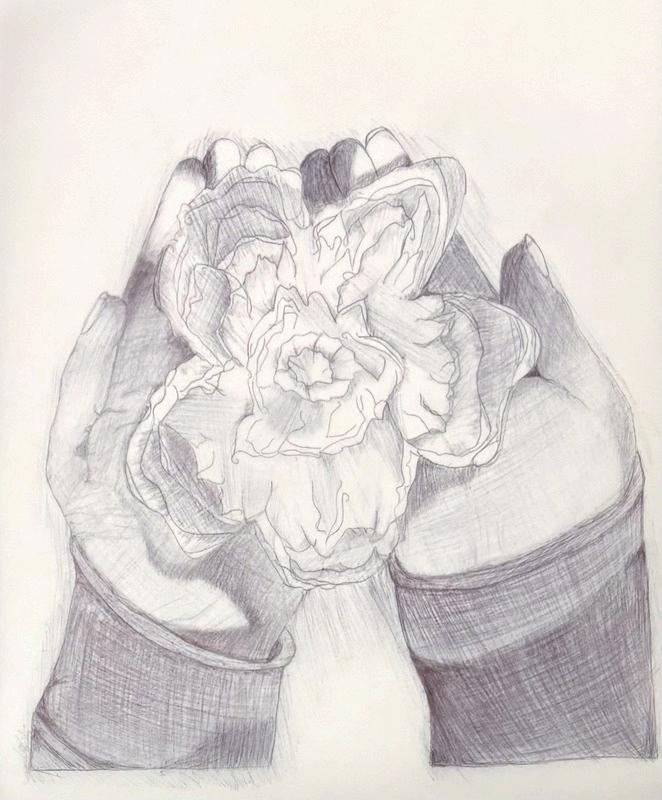
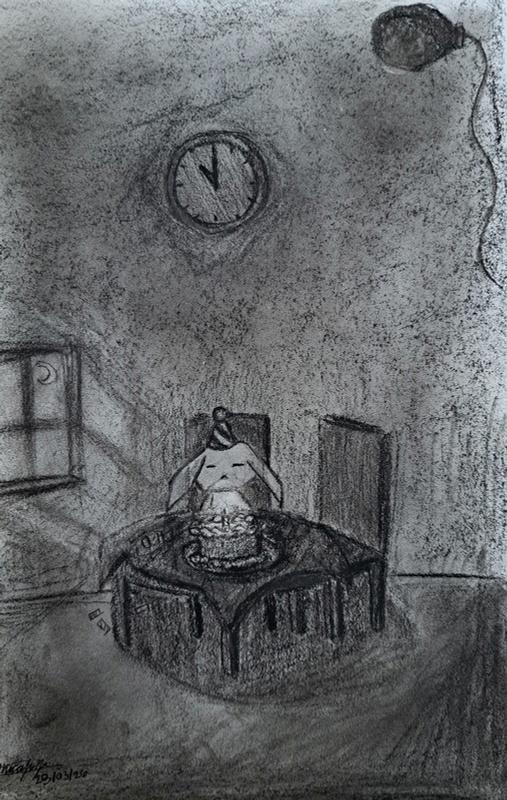
Artwork
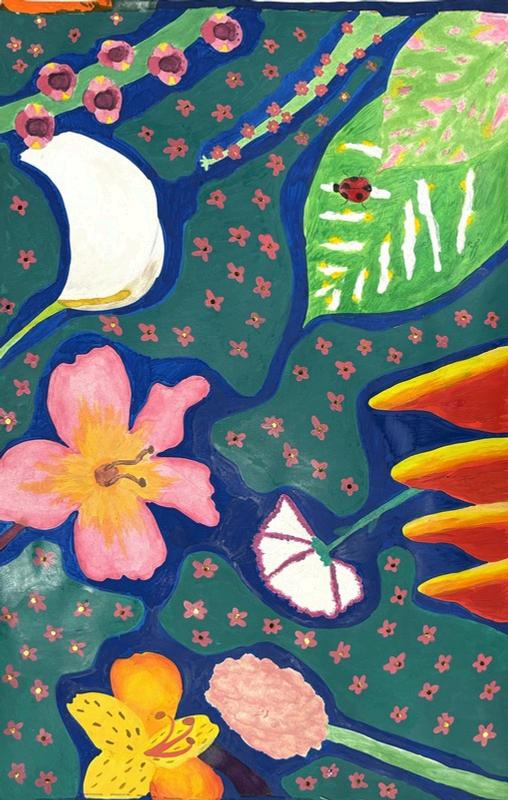
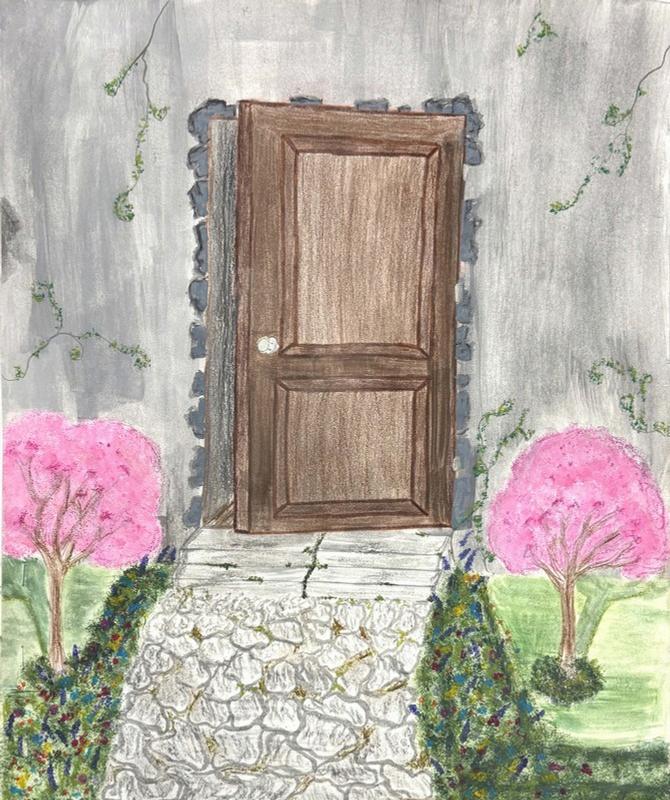
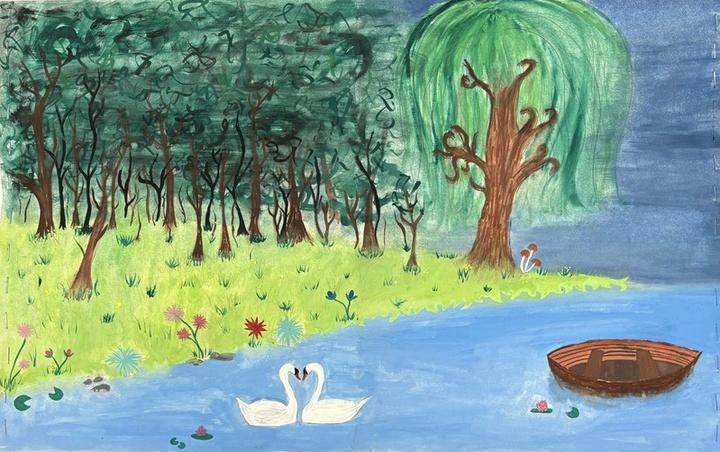
Valeria Alvarez Vargas - Cover Art
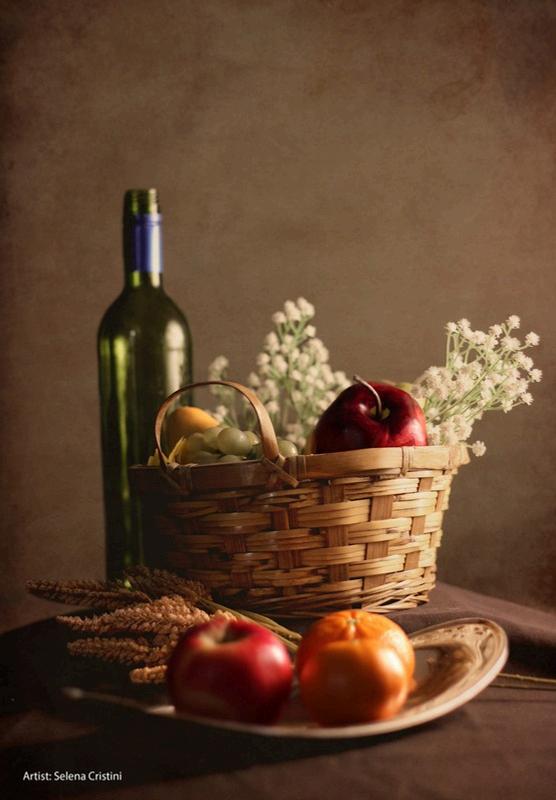
Selena Cristini - page 4
Abi Donovan - page 8
Zara Sansone - page 11
Julia Kovbel - page 11
Micah Nazir - page 24
Laura Trivisani - page 20
Prose
“The Last Grace of Time” by Bohdana Dzyuba - page 1
“Following in Her Footsteps” by Kaeyln Fall - page 5
“The Luck I Live With” by Isabella Dedda - page 12
“The Bungalow on Islington Avenue” by Alvin Tran - page 13
“Age Ten” by Bohdana Dzyuba - page 18
Poetry
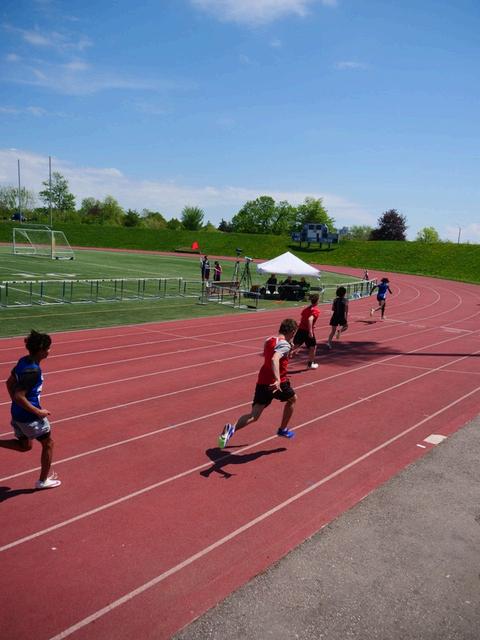
"How to Move, How to Run" by David Di Giovanni - page 9
“Play Me Sweet Songs” by Charlize Stanley-Archibald - page 10
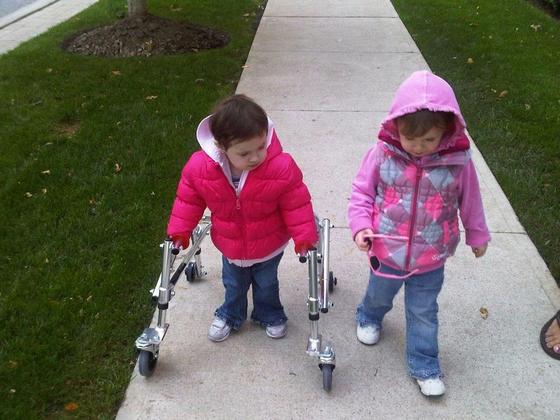
From the time when I was born, frequent hospital visits were almost a given for my family. And no, it’s not to have regular yearly checkups. It was to visit my twin sister, Olivia Liv had been a tiny baby born prematurely, causing her to develop autism, chronic lung disease, brain damage, and cerebral palsy. To add to this, the side effects from the drugs my sister was given to keep her alive caused fluid buildup in her ears so much that she became deaf in both ears. And because that wasn’t enough, one of her vocal cords was accidentally cut and paralyzed during a surgery she had when she was a baby, which prevented her from forming actual words instead of noises. Liv is also primarily fed through a G-tube in her stomach instead of by mouth. I remember the first time I tried pushing a syringe through Liv’s tube (I was around eight) and accidentally sprayed her blended food all over my mom’s new curtains, which of course caused Liv to shake with laughter! But despite her differences, Liv is truly the happiest person I know, and I look up to her so much, even though I’m the older twin. She has shown me what kind of person I want to be. She has shown me how to view the world differently, shaping me into the kind of person that I am today.
Watching my sister attempting and not giving up on doing basic tasks that many of us take for granted is eye-opening, and it has made me want to develop the kind of determination that she holds. Her only methods of communication are through flashcards that have images on them, and an iPad that has an app with many pictures and words for her to select from. However, despite these resources, it’s very difficult for my sister to tell us how she’s feeling, and to communicate whether she’s sick or hurt. Because of this, she often channels her untold feelings into meltdowns, not knowing how else to deal with them. An example of this occurred a few days ago before school, when my sister had stubbed her toe pretty badly while she had been running around. Because she couldn’t tell us how bad her pain was, she started to rocket-launch her belongings from her backpack all over our house before throwing herself on the floor, refusing to stand up again. This situation in particular made me feel heartbroken for my sister, yet also filled with a new sense of patience, because it made me look at the situation through Liv's eyes. It is a new perspective that I am striving to use more often.
My twin sister has also shown me firsthand how living with disabilities not only affects the person, but also everyone around them even if it’s less apparent on the surface level. This has taught me to treat everyone like you don’t know what they’re going through, because you really don’t I’d bet no one would know that a plastic babydoll had been hurled at my head this morning, thanks to my sister, or that I have been up since three o’clock this morning, because my sister can apparently run off of four hours of sleep, and I have the pleasure of sharing a room with her. Something that has really helped me were the groups that my parents used to sign me up for, focussing on youth who also have siblings with special needs Besides taking me to fun sporting events, these groups really helped me relate to other kids who were experiencing similar situations to mine, which made me feel less alone. Hearing about their stories really enabled me to see the world through a different lens, because you would never be able to tell that all these kids had gone through what they had. My sister has also given me a greater sense of compassion and thought for anyone with disabilities. Simple tasks such as going to the dentist or dining at a restaurant require extra planning, and once we arrive at our destination, my sister’s behaviour is unpredictable. Maybe she’ll sit down and be content with my mom’s phone. Or maybe she’ll go berserk at the tiny speck of water on her shirt and start trying to take off her shirt in the middle of an airport.
Meanwhile, people give you dirty looks, as if to say, “Why can’t you control this kid?”, because no, no we cannot control her. Despite these experiences being both humiliating and humbling, they have also taught me to view the world differently, because you can never tell what someone has gone through by just looking at them, and I hope that the rest of the world can adopt this mindset.
Lastly, my twin sister has really shaped who I am today by showing me how to become a more compassionate, patient, and understanding individual. She has opened my eyes to just some of the ways that our world was not designed for people with disabilities, yet she still navigates it to the best of her ability. Without my sister, I most likely would not have thought about how overwhelming a restaurant might seem, or how monumental a successful trip to the mall without getting one weird look would be, but my sister has taught me how to be more understanding about these things. Liv has also taught me the virtue of patience. Communication can take some time with my sister, so being patient while she tries to put her thoughts into something that we can understand is key.
Getting to be able to grow up with a special needs sibling has been an experience that I will forever cherish. Watching my sister power through 3 A.M. ambulance visits, through the many Christmases spent in SickKids, and through weekly behavioural therapy with the widest grin on her face has really shown me how insignificant many of my problems can be. Liv has really inspired me to be more perseverant. The lessons and values that she’s taught me are the most valuable ones I could have ever learned, because not many people get to experience what I have with my sister I remember being younger and crying to my mom because I couldn’t understand why I couldn’t have a “normal” twin, why I had to be the one to go through this. My mom would tell me that my sister was a miracle, who was sent to us by God. Of course, that hadn’t made me feel much better as a kid. But looking back now, I realize how right my mom was, and how lucky I am to have a sister whose footsteps I can follow in, even if she literally follows in mine.
How to Move, How to Run: A Ghazal
David Di Giovanni
I was always taught to move, Good things happen when you make the right move.
When I was three and we bought a new house, I made new friends from the move.
After a puppy joined our family, With the furry beast I would play around and move.
My lifelong obsession with movies, I wanted to make the pictures move.
Suddenly, tragedy halted the world to a stop, From the sorrowful house we had to move.
Once the days became more blue, I no longer wanted to move.
When I was taught how to run, I relearned how to move.
To push myself, sprinting past the grief.
To always keep going, forward I move.
ay Me Sweet Songs
Charlize Stanley-Archibald
Play me sweet songs light and airy that swirl between my ears, like all things temporary.
Won’t you coo as a canary, words to thrill the girl who hears?
Play me sweet songs light and airy.
Cast away the thoughts you carry.
Pray that dull doubt disappears, like all things temporary.
Don’t propose that we should marry.
Don’t allude to hopes or fears.
Play me sweet songs light and airy.
Should love be imaginary, ours will dim as dawning nears, like all things temporary.
So when your corpse I bury, let me write amid few tears, “Play me sweet songs light and airy, like all things temporary.”
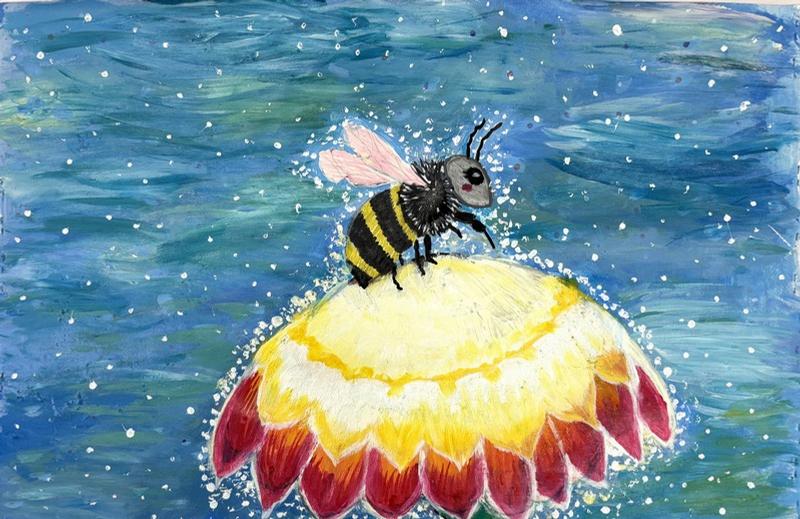
Zara Sansone (above) and Julia Kovbel (below)
TheLuckILiveWith
Isabella Dedda
I often take for granted the opportunities with which I was blessed simply because I was born in a place where I can think about what I want to do with my life without worrying about education, safety and personal freedoms. I live in a beautiful, peaceful and diverse city where my biggest dilemmas are essay deadlines, grades and which university I want to attend which are, in the grand scheme of things, privileges.
Lately, I have been reflecting on the state of the world and I realized how different life can look depending on where you are born. It is easy to forget that seventeen-year-old girls around the world are forced to think about survival and don’t have the luxury of having long-term goals because their present is uncertain. It is easy to become absorbed in one ’ s own world and forget the harsh reality faced by others. Yet, one should not choose inaction or ignorance just because it is easy. The opportunities that I and many others are privileged to have come with a responsibility to make the most of them. My access to education makes me aware of those whose voices and opportunities are diminished. I am challenged to think beyond myself and consider how I can contribute to others. Reflecting on my opportunities makes me accountable for how I use my time, my education and my voice.
While I did not choose where I was born, I can choose what I do with the privileges that come with it.
The Bungalow on Islington Avenue
Alvin Tran
I used to hate when my mom took photos.
She would call my name in the tone that meant, Stop moving. Stand still. Smile. And I would groan, roll my eyes, turn my head away from the camera like I was some celebrity avoiding paparazzi. At seven, I believed photographs were interruptions. They paused the fun. They demanded stillness when I desperately wanted motion.
Years later, kneeling on my bedroom floor, flipping through stacks of printed photos, I found one I didn’t remember being taken.
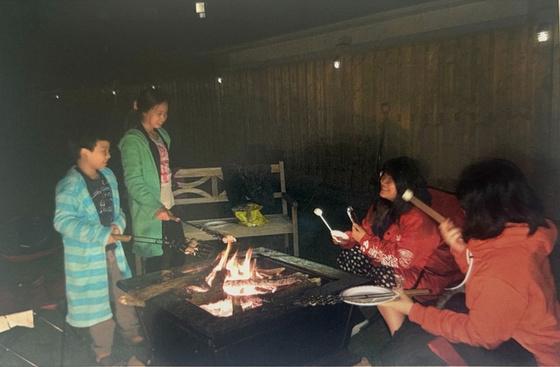
The picture is tilted slightly, the way old prints sometimes are when they’ve been shuffled too many times. In it, my sister stands beside me in a green bathrobe that nearly swallowed her frame. I’m wearing a striped blue one. We are holding two long metal skewers over a fire pit in the backyard of our old bungalow on Islington Avenue. Two girls sit nearby in red hoodies, laughing, their faces illuminated by the orange glow of flame. Behind us, the wood panelling of the house fades into the darkness. It was August, but the kind of August night that forgot it was supposed to be warm.
The house looks small in the photo.
But it wasn’t.
At least, not in the ways that mattered.
Back then, our financial situation was not good. I didn’t understand the mortgage payments or the quiet conversations at the kitchen table after my sister and I were sent to bed. I only knew that two international students lived in our basement. They were studying computer science at Seneca. They seemed impossibly smart.
What I didn’t know was that we rented those rooms to help pay the mortgage. What I didn’t know is that generosity sometimes grows out of necessity.
That night, the four of us stood around the fire pit, marshmallows slowly blistering and dripping into the coals. The air smelled like woody smoke and damp grass. My fingers were stiff from the cold, even though it was technically summer. I remember trying to hold the skewer perfectly still, determined not to burn my marshmallow. I wanted it golden. Even. Precise.
I always wanted things precise.
“Turn it slowly,” one of the girls told me, leaning into the fire.
“Like this,” she said, rotating her skewer in small, careful movements.
I copied her exactly.
After a moment, she laughed, “You’re so serious. It’s just a marshmallow.”
“I don’t want to burn it,” I mumbled.
“You’re coding your marshmallow,” the other one joked.
And they weren’t entirely wrong.
During the day, my mom would sometimes pay them to help me learn to code. They sat with me at the dining table and showed me how to build a game on Roblox. They explained variables, loops, and logic. I didn’t understand all the words yet, but I understood the feeling. The thrill of making something work. Of building a world from nothing but lines of code.
Looking back, the house tells a different story.
The bungalow itself was modest, one floor and a basement, narrow hallways that forced you to turn sideways when somebody else passed. But what it lacked in space, we spilled outwards.
Into one hundred feet of backyard.
At seven, one hundred feet felt enormous. It stretched long and flat behind the house, grass brushing against your shins as you ran. It was wide enough for soccer games with family friends, long enough for races that felt like marathons, open enough that the sky looked larger than anywhere else.
It wasn’t just a backyard.
It was a farm.
My parents spent their evenings there after work, long after they should have been resting. They planted rows of corn that stood taller than me by late summer. Kale with thick leaves. Tomatoes that split under too much rain. Sunflowers that rose above everything else. The soil was dark and generous, and my parents worked it patiently.
We grew what we could not always afford to buy.
Before I moved from elementary school to middle school, the backyard was my entire world. I played there with my neighbour’s daughter, Angelica. She was a year older than me, and went to the Catholic school down the road. We raced along the fence and invented games with rules that changed whenever one of us was losing.
Now she goes to the same high school as I do. Sometimes I see her on the bus ride home. She stands near the back, headphones in, scrolling on her phone. I wonder if she recognizes me. I wonder if I have grown so much that the boy who once ran barefoot across that one hundred feet of grass is unrecognizable.
Or maybe, we both just grew.
The bathrobes in that photo still exist. They no longer hang on hooks behind bedroom doors. They have been turned into floor towels near the front entrance, absorbing snow and salt from winter boots. They lie flat now, stepped on daily. Faded. Thinned. Repurposed.
Time does that.
Clothing becomes cloth.
Children become people who forget how large a backyard once felt. Sometimes I think about the physics of fire. Combustion requires fuel, oxygen, heat. Remove one element and the flame dies. That night in August, the fire needed wood and air and spark. But I think our house ran on something else entirely.
It ran on adaptation.
On cultivation.
On making room.
At seven, I might have felt embarrassed telling classmates that two students lived in our basement. I might have wished our house looked more like others.
But now I see it differently.
These girls were not just renters. They were accidental mentors. Their presence in our basement was not a sign of scarcity, but a sign of ambition intersecting with survival. While they studied algorithms downstairs, my parents planted corn outside, and I learned to build worlds on a borrowed laptop.
The photograph captures a simple moment: four figures, firelight, marshmallows.
It does not show the crops stretching behind us.
It does not show the mortgage statements on the dining table.
It does not show my parents coming home from work, and heading straight to the soil instead of onto the couch.
But it shows enough.
It shows that even though the house looked small, we refused to be.
I used to hate when my mom took photos.
Now I understand that she was preserving proof. Proof that what we lacked in space, we made up for in soil. Proof that growth does not demand grandeur, only intention.
The bungalow on Islington Avenue was never large.
But it refused to be small.
And neither, I think, did we.
AnnaProtsiv
Age Ten
Bohdana Dzyuba
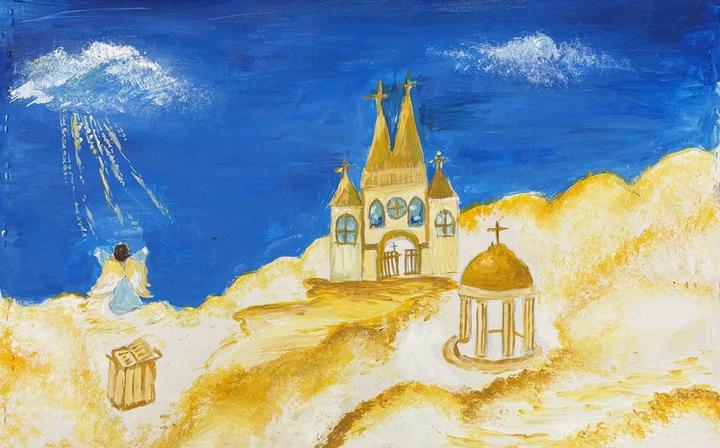
The Church was dim, the kind of dim that seemed intentional, as if even the light had been told to hush and soften its edges. The Church was beautiful, adorned with gold. The stained glass arranged in the shape of angels, their faces frozen in colours that no longer seemed to shine. His casket stood at the front, polished and golden-brown, drawing everyone forward in a slow, reluctant line. Each movement felt rehearsed, the kind of thing you never want to know by heart. One by one, they leaned over him, whispering words he could no longer hear, pressing trembling hands against his still ones, as though touch might undo what time had already taken. I was near the end.
Each step heavier than the last, my knees softening beneath me, my throat closing up. I dreaded standing. I dreaded the sight of him lying there, dreaded it the way a child dreads the dark, with a fear that knows more than it can explain. His hands, once warm and playful, were folded neatly across his chest. When I touched them, they felt hollow, as if there was nothing beneath the skin. I remembered those same hands carrying me on his shoulders, holding mine even when everyone was disgusted by the warts that lived on each of my fingers. His mouth, the same that once spilled laughter and love, was sealed in silence. The mouth that told me to sing when everyone else in the car begged me to stop. The mouth that whispered it loved me, again and again, until I believed it. The mouth that made everyone burst into laughter, even on the heaviest of days. But on the heaviest day, the weight of it pressed harder than any cry could. It felt like someone had locked away every word he hadn’t said yet, every sound I thought I’d always have the chance to hear again. I could not hold on. I slipped back into a pew, like paper disappearing into itself. Around me, my family cried quietly, each of them carrying their grief inward, as if we all knew at once that there was nothing left to be said. The angels on the windows stared down, their coloured faces unmoving, and for a moment I wondered if they had been watching him all along, keeping him somewhere I could not reach. I folded to my knees and begged whatever mercy there was to open the small, bright door between us, to let me cross for one last breath with him, even if it took the rest of me.
I don’t know if you are real. But if you are, I know you aren’t happy with me.
I spat your name into silence. Cursed you for the children who never made it home.
I never bent. I never prayed. I wore my disbelief like armour. But it cracks. It cracks.
And maybe he cracked, too. Maybe that is why he stole your power to choose when he had to go.
But I beg you, forgive him. If judgement weighs his last hour, let mercy weigh heavier.
And so I kneel. At my bed. My hands fold like a child’s again. I whisper into the dark, hoping something, anything, will hear me.
I know I have not been perfect. My prayers crooked, half-hearted, trembling. But if they mean anything, if a lifetime of words to something I cannot know is real means anything at all, let them buy me one minute. One minute to say the goodbye I never had. Let him see me. Let me tell him I was all right, that I will be just fine. Let me tell him I love him. And when the clock hits, do what you must. Send me to the fire, to the silence, to the nothingness to the fear you planted, the weight you set on us.
Because I know you are not perfect, God. And who am I to judge? You with your rules, me with my refusals. You keep the keys, I kept my mouth shut in church. You weigh the world, I threw your name into the wind.
If mercy can be heavier than a single act, let it fall now.
If a life can be read as more than its last breath, read his gently. Then judge me. I am ready.