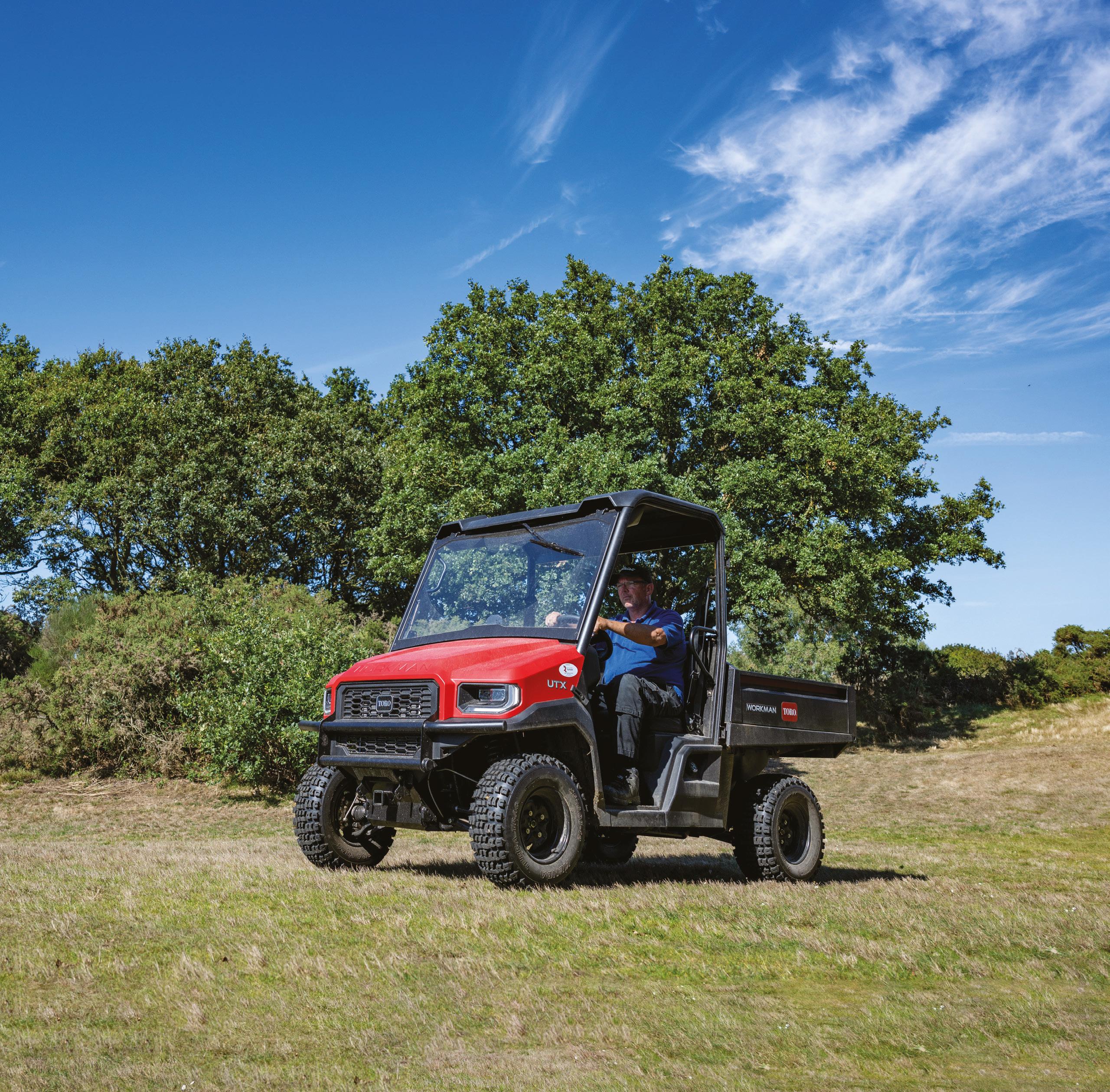


The Toro Workman UTX raises the standard.
Straight-forward, no-nonsense, uncompromising performance. Built with differential lock in the front and back, the UTX is road-ready and can take on any load or hill and withstand all weather conditions making sure you can always get the job done. Whether towing, hauling or ploughing, this beast can delicately scale your turf quickly and quietly for maximum productivity and minimum disturbance.
reesinkturfcare.co.uk
It’s incredible to be writing my second winter edition for Landscape News already, and I’m genuinely delighted to address you all once again. This industry – our industry – is one of the most thoughtful, supportive, honest, and collaborative communities I have ever been part of. I’ve worked across different sectors, and I can confidently say that the horticultural and landscape industry is more advanced, more technical, and more scientifically impressive than any other I’ve experienced. It’s a privilege to celebrate that with you.
And what better moment to do so than off the back of another incredible annual BALI Awards? Every year, the submissions showcase jaw-dropping landscaping, stunning design, and remarkable technical prowess. It’s always a feast for the senses and, for me, a highlight of the festive season. It’s the point where a year’s worth of dedication, long days, and hard work comes together in one uplifting, celebratory crescendo. Once the celebrations wrap up, many of us finally get the chance to reconnect with the loved ones who have supported us throughout our busiest months.
This year at BALI has been one of renewed focus and meaningful progress. We’ve strengthened our internal structure, bringing in membership, marketing, and sponsorship specialists who are passionate about giving our members more support than ever before. Being a BALI member stands for credibility, skill, and quality, and we’re working hard to make sure both the domestic and professional markets recognise that instantly.
Our Board remains strong as we head into 2026, with respected names and industry leaders working closely together and pushing us toward bigger ambitions. Improving the membership journey is high on our agenda. Growing membership gives us more capacity to reinvest in the services, opportunities, and benefits you value most. It’s fantastic to see more members getting involved through regional events, collaborations, and joint initiatives that strengthen our internal economy and support the industry from within.
We’re also raising our game on quality through a clearer “Quality Standards Review” process, and we’re increasing our impact on policy by working collaboratively with other bodies, achieving important wins that benefit the whole industry.
As we start to feel the full effects of the recent budget, I have absolute confidence in our industry’s adaptability. We’ve proven time and again that we can pivot, evolve, and stay strong.
I also can’t wait to welcome you to something truly exciting: our first BALI National Conference in over 15 years, coming this March. It will be a powerful opportunity to unite, share insights, and prepare together for 2026 and beyond.
Thank you for being part of this remarkable community and best wishes for a prosperous 2026 ahead.
Adrian Wickham National Chair
"We’ve proven time and again that we can pivot, evolve, and stay strong."

Discover everything we’ve got lined up in this issue of Landscape News…
Editor's welcome
Our editor welcomes you and this quarter’s newest members
Chief Executive's report
Find out how our Chief Executive has been championing BALI members’ interests
Out and about with BALI
Where we’ve been and what’s coming up in the world of events this quarter
BALI benefit: Quest Cover
Discover more about your free legal, HR and Health & Safety membership benefit
Access all the behind-the-scenes details from the
that Grand?
An
Growing together: Origin Enterprises
Discover more about the BALI Awards’ headline sponsor
It’s only natural: the rise of natural pools in UK garden landscapes
BALI National Landscape Award-winner, Ellicar, invite us into this eco-friendly world of harmony with the environment
Designing with trauma and hope in mind
Discover the behind-the-scenes design decisions that go into creating a show garden on behalf of a charity
A life in landscaping
Andrew Legg divulges his wisdom after a half century of experience in the landscape industry
Shout about it
BALI’s social media guru Mia Foster reveals the top tips and tricks for a successful social media strategy in 2026
Protecting creative ground
What can be done to help garden designers protect the intellectual property rights of their designs?
Mileage management made simple How to save money and avoid headaches by finding efficiencies in the running of your fleet vehicles
44.
Under the surface
Tim O’Hare Associates examine the importance of soil choice in landscaping
46.
What does the Budget mean for you?
Our Policy team break down the Budget 2025 and recent Employment Rights Bill developments
51.
Managing subcontractors and payroll efficiently
From choosing the right employment model to understanding IR35 and CIS, Kim Sones explores how you can stay compliant

52.
Cold considerations
BALI benefit provider Quest explain the key health and safety obligations for landscapers this winter
Find out what our GoLandscape team have been doing to inspire the next generation this quarter 54.
Warming up with the colder weather







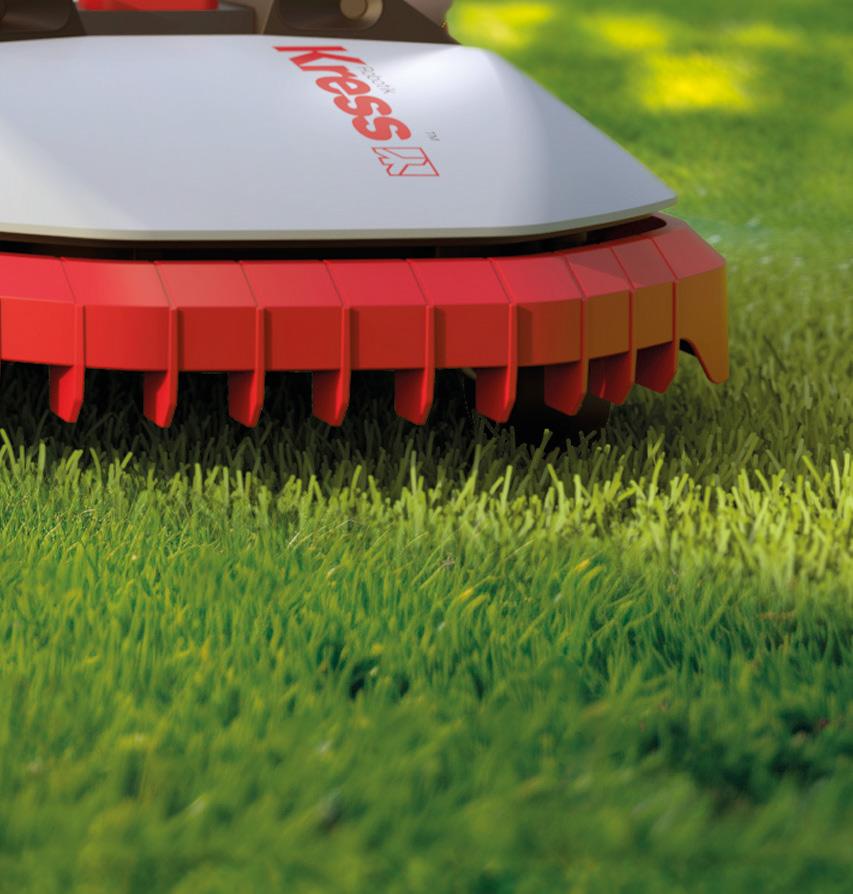


Creating landscapes that last means more than visual appeal, it is about designing outdoor spaces that respect nature and demand less intervention. The Kress RTKn robotic mower range gives landscapers and garden designers the tools to achieve this.
With pinpoint accuracy, cable-free setup, and zero emissions, Kress RTKn mowers deliver quiet, reliable performance that blends effortlessly into modern landscapes. They provide ef cient lawn care that supports your creative vision while maintaining environmental responsibility.
From compact courtyards to expansive estates, Kress ensures every project is equipped for the future with intelligent, sustainable mowing technology that enhances the beauty and balance of your designs.

Speak to your local grounds maintenance machinery dealer today or learn more at kress.com



“Life moves pretty fast. If you don’t stop and look around once in a while, you could miss it.”
This iconic line from the fourth-wall-breaking Ferris Bueller in the 1986 classic Ferris Bueller’s Day Off is fittingly appropriate at this time of year.
As the calendar turns and everyone is looking ahead to the future, it is important to remember to take stock. Among the everyday hustle and bustle of our “always on” lifestyles, the focus is frequently on the next thing. When one project is finished, we immediately switch focus to the next one, or to finding the next contract, under the name of growth, keeping the lights on, and avoiding dreaded downtime.
That’s why the BALI National Landscape Awards are such a welcome opportunity to stop, reflect, and celebrate those things that we have achieved over the past year, a chance to celebrate successes and unashamedly give ourselves a pat on the back for a job well done.
(1st September – 30th November 2025)
Accredited Contractors
Reimagine Works
The Marylebone Garden Co
Park & Landscapes
Maylim Landscapes
Roundwood Solutions
Majestic Grounds Maintenance
Design Your Garden
The Good Plant Company
Champain Landscapes
The Garden Landscapers
Gardham Wold Landscapes
Rhodri Willson
Cunningham Gardens
And celebrate we did!
You can get the behind-the-scenes info from the Awards gala and insight into some of the winning projects in our Awards special feature. Let’s pause and take a moment to reflect on page 14.
Elsewhere, we do look ahead, aiming to make sure 2026 is a prosperous one for all of our members. One of the big challenges any landscaping business faces is that no matter how good your work is if nobody knows about it then it won’t bring in clients. So, to help you promote your business in the best light, BALI’s social media guru Mia Foster gives her top tips for an effective social media strategy. Like and share over on page 36.
Finally, we look at the expected challenges ahead for the industry. From examining what the Chancellor’s Budget 2025 means for landscaping (page 46) to understanding your legal responsibilities as a premises owner or leaser as the cold winter weather truly takes hold (page 52), we’ll be doing even more in 2026 to ensure both our members and the industry as a whole continues to prosper.
Luke Garner Editor
Associate Contractors
Ian Howe Landscaping
M T S Gardens
Accredited Suppliers
Joe's Blooms
Boston Seeds
Envelop Finance
Steady Consulting
Northern Landscape Supplies
Editor: Luke Garner E: luke.garner@bali.org.uk
Sales: Joanna Pieprzak E: joanna.pieprzak@bali.org.uk T: +44(0)24 7518 5614
Registered address: British Association of Landscape Industries Landscape House Stoneleigh Park Warwickshire CV8 2LG
Designed by: bdci.co.uk
Print and mailing: hobbs.uk.com
Front cover: Langlea Garden Design & ConstructionIntersecting Escape
BALI National Award Winner 2026, Domestic Garden Constructionbetween £100k - 250k category
Training Providers
Rentokil Initial
Great Oaks Tree Services
International Eco Garden Construct SRL
Student
Ellen Spencer Garden Design

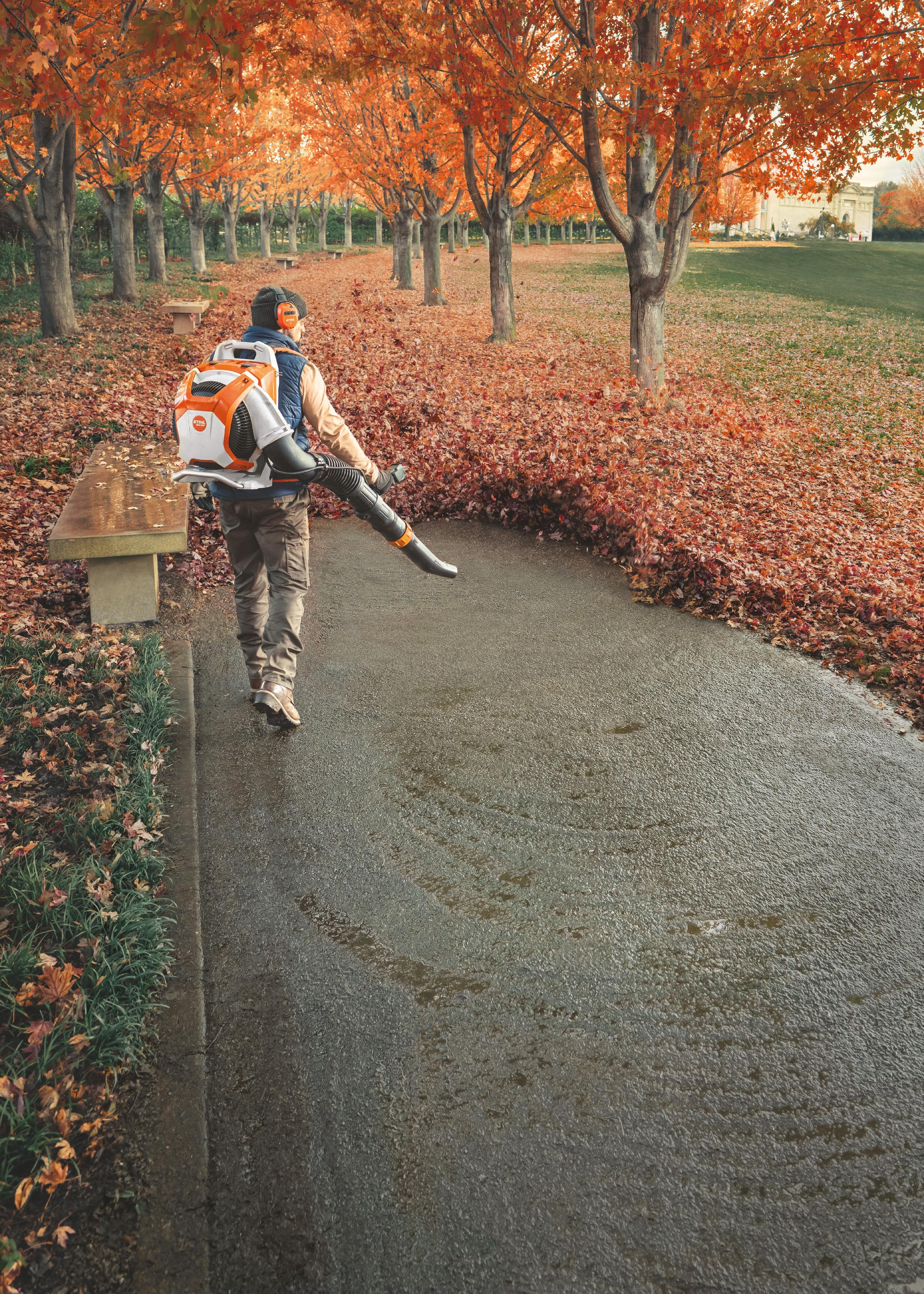
Take on the toughest blowing and clearing jobs with the latest range of high-performance backpack leaf blowers from STIHL.
With long working-times, constant power and low vibrations, you can rely on STIHL to always have a strong partner at your side.
Legendary performance and quality since 1926. DISCOVER MORE AT STIHL.CO.UK

CHIEF EXECUTIVE'S REPORT:
With another amazing and eventful year in the books, Chief Executive, Wayne Grills, recaps one of his highlights and looks ahead to what 2026 has in store.
It’s always a pleasure and an honour to showcase our members' outstanding professional achievements at the BALI National Landscape Awards. Members have continued to report that 2025 has been another busy year work-wise albeit there is an air of caution in the industry which is seeing a slight reduction in the number of projects and schemes coming forward. The entries into the BALI Awards this year continue to demonstrate the importance of using skilled professionals to undertake work, whether it be in a small domestic garden, a large civil build, or on grounds maintenance contracts. We have once again seen a great number of entries in this, the 49th year of the BALI National Landscape Awards. This has undoubtedly demonstrated the improving quality and service delivery that only BALI members offer and achieve. With over 1,000 guests at the Awards, I’m sure you would agree
it was a tremendous industry event and I would like to congratulate all of the Award winners this year along with the Principal, Special and Grand Award winners announced on the day.
Once again, what undoubtedly sets the BALI National Landscape Awards apart is the high standing of our panel of Awards judges and the reputation of the panel’s Chair, John Melmoe. His almost half a century spent working in the landscape sector, much of that time at the helm of multi–BALI Grand Award-winning Willerby Landscapes, gives him a unique pool of knowledge and expertise, and he is unfailingly generous in passing this on when he believes BALI Award entrants can learn from it and improve future projects.
"As standards overall increase, so does the difficulty of the judges’ task."
Each of our judges generously gives their time to ensure that every entry is given the very closest scrutiny. All UK schemes are visited by one of the judges, who meet with the respective designer or contractor, and the client. It falls to John to undertake the initial detailed desk review of each of the many international entries before his recommendations are scrutinised by the full judging panel.

Observing the adjudication process in action each August is something that I relish and it is a privilege to be party to the discussions as the judging panel determines the Principal, Special and Grand Award winners. Thank you judges for your personal commitment to the National Landscape Awards and to the BALI entrants who benefit greatly from your feedback. Every entry is given their fullest attention to ensure the winners are those BALI members most deserving of an award.
On Thursday, 10 October 2025, the Labour government announced its New Employment Rights Bill, which provided the most comprehensive changes to employment law and workers’ rights the UK has seen in recent years.
The government has now published the
On behalf of the BALI board and wider BALI membership, I would like to thank them for the enormous amount of work they undertake to ensure the reputation and integrity of the BALI Awards is maintained. As standards overall increase, so does the difficulty of the judges’ task and I applaud the judges for their continued passion for finding and awarding accolades where deserved. I would like to congratulate every BALI member who entered this year and acknowledge the achievements of those who have ultimately been successful.
The judges and the awards process have been very capably co-ordinated and projectmanaged by Izzy Plain from Landscape House. Without the commitment shown from Izzy, the whole awards process would not have run so smoothly.
Employment Rights Bill 2024 in its entirety, which can be found at the gov.uk website.
There are changes to zero-hour contracts, Statutory Sick Pay, day one leave entitlement, day one unfair dismissal protections, the banning of “fire and rehire” practices, tweaks to redundancy rights, employment
tribunal time limits, and more.
While the bill isn’t due to come into effect until October 2026, our Policy Team delve further into the bill as it stands and what it might mean to your business over on page 46.
I look forward to seeing many of you at the Regional AGMs in the New Year and I hope that as many of you as possible will try to attend these very valuable networking sessions, with some exciting guest speakers and events coming up. Below are the details confirmed so far:
Please watch the BALI website events pages for the most up-to-date information at bali.org.uk/events
In the meantime, on behalf of the Landscape House team, I would like to wish you, your families and your businesses every success in 2026, a year in which I hope we, as your Association, can play a part in supporting your endeavours and driving you towards a successful business year.
Kind regards,
Wayne Grills Chief Executive
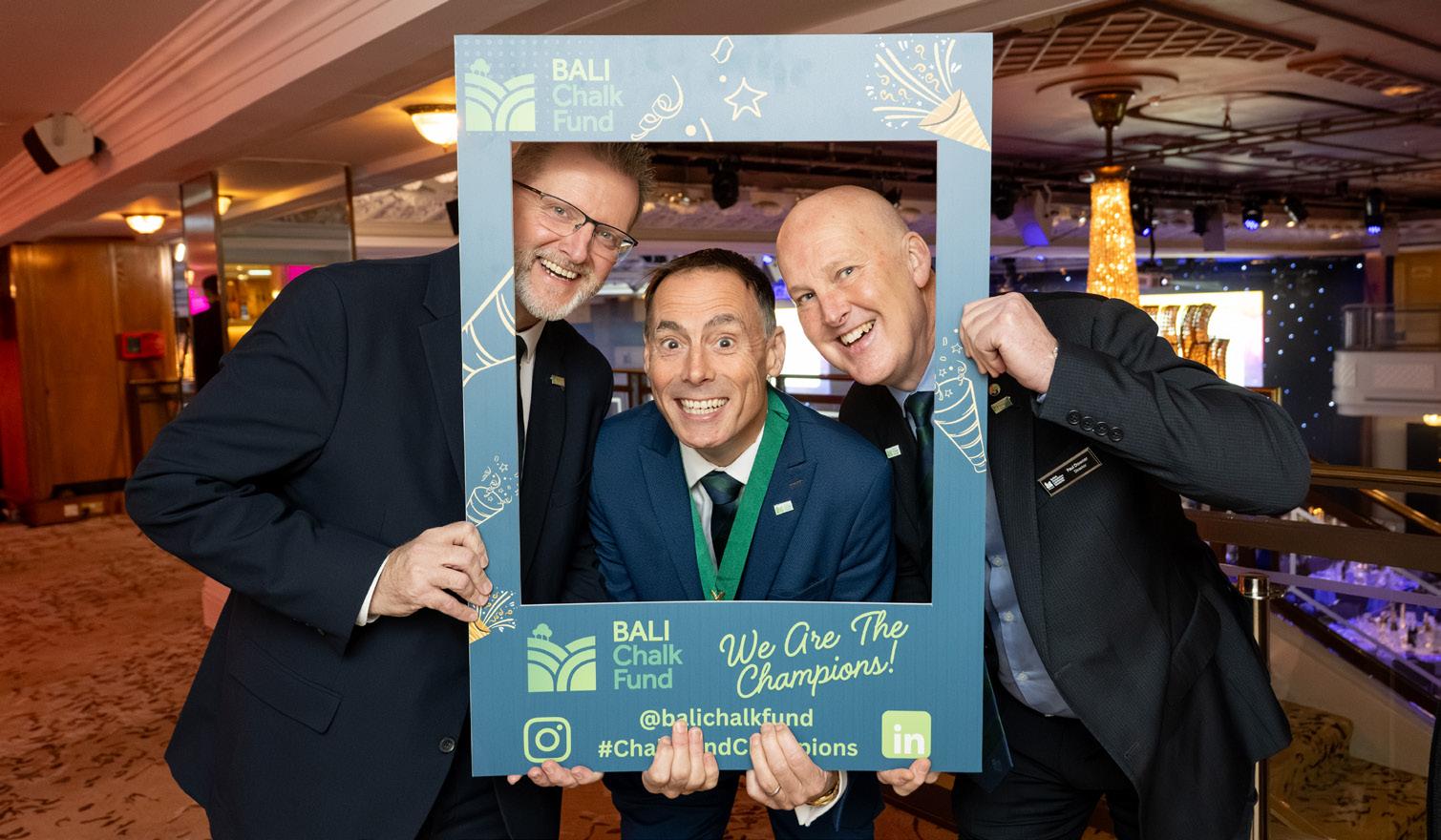
From power plants to power tools, BALI Membership Events Manager, Izzy Plain, recaps some of her highlights from this quarter.
The past couple of months have truly been a whirlwind of exciting and enriching opportunities for networking and professional growth within the landscaping industry. From the more laid-back events like croquet competitions to the hands-on educational experiences such as touring a power plant, the diversity of activities has been remarkable.
October was an action-packed month, beginning with an engaging day at Rolawn HQ, where participants delved into the world of turf production, topsoil innovation, and naturebased solutions. From learning about the journey from plough to harvester, to exploring how biodiversity is shaping the future of our industry, the day was an inspiring blend of education and innovation.
Next, the East Anglia committee hosted a fascinating tour of the Sizewell Power Plant. Attendees had the chance to go behind the scenes and see firsthand how the plant operates and how it generates such a vast amount of power. The tour sparked
lively discussions and further networking opportunities, making it an enjoyable and informative day for all.
STIHL then opened its doors for an exclusive look at its world-class distribution centre, offering demonstrations of its latest products and innovations. Members were given a rare glimpse into what makes this family-owned brand so exceptional.
Scotland's turn came next, with an inspiring day at the award-winning Watch Us Grow Garden. Delegates heard from expert designers Duncan Hall and Nick Burton about the vision and creative process behind the garden, while Eddie McConnel shared the incredible work being done by Down Syndrome Scotland. It was a powerful example of how the landscaping community can come together for a meaningful cause.
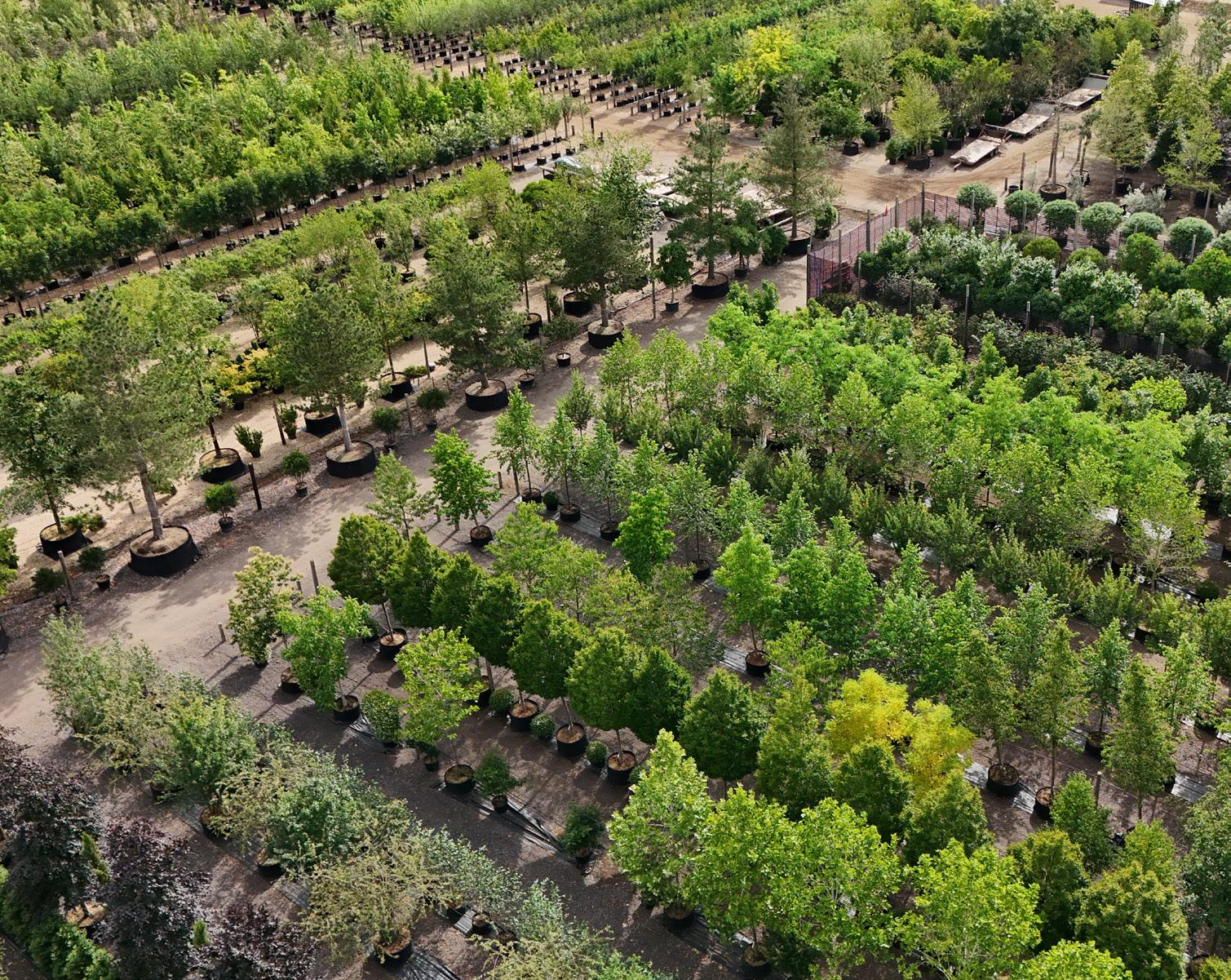
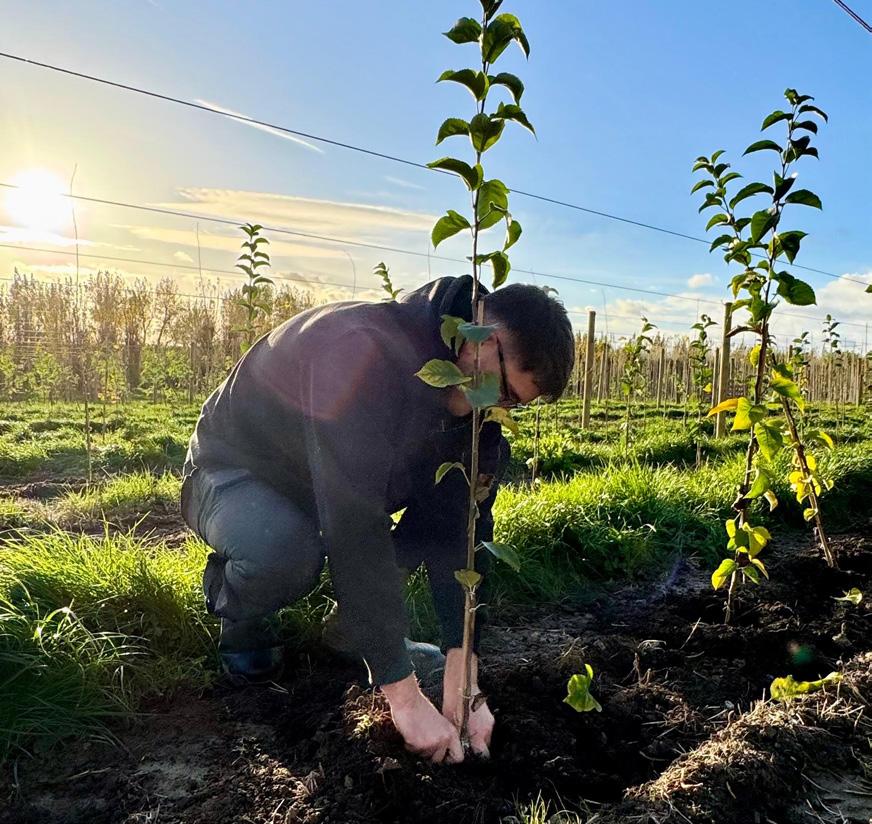
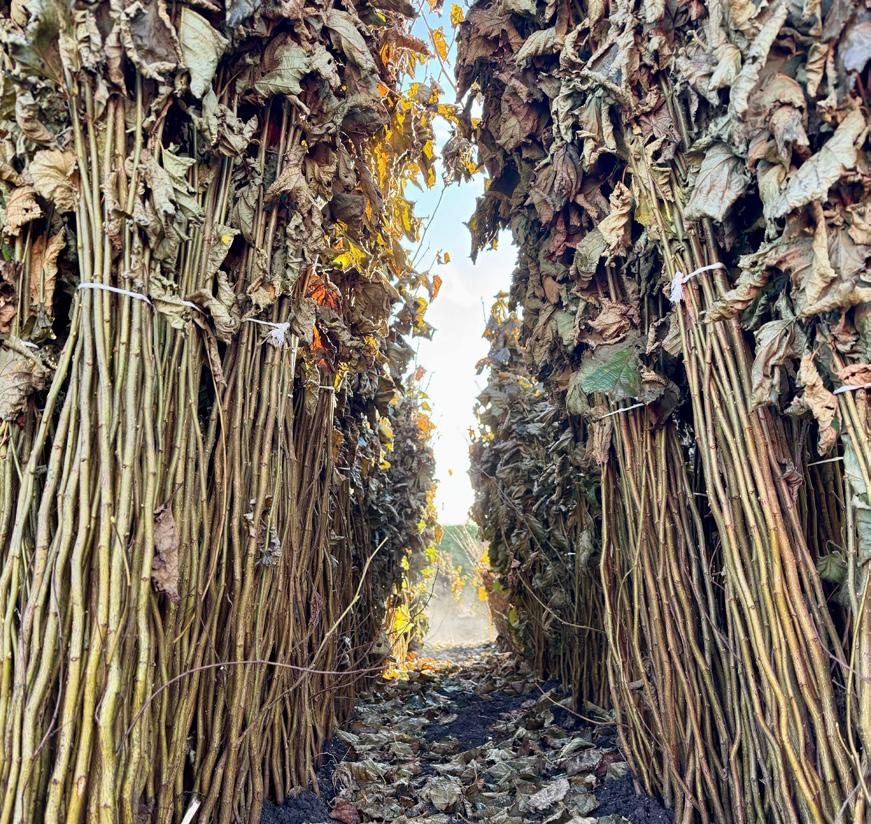
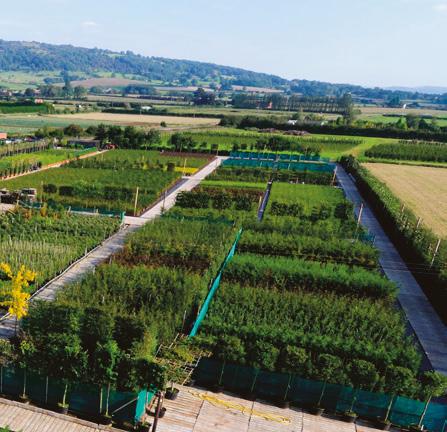
Finally, Deepdale Trees (pictured above) kindly hosted an insightful session on biosecurity, carbon management, and the future of their nursery. Attendees also witnessed a live demonstration of tree-lifting techniques, gaining a deeper understanding of this vital aspect of the industry.
"It was a powerful example of how the landscaping community can come together for a meaningful cause."
It’s safe to say it’s been an incredibly busy and rewarding few months, and we’re excited to carry this momentum into 2026. With several events already in the works, we can’t wait to continue fostering connections, sharing knowledge, and driving innovation in the landscape profession. Be sure to keep an eye on the BALI Events page – we look forward to seeing you in 2026.
Contact: bali.org.uk/events

When: 26 March 2026
Where: The Royal Society, 6-9 Carlton House Terrace, London
Don’t miss your chance to attend one of the best and most informative events of the year, with educational, networking and business boosting opportunities galore!
Hosted by the British Association of Landscape Industries (BALI), the conference brings together over 900 accredited members – from contractors and designers through to training providers and suppliers, for a day of collaboration, innovation and strategic insights.
This year’s theme centres on “Climate Resilience: How To Future-proof Your Business”, reflecting the sector’s urgent challenges and opportunities: climate resilience, biodiversity net gain, green infrastructure, and technological transformation.
Attendees can enjoy knowledge sharing from a keynote speaker, plus discussion panels, and networking breakouts, and by the end of the day, participants will leave not only with new knowledge and ideas – but with strategic contacts, sector-leading perspectives, and renewed momentum to chart the future of landscaping in the UK. The BALI National Landscape Conference 2026.
Discover some of the key industry events taking place over the coming months…
BTME 2026
FutureBuild
BALI National Landscape Conference
20-22 January 2026
3-5 March 2026
26 March 2026
Harrogate Spring Flower Show 2026 23-26 April 2026
RHS Malvern Spring Show
RHS Chelsea Flower Show
7–10 May 2026
19–23 May 2026
RHS Badminton Flower Show 8–12 July 2026
RHS Sandringham Flower Show 22–26 July 2026
GroundsFest
16-17 September 2026
FutureScape 13-14 October 2026
SALTEX 2026 11-12 November 2026

For more information and to secure your place, visit bali.org.uk/events or email izzy.plain@bali.org.uk
Harrogate Convention Centre, Harrogate btme.org.uk
ExCeL, London futurebuild.co.uk
The Royal Society, London bali.org.uk/events
Great Yorkshire Showground, Harrogate flowershow.org.uk
Three Counties Showground, Malvern rhs.org.uk
London Gate, Chelsea rhs.org.uk
Badminton, South Gloucestershire rhs.org.uk
Sandringham Estate, Norfolk rhs.org.uk
Stoneleigh Park, Warwickshire groundsfest.com
Farnborough International Exhibition & Conference Centre futurescapeevent.com
The NEC, Birmingham saltex.org.uk
BALI National Landscape Awards –50th Celebration 4 December 2026 London baliawards.co.uk
To stay updated about all BALI events, visit our website – bali.org.uk/events
Discover how Quest can help you to save money, time and stress –all for free as part of your BALI membership.
As part of your membership with the British Association of Landscape Industries (BALI), you gain access to a powerful suite of business support services through Quest Cover –an invaluable resource designed to help your business stay compliant, efficient, and protected.
“BALI members get free access to over 750 downloadable templates covering HR, health and safety, and legal matters.”
With the Labour Party’s proposed employment and business reforms (see page 48) set to introduce the most significant changes since COVID-19, ensuring your organisation remains compliant has never been more important. Non-compliance could result in costly tribunal claims, reputational damage, and financial penalties. Fortunately, Quests tailored support helps BALI members stay one step ahead of these challenges.
BALI members have access to five specialist advice lines, connecting you directly with expert advisors who understand the unique challenges faced by landscaping businesses. You can benefit from practical, reliable guidance in the following key areas:
• HR support: Stay prepared for upcoming legislative shifts and protect your business from tribunal claims. Quest’s HR experts can advise on employee contracts, disciplinary procedures, performance management, and the latest legal updates.
• Health and safety support: Ensure your workplace meets all necessary safety
standards. From fire risk assessments and workplace audits to sector-specific safety regulations, you’ll receive expert advice to maintain a safe and compliant environment for your team.
• Legal support: Get peace of mind with professional guidance on disputes, GDPR compliance, debt recovery, redundancy processes, and more. Quest’s legal specialists help you navigate complex legal issues with confidence.
• Tax and VAT support: Simplify your tax obligations with expert assistance on Corporation Tax, VAT returns, benefits in kind, and HMRC enquiries. Their advisors ensure your finances remain both efficient and compliant.
Time is one of your most valuable assets –and Quest’s three document libraries are designed to help you save it. BALI members get free access to over 750 downloadable templates covering HR, health and safety, and legal matters, including contracts meaning members can easily access up-to-date, compliant documents without having to draft them from scratch.
Whether you need a new employment contract, a risk assessment form, or a legal policy template, everything is available at your fingertips. Simply visit bali.questcover.com and log in using your unique membership details to explore the full library.
For a truly personalised experience, BALI members can also book a free One2One Business Review with one of Quest’s dedicated Business Support Managers. During this tailored session, you’ll receive a detailed gap analysis of your current practices, highlighting any areas where compliance can
be strengthened.
Following the review, you’ll receive a bespoke action plan outlining practical steps to address any weaknesses, ensuring your business remains resilient and fully prepared for future regulatory changes.
Your membership gives you access to all these benefits at no extra cost, so there’s never been a better time to take advantage.
With expert support from Quest, you can focus on what you do best – growing a successful, sustainable landscaping business – while knowing your compliance, legal, and HR needs are in expert hands.
Contact: bali.questcover.com




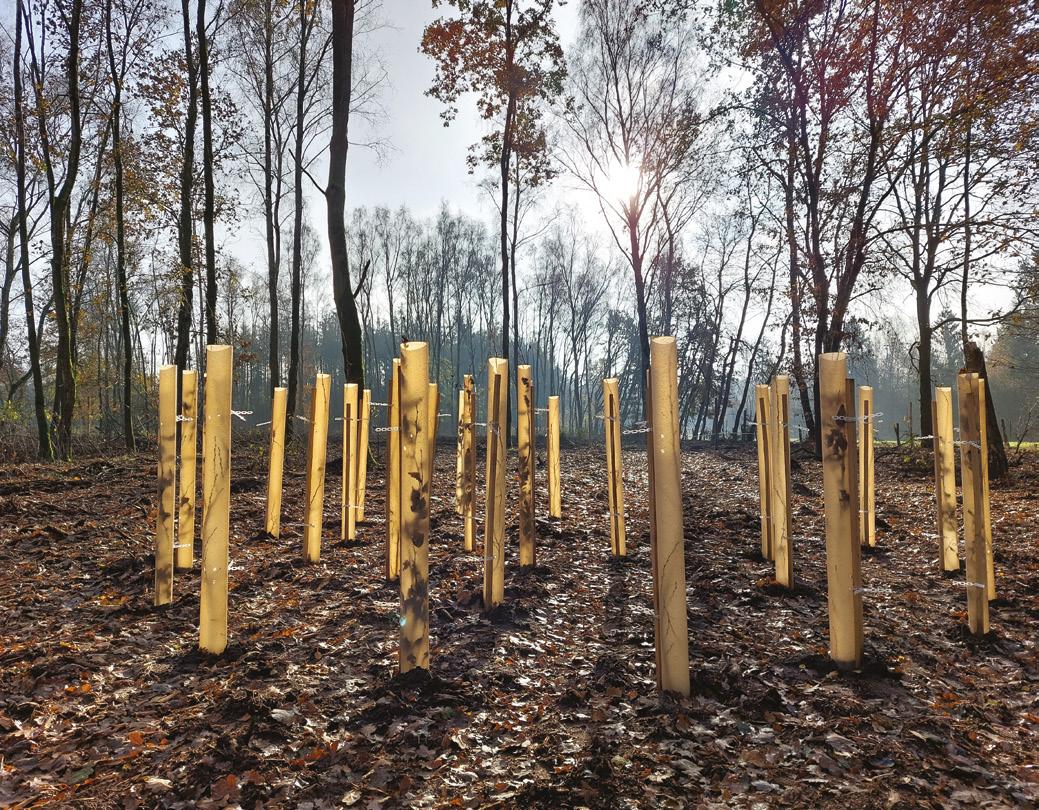
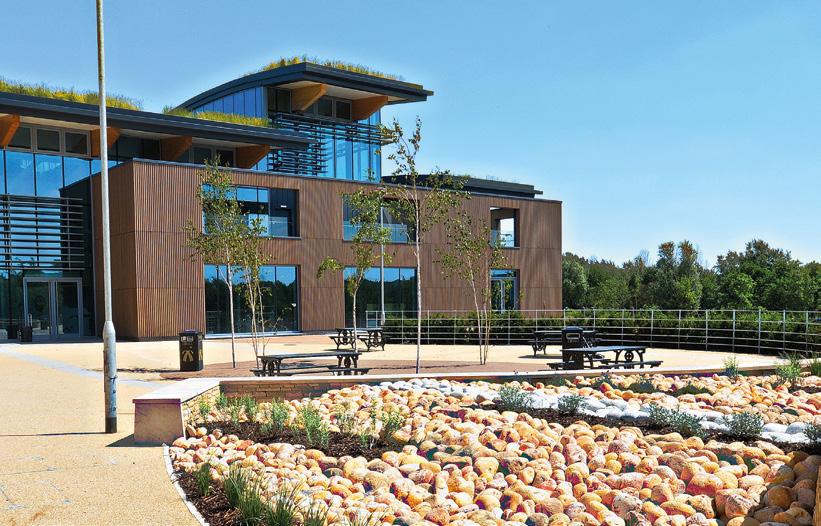
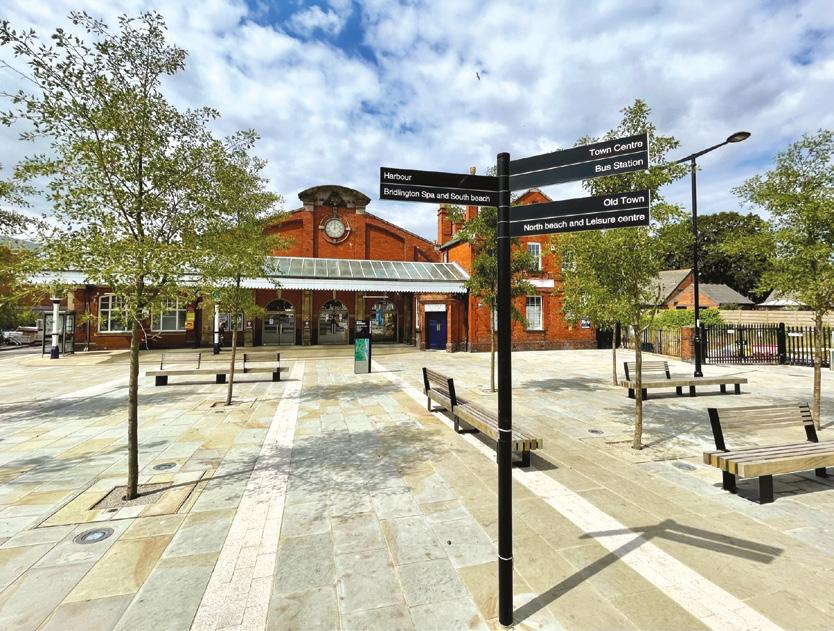
Supplying everything from topsoil to tree shelters to wild ower seed, Green-tech is

Urban Tree Planting and Tree Irrigation
Soils, Growing Media and Barks
Rural Tree Planting
Wild ower Seed and Conservation
• More than 5,000 products and a robust supply chain
• Nationwide, exible delivery options
• Programme of CPD training seminars
• Renowned for our advice and customer care
Ecology, Ponds and Bioengineering
Ground, Wind, Weed and Erosion Control
Grounds Maintenance

The BALI National Landscape Awards put landscaping’s finest in the spotlight

The pinnacle of landscaping, this year's BALI Awards sees The Outdoor Room honoured with top award.
On a night of glitz, glamour and the greatest in landscaping, it was The Outdoor Room who rose to the top, securing the Grand Award at this year’s BALI National Landscape Awards.
Their project, Hawthorn House, deservedly saw them add their first title, which was presented by Headline Sponsors Origin Enterprises, via their Living Landscapes Division. Entered into the Domestic Garden Construction - Over £750K category, it was commended for its attention to detail and collaboration with other on-site contractors.
Of the scheme, the judging panel commented, “The visual beauty of this scheme belies much of the complex work carried out by the contractor to resolve major drainage issues and to implement challenging aspects of the hard landscaping design. Faultless paving across the scheme, a beautifully planted soft landscape palette, construction of oak sleeper raised beds and numerous other elements, have been delivered by a landscape team led by a young and dedicated foreman, James Sponder. This is an exemplary scheme, worthy of winning this year’s Grand Award.”
“We’re extremely delighted and proud to receive the Grand Award at the BALI National Landscape Awards,” said Mark Britton, Managing Director of The Outdoor Room.
“These awards represent the highest level of recognition in our industry. To be acknowledged by such experienced and knowledgeable judges is an honour. Achievements like this inspire and motivate our whole team, especially our younger members.”
Familiar faces and newcomers scoop major accolades
Elsewhere on the night, there were Principal Awards for Greenscape Gardens, Langlea Garden Design & Construction, Artisan Landscapes, Elite Landscapes, Frosts Landscape Construction, HG Landscapes, Graduate Gardeners, Goddards, Gavin Jones, Blakedown Landscapes, Maylim, Wright Landscapes, Landform Consultants, Rosemary Coldstream Garden Design, Biotecture, and idverde.
Incredibly, there were four entrants who scooped multiple Principal Awards for their efforts. Elite Landscapes scored twice for their Woolwich High Street project, and the London Courtyard Garden bagged Rosemary Coldstream Garden Design double honours, while both Frosts Landscape Construction and Maylim had multiple standout projects, with Worship Square and Ryder Court securing the wins for Frosts, and Wilton Park and Finsbury Circus Gardens seeing Maylim come out on top twice. To achieve such prestigious commendations for multiple projects is a testament to the incredible level of quality and excellence on display – no mean feat when competing against the best of the best in landscaping!
Having won a Grand Award in previous years, Maylim put all of their experience to good use. Their efforts in their Finsbury Circus Gardens project were particularly commended by the judges, noting the thoughtful approach which ensures a biodiverse, welcoming sanctuary that honours the garden’s legacy and fosters ecological sustainability.
A Special Award was bestowed upon the late Nigel Gray of Water Gems (Alba) for his stunning Maggie's Forth Valley construction. It was the second award of 2025 for the company and its employees, having also won a National Award for East Lothian Cascade
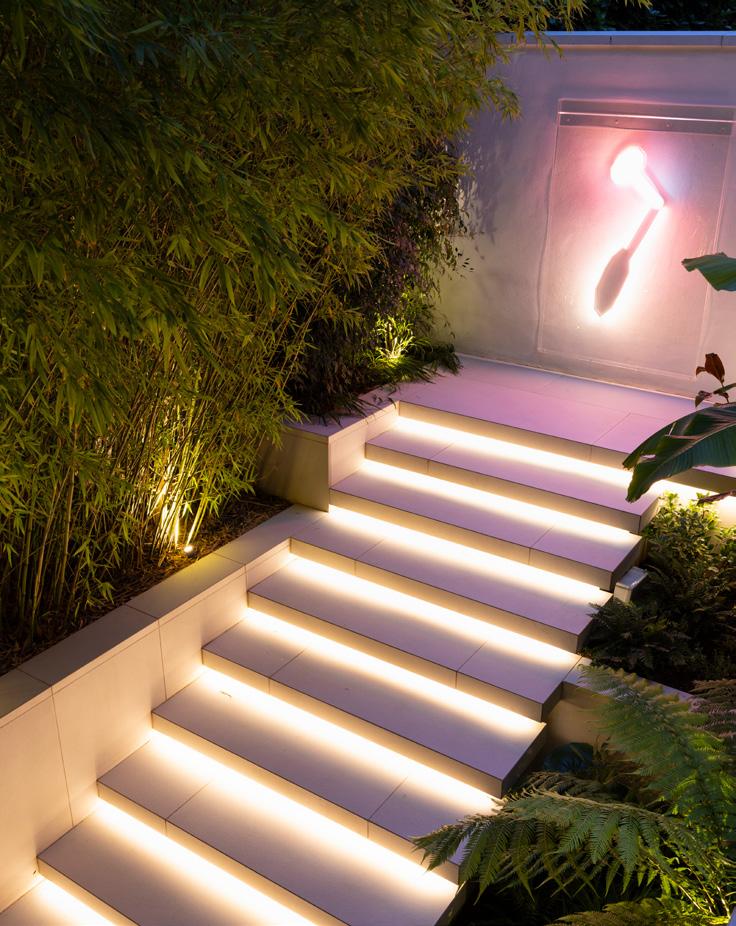


"To see so many come together to celebrate the hard work, dedication and phenomenal expertise that has been displayed in these projects is truly wonderful."

The pinnacle of landscaping shines once again
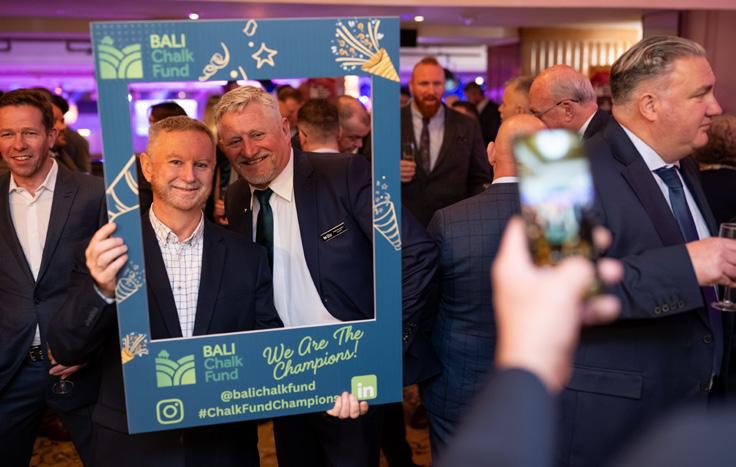
Over 1,000 people from across the landscaping industry packed into the JW Marriott Grosvenor Hotel London to celebrate the best of the best. This year’s projects once again took a step forward, with new and innovative ideas carefully blended with tried and tested traditions in garden design. The range of techniques and ideas was a testament to the unrivalled skill present among BALI’s member base.
“To see so many people from across the industry come together in one place to celebrate the hard work, dedication and phenomenal expertise that has been displayed in these projects and businesses is truly wonderful. The fact that we have this level of talent and passion among our members makes me extremely proud to represent both them and the landscaping industry,” said BALI Chief Executive Wayne Grills.
This year marked the first of three years in which Origin Enterprises, via their Living Landscapes Division, will proudly support as Headline Sponsors of the Awards, and they couldn’t have been more impressed by the showpiece gala and the high standard of entries on show.
“We are incredibly proud to be the headline partner for such industry-leading and prestigious awards. At Origin, our Living Landscapes division exists to champion sustainable, future-ready land use, so sponsoring the BALI National Landscape Awards is a natural fit. The Awards Gala is a much-anticipated celebration of the industry, recognising creativity and environmental vision, and provides an invaluable opportunity to connect with industry colleagues. Supporting those who push the boundaries of what is possible in landscaping is central to our purpose, and these Awards perfectly highlight that dedication,” said Origin Enterprises.
They also sponsored the Nature Conservation & Biodiversity Enhancement category, which was won for the outstanding Wormwood Scrubs by idverde. The entry highlighted the creation of diverse habitats, ecological monitoring, and the integration of over 1,400 volunteers annually. Judges liked that the project stands as a rare example of a central London park that prioritises ecological integrity and community involvement over manicured aesthetics - truly delivering on the Friends group’s vision of a space that is more ‘wild than tamed’.
Sponsors Origin Enterprises agreed, adding, “The entries in the Nature Conservation & Biodiversity Enhancement category have been exceptional. Every project demonstrates a clear commitment to ecological value and landscape resilience. idverde were deserved winners in what was an incredibly high-quality category, highlighting the important role biodiversity plays in modern landscaping.”






























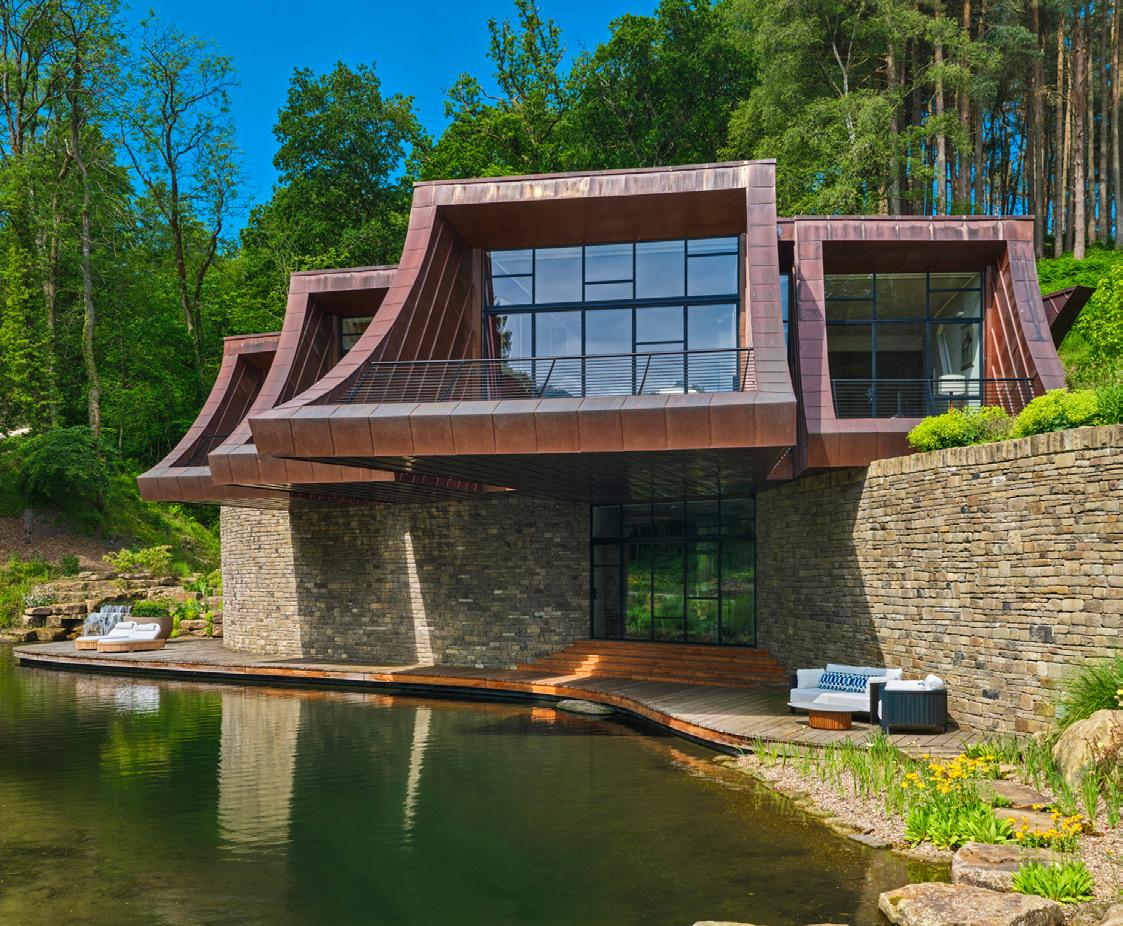

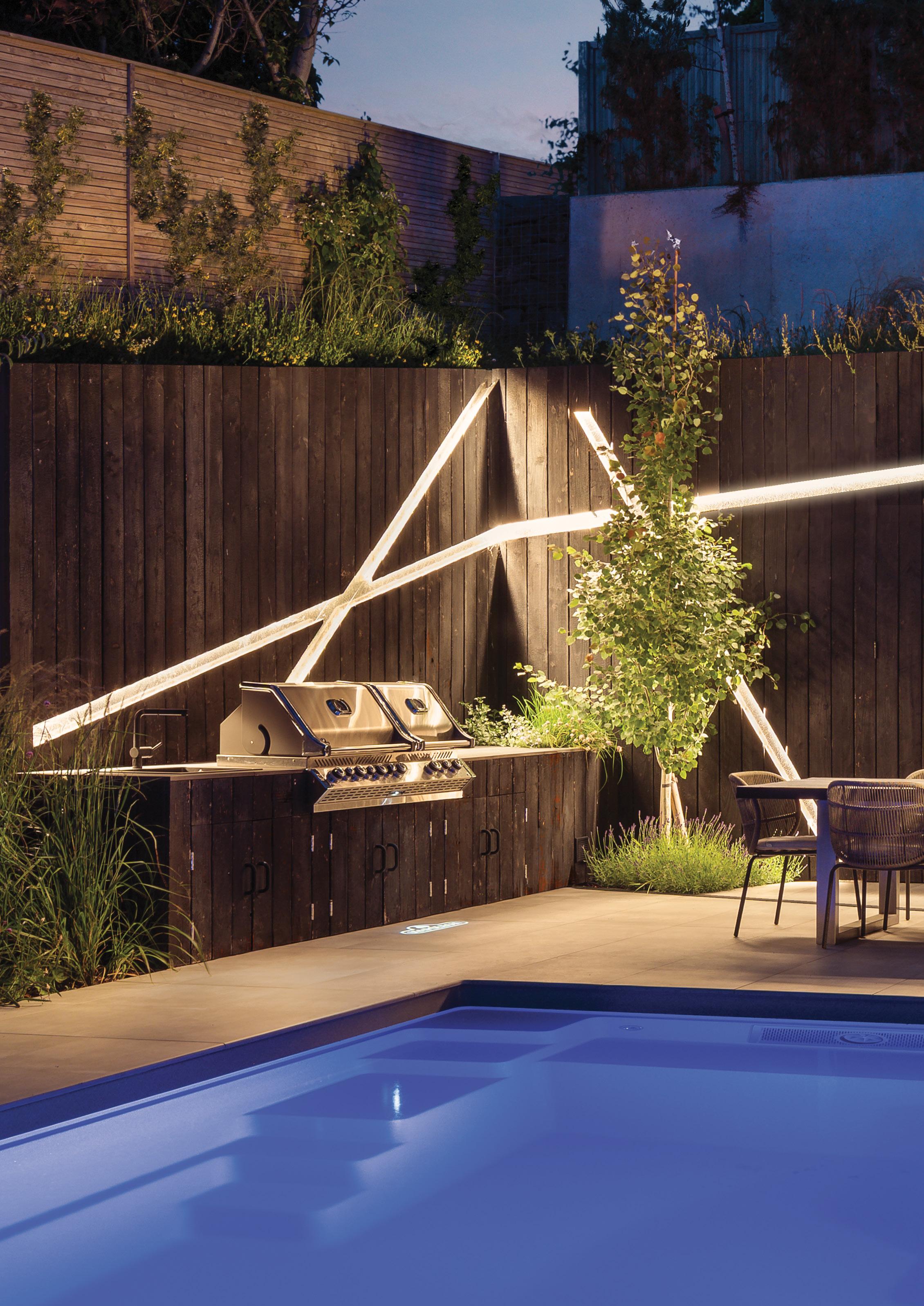
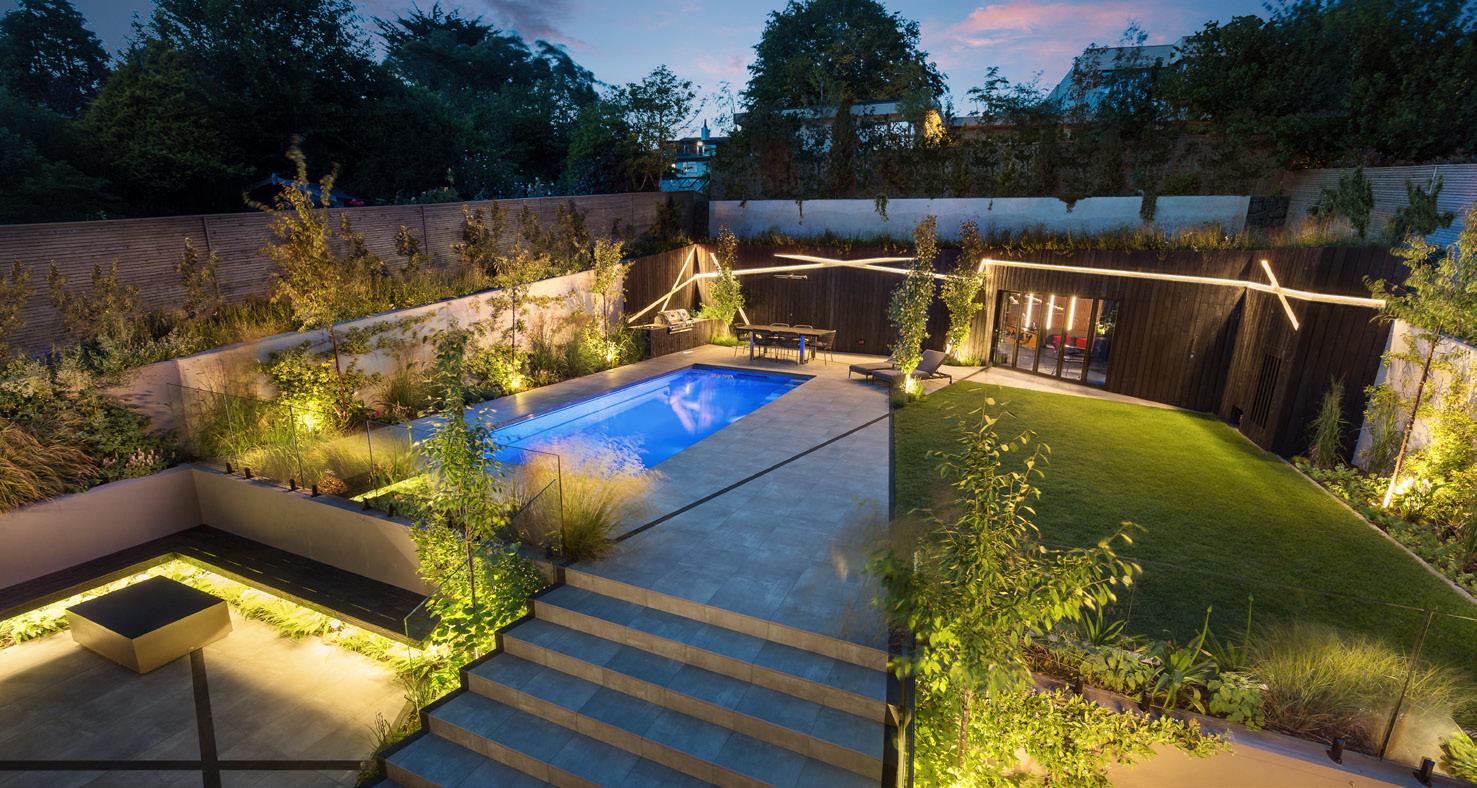
Francesca Sideris, Director of Langlea Garden Design & Construction, reveals how they transformed a garden that was fragmented, impractical, and ill-suited to a young family’s needs into one to make them proud.
Q
AWhat was the inspiration behind the project?
Our clients were looking for a wow-factor rear garden to live up to their show-stopping contemporary property and interior design.
This project redefined a challenging rear garden with previously very impractical levels and poorly considered use of space into a bold, contemporary, and highly functional family space.
AQWhat is your most rewarding part of this project?
Our client’s brief was extensive; he wanted to pack many features into a modest-sized garden, so efficient use of available space was crucial.
We successfully combined a good-sized lawn for the children to play, a familysized pool with space to walk around, a sun terrace entertaining area, outdoor kitchen, music room, sauna, storage units, bathroom, pool pump room, and even an integrated cabinet for a robotic mower. The end result appears effortless, although it was far from it!
QWhat challenges did you have to overcome and how did you manage them?
AIt was a very challenging construction process, which involved a third-party contractor drastically excavating the entire garden and constructing RC walls around the boundaries.
We worked incredibly closely with our client to assist in the management and communication between many different and often conflicting third-party contractors, all alongside executing our own work to perfection, requiring exceptional project management skills.
Q What inspired you to enter the National Landscape Awards in the first instance?
A We’ve now won 10 BALI Awards, but this project was probably our most challenging. We knew this project was so special it deserved the national recognition that a BALI Award can bring.
new category for an evolving landscape
In the Repurposed Development category, a new addition for this year’s Awards and sponsored by Hillier, it was Maylim who took the Principal Award for their Wilton Park scheme. The stretch of the city at Wilton Park, adjacent to Dublin’s Grand Canal, has been home to some of Ireland’s most famous writers, poets, artists and thinkers and the striking new Wilton Park development is now inclusive, vibrant and sustainable. Encompassing the extensive roof terraces on the new building, the ground floor public realm wrapping around it, and the restoration of the adjacent Victorian park, this transformational project blended innovation, ecology, and placemaking in Dublin’s urban landscape.
With sustainability and good environmental practices being a key focus of BALI’s work,
entries that displayed excellence in these areas were especially commended. With that in mind, a special “Environmental Awareness” award was presented to John O'Conner Grounds Maintenance for their submission, “Biodiversity Boost”. It detailed an inspiring journey of collaboration, cultural change and habitat enhancement, initiated by a contractor who cares about the environment and wants to lead by example. Undertaking initial in-depth research, and employing a staff member to oversee the scheme, the contractor not only managed to get staff engaged and involved but also ignited interest and engagement among the local community and beyond.
There were also Principal Awards for Glendale in the Employer Excellence - Turnover Over £2.5m category and Orchard Learning in the Supplier Exceptional Service category.

to fruition.
AQWhat was the inspiration behind the project?
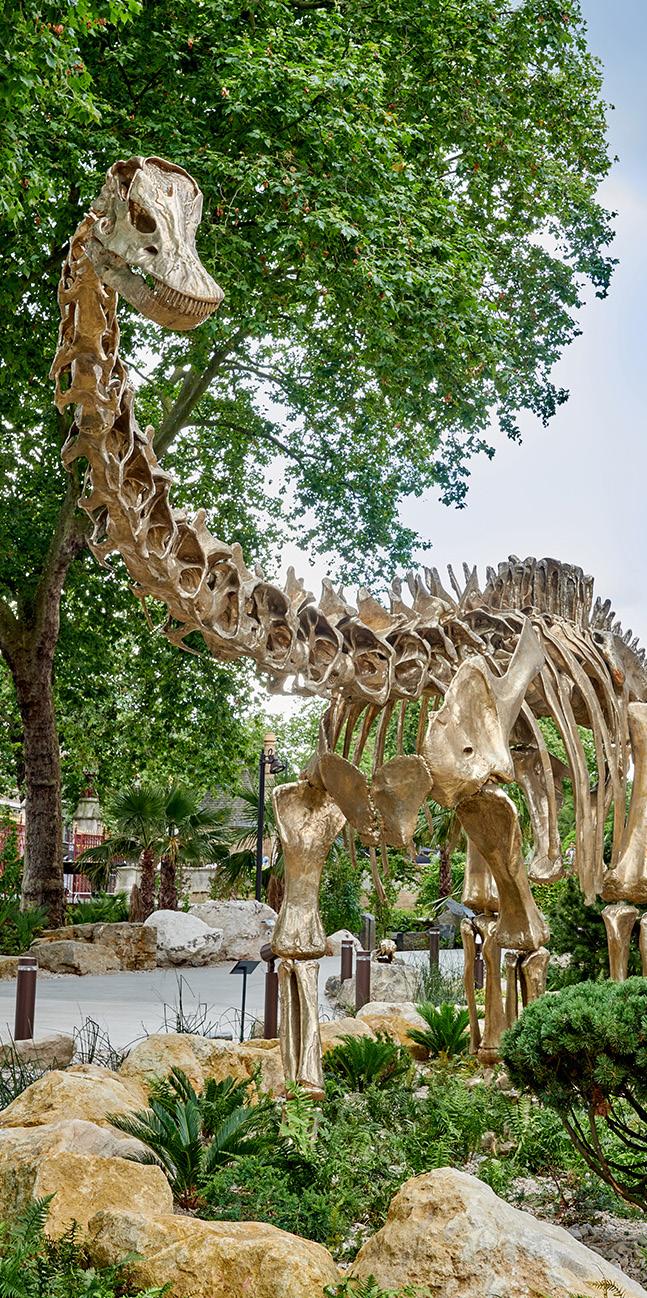
In the 140-year history of the Natural History Museum, the five acres around the front of the building had been used for everything from tennis courts, parking and allotments to ice skating. The desire was to create a truly amazing entrance to the museum, and the reimagined gardens are now home to two outdoor living galleries, the Evolution Garden and the Nature Discovery Garden, telling the story of 540 million years of life on Earth.
AQHow did you overcome the major challenges?
By far the biggest challenge was the plant list. We had seasoned suppliers that had never seen or even heard of some of the plants that were required. We had to use several small specialist growers and were sending a van to pick up four plants in Cornwall, three in Shropshire, a dozen in Yorkshire, and even up as far as Scotland. We were told by one supplier that the plants of one variety were the only seven in the Northern hemisphere!
We had to follow the brief very closely toothe design had been very carefully thought out to tell a story and there was no scope for interpretation, a missed placed plant or area of gravel could be 50 million years out!


AQWhat is your favourite part of the project/design?
There are a number of fantastic elements to this project, but I think that the thing that pleases me the most is that the garden is open to the public. I have been doing this for 35 years and created some amazing spaces for huge amounts of money, they look incredible but will only ever been seen and enjoyed by a privileged few. Anyone can enjoy this space and hopefully it will inspire some to get involved in landscaping. Five million people visited this garden in the first 12 months that it was open.




Next year marks the 50th iteration of the BALI National Landscape Awards which is set to be the biggest and most celebrated show in its history. With a whole host of special awards and surprises in store, aspiring landscape businesses will need to both draw inspiration from the 2025 crop and look to further push the boundaries of what is possible if they want to claim what will be a hotly contested Grand Award accolade. Entries will open in late Spring on the BALI Awards website.


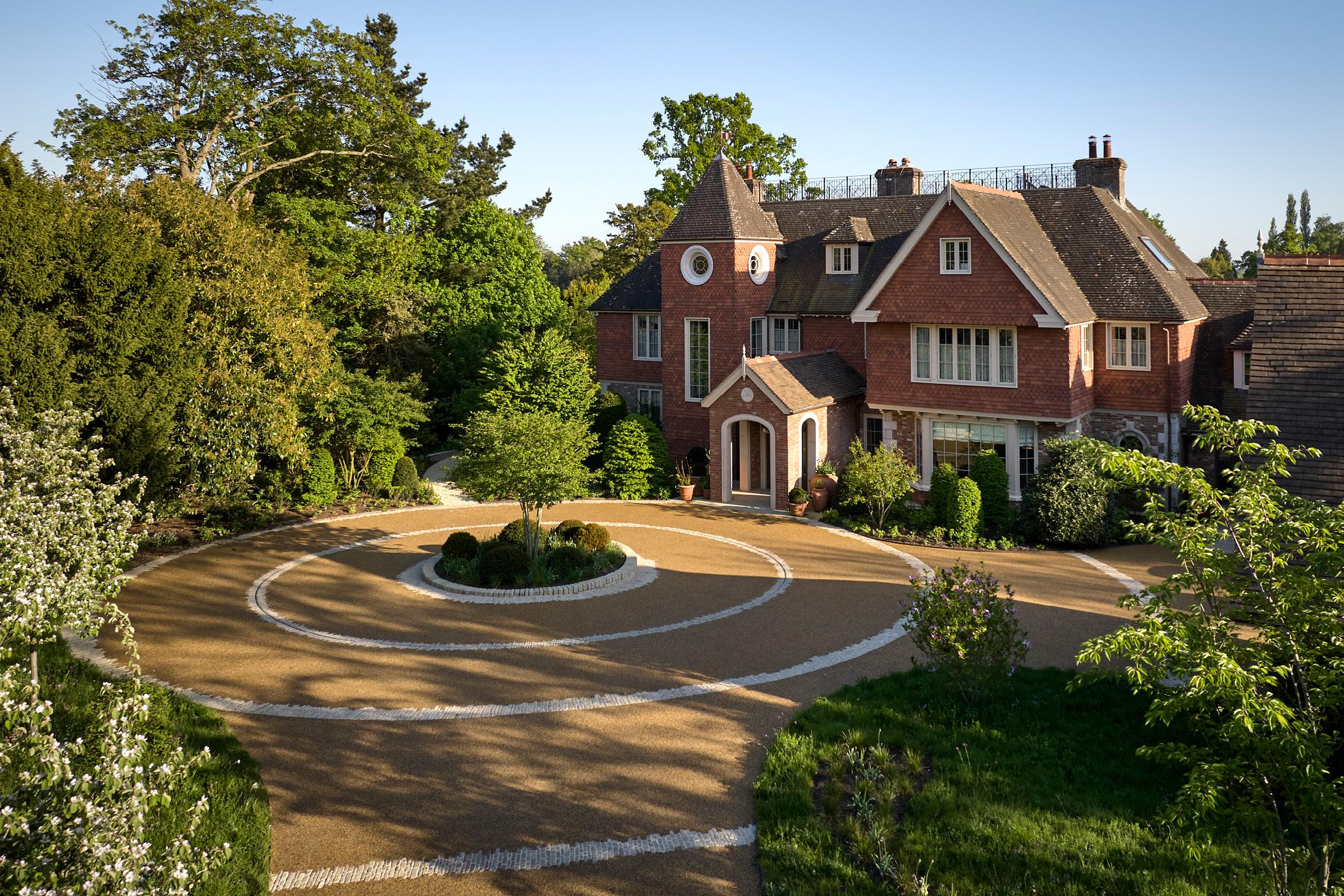
Having won the ultimate prize in landscaping, BALI Grand Award winners The Outdoor Room reveal the behind-the-scenes of their stunning project.
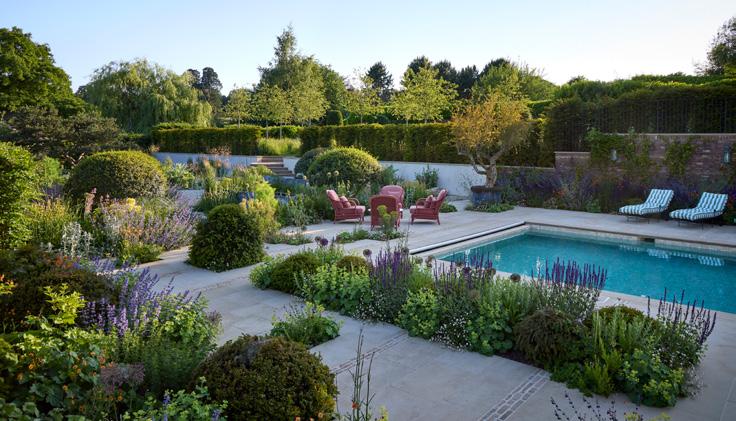
A large domestic property set on a private estate in East Sussex, the house itself, although blessed with a smattering of interesting architectural elements, doesn’t particularly distinguish itself from many of the similar multi-million-pound mansions that dot this affluent part of the nation. However, thanks to a more than £750k landscaping project, when you step outside the confines of the home you are transported into a world of constant intrigue and thoughtful design decisions at every turn.
Relaxing and embracing in equal measure, conveying a sense of both privacy and freeing space, the clean lines of the pathways and manicured borders are complemented by and yet somehow juxtaposed against bold planting schemes, wild in places, yet deliberately considered. All told, the garden’s new landscape shines as a stunning example of what can be achieved when you combine industry experience with elite levels of expertise.
"Look at it as a great way of measuring yourselves against the best in the business!”
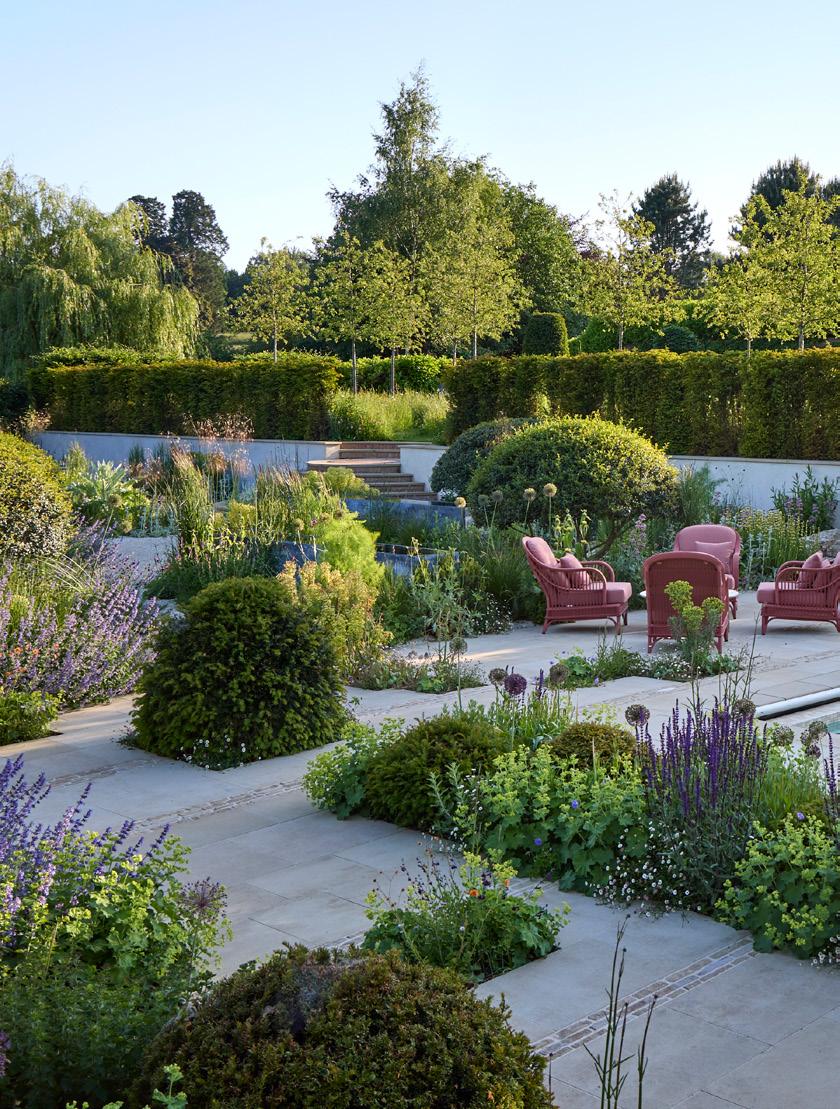
As part of its total refurbishment, all areas around the house were redeveloped, to include water harvesting and irrigation works, the planting of large volumes of mature trees and native hedging, wildflower areas, swimming pool renovation, extensive and detailed hard landscaping, and drainage features to overcome driveway flooding issues. A challenging and complex project requiring good on-site collaboration with multiple trades, the BALI National Landscape Awards judges commended the visual beauty of the scheme, which belies much of the complex work carried out by the contractor to resolve major drainage issues and to implement challenging aspects of the hard landscaping design.
The brief encompassed many requests, from reviewing and improving the driveway and access to the property to make it more practical, to the review and introduction of vibrant seasonal planting schemes to create a welcoming green oasis full of flower, form and scent. Softening of the large expanse of house façade with climbing roses, and recreating large areas of entertaining spaces, but with lots of detail at ground level to provide a more interesting finish, was also part of the ask. In particular, they wanted the scheme to utilise the beautiful sight lines from the three sets of doors to the rear of the property, making use of the borrowed landscape adjoining the gardens. Finally, the use of very subtle lighting to enhance and extend the use of the gardens and terraces into the evening, while being mindful of the dark skies, was of paramount importance too.
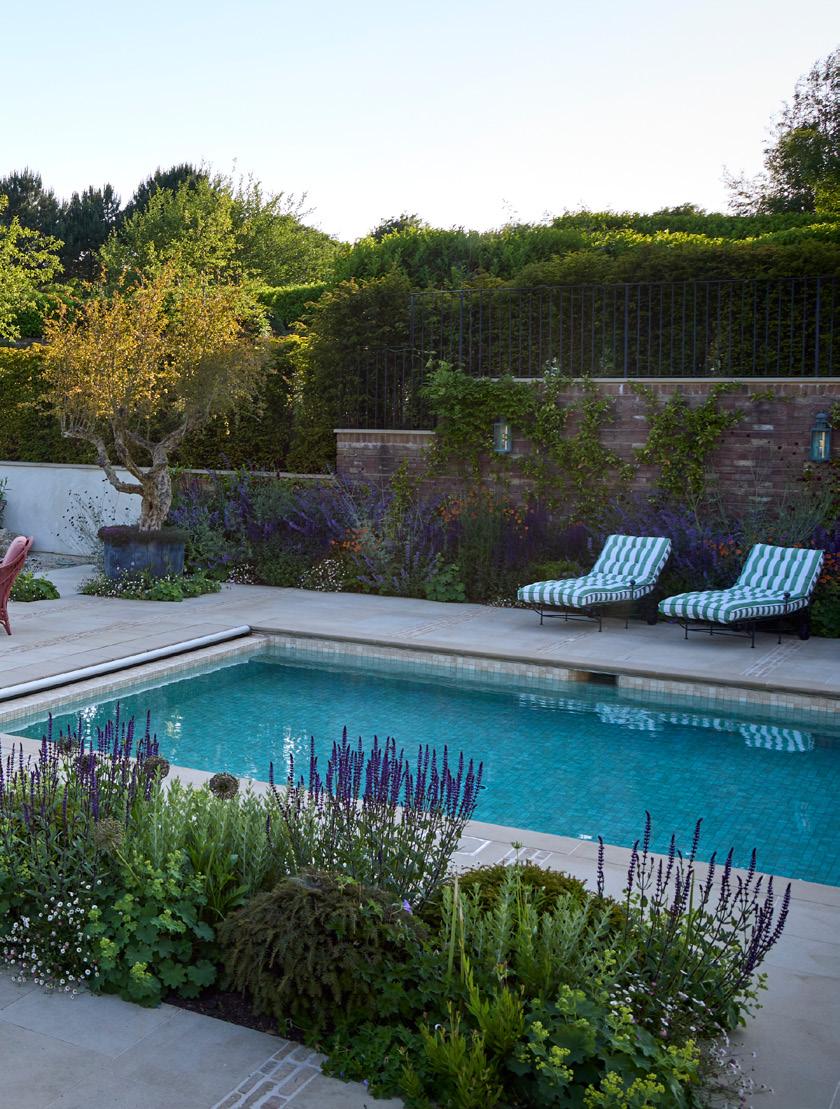
With so many different contractors on site, it presented some difficult challenges and timing issues in order to ensure a timely completion of the project.
“We were working alongside a main contractor who was renovating the large house, which meant that we were hugely dependant on them completing tasks ahead of us so that we could progress. Our own programme went out of the window fairly early, so being able to be creative with what we could achieve became incredibly important. Thinking ahead and making sure that materials for different elements of our project were on site and available meant that we could jump from one task to the next if there were delays with the house,” explained Mark Britton, Managing Director, The Outdoor Room.
“The weather was also hugely challenging for large periods of this project – there were times where you could very easily confuse it with a muddy swamp!” elaborated Mark, who is able to smile about now – even about the occasional run-ins with the locals.
“Access into the site provided another challenge. The house is situated within a private country estate and, as such, there were strict traffic management rules in place to minimise disturbance to neighbours –delivery times were limited, vehicle sizes were limited, and deliveries had to phone the site manager before they arrived to make sure no other vehicles would hinder their arrival as no vehicles were allowed to stop or park outside. This was largely successful, but as ever there were a few times the system broke down, and it did cause the odd stern word from disgruntled locals.”
With such a varied build, comprising a multitude of elements and visual treats everywhere you set your gaze, picking a favourite part is extremely hard, says Mark.
“As a team you invest so much into the whole project that it would feel bad to single out one element. If I had to pick something though, I would say that turning what was a pretty dull and hard landscape-heavy garden into a beautifully balanced, wildflower meadow covered oasis for a young family that have totally bought into the whole process has been the most rewarding. The benefit we have been lucky enough to bring, both to the humans and the local wildlife, is incredibly rewarding and why we are lucky to be in the best profession in the world,” he added.

“It gives us a huge sense of pride to be a BALI National Landscape Awards Grand Award winner. These are by far the best industry awards and so to be judged as being worthy by some of this country’s most experienced and talented people is not something we ever take for granted. We use this level of achievement as a benchmark for all projects we undertake and to help inspire and motivate all of our team, especially newer or younger members,” Mark beamed.
So, what would his advice be to anyone thinking about entering the Awards and trying to emulate The Outdoor Room’s success next year?
“Do it! Not only can being at the Awards ceremony among the very best in the business be motivational for the whole team, but it can also help raise your own profile within the industry. What could be better for attracting new clients, or indeed staff, than having a shiny plaque or two on the wall showing that your company can achieve the very highest standards? Look at it as a great way of measuring yourselves against the best in the business!”
For a house named after a thorny, prickly plant that only blooms for a select few months of the year, it is perhaps somewhat ironic then that The Outdoor Room team have provided the family with a welcoming garden that they can enjoy year-round for many, many years to come.
Contact: theoutdoorroom.co.uk
Origin Enterprises plc, led by its Living Landscapes division, is the headline sponsor of this year’s BALI National Landscape Awards. The sponsorship reflects the company’s commitment to excellence in landscaping and its dedication to supporting the professionals who design, build, and maintain the UK’s green spaces.
The Landscapes sector of the Living Landscapes division is led by Managing Director Mark Andrews. It brings together four specialist businesses: British Hardwood Tree Nursery, Green-tech, Groundtrax, and Suregreen. Collectively, they are a major supplier to the landscaping, grounds maintenance and forestry sectors, providing an integrated range of products and services that support sustainable land development, rural and urban greening, and the delivery of high-quality, resilient landscapes.
Adapting to an evolving landscape
The landscaping sector faces growing pressures to deliver projects that are functional, attractive, and environmentally responsible. Climate change, habitat loss, urban expansion, and the demand for naturepositive development are reshaping the way landscapes are planned and delivered. Origin Enterprises meets these challenges head-on, embedding sustainability and innovation at the heart of every project.
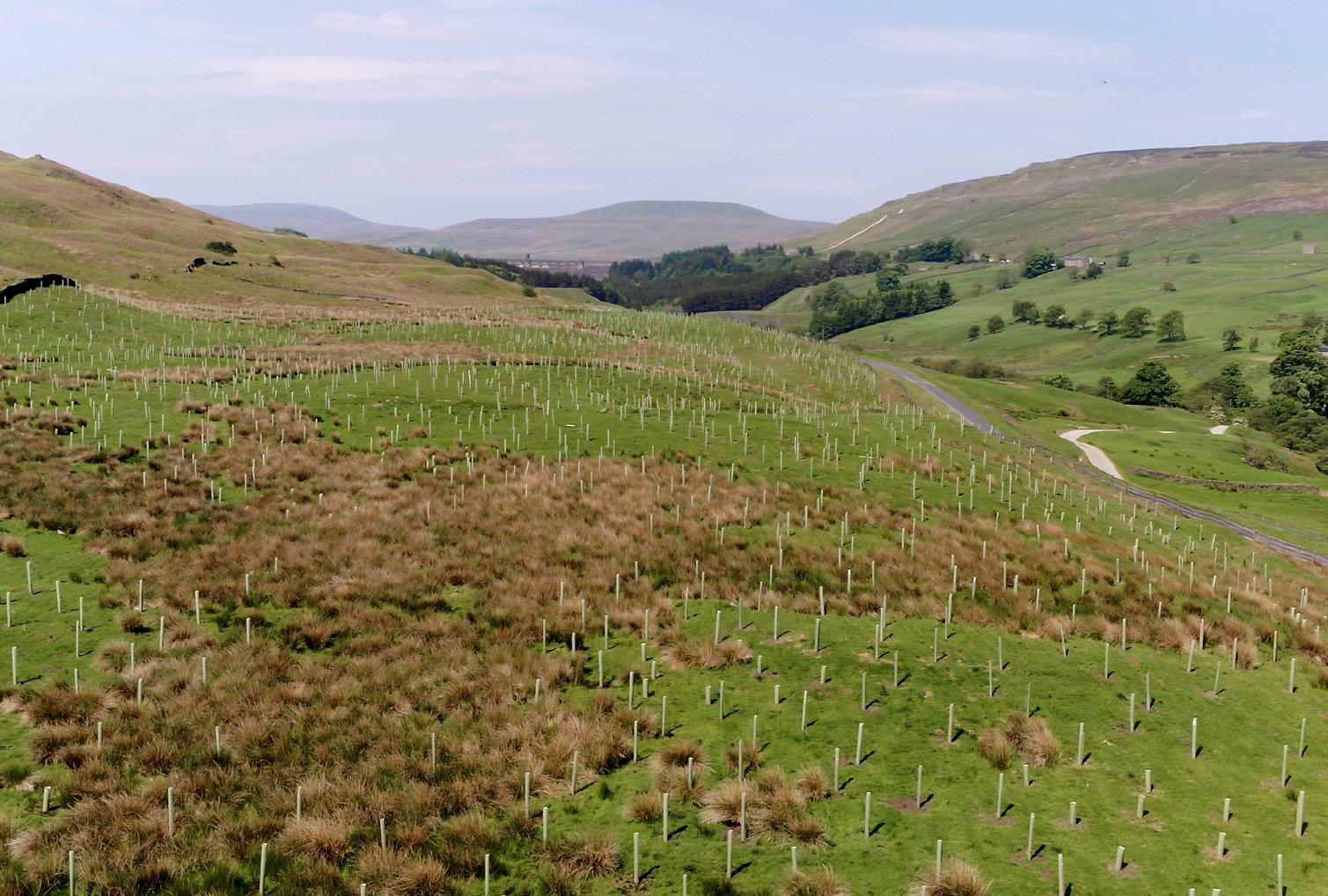
Green-tech supplies an extensive range of landscaping materials, from tree protection and substrates to wildflowers and irrigation products. Its expertise supports the creation of resilient outdoor spaces and large-scale tree planting initiatives across urban and rural projects. British Hardwood Tree Nursery specialises in native trees and hedging plants, providing high-quality stock that enhances biodiversity, supports habitat creation, and contributes to climate adaptation. Recently awarded a Royal Warrant as a supplier of trees, tree protectors, and wooden stakes to the Royal Household, British Hardwood Tree Nursery celebrates
35 years of excellence in high-quality tree distribution. Suregreen provides timber, fencing, aggregates, geotextiles, and garden products, offering durable and sustainable solutions across both B2B and B2C markets. Groundtrax manufactures and supplies ground reinforcement and protection systems that maintain the integrity and functionality of high-use areas such as parks, sports venues, and community spaces.
Origin Landscapes has been at the forefront of urban and rural greening projects, combining the strengths of its businesses to deliver ambitious outcomes. Recent initiatives have included large-scale tree planting schemes and habitat creation projects that transform brownfield sites and regenerate urban corridors. These initiatives enhance biodiversity, improve air quality, and create greener, more resilient communities. Each project demonstrates how Origin Enterprises turns environmental challenges into opportunities, providing practical, naturepositive solutions that benefit people and the planet.
"Climate change, urban expansion and the demand for nature-positive development are reshaping the way landscapes are planned."
Under Mark Andrews’ leadership, the four businesses meet the evolving needs of the landscaping industry. Their combined expertise, product range, and commitment to sustainability make Origin Enterprises a trusted partner for landscape professionals across the UK.
Looking ahead, Origin Enterprises will continue to invest in product development and innovation, sustainable practices, and greening initiatives to support a greener future. Its sponsorship of the BALI National Landscape Awards celebrates the creativity, skill, and dedication of the individuals working within the Origin Living Landscapes businesses helping to shape landscapes that are functional, beautiful, and environmentally responsible.
Contact:

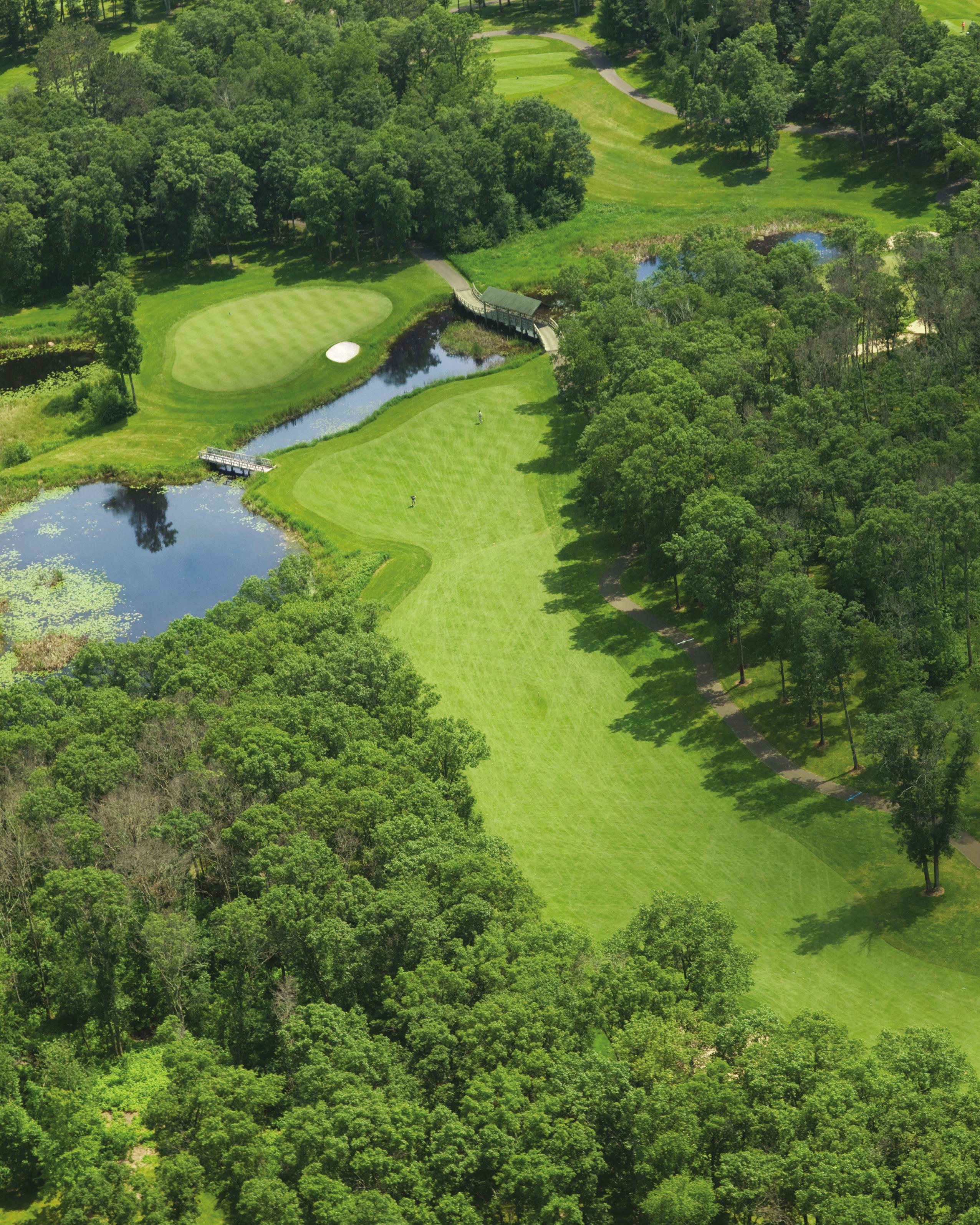
LIVING LANDSCAPES:
By combining decades of expertise from Origin Enterprises’ diverse businesses, the Living Landscapes divison provides complete, sustainable solutions for a greener future for those involved in the Sports, Landscaping and Environmental sectors.
SPORTS. LANDSCAPES. ENVIRONMENT.
From high-performance turf care and green solutions to ecological consulting and biodiversity management, our businesses provide the tools and knowledge to create sustainable spaces. Find out how we can support your projects today.
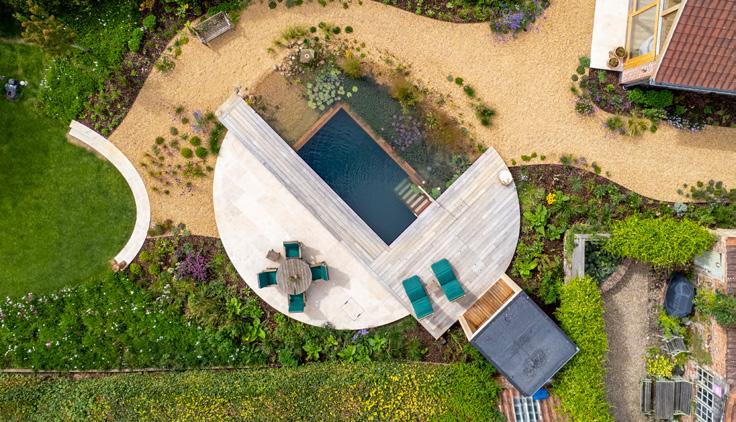
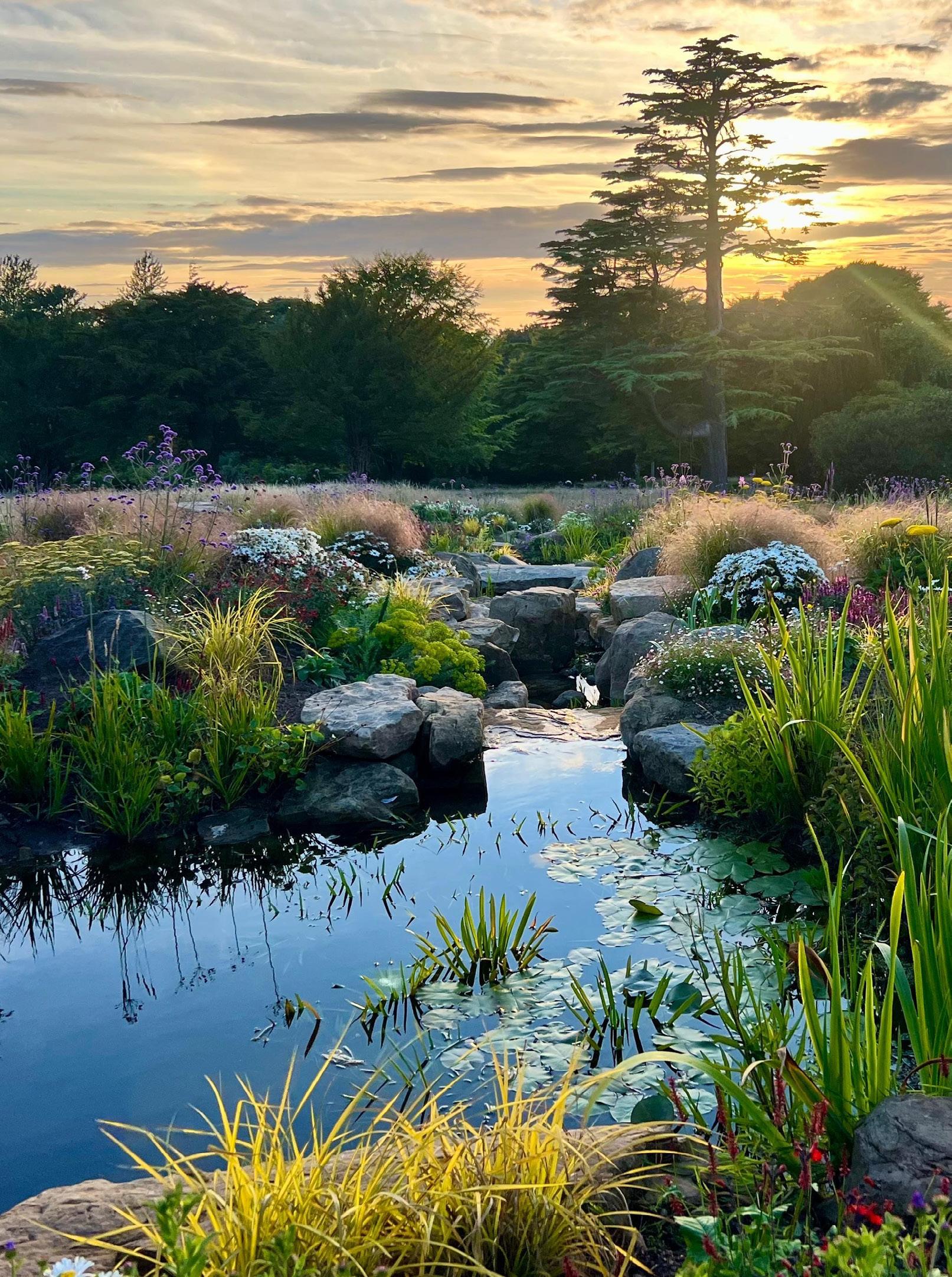
Bringing nature into your backyard, natural pools are seeing a dramatic rise in popularity. BALI National Landscape Award winners, Ellicar, invite us into this eco-friendly world of harmony with the environment.
In a world where our gardens are increasingly seen as sanctuaries, few features embody tranquillity and connection to nature quite like a natural swimming pool. Unlike their conventional, chlorinated cousins, natural pools are living ecosystems – alive with aquatic plants and welcoming to wildlife. At the forefront of this movement in the UK
is Ellicar Natural Pools, led by Head Designer Sarah Murch, who has dedicated years to designing biodiverse, sustainable water gardens.
We sat down with Sarah to explore why natural pools are on the rise, how they work, and what makes them such a transformative addition to modern landscapes.
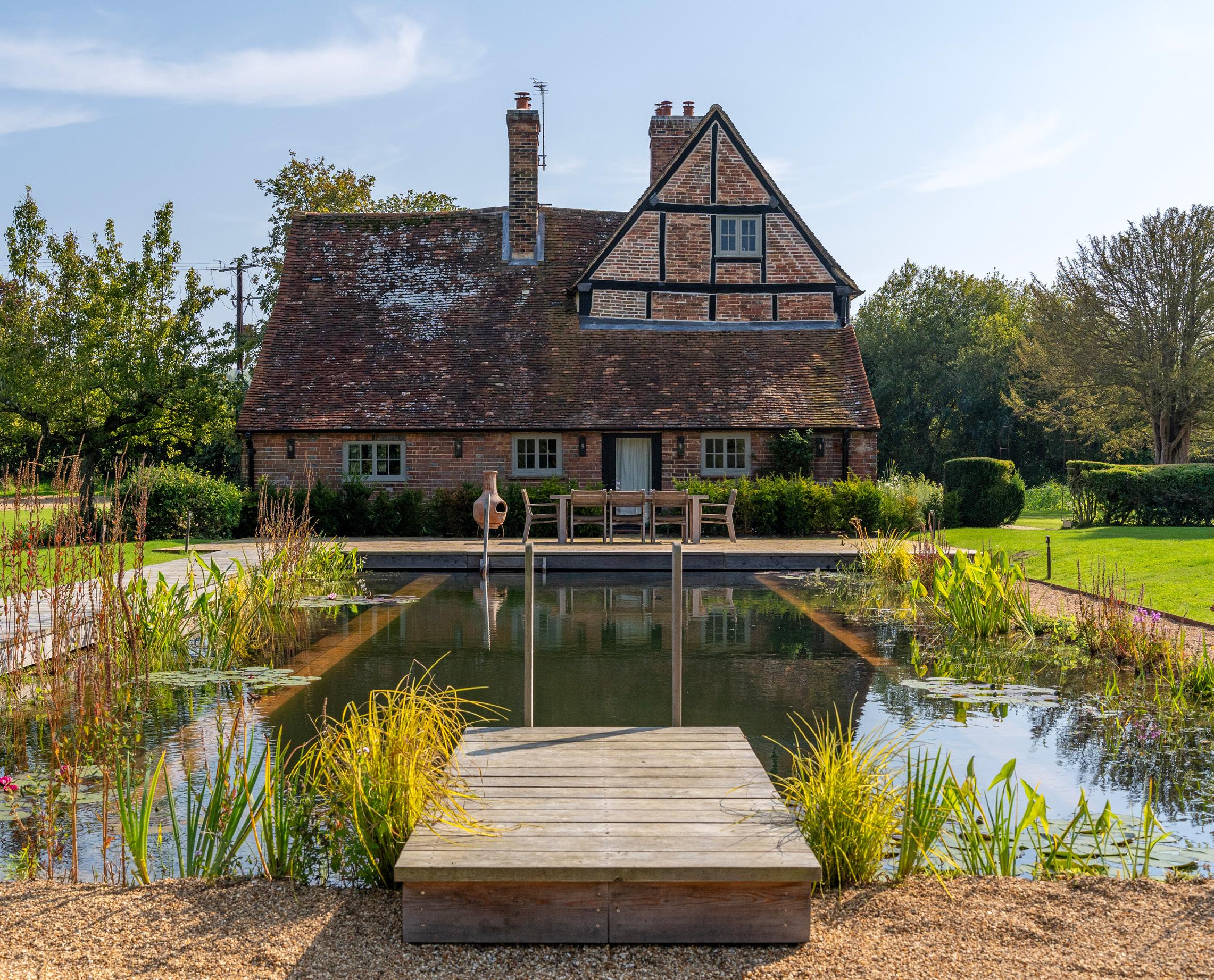
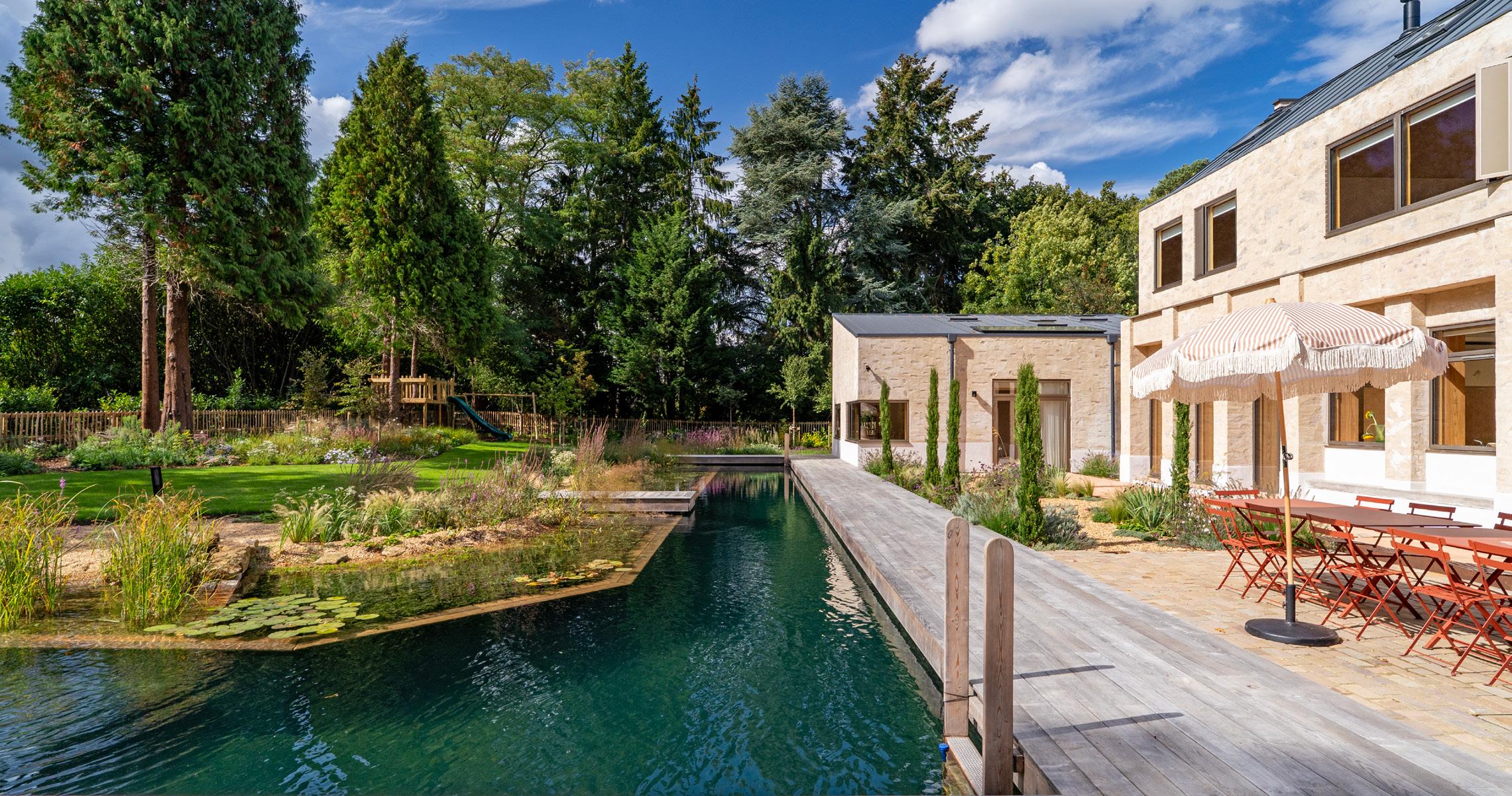
“Clients come to Ellicar from a wide range of backgrounds, but they’re united by a desire for more than just a place to swim. For some, the appeal lies in health and wellbeing, while others are drawn to the idea of a private sanctuary in their own garden, a place to relax and recharge without leaving home. For many, it’s about connection with nature. We often get emails from clients excitedly sharing their first sighting of a dragonfly, a newt, or even a kingfisher,” explains Sarah.
Unlike conventional swimming pools that lie dormant for much of the year, natural pools are dynamic features, glistening with frost in winter, blooming with aquatic plants in summer, and offering year-round beauty and intrigue.
The demand for natural pools has grown significantly in recent years, with the sharpest rise following the Covid-19 lockdowns.
“People began reimagining their outdoor spaces,” said Sarah. “The idea of creating a private retreat – somewhere to swim, unwind, and feel restored – became essential.”
Alongside this shift came a rising awareness of wellness, sustainability, and the alternatives to chlorine-based systems. Environmental concerns also play a role, with clients looking for water features that support biodiversity.
Increasing media coverage and word-ofmouth recommendations have also helped.
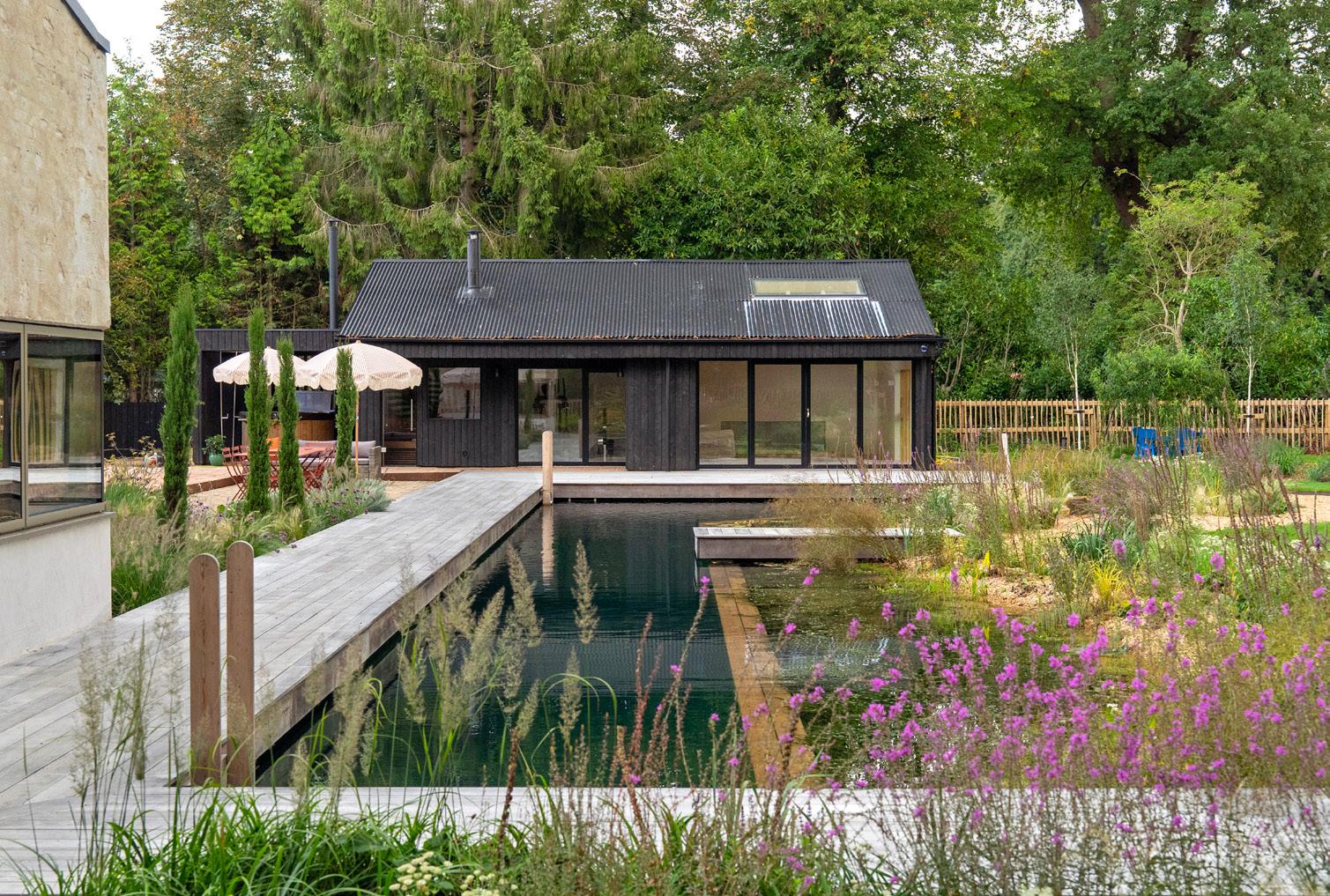
What was once a niche concept is now recognised as a beautiful, practical, and eco-friendly alternative to a traditional pool.
At their heart, natural pools rely on biological filtration rather than chemicals. In essence, for excellent water clarity and good hygiene, natural pool water must be highly oxygenated and low in nutrients to avoid algal bloom. Water is filtered to remove excess phosphorous, then circulated through a discrete biological filter which removes harmful bacteria. A regeneration zone filled with aquatic plants, absorbs any excess nutrients and helps oxygenate the water, keeping algae at bay.
Ellicar distinguishes between two main approaches, with both using the same filtration principles:
• Natural pools, built with reinforced concrete structures, offering crisp lines, any shape or depth, and easy maintenance with robotic cleaners.
• Swimming ponds, excavated from the ground with more organic contours, echoing the look and feel of wild swimming spots.
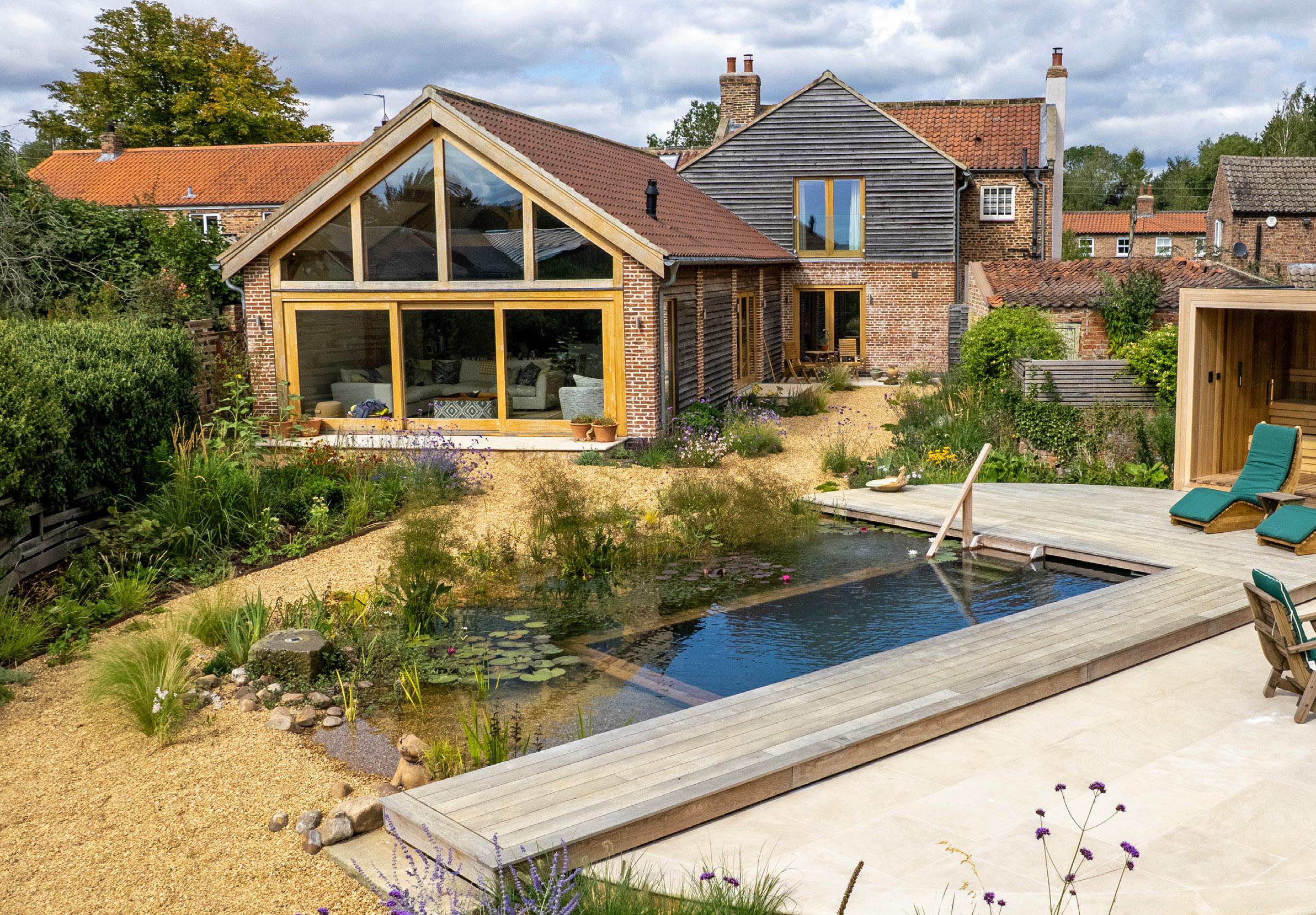
“Far from being a burden, many find the gentle rhythm of pool care deeply rewarding –a mindful way of connecting with the space.”
Natural pools require different construction methods and design considerations. For one, they don’t need a conventional plant room –the filtration and pump equipment is gravityfed, whisper-quiet, and cleverly concealed within the garden. They consume very little energy and can even be powered by solar panels. This simplicity has helped to fuel their popularity among both the public and those in the landscaping industry.
“Increasingly we are being contacted by architects or garden designers who are looking for a specialist to undertake the pool design, construction and installation as part of a larger scheme,” says Sarah.
Natural pools are living systems, and like any garden, they require some care. Daily tasks during spring and summer might include skimming leaves or emptying a debris basket. Plants in the regeneration zone also need seasonal attention – cutting back oxygenators, trimming waterlilies, and removing decaying foliage. In winter, the natural pools are largely dormant, much like a garden, and require no special attention.
Far from being a burden, many find the gentle rhythm of pool care a mindful way of connecting with the space.
Every pool is bespoke, designed around the client’s life and garden. A young family might enjoy a shallow paddling beach or rope bridge for play. A city couple might opt for a sleek lap
pool with a bubbling boulder feature to mask urban noise. Retired clients often favour sunlit decks and wide steps with handrails for easy access.
Planting is chosen for year-round appeal. Winter stems of red cornus reflected on still water, spring bulbs along the margins, or summer wildflowers buzzing with pollinators ensure the pool is always part of the garden’s seasonal theatre.
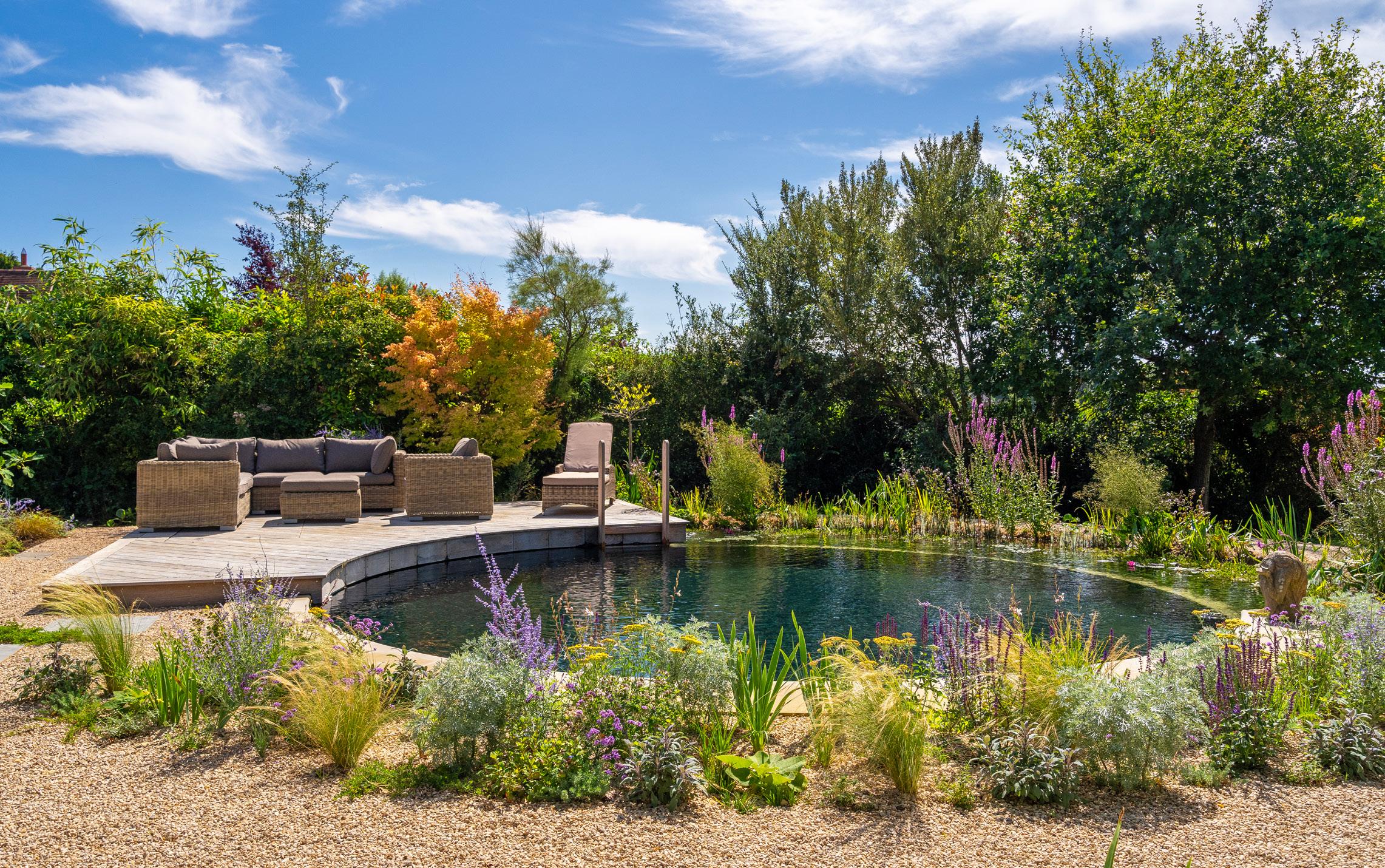
Perhaps the most magical aspect of natural pools is the biodiversity they support. Within weeks of completion, frogs and newts often appear. Dragonflies, damselflies, pond skaters, and water beetles quickly follow, creating a rich food chain that attracts birds, bats, and even hedgehogs.
“Clients have recorded swallows dipping to drink, bats feeding at dusk, and kingfishers perching nearby. For many, the joy of sharing their pool with wildlife is every bit as rewarding as swimming itself,” stated Sarah.
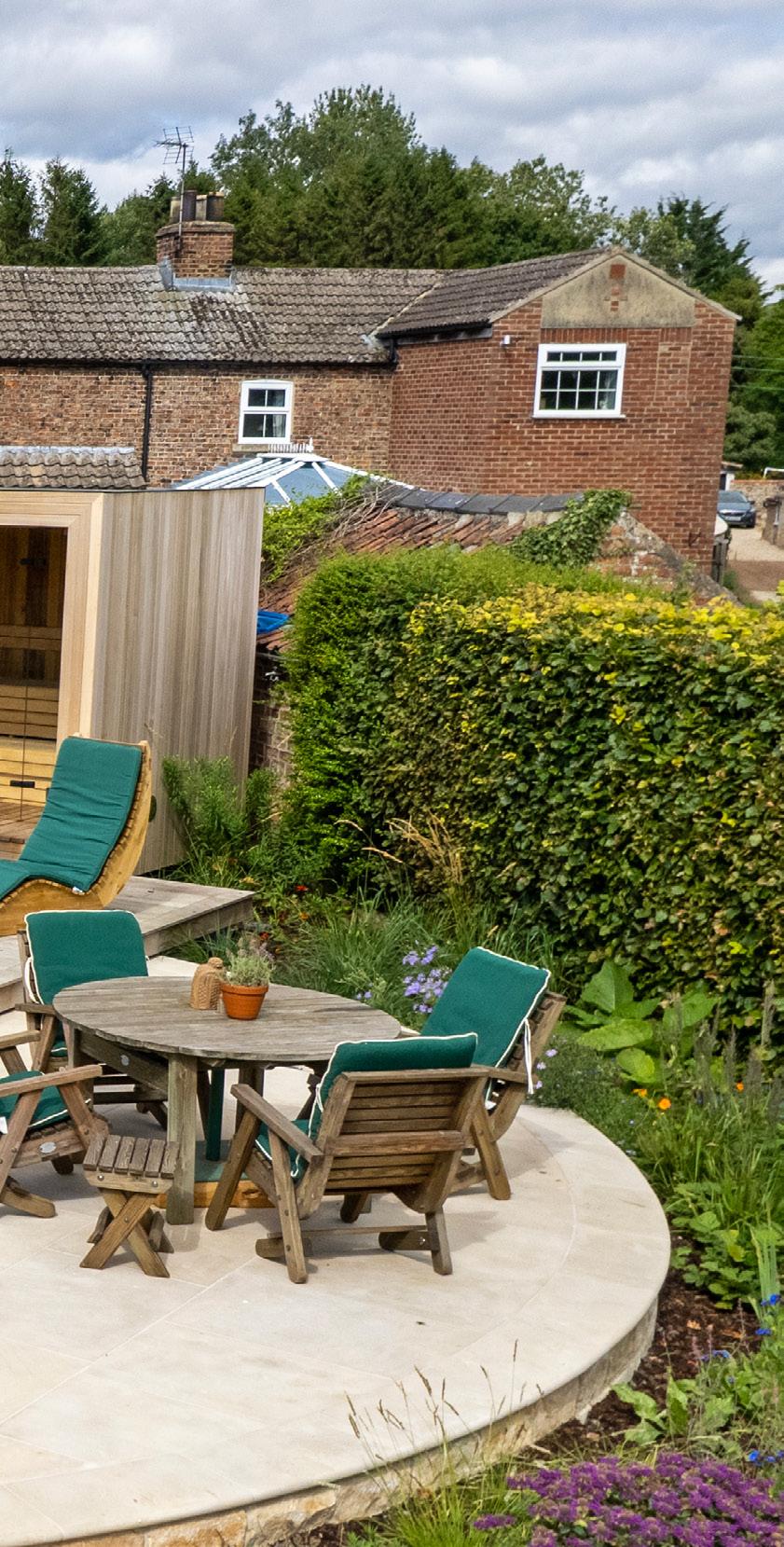
"Ultimately, the success of a natural pool lies in its integration with the landscape."
From an environmental standpoint, natural pools are designed to tread lightly. Where possible, Ellicar uses locally sourced and sustainable materials, such as British larch or ash for decking. Excavated boulders may be repurposed into water features, while recycled fibres and forestry byproducts find new life as underlays and mulches.
The result is a feature that delivers beauty, biodiversity, and wellbeing, all with a low carbon footprint.
For those who prefer the clean aesthetic of a conventional pool but want eco-credentials, there is a hybrid solution: the living pool. This system looks like a traditional pool, with crisp edges and no plants, but uses natural biological filtration, keeping the water chemical-free and alive. Heated and covered if desired, it’s a “best of both worlds” option.
Ultimately, the success of a natural pool lies in its integration with the landscape.
“A good design should feel as though it has always belonged,” Sarah reflects, “Careful attention to sunlight, topography, depth, and planting ensures the pool not only functions beautifully but enhances the garden as a whole.”
As more people seek to enrich their lives through connection with nature, natural pools offer a rare blend of beauty, wellness, and sustainability. They’re not just places to swim – they’re living, breathing water gardens that invite both people and wildlife to dive in and thrive.
Contact: ellicar.co.uk
Angus Crichton, ACO’s House and Garden Marketing Manager, reveals the behind-the-scenes design decisions that go into creating a show garden on behalf of a charity, and how ACO helped the vision become a reality.
The arrival of an air ambulance can often herald a life-changing event, as it is invariably summoned to a medical emergency that may be catastrophic for both the patient and their family. Garden designers Lucy Chapman and Helen Swan explored this reality in the Medicinal Show Garden for the Midlands Air Ambulance Charity at BBC Gardeners’ World Live 2025.
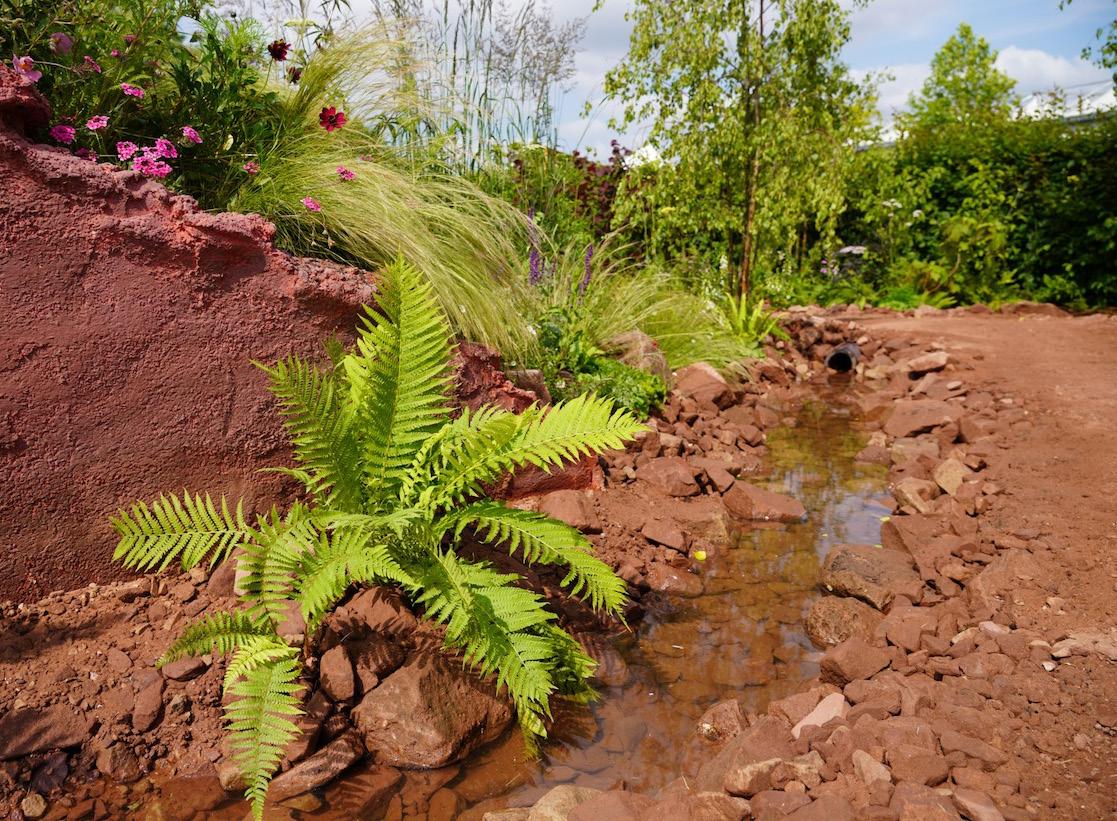
The show garden captures visitors’ attention with two swirling mounds, through which curves a path made from Midlands Red Sandstone. This is the distinctive rock upon which the Air Ambulance charity’s airbase and headquarters in Shropshire is built. The mounds represent the literal disruption of the helicopter’s blades as it comes into land at the site of the emergency. They also symbolise the disruption befalling the patient and their loved ones, as well as the experience of the Air Ambulance’s staff, for whom attending to traumatic events is a daily reality. The service undertakes an average of ten incidents per day, arriving at an emergency within ten minutes.
Midlands Air Ambulance Charity realised this disruption echoes through the succeeding
weeks, months and even years after the event. Patients would wake up in hospital with no recollection of what happened to them, how they got there and yet have life-altering changes to their bodies. Air Ambulance critical care crews delivered patients to hospital, saving lives as they performed emergency interventions, yet had little knowledge of what subsequently happened to these individuals.
Therefore, the charity developed an aftercare service, enabling patients, their families and the Air Ambulance staff to hear and tell their particular stories. This can be a time to grieve all that is lost, to confront the trauma of the event, and to thank staff who delivered life-saving care.
"The stream twists rather than runs true, at times it is a dry bed of despair, at others, a water-filled oasis of possibility."
Lucy and Helen designed the garden to mirror these complex stories. Visitors enter the garden flanked by planting in more subdued pastel tones as well as native trees, reflecting the loss, barriers and blockages of these ordeals. However, the central space is cocooned between the two mounds. There is time to sit upon red sandstone boulders. The surrounding planting in sunrise tones here suggests hope. The same plant species
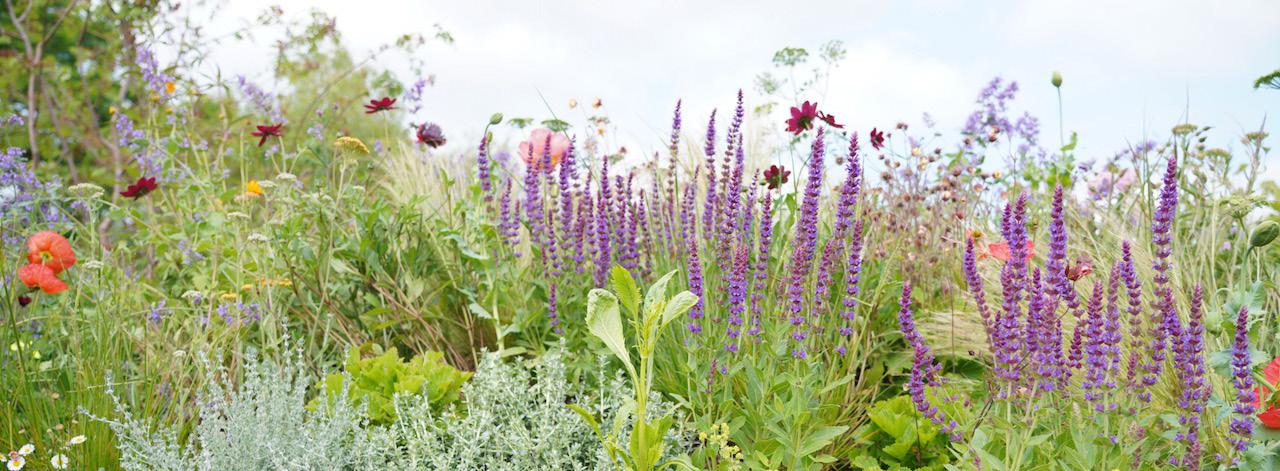
in different sizes have been purposefully selected – the idea being that hope often starts small, but it can grow. Life-saving medicines on the air ambulances have their origins in plants in the garden such as Achillea 'Terracotta' to combat infection and inflammation, Ammi visnaga 'Green Mist' to increase airflow, Salvia spp for antimicrobial properties and Valeriana officinalis for sedation and relaxing muscle. Critical care paramedics on Air Ambulances are trained to administer such controlled drugs.
Lucy and Helen use water in the garden to illustrate the profound change that patients and their families experience because of a major medical emergency. The stream twists rather than runs true, at times it is a dry bed of despair, at others, a water-filled oasis of possibility. The mounds vary the topography of the site, creating drier and damper soil, areas of light and shade. This opens up opportunities for different plant species and greater biodiversity in the same way that trauma is initially deeply disruptive but can open new connections and horizons.
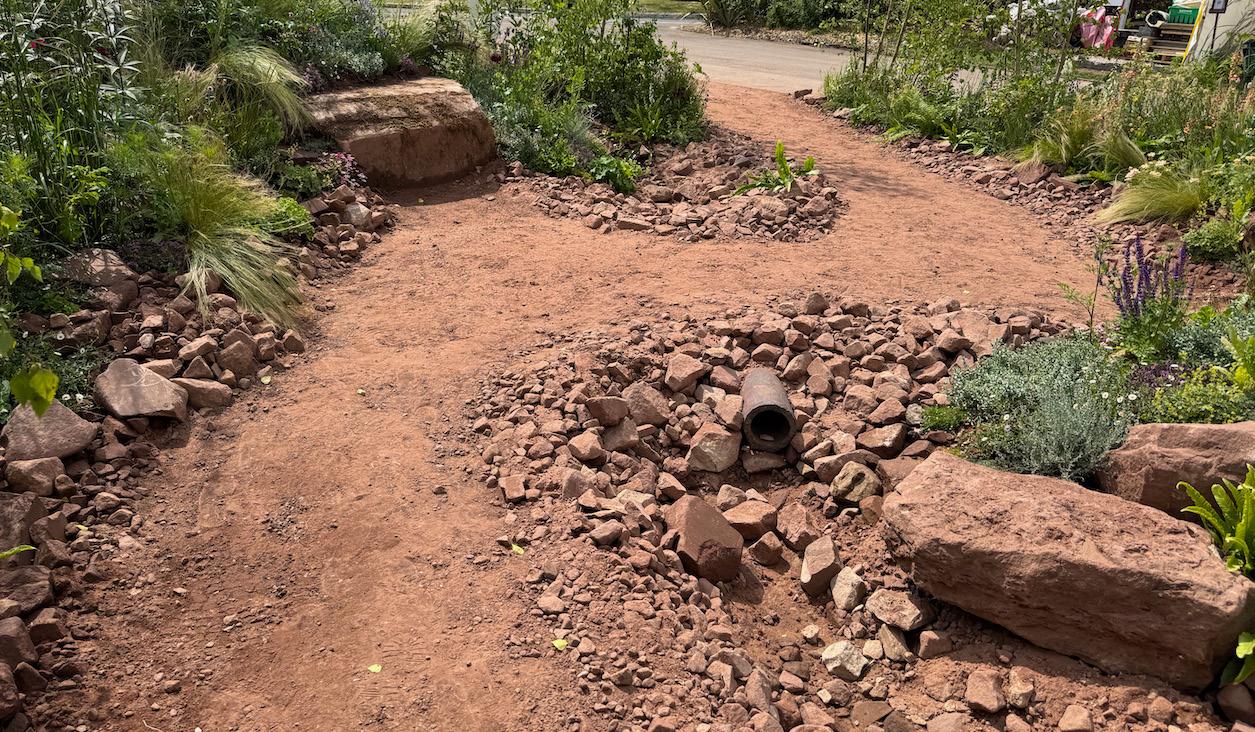
Hoggin paths of Staffordshire sandstone were used to lead visitors through their horticultural reflection of the patient’s journey. The path begins with loss and bewilderment, then weaves into the sanctuary space, before leading us out into new vistas bordered by pools of water. The larger stones in the hoggin have been deliberately collected at the
edge of the path, creating a less rigid border, suggesting how journeys from loss to hope are seldom ordered. Gravel allows rainwater to permeate through to refresh the soil beneath. The aftercare service of the charity creates a space for patients and their families to experience their stories and, with that, the chance for a new perspective to permeate through.
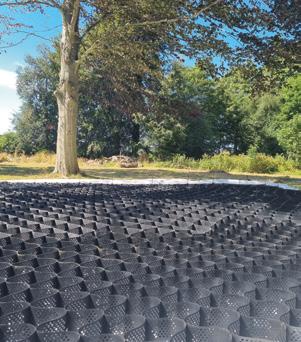
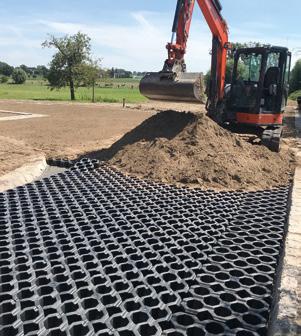
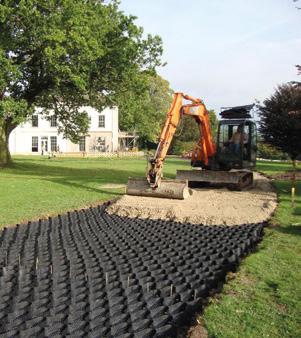
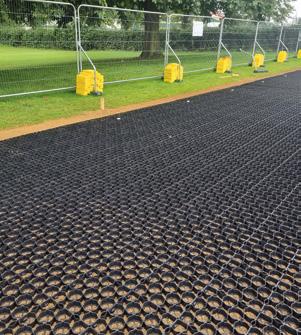
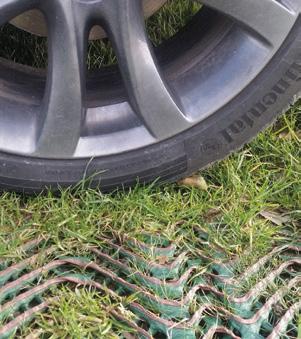
The Midlands Air Ambulance Charity Medicinal Garden has been built by renowned landscaper and show garden craftsman Rupert Keys and his team at TASK Academy. Rupert turned to ACO Water Technologies for support in construction of garden’s hoggin paths. He needed a product that would keep the larger hoggin stones in place, otherwise – with heavy footfall and rain – they tend to rise to the surface. Therefore, he laid the hoggin into ACO’s GravelGuard Grey Eco. Where the path borders the stream, the grid stabilises these gravel banks. The geotextile membrane bonded to the underside prevents dips by stopping the hoggin migrating down into the subbase beneath. Rupert wanted a product manufactured from recycled content to support the sustainability focus of the garden. This choice keeps plastic out of landfill, requires less energy to manufacture than if from raw petroleum, and supports a
circular economy. Rupert commented, “It’s an amazing product because once you get the hoggin into the honeycomb cells, it creates such a hardwearing surface.” This also makes the gravel path accessible for visitors in wheelchairs or prams.
Now that the show is completed, the garden will be relocated to Midlands Air Ambulance Charity’s headquarters and airbase at Shifnal in Shropshire. It will become a larger Garden of Reflection for patients, families and staff members. For some patients, returning to an
"Plant species in different sizes have been purposefully selected – the idea being that hope often starts small, but it can grow."
environment of whirling blades and sudden launches can conjure the experience of their initial emergency. Therefore, the garden can be a sanctuary for those wrestling with these memories.
For further information on the work of Midlands Air Ambulance Charity visit midlandsairambulance.com
Contact: aco.co.uk



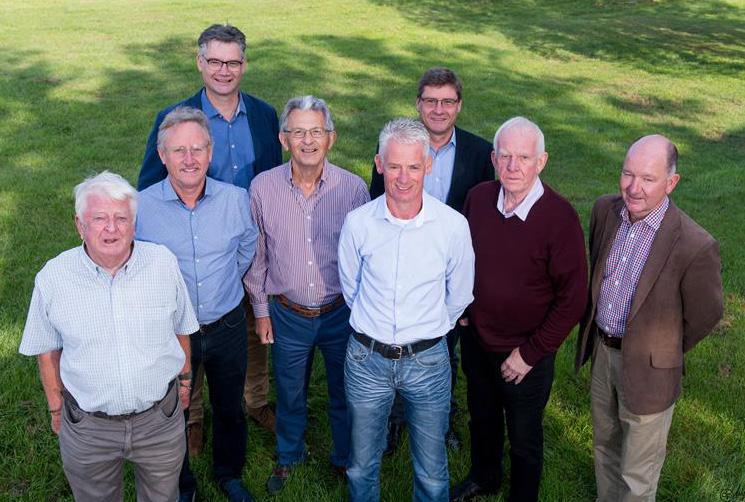
While BALI has been by your side for over 50 years, its success is down to the people that have helped steer it on that journey. BALI board member Paul Lynch sits down with one of those people, Andrew Legg - who is celebrating over half a century in the industry - to discover his pearls of wisdom for the latest generation.
When you meet someone who has quietly shaped large parts of Britain’s modern landscape industry, you expect a certain gravity. Yet speaking with Andrew Legg, you’re struck not by ego, but by modesty. His career spans apprenticeships of the 1950s, national garden festivals, consultancy, teaching, and judging for BALI. It is, quite simply, the story of a man who grew alongside the industry itself.
foundations in a different era
“I went straight from school into a three-year apprenticeship with the local authority,” Andrew begins, recalling his start in 1956 with the Liverpool Corporation Parks Department. It was, as he puts it, “a brilliant apprenticeship,” one that exposed him to every corner of horticulture.
“In those days you covered everything,” he explains. “Nursery work, house plants, town decorating – we’d take fresh plants every week to the Town Hall and the Mayor’s office. I even did time in the tree nursery and on some of the early landscape schemes.”
This immersive experience lit the first spark of interest in landscaping, and Andrew went on to study at the Welsh College of Horticulture, where he focused on landscape construction.
After college, Andrew and a fellow student joined Gavin Jones Ltd., where industry legend Geoffrey Chalk was a key influence. But, as Andrew laughs, youthful confidence soon kicked in: “After a three-year apprenticeship, we thought we knew it all.”
They didn’t – but it didn’t stop them. The pair set up Griffin & Legg Landscapes in Cheshire, running maintenance and construction operations that steadily grew. At their height, the company employed around 20 to 25 staff – “huge for the time,” Andrew jokes.
The company’s success attracted attention. A chance encounter with Derek Bibby of Bibby Line - the shipping magnate - led first to employing one of his sons, and ultimately to Bibby purchasing the business outright. A few years later, the company changed hands again, this time to E.H. Williams, and Andrew stayed on as General Manager.
The Garden Festival legacy
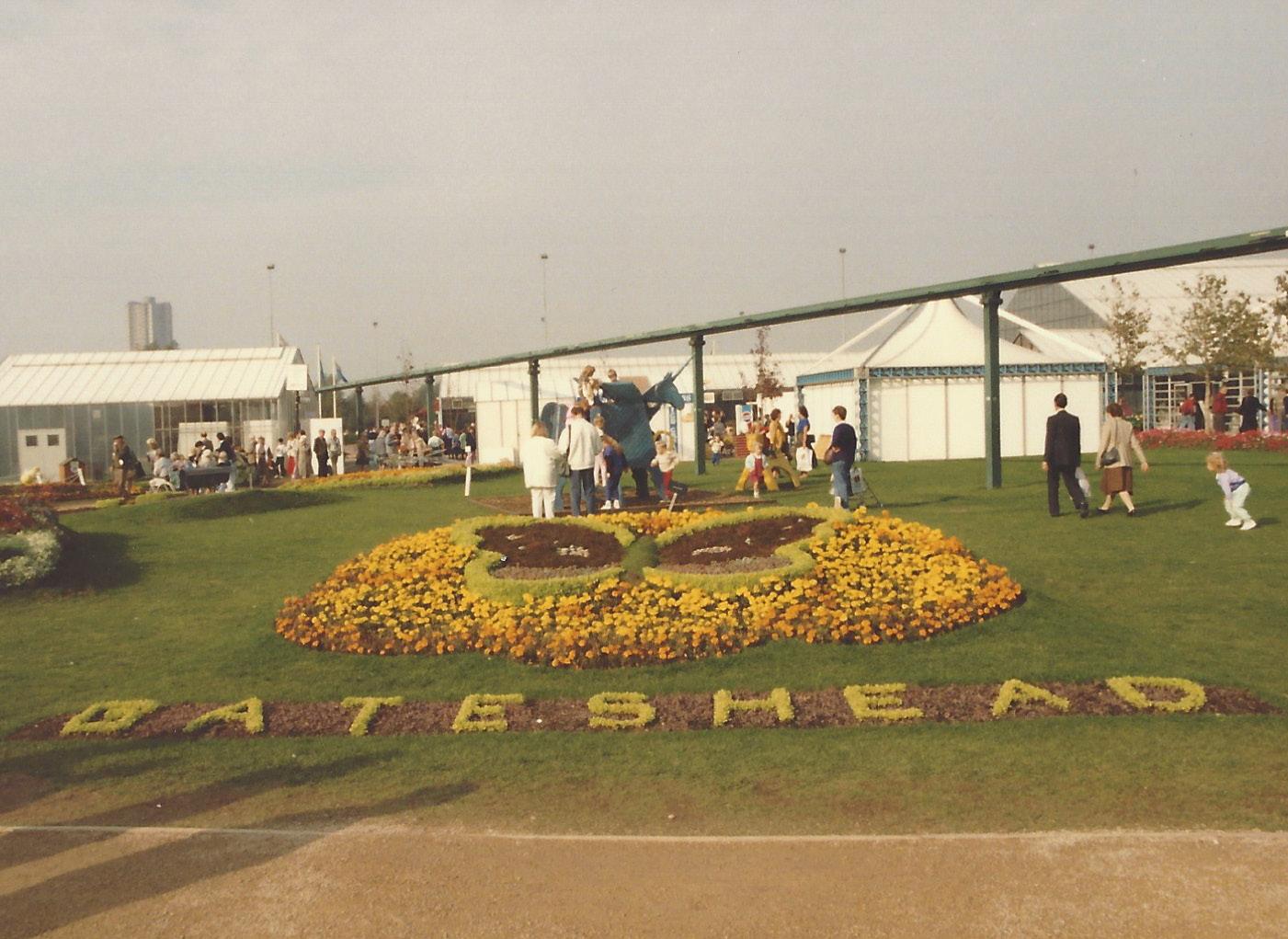
While many businesses mark high points in profit or growth, Andrew’s proudest achievement came on a much grander scale: the Gateshead Garden Festival, part of a national movement to regenerate derelict industrial land.

“This immersive experience lit the first spark of interest in landscaping.”
Andrew had earlier worked on the Liverpool International Garden Festival, and his experience made him a natural fit for a director’s role in Gateshead. “It had been steelworks, gasworks… all sorts,” he recalls. “Remediation would have been hugely expensive. But a Garden Festival made it possible.”
The project transformed a blighted, contaminated site into a celebrated landscape attraction – one that later evolved into a vibrant riverside community.
“It’s now a beautiful promenade along the river,” Andrew says. “Lots of housing, a whole new area.”
That, he admits, is a legacy he is quietly proud of.
“People don’t always see the need now, but you learned things you couldn’t get from the internet.”
Andrew was also present at the birth of modern industry governance. He was a founder member of the British Association of Landscape Industries (BALI) when the National Garden Contractors Association merged with the HTA Landscape Group around 1971.
Back then, BALI was run from the administrator’s private house in Surrey. Meetings were a blend of business and social events, something Andrew feels today’s industry has lost in the age of digital communication.
“People don’t always see the need now, but you learned things you couldn’t get from the internet. You got big wins from networking conversations.”
He later served as Chairman of BALI’s North West committee, and for decades acted as a vetting officer, visiting prospective members and assessing projects. He also became a long-standing judge for the prestigious BALI Awards.
Across such a long career, Andrew has witnessed and embraced major shifts in practice. Modern communications, international supply chains, and innovations such as synthetic sports surfaces all reshaped the profession.
“You had to keep an open mind,” he says. When synthetic pitches began appearing, he learned directly from European manufacturers, travelling to the Netherlands to understand production techniques and installation standards.
As Andrew puts it: “As the industry changed, I tried to change with it. You can't afford to stand still.”
Landscaping wasn’t just Andrew’s profession –it became a family affair. His daughter studied at Askham Bryan College, later taking a major role in the Gateshead Garden Festival’s site management. Her career eventually drew the family south, leading Andrew to settle in the South West, where he later worked in a garden centre before retiring.
After more than six decades in horticulture and landscaping, does Andrew have any regrets?
Here at the Garden of Cosmic Speculation with it’s vast landscapes, sculptures gardens we are never short of jobs to do. We already have a SXG mower the lawns and one TXG tractor, so to help with the workload we purchased TXGS24 23hp subcompact tractor.
“I don’t think so,” he says after a moment. And it’s hard to imagine how he would. His experience spans eras, techniques, and organisations, and he remains widely respected for his depth of knowledge, openness to innovation, and ability to guide others.
“With the front loader and bucket fitted it’s largely used for excavating and purposes. It’s also used for towing trailers, transporting grass cuttings and for easy disposal. With the two tractors we can run the PTO’s and systems trailer and can unload into a trailer attached to the other tractor. If we can something to them, then we can use it.
“If anything stands out,” he reflects, “it’s communication. That’s probably the biggest change. And the biggest lesson.”
“ISEKI offer exactly what we need, they are reliable, comfortable and safe would recommend these machines to absolutely anyone.”
Ben Wakefield, Portrack House
www.iseki.co.uk
For someone who helped build national festivals, mentored businesses through BALI, and embraced every shift in the trade, Andrew’s approach remains refreshingly simple: stay curious, stay open, and keep learning.
It is a career marked not just by longevity, but by evolution, and it is one that has left a visible and lasting impact on landscapes, organisations, and people across the country.






sculptures and for cutting purchased another landscaping and leaves systems off one can attach safe to use. I









Contact your Local Dealer to book a demonstration on your site today!

Contact your Local Dealer to book a demonstration on your site today!

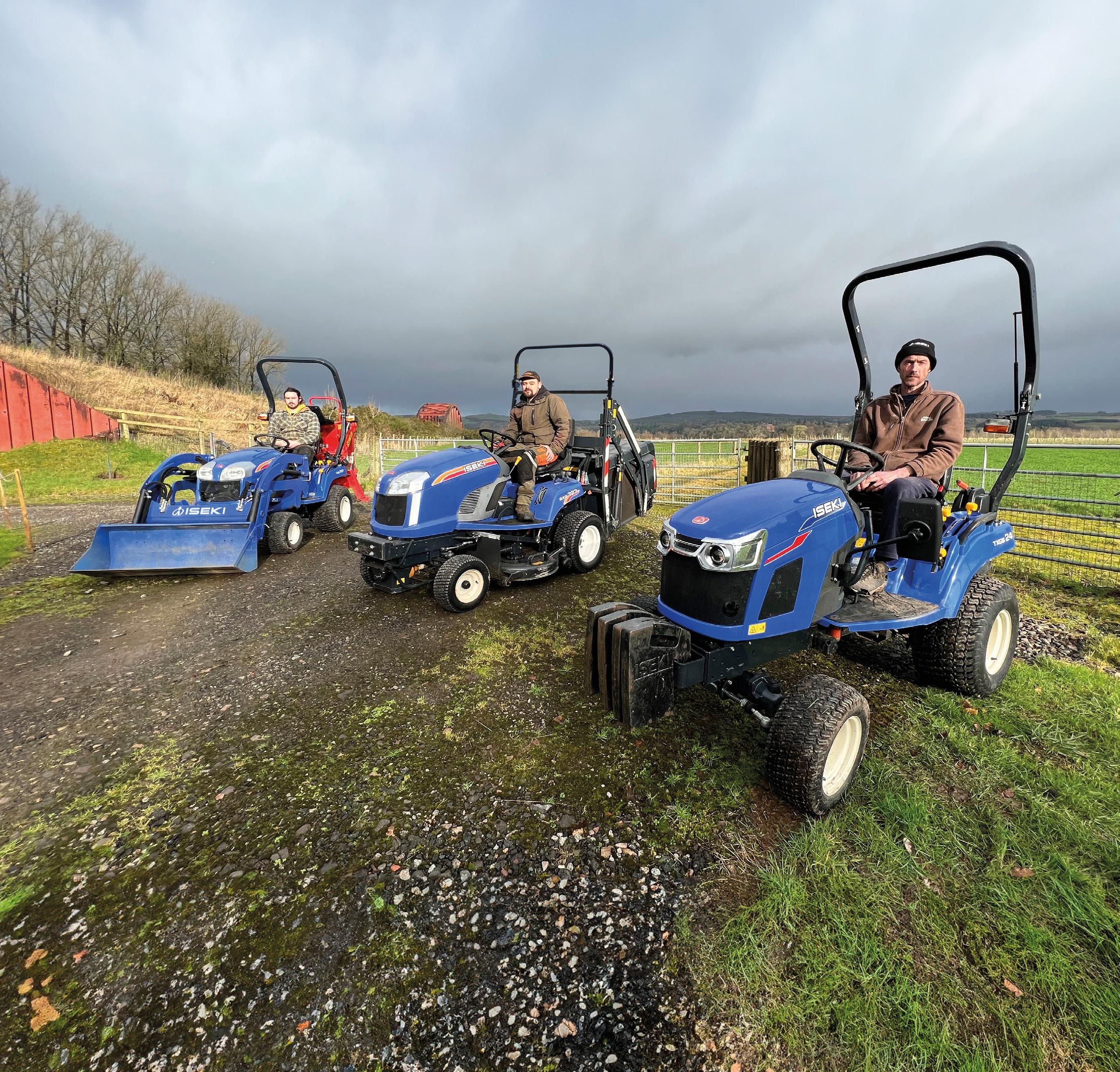
“Here at the Garden of Cosmic Speculation with it’s vast landscapes, sculptures and gardens we are never short of jobs to do. We already have a SXG mower for cutting the lawns and one TXG tractor, so to help with the workload we purchased another TXGS24 23hp subcompact tractor.
“With the front loader and bucket fitted it’s largely used for excavating and landscaping purposes. It’s also used for towing trailers, transporting grass cuttings and leaves for easy disposal. With the two tractors we can run the PTO’s and systems o one trailer and can unload into a trailer attached to the other tractor. If we can attach something to them, then we can use it.
“ISEKI o er exactly what we need, they are reliable, comfortable and safe to use. I would recommend these machines to absolutely anyone.”
Ben Wakefield, Portrack House

BALI’s Digital Marketing Officer, Mia Foster, provides her top tips for ensuring your social media strategy is on top form this year.
Running a business comes with ebbs and flows, which is where social media goes from a potential added extra into a business necessity. The questions that many businesses need answering are: how do you stay front-of-mind with potential clients during slower periods; how do you convert casual scrollers into hot leads; and when you're at capacity with current projects, how do you nurture relationships that will keep your calendar full for months ahead? A smart social media strategy solves this business puzzle.
Social media does something that traditional marketing can’t – meet your customers where they already are, namely scrolling through their feeds, following their trusted businesses, researching local careers and gathering inspiration. The landscape businesses that will thrive in 2026 and beyond have a wellthought-out social and digital strategy, that continually builds trust, engages with the community and aims to convert at every stage of the customer journey. We are going to explore how to do this.
Here are four actionable tips that can be interwoven into a social media strategy to create visible results:
"Social media does something that traditional marketing can’t –meet your customers where they already are.”

1
Leverage short-form videos to showcase your businesses work
Short-form video content has become the dominant format across platforms such as Instagram, TikTok, Facebook, and LinkedIn. Videos are prioritised by platform algorithms, meaning your content reaches more potential customers organically, growing conversion rates. Video content can capture your audience’s attention faster and hold it longer, allowing you to demonstrate the quality of your work and your businesses process in a format that resonates with your audience. Video content humanises your business, makes your expertise tangible, and builds trust with your audience.
2
Build a content calendar
A well-structured and organised content calendar is essential for maintaining consistency across your social media
The landscape industry is evolving, and the businesses that recognise social media as a fundamental business tool are the ones building sustainable growth and consistent new business.
Our advice is start with the strategies that align best with your current capacity and business goals. This could be creating a consistent posting schedule, or utilising video content to showcase your expertise. Maybe it's refining your approach to
channels. A content calendar allows you to plan content themes in advance, ensures regular posting frequency, and aligns your messaging with business objectives. Crucially, a content calendar also serves as a tracking tool, enabling you to monitor which posts generate the strongest engagement and gives you the opportunity to base your strategy on actual performance data rather than guesswork.
3 Use strategic hashtags and local SEO
Hashtag strategy and local search optimisation are critical for ensuring your content reaches the right audience. Research the hashtags your competitors and successful landscape businesses use, but also identify different terms specific to your services and location. Combine industry hashtags with local tags to maximise your businesses discoverability. Additionally, consistently add location tags to your posts and optimise your
profile with local keywords. This will signal to the social platform algorithms that your business serves specific geographic areas, increasing your visibility to nearby customers searching for landscaping services; therefore, exponentially increasing conversion rates for your business.
4
Create educational content that establishes authority
Educational content positions your business as the trusted expert in your field rather than just another service provider. By sharing knowledge, you demonstrate expertise while also providing genuine value to your audience. This approach builds trust and credibility before a potential customer ever contacts you. When someone needs landscaping work, they're more likely to choose the business that has already helped them solve smaller problems through free, educational content. This strategy naturally converts followers into customers.
customer testimonials or investing time in building trust in your local community.
The key is consistency when it comes to social media. Your social media presence builds relationships during quieter periods, creates leads when you're fully booked, and continuously positions your business as the trusted choice in the landscaping industry.
Every scroll through a feed is a potential customer researching their options, it is an
opportunity to demonstrate your expertise and to build trust in your business.
The landscape businesses that will dominate 2026 have started to lay the groundwork for their social media strategy now. The question is no longer whether social media matters, it's whether you're ready to harness its potential to transform your business development from reactive to proactive, from inconsistent to reliable, from hopeful to strategic.
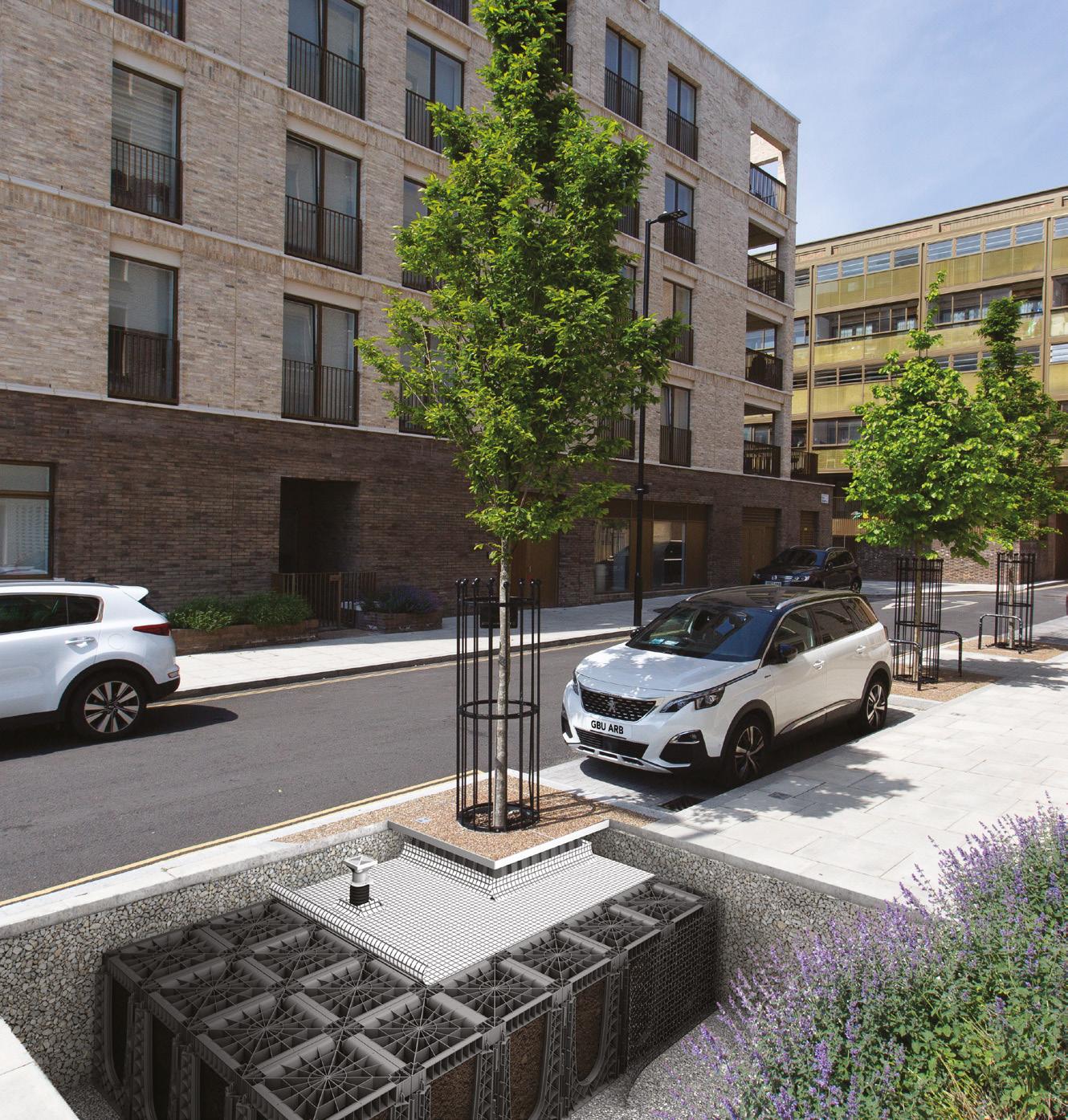
Our engineered tree pits and SuDS solutions are precision-designed to easily integrate with your site.
Manufactured in the UK, GreenBlue Urban’s modular products have been developed for ease and speed of installation, with seamless end-to-end technical support to provide your scheme with mature, healthy trees.
T: +44 (0)1580 830 800 E: enquiries@greenblue.com W: greenblue.com



What can be done to help garden designers protect the intellectual property rights of their designs?
Matt Evans, The Garden Room Studio, provides some potential answers with the benefit of his industry experience.
As we all know, successful landscaping is about more than just aesthetics; it’s an experience, a process and a strategic asset. Intellectual property (IP) bridges the gap between creativity and commerce and, as a relative newcomer to the industry, I’ve been surprised by the level of ambiguity around IP in our sector having had to work within strict design and project contracts in a previous career. We are such a creative industry, from designer to contractor and supplier, so IP affects us all. Understanding how design rights work and how to secure them are as important as the design process itself.
As a predominantly design-led business, we have perhaps the most obvious relationship with IP. In our studio we lean heavily on our contracts to protect our creative work and to ensure that we adopt best practice when sharing work on social media and collaborating with suppliers and contractors. There are regular instances though where we have to question IP rights. In previous instances, these have ranged from the design of our drawing templates and Vectorworks workflow to being asked by clients to develop other people’s concept work, in order to deliver a project that was otherwise never going to go ahead.
What constitutes intellectual property (IP)?
There are several questions in the areas IP covers, which can often be confusing for those looking to protect their work or use inspiration from that of others, such as:
Copyright:
This concept protects original creative works but does it apply to drawings, plans, or the built landscape itself? It’s often unclear where we stand with regard to our design output and how that translates to site.
Design patents:
These cover design of functional items and is particularly relevant to our supply
chain. Could specific or bespoke items within a garden design also qualify - bespoke water features, custom furniture pieces as well as other bespoke elements?
Trademarks:
How can we best enforce the protection of branding and logos?
Trade secrets:
These offer protection through confidentiality. Not hugely relevant in our line of work but could extend to planting plans or other situations where formulas or patterns are included in a design.
Both of these examples have resulted in us consulting the policy team at BALI, and on one occasion taking out an indemnity policy in collaboration with our client to ensure we were working within the realms of best practice as we failed to get a response from the previous designer. So, my question is this - would a national policy framework or set of guidelines have made this simpler for us? Quite possibly…
With all of the above, I think the key question is how do they translate to living, evolving and ever-changing spaces? Our industry is fairly unique in that we use living materials which grow, age and are often updated or replaced, and so creative intent is forever changing. Unless with a particular product design or constructed element within a design, duplication is rarely exact as all sites are completely different. Therefore, accounting for local factors and conditions, can one overarching policy cover all of us and everything we do?
Working with BALI for the benefit of all
In an effort to support and represent the membership at government level, BALI has recently appointed a committee of members, chaired by Amy Cobbett, Head of Policy and Public Affairs, BALI. I reached out to the other members of the committee when I had the idea for this article and collectively, we identified examples from all areas in the industry which prove this is a common, stressful, and often expensive problem to navigate.
The feedback was relatively conclusive, issues ranged from the sharing of work on social platforms without credit to blatant breaches of design patents, and others from outside of the industry using drawings to build work and pass it off as their own without permission or credit.
next steps
RIBA have a more structured framework for architects to work within which informs to an extent their entire workflow. Consequently, the parameters and details around what’s relevant and what isn’t are far clearer. Amy and I have discussed reaching out to the SG+LD and Landscape Institute to try and align a common ground initially, and see if, with legal support, we could develop an industry framework that speaks beyond specific industry body recognition.
It’s clear having now spent time researching and discussing this topic with other members that contractual clarity is key and we can define
to an extent how we’re happy to work with IP in our own businesses. It’s where we cross over, collaborate and create together that grey areas often arise, straining relationships and costing money. In addition, we come unstuck when we’re asked to ‘develop ideas’ by others or replicate something a client loves that they’ve seen elsewhere. What defines a significant difference? How do you approach the other party for sign-off? If you can’t, what legal protections can you seek?
Looking forward, I think we’re all aware that AI is and will continue to be a concern. We acknowledge that it’s becoming increasingly helpful in running the back-end of our studio, but creatively who owns an AI-generated concept design, render or image, and if our work is being used to inform AI then how, and should it be?
So, on behalf of the policy committee I askwould your business benefit from clearer IP policy regardless of which area of the industry you work in? Would your team benefit from a CPD session or seminar to ascertain how you can work more effectively within the bounds of IP and how can we protect our ideas, designs and finished work? Could the policy be broad and inclusive, or should it be specific to our different disciplines and services?
Please reach out to Amy Cobbett on the BALI policy team with your thoughts –amy.cobbett@bali.org.uk
Contact: thegardenroomstudio.com
“Issues ranged from sharing of work on social platforms without credit to blatant breaches of design patent.”
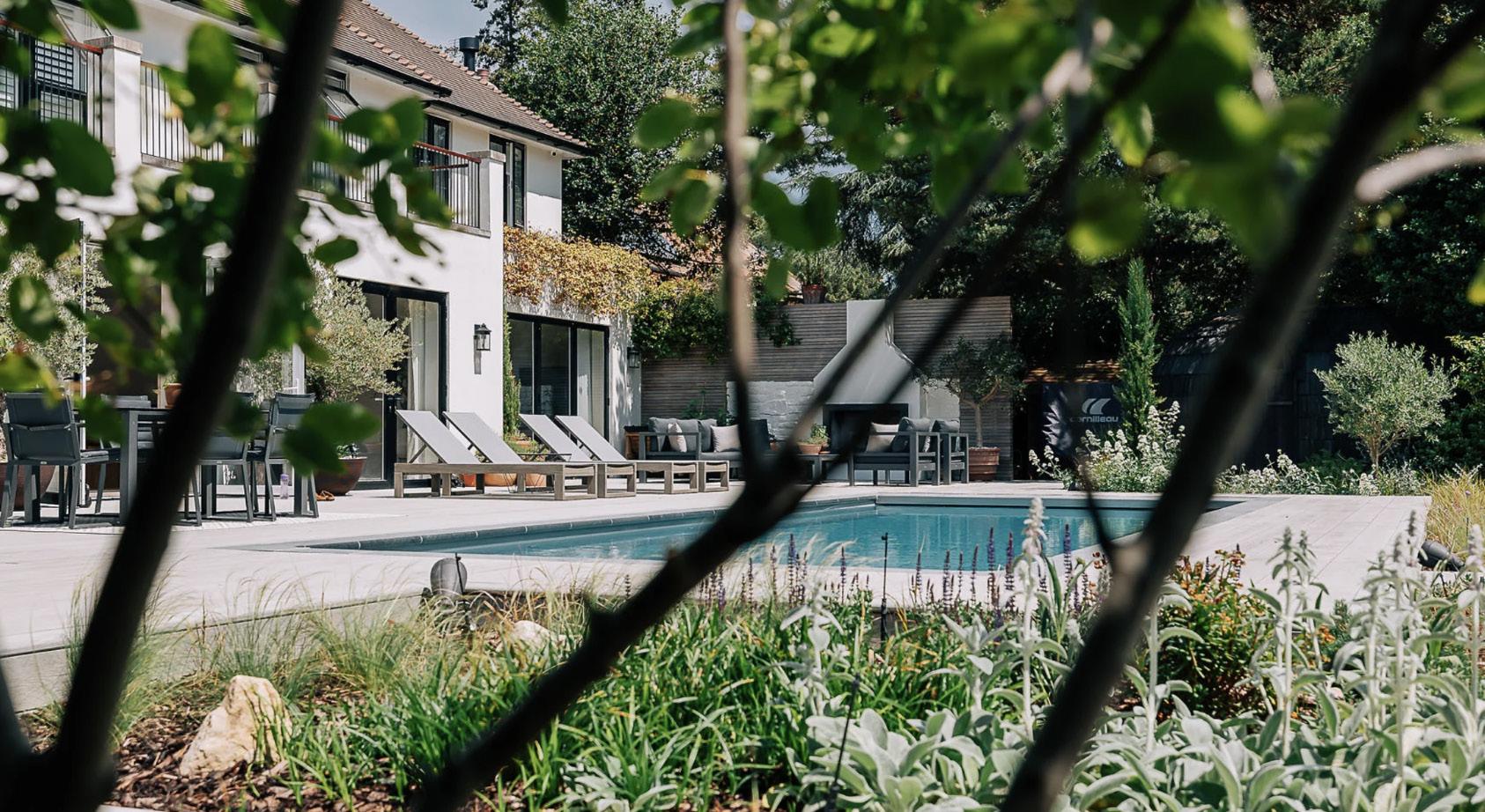










Ella Utchanah, Marketing Executive at Herd Group, offers some tips and tricks to help you save money and avoid headaches by finding efficiencies in the running of your fleet vehicles.
For many businesses, vehicles are the backbone of daily operations. Whether managing multiple sites, transporting materials or handling time-sensitive work, every journey counts. Efficient fleet management is about more than keeping vehicles on the road. It’s about controlling costs, improving reliability and making the most of every mile.
"Even minor adjustments can make a noticeable difference to time, fuel use and vehicle wear"
At Herd Group, we work with commercial fleets across the UK and have seen how smarter mileage management improves both profitability and sustainability. With small, consistent changes to planning, data use and driver engagement, you can see meaningful improvements all year round.
Plan ahead and review regularly
Good planning is the foundation of effective mileage management. Knowing where your vehicles are going and why helps reduce unnecessary travel. Over time, routes shift
as workloads grow and small inefficiencies can creep in unnoticed.
Grouping client sites by location and reviewing routes regularly ensures teams follow the most efficient paths between jobs. Even minor adjustments can make a noticeable difference to time, fuel use and vehicle wear. Drivers are often best placed to highlight practical challenges like parking, site access or local traffic patterns. Listening to their feedback keeps plans realistic and effective.
Tip: Set aside time each quarter to review routes and mileage patterns. Regular checks help prevent wasted miles and identify opportunities for improvement.
Use telematics to understand and improve
Modern telematics systems make it easy to monitor fleet activity, from distance travelled and idling time to driving style. Value comes from turning this data into action.
Telematics insights reveal trends in fuel use, driver performance and vehicle utilisation. This helps managers make smarter decisions
that reduce waste and improve efficiency. It also supports compliance, client reporting and long-term planning. Telematics systems can also alert managers when key maintenance milestones are approaching, such as when services or brake replacements are due, helping ensure vehicles remain safe, roadworthy and compliant.
As Michael Payten, Head of Fleet at Herd Group, explains:
“Mileage management is really about awareness. When you understand how your vehicles are being used, you can make smarter decisions about routes, maintenance and staffing. Small efficiencies made each day lead to bigger savings across the year.”
Herd Group integrates telematics insights into both rental and fleet management services, helping customers make confident, data-led decisions.
Herd customer, Sam Webster, Operations Director at RV2 Energy, adds:
“Herd’s telematics tools have transformed how we manage our fleet. We can easily track mileage against contracts, see the real-time location of drivers responding to jobs and adhoc events, and improve response times. It also helps us stay on top of vehicle maintenance,
such as alerts to top up AdBlue and monitor fault codes - everything we need to keep our fleet running efficiently.
“A great example of the benefit of vehicle telematics happened a few months ago, when one of our drivers called to say he had accidentally locked his key in the back of his van. After just one quick phone call, Herd remotely unlocked the vehicle within nine minutes. This not only saved us the cost and hassle of calling out a locksmith, but it also kept our team productive with minimal downtime.”
Tip: Share mileage and performance summaries with drivers. Involving them builds trust and turns telematics into a tool for improvement rather than oversight.
Vehicle condition has a direct impact on mileage efficiency. Poorly maintained vehicles use more fuel, experience more downtime and cost more to run. Routine checks should be part of every working day.
Simple inspections of tyres, fluids and lighting keep vehicles safe and efficient. Underinflated tyres increase rolling resistance and reduce fuel economy, while regular servicing keeps engines running smoothly and prevents breakdowns.
"Engaging drivers in the process helps build accountability and pride."
Herd Group’s driver check app makes this easier. Drivers can complete and submit daily vehicle inspections directly to fleet managers in real time. The system works across any type of fleet, not just Herd vehicles, giving managers instant visibility of faults and helping them act before small issues become major problems.
Tip: Encourage drivers to use the app at the start of each shift to log their checks. A few minutes of attention can prevent hours of downtime later.
reduced idling and steady driving speeds can improve fuel efficiency by as much as fifteen percent.
Engaging drivers in the process helps build accountability and pride. When they see how their performance affects overall efficiency, they are more likely to adopt consistent, efficient driving habits.
Tip: Consider introducing a small monthly reward for the most efficient driver. Friendly competition encourages awareness and responsibility.
Tracking and reviewing mileage data helps businesses plan more effectively. Patterns in travel, fuel use and site frequency show where vehicles are overused, underused or misallocated. This supports better decisions about servicing, replacement and long-term investment.
Historical data also helps forecast busy periods and identify opportunities to consolidate routes or balance workloads. By learning from the past, fleets can keep improving year after year.
Tip: Review mileage data annually alongside service records. This gives a complete picture of performance and helps target future improvements.
Mileage management is not just for peak periods. It is an ongoing process that supports every part of your operation. Well-planned routes, reliable vehicles and engaged drivers all contribute to lower costs and improved service delivery.
At Herd Group, we believe efficiency comes from balancing people, process and technology. Whether through vehicle rental, purchase or fleet management, we can help businesses cut costs, improve safety and keep vehicles performing at their best, all guided by our core value of CARE, putting customers first in everything we do.
Train and empower your drivers
Drivers are at the heart of mileage management. Their behaviour on the road directly affects fuel use, safety and productivity. Training in smoother acceleration,
Contact: herdgroup.co.uk
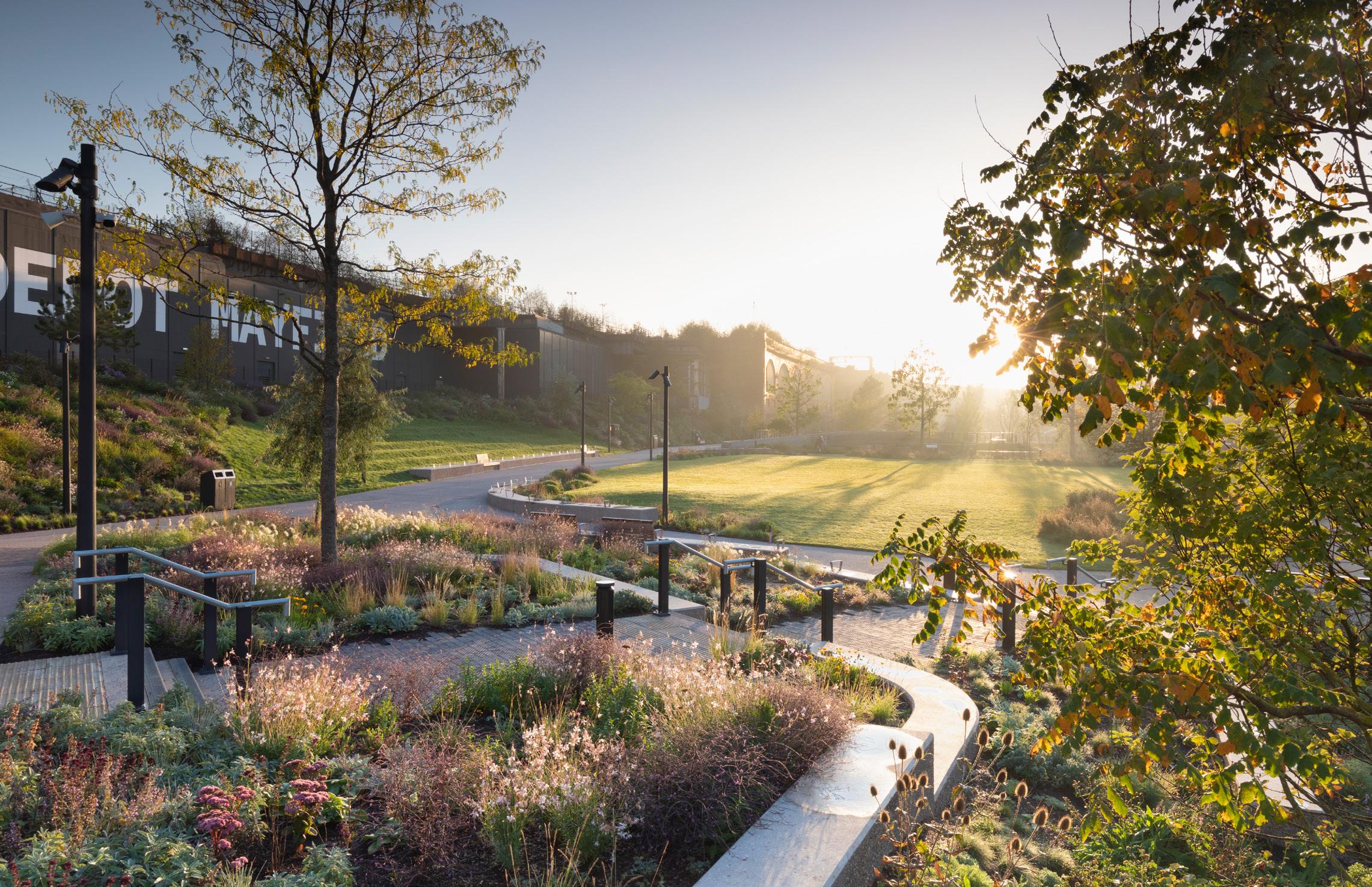
Tim O’Hare, from BALI Accredited Supplier Tim O’Hare Associates LLP, has been a soil consultant to the landscape industry for over 30 years, working on the investigation, design, specification and installation of many BALI awardwinning landscape schemes. Here, Tim gives an insight into some of the important soil properties that have guided his advice.
Commercial landscape schemes are usually part of larger construction projects, and this can present problems for the landscape contractor. Programme constraints, working in all weathers, excessive soil compaction from construction activities, and avoiding contaminated ground are just some of the challenges, and choosing soils that will still perform and support a new landscape in such an environment is important.
In a perfect world, a loam textured topsoil is best for most plants as it has roughly equal proportions of sand, silt and clay to offer a balance of water and nutrients, as well as
some drainage. However, this is not the case on a construction project, certainly not with the UK’s temperate climate.
For commercial landscape projects where there are time constraints and inclement weather to factor in, sand-dominant topsoils (i.e. sandy loam with 60-80% sand) offer the greatest flexibility and less risk as they remain ‘non-plastic’ at higher moisture contents and are less prone to compaction and structural degradation. Their slightly lower water and nutrient holding capacities can be easily addressed by amelioration with a bulky organic compost - an approach used for the recently completed Finsbury Circus project in the City of London, and for the current landscape improvements at Grosvenor Square.
“Many schemes show a decline in plant quality from excessive soil compaction caused during installation.”
Investigations we’ve undertaken on landscape schemes constructed 15 to 20 years ago, such as Jubilee Gardens by the London Eye, Speke Boulevard in Liverpool, and Terminal 5 Heathrow, show no discernible decline in soil fertility or signs of poor establishment through drought stress with these sandy loam soils. Many more schemes, however, show a decline in plant quality (trees and shrubs) from excessive soil compaction caused during installation. This invariably leaves a legacy of problems and plant failures.
The British Standards for Topsoil and Subsoil do not take this into account and allow excessively high limits for both clay and silt, without any warning about their limitations and risk.
An OM content of 4% to 8% in topsoil is ideal for most landscape applications. The 3% to 20% given in the British Standard is way too broad - at 15-20% OM, the topsoil will often act like a sponge, holding too much water and increasing the risk of anaerobic conditions. In lawn situations, this can also result in a soft, uneven, spongy surface.
While the optimum pH range is 6 to 7, most plants grown for commercial landscaping will tolerate a much broader range of between 5 to 8. At the higher end (>8.0), the source of the alkalinity should be checked, as potassium ions have far less impact on soil/root function than calcium. Working on projects such as King’s Cross and Battersea Power Station, we found that many plant species intolerant of lime were quite happy to grow into the soils up to a pH of 8.5 because we restricted the lime content of the soils.
Both ‘manufactured’ and ‘natural as dug’ soils can be excellent, as demonstrated by the London Olympic Park (all manufactured soils) and Hyde Park (natural topsoil), but both can also be problematic, depending on several factors:
• Natural topsoil is more reliant on its soil structure to ensure good drainage and aeration. If this is lost during the topsoil strip and stockpiling, the topsoil after storage can be poor.
• If the wrong ‘ingredients’ are used to manufacture a topsoil, or the mixing ratios are incorrect, the end product simply won’t work.
• Natural topsoil will always have a weed seed bank to contend with, particularly in the first few years.
• Topsoil made from screened muckaway opens up a whole range of potential risksglass/ceramic sharps, asbestos, excess lime, infertility, etc.
This is routinely included in specifications for imported soils as, these days, they are also relied upon as a Clean Cover System for land remediation purposes. When delivering the soil design and specifications for Mayfield Park in Manchester, we worked closely with the project’s environmental consultant and the landscape architect to make sure this is picked up with respect to soil depths and composition.
Although there is an implied requirement in the British Standard for Topsoil for contamination testing, it isn’t that clear and, as a result, few soil testing laboratories routinely test for contaminants. I would advise not to accept any topsoil test certificates or reports that only show the horticultural properties. At the very least, the topsoil should be tested for heavy metals and petroleum hydrocarbons.
Don’t forget the subsoil
Subsoil is a fundamental part of the soil profile and complements the functions of the overlying topsoil. Its key roles are:
• Water management, acting as a reservoir during dry periods.
• Anchorage and support, for trees and large shrubs.
• Plant nutrients, supplementing the topsoil’s reserves of mineral plant nutrientspotassium, magnesium, calcium, iron.
• Drainage and flood prevention, absorbing surplus water percolating down from the topsoil layer - an essential part of all Sustainable Drainage Systems (SuDS).
Examples of projects that demonstrate the value of good quality subsoil include Cator Park (Kidbrooke), the Water Gardens (Westminster), Eastside City Park (Birmingham), Wood Wharf (Canary Wharf), and NW Cambridge.
The consequences of a subsoil being unable to fulfil these functions because of its composition and/or physical condition include waterlogged and/or anaerobic topsoils, resulting in plant failure; surface water ponding; increased flood risk; and shallow rooting, leading to drought stress and tree wind throw.
Decompaction of the subsoil layer is essential on most construction sites, yet it is hardly ever carried out. The most capable piece of kit is a ripper tine attached to a standard tracked excavator. Every landscape contractor should have one.
Contact: toha.co.uk
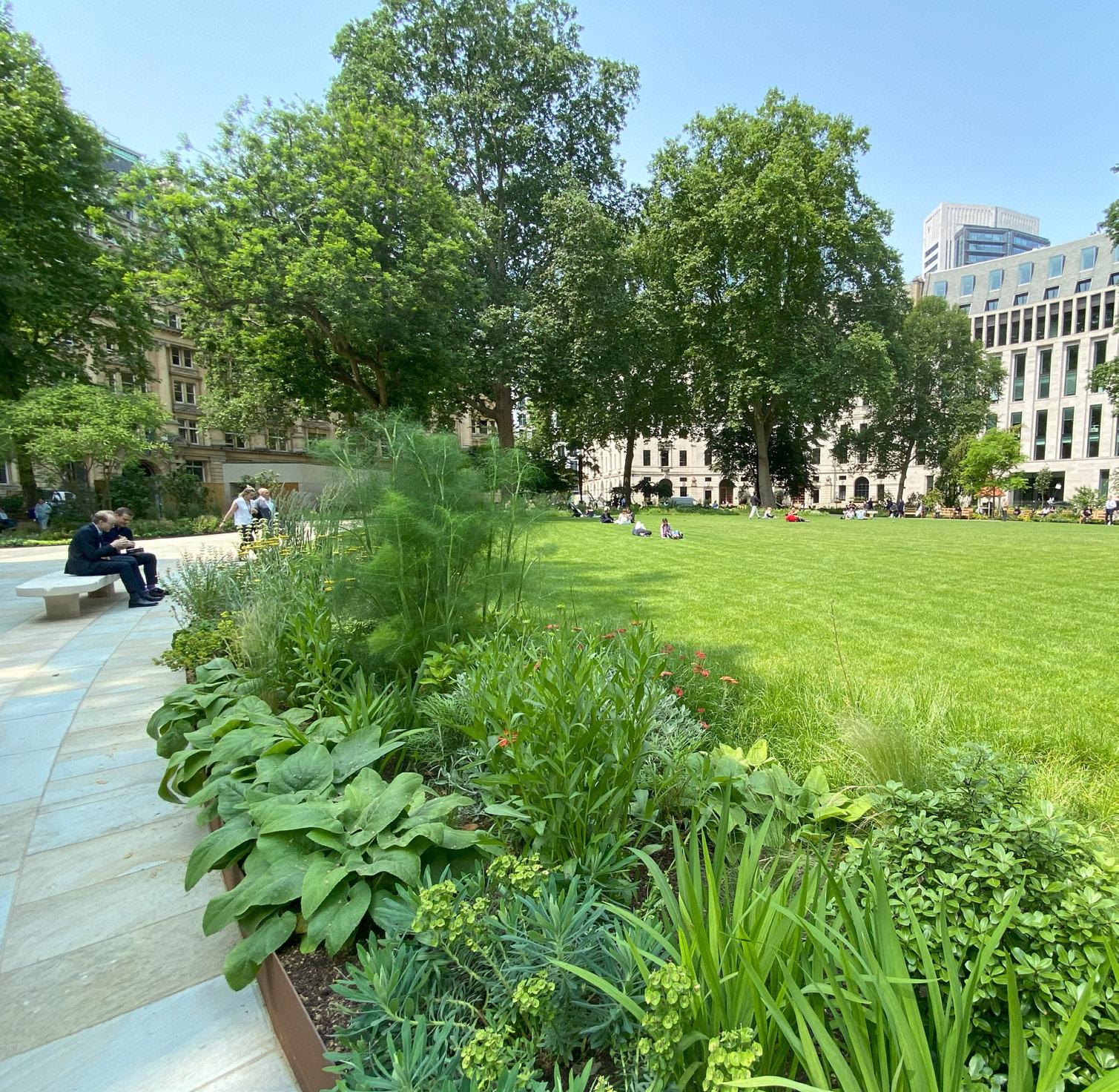
Now that the dust has settled on Chancellor Rachel Reeves' latest budget, our Policy Team give their thoughts on the aftermath.
The Autumn Budget was challenging as the chancellor failed to pull the necessary economic levers to inspire confidence across the landscaping industry and drive growth through investment. Having introduced several challenging policies over the last year, such as increases to employer’s national insurance contributions (NICs) and the national minimum wage (NMW), the government really needed to bring forward substantial measures in the budget to reverse the damage done to business confidence.
Unfortunately, that was not the case.
1
Fiscal support measures to help businesses grow and reduce investment barriers:
• NICs must not increase for businesses, as the previous hike has raised costs considerably for the landscaping sector.
• Review and reform the Landfill Tax, which has added huge costs of up to 3000% for some landscaping businesses.
• Bring forward business rates reform to support the industry, including reducing rates for garden centres.
The environmental horticulture and landscaping sectors contribute £38 billion GDP, as well as supporting 722,000 jobs, so the lack of clear support for the sector is a blow to the potential growth of the industry.
Many member businesses will feel the squeeze over the next year, creating uncertainty and challenges for the industry. Particularly disappointing was the total lack of support for environmental enhancements, many of which are delivered through landscaping and the work of BALI members. Without support from government, the environmental targets that have been set across a range of priorities such as biodiversity enhancement and water management will have costs that are left to businesses to absorb.
"We know many find the current system too complex and off-putting, so we will continue to lobby for a simplification."
2
Increase access to skills and education for the landscaping industry:
• Provide land-based colleges with additional funding to deliver courses, training and trainees needed by the sector to deliver the government’s housebuilding targets.
• Ensure that landscaping contracts issued as part of the house building pledge have a minimum requirement for apprenticeship places.
3
Support the ability of the landscaping sector to deliver government priorities, such as housing and environmental targets:
• Planning barriers must be addressed which prevent the delivery of quality landscaping projects across domestic and commercial projects.
• Ensure that new homes and new towns must have quality gardens and sufficient funding for the long-term management and maintenance of green spaces.
• Require planning authorities and development companies to engage with landscaping from the beginning of projects to deliver nature-based solutions for water management and biodiversity enhancement.
"Addressing this tax hike was among our key asks of government, so we warmly welcome the reversal."
The measures omitted from a government budget can often be as important as those left in, which is why we welcome the decision not to raise employer’s NICs any further. In light of recent increases to these contributions, as well as increases to the national and living minimum wages, a further hike would’ve placed many businesses under tremendous strain. That said, we would’ve liked to see measures which significantly mitigated past rises and these did not materialise.
One important measure included in the budget was the reversal of the single-rate Landfill Tax which threatened to increase disposal costs for some landscaping businesses by up to 3000%. Addressing this tax hike was among our key asks of government, so we warmly welcome the reversal and will continue to work with the Treasury to ensure any further changes are proportionate and manageable.
In terms of business transport, there were a couple of significant measures which will have a mixed impact on landscaping businesses. On the one hand, the chancellor extended the freeze on fuel duty to September 2026, which will be a welcome, if not time-limited, benefit for many. On the other, she announced the introduction of an Electric Vehicle Excise Duty (eVED) from April 2028, placing a charge of 3p per mile on drivers of fully electric vehicles and 1.5p per mile on drivers of plug-in hybrid cars. The government has since opened a consultation on the latter measure, in response to which we note the cumulative effect on landscaping after recent changes to the VAT treatment of double-cab pickup trucks.
The other notable tax and spend measure in the budget was a reform of business rates for retail, hospitality, and leisure from April 2026. This reform will see lower multipliers used for properties under £500k rateable value and a higher multiplier used for properties over £500k rateable value. Clearly, this change will benefit some supplier members and cost others, but the wider business community continues to argue for more fundamental reform of business rates.

The budget restated the government’s commitment to invest £1.5 billion in employment and skills and its support for small businesses and apprenticeships. More tangibly, the Government announced that it would fully fund apprenticeship training for those aged under 25 in SMEs, removing the current employer contribution. While this change could enable members to take on more apprenticeships, we know that many find the current system too complex and off-putting, so we will continue to lobby for a simplification of the process.
Elsewhere on skills and training, the Chancellor promised £820m for a new ‘youth guarantee’, promising a six-month paid work placement for 18- to 21-year-olds who have been looking for work for 18 months. We support the government’s commitment to addressing low levels of economic activity in younger age groups and would welcome the opportunity to discuss how BALI and its members can help develop meaningful work placements as part of this new scheme.
Though November’s budget contained a smattering of welcome announcements for the landscaping sector, it generally fell short of what is needed to help businesses expand and drive growth. We will now focus on helping to shape the most relevant measures through government consultations, while working with others to continue to the push for greater support for businesses, with a view to influencing future fiscal events.
Contact: amy.cobbett@bali.org.uk
The long-awaited Employment Rights Bill has been published, with much called-for day one rights changes.
The world of work in the UK is about to undergo one of its most significant changes in modern times next year. On 10 October, the Labour government unveiled its long-awaited Employment Rights Bill, which provides a comprehensive change to Employment Law and workers’ rights.
So, what exactly is in it, and how might it reshape the way we work? Here are the key provisions that employers will need to consider moving forward:
Zero-hours contracts
Workers will gain the right to be offered guaranteed hours based on their work patterns. Employers must give reasonable notice of shifts and pay workers for cancelled shifts.
Flexible working becomes a default right from the first day of employment. Employers can refuse requests only for specified, reasonable business grounds (e.g., cost, impact on performance, or customer demand). Employers must clearly explain and justify refusals.
The lower earnings limit and three-day waiting period are removed. SSP will be payable from day one of sickness absence.
All employees will qualify for parental, paternity, and bereavement leave from day one. Bereavement leave becomes statutory for all employees, not just parents.
Employers must take all reasonable steps to prevent sexual harassment, including by third parties such as clients or customers. Liability arises if the employer fails to prevent such behaviour. Employers should review harassment policies, training, and reporting procedures.
The two-year qualifying period for unfair dismissal protection will be removed, with employees protected from the first day of work (excluding pre-start dismissals).
Dismissing staff for refusing new contractual terms will be automatically unfair – unless no reasonable alternatives exist.
Collective consultation will apply where 20 or more redundancies are proposed across the whole business, not just a single establishment.
Employers with over 250 employees must publish an equality action plan, outlining measures and data on gender equality and other prescribed matters.
It will be unlawful to dismiss a new mother within six months of returning to work, except in specific circumstances.
The Bill repeals the Trade Union Act 2016, easing restrictions on industrial action. Trade unions will have a right to reasonable workplace access. Employers must inform new and existing staff of their right to join a union.
When will these changes take effect?
Implementation is not immediate. A nine-month consultation period is expected, with changes likely coming into force around October 2026.
No immediate action is required, but employers should begin reviewing policies, contracts, and procedures in preparation. Regular updates will be provided through the BALI HR/H&S partnership with Quest.
You can read the bill in its entirety on the gov.uk website: bills.parliament.uk/bills/3737


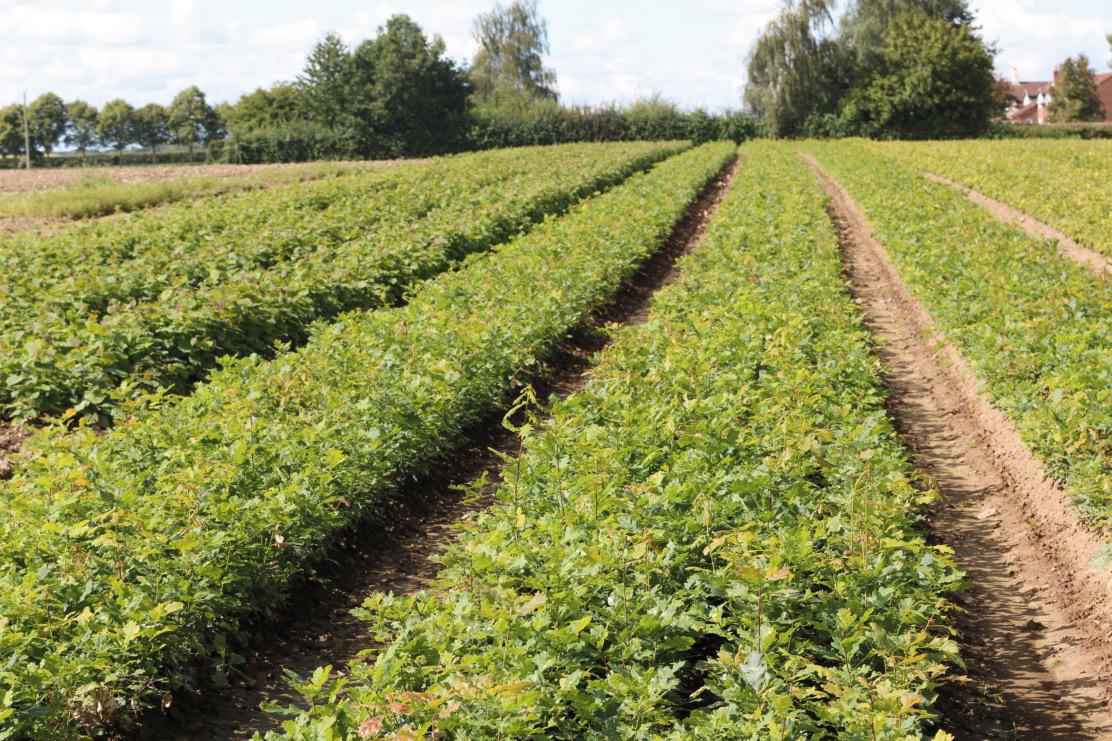
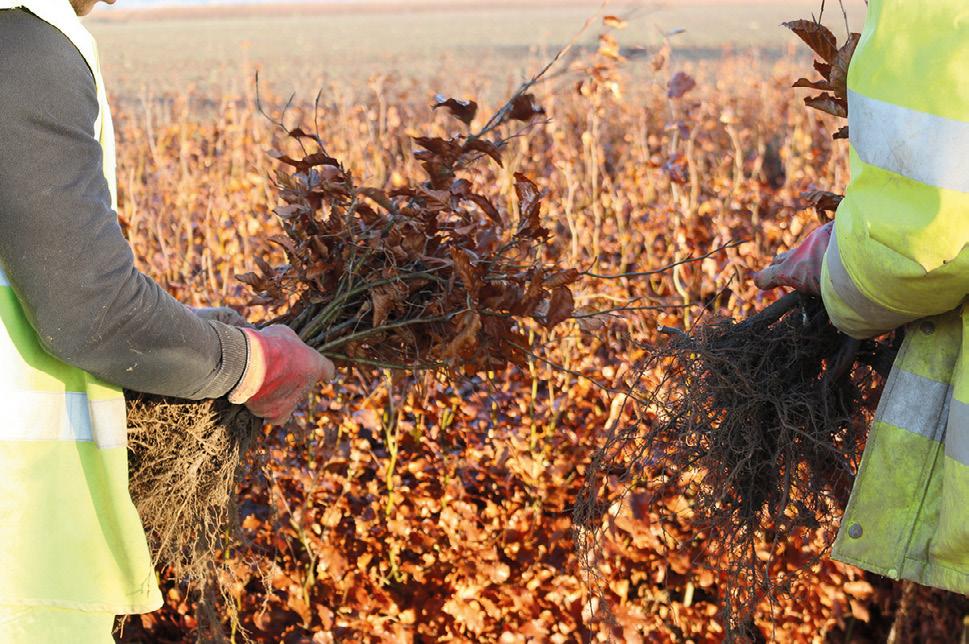




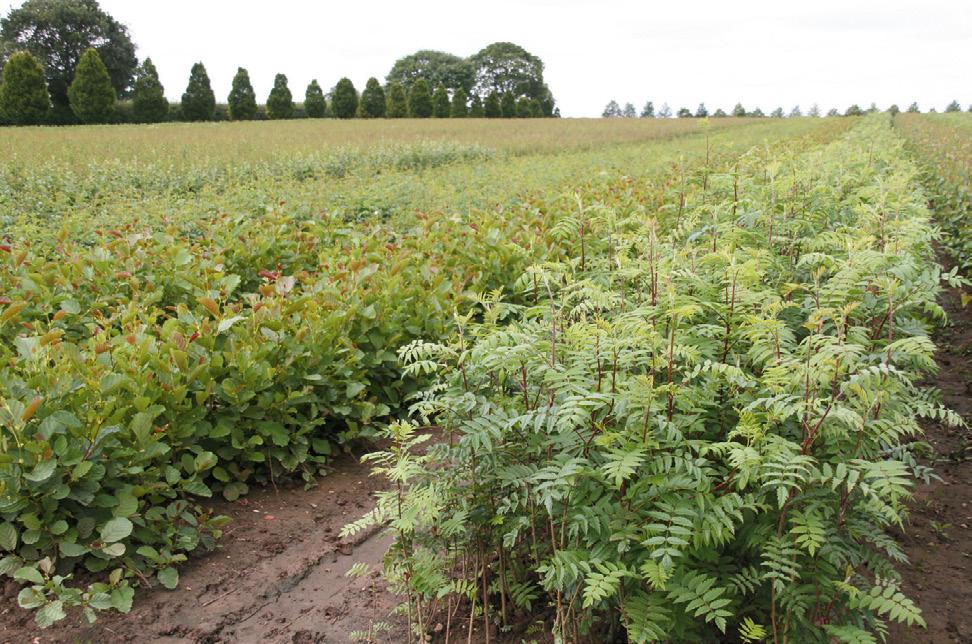







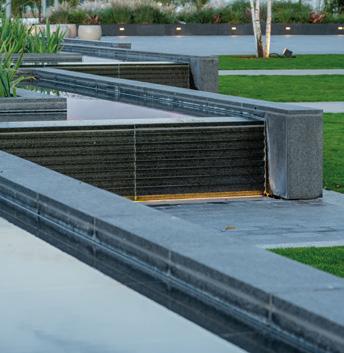
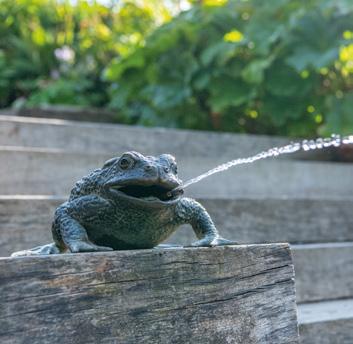



From choosing the right employment model to understanding IR35 and CIS, Kim Sones, Sones Accountancy, explores how you can stay compliant.
Running a successful landscaping business relies on more than just delivering stunning outdoor spaces; it depends on having the right people in place, paid correctly, and managed efficiently. Whether you employ staff directly or rely on subcontractors, choosing the right model is vital to ensure smooth operations, legal compliance, and financial stability. The wrong approach can lead to unexpected tax bills, penalties, or even reputational damage.
Which employment model fits your business?
Landscaping businesses often juggle a mix of employment types, including permanent employees, casual workers, and subcontractors. Each option offers flexibility but also brings different obligations.
Employing staff directly gives you the greatest control. You decide their hours, provide equipment, and manage how they work. In return, you must handle PAYE, National Insurance, holiday pay, pensions, and other employment rights. This model works well for core team members who represent your brand and deliver consistent quality.
Using subcontractors can be more flexible, particularly for project-based work or during busy seasons. However, subcontracting comes with responsibility. You must ensure that each subcontractor is genuinely selfemployed and that their tax treatment is correct under IR35 and the Construction Industry Scheme (CIS).
The key is balance. Many landscaping businesses benefit from keeping a small, reliable core team of employees, supplemented by trusted subcontractors for specialist or seasonal work. This hybrid model supports growth without overextending payroll costs.
IR35 (also known as the ‘off-payroll working’ rule) determines whether a contractor working through their own limited company is genuinely self-employed or effectively an employee.
"Materials should not have CIS tax deducted, only labour. This is a common area where mistakes occur"
If a worker is under your control, uses your tools, or cannot send someone else to do the job, HMRC may class them as an employee for tax purposes. That means you, as the engager, could be responsible for deducting PAYE and National Insurance, just as you would for a staff member.
Failure to get IR35 correct can result in large, backdated tax bills, penalties, and even interest charges. The safest route is to review all subcontractor arrangements regularly and, if in doubt, seek professional advice or use HMRC’s ‘Check Employment Status for Tax’ tool (CEST).
industry scheme (CIS)
The Construction Industry Scheme (CIS) applies to most landscaping businesses that carry out or subcontract construction-related work, including groundwork, site preparation, and building structures such as walls, patios, or decking.
If your business falls under CIS, you must:
• Register with HMRC as a contractor
• Verify each subcontractor before paying them
• Deduct tax (usually 20% or 30%) from their labour payments, and
• Submit monthly CIS returns to HMRC.
Materials should not have CIS tax deducted, only labour. This is a common area where mistakes occur. Keeping accurate records of invoices and separating labour and materials is crucial to avoid disputes and penalties.
The most common compliance issues in landscaping arise from misclassifying workers and failing to keep proper CIS records. These errors often happen when businesses grow quickly or rely on outdated systems.
• Keep clear written agreements with subcontractors that reflect the true working relationship
• Regularly review employment statuses, especially as projects or roles change
• Use payroll and CIS software integrated with your accounting system to automate calculations and submissions
• File CIS returns on time each month and issue payment and deduction statements to subcontractors
• Keep all paperwork and correspondence for at least three years in case of HMRC checks.
Technology can save significant time and reduce errors. Many landscaping businesses now use cloud-based payroll systems that automatically handle tax deductions, RTI submissions, and pension contributions. For CIS, digital verification tools make it easy to check subcontractors’ status and generate compliant payment certificates.
Automating these processes not only saves admin time but also improves accuracy and reduces the risk of HMRC penalties while keeping subcontractors happy with timely, transparent payments.
Contact: sonesaccountancy.co.uk



During the colder months, landscaping businesses face a new set of health and safety challenges. Perry Johnson, from BALI member and benefit provider Quest, looks at your obligations during this time.
From icy pathways and poor visibility to freezing temperatures and vehicle risks, winter brings hazards that require careful planning and proactive management.
Employers have a legal and moral duty to protect both employees and members of the public – and failing to take reasonable precautions can result in accidents, reputational damage, and potential claims.
With shorter days, harsher weather, and increased travel risks, now is the perfect time for landscaping companies to review their policies and procedures to ensure winter safety measures are firmly in place.
"Employers should also review shift patterns to minimise lone working after dark"

Slips and trips are among the most common workplace accidents, and the risk increases dramatically during the winter months. Employers must ensure that all access routes to offices, depots, and client sites remain safe and passable in icy or snowy conditions.
That means gritting walkways and car parks, clearing snow promptly, and using signage to warn of slippery surfaces. Entrances and exits should be well lit, kept dry, and fitted with appropriate mats to prevent wet floors from becoming hazards.
For landscaping businesses that manage public areas, there’s also a duty to consider the safety of your clients and visitors. Ensuring that access routes are maintained, clear of obstructions, and adequately illuminated is not just good practice – it’s a key element of compliance with the Health and Safety at Work Act 1974.
Working outdoors in the wintertime requires suitable protective clothing and equipment. Employers must provide PPE that is both weather-appropriate and fit for purpose. This includes insulated waterproof gloves and boots, high-visibility jackets for darker lighting conditions, and layered clothing to help workers maintain body temperature.
It’s important to remember that PPE should never just be issued and forgotten. Regular checks should be carried out to ensure items remain in good condition and continue to meet safety standards. Employers should also remind their staff about the importance of wearing the gear provided and reporting any
damaged or ineffective items immediately.
Providing additional welfare considerations, such as access to warm rest areas and hot drinks on site, can make a big impact on wellbeing and morale during the winter months.
Shorter days mean more work is carried out in low light or darkness, particularly during early starts or late finishes. Good lighting is essential – whether that’s installing temporary floodlights on sites or ensuring vehiclemounted lights are fully functional.
In darker conditions, visibility becomes a critical factor. High-visibility clothing is a legal requirement in many environments, and reflective gear should be used wherever workers are near vehicles or public areas. Employers should also review shift patterns to minimise lone working after dark and consider risk assessments for employees working in remote or poorly lit areas.
For many landscaping businesses, vehicles are essential to operations, transporting staff, tools, and equipment between various sites. Winter conditions increase the risk of road accident, so fleet safety must be a top priority.
Routine vehicle checks are vital. Tyres, brakes, lights, and wipers should all be inspected regularly, and antifreeze and washer fluid levels maintained. It’s also important to ensure drivers are trained and briefed on safe winter driving techniques – such as increasing stopping distances and adjusting routes in adverse weather.
Employers should have clear policies for when travel should be delayed or postponed due to dangerous conditions. A company culture that prioritises safety over deadlines helps prevent unnecessary risk and reinforces the business’ duty of care to its employees.
Travel disruptions are common in winter, whether due to snow, flooding, or road closures. Employers should plan ahead by establishing clear procedures for communicating any delays or site closures. Flexibility around start-times or remote working, where possible, can help maintain productivity while keeping staff safe.
When employees are required to travel to remote or customer sites, ensure they have appropriate emergency contact information, mobile phone access, and understand how
to report any incidents or hazards. For lone workers, additional check-in procedures may be necessary during severe weather conditions.
Many landscapers operate on client premises or in public areas, which means winter safety extends beyond employees. Poorly marked hazards, obstructed access routes and slippery surfaces can all lead to accidents involving clients or members of the public.
Ensure site-specific risk assessments are reviewed and updated for winter conditions. This may include introducing additional barriers or signage, checking that lighting stays adequate, and coordinating with clients about gritting or clearance responsibilities.
Maintaining open communication with clients not only supports compliance but also strengthens trust and professionalism.
Health and safety duties don’t stop when temperatures drop – in fact, they become even more important. Employers should review their winter risk assessments, update relevant policies, and brief all their staff on safe working practices for the season. It’s also worth checking insurance documentation and accident reporting procedures to ensure they also remain current.
Managing winter health and safety obligations can feel like a challenge, but you don’t have to do it alone. As a BALI member, you get unlimited access to HR, Health & Safety, Legal, and Tax & VAT Advice Lines on 0116 243 7881. You can also access our Document Library of over 700 templates –including probation policies, employment contracts, and review forms.
To gain a full understanding of your business’ compliance position, why not book a free, no-obligation One2One Business Review with one of our specialists? Call 01455 852 028 today to arrange your personalised consultation.
Contact: questcover.com
With the new academic year well underway, September onwards has been a packed and inspiring period for the GoLandscape team. Cheryl Ranner, Skills and Careers Officer, looks back at a busy autumn schedule.
Despite the weather turning colder, our schedule really warmed up, with events across the UK giving us the opportunity to meet young people, educators, and career changers – each eager to learn more about the diverse routes into landscaping and horticulture.
We kicked off the season in Essex at the Braintree Racecourse Careers Fair. More than 2,000 pupils from eight local schools attended, giving us a fantastic platform to highlight apprenticeship pathways, land-based college options, and the wide-ranging careers available within the landscape industry. The enthusiasm from students and teachers alike was hugely encouraging.
Next, we headed to Cardiff for another highenergy STEM event hosted at the Principality Stadium and sponsored by CGI. Over 1,800 students from 21 schools across South Wales joined workshops and hands-on sessions, stopping by our stand to explore the creative, technical, and environmental opportunities that landscaping and horticulture can offer. It proved to be an excellent space for sparking curiosity and answering thoughtful questions from young attendees.
Highground, the charity that supports ex-service personnel into new land-based careers, offers virtual rural weeks. Alongside other establishments these weeks give the GoLandscape team the opportunity to talk to a select group about careers in Landscaping, showing the varied careers and the next steps to take.
A highlight of the autumn was our joint Zoom session with Capel Manor College, where two of our GoLandscape Ambassadors, Paul Downer (Oakview Landscapes) and Richard Burton (idverde), delivered an inspiring talk. They shared personal career journeys, industry insights, and honest reflections on the challenges and rewards of working in landscaping.
In preparation for new GoLandscape literature, we held a photography day at the beautiful Ichy-coo Park in Surrey. Volunteers from Future Gardeners took part in pruning and planting activities, while our photographer captured authentic images showcasing the diversity of roles within the industry. A garden tour rounded off the day. If you have photographs of your teams in action and would like to contribute to our upcoming materials, please email them to golandscape@bali.org.uk
Our next stop was Edinburgh for the Institute of Horticulture’s Grow Careers event at the Royal Botanic Garden. Joined by BALI Scottish Chair Colin Smith from Land Technology and by Stephen Ogilvie Ltd, we spent the day speaking with SRUC students about BALI membership and future career pathways. The event also welcomed members of the public exploring career options – a valuable chance for us to guide those considering their first steps into the industry.
Continuing our support of the IOH Grow Careers programme, we visited Askham Bryan College in York. GoLandscape Ambassadors Ricky Whiteman (Gavin Jones) and Ryan Horseman (Palmer Landscapes) joined us for an inspiring day of discussions with students studying landscaping, horticulture, and arboriculture, as well as newcomers looking to enter the profession.
"Our photographer captured authentic images showcasing the diversity of roles within the industry"
On 20 October, UK Government issued a whitepaper setting out its plan for post-16 education reform. The proposals centre around the introduction of vocational V levels and alternative routes for students to transition from Level 2 to Level 3 qualifications.
A separate consultation will be issued shortly, and we would welcome your views on what could be a significant change to how we view and support vocational achievement in England.
Contact: golandscape.co.uk
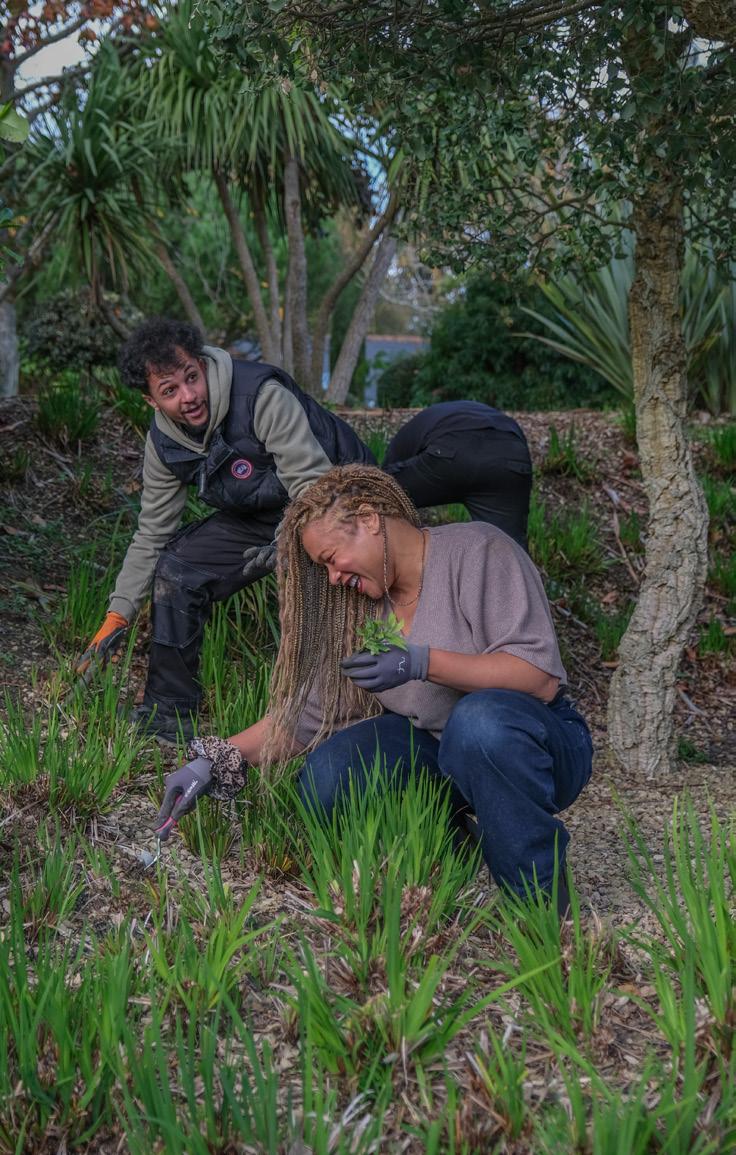
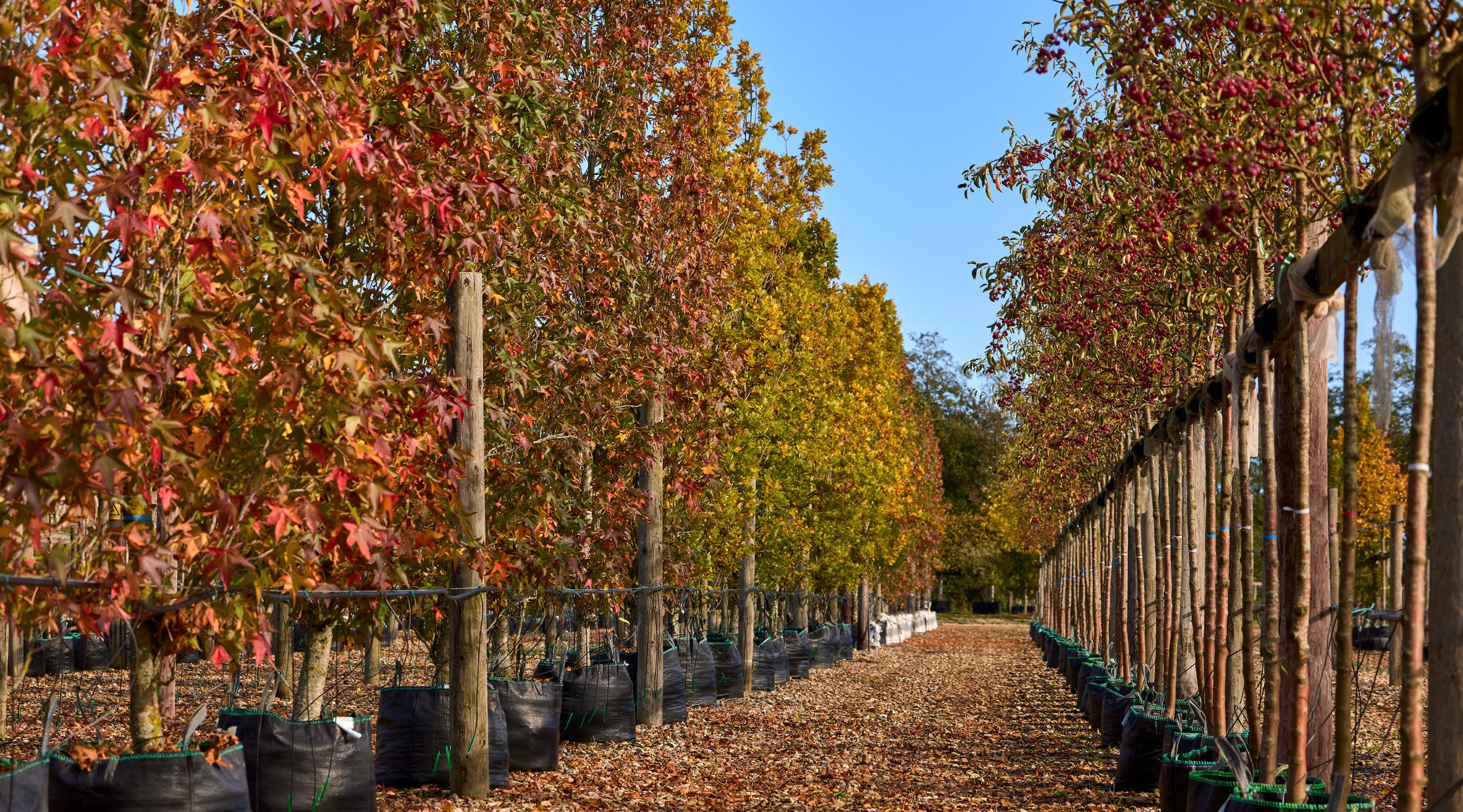
Established 1864
Supplying trees to landscaping projects, local authorities and private estates across the UK.
Ready to make a sustainable choice? Get in touch to discover our British-grown trees for your project!




trees.hillier.co.uk treesales@hillier.co.uk 01794 368 733
Download The Hillier Tree Guide
Your guide to our range of trees. Showing their form and size over 15, 25 and 50 years, plus helpful information on suggested usage for a variety of projects and locations.
Scan this QR code to download your copy today!
Hillier Trees: Supplying the landscaping industry for 160 years.



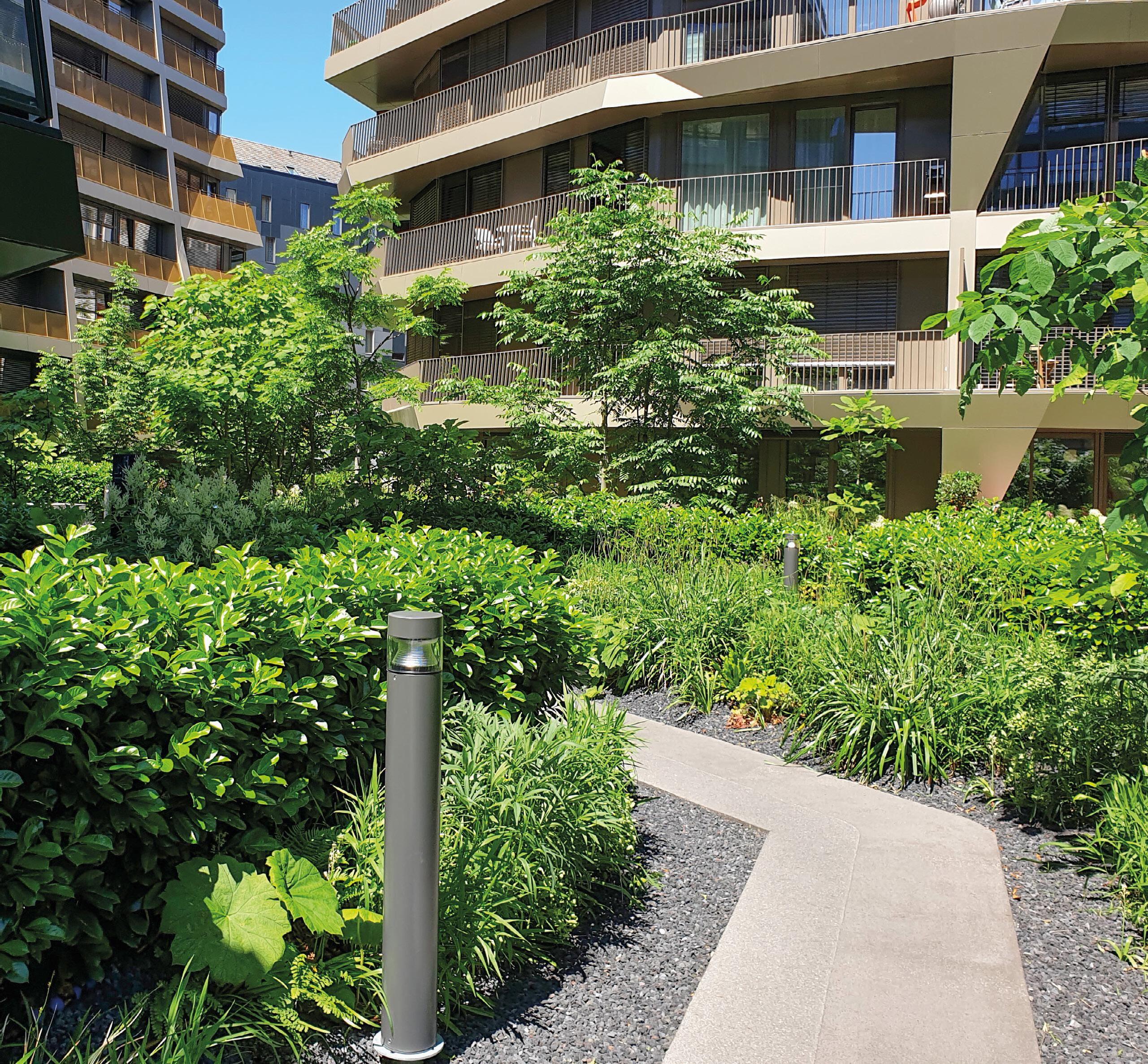
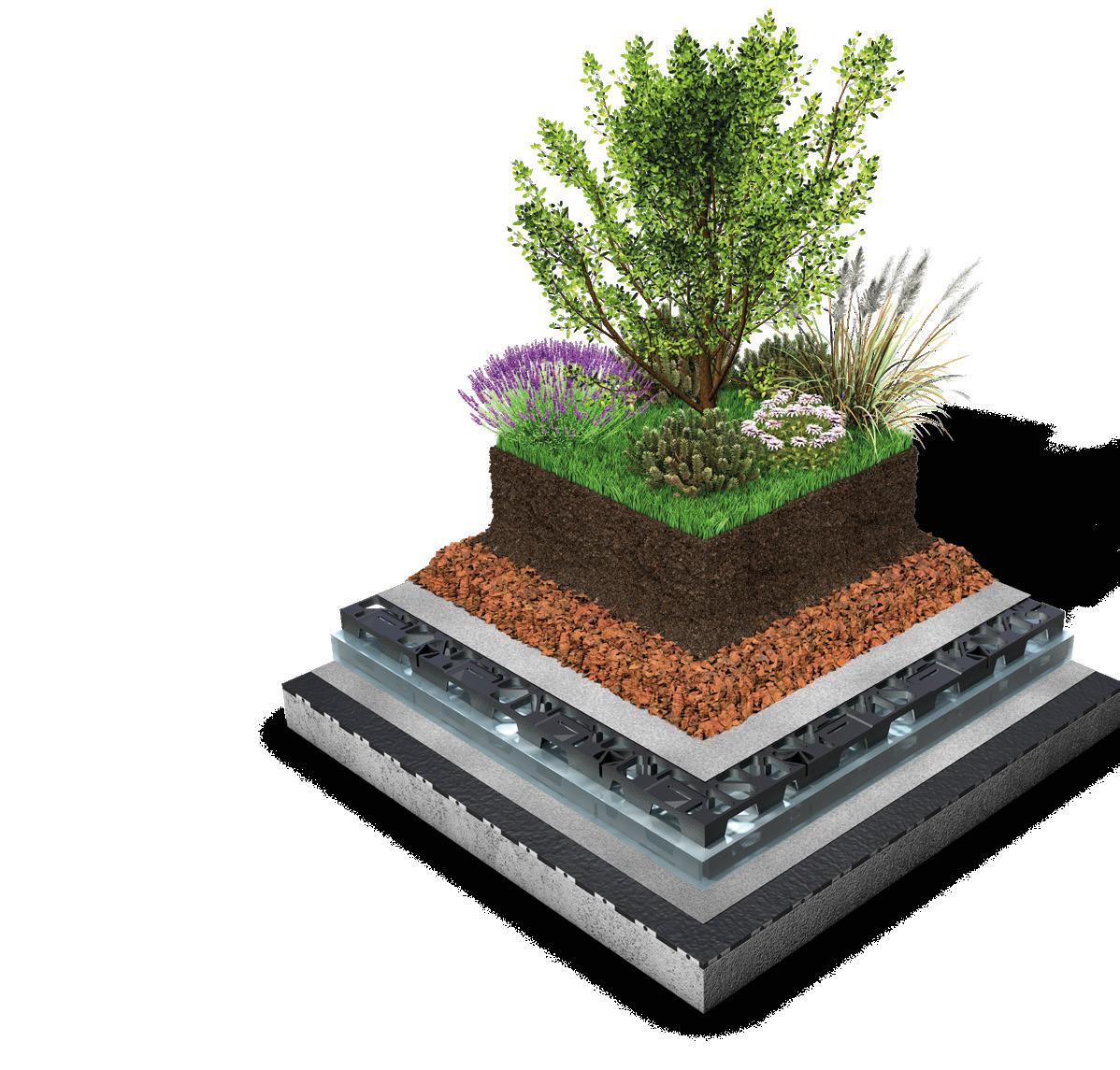
• Stormwater attenuation for podiums and extensive roofs
• Time delayed release to project requirements
• Innovative flow control device
• Project specific stormwater attenuation calculations provided