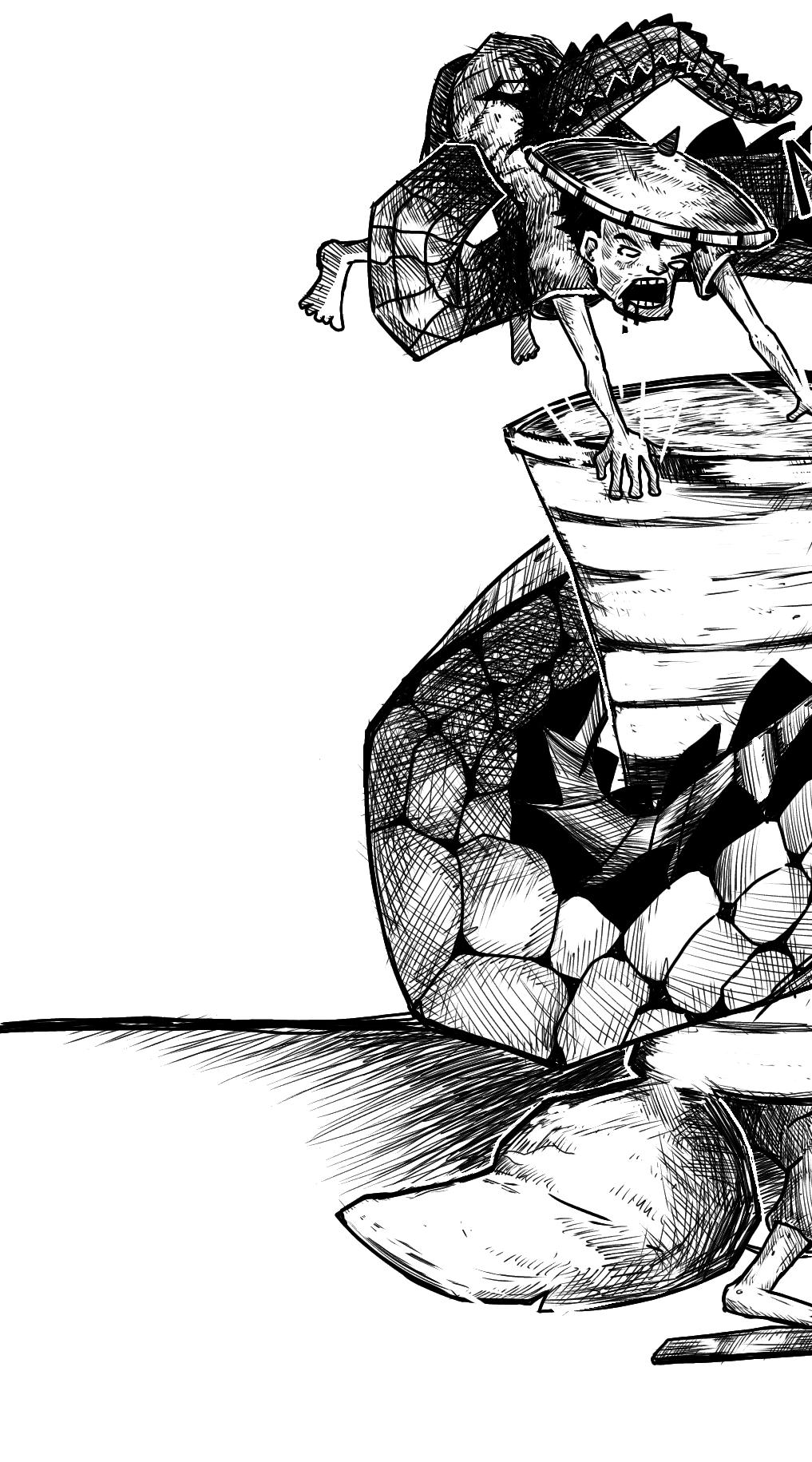
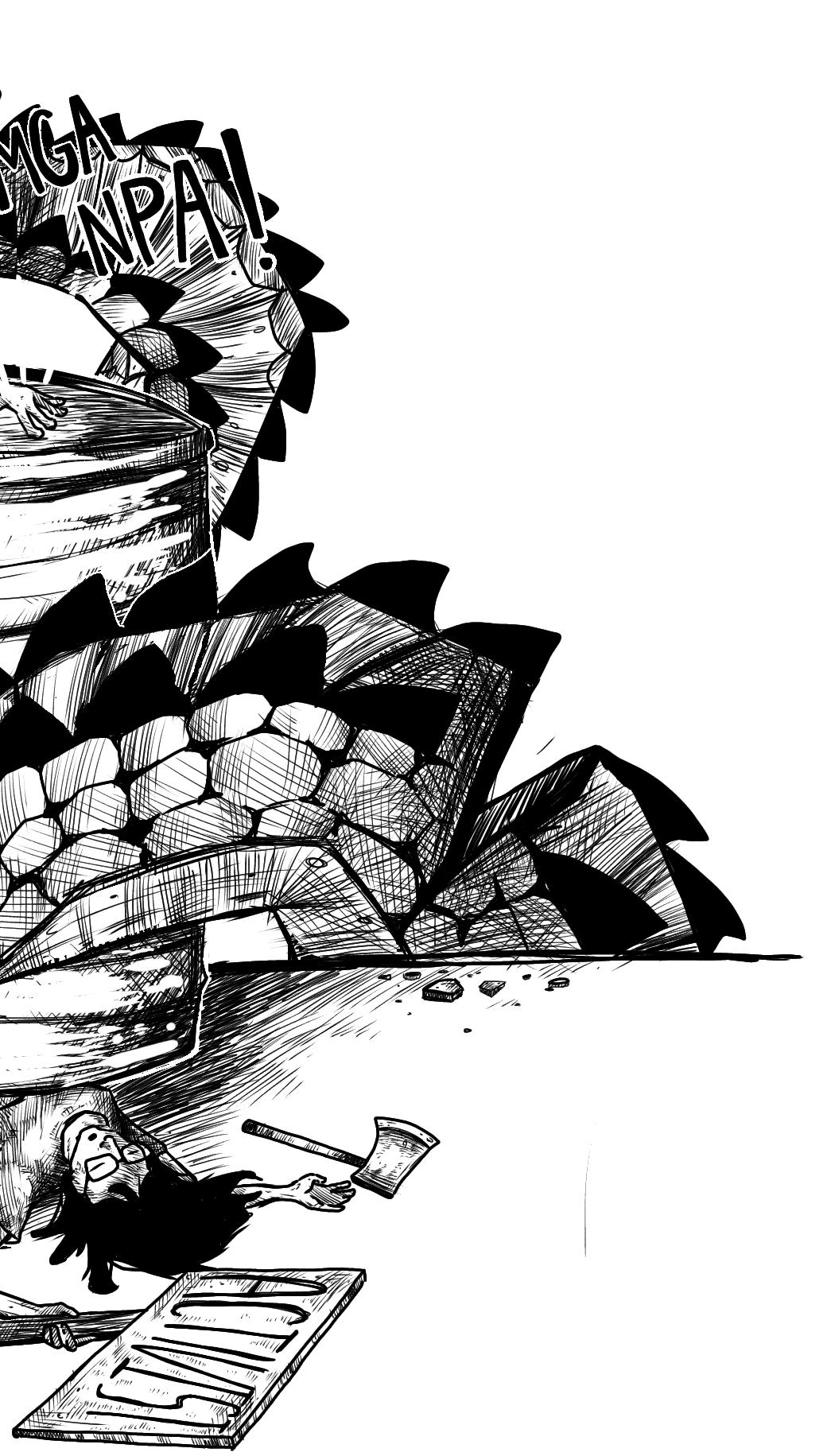
When, instead of condemning the military establishment that allowed the deaths of student activists to happen, the very people they have devoted themselves to serving repay with ridicule, Filipino society’s whole moral architecture collapses. It reveals a long-held, marginal line that keeps the whole country from the brink of moral bankruptcy, which often endangers those who are near, or who choose to be near, the grassroots battle to dismantle the systematic failures of a political framework structured to allow those with underlying malice to corrupt public service and plunder national wealth.
It exposes a lingering peril in the state of the nation: the Philippines is a dying democracy, the Filipino a sick man.
The status quo is sustained by a system that conditions people, polarized by politics, to prioritize colors and patrons out of their fanatical belief that their salvation will emanate from their election into public office—which, as they might eventually realize, it doesn’t. The same system relies on a swath of propaganda networks to manipulate the mental calculus of Filipinos into believing that those who choose the most radical form of patriotism (basically, activism) are, paradoxically, against order.
This was the case for slain students from the University of the Philippines, Alyssa Alano and Maureen Santuyo, along with the rest of the Negros 19, who chose to confront the realities on the ground in underserved communities but were killed during a series of encounters between troops of the 79th Infantry Battalion and suspected New People’s Army militants in Toboso, Negros Occidental, on April 19.
What was an incident so tragic that could have united people in solidarity instead divided an already fragmented Filipino society. As if hell were let loose on social media, while some were quick to condemn the murder of young student activists in communities often left unseen by the system, others were just as fast as The Flash to reduce their unjust killings into laughing stocks— making a comedy out of something not even remotely funny to begin with. As if red-tagging these activists who went into the mountains were imprinted in their genetics,
Rest in Pieces: The
The Mobbed Republic
by forms of struggle that were once also vilified, criminalized, or dismissed as destabilizing.
What is ultimately being undermined is not merely activism itself, but the collective recognition that rights are never static possessions; they are continuously negotiated through dissent.
The polarization of Filipino society is not merely a spontaneous cultural phenomenon but a sustained political condition that serves to preserve existing power structures. By conditioning the public to interpret political life through binaries of allegiance, colors, and personalities, the system effectively displaces attention away from structural critique and toward interpersonal hostility among citizens.
In this configuration, propaganda does not merely misinform; it reorganizes perception. It renders systemic failure invisible by redirecting frustration toward those who are least responsible for it. Activists, in particular, become convenient symbolic targets, framed not as participants in democratic struggle but as threats to order, stability, or national cohesion.
This
dynamic is reinforced by narratives that pit segments of society against one another, particularly within the economically vulnerable and the middle class. While grievances such as taxation and redistribution policies may stem from legitimate lived experiences, they are often redirected toward marginalized beneficiaries rather than toward the structural conditions that produce inequality in the first place.
The result is a fractured public consciousness, where citizens are encouraged to scrutinize each other more intensely than they scrutinize the systems that govern them. In such an environment, collective solidarity becomes increasingly difficult to sustain, and the capacity for unified political accountability is weakened.
The preservation of this fragmentation is not incidental. It is functional. A divided society is not a failed one; it is a manageable one.
What emerges is not an isolated rupture of public morality but a republic already fragmented into pieces, held together only by the illusion of coherence. The ridicule of student activists, the normalization of their deaths as spectacle, and the ease with which solidarity dissolves into division all point to a society that is no longer merely polarized but dismembered in its civic consciousness. It is a mobbed republic not only because violence exists within it, but because the mob has been trained to turn inward, to consume its own, and to mistake that consumption for participation.
In this condition, the Filipino is not simply divided by politics but reshaped by it, taught to see enemies in those who share the same structural vulnerability while the architectures of power remain untouched. What is lost is not only empathy but historical memory, the understanding that the freedoms now taken for granted were carved out by the same forms of dissent that are now ridiculed and erased.
To describe this as a dying democracy is therefore insufficient. It is a republic already in pieces, sustained only through managed hostility and redirected outrage. And in that fragmentation, what rests is not peace, but something far more accurate to its condition: a nation perpetually at odds with itself, while still calling itself whole.
Compressed Academic Week eases costs but intensifies student workload
Hybrid learning setup under CHED-aligned flexible learning policies draws mixed student experiences amid scheduling adjustments
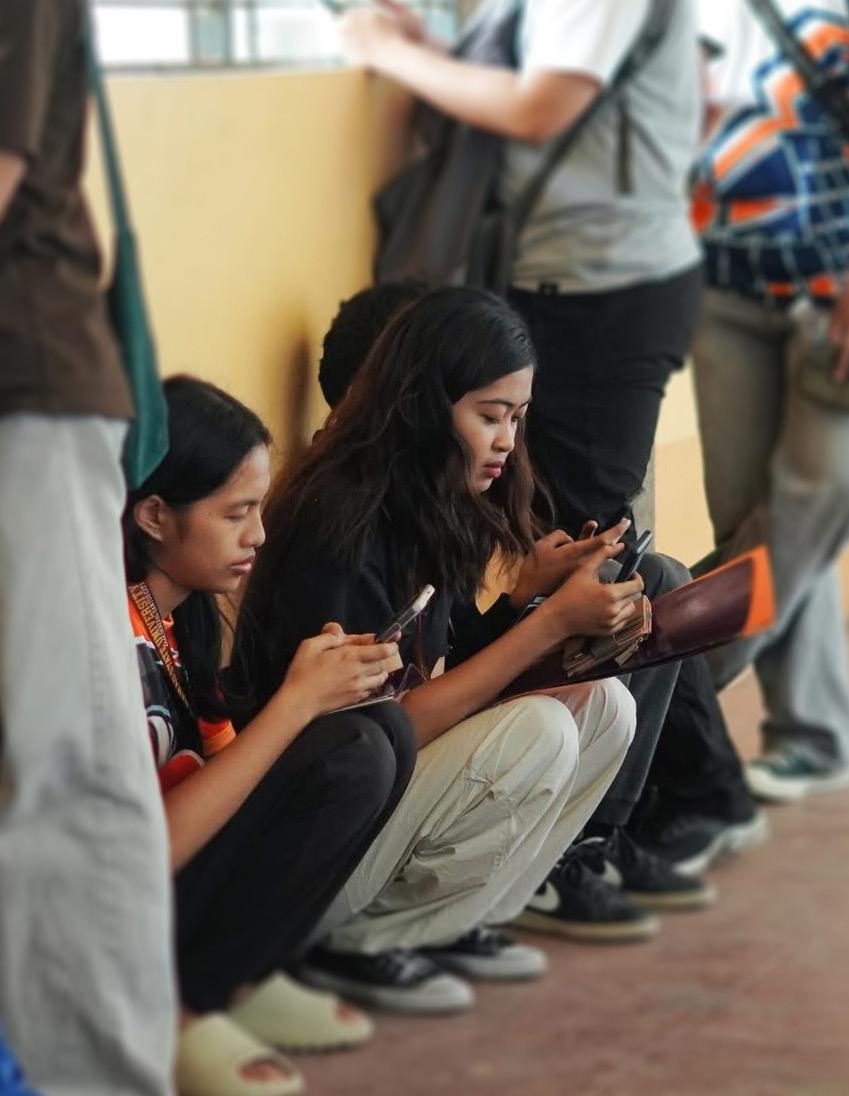
With selected online class days and a four-day face-to-face setup currently implemented under university scheduling adjustments, students of Mindanao State University –General Santos continue to experience both the intended convenience and the added demands of a compressed academic week.
The arrangement aligns with flexible learning policies encouraged by the Commission on Higher Education (CHED), which allow higher education institutions to adopt online, hybrid, or blended modalities depending on institutional needs.
Based on official university advisories, online classes, either synchronous or asynchronous, were conducted on March 13, 16, 27, and 30, and April 10, 13, 24, and 27. Separate advisories also indicated that most offices observe no on-site work every Friday, except for units providing essential services.
This direction is further supported by a recent CHED policy granting colleges and universities full flexibility to shift to 100% online classes amid the ongoing national fuel and power crisis. The policy was approved during a commission meeting on April 6, 2026, as a temporary “stop-gap mechanism” to help ease financial strain caused by rising transportation and electricity costs.
CHED Chairperson Shirley Agrupis clarified that institutions may determine their readiness for full online learning based on infrastructure and faculty capacity, stressing that this does not automatically equate to permanent accreditation for online programs.
For students, the setup reduces the number of days spent on campus each week, easing travel time and transportation expenses. However, several also noted that fewer faceto-face days often result in longer schedules, heavier workloads, and more challenging time management.
Financial relief
Some students pointed to noticeable savings in daily expenses, particularly transportation costs.
Selwyn Alfredo B. Soguilon, a fourth-year
Bachelor of Arts in English Language Studies student, said the arrangement helps lessen his commuting expenses, noting that he previously spent around ₱40 daily under a full face-to-face setup.
“It decreases my daily expenses, particularly my transportation costs,” he said.
Ian Caro Pacificar, a third-year Bachelor of Arts in Literature and Cultural Studies student, shared the same sentiment, saying that fewer campus days allow him to save more.
“It decreases my expenses. Going to campus less allows me to save more money,” he said, adding that the benefit varies depending on whether subjects are conducted asynchronously.
Learning challenges and workload concerns
Despite financial relief, students raised concerns about productivity, consistency, and workload distribution under the hybrid setup.
Soguilon said asynchronous learning affects discipline and focus.
“Asynchronous learning tempts me to be lazy,” he said, noting that face-to-face classes help him maintain a structured routine.
Pacificar identified internet connectivity issues, motivation problems, and technical difficulties as common challenges in the current system. He also noted that while the flexible arrangement may help address room shortages and rising costs, its effectiveness still depends on students’ learning environment and discipline.
He further shared how the shift in class modes affects motivation and focus.
“I think it has. Not doing anything as a student can be unpleasant to the brain. As a student, academic work is almost constant, so when the class setup shifts to asynchronous (usually no class) or online, it can be unmotivating and even boring,” he said.
Meanwhile, Ronilyn T. Salilan, a 2nd-year Bachelor of Secondary Education major in
Mathematics, currently under a hybrid setup consisting of face-to-face and asynchronous classes, described several challenges under the arrangement, including limited teacher guidance, heavy workload and difficulties in time management.
Salilan said the inconsistency of schedules across subjects makes it harder to plan her day and complete tasks efficiently.
“Miinsan sa isang araw may isang subject lang na asynchronous Logic pero ang susunod na subject na Wika ay hindi palaging asynchronous, minsan synchronous, minsan hindi. Kaya hindi mo maayos na mapaplano ang iyong araw dahil habang tinatapos mo ang Logic async class mo, kailangan mo pang magmadali mag-ayos at mawawala ka sa focus. Dahil sa hindi consistent na schedule, lagi kang naka-standby at hindi mo mapamahalaan nang maayos ang iyong oras sa halip na tulungan ka nitong mag-manage ng oras,” she said.
Impact on mental health and productivity
Salilan also shared that the current setup has affected her mental health and productivity, particularly due to the volume of tasks completed independently at home without direct supervision.
She said this often leads to feeling overwhelmed, reduced sleep, and difficulty balancing academic responsibilities with personal obligations.
She added that the situation is more challenging for students who need additional time to understand lessons and complete outputs.
As the university continues to uphold its goal of fostering excellence, students hope the university will make the most effective decisions for the remaining two months of classes, especially as classroom availability continues to improve and energy-saving considerations remain part of current university planning.
MARIA NICOLE SILVA
T.G.I.F: Thank Government It’s Friday (?)
ALJIM KUDARAT
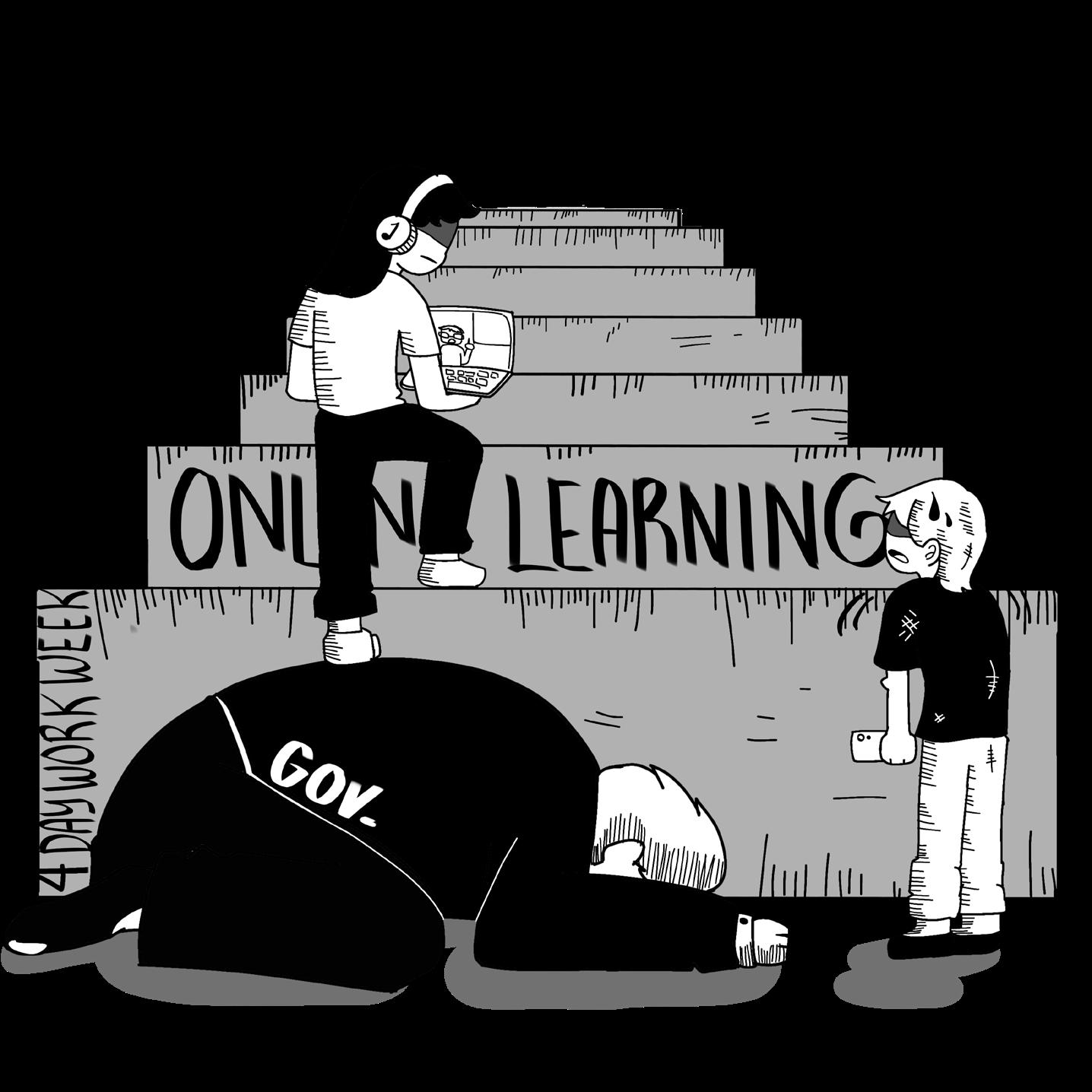
On a once-in-a-blue-moon move, the government decided to act on one of the most dire situations our motherland has ever faced. Better yet, in its wittiest discretion, comes the removal of Fridays (and Mondays) in every Filipino’s calendar of work. And while it seems convenient to thank the government for no more Fridays and Mondays (for now), a more profound problem lies beneath the rug of the current oil crisis we are forced to confront: as universities adopt four-day face-to-face schedules to conserve fuel and energy, students are already feeling the trade-offs firsthand.
In response to the ongoing fuel crisis and rising transportation costs, the government and educational institutions have turned to the four-day face-to-face class setup as a practical adjustment. By reducing one day of oncampus attendance, the policy aims to ease the financial burden on students while conserving energy resources. And to be fair, the shift is undeniably beneficial for every commuter, particularly those in urban areas where daily travel costs have significantly increased.
However, this response reveals deeper limitations when examined closely. Compressing the same academic workload into fewer days extends daily suffering, especially for underprivileged students who already contend with long commutes and limited resources. Research highlighted by the Harvard Kennedy School shows that four-day school weeks can lead to reduced student achievement due to decreased instructional time.
Amid this setup is the lurking comeback of what was done during the pandemic: the Commission on Higher Education (CHED) recently announced that colleges and universities “may transition to 100% online classes” as a temporary, crisis-response measure, where institutions could choose to hold all classes virtually to cope with the fuel crunch, with such a policy explicitly framed as a stop-gap solution.
Yet moving fully online is not a cure-all, as significant numbers of students lack the resources to learn from home effectively. A study entitled “Challenges and Dilemmas of Digitalization in Philippine Education: A Grassroots Perspective” revealed that there is digital divide during the pandemic as underprivileged learners frequently struggle with unstable internet, brownouts, and inadequate devices.
If the shift pushes through, underprivileged MSUans who reside in provinces far from the city, those who experience frequent power outages and must travel afar just to access stable internet connection and suitable environment for an online learning set up, will bear the heaviest burden. It will not be in this case the middle-class students who suffer most, but the poorest students, whose only dream is to uplift themselves from the claws of poverty and economic prejudice.
CHED’s mandate is to respond to crises without sacrificing equity, which now appears ironic. For our administration, hear our battlecry: before embracing any model fully, our university must consider its capacity, the needs of its students, and the risk that low-income learners may be left further behind by either option.
As a state university, our mission is clear: to uphold equitable and inclusive education, despite of depsites. Republic Act 8292 (Higher Education Modernization Act of 1997) explicitly tasks state schools with “promot[ing] and carry[ing] out equal access to educational opportunities” . This means looking beyond class modality to address all obstacles students face. If four-day classes help reduce expenses for some but extend the daily grind, or if online classes protect travel budgets but shut out the poorest, neither approach alone fulfills our mandate.
We are not devoid of the truth that the government has already recognized the urgency of the situation: by mid-April the President suspended a planned fare hike and directed agencies to cushion commuters. From April 15 onward, public transport fares were cut by 20%, and LRT/MRT riders enjoyed 50% discounts. These emergency measures illustrate how policy can reduce burdens. Likewise, campus leadership should explore all means to lighten costs, such as expanding financial aid and offering flexible course scheduling, where possible. In short, any change in class setup should not compound the struggles of those we are meant to serve.
If the current fuel crisis has taught us anything, it is that the government is far more practiced in reacting than in preparing. While Malacañang’s declaration of a State of National Energy
Emergency and the creation of a crisis committee are necessary, they arrive only after students and commuters have already begun to bear the burden.
In education, the same pattern is evident, that instead of anticipating how rising costs would affect access to learning, institutions are now forced to compress schedules or shift modalities on short notice. This is why priorities must be non-negotiable because if contingency planning for education had been treated as essential from the start, students would not be left absorbing the impact of every disruption.
Funds could have been directed toward transport support, digital infrastructure, prepaid internet access for vulnerable students, or emergency learning systems long before a crisis emerged. Yet when issues of faulty allocations in other sectors persist, it becomes difficult to ignore that preparedness is often a matter of choice. And in that choice, education, and the students it is meant to serve, continues to come last.
No single approach solves every problem. Our university, and the government at large, must place student well-being at the topmost priority. In this age of brimming crises, the best path forward is one designed not for convenience but for the resilience and success of every Isko and Iska, where none of which is left behind. Perhaps, thanking the government is
art by Jewel Tapel
To the Editor:
In today’s digital age, advocacy spreads like wildfire. Students quickly post, share, and express support, as if everyone is eager to jump on the bandwagon. But when the trending sensation fades, so does the noise. This raises a serious question: are we truly willing to change the narrative, or are we simply being performative?
The same pattern can be seen in some school initiatives. Universities launch sustainability drives, donation campaigns, or inclusion programs with strong publicity
Kalinaw, Isko!
Thank you for raising a concern that resonates with many students. The pattern you pointed out, where initiatives begin with strong visibility but gradually lose direction, is not isolated. A similar cycle can also be observed in some student-led initiatives, where momentum is high at the start but becomes difficult to sustain over time.
Looking at the issue from a broader perspective, there are factors that may contribute to this. Some projects are designed to be short term, particularly those tied to one semester academic requirements, which makes continuity a challenge once leadership changes or the course ends. In other cases, limited resources and shifting priorities can affect a project’s long term direction, especially when more immediate concerns arise.
However, while these realities exist, they do not excuse the recurring lack of sustainability. The concern becomes more pressing given that these initiatives are funded by public funds, drawn from the contributions of taxpayers. As such, accountability, transparency, and responsible use of resources should not end at launching projects.
Putting emphasis on waste segregation, this is something we have seen repeatedly, especially during large events like intramurals. There were efforts before, such as forming a Green Team and placing waste bins across the campus. But when the event ended, so did the initiative. The system was there, but it was not sustained. However, this cannot be viewed solely as an administrative shortcoming, since students also
at the start. Photos are taken. Captions are posted. Commitments are announced. Yet months later, the projects lose direction. Waste segregation bins are ignored. Treeplanting efforts are not monitored for survival rates. Fundraising goals and other key performance indicators (KPIs) remain unmet. What is worse is the lavish spending on food, and miscellaneous expenses.
What makes this even more frustrating is that the funds for these projects come from us—the students. Through our tuition and
play a role in practicing and maintaining proper waste management on campus.
Similarly, tree planting activities, though commendable in intent, often lack long term monitoring. Many of these efforts are carried out as part of compliance or academic requirements, with limited follow through after implementation. After a few months, these saplings are often left unattended and simply passed by, with many no longer surviving. Without continuity, their impact remains minimal.
This brings us back to the central question: are we truly willing to change the narrative, or are we simply being performative?
At present, it appears that we are caught somewhere in between. There is willingness, as seen in the number of initiatives being introduced. However, without sustained commitment and accountability, these efforts risk becoming performative over time. Advocacy should not end at visibility. It should be reflected in consistent and measurable action.
At the same time, it is worth recognizing that the university has been showing signs of progress. With the new leadership, developments in infrastructure, systems, and technology have become more evident within a short period. Indeed, these changes are promising. However, progress should not only be measured by what is introduced, but also by how well these initiatives are sustained over time. Strengthening monitoring and ensuring continuity in both university-led and studentled projects will be key in maintaining this momentum.
various fees, we finance these initiatives, much like taxpayers fund government programs. Many of us struggle to make ends meet just to stay in school. The least we expect is transparency and responsible spending. Our hard-earned money should not be poured down the drain for projects that just look “impressive.”
Advocacy should not be all bark and no bite.
“Okay, next group.” Students deserve more than performances.
Moving forward, it may be high time that the university, through the appropriate offices, strengthens both planning and oversight. Before initiatives are approved, there should be clear distinctions on whether they are short term or long term, along with corresponding monitoring, continuity, and turnover plans to ensure that projects do not lose direction over time. Regular progress reports and post implementation evaluations may also help in ensuring that commitments are not limited to initial rollout. While aligning with broader frameworks such as the Sustainable Development Goals (SDGs) is important, sustainability itself should be treated with equal priority.
As Bagwis upholds its role as the voice of the student body, it can also take a more active role in promoting accountability. Beyond reporting, this may include initiating a project watch for university programs and initiatives, documenting progress, gaps, and outcomes, and consistently following up on previously launched efforts. This can also be encouraged among other college and department publications to build a culture of transparency, where both student leaders and the administration are held accountable not only for starting initiatives, but for sustaining them.
Ultimately, meaningful change will require both institutional consistency and collective responsibility. Otherwise, initiatives risk becoming performances rather than progress.
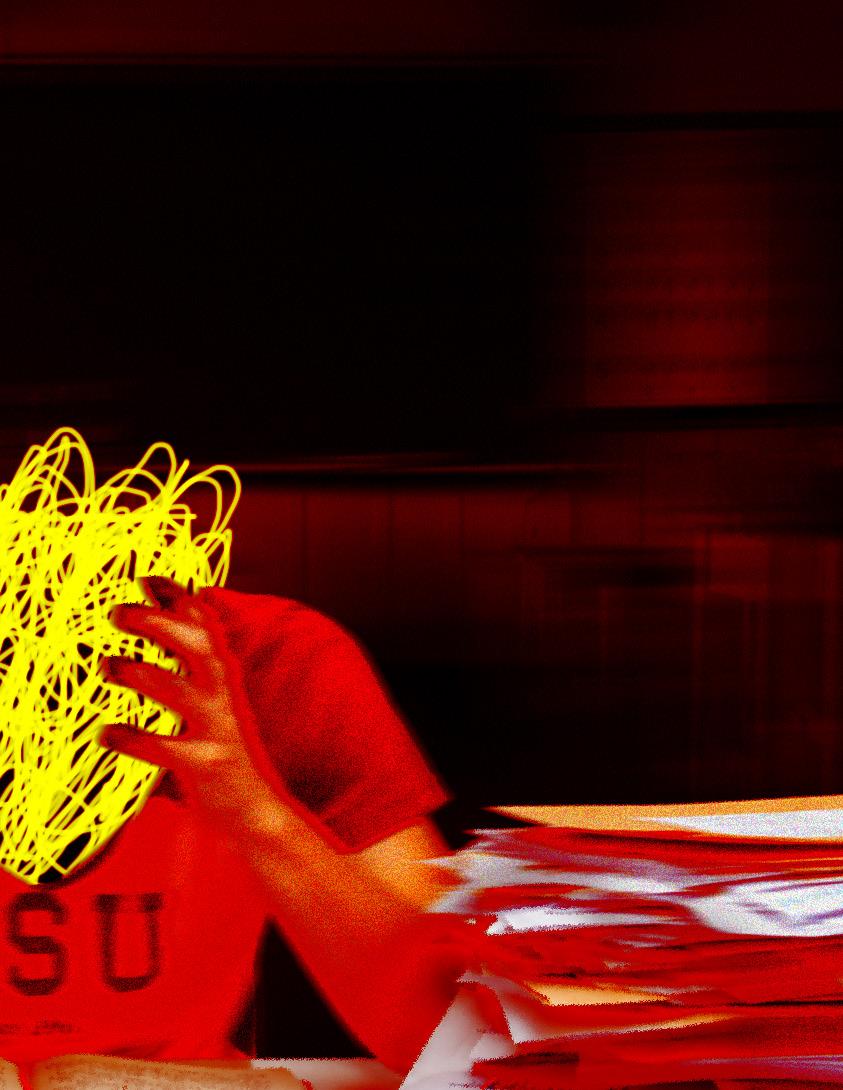
SOLUSYON SA WALANG HANGGANG ACADEMIC BURNOUT
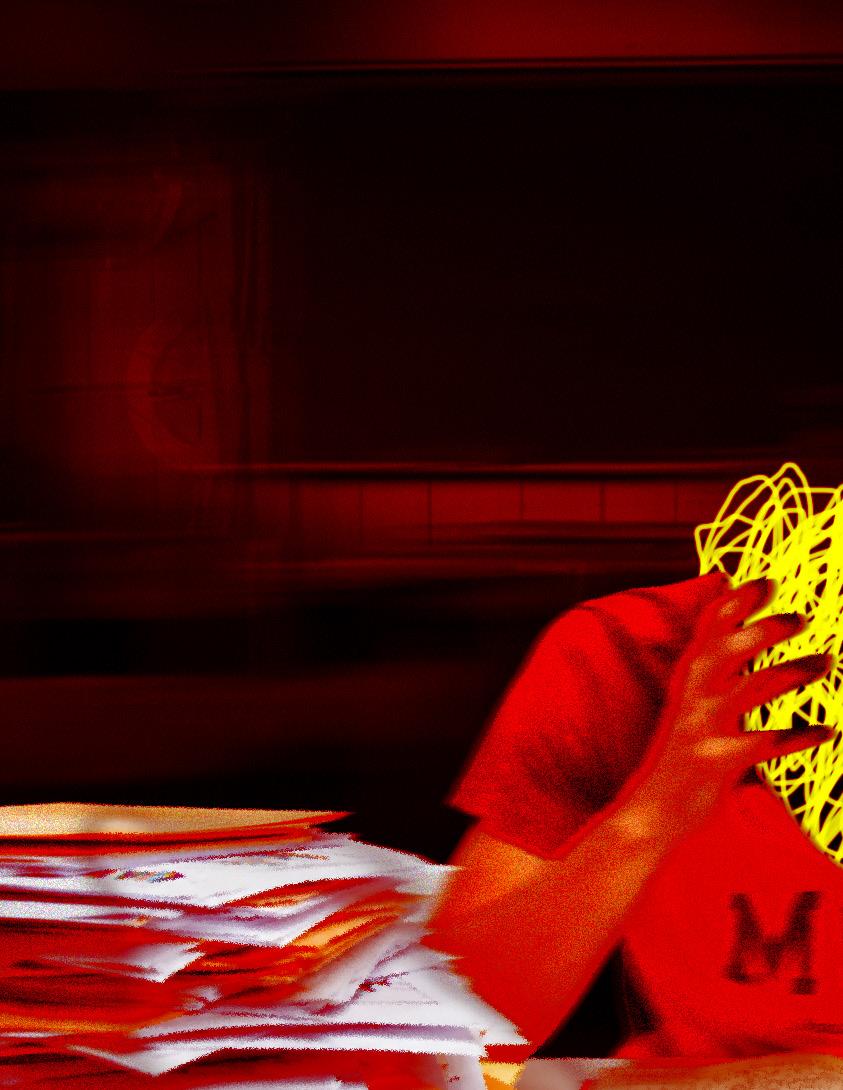
Sunod-sunod na deadlines, tambak na readings, at halos walang pahingang paghahabol sa requirements— tila naging normal na ito sa buhay ng maraming MSUans. Ngunit sa likod ng pagpupuyat at paulit-ulit na “kaya pa,” unti-unting kinakain ng matinding academic stress ang enerhiya, motibasyon, at maging mental na kalagayan ng mga estudyante.
Hindi lamang simpleng pagkapagod ang burnout. Ayon sa World Health Organization (WHO), isa itong “occupational phenomenon” na bunga ng matagal at hindi maayos na napapangasiwaang stress. Bagama’t hindi ito itinuturing na ganap na medical condition, may malaki itong epekto sa pisikal, emosyonal, at mental na paggana ng isang tao.
“Burn-out is a syndrome conceptualized as resulting from chronic workplace stress that has not been successfully managed”
saad pa ng WHO.
Inilalarawan ito sa tatlong dimensyon: matinding pagkapagod o pagkawala ng enerhiya, negatibong pagtingin o distansyang mental sa mga gawain, at pagbaba ng kakayahang maging produktibo o epektibo sa akademiko at iba pang responsibilidad.
Sa konteksto ng akademya, mas tumitindi ang suliraning ito dahil sa mabibigat na workload, mahahabang oras ng pag-aaral, at pressure na makamit ang matataas na marka. Ayon
sa Mapúa University, ang tuloy-tuloy na academic demands ay maaaring magdulot ng
seryosong pagkapagod sa isip ng mga estudyante.
“Chronic stress from academic demands can result in burnout. Students face rigorous schedules filled with assignments, exams, and extracurricular activities. This relentless pace can exhaust their mental resources” saad pa ng unibersidad.
Bukod sa emosyonal na epekto, may kaakibat ding pisikal na sintomas ang
academic burnout tulad ng madalas na pananakit ng ulo, hirap sa pagtulog, pagkawala ng gana, at mabilis na pagkairita. Sa aspektong siyentipiko, ipinapakita rin ng ilang pag-aaral na ang prolonged stress ay maaaring makaapekto sa memorya, konsentrasyon, at cognitive performance ng isang estudyante.
Dahil dito, mahalaga ang wastong stress management upang mapanatili ang balanse sa pagitan ng akademiko at personal na buhay. Nakakatulong ang maayos na time management, sapat na pahinga, at pagbibigay-oras sa mga libangan upang mabawasan ang epekto ng burnout. Sa kabila ng mabibigat na gawain sa Pamantasan, mahalagang mabigyan din ng pagkakataon ang sarili na makapagpahinga at makabawi ng enerhiya.
Sa kabilang banda, nangangailangan ng wastong pahinga at mental break ang mga estudyanteng nakararanas ng academic burnout. Sa gitna ng sunodsunod
na requirements, examinations, at iba’t ibang aktibidad sa unibersidad, maaaring makatulong ang simpleng paglalaan ng oras para sa sarili upang maibsan ang pagod ng isip. Maging ang paglalakad at tahimik na pag-iikot sa loob ng campus, mag-isa man o kasama ang mga kaibigan, ay maaaring magsilbing pansamantalang pahinga mula sa matinding academic pressure.
Sa kabila ng sunod-sunod na gawain sa Pamantasan, mahalagang paalalahanan ang sarili na hindi nasusukat sa dami ng natatapos na requirements ang halaga ng isang estudyante. Higit na mahalaga ang pagpapanatili ng maayos na kalusugang mental kasabay ng pagtupad sa mga akademikong responsibilidad. Sa pamamagitan ng tamang balanse sa akademiko at diakademikong aspeto ng buhay, maaaring maiwasan ang untiunting pagkapundi ng isip at enerhiya na dulot ng academic burnout. Sa pagitan ng walang tigil na akademikong pressure, mahalagang maalala ng mga estudyante na ang pahinga ay hindi pagtalikod sa responsibilidad kundi bahagi ng pagpapatuloy nito.