Residential

Residential
4 From the chief executive
BAFSA’s CEO Ali Perry writes from the EFSN in Paris about the importance of collaboration in the sector
4 BAFSA updates and industry news
Tank Working Group, sprinklers in schools and updates from the BAFSA Learning Centre
8 Sprinkler Labour Market survey report
BAFSA commissioned a survey of the sprinkler labour market at the end of last year. Here we provide an overview of the results

Sprinkler FOCUS is the biannual magazine of the British Automatic Fire Sprinkler Association. It is the only UK publication which has automatic fire sprinklers at its core with current news, features and opinions along with case studies and product updates.
10 Sprinklers in hotels –Scottish legislation update
Stewart Kidd provides an overview with takes a look at the updates of the Scottish Government’s Building and Fire Safety Expert Working Group to review fire safety in converted hotels
14 Ask Joe
BAFSA’s technical advisor, Joe McCafferty selects some of the queries that have come into BAFSA over the last few months in regard to sprinkler installation
18 Transitioning to Fluorine Free Foams
Gerard Visser, Business Development Manager for Foam Products at Johnson Controls asks if this is a challenge or simply a matter of getting the transition right
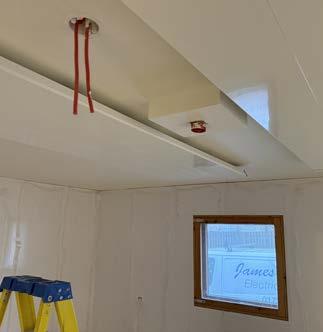
BAFSA has part funded a sprinkler retrofit in Fife to demonstrate the cost of the stages of the process
BAFSA Focus is published by BAFSA, PO Box 28683, EDINBURGH EH4 9GN info@bafsa.org.uk www.bafsa.org.uk ISBN – 978-0-9571838-9-6
Reprints of articles are available on request. Designed and printed in the UK by RIASCA
24 Interview: Prof Steve McGuirk CBE,QFSM,DL Executive Director Fire Sector Confederation and APPG for Fire Safety
26 Europe update
Alan Brinson of EFSN reflects on the tragic fire in a bar in Switzerland and how the various European countries have responded. Plus he highlights some of the issues that are currently on the European sprinkler agenda
30 Sprinkler Saves
Nick Coleshill presents a wide range of saves that Fire & Rescue Services have helped bring to our attention over the last quarter
32 Residential Sprinklers
Ritchie O Connell looks at the fire safety and engineering challenges presented by the demand for open plan residential premises
Disclaimer: The British Automatic Fire Sprinkler Association Ltd and/or its Council, directors, officers or employees are in no way responsible or legally liable for any error or anomalies made within the editorial by our authors. The opinions expressed in the articles are those of the authors and not BAFSA itself, unless otherwise stated.

FROM THE CHIEF EXECUTIVE
I am writing this from Paris, attending Fire Sprinkler International 2026, hosted by the European Fire Sprinkler Network at the Marriott Rive Gauche. The event brings together the global sprinkler community across two full days of plenary sessions, technical breakouts and an extensive exhibition, alongside invaluable networking opportunities.
Events like this underline the importance of collaboration across our
“This
sector. It is an opportunity to reconnect with colleagues and friends from organisations such as the FPA, BRE, EFSN and IFSA, while also building new relationships that will support BAFSA’s work going forward. The informal discussions here on matters such as standards, research, certification and emerging risks are often as valuable as the formal programme itself.
The conference programme reflects many of the key issues we are actively progressing within BAFSA, including third-party certification, system reliability and environmental performance. These conversations directly complement work underway across our committees, from EN 12845 through to our Environmental Working Group and continued engagement with certification bodies.
While I am in Paris, significant work continues in the UK. At the FPA testing facilities, the next phase of our lithiumion battery research programme is
now underway. This BAFSA led project, delivered with the FPA, BRE and partners, is designed to provide robust, evidence-based insight into suppression performance against one of the fastestgrowing fire risks. There will be much more to come on this in future editions, as results emerge and are translated into guidance, standards and policy influence.
Alongside this, we continue to support practical delivery on the ground, including our involvement in the retrofit of a care home in Scotland. This project will provide real-world evidence on cost, installation and outcomes, helping to strengthen the case for wider adoption, many of our international partners are interested in the outcome of this work.
This project directly supports BAFSA’s aims in bringing together insight, research, standards and real-world application. The knowledge gained here in Paris will feed directly into that work in the months ahead.
BAFSA led project, delivered with the FPA, BRE and partners, is designed to provide robust, evidence-based insight into suppression performance against one of the fastest-growing fire risks.”
BAFSA is pleased to announce the appointment of Paul Wright as its new Quality & Learning Advisor/Assessor.
Paul is a well known expert in the fire sprinkler sector with over 20 years experience and has acquired a strong reputation for delivering first class customer services and training whilst showing drive, energy and enthusiasm.
As a representative for IPS, a BAFSA member, Paul has been a member within three BAFSA Committees, Technical, Skills & Development and Continuing Professional Development and has been involved in the development of the ABBE L2 Certificate in Fire Sprinkler Installation since the early days.
Ruth Oliver, Skills & Development Adviser & Head of Training says: “Paul’s skills, knowledge and experience will support the aspirations of BAFSA as it moves
Ali Perry Chief Executive BAFSA

forward, including the growth of new qualifications. Regulated qualifications are part of the requirements to demonstrate knowledge within the fire sprinkler sector. Paul’s support in this area with assessing L2 candidates and working with all those undertaking qualifications by providing support through their training programme will be extremely valuable and he is a welcome member to the BAFSA Team.
Paul says: “I am delighted to be given the opportunity to work along side BAFSA. I have known BAFSA for a long time and understand its commitment to excellence. I look forward to contributing my skills, learning from others, and growing together as we achieve great things.”
You can contact Paul at: quality.learning@bafsa.org.uk
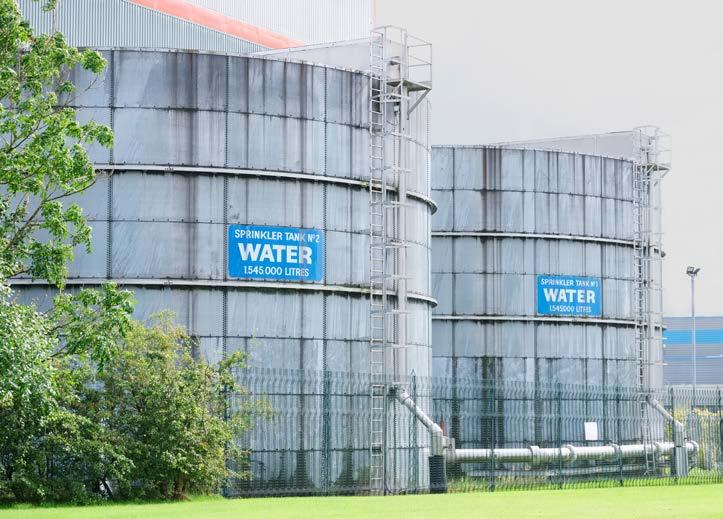
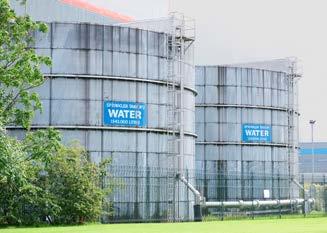
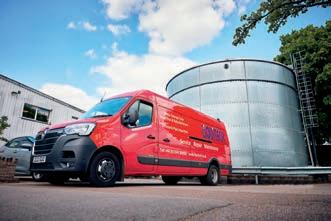
Sprinkler water tanks: moving from “good enough” to engineered assurance by BAFSA’s Technical
Many sprinkler systems still rely on water storage tanks whose real condition is not properly understood. Extensive work by the BAFSA Tank Working Group led by group chair Norman Ross, to revise LPC Technical Bulletin 203 (TB203) is about changing that, in giving insurers, end users and contractors a more robust basis for confidence in sprinkler system water supplies.
TB203 has historically centred on visual checks, with a two-year inspection and a ten-year drain-down. That framework has helped, but it was never designed for the level of structural verification today’s risk environment demands. Sprinkler tanks are heavily loaded structures holding multiple tonnes of water. If they fail, the consequences can be life-threatening, environmentally damaging and business-critical, rendering the essential fire protection of business operations provided by the sprinkler system compromised.
The proposed revision to TB203 moves us towards engineering-based condition assessment, encompassing a wider range of tank types. At two years, inspectors will undertake an expanded inspection criteria, structured checks of shell, roof and ancillaries, supported by defined ultrasonic
thickness testing at a minimum of five points per inspected panel and higher-resolution ROV surveys. At ten years, the preferred route becomes a full non-destructive test of all metallic tank panels and ROV-led internal examination, whilst retaining the tank’s contents and the sprinkler system fully operational, with a tank drain-down and liner removal where necessary rather than by default.
Equally important are governance and clarity. The revised TB203 will strengthen formal reporting, clarify expectations for different tank types, improve through standards the capability and competency of sprinkler tank inspection and remedial works providers, set out how findings are to be communicated and closed out with owners, authorities and insurers, and improve confidence in the water supply reliability for sprinkler systems.
The BAFSA Tank Working Group’s TB203 update proposals was expertly delivered in a comprehensive presentation to the RISCAuthority by Norman Ross in March 2026. To coincide with this revision of TB203, BAFSA are under way with updating the existing “BIF#8F Water Storage Tanks”, with an anticipated release date of May 2026.
BAFSA has launched a new CPDaccredited training programme designed to improve understanding of the legislation and regulations governing the installation of automatic fire sprinkler systems.
The self-paced online course, Automatic Fire Sprinkler System Installation Key Legislation & Regulations, is aimed at professionals involved in the specification, installation and management of sprinkler systems.
The programme covers a range of core topics, including sprinkler system installation, relevant legislation and standards, ethics and personal responsibility, and the consequences of non-compliance. Structured across seven modules, the course provides around two hours of learning content that can be completed at the learner’s convenience.
Course fees are £45 for BAFSA members and (£90 for non BAFSA members plus VAT. Participants who complete all modules and pass a short multiple-choice assessment will receive a CPD Service-endorsed certificate, available for immediate download.
Ruth Oliver BAFSA’s Skills and Development advisor and head of the BAFSA Learning Centre said.“Legislation sets the rules you must operate within and regulation tells you how to work safely and professionally. This programme gives learners the knowledge to apply these rules confidently.
“Understanding legislation and regulation is not just a requirement, it is part of developing competence in your role. This new programme demonstrates BAFSA’s ongoing commitment to promoting best practice, safety and professional development across the fire protection industry.”
Visit: www.bafsa.org.uk to find out more.
The British construction sector has strongly criticised the government’s decision to remove long-standing guidance recommending the installation of sprinklers in new schools, warning it could put children, staff and communities at greater risk from fire.
In January, the Department for Education (DfE) issued a revised technical manual for the design and construction of school and college buildings. The updated guidance removed previous recommendations that sprinklers should be installed in new education settings.
The move has prompted a sharp response from the Construction Industry Council (CIC), which said neither it nor the National Fire Chiefs Council had been consulted before the changes were introduced.
In a statement, the CIC said it was “deeply worried about the profound negative impact of this policy upon people and their local communities in cases where educational buildings are damaged by fire”. It added that the loss of school buildings can have a serious effect on both pupils and neighbourhoods, disrupting education while also removing facilities often used for wider community activities.
“For the sprinkler industry, the decision is likely to renew concerns that proven life-safety and property-protection measures are being deprioritised at a time when resilience of public buildings remains critical”
The revised manual states that the “use of BB100 is no longer required” for education buildings. Department for Education guidance previously relied on Building Bulletin 100 (BB100), which had been a cornerstone of school fire safety policy since its launch in 2007.
When BB100 was introduced, former schools minister Jim Knight described it as a “landmark in improving fire safety in schools”.BB100 recommended that all new schools should be fitted with sprinklers, except in a small number of low-risk cases.
For the sprinkler industry, the decision is likely to renew concerns that proven life-
safety and property-protection measures are being deprioritised at a time when resilience of public buildings remains critical. Fire in schools can lead to months of disruption, expensive rebuilding costs and the loss of valuable educational resources.
BAFSA has long argued that sprinkler systems play a vital role in protecting schools, safeguarding continuity of education and reducing the social and economic consequences of major fires.
Industry stakeholders, including, BAFSA will continute to press ministers to reconsider the policy and restore stronger fire protection guidance for future school projects.

Nottingham City Council has approved a £315,000 scheme to install sprinklers on the top floor of the Broad Marsh Car Park and Bus Station after its insurer warned full cover would be withdrawn without additional fire protection. The work will extend the existing sprinkler system to the sixth floor, helping ensure the landmark citycentre building remains fully insured.
The car park and bus station opened in 2022 as part of the wider Broad Marsh regeneration project and has an estimated reinstatement value of more than £85m.
During the 2025 renewal process, insurer Zurich Municipal advised that without sprinklers on the top level, cover would be limited to £5m.Council officers said accepting reduced insurance would leave the authority significantly exposed in the event of a major fire and could jeopardise any future reinstatement of the building.
Sprinkler systems have been installed at three residential care homes in Sheffield –Knowle Hill, Valley Wood and Grange Crescent after match funding was provided through South Yorkshire Fire and Rescue’s Stronger Safer Communities Reserve. The reserve is a Fire Authority scheme which reinvests money into local communities to support our work to prevent major fire emergencies.The scheme allows charities and community groups across South Yorkshire to deliver work to reduce deaths as well as building and environmental damage caused by fire.
Roger Brason, the service’s sprinkler advocate and BAFSA Council member says: “I’m delighted that we have been able to assist Sheffcare in installing sprinklers in these properties.Throughout the process, we ensured that we put the needs and the lives of the residents at the care homes first, ensuring that the installation did not disrupt their daily routine.
John Dawson, health and safety manager at Sheffcare said: “Knowing we have fire sprinklers in our homes provides a security of mind we have never had before.“Without the funding support from SYFR it would be impossible for a not-forprofit charity like Sheffcare to install sprinklers and it is the most effective fire safety control measure we can make.,The installation went extremely well and we now have safer homes occupied by very vulnerable people.


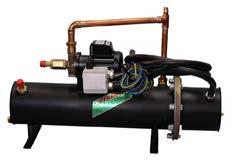
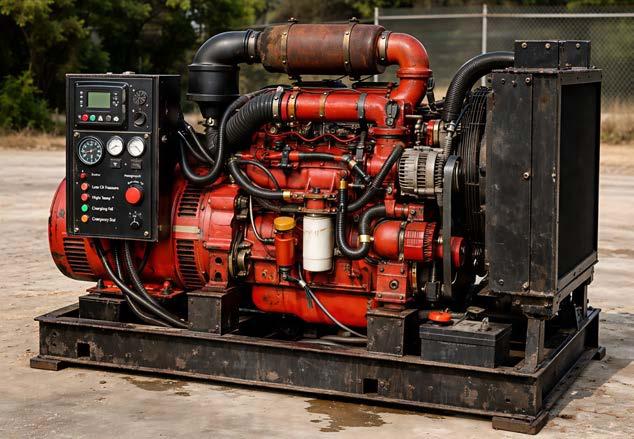
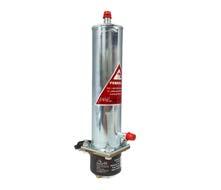
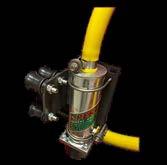
Preheat Engineering is a British designer and manufacturer of Peregrine and Falcon products, delivering high-quality, long-lasting, and reliable engine and tank heaters for critical industries.
• Easy Engine Starting
• Reduced Engine wear
• Full Power On Demand
• Fuel Saving
• Lower Maintenance
• Reduced Emissions










The UK sprinkler sector is entering a critical phase in its development. Growth is strong, but it is increasingly constrained by workforce capability. The insights from a new BAFSA survey of the sector highlight the importance of investing not only in people, but in the systems and structures that support their development

“While most employers consider young recruits to be reasonably prepared, a substantial minority believe they lack key foundational skills”
In late 2025, BAFSA commissioned Trajectory to undertake a comprehensive survey of its members and affiliated organisations. The aim was to build a detailed picture of the sprinkler sector workforce, with particular focus on skills, recruitment, training, and continuous professional development (CPD). Conducted over a one-month period between September and October 2025, one of the clearest messages from the survey is that the sprinkler industry is in a period of sustained expansion.
The vast majority of organisations reported recent recruitment activity, with many adding multiple employees over the past year. Growth expectations remain high, not only in the short term but also over the next three to five years, where most respondents anticipate continued expansion across the sector.This optimism reflects increasing demand for fire protection systems, driven in part by regulatory change, heightened awareness of fire safety, and the ongoing evolution of the built environment. However, this growth is placing considerable pressure on the industry’s ability to source and develop skilled personnel.
recruitment challenge
Despite strong growth, the industry is struggling to keep pace with its own workforce needs. Recruitment and retention stand out as the dominant challenge, cited far more frequently than economic pressures, competition, or taxation. Most organisations reported difficulty filling vacancies, with many experiencing challenges across a significant proportion of their roles. The root of the problem lies not simply in a shortage of applicants, but in a shortage of ‘appropriately skilled’ and ‘experienced candidates’. Technical and job-specific skills are in particularly short supply, while gaps in leadership, management, and problemsolving capabilities are also evident.
This skills gap is not limited to new hires. Many organisations reported that a proportion of their existing workforce is not yet fully proficient in their roles. While typically affecting a minority of employees, the impact is significant, placing additional strain on experienced staff, increasing operating costs, and creating challenges in maintaining quality standards. Encouragingly, many organisations are bringing young people into the sector, including those entering their first job after education.

However, the findings highlight concerns around ‘work readiness’
While most employers consider young recruits to be reasonably prepared, a substantial minority believe they lack key foundational skills. Common issues include communication, timekeeping, and general workplace awareness. Notably, no respondents felt that new entrants were fully prepared for work, suggesting a gap between education and industry expectations.
Apprenticeships continue to play an important role in bridging this gap. A significant proportion of organisations that recruit young people are using apprenticeship pathways, particularly at Levels 2 and 3. There is also clear interest in expanding provision at higher levels, indicating a demand for more advanced technical and professional development routes within the sector.
Training activity across the sector is both widespread and well established. Most organisations have formal training plans, dedicated budgets, and systems in place to identify skills gaps. The vast majority have delivered training within the past year, with a significant proportion of employees receiving some form of development. Health and safety and industry-specific training dominate

provision, reflecting the regulatory and technical demands of the sector. Awareness of continuous professional development is almost universal across the sector, yet its implementation is less consistent. While many organisations offer CPD opportunities, a significant proportion do not, often citing time constraints, cultural factors, or a lack of relevant courses. Feedback from respondents suggests a clear appetite for more targeted and relevant CPD provision, particularly in areas such as system design, regulatory compliance, and emerging technologies. There is also interest in greater recognition and standardisation of CPD within the industry. The findings of the survey present a picture of an industry that is both thriving and under pressure. Demand for sprinkler systems continues to grow, and organisations are investing in recruitment and training. However, the persistent shortage of skilled labour, combined with challenges in workforce development, poses a risk to sustained growth. Addressing these challenges will require a coordinated effort across the industry. This includes strengthening entry pathways through apprenticeships, improving alignment between education and employer needs, expanding access to high-quality training, and embedding a stronger culture of continuous professional development.

In 2023, the Scottish Government convened the Building and Fire Safety Expert Working Group to review fire safety in converted hotels. Its 2025 recommendations accepted by Ministers led to updates to building standards aligned with Simon and Richard’s Law. From April 2026, traditionally constructed buildings converted into hotels with 15 or more rooms must include automatic fire suppression systems. Stewart Kidd looks at the new requirements
It has long been recognised that hotels present a special risk in terms of fire and life safety.
Many of the greatest death tolls in fires internationally have resulted from fires in hotels. Hotels and similar sleeping accommodation in the UK have been subject to special controls for many years – these being finally codified in the Regulatory Reform (Fire Safety) Order 2005 and the Scottish and NI equivalents.
The Fire Precautions Act 1971 was almost certainly introduced as a result of public
concern following the fire at the Rose & Crown, Saffron Walden on 26 December 1969 which killed 11 people. There have been no further very large life loss fires in UK hotel in the past 50 years.
This experience explains why the double fatality in the Cameron House Hotel fire in December 2017 all the more notable. In fact, there was a second fatal hotel fire in Scotland at the County Hotel in Perth in January 2023 when three people died. By contrast, the last multi fatality hotel fire in England was three deaths in the Penhallow
Hotel, Newquay, in August 2007. All three of these incidents involved older and/or listed buildings.
The reasons why the potential for large scale life loss is a concern in hotels is implicit in their function and operation. The key life risk factors for all buildings as set out in current Government guidance, and these make it clear that all the prescribed factors are likely to be present in a hotel.
In the case of heritage or historic buildings the usual FRA criteria should be augmented by consideration of the heritage, aesthetic and cultural value of the property and its contents as well as factoring in the impact of firefighting activities. In the case of older buildings, special attention needs to be paid to the potential problems of structure and materials. Fires spread more easily where there is insufficient compartmentation and where there are unstopped shafts, ducts, voids and flues. The age of the building will usually determine its type of construction and the inherent fire risk and fuel load.
The Cameron House Hotel Fire on 18 December 2017
Unusually, the causes, spread and impact of the fire are well documented as a result of the Scottish Fire and Rescue Service investigation mandated by Sherriff Thomas McCartney under the Inquiries into Fatal Accidents and Sudden Deaths etc (Scotland) Act 20161
Quoting directly from the Sherriff’s findings, the two deaths resulted from: “…a fire which began in the concierge cupboard of the Hotel, as a result of hot embers within ash igniting combustibles within said cupboard. The fire spread from the cupboard through voids and cavities in the structure of the building and escaped into the reception area once the door to the cupboard had been opened, thus causing
fire and smoke and fire gases to spread extensively throughout the old part of the Hotel”.
Thus the proximate cause of the fire was therefore:
Careless disposal of hot ash i.e., the removal of hot ashes from open fires in the hotel as part of cleaning them; exacerbated by:
The presence and impact of hidden voids allowing easy and rapid fire and smoke spread.
Sherriff McCartney’s Report included the recommendations that:
The Scottish Government should consider introducing for future conversions of historic buildings to be used as hotel accommodation, a requirement to have active fire suppression systems installed. The Scottish Government should constitute an expert working group to more fully explore the special risks which existing hotels and similar premises may pose through the presence of hidden cavities or voids, varying standards of workmanship, age, and the variance from current standards and to consider revising the guidance provided by the Scottish Government and others”.
The Scottish Government set up the Building and Fire Safety Expert Working Group (WG) in 2023 to consider whether and how
Building Standards should be amended to require fire compartmentation and fire suppression systems in certain hotels. This WG included representation from a wide range of interests (including BAFSA) and reported to Scottish Ministers in late Summer 2025. The recommendations of the working group included proposals for measures to minimise the risks to life in buildings being converted to hotels including the need for Automatic Fire Suppression Systems (AFSS) and the provision of adequate fire and smoke stopping.
Minsters accepted all the recommendations and instructed that the Non-Domestic Technical Handbook to the Scottish Building Standards be amended to incorporate Simon and Richard’s Law2. The April 2026 edition now contains:
Conversions – Traditionally constructed buildings converted to hotels with 15 or more rooms used for sleeping accommodation must have an automatic fire suppression system installed in accordance with guidance set out in Clause 2.15.1.
Amended definition of hotels
The handbook defines ‘hotel’ under the current definition of residential building includes guest house, boarding house, hostel, boutique and apart hotel. Bedrooms, living rooms within suites (where bed settees can make the room capable of being used
“The recommendations of the working group included proposals for measures to minimise the risks to life in buildings being converted to hotels including the need for Automatic Fire Suppression Systems (AFSS) and the provision of adequate fire and smoke stopping.”


for sleeping accommodation) and staff bedrooms are all considered to be rooms used for sleeping accommodation.
Where sleeping accommodation which includes fewer than 14 rooms, AFFS need not be provided but the handbook refers enquirers to Historic Environment Scotland which suggests that AFFS may still be an appropriate measure regardless of the hotel size.
The handbook is very specific in respect of the design and installation standards to be followed when an AFFS is to be installed in a converted building:
Life safety systems – where a system is installed for life safety purposes (other than in residential care buildings) as well as property protection, the additional recommendations for a life safety system are contained in the LPC Rules for Automatic Sprinkler Installations 2009 incorporating BS EN 12845: 2015. The suppression system should cover the entire building including roof voids where necessary.
As BAFSA members and other experts will know, BS EN 12845 and the LPC Rules are both subject to regular revision and it is suggested that owners and developers are advised that the version of the standard extant at the time a contract is placed should be proposed. The handbook also recognises that systems other than automatic sprinklers may provide equivalent protection:
Alternative suppression systems - there are many alternative or innovative fire suppression systems available, including systems utilising gaseous, mist or fog systems. The applicant and the verifiers should satisfy themselves that the suppression system has been designed, tested and approved for use in non-domestic buildings based on the particular hazard and are fit for their intended purpose.
Scotland has always had wider requirements for the provision of AFFS in new buildings than England, including:
An enclosed shopping centre.
A residential care building.
The whole or part of a sheltered housing complex.
A school building
A building containing a flat or maisonette.
A social housing dwelling.
A shared multi-occupancy residential building (with more than six residents).
This new requirement not only extends the requirements for safer buildings but also
will serve to protect structures which may be of historic or architectural interest – and minimise the risks to firefighters responding to complex buildings.
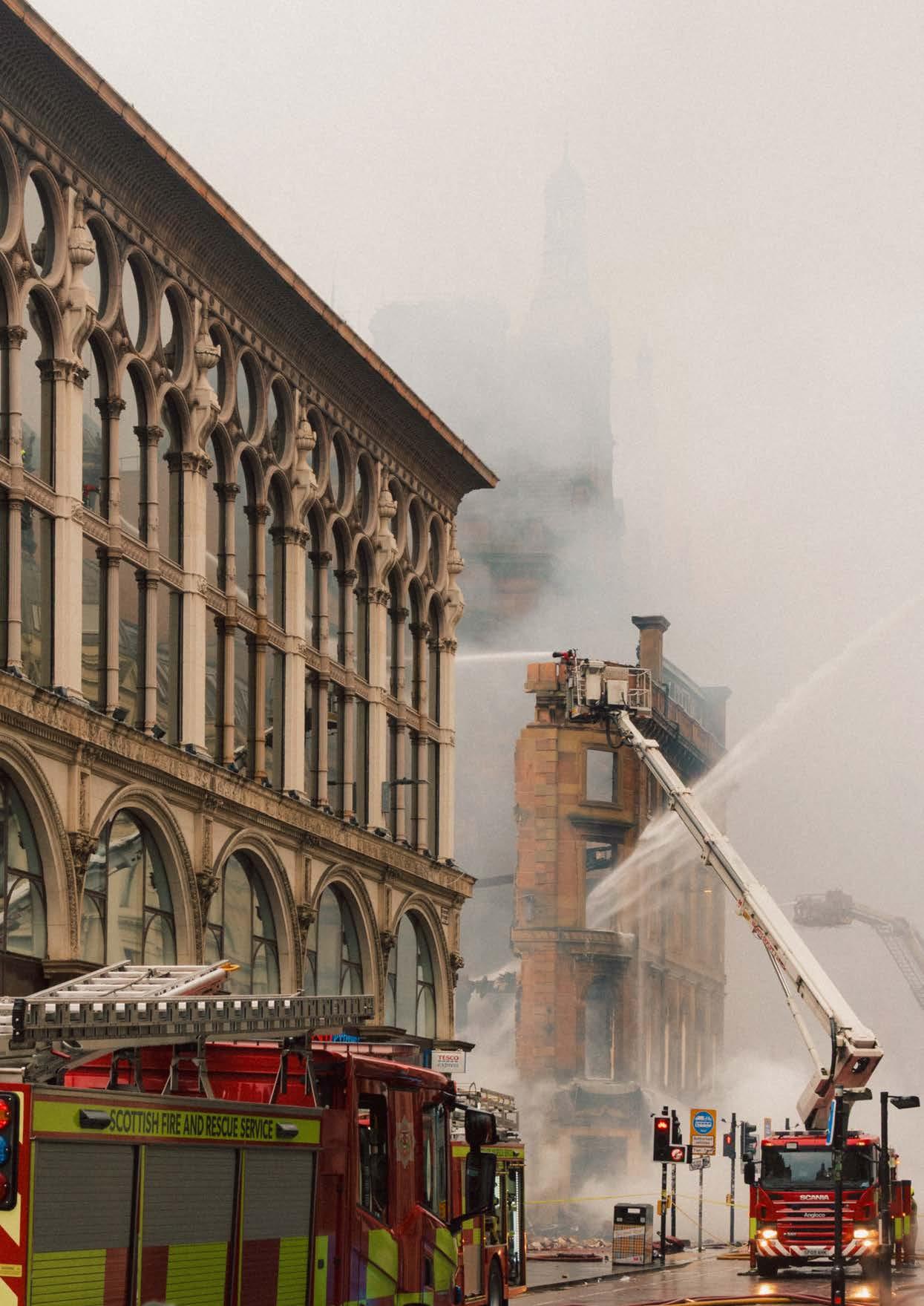
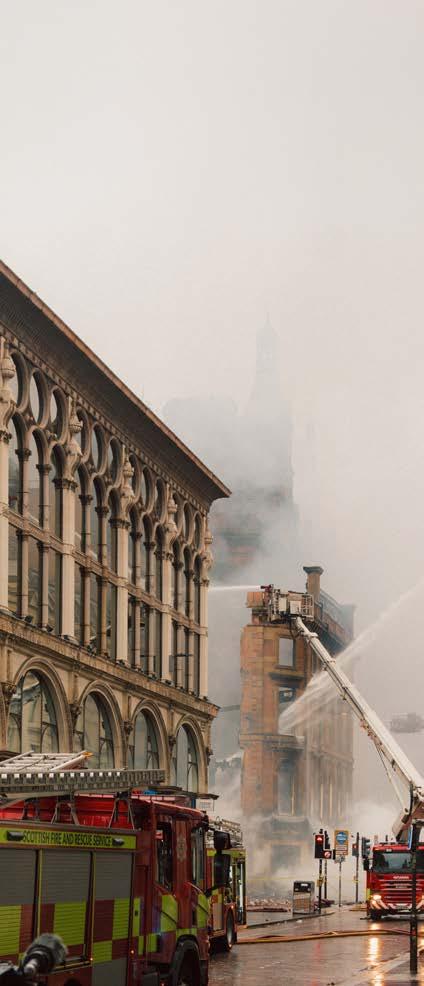
On the 9th March this year, there was a serious fire in Glasgow in the complex of buildings at the junction of Gordon Street and Union Street, abutting the city’s Central Station. The four/six/ storey, Category B building dated from 1851 and was described as iconic by members of the Scottish Parliament and Glasgow City Council.
The building’s ground floor contained a number of retail and service business including a Vape shop where the fire started. The upper floors contained offices and many business have been made homeless. The building abutted The Central Station, Scotland’s busiest and rail services were impacted for more than two seeks. The Voco Grand Central Hotel is also affected and has had to restrict its operations.
Most of the building has had to be demolished for safety reasons and the Scottish Government has made £1 million available for this work and has promised another £10 million to support local business and tenants.
Many of those commenting on the wider impact of the fire seem to have overlooked previous serious city centre fires in Scotland. The December 2002 fire in Edinburgh’s Cowgate affected more than 13 conjoined structures, some dating from the 18th century, including a former department store which had been subdivided into many smaller retail units. Fire spread was facilitated by hidden voids and shafts and the lack fo fire resisting compartmentation.
One of the senior officers involved in the response said: “Parcelling up the old department store also meant the sprinkler system installed by J and R Allan had long been abandoned. Those areas that had been sealed off from the original building now formed these sizeable void areas through which service ducts, cables and all sorts ran,”.They were these effectively unofficial spaces, neither really part of the building or the outside world.” It took more than 10 years to sort out legal and property rights issues and many businesses never reopened.
Both of these fires demonstrate the serious problems in managing fire safety in traditional buildings which have undergone relatively uncontrolled changes of use and modern standards of fire safety have not been introduced when such conversions have been introduced.
“Many of those commenting on the wider impact of the fire seem to have overlooked previous serious city centre fires in Scotland.”
The Scottish Ministers have already recognised that there is a need to improve fire compartmentation and install AFSS for both life safety and property protection in traditional buildings. Perhaps it’s time to review the need for such measures to be more widely provided?
Note: Legislation: Where buildings are of particular architectural or historic interest they can be formally ‘listed’ by the planning authority acting in concert with the relevant Government heritage body. This then offers the buildings some degree of protection. The existing Listing legislation provides that no one may alter a building of special architectural or historic interest, unless the works are authorized
1. Scotland does not hold Coroner’s Inquests.

Fire Sprinkler system design training for domestic, residential and commercial systems
In recent months, BAFSA Technical Support has received a wide range of enquiries from members, property owners, and industry stakeholders. These have covered topics such as sprinklers and wet/dry risers across residential, domestic, and commercial properties. Here’s a selection of some of them
For technical queries, visit: https://www.bafsa.org.uk/bafsa/ask-bafsa
Note: In some cases, responses are based on professional opinion or recommended good practice, rather than strict requirements within UK, European, or American sprinkler rules.
Question: I have recently encountered a number of retrospectively installed sprinkler systems in Higher Risk Buildings and sheltered housing schemes. I would like to understand whether wall-mounted sprinkler heads are as effective as those installed at ceiling level, or if their performance is reduced. Specifically, can wall-mounted heads deliver sufficient water distribution to adequately protect a room? Additionally, are they typically used as a more costeffective alternative in sprinkler system design?
Joe: Horizontal sidewall sprinklers are an acceptable means of installing a sprinkler system. There are times when there is no suspended ceiling to hide the sprinkler pipes, so they are installed behind walls, and the sprinkler head protrudes and is fitted with a horizontal pattern head. It is not a cost saving exercise and is commonly used in places like hotel bedrooms. These sprinklers discharge water in a large pattern that can cover the floor for about 3m either side of the sprinkler and throws water about 3m in front of the sprinkler. Importantly the head also sprays water onto a wall up to about 700mm from the ceiling, keeping the walls cool and stopping fire spread.
You can find videos on the internet that show sidewall sprinklers operating. This type of sprinkler is referenced and accepted in BS 9251: 2021
3.29 sidewall pattern sprinkler sprinkler giving an outward half paraboloid pattern of water discharge
Question: We have a building with a BS 9251:2021 sprinkler system installed. The bathrooms have an electric shower installed but the area of the bathroom is less than 5.1 m2. Our installer says that we must have a sprinkler installed in the bathroom because of the electric shower, but we want to know it that is a requirement of BS 9251: 2021?
Joe: Bathrooms with electric showers must have sprinklers installed. This is the reference in BS 9251:2021 5.4: Extent of sprinkler protection. Commentary on 5.4, BS 53060:2020, Clause 15, gives guidance on the use of sprinkler protection in the presence of electrical equipment and concludes it is generally safe to do so. Sprinkler protection should be provided in all parts of the premises; however, sprinkler protection may be omitted from the following areas unless it is required by a fire strategy or risk assessment: Bathrooms and shower rooms with a floor area less than 5m2, with linings in accordance with BS EN 13501-1:2018, Class A1, A2-s3, d2 and B-s3, d2, and areas which are not prepared for white goods, such as washing machines, dryers, electric showers or water heaters.
NOTE: Where a risk assessment is carried out, it needs to take into account presence of fuel load (eg linen), the presence of potential ignition sources such as an immersion heater and consequence (eg impact upon fire protection to the building or escape routes).
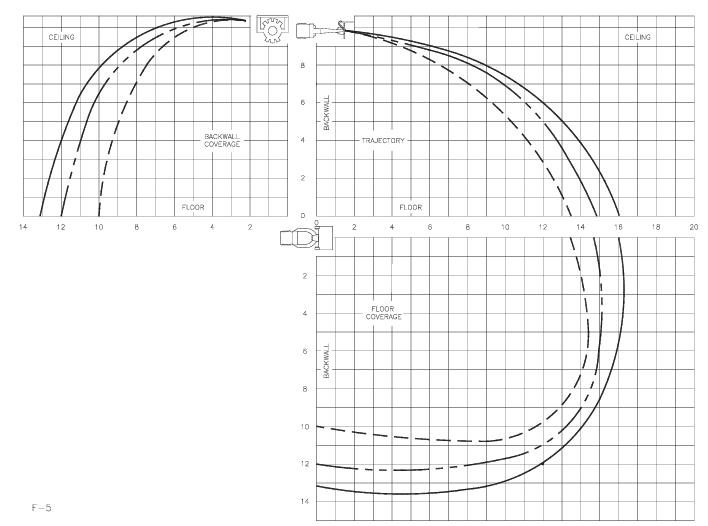
These distribution patterns illustrate approximate trajectory and coverage as guidance for preventing an obstruction from being placed in the flow path. No specific coverage areas or densities are implied by these patterns.
Question: Our client has a roof sprinkler system (BS EN 12845) protecting their warehouse with its own pumps/tank water supply. They are proposing the installation of shelving/racks which the existing water supplies are not sufficient to cater for. Can they leave the existing roof sprinkler system at roof and install new (extra) pumps and tanks to cater for the new in-rack sprinkler system, or do they have to remove all the existing pumps/tank/ sprinkler system and install a completely new combined roof/inrack system and water supplies?
Joe: If I am reading your information correctly you are saying the existing roof sprinkler protection can protect the top tier/s of in rack storage with a design density suitable for the category of goods stored. You are proposing to install new water tank/s and pumps to protect the new in-rack storage. Calculations would be done on remote and factorable areas i.e. roof sprinklers operating directly above the in- rack sprinklers in whichever are the most onerous areas.
If there’s a fire in the racks the sprinklers and then the new pumps and tank/s only will startup and supply the required density for the required duration for the in-rack sprinklers.
Should the fire spread up the racks and operate, the roof sprinklers then (and only then) the existing pumps and tank/s would startup and supply the required density for the required duration of the roof sprinklers.
So, we now have a fire scenario where the existing water supplies are satisfying the full demand for the roof sprinklers and the new water supplies are satisfying the full demand for the in-rack sprinklers.
Your proposal may be a better fail-safe system as, at least in a fire scenario, the complete system is not failing and some firefighting will be guaranteed. If for example, the water supply duration is 90 minutes, then each of the stored water supply tank/s must last that long, ie In-rack highest water demand x 90 mins with their own pumps plus roof highest water demand x 90 mins with their own pumps. You must discuss your proposals with, and get approval from, any authority having jurisdiction, which may include fire insurers, before embarking on this design proposal to avoid any misunderstandings later.
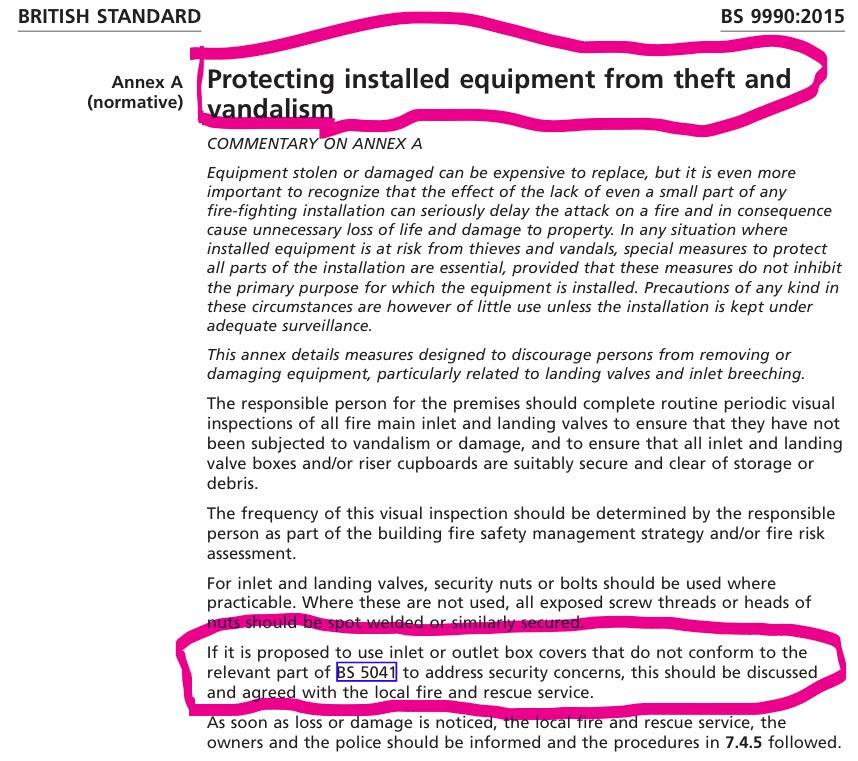
Question: The architect for our new building has proposed installing the dry riser within a stud wall, including the landing valves, due to limited space for traditional cabinets. Instead of leaving the landing valves exposed on each floor, the proposal is to house them within the wall behind “break glass” panels, requiring the fire brigade to break the glass to access the valves in the event of a fire. In my opinion, this does not appear to be a viable solution and is not something I have encountered before. I would appreciate your view on whether this approach could be considered acceptable
Joe: The break glass on the front of Landing Valve boxes is only intended as an ‘emergency access resource’ if the key to open the door does not work or is blocked/ broken. BS 9990 requires an openable door. The standard does not consider or concern itself with aesthetics. The only reference in BS 9990 to non-standard doors etc is in Annex A, which is mainly concerned with theft/vandalism and any options other than openable door must be agreed with the local FRS. It states: ‘If it is proposed to use inlet or outlet box covers that do not confirm to the relevant part of BS 5041 to address security concerns, this should be addressed with the local fire and rescue service.’
Question: I own a domestic property which has a fire sprinkler system. I moved into this brand-new house a few years ago. We and our neighbours had our fire sprinkler systems serviced annually. We had no problem until last year when we used a different company. The system failed in flow and pressure. We have managed to get hold of the original Hydraulic Calculations but don’t have System Data Label telling us what the actual flow and pressure should be. So, until we get this information, we do not know whether we’ve passed or failed in any of the four years of servicing. It seems very odd that none of the companies asked for an SDL when they came to do the
servicing. Would you be able to give me some advice or point me in the direction to get this issue resolved? The latest testing company has suggested we may need to install pump and tank at great expense. I can send you the hydraulic calculations and test results we got if that helps.
Joe: Using the hydraulic calculations and test results you sent me I have produced this history of the tests to get an idea of where/ when things went wrong. (see diagram below).
I have gone through them and summarised the design/test info with this result:
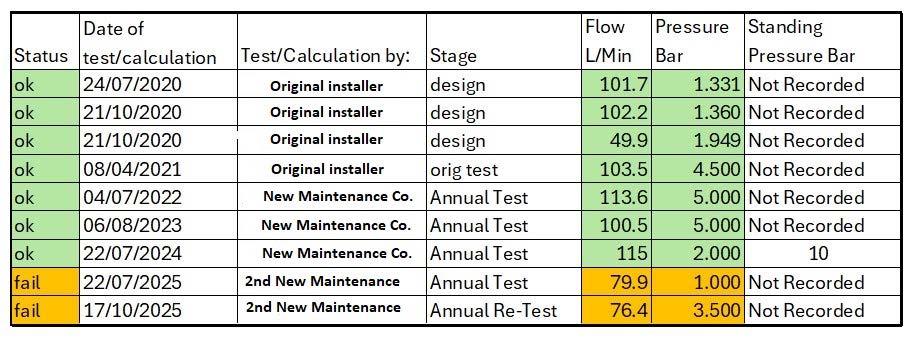
Something has gone wrong between the 22-07-2024 and 22-07-2025 tests.
It’s a pity we don’t have the standing pressures for all the tests to see if there is an issue there. If the standing pressure is the same for all tests, then the issue may be a mechanical one (ie a valve or something not operating correctly) or there is some sort of blockage in the pipework. As most professional companies use calibrated test equipment, we can probably discount any test equipment failure. Other options are that the water supplier has changed something in the supply pipework arrangement.
There are options to remove any valves/ meters to see if the system achieves the original design requirements, but this should not be the first choice. Discuss with the water supplier to see if they have any ideas of why the supply is not achieving its original flows/pressure. I think we need to know what the problem is in the first place before doing something so costly installing a pump.
Question: I recently have a technical enquiry about the use of AFFF C8 in sprinkler systems. During a phone call it was established that a very large distribution centre in their area had a sprinkler system with the now banned AFFF since 4th July 2025. Their sprinkler system contractor advised that the system would need to be replaced with new pipes and sprinkler heads and possibly water supplies at considerable cost. The enquiry was whether this was the only course of action?
Joe: AFFF C-8 used in firefighting systems/ extinguishers discontinued on 4th July 2025 and they must be replaced by more environmentally safe products. The FIA has produced an excellent guidance document on PFAS in firefighting foams which can be found on their website at the link in picture caption below. The company servicing the foam sprinkler system you mentioned to me should have been advising their client long before the deadline on what needs to be done. Assuming they have been servicing for several years.
Further phone calls ensued and after a good discussion with The FPA it’s apparent that it’s not just a case of switching foam to a new acceptable one but that the type of sprinkler heads most likely need to change as the new replacement foam has very different application characteristics than the old C8 foam.
Other major considerations for the sprinkler company are the disposal of the old
Also have a read of these web links for further info:
• The C8 foam ban explained: what it means for you | British Safety Council https://www.britsafe.org/safety-management/2025/the-c8-foam-ban-explainedwhat-it-means-for-you
• Important information regarding AFFF Foam extinguishers: C8 | Johnson Controls https://www.johnsoncontrols.co.uk
foam that’s removed from the site. It’s likely that there are very strict requirements on what can be done with it and how it needs to be stored in the meantime.



There is a good document available on FPA website at this link: https://www.thefpa.co.uk/resource-download/715
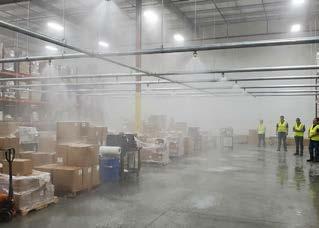
As fire supression technologies such as water mist systems become more widely used many comparisons have been made comparing their effectiveness to sprinkler based system. A new report commissioned by the British Automatic Fire Sprinkler Association (BAFSA), warns that commonly cited comparisons between sprinkler and water mist systems are, in its words, “methodologically invalid.”
The report, produced by Optimal Economics Ltd, analysed six years of fire incident data from the Ministry of Housing, Communities and Local Government Incident Recording System (IRS), covering England between 2018/19 and 2023/24. In total, researchers examined 2,924 primary fires where a suppression system, either a sprinkler or water mist system, was present.
At first glance, this might appear to offer a solid empirical basis for comparison. In reality, the study finds that the dataset raises more questions than it answers.
Of the incidents recorded, 2,438 (around 83 per cent) involved sprinklers, while just 486 involved water mist systems. Even before deeper analysis, this imbalance points to a fundamental limitation. But the more significant issue lies not in the number of incidents, but in what those incidents actually represent.
Sprinkler systems are, by and large, consistent in both design and purpose. They are fixed, building-integrated installations, designed to recognised standards and
intended to provide area-wide protection. Whether in a high-rise residential block or an industrial warehouse, their role is broadly the same: to detect heat and automatically control or extinguish a fire within the space they protect.
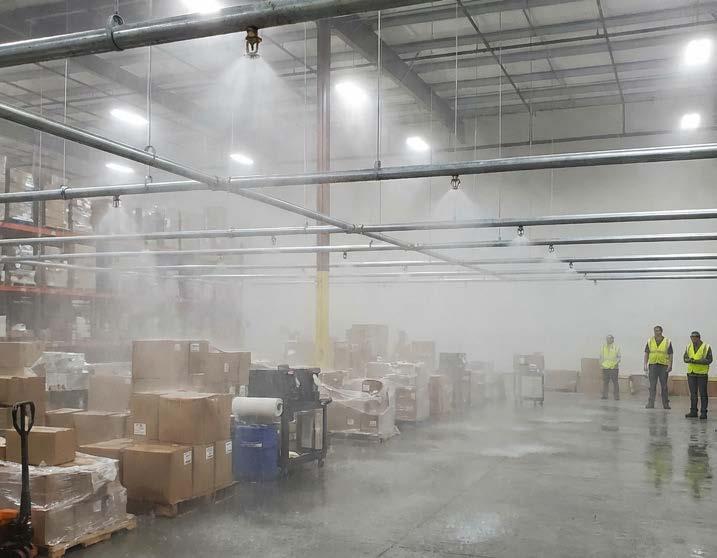
Water mist systems, by contrast, are anything but uniform. As the report makes clear, the term covers a wide spectrum of technologies, from fixed systems built into the fabric of a building to portable units, localised protection systems and personal safety devices.This distinction is not
academic, it fundamentally shapes the data.
The study found that sprinkler incidents were widely distributed across building types, with a strong presence in industrial premises such as factories, warehouses and recycling centres. In residential settings, they were most commonly associated with purpose-built flats, particularly in buildings over ten storeys.
Water mist incidents, however, followed a very different pattern. A striking proportion were concentrated in custodial environments, including prisons and young
“Claims that official fire incident data demonstrate the superior effectiveness of water mist systems over sprinklers are not supported by the evidence.”
offenders’ institutions. These accounted for 74 per cent of non-residential water mist fires and 59 per cent of all such incidents in the dataset. A rise in prison fires in the most recent reporting year further skewed the figures.
Elsewhere, the data suggests that water mist systems were more commonly associated with low-rise or specialised residential settings, such as single occupancy bungalows and sheltered housing. In many of these cases, the records indicate that the systems may not have been building-wide installations, but instead portable or semiportable ‘personal protection’ units designed to protect vulnerable individuals. Once this context is considered, the basis for direct comparison becomes limited.
The report highlights a critical limitation of the IRS dataset: it does not distinguish between different types of water mist system. Fixed, automatic installations are recorded alongside manually operated hose-reel or lance systems used in custodial settings, as well as personal protection units intended for individual occupants.
As a result, fundamentally different forms of fire suppression are grouped together under a single heading. Sprinklers, which are almost always fixed and building-wide, are effectively being compared with a mixed category that includes everything from whole-building systems to equipment-level protection and portable devices.
This lack of granularity has significant consequences for how the data can be interpreted. For example, analysis of system location shows that sprinkler heads are typically positioned in the room where the fire originates, reflecting their role in areawide protection. Water mist systems, on the other hand, are frequently recorded as being located elsewhere on the same floor, a finding that aligns with their use in localised or personal protection scenarios, but which makes direct performance comparisons problematic.
The study also examined two commonly cited measures of system performance: operational reliability and performance reliability. The first considers whether a system operates when required; the second looks at whether it successfully controls or extinguishes a fire once activated.
Both measures depend on a crucial distinction, that is whether the system actually operated. Where it did, its effectiveness can be assessed based on its impact. Where it did not, the analysis must consider why. In some cases, non-operation
may be entirely expected, such as when there is insufficient heat to trigger activation.
However, applying these metrics consistently across the dataset proves difficult. Differences in system type, building context and intended function all influence both whether a system operates and what outcome can reasonably be expected. Without a clear way to separate comparable systems, the resulting analysis risks conflating fundamentally different scenarios.
Even in cases where water mist systems might be broadly comparable to sprinklers – namely fixed, building-wide installations – the number of incidents is extremely limited. When custodial settings and other non-comparable uses are excluded, fewer than 100 non-residential water mist incidents remain over the six-year period. At that scale, individual incidents can disproportionately influence results, making robust statistical conclusions difficult.
Taken together, these issues lead the report to a clear and unequivocal conclusion: the MHCLG dataset does not contain two comparable populations of fire suppression systems. Sprinkler data largely reflects the performance of fixed, building-wide systems designed to consistent standards. Water mist data, by contrast, represents a heterogeneous mix of technologies with very different purposes and applications.
The implication is significant. Claims that official fire incident data demonstrate the superior effectiveness of water mist systems over sprinklers are not supported by the evidence. Rather, they arise from comparisons between fundamentally
different types of system operating in very different contexts.
This is not to diminish the value of water mist technology, which has a well-established role in specific applications, nor to elevate sprinklers beyond scrutiny. Instead, it is a reminder that context matters and that data, without proper classification, can mislead as easily as it can inform.
The report calls for improvements in how fire incident data is recorded and categorised. In particular, it recommends that future datasets clearly distinguish between fixed building-wide systems, localised equipment protection, personal protection units and manually deployed devices. Without this level of detail, meaningful comparisons will remain out of reach.
For policymakers, designers and fire safety professionals, the message is clear. National datasets such as the IRS are invaluable tools, but they are not infallible. Used without careful interpretation, they risk supporting conclusions that the underlying data cannot justify.
A full copy of the report commissioned by the British Automatic Fire Sprinkler Association is available to download from the BAFSA website – www.bafsa.org.uk
BAFSA has part funded the retrofit of a children’s hospice in Fife as part of a project to demonstate the cost effectivness and ease of retro-fitting sprinklers in care home environments. Sprinkler Focus provides an overview of the project
Originally constructed around 1986 as a 23-bedroom care home, Abbotsford Mina Lodge has stood dormant for several years following its closure. More recently it has been brought back into meaningful use by Children’s Hospices Across Scotland (CHAS), a national charity that provides palliative care and emotional support for babies, children, and young people with life-shortening conditions, as well as their families.
The redevelopment of Abbotsford Mina Lodge represents far more than a refurbishment project. CHAS supports families from pre-birth through to age 21, delivering care in hospices, hospitals, and community settings. The Kinglassie site will become part of that network offering a safe, supportive environment during some of the most challenging moments families can face.
Given the vulnerability of the building’s future occupants, fire safety has been a central consideration from the outset. While the original care home had benefitted from a water mist system installed in communal areas, The British Automatic Fire Sprinkler Association (BAFSA) had been actively seeking a project that could demonstrate the practical and financial implications of retrofitting sprinklers into existing care facilities and wanted to extend the levels of fire protection.
BAFSA became aware of the project through its Scottish representative, Alan Crichton, who had been working alongside Atelier Ten on developing a sprinkler specification for the building’s fit-out. A collaborative meeting between CHAS, Atelier Ten, and BAFSA laid the groundwork for a partnership. The goal was not only to support the installation through industry engagement and donations, but also to develop a detailed case study including cost data that could inform policymakers as new legislation is considered.
A number of organisations have played key roles in the project, including Ryden, Sprinktec, Algo Construction, and BAFSA member Discovery Fire Systems.
The sprinkler system specification was developed by Sprinktec on behalf of Atelier Ten and issued to contractors to ensure competitive and robust tendering. Given the building’s function as a residential care facility, the system was designed to meet Category 3 of the BS 9251:2021- a classification appropriate for care homes and similar high-dependency occupancies.
Early in the process, a water mist system was reconsidered but ultimately ruled out. While mist systems can be effective in certain applications, no suitable solution was identified that could deliver the required level of protection at a reasonable cost for this building.
Instead, a full sprinkler system was specified, designed with the following key features:
Operation of 2–4 sprinkler heads simultaneously, reflecting both Maximum Flow Area (MFA) and Most Remote Area (MRA) design criteria
A 30-minute system duration to ensure sustained fire suppression
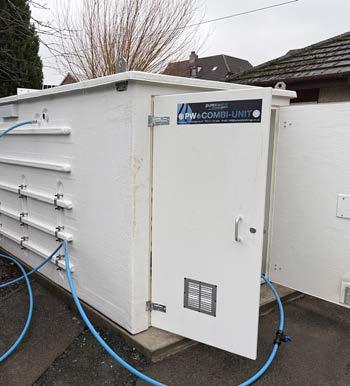
A combined water storage tank and pump house
A dedicated residential sprinkler pump
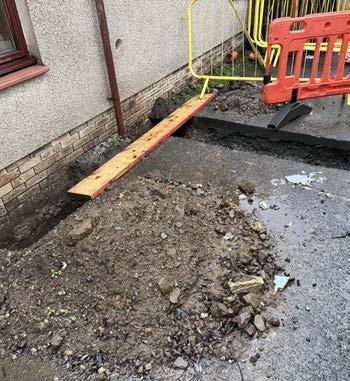
Underground pipework connecting the external tank to the building
Trace heating and insulation for exposed external pipework to prevent freezing
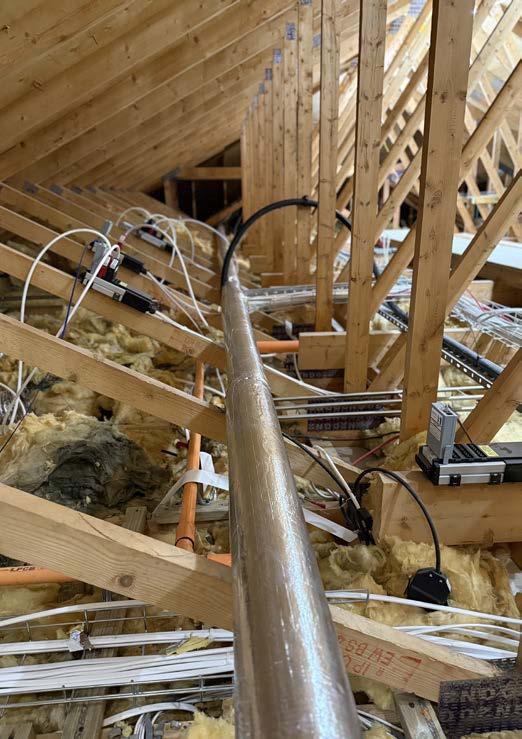
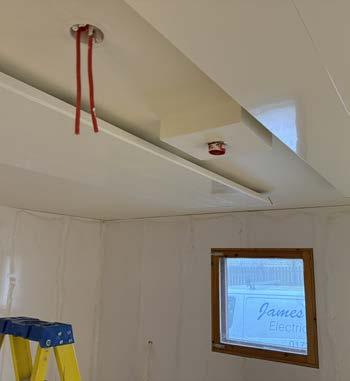
Internal distribution via plastic pipework feeding strategically positioned sprinkler heads
Full system monitoring, connected to an off-site alarm receiving centre for rapid response
A hydrant flow test conducted by Discovery Fire Systems revealed that the existing water supply was insufficient for the required system category. This finding reinforced the need for a dedicated tank and pump solution.
Notably, the loft space was assessed as low risk, being nonaccessible and free from significant ignition sources and therefore did not require sprinkler protection.
Algo Construction placed the installation order with Discovery Fire Systems, who developed the detailed system design. This design
underwent rigorous review and approval by Sprinktec, ensuring compliance with the relevant standards. Formal drawings were issued on 26 November 2025 and resubmitted the following day after addressing comments. Approval was granted on 28 November 2025, enabling works to proceed without delay. Installation began soon after and reached completion at the end of March 2026, marking a relatively swift turnaround for a retrofit project of this complexity.
The system will ultimately be certified by recognised thirdparty bodies such as IFC or LPCB, providing independent assurance of quality and compliance. Beyond its immediate impact, the Abbotsford Mina Lodge project is hopes to play an important role in shaping future fire safety policy in Scotland. The Scottish Government has been considering extending sprinkler requirements to existing care homes a move that would significantly improve safety but also raises questions around cost, feasibility, and disruption.
By documenting the full scope of this installation, including construction works, system design, and associated costs, BAFSA and its partners aim to provide a real-world benchmark.
“This evidence-based approach is critical. While the lifesaving benefits of sprinklers are well established, policymakers must also understand the practical implications for building owners and operators, particularly in older properties. The Kinglassie project demonstrates that, even in a building dating back nearly four decades, a modern, compliant sprinkler system can be successfully integrated.” says Ali Perry BAFSA’s chief executive officer.
“By documenting the full scope of this installation, including construction works, system design, and associated costs, BAFSA and its partners aim to provide a real-world benchmark.”


The transition from aqueous film forming foam containing intentionally added fluorine (AFFF) to non-fluorinated firefighting foam (NFF) is no longer a future consideration – it is already underway. Gerard Visser, Business Development Manager for Foam Products at Johnson Controls gives Sprinkler Focus an overview
The transition from aqueous film forming foam containing intentionally added fluorine (AFFF) to non-fluorinated firefighting foam (NFF) is no longer a future consideration – it is already underway. Gerard Visser, Business Development Manager for Foam Products at Johnson Controls gives Sprinkler Focus an overview.
In October 2025, the European Chemicals Agency (ECHA) restriction process resulted in new European legislation under REACH governing PFAS in firefighting foams. This requires that, by October 2026, all sites must have identified and clearly labelled any PFAS-containing firefighting foam stocks, together with a documented management and transition plan. By October 2030, the majority of foam-based sprinkler systems will need to be converted to fluorine-free alternatives unless they fall under COMAH. The question, therefore, is no longer if a transition is required, but how it should be implemented?
Non-fluorinated foams (NFF, SFFF or F3) do not contain intentionally added PFAS, whilst still providing effective fire suppression. However, their behaviour differs fundamentally from that of AFFF. This leads to three critical parameters that determine a successful transition:
These three parameters are closely interrelated and collectively determine whether a fluorine-free foam will perform effectively in a
sprinkler system. In practice, EVA analysis should not be considered as three separate checks, but as a single, balanced exercise. Any deviation in one parameter will immediately influence the others and ultimately the firefighting performance. But what is different with non-fluorinated foam?
Non-fluorinated foam (NFF or F3) operates differently from AFFF. The key distinction is straightforward: there is no film formation. Where AFFF spreads across the fuel surface by forming a film, NFF relies entirely on creating and maintaining a foam blanket. As the foam solution is predominantly water-based, most fluorinefree foams do not naturally float on hydrocarbons. Consequently, effective fire control depends on achieving a sufficiently stable and continuous foam layer.
This is where expansion becomes critical. For fluorine-free foams, expansion is not merely a desirable characteristic it is a fundamental performance parameter. Either a highly stable bubble structure is required to remain on the fuel surface, or increased air aspiration (and therefore higher expansion) is needed to build a sufficiently thick foam blanket. In practice, it is often a combination of both. The challenge lies in the fact that most existing sprinkler systems are low-expansion or non-aspirating. If a foam requires higher expansion but the system cannot deliver it, the foam will not perform as intended.
The second element of EVA is viscosity often underestimated in practice. Many fluorine-free foams are more viscous than AFFF or AR-AFFF and may exhibit non-Newtonian behaviour. This has a direct impact on proportioning and mixing. The critical requirement is achieving a homogeneous mixture. If the foam concentrate is not properly mixed with water, the resulting foam solution will be inconsistent. This, in turn, affects bubble formation, expansion, foam stability and ultimately extinguishing performance.
The third component of EVA is application density. Ultimately, performance on the fire is the deciding factor. Many fluorinefree foams currently available require higher application densities than traditional AFFF. This presents a significant challenge. Higher densities require increased water flow, larger pipework, more powerful pumps and greater foam storage capacity. Whilst this can be accommodated in new installations, it is often impractical for existing systems. This reinforces the importance of EVA: expansion, viscosity and application density must be considered together. Achieving the correct balance is essential for effective system performance.
Standards are now beginning to reflect this reality. The revised EN 1568 will introduce an expansion sensitivity test, along

with additional requirements concerning the solubility of foam concentrates in water. This directly addresses the need for a homogeneous solution and consistent foam quality.
At the same time, EN 13565-2 is strengthening the relationship between foam concentrate and discharge hardware. Compatibility can no longer be assumed - it must be demonstrated, for example through UL, FM or VdS approvals. NFPA 11 and NFPA 409 are also being updated to accommodate high-performance fluorine-free foams and to reflect their different extinguishing mechanisms. The direction is clear: foam performance can no longer be considered independently of the system.
The transition to fluorine-free foam in sprinkler systems is often perceived as complex and high risk. In reality, it is largely a matter of understanding the differences and making informed decisions. If approached as a simple product replacement, difficulties are likely to arise. If treated as a system-level consideration, the transition can be successfully achieved.
For more details on Tyco Fire Products fluorine-free portfolio visit www.johnsoncontrols.com/fire-suppression/foam-concentrateshardware-and-equipment or take a look BAFSA’s members directory where you will find several companies offering fluorine-free foam products to the market, https://www.bafsa.org.uk/ bafsa/members-directory

SprinklerFocus puts the questions to Professor
Steve McGuirk CBE, QFSM, DL Executive Director of the Fire Sector Confederation and Secretary to the All-Party Parliamentary Group on Fire & Rescue.
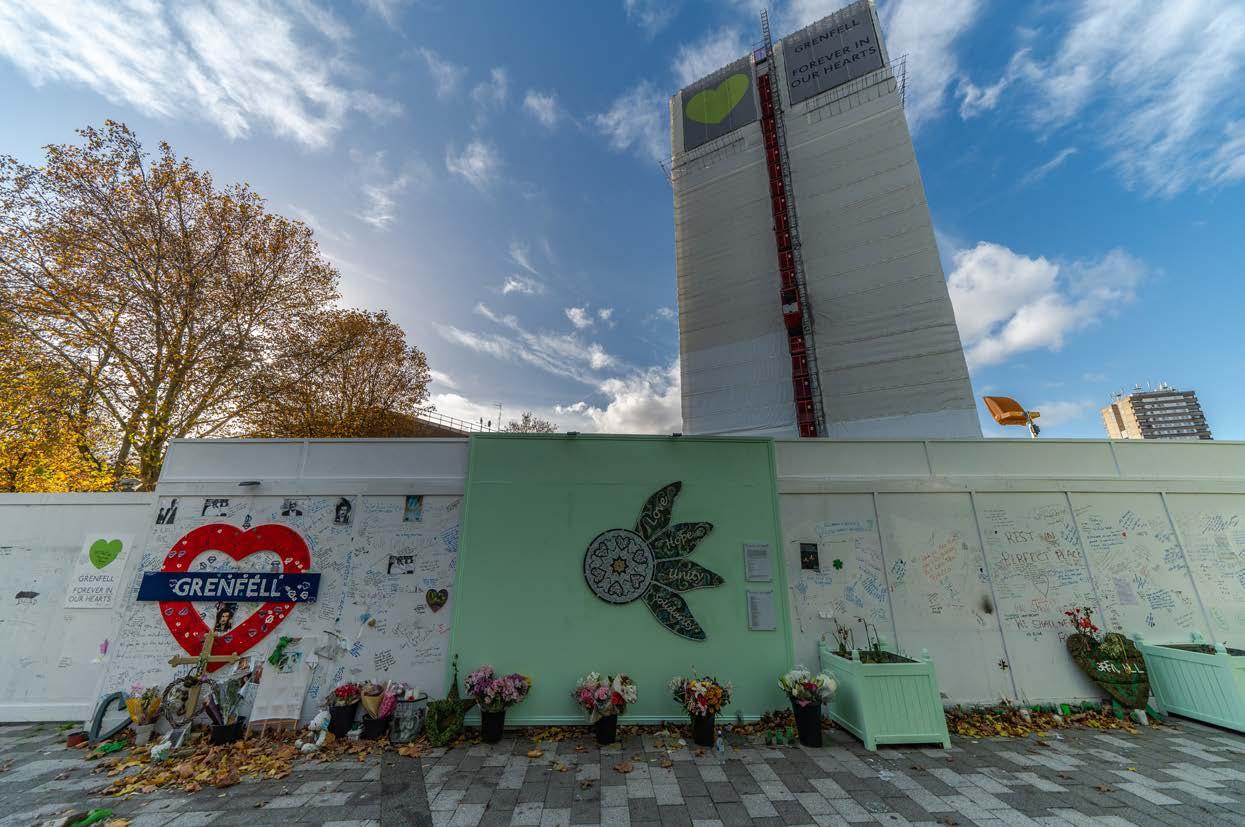
What are the biggest gaps that still remain in UK fire safety policy since Grenfell?
We’ve made real progress, but the system still isn’t fully joined up by any means. The biggest gaps are around coherence and consistency. We still have multiple regulators, overlapping responsibilities, and grey areas at the interfaces – design to build, build to
occupation, product to installation. Competence is improving, but not yet uniformly assured across all roles. And while higher-risk buildings get the focus, understandably in light of the Grenfell tragedy, the wider built environment remains a huge challenge from a fire risk point of view. So the direction is right, but the system isn’t yet as simple or as robust as it needs to be.

Steve McGuirk is Executive Director of the Fire Sector Confederation. He also serves as Secretary to the All-Party Parliamentary Group on Fire & Rescue and delivers learning from the Grenfell Tower Inquiry, alongside advisory work on leadership, resilience, governance and complex system risk in the UK and internationally. His career spans 39 years in the Fire & Rescue Service, including as Chief Fire Officer and Chief Executive of Greater Manchester Fire & Rescue Service. He later chaired an NHS Foundation Trust for 11 years, leading through COVID-19 and a major acquisition.
Has the pace of reform been fast enough, in your view?
There’s been a huge amount of work done and some of it is genuinely significant. But given the scale of Grenfell, it’s fair to say progress has felt slower than many would have hoped. These are complex reforms, so some caution is understandable, but we are still in a period of transition rather than a settled system. So I’d describe it as substantial progress, but not yet at the pace or completeness people expected. I would also say that the pace of holding people to account has been very slow indeed, when contrasted with the situation in other countries. Accountability seems much more pointed following tragedies like Grenfell.
Where do you think regulation is still failing?
‘Failing’ might be too strong but it’s still under strain in places. The system is at its weakest where responsibilities meet. That’s where ambiguity can creep in and where things can get missed. There’s also a degree of inconsistency between the stronger regime for higher-risk buildings and the rest of the system. So regulation is definitely stronger than it was but still a bit too complex, and not always as clear in practice as it is on paper.
Have cultural issues (not just technical ones) changed enough since 2017?
There has been a noticeable shift particularly in awareness and language. People now talk much more openly about accountability, competence, and the resident voice. That’s important.
But culture takes time. It changes through behaviour procurement decisions, professional challenge, leadership tone not just policy. So I’d say we are on the journey, and heading in the right direction, but culture is always the slowest part to move.
What real influence can an APPG have on government policy?
An APPG doesn’t have formal power and shouldn’t pretend it does. But it can have real influence in three ways: by convening the right people, by surfacing issues early, and by providing a space for informed, cross-party discussion. At its best, it acts as a kind of ‘early warning system’ and a bridge between practitioners, policymakers and Parliament. So it’s not about authority – it’s about insight and influence.
“When you’ve been responsible for operational response, you see very clearly how decisions made upstream, in design, construction, maintenance, play out in real incidents. And in my case, the loss of a colleague on duty brings with it memories and an experience that will live with me forever.”
What issues are rising fastest on the APPG agenda right now?
A few are coming through very clearly. Emerging risks, particularly lithium-ion batteries, are rising quickly. Modern methods of construction and materials are another area of focus. And there’s a continuing interest in how all the reforms fit together into a coherent system. Alongside that, there’s a strong and ongoing concern about competence, making sure people across the system are properly equipped for the roles they hold. So it’s a mix of new risks and unfinished reform.
Is the UK too fragmented across regulators, industry, and fire services?
The system has grown up over time, so some fragmentation is inevitable. What we’re now trying to do is bring greater alignment and clarity. There are positive moves in that direction – I would also say, in this perspective, that the work of the Fire Sector Confederation is a big step forward (though I’m probably a little bit biased in that), but it’s still a work in progress. The challenge is to simplify without losing necessary checks and balances.
How did your time as a Chief Fire Officer shape your views on national policy?
It grounds everything in reality. When you’ve been responsible for operational response, you see very clearly how decisions made upstream, in design, construction, maintenance, play out in real incidents. And in my case, the loss of a colleague on duty brings with it memories and an experience that will live with me forever. It all reinforces the idea, however, that fire safety is a whole-system issue. By the time the fire
service arrives, many of the most important decisions have already been made. That perspective stays with you.
What’s the biggest misconception politicians have about fire services?
That it’s primarily about response. Response is vital, of course, but modern fire and rescue services are just as much about prevention, protection, and working with partners across the system. The real gains in safety are made long before an appliance turns out.
How are emerging risks like lithium batteries or modern construction changing fire safety? They’re changing both the nature and the pace of risk. Lithium-ion batteries introduce different fire behaviours, fast development, high energy, and sometimes difficult suppression. Modern construction can also behave differently in fire, particularly where materials and methods are evolving quickly. Neither is inherently ‘bad’ but they do require the system to keep up, in terms of understanding, regulation, and operational response.
How important is the role of automatic fire suppression systems such as sprinklers? They are one of the most effective risk reduction measures we have. Sprinklers don’t just protect buildings, they protect people, firefighters, and communities. They control fires early, reduce damage, and buy time. They’re not the whole answer – nothing is – but they are a very important part of a balanced, layered approach to fire safety. If anything, the question shouldn’t be “why would you install them?” but “in what circumstances would you not?”

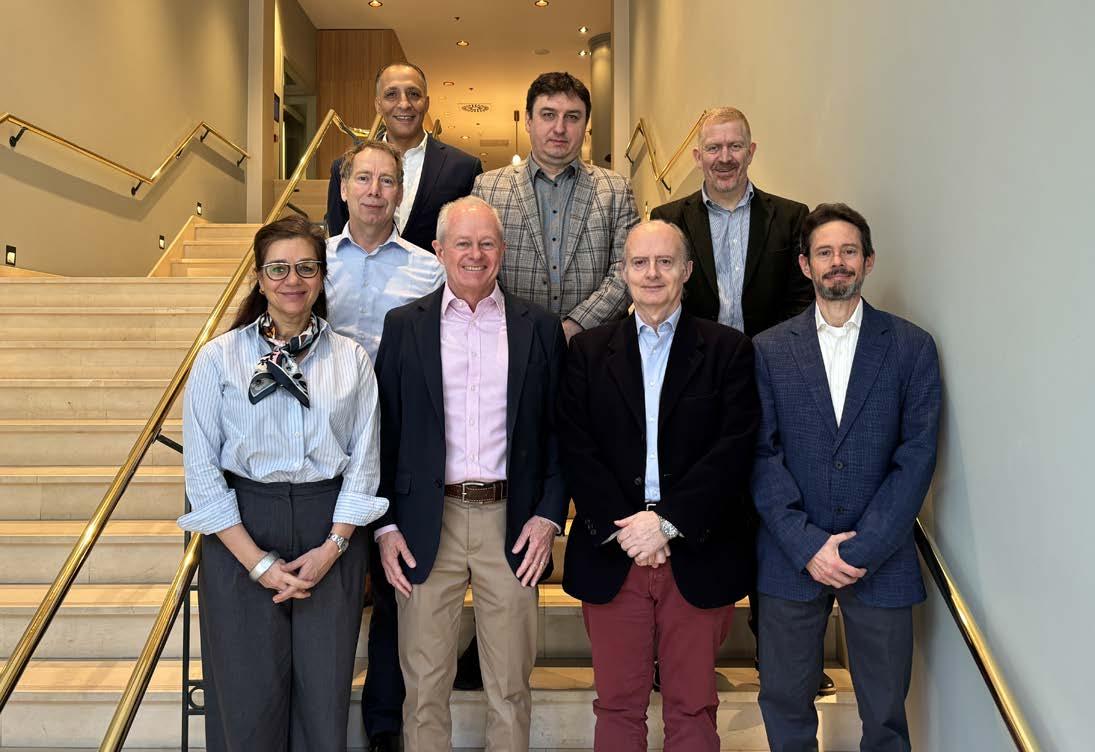
At a recent gathering of the European Fire Sprinkler Network and national partners including BAFSA, experts shared strategies, progress, and challenges in advancing sprinkler adoption. While some countries push ahead with stricter requirements, others lag behind, highlighting both the urgency and opportunity to drive a step change in fire safety across the continent. Alan Brinson executive director of EFSN tells us more
Our mission is, “To promote the widespread application of properly designed, installed and maintained fire sprinkler systems across Europe”. On behalf of our members we run national and sub-national campaigns to change regulations, guidance and practice to achieve a step improvement in fire safety. Where a country has an effective national association, like BAFSA in the UK, we collaborate and complement each other’s efforts. Again like BAFSA, although our name refers to sprinklers, we support
water mist in applications where it has recognised solutions. We run national campaigns because fire safety is not an area where the European bodies (European Council, European Parliament and European Commission) have jurisdiction (termed legislative competence). Thus the ability write its own fire safety regulations was not something the UK regained after Brexit; it already had it.
In several countries we find the same fire safety concerns among regulators. Many
of these concerns can be addressed by sprinklers. Last year I invited my colleagues and partners working in different countries to come together to exchange experiences and ideas. This went so well we met again this year, with Ali Perry of BAFSA joining colleagues from Belgium, France, Italy, Netherlands, Poland and Spain.
One theme was wooden construction. The Nordic countries have been using wood widely for decades so have had their debates about fire safety and reached settled
positions. Without going into too many details, they generally install sprinklers. In Norway most new construction is sprinklered anyway, while in Finland buildings can use wooden construction at 4-8 storeys only if protected with sprinklers. Sweden uses a performance-based approach that usually ends up including sprinklers.
By contrast the French government has just published a regulation for commercial buildings that only requires sprinklers if there is a floor higher than 18m and in lower buildings only if the wood is exposed. Sprinklers and water mist will be used more widely than this suggests because French insurers often refuse to insure unsprinklered wooden buildings. Recently published Dutch guidance includes sprinklers as an option to protect wooden buildings. Often the market is choosing sprinklers. Belgium is looking at its neighbours while Italy and Spain are not yet building wooden structures.
Another common concern among regulators is the new hazard of lithium-ion batteries in our homes, workplaces and cars. BAFSA is leading a project to conduct fire tests on e-scooters in the home and these results could support campaigns in other countries. When it comes to the protection of underground car parks the UK lags its neighbours. The Netherlands recently mandated sprinklers, governments in Poland and Spain have just run consultations on doing so, while Belgium and France

In Finland, buildings can use wooden construction at 4-8 storeys only if protected with sprinkler
already require sprinklers with some local authorities going further and requiring retrofits. Regulators resist sprinklers in small car parks because of the space needed for the pump and tank. To enable mains supply,

regulators in Belgium, Czechia and Slovakia have specified sprinklers designed to OH1. This idea is also under discussion in The Netherlands.
Of the countries represented at our meeting the UK is the first to require sprinklers in care homes; while there have been installations in the other countries, sprinklers are not yet a standard fire safety measure. We remember it took decades to achieve success in the UK, so we will keep pushing elsewhere. Sadly, each year we see multiple fatality care home fires, all preventable with sprinklers. Thanks to our campaigns, pressure for change is building.
Only a few months ago we saw the worst fire since Grenfell. Some 41 people died and 115 others were injured in a fire in Le Constellation bar in Crans Montana, Switzerland. After the initial shock there was little reaction in the UK, perhaps because none of the victims were British. Nine were French and we learned in our meeting that France has since inspected 3,000 premises, closing 300 and requiring urgent changes in another 500. Complacency over the border is the default reaction to such disasters, with officials in Germany declaring after Grenfell that such a disaster could not happen there, and likewise in Belgium after Crans Montana.
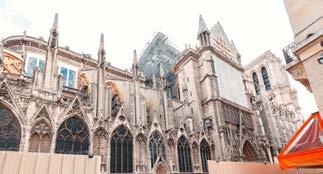
Cultural heritage is again higher up the agenda. Scotland will require sprinklers in traditional buildings converted to hotels, The Netherlands recently published a suite of guidance documents for cultural heritage protection, while in Venice St Mark’s Cathedral and many hotels in converted palaces are protected with water mist. Of course, the most high-profile retrofit is water mist in the rebuilt Cathedral of Notre Dame de Paris. Water mist has also been retrofitted in Torre dei Moro, a block of flats in Milan which suffered a major cladding fire. Fortunately that fire occurred during the day and nobody died.
For each topic, exchanging experiences about the arguments made, technical analyses and potential allies in the successful national debates was very useful. Direct contact between colleagues in our meeting will stimulate future cooperation. We also have a way to share knowledge. My Polish colleague, who works at the Fire Brigade University in Warsaw had one of his students create a resource, FirePlatform.net, with over 2,000 files covering regulations,
“The Nordic countries have been using wood widely for decades so have had their debates about fire safety and reached settled positions”
guidance, reports and videos, from over 20 countries.
BAFSA is the most active association when it comes to sprinkler industry training, but in Poland a 240-hour postgraduate course on water-based suppression systems is about to open at the Fire Brigade University. This will be more aimed at fire officials.
In France we have run two-day courses for fire officers twice a year since 2010 at the French fire brigade training school in Paris, while in Italy and Spain we have also focussed on firefighter training. As well as making influential contacts, this training
raises the level of knowledge so that officials feel more comfortable and positive about sprinklers.
All this and more will be addressed at Fire Sprinkler International 2026, to be held in April in Paris and sold out with almost 600 delegates. If you missed out please join us next year, when we will be in Madrid.
Find out more about the work EFSN by visiting its website: www.eurosprinkler.org















Sprinkler activations reported to Sprinkler Saves UK by Fire and Rescue Services and collated by Nick Coleshill. To report a Sprinkler Saves visit www.sprinklersaves.co.uk
HAMPSHIRE
Hampshire and Isle of Wight Fire and Rescue Service has highlighted the life-saving benefits of sprinkler systems after an e-bike fire in a high-rise residential building in Portsmouth on 13 February 2026.
Crews were called to the tenth floor of a 12-storey building after a charging e-bike caught fire. The blaze was quickly contained when a single sprinkler head activated, limiting the spread of fire and smoke before firefighters arrived. Four residents were treated at the scene for minor smoke inhalation and later released.
Firefighters wearing breathing apparatus extinguished the remaining fire using the building’s dry riser system. Damage was contained to the affected flat, reducing risk to residents, crews and the wider building.
Station Manager, Matt Rowe, said the incident demonstrated both the dangers of charging e-bikes and scooters indoors and the value of fully functioning sprinkler systems in protecting life and property.
The service said the incident adds to growing evidence that sprinklers can play a vital role in controlling fires involving lithiumion batteries, helping to keep escape routes clear and giving occupants more time to evacuate or await rescue.

FRS: LONDON FIRE BRIGADE
London Fire Brigade were called to a fire at a primary school which was successfully contained following the activation of a single sprinkler head.
Firefighters were called at 00:08 on 23 August 2025 after six emergency calls reported a blaze at the school. Crews from nearby stations arrived to find a fire on the third floor involving a timber-framed extension built on the school’s green roof.
One sprinkler head activated on the floor of origin, working alongside firefighters to contain and control the fire until crews extinguished the remaining flames using jets. Around 50% of the extension was damaged, but the sprinkler system helped prevent wider fire spread to the rest of the building. No injuries were reported.
Investigations found the fire was accidental and was likely caused by hot works carried out during construction activity earlier that day, which is believed to have led to a concealed fire developing within the building’s structure before emerging later.
FRS: WEST MIDLAND FIRE SERVICE
In autumn 2025, West Midlands Fire Service attended a fire at a one-bedroom flat after a blaze broke out in the living room. The fire was effectively contained, controlled and extinguished by the building’s automatic sprinkler system prior to crews reaching the scene.
Although smoke spread throughout the flat because internal doors had been left open, the sprinkler significantly reduced heat
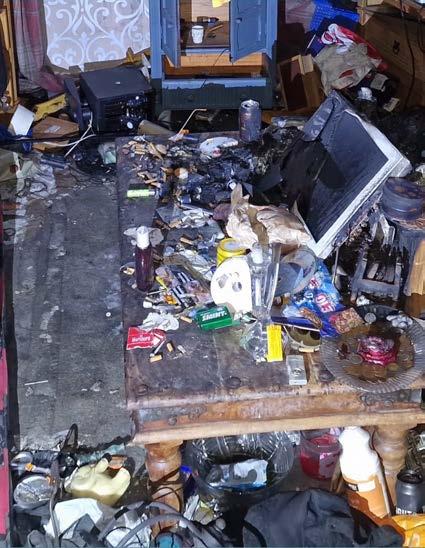
and fire growth, giving the resident valuable extra time to escape safely.
Investigators found the fire was caused by discarded smoking materials. The flat also showed signs of poor housekeeping, with heavy clutter and smoking paraphernalia present. Such conditions can increase fire spread and obstruct escape routes.
Wolverhampton Homes Building Safety Manager Nick Lacey said: “The safety of residents is our top priority. We are working with customers and partners such as West Midlands Fire Service to ensure residents are safe from fire at all times. Installing sprinklers in our tower blocks has proven not only to save lives, but also minimises damage to the flat and protects firefighters in tackling what could have been a large blaze.”
The incident highlights the value of retrofitted sprinklers in residential buildings, particularly where smoking and clutter increase fire risk.
“This incident clearly demonstrates the effectiveness of fire sprinkler systems in controlling fires at an early stage”
Automatic sprinkler systems have once again demonstrated their effectiveness after separate fires in extra-care housing developments in Wales and London were quickly brought under control.
In December 2025, firefighters from South Wales Fire and Rescue Service attended a retirement residential complex in Abergavenny where a small kitchen fire had already been extinguished by the building’s sprinkler system before crews arrived. All residents were accounted for and no injuries were reported.
Area Manager Mike Wyatt said: “This incident clearly demonstrates the effectiveness of fire sprinkler systems in controlling fires at an early stage, significantly reducing the risk to life, limiting fire spread, and minimising property damage.”
In a separate incident in July 2025, a kitchen fire in an extra-care housing complex in Croydon was contained and extinguished by a single sprinkler head after a cooker caught fire. No injuries were reported. The fire occurred more than a decade after Croydon Council retrofitted sprinkler systems across six extra-care housing schemes.
The council had already seen the benefits in 2015, when another sprinkler system extinguished a toaster fire before flames could spread to the bedroom of a sleeping resident.
Both incidents underline how sprinkler protection can safeguard vulnerable residents, reduce fire damage and limit the need for emergency intervention.
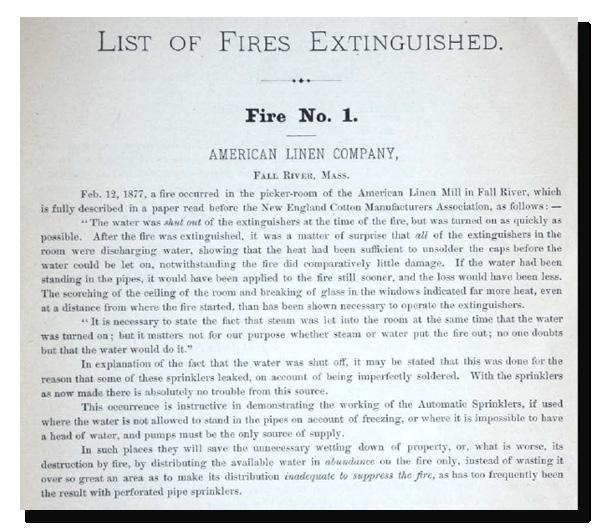
Thanks to IFSA (The International Fire Suppression Alliance) for sharing what is thought to be the first recorded sprinkler save with us. This incident in 1877 serves as a reminder that well-designed safety systems, rooted in simple principles, can have a lasting impact across generations
On February 12, 1877, a small fire ignited in the picker room of the American Linen Company mill in Fall River, Massachusetts. Although the damage was limited, the incident marked a defining moment in fire protection history and it is widely regarded as the first documented case of an automatic sprinkler system successfully controlling a fire.
The building was equipped with a Parmelee Automatic Sprinkler, an early innovation developed in the 19th century and manufactured by Frederick Grinnell. When the fire broke out, the system activated exactly as designed, responding to heat and suppressing the fire in its early stages without the need for human intervention.
The idea of automatic sprinklers dates back to the early 1800s, but one of the first practical installations in the United States was in a piano factory in New Haven, Connecticut, owned by Henry Parmelee. Seeking better fire protection for his business, Parmelee collaborated with Frederick Grinnell to refine and manufacture a reliable system. Their work laid the foundation for a technology that would go on to protect lives and property around the world.
The original design was simple yet effective. Each sprinkler consisted of a metal body connected to a water supply pipe, with small discharge holes and a cap held in place by heat-sensitive solder. When exposed to high temperatures, the solder would melt, releasing the cap and allowing water to flow directly onto the fire. This straightforward mechanism required no external detection system or manual activation, only the presence of heat to trigger the response.
During the 1877 mill fire, several sprinklers activated as temperatures rose. Although the water supply had initially been shut off due to concerns about leaks,an issue later addressed through improved design once restored, the system quickly controlled the fire. Reports from the time described intense heat and visible structural effects, yet overall damage remained minimal.
The incident demonstrated a principle that still underpins modern fire protection: controlling a fire early significantly reduces its impact..
Open plan living is a design ethos which is becoming increasingly popular – doing away with traditional ideas of compartmentalised rooms – creating interiors that feel both dynamic and relaxed. But what does this mean for for fire safety engineering. Ritchie O Connell looks at the issues
Open-plan homes typically combine dining, living, and cooking areas into a single shared space, creating a more sociable environment. This layout also enhances the availability of natural light and maximises the sense of space. Although the overall floor area may remain unchanged, the removal of internal walls can make the space feel larger and more open.
What if I were to suggest however that the most important features of a modern open-plan home are often the ones you

cannot see? Whilst we may admire the soaring ceilings and unbroken sight lines, a hidden network of ‘fire engineering’ is often working behind the scenes to keep those spaces legally compliant and safe.
Fire safety guidance in the UK is prescriptive in its approach to open plan layouts of flats and houses. This is because, in addition to subdividing spaces, internal walls create smaller ‘cells’ within buildings reducing the rate of fire and smoke spread and protecting escape routes, in open-plan
layouts, fire and smoke can spread further and more quickly because there are no walls to ‘compartmentalise’ the space.
In a traditional sub-divided layout, the fire would start in a room and would be contained within that room until the smoke had filled the room to a depth where it could fill down to an open doorway, or if the door were closed, until the door itself failed – buying valuable time for the occupants to escape.
In an open plan layout the smoke can spread across the open space uninhibited,
potentially compromising escape routes and in multi-level spaces, such as maisonettes or houses, where not enclosed, the stairwell can effectively become a chimney, allowing smoke and fire gases to spread quickly to upper floors, trapping occupants in bedrooms or rooms above. The undivided space also provides more oxygen to the fire, allowing it to grow more rapidly whereas in a traditional layout , when the oxygen in the room becomes depleted, the fire will grow more slowly.

An ‘inner room’ is defined as a room where the only escape route is by passing through another room, known as the access room. Often in open plan layouts the bedrooms will be inner rooms off the main open space, on open galleries above, or on a separate floor(s) above the open plan area. This arrangement presents a significant fire safety risk because a fire starting in the access room can quickly trap occupants in the inner room or upper floors.
For these reasons, amongst otherssuch as shorter travel distances for people escaping the room of fire origin into an adjacent room, fire safety principal guidance documents require a protected escape route or alternative exits from upper floors or inner rooms.
An example of how the protected escape route in a two-storey house with an open plan layout on the ground floor may be constructed is shown above.
Where the designer or client does not want a protected route through the open plan space, whether due to aesthetic concerns or spatial constraints, BS 9991 offers an alternative approach incorporating sprinklers and enhanced fire detection and alarm systems.
For a house with a top storey of more than 4.5m but not more than 7.5m above ground level, BS 9991 allows the following solution as an alternative to the protected
corridor approach shown in the diagram above. The house should be fitted throughout with a sprinkler system and a Grade D, Category LD1 fire detection and fire alarm system.
A 30 min fire-resisting partition and E 30 Sa4(3) or FD 30S fire door should be provided to separate the ground floor from the upper storeys.
The fire door should be arranged such that occupants on the upper floors can access an escape window, at a floor below 4.5m from ground level.
This solution allows the ground floor to remain open plan with the additional proviso that any cooking facilities are remote from the exit(s) and exit routes.
This solution relies on early detection of the fire by the fire alarm system and control of the fire growth rate/fire size by the sprinkler system and the fire separation at first floor level to allow additional time for people to wake up, travel to and exit via an escape window located not more than 4.5m from the ground.
The concept of early detection and suppression to control fire spread is also applied to the internal planning of single storey flats. ADB (England and Wales versions) offer three acceptable approaches to the internal arrangement of single storey flats i.e.
“In a design landscape that increasingly demands both aesthetic freedom and rigorous protection, a reliable suppression system remains the most effective bridge between an aesthetically concept and a fire-compliant reality”
Provide a protected entrance hall (minimum REI 30) serving all habitable rooms Plan the flat so that:
i. The travel distance from the flat entrance door to any point in any habitable room is a maximum of 9m.
ii. Cooking facilities are remote from the main entrance door and do not impede the escape route from anywhere in the flat.
Provide an alternative exit from the flat complying with paragraph: BS 9991, for single level flats up to a maximum size of 16m x 12m, with a ceiling height of at least 2.25, allows an open plan layout provided that the flat is fitted and should be fitted throughout with a Grade D, Category LD1 fire detection and fire alarm system in accordance with BS 58396:2019+A1, and a sprinkler system conforming to BS 9251:2021 or BS EN 12845:2015+A1 respectively.
The concept is explained succinctly in the Scottish Domestic technical handbook as follows:
“the following guidance should be followed for open plan layouts provided the kitchen is remote from the exit door…an automatic life safety fire suppression system and an enhanced early warning system should be installed to protect the occupants. In a slower developing fire, the early warning system should provide the occupants with sufficient time to escape and in those cases where the fire develops quickly, the suppression system should control the fire giving the occupants the opportunity to escape.”
The combination of a fire detection and alarm system, together with the slower fire growth rate resulting from the operation of a sprinkler system, increases the Available Safe Escape Time (ASET). ASET is defined as the
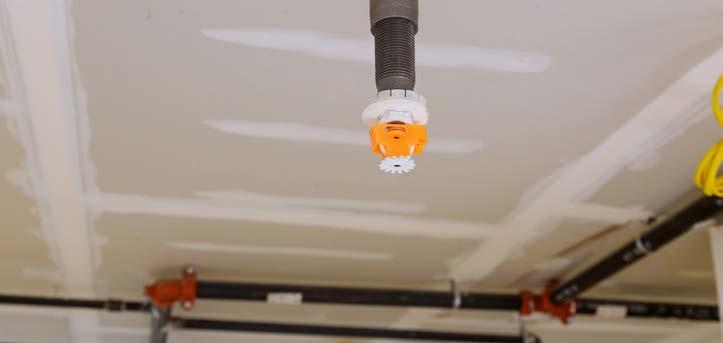
time between ignition and the point at which conditions become untenable for occupants. I am often asked to provide fireengineered solutions that go beyond the recommendations of guidance documents. A frequent source of disagreement arises when designers or clients wish to avoid enclosing staircases or providing the level of fire separation at first-floor level required by BS 9991.
While alternative solutions can be developed, they must consider both active and passive fire protection measures. Crucially, ASET must be compared with the Required Safe Escape Time (RSET) - that is, the time available for escape versus the time actually needed. ASET should always exceed RSET; in other words, occupants must have more time available to escape than they require, never less.
One of the key factors in developing a time-based fire-engineered solution is determining an appropriate value for RSET. This includes considering how long it takes occupants to begin evacuating after hearing the alarm. In practice, this delay - known as ‘pre-travel time’ - is often significantly longer than expected. Data presented in PD 7974-6:2019 indicates that, for some occupants, pre-travel times can be as long as 40 minutes. While this may be overly conservative for family dwellings, it provides a useful baseline for assessment.
This has important implications. For example, if a design relies solely on a
sprinkler system to control fire growth, a 10-minute water supply would clearly be inadequate, as it could be exhausted well before all occupants have begun evacuating. This illustrates the interdependence of the components within fire safety strategies such as those outlined in BS 9991. Early detection provides the earliest possible warning; the sprinkler system limits fire growth; and passive measures - such as fire separation and fire doors - work together to provide the time needed for occupants to wake, initiate evacuation, reach an alternative exit, and ultimately escape safely.
Ultimately, integrating fire sprinklers and fire detection is more than a regulatory box-ticking exercise; it is a major enabler of open-plan design. By replacing traditional partition walls with invisible, automatic protection, sprinklers allow architects and homeowners to prioritise light and flow without compromising on life safety. In a design landscape that increasingly demands both aesthetic freedom and rigorous protection, a reliable suppression system remains the most effective bridge between an aesthetically concept and a firecompliant reality.
Ritchie O Connell is BAFSA’s Welsh representative. If you have any queries about sprinkler installation or provision in Wales he can be emailed at: ritchie.oconnell@bafsa.org.uk

The British Automatic Fire Sprinkler Association (BAFSA) offers a range of highquality CPD-accredited online courses designed for professionals across the sprinkler industry and fire safety sector, construction and insurance sectors.
With legislation, standards and best practice continually evolving, ongoing professional development is essential. BAFSA’s flexible e-learning programmes help individuals and organisations build knowledge, strengthen competence and demonstrate commitment to compliance.
A knowledge-based course focused on the legal and regulatory framework surrounding sprinkler installations. Understand the risks of non-compliance, including fines, enforcement action and potential imprisonment.
Includes:
Sprinkler System Installations
Legislation & Standards
Ethics & Own Actions
Non-Compliance
Duration: Approx. 2 hours / 7 modules
This CPD-accredited programme explains the differences between water mist systems and automatic fire sprinkler systems, helping learners understand the benefits, applications and limitations of each.
Duration: Approx. 2 hours
A comprehensive programme exploring how automatic fire sprinkler systems operate.
Ideal for:
Industry professionals
Fire & Rescue personnel
Architects
Insurers
Building Control Officers
Surveyors
Duration: Approx. 6 hours / 16 modules
Access: 6 months
Certification
All courses include a short multiple-choice assessment.
Successful learners receive a CPD Serviceendorsed certificate available for immediate download through the BAFSA e-learning platform.
New NFSN cost benefit analysis report makes a solid case for sprinklers in schools
incidents each year 350 of school fires in the past 14 years have occurred in buildings without sprinkler protection 97%

£280k
estimated direct and consequential costs per incident

“Given that the loss of a school to fire creates more disruption and absence than one to three days, the case for sprinklers in new schools would seem self-evident.”
Sprinklers continue to demonstrate their value as one of the most effective fire protection measures available for educational buildings, particularly when viewed against the growing evidence on the frequency and impact of school fires, a new report commissioned by the National Fire Sprinkler Network and supported by BAFSA has shown.
The report by Optimal Economics, entitled: What Is The Cost of Fires In Schools? highlights the fact that school fires remain a persistent issue, with around 350 incidents occurring each year, equating to six or seven fires every week. While many of these incidents are relatively small, the average fire still causes damage equivalent to at least one classroom, and larger fires can result in widespread disruption to entire school facilities. The financial implications are significant, with
estimated direct and consequential costs exceeding £126 million annually, or more than £280,000 per incident.
However, the true cost of these fires extends far beyond property damage. Disruption to education carries long-term consequences for pupils, with government estimates suggesting that just one missed day of schooling can reduce an individual’s lifetime earnings by £750. When considered across an entire school population, even short-term closures can translate into substantial economic losses, alongside the less quantifiable impacts on wellbeing, stress, and educational attainment.
In this context, the role of sprinkler systems becomes particularly compelling. The report shows that over 97% of school fires in the past 14 years have occurred in buildings without sprinkler protection. In contrast, where sprinklers are installed and activated, they have proven overwhelmingly effective – extinguishing fires in 71% of cases and successfully containing them in a further 27%. This represents an overall effectiveness rate of 98%, dramatically reducing both fire spread and resulting damage.
Importantly, cost-benefit analysis reinforces this operational performance. The installation of sprinkler systems in new secondary school buildings is shown to break even if the associated benefits – such as reduced disruption and avoided losses – are valued at £460 per pupil per year. This figure is notably lower than the estimated £750 loss linked to just a single day of missed education, underlining how even minimal reductions in disruption can justify the investment.
While most schools are already equipped with fire alarm systems, these provide detection rather than suppression. With fire and rescue services increasingly reviewing response protocols to out-of-hours alarm activations, the presence of active fire suppression systems is becoming ever more critical in limiting fire growth before emergency services arrive.
Taken together, the evidence presents a clear picture. Sprinkler systems not only offer exceptional reliability in controlling fires, but
they also deliver strong economic value by preventing damage, maintaining continuity of education, and protecting long-term outcomes for pupils. For school stakeholders and policymakers alike, the case for wider adoption of sprinklers is both practical and compelling.
Terry McDermott NFSN secretrary says: “In recent years the NFSN have observed a decline in the number of newly built school premises being constructed with fire sprinklers as developers move away from the expectation of the primary guidance (BB100) and side step the provision of sprinklers on the grounds of perceived cost effectiveness.
This latest research explores the true cost of school fires using data from fire reports from across the England, exploring the physical impacts of fire on the building and the associated re-build costs. Going further, the report considers the wider costs such as the impacts of disruption to education, welfare and the community impact of devasting fires on schools using case studies.
Given that the loss of a school to fire creates more disruption and absence than one to three days, the case for sprinklers in new schools would seem self-evident.
I wish to thank everyone who contributed to the production of this document including particularly, the British Automatic Fire Suppression Association (BAFSA), the National Fire Chiefs Council (NFCC), the European Fire Sprinkler Network (EFSN), the Business Sprinkler Alliance (BSA) and the International Fire Suppression Alliance (IFSA).”
For a copy of the full report visit www.nfsn.uk or www.bafsa. org.uk. For more on the impact of school fires on the school community visit BAFSA’s YouTube channel @BAFSATV.
Ensuring fairness, credibility, and security in examinations and training programs is essential for maintaining the value of qualifications. One of the most effective ways to achieve this is using photographic identification (ID) writes Ruth
Oliver, Head of BAFSA’s Training Centre
Photographic ID plays a critical role in verifying candidate identity, preventing fraud, and protecting the integrity of assessment processes.
A primary benefit of requiring photographic ID is accurate identity verification. During exams or training assessments, it is important to confirm that the individual taking the test is the same person who registered for the course or qualification. Photographic ID, such as a passport, driver’s licence, or official workplace identification card, allows invigilators and trainers to quickly match a candidate’s face to the document presented. This simple process significantly reduces the possibility of impersonation, where someone else takes the exam on behalf of a registered candidate.
Another key advantage is the prevention of examination fraud. In highstakes assessments, such as professional certifications or compliance training, the temptation for dishonest practices can increase. Photographic ID requirements act as a strong deterrent against cheating schemes involving substitute test-takers. When candidates know they will need to present valid ID before entering the examination environment, it becomes much harder to attempt impersonation or other fraudulent behaviour.
Photographic ID also helps maintain the credibility of qualifications and training programs. Employers, regulatory bodies, and educational institutions rely on the
authenticity of exam results when making decisions about employment, promotion, or licensing. If the identity of exam participants cannot be reliably verified, the value of the qualification may be questioned. By implementing strict identity checks using photographic ID, organizations can demonstrate that their assessments are secure and trustworthy, which strengthens confidence in their certifications.
In addition, the use of photographic ID contributes to a safer and more controlled exam environment. Invigilators and trainers are responsible for managing groups of candidates efficiently, sometimes in large venues or training centres. Photographic ID helps staff confirm attendance, match candidates to registration records, and ensure that only authorised individuals are present in the room. This improves overall organization and reduces administrative confusion on exam day.
Another benefit is improved recordkeeping and accountability. Many training providers keep records of who attended courses, completed assessments, and obtained qualifications. Photographic ID checks create an additional layer of documentation that confirms participation. If any questions arise later about the validity of a candidate’s result or certification, the organisation can demonstrate that identity verification procedures were followed.
Finally, photographic ID promotes fairness among candidates. Honest participants invest time and effort in studying and
“If the identity of exam participants cannot be reliably verified, the value of the qualification may be questioned.”
preparing for their assessments. Identity verification ensures that everyone competes under the same conditions and that no one gains an unfair advantage through dishonest methods. This helps create a culture of integrity within training and assessment systems.
In conclusion, the use of photographic ID in exams and training offers several important benefits. It ensures accurate identity verification, reduces the risk of fraud, protects the credibility of qualifications, improves exam management, and promotes fairness. As education and professional certification continue to play a vital role in career development, strong identity verification measures such as photographic ID remain an essential part of maintaining trust in assessment processes.

Less joints to minimise risk of leaks
Unique HydroSMART reed switch
Fully monitored and compliant with BS 9251:2021
Twin ports for switch options
Continuity of cast design for all sizes
Bespoke assemblies available including check valves, PRVs, CPVC adaptors
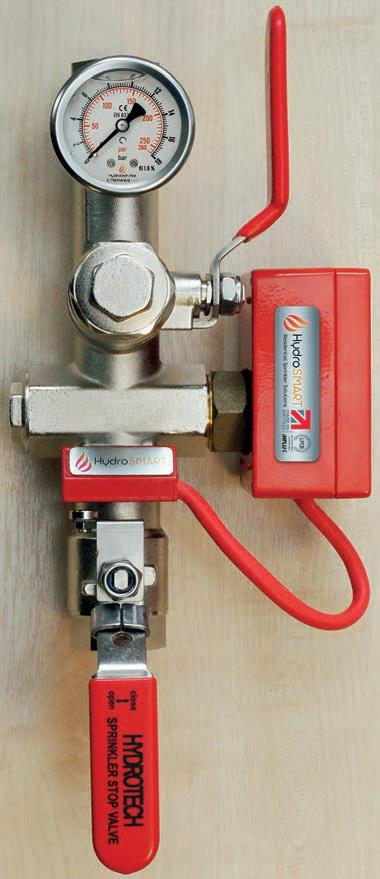


SPFS and SPFSi models available
Robust case design with embedded screws

LPCB approved in line with EN 12259-5
Integrated monitoring available 20 bar max working pressure with IP65 rating
Manufactured and designed in the UK