BACKCOUNTRY JOURNAL


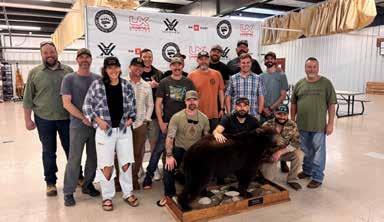
My recent trip to Arkansas for BHA’s Black Bear Bonanza gave me a little time to think about these first months as BHA’s president and CEO.
I’ve been around this organization for a long time — first as a volunteer, then a board member, then board chair. When our last CEO stepped down, I was on the hiring committee, trying to find the right person for the job. That was the plan.
Then the board turned around and asked if I’d do it.
My first instinct was to say no. I knew all the things I didn’t know.
But they didn’t ask because I had all the answers. They asked because they believed in what I did bring — and because this organization has never been about one person having it all figured out. It’s about people showing up, surrounding themselves with others who care and doing the work together.
That’s really why I’m here.
I’ve always been the kind of person who, if the pilot passes out midflight, isn’t going to sit back and hope someone else figures it out. I’d grab the yoke and do my best to fly the plane. Not because I know how — but because someone has to try.
In a way, that’s what this moment feels like for all of us who care about public lands, waters and wildlife. We don’t get to wait for someone else to handle it. We have to be willing to step up.
The truth is, most of us didn’t come to this work through a straight line. We came to it the same way we came to the outdoors — by following something that mattered.
Time outside has a way of shaping people. It teaches you what’s worth protecting. It connects you to something bigger than yourself. And eventually, it nudges you from just enjoying those places to standing up for them.
That’s where BHA comes in.
Because we’re hunters. Anglers. People who actually spend time out there. We know what’s happening on the ground because we’re living it.
Too often, decisions about public lands get made by people who only know them in theory. They’re busy. They’ve got a hundred priorities. But they’re not out there pulling cactus thorns out of their legs after a long hunt, coming back empty-handed and still calling it a great day.
That disconnect matters.
Our role — everyone at BHA — is to help close that gap.
That’s always been the role of hunters and anglers. For as long as people have relied on wild places, someone had to go out, see what was happening and report back. Where the animals are. Where they’re not. What’s changed. What’s at risk.
We are, in many ways, the canaries in the coal mine.
And that responsibility comes with a pretty simple obligation: speak up.
If there’s one thing I want BHA to do, it’s make sure every member and supporter has the tools to be effective — not just passionate, but effective. That means understanding the issues, showing up to meetings, writing emails, making calls and weighing in when it counts.
Because this only works if we all do it.
I’ve said before that my long-term goal is to work myself out of a job. I mean that. The ideal future is one where taking care of public lands, waters and wildlife is just what we do as a country. Where organizations like ours are mostly getting together to swap stories. Where elected officials don’t need convincing — they just do the right thing.
We’re not there yet.
We’ve seen how fragile this can be. Not long ago, millions of acres of public land were on the chopping block. The narrative was that these places were expendable — that they didn’t really matter.
But what happened next told a different story.
People across the country stood up and said, “No. That land belongs to all of us.” They sent emails. They made calls. They showed up.
And together, we stopped it.
That’s the power of this community.
It’s not just hunters and anglers. It’s birdwatchers, hikers, retirees, families — anyone who believes some things should belong to all of us. That was the original idea: public lands, public waters, public wildlife—not reserved for the wealthy or the powerful but held in trust for everyone.
And that only works as long as we’re willing to stand up for it.
The good news is, this work isn’t complicated. But it does take attention. It takes participation. It takes people who care enough to stay informed and step in when it matters.
At BHA, we’re going to roll up fence, clean up trash, cut trails — those things matter. But so does clicking that action alert, sending that email and showing up in the rooms where decisions get made.
That’s why I’m here.
And it’s why we’re all here.
Not because we’ve got it all figured out. But because we care about something bigger than ourselves — and we’re willing to step forward, grab the yoke and do the work to keep it flying.
-Ryan Callaghan, President and CEO

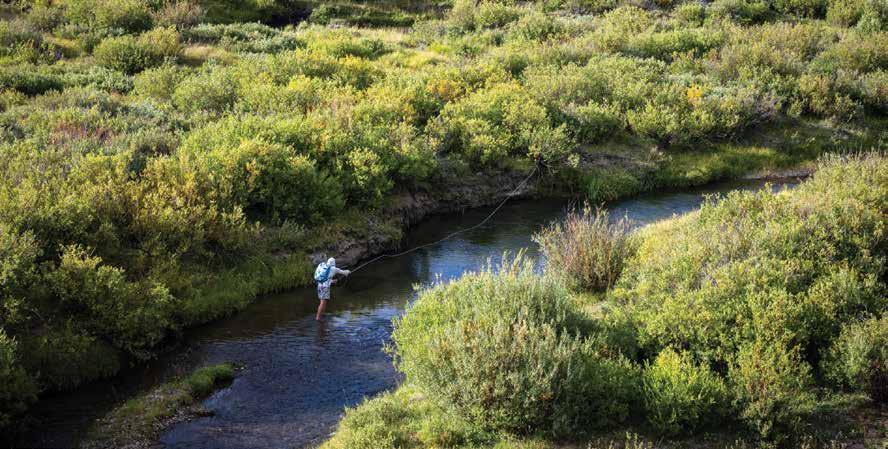
“Those who contemplate the beauty of the earth find reserves of strength that will endure as long as life lasts. There is something infinitely healing in the repeated refrains of nature –the assurance that dawn comes after night, and spring after winter.”
~ Rachel Carson
Dr. Christopher L. Jenkins (Georgia) Chair
Katie Morrison (Alberta) Vice Chair
James Brandenburg (Arkansas) Treasurer
Don Rank (Pennsylvania) Secretary
Ryan Callaghan, President and CEO
Ed Anderson (Idaho)
Bill Hanlon (British Columbia)
Jim Harrington (Michigan)
Hilary Hutcheson (Montana)
Jeffrey Jones (Alabama)
Nadia Marji, Vice President of Marketing and Communications
Katie DeLorenzo, Western Field Director
Chris Hennessey, Eastern Field Director
Elden Aguilar, Rio Grande Habitat Stewardship Coordinator
Dre Arman, Regional Stewardship and Habitat Connectivity Manager
Brian Bird, Chapter Coordinator
Chris Borgatti, Eastern Policy and Conservation Manager
Stacey Bradley, Financial Controller
Kylee Burleigh, Digital Media Lead
Sophia Burt, Operations Intern
Tiffany Cimino, Membership and Community Development Manager
Trey Curtiss, Strategic Partnerships and Conservation Programs Manager
Bard Edrington V, Habitat Stewardship Coordinator
Contributors in this Issue
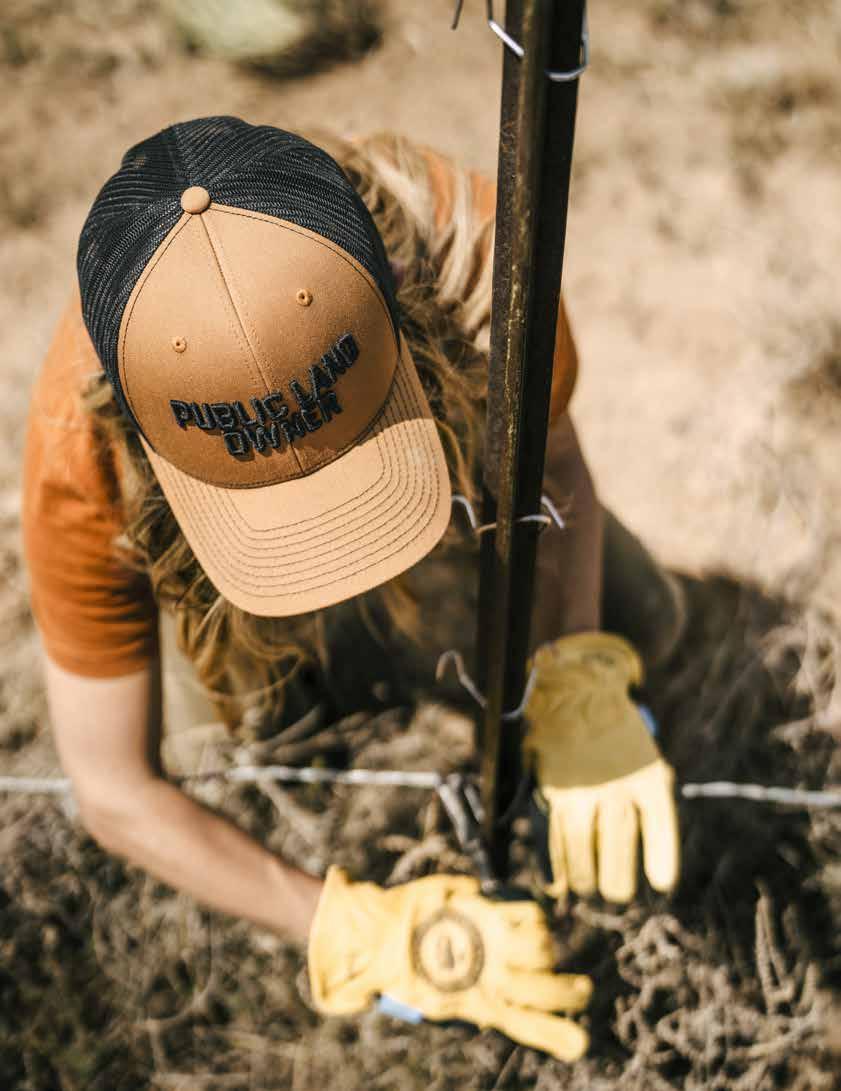
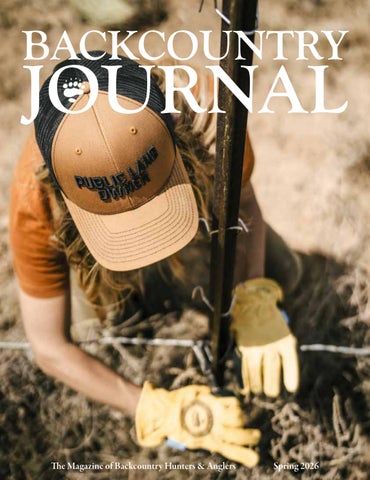
On the Cover: BHA Western Field Director Katie DeLorenzo works a New Mexico Stewardship event. Photo by Kyle Klain
Above Image: Jeremiah Watt
Chance Adams, Matt Addington, Riley Beagle, Steen Beagle, Matt Beck, Charlie Booher, Alec Boyd-Devine, Sophia Burt, Jacob Collins, Leslie Gair, Lee Hamm, Melissa Hendrickson, Cameron J. Kirby, JJ Laberge, David Lien, Ben Long, David N. McIlvaney, Jenny Nguyen-Wheatley, Kevin Noble, Paul F. Noel, James A. Paup, Wendi Rank, Ian Reid, Damia Siebenahler, Sean Stiny, Mike Tsang, Peter Vandergrift, Ned Weidner, John-Mark Zini
Mark Kenyon (Michigan)
Matt Shilling (Minnesota)
Peter Vandergrift (Montana)
J.R. Young (California)
Michael Beagle (deceased)(Oregon) President Emeritus
Mary Glaves, Chapter Coordinator
Makayla Golden, Habitat Stewardship Coordinator
Aaron Hebeisen, Chapter Coordinator
Jameson Hibbs, Chapter Coordinator
Bryan Jones, Armed Forces and Stewardship Programs Manager
Maisie Kroon, Operations Associate
Jonathan Lucas, Habitat Stewardship Coordinator
Kristen McKellin, Interim Financial Administrator
Josh Mills, Corporate Conservation Partnerships Coordinator
Devin O’Dea, Western Policy and Conservation Manager
Brittany Parker, Chapter Coordinator
Jack Polentes, Policy and Government Relations Senior Manager
Max Siebert, Operations Coordinator
Joel Weltzien, Chapter Coordinator
Zack Williams, Editorial and Brand Manager, Backcountry Journal Editor
P.O. Box 9257, Missoula, MT 59807 www.backcountryhunters.org admin@backcountryhunters.org (406) 926-1908
Backcountry Journal is the quarterly membership publication of Backcountry Hunters & Anglers, a North American conservation nonprofit 501(c)(3) with chapters in 48 states and the District of Columbia, two Canadian provinces and one Canadian territory. Become part of the voice for our wild public lands, waters and wildlife. Join us at backcountryhunters.org
All rights reserved. Content may not be reproduced in any manner without the consent of the publisher.
Published April 2026. Volume XXI, Issue II
Journal Submissions: williams@backcountryhunters.org
Advertising and Partnership Inquiries: mills@backcountryhunters.org
General Inquiries: admin@backcountryhunters.org
JOIN THE CONVERSATION


BY PETER VANDERGRIFT
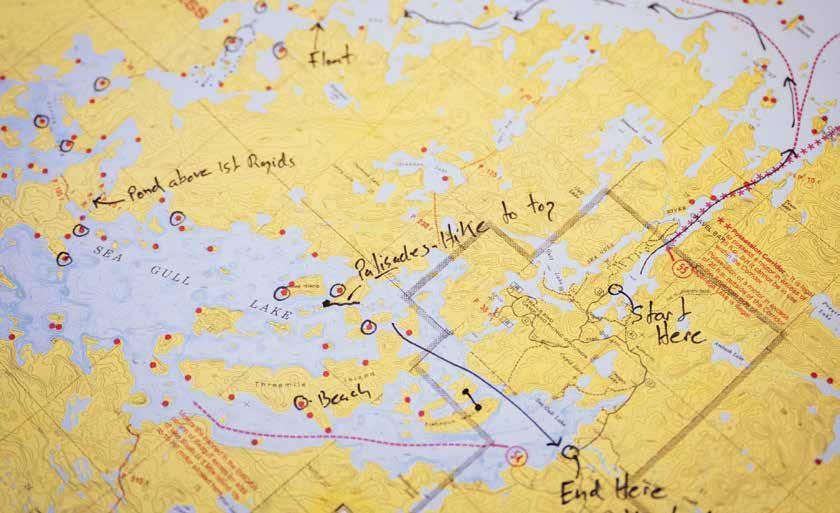
Our paddles slice silently through the tea-colored water. The swoosh of tiny bubbles in the propelled currents crackles off the side of the hull. The beach to our next portage awaits in a small, pebbly gap between snags and deadfall that seem impenetrable. A loon trills chillingly in the distance. We flip the canoe over our heads and happily trudge down a chocolate-brown trail, watching for tripping roots or boggy steps, singing all the while …
This is a fantasy I have of a Boundary Waters trip. It didn’t happen; it’s a false narrative — completely made up in my mind. It is not even a memory. I have been to the Boundary Waters once, when I was a young child, and our canoe was never out of sight of the boat launch. All I really remember are my childhood questions as we fished for perch. “Does the root beer-colored water make the fish cough? Can a mosquito bite on top of another mosquito bite? Why are we throwing these fish back?”
Unless you have been under a rock (or not opening your BHA emails for the past year), you have heard that the Boundary Waters, which cover 1.1 million acres and contain roughly 1,000 lakes and 1,200 miles of canoe routes, are under threat from a sulfide-ore copper mine proposed in its headwaters. While a 20-year federal ban on such mining was established in 2023, recent legislative efforts, including H.J. Res. 140, aim to use the Congressional Review Act to overturn those protections and again open the area to foreignowned mining projects like Twin Metals.
The question often arises: “With so many conservation fronts and areas at risk, why should I lend my efforts, my voice or my wallet
to a place that I have no real connection to and that I likely will never visit, hunt or fish? Aren’t my efforts better spent fighting my backyard battles — those areas close to home?”
We faced these same questions while trying to rally folks to fight against the proposed Pebble Mine in Alaska. To me, that upper Nushagak River drainage was very important. I had spent the mid1990s as a fishing guide in what would be the shadow of the mine. The place is magical, pristine, a sportsman’s paradise — salmon and char, caribou and moose, ptarmigan, wolves, bears and large rainbows that ate hair-spun mice. Were a few bits of gold worth risking these? To my mind, of course not. But few people would ever have the chance to visit there, to have it imprinted on them the way it had on me. Especially in the early days of the fight, momentum felt difficult to create.
Like my dreams of the Boundary Waters, I hoped others dreamed of trekking through the boggy tundra that they don’t make gaiters high enough for, or floating untamed rivers where salmon swarm in the hundreds of thousands, their red backs and green beaks barely submerged. Did others’ minds have fantasies of the great caribou herds and the vast array of predators that marauded around their edges? Could others connect? Did they need to have a real intention to travel there? Or is it enough to just care that a place like that exists — that wild places still lived like we envision them?
Whatever the reason, people across the country rallied, lending their voices, their dollars and their time to let lawmakers know that wild places were not for the few to exploit — no way, no how. We fought, we won, they shifted, we fought again and so on and so forth.

Is it enough to just care that a place like that exists — that wild places still lived like we envision them?
Some fights, like Pebble and the Boundary Waters, are important because losing sets an awful precedent. If the battle is lost, more pristine places will be devoured by the short-sighted and greedy, whittling away the places we have left to find true adventure. And that makes the attack on our backyard honey holes much easier to lose, too. When dominoes start to fall, it is hard to stop them.
Sportsmen can be myopic about their local resources. And in some ways, they should be. Most fishermen and hunters rarely venture far from their home territory. Hell, I’ve been sitting in the same tree for decades. So why should we care for these places that might only live in our mind’s eye? I can’t answer that for anyone but myself. For me, part of it might only live between my ears. I’m at the age where I know I will never make it to all the places I used to dream of as a young fishing guide, lying on the spongy tundra, soaking in what felt like the only rays of sun all season.
I dreamed far and wide. If I made it here, why not everywhere else my hooks and bullets and boots would take me? So I fight for places like the Boundary Waters because some will make it there. They will dream of other places while adventuring there, and hopefully they will come to the same conclusion I have: Special places take everyone caring to protect them.
So we keep fighting, and fighting and fighting. When we win, it might only be for a little while until the snakes try another tactic or wait for another time. But we stay vigilant in this endeavor because we know, if we fight hard enough, there might still be some teacolored water to slice through or that sun-glazed tundra bed waiting for our tired bones … even if it only exists in our dreams.
Peter Vandergrift started far from any office, working as a dirtbag fly-fishing guide and outfitter in the wilds of Alaska and Montana. Those years on remote rivers shaped the perspective he later carried into marketing roles with some of the outdoor industry’s leading brands. He brings that same boots-on-the-ground ethos to his service on the BHA North American Board of Directors.
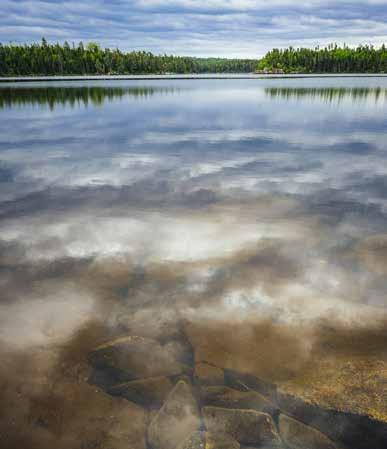


















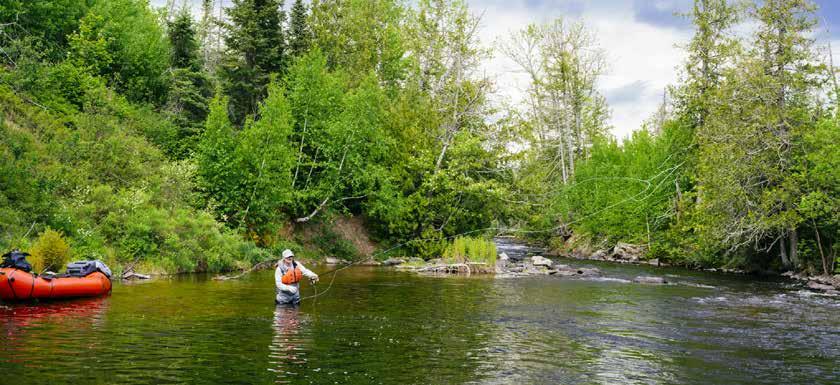
Debate over the future of the Boundary Waters Canoe Area Wilderness and the surrounding Rainy River watershed remains a top federal policy priority for Backcountry Hunters & Anglers this spring. After the House passed Rep. Pete Stauber’s H.J.Res. 140 earlier this year, BHA has continued engaging Senate offices as lawmakers consider whether to take up the Congressional Review Act (CRA) resolution.
H.J.Res. 140 would overturn a 20-year mineral withdrawal in the Rainy River watershed upstream of the Boundary Waters Canoe Area Wilderness. The move would reopen the area to potential copper-sulfide mining proposed by Twin Metals Minnesota, a company owned by the Chilean mining conglomerate Antofagasta, which has a zero-dollar copper smelting agreement with China.
This proposal represents the wrong mine in the wrong place, given the region’s interconnected waters and the risk of sulfuric acid pollution in one of America’s most iconic wilderness landscapes.
In recent months, BHA has encouraged members to contact their senators and has conducted targeted outreach to several key offices. BHA Minnesota Chapter Coordinator Aaron Hebeisen also held a one-on-one call with Sen. Klobuchar, during which she reaffirmed her commitment to oppose the resolution.
BHA continues to work with partners including Save the Boundary Waters and Sportsmen for the Boundary Waters while urging hunters and anglers to speak up. CRA resolutions can move quickly through the Senate, making constituent engagement especially important.
So far, 30,491 hunters and anglers have contacted their elected officials about the proposal. And as of mid-March, the Senate was yet to take up the resolution.
Learn more and take action at backcountryhunters. org/get-involved/take-action
The future of the 2001 Roadless Rule remains a major focus for BHA’s federal policy team.
Last August, the U.S. Forest Service published a Notice of Intent announcing plans to prepare a Draft Environmental Impact Statement evaluating a potential rescission of the Roadless Rule. The rule protects roughly 58.5 million acres of roadless areas across 39 states, representing about 30 percent of all national forest system lands. The Forest Service has also initiated revisions to the Tongass National Forest Land Management Plan, which references possible changes to Roadless Rule protections.
According to the agency’s timeline and discussions on Capitol Hill, a draft environmental review is expected to trigger a public comment period later in March or early April (likely ongoing at time of release of this spring Journal). That process will provide a critical opportunity for hunters and anglers to weigh in on the importance of roadless areas for wildlife habitat, watershed health and backcountry experiences.
When the rule was developed in 2001, the Forest Service conducted one of the largest public engagement processes in the agency’s history, including hundreds of meetings and more than one million public comments — about 90 percent of which supported establishing the rule. BHA believes any reconsideration of the policy should include similarly robust public involvement.
In February, BHA partnered with The Wilderness Society to bring several public land advocates to Washington, D.C., including Beth Brennan of the BHA Montana Chapter, Mack Long of Backcountry Horsemen, and Montana State Rep. Tyson Running Wolf. The group met with members of Montana’s congressional delegation and Forest Service Chief Randy Moore to discuss the importance of roadless protections.
Roadless areas provide some of the most important fish and wildlife habitat in the national forest system. Nationwide, roughly 70 percent of roadless areas contain native trout or salmon waters, and more than 70 percent of roadless lands in Utah, Wyoming and Montana provide habitat for elk.
While BHA recognizes the rule is not perfect, the organization believes a blanket rescission would be costly, haphazard and likely increase the deferred maintenance backlog across public lands.
Take action through BHA’s Action Alert page.

Western voters continue to show strong, bipartisan support for conserving public lands, protecting water resources, and maintaining wildlife habitat, according to the 16th annual Conservation in the West Poll released by Colorado College earlier this year. The survey of voters across the Mountain West underscores how deeply conservation issues resonate with people who live, work, and recreate on public lands.
The poll surveyed more than 3,400 registered voters across eight Western states — Colorado, Arizona, Idaho, Montana, Nevada, New Mexico, Utah, and Wyoming — and found that support for conservation remains high across party lines. Fully 85 percent of respondents said issues involving public lands, water, and wildlife are important when deciding whether to support a public official, while 84 percent said rolling back protections for land, water, and wildlife is a serious problem.
Western voters also expressed concern about reductions in funding for public land management. According to the poll, 86 percent of respondents — including 76 percent of Republicans — said funding cuts that affect public land agencies are a serious issue.
Public opinion also strongly favors maintaining safeguards that ensure thoughtful management of public lands. Seventy percent of voters oppose efforts to fast-track oil, gas, and mining projects on public lands by weakening environmental review or limiting public input, and 74 percent oppose selling public lands for energy development. Even amid housing pressures across the West, a majority of voters oppose selling public lands for housing projects.
The 2026 Conservation in the West Poll, conducted by bipartisan pollsters, surveyed voters from Jan. 2–18, 2026. The project is part of Colorado College’s long-running State of the Rockies initiative. More information and full results are available through the State of the Rockies Project at Colorado College.
The Illinois Chapter of Backcountry Hunters & Anglers was recognized by the Illinois Conservation Foundation in March as 2025 “Outdoor Volunteer Organization of the Year” for its leadership in developing the Lake Shelbyville Archery Park, which set a benchmark for public archery ranges, creating accessible, year-round opportunities for people of all ages. Congrats to the dedicated volunteers of the Illinois chapter!
After nearly a decade and more than 225 episodes exploring the issues, people and places that define our public lands and waters, Hal Herring is moving on to his next adventure. While we’re saddened to see him go, we know he will continue to be a leading voice for Backcountry Hunters & Anglers and the conservation of our shared landscapes as he pursues what’s next — including his forthcoming book on public lands. For the final episode, fittingly, we turn the mic around and hear from Hal — along with our former vice president of communications and longtime Podcast & Blast producer Katie McKalip — about how it all came together, their favorite moments and what the show has meant for BHA and the conservation of our public lands.
Listen to that final epsiode with Hal wherever you get your podcasts, and then stay tuned as we chart next steps for BHA’s podcast.
BY BEN LONG
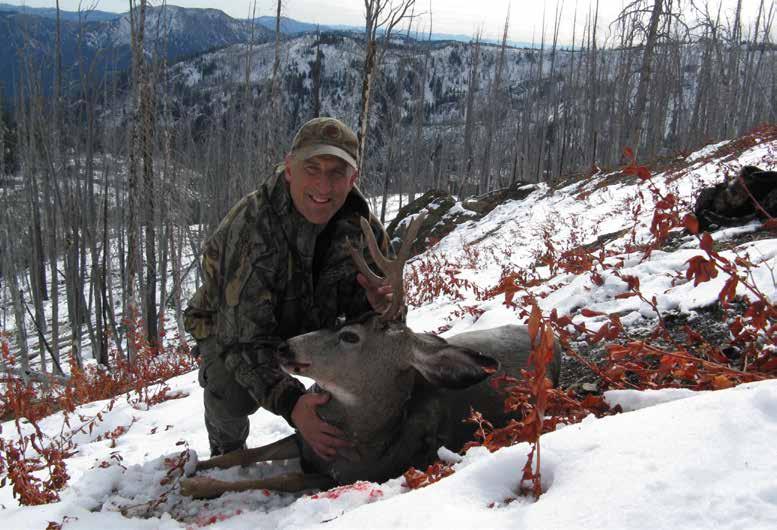
Mike Beagle, who lit the first campfire that grew into the national movement of Backcountry Hunters & Anglers, died unexpectedly while hiking in his beloved public lands of Oregon in February 2026. He was 63.
“Beags” was both the spiritual and physical founder of BHA. His death stunned friends and family, as he was a strong hiker and a steady presence throughout the history of BHA. He died while climbing Wagner Butte, near Talent, Oregon, on the Rogue RiverSiskiyou National Forest.
Mike lived a life dedicated to service. He served as an artillery officer for the U.S. Army. Much of his career was spent in education, as a high school teacher and, later, alumni director for Southern Oregon University. While teaching history and coaching football at South Medford High School, Mike envisioned a group of hunters and anglers who cared deeply about public lands and conservation.
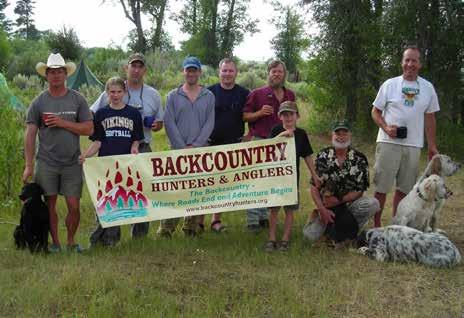
In spring 2004, he gathered a handful of his friends and associates to his rural property, and with Maker’s Mark whisky and a friendly campfire, emerged with the idea that would become BHA. The idea simply could not be kept down. BHA grew well beyond Mike’s dream to become a conservation powerhouse, representing tens of
thousands of people in every corner of the U.S. and Canada.
“I remember when we got our first 50 members. Six months later we had another 50,” Mike said in a 2022 interview. “We felt like we hit the big time.”
But growing a successful nonprofit organization requires more than vision alone. Mike’s inherent personality and his learned leadership skills made him a perfect fit for the task of BHA’s first board chairman. Wrangling this unruly mob of high-energy, highly opinionated volunteers was not easy. Mike never shied from the task, always showing respect to fellow members, even if he had to tell them no or deliver hard news. The secret to Mike’s success was his love of both people and wild country, combined with his willingness to generously share credit while fully shouldering responsibility.
Early on, BHA’s conservation goals were modest. Mike led the charge to pressure the Bureau of Land Management to rein in motorized vehicle abuse of public land called Green Tops, near his home in Eagle Point. One person who recognized Beags’ leadership potential was Chris Wood, CEO of Trout Unlimited. TU hired Mike as a field organizer, a great shot in the arm for BHA.
“He was part of the cadre of real-deal organizers that worked in conservative Western rural communities and protected tens
of millions of acres of public land,” Wood recalled. “Mike’s effectiveness was borne of his passion for the land and the people who depend on it.”
BHA and TU teamed up to champion the Copper-Salmon Wilderness, which protects a prime salmon and steelhead spawning stream, the Elk River in Western Oregon. Mike organized local loggers, fishing guides and outdoorspeople to champion a wilderness bill signed into law in 2009. That also proved BHA was capable of greater ambition as it grew from a regional to national force for good.
“What made Mike’s life meaningful was how he positively affected everyone in it,” Wood said. “His humility, good nature and doggedness made him a formidable friend and an implacable advocate for conservation.”
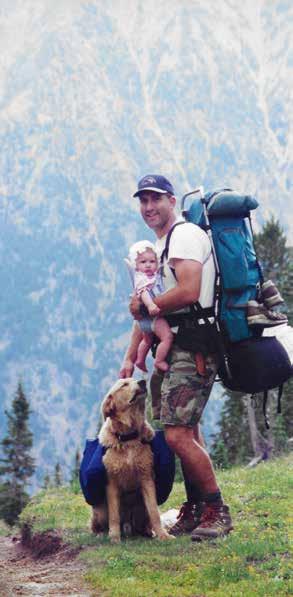
Mike was a dedicated father who often recruited his daughter, Riley, and son, Steen, into his outdoor adventures and conservation campaigns. As youngsters, they licked stamps for the Backcountry Journal, which we produced on Mike’s home computer printer. Images of Riley and Steen were widespread across BHA’s publications.
The secret to Mike’s success was his love of people and wild country, combined with his willingness to generously share credit while fully shouldering responsibility.
Mike was BHA’s board chairman from 2004-2012. When he stepped down, it took two of us, Joel Webster and me, to fill his boots. Many other fledgling nonprofits have faltered due to “founder-itis.” That is, when the original founder doesn’t know when to let go. Mike had the humility to hand the ball off to a new team, but he always retained his pride in BHA and its mission.
“BHA is a unique organization,” Mike said in that 2022 interview. “In the realm of natural resource conservation, you get wins and losses, but the war is never won. You have to stay with it. You hope to get there eventually but maybe not in our lifetime. That’s something to pass on to kids and grandkids.
“One of the great aspects of hunting is what you’re able to pass on.”
That is true not just for hunting, but life in general. Be like Mike. Pass it on.
-Ben Long
Mike is survived by his wife, Amy, and his daughter, Riley, and son, Steen. BHA is working with Southern Oregon University on an appropriate memorial. Stay tuned for details.
























KANSAS CITY, MISSOURI
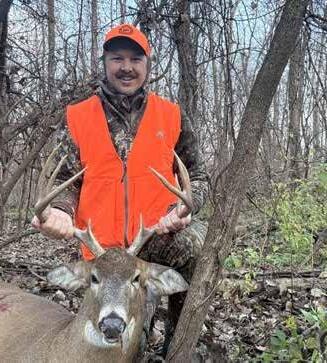
I am a BHA member for one reason and one reason only: R3. I know some chapters have different views on R3, but I am a dedicated supporter and a testament to why it is a worthy endeavor for every chapter. I attended my first pint night in 2018, having only been on one mentored dove hunt and looking for a mentor to help me turkey hunt. I didn’t find a mentor that night, but what I did find was encouragement to just go out and try. I eventually posted that I was going out for the dove opener, and I met several of my current hunting buddies through that post. I became an avid hunter and an even more committed member of BHA due to the support and friendships the organization provided.
Missouri has a conservation model that puts it in a class by itself. Can you explain what makes it special?
Money. Missouri’s success is built on money and constitutional protections for that funding.
We have two dedicated sales taxes: the Design for Conservation sales tax, which supports the Missouri Department of Conservation and amounts to about 1 cent for every $8 in purchases, and the Parks, Soils and Water sales tax, which supports our state parks and equals about 1 cent for every $10 in purchases. Notably, the Parks, Soils and Water sales tax is up for renewal this year.
Thanks to constitutional protections, these funds cannot be raided by the Legislature or reallocated to other purposes. Because of this stable funding, Missouri stands as a glaring example of a simple truth: When you provide public servants with the resources to actually serve the public, you receive an unbelievable return on that investment.
You and the Missouri chapter have been working to increase access at the Loess Bluffs National Wildlife Refuge near Kansas City. Briefly tell us about Loess Bluffs and why that’s a priority for you and the chapter. What are some of the challenges you’re facing in increasing that access?
Loess Bluffs represents a generational opportunity to gain hunting access to more than 4,300 acres, and it gives us something to fight for as opposed to something to fight against.
My involvement began through happenstance. I was looking for under-the-radar places to hunt when I came across the proposed Loess Bluffs Hunt Plan. As a member of BHA at the time, I attended a Q&A hosted by Kansas BHA with our now president and CEO, Cal, and another former North American board member. I told them about the plan and suggested that BHA HQ should take the lead. Cal’s response was simple: He thought I should take the lead. I then reached out to Missouri BHA and suggested they take charge. Their response was the same as Cal’s, but they offered to
make me a committee member and support me however they could.
The Hunt Plan — which would open 3,805 acres of the refuge to hunting and 534 acres on three U.S. Fish and Wildlife Service-owned farms to hunting and public access for the first time — was drafted in 2021. That year, the U.S. Fish and Wildlife Service proposed increasing hunting and fishing opportunities on 88 of its properties. While 86 of those properties survived the public comment period, Loess Bluffs did not. Due to a lack of awareness at the time, pro-hunting NGOs did not offer any comments in support of the plan.
For the past year, we have been meeting with relevant U.S. Fish and Wildlife Service leadership to resubmit the Hunt Plan for public comment. We believe our efforts align with the Secretary of the Interior’s Order SO 3447, which states that all Department of the Interior properties should be considered open to hunting and fishing unless a site manager specifically justifies why they should remain closed.
We are certain that if the U.S. Fish and Wildlife Service resubmits the Hunt Plan, the errors of the past will not be repeated. Missouri BHA will lead the way in raising awareness and rallying supportive commenters.
What advice would you give to other chapter leaders?
Missouri BHA recently completed a survey of our membership, and I would urge other chapters to do the same. It has been very enlightening for our board to understand the goals of our members, and it has already led to us offering leadership positions to several passionate individuals.

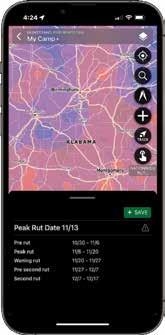
WHITETAIL RUT MAP Unlock the most extensive Rut Map in the country

WHITETAIL ACTIVITY FORECAST Plan your hunt around peak movement times
Join millions of hunters who use HuntStand to view property lines, find public hunting land, and manage their hunting property. Enjoy a powerful collection of maps and tools — including nationwide rut dates and a 7-day whitetail activity forecast with peak deer movement times.

WHITETAIL

Download and map for FREE!





BHA’s Backcountry Bounty is a celebration not of antler size but of BHA’s values: wild places, hard work, fair chase and wild-harvested food. Send your submissions to williams@backcountryhunters.org or share your photos with us by using #backcountryhuntersandanglers on social media! Emailed bounty submissions may also appear on social media.
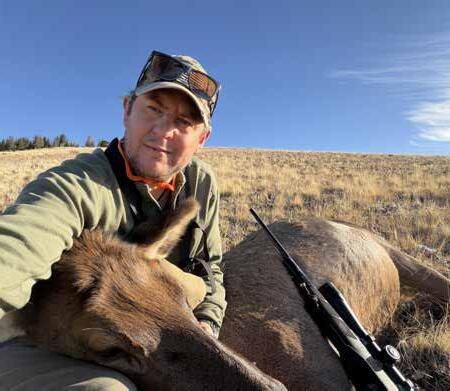
Hunter: Yevgeniy “Z” Zhupikov, BHA AFI member
Species: elk | State: New Mexico | Method: rifle | Distance from nearest road: two miles
Transportation: foot (mobility impaired)
Hunter: Dave Beiler, BHA Member
Species: whitetail
State: Pennsylvania
Method: bow
Distance from nearest road: 1.5 miles
Transportation: foot
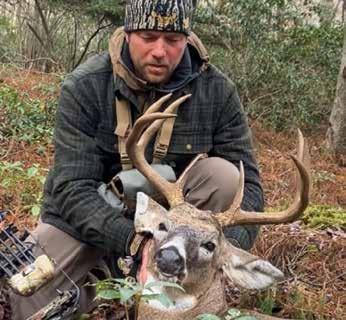
Hunter: Jodi Brown, BHA member
Species: elk
State: Colorado
Method: rifle
Distance from nearest road: one mile
Transportation: foot
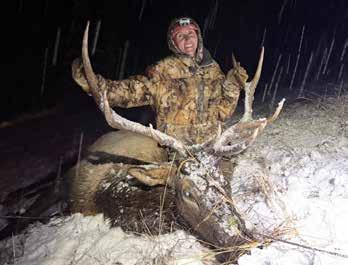
Angler: Sam Nasset, BHA Member
Species: Westslope Cutthroat Trout
State: Montana
Method: spinning rod
Distance from Nearest Road: five miles
Transportation: foot

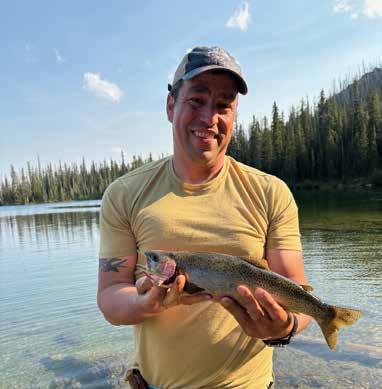
Hunter: Matt Short, BHA Member
Species: Rocky Mountain bighorn sheep
State: Colorado
Method: bow
Distance from nearest road: nine miles
Transportation: foot
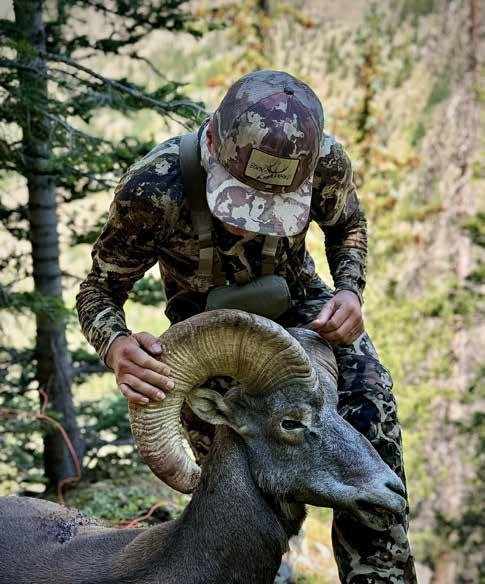


BY SOPHIA BURT
Across: 1. The pristine Northern Minnesota water
ACROSS
9. Nickname of BHA President and CEO system with 1000+ lakes
1. The pristine Northern Minnesota water system with 1,000+ lakes
9. Nickname of BHA President and CEO
10. BHA’s age in 2026 (spelled out)
10. BHA’s age in 2026 (spelled out) 2. BHA 2025-26 campaign that brings together
2. BHA’s 2025-26 campaign that brings together public land owners
11. Constellation visible across all of North public land owners America in the summer
3. Animal on Wyoming’s state flag
3. Animal on Wyoming’s state flag
4. Season when most moose shed their antlers
5. Deepest lake in the United States
6. First BHA state chapter
11. Constellation visible across all of North America in the summer
12. Salmon that change color from silver/blue to red/green
13. Rule protecting millions of acres of backcountry national forests
12. Salmon that change color from silver/blue 4. Season when most moose shed their antlers to red/green 5. Deepest lake in the United States
14. The most common colored heron
13. Rule protecting millions of acres of 6. First BHA state chapter backcountry national forests
7. Canada’s national tree and flag leaf
8. Insects whose group is called a “sparkle”
7. Canada’s national tree and flag leaf
15. Most popular big game animal
16. State with the largest national park
14. The most common colored heron 8. Insects whose group is called a “sparkle” 15. Most popular big game animal
16. State with the largest national park
*Answers on page 79
Sophia Burt is currently the operations intern at BHA and a student at The University of Montana, where she is pursuing a degree in Business Management with a focus on conservation. In her free time, she enjoys hiking, shooting her bow, attending concerts at local venues, and going on spontaneous adventures to new places.


BY DAVID LIEN
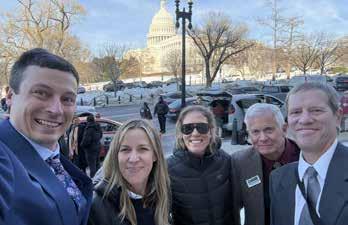
In February 2026, a diverse group of Coloradans visited congressional delegation offices in Washington, D.C. to express our support for public lands, focusing on national monuments and their value to hunters, anglers and wildlife.
The Antiquities Act of 1906 was proposed and signed into law by President Theodore Roosevelt, granting the president and Congress authority to establish national monuments. Since then, presidents from both parties have used the act more than 300 times. But in recent years, monument designations have faced increasing political pressure, putting some of our most valued habitat at risk.
Meeting with legislators provides important insights from hunters, anglers and other constituents who know the value of monuments and public lands through boots-on-the-ground experience. Our first meetings were with Sens. Michael Bennet and John Hickenlooper. Tom Kleinschnitz, Moffat County tourism director, explained that although his county has a population of just 13,000, Dinosaur National Monument attracted more than 326,000 visitors in 2023.
We also met with Reps. Jeff Hurd and Diana DeGette. Sarah Shrader, owner of Bonsai Design and founder of the Grand Valley Outdoor Recreation Coalition, noted that Colorado National Monument encompasses 20,500 acres and attracted nearly 500,000 visitors in 2024. On Colorado’s Western Slope, she emphasized, the economy runs on public land.
We also met with staff members in the offices of Reps. Jeff Crank, Joe Neguse, Gabe Evans, Brittany Pettersen and Jason Crow. Bradley Noone, with the Vet Voice Foundation and a whitewater raft guide, pointed out that Browns Canyon National Monument (21,500 acres) attracted more than 180,000 visitors in 2024. I noted that Florissant Fossil Beds National Monument west of Colorado Springs encompasses 6,300 acres but attracts more than 60,000 visitors annually.
We emphasized both the popularity and economic impact of public lands. Eighty-four percent of Western voters say “rollbacks of laws that protect our land, water and wildlife” are a serious problem, up from 68% eight years ago, according to a poll by Colorado College State of the Rockies Project.
Nationwide, outdoor recreation — from hunting, fishing and camping to cycling and boating — accounts for $788 billion in annual gross economic output and generates 5.2 million American jobs. The Bureau of Economic Analysis estimates outdoor recreation contributes $13.9 billion to Colorado’s economy, surpassing industries such as mining, farming and ranching.
In 2016, Backcountry Hunters & Anglers and a consortium of groups released a report on how national monument designations
can sustain fish and wildlife habitat while maintaining traditional hunting and fishing access. In “National Monuments: A Sportsmen’s Perspective,” 28 outdoor groups and businesses outlined a set of principles for monument creation.
Although the report was released a decade ago, its premise remains timeless: The Antiquities Act has protected some of the world’s best public hunting and fishing habitat by conserving large, vital landscapes. “Our national monuments provide some of the greatest hunting opportunities in the world,” said Hal Herring.
For example, Colorado’s Camp Hale-Continental Divide National Monument was designated Oct. 12, 2022, recognizing the World War II veterans who trained there before deploying to Europe to defeat Adolf Hitler’s Nazi regime. “Valuable wildlife habitat in central Colorado will be permanently conserved following today’s designation of Camp Hale-Continental Divide National Monument,” BHA stated in a press release. The monument includes more than 10,000 acres of critical elk winter range as well as mule deer habitat, migration corridors and headwaters fisheries.
The Antiquities Act remains one of our most powerful tools for conserving large landscapes, securing fish and wildlife habitat, and safeguarding hunting and angling opportunities on public lands and waters. Since its passage, 18 presidents — nine Republicans and nine Democrats — have used it to protect public lands, waters and wildlife.
Tom, Bradley, Sarah and I emphasized that our national monuments and public lands are sustainable economic engines that power rural communities and support our hunting, angling and outdoor recreation heritage. We reminded our senators and representatives that we are facing a seminal moment in defending public lands — and we remain unmoved, undeterred and unwavering in standing up for what’s right.
“BHA is one of the few groups willing to meet those pressures head-on, without apology,” Kyle Klain wrote in the Winter 2026 issue of the Backcountry Journal. Public lands are not a left- or right-wing issue — they are an American issue. As Winston Churchill said during World War II: “We shall not flag or fail, we shall go on …” Join us.
David A. Lien of Colorado Springs is co-chair of Colorado Backcountry Hunters & Anglers, a former Air Force missile launch officer and author. In 2014, he was recognized by Field & Stream as a “Hero of Conservation.”
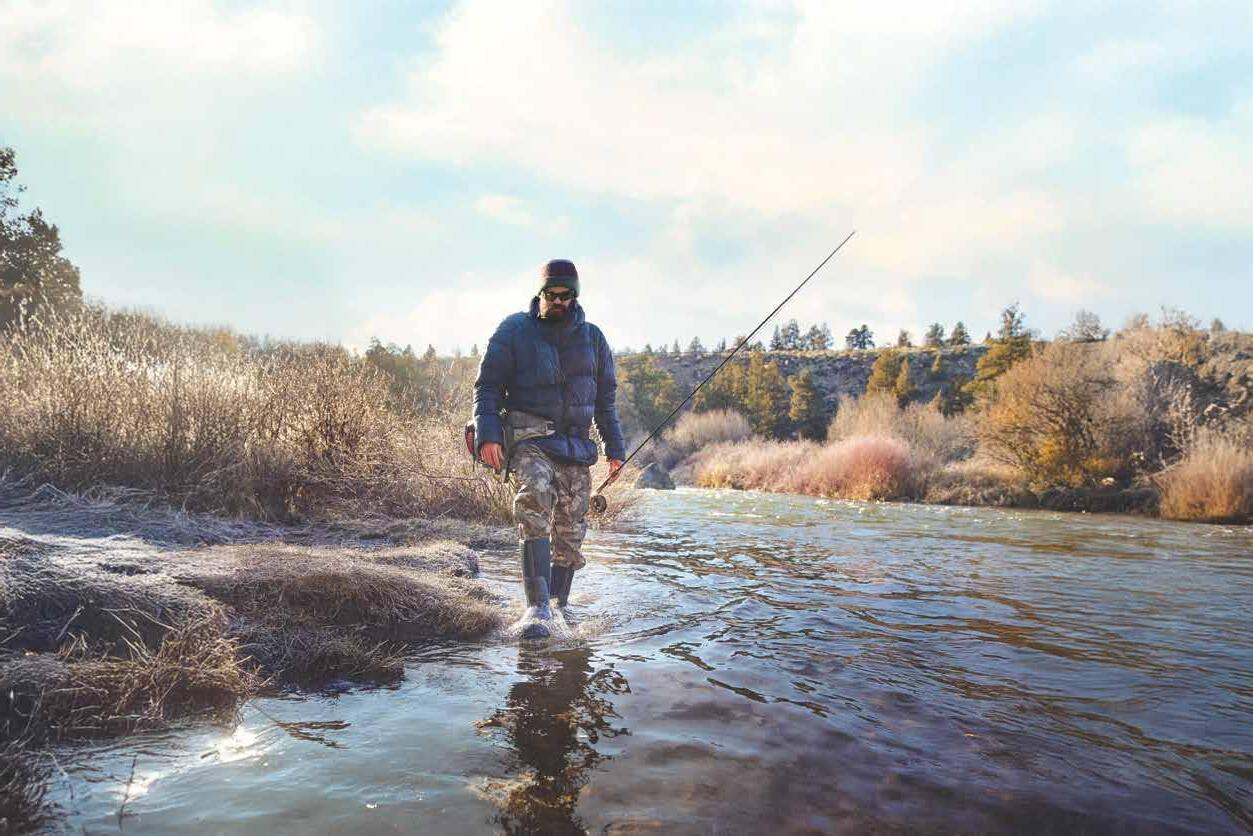
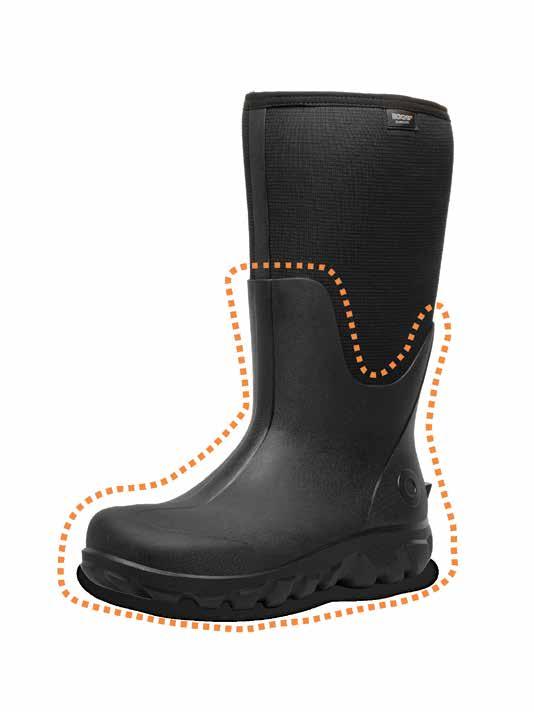
Traditional boots are made by gluing different parts together. This creates seams that eventually leak. BOGS uses an injection-molded design, so the outsole and shell are one seamless piece of rubber. No seams. No leaks. Better boots. Featured:
More Durable: Tested to withstand 2 million steps.
Less Weight: Up to 30% lighter than traditional boots.
BY CHANCE ADAMS
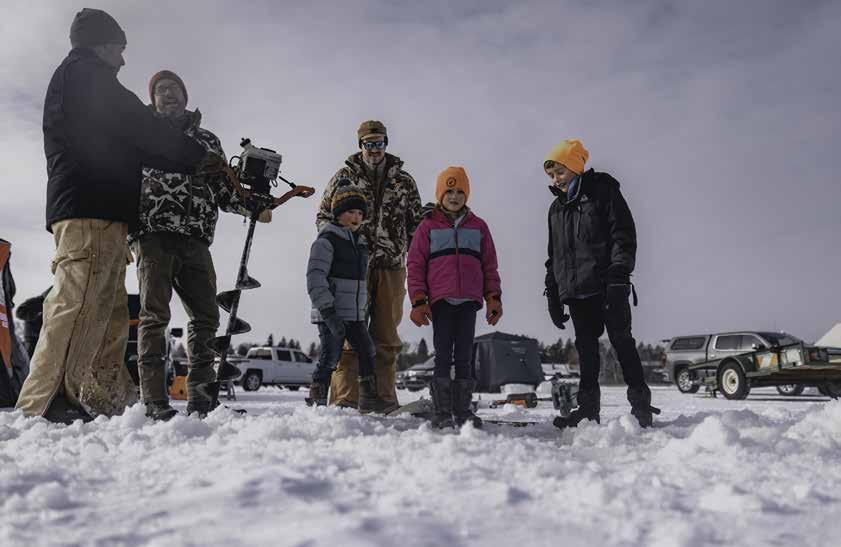
Several years ago, the Minnesota Chapter recognized a growing desire among members to gather and celebrate the distinct traditions and experiences of the northern winter. This year marked the Fourth Annual North Country Icebreaker presented by Irish Setter, held at Breezy Point Resort on Pelican Lake. The event brought together a community of conservationists, hunters, anglers and public lands advocates for a weekend of fellowship and shared purpose.
The weekend began Friday evening with a wild game potluck attended by more than 75 participants. Tables featured dishes that reflected both culinary creativity and a direct connection to the land, including caribou carpaccio, pheasant roulade, moose ramen and venison chili. The gathering served not only as a shared meal, but also as a celebration of ethical harvest, knowledge exchange and the traditions that connect participants to wild places. Maluna Coolers supported the event.
Saturday’s programming began at 10 a.m. with an ice-spearing demonstration by Hjelle-Arc Spears. Participants then had the opportunity to spear fish at six spear houses, fish from 10 portable houses provided by the Minnesota Department of Natural Resources, and warm themselves in two heated Ice Castle houses courtesy of Pelican Lake Fish House Rentals and Guide Service. Despite temperatures reaching minus 25 degrees Fahrenheit, attendance and engagement remained strong.
Educational opportunities continued indoors at the conference center. Former Minnesota BHA Board Member Mike Verhoeven led a seminar on ethical trapping practices. Wild game chef Jeff Benda, of Wild Game & Fish Media, conducted a venison steak cooking seminar. Youth programming included handson activities such as bird-feeder construction and lure painting, offering younger attendees meaningful opportunities to engage with conservation principles.
During the social hour, four judges sampled entries from five wild game cooking teams in a friendly competition. Eli Mansfield earned top honors as Wild Game Cookoff Champion for bear sloppy joes served over a wild rice cake.
The evening program featured storytelling from Tyler Notch, Greg Kvale and Timo Rova, who shared accounts ranging from elk hunts to smoke jumping in the wilderness and experiences from the Vietnam War. Their stories elicited both reflection and resolve, culminating in a call to action in support of public lands.
The event concluded with a prime rib buffet and a keynote address by conservation writer Hal Herring. Addressing more than 130 public land supporters, Herring emphasized the importance of sustained advocacy, particularly during politically divisive periods. He underscored the need to defend public lands and protect places such as the Boundary Waters Canoe Area Wilderness, while remaining engaged in ongoing conservation challenges. The evening closed with prize distributions from national and local BHA partners and remarks from former Minnesota Chapter Board Chair Eli Mansfield, who encouraged attendees: “Keep doing the right thing in the right place for long enough, and we will be successful.”
The Fourth Annual North Country Icebreaker again demonstrated that the gathering extends beyond seasonal recreation. It represents a sustained commitment to community, conservation traditions and the stewardship of the lands and waters that support them.
BHA Minnesota Chapter Chair Chance Adams is a teacher based in Bemidji, where he leads experiential education trips with his students. Outside of the classroom, he spends much of his free time hunting and fishing in the Boundary Waters Canoe Area Wilderness.
• The Alaska Chapter has engaged on high-priority state policy affecting the proposed Ambler Road project, including advocacy and analysis related to HB 124, the AIDEA Accountability Act.
• The chapter recently partnered with the Alaska Department of Fish and Game to expand outreach and participation in the Alaska Copper Ammo Challenge, accelerating the adoption of non-lead hunting ammunition statewide through targeted education, hands-on demonstration shoots and a strong presence at major outdoor shows.
• The chapter continues to advocate for science-based wildlife management by submitting public comments and participating in the Southeast Alaska Regional Board of Game meetings in Wrangell in January.
• The Arizona Vhapter hosted its Hunting for Sustainability workshop, welcoming both new hunters and past participants. Following safety discussions and clay shooting, participants learned how to hunt, field dress and cook wild game. The group chased quail and rabbits across beautiful desert landscapes until a sudden downpour thoroughly soaked camp and attendees.
• The chapter also held its $20,000 split-the-pot raffle. The anonymous winner graciously donated the winnings back to the chapter. The chapter is developing plans to use the funds to support public land access.
• The Arkansas Chapter hosted an AFI Trapping Clinic, with AFI liaison Stephen Lonon teaming with the Arkansas Trappers Association to lead veterans through a Trapping 101 workshop. The clinic introduced military members to the tools and heritage of trapping, bridging the gap between service and conservation.
• The Chapter board held its annual planning retreat despite icy conditions, sharpening strategy for 2026, clarifying roles and expectations, and solidifying plans for the Black Bear Bonanza and Field to Table launch. Chair Larry Haden led a review of the five-year strategic plan covering membership, professionalism, fundraising, awareness and stewardship.
• The British Columbia chapter’s regional leads and provincial board are coordinating with provincial biologists, local fish and game clubs, and other stakeholders on chronic wasting disease testing, education and awareness in southeastern British Columbia, where CWD was detected for the first time in January 2024. The chapter donated funds to purchase freezers for ongoing testing of roadkill deer.
• Chapter representatives met with provincial politicians in November 2025 to discuss wildlife and access issues.
• An AFI crew based at CFB Comox volunteered at Project Watershed in Courtenay on Vancouver Island, collecting soil samples to test for fish eggs as part of creek and estuary restoration.
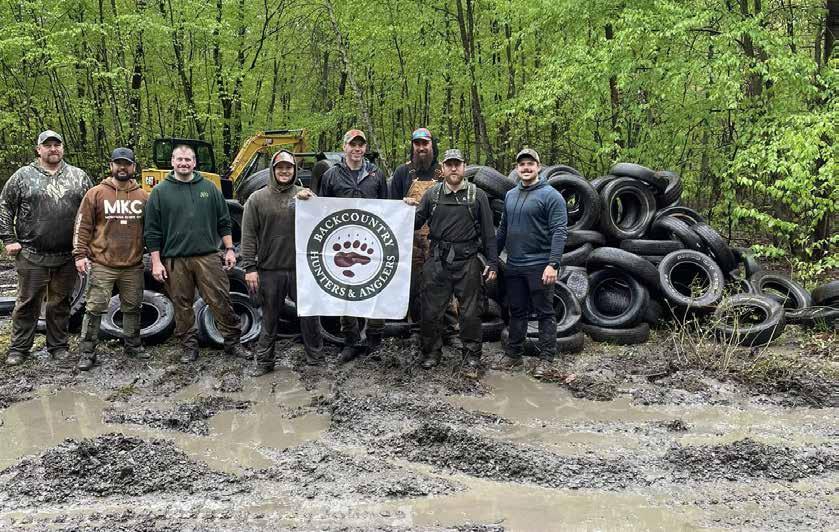
• The California Chapter hosted a Duck Hunt Camp and Advanced Hunter Education Clinic at Mendota Wildlife Area Jan. 16–18, with 27 participants, including 14 students, 13 volunteers and California Department of Fish and Wildlife staff.
• After petitioning the commission, the chapter is eagerly awaiting word from the California Fish and Game Commission on implementing a second bear tag.
• The chapter supported the Society for the Conservation of Bighorn Sheep through a guzzler build project Jan. 10–11.
• The Colorado Chapter will host Beer, Bands & Barbed Wire Strands May 15–16 at the I-Bar Ranch in Gunnison, a celebration of the state’s public lands. Join us!
• The chapter welcomed Lane Joseph to the Rio Grande National Forest Habitat Watch volunteer position.
• The chapter continued its vigorous defense of public lands. See the letter, “Stop the steal of the nation’s public lands,” published Dec. 25 in the Grand Junction Daily Sentinel.
• The Florida Chapter hosted a small game hunt at Triple N Ranch Wildlife Management Area on Jan. 17.
• The chapter also hosted a deer hunt in North Florida on Feb. 20.
• The Idaho Chapter held its annual board meeting in January, welcoming new members and laying the foundation for a very engaging year.
• Volunteers represented the chapter at the Sportsmans Show and Fly Fishing Expo and assisted the Idaho Armed Forces Initiative with a cleanup and upland game day in January.
• The chapter has several events planned for this spring, including the Doing Good in the Great Outdoors film screening.
• The Illinois Chapter was named the Illinois Conservation Foundation Volunteer Organization of the Year for 2025 for its work coordinating the Lake Shelbyville Archery Park. The award was presented in March 2026.
• The chapter will host its second annual Conservation Archery Shoot in May 2026 at the Lake Shelbyville Archery Park. Participants can enjoy the park and on-site camping.
• House Bill 5165, the River Access Modernization Act, seeks to increase the ability to float rivers across Illinois that are currently restricted. Support your rivers.
• The Indiana Chapter had a booth at the Archery Trade Association Trade Show and Supershow, along with an associated pint night and raffle sponsored by Bear Archery.
• The chapter hosted a stewardship day at Mississinewa Lake Fish and Wildlife Area, where 13 volunteers built 21 duck boxes and 20 bluebird house kits. Supplies were provided by the chapter through a grant secured from Bendix Corporation. Another $4,000 from this grant will be used by property managers to purchase fuel, seeds and shrubs for quail habitat improvements.
• The chapter also hosted a stewardship day at J. Edward Roush Lake Fish and Wildlife Area, where volunteers built wood duck boxes using funds from the Bendix Corporation grant.
• Chapter leaders met with state lawmakers over barbecue at the annual Sportsmen’s Luncheon at the Indiana Statehouse.
• The Iowa Chapter met for its annual planning meeting and doe hunt to review the chapter’s biggest objectives for 2026.
• The chapter successfully completed enough public land projects in 2025 to be awarded a 2026 Iowa auction deer tag.
• The chapter will attend the Iowa Deer Classic in Des Moines in March to raise awareness for public lands in Iowa.
• The Kansas Chapter has been actively watching and engaging on Kansas legislative bills that impact the state’s outdoors.
• On Jan. 31, the chapter completed a timber stand improvement project at El Dorado Wildlife Area.
• On March 14, the chapter held its annual Bustin’ Clays with Kansas BHA event at Powder Creek Shooting Park.
• The Kentucky Chapter hosted its annual backcountry trout stocking in Daniel Boone National Forest and returned in December for its annual members’ Bear Camp.
• The chapter continued conservation projects despite hunting season being in full swing, supporting a bird box build with Friends of Land Between the Lakes and the Wildlife Society, and assisting the state fish and wildlife department with fish habitat projects and CWD sampling.
• The chapter also celebrated the holiday and hunting season with a Thanksgiving Wild Game Potluck Pint Night and an indoor 3D archery shoot fundraiser.
• The Michigan Chapter has multiple events planned in April, including A Dam Conversation at Lansing Brewing Co. on April 10 in Lansing, and a Pint Night highlighting grayling reintroduction efforts and the “Fish Pass” project at Right Brain Brewery on April 18 in Traverse City.
• The chapter seeks to expand its leadership board and hear from members about events or stewardship projects across the state. Interested members can reach out to Michigan@backcountryhunters.org to become more involved.
• The Mid-Atlantic Chapter welcomes Garrett Robinson as chapter chair, Trevor Lawson as vice chair, Kemper Sutton as secretary, and new board members Larry Williams and Josh Laferty.
• Muster in the Mountains is coming to Virginia! This year it will be held at Devil’s Backbone Brewery from June 12–14, and the chapter hopes to see many members there.
• The chapter is excited to continue its partnership with Big Truck Brewery and owner Koby Fulks, a lifetime BHA member. The 3rd annual 3D archery shoot will be held at the brewery on June 6. Members are encouraged to come out and enjoy a great time with great people.
• The Minnesota Chapter had a booth at Pheasant Fest and held a meet-and-greet with BHA CEO Ryan Callaghan. The chapter thanks all members who signed up.
• The chapter will host its first Turkey and Trout Classic in early May, bringing members together for a campout.
• Members should watch their email for details on the chapter’s Public Lands Day at the state Capitol in May.
• The Missouri Chapter kicked off the 2026 season with a successful pint night in Nixa, followed by a stewardship event in Chesterfield in partnership with the U.S. Fish and Wildlife Service.
• The chapter will be set up at Dive Bomb Industries SquadFest 2026 on July 17–18. Members are encouraged to stop by to say hello, check out waterfowl gear, and maybe even win a few prizes.
• The chapter reminds members to keep an eye on its event calendar this spring and summer for opportunities to get involved and support public lands.
• The Montana Chapter engaged in grassroots activation around the Roadless Rule and access issues.
• The chapter submitted three public comment letters for the Feb. 12 Montana Fish and Wildlife Commission meeting.
• Chapter leaders held strategic planning sessions and set priorities for 2026.
• The Nebraska Chapter enjoyed seeing everyone this year at the Nebraska Deer and Game Expo booth and the Nebraska Bowhunters Association booth. The chapter welcomes all the new BHA members who signed up at these events.
• Chapter leaders and members removed a fence at Valentine National Wildlife Refuge in late March. The chapter thanks all who took the time to volunteer.
• The chapter has more volunteer opportunities planned in Nebraska for the coming months.
• The Nevada Chapter held its third annual banquet, which was a huge success. The chapter thanks all members who attended, noting that they make everything the chapter does possible.
• Several board members and chapter members attended Sheepshow, participating in panel discussions on horse and burro issues and volunteering for youth education with the Nevada Department of Wildlife.
• The New England Chapter’s Massachusetts state team held a virtual Learn to Hunt Small Game course with more than 100 attendees in partnership with MassWildlife.
• Across the region, the chapter continues work on policy issues, including lifting the ban on Sunday hunting in Massachusetts and supporting a constitutional right to hunt in New Hampshire.
• The chapter hosted a trivia night sponsored by Maine-based Walker Knife Company at Mast Landing Brewing Company.
• The New Jersey Chapter continues its quest for expanded Sunday hunting opportunities. In late January, chapter board members met with three district assembly members to discuss a plan to eventually introduce a bill expanding Sunday hunting in the state. Assembly members Dawn Fantasia, Mike Inganamort and Parker Space supported the cause and provided the chapter valuable guidance on moving forward.
• Members are encouraged to stay tuned for a planned Sportsmen’s Caucus Day at the statehouse in Trenton.
• During a youth archery deer hunt in the Sandia Mountains, chapter members joined New Mexico Department of Game and Fish conservation officers at several high-traffic trailheads to inform trail users about the hunt and help build stronger, more positive connections between hunters and the public.
• In February, eight Las Cruces BLM staff members, three BHA staff members and 15 BHA volunteers modified 1.25 miles of fencing on BLM land near Lordsburg, New Mexico, improving habitat connectivity across more than 7,000 acres.
• The chapter will offer multiple stewardship project opportunities this summer. Members should stay tuned to the chapter newsletter and social media for details.
• The New York Chapter tabled at the New York Sportsman’s Expo and the Western New York Sport & Travel Expo in Hamburg. The chapter sold merchandise, recruited new members,
and promoted the BHA mission to hundreds of attendees.
• The chapter boosted engagement on Instagram with a New York Public Lands photo contest, receiving some truly breathtaking submissions from followers.
• The chapter’s policy team delivered a letter to the governor advocating for the conservation of the 36,000-acre Whitney Park estate, a privately owned parcel in the Adirondacks.
• The North Carolina Chapter celebrated a victory when a lawsuit against the North Carolina Wildlife Resources Commission that threatened public access to the Boone Fork of the Watauga River was rejected by the county court.
• The chapter’s annual spring Round Up family camping weekend at Badin Lake in late April provided members a great opportunity to reconnect, swap stories, share meals and learn from each other.
• The Ohio Chapter hosted its auction winners for a Wayne National Forest muzzleloader deer camp, where four deer were taken.
• Chapter board members also sponsored the Ohio Wildlife Management Conference Pint Night and operated a booth at the conference the following day.
• The chapter is working to support a 22,000-acre land acquisition for the Ohio Department of Natural Resources valued at approximately $37 million. More details are forthcoming as the deal continues to develop.
• The Oklahoma Chapter hosted a pint night in December at Cooper & Mill Brewing Company. Chapter leaders discussed issues affecting public lands across the country and in the Sooner State.
• The chapter has begun participating in education and engagement around proposed legislation that could affect Oklahoma’s hunters and anglers.
• It also ran a booth at the Backwoods Hunting & Fishing Expo in March, sharing what BHA is all about and providing education on public land access.
• The Oregon Chapter, along with BHA headquarters, is part of a broad coalition supporting Senate Bill 1545, a bipartisan “corner crossing” bill introduced by state Sens. Mike McLane and Anthony Broadman. The chapter has long advocated that corner crossing is not a crime and supports the bill’s goal of clarifying lawful public-to-public access while protecting neighboring landowners. SB 1545 would reduce trespass uncertainty and provide negligence protections, with support from both political parties and outdoor groups across the state.
• The Pennsylvania Chapter received a $2,100 donation from Stick City Brewing Company tied to its collaborative “Keystone Backcountry IPA.” For the second year, the brewery committed 20% of proceeds from the beer to the chapter, continuing a strong partnership.
• The chapter also welcomed Craig Miller, John Shaw and Brandon Rapp to its board, noting the experience and skills they bring to the organization.
• On Feb. 21, the chapter gathered at Pennsylvania State Game Lands Number 52 for an invasive species workday — the first in a series of events planned in partnership with the Pennsylvania Game Commission.
• The South Dakota Chapter hosted a booth at the Black Hills Sports Show to promote the Hunt Lead-Free SD non-lead ammunition pilot program in several western South Dakota hunting units.
• The chapter remains active with the South Dakota Department of Game, Fish and Parks and participates in the Custer State Park Resource Management Plan Stakeholder Group and the Animal Damage Control Advisory Committee.
• The chapter is seeking applicants for several leadership roles, including treasurer, stewardship coordinator, event coordinator, social media manager and other open board positions.
• The Tennessee Chapter had the unique opportunity to table at two MeatEater Live events.
• The chapter is partnering with Sitka to host future events at the brand-new Knoxville store — stay tuned for details.
• The chapter is also partnering with Friends of the Cherokee National Forest for a trash pack-out at Miners Branch, Cherokee National Forest in preparation for turkey season.
• The Texas Chapter called on state agencies and legislators to reject an attempt to sell the only remaining access to The Cutoff, a long-cherished hunting and fishing area that has been the subject of ongoing litigation for years.
• The chapter joined the National Wild Turkey Federation in opposing the construction of the Marvin Nichols Reservoir, which would fragment turkey habitat and erase 50 years of restoration efforts.
• The chapter also joined the Texas Conservation Alliance in opposing the sale or trade of nearly 500 acres of public National Wildlife Refuge lands in far south Texas to SpaceX.
• The Washington Chapter invites members to join on April 11 for its first ever Black Bear Bonanza in Leavenworth. The family friendly event will feature expert-led seminars, bear spray demonstrations, safe hiking practices, bear hunting and conservation education, youth activities, and much more.
• The chapter extends its most sincere gratitude to Ryan Los and Cameron Lankhaar, who recently announced their retirement from the board after a combined 24 years of dedicated volunteer work on the Washington Chapter Board. Their leadership, stewardship, and commitment to conservation leave a lasting legacy.
• The chapter encourages members to save the date for the fourth annual Lake Chelan Mountain Goat Survey, occurring July 17 to 19. This weekend offers an opportunity to burn boot leather and contribute meaningful data through citizen science.
• The West Virginia Chapter will hold its annual Trash and Trout social media contest and cleanup in March.
• The chapter will assist in May with the Greenbrier River Fly Fishing Classic, where members will mentor foster children from the West Virginia Children’s Home Society in fly fishing, archery, and other outdoor skills.
• The chapter will set up a booth on May 30–31 at the Appalachian Fly Fishing Festival in Thomas, West Virginia.
• The Wisconsin Chapter spent the winter advocating for policy and legislation. In cooperation with several conservation organizations, the chapter lobbied online, at events and in person in Madison. Efforts surround the reauthorization of the Knowles-Nelson Stewardship Program, which contributes $33
million annually to conservation. The chapter has also advocated for the adoption of a sandhill crane hunt.
• The chapter hosted winter events including a stewardship day at York Prairie State Natural Area and the University of Wisconsin–Stevens Point Gear & Beer Bash.
• The chapter is looking forward to another year of boots-onthe-ground stewardship protecting and defending public lands.
• The Wyoming Chapter submitted comments on the proposed rulemaking process by the Outdoor Recreation and Trails Trust Fund Board, calling for more public input opportunities when groups apply for recreation grants.
• The chapter participated in the Wyoming Game and Fish Department Conservation Legislation Roundtable and continues to advocate against transferable landowner tags, which could decrease opportunity for the public.
• The chapter continues to strategize on how to minimize wildlife impacts from proposed recreational developments in the Wyoming Range.
Find a more detailed writeup of your chapter’s news along with events and updates by regularly visiting www.backcountryhunters.org/chapters or contacting them at [your state/province/territory/region]@backcountryhunters. org (e.g. newengland@backcountryhunters.org).

BY NED WEIDNER
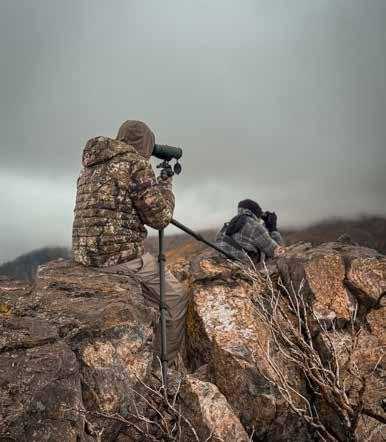
Cam Hillis and his hunting partner sat on a ridge in the Sweetwater Range of the Eastern Sierra, in the California section of Humboldt-Toiyabe National Forest, framed by old-growth pinyon pines, western junipers, sage and the first snowflakes of fall. His face glued to his binos, he glassed the deep canyon and creek a thousand feet below for any sign of a black bear. Cam is an active-duty Marine sergeant who was recently coming off a combat deployment, and he had driven 800 miles from his home in Arizona to hunt bear for the first time with BHA’s Armed Forces Initiative.
Neither Cam nor his hunting partner had ever seen a bear in the wild, let alone hunted one. Still, as they whispered about burned-out, bear-shaped trunks, small berry patches and mapped possible stalking routes into a canyon nearly a thousand feet deep, they slipped into the land. It was a landscape shaped by centuries of human use — from Paiute hunting and trapping to mining and reservoir building. Sitting there, Cam told me he felt at peace and able to “remember where he was.”
I never served in the military, but last fall I had the opportunity to participate as a hunting mentor for two AFI events in California — a deer and pig camp on Vandenberg Space Force Base and a bear camp in the Eastern Sierra. I interviewed many of the men and women who came and volunteered and asked them one question: Why do you hunt?
Many of them echoed Cam’s words: “Because hunting brings me solitude”; “Allows me to slow down”; “Community”; “Connects me to the land”; “Provides a mission.” Whether we were glassing bears above deep, canyoned creeks in the Sweetwater Range or hunting pigs on the coast at the country’s largest Space Force base, the reason we hunted remained the same: a way to remember how to belong — to land, to a group and to a shared mission.
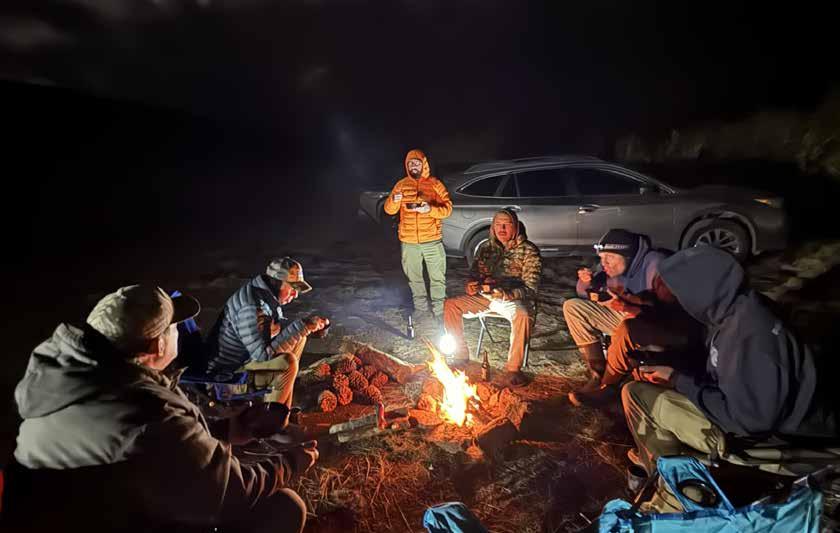
Cam and his partner glassed that ridge for hours on the first day without seeing anything. They came back to camp, sat in a circle around a fire and shared hunting stories with other vets — stories about finding a track in a deep drainage, picking up scat to investigate its freshness and the inevitable feeling of being watched by another predator. The tone was steady and optimistic — not loud, not performative, just a shared confidence that tomorrow would offer another chance. Listening, I was reminded of what philosopher Paul Shepard said about hunting stories being among the oldest human traditions.
Those stories — and the work leading up to them, like learning how to read land and belong to the people beside you — weren’t confined to the Eastern Sierra. Earlier that summer, those same conversations took place at sea level, where dunes met chaparral and the Pacific pressed in from the west.
Reina Seraaj and I sat on a bluff as Pacific Ocean waves pounded the sandy beaches below — her dark, braided hair sticking out from under her orange hat. The ground at our feet was torn and shredded like it had been tilled with a harrow — hogs. White Ford military trucks drove slowly down the oceanfront road. Vandenberg Space Force Base is a strange place to hunt. It is the largest Space Force base in the country — a launch site for rockets and satellites designed to look outward, beyond the planet. And yet here we were, moving quietly through oak and chaparral, reading tracks in sand, paying attention to wind, tide and light.
Long before it became a military installation during World War II, this coast was home to coastal Chumash people who hunted, fished and gathered along these same bluffs. Layers of history merged — Indigenous subsistence, midcentury militarization, modern conservation — and hunting stitched them into a single, living moment. For the veterans I hunted with, like Reina, that
tension mattered. Hunting here wasn’t escape. It was integration. Reina put her binos to her eyes and turned toward the beach.
“You see those tracks there?” she said, pointing to a line in the sand that went from the thistle- and ice plant-covered dunes down to the beach, circled around giant boulders and tide pools and looped back up to the dunes. “Pigs. And lots of them.”
Reina volunteers as BHA’s AFI logistics manager. One of her goals has been to kill a pig on the beach at Vandenberg. And who can blame her? The idea of harvesting a wild hog with the backdrop of tide pools, sandy dunes and the powerful Pacific Ocean behind you would likely appeal to any hunter. Yet the alluring hunting scene is not the main reason Reina hunts. Standing there with her on that bluff, it was clear the hunt offered something more durable than scenery.
It provides purpose. For people like her coming out of the military, one of the things often lost in the transition is purpose. The military gives people a mission, but in civilian life, they must find a new one on their own, often with very little guidance or direction. It can push mental capacities to their limits, sometimes resulting in depression, anxiety or, at the very least, stress. But for Reina and others like her, walking into the woods with a vet who hasn’t ever killed an animal and teaching them where to look for sign, how to read the wind and how to butcher is a purpose and mission — with a good cause. All of that mentorship is done not toward some amorphous goal of creating new hunters but toward conservation and improving the very land we hunt and recreate on.
Plus, that mentorship provides something else — community. In Maslow’s hierarchy of needs, a sense of belonging ranks as one of our fundamental psychological necessities. In the military, camaraderie is a given. In much of the rest of Western society, this is not the case. Loneliness and social isolation are epidemics in the Western world and are often associated with a higher risk of premature death. Sitting there on that bluff with Reina, picking out individual tracks and imagining dragging a pig out from the beach together, I couldn’t help but think about how this is the kind of community people need — not some fabricated online social network, but a real, lived, hands-in-the-gut-of-a-hog, sitting-around-a-fire connection.
Later the next day, another hunter hauled a deer into camp. Immediately, it was all hands on deck — someone explained where to start the first cut, another steadied the leg, others watched as a hand slid through the skin of the deer. Everyone watched closely, asking questions. Then a few stepped forward to try. It was the same lesson of mission-oriented belonging that the land had been offering all week.
A few months later in October, the bear camp in the Eastern Sierra unfolded at higher altitude — pinyon and juniper instead of dunes and surf, snow instead of salt air. Regardless of geography, hunting offered the same thing: a way to remember how to belong — to land, to a group and to a shared mission.
After the last night of bear camp, Cam went out one more day. Most of the rest of us were back home — scattered across states, back to jobs, families and routines. Out of the corner of his eye, Cam saw a dark shape moving deliberately along the far edge of the canyon, slipping in and out of timber the way bears do as the
sun dipped behind the deep canyon walls in Humboldt-Toiyabe National Forest. He took a deep breath while calculating how long it might take to put a stalk on — not enough daylight.
Cam sat there on that ridge in the Sweetwater Range, not dejected but satisfied. He had not killed a bear, but he saw one, and in that act he learned not only that his goal was possible but that he had gotten a little bit closer to attaining it. Later, he sent a message to the group — a short text about where he’d seen the bear, how long it stayed visible and the direction it traveled before disappearing into the trees.
Replies came back right away. Questions. Recognition. A few congratulatory acknowledgments. The story moved outward, beyond the ridge and the moment itself. In that way, the bear became more than a solitary sighting. It became shared orientation — this is where we were, this is what we learned, this is how the place stayed alive between us. As Shepard argues, hunting stories are not about conquest but continuity. Cam’s message was doing that work.
People hunt for different reasons — for food, peace, to attune — yet one thing is clear: We hunt because, at our core, hunting helps us feel more human. Because what is more human than connecting with other people through lived experience, shared stories, purpose and mission? Whether you are a vet coming back from combat and trying to integrate into civilian life or a suburban mom in Fresno who needs to feel part of something, to have a mission and to give to something greater than ourselves are qualities we all need.
Ned Weidner is the founder of Walker School of the Wild, an outdoor leadership school in California’s Eastern Sierra and host of The Wild Lab podcast. His work can be found in Still: The Journal, Slippery Elm Journal and various other journals. He also works as an English professor at Mt. San Antonio College.

BY CHARLIE BOOHER
On a cold November morning, a truck idles at the gated end of a Forest Service road. The headlights click off. A hunter shoulders a pack, checks the wind and steps into the timber.
Moments like this are so ordinary to many of us they almost feel permanent. But the systems that make them possible — the maps, the road networks, the seasonal closures, the route designations — are anything but fixed. As you’re reading this, the U.S. Forest Service is taking a hard look at the future of travel management, and the outcome will shape how hunters and anglers experience public lands for decades.
For our community, this isn’t just another regulatory update. It’s yet another once-in-a-generation chance to help define what access, conservation and backcountry experiences should look like in a changing world.
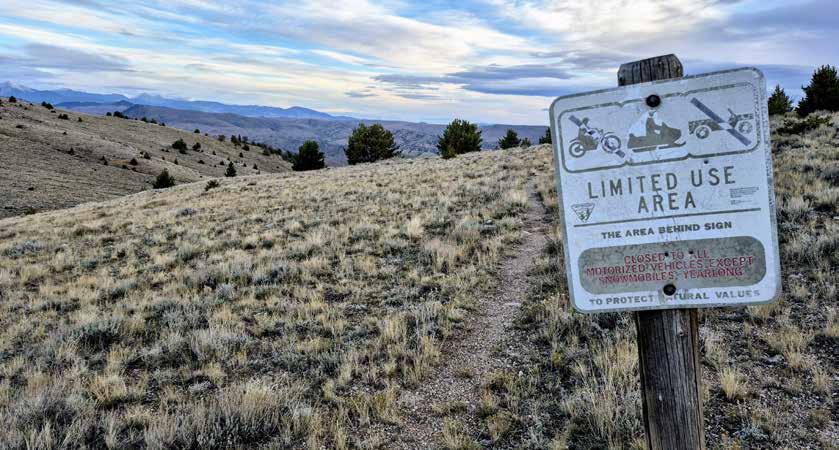
When the Forest Service adopted the Travel Management Rule in 2005, it did something simple but profound: It flipped the default. Instead of allowing motorized travel almost anywhere unless specifically closed, forests were required to designate where motor vehicles could travel and publish those routes on official maps.
That shift brought some semblance of order to landscapes where unmanaged cross-country motorized travel had created expanding webs of user-created routes, habitat damage and escalating conflict between user groups. The rule created a national framework to be balanced against local decisions about where and when routes should be open. For hunters and anglers, travel management quietly became one of the most important wildlife conservation tools on the landscape. Seasonal route closures, in particular, help land managers maintain security for big game during harsh winters and minimize disturbances during hunting seasons, helping ensure animals behave naturally and distribute across habitats in ways that
support both herd health and hunting opportunities.
Travel management planning also gave law enforcement and the public a level of clarity that had previously been absent. Today, maps clearly define where motorized use is allowed, making it easier to hold bad actors accountable and easier for ethical users to stay within the rules. However, two decades later, this system is showing its age.
The explosion of recreation since the pandemic era didn’t create pressure on our public lands as much as it merely accelerated trends that were already underway. More people are using our shared lands, more types of vehicles exist and expectations around access and information have changed dramatically.
Motorized and mechanized means of travel have evolved faster than policy. Side-by-sides can travel farther and carry more people and more gear. E-bikes blur the line between motorized and nonmotorized recreation. Navigation apps now shape how people discover and move through landscapes in ways travel planners never anticipated.
At the same time, many forests still struggle to keep travel plans updated and digitized in a way that the average hunter can use on platforms like onX. Inconsistent implementation and limited staffing have made it difficult to maintain maps, conduct analysis and revisit decisions as conditions change. From a hunter or angler perspective, that inconsistency can be one of the most frustrating parts of the system.
In some places, limited off-route retrieval of game might be allowed. In another, such retrieval might be strictly prohibited or restricted to very rigid conditions. Seasonal closures might align cleanly with migration timing in one unit and feel disconnected from on-the-ground wildlife movement in another.
Of course, none of this is surprising. The original rule was never designed to be static; it was intended to allow local managers
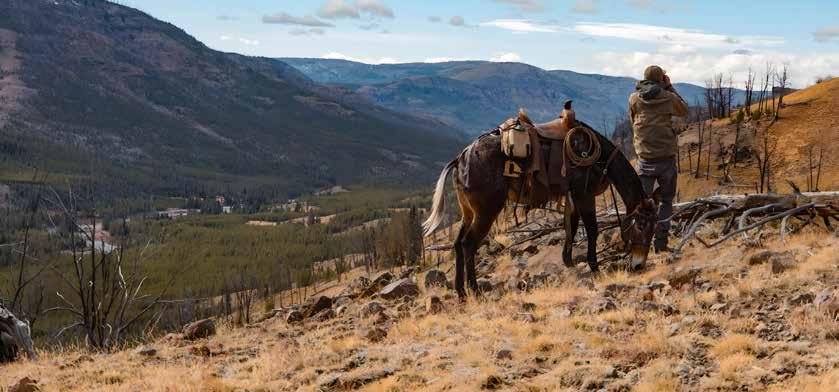
The future is about designing systems where access supports conservation, and conservation sustains access.
to adapt to changing conditions. However, adaptation in policy continues to be outpaced by changes on the land.
Today, there are real pressures pushing in opposite directions. On one side is the need to protect wildlife habitat, watersheds and backcountry character in the face of growing recreation demand and constant habitat change. On the other is the reality that access, in its most sustainable forms, is what keeps hunters and anglers connected to public lands and invested in conservation.
Most hunters and anglers live comfortably in that tension. We understand that unmanaged motorized use can push elk onto private ground or harm the experiences of other recreational users. We also understand that without thoughtful access provisions, public lands become theoretical places that we all technically own but can’t realistically reach.
The original promise of travel management was balance: conservation outcomes paired with predictable, sustainable access. That promise still resonates. But delivering on it now requires modernization.
Maps will need to become easier to use. The idea that the legally binding access system for millions of acres still relies heavily on static PDFs doesn’t match how people move through the world anymore. Hunters already use digital mapping tools for scouting, navigation and land ownership data. Travel management needs to live in that same ecosystem if compliance is going to remain realistic. Likewise, the Forest Service must more clearly communicate expectations to the public to increase compliance.
Local flexibility will remain critical, though it is important to remain cognizant of the many management tasks that continue to fall to forest supervisors. The country is too ecologically and culturally diverse for one-size-fits-all access solutions, but there must be consistency in how decisions are made to reduce confusion and conflict.
And perhaps most importantly, regardless of changes in rulemaking frameworks or principles, the need to balance human use of our public lands with the needs of wildlife is becoming more important than ever. As winter ranges shrink due to development
pressures on private lands, migration timing shifts with changes in weather patterns and human recreation expands into shoulder seasons, travel planning will increasingly function as a wildlife management tool as much as a recreation management one. We must find ways to ensure that these rules serve the wildlife we care so deeply about as much as they serve ourselves.
Travel management sits at the intersection of recreation policy, wildlife conservation and infrastructure funding. Every one of those conversations is happening right now in Congress and across our federal agencies. The good news is that hunters and anglers bring something uniquely valuable to the table: credibility in both access and conservation conversations. We are one of the few user groups that consistently argue for both. If hunters and anglers don’t engage in shaping the next generation of travel management, many others will.
The future of travel management is not about pitting access against conservation. Our community knows better than that. The future is about designing systems where access supports conservation, and conservation sustains access.
But if done right, travel management ensures that kid stepping out of a truck at daylight in 2045 still has a road to drive, a trail to walk and wild country waiting on the other side of the ridge. The next chapter of travel management is just another version of that same story. The question isn’t whether travel management will change; it’s whether we help write what comes next.
BHA member Charlie Booher is a consultant at Watershed Results who specializes in natural resource conflict resolution. He has the great privilege of representing some of this country’s oldest, largest, and most generous conservation organizations in Helena, Montana and in Washington, D.C. Charlie is an Associate Wildlife Biologist and a Professional Member of the Boone and Crockett Club. Outside of the office, you can find him hiking in the mountains of Western Montana and re-learning how to hunt and fish in the Northern Rockies.




FOLDING HANDLES


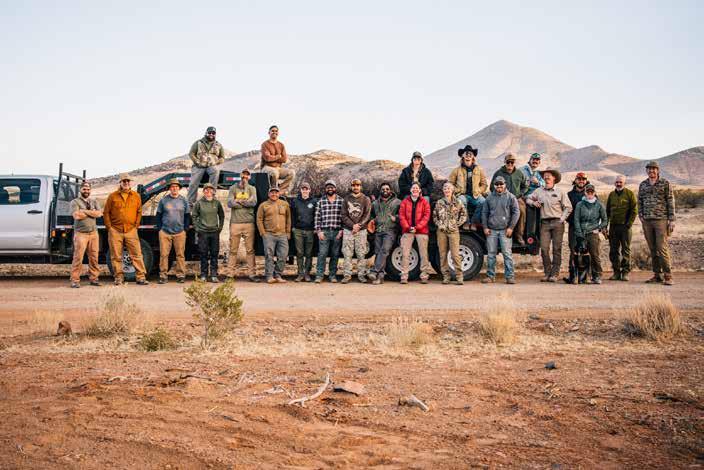



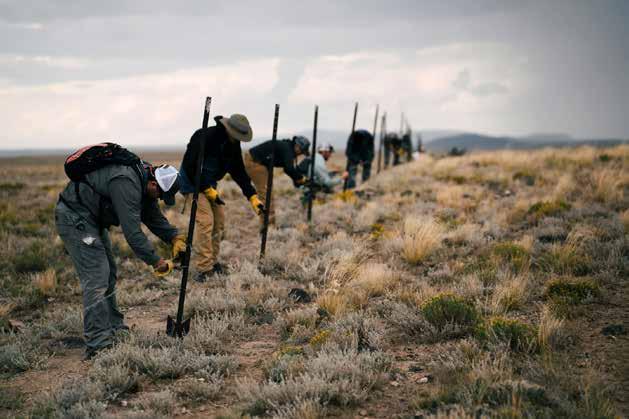
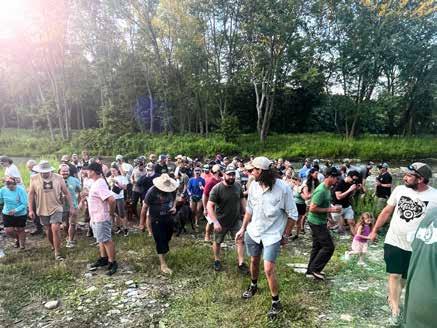

BY LEE HAMM
Southern California, on an obscure creek in a national forest: I am here with Devin O’Dea, Western policy and conservation manager for Backcountry Hunters & Anglers. The sun has been down for a little over two hours. Most importantly, our children went to bed a little over one hour ago, and this trip is fully blessed by our wives. The woods are loud with calling tree frogs. Occasionally, we hear the even louder bass note of a bullfrog calling. Bingo.

The American bullfrog is native to the eastern United States, Canada and Mexico. If there is more or less year-round freshwater, they are adaptable to a huge variety of climates and habitats. They are resilient and resistant to diseases that have decimated other amphibian species. They are long-lived and can have a prolific reproductive rate. They will eat essentially anything that fits in their mouths.
Inside their native range, these characteristics have made them very successful.
Outside of their native range, these characteristics make them an ecological disaster.
Bullfrogs are now widely introduced around the world and have caused havoc everywhere they are established. If they don’t eat native species directly, they compete for resources. They are resistant to and a vector for chytrid, a fungus that has driven many species of frogs and toads to extinction. Their tolerance for a wide variety of habitats means they find a home almost everywhere, and their long lives and high reproductive rate mean they are likely to stay there.
How did this frog wind up everywhere? They’re delicious. Frog is a treasured part of the cuisines of China and France and is commonly eaten in Southeast Asian countries and in smaller quantities in many other regions. Many of the characteristics that make bullfrogs such a problem also make them relatively easy (if not profitable) to farm or harvest at a commercial scale, as opposed to
native frogs. When a farm goes under or people release the frogs to harvest later, a new invasion begins.
In the United States, frogs, like most game species, have declined in favor as people have become more urban and more disconnected from where their food comes from. However, bullfrogs were originally brought to California to supplement native frog species as a source of food. In the Southeastern states, the cultural memory of “frog giggin’” is strong, even if the actual practice has become rare. I would advocate that it is time to get back to our roots.
Our frogging gear consists of wading boots; clothes that can get muddy; bright headlamps with backup lamps and batteries; spears; bags to put frogs in; some field gear for my job; and backpacks to hold it all together. As far as modern hunting and fishing pursuits go, this is not a very gear-intensive endeavor, and we could go with a lot less. Frogging can be as simple as grabbing the frog with your hands and shoving it into a sack — by comparison, we are high-tech.
My main interest this evening is to get an idea of how large a bullfrog population is in the area, where they are located, what they are eating, and to remove as many frogs as possible while I do it. Devin’s main interest is getting as many frog legs as possible — his wife’s favorite food.
We start at a low-water road crossing and see our first frog within 20 yards, a large adult male, possibly the one we heard calling earlier. A spotlight serves two purposes: The light reflected from a frog’s eyes gives them away from a distance, and the bright light dazzles them into staying still. This doesn’t work perfectly, and they will eventually move, so I close in quickly and get a clean kill with the gig.
I take a GPS point for the location and take out a knife to do a quick stomach dissection. Inside the frog, I find what used to be a mouse of some sort. I also take a tissue sample for genetic research by a professor in South Africa looking into the origins of bullfrogs in California. A local researcher has requested testicles from any
All the while, the night is singing around us. Tree frogs, crickets, water flowing, birds calling and rodents skittering in leaf litter all come together and occasionally make it difficult to hear one another.
mature males, which, after some poking around, I finally locate. Both tissue samples and testicles go into separate plastic vials. Finally, with a quick cut around the top of the pelvis and a twist, I take the legs for Devin, and he bags them. The rest of the frog is left for the coyotes.
We take three more frogs in short order. We also miss a couple. The gigs we are using tonight have a single tip, which is great for holding onto a stabbed frog and minimizing damage but requires more accuracy than more traditional multi-pronged tips. A missed frog or one that slips away from being spotlighted will try to get deep into muck or whatever cover it can find. I dig one frog from a hollowed log, but others make a clean escape.
To be honest, bullfrogs are scary tough. Gigging rarely results in a clean kill. I have found the most sure way of dispatching a gigged frog is either a knife to the brain or a hard whack on the head. If the tongue protrudes from the mouth, the frog is done. Even then, nerves can remain active for a long time, and I have seen decapitated frogs jump surprisingly long distances. Wherever you put harvested frogs, alive or dead, needs to have a lid.
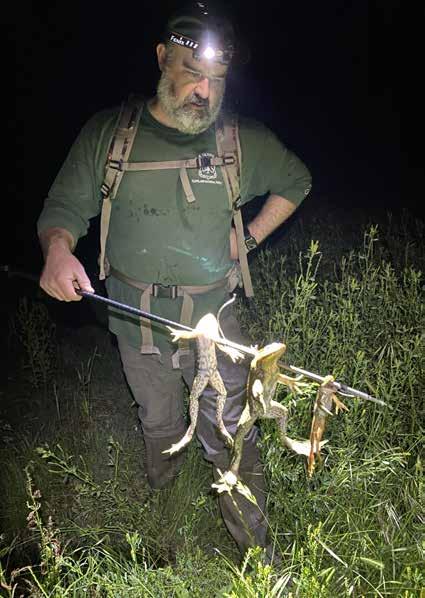
that only reproduces once a year, and only when there has been sufficient rainfall, losing full-grown adults is a disaster.
All the while, the night is singing around us. Tree frogs, crickets, water flowing, birds calling and rodents skittering in leaf litter all come together and occasionally make it difficult to hear one another. I have been listening for a very specific sound, though, and I am rewarded with a high-pitched trill in the distance. We move toward the trilling, only pausing to kill another bullfrog.
In a flat area, with water barely covering the sandy bottom, we find the source of the trilling: a small, brown, warty toad known as the arroyo toad. This is the reason I am here hunting frogs tonight. Listed as endangered since 1994, these toads are adapted to live in the seasonal streams (arroyos) of the very southwestern corner of the United States. Unfortunately for the toads, the epicenter of their range is now San Diego, Orange and Los Angeles counties, some of the most densely populated areas in the United States. Between urbanization and the habitat destruction that comes with it, invasive species like bullfrogs and associated chytrid, it has been hard times for the little toads.
Bullfrogs will happily eat arroyo toads at all life stages. Most problematic for the toads, though, a single adult bullfrog can eat multiple adult arroyo toads in a short period of time. For a species
We admire the toad for a short period of time, and I take a GPS point. We continue, being more careful about where we step as we go. Stepping on an endangered species would not do.
Over the course of the evening, we hike a little over six miles and kill 35 bullfrogs total and miss or don’t quite close on 15 more. Disturbingly, we find three old stock ponds that likely serve as breeding sites for the bullfrogs. They are small enough that we didn’t see them on aerial maps under tree cover but big enough that our gigs don’t reach the middle. The stomach contents I find include four beetles, a number of snails, three Baja tree frogs (from one frog) and three live oak leaves (likely accidentally eaten as they floated past a waiting frog). There are many frogs with either empty stomachs or with what can only be described as goo in them. Unfortunately, I am not able to get many testicles for the local researcher. Many of the frogs were too young, female or too damaged — also, finding frog balls at night in a swamp is hard.
We count around 30 arroyo toads. This is the most I have ever seen in a small area, which is great. Now I want to make sure that they stay there. Looking at my GPS waypoints shows that the bullfrogs and toads are concentrated in separate areas that are not particularly close to one another. This fits, as their habitat
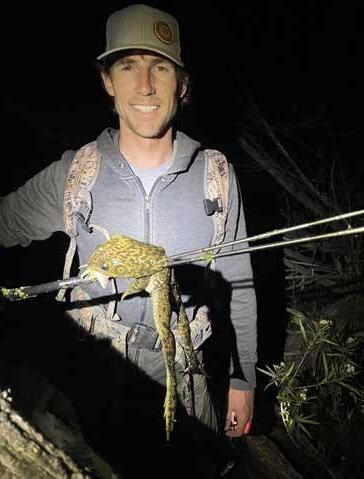
preferences are different. The frogs tend toward brushy areas with deeper water, whereas the toads prefer very shallow sandy areas. The spots where those habitat types are close to one another will be the concentration of future trips.
It’s now quite late. I give all the frog legs to Devin for his wife. I have found that taking care of your hunting and fishing buddies’ significant others means that they can go hunting and fishing more often. A few weeks later, Devin will soak the legs in buttermilk and deep-fry them. I will dip mine in a bit of chili crisp, and they will be simply divine.
I am tired, sweaty and stinking. When I get home, I hose off my spear and boots, strip and put my clothes directly in the washing machine. I put the vials in the refrigerator to be handled tomorrow, making sure to hide them behind some leftovers so my wife doesn’t get upset at the frog nuts in her fridge. The hot shower and bed are wonderful, but I know the wake-up tomorrow will suck.
Some nights are just better than others.
Lee Hamm is a wildlife biologist in Southern California. He encourages you to get out, try somewhere new, and hunt or fish for something “weird.”

DURABLE
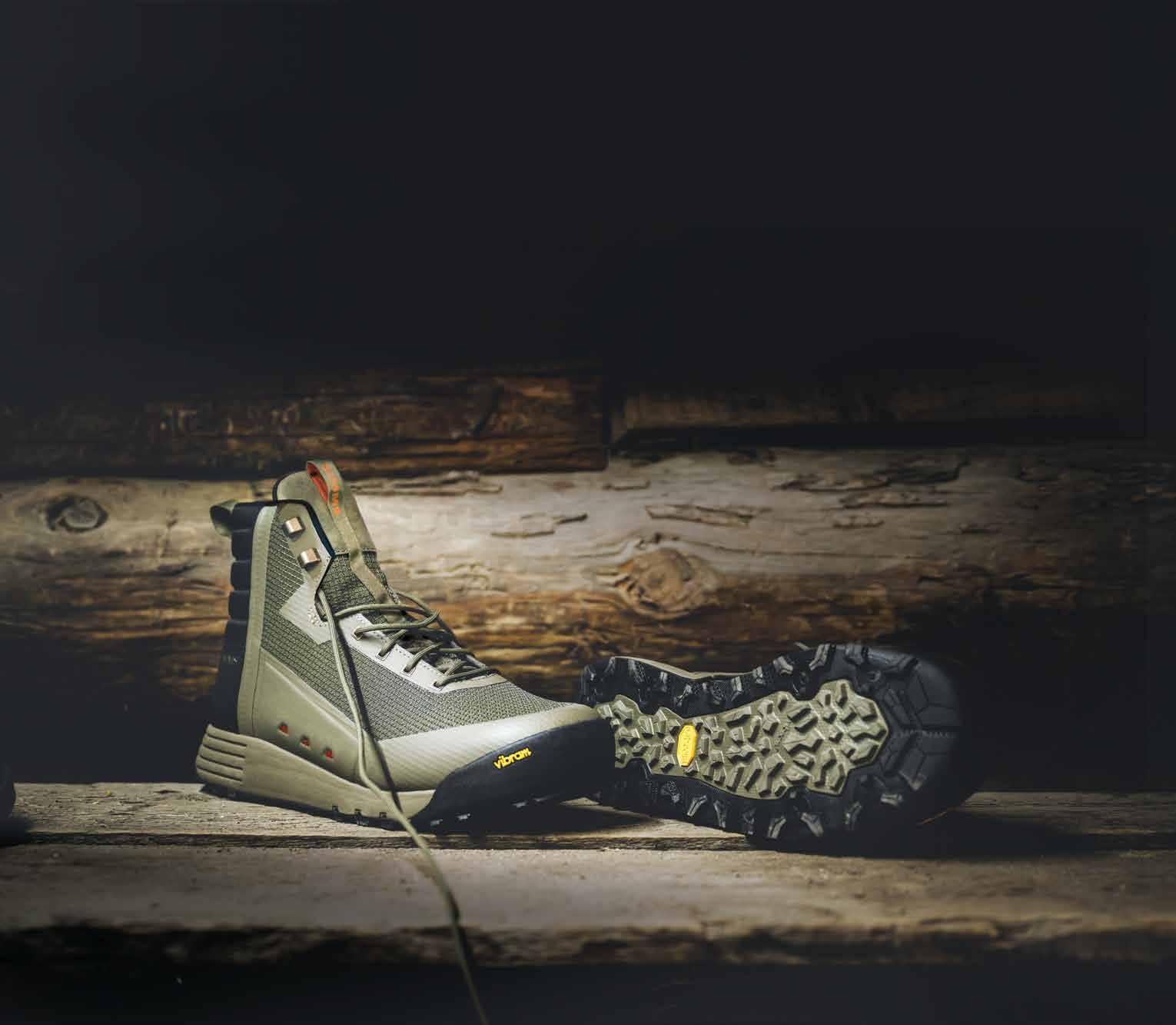
LIGHTWEIGHT
GRIPPY AS HELL
Introducing the all-new Access Boot. Powered by a dual-compound Vibram® outsole—Idrogrip rubber on the outside for durability, Idrogrip Flex on the inside for felt-like grip—delivering serious traction for technical wades, without the weight.
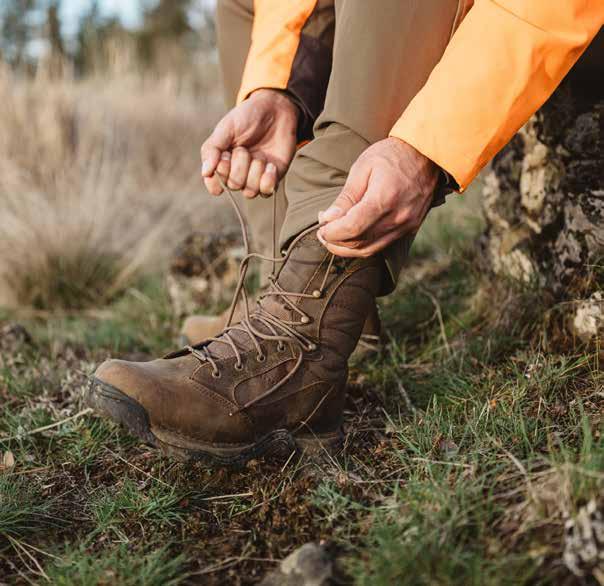

MILES OUT OF SERVICE STILLNESS BROKEN BY THE CHASE EVERY STEP IS EARNED THROUGH BRUSH AND TIMBER THE WILDERNESS PROVIDES
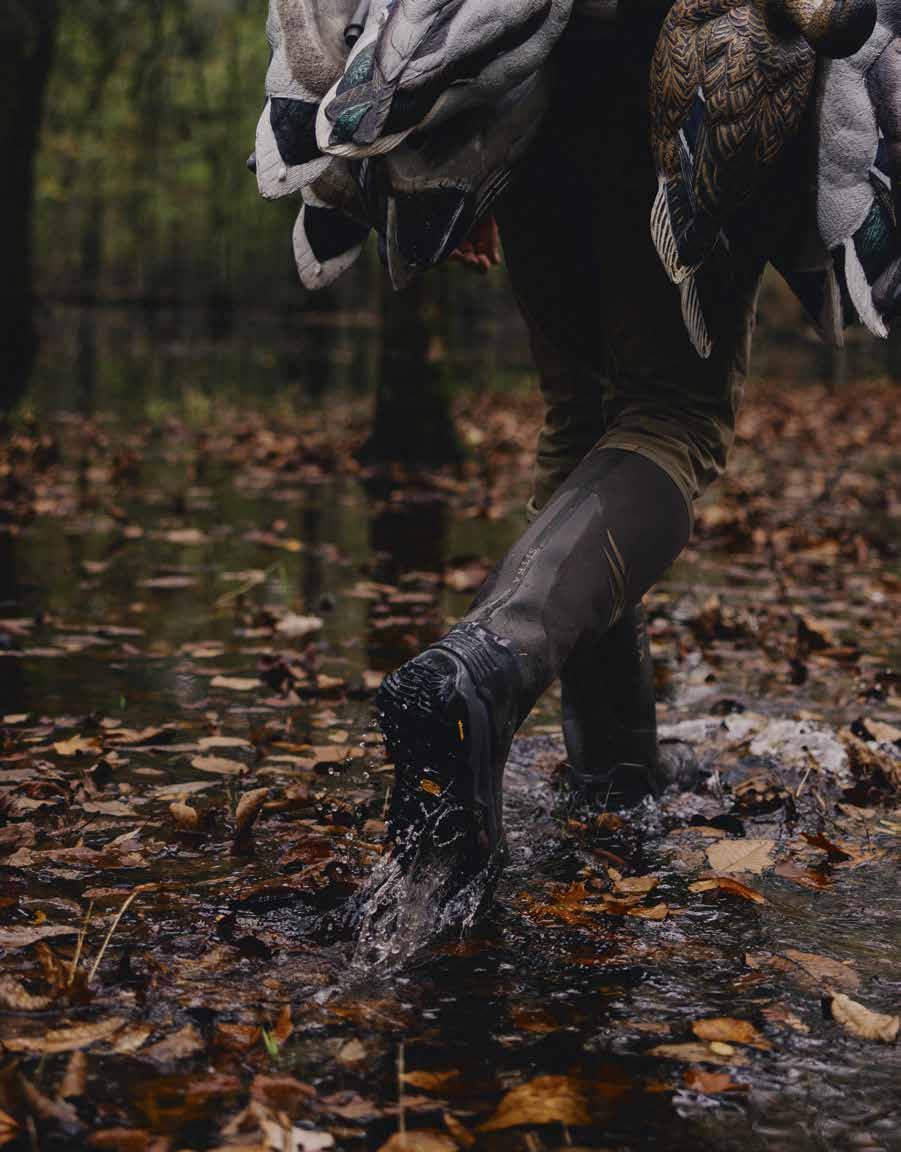
ULTRALIGHTWEIGHT COMFORT
FULL GORE-TEX CONSTRUCTION
SITKA APEX TREAD SYSTEM FOR MAXIMUM TRACTION
TEMPERATUREREGULATING INSULATION
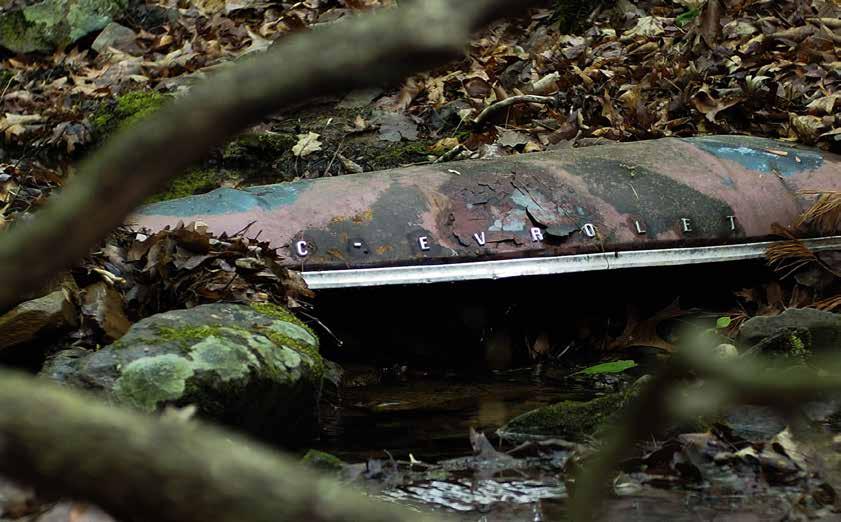
BY JACOB COLLINS
A sign peppered by shotgun pellets and the rusted hood of a Chevrolet mark the turnoff.
The familiar crunch of gravel fills the cab of my truck as I roll down the window. The old Forest Service road is wrapped in fog and dimly lit in the blue morning light. Recent rains have offered respite from an unusually warm early spring and allowed me the chance to chase the native trout that call these waters home.
In the Southern Appalachians, brooks and branches with names like Turkey Craw, Wolfpen and Dungeon provide the last bastions of safety for the native brook trout. High above the monoculture and manufacturing in the valleys below, these bluelines are filtered by an incomprehensible network of roots, leaf litter and soil. Almost all of these headwaters have been kept intact for more than 100 years by a federally managed national forest system — a miracle of American legislation that we sometimes take for granted.
I pull the truck over at a familiar patch of gravel. Powered by gas station coffee and a MoonPie, I set off down the trail. Fallen trees have covered parts of the path, but I don’t mind. It’s a reassurance that the stream hiding in the hollow below hasn’t been swamped by visitors.
Climbing my way through the tangle is only the price of admission. The faint white noise of the flowing water grows as the faded path cuts through tunnels of rhododendron. I’m a tad late for their bloom, but the pale pink flowers still cling loosely to their
branches. Their petals fall gently into the gin-clear water that flows below.
It’s the first time I’ve been here in two years. The stream has changed. Trees blown down by Helene choke the flow in places, creating new holes and runs. Boulders have been moved and scoured clean by the immense power of heavy current. My mind begins to cast doubts. But I’ve made the drive and hiked all this way. I’m going to at least give it a shot.

In the early 1900s, the United States was hit by a series of natural disasters. Major flooding and large wildfires plagued the Appalachians from Maine to Georgia. The damage from these storms was only exacerbated by intense clear-cut logging operations. “Cut-out and get-out” was a familiar practice for companies looking to increase their profit margins. This left behind acres of bare soil and debris. With no root systems to filter the flow of rainwater off the nation’s mountains, flood events caused significant damage to homes, businesses and crops. Adding to the destruction, runoff began to compromise water sources for large urban centers like Pittsburgh. Around the same time, intense fires were spurred around the nation by the large fuel loads left behind by logging companies.
This string of destruction didn’t spark the idea of a national forest reserve. The idea of setting aside some of the East’s forests for the
The simple Southern brook trout stands as a symbol of the creation of our national forests — a testament to the American people’s commitment to protect their resources through the public trust.
public trust had been brewing for a decade.
The efforts of Theodore Roosevelt and the creation of the Forest Service had already inspired states like New Hampshire to begin protecting areas like the White Mountains. That same sentiment had begun to trickle down into the Mid-Atlantic and Southern states. Destruction left behind by wildfires and flooding only acted as a match to light the fuse. Soon, public outcry would put pressure on Speaker of the House Joe Cannon. Despite President Roosevelt’s popularity, his progressive policies had not made him many friends in the halls of Congress. “Not one cent for scenery!” was a common line used by Cannon’s conservatives. However, the public fervor over forest protections became too strong. Cannon would soon need to find a like-minded individual to draft a forest bill on agreeable terms. A fellow Republican named John Weeks would be his choice.
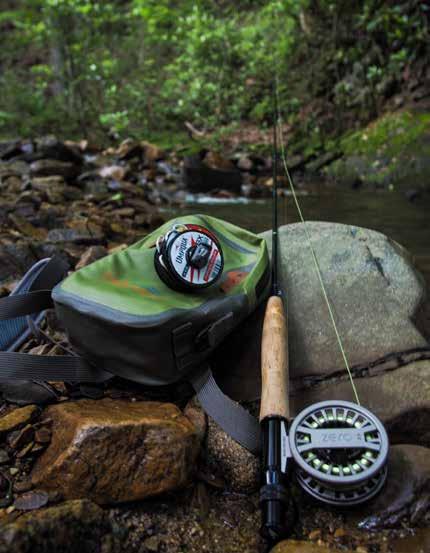
stature, they make up for in beauty. Deep green with golden bellies, speckled by red dots and fins outlined in white. Tiny paintings come to life.
I pick my way upstream, passing over small waterfalls and under blowdowns in search of pockets of water fit to hold a fish. The morning sun shines golden through a canopy of hickory and poplar, mottled light casting shadows on the mountain laurel lining the bank. Coming up on the tail end of a familiar run, I notice the hole seems unchanged by the storms. A 4-foot slide of limestone leads into a long, deep channel, complete with a miniature sandbar and a handful of sizable rocks for cover.
For the first time today, I roll out a cast that isn’t a bow-andarrow. The stimulator hits the surface of the water just enough to make its presence known to the life beneath. A small shadow emerges from the pool. A quick swipe. A flash of green below the surface. The fly is untouched as the tiny char settles back to the bottom of the pool.
After a cast or two more, I decide to switch to something a bit more subtle — a No. 12 Adams. A much more delicate presentation down the same drift does the trick. The new fly slides slowly atop the water before being taken under with a splash. After setting the hook, I pull in the trout and wet my hand in the cold, clear water before holding the tiny trophy in my palm. What these fish lack in
Weeks was an unlikely candidate to author a new national forest bill. However, he was a businessman Joe Cannon knew he could trust. Despite public outcry and the push from more progressiveminded Republicans like President Teddy Roosevelt, Cannon still held a firm grudge against the idea. If Weeks, a Massachusetts banker, could write a bill that would be approved by the speaker, it would have to do.
The first version of the bill went nowhere in 1908. It was considered unconstitutional by committees within the House. Many versions of a forest bill had met similar fates up to that point. Weeks added a provision proposing the new forest preserve system be managed and maintained by the federal government to protect the headwaters of some of the nation’s largest and most valuable watersheds. This solved the question of constitutionality through the federal government’s right to regulate interstate commerce. Water has no allegiance to states or borders.
The bill passed the House and faced more fights and filibusters in the Senate before graduating to the president’s desk. Eventually,
the Weeks Act was signed into law by President William Taft in 1911.
The East’s native trout population was almost certainly not at the forefront of Congress’ mind when the Weeks Act was drafted. Floods and fires spurred by the degradation of the nation’s upland forests took the driver’s seat. The steep decline of the species in the late 1800s probably never even caused a blip on the House’s radar. When William Taft signed the bill, he probably wasn’t daydreaming about hiking into the Virginia backcountry to catch blueline brookies on dry flies. Hell, maybe he was.
It doesn’t matter much now. What matters is that I’m standing in a cool, gin-clear stream with a 3-weight in hand, watching the product of a legislative miracle patrol the pool in front of me. For me, at least while I’m fishing, the simple Southern brook trout stands as a symbol of the creation of our national forests — a testament to the American people’s commitment to protect their resources through the public trust.
BHA member Jacob Collins is an outdoor writer and photographer from Southwest Virginia. His work centers around hunting and fishing, public lands, wildlife management, and the men and women who call Southwest Virginia home.
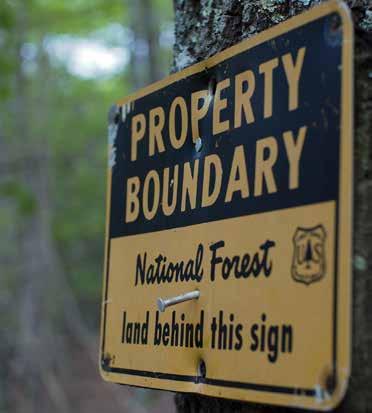
Rent an RV with Outdoorsy and get $150 off with code BHA150
Expires 6/30/2026.


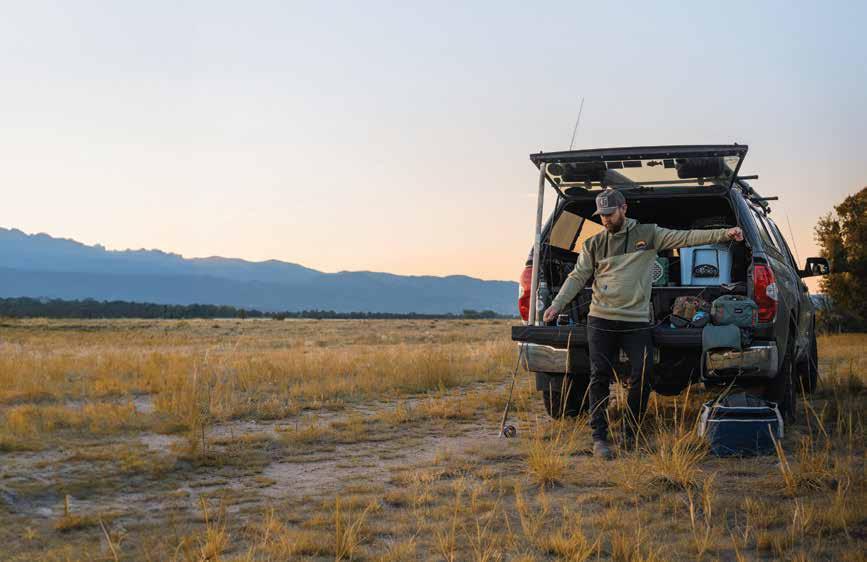
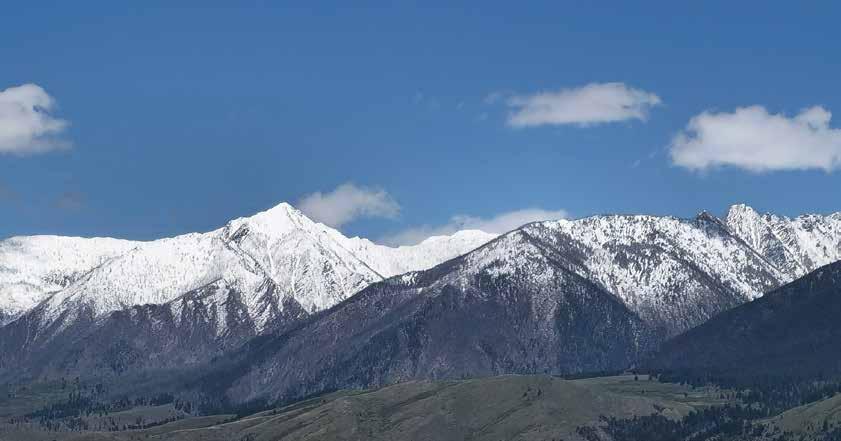
BY JAMES A. PAUP
This is the final chapter in a story that began three years earlier. Each year brought its own lessons — education, insight, heartbreak, and the most important element to hunting and life: experience.
I had coordinated dates with my good friend and hunting mentor, Aaron, planned vacation days, and set my out-of-office. My wife would tell you I picked the worst possible week to leave for hunting: the last week of school, kids running wild, and summertime sports ramping up. Luckily, I am blessed, and my wife understands there are “best times” for spring bear season.
In the days leading up to my long-anticipated adventure, sickness crept in — fever, aches, lethargy. With less than 48 hours until departure, I snacked on ibuprofen, slept early, and miraculously awoke fever-free Wednesday.
Thursday morning, I packed the truck, exchanged family goodbyes, and they wished me good luck. I felt sluggish but determined. I wouldn’t let a little sickness derail months of training, planning, and sleepless nights filled with visions of bears crossing mountain ridges. Western hunters often take vast public lands for granted; flatlanders like me live vicariously through YouTube and dreams of the next adventure.
Winter had brought 135% of the seasonal average of moisture, meaning some roads could be tricky or impassable. I refreshed onX imagery like an addict checking their dealer. Things looked passable, but firsthand knowledge is always better. Our plan: send it and see how far we could go. Still haunted by last year’s events, I had to return to the same area.
As luck would have it, the access roads were nearly better than before. Arriving, we shut off our pickups and soaked in the silence the remote backcountry provides. Within a minute, a lone wolf let out a long, low howl. Aaron — a veteran of the wilderness — called it a locator howl. I took it as a good omen.
We set camp and rucked into “the spot.” Aaron spotted the first bear within 20 minutes — a decent black bear about 1,600 yards away. Almost as quickly as it appeared, the tree canopy swallowed it whole. That was the only bear we saw that day. A few elk and mule deer showed themselves, but nothing else. Darkness brought us back to camp.
I realized I was still recovering from my earlier sickness. I slept better on a lightweight air pad than ever, with rain providing the perfect white noise. Nature’s alarm — birdsong and sunlight — was there before I knew it.
We were in no hurry to move that morning. Aaron fired up the stove to chase out the chill and dry the night’s moisture. As I soaked up the rays, I stared into an open area that offered ideal bear forage — perfect chartreuse grass. I wondered how many bears we never saw, lurking in treeline shadows like Carlos Hathcock — an infamous Marine sniper — intent on remaining unseen.
We planned to climb a nearby peak and glass as far as possible. Our hike started by crossing a small creek, too wide to jump and too deep to walk through without soggy boots. A fallen tree offered the best bridge in the area.
As we approached, Aaron quietly exclaimed, “There’s a bear.” Two minutes into the day, a beautiful jet-black bear grazed inside the treeline. After a quick confirmation with my own eyes and binoculars, I thought, it’s time.
My rifle is heavy — what some call a boat anchor — so I had strapped it within my pack. I’ve yet to find a sling I like. Moments later, it was time to retrieve it. Was this my chance at redemption? I carefully removed the rifle, moving only as necessary, each click sounding like an outlawed M80 firework. I kept glancing up, expecting to see a spooked flash of black vanish into the shadows.
“250 yards,” Aaron said. Six clicks of my turret (0.6 milliradians). Dialed.
Last year, at 300 yards, I had targeted a gorgeous cinnamon-phase
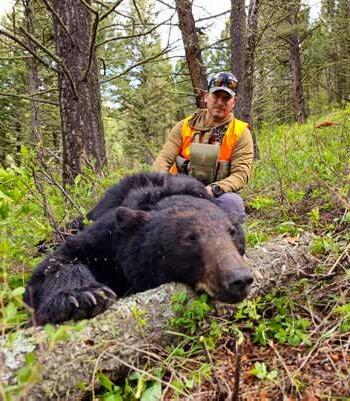
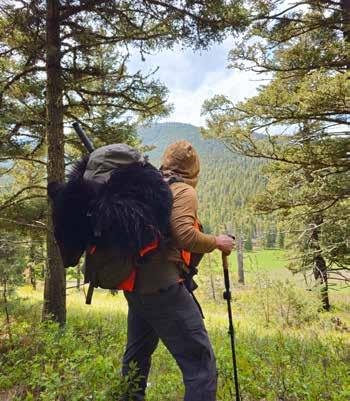
black bear and never recovered it. Two hits, nearly 20 miles of grid searching, and I failed. My pride and confidence suffered.
Now, prone and steady, I had the bear in my optic. Please don’t repeat last year, I thought.
Jet black, thick fur, black snout. I guessed four-and-a-half feet — average for the area. It grazed, moving behind a tree. I repositioned while Aaron stayed focused. Time slowed; I moved with precision and speed. I checked for cubs. None.
“I’m shooting,” I whispered.
Exhale. Settle. Pause. Squeeze. Shot. Hit. Drop. Roll. Silence. Observe. Wait.
My heart pounded. The silence was deafening. Aaron broke it: “It’s not moving.”
Hiking up, I worried it might be a sow. It wasn’t a cub or grizzly-sized — just a mass of black fur. I stood stoic, absorbing the achievement. Kneeling, I stroked the soft, thick fur — the culmination of three years: nearly 80 backcountry rucking miles, countless hours, days of driving, and missed family moments. I thanked God, knowing this was His test of commitment, resilience, and resolve.
Aaron and I shared high-fives, a brotherly hug, wide smiles, disbelief, and photos. I couldn’t believe it — a six-foot-square boar, a true beast of the wild. One shot, no tracking, no repeat of last year.
I knew a little about skinning, but Aaron’s professional guidance was invaluable. The bear provided pounds of fat and meat. After a few hours, the packs were loaded, and we rucked back to camp.
On the way home, a fleeting thought crossed my mind: Was this too easy? The pack-out was short. I had envisioned a grueling ordeal over miles and hours. Mentally, I repeated embrace the suck, a lesson from my Marines days.
I snapped out of it. I did it. Finally. None of this would have
happened without Aaron, nor the support of my wife and family — Shannon, Ponch, Grizz, and MM. She understood my desire and assured me it was okay to pursue this adventure, even if it meant absences. The kids would understand someday. (If this hunt had failed, our oldest joked, I would be disowned.)
I found relief from the pressure of pursuit. This was my sixth biggame hunt and my first filled tag. It changed everything: I would enjoy it more, share what I had learned, teach others as Aaron had taught me, and remain a student of the wild.
A quick call to my wife:
“So now you can hunt something else and not be gone the last week of school?”
“Well, I need to do the bear slam — all the colors.”
She laughed despite herself. “Okay, I guess the last week of school wasn’t that bad.”
Redemption didn’t wipe the slate clean, but it taught me that hunting doesn’t live in a single chapter — it’s a whole book.
As this chapter closed, I crossed into Montana’s lowlands. The rising sun painted the peaks gold, illuminating snowcaps as beacons of direction. The bear was in the freezer; the kids were waiting at home; and already, my heart drifted toward the next wild place. I texted Aaron, planning the next hunt.
His reply: “Maybe a fall combo bear/wolf?”
See you soon, Montana.
A former Marine with a career in public service, BHA member James A. Paup believes in preparation, perseverance, and learning through experience. His stories draw heavily from time spent hunting the backcountry and overcoming personal setbacks, while life with his family in the Midwest keeps his priorities firmly in focus.
Darkwater is the newest advancement in First Lite camo, purpose-built for hunting in dark timber. Its refined color palette and micro-breakup pattern are engineered to disappear at close range beneath the shadowed canopy of hardwood forests, river bottoms, and wooded wetlands. Now available in the Approach Hoody, 308™ Whitetail Pant, and Treeline Turkey Vest. See the full lineup at FirstLite.com
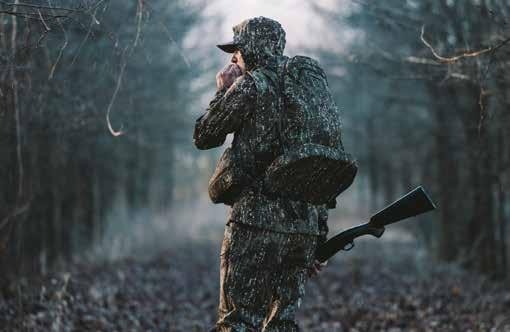
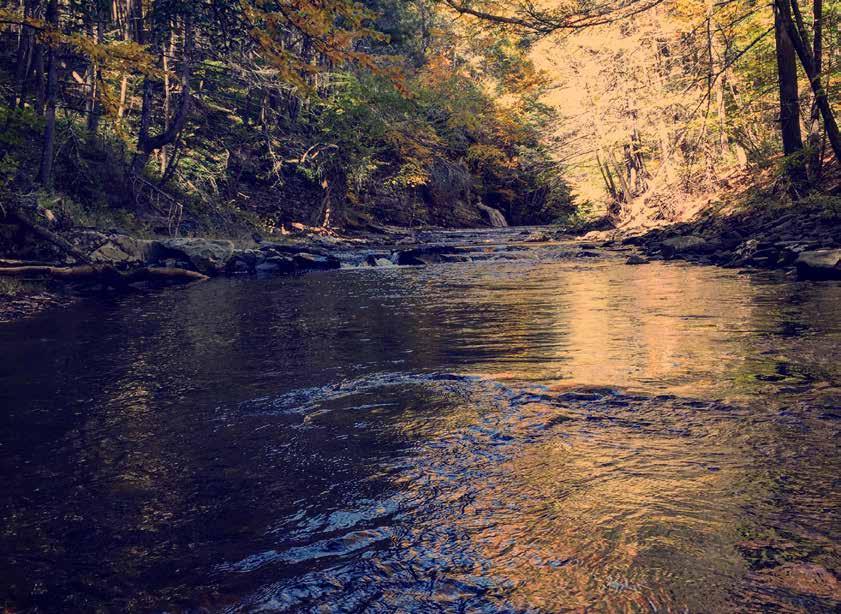
BY DAVID N. McILVANEY
A forest reacts to sunlight in different ways. Leaves embrace the light to intensify their luminance until they quiver with a glow that leapfrogs through the woods, igniting each tree. Rock and moss feed on the light, consume it, imprison it. Keep it buried. When sunlight touches a forest brook, the flash shatters into a thousand little shards that dance under the surface of the riffles. In the dank pools under the hemlocks, light is deadened to drift down and lie forgotten on the black bottom.
The small water had all the aspects of light, including the green flicker of a feeding trout at the head of the pool, and the fly rod in my hand responded, twitching like a divining stick. This unnamed stream was minutes from my cabin in the Catskills, and after driving by for years, I decided to follow it up the mountain to fish its headwaters. Catching wild brook trout would be great, but I was after something else.
A year prior, beside a Swedish salmon river, I collapsed under the realization that I was not the man I hoped to be. And not overly fond of the person I presented to the world. My past trauma had finally caught me, and I could no longer carry the weight of years of pain, insecurity, and doubt, or hide behind the bravado and bullshit façade of my life and writing.
I was broken.
Back home, I recalled something I said on a podcast about fishing: “Rivers wash away our sins. Scour us to the bone and expose our marrow to the world. And, if lucky, allow us to be reborn and
made whole.” It’s one of those flippant things you say when trying to impress, yet I hoped it would prove true here on this little stream. I unhooked my fly from the guide and stepped to the water.

An angler gets one shot in a small wild-trout stream maybe two. On cue, the fish scattered when I raised my arm to cast. Maybe less than one.
The elk hair caddis landed where the riffle spilled into the soft water and was immediately attacked. Up and down in an emerald blink as I fumbled with the line and missed the strike. The fish was six inches long, and I have a made-up rule that every inch of a missed fish represents one minute of resting time, but impatiently, I flicked the fly to the same spot. The trout struck and a few seconds later, I cupped it in my wet hand. Small and delicate, the brook trout may be one of the most beautiful animals ever created. As a kid, when distance had wonder, I would sit in front of my tiny TV watching National Geographic and marveling at the speed of the cheetah and the killing grace of the Peregrine falcon. But the brook trout was poetry to me, written in a language that bursts with staccato code on its speckled side, yet hiding the deep secrets of the mountains in its lyrical prose. There are still magical creatures in the world, and this one quivered in my fingers.
I let slip my hand and the fish swam back to its secrets.
The morning sun filtered through the trees, spreading light and shade over a little pool upstream. The water proved fruitful, and
Photo: David N. McIlvaney
“Rivers wash away our sins. Scour us to the bone and expose our marrow to the world. And, if lucky, allow us to be reborn and made whole.” It’s one of those flippant things you say when trying to impress, yet I hoped it would prove true here on this little stream.
two skinny brown trout came out of the midsection. The higher up, the fewer browns there should be, so I began clambering over boulders, dropping flies from pocket to pool.
A small waterfall covered the width of the stream — a fourfoot natural barrier for the browns. Not ready to get wet, I hopscotched the rocks below the spill and stood waist-level with the upper pool, balanced on a thin stone. Bending slightly, my cast skimmed the surface of the water and the fly fell quietly. A brook trout took it. Bigger. Gaudier. The fluorescent streak of white along the lower fins flashed as he broke the surface. The stream was living up to its promise, and I felt that familiar vibration along my spine when an angler connects with water.
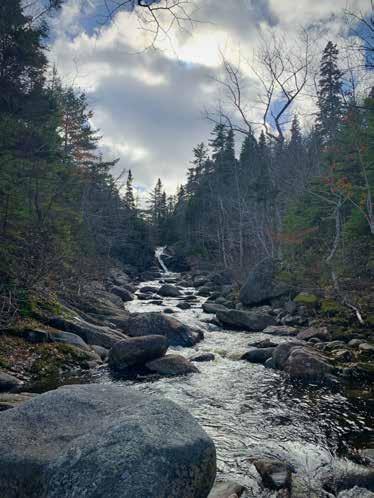
In his 1944 essay, “Exhaustion and Fulfilment: The Ascetic in a Canoe,” Pierre Elliot Trudeau, the former prime minister of Canada, had this to say about our relationship with nature:
What sets a canoeing expedition apart is that it purifies you more rapidly and inescapably than any other. Travel a thousand miles by train and you are a brute; pedal five hundred on a bicycle and you remain basically a bourgeois; paddle a hundred in a canoe and you are already a child of nature.
In the case of a train or bicycle, your means of conveyance depends upon a man-made surface, putting a barrier between you and the environment. But a canoe sinks below the surface and is cradled by water. You are immersed in nature. To fly fish, you stand in a river and become part of the landscape. Present and cradled, you are already a Child of Nature.
And if true, the only thing I can add with certainty is this — you can’t hide who you are to a river. It will out you. A river requires honest conversation and a willingness to lay bare to yourself.
I had worked hard to impress all my life, hiding my insecurities and fear of being exposed and judged. That was learned from my father, who was a star to everyone else but secretly an abusive and violent drunk. A failed man in every way, his truth came bloody behind the closed doors of our suburban house. I got very used to lying to my teachers about where my bruises came from, lying to the nurses about what caused the gash on my head, and avoiding the eyes of my concerned grandparents. Some of those wounds
were “earned.” When I was nine, I realized that I could redirect my father’s ire from my mother and sister to me and take their beating. It was the only way my kid-mind thought I could protect them, and I got very good at pissing him off.
One night, when I was twelve and alone with my father, he got drunk and walked into the TV room where I was sitting. He stared at me until he had my attention, then continued to the garage. Call it intuition (or bad luck), but I knew something was up and followed a few moments later to find him strangling from an electric cord he had looped over the garage door rail. I don’t know how to describe the baseball-bat-to-the-back-of-the-head that is seeing someone who is supposed to protect you choose to die. It felt like betrayal — a smash of pain that drops you to your knees, then an endless fall into the depths of an ocean where choking pressure increases until you are crushed. My ragged breath matched his strangled one as I ran for some garden shears to cut the wire. He hit the concrete in a crushing thud. Too drunk to walk, I half-carried/ dragged him to his bed and hid all the evidence. My mother and sister came home a few hours later and joined me as I watched TV. I said nothing. The next day, my father poked his head into my room.
“Crazy night, huh?”
Yes, Dad, it was a crazy night.
Four years later, he did it again, but with my sister in the house as well. As he struggled for air, I contemplated letting him die — just f---ing let him die but the better part of me took hold. He was now too heavy for me to cut down, and I bolted to a neighbor’s place.
We got him down, and my father lived. Again. Soon after, he drank himself to death. At that point, he was finally out of my mother’s house and living in a motel. I went to collect his things and settle the bill. As I shoved clothes and papers into a garbage bag, I saw my high school graduation portrait tucked into the frame of the dresser mirror. It had been torn into quarters and then carefully taped back together.
John Robert McIlvaney b. October 17, 1935; d. August 25, 1985
A little splash upstream. I have another nonsense rule that says the smaller the water, the bigger the fly, so I switched to a foamy Chernobyl built to float in the quick water. Mountain fish don’t have many options when it comes to food and can’t resist a big meal. The fish agreed, darting out to charge the fly. I unhooked a little parr barely twice the size of the fly.
By midday, I was tired enough to take a break and sat on the grass against a large hemlock, eating quietly as a tiny weasel scampered across the rocks on the other bank, looking for frogs or fish. A doe and her fawn came to the water to drink, and I watched in silence until they melted back into the trees.
The grass pulled at me slightly as I rose to fish again. Finally entering the stream, the chilled water rushed into my hiking shoes and up my bare legs like a dull electric current. The water had taken on a different aspect this high up the mountain. Another trick of the light, or perhaps my eyes saw it differently, but it was translucent, equally reflecting the sky and the pebbled bottom. I reached down and touched the spot where my face rippled on the surface, and as I did, the image broke and I saw a flash of my father’s eyes. The vibration along my spine increased. I dropped to my knees and plunged my hands into the water. Raising them to my face, the droplets slid off what seemed to be newly formed skin. Pink and glistening, my hands shivered in the mountain air.
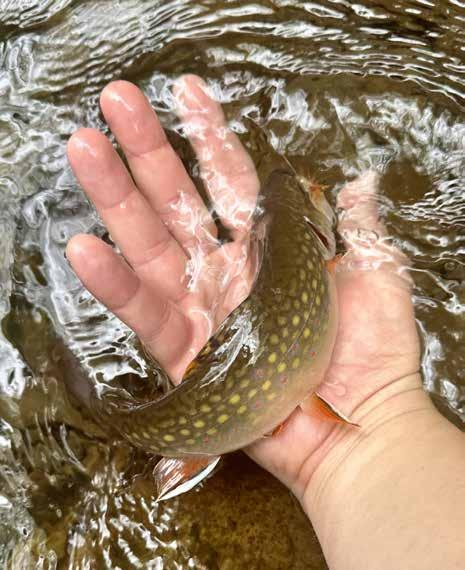
lack of oxygen as the glints of sun on the quickened water around me became steel talons tearing at my flesh, flaying me, ripping skin from my body, staining the stream with red streaks of blood. The beating in my ears became a silent scream for air, and the water rushed into my open mouth, my chest collapsing and bones splintering with the force, exposing my marrow. My fetid core.
Steeper now, the stream above cascaded wildly down the rocks made black with the overspray. It was louder. More intense. Directed. The sides closed in like bookends as I climbed.
I jammed the rod into a crevice, needing both hands to steady myself as I fought to move up, the tight walls increasing the water’s power. I tried to jump onto a boulder along the wall, but the stream held me fast. If I wanted to go higher, I’d have to go through the water.
The walls gave their final press, and the stream was channeled into a slick narrow chute, leaving me no choice but to reach under the water for a hold. My fingers slid into an unseen crack, and a sudden surge wedged my hand down and trapped it there. I frantically stretched my other hand for a side wall. As I brushed my fingertips against it, the water rose, forcing my hand into another crack. Suspended between my outstretched arms, the water swept my feet out, driving my head under. Trapped. I was falling into that ocean again, intense pressure on my chest and brain pounding with the
You cannot lie to a river; this one saw me for who I was — the frightened child who turned a lifetime of fear into arrogance, laziness of spirit, and dishonesty of self, sabotaging relationships and lashing out at everyone before they could cut me — hurt and pain to the ones who loved me most. Here was my father’s legacy. And despite a lifetime of denial, I had become the man I most hated, bitter and broken. The river saw all this, measured and rejected me. All I had left was to finish what my father couldn’t. I surrendered ready to die and gave myself over to fall limply between my bound hands.
But rivers are wild and capricious. An image of an extraordinary sunset in Iceland flitted by my mind. A last bit of light at the end of the day — steel grey sky with a fire-orange line across a field of dead winter grass. “Please,” I begged. “Just one more.” A point of light fell from my eye. The river lessened its force and considered.
“You are,” it said after a moment, “not your father.” And with that, all my tears finally flowed. For my father. For myself. For the first time. Drops of light turning the river silver. The very last of me. Scoured, baptized, crucified, lustrated, and forgiven, I was reborn in this small mountain stream.
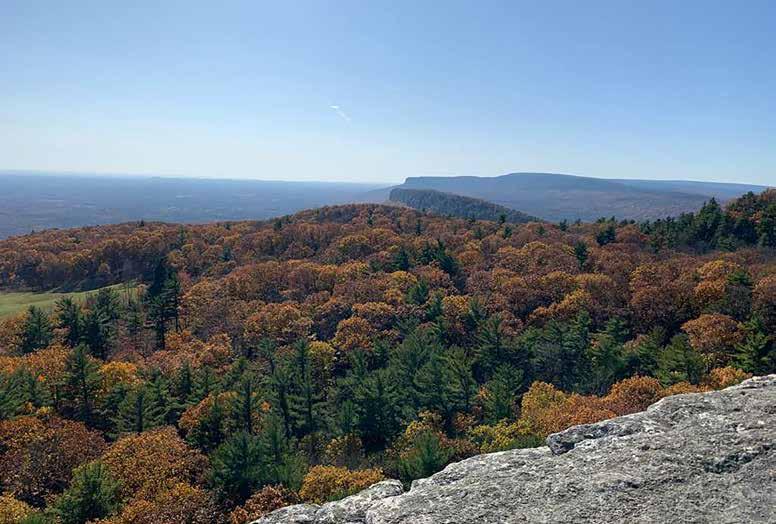
My hands suddenly free, I crawled out of the water, heaving for air. I was now on the summit, where the few remaining trees along the stream had given way to clear sky. I collapsed on a boulder, hugging it for warmth, when I felt someone standing beside me. My father. We looked at each other for a moment, and then I said the thing I have been incapable of.
“Dad, you did your best, and I forgive you. I want you to know that the drinking and abuse ended with me. But I want to ask for your forgiveness for keeping the worst part of you alive for all these years. I’m going to set you free. I want you to get some rest.”
I can’t say there was a reaction on his part, but I do think there was gratitude. He faded and I noticed the soft sunset for the first time. The view from the top was endless, and I could see a thousand years of my past and a thousand miles of my future.
I heard a rustle in the forest leaves below. A sigh that raised the hair on my skin. My presence was accepted, and I was a Child of Nature again. What started on a river in Sweden finished here, just minutes from my cabin, as I ended my paternal line and started a new one.
I’ve climbed many mountains. Paper ones made of pretty words that couldn’t hold my weight. Mountains of mirrors that, as much as I tried to ascend, I slid off, leaving streaks on the glass. Clay mountains that crumbled under my fingers like a brittle death
mask as I reached for a new hold. It took me decades to climb this mountain. To let this place of water and rock, sky and wood, strip me to the core and allow me to forgive and heal.
“Rivers wash away our sins. Scour us to the bone and expose our marrow to the world. And, if lucky, allow us to be reborn and made whole.”
I’m an outdoors writer — essays about woods and water. I write about the self and our connection to the wild. I write about the redemptive quality of the woods and the idea that while we may have given up on nature, it hasn’t given up on us. Occasionally, there’s a fish caught. And if lucky, it’s a brook trout.
I’ll let that be my father’s new legacy.
The sun dropped below a nearby mountain, and the woods turned to greenblack, with just enough light in the sliver of sky above the stream to guide me back. I started down and, as a small gesture of kindness from the river, heard the splash of a trout around a bend. I found my rod and fished my way home.
David N. McIlvaney is an essayist whose work delves into our intricate relationship with nature. Splitting his time between his camp in the Catskill Mountains of New York and the colonial city of Mérida, Mexico, he writes about fly fishing and the wild, with occasional meditations on trauma, masculinity, and the healing power of the outdoors. Through stories of rivers and wild trout, he explores the possibility of rebirth in nature and the quiet grace of forgiveness.
t

J o i n , R e n e w , U p g r a d e , o r G i f t a B H A M e m b e r s h i p




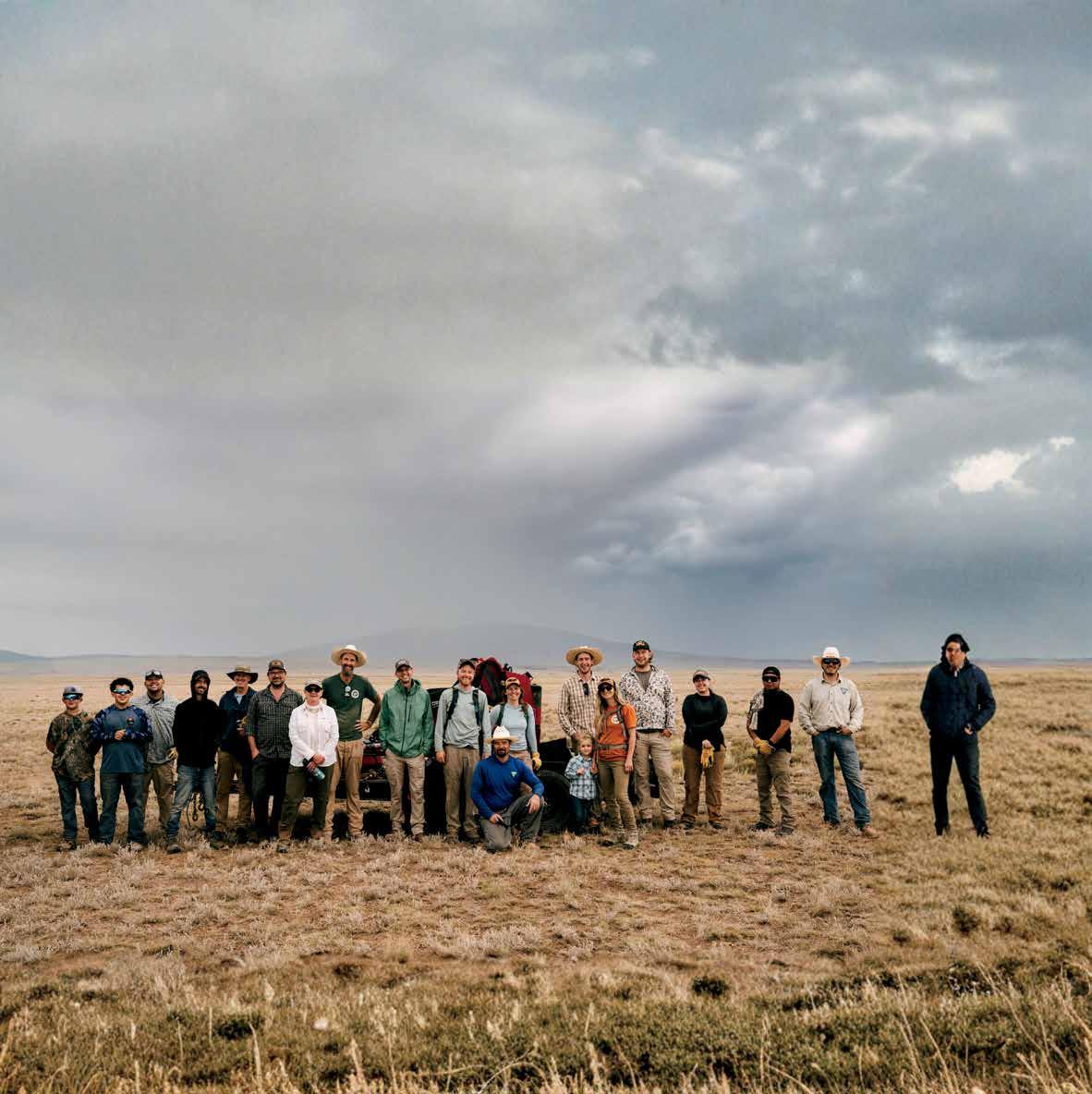
BY LESLIE GAIR
When you think of Ohio, the first things that comes to mind might be booooooring; I’m never going to Ohio; Or wait, didn’t their river catch on fire? In fact, recently the word “Ohio” has gone viral as slang for anything cringe, weird or painfully average.
I grew up in Northeast Ohio, and for much of my younger years, I dreamed of moving out West: Colorado, Montana, Wyoming — you know, all the cool, outdoorsy states. Yet the more time I spent connecting with nature, with a fly rod in hand, the more I realized something unexpected. This was home, and I wasn’t in a hurry to leave.
As the seasons change, one thing remains constant: public access to Lake Erie and its tributaries. Although Lake Erie is the shallowest of the Great Lakes, it has immense biodiversity and is only improving over time. Believe it or not, the Cuyahoga River catching fire was the driving force for the Clean Water Act and the creation of the Environmental Protection Agency. You can thank us later.
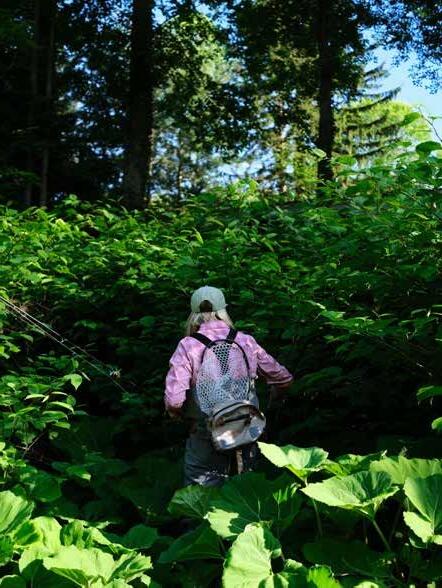
With these regulations in place, along with further projects and policies including the protection of public lands, wetlands and waterways, Ohio has seen meaningful ecological recovery. The American fisher and river otter have returned, trumpeter swans are no longer listed as threatened species in the state, and lake sturgeon have been recently reintroduced to the Cuyahoga River in an effort to remove them from Ohio’s endangered species list.
No matter the season, the Great Lake tributaries of Ohio offer fishing that is both extremely productive and incredibly diverse. In the heat of the summer, a single river system can hold smallmouth bass, freshwater drum, channel catfish, bowfin and northern pike. Long summer days bring no shortage of hours on the water. Sometimes in the heat of the day, I lie back on the rocky bank, knees pulled up, and stare into the sky, waiting for a bald eagle or red-tailed hawk to fly overhead. I hear a turkey in the woods across the river and, not long after, the rattle of a belted kingfisher. Time seems to hold its breath until the sound of a smallmouth crushing the surface snaps me back to the river, and I start casting again. I aim for a logjam on the far bank in some slack water, right where the fish was feeding. On the second strip, the smallmouth smacks the green-and-yellow frog popper. For some reason, these vicious topwater eats always surprise me, even when I’m ready.
It’s long days like these that I find myself wandering into the woods, losing track of time. Along the banks is native bee balm, foraged for a simple tea. I peer past a shagbark hickory and see two eastern spiny softshell turtles swimming lackadaisically, rising now and then for a breath. A school of carp moves upstream, then downstream, then upstream again, flowing like a single unit. I think about changing my fly and making a few casts, but often these moments are a time to watch and appreciate. My eyes drop to the forest floor, searching for a chanterelle mushroom to forage or maybe animal tracks that tell a story. I switch to my other rod setup with an intermediate line and strip streamers for pike until the sun sets, before reminiscing on the long hike through the woods back to my car.
As water temperatures drop in the fall, the 12-weights come out, and so do the musky flies. Lots of hours are spent on the raft with my dog, Lainey, and anyone willing to commit to a day on the water with heavy rods and the constant grind of throwing giant flies at a fish we might never see. Late this past fall, everything finally came together. In a classic logjam scenario, on the first strip back to the boat after a very, very long pause, I connected with my personalbest musky. The first time it broke the surface, my jaw dropped. Rod bent in half, adrenaline rushing, I somehow got it together and quickly brought the fish in. A feeling of relief I can’t describe washed over me when the fish was in the net, one I still can’t fully
These rivers and the forests around them taught me patience, respect and a deep appreciation
for the life that persists against the odds.
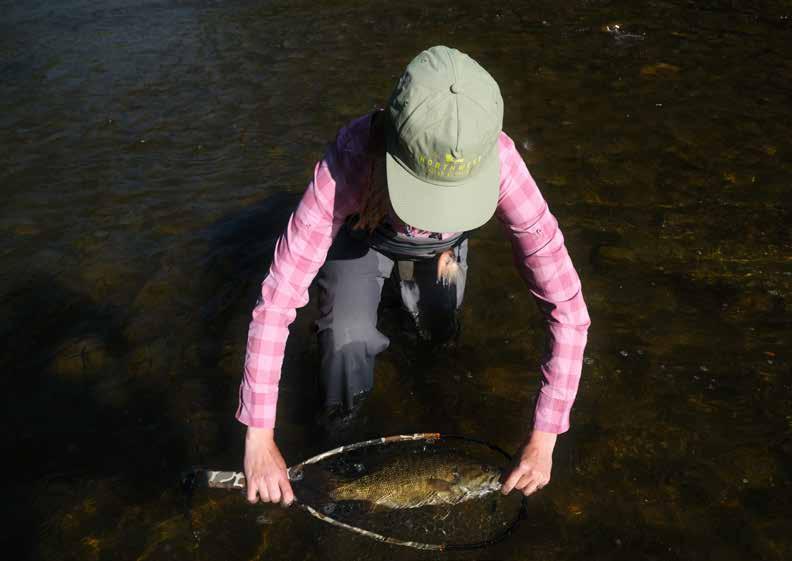
put into words. I stared in awe, mesmerized by its sheer size, beauty in the complexity of the olive-and-gold scales, the massive teeth and the pronounced hump on its back. With a sudden, powerful sweep of its caudal fin, I watched the musky vanish into dark water.
When cooler weather further settles, Steelhead Alley will be in full swing. In Northeast Ohio, anglers can fish the Ashtabula, Conneaut, Rocky, Chagrin and countless tributaries. With frozen guides and numb hands, hours slip by in the pursuit of chrome fish. The first fish of the season is always unforgettable, a moment that reminds me why I fell in love with fly fishing in the first place. A fish will run you into your backing, jump, thrash, head-shake, run under and around logs and rocks, or charge at your feet before bolting downstream. You really never know what you’re going to get, which is half the fun.
After winter, the early spring natives start emerging from the soil — garlicky ramps, bone-bright bloodroot and delicate trillium. It is a beautiful sign indicating lake-run smallmouth will be on the move. These migratory bass, often larger than their resident counterparts, push aggressively into Lake Erie tributaries to spawn. They are voracious predators that fight well beyond their weight class. Get ready for explosive strikes, violent head-shaking dives and bulldog runs. In many ways, these fish remind me a lot of Ohio itself: tough, resilient and built to endure. As the ramps turn yellow and the morels brown, it is time for the lake runs to return to open
water, leaving the resident fish to dominate the rivers through the summer months.
Beneath the jokes and stereotypes is a place that has learned how to hold on and how to heal. These rivers and the forests around them taught me patience, respect and a deep appreciation for the life that persists against the odds. Ohio doesn’t try to impress you; it simply waits until you realize you were never meant to leave. To this day, people tell me I need to move out West, chase bigger mountains or wilder water. I have already found what I was looking for. Ohio is not something I grew out of; it is something I grew into. It is, and always will be, home.
Leslie Gair serves on the BHA Ohio Chapter Board and co-leads the Cleveland chapter of the Mayfly Project. A zoology graduate of Miami University, Leslie founded a fly-fishing club at the high school where she teaches environmental science, inspiring students to connect with the outdoors through hands-on learning and conservation.
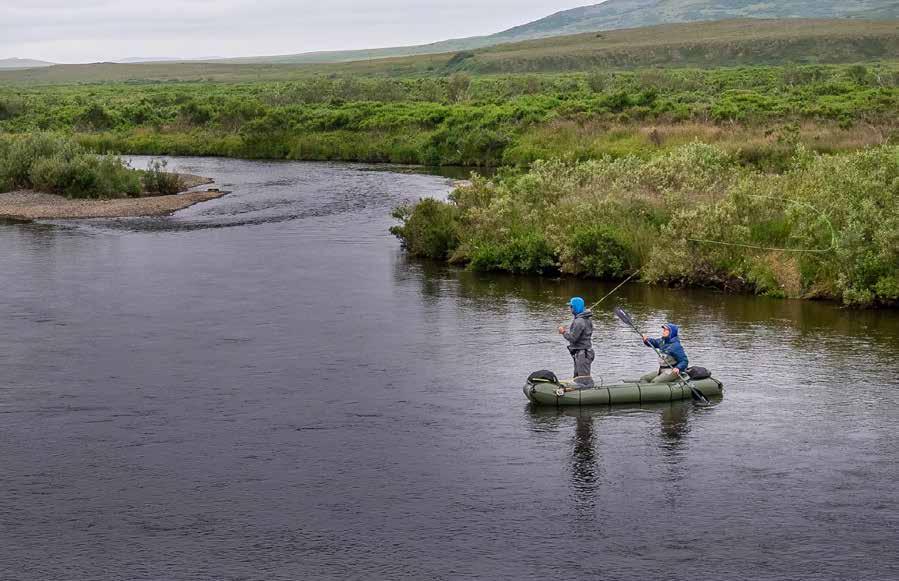
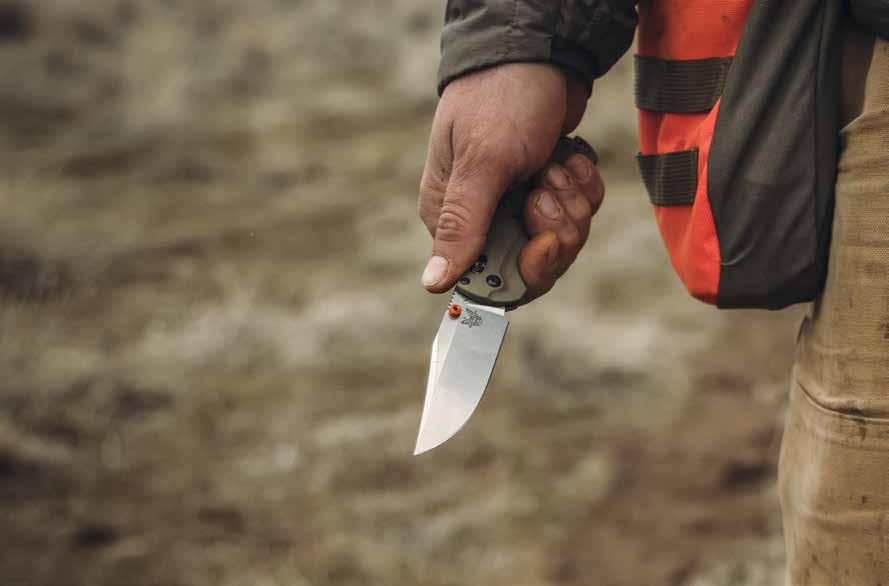
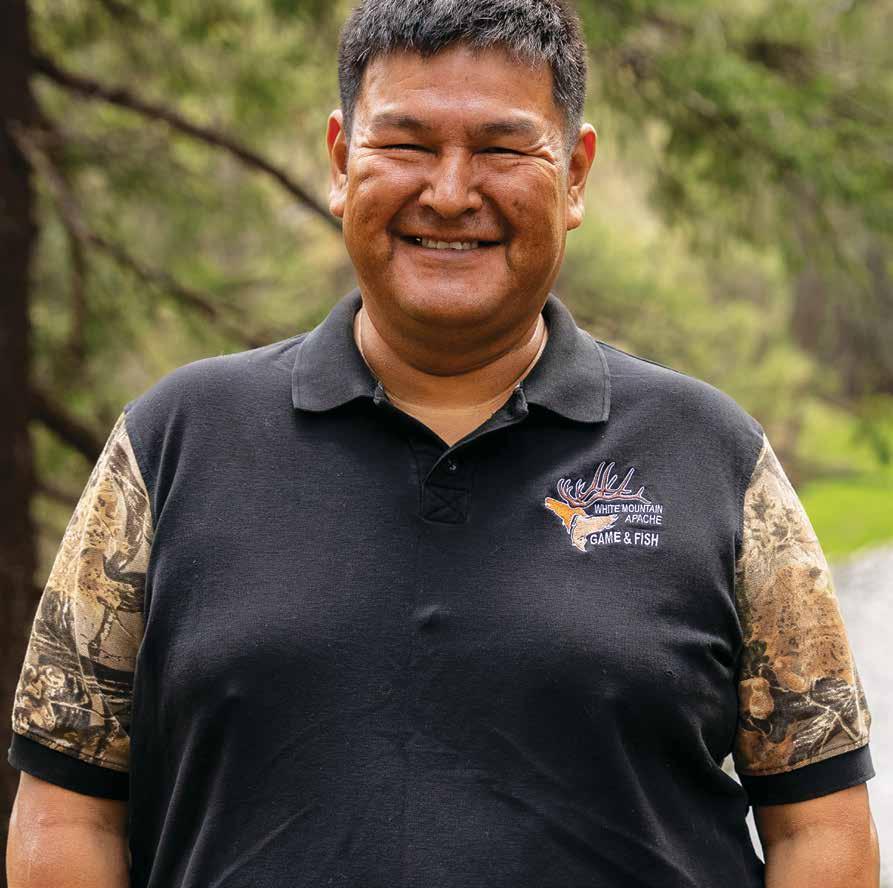





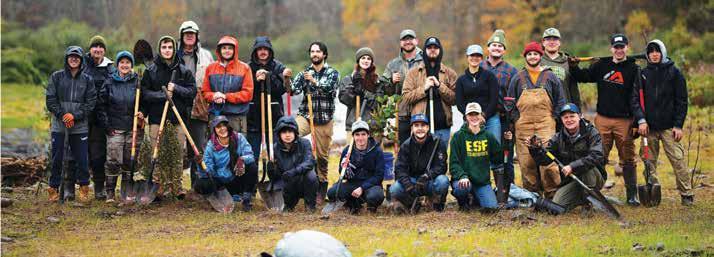


Please support Trout Unlimited and make a positive difference for our shared rivers.
BY CAMERON J. KIRBY
The highways and vehicles had formed an unholy union during this season of death, depositing carcasses along the stretch of road where the vultures soared and the ravens picked. In the watchful wilderness, warmth was no longer foreign. The heat had visited, starting with my boots — the tallow-tinted rays poured from the arboreal canopy above like slits in a tarp; I could see shards of blue gently obscured by the shifting green. The light continued with its ascent; my shanks, flanks, torso, arms and head were contained in its golden finality. Time to strip down, I thought to myself.
Rising from my loamy hollow, I thumbed the zipper and quietly split my jacket. Like a Russian nesting doll, I had matching camouflage underneath, resulting in a deliberate redundancy. While bent over, stuffing the jacket into my pack, I saw movement in the limbs above — a black portent. Its dark eyes stared at me with curiosity, barely noticeable against its backdrop of inky feathers. Gwaar, it mouthed quietly, fluffing its feathers before flying off. My eyes strained as I searched for specters of red in the verdant wash. I picked up my call, hoping for an amorous gobble in response. Instead, I heard three knocks, followed by another gwaar, emanating from beyond the limited searching of my eyes. Soon, I heard the familiar gobble; there was a tom nearby.
Above the trees, I could see two ravens, stark black across the daylit sky. They took flight from the treetops, flew a short distance and vocalized another gwaar. They were watching me; I felt their small black orbs glancing down. That sixth sense that serves us well — a reminder that we too are prey, and nothing more than meat to lesser eyes. The turkey gobbled again, its sound radiating from below the black corvids’ superior station. They were following him.
As man’s best friend, canines have been our longstanding companions, and it’s well assumed that our current dog breeds originated thousands of years ago from emboldened wolves who confronted the campfire and approached our pungent progenitors. However, humans aren’t the only intelligent species with which wolves have aligned themselves.
Ravens are well-known opportunists — ill-mannered party crashers who pursue apex predators and partake in their bloody banquets. There has been anecdotal evidence that ravens and wolves sometimes form a shaky alliance; the corvids provide aerial support, while the wolves dominate the terrestrial contours. The birds will lead the canines to potential prey or direct them to frozen carcasses that are too tough for their beaks to breach.
As one of Earth’s most intelligent species, corvids (crows, ravens, rooks, jays, magpies, etc.) have demonstrated their ability
to create and use tools. In Aesop’s well-known fable “The Crow and the Pitcher,” a parched crow uses pebbles to raise the water level in a pitcher to satisfy its thirst. As an example of life imitating art, scientists conducted an experiment to determine whether these creatures possessed the intelligence and problem-solving capabilities noted in the ancient fable. A recent study, detailed in the journal Current Biology, established that corvids could solve this type of advanced puzzle. The birds used varying-sized stones to raise the water level to retrieve a worm floating on the surface. While ravens are less social than their smaller relatives, socializing and creating deep bonds isn’t beyond them, especially with their mates, who are partners for life. It seems reasonable that they would reach out a friendly wing to another brilliant and social creature: the wolf.
Over the years, I’ve heard other hunters tell stories about ravens who seemingly follow them in the field. Perhaps they’re simply waiting for an opportunity to snag a fortunate snack, or maybe it’s something more meaningful — the formation of another crossspecies coalition.
My calling persisted, but minutes passed without a reply. However, I continued to see black smudges island-hop from tree to tree, gradually approaching my oaken outpost.
Gobble, gobble.
He was getting closer.
The ravens continued to advance, calling out while trying to catch my eye. We were in this together. I saw a shot of crimson bobbing through the underbrush; then another red orb floated into view. The two toms took particular interest — and possible offense — in my jake decoy, who was lasciviously staked over a recumbent hen. The ravens shifted above; the turkeys paused, and I took aim down the barrel of my Benelli. Boom — the report of my shotgun sang out across the wilds — pellets peppered his skin like raindrops across a pond. The remaining cohort bolted in a feathered rush as the ravens took flight. Our partnership had dissolved, but in honor of our loose alliance, I tossed the rest of my lunch to the ground. Hopefully, they like peanut butter and jelly.
A Northwest native, BHA member Cameron J. Kirby has an affinity for the uninterrupted stretches of wilderness, calling to those who seek out the unknown. He enjoys time spent hunting, fishing, caving, sailing, and anything else that can be a vehicle to the outdoors. He’s been married 18 years, and as a family man, he knows it’s his responsibility to pass on his respect and deep admiration for nature to his two boys. In addition to the pursuits of a naturalist, he enjoys vintage cars, firearms, a good book, and an even better whiskey.

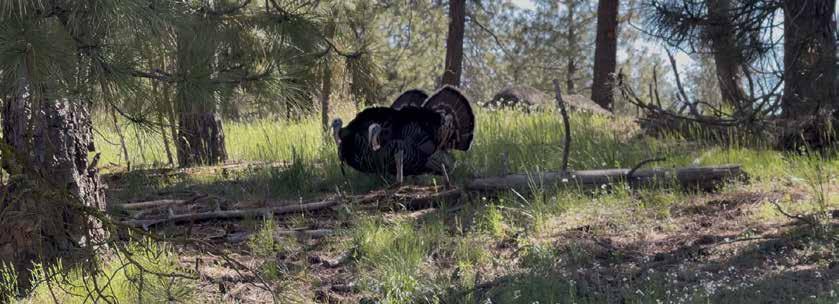
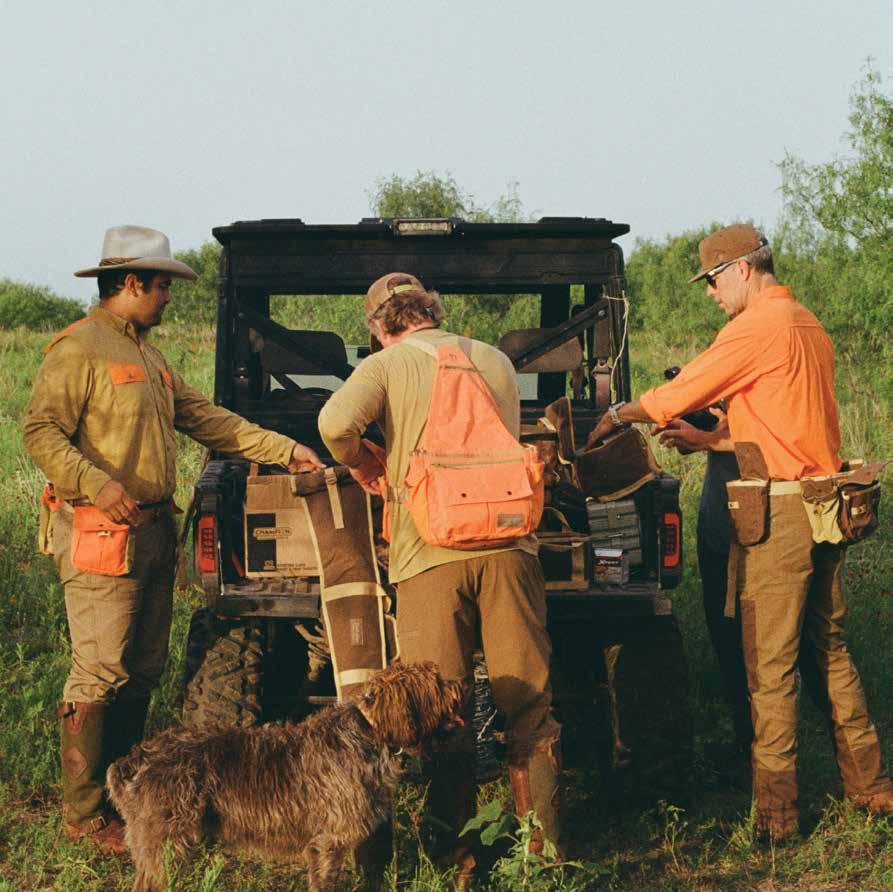
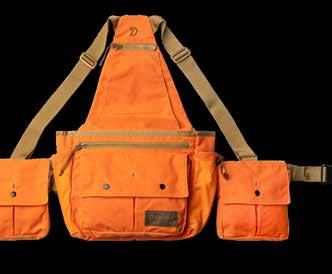
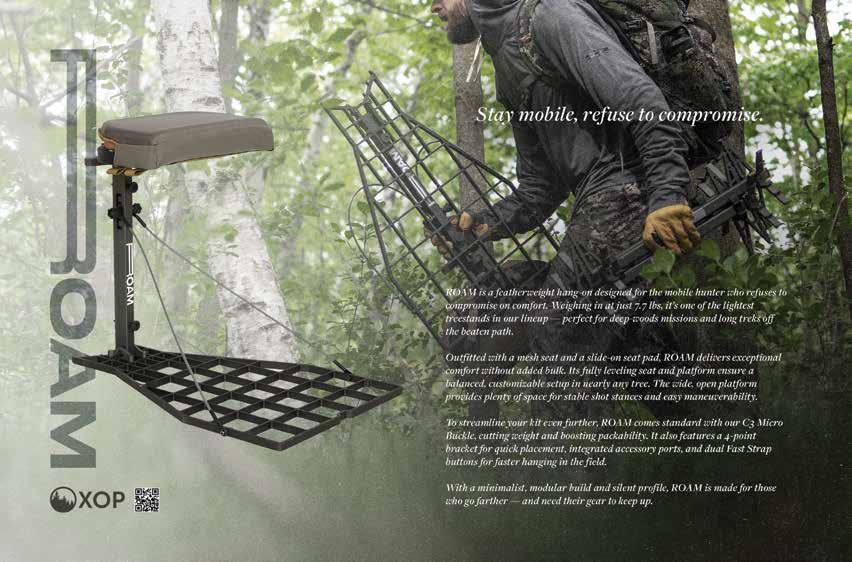
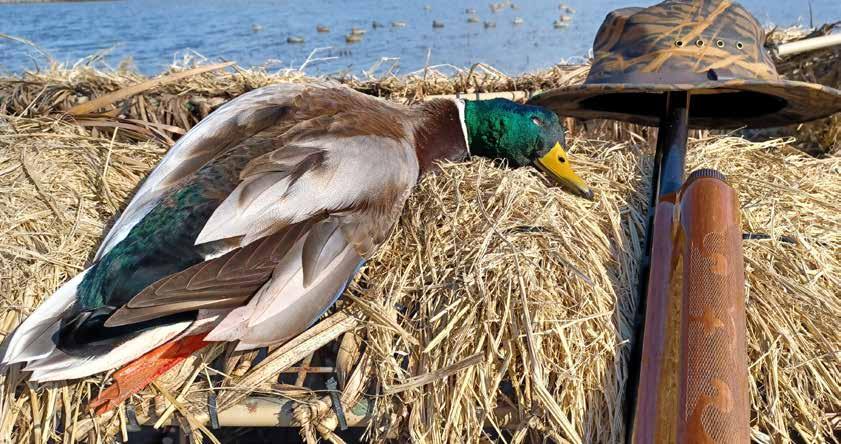
BY SEAN STINY
The first drake mallard did a whirlybird into the far side of the pond. He was winged. Or his scaly leg took a BB, and he needed to land and evaluate. Regardless, I reloaded, gripped my 40-year-old Remington and pursued with extreme prejudice. His demise was afoot, it seemed to me and my hubris. Accordingly, he beelined for the thick brown tules, never to be seen again. Surely terrified and aware that another splatter of warm BBs was coming his way, he never cowered but kept his wits and made haste. I looked and thrashed and kicked up the vile pond water, but he’d escaped this terrifying two-legged fool.
A group of hawks — a kettle of them (an apropos name) — circled my pond all afternoon. They’d feed on the mallard in time, so not all was lost from my folly of pursuit. But damned if it wasn’t disappointing. Not the lost chance for me to do a grip and grin (a spread-wing and grin, rather), but the panic I had imparted on this drake instead of a quick dispatch. I’d do better next time, I pledged, if given the chance.

Every hunt is a story, and every story is a mystery until it unfolds. Until we are under the predawn moon, decoys thrown, cold shotgun in hand, shoot time imminent, ducks buzzing, anticipation cresting, story unfolding.
Five years in the marsh and I’d yet to drop a mallard. Untold hours of sky staring and cloud watching, but nary a greenhead for my boot-mucked and soggy-as-all-hell troubles. I’ve got mallard fever, and the only prescription is more (well, one) mallard.
In recent years, the mallard has become a shadow in the Pacific Flyway. Oft heard about, oft seen in park ponds, oft tempted with moldy bread, perhaps a spark of iridescent green in the adjacent rice check, but seldom within shooting range at the refuge. There’s a surplus of other puddle ducks — teal and wigeon, even pintail. But
I’ve been reduced to daydreaming of mallards locking wings and flaring their tail feathers as they go wheels down.
I’d never laid eyes on one within respectable range. Never before was I served up the opportunity to drop a greenhead and claim him for myself. Never before — until a bomb cyclone prodded Colusa National Wildlife Refuge to shutter its deluged east side, and only a handful of us showed up in the predawn hours the day before Thanksgiving to see what story would unfold in the marsh before we all ate pen-raised turkey.
I arrived at the check station at the always harebrained, but mostly just bleary-eyed, 4:15 a.m. I tossed decoys and stuck my marsh seat into the muck by 6:30 a.m., then loaded my three No. 2 shells and abided the darkness until shooting light. An hour later, I had crippled that first drake and made a ruckus around the pond looking for him. Never shy, a clique of coots balked incessantly at my buffoonery. My mallard chance had passed. One in the bush, zero in hand. Only myself to blame.
My stinging No. 2 BBs did drop two femme fatale wigeon and a handsome drake gadwall into the pond later that morning. A drake wigeon joined them soon — the green bandit. I was content with the day and thankful to the ducks for the table fare they’d provide. An hour more and I’d return to my warm car and the relief of kicking off my waders and releasing the weight of a 12-gauge from my shoulders.
As I bit into my 10 a.m. sandwich, wary not to splash any muck on it, I kept my eyes peeled to the gray sky. My midmorning sandwich sojourn always seems to attract a bird to the decoys, right when I’m lured by distraction. Turkey on white with pickles — a morale boost for myself — and the flush of a bird or two when least vigilant.
Sure enough, one pair took a circle over my pond and broke off their flyover to drop in and take a closer look at the suspicious doppelgangers below. White bellies, copper breasts, a flash of navy
blue on the wing. And was that a burst of green on one’s head? Indeed. Mallards. A drake with a hen in tow. This was it.
I picked the piloting bird, the one with the splash of forehead green, and led him down my barrel. One swing of my shotgun, one jump of my index finger, and the trailing hen was made a widow as she flew high and away. She never turned to look back.
I scooped the drake from the pond and helicoptered his neck. In awe of his heft and his beautiful green noggin, I laid him in a soft bed of tules alongside the drake wigeon I had dropped earlier. He ceded a final burst, his legs kicking and kicking like he was riding an invisible bicycle, then gave up the ghost and remained still.
My mallard fever broke then, and upon leaving the marsh that afternoon, I wondered about my next chance at a greenhead — and how the next story would unfold.
Sean Stiny grew up camping and fly-fishing in the American West. A writer, woodworker, naturalist, and owl box maker, he lives in Petaluma, California. His writing has appeared in Catamaran Literary Reader, Grit Magazine, Bend Magazine, True Northwest, Kelp Journal, Wild Roof Journal, Cal Fly Fisher, Whitefish Review, and Outside Magazine.
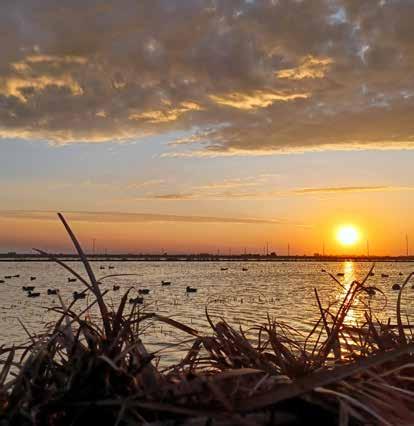
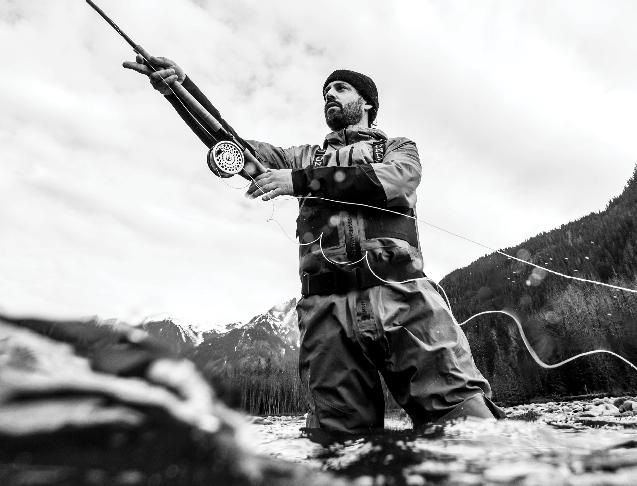
“
Designed for mobility and built to take a beating, it redefines what serious anglers should expect from their gear.”
Spread out the map and circle those little-explored waters that ignite your imagination. The Approach 138 expands your access to harder-to-reach fisheries with a design that’s easy-to-launch, adaptable for flat and moving water, and fully featured for angler comfort and convenience. Every inch is crafted for versatility, rowing performance, and stealth, with quality backed by decades of craftsmanship. The NRS Slot Rail frame system lets you fine-tune seat, oar, and gear placement for balance, comfort, and control. Welded PVC construction, continuous-curve tubes, and a high-pressure drop-stitch floor provide a stable casting platform and reduce drag, excelling even in shallow, technical water. Padded dry box seats, rod holders, anchor system, and motor mount come standard. Whether you’re running a full-luxury setup on a finger lake or stripping it down for a backcountry mission, the Approach adapts to how you fish. Where you Catch the Adventure™ is up to you.

BY PAUL F. NOEL
It seemed like a strange thing to think about as I walked in darkness. Just recently, I’d received an email invitation about my upcoming 50th high school class reunion. I don’t like dwelling on my age, but realizing I’d graduated from high school that long ago caught me off guard. My arthritic knees slowed me down on the trek, adding to my reflective thoughts. It was May 1, and I had a date with a tom turkey. But I learned more than 50 years ago that dates don’t always go as planned.
I moved without a flashlight, having done this many mornings before on this same ridge in a remote corner of state land in northern Vermont, mostly during deer season. The cold, stinging air of autumn was now replaced with the sweet, moist morning breath of spring. I reached a flat shelf where wild leeks grow, and the pleasant, pungent scent filled my head. I thought, how great would these taste with marinated turkey breasts?
I had seen a large flock of turkeys in this area several times, and some April scouting revealed they were still around. It was here, against a huge sugar maple, that I planned to start my hunt. I found the hen decoy I had left hidden and set it up 20 yards from my ambush point, then sat down and melted against that old tree, with more than 100 years of growth cradling my physical and spiritual self. It felt good … real. Darkness still enveloped the woods and left me alone again to think — to think about the high school reunion. I toyed a bit with possibly going but soon leaned against it. I feel more at ease in these woods than I ever did in high school. The ephemeral, annual reunions I have with turkeys and trout, whitetails and woodcock, mink and moose have long since defined me. These seasonal encounters synchronize nature and my life and validate my belonging.
When I could make out the hen decoy, I loudly hit the box call. Hours passed with no response. Gray squirrels kept me amused, and spring birdsong kept me entertained. I thought of the large, grizzled
fisher I once saw here while on a deer stand. He moved through the woods with a smooth endurance I had often tried to achieve as a younger man while tracking deer.
My plan was to stay till 9 and then move to another spot. I stopped glancing at my watch since it seemed to make time move slower. I was on turkey time anyway. Switching to a slate call, I scratched softly. The booming answer directly behind me was anything but soft and made my body twitch. I was hoping the approaching tom didn’t see that motion. He seemed to be less than 100 yards away. I waited a couple of minutes and carefully called again.
He gobbled again, much closer, and I could feel his voice vibrate through my bones. I guessed he would pass by my left side. The footsteps became louder, as did the pounding in my temples. My peripheral vision revealed the tom only a couple of yards away. I froze, kept my head straight and closed my eyes to hide any predator intentions he might sense. I could smell his earthy scent and lovesick motives.
When I felt he was a few yards in front of me, I slowly opened my eyes. He was fixed on the decoy and seemed much more sure of himself than I was at my high school dances. Now facing away at 15 yards, I raised the shotgun and tapped the trigger.
I slung the shotgun to ease the carrying of the big bird by changing hands. When I got to the wild leek patch, I gently laid him down and dug a few. With dirty hands, I stuffed them in my pockets. I often take a nap after these morning hunts, but I thought now I had time to take my fly rod out for a spin. My body seemed free of arthritis as I continued down the ridge, and I almost felt like a teenager again.
BHA member Paul F. Noel is a lifelong hunter, trapper and angler and a voluntary instructor for the Vermont Fish and Wildlife Department, as well as serving on the Vermont Fish and Wildlife Board.

BY WENDI RANK
The thing I’ve always said about BHA is that you all treat me like I’m one of you.
Which I’m clearly not.
I mean, a few weeks ago, I was outside for thirty whole seconds before I tripped over a stick, crashing to the ground like an AT-AT felled by Luke Skywalker’s snare.
I sprained my right hand, tore a muscle in my left shoulder, and broke my left wrist.
So, no. I’m not one of you.
And yet, my hunter took a recommendation from one of you. A recommendation for me.
My dream vacation is in London. Castles, museums, afternoon tea.
When my oldest child was awarded a study abroad in that capital city, I seized the opportunity to visit her.
My hunter, darling that he is, approached a BHAer one he knows to be a seasoned traveler.
Aware of my fondness for packing light, my hunter asked for input on the best travel bag.
I have to say the bag suggested to him is genius.
It’s a backpack expandable to the size of a carry-on. Attached to its dorsal surface is a smaller backpack, like a kangaroo joey.
That smaller backpack can be detached for under seat storage or day-to-day use.
I gazed upon my new travel bag. So many pockets! This, I thought, is all I’ll ever need.
Well, that and a good article on long galleries in English castles, read while I sip tea in a London café on a blustery January day.
You know what’s cool about long galleries in English castles?
They don’t have sticks for you to trip over.
I was trucking along fine with my new travel bag.
Until, that is, it was time to go home.
My daughter and I purchased about ten books while we were in London.
Please. Do not put a bookstore between my hotel and my child’s.
Look at it this way. If I put the Bob Marshall Wilderness on a
route you walked multiple times a day, how often would you walk by, never engaging with it?
Oh man. What if I stocked it with books? Would you ever leave?
OK. Let’s stop talking about that. I can’t be responsible for the disappearance of, like, all of BHA.
My daughter and I were flying from London to Philadelphia together. Then she was continuing on to Tampa.
We agreed all but one of the books should come home with me.
I’m I’m not sure why.
I thought carrying nine books in my epic new travel bag would be easy.
Setting my bag on my hotel bed, I carefully layered the books on the bottom, evenly distributing their weight.
Because, you know, I’m clever like that.
I rolled my clothes, nestling them atop the books.
Last, I tucked in anything I didn’t need in my joey pack.
I donned my coat, strapping my travel pack to my back. I buckled the chest belt. I pulled the shoulder tabs tight.
Yeah. All the books shifted to the bottom.
This is no problem, I thought. I do Tracy Anderson, like four times a week. Also, a week of scones and pain au chocolat probably adds lots of muscle.
I walked the three blocks to my daughter’s hotel, then another block to the train station.
By the time the train arrived, I was experiencing an agonizing pain I wouldn’t feel again until I tripped over that stick.
My awesome backpack it was digging into my shoulders in its mission to sever my arms from my body. The muscles in my back screamed like a horror film final girl.
The good news? I had nine hours of travel ahead of me.
Would I have that bag on my back for the entire nine hours?
No.
Would I feel like I did?
You betcha.
As I hobbled my way across the airport, carrying my pack like a tortoise carries her shell, I thought of that BHAer who recommended the kangaroo joey pack to my hunter.
He’s strapping, that BHAer. Barrel chested and ruddy cheeked. He always stands tall with a confidence I’ll fake but never feel. I’ve known him to hike miles with his game quarry. I’ve known him to sleep in tents. I’ve known him to use portable toilets.
Not in a weird way. I only know that because we were in a campground and everyone was using portable toilets.
Well. Everyone but me.
And as I reflected on my situation, I thought it comical that anyone would think he and I could carry the same bag.
I mean, I got my butt kicked by a stick.
So I appreciate that you always treat me like I’m one of you.
But we both know I’m not.
And I have a sensational bag you can borrow anytime.
Just leave the books at home.
BHA life member Wendi Rank is an indoors enthusiast from Pennsylvania. Wendi works as a columnist for American Community Journals
Comic: BHA member JJ Laberge is the creator of Clade & Genus, an online comic that focuses on the business of nature. His inspiration comes from spending time in the outdoors within Northern Ontario’s vast public lands pursuing whitetail, moose, ruffed grouse and woodcock. You can find Clade & Genus on Instagram @cladeandgenus or online at www.cladeandgenus.com



BY JENNY NGUYEN-WHEATLEY
Poaching fish is simple and elegant. While many recipes call for poaching fish in broth or wine, I prefer butter. The fat is especially beneficial for freshwater fish, which tend to be lean. This gentle method of cooking ensures you enjoy tender, moist fillets.
Servings: 2
Cooking time: 20 minutes
Ingredients:
• 2 (5-ounce) pieces of pike
• Kosher salt
• 1 to 2 sticks unsalted butter
• Olive oil
• 3 sprigs thyme
• 2 cloves garlic, sliced
• Freshly cracked pepper
• Chopped Italian parsley, for garnish
1. Generously season pike with salt and set aside. Preheat oven to 300 degrees. Pat fish dry with paper towels and place in a small baking dish that snugly fits the pieces in one layer. Scatter thyme and garlic on top.
2. Melt butter and pour over the fish to completely submerge. If you don’t have enough butter, add olive oil to make up the difference. Place the baking dish in the oven on the middle rack. Poach fish for about 15 minutes, or until the internal temperature reads 130 degrees.
3. Remove fish from poaching fat. Season with freshly cracked pepper and garnish with chopped parsley. Serve immediately with your favorite sides. Pictured: celery root purée and roasted carrots.
BHA member Jenny Nguyen-Wheatley is a hunter, writer and editor in Omaha, Nebraska. In addition to her role as full-time associate editor at Nebraskaland Magazine, she runs the wild game cooking blog “Food for Hunters” and is a regular contributor to BHA’s “Field to Table” blog.



As a kid, my understanding of heroism was simple. Heroes were the best at what they did. They won. They dominated. They made the impossible look routine. I had heroes like Michael Jordan and Tiger Woods, figures who seemed to operate on a different plane than the rest of us. I admired their relentless drive, their refusal to accept anything less than victory. I can still picture Jordan’s final shot over Bryon Russell, him holding his follow-through long after the ball dropped through the net. I can relive nearly every swing from Woods’ 2019 Masters win, the culmination of a comeback that felt almost mythical.
I also turned a blind eye to their flaws. What mattered was what they could do, not who they were. But time has a way of reshaping perspective. As I grew older, the mythology faded, replaced by something more complicated. I began to see them not as untouchable icons, but as people — extraordinarily gifted, yes, but flawed in ways that no amount of talent could erase. Their skills remained worthy of admiration, but the pedestal started to feel undeserved. Admiration no longer equaled worship.
Alongside those mainstream heroes, I had another set — figures rooted in the outdoor world that shaped my passions. Bass angler Kevin VanDam. Fred Bear. Steelhead fly fishing author Trey Combs. These were the names that fueled the adventures of my imagination. Their stories of pursuit, patience, and mastery of wild places stirred something deeper than a highlight reel ever could. They represented a life I wanted — one connected to water, woods, and the pursuit of something just out of reach.
Their accomplishments inspired envy, but also possibility. If they could do it, maybe someday I could too. Thankfully, whatever flaws they carried never became as visible as those of Jordan or Woods.
It wasn’t until well into adulthood that my idea of a hero truly began to change. Achievement alone no longer felt like enough. Winning, whether in sports or in the outdoors, seemed incomplete as a measure of worth. Instead, I started to recognize a different kind of heroism — quieter, often overlooked, but far more consequential.
Those who have served our country. Those who have dedicated their lives to conserving it for future generations. Individuals who choose service over spotlight, responsibility over recognition. In many cases, the two paths overlap. Backcountry Hunters & Anglers’ Armed Forces Initiative is filled with people doing exactly that — serving both the nation and the lands that define it.
Our community has long elevated figures like Aldo Leopold and Theodore Roosevelt — and Mike Beagle — and for good reason. Their legacies are not built on personal glory, but on lasting impact. They didn’t just achieve; they shaped the world around them in ways that continue to matter. They understood something fundamental: that what we inherit is not ours to keep, but ours to pass on.
By adulthood, heroes no longer define us in the same way they might during childhood. We’re less likely to model ourselves entirely after another person, less inclined to believe in perfection. But that doesn’t mean heroes lose their value. If anything, their role becomes
more refined. They serve not as idols, but as guides — points of reference when the path forward feels uncertain.
For the past seven years, Hal Herring has served that role for me.
Hal is not a hero in the traditional sense. He’s not larger than life, not placed on a pedestal by mainstream culture. But he embodies something far more important. He is unwavering in his belief that public lands and waters are among our greatest American treasures and a cornerstone of our democracy. Hal’s beliefs come from factual knowledge, too — he’s a walking, talking publics lands encyclopedia.
What sets Hal apart, though, is his optimism. Not a naive optimism, but a hard-earned one that persists even when the threats feel overwhelming. When a new challenge emerges — the rescinding of the Roadless Rule, threats to the Boundary Waters, the Ambler Road — I find myself turning to Hal. Not because he minimizes the danger, but because he refuses to surrender to it.
Hal believes in our ability to make a difference. More importantly, he believes in our responsibility to try. He knows democracy requires our participation. It demands effort. Courage. It assumes that the outcome is not predetermined but shaped by those willing to show up and engage.
That, more than anything, has reshaped how I think about heroes. They are no longer the people who win at all costs, or those who stand above the rest. They are the ones who remain grounded, who commit themselves to something larger than their own success. Who don’t shy away from uncertainty or challenge.
For the past couple of years, I’ve had the distinct pleasure to work with Hal on the Podcast & Blast. It’s a bittersweet moment, seeing Hal move on to his next adventure — I want to keep working with my hero. But I take comfort in knowing he’s still on team BHA. We’re going to continue working together for our shared lands and waters. I, for one, am beyond excited to read his forthcoming public lands book. And we’ll be hearing from him plenty more in Backcountry Journal, too. Thanks for everything, Hal. Let’s all follow Hal’s lead and wear out another pair of boots this spring.
-Zack Williams, editor
*crossword answers from page 21