SIBLINGS / COACHES / FRIENDS / COUPLES / MENTORS
BABSON
EMPLOYERS / NETWORKERS / ADVISORS / CO-FOUNDERS

SIBLINGS / COACHES / FRIENDS / COUPLES / MENTORS
EMPLOYERS / NETWORKERS / ADVISORS / CO-FOUNDERS



SIBLINGS / COACHES / FRIENDS / COUPLES / MENTORS EMPLOYERS /





/ NETWORKERS /

SIBLINGS / COACHES / FRIENDS / COUPLES / MENTORS

/


SIBLINGS / COACHES / FRIENDS / COUPLES / MENTORS EMPLOYERS / NETWORKERS / ADVISORS /







/
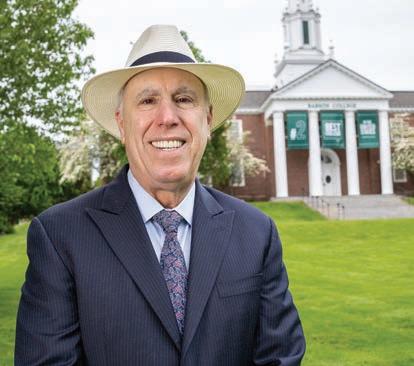
began my relationship with Babson as a part-time MBA student and was struck by the community’s aspirational nature. I learned that Babson is de ned by people focused on making an impact on the world. Over the years, I have experienced this community in many roles, including as a student, faculty member, administrator, alumnus, and now president. That impact manifests as the creation of economic and social value.
As alumni, we understand that the value of a Babson degree lies in how it sharpens business judgment, responds to the real needs of the marketplace, and channels personal ambition into meaningful impact. Babson prepares us to recognize opportunities, navigate change, and create value in environments where agility and purpose matter. That preparation is re ected in The Wall Street Journal’s ranking of Babson as the No. 2 Best College in the United States. It also includes access to one of our most valuable assets: the Babson global alumni network, now
more than 46,000 strong across 128 countries.
That network is a distinct competitive advantage. It re ects a mindset grounded in action, collaboration, and value creation. Last year, Babson was ranked No. 1 for alumni network strength by LinkedIn. For those of us within this community, that recognition af rms what we experience every day. Babson alumni respond, contribute, and invest in one another’s success.
I recently experienced the strength of this network at Babson Connect Worldwide 2026 in Rio de Janeiro, where nearly 200 members of the Babson community gathered from around the world. The engagement was inspiring. Conversations led quickly to ideas, and ideas to meaningful collaboration. There was a shared focus on learning, supporting, and advancing.
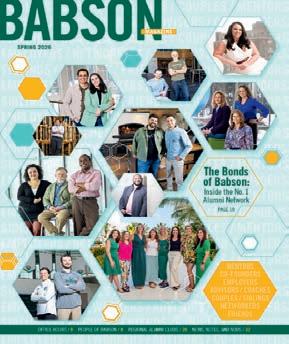
In this issue of Babson Magazine, we explore these connections in “The Bonds of Babson,” highlighting the many ways alumni support one another as co-founders, hiring managers, mentors, and friends.
This level of connectivity strengthens the College and extends its impact far beyond campus. It is a de ning characteristic of Babson and a powerful platform for entrepreneurial leadership.
I am proud to be part of it.
Stephen Spinelli Jr. MBA’92, PhD


FEATURES
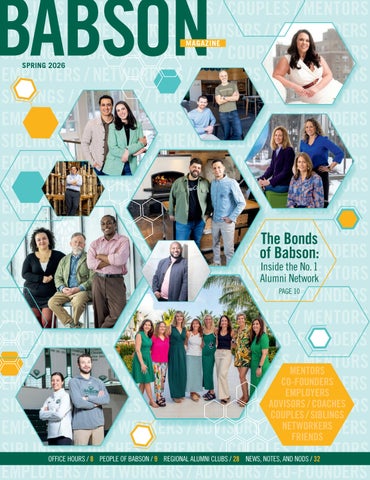
10 The Bonds of Babson
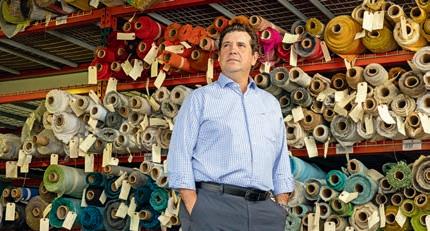
LinkedIn ranked Babson No. 1 for the strength of its alumni network, a milestone for the College and its 46,000 alumni, who form a global community defined by its connections, entrepreneurial spirit, and willingness to lend a helping hand.




15 Babson Alumni Are …
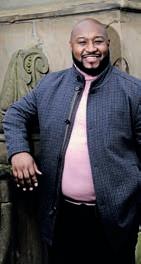
Explore the unique bonds among alumni, from co-founders and mentors to coaches and friends.
DEPARTMENTS
2 Babson and Beyond
The latest news and updates from campus.
8 Office Hours
Nada Hashmi leads on technology and equity.


8 9


BABSON MAGAZINE STAFF / Vol. 93, No. 1
EDITOR Eric Beato
PUBLISHER Kerry Salerno, chief marketing officer
COMMUNICATIONS STRATEGY Danielle Perry
CREATIVE MANAGEMENT Cheryl Robock
CREATIVE ART DIRECTION Cathy Cahill
SENIOR JOURNALISTS Hillary Chabot, John Crawford
CONTRIBUTORS Kara Baskin, Scott Dietz, James Kiley, Erin O’Donnell, Thecla Ree, Mali Reimer, Vannessa Rodriguez, Melissa Savignano, Wendy Schoenfeld, Kevin Wong
STAFF PHOTOGRAPHER Nic Czarnecki
MULTIMEDIA TEAM Christopher Brown, Paul DeWolf, Maggie McGinnis, Adam Pearlman
9 People of Babson
Christy Lagos ’98, MBA’20 and the alumni network.
28 Advancement Spotlight
Regional alumni clubs keep the College connected.
32 News, Notes, and Nods
Undergraduate, Graduate, Connections, In Memoriam
40 Nic’s Parting Shot
A unique perspective of Global Warming.
We welcome your feedback on the magazine. Contact Eric Beato at ebeato@babson.edu
Find out more about what’s happening at Babson College at: entrepreneurship.babson.edu
On the cover: Photos by Nic Czarnecki, Mario Morgado, and Deyson Rodríguez
Babson Magazine (USPS 898-140) is published by Babson College, 231 Forest Street, Babson Park, MA 02457-0310, three times a year, in the spring, summer, and winter.
Copyright 2026 by Babson College. Editorial office: Babson Park, MA 02457-0310. Send address corrections to advancement_services@babson.edu, or call +781-239-4044.
BABSON AND BE Y OND
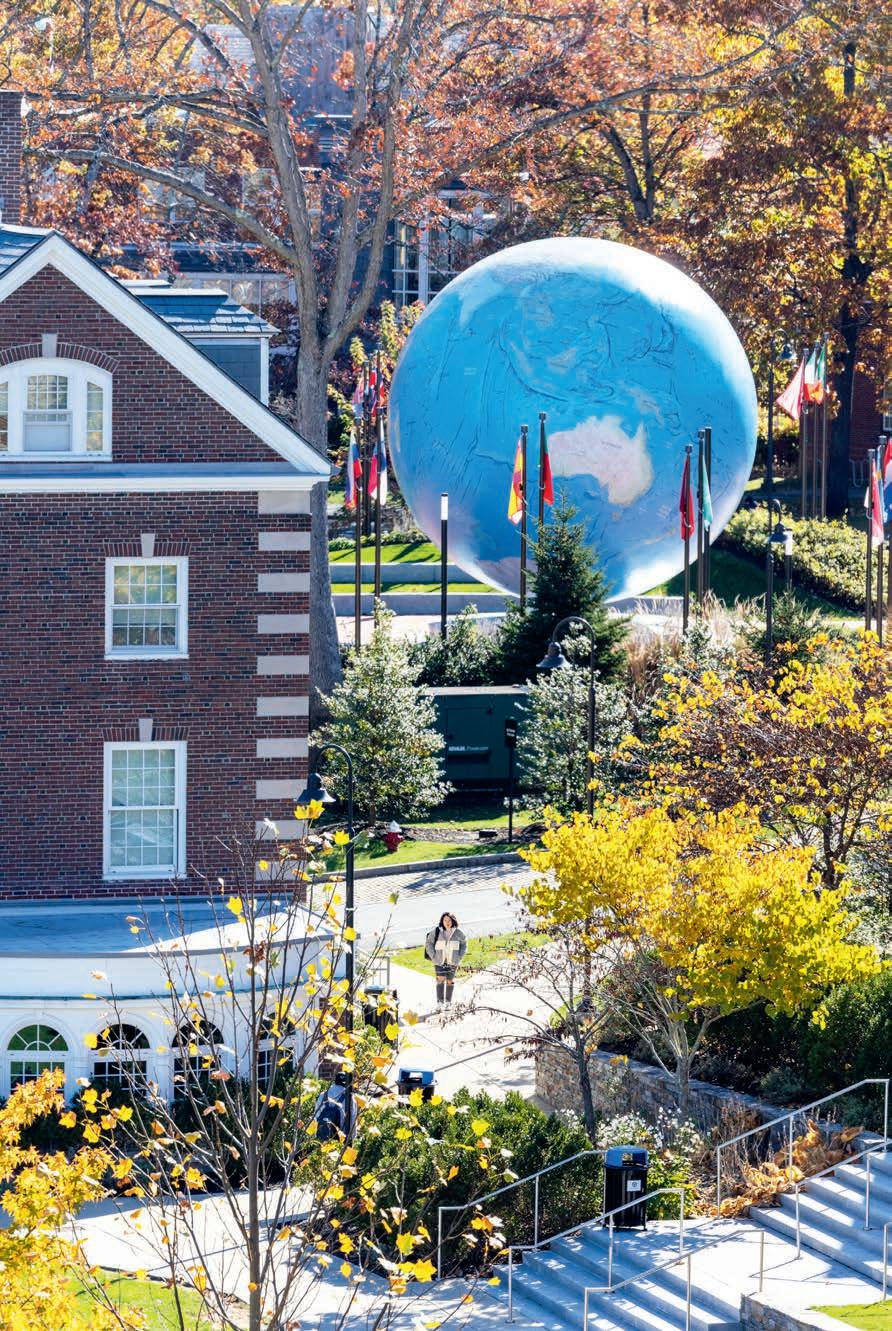
New Pre-College and Professional Programs EXPAND LIFELONG LEARNING
In an innovative approach to expanding and improving lifelong learning opportunities, Babson College announced several major initiatives for professionals and executives, as well as high school and Babson students.
Most notably, Babson launched Summer at Babson, an expanded suite of summer programs, including a robust new lineup of pre-college educational opportunities and new initiatives for current students.
In addition to offering long-standing and popular programs such as Summer Study and the Summer Venture Program, Babson unveiled a Summer Intensive program for current students, and it has created a new summer program for high school students through the Arthur M. Blank School for Entrepreneurial Leadership. All Summer at Babson programs provide opportunities for learners at all stages to explore their interests, build their entrepreneurial skills, and shape their own educational journeys.
“Summers on campus have long played an integral role in advancing our mission,” said Babson President Stephen Spinelli Jr. MBA’92, PhD. “Under our new
uni ed summer framework, our existing offerings will bene t from opportunities to collaborate and expand their reach.”
Similarly, in a pair of milestones for its expanding Professional and Executive Education portfolio, Babson launched two new certi cate programs via the College’s digital learning platform, Babson On-Demand™.
Babson created its rst Entrepreneurial Leadership Certi cate program, a non-credit offering designed to support the evolving needs of the global workforce with a exible delivery model rooted in academic rigor. To mark the launch of the new certi cate, the College offered the introductory course, Foundations of Entrepreneurial Leadership, free for one day to the rst 1,000 registrants.
Babson also announced a suite of new AI and innovation offerings, AI in Action: From Prompts to Innovation, which were developed in collaboration with Founderz, a global education company specializing in applied, real-world AI and innovation training. Learners can choose from four badges and one certi cate that blends entrepreneurial thinking with hands-on AI application.
PHOTO: NIC CZARNECKI
Read more about Babson’s first online Entrepreneurial Leadership Certificate
Read more about the AI in Action certificate and badges program with Founderz
Read more about new summer programs for high school and Babson students
HBCU COLLABORATION Boosts Entrepreneurship Education
What would you do? That’s the question at the heart of a case study. A hallmark of a business education, including at Babson, a case study puts students into a real-life company conundrum, forcing them to confront the facts and reason out how they would handle it.
“Cases are a form of experiential learning,” says D.R. Widder MBA’99, vice president of innovation at Babson. “A case lets you live the experience of the protagonist, the main character of the case. You stand in their shoes. You’re in their scenario.”
That makes for an effective teaching tool, particularly if students identify with the central gures and challenges of the case. “That makes it more relatable,” Widder says. “You see yourself.”
That critical relatability, though, can be hard to nd sometimes. That’s because case studies often don’t feature protagonists from a variety of backgrounds. “Unfortunately, there is a paucity of cases with protagonists from underrepresented groups,” says Jeffrey Shay ’87, MBA’91, a Babson professor of entrepreneurship.
Babson is looking to change that. In a series of workshops, the College is helping professors from Historically
Black Colleges and Universities (HBCUs) to write, publish, and teach case studies.
The workshops harken to Babson’s belief in inclusive excellence, an understanding that entrepreneurial leaders hail from a wide array of circumstances, and that their disparate experiences bring a range of perspectives, ideas, and relationships to their work. “Inclusive excellence is core to Babson,” Widder says, “because an entrepreneurial leader is an inclusive leader and creates more value.”
The case-writing program is one of several initiatives that Babson is conducting with HBCUs to help empower entrepreneurial leaders and the professors who educate them.
Babson’s programs with HBCUs stem from its relationship with the National HBCU Business Deans Roundtable, which represents 55 HBCU business schools and which honored Babson with an award recognizing its innovative programming in entrepreneurship.
Besides conducting the case-writing program, Babson has invited HBCU students to campus to participate in Babson Build, which teaches how to think and act entrepreneurially. And, last year, Babson hosted the Price-Babson Symposium for Entrepreneurship Educators (SEE) at Clark Atlanta University attended by HBCU faculty. HBCU deans also attended the Global Consortium of Entrepreneurship Centers conference in 2024 when Babson hosted the gathering for university-based entrepreneurship programs.
In total almost 100 faculty members and more than 50 students representing 33 HBCUs participated in Babson programs in the 2024–2025 school year. — John Crawford
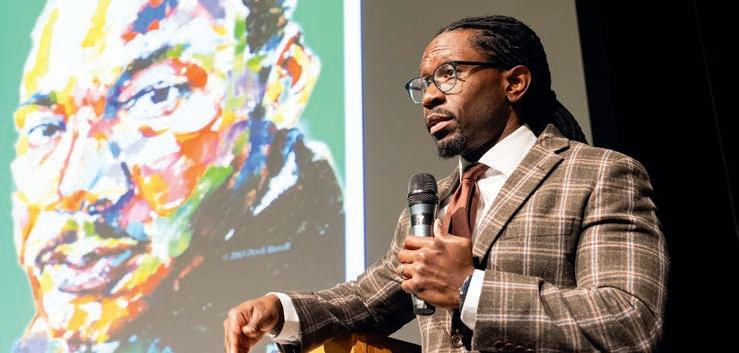
Derron Wallace, an associate professor of education policy and Africana studies at Brown University, speaks about the importance of education as keynote speaker of Babson College’s 23rd annual Martin Luther King Jr. Legacy Day. “My parents understood deep in the marrow of their bones the purpose, power, and promise of education,” he said. “Like Dr. King, they thought of education as a vehicle for social mobility and social transformation.”
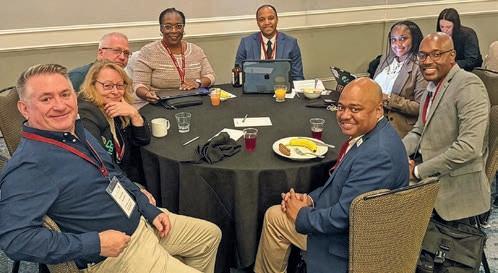
Professor Jeffrey Shay ’87, MBA’91 (far left) leads a program that helps professors from Historically Black Colleges and Universities to write, publish, and teach case studies.
NEW DEANS: Poonam Arora and Kate Klepper to Lead Undergraduate and Graduate Schools
Babson College introduced new deans of both the Undergraduate School and the F.W. Olin Graduate School of Business.
Poonam Arora was named the new dean of the Undergraduate School and joined the community in the spring. Most recently, she was the associate dean of faculty affairs and strategic initiatives and professor of management at Quinnipiac University.
“Dr. Arora brings a wealth of thought leadership and experience across academia and the corporate world to this new role,” Provost and Executive Vice President Ariel Armony said. “Her student- rst approach to academic leadership will ensure that Babson remains the top destination for learners seeking to make the world a better
place for generations to come.”
Kate Klepper was named the new dean of the F.W. Olin Graduate School of Business at Babson College and will arrive on campus in June. Klepper, who previously served as Babson’s dean of graduate admissions, returns to Babson from Northeastern University’s D’Amore-McKim School of Business, where she has served as the associate dean for graduate business programs for more than two decades.
“Kate brings deep experience in graduate management education, program innovation, and strategic partnership development that will play an essential role in our approach to building the future of graduate education at Babson,” Armony said.
ENTREPRENEURIAL TALES: Jamie Siminoff ’99, H’21 Returns
Stephen Spinelli Jr. MBA’92, PhD faced a problem, and Jamie Siminoff ’99, H’21 provided the solution.
Roughly 25 years ago, when Spinelli was a professor at Babson and not yet the institution’s president, the pair were attending a campus event. Spinelli was fretting. He needed to head down to New York City for his son’s swimming competition, but a snowstorm had canceled his flight. That’s when Siminoff, at the time a young alumnus, stepped up to help his mentor and a favorite former professor. “I have a four-wheel drive truck,” he told Spinelli.
With that, the two went on their way, though the ride was far from relaxing. The storm raged, and the roads grew rough. Siminoff sped along, but Spinelli asked him to go slower. “He said, ‘I can’t go slower,’” Spinelli remembered. “It was a great metaphor for what his life was going to be like.”
Indeed, in the years that followed, Siminoff’s life has been anything but slow. Filled with a driven entrepreneurial spirit, he started several ventures, culminating in Ring, the home security
company. Launched in 2013, Ring led Siminoff to an appearance on the popular “Shark Tank” TV show, and after years of building the company, he sold it to Amazon for more than $1 billion in 2018.
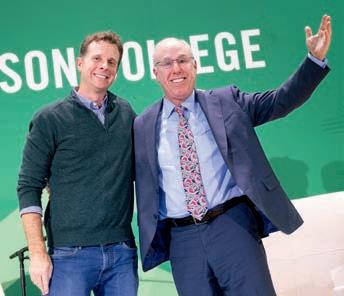
Siminoff and Spinelli shared the snowstorm story and other entrepreneurial tales in November during a fireside chat at Babson’s Knight Auditorium. Their chat concluded a busy campus
visit for Siminoff, which included lunch with students in the Weissman Foundry, attending an entrepreneurship course taught by Professor Andrew Zacharakis, and recording an episode of Babson’s “From Problems to Possibilities” podcast.
The visit coincided with the release of Siminoff’s new book, Ding Dong: How Ring Went from Shark Tank Reject to Everyone’s Front Door, that reflects on his entrepreneurial journey. Part pep talk and lecture, homecoming and reunion, the fireside chat featured two people who have a long history together. “We go back pretty far,” said Spinelli, an early investor in Ring. “I had hair when I taught him.”
The event also served as a celebration of entrepreneurship, of its challenges and rewards, its joys and long hours. Siminoff knows those things all too well. “Entrepreneurship is hard,” he said. “The journey is tough. You have to stick it through. If we had just shut down when it got tough, we would have been done.” — John Crawford
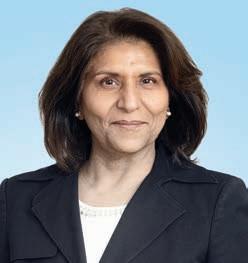
Poonam Arora is the new dean of the Undergraduate School at Babson College.
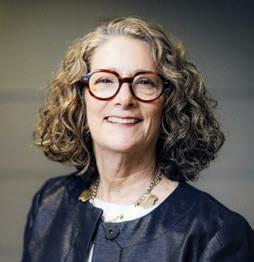
Kate Klepper will be the new dean of the F.W. Olin Graduate School of Business at Babson.
SIMINOFF PHOTO: NIC CZARNECKI
Before a sold-out crowd in Babson’s Knight Auditorium, College President Stephen Spinelli Jr. MBA’92, PhD (right) and Jamie Siminoff ’99, H’21 held a fireside chat.
FROM STAGE TO STARTUP: Improv Group, Students Against Gravity, Helps Prepare Students for Entrepreneurial Success
A successful entrepreneur depends on many skills—pitching, persuading, collaborating, and listening—all while keeping cool and maintaining a sense of humor amid high-stakes scenarios.
For one group of Babson students, some of the most valuable preparation for those pressure- lled moments occurs long before they step into a boardroom— it happens on an improv stage.
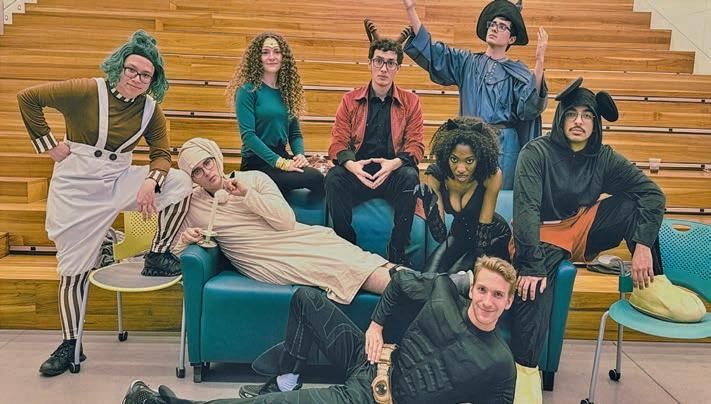
Students Against Gravity is Babson’s long-running improvisational comedy group, named after founder Roger Babson’s unusual fascination with antigravity research. The group meets twice a week to practice a mix of short-form and long-form improvisational comedy. The atmosphere is playful, creative, and sometimes chaotic, but beneath the laughter, students are building a set of skills directly tied to entrepreneurial success. And they know it.
“For business students, being able to adapt and pivot quickly is so important,” said Joseph DiMaso ’27, president of Students Against Gravity. “Improv forces you to think on the spot. You can’t plan ahead—you have to react, adjust, and keep moving.”
GEM
DiMaso grew up in a family of actors and arrived at Babson familiar with improv, but he was surprised at how relevant the craft is to his consulting concentration. Job interviews, he said, often hinge not on rehearsed answers but on the ability to respond uidly. “You get unexpected questions all the time,” he said. “Having the con dence to think quickly has absolutely paid off.”
Julia Marcelis ’27, the club’s treasurer, had a different background, as a circus
artist who performed trapeze and aerials for years. Improv was new territory. But it unlocked something unexpected.
“I realized how much improv makes you think about motivation—what do I want, what does the other person want?” said Marcelis, who concentrates in accounting and leadership. “That’s the core of leadership. Improv became this low-stakes way to practice reading people and responding thoughtfully.”
— Hillary Chabot
REPORT: What Happens After a Startup Is Launched?
At first glance, entrepreneurship in the United States seems as strong as ever. The Global Entrepreneurship Monitor’s annual U.S. report, a deep dive into the activity and attitudes surrounding entrepreneurship, found that the practice is seen as an enduring positive force in America, with many people continuing to take the plunge to start a business.
The share of American adults engaged in earlystage entrepreneurship, a widely cited metric known as Total Entrepreneurial Activity, or TEA, remains near historic highs at 18.5%.
“Entrepreneurship in the U.S. continues to be favorably viewed,” says Jeffrey Shay ’87, MBA’91, a Babson professor of entrepreneurship and the co-lead of the U.S. GEM team. “We’re still seeing a healthy amount of startup activity.”
Donna Kelley P’24, the other co-lead of the U.S. GEM team and also a Babson professor of entrepreneurship, says that society continues to champion entrepreneurs. “Entrepreneurs are celebrated in the media,” she says. “They have a high status. It’s seen as a good career.”
The findings of the new U.S. report, though, also
reveal uncertainty. Entrepreneurs are fretting about tariffs, and Americans are perceiving that the act of starting a business has gotten a little harder.
Then there’s the fact that while the TEA rate remains robust, the ownership of established businesses declined as part of an ongoing trend, suggesting that fewer entrepreneurial ventures are reaching long-term stability and success.
“The fact that it has continued to decline is disconcerting,” says Kelley, the Frederic C. Hamilton Professor of Free Enterprise Studies.
Babson’s long-running improvisational comedy troupe, Students Against Gravity, combines fun with entrepreneurial skill building, says president Joseph DiMaso ’27, featured here wearing a red shirt and horns.
RETAIL STANDOUT: Sarah Starko ’27
Awarded Prestigious NRF Scholarship
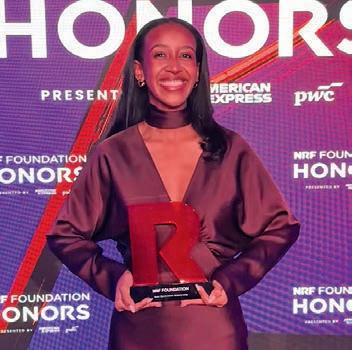
Sarah Starko ’27 expected to smile, applaud, and return to her seat when she stepped onto the stage at the National Retail Federation (NRF) Foundation’s Honors event in New York City as one of ve nalists vying for a highly competitive $25,000 scholarship.
Instead, she heard her name announced as the winner of the NRF Foundation’s Next Generation Scholarship, the organization’s highest honor for undergraduate students pursuing careers in retail.
“I genuinely didn’t expect to win,” Starko said. “When they read my name from the envelope, I was completely shocked. I was shaking through dinner afterward—it was just surreal.”
Starko, who was studying abroad at the London School of Economics through Babson’s Glavin Of ce of International Education, was selected from a national pool of applicants for the NRF Foundation’s premier scholarship competition. The award recognizes students who demonstrate leadership, academic excellence, prior retail experience, and a passion for shaping the future of the retail industry. The NRF Foundation is the nonpro t arm of the National Retail Federation, the world’s largest retail trade association.
“As a result of Sarah’s demonstrated passion for retail, poise, grit, and academic excellence, she will receive a $25,000 scholarship and recognition as an emerging leader in retail,” said Larinda Cole, senior associate director at the Hoffman Family Undergraduate Center for Career Development (CCD).
The scholarship was announced at the NRF Foundation Honors gala, a high-pro le event in the retail industry attended by top executives and industry leaders from across the country. Cole, who was on hand to watch Starko’s acceptance speech, serves as Babson’s undergraduate advisor to the NRF Foundation.
— Hillary Chabot
Mendiola Earns Progress Medal
Babson Trustee Ramón Mendiola ’86, P’20 ’21 ’24 ’28 has been recognized by the Society for Progress with one of seven Progress Medals. Mendiola earned the recognition for his leadership as CEO of Florida Ice and Farm Company (FIFCO), a leading producer of food and beverage products headquartered in Costa Rica. Under his leadership, FIFCO amplified its sustainability strategy and became a triple bottom line company, in which executives’ compensation is directly linked to economic, social, and environmental key performance indicators.
TARCO Institute’s Faculty Director
Erin Degnan Escobedo, an associate professor of practice in finance, has been named the inaugural faculty director of the TARCO Institute for Real Estate and Entrepreneurship. The TARCO Institute, launched in September, is dedicated to advancing the future of real estate through entrepreneurial leadership. The George E. Slye ’53 Term Chair in Real Estate Management, Escobedo has 22 years of experience in real estate law, brokerage, investment, and development, along with a long-standing commitment to Babson’s real estate programs.
Blank Center’s Executive Director






Cindy Klein Marmer MBA’02, P’29 was named executive director of the Arthur M. Blank Center for Entrepreneurship at Babson College. A dedicated member of the Babson community since 2004, Klein Marmer had served as interim executive director since March 2024 and has spent more than two decades advancing the College’s entrepreneurial mission with passion and purpose.
LGBT Chamber of Commerce Honor
Babson was honored for its support of the Massachusetts LGBT Chamber of Commerce, as Sadie Burton-Goss, chief inclusive excellence officer, and Jerry Epps, director of supplier and community engagement, received the Inclusion Innovator of the Year Award at the inaugural Massachusetts LGBTQ+ Business Awards, which the College hosted in March.
Sarah Starko ’27 won the National Retail Federation Foundation’s Next Generation Scholarship at its annual gala in January.
Network Support: Where Technology Meets Equity
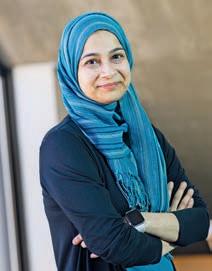
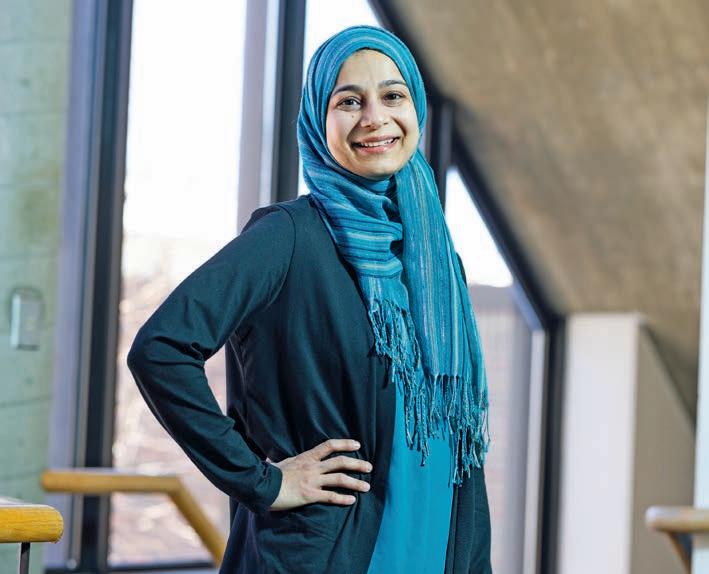
Nada Hashmi studies collaboration and leadership while mentoring the next generation
It was a chance meeting at a dinner party and a shared commitment to career and family that brought
Nada Hashmi to Babson College.
Hashmi, now an assistant professor of information systems, had just earned her PhD at MIT and was considering her next steps when she found herself at a dinner party seated near former Massachusetts Lt. Gov. Kerry Healey, who was president of the College at the time. Pregnant and weighing whether to delay pursuing a tenure-track role, Hashmi shared her hesitation with Healey.
“She looked at me and said, ‘Workplaces should be accommodating women with talent like yours,’ ” Hashmi recalls. “She said, ‘Why should you have to choose? Men don’t do that.’ ”
It was a pivotal moment. Seeing a woman in senior leadership who was direct, accessible, and unapologetic about ambition reshaped Hashmi’s vision of what was possible. Babson soon rose to the top of her list—not only for its leadership but also for its people.
“I wanted to be in a place where teaching mattered as much as research —and where colleagues genuinely support one another,” she says.
That balance has de ned Hashmi’s experience at Babson, where her research explores the use of technology to enhance collaboration and equity in leadership. Like many new faculty members fresh from doctoral programs, she arrived deeply trained in research but quickly learned that teaching requires a different kind of intentionality.
“I assumed if I explained it, students would take responsibility from there,” Hashmi says. “The students were very honest with me—they said, ‘No, we need you to hold us accountable.’ ”
That feedback reshaped her approach.
Hashmi began using frequent quizzes and check-ins, not as punitive tools, but as a way to ensure students were absorbing material. Mentorship from other colleagues helped her re ne both her pedagogy and research agenda.
“They helped me bridge passion with standards,” she says. “How to really listen to students. How to grow as a researcher. How to do both well.”
Support at Babson, she notes, often extends beyond formal mentorship.
A writing group formed by Amanda Weirup, assistant professor of management, became a professional lifeline—especially for women balancing research, teaching, and family life. “We meet for uninterrupted time to write— no meetings, no distractions,” Hashmi says. “It’s my core community at Babson. We’ve gone on retreats. We show up for each other. I don’t think that kind of
support exists everywhere.”
But for Hashmi, the most powerful moments still happen in the classroom.
One moment came at the end of a semester, when a student quietly thanked Hashmi for something she hadn’t realized she was offering: representation.
“I’m Muslim, and I wear hijab,” Hashmi says. “I’m the only female professor at Babson who does. A student came to me and said how meaningful it was to see someone like her at the front of the classroom.”
For Hashmi, that af rmation reinforced the broader impact of teaching—one that goes beyond syllabi and software. “You never know what’s going to spark con dence or curiosity in a student,” she says. “But when it does, it’s incredible.”
— Hillary Chabot
Assistant Professor Nada Hashmi says support and inspiration happen in and out of the classroom. “You never know what’s going to spark confidence or curiosity in a student,” she says. “But when it does, it’s incredible.” PHOTO:
Small Talk with CHRISTY LAGOS ’98, MBA’20

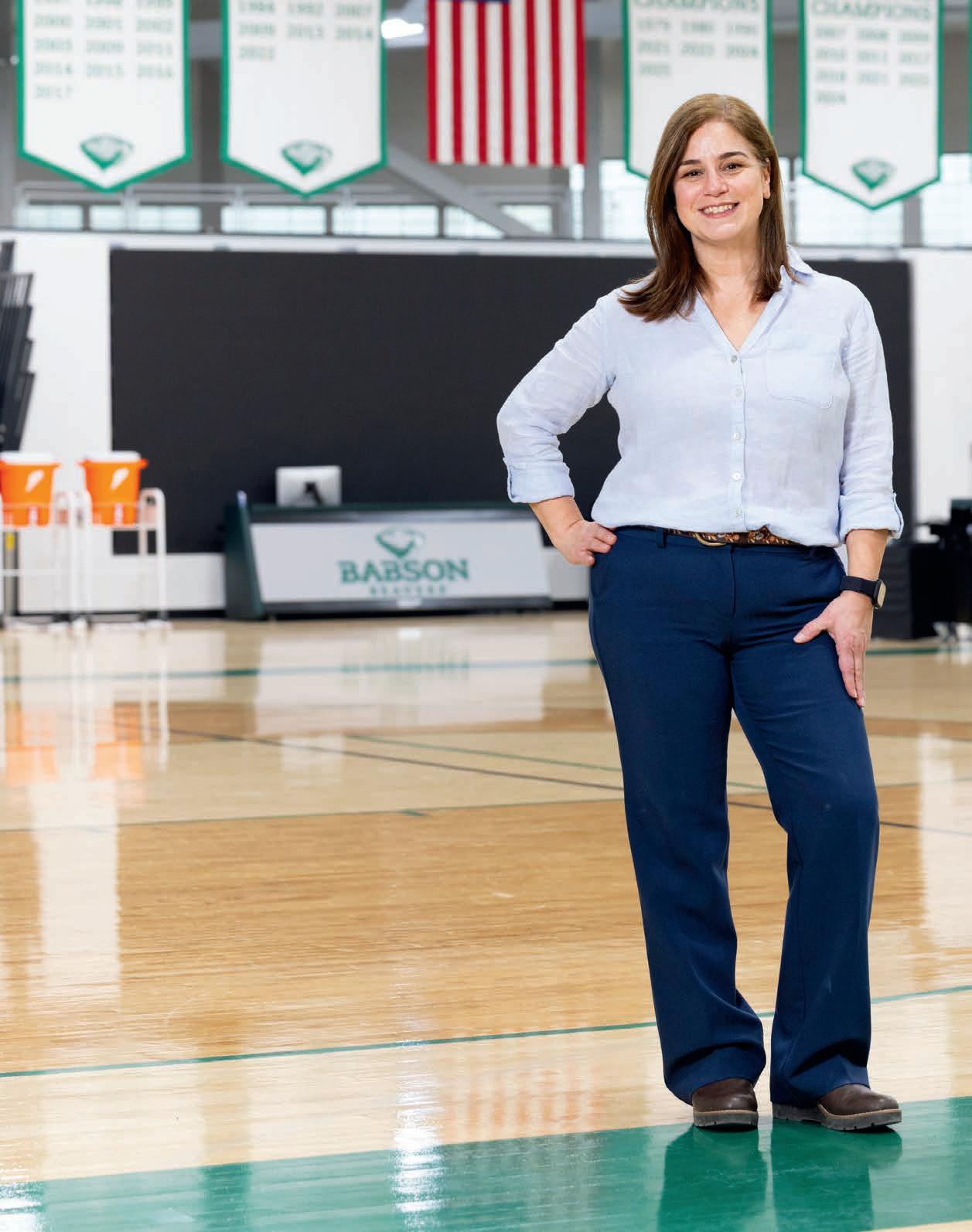
Christy Cisneros Lagos ’98, MBA’20 grew up near Babson College but never envisioned spending so much of her life on campus. A graduate of the Dana Hall School, down the street in Wellesley, she first attended Providence College but missed playing sports, so she decided to transfer and return home to Babson, where she played soccer and lacrosse and then ran cross country during her senior year. In 2013, she returned again to Babson to work in alumni relations. Now, as the associate director of alumni affinity programs and annual giving, Lagos fittingly works directly with Athletics, as well as fraternity and sorority alumni and legacy families, to help alumni maintain their connection with the College.
How much did being a student-athlete impact your college experience at Babson?
“It really enriched the whole experience, at least for me, because being an athlete was part of my identity. You have this sense of pride being a student-athlete. You’re representing the College, and you create these bonds with these people, with the coaches, traveling with classmates and teammates. You become close to those people that you’ve gone through so much with. It made me feel a part of something bigger, like I am a part of Babson.”
How much has the College evolved from when you attended?
“I came back to a better situation and a better school. All of this work that we do is about building a legacy, and I want to leave the place better than when I found it. Over the past 12 years, it’s amazing. I can’t believe how much has happened since I’ve been here, and I love seeing that when alumni come back. I’ll often say, ‘Can you believe this campus, from when we were here?’ Just being able to see the excitement and pride and people has been great.”
What’s it like as an alumna to be able to work so closely with other Babson alumni?
“I was always proud to be a Babson alum, but working here, on a daily basis, I’m like, ‘Wow, this place is so special.’ Talking to these alums and hearing their stories, and the fact that some are sending all three, four of their kids here. Everyone will have their own experience, but there is this special bond. For the legacy families, we have a pinning ceremony the night before Commencement. It’s such a special night, because you see all these families that have chosen to just continue this experience. Again, it makes me happy to do what I do. I just love working with all these families and seeing how much they love Babson.”

— Eric Beato

OF
By John Crawford
LinkedIn ranked Babson No. 1 for the strength of its alumni network, a landmark recognition for the College and its 46,000 alumni, who form a global community defined by its connections, entrepreneurial spirit, and willingness to lend a helping hand.
Babson College alumni show up for each other. Philip Boulton ’97, P’28 knows this well.
Just over a decade ago, a fire ripped through his company’s warehouse. Thankfully, no one was hurt, but the blaze was a blow to the business, Kannoa, a Miamibased manufacturer of outdoor furnishings that Boulton co-founded.
“The building was burned to the ground,” Boulton says. “We lost everything.”
Afterward, Boulton needed to figure out what to do next, how to get Kannoa back on its feet. For starters, he required the basics of an office, somewhere to work and make calls. That’s when an old friend, Antonio TurcoRivas MBA’05, stopped by and asked how he could help.
“I need an office, and I need phones,” Boulton said. Turco-Rivas replied, “No problem.”
Soon enough, Boulton had what he needed. In that moment of distress, of being knocked down and working to get back up, Boulton didn’t need to worry about the critical but time-consuming task of setting up an office.
“It just made everything easier and quicker,” Boulton says. “I could focus on what I needed to do.”
Turco-Rivas had set up Kannoa’s temporary office in the space of his own company, P’kolino, a maker of
OF BABSON
children’s furniture he co-founded with J.B. Schneider MBA’05. Eventually, Kannoa would bounce back and move to a new building of its own, but the fire had served to link the two furniture companies together. Going forward, over the next 10 years or so, they integrated their operations. “It led to a great partnership,” Boulton says.
Last year, LinkedIn named Babson the college with the No. 1 strongest alumni network in the country. The ranking was a landmark recognition for Babson and its 46,000 alumni, who hail from 128 countries around the world. For Boulton, the honor wasn’t a surprise. “It is true,” he says. “We are there for each other.”
Nowadays, Boulton plays a big role in the Babson community. He serves as a member of the Babson Board of Trustees, and he’s chair of the Babson Alumni Advisory Board. His daughter, Emiliana Boulton ’28, is even a student. When he heard about the LinkedIn ranking, he immediately took a screen shot of the announcement. “I sent it to every group chat I’m part of,” he says. “I was proud.”
With its ranking, LinkedIn highlights an alumni network filled with a can-do, we’re-all-in-this-together spirit—one that’s quick, as Boulton has witnessed in his own life, to reach out and offer a helping hand. “You meet anyone, and
they say, ‘If you need help, call me,’ ” Boulton says. “I really think that’s what makes the network so strong.”
Friendships and Business Deals
Babson’s No. 1 ranking for the strongest alumni network came among a bevy of other impressive recognitions from LinkedIn last year. The social network also named Babson No. 1 for alumni working internationally, for fueling business development careers, and for the largest share of alumni who become founders or entrepreneurs. Overall, LinkedIn ranked Babson the No. 7 college in the United States (shortly thereafter, The Wall Street Journal named Babson the No. 2 college in America for the second year in a row).
For the alumni network ranking, Babson beat out institutions with dynamic alumni communities. Think of the elite connections of the Ivy League colleges, for instance, or big state schools with alumni networks in the hundreds of thousands. “We are this little school in Wellesley, and we are outdoing them all,” says Gerri Randlett, an assistant vice president of alumni engagement and annual giving. “That continues to be the story of Babson—we punch above our weight.”
To calculate the ranking, LinkedIn data measured how connected alumni of the same school are to each other on
“We are this little school in Wellesley, and we are outdoing them all. That continues to be the story of Babson—we punch above our weight.”
– Gerri Randlett, assistant vice president of alumni engagement and annual giving
the platform, as well as how connected they are to current students. To go on LinkedIn is to see a snapshot of Babson people in action, how they connect, how they praise each other’s accomplishments. Interactions are many, and they’re warm and supportive.
“The platform is a microcosm of our community in so many ways,” says Edward Chiu, the Governor Craig R. Benson Endowed Executive Vice President for Advancement.
Chiu, who has led Babson’s advancement efforts for more than a decade, believes that the College community is built on a network of deep relationships. Alumni do business together. They mentor each other. They hire each other. They speak to Babson classes and offer internships to Babson students. When they face an issue at work, they reach out to the community to bounce around ideas. When they move to a new city, they reach out for recommendations about where to live and eat.
The community, in short, is active and interconnected. “It has led to friendships and business deals. It speaks to the power of that connectivity,” Chiu says. “There is something about our people that sets this place apart. There is a lot of love and passion and engagement.”
Chiu is amazed by the power that the simple act of wearing a Babson T-shirt can have. When Babson alumni spot someone sporting a Babson shirt or hat, they are compelled to introduce themselves. “You have an instant connection,” he says.
The strength of the community also leads to direct support of the College. Many alumni volunteer for the school, and they regularly attend community events (Babson holds some 350 events around the world annually). Every year, about 30% of alumni make donations
to Babson, a rate of giving much higher than the average alumni giving rate in the United States of approximately 8%. “It’s a successful community who hasn’t forgotten where they come from,” Chiu says.
Paying It Forward
Anjali Wali ’09 has never forgotten where she came from. “I was heartbroken when I graduated. I loved this place so much as a student,” she says. “There was always a feeling of being formed by this place that I wanted to repay.”
Today, Wali is Babson’s senior director of alumni engagement, a job that takes her on the road five weeks a year to meet with alumni around the world. Before she came to work at Babson, Wali had an interest in relationship management, and one fateful night, she attended a Babson alumni wine tasting event, spending the evening talking with Carol Hacker, a beloved longtime Babson staff member who is now retired.
“It was her and I and a bottle of wine, and we talked about the idea that relationship management is best done for a place you love,” Wali says. Within a month of the event, Wali was starting at Babson.
In her work, Wali often serves as a matchmaker of sorts, connecting those in the community in need of assistance with those who might help.
She is almost never turned down. “Our response rates are remarkable,” she says. “There is a real desire to pay it forward that runs through this community.”
Alumni also value each other’s opinions and often seek feedback from the College community. “They see the Babson network as really good pilots for their ideas, their thoughts, their investments, their next challenges,” Wali says.
Boulton has tapped into the collective knowledge of the Babson community. About seven years ago, he wanted his company to begin manufacturing in Colombia instead of China. Looking for advice on making that pivot, he reached out to his network. “The whole world opened up,” he says. “They said you need to call this guy in the government. Call this attorney. Call my cousin, who knows a guy in logistics. It was amazing.”
They Understand Each Other
Like Wali, Randlett is a connector. In her alumni engagement role, she is in constant contact with graduates of all ages, whether from the Class of 2025 or the Class of 1965. “I think it’s the greatest job in the world,” Randlett says. “Alumni send me letters. They send me Christmas cards. The love for Babson runs deep.”
Randlett facilitates all kinds of connections. If an alumnus is looking to expand his company but has never pursued venture capital before, Randlett may introduce him to alumni who have. If a student needs a summer internship in her hometown, so she can be close to her sick mother, Randlett may reach out to an alumnus who can potentially give her one. If an alumna is taking the daunting step of selling her venture, Randlett may identify others to talk with who have already gone through that process.
“Alumni have an instinct to act. They pick up the phone. They make introductions. They are happy when the other person succeeds,” Randlett says. “They are generous in every way a person can be generous.”
This generosity and connection among alumni, Randlett believes, reflects their appreciation for the one thing they all have in common: the education they received at Babson. “They believe so deeply in the

“You meet anyone, and they say, ‘If you need help, call me.’ I really think that’s what makes the network so strong.”

– Philip Boulton ’97, P’28, chair of the Babson Alumni Advisory Board and a member of the Babson Board of Trustees


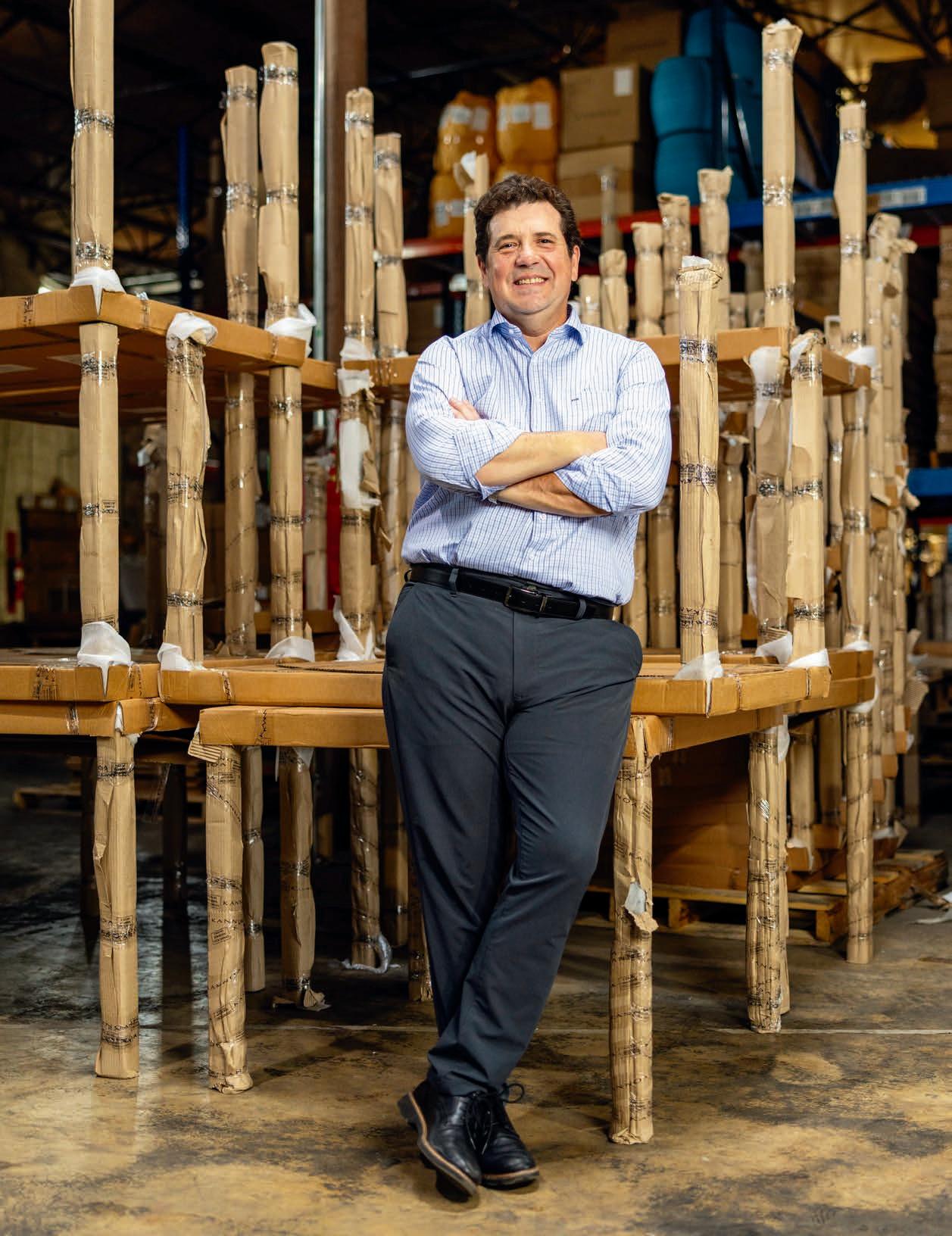

PHOTO: DEYSON RODRIGUEZ
Philip Boulton ’97, P’28
possibilities that flow from a Babson education,” Randlett says.
So, when they do business with a fellow Babson graduate, or hire one or mentor one, they know exactly the type of entrepreneurial skills and knowledge that person will bring to the table. “They speak the same language. They understand each other,” Randlett says. “There is this built-in respect.”
A Community for Life
For students, being a part of such a strong, interconnected community can be one of the defining features of their Babson experience. “It is part of the competitive advantage of a Babson education,” Chiu says. “If I’m an incoming student, this becomes a competitive advantage to have a No. 1 alumni network to tap into.”
Students interact with alumni in many ways. Student clubs may invite alumni to speak at an event, for example, or students may connect with an affinity or regional alumni group. “We try to expose students to the alumni network throughout their time here,” Wali says. “It is alumni’s favorite thing to interact with students.”
Boulton often hears about alumni who are mentoring students and recent graduates, though he admits that, as a young man, he didn’t bother much with Babson’s alumni community. He was too focused on establishing himself in business and later starting a family. Connecting with his old school wasn’t a concern. “I never looked back,” he says. Then, in 2015, he decided to attend the first Babson Connect Worldwide, held in Cartagena, Colombia. At the global entrepreneurship conference, he was surrounded by Babson people filled with the entrepreneurial spirit, looking
to grow their businesses and make an impact on the world. “That specific event just flipped everything for me. It was a breakthrough moment,” Boulton says. “I felt the energy, the passion, the connectivity of the network.”
Little by little, Boulton grew more involved in the Babson community, eventually becoming chair of the Babson Alumni Advisory Board and joining the Babson Board of Trustees. He jokingly likens his journey, from first drifting away from his alma mater to then returning to the embrace of its community, to that of Al Pacino in The Godfather Part III. “Just when I thought I was out,” Pacino famously utters in the film, “they pull me back in.”
Now Boulton’s daughter, Emiliana, goes to Babson. While seeing her start college may have felt bittersweet, a feeling many parents know all too well, he’s happy and amazed at the path life takes, how she’s now part of the larger Babson community, just like him. “That was a proud moment for the family,” Boulton says. “Babson feels like home.”
That feeling of belonging never has to end. The community of Babson, this No. 1 network of entrepreneurial people, is always there for alumni and students who wish to engage with it. “It’s a lifelong affinity, starting from the moment a student first steps foot on campus,” says Babson President Stephen Spinelli Jr. MBA’92, PhD.
Spinelli has lived that himself, having experienced various roles at Babson through the decades: professor, campus leader, and, of course, student. “I have spent many fulfilling years in the Babson community,” he says. “That network has helped me, challenged me, and inspired me. To be a part of it is one of the great privileges of my life.”
Babson Alumni Are …
The
Babson alumni network is the strongest in the nation because of the unique bonds that connect them. Over the next few pages, we highlight nine examples that illustrate the varied types of relationships among alumni.

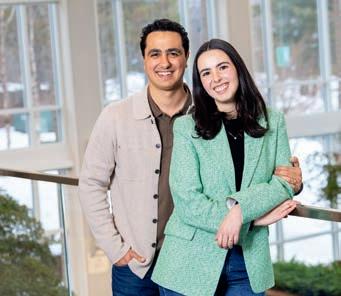
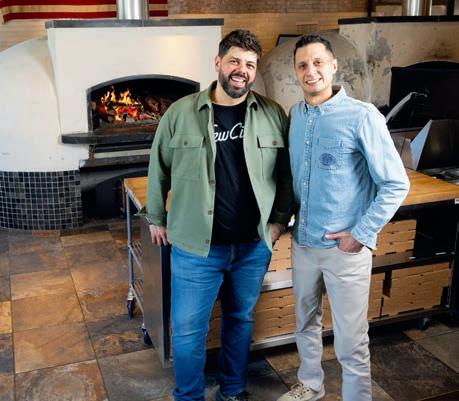
hen Karim El-Gamal MBA’11 and Michael Kasseris MBA’11 arrived at Babson, they bonded over a mutual appreciation for pizza. Typical grad school chit-chat, right? Little did they suspect that a simple conversation
Today, Rail Trail Flatbread Co. in Hudson attracts wood-fired, sourdough pizza fans from around Massachusetts. Meanwhile, their sibling business, New City Microcreamery, is a foodie favorite, known for scratch-made ice cream in adventurous flavors, freezing with liquid nitrogen for extra denseness.
During an icebreaker session at orientation, El-Gamal mentioned his application essay: an entrepreneurial concept for a delivery truck that would cook pizzas en route for maximum heat. Kasseris perked up. He’d grown up around the business, helping his dad run pizza and sub shops across
about lunch would spawn a food empire. Massachusetts.
The classmates became friends, bonding over accounting projects, entrepreneurship classes, group presentations. Kasseris then asked El-Gamal a pivotal question: “Are you still serious about pizza?” He was. The two decided to forge a business, using Kasseris’s dad as a mentor and Babson as a testing ground to assess their compatibility as business partners.
El-Gamal is detail-oriented; Kasseris is a big-picture thinker.
“In class, we had the chance to work closely together; we’d pick each other for groups,” El-Gamal says. “Michael would push me in areas where I wasn’t strong, and there were areas where I’d help
him. We complement one another.”
While course work was helpful, the memories they shared outside class shaped their success. “We were part of a core group in our class who did a lot of social activities,” Kasseris says. “It’s telling that we got into hospitality, because we were such party planners.”


balance sheets, he says. But compatibility is the key ingredient in
Simple chemistry often gets lost amid business plans and any successful partnership.
“You can’t figure out which people in your class could be potential partners if you don’t spend enough face time with them,” Kasseris adds. “Get outside of the classroom, outside of your comfort zone, and just be


yourselves. Our class did a great deal of that.”
Today, their partnership has grown into a thriving hospitality group that includes Rail Trail Flatbread Co., five branches of New City Microcreamery, and two Hudson bars: Less Than Greater Than Speakeasy and Finnegan’s Pub. Today, the businesses generate close to $20 million in revenue and maintain 300 to 400 employees depending on the season,
with ice cream distributed in more than 500 grocery stores.
Says Kasseris: “I always tell people who are interested in getting into business: Yes, you should study. Do the best you can. But the — Kara Baskin
relationships you’re making are equally as important.”






Michael Kasseris MBA’11
Karim El-Gamal MBA’11

Jolie Wyatt ’26 likes to hear from others who have been there.
As a young entrepreneur rolling through the exhilarating yet exhausting process of building a venture, she relishes talking to people with deep business experience, people who have faced obstacles and trod the same road she’s on now.
“I learn best through other people’s experiences,” Wyatt says. “For me, conversations like that are everything, especially when you’re in my position, trying to bring others on board with what can sound like a crazy idea.”
Wyatt’s “crazy idea” is If the Shoe Fits, a venture aiming to address the lack of proper-fitting women’s footwear by creating custom-fit shoes with 3-D foot scans. Recently, she had the opportunity to connect with Rick Blackshaw ’85, who has spent a career in the shoe industry. Brands he has led as an executive (HeyDude, Sperry, Keds, Chuck Taylor) have sold more than a half a billion pairs of sneakers.
Babson students and young alumni often reach out to Blackshaw, seeking his advice on the shoe industry and consumer products. He’s happy to share what he knows. “Through all of that experience, you learn what works in the market,” he says. “You learn lessons when you won and, more likely, when you lost.”
Currently the co-founder of Stoke Shoes, which promises “powerful footwear for all-American guys,” Blackshaw believes he also benefits from these conversations. “I love it. It benefits me knowing what’s
in their minds and hearts,” he says. “The younger generation is there to ground you in what’s current.”
Through the years, he has recruited a bunch of Babson graduates for his companies. “They are always the best performers,” he says. “They are great teammates, great networkers, great problem solvers.”
Besides Wyatt, another Babson entrepreneur Blackshaw has mentored is Kanayoliseh Onwudiegwu ’28, the founder of Sole-Running, which is creating a running shoe that allows for the replacement of worn-out soles. “It’s absolutely critical for me to talk with mentors like Rick,” Onwudiegwu says. “I’m a first-time founder in a complex, capital-intensive industry, and I can’t afford to learn everything through my own mistakes.”
Blackshaw was encouraging but didn’t sugarcoat the challenges that Onwudiegwu may encounter. “It felt like talking to someone who respects what I’m trying to do and wants to see me grow,” Onwudiegwu says. Wyatt agrees. “Rick really embodies the Babson spirit,” she says. “He is generous with his time and genuinely wants to help however he can.”


For his part, Blackshaw was impressed by the two student entrepreneurs and their ideas. “They are a decade ahead of where I was when I got out of Babson. They have an idea in their head and heart that is unique and has a point of difference,” he says. “Regardless of how their brands and projects turn out, they are going to shine if they want to be in the footwear business.”
— John Crawford




Listen to Jolie Wyatt ’26 on Babson’s podcast, “From Problems to Possibilities”

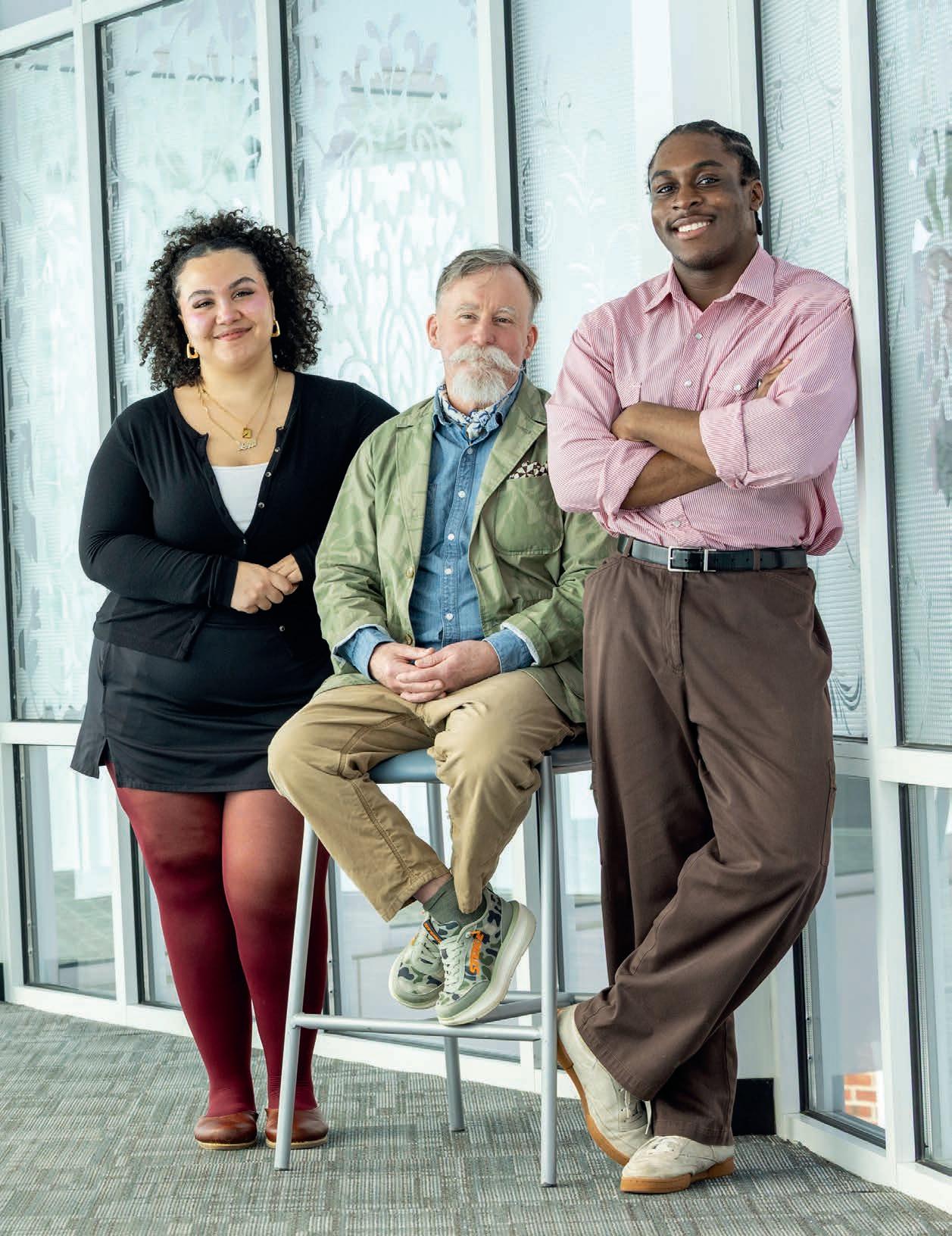


PHOTO: NIC CZARNECKI
Rick Blackshaw ’85
Jolie Wyatt ’26
Kanayoliseh Onwudiegwu ’28
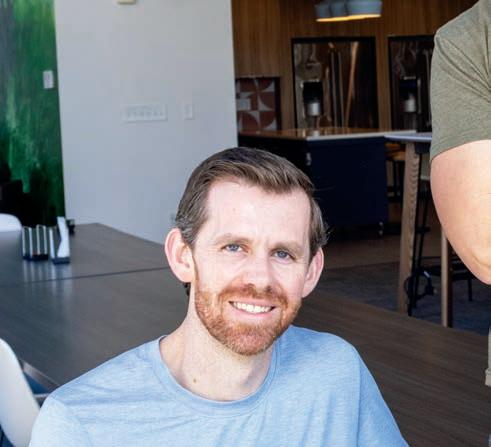

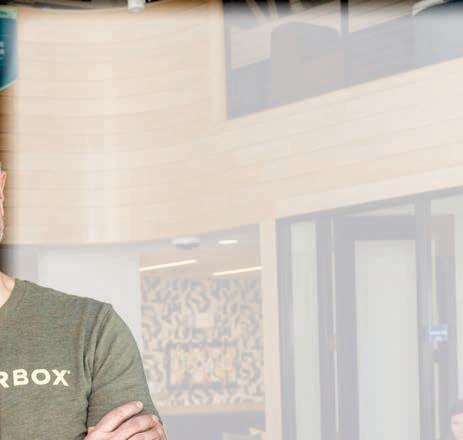

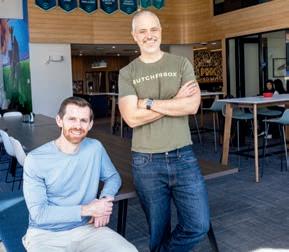
hen Mike Salguero MBA’10 launched ButcherBox in 2015 and needed a summer intern, he turned to a familiar place: the Babson job board. “Babson undergrads are, in my opinion, the best hires in the city,” Salguero
says. “They’re hungry, scrappy, and entrepreneurial.”
These were essential qualities for an audacious idea: Salguero wanted to deliver grass-fed, humanely raised meat directly to consumers through a subscription service. He needed someone willing to build something from nothing. One of the applicants was Bobby Quirk ’17, a sophomore who planned
to become an investment banker.
“As Crocs, tone would home, anywhere
“As I’ve jokingly told Mike many times, I applied because there was no cover letter required,” Quirk says, laughing.
The next morning, Quirk arrived at their first meeting in Cambridge wearing a suit and tie. Salguero showed up in shorts, a T-shirt, and Crocs, then took him to a barbecue, where they sampled ButcherBox steaks. That encounter set the tone for an easygoing, collaborative relationship that would grow into a startup success story.
“We didn’t even have an office,” Quirk says.





“It was just Mike and me for the entire summer.” They worked wherever they could—coffee shops, Salguero’s home, anywhere with WiFi. Quirk helped launch the company’s early Kickstarter campaign and handled everything from social media to financial models to riding alongside
Salguero in a U-Haul to fetch office chairs.
“I
“I learned more in those three months than I did in a lot of different classrooms,” Quirk says. “The experiential learning process was absolutely incredible. Mike gave me leeway. He was wonderful with giving me feedback. It was a little bit of a trial by fire, but it was certainly one
“The feedback.
of the best summers of my life.” revenue Target.

After graduating, Quirk joined the company full time. Over the next several years, he rose through the ranks as ButcherBox, fully bootstrapped, scaled and expanded. Eventually, he became vice president of operations, overseeing logistics and fulfillment systems for a company that approaches $700 million in annual revenue with 175 employees and roughly 450,000 subscribers. ButcherBox also has added a retail component, recently launching in Costco and Target.
Salguero says the rapport between the two entrepreneurs grew naturally over time, like the company.
“I have all the trust in the world in Bobby,” Salguero says.
For Quirk, that trust transformed his career. The two recently launched a premium pet-food company built on the same sourcing philosophy as ButcherBox. Quirk now runs the business, DASH,
with Salguero as partner and advisor.

“That’s something I hope to do someday, too.”
“He gave a really young, hungry student a chance,” Quirk says. — Kara Baskin


Mike Salguero MBA’10
Bobby Quirk ’17

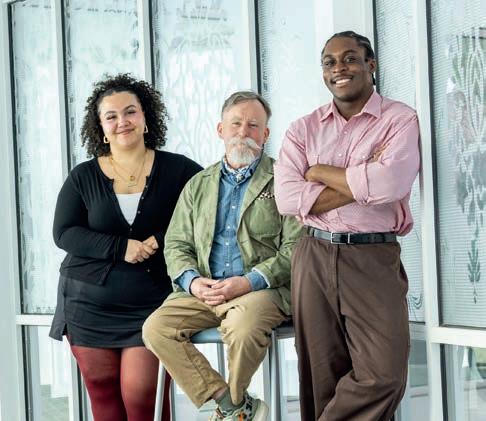
He’s known as “The Mayor.”
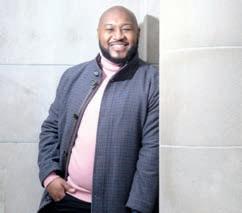
People started calling Shatiek Gatlin ’16 that at Babson, during his sophomore or junior year. Donna Stoddard P’21 may have been the first. “You’re so connected to everyone,” the Murata Dean of Faculty and longtime professor told him. “It’s almost like you’re the mayor.”
Gatlin earned that nickname for a reason. As Stoddard said, he’s connected. He knows people. He’s in regular touch with past Babson presidents, past chairpersons of the board, and past leaders of the Black Student Union, as well as professors, staff, and alumni of all ages.
“I am happy to report that I have never come in contact with a Babson alum I didn’t want to keep in touch with,” says Gatlin, whose wedding several years ago was attended by 35 people from the Babson community. “I have always felt a deeply personal connection to the people and the place.”
Gatlin started to build his Babson network as a student. He frequently attended events. During Back to Babson weekend, he often wandered the tent, talking to people. “I am a social person by nature,” says Gatlin, who lives in New York City with his wife and two small children and works as a category finance manager at Mondelez International. “I’m one of those guys— it’s hard to get me to leave the party. I need 20 minutes to work the room before I leave.”
Gatlin went on to be the student speaker at Commencement (a meaningful accomplishment for him, given that he grew up speaking with a stutter) and later served on the Babson Board of Trustees for two years. He says he’s never afraid to reach out to the Babson community for advice and support. His network is full of people he admires and sees as role models. “I look at the Babson network as an extended family I can rely on,” he says. At the same time, he plays the role of mentor himself with students and young alumni. They may need advice about careers, or grad school, or adjusting to college life. “I’ll talk to anybody,” Gatlin says. “Whatever it is, I try to make myself available.”
He tries to attend summer sendoffs of incoming students, and Babson staff and faculty often refer students for him to speak with. “They know I’m always a person they can reach out to,” he says. “A lot of it is just being available and having a reputation as someone who can be relied upon for advice or perspective.”
As a former Posse Scholar, he is particularly happy to talk with any student in that program. “My inbox is open to anyone Babson related, but certainly anyone from Posse,” he says. “I know what it’s like to be from a big city like New York and going to a quiet suburban town like Wellesley. I want to be helpful.”
— John Crawford

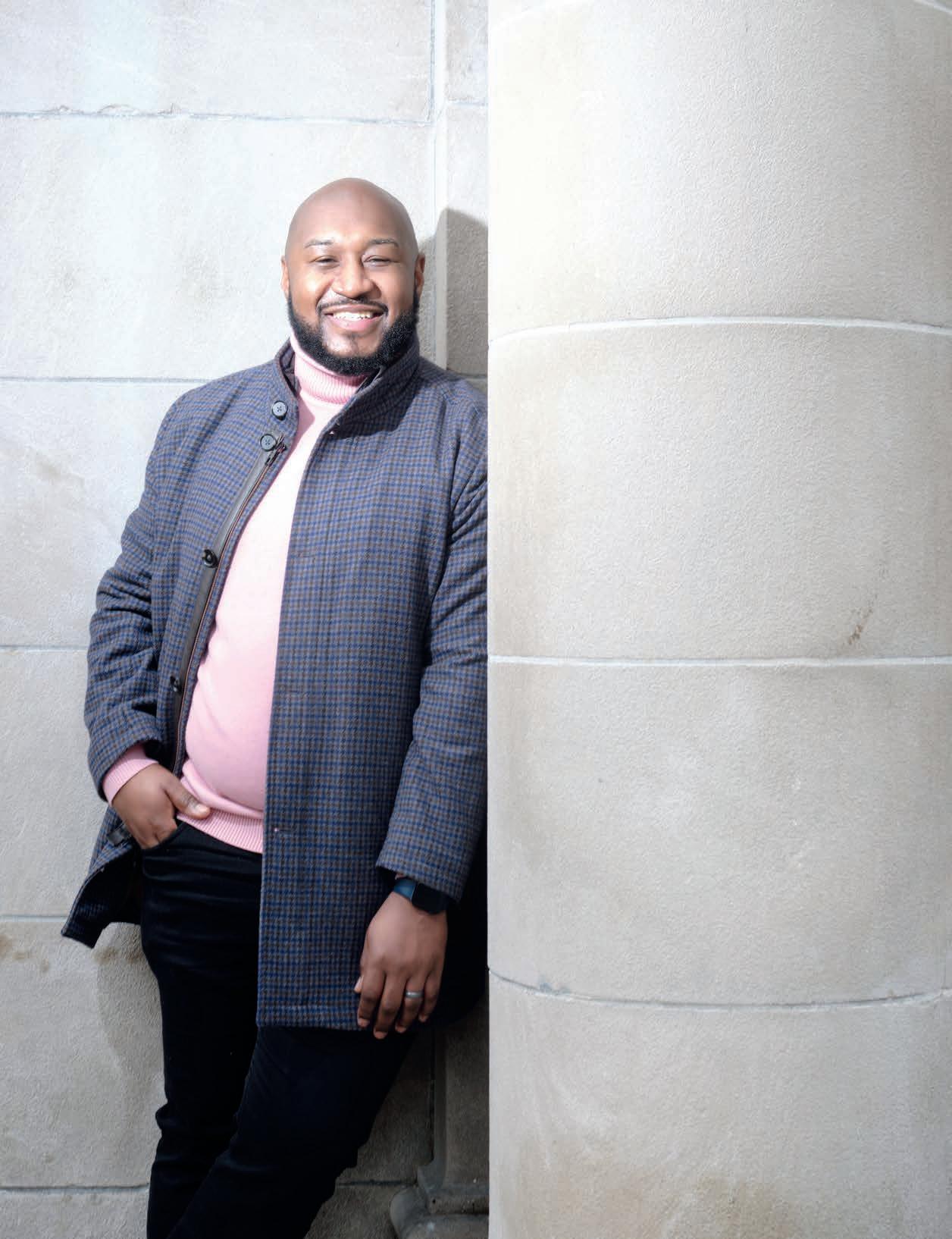
PHOTO: MARIO MORGADO
Shatiek Gatlin ’16

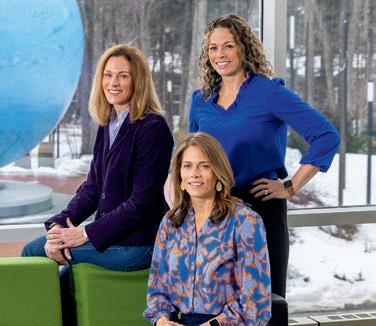
For the Conroy sisters, Babson College is a family tradition. Middle sister Kaitlin Conroy Ervin ’00 was the first sibling to enter Babson, drawn by the rigorous business curriculum and the opportunity to play soccer, basketball, and softball for the College. Erin Conroy Nordstrom ’05, the youngest in the family, followed Kaitlin, entering as a first-year student the fall after her sister graduated.
Like Kaitlin, Erin was recruited to play basketball at the Division I level but found Babson appealing because its Division III status meant she could play multiple sports (field hockey, basketball, and lacrosse) while earning her business degree. Given the small, tightly knit community at Babson, Erin and Kaitlin had many teammates and friends in common.
Their big sister, Kelwin Conroy Newman MBA’06, attended a liberal arts college for her undergraduate degree but ultimately earned an MBA while attending Babson part time. “Because of Kaitlin’s and Erin’s experiences and because I was on campus dozens of times for games, it made a lot of sense to go to school there,” Kelwin says. “I had a good sense of the community and the strength of the alumni network.”
The sisters have happy memories of gathering at Babson in those years with their parents, Tim and Judy, who regularly traveled from their home in Connecticut to root for Kaitlin and Erin at their games. Afterward,
the family would share meals at local spots, including Dunn-Gaherin’s.
The sisters credit their father for originally learning about Babson and encouraging Kaitlin to apply. They joke that although their dad did not attend Babson, most people would assume that he is a proud alumnus, given his enthusiasm for the school.
The Babson network has had a lasting impact on the sisters’ lives and careers. Kaitlin, who has had a long career in investor relations and marketing for multiple hedge funds, met her husband, Michael Ervin ’00, on campus. Kelwin serves as an advisor and managing director for Pathstone, a wealth management firm, which hired her after Kaitlin sent her resume to Doug Huber ’09, who worked at the company. And, Erin works in sales for NetJets; she entered aviation in 2006, hired by Tim Marken ’81, then an executive for Marquis Jet Partners.


Erin, a volunteer hockey coach, has guided at least one high school student to Babson. The sisters say there’s a decent chance someone from the next generation of Conroys will attend Babson, too.
“It’s really the strength of the bonds there,” Kelwin adds. “The alumni network has been tremendous. Anytime you reach out to somebody, 99% of the time you’re going to get some sort of response. That’s worth every dollar paid toward tuition, having that network of people to reach out to.” — Erin O’Donnell




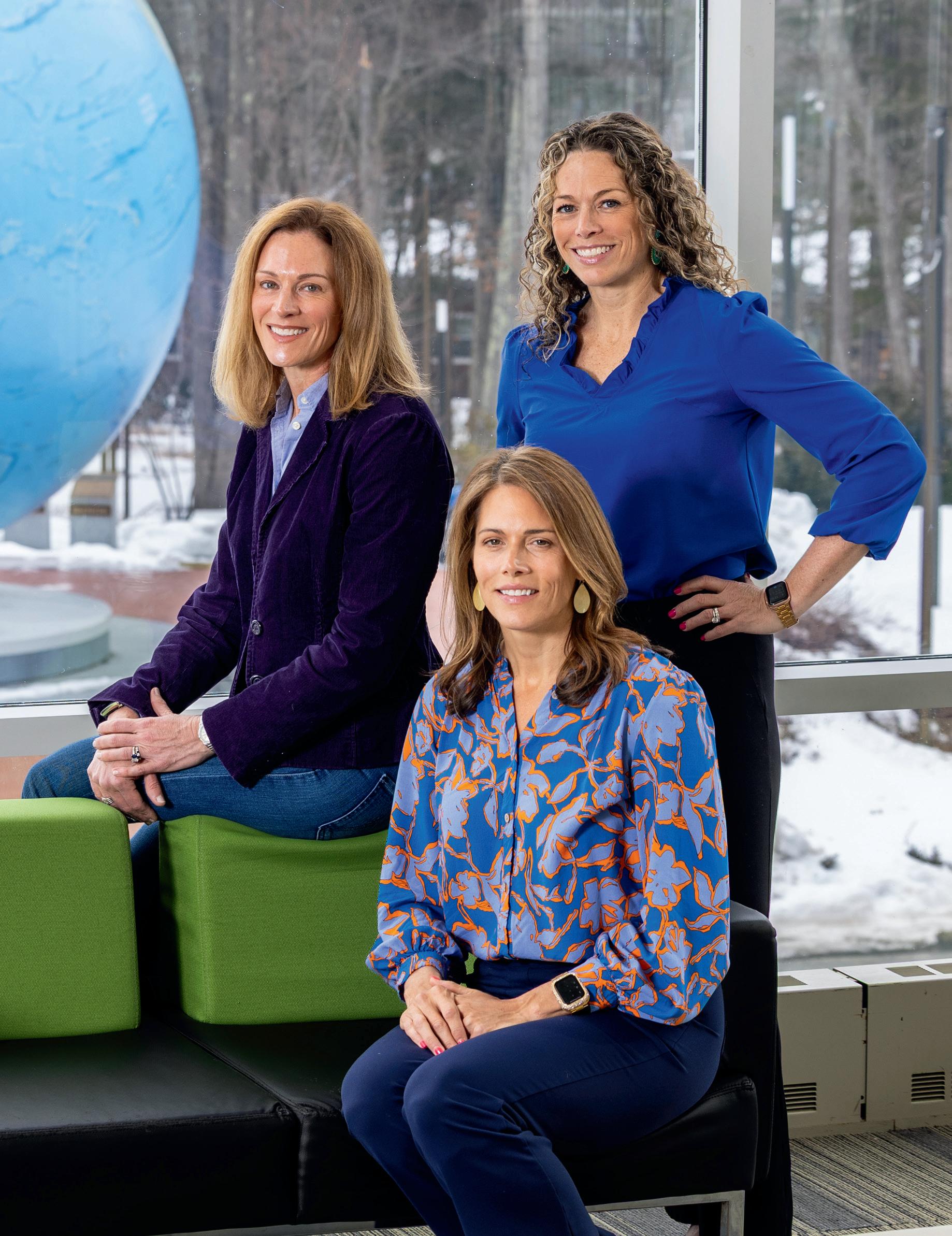

PHOTO: NIC CZARNECKI
Erin Conroy Nordstrom ’05
Kaitlin Conroy Ervin ’00
Kelwin Conroy Newman MBA’06
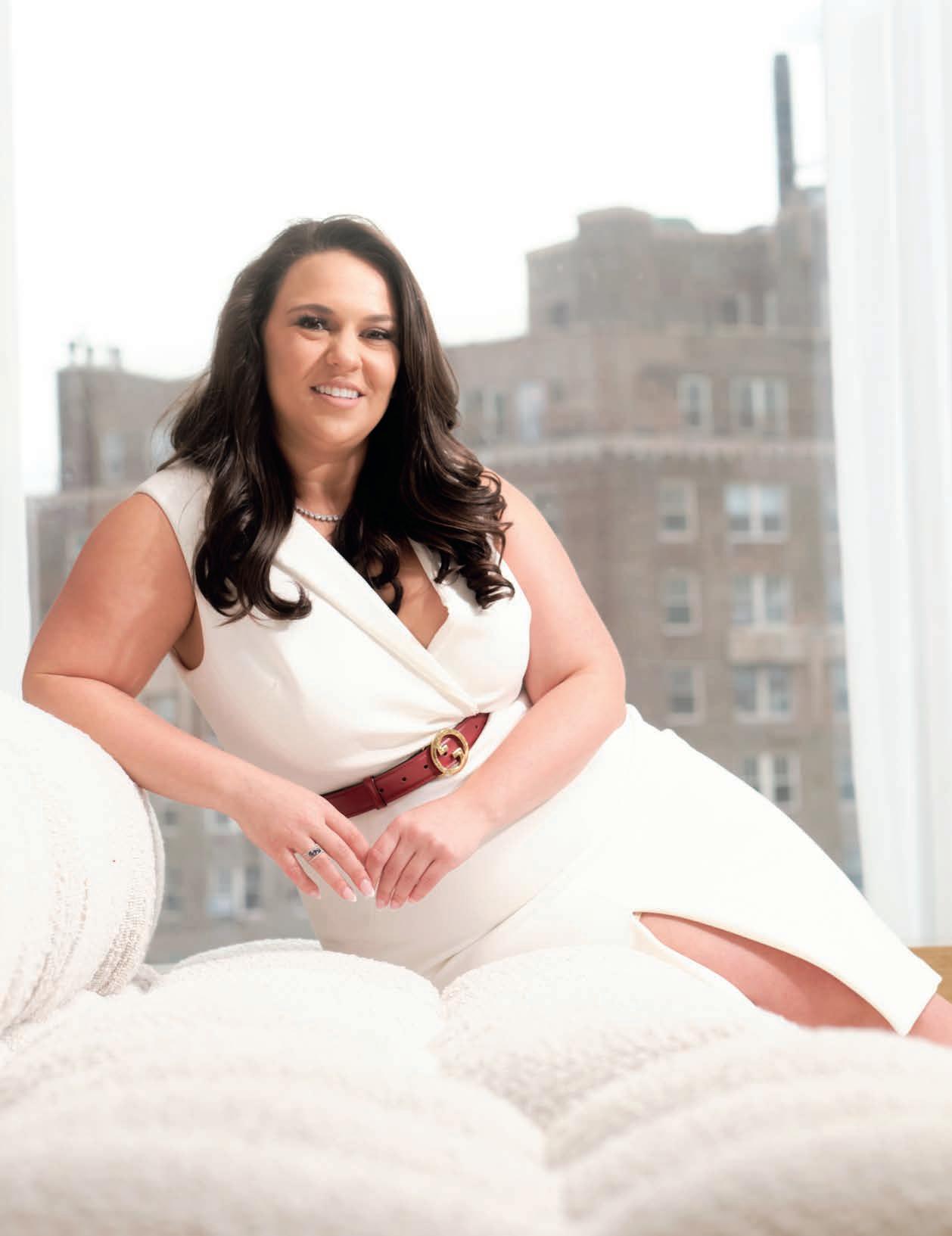
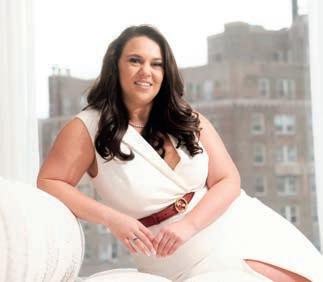
Bianca

D’Alessio ’14 enjoys advising Babson students and new graduates, passing on wisdom earned in her own high-profile career in real estate.
As founder and CEO of The Master’s Division at Nest Seekers International, D’Alessio is currently New York City’s top real estate broker in transaction volume and eighth in the country. She also starred in two seasons of the HBOMax reality show “Selling the Hamptons” and wrote Mastering Intentions: 10 Practices to Amplify Your Power and Lead with Impact
“One of the things I love most about working with Babson students and new graduates is their curiosity and ambition,” D’Alessio says. “Babson attracts people who are builders, who are looking to create something meaningful in the world. Being able to mentor someone at that stage of their life is incredibly rewarding because even small pieces of advice can meaningfully shape the direction they take.”

D’Alessio feels grateful for the ways experienced real estate brokers mentored her early in her career. For example, “one of the most valuable lessons they shared was that no successful business is built alone,” she says. They encouraged her to choose partners with strengths that complemented hers.
Motivated to mentor others, she has welcomed multiple Babson students and recent graduates onto her team for internships and entry-level positions. Because students can earn a real estate license at age 18, some have been qualified to complete real estate deals under her guidance. One such intern, Arjun Dave ’28, stood out for “his grit, tenacity, curiosity, and ability to solve problems,” D’Alessio says. “He approached every challenge with a mindset of figuring things out rather than waiting to be told what to do. That kind of initiative is rare at any age.”

D’Alessio has been invited to campus to speak to students in the sales concentration, as well as members of the Babson Real Estate Club and the Frank & Eileen™ Center for Women’s Entrepreneurial Leadership. When she’s here, D’Alessio likes to offer 30-minute, one-on-one meetings to current students who want to talk and ask questions. She is surprised by the pressure students feel to have a set career path. She says she works to reassure them that “Babson is already giving them the … tools they need to succeed.” She also encourages them to meet and talk to people in fields that interest them, and to cultivate a resilient mindset. This is “the ability to push through rejection and to keep going after hearing ‘no.’ ”



D’Alessio says the interactions with students are energizing: “Engaging with students brings fresh perspectives, new ideas, and … keeps you connected to the spirit of entrepreneurship that Babson fosters so well.” — Erin O’Donnell



Bianca D’Alessio ’14


or Roberta Maldonado Sistos MBA’26, Babson was never just a college. It was a family
Long before she and her husband, Javier Martínez Abrego Cantú MBA’26, packed up their lives in Dallas to pursue their MBAs together, Maldonado had heard the stories. In 1994, her parents left Monterrey, Mexico, newly married and chasing opportunity. With little more than determination, her father, Jose Maldonado MBA’96, P’23 ’26, discovered Babson and enrolled in the MBA program. The experience changed the trajectory of their family. “He introduced Babson to everyone,” Maldonado says.
Over the years, cousins and siblings followed. Her brother earned his undergraduate degree in 2023. A cousin graduated in 2019 and met her husband while at Babson. Another cousin recently completed a One Year MBA.
MBA’26, Each degree strengthened the family’s connection to the College. focus on leadership and entrepreneurship.
been classmates with Ab Igram MBA’96, now executive director of the Tariq Farid Franchise Institute. The two even sat
So when Maldonado and Martínez Abrego began exploring MBA programs, Babson felt both familiar and full of possibility. The couple—who grew up in Monterrey but met years later in Dallas—saw the MBA as an adventure they could share. Martínez Abrego was drawn to Babson’s collaborative culture and Maldonado, meanwhile, uncovered another connection: Her father had in the same course taught by now-Babson President

Stephen Spinelli Jr. MBA’92, PhD. As Maldonado explored launching a venture of her own, that connection opened doors, making the institute an extension of both her interests and her network.
Soon, they found themselves immersed in the Babson experience together. Their conversations rarely end when class does. On the drive home, discussions about strategy, leadership, or a professor’s case study continue naturally. The experience has deepened not only their professional skills but also their understanding of each other and their marriage.
Beyond the classroom, Babson’s connections have already helped shape their path. Through Igram, Maldonado gained access to a network that led to her current role with a private equity group. Martínez Abrego, as president of the Babson Graduate Consulting Club, expanded his own network across the community.
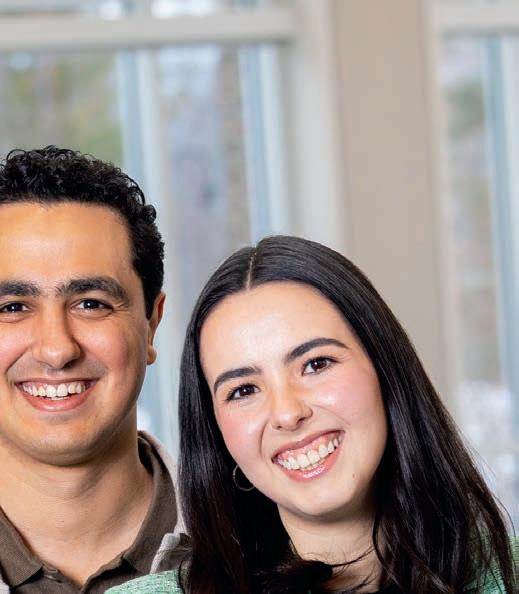




The couple eventually will return to Dallas after they walk across the stage at Commencement. More than 20 family members will be there to cheer the family’s newest Babson graduates, including Maldonado’s father, Jose. Every time a family member graduates, he makes a beeline for Kerry Murphy Healey Park to find their engraved brick. — Hillary Chabot













Roberta Maldonado Sistos MBA’26
Javier Martínez Abrego Cantú MBA’26

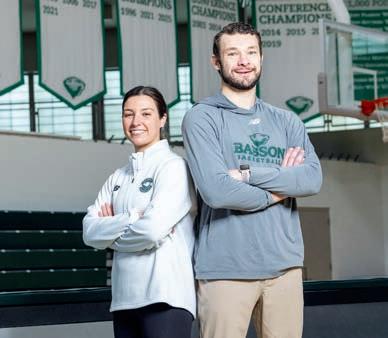
JoeyFlannery ’17 is a Babson men’s basketball legend. The program’s all-time leading scorer, Flannery won multiple national player of the year awards while leading the Beavers to their first basketball national championship in 2017.
Likewise, Tori Roche ’20 is a Babson legend in her own right. A two-sport athlete, Roche was an integral part of several nationally ranked teams and championships during her playing career, including helping the field hockey team to its first NCAA Final Four and the softball team to its first NCAA Super Regional in her first year.
Now, both Flannery and Roche are back on campus as alumni coaches. Flannery is the associate head coach of the men’s basketball team, and Roche is the head coach of the softball team. It’s no secret why.
“This community is unlike any other,” Roche says. “I have bonds, friends, and resources for life. The true relationships are built because of the people and pride for the school. Everything is so intertwined.”
Babson Athletics has a long history of alumni who stay or return as coaches. Currently, seven alumni serve on the coaching staffs of the College’s 23 varsity programs. No one knows better than them what it’s like to be a student-athlete at the top school for entrepreneurship.
“The student-athletes have a drive to be great in sports, life, and business,” Flannery says. “The coaches foster genuine relationships with their alumni, and that benefits the student-athletes.”
“Being an alum helps me relate to my student-athletes because I can share my story,” Roche says. “The ability to connect with people and have so many shared experiences makes it easier.”
The bonds that are formed among student-athlete alumni are unique and contribute to Babson’s ranking as the No. 1 strongest alumni network in the country.
“You don’t know how strong the alumni network is until you live it, experience it, and get a feel for being on campus and meeting the people who work here, and every person at Babson contributes to that,” Flannery says. “The alumni love Babson and what it’s done for them, and it’s what they learned in athletics that provides the motivation to want to give back.”
Now in the position of developing the next generation, Roche and Flannery take their responsibilities to their student-athletes and fellow alumni seriously—on and off the fields and courts.
“One area I was pleasantly surprised about is the number of alumni who regularly reach out to me about internships and jobs,” Roche says. “They genuinely want to help assist our players with their companies and support them throughout the hiring process.”

“I try re-engaging those who have been away for a bit while continuing to develop the relationships with those who I know well,” Flannery says. “It’s great to share a bond with so many alumni with similar goals and interests.” — Scott Dietz



ALUMNI COACHES

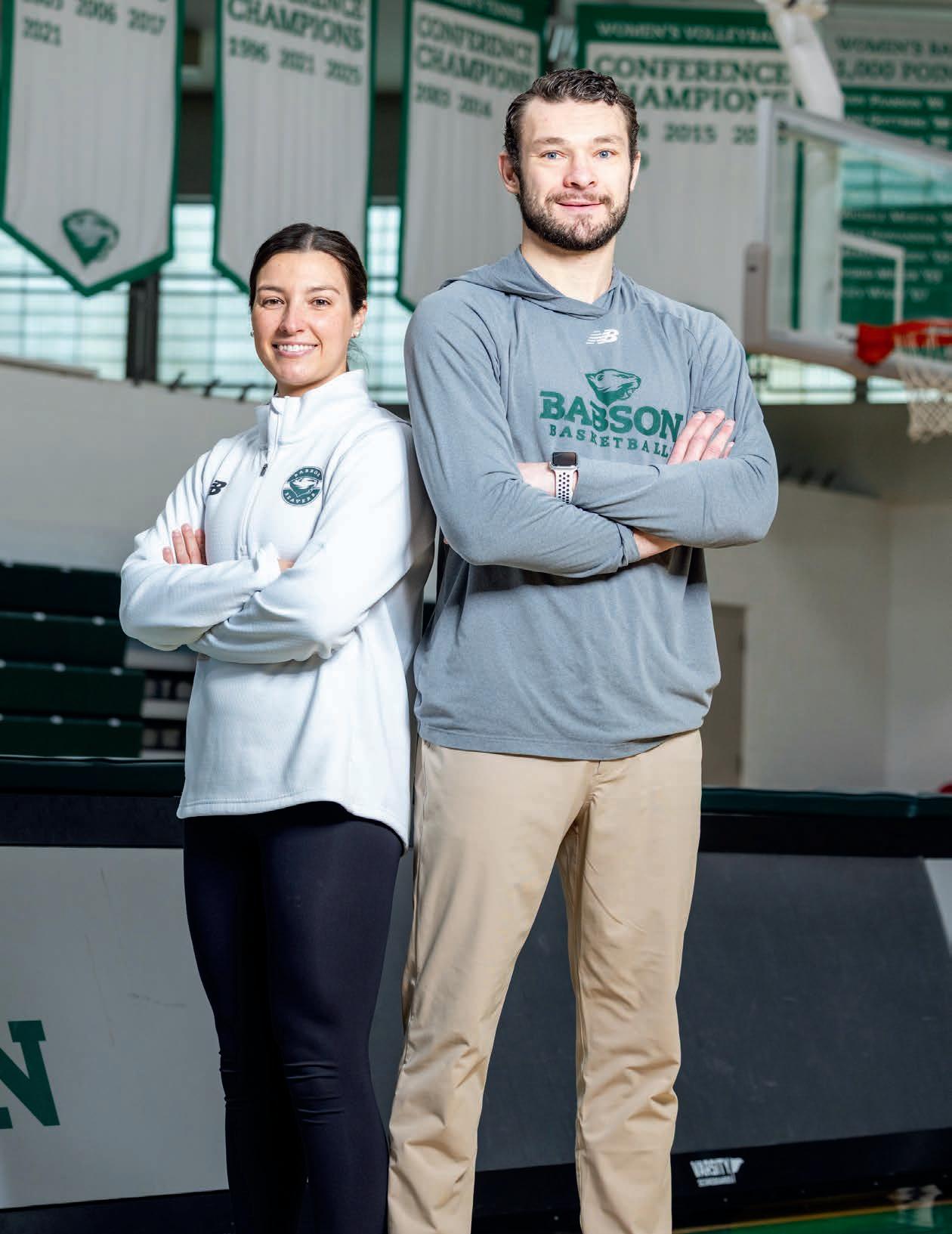
Jon Anderson ’75, P’04 ’08 ’13 ’13, head coach, men’s soccer
Joey Flannery ’17, associate head coach, men’s basketball
Meaghan (Merullo) Kerrigan ’17, assistant coach, softball
Nellie Pineault MBA’03, head coach, women’s soccer
Jamie Rice ’90, P’28 ’29, head coach, men’s ice hockey
Tori Roche ’20, head coach, softball
Brent Sitarski ’22, MBA’26, assistant coach, cross country and track & field
PHOTO: NIC CZARNECKI
Tori Roche ’20
Joey Flannery ’17


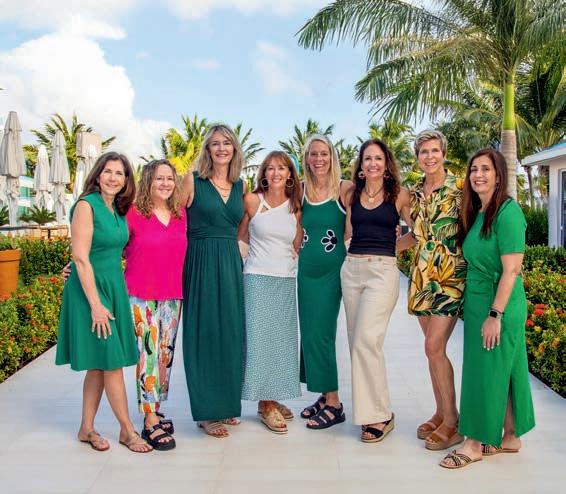
Onmove-in day in 1982, they were just first-year students— some shy, some cheeky, most only 18. They landed in an off-campus Victorian house in downtown Wellesley called Green Gables, relying on a single shuttle to carry them back and forth to campus. It was hardly glamorous. But somewhere between late-night study sessions, crowded rides to the library, and dinners eaten together whenever possible, a bond took root.
Forty-three years later, it’s still going.
The classmates—Kathy Cohane Chunias ’86, Colleen Gaffney Eichor ’86, Marianne Citro Flayhan ’86, Lisa Haskins ’86, Linda Lackey ’86, Karen Madden ’86, Sheilagh Hamill McNeil ’86, Carolyn Fox Mula ’86, Kaylee Dodge Murphy ’86, Maryellen Papelian ’86, and Gerri Nathan Russo ’86—call themselves the “Green Gables Girls.” What began as proximity became permanence. They studied quantitative methods side by side, cheered at soccer games in painted faces, and navigated the uncertainty of housing lotteries and post-graduation life together. After Commencement, four of them even shared a house in Newton, Massachusetts, easing the leap from college to career.


Over time, marriages, children, and moves—to North Carolina, Virginia, Florida, and beyond—stretched the miles
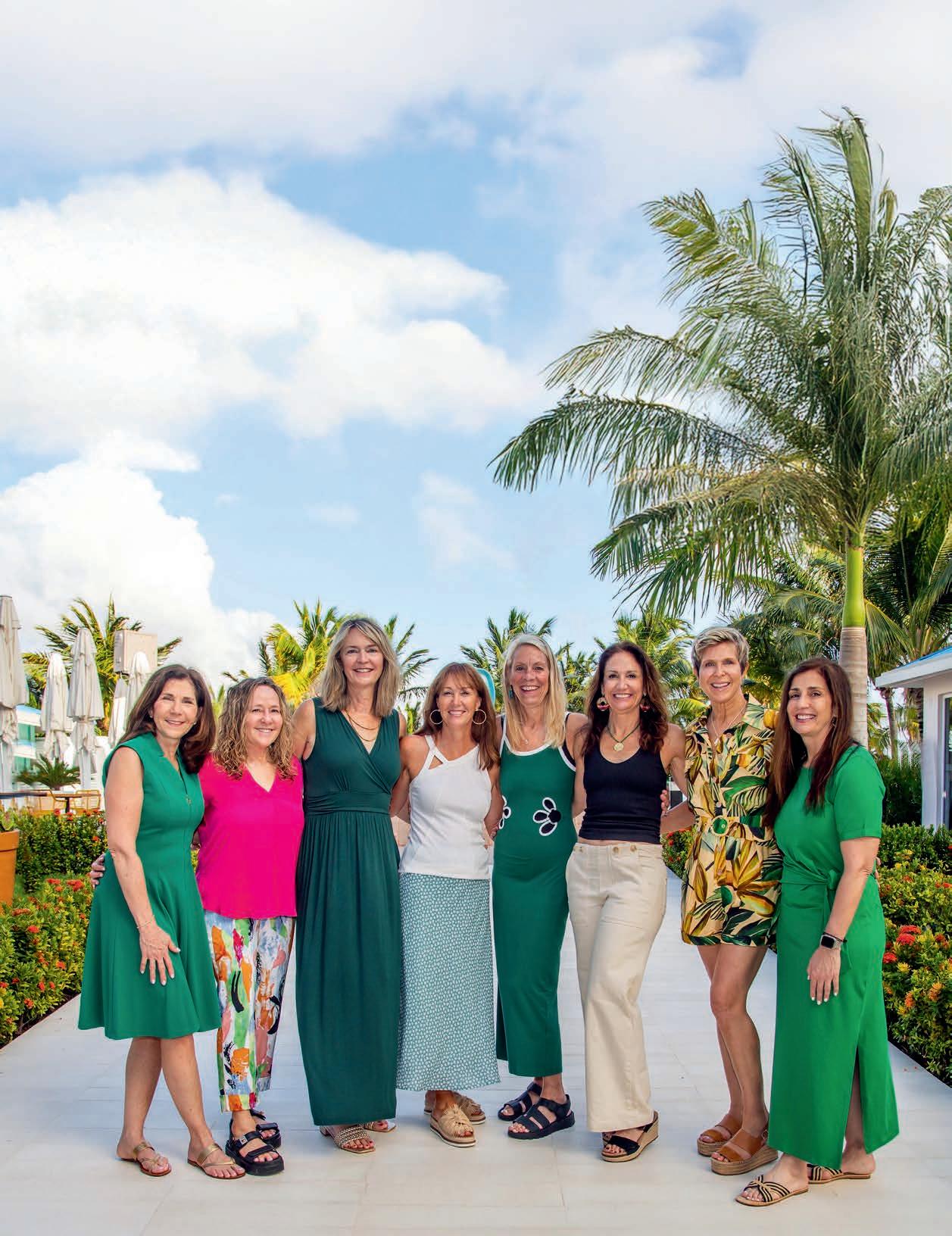
between them. But distance never dulled the connection. Text chains hummed. Weddings became reunions. When life brought challenges—career pivots, illnesses, the quiet doubts of adulthood—they turned instinctively to one another.
Five years ago, they decided it was time to gather the group again. Fort Lauderdale, Florida, was the first official girls’ trip. Cancun followed. Now, their annual getaway of eight is sacred. They laugh so loudly neighbors complain. They retell their stories. And each time, it feels as if no time has passed at all.


Their bond isn’t built on business referrals or job leads— though Babson prepared them for success. It’s built on something quieter and arguably more rare: unconditional support. The women hold different political beliefs, different faiths, different life stories. But they share a foundation birthed in those formative years—when they were “babies,” as McNeil says, learning who they were and who they wanted to become.


– Hillary Chabot
“We’re so lucky, and we’re so grateful for the education that we got from Babson and the opportunities that Babson brought us all,” McNeil says. “But, it’s not just the education that Babson gave us; it’s the powerful friendships that I know are going to last a lifetime. It’s those friendships that we’re more grateful for than for anything.”
Maryellen Papelian ’86
Gerri Nathan Russo ’86
Marianne Citro Flayhan ’86
Linda Lackey ’86
Carolyn Fox Mula ’86
Kaylee Dodge Murphy ’86
Sheilagh Hamill McNeil ’86
Lisa Haskins ’86
MORE STORIES ABOUT THE ALUMNI NETWORK
1
The bonds of the Babson alumni network know no bounds, expanding across generations and around the world. Here are five more stories that illustrate the breadth of College’s No. 1-ranked alumni network.
1. The Babson Effect: Alumni Bonds That Launch Careers—and Bring Them Full Circle
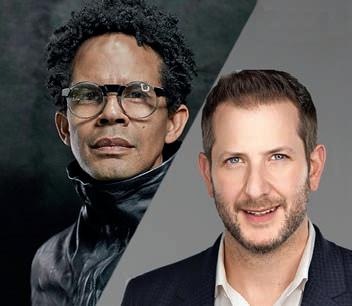
Aaron Walton ’83 and Alex Smith ’08, MSA’08
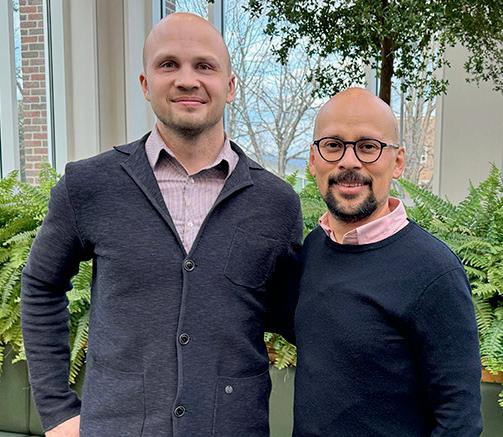
2. ‘Babson Success Story’: What Happens When Two MBA Alumni Collaborate
Sebastian Gomez-Puerto MBA’14 and Aleksandr Malashchenko MBA’24
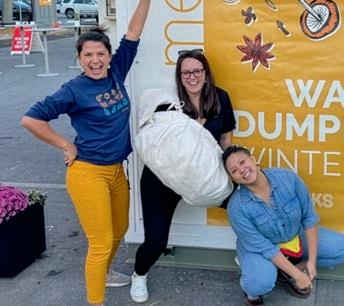
3. Risk Takers, Problem Solvers, Dumpling Makers
Alyssa Lee MBA’17 and Annie Campbell MBA’17
4. A Head Coach, a Backup Goalie, and the Inspiring Story of a Gift
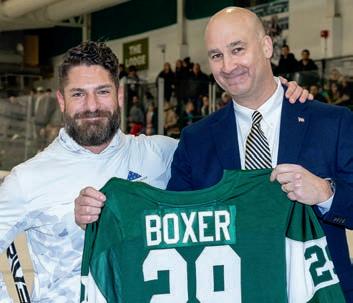
Jamie Rice ’90 and Greg Boxer ’07
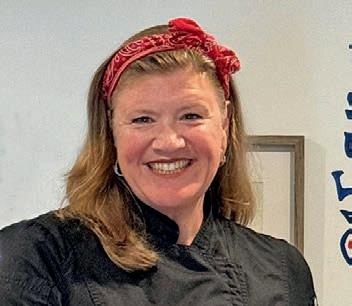
5. Jeni Wheeler MBA’05 Serves Up Nutrition to Cape Communities as Holiday Needs Surge Jeni Wheeler MBA’05 and Harry Henry ’68
ADV ANCEMENT SPOTLIGHT

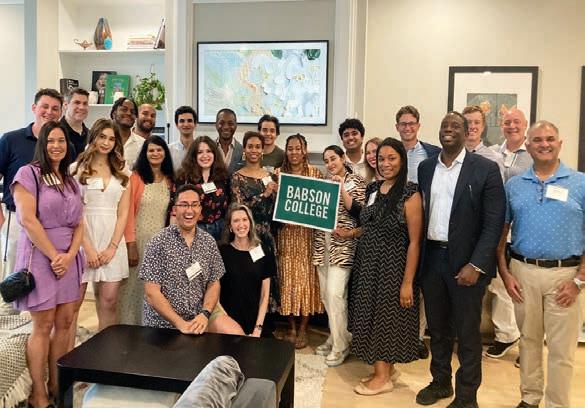
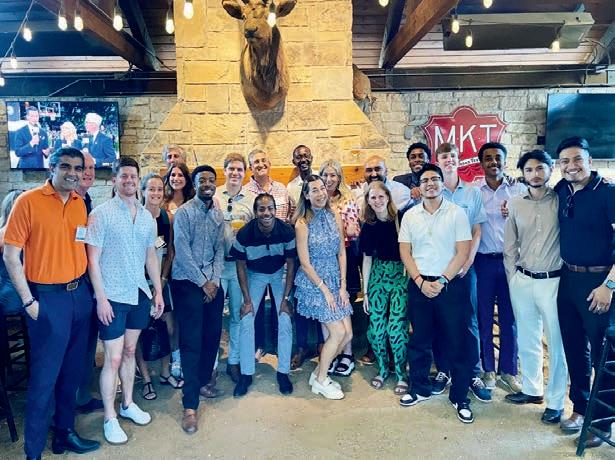
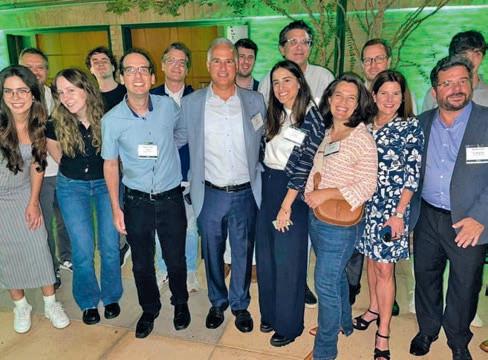
BABSON CONNECT WORLDWIDE / Nearly 200 members of the College community convened this spring in Rio de Janeiro for the ninth Babson Connect Worldwide, the premier global entrepreneurship summit. It marked a return to Latin America for the first time since the inaugural conference in Cartagena, Colombia, in 2015, continuing a tradition that helps keep Babon’s global community, and its regional alumni clubs, connected as the No. 1-ranked strongest alumni network.
Babson’s Global Community
By Eric Beato
More than 70 regional clubs around the world help keep Babson College’s alumni connected to one another and to the top-ranked strongest alumni network. Here’s how they do it.
It’s a LinkedIn message. It’s an email from a mutual connection. It’s a picture of your friend on social media.
It’s also a networking event with students, a panel discussion with business leaders, and a shared cultural experience.
“Community is not a tangible thing. You can’t put it in your pocket. It’s not like you can say, Here is my community,” says Anjali Wali ’09, senior director, alumni engagement at Babson. “Community is a feeling, and it’s built across long-term touch points that make you feel like you’re a part of something, and that’s what the alumni clubs are for.”
Babson’s alumni engagement team oversees more than 70 regional alumni clubs around the world, about half of which are in countries beyond the United States and Canada, including Madrid, New Delhi, São Paulo, and Tokyo.
The history of Babson’s alumni clubs traces back to legendary volunteer and former Trustee William H. Cruickshank Jr. ’49, H’99, whose Babson experience was so formative and compelling that he helped spearhead building the alumni community at Babson. It’s a thriving connection that last year was ranked the No. 1 strongest alumni network in the country by LinkedIn.
Just a decade ago, Babson’s alumni
clubs thrived primarily only where there was a critical mass of alumni, in cities such as Boston or Miami. “They were typically places where we were also recruiting a lot of students from,” Wali says, “because that cycle of new students and alumni is very important to building an alumni community.”
The growth of the clubs continues to be spurred by the expansive use of modern communication methods, such as email, mobile phones, and LinkedIn, making it easier and more effective for alumni to connect and stay in touch. “That’s what really helped us to exponentially increase what our engagement looks like,” she says.
International alumni clubs often host two or three events a year, bringing alumni together for fellowship or networking. Regional clubs also vary widely in terms of what they do and how they do it, but Wali says there are three main commonalities:
1. Connection to students, especially the recruitment and enrollment processes. “They’re always meeting talented young people that they think would be a good t for Babson,” she says. “They’re interested in understanding what the current experience is like.”
2. Understanding what business means around the world. Clubs often host professional programming featuring a local alumni or other business leaders. “They are incredibly interested in having that conversation
within their region, and then across their regions,” Wali says. “They want to talk to people who are doing their work in a different part of the world.”
3. Cultural representation, and what it means to be from where they are. “When we showcase that to the broader Babson community through social channels, through the magazine, through the newsletters,” she says, “it gives Babson this understanding of what these other places look and feel like socially.”
The regional clubs are the manifestation of the alumni community—unique in their practice, united in their Babson pride and entrepreneurial mindset.
“Babson is a business school, and businesspeople naturally are networkers,” Wali says. “They understand the power of engagement. You never know who your best friend is going to be, where your next job will come from, or which introduction is going to change the course of your life. Our community really understands that.
“Alumni Engagement is the epicenter of that, and all the other parts of the College contribute to it,” she says. “I’m proud of the work we’ve done here. I think we really have made a difference.”
MORE ON ALUMNI CLUBS
Learn more with an inside look at four regional alumni clubs around the world.
Madrid, Spain
Alumni Community: 146
(98 undergraduate, 46 graduate, 2 Double Beavers)
Signature Event: Babson Connection
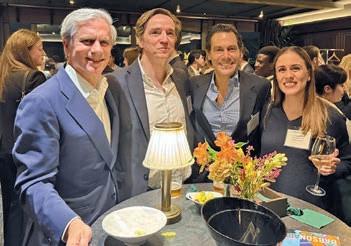
Madrid is a program hosted each March by Francisco Diego ’84, P’24—who also serves on the Global Advisory Board—in conjunction with a traveling Elective Abroad Program. The evening brings together alumni, students, a visiting Babson professor, and friends of the College for learning, conversation, and the most incredible 360-degree views from the center of the city at the Club Financiero Génova. The event was first hosted four years ago and has grown in both size and anticipation. Through this annual tradition, the Alumni Club of Spain has been re-established and new events have grown in both Barcelona and Valencia. The Club Says: “The Babson alumni network is one of the most valuable assets we carry throughout our professional and personal lives,” Diego says. “Here in Spain, our community of alumni is a reflection of that spirit. While we may be spread across different cities and industries, the Babson mindset continues to bring us together. Our club organizes at least five gatherings each year across Madrid, Valencia, and Barcelona. At these gatherings, we reinforce what makes Babson special: a network that is active, generous, and deeply engaged. Being part of the Babson Alumni Club of Spain reminds us that no matter where we are in the world, we share a common language, the Babson entrepreneurial mindset, and a commitment to supporting one another’s journeys. That is what makes the Babson network not only strong also but truly extraordinary.”
São Paulo, Brazil
Alumni Community: 340 (160 undergraduate, 177 graduate, 3 Double Beavers)
Signature Event: Each November, in partnership with the graduate admissions team, the Alumni Club of Brazil gathers to host the Fall Alumni Reception, an evening conversation with a visiting professor. In addition to local alumni, prospective students are also invited to get a taste of what a Babson education looks like.
The Club Says: “Connecting with Babson alumni is always a genuinely positive experience,” Debora Queiroz Sena ’19 says. “There’s a strong sense of generosity in every interaction—whether it’s sharing practical ideas for collaboration, offering encouragement and advice, or simply building meaningful social connections. Having recently moved to Madrid, I experienced this firsthand. The transition from the Brazilian community to the Spanish one felt incredibly smooth, which really speaks to the consistency of the Babson spirit across the globe. There’s a shared mindset and openness that makes it easy to feel at home, no matter where you are. Our Brazilian club plays an important role in reinforcing that sense of connection. By creating opportunities for alumni to meet, exchange ideas, and support one another, we help maintain the strength and continuity of Babson’s global network.”
EUROPE
France
Hungary
Iceland
Italy
Portugal
Spain
Sweden
Switzerland
Turkey
United Kingdom
CENTRAL & SOUTH
AMERICA
Argentina
Brazil
Chile
Costa
Dominican
Ecuador
Guatemala
Mexico
Panama
Peru
Venezuela
New Delhi/Mumbai/Bangalore/Hyderabad,
India
Alumni Community: 1,638 (573 undergraduate, 1,060 graduate, 5 Double Beavers)
Signature Event: Each year, alumni communities across India gather for Summer Receptions to welcome incoming undergraduate and graduate students who will be beginning their Babson journeys. The evenings are always hosted in Babson family homes in each city, reinforcing the family ties that run throughout the community in India. Although India is a big place, the Babson community is incredibly connected and supportive of one another.
The Club Says: “My journey at Babson started in the mid-1980s when I was the only student from India,” Vivek Jain MBA’83, P’07 says, “but a strong word-of-mouth sharing of positive experiences has helped grow India to be the largest represented country on campus, and my personal involvement has been unwavering over 40 years. The Indian alumni network is very strong, often meeting together for send-offs or when there is a visiting faculty member. In December 2024, we hosted President Stephen Spinelli MBA’92, PhD and his team with a talk and lunch at the rooftop of a city five-star hotel and attended by nearly 200 alumni. The Babson brand is very strong in India, and we are doing our best to build on it, year over year.”
Tokyo, Japan
Alumni Community: 253 (69 undergraduate, 184 graduate)
Signature Event: Every fall, the Alumni Club of Japan holds its Annual Meeting. The evening brings together senior leaders of the alumni club as well as nearly 100 members of the local Babson community. In addition to enjoying a formal business meeting and featured speaker, alumni are given the opportunity to share their latest accomplishments and Babson stories with the room. In 2023, President Spinelli attended as the featured speaker. The Club Says: “The Babson alumni network is one of the College’s greatest assets, and here in Japan we see and honor its value annually,” Seiichi Sato MBA’85 says. “Our club brings together graduates across generations and industries, creating a community where entrepreneurial thinking and mutual support thrive long after Commencement. Each fall, our Alumni Club of Japan Annual Meeting serves as a cornerstone of this tradition, drawing a strong turnout and reaffirming the deep bonds Babson alumni share. Through mentorship connections, and collaboration with Babson’s global network, we help ensure that alumni in Japan remain engaged, visible, and influential. This collective energy strengthens not only our local community but also Babson’s worldwide presence.”
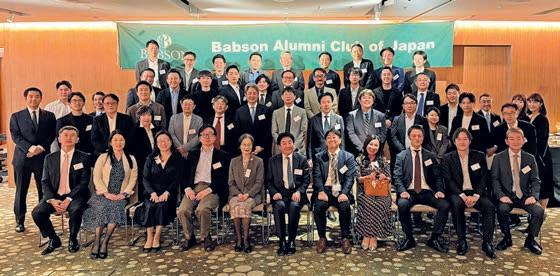
Bahrain
China
Hong Kong
India
Indonesia
Israel
Japan
Kuwait
Oman
Pakistan
Philippines
Saudi Arabia
Singapore
South Korea
Thailand
United Arab
Emirates
Vietnam
NEWS NOTES AND NODS
UNDERGRADUATE
1985
Rick Blackshaw ’85 has launched Stoke PWR EQP, a new sport-casual footwear line for the everyday, all-American man. “Stoke blends innovation, humor, and emotional connection to create performance-driven comfort for real life,” he said. Blackshaw, who has served as the president of Sperry Top Sider and Keds, has a creative team joining him from brands such as HeyDude, Converse, and Ugg. Stoke PWR EQP, which was released in February, was created for the 5-foot-9, 200-pound “guy who represents America’s middle but has been ignored by the industry.”
1987
Ed Kinnaly ’87: See Graduate, 1999
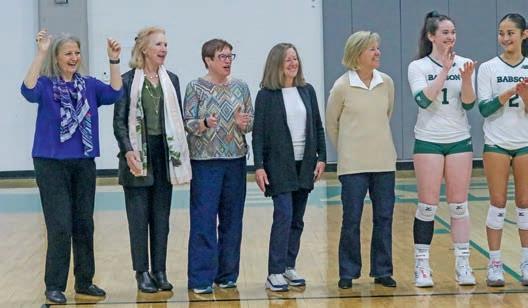
The Babson women’s volleyball team celebrated the program’s 50th anniversary at a home match November 4. Five members from the College’s first team—(from left) Maria Serpentino ’78, P’05, Kathy O’Brien McCann ’78, Adrienne Halsey Wald ’78, Sue Jackson Fitzgerald ’78, and Peggy O’Brien ’79—were on hand to honor the Beavers’ half-century on the court.
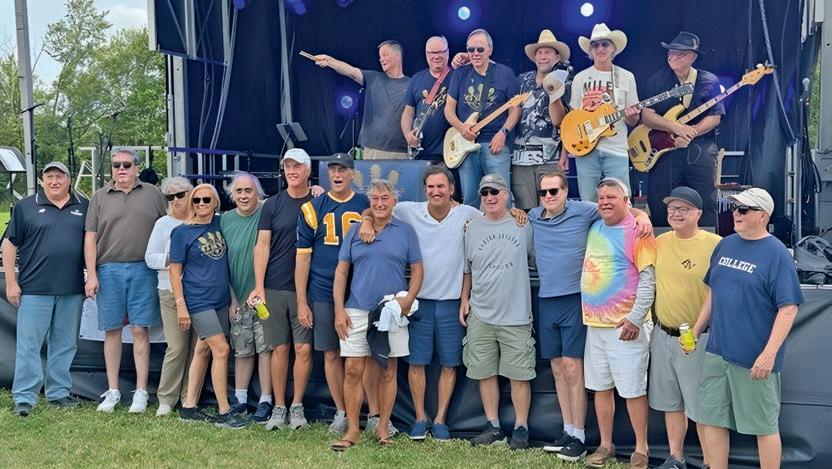
Brad Hoffman ’82 created theMichael E. Simmons Foundation, a nonprofit to honor his stepson and support the artistic growth of youth in the Greater Hartford area. Each September, the foundation hosts a music festival in Sheffield, Connecticut, and many Babson alumni were on hand to enjoy the fourth annual event. On stage: Jeff “Stix” Johnson ’83, MBA’92, Jack Worthen ’80, Sam Davis ’80, Howie Hirsch ’77, Chris “Bear” Hebert ’79, and John Davis.In front: Neal Cherkus, Doug Murphy ’77, Susan Chambault Baker ’83, Marti Crompton Johnson ’82, MBA’91, Charlie Vandini ’80, Dave Cheever ’80, Charlie Feuer ’83, P’12, George Simopoulas ’84, Hoffman, Paul “Monty” Morris ’80, Jim Hagen ’82, Jim Vincunas ’79, Brad “Eels” Ely ’82, and Paul Baker ’80
1999
Selim Tezman ’99, CEO of his family’s third-generation holding company, Tezman Holding, recently expanded the company, launching Nutrafine Health & Nutrition BV. Nutrafine, headquartered in Amsterdam, develops supplements in collaboration with nutritionists to address beauty and skin health as well as weight and immunity support.
2000
Matt Fuller ’00, Jorge Perez ’00, and Erin Escobedo, the George E. Slye ’53 Term Chair in Real Estate Management at Babson, recently approved the purchase of a $121 million Zeta Charter School in the Bronx on behalf of EducationRE Inc., an education nonprofit based in Florida. Perez is founder and CEO of EducationRE Inc., and Fuller and Escobedo are board
members. The nonprofit acquired the campus last November using a tax-exempt, social impact bond, and plans to renovate the 140,000-square-foot building and add additional square footage so that more children can attend the school. “We are really proudof the unique, affordable financing structure, the highly successful Zeta Charter School tenant and the social impact EducationRE is offering to the Bronx community,” Fuller wrote.
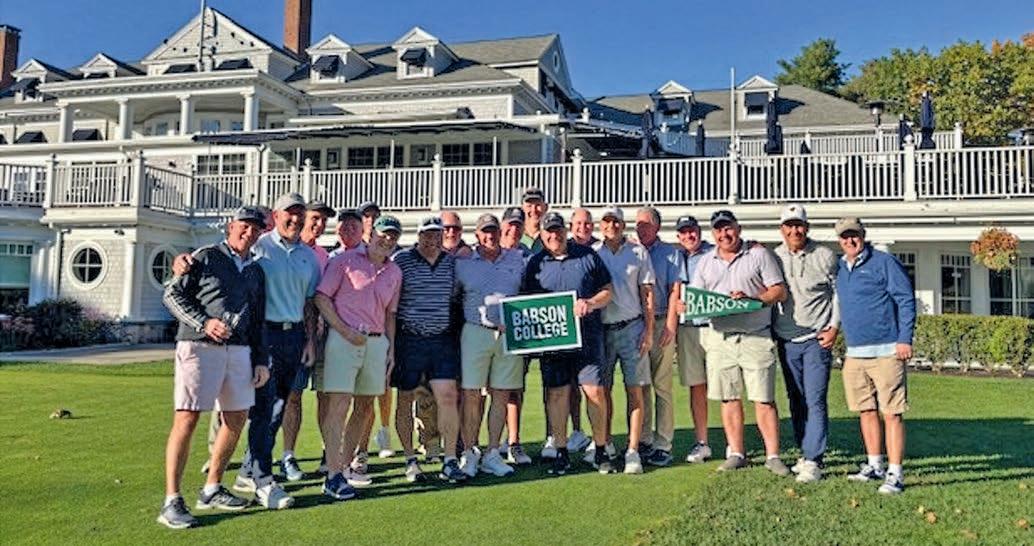
Kevin Richardson ’90 writes that a group of classmates from the Class of 1990 enjoyed a round of golf together in October at Brae Burn Country Club in Newton, Massachusetts, to kick off their 35th Reunion Weekend.
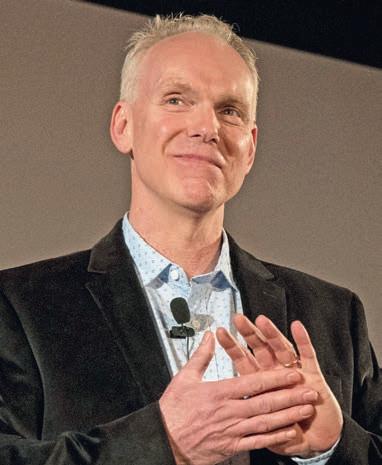
Peter Hunt ’89 returned to campus to direct BabsonARTS’ Project Empathy on March 31 and April 1. Hunt, who began interviewing Babson students in November as part of the production, said the project explores “what it means to be empathetic and share each other’s stories.” Hunt has been in the real estate industry for the past 20 years. “With decades of perspective and life’s experiences, I’ve come to appreciate the broad range of professional and personal relationships and experiences,” Hunt said.
2006
Shawn Hawthorne ’06, MSA’06: See Graduate, 1982
2009
Harrison Epstein ’09 co-founded Revaire, an invitation-only platform that provides access to private flights and curated experiences. Revaire serves as a selective club that uses proprietary technology to aggregate travel plans and connect members with shared charters or discounted empty-leg flights. The club aims to optimize capacity across routes and is targeted to those seeking time efficiency without the cost or carbon footprint of full aircraft ownership.
2011
Adrian Herr ’11, MBA’16 began as controller at Clarus Capital, overseeing the firm’s accounting and financial operations while helping to advance strategic financial initiatives. Clarus Capital is an independent private credit firm that provides financing for mid-market companies to buy equipment.
2012
Andrea Canavesio ’12, an investment banking director at Citi, and Martina Garabedian ’22, who works in Citi payments and liquidity sales, helped organize the sixth annual Citi London Trek, an event in which Citibank employees invite Babson students studying at the London School of Economics to their London office to network. The event also is organized by Hao He, associate
director of the Hoffman Family Undergraduate Center for Career Development. Seventeen Babson students attended this year, and Canavesio, Garabedian, Ariana Bejanaru ’23, and Gautam Nanda ’22 spoke with the students.
Jared Shulman ’12, CEO and co-founder of Daylit, raised $110 million in equity and debt financing to expand Daylit nationwide and launch AI-powered accounts receivable tools. Formerly known as Lendica, Daylit helps manufacturers and contractors accelerate customer payments and manage cash flow. The new funding will support the company’s U.S. expansion and the rollout of AI agents designed to automate collections and give customers faster access to capital.
2022
Martina Garabedian ’22 and Gautam Nanda ’22: See 2012 (above)
2023
Ariana Bejanaru ’23: See 2012 (above)
2025
Max Karmin ’25 and Kevin Park ’25 co-founded Gaja, a Boston-based ride-share startup designed to be more affordable for riders and help drivers earn more by reducing the middleman fees that platforms such as Uber and Lyft take from each trip. The ride-share venture is in an early pilot stage in Greater Boston with about 100 unique users, but the duo is planning to launch the service this year.
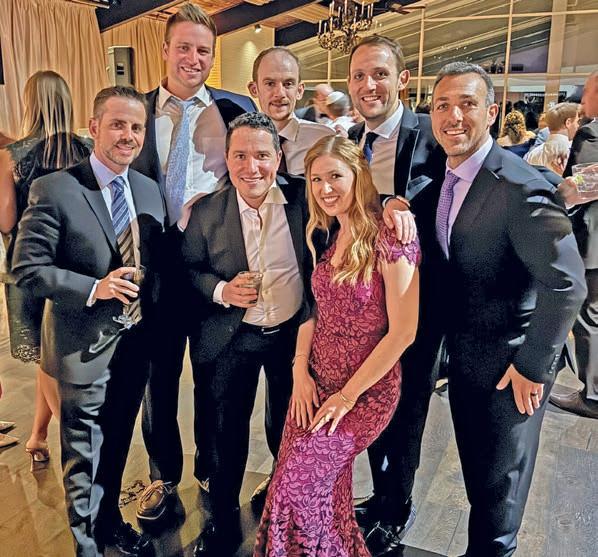

Kevin Kelly ’23, who launched a nomadic dining business called After Hours Global in 2023, is expanding his one-of-a-kind experience this year. After Hours Global will bring collaborative dining experiences to other countries, including Spain, Portugal, and Morocco, while expanding its footprint in the United States and having appeared in Puerto Rico. Kelly started the nomadic restaurant in Great Barrington, Massachusetts, partnering with local businesses to provide pop-up dining that ranges from multi-course dinners to more casual meals. From January to March, After Hours Global was in Puerto Rico, and Kelly will be in Europe and Morocco from April to July. “Our human desire for connection and collaboration through food is stronger than ever,” Kelly said. “With this in mind, we’re excited to take After Hours to the world, creating experiences that honor local food systems, foster human connection, and put collaboration at the heart of every event.”
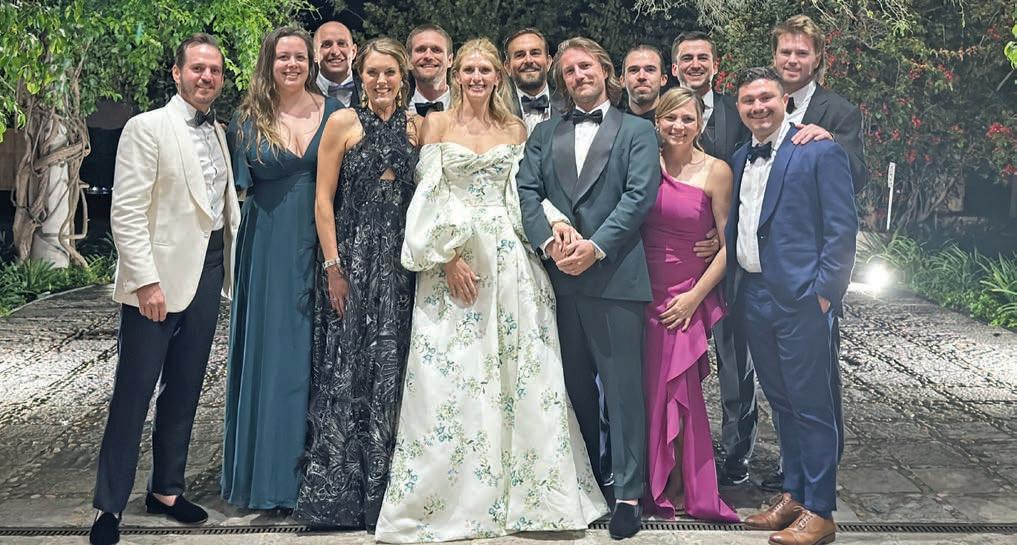
in celebrationby many
representing
Daniel Brauer ’11 married Jamie Harris on October 26. Many of Brauer’s Babson friends attended the wedding. Pictured (from left): Erik Litwin ’06, Zachary Gross ’10, Brad Litwin ’10, Daniel Brauer, Jodi Brauer ’09, MSA'09, David Brenner ’09, and Eric Kessler ’11
George Miller ’14 married Steffi Fitzpatrick on October 11 in San Miguel de Allende, Mexico. They were joined
Babson alumni
five class years. Pictured (from left): Mark Bollman IV ’10, Erica Taylor ’15, Andrew Marr ’11, Alyssa Bollman ’11, Ryan Carnevale ’13, Fitzpatrick, Joe Graves ’11, Miller, Josh Bennett ’14, Kelsie Marr ’11, Garek Berard ’13, Kevin Israel ’14, and Will Bunker ’14
Jimmy Greene ’08 and his 5-year-old son recently created Kick Brickz, a patent-pending decorative shoe kit made of mini-bricks that attach to shoelaces. Greene began the project to teach his son about entrepreneurship and business creation. The bricks, which are similar to Legos, can be taken off shoes and used to build a plane, car, or cell phone stand, Greene said. “It’s great for promotional products and keeping kids and adults off devices,” he added.
SEND US YOUR ALUMNI NEWS!
To accommodate news and photos from as many alumni as possible, please limit entries/photo captions to 50 words or less.
Babson Magazine has two requirements for Alumni News photos: The submitting alum must be in the picture, and the image must be at least 4 x 6 inches at 300 dpi—no digital alterations, please. We can’t promise that all submitted photos will run, but we’ll include as many as possible. Submit your latest news to the Alumni News Editor at babson.edu/nods
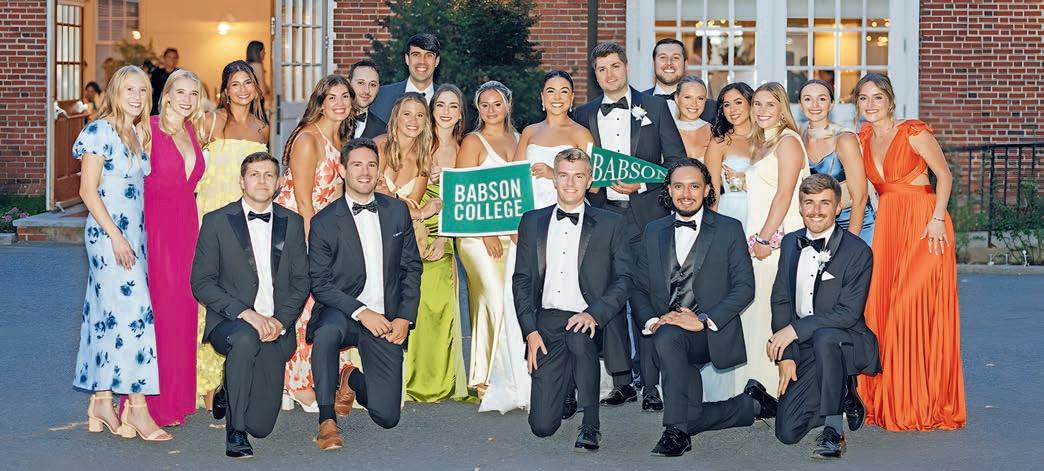
Cué Gabranski ’19 married Sam Gabranski ’18 on August 16 at the Garden at Elm Bank in Wellesley. In addition to celebrating with their family, they were joined by dozens of Babson friends and fellow alumni. Pictured (from left): Lissy Harris ’20, Lauren Harris ’19, Natasha Kellas ’18, Sam LaPointe ’17, Katherine Bzdel ’16, J.D. Greenfield ’17, Shane Mandel ’17, MSA’17, Christiana Rathmanner ’18, Andrew Myers ’19, Lauren Nohelty ’18, Nancy Kacupaj ’19, Matthew Dynan ’19, Cué Gabranski, Gabranski, Henry Cobb ’19, Alexandra Blizard ’19, Trevor Lomba ’17, Art Huli ’19, Teagan Mosenthal ’19, John Decker ’18, Kylie Warner ’17, MBA’23, and Kaitlyn Nohelty ’21
Greg Toskos ’99 (center), head of national sales at UBS, hosted the UBS annual Field Leadership Meeting in January in Arlington, Texas, and presented top awards to two Babson alumni. Kreg Pearless ’05 (left) received the top market director award for Boston in the private wealth category, and Michael Sarlanis ’01 (right) was named market executive of the year at his New York international office.
Sophia
CONNECTIONS
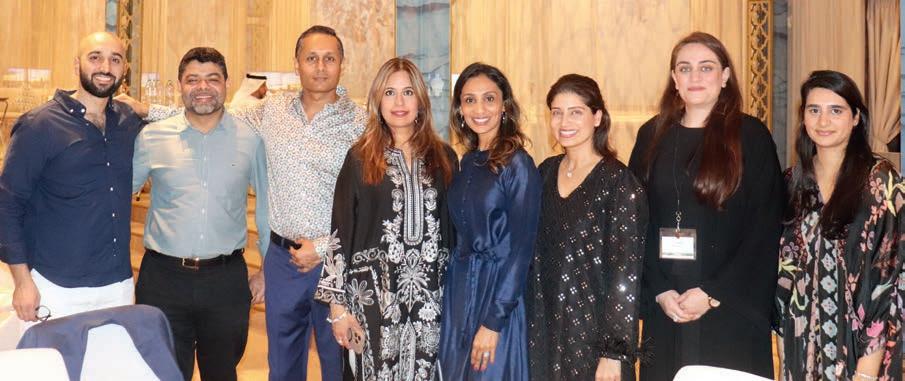
ALUMNI CLUB OF THE MIDDLE EAST, DUBAI RAMADAN
IFTAR Aaqib Khwaja ’13, Asif Ismail ’99, Junior Gupta ’96, Sehr Amjab Ismail, Sima Gupta, Sonia Husain ’04, Veena Kalwani ’14, and Umama Ahmed ’13
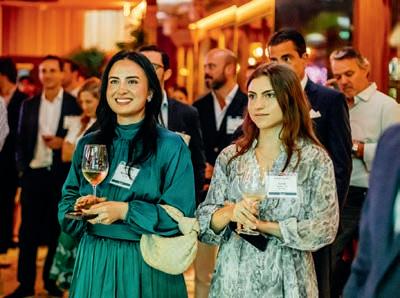
SUNSHINE STATE SWING—MIAMI PRESIDENT’S RECEPTION
Kirstmary Vite ’20 and Sarah Hickey ’20
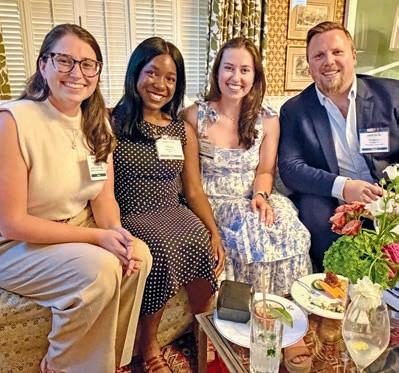
STATE SWING—TAMPA RECEPTION
Emma Tomlin ’16, MSA’17, Micha Paulemon ’23, Jessica Rogers ’23, and Gregory Tomlin ’16
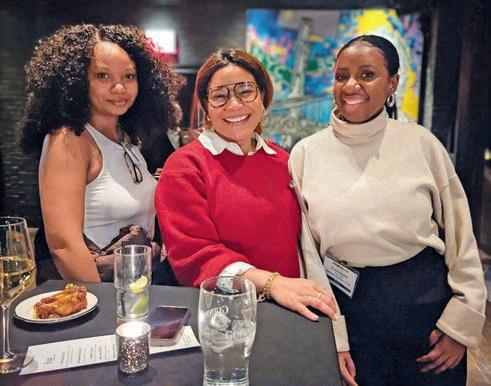
and
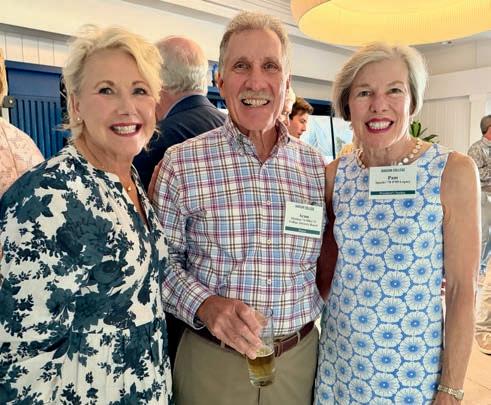
POSSE NEW YORK HOLIDAY CELEBRATION Michelene Wilkerson ’16, Jenixie Reyes-Scott ’13,
Fatoumata Sow ’18
SUNSHINE
SUNSHINE STATE SWING—NAPLES RECEPTION Becky Hintlian, Aram Hintlian ’74, MBA’75, and Pamela Sparks ’78, P’09
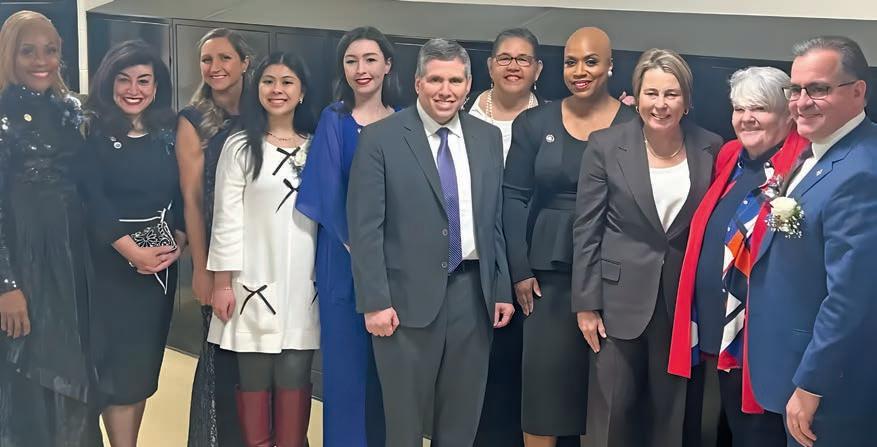
GRADUATE
1981
Alan G. Thomas MBA’81 released a second edition of his 2015 book, Best Business Practices: Guidelines and Tools for Team Planning and Learning Faster Than Your Competitors. Cowritten with Larry Kennedy, the second edition was released in July and is meant to serve as a well-organized business management and self-help guide to help companies embrace and implement AI.
1982
Michael Komich MBA’82 stepped down in March as the senior vice president for finance and operations at Cheverus High School in Portland, Maine, after working at the school for 35 years. Shawn Hawthorne ’06, MSA’06, who attended the school and later worked with Komich while serving on the school’s board of trustees, called Komich “a true pillar for the school.” Hawthorne added that many of the students attending Cheverus High School needed financial aid, and Komich did everything in his power to “make the financial equation work for these families to attend Cheverus.”
1999
Gillian Meek MBA’99 joined Bauer Hockey as executive vice president and general manager in September. Meek previously served as CEO of Kamik Canada Inc. and led the turnaround
at the Keds brand as global president. She also held senior roles at Wolverine Worldwide, Stride Rite, Timberland, and Reebok. “Gillian joins us with a valuable combination of successful leadership experience across a range of global brands and the core values of team and consumer first that are fundamental to Bauer Hockey,” said Ed Kinnaly ’87, CEO of Peak Achievement Athletics and Bauer Hockey.
2000
Lebone C. Moses MBA’00 was named to the 2025 list of top 50 women leaders of Raleigh, North Carolina, in October. The annual list, published by Women We Admire online, cited Moses’s talents as a strategic business executive and advisor who empowers leaders to build stronger, more sustainable businesses.
2009
Adam Mascari MBA’09, co-founder of Origyn Solutions, announced the company received a $2 million grant from the Rhode Island Life Science Hub to advance women’s health. Founded in 2020, Origyn Solutions is a medical equipment and consulting firm focused on women’s health, which connects physician innovators and universities with resources to accelerate medical device development.
2014
Shashank Ramineni MBA’14 co-founded FastPix Inc., a Chicago-based company that builds software tools that let companies easily add streaming video,

Paul Scheufele MBA’84, P’19 wrote his first novel, Damaged Goods, which was published in July. The story involves a successful Wall Street trader whose life is upended when he inherits his deceased sister’s frozen eggs. The family drama explores the fault lines between ambition and compassion.
video analytics, and AI-powered video capabilities to their products.
2016
Adrian Herr ’11, MBA’16: See Undergraduate, 2011
2024
Sameer Tyagi MBA’24 joined Gulfeagle Supply, a leading distributor of building
Vivian Nguyen ’22 (fourth from left) was sworn in on January 5 to a second term on the Everett (Massachusetts) City Council after her reelection in November. First elected in 2021, Nguyen made history as Everett’s first Asian American woman elected to public office, and she remains the city’s youngest sitting city council member.
Scott Magnacca MBA’92 recently published Storyselling in The Age of AI, a book focused on helping entrepreneurs and those in sales use generative AI to boost profits while maintaining the human touch. Magnacca, also an adjunct faculty member at Babson, also incorporated parts of his course, AI Enabled Selling for Client Facing Financial Professionals, into the book.
materials in the nation. Tyagi will serve as the AI and process improvement manager, leading initiatives to apply artificial intelligence, machine learning, and process optimization tools to streamline workflows, reduce inefficiencies, and drive operational improvements across Gulfeagle.
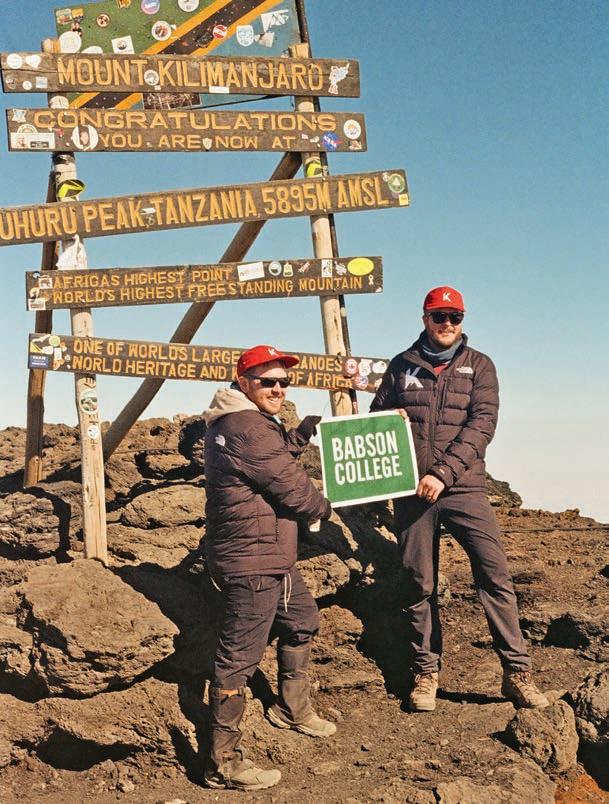
Mitch McKinnon ’14 and Erik Slettehaugh MBA’17 reached the summit of Mount Kilimanjaro in Tanzania on September 28 as part of a charitable hike that raised more than $5,000 to fight substance abuse. The hike was organized by a close friend of Slettehaugh and McKinnon, who lost his nephew to substance abuse.
Rob Ryan MBA’12 wrote Death by Digital Friction, which was published in October. Written for workplace leaders, the book examines the emergence of digital friction in the workplace and its underlying causes. It is meant to help leaders address how organizations can overcome friction and reclaim productivity in the modern workplace.
DON’ T MISS OUT on the latest news from Babson’s community of entrepreneurial leaders. Subscribe today to
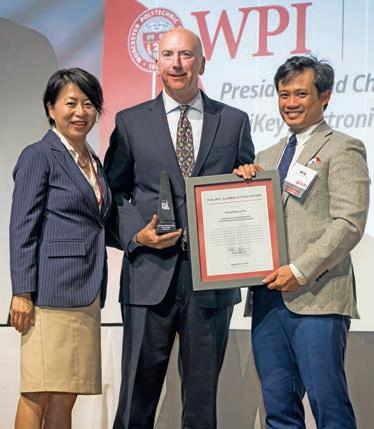
Dave Doherty MBA’94, CEO of DigiKey, received the 2025 Robert H. Goddard Alumni Award for Outstanding Professional Achievement from Worcester Polytechnic Institute (WPI) in October. The award, named in honor of WPI graduate Dr. Robert H. Goddard, a pioneer in the field of rocketry, is presented annually to alumni who have distinguished themselves through their professions. “We are proud to present Dave with the Robert H. Goddard Alumni Award for Outstanding Professional Achievement in recognition of his contributions and achievements in the semiconductor manufacturing and electronics distribution industries,” said Arly Dungca, president of the Alumni Association at WPI. “Dave’s leadership and commitment to engineering and design progress have enabled innovation around the world.” Pictured (from left):WPI President Grace Wang, Doherty, and Dungca.
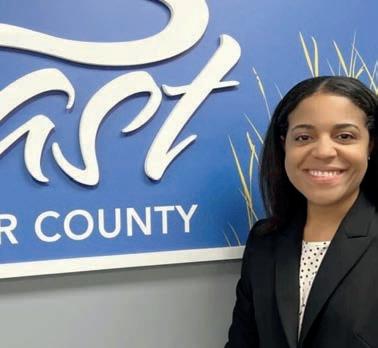
Ondrea Starzhevskiy MSA’11 was tapped by Worcester County, Maryland, officials to become the county’s deputy finance officer last September. Officials lauded Starzhevskiy’s extensive experience in municipal finance, including her time as director of finance for Easton Public Schools in Massachusetts from 2022 to 2025, and as the former director of finance for the City of Arcata in California from 2018 to 2022.
IN MEMORIAM
Haakon Fredrick “Ted” Friele ’48, of Camano Island, Washington, April 16, 2024
Jack Donald Brahce ’49, of Montrose, Michigan, Dec. 31
David Lee Turner ’53, of Norwell, Massachusetts, Dec. 26
Robert E. O’Connor MBA’54, of Framingham, Massachusetts, Dec. 17
Edward E. Rosenberg MBA’56, P’82, of Harwich Port, Massachusetts, Dec. 24
Alan S. Braunshweiger ’57, of Boca Raton, Florida, Sept. 11, 2024
William Thomas “Bill” Kendrick ’57, P’89, of Mount Pleasant, South Carolina, Oct. 8
Peter Norman Phillips ’57, of Libertyville, Illinois, Nov. 18
Benjamin Vaughan ’57, of Boynton Beach, Florida, Nov. 10
Richard Ira Cohen ’58, of Chestnut Hill, Massachusetts, Dec. 8
Robert Ingersoll “Bob” Lyman ’58, of Billerica, Massachusetts, Feb. 22
Roger Nadim Tobia ’58, of Winchendon, Massachusetts, Feb. 7
Joseph J. “Joe” Finnegan ’59, of Henderson, Nevada, Oct. 10
Laurence Dorset “Larry” Fitzmaurice ’59, of Bluffton, South Carolina, Dec. 4
Jon O. Hooper ’59, of Santa Cruz, California, Jan. 9, 2024
Leo Arsene Petit Jr. ’59, P’89, of Leland, North Carolina, Oct. 13
R. Bruce Boleyn ’61, of Truro, Massachusetts, Jan. 11
John B. Cahoon ’61, of Randolph, Massachusetts, Jan. 25
Neil William Driscoll ’62, of Concord, Massachusetts, Nov. 4
Dr. Norman James “Jim” Gould ’62, of Mashpee, Massachusetts, May 29, 2024
Charles Evans Aucoin ’63, MBA’64, of Newton, Massachusetts, Oct. 12
Robert John Bennett ’63, of Naples, Florida, Nov. 4
Albin J. “Joe” Ripka ’63, of South Deerfield, Massachusetts, Nov. 26
Robert Edward “Duke” Schuemann Jr. ’63, of Westlake, Ohio, Sept. 23
Thomas J. Greensmith ’64, of Rancho Mirage, California, Jan. 26
Col. Henry B. “Hank” Miller MBA’64, of Knoxville, Tennessee, Oct. 12
Lt. Col. Billie Ellsworth Searls MBA’64, of Lancaster, Ohio, Nov. 23
John Candor Lundy ’65, P’89, of Williamsport, Pennsylvania, Sept. 30
Jerry Wallace Nicks MBA’65, of Wimberley, Texas, July 16, 2024
Charles Burrell “Chic” Clark ’66, of Brockton, Massachusetts, Sept. 22
Robert Kasky ’66, of Delray Beach, Florida, Oct. 23, 2024
Gary Orleck ’66, of Sharon, Massachusetts, Oct. 17
James F. Patten III ’67, of Seabrook, New Hampshire, Jan. 30
William H. Hohenstein MBA’69, of Norwood, Massachusetts, Dec. 30
Stuart W. Freilich ’70, of North Palm Beach, Florida, Nov. 18
Barry S. Gradwohl MBA’70, of Gloucester, Massachusetts, June 12
Gordon Wellborn “Pat” Patterson MBA’70, of Fairfax, Virginia, Sept. 16
Theodore Brigham “Ted” Conklin III ’71, of Sag Harbor, New York, Jan. 31
Ken Maguire MBA’71, of South Bristol, Maine, Nov. 22
Robert Francis Sorrentino ’72, of Naples, Florida, Aug. 30
Antonio Monteiro de Castro Jr. MBA’72, of London, United Kingdom, Sept. 11
Richard P. Witman MBA’72, of Derry, New Hampshire, Oct. 1
James Lester “Jim” Loomis ’73, MBA’74, of Dover, New Hampshire, Sept. 6
Kevin Boynton Meehan MBA’73, of Boca Raton, Florida, Sept. 16
Paul R. Neelon MBA’73, P’87, of Pocasset, Massachusetts, Jan. 15
Bennett Evan Shifman MBA’73, of Stoughton, Massachusetts, Dec. 27
Salvatore T. “Sam” Torrisi MBA’73, of Salisbury, Massachusetts, Dec. 25
Vincent J. Gately ’74, MBA’85, of Hopkinton, Massachusetts, Jan. 23
Richard K. Haynes ’74, of Deerfield, New Hampshire, Oct. 27
Beverly Jane Hargrove Martin McDonald ’74, of Tallahassee, Florida, Sept. 25
Richard J. Maley MBA’74, of Southborough, Massachusetts, Dec. 26
Warren Canfield Pitts MBA’74, of Mishawaka, Indiana, Sept. 29
James M. McDonough MBA’75, of Hingham, Massachusetts, Oct. 6
John Eric “Rick” Mynttinen MBA’76, of Worcester, Massachusetts, Sept. 18
Mark B. Dilweg ’77, of Collaroy, Australia
Marc Harlan Zeman ’77, of New York, New York, Sept. 2
Jeffry Rogers Copeland MBA’77, of Dearborn Heights, Michigan, Dec. 7
Jon Peter Stavros ’78, of Springfield, Massachusetts, Oct. 19
George A. Stromberg MBA’78, of Acton, Massachusetts, Jan. 1
Kathleen M. Woods MBA’78, of Newton, Massachusetts, Feb.5
Gregory L. Nelson ’79, of Brockton, Massachusetts, Sept. 24
Michael J. Madigan MBA’79, of Pepperell, Massachusetts, Jan. 21
Emile Francis “Mel” Thibault MBA’79, of West Palm Beach, Florida, March 12, 2025
George Farkas MBA’80, of Newton, Massachusetts, Sept. 10
Charles Alan Orth MBA’80, of Wayland, Massachusetts, Dec. 17
Leslie Louise Giardino Mackinson ’81, of Charlotte, North Carolina, Feb. 13
Catherine Ann “Cathy” Manning ’82, of Hingham, Massachusetts, Feb. 18
John Michael Cummings MBA’82, of Hudson, New Hampshire, Oct. 25
Mary Deissler MBA’82, of Boston, Massachusetts, Nov. 3
Allan David Gulliver Jr. MBA’82, of Littleton, Massachusetts, Aug. 30
Andrew Bethune Inglis ’83, of Glover, Vermont, Sept. 20
Pamela Cleval MBA’83, of Concord, New Hampshire, Feb. 22
David Robert Meagher MBA’83, of Hubbardston, Massachusetts, Dec. 31
Robert “Bob” Reni MBA’83, of Ashland, Massachusetts, Jan. 26
Peter K. Jacobs MBA’84, of Southborough, Massachusetts, Jan. 18
Mark Wineck ’85, of Montreal, Canada, Oct. 26, 2024
Malcolm W. Foster Jr. MBA’87, of Waterville Valley, New Hampshire, Jan. 7
Lisa Nader Thaure MBA’89, of Milford, New Hampshire, Dec. 19
Pamela Jean Walch Constantine MBA’90, of Beverly, Massachusetts, Aug. 27
Jason James Fasciolo ’91, of Charlotte, North Carolina, Nov. 25
Joanne (Guarino) Shifres MBA’91, of Tyngsborough, Massachusetts, Dec. 18
Ravi C. Daswani ’92, of Montego Bay, Jamaica, Jan. 13
Rupen Pravinbhai Patel MBA’93, of Highland Park, New Jersey, July 5, 2024
Maryann Carroll MBA’94, of Hingham, Massachusetts, Nov. 12
Pradip Kumar Dev MBA’97, of Hudson, Massachusetts, Nov. 2
Michael Thomas “Mike” Rooney MBA’03, of Westford, Massachusetts, Sept. 6
Salvatore “Sammy” Vatrano ’06, of Hingham, Massachusetts, Feb. 17
David E. Wilusz MBA’06, of White Plains, New York, Dec. 18
BY NIC CZARNECKI
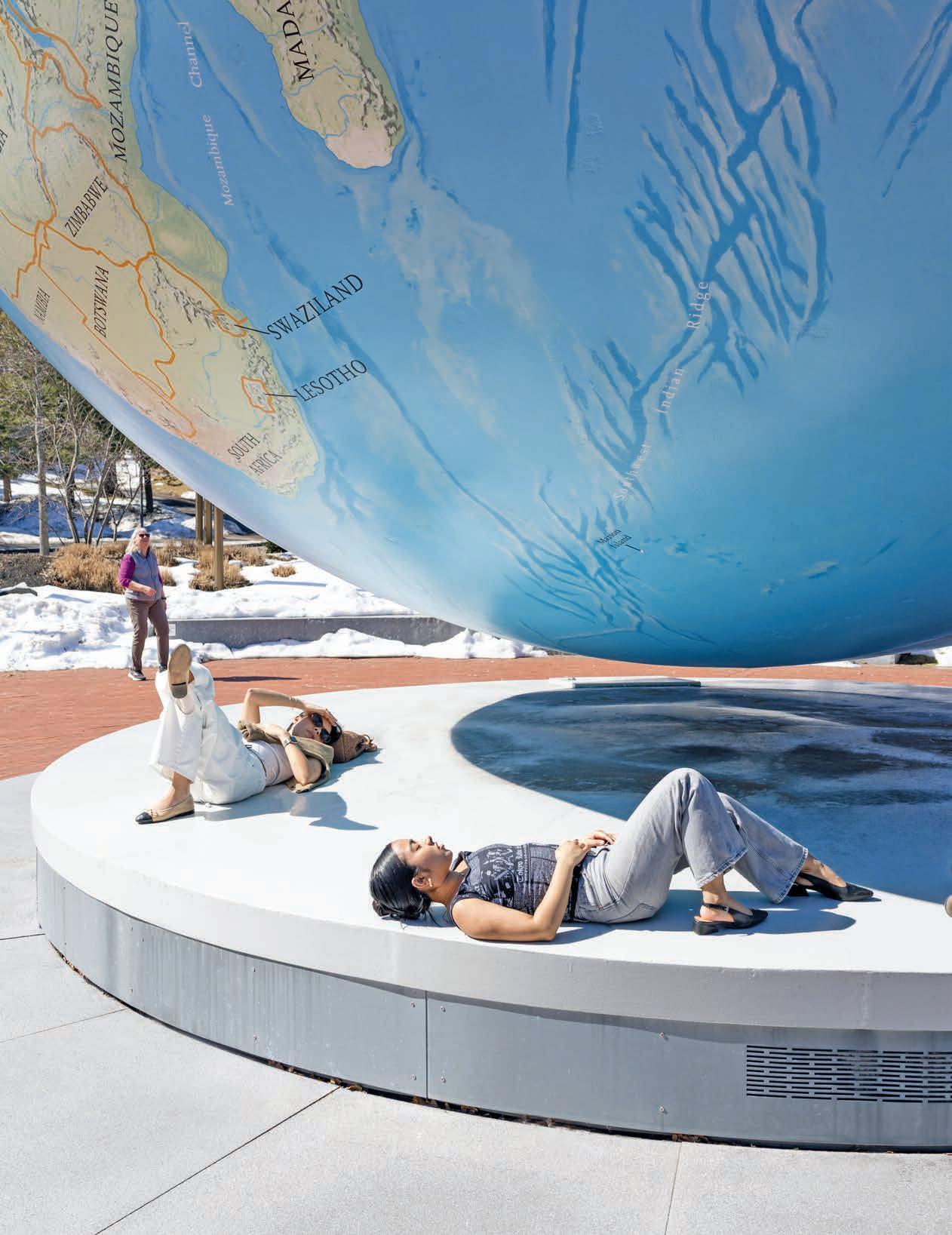
GLOBAL WARMING / With snow melting in the background, students found a unique place to catch some rays under the Babson World Globe in Kerry Murphy Healey Park at the first signs of spring.
PHOTO
Check out more photos by Nic in the digital edition
Your Babson Story
Isn’t Finished
The world has changed. Your goals have evolved. Babson’s graduate programs are designed for professionals ready to think bigger, lead boldly, and go further with the entrepreneurial edge to make it happen.
Full-Time MBA
Part-Time MBA





Master of Science in Finance
Master of Science in Business Analytics
Master of Science in Management in Entrepreneurial Leadership
Certificate in Advanced Management
Certificate in Core Leadership Essentials





Continue your Babson journey!



















Babson alumni receive a 20% discount on all graduate programs
babson.edu/graduate