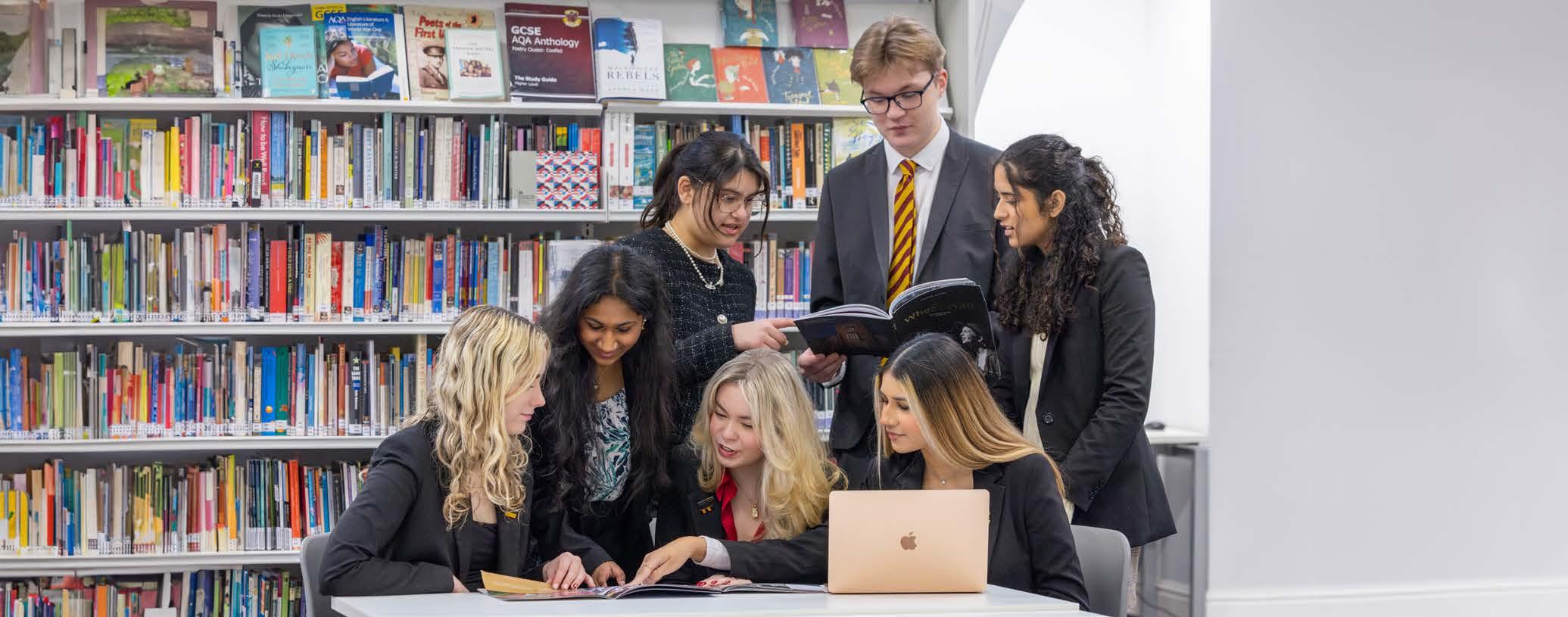

I think that being part of the Wheatleyan team was an excellent way for me to get involved with the school’s marketing, writing, and image. As pupils, we often take part in things within school, but are rarely responsible for showcasing the many opportunities we take advantage of on a daily basis. If anyone thinks that they would like to explore the different aspects of school life and present them to a wider audience, I would recommend getting involved with The Wheatleyan. I have enjoyed discussing our edition’s written pieces, which present events that have taken place in school, and I love the fact that each edition is unique and a direct product of the team that worked on it.
Finley Leach
EDITORIAL TEAM
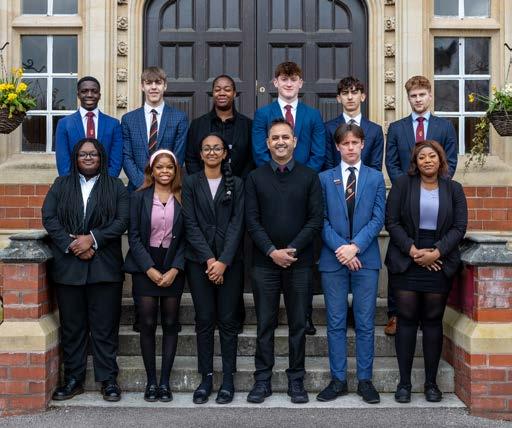
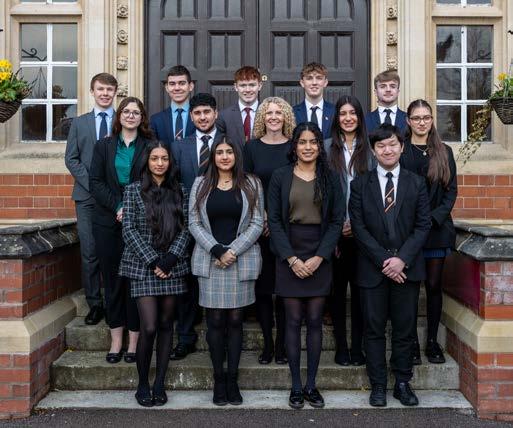
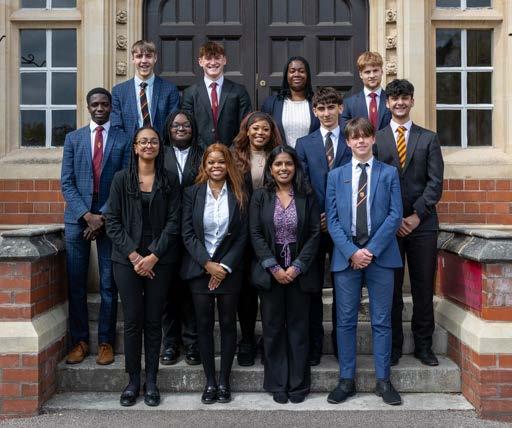
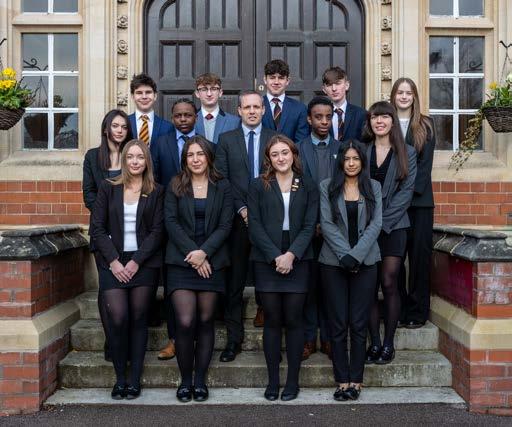
Staff Editor: Mrs Sarah Harris
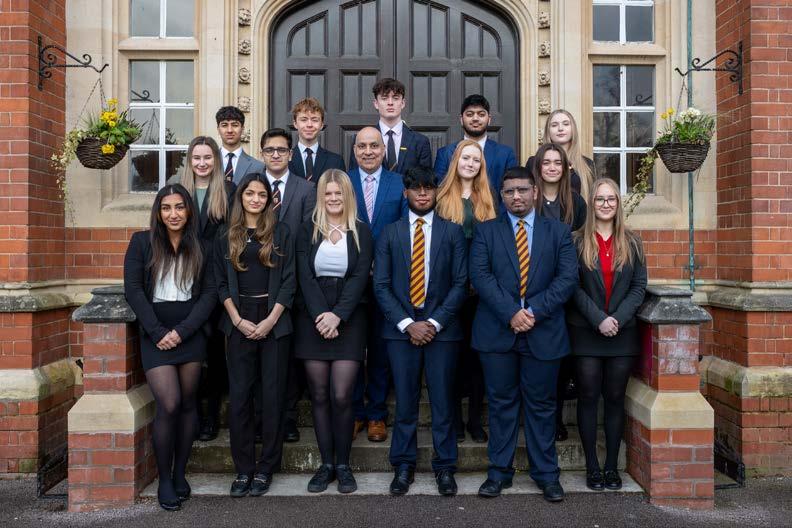
Student Editors: Jeevan Amar, Ria Banwait, Thea Haynes, Rehan Khan, Finley Leach, Kanishka Sathiyaseelan, Laila Siddiqui and Charlotte Whitaker
I joined The Wheatleyan editing team because I wanted to be part of something that gives a voice to students and highlights the diverse community at Bablake. Being an editor has allowed me to explore the wide range of extracurricular activities and events that take place, deepening my appreciation for all that is available to us as pupils. Learning about the wide range of achievements, some of which are outside my own experience of school life, has been really interesting, and the incredible variety of everything that is offered is one of the things that makes Bablake unique. I have loved working with the other editors to demonstrate the wonderful opportunities and accomplishments within our community and I hope that everyone enjoys The Wheatleyan as much as we have enjoyed creating it.
Jeevan Amar
The Wheatleyan once again highlights Bablake pupils’ year-round dedication to opportunity, community and diversity. During my time at Bablake, it has always been a goal of mine to participate in the creation of this project with an amazing team. I have now achieved this personal goal and am proud of an edition that showcases the huge number of achievements across all aspects of school life for the academic year 2023/24. This inspiring publication would not be what it is without the guidance of Mrs Harris; every edition, every page, and every article embodies Bablake's values and ethos due to her leadership.
Kanishka Sathiyaseelan
Daisy Bell and Krish Bodalia
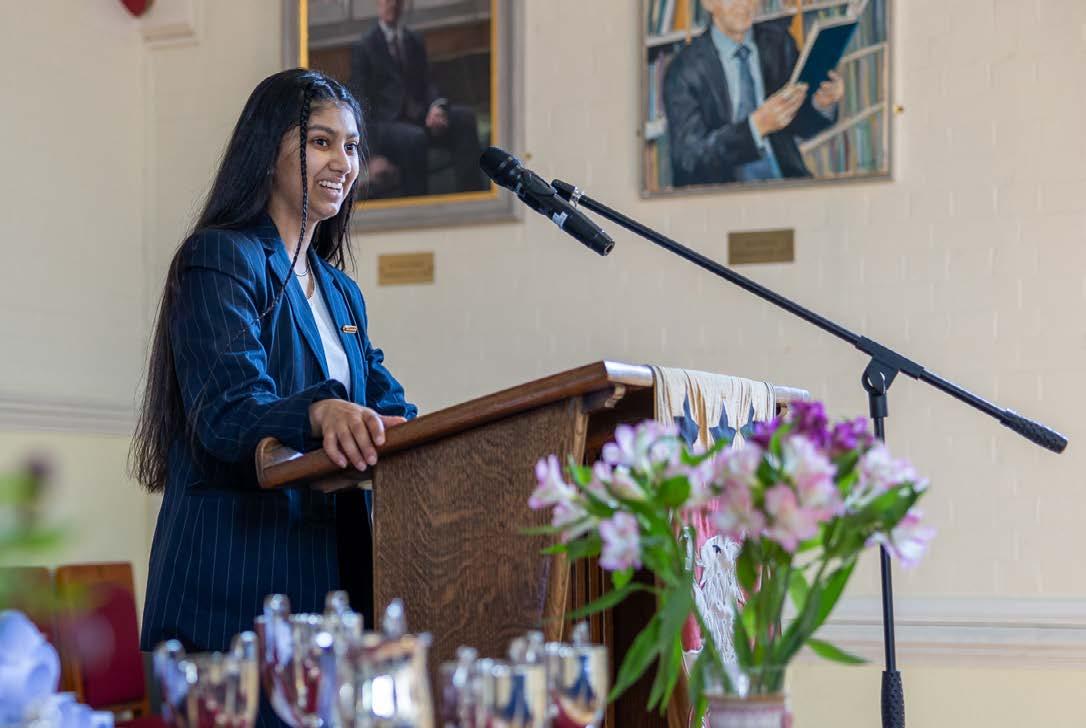
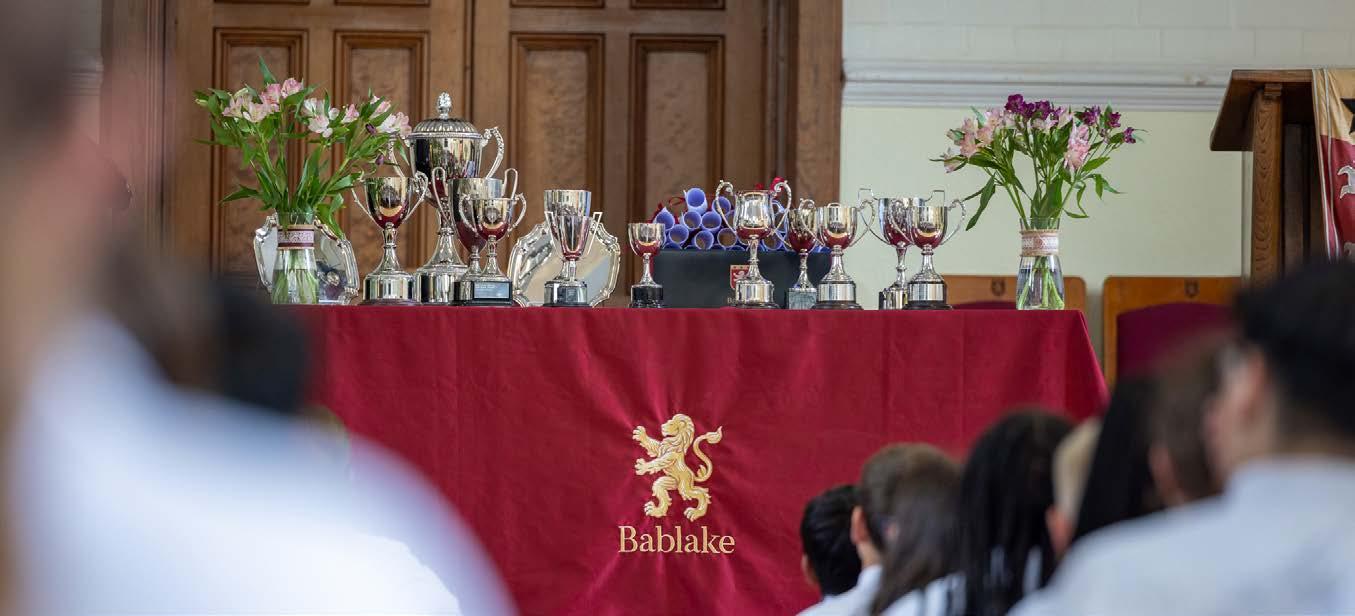
It is our great pleasure to welcome you all to our annual prize giving, where we will celebrate and recognise the remarkable achievements and efforts of our pupils.
Today, we have gathered to celebrate and recognise the exceptional achievements of many talented individuals who have surpassed expectations both inside and outside of the classroom. This is a testament to the hard work, dedication, and brilliance of so many talented pupils. It gives us not only the opportunity to recognise individual success, but we hope that it will also serve to inspire others to strive for excellence.
Both Krish and I are extremely grateful to have been given the opportunity to be School Captains. It wasn’t so long ago that we were Shell pupils, looking forward to moving up through the school and perhaps even then aspiring to be Senior Prefects. If I could offer pupils one piece of advice, it would simply be to be yourself. Be yourself inside and outside the classroom, seize every opportunity offered to you, and, very importantly, remember to have fun. Life is about balance, so of course, you should take your studies seriously, but you don't need to take yourself too seriously all of the time. Try to spend time each day having fun and doing something that you enjoy.
At Bablake, we pride ourselves on fostering a community in which every pupil is encouraged to reach
their full potential. Our school is built on a foundation of core values which we believe are essential for personal and academic growth. The diverse and inclusive nature of Bablake sparks innovation and creativity in everyone, while also allowing them to develop vital skills and ignite their passions. By taking advantage of these opportunities, we have both enriched our skill sets and gained the confidence and resilience needed for the future.
Shells, during your first year at Bablake, you have no doubt developed new friendships, discovered new subjects and interests and embraced a whole new school life. You have shown remarkable adaptability and determination as you have met the demands and challenges of being in a senior school. We hope that each and every one of you has taken the spirit of
opportunity to heart. Daisy and I have had the pleasure of getting to know you over the past year and we have already seen how much you have grown, both in confidence and in height!
As you continue your academic journey, remember to believe in your own ability, to trust your instincts, and to have confidence in your own potential. There will, of course, be moments of doubt and even setbacks, but try to remember that every challenge is an opportunity to grow and learn. You are stronger and more capable than you realise.
Year 8, as you continue to move through the school, your studies will become increasingly important. Our best advice is to continue exploring opportunities to find your passions and use this year to form good habits. Get organised,
learn time management skills, and discover revision methods that work for you; this will make test and examination preparation much easier. Alongside this, continue to enjoy new experiences and have fun spending time with friends. The demands of work will start to increase, so it is vital that you make time for activities you enjoy outside the classroom.
Year 9, this has been a great year for you to try new things, such as the Duke of Edinburgh Award, to enhance your skills and to find your passion. The next two years will be a pivotal time in your educational journey, so make sure to hit the ground running. You will need to set goals for yourself and then work diligently to achieve them. Stay focused on your path and put in the required effort; remember that there will always be people to help you. Each and every one of you will be working towards similar aims, so remember to work together, to share ideas and to support one another.
Year 10, you have a challenging year ahead and for a few, it may even be your last at Bablake. GCSEs are a significant stepping stone in your life, so take your studies seriously, as the hard work will pay off. Soon, it will be time to decide what you will do post-GCSEs and you should carefully consider your options. Studying A levels means that you
can concentrate your interest and enthusiasm into a few subjects that you really enjoy; this is something to look forward to, not fear. It is really important to be kind to yourself over the next 12 months and to understand that taking some time for yourself at key points may be the best thing. It is important to keep motivated and to push yourself to achieve all that you are capable of so that you can feel proud of your achievements, inside and outside the classroom.
Lower Sixth! Our last Prize Giving, and what a journey we have been on. Daisy and I are exceptionally proud to be a part of this year group and each of us has our own unique stories of perseverance, triumph and success. We have created so many wonderful memories as a year group and I hope that we can continue to do so in this, our final school year. Next year is going to go very quickly and will, I'm sure, feel daunting at times. There will be struggles and challenges, but remember, it is how we bounce back which is important. I am sure that together we are going to be strong and that we will do all we can to achieve our goals in the future.
We hope that you will all continue to do your best as you move on to the next academic year. Stay positive, stay focused and keep on impressing your teachers in everything that you do.
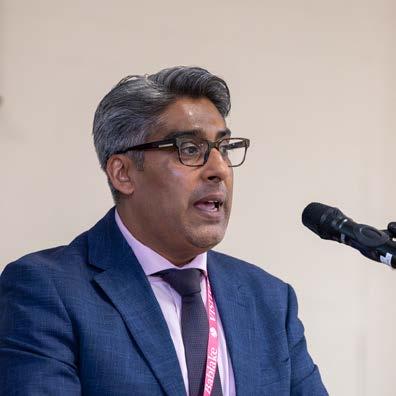
Jayesh Jotangia
Jayesh was born and bred in Coventry, where his father had settled as a GP in the 1970s. He is a dual-qualified solicitor-advocate and barrister and attended Bablake between 1989 and 1992. He read law at university and was called to the Bar at Lincoln’s Inn after completing his Bar Vocational Training at The Honourable Society of Gray’s Inn, London.
Jayesh co-founded the All-Party Parliamentary Group (APPG) for British Hindus, advising cross-party MPs and peers in Parliament on matters relating to Hindus and India. In 2015, he was asked to be a member of the core team that organised the historic community event at Wembley Stadium, where the Indian Prime Minister, Narendra Modi, and the former UK Prime Minister, David Cameron, addressed the largest gathering of British Indians ever.
Professionally, Jayesh practises in commercial litigation and professional regulatory and disciplinary proceedings. He lives in St Albans with his wife and two teenage boys, and his hobbies include long-distance running, reading, and playing football.
Adam Jhumka
When I was first asked by Miss Goody to write and present a speech, I felt lots of different emotions. I felt happy, nervous, excited – all of them!
I wanted to make sure that I did a good job and that Mr Wright wouldn’t regret choosing me. It didn’t take me long to write the speech since I was talking about my own experiences and I found it quite fun to put my thoughts on paper. I was feeling nervous in front of the crowd before the speech, but as soon as I started and the audience laughed at some of my jokes, I felt relaxed. I actually enjoyed giving the speech a lot. I will keep the speech as a great reminder of the fun I had during my first year at Bablake. This is what I said:
I QUICKLY MADE NEW FRIENDS, AND WITHIN A FEW DAYS, EVERYONE HAD DONE THE SAME.

‘Good evening, everyone. My name is Adam Jhumka. I hope you are all enjoying the Open Evening. I am here to tell you about my time in Shells and let me tell you, it has been an absolute rollercoaster! From the very first day to getting my end of year exam results, I have loved every second of it.
On that first day in September, I was lost. I couldn’t find my way around a school that was five times bigger than my Junior School and it was so overwhelming. I thought that I would be the only one struggling with this, but it’s a common struggle and you quickly find your way around. Once I got used to it, I was happy to be able to move around to get to classes and it was nice to be able to stretch our legs between lessons. We were also given lockers in our form room which we could put padlocks on. I chose a padlock with a code and thought there would be no problems. Padlocks are meant to keep other people out of your locker, but mine worked so well that eventually, I couldn’t even get into my own locker!
Now, there’s one thing I think everyone worries about and that’s friends. I came from the Junior School, so I was lucky that I already had friends that joined with me. However, I quickly made new friends, and within a few days, everyone had done the same. If you struggle, don’t worry. The Form Tutors are here to help and they do a fantastic job making us feel comfortable.
Now, on to lessons. There are so many new lessons, from cooking food to writing an essay in history. I thought it would be impossible to cope with the amount of homework, especially since I play for two football teams outside of school. So, I was thinking, how can I juggle all of this? But eventually, I got into a rhythm and it made things so much easier. Also, for someone who had never baked before, I learnt how to make scones in my food lessons and then made some at home to raise money for one of my football teams by selling them.
There is also a very wide variety of sports. We have cricket, football, rugby and so many more! Everyone participates in these and there are loads of chances for you to show off your skills in matches against other schools. As well as sport, there are so many other clubs for you to join. There is also the annual drama production and lots of music concerts. I took part in House Drama and also attended things like the RPE Film Club, F1 in Schools and lots of House events. House events are when the four Houses (Bayley, Crow, Fairfax and the best house, Wheatley!) battle each other to come out on top. There were other things like House Football, House Badminton, House Junior Quiz... the list goes on. If none of these work for you, there is always Chocolate and Chat Club, which I would recommend since you get a free treat!
With all of this in mind, I feel like my experiences in Shells have made me a better person. My parents, teachers and friends have all helped me throughout the year. I don’t see myself ever getting bored at this school and I just know that there is so much more for me to enjoy. I can’t wait to see what the coming years will be like.
Thank you’
Daisy Bell
When I first began my EPQ, I saw it as an unnecessary burden, especially as a prospective medical student already juggling demanding science-based subjects. The thought of writing a lengthy essay seemed daunting and, to be honest, quite dull, particularly since I assumed that most medical schools wouldn’t even value it. However, I was wrong. The EPQ became a way for me to explore an area outside of medicine that had always intrigued me - nutrition. It was a perfect fit, tying into my passion for health and medicine, as well as my interest in food, which I had enjoyed studying at GCSE but is not offered as an A level.

Mrs Jo Barratt
The students at Bablake never fail to amaze me with the range and calibre of their Extended Project submissions and this year was no exception.
With this newfound purpose, I was still wary of the essay component, but I soon discovered the option of creating an artefact instead. This allowed me to produce something tangible based on my research, accompanied by a shorter report. I ended up designing a four-week meal plan, along with an educational guide on food and health, aimed at improving physical, mental and social wellbeing. This project not only allowed me to pursue my interest in nutrition but also provided practical insight into making healthy, informed decisions accessible to everyone.
The process wasn’t easy, but with the support of my teacher, Mrs Rees, I gained valuable skills in research, analysis, decision-making, and presentation; skills I will carry with me into my future medical career. To my surprise, the EPQ also opened doors academically, as some universities, such as Sheffield, are willing to lower entry requirements if you achieve an A or above.
Looking back, I gained so much more from my EPQ than I ever anticipated and I couldn’t recommend it enough to anyone considering it.
With EPQs covering topics from a Billy Elliot wardrobe and a Little Red Riding Hood mini film to the future importance of the UN, whether money makes us happy and the role of beliefs in an afterlife in today’s society — and everything in between — the moderation process was never dull! Students have demonstrated resilience, tenacity and maturity in completing the qualification and should be rightfully proud of all they have accomplished.
Our Lower Sixth students undertook the 120-hour project, 90 hours of which were independently completed and this is a huge task that should not be underappreciated. They rose to the challenge of planning, researching, writing/ creating and evaluating and all gained a tremendous amount along the way, both in terms of the personal satisfaction of a job well done and academic skills that will serve them well, whatever they choose to do in the future. In addition to report writing and artefact creation, students carefully planned and monitored their time, considering which research questions to ask, where best to find the information and how to assess their sources for credibility. They have demonstrated outstanding communication skills, both in written form and in their formal peer presentations, as well as the marketplace evening presented to parents and peers. The buzz at the event was incredible and (despite saying this every year, this time it is definitely true) it was the best yet. I am not sure how next year’s students will be able to top it!
My heartfelt congratulations to everyone who completed their Extended Project Qualification.
STUDENTS HAVE DEMONSTRATED RESILIENCE, TENACITY AND MATURITY IN COMPLETING THE QUALIFICATION AND SHOULD BE RIGHTFULLY PROUD OF ALL THEY HAVE ACCOMPLISHED.
Mrs Barratt
7 University of Birmingham
6 Loughborough University
5 University of Manchester
5 University of Nottingham
5 University of Warwick
4 Coventry University
4 University of Leicester
4 University of Liverpool
3 University of Oxford
2 Aston University
2 Imperial College London
2 Lancaster University
2 Newcastle University
2 Oxford Brookes University
2 UCL (University College London)
2 University of Bristol
2 University of Exeter
1 Aberystwyth University
1 Anglia Ruskin University
1 Cardiff University
1 De Montfort University
1 Durham University
1 Hartpury University
1 Kingston University
1 Liverpool John Moores University
1 LSE (London School of Economics)
1 Manchester Metropolitan University
1 Swansea University
1 University of Bath
1 University of Cambridge
1 University of Edinburgh
1 University of Glasgow
1 University of Greenwich
1 University of Hull
1 University of Sheffield
1 University of York
6 Apprenticeship
1 Employment
16 Gap Year

The Arts, Humanities and Languages
1 Art, Design and Media
1 Drama and English Literature
1 Fine Art
1 History (with Economics)
1 Interior Design
1 Journalism
1 Spanish
2 Liberal Arts
2 Modern Languages (inc. with Business Studies)
Science, Technology, Engineering and Mathematics
1 Applied Sciences
1 Biochemistry
1 Computer Science for Cyber Security
1 Cyber Security
9 Engineering (inc. Aerospace 1, Chemical 2, Energy 1, with Architectural Design, Mechanical 4)
1 Human Biology
2 Mathematics (inc. with Physics 1, with Sport Science 1)
1 Medical Science
4 Medicine
1 Nursing and Allied Health Professions
4 Pharmacy
3 Physics (inc. with Astrophysics 2)
3 Sport and Exercise
1 Veterinary Medicine
Social Sciences
4 Accounting and Finance
1 Criminology
3 Economics
1 Environmental Geoscience
1 Environmental Science
1 Forensic Psychology
1 Forensic Science
1 Geography
1 International Relations
9 Law (inc. with Italian - 1, with German Law - 1, with Spanish and Spanish Law - 1)
1 Marketing
2 Philosophy
4 Psychology (inc. with Counselling - 1)
1 Social Anthropology and Politics
1 Sociology

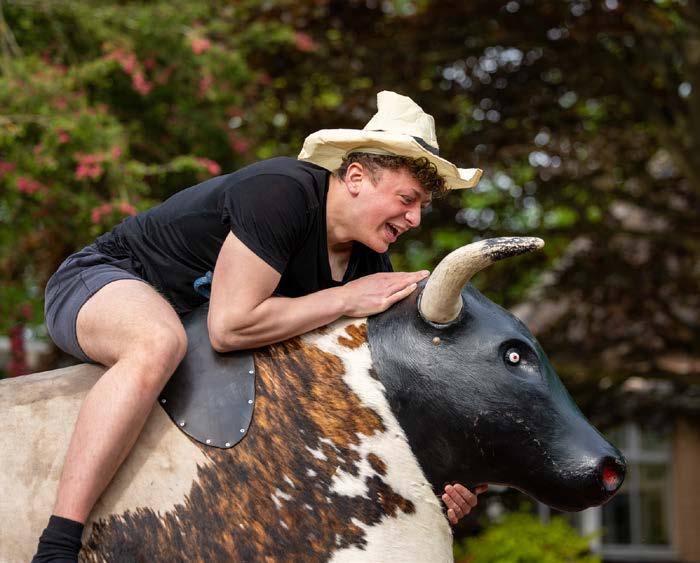
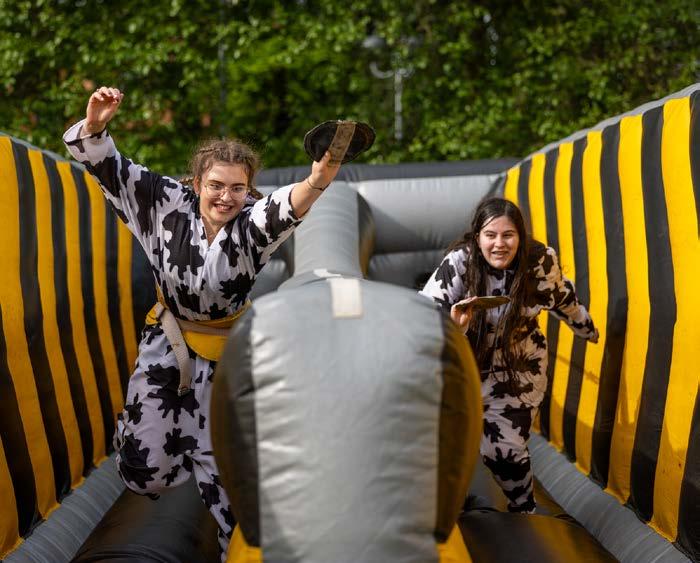
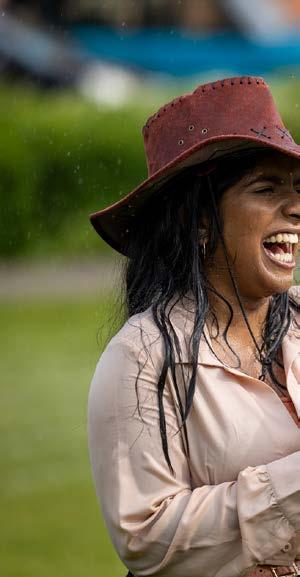
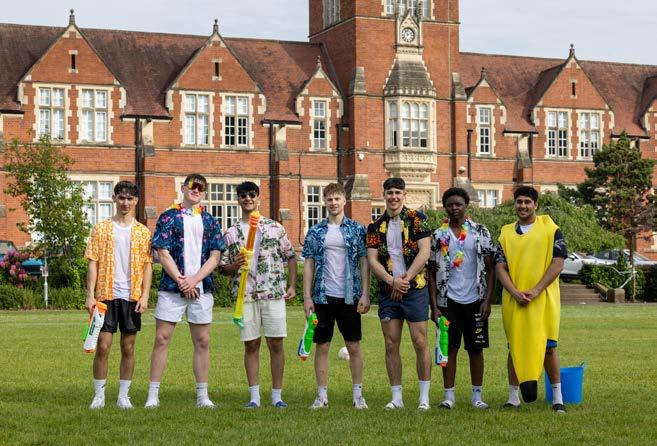
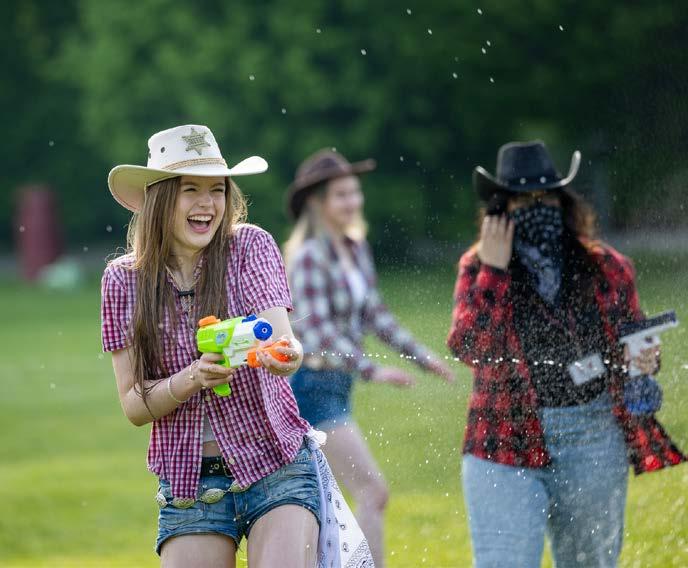
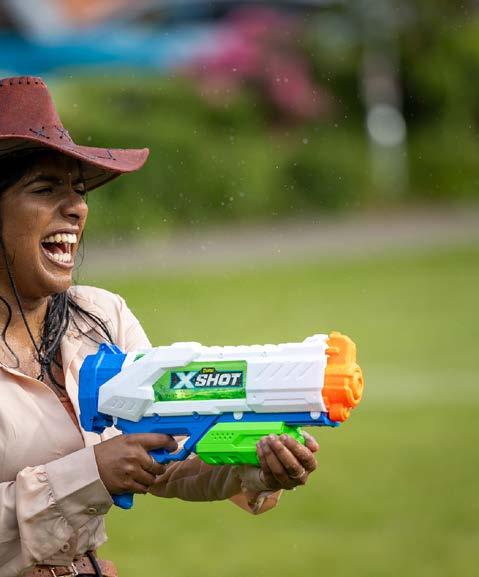
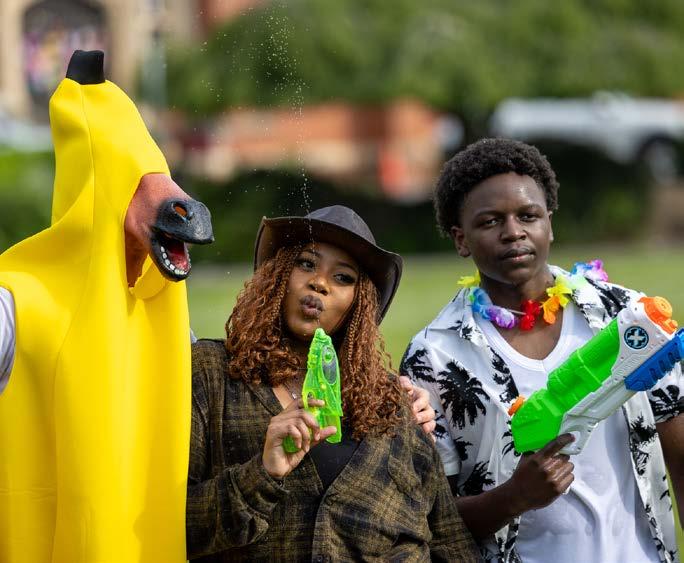
The sun shone for the Class of 2017!















Jaron
Lewis-Haynes
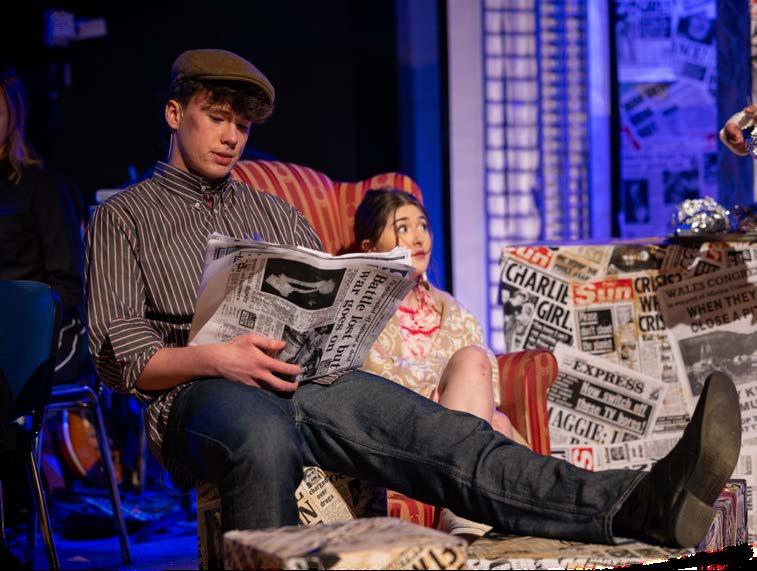
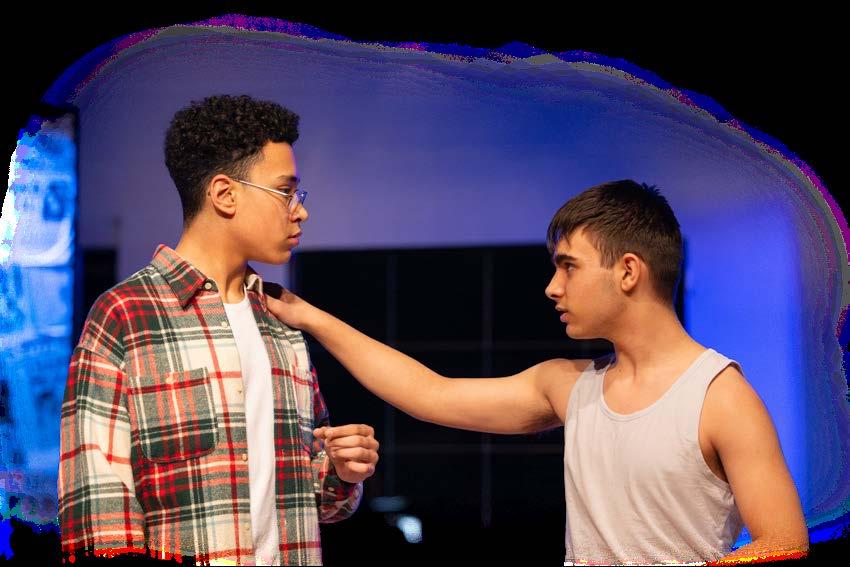
Two years ago, I watched Billy Elliot the Musical at Leicester’s Curve Theatre. Set in a northern English town during the 1984 miners’ strike, it tells the inspirational story of a young boy overcoming incredible odds to pursue his dreams. I was blown away by the production and immediately knew it was a role I’d love to play one day.
When I learned that Billy Elliot was chosen as our school production, I was thrilled and couldn’t wait to audition. I’ll never forget the moment the cast list went up and I saw my name. The support from my friends and teachers was incredible and I felt both proud and excited for what lay ahead.
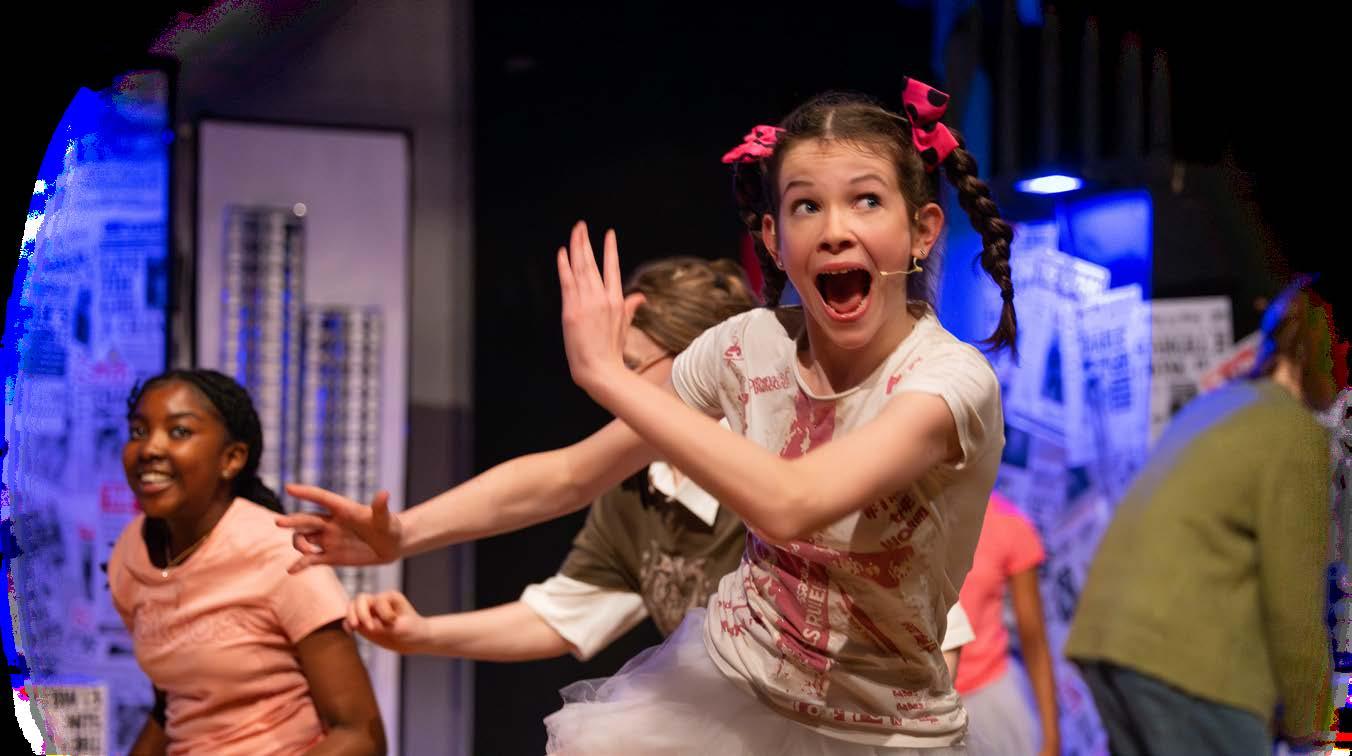
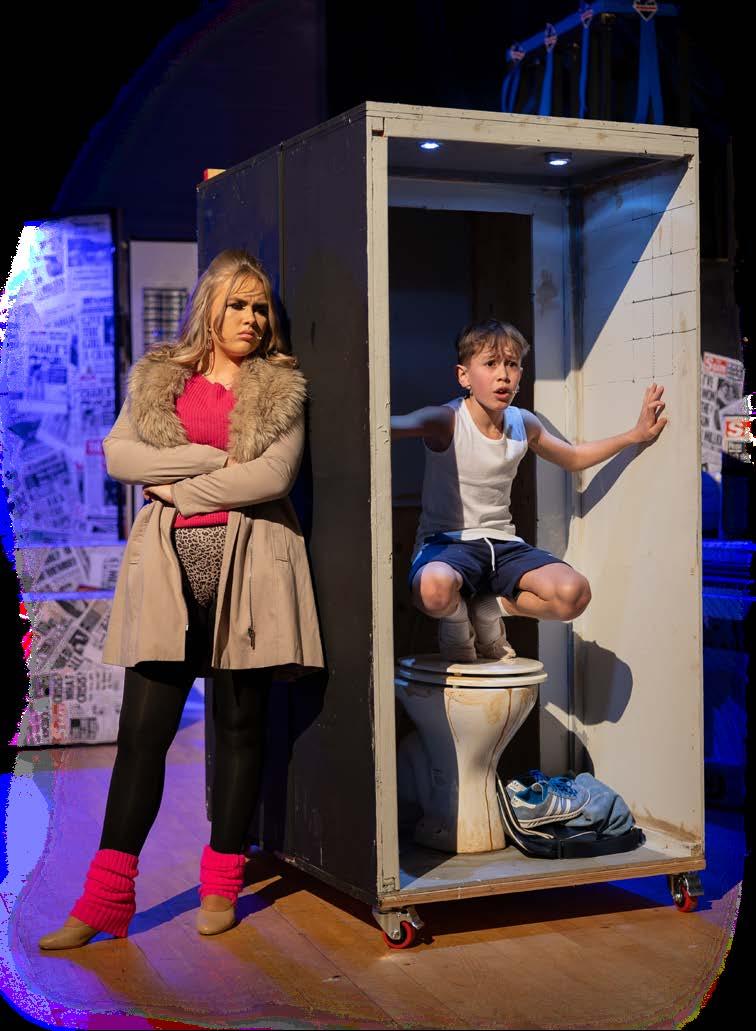
Rehearsals were intense - it’s an ambitious show, requiring powerful acting, intricate dance routines and plenty of singing, both solo and ensemble. The production came together with an incredible set, 80s costumes and a committed cast. Despite the challenges, rehearsing was great fun. I loved working with friends and pupils from across different year groups, forming new friendships and feeling part of a united team.
As opening night approached, a mix of nerves and excitement filled the air. The first performance couldn’t have gone any better and the applause from the audience was a truly special moment.
The second night, however, brought an unexpected challenge when one of the characters suffered an onstage injury. It was a shock for us all, but the cast and crew rallied together, adapting quickly and showing real resilience.
Being part of Billy Elliot was an unforgettable experience. I’m so grateful for the opportunity to bring such a powerful story to life. The musical’s message about staying true to yourself, being brave and dreaming big will always inspire me.
Cora Davidson
I first joined BabTech in Shells, and it is one of my favourite parts of Bablake!
When I found out we were doing Billy Elliot, I could not have been more pleased and I knew it would be a show to remember. Rehearsals started quickly once the school year had begun and new faces joined the BabTech team. We started with a props list that was so long I thought we would never get to the end, but eventually, we did! On opening night, when the doors opened and the audience took their seats, I was filled with nerves and excitement. All the time spent in rehearsals was about to pay off!
My favourite moment from the show was the final rehearsal before opening night, because we were able to look back on the amount of time and effort we had spent on this production. Being part of the show that was created was a wonderful experience. On closing night, the cast and crew all went around signing one another’s programmes, and for me, it is a souvenir that I will keep forever. The family that we become during these shows is one full of people that we will always remember and sharing memorable moments with them is the most amazing feeling.
As a crew member, I was able to watch the show being created, from character building in the Rehearsal Room to the incredible show that I will never forget.
I hope that, as a member of the crew, I helped those in the cast and added my ideas to this fantastic show. To anyone who wants to be part of a production at Bablake, I would definitely recommend it, as you make memories to last a lifetime.



Isaac Baker (Co-Director)
As with every school show, the Billy Elliott process was an energised and intensely creative experience.
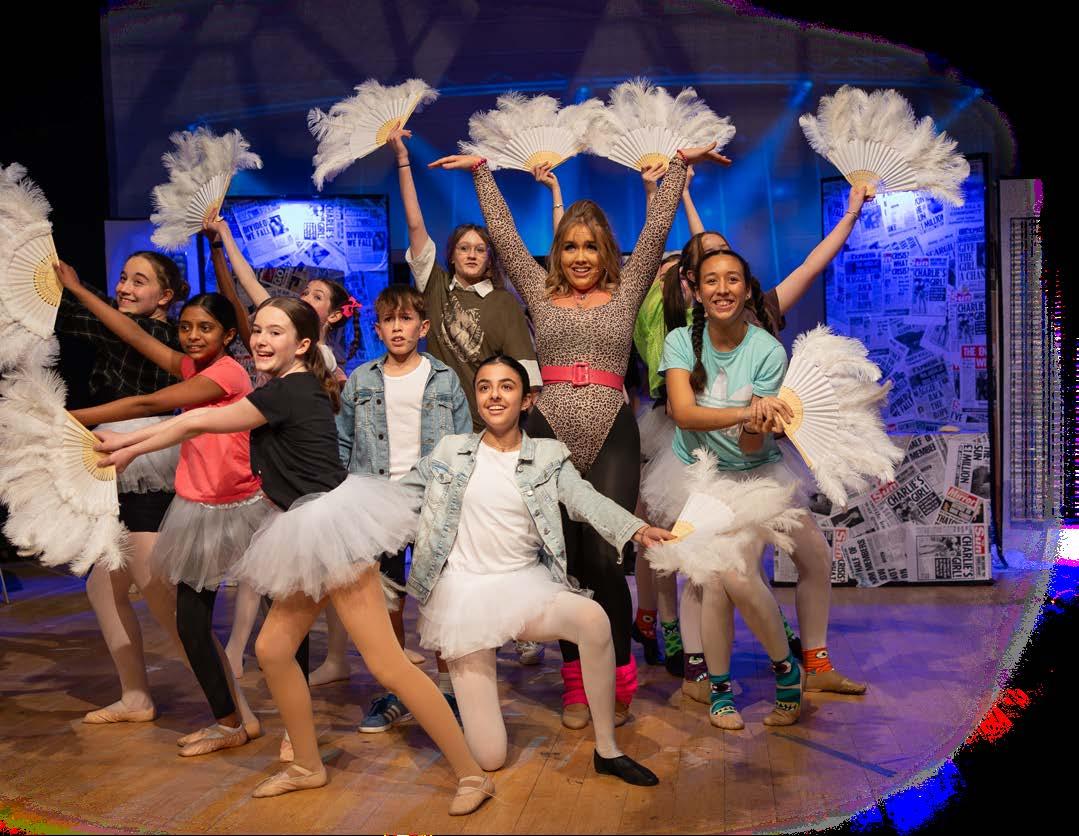
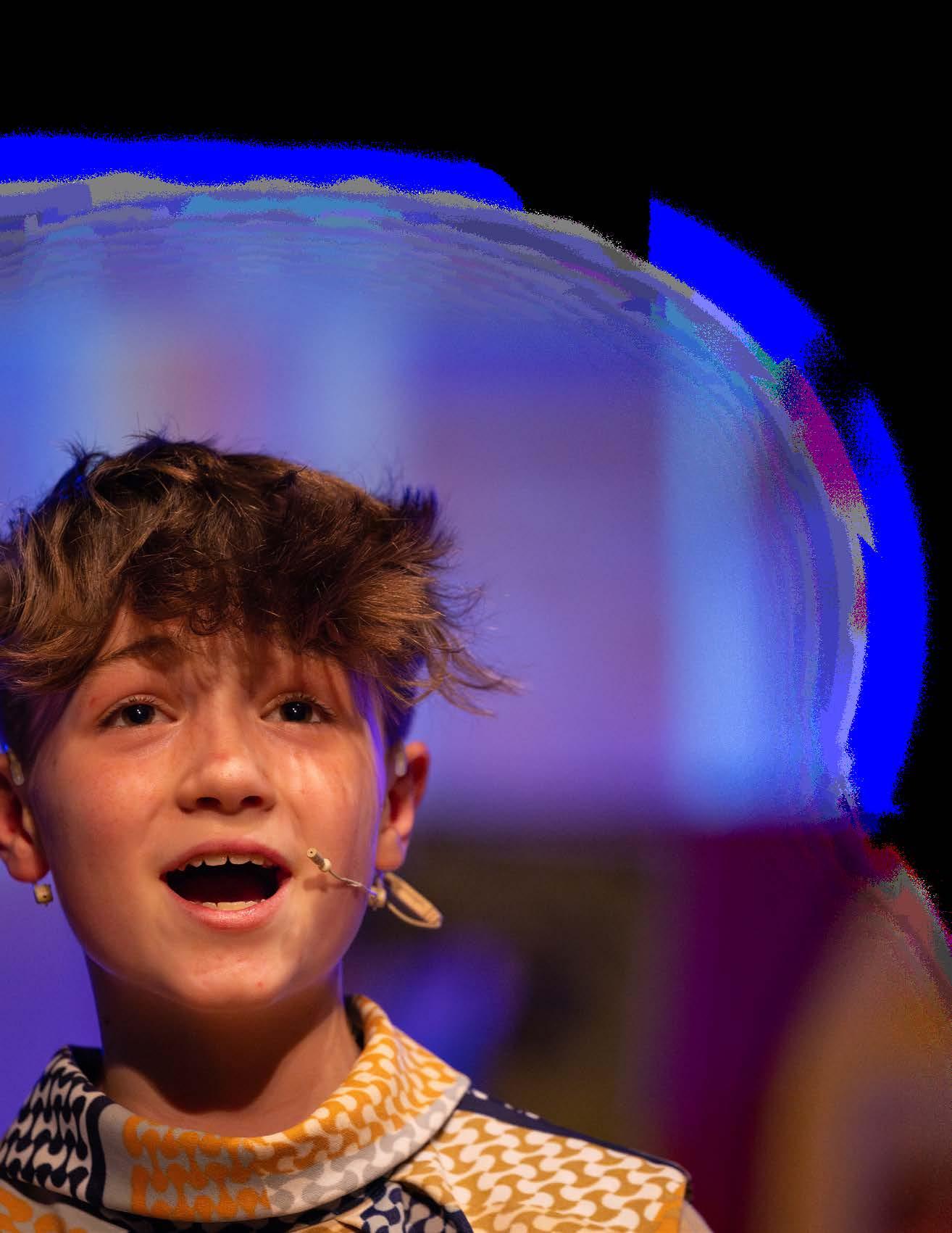
The work that was put in by everyone was incredible, with real development of character and extraordinary crew synthesis achieved. Much of the work took place off-stage and you could see and feel the ensemble becoming tighter, building closer character relationships and collectively developing a unit mentality. Amongst all of the highs and lows, it was that sense of all working together, that loving compassion we shared as staff and students, as creatives, that led to an incredibly successful final product. There were stellar performances, there were beautiful, emotionally arresting moments, and most importantly, we offered a few evenings of huge enjoyment in a dark and dreary winter. For me, they were three of the best nights last year that brought espresso shots of joy and togetherness!
From my perspective, it was a chance to move back into an ensemble role and enjoy that experience. After a period of roles outside of that space, the ensemble was something I had been missing and being on stage for those big numbers, drinking in the energy and the excitement, I was reminded why I love what I do. It's that unique feeling that makes the process so enthralling and pleasurable. There is nothing better than slotting into a harmony section, taking part in a group dance routine, or, in my case, playing with the band. That unity is one of the greatest feelings that can be experienced in life and in
THE MUSICAL’S MESSAGE ABOUT STAYING TRUE TO YOURSELF, BEING BRAVE AND DREAMING BIG WILL ALWAYS INSPIRE ME.
Jaron Lewis-Haynes
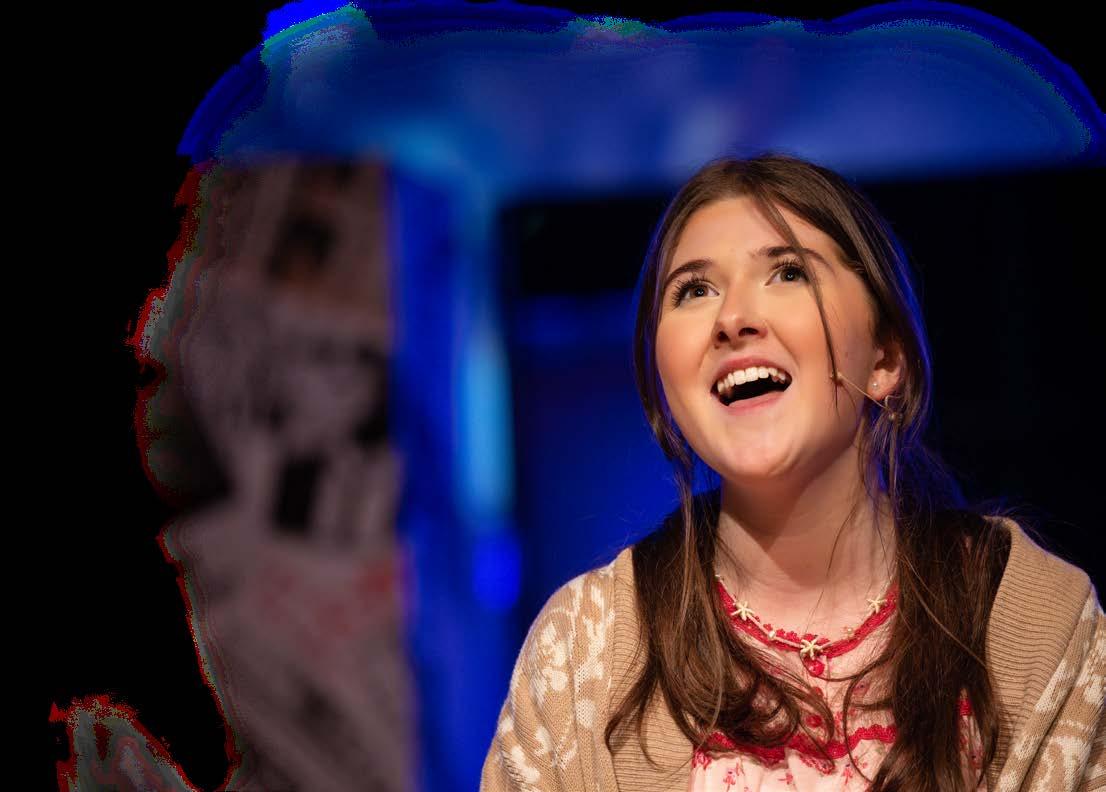






















Two of our Upper Sixth students, Avneet and Rhea, represented the school in The Great Debate, an event run by the Historical Association. They had to argue which place or person from their local area deserved further historical recognition, and Avneet spoke about Lidice Place, while Rhea focused on Maganbhai Patel – a South Asian photographer who migrated to Coventry. Both students did exceptionally well, with Avneet receiving a highly commended and Rhea being named winner. Rhea then went on to represent Warwickshire.
Here is an edited version of Rhea’s speech: "Unfamiliarity. Loneliness. Inhibition.

These are the feelings that confronted my South African-Indian mother when she first moved to the UK at the age of 29. She was met with the sudden dilemma of choosing where to settle in a country often known to be unwelcome to people like her.
This personal anecdote serves to illustrate the microcosm between my chosen historical figure and thousands of similar families in my local area across generations. This person is Maganbhai Patel, commonly referred to as Masterji. I wonder who has heard of him? Probably not many, but in my opinion, this should change.
Born in India, Patel arrived at the Liverpool docks in 1951. He was one of the 30,000 people a year who emigrated from the New Commonwealth in the 1950s and 1960s, according to Sheffield City Council’s old archives.
Masterji came to the UK pursuing his own ‘English Dream’. It wasn't long before his friends started to approach him for photographs so that they could send them back to their families in India. At first, he would take black-and-white photographs of single men who had come to Coventry. This would later flourish into wedding and family photographs. In 1969, he opened the Master's Art Studio, taking photos of people from all walks of life: from a bus conductor to Parvanna, a Coventry-based South Asian band. His work is a unique first-hand account of Coventry’s diversity.
I INVITE PEOPLE TO REFLECT ON THE CHANGING IDENTITIES OF MY FATHER’S SUBJECTS AND TO CONTEMPLATE THE STORIES TO BE TOLD AND THE LIVES TO BE LIVED.
I spoke with Tarla Patel, the daughter of Maganbhai, who followed in her father’s footsteps to become a contemporary artist. She said, “Our stories have been told through news and media by people who were unaware and uneducated about the immigrant experience. Narratives of colour have been constantly associated only with trauma and negativity. Showing these images of people from the postwar era through the decades by an Asian photographer of a similar background gives perhaps a truer picture of new migrants through their transition to a citizen.” They are the changing faces of people owning the space they lived in.
A perfect example of this would be the importance of South Asian immigrants to business in Coventry. Post-World War II, more than 10,000 soldiers from surrounding areas had died. These immigrants joined the engineering and textiles workforce to rebuild society. Indeed, in his book Revival of a City: Coventry in a Globalising World, Jason Begley asserts that worldwide economic forces have served to make this settlement a more innovative and dynamic economy.
To conclude, I believe that Maganbhai Patel deserves to be recognised as a pioneer in Asian photography in Coventry. We are all reminded of the enduring power of visual storytelling, and through his lens, he captured the triumphs and the profound sense of community that immigration has brought to Britain.
I would like to end with a quote from his daughter: “I invite people to reflect on the changing identities of my father’s subjects and to contemplate the stories to be told and the lives to be lived. Through his work, we will remember not just the past, but also the endless possibilities of the future.”
by Laila Siddiqui
What led you to your internship at The European Court of Human Rights?
Throughout my time at Bablake, I was involved in Amnesty International. I joined in Shells purely out of curiosity, but ended up becoming very involved and interested. I was inspired by what it stood for: standing up for social justice, championing human rights and helping those in need. Amnesty International embodied the values that I hold dear. Even at a young age, I knew I cared deeply about people and advocating for those in need.
When I got to the Fifth Year, the teacher who led Amnesty International in school, Mrs. Jackson, left and as a result, the club was shut down. My friend Tess Lillicrapp and I wrote to the headmaster, requesting the club be reinstated, but this time with us as student leaders and he agreed.
During my time with Amnesty, I organised campaigns and fundraisers, including Valentine’s Day gift sales (which were a big thing at the time!). Our most memorable campaign was raising awareness about the conflict in Syria. We gave pupils VR goggles that we synced to a charity website showing the devastation in Syria. We then asked pupils to sign a petition demanding that the government take action to help the people affected.
My involvement with Amnesty International helped me to discover a passion for justice, which led me to study law. At university, I decided to study Law with French, as I enjoyed French and wanted to combine both my legal and linguistic interests.
I studied for four years, including one year abroad at university in Lyon, which I thoroughly enjoyed!
After my undergraduate degree, I decided to pursue a career at the Bar. I knew that becoming a barrister would be the best way I could advocate for people on a daily basis. I have just completed the vocational component of my training, passing the Bar Practice Course (BPC).
While on the BPC, I saw an opportunity advertised by my Inn of Court. The way I would describe the Inns of Court is a bit like the houses in Harry Potter or at Bablake! All barristers must be part of an Inn for the entire duration of their career. My Inn, Lincoln’s, was advertising a scholarship for students to undertake an internship at the European Court of Human Rights in Strasbourg. With my passion for human rights, I knew this would be an incredible opportunity. My imposter syndrome, however, kicked in, and I eventually applied just a few days before the deadline.
The interview process was very rigorous: a panel interview with four barristers. I had to deliver a five-minute presentation on an area of reform for the European Court of Human Rights. I spoke about friendly settlements and why the Court should reduce how much they use them. Ironically, I was told at the end of my presentation that the Court very much wanted to increase the use of friendly settlements. I was mortified. However, by some miracle, I landed the internship!
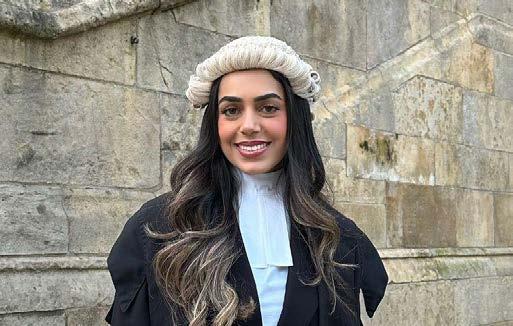
I recently asked my supervisor why they chose me when my presentation was all wrong and she told me that I had provoked an interesting discussion. Although I may not have reached the desired conclusion, I still shared an interesting perspective and, most importantly, constructed convincing arguments, which is an important ability for an advocate.
I am now in Strasbourg writing speeches for the President of the Court and working on cases with the UK division.
Is there anything about the process which, looking back, you would change?
I would have more faith in myself. I applied two days before the deadline because I kept doubting myself. I’ve realised that sometimes you just have to have the audacity to apply!
What advice would you give to Bablake students?
I would encourage all students to get involved and try out new things at school. If I hadn’t been involved with Amnesty International throughout my school years, I may not have discovered my passion for human rights, which led me to this opportunity. My time at school shaped me and landed me here in Strasbourg. So, make the most of your time in school because getting involved in one thing can lead to another, then another, and maybe eventually your dream job!
Jeevan Amar
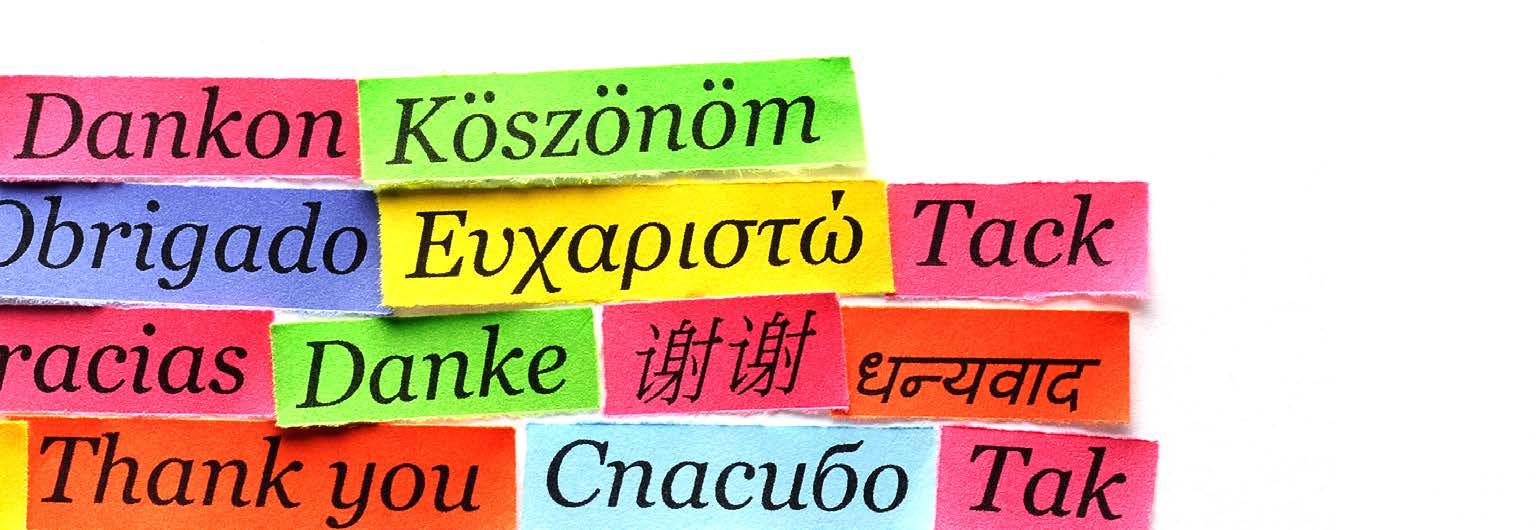
Throughout my time at senior school, I have always had a fascination with languages, as they are something I can use in the outside world.
Studying French and Spanish at GCSE and continuing Spanish at A level deepened my passion by giving me the opportunity to learn more about different cultures. Interestingly, my love for languages has also been shaped by what I couldn’t speak: my native language. Not being able to embrace that part of my heritage left a gap, but it also sparked my curiosity to connect with other cultures.
Learning a language is far more than just grammar and vocabulary tests; it can provide skills that extend far beyond the classroom. With languages no longer being compulsory at GCSE, I have come to realise how valuable they are. Taking a language at GCSE is more than just ticking a box; it is an opportunity to develop personally. While some may think that speaking tests are too long, they can actually improve your ability to express yourself clearly, in both English and the new language. Similarly, while it may seem that STEM subjects have the most cognitive benefits, studying a language can enhance your memory, problem-solving abilities, and multitasking skills (not to mention the fact that you get to go on the coolest school trips across Europe!).

Continuing Spanish at A level has deepened my cultural awareness of traditions in Spanish-speaking countries that I didn’t even know existed. The syllabus allows us to explore the history, literature and films that are popular in Spain, offering insight into Spanish society and their traditions. By learning new vocabulary and complex sentence structures, whenever I visit Spain it is easier and more rewarding as it allows me to connect with locals while fuelling my desire to continue learning so that, at some point, I can speak to them fluently. Even though AI can translate sentences for us in seconds, languages provide cultural context and personal interactions—skills that AI can’t replace.
To find out more about the importance of languages, I interviewed Mrs Parsons, the Head of Modern Foreign Languages. I also asked two university students what benefits they had gained from studying languages beyond school.
How does learning a language benefit someone’s personal and professional life, in ways that might not be obvious?
While learning a language has cognitive advantages, such as helping improve memory and fostering a greater depth of understanding of one’s own native language, I think by far the greatest benefit is less to do with the mechanics and processes of language acquisition and more to do with human connection.
Communicating with someone in their language allows us to show greater cultural awareness and empathy in ways that would be challenging if the language barrier were still firmly in place. In fact, my own love for languages was sparked as an early teen on a school exchange to Spain. I absolutely loved being able to make friends from other countries. We were excited to find out how much we had in common, but we were also fascinated to learn about the things that made us different too.
NOT BEING ABLE TO EMBRACE THAT PART OF MY HERITAGE LEFT A GAP, BUT IT ALSO SPARKED MY CURIOSITY TO CONNECT WITH OTHER CULTURES.
Becoming fluent in another language is a huge achievement. It is the result of years of hard work and coming back stronger after making an endless number of mistakes. This helps learners develop a strong sense of resilience and results in effective problem-solving abilities too—both of which are qualities universally valued by employers in today’s fast-paced, global society.
What advice would you give to students who are considering continuing to study a language?
Languages are perceived to be quite difficult in schools and, indeed, the exam boards do ask an awful lot of our students. However, I would encourage a pupil to think about how their studies could support them in the future. A second language, even at a basic level, could open up opportunities in travel, work, relationships and cultural experiences you might not even be aware of. Yes, language learning can be challenging and making mistakes is part of the process, but don’t be discouraged. Each mistake is an opportunity to learn, and perseverance is key.
How do you feel about the decreasing number of students taking GCSE languages and what do you think could change that?
Obviously, as I am passionate about languages and learning languages has contributed hugely to who I am as a person, it is disheartening to see that recently, languages have suffered a national decline at GCSE level. I think it is important, however, that pupils are made aware of how valued languages are by universities, businesses and a wide range of global industries. Once pupils can connect what they are doing in the classroom to their future and the outside world, they will be more likely to persevere. I also believe school trips that allow us to experience other cultures firsthand are crucial in sparking a lifelong interest in languages.
COMMUNICATING WITH SOMEONE IN THEIR LANGUAGE ALLOWS US TO SHOW GREATER CULTURAL AWARENESS AND EMPATHY IN WAYS THAT WOULD BE CHALLENGING IF THE LANGUAGE BARRIER WERE STILL FIRMLY IN PLACE.
Are there aspects of language learning that you think technology will never be able to replicate?
With AI becoming better at translation, what role do you see for human language skills in the future?
Obviously, Artificial Intelligence is proving very intuitive when it comes to certain linguistic skills and it will be interesting to see how things develop in the coming years. The reason that linguists are valued by employers, however, is not to do with their ability to translate accurately, but for their interpersonal skills. Employers are looking for employees who can connect with a consumer or client base in a language they understand, with genuine interest and empathy. AI is still a long way from competing with humans in this respect at present.
I think AI tools and language-learning platforms provide an effective and safe space for learners to practise their skills. They provide timely (and mostly accurate) feedback and can be accessed every day, which has a positive impact on progress. Interacting in such a way, however, can only be a ‘dress rehearsal’ for the real thing. AI cannot replicate the facial expressions, hand gestures, background noise, colloquial terminology, accents, wordplay, idioms, humour, irony, and sarcasm that often accompany natural day-to-day language. AI cannot speak from the heart with understanding, comfort, empathy and cultural awareness. In short, while technology can be an incredible aid and accelerator for language learning, it is unlikely to fully replicate the deeply human, emotional, and cultural experiences that come from learning a language through real world interactions. Who knows how things will develop in the future, though?

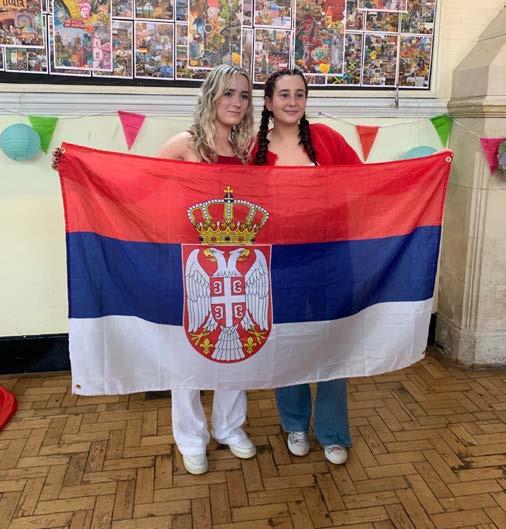
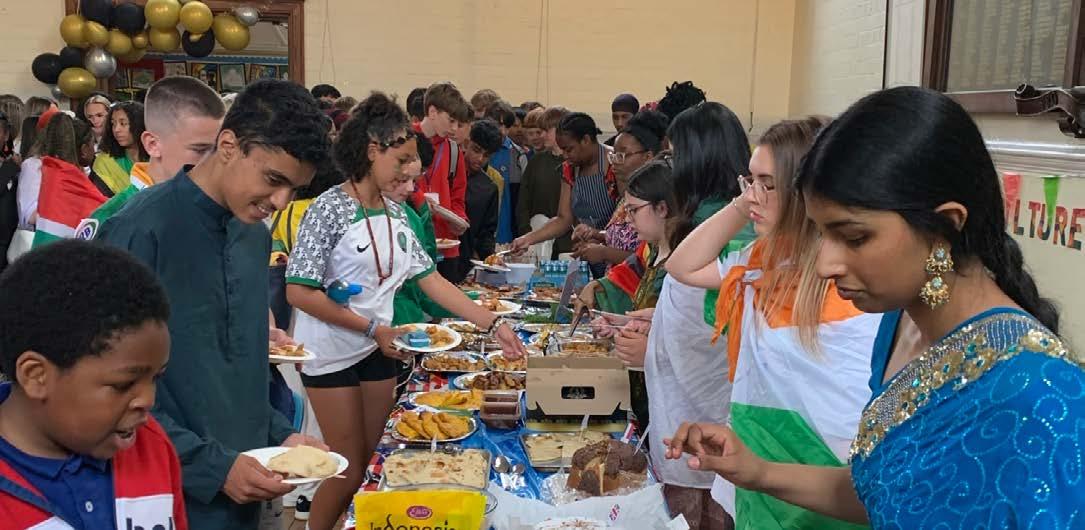
Following the success of a second Culture Day, the Inclusive Society deserves huge credit for the hard work and determination each and every person put into celebrating diversity within our Bablake community.
However, even though everyone at Bablake looks forward to this iconic ‘event of the year’, not everyone seems to know exactly what Inc. Society is or what we do outside of organising the annual Culture Day.
The Inclusive Society is simultaneously a safe space and a community and we meet to engage in discussions and debates about topics that we believe are important. These range from politics around the world to appreciating the progressive steps taken by industries to be more inclusive. The reason we believe it is important to have these conversations is that many of the issues we see in today’s society stem from a lack of discussion and understanding. We often have different opinions and views and might not see eye to eye regarding some issues, but it is vital that we express these perspectives so that we can understand the reasoning of others, see if a middle ground can be reached, and, most importantly, ensure that we respect each other.
Kanishka Sathiyaseelan
As a member of Inc., I interviewed some key members of the Upper Sixth who were instrumental in establishing Inc. Society and asked them various questions about what Inc. Society means to them:
Why did you want to start Inc. Society, and what was the motivation behind forming it?
"I started Inc. initially with a few other students in our year following an incident which made it clear to us that there wasn’t a space or platform to talk about issues (specifically surrounding race at the time), which were becoming ever more prevalent in our society. I guess this ties in with the motivation for starting it, but we wanted to provide that space to raise awareness, create a community, and also learn to debate and respect each other's opinions."
Beth Akinkoye
I FEEL HONOURED TO CONTINUE THE LEGACY OF THE INCLUSIVE SOCIETY AND HOPE THAT THE PEOPLE WHO COME TO INC. ALSO FEEL INSPIRED BY THE MESSAGES THAT COME OUT OF OUR COMMUNITY.
Why did you want to join Inc.?
"I wanted to join Inc. as I felt this would be a great opportunity to educate myself on cultures and topics I didn’t know much about. This gave me a better understanding of my friends and of current affairs. I also wanted to be part of a group that celebrated our community for its diversity, one of the aspects that makes our school so special. Overall, I really enjoyed my time in Inc., as it is such an inclusive and welcoming environment in which opinions can be discussed openly and honestly."
Libby Stinton
What inspired you to hold a Culture Day at Bablake?
"Culture Day is one of the best memories I have at Bablake. I am so proud to have been able to bring this to life along with Miss Jones, Beth, and the rest of the Inc. Society. From the creation of Inc., we knew that we wanted to showcase the different cultures within the body of the school. Culture Day allowed the school to come together and highlighted the beauty in diversity and the celebration of it. Through the sharing of food from different cultures to music and interactive workshops, Culture Day was able to represent the heart of Inc. Society."
Daniella Freeman
Why do you think it was important to have a space like Inc. Society within the Bablake community?
"It was paramount that we had Inc. within our school community because it meant that there was space for everyone. I love this quote: ‘There is always space for you at the table and if for some reason there isn’t, make your own table,’ as it encapsulates the idea of being able to forge ahead and take control of positive narratives, allowing everyone to vocalise their feelings, because every voice matters."
Avneet Hayer
What were the most valuable lessons you learnt during Inc. Society?
"One of the most important lessons I learned was the significance of education. Not necessarily in terms of academics, but in terms of gaining a wider world perspective. Inc. gave me the opportunity to learn from other people and to challenge my own ways of thinking. Every week, I would look forward to either leading a session or engaging with a session. Through these sessions, I was able to learn from different people and acquire information that I would not have ordinarily been exposed to. Inc. taught me the importance of educating yourself and making sure that you put in the effort to do so."
What was the most impressionable session you had, and why?
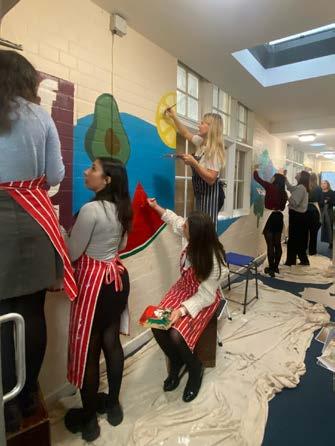
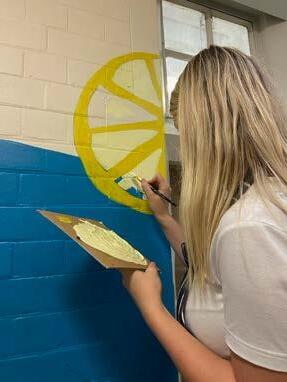
"The mural workshop was something that stood out to me as a moment when I realised that Inc. wasn’t just a year group thing, but rather something for the school as a whole. Other impressionable sessions were on gym culture, feminism (feminists v more radical feminists), and an early session we had on sexual harassment, which really stood out to me."
Bez Akinkoye
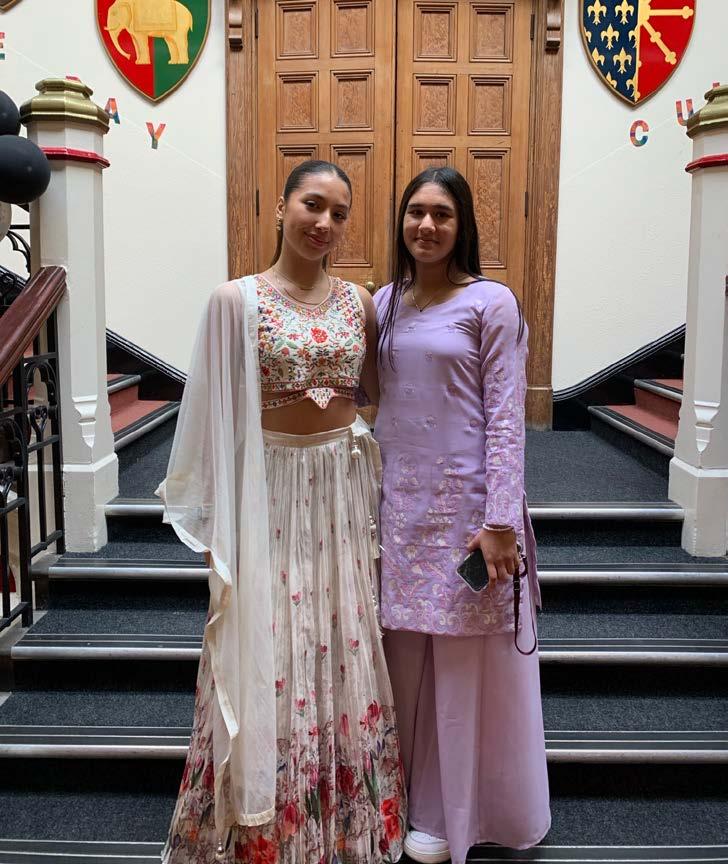
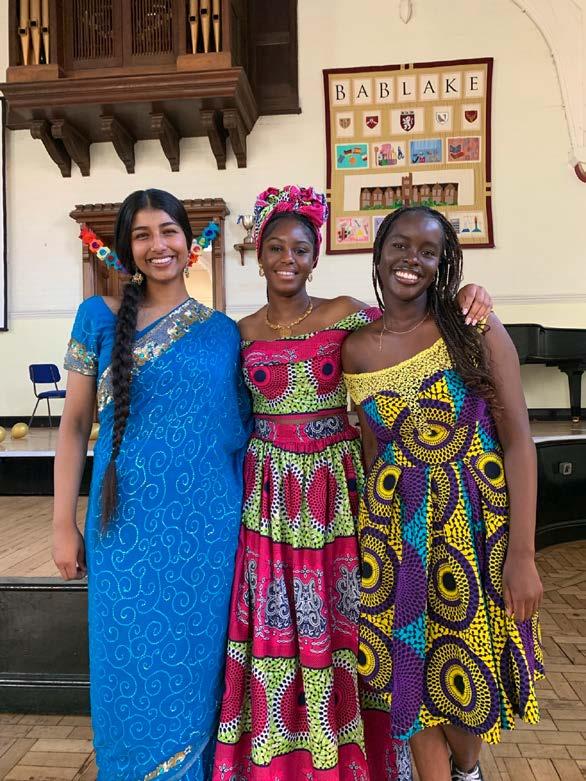
When reading these responses, it truly warmed my heart to see how much of an impact Inc. has made on our members’ lives and that Inc. will always be something that will lead them to a brighter future. I feel honoured to continue the legacy of the Inclusive Society and hope that the people who come to Inc. also feel inspired by the messages that come out of our community.
Daniella Freeman











Chase Cook
Music in school will never let you down.
The vast array of different ensembles available is a very encouraging medium for musicians to step outside their comfort zone and become more confident in performing with and in front of others. Although music is rarely quiet, playing and listening to music in different forms at school gives me the space to relax and appreciate the moment, which can be very useful in a day full of lessons. It also means I get the chance to work with lots of people from different years who all have different musical tastes.
The Bablake Music Department is well-equipped with enticing new songs and a wide range of instruments to allow beginners to develop. As for me, I joined the orchestra in Shells, which was my first ensemble. Since then, I have developed my musical skills so much that I am now a member of five different music ensembles and spend most of my lunchtimes playing music with others. Each ensemble plays in a different way and every time I attend, there is always something new to develop. Playing in musical groups has improved my piano playing significantly and I give my sincere gratitude to the Music Department for putting so much effort into organising concerts and tours.
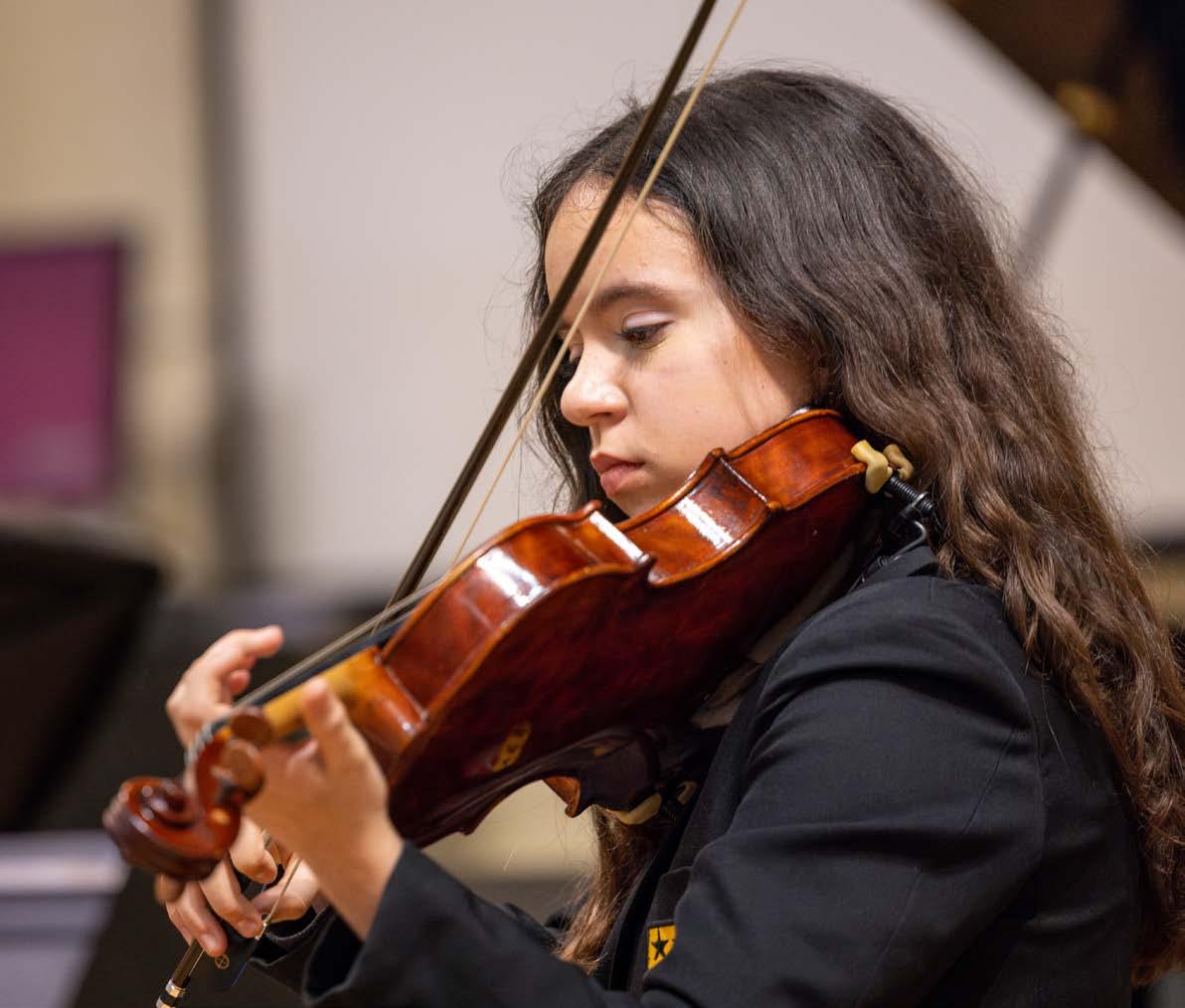
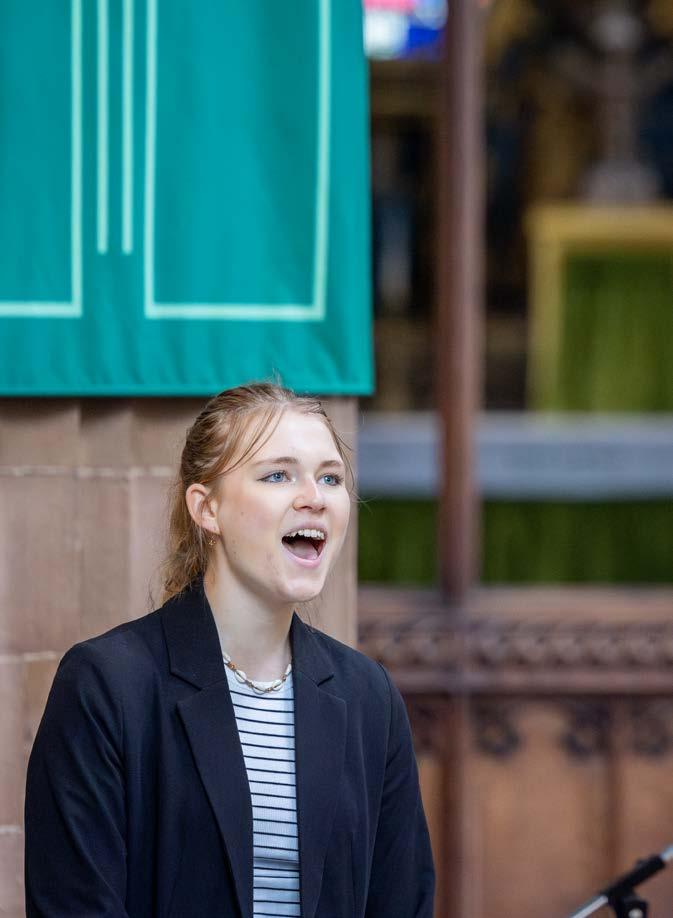
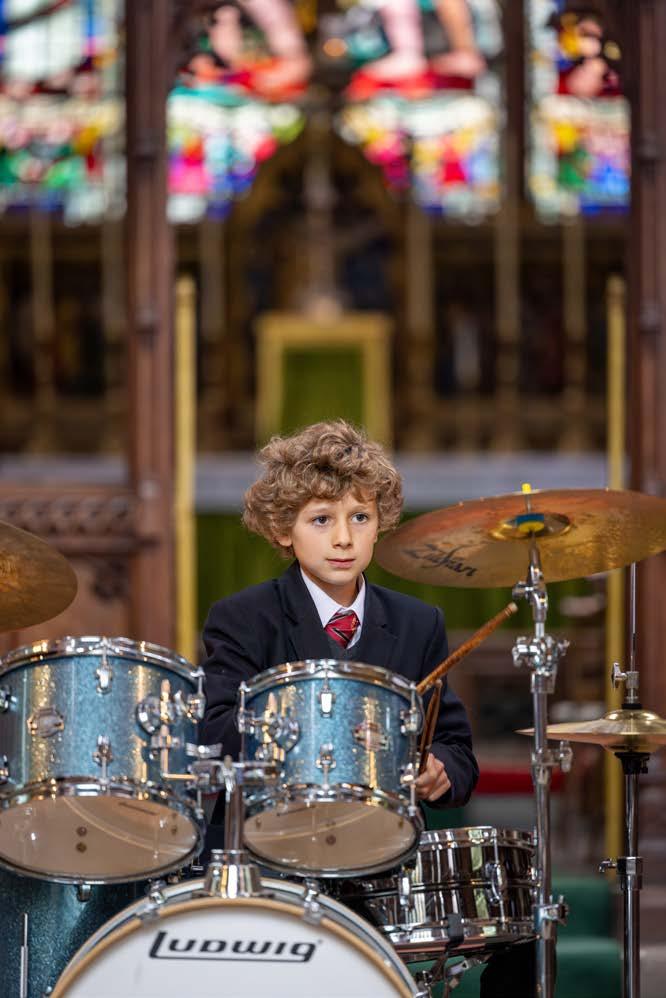
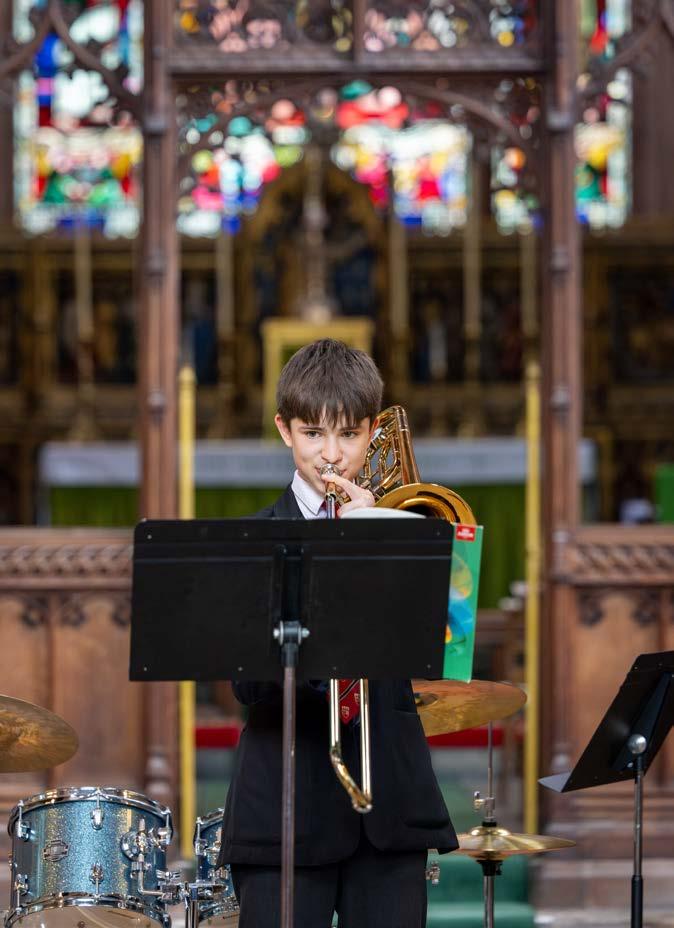
Across the year, the Music Department held our annual Autumn, Easter, and Summer concerts. At each of these concerts, our audiences were treated to wonderful performances from students of all ages. Performances included orchestra, cello, brass, percussion, recorder, and string ensembles, choir, wind band, swing band, and our very own Bablake Rock Bands.
A highlight of these concerts was our Sixth Form Leavers Ensemble, which performed a selection from Hamilton
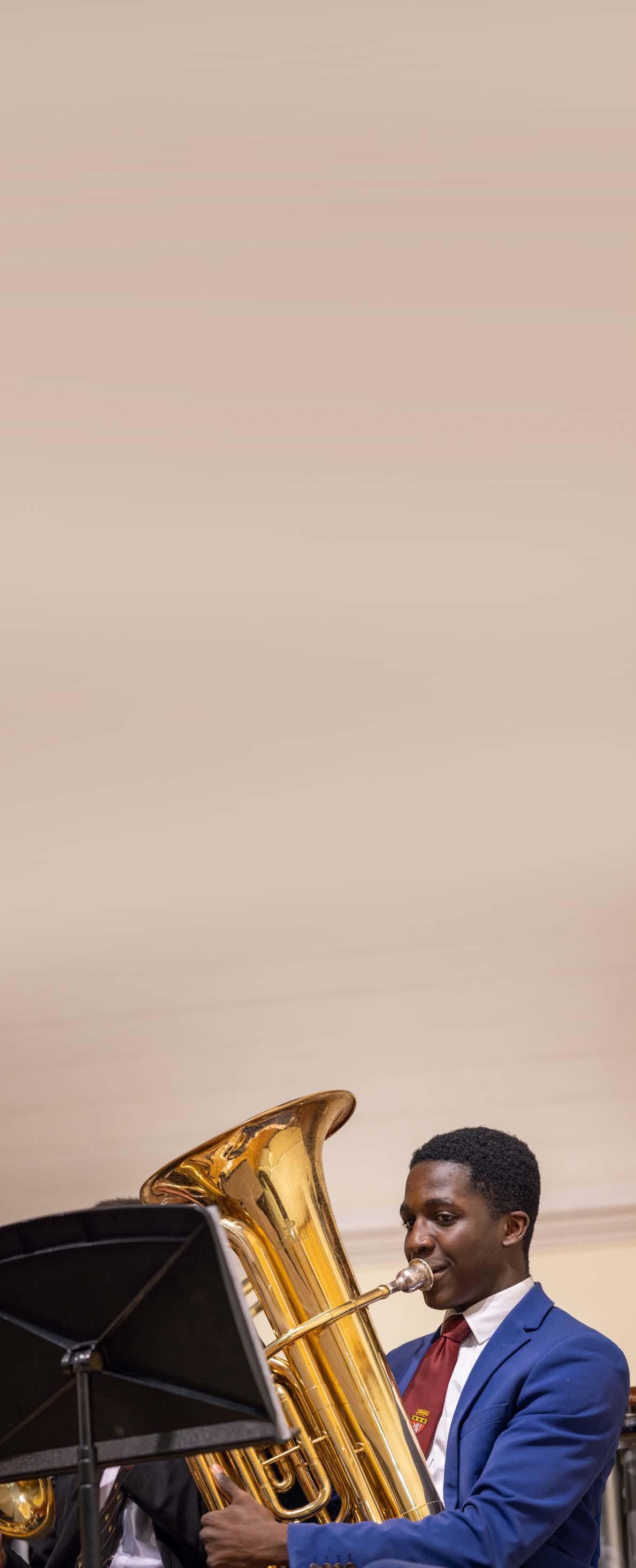
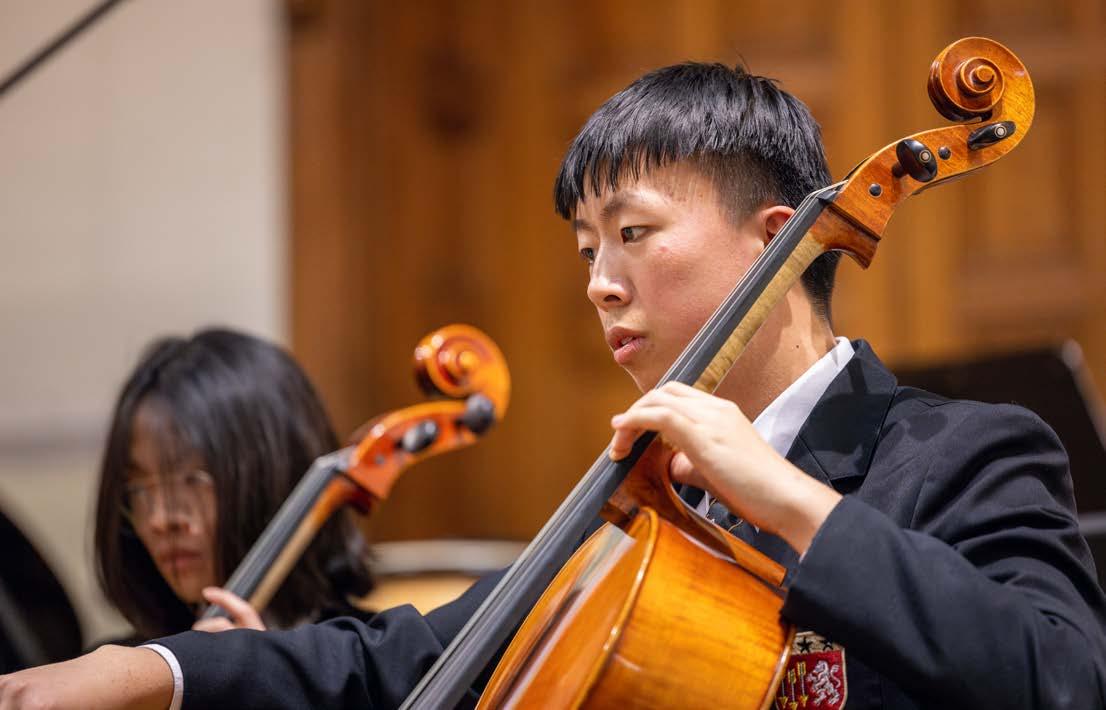
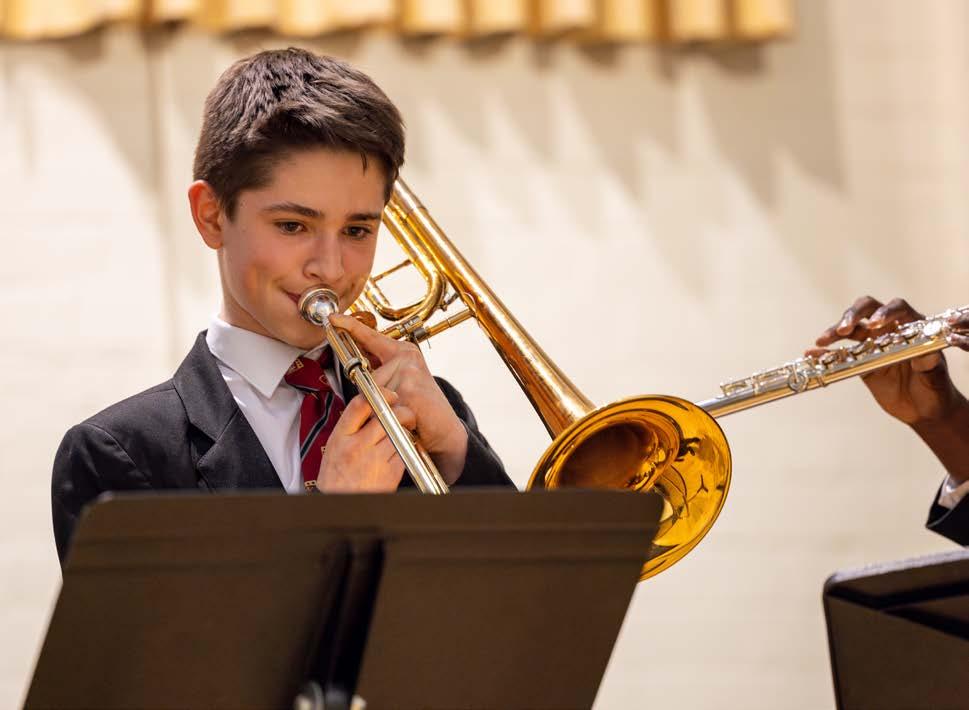
The Music Department also took centre stage at every whole school assembly. These performances enhanced the assemblies with musical contributions, led by our music scholars. It was wonderful to see the pupils showcasing their musical abilities each week. We look forward to seeing this new tradition grow at Bablake.
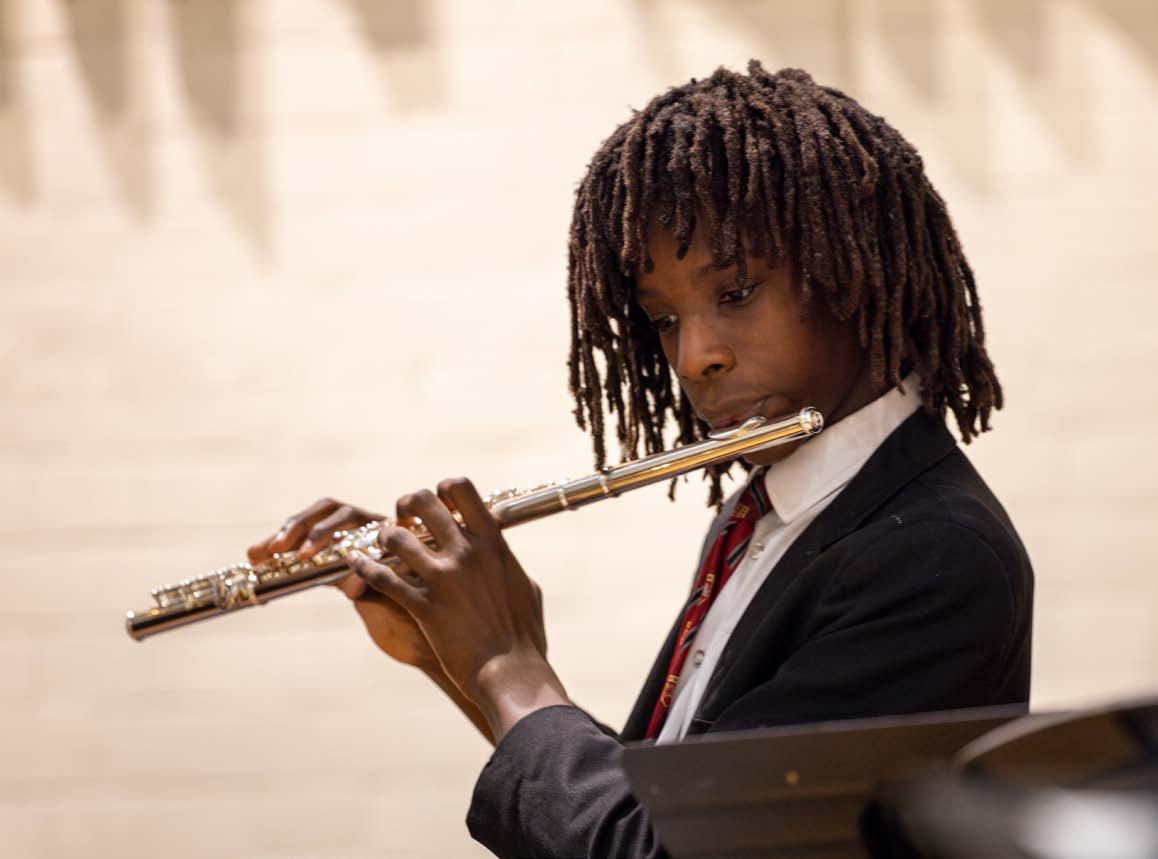
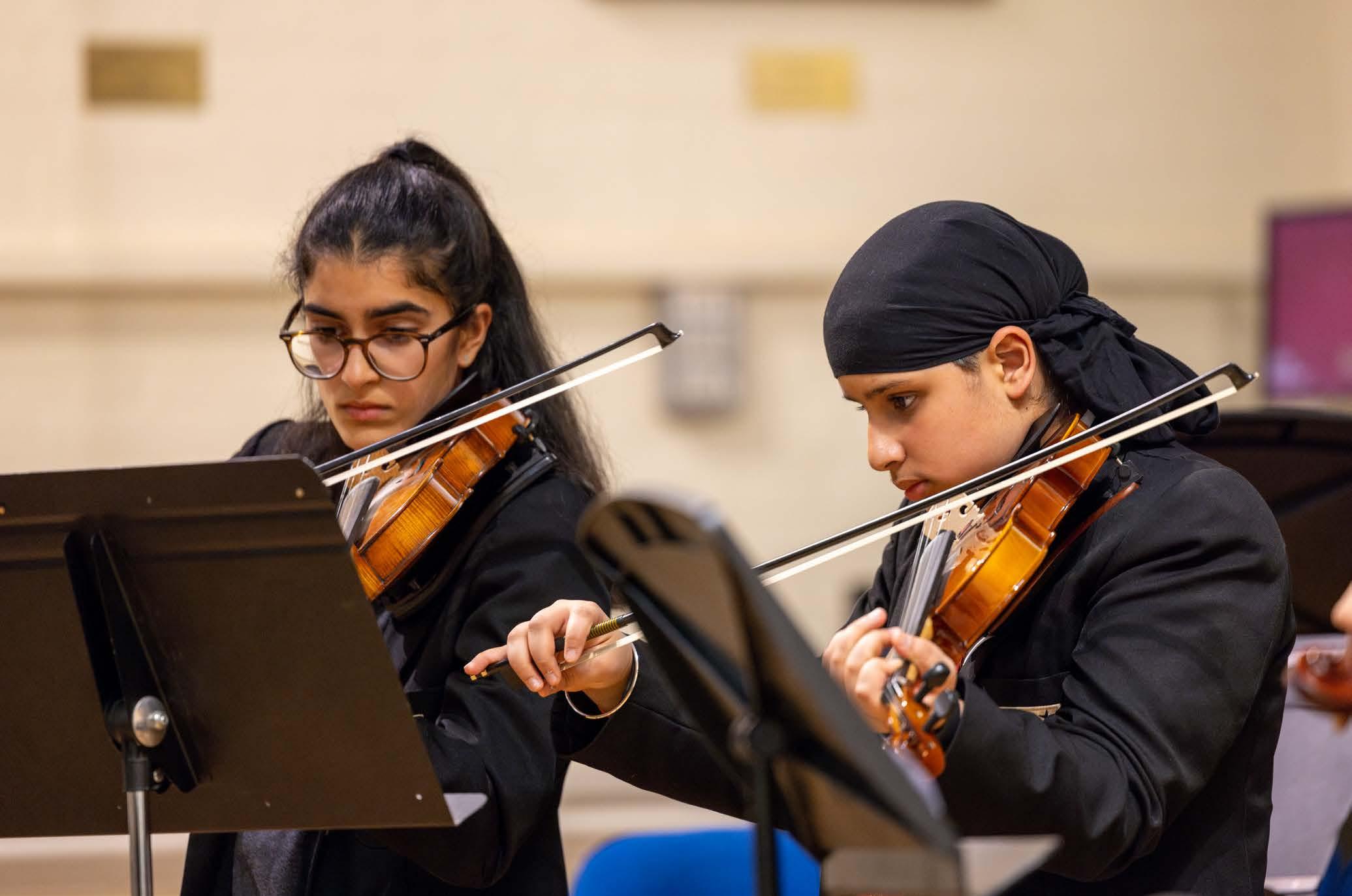
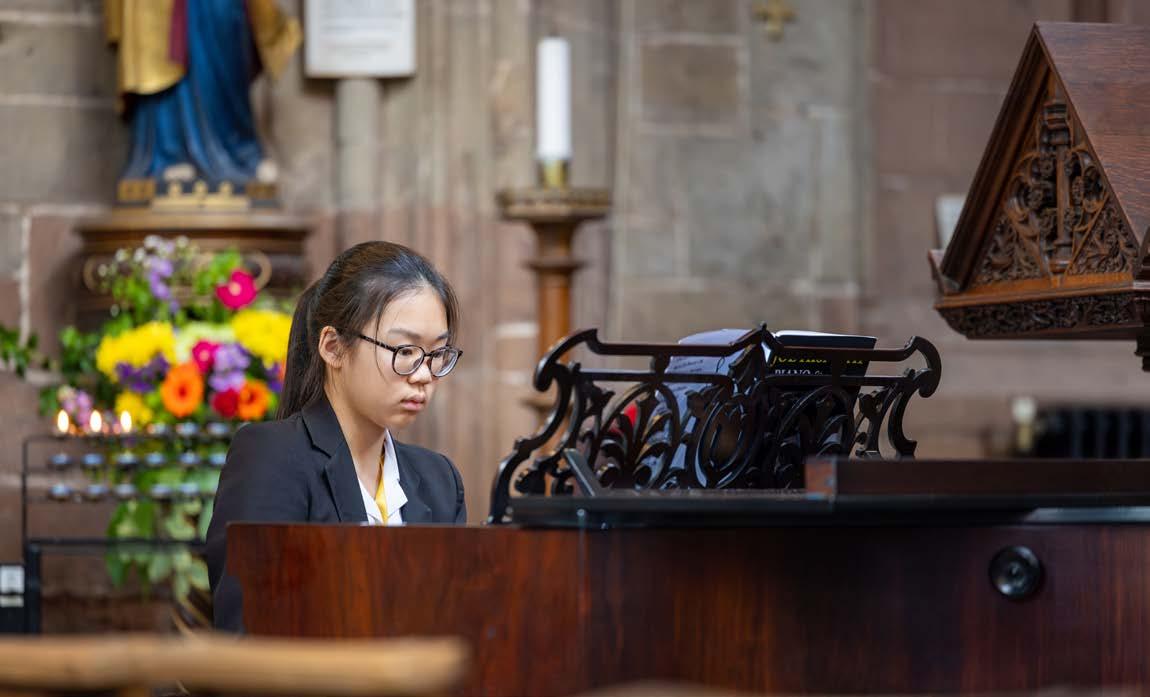
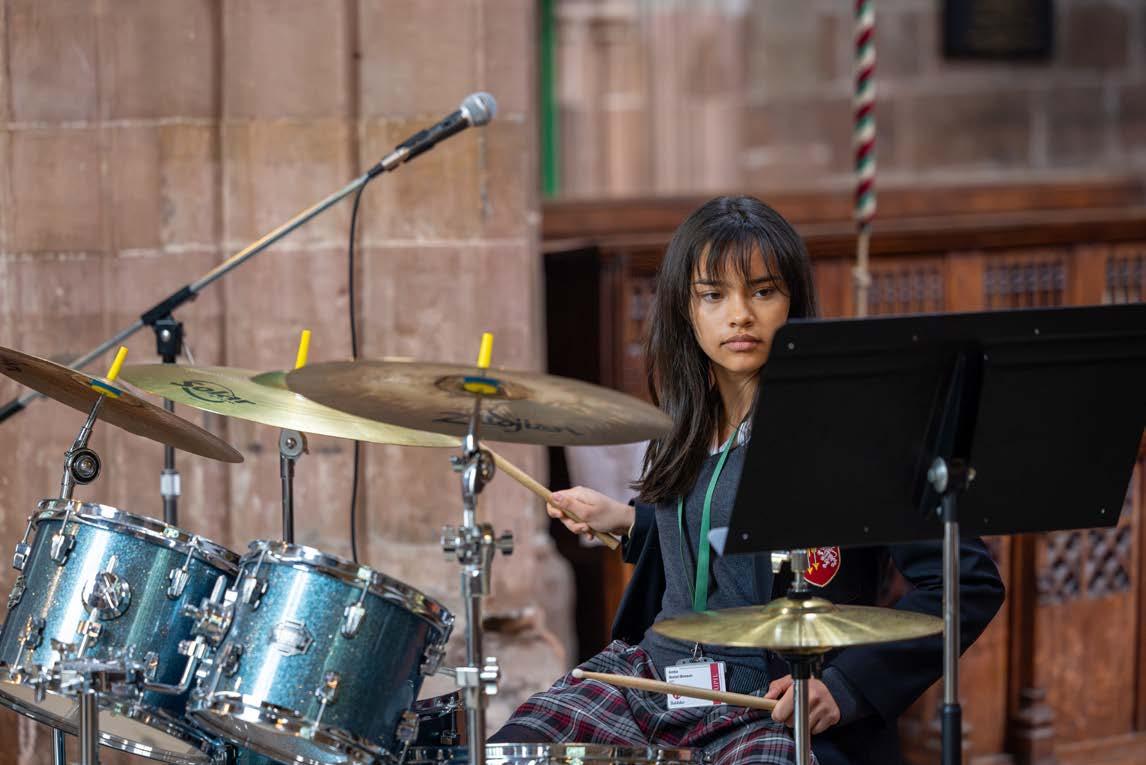
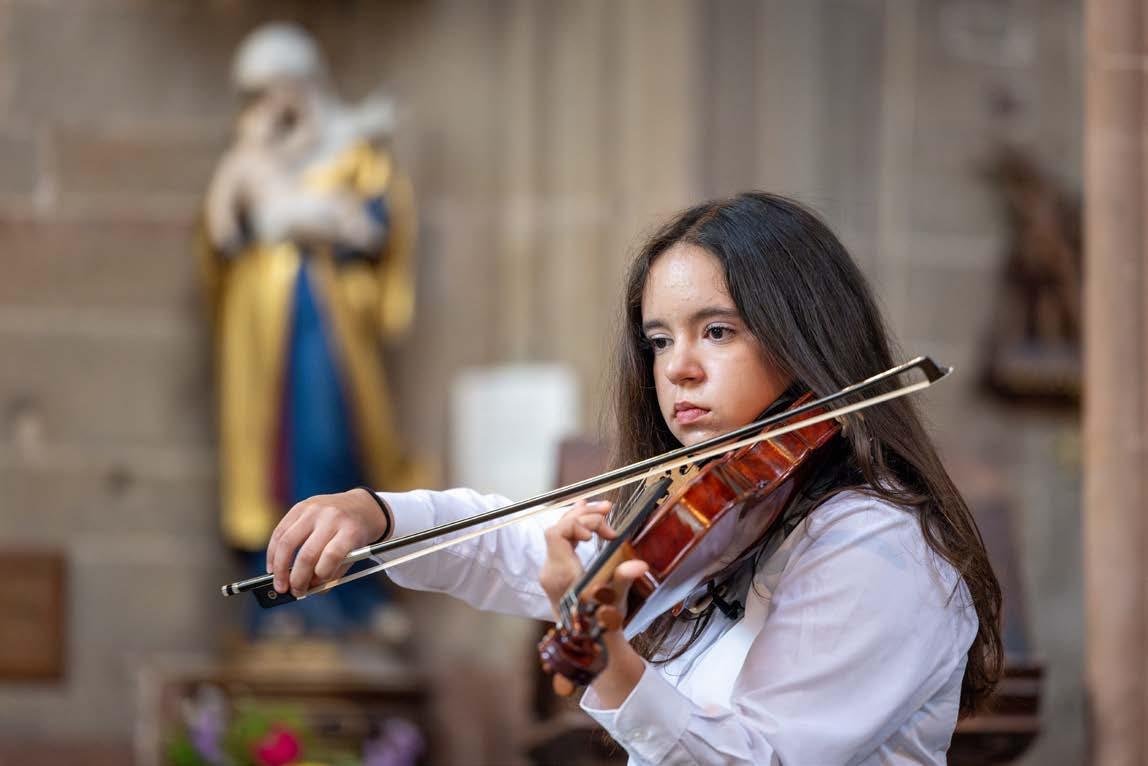
Across the year, the music scholars performed in a termly concert at St John's Church, providing a wonderful afternoon of music. Our scholars' concert gave them the chance to share their musical talents with our community and beyond.
In June, pupils embarked on a London theatre visit to watch the musical Hadestown. After experiencing the multicultural atmosphere in Covent Garden, they thoroughly enjoyed the performance, which was not only musically brilliant but also had stunning creative moments to inspire our performing arts students. There were some very enthusiastic discussions on the ride home.
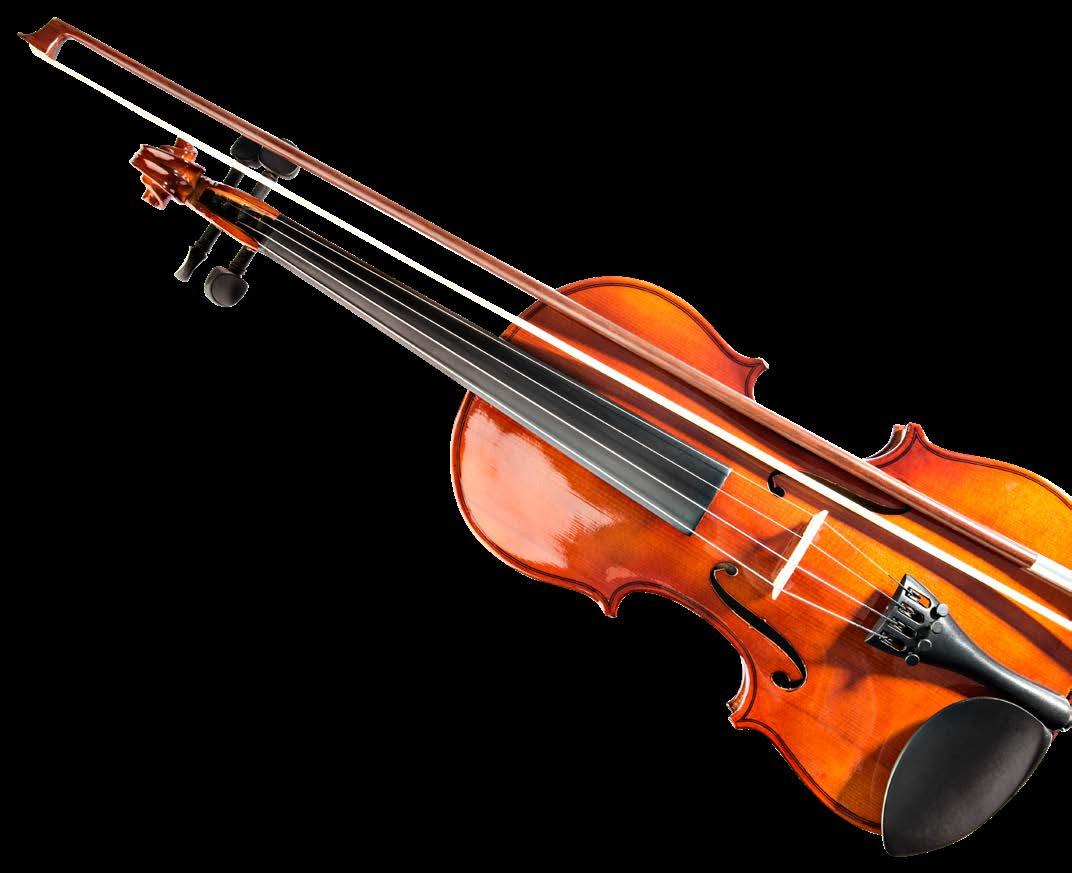
Every term, we offer our pupils the chance to perform in our Rush Hour Concerts, which are always enjoyable. Some were seasoned performers using this as another opportunity to perform, while others bravely took their first step in performing to a live audience after only a few weeks of lessons.
Our pupils enjoyed a Gamelan workshop, where they created some fantastic compositions. A Gamelan orchestra can be found on the islands of Java and Bali in South-East Asia. It consists mostly of percussion instruments, such as gongs and metallophones. We are grateful to The Royal College of Music for lending us such a fantastic instrument.

In a break with tradition, Bablake performed their family Christmas carol service at St John's, the Bablake Church. This was a wonderful evening of festive music and readings. It is exciting that this venue for our Christmas Carol Service is now part of the school’s Christmas celebrations, with Bablake returning to St John's in December, in addition to the whole school Carol Service at Coventry Cathedral.
Joshua Pilling
Following on from my previous political interviews with Boris Johnson and Rishi Sunak, I have continued to explore my passion for politics through more interviews and involvement in political campaigns.
I am studying A level Politics and, for my Extended Project Qualification (EPQ), I am writing 5,000 words on ‘The Future of Conservatism’.
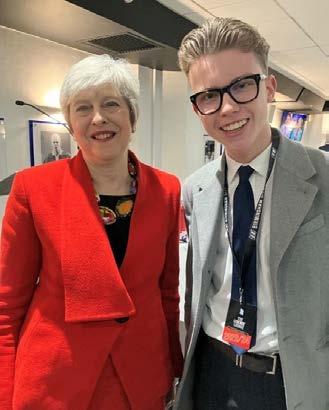
I was invited to attend a campaign dinner with Andy Street, former West Midlands Mayor, and during the evening, I had the opportunity to interview Theresa May. One of my questions was how she would encourage young people to get more involved in politics. Theresa responded by reiterating the importance of local politics and campaigning in your community.
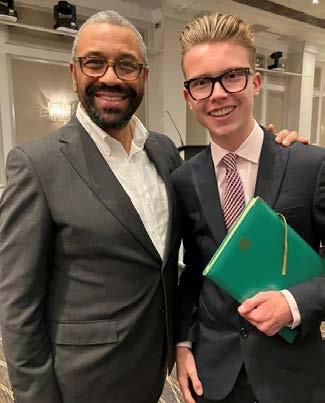
I also attended a Conservative Leadership Gala dinner with three of the four leadership candidates— Tom Tugendhat, James Cleverly, and Robert Jenrick. I asked each candidate how they would plan to win the next general election, and their answers helped to form part of my EPQ. In order to gain greater insight into the workings of the Conservative Party, I have participated in various ‘Policy Forums’ with the Coventry Conservatives, covering areas of discussion ranging from ‘The Future of the Welfare State’ to ‘The Future of Transportation’, which are reported back to the central Party, showing the importance of grassroots politics.

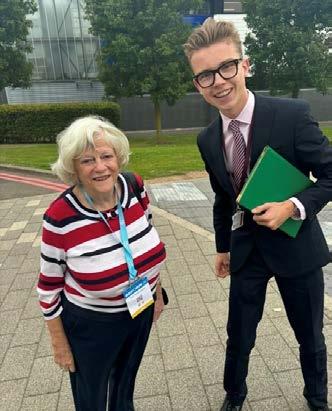

Aside from the Conservative Party, I also attended the Reform UK Party Conference to learn more about the party, which gained five seats and 14% of the vote share at the last general election and also to gauge how much of a threat the party is to the Conservatives, which also linked to my EPQ project. I asked Anne Widdecombe, the veteran former Conservative Cabinet Minister and current Reform activist, her thoughts and she told me she believed Reform “would win a majority at the next general election.”
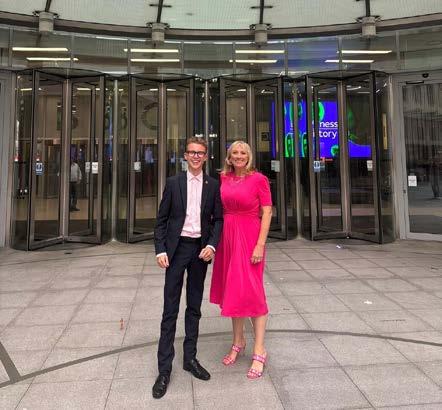
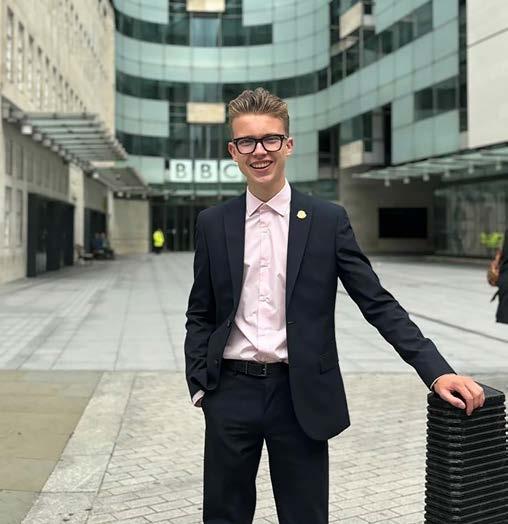
Away from party politics, I had a fantastic opportunity during the summer to visit the BBC News studios at Broadcasting House, London, after a chance encounter with Old Wheatleyan and BBC News Presenter, Martine Croxall. The day served as a fascinating eye-opener to the inner workings of the national broadcaster and the fast-paced nature of the industry. I spent the majority of the afternoon in the live news studio while Martine read out the news and interviewed guests. During the visit, I was also fortunate enough to speak to BBC Political Correspondent Nick Eardley, who offered his advice on how to get into political journalism.
I plan to continue to pursue my interest, with the aim of studying Politics or Law at university.
Ria Banwait
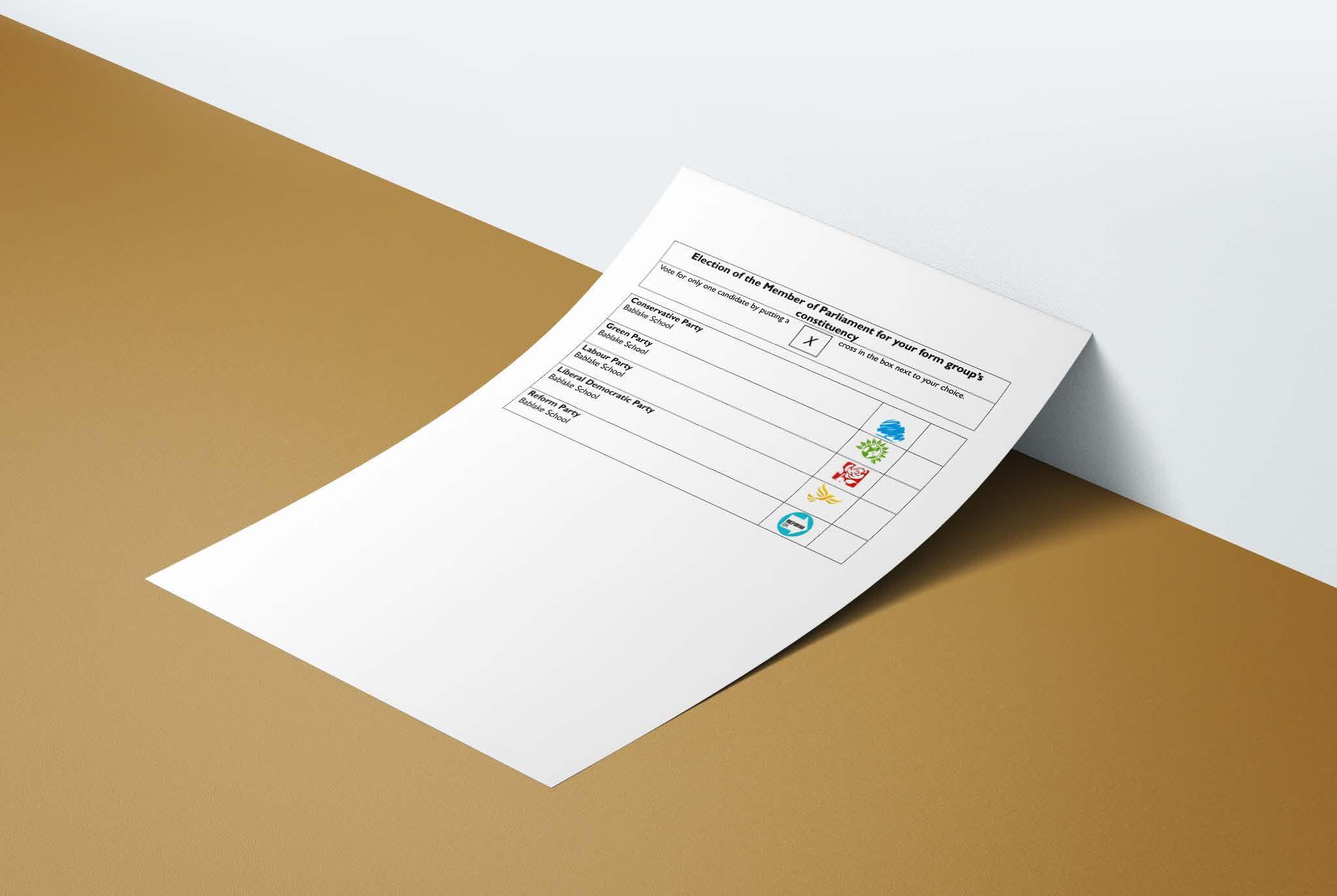
In the closing week of the school year, the Bablake General Election was held in line with the nation’s election.
Candidates were chosen to represent the nation’s leading parties, so the Conservatives, Labour, Liberal Democrats, Reform UK and the Green Party were all represented. Each candidate advocated their party’s policies and beliefs to pupils, hoping to secure a majority win. Everyone was provided with a ballot paper, and the First Past the Post system was used, as in national elections. This was an insightful opportunity for pupils to experience and engage with current political issues, whilst also having the ability to exercise their right to vote.
When all votes had been counted, the election resulted in a hung Parliament. This meant that the parties had failed to achieve more than 50% of the vote and therefore, if we were electing a government,
the monarch would need to invite the leader of the largest party, which was Reform, to attempt to form a coalition. The results were as follows: Reform UK won the largest minority of the election, totalling 44% of the votes; the Conservative Party placed second with 32%; the Liberal Democrats secured third place with 12% of the votes. Evidently, voters were not in favour of the Labour Party’s manifesto pledge to end the charitable status of independent schools, resulting in the smallest share of the vote.
The election was an excellent opportunity for Bablake pupils to gain first-hand experience of democratic processes, preparing them to be more engaged and informed citizens in the future.

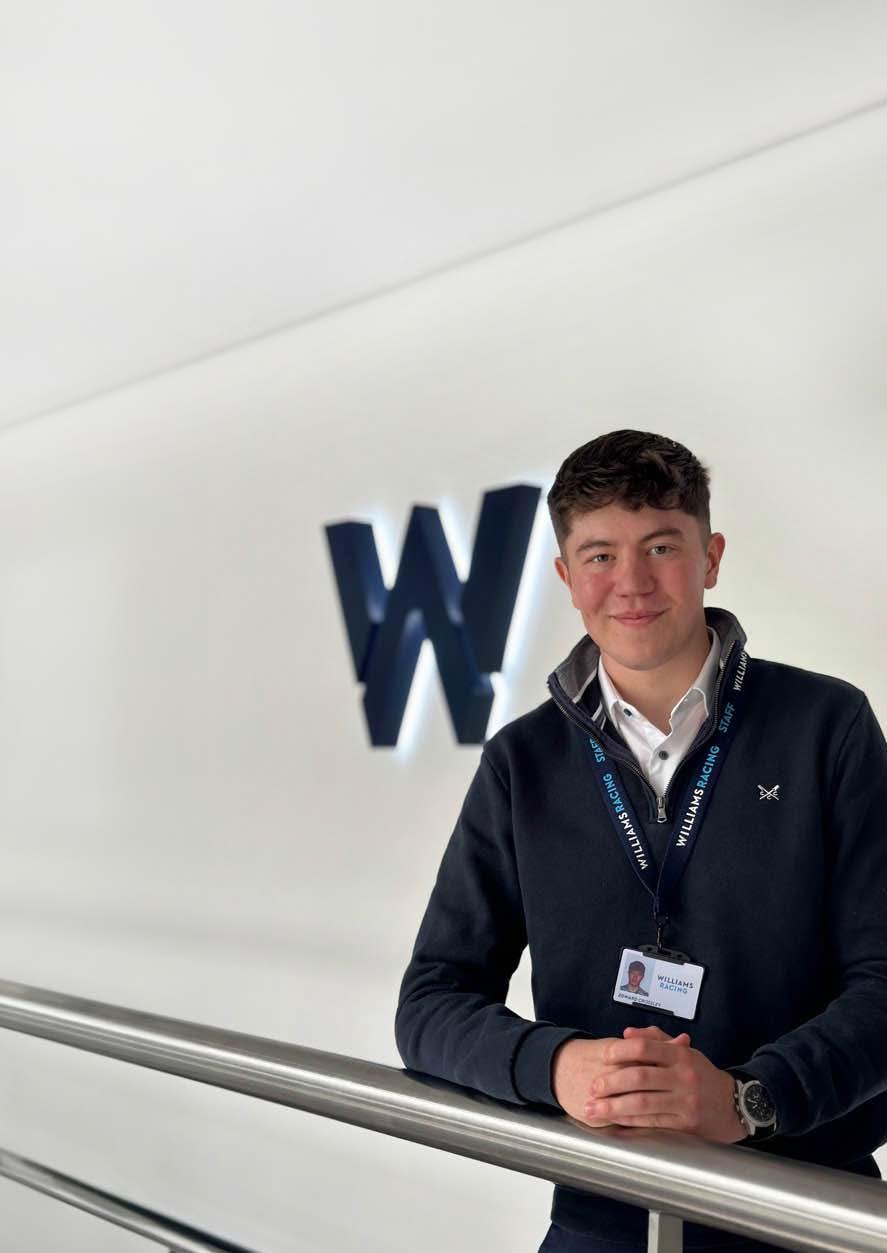
Crossley, is currently in his final year at the University of Birmingham studying Mechanical Engineering, after completing a year in industry working in the Power Unit Integration team at Williams Racing. After graduation, he will return to Williams after securing a graduate role.
of my dad. This was really cemented when I saw my grades in Design Technology, as it came naturally to me and I enjoyed the projects. Sometimes, I would spend so much time on my projects that I neglected my other subjects! Mr. West was a key person in solidifying my passion, as he recognised my natural aptitude and encouraged me to keep pushing. Similarly, Mr. Parsons supported me in my designs, saying, ‘Yeah, maybe we could do it like this or from this perspective.’ He helped guide my decision-making process.
afternoon. If it was a good day, I would leave around 6.00pm and go to the gym, but in F1, there's no such thing as leaving on time! Sometimes, when things weren’t going well, it would be a late finish; once I didn’t leave until midnight!
Did you have any ‘pinch me’ or jaw-dropping moments?
Were there any opportunities that Bablake provided that made you realise you loved motorsport?
I was part of the Airfix modelling club and a remote-control club in the early days, but then Bablake helped me secure an Arkwright Scholarship. Mr. West encouraged me to apply for this, and the school supported me a lot throughout the application process and exams. This was a significant milestone for me, and even at Williams, it was still considered an impressive achievement. Also, just having the freedom in my A levels and GCSEs to design what I wanted really stood out; they encouraged me to try new things and never suppressed my ideas—they always supported me.
Did you have a specific teacher, moment, or subject that made you think, ‘Yes, F1 is my future’ or was it a gradual epiphany?
When I started at Bablake, I already had a passion for motorsport because
What would the teenage you think about you now?
I think he would be pretty proud and happy. Back when I was doing my GCSEs, I never thought I’d be able to say, ‘I work for an F1 company.’ It would probably be a bit of a shock to the younger me, thinking, ‘How on earth did he manage that?!’ but he would definitely be very happy.
What did a typical day at Williams look like for you?
When driving to the site, the hedges would be shaped like F1 cars and when I walked in, I’d be greeted by an F1 car in the reception. I would then complete my tasks for the day, which mostly involved 3D modelling. One thing that amazed me was how active everyone was during lunch. Barely anyone was sitting and eating—most people were playing sport, so I would either go for a run or cycle with others. Then, I’d continue with my tasks for the
Oh, so many! The first day I walked onto the site, I had a tour of the whole facility and my jaw was on the floor the entire time. The machines they have are incredible and everything is as clean as a hospital. Seeing the cars being built and holding parts of the car that would travel all around the world for racing made me pinch myself. We also had the opportunity to take part in spectacular events. One of the highlights was a go-karting event where I was lucky enough to be on the same team as James Vowles and we came second overall, while Alex Albion’s team came first.
We see the glamour on race day, but what's something behind the scenes that most fans don’t realise about working in F1?
I think a lot of things are overdramatised, as some of what is shown can be taken out of context. There’s a lot more going on than meets the eye. Sometimes it’s realistic, like when there are announcements, but when Netflix was filming for Drive to Survive, we always acted normal and ignored the cameras. Now, racing is moving away from its roots. For
example, events in Las Vegas neglect the racing aspect—sometimes the tracks aren’t in the right condition. In terms of the people at the track, many are in HR or social media, but the number of experts in the cars attending is low, so the true identity of the sport can be neglected.
If Bablake teachers were F1 team members, who would be who?
For the team principal, I would choose Mr. Seeley or Mr. Wright. For the engineering side of things, it has to be Mr. West. For the drivers, it would be Mr. Burdett and Mrs. French. Mrs. Billings would be in charge of HR/social media.
What’s one piece of advice for anyone at Bablake who wants to go into their dream industry?
Experience. For any industry, get as much experience as you can. It doesn’t have to be in the field you want to go into, but any job experience is valuable. Try to get a job that will help you develop a skill. Getting as much experience as possible is the best thing you can do.
SEEING THE CARS BEING BUILT AND HOLDING PARTS OF THE CAR THAT WOULD TRAVEL ALL AROUND THE WORLD FOR RACING
Verstappen or Hamilton?
Oh, it has to be Hamilton! I couldn’t pick Verstappen.
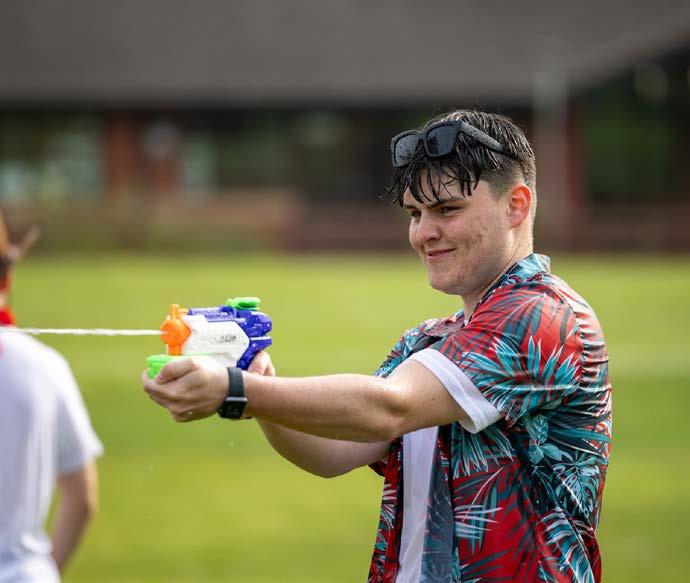
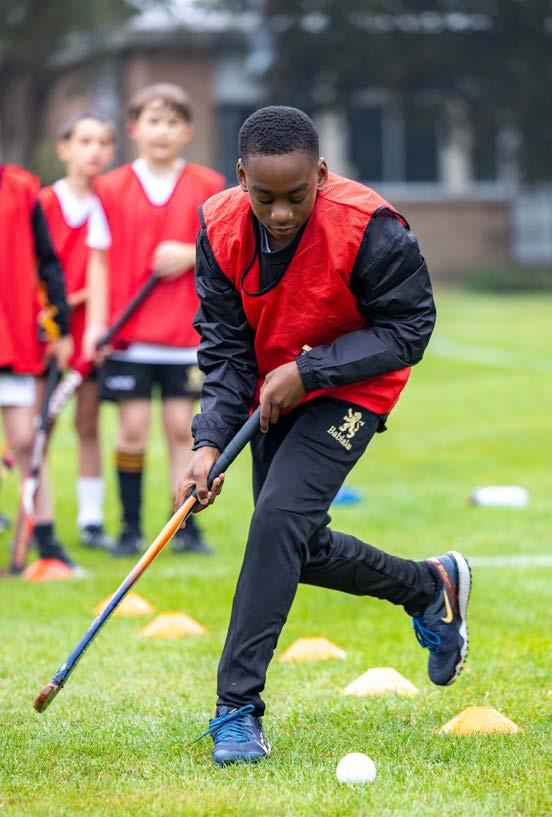
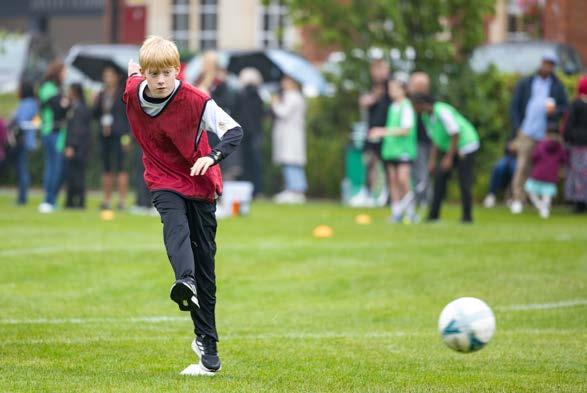
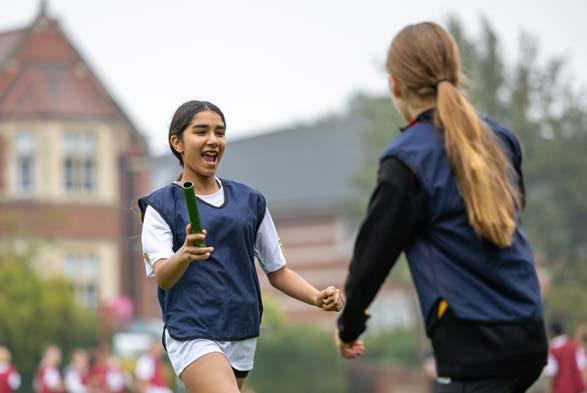
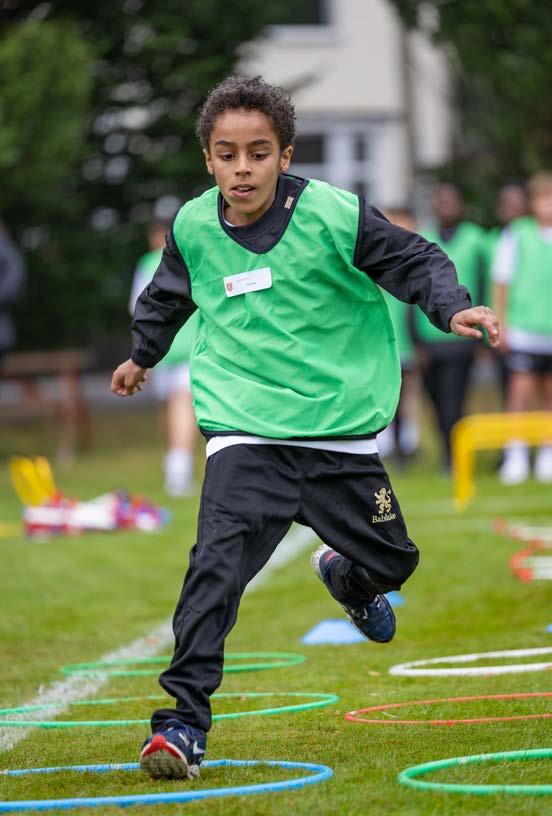
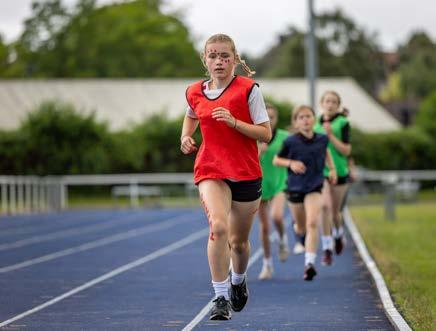
The academic year kicked off with the Shell Olympics, which was a fantastic opportunity for the new Shell pupils to get to know each other while participating in a range of fun sporting events.
Parents were able to watch them try their hand at welly wanging, a hockey shootout and other activities.
Throughout the year, the House events programme included Scrabble, netball, basketball, chess, hockey, swimming and much more. Many events took place at lunchtime or after school but we also had events occurring during Games afternoons.
We also ran events such as Higher/ Lower and darts in assembly slots. In Higher/Lower, pupils took part in a ‘Play Your Cards Right’style game where they predicted whether the next card turned over
would be higher or lower than the previous one. This event was very well received, with lots of audience participation. House Darts is an event that the Upper Sixth particularly look forward to, while Year 11 and the Lower Sixth get to watch. One member of each House competes as the darts player, entering the hall along with their entourage to high-energy music and wearing their chosen costume to represent their "Darts Persona". This event is always very entertaining.
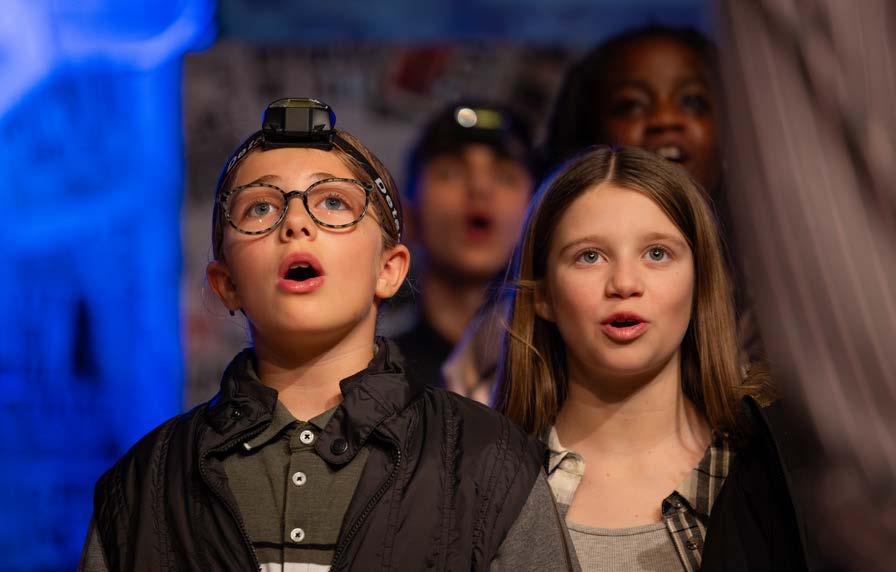
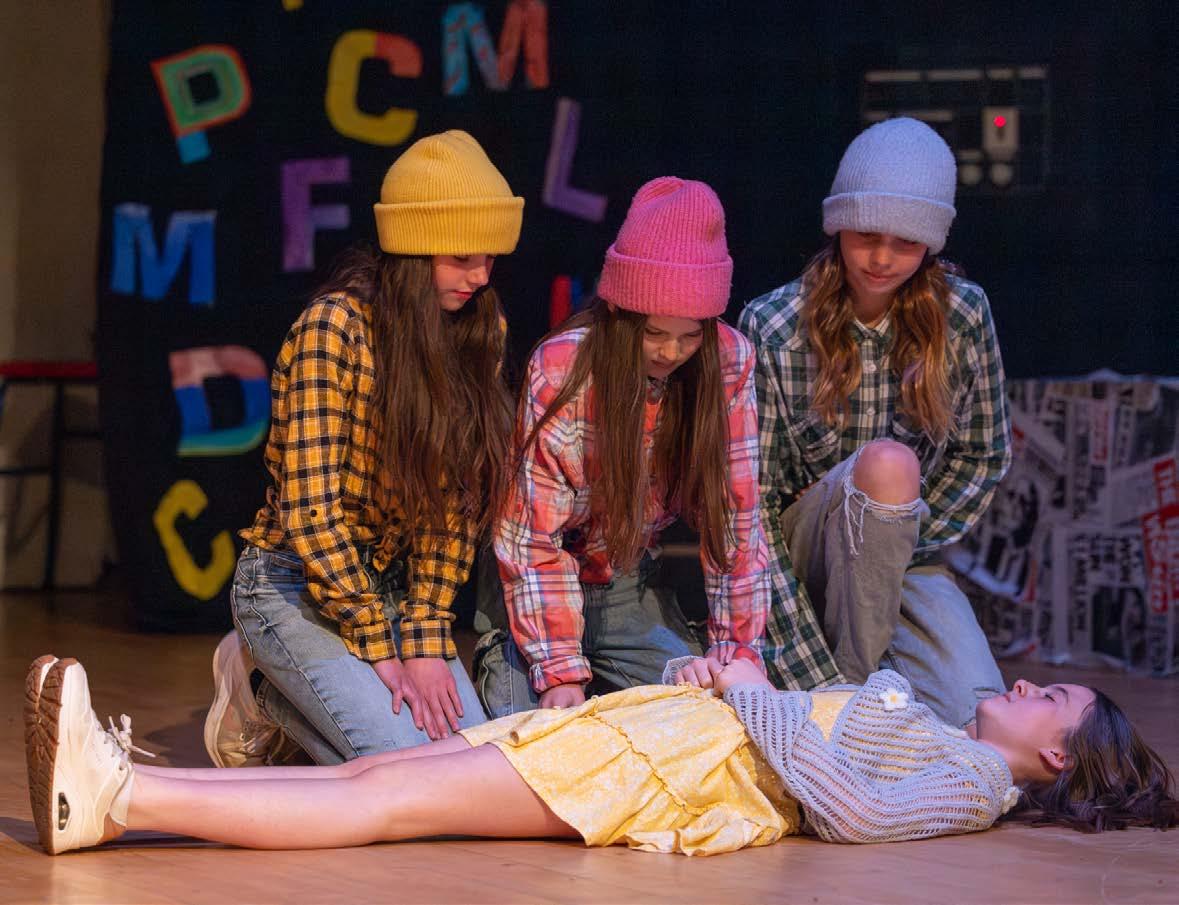
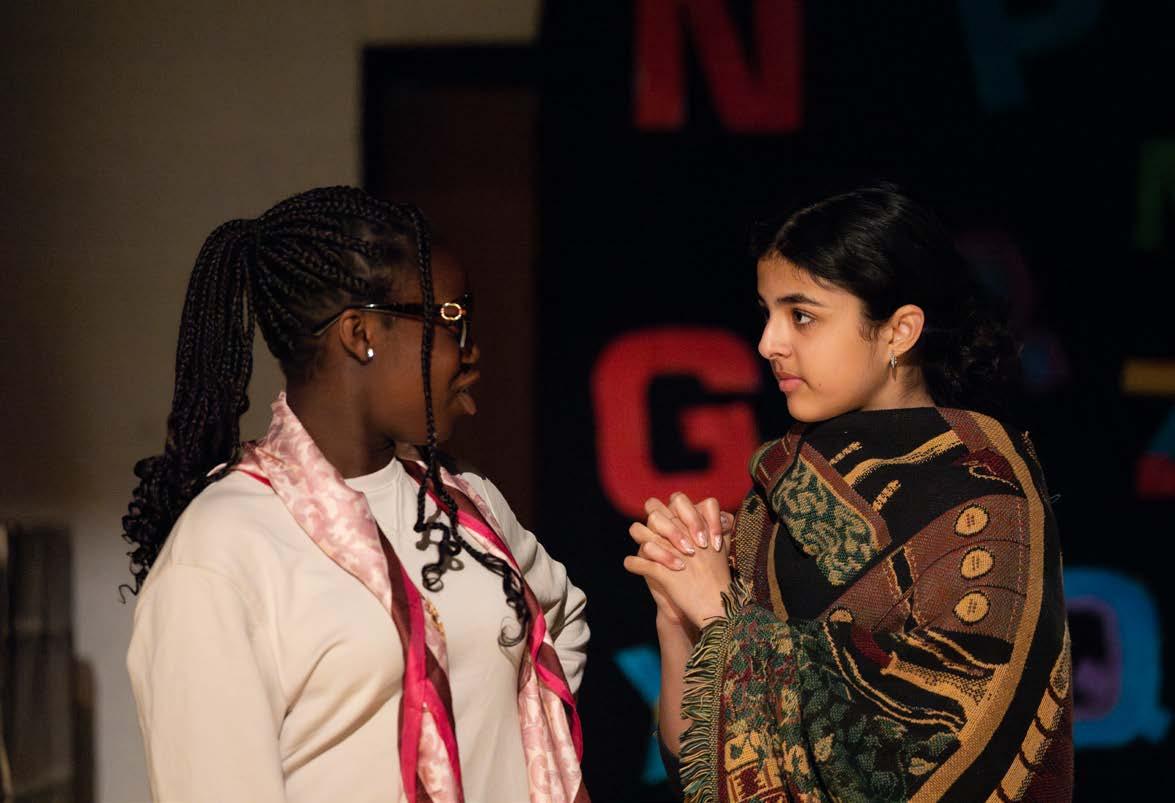
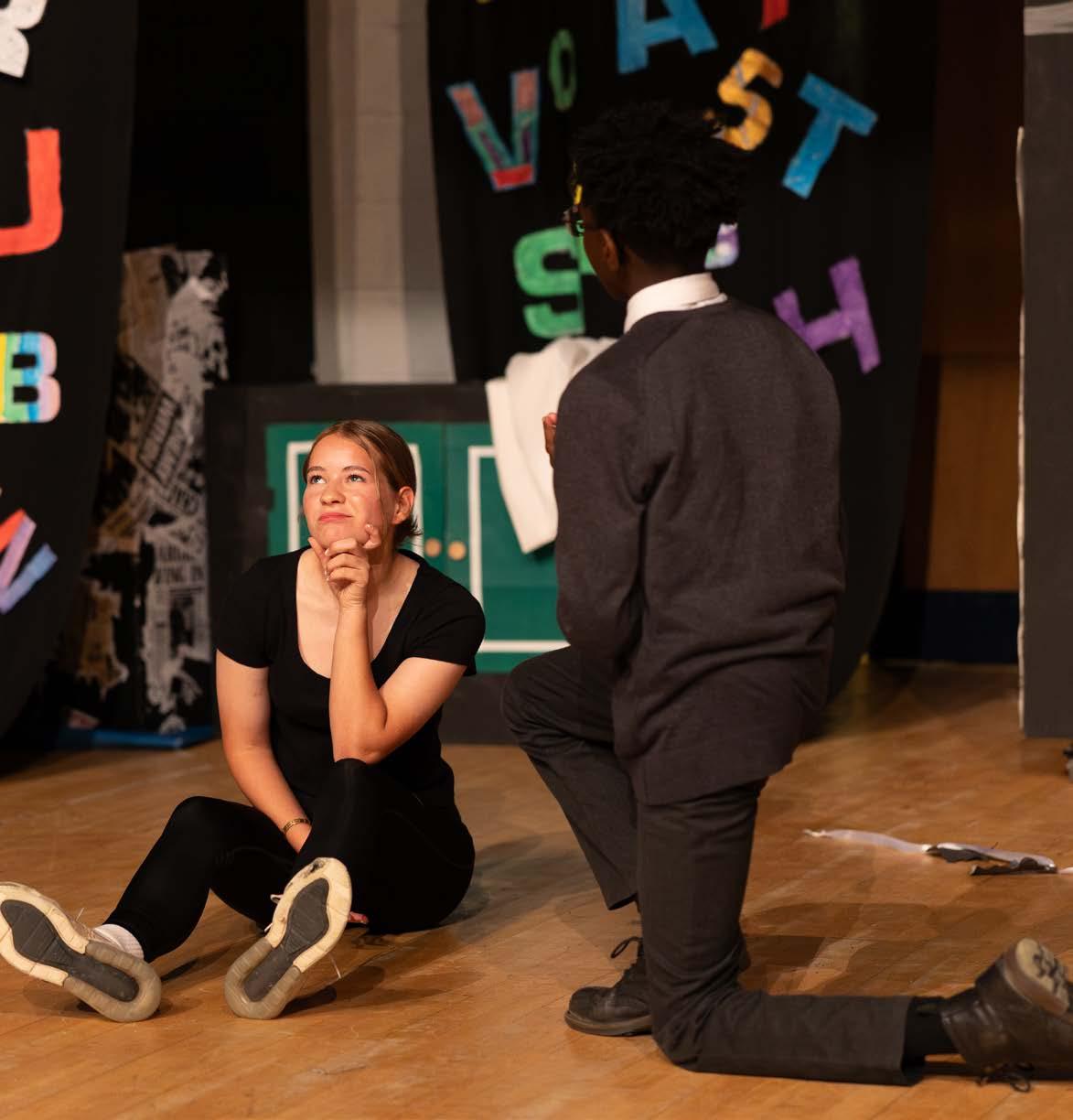
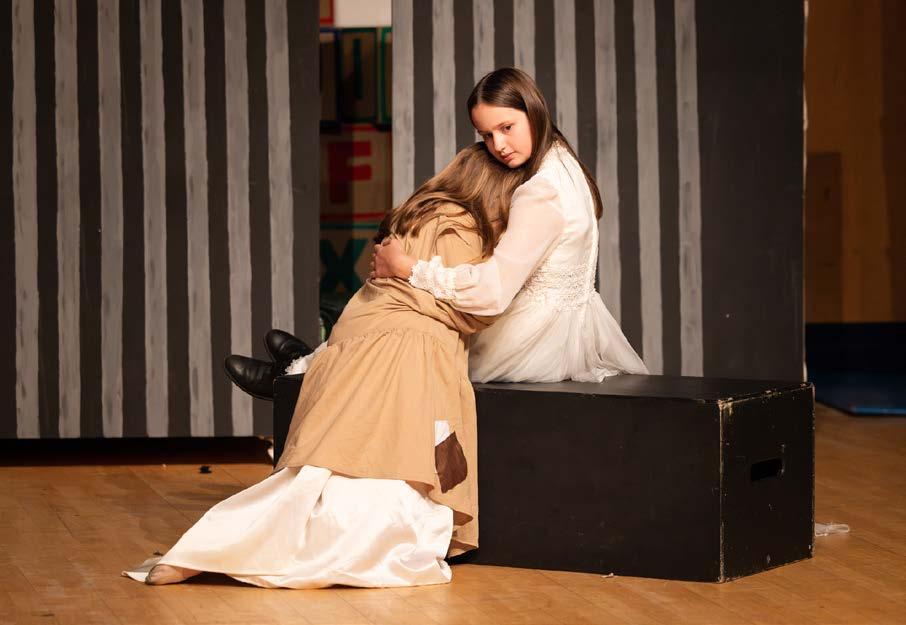
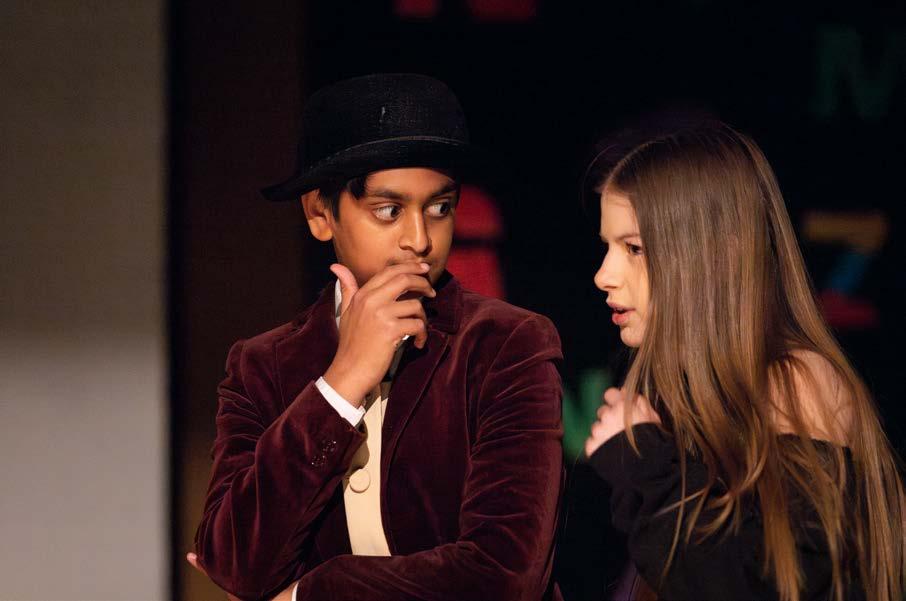
This year also saw the return of House Drama. Each House chose from a selection of scripts, all featuring well-known fairytales. The Sixth Form Prefects for each House ran the event, which began with auditions, followed by rehearsals and culminating in the final performances during assembly slots across one week. All the pupils involved worked incredibly hard on this event, providing us with very enjoyable performances.
Another fantastic event was House Music, where pupils from Shells to Year 9 had the opportunity to perform for the whole of the Lower School. Each House presented three acts: two individual or group performances and a whole-House performance. We were treated to music from talented pianists, vocalists, guitarists, drummers and even a DJ mixing songs on his decks. Sixth Form House Prefects worked hard with the pupils to practise their pieces and Daniel, one of the House Prefects, did a fantastic job in compering this event. We have very talented pupils, including Year 9 pupil, Alfie, who performed his own piece, which he composed for the piano. We are very proud of all the pupils who performed and everyone thoroughly enjoyed this House event.
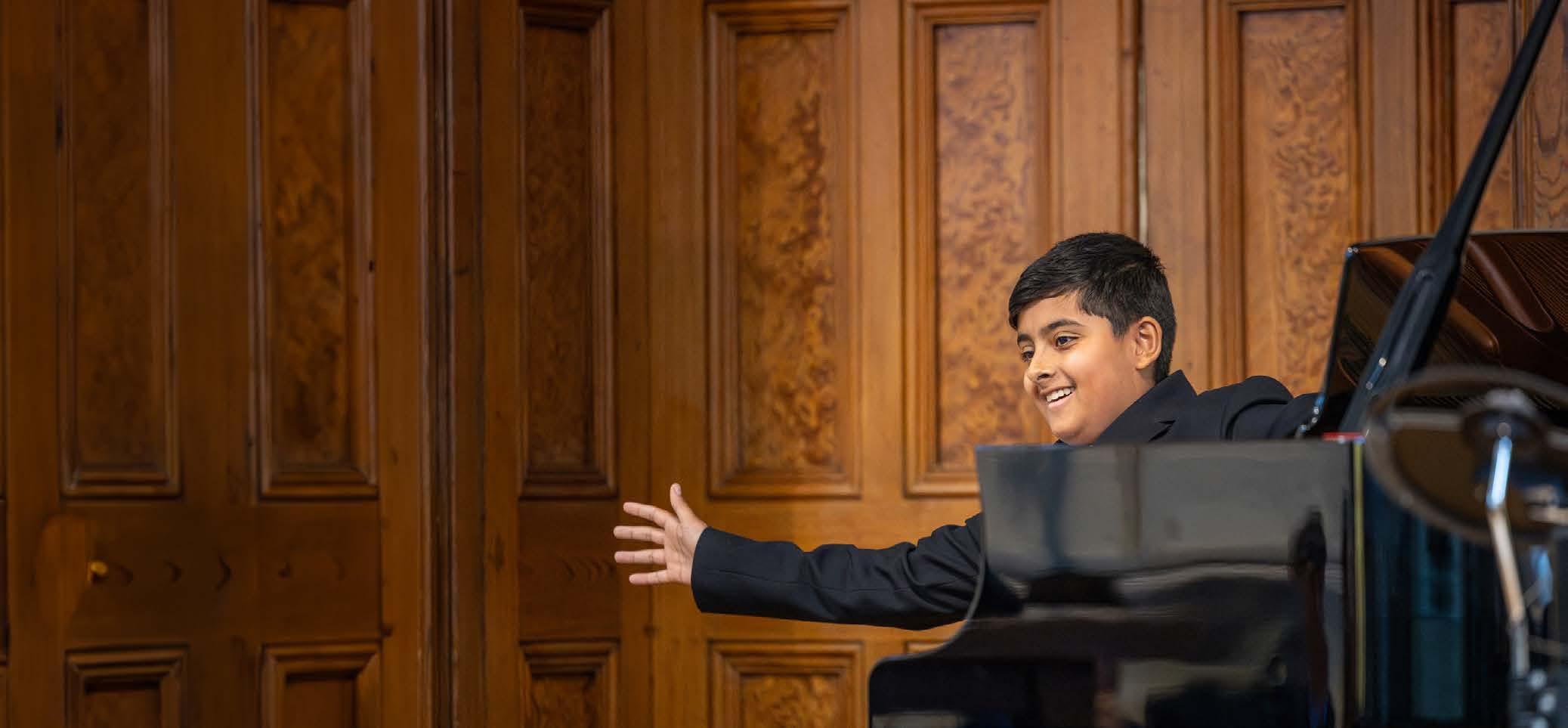
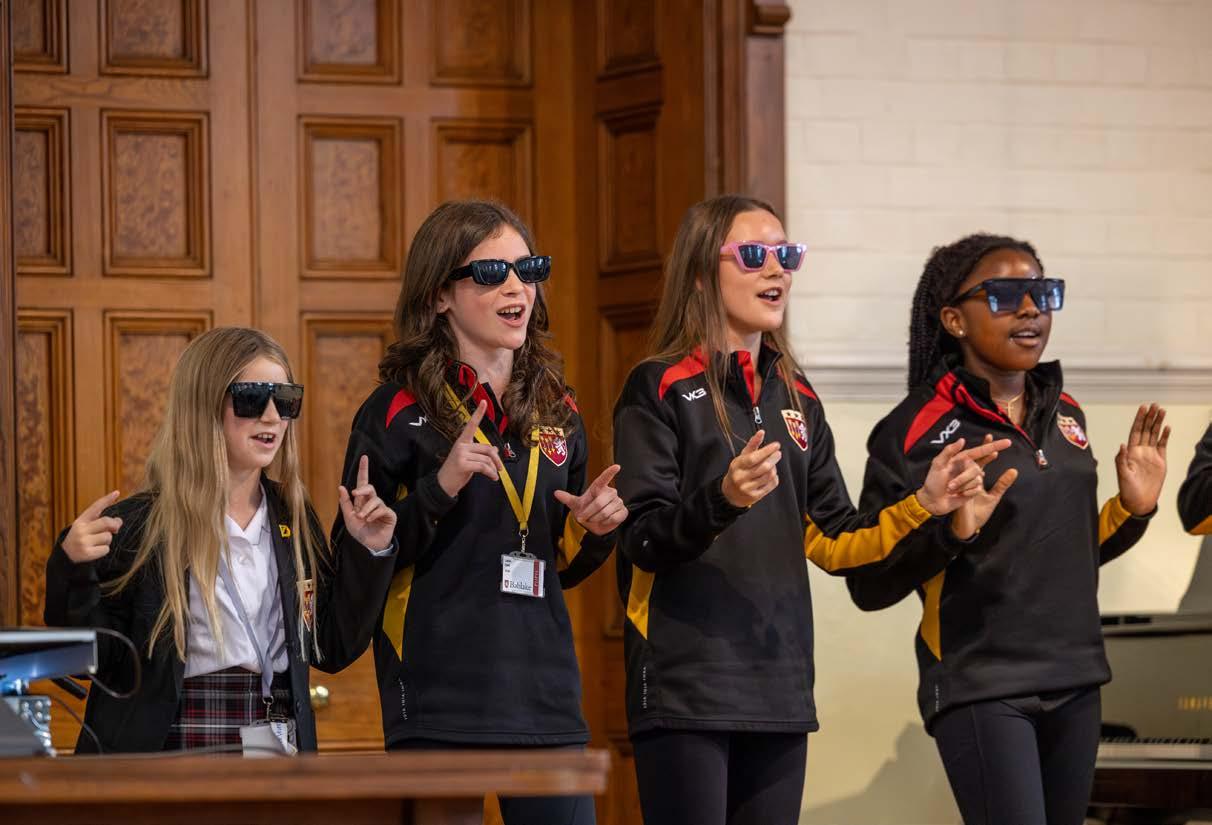
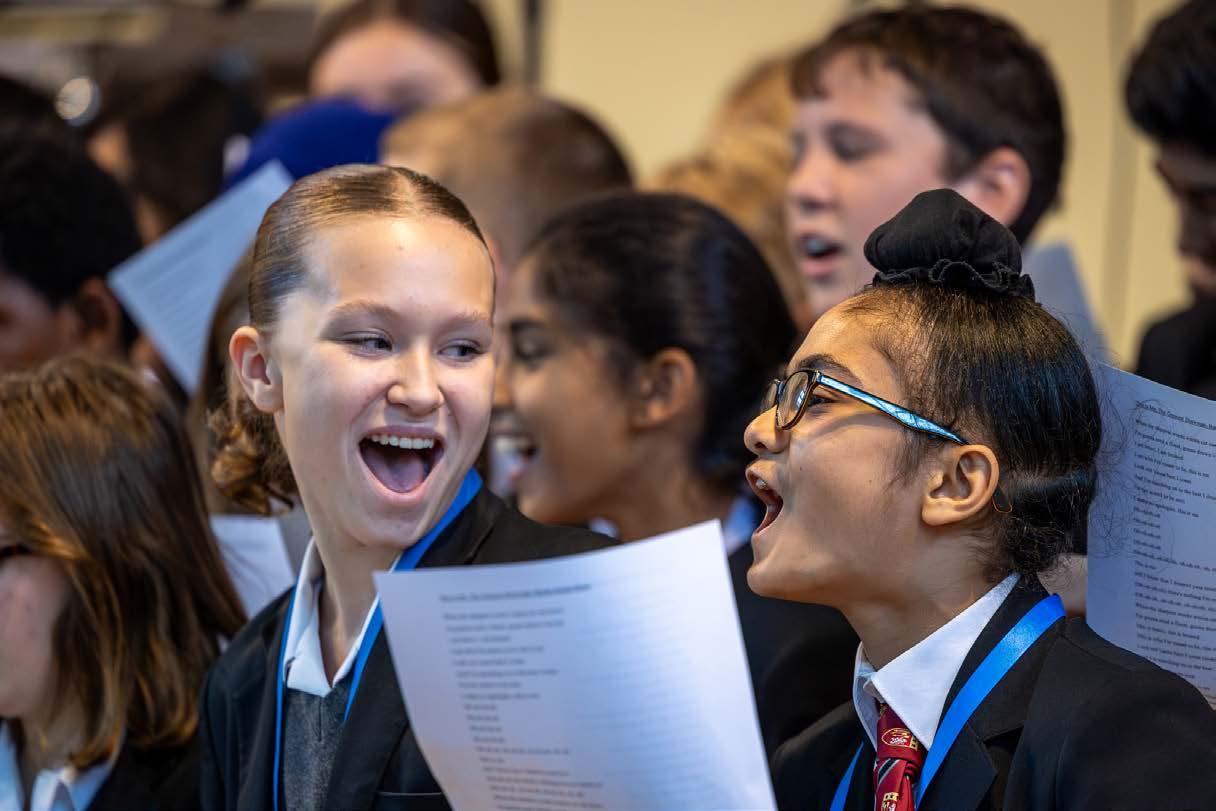
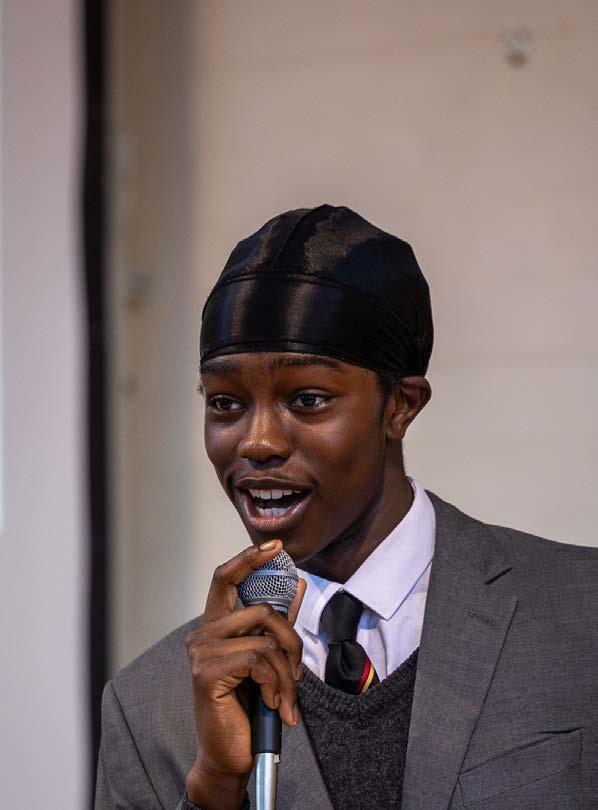
On Thursday 19th October, Shells, Year 8 and Year 9 pupils took part in House Music. Each House performed three musical renditions in solo, small groups or whole House performances.
We were treated to music from talented pianists, vocalists, guitarists, drummers, and even a DJ mixing songs on his decks. Sixth Form House Prefects worked hard with the pupils to practise their pieces, including a group performance from all members of each House. Daniel, one of the House Prefects, did a fantastic job of compering this event. There was an electric atmosphere in the Main Hall during these performances, which took place during assembly and period one. We have very talented pupils, including Year 9 pupil, Alfio, who performed his own piece, which he composed for the piano. We are very proud of all the pupils who performed and everyone thoroughly enjoyed this House event.
Catherine Green
The first House event of the year was the Shell Olympics and I was part of Fairfax House. After a couple of hours of welly wanging, netball shooting, and obstacle course racing, we waited in anticipation of the results. It was with great excitement that both Fairfax boys and girls lifted the cups – our Head of House was very pleased. The Macmillan Charity Bake Off came next and Preet’s happiness-inspired cake once again secured our House ‘Star Baker’ status. House cross-country, scrabble and quiz followed in the Autumn Term, and Fairfax triumphed once again in dodgeball – sport was
definitely our ‘thing’. Daisy won the House Christmas card competition for Fairfax, showcasing her artistic talents with a picture of Santa abseiling down the Bablake tower. House Music was an excellent, prefect-inspired event and it was great to see Arun play Dr Dre on the piano! I think he was very brave to play solo in front of 300 pupils. Luna accompanied us on the piano as we all sang Lewis Capaldi’s Forget Me. The Spring Term saw us compete in basketball, badminton and swimming, amongst many other sports. We narrowly lost to Crow
in basketball, but the team fought hard and only just missed out. The bookmark competition saw some wonderful entries, with Mrs Needham celebrating all of the winners by making the designs into bookmarks that could be taken away. House Drama was another prefectled event and we were given Snow White and the Seven Dwarfs from the Grimms’ Fairy Tales. Whilst we didn’t have seven dwarfs, just three very tall ones, Jess played an excellent
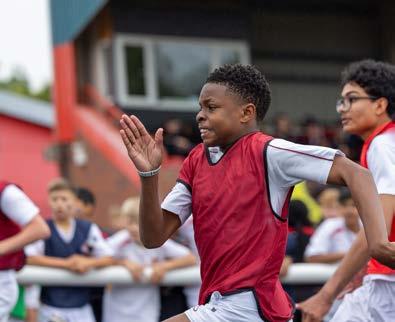
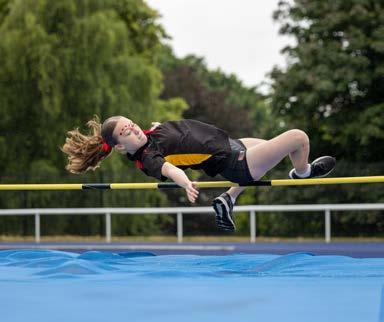
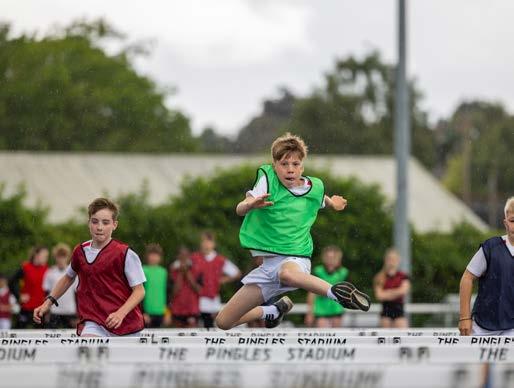
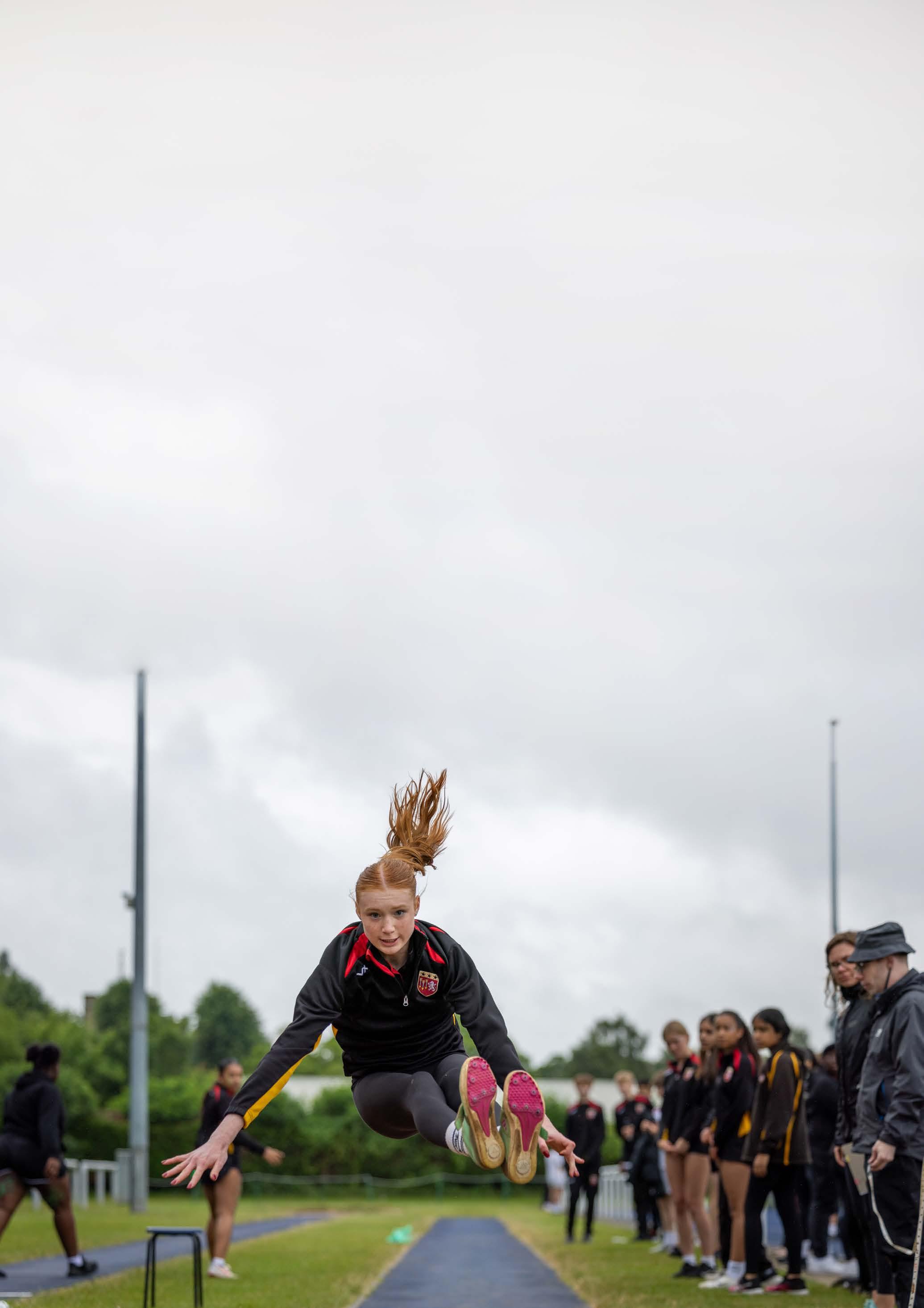

The Summer Term was dominated by Sports Day, but MasterChef was also included as an event, where we could showcase our food skills within the theme of salad.
Sports Day was the last event of the year for Shells and the rain cleared up, allowing us to reign as Sports Day champions, so there were a few green ribbons adorning the cups once again!
After a very busy first year, I managed to secure my half colours and I am now working towards my full colours. Roll on Year Eight!

Kanishka Sathiyaseelan
We often see in the news headlines that we are bombarded with the mass tragedy that will occur if we do not address two pressing issues: climate change and future pandemics.
We are already experiencing or have experienced extreme weather, food shortages, poverty and, of course, the global pandemic, COVID-19. These consequences highlight why both climate change and pandemics are considered some of the world’s most pressing issues, according to 80,000 Hours. They further exemplify the detrimental repercussions we will face if we do not invest our time, efforts and money into these matters immediately. However, while most research groups seem to focus on alleviating these issues separately, many overlook the direct link between climate change and pandemics. Consequently, they do not necessarily seek solutions that mitigate both simultaneously, despite this approach potentially having the most significant impact—it's ‘killing two birds with one stone’!
Most of the epidemics and pandemics that have occurred throughout history, particularly in recent times, have stemmed from zoonotic spillovers. Essentially, this means the transmission of pathogens from wild animals to humans. This happens when animals, such as bats (a common scapegoat for viral transmission), are stressed in urbanised areas, which triggers
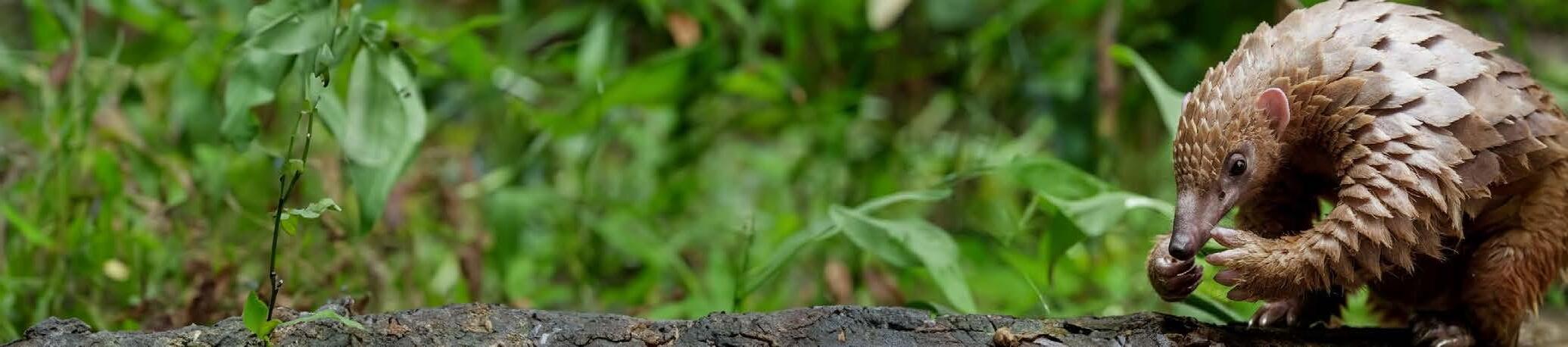
immune responses that lead to increased viral shedding (i.e., the release of pathogens). Normally, these viral sheddings would have no effect on humans as the animals would be living in the wild. However, since this is happening in areas swarming with people, pathogens ‘jumping’ from animals to humans is inevitable. A prime example of a zoonotic spillover was SARS-CoV-2, the strain that causes the disease COVID-19. As stated in many articles, the COVID-19 pandemic originated from a wet market in Wuhan, China. In these markets, live animals are sold in small, often unhygienic, environments. Therefore, due to the proximity of marketgoers to animals, there are significant biosecurity risks due to the increased viral shedding from the stressed animals. This stress heightens viral replication, making transmission to humans more likely through contact with bodily fluids (e.g. sweat and animal urine). This is exactly what happened with COVID-19. However, what made the situation worse was that the pathogen was spread further by breathing in droplets from the nose or mouth of an infected person. Another notable example is the pangolin, a mammal covered in scales and found in Asia and Africa. This animal is heavily trafficked for consumption and traditional medicine, but it gained attention during early COVID-19 research as a potential bridge species for zoonotic transmission, as pangolins have been known to wander into villages, though this link remains inconclusive.
While examples such as pangolins meandering around villages can be considered a natural cause of zoonotic spillover, it is clear that deforestation has created a spike in such occurrences. The expansion of human populations into wildlife habitats, particularly in tropical forests, increases contact with animals like rodents, which are major hosts for zoonotic diseases. In urban areas, where there are large populations of people, pathogens thrive due to increased animal-to-human (and human-to-human) contact, allowing pathogens to spread easily via airborne particles or physical contact. All in all, this means more people get sick quickly, leading to outbreaks— especially if preventative measures are not enforced immediately. Zoonotic spillover can be further exacerbated by deforestation, as the destruction of wildlife habitats leads to resource depletion. This has a domino effect on weakening animal immune systems, which in turn prolongs viral shedding and increases the likelihood of disease transmission to humans.
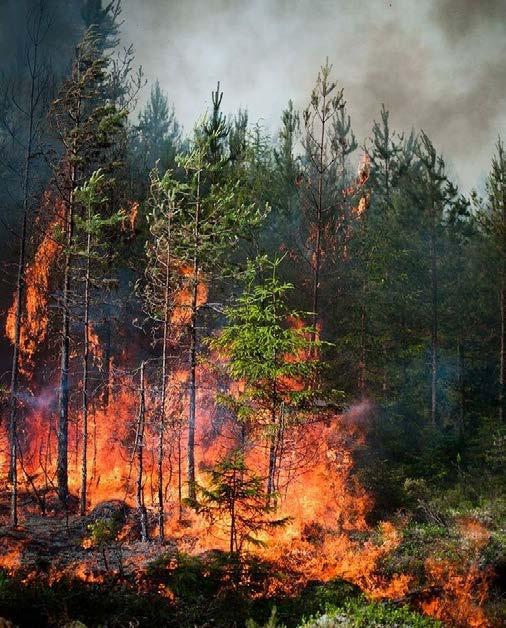
Climate change also drives pathogen transmission in several ways, particularly through global warming. Greenhouse gas emissions trap infrared rays, raising the Earth's temperature (by about 0.06°C per decade since the 1950s) and leading to melting ice caps, rising sea levels and extinction of species. But how does this relate to pathogen transmission? Not only are ice caps melting, but permafrost that has remained frozen for hundreds to thousands of years has begun to thaw. This has caused the exposure of dead people and animals that had previously died of infectious diseases, including the 1918 influenza pandemic, anthrax, and smallpox. To put this into context, the 1918 influenza pandemic (commonly known as the “Spanish Flu”) killed approximately 50 million people—twice the death toll of World War One—while anthrax has a 97% fatality rate. Although human cases of anthrax are rare, they are extremely deadly. Along with permafrost melting, the increase in the atmosphere’s temperature has allowed the vector for malaria— anopheline (female) mosquitoes—to survive at higher altitudes, due to the increase in humidity, rainfall, and temperature. This means that these mosquitoes can now survive in areas that were previously considered too cold for them, such as Europe, potentially leading to malaria outbreaks in these regions.
While this topic may seem bleak, it is important to recognise that many actions can be taken to have a significantly positive impact. As we know, the frequency of zoonotic diseases from wildlife has risen, driven by complex interactions among hosts, pathogens, and environmental factors. Therefore, understanding these dynamics is crucial for predicting outbreaks. A group of scientists from
around the world (Maryam Golchin, Moreno Di Marco, Paul F. Horwood, Dean R. Paini and Andrew J. Hoskins) conducted a research project to develop a spillover risk map that calculates the approximate general transmission through animal and human interactions. Although there are a few caveats in this approach, they stated that the map is "a step towards developing a more comprehensive spillover risk prediction system to inform global monitoring." What is more important to highlight is that this team has used an approach called One Health. This means working at several levels (local, regional, national, and global) with the goal of reaching optimal health outcomes while emphasising the interconnectedness of human, animal and ecosystem health. As the Centre for Disease Control and Prevention describes it, it is
a collaborative, multisectoral, and transdisciplinary approach.
Other ways of utilising the One Health framework include integrating ecological knowledge into public health policies. Decision-makers must consider the ecological dimensions of zoonotic diseases within broader environmental and public health policies to mitigate risks associated with climate change and biodiversity loss. This can include scenariobased evaluations of zoonotic disease risks and improvements in disease surveillance, both of which are essential for early detection and response, particularly in areas experiencing rapid environmental change. These measures can enhance disease management strategies, especially in the face of climate change. Furthermore, there is a need for adaptive, ecosystem-based
strategies to balance food production with zoonotic hazard regulation. Case studies, such as the restoration of river prawns to control schistosomiasis (an acute and chronic disease caused by parasitic worms), highlight the potential benefits of ecological interventions.
To address deforestation, reducing it is crucial, and there are successful examples. In 2004, Brazil, with international support, reduced annual Amazon deforestation by 70%, while agricultural production still increased, showing that conservation can coexist with economic growth. However, deforestation rose after 2012 when policy enforcement weakened, highlighting the need for sustained commitment. Globally, Europe is considering restricting imports of commodities like soy, beef, cocoa, and palm oil, which are linked to deforestation. Additionally, over 30 financial institutions, with trillions in assets, have pledged to stop funding deforestation-linked activities. In Indonesian Borneo, community-driven solutions helped Indigenous Peoples and local communities reduce illegal logging. A $5.2 million intervention over a decade led to a 90% drop in illegal logging, the regrowth of 21,000 hectares of forest and avoided $65 million in carbon loss.
The examples and solutions demonstrate that change is possible and that it is not too late to execute these changes. Furthermore, a global contribution is necessary to reduce the factors that lead to climate change and this must occur at several levels (local, regional, and national). While we have a starting point, continuous investment is required to prevent the irreversible damage that climate change can cause, with epidemics and pandemics being one of the most significant threats.
Finn Leach interview with Emilia James
Which element of Beez Kneez are you most proud of?
Probably the way we all worked together as a group so perfectly. We each knew our roles, jobs, and strengths. An issue I thought we might have faced was that, in large groups, some people don’t contribute. However, I was proud of Beez Kneez because we all worked hard to achieve our common goal. We didn’t treat it as a fun thing to do on a Friday but as a real, enjoyable collaborative project.
What skills did Young Enterprise help you to build?
Before I started, I didn’t like public speaking. Now, I can get up and speak with greater confidence. I found myself speaking for over five minutes at a time, which was a huge achievement for me. It is such an important life skill. Also, bouncing back from setbacks was key. The Christmas sale suffered due to bad weather; however, our next sale was one of our most successful.
What would you have done differently?
Perhaps we should have tried to address a problem that concerned more people. We made beeswax wraps, which was quite a niche market. I think that the best products I have noticed have been those that tend to make people’s lives easier. I found that just because something is sustainable, it doesn’t necessarily solve a problem.
What would you say to students in the future who want to do Young Enterprise?
I would say, do it! I found that I really enjoy project management and I may even pursue this as a career. The experience of being part of the Young Enterprise Scheme looks incredible on a personal statement, building lots of soft skills as well as character development. It gave me a great understanding of the structure of companies. It really is such a great initiative and I would encourage everyone to take part if it is offered to them.
In the true spirit of opportunity, five Bablake students showcased their ‘Beez Kneez’ project for Young Enterprise during a presentation afternoon attended by a local legend!
The Beez Kneez seemed to be in their natural habitat as they shone on a summer afternoon while presenting their Young Enterprise project to an audience of other participating schools and a star-studded judging panel of established business tycoons. Among them was a particularly well-known face in the Coventry bubble—Doug King. After acquiring full ownership of Coventry City Football Club from previous owners SISU Capital in January 2023, Doug King declared “a new era” for the club following SISU’s controversial 15-year tenure: an era that started so brightly, with the dream of promotion to England’s topflight league nearly realised. The team was just pipped to the post by Luton Town in that memorable and emotional play-off run. Although the deciding penalty was blazed over the bar and into the heavens, another image that still burns bright is Doug King’s iconic fist bump to the Sky Blue Army. A moment that, despite the eventual defeat, symbolised the unity and passion between the club and its supporters, celebrating the club’s new lease of life under his direction, alongside the club’s unwavering identity of resilience and togetherness, no matter what.
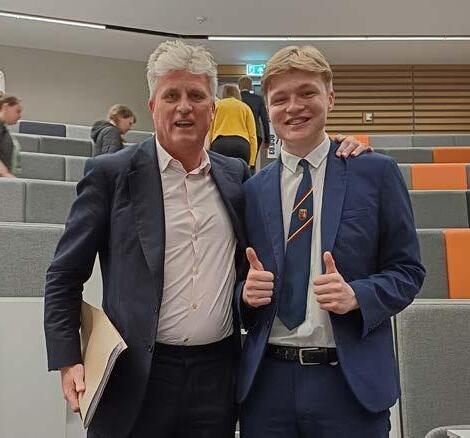
With his impact clear for all to see, one Bablake student seized the opportunity of Doug King’s appearance at this event to mark not only his fervent support for the club, but also to highlight the collective effort and hard work of this year’s Young Enterprise group in reaching this splendid occasion. A fitting memento as the final photo in the highlights of Young Enterprise’s amazing run this year - meeting the man who spearheaded Coventry City’s infamous play-off run in his inaugural season.
Laila Siddiqui
During this cycle, over 20 students in the Lower Sixth achieved a Gold CREST Award.
As in previous years, it has been a literature-based project; students conducted their own research and created a leaflet on their chosen topic, provided by the Chemistry Department at the University of Warwick. I conducted an interview with some pupils who undertook the award, asking about their reasoning for participating and what they gained form the experience.
Q. What inspired you to do the CREST award?
A. I wanted to have the opportunity to conduct scientific research and to write a scientific report. It is a supercurricular activity that allowed me to research something outside of the specification, which was good for me as I enjoy studying sciences.
Q. What did you gain from your CREST award?
A. It taught me the importance of communication and working collaboratively in a team. Time management was essential as the deadlines were very tight: we completed the whole award in under four months! I was able to practise my presenting skills, without a script, which should help me in the future.
Q. Would you recommend CREST?
A. I would recommend CREST to anyone looking to pursue a scientific degree or career, or to anyone who just wants to develop their research and presentation skills.




by Student Editor Rehan Khan
The Shell boys made an impact on the basketball scene, scoring eight unanswered points to secure a last-minute victory against President Kennedy School.
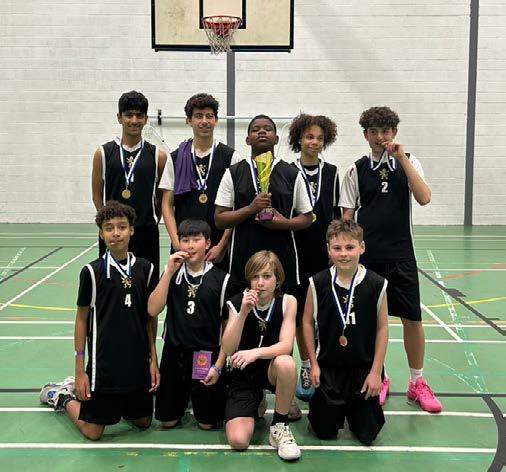
They finished the season in style, winning 30-0 against King Henry VIII School in the Coventry Schools’ Final. The Shells, though new to the scene, proved they could rise to the occasion in the high-pressure environment of a final.
The U14 boys' team remained undefeated throughout the 23/24 season, culminating in being crowned Coventry Basketball Champions with a 56-37 win against Bluecoat. Credit must also go to the U12 boys, U16 boys, and U16 girls, who were also champions. The U16 boys defeated Bluecoat 39-35, with Daniel named MVP, while the Year 10 girls beat Cardinal Wiseman 23-17 to win the U16 girls' title.
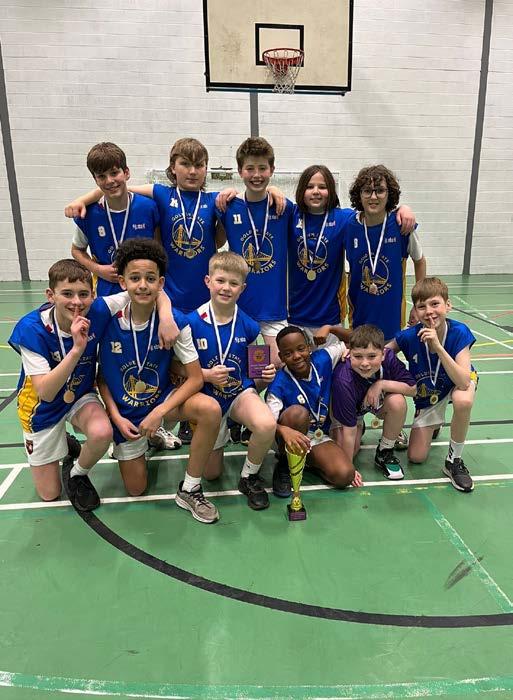
In the Junior NBA, Bablake rebranded from the Toronto Raptors to the Golden State Warriors, fostering a winning mentality. The U13 Golden State Warriors reached the Junior NBA finals in Birmingham and, after a narrow defeat, they bounced back with a 33-20 win to claim bronze in the central region. Special mention goes to Niki, a key player in the team, who also won the Year 8 shooting crown and was selected for the England U14 national team for an international tournament in Copenhagen.

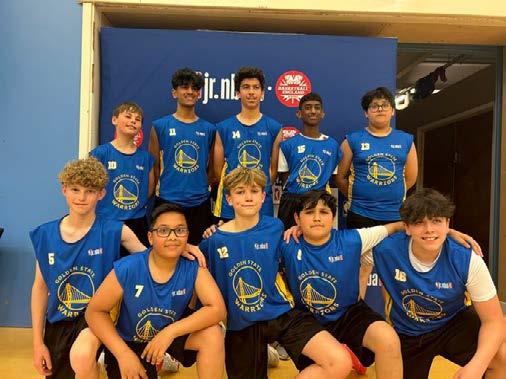
While the U12s narrowly missed out on the final in the Junior NBA, they later won the final against King Henry VIII in a clinical manner, playing beyond their years. A promising future lies ahead for a sport that has flourished at Bablake in recent years.
All girls in Shells and Year 8 had the chance to play in a hockey match, with the Shells showing great enthusiasm and character throughout the season.
The U12A team showed promise, winning regularly, with their standout victory being a 6-1 win at Loughborough High School, where Jojo scored four goals. On the same day, the U12B team also enjoyed their best game of the season, winning 5-0 with Willow scoring a hat-trick. For the boys, hockey became the focus in the Spring Term, with warm-up matches providing opportunities to apply skills learned in training. The most impressive result came from the U12C team, winning 10-0 against King Henry VIII.
There were also clean-sheet victories for boys’ and girls’ U13 A-C teams against King Henry VIII, with the U13s aiming to maintain their defensive strength in future matches. The U13D girls highlighted their goal-scoring and defensive skills with a 5-0 win against Malvern St James Girls.
For the U14s, the boys' A team’s 8-0 win over King Henry VIII epitomised their resilience, overcoming a tough season with a commanding victory. The girls enjoyed a successful season, with both A and B teams defeating Solihull 3-0.
The U15A girls turned their season around with a late surge, winning three consecutive games, including a close 3-2 victory against the boys’ B team. The U15B boys demonstrated versatility, winning in different styles, with notable 7-0 and 1-0 victories securing a four-match winning streak.
The 2nd XI girls maintained consistency throughout the season, valuing clean sheets from the start, winning 1-0 and 2-0 against Princethorpe and Nottingham High in their first two matches. After a tough start, they responded with two 3-0 victories.
The boys' 1st XI qualified for the regional finals of the England Hockey U18 Tier 4 County Championships, finishing a respectable 5th out of 10 teams, playing some of their best hockey of the season. They also triumphed in a thrilling 3-2 local derby win against King Henry VIII. The girls' U18 team participated in the National Schools Hockey Championships and played twice a week in the Autumn Term. Their standout week came in November, with a 2-0 win followed by a commanding 5-0 victory over Stamford.
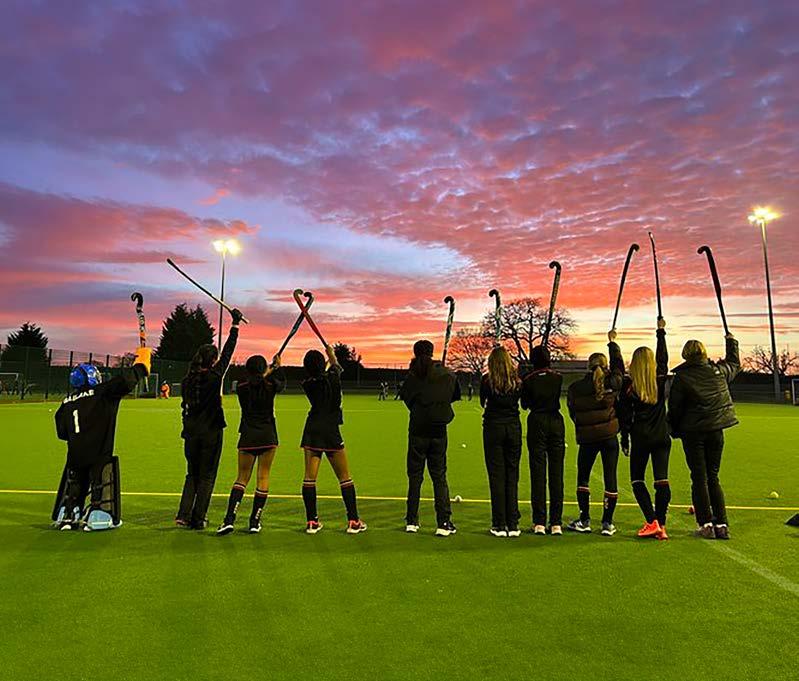
Cross-country saw Shell and Year 8 pupils competing in many events, including those for their House and Coventry Championships.
Seb in Year 10 earned a silver medal in the U16 boys' event, while Ella, Isla, and Lara claimed gold, silver, and bronze in the same age category. The girls won both the team event and the Coventry Relay Event. Congratulations also go to the U13 boys, who achieved the same success in both events. Individually, Ella impressed in cross-country, securing a podium finish at a regional meet, solidifying her as a rising talent.
Netball remained central to Bablake’s sports programme, with strong performances across all age groups.

The cricket season at Bablake blended development and achievement.
The U12s focused on skill-building, while the U13s earned praise, especially for a thrilling comeback win over Rugby School.
The U14s had an exceptional season, winning their regional league with a disciplined semi-final performance. The U15 team showcased individual brilliance, with James scoring a match-winning century and taking a five-wicket haul.

The Shells made an impressive debut, with the C and D teams unbeaten against King Henry VIII. The A team advanced past the second round of the National Plate, highlighted by a dominant 42-0 win over Wolverhampton.

The senior teams also succeeded, with the 1st XI delivering commanding performances, including a memorable win over King Edward VI School. The 2nd XI focused on squad depth, with younger players stepping up in key matches. Across all teams, there was growth, adaptability, and strong teamwork.
The U13 teams showed promise, notably beating Blue Coat. The U14 and U15 squads focused on developing skills, with the U15s finishing strong, culminating in a 21-19 win over Oakham in a local tournament.
The U16 and U18 teams balanced league matches with the Sisters n Sport National Netball Competition. The U18s displayed resilience, securing key victories against Oakham and Stamford, making them one of the school’s top squads.
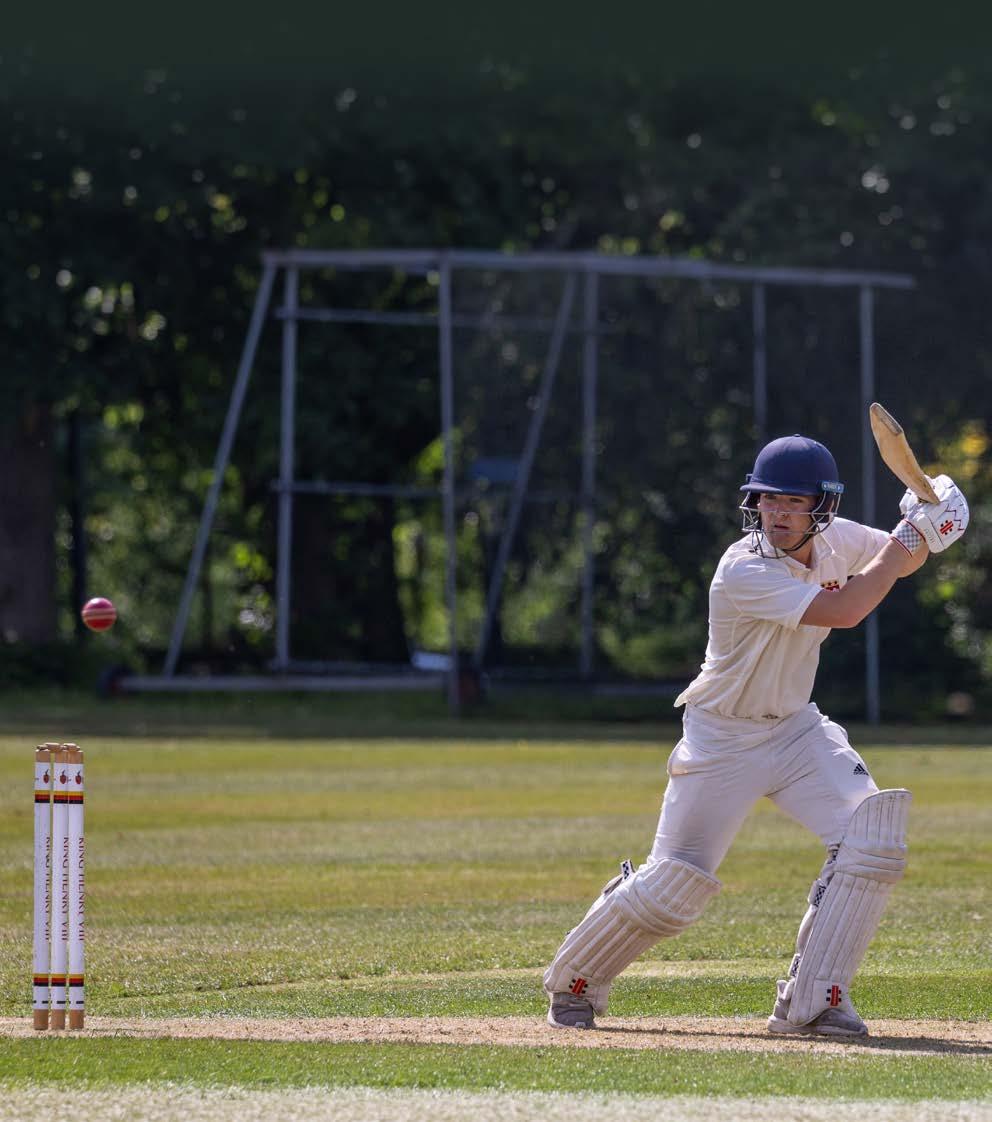
Athletics saw both individual and team success. At the Coventry Schools Championships, Bablake athletes won several medals across track and field events.
A highlight was the U16 girls’ relay team setting a new school record and winning gold, demonstrating speed and teamwork. Harry's victory in the 1500m showcased his endurance.
The senior team represented Bablake well in the ESAA Track and Field Cup, delivering strong performances. Jacob’s firstplace finish in the U14 boys’ high jump was impressive and the team finished in the top half of the standings.
The U12s hit the ground running, winning all 11 matches. The U13B team won four and lost one, with a standout 40-30 victory over Princethorpe.
The U14B team won all three matches, including a 48-0 win over King Edward VI. The U14A team won 13 out of 15 matches, with a dominant 55-point victory over Loughborough.
The U15A team secured eight wins, including a 29-0 clean sheet in the National Vase before exiting in Round 3 to Solihull. The U16A team won both games in dramatic fashion, coming from nine points down to win 18-17 against Warwick.
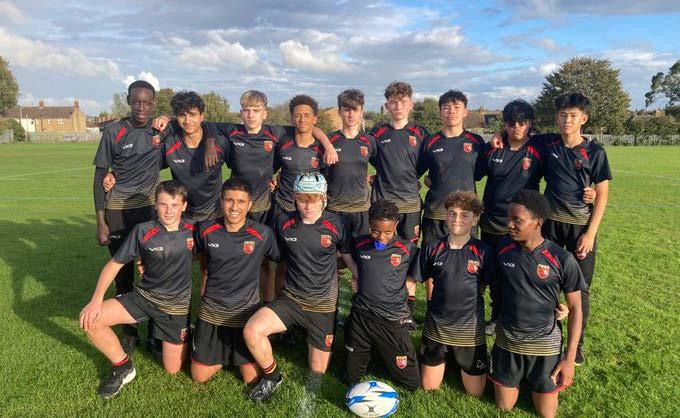
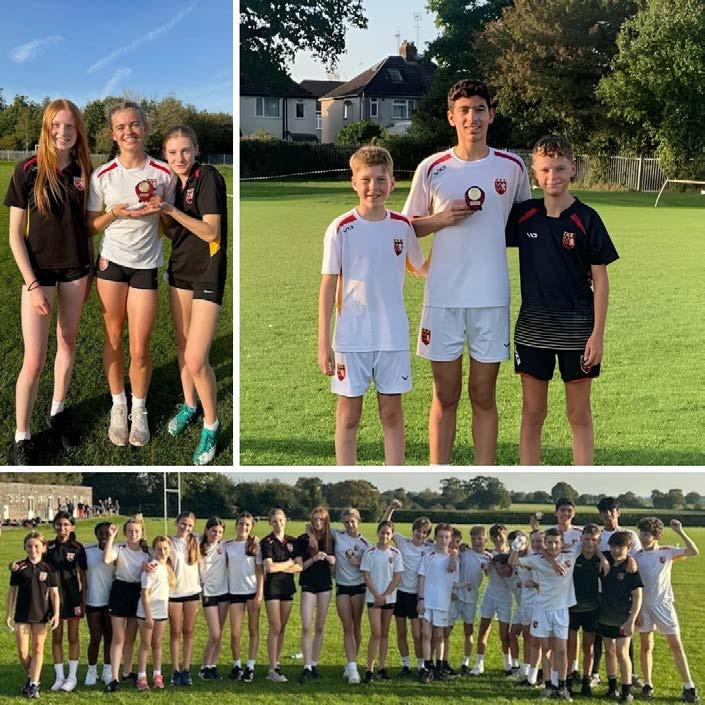
The 3rd XV triumphed 31-29 over Stamford. The U18B team overcame a tough start, ending the season with a 62-0 win against King Edward VI Aston. The U18A team had a challenging mid-season but finished strong, winning 40-12 against KE Camp Hill.
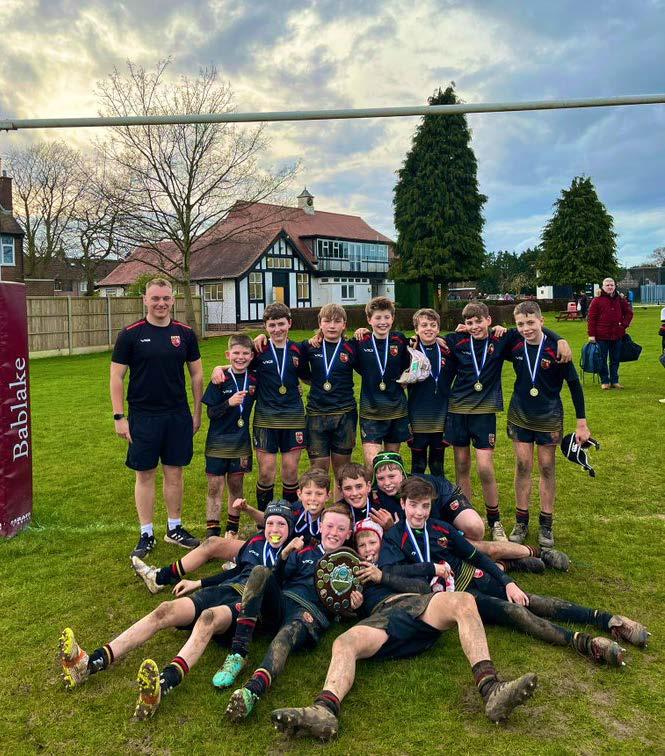
The 2023-24 rugby season saw many remarkable achievements and tremendous dedication was shown by our teams across all age groups.

The 1st XV continued their journey of development with determination and skill. Season highlights included a thrilling 22-20 victory over local rivals Princethorpe, a resounding 40-12 victory against KES Camp Hill and an excellent performance, full of promise, in a narrow defeat to KES Stratford. The overall highlight of their season, however, was perhaps the unforgettable clash against Sedbergh U17s in the annual Peter Bush Memorial Game. Despite falling to Sedbergh's dominance, our players displayed grit and talent, leaving a lasting impression.
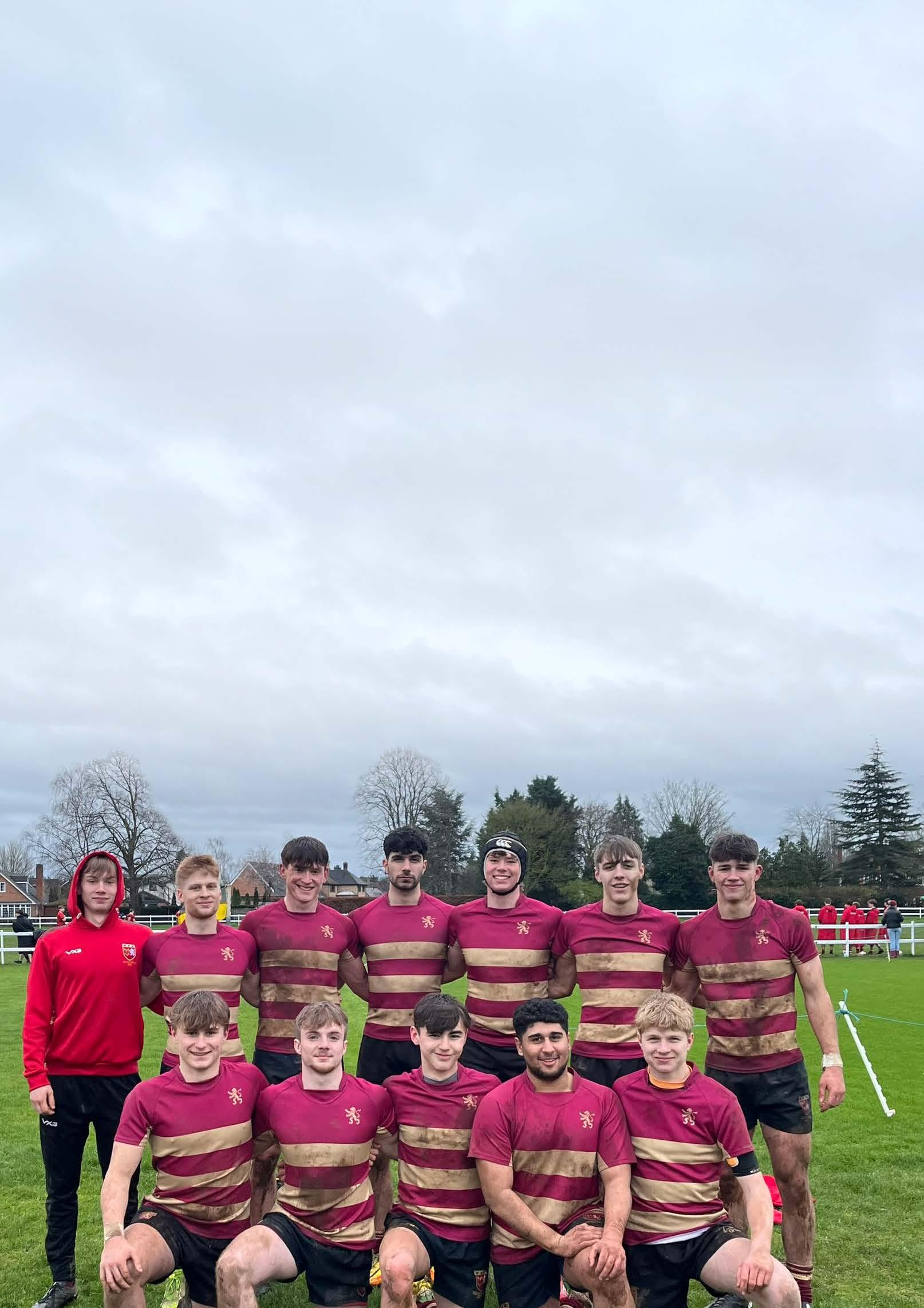
The 2nd XV/U16s showed some impressive form this season, in particular after Christmas, clinching victory in four out of five matches. Clinical wins against KES Aston, KES Camp Hill, Lutterworth RFC and a last-minute thriller against Warwick U16B capped off a fine end to the year. In the Autumn Term, highlights included a 22-15 victory versus local rivals King Henry VIII and a tense 8-5 win versus KES Birmingham.
The U15s remained unbeaten throughout the Spring Term, securing wins against Lutterworth High School and KES Camp Hill. Their crowning moment came in the Coventry Schools Cup 10s festival, where they emerged victorious, defeating local rivals to claim the title of the city's best. Throughout the season, they demonstrated remarkable grit and determination during matches and an incredible team spirit. This, combined with a high level of skill and excellent development, led to many outstanding performances and results. Highlights included convincing wins versus Leicester Grammar and Ratcliffe College and incredible performances in narrow defeats versus Stamford and Solihull.
The U14 team showed fantastic promise and completed a highly successful season, winning 13 of their 15 matches. They combine a high level of skill with a determination to learn and improve and an excellent team spirit. Their determination and competitiveness often saw them come out on top in closely fought matches. Their win against Rugby School in the National Cup showed what they are capable of, whilst the loss against Denstone in the same competition showed there are still areas to improve upon. They concluded the regular season on a high note, defeating Bishop Vesey’s in a fiercely competitive away fixture. They should be congratulated on winning a tense Coventry Cup final to be names champions.
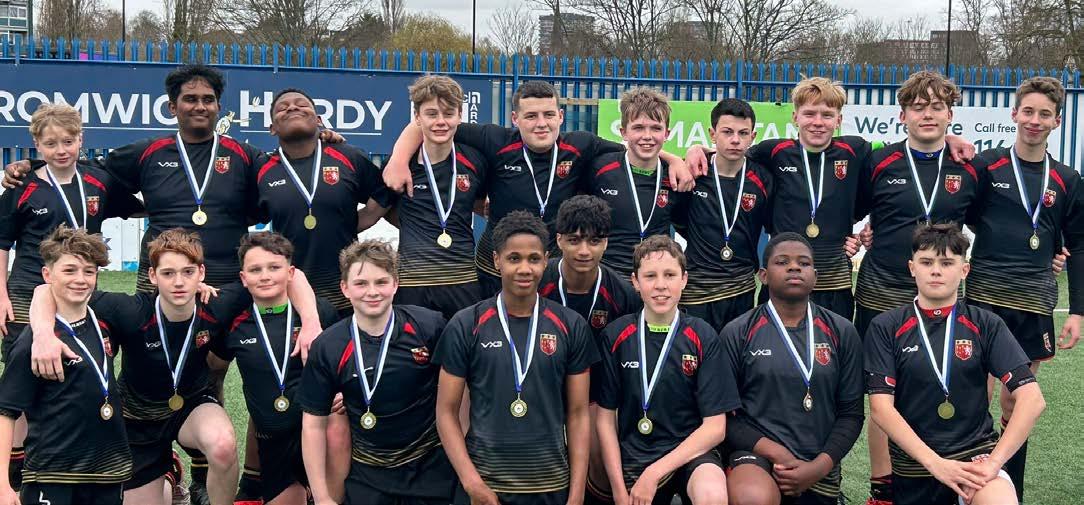
Success cannot always be measured in victories: the U13 team showed incredible resilience throughout the 2023-24 season and found victories hard to come by, but kept trying on the pitch and worked well to improve. Despite facing setbacks in their last two games, the U13s displayed an impressive attitude throughout the season. They finished on a positive note in the Coventry Schools Festival, showcasing the spirit of Bablake rugby.
Undoubtedly, the most remarkable tale of success belongs to the U12s. With an unbeaten streak spanning all 11 stand-alone fixtures, they showcased exceptional talent and teamwork. To complete the season, the team put in an incredible performance in the Bishop Vesey’s 7s competition, narrowly losing the final in extra time.
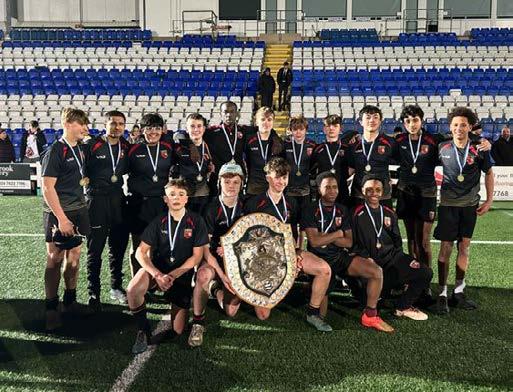
They completed the season by winning the Coventry Schools Festival. Throughout the year, the team embodied the true values of the game with their fantastic attitude and commitment to training. It is not just about the victories on the field; Bablake's rugby success is a testament to the collective spirit and dedication of all players, coaches and supporters. From the U12s to the U18s, every team has demonstrated resilience, skill and sportsmanship, enriching the Bablake community with their commitment to the game.
As we celebrate the achievements of our rugby teams, let us also acknowledge the contributions of the B, C and D teams in Shells and Year 8. Their participation and enthusiasm reflect the inclusive spirit of Bablake, where every pupil has the opportunity to shine and represent the school with pride.

The 1st VII netball team had an impressive season, winning 11 out of 15 matches with a goal difference of +120.
The girls bounced back from an early exit in the ‘Sisters n Sport’ cup, at the hands of King Edward's, to go on an eight-game winning streak, including notable victories over King’s High, Princethorpe, and OSH. The only blemish on their record was a loss to our rivals in the plate semi-final; however, this was quickly rectified in the hotly contested varsity match, hosted at the University of Warwick in front of a packed auditorium.
The seconds fared just as well, reaching the Nationals once again and suffering only a handful of defeats. A standout performance came against Higham Lane Sixth Form, with a dominant 54-8 win. The addition of Year 11 pupils Alex Becque, who strengthened the defence, and prolific shooter Megan Hart, made a significant impact at both ends of the court. The teams were superbly led by captains Libby Stinton and Megan throughout the season and the team spirit and camaraderie across all squads were evident at both training sessions and fixtures.
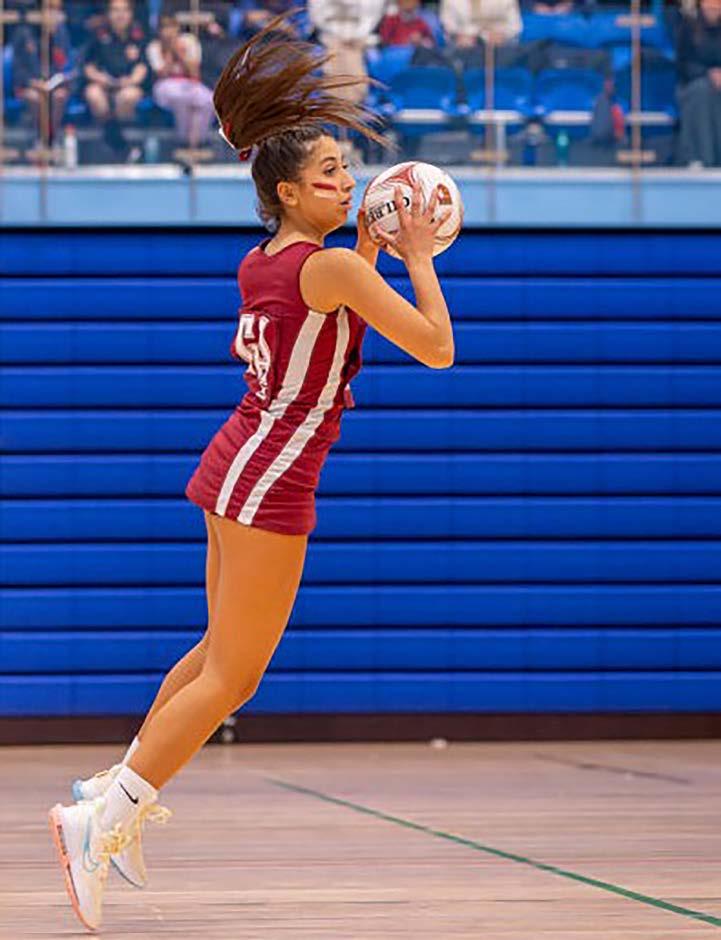
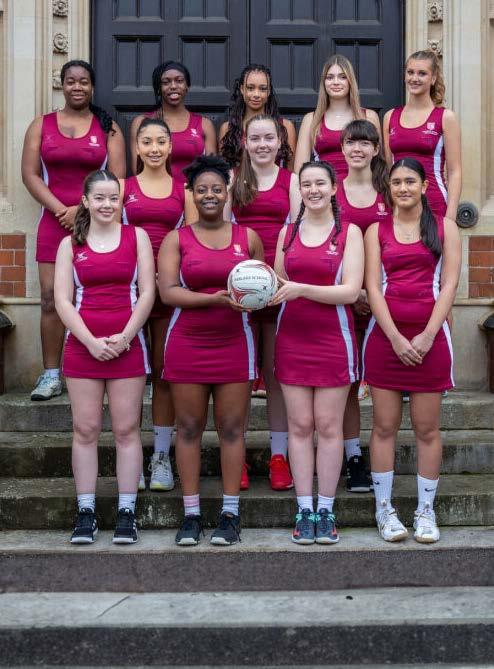
Our U13 hockey team had an exceptional season and was the most improved team across the entire senior school, as Scarlet and Lucie explain:

"We had a really enjoyable season and all of us felt we made significant progress in both our individual skills and our team structure. We always put in maximum effort during training and took on board all the advice given by our brilliant coaches, applying what we learned to our match play. We had many achievements this season, including finishing third in the King’s High tournament, where we competed against some very strong teams. We also received compliments from opposing teams and teachers about our teamwork. We hope to build on this next season as we progress to 11-a-side fixtures."
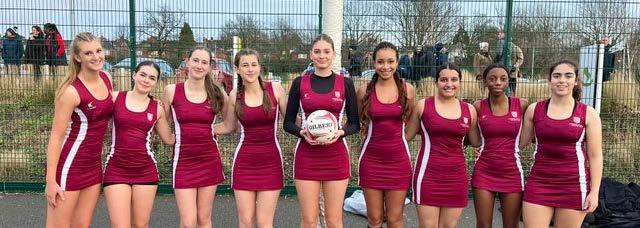
Megan Hart
On Saturday 16th March, the U16 Bablake netball team took part in the National Schools Finals held at Oundle School in Peterborough.
This was the second time we had reached the National Finals, so although you can never fully prepare for the day, our team had some experience of what to expect. There were fantastic facilities, including eight outdoor courts and two indoor sprung floor courts with viewing balconies (where the matches were also streamed).
The competition was fierce, with 18 teams competing in two pools of nine. This meant that we played against eight teams. In order to be on site and ready for the day without early morning travel, our team stayed overnight at a nearby hotel, which was another great part of the experience. As a team, we were all excited but also a little nervous; however, as the anticipation built, we couldn’t wait to start playing.
During the day, as captain, my role was to ensure we were in the right place at the right time and fully warmed up, ready to hit the ground running when the match started. Of our eight matches (seven minutes each way), we won two, drew one, and narrowly lost five to some amazing teams, giving our all until the final whistle blew. As a team, we supported each other through the highs and the lows, staying positive after tough games and keeping focused after our wins.
Our team had worked incredibly hard to get to this point and we couldn’t have done it without the support of our coaches: Mrs Russell, Mrs Smith, and Miss Watts, who gave up their time to coach the team throughout the year and to support us on the day. Many thanks also to our parents who joined us on the journey to the National Finals. We are all very proud of ourselves and what we achieved; our aim is to qualify again this year for the U19 National Finals!
This year's English Schools Athletics Finals were held at Alexandra Stadium, with Imogen, Ella and Isla representing the West Midlands. Imogen competed in the shot put, Ella in the 300m and Isla in the long jump. The standard was incredibly high, as all athletes had to achieve a qualifying time or distance to compete, meaning the West Midlands team was smaller in comparison to some of the other larger regions. Ella remarked: "I get so nervous before these competitions that I can’t eat! However, it was a brilliant experience running in one of our national stadiums against the country's best athletes, despite being at the bottom of my age group."
Over the course of the two-day competition, the girls performed admirably. Impressively, Imogen finished in the top 10 with a throw close to her personal best. Isla and Imogen also competed in the multi-event competition in Stoke-on-Trent, with Isla participating in the pentathlon and Imogen in the heptathlon. Isla finished in the top 15, while Imogen again placed in the top 10. Imogen said: "English Schools is a remarkable competition, with standards higher than in previous years. It was really special to share the experience with Ella and Isla, watching them compete so well on a national level. On a personal note, I was also selected for the England Athletics Youth Talent Programme for the heptathlon, which allows me to further my studies (gaining a Level 3 diploma) as well as develop my technique and skills through the training provided."
We look forward to seeing all three athletes progress next summer!
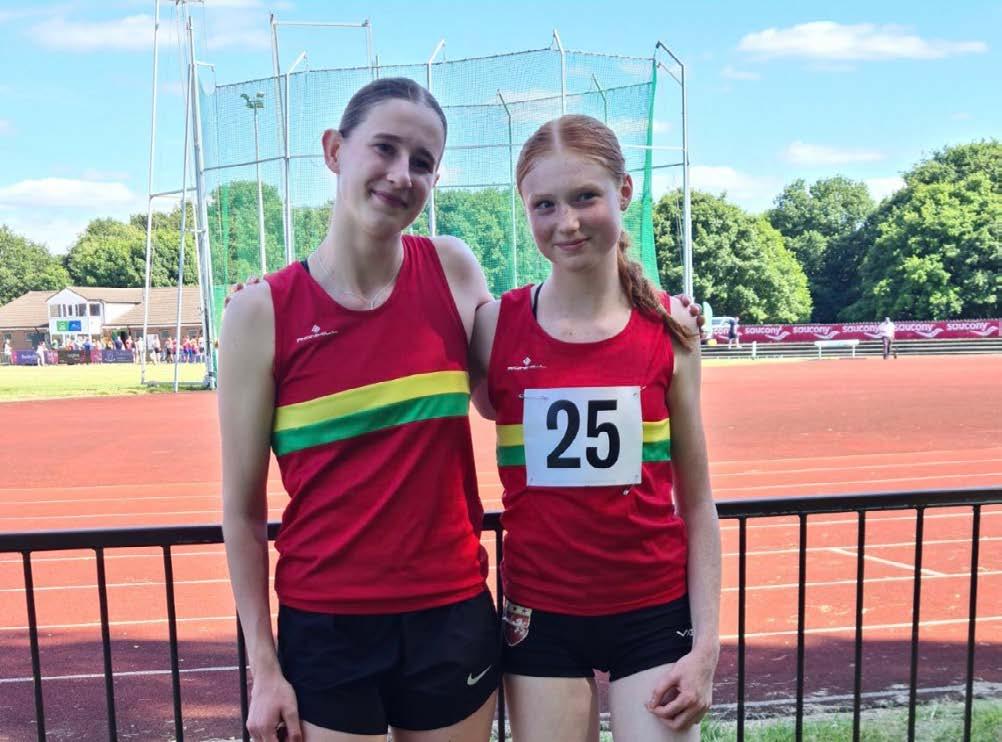
Despite the loss of some incredibly talented players, the girls' hockey teams did not let this impact their performance, showing great tenacity and resilience throughout the season.
It was another exciting term of cricket, with our boys’ and girls’ teams representing the school in a busy programme of fixtures. We fielded a total of 31 teams across all age groups, and for the first time in the history of the school, we had as many girls playing cricket as boys. We were once again brilliantly supported by Nick James, our professional cricket coach, who was able to share his wealth of experience from playing international and first-class cricket.
The girls shone throughout the season, with our U12s and U13s winning the Nottingham High School invitational tournament. The boys have also enjoyed success, with the Coventry School Foundation 1st XI progressing in the U18 T20 National HMC competition and our junior sides enjoying strong results against local rivals King Henry VIII. Individual stand-out performances came from Tom Goodyear, who scored 90* in the U15s victory against KES Stratford, and Zach Dawson, whose incredible hat-trick won the game for the U12s in the final over against Bishop Vesey’s Grammar School. Ben Luke and Zane Pepper also put on a fantastic partnership of 73 against Loughborough Grammar School to rescue the U13s from the jaws of defeat and secure a memorable victory!
Congratulations to Phoebe Kilroy, Ariana Norman, Daisy Bell, Aaron Bennett and James Cooper, who were all selected to represent their respective age groups for Warwickshire County Cricket Club.
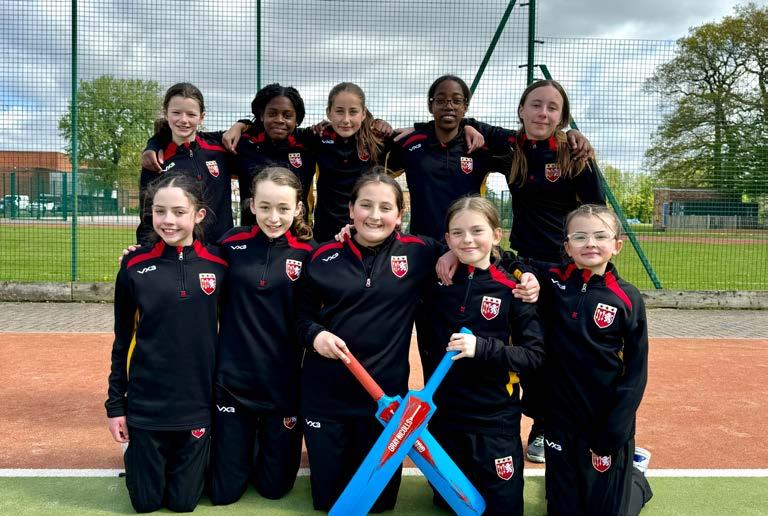
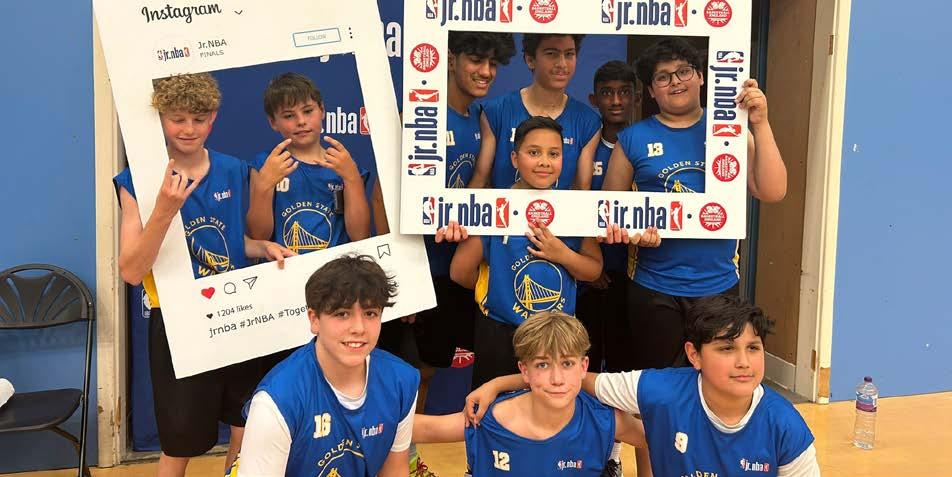
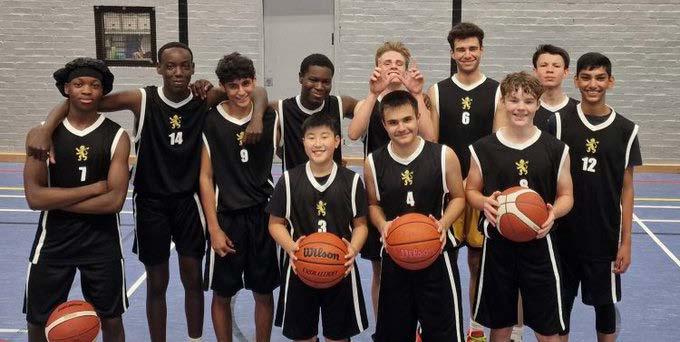
Basketball has continued to grow at Bablake, with more and more boys and girls representing the school.
An incredible Coventry Basketball League season came to a close with our U12 boys, U14 boys, U16 boys and U16 girls all winning their finals to be crowned champions, capping a fantastic season.
Having made a substantial contribution during the Tri-Nations tournament, Niki Basioudis was selected to represent England U14s in the international basketball tournament in Copenhagen, Denmark - a tournament that England subsequently won! This is an outstanding achievement for which Niki should be congratulated.
Niki also led our U13 Golden State Warriors to the NBA finals, where the team finished third out of over 40 teams in the Central region. The U12 Warriors just missed out on a place in the finals, with a narrow loss in their final play-off game, but they too should be congratulated on an outstanding season.
Our U18 boys’ team played a number of matches throughout the year, the highlight of which was a 56-50 win versus King Henry VIII.


It has been another busy year of hockey.
The 1st XI took time to adjust to playing as Bablake after two years competing as BKHS alongside their KHVIII counterparts. They showed real determination, commitment and resilience when faced with a tough fixture list. The highlight of the Autumn Term came against King Edward Five Ways, where a sluggish start saw them trailing by two goals. However, the squad quickly regrouped and played some outstanding hockey to turn around the deficit and finish with a 4-2 victory. The 1st XI also enjoyed success in the England Hockey U18 Tier 4 County Championships, qualifying for the Regional Finals, where they competed against some of the best sides in the area. The boys performed superbly, winning three games during the day, losing two, and finishing fifth overall out of ten teams. Another highlight this year
was an excellent 3-2 win over King Henry VIII in a keenly fought and competitive local derby! The senior side also enjoyed their trip to the KES Bath Hockey Festival, despite losses to Monkton Combe and an outstanding Eastbourne team. The mixed 2nd XI enjoyed wins against King Edward Five Ways and King Edward VI Aston.
The junior teams have shown excellent dedication and commitment to training throughout the year. The U15s continued to impress with victories against Lawrence Sheriff, KES Aston and King Henry VIII.
The U14s have also enjoyed success and their work ethic on the pitch was a real highlight, clearly demonstrated in their 8-0 win over King Henry VIII.
The U13s showed real promise and put in a number of performances that demonstrated their huge potential, recording wins against KHVIII and King Edward’s Birmingham.
The U12s did brilliantly in their County Cup competition, narrowly losing in the semi-final in a suddendeath shootout. It was a fantastic game of hockey; they will hopefully go one better next year!
It was again fantastic to see so many of our boys represent the school at hockey, whether it be in A, B, C, D, E or even F teams. All have competed with pride in their school and have shown a great deal of effort and determination. We would also like to thank our professional coaches, Richard Major and ‘Nibbs’ Chaudhry, for all they have done in supporting our hockey programme.
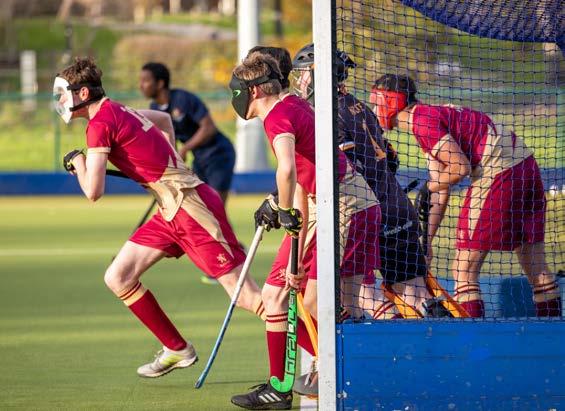
There were some outstanding individual and team performances in the cross-country Coventry Championships.
In the U16 girls’ competition, there was a clean sweep for Bablake, with Ella Martin winning gold, Isla Beasley silver and Lara Drage bronze: outstanding results that resulted in team victory too. Sebastian MacGibbon also secured an individual silver in the U16 boys’ competition and the U13 boys won their team event. In the relay event, the U16 girls and U13 boys again won their competitions, with the U13 girls placed third.
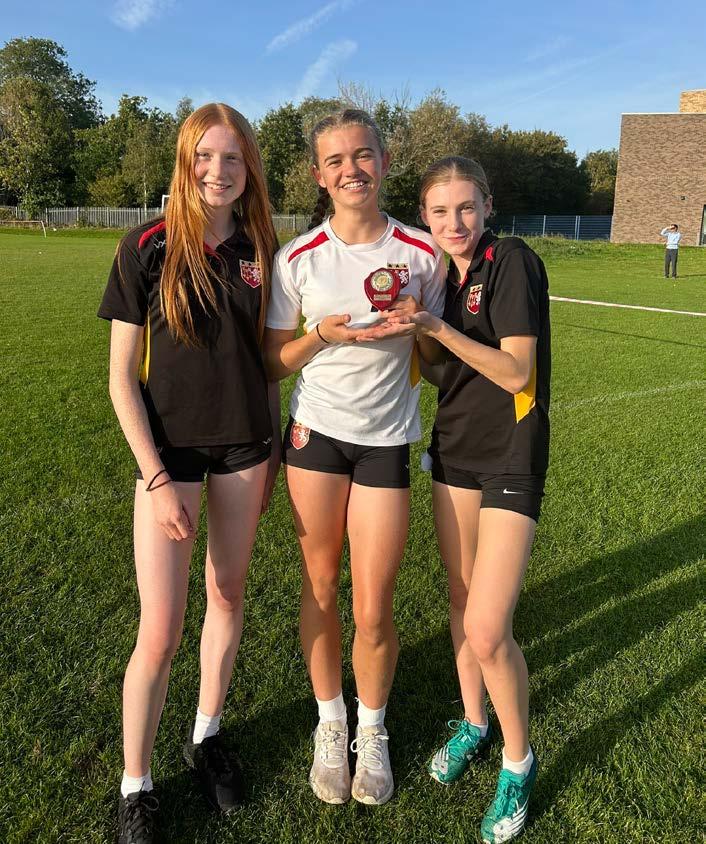


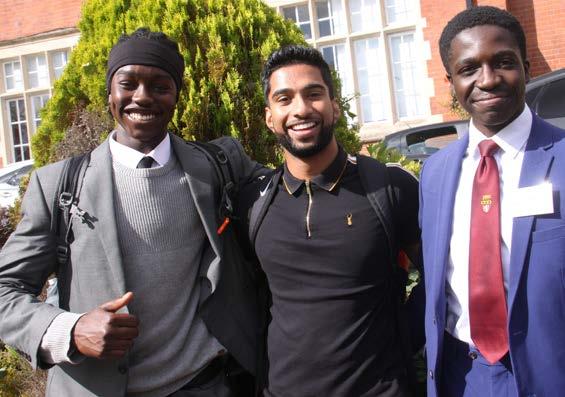
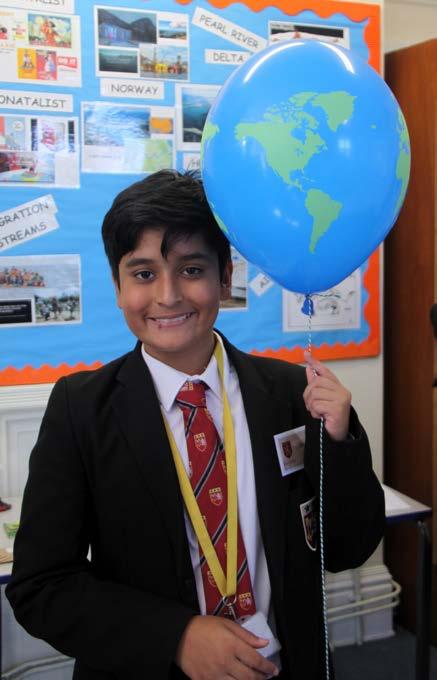

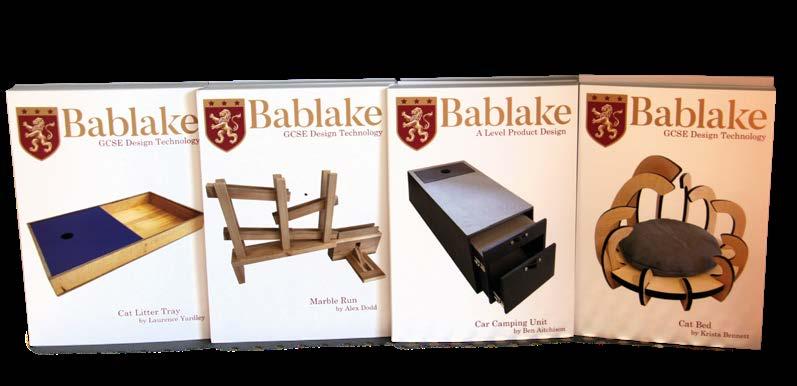
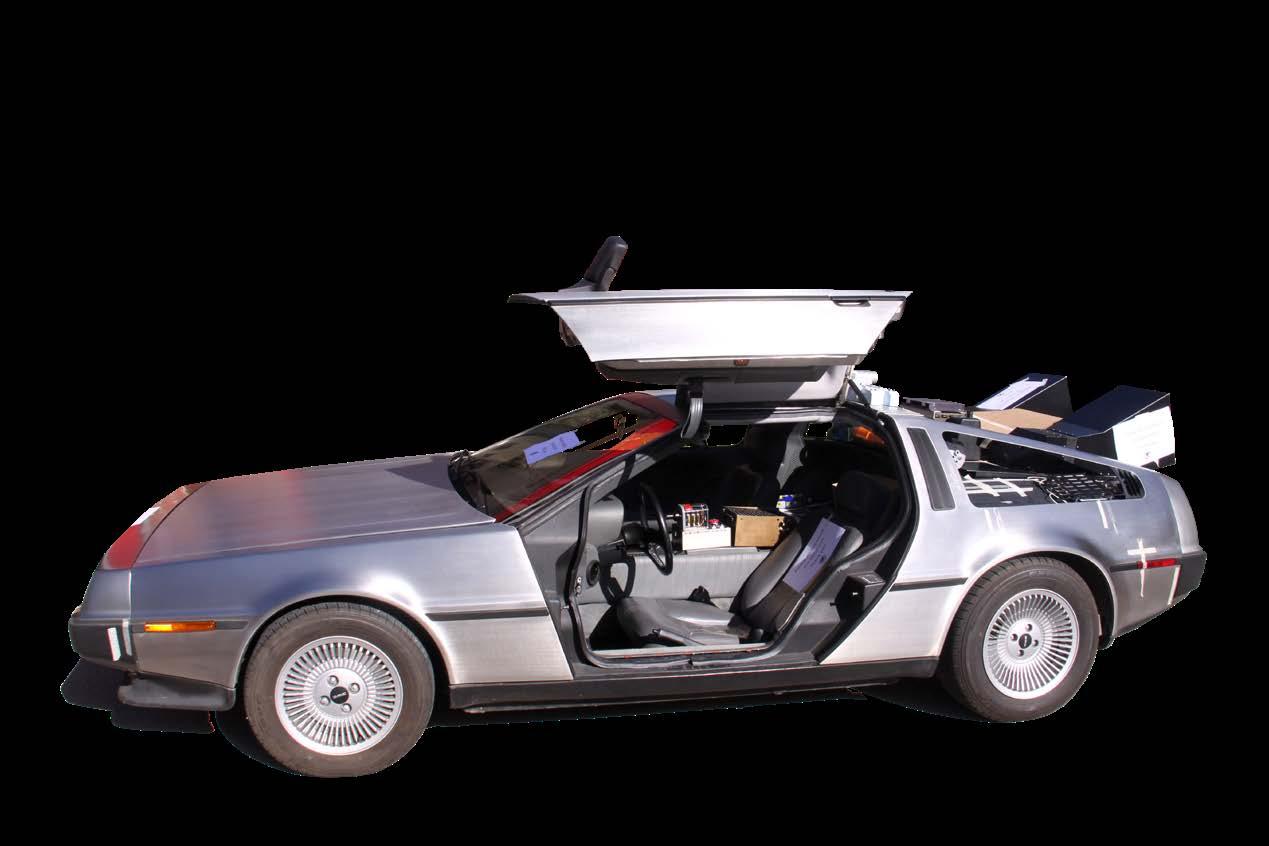
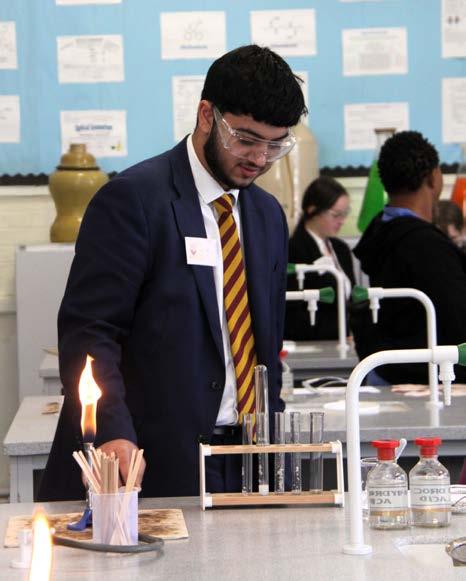



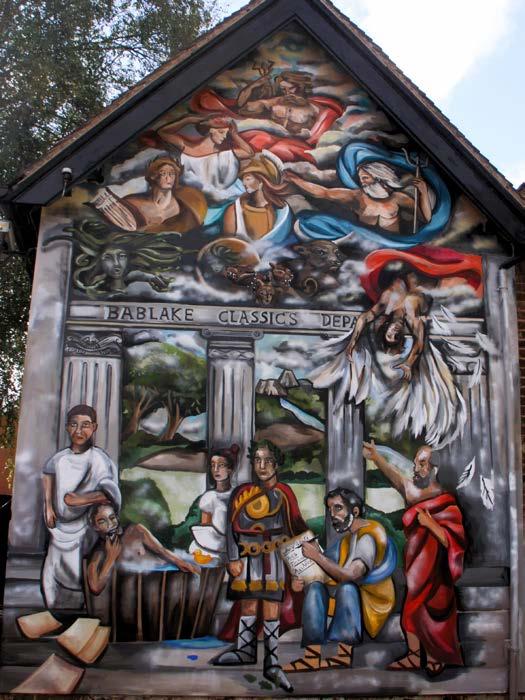

Mr Inderpal Kalsi
Patrick Knight's dedication and contribution to the Bablake community over his long and distinguished career have been immeasurable.
After completing his degrees at the University of Southampton and his PGCE at the University of Warwick, Patrick joined the Chemistry Department at Bablake in September 1997. From the outset, he became an integral part of the school, not only as a Teacher of Chemistry, but also in his role as coach for the U13 rugby team, where his leadership and commitment were evident both on and off the field.
Patrick’s expertise in Chemistry was second to none. His enthusiasm for the subject was infectious, and this translated into his ability to engage and inspire his pupils. His classes were known for their dynamic and accessible approach, creating an environment where students
felt supported and challenged. This, coupled with his meticulous approach to teaching, was reflected in the excellent examination results achieved by his students at all levels. Patrick's passion for Chemistry extended beyond the classroom as he actively encouraged pupils to participate in the Chemistry Olympiad and the Cambridge Challenge papers, providing opportunities to stretch their scientific thinking.
As Head of the Chemistry Department, Patrick displayed exceptional leadership and organisational skills. Even during the most challenging times, he remained a steady presence, ensuring the department continued to thrive and develop. Under his leadership, the Chemistry Department became one of the top-performing departments in the school, known for its high standards and commitment to excellence.
However, Patrick's influence extended far beyond the academic realm. He was actively involved in numerous co-curricular activities, ensuring that pupils were given opportunities to develop both inside and outside the classroom. Many will have fond memories of attending quizzes at Rugby School with Patrick, where his enthusiasm and encouragement made these experiences even more enjoyable. He was also dedicated to enhancing the educational experiences of his pupils outside of school hours, taking A level pupils to the University of Birmingham for Chemistry lectures after school on Tuesdays and tackling the often-challenging Birmingham
traffic without a second thought. This dedication to his students’ academic growth, despite the long days and demanding schedules, was always evident in his actions.
Patrick’s contributions were not limited to his teaching and academic responsibilities. He played an integral role in accompanying students on many school trips, further cementing his role as a mentor and guide for his pupils. Second Year residential trips to the school’s manor house in Normandy, Le Fousseau, were particular favourites! His easy-going nature, sense of humour, and ability to make every experience enjoyable meant that pupils felt supported, inspired, and, above all, valued.
As Patrick embarks on his welldeserved retirement, the Chemistry Department will certainly feel his absence. His dedication, professionalism, and good-natured presence made him a cherished member of the staff and his legacy will continue to influence the department and the school for years to come.
We would like to take this opportunity to thank Patrick for his exceptional contributions to Bablake over the past decades. His hard work, his commitment to the success and well-being of his pupils, and his ability to bring fun and lightheartedness to every situation have made him a beloved and respected figure within the school community. We wish him every happiness in his retirement, and we know that his impact on the lives of both staff and pupils will be remembered for many years to come.
Sukki Sahota
Dr. Patrick Knight
Sukki Sahota was an integral part of the Bablake community for nine years, having originally arrived in 2015 to provide temporary maternity cover. From the moment he joined, he settled in seamlessly, quickly becoming known for his excellent teaching and his genuine care for his pupils. His ability to connect with students, alongside his talent for making learning enjoyable, made him a standout teacher, respected by staff and pupils alike.
After his initial temporary role, Sukki took on a permanent parttime contract and fully embraced the life of the school. He quickly established himself as a key member of the team, diving into his science teaching and contributing to the wider activities of the school. Sukki was appointed Head of Bayley House early on, a role he relished as he supported and encouraged the pupils involved in House events. His enthusiasm for the House system
was matched by his dedication to coaching and umpiring many junior cricket teams, where his calm and thoughtful approach made him an exceptional mentor.
In his early years at Bablake, Sukki taught a large number of junior science lessons. Over time, his role expanded, and his timetable grew to a full-time position, with a wellbalanced mix of year groups. Sukki’s contribution to the academic success of the school was profound. He taught A level Chemistry students, GCSE Chemistry and Physics candidates, and nurtured younger, budding scientists in Junior Science groups. He was also a dedicated Form Tutor, guiding a Shell group through to the end of their Third Year before moving on to lead Sixth Form tutor groups.
What set Sukki apart was his genuine care for each and every one of his pupils. He was a kind and thoughtful teacher, always looking for ways to support his students and help them succeed. Whether through academic encouragement or personal guidance, Sukki went above and beyond in his pastoral care. His commitment to his pupils’ well-being was evident in the countless hours he dedicated to getting to know them and ensuring they were able to perform to the best of their abilities. His students greatly appreciated his sense of humour, and there was never a dull moment in his room – laughter was a constant, and his pupils felt at ease in his presence.
This compassionate approach fostered immense loyalty among his students. In his final few weeks at
Bablake, there was a steady stream of pupils who came to personally thank him for his guidance and support. His Year 10 class, in particular, threw a heartfelt party in his honour, an expression of their gratitude for all he had done for them during their time together.
Sukki’s contributions to Bablake extended far beyond his classroom and pastoral roles. His ability to rescue a floundering assembly, his lively Bhangra dancing and stunning outfits at Culture Day in 2023 and his "keep your hair on" jokes, which he shared with his colleagues in his inimitable style, will all be fondly remembered. But perhaps most importantly, Sukki was a lovely man – a truly kind and considerate colleague who could always find time for a chat, offering support and friendship to everyone around him. His warm and approachable nature made him a cherished friend to many and his positive presence will be sorely missed.
As Sukki embarks on a well-deserved retirement, we all wish him the very best for the future. He thoroughly deserves a long, happy, and fulfilling retirement after the many years he devoted to Bablake and its students. Sukki leaves behind a legacy of excellence in teaching, outstanding pastoral care, and a sense of joy and camaraderie that will be missed by all who had the pleasure of working with him.
Dr Steve Johnson
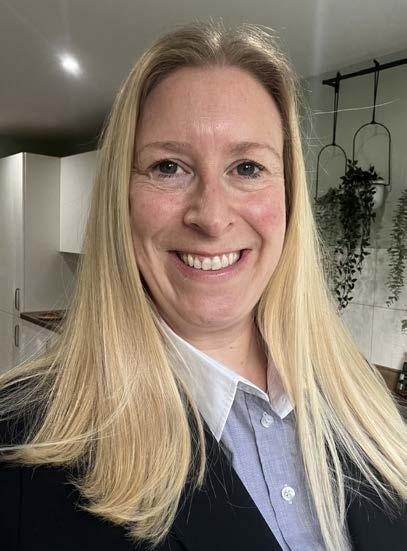
Emily began her journey at Bablake in 2016 as a Physics Technician, bringing with her a passion for science and a keen eye for detail. Over the next eight years, she became an integral part of the department, consistently demonstrating her reliability, dedication and innovative approach. Her commitment to the role went beyond the ordinary, as Emily took on additional responsibilities that further showcased her talents and work ethic.
In addition to her role as Physics Technician, Emily served as the Radioactive Protection Supervisor, ensuring the safety and compliance of the school’s laboratories with stringent health and safety regulations. She also took on the role of Educational Visits Coordinator, organising trips and activities that enriched students' learning experiences beyond the classroom. Her ability to manage multiple roles with ease and professionalism made her an invaluable asset to the school.
Emily’s work ethic, positive attitude and willingness to go above and beyond in her duties left a lasting impression on both her colleagues and the students she supported. She was always eager to help, whether it was troubleshooting equipment, offering guidance to students, or supporting her fellow staff members in any way she could. Her creativity and problem-solving skills were evident in her contributions to the department and beyond.
As Emily moves on to a new and exciting role as the EDT and Cleanroom Facility Manager in the Engineering Department at the University of Birmingham, we know that she will continue to thrive and make a significant impact in her field. We will certainly miss her enormously, both professionally and personally.
Her presence at Bablake has been greatly appreciated, and we wish her every success in her future endeavours. She will always be remembered as a valued member of our team, and we look forward to hearing of her continued success.
Ms. Vicki Bradley
Mr. Kevin Ward
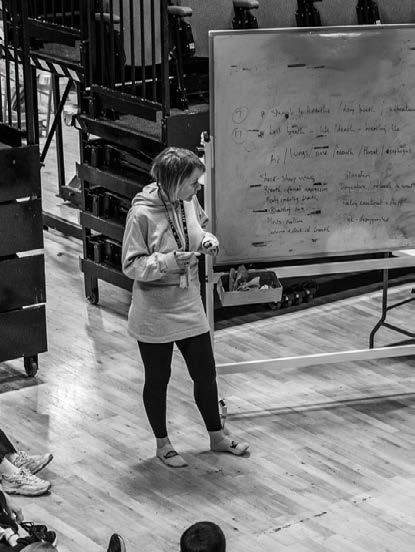
When Vicki joined Bablake as Director of Performing Arts in 2018, she brought a renewed sense of energy and passion to the department, igniting it with her enthusiasm for every aspect of the Arts.
In Performing Arts meetings, Vicki consistently went above and beyond to support us, always encouraging a reflective approach to our practice. She embedded a student-centred philosophy, ensuring that this was always at the forefront of planning. Vicki had a passion for exploring different pedagogical methods that would benefit each individual in the classroom and she was a driving force behind fostering collaboration between Drama and Music. Together, we worked to find creative ways of linking schemes of work, ensuring
that we provided the best possible experiences for pupils at Bablake. Vicki placed great value on professional development, always seeing our potential and pushing us to be the best teachers we could be. She was the first to notice and praise the positives in our teaching, offering encouragement and support at every step.
I was fortunate to team-teach with Vicki on several occasions and she was always generous in offering advice and strategies to enhance my classroom practice. Her guidance was both practical and insightful, always designed to elevate the teaching experience for our students.
As well as being a passionate advocate for our department, Vicki gave our pupils the tools they needed to successfully audition for stage school. Her support helped several students pursue the Arts at degree level, with many now studying at some of the most prestigious stage schools and universities across the country. It was also inspiring to see an increasing number of pupils choosing Drama at GCSE during her time here.
Vicki’s directorial talents were a huge asset to Bablake. She directed many outstanding productions and the number of students involved in the casts and crews grew year on year. Some of her most notable productions included Legally Blonde, 100, Fame, Shrek the Musical, Beauty and the Beast, Les Misérables, Billy Elliot and The IT. She also directed numerous scripted and devised pieces for the Drama and Theatre Studies GCSE and A level courses.
Vicki was always creative in ensuring that every pupil had an opportunity to be involved in the productions, whether through smaller ensemble roles, assisting BabTech or working with the orchestra alongside professional musicians. When Mr. Cooper was injured just weeks before the opening night of Beauty and the Beast, Vicki even stepped in last minute as Musical Director, showing her incredible versatility and commitment to the productions.
In her final year, Vicki choreographed and directed sections of the Year 6 end of year production, Matilda the Musical. It was a true testament to her versatility as a teacher, seamlessly adapting her approach from working with senior pupils to guiding the younger Year 6 classes.
There are so many cherished memories we all have with Vicki. From the variety of theatre trips we went on, to the laughter shared in the department and her original, abstract staging ideas – all of these moments will be treasured by us. Vicki’s wisdom, experience and creativity have made a lasting impact on the Bablake community and she will always be fondly remembered.
We wish Vicki all the best in her new role as Head of Performing Arts at the British International School in Hanoi. She will be sorely missed and we are confident that she will continue to inspire and lead with the same passion and dedication wherever she goes.
Mr. Pete Nicholson

Matt joined the Design Technology department in May 2020 in unusual circumstances, as we were still in the throes of Covid and lockdown, with lessons taking place online. Matt therefore had to introduce himself to his new classes via a video link; his personality and expertise in video editing were immediately evident and the pupils quickly responded to his engaging style of teaching. As he settled into Bablake, Matt made a significant impact and by June 2020, he had accepted the role of Head of Shells and then worked wonders in recording, editing and setting up a series of recorded presentations to go out to new parents and pupils.
This was a huge undertaking, but Matt ensured that everything ran smoothly and even though we were unable to invite families in for the usual New Shell Parents’ Evening, everyone felt that they were already part of Bablake. Matt also supported a variety of other video productions for whole school events some of which were live-streamed and were, again, very much appreciated by staff, parents and pupils.
Matt also worked hard within the department and set up the RadioControlled Car Club. However, one of his most notable achievements was the Bablake DeLorean project, which enabled pupils to gain valuable practical and design skills. With the help of a car enthusiast, Mr Parsons secured a DeLorean car and transformed it into a ‘Back to the Future Part II’ DeLorean, with the involvement of many students. This was an incredible accomplishment, and the car was later presented to the owner to be showcased as part of his movie-themed collection.
When Chris West retired, Matt took on the role of Head of Department and immediately set his sights on several large-scale projects. He transformed the former Fifth Form Common Room into the Engineering Hub - a dynamic space that now serves as a workspace for Sixth Formers, as well as supporting initiatives such as F1 in Schools and the Industrial Cadets programme. Additionally, he expanded the department’s 3D printing capabilities, further pushing us into the future of design, technology and engineering.
Matt has certainly left the department in a strong position for the future and we are well-prepared to take on the challenges of design and engineering that lie ahead. We wish him well for the future.
Mrs Sarah Harris
Maddy came to Bablake in 2020 as a Foreign Language Assistant, to help A-level and GCSE pupils with their spoken French and it was immediately clear that she had a very natural way with young people. She was cool, she understood them, she knew the kinds of things that would make them respond and react and she worked wonders with them. We were, therefore, delighted when she agreed to stay for another year.
And so, the fine work continued and we saw her building superb working relationships with pupils and staff alike. She then decided she would like to become a teacher and so began her training with us. In her one year of teaching, she brought so much to the various classes she taught, to the MFL department, and to the entire school.
The lasting legacy that Maddy will leave, alongside her excellent teaching, will obviously be Culture Day. Two years ago, she put the suggestion forward and then set about making it happen. This year’s event was even bigger and better than last year, taking over an entire school day. The planning and organisation behind Culture Day was huge, and everyone enjoyed a wonderfully joyous day.
Maddy has decided, for the time being, not to pursue a career in teaching. This is definitely a huge loss to those pupils who would have thoroughly enjoyed being taught by her, but who knows, maybe one day she will return to the job that has shown she has the skills, the confidence and the ‘gift’ to inspire young people and help prepare them for the future.
IT
WAS IMMEDIATELY CLEAR THAT SHE HAD A VERY NATURAL WAY WITH YOUNG PEOPLE. SHE WAS COOL, SHE UNDERSTOOD THEM, SHE KNEW THE KINDS OF THINGS THAT WOULD MAKE THEM RESPOND AND REACT AND SHE WORKED WONDERS WITH THEM.
I would like to thank you, Maddy, for all that you brought to Bablake. I have loved laughing with you, having the opportunity to speak French with you and watching you grow in confidence as the year progressed. You have been an absolute inspiration to many and we will miss you.
Mrs Alison Tumber
Life’s journey is not always smooth, but despite facing some challenges, Kharam navigated the year with professionalism, resilience and good humour.
The numerous emails from parents and pupils, along with all the wellwishes from colleagues, were a testament to the positive impact he had on countless pupils during his short time with us. His contributions to the RPE department brought fresh insight and enthusiasm.
Kharam will continue to thrive, no matter what his chosen path. While it would have been wonderful to have had the opportunity to see his talents further developed here at Bablake, I know that he will continue to seize new opportunities and flourish.
We welcomed:
Mrs Pindar Cheema (Chemistry)
Mrs Helen Dean (Music)
Mrs Gemma Doughty (SLT Administrator)
Mr Tony Gear (PE)
Mrs Jessica Newton (Classics)
Kate Parsons (Head of MFL)
Mrs Gemma Watson (Learning Support)
Peter Burden
There have been several people over the years who have been described as the greatest Prime Minister we never had.
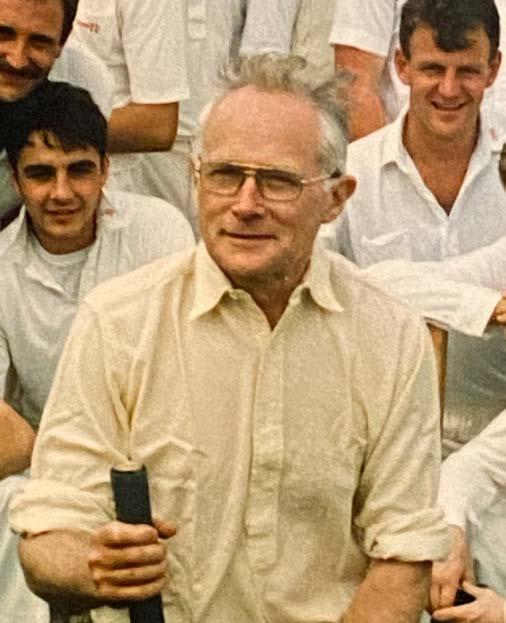
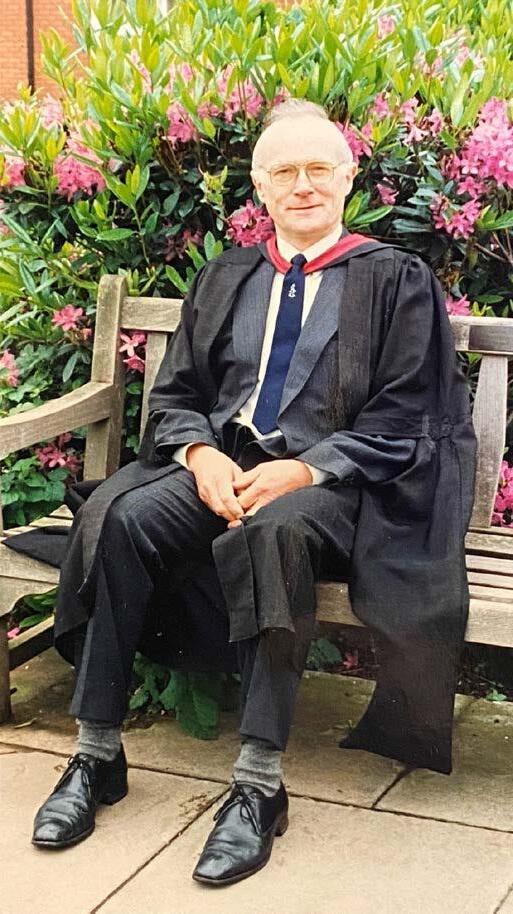
It was Felicity Chapman, I think, who dubbed Martin Barker the best headmaster we never had. Appointed in 1977, when the amalgamation of Bablake and King Henry VIII was recent and it looked at least conceivable that Bablake might simply cease to be, Martin was to serve under Director Roy Cooke with the title of Vice-Principal. He had already proved himself as an administrator as well as a teacher, having served as House Master at Christ’s Hospital and Deputy Head at King Edward VI School, Southampton. There is no doubt whatsoever, though, that those many pupils and colleagues who were saddened to hear of his death recall him as a headmaster – and an exemplary one.
When I heard of Martin's death, I was so sad. I had known for some days that the end was imminent, and he was, after all, nearly ninety-seven. But I had worked under him for thirteen years and counted him as a friend for more than thirty more. So many memories came flooding back. My first encounter with him was a strange one, being interviewed for a job which I thought Roy Cooke had already offered me. He came across as formal and rather severe. I remember his asking me what I thought about staff attending assemblies. Taking this to be a highflown question about a moral issue, I said something like,
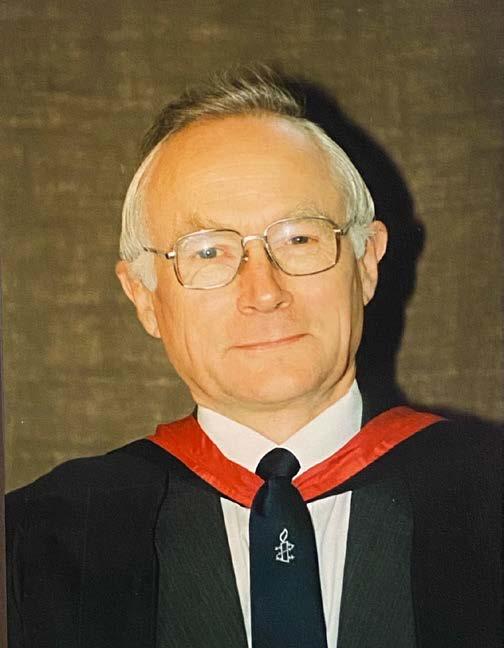
“I think it’s important that the School should gather together, but I suppose, if there is a religious element, staff can't be compelled to attend.”
“Yes, yes, yes,” said Martin tetchily as he looked at me over his glasses, “but would you attend?” I was eager to reassure him that I would. Years later, I had asked Martin for a photograph of him to go into The Lion and the Stars. He ushered me aside in a crowded corridor one day, furtively retrieved from a pocket a photograph of a rather good-looking young sailor and said, “Would that do?” It took me a moment to register that the sailor was MWB in his youth and that he was, of course, joking. I remember vividly the emotional ovation which marked the end of Martin's final assembly in 1991. I had foolishly asked a Sixth Former to see me about something at the end. I had to gulp really hard before I could speak to him at all.
Martin could be all that you wanted of a headmaster: shrewd, firm, and fair. He also had a delightful sense of humour and never took himself too seriously. That tetchiness I mentioned before, though, could be relied upon to emerge if ever a parent said they were going to take their child away on holiday during term time. He could, at times, be remarkably indiscreet in his comments about colleagues. He took upon himself the massive task of writing all of the references for Bablake's university applications
MARTIN COULD BE ALL THAT YOU WANTED OF A HEADMASTER: SHREWD, FIRM, AND FAIR. HE ALSO HAD A DELIGHTFUL SENSE OF HUMOUR AND NEVER TOOK HIMSELF TOO SERIOUSLY. !
and completed them always with immense articulacy and style and with a remarkable sensitivity to the individual pupil. He was especially loyal to those who served him as School Captain and for years fiercely defended the Bablake tradition of a single boy or girl in that role, as opposed to coming into line with King Henry's practice of Head Boy and Head Girl. It was good, but no surprise, to see several of those who had served Martin in that role present at his funeral.
Martin's position as Vice-Principal was not an easy one and he and Roy Cooke were not always the most
relaxed of workmates. There were certainly changes to the curriculum Martin would have loved to make.
(He was eager that his parting gift should be a prize for General Studies, which he saw as the one subject not dominated by exam requirements.) He was perhaps at times a little too eager to hide behind such a line as,
“The Director will be in on Monday; I think this needs to go to him.”
Martin's marriage to Judy was a long and rich one, but health problems did not always make things easy. I
cannot begin to imagine how either of them coped with the loss of their beloved son, Richard, in a road accident in 1978. How much it tells you of the man, though, that Martin was so determined to put even that unimaginable loss and his deep faith to the service of others similarly bereaved.
Martin was a passionate cricket fan, and it was so touchingly right that the final piece of music at his funeral should be the Test Match Special theme. It left you, as Martin so often did, with a smile on your face.