Earlier this week, our Third Year pupils who have chosen to study drama presented a powerful showcase of their work in front of a select audience, an event that will sit strongly on their emerging CVs. Compelling content and brave performances from some who had previously never acted before an adult audience were just two of the evening’s highlights.
ISSUE 14 – Friday 10 May 2019
GREAT LEADERSHIP EMPOWERS ITS WORKFORCE
As Mr Watson takes on a new challenge as CEO of Leicester Grammar School, we enter a new era with former Deputy Head Mr Wright at the helm.
Earlier this year, Brigitte Hyacinth, author of ‘The Future of Leadership: Rise of Automation, Robotics and Artificial Intelligence’ argued against micromanagement and thereby eliminating five unproductive outcomes:
Decreased Productivity – tweaking workflow and always looking over employees’ shoulders drastically slows employees’ response time.
Reduced Innovation – if employees fear criticism or feel their ideas are invalid, then creativity, taking the initiative and risk-taking are nullified.
Lower Morale - if employees lose some autonomy, they feel suffocated, become disengaged and eventually stop trying.
High Staff Turnover - when talented employees are micromanaged, they often do one thing quit.
Loss of Trust - micromanagement eventually leads to a breakdown of trust, demotivating and demoralising employees.
She emphasised leaders hire people they believe are capable and a high level of trust between managers and employees both defines the best workplaces and drives exemplary company performance. Empowered employees are more confident, more willing to go the extra mile in their care for customers and, with proper training, support and space to get the job done, are a key competitive advantage.
As Apple founder Steve Jobs said: ‘It doesn't make sense to hire smart people and then tell them what to to. We hire smart people, so they can tell us what to do.’
See https://www.linkedin.com/pulse/great-leadership-isnt-control-empowering-people-brigette-hyacinth/ for the full article.

A recent review of Phil Knight’s ‘Shoe Dog’ highlighted 5 ‘top takeaways’ from the lessons learnt establishing Nike as a brand leader.
1 You must have total belief in your product or service. Phil Knight was committed to running and improving outcomes for fellow runners.
2 Establish a founding team as dedicated as yourself that also shares your vision.
3 Create a firm balance between innovation/ investment in product development and sourcing competitively-priced, high-quality suppliers.
4 While luck clearly plays a part, hard work and total commitment create conditions for you to be lucky. You’ll experience bad luck, but persevere.
5 If you look after a brand, it can encapsulate the passion and vision of the founding team.
(Source: LinkedIn post by John Yates MD, Corporate Learning at City and Guilds Group)
Just over 4 years ago, Laura Pugh helped lead a workshop on careers in finance attended by our Symposium pupils – see www.bablake.com/media/news/article/3717/Careers-In-Finance-Interest-Symposium-Pupils for the report. As part of our quest to inspire current Bablake pupils with examples of various career pathways trodden by dynamic former pupils, we recently caught up with Laura who has just taken on the role of HSBC’s UK HR Business Manager:
When did you leave Bablake? I left at the end of Year 5, as it was then known, in 1998, after my GCSEs I was really lucky to attend Bablake on an ‘assisted place’, which unfortunately didn’t extend into Sixth Form. Instead, I studied my A Levels at Kind Edward 6th Form College, Nuneaton.
What did you study at A-level? History, French and English Literature. I’d achieved As in those subjects at GCSE and they were easily my favourite subjects, so it was an obvious decision at the time. I also studied Politics as an additional subject, as I thought it would link nicely with History and it was an area I was interested in.
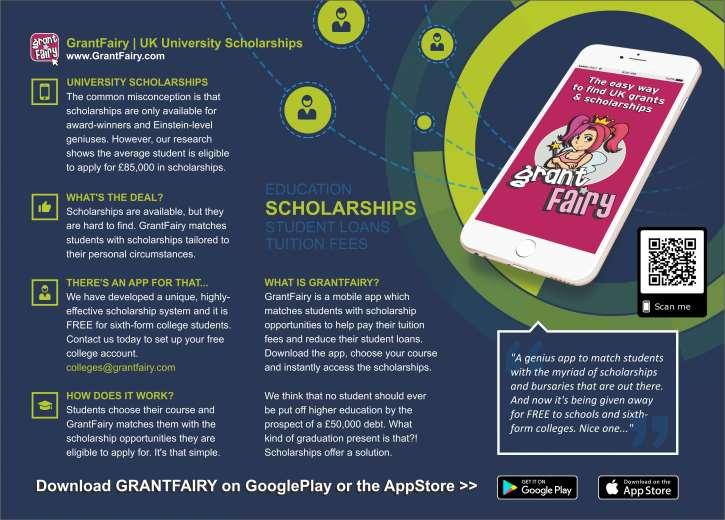
Did you consider University? I had a place secured at the University of Central Lancashire to study English and American Literature. I’d never even considered not going to University – it was just the logical path after A-levels and particularly after attending Bablake. However, I had a wobble! Attending a Sixth Form College, away from the discipline and support I had been used to at Bablake, I realised I wasn’t particularly good at motivating myself to study. I found the freedom of college really difficult to balance with the huge study requirements needed to be successful in A-levels. I started to question if I was the right sort of person to attend university and wondered if I would cope with the freedom There was a very real risk I could potentially waste 3 years without achieving anything. My chosen degree was also something which I couldn’t really link to a career path. Thankfully, I’d achieved a sixth form scholarship with the RAF which inadvertently presented a whole new opportunity. My RAF story was printed in the local papers, and a local area manager for HSBC spotted the article and reached out to me regarding an exciting new opportunity they had.
What did you do after A-Levels? HSBC offered me a place on its Management Trainee Scheme. Whilst I joined as a cashier, I was given the opportunity to study towards a banking qualification with full financial support, and had an overall aim of achieving my first management appointment within 5 years. At the age of 21, 3 ½ years after joining, I was given my first management position as service and sales manager. Over the next 16 years, I did various roles including branch manager, area manager and regional services manager, before moving into a Head Office role in 2017.
What is your current role? In January, I moved into an area of the business I’d never previously worked in – human resources. My current role within that is HR Business Manager for the UK bank. It’s not a ‘pure’ HR role, meaning it’s been a great first step into HR without previous direct experience. It’s a really tough area of the business to join without experience or an HR qualification, so I feel really fortunate to be in this role. To date, my career had all been leadership roles within the frontline business and I’m really enjoying a position that now uses that leadership and people experience, whilst learning a whole new area and set of skills. As business manager, I support the HR COO and the Head of HR, and have specific responsibility for people risk governance across all functions of the UK bank. I’m definitely on my biggest learning curve to date!
Do you regret not going to University? No! I actually think it was a really sensible decision for me as an individual. I look back and I’m actually quite impressed that at 17 I was able to recognise and acknowledge my failings as a student. University would have been an easy option for me at the time – I’m sure I would have enjoyed a fantastic 3 years socially, away from home. Getting up at 6.30am every day and heading to work for a full day, while many of my friends were often just coming home from nights out(!) was definitely the tough choice at the time, but I knew the possibility of leaving university without a degree was a very real possibility, and not a chance I could afford to take. What I do regret though is not having a degree. When you reach a certain level of seniority within a business, it’s quite unusual not to have a degree. From a pride perspective, that can be quite difficult. But also, I sometimes worry about the limitations that places on my long-term career I’m really lucky that I’ve now worked for HSBC for 19 years and as such, I’m in a position where I can work flexibly around my family and still earn a competitive salary. If ever I needed to look outside HSBC, my lack of degree could really limit my earning potential, and that does make me feel uncomfortable! Thankfully, I am now in a position where HSBC will support me to complete a HR qualification which I’m really excited to start! For me, studying for a qualification which directly links to my area of work is something I really enjoy. To see how the learning links to the everyday business is rewarding and my motivation.
What is the greatest skill / attribute you gained from your time at Bablake? I’m always really proud to have Bablake on my CV. It’s such a well-regarded school, I feel really lucky to have enjoyed time there. Whilst obviously the academic gains from Bablake are incredibly important, I think the social skills and confidence I gained have served me far better over the years in the business world. I always used to enjoy taking part in the House Debates and the Reading competitions, and I think the exposure to this at such a young age was invaluable. I’d encourage everyone to take advantage of similar opportunities because, as uncomfortable as they may be, they really do make a difference.
What do you enjoy most about working for HSBC and what advice would you offer anyone interested in a career with HSBC? During my 19 years, HSBC has really looked after me. Aside from my career, I’ve been supported through 3 maternity leaves, 2 national relocations, a 2 year stint living in the UAE and recently the move from full time to flexible part-time hours around my family. As I get older, it’s this key support which becomes more valuable to me and really inspires my loyalty to the brand. Additionally, the sheer size of HSBC means there is always the opportunity to learn and take on new challenges. My recent move into HR is a fantastic example of that. The world is literally your oyster with such a large company. Also, contrary to popular opinion, it really isn’t just an area for ‘Maths’ experts! There are so many different fields, and the ability to communicate and have a general interest in ‘people’ are skills which are really valued. There are so many options available as well, ranging from direct entry to internships and graduate schemes. I’d encourage anyone who thinks it might interest them to have a look on our website which has lots of information about the options available: https://www.hsbc.com/careers/where-we-hire/united-kingdom.