May 2026
OUTCOME OF THE PUBLIC CONSULTATION
on the proposed merger between Furness


Introduction Background
We would like to thank everyone who took part in the public consultation on the proposed merger between Furness College and Blackpool and The Fylde College, which is intended to take effect from 1 August 2026.
During the consultation period, we welcomed valuable input from a range of stakeholders, recognising the importance of this merger to all those involved.
The feedback received was largely positive, reaffirming our commitment to delivering a merger that we believe will provide long-term benefits for education and communities across Cumbria and Lancashire. Where concerns or questions have been raised, we will ensure these inform our implementation and strategic planning as we move forward.
We recognise that this consultation represents an important milestone, but it is not the end of the journey.
There remains significant work to ensure the merger is delivered effectively and achieves meaningful benefits for our students, apprentices, colleagues, employers and the communities we serve.
This partnership will provide the strongest platform to realise our shared goals and ambitions for the future.

The Corporations of Furness College and Blackpool and Fylde College held a joint public consultation from 27 March 2026 to 30 April 2026 on the proposed merger between the two colleges.
A consultation document outlining the context, proposal and anticipated benefits was made available to download from each of the colleges’ websites.
In addition, links to copies of the proposal were also shared directly with:
Colleagues Students Trade Unions Schools, Colleges, Academies and Universities
Local Authorities Key Employers
Local Enterprise Partnership Secretary of State Department for Education (DfE)
Details of the consultation were also:
• Supported by a press release issued to local media to raise awareness amongst parents and the wider community. This resulted in media coverage including, for example, in BBC North West, the Blackpool Gazette and the NW Mail.
• Briefed to staff at both corporations via internal briefings.
The statutory notice of the intention to merge was also placed in both The Telegraph, Blackpool Gazette and North West Evening Mail.
Responses to consultation questions

Steve Fogg Meredydd David OBE
A total of 14 responses to the public consultation were received, including one letter of support from the University of Cumbria.
The distribution of the 14 respondents was as follows:
Of the 14 respondents, nine (64%) supported the merger proposals, one (7%) did not, and four were unsure.
Chair of the Corporation Board Blackpool and TheFylde College Chair of the Corporation Board Furness College
Summary of Identified Benefits of the Merger
Enhanced Curriculum Breadth and Quality
Respondents consistently highlighted that a merged college would be able to:
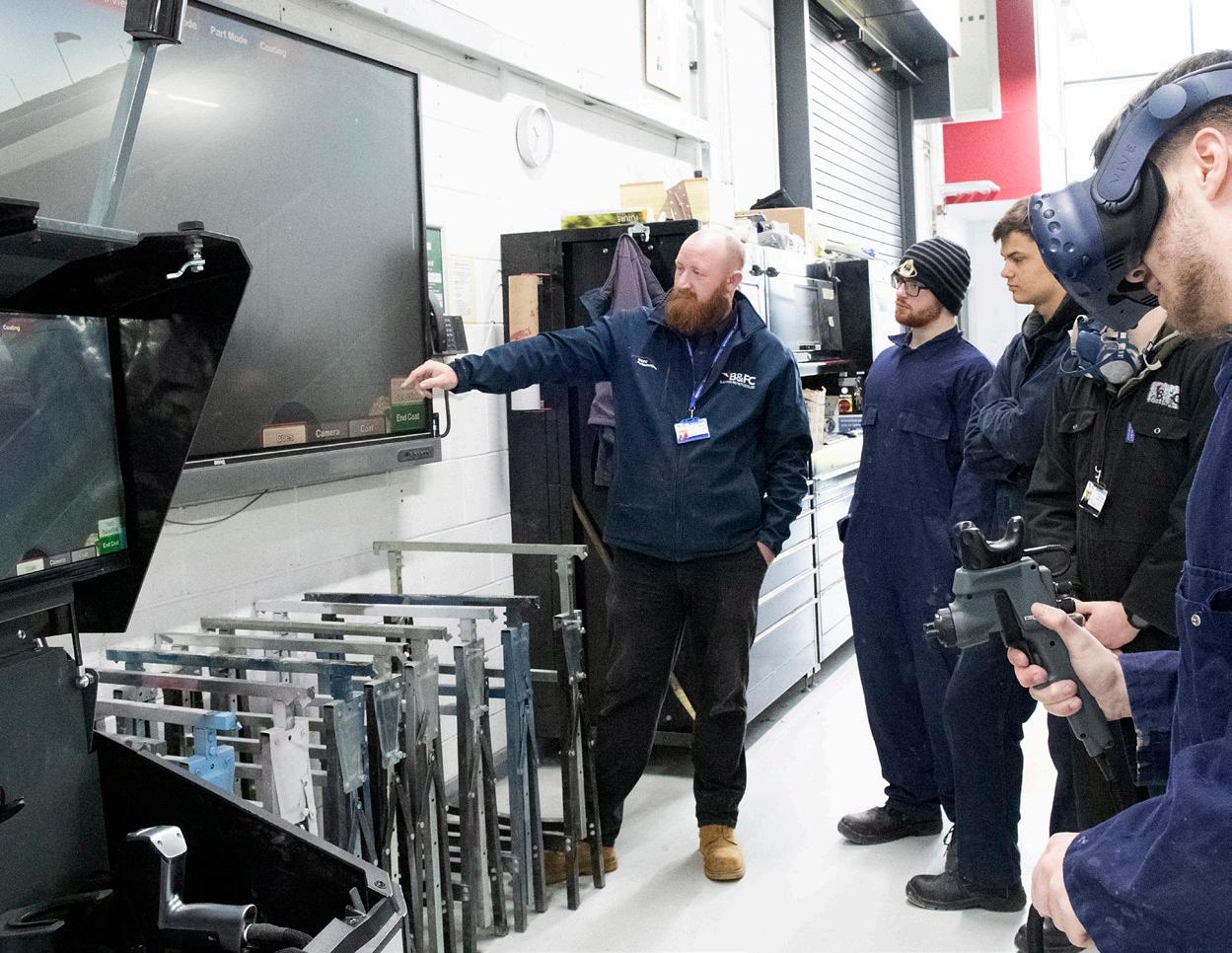
• Broaden the range of academic, technical and vocational provision, including specialist and higher level courses.
• Strengthen teaching resources and specialist facilities through shared expertise and investment.
• Improve progression pathways from entry level learning through to Levels 4 and 5, higher education, apprenticeships and employment.
This was seen as particularly valuable for coastal and peripheral communities, where local access to high quality provision has a strong impact on aspiration and outcomes – and breaking down barriers to participation for learners of all ages.
Stronger Alignment with Employer and Workforce Needs
Many consultees – especially employers, local authorities and strategic bodies – emphasised workforce and economic benefits, including:
• Improved ability to respond to local and regional labour market needs through aligned curriculum planning.
• A stronger, more coordinated approach to meeting skills shortages.
• Enhanced work readiness of learners, benefiting both employers and the local economy.
This alignment was seen as essential to supporting economic growth and productivity across South Cumbria and Lancashire.
Major Strategic Advantages in Key Sectors
The merger was widely viewed as particularly beneficial in priority sectors, notably:
• Defence and security, including links to BAE Systems (Air and Submarines), national defence programmes, and the National Cyber Force.
• Engineering, clean energy (nuclear and wind), construction, health and social care, tourism and maritime industries.
• Respondents noted that combining assets across both colleges would create a more coherent and nationally significant skills pipeline. This included support for the proposed Defence Technical Excellence College which was announced by the Ministry of Defence during the consultation.
Improved Employer and Industry Engagement
Stakeholders identified opportunities to:
• Deepen strategic partnerships with major employers and their supply chains.
• Strengthen collaboration through business advisory boards, focused employer forums, and joint curriculum design.
• Offer a single, stronger institutional partner, improving responsiveness and consistency.
This was seen as beneficial for both large employers and SMEs across the region.
Stronger Support for Communities and Inclusion
Respondents highlighted shared community challenges and the benefits of scale, including:
• Greater capacity to engage disadvantaged and hard to reach learners, including those at risk of becoming or already NEET.
• Improved outreach and tailored provision for economically inactive adults.
• Sharing of good practice in community engagement, particularly in areas with higher deprivation.
• The merger was viewed as an opportunity to raise aspirations, participation and outcomes in coastal communities.
Enhanced Higher Education Pathways
Respondents noted that both colleges already work with the same university partners, such as Lancaster University and University of Cumbria.
The merger would:
• Enable a more strategic and coordinated higher education offer.
• Allow Furness College to expand and strengthen its HE provision with support from Blackpool and The Fylde College’s experience.
• Ensure HE provision is complementary, employer aligned, and progression focused.
Sharing Expertise, Resources and Best Practice
Internal and external stakeholders identified benefits from:
• Sharing knowledge, leadership capability, and operational expertise
• Greater resilience through shared systems, governance and quality improvement support.
• Opportunities for staff collaboration and cross college learning.
This was seen as strengthening the overall quality and sustainability of provision.
Strategic Scale and Long Term Sustainability
Several respondents noted that the merger would:
• Create a more resilient and future proof organisation
• Improve the ability to secure funding, invest in facilities, and respond to national priorities.
• Strengthen the colleges’ collective voice in regional and national skills planning
Concerns and Comments
A number of concerns were raised during the consultation. While many respondents supported the merger in principle, these concerns focused primarily on how it will be implemented.
The colleges have carefully considered all concerns raised and how these will be addressed as part of merger planning and implementation. Below details the themes raised and the colleges’ responses.
Loss of Local Focus and Identity
• Reduce local autonomy and responsiveness, particularly for Furness and Barrow in Furness.
• Result in Furness becoming an “outlier” or secondary priority due to geographical distance from Blackpool.
• Lead to decisions being driven centrally rather than reflecting local needs, partnerships and context
The proposed new college ‘umbrella’ group would see both colleges retaining their longestablished, distinctive names, brand identities and curriculum specialisms to preserve the close links with the communities they serve.
That includes a strong commitment to local identity, responsiveness and place-based delivery across all campuses.
Furness College and 6th Form College will continue operating as a distinct and locally embedded campus, with its leadership, engagement activity and decision-making informed by local employer demand, community needs and regional priorities.
The new governance and operational structures will be designed to ensure that local intelligence and partnerships directly shape curriculum and service delivery, rather than being diluted through centralisation. In addition the College Board from merger date will include board members from the current Furness College Board.
The intention is not to reduce local autonomy, but to strengthen it through access to wider resources, expertise and investment
Risk to Existing Partnerships and Relationships
Several stakeholders were concerned about potential disruption to:
• Established employer and public sector partnerships, particularly where Furness College currently has bespoke agreements.
• Long standing working relationships with organisations whose arrangements differ from those held by Blackpool and The Fylde College.
There was a strong expectation that these relationships should be protected and actively managed, not unintentionally weakened by structural change.
Both colleges recognise the critical importance of their established partnerships with employers, public sector organisations and community stakeholders – particularly those that are specific to local areas.
A key principle of the merger is to protect and build upon these relationships, not disrupt them.
As part of implementation planning, there will be a structured review and transition process to ensure continuity of existing agreements, alongside dedicated relationship management to maintain confidence among partners.
The merger is expected to enhance these relationships by providing a single, stronger institutional interface, while retaining the flexibility to respond to local partnership arrangements.

Impact on Staff and Employment
Some respondents raised concerns that mergers are often associated with:
• Job losses, redundancies, or restructuring.
• Role duplication and possible outsourcing as part of “streamlining”.
This created anxiety about staff security, morale and the potential loss of experience and expertise.
The colleges acknowledge that mergers can create uncertainty for colleagues, and we are committed to open, transparent and timely communication throughout the process
There are no plans for large-scale redundancies arising directly from the merger, and the intention is to retain and build on the skills, experience and expertise of colleagues across both organisations.
Where changes to roles or structures are required, these will be managed through fair and supportive processes, with full engagement with trade unions.
The merger is expected to create new opportunities for professional development, collaboration and career progression within a larger and more resilient organisation.

Oversight of Specialist and Niche Provision
Concerns were expressed that:
• Specialist or niche courses, particularly maritime provision, could be deprioritised or under resourced.
• Such provision might be viewed primarily as a revenue source rather than being developed for quality and long term sustainability.
Respondents stressed the need for strong oversight to ensure specialist areas continue to deliver meaningful outcomes.
In considering the proposed merger, both colleges recognised the strategic importance of specialist and niche provision – including maritime and other sector-specific courses – to both our local economies and national priorities.
These areas will continue to be actively supported and subject to strong academic and operational oversight
The merger provides an opportunity to strengthen these areas through shared expertise, investment and alignment with key sectors, ensuring they remain high-quality, sustainable and responsive to employer needs. An example of this strength is the recent confirmation of Defence Technical Excellence College status that was awarded during the public consultation.
Decisions regarding provision will continue to be informed by quality, outcomes and strategic relevance, rather than short-term financial considerations. The College also has a community requirement which is reflected in the accountability agreement.
Quality and Consistency of Provision
Some responses highlighted worries about:
• Whether the merger would maintain or improve quality consistently across all sites.
• The risk that attention could be diverted away from already high performing areas while quality issues elsewhere are addressed.
There was particular sensitivity around ensuring that any required quality improvement does not negatively affect existing strengths.
Maintaining and improving the quality of provision across all campuses is a central objective of the merger.
The combined organisation will benefit from shared quality assurance systems, leadership oversight and improvement expertise, enabling greater consistency while recognising and protecting existing areas of strength.
Any quality improvement activity will be carefully managed to ensure it does not detract from high-performing provision. Instead, the intention is to raise standards across all areas, using best practice from both colleges to support continuous improvement and to “unite the very best strengths” of both colleges.
During the past 12 months specific improvements, underpinned by a systematic and structured approach to pedagogy have been implemented at Furness College alongside the engagement of additional resource. This has resulted in improvements to the quality at Furness College. These improvements have been noted by both the Further Education Commission Team and confirmed in the latest Ofsted inspection. A quality improvement plan remains in place at Furness College and will continue to be monitored.
A Level Provision and Learner Choice
A specific concern emerged regarding:
• The future of A level provision at Furness College.
• The importance of preserving genuine choice between academic and technical pathways, particularly in South Cumbria where alternatives may be limited. Respondents indicated concern that changes to A level delivery could unintentionally disadvantage local learners.
The colleges recognise the importance of maintaining broad and balanced learner choice, including access to both academic and technical pathways and opening up opportunities to new qualifications such as T and V Levels.
There are no plans to remove A-level provision at Furness College and its future will be considered as part of a strategic review of curriculum aligned to local demand and learner progression opportunities.
Protecting meaningful choice for learners in South Cumbria will remain a priority, ensuring that young people can access high-quality pathways that meet their aspirations and local needs
Student and On the Ground Engagement
Some respondents felt there was a risk that:
• Engagement could become overly centralised or remote, with insufficient presence on the Furness campus.
• Decisions might be made without enough direct input from students and frontline staff.
There was a clear call for visible leadership, in person engagement, and continued listening to learners and employees on site.
The merged college is committed to maintaining strong, visible and locally present leadership and engagement across all campuses
Engagement with students and colleagues will not be centralised at the expense of local presence – there will be a focus on regular, in-person engagement and active listening at both colleges.
Structures will be established to ensure that learner voice and frontline insight can inform decision-making, supported by ongoing forums, feedback mechanisms and direct engagement with leadership. The aim is to strengthen, not weaken, the connection between decisionmakers and those delivering and experiencing education on the ground.
These responses will continue to be
developed and refined as part of detailed implementation planning going forward: including ongoing engagement with stakeholders.



Community Engagement
As part of the consultation exercise respondents were asked for suggestions on how the merged college might improve its engagement with the community.
The key themes from these responses are summarised below:

Maintain Strong Local Presence and Identity
• Retain a visible, empowered engagement function at Furness College rather than relying on a centralised team based in Blackpool.
• Ensure decision making remains informed by local intelligence, employer demand and community need
• Protect and strengthen Furness’s local identity so it does not feel like an “outlier” within a larger organisation.
Deepen Employer and Business Engagement
• Establish a Business Advisory Board to shape curriculum, skills priorities and workforce planning.
• Build on existing strong relationships with anchor employers (e.g. defence, advanced manufacturing, health).
• Use the merger to share labour market intelligence and employer connections across regions, but still tailor responses locally.
Strengthen Outreach, Listening and Face to Face Engagement
• Hold in person listening forums for employers, parents, students and community groups.
• Increase campus-based engagement: senior leaders and engagement staff should regularly visit sites, speak directly to students and staff, and be visible in the community.
• Avoid over reliance on remote or online engagement methods.
Improve Engagement with Young People, NEETs and Adults
• Place a strong focus on:
- Young people at risk of becoming NEET
- Those who are already NEET
- Disengaged and economically inactive adults
• Use flexible delivery, tailored pathways and outreach activity to re engage harder to reach groups.
• Share good practice between Blackpool and Furness in engaging disadvantaged coastal communities.

Clear Progression Pathways and Aspirational Routes
• Develop clear, visible pathways:
• School u College u Employment / Apprenticeships / University
• Strengthen the link between courses and real jobs, supported by labour market intelligence and LSIPs.
• Improve information, advice and guidance (IAG) so learners and parents can make informed choices.
• Raise aspirations by showing learners attainable routes into high value employment and higher education.
Cross Regional Collaboration and Shared Initiatives
• Treat engagement initiatives as cross regional, enabling:
• Shared outreach and recruitment activities
• Joint community programmes
• Student and staff exchanges (e.g. “day in the life” experiences across campuses)
• Enable learners from Blackpool & Fylde to engage with opportunities in Furness and vice versa, especially where workforce demand is high.
Partnership Working with Public, Health and Voluntary Sectors
• Work closely with:
• Local councils and strategic authorities
• Health partners (e.g. NHS, Integrated Care Boards)
• VCFSE organisations
• Embed collaboration with programmes such as Get Lancashire Working and Get Cumbria Working, particularly to address health and structural barriers to participation.
Raise Visibility and Aspirations in the Community
• Run shared community initiatives that:
• Raise awareness of education and training opportunities
• Challenge low aspiration
• Improve visibility of progression routes and success stories
• Position the merged college as the provider of choice for both academic and vocational pathways in Furness and The Fylde.
Summary and next steps
The Corporations are grateful for all responses received during the consultation process.
The Corporations have taken account of the views of students, parents/carers/guardians, staff, the community, and other stakeholders, and have concluded that proceeding with the merger is in the best interests of both colleges and the communities they serve.
Both colleges are therefore committed to merging on the proposed date of 1 August 2026.
On the date of merger, all assets and liabilities of Furness College will transfer to Blackpool and The Fylde College
The merger pages on both colleges’ websites will be kept up to date with progress.
The following email addresses can continue to be used to contact the colleges for any merger-related enquiries: merger@furness.ac.uk and merger@blackpool.ac.uk
Blackpool and The Fylde College
Bispham Campus