
designing in plural concevoir au pluriel
Designer an D client on a quest for roots a uteur D e projet et commanD itaire à la recherche D es racines
s earching for architecture without ‘i Dentity’ but with ‘roots’ in a globaliseD worl D en quête D’une architecture sans ‘i Dentité’ mais Dont les ‘racines’ sont ancrées D ans un monDe globalisé
international experience at buro ii & archi+ i e xpérience internationale au sein D e buro ii & archi+ i
inter D isciplinary cultural platforms p lates-formes culturelles inter D isciplinaires
a rchitecture as a cultural transformer l’architecture comme transformateur culturel
Our firm’s basic vision always refers to the multidisciplinary approach as a guiding principle. This integrated process is characterised by bringing together the right players, each with his or her specialised knowledge, in order to raise the project to a higher plane. We remain convinced that this approach is the right one for addressing present and future spatial challenges.
Within our large team of different people and disciplines, plus our external partners, each with a distinct background and vision, we have observed an additional aspect. It is not only the person’s specialisation that determines his or her way of looking at a certain problem, but also the person’s cultural background. This is even clearer in projects where in Belgium or abroad we cooperate with foreign partners. The other person inputs not only specific knowledge, but also a personal view of the world.
It may appear to be stating the obvious to say that this ‘new view’ usually adds value to major international projects. But are we talking about importing a different vision or culture?
Or rather an addition, something that transcends the ordinary by adding fresh and enriching elements, but without rejecting the original or the local?
How can we leverage our international experience to create added value in our everyday work here in Belgium as well?
What role is played by our own employees, who include people of different nationalities and cultural backgrounds (18 nationalities so far)? Can we use their ‘different view’ in our projects to impart new insights to ourselves and perhaps also to our clients?
Can we form an impression of what the added value of a Belgian firm is (or can be) in another country? And conversely what do we – and above all the clients – expect in the way of added value from a foreign firm who we invite to Belgium?
Dans la vision fondamentale de notre bureau, nous préconisons toujours une approche multidisciplinaire en tant que point de départ; un processus intégré qui se caractérise par le regroupement des acteurs adéquats, chacun avec sa propre connaissance du métier, pour élever le projet à un niveau supérieur. Nous restons convaincus que cette approche est la bonne pour relever les défis urbanistiques actuels et futurs.
Au sein de notre vaste équipe composée de personnes et de disciplines variées, complétée par des partenaires externes, chacun ayant leur propres vécu et vision..., nous constatons qu’un aspect supplémentaire entre en compte. Ce n’est pas seulement la spécialisation de l’intéressé qui détermine son regard sur une problématique particulière, mais aussi ses antécédents culturels. Ceci est encore plus nettement visible dans des projets de collaboration avec des partenaires étrangers en Belgique ou à l’étranger. Chacun apporte non seulement une connaissance spécifique, mais aussi sa propre vision du monde.
En ce qui concerne des projets de plus grande ampleur à l’étranger, il semble évident d’affirmer que ce ‘regard neuf’ constitue généralement une plus-value. Mais s’agitil d’importer une autre vision ou culture? Ou s’agit-il plutôt d’un ajout, du dépassement du quotidien en y intégrant des éléments neufs et enrichissants, sans pour autant rejeter l’originel ou le local?
Comment pouvons-nous mettre ici nos expériences étrangères à profit pour également générer une plus-value dans le fonctionnement quotidien? Et quel rôle jouent nos propres collaborateurs internes – qui sont également de nationalités et d’origines culturelles variées (18 à présent)? Pouvons-nous utiliser leur ‘autre regard’ dans les projets pour nous apporter, et peut-être aussi à nos maîtres d’ouvrage, de nouvelles connaissances?
Pourrions-nous avoir une idée de la plus-value d’un bureau belge à l’étranger? Et inversement, qu’attendons-nous, et les maîtres d’ouvrage surtout, comme plus-value d’un bureau étranger invité chez nous?
The quest for added value is always the central consideration, for the designers, for the process, and above all for the clients and end-users/occupants. How can we establish a supported strategy for spatial design within a globalising world, with respect for and input from different types of knowledge, cultures and insights?
These are the questions that we address in this issue. Together with our employees and some foreign partners, we embark on a search for possible answers. But as is so often the case, this is merely a stepping stone towards a wider question and a broader debate.
La quête de plus-value est de ce fait toujours centrale: pour les concepteurs, pour le processus, mais surtout aussi pour les maîtres d’ouvrage et les utilisateurs finaux/occupants. Comment pouvons-nous parvenir à une stratégie soutenue de conception spatiale dans un monde globalisé, en respectant et en bénéficiant de différentes formes de connaissance, de culture et d’intelligence?
Ce sont toutes ces questions que nous abordons dans ce numéro. Avec nos collaborateurs et un certain nombre de partenaires étrangers, nous avons recherché toutes les réponses possibles. Mais comme souvent, cela débouche sur des questions encore plus vastes et amène un débat bien plus large.
r ita a gneessens
CEO, partner architect - urban planner
r ita a gneessens
CEO, partenaire architect - urban planner
Designer anD client on a quest for roots m arc s antens
auteur De projet et comman-
Ditaire à la recherche Des racines
m arc s antens
These days citizens can hardly ignore the international and even global climate which influences our lives. Likewise each concept and each design by architects and designers today exist within an integrated concept which transcends the local level. Whether you like it or not one’s own culture as a starting point for the design process is no longer an evidence. Instead this certainty has made way for a quest for what can be called the roots of culture. While culture does not provide an answer to or confirm our expectations it is a permanent flow of questions which, among other things, help confer added value to today’s architecture. Architecture itself is not international, however the quest to design architecture has become an international and a global process. This realisation and this challenge are irreversible because, for example, architecture competitions are increasingly organised in an international context and because clients and principals tend to increasingly interpret and define their own role as principal based on an international reflex. The most important conclusion in this frame is that culture is no longer an unambiguous concept. Just as we speak of multiple religions and ideologies, we need to live with this multitude of cultures. And we can no longer casually confront this diversity with our own culture.
The design process no longer takes place within the evidence of one’s own world but within the challenge of a diversity. This principle applies not only to the designer, but first and foremost to the client. The designer and the client alike face the challenge of searching for the cultural added value of architecture in our present-day society and in the future. And that is why it is crucial that the designer and the client embark on this quest together. In this frame architecture cannot position itself as a common good that is superior to culture by only positioning the designer’s own approach as a cultural answer to a specific question.
The social basis and continuity of architecture are founded on three main aspects: a place to live, a place for culture and a place for the community. And these three cornerstones provide the actual base for a de facto continuity and for cultural diversity. While it is true that specific buildings, such as theatres, museums, churches, etc. are important and continue to serve as anchors of our “changing culture” in the frame of this continuity, these buildings are an exception to the rule. These exceptions must not limit architecture‘s role in society. We need urgently to search for new ways of correctly analysing a designer’s own cultural interwovenness when creating a design as well as confronting it with the value of other cultures. Simply put one could say that this
Si pour les citoyens il n’y a pas d’échappatoire à l’influence qu’exerce l’internationalisation, voire la mondialisation, sur notre vie quotidienne, il en est de même pour les projets des architectes et auteurs de projets qui s’inscrivent dans un contexte intégral dépassant largement le niveau local. Qu’on le veuille ou non, l’évidence de sa propre culture comme point de départ pour la conception d’un projet est dépassée. Cette certitude a cédé la place à la quête de ce que l’on pourrait qualifier comme les origines de la culture. En effet, la culture n’est pas une réponse à nos souhaits, ni une confirmation de nos attentes, mais un courant permanent de questions qui finissent par donner une plus-value, entre autres, à l’architecture d’aujourd’hui. Ce n’est pas l’architecture qui est internationale, mais le processus de recherche qui mène à l’architecture, lui, s’est internationalisé et globalisé. Cette réalisation et ce défi sont irréversibles, d’abord parce que les concours d’architecture se déroulent de plus en plus dans un contexte international, et ensuite parce que les commanditaires et maîtres d’ouvrage vont davantage interpréter et définir leur propre rôle à partir d’un réflexe international. La principale constatation qui découle de tout ceci est que la culture n’est plus une notion univoque. À l’image de la multiplicité des religions et idéologies, on doit également se faire à une multitude de cultures; et la confrontation de cette diversité avec la culture personnelle ne peut pas se faire sans engagement.
Le processus de conception ne se déroule plus uniquement dans l’évidence de l’environnement personnel, mais il brave la diversité. Cela vaut non seulement pour l’auteur de projet, mais aussi et principalement pour le commanditaire. Tous deux sont mis au défi de rechercher la plus-value culturelle de l’architecture dans la société d’aujourd’hui et de demain. C’est pourquoi il est essentiel que l’auteur de projet et son commanditaire poursuivent conjointement cette recherche. L’architecture ne peut pas se positionner au-dessus de la culture en tant que bien commun en présentant uniquement l’approche de l’auteur de projet comme étant une réponse culturelle à une question spécifique.
La qualité sociale et la continuité de l’architecture reposent entre autres sur trois données: un lieu de vie, un lieu de culture et un lieu de communauté. Ces trois valeurs fondamentales forment la base d’une réelle continuité et de la diversité culturelle. Il est vrai que dans cette continuité certains bâtiments spécifiques comme les théâtres, musées, églises, etc. ont leur importance et demeurent un point d’ancrage de la ‘culture en évolution’, mais il s’agit d’exceptions. Ces exceptions ne peuvent pas diminuer le
analysis has to focus on the relationship between the three angles: the characteristics of the location, whether available to architecture or not, the roots of our own cultural tradition and the value of other cultural traditions. After all it is the design process which conglomerates these three angles in a project, allowing architecture to create added value for daily life, for culture and the community. Whether one is building in Flanders or in China, in Europe or in Asia, each design process requires a thorough analysis, which takes into account these three angles in an evolving and international thinking process. So international designs are not a specific mission alongside local designs. Rather they are a methodical approach which underpins each design process - whether local or global – without being limited to it.
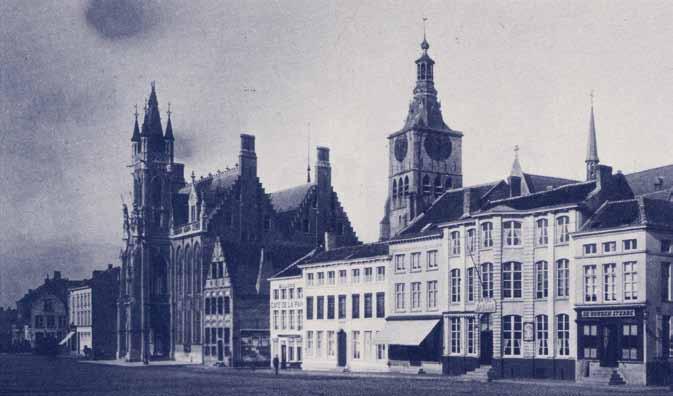
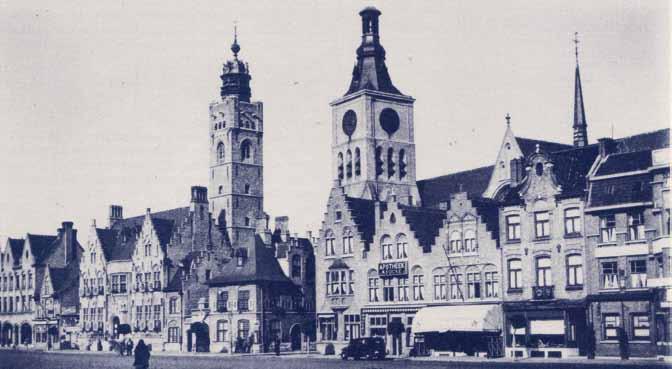
The emphasis is not on the demand for a national identity which is defined by borders but on the quest for the cultural roots which have infected the client as well as the designer so they can approach society with their own viewpoints. It was this search for one’s own viewpoint and experience which prompted the conversations with our colleagues starting from their various cultural backgrounds instead of their specific nationality. Culture only really lives when it asks those questions that are not covered by other disciplines or when evidences are replaced with astonishment. Unfortunately the fear for the culture of loss often provides bad council in this frame. Our medieval façades in Brussels, Ghent, Bruges and Antwerp have become our trusted reference points in terms of architecture having its own identity. As such losing this tradition would also mean losing our identity. This approach is still apparent in the many buildings which were built during the reconstruction after the First World War. At the time this approach was diametrically opposed to plans which advocated a radical break with the past and with tradition as a condition, considering it an added value for change. Maybe this contrast can help us adopt another viewpoint about the internationalisation of architecture and the quest for an architectural identity or style.
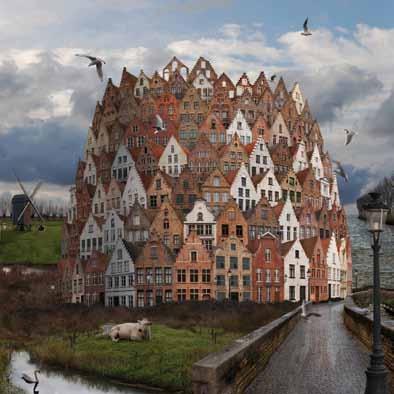
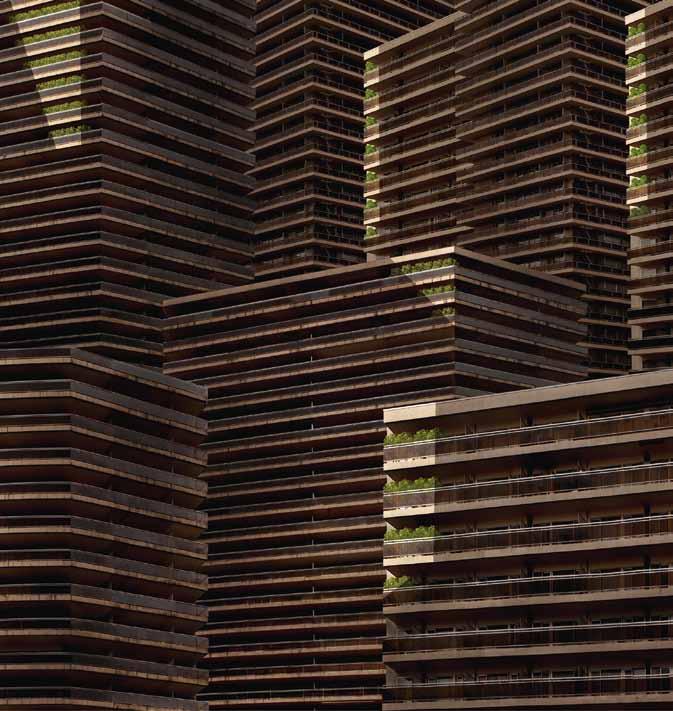
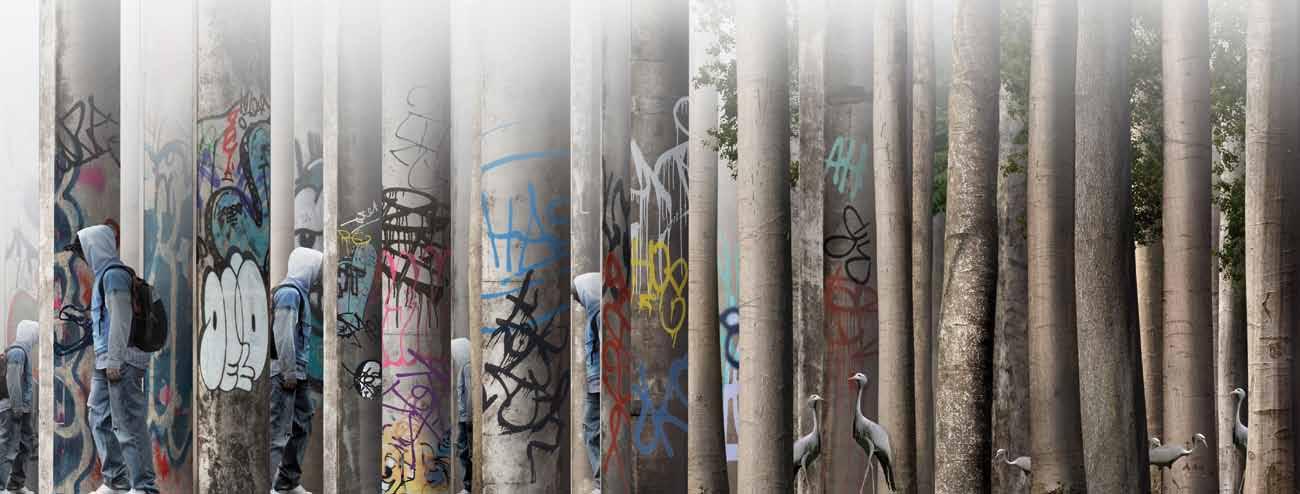
The big difference is, however, that at that time the break with or maintenance of the past as a source of inspiration served as a guarantee for the future. Today the individuality of culture in confrontation with the multiplicity of cultures, offers the perspective of continuous change. In a cultural sense this new challenge is much more complicated than that of the reconstruction. Complexity and cultural ambiguity, along with sustainability, are the challenges for tomorrow. To visualize these perspectives in an autonomous manner and strengthen the ‘imag(e)’ination we have decided for this issue to draw on the artistic photographic work of Eric De Ville. Insight can only be gained over time through an intense group project with the various partners in which the evidences of the cultural traditions can no longer be used as a guideline for a design approach. To this end designers and clients are, on a global level, no longer competitors. Instead they have become partners who share their experience and their adventure as well as collectively defining and legitimating the architectural added value. Consequently formulating the project definition in effect becomes a cultural quest, involving the client and the designer, whereby the future of and the accountability for the design provide the necessary basis for the built environment, culture and community. This is an intense process, which requires much more time and
rôle de l’architecture dans la société. Il est urgent que nous recherchions de nouvelles façons d’analyser correctement l’implication culturelle de l’auteur de projet dans l’élaboration d’une architecture tout en la confrontant avec les valeurs d’autres cultures. En simplifiant, nous pourrions prôner que cette analyse doit approfondir la relation entre les trois perspectives: la particularité du lieu, disponible ou non pour l’architecture, les racines de notre propre tradition culturelle et la valeur des autres traditions culturelles. Le développement du projet réunit justement ces trois éléments fondamentaux afin que l’architecture puisse offrir une plusvalue à la vie quotidienne, à la culture et à la communauté.
Que l’on construise en Flandre ou en Chine, en Europe ou en Asie, chaque approche architecturale nécessite une analyse approfondie qui tienne compte de ces trois éléments dans un processus de réflexion international en évolution. Créer au niveau international n’est donc pas une mission distincte de celle de créer au niveau local. Tant au niveau local que mondial, il s’agit d’une approche méthodique qui guide chaque processus de création sans s’y confiner.
La question essentielle ici n’est pas l’identité nationale définie par les frontières, mais bien la recherche des origines culturelles qui ont contaminé tant l’auteur de projet que son commanditaire dans leur approche de la société. Cette recherche de la vision personnelle et du vécu formait la clé des discussions avec les participants, sur base de leur milieu culturel et non sur celle de leur nationalité spécifique. La culture n’est vraiment vivante que lorsqu’elle pose les questions qui ne sont pas abordées dans les autres disciplines et lorsqu’elle substitue l’étonnement à l’évidence. Hélas, la crainte de la perte de cette culture est mauvaise conseillère. Nos façades médiévales à Bruxelles, Gand, Bruges et Anvers sont des points de référence familiers pour parler de l’identité de notre architecture. La perte de cette tradition équivaudrait à la perte de notre identité. Cette approche se lit encore toujours dans les nombreux bâtiments érigés dans le cadre de la reconstruction après la première Guerre Mondiale. Elle était diamétralement opposée à la planification qui prônait une rupture radicale avec le passé comme une condition de changement et une plus-value. Peut-être cette contradiction nous permet-elle de poser un regard différent sur l’internationalisation de l’architecture et la recherche d’une identité ou d’un style architectural.
La grande différence réside dans le fait que la rupture avec le passé ou justement la conservation du passé était source d’inspiration pour assurer l’avenir. Actuellement, la spécificité de la culture confrontée à la multiplicité des cultures offre la perspective du changement dans la continuité. D’un point de vue culturel, ce nouveau défi est bien plus complexe que celui de la reconstruction. La complexité culturelle et l’ambiguïté culturelle constituent, avec la durabilité, les défis de demain. Afin de visualiser ces perspectives de manière autonome et de renforcer l’imagination, nous avons cette fois choisi de nous pencher sur le travail photographique artistique d’Eric De Ville. La compréhension ne peut naître qu’au travers d’un trajet ardu parcouru avec les différents partenaires et lorsque les évidences des traditions culturelles ne constituent plus la base de l’approche d’un projet de construction. Dès lors, les auteurs de projets et commanditaires à travers le monde ne seront plus des concurrents mais des partenaires
intensity than drawing up a building programme, but at the same time it is a prerequisite for quality.
Maybe we can hereby search for a way in which the government and clients can provide support for these intense work processes, given that the required time, the organisation and the financial aspect often transcend the designers’ scope.
This issue is an invitation to share experiences, value collaborations and innovate the design process.
soucieux de partager leur expérience et leur aventure tout en étayant et légitimant collectivement leur recherche pour atteindre une plus-value architecturale. Ainsi, établir la définition d’un projet devient en fait une quête culturelle conjointe du commanditaire et de l’auteur de projet pour parvenir à un projet qui assume et apporte une contribution à l’environnement bâti, à la culture et à la communauté. Si ce processus est intense et nécessite plus de temps et d’intensité de travail que l’établissement d’un programme de construction, il constitue cependant une condition à la qualité.
Peut-être s’agit-il maintenant de déceler de quelle façon les autorités et les commanditaires peuvent encourager ces processus de travail intenses étant donné que cette approche dépasse l’emploi du temps, l’organisation et la capacité financière des auteurs de projet.
Ce numéro est une invitation au partage d’expériences, à la valorisation de la collaboration et à l’innovation dans le processus de conception.
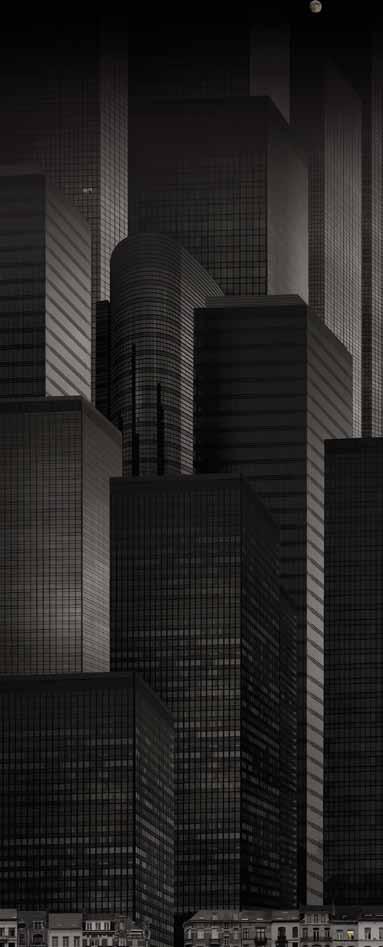
searching for architecture without ‘iDentity’ but with ‘roots’ in a globaliseD worlD
herman j ult
In her work entitled “Mijn leven is mooier dan literatuur. Een kleine filosofie van het schrijverschap” (My life is more beautiful than literature. A small philosophy of writing), Dutch writer and poet Jannah Loontjens writes about the compulsion for originality. This is a contemporary phenomenon, because it has not always been like that. Everybody wants to be unique, original.
This 5th edition of Alert searches for the building blocks that foster architecture with its own recognisability, but unfettered by a closed identity. In the unyielding globalisation process that unfolded in all fields notably after World War II, architecture began to speak a simple universal language. Step by step, locally inspired style features or specific design and construction methods were set aside to make way for what is popularly called ‘modern’ architecture.
The baby boom period saw predominantly drab, cheaplybuilt high-rise residential blocks grab attention for their all-pervading urbanistic sprawl – remember the spiralling polemic when the Amelinckx apartment blocks were built right next to the protected Begijnhof in Leuven? – at a time when this was almost the only reason why architecture made news. Later, however, this changed fundamentally, but almost unnoticed. With Europe once again prosperous, public buildings in particular began to attract attention. Architecture became a hot item. Cities endeavoured to put themselves on the global map by building expensive architectural icons that demanded the world’s attention.
French President François Mitterrand put Paris and himself on the map through major architectural projects that produced a fiery debate among the public at large. Things had once been different. Driven by culture minister Jack Lang, architecture moved into the classical ‘artistic domain’ via the back door, so to speak. Especially after the spectacular Guggenheim Museum, which attracted hordes of tourists to the unknown and slightly scruffy city of Bilbao, a race began to undertake all kinds of high-profile architectural projects, which soon became commonplace through the vehicle of the media and the Internet. Even in the present economic crisis, there are still places where the ‘Bilbao hype’ is not yet over.
In our present virtual design world, where everything is interchangeable and easy to copy, architects have summoned up new courage in their quest for originality and cultural embedment. They believe they can find it in what still remains of our local cultural uniqueness, a term all too easily confused with identity.
en quête D’une architecture sans ‘iDentité’ mais Dont les ‘racines’ sont ancrées Dans un monDe globalisé
herman j ult
Dans son livre: “Ma vie est plus belle que la littérature. Petite philosophie de la profession d’écrivain”, paru aux éditions De Boeken van de Buren, l’écrivaine et poétesse néerlandaise Jannah Loontjens parle de la contrainte de l’originalité. C’est un phénomène actuel, car Il n’en avait pas toujours été ainsi. Chacun se veut unique et original.
Dans ce 5 e numéro, Alert part à la recherche d’éléments qui pourraient contribuer à une architecture reconnaissable sans toutefois se confiner dans une identité fermée. Au cours du processus de mondialisation qui s’est intensifié sur tous les niveaux depuis la dernière guerre mondiale, l’architecture s’est progressivement servie d’un langage simple et universel. Les caractéristiques des styles d’inspiration locale ou les méthodes de construction et de conception spécifiques ont été abandonnés au fur et à mesure que l’architecture dite ‘moderne’ gagnait du terrain.
Pendant la période du baby-boom, de hauts immeubles à appartements banals et bon marché attiraient surtout l’attention par leur violence urbanistique – qui ne se souvient pas de la polémique qu’ont suscitée les fameux immeubles à appartements d’Amelinckx, surplombant le Grand Béguinage classé de Louvain? – et était à peu près la seule chose pour laquelle la presse parlait d’architecture. Par la suite, un changement fondamental s’est opéré. Dans une Europe qui renaissait de ses cendres, les nouveaux bâtiments publics commençaient à attirer l’attention. L’architecture devenait un sujet à la mode. En construisant de nouvelles icônes architecturales qui pesaient lourd sur leur budget, les villes tentaient de se distinguer et d’attirer l’attention mondiale.
Le président français François Mittérand mit Paris et luimême sous les feux de la rampe avec de grands projets d’architecture qui suscitèrent des débats véhéments auprès du public. Il n’en avait pas toujours été ainsi. Sous l’impulsion du Ministre de la Culture Jack Lang, l’architecture fit son entrée dans le domaine artistique classique par la grande porte. La construction du spectaculaire musée Guggenheim attira non seulement des flots de touristes dans la ville peu connue et un peu sale de Bilbao mais déclencha aussi une véritable course aux projets d’architecture spectaculaires, très vite encouragée par les médias et internet. Même en cette période de crise économique, nous nous devons de constater que l’engouement de Bilbao ne s’est pas encore tout à fait calmé.
Dans notre monde de conception virtuelle actuel, où tout est interchangeable et facile à copier, les architectes se lancent
The Bird’s Nest, the Olympic Stadium of the Beijing Olympics, will stand as a global symbol of China’s unstoppable international emergence. But does it really have much to do with local cultural uniqueness or with the Chinese identity?
It was undoubtedly a successful marketing ploy, one that with the aid of an ingenious international team of architects attractively packaged the new China, symbolising change and technological innovation. But can our far more modest everyday commissions be modelled along these lines?
Shouldn’t architecture for tomorrow reside in a perspective of ‘recognisability and usability for a longer duration’ rather than a perspective of fashion-dictated creative individuality? As a society, can we allow ourselves to saddle coming generations with an endless list of extravagant buildings and urban test projects, things that we are expected to cherish as monuments for their creative individuality? Is it not true that when everything looks roughly the same, the thing that looks different suddenly becomes more attractive and more interesting? But in what respect can architecture really and meaningfully differ? What are the building blocks that we are looking for? We notice – and not just in Flanders –that the most eye-catching projects are very often designed by ‘foreigners’. Do they formulate their architectural concept more incisively, or do they simply have a far better understanding of the local (or perhaps universal) needs and contexts?
Do ‘foreigners’ view our social and cultural environment differently, or do they have different design ideas or methods? What do they personally consider remarkably different when they come here to design and build, and how does this affect their architectural designs? Is it rooted in composition, style or functionality? Does a Dutchman always produce architecture that is recognisably Dutch, even in another country? Incidentally, it is interesting to note that when you work with the Dutch they sometimes speak in glowing terms about our lovely Belgian identity, something that we Belgians know for sure does not exist.
We thought it would be interesting to put this question to some foreign architects with whom we have worked in recent years and who are now working in our office. You can read the results further in this issue (pp. 31). We’d prefer not to get bogged down in clichés like: do Anglo-Saxon, Scandinavian, Southern, Mediterranean, German, Asian and similar concepts still have any relevance to architectural practice, or are they merely confirmation of preconceptions that have grown over the years? As Rem Koolhaas rightly noted, national identity was apparently sacrificed to modernism in the last century.
People who come to work in another country invariably bring their own culture, education, attitudes and interests with them. Their own roots, or the local surroundings and conditions of the place where they were born and raised, probably play a certain role in the process of confrontation and assimilation. But in the final analysis, is this also reflected in the architecture that they produce? We spoke with a number of own collaborators with international experience. We brought together colleagues who were born in Belgium but acquired a lot of experience abroad (Philippe
avec courage à la recherche d’un ancrage culturel et original. Ils pensent le trouver dans ce qui nous reste de notre culture, notion trop facilement confondue avec identité.
Ainsi, le ‘nid’ du stade olympique des Jeux de Pékin demeurera le symbole mondial de l’émergence internationale imparable de la Chine. Mais cela est-il dû à la spécificité culturelle locale ou à l’identité chinoise? Quoi qu’il en soit, ce fut un génial coup de marketing. Une équipe d’architectes internationale a réussi à créer une belle vitrine pour présenter la nouvelle Chine, symbole de changement et d’innovation technique. Mais cette approche peut-elle servir de modèle pour nos missions quotidiennes bien plus modestes?
L’architecture de demain ne doit-elle pas plutôt s’inscrire dans une perspective ‘d’identification et d’utilité à long terme’ et non dans une perspective d’exemplaires uniques de créativité? Notre société peut-elle se permettre d’accabler les générations futures de quantité d’immeubles extravagants et de projets qui se veulent des essais urbanistiques, que nous devrions choyer en tant que monuments en raison de leur unicité créative?
Alors que tout commence à se ressembler, n’est-il pas vrai que ce qui se distingue devient plus attrayant et intéressant?
En quoi l’architecture peut-elle dès lors faire la différence, en restant vraie et sensée? Quels sont les fondements que nous recherchons? Nous constatons que, non seulement en Flandre mais partout ailleurs, les projets les plus spectaculaires sont souvent construits par des étrangers. Sont-ils plus habiles à formuler leur concept architectural ou ont-ils des antennes spéciales pour mieux comprendre la demande et le contexte locaux (ou bien seraient-ils universels)?
Les étrangers posent-ils un autre regard sur notre environnement social et culturel ou disposent-ils d’autres méthodes ou intentions de création? Décèlent-ils eux-mêmes des différences lorsqu’ils viennent ici pour réaliser des projets de construction et quelles conséquences cela a-t-il pour leurs projets d’architecture: cela se situe-t-il au niveau de l’élaboration, du style ou du fonctionnel? Un Néerlandais construit-il toujours selon une architecture hollandaise reconnaissable, même à l’étranger? Notons d’ailleurs que les Hollandais qui travaillent ici s’émerveillent de notre identité belge, dont nous savons pertinemment qu’elle n’existe pas.
Il nous semblait intéressant de soumettre cette question à quelques architectes étrangers avec lesquels nous avons collaboré par le passé ou qui travaillent actuellement dans notre bureau. Vous en trouverez le compte-rendu dans ce numéro d’Alert (page 31). Nous préférerions ne pas nous attarder sur des clichés du genre: les notions anglo-saxonnes, scandinaves, méridionales, allemandes, asiatiques, … ont-elles encore une signification dans le domaine architectural ou confirment-elles uniquement les préjugés du passé? Rem Koolhaas remarque à juste titre qu’au cours du siècle passé l’identité nationale a été sacrifiée au profit de la modernité.
Toute personne partant travailler à l’étranger y emmène, qu’elle le veuille ou non, sa propre culture et formation, ses attitudes et intérêts. Les racines personnelles,
Brysse, Stijn Colpaert, Sven Van Loon) and we grouped a number of foreign colleagues who are currently working in our office in Brussels (Simone Chilese, Ilaria Gagliardi, Vera Christine Gerlach, Bogdan Saileanu). Currently we have eighteen nationalities among the designers in our firm. Every day they are confronted with our way of working, with the specific needs of our local clients and with the possibilities of our construction world. They help inspire the discussions and make an important personal contribution to the projects. We are curious to learn what they think of this apparent need for a local touch in architecture. What does this mean exactly and where can we find it in their architectural designs?
This direct confrontation of cultures – something we can happily say we thank to globalisation – permanently leads us to hold up a mirror to ourselves, obliging us to see who we are. What we consider to be obvious is questioned openmindedly. The craving for diversity and for new evolutions is ever-present. However, uniqueness does not actually receive very much explicit thought, as there is more likely to be experimentation by trial and error. After all, uniqueness is not always easily recognisable or definable. What is remarkable about multicultural designing is that it sometimes unexpectedly makes the invisible visible. Could it be that true uniqueness is all about this kind of invisibility?
Worldwide we face far-reaching ecological problems that require an exceptional and sustained joint effort by all disciplines, including architects, now and in the years ahead. We are already familiar with many aspects of this new story. One of the most striking is the awareness that standard building models are not the answer for highly diverse local climatic conditions. Research into building methods that for centuries have evolved sluggishly, using local materials and predicated on our own particular way of living, may contribute fundamentally to a better insight into the real building blocks of distinctive, recognisable architecture, stripped of everything superfluous, yet usable by everybody for a long time.
l’environnement et les circonstances dans lesquelles nous naissons et évoluons jouent indéniablement un rôle dans le processus de confrontation et d’assimilation. Mais cela laisse-t-il des traces dans l’architecture réalisée? Nous en avons parlé avec quelques-uns de nos propres collaborateurs qui ont résidé dans d’autres pays. Nous avons rassemblé ces collègues nés en Belgique mais ayant travaillé à l’étranger (Philippe Brysse, Stijn Colpaert, Sven Van Loon) et quelques collègues étrangers qui travaillent actuellement dans notre bureau à Bruxelles (Simone Chilese, Ilaria Gagliardi, Vera Christine Gerlach, Bogdan Saileanu). Nous comptons actuellement dix-huit nationalités parmi les auteurs de projets de notre bureau. Au quotidien, ils sont confrontés à notre façon de travailler, aux besoins spécifiques de nos clients locaux et aux possibilités qu’offre notre monde de la construction. Ils inspirent les discussions et ont un apport considérable dans nos projets. Nous sommes curieux de connaître leur perception de ce besoin manifeste d’une touche locale en architecture. Comment peut-on la définir et où la retrouve-t-on dans leurs projets d’architecture?
Cette confrontation directe des cultures – que nous devons aussi et heureusement à la mondialisation – nous tend en permanence un miroir dans lequel notre image se reflète. Ce qui pour nous est évident est remis en question sans préjugés. Cela nous pousse sans cesse à diversifier et à évoluer. Cependant, si nous ne nous attardons guère explicitement sur cette identité, elle est plutôt approchée de façon expérimentale. En effet, si la spécificité propre à chaque culture n’est pas toujours identifiable ou définissable, nous remarquons que dans les projets multiculturels, l’invisible surgit quelquefois de manière surprenante. Dès lors, la spécificité ne serait-elle justement pas cet aspect invisible?
Sur le plan mondial, nous sommes confrontés à des problèmes écologiques sérieux, qui demandent et demanderont davantage d’efforts collectifs exceptionnels et continus, également de la part des architectes. Beaucoup d’aspects de cette nouvelle histoire nous sont familiers. Nous savons, par exemple, que les modèles de construction standards ne constituent pas une solution applicables dans toutes les circonstances climatologiques. L’étude des modes de construction locaux qui ont évolué lentement au fil des siècles et qui font appel aux matériaux régionaux et qui se réfèrent à un mode de vie spécifique, peut contribuer à une compréhension essentielle des fondements de notre propre architecture, dénuée de tout superflu, utile et durable.
s ofie Vandelannoote
The central question we asked a number of our colleagues was the following: “Starting from your own cultural background, which things still amaze you when working on projects in Belgium or abroad and which things do you easily assimilate? What is typically Italian, Belgian, English, etc. and do you notice this in the projects on which you are working?”
“You were asking about cultural differences between people. Our generation is an Erasmusgeneration, we studied abroad and we are used to working with people of different cultures. It’s normal for us.” (Simone)
1. Social-cultural background
Cultural differences have an immediate impact on the design process. Firstly you need to understand how people live and how buildings can be designed.
“The culture is different. The way that people use a building is different. I had to learn (about) the Belgian culture and to understand their need of privacy. That’s maybe different in my culture. It’s more about the social aspect, it’s not a technical thing. We use the same material, due to the globalization we have more or less the same background. I come from a city where people really live on top of each other, no privacy, the street is being used as their own place. Here in Belgium it’s completely different. They have their little garden, they really take care of the privacy, they will not sleep in a bedroom looking onto the streets.”(Ilaria)
“We were working on the prison, nobody was aware of prison life before, it’s about how they live together. It’s the same. Being a foreigner, maybe we can bring something of our culture to propose a new way of using the building, to live, to use the architecture.” (Ilaria)
A project starts with a certain programme. What may seem evident in a country like Belgium may elicit amazement in other cultures. This relates to the programme as well as to the way in which people of different ages may or may not “live together”.
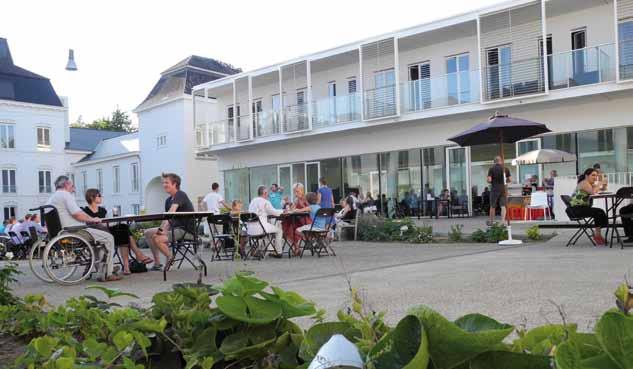
“It’s about the program. For example elderly care in Belgium and in Italy. In Belgium, they group the elderly in big buildings. In Italy, such a program would never work: the grandparents take a place in the family. You cannot
s ofie Vandelannoote
La question principale que nous avons posée à quelques collègues était: “En vous basant sur votre milieu culturel, qu’est-ce qui vous étonne encore toujours lorsque vous réalisez des projets en Belgique ou à l’étranger et quelles sont les choses que vous assimilez facilement? Que définissezvous comme étant typiquement italien, belge, anglais, … et ces aspects transparaissent-ils dans les projets auxquels vous travaillez?“
“You were asking about cultural differences between people. Our generation is an Erasmusgeneration, we studied abroad and we are used to working with people of different cultures. It’s normal for us.” (Simone)
1. Milieu socioculturel
Les différences culturelles ont un impact immédiat sur la conception d’un projet. Il s’agit d’abord et avant tout de comprendre comment l’on vit et comment les bâtiments peuvent être conçus.
“The culture is different. The way people use a building is different. I had to learn (about) the Belgian culture and to understand their need of privacy. That’s maybe different in my culture. It’s more about the social aspect, it’s not a technical thing. We use the same material, due to the globalization we have more or less the same background. I come from a city where people really live on top of each other, no privacy, the street is being used as their own place. Here in Belgium it’s completely different. They have their little garden, they really take care of the privacy, they will not sleep in a bedroom looking onto the streets.”(Ilaria)
“We were working on the prison, nobody was aware of prison life before, it’s about how they live together. It’s the same. Being a foreigner, maybe we can bring something of our culture to propose a new way of using the building, to live, to use the architecture.” (Ilaria)
Tout projet commence par un programme bien défini. Ce qui est l’évidence même en Belgique étonnera dans d’autres cultures. Il s’agit d’une part du programme, mais aussi du mode de ‘cohabitation’ des différentes générations.
“It’s about the program. For example elderly care in Belgium and in Italy. In Belgium, they group the elderly in big buildings. In Italy, such a program would never work: the grandparents take a place in the family. You cannot
think about this in Italy. Maybe it can work in the future in Italy, for example Triamant in Velm.” (Simone)
“This is also what I see in apartment investment projects. Here elderly people often sell their house to go and live in an apartment. This is not so common in Germany. In Germany, you stay in your house, even when your house is becoming “too big” for two. As the extended family is often not living in the same city, the parent’s house becomes a central place to meet up with the whole family of children and grandchildren. There are also memories connected to the house… This is very strange in Belgium. Also the young people are buying a house very early, it creates another idea of living, it’s less flexible. It’s very different from Germany. Very early you decide already. Maybe it depends if you’re from a bigger city, a small town or from the countryside - I don’t know...” (Vera Christine)
Belgium is a small country, with relatively small architectural offices and relatively small projects. Today Belgium does not really have a tradition in terms of the collective organisation of living.
“Working in bigger offices is different. There is this tendency to high rise in the residential sector: in Belgium people are so scared of the high rise. You can actually save a lot of nature. It’s village thinking in Belgium. The church is the highest building in the village.” (Bogdan)
“If you look at Bjarke Ingels’ buildings in Copenhagen not many Belgians would want to live there. In Denmark they have a tradition of living in apartment buildings. We have a problem with this, something we inherited from the Sixties. Collective organisation has certain advantages, both financial as well as spatial. Few non-architects have much belief in this though.” (Sven)
think about this in Italy. Maybe it can work in the future in Italy, for example Triamant in Velm.” (Simone)
“This is also what see in apartment investment projects. Here elderly people often sell their house to go and live in an apartment. This is not so common in Germany. In Germany, you stay in your house, even when your house is becoming “too big” for two. As the extended family is often not living in the same city, the parent’s house becomes a central place to meet up with the whole family of children and grandchildren. There are also memories connected to the house… This is very strange in Belgium. Also the young people are buying a house very early, it creates another idea of living, it’s less flexible. It’s very different from Germany. Very early you decide already. Maybe it depends if you’re from a bigger city, a small town or from the countryside - I don’t know...” (Vera Christine)
La Belgique est un petit pays, où les bureaux d’architecture sont relativement modestes et les projets de petite ou moyenne envergure. À ce jour, la Belgique n’a pas de véritable tradition en matière d’organisation collective de l’habitat.
“Working in bigger offices is different. There is this tendency to high rise in the residential sector: in Belgium people are so scared of the high rise. You can actually save a lot of nature. It’s village thinking in Belgium. The church is the highest building in the village.” (Bogdan)
“Peu de belges aimeraient habiter dans les bâtiments de Bjarke Ingels à Copenhagen. Au Danemark, c’est habituel d’habiter dans des immeubles à appartements. Cet héritage des années ‘60 nous embête. L’organisation de l’habitat collectif a des avantages sur le plan financier et spatial. En dehors des architectes, peu y accorde du crédit.“ (Sven)
And this individualism has its consequences when you think about the meaning of the “Belgian identity”, or the typical Flemish allotment living or “verkavelingswonen”, which in turn has consequences for the way in which we live:
“Culture and identity are experiencing a crisis in Europe. The only revival is probably taking place in Asia, where identity and architecture are still associated with each other. In Belgium nobody ever asked themselves: does what we design and build represent our identity and culture? Belgium has always experienced an internal crisis, about what Belgium is as a country; that is what I noticed the most (...). In Belgium the individualism, the home ownership with your own house and garden, is very important. In other countries living is still a more collective experience.” (Stijn)
“Here think people live less with their city. When lived in Berlin, I lived with the city, and spent a lot of time in the city while taking part in the cultural life and the feeling of the ‘urban space’. You identify yourself with your city. Here people live more in their immediate surroundings; it’s more like ‘my own house and garden’. Since live in Belgium, whether it was in Antwerp or Brussels, I have noticed that very often people living here know less about the city they live in than we foreigners; in general they don’t know so many places or cities around, they don’t travel so much within Belgium, are less curious about new impressions... This is very strange - nobody from elsewhere could tell me more about Berlin than me while living there.” (Vera Christine)
Every country is searching for its own “identity”, starting from its own cultural background:
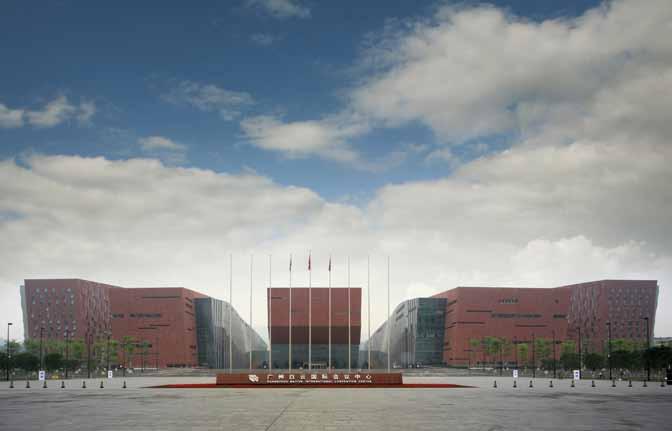
“We worked on the convention centre in Guangzhou in China. The governor’s answer was: we made a good Chinese project. We used our Western methods to search for ingredients that were very Chinese. But in hindsight we realised that they were big clichés. We processed them and sold it as a Chinese project. We added the legend of the five goats... but we used our method and our sources of inspiration. We received praise for this at the WAF, for our non-colonial behaviour.” (Herman)
“What did surprise me in Abu Dhabi and Dubai: you start from a cultural basis for every project: parameters such as the building density, the typical wind turbines... You start from this and then you make your own interpretation. The link to tradition is always palpable. Sometimes this may relate to form, other times this may not be the case. I noticed that they were proud about their own tradition there, something which is not at all evident in Belgium. The well-known lack of chauvinism or a lack of pride?” (Sven)
Cet individualisme a des conséquences lorsqu’il s’agit de définir l’identité belge. L’allusion à l’organisation de l’espace en lotissements typiquement flamands est incontournable. Ceci a bien évidemment des conséquences sur notre mode d’habitat:
“La culture et l’identité sont en crise en Europe. En Asie, par contre, on constate une relance. Là, on peut encore vraiment parler d’une cohésion entre l’identité et l’architecture. En Belgique, cette question ne s’est jamais posée: ce que nous concevons et construisons est-il représentatif de notre identité et culture? La Belgique a toujours connu une crise interne au sujet de son identité. C’est ce qui me frappe le plus. (…). En Belgique, l’individualisme est ancré dans nos coutumes, à chacun sa maison et son jardin, tandis que dans nombre d’autres pays la mentalité est plutôt orientée sur la collectivité.“ (Stijn)
“Here I think people live less with their city. When lived in Berlin, I lived with the city, and spent a lot of time in the city while taking part in the cultural life and the feeling of the ‘urban space’. You identify yourself with your city. Here people live more in their immediate surroundings; it’s more like ‘my own house and garden’. Since live in Belgium, whether it was in Antwerp or Brussels, I have noticed that very often people living here know less about the city they live in than we foreigners; in general they don’t know so many places or cities around, they don’t travel so much within Belgium, are less curious about new impressions... This is very strange - nobody from elsewhere could tell me more about Berlin than me while living there.” (Vera Christine)
Chaque pays est en quête de sa propre identité, basée sur ses propres racines culturelles.
“Nous avons travaillé en Chine sur le centre de congrès de Ghyangzou. Le gouverneur nous disait avoir réussi un beau projet Chinois. Avec nos méthodes occidentales, nous sommes allés à la recherche des ingrédients qui nous semblaient très chinois – mais qui s’avéraient être des clichés – et nous les avons intégrés et ensuite vendus comme un projet chinois, motivé par la légende des 5 chèvres. Mais nous avons travaillé selon notre méthodologie et avec nos sources d’inspiration. Nous avons même reçu des éloges du WAF (World Architecture Festival) pour notre attitude non-coloniale.“ (Herman)
“Ce qui m’a étonné à Abu Dhabi et Dubaï c’est que, pour tout projet, ils partent d’une base culturelle, de paramètres comme la densité de construction, les éoliennes typiques… C’est le point de départ qui doit ensuite être complété par l’auteur de projet. Le lien avec la tradition est établi d’emblée. Quelquefois ce lien est formel, d’autres fois non. J’y voyais une fierté de leurs traditions, ce qui fait totalement défaut en Belgique. Est-ce un manque de chauvinisme ou un manque de fierté?“ (Sven)
This lack of chauvinism also has its advantages. And Belgians and Belgian architecture have several other typical features.
“The typical Belgian modesty. Once (in China) there were 30 of us, including 3 or 4 PR people. You cannot imagine this situation in Belgium, where one tenth of your workforce is made up of PR people. It’s just not us. Here the intellectual and minimalist aspect, modesty, digging around in the clay is more important. Why are we good at cyclo-cross? Because we enjoy suffering.” (Philippe)
“I worked in three different countries, among others in the UK. As an architect you can never forget that your mission is to serve and in the end you do what the client wants. We adapt. As Flemings we do not say: let’s build a brick structure in China or London. We have to understand what they want and then we adapt. (…) Then I find myself in China, where the situation is completely the opposite. Reason is considered to be something negative there. Rational thinking is perceived as a Western way of thinking, as wrong. When you explain in a rational, structured way how you intend to tackle a project, then they don’t understand it. You need to show them a photo of a stone in water because the stone has been whittled down by the river; this they understand.” (Philippe)
“We Flemings are very rational and very staid, and this is also visible in our architecture.”(Philippe)
Ce manque de chauvinisme présente également des avantages. Mais d’autres caractéristiques encore sont déterminantes pour les Belges et l’architecture belge.
“À propos de cette discrétion typiquement belge: en Chine, à un certain moment nous étions à 30 personnes dont 3 à 4 s’occupaient des relations publiques. En Belgique, il est inimaginable qu’un dixième de l’équipe s’occupe des relations publiques. Cela n’est pas notre style. Chez nous il s’agit de l’intellect, de la modestie, du minimalisme, de pedaler dans les choucroute. Pourquoi sommes-nous tellement bons en cyclocross? Parce que nous aimons souffrir!“ (Philippe)
“J’ai séjourné dans trois pays, entre autres en Angleterre, et en tant qu’architecte je n’ai jamais oublié qu’il fallait que je serve mon client, que je fasse ce qu’il désire. Nous nous adaptons. En tant que Flamand simple, nous n’allons pas construire des immeubles en briques en Chine ou à Londres. Nous devons comprendre ce qu’ils veulent et nous adapter. (…) En Chine, c’est parfaitement le contraire. La raison est considérée comme quelque chose de négatif. La réflexion rationnelle est une pensée occidentale et erronée. Lorsqu’on leur explique un projet de façon rationnelle et structurée, ils ne comprennent pas. Il faut leur montrer la photo d’un galet dans l’eau. Ils comprennent l’image du galet façonné par la rivière.“ (Philippe)
“Nous, les Flamands, nous sommes très pragmatiques et rationnels et cela transparaît dans notre architecture.“ (Philippe)
2. Reflecting culture
(reflecting culture, culture of reflexion)
This rational and almost neutral nature is one of our assets. Modesty can be a trump.
“Being Belgian is a quality because Belgium is relatively unknown, without prejudice, we are neutral and we speak various languages. At Foster they put me on some very complex cases. There was a project in Chelsea, for a private dwelling in the centre of London which cost €60,000 per sq.m. The building permit was approved, partly because of my Belgian approach and listening attitude. We try to make everyone happy. (Philippe)
A lot is due to a method which is extended to encompass both clients and users: how will we go about making choices? You may need more time for this but in the end the result has a broader support. A lot of attention is paid to the client. A care centre is not only designed for the director, but also for the nurses, the doctors that work there, the residents... Choices are not made hierarchically but in consultation. Decisions are democratic.
“There is an aversion to power and hierarchy in Belgium. Working in a team is difficult because we are all the same. Subconsciously we tend to democratise, which is a great gift in a continuously changing world. (…) In other countries we also were complimented on our moderating skills and the fact that we are able to merge groups. Probably because we are such a small country. ” (Sven)
“When working with many different nationalities you will find that people switch to English if there is someone who does not speak Dutch. Even though you are not specifically talking to this person, you do it to make sure that this person does not feel isolated. Flemings immediately switch to the group’s language; we tend to easily overlook ourselves.”(Philippe)
“I would like to qualify the idea of modesty. The more you move northwards, the less is said. Very little is said during meetings. Meetings are very brief, to the point. The competition tradition is very important there. Competitions are often anonymous. Why? Because they do not push forward the strong candidate. Choices are made based solely on content. Everything is very strictly regulated, with very little text. Everything has been set out. You can download all the jury reports. But as soon as a Fin has won an international competition, it’s front page news.” (Stijn)
Negotiating can be a quality but it is also perceived as a problem. It is one of the reasons why everything is so grey. Moreover it also has an impact on teamwork:
“In Belgium there are so many people around the table and this is then considered to be a team. Teamwork is something else, you really need to work on this and the result needs to be something constructive. We do not make any decisions and no decisions are made. Nobody says: let’s do this. Ultimately, because you need to move forward, decisions need to be made. And they are very
2. Culture de réflexion (reflecting culture, culture of reflexion)
Ce sens de la réalité et ce caractère de quasi neutralité sont un de nos atouts. La discrétion peut être un don.
“Ma belgitude est une qualité car la Belgique est relativement peu connue, sans préjugés, neutre et multilingue. Chez Foster, on me confiait des clients difficiles. Il y avait un projet à Chelsey, une habitation au centre de Londres de 60.000€ le m². Grâce à ma belgitude, à mon attitude d’écoute et de négociation, nous avons obtenu le permis de bâtir. Nous voulons contenter tout le monde.“ (Philippe)
Cela concerne en grande partie la méthodologie appliquée à l’égard des clients et des utilisateurs: comment allons-nous faire des choix? Il faut temps pour y arriver, mais le résultat est plus réfléchi. Le client est choyé. Un centre de soins ne se conçoit pas pour le directeur administratif uniquement, mais aussi pour les infirmiers, les docteurs, les résidents, … Les choix ne se font pas de manière hiérarchique, mais sont pris de façon démocratique, en concertation.
“En Belgique nous avons une aversion de la hiérarchie et du pouvoir. Travailler en équipe nous est difficile car nous sommes tous les mêmes. Nous démocratisons sans le savoir – ce qui est un don inouï dans un monde en éternel changement. (…) On nous a toujours félicités, les Belges, pour notre modération et notre faculté à fusionner les groupes. C’est sans doute parce que notre pays est tellement petit.“ (Sven)
“Dès que plusieurs nationalités sont réunies, dès que quelqu’un ne comprend pas le néerlandais on parle en anglais afin que personne ne se sente isolé. Les Flamands s’effacent facilement et parlent rapidement la langue du groupe.“ (Philippe)
“En ce qui concerne la modestie, j’aimerais nuancer. Plus on va vers le nord, moins on est loquace. On ne dit pas grandchose aux réunions. Elles sont très courtes, vont droit au but. La tradition des concours est très importante. Ils sont souvent anonymes, pour ne pas favoriser le plus fort. Le choix se fait uniquement sur le contenu, tout est strictement réglementé, peu de textes, tout est déterminé. Les rapports des jurys sont tous disponibles sur internet. Mais dès qu’un Finnois remporte un concours international, il fait la une des journaux.“ (Philippe)
La négociation est une qualité mais peut aussi être perçue comme un problème. C’est sans doute une des raisons pour laquelle tout est si gris. De plus, la négociation a également des conséquences au niveau du travail en équipe:
“En Belgique, il y a beaucoup de personnes autour de la table qui forment (soi-disant) une équipe. Mais le travail en équipe, c’est autre chose. Il faut vraiment y travailler et obtenir un résultat constructif. Nous ne prenons pas de décisions. Personne ne dit: c’est cela qu’on va faire. Mais pour avancer il faut, à un certain moment, prendre des décisions. En Angleterre, ils sont forts dans ce domaine. Le travail en équipe est une attitude. Une structure et une
good at this in the UK. Working in a team is an attitude there.” (Philippe)
“Sometimes it feels like a constraint because you need to take this or that person into account and you have to prove yourself. This is also something you learned during your training.” (Sven)
“You need a certain structure, a hierarchy when your firm is a certain size. And it is quite noticeable that this is not really the case at BURO II & ARCHI+I.” (Philippe)
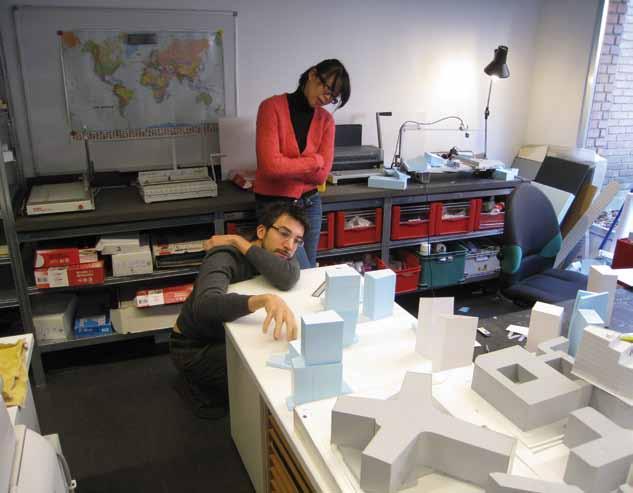
“If time is an issue, then a military regimen can be very productive. We were selected for a competition for a sales centre in Abu Dhabi and had five days to submit our proposal. A group of seven foreigners were assigned the project. We worked in three teams of two people each; each team had one day to develop its own concept. A brief presentation was organised and then the boss decided which concept would be developed for the proposal. All the team members are then expected to fully dedicate themselves to the development of this project. It requires some adjustment but ultimately this process is very clear and constructive.” (Sven)
hiérarchie sont nécessaires lorsqu’un bureau prend une certaine ampleur. Et il est evident que BURO II & ARCHI+I doit faire un effort sur ce plan.“ (Philippe)
“On est un peu freiné car il faut tenir compte de l’un et de l’autre et il faut montrer ce dont on est capable. Nous avons été formés comme ça.“ (Sven)
“Lorsque le temps est un problème, le système militaire est très productif. Par exemple, nous avons été sélectionnés dans un concours pour un centre commercial à Abu Dhabi et nous avions 5 jours pour introduire notre dossier. Sept étrangers ont été mis sur ce dossier. Nous avons travaillé en 3 équipes de 2 personnes; chaque équipe avait un jour pour développer un concept. Après une brève présentation, le responsable a décidé quel concept serait élaboré. Ensuite il a fallu que tous soient motivés pour travailler en équipe de façon unie sur l’idée choisie. Il faut s’adapter, mais finalement ce fut très clair et constructif.“ (Sven)
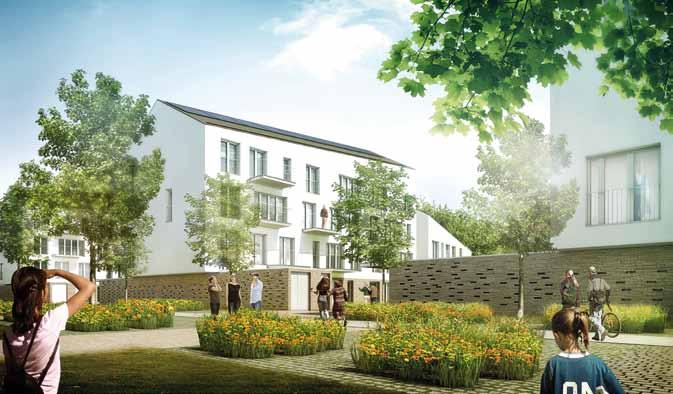
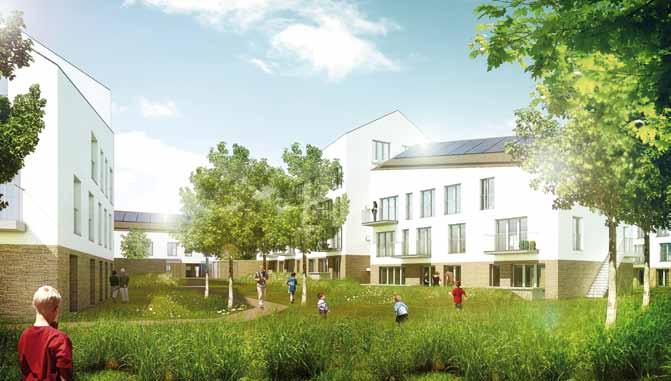
3. Method and design approach
This method is organised in an interdisciplinary manner.
“Things are different in the Belgian context. It has to be realised, the funding is available. You participate in a competition, e.g. the museum in Tervuren. It’s all about the method, the workshops you used to achieve a given result. As soon as the concept proposal was ready other disciplines were involved in a wider group. A lot of positive, negative responses, additions... were gathered, processed and re-submitted. The aspect of time is very important in this framework. In organisational terms this project was one of the most important ones we worked on.” (Herman)
“This is important because then you feel that there is someone overseeing the process. A design method which is applied throughout the firm is important.” (Sven)
Often a collaboration in an international context involves an exchange in terms of knowledge and methods. You contribute the locally invested time and culture to transpose it there.
In the framework of globalisation and the digitisation of our society a lot has changed in terms of method. People simply Google something and start from examples.
“The copy-paste method seems to very popular lately. Globalisation seems to affect individuality. Although don’t always think that this should be perceived as negative, everything still depends on the phase and the manner in which you do it. For example, it may be useful to supply a number of references if only to explain the potential of something to the client.” (Sven)
3. Méthodologie et approche de conception
Cette méthodologie est organisée de façon interdisciplinaire:
“En Belgique, le contexte est différent, le projet doit être réalisé, l’argent est disponible. Vous participez à un concours, par exemple le musée de Tervuren. Il s’agit de la méthodologie, des séances de travail utilisées pour obtenir ce résultat. Dès que la proposition de projet a été faite, d’autres disciplines ont été concernées. Beaucoup de réactions positives, négatives, des compléments, … ont été rassemblés et traités avant de soumettre le projet. L’aspect délai est important. Au niveau du fonctionnement, ce projet à été pour moi un des principaux du bureau.“ (Herman)
“Il est important qu’il y ait quelqu’un qui supervise le processus. Il est important d’avoir une méthodologie de conception pour l’ensemble du bureau.“ (Sven)
La collaboration dans un contexte international tourne autour de l’échange de connaissances et de la méthodologie. Il s’agit d’un apport de temps et de culture qui sont investis ici pour les traduire là-bas.
Dans le cadre de la mondialisation et de la digitalisation de la société, la méthodologie a connu une certaine évolution. On peut tout rechercher sur internet et on peut se baser sur des exemples.
“La méthode du copier-coller est actuellement à la mode. L’individualité risque de se perdre dans la mondialisation. Mais j’estime que cela ne doit pas toujours être négatif, tout dépend de la phase dans laquelle cela se passe et de la façon dont cela se passe. Il peut être utile de montrer quelques références, ne fût-ce que pour expliquer les potentialités au client.“ (Sven)
At the same time there is also an individual contribution, based on one’s own social-cultural background:
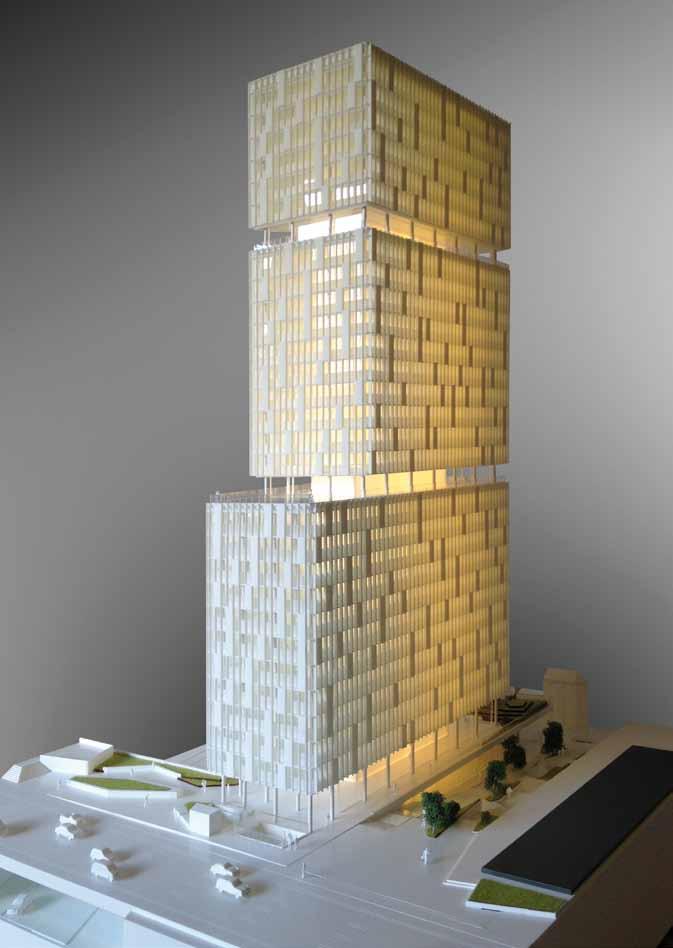
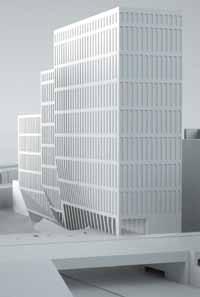
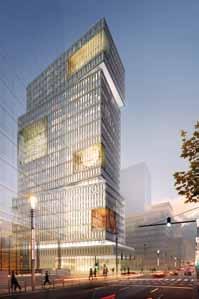
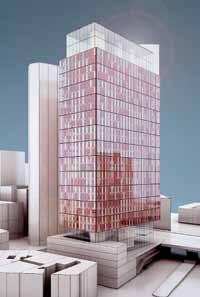
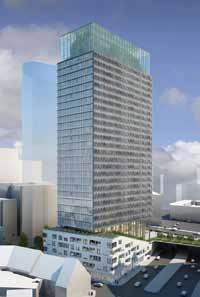
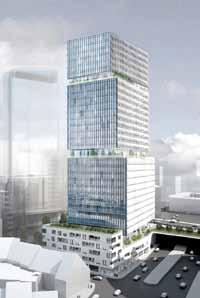
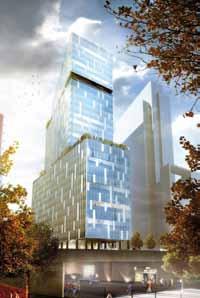
“The Europatower went through serveral designs. The tower changed in function of who was designing it. In the beginning it was Gorik, maybe that was the most Belgian design. (…) His design was lower and fatter. The program and the problem also changed. The footprint shrinked, my footprint had to be smaller and the building taller, my approach was more Dutch, more integrational. Mathias went more like Foster / Rogers with the building in three parts. And now again the program has changed, again the design will follow.” (Bogdan)
“Being such a big building, we always received a lot of input from different people. From people who were really working on it, Mathias, I-Chen, but also for example Van Santen for the façades or engineers. There were constraints, we have to deal with all those people who are working on it. In this project, we received so much input from everywhere that I cannot say that a single architect could bring a personal fingerprint to it. Dealing with all those people brings an evolution. On top of that, the client also plays a role.” (Simone)
Moreover the Belgian context creates a number of preconditions which you cannot simply ignore.
“In the first steps we try to take the lead. You can come with a design solution that can be effective in an elegant way. But then we always hit a certain wall: a regulation wall, decision maker wall, administations wall. In the end (from my experience of these three years in the design cell) we are caught – somehow your ideas are being given a Belgian shape as the way of doing it. That for me, it’s something domestic, tamed, it’s not something experimental, it’s not bringing something new. It’s just to comply, to please books and regulations, green bibles, institutions and clients. There’s a lack of global vision, overview and the power to achieve it. Everywhere else the trend is to fight for novelty (experimental) and identity to be in the spotlight while here the identity is not to get noticed.” (Bogdan)
“You have Rem Koolhaas who says: ‘fuck context, let’s do something new’. Bigness is no longer part of any urban tissue.” (Bogdan)
“There’s a difficult relationship with the administrations in Brussels. The authorities can really change your projects. In France, it is impossible. You are following the rules, there is no way that in the end they will refuse your building.” (Simone)
The result of this lack of a margin for experimentation is often a compromise and a lack of audacity in architecture.
“In the end you have to comply because you give up. For example Europatower: so many people are involved, everyone can say something and make their own interpretation.” (Bogdan)
4. Un contexte déterminant
On constate un apport au niveau individuel à partir d’un contexte socioculturel propre:
“The Europatower went through serveral designs. The tower changed depending on who was designing it. In the beginning it was Gorik, maybe that was the most Belgian design. (…) His design was lower and fatter. The program and the problem also changed. The footprint shrinked, my footprint had to be smaller and the building taller, my approach was more Dutch, more integrational. Mathias went more like Foster / Rogers with the building in three parts. And now again the program has changed, again the design will follow.” (Bogdan)
“Being such a big building, we always received a lot of input from different people. From people who were really working on it, Mathias, I-Chen, but also for example Van Santen for the façades or engineers. There were constraints, we have to deal with all those people who are working on it. In this project, we received so much input from everywhere that I cannot say that a single architect could bring a personal fingerprint to it. Dealing with all those people brings an evolution. On top of that, the client also plays a role.” (Simone)
Le contexte belge crée en outre quelques conditions préalables qu’il est impossible d’ignorer.
“In the first steps we try to take the lead. You can come with a design solution that can be effective in an elegant way. But then we always hit a certain wall: a regulation wall, decision maker wall, administrations wall. In the end (from my experience of these three years in the design cell) we are caught – somehow your ideas are being given a Belgian shape as the way of doing it. That for me, it’s something domestic, tamed, it’s not something experimental, it’s not bringing something new. It’s just to comply, to please books and regulations, green bibles, institutions and clients. There’s a lack of global vision, overview and the power to achieve it. Everywhere else the trend is to fight for novelty (experimental) and identity to be in the spotlight while here the identity is not to get noticed.” (Bogdan)
“You have Rem Koolhaas who says: ‘fuck context, let’s do something new’. Bigness is no longer part of any urban tissue.” (Bogdan)
“There’s a difficult relationship with the administrations in Brussels. The authorities can really change your projects. In France, it is impossible. You are following the rules, there is no way that in the end they will refuse your building.” (Simone)
Le peu d’espace laissé à l’expérimentation mène souvent à un compromis et un manque d’audace en architecture.
“In the end you have to comply because you give up. For example Europatower: so many people are involved, everyone can say something and make their own interpretation.” (Bogdan)
“Here, architecture is still much linked to politics and this is the bigger problem. think that as soon as foreign architects would have the possibility to build a building that is a bit different then also the Belgian architects would dare more and the architectural variety would grow.”(Vera Christine)
In Belgium the social-economic climate is a determining factor:
“In Belgium don’t even think about suggesting complex shapes because labour is expensive”. (Philippe)
In countries such as China for example you have fewer problems as cheap labour is widely and sufficiently available.
“The socio-economic aspect cannot be underestimated, you have to be very pragmatic, always the costs and the benefits. And this has a huge impact on your work because the margin for experimentation is very small in Belgium.”
(Philippe)
“Here, architecture is still much linked to politics and this is the bigger problem. I think that as soon as foreign architects would have the possibility to build a building that is a bit different then also the Belgian architects would dare more and the architectural variety would grow.”(Vera Christine)
En Belgique, le climat socio-économique est très déterminant:
“En Belgique, il ne faut pas proposer des formes complexes car la main d’œuvre coûte cher.“ (Philippe)
De telles choses sont possibles dans un pays comme la Chine, parce que la main d’œuvre y est meilleur marché.
“L’aspect socio-économique est un élément non négligeable. Il faut être très pragmatique, toujours évaluer les avantages et les inconvénients. Cela a une grande influence sur le travail, car en Belgique, on laisse peu de place à l’expérimentation.“ (Philippe)
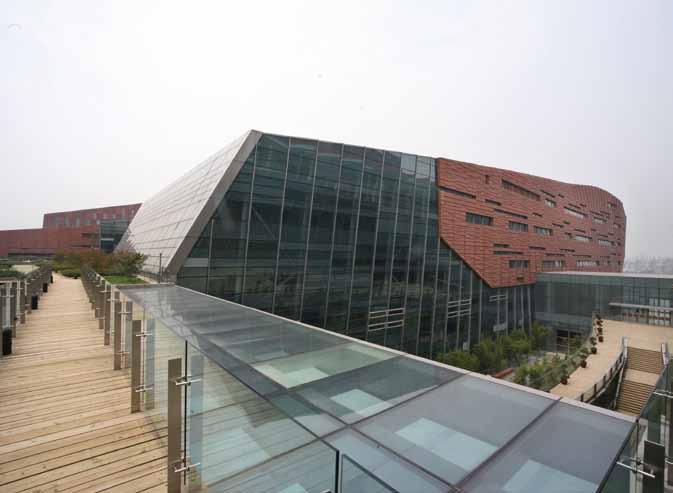
Often the materials used are locally inspired. Not only because of the material per se, but also because of the available technology and the know-how in terms of working with a specific material. But the climate is also a defining factor:
“When was at university it seemed the biggest problem was keeping the sun out of the building – here it‘s the other way around. Everything is relative.” (Ilaria)
“In Belgium and France they use a lot of concrete, they have the knowledge. If you think about the project in Belgium or France, you have to think differently because of the knowledge of the material. The people who are building it, are more used to working with concrete. So from country to country, it’s different.” (Ilaria)
“For sure, you have to use the material of the country. Although concrete is not a local material, it’s also about the technology, the fabrication process. For example, the Zaha Hadid Museum in Rome is not well done. She designed it in concrete but nobody can work with concrete in Italy. They export star, iconic architecture, but then you have to think about the knowledge of the material.” (Ilaria)
“It’s like Mario Botta: he is really using the local material like using the bricks. In Italy it’s plaster. In the north you use a lot of bricks, you have knowledge of the use of this local technology.” (Simone)
Finland for example has chosen, after joining the European Union, to use a local material (wood) and to consistently specialise itself in this material.
“Generally speaking it is an ecological material and we will specialise in it. This is also very important for the local industry. Meanwhile several examples have already been built. Just think of the Finnish pavilion at the most recent Biennale di Venezia. This identity is so important there that the industry, the academic world and the building industry are jointly promoting this.” (Stijn)
In a globalised world with a globalised architecture these differences in terms of materials and material use also are obvious. Even though the architecture of Baumslager & Eberle at first glance may not seem Swiss, you will soon realise that it is because of the way they process things, in this case the Swiss woodworking tradition.
“We come from everywhere but sometimes a local architect can do better because he knows the place, the technology. We can be the fresh wind; we can bring some ideas.” (Ilaria)
5. Utilisation et choix des matériaux
L’utilisation des matériaux s’avère souvent d’inspiration locale. Non seulement en raison du matériau même, mais aussi de la technologie et du savoir-faire pour mettre en œuvre un matériau spécifique. Le climat joue également un rôle déterminant:
“When I was at university it seemed the biggest problem was keeping the sun out of the building – here it‘s the other way around. Everything is relative.” (Ilaria)
“In Belgium and France they use a lot of concrete, they have the knowledge. If you think about the project in Belgium or France, you have to think differently because of the knowledge of the material. The people who are building it, are more used to working with concrete. So from country to country, it’s different.” (Ilaria)
“For sure, you have to use the material of the country. Although concrete is not a local material, it’s also about the technology, the fabrication process. For example, the Zaha Hadid Museum in Rome is not well done. She designed it in concrete but nobody can work with concrete in Italy. They export star, iconic architecture, but then you have to think about the knowledge of the material.” (Ilaria)
“It’s like Mario Botta: he is really using the local material like using the bricks. In Italy it’s plaster. In the north you use a lot of bricks, you have knowledge of the use of this local technology.” (Simone)
Après son adhésion à l’Union européenne, la Finlande, par exemple, a choisi de promouvoir fortement le matériau local par excellence: le bois.
“Globalement, c’est aussi un matériau écologique et dans lequel nous allons nous spécialiser. C’est important aussi pour l’industrie locale. D’autres exemples ont été réalisés, par exemple la participation finnoise à la dernière Biennale de Venise. L’identité est tellement importante que l’industrie, le monde académique et celui de la construction la promeuvent.“ (Stijn)
Même dans un monde globalisé avec une architecture globalisée, des différences subsistent en ce qui concerne les matériaux et leur application. Si l’architecture de Baumslager & Eberle ne semble pas très suisse à première vue, elle se distingue par la façon dont le bois est mis en œuvre, indéniablement influencée par la tradition suisse.
“We come from everywhere but sometimes a local architect can do better because he knows the place, the technology. We can be the fresh wind; we can bring some ideas.” (Ilaria)
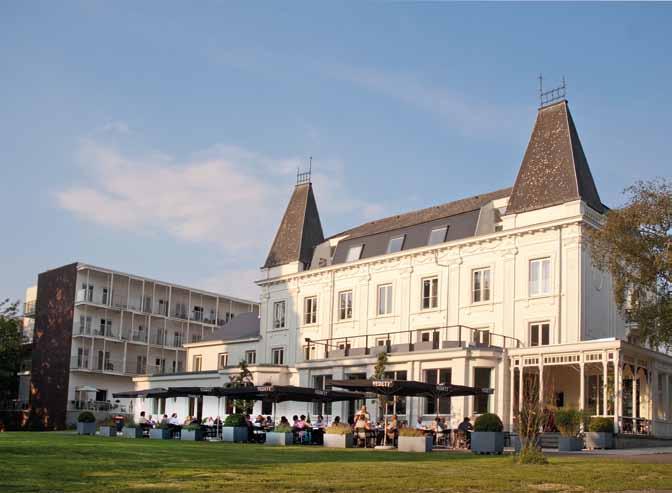
We would like to conclude with a quote by Wim Wender (Notes to the film ‘Aufzeichnungen zu
Pour
“we live in the cities, the cities live in us… we move from one city to another, from one country to another, we change the language, we change habits, we change opinions, we change clothes, we change ourselves. (…)”

interDisciplinary cultural platforms
s ofie Vandelannoote
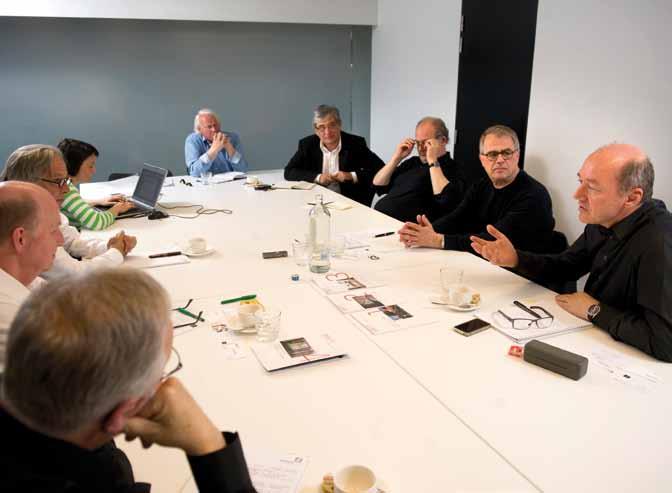
o n a pril 26th, we had a roundtable with some of our international partners: wessel de jonge (w D), p empé Kestutis (p K), a ndrás p alffy ( ap), ton Venhoeven ( t V) and hendrik Vermoortel (h V). rob Docter (r D) was our moderator under the supervision of h erman j ult (hj) and m arc s antens (ms). you can read the full version of this debate on www.b2ai.com.
“We have to allow time for debate, for raising questions. Then nationality doesn’t count.”(WD)
Social and cultural complexity make cooperation necessary. Interdisciplinarity is a basis to optimize knowledge and enhance a productive an valuable project. Interculturality and interdisciplinarity have an added value. Offices should invest in intercultural and interdisciplinary teams and allow for a critical debate and reflection (also engaging the client) as part of the design process as a strategy.
“Architecture is the mirror of the mentality of the time. The architect has a new role, in a world where everything is connected, the architect is a moderator. In a world of globalization we are helping each other, locally based, which leads to a project that is a new sign.” (HV)
“We were working with an Austrian architect, Hohensinn, who is specialized in the technology and knowledge of a prison. How do people live in a prison? We needed this specialty and couldn’t organize it unless in an interdisciplinary way. It’s our way of working, bringing together all kind of specialties to be able to elaborate a good project. The result would be different if we didn’t have this international scope.” (HV)
“There are so many influences, everything goes around the world. Especially in a time where sustainability is important, there’s a lot to learn from different cultures. Typology is very important. Each moment is a step in this creation. You can bring together a father typology with a mother typology and see what comes from it.” (TV)
The world is our scope, our field of vision; culture and history our roots.
s ofie Vandelannoote
l e 26 avril dernier, nous organisions une table ronde avec quelques-uns de nos partenaires internationaux1: wessel de jonge (w D), p empé Kestutis (p K), a ndrás p alffy ( ap), ton Venhoeven ( t V) et hendrik Vermoortel (h V). rob Docter (r D) était notre modérateur, accompagné de herman j ult (hj) et m arc s antens (ms). Vous pourrez lire le compterendu de ce débat sur www.b2ai.com.
“We have to allow time for debate, for raising questions. Then nationality doesn’t count.”(WD)
La collaboration est rendue indispensable par la complexité sociale et culturelle. L’interdisciplinarité est essentielle en vue de l’optimalisation des connaissances et de l’élévation de la qualité d’un projet. L’interculturalité et l’interdisciplinarité ont une valeur ajoutée. Les bureaux devraient s’investir dans la formation d’équipes interculturelles et interdisciplinaires et prendre le temps d’une réflexion et d’un débat critique, en collaboration avec le client, afin de les intégrer dans le processus de création.
“Architecture is the mirror of the mentality of the time. The architect has a new role, in a world where everything is connected, the architect must act as a moderator. In a world of globalization we are helping each other, locally based, which leads to a project that is a new sign.” (HV)
“We were working with an Austrian architect, Hohensinn, who is specialized in the technology and knowledge of a prison. How do people live in a prison? We needed this specialty and couldn’t organize it unless in an interdisciplinary way. It’s our way of working, bringing together all kind of specialties to be able to elaborate a good project. The result would be different if we didn’t have this international scope.” (HV)
“There are so many influences, everything goes around the world. Especially in a time where sustainability is important, there’s a lot to learn from different cultures. Typology is very important. Each moment is a step in this creation. You can bring together a father typology with a mother typology and see what comes from it.” (TV)
Le monde est notre champ visuel, la culture et l’histoire sont nos racines.
“Our culture in Lithuania is a very old one. Vilnius is one of the oldest towns in Europe. We are EU-member for 9 years now, and it brings a big change. The biggest change is the change in the mind. Private businesses have started, students go to foreign countries,… (…) All the Baltic states have a rich cultural heritage. We build on that heritage and we create a new architectural paradigm: architects are checking the level of architecture all over the world. Creating national identity is not easy, it comes from your own knowledge of the country, from your own relationship with interdisciplinarity and then you get a new result – it’s constantly happening.” (KP)
“In India it’s quite different. On the one hand, you have the old British bureaucracy and at the other hand you have incredible skilled people. Every project is a new adventure. It’s creating something new, exchanging culture, money, trade,… it’s not just about putting the different technologies together. We are in a period where the connectivity to each other is very high and this creates interesting challenges.” (TV)
“It’s absolutely necessary to work with the client within the local context. But I’m hesitant when it comes to dealing with identity when working in another cultural entity, coming from abroad it’s very difficult to grasp that identity. It takes quite a while before you get: what’s going on? How is this working?”(WD)
Expertise is bringing together a multitude of disciplines in an innovative context. Education is an instrument to enhance interculturality and interdisciplinarity.
“Today it’s normal to work on competitions in a European context. For me, it’s very important to move the students and to organize exchange. It enhances autoresponsibility and a future mobility. This kind of programs are supported by the EU and the industry. It happens, I was never following a strategy on this topic, but I don’t believe in coincidences.”(AP)
Everything must be questioned over again. The different disciplines and principles are brought together, for example in a project definition. Interculturality is about the ability to rephrase the question.
“Your built product is the result of intercultural exchange. There is so much knowledge to be developed. You just try to bring in elements from different sides. Maybe even in a pragmatic way, because you have to convince the jury. Identity is a temporary situation.”
“When I come back from abroad, I suddenly understand some aspects of my own culture.”(TV)
“It’s not always in the big things. Some things are invisible for us. There are always questions the other people are asking, questions we wouldn’t be asking from our own cultural background. It’s these questions and the answers that are interesting.” (HJ)
“Our culture in Lithuania is a very old one. Vilnius is one of the oldest towns in Europe. We are EU-member for 9 years now, and it brings a big change. The biggest change is the change in the mind. Private businesses have started, students go to foreign countries,… (…) All the Baltic states have a rich cultural heritage. We build on that heritage and we create a new architectural paradigm: architects are checking the level of architecture all over the world. Creating national identity is not easy, it comes from your own knowledge of the country, from your own relationship with interdisciplinarity and then you get a new result – it’s constantly happening.” (KP)
“In India it’s quite different. On the one hand, you have the old British bureaucracy and at the other hand you have incredible skilled people. Every project is a new adventure. It’s creating something new, exchanging culture, money, trade,… it’s not just about putting the different technologies together. We are in a period where the connectivity to each other is very high and this creates interesting challenges.” (TV)
“It’s absolutely necessary to work with the client within the local context. But I’m hesitant when it comes to dealing with identity when working in another cultural entity, coming from abroad it’s very difficult to grasp that identity. It takes quite a while before you get: what’s going on? How is this working?”(WD)
La compétence est la faculté de réunir une multitude de disciplines dans une alliance innovatrice. La formation est un instrument qui permet d’augmenter l’interculturalité aussi bien que l’interdisciplinarité.
“Today it’s normal to work on competitions in a European context. For me, it’s very important to move the students and to organize exchange. It enhances autoresponsibility and a future mobility. This kind of programs are supported by the EU and the industry. It happens, I was never following a strategy on this topic, but I don’t believe in coincidences.”(AP)
Tout doit être remis en question. Les différentes disciplines et principes doivent être rassemblés, par exemple dans une définition du projet. L’interculturalité porte sur la possibilité de reformuler la question.
“Your built product is the result of intercultural exchange. There is so much knowledge to be developed. You just try to bring in elements from different sides. Maybe even in a pragmatic way, because you have to convince the jury. Identity is a temporary situation.”
“When I come back from abroad, I suddenly understand some aspects of my own culture.” (TV)
“It’s not always in the big things. Some things are invisible for us. There are always questions the other people are asking, questions we wouldn’t be asking from our own cultural background. It’s these questions and the answers that are interesting.” (HJ)
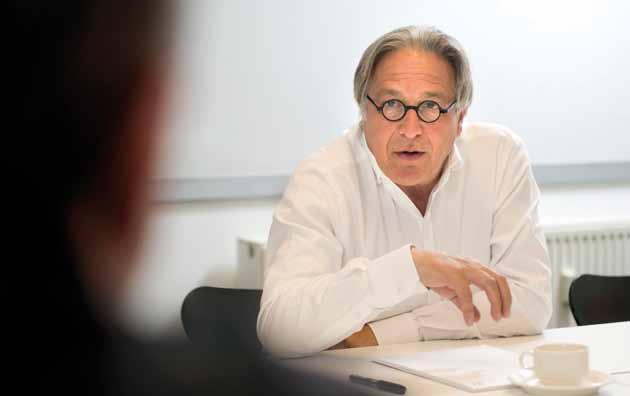
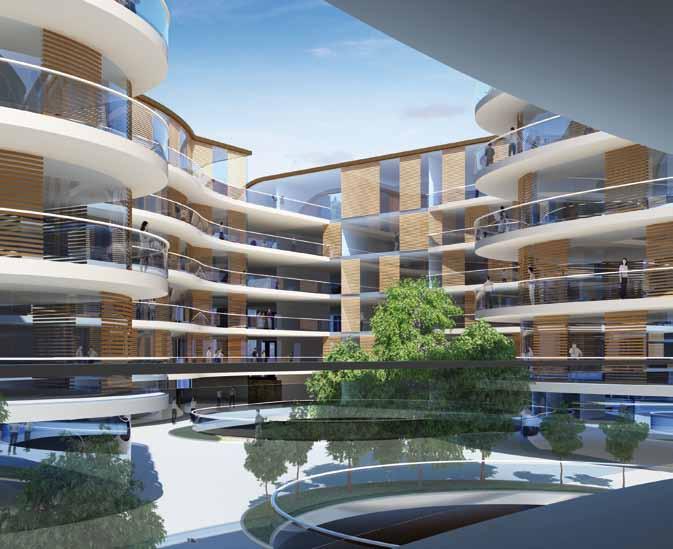
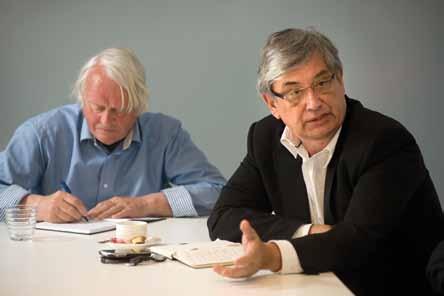
“Interdisciplinarity gives answers for a problem, interculturality is about the ability to rephrase the question.” (MS)
“Nowadays, we have an explosion of modernism2. It’s not postmodernism, it’s modernism. It’s like an automatic pilot. Posing the right questions, makes it possible to enlighten more aspects.”(TV)
Investors, developers, governments and regulators must engage in the process instead of distancing. There’s a difference in the way of working whether it’s a private or a public client. Nevertheless, all parties should be involved.
“Exchange makes it more real. It brings something into the architecture. Even your project definition is something that is growing. What the clients see as the borders of the possibilities, is maybe not a border at all. How you involve in the client is important. The client also has his/her own background. It’s his/her decision in the end, but we need a very active participation.” (HJ)
“There’s an evolution in the market of the developers. For instance we work with Re-Vive who invests in brownfields to create a sustainable living environment with a positive financial, social and ecological impact. Together, we are looking for the value of the project.” (HV)
“Part of the crisis in Holland derives from the fact that we split up architecture in disciplines. In Flanders, there’s a different approach: the client is more professional and
“Interdisciplinarity gives answers for a problem, interculturality is about the ability to rephrase the question.” (MS)
“Nowadays, we have an explosion of modernism2. It’s not postmodernism, it’s modernism. It’s like an automatic pilot. Posing the right questions, makes it possible to enlighten more aspects.”(WD)
Les investisseurs, promoteurs, autorités publiques et législateurs doivent s’engager dans le processus au lieu de s’en distancier. Le travail est différent selon qu’il s’agit d’acteurs privés ou publics. Mais dans tous les cas, toutes les parties doivent s’impliquer.
“Exchange makes it more real. It brings something into the architecture. Even your project definition is something that is growing. What the clients see as the borders of the possibilities, is maybe not a border at all. How you involve in the client is important. The client also has his/her own background. It’s his/her decision in the end, but we need a very active participation.” (HJ)
“There’s an evolution in the real estate market. For instance we work with Re-Vive which invests in brownfields to create a sustainable living environment with a positive financial, social and ecological impact. Together, we are looking for the value of the project.” (HV)
“Part of the crisis in Holland derives from the fact that we split up architecture in disciplines. In Flanders, there’s
has a lot more experience. In Holland, we don’t know the client: it’s an intermediate manager of a government department, a tender manager with a list of requirements you have to fulfill… Now we are seeing the awakening of a new approach. We are looking for good contractors, clever cost specialists, total cost of ownership,… in a cocreation. There are increasing demands coming from society. In this way we can create a superior project. Maybe we have to redefine the client.” (TV)
“The government needs the discipline of architecture. After all, the discipline of architecture is capable by eminence to combine all kinds of sometimes conflicting interests from different stakeholders, to create a synthesis and to present a future vision that can be communicated with the public and the (political) decision makers.” (RD)
Design platforms bring together culture and expertise in a new context to make recognizable places for people and the community.
“We have 18 nationalities in our office. We are working on a different level here by creating platforms. Half of the projects we do, we do it with other platforms. On top of that, you can link these platforms and make satellites. Collaborators are happy to work in such a situation. International influence gives more quality to your project. For instance our collaboration with Steven Holl for the casino in Knokke: we won the competition with the philosophy of a team. In the end, the quality is higher and people are happier. Steven Holl literally said: ‘I’m putting my life in your hands’. And we take that responsibility.”(HV)
“To be able to survive, you have to work on these platforms and work in a bigger scale. The future is these platforms working together, that’s the next thing. You can’t take the risk on your own. It’s not a matter of scale, but you have to realize you’re one wheel in the mechanism. And you have to put in some energy to move it.”(AP)
“I like the idea of the platforms, units or consortiums between professional specialists. You take the best specialist, the best partners you trust, always in collaboration with the local partners and then it’ s possible to create a high quality product. This kind of platform can be very competitive. Creating platforms is the future.” (KP)
“It also means sharing the risk. You also have to do with risk control. You can team up with a partner, a locally based partner, and in this way we could control the risk for insurances and so.” (TV)
“It’s worth the effort. It’s about the possibility of having a result that goes beyond your own expectations.” (HV)
a different approach: the client is more professional and has a lot more experience. In Holland, we don’t know the client: it’s an intermediate manager of a government department, a tender manager with a list of requirements you have to fulfill… Now we are seeing the awakening of a new approach. We are looking for good contractors, clever cost specialists, total cost of ownership,… in a cocreation. There are increasing demands coming from society. In this way we can create a superior project. Maybe we have to redefine the client.” (TV)
“The government needs the discipline of architecture. After all, the discipline of architecture is capable by eminence to combine all kinds of sometimes conflicting interests from different stakeholders, to create a synthesis and to present a future vision that can be communicated with the public and the (political) decision makers.” (RD)
Des plates-formes de conception rallient la culture et les compétences dans une nouvelle cohérence en vue de réaliser des lieux identifiables pour l’individu et la communauté.
“We have 18 nationalities in our office. We are working on a different level here by creating platforms. Half of the projects we do, we do it with other platforms. On top of that, you can link these platforms and make satellites. Collaborators are happy to work in such a situation. International influence gives more quality to your project. For instance our collaboration with Steven Holl for the casino in Knokke: we won the competition with the philosophy of a team. In the end, the quality is higher and people are happier. Steven Holl literally said: ‘I’m putting my life in your hands’. And we take that responsibility.”(HV)
“To be able to survive, you have to work on these platforms and work in a bigger scale. The future is these platforms working together, that’s the next thing. You can’t take the risk on your own. It’s not a matter of scale, but you have to realize you’re one wheel in the mechanism. And you have to put in some energy to move it.” (AP)
“I like the idea of the platforms, units or consortiums between professional specialists. You take the best specialist, the best partners you trust, always in collaboration with the local partners and then it’ s possible to create a high quality product. This kind of platform can be very competitive. Creating platforms is the future.” (KP)
“It also means sharing the risk. You also have to do with risk control. You can team up with a partner, a locally based partner, and in this way we could control the risk for insurances and so.” (TV)
“It’s worth the effort. It’s about the possibility of having a result that goes beyond your own expectations.” (HV)
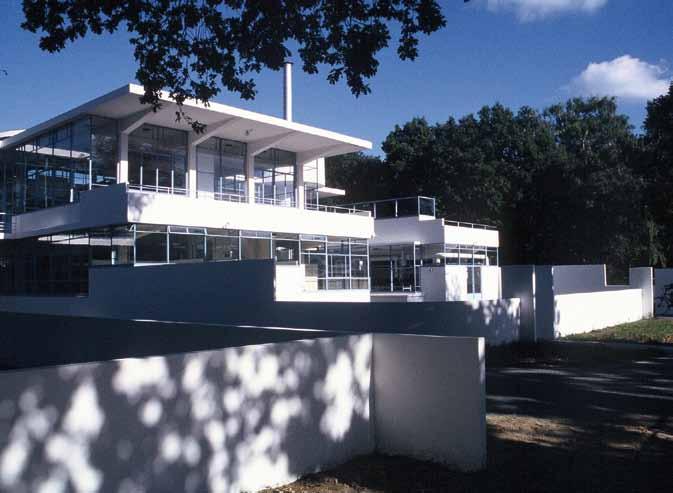
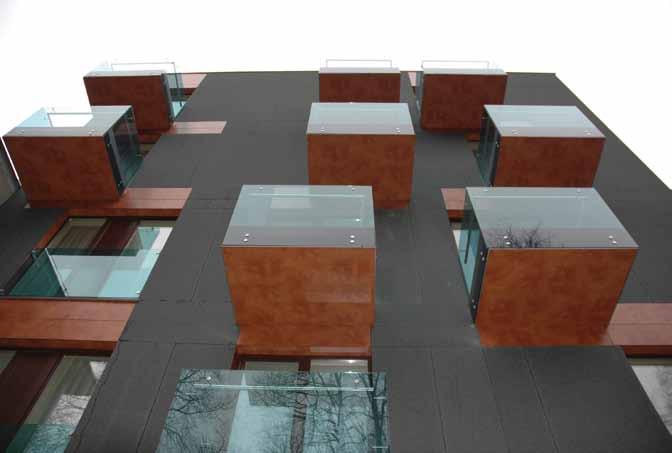
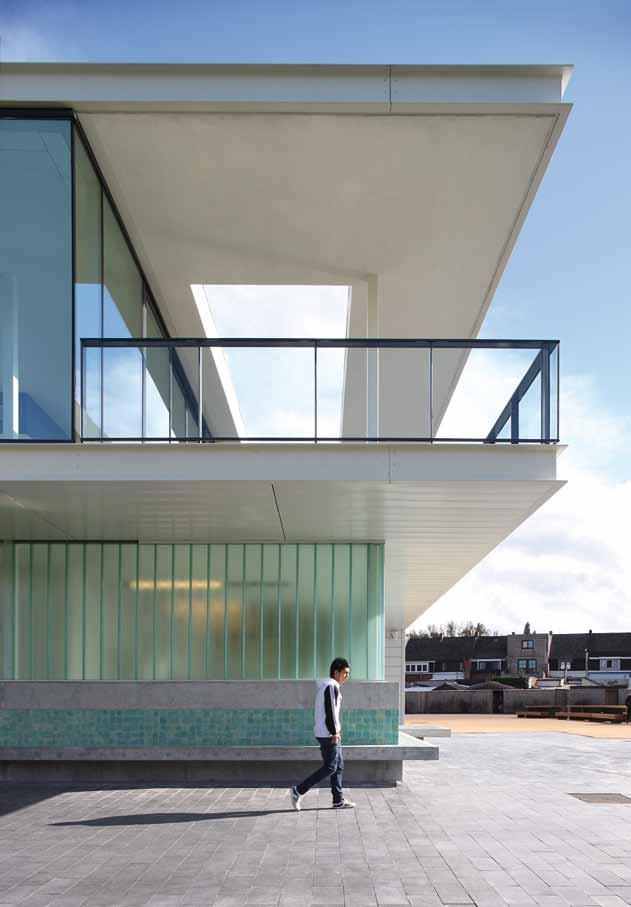
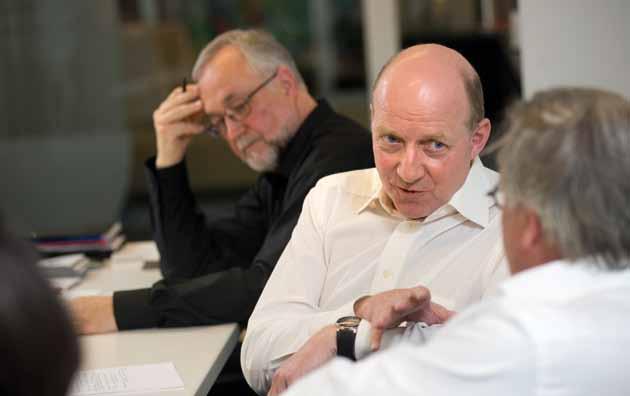
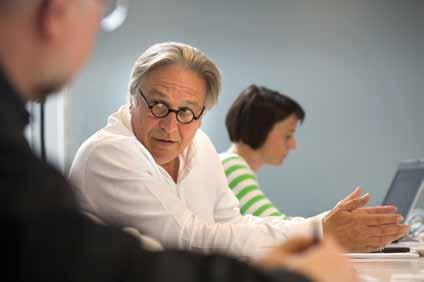
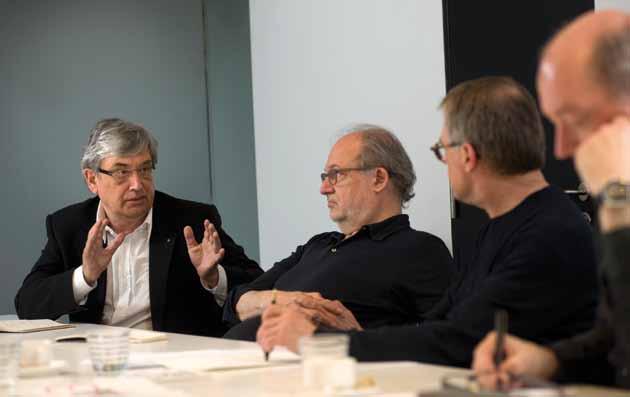
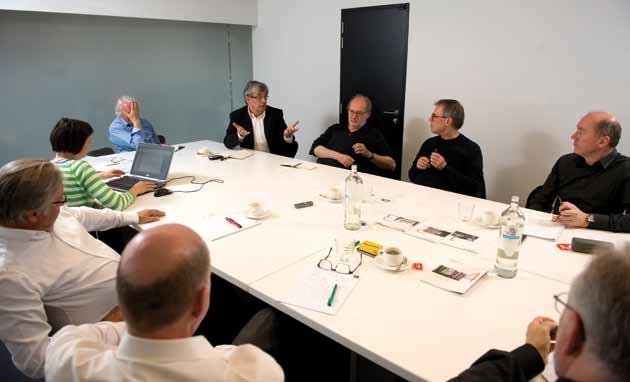
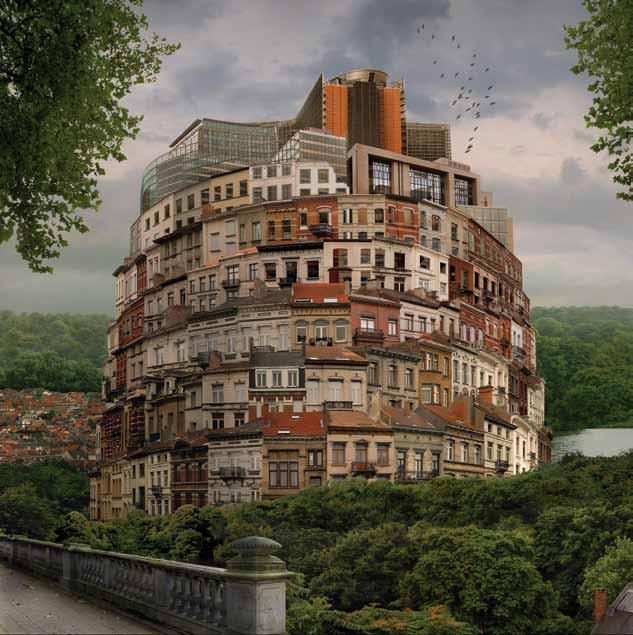
Must architecture challenge culture or must cultural plurality continue questioning architecture? It remains a cause for debate and discussion. It seems that the designer is neither the creative genius who imagines the new perspective of the future, nor a docile translator of the wishes of the client. He is the cultural transformer that adds –together with other partners- cultural references to tradition in a globalized world.
This diversity of new angles allows us to give expression and embodiment to our own choices, and also to input them into the public debate as a dynamic steppingstone towards enlightening insights. Through a permanent groupwise assimilation process, this will produce a rolling process of societal advancement.
If the intention is to make architecture part of an international innovation policy, this cannot be accomplished by exporting or importing and promoting architectural projects or designers, but must be brought about by creating a national and international context that affords an opportunity to the added value of active and project-dedicated work processes.
It would be wrong to predicate this on the assumption that other countries have more to offer than your own country, but instead to base it on the recognition that every cultural confrontation produces an added value and visualises the diversity of and engagement with cultural references.
A precondition for this approach is the availability of possibilities and resources to bring together projectdedicated discussion platforms and networks that give designers and clients an opportunity to study open reference frameworks and to interweave them with new challenges. a
L’architecture doit-elle défier la culture ou la pluralité culturelle doit-elle continuer de questionner l’architecture? Cette question demeure un sujet de débat et de discussion. Il semble que le concepteur ne soit ni le génie créatif qui représente la nouvelle perspective de l’avenir, ni le traducteur docile des souhaits du client. Il est le transformateur culturel qui apporte – avec d’autres partenaires – de nouvelles références à la tradition dans un monde globalisé.
Cette diversité de nouveaux points de vue nous permet, d’une part, d’exprimer et concrétiser nos propres choix, et d’autre part, de les intégrer dans le débat collectif en tant qu’impulsion dynamique à l’enrichissement d’idée. Un processus de traitement collectif permanent génère un processus de développement social progressif.
Si l’on veut impliquer l’architecture dans une politique d’innovation internationale, il ne peut s’agir ni d’exportation ni d’importation, ni même de promotion de produits architecturaux ou concepteurs, mais de création d’un contexte national et international permettant d’apporter une plus-value aux opérations actives et axées sur les projets.
Il ne faut pas partir de la supposition que le pays étranger a plus à offrir que le pays d’origine, mais bien du fait que chaque confrontation culturelle apporte une plus-value et assure la visibilité de la diversité et de l’interconnexion des références culturelles.
Pour y arriver, il faut néanmoins que les possibilités et les moyens soient disponibles pour pouvoir mettre en place des plates-formes de discussion et réseaux axés sur les projets offrant l’opportunité aux concepteurs et maîtres d’ouvrage d’étudier les cadres de référence et de se lancer de nouveaux défis.
Pointers for this public debate might be:
- How can we shape international cooperation arrangements? How can partnership go beyond the ad-hoc approach to competitions and form a basis for a network where there is ongoing cross-fertilisation between experience, creativity, economics and science?
- How can we work towards open organisational arrangements that provide continuity to cross-border cooperation, with respect for the existing and non-existent?
- How can we discuss the mental and physical presence of our roots without becoming bogged down in an identity discussion?
- What role can universities play? How can people like historians, sociologists and cultural philosophers really play a role in the (design) process and how can universities facilitate this involvement?
- How can we promote architecture internationally? What role can the VAI3 or the WBA 4 take on in this respect, and what role could architecture journals have? How can government provide a fitting framework , also in terms of export policy?
- What is the significance of architectural exhibitions like the Biennials? Do they have a connecting role, as platforms for an exchange of views and as a meeting place?
Les pistes pour ce débat collectif peuvent être les suivantes:
- Comment concrétisons-nous les accords de collaboration internationaux? Comment le partenariat peut-il dépasser l’approche occasionnelle et constituer la base d’un réseau dans lequel l’expérience, la créativité, l’économie et la science continuent de s’enrichir mutuellement?
- Comment pouvons-nous travailler sur des formes d’organisation ouvertes assurant la continuité d’une collaboration sans frontière et ce dans le respect des éléments existants ou non?
- Comment pouvons-nous parler de présence mentale et physique de nos racines sans nous perdre dans un débat identitaire?
- Quel peut être le rôle des universités dans ce contexte? Comment les historiens, les sociologues, les philosophes de la culture… peuvent-ils jouer effectivement un rôle dans le processus (de développement) et comment les universités peuvent-elles y aider?
- Comment pouvons-nous promouvoir l’architecture à l’étranger? Quel rôle le VAI3 ou la WBA 4 peuventils jouer ici et quelle peut être l’utilité des magazines d’architecture? Comment les pouvoirs publics peuvent-ils offrir un encadrement y compris vis-à-vis de la politique d’exportation?
- Quelle est l’importance des expositions d’architecture telles que les Biennales? Jouent-elles un rôle relationnel, comme plates-formes d’échange et de rencontre?
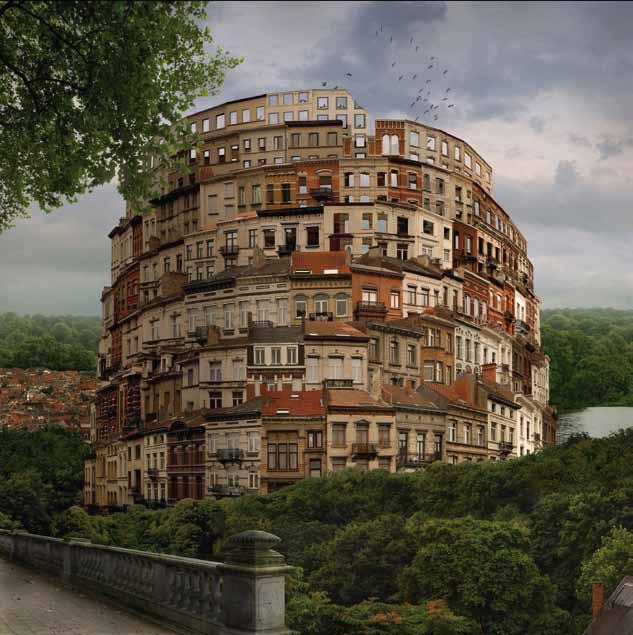
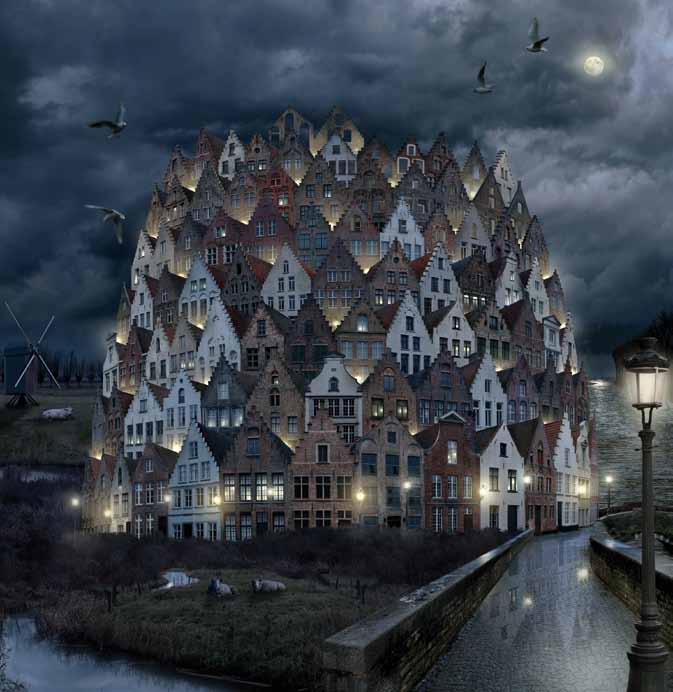
c olophon c olophon
ALERT 5, July juillet 2013
Publisher Éditeur responsable Sofie Vandelannoote BURO II & ARCHI+I
Rue J. Jordaensstraat 18a B-1000 Brussel-Bruxelles
Editors Conseil de rédaction Rita Agneessens, Geert Blervacq, Werner Desimpelaere, Herman Jult, Marc Santens, Sofie Vandelannoote
Interviewed collaborators Collaborateurs interviewés Philippe Brysse, Simone Chilese, Stijn Colpaert, Ilaria Gagliardi, Vera Christine Gerlach, Bogdan Saileanu, Sven Van Loon
Participants in the roundtable Participants au table ronde Wessel de Jonge, András Palffy, Kestutis Pempe, Ton Venhoeven, Hendrik Vermoortel en/et Rob Docter, moderator.
Design and layout Maquette et mise en pages Erik Desombere
Photography Photographie
Selection from the artistic oeuvre of Eric De Ville Selection de l’oeuvre artistique d’Eric De Ville www.ericdeville.be
Printing Impression Cassochrome, Waregem
Want an extra copy of ALERT? Go to www.b2ai.com and click ‘ALERT’
Désirez-vous une copie supplémentaire d’ALERT? Naviguez vers www.b2ai.com et cliquez sur ‘ALERT’