ARIZONA JOURNAL A JP OF PHARMACY THE OFFICIAL PUBLICATION OF THE ARIZONA PHARMACY ALLIANCE
WINTER 2011
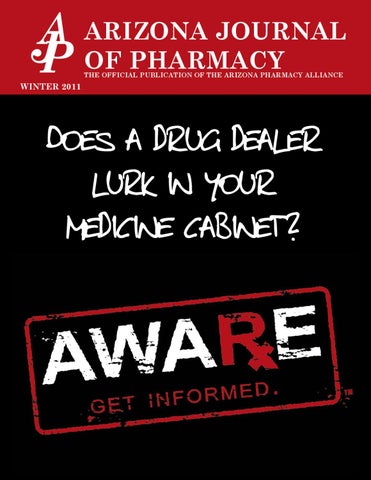
Does a drug dealer lurk in your medicine cabinet?
Are You Ready to Experience the McKesson Difference? Team Up with a 175-Year Leader! For more than 175 years, McKesson has been providing independent pharmacies with high-value programs and services to help you stand out in the marketplace. Today our commitment includes: – 99.998% order accuracy and 98% fill rates – Local McKesson distribution center – Award-winning ServiceFirst customer care center
www.mckesson.com | 855.MCK.RETL
Health Mart Is Your Competitive Advantage. A national network of more than 2,800 independently owned pharmacies, Health Mart® Systems, Inc. is a comprehensive pharmacy-franchise program that helps franchisees gain resources and expertise within the McKesson corporate family.
www.HealthMart.com | 855.HLTH.MRT
©2011 McKesson Corporation. All rights reserved. RTL-05392-08-11
ARIZONA JOURNAL A JP OF PHARMACY Vol. 3, No. 4
WINTER 2011
IN THIS ISSUE BOARD OF DIRECTORS PRESIDENT Kevin Boesen PRESIDENT-ELECT Michael Dietrich TREASURER Ken Mahan PAST PRESIDENT Mark Boesen SECRETARY Ray Clark COMMUNITY PHARMACY ACADEMY CHAIR Teresa Stickler COMMUNITY PHARMACY ACADEMY CHAIR-ELECT Kristin Calabro HEALTH-SYSTEM PHARMACY ACADEMY CHAIR Jonathan Merchen HEALTH-SYSTEM PHARMACY ACADEMY CHAIR-ELECT Lindsay Davis MANAGED CARE PHARMACY ACADEMY CHAIR Julie Hernandez MANAGED CARE PHARMACY ACADEMY CHAIR-ELECT Ann Sears SENIOR CARE PHARMACY ACADEMY CHAIR Dawn Knudsen-Gerber SENIOR CARE PHARMACY ACADEMY CHAIR-ELECT Tara Storjohann STUDENT PHARMACIST ACADEMY CHAIRS Valerie Bostel, Midwestern University College of Pharmacy Glendale Jessica DiLeo, The University of Arizona College of Pharmacy STUDENT PHARMACIST ACADEMY CHAIRS-ELECT Sophia Galloway, Midwestern University College of Pharmacy Glendale Eric Wong, The University of Arizona College of Pharmacy TECHNICIAN ACADEMY CHAIR Mike Severn TECHNICIAN ACADEMY CHAIR-ELECT Joy Davis NORTHWEST DISTRICT DIRECTOR Norbert Laskowski NORTHEAST DISTRICT DIRECTOR Mary Lou Brubaker SOUTHWEST DISTRICT DIRECTOR Lisa Keller SOUTHEAST DISTRICT DIRECTOR Ken Fletcher INDUSTRY REPRESENTATIVE Chris Ellis DEANS OF COLLEGES J. Lyle Bootman The University of Arizona College of Pharmacy Dennis McCallian Midwestern University College of Pharmacy Glendale LEGAL COUNSEL Roger Morris, Quarles & Brady EDITOR’S NOTE: Any personal opinions expressed in this magazine are not necessarily those held by the Arizona Pharmacy Alliance. “Arizona Journal of Pharmacy” (ISSN 1949-0941) is published quarterly by the Arizona Pharmacy Alliance at 1845 E. Southern Avenue, Tempe, AZ 85282-5831. PHONE (480) 838-3385, FAX (480) 8383557, email info@azpharmacy.org. It is distributed to members as a regular member service paid for through an allocation of dues of $20.00 in advance.
COLUMNS President’s Message 2 CEO’s Message 3 Academy News • Community Pharmacy Academy 14 • Geriatric Care Academy 16 • Health-System Academy 17 • Managed Care Academy 18 • Student Pharmacist Academy 19 • Technician Academy 19 FEATURES AND ARTICLES Controlled Substances Prescription Monitoring Program 26 Prescription Painkiller Overdoses in the U.S. 27 Putting Continuous Quality Improvement into Action 30 A Look Back - Rectal Dilators 32 College Man 33 Time Capsule 49 DEPARTMENTS New Members 4 Association News 5 PAPA 11 Arizona State Board of Pharmacy 12 Legislative Update 13 Drug Information Question 20 Feature Pharmacist • Being a Pharmacist is a “Joy” 22 Student Perspective • Responding to the Prescription Drug Abuse Crisis: A Summit on Prescription Drug Abuse in Arizona 23 • Minimizing the Impact of Drug Shortages on Patient Care 24 In Memoriam 35 Rx and the Law 36 Continuing Education 37 Financial Forum 50 CHIEF EXECUTIVE OFFICER Kelly L. Ridgway, R.Ph. EDITOR Janet Weigel Marketing and Communications Director EDITORIAL BOARD Leslie Rodriguez, Pharm.D. Tina Smith, Pharm.D., BCPS Whitney Rice, Pharm.D. Nicholas Muscolino, Pharm.D. Julie Hernandez, Pharm.D.
Arizona Journal of Pharmacy 1
President’s Message Be AWARxETM!
Kevin Boesen, Pharm.D. AzPA President My first job out of pharmacy school was working in a busy retail pharmacy in Chicago. The location was great. I was just 3 miles down the street from Wrigley Field. I loved going to Cubs games after work or on my days off. My patients were also great. Since the pharmacy was in a grocery store, some would come in early Sunday mornings and I would help them shop for healthy meals. The store was open 24 hours and busy most of that time. I was amazed some days at how many prescriptions we filled. A couple of years ago, I toured the VA mail order pharmacy in Tucson. The number of prescriptions filled in that busy Chicago pharmacy was nothing compared to the volume of mail order pharmacies. The VA facility filled more prescriptions in a day than my store did in a month. The efficiencies developed by the mail order pharmacies are extremely impressive. A single mail order pharmacy can fill tens of thousands of prescription daily. Have you ever wondered what happens to all those drugs? I know we hope that they are all used appropriately, but we also know the realities of medication use. A significant amount of the medication dispensed is never taken by patients. It sits unused in medicine cabinets all across the country. While we have incredibly efficient systems to dispense medications, we don’t have great systems in place to take unused medications back.
2 Arizona Journal of Pharmacy
So, what does happen with all the unused medications in this country? Unfortunately, there are not a lot of options for patients who want to safely dispose of their unused medications. In 2009, I started working with the Pima County Dispose-A-Med Program. This program includes a number of diverse partner organizations such as Tucson Water, Pima Association of Governments, Target, Fry’s, Walgreens, Apothecary Shops, the Household Hazardous Waste Program, Optimist Club, The University of Arizona College of Pharmacy, the Arizona Poison Control and Drug Information Center, local law enforcement, and the DEA. The program’s mission is to protect the public health and safety, protection of the environment, and preservation of our groundwater quality through the safe collection and disposal of unwanted medications and personal care products. Of critical concern to the Dispose-AMed program is the abuse potential of unused prescription drugs. Every day, more than 4,000 children and young adults begin experimenting with prescription and OTC drugs as a way to get high. DisposeA-Med organizes take-back events where people can drop off unused medications. Over the last 2 years, the events have grown in popularity. Hundreds of pounds of unused medications are dropped off at the events each month. Without these takeback events, those medications would still be in parents’ and grandparents’ medicine cabinets easily accessible to their kids or grandchildren. The Dispose-A-Med program is making a difference, but there is a need to do more. This issue of the Arizona Journal of Pharmacy focuses on the prescription drug abuse epidemic. Pharmacists, pharmacy technicians, and student pharmacists have an obligation to educate the public about safe medication use. This includes education related to the dangers of prescription drug abuse. There are too many stories of drug abuse, overdose, and death related to prescription drugs. We can help prevent these tragic consequences. The Arizona Pharmacy Foundation is a licensee of the AWARxETM program founded by the Minnesota Pharmacists
Foundation. The Foundation’s goal is to increase the awareness of prescription drug abuse and misuse as well as educate the public about proper disposal, counterfeit drugs, and online prescription companies. Here’s how you can be involved: • Participate in Drug Take-Back Days. • Counsel your patients about the dangers of prescription medications when not taken properly and remind them to keep their medication locked up. • Participate and utilize the Arizona Controlled Substance Prescription Monitoring Program prior to dispensing CII, CIII, and CIV prescriptions. http://www.azpharmacy.gov/CS-Rx_ Monitoring/aboutpmp.asp • Utilize the FaxNet Alert form found on the Arizona State Board of Pharmacy website to alert other pharmacies of recent forgeries, robberies, and doctor shopping. http://www.azpharmacy.gov/forms_ and_applications/default.asp • Register with and report all pharmacy crimes to RxPatrol. http://www.rxpatrol.com • Implement polices to mandate a driver’s license be shown when picking up controlled substances and record the driver’s license number on hard copy. • Become an AWARxETM or Katy’s Kids presenter in the community to educate kids, teens, and adults about the dangers of prescription drug abuse. http://www.azpharmacy. org/displaycommon. cfm?an=1&subarticlenbr=4 • Join Arizona Pharmacy Foundation’s AWARxETM task force to help develop educational materials and strategic plans to combat this epidemic. According to the IMS Health, more than 3.9 billion prescriptions were dispensed in this country in 2010.1 This year, the number will be more than 4 billion. Let’s work together to help prevent any unintended consequences. Become AWARxETM! 1. http://www.imshealth.com/portal/site/ims/menuitem.5ad1c081663fdf 9b41d84b903208c22a/?vgnextoid=fbc65890d33ee210VgnVCM100000 71812ca2RCRD&vgnextfmt=defaul
Get Involved. Get Informed. As a pharmacist I am very saddened by the fact that prescription drug abuse is the nation’s fastest-growing drug problem. Drugs that were created to help treat disease in our patients - our profession’s “bread and butter” - are being misused. In 2009 more than 1,100 Arizonans died from drug poisoning, more than the number of people who die in car accidents every year in this state. Recent surveys have found that over 70 percent of people who abused prescription pain relievers got them from someone they knew - friends or relatives. We have a duty to our patients, community, and profession to combat this epidemic. We need to do more to educate our patients about this growing problem. In addition to filling prescriptions and helping providers properly manage the drug therapy needs of our patients, we counsel our patients about their medications to ensure proper use and warn them about potential side effects. This is not enough. We now also need to talk to our patients openly about the dangers of prescription misuse, proper medication storage and disposal, as well as the dangers their medication(s) pose to others if left in places where it is accessible. All this for a mere dispensing fee! (But that’s a topic for another discussion.) At a recent professional conference, another AzPA staff member and I engaged one of the attendees in a conversation about our AWARxETM program and its mission to stop prescription drug abuse. The suggestion was made to make sure all medications are properly locked away and the person agreed this was important to do but luckily her children were still very little so she didn’t have to worry about prescription drug abuse yet. When asked if she has any teenage babysitters that come to her house her eyes opened wide and she admitted she had not considered that and agreed to lock up her medications. Recently we have seen some state associations initiate legislative debate about increasing the penalty for robbing pharmacies, minimizing the ability of “pill mills” to be successful, and mandating the use of the state prescription monitoring program by providers. The Ohio
CEO’s Message
Pharmacist Association has spearheaded a lot of this effort so far and recently introduced and/or supported two bills to address this growing epidemic at a legislative level. •
•
HB 71 would create the Ohio Official Prescription Program which requires all prescriptions to be written on official prescription pads purchased from the state. It also requires prescribers and pharmacists to obtain information from the Ohio Automated Rx Reporting System (OARRS). This bill had sponsor testimony but has had no further hearings to date. HB 93 recently passed in Ohio eliminating “pill mills”. The bill requires prescribers to check OARRS before dispensing controlled substances; creates a terminal distributor license with a pain management clinic classification; establishes a penalty of up to $5,000 for physicians who fail to obtain a license; defines pain management clinics; authorizes the state board of pharmacy to suspend a terminal distributor license under certain circumstances; prohibits providers from dispensing controlled substances that exceed a 72 hour dosage; authorizes the creation of a statewide drug take back program.
Another trend emerging with the Washington State and Ohio Pharmacist Associations is the attempt to enact legislation to increase the penalties for robbing a pharmacy. According to the Drug Enforcement Agency, the number of armed robberies in pharmacies nationwide rose 81 percent between 2006 and 2010. Washington’s attempt was stopped in the Senate but efforts may be soon be made to introduce the bill again. Ohio’s bill was introduced this past July and would increase the penalties for robbery, burglary, and breaking and entering when the offenses occur in or in the vicinity of a pharmacy. These measures may not stop this epidemic - that’s not the point. According to statistics, if you personally have not already been affected by prescription drug abuse or misuse, at some point you will.
Kelly Ridgway, R.Ph. AzPA CEO As the new Chief Executive Officer of the Arizona Pharmacy Alliance, I invite you to be a part of the solution to stem the tide of prescription drug abuse and misuse. This issue of the Arizona Journal of Pharmacy focuses on this national problem, offering insight and information about what is being done and how you can can help. The Arizona Pharmacy Foundation’s AWARxETM program (see page 12) is a great place to start. Get Involved. Get Informed. 1. Results from the 2009 National Survey on Drug Use and Health (NSDUH): National Findings, SAMHSA (2010). 2. Results from the National Center for Health Statistics-DRUG-RELATED MORTALITY BY CATEGORY AND YEAR, ARIZONA RESIDENTS, 1999-2009 3. Results from the 2009 National Survey on Drug Use and Health (NSDUH): National Findings, SAMHSA (2010).
“More Arizona teens get high on prescription medicine than cocaine, meth and Ecstasy combined. It is the fastest-growing drug problem in our country and considered an epidemic by the Centers for Disease Control and Prevention.” www.drugfreeaz.org
Arizona Journal of Pharmacy 3
New Members WELCOME NEW MEMBERS PHARMACISTS Katrina Lattimore Renee Kopec Matthew Bauer Genesis Sezate Ericka Journee Lindsay Krahmer Pranitha Toom Jenny Nguyen Michelle Brubaker Suzanne Larson Carl T. Olongo Laura Vay Tsu Kristen Uebbing Nancy Valentin Kyle Weiler Judith Hippert Florin Urlea Cory Jenks Lindsey Burgin Benjamin Timms TECHNICIANS Andrea Arellano Racquel I Arellano Tracy Clarkbrown Kelley Cleveland Christine Eichmann Linda Peralta Caryn Phiefer Alecia Ramos Vonda Kay Russell Lucina R Wagner Christiane Freer-Parsons Megan C Lybeck Arthur H Valdoz Andrea Vizi
STUDENT PHARMACISTS Matthew Aronson Ankita Chen Patrick DeMello Michael Cheng Shiao Lee Tiffany Lee-Chan Michael Martinez Jonathan Morales Ronni Nemeth Amanda Powell Shana Quinn Livier Quinones Farhana Alam Elena Quijada Kathryn Alver Sara Andrus Justin Baroy Rod Bastani Jacqueline C Benson Dharti Bhulabhai Bhakta Marc Bingaman Monica Boomer Allison Buhl Danny J Chung Vivian Hway Chyan Amanda J Condon Sarah Dehenng Brian Cuong Do Claudia Dominguez Michelle Dorame Steven Dudley Christopher Edmonds Mahdieh Fazel Carissa Fernandez Ryan Frisch Vanessa C Gaerig Alexander German Jared Gonzales Kellie Goodlet Matthew Grimes Sean M Guimond Ajla Hadzic Megan Handley
4 Arizona Journal of Pharmacy
Junyan He Lillian Howden Jinjie Huang Eric Valera Hudson Katrina M Iantaffi Manfei Jiang Herman Johannesmeyer Laura Johnson Vanessa Jordan Emily Kilber Hanna Kim Andrew Korte Alina Kurita Roxana Lang Bernard Lau Michael C LeCompte Katy Lee Stephanie Lee Peter Li Fiona W Lim Cynthia Ling Sebastion S Mak Danielle Manley Kristin Mapes George Mee Jacqueline Moench Parissa Moghimi Amber Montoya Stasha Morris Marie Ngan Amy Le Nguyen Annie Nguyen Stephanie Nguyen Matthew Noble Meira Nocella Elijah O Okegbile Danielle Okerblom Karen I Parades Nathan Parker Pritesh Patel Aaron Pavlik Johanna Peragine Lourdes Peralta Michelle L Sandberg
Kalyn Schmidt Bryan Sears Megan Shell Aubrey Silvester Anne L Simacek Jeffrey Stevens Roy Tan Maria Tedesco Elaine Truong Brittany On-Ling Tse Sophia Un Janka Vanova Kellie Vasquez Angela Walsh Kayla Ward Edwin L Wickey Brittney Witmer Leah Worede Regina Wu Breanna C Yano Kevin Yee Sikeat Yip Amanda Zale Robert M. Anderson Brian Bothwell Gina Buiocchi William W. Chiang Jace Durako Taylor Jackson Hyesook Jang Jay N Patel Clay Pehrson Karan Sidhu Windi Winters
Association News Cheers for Volunteers! The Arizona Pharmacy Alliance
staff is here to support YOU - our members. We acknowledge the contributions of the volunteers who have made a difference for our organization and their fellow pharmacy professionals. Thank you for all you do! Lindsay Davis Jon Merchen Kristin Allison Joy Davis Mike Severn Chris Lesaca Crane Davis Kevin Boesen Roger Morris Mitch Buckley Carol Rollins
Dean Wright Hal Wand Stacy Haber Jonathan Dietrich Bernadette Aragon Robert Andersen William Chiang Clay Pehrson Shadan Taban Dustin Herring Joe Rowan Tina Smith Lorri Caum Eric Perry Chris Meilinger Kim Cauthon Grace Akoh-Arrey
Martie Fankhauser Mindy Throm Burnworth Regi Roy Josh Kramer Jean Moffitt Lasaira Phalen Jon Glover Whitney Rice Nick Muscolino Julie Hernandez Ann Sears Dawn Knudsen Gerber Teresa Stickler Kristin Calabro Mark Boesen Ken Fletcher Steve LeMahieu Terry Daane Ken Mahan Laura Hanson
Because Supplemental Staff Represent You
Hiring Mistakes Make A Difference
Every Rx relief professional has been qualified through our rigorous “Standards of Excellence” pre-employment screening initiative – a tailored process designed to assure each supplemental pharmacy staff placement fits the needs and exceeds the standards of your pharmacy. Rx relief’s Standards of Excellence screening Continuous assessment and client communication • Handling all types of staffing situations and emergencies • Over 60 years of pharmacy management experience • •
Rx relief ® Your Trusted Pharmacy Staffing Partner Arizona Journal of Pharmacy 5
Association News AzPA Holiday Party The AzPA Holiday Party was held Wednesday, November 30, 2011, at the Arizona Pharmacy Alliance office. AzPA members and their guests mingled with Board members and staff and enjoyed Mexican food, beverages, and desserts. This year’s event was well attended and it was a great way to start the holiday season. Plan to join us next year!
This column, top photo, background: Valerie Bostel and Sophia Galloway. Foreground: Steve LeMahieu and Ken Mahan. Middle photo: “Santa” Kevin Boesen and Matt Bauer. Bottom photo: Luke Bauer (son of Matt Bauer). Next column, top photo, background: Mark Boesen, Ken Bykowski, Kevin Boesen, Erin Raney, and Kelly Ridgway. Foreground: Bill Bowman and Bonnie DiLorenzo. Middle photo, background: Ann Sears. Foreground: Kevin Boesen and Terry Daane. Bottom photo: Janet Underwood and Lorri Caum. 6 Arizona Journal of Pharmacy
Arizona Journal of Pharmacy 9
Association News
The Arizona Pharmacy Foundation is a licensee of AWARxETM, a consumer protection program provided by the National Association of Boards of Pharmacy® (NABP®) Foundation. NABP has launched a national ad campaign encouraging consumers to get informed and take action to protect their families from the dangers of prescription drug misuse and abuse. By asking, “Does a Drug Dealer Lurk in Your Medicine Cabinet?”, the ad campaign aims to motivate consumers to use AWARxETM resources to obtain information about this public health threat affecting families and communities across the country and to participate in prevention efforts. AWARxETM highlights the importance of participating take-back days which give consumers a means for getting unused, unneeded prescription drugs – including controlled substances – out of their homes and to an authorized DEA collection site for proper disposal, helping to prevent misuse of the drugs. During the most recent DEA National Take-Back Day held October 29, 2011, over 6,000 pounds of unwanted or expired medications were collected in Arizona. Over 55 state, local, and tribal law enforcement partners throughout Arizona hosted 92 collection sites where Arizona residents came out in force to support the third statewide prescription drug take-back campaign and rid their households of unused, unwanted and expired medication. When the results of the three statewide National Take-Back Days to date are combined, the DEA and its state, local, and tribal law enforcement and community partners have removed over 18,355 pounds (9.178 tons) of medications from circulation in the past 13 months. AWARxETM public service announcements (PSAs), raising AWARxEness about prescription drug abuse and the risks of counterfeit drugs sold online, began airing in 16 geographical market areas November 2011, including Arizona. Visit www.azpharmacy.org to view the current AWARxETM PSAs. 8 Arizona Journal of Pharmacy
With the vast amount of search results and links that appear when conducting internet searches, looking for prescription drug information online can be very overwhelming for consumers. In addition, rogue internet drug outlets have become adept at creating sites that may appear to be legitimate online pharmacies, making it very difficult for consumers to know which sites they can trust. AWARERX. ORG provides links, facts, and information to help consumers sort out the good from the potentially harmful sites. Recognizing that rogue internet drug sites fuel prescription drug abuse by distributing prescription drugs without requiring valid prescriptions and that these web sites often distribute dangerous counterfeit drugs, AWARxETM provides consumers with information on safely buying medications online and resources for learning about rogue sites they should avoid. AWARxETM wants consumers to understand how dangerous counterfeit drugs can be. These products often have too much, too little, or the wrong active ingredient, and some counterfeit drug products have been found to contain toxic ingredients such as rat poison or lead paint. AWARxETM advocates the use of internet pharmacies that are accredited by the VIPPS® (Verified Internet Pharmacy Practice SitesCM) program, the gold standard for internet pharmacies and a program highlighted by prime time television programs including 60 Minutes, Dr Oz, and The Doctors. VIPPS accreditation requires an internet pharmacy to comply with the licensing and survey requirements of its state and each state to which it dispenses pharmaceuticals. VIPPS-accredited pharmacies meet nationally endorsed standards of pharmacy practice. They demonstrate compliance with standards of privacy, authentication, and security of prescriptions, and adhere to quality assurance policies. Moreover, as an essential facet to ensuring public health, they provide meaningful consultation between patients and pharmacists. AWARxETM encourages consumers to expect nothing less.
www.awareRx.org
Association News APF Gift Card Program
Can you mail my gift card order to me? Yes, we can mail your gift card order via Priority Mail to you for a nominal fee of $5.00. However, please keep in mind that gift cards are considered cash and as such are not insurable. You may also arrange to pick up your order at the AzPA office or at a live continuing education activity venue.
Purchasing gift cards allows you to provide a gift to the Arizona Pharmacy Foundation without one penny of additional cost to you.
Where does the profit go? The profits support the Arizona Pharmacy Foundation and its mission of educating the public concerning the delivery of pharmaceutical care. Activities sponsored by APF include: • AWARxETM - prescription drug abuse and misuse consumer awareness program • Katy's Kids - a pharmacy education program for elementary school children • PAPA - Pharmacists Assisting Pharmacists of Arizona, a rehabilitation program for pharmacists with substance abuse issues • CPE programs • APF Golf Tournament • Pharmacy student scholarships • AzPA Annual Meeting
What is the APF Gift Card Program? It's a fundraising program that raises money for the Arizona Pharmacy Foundation through the sale of gift cards. APF is able to purchase these gift cards at a discount and the net difference between face value and our cost helps support the Foundation. What gift cards are available? We offer cards for 6 supermarkets and approximately 50 other retail stores and restaurants.Visit www.azpharmacy.org for a list of available gift cards. How does the gift card program work? Cards are available for purchase through the AzPA office. Gift cards will also be available for purchase at all AzPA live continuing education activities, academy conferences, and the annual meeting. Purchase the amount you intend to spend at the store or restaurant and simply use the cards in place of cash, check, or debit/credit card. It really is that easy!! You may download an order form to mail or fax, or call the office at 480.838.3385 to place your order. You may also purchase reloadable Fry's gift cards by placing an online order at www.azpharmacy.org. How much does it cost me to participate? Nothing! If you purchase $100.00, you receive $100.00 in gift cards. What can I purchase with my gift cards? You may purchase anything the store has to offer: groceries, alcohol, tobacco, film processing, flowers, etc. Disallowed items include: stamps, lottery tickets, and money orders.
Times are tough. I don't know if I can help. The choice of giving the gift is yours. Rather than paying by cash, check, or debit/credit card to a store, use that same cash, check, or debit/credit card to purchase your gift cards, in advance, and redeem them at the participating stores and restaurants. It is a gift you can freely give to the Foundation. It’s easy for you to participate! We make the program very accessible and all you have to do is a little planning. Please buy APF gift cards and support pharmacy education.
When you buy your gift cards from APF, a portion of each purchase goes to the foundation. Average expenditures on groceries and fuel of $200 per week purchased with APF gift cards equates to a minimum $350 annual contribution to the foundation. Arizona Journal of Pharmacy 9
Association News Do you know someone who is not a member of the Arizona Pharmacy Alliance . . . and should be?! Invite them to join the only statewide organization that represents the pharmacy profession in Arizona. Annual dues for a pharmacist are just $225 per year. This equates to: • Approximately 2/10 of 1% of the annual wage for a new practitioner pharmacist • Less than 5 hours of work per year, after taxes • Less than 62 cents per day Visit the AzPA website at www.azpharmacy.org to join online or click here to download a printable Membership Investment Statement.
AzPA values its members and recognizes that your time is valuable. Monthly payment plans are available for pharmacist membership categories, as well as an automatic annual renewal option, when you provide your credit card information.
Show your support for AzPA!
AzPA Logo Shirts
Total
Color-Black or White
Quantity
Size
Price
Total
Go to www.azpharmacy.org and choose the Resources tab to order online.
Sizes - Women’s: XS to XL Men’s: S to XXXL $28.00 each including shipping and handling*
*$3.00 additional for men’s sizes XXL & XXXL
Name_______________________________________________________________________ 10 Arizona Journal of Pharmacy Address _____________________________________________________________________
The Dangers of “Bath Salts”
by Jim Corrington, Jr. MSW, LCSW – PAPA Relapse Prevention Group leader and Director of Outpatient Services at Calvary Addiction Recovery Center On October 21, 2011, the DEA announced that it has exercised its emergency scheduling authority to control three synthetic stimulants that are used to make products marketed as “bath salts” and “plant food”: Mephedrone,3,4; methylenedioxypyrovalerone (MDPV) and Methylone. Under this emergency scheduling, the synthetic stimulants are designated as Schedule I substances. Mephedrone and MDPV are well known to neuroscientists for the powerful effect they exert on the neurotransmitters dopamine, norepinephrine and serotonin with a neurobiological action that is roughly similar to that of cocaine and methamphetamine. Both mephedrone and MDPV are chemical cousins of cathinone, a stimulant that occurs naturally in Khat. Mephedrone was first synthesized in 1929 and MDPV in the early sixties, but both drugs were shelved and generally considered pharmaceutical curiosities. MDPV was briefly tested in the mid-sixties for the treatment of chronic fatigue, but this research was halted abruptly when the drug’s shocking side effects became evident. Both of these drugs remained dormant for decades until the drugs were discovered and synthesized by recreational users in the early 2000’s. The use of these drugs as drugs of abuse seems to have begun in Europe. By 2008 the compound had appeared in the United States and acquired the improbable moniker, “bath salts.” Soon, medical and addiction treatment professionals became acutely aware that this drug carried with it very serious and dark effects much more powerful than cocaine or methamphetamine. Bath salts produce a stimulant psychosis, an acutely dysphoric state of agitation, accompanied by bizarre and paranoid delusions, frightening hallucinations and energized suicidal thoughts (Jeffrey C. Friedman, MHS, LISAC – Together AZ. Magazine). Banner Good Samaritan Poison and Drug Information Center reports that most of the Valley exposures have been individuals between the ages of 21 and 25 years old and the majority were males. Hospital emergency rooms throughout the Valley have reported patients with increased heart rates, blood pressure, agitation, chest pain, hallucinations, paranoia, anxiety, and panic attacks from this drug.
PAPA At this time last year, most of us in the addiction treatment field had never heard of this designer drug. This year, 2011, we have seen numerous cases of patients impaired and devastated by bath salts. All young people coming in for treatment, usually for heroin or prescription opiate addiction, have either used bath salts or know people who have. Its prevalence seemed to spike as soon as “salvia” and “spice” were banned. Sold as “bonsai plant food”, etc., the packages are labeled, “not for human consumption”. Until the ban, most smoke shops in Phoenix sold this drug. All of these substances are still very available on the internet. One thing is for sure, “bath salts” are extremely dangerous and professional help is needed when someone is using this drug or addicted to it. In many cases, 911 should be called when someone is under the influence of bath salts due to the high potential of adverse outcomes.
If you or someone you care about is suffering from an alcohol and/or chemical dependency problem…
“A Partnership in Caring”
Pharmacists Assisting Pharmacists of Arizona (PAPA)
is Available For Help and Information CALL LISA YATES AT 928-532-2293 ALL CALLS CONFIDENTIAL • CALLER REMAINS ANONYMOUS Arizona Journal of Pharmacy 11
Arizona State Board of Pharmacy MEDICAL IDENTITY THEFT: Is It Happening to You?
by Rich Cieslinski, R.Ph, Arizona State Board of Pharmacy
Wikipedia defines identity theft as, “A form of stealing another person’s identity in which someone pretends to be someone else by assuming that person’s identity, typically in order to access resources or obtain credit and other benefits in that person’s name.” “The term ‘identity theft’ was coined in 1964 and is actually a misnomer because it is not literally possible to steal an identity as such. More accurate terms would be identity fraud or impersonation or identity cloning, but identity theft has become commonplace.” The World Privacy Forum has been a leader in identifying and researching medical theft issues and describes the problem as, “Theft that occurs when someone uses a person’s name and sometimes other parts of their identity - such as insurance information - without the person’s knowledge or consent to obtain medicals services or goods, or uses the person’s identity information to make false claims for medical services or goods. Medical identity theft frequently results in erroneous entries being put into existing medical records, and can involve the creation of fictitious medical records in the victim’s name.” According to Javelin Strategy and Research, Arizona ranks 2nd nationally for identity theft complaints. The number of identity theft complaints in Arizona in 2009 was 6,549 and the top three identity theft types were employment-related fraud, government documents or benefits fraud, and phone and utilities fraud. Medical identity theft did not make it into the top three types. Recently, a possible example of medical identity theft was brought to my attention, from a phone call I received while out doing a routine pharmacy inspection. The frustrated and concerned caller stated that she had a major problem with some type of a report that her physician had reviewed after her medical procedure. Based on the information in that report, he made the decision that he was not going to prescribe her any pain medication at that time. She went on to tell me that the prescriber went as far as calling her a “liar” when she told him that she never took any of those pain medications he was questioning her about, in this report. The caller wanted to know how to change the information in this report, because she was now in discomfort and was not given any prescription pain medications. All of a sudden, I realized that this person was referring to the Controlled Substance Prescription 12 Arizona Journal of Pharmacy
MEDICAL IDENTITY THEFT FREQUENTLY RESULTS IN ERRONEOUS ENTRIES BEING PUT INTO EXISTING MEDICAL RECORDS, WHICH MAY IN TURN LEAD TO INAPPROPRIATE AND POTENTIALLY LIFETHREATENING DECISIONS BY MEDICAL STAFF Monitoring Program Reporting System. The prescriber was checking the database and finding questionable usage by this person, and making a professional judgment not to prescribe her any further controlled substance pain medications. The caller further explained that a relative had come to live with her sometime back. She determined that this relative had taken the medications from the original prescription bottles plus had subsequently refilled the prescriptions twice at the pharmacies for the pain medications without her knowledge. I explained to the caller that she could obtain a copy of her own print-out to see what the prescriber was looking at in making his determinations. I stated that there was no way to remove that information since the prescriptions were for her and filled correctly under her name. The caller was more frustrated knowing that she was going to have to somehow convince that prescriber that she had not taken those controlled pain medications when the documentation showed she’d factually received them. This information serves as a great example for pharmacists to continue to improve communications with their patients and enlighten them on the various potentials for drug abuse that exist. Through various programs, like AWARxETM, and Ask Your Pharmacist, pharmacists can provide patients with information that can keep them informed on how their pharmacist can help. Patients need to be reminded that pharmacists provide more than medication dispensing and are medication experts trained in drug therapy management, conduct medication reviews, collaborate with various health care providers, and are the most accessible health care providers around.
Legislative Update State Legislative Update
submitted by Mark Boesen, AzPA Legislative Affairs Committee Chair and Jeff Gray, R&R Partners, AzPA Lobbyist
AzPA continues to be among the most influential state pharmacy associations in the nation. With the assistance of R&R Partners, AzPA anticipates more pharmacy friendly policy victories in the years to come. Below you may notice cuts to the state’s Medicaid program lead the headlines. Medicaid cuts and enrollment reductions are prevalent in a number of states. AzPA is concerned about these cuts and will work hard with legislators to mitigate current and future cuts that might lead to a decrease in pharmacy services. Senate President Pearce Recalled In a historic upset, Senate President Russell Pearce lost his recall election to political newcomer Jerry Lewis. Lewis, a charter school administrator, beat Pearce by almost 12 points in the Nov. 8 election. He took oath of office on Nov. 22. The Pearce recall is the only known successful recall of a sitting Senate President in U.S. history. The Senate held an election on Nov. 10 to elect a new President. Sen. Steve Pierce (Prescott), who was the Republican Whip, was selected by his colleagues to lead the Senate. Sen. Frank Antenori (Tucson) was then elected as the Republican Whip. Both Pierce and Antenori have been supportive of AzPA bills in past years. AHCCCS Rate Cuts The 2012 budget passed by the Legislature this spring gave AHCCCS authority to reduce rates for all providers up to 5%, as part of an effort to reduce costs. AHCCCS announced on Nov. 22 that the federal government had approved the provider rate cut, retroactive to October 1, 2011. The cut will impact all provider reimbursements, including all payment ratios utilized for provider reimbursement (e.g., all Costto-Charge Ratios (CCRs), By Report Percentages (BR), etc.). This includes pharmacy. In the past, AHCCCS health plans have absorbed the cuts. More recently, they have begun to pass along a portion of the new cuts to providers. The contracted AHCCCS health plans have discretion as to how the cuts are passed down to providers and will work to negotiate rates with such providers. The only exceptions to the rate cut are for: 1. Drugs administered in a physician's office 2. Hospice rates - AHCCCS matches Medicare rates as required by Federal law. 3. Payments for services provided by the Indian Health Service or Tribal 638 facilities claimed at 100% FMAP. For additional information, see: AHCCCS News and Updates Page Gov. Brewer’s Medicaid Reform Package, as of Nov. 4, 2011 On Nov. 28th, the Governor, along with Phoenix Children’s Hospital, Maricopa Integrated Health System and the University
of Arizona Health Network, announced a plan to offset hospital costs in providing care to the uninsured, fund service improvements and allow nearly 20,000 Arizona children to join KidsCare (where an enrollment freeze has been in place). The Legislature had passed SB 1357 this spring, which enabled AHCCCS to use local government funds in order to provide care to individuals no longer covered by Medicaid. Under the plan, the three hospitals will provide $113 million, which will serve as the state match in order to draw down more than $229 million from the federal government. The funding will also be used to help offset hospital costs in providing care to the uninsured, as well as providing service and infrastructure improvements for the three hospitals. On November 30, 2011, in response to these cuts, the Arizona Hospital and Healthcare Association filed a suit against the state and the federal health department to stop the 5 percent cut in payment rates to providers, arguing the cut violates federal and state law. Congressional and Legislative District Redistricting After weeks of controversy over the proposed legislative and congressional district maps being drawn by the Arizona Independent Redistricting Commission (IRC), Governor Jan Brewer called a special session in early November with the support of Republicans in the House and the Senate to remove the Chair, Colleen Mathis. Republicans have been very critical of the work conducted by the IRC, and Mathis in particular, going back to the decision to hire a mapping firm that was associated with the Obama 2008 presidential campaign. Additionally, there have been accusations of partisanship and violations of the state’s Open Meeting Law. Two weeks after the special session and the legislative vote to remove Mathis, she was reinstated by the Arizona Supreme Court, who noted in their decision that Gov. Brewer had not demonstrated “substantial neglect of duty, gross misconduct in office or inability to discharge the duties of office” on the part of Mathis when she called the special session, a requirement under the Constitution for removal. It is unclear what additional steps Republicans will take as the IRC completes its work. 2012 Legislation The Legislature is scheduled to reconvene on January 9, 2012. In addition to continued pressure on state agencies relating to budget reductions, pharmacy and health care policy issues that will likely arise in 2012 include: implementation of a health care exchange; a bill addressing prescription medication prior authorizations; electronic prescribing of controlled substances (to bring Arizona’s law in line with the federal rule); allowing the Board of Pharmacy, by rule, to ban the sale of synthetic controlled substances (i.e. “Bath Salts,” “K2”, “Spice,” or future derivatives); and reciprocity for pharmacists licensed out of state. In September, chiropractors and psychologists submitted separate sunrise applications requesting a scope of practice expansion to allow for the ability to prescribe. Both groups withdrew their applications to allow for additional stakeholder dialogue and thus will not run legislation in 2012.
Arizona Journal of Pharmacy 13
Academy News Community Pharmacy Academy News
Greetings, Community Pharmacy Academy Members, What do Elvis Presley, Marilyn Monroe, Heath Ledger, Jimi Hendrix, Anna Nicole Smith, Bruce Lee, Brittany Murphy, and Michael Jackson all have in common? They all died from prescription drug overdoses. America’s biggest drug problem is not on our streets, it’s in our medicine cabinets. When used appropriately, prescription drugs enable people with chronic medical conditions to control their symptoms and lead productive lives. When used non-medically, prescription drugs are dangerous, addicting, and deadly. Unintentional drug poisoning is now the 2nd leading cause of accidental death in the U.S. In fact, one person dies every 19 minutes from it. What is abuse? It is the intentional misuse of medicine outside the accepted standards for its use. This can include if you are taking medication that is not prescribed to you, if you are taking more than prescribed, and if you are taking it for a reason that you are not supposed to. Why are prescription medications so widely abused? One reason is the increase in drug advertising in the media. We are one of two countries in the world that allow direct to the public drug marketing. It is this media exposure that makes people think that medications are safe, leading the public to think it’s okay to self diagnose and self prescribe. Because prescriptions are legal, the public thinks they are not dangerous or addictive. Teens are part of the prescription drug abuse problem with 20% of teens actively abuse prescription medications. Four out of the five drugs that teenagers abuse are prescription medications, behind only marijuana. Every day 2,500 teenagers abuse a prescription drug for the first time. Prescription drugs are the most commonly abused drugs amongst 12-13 year olds.
14 Arizona Journal of Pharmacy
How do people get the prescription drugs they abuse? They buy them or get them for free from friends and family. Other ways include online pharmacies, thefts from pharmacies and homes (including friends and relatives), doctor’s inappropriate prescribing, doctor shopping, altering, and forging prescriptions. Pharmacists have an ethical responsibility to stop prescription drug abuse where we can. Every pharmacist should be utilizing the Prescription Drug Monitoring System to look for doctor shoppers. In addition, we should be verifying that controlled substance prescriptions are valid. I have noticed a huge increase in the amount of fraudulent prescriptions that have come through my pharmacy. I thought I had the record with two “patients” arrested at the same time for presenting fake prescriptions, only to recently have three fake prescriptions at the same exact time. Don’t be fooled if the patient gives a prescription that is on security paper. This is very common now. Remember to look for the clues of the patient arriving after the doctor’s office is closed and if the doctor’s office or patient’s address is far away. Talkative patients that you do not know and patients hanging around the pharmacy counter are some give aways also. With new technology, we can look at scanned in prescriptions from the doctor’s previous prescriptions to see if the images and signatures match. We can also verify the doctor’s addresses through an internet search. Do not call the phone number on the prescription before verifying that it is the correct phone number for the office. Sometimes the phone numbers are changed on the prescriptions to the cell phones of accomplices. Who better to educate the public about prescription drug abuse than pharmacists? Our goal is to raise awareness and attack the problem, before more people die unnecessarily. What can we do? First, tell patients to avoid self-diagnosing and self-prescribing. Prescription medications should only be used under medical supervision. Remind patients that a health care professional needs to evaluate the risks and benefits for their use and monitor the outcomes in each patient. Second, tell your patients to store medications in a locked and secure place. About 70% of abusers get
Academy News them from family and friends’ medicine cabinets. Remind them to keep track of how many pills they have in each bottle to make sure they aren’t disappearing. Third, have them dispose of medications that they no longer need. They can take advantage of community drug take-back programs. If one is not available, they should mix the drugs with noxious materials such as coffee grounds or kitty litter, place in a disposable container, and throw away in the trash. Most drugs should not be flushed down the toilet. Lastly, educate others. Letting others know about the dangers associated with prescription drug abuse will help us in our fight to end prescription drug abuse. The AzPA AWARxE Task Force will begin meeting in early 2012 to develop ways to educate the public. We are looking for individuals to participate with the cause. Please contact the AzPA office to be a part of the committee. Sincerely, Teresa Stickler, R.Ph. Community Pharmacy Academy Chair melrosepharmacy@yahoo.com
PAAS Membership Benefits
• Expert Third-Party Audit Assistance • Monthly Third-Party Newsline • PAAS Member Manual & Third-Party Guide • PBM Resource/Advice & Contract Information • Valuable Forms & Reference Tools
promoted by the Arizona Pharmacy Alliance
MTM Toolkit
ER ORD Y! A D TO
www.pswi.org/membership/Toolkits.htm
Developed by community pharmacists for community pharmacists.
Only $100
Contains tools for: MTM interventions Comprehensive Medication Reviews Patient medication lists Medication reconciliation by community pharmacists And much more!
AzPA Calendar of Events January 25, 2012 Pharmacy Day at the State Capitol Senate Lawn February 18, 2012 Technician Academy Conference Banner Good Samaritan Medical Center Phoenix, Arizona March 15, 2012 Managed Care Academy Conference Location TBD April 14, 2012 Health-System Academy Conference Banner Desert Medical Center Mesa, Arizona April 28, 2012 Student Pharmacist Academy Leadership Conference Westin La Paloma Tucson, Arizona Visit www.azpharmacy.org for all upcoming events.
Be Proactive. Be Protected. Be Prepared.
JOIN PAAS TODAY! 888.870.7227 | PAASnational.com
Empowering pharmacy professionals to provide optimal patient care
Arizona Journal of Pharmacy 15
Academy News Geriatric Care Academy News
Greetings, Geriatric Care Academy Members, Our name has changed from Senior Care Academy (SCA) to Geriatric Care Academy (GCA). There was some confusion regarding what aspect of the pharmacy profession we were representing. Hopefully this name change will help guide pharmacy professionals passionate about geriatrics (in any practice setting) to our academy! Whether you are a member of the AzPA Health-System Academy or Community Academy, GCA can be your secondary academy that represents your passion, not just your practice setting. Phoenix hosted the American Society of Consultant Pharmacists (ASCP) Annual Meeting, November 16-18, 2011 at the Phoenix Convention Center. AzPA worked hard and was able to procure Arizona pharmacists a discounted registration fee ($50) for Friday, November 18, 2011 – a big thank you to AzPA staff!! The meeting had an inspiring opening session speaker on Wednesday, William H Thomas, MD. He has an extensive and admirable relationship with the profession of pharmacy. Dr. Thomas discussed transitional care (a hot topic for both inpatient and outpatient pharmacists) and what today’s seniors want from their health care experiences. He was inspirational and made me want to walk away and DO something! Thursday’s Town Hall Meeting on the Centers for Medicare and Medicaid Services (CMS) proposed rule requiring that consultant pharmacy services for longterm care facilities be independent from any affiliation with long-term care pharmacies and pharmaceutical manufacturers and distributors beginning January 1, 2013 was very informational. This topic will be followed closely by GCA leadership.
16 Arizona Journal of Pharmacy
AzPA members were highly involved at the meeting: • Dawn Knudsen Gerber, AzPA Geriatric Care Academy Chair and Co-chair of ASCP’s Geriatric Academician Taskforce (GATF) appointed by Penny Shelton, ASCP President, provided the welcome address at the opening session on Wednesday, November 16, 2011 – praised AzPA’s leadership in changing 1) the collaborative practice laws in Arizona to allow any pharmacist in any setting to participate and 2) pharmacists to provide immunizations without a prescription in an expanded patient population. • Laura Hanson, AzPA Geriatric Care Academy member: Member of ASCP’s Geriatric Academician Taskforce (GATF) selected by Penny Shelton, ASCP President • Bonnie Dilorenzo, AzPA Student Academy member: Student representative on the 2010-2011 ASCP Professional Development Curriculum Committee selected by Penny Shelton, ASCP President Consider attending the 2012 ASCP Spring Conference + Exhibition, May 21-23, 2012 at the Anaheim Marriott, Anaheim, California! Go to http://www.ascpspringconference.com/2012/ for more information. It is the time of year again…GCA leadership is starting to plan the Geriatric Care Academy annual conference for late Spring 2012. If you have ideas for sessions or have a topic you want included in the programming, please don’t hesitate to email me. Sincerely, Dawn Knudsen-Gerber, Pharm.D., CGP, FASCP Geriatric Care Academy Chair dknuds@midwestern.edu
Health-System Academy News Greetings, Health-System Academy Members, I hope everyone had a wonderful Thanksgiving holiday and is keeping that holiday spirit going in anticipation for the upcoming holiday and a great new year. The Health-System Academy (HSA) has been busy this past quarter preparing for the HSA Annual Conference, which is coming up soon on April 14th, 2012, and planning other events and programming for the year. The Academy hosted a New Practitioner Forum social event in Tucson on December 1 to watch the Thursday night NFL game. It was a huge success so we are planning to host an event in the Phoenix area this spring. Additionally, ballots have gone out to the membership for election of a new member as an Arizona representative on the American Society of Health-System Pharmacists (ASHP) House of Delegates. Deadline to submit your vote is December 30, 2011. We’ll be announcing the winner of the election in January 2012. More information can be found on the AzPA website and you can email me, Jon Merchen, or the AzPA office if you have more questions. Finally, the HSA is initiating a new mentorship program this January for 10 student pharmacists in the state. The program is designed to not only help mentor student pharmacists in areas of personal and professional development but to provide direction, foster confidence, instill values, create an engaging environment that generates renewed enthusiasm within the profession, and cultivate long-term relationships that are mutually beneficial for students and mentors. The inaugural program will run from January 2012 to June 2012 and data will be presented at the AzPA Annual Conference Meeting at the Wigwam Resort June 28 to July 1, 2012. There will be more information regarding this new program in the upcoming months. If you have an interest in being a mentor for this program in the future, please let us know.
Academy News articles for the HSA newsletter eHeartbeat and for the Arizona Journal of Pharmacy. We are also in need of volunteers on our committees and are looking for individuals that may be interested in becoming an HSA Executive Board member, so don’t be shy; we would love to get you involved. Keep us in mind in 2012! Have a great holiday season and thank you for your support, Jon Merchen, Pharm.D. Health-System Academy Chair jonathan.merchen@va.gov
SAVE THE DATE! 2012 Health-System Academy Conference LEADING THE WAY THROUGH THE HUMAN BODY: A Systems Approach Saturday, April 14, 2012 8:00 am to 5:00 pm Banner Desert Medical Center 1400 S. Dobson Rd. Mesa, Arizona 85202 Early Registration Fees until April 6, 2012 AzPA Member Pharmacist Non-Member Pharmacist AzPA Member Allied Pharmacy Non-Member Allied Pharmacy
$60 $90 $25 $35
Visit www.azpharmacy.org to register.
The HSA is always looking to foster academy leadership by providing opportunities to get involved. We need volunteers from the academy to author Arizona Journal of Pharmacy 17
Academy News Managed Care Academy News Greetings, Managed Care Academy! It’s a busy time of year, and thank you to all who were able to attend AzPA’s Holiday Party, as well as those who have participated in planning our MCA Conference and other upcoming activities. This past quarter we had a happy hour at Majerle’s in Chandler. It was great to see those who attended. If you were unable to make it and/or would enjoy another one, please email me suggestions. We still have quite a few openings for representatives from our academy on the AzPA standing committees. Time commitments vary so please visit the AzPA website at www.azpharmacy.org for ways to become involved. Even if it looks like a role is already filled, we welcome your participation. If you are interested in any area, please email Ann Sears anns6838@hotmail.com or me and we can plug you in. Please consider what you have to offer and get involved! We need you. As part of our commitment to the community, the MCA will sponsor a team for the Tour de Cure, a bike ride to raise money for the American Diabetes Association. Tour de Cure has rides of varying lengths ranging from an 8-mile Family Fun Ride and longer rides for the hard-core cyclist. There are also many volunteer opportunities, such as working a shift at a water/snack station, standing near a corner to tell riders where to turn, or cheering at the start/finish line (bring your pom-poms and cowbells!!). We chose this event because it’s health-care related, there are rides in both Phoenix and Tucson, and your whole family can participate or volunteer. Last year I rode the 8-mile ride, with my then 7-year-old son in the child trailer on the back. My husband and our baby were at the start/finish lines to cheer on the riders. Sign up for the AzPA team in either Tucson or Phoenix. The dates are: Tucson March 4, 2012 and Phoenix March 24, 2012. To register go to tour.diabetes.org and find the AZ Pharmacy Association listed under Club/Organizational Teams. All AzPA members are welcome to join the team! Perhaps we could have a little friendly competition...? 18 Arizona Journal of Pharmacy
This is a great way to show our patients that we care. So much of the time as managed care pharmacists and technicians, we are seemingly invisible to them. Hope to see you at the race! The results from the MCA member survey we conducted earlier this year showed an interest in attending a sporting event, perhaps with dinner somewhere beforehand. Please email me if you are interested in helping coordinate this. Also, reserve March 15, 2012 for the Managed Care Academy Conference. More details TBA. Enjoy your holidays, everyone, and may you have wonderful times with family and friends. Warm regards, Julie Hernandez, RPh, PharmD MCA Chair rxchica@cox.net
PLAN TO ATTEND! Managed Care Academy Conference Thursday, March 15, 2012 Location and time to be announced
Student Pharmacist Academy News Greetings, Student Pharmacists, Pharmacy Day at the State Capitol is January 25, 2012. Student pharmacists from The University of Arizona and Midwestern University - Glendale will gather on the Arizona Senate Lawn to meet with legislators and their staffs to demonstrate the value of pharmacists as part of the health care team. Health screenings, flu shots, and information booths will be available from 11:30 am to 1:30 pm. Lunch is being provided by Fry’s Pharmacy. All pharmacy professionals are invited to attend. The 2012 Arizona Pharmacy Alliance Student Pharmacist Academy Leadership Conference will be held Saturday, April 28, 2012 from 9:00 am to 5:00 pm at the Westin La Paloma Resort and Spa in Tucson, Arizona. This conference is designed to develop and grow leaders. The AzPA SPA Leadership Conference is limited to 50 students from Midwestern College of Pharmacy - Glendale and The University of Arizona College of Pharmacy. Each participant is handselected by faculty to attend this exclusive event. At the conclusion of the conference each participant will receive a certificate of completion which may be added to the student’s curriculum vitae as a significant accomplishment for their upcoming career as a pharmacist. Details and applications will be available in February 2012. Sincerely, Valerie Bostel and Jessica DiLeo AzPA Student Pharmacy Academy Co-Chairs valerie.bostel@gmail.com dileo@pharmacy.arizona.edu
Academy News Technician Academy News Greetings, Pharmacy Technician Academy Members, Mark your calendars for the Pharmacy Technician Academy Conference on Saturday, February 18, 2012. The location is Banner Good Samaritan Medical Center in Phoenix. Cost is just $20 for AzPA Members and $30 for Non-members. The program will begin with registration at 8:30 am and include continental breakfast and lunch. This conference is slated to provide 5.5 hours (0.55 CEUs) of continuing pharmacy education for technicians, including 1.5 hours of Law CE. The theme of the conference is Advancing Patient Care. Tentative agenda topics include: • • • • •
Innovative Practice: A Panel Discussion Nutrition Update Diabetes Update Law Update Drug Diversion
To register, click on the link below or visit www.azpharmacy.org http://m360.azpharmacy.org/event. aspx?eventID=37851 Hope to see you all there! Sincerely, Mike Severn, C.Ph.T. Technician Academy Chair amsevern@gmail.com AzPA Technician Academy Conference Advancing Patient Care Saturday, February 18, 2012 Banner Good Samaritan Medical Center 1111 East McDowell Road Phoenix, Arizona 85004 Visit the AzPA website at www.azpharmacy.org for more information. Arizona Journal of Pharmacy 19
Drug Information Question Question: What evidence is available on vilazodone (ViibrydÂŽ) for the treatment of depression?
Jonathan Dietrich, Pharm.D. Candidate, and Stacy L. Haber, Pharm.D., Associate Professor, Midwestern University College of Pharmacy-Glendale
Answer: Introduction
Major depressive disorder (MDD) affects many facets of a patient’s life and is associated with an increase in disability, morbidity, and mortality. Current pharmacologic treatment is centered on diffusing the progressing episode, maintaining the patient in a state of remission, and preventing future episodes. The exact mechanism of MDD is unknown, but it is thought to be associated with monoamine neurotransmitters, mainly norepinephrine, serotonin, and dopamine. This has led to a variety of drugs being used to treat it, including tricyclic antidepressants (TCAs), serotonin-selective reuptake inhibitors (SSRIs), and bupropion.1 Although effective for the treatment of MDD, antidepressants can cause many side effects, which often lead to noncompliance.2 TCAs tend to cause anticholinergic symptoms, orthostatic hypotension, weight gain, and sexual dysfunction. SSRIs, which are the most commonly used, can cause insomnia, headache, nausea, vomiting, diarrhea, weight gain, and sexual dysfunction. Finally, bupropion can cause headache, insomnia, dry mouth, and weight loss and also put a patient at an increased risk for seizures. Vilazodone (ViibrydŽ) was approved for the treatment of MDD in January of 2011.3 It is the first SSRI and partial serotonin agonist (an indolalkylamine), which is thought to possibly provide a better safety and efficacy profile due to this dual mechanism. In a search of Medline, two randomized controlled trials were found that evaluated the safety and efficacy of vilazodone.4,5 Additionally, one trial assessing its tolerability over a one-year period was found and will be summarized below.6 Clinical Trials In a trial by Rickels et al.,4 vilazodone was compared to placebo to test efficacy and tolerability over eight weeks. Patients entered a washout period to discontinue current therapy and were randomly assigned to receive vilazodone or placebo. Vilazodone was titrated, with patients receiving 10 mg for seven days, 20 mg for seven days, and then 40 mg daily for the remainder of the study. Dose adjustments were allowed if intolerable side effects occurred. The primary endpoint was the mean change from baseline on the Montgomery-Asberg Depression Rating Scale (MADRS) and the 17-item Hamilton Rating 20 Arizona Journal of Pharmacy
Scale for Depression (HAM-D-17). Safety was assessed by evaluating adverse events, and the Arizona Sexual Experience Scale (ASEX) was utilized to evaluate sexual dysfunction. In total, 410 patients were randomized (205 in each group) and 104 (53 in vilazodone, 51 in placebo) discontinued the trial at some point. Most patients who completed the trial remained at 40 mg daily (91.4%). Mean change in MADRS from baseline was -12.9 for vilazodone and -9.6 for placebo (p=0.001). Mean change in HAM-D-17 from baseline was -10.4 for vilazodone and -8.6 for placebo (p=0.022). ASEX scores decreased from baseline by 0.4 to 1.3 in both groups, indicating a slight improvement in sexual function in all patients. Diarrhea (22.9%) and nausea (18.5%) occurred in significantly more patients taking vilazodone and were mainly experienced during the first week. The authors concluded that vilazodone was superior to placebo in treating MDD. In a similar trial conducted by Khan et al.,5 patients received either vilazodone or placebo for eight weeks. Patients were titrated to 40 mg daily over two weeks and remained at this dose regardless of adverse effects. The primary efficacy endpoints were mean changes from baseline in the MADRS and 17-item Hamilton Depression Rating Scale (HDRS-17), while the safety endpoints were adverse events and results from the Changes in Sexual Functioning Questionnaire (CSFQ). In total, 481 patients were enrolled (240 in vilazodone, 241 in placebo) and 93 discontinued (47 in vilazodone, 46 in placebo). Mean change in MADRS was -13.3 in the vilazodone group and -10.8 in the placebo group (p=0.009), while mean change in HDRS-17 was -10.7 in the vilazodone group and -9.1 in the placebo group (p=0.026). Diarrhea (30.6%) and nausea (26.0%) occurred in significantly more patients taking vilazodone and were mainly experienced during the first week. A higher incidence of headache, dry mouth, dizziness, insomnia, abnormal dreams, and vomiting also occurred with vilazodone, none of which was reported as statistically significant. In men, the mean change in CSFQ from baseline was +0.6 for vilazodone and +1.8 for placebo; in women, the change was +1.9 for vilazodone and +2.3 for placebo, indicating a slight improvement in sexual function in all patients. However, sexual dysfunction still occurred in 21 patients (8.9%) receiving vilazodone compared to one patient receiving placebo, most of which were a decrease in libido. The authors concluded that vilazodone was safe and effective for the treatment of MDD.
Drug Information Question (continued from page 20) Following these trials, Robinson et al.6 conducted an open-label study, which evaluated the safety and tolerability of vilazodone over one year. All patients were titrated to the therapeutic dose of 40 mg once daily. Safety was assessed by reporting adverse events, while sexual function was measured utilizing the CSFQ. Efficacy was assessed by change in MADRS. In total, 616 patients were enrolled, 542 adhered to the fixed dosing schedule without requiring adjustments, 314 completed six months, and 254 completed the entire study. Discontinuation was primarily attributed to adverse events, with most patients experiencing diarrhea, nausea, or headache during the first week of treatment. The mean weight increase was 1.7 kg over the course of the study. In men, the mean CSFQ was 46.9 at baseline and exceeded threshold values (>47) at week four and throughout the study; in women, it was 38.7 at baseline and exceeded threshold values (>41) at week eight and throughout the study. Sexual dysfunction occurred in a small number of patients and was limited to decreased libido (4.2%), erectile dysfunction (4.2%), delayed ejaculation (3.1%), and anorgasmia (2.3%). Mean MADRS decreased by 22.8 over the course of the year. The authors concluded that vilazodone was safe and welltolerated for up to one year. The studies by Rickels et al. and Khan et al. were limited by short durations of eight weeks and weight was not assessed. Robinson et al. was the longest study; however, a major limitation was that there was no comparator for vilazodone. Although all studies evaluated sexual dysfunction, it is difficult to make comparisons and conclusions because different questionnaires were used, the data were reported differently, and the changes were usually small with large variations. Discussion Patients often discontinue therapy with antidepressants due to adverse effects. Based on the results of these three trials, vilazodone is an effective treatment for MDD, which may have a more favorable safety profile. Although many adverse effects occurred, most were mild (e.g., diarrhea, nausea) and limited to a short duration and initial use of the medication. Weight gain was assessed in the study by Robinson et al. and found to be 1.7 kg, which is less than the 6.8 to 10.8-kg weight gain typically reported with SSRIs.7 Sexual dysfunction was assessed in all studies. In one, it occurred in a total of 8.9% of patients, and in the other two, various types of sexual side effects occurred in less than 5% of patients. These rates are lower than those typically reported with SSRIs, which range from 30% to 40%; however, vilazodone needs to be on the market longer and used in more patients before conclusions can be made.8,9
There are a few other considerations with vilazodone. It should be initiated at a dose of 10 mg once daily for seven days, then increased to 20 mg daily for seven days, and then to the maintenance dose of 40 mg daily. It goes through hepatic metabolism and should not be given to patients with severe hepatic impairment, as it has not been studied in that population. Additionally, use of a monoamine oxidase inhibitor within the previous two weeks should be avoided due to the potential for serotonin syndrome.3 In conclusion, vilazodone is the first indolalkylamine approved for the treatment of MDD, and it may be associated with fewer adverse effects than other agents. At this time, it may be a good first choice for a patient concerned about sexual dysfunction or an alternative for a patient who has experienced sexual dysfunction with other agents.
References: 1. DiPiro JT, Talbert RL, Yee GC et al., eds. Pharmacotherapy: a pathophysiologic approach. 7th ed. New York: The McGraw-Hill Companies, Inc.; 2008. 2. Ashton AK, Jamerson BD, Weinten WL et al. Antidepressant-related adverse effects impacting treatment compliance: results of a patient survey. Curr Ther Res. 2005; 66:96-106. 3. Viibryd (vilazodone) package insert. St. Louis, MO: Forest Pharmaceuticals Inc.; 2011. 4. Rickels K, Athanasiou M, Robinson D et al. Evidence for efficacy and tolerability of vilazodone in the treatment of major depressive disorder: a randomized, double-blind, placebo-controlled trial. J Clin Psychiatry. 2009; 70:326-33. 5. Khan A, Cutler AJ, Kajdasz DK et al. A randomized, double-blind, placebocontrolled, 8-week study of vilazodone, a serotonergic agent for the treatment of major depressive disorder. J Clin Psychiatry. 2011; 72:441-7. 6. Robinson DS, Kajdasz DK, Gallipoli S et al. A 1-year, open-label study assessing the safety and tolerability of vilazodone in patients with major depressive disorder. J Clin Psychiatry. 2011; 31:643-6. 7. Ferguson JM. SSRI antidepressant medications: adverse effects and tolerability. Prim Care Companion J Clin Psychiatry. 2001; 3:22-7. 8. Clayton AH, Pradko JF, Croft HA et al. Prevalence of sexual dysfunction among newer antidepressants. J Clin Psychiatry. 2002; 63:357-66. 9. Williams VS, Baldwin DS, Hogue SL et al. Estimating the prevalence and impact of antidepressant-induced sexual dysfunction in 2 European countries: a cross-sectional patient survey. J Clin Psychiatry. 2006; 67:204-10.
MISSION STATEMENT The Arizona Pharmacy Alliance is committed to serving and representing all practice settings. AzPA will foster safe and effective medication therapy, promote innovative practice, and empower its members to serve the health care needs of the public.
VISION Empowering pharmacy professionals to provide optimal patient care
Arizona Journal of Pharmacy 21
Feature Pharmacist Being a Pharmacist is a “Joy”
by Bernadette Aragon, Pharm.D. Candidate, The University Arizona College of Pharmacy, Class of 2012.
According to Webster’s Dictionary, the word joy is defined as an emotion evoked by well-being, success, or good fortune or by the prospect of possessing what one desires. This word encompasses the passion and love that a pharmacist at the Cancer Treatment Centers of America at Western Regional Medical Center has for the pharmacy profession - Dr. Jamie Joy. Her passion for pharmacy stemmed from her interest in microbiology and chemistry which led her to acquire a position as a pharmacy technician in retail and her journey has continued ever since. In 2002, Jamie graduated with a Doctor of Pharmacy degree from the University of Arizona. During her 4th professional year as a student, Jamie realized that her interest for clinical pharmacy had grown immensely and decided to apply for a residency program. She completed a PGY1 residency at the Southern Arizona Veterans Affairs Health Care System in Tucson, Arizona. Upon completion of the residency program, Jamie landed her first job at Luke Air Force Base in the Phoenix area as an Ambulatory Care Pharmacist and managed a Coumadin clinic and Refill clinic. Jamie then was offered the opportunity to mix her love of pharmacy with another one of her passions, teaching. She has taught at both colleges of pharmacy in Arizona, Midwestern University and the University of Arizona. After being involved with academia for about 5 years, Jamie returned to a more clinically focused role as the Pharmacy Clinical Coordinator at the Cancer Treatment Centers of America. The Cancer Treatment Centers of America patient population is largely composed of the southwest region of the United States. The average patient travels approximately 500 miles for treatment and this is attributed to the patient care services they receive. Cancer Treatment Centers of America follows a philosophy developed by their founder, referred to as the “Mother Standard® of care”. By implementing the Mother Standard® of care, health care providers offer patients the same warmth and unconditional support and respect that they would extend to their own mothers or loved ones. This includes giving patients a variety of services under one roof rather than sending their patients to multiple facilities for tests and screenings. This allows for the patients and providers, like Jamie, to get to know one another very well. As the Clinical Coordinator of the Pharmacy department, Jamie finds herself getting to do a “little bit of everything”. She works with four other pharmacists and two pharmacy technicians to serve 24 inpatient beds, 32 chemotherapy chairs, surgery, radiation, PACU, and pre-operation locations. The pharmacists at this location are trained in all areas of pharmacy to allow for the duties to be cross-covered 22 Arizona Journal of Pharmacy
if needed. From retail to clinical duties to staffing, you name it and the pharmacists at the facility can do it well. Jamie loves that her job is challenging and that every day there is something different and new to learn. The providers and nurses enjoy working with her because she will make recommendations that are straight to the point along with support as to why the recommendation is necessary. Jamie is vital to the clinical programming done at the center. She was integral to the development of the Coumadin clinic that oversees patients receiving warfarin in conjunction with their chemotherapy regimens and in the implementation of the multidisciplinary pain rounds. She enjoys the pain rounds that she began in January of 2011. Jamie recognized that pain is the number one complaint of cancer patients and that the quality of life in a patient can be changed dramatically with proper pain control. Every week day, Jamie completes pain rounds in which she assesses the patients and makes recommendations focusing on analgesics and supportive care of pain management. Additionally, she evaluates for dose adjustments, possible drug side effects, and adverse drug reactions. This program has been well received by all involved. On top of everything Jamie does, she also enjoys serving as a preceptor for students and is an active member in the Arizona Pharmacy Alliance (AzPA), American Society of Health Systems Pharmacists (ASHP), and Anticoagulation Forum. She was selected by ASHP recently to attend a 2 week training program in Houston, Texas at the M.D. Anderson Cancer Center where she will develop her oncology pharmacy skills and be able to bring back ideas to take better care of the patients of Cancer Treatment Centers of America in Arizona. Some advice that Jamie has for future and current pharmacists is to use every experience as an opportunity for growth. She recognizes that oncology pharmacy can initially be intimidating for pharmacists, but keep in mind that as in any other pharmacy profession, medication management is the core of your duties and even if you do not become a clinical pharmacist who specializes in oncology you will have a cancer patient at some point in your career and you will use the skills taught to you in school to provide your patient with the best care possible, just as Jamie Joy does.
Jamie Joy, Pharm.D.
Responding
to the Prescription Drug Abuse Crisis: A Summit on Prescription Drug Abuse in Arizona by Robert Andersen, William Chiang, Clay Pehrson, and Shadan Taban, Pharm.D. Candidates, Midwestern University College of Pharmacy Glendale, Class of 2012
The Summit on Prescription Drug Abuse in Arizona was held on October 19, 2011 at the Sheraton Crescent Hotel in Phoenix, Arizona. Attendees were from a wide variety of professions and backgrounds from all over the state including several representatives from AzPA and the Arizona State Board of Pharmacy, other pharmacists and health care professionals, law enforcement, community coalition representatives and school administrators. The summit consisted of presentations by several speakers throughout the morning, followed by a breakout session in the afternoon in which groups came up with priorities and action plans that should be implemented to help deter prescription drug abuse. The following are highlights from some of the speakers. The summit began with opening remarks from Ann Scheel, Acting United States Attorney for Arizona. Currently, abuse of prescription drugs is a major problem in America causing personal injury and harm to society. This issue is becoming an epidemic because prescription drugs, particularly oxycodone, are easily accessible. Even more problematic is the lack of resources needed for enforcement, where a mere 150 employees in the state of Arizona are working to combat drug trafficking organizations. It was reported that a large proportion of prescription medications that are abused are acquired from friends and relatives through sharing or stealing from their medicine cabinets. Joseph Rannazzisi, the Deputy Assistant Administrator for the DEA, who is also a pharmacist, spoke about the national perspective and strategy. He brought up the fact that prescription drug abuse is an epidemic; however it is not a new problem. We as a society have had a problem with prescription drug abuse since the 1960’s when quaaludes were abused. In the 1960’s-70’s, Dexedrine was commonly abused. Today, medications such as oxycodone, hydrocodone, benzodiazepines, Soma, and Opana are the drugs of choice for prescription drug abuse. He spoke of the circle of addiction in which people start out abusing hydrocodone, move to various oxycodone formulations, and then to Oxycontin. When they can no longer afford Oxycontin, they move on to heroin. He also stated that we cannot simply arrest our way out of this problem, other action must be taken. The next speech was by Kim Obert, a typical mom who lost her son, Kent, to a prescription drug overdose. She told her emotional story of how her son abused prescription pain killers. She described to us the night in 2003 when the police came to her house and reported that her funny, sensitive and talented son died from an accidental prescription drug overdose. Kent and two of his friends were crushing Oxycontin and drinking alcohol with them. Kent got sleepy and told his friends that he needed to go to bed. As he slept the drug slowed down his respiratory system, until it stopped completely. “I wish I had been better educated about drugs, I wish his friends were better educated about drugs. Maybe Kent would be alive today,” Kim said. She is trying to honor her son’s memory by helping other parents and kids realize the danger of using drugs.
Student Perspective Shana Malone, Senior Research Analyst of the Arizona Criminal Justice Commission, spoke next. She has been studying trends on particular pharmaceutical drugs that are likely to be abused in a certain population group in Arizona. Overall, it was noted that the top three most abused drugs were oxycodone, hydrocodone, and Ambien. The top ten drug list was comprised mostly of painkillers, and stimulants were eleventh. Ambien was an exception because users regularly exceed maximum daily dose because of the development of tolerance, where it takes more of a drug to achieve the same effect. When studying the drug abuse trend among the youth, Malone noticed a different pattern. While painkillers are still the most commonly abused medications for this age group, sedatives and stimulants make up number two and three. Fortunately, the percentage of youth who report abusing some form of prescription drug in the past 30 days has dropped in recent years and was 10.4% in the year 2010. Similar findings were observed when Malone’s analysis focused on overall drug abuse according to county. Malone attributed the overall high incidence of drug abuse to poor regulation of prescription medications. First, there are prescribers that are acting as “pill mill doctors” who write prescriptions for patients without fully accessing the appropriateness of using a particular medicine. Second, Malone found only 1% of physicians are actually querying patients in the controlled substances prescription monitoring program (CSPMP) database, which is a record that tracks the dispensing activity of C2 through C4 controlled substances for a given patient. Dr. Steve Dingle for the Arizona State Department of Health Services then spoke on the impact of prescription drug abuse in the state of Arizona. He mentioned a concept that he labeled “The Post Prozac Syndrome”. The perception has been created that pills cure everything. The availability of medications and the misconceptions about their safety are major contributing factors to this problem. Catching abuse is a time dependent process and requires a coordinated effort from medical professionals, federal and local law enforcement, and social workers. After lunch, everyone broke into three smaller groups based on their professions or affiliations and then instructed to identify priorities in combating this problem and develop a plan of action. Our group consisted primarily of pharmacists, doctors, medical board members, and treatment personnel. After some group discussion and brainstorming time, we decided upon three main goals: • Urge both prescribers and pharmacists to actually use the Controlled Substance Prescription Monitoring Program (CSPMP) website to identify potential abusers. • Encourage training of prescribers and pharmacists and implement standards of practice with regard to prescribing and dispensing controlled medications, and trying to coordinate care with all members of the healthcare team. • Try to eliminate forgeries through allowing electronic prescribing of all controls, including CII’s, or possibly requiring a standardized prescription pad for all prescriptions. All three groups then reconvened and each group presented their plans. The law enforcement, prosecutors, and safety personnel group reported that they would like to see more cooperation and interaction between the medical board and law Arizona Journal of Pharmacy 23
Student Perspective Summit on Prescription Drug Abuse (continued from page 23) enforcement in order to take a tougher stance on “pill mill� doctors. They wanted to see more public awareness campaigns to raise awareness of the issue. They also wanted to empower law enforcement through more education given to their officers, matching state laws to federal laws to ease prosecution and to increase sentencing guidelines to allow stiffer sentences for convicted offenders. The third group, composed of educators and school administrators, prevention specialists, and community coalition reps reported that they would like to see more use of the CSPMP by prescribers, and decrease the amount of controlled drugs prescribed by 10% by 2013 through prescriber education. They also stated that they would like to decrease access to these drugs, increase public awareness about the prescription drug problem, and educate the public on what can be done to stop it. One common thread throughout all of the group discussions was the lack of use of the CSPMP software. As student pharmacists, we agree with the importance of this vital software program. The system is already in place and is available to all prescribers and pharmacists at no charge, but is still utilized by a very small percentage of this population. We feel that the CSPMP should be better utilized as one way to help combat the prescription drug abuse epidemic we are experiencing today and we all plan on utilizing the system once we are pharmacists. We also now see the importance of patient education in preventing prescription drug abuse. We plan on counseling patients who are picking up controlled substance prescriptions on the importance of keeping them locked up, as well as how to dispose properly of them once they are no longer being used. Increasing public awareness will play a huge role in putting a stop to this growing epidemic. The goal of this summit was to examine the problems associated with the increase in prescription drug abuse and to implement action plans to help curb the problem. Work now needs to be done in implementing these action plans in order to decrease prescription drug abuse. Further summits and public awareness campaigns will likely be needed to continue to implement new ideas and new plans in order to greater reduce the amount of prescription drug abuse in the United States. Further information on prescription drug abuse can be found at www.awarerx.org or www.drugfreeaz.com
Kelly Ridgway, R.Ph., AzPA CEO, facilitates the health care professionals discussion at the Arizona Summit on Prescripton Drug Abuse.. 24 Arizona Journal of Pharmacy
Minimizing the Impact of Drug Shortages on Patient Care
by Dustin Herring, PharmD Candidate, Midwestern University College of Pharmacy-Glendale, Class of 2012. Unfortunately, drug shortages are not a new topic of discussion in the medical field. Drug shortages have been around for quite some time, and have been steadily increasing over the past decade. In 2007 there were 129 drug shortages. Strikingly, there were 211 drug shortages in 2010, almost as many as all the drug shortages from January 1996 to June 2002 combined.1 These drug shortages are a major headache for many in the health care field. Pharmacists, pharmacy technicians, physicians, nurses, and inventory managers are the health care professionals who most often have to deal with this headache. Sadly, drug shortages can become more than just a headache to many patients. Drug shortages mean that many patients will have to use an alternative medication or medication regimen that may not be as safe or efficacious and may also be more expensive.1,2 Shortages also mean that many physicians have to use medications that they are not completely familiar with. This has the potential to lead to increased medication errors and adverse drug events.1 Any medication can become short in supply, but the most concerning are the life-saving medications. Sterile injectable medications such as antibiotics are at increased risk for becoming in short supply due to complicated manufacturing processes and regulatory requirements.2 Also of great concern are chemotherapy drug shortages. Cisplatin, doxorubicin, methotrexate, and vincristine are just a few on the long list of chemotherapy agents that are currently in short supply.7 Many factors contribute to drug shortages. Drug shortages can be caused by quality issues, natural disasters, discontinuation of a product, a shortage of the raw material used to make the medication, and various regulatory issues.1,2,5 Drug shortages can even be caused by other drug shortages. This occurs when there is a shortage of a medication and because of this shortage the alternative medications also become short in supply. There is also a concern with hoarding when there are rumors of specific drugs coming into short supply.2 Drug shortages greatly affect the profession of pharmacy and health care as a whole. An extensive amount of time, and subsequently money, is spent by pharmacy and non-pharmacy personnel dealing with drug shortages. It is not only the time spent looking for scarce medications; there are also many hours spent identifying alternative medications, educating personnel on the alternative medications, modifying policies and guidelines, and updating medication administration systems. There is also some worry that these drug shortages are straining relationships between health care providers and pharmacy personnel.1 There are a handful of resources that can be utilized to track drug shortages and anticipate future shortages. The American Society of Health-System Pharmacists (ASHP) has established a website for tracking drug shortages (www.ashp.org/shortages). This resource seems to be the preferred resource for clinicians based on a recent study.1 The website has a description of the products affected, an explanation of the reason for the shortage, and estimated resupply dates. Other avenues that can be used to track drug shortages include: the United States Food and
Student Perspective Drug Minimizing the Impact of Drug Shortages (continued from page 24) Administration (FDA) drug shortage website (www.fda.gov/Drugs/DrugSafety/DrugShortages/default.htm), the wholesaler’s website or direct communication with the wholesaler, group purchasing organization (GPO) website or direct communication with the GPO, or directly contacting the manufacturer.1 There are also resources that can help find alternative medications during a drug shortage. Pharmacist’s Letter has a resource that utilizes charts to compare medications in the same therapeutic class. Drug Facts and Comparisons also uses charts to compare different medications in a therapeutic class. Facts and Comparisons has a medication comparator resource that is helpful when trying to compare a handful of different medications. The ASHP drug shortage website often provides alternative medications for those that are currently on short supply as well. Currently, there is limited legislation controlling drug shortages. The FDA currently has little control over these drug shortages. Valerie Jensen, Associate Director of the FDA’s drug shortages program states that the FDA’s authority over drug shortages is often misunderstood and very limited. She said, “The FDA cannot require a company to continue to make a product or increase production. They cannot even require a company to report shortages to them. The only thing that is required is a notification to the FDA six months in advance before discontinuing a product when the firm is the sole source of a medically necessary approved product.”5 Two bills have been introduced recently to try and reduce drug shortages. The S.296 “Preserving Access to Life-Saving Medications Act” was a bill presented to the Senate and sponsored by Minnesota Senator Amy Klobuchar. A similar bill, H.R. 2245 “Preserving Access to Life-Saving Medications Act of 2011,” was introduced to the House of Representatives.3,4 The bills stipulate that the manufacturer must notify the government more than 6 months in advance for planned discontinuance in manufacturing, unplanned discontinuance or interruption in manufacturing, and the moment the manufacturer becomes aware of a situation that may cause a shortage. Both bills call for penalties to be assessed to manufacturers who do not notify the government of these changes or if a shortage happens due to neglect on the manufacturers part.4 The two bills also have a number of other stipulations included in them. Currently neither bill has been passed into law; however, steps are being made in the right direction. On October 31, 2011 President Obama announced he was backing S.296 as well as H.R. 2245. President Obama also signed an executive order that directs the FDA to broaden reporting of potential shortages, speed up regulatory reviews that can help prevent or respond to shortages, and aid the U.S. Department of Justice (DOJ) with investigating whether drug shortages have led to illegal price gouging or stockpiling.6 A recent study was performed by clinicians at the University of Michigan Health Systems (UMHS) and colleagues at ASHP to quantify the personnel resources required to manage drug shortages and the impact drug shortages have on health systems nationwide. Investigators used a web-based survey to collect information on demographics of respondents, impact and time spent managing drug shortages, and adequacy of drug shortage information resources.
In regard to demographics, the survey was sent to 1322 ASHP members who identified themselves as directors of pharmacy in a hospital setting. Information such as type of hospital, number of staffed beds, number of pharmacists, and number of pharmacy technicians were collected. All 50 states were represented. The impact and time spent managing drug shortages was the primary objective of the survey. The survey focused on pharmacists, pharmacy technicians, nurses, and physicians. It showed that pharmacists and pharmacy technicians spent nine and eight hours a week, respectively, managing drug shortages.1 Physicians and nurses spent significantly less time managing drug shortages. There was also a correlation between size of hospital and time spent managing drug shortages. The bigger the hospital, the more time spent dealing with drug shortages. The study put a dollar amount to the time spent dealing with drug shortages by using average salaries of pharmacists, pharmacy technicians, nurses, and physicians. The estimated annual labor costs associated with managing drug shortages was between $25,273 and $48,220 depending on hospital size. This yields an annual estimated cost of $216 million nationwide.1 The final part of the study focused on the adequacy of drug shortage information resources. Investigators used a 5-point Likert scale (1=very poor, 5=very good) and tested on 3 domains: timeliness, reason for and duration of shortage provided, and suggested alternatives provided. Five different information resources were compared: the ASHP drug shortage website, FDA drug shortage website, using the wholesaler’s website or direct communication with the wholesaler, GPO website or direct communication with the GPO, or directly contacting the manufacturer. Of all the resources, the ASHP drug shortage website was rated the most useful in all three domains. However, taken as a whole, most of the respondents felt the information offered to manage drug shortages was less than good (rated 1-3 on the Likert scale).1 Drug shortages have become a huge detriment to pharmacy and the health care field as a whole. Over the past decade, the number of drug shortages has steadily increased. It is obvious that something needs to be done to lessen the number of drug shortages and the burden shortages place on patients and clinicians. It is imperative that one of the two bills currently in Congress be passed in order to see improvements in drug supplies. It is the duty of health care professionals, especially pharmacy personnel, to be advocates for their patients and support passage of this legislation. References:
1. Kaakeh R, Sweet BV, Reilly C et al. Impact of drug shortages on U.S. health systems. Am J Health-Syst Pharm. 68(19):1811-9, 2011 Oct 1. 2. Johnson TJ. Drug shortages: an increasing problem for patients and clinicians. S D Med. 64(1):14-5, 2011 Jan. 3. Thompson CA. Senator proposes drug shortages law. Am J Health-Syst Pharm. 68(6):461, 2011 Mar 15. 4. Thompson CA. House legislation proposes early warning system for drug shortages. Am J Health-Syst Pharm. 68(15):1379-81, 2011 Aug 1. 5. Traynor K. Drug shortages mount in 2010. Am J Health-Syst Pharm. 67(18):1492, 1494, 2010 Sep 15. 6. Yap, D. Obama executive order addresses shortages. http://www.pharmacist. com/AM/ Template.cfm?Section=Pharmacy_News&Template=/CM/ContentDisplay. cfm&ContentID=27201 (accessed 2011 Nov 11). 7. Drug Shortage Resource Center. www.ashp.org/shortages (accessed 2011 Nov 11).
Arizona Journal of Pharmacy 25
Features and Articles Controlled Substances Prescription Monitoring Program
by Dean Wright, R.Ph., CS-Rx Monitoring Director, Arizona State Board of Pharmacy Arizona's Forty-eighth Legislature
passed H.B. 2136 establishing a Controlled Substances Prescription Monitoring Program (CSPMP). The bill requires the Arizona State Board of Pharmacy (ASBP) to establish a controlled substances prescription monitoring program and requires pharmacies and medical practitioners who dispense controlled substances listed in Schedule II, III, and IV to a patient, to report prescription information to the Board of Pharmacy on a weekly basis. The new statutes, A.R.S. Title 36, Chapter 28 are available on the Board's website under the "CS-Rx Monitoring Program" link. Go to: www.azpharmacy.gov. Arizona is not the first state to have a prescription monitoring program. Far from it, Arizona is one of 43 states and one territory that have legislation establishing a monitoring program. There are a now 36 states with operational CSPMPs. There are seven states and one territory (Guam) that have enacted CSPMP legislation, but the programs are not yet operational. There are now seven states and the District of Columbia who have not yet passed CSPMP legislation. A 2005 survey by the federal Substance Abuse and Mental Health Services Administration (SAMHSA) shows that 17% of substance abusers obtained drugs by presenting pain complaints to multiple physicians. Substance abusers often seek prescriptions from more than one doctor. By filling the prescriptions at different pharmacies, they are often able to avoid notice. A.R.S. § 36-2602 of House Bill 2136 requires the ASBP to establish a controlled substances prescription monitoring program that: 26 Arizona Journal of Pharmacy
•
Includes a computerized central database tracking system to track the prescribing, dispensing and consumption of Schedule II, III, and IV controlled substances in Arizona, • Assists law enforcement in identifying illegal activity related to the prescribing, dispensing and consumption of Schedule II, III, and IV controlled substances, • Provides information to patients, medical practitioners, and pharmacists to help avoid the inappropriate use of Schedule II, III, and IV controlled substances, and • Is designed to minimize inconvenience to patients, prescribing medical practitioners and pharmacies while effectuating the collection and storage of information. The purpose of this legislation is to improve the state’s ability to identify controlled substance abusers or misusers and refer them for treatment, and to identify and stop diversion of prescription controlled substance drugs in an efficient and cost effective manner that will not impede the appropriate medical utilization of licit controlled substances. The primary function of the ASBP is to provide a central repository of all prescriptions dispensed for Schedule II, III, and IV controlled substances in Arizona. Authorized persons may request information from this repository to assist them in treating patients and identifying and deterring drug diversion, consistent with A.R.S. § 36-2604. Assuring confidentiality and the security of the data is a primary consideration for this program for all aspects to include data collection and storage, transmission of requests, and dissemination of reports. The Board began collecting data from resident and nonresident pharmacies in October 2008. The Board begin collecting dispensing practitioner’s data in October 2009.
The Board began allowing access to the database by medical practitioners and pharmacists on December 1, 2008. As of April 21, 2011, there are 2658 medical practitioners and 639 pharmacists with authorized access to the database. Medical practitioners are using the database at the rate of over 1480 queries per day and pharmacists are making over 110 queries per day. Medical practitioners who wish to access the database may request a user name and password to gain access. Go this link: http://www. azpharmacy.gov/CS-Rx_Monitoring/ practioner_procedures.asp. Read the page, then print out the Prescriber/ Dispense Database Access Request Form and Privacy Statement Form. Read and sign the Privacy Statement form and complete the Access Request Form. Have the Access Request Form notarized, then make a copy of the Access Request Form and Privacy Statement form for your records. Then mail the originals of both forms to the Board office along with a copy of your state license, your DEA registration, and your driver’s license. Once we receive all the documents, the medical practitioner will receive an email from our 15-minute online training course at careermap.net. Once the medical practitioner completes the training course, the medical practitioner will receive (within 2-3 business days) two emails from our tech staff at hidinc. com with the medical practitioner’s user name and the database web link and the medical practitioner’s PIN number and an 866 help desk phone number. If you have any questions, contact Dean Wright, Prescription Monitoring Program Director at (602) 771-2744 or by email at dwright@azpharmacy.gov. This article first appeared in the Vol. 22, No. 2 edition of AzMedicine and is reprinted with permission.
Prescription Painkiller Overdoses in the US
Reprinted from CDC Vitalsigns™, November 2011
Deaths from prescription painkillers1 have reached epidemic levels in the past decade. The number of overdose deaths is now greater than those of deaths from heroin and cocaine combined. A big part of the problem is nonmedical use of prescription painkillers—using drugs without a prescription, or using drugs just for the “high” they cause. In 2010, about 12 million Americans (age 12 or older) reported nonmedical use of prescription painkillers in the past year. Enough prescription painkillers were prescribed in 2010 to medicate every American adult around-theclock for a month. Although most of these pills were prescribed for a medical purpose, many ended up in the hands of people who misused or abused them. Improving the way prescription painkillers are prescribed can reduce the number of people who misuse, abuse or overdose from these powerful drugs, while making sure patients have access to safe, effective treatment.
Features and Articles Problem: Overdose deaths from prescription painkillers have skyrocketed during the past decade. Prescription painkiller overdoses are a public health epidemic. • Prescription painkiller overdoses killed nearly 15,000 people in the US in 2008. This is more than 3 times the 4,000 people killed by these drugs in 1999. • In 2010, about 12 million Americans (age 12 or older) reported nonmedical use of prescription painkillers in the past year. • Nearly half a million emergency department visits in 2009 were due to people misusing or abusing prescription painkillers. • Nonmedical use of prescription painkillers costs health insurers up to $72.5 billion annually in direct health care costs. Certain groups are more likely to abuse or overdose on prescription painkillers. • Many more men than women die of overdoses from prescription painkillers. • Middle-aged adults have the highest prescription painkiller
15,000
Nearly 15, 000 people die every year of overdoses involving prescription painkillers.
1 in 20
In 2010, 1 in 20 people in the US (age 12 or older) reported using prescription painkillers for nonmedical reasons in the past year.
1 month
Enough prescription painkillers were prescribed in 2010 to medicate every American adult around-the-clock for a month.
•
•
•
overdose rates. People in rural counties are about two times as likely to overdose on prescription painkillers as people in big cities. Whites and American Indian or Alaska Natives are more likely to overdose on prescription painkillers. About 1 in 10 American Indian or Alaska Natives age 12 or older used prescription painkillers for nonmedical reasons in the past year, compared to 1 in 20 whites and 1 in 30 blacks.
The supply of prescription painkillers is larger than ever. • The quantity of prescription painkillers sold to pharmacies, hospitals, and doctors’ offices was 4 times larger in 2010 than in 1999. • Many states report problems with “pill mills” where doctors prescribe large quantities of painkillers to people who don’t need them medically. Some people also obtain prescriptions from multiple prescribers by “doctor shopping.” Some states have a bigger problem with prescription painkillers than others. • Prescription painkiller sales per person were more than 3 times higher in Florida, which has the highest rate, than in Illinois, which has the lowest. • In 2008/2009, nonmedical use of painkillers in the past year ranged from 1 in 12 people (age 12 or older) in Oklahoma to 1 in 30 in Nebraska. • States with higher sales per person and more nonmedical use of prescription painkillers tend to have more deaths from drug overdoses.
National Center for Injury Prevention and Control Division of Unintentional Injury Prevention
Arizona Journal of Pharmacy 27
Features and Articles Prescription Painkiller Overdoes in U.S. (continued from page 27) What Can Be Done The US government is: • Tracking prescription drug overdose trends to better understand the epidemic. • Educating health care providers and the public about prescription drug abuse and overdose. • Developing, evaluating and promoting programs and policies shown to prevent and treat prescription drug abuse and overdose, while making sure patients have access to safe, effective pain treatment. States can: • Start or improve prescription drug monitoring programs (PDMPs), which are electronic databases that track all prescriptions for painkillers in the state. • Use PDMP, Medicaid, and workers’ compensation data to identify improper prescribing of painkillers. • Set up programs for Medicaid, workers’ compensation programs, and state-run health plans that identify and address improper patient use of painkillers. • Pass, enforce and evaluate pill mill, doctor shopping and other laws to reduce prescription painkiller abuse.
28 Arizona Journal of Pharmacy
• •
Encourage professional licensing boards to take action against inappropriate prescribing. Increase access to substance abuse treatment.
Individuals can: • Use prescription painkillers only as directed by a health care provider. • Make sure they are the only one to use their prescription painkillers. Not selling or sharing them with others helps prevent misuse and abuse. • Store prescription painkillers in a secure place and dispose of them properly. • Get help for substance abuse problems if needed (1-800-662HELP). Health insurers can: • Set up prescription claims review programs to identify and address improper prescribing and use of painkillers. • Increase coverage for other treatments to reduce pain, such as physical therapy, and for substance abuse treatment. Health care providers can: • Follow guidelines for responsible painkiller prescribing, including ◦◦ Screening and monitoring for substance abuse and mental
•
health problems. ◦◦ Prescribing painkillers only when other treatments have not been effective for pain. ◦◦ Prescribing only the quantity of painkillers needed based on the expected length of pain. ◦◦ Using patient-provider agreements combined with urine drug tests for people using prescription painkillers long term. ◦◦ Talking with patients about safely using, storing and disposing of prescription painkillers.2 Use PDMPs to identify patients who are improperly using prescription painkillers.
For more information, please contact the Centers for Disease Control. Telephone: 1-800-CDC-INFO (2324636) TTY: 1-888-232-6348 E-mail: cdcinfo@cdc.gov Web: www.cdc.gov Centers for Disease Control and Prevention, 1600 Clifton Road NE, Atlanta, GA 30333 1. “Prescription painkillers” refers to opioid or narcotic pain relievers, including drugs such as Vicodin (hydrocodone), OxyContin (oxycodone), Opana (oxymorphone), and methadone. 2. Information on the proper storage and disposal of medications can be found at www.cdc.gov/HomeandRecreationalSafety/ Poisoning/preventiontips.htm.
Features and Articles Rates of prescription painkiller sales, deaths and substance abuse treatment admissions (1999-2010) 8
Sales
7 6 Deaths
Treatment
4
Sales per kilograms per 10,000 people
3 2
Deaths per 100,000 people
1
Treatment admissions per 10,000 people
20 10
20 09
20 08
20 07
20 06
20 05
20 04
20 03
20 02
20 01
20 00
0 19 99
Rate
5
SOURCES: National Vital Statistics System, 1999-2008; Automation of Reports and Consolidated Orders System (ARCOS) of the Drug Enforcement Administration (DEA), 1999-2010; Treatment Episode Data Set, 1999-2009
Amount of prescription painkillers sold by state per 10,000 people (2010) WA
AK
MT
ND
ME MN
OR ID
VT
SD
HI
WI
WY
MI PA
UT
IL CO
CA
AZ
MO
DE
KY
Kilograms of prescription painkillers per 10,000 people
NC
AR
NM
D.C.
MD
VA
TN
OK
RI
NJ
OH
IN
WV
KS
MA CT
IA
NE
NV
NH
NY
SC MS
3.7 - 5.9
GA AL
6.0 - 7.2
TX LA
7.3 - 8.4 FL
8.5 - 12.6
SOURCE: Automation of Reports and Consolidated Orders System (ARCOS) of the Drug Enforcement Administration (DEA), 2010
Drug overdose death rates by state per 100,000 people (2008) WA
AK
MT
ND
ME MN
OR ID
VT
SD
HI
WI
WY
PA IL
CO
MO
OK NM
OH
IN
VA
D.C.
MD
KY NC
TN AR
SC MS
GA AL
Rate per 100,000 people (adjusted for age) 5.5 - 9.4 9.5 - 12.3
TX LA
12.4 - 14.8 FL
SOURCE: National Vital Statistics System, 2008
RI
NJ DE
WV
KS
AZ
CT
IA
UT
CA
MA
NY
MI NE
NV
NH
14.9 - 27.0
3
Arizona Journal of Pharmacy 29
Features and Articles Pharmacy Quality Commitment – Putting Continuous Quality Improvement into Action
by Tara M. Modisett, Executive Director for the Alliance for Patient Medication Safety
Implementing a sound quality assurance (QA) program takes time, but if you do it right, it may be the most valuable investment that you make all year. The primary reason to maintain a QA program is to provide the safest, highest level of quality care possible to your patients. It is also a sound business decision to strive to reduce the pharmacy’s exposure to potential errors by implementing processes to monitor, analyze discovered weaknesses, and develop a plan for improvement. A solid QA program often results in improvement in operations and eventually in a reduction in “redo” prescriptions. This ultimately translates into more free time for you to utilize elsewhere. Finally, if the pharmacy fills Medicare prescriptions it needs an operational Quality Assurance (QA) or Continuous Quality Improvement (CQI) program in order to meet third party contract requirements. What should you do if you are looking to implement or enhance a QA/CQI program in your pharmacy? First of all, you should make sure that you are participating in a program that provides protection for the safety of quality and error data, also referred to as patient safety work product (PSWP). It is very important to familiarize yourself with state reporting requirements and protections. Certain states require QA/CQI programs to be implemented and others provide protection for patient safety data and its subsequent review. However, there are states that remain silent on this respective issue. The best way to ensure protection of the data is to arrange to report to a Patient Safety Organization (PSO). A PSO is a public and private entity, recognized by the Department 30 Arizona Journal of Pharmacy
of Health and Human Services, that is established to collect and analyze quality-related events (QRE). These QRE’s can include incidents that reach the patient whether they caused harm or not, near misses, and unsafe conditions reported by healthcare providers and healthcare entities. A PSWP that is reported to an approved PSO is protected from discovery at both the state and federal level. A PSO is essential in improving and moving patient-centered, pharmaceutical care forward in the context of our changing healthcare system; pharmacists report data to a PSO, evaluate it, implement plans for improvement in their pharmacy. It offers definite safety and legal protections afforded by legislation. In addition, PSOs provide valuable feedback and resources to its reporters. For more information on PSOs, visit http://www.pso.ahrq.gov/. For a QA/CQI program to thrive, owners and management must make a conscious commitment to quality and embrace the change that is necessary to move beyond the traditional “name and blame” mindset of medication errors. A positive culture change must come from the leadership. The staff must understand that the pharmacy needs to work together in a nonpunitive environment that rewards proactive cooperation in order to reduce the chance of a medication error reaching the patient. The appointed QA supervisor should encourage participation from the staff and ensure training on maintaining confidentiality of patient safety data within the pharmacy’s patient safety evaluation system. The program should be easy to use as collection and ongoing monitoring demands that the recording of data be a simple and quick task that requires minimal disruption and easy incorporation into the daily workflow. Incidents that reach the patient should be collected, but certainly do not overlook the value of recording the “near misses” that might have caused harm had they not been caught. The collection and analysis
of all quality-related event (QRE) data holds invaluable lessons to be learned for each pharmacy and can greatly contribute to reduction of error rates in pharmacy practice. The Alliance for Patient Medication Safety™ (APMS™), a federally listed PSO, offers a continuous quality improvement and reporting program specifically designed for pharmacies. Pharmacy Quality Commitment™ (PQC) provides the education and the process for pharmacies to securely report, study and protect patient safety data. The manual details suggested workflow guidelines for the “stations” in the prescription process and offers 20 “pharmacy best practices” to consider in order to reduce the chance of a medication error. Pharmacies record any errors or near-miss QREs through a simple, secure, web-based portal. Once a pharmacy starts reporting QREs, it will have instant access to charts and graphs of its data, which can provide extremely valuable insight into various trends. The QA supervisor can use this data to improve the dispensing process and decrease the likelihood of costly errors. Reviewing this data progressively over time enables the pharmacy to determine where potential weaknesses might be and how the processes in the pharmacy’s workflow can be improved. The pharmacy can implement and experiment with new processes to lower the incidence of the type of QRE targeted. Over time, data is accumulated and can be analyzed determine if there was an improvement. Through cycles of
Features and Articles PQC (continued from page 30) data-driven improvement, the pharmacy can continue to revise the workflow. This will allow maintaining and adhering to safety standards at an excellent level with relative ease. A pharmacy gets a two-fold benefit from reporting to APMS as their reported PSWP data is aggregated with thousands of reported patient safety data from other pharmacies across the country. The APMS currently receives over 10,000 QRE reports each month, analyzes the aggregate, de-identified information and reports the national trends back to participating pharmacies. Pharmacies reporting through PQC™ receive recommendations on best practices and workflow processes to help reduce medication errors, improve medication use and enhance patient safety and health outcomes. Access to the APMS resource and online reporting site is easy. The PQC™ participant is assigned a unique, encrypted password and username that allows entry. Once logged in, the pharmacy is directed to a robust Resource Area that includes recent newsletters with guidance and
recommendations, aggregate trending information, and other patient safety tips. Also posted is a PQC™ Quality Assurance Policy and Procedure template, a patient safety evaluation system for the pharmacy, reporting forms and tools, and ongoing resources for the Quality Supervisor. This includes instructions on how to set up a Peer Review process and how to maintain active reporting status for the pharmacy. Managed care organizations, regulatory bodies or other entities may have reason to want to know if a pharmacy is actively participating in a Continuous Quality Improvement program. APMS has developed criteria for determining if a pharmacy is considered “Continuous Quality Improvement – Verified” (CQI Verified) with the PQC program. Once training is completed and data is being reported on a consistent basis, the pharmacy is able to print out a “CQIVerified” certificate. Implementation of the program is simple and straight-forward, but like any effective management process will require some time, effort and a
The PQC™ “Where in the Process” chart from one hypothetical pharmacy over a 3 month period. In this pharmacy 31% of all of the quality related events (QREs) were made during computer entry process. We know “where” but we don’t know why or how the process is breaking down. There does not seem to be a trend in the type of mistake, just where they are occurring. What could you do if this was your pharmacy? What questions come to mind to investigate? What solutions could be put into place?
commitment to improvement to be truly effective. The experts on staff at APMS have helped thousands of pharmacists successfully incorporate PQC™ into their workflow and are eager to help. Several PowerPoint training modules are available that range from “Getting PQC Started” to “Compliance Training”. The pharmacy also has the option to set up as many free individual one-on-one online training sessions as needed. They provide a toll-free line (866) 365-7472 and online access at info@pqc.net. In summary, the PQC™ program provides three things no other continuous quality improvement program offers: • Access to forms, manuals, and ongoing training assistance (toll free number and online support) that makes sure PQC™ becomes a meaningful and ongoing program for improvement in the pharmacy - not simply another manual on a shelf. • A secure, password-protected Patient Safety Organization (PSO) web portal for each pharmacy to enter patient safety data; to protect it from discovery so none of the patient safety data can be used against the pharmacy in a legal proceeding. • A quick and easy way to print proof-of-use of a continuous quality improvement program. PQC™ can be ordered through a link on the state pharmacy association website or at www.pqc.net. The first year license fee is $300 and annual renewal is $200. APMS™ is dedicated to encouraging voluntary reports of patient safety work product and to performing analysis of aggregate information to improve quality of care provided by the pharmacy workforce. In support of these goals, APMS™ provides funding to state pharmacy associations to promote PQC™ and to provide QA/CQI education to pharmacists in their states.
Arizona Journal of Pharmacy 31
Features and Articles
A Look Back - Rectal Dilators by Robert E. Kravetz, MD, FACP, MACG American College of Gastroenterology
Rectal diseases have plagued mankind for millennia. The earliest mention of these conditions dates from around 2200 B.C. and is found in the Code of Hammurabi, the well-preserved Babylonian law code. Instructions to the patient state “pay the doctor five shekels for curing a diseased bowel.” The famous Egyptian medical papyrus, Ebers Papyrus, mentions hemorrhoids as far back as 1500 B.C. Hippocrates used a rectal speculum in 400 B.C. For the next 1500 years, rectal diseases, hemorrhoids, fistulae, prolapsed, and other maladies were treated with cautery, ligatures, and caustics. Aside from rectal strictures related to disease, these early therapies resulted in additional strictures. Many were treated with a variety of rectal dilators, which was preferable to surgical intervention. Various forms of instrumentation were used. It is surprising to note that the opening of a stricture, even extremely small, could maintain adequate bowel function. 32 Arizona Journal of Pharmacy
Graded dilators of various sizes have been used for the past 100 years with great success. This set of Dr. Young’s Improved Rectal Dilators was sold by prescription in drugstores for $3.75 in the 1920’s. They are no different from current dilators and would be equally effective today. Anyone interested in pharmacy collectibles and memorabilia may contact Dr. Kravetz at bob@brownies.com .
Features and Articles College Man
by Joe Rowan, R.Ph. It turned out that I was the only one of our Casteel Gunning soda fountain gang who would go to pharmacy school. So in September of 1946 I was off to the University of Texas (Longhorn Land) in my quest to enter the profession of pharmacy.
Completed in 1937, the University of Texas Austin Tower is the university’s most distinguishing landmark.
I wasn’t the only new student on the University of Texas campus that September 1946. After the end of World War II, the G.I. Bill of Rights was signed into law by President Truman, providing financial provisions for all those who served in the armed forces. Colleges and universities were pushed to the limit to accommodate the sudden influx of students. University of Texas’s enrollment jumped from 10,000 in May 1946 to more than 21,000 in September 1946. Today student enrollment is well over 50,000. In 1946 enrollment fees at the University of Texas were $25.00 per semester (yes, that figure is correct.) Lab fees were $5.00 and for $15.00 more you could attend all the home football, baseball, and basketball games and track events free for a full year, as well as all plays, concerts, and visiting lecturer presentations. The fee even included a subscription to the Daily Texan newspaper. My biggest outlay was for textbooks at around $80.00 a semester. Room rent
ran between $15.00 and $20.00 per month and board privileges could usually be acquired for about $40.00 per month. I enjoyed my new life away from home, but for a kid from a high school of 150 boys now attending a big university of 21,000 it was quite a jolt. There was absolutely no available housing on the campus. One of the pharmacists at Gunning Casteel – also a U of T graduate – arranged for me to rent a room from a local pharmacist and his wife, Mr. and Mrs. Barrows. They were very nice people and quite often I would have a late night snack of Vienna sausages and sardines with Mr. Barrows who would generously share his pharmacy experiences with me. My financial requirements were mostly covered by my mother, but I continued to work while away at school. Mr. Casteel, my boss and co-owner of the Casteel Gunning Drug Store chain in El Paso, arranged for me to work part-time for the Renfro Rexall chain in Austin while I attended the college. Each Christmas and summer break the owner, Mr. Renfro, agreed to release me from his stores so I could return to El Paso to fill in at Gunning Casteel. One year I filled in as a newspaper stuffer for the Austin American Statesman. My final semester at pharmacy school, I secured a position under the Dean extracting ingredients from a plant for a doctoral student who was performing a study on a potential allergy product. I never did determine how that turned out.
The iconic Rexall drugstore was a part of American culture for more than 75 years.
Arizona Journal of Pharmacy 33
Features and Articles College Man (continued from page 33) I set the goal to finish pharmacy school in less than four full years. By carrying a full load of hours for three academic years and attending summer school at what was then Texas College of Mines in El Paso (now the University of Texas El Paso or UTEP), I was able to complete my education and receive my Texas pharmacy license in 3 ½ years. All this while still working part-time! Pharmacy degree requirements centered on botany/ biology, chemistry, math, and pharmacy practice. We also were required to take history, government, and psychology. Business was a popular elective. During summer school I took accounting and organic chemistry, among other courses. Pharmacy students received two hours credit for staffing the University Health Clinic Pharmacy filling the prescriptions under the guidance of a licensed pharmacist. While not a high honor student, I did manage to receive passing grades in all my courses and did hang an “A” up there every now and then.
One of the Texas State Board of Pharmacy members was a pharmacist from Big Springs, Texas named Shine Phillips. Mr. Phillips and I had some side moments to talk about the pharmacy profession. On the final day of the exams, Mr. Phillips and I had one last visit and his parting remark to me was, “Son, some day when you become a member of the Texas State Board of Pharmacy, I am sure you will be as kind to the students as we were with you and you will bring even more credit to the profession.” His statement could have begun and concluded with “when you become a member of the State Board of Pharmacy” because I carried that part of the statement with me from that day forward.
Editor’s Note: Joe Rowan was appointed to the Arizona State Board of Pharmacy by Governor Raul Castro in 1976. He served on the Board for ten years. This is the fourth in a series of reflections from Joe Rowan, R.Ph., longtime Arizona pharmacist and AzPA member. Follow Joe’s memoirs in future issues of the Arizona Journal of Pharmacy.
Plan to attend the Arizona Pharmacy Alliance 8th Annual Meeting June 28 to July 1, 2012
University of Texas College of Pharmacy lab, circa 1940.
By January 1950 I had completed all my academic work at the University of Texas and it was now time to take the Texas State Pharmacy Board Examination. This created a bit of a nervous experience for me as I realized that nearly four years of college could go down the drain if I failed to pass. I needn’t have worred as I passed with flying colors and one encounter during the three days of exams had a very influencing affect on my future. 34 Arizona Journal of Pharmacy
In recognition of our Statehood Centennial, we will gather at the historic Wigwam Resort in Litchfield Park, Arizona to celebrate Arizona's Pharmacy Pioneers.
In Memoriam
Timmons, Evelyn "Toni" Deering, 85, of Paradise Valley, AZ passed away on November 12, 2011. Evelyn was born in Silverton, Colorado in 1926, and became one of the first woman pharmacists in Arizona in 1951. She was a pioneer and nationally renowned figure in the use of bio-identical hormones for women and supported the first hospice care in the Valley. She received many national awards including the Bowl of Hygeia, PCCA's Compounding Pharmacist of the Year, and the Merck Sharpe and Dohme Award. She was also the first woman President of the American College of Apothecaries. Evelyn was always looking for a good cause to fight for, including the right of each patient to control their own medical treatment options. Her pharmacy, Mountain View Pharmacy, at
Tatum and Shea, continues to provide service to the community. Outside of her pharmacy practice, Evelyn was known as a true Patriot and a constitutionalist. She was well known in local political circles during the 1960s. Evelyn's first love was for the natural beauty of the San Juan Mountains, where she grew up. She always considered herself a Colorado "Mountain girl". She is survived by her two sons, Steven and Roderick Timmons, by her brother Claude Deering Jr, and by 4 grandchildren: Brett, Wesley, Amanda, and Eva. A memorial service was held December 10, 2011 at Paradise Valley Community Church. Evelyn's ashes will be placed in the family plot at Hillside Cemetery in Silverton among the wild flowers that she so loved. In place of flowers, Evelyn would appreciate a gift to the Deacon's Fund at Valley Presbyterian Church, 6947 E. McDonald Drive, Paradise Valley, AZ 85253. Condolences may be sent to 5302 N 69th Place, Paradise Valley, AZ, 85253.
SUPPORTING PHARMACISTS ADVANCING CAREERS Find the best jobs and highly qualified pharmacists Arizona has to offer.
ONLINE CAREER CENTER
www.azpharmacy.org/jobs Arizona Journal of Pharmacy 35
Rx and the Law AND THE LAW by Don R. McGuire, R.Ph., J.D. This series, Pharmacy and the Law, is presented by Pharmacists Mutual Insurance Company and the Arizona Pharmacy Alliance through Pharmacy Marketing Group, Inc., a company dedicated to providing quality products and services to the pharmacy community.
DO EMPLOYED PHARMACISTS NEED AN INDIVIDUAL PHARMACIST PROFESSIONAL LIABILITY POLICY? Most employed pharmacists believe that their employer’s insurance policy protects them in the event of a professional liability claim. This is usually correct. The fact that it is not always correct is reason enough for pharmacists to consider buying their own individual professional liability policy. There are 3 factors, which when considered together, show the need for a pharmacist to obtain their own coverage. 1. Control - The employed pharmacist has no control over the coverage purchased by their employer. During my years as an employed pharmacist, I never saw my employer’s policy. I worked on their word that I was covered. I did not know what the coverage limits were, what services the policy covered or even if employed pharmacists were an insured under the policy. If limits are too low or if the policy doesn’t cover immunizations or MTM, the employed pharmacist is potentially left exposed. If this lack of control weren’t enough, the employee doesn’t know if/when the policy lapses or if the employer fails to pay the premium. The worst time to find out these things is when a claim is staring you in the face. While the typical individual professional liability policy is secondary or excess, it can drop down to provide primary coverage for the pharmacist when the employer’s policy is missing or inapplicable. 2. Coverage - The typical employer’s policy only provides the pharmacist with professional liability coverage for “for acts within the scope of their employment.” In other words, the pharmacist is only covered while they are at work. For a pharmacist who volunteers at a senior center or a church, provides advice to friends and neighbors, or occasionally moonlights, their primary employer’s policy won’t cover them in these situations. An individual policy, on the other hand, covers the pharmacist 24 hours a day. This additional protection allows the pharmacist to give back without worrying about their personal exposure. 36 Arizona Journal of Pharmacy
3. Target - There is one additional concern often expressed by risk managers and employers. That is that the existence of an individual professional liability policy makes the employed pharmacist a target for the plaintiff’s attorney. Our experience has shown this not to be true. The trend is that plaintiffs’ attorneys are naming the individual pharmacists as defendants many more times today than they were 20 years ago. A good plaintiff’s attorney will bring all potentially liable persons into the suit. Most often, this happens even before the existence of the individual policy is known. We have even had cases where the individual policy was not discussed until 2 or 3 years into the litigation process. While I believe this target idea is a myth, even if it is true, it is outweighed by the other considerations above. The ease of application and low cost of individual professional liability coverage make this choice even easier for the employed pharmacist. It provides an extra measure of protection over and above that carried by their employer. Individual pharmacist professional liability policies are secondary in nature. However, if there is a problem with the employer’s coverage for the employed pharmacist, the pharmacist’s individual coverage can provide the missing, and much needed, protection. This is especially important when it comes to the cost of defending lawsuits. Even winning a lawsuit can be expensive. Every pharmacist should take steps to protect their own career and reputation. Some things are not better left to others. © Don R. McGuire Jr., R.Ph., J.D., is General Counsel at Pharmacists Mutual Insurance Company. This article discusses general principles of law and risk management. It is not intended as legal advice. Pharmacists should consult their own attorneys and insurance companies for specific advice. Pharmacists should be familiar with policies and procedures of their employers and insurance companies, and act accordingly.
Lipid Management in Adults
Continuing Education
by: Condit F. Steil, Pharm.D., CDE Professor and Chair, Pharmacy Practice Department School of Pharmacy, Gordon E. Inman College of Health Sciences and Nursing, Belmont University Goal. The goal of this lesson is to discuss medical management of lipids in adult patients. Objectives. At the conclusion of this lesson, successful participants should be able to: • describe dyslipidemia, including risk and contributing factors; • list routine targets for therapy of a patient with dyslipidemia; • identify the primary steps of therapy for dyslipidemia; and • specify the uses and limitations of medications commonly used for treating dyslipidemia. The past thirty to forty years have revealed a greater understanding of the risks related to cardiovascular disease in the U.S. The risk from high circulating levels of lipids, termed dyslipidemia, is now directly linked to coronary and vascular disease as a primary predictor of risk and occurrence of premature coronary heart disease. This article will briefly review the treatment of lipid disorders primarily based on the Adult Treatment Panel III (ATP III) recommendations. Several major risk factors have been identified, and some can be reduced through lifestyle changes However, other risks for dyslipidemia continue to be uncovered and further research is being conducted; notably, the Jupiter study identified the positive impact of statininduced c-reactive protein reduction in patients with low LDL cholesterol to reduce incidence of cardiovascular events. Modifiable risk factors include obesity (BMI > 30), physical inactivity, cigarette smoking, and a meal plan that can readily produce atherogenesis. Researchers continue to uncover genetic and physiologic links to dyslipidemia, including proinflammatory factors, prothrombotic factors, homocysteine, lipoprotein, and the role of impaired fasting glucose. Major independent risk factors for coronary heart disease (CHD) include cigarette smoking, hypertension, low HDL-cholesterol, a family history of premature coronary heart disease (CHD), and advancing age (men >45 years, women >55 years). Diabetes mellitus
is now recognized as a coronary risk equivalent. The National Cholesterol Education Program (NCEP) Expert Panel on Detection, Evaluation and Treatment of High Blood Cholesterol in Adults [Adult Treatment Panel III (ATP III)] recommend targeting the LDL-cholesterol (LDL-C) first. The purpose of targeting LDL-C first is to reduce the number of small dense particles. Primary prevention techniques to achieve this goal would include reduction of saturated fat and cholesterol in a patient’s meal plan and weight control when indicated. Increased physical activity generates positive effects for lipid control also. The secondary lipid target should focus on raising HDL-C and lowering triglycerides (TG). Generally, the goals of treatment are for long-term prevention and short-term prevention of cardiovascular events. Should a patient have coronary heart disease or CHD risk equivalents, the LDL-C goal is <100 mg/ dL. An optional LDL goal < 70 mg/dl is reasonable in very high risk patients. Other risk equivalents recognized in the ATP III plan, in addition to diabetes, include clinical forms of atherosclerotic disease and multiple risk factors that indicate a 10-year risk for coronary heart disease of >20%. A patient with two or more risk factors has an LDL-C goal of <130 mg/dL, while the patient with 0-1 risk factor has an LDL-C goal of < 160 mg/dL. NCEP recommendations suggest the goal for total cholesterol is < 200 mg/dL, with 200-239 mg/dL considered borderline and >240 mg/dL high. High density lipoproteins (HDL) cholesterol is considered low when less than 40 mg/dL and high when greater than 60 mg/dL. Causes of secondary dyslipidemia include diabetes mellitus, hypothyroidism, chronic renal failure, obstructive liver disease, and drugs that elevate LDL cholesterol and lower HDL cholesterol (progestins, corticosteroids, isotretinoin, anabolic steroids). Preventive measures to lower LDL cholesterol result in decreased total and coronary mortality, major coronary events, and stroke. The first step in treatment is to implement therapeutic lifestyle changes. These changes include dietary recommendations that reduce the
intake of cholesterol raising nutrients (<7% of total daily calories as saturated fats, dietary cholesterol of <200 mg daily), ingestion of plant stanols/sterols (2 Gm/ day) and soluble fiber (10-25 Gm/day), weight reduction, and increased physical activity. Alcohol consumption should be limited with dyslipidemic patients also. Medications for Dyslipidemia Six categories of therapeutic medications are used in the treatment of dyslipidemia including: HMG-CoA reductase inhibitors (statins), selective intestinal cholesterol absorption inhibitors, fibric acid derivatives (fibrates), bile acid sequestrants, niacin/nicotinic acid, and omega-3 fatty acids. HMG-CoA reductase inhibitors, commonly referred to as statins, are the most widely used lipid-lowering agent and often the first choice agent, with their primary lipoprotein effect of lowering LDL-C and their secondary benefits of decreased TG and increased HDL-C. As an additional benefit, statins may increase the buoyancy or particle size of LDL-C. Statins reduce LDL-C by competitively inhibiting HMG-CoA reductase, resulting in lowered endogenous cholesterol. Statins are commonly administered once daily in the evening to allow for maximum effect, because daily peak cholesterol synthesis occurs at night. General recommendations suggest a starting dose at a low level and gradual increases in dose to achieve the maximum desired effect, with adjustments no more often than every 6 weeks. Statins are well tolerated, but some side effects have been reported. They should be prescribed cautiously in those with impaired renal function. The more common adverse reactions include headache, nonspecific muscle and joint pain, and gastrointestinal complaints, such as nausea, diarrhea, constipation, flatulence, or abdominal pain. Significant elevations of liver enzymes can occur. There have been reports of hepatic toxicity associated with statins: from 0.1% to 0.4% in patients on usual daily doses and up to 2% in patients on maximum dosage. Myopathy, a disease Arizona Journal of Pharmacy 37
Continuing Education (continued from page 37) of the muscle, and rhabdomyolysis, the breakdown of striated muscle, have been reported in 1% to 5% of patients and in 1 in 2000 patients, respectively. Therefore, patients should be instructed to report any muscle weakness, tenderness, pain, or fever. Laboratory testing of serum creatinine kinase can confirm or rule out rhabdomyolysis. Rhabdomyolysis, a more severe adverse affect, typically presents with additional signs and symptoms that include weight gain from fluid retention, fever, nausea, tachycardia, and dark or colored urine. Most statins are metabolized through the cytochrome P 450 3A4 pathway in the liver. Concurrent medications and foods (such as grapefruit juice) that are also metabolized through this system should be used cautiously and monitored for increased levels and risks of adverse reactions. A baseline lipid profile, CPK enzyme, liver function, and renal function tests should be conducted prior to initiating statin therapy. Monitoring lipid profiles and liver function tests should be done every 12 weeks in the first 6 months of treatment and periodically thereafter. The primary lipoprotein affected by bile acid sequestrants is LDL-C, with a secondary effect of a modest increase in HDL-C. They can often increase TG, limiting their broad use. According to the ATP-III guidelines, bile acid sequestrants should only be used as monotherapy in cases with TG < 200. Bile acid sequestrants bind to bile acids through the exchange of chloride ions in the intestinal lumen, resulting in decreased cholesterol production. They also inhibit enterohepatic circulation of bile acids and increase elimination of fecal acidic steroids. Bile acid sequestrants are available as a tablet and as a powder for dilution. Dosing can be once or twice daily. Lower doses are recommended for initial therapy and can be titrated up every 4 to 8 weeks as necessary to reach optimal or maximum dose. Colesevelam is listed as category B, indicating no evidence of risk in humans, whereas cholestyramine and colestipol are listed as category C. Bile acid sequestrants are contraindicated when the TG level is > 400 mg/dL and in primary biliary cirrhosis. As noted above, they should only be used as monotherapy when the TG level is less than 200 mg/dL. Patients with renal insufficiency, volume depletion, and chronic constipation are not 38 Arizona Journal of Pharmacy
good candidates for bile acid sequestrants. Adverse affects with bile acid sequestrants are mostly gastrointestinal in nature, due to the lack of systemic absorption. The most common complaints are headache, unpalatable taste, nausea, bloating, flatulence, and constipation. Bile acids sequestrants can bind to other medications, resulting in decreased absorption and clinically significant drug interactions. Therefore, it is recommended to separate bile acid sequestrants from other medications by administering them 1 hour before or 4 hours after the bile acid sequestrants, although some evidence suggests colesevelam does not appear to have these drug interactions. Baseline lipid profiles with a follow-up at 4 to 6 weeks for efficacy are recommended for bile acid sequestrants. Prolonged use of bile acid sequestrants may also cause hyperchloremic acidosis. A patient compliance assessment should be conducted due to the bile acid sequestrantassociated gastrointestinal discomfort. The cholesterol absorption inhibitor’s (ezetimibe, Zetia) primary action is to reduce LDL-C. Studies suggest that ezetimibe may also slightly decrease TG and increase HDL-C. Cholesterol absorption inhibitors have been used with statins for their effect on LDL-C, but new studies suggest niacin added to statin therapy may produce better clinical outcomes. Cholesterol absorption inhibitors reduce cholesterol by selective inhibition of the absorption of cholesterol from the small intestine. This results in a decreased delivery of cholesterol to the liver and a reduction of hepatic cholesterol stores, with an overall lowering of cholesterol, primarily LDL-C. Initial and maintenance dosage is 10 mg once daily and may be used in conjunction with statins or bile acid sequestrants, although ezetimibe dose should be taken either 2 hours before or 4 hours after bile acid sequestrant. Ezetimibe is listed as category C for pregnancy and should be avoided to reduce risks. Caution should be used in patients with hepatic dysfunction. Ezetimibe (Zetia) is generally well tolerated with minimal adverse effects. The more common complaints are gastrointestinal, such as diarrhea and abdominal pain, as well as back pain, arthralgia, and sinusitis. Baseline lipid profiles and liver function tests should be conducted prior to initiating therapy.
When used concurrently with statins, liver enzymes should be monitored prior to initiating statin therapy and every 12 weeks in the first 6 months of treatment and periodically thereafter. Fibrates (fenofibrate/Tricor, Gemfibrozil/Lopid) exert their lipoproteinlowering effects on TG, with additional benefits of increasing HDL-C. These agents are more commonly prescribed when elevations in TG are present. They are also useful in combination with statins to cover the entire spectrum of lipoprotein abnormalities in diabetic dyslipidemia. However, close monitoring is warranted with combination therapy. Although the mechanism of action is not clear, these agents can increase lipoprotein lipase, resulting in the breakdown of very low density lipoprotein (VLDL). Fibrates are administered once to twice daily, often prior to or with a meal. The dosage is titrated to the lipid lowering needed to achieve target goals. However, initial therapy commonly starts with a lower dose and is then adjusted every 4 to 8 weeks as necessary. Fibrates are listed as category C for pregnancy and should be avoided to reduce risks. Lower dosages should be used for patients with renal dysfunction and the elderly. Preexisting gallbladder disease, hepatic dysfunction, and severe renal dysfunction are considered contraindications. Common adverse effects are gastrointestinal and include indigestion, nausea, flatulence, diarrhea, and abdominal pain. Rare side effects that have been reported are rash, fever, weight gain, muscle weakness, drowsiness, decreased potassium levels, anemia, and low white blood cell count. Although cases of myopathy and rhabdomyolysis have been seen in monotherapy, this is more commonly seen in conjunction with HMG-CoA reductase inhibitors. Fibrates are highly protein bound and can increase the adverse reactions of medications that are also highly protein bound. Common protein-bound medications include warfarin and sulfonylureas. TG and cholesterol levels should be measured prior to initiating fibrate therapy and at 3- to 6-month intervals. Liver function tests and complete blood cell counts should also be monitored at baseline and 6-month intervals. If liver enzymes are greater than 3 times the upper limit of normal, stop therapy. Hematologic changes, including
Continuing Education (continued from page 38) decreased hemoglobin, hematocrit, thrombocytopenia, and neutropenia, can occur. The primary lipoprotein effect of niacin is an increase in HDL-C, with a modest reduction in TG and LDL-C. Although niacin can be useful in increasing HDL-C levels, it can also increase blood glucose levels, especially in prediabetes or newly diagnosed patients. Niacin or nicotinic acid reduces the breakdown of HDL and selectively decreases the excretion of HDL apo-A-1, which stimulates reverse cholesterol transport in hepatic cells. Additionally, niacin reduces hepatic VLDL production, resulting in a reduction in LDL-C and TG levels. Niacin is available in an immediate-release, sustained-release, and extended-release dose; these formulations should not be interchanged. Immediaterelease nicotinic acid may be preferred over sustained release for initial treatment, due to unfavorable adverse drug effects with the sustained release formulation. This preference is true when therapy starts with small doses as necessary and tolerated. Doses may start as low as 100 mg 3 times daily and gradually increased to the maximum dose of 3 g per day in divided doses. Sustained-release nicotinic acid can be initiated at 250 mg twice daily and titrated up as tolerated to a maximum dose of 2 g per day, administered in a single or divided dose. Niacin is listed as category C for pregnancy and should be avoided to reduce risks. Patients with preexisting gout, heavy alcohol use, or renal dysfunction are not good candidates for this therapy, so close monitoring is needed if used. Liver dysfunction, active peptic ulcer disease, and arterial bleeding are contraindications. The adverse effects of niacin can limit use. The more common effects include headache, hypotension, gastrointestinal discomfort, such as nausea, vomiting, and diarrhea, and the dermatological reactions of flushing, pruritis, and rash. Flushing typically decreases with continuous use and can be reduced by taking niacin with meals. Aspirin taken once daily, 30 minutes prior to the niacin dose, can also minimize flushing. Patients on large doses of niacin, greater than 2 g per day, may be at increased risk of hepatotoxic effects. Significant elevations of liver enzymes can occur. Discontinue treatment when liver enzymes are greater than 3 times the upper limit of normal. Niacin is known
to inhibit the release of insulin from the beta cell, resulting in hyperglycemia. Alcohol and hot drinks have been reported to increase flushing and pruritis effects. A baseline lipid profile, liver function, uric acid, and blood glucose levels should be performed prior to initiating niacin therapy and repeated at 6-week intervals while adjusting the dosage. Lipid profiles should be reviewed at 3- to 6-month intervals. Use of omega-3 fatty acids (or Lovaza) primarily lowers Triglyceride levels and increases HDL-C levels as a secondary effect. The HDL effect is generally seen only when higher doses are used. LDL-C levels tend to increase. Omega-3 fatty acids lower elevated TG through a reduction in hepatic VLDL production. Omega-3 fatty acids reduce the quantity of free fatty acids available for TG synthesis, lowering VLDL synthesis and increasing lipoprotein lipase activity, which results in TG clearance. The initial dose of omega-3 fatty acids is 1 to 2 1000-mg capsules Drug Class, Agents and Daily Doses
Lipid/Lipoprotein Effects
HMG CoA reductase inhibitors (statins)
daily to a maximum dosage of 4 g per day. It should be taken with food to minimize gastrointestinal adverse effects. There are no adequate studies with pregnant women; therefore, omega-3 fatty acids should be avoided during pregnancy. Close monitoring and assessment should be used in patients with renal or hepatic dysfunction and those at high risk of hemorrhage. The more common adverse effects are dizziness and gastrointestinal discomfort, such as dyspepsia, nausea, and abdominal pain. Rare adverse effects of headache, pruritis, and hyperglycemia have been reported. Omega-3 fatty acids may decrease the production of thromboxane A-2, resulting in an increase in bleeding time, and INR can increase in concurrent use with warfarin. A baseline lipid profile and liver function tests should be performed prior to starting omega-3 fatty acids therapy and repeated at regular intervals, especially while adjusting dosage.
Side Effects
Contraindications
Clinical Trial Results
LDL ↓18-55% HDL ↑5-15% TG ↓7-30%
Myopathy Increased liver enzymes
Absolute: • Active or chronic liver disease Relative: • Concomitant use of certain drugs
Reduced major coronary events, CHD deaths, need for coronary procedures, stroke, and total mortality
Bile acid Sequestrants
LDL ↓15-30 % HDL ↑3-5% TG No Change or Increase
Gastrointestinal distress Constipation Decreased absorption of other drugs
Absolute: • dysbeta-lipoproteinemia • TG >400 mg/dl Relative: • TG >200 mg/dl
Reduced major coronary events and CHD deaths
Nicotinic acid
LDL ↓5-25% HDL ↑15-35% TG ↓20-50%
Flushing Hyperglycemia Hyperuricemia (or gout) Upper GI distress Hepatotoxicity
Absolute: • Chronic liver disease • Severe gout Relative: • Diabetes • Hyperuricemia • Peptic ulcer disease
Reduced major coronary events, and possibly total mortality
Fibric acids
LDL ↓5-20% (may be increased in patients with high TG) HDL ↑10-20% TG ↓20-50%
Dyspepsia Gallstones Myopathy Unexplained non-CHD deaths in WHO study
Absolute: • Severe renal disease • Severe hepatic disease
Reduced major coronary events
Arizona Journal of Pharmacy 39
Continuing Education (continued from page 39) Summary Patients require a significant amount of education regarding their dyslipidemia therapy. Perhaps the most significant challenge is helping patients make the critical behavioral changes needed to improve their dyslipidemia nonpharmacologically, especially modification of their diet and physical activity. This step in care mandates several repeat sessions to review the plan and methods that can be employed to assist the patient and caregiver(s) in achieving positive steps in controlling their abnormal lipid levels. It seems that the patient often does not grasp the facts or impact that positive steps in these areas can provide for the patient’s benefit. It can be helpful to develop a program that utilizes the Framingham Risk Assessment to effectively communicate to the patient the importance of a 7-10% decrease in body weight and effective control of lipids and blood pressure. This can create some discrepancy that the patient sees between their current status and what the
change could mean. The Framingham risk assessment is available at this website: http://hp2010.nhlbihin.net/atpIII/ calculator.asp?usertype=prof. The medication plan for the patient should be kept as simple as possible, with good counseling techniques used for patient instruction. The patient and caregivers should feel free to ask all questions about the therapy and what to expect with the medication. If any of the medications should be stopped for any reason, those reasons should be noted. The timing and type of ongoing laboratory or other monitoring should be reviewed with the patient also. The primary lipid target for patients with diabetes is the LDL cholesterol. Therapeutic lifestyle changes, including proper application of meal planning, physical activity, and daily health habits, are important steps in treating lipids in patients with diabetes. Triglycerides, HDL cholesterol and particle size of the LDL cholesterol must be addressed in the treatment plan. Achieving optimal
levels of these lipoproteins should be considered when choosing drug therapy with a combination of more than one agent necessary for achieving the goal. Continued vigilance and consistent followup with the patient is needed for aiding in success. If a patient can envision their capability for developing control, then the potential for long-term success of therapy is improved. ACPE UAN # 0100-9999-11-054-H01-P This continuing education activity originally appeared in the September 2010 issue of Tennessee Pharmacist and is reprinted with permission from the Tennessee Pharmacists Association and the authors. No financial support was received for this activity. This activity may appear in other state pharmacy association journals.
Are you a recent pharmacy school graduate? Have you relocated to Arizona and wish to apply for reciprocity?
The Arizona Pharmacy Alliance’s Online Pharmacy Law & Quality Assurance Course is ideal preparation for the MPJE! 15 Hours of continuing pharmacy education completely online! This two-week course is designed to provide home study law credit to any pharmacist wanting to learn about quality assurance strategies and Arizona’s pharmacy laws, and ideal for pharmacists applying for reciprocity into Arizona, recent pharmacy school graduates preparing to take the MPJE, or pharmacists who want an update on Pharmacy Law and Quality Assurance. Online discussion boards, instructor monitoring, and interaction keep you on track throughout the course. Assignments, tests and quizzes track your progress. You must receive a score of 70% or higher on the final exam to pass this course and receive credit. This course is accredited by ACPE for 15 hours (1.5 CEUs) of home study pharmacy law continuing education.
Course Fee including textbook: AzPA Member $250 AzPA Student Member $145 Non-Member $400
40 Arizona Journal of Pharmacy
Visit www.azpharmacy.org to register.
Tobacco Cessation: Everyone has a Role
Continuing Education
byStephen S. Michael, MS, Director, Arizona Smokers’ Helpline (ASHLine), Zuckerman College of Public Health, University of Arizona Goal The goals of this article are to 1. provide an overview of the current impact of tobacco 2. discuss the addictive nature of tobacco 3. provide an overview of the current best-practices in tobacco cessation 4. present a recommendation for healthcare provider interventions for people who use tobacco. Objectives Upon completion of this learning module, participants will be able to: 1. State the current impact of tobacco and how Arizona addresses the tobacco issue; 2. Describe the core components of a bio-psycho-social model for addressing tobacco dependence; 3. Outline current best-practices for tobacco cessation including the impact of medications and behavioral interventions; 4. Outline the 5A’s for tobacco interventions for healthcare providers; 5. Discuss the benefits of the 2A’s and R model of healthcare provider interventions. Tobacco Use: The Continuing Problem Smoking in adults continues to decrease; however, over the last 5 years the national decrease has been slightly more than 1.5% (MMWR 2010). The drop represents approximately 3 million less smokers in the United States over the last 5 years. The Centers for Disease Control (CDC) report that the 2010 smoking prevalence is 19.3% nationally. In Arizona, the same survey indicates yet another significant drop to 13.5%. Compared to the national trend, Arizona has dropped its prevalence by nearly 10% since 1995 when tobacco control efforts began in the state. Still, every year nearly 443,000 people die from tobacco related illnesses and the cost to healthcare and business soars to nearly 200 billion dollars annually. Given the current decreasing trend, the CDC estimates that by 2020 the national prevalence just for smoking should reach 17%. This, however, falls short of the
Figures and Tables
Figure 1: Percent of people reporting current smoking nationally compared to Arizona: 1995 – 2010
2010 Percent Adults Reporting Current Smoker 25
20 15 10 5 0
1995 1996 1997 1998 1999 2000 2001 2002 2003 2004 2005 2006 2007 2008 2009 2010 National Arizona
Source: Behavioral Risk Factor Surveillance System. Prevalence and Trends Data
<12% prevalence the Health People 2020 goals aim to meet. In order to meet the <12% prevalence goal, more aggressive measures will be needed to help people quit tobacco. Two possibilities exist for the reducing tobacco use in the short term: 1. Increase the effectiveness of tobacco cessation treatment. Current best practices demonstrate quit rates still lower than 30%. With combination therapies such as counseling and medication, quit rates are beginning to show efficacy above 30%. (Fiore, et. al., 2008). 2. Increase the number of quit attempts made by a total population. Because most tobacco users will make multiple attempts to quit before being successful, Dr. Shu Hong Zhu reported at an international meeting that encouraging more people to quit may normalize the quitting process and actually encourage people to make the next quit attempt. (Zhu 2007). Ideally a combination of these two strategies would provide optimal increases in tobacco quit rates (Anderson and Zhu, 2007). Tobacco Use in Arizona Even though media campaigns (Duke et al. 2009; Durkin et al. 2009; Vallone et al. 2011) and tobacco control efforts such as higher taxes and cigarettes and bans on smoking in public places (Herman & Walsh 2009) have proven relatively effective in the U.S. in general, progress
has not been what tobacco cessation researchers and advocates have hoped for (Borland et al. 2010; Burns & Warner 2003). In particular, Arizona experienced a 20% drop in smoking rates between 1993-2002 (Levy et al. 2007)—and according to the BRFSS 2010 data, Arizona is down to a 13.5% prevalence— but insufficient progress has been made to get that figure significantly below the 12% “acceptable level,” as suggested by HHS Tobacco Strategic Action Plan (HHS 2010). In addition to concerns regarding the direct effects of nicotine (and other chemical constituents of tobacco and tobacco smoke) in the brain, the direct and indirect health consequences of tobacco use to people of all ages and backgrounds are well established (Centers for Disease Control and Prevention 2010; Fiore et al. 2008). Despite the potential short-term benefits of improved cognitive processing attributable to nicotine intake (Greenwood et al. 2009; Maskos et al. 2005), the chemicals found in tobacco and tobacco smoke contribute to cancer, cardiovascular disease, and respiratory disease, among many other illnesses and conditions (Henderson et al. 2004; Rusanen et al. 2010; Stead et al. 2008). Individuals who smoke as children or adolescents, or are exposed to secondhand smoke during these formative years, may be primed for serious health problems later in life (Bandiera et al. 2011; Chambers et al. 2003; Counotte et al. 2011). Individuals with mental illness are likely to exacerbate Arizona Journal of Pharmacy 41
Continuing Education (continued from page 41) their problems (Aubin 2009; Chen et al. 2009; Cupertino et al. 2009; de Leon & Diaz 2005; D’Mello et al. 2001; Guydish & Tsoh 2007; Schroeder & Morris 2010). Tobacco use can interfere with medication effectiveness in individuals being treated for conditions such as HIV/ AIDS (Burkhalter et al. 2005; Feldman et al. 2009; Furber et al. 2007; Shuter & Bernstein 2008). The Addictive Nature of Tobacco Recent studies have vastly improved our understanding of how nicotine functions in the human brain (Collins et al. 2009; Dagher et al. 2001; Dom et al. 2010; George & Koob 2010; Gonzales et al. 2006; O’Hara et al. 1998; Ortells & Barrantes 2010). However, the nicotine addiction only accounts for one piece of the addictive nature of tobacco. Tobacco dependence is a chronic relapsing condition that looks very much like any other drug addiction. In addressing the addictive nature of tobacco, a bio-psychosocial model helps to put the addiction in context (See Figure 2). A bio-psycho-social model consists of three components: 1) biological, 2) psychological, and 3) social or environmental. • Biological factors include the nature of how nicotine functions in the brain, and how a person handles the
•
dopamine release or lack thereof. A key indicator of dependence in this area is withdrawal symptoms from tobacco. Although not every tobacco user will experience tobacco withdrawal symptoms, many tobacco users will complain that withdrawal symptoms keep them from quitting. Common withdrawal symptoms are: ◦◦ craving for tobacco ◦◦ irritability ◦◦ anxiety ◦◦ difficulty concentrating ◦◦ restlessness increased after quitting ◦◦ bradycardia ◦◦ impatience ◦◦ somatic complaints ◦◦ insomnia ◦◦ increased hunger ◦◦ increased eating after quitting (Hughes and Hatsukami, 1986) Psychological factors relate to attachments a tobacco user creates. Often times these behavioral attachments become subconscious, indicating a strong addiction to the relationship between the tobacco and the tobacco users identity. Some common behavioral attachments include: ◦◦ Smoking and drinking ◦◦ Smoking and driving ◦◦ Smoking first thing in the morning
Figure 2: Bio-Psycho-Social Model of Tobacco Dependence: Core Components
Biological -nicotine craving -dopamine release
Social Psychological -behavioral attachments -subconscious routines
42 Arizona Journal of Pharmacy
(Cultural, Environmental) -beliefs -family -friends
•
◦◦ Smoking after sex ◦◦ Smoking and talking on the phone ◦◦ Smoking after eating ◦◦ Dipping and sports Social factors include the social relationships a tobacco user develops to support his/her continuing use. Tobacco users will start to socialize with friends and change beliefs. A common belief in tobacco users is still that more people use tobacco than not. In the social/cultural world created by a tobacco user, this belief will manifest itself in the choices of environments the tobacco user inhabits. The key feature of this aspect of the model is that tobacco use becomes normalized in the social circles of the tobacco user.
Tobacco Cessation Treatments for tobacco use fall broadly into two categories: pharmacological and behavioral therapies. The USPHS Guidelines recommends interventions that include one or more of the 7 FDA approved tobacco quit medications. • Nicotine Replacement products: ◦◦ Nicotine patch ◦◦ Nicotine gum ◦◦ Nicotine lozenges ◦◦ Nicotine nasal spray ◦◦ Nicotine inhaler Nicotine replacement therapies (NRTs) have been moderately successful in helping people quit tobacco (Stead, Perera et al. 2008). The patches, gum and lozenge are over-the counter medications while the nasal spray and inhaler require a physician prescription. • Non-nicotine prescription medications: ◦◦ bupropion ◦◦ varenicline The success of non-nicotine prescription medications have shown a strong efficacy with quit rates for bupropion at 22% and quit rates for varenicline at 33% (Fiore, et. al., 2008). The USPHS Guidelines examined the effectiveness of combining medications. The efficacy of nicotine patches with nicotine gum showed the highest quit rates at over 36%. A challenge with combining medications exists in that only buproprion and patches have been FDA approved. Off label prescribing of combination medications; however, are promising with further research sure to emerge.
Continuing Education (continued from page 42) Table 1: Current FDA-approved for tobacco quit assistance Medication Nicotine Patch Nicotine Gum
Available dosages 21 mg 14 mg 7 mg 2 mg 4mg
Nicotine Lozenge
2 mg 4 mg
Nicotine Inhaler
10 mg (4 mg delivered) 0.5 mg per spray
Nicotine Nasal Spray Buproprion Varenacline
150 mg 0.5 mg 1 mg
Counseling Interventions Many smokers wishing to quit opt for counseling or a combination of medications and counseling. Quit tobacco counseling can take many forms including self help, individual counseling, group counseling and telephone counseling. Other important factors for successful counseling include the number of sessions, the length of time in counseling and the total number of different interventions used (Fiore, et. al., 2008). Not surprisingly, the more counseling sessions received by a tobacco user, the higher the quit rate. A minimum of three sessions seems to create the biggest increase in quit rates related to the number of counseling sessions. A person who participates in more types of interventions also finds better success in quitting. Three or four formats for interventions demonstrate the largest increase in quit rates (Fiore, et. al., 2008). Counseling protocols including motivational interviewing techniques have been found to increase effectiveness of interventions (Fiore, et. al., 2008; Lai, et. al., 2010). The primary purpose of the motivational interventions is to help tobacco users resolve any conflicts they might have with quitting and help them identify the motivators that will help them quit most effectively. In working with tobacco users who may be resistant or unclear about a commitment to quitting tobacco, implementing the 5 R’s to enhance motivation is recommended: Relevance, Risks, Rewards, Roadblocks and Repetition. Details of each of the 5 R’s is found in Table 2 (see page 46.)
Recommended Duration 10 - 12 weeks Titrate from higher dosage to lower over 12 weeks 12 weeks Extended use past 12 weeks as needed 12 weeks Extended use past 12 weeks as needed 12 – 26 weeks 2 sprays per dose 12 – 26 weeks 12 – 26 weeks 0.5 mg – 1x/day for 3 days 0.5 mg – 2x/day for days 4-7 1 mg – 2x/day for days 7+
Quitlines Both the 2008 USPHS Guidelines and the Cochrane Review of telephone quitlines (Stead, et. al., 2008) show high efficacy for the interventions provided by telephone. In the United States all states and territories have a telephone quitline. Depending on funding, quitlines may vary in the services provided. Quitlines providing proactive counseling services in which tobacco users are enrolled in a treatment service and the counselors call the tobacco user demonstrate the highest efficacy. With all counseling, using medications increases quit rates dramatically for quitline users. An unpublished evaluation of the Arizona Smokers’ Helpline demonstrated that quit rates double for those who use medications and counseling over those who use counseling or medication alone. Quitlines have proven particularly effective in reaching a large number of smokers seeking to quit (Campbell et al. 2007; Centers for Disease Control 2004; Cummins et al. 2007; Perry et al. 2005). In support of Dr. Zhu’s proposition that at the population level more quit attempts will reduce smoking prevalence at a faster rate, tobacco quitlines provide a cost effective intervention service for reaching large numbers of smokers wanting to quit. The Arizona Department of Health Services (ADHS) funds the Arizona Smokers’ Helpline (ASHLine) at the University of Arizona Zuckerman College of Public Health to provide quitline services for the State of Arizona. The ASHLine was established in 1994 by Dr. Scott Leischow as a support line for a buproprion study. In 1997, ADHS began funding the ASHLine to provide state-
wide tobacco cessation counseling by telephone. In 2006, the ASHLine, at the request of ADHS, changed the model of treatment at the ASHLine from a psycho-educational model of providing limited contact with structured educational calls to an addiction treatment model that focused on individualized counseling focused on the needs of the tobacco user to make a successful quit attempt. The primary goal of the clinical program includes keeping a client engaged in program until quit for 90 days. As a comprehensive quitline, the ASHLine provides the following services for those who want to quit: • Proactive counseling with a professional tobacco quit coach • Reactive counseling for times when a tobacco user is struggling and needs to talk with a coach to help them through a difficult time. • Medication assistance for those who want to use medications for their quit attempt. Arizona currently has a law in place that requires the Medicaid program, the Arizona Health Care Cost Containment System (AHCCCS), to reimburse for up to 12 weeks of any FDA – approved quit tobacco medication. The benefit is allowable twice a year. For those with other insurance or with no insurance the ASHLine can work with clients to get medications. ADHS currently will supply two weeks of patches, gum or lozenge mailed directly to the tobacco user’s home if no medication coverage is available. However, this current benefit is not mandated and could end at any time. • Aftercare support. After someone has been quit for 90 days, the ASHLine will continue to work with a tobacco free client for 3 additional months. The ASHLine and ADHS recognize that not all tobacco users will need the same level of types of support. ASHLine maintains a standard protocol for all enrollees, and also allows shifts in protocol to maximize the impact on a tobacco user’s quit experience. To illustrate current realistic baseline rates of success, unpublished data made available to the ASHLine indicates that its success rate in fiscal year 2010 was significantly higher than those of Arizona Journal of Pharmacy 43
Continuing Education (continued from page 43) nine other states (37% to 19%). Given that counseling and pharmacotherapy combined is the best option to date for most smokers seeking to quit (Fiore et al. 2008), it is critical that clinics, hospitals, and other healthcare agencies are proactive partners in the tobacco cessation process. The Role of Healthcare Providers The USPHS Guidelines for treating tobacco dependence (Fiore, et. al., 2008) recommends that all healthcare providers assess tobacco use on every visit. Although the guidelines target physicians, in today’s changing world of healthcare, many other disciplines in healthcare are in equally influential positions to address tobacco use. The guidelines present a model of intervention that is referred to as the 5 (five) A’s outlined in Table 3. Far too many patients who visit a healthcare provider are contemplating quitting the use of tobacco. Every year 70% of Americans want to quit using tobacco. The primary goal of the 5A’s is to maximize the relationship between a healthcare provider and a patient. Sometimes all it takes to help a patient on the road to quitting tobacco is to simply ask the questions. Although providing the 5A’s correlates highly with quit success, many providers struggle to find the time or commitment to complete all of the interventions. The Smoking Cessation Leadership Center at the University of California San Francisco recommends for those providers not wanting to conduct the full 5A’s to complete a modified version called 2A’s and R: Ask, Advise and Refer. A full 5A’s intervention takes 10 – 20 minutes to complete at an office visit, while the 2A’s and R only takes 30 seconds to 2 minutes. Given the federal requirement for all States to have a tobacco quitline, no reason exists for not utilizing at least the 2A’s and R to help patients quit tobacco. Many state quitlines have provider referral programs that make it even easier. You can make a referral through fax, web or electronic medical records directly to the quitline. The quitline then picks up the referral and the responsibility for providing the other 2A’s is in the hands of those who are trained to deal with tobacco cessation on a daily basis. 44 Arizona Journal of Pharmacy
Table 3: The 5A’s model of intervention for healthcare providers Intervention ASK about tobacco use.
Brief Description Identify and document tobacco use status for every patient at every visit.
ADVISE to quit.
In a clear, strong, and personalized manner, urge every tobacco user to quit.
ASSESS willingness to make a quit attempt.
Is the tobacco user willing to make a quit attempt at this time?
ASSIST in quit attempt.
For the patient willing to make a quit attempt, offer medication and provide or refer for counseling or additional treatment to help the patient quit. For patients unwilling to quit at the time, provide interventions designed to increase future quit attempts.
ARRANGE follow up.
For the patient willing to make a quit attempt, arrange for Follow up contacts, beginning within the first week after the quit date. For patients unwilling to make a quit attempt at the time, address tobacco dependence and willingness to quit at next clinic visit. Source:
Role of Pharmacists Pharmacists have a unique role in the healthcare system that can allow for maximal impact of tobacco interventions, as well. A recent Cochrane review of the effectiveness of community based pharmacist impact on quitting found support, although slight at this point, for pharmacist interventions (Sinclair, Bond and Stead 2009). Although pharmacists may think themselves too busy to add another assessment or educational intervention to an already full schedule, an intervention can be completed in less than 2 minutes. Two simple situations present themselves often in a pharmacy setting in which the pharmacist can complete an intervention: 1. A client presents with a prescription for a medication indicative of a chronic illness, especially respiratory, there is a strong correlation between physical chronic conditions and tobacco use. A recent unpublished evaluation at the Arizona Smokers’ Helpline found that more than 60% of their callers report having a chronic physical or mental health condition. 2. A client presents with a prescription for a tobacco quit medication, a request for an over the counter quit
medication, or a question regarding a quit medication. To not address the tobacco issue in this circumstance is akin to witnessing a hit and run and not stopping for assistance. In assessing the role of each healthcare professional, including pharmacists and pharmacy technicians, three considerations should be examined: 1. What are my current beliefs about tobacco use and whether I have a role in helping people make quit attempts? 2. To what extent can I, in my current role, increase quit attempts amongst tobacco users? 3. What kind of changes to the current environment in which I work will allow for incorporating at a minimum, 2A’s and R (Ask, Advise and Refer)? References: Anderson CM, Zhu S. Tobacco quitlines: looking back and looking forward. Tobacco Control 2007;16:i81-i86 doi:10.1136/tc.2007.020701. Aubin, H.-J. Management of emergent psychiatric symptoms during smoking cessation. Current Medical Research and Opinion, 2009. 25(2), 519-525. doi:10.1185/03007990802707600 Bandiera, F. C., Richardson, A. K., Lee, D. J., He, J.-P., & Merikangas, K. R. Secondhand smoke exposure and mental health among children and adolescents. Archives of Pediatrics & Adolescent Medicine, 165(4), 332-338. doi:10.1001/ archpediatrics.2011.30 Borland, R., Young, D., Coghill, K., & Zhang, J. Y. The tobacco use management system: analyzing
Continuing Education (continued from page 44) tobacco control from a systems perspective. American Journal of Public Health, 100(7), 1229-1236. doi:10.2105/AJPH.2009.165910 Burkhalter, J. E., Springer, C. M., Chhabra, R., Ostroff, J. S., & Rapkin, B. D. Tobacco use and readiness to quit smoking in low-income HIVinfected persons. Nicotine & Tobacco Research: Official Journal of the Society for Research on Nicotine and Tobacco, 2005, 7(4), 511-522. doi:10.1080/14622200500186064 Burns, D. M., & Warner, K. E. Smokers who have not quit: is cessation more difficult and should we change our strategies? Those who continue to smoke: is achieving abstinence harder and do we need to change our interventions?, Smoking and Tobacco Control Monograph (pp. 11-31). Bethesda, MD: U.S. Department of Health and Human Services, National Institutes of Health, National Cancer Institute. NIH Publication No. 03-5370, April 2003. Campbell, H. S., Ossip-Klein, D., Bailey, L., & Saul, J. Minimal dataset for quitlines: a best practice. Tobacco Control, 2007, 16 Suppl 1, i16-20. doi:10.1136/tc.2007.019976 Centers for Disease Control and Prevention. Best Practices for Comprehensive Tobacco Control Programs—2007. Atlanta: U.S. Department of Health and Human Services, Centers for Disease Control and Prevention, National Center for Chronic Disease Prevention and Health Promotion, Office on Smoking and Health; October 2007. Centers for Disease Control and Prevention. Morbidity and Mortality Weekly Report: Vital Signs: Current Cigarette Smoking Among Adults Aged ≥18 Years — United States, 2005–2010. Vol. 60, No. 35, pp. 1207-1213. Chambers, R. A., Taylor, J. R., & Potenza, M. N. Developmental neurocircuitry of motivation in adolescence: a critical period of addiction vulnerability. The American Journal of Psychiatry, 2003. 160(6), 1041-1052. Chen, M.-kuang, Herman, P. M., & Walsh, M. E. Mental health and cigarette smoking in Arizona. Square One: Evaluation, Research and Development Unit (ERDU), 2009, 6(4). Collins, A. C., Salminen, O., Marks, M. J., Whiteaker, P., & Grady, S. R. The road to discovery of neuronal nicotinic cholinergic receptor subtypes. Handbook of Experimental Pharmacology, 2009 (192), 85-112. doi:10.1007/978-3-540-69248-5_4 Counotte, D. S., Goriounova, N. A., Li, K. W., Loos, M., van der Schors, R. C., Schetters, D., Schoffelmeer, A. N. M., et al. Lasting synaptic changes underlie attention deficits caused by nicotine exposure during adolescence. Nature Neuroscience, 2011, 14(4), 417419. doi:10.1038/nn.2770 Cummins, S. E., Bailey, L., Campbell, S., KoonKirby, C., & Zhu, S.-H. Tobacco cessation quitlines in North America: a descriptive study. Tobacco Control, 2007, 16 Suppl 1, i9-15. doi:10.1136/tc.2007.020370 Cupertino, A. P., Wick, J. A., Richter, K. P., Mussulman, L., Nazir, N., & Ellerbeck, E. F. The impact of repeated cycles of pharmacotherapy on smoking cessation: a longitudinal cohort study. Archives of Internal Medicine, 169(20), 1928-1930. doi:10.1001/archinternmed.2009.355 Dagher, A., Bleicher, C., Aston, J. A., Gunn, R. N., Clarke, P. B., & Cumming, P. Reduced dopamine D1 receptor binding in the ventral striatum of cigarette smokers. Synapse (New York, N.Y.), 2001, 42(1), 48-53. doi:10.1002/syn.1098 de Leon, J., & Diaz, F. J. A meta-analysis of worldwide studies demonstrates an association between schizophrenia and tobacco smoking behaviors. Schizophrenia Research, 76(2-3), 135-157. doi:10.1016/j.schres.2005.02.010 D’Mello, D. A., Bandlamudi, G. R., & Colenda, C. C. Nicotine replacement methods on a psychiatric unit.
The American Journal of Drug and Alcohol Abuse, , 2001, 27(3), 525-529. Dom, A. M., Buckley, A. W., Brown, K. C., Egleton, R. D., Marcelo, A. J., Proper, N. A., Weller, D. E., et al. The {alpha}7-nicotinic acetylcholine receptor and MMP-2/9 pathway mediate the pro-angiogenic effect of nicotine in human retinal endothelial cells. Investigative Ophthalmology & Visual Science. 2010. doi:10.1167/iovs.10-5461 Duke, J. C., Vallone, D. M., Allen, J. A., Cullen, J., Mowery, P. D., Xiao, H., Dorrler, N., et al. Increasing youths’ exposure to a tobacco prevention media campaign in rural and low-population-density communities. American Journal of Public Health, 99(12), 2210-2216. doi:10.2105/AJPH.2008.155127. Durkin, S. J., Biener, L., & Wakefield, M. A. Effects of different types of antismoking ads on reducing disparities in smoking cessation among socioeconomic subgroups. American Journal of Public Health, 2009, 99(12), 2217-2223. doi:10.2105/AJPH.2009.161638 Feldman, D. N., Feldman, J. G., Greenblatt, R., Anastos, K., Pearce, L., Cohen, M., Gange, S., et al. CYP1A1 genotype modifies the impact of smoking on effectiveness of HAART among women. AIDS Education and Prevention: Official Publication of the International Society for AIDS Education, 2009, 21(3 Suppl), 81-93. doi:10.1521/aeap.2009.21.3_supp.81 Fiore MC, Jaén CR, Baker TB, et al. Treating Tobacco Use and Dependence: 2008 Update. Clinical Practice Guideline. Rockville, MD: U.S. Department of Health and Human Services. Public Health Service. May 2008. Furber, A. S., Maheswaran, R., Newell, J. N., & Carroll, C. Is smoking tobacco an independent risk factor for HIV infection and progression to AIDS? A systemic review. Sexually Transmitted Infections, 2007, 83(1), 41-46. doi:10.1136/sti.2005.019505 George, O., & Koob, G. F. Individual differences in prefrontal cortex function and the transition from drug use to drug dependence. Neuroscience and Biobehavioral Reviews, 2010, 35(2), 232-247. doi:10.1016/j.neubiorev.2010.05.002 Gonzales, D., Rennard, S. I., Nides, M., Oncken, C., Azoulay, S., Billing, C. B., Watsky, E. J., et al. Varenicline, an alpha4beta2 nicotinic acetylcholine receptor partial agonist, vs sustained-release bupropion and placebo for smoking cessation: a randomized controlled trial. JAMA: The Journal of the American Medical Association, 2006, 296(1), 47-55. doi:10.1001/jama.296.1.47 Greenwood, P. M., Lin, M.-K., Sundararajan, R., Fryxell, K. J., & Parasuraman, R. Synergistic effects of genetic variation in nicotinic and muscarinic receptors on visual attention but not working memory. Proceedings of the National Academy of Sciences of the United States of America, 106(9), 3633-3638. doi:10.1073/pnas.0807891106 Guydish, J., & Tsoh, J. Smoking, mental disorders and substance abuse treatment. Journal of Psychoactive Drugs, 2007, 39(4), 419-508. Herman, P. M., & Walsh, M. E. Hospital Admissions for Acute Myocardial Infarction, Angina, Stroke, and Asthma After Implementation of Arizona’s Comprehensive Statewide Smoking Ban. American Journal of Public Health. doi:10.2105/ AJPH.2009.179572 Hughes JR, Hatsukami D. Signs and Symptoms of Tobacco Withdrawal. Archives of General Psychiatry. 1986;43(3):289-294. Lai DTC, Cahill K, Qin Y, Tang JL. Motivational interviewing for smoking cessation. Cochrane Database of Systematic Reviews 2010, Issue 1. Art. No.: CD006936. DOI: 10.1002/14651858.CD006936. pub2. Levy, D. T., Ross, H., Powell, L., Bauer, J. E., & Lee, H.-ryeon. The role of public policies in reducing smoking prevalence and deaths caused by
smoking in Arizona: results from the Arizona tobacco policy simulation model. Journal of Public Health Management and Practice: JPHMP, 13(1), 59-67. Maskos, U., Molles, B. E., Pons, S., Besson, M., Guiard, B. P., Guilloux, J.-P., Evrard, A., et al. Nicotine reinforcement and cognition restored by targeted expression of nicotinic receptors. Nature, 436(7047), 103-107. doi:10.1038/nature03694 O’Hara, B. F., Edgar, D. M., Cao, V. H., Wiler, S. W., Heller, H. C., Kilduff, T. S., & Miller, J. D. Nicotine and nicotinic receptors in the circadian system. Psychoneuroendocrinology, 1998, 23(2), 161-173. Ortells, M. O., & Barrantes, G. E. Tobacco addiction: a biochemical model of nicotine dependence. Medical Hypotheses, 2010, 74(5), 884894. doi:10.1016/j.mehy.2009.11.004 Perry, R. J., Keller, P. A., Fraser, D., & Fiore, M. C. Fax to quit: a model for delivery of tobacco cessation services to Wisconsin residents. WMJ: Official Publication of the State Medical Society of Wisconsin, 2005, 104(4), 37-40, 44. Rusanen, M., Kivipelto, M., Quesenberry, C. P., Zhou, J., & Whitmer, R. A. Heavy Smoking in Midlife and Long-term Risk of Alzheimer Disease and Vascular Dementia. Archives of Internal Medicine, 2010. doi:10.1001/archinternmed.2010.393 Schroeder, S. A., & Morris, C. D. Confronting a neglected epidemic: tobacco cessation for persons with mental illnesses and substance abuse problems. Annual Review of Public Health, 2010, 31, 297-314 1p following 314. doi:10.1146/annurev. publhealth.012809.103701 Shuter, J., & Bernstein, S. L. Cigarette smoking is an independent predictor of nonadherence in HIV-infected individuals receiving highly active antiretroviral therapy. Nicotine & Tobacco Research: Official Journal of the Society for Research on Nicotine and Tobacco, 2008, 10(4), 731-736. doi:10.1080/14622200801908190 Sinclair HK, Bond CM, Stead LF. Community pharmacy personnel interventions for smoking cessation. Cochrane Database of Systematic Reviews 2004, Issue 1. Art. No.: CD003698. DOI: 10.1002/14651858.CD003698.pub2. Stead LF, Perera R, Bullen C,Mant D, Lancaster T. Nicotine replacement therapy for smoking cessation. Cochrane Database of Systematic Reviews 2008, Issue 1. Art. No.: CD000146. DOI: 10.1002/14651858. CD000146.pub3. Stead LF, Perera R, Lancaster T. Telephone counselling for smoking cessation. Cochrane Database of Systematic Reviews 2006, Issue 3. Art. No.: CD002850. DOI: 10.1002/14651858.CD002850.pub2. U.S. Department of Health and Human Services. Ending the Tobacco Epidemic: A Tobacco Control Strategic Action Plan for the U.S. Department of Health and Human Services. Washington, DC: Office of the Assistant Secretary for Health, November 2010. Vallone, D. M., Duke, J. C., Cullen, J., McCausland, K. L., & Allen, J. A. Evaluation of EX: a national mass media smoking cessation campaign. American Journal of Public Health, 101(2), 302-309. doi:10.2105/ AJPH.2009.190454 Zhu S. Differential Cessation Rate Across Populations: What Explains It and How to Reduce It. Oceania Tobacco Control Conference, 2007.Keynote Address.
ACPE UAN # 0100-0000-11-053-H04-P
Arizona Journal of Pharmacy 45
Continuing Education (continued from page 45) Table 2: The 5 R’s for increasing motivation to quit tobacco Motivation Relevance
Risks
Rewards
Roadblocks
Repetition
Description Encourage the patient to indicate why quitting is personally relevant, being as specific as possible. Motivational information has the greatest impact if it is relevant to a patient’s disease status or risk, family or social situation (e.g., having children in the home), health concerns, age, gender, and other important patient characteristics (e.g., prior quitting experience, personal barriers to cessation). The clinician should ask the patient to identify potential negative consequences of tobacco use. The clinician may suggest and highlight those that seem most relevant to the patient. The clinician should emphasize that smoking low-tar/low-nicotine cigarettes or use of other forms of tobacco (e.g., smokeless tobacco, cigars, and pipes) will not eliminate these risks. Examples of risks are: Acute risks: Shortness of breath, exacerbation of asthma, increased risk of respiratory infections, harm to pregnancy, impotence, and infertility. Long-term risks: Heart attacks and strokes, lung and other cancers (e.g., larynx, oral cavity, pharynx, esophagus, pancreas, stomach, kidney, bladder, cervix, and acute myelocytic leukemia), chronic obstructive pulmonary diseases (chronic bronchitis and emphysema), osteoporosis, long-term disability, and need for extended care. Environmental risks: Increased risk of lung cancer and heart disease in spouses; increased risk for low birth-weight, sudden infant death syndrome (SIDS), asthma, middle ear disease, and respiratory infections in children of smokers. The clinician should ask the patient to identify potential benefits of stopping tobacco use. The clinician may suggest and highlight those that seem most relevant to the patient. Examples of rewards follow: Improved health Food will taste better Improved sense of smell Saving money Feeling better about oneself Home, car, clothing, breath will smell better Setting a good example for children and decreasing the likelihood that they will smoke Having healthier babies and children Feeling better physically Performing better in physical activities Improved appearance, including reduced wrinkling/aging of skin and whiter teeth The clinician should ask the patient to identify barriers or impediments to quitting and provide treatment (problem solving counseling, medication) that could address barriers. Typical barriers might include: Withdrawal symptoms Fear of failure Weight gain Lack of support Depression Enjoyment of tobacco Being around other tobacco users Limited knowledge of effective treatment options The motivational intervention should be repeated every time an unmotivated patient visits the clinic setting. Tobacco users who have failed in previous quit attempts should be told that most people make repeated quit attempts before they are successful. Source:
46 Arizona Journal of Pharmacy
Continuing Education Quiz Lipid Management in Adults 1. Which of the following is recognized as a cause of secondary dyslipidemia? a. Hyperthyroidism b. Diabetes mellitus c. Acute renal failure d. Hypertension
6. A patient presents with abnormally high triglycerides (TG = 226 mg/dL) and LDL-C of 132 mg/dL. This individual has one risk factor identified. What treatment might be most appropriate? a. Gemfibrozil 600 mg twice daily b. Simvastatin 20 mg daily c. Colestipol 2 Gm twice daily d. Ezetimibe 10 mg daily
2. All but which of the following are being recognized as risk factors for dyslipidemia? a. Homocysteine b. Proinflammatory factors c. Low saturated fat intake d. Prothrombotic factors
9. Which of the following represents an abnormal (high or low) serum level? a. Total cholesterol of 188 mg/dL b. LDL-C of 81 mg/dL c. HDL-C of 81 mg/dL d. LDL-C of 110 mg/dL with two risk factors present 10. Which of the following is helpful in limiting side effects of nicotinic acid? a. Routinely consume a small amount of alcohol about 30 minutes prior to a dose of nicotinic acid. b. Recommend doses of nicotinic acid routinely during times the patient consumes their daily coffee. c. Start the dosage regimen at approximately 500 mg three times a day. d. Take aspirin once a day about thirty minutes before a dose of nicotinic acid.
7. Patients who are taking statins generally should receive which of the following monitoring tests: a. Serum creatinine every three months due to renal toxicity potential b. Chest X-ray annually due to pulmonary fibrosis potential c. Review for signs of myopathy and rhabdomyolysis with accompanying creatinine kinase d. Liver function tests every three months to assess potential of hepatocellular change
3. Therapeutic lifestyle changes include all but which of the following? a. Saturated fat intake of <7% b. Total cholesterol intake of <300 mg daily c. Stanols/sterols intake of 2 Gm daily d. Soluble fiber intake of 10-25 Gm daily 4. Which of the following is considered a first choice for treating elevated LDL-cholesterol? a. Nicotinic acid, 100 mg three times daily b. Gemfibrozil 600 mg twice daily c. Simvastatin 20 mg daily d. Colestipol 2 Gm twice daily
8. Which of the following is correct concerning omega-3 fatty acids? a. Omega-3 fatty acids primarily lower LDL-C. b. Omega-3 fatty acids are demonstrated to be relatively safe for use during pregnancy. c. Omega-3 fatty acids are safe for all elderly patients. d. Omega-3 fatty acids can cause an increased INR in patients using warfarin.
5. According to ATP III, a person with two risk factors has an LDL-C goal of: a. 70 mg/dL. b. <100 mg/dL. c. <130 mg/dL. d. <160 mg/dL.
This activity was developed by the Tennesee Pharmacists Assocation for pharmacists as a knowledgebased learning activity. The Arizona Pharmacy Alliance is accredited by the Accreditation Council for pharmacy Education as providers of continuing pharmacy education.
Arizona Pharmacy Foundation Lipid Management for Adults
ACPE UAN#0100-9999-11-054-H01-P This activity is accredited for 1.5 hours of CPE credit (CEUs 0.15) This activity is a benefit to AzPA members. Non-members of AzPA must enclose a $25.00 check payable to the Arizona Pharmacy Foundation. In order to qualify for ACPE credit, participants must achieve a grade of 70% or above on the quiz and submit a completed activity evaluation. ACTIVITY EVALUATION – Please indicate if the activity met the stated learning objectives: 1. Describe dyslipidemia, including risk and contributing factors 2. List routine targets for therapy of a patient with dyslipidemia 3. Identify the primary steps of therapy for dyslipidemia 4. Specify the uses and limitations of medications commonly used for treating dyslipidemia
Will the information presented cause you to make any changes to your style or method? Yes If you answered “yes” please list one or two things you will do differently: _________________________________________________________________________________________________________ _________________________________________________________________________________________________________ _________________________________________________________________________________________________________ Overall evaluation of the article content: (please circle one)
No
Name __________________________________________________________
Activity accredited date: 12-31-2011 Expiration date: 12-31-2013. Send this page to: APF, 1845 E. Southern Ave., Tempe, AZ 85282
Address ________________________________________________________
Email ________________________________________________________
City, State, Zip ___________________________________________________
AGREE DISAGREE AGREE DISAGREE AGREE DISAGREE AGREE DISAGREE
Poor 1 2 3 4 5 Excellent
Certificates will be mailed within 60 days.
Continuing Education Quiz
Tobacco Cessation: Everyone has a Role 1. How many people die each year from tobacco related illnesses? a. 53,000 b. 258,000 c. 443,000 d. 910,000
5. Which of these is not a common withdrawal symptom from nicotine? a. Diarrhea b. Irritability c. Bradycardia d. Insomnia
2. What is the Health and Human Services goal for tobacco prevalence in 2020? a. <5% b. <8% c. <10% d. <12%
6. True or False: Nicotine replacement products are the most effective single way to quit tobacco? a. True b. False
This activity was developed by the Arizona Pharmacy Alliance as a knowledge-based learning activity. The Arizona Pharmacy Alliance is accredited by the Accreditation Council for Pharmacy Education as providers of continuing pharmacy education.
9. After I ask a patient if she uses tobacco and she reports that she is, what is the next step in the 5A’s model of healthcare provider interventions: a. Advise b. Assess c. Assist d. Arrange
7. Combination medication therapy is highly recommended by the USPHS Guidelines for cessation, however which combination is the only FDAapproved combination? a. Bupropion and patches b. Varenacline and gum c. Patches and lozenges d. There are no FDA-approved combinations
3. In the bio-psycho-social model of dependence, what component deals with the environments in which smokers choose to inhabit? a. Biological b. Psychological c. Social d. None of the above 4. Which of the core components of the bio-psycho-social model deals with the behavioral associations make with smoking? a. Biological b. Psychological c. Social d. None of the above
10. Using 2A’s and R for tobacco interventions is a good strategy because it takes less than 2 minutes to complete and every state has a quitline of experts that a healthcare provider can refer to. a. True b. False
8. Which of the following is not one of the recommended 5R’s for increasing motivation to quit: a. Rewards b. Recreation c. Risks d. Roadblocks Arizona Pharmacy Foundation
Tobacco Cessation: Everyone has a Role
ACPE UAN #0100-0000-11-053-H04-P This activity is accredited for 1.0 hours of CPE credit (CEUs 0.10) This activity is a benefit to AzPA members. Non-members of AzPA must enclose a $25.00 check payable to the Arizona Pharmacy Foundation. In order to qualify for ACPE credit, participants must achieve a grade of 70% or above on the quiz and submit a completed activity evaluation.
ACTIVITY EVALUATION – Please indicate if the activity met the stated learning objectives:
1. State the current impact of tobacco and how Arizona addresses the tobacco issue; 2. Describe the core components of a bio-psycho-social model for addressing tobacco dependence 3. Outline current best-practices for tobacco cessation including the impact of medications and behavioral interventions 4. Outline the 5A’s for tobacco interventions for healthcare providers 5. Discuss the benefits of the 2A’s and R model of healthcare provider interventions
AGREE DISAGREE AGREE DISAGREE
AGREE DISAGREE AGREE DISAGREE AGREE DISAGREE No
Will the information presented cause you to make any changes to your style or method? Yes If you answered “yes” please list one or two things you will do differently: _________________________________________________________________________________________________________ _________________________________________________________________________________________________________ Overall evaluation of the article content: (please circle one) Name __________________________________________________________
Address ________________________________________________________
Email_________________________________________________________
City, State, Zip ___________________________________________________
Poor 1 2 3 4 5 Excellent Activity accredited date: 12-31-2011 Expiration date:12-31-2013. Send this page to: APF, 1845 E. Southern Ave., Tempe, AZ 85282
Certificates will be mailed within 60 days.
Time Capsule Pharmacy Time Capsules Fourth Quarter 2011
•
1986—Twenty-five Years ago: • Food and Drug Administration approval of the first monoclonal antibody drug, MuronomabCD3 (also known as Orthoclone OKT3), for treatment of transplant rejection. • Total health care expenses for a population of approximately 244 million were approximately $477 billion. • Average prescription price was $14.36 and the average number of new and refill prescriptions filled per year was 29,100 according to the Lilly Digest. 1961—Fifty Years Ago: • Pharmacist Donald Hedgpeth and the Northern California Pharmaceutical Association indicted for violation of the Sherman Anti-trust Act for the development of a pricing schedule that incorporated a professional fee. • Amitriptyline HCl (Elavil) was introduced in the US by Merck Sharp & Dohme.
•
Total health care expenses for a population of approximately 189 million were approximately $29 billion. Average prescription price was $3.25 and the average number of new and refill prescriptions filled per year was 15,100 according to the Lilly Digest.
1936—Seventy-five Years Ago: • Johnstown, PA was hit with a devastating flood on St. Patrick’s Day. Initial reports were that 27 out of 34 drug stores were destroyed. Pharmacists and manufacturers rushed aid to the city to assure that essential medicines were available. 1886—One hundred twenty-five Years ago: • The Brooklyn College of Pharmacy was formed in 1886. Renamed, it is now the Arnold and Marie Schwartz College of Pharmacy and Health Sciences of Long Island University. One of a series contributed by the American Institute of the History of Pharmacy, a unique non-profit society dedicated to assuring that the contributions of your profession endure as a part of America’s history. Membership offers the satisfaction of helping continue this work on behalf of pharmacy, and brings five or more historical publications to your door each year. To learn more, check out: www.aihp.org.
Pharmacists Say it Best … Certification Excellence “The smooth and efficient operation of today’s pharmacy requires the expertise of a Certified Pharmacy Technician. When considering to hire someone, I look for the familiar PTCB CPhT. When I see that initiative, I know that the applicant has, at a minimum, the basic knowledge to meet the needs of my department.”
Since 1995, the Pharmacy Technician Certification Board (PTCB) has certified over 400,000 technicians nationwide and is the only pharmacy technician certification program endorsed by the American Pharmacists Association, the American Society of HealthSystem Pharmacists, and the National Association of Boards of Pharmacy.
Do it for your pharmacy. Do it for your patients. Do it for you. Encourage your technicians to become certified today! Candidates may apply to take the Pharmacy Technician Certification Exam online at www.ptcb.org.
—Laura Forbes, RPh, Director of Pharmacy Services, Gov. Juan F. Luis Hospital and Medical Center, Christiansted, U.S. Virgin Islands CONNECT ONLINE:
Arizona Journal of Pharmacy 49
Financial Forum
FINANCIAL FORUM
This series, Financial Forum, is presented by Pro Advantage Services, Inc., a subsidiary of Pharmacists Mutual Insurance Company, and the Arizona Pharmacy Alliance through Pharmacy Marketing Group, Inc., a company dedicated to providing quality products and services to the pharmacy community.
DIVERSIFICATION ISN’T JUST ABOUT MARKET RISK There are other risks we sometimes don’t think about When an investor or financial advisor thinks about diversification, it is generally with market risk in mind. It’s worth remembering that there are other potential risks to your money – and diversification can be valuable in helping you cope with them. Business risk. Even today, there are people who have worked for one company for many years and who own great amounts of corporate stock, perhaps as a significant portion of their 401(k) investments or overall portfolio. Are you one of them? Here’s a word for you: Enron. It is risky to link your financial future to the health and viability of one company. Investment advisor risk. We can be thankful, as investors and as a society, that Bernie Madoff represents an unfortunate aberration in the financial services industry. Financial advisors, investment advisors, money managers – hundreds of thousands of them work by strict legal, ethical, and moral standards. If they don’t, they risk losing their livelihoods, or worse. But, very rarely, you do read stories of financial services professionals who have proved charlatans. One way to combat this risk is to check out the advisor. You can do it through the free Broker Check record search offered by the Financial Industry Regulatory Authority (finra.org/ brokercheck), and through your state securities administrator. This risk, although thankfully rare, does give one pause to think about the value of having a strong cash position and diversification beyond the standard investment vehicles. Brokerage risk. At mid-decade, if you had walked around Manhattan saying Lehman Brothers would go bankrupt, few would have paid you any mind. But it happened – not just because of the financial climate, but because of decisions management made. Of course, brokerages only handle your investments; they are prohibited from tapping into your assets or lending them out when they get in a jam. The Securities Investor Protection Corporation protects up to $500,000 of your assets at a brokerage – including stocks, bonds, money market funds, and cash up to $100,000.1 In the 39-year history of the SIPC, just 349 brokerage account holders have failed to get their entire portfolios back.2 But SIPC coverage doesn’t cover everything - fixed annuity contracts, commodity futures contracts, and certain investment contracts such as limited partnerships aren’t 50 Arizona Journal of Pharmacy
protected.1 Additionally, there have been a few brokerages that have lost their SIPC membership, for a variety of reasons. Again, it pays to be vigilant, and to diversify. Political risk. Americans don’t always link politics and financial pressures, except when it comes to oil and gas prices. Yet earlier this decade - I don’t have to tell you the date - the financial markets were rocked by an unimaginable human tragedy and a new kind of global threat. The plunge was temporary, and it was a bear market at the time. But the DJIA fell 685 points in a day and 14.26% across the succeeding week.3 These risks, too, make you think about the value of diversification. Currency risk. Many investors don’t incorporate this factor into risk assumptions. But fluctuating exchange rates do present a risk element. If you have stocks in Canada that gain 6% but the Canadian dollar loses 6% of its value relative to the U.S. dollar, so much for that return. Inflation risk. Inflation – even moderate inflation - effectively reduces your purchasing power over time. This is why growth investing is a priority in retirement. Bottom line: be diversified. Have many baskets, not one. Speak to a qualified financial representative to examine the financial options before you. There may be many more ways to invest your assets than you realize. Provided by courtesy of Pat Reding, CFP of Pro Advantage Services Inc., in Algona, Iowa. For more information, please call Pat Reding at 1-800-288-6669. Registered representative of and securities offered through Berthel Fisher & Company Financial Services, Inc. Member NASD & SIPC Pro Advantage Services, Inc./Pharmacists Mutual is independent of Berthel Fisher & Company Financial Services Inc. Berthel Fisher & Company Financial Services, Inc. does not provide legal or tax advice. Before taking any action that would have tax consequences, consult with your tax and legal professionals. This article is for informational purposes only. It is not meant to be a recommendation or solicitation of any securities or market strategy.
Endorsed by:**
Guarantee a better
Quality of Life for your family.
Life Insurance can provide for your loved ones by:
• Providing coverage for final medical and funeral expenses • Paying outstanding debts • Creating an estate for those you care about • Providing college funding
Life insurance solutions from The Pharmacists Life Insurance Company. For more information, contact your local representative:
Ryan Goodrich
800.247.5930 ext. 7133 480.332.5656 www.phmic.com * PO Box 370 • Algona Iowa 50511
* This is not a claims reporting site. You cannot electronically report a claim to us. To report a claim, call 800.247.5930. ** Compensated endorsement. Not all products available in every state. The Pharmacists Life is licensed in the District of Columbia and all states except AK, FL, HI, MA, ME, NH, NJ, NY and VT. Check with your representative or the company for details on coverages and carriers.
Do you have a
safety net? Pharmacy Quality Commitment速 (PQC) provides a safety net for pharmacies to address continuous quality improvement (CQI) programs such as; pharmacy network contracts, Medicare Part D requirements under CMS Section 423.153 (c), and state mandates for CQI programs.
Do you have a safety net protecting you and your patients? PQC is a risk management tool for pharmacists to use to address the growing emphasis on controlling medication errors. When implemented, pharmacies improve efficiency and increase patient safety through an analysis of quality-related events.
Call toll free (866) 365-7472 or go to www.pqc.net for more information. PQC is brought to you by your state pharmacy association.