Fall 2012 Vol. 4, No. 3
Arizona Journal of Pharmacy
THE OFFICIAL PUBLICATION OF THE ARIZONA PHARMACY ASSOCIATION Brought to you by Pharmacy Network of Arizona
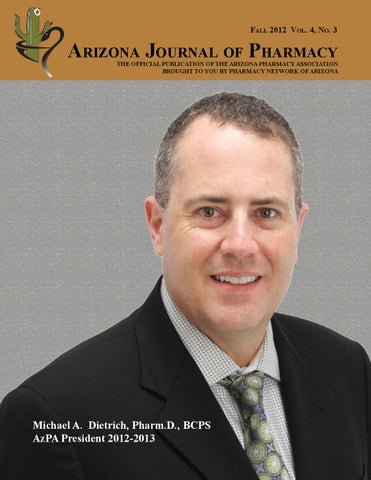
Michael A. Dietrich, Pharm.D., BCPS AzPA President 2012-2013
D i Together, g n i t y H ewe a l t are h . oamazing. rg At Dignity Health, talent and respect go handin-hand. Here, we are deeply committed to
Together, we are amazing.
providing an environment where employees
At Dignity Health,and talent and respect to golearn hand- in- feel welcome are encouraged from hand. Here, we are deeply committed to providing one another. Because when our individual an environment where employees feel welcome and views and experiences put together, are skills, encouraged to learn from oneare another. Because weour canindividual do amazing things. And exactly are when skills, views andthat’s experiences put what together, we can do amazing our patients expect fromthings. us. And that’s exactly what our patients expect from us.
We’re Dignity Health, formerly Catholic
Our focus on employee satisfaction hason helped us earn recognition as: Our focus employee satisfaction has helped usArizona’s earn recognition as: Companies, • 2011 Most Admired Az Business Magazine, BestCompaniesAz • 2012 Top 25 Workplaces for Women, • 2011 Top 25 Workplaces for Women, Az Magazine, BestCompaniesAz Az Magazine, BestCompaniesAz • 2011 Arizona’s Most Admired Companies, • 2011 The Valley’s Healthiest Employers, Az Business Magazine, BestCompaniesAz The Phoenix Business Journal • 2011 The Valley’s Healthiest Employers, The Phoenix Business Journal EOE. ©2012 Dignity Health.
EOE. ©2012 Dignity Health.
We’re Dignity Health, Catholic Healthcare Healthcare West.formerly Our Arizona region is West. The word “dignity” perfectly defines what comprised of Chandler Regional Medical our organization stands for: showing respect for Center,byMercy Gilbert Medical and all people providing excellent care.Center Our Arizona St. isJoseph’s Hospital and Medical Center. region comprised of Chandler Regional Medical Center, Mercy Gilbert Medical Center and To learn more about our culture and our St. Joseph’s Hospital and Medical Center.
opportunities, visit chandlerregional.org,
To learn more about our culture and our opportunities mercygilbert.org and stjosephs-phx.org. for nurses, visit chandlerregional.org, mercygilbert.org and stjosephs-phx.org.
Arizona Journal of Pharmacy
THE OFFICIAL PUBLICATION OF THE ARIZONA PHARMACY ASSOCIATION Brought to you by Pharmacy Network of Arizona
Vol. 4, No. 3
Fall 2012
In This Issue Columns
President’s Message CEO’s Message Academy News • Community Pharmacy Academy • Geriatric Care Academy • Health-System Academy • Managed Care Academy • Student Pharmacist Academy • Technician Academy
Featured Articles
Never a Dull Moment A Look Back - Inhaler Time Capsule Drug-Drug Interactions: Preventable Adverse Drug Events Enhancing your Continuous Quality Improvement Program with Effective Peer Review Practices Oxyco-Do’s & Oxyco-Don’ts: A Review of Urine Drug Testing CPE Monitor and You Powerful Connections: The AzPA Mentor Connection Program
Departments
www.azpharmacy.org
New Members Association News PAPA Legislative Update Student Perspective • AzPA Annual Convention • Why Does a Pharmacist Return to School After 14 Years? Arizona State Board of Pharmacy Drug Information Question Feature Pharmacist • Meeting the Patient Where They Are: An Innovative Pharmacy Practice Continuing Education
2 3 25 25 26 28 29 29
12 13 13 14 16 18 20 21
5 6 9 10 22 23 24 30 32 34
Editor
Janet Weigel Marketing and Communications Manager
Editorial Board
Leslie Rodriguez, Pharm.D. Whitney Rice, Pharm.D. Julie Hernandez, Pharm.D.
Tina Smith, Pharm.D., BCPS Nicholas Muscolino, Pharm.D.
Fall 2012 • Arizona Journal of Pharmacy • 1
President’s Message
It’s All About You
Michael Dietrich, Pharm.D. AzPA President
Welcome to the 2012-13 year of the Arizona Pharmacy Association. As I begin my year as your association president, I’d like to start by thanking you for being a member of the Association. Without you we would not be the voice of pharmacy in Arizona. We’ve just completed a fantastic year under the direction of Dr. Kevin Boesen and our CEO Kelly Ridgway. Through their leadership the Association is stronger now than at any time in our history. We are poised to take the next step in educating and representing you; monitoring, supporting, and/or sponsoring appropriate legislation; opposing detrimental legislation; and letting the public know that the pharmacy professionals they encounter everyday are the medication experts! Through the work of our Academies and Committees we will continue to fulfill our mission and provide you with timely updates and news regarding the activities of the Association and the pulse of the legislature. I encourage each and every member to get involved in the Association through the Academies or Committees. We have room for everyone and I assure you that your voice will be heard.
This edition of the Arizona Journal of Pharmacy is filled with updates from the Academies and educational opportunities. The journal endeavors to meet the needs of all of our members and this issue doesn’t disappoint. From articles related to our mentoring program to ADRs and CQI, this edition is a must read. I hope that as you read the articles and updates you too are inspired to be the best pharmacy professional you can be! Please look to the Journal and the newly-redesigned website (www. azpharmacy.org) for all of your continuing education and professional needs. We are excited to roll out the Arizona Center for Professional Education (AzCPE), offering quality continuing pharmacy education, skills enhancement activities, and professional development opportunities. In addition to our excellent live conferences and certificate programs, AzCPE now offers online continuing education activities to support you in your practice. Members receive preferred pricing on all CPE offerings. The updated website features timely videos, an expanded events calendar, job listings, and a current news links. As you explore, some of the new features you will find are member discounts, tools to advocate for our profession, ways to connect with other AzPA members, and valuable resources to enhance your membership. And don’t forget to like us on Facebook and connect with us on Twitter and LinkedIn. We want to hear from you.
We are striving to make these methods of outreach to our members both functional and enjoyable and hope you agree that we are on the right track. If you have suggestions or comments, just let me know. As you read this issue of the Arizona Journal of Pharmacy, please share it with a colleague who is not currently a member and invite him or her to join the only statewide association in Arizona representing all pharmacy professionals in all practice settings. We need you – all of you – to spread the word about the good work AzPA is doing for all pharmacy professionals and the value of membership in AzPA. There is strength in numbers and there is always room for more of YOU to fortify our ranks. I know this is going to be a ground breaking year for AzPA - and you!
MISSION STATEMENT The Arizona Pharmacy Association is committed to serving and representing all practice settings. AzPA will foster safe and effective medication therapy, promote innovative practice, and empower its members to serve the health care needs of the public. VISION Empowering pharmacy professionals to provide optimal patient care.
Arizona Pharmacy Association
The Voice of Pharmacy in Arizona 2 • Arizona Journal of Pharmacy • Fall 2012
CEO’s Message
Your Vote Counts!
This is an election year. In a few short weeks Americans will be heading to the polls to vote for the next President of the United States as well as choosing U.S. Senators, Congressional Representatives, State Senators and Representatives, and countless other state, county, and municipal officials. It is our privilege and right as citizens to participate in the democratic process and yet many eligible voters do not exercise this right. They believe their votes do not count. I believe your vote does count. Pharmacy professionals have the opportunity to be a collective voice for positive change in our state, country, and profession. When you cast your vote you are taking a stand for your family, your patients, and your community. The candidates you support are charged with representing their constituents –this includes YOU – on important issues affecting access to health care, patient safety, medications, regulations, and pharmacy practice. As the voice of pharmacy in Arizona, AzPA is engaged in the democratic process as an advocate for the profession, a stakeholder in the health care community, and a contributor to the political selection process. The AzPA Legislative Affairs Committee is comprised of volunteer members of the Association who are concerned with the pharmacy profession’s voice in the political process. Its primary focus is on state and local issues, but AzPA also has a significant presence at the national level. The committee is not a policy making body but acts in an advisory capacity to the AzPA Board
of Directors, monitoring potential legislation that may impact the practice of pharmacy. In the past several years, the AzPA Legislative Affairs Committee has successfully introduced legislation expanding authority for pharmacists in the areas of immunization and collaborative practice. In collaboration with community stakeholders, the Committee works tirelessly to block legislation that would negatively impact the pharmacy profession and/or patient care. (See the AzPA Legislative Update on page 10.) In addition to the AzPA Legislative Affairs Committee, your Association maintains the Pharmacists Political Action Committee of Arizona (PharmPAC). The PharmPAC is a voluntary political action committee that allows AzPA members to pool their financial resources to support state candidates who understand and appreciate the value of our profession and its importance in improving health care. The PharmPAC uses its political action funds judicially to provide support to legislators and candidates who are supportive of pharmacy’s role in delivering patient care. The PharmPAC is non-partisan. Its goal is to help elect candidates who, as lawmakers, will represent the values of AzPA and the thousands of patients we serve. Among the criteria considered by the PharmPAC when making donations are: •
•
The candidate’s support of positions that encourage the pharmacist’s role in health care delivery The candidate’s leadership position or membership on key legislative committees such as
Kelly Ridgway, R.Ph. AzPA CEO
•
Health Care The candidate’s potential for leadership and likelihood of being elected
AzPA has partnered with 20 other Arizona health care organizations to promote voter registration, educate the public about election activities, and inform citizens about the voting records of elected officials on critical health care issues. For more information visit www.azvoteforhealthcare.org. When you support the Arizona Pharmacy Association and the PharmPAC, you are casting your vote for the future of pharmacy in Arizona. In matters regarding the pharmacy profession and patient care, you can rest assured that your voice is heard at the state capitol. Regardless of your political party affiliation, for whom your parents vote, or who your friends are supporting, it is important that each of us make our own decision when it comes to casting our vote. There have been 12 Presidential elections that were decided by less than a 1% margin. If less than 1% of the voters in certain states had changed their mind to vote for the other candidate the outcome of the entire election would have been different. You can be that 1%. Be sure to cast your vote on November 6th. Your vote counts. Fall 2012 • Arizona Journal of Pharmacy • 3
808 Highway 18 W | Algona IA 50511
How does your
Professional Liability
measure up?
Coverage Benefits Our Professional Liability Policy is specifically designed as excess coverage, yet it can become your first line of defense when no other coverage is available. • Additional protection for you above that provided by your employer. • Covered 24 hours a day anywhere in the United States, its territories and possessions, Canada or Puerto Rico. • Covers compounding and immunizations (if legal in your state). • On-staff pharmacist-attorneys are available to counsel policyholders. • Risk management assistance that may reduce pharmacy professional exposure.
Apply Online!
Go to www.phmic.com, and choose the Pharmacist Liability Application under the Online Services tab.
For more information, please contact your local representative:
Ryan Goodrich
800.247.5930 ext. 7133 480.332.5656
Endorsed by*:
Arizona Pharmacy Association
*Compensated Endorsement Not licensed to sell all products in all states. Form No. PM PhL 196
New Members
WELCOME NEW MEMBERS PHARMACISTS Michael Holmes Ching-Yu Jenny Liu Sarah Bertone Amy Bates Kevin Dicks Marcella Hoyland Bruce Kaufman Lisa Keathley Charlene Latimore Hadriana McIntosh Hieu T Nguyen William Nicoletti Donna Smith Kathryn Wolken Hanin Bogari Nicole Kitts Amanda Reeve ASSOCIATES John Cottraux Jody Legg Thomas Rasmussen Tony Thuyen
TECHNICIANS Amanda Atef Al-Said Kalani Anderson Aaron J Soderberg STUDENT PHARMACISTS Abel Alvarez Travis Ambrogini Cambria Amo Ryan Berkseth Kelly Brink Adis Ceric Anthony Champagne Justin Dang Kristin D’Avolio Amanda Dawes My Thi Ngoc Doan Terry Drake Clinton Ellsworth Kristian Finley Alexander Forbes James Gale Kristina Gerboth Meera Grimsley Rachel Hall Sarah Hamilton
Stacy Padilla Kimberly Page Priyesh Patel Quan Pham Kayla Reddy Stephen Rice Jessica Rivinius Joseph Ruiz Mary J Salem Hilin Samow Corinne Sanovich Rachel Scanlan Connor Scheidt Harshal Shah Elbert Soh Blake Stine Christina Suguitan Christine Tafoya Melissa Thomas Cynthia Toy Michael Veltri Robert Verzino Matthew Wallace Bruce Warren Jonathan West Jocelyn York Mark Zelenka
Bethany Harges Amanda C Harmon Nicole L Henry Jeremy Hillman Suk Tina Hong Maegan Hunsaker Nguyen T Huynh Laura Johnson Heather Kober Jennifer Kohn Tamara Krekel Ashlie Kucera Jeff Lafrenz Matthew Chiyule Lee Stacy Lee Karen Liu Kyle Lo Cliff Lockey Kelsey Lombard Austin Mach Tyler Manning Maelee Miller Kinsey Misseldine Amber Mortensen Matthew Muramoto Qui Nguyen Magdalene O’Toole
Do you know someone who is not a member of the Arizona Pharmacy Association . . . and should be?! Invite them to join the only statewide organization that represents the pharmacy profession in Arizona. Annual dues for a pharmacist are just $20 per month! This equates to: • Approximately 2/10 of 1% of the annual wage for a new practitioner pharmacist • Less than 5 hours of work per year, after taxes • Less than 62 cents per day Visit the AzPA website at www.azpharmacy.org to join online or to download a printable Membership Investment Statement.
Arizona Pharmacy Association
AzPA values its members and recognizes that your time is valuable. Monthly payment plans are available for pharmacist membership categories, as well as an automatic annual renewal option, when you provide your credit card information.
Fall 2012 • Arizona Journal of Pharmacy • 5
Association News AzPA Website 3.0 Have you checked out the Arizona Pharmacy Association’s new-and-improved website? The redesigned site went live in late Spring and includes new features for AzPA members and prospective members.
Forums Want to connect with other pharmacy professionals? The AzPA Academies tab under Get Involved will connect you with members in your pharmacy practice field. Links to Forums are located on each individual academy main page.
Member Discounts Under the Join/Renew tab, AzPA has recently secured member discount programs with national and local vendors. Based on feedback from you – our members – we offer discounts for AAA, Pharmacist’s Letter, Pharmacy Technician’s Letter, and PrescribeWellness. Watch for more members-only discounts in the very near future.
Similar Interest Groups (SIGs) AzPA is soliciting applications for the establishment of Similar Interest Groups (SIG) to network, support the profession by addressing emerging issues, learn about advances in pharmacy practice, and promote the role of the pharmacist in enhancing patient care. Any AzPA member may petition the AzPA Executive Committee to develop a SIG. Go the Get Involved tab and click on the Similar Interest Groups for information on how to apply.
Arizona Center for Professional Education – AzCPE: Need continuing pharmacy education but can’t get to an AzPA conference? AzPA now offers online CE with special pricing for members. Affordable and convenient, the AzCPE online platform is located under the Continuing Education tab.
The website will continue to evolve and introduce new features and resources. Contact Janet Weigel, AzPA Marketing and Communications, at janet@azpharmacy.org with your ideas and comments.
6 • Arizona Journal of Pharmacy • Fall 2012
Cheers for Volunteers! The Arizona Pharmacy Association staff is here to support YOU - our members. We acknowledge the contributions of the volunteers who have made a difference for our organization and their fellow pharmacy professionals. Thank you for all you do! Kristen Allison Lindsay Davis Jon Merchen Mindy Throm Burnworth Whitney Shields Lindsay Huxtable Carol Rollins Kellie Fortier Genesis Sezate Hope Le
Association News Tony Rodinella Michael Lee Justin Dang Jessica Dao Aldwin Lopez-Dee Dan Malone Laura Hanson Brian McKinley Bob Verzino Tina Smith Whitney Rice Kristen Uebbing Joe Rowan Ann Sears Kyle Linhardt Eric Luecht Joy Davis Judi Day Josh Kramer Kristin Calabro Betty Louton Mark Boesen
Keith Boesen Laura Carpenter Ken Bykowski Martha Fankhauser Dean Wright Steve Haiber Carl Labbe Terry Warholak Neil MacKinnon Amanda Reeve Nicole Kitts Laura Tsu Heather Leinbach Sarah Bertone Cory Jenks Kelly Green Boesen Jasmine Henley Stephen Perona Eshani O’Daniel Angie Rosselli Marti Larriva Nicole Vacek-Wilson
SUPPORT PHARMACY POLITICAL ACTION IN ARIZONA! Make a contribution to the PharmPAC! The Pharmacist Political Action Committee of Arizona (PharmPAC) is a voluntary political action committee that allows AzPA members to pool their financial resources to support state candidates who understand and appreciate the value of our profession and its importance to improving health care. Although associations like AzPA are prohibited from making direct contributions to candidates, we can form a PAC, pay its administrative costs, and solicit voluntary contributions from members. The PharmPAC is a legal, ethical, and effective way to involve the association in the political process. PharmPAC plays an important role in enhancing the legislative action mission of the profession of pharmacy in Arizona. Our ability to interact with key legislators plays a major role in keeping our visibility at the necessary high level. The Arizona Pharmacy Association PharmPAC uses its political action funds carefully and wisely to provide support to legislators and candidates who are supportive of pharmacy’s role in delivering patient care. Our goal in 2012, especially with the elections on the horizon, is that PharmPAC be able to continue to nurture the profession’s involvement in the political process by providing support to allow pharmacy to attend or host as many important political fundraising events as possible.
PHARMACY’S FUTURE IS UP TO ALL OF US! GET INVOLVED! STAY INVOLVED! MAKE YOUR FUTURE! To make a contribution go to www.azpharmacy.org/PharmPAC Fall 2012 • Arizona Journal of Pharmacy • 7
Association News APF News Inaugural APF Symposium Mark your calendars to attend the Inaugural Southwest Pharmacy Symposium presented by the Arizona Pharmacy Foundation and PAPA on Saturday, January 26, 2013. The day-long event will provide tools for pharmacy professionals to advocate for patients; communicate and educate the public on the proper use of medications; and develop and participate in community outreach programs. Proposed continuing pharmacy education topics include CPR trainer training, NASPA OTC Challenge, preceptor workshops, residency workshops, AWARxE facilitator/coordinator instruction, and a program from Pharmacists Assisting Pharmacists of Arizona (PAPA) on substance abuse recovery.
SAVE THE DATE! Inaugural Southwest Pharmacy Symposium
It’s United Way time again! Do you know that you can support the Arizona Pharmacy Foundation through your workplace United Way campaign? As this year’s fundraising drives kick off all across Arizona, please consider making a gift to APF. Most United Way pledge forms allow you to designate your contribution to a specific agency. This is commonly called a “Restricted Contribution” or a “Designated Donation”. When you identify the Arizona Pharmacy Foundation as the specific agency on your pledge form, be sure to include the APF address: 1845 East Southern, Tempe, Arizona, 85282. APF has not yet been assigned an agency code. Contributing to your local United Way and designating APF is a simple and convenient way to support APF and your community. Contribute through your workplace campaign or find your local United Way organization at http://apps.unitedway.org/myuw/ APF Gift Cards The holidays are just around the corner. Think APF Gift Cards for your holiday shopping and gift giving. When you purchase your gift cards through the Arizona Pharmacy Foundation you are making a contribution to support the Foundation’s mission. Visit the AzPA store on the Arizona Pharmacy Association website for a complete list of available gift cards. Contact Cindy Younger, Accounting, at cindy@azpharmacy.org for more information. APF is a non-profit 501(c)3 charitable organization. APF Vision: To provide resources which further the profession of pharmacy and improve patient care. Mission: The Arizona Pharmacy Foundation exists to: • Provide funds, materials, and resources to the public regarding the role of the pharmacist on the health care team; including the proper use of prescription medications and the use of those medications to improve patient care. • Provide funds, materials, and resources to the pharmacy profession in order to further pharmacy research, pharmacy residency programs, student scholarships, and leadership development. • Provide necessary support to assist any pharmacist, pharmacy student, or pharmacy technician with alcohol and/ or chemical dependency.
8 • Arizona Journal of Pharmacy • Fall 2012
Become a Pharmacy
A.C.E.
Advocate Communicate Educate Saturday, January 26, 2013 Location to be announced
brought to you by the Arizona Pharmacy Foundation and Pharmacists Assisting Pharmacists of Arizona (PAPA)
PAPA The Twelve Steps: Religion, Spirituality or What? by John Valvo, MA
My goal in writing this article is to offer a reflection on the nature of the Twelve Step Program. Like other addiction counselors, I’ve offered Alcoholics Anonymous meetings to my suffering alcoholic/addict clients. My base assumption is that the Twelve Step Approach, with its communitarian support and emphasis on changed living, offers a viable alternative to their addictive lifestyle. Some years back, I felt the strong need to examine my assumptions about the Alcoholics Anonymous program. In hopes of being more effective, I decided to broaden my knowledge of Twelve Step methodologies by reading about its origin and roots. The question I challenged myself with was “Twelve Steps: religion, spirituality, or what?” My odyssey started with reading the official biographies of both AA founders, and the text Alcoholics Anonymous Comes of Age. I moved on to books by Alfred Huxley and William James; followed by books from the historian Ernest Kurtz. I read about the Oxford Group and about its founder, Frank Buchman. These books led in all kinds of directions pertaining to religion, spirituality, psychology, and science. Ultimately, these readings helped me better understand how the Twelve Step Program came to be and how it worked for the first “one hundred” recovering alcoholics. These revealed the promise offered first to the alcoholics and then to many others caught in addiction of “a technology for change”. Tapping into these resources not only improved my practical knowledge about AA, but it helped my clinical insight. Some examples of useful discoveries involved Bill Wilson who focused on the individual alcoholic, not on alcoholism; he thought that for the alcoholic there are no absolutes, that what works for one alcoholic doesn’t necessarily work for all. After hitting bottom and having his own “vital spiritual awakening”, Wilson pondered his experience, and wondered if one dramatic event could permanently transform the mind of a chronic alcoholic Karl Jung suggested a spiritual connection to addiction in the phrase spirits-Spiritus. William James spoke of belief in an unseen order. He provided both Oxford Group and Bill Wilson with a useful definition of the process conversion. There is still an outstanding fundamental question to explore regarding the ultimate nature of this program. Attempting an answer, I hope, will provide us both with a clue to how things in this program work and a guide to more successful use. I realize that many of those who came before - looking at the variety of religiously-borrowed influences (in language, prayer and rituals) - have concluded that the Program of the Twelve Steps is definitely religious in nature. I wondered about this myself long and hard. Frankly, at times, it was only instinct that lead me to resist this conclusion. My background in ministry and counseling tells me that there is something else going on here. Again, staying focused on the big picture, the thing that keeps coming back to me is that this program originates in the hopeless condition of the alcoholic. As to how the alcoholic resolves the problem, the Twelve Step Program suggests that the solution depends on the individual – each person is a unique experiment; an experiment based in openness to experience.
Scott Peck put it this way: “Mental health is facing life at all cost, and addiction is avoiding life at all cost.” The alcoholic is a “life consumer” trying to find what works. The Program of Alcoholics Anonymous is a group of alcoholics seeking workable solutions. To accomplish his/her goal, the alcoholic follows certain principles. The Big Book suggests that the first important principle is “Contempt prior to investigation” which means, keep an open mind. How does this ultimate consumer role for the suffering alcoholic/addict lead to spirituality? The simple answer is that spirituality, especially evangelical spirituality in the 1930’s when AA was founded, was a veritable technology for personal change. This was the experiment and experience of the first one hundred to get sober. Again, in the broadest sense, the Alcoholics Anonymous program is just one useful form of “spirit”, “science”, “technology” which the human experiment can take. The belief is that in the human experience there is a pattern which demonstrates that radical (addictive) narrow-mindedness, like a wormhole, leads to radical openness on the “spiritual path”. As an anonymous person once put it, “Can the lowest ebb signal the turning of the tide?” John Valvo is a counselor in private practice in Flagstaff, Arizona.
If you or someone you care about is suffering from an alcohol and/or chemical dependency problem... ...help is available.
Pharmacists Assisting Pharmacists of Arizona “A Partnership in Caring”
Contact Lisa Yates, PAPA Program Administrator at 928.532.2293 or papa@azpharmacy.org All calls confidential. Caller remains anonymous.
PAPA
is a program of the Arizona Pharmacy Foundation
Fall 2012 • Arizona Journal of Pharmacy • 9
Legislative Update Before you know it the 51st Legislature will be sworn in at the Arizona Capitol. About that same time, the country may or may not have a new President. Needless to say, the Association will be busy and needs your help crafting state and federal policy most advantageous to the pharmacy profession. Pharmacists Scope of Practice: Arizona Pharmacists Should be Permitted to Obtain a DEA Permit Today, all pharmacists licensed in the State of Arizona are eligible to enter into collaborative practice agreements. These practice agreements allow pharmacists to initiate, modify, and monitor drug therapy. As a result, the Association is in an aggressive education mode to teach regulators and pharmacies about the new privileges pharmacists have to write prescription medication orders. Specifically, the Association's executive committee has contacted the Drug Enforcement Administration (DEA) to ensure Arizona is added to the list of states of which pharmacists are eligible to obtain a DEA permit. A DEA permit is necessary for institutional and community-based pharmacists to initiate and modify prescription drug orders for controlled substances. To that end, the Association recently filed a Sunrise Application at the state legislature to clarify our new role. The Sunrise Application may be needed if the Drug Enforcement Administration is not satisfied with the language in our new collaborative practice law. We believe the law is clear and unambiguous. However, if changes are needed, the Association is ready to work with the legislature on technical corrections to our new collaborative practice law. Political Action Committee Prohibitions The AzPA Board of Directors approved the PharmPAC’s suggestion to support participation in a lawsuit to be filed later this year regarding Arizona's limits on Political Action Committee (PAC) support for local candidates. Under the current system, Arizona limits the total amount of money any candidate seeking elected office may collect for its campaign activities. This has resulted in the PharmPAC's inability to contribute to a number of candidates for which it has committed financial support. "The current limits set by Arizona law limit the free speech rights of organizations like the PharmPAC," according to Mark Boesen, AzPA Legislative Committee Chair and PharmPAC contributor. "Because the PharmPAC is not well funded by the profession, it has a cash flow problem. All too often PharmPAC's checks are returned by political campaigns because they have already reached the maximum number of PAC contributions." The maximum amount that a PAC can contribute will remain the same. Only the limit on the number of PACs that are able to contribute will change. Community Pharmacy Fairness in Audit Practices, Patient Choice of Pharmacist Providers, and Other Issues The Association is committed to any and all opportunities that would ensure the right for patients to utilize their prescription insurance coverage at the pharmacy of their choice. In addition, the Association is in the process of building a tool kit for pharmacists who struggle with perceived unfair audit practices by third party auditors. Participation in the AzPA Legislative Affairs Committee is open to all AzPA Members. Check out the AzPA Legislative Affairs Committee webpage on the Arizona Pharmacy Association website for information on how to join. On the site you will also find quick links to valuable resources, including how to locate your state and federal legislators. Mark Boesen AzPA Legislative Affairs Committee Chair legislative@azpharmacy.org
Jeff Gray R & R Partners AzPA Lobbyist
November 6, 2012 is Election Day! Exercise your right as an American to participate in our democratic process. Every vote counts! 10 • Arizona Journal of Pharmacy • Fall 2012
Fall 2012 • Arizona Journal of Pharmacy • 11
Featured Article Never a Dull Moment by Joe Rowan, R.Ph.
Life in the drug store was never dull – whether I was the pharmacist or the customer. One night while engaged in a phone conversation with a physician, the most amazing story began to unfold. Imagine a huge black cat surfing down out of the ceiling on a 2 foot by 3 foot ceiling tile. The “surfing cat” landed in the middle of a rather expensive punch bowl in our gift department, displacing and shattering many of the cups. It then took a bounding leap over the head of a customer enjoying a peaceful cup of coffee at the soda fountain, scaring the daylights out of our fountain clerk as it scooted past her. Suddenly I realized this frantic feline was headed straight for me as it ran and leapt across the store. I took my leave from the conversation with the doctor with the excuse that I had an in-store emergency and would call back. About that time the rascal bounded over my head and landed on the shelving behind me, scattering and destroying many small prescription bottles. With a hiss and a glare toward me, it took off for the front of the store and found refuge in the magazine rack. Not knowing anything about the health of this feline, I warned all the staff and customers to make no attempt to catch the cat. I called our animal control agency and had a very difficult time convincing the person on the other end of the line that my story was on the level. Finally they came and retrieved the culprit. It was determined that somehow the cat had gained access into our ceiling through the air conditioner on the roof. How long it had roamed the roof and spent time above our ceiling before stepping on that loose ceiling tile was anyone’s guess. Naturally the cat was just as terrified and upset as we were from the experience. You might imagine I had an even more difficult time explaining this escapade to Mr. Casteel and the insurance company. I am sure the Texas State Board of Pharmacy had a chuckle when they read my report on how some of the medication had been damaged. The physician with whom I had been conferring on the telephone was convinced I had been sipping some of my own medications when I tried to explain my hasty exit.
Another example of “never a dull moment” occurred on a family vacation. Mims and I had two daughters at the time and we visited Colorado. The girls happened to pick up a wood tick or two on their heads. I stopped in the pharmacy in Del Norte, Colorado to see what the pharmacist might recommend I do. The kindly old gent sat the girls on his prescription counter and showed me how to twist those little ticks right out. It required being done in a special way so that you did not break part of the tick off in the flesh of the scalp. It was an “unscrewing” process that must be done very meticulously. His time spent on this 12 • Arizona Journal of Pharmacy • Fall 2012
procedure was about one hour on each girl. His requested price for this service? Our undying gratitude. Who says the old time druggist isn’t a great person to have around? By the late 1950’s Gunning Casteel began to employ a few extra pharmacists and we were now given one day off every two weeks. This was a dramatic change of events as up to this time we were still working 7 days per week, 365 days per year with the pharmacist/manager putting in 10-hour plus work days. There was no such thing as a closed holiday. On Christmas and Thanksgiving, we closed the store at 2:00 pm as opposed to 10:00 pm. My regular day off was Friday, but on special occasions, the manager and assistant manager would agree to alternate working all day on Sunday. Sunday was usually a slower day for the pharmacist on duty and this would give each pharmacist an additional day off every other week. Time off was a rare commodity for me. In January 1960 I was awarded a week off in recognition of our outstanding sales performance in 1959. After 20 years at Gunning Casteel, I was getting itchy feet to try something on my own. Mims and I had four little girls with another child on the way. Ever supportive of my career, Mims and I decided to take the week and travel to Phoenix, Arizona and explore possibilities for a Rowan Pharmacy. And with that another adventure began. This is the seventh installment in a series of reflections from Joe Rowan, R.Ph., longtime Arizona pharmacist and AzPA member. Follow Joe’s memoirs in future issues of the Arizona Journal of Pharmacy or catch up on past installments by visiting the Arizona Journal of Pharmacy archives on the AzPA website.
October Proclaimed Arizona Pharmacist Month by Governor Brewer
Featured Article
A Look Back - Inhaler
by Robert E. Kravetz, MD, FACP, MACG American College of Gastroenterology
Inhalation therapy has been used since the Egyptians burned reeds to partake of the anesthetic and soporific effects of the fumes. Over the ensuing years, various cultures inhaled vapors of a variety of herbs. Even pure steam was used for its medicinal effect. The introduction of inhalation ether anesthesia by William T. G. Morton in 1846 stimulated widespread use of inhaled medications and inhalation devices. Numerous inhalers, or vaporizers as they were sometimes called, were made of tin and glass, but most have not survived. The George Tiemann American Armamentarium Chirurgicum catalogue of 1889 describes inhalers as “devices for the productions of steam hot water, vapors and fumes of ether, chloroform, iodine, and the nebulization of medicated fluids in affections of the air passages.” The most common type of surviving inhalers are made of pottery and are bulbous. This mid-19th century Maw’s Inhaler was purchased in an antique district in London. Boiling water was added to the herbs and the medicated vapors were inhaled through the bent glass spout at the top.
Pharmacy Time Capsules Third Quarter 2012 1987—Twenty-five Years ago:
1912—One hundred Years Ago:
•
•
•
Major pharmacy issue of the year was the increase in physician office based dispensing. Acuvue launched by J&J was the first disposable soft contact lens.
1962—Fifty Years Ago: • •
Trivalent oral polio vaccine (Sabin) was licensed in the U.S. Rite-Aid (Pennsylvania), Meijer’s (Michigan), and Wal-Mart (Arkansas) were formed.
1937—Seventy-five Years Ago: •
Cook County Hospital in Chicago, Illinois was the site of the first blood bank, set up by Bernard Fantus.
Phenobarbital (Luminal) first marketed by Bayer in 1912.
1887---One hundred twenty-five Years ago: •
The National Institutes of Health (NIH) established. The National Institutes of Health traces its roots to 1887, when a one-room laboratory was created within the Marine Hospital Service [predecessor agency to the U.S. Public Health Service (PHS). ]
One of a series contributed by the American Institute of the History of Pharmacy, a unique non-profit society dedicated to assuring that the contributions of your profession endure as a part of America’s history. Membership offers the satisfaction of helping continue this work on behalf of pharmacy, and brings five or more historical publications to your door each year. To learn more, check out www.aihp.org.
Fall 2012 • Arizona Journal of Pharmacy • 13
Featured Article Drug-Drug Interactions: Preventable Adverse Drug Events by Daniel C. Malone, R.Ph., Ph.D.
Patients receiving multiple prescription medications are at risk for exposure to a potential drug-drug interaction (DDI). Although there is no standard definition for DDI, we define a drug interaction as the alteration in the effect of a drug (object drug) as a result of co-administration of another (precipitant drug) in a clinically meaningful way. DDIs may be pharmacokinetic (i.e., the delivery of the object drug to its site of action is altered by the precipitant drug) or pharmacodynamic (i.e., the response of the object drug is modified by the precipitant drug without changes in drug concentrations). Evidence suggests that despite our efforts to minimize exposure to these known hazards, millions of potential DDIs occur annually. The reasons for this are plentiful. There is considerable disagreement among DDI compendia with respect to which interactions are most significant. Among four common DDI compendia, for example, only nine interactions were listed in all four as “major” interactions.1 This discrepancy can be attributed in part to the rating systems used by each compendium. Furthermore, studies of prescribers’ knowledge of clinically important interactions have found a general lack of awareness of DDIs. For example, a study of Veterans Administration prescribers found that only 64% knew of the interaction between sildenafil and nitrates; both medications are likely to be used by older men.2 In a national study conducted by Ko et al, physicians and other prescribers correctly classified only 43% of clinically important DDIs.3 More importantly, almost one half were not sure that an interaction existed between methotrexate and the antibiotic combination of trimethoprim/sulfamethoxazole – a contraindicated interaction. Significant consequences can result as a result of a DDI. For example, Juurlink et al. examined DDIs among residents of Ontario, Canada, who were over 66 years of age, were treated with glyburide, digoxin, or an angiotensin-converting enzyme (ACE) inhibitor, and who had a hospitalization.4 Patients who were admitted with a diagnosis of hypoglycemia were six times more likely to have been treated with trimethoprim/ sulfamethoxazole in the previous week. Similarly, persons with digoxin toxicity were 12 times more likely to have received clarithromycin. Some physicians and hospital systems have adopted computerized physician order entry (CPOE) technologies as a routine part of patient care. The advantages of CPOE include the elimination of errors due to interpretation of handwriting, rapid routing of orders to pharmacies and other providers, and the potential to reduce DDIs as well as drug-allergy and drugdisease contraindications. Studies have shown that CPOE can reduce errors,5,6 improve therapy selection,7 and reduce therapy duplication;8 however, these systems may not perform as intended or as well as needed. A clear advantage of CPOE is the ability to incorporate DDI alerts in real time to prescribers. Although this approach has a theoretical appeal, the potential to overburden physicians with useless alerts is tremendous. Magnus et al. examined community-based general practitioners’ views who had such computer alerting systems.9 Among the respondents, 166 14 • Arizona Journal of Pharmacy • Fall 2012
(75.5%) indicated that the alert system provided information about interactions for which they were currently aware. Approximately 50% indicated they were annoyed at least some of the time with the alert messages. On the other hand, most physicians indicated that they did not frequently override alert messages without “properly checking.” Existing studies of clinical decision support demonstrate that much work is needed in designing and implementing safety nets for the prevention of DDIs. One particular case report in the literature highlights the failures of the systems described above. This case involves an interaction between phenelzine (Nardil®) and the combination product Midrin® (containing isometheptene, dichloralphenazone, and acetaminophen). 10 The dispensing pharmacist suspected an interaction and subsequently checked two drug interaction textbooks for information about the interaction. The pharmacy computer software system failed to note the interaction, and ultimately the Midrin® prescription was dispensed. Forty minutes after the patient took the first dose of Midrin®, a hypertensive crisis began. The drug interaction compendia used by this pharmacist were incomplete. Thus, despite multiple layers evaluating the prescribing process, our systems failed. The Arizona Center for Education and Research on Therapeutics (AzCERT) has a primary mission of preventing serious DDIs through awareness and education. The Center’s website (AzCERT.org) provides detailed information on medications that are involved in clinically significant DDIs. In addition, the AzCERT maintains a list of medication know to prolong the QT interval and/or induce torsades de Points ventricular arrhythmias. A case-based online CME program on DDIs can also be found on AzCERT.org under the Professional Education tab on the upper left hand portion of the home page. The “Deadly Errors of Commission: Principals of Clinically Important DrugDrug Interactions” is an evidence-based overview of common DDIs. While it is impossible to memorize all important DDIs, understanding the basic mechanistic actions of therapeutics can help prevent serious harm. In particular, understanding which medications are likely to inhibit cytochrome P-450 enzymes is extremely important to recognizing many clinically important DDIs. The aforementioned CME program assists in this goal. Safe prescribing! References 1. Abarca JM. Concordance of severity ratings provided in four drug interaction compendia. J Am Pharm Assoc. 2004;44:136-41. 2. Glassman PA, Simon B, Belperio P, Lanto A. Improving recognition of drug interactions: benefits and barriers to using automated drug alerts. Med Care. 2002;40:1161-71. 3. Ko Y, Malone DC, Skrepnek GH, Armstrong EP, Murphy JE, Abarca J, et al. Prescribers’ knowledge of and source for drug–drug interaction information. Drug Saf. 2008;31:525-36. 4. Juurlink DN, Mamdani M, Kopp A, Laupacis A, Redelmeier DA. Drug– drug interactions among elderly patients hospitalized for drug toxicity. JAMA. 2003;289:1652-8. 5. Bates DW, Leape LL, Cullen DJ, Laird N, Petersen LA, Teich JM, et al. Effect of computerized physician order entry and a team intervention on prevention of serious medication errors. JAMA. 1998;280:1311-6. 6. Teich JM, Merchia PR, Schmiz JL, Kuperman GJ, Spurr CD, Bates DW. Effects of computerized physician order entry on prescribing practices. Arch Intern Medicine. 2000;160:2741-7. 7. Evans RS, Pestotnik SL, Classen DC, Clemmer TP, Weaver LK, Orme JF, et al. A computer-assisted management program for antibiotics and other anti-infective agents. N Engl J Med. 1998;338:232-8.
Drug-Drug Interactions (continued from page 14)
8. Senholzi C, Gottlieb J. Pharmacist interventions after implementation of computerized prescriber order entry. Am J Health Syst Pharm. 2003;60:1880-2. Shad MU, Marsh C, Preskorn SH. The economic consequences of a drug–drug interaction. J Clin Psychopharmacol. 2001;21:119-20. 9. Magnus D, Rodgers S, Avery AJ. GPs' views on computerized drug interaction alerts: questionnaire survey. J Clin Pharm Ther. 2002;27:377-82. 10. Kraft KE, Dore FH. Computerized drug interaction programs: how reliable? JAMA. 1996;275:1087.
Daniel C. Malone, R.Ph., Ph.D., is a professor at the University of Arizona College of Pharmacy in Tucson, Arizona. Dan is Co-Director for the Arizona Center for Education and Research on Therapeutics, focusing on system issues to reduce harm caused by drug-drug interactions. He can be reached at malone@ pharmacy.arizona.edu. This article first appeared in the Vol. 22, No. 2 edition of AzMedicine and is reprinted with permission.
AzPA Calendar of Events October 20, 2012 AzPA Fall Pharmacy Conference October 2012 American Pharmacists Month November 12, 2012 Pharmacy-Based Immunization Delivery Certificate Training Program January 23, 2013 Pharmacy Day at the State Capitol January 25, 2013 Psychiatric Certificate Program January 26, 2013 Inaugural Southwest Pharmacy Symposium Visit www.azpharmacy.org for all upcoming events.
Arizona Pharmacy Association
The Voice of Pharmacy in Arizona
Featured Article Sclar Joins Midwestern University College of Pharmacy-Glendale Midwestern University College of Pharmacy-Glendale is pleased to welcome David Alexander Sclar, B.Pharm., Ph.D. as Chair of the Department of Pharmacy Practice. Prior to joining Midwestern University College of PharmacyGlendale, Dr. Sclar was Boeing Distinguished Professor of Health Policy & Administration, Professor of Pharmacotherapy, Professor of Statistics, Boehringer Ingelheim Scholar in Pharmaceutical Economics, and Director of the Pharmacoeconomics & Pharmacoepidemiology Research Unit at the Washington State University College of Pharmacy. Dr. Sclar received a Bachelor of Pharmacy, cum laude, with a minor in Anthropology from Washington State University in 1985, a Doctor of Philosophy in Business Administration & Pharmacy from the University of South Carolina in 1988, where he was a research fellow in pharmaceutical marketing in the Center for Pharmaceutical Economics & Policy, and post-graduate training at the Cornell University Administrative Management Institute for Higher Education in 1999, the University of British Columbia Center for Management Development in 2001, and the Thunderbird School of Global Management in 2012. Dr. Sclar is listed in Who's Who in America, Who’s Who in the World, and Who’s Who in Medicine and Healthcare. Prior to returning to his alma mater in 1991, Dr. Sclar served on the faculty of the University of Southern California School of Pharmacy, in the Department of Pharmaceutical Economics & Policy. Dr. Sclar was the recipient of the United States Department of Health and Human Services National Quality Scholar Award in 1991, the American Society of Health-System Pharmacists Research & Education Foundation Pharmacotherapy Research Award in 1995, the American Society of Health-System Pharmacists Research & Education Foundation Pharmacy Practice Research Award in 1995, the inaugural Washington State University College of Pharmacy Faculty Excellence Award for Research in 2009, the University of Southern California School of Pharmacy Teacher of the Year Award in 1990, and 1991, and the Washington State University College of Pharmacy Teacher of the Year Award in 1998, and 2011. Dr. Sclar's research interests focus on issues involving pharmacoeconomics, pharmacoepidemiology, and health policy, and have been supported by over $12 million ($6.7 million as Principal Investigator) in grants from government agencies, foundations, and the biomedical/pharmaceutical industry. Dr. Sclar has served as an advisor to the United States Presidential Commission on Health Care Reform, United States Food & Drug Administration, United States Senate Select Committee on Aging, United States Veterans Administration, Canada Ministry of Health, Republic of China Bureau of Drugs & Biologicals, New Zealand Ministry of Health, Republic of South Africa Ministry of Health, United Kingdom National Health Service, and the World Health Organization.
Fall 2012 • Arizona Journal of Pharmacy • 15
Featured Article Enhancing your Continuous Quality Improvement Program with Effective Peer Review Practices The fundamental feature of a Continuous Quality Improvement (CQI) program that distinguishes it from a simple medication error reporting system is the pursuit of WHY the quality-related event (QRE) occurred. This article examines how to start a Peer Review program to answer the WHY questions in a way that avoids creating a punitive and blaming culture. Equally important, peer review methods can help identify effective systems-based corrective actions. All pharmacy employees should become familiar with the peer review steps that take place after a QRE report is submitted. This familiarity reduces anxiety and promotes cooperation toward a positive outcome. Identifying the Causes of Quality-Related Events (QREs) While the initial reports describe WHAT went wrong, the role of Peer Review is to identify WHY things went wrong. For example, a dispensing error occurs while the pharmacist was called to the phone during the final check. Peer review identifies that there are no safeguards to protect the pharmacist from interruptions during the final check and no system to restart the final check after the interruption. The causes behind this error might therefore be rooted in faulty procedures and human factors (e.g. distractions) and not based on the competence or dedication of the pharmacist. Unless corrected, these underlying failures increase the risk for future errors, regardless of who is dispensing or checking the prescription. If the “first story” about a QRE tells WHAT happened, the “second stories” are the stories that the pharmacist and technicians often talk about afterwards. Common second stories often describe normal practices such as: Intensivefrom Investigation • “We always take telephone prescriptions Dr. Smith’s Intensive investigation involves a series office clerk.” questions that attempt to identify • “That customer always of refuses my offer to counsel so I’ve the systems failures and human factors that stopped offering.” contributed to a QRE. Intensive • “Pharmacist Jones always fills problem prescriptions investigations are thorough and do not but he places a note on the bag to check with him before accept the apparent cause of the error. dispensing.” • “The computer sends too many alerts so we always answer • Factual, evidence-based, systemsyes to the override.” focused, nonpunitive Often, QREs occur in seemingly “normal” situations. It islow • Timely, quick (15 -30 min) and only after more careful peercost review that these “normal” situations are in fact, seen as not normal. This is the recommended method of Beginning the Peer Reviewanalysis and Investigating the QRE that will be most useful for routine useofinretrospective community pharmacy Fundamentally, there are two types analysis CQI programs. Intensive investigations differing primarily in their intensity, time and cost: 1) intensivegather “firstanalysis hand” evidence what happened, investigation; and 2) root cause (RCA). of Each analysis is with concise, clear and detailed described in more detail in the text box. Importantly, each type descriptions of the persons involved, of analysis is conducted under the peer review protections of a timing of the event, the environment, the Patient Safety Organization (PSO). policies and procedures involved and the Intensive investigations do not accept the apparent or “first “second stories” that staff tell about this story” causes of error (e.g. “it was busy when I did the final event and similar events in the past. It check”). They seek out and probe for WHY the error occurred includes collecting physical evidence in that particular instance compared to any other time. They such as copies of the original ask what part of the system failed and WHY it failed. Peer prescription, telephone notes, labels,
computer display 16 • Arizona Journal of Pharmacy • Fall 2012 and
other facts.
review also assures that others agree with the suspected reason for the system failure and the suggested improvement plans are acceptable to other practitioners. Peer review helps minimize bias in analyzing the cause of error and helps assure that the improvement plan is likely to be effective. Peer Review Identifies the Human Performance Factors that Contribute to QRE After a QRE, it is too easy to be critical of human performance; somewhat like the tendency to be a Monday-morning quarterback. Peer review takes a more measured approach and Intensive Investigation Intensive investigation involves a series of questions that attempt to identify the systems failures and human factors that contributed to a QRE. Intensive investigations are thorough and do not accept the apparent cause of the error. • Factual, evidence-based, systemsfocused, nonpunitive • Timely, quick (15 -30 min) and low cost This is the recommended method of analysis that will be most useful for routine use in community pharmacy CQI programs. Intensive investigations gather “first hand” evidence of what happened, with concise, clear and detailed descriptions of the persons involved, timing of the event, the environment, the policies and procedures involved and the “second stories” that staff tell about this event and similar events in the past. It includes collecting physical evidence such as copies of the original prescription, telephone notes, labels, computer display and other facts. Root Cause Analysis (RCA) Root cause analysis (RCA) is a formal, rigorous, structured diagnosis of a serious error or potential error that is likely to be repeated unless the underlying failures are corrected. • Factual, evidence-based, systemsfocused, non-punitive • Extremely comprehensive, may involve outside experts, time intensive, more expensive RCA is the type of detailed and lengthy analysis conducted by the National Transportation Safety Board following aircraft accidents. This type of analysis is reserved for use after rare serious events. The RCA should be conducted by persons with experience in risk management and medication safety.
Roo Root caus rigorous, error or p repeated u are correc
• Factual, focused, n • Extreme outside ex expensive
RCA is th analysis c Transport aircraft ac is reserve events. Th persons w managem
Featured Article CQI (continued from page 16) puts the reviewer “in the shoes” of the persons involved in the QRE, under the same conditions at the time of the event. Overall, human performance in a poorly designed system will result in more error. While systems-based errors are the major cause of QREs, a complete peer review will always look at the way practitioners work within the system. If the QRE is due to mental slips and lapses, the performance failures may be due to fatigue, distraction and information overload. The underlying system failure may ultimately be workload management, workflow management or poorly defined job responsibilities. If the QRE is due to a judgment error, the performance failure may be due to high stress or making wrong assumptions. The underlying system failure may ultimately be an over-reliance on memory for critical steps, lack of readily available drug and patient information, or work environments that create unnecessary and dysfunctional stress. At times, non-work related family and life stresses add to the complex mix of factors that lead to QREs. Peer Review and Corrective Actions The end-game of peer review is to identify corrective actions that improve systems and decrease the risk of human performance failures. Peer review helps assure that the proposed corrective actions will be effective and accepted by others. While one person might propose “the fix”, collective input from other employees will help assure that “the fix” is a workable solution. For example, it is unlikely that brief education and training or admonishing people to “be more careful” will prevent human performance errors. To effectively reduce errors, the workflow system itself needs to be redesigned with the limitation of human performance in mind. Editor’s Note: The rules for the implementation of ARS 32-1973. Pharmacies; quality assurance went into effect September 2012.
TIPS ON STARTING A PEER REVIEW PROCESS The pharmacy’s policy and procedure should describe how the Peer Review process works, even in a small pharmacy with very few employees. The peer review work may be delegated to a pharmacist or experienced technician who has a special interest in safety and quality. The pharmacist-manager is ultimately responsible for the CQI program and for approving any corrective actions. 1.
Gather and preserve the physical evidence and stories of those involved in the QRE. 2. Describe the QRE in terms of WHAT happened (not what was supposed to happen). 3. Make notes only on documents that are protected by the PSO. 4. Conduct private personal interviews that use a series of WHY questions to describe the QRE, the environment at that time and the characteristics of similar QREs. The WHY question might need to be asked several times to truly understand what happened. Each “human error” must have a preceding cause. The interview should result in a clearer picture of WHY the procedures or practice led to the QRE. 5. Identify possible failures in the systems (e.g. procedures, policies, equipment, workflow). 6. Identify possible contributing factors (e.g. environment and human performance factors). 7. Classify and record by type of QRE and the part of the workflow process when the QRE occurred. 8. Classify and record the causal factors and system failures. 9. Identify improvement plans. What would prevent this error in the future? What will be monitored to assure that the corrective action is working? 10. Tell each employee about the final corrective action plan and how the changes affect their job.
“I’M ALWAYS WATCHING OUT FOR MY PATIENTS, BUT WHO’S WATCHING OUT FOR ME?”
WE ARE. We are the Alliance for Patient Medication Safety (APMS), a federally listed Patient Safety Organization. Our Pharmacy Quality Commitment (PQC) program helps you implement and maintain a continuous quality improvement program that offers strong federal protection for your patient safety data and your quality improvement work. PQC also helps you comply with quality assurance requirements found in network contracts, Medicare Part D, and state regulations. We offer flexible and powerful tools, ongoing training and support to keep your pharmacy running efficiently, and most importantly, to keep your patients safe.
Call toll free (866) 365-7472 or visit www.pqc.net PCQ is brought to you by the Arizona Pharmacy Association
Fall 2012 • Arizona Journal of Pharmacy • 17
Featured Article Oxyco-Do’s & Oxyco-Don’ts: A Review of Urine Drug Testing
by Justin Dang, Jessica Dao, Aldwin Lopez-Dee, Pharm.D. Candidates, Class of 2013, Midwestern University Glendale and Mindy (Throm) Burnworth, Pharm.D., BCPS, Associate Professor, Midwestern University Glendale, AzPA Health-System Academy
Pharmacists are frequently asked questions about urine drug screening or the urine drug test (UDT). As such, it would be prudent to improve the pharmacist’s understanding of UDTs, associated limitations, and what the results may indicate. In a particular case, a patient currently on Percocet™ 5-325 mg orally eight times a day received rather mixed results. The patient’s physician initially ordered an Alere™ UDT to screen for opioid use, for which the result was negative. Seven days later, a second Alere™ test was ordered, the result identical to the first (negative). However, an Oxy One Step™ UDT was also performed at the same time as the second Alere™ UDT using the same urine sample; the Oxy One Step™ UDT was positive. To further complicate interpretation, the patient also tested positive for tricyclic antidepressants (TCA) using the Alere™ test despite not receiving any TCAs. What is going on here? Is it possible to get negative results on one test and a positive result on another? If so, how does this occur and how will this affect how healthcare providers like pharmacists analyze and use UDTs in the future? First, a short review of oxycodone and relevant studies may be helpful. Oxycodone has a half-life of 2-4 hours for immediate release (such as Percocet) and ~5 hours for controlled release (such as OxyContin). It is 60-87% bioavailable and has an expected onset of 10-15 minutes. It is metabolized via CYP3A4 to noroxycodone, noroxymorphone, and alpha- and betanoroxycodol. It is metabolized via CYP2D6 to oxymorphone, alpha- and beta-oxymorphol. It is excreted in the urine as 19% parent drug and >64% as metabolite.1 One study included 36 subjects on one of three doses of oral OxyContin 80 mg/day, 160 mg/day, and 240 mg/day. The studied measured urine drug concentrations via liquid chromatographymass spectrometry and reported drug levels as an aggregate total of oxycodone, oxymorphone, and noroxycodone. The subjects’ median urine drug levels were 3,172 ng/ml (95% CI 2,730 – 3,613 ng/ml) at the 80 mg/day dose, 5,245 ng/ml (95% CI 4,311 – 6,178 ng/ml) at the 160 mg/day dose, and 8,249 ng/ml (95% CI 6,647 – 9,851 ng/ml) at the 240 mg/day dose.2 A case study of a patient being treated on high dose oxycodone (approximately 700 mg/day) had a urine drug level of 12,900 ng/ml oxycodone and 18,300 ng/ml noroxycodone as determined by electron-capture gas-liquid chromatography.3 Another study collected 30,455 urine samples from patients taking oxycodone at varying dosages. They found via liquid chromatography-mass spectrometry that patients had a mean oxycodone urine drug concentration of 9,014 ng/ml (standard deviation of 35,040 ng/ml).4 The studies found exemplify that even on significant doses of oxycodone, urine drug levels may not be elevated enough to trigger a positive response on a UDT that does not have the specificity to detect oxycodone or its metabolites (noroxycodone or oxymorphone). The latter study with 30,455 urine samples had a standard deviation of 35,040 ng/ml. Clinically this indicates that inter-patient variability, such as metabolism or concomitant disease states, may greatly affect oxycodone urine 18 • Arizona Journal of Pharmacy • Fall 2012
drug concentrations and yield varying UDT results between patients taking oxycodone. Second, understanding the nature of how UDTs yield results may explain why it is possible to get a negative UDT for oxycodone using the Alere™ drug test, yet obtain a positive drug test for the Oxy One Step™. It is important to note that in this case both tests are qualitative tests as opposed to quantitative tests. A quantitative test, such as gas chromatography or mass spectroscopy produces actual levels of drug found in the urine, and usually is reported as a numeric value. Conversely, qualitative tests, such as Alere™ and Oxy One Step™, do not yield an actual number, instead, they confirm or deny the presence of a specific drug in the urine based on a specified threshold that must be met to produce a positive result. This is very similar to that of a pregnancy test, which detects human chorionic gonadotropin (hCG). Positive pregnancy tests can only confirm the presence of hCG (which implies a woman is pregnant) but not how much hCG is actually present in the urine.5,6 Recall the UDTs utilized in the index patient case. The Alere™ test employs fluorescent immunoassays to detect the presence of drug or major metabolites. The Alere™ can test up to 10 different drug classes, each with its own minimum concentration which much be crossed to produce a “positive” test. In this particular patient case, the physician wanted to screen for oxycodone, a semi-synthetic opioid derivative. According to the Alere™ package insert the minimum concentration threshold for opiates is generally 300 ng/ml, meaning there should be at least 300 ng/ml of drug in the urine for the test to appear positive. However, upon further examination the 300 ng/ml threshold is actually the threshold for a positive morphine test, which is what the Alere™ test is calibrated to screen for. Furthermore, the specificity of oxycodone in the Alere™ test is listed to be 23,000 ng/ml. This may explain why the UDT yielded negative results found in both Alere™ tests (performed one week apart) as it would require 23,000 ng/ml to produce a positive test.5,6 Recall the second study that found doses of oxycodone 700 mg/day yielded concentrations of 12,900 ng/ml.3 The index patient was receiving approximately 40 mg of oxycodone per day and would therefore not yield urine concentrations high enough to produce a positive result. However, the index patient had a positive drug test for the Oxy One Step™. The Oxy One Step™ uses a chromatographic immunoassay to detect specifically oxycodone. This test is more specific requiring only 100 ng/ml of oxycodone present in the urine to produce a positive result.5,6 Recall the first study that revealed that oxycodone 80 mg daily yielded a median urine concentration of 3,172 ng/ml.2 This may very well explain a negative Alere™ score, while still producing a positive Oxy One Step™ score.5,6 Finally, there are also other factors to consider such as patient specific parameters. These include but are not limited to: other drug use, patient specific metabolism, patient urine output, urine pH, and patient comorbidities.5,6 Cross-reactivity between tests and drugs may occur as well.7 Coincidentally, the index patient had a positive TCA test result via the Alere™ in the absence of TCA usage. This may possibly be due to some kind of metabolite cross reactivity, thus, showing a “false” positive TCA reading. In practice, many common medications are known for causing false positive UDT. A short summary of these is provided in Table 1.7 In summary, while, urine drug testing can be a useful tool for
Featured Article Oxyco-Do’s (continued from page 18) monitoring adherence in patients on opioids, it is important for clinicians to remember four key concepts whenever interpreting UDT results. First, distinguish between qualitative versus quantitative tests. UDTs are considered qualitative as they can only confirm or deny the presence of a substance rather than provide an actual numerical value. Second, the threshold level for detecting substances is not standardized between all manufacturers of UDTs, thus, results can vary between tests. Third, there is inherent variability in the UDT process itself: within lab and testing methods as well as in the pharmacokinetics and pharmacodynamics of drugs. Lastly, patient specific factors should always be considered. A detailed knowledge of the patient’s medical history is essential in identifying a source when a test result is not what is anticipated due to factors such as drug-drug interactions or cross-reactivity between drug classes. A thorough knowledge of these principal concepts will undoubtedly help the clinician provide appropriate clinical recommendations.
References 1. Lexi-Comp OnlineTM , Lexi-Drugs OnlineTM , Hudson, Ohio: Lexi-Comp, Inc.; September 7, 2012. 2. Couto J, Webster L, Romney M et al. Use of an algorithm applied to urine drug screening to assess adherence to an oxycontin regimen. J Opioid Manag 2009;5(6):359-64. 3. Weinstein SH and Gaylord JC. Determination of oxycodone in plasma and identification of a major metabolite. J Pharm Sci 1979;68(4):527-8. 4. Yee D, Best B, Atayee R et al. Observations on the urine metabolic ratio of oxymorphone to oxycodone in pain patients. J Anal Toxicol 2012;36(4):232-8. 5. Alere ™ Triage TOX Drug Screen [Product Insert]. San Diego, California: Alere San Diego, Inc.; 2011 6. Oxy One Step™ [Package Insert]. San Diego, California: Innovacon, Inc.; 2012 7. Moeller KE, Lee KC, Kissack JC. Urine drug screening: practical guide for clinicians. Mayo Clin Proc. 2008;83(1):6676.
Table. 1 Summary of Agents Contributing to Positive Results by Immunoassay Substance tested via immunoassay Amphetamines
Potential agents causing false-positive result Amantadine Bupropion Chlorpromazine Desipramine Dextroamphetamine Ephedrine Labetalol MDMAa Methamphetamine l-Methamphetamine (Vick’s inhaler)b Methylphenidate
Phentermine Phenylephrine Phenylpropanolamine Promethazine Pseudoephedrine Ranitidine Selegiline Thioridazine Trazadone Trimethobenzamide Trimipramine
Cannabinoids
Dronanbinol Efavirenz Hemp-containing Foods
NSAIDsa Proton pump inhibitors Tolmetin
Cocaine
Coca leaf tea Topical Anesthetics containing cocaine
Opioids, opiates, and heroin
Dextromethorphan Diphenhydraminec Heroin Opiates (codeine, hydromorphone, hydrocodone, morphine)
Poppy seeds Quinine Quinolones Rifampin Verapamil and metabolitesc
Phencyclidine
Dextromethorphan Diphenhydraminec Doxylamine Ibuprofen Imipramine Ketamine
Meperidine Mesorizadine Thiorizadine Tramadol Venlafaxine, O-desmethylvenlafaxine
Tricyclic antidepressants
Carbamazepined Cyclobenzaprined Cyproheptadined
Diphenhydramined Hydroyzined Quetiapined
(adapted from Mayo Clin Proc. 2008;83(1)66-76) a
MDMA = methylenedioxymethylamphetamine, NSAID = nonsteroidal anti-inflammatory drug. Newer immunoassays have corrected the false-positive results for Vick’s inhaler. c Diphenhydramine and verapamil (including metabolites have been shown to cause positive results in methadone assays only. d Reports of false-positive results occurred with serum only. b
Fall 2012 • Arizona Journal of Pharmacy • 19
Featured Article CPE Monitor & You Have you set up your NABP e-Profile and registered for the CPE MonitorTM service to ensure your ACPE-accredited CPE units are properly tracked for licensure? Visit MyCPEmonitor.net and create a profile. What is CPE Monitor? A national collaborative effort between the National Association of Boards of Pharmacy® (NABP®), the Accreditation Council for Pharmacy Education (ACPE), and accredited continuing pharmacy education (CPE) providers, the CPE Monitor service will allow you to easily track your ACPEaccredited CPE units electronically. Many ACPE-accredited CPE providers are now requiring pharmacists and technicians to submit their NABP e-Profile ID, plus their date of birth (MMDD), to receive credit for completed CPE. Participation data will be sent electronically from the provider to ACPE, then to NABP for recording into the matching e-Profile. To ensure that CPE data is accurately recorded and matched to the correct e-Profile, it is important that licensees provide the correct e-Profile ID and date of birth to the CPE provider. See CPE Monitor FAQs on the reverse side of this flyer for additional information. What are the benefits of CPE Monitor? • Streamlines the reporting and compliance verification process. • In 2013, the service will make available the CPE data to boards of pharmacy who request information on licensee CPE as part of their compliance activities. • Eliminates paper forms and the need to submit paper copies of CPE statements of credit for ACPE-accredited activities in most jurisdictions. • As part of your NABP e-Profile, the CPE Monitor service will store a comprehensive list of your CPE activities completed and will allow you to verify compliance with CPE requirements. To accomplish this, the CPE Monitor section of your e-Profile must contain complete and accurate information. Any errors in your information may result in unrecorded or mis-recorded CPE, with possible adverse consequences for licensees when renewing their licenses. Using the Social Security number as the unique national identifier for each individual will help NABP to ensure the required level of accuracy for your e-Profile and CPE Monitor. • All information is maintained in a highly secure environment. • Please note: Initially, CPE Monitor will not track CPE from non-ACPE-accredited providers. Until this feature is added in Phase 2, non-ACPE-accredited CPE will need to be submitted directly to the board of pharmacy. CPE Monitor FAQs Launched in early 2011, CPE Monitor is a national online continuing pharmacy education (CPE) tracking service that will authenticate and store data for completed CPE units received by pharmacists and pharmacy technicians from ACPE-accredited providers. The service is beginning to store CPE data and all 20 • Arizona Journal of Pharmacy • Fall 2012
ACPE-accredited CPE providers are anticipated to have fully transitioned their systems to CPE Monitor by the end of 2012. What information will be contained in a CPE record in CPE Monitor? • Similar to statements of credit, information for a given CPE activity will include: • Name of the learner • Date of completion • CPE activity title • CPE activity type [ie, Knowledge (K), Application (A), or Practice (P)] • Contact hours or continuing education units (CEUs) awarded • Universal Activity Number (UAN), which contains the following components:
What are the consequences to me if I do not create an e-Profile for CPE Monitor? As ACPE-accredited CPE providers are expected to eventually phase out the issuance of paper CPE statements of credit for completion of ACPE-accredited courses, the CPE Monitor service, as part of the NABP e-Profile, is expected to be the single repository of this information and will be maintained on licensees’ behalf and reported to state boards who request verification of CPE. Candidates who create an NABP e-Profile will be able to monitor through the CPE Monitor service, the accuracy and completeness of their CPE information reported by ACPE-accredited providers, and can proactively contact the provider if their information is not properly reported. Individuals who create an e-Profile and register for CPE Monitor will also be able to access and print or download a record of ACPE-accredited CPE activities for their own records, or in cases where their licensing agency requires it. If you do not create an e-Profile and register for CPE Monitor, this information will not be collected on your behalf to report to your licensing board(s) as part of any CPE audit. This may have consequences for you in your efforts to maintain your licensure in states where CPE compliance is required. We strongly encourage all licensees to create and maintain their e-Profiles and fully register for CPE Monitor to ensure that there are no difficulties when maintaining their pharmacist license or technician license/ registration/certification.
Featured Article Powerful Connections: The AzPA Mentor Connection Program
by Mindy (Throm) Burnworth, Pharm.D., BCPS , AzPA MCP Inaugural Mentor, AzPA Health-System Academy, and Michael Lee, Pharm.D. Candidate, Class of 2014, Midwestern University Glendale, AzPA MCP Inaugural Mentee Connection is powerful! Mentorship is even more powerful! In 2011, the Health-System Academy (HSA) of the Arizona Pharmacy Association (AzPA) spearheaded the development of the inaugural AzPA Mentor Connection Program (MCP). The MCP was designed with the vision of building relationships, furthering professional networks, and strengthening continuous professional development on behalf of both student pharmacists (mentees) and practicing pharmacists (mentors) in Arizona. In addition, the specific goals of the MCP included promoting personal and professional development of student pharmacists beyond curricular goals; providing direction, building confidence, and instilling values to develop as professionals; creating an engaging environment to instill enthusiasm within the profession; and cultivating long-term relationships that evolve and are mutually beneficial. After verifying eligibility, mentors (n=10) and mentees (n=10) were matched based on interest areas and home location. The matched pairs received instructions for participation in the pilot program (January 2012-July 2012). All participants were expected to have meaningful contact at least once monthly. At the conclusion of the pilot program, participants completed an electronic satisfaction survey to capture quantitative and qualitative feedback regarding their experience with the MCP. The survey was developed and disseminated to determine the level of satisfaction with the inaugural AzPA MCP, to identify programmatic revisions, and to ensure continuous quality improvement (CQI) based on participant feedback.
Upon review of the submitted surveys, seven mentors and nine mentees completed the survey (80% response rate). Participants strongly agreed or agreed the MCP met expectations (94%) and was valuable (100%). Nearly all of the participants (94%) would recommend the MCP to a colleague. Face to face was the most common and effective communication method, followed by electronic. Communication occurred at least once per month for greater than 45 minutes. Professional involvement, career choices, and residency training were the most common topics discussed. The overall strength cited for the MCP was a relaxing environment that allowed for mutually beneficial transfer of knowledge between the mentor and mentee. Connection played a powerful role in the success of the pilot program. Suggested improvements for the program included developing more structured topics and group activities, longer duration of formal program, and expansion of MCP to all AzPA Academies. All in all, the inaugural MCP was an overwhelming success. The pilot program helped guide programmatic revisions at a grassroots level. Upon incorporation of CQI, an expanded pilot program for the next mentoring cycle (October 2012 - July 2013) is in progress. Connection is powerful! Volunteer to serve as a mentor or mentee today! If you would like to be a mentor or a mentee with the AzPA MCP or want more information, please contact Dr. Lindsay Davis, AzPA HSA Chair ldavis@midwestern.edu or AzPA info@azpharmacy.org.
Announcing Arizona Center for Professional Education
brought to you by the Arizona Pharmacy Association
(left to right) Mindy (Throm) Burnworth and Michael Lee presenting the AzPA MCP survey results at the Arizona Pharmacy Association Annual Conference poster session.
Your online source for continuing pharmacy education, skills enhancement, and professional development. Visit www.azpharmacy.org Fall 2012 • Arizona Journal of Pharmacy • 21
Student Perspective The 2012 Arizona Pharmacy Association Annual Conference: A Student Perspective
by: Brian McKinley, Pharm.D. Candidate, University of Arizona College of Pharmacy, Class of 2013 Before I was on rotation with AzPA I really had no idea what I would be doing for six weeks at the state’s pharmacy association but it was for this exact reason I was looking forward to the experience. Luckily I was placed in the rotation block that coincided with the annual conference so not only could I help the AzPA staff during the convention, I could have a behind-thescenes opportunity to learn what it takes to put on an event of this magnitude. Having, unfortunately, never been able to previously attend the annual conference due to introductory rotations in rural Arizona, I was excited to see the programming and learn how a state association manages a convention for its hundreds of members. Here are highlights from two sessions that had a significant impact on me and which I’ll never forget. The first session was Prescription Drug Abuse Trends presented by Joseph Rannazzisi, R.Ph, J.D. of the Drug Enforcement Administration. Mr. Rannazzisi gave a captivating and eye-opening presentation on prescription drug abuse that even I, as a student, had no idea was occurring. The extent and magnitude of this problem is astonishing and largely unknown to the public, which makes the information even more important to share with your patients and neighbors. Clearly pharmacists play a large role in this epidemic so it is imperative we have an open dialogue with our patients and do whatever we can to prevent this problem from growing even larger. It is easy to isolate the drug user and not consider the repercussions the abuse has on the people around him or her, but when Mr. Rannazzisi showed the effect to the user’s family, it was heartbreaking. Houses engulfed in flames, abused and neglected children, and, sadly, deaths of those children when something goes terribly wrong during the drug manufacturing process. I’ve never felt such motivation to stop this disturbing problem and I know others felt the same. The second session I found particularly intriguing was the 100 Years of Pharmacy Practice presentation by Hal Wand, Kathryn Kalsman, Mike Kalsman, and Joe Rowan. To hear each of their stories about the “early” days of Arizona pharmacy was both heartwarming and inspirational. It’s hard to believe the profession of pharmacy once operated as they said, with such freedom, autonomy, and seemingly true pioneering spirit. It is so different than what is seen today with strict practice rules and regulations. One particular story that charmed the audience was Joe Rowan’s story about how he met his wife Mims. She applied as a cashier in his pharmacy; he felt she was overqualified for the job, yet she was hired. Little did they know they would be inseparable from that point for 56 years of marriage and business. I feel it’s this nostalgia that everyone can relate to and enjoy and frankly, society needs a lot more of. Thank you to all of the speakers for taking time to share their experiences and wisdom with the audience and leaving me with motivation and encouragement for my future work. I know that whichever path my career chooses, advocating for the profession and staying engaged will definitely be involved. Here’s to another great 100 years of Arizona pharmacy.
22 • Arizona Journal of Pharmacy • Fall 2012
Cactus Wren Training Program “Leading the Way” in “Changing Lives One Student at a Time”
Approved by the Department of Health, Arizona State Board of Nursing and Licensed Vocational School by the Arizona State Board for Private Post Secondary Education
ch
Course Offerings:
$ 1080
• Nursing Assistant Classes Includes CPR/FA, TB Testing, fingerprinting application with • Pharmacy Technician Text Books Phlebotomy Technician • Small classes with maximum of 10 students per class. • Caregiver Training • CPR and First Aid 1833 W Main St. Suite 138 • IV certification for LPN’S Mesa, AZ, 85201 • Assisted Living Facility Manager • Caregiver CEU’s and Manager CEU’s Call Now! • Assistant Statement of Deficiencies Phoenix: 602-741-5526 • Group home Start-up consultation 602-633-2730 New Offerings • Certified Medication Aide for CNAs • Group Home Start Up Class/Assisted Mesa: 480-751-6881 Living Facility Manager Fax: 480-7516886 • Direct Care Worker for DDs, AHCCCS residents ch
Offering Weekend Classes
CNA and Pharmacy Technician Classes
FINANCIAL AID AVAILABLE FOR QUALIFIED STUDENTS Registration online is Available
Phoenix Location: 10640 N 28th Dr. Bldg C-107 and A-103 Phoenix, AZ 85029
www.cactuswrenhomecare.com
East Valley Location: 1833 W. Main St. Suite 138 Mesa, AZ 85201
GET ALL THE BENEFITS OF AAA FOR LESS As an AzPA member, you can save 50% on AAA of Arizona membership. In addition to AAA’s 24-hour Roadside Assistance Network, AAA members get: • Member Discounts • Financial Services • Vacation Planning • Automotive Services • Insurance • Car Buying Visit the Member Discounts page of the AzPA website today for more information. Not an AzPA member? Join today at www.azpharmacy.org
Student Perspective Why Does a Pharmacist Return to School after 14 Years?
by Robert Verzino, RPh, BCPS, Pharm.D. Candidate, University of Colorado College of Pharmacy, Class of 2013 “So, why does a pharmacist return to school after 14 years?” This is the first question I get asked when I tell my peers I have enrolled in a non-traditional Pharm.D. program. It is usually followed by who, what, where, when, and how much? You’ll find my answers to each of these questions in the paragraphs that follow. To tell who I am, I graduated from the University of New Mexico with a bachelor’s degree in 1994. I’ve changed employers twice, and spent the last 15 years with a national chain. I am married with three children; 14, 12, and 9 years old. In 2007 I was ready to make a move on to something more challenging but after dusting off the resume I realized it wasn’t very impressive and the probability of landing my dream job was rapidly approaching zero. At the age of 36, I decided that if I was ever going to pursue the Pharm.D., the time was now. After exploring some options, the University of Colorado, Non-Traditional Pharm.D. Program (NTPD) is where I sent my application. What the program consists of is thirty-five credit hours of didactic coursework and six 200-hour rotations. The core classes are titled “Advanced Disease State Management” and comprise most of the 35 credit hours. The courses are done entirely online which is how I remained employed full-time. I was in classes with dozens of other pharmacists who were from all over the U.S. and Canada. When I began the classes in January 2008 I loaded my schedule, sacrificing personal time, family time, and a bit of my sanity, with a specific goal in mind. Recognizing that my current job did not offer the challenge and satisfaction I needed was why I chose to return to school. Typically, “why?” is verbalized by others as “what’s the point?” If a pharmacist already has a job making $100,000 plus per year,
Where do you read your Arizona Journal of Pharmacy? An Arizona Diamondbacks game, a cotton field, an olive grove, the Great Wall of China? Get the idea? Just “Like” AzPA on Facebook and submit a photo of you reading your Arizona Journal of Pharmacy. Whether it’s reading the hardcopy of the Journal or viewing the Journal online, you could win a free CE! Be creative! The photo that receives the most likes and/or comments will receive a FREE voucher for a 1.0 to 1.5 hour online continuing education activity from the Arizona Center for Professional Education (AzCPE).
is the doctorate really going to pay off? (Does the salary increase justify the cost of the education?) The short answer to that question is “no”. If money was the only motivation for obtaining the advanced degree, then I would have left well enough alone and finished my career with the BS Pharm. The long answer, of course, is of a personal nature and a function of career goals. I have found that if one is considering a government job, the Pharm.D. is essentially a requirement. My specific goal: a commission with the Department of Defense. After completion of all but one class, and just short of my 38th birthday, I submitted my application to the Army Reserve with the hope of government funding to help with the expense of rotations while landing that job that would satisfy my career goals. After eighteen months of treading water I was told to re-apply after completion of the rotations and obtaining the doctorate degree. Super … after exhausting the checking account and a small line of credit from mom, I began knocking out rotations. Now, as a single rotation remains for completion of the doctoral program, I am preparing my application to the DOD once again. I will apply to both the Army and Navy Medical Service Corps when fiscal 2013 opens in October at the ripe young age of 41, my last year to apply without an age waiver. Does the Pharm.D. guarantee I’ll get the job? Nope, but I do find satisfaction in knowing the $38,000 program (which is more than the entire cost of my five-year bachelor’s, including room and board … but that was the nineties!) has placed me at the upper end of my profession. Holes in my knowledge base have been filled and my area of expertise has been expanded … evidenced by obtaining board certification this past fall, which I never would have attempted without that additional education. I expect more opportunities to open with the advanced degree as I move on to the next phase of my career. So to answer all those questions. Who are all you BS Pharm’ers wanting more out of their career. When is now -why wait? Where is going to be decided for you as more NTPD programs close their doors. And why is personal - if you don’t know, don’t expect someone else to answer for you.
SUPPORTING PHARMACISTS ADVANCING CAREERS Find the best jobs and highly qualified pharmacists Arizona has to offer.
Who will be our first winner?
ONLINE CAREER CENTER
www.azpharmacy.org/jobs Fall 2012 • Arizona Journal of Pharmacy • 23
Arizona State Board of Pharmacy Multiple Copy Prescription Programs and Tamper-Resistant Prescription Pads: Help or Hindrance? by Rich Cieslinski, R.Ph., Arizona State Board of Pharmacy
The Drug Enforcement Administration’s (DEA’s) new “final interim” rule on electronic prescriptions for Controlled Substances went into effect June 1, 2010. DEA’s rule requires that before any computer application may be used for sending and receiving Electronic Prescriptions for Controlled Substances (EPCS), it must be reviewed, tested and determined by a “thirdparty auditor” to meet all the security requirements listed in 21 CFR Part 1311. So far, only one such “third party auditor” has received DEA approval of its certification process. The company is called InfoGard Laboratories, Inc. and their approval was granted back on September 22, 2011. On September 12, 2011, Surescripts, which operates the nation’s largest health information network, began its initial certification of prescriber software vendors and pharmacy applications for EPCS. Currently, in Arizona, there are no pharmacy computer systems that have been approved, by a “third-party auditor”, to accept EPCS. Many prescribers want you to believe otherwise and constantly send electronically signed Controlled Substance prescriptions to pharmacies regardless. Since pharmacy computer software is not certified to accept EPCS yet and with the incredible surge in forged prescriptions coming into the pharmacies these days, pharmacists need to be on constant watch for forged prescriptions in addition to performing their routine duties. Some pharmacies are requiring their pharmacists to call the prescriber’s offices to validate prescriptions written for a particular Schedule II Controlled Substance regardless of how the prescription looks when presented or who brings it in. Until all pharmacy computer software is certified or approved to accept EPCS, other measures, like Multiple Copy Prescriptions or Tamper-Resistant Prescription Pads, are still the front line in combating forged prescriptions. Are these really helpful or do they add to the confusion by adding more variables which ends up helping the forger? According to the Centers for Disease Control and Prevention, as of August 27, 2012, there are currently 26 states with TamperResistant Prescription Form Laws, all of which were enacted as of August 21, 2010. This number is backed by the information presented in the 2012 Survey of Pharmacy Law ‘Prescription Requirements’ section published by the National Association of Boards of Pharmacy. Laws mandating the use of tamper-resistant blanks are intended to prevent the use of forged prescriptions to obtain controlled substances. Although Arizona is not one of the 26 mandatory states, guidance is provided for when a prescription-only drug shall be dispensed, in A.R.S. 32-1968(A), and in our definition of “Security Features”, in A.A.C. R4-23-110. To add to the confusion, beginning November 1, 2012, Arizona Health Care Cost Containment System (AHCCCS) and its contractors will be required to comply with the tamper- resistant prescription pad requirement mandated by The Centers for Medicare and Medicaid Services (CMS). Back on May 25, 2007, Section 7002(b) of the U.S. Troop Readiness, Veterans’ Care, Katrina Recovery and Iraq Accountability Appropriations Act was signed into law. The law requires that all written, non-electronic prescriptions dispensed under the Fee-For-Service program be 24 • Arizona Journal of Pharmacy • Fall 2012
written on tamper-resistant prescription pads for outpatient drugs in order for medications to be federally reimbursable. Arizona was previously waived from this requirement. Tamper proof prescriptions must contain three specific characteristics and the tamper-resistant requirement does not apply when a prescription is communicated by the prescriber to the pharmacy electronically, verbally, by faxing, or in situations when drugs are provided in specific institutional and clinical settings and paid for as part of a bundled or per diem payment system. Also, the guidance allows emergency fills with non-compliant written prescriptions as long as the prescriber provides a verbal, faxed, electronic, or compliant written prescription within 72 hours. From the Indiana Board of Pharmacy, sample legal requirements for security and format on all controlled substance prescriptions written by a licensed Indiana practitioner must contain a custom artificial watermark printed on the back side of the base paper so that it may only be seen at a forty-five(45) degree angle, an opaque Rx symbol must appear in the upper right-hand corner, one-eighth(1/8) of an inch from the top of the pad and five-sixteenths (5/16) of an inch from the right side of the pad. Six (6) quantity check-off boxes must be printed on the form and specific quantities must appear and the appropriate box be checked off for the prescription to be valid, etc., etc., etc. This is but one example of the complexity of prescription security features listed under those states requiring tamper-resistant forms that are designed to stop forgery. On the other hand, state-based multiple copy prescription programs (MCPP’s) have three major features that contribute to their success in preventing forgeries. First, multiple copies of the prescription are produced which are maintained by the physician, pharmacist and a state agency. Secondly, prescription forms are numbered sequentially and tinted so that they are hard to forge, reproduce or erase. Thirdly, retrospective information analysis is done to identify suspicious prescribing, dispensing or usage patterns. From the Department of Health and Human Services, Office of Inspector General’s June 1992 findings, MCPP’s reduce vulnerability to theft and forgery, have shown some effect on abuse of scheduled drugs, based on emergency room visits, provide better targeting of investigator resources and more successful prosecutions of offenders. While these positive attributes make MCPP States seem successful, MCPP’s effect on overall prescribing of controlled substances became difficult to assess and opponents expressed concerns that MCPP’s interfere in health care decisions of prescribers, patient confidentiality would be compromised and patients would not receive adequate pain management. It was found that overall prescribing of prescription drugs generally declines following implementation of MCPP’s. On July 10, 2012, the Congressional Research Service Report for Congress stated that, “Studies of multiple-copy prescription programs found that many prescribers did not order the required prescription forms, rendering them unable to prescribe specified controlled substances even when medically appropriate.” In combing through all of the information available, it’s become clear that Multiple Copy Prescription Programs or TamperResistant Prescription Pads alone have not made it any easier for the pharmacist to stop forged prescriptions, prevent drug abuse or diversion at the pharmacy level. Editor’s Note: The use of tamper-resistant prescription pads is required beginning November 1, 2012. See page 33 for details.
Academy News Community Pharmacy Academy The Community Pharmacy Academy (CPA) Conference was held Saturday, September 22, 2012 at the Crowne Plaza Phoenix Airport Hotel. The theme of the conference was Changes Ahead: Are You Ready? Those that attended received a jam-packed day of CE’s and left more prepared for the future changes ahead. Programs included a very engaging panel that discussed what to expect with the implementation of ARS 32-1973. This included: Terri L. Warholak, Ph.D. from the University of Arizona, College of Pharmacy; Neil MacKinnon, B.Sc., M.S. Pharm., Ph.D., FCSHP from the University of Arizona, Mel and Enid Zuckerman College of Public Health; Kenneth Baker, R.Ph., J.D. from Renaud Cook Drury Mesaros, PA; and Steve Haiber, R.Ph. from the Arizona State Board of Pharmacy. Other programing included a very informative session on Exposure to Drugs/Substances/Toxins in Utero and During Childhood by Martha P. Fankhauser, MS Pharm, FASHP, BCPP. The value of MTM services in the community setting was presented by Elizabeth Louton, Pharm.D. from Safeway Pharmacy; Kristin Calabro, Pharm.D. from the University of Arizona College of Pharmacy Medication Management Center; and Mark Harmon Pharm.D., PGY1 pharmacy practice resident at Midwestern University. Finally the day concluded with an eye-opening presentation by Dr. Leon Cattolico, D.O. from Verde Valley Medical Center and Shana Malone from Arizona Criminal Justice Commission on how to keep yourself safe behind the counter and ways that pharmacists can play an active role in preventing diversion of prescription drugs. Thank you to all of the presenters and all the AzPA staff who helped to make this conference a huge success! I am very excited to serve as your CPA Chair this year, thank you in advance for the opportunity to serve the Association as a part of the AzPA Board of Directors. I need the input and support of all the members for this year to be successful so I encourage all of you who have considered becoming more involved to do so and please feel free to contact me throughout the year if you have ideas or issues that you feel we should be addressing. Kristin Calabro, Pharm.D. Community Pharmacy Academy Chair cpa@azpharmacy.org
Geriatric Care Academy I am excited to be chair of the Geriatric Care Academy and I am looking forward to a great year. I invite all AzPA members to be part of our academy especially if they primarily work with the geriatric population or are interested in learning more about how to best treat this patient population. The 2012-13 goals for the GCA are to raise awareness of our academy to the members of other academies about our meetings and to provide education about the Certified Geriatric Pharmacist (CGP) certification as well as other therapeutic topics concerning the geriatric population. We had our first GCA conference call for the fall on August 12, 2012. We had a wonderful turn out and decided to continue to have our monthly conference calls on the 2nd Wednesday of each month at 12:00 PM. Additionally we decided to include a 10-minute “therapeutic update” at the beginning of each conference call discussing hot-topics and/or clinical issues affecting the geriatric patient population. If you would like to be included on the conference call or would like to present an update please e-mail me. Finally, there are a few meetings coming up that may be of interest to you. The Arizona Geriatrics Society’s 24th Annual Fall Symposium will be held on October 25-27, 2012 at the Wild Horse Pass Hotel and Conference Center in Chandler. If you have any questions regarding the symposium you can contact Jan Dougherty, MS, RN, Director, Family and Community Services, Banner Alzheimer’s Institute at jan.dougherty@bannerhealth.com. The 2012 ASCP Annual Meeting & Exhibition is scheduled for November 6-9, 2012 at the Gaylord National Resort & Convention Center in National Harbor, Maryland. Please go to www.ascp.com for more information. I am always interested in new ideas for how to best serve the academy. If you have any ideas or questions please contact me. Tara Storjohann, Pharm.D., CGP, FASCP Geriatric Care Academy Chair gca@azpharmacy.org
Fall 2012 • Arizona Journal of Pharmacy • 25
Academy News Health-System Academy News It is with great pleasure that I write my first Chair message on behalf of the AzPA Health-System Academy (HSA). I would like to thank Jon Merchen for his leadership, dedication, and support of our academy over the past two years in addition to his personal endeavors to help me be successful in my current role. I enjoyed serving as the HSA Chair-Elect last year and feel that our academy made great contributions to the profession of pharmacy by planning and facilitating a great Spring Conference and with the development and implementation of the Mentor Connection Program. This year the HSA Executive Committee has set several goals with the aim of serving our membership in impactful ways, including: offering a 2013 Spring Conference that will be designed to engage you and improve your knowledge and skills, continuing involvement with the Mentor Connection Program, increasing pharmacy technician and student involvement in our academy, and utilizing the enhanced technology of the AzPA website to improve our accessibility. If you haven’t already, please check out the new and improved AzPA website at www.azpharmacy.org and the HSA specific webpage that can be found under the “Get Involved” tab. Here you can find valuable and up-to-date information about the HSA including Executive Committee contact information, the HSA Executive Committee handbook that tells the story of our academy and the roles of our elected/appointed leaders, and details about how you can get involved. Please also visit and post to the HSA forum, which is a place for members to discuss current issues and receive insight from Arizona colleagues. You can also connect with the AzPA through the ASHP Connect AzPA microsite at http://connect.ashp.org/AzPA/Home/. As a result of the HSA’s affiliation with the American Society of Health-System Pharmacists (ASHP), our academy has very important roles to fill. First, the HSA serves as a bridge between the two Arizona pharmacy schools’ SSHP (Student Society of HealthSystem Pharmacists) Chapters at Midwestern University College of Pharmacy-Glendale and The University of Arizona College of Pharmacy. Second, the HSA members elect representatives to represent our state within the ASHP House of Delegates (HOD). ASHP HOD is the ultimate authority over ASHP professional policies and expresses ASHP’s stance on important issues related to healthsystem practice and medication use in society. The HOD meets annually at the ASHP Summer Meeting. Our state has three HODs who serve three-year terms. Please make sure to read the article within this issue of AJP that relays highlights from the 64th Annual Session of the ASHP HOD. I would like to ask each of you to provide me with feedback regarding how the HSA can help YOU advance YOUR practice in the coming year. Without your input, we can’t meet your needs, goals or expectations. Please email me at hsa@azpharmacy.org or post your thoughts on the AzPA HSA Forum located on the AzPA website. I look forward to working with each of you this year and in the future. Lindsay Davis, Pharm.D., BCPS Health-System Academy Chair hsa@azpharmacy.org
The Health-System Academy of the Arizona Pharmacy Association is the Arizona affiliate of the American Society of Health-System Pharmacists (ASHP).
PAAS Membership Benefits
• Expert Third-Party Audit Assistance • Monthly Third-Party Newsline • PAAS Member Manual & Third-Party Guide • PBM Resource/Advice & Contract Information • Valuable Forms & Reference Tools
Be Proactive. Be Protected. Be Prepared.
JOIN PAAS TODAY! 26 • Arizona Journal of Pharmacy • Fall 2012
888.870.7227 | PAASnational.com
Academy News Arizona Delegates Report on 64th Session of the ASHP House of Delegates Prepared by: Mindy Throm Burnworth, Pharm.D., BCPS
The Arizona Delegates (Mindy Throm Burnworth, Carol Rollins, and alternate Denice Lamar) proposed two recommendations entitled Pharmacists as Providers with Compensation for Patient Care Services and Education and Research Related to Pharmacists as Providers of Patient Care Services during this year’s American Society of Health-System Pharmacists (ASHP) House of Delegates (HOD) session. The HOD is the ultimate authority over ASHP professional policies, which express the Society's stance on important issues related to health-system pharmacy practice and medication use in society. The House meets annually at the ASHP Summer Meeting where it reviews policy proposals that have been approved by the Board of Directors. Most professional policies are initially drafted by ASHP Councils or the Executive Committees of Sections and Forums. The development of good policy takes time and benefits from active, constructive discussion. During the two meetings of the House (June 10 and 12, 2012), the Arizona Delegates along with approximately 200 other Delegates collectively considered 38 policy items. The Arizona Delegates wish to communicate the outcome of the policy process to you, our Arizona constituents. The approved policies (including policies on Criteria for Medication Use in Geriatric Patients, Board Certification of Pharmacists, and ASHP Statement on Use of Social Media by Pharmacy Professionals) are available at www.ashp.org/ DocLibrary/Policy/HOD/OfficialLangRationale2012Policies. aspx. Other documents are available at ASHP’s official HOD website: www.ashp.org/menu/PracticePolicy/HOD.aspx . Check here often for important policy updates. In addition, more than 20 Recommendations were made and are available at www.ashp.org/DocLibrary/Policy/HOD/ HODRecs2012.aspx. These Recommendations will serve as agenda items for the 2012-2013 policy year. Of note, the Arizona Delegates proposed two recommendations with supporting background as follows: Pharmacists as Providers with Compensation for Patient Care Services Proposed text: To develop policy to actively pursue legislative changes in the Social Security Act to require the Centers for Medicare and Medicaid Services (CMS) to recognize pharmacists as non-physician practitioners (providers of patient care) with authority to bill Medicare directly for compensation of clinical services in any health-system setting; further, to pursue changes in other federal, state, and third party payment programs to achieve similar recognition. Background: To foster support and gain momentum for the recognition of pharmacists as providers a petition initiative on change.org was circulated and received over 20,000 signatures. The recent 2011 release of “Improving Patient and Health System Outcomes through Advanced Pharmacy Practice – A Report to the U.S. Surgeon General 2011” also supported the case for pharmacist provider status. Then, in May 2012, CMS broadened the concept of “medical staff” to allow hospitals the liberty to give non-physician practitioners, such as pharmacists, the power to perform duties that they are trained for and allowed to do
within their scope of practice and state law. The new language does not specify reimbursement for these services. Currently ASHP’s policy statement, Product Reimbursement and Pharmacist Compensation (0207), references pharmacists as providers. While the intent of the policy is to advocate for pharmacy compensation, pharmacists as providers is poorly visible in the current policy and may be perceived as being intertwined with product reimbursement with less emphasis on disease state management (or pharmacists as providers). Thus, in order for current ASHP policies to be congruent with new CMS regulations and the U.S. Surgeon General report, a better delineation of pharmacists as providers with compensation is necessary. A division of Policy 0207 is warranted. Education and Research Related to Pharmacists as Providers of Patient Care Services Proposed text: To recommend ASHP investigate opportunities to further strengthen available literature that supports the proven value of pharmacists as providers; further, to educate and assist pharmacists in their efforts to continue to strengthen available literature to receive compensation for patient care services. Background: It is important to continue to support research efforts documenting how pharmacists can improve patient outcomes while saving the healthcare system money and continue to educate pharmacists on how to further strengthen research on the value of pharmacists as providers. Pharmacists may not be aware of grants available and key research objectives to further strengthen the value for pharmacists as patient care providers (independent of team care). These two Recommendations will be referred to an appropriate Council and will be included in next year’s policy agenda. Recommendations brought forth by the Arizona Delegates can make a difference. For example, the Delegation brought forth a policy on pharmacy residency preceptor development in 2011. This was approved during the 2012 HOD session (Policy 1201 Preceptor Skills and Abilities). Thank you for electing us to represent Arizona during the 64th Session of the ASHP HOD. Your voice is important to the profession especially if pharmacists wish to receive compensation for services! Your feedback is encouraged; please contact Burnworth mburnw@midwestern.edu, Rollins carol.rollins@ uahealth.com, or Hays daniel.hays@uahealth.com.
(left to right) Arizona Delegates to ASHP House of Delegates and AzPA members Carol Rollins, Denice Lamar, Mindy Throm Burnworth; ASHP Past President and AzPA member Philip Schneider Fall 2012 • Arizona Journal of Pharmacy • 27
Academy News Managed Care Academy News I am looking forward to a fulfilling year with AzPA and the Managed Care Academy. We have already had our first meeting and the energy is high. Congratulations to Eric Luecht on his election as Managed Care Academy Chair-Elect! Eric has a lot to offer the Academy and AzPA. We are very excited to have Eric as part of our leadership team. I would also like to say welcome to Kyle Linhardt as the Industry Rep for AzPA. Kyle has co-chaired the Managed Care Academy Conference for the last two years and is a wonderful asset to the association. We would like to congratulate Ray Clark for receiving the Pharmacist of the Year award at the annual conference in June. Save the date for our annual conference on Saturday, October 20, 2012. We have combined our conference with the Technician Academy’s conference this year to create the first AzPA Fall Pharmacy Conference. The plans are coming together and it is going to be a great time for networking and catching some fantastic CE. You definitely don’t want to miss this! Ray Clark and Dick Bullard are AMCP Diplomats to Midwestern. Ann Sears is the AMCP Diplomat to the University of Arizona. Making sure that our pharmacy students are aware of opportunities within managed care is one of our goals for our academy this year. I would like to welcome and thank the many volunteers that have answered the call to fill committee opportunities on behalf of our academy. MCA Committee Representatives Annual Meeting Steering Committee Legislative Affairs Committee Continuing Education Committee Communications Committee Membership Committee Professional Affairs Committee AWARxE Committee APF Golf Tournament Committee New Practitioners Academy Conference
Ann Sears Kim Kelley, Ken Bykowski Jacque Griffith Kristen Uebbing Eric Luecht Kerry Conway, Arnita Stanford Doni McClendon Kevin Reilly Paul Lynne Kyle Linhardt, Ann Sears
Don’t hesitate to reach out to us if you have any questions, concerns, or ideas. Ann Sears, R.Ph. Managed Care Academy Chair Contact: mca@azpharmacy.org
AzPA Fall Pharmacy Conference
Pharmacy Unites to Provide Quality Patient Care
Saturday, October 20, 2012 8:00 am to 3:00 pm Crowne Plaza Phoenix Airport Hotel 4300 East Washington Street Phoenix, AZ 85034 28 • Arizona Journal of Pharmacy • Fall 2012
SAVE THE DATE! • • • • •
Arizona Poison Control NASPA Pain Management Challenge Pharmacy Law Update Pharmaceutical Care in Sports Medicine Electronic Health Records & HIPAA
AzPA Member Pharmacist Non-Member Pharmacist AzPA Member Allied Pharmacy Non-Member Allied Pharmacy To register go to:
$55 $85 $25 $35
http://m360.azpharmacy.org/event.aspx?eventID=57695
Academy News Student Pharmacist Academy News The 2012 AzPA Annual Meeting was a huge hit for the student pharmacists at Midwestern University and the University of Arizona. Between the two schools, 98 students were in attendance, the highest total to date. New to the meeting this year, there was a specialized “Student Track,” containing a mock interview session and two workshops geared specifically towards students. This was a huge success and the Student Pharmacist Academy looks forward to continuing the Student Track next year. Over the summer, the AzPA Student Pharmacist Academy, along with the help of the AzPA Executive Committee, worked hard to develop student bylaws to begin the process of becoming officially recognized as a student organization within each of the universities. The recognition would allow for grant opportunities, the ability to fundraise, and a status equivalent to other student pharmacist organizations. The bylaws also serve to foster consistency among the two colleges of pharmacy in Arizona. These bylaws were presented to and voted on by AzPA members, and were ultimately approved. With this approval, the co-chairs from Midwestern and the University of Arizona can now present the bylaws to their respective schools, which will take place this month. If approved by the universities, the AzPA Student Pharmacist Academy will benefit greatly by increasing the opportunities for the student members and getting them more involved in our profession. Finally, we would like to congratulate the new AzPA Student Pharmacist Academy Co-Chair Elects: Sabrina Pennock (Midwestern University) and Pritesh Patel (University of Arizona). They were elected by the AzPA members at their respective schools to serve on the Board of Directors, along with the current co-chairs Sophia Galloway (Midwestern University) and Eric Wong (University of Arizona). We look forward to an exciting year. sgalloway63@midwestern.edu Sophia Galloway, SPA Co-Chair, Midwestern University College of Pharmacy Glendale Eric Wong, SPA Co-Chair, University of Arizona College of Pharmacy ewong@pharmacy.arizona.edu
Technician Academy News Welcome to the 2012-2013 year for the Technician Academy. I am honored to serve as on the AzPA Board of Directors as your Academy Chair for this term and congratulate Judi Day on her election as Chair-Elect. Many thanks to Mike Severn for his contributions the Technician Academy as the 2011-2012 Chair. Mike is a leader in our profession and continues to support the goals of AzPA and the Academy. Be sure to attend the AzPA Fall Pharmacy Conference on October 20, 2012. This is first conference presented jointly by the Technician Academy and the Managed Care Academy, offering 5.5 hours of continuing pharmacy education for both pharmacy technicians and pharmacists. Topics slated for the day-long event include an update from the Arizona Poison Control and Drug Information Center, the NASPA Pain Management Challenge, a Pharmacy Law session, information on Pharmaceutical Care in Sports Medicine, and a discussion on Electronic Health Records and HIPAA. I hope to see you there. Judi and I encourage all technicians to become more involved in AzPA and the Technician Academy. Please contact us at tech@azpharmacy.org with your comments, questions, and ideas. We look forward to serving you.
Joy Davis, C.Ph.T Technician Academy Chair tech@azpharmacy.org
Fall 2012 • Arizona Journal of Pharmacy • 29
Drug Information Question
Question: What evidence is available on apixaban (Eliquis®) for the primary prevention of stroke in patients with atrial fibrillation? by Justin Dang, Pharm.D. Candidate, Class of 2013, and Laura Tsu, Pharm.D., Assistant Professor, Midwestern University College of Pharmacy-Glendale
Answer: Introduction Atrial fibrillation is a type of supraventricular tachycardia where the atria beat at rates of 400-600 beats/minute and have disorganized atrial activation. Common symptoms of atrial fibrillation include tachycardia, palpitations, and worsening of heart failure symptoms. Approximately 2.2 million Americans have atrial fibrillation and it is expected to increase to 12-15 million by 2050. The prevalence of atrial fibrillation increases with age, severity of heart failure, and other cardiovascular disease states.1 Atrial fibrillation increases the risk of stroke due to atrial stasis and thrombi formation.1 The American College of Chest Physicians (ACCP) recommends assessing the stroke risk in patients with atrial fibrillation using the CHADS2 scoring system. Patients are given two points if they have had a prior stroke or transient ischemic attack and one point each if they are > 75 years of age or have hypertension, diabetes, or congestive heart failure.2 The risk of stroke increases for each additional point in the CHADS2 score with a 1.9% risk for a score of 0, 2.8% for a score of 1, 4.0% for a score of 2, 5.9% for a score of 3, 8.5% for a score of 4, 12.5% for a score of 5, and 18.2% for a score of 6.3 Aspirin can reduce the risk of stroke by 21% compared to no therapy, and warfarin can reduce the risk of stroke by one-half compared to aspirin. The ACCP guidelines recommend that patients with a score of 0, indicating low risk, should receive no therapy, aspirin (75 - 325 mg/day), or aspirin plus clopidogrel. Patients with a CHADS2 score of one, indicating intermediate risk, should receive oral anticoagulation over aspirin or aspirin plus clopidogrel. Lastly, patients with a CHADS2 score of two or greater, indicating high risk, should receive oral anticoagulation.2 Despite the proven efficacy of warfarin and aspirin, recommendations for oral anticoagulation now favor the newer oral anticoagulants over warfarin. These novel anticoagulants have shown at least equal efficacy to warfarin in preventing stroke and systemic embolism in patients with atrial fibrillation, but lack warfarin’s limitations, which include a narrow therapeutic window, need for frequent monitoring, multiple drugdrug interactions, and dietary restrictions (especially foods with high vitamin K content). Currently, the ACCP guidelines give a higher recommendation to dabigatran, an oral direct thrombin inhibitor, over warfarin. Other emerging oral anticoagulants include the factor Xa inhibitors, rivaroxaban and apixaban, which target a common point in both the extrinsic and intrinsic pathways of the clotting cascade and a primary site for signal amplification.4 Factor Xa inhibitors also have the advantage of not needing international normalized ratio (INR) monitoring and having fewer drug and food interactions than vitamin K antagonists, such as warfarin.2,4 The latest factor Xa inhibitor, apixaban, is currently not FDA-approved, but two completed trials have demonstrated apixaban’s safety and efficacy compared to aspirin and warfarin in preventing stroke and systemic embolism in patients with atrial 30 • Arizona Journal of Pharmacy • Fall 2012
fibrillation. In addition, three completed trials have demonstrated apixaban’s safety and efficacy compared to enoxaparin in patients undergoing elective total knee replacement and hip replacement surgery, and three ongoing trials are currently investigating apixaban’s role in venous thromboembolism (VTE) prophylaxis and treatment.5 Apixaban is currently dosed at 2.5 or 5 mg twice daily with maximum concentration reached in 1-3 hours for stroke prevention in patients with atrial fibrillation. Apixaban is approximately 25% renally excreted and 15% metabolized by CYP3A4. In clinical trials, apixaban has shown no significant drug-drug interactions and no adverse effects beyond bleeding.5 In a search of Medline, two randomized controlled clinical trials have investigated the safety and efficacy of apixaban for stroke and systemic embolism prevention in patients with atrial fibrillation.6,7 Clinical Trials The AVERROES (Apixaban Versus Acetylsalicylic Acid [ASA] to Prevent Stroke in Atrial Fibrillation Patients Who Have Failed or Are Unsuitable for Vitamin K Antagonist Treatment) trial by Connolly et al. compares apixaban 5 mg twice daily with aspirin at a dose of 81 to 324 mg daily. A reduced dose of apixaban was used (2.5 mg twice daily) if patients met at least two of the following criteria: ≥ 80 years old, weight ≤ 60 kg, or SCr ≥ 1.5 mg/dL. The investigators estimated that a total of 5600 patients would be needed to have 90% power to detect a 35% relative reduction in events, as compared to aspirin. The trial randomized 5599 patients with atrial fibrillation who were not taking a vitamin K antagonist because it was unsuitable or expected to be unsuitable and had at least one risk factor for stroke: prior stroke or transient ischemic attack, age > 75 years, hypertension, diabetes mellitus, heart failure (New York Heart Association class II or higher), left ventricular ejection fraction < 35%, or documented peripheral arterial disease. The primary efficacy outcome was the occurrence of stroke (ischemic or hemorrhagic) or systemic embolism. The primary safety outcome was the occurrence of major bleeding as defined by the International Society of Thrombosis and Haemostasis (ISTH), which includes a decrease in hemoglobin level of ≥ 2 g/dL over a 24-hour period, transfusion of ≥ 2 packed red blood cells, bleeding at a critical site, or fatal bleeding.6 The results of this trial showed 51 primary outcome events (1.6% per year) for patients on apixaban and 113 events (3.7% per year) for patients on aspirin (95% CI, 0.32 to 0.62; P<0.001). The rate of death was 3.5% per year for patients on apixaban and 4.4% per year for patients on aspirin (95% CI, 0.62 to 1.02; P=0.07). There were 44 major bleeding events (1.4% per year) for patients on apixaban and 39 events (1.2% per year) for patients on apixaban (95% CI, 0.74 to 1.75; P=0.57). There were 188 minor bleeding events for patients on apixaban and 153 events for patients on aspirin (95% CI, 1.00 to 1.53; P=0.05). The composite rate of stroke, systemic embolism, myocardial
Drug Information Question (continued from page 30) infarction, death from vascular causes, or major bleeding was 5.3% per year with apixaban and 7.2% per year with aspirin (95% CI, 0.60 to 0.90; P=0.003). The trial was terminated early for efficacy after the first planned interim analysis and confirmatory analysis showed a benefit with apixaban over 4 SD (z=4.76) and P value of 0.000002. The authors of this study concluded that apixaban reduced the risk of stroke or systemic embolism by more than 50% when compared with aspirin without significantly increasing the risk of major bleeding.6 The ARISTOTLE (Apixaban for Reduction in Stroke and Other Thromboembolic Events in Atrial Fibrillation) trial by Granger et al. compares apixaban 5 mg twice a day with doseadjusted warfarin to INR of 2-3. Similar to the AVERROES trial, a reduced dose of apixaban was used (2.5 mg twice daily) if patients met at least two of the following criteria: ≥ 80 years old, weight ≤ 60 kg, or SCr ≥1.5 mg/dL. The investigators estimated that 18,000 patients would be needed to achieve 90% power to show at least a 50% relative risk reduction in stroke and systemic embolism compared with warfarin. The trial randomized 18,201 patients with atrial fibrillation and at least one other risk factor for stroke: prior stroke, transient ischemic attack, or systemic embolism; age over 75 years; hypertension (receiving treatment); symptomatic heart failure; or left ventricular ejection fraction less than 40%. The primary efficacy outcome was stroke or systemic embolism, and the key secondary efficacy outcome was death from any cause. The primary safety outcome was major bleeding as defined by ISTH criteria.7 The results of the trial showed the primary outcome occurring in 212 patients (1.27% per year) in the apixaban group and 265 patients (1.60% per year) in the warfarin group (95% CI, 0.66 to 0.95; P<0.001 for noninferiority and P=0.01 for superiority). The rate of death from any cause was 3.52% per year in the apixaban group and 3.94% per year in the warfarin group (P=0.047). Major bleeding occurred in 327 patients (2.13% per year) in the apixaban group and 462 patients (3.09% per year) in the warfarin group. This includes a lower rate of intracranial hemorrhage with apixaban versus warfarin (52 versus 122, P<0.001). The authors of this study concluded that apixaban significantly reduced the risk of stroke or systemic embolism by 21%, major bleeding by 31%, and death by 11% compared with dose-adjusted warfarin.7
atrial fibrillation and showed no difference in the rates of major bleeding. The lower dose of dabigatran 110 mg twice daily was non-inferior to warfarin with respect to prevention of stroke or systemic embolism and had a significantly lower incidence of major bleeding.8 In the ROCKET AF (Rivaroxaban Once Daily Oral Direct Factor Xa Inhibition Compared with Vitamin K Antagonism for Prevention of Stroke and Embolism Trial in Atrial Fibrillation) trial, rivaroxaban 20 mg was non-inferior to warfarin in terms of stroke and systemic embolism prevention, but there were similar rates of major bleeding between the two groups.9 This is in comparison to apixaban, which has demonstrated superiority in preventing stroke and systemic embolism compared to warfarin, without a corresponding increase in major bleeding. However, it is not possible to state that apixaban is the preferred anticoagulant because while the ARISTOTLE, RE-LY, and ROCKET-AF trials shared similar primary efficacy and safety endpoints, the patient populations were different. The main distinction between the trials lies in the average CHADS2 score, which was 2.1 in the ARISTOTLE trial, 2.2 in the RE-LY trial, and 3.5 in the ROCKET-AF trial.7-9 The warfarin group in the ROCKET-AF trial also had less optimal management of their INR readings, with only 55% of patients within therapeutic range during the study, compared to 62% in ARISTOTLE and 64% in RE-LY.7-9 These factors could contribute to the different results from these trials and preclude clinicians from making direct comparisons without additional real-world data. In comparison to warfarin, apixaban is similar to the other new anticoagulants in that it provides adequate anticoagulation without the need for therapeutic monitoring or dietary restrictions. However, the drawbacks to these new agents include the lack of a reversal agent, no monitoring parameters to determine medication compliance, and multiple daily dosing with dabigatran and apixaban.3 There have also been no studies evaluating the safety of apixaban in patients with renal insufficiency or with long- term use. Compared to dabigatran and rivaroxaban, apixaban offers the advantage of a lower bleeding rate, fewer drug interactions, and less gastrointestinal side effects. Therefore, apixaban is a promising new anticoagulant that will offer an alternative to the currently available options.
Discussion The two clinical trials, AVERROES and ARISTOTLE, compared apixaban to aspirin and warfarin, respectively, and demonstrated that apixaban significantly reduced the rate of stroke in patients with atrial fibrillation and at least one risk factor for stroke. Apixaban was also shown to not significantly increase bleeding risk when compared to aspirin and showed a significantly decreased risk of bleeding when compared to warfarin.6,7 While apixaban appears to be superior to warfarin in terms of efficacy and safety, there are no controlled trials that directly compare apixaban to the other novel oral anticoagulants, such as dabigatran or rivaroxaban.6,7 The ACCP guidelines have been revised to favor dabigatran 150 mg twice daily over vitamin K antagonists in patients with a CHADS2 score of two or more based on the RE-LY (Randomized Evaluation of Long-Term Anticoagulation Therapy) trial.2 This study demonstrated that dabigatran 150 mg twice daily was superior to warfarin in the prevention of stroke and systemic embolism in patients with
References: 1. Sanoski CA, Bauman JL. The arrhythmias. In: DiPiro JT, Talbert RL, Yee GC et al., eds. Pharmacotherapy: a pathophysiologic approach. 8th ed. New York: The McGraw-Hill Companies, Inc.; 2011. 2. You JJ, Singer DE, Howard PA et al. Antithrombotic therapy for atrial fibrillation: antithrombotic therapy and prevention of thrombosis: American College of Chest Physicians Evidence-based Clinical Practice Guidelines (9th Edition). Chest 2012; 141:531S-75S. 3. Gage BF, Waterman AD, Shannon W et al. Validation of clinical classification schemes for predicting stroke. JAMA. 2001; 285:2864-70. 4. Turpie AG. Oral, factor Xa inhibitors in development for the prevention and treatment of thromboembolic diseases. Arterioscler Thromb Vasc Biol. 2007; 27:1238-47. 5. Wittkowsky A. Novel oral anticoagulants and their role in clinical practice. Pharmacotherapy. 2011; 31:1175-91. 6. Connolly SJ, Eikelboom J, Joyner C et al. Apixaban in patients with atrial fibrillation. N Engl J Med. 2011; 364:806-17. 7. Granger CB, Alexander JH, McMurray JJ et al. Apixaban versus warfarin in patients with atrial fibrillation. N Engl J Med. 2011; 365:981-92. 8. Connolly SJ, Ezekowitz MD, Yusuf S et al. Dabigatran versus warfarin in patients with atrial fibrillation. N Engl J Med. 2009; 361:1140-51. 9. Patel MR, Mahaffey KW, Jyotsna G et al. Rivaroxaban versus warfarin in nonvalvular atrial fibrillation. N Engl J Med. 2011; 365:883-91. Fall 2012 • Arizona Journal of Pharmacy • 31
Feature Pharmacist Meeting the Patient Where They Are: An Innovative Pharmacy Practice
by Brian McKinley, Pharm.D. Candidate, University of Arizona College of Pharmacy, Class of 2013 Amy Kennedy, Pharm.D., BCACP, is a clinical pharmacist at El Rio Community Health Center and an assistant professor at the University of Arizona College of Pharmacy. She graduated from the University of Wisconsin-Madison in 2008 and went on to complete a community pharmacy practice residency and community participatory research fellowship at Virginia Commonwealth University in 2010. Dr. Kennedy was recently awarded a grant from the Arizona Area Health Education Centers to study the impact of pharmacy students and residents on rural health outcomes. Please describe your current position/role at El Rio. Currently I work as a clinical pharmacist in a patient-centered medical home model at our Southeast Tucson location. Our department focuses on chronic care management and is looking at expanding to mental health and chronic pain. I am a shared faculty member so my time is split between El Rio and the University of Arizona College of Pharmacy. I joined El Rio in August 2012. How would you change pharmacy from a product-based business to a service-based business? I think this shift has already begun. As a faculty member, I am privileged to be working with the next generation of pharmacists who I believe will be instrumental in this change. As a profession, we must advocate for ourselves and the unique skill set that we bring to the health care environment. We must work together to educate politicians, payers, patients, and other health care providers that reimbursement needs to be based on our expertise not the product we may be dispensing. What are the top three challenges you see facing pharmacy in the next ten years? Regardless of your opinion on the Affordable Care Act, it presents a tremendous opportunity for pharmacists to expand our role within the health care system by increasing the number of patients who will need care. Pharmacists can provide this care if we are ready to step up and advocate for ourselves. I think two of the most challenging issues facing our profession are reimbursement for our services and the expansion of training sites for our graduates. We have seen a huge increase in the demand for pharmacy residencies that has far outpaced the potential training sites. If our profession is to meet the challenges of a rapidly changing health care system, we need to expand residency sites in a variety of settings including outpatient practices. Tell us about your involvement with Diabetes Management (DM) education. Diabetes, despite being an incredibly prevalent disease, has many misconceptions associated with it. I enjoy taking the time to educate patients about the disease, the role of diet and exercise, and how to manage it with medications.
32 • Arizona Journal of Pharmacy • Fall 2012
What does a typical DM consult consist of? Length of time? At El Rio, we emphasize whole-person orientation. In a DM consult, we do not focus solely on diabetes. Given the impact that diabetes has on the entire body, we review complications that can occur, ensure that appropriate laboratory values are ordered, and yearly monitoring is completed. This is in addition to the critical analysis of the medication regimen in order to ensure optimal control of diabetes. Typically the first time I see a patient, the visit lasts anywhere from 45-60 minutes. Follow-up appointments tend to vary in length based on the patient. If you could change one aspect of current community pharmacy, what would it be? I would like to change the perception (in some circles) that community pharmacy is a retail enterprise. There are progressive community pharmacists providing excellent patient care and we need to encourage and incentivize that type of practice. If you could add one more service that a pharmacist could provide in a community setting, what would it be? I would love to see the expansion of collaborative practice agreements in the community setting. These agreements would be easier to implement by providing access to medical records within the pharmacy. Eliminating barriers to shared communication would facilitate care and improve outcomes for patients. What challenges did/do you face practicing with a primarily Spanish-speaking patient group? I think that all health care providers have an obligation to “meet the patient where they are.” What I mean by that is the provider needs to understand the cultural, familial, and psychological factors that brought that patient to their office, pharmacy, or practice that day. If you are able to do that, you will gain insight and provide more comprehensive and effective care. Working with my Spanish-speaking patients has been an amazing learning experience for me. I have learned quite a bit about Mexican culture and I am learning to speak Spanish. How does working under a collaborative practice agreement impact your practice? Collaborative practice agreements are an essential tool to strengthen a pharmacist’s relationship with other health care providers. From the development to the execution, it allows for shared ideas and highlights ways to work together for the good of patients. It allows me to practice to the full extent of my license and impact patients on a daily basis. What advice do you have for current students if they want to pursue a career like yours? I often tell students that they might be surprised by the twists and turns that their career takes them on. As a student, I did not envision that I would be where I am today practicing in an underserved clinic and working as a faculty member. The best piece of advice I received as a student was to embrace opportunities to learn, no matter the setting. I am forever indebted to my mentors at the University of Wisconsin and Virginia Commonwealth University for their guidance and passion for pharmacy. I would strongly encourage anyone
Feature Pharmacist Innovative Pharmacy Practice (continued from page 32) interested in working with the underserved to volunteer in your community and pursue postgraduate opportunities to enhance your skills as a clinician. If the path does not take the route you plan, do not give up! Perseverance will open more doors than almost anything else.
Arizona Pharmacy Association Member Discount $150 (regularly $225) includes Natural Medicines Comprehensive Database $57 (regularly $77)
Visit the Member Discounts page of the AzPA website today for more information. Dr. Amy Kennedy consults with a patient at the El Rio Community Health Center.
Required Use of TamperResistant Prescription Pads Begins November 1, 2012
Not an AzPA member? Join today at www.azpharmacy.org
Pharmacists Say it Best … “PTCB Certified Pharmacy Technicians continually demonstrate the highest excellence of professional performance across practice settings. I’ve had the pleasure to work with PTCB CPhTs and rely on their support to my pharmacist activities in providing patient care. They are among the best qualified to participate in operational functions of dispensing and inventory management. Our pharmacy simply couldn’t function without our team of PTCB CPhTs.”
Federal law prohibits payments for prescriptions that do not meet CMS requirements. The AHCCCS FFS and Contractors’ PBMs must also include these requirements as part of their pharmacy review and audit processes. If you have any questions, please contact the AHCCCS Pharmacy Department at (602) 4174726 or visit the AHCCCS Pharmacy website at: www.azahcccs.gov/commercial/pharmacyupdates. aspx
—Jeanie Barkett, RPh, Long Term Care Pharmacy Lead Pharmacist, Providence Specialty Pharmacy Services, Portland, OR
Do it for your pharmacy. Do it for your patients. Do it for you. Encourage your technicians to become PTCB certified today! Candidates may apply to take the Pharmacy Technician Certification Exam online at www.ptcb.org.
Certification Excellence Since 1995, the Pharmacy Technician Certification Board (PTCB) has certified over 400,000 technicians nationwide and is the only pharmacy technician certification program endorsed by the American Pharmacists Association, the American Society of Health-System Pharmacists, and the National Association of Boards of Pharmacy.
CONNECT ONLINE:
Fall 2012 • Arizona Journal of Pharmacy • 33
Continuing Education
Parkinson’s Disease 101: Background, Pharmacotherapy and Management Strategies by Laura Hanson, Pharm.D., PGY2 Geriatrics & Academia Resident, Midwestern University College of Pharmacy Glendale Goal: This home-study CPE activity has been developed to educate pharmacists on the optimal pharmacologic management of Parkinson’s disease in addition to the pathophysiology, epidemiology, diagnostic criteria and non-pharmacologic treatment modalities associated with the disorder. Objectives: 1. Discuss the pathophysiology, epidemiology and diagnostic criteria of Parkinson’s disease. 2. Describe pharmacologic and nonpharmacologic treatment options used in the management of Parkinson’s disease. 3. Recommend appropriate initial pharmacologic therapy regimen and modifications to that regimen based on patient-specific factors. INTRODUCTION Background Parkinson’s disease (PD) is a progressive neurodegenerative disorder primarily characterized by the degeneration of dopaminergic neurons in the substantia nigra and presence of Lewy bodies in the brain tissue. The disease generally presents as a combination of four cardinal motor symptoms: Bradykinesia (slowness of movement), rigidity (stiffness or inflexibility and often cogwheel in nature in PD), resting tremor (low amplitude oscillating tremor that improves with directed movement) and postural instability/gait disturbance (often manifested as festination and falls).1 In addition to these characteristic motor symptoms, PD can manifest through a variety of non-motor symptoms. These can include autonomic dysfunction such as constipation, urinary symptoms and orthostatic hypotension, anosmia, sleep disturbances and/or neuropsychiatric dysfunction such as dementia or depression.2,3 These non-motor symptoms are believed to be associated with degeneration of non-dopaminergic neurons.4 Incidence and Risk Factors The incidence of PD is estimated to be in one million in the United States.5 PD is an age-related disorder that is more 34 • Arizona Journal of Pharmacy • Fall 2012
prevalent in older adults with the usual age at diagnosis ranging from 55-65 years and an estimated 1-2% of 60 year olds affected.5,6 There is a slightly increased incidence in males and whites, with lowest incidence in individuals of Asian and African descent.5,6 Genetics may play a role in the development of PD, especially certain variants of the disease. Current research is underway to explore the relationship between genetics and development of PD.7 With regards to environmental factors, there is a correlation between rural geographic location and a higher incidence of PD. It is hypothesized that this association may be related to increased exposure to pesticides or compounds in well water.1 Additionally, an inverse correlation between occurrence of PD and smoking has been found, although no physiological explanation for this relationship has been proposed.5 The true cause of PD most likely is a complex combination of genetics and environmental exposure, which leads to difficulty in predicting who will be affected by the disorder. Impact As can be inferred from motor and non-motor clinical manifestations of PD, the disease does have a significant impact on patients’ quality of life and can have a major detrimental effect on functional status. It is estimated that many patients diagnosed with PD will be significantly disabled within 10-15 years of initial presentation and diagnosis.8 Patients with PD have been found to have increased long-term care facility placement as compared to age- and gender-matched counterparts without the disease.9 One scale used to assess the impact of PD on quality of life measures the following seven domains believed to be affected by the disease: social role/function, self image/sexuality, sleep, outlook, urinary function, physical function and independence.10 In addition to quality of life considerations, PD also leads to increased mortality with a standardized mortality ratio of 1.58 for PD patients compared to age-matched controls.11,12
Goal of Pharmacotherapy Given the significant morbidity and mortality associated with PD, a major research focus is the search for neuroprotective pharmacologic agents able to modify disease progression. Unfortunately, PD is a progressive disorder with no pharmacologic agents proven to slow or stop disease progression.13 For the time being, the goal of pharmacologic management of PD is to optimize quality of life for the patient through control of motor and non-motor symptoms.5 Pharmacist-driven patient and caregiver education on the limitations of pharmacotherapy is essential to allow for realistic expectations. DIAGNOSIS Initial Diagnosis Parkinson’s disease is diagnosed clinically through the assessment of various symptoms associated with the disorder. A patient is diagnosed with ‘clinically probable’ Parkinson’s disease when at least two of the following are present: limb muscle rigidity, resting tremor (at 3 to 6 Hz and abolished by movement) or bradykinesia. A diagnosis of ‘clinically definite’ Parkinson’s disease can be made in the presence of at least two of the following: resting tremor, rigidity, bradykinesia or a positive response to antiparkinson medication.5 The United Parkinson’s Disease Rating Scale (UPDRS) and the Hoehn and Yahr Clinical Staging Scale are two validated tools that can be useful in the diagnosis and evaluation of PD.14,15 A recently approved nuclear single-photon emission computed tomography (SPECT) imaging modality known as DaTScan that allows for imaging of dopamine transporters in the brain can also be used to aid in the diagnosis of PD.16,17 Differential Diagnosis: Other Neurodegenerative Disorders An extensive differential diagnosis to rule out other causes of symptoms resembling PD (known as parkinsonism) is essential as there are many potential causes for this clinical presentation. Other clinical situations in which patients may present with parkinsonism
Continuing Education (continued from page 34) include neurodegenerative disorders such as Multi-System Atrophy (MSA), Progressive Supranuclear Palsy (PSP), Corticobasilar Degeneration (CBD) and Dementia with Lewy Bodies (DLB).18 These disorders may be misdiagnosed as PD, as evidenced by one study in which up to 20% of patients diagnosed with PD were found to be suffering from other neurodegenerative disorders according to autopsy results.18 Differential Diagnosis: Drug-Induced Parkinsonism Medications and environmental toxins are common causes of parkinsonism. Pharmacists can play an integral role in assisting with the diagnosis of druginduced parkinsonism, a condition that is often under-recognized and can be misdiagnosed as true idiopathic Parkinson’s disease.19,20 Medications commonly associated with drug-induced parkinsonism include antipsychotic agents (parkinsonism is more common with typical agents but does occur with atypical agents as well), metoclopramide, prochlorperazine and promethazine.1 See Table 1 for a more comprehensive listing. The impact of drug-induced parkinsonism is significant, with an estimated 15-60% of patients receiving neuroleptics at risk of developing drug-induced parkinsonism.20 Identification and removal of the offending agent can protect patients from erroneous PD diagnosis and initiation of unnecessary dopaminergic pharmacotherapy. This intervention can thereby significantly improve quality of life and reduce healthcare costs.
Table 1. Medications Associated with Drug-Induced Parkinsonism19 High Risk Typical Antipsychotics Risperdone Metoclopramide Prochlorperazine Promethazine Reserpine Methyldopa Intermediate Risk Verapamil Valproate Atypical antipsychotics besides risperdone
Pharmacotherapy Overview Several agents from varied pharmacologic classes are used in the management of PD. The focus of this section will be an overview of the various agents with regards to mechanism of action, dosing, adverse effects, significant drug interactions and place in therapy. Levodopa/Carbidopa More than 40 years after its introduction to the market, levodopa/ carbidopa remains the gold standard for PD treatment. Although many additional medications are utilized in the management of PD, levodopa/carbidopa is eventually necessary in almost all PD patients as the disease progresses.5 Levodopa/carbidopa is available in the United States as a combination product known as Sinemet®. The levodopa component acts centrally as a prodrug and is converted to physiologically active dopamine via the enzymes aromatic amino acid decarboxylase and catecholo-methyltransferase located within dopaminergic neurons. The carbidopa component acts to block peripheral conversion of levodopa to dopamine, thus allowing for a lower levodopa dose since more levodopa is available to reach the brain. Additionally, carbidopa helps to reduce peripheral adverse effects such as nausea/vomiting.22 The optimal dosing regimen (frequency and intensity) of the levodopa component is variable depending on individual patient needs. The typical effective dose of carbidopa is 75-100 mg/ day. If this carbidopa dose is unable to be obtained utilizing currently available levodopa/carbidopa combination products, additional carbidopa (Lodosyn®) may be used for supplementation. In addition to immediate-release products, a controlledrelease (CR) formulation of levodopa/ carbidopa is available to allow for reduction in dosing frequency. However, the CR formulation has erratic onset and decline of dopaminergic action and can potentially worsen motor fluctuations if present.1 The levodopa/carbidopa daily dose should be increased by 20-30% when switching from the immediate release to the controlled release formulation.21 With regards to administration, levodopa/carbidopa should be separated from protein-rich food by 30-60 minutes due to a protein/drug interaction affecting absorption in the small intestine. The most common adverse effects associated
with levodopa/carbidopa include nausea/ vomiting, orthostatic hypotension, neuropsychiatric dysfunction, sleep disturbances and darkening of body fluids.21,22 Levodopa/carbidopa use is also linked to motor fluctuations, usually beginning approximately 3-5 years after levodopa initiation.1 Definitions of and management strategies for various motor fluctuations will be discussed later in this article. Pertinent drug interactions associated with levodopa/carbidopa include antihypertensive agents (may worsen orthostatic hypotension) and non-selective MAO inhibitors (may lead to excessive dopaminergic activity) and dopamine blocking agents such as antipsychotics, metoclopramide, prochlorperazine and promethazine.21 Levodopa/carbidopa has the greatest effect on the PD symptoms of bradykinesia and rigidity, with minimal efficacy in treating postural instability. Due to its temporal association with motor fluctuations, initiation of levodopa/ carbidopa is often delayed through the initial use of other pharmacologic agents. Alternative anti-PD agents may also be used as an adjunct to levodopa therapy to keep the levodopa dose low with the hope of delaying motor complications.5,23 COMT Inhibitors COMT inhibitors are a class of antiPD medication designed to augment the duration of action of levodopa/ carbidopa by inhibiting the catecholO-methyltransferase (COMT) enzyme partially responsible for breaking down levodopa within the brain. Agents within this class include entacapone (Comtan®) and tolcapone (Tasmar®). Entacapone is more commonly used due to a comparatively favorable adverse effect profile although it is slightly less efficacious then tolcapone.5,24 COMT inhibitors are administered concomitantly with levodopa/carbidopa for maximum effect, with a combination product containing levodopa/carbidopa/entacapone (Stalevo®) available to allow for increased convenience. Due to the mechanism of action, COMT inhibitors increase the levodopa AUC thereby augmenting both benefits and adverse effects associated with levodopa. Adverse effects associated with COMT inhibitors include nausea/ vomiting, orthostatic hypotension, dyskinesia, neuropsychiatric dysfunction, Fall 2012 • Arizona Journal of Pharmacy • 35
Continuing Education (continued from page 35) diarrhea and orange discoloration of the urine (entacapone).1 In order to minimize these effects, the levodopa dose should be empirically reduced by 1530% when initiating a COMT inhibitor.21 COMT inhibitors are often used in patients experiencing levodopa end of dose “wearing off” due to the effect of increased levodopa duration of action.24 Oral Dopamine Agonists Oral dopamine agonists work by direct stimulation of dopamine receptors in the brain independent of the degenerating dopamine neurons characteristic of PD. Oral dopamine agonists can be divided into two subtypes: ergot (includes bromocriptine (Cycloset®, Parlodel®)) and non-ergot (includes ropinirole (Requip®) and pramipexole (Mirapex®)). Nonergot agents are much more commonly used due to a comparatively favorable adverse effect profile.1 Both pramipexole and ropinirole are available in extended and immediate release formulations and require an extended titration schedule upon initiation. Adverse effects associated with dopamine agonists include leg edema, nausea/vomiting, orthostatic hypotension, excessive daytime sleepiness (EDS) and neuropsychiatric dysfunction. 22,25,26 Neuropsychiatric dysfunction, including impulse control disorders (ICDs) and hallucinations, tends to be more pronounced with dopamine agonists as compared to levodopa and other anti- PD medications. This effect has been found to be more common and severe in the geriatric patient population.1,22 Drug interactions are similar to levodopa. Oral dopamine agonists can be used as monotherapy in early disease and as an adjunct to levodopa/carbidopa in more advanced PD.5
MAO-B Inhibitors MAO- B inhibitors are used in PD to augment dopamine through the inhibition of monoamine oxidase B, a brain enzyme responsible for breaking down dopamine in the neuron. Rasagiline (Azilect®) and selegiline (Eldepryl®) are the two MAO-B inhibitors currently available in the United States. While these agents are of the same medication class and share the same mechanism of action, there are several differences between them. Rasagiline demonstrates a greater degree of selectivity for MAO-B as compared to selegiline, which does exhibit some inhibition of MAO-A. Since MAO-A is the isoenzyme primarily responsible for the breakdown of tyramine, selegiline may carry a greater risk of hypertensive crisis although both rasagiline and selegiline carry a theoretical tyramine interaction.1 Selegiline is metabolized to amphetamine derivatives and should be taken twice daily with the last dose before noon. Rasagiline is taken once daily and does not have amphetamine metabolites. Both agents have similar adverse effect profiles, including headache, nausea, orthostatic hypotension and a theoretical risk for hypertensive crisis with tyraminecontaining foods. Selegiline has the unique adverse effect of insomnia due to its amphetamine metabolites.1 With regards to drug interactions, rasagiline is metabolized through the CYP1A2 pathway and interacts with medications that inhibit this enzyme such as ciprofloxacin.27 Additionally, both MAO-B inhibitors have the potential to cause serotonin syndrome when given concomitantly with serotonergic drugs such as meperidine, tricyclic antidepressants, SSRIs/SNRIs, dextromethorphan or St. John’s Wort, among others.27,28 There is some evidence that rasagiline may have a disease modifying effect (neuroprotection), although this has not been unequivocally
proven. The evidence does not support neuroprotective effects of selegiline.13 See Table 2 for a summary of differing characteristics of selegiline and rasagiline. Both MAO-B inhibitors are used in therapy in a manner similar to dopamine agonists- either as initial monotherapy or as an adjunct to levodopa/carbidopa therapy.5 If an MAO- B inhibitor is added to levodopa /carbidopa, the levodopa dose should be reduced by approximately 10%.27,28 Anticholinergic Agents Anticholinergic agents such as benztropine (Cogentin®) and trihexyphenidyl (Artane®) have been utilized in the treatment of PD for many years. Dosing should be titrated based on effect and tolerance. Adverse effects associated with these agents are primarily anticholinergic in nature and include dry mouth, blurred vision, cognitive impairment, urinary retention and constipation.29 Anticholinergic medications should be used with caution in geriatric patients as these adverse effects are especially pronounced in this population.5 Anticholinergics can be used as monotherapy or as an adjunct to levodopa or other anti-PD therapies.5 These agents are generally used in younger patients and are most effective at controlling tremor-predominant PD.1 All patients receiving anticholinergic agents should be monitored for signs and symptoms of cognitive impairment and other intolerable anticholinergic adverse effects. Amantadine Amantadine (Symmetrel®) is an antiviral medication found to be effective in the treatment of some symptoms of PD. The mechanism of action relating to PD is unclear and may be related to dopaminergic properties of the agent.1
Table 2. Differences between MAO-B Inhibitors1 Rasagiline
Selegiline
MAO-B Selectivity
Greater
Lesser
Amphetamine Derivatives
No
Yes
Neuroprotective Effect
More Evidence
Less Evidence
Dosing Regimen
Once daily
Twice Daily
36 • Arizona Journal of Pharmacy • Fall 2012
Continuing Education (continued from page 36) Dosing is titrated to response and must be adjusted in renal impairment. Adverse effects associated with amantadine include leg edema, livedo reticularis, dry mouth, blurred vision, sleep disturbances and neuropsychiatric dysfunction.31 Amantadine has a mild positive effect on bradykinesia/akinesia and rigidity and may be used as monotherapy or concomitantly with other anti-PD medications for control of these symptoms.1 Amantadine can also be used in the management of levodopaassociated dyskinesias due to its antiglutamate properties.5 Apomorphine Apomorphine (Apokyn®) is a parenterally delivered lipophilic dopamine agonist with a short half life of 40 minutes.32 It is administered subcutaneously and requires an initial test dose under medical supervision before a patient can use the medication outside of the supervised healthcare setting. Adverse effects of apomorphine include extreme orthostatic hypotension (thus necessitating the supervised test dose), nausea/ vomiting, yawning and local irritation at injection site.32 Concomitant antiemetic therapy with tricyclobenzamide (Tigan®) is recommended due to the severity of apomorphine-associated nausea/ vomiting. 5-HT3 antagonists such as ondansetron (Zofran®) are contraindicated with apomorphine due to the potential for enhancement of orthostatic hypotension.1 Apomorphine is generally used as a ‘rescue’ therapy for debilitating ‘off’ periods in which patients are experiencing extreme akinesia due to its rapid onset of action and relatively short half life.1 Agents for Management of Non-Motor Manifestations As mentioned above, PD is associated with many non-motor presentations that can be just as debilitating as motor symptoms. Pharmacologic management of these non-motor symptoms is often necessary to optimize patient quality of life and should not be overlooked in favor of exclusive motor symptom management. Some common non-motor manifestations and the recommended pharmacologic treatment are listed in Table 3. Individualization of Pharmacotherapy Initial Therapy Since PD pharmacotherapy is targeted
Table 3. Pharmacologic Management of Non-Motor PD Manifestations3, 33, 34 Symptom Pharmacologic Agent Excessive Daytime Sleepiness Modafinil Insomnia Melatonin Depression SSRIs Anxiety Low Dose Benzodiazepines Urinary Incontinence Low Dose Urinary Anticholinergics Constipation Polyethylene Glycol Erectile Dysfunction Sildenafil Dementia Cholinesterase Inhibitor Psychosis quality of life, treatment Clozapine, Quetiapine currently available evidence does not at improving
is individualized and may differ from patient to patient. The first decision to be made with regards to pharmacologic PD management is when to begin medication therapy. One option is to delay medication use as long as patient is not functionally impaired to allow for patient convenience and cost saving along with avoidance of adverse effects. Another approach is to initiate therapy at the point of diagnosis to allow for the possibility of neuroprotection (although no agent has been proven to have this effect) and avoidance of dysfunction.1,5 Each of these methods can be appropriate depending on circumstances and, as always, risks and benefits should be weighed. Patients and caregivers should be educated and involved in the decision-making process around timing of medication initiation as much as possible. The next decision to be made is which agent should be utilized to initiate anti- PD pharmacotherapy. If severe functional disability exists upon diagnosis, levodopa/carbidopa should be initiated right away as it is the most efficacious agent available for the control of PD motor symptoms.1 However, a drawback to early use of levodopa/carbidopa is the potential for earlier onset of motor complications. In patients with mild symptoms, an alternative agent such as an oral dopamine agonist or MAO-B inhibitor may be considered in order to delay the need for levodopa/carbidopa. Age is also sometimes considered as a factor when determining the appropriate initial agent, with levodopa/carbidopa preferred in patients over 65 years of age while non-levodopa agents such as oral dopamine agonists or MAO-B inhibitors may be considered in younger patients.5 The potential neuroprotective effect of rasagiline may be taken into account when selecting an initial agent, although
fully support this indication. In younger patients with tremor-predominant disease, anticholinergic agents may be considered as monotherapy; however, patients must be monitored for adverse effects associated with these medications.1 Therapy Modifications Once a pharmacotherapy plan is initiated, patients’ needs may change as adverse effects appear and the disease progresses. When making modifications to the treatment plan, drug interactions and potential additive adverse effects must be taken into account. If possible, only modify one medication at a time in order to assess the full effect of this change before making further modifications. One common adverse effect necessitating adjustment of PD medications is the development of motor complications associated with long term levodopa therapy. Motor Complications As mentioned previously, levodopa therapy is associated with eventual motor complications which may be due to the brain’s changing response to levodopa over time. Common complications include delayed-on, wearing off, on/ off, freezing and peak dose dyskinesias, each of which is defined in Table 4. When a patient is experiencing motor complications, one medication should be removed at a time from the antiPD regimen to attempt to minimize or eliminate these complications. If paring down the medication regimen is not effective, modifications to the anti-PD medication regimen such as those outlined in Table 5 can improve motor complications. However, these complications can become refractory to pharmacotherapy, at which point surgical
Fall 2012 • Arizona Journal of Pharmacy • 37
Continuing Education (continued from page 37) intervention may be considered. Non-Pharmacologic Therapies While the focus of this article is on pharmacologic management of PD, non-pharmacologic modalities such as physical therapy, exercise and speech/swallow therapy are essential as adjuncts to medications and should be recommended when appropriate. Effective social support is also important to patient well-being and a social worker
can be invaluable in coordinating the myriad aspects of care necessary to promote quality of life in PD patients. An interdisciplinary teamwork approach among physicians, pharmacists and speech, physical and occupational therapists is ideal to ensure all treatment modalities are optimized. Another form of non-pharmacologic therapy is surgical intervention. Even with optimal pharmacologic management, PD sometimes progresses beyond the
Table 4. Motor Complications Definitions1 Motor Fluctuation Definition “Delayed On” Bradykinesia at beginning of dosing interval “Wearing Off” Bradykinesia at end of dosing interval “On/Off” Random movement oscillations not associated with dosing schedule “Freezing” Hesitation when initiating movement “Peak-Dose Dyskinesia” Involuntary movement at peak levodopa levels Table 5. Management of Levodopa-Associated Motor Complications1,5 Motor Fluctuation Management Strategies “Delayed On” Avoid levodopa/protein interaction Crush/chew levodopa dose IR levodopa Add dopamine agonist “Wearing Off” Increase dosing frequency CR levodopa (especially nighttime dose) Add COMT inhibitor Add dopamine agonist Add MAO-B inhibitor “On/Off” Add dopamine agonist Add COMT inhibitor Add MAO-B inhibitor Consider surgical intervention “Freezing” Increase levodopa dose Add “rescue” apomorphine Add dopamine agonist Add MAO-B inhibitor Physical therapy “Peak-Dose Dyskinesia” Smaller, more frequent levodopa dosing regimen Add dopamine agonist Add amantadine (anti-glutamate activity) 38 • Arizona Journal of Pharmacy • Fall 2012
point at which medications are able to offer effective symptom control. At this stage, a neurosurgical procedure known as Deep Brain Stimulation (DBS) may be considered. DBS involves the implantation of a neurostimulator that delivers electrical stimulation of varying intensity to targeted areas of the brain. Due to the risks involved, DBS is generally reserved for the treatment of pharmacotherapy-refractory PD.1 Conclusion Utilization of levodopa and myriad other pharmacologic agents for the management of Parkinson’s disease has led to a marked improvement in the rate of progression and severity of the disorder. Optimization of pharmacotherapy and non-pharmacologic treatment modalities can reduce severity of PD symptoms and is a major area in which pharmacists can make an impact. However, PD is a degenerative disorder and will eventually lead to severe disability and increased mortality in those affected even when optimal treatment regimens are achieved.1 Many clinical trials relating to PD treatment are underway and PD patients should be encouraged to determine if these trials would be beneficial to them. Among these trials are those exploring the development of neuroprotective regimens designed to slow or stop the degeneration of dopaminergic neurons, which is an important next step in the management of PD. In the meantime, pharmacists should be actively involved in pharmacologic management of patients with PD to optimize functioning, maintain independence and minimize adverse effects with the ultimate goal of improvement of quality of life for PD patients and their loved ones. References 1. Olanow CW, Stern MB, Sethi K. The scientific and clinical basis for the treatment of Parkinson’s disease. Neurology 2009; 72: S1-136. 2. Weintraub D, Stern MB. Psychiatric complications in Parkinson disease. Am J Geriatr Psychiatry 2005;13(10):844-51. 3. Zesiewicz TA, Sullivan KL, Arnulf I, et al. Practice parameter: Treatment of nonmotor symptoms of Parkinson disease: Report of the Quality Standards Subcommittee of the American Academy of Neurology Neurology 2010; 74:924-31. 4. Lang AE. A Critical Appraisal of the Premotor Symptoms of Parkinson’s Disease: Potential Usefulness in Early Diagnosis and Design of Neuroprotective Trials Movement Disord 2011; 26(5) 775- 82. 5. Chen JJ, Nelson MV, Swope DM. Chapter 68. Parkinson’s Disease (Chapter). In: DiPiro JT, Talbert
Continuing Education (continued from page 38) RL, Yee GC, Matzke GR, Wells BG, Posey LM, eds. Pharmacotherapy: A Pathophysiologic Approach. 8th ed. http://www.accesspharmacy.com/content. aspx?aID=7986138 Accessed 3 Dec 2011. 6. Lang AE, Lozano AM. Medical progress in Parkinson’s disease: first of two parts. N Engl J Med 1998; 339:1130-1143. 7. Payami H, Zareparsi S, James D, et al. Familial aggregation of Parkinson disease: a comparative study of early-onset and late-onset disease. Arch Neurol 2002; 59: 848-50. 8. Chen JJ, Lew MF, Siderowf A. Treatment strategies and quality of care indicators for patients with Parkinson’s disease. J Manage Care Pharm 2009; 15(3): S1-21. 9. Parashos SA, Maraganore DM, Obrien PC, et al. Medical services utilization and prognosis in Parkinson disease: a population-based study. Mayo Clin Proc 2002; 77:918-25. 10. Welsh M, McDermott MP, Holloway RG, et al. Development and testing of the Parkinson’s disease quality of life scale. Movement Disorders 2003; 18(6): 637-45. 11. Phillips NK, Reay J, Martyn CN. Validity of mortality data for Parkinson’s disease. J Epedemiol Community Health 1999; 53:587-88. 12. Poewe W. The Sydney multicenter study in Parkinson’s disease. J Neurol Neurosurg Psychiatry 1999; 67: 280-81. 13. Sucherowsky O, Gronseth G, Perlmutter J, et al. Practice parameter: Neuroprotective strategies and alternative therapies for Parkinson disease (an evidence-based review): Report of the Quality Standards Subcommittee of the American Academy of Neurology Neurology 2006; 66: 977-82. 14. AHRQ Evidence Reports and Summary. Diagnosis and treatment of Parkinson’s disease: a systematic review of the literature. No 57. Appendix A. 15. Goetz CG, Tilley BC, Shaftman SR, et al. Movement Disorder Society-sponsored revision of the Unified Parkinson’s Disease Rating Scale (MDSUPDRS): Scale presentation and clinimetric testing results. Movement Disord 2008; 23(15): 2129-70. 16. Marek K, Jennings D, Seibyl J. Imaging the dopamine system to assess disease-modifying drugs. Neurology 2003;61(6 Suppl 3):s43-s48. 17. Ravina B, Eidelberg D, Ahlskog JE. The role of radiotracer imaging in Parkinson disease. Neurology 2005;64;208-15. 18. Suchowersky O, Reich S, Perlmutter J, et al.
Practice parameter: Diagnosis and prognosis of new onset Parkinson disease (an evidence-based review): Report of the Quality Standards Subcommittee of the American Academy of Neurology Neurology 2006; 66: 968-75. 19. Alvarez MV, Evidente VG. Understanding drug-induced parkinsonism: Separating pearly from oy-sters. Neurology 2008: 70: e32. 20. Esper CD, Factor SA. Failure of recognition of drug-induced parkinsonism in the elderly Movement Disord 2008;23(3): 401-404 21. Levodopa/Carbidopa Monograph. Lexi-Comp, Inc. (Lexi-DrugsTM ). Lexi-Comp, Inc.; November 2011. 22. Chou KL. Adverse events from the treatment of Parkinson’s disease. Neurol Clin 2008; 26:S65–S83. 23. Nutt JG. Pharmacokinetics and pharmacodynamics of levodopa. Movement Disord 2008; 23(3): S580-84. 24. Brooks DJ. Safety and tolerability of COMT inhibitors. Neurology 2004; 62(1) S39-S46. 25. Pramipexole Monograph. Lexi-Comp, Inc. (Lexi-DrugsTM ). Lexi-Comp, Inc.; November 2011. 26. Ropinirole Monograph. Lexi-Comp, Inc. (Lexi-DrugsTM ). Lexi-Comp, Inc.; November 2011. 27. Rasagiline Monograph. Lexi-Comp, Inc.
(Lexi-DrugsTM ). Lexi-Comp, Inc.; November 2011. 28. Selegiline Monograph. Lexi-Comp, Inc. (LexiDrugsTM ). Lexi-Comp, Inc.; November 2011. 29. Benztropine Monograph. Lexi-Comp, Inc. (Lexi-DrugsTM ). Lexi-Comp, Inc.; November 2011. 30. Trihexyphenidyl Monograph. Lexi-Comp, Inc. (Lexi-DrugsTM ). Lexi-Comp, Inc.; November 2011. 31. Amantadine Monograph. Lexi-Comp, Inc. (Lexi-DrugsTM ). Lexi-Comp, Inc.; November 2011. 32. Apomorphine Monograph. Lexi-Comp, Inc. (Lexi-DrugsTM ). Lexi-Comp, Inc.; November 2011. 33. Klein C, Gordon J, Pollak L, et al. Clozapine in Parkinson’s disease psychosis: 5 year follow-up review. Clin Neuropharmacol 2003; 26(1): 8-11. 34. Miyasaki JM, Shannon K, Voon V, et al. Practice parameter: Evaluation and treatment of depression, psychosis and dementia in Parkinson disease (an evidence-based review): Report of the Quality Standards Subcommittee of the American Academy of Neurology. Neurology 2006; 66: 9961002. ACPE UAN#0100-0000-12-057-H01-P
An additional continuing pharmacy education homestudy article titled Theory and Practice of Compounding Otic Preparations is available on the AzPA website in the AJP Archives. Member login is required. Free CPE credit from home study articles published in the Arizona Journal of Pharmacy is a member benefit for AzPA Members. Not a member? Visit the AzPA website and join today!
Order your A Million More kit today.
Go to http://www.azpharmacy.org/associations/10285/ files/A_Million_More_Order_Kit.pdf to download an order form. Fall 2012 • Arizona Journal of Pharmacy • 39
Continuing Education Quiz Parkinson’s Disease 101: Background, Pharmacotherapy and Management Strategies 1. Which of the following is NOT a cardinal motor manifestation of Parkinson’s disease? a. Bradykinesia b. Chorea c. Rigidity d. Resting tremor 2. Parkinson’s disease affects mostly children and adults under 40 years of age. True False 3. Which of the following medications is most likely to be a potential cause of drug-induced parkinsonism? a. Acetaminophen b. Warfarin c. Metoclopramide d. Ranitidine 4. Which of the following medications is considered the gold standard for the treatment of Parkinson’s disease? a. Ropinirole b. Benztropine c. Levodopa/carbidopa d. Selegiline 5. Which of the following medication classes is most highly associated with impulse control disorders? a. Oral dopamine agonists b. Levodopa/carbidopa c. Anticholinergics d. COMT inhibitors
6. Which of the MAO-B inhibitors is more strongly associated with insomnia? a. Rasagiline b. Selegiline 7. Which of the following medications/ medication classes has a notable drug/drug interaction with serotonergic agents? a. Anticholinergics b. Amantadine c. Oral dopamine agonists d. MAO-B inhibitors 8. Which of the following medications requires a supervised test dose? a. Levodopa/carbidopa b. Entacaopone c. Apomorphine d. Amantadine 9. In which of the following patients would benztropine monotherapy be an appropriate choice? a. 78 year old patient presenting with bradykinesia, gait instability and cognitive dysfunction b. 35 year old patient presenting with resting tremor only 10. Rasagiline has been unequivocally proven to be neuroprotective and should be given to all Parkinson’s disease patients at the time of diagnosis. True False
This activity was developed by the Arizona Pharmacy Association for pharmacists as a knowledgebased learning activity. The Arizona Pharmacy Association is accredited by the Accreditation Council for pharmacy Education as a provider of continuing pharmacy education.
CPE MONITOR INSTRUCTIONS: Pharmacists and technicians are required to provide their NABP e-Profile ID, plus their birth date (MMDD,) to AzPA in order to receive credit for completed CPE. As a secure, central system, CPE Monitor will assist licensees by maintaining & tracking all ACPE-Accredited CPE units. Beginning January 1, 2013 Statements of Credit for home-study activities will no longer be provided. All activities will be reported to the NABP CPE Monitor system as mandated by ACPE. Licensees may obtain additional information and set up their NABP e-Profile at www.MyCPEmonitor.net.
Parkinson’s Disease 101: Background, Pharmacotherapy and Management Strategies
ACPE UAN#0100-0000-12-057-H01-P This activity is accredited for 1.0 hours of CPE credit (CEUs 0.10) This activity is a benefit to AzPA members. Non-members of AzPA must enclose a $25.00 check payable to the Arizona Pharmacy Association. In order to qualify for ACPE credit, participants must achieve a grade of 70% or above on the quiz and submit a completed activity evaluation. ACTIVITY EVALUATION – Please indicate if the activity met the stated learning objectives: 1. Discuss the pathophysiology, epidemiology and diagnostic criteria of Parkinson’s disease. 2. Describe pharmacologic and non-pharmacologic treatment options used in the management of Parkinson’s disease. 3. Recommend appropriate initial pharmacologic therapy regimen and modifications to that regimen based on patient-specific factors.
AGREE AGREE
DISAGREE DISAGREE.
AGREE
DISAGREE
Will the information presented cause you to make any changes to your style or method? Yes No If you answered “yes” please list one or two things you will do differently: _________________________________________________________________________________________________________________________________ _________________________________________________________________________________________________________________________________ Overall evaluation of the article content: (please circle one) Name __________________________________________________________ Address ________________________________________________________
Poor
1
2
3
4
5
Excellent
Activity accredited date: 10-01-2012 Expiration date: 10-01-2015. Send this page to: AzPA, 1845 E. Southern Ave., Tempe, AZ 85282
Email ________________________________________________________
City, State, Zip ___________________________________________________ Birthdate (MM/DD only) ______________ NABP e-Profile ID# ________________ 40 • Arizona Journal of Pharmacy • Fall 2012
2011 Recipients of the “Bowl of Hygeia” Award
David Darby Alabama
Romie Deschamps III Alaska
Roger Morris Arizona
Thomas Warmack Arkansas
R Pete Vanderveen California
Harry A Egazarian Connecticut
John Yeager Delaware
Robert H Wilson Florida
Robert A Rogers Georgia
Carolyn Ma Hawaii
Ron Lavigne Idaho
Sabah Hussein Illinois
Cynthia P Koh-Knox Indiana
Robert Greenwood Iowa
Julie Perkins Kansas
William McMakin III Kentucky
Nolton W Causey Jr Louisiana
Robin Brittelli Maine
Murhl L Flowers Maryland
Brian Ambrefe Massachusetts
Sandra Chase Michigan
John Hoeschen Minnesota
Sharon R Dickey Mississippi
Benjamin M Bluml Missouri
Mary B Mchugh Montana
Donna Soflin Nebraska
Katie K Johnson Nevada
Paula Troie New Hampshire
Robert F Kocsardy New Jersey
Michel Disco New Mexico
Peter Lau New York
John M Johnson North Carolina
Gary Boehler North Dakota
Mark S Dominik Ohio
Dorothy Gourley Oklahoma
Paige Clark Oregon
Robert Schreiber Pennsylvania
Roy Eckloff Rhode Island
Walter M Hughes Jr South Carolina
Kirk S Wilson South Dakota
Terry W Cost Tennessee
Leonard Lynskey Texas
Kathryn A Goodfellow Utah
Nelson Showalter Virginia
Charles Lawrence Sr Washington DC
The “Bowl of Hygeia”
Robert Slagle Washington
Patricia C Johnson West Virginia
John K Johnson Wisconsin
Donald A Porter Wyoming
The Bowl of Hygeia award program was originally developed by the A. H. Robins Company to recognize pharmacists across the nation for outstanding service to their communities. Selected through their respective professional pharmacy associations, each of these dedicated individuals has made uniquely personal contributions to a strong, healthy community. We offer our congratulations and thanks for their high example. The American Pharmacists Association Foundation, the National Alliance of State Pharmacy Associations and the state pharmacy associations have assumed responsibility for continuing this prestigious recognition program. All former recipients are encouraged to maintain their linkage to the Bowl of Hygeia by emailing current contact information to awards@naspa.us. The Bowl of Hygeia is on display in the APhA Awards Gallery located in Washington, DC.
Arizona Journal of Pharmacy 1845 East Southern Avenue Tempe, Arizona 85282
Pre-sort Standard US Postage PAID Phoenix, AZ Permit No. 451
For all of your insurance needs please consider:
Because Supplemental Staff Represent You
Hiring Mistakes Make A Difference
Every Rx relief professional has been qualified through our rigorous “Standards of Excellence” pre-employment screening initiative – a tailored process designed to assure each supplemental pharmacy staff placement fits the needs and exceeds the standards of your pharmacy. Rx relief’s Standards of Excellence screening Continuous assessment and client communication • Handling all types of staffing situations and emergencies • Over 60 years of pharmacy management experience • •
Rx relief ® Your Trusted Pharmacy Staffing Partner