

Fueled by Amkor, infrastructure and strategic land deals, the West Valley is rapidly emerging as Arizona’s next economic epicenter






































How Peoria’s bold land strategy, semiconductor growth and infrastructure investment are transforming the West Valley into a global technology and manufacturing powerhouse
By CHRISTINA FUOCO-KARASINSKI
For years, the West Valley was treated as an afterthought, characterized by long commutes, inexpensive land, and limited leverage within the region’s economic hierarchy.
The tide quickly turned when Peoria city officials executed the first-in-Arizona land deal, giving the municipality control of 843 acres of state land.
The city has since gained a leg up on competitors by delivering shovel-ready
industrial sites in a timely manner. Amkor and others in the semiconductor supply chain took notice.
Peoria Mayor Pro Tem Matt Bullock has worked on the transformation — as a city official and as someone who understands the industry. He has spent 25 years in cybersecurity and data center operations.
“We’ve always been a bedroom community,” Bullock says. “Over 80% of our working residents leave Peoria every morning
for their job in another city, and they’re also spending their money somewhere else.”
By 2020, the city hit an inflection point. Population growth continued to accelerate, but sales tax revenue per capita flattened, then dipped. The city was faced with raising taxes or cutting services. Peoria, however, changed the structure of its economy.
Changing the game
The turning point came in 2022, when
Peoria approached the Arizona State Land Department with a creative proposal. Instead of waiting years for the state to auction parcels — a process that usually stalls development — Peoria asked to buy the land, build out the infrastructure, and resell it directly to employers.
The deal closed after two years of negotiation, and Peoria authorized $140 million to purchase 843 acres in what is now the Peoria Innovation Core.
“We now have instant shovel-ready dirt. Nobody has to wait for the State Land Department anymore,” Bullock says.
Within a short time, the city sold 100 acres to Amkor to move them out of the Vistancia community. Developers began lining up, so to speak. And, for the first time, Peoria controlled the pace of its industrial growth.
Bullock calls it “rinse and repeat.” Every time the city sells a parcel, it is reimbursed
— with interest. Those funds can then be used to acquire additional land if it makes sense for the city.
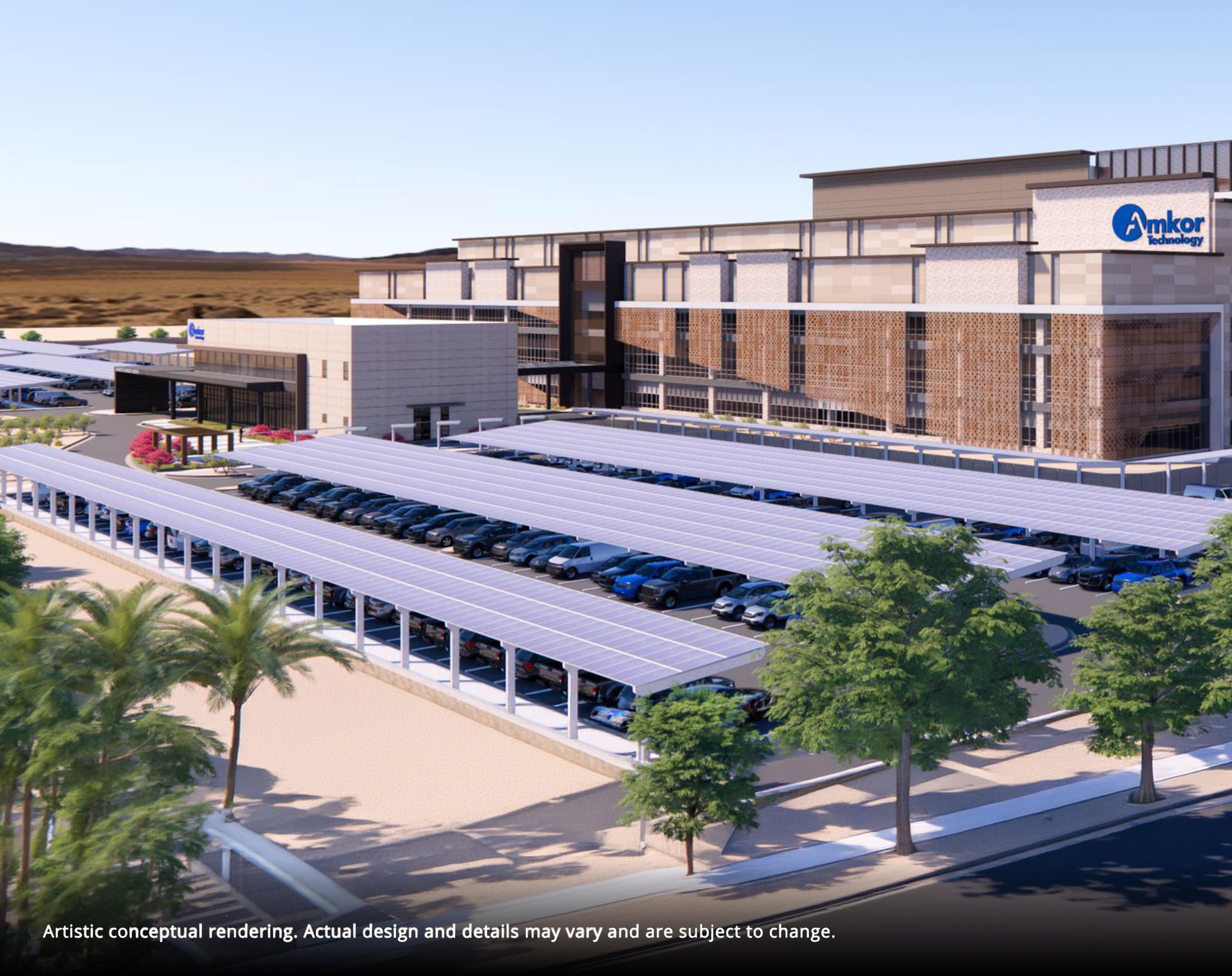
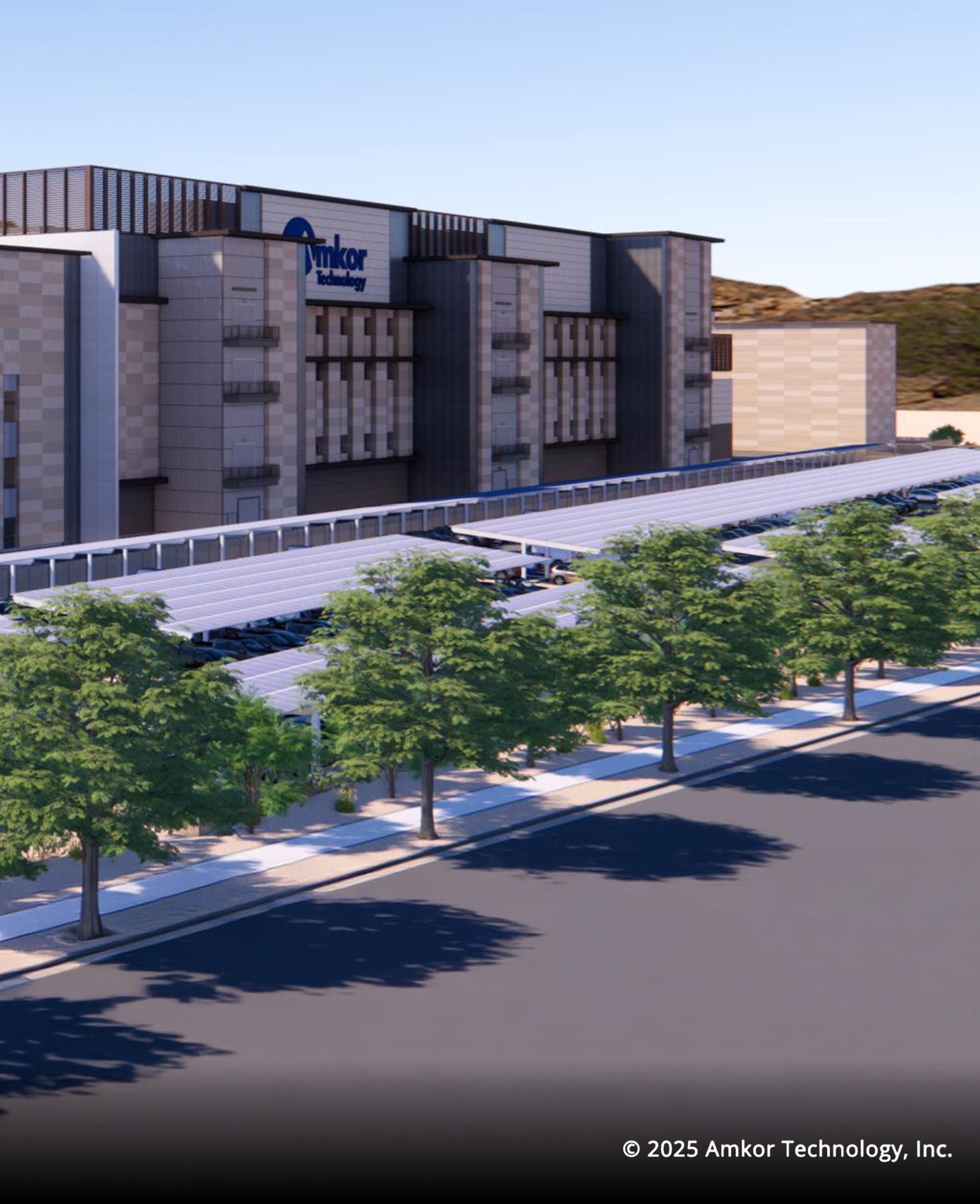
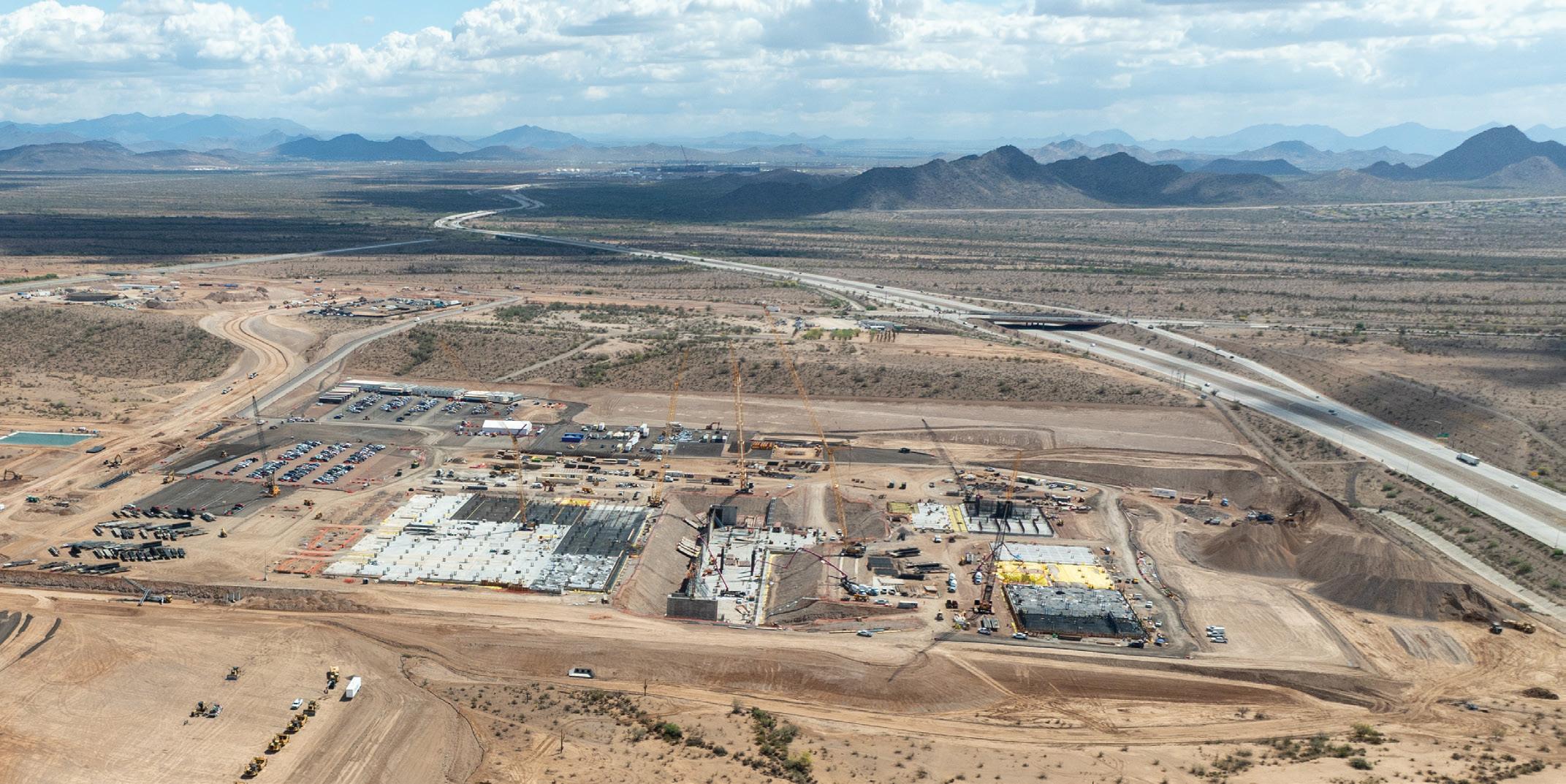
Amkor’s decision to build a $7 billion advanced packaging and test facility in Peoria accelerated its land strategy. Upon buildout, the site will be the largest OSAT (Outsourced Semiconductor Assembly and Test) facility in the United States.
The company’s investment is backed by up to $407 million in CHIPS Act funding and an additional $200 million in proposed federal loans — a level of national support that signals confidence in the West Valley’s role in the semiconductor supply chain.
“Whether measured by capital investment, job announcements, land purchases or the number of cranes dotting the skyline, it’s clear the West Valley is becoming its own hub,” says David McCann, senior vice president at Amkor.
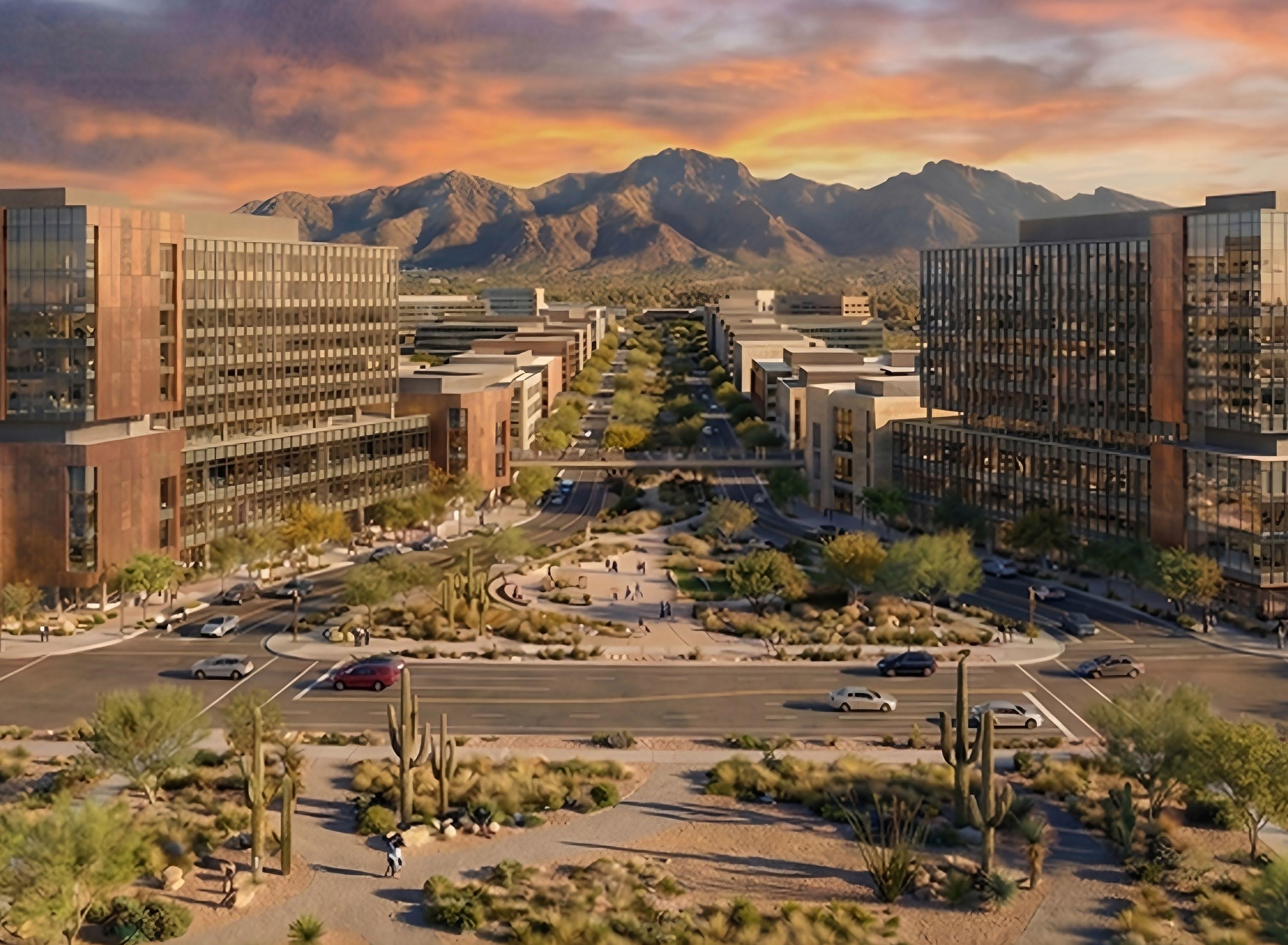
Amkor’s $7 billion semiconductor packaging and testing facility in Peoria is the largest U.S.based OSAT (Outsourced Semiconductor Assembly and Test) plant. Located in the Peoria Innovation Core near the TSMC fabs, the 56-acre campus will create 3,000 jobs, with the first phase of the project slated for completion in 2028. (Rendering provided by the City of Peoria)
Close call is a great call
The strategy is deliberate next to TSMC’s massive fab, just four miles away. In semiconductor manufacturing, proximity is a competitive advantage.
“Being near TSMC allows us to reduce costs and improve process and cycle times,” McCann says.
According to John Bullen, assistant executive director of the Maricopa Association of Governments (MAG), none of this growth happens without supportive infrastructure, such as:
• 331 new freeway and highway lane miles
• 1,000-plus new or improved arterial lane miles
• 43 new or improved traffic interchanges
• 19 new DHOV or system interchange ramps
• Nearly doubling bus and transit funding
• 28.3 miles of new bus rapid transit
• 11.9 miles of new light rail
• $800 million for nonmotorized transportation
• $600 million for ITS and emerging tech
And the funding behind it is massive: $28.2 billion over 20 years, including $14.9 billion from the region’s half-cent sales tax.
For the West Valley specifically, the plan includes:
• Completion of Loop 303 between Lake Pleasant Parkway and I-17
• Construction of State Route 30
• Reconstruction of I-17
• Improvements to U.S. 60 between Deer Valley and Loop 303
• Completion of Loop 101
The West Valley bet Bullock sees it on the ground. Bullen sees it from a regional vantage point. Together, their perspectives explain why the West Valley is suddenly competitive on a global scale.
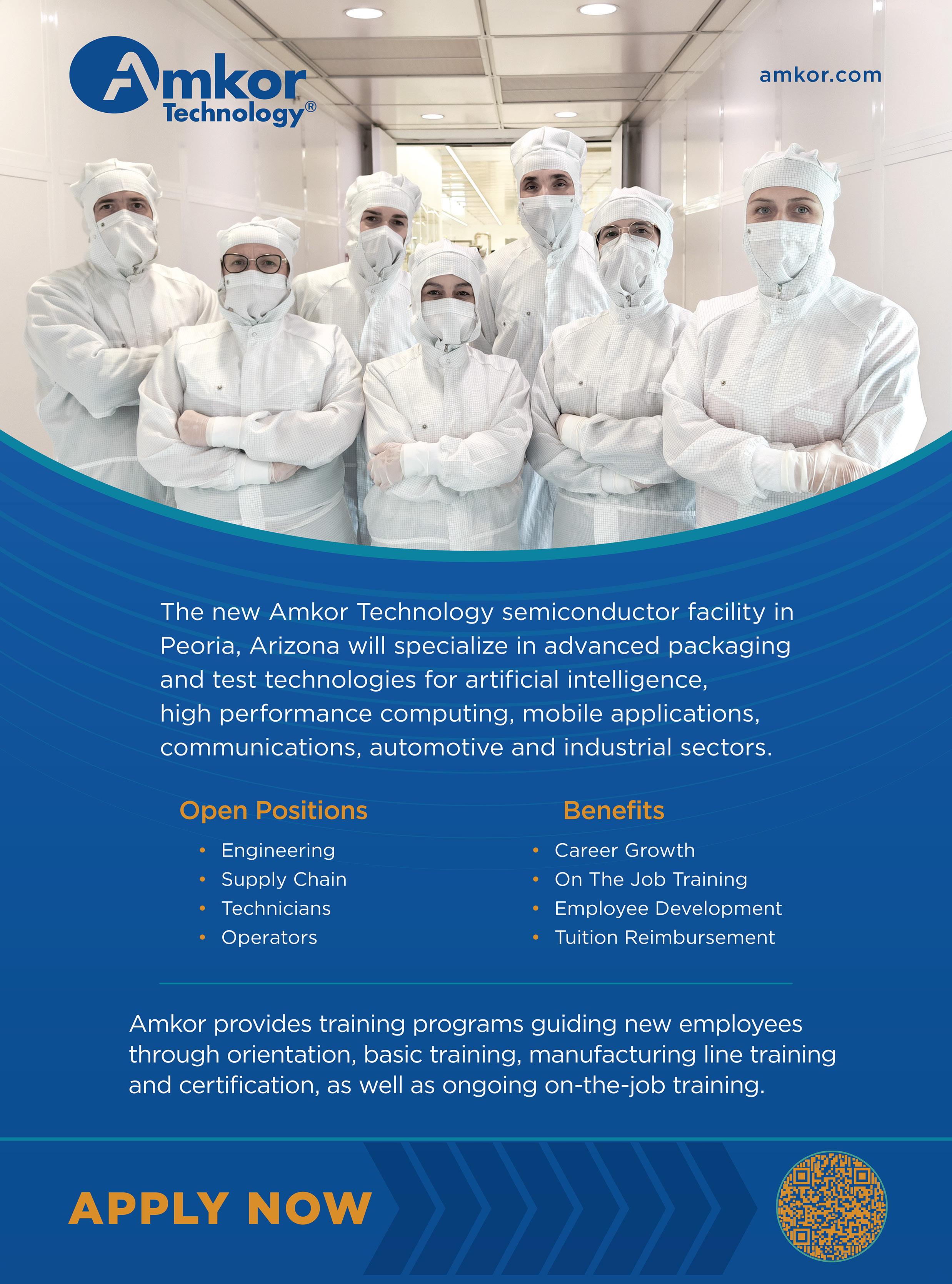
Amkor expects to hire 3,000 employees, and the company is clear about where the pressure points will be.
“The most challenging roles to fill will be equipment and maintenance technicians and operators,” McCann says.
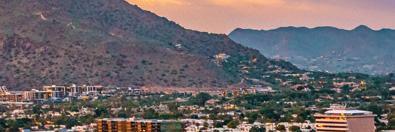
The City of Peoria has earned one of the highest honors in economic development as Site Selection Magazine named the Amkor Technology, Inc. project at the Peoria Innovation Core (PIC) the No. 1 deal in North America. (Photo provided by the City of Peoria)
To meet that demand, Amkor is building a workforce pipeline that spans Arizona’s universities, Maricopa County Community Colleges, West-MEC, and veteran and military transition programs.
The company expects 70% of technician














Let’s talk about 140 years of safe, reliable and a ordable energy.
Since 1886, Arizona’s growth and our story have been intertwined. Built on a commitment to deliver safe, reliable energy to the communities we serve. Today, Arizona continues to see unprecedented growth. Our top-tier reliability and low-cost energy have helped spur major economic development across the state in a variety of industries, including semiconductor, battery manufacturing, aerospace and defense, food manufacturing, and bio and life sciences.
Compared to industry averages in 2025, our average customer experienced less than one power outage and faced fewer minutes of interrupted service—despite Arizona’s extreme weather. Smart grid technology allows our crews to isolate and reroute power for quicker restoration times. We expect to add 9,805 MW of natural gas, renewable energy and battery storage to our system between 2025 and 2028—more than 90% of which will be carbon-free. In addition, we plan to invest more than $2 billion annually to maintain and improve infrastructure to reliably serve our customers.
Learn more about our commitment to powering Arizona’s growth at aps.com/economicdevelopment.
roles to be filled by new college graduates. Arizona’s semiconductor sector is projected to need 67,000 additional skilled workers by 2030, driven by expansions from TSMC, Intel and now Amkor. The West Valley is becoming the talent engine for that demand.
The Peoria Innovation Core spans 7,000 acres, divided into three zones — Core One is residential, Core Two is industrial (anchored by Amkor), and Core Three is mixed-use retail and employment.
Bullock calls it “Peoria’s last great development.” Over the next decade, he
expects “10 to 12 technology and supplier companies, hiring 6,000 to 8,000 employees.”
Three national homebuilders are already petitioning to buy land in Core One. A new power center — a northern counterpart to Peoria’s Four Corners — is proposed near Lake Pleasant and the 303. Retail, restaurants and services will follow the workforce.
Developers, Bullock says, are literally lining up. “It is the hottest parcel of land in the entire state of Arizona.”
The West Valley’s challenge now isn’t attracting interest — it’s managing it. Bullock
has heard comments from constituents who are against the project. But others applaud it.
“Change can be hard and the council and City staff do understand that,” he says.
“Residents want a steakhouse and a nail salon and shopping and more. It’s hard to attract the amenities without the density.”
McCann’s view of the region’s trajectory is clear.
“By 2030, the West Valley will have evolved into a globally significant semiconductor hub, a more complete, competitive and sustainable cluster.”

For many people experiencing homelessness or housing instability, access to everyday necessities can make a meaningful difference. A hygiene kit, a meal, or a simple act of kindness can offer comfort, dignity and a reminder that their community cares. In many cases, that care is delivered through nonprofit organizations whose teams work every day to meet urgent needs, build trust, and help individuals and families move toward greater stability. During the summer months, that work becomes even more urgent as access to basic necessities becomes critical.
This summer, thousands of individuals across the Southwest will receive that support through a collaborative effort that brought together nonprofit organizations and local utility volunteers to help neighbors in need.
More than 150 Southwest Gas employee volunteers and their family members joined Central Arizona Shelter Services (CASS) in Phoenix and Youth On Their Own in Tucson this June to assemble 3,000 personal care kits for individuals experiencing homelessness. Filled with hygiene and summer heat relief essentials, the kits will be distributed by the nonprofits, helping provide critical resources during Arizona’s hottest months.
“Strong community partnerships are essential to helping individuals move from crisis to stability,” said Nathan Smith, Chief Executive Officer of Central Arizona Shelter Services. “Southwest Gas and the Southwest Gas Foundation have been incredible partners, not only through their financial support but through the time and energy their employees dedicate

to our mission. The care kits assembled today will provide resources and comfort to individuals experiencing homelessness while demonstrating that our community cares about their well-being and success.”
These projects were part of a larger effort, supported by a $60,000 contribution from the Southwest Gas Foundation, to create and distribute 6,000 personal care packages across Arizona, California and Nevada. The effort is rooted in six decades of community partnerships with nonprofit organizations that provide critical services, including food and shelter assistance, education, workforce development, environmental stewardship and support for youth, veterans and vulnerable populations. That work reflects a broader belief that serving communities means not only providing safe, reliable and affordable natural gas service, but also supporting the people and organizations working to make those communities stronger.
As community needs evolve, one constant remains: meaningful change happens through trusted relationships, sustained support and people willing to give their time and talents in service of others.
As communities continue to face complex
GIVING BACK: More than 150 Southwest Gas employee volunteers and their family members joined Central Arizona Shelter Services in Phoenix and Youth On Their Own in Tucson to assemble 3,000 personal care kits for individuals experiencing homelessness. (Photo provided by Southwest Gas)
challenges, nonprofit organizations remain essential partners in delivering services, expanding opportunities and improving lives. Supporting that work has been at the heart of the Southwest Gas Foundation’s mission for six decades.
More than a milestone, the anniversary serves as an opportunity to recognize the nonprofit partners, employee volunteers and community members whose dedication continues to make a lasting difference — and to reaffirm a commitment to the people and organizations working every day to strengthen the communities they call home.

Medical research institutions across the West Valley are driving innovation, expanding clinical access and transforming the region into a rapidly growing healthcare research corridor
By CHRISTINA FUOCO-KARASINSKI
Aformer potpourri of hospitals and satellite clinics is quickly evolving into a multi-institution research corridor between Downtown Phoenix and Buckeye.
The move is fueled by a combination of clinical innovation, academic investment and a burgeoning population boom that has compelled the region to adapt more quickly than envisioned.
City of Hope: A research engine in Goodyear
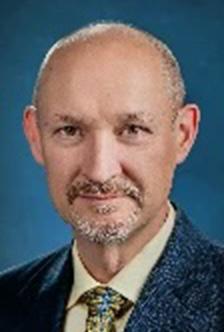
Dr. Alan Bryce doesn’t hedge when he discusses the future of medical research in the West Valley. He views a region that has been underserved for decades — and a once-in-a-generation opportunity to create a genuine cancer research ecosystem west of I-17.
“The cancer research infrastructure here is a little bit underdeveloped for the size


of the city and for the size of the state,” he says.
“If you observe the other top 20 metro areas, almost all of them have a much better-developed cancer research ecosystem. We are such a young city.”
Bryce, a longtime Mayo Clinic oncologist who is now a senior leader at City of Hope, says he believes that the West Valley can help close this gap.
The organization’s Arizona presence is anchored in Goodyear, where it has grown by more than 240% in under three years.
“We’re going gangbusters,” Bryce says.
“Since City of Hope came here, we’ve nearly quadrupled in size,” he said.
Research is not a side project — it is the very brand of the institution.
“Research is part of our mission. It’s part of our DNA,” Bryce says.
“The war on cancer is not done until
every patient is cured and living symptomfree.” That mission has a strong regional priority: to ensure that West Valley patients do not have to travel to any other Valley — or part of the country — to have access to state-of-the-art cancer care.
“We’re very Westside focused. That’s the space where that unmet need is,” he says. “We don’t want people to travel a really long distance to reach their care.”
The TGen partnership: Local research, global impact
City of Hope has partnered with TGen, a Phoenix-based genetic research juggernaut.
“It’s that synergy of all the laboratory scientists at TGen with the clinical experts here at City of Hope that accelerates breakthroughs,” Bryce says.
One of the clearest examples is ALTseq, a rapid genetic test for acute leukemia that
HUB: The West Valley is rapidly emerging as a major medical research corridor, where institutions like City of Hope, Midwestern University and ASU West Valley are driving innovation, expanding clinical access and fueling economic growth through cutting-edge healthcare research. (Photo licensed from Adobe Stock)

was created at TGen, piloted in Goodyear and is now commercially available.
Classifying leukemia subtypes typically requires a period of two weeks or more — including at leading national centers. “The leukemia is just getting progressively worse the entire time,” Bryce says. ALTseq reduced that turnaround to 30 hours.
“That test was developed here in the West Valley, and the first patients in the world to take advantage of it were out here in the West Valley,” he says.
The team has since applied that same rapidclassification model to myeloma and is working on more cancers — evidence of just how fast West Valley-based research is expanding.
Midwestern University: A research powerhouse hiding in plain sight
Midwestern University has spent years developing a research infrastructure

equivalent to that of other universities in Glendale — now coming alive at the very moment the West Valley sorely needs it.
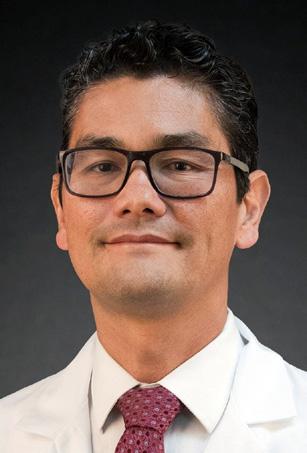
James Woods of Midwestern University, assistant vice president of research and sponsored programs, has been at Midwestern for more than 23 years.
He oversees research operations from clinical trials to animal resources to statistical services. The university’s position in the region, he says, is expanding and increasingly necessary.
“Midwestern University’s Glendale Campus is also increasingly playing a role in the advancement of healthcare research and innovation in Arizona and throughout the West Valley,” Woods says.
One example is Midwestern’s six-year research partnership with Abrazo Health, placing faculty and students directly into clinical trials at Abrazo West and Abrazo Arrowhead.
Those trials span intensive care, neurology and COVID-19 treatment — real-world research that transfers discoveries into patient care faster.
Even in a competitive national funding environment, Midwestern’s research activity is surging. Faculty generated 13% more grant submissions in 2024, followed by another 16% in 2025 and five consecutive years of increases in extramural research expenditures.
Woods credits that momentum to ongoing investment in infrastructure: the Arizona Core Facility, student research fellowships, capital equipment and intramural funding that allows faculty to start new projects.
“All these resources contribute to providing inspiration and training for the next generation of researchers and practitioners in the field of healthcare,” he said.

Translational studies with clinical relevance
The research at Midwestern is intentionally translational. Its CAREN system — a computer-assisted rehabilitation environment — facilitates faculty work on gait, balance and musculoskeletal function in ways that directly translate to rehabilitation approaches.
The One Health Initiative brings together human, animal and environmental health, forming interdisciplinary teams that mirror the realities of modern medicine. Woods views this as part of Midwestern’s responsibility to the region: providing clinicians with thinking, cross-expertise and research-oriented education that is integrated into patient care.
ASU West Valley: A research institution focused on rapid regional growth
Arizona State University’s West Valley campus is the next-generation research frontier, supporting the goals of ASU Health — a universitywide “learning health
ecosystem” that integrates the university’s new medical school with engineering, technology, public health, nursing, data science, community clinics and industry partnerships to transform how healthcare is designed, delivered and measured across Arizona.
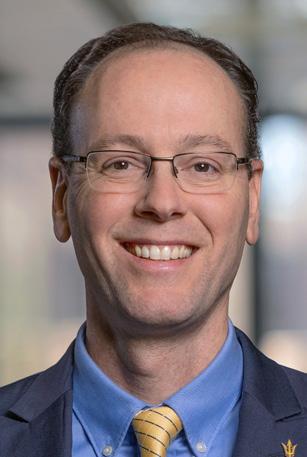
According to Dr. Todd Sandrin, vice provost of ASU West Valley and a microbiologist, the campus has doubled its external investments in research awards over the past five years and is currently home to more than 400 active research projects, half of which are in science, technology, engineering and mathematics (STEM) initiatives.
ASU is growing as the surrounding region grows. “We stand in the core of one of the nation’s fastest-growing counties,” Sandrin says. “And just the same, we are constantly growing our health and medical research portfolio rapidly.”
monsoons, dust and disease
One of ASU West Valley’s most visible projects, DUSTIEAIM, a two-year
Department of Energy-funded study of the Valley’s monsoon season, launches this summer. In addition to a state-of-the-art precipitation radar and high-tech laser equipment, two school-bus-sized research balloons will fly nearly a mile above the West Valley to study dust, airborne spores and atmospheric conditions that impact public health — including the spread of Valley Fever.
“This will study some of the factors contributing to haboobs, and in what ways those might be contributing to health challenges,” Sandrin says. For a region where Valley Fever continues to pose a sustained threat, the research is timely and deeply local.
In addition, researchers at ASU West Valley are working with Phoenix Children’s Hospital on pediatric inflammatory bowel disease that could lead to rapid diagnostic tools for a condition that is often difficult to detect early.
“Diagnosis is typically the first key critical step,” Sandrin says.
The campus is also preparing the workforce required to support the region’s growth. Enrollment in the Edson College of Nursing and Health Innovation at ASU West Valley has exploded by more than 3,500% in the past decade, aided by 17 clinical partners throughout the West Valley.
ASU is investing heavily in infrastructure too: from new research labs and mass spectrometers to immersive learning tools like Dreamscape Learn, and new schools for

forensics, engineering and business — all built to meet the West Valley’s growing demands.
From Goodyear to Glendale to West Phoenix, the West Valley’s research communities are no longer isolated from one another. They’re creating a corridor — one defined by clinical trials, environmental science, genomics, diagnostics and workforce development.
Bryce views medical research as a catalyst for the region’s larger economic future.
“The hospital is a magnet for talent … physicians, scientists, pharma, data scientists, lawyers, salespeople,” he says.
“That ecosystem is developing around it.”
Woods regards Midwestern as preparing the research foundation and training pipeline that delivers talent to that ecosystem. Sandrin sees ASU West Valley as the region’s “innovation engine” — a campus where students, scientists, industry partners and community members can work together to solve problems with immediate value.




By ERIN THORBURN
Summer is the season when many Valley business owners brace themselves for rising air-conditioning costs. This year, companies have a new way to save with SRP’s Bring Your Own Thermostat Program (BYOT) for Business. This easy, automated program offers energy-saving smart thermostat rebates and puts business owners firmly in control.
One of the major perks of the BYOT for Business program is that once a company enrolls, SRP does the rest.
“Once you sign up, you don’t actually have to do anything as the customer,” says Josh Logan, senior product manager, Product Development for SRP. “The device just needs to maintain a connection to WiFi, and the events happen automatically. If you need to adjust for comfort, you can opt out at any point.”
Logan explains that BYOT for Business has transitioned from a payfor-participation model to pay-forperformance. “We saw that many of our business customers were providing substantial amounts of curtailment, and we wanted to make sure they’re getting what they deserve for that participation,” he says.
During high-demand energy periods, called peak events, SRP temporarily adjusts participating businesses’ smart thermostats
a few degrees for about two hours to help reduce strain on the grid. In return, businesses receive financial incentives tied to their performance.
According to Logan, these events typically occur on the hottest summer afternoons when air conditioning use spikes. “While events are eligible to be called from May 1st to October 31st, they’re pretty much exclusively called in July and August,” he says.
Customers are typically notified by email about 90 minutes before a peak event.
“We’ll have what’s called preconditioning or pre-cooling,” Logan says. “We lower the temperature set point for the hour preceding the event.”
If comfort becomes a concern, “You can opt out at any point during the event,” Logan notes.
“Business Demand Response means something different than our BYOT for Business program,” Logan says. Companies can choose the program that best aligns with their business needs and desired level of engagement during demand response events.
Demand Response, offered through SRP’s aggregator partner Enel, focuses on businesses reducing operational loads, such as implementing LED lighting and HVAC adjustments.
BYOT for Business focuses specifically on smart thermostat adjustments.
When peak events are called, BYOT for Business enrollees receive an email notification and SRP automatically adjusts their smart thermostats.
“For all of the events called last year, they were aligned with Business Demand Response and Bring Your Own Thermostat,” Logan explains. “We try to stack what we have available to reduce peak energy.”
Most midsize businesses with smart thermostats are eligible to enroll in BYOT for Business. Performance is measured at the account level rather than per device, meaning businesses may enhance their results by pairing thermostat participation with additional efficiency measures.
“If they’re in a position where they can run a smart thermostat that’s controlling a temperature set point in a given space, then I would say they should consider this as a rebate,” Logan says.
Businesses unsure whether the program is the right fit can connect with their assigned Strategic Energy Manager to review usage data and determine the best approach. Each commercial account has a dedicated SEM listed on its SRP invoice.
Ultimately, BYOT for Business reflects a broader shift toward smarter energy use, collaborative participation and long-term grid reliability. To learn more, visit srpnet. com/energy-savings-rebates/business/ rebates/smart-thermostats.
By CHRISTINA FUOCO-KARASINSKI
In the West Valley, housing projects came long before the restaurants, nightlife or cultural amenities. Instead, residents drove to the East Valley or downtown Phoenix for concerts, restaurants or nights out. But the West Valley is not merely lagging behind — it is modeling how large suburban neighborhoods can shape a local, ambitious entertainment landscape. Population growth, rising incomes and much-anticipated infrastructure are intersecting with a rush of private investment. As a result, the region is no longer waiting for amenities to come. It is building them.
Buckeye Mayor Eric Orsborn has been asked by residents to bring entertainment closer to home. He cites Verrado Marketplace as an example.
“We are in the middle of Verrado Marketplace, and it’s so darn amazing,” said Orsborn in his State of the City speech.
“This is a big deal for Buckeye and the people who live here. Right here in our community, it’s really a place for dining, shopping and entertainment.”
The same can be observed by developers.
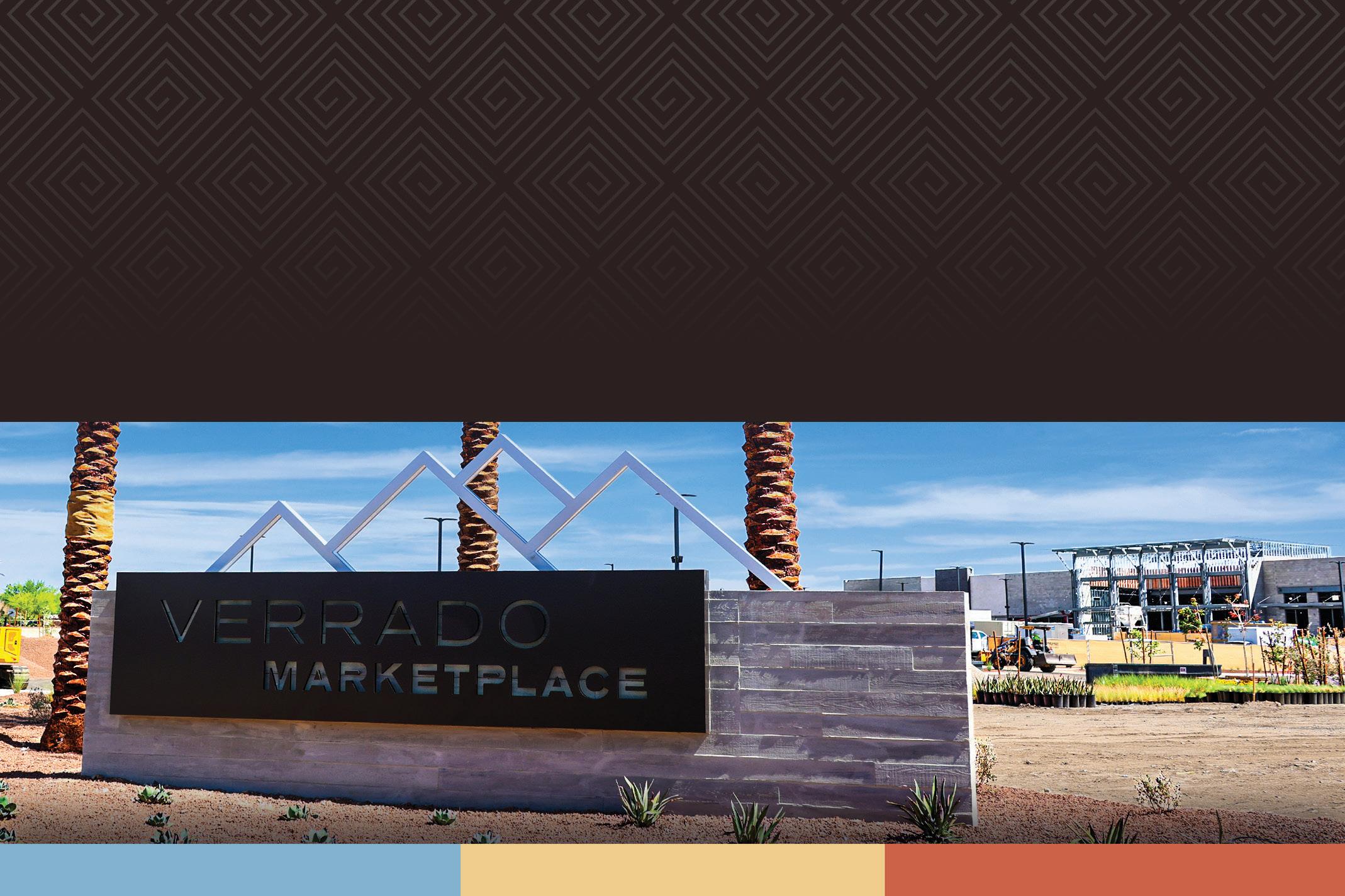
Kean Thomas, who is overseeing the project for Vestar, says Verrado Marketplace
fills an empty space that has existed for years.
“Before we were working on completion of this project, there wasn’t really anything like that in Buckeye,” he says.
“There was no new retail of any significant scale. It just didn’t exist.”
That demand, he says, has been building for more than a decade.
“Back in 2007, Buckeye had 10,000 people, and now there are more than 100,000 people in Buckeye itself,” Thomas says. “You see all that growth in those 15 years — no new retail of any meaningful magnitude was built.”
At the northeast corner of Interstate 10
and Verrado Way, Verrado Marketplace will feature more than 55 retailers, restaurants, services and entertainment concepts, along with outdoor gathering spots, a splash pad, live performance stage, community green and Vestar’s Sip & Stroll program.
Attracting the right tenants, Thomas says, took more than rooftops — it took placemaking.
“To move from your grocery store and everyday needs to lifestyle tenants, you really need to build something special,” he says.
“We invest loads of time and effort to make it feel really nice — the architecture, the site layout, the landscaping, et cetera.”
A half-acre common space with a stage, splash pad and shaded turf will serve as the community hub.
“It’s a kind of community gathering area,” Thomas says. “You don’t have to come to this place just to shop. You can just bring the kids and chill.”
That sense of place, he says, is what makes a shopping center a regional draw.
“It makes it a more appealing community
Arrowhead has become a magnet for national companies. It is the only fully nationalized enclosed regional mall west of I-17 to attract elite retailers such as Lululemon, Coach, Kendra Scott and soon, Gorjana. Even Hot Topic is expanding to become its largest store in Arizona.
— Kim Choukalas Macerich senior vice president
to live in because it’s somewhere you have your services,” he says.
“And the retailers like that it’s the place where everyone in the area needs to go because they know it’s going to be a hub for everyone in the area.”
The first wave of openings — HomeGoods, Marshalls and Ulta — arrives thid spring, but Orsborn insists the project is just the start.
With 750 jobs tied to the project and major infrastructure improvements ahead, Buckeye is positioning itself as a city where entertainment is not an afterthought.
“Growth isn’t coming,” Orsborn adds. “It’s here.”
Goodyear is another prime example of meeting the needs of residents and city officials alike. Its downtown development, GSQ, will be a walkable destination bringing together dining, retail and community spaces. GSQ is a public-private partnership between the city, Globe Corp. and RED Development.
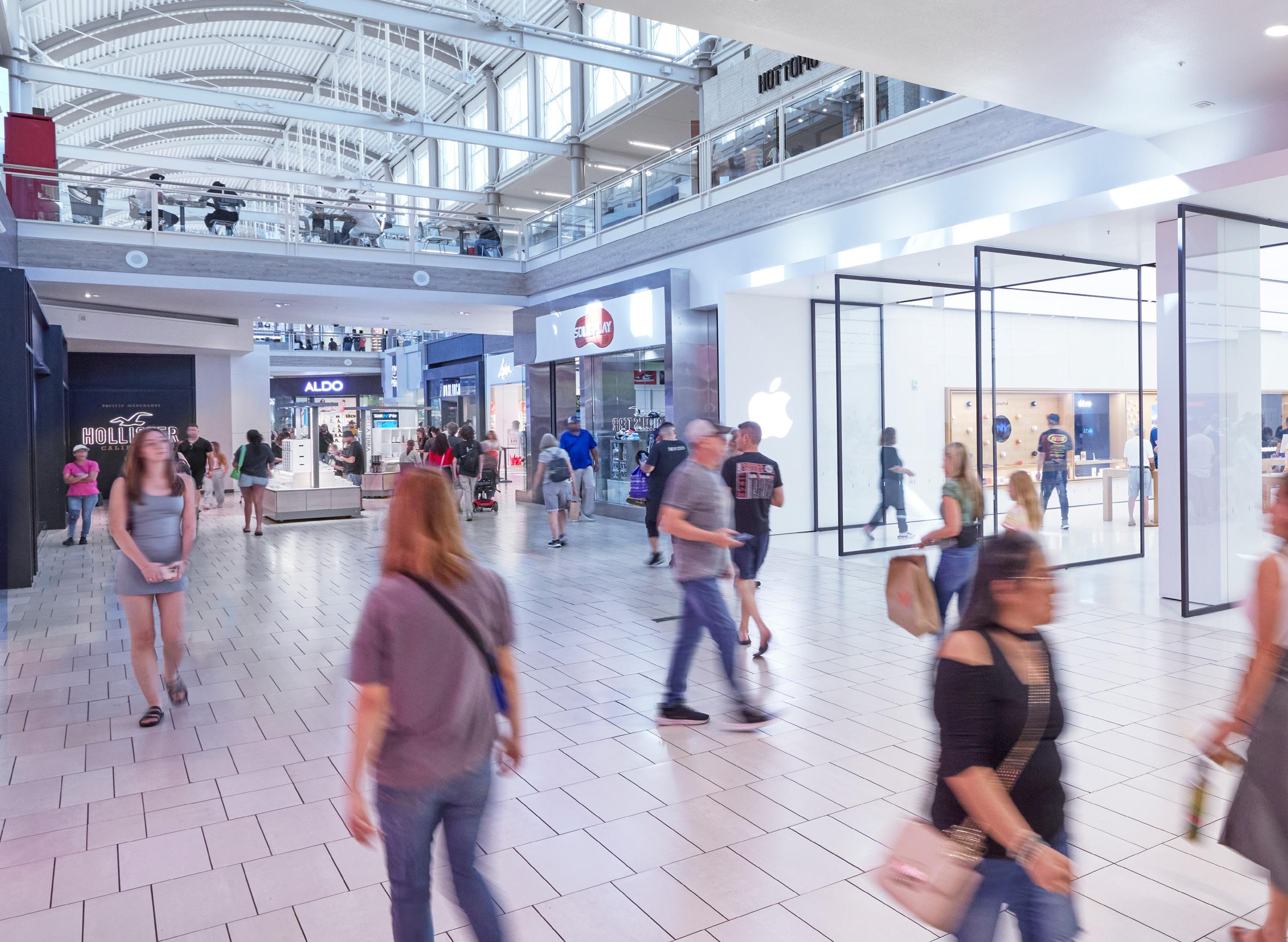
RETAIL THERAPY: Arrowhead Towne Center has become a premier West Valley hotspot thanks to its dynamic mix of shopping, dining and entertainment, drawing visitors from across the region with its vibrant atmosphere and prime location. (Photo provided by Arrowhead Towne Center)
“Goodyear continues to evolve as a destination for dining, connection and community,” said Goodyear Mayor Joe Pizzillo.
Future businesses will join a growing mix of concepts already open in downtown Goodyear, including Kura Sushi, Trader Joe’s, First Watch, Dave’s Hot Chicken, High Tide Seafood, Over Easy, Bacchus Wine & Debauchery, Banner Health and Avila University Arizona.
Additional tenants planned for the development include Paris Baguette, Zara Nail Bar, Handel’s Ice Cream, Reformed Pilates, Berry Divine Acai Bowls and Magdaleña, alongside previously announced concepts such as Black Rock Coffee Bar, Fogo de Chão, CAVA, California Fish Grill and VEG (Veterinary Emergency Group).
Glendale, too, is accelerating, as Arrowhead Towne Center has become one of the principal retail and entertainment centers in the West Valley. Macerich Senior Vice President Kim Choukalas calls the transformation of the shopping center


proof that the region’s explosion “isn’t theoretical — it’s lived reality.”
With 1.9 million people living in the Northwest Valley and growth “two times faster than the U.S. average,” Arrowhead has become a magnet for national companies. It is the only fully nationalized enclosed regional mall west of I-17 to attract elite retailers such as Lululemon, Coach, Kendra Scott and soon, Gorjana. Even Hot Topic is expanding to become its largest store in Arizona.
Retail is alive and thriving
Choukalas dismisses the idea that shopping malls are dying.
“Shopping centers are alive and well and thriving,” she says.
Entertainment has helped fuel that success. Round One introduced bowling, arcade entertainment and food all in one place. New restaurants — Sizzle Korean

BBQ, Chompie’s and Pickleman’s — reflect the West Valley’s appetite for multicultural experiences.
Arrowhead Towne Center General Manager Gabrielle Ochoa was born and raised in Surprise and grew up at the shopping center. She described it as a “really strong staple in the West Valley for the past 30 years” — one that has grown alongside the community.
While retail and dining are changing rapidly in the West Valley, large-scale entertainment is redefining the region’s identity.
That is evident in Avondale, where Phoenix Raceway has blossomed into an events campus. The venue’s partnership with Relentless Beats’ Decadence Arizona — the country’s largest New Year’s Eve music festival — has raised the West Valley’s profile among touring acts. Moving the event from Rawhide in Chandler to
Phoenix Raceway resolved years of weatherrelated problems.
“We got a lot of precipitation across a 10- to 12-year period — wet lawns and very wet spaces made some of these sites really hard to navigate,” says Relentless Beats founder Thomas Turner.
The all-asphalt construction allows the team to “create bigger and better facilities that create more immersive experiences,” while keeping fans safe.
Decadence has been hosted at Phoenix Raceway since 2022, allowing events to operate until 3 a.m. — timing that is critical for routing top-tier artists across Colorado, Los Angeles and San Diego.
“It was a bigger stature show with bigger production … it ended up being the most appealing play of our portfolio,” Turner says.
Attendance reaches approximately 30,000, though there is room to grow.



Peoria, Sun City, Litchfield Park, Glendale, Surprise and Avondale.
One of its boldest initiatives is Make Music Day, a multi-city celebration held every June 21.
“We will have 10 or more different places throughout the West Valley where people come for free to listen to music or make music,” Knecht says.
Another initiative is Culturalyst, a website created to unite the region’s creative ecosystem.
“An artist can continue free of charge and present a portfolio … the idea is, when you say, ‘I’m going to be in the West Valley this weekend, what can I get into?’ Culturalyst pops up.”
Knecht believes the arts flourish through abundance, not competition.
“No one goes to Broadway and says, ‘Oh, there are too many theaters.’ No one goes to Scottsdale and thinks, ‘There’s too much to see.’ More is more,” she says.