LAND OF OPPORTUNITY
As Opportunity Zones evolve, Pinal County and Arizona communities position themselves for the next wave of strategic investment and long-term growth
PINAL COUNTY DEVELOPMENT
OPPORTUNITY RISING
How Pinal County can benefit from the revamped Opportunity Zones program
By KYLE BACKER
The Tax Cuts and Jobs Act of 2017 was signed into law December of that year, creating a new benefit for investors. Called Opportunity Zones, the initiative’s purpose is to steer investment into areas that struggle with attracting development by allowing capital gains to be redirected into qualified projects, earning investors federal tax advantages. The program is being overhauled, opening the door for places such as Pinal County to take greater advantage of this economic
development tool.
“It was about 4:30 p.m. on the Friday before Christmas when the Tax Cuts and Jobs Act passed,” recalls Shawn Neidorf, chief opportunity and research officer for the Arizona Commerce Authority (ACA). “Our CEO Sandra Watson came over to the research team and said, ‘Oh good, you’re all still here,’ which isn’t what you want to hear on the last day before going into a holiday. But the bill had created Opportunity Zones, and we were asked to figure out what they were
and where they could go in the state.”
Neidorf and her colleagues began to reach out to cities, counties and tribes across the state to hear their thoughts on where Opportunity Zones should be placed. After receiving feedback from local partners, the ACA sent a list of recommendations to then-Gov. Doug Ducey. Once the process was finished, Arizona designated 168 Opportunity Zones, which brought more than $2.65 billion in investment to the state.
“The idea here was to get people who are passively holding investments
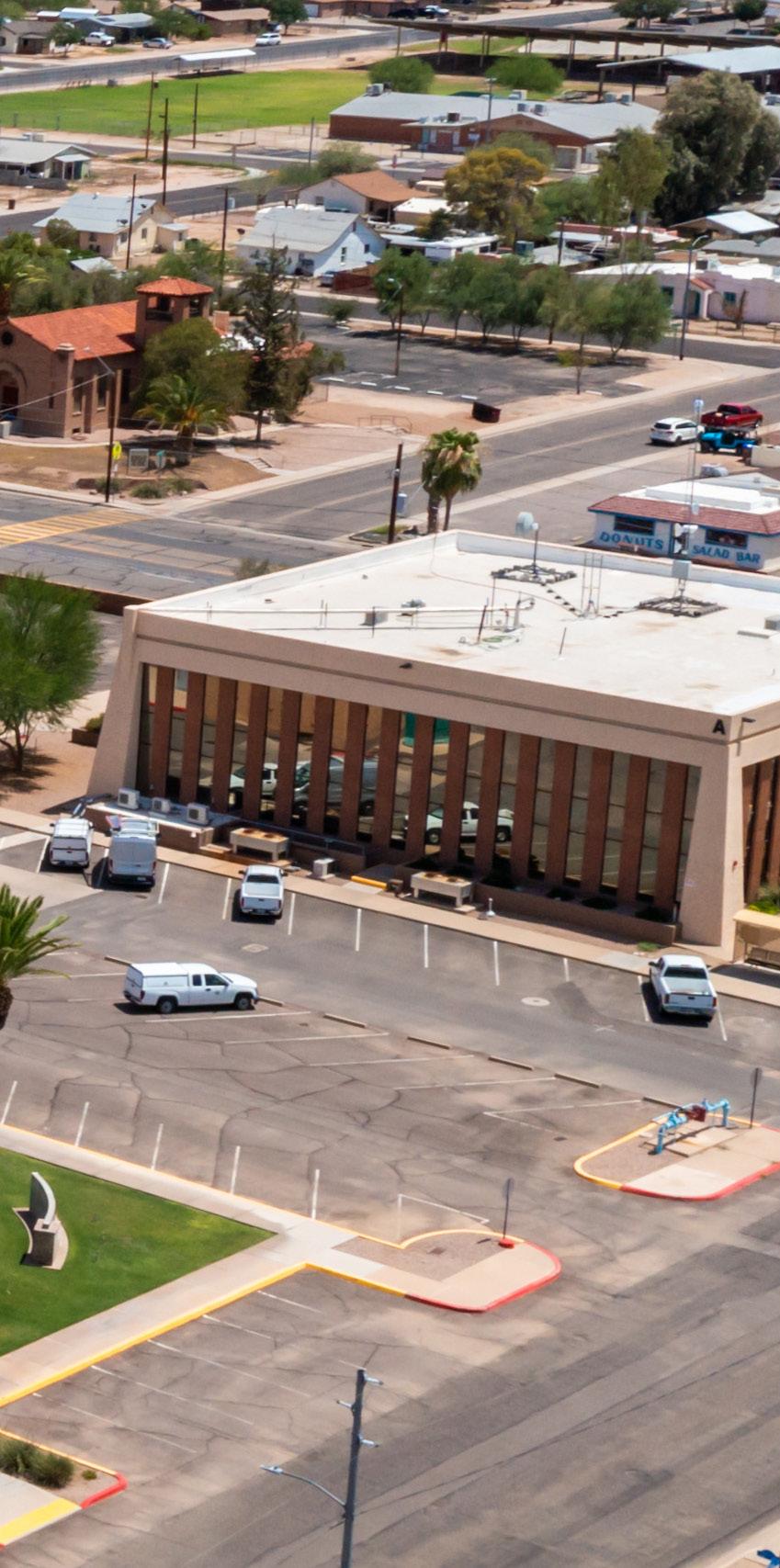
COMMUNITY IMPACT: The Pinal County Courthouse serves as the center of the county’s judicial system, housing court operations that support one of Arizona’s fastest-growing regions. Designed to meet expanding community needs, the courthouse reflects Pinal County’s commitment to efficient public service, safety and modern civic infrastructure. (Provided photo)
to sell them and reinvest them in places they might otherwise very much overlook,” Neidorf explains. “It’s about supporting communities that have struggled growing in the 21st century.”
How it works
As with most government incentives, the particulars of Opportunity Zones can be esoteric to outside observers, but Neidorf says the whole process starts with census tracts. These subdivisions typically have anywhere from 1,200 to 8,000 people within them and function as an administrative unit for the U.S. Census Bureau. The agency uses them for
Pinal County: 10 numbers defining the future
a variety of purposes, including building congressional districts.
“Census tracts don’t cross state or county lines, but they wash right over municipal and tribal boundaries,” Neidorf explains. “They generally follow identifiable features. In urban areas, that’s generally roads, but in rural areas, it could be a mountain range, wash or a river. But [the Census Bureau] is looking for clusters of people who naturally live together.”
Because of those restrictions, census tracts tend to be small squares or rectangles in denser regions and large, irregular shapes in rural areas.
• More than 514,000 residents: Pinal County is among Arizona’s fastest-growing counties, positioned between Phoenix and Tucson.
• 3rd-largest county in Arizona: Covering more than 5,300 square miles, Pinal County offers vast room for residential and industrial expansion.
• The nation’s next megaregion? Positioned between Phoenix and Tucson, Pinal County sits at the heart of the emerging Sun Corridor, home to more than 6 million people.
• More than 1,000 new residents monthly: Population growth continues to fuel housing, retail and infrastructure demand.
• More than 100 miles: Pinal County spans key transportation corridors connecting Arizona’s two largest metros.
• Major manufacturing boom: Billions in investment tied to semiconductors, advanced manufacturing and supplier ecosystems are reshaping the economy.
• Top employers: Healthcare, education, logistics, government and manufacturing lead job creation.
• SR 24 expansion: Infrastructure projects are helping support growth in communities such as San Tan Valley and Queen Creek.
• Historic agriculture roots: Pinal County remains one of Arizona’s top agricultural producers while rapidly urbanizing.
• One county, many communities: Cities and towns including Casa Grande, Maricopa, Apache Junction, Florence, Eloy, Coolidge and San Tan Valley drive diverse economic growth.
PINAL COUNTY DEVELOPMENT
Success strategies
Only 125 eligible census tracts can be nominated by the governor to be designated as an Opportunity Zone by the U.S. Department of Treasury, so competition will be fierce. Here are some best practices from Shawn Neidorf, chief opportunity and research officer for the ACA.
• “Opportunity Zones make a promising deal even better for investors, but it can’t make a losing proposition worth it. It’s a tool to attract investment, not a grant program.”
• “Investors want to deploy capital quickly, so tracts that have power, water, sewer and zoning and entitlements are what they’re looking for.”
• “If a tract is too remote, it’s difficult to build housing, retail or industrial projects because it won’t have the customers, workers and residents it needs.”
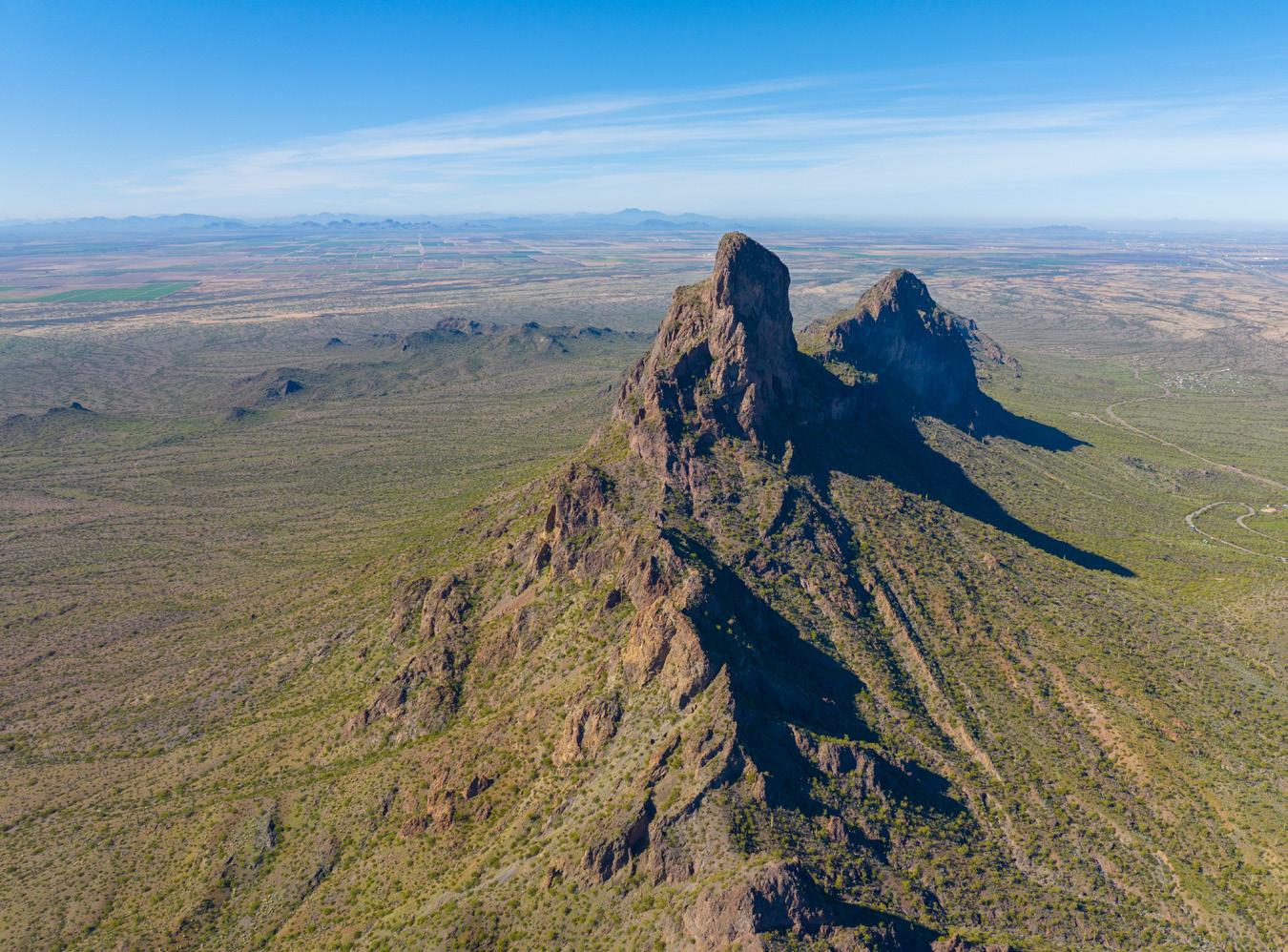
IN THE ZONE: In 2025, Congress passed the One Big Beautiful Bill Act, which make Opportunity Zone incentives a permanent part of the Internal Revenue Code. Pinal County can recommend two tracts to Gov. Katie Hobbs as potential Opportunity Zones and the following municipalities in the region can recommend one tract each: Apache Junction, Casa Grande, Eloy, Coolidge and Florence. (Photo licensed from Adobe Stock)


Experience award winning excellence rooted in our core value and commitment to our clients. Our work is focused on enhancing the lives of our employees, clients and communities we serve—always. Isn’t it nice to make life just a little bit sweeter?
Experience the Difference.
Regardless of the size, a census tract can only become an Opportunity Zone if it meets the statutory criteria — having a low median family income or a high poverty rate.
“To qualify as an Opportunity Zone in the [first version of the program], a tract needed a median family income of no more than 80% of the state’s median household income, or 80% of the nearby metro area if in a denser region,” Neidorf says. “The other way to qualify was having a poverty rate of 20% or more, even if the tract had a higher family income. But the standards are much more strict now.”
Update 2.0
The latest iteration of Opportunity Zones offers regions across Arizona another chance to bring a powerful economic engine into their communities, but with a catch — the median family income target dropped to 70%, and a ceiling of 125% was put in place.
“The 20% poverty rate option remains, but tracts are now income capped. That means an area can’t be well off besides a little pocket of poverty,” Neidorf explains. “The goal is for Opportunity Zones to go to much more distressed communities this time.”
To that end, a new mechanism was created to encourage development in rural areas. Investors who put money in funds focused on rural Opportunity Zones receive an additional incentive.
“Say you sold a business and got $10 million in capital gains. If you put that into an Opportunity Zone fund, you would put off paying taxes on the sale for five years, then would only be taxed on $9 million,” Neidorf says. “In a rural Opportunity Zone, the exclusion grows to 30%, meaning only $7 million is taxed.”
When the program was originally established, the state had 1,526 census tracts, 44% of which qualified as Opportunity Zones under the original

criteria. Arizona’s recent population growth, however, is reflected in additional tracts being drawn, bringing the new total to 1,756. With the new rules in place, only 28.5% qualify.
“There’s a smaller number of eligible tracts today than in 2018, despite there being 200 more of them,” Neidorf concludes. “We simply have fewer places in economic distress — which is what we’ve all been working for.”

Shawn Neidorf


PINAL COUNTY DEVELOPMENT
ON A ROLL
Florence keeps Pinal County moving while saving taxpayers millions
By THE TOWN OF FLORENCE
For thousands of drivers traveling between the East Valley and central Pinal County each day, the intersection of Hunt Highway and Attaway Road had become a familiar bottleneck.
Each day, commuters from Queen Creek, San Tan Valley and surrounding communities use Hunt Highway to reach jobs, schools, businesses and regional destinations in Florence, Coolidge, Casa Grande and Eloy. As one of Florence’s most important transportation corridors, Hunt Highway carried approximately 14,600 vehicles per day in 2022. That number is projected to exceed 17,000 vehicles daily by 2026.
But at Attaway Road, that regional movement slowed.
With only one lane in each direction and no dedicated turn lanes, the intersection struggled to keep pace with growing traffic demand. Drivers experienced daily delays, businesses and freight traffic faced added travel time, and a key connection through Florence was no longer moving as efficiently as the region needed.
As traffic volumes increased and delays became more pronounced, improving the intersection became a top priority for the Florence Town Council. The challenge was not just to fix the problem, but to deliver a solution that made sense for the community, the corridor and the taxpayers funding it.
The original solution would have relocated and rebuilt the intersection at a cost exceeding $16 million, not including rightof-way acquisition. It also would have taken approximately 18 months to complete.
Florence chose a different path.
Rather than pursue the largest and most expensive option, the Town focused on delivering the greatest impact with the least disruption. By using existing Town-owned right-of-way and improving the current intersection configuration, Florence was
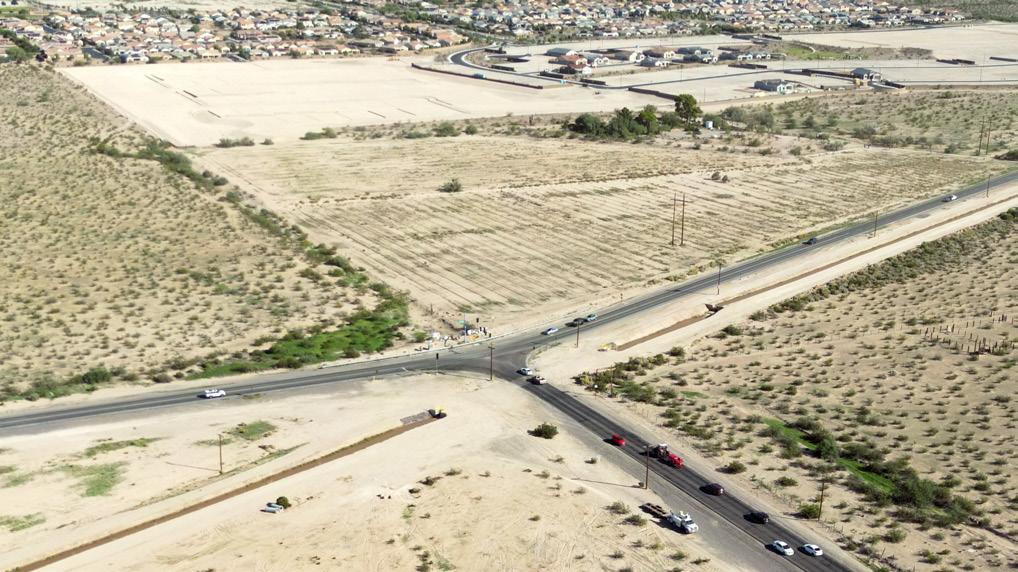
able to add dedicated turn lanes, improve traffic flow and maintain a Level of Service C rating.
The project was completed in approximately three months for less than $3.8 million.
That decision saved taxpayers more than $12 million compared to the original design concept, while delivering the needed improvements much sooner for residents, commuters, businesses and freight traffic.
The result was more than a traffic improvement. It strengthened a key transportation link connecting communities across central Pinal County.
Today, the Hunt Highway and Attaway Road improvements help move people, goods and services more efficiently through Florence and central Pinal County. The project supports access between growing residential areas, employment centers and commercial destinations, while improving daily quality of life for the drivers who rely on this corridor.
It also showed the power of practical, responsive government. Residents had long identified this intersection as a source of frustration. Florence listened, acted and delivered a visible improvement that produced immediate results. The positive public response following completion reflected just how meaningful the project was to those who travel the corridor every day.
As growth continues across Pinal County, reliable transportation infrastructure will remain critical to connecting residents with jobs, supporting commerce and maintaining mobility throughout the region. The Hunt Highway and Attaway Road improvements ensure that one of Florence’s most important transportation corridors is better equipped to serve the thousands of drivers who rely on it every day.
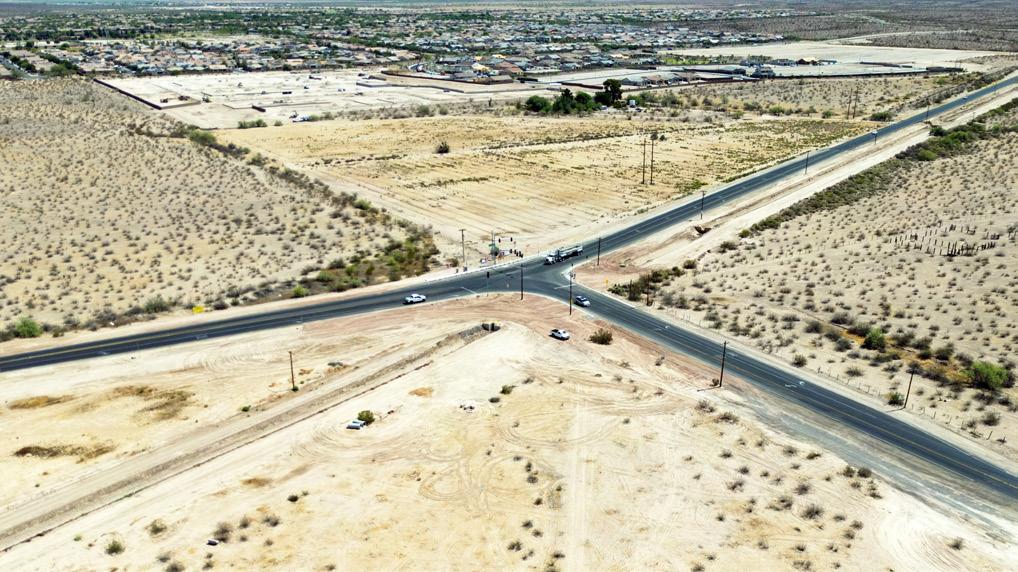
CLEARING CONGESTION: The Town of Florence’s improvements at Hunt Highway and Attaway Road enhanced traffic flow along one of Pinal County’s primary transportation corridors, improving mobility while saving taxpayers more than $12 million. The intersection prior to construction is pictured on the left, and the completed project is shown on the right. (Photo courtesy of the Town of Florence)

PINAL COUNTY DEVELOPMENT
ENTERING ITS PRIME
Pinal County’s economic development director charts the region’s progress
By KYLE BACKER
Last August, voters in San Tan Valley weighed in on whether the community should incorporate as Arizona’s 92nd municipality, with 66% casting their ballots in favor of becoming a town. With the proposition passed, San Tan Valley is empowered to create a town government, pass legislation, supply public works and other civic functions.
AZRE magazine sat down with Joel Millman, director of workforce and economic development for Pinal County, to learn more about what this change in status means for the region’s growth, what industries are showing interest in Pinal and how the county

Joel Millman
is supporting workforce development efforts.
The following responses have been edited for clarity and length.
AZRE: Will San Tan Valley’s recent incorporation change its relationship with Pinal County’s Economic and Workforce Development Department?
Joel Millman: Before it became a town, we were responsible for San Tan Valley’s economic growth strategies. Now, we’re talking with town leadership about their vision and how we can support them. I’d like to think that we coordinate very well with all the communities in the county, and we’ll use those best practices to support San Tan Valley.
It’ll take some time for them to hire their own economic development director and establish a planning and
NEW TO TOWN: Proposition 495 offered San Tan Valley the choice to formally become a town or remain as an unincorporated part of Pinal County. After multiple similar efforts failed over the last two decades, the measure passed with two-thirds of the vote share, transitioning the community of more than 100,000 residents into one of Arizona’s largest municipalities. (Photo licensed from Adobe Stock.)
zoning department, but in the meantime, we’ll provide any assistance needed for attracting businesses to the area.
AZRE: It sounds like even though San Tan Valley now has greater control over how it develops, the town will still have a partnership with your department.
JM: Correct, and a lot of the folks that are now working for San Tan Valley are former Pinal County employees who bring that experience with them. The town is in great shape to chart its own course, whether that’s building upon the decisions made when it was under the county or shifting gears. The way I see it, San Tan Valley is in charge of its destiny now, and our role is to work with them to meet their goals.
AZRE: Resolution Copper just hit a milestone on its way to becoming fully operational. What affect will that have on development in Superior?
JM: It’s a major step not only for Resolution Copper but for the entire county. We have the largest copper deposit in the country, and the recent court ruling allows the mine project to move forward. It feels like everyone has been on the edge of their seats for years waiting for this to get resolved, and now we can stand up and start doing things.
The Town of Superior will certainly benefit from Resolution Copper being there, but also from the ancillary industries it brings. There’s going to be an increase in the workforce, which will drive housing development and bring more amenities to the community to support that growth.
AZRE: Can you talk about the revival of Pinal County’s mining industry more broadly?
JM: It was dormant for years, but it has seen a lot of activity as the semiconductor industry and electric vehicles has driven demand for copper
nationally. We’re the Copper State after all, so now we have an opportunity to stand in the limelight — not just Arizona, but Pinal County itself. It opens the door for support and supply chains coming here, which creates a diverse economy and workforce — everyone from geologists to engineers to heavy equipment operators.
AZRE: Semiconductors and electric vehicles will be critical components to the whole country’s economic future — as will AI. Are data center developers looking to build within Pinal County?
JM: They are, but we don’t have any data centers here now. It’s part of the conversation, but we’re moving cautiously. The Pinal County Board of Supervisors is taking a measured approach, ensuring that they’re well educated about the pros and cons of bringing data centers to the community. Recently, the first zoning case for a data center in Pinal was heard by the board, who opted to issue a continuance. They’re not saying yes or no, but the board doesn’t want to rush into a decision. We’ll have to wait and see what the future holds.
AZRE: What types of development are popular in the county right now?
JM: We focus on attracting high wage jobs, and that invariably falls into advanced manufacturing and supply chain projects. We’re open to the aerospace and defense industry, so long as it’s in the right place at the right time, like anything else.
I’ll add that there’s an emphasis on tourism and hospitality right now, too. Building a manufacturing facility that employs 1,000 people is great — but what will they do when they’re off the clock? It’s a question we hear from companies interested in Pinal, so we’re actively promoting tourism and lifestyle amenities in the county.
AZRE: I imagine that companies are not only interested in what leisure options would be available to employees, but if there’s the labor pool needed to support their operations. Can you talk about the county’s workforce development efforts?
JM: ARIZONA@WORK is the state brand for the public workforce system under the current Workforce Innovation and Opportunity Act. Pinal County is one of 12 areas in Arizona that’s allocated federal funds to serve both job seekers and employers. There are about 15 separate federal programs all bundled into ARIZONA@WORK, but that can be confusing for people to wrap their heads around.
I like to use Home Depot as an analogy. Their stores have a bunch of different products, but they’re all related to home improvement. ARIZONA@ WORK is like the Home Depot of the workforce development system — when someone comes through our doors, we lead them to the aisle that has the product they need.
AZRE: What does that look like in practice?
JM: Most job seekers are people with some sort of barrier to employment. They could be looking for a career pivot but haven’t been on the job hunt for a few decades, someone who was just laid off or a veteran transitioning back to civilian life.
In a nutshell, ARIZONA@WORK Pinal County enacts the workforce strategies laid out by the workforce board to make sure we meet the needs of industry. And we’re not just supporting new growth — we also want our existing employers to have the people needed to stay here or even expand. We’re not the only game in town, but we are part of this massive effort to support everything we just talked about.
PINAL COUNTY DEVELOPMENT
MAP TO THE FUTURE
Here is a look at how Pinal County — with the help of its five districts — has positioned itself as a power player
By KYLE BACKER
Located between the Phoenix and Tucson metros, Pinal County is the third-most populous in the state with its boundaries stretching nearly 5,400 square miles. As its neighbors to the north and south have seen economic expansion, so too has Pinal County, providing a place for businesses to locate where land and operational costs are lower.
Water supply secured
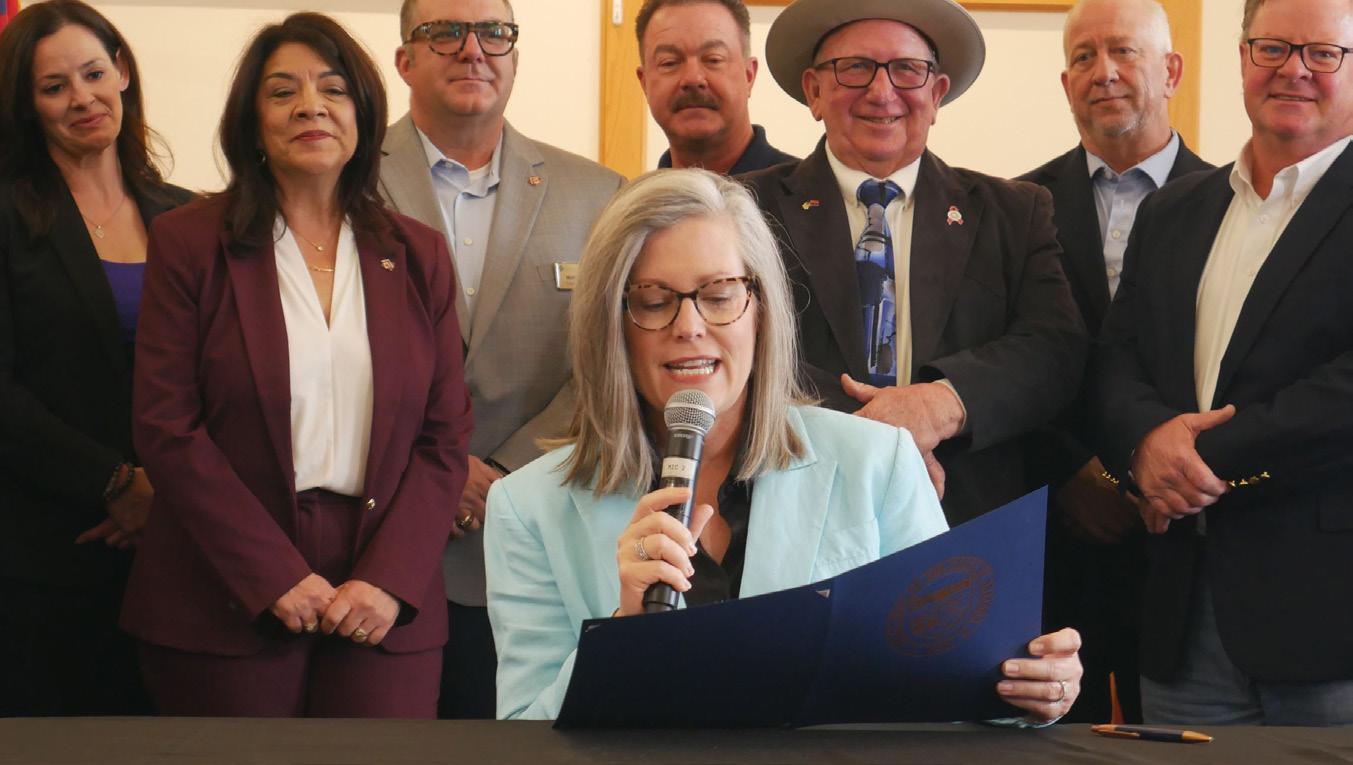
In March, Pinal County District 3 Supervisor Stephen Miller joined Gov. Katie Hobbs and other regional leaders to celebrate the county’s first Alternative Designation of Assured Water Supply (ADAWS) in Pinal
PINAL COUNTY BY THE NUMBERS
SHORING UP SUPPLIES:
Gov. Katie Hobbs celebrates Pinal County’s first Alternative Designation of Assured Water Supply, which helps support housing growth in water-constrained areas while abiding by the state’s 100-year water supply standard. Local leaders say the milestone represents a long-awaited solution following years of regional discussions around water supply and growth in central Pinal County. (Photo courtesy of Pinal County)
County. The designation marks the culmination of a decade of work by Pinal County leaders to secure a water supply, conserve groundwater and support responsible growth.
The designation will extend longterm water supply protections across Arizona Water Company’s service area and make it possible to support the development of more than 80,000 new homes in one of Arizona’s fastestgrowing regions.
“This marks a historic moment for Pinal County and the culmination of ten years of hard work,” said Supervisor Stephen Miller. “The ADAWS program is the result of extensive collaboration among stakeholders and a shared understanding that complex water challenges require creative solutions. This 100-year designation gives our communities the certainty they need to move forward, supporting new housing, strengthening our economy, and ensuring reliable water resources for generations to come.”
Pinal County districts
The Pinal County Board of Supervisors is responsible for crafting a budget that provides revenue for individual departments and elected offices, and also has the authority to fill vacancies in the county and legislative offices, other boards and commissions, pass resolutions, and enact ordinances and regulations. All five supervisor seats are elected every four years during the presidential election cycle.
In the following pages, see what’s new in each of the county’s five districts as it continues to grow.
PINAL COUNTY DEVELOPMENT
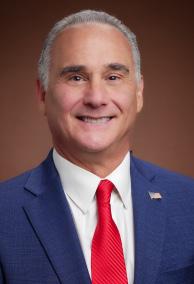
VDISTRICT 1 Supervisor: Rich Vitiello
itiello is the newly elected Pinal County Supervisor for District 1, encompassing the City of Maricopa, surrounding areas and parts of Coolidge, San Tan, Queen Creek, Stanfield, Gila River and Ak-Chin reservations and areas in between.
Ralston Bridge project opens three months early
On April 2, Vitiello, along with representatives from Sunland Asphalt and the Hidden Valley community, cut the ribbon on the Ralston Road Bridge at the Vekol Wash.
This project addresses important safety concerns that have arisen due to flooding during the monsoon season,
which often causes road closures and limits access for local residents and travelers.
“This district has been underserved,” said Vitiello in a press release. “And I want to make sure that if there’s a project in the area, we are going to work hard to get it done quickly and affordably. The taxpayer’s dollar is very important to me.”
Construction on the project began in July of 2025 and it was scheduled to last a full year. This project required a quarter-mile closure of Ralston which is a main thoroughfare of Hidden Valley in the western part of the county. Due to newer construction techniques, such as
using prefabricated, modular parts for the culverts, construction was able to finish three months ahead of schedule.
New in City of Maricopa: Mike Ingram Heritage Park
Located within the Heritage District, upgrades to the park include an expanded performance stage, amphitheater-style seating, new landscaping and a railroad-themed playground.
The owner of the project is the City of Maricopa, the general contractor is Willmeng Construction and architects are Dibble Engineering and Terracon Consultants.
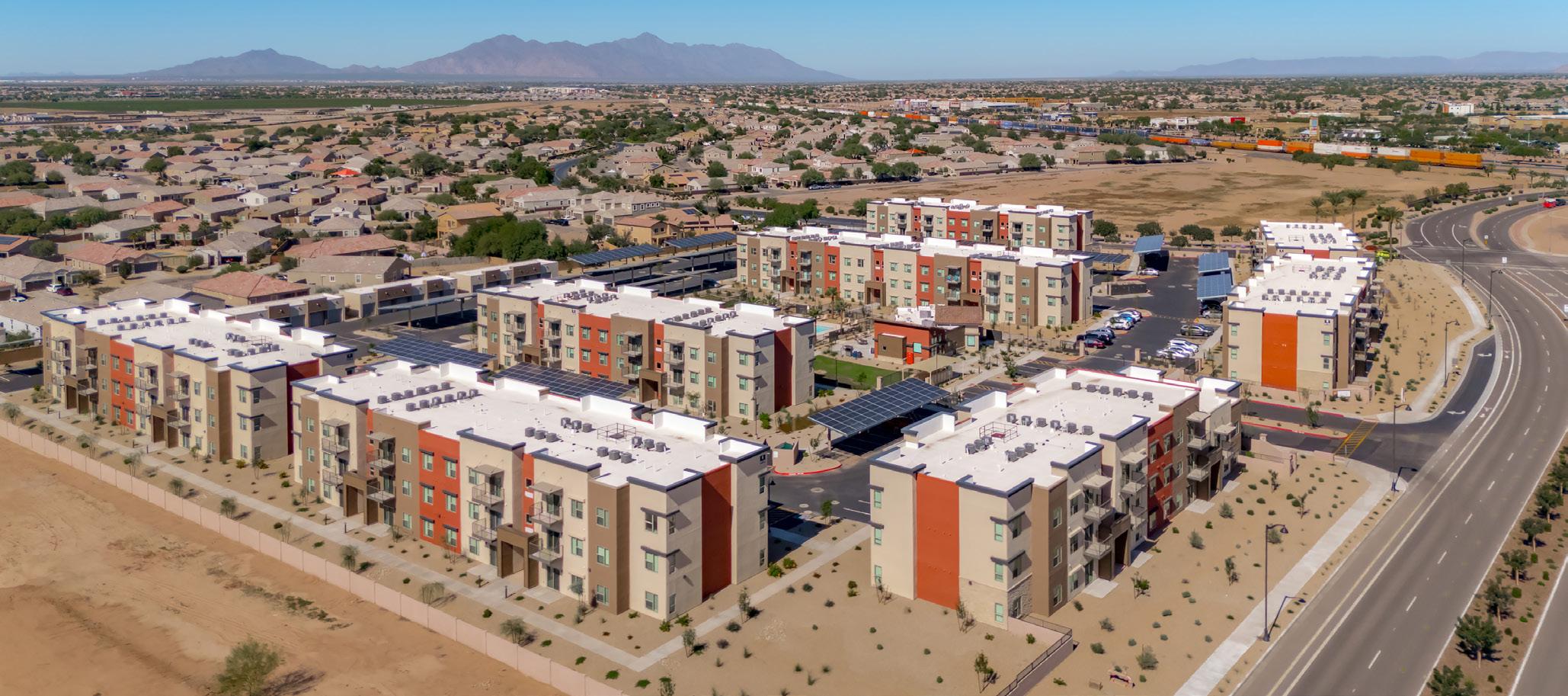
NEW IN MARICOPA: Alto Apartments delivers 200 units across 12 residential buildings and was designed to provide attainable housing paired with modern amenities to help meet the region’s growing demand for quality housing. The project presented several notable challenges, including the lack of permanent water service across the site at the start of construction. The project was ultimately turned over six weeks ahead of schedule while maintaining a high standard of construction. The developer is Roers Companies, general contractor is Ironmark Building Company and the architect is Kaas Wilson Architects. (Photo provided by Roers Companies)

PINAL COUNTY DEVELOPMENT
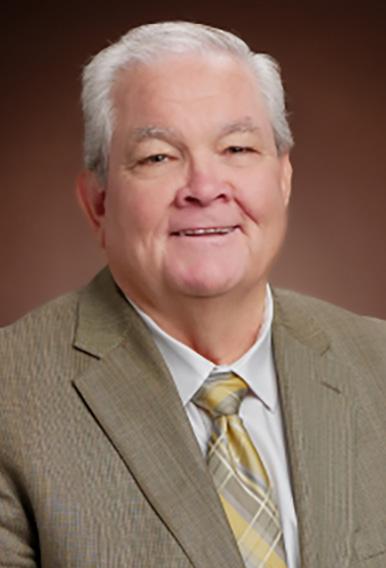
JDISTRICT 2 Supervisor: Mike Goodman
anuary 2025 marks the start of Goodman’s third term as Pinal County Supervisor for District 2. His district has a smaller geographical footprint in comparison to others across the county, but is the most densely populated, with close to 100,000 residents. Over the past year, District 2 has experienced unprecedented growth and historic milestones that will shape the future of the region for generations.
Town of Queen Creek year in review LG Energy Solution’s advanced
battery manufacturing facility is preparing to begin operations, representing one of the largest private investments in Arizona history. The project is expected to create thousands of jobs and further strengthen Arizona’s position as a national leader in advanced manufacturing, energy storage technology, and semiconductorrelated supply chains. The facility is anticipated to begin operations later this year, bringing new employment opportunities and economic activity to District 2 and the broader region.
What’s new in San Tan Valley
In August 2025, voters approved Prop 495, making San Tan Valley Arizona’s 92nd municipality and one of the largest incorporations in state history. This success marks the culmination of decades of communityled efforts and positions the Town of San Tan Valley to guide its own future through local governance, economic development, infrastructure investment and community planning.
Tecoma Square
Developer: Real Estate Equities
General contractor: Big-D Construction
Architect: Kaas Wilson Architect
Project description: This 252-unit affordable multifamily community expands housing options in an area where single-family homes are the dominant product type. The project is situated near retail spaces along a busy intersection, creating a buffer from the roadway while being close to desirable amenities.


PINAL COUNTY DEVELOPMENT

ADISTRICT 3 Supervisor: Stephen Miller
n Arizona native and resident of Pinal County for more than 50 years, Supervisor Stephen Miller took office in January 2013 as Supervisor of District 3, representing the Casa Grande region. Miller was nominated by his peers on the board to be the first chairman of the now five-member Pinal County Board of Supervisors.
KPPC Advanced Chemicals breaks ground in Casa Grande
In December, KPPC Advanced Chemicals began construction on its $120 million project in Casa Grande, which will manufacture the ultra-highpurity chemicals used throughout semiconductor fabrication, wafer cleaning, etching and advanced packaging.
“This investment strengthens Arizona’s rapidly expanding, worldclass semiconductor ecosystem by bringing the essential manufacturing of ultrapure chemicals to the heart of where they are needed,” Gov. Katie Hobbs
says in a press release. “Best of all, it will create approximately 200 highquality, full-time jobs for Arizonans, and collaborate with our community colleges to prepare our workforce for advanced roles. Projects like this one are key to building a resilient, localized materials network right here in Arizona.”
The facility is slated to start production at the end of 2027 and will supply TSMC, Intel, Micron and other chipmakers across the U.S.
Construction in Coolidge
Win Aviation: In Q4 2025, Win Aviation celebrated the grand opening of its 36,000-square-foot aircraft maintenance hangar at Coolidge Municipal Airport, representing the first substantial hangar construction project at the airport in more than 15 years. The new facility will support expanded maintenance operations and strengthen Coolidge’s position in the regional aviation market.
SRP expansion project: SRP began construction on its expansion project in 2024, which will add 575 megawatts produced by 12 gas turbines — enough electricity to power more than 139,000 average-size homes at once. The utility expects the completion and commercial operation of the first six natural gas turbines by summer 2026 and completion of the second six no later than summer 2027.
New performing arts building
On March 31, Central Arizona College began construction on its 91,000-square-foot Cultural and Performing Arts Center at its Signal Peak Campus in Coolidge following the 2023 collapse of the Pence Center auditorium roof. The facility’s south half will be anchored by a 1,000-seat theater, and the venue will include a 95-foot-tall fly tower, allowing scenery, curtains and lighting to be lifted and stored above the stage for rapid transitions and complex performances.

MDISTRICT 4 Supervisor: Jeffrey McClure
cClure is in his sixth year on the Pinal County Board of Supervisors and serves as the chairman of the board. He has been active on county committees for more than 15 years, is knowledgeable of government operations and has proven his ability to build consensus among differing viewpoints and represent people of all political parties.
Florence Copper produces first copper cathodes
Florence Copper successfully harvested its first commercial copper cathode, marking the first new copper supply from a U.S. greenfield facility since 2008. It’s also the first site to utilize ISCR, a low-cost method
of producing copper metal with less environmental impacts than conventional mining. Once fully operational, the project is expected to produce 85 million pounds of LME Grade A copper annually.
“All of the copper metal produced at Florence will remain in the U.S. to help address America’s growing reliance on copper imports at a time of burgeoning global demand,” Stuart McDonald, president and CEO of Taseko, says in a press release.
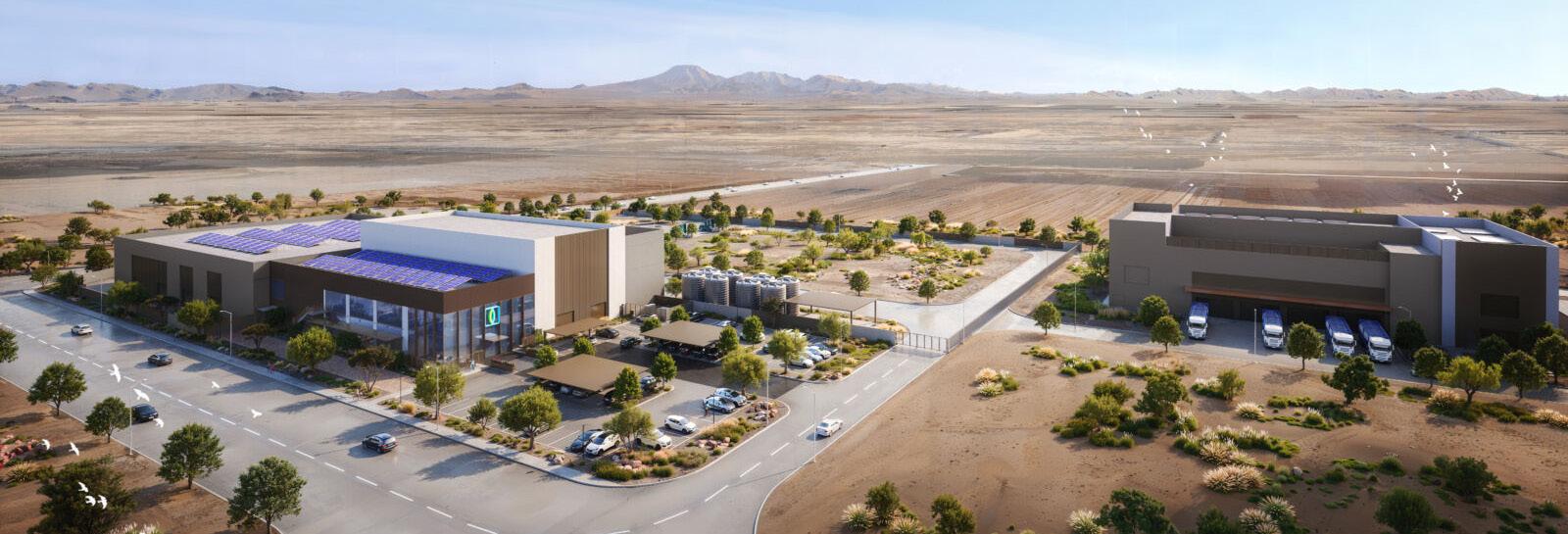
Freeberg Industrial Fabrication facility goes vertical in Eloy
Located at Park 8-TEN Logistics, the 160,000-square-foot Freeberg Industrial Fabrication facility is
purpose-built to support metal cutting, forming, welding, painting and largescale assembly operations, including the assembly of reciprocating engine power generation packages and other heavy electro-mechanical systems.
Ascent Aviation Services cuts ribbon on two new hangars in Marana
At the close of 2025, Ascent Aviation Services celebrated the grand opening of two 90,000-square-feet widebody maintenance hangars at its Pinal Airpark facility in Marana. This $70 million project resulted in the creation of more than 300 new jobs and reinforces the region’s position as a premier aviation and aerospace hub.
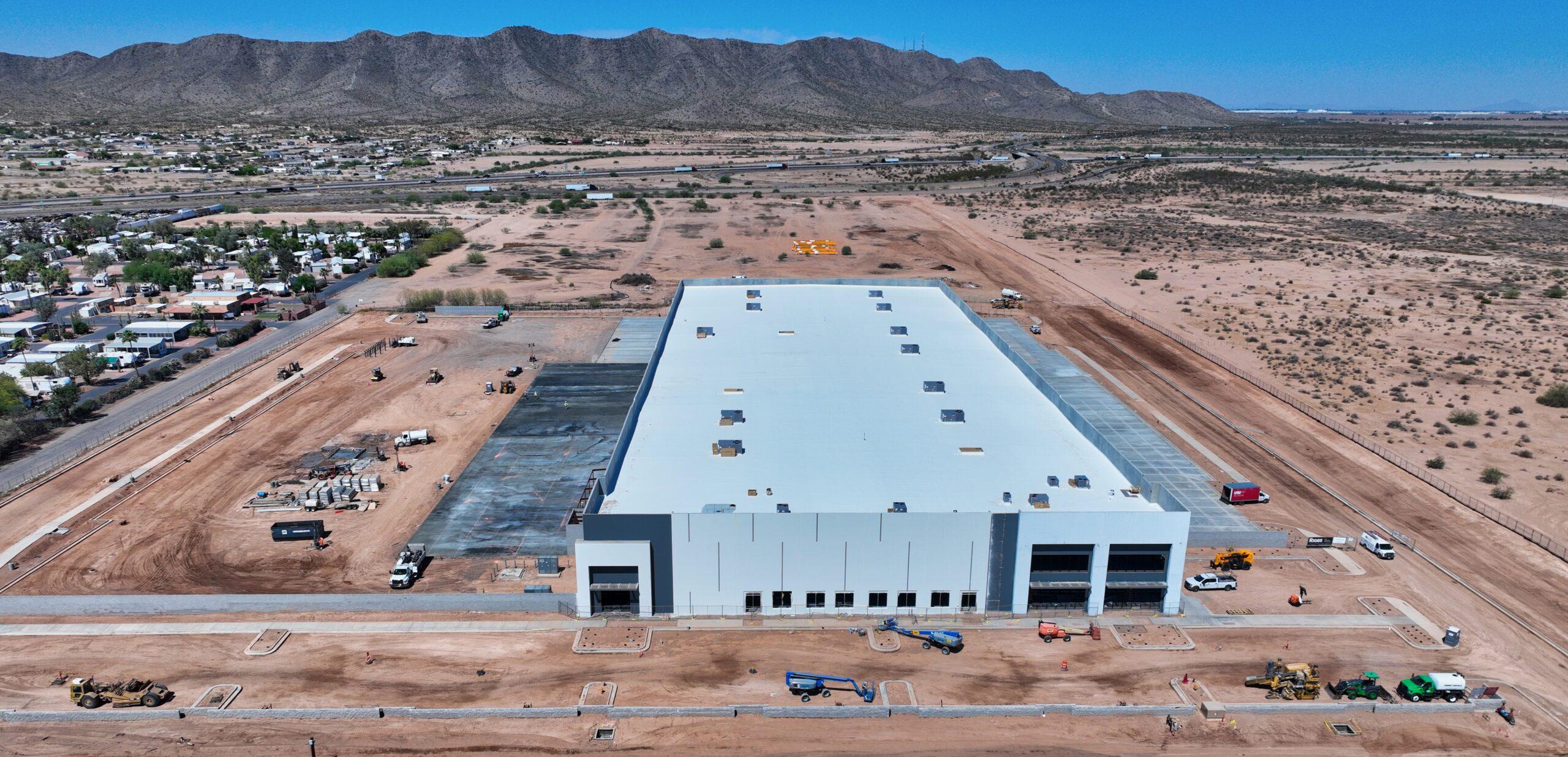
METAL MASTERY: Freeberg Industrial Fabrication’s 160,000-square-foot facility in Eloy will serve as a major manufacturing and assembly hub for the company. The site is expected to be fully operational in 2026. (Photo provided by Freeberg Industrial Fabrication)
PINAL COUNTY DEVELOPMENT

BDISTRICT 5 Supervisor: Jeff Serdy
orn in a small Midwest town of 10,000 residents, Serdy says his rural roots are an advantage as Pinal County transitions from a traditionally agricultural region to suburban and urban in several parts of the county. A firm believer in term limits, Serdy promised to only seek two terms in any office.
Resolution Copper completes federal land exchange
A March 13 ruling from the U.S. Court of Appeals for the Ninth Circuit finalized a federal land exchange between the U.S. Forest Service and Resolution Copper — a decision the company says unlocks one of the world’s most significant untapped copper deposits. Once operational, Resolution Copper would create thousands of highpaying jobs add an estimated $1 billion a year to Arizona’s economy.
Legislation to facilitate the land exchange passed with bipartisan support in December 2014. The land exchange involves the transfer of more than 5,400 acres of environmentally and culturally sensitive land containing special status species and Native American cultural sites for inclusion in National Forests and National Conservation Areas to the U.S. Forest Service and Bureau of Land Management, and in return Resolution Copper has received over 2,400 acres of land adjacent to the historic Magma Copper Mine.
“Resolution Copper has been an excellent community partner over the past decade,” Superior Mayor Mila Besich says in a press release. “Through the land exchange, Arizonans will receive thousands of acres that will become part of two National Conservation Areas, providing long-term conservation,
habitat and cultural heritage protection, and recreational opportunities.”
$3.5 million Panther Drive Bridge completed in Superior
The first project completed under the renewed Greater Arizona Development Authority, the Panther Drive Bridge allows residents to travel freely during storms without fear of getting caught in what used to be a low-water crossing. Not only does it enhance mobility for residents and businesses but allows first responders to travel unimpeded during extreme weather conditions.
Apache Junction’s largest industrial facility breaks ground
After purchasing a 36-acre parcel
in Apache Junction last year, Sundt Construction broke ground on its 65,000-square-foot manufacturing facility. Sundt will use the new facility to fabricate structural and mechanical systems and is expected to create approximately 100 new job opportunities for the city in this first phase.
Another 10,000 square feet of office space will be built to support Sundt’s engineering and design teams, along with a training facility for employees located throughout the region. Sundt plans to expand into other specialties in the future, reserving the remaining acreage of their property for expansion. Construction is anticipated to be completed in the first quarter of 2027.
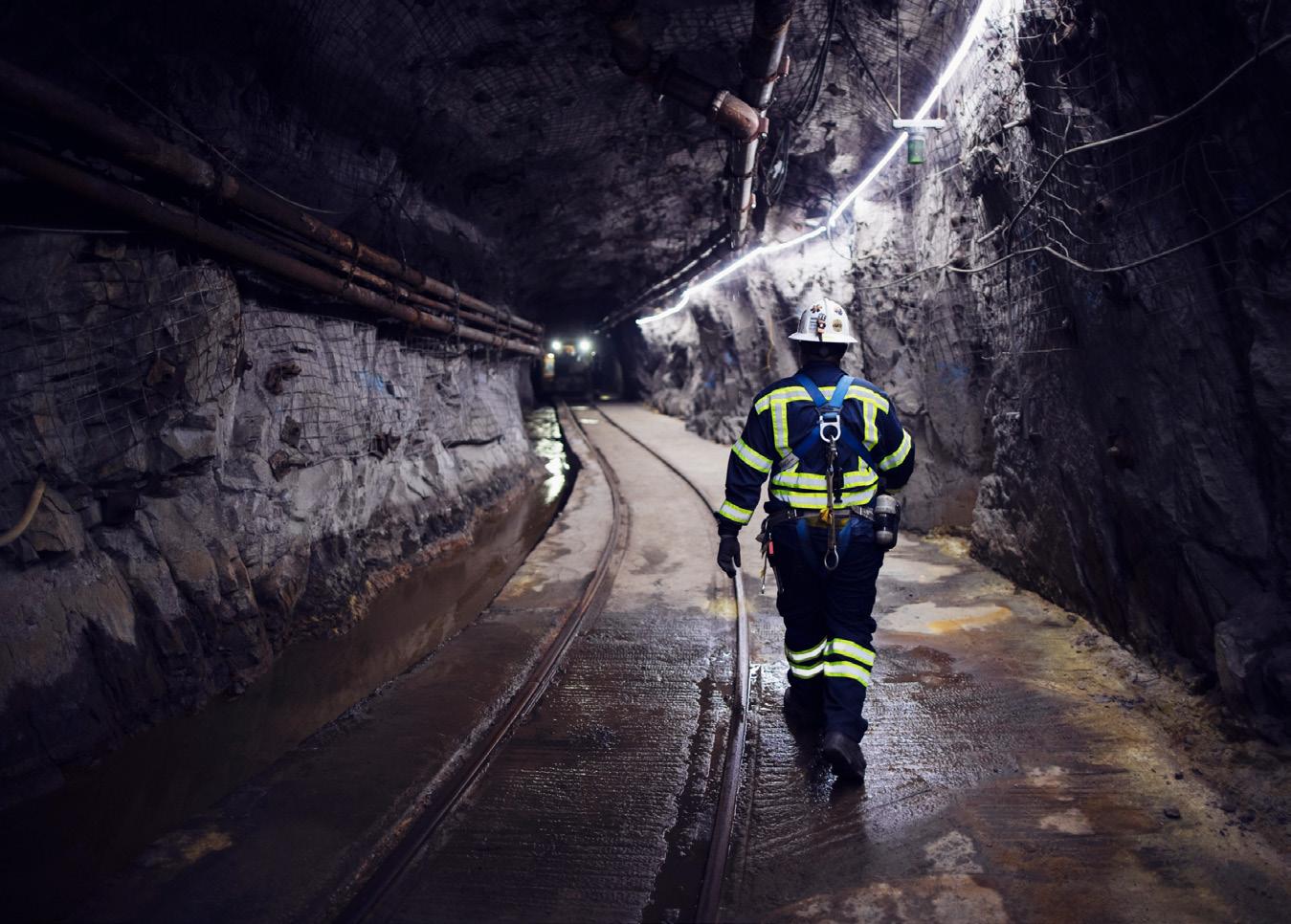
UNMINED POTENTIAL: Resolution Copper announced a $500 million investment over the next two years to support enabling works, upgrades to existing project infrastructure and initial underground development activities as well as approximately 100 new jobs. (Photo provided by Resolution Copper)