A Briefing for Housing Associations and Local Authorities
Prepared by Axis Europe | Energy & Decarbonisation Services March 2026
Executive Summary
If your organisation operates a communal or district heat network — whether in residential blocks, sheltered housing, hostels or care homes — you are now facing a significant regulatory change that requires your immediate attention.
Ofgem has been granted powers to regulate heat networks for the first time. The Heat Network Technical Assurance Scheme (HNTAS) is being phased in from 2026, with full compliance required from 2027. Heat network operators who fail to register, monitor and improve their systems face fines of up to 10% of annual turnover or £1 million — whichever is higher.
The good news: grant funding is available right now to help you understand your assets and fund improvement works. And the next funding window opens in March 2026.
This document explains what is changing, why it matters to your organisation, and how Axis can support you through every stage — from portfolio review and funded optimisation studies, through to installation, monitoring and ongoing compliance.
The Challenge Facing Social Housing Providers
Many housing associations and local authorities manage a significant portfolio of communal heating systems — often installed decades ago, running on fossil fuel boilers, and in various states of repair. These systems are the sole source of heat and hot water for residents who have no alternative supplier and limited ability to switch.
This has historically placed communal heat network customers in a uniquely vulnerable position: subject to variable pricing, without the protections that apply to electricity and gas customers, and with little recourse when systems fail or perform poorly.
Common Issues We See Across the Sector
• Running too hot. Systems running at temperatures far higher than needed, driving up heat losses and energy bills.
• Oversized plant. Boilers are significantly oversized for actual demand, causing inefficient cycling and premature wear.
• No monitoring. Little or no metering in place — making it impossible to demonstrate performance, bill accurately, or prove compliance.
• End-of-life assets. Ageing infrastructure with multiple outstanding repairs, creating service outages that directly affect residents.
• Poor resident experience. Residents unable to control their heat supply individually, experiencing overheating or cold spots.
• Reactive management. Sticking-plaster maintenance approaches that defer cost but build up systemic risk.
The result: heat network operators are carrying growing regulatory, reputational and financial risk —
And many do not yet have the data to understand the full extent of their exposure.
What Is Changing: The Regulatory Landscape
Ofgem Now Regulates Heat Networks
Heat networks have historically operated outside the regulatory framework that governs electricity and gas. That changes from 2026. Ofgem has assumed responsibility for heat network regulation under the Energy Act 2023, introducing consumer protections covering billing transparency, complaints handling, and support for vulnerable customers.
The Heat Network Technical Assurance Scheme (HNTAS) establishes mandatory technical performance standards for existing networks. Interim consumer protection obligations began in early 2026, with full HNTAS compliance required from 2027.
What HNTAS Requires
HNTAS sets out four performance categories that all existing heat networks must meet:
• Monitoring & Data: Automated Meter Reading (AMR) must be installed and linked to building management systems. Billing, heat, electricity and gas must all be measurable and verifiable.
• Reliability: Networks must provide a stable heat supply with adequate maintenance, acceptable water quality and minimal outages.
• Performance: Systems must be designed, built and operated to reduce heat loss, operational costs and service interruptions. Heat loss must be below 400W per dwelling.
• Consumer Outcomes: Heat systems must be designed and commissioned to provide appropriate service levels for domestic consumers — with transparent billing and support for vulnerable residents.
Note: Networks that are already required to install customer meters under the Heat Network Metering and Billing Regulation (HNMBR) face earlier milestones at Year 3, compared to Year 4 or 5 for others. The HNTAS consultation closes 15 April 2026.
The Compliance Timeline
Registration with Ofgem is required by January 2027. From that point, networks must progress through a series of milestones:
Milestone 1
Timing: Year 1
Key Requirement: Register the heat network with Ofgem
Beyond direct financial penalties, noncompliance triggers significant reputational and governance risks. If a resident formally registers a complaint with Ofgem before you have registered your network, enforcement action can begin immediately. Operators can also have their authorisation revoked.
The scale of some housing association portfolios means this is not simply a projectlevel challenge — it requires a strategic, portfolio-level programme of assessment, improvement and ongoing monitoring.
Ofgem can fine operators 10% of annual turnover OR £1 million — whichever is the higher figure.
This applies to failure to meet mandatory standards and consumer protection regulations.
The Opportunity: Improvement Funding Is Available Now
Alongside the regulatory pressure, the government has recognised that many existing heat networks require significant investment to reach compliance. The Heat Network Efficiency Scheme (HNES) provides grant funding specifically to help operators improve their systems, reduce energy costs for residents, and prepare for the new standards.
Upcoming Funding Windows in 2026
Round 12: Expected to open March 2026, closing May 2026
Round 13: Expected to open August 2026, closing October 2026
Note: Dates are subject to budget availability. Optimisation reports take 4–6 weeks to complete.
The Round 12 survey grant can feed directly into a Round 13 capital application.
This two-stage process is highly valuable: a 100% grant-funded optimisation study in the first round produces the investment-grade report required to support a capital grant application in the second. The two funding windows effectively create a ready-made pathway from assessment to delivery — all within 2026.
Heat
Network Efficiency Scheme (HNES) — Grant Funding Overview
Axis is a trusted property services partner to housing associations and local authorities across England and Wales. Our in-house energy and decarbonisation team — part of our Centre of Excellence — has direct experience delivering heat network assessments, decarbonisation schemes and funded projects for social housing clients.
We work with you from initial portfolio review through to post-installation monitoring, with procurement routes already in place through established frameworks. Whether you need a single site surveyed or a rolling programme of improvement across a large portfolio, our approach scales to your needs.
Funding is available for the procurement of external third-party support. This means you can access fully funded surveys and up to 50% co-funding on installation works without having to rely solely on your capital budget.
Our End-to-End Approach
Portfolio Review
Review condition reports, outage data and asset ages across your heat network portfolio to identify the highest-priority sites and build a business case.
Optimisation Study
Fully funded (100% HNES grant) technical survey covering baseline assessment, root cause analysis and capital-costed intervention options — producing an investable decision report.
Funding Application
Support your HNES capital grant applications (up to 50% of project cost), as well as exploring complementary funding sources such as GBE, Salix, PSDS and regional programmes.
Design & Procurement
Site-specific design to meet EPC requirements and HNTAS KPIs, with costings, subcontractor agreements and procurement issued through established frameworks.
Installation
Full installation of heat pumps (ASHP, WSHP, GSHP), HIUs, AMR metering, controls upgrades, solar PV and battery storage — carried out by our in-house M&E teams.
The optimisation study is the critical first step. It is fully funded by HNES and produces an investable decision report for each site that covers:
• Baseline assessment: annual heat demand, peak load verification, flow and return temperature analysis, seasonal efficiency.
• Root cause analysis: control strategy review, HIU performance, hydraulic modelling, BMS interrogation, asset age assessment.
• Costed interventions: capital estimates, predicted energy and carbon savings, payback periods, and delivery complexity ratings.
• Investment-ready summary: ranked list of short-term quick wins, mediumterm upgrades and a strategic long-term decarbonisation pathway.
The study also maps to RIBA Plan of Work stages 0–2 (Strategic Definition through Concept Design), meaning it is immediately usable as the basis for a developed design and funding application — without the cost or delay of a separate feasibility exercise.
Case Study: Royal Borough of Kingston upon Thames
We recently delivered a full decarbonisation scheme at Four Oaks Hostel — a communal heating network serving 37 residents across three buildings. The site had an ageing gasfired plant, frequent service interruptions and no effective monitoring in place.
What we delivered:
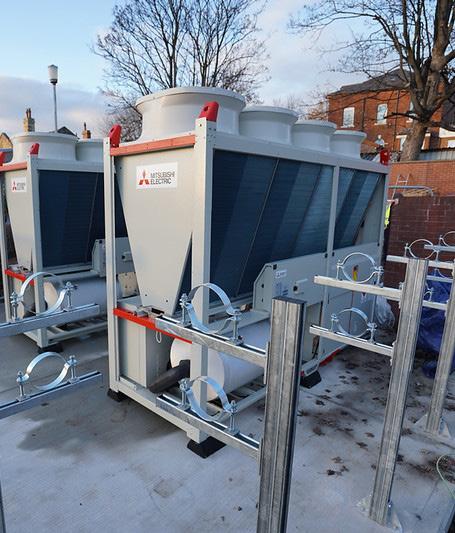
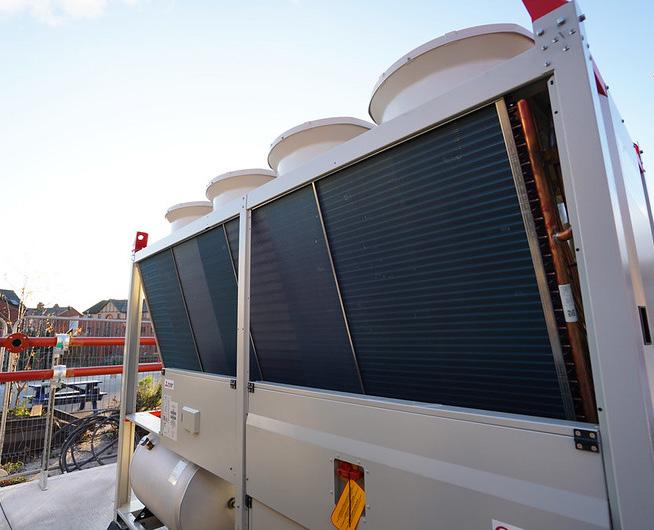
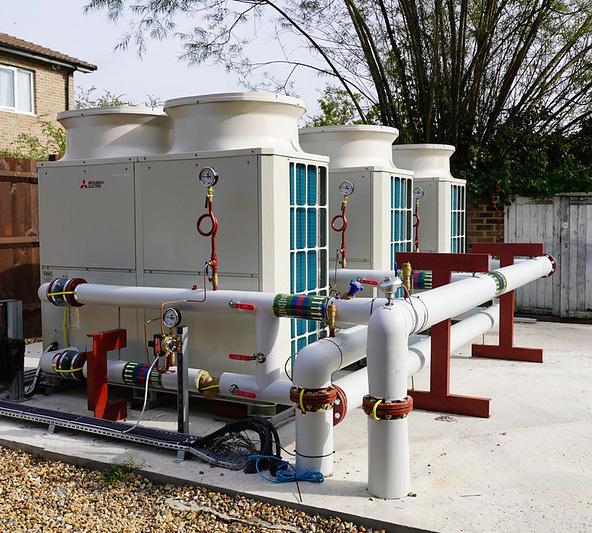
• Removed gas-fired boilers and replaced with an air source heat pump (ASHP) heat network serving all three buildings.
• Installed Heat Interface Units (HIUs) in individual flats, replacing gas combiboilers.
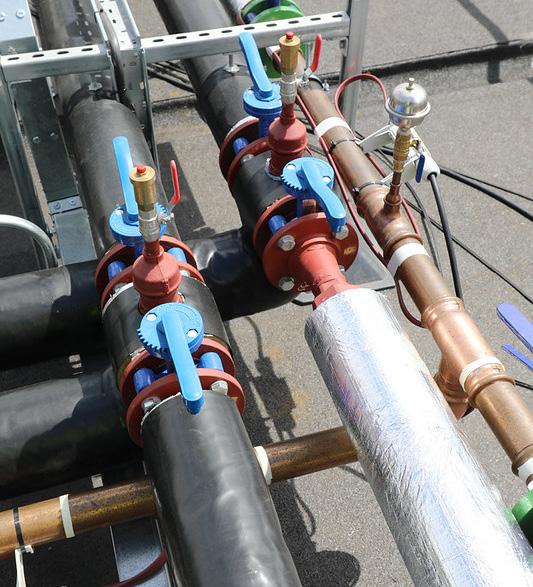
• Upgraded distribution pipework and installed a 49 kWp solar PV system with 15 kWh battery storage.
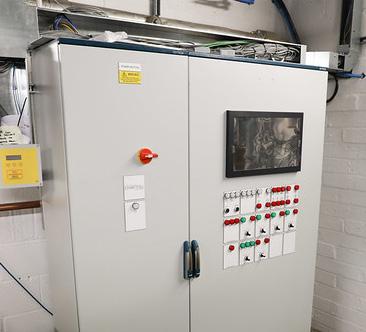
• Deployed real-time monitoring across heat, electricity, water and air quality.
• The results: a 50% reduction in carbon emissions, elimination of hot and cold spots, and full end-to-end monitoring giving residents and the council transparent, accurate billing. Contract value: £658,000.
Complementary Funding Sources
HNES is not the only funding route available to social housing providers. Our team actively monitors and supports applications to a range of parallel programmes, including:
• Great British Energy (GBE) — capital grant fund for low-carbon energy measures
• Salix Finance / Public Sector Decarbonisation Scheme (PSDS) — public sector capital funding
• Regional Combined Authority programmes — Greater London Authority, West Midlands and others
• NHS National Energy Efficiency Fund (NEEF) — for NHS/health estate operators
• Third-party finance — leasing, asset finance, Light as a Service and Power Purchase Agreements, particularly for lighting, solar and heat pumps, where upfront capital is limited
Why You Need to Act Now
The combination of a firm legal deadline (January 2027 registration), an imminent funding window (March 2026), and a typical 4–6 week survey lead time means that the time to engage is now.
Organisations that act now can:
• Secure fully funded optimisation surveys before Round 12 closes in May 2026.
• Use Round 12 survey outputs to support a capital application in Round 13 (August–October 2026).
• Begin portfolio-level monitoring and data capture to support Ofgem registration in January 2027.
• Identify and prioritise the highest-risk sites before compliance obligations formally begin.
• Avoid costly reactive remediation and reduce the risk of enforcement action.
Organisations that delay risk missing the current funding window, being in a weaker negotiating position for capital works, and facing enforcement action from a standing start rather than from a position of demonstrated improvement.
Next Steps
We recommend a straightforward initial conversation to understand your current position — how many heat network sites you operate, the age and condition of your assets, and what monitoring data (if any) is already in place.
From there, we can quickly build a picture of where the greatest risks and opportunities lie across your portfolio, and help you develop a phased plan that makes the most of available funding.
To start the conversation:
Ofgem has made clear this is a stick, not a carrot.
Non-compliance will be pursued. The question is whether your organisation is ahead of the curve, Or reacting under pressure.
We can also arrange a no-obligation portfolio review — using your existing condition survey and outage data to identify priority sites — at no cost to your organisation.
With the HNES Round 12 window expected to open in March 2026, there is a short but real opportunity to move quickly and secure fully funded surveys this spring.
Contact: Robbie McKinnon, Decarbonisation Manager
Organisation: Axis Europe | axiseurope.com
Specialist Support: Keith Routledge, Chartered Engineer — Energy & Carbon Management