Stay informed while multitasking with our AI-generated podcast version of the monthly product update. It’s a quick and easy way to catch all the latest features, enhancements, and important updates wherever you are.
Listen to the latest update now podcast series
Screen conversion: Period Processes and Payroll Processes Definition
The Period Processes and Payroll Processes Definition screens have been converted to NextGen. As part of this update, we’ve consolidated both screens into a single Payroll Cycle Setup screen, organised into two tabs:
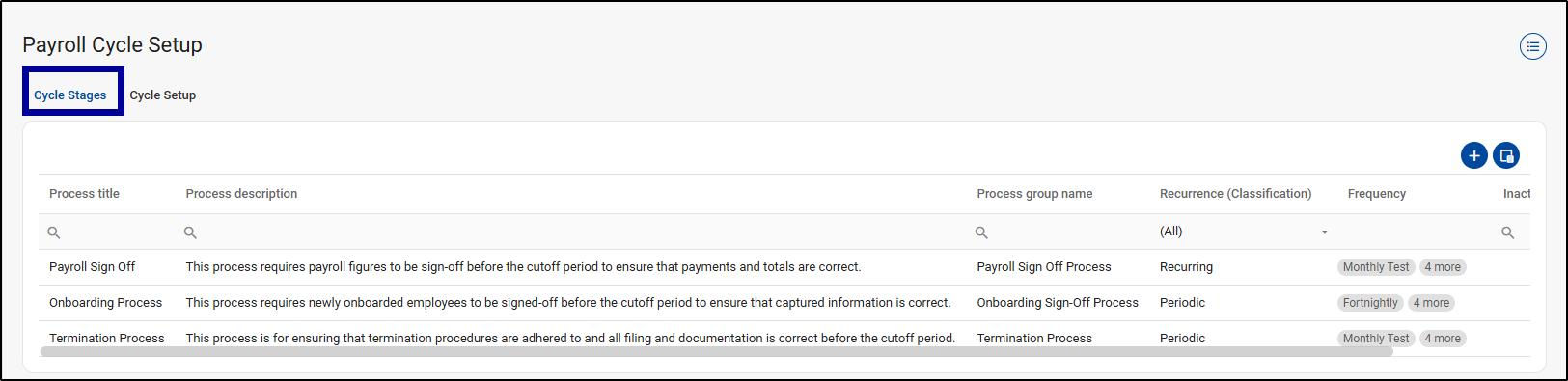
Cycle Stages
Previously labelled “Period Processes,” use this tab to capture and manage payroll cycle stages.
Key changes include:
In-row editing: The grid now supports in-row editing, complete with search and filter functionality for every column.
Inactive date column: Use this new column to mark stages as inactive. Once marked, they will no longer appear in Cloudroom checklist items or on the Payroll Process Tracker dashboard
Frequency column: We’ve added a frequency column, enabling you to assign cycle stages to specific frequencies.
Cycle Setup
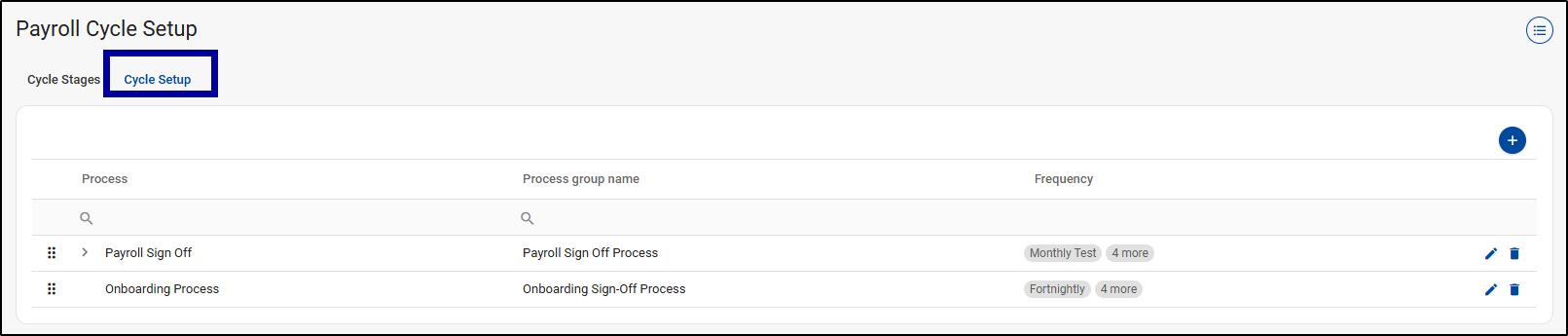
Previously labelled “Payroll Processes Definition,” use this tab to further define processes and link them to the stages you created in the Cycle Stages tab.
Key enhancements include:
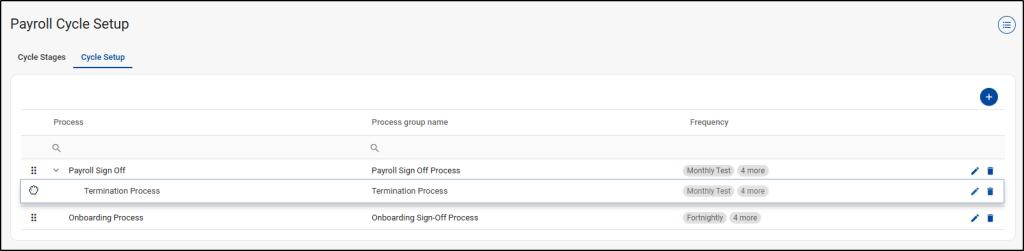
Reorder Cycle Setups: You can easily reorder setups using a simple drag-anddrop motion. Cycle Setups can also be structured hierarchically by dragging one onto another; the dropped setup becomes the child of the setup it is dropped onto (the parent).
Streamlined configuration: We’ve introduced a new slide-out menu to make capturing and managing your Cycle Setup details much faster.
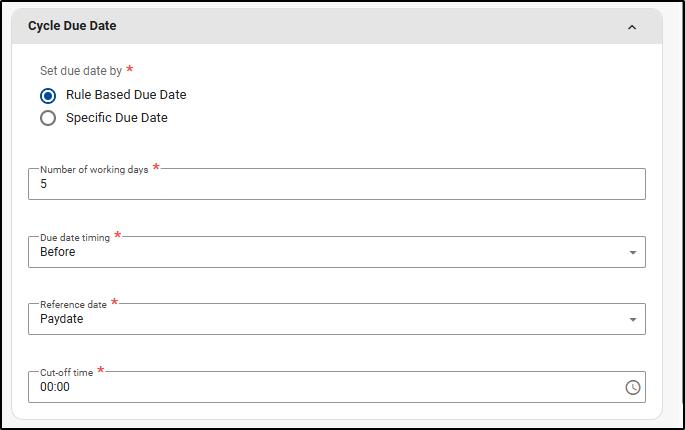
Rule-based due dates: This is our most significant update to the payroll cycle, designed to bring real-world flexibility to your deadlines. We’ve heard from our partners that fixed monthly dates aren’t always realistic for complex operations. You no longer have to rely on rigid calendar dates; instead, your tasks now align automatically with your specific payroll schedule. For example, you can set a payroll sign-off to be due exactly 5 working days before your pay date, complete with a specific cut-off time.
Bulk actions: Cycle Stages and Cycle Setup
We’ve added two new bulk actions that allow you to upload Cycle Stages and Cycle Setups in bulk.
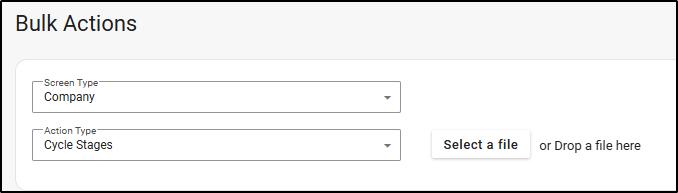
Cycle Stages: Find this under Bulk Actions > Company > Payroll Cycle > Cycle Stages.
The bulk action template for Cycle Stages includes the following fields:
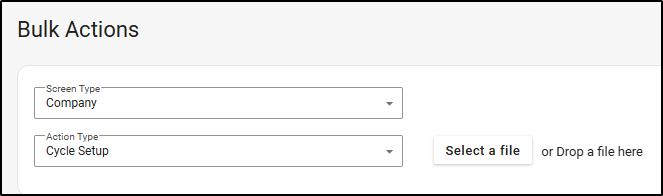
Cycle Setup: Find this under Bulk Actions > Company > Payroll Cycle > Cycle Setup
The bulk action template for Cycle Setup includes the following fields:
Introducing the Payroll Process Tracker dashboard
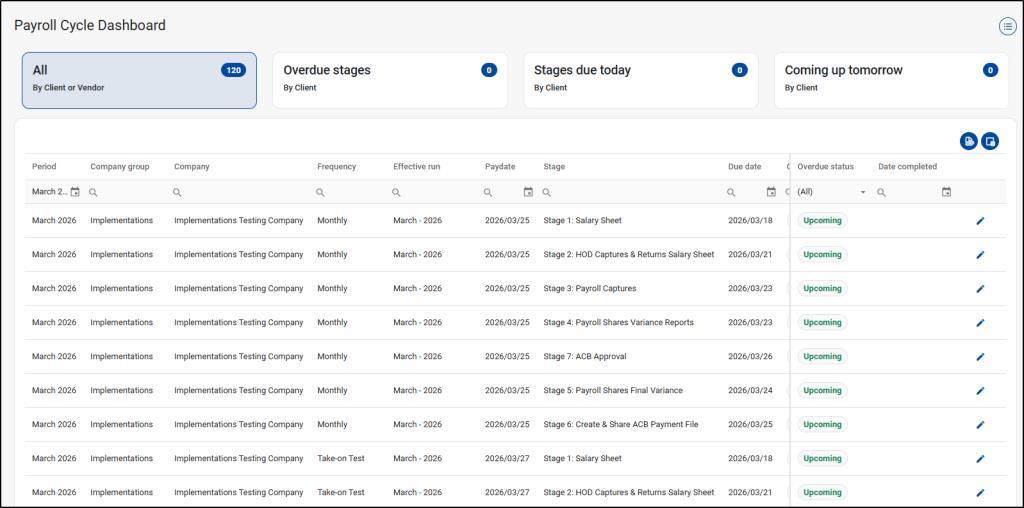
In light of the recent screen conversions, we’re thrilled to launch the new Payroll Process Tracker dashboard. This acts as your command centre, empowering payroll teams to efficiently manage and prioritise tasks across all authorised companies and pay frequencies
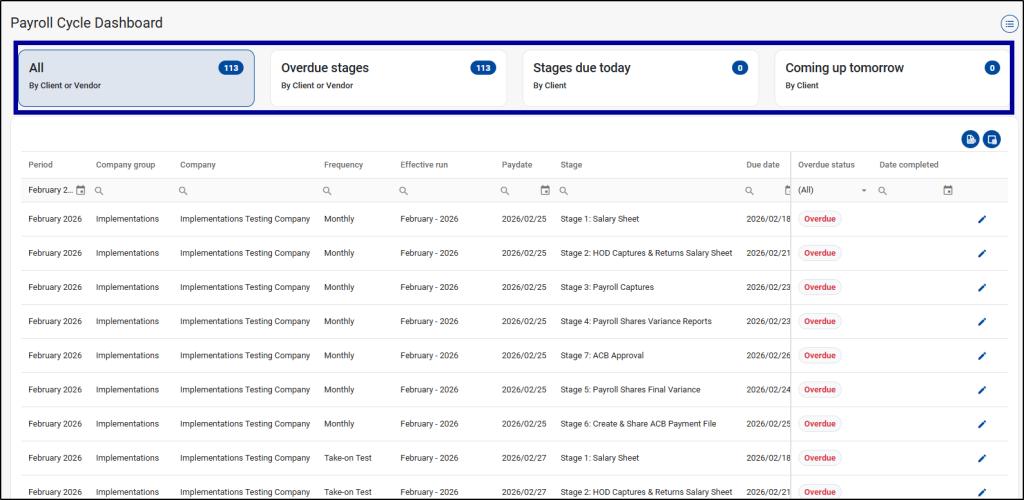
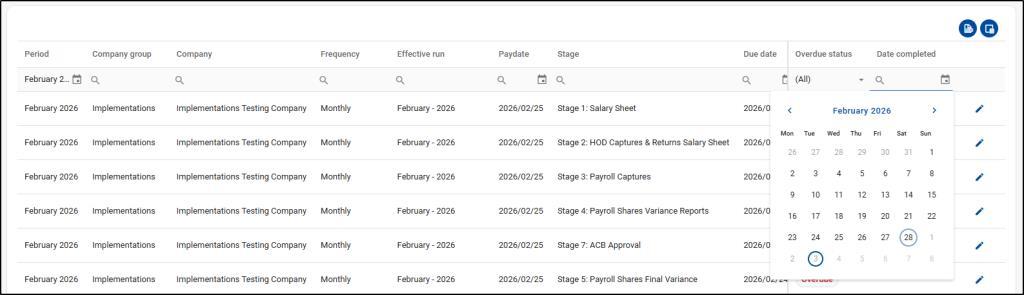
The dashboard helps ensure you never miss a deadline by categorising payroll tasks as overdue, due today or upcoming. Access it under Payroll Cycle > Payroll Tracker Dashboard
Dashboard features:
Interactive status cards: View counts for stages categorised as overdue, due today and due tomorrow. Selecting a card automatically filters the grid.
In-row editing: Specify completion dates directly in the grid.
Customisable grid: Use the column chooser to tailor your view or export displayed data for reporting.
Stage ownership: The owner column indicates whether responsibility lies with the Client (C) or Vendor (V).
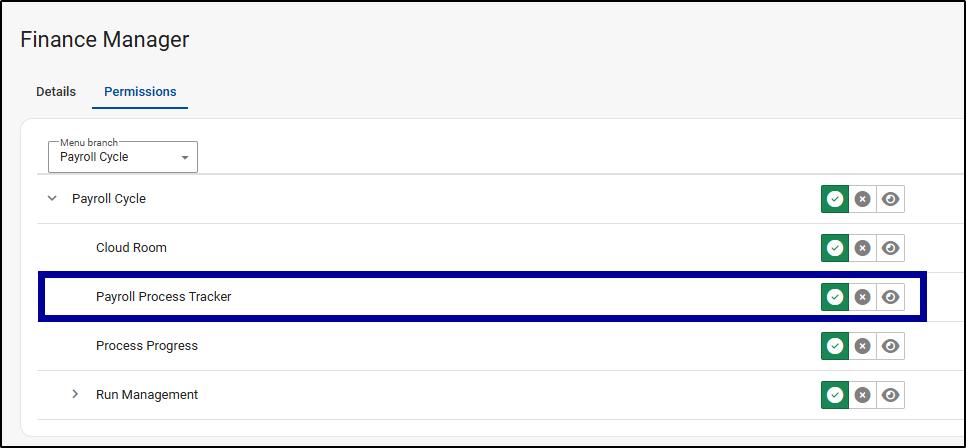
Security and permissions: Super users can manage access via the new Payroll Process Tracker securable object under the “Payroll Cycle” menu branch.
Edition Availability: The Payroll Process Tracker dashboard is available on all product editions.
Coming Soon
Separate cut-off dates for claims and leave
You asked for it we listened. We are developing an enhancement for the run management screen to support separate cut-off dates for claims and leave.
What’s changing?
The existing single cut-off date will be replaced with two distinct fields, allowing you to manage these applications independently according to your organisation’s policies and workflow requirements
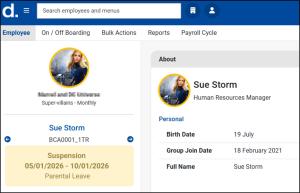
User interface enhancements: Future-dated terminations and suspensions
To make it easier for your team to quickly find specific information, we are improving the system UI. This enhancement will offer clearer visibility into employee statuses:
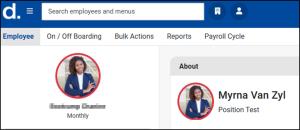
Terminated: A red border will appear around the employee photo.
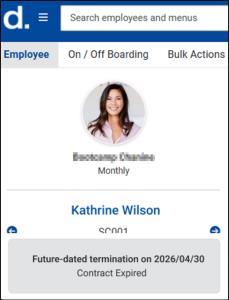
Future-dated terminations: Employees will remain visible as active until their termination date. Upcoming termination information will be displayed in grey on their profile.
Suspended: These records will be identified by a yellow border, with suspension details prominently displayed for the current period.
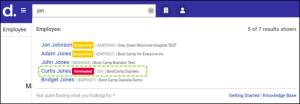
Additionally, the Advanced Employee Search functionality will be enhanced to clearly reflect each employee’s current status directly within the search results.
Product Webinar – March 2026
We’re hosting an exclusive session for our direct customers to dive deep into the latest and upcoming features of 2026. If you’re outside our current user group session areas, this is your front-row seat to the future of Deel Local Payroll.
Product Webinar Thursday, 12 March
Feature Spotlight
Knowledge base and FAQs: Payroll made easy
Our goal is to empower your team with a system that supports independent work. You have access to a comprehensive library of articles and FAQs designed to help you manage payroll processes efficiently
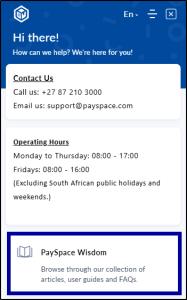
To access the Knowledge Base, navigate to PaySpace Wisdom by clicking your initials and selecting “How can we help?”. You can then select your specific region or search for a topic directly.
Legislation updates
for March 2026
Niger Annual Amendments March 2026
REVISION OF FAMILY-RELATED DEDUCTION RATES
Circular No. 013 of 20 February 2026, published on 24 February 2026, clarifies the application of the new General Tax Code in Niger. The circular introduces amendments affecting the Impot sur les Traitements et Salaires (“ITS”) from January 2026.
The family related deduction rates in Niger have been updated.
PAYROLL IMPACT
The increase in the deduction rates will have a positive impact on employees’ tax liability when they have between 1 and 6 dependents. This will have a have the effect of increasing the net pay for the above affected employees.
March 2026
Summary of changes
The limit increases will allow more employees to qualify for bursary exemptions as well as increase the monetary value of the exemption. The exemption limit on the occupational death lump sum will decrease the possible tax liability on payout. The threshold increase on retirement fund tax deduction limit will decrease the tax liability for employees contributing above the previous annual limit.
Earned Wage Access (EWA)
EWA is a technology that integrates with the payroll system enabling employees to access a portion of their already earned salary at any point during the pay cycle.
Growing popularity in the US, UK, Singapore, and Indonesia.
What’s in it for the employer?
NO Cost NO MORE Advances Adds to EVP at NO COST Assists staff retention
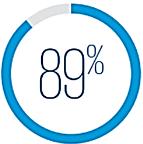
of surveyed workers would be willing to work longer for an employer offering EWA.
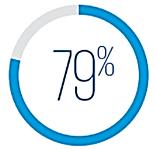
of surveyed workers are more willing to switch to employers already offering EWA.
Employer retains control & sets
• % of salary that can be accessed during the month.
• Amount of the minimum and maximum loan application
• Number of loan applications permissible during the month
Critical illness cover provides employees with a lump-sum payment upon diagnosis of severe illnesses such as cancer, heart attack, or stroke. This benefit offers financial flexibility, allowing recipients to use the funds for any expenses during illness or recovery.
For employers, offering this cover enhances the employee value proposition (EVP), supports well-being, and helps attract and retain talent. Group critical illness cover is cost-effective, especially when provided as a standalone benefit or as an accelerated benefit on group life cover, which further reduces costs.
Why It Matters
- Rising Cancer Incidences: Global cancer rates are climbing, with South Africa’s new cases projected to double by 2030.
- Financial Protection: Even with medical aid, employees face significant outof-pocket costs. Critical illness insurance bridges this gap, reducing financial stress and enabling focus on recovery Lump-sum benefits can cover mortgage payments, childcare, and experimental treatments often excluded from standard healthcare plans
Aspect Medical Aid
Purpose
Coverage Type
Payment Structure
Covers day-to-day medical expenses and hospital costs
Ongoing healthcare costs, subject to limits
Monthly premiums: claims paid per service/insured
Benefit Form Pays actual medical bills up to limits
Scope of Illnesses
Financial Role
All illnesses/injuries within plan limits
Reduces out-of-pocket medical costs
Regulation Medical Schemes Act
Conclusion
Critical Illness Cover
Lump-sum payout for specified critical illnesses
Financial support for major illnesses
Monthly premiums: payout to insured
Benefit can be used for any purpose
Limited to listed critical illnesses
Income replacement, lifestyle adjustments
Long-term Insurance Act
Critical illness cover is a valuable, cost-effective addition to employee benefits, providing essential financial protection and supporting workforce stability It complements medical aid by addressing gaps in coverage and offering flexibility during challenging times.
Speak to Axiomatic Benefit Consultants to arrange this important value add for your employees by clicking here
PAYMENT OF CONTRIBUTIONS TO PENSION, PROVIDENT, RETIREMENT, MEDICAL AID OR SIMILAR FUND
Employers have long been required under section 13A(3) of the Pension Funds Act to pay all retirement fund contributions no later than seven days after the end of the month for which the contributions are due. This timeline has been the established and accepted market practice
However, in the 13 January 2026 Government Gazette, the Minister of Employment and Labour withdrew the 2003 BCEA determination that previously exempted employers from complying with section 34A of the Basic Conditions of Employment Act (BCEA). With the withdrawal of this exemption, section 34A now fully applies, and it introduces two separate timeframes for the payment of contributions:
1. Employee-deducted contributions
If an employer deducts any amount from an employee’s remuneration for payment to a benefit fund, the employer must pay the deducted amount to the fund within seven days of making the deduction.
2. Employer contributions (non-deducted amounts)
If the employer makes a contribution not deducted from the employee (i.e., the employer’s own contribution), the employer must pay the contribution within seven days after the end of the period to which the contribution relates.
IMPACT OF THE CHANGE
Employers are now subject to dual compliance obligations under:
1. The Pension Funds Act
Requires payment within seven days after month-end. Non-compliance may result in fines of up to R10 million and enforcement action. In addition, late payment interest is automatically calculated by the retirement funds from the 1st of the month where contributions are not remitted by the 7th of the month following the month to which the contributions relate.
2. The BCEA (Section 34A)
Introduces shorter timeframes for employee deductions (7 days from payday). Labour Inspectors may issue compliance orders and impose administrative penalties for non-compliance. These two frameworks effectively operate in parallel, and employers must comply with both.
AXIOMATIC’ S RECOMMENDATION
To avoid conflicting timelines and reduce compliance risk, we recommend that employers adhere to the shortest applicable timeframe that is to pay all employee-deducted contributions to benefit funds within 7 days of payday. Doing so ensures full alignment with the BCEA and minimises exposure under both regulatory frameworks.
We do not consider it likely that the industry will challenge this rule as:
1. The failure to pay retirement fund contributions has become a national crisis (R5.2bn unpaid contributions across employers), which undermined the two-pot retirement reforms.
2. The Minister published a notice requiring written representations (public comments) when she announced the intention to withdraw the exemption on 18 August 2025. There is no published record of any major industry association or employer federation opposing the timeline.
3. The change received the support of all Nedlac Labour Law Reform Task Team constituencies.
Are facial recognition Time & Attendance systems legal?
Several of Axiomatic’ s clients have either implemented or are considering implementing Time and Attendance (T&A) systems that integrate with payroll.
While there is no single authoritative public statistic detailing the exact percentage of T&A systems sold in South Africa by biometric modality (fingerprint versus facial recognition), we know that many clients are exploring facial recognition solutions.
Industry signals indicate that facial recognition has gained significant traction in new system sales, even as fingerprint technology remains dominant in the installed base. Global market data reinforces this trend: in 2024, contactless modalities such as facial, iris, and voice recognition accounted for over 58% of new installations worldwide, driven largely by post-pandemic hygiene considerations and the convenience these technologies offer.
Against this backdrop, we believe it is important to highlight the implications of a recent court case in Kenya. Norton Rose Fulbright has published a clear and concise analysis of this case, which we have reproduced in full below.
Employer’s use of facial recognition declared unconstitutional in Kenya
Norton Rose Fulbright
Facial recognition technology is becoming increasingly common in South African workplaces for maintaining attendance and security, but is it legally permissible?
In November 2025 the Kenyan courts found that an employer’s use of facial recognition is unconstitutional and unlawful. Let’s unpack why.
As we learn from the Kenyan court’s approach to the use of facial recognition it is important to bear in mind that South Africa’s Constitution protects the right to privacy and that South Africa’s data protection laws, including the Protection of Personal Information Act treats biometric information such as facial recognition, as ‘special personal information’.
Background
The Kenya Broadcasting Corporation (KBC) introduced a mandatory facial recognition attendance system for all employees, set for implementation in September 2025. The Kenya Union of Journalists challenged this rollout, citing lack of employee consent, inadequate information on data protection, ignored union requests for consultation, absence of a Data Protection Impact Assessment, undisclosed vendor details, and concerns over data being accessible to unknown third parties.
The right to privacy and data protection reaffirmed
The court considered whether KBC’s actions violated constitutional and statutory privacy requirements. Article 31 of the Kenyan Constitution protects the right to privacy, and the Data Protection Act, 2019, mandates strict safeguards for sensitive data like biometrics. The court emphasised that a Data Protection Impact Assessment is mandatory for new technologies involving such data, and that informed consent, transparency, and disclosure are essential for lawful processing, as these requirements collectively serve to ensure that individuals retain autonomy over their personal information and that any intrusion into their privacy is justified, proportionate, and compliant with both constitutional and statutory obligations.
Failure by the employer to comply with data protection laws
The court found that KBC failed to obtain informed consent, did not conduct the required impact assessment, ignored requests for consultation, and withheld key information about the system and its vendor. These failures amounted to both procedural and substantive violations of the law. The court referenced its earlier decisions, reiterating that the right to privacy is a firm constitutional guarantee. Any deployment of intrusive technologies such as facial recognition must strictly comply with legal safeguards, including impact assessments, informed consent, and robust data protection measures.
The employer’s use of facial recognition declared to be unconstitutional and unlawful
As a result, the court declared KBC’s biometric system unconstitutional and unlawful, prohibited its implementation until all legal requirements are met, cancelled the rollout, and ordered the deletion of all collected biometric data under official supervision.
Significance for South African Employers
This judgment serves as clear notice to South African employers that adopting biometric or facial recognition technology must be managed with full transparency, meaningful employee engagement, data protection and thorough vendor vetting. Failure to comply with privacy protection principles could render such systems unlawful and expose employers to significant legal and reputational risks
Norton Rose Fulbright - Laura Macfarlane and Saajidah Simjee
2026 SOUTH AFRICAN SALARY INCREASE FORECAST: JANUARY UPDATE
In early November 2025, we published our 2026 South African Salary Increase forecast, outlining the methodology used to project future inflation and to determine a real salary increase. At the time, our forecast indicated a 5.00% salary increase for 2026. The full article can be read by clicking the below link.