THE WORLD'S OFFICIAL MAGAZINE FOR CAUSES




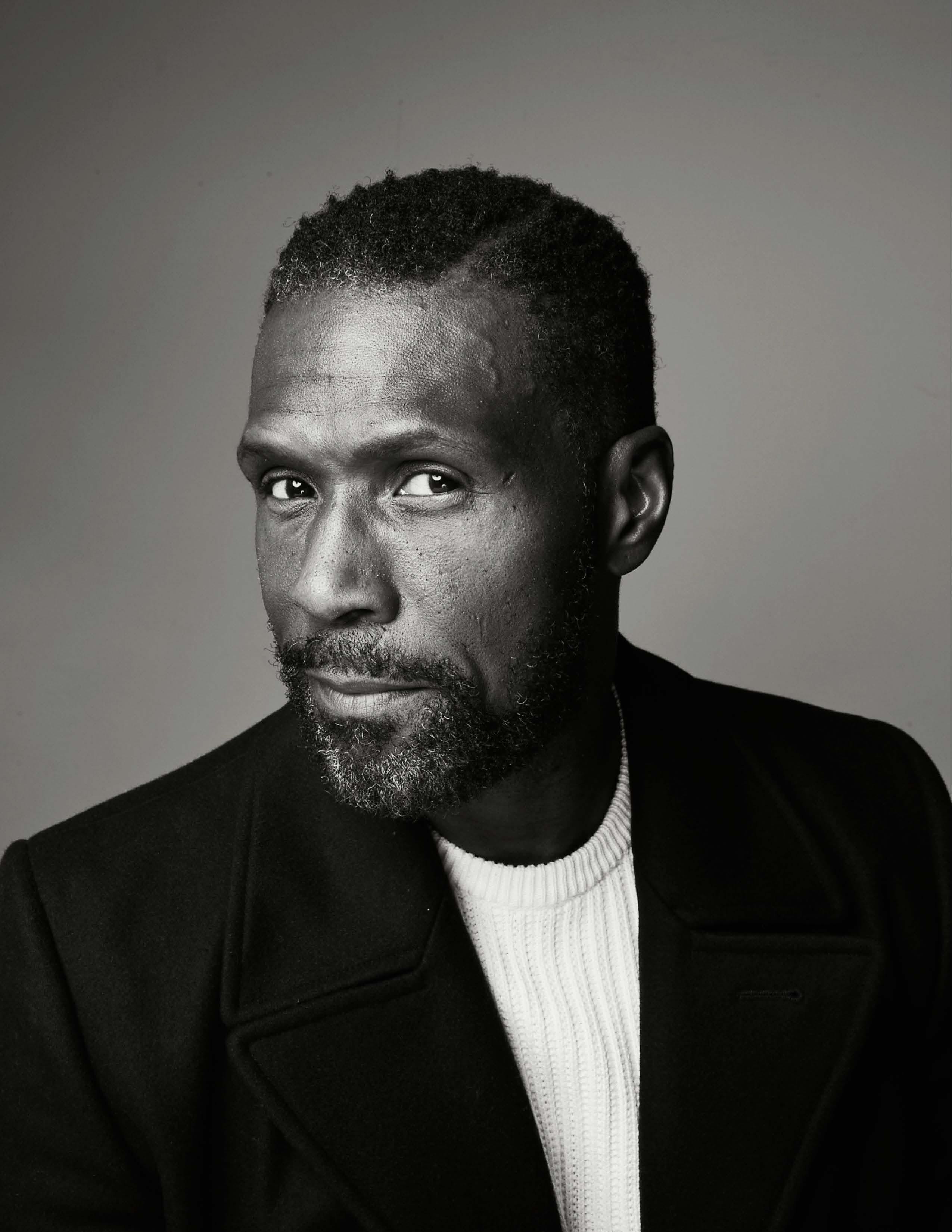


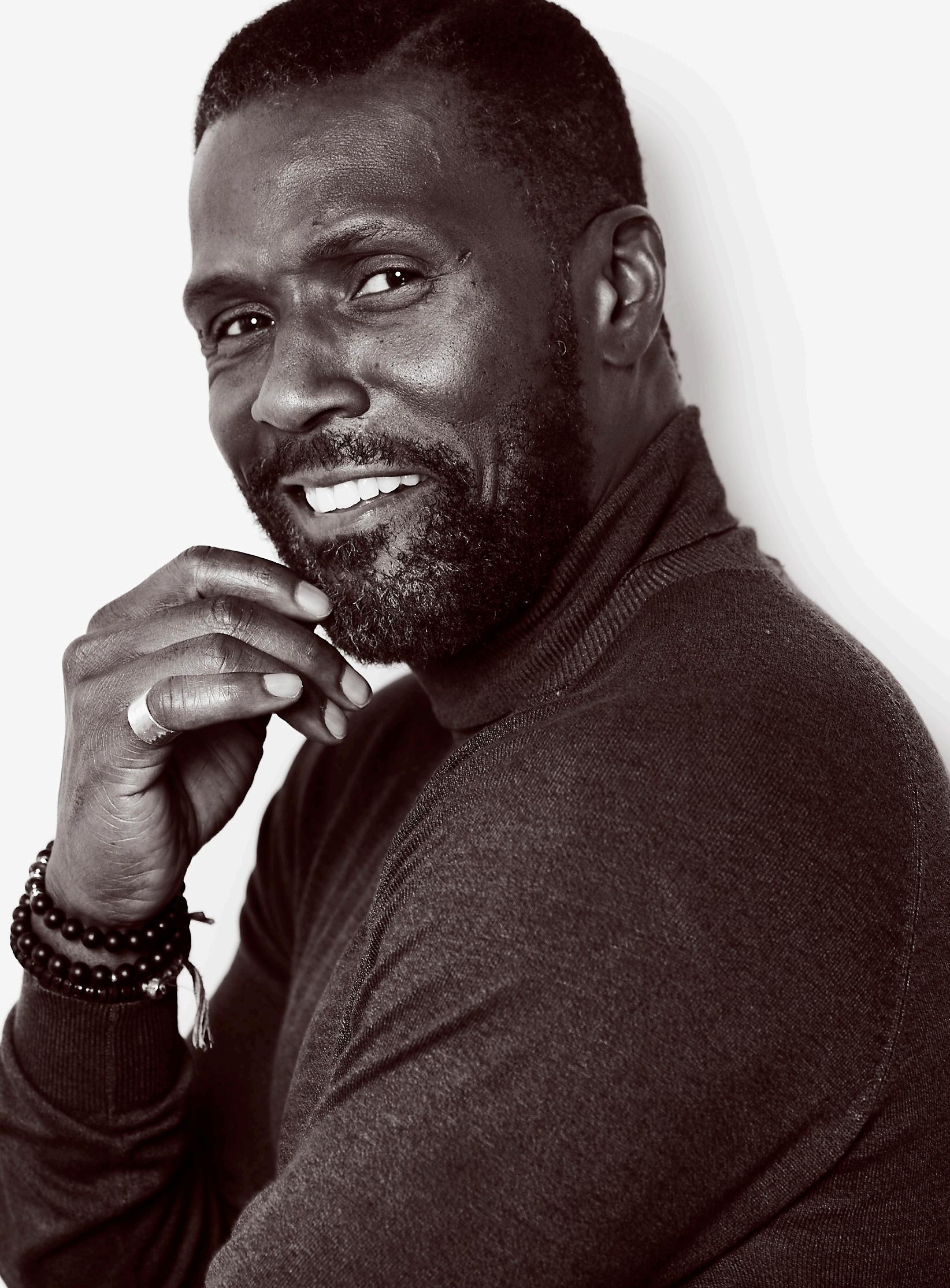
THE STORIES BEHIND WHO WE BECOME ‘MORE THAN A ROLE’ CURTISS COOK

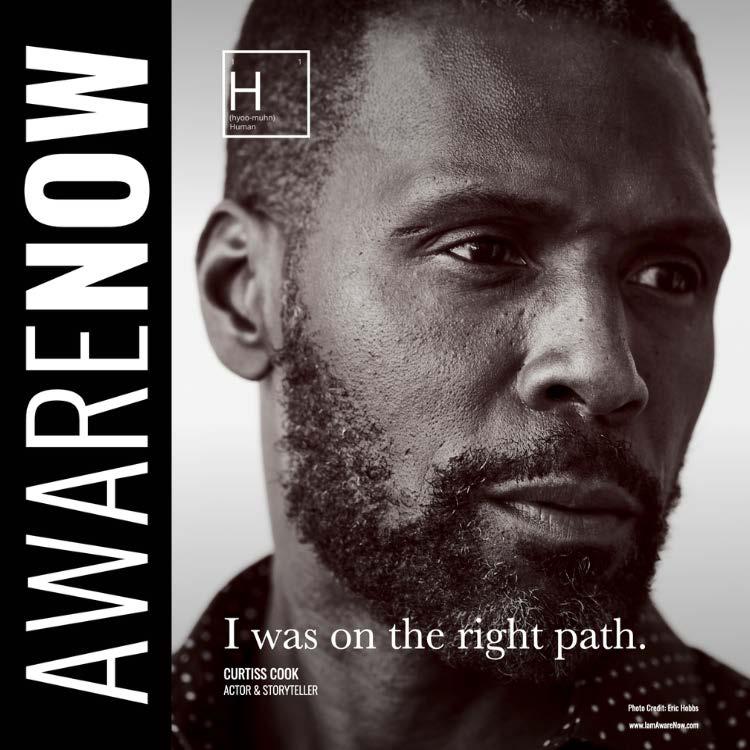
ON THE COVER: CURTISS COOK PHOTO BY: ERIC HOBBS LIVED JACK MCGUIRE THE
AwareNow Magazine is a monthly publication produced by AwareNow Media™, a storytelling platform dedicated to creating and sustaining positive social change with content that inspires and informs, while raising awareness for causes one story at a time.
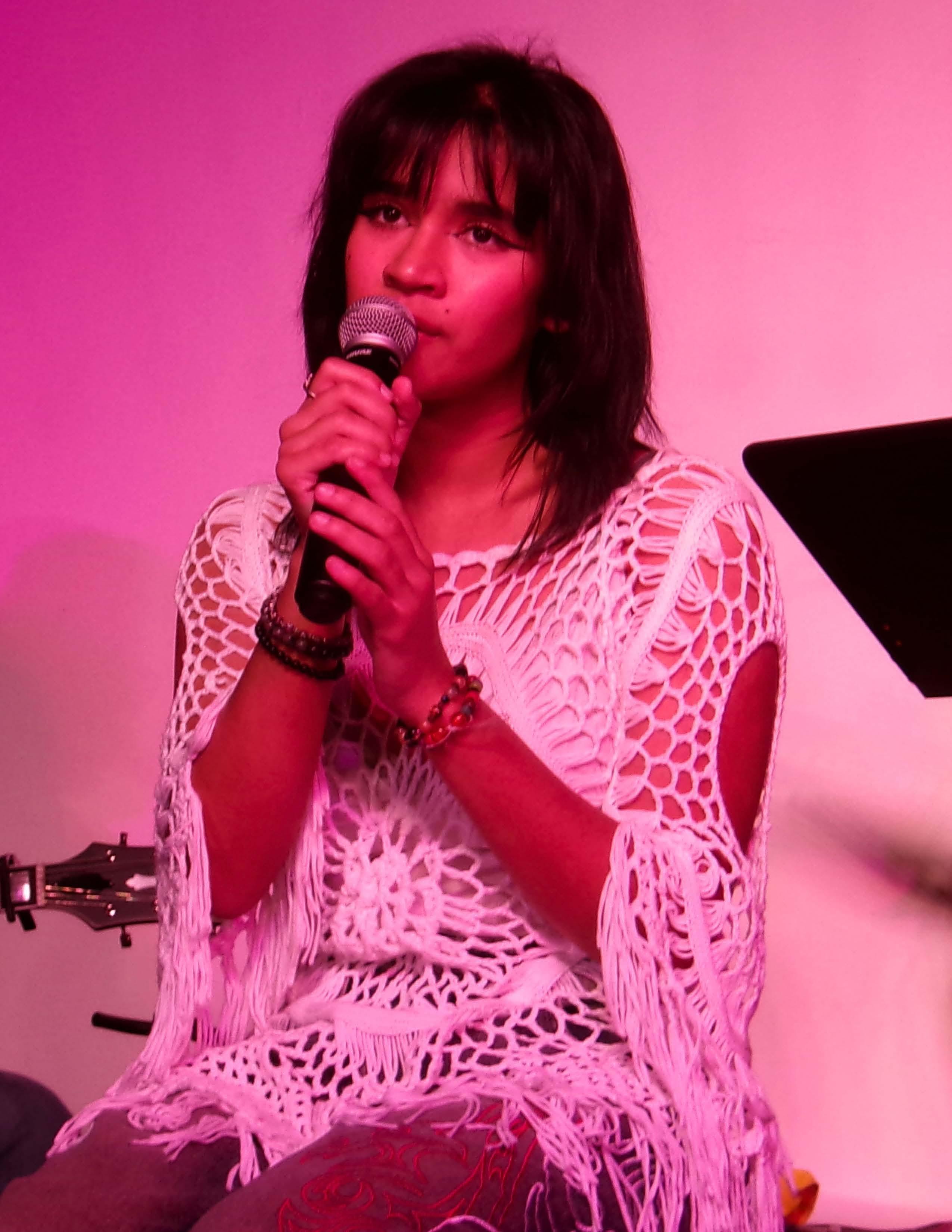
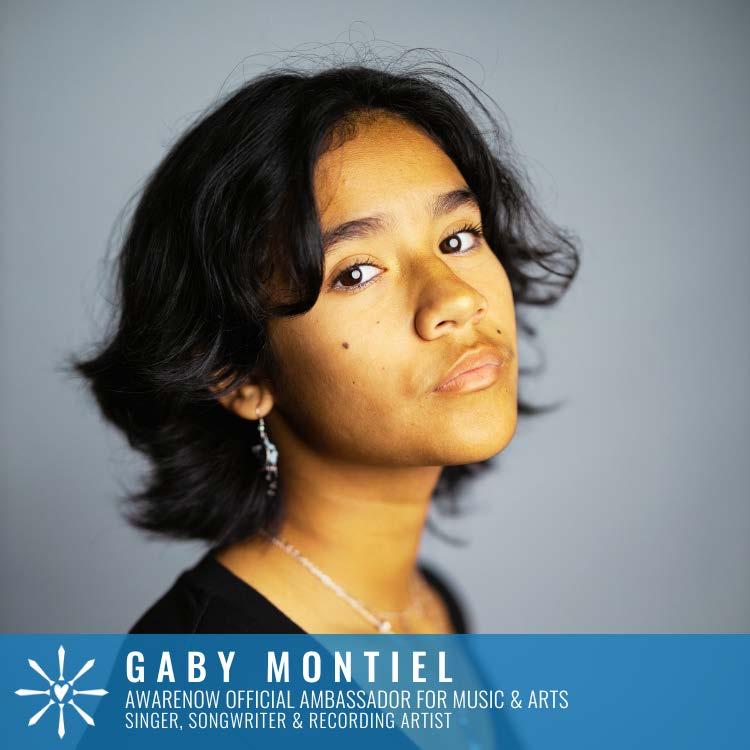
GABY MONTIEL MORE

Life was meant to be lived, and curiosity must be kept alive.
One must never, for whatever reason, turn his back on life.


Eleanor Roosevelt
In this edition of AwareNow, we honor the depth of human experience through stories that reveal not just who people are, but how they became.
The Lived Edition is a celebration of presence, perspective, memory, and meaning. It invites us to look beyond the surface of a person’s life and recognize the invisible architecture of courage, compassion, creativity, and truth that holds them together.
Within these pages are voices that remind us that life is not simply something we move through. It is something that moves through us, shaping how we love, lead, create, heal, and continue.
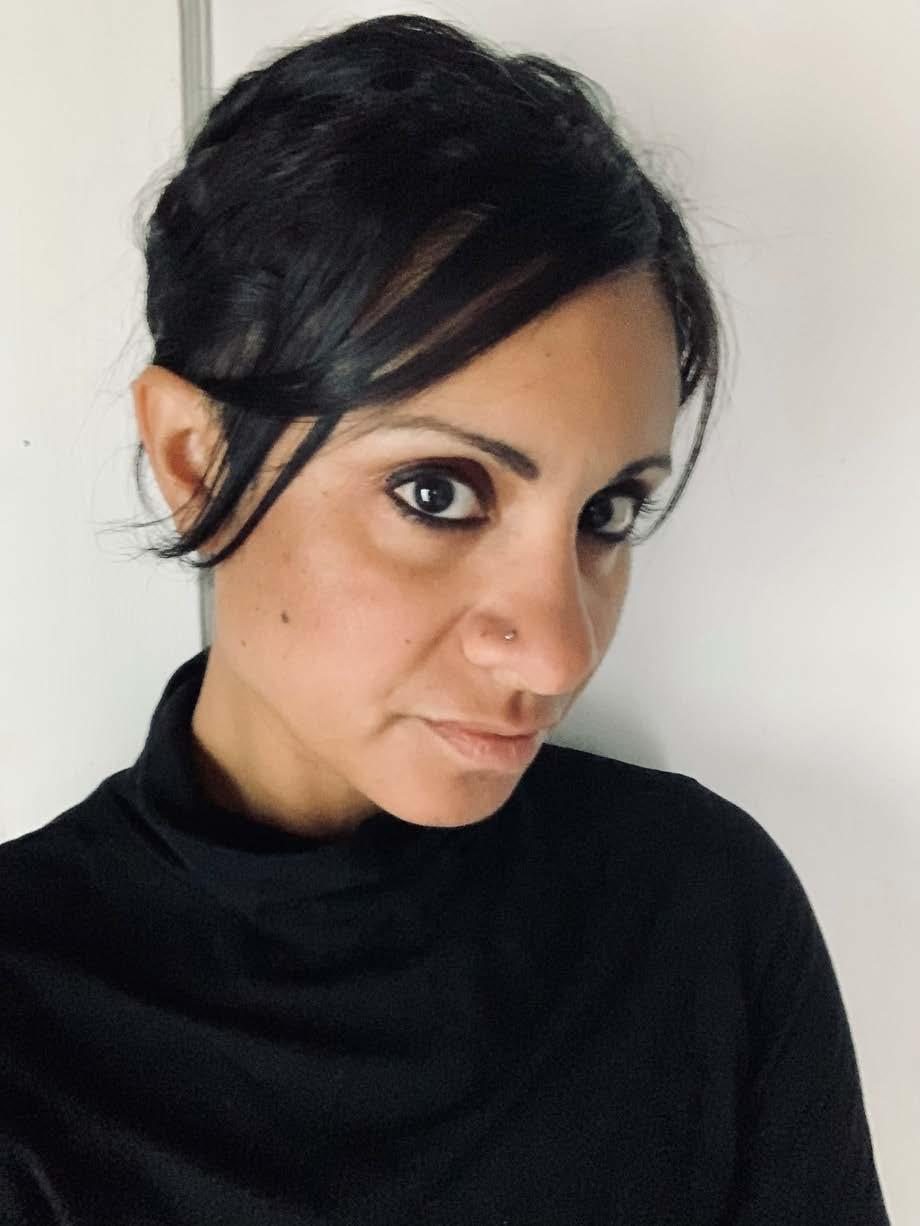
CEO & Co-Founder of AwareNow Media
Allié McGuire began her career as a performance poet, transitioned into digital storytelling as a wine personality, and later produced the Hollywood Film Festival. Now, as co-founder of AwareNow Media, she uses her platform to elevate voices and champion causes, connecting audiences to stories that inspire change.
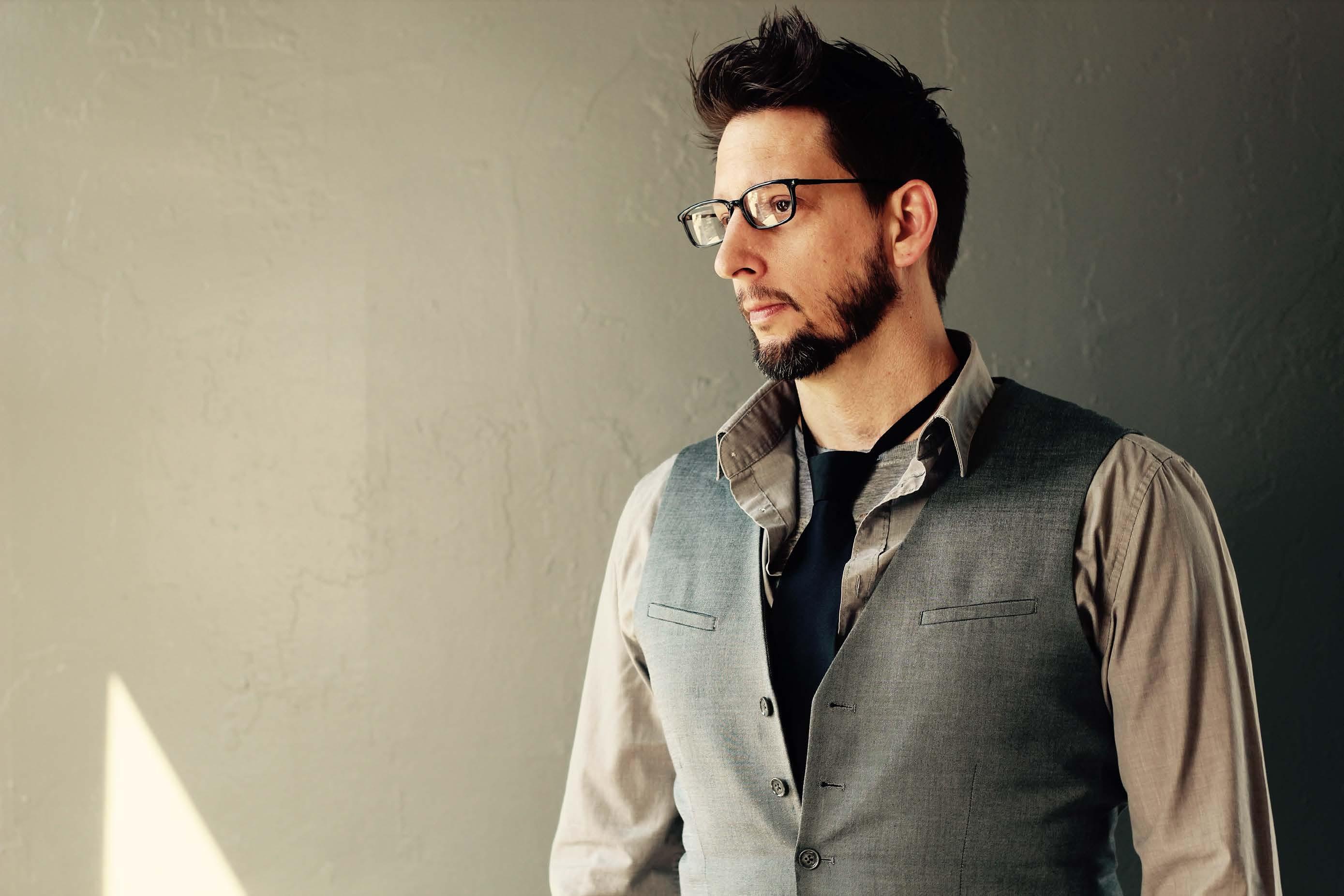
JACK McGUIRE
President & Co-Founder of AwareNow Media
Jack McGuire’s career spans the Navy, hospitality, and producing the Hollywood Film Festival. Now, he co-leads AwareNow Media with Allié, focusing on powerful storytelling for worthy causes. His commitment to service fuels AwareNow’s mission to connect and inspire audiences.
The views and opinions expressed in AwareNow are those of the authors and do not necessarily reflect the official Any content provided by our columnists or interviewees is of their opinion and not intended to malign any religion, ethnic group, political group, organization, company, or individual. Stories shared are not intended to vilify anyone or anything. Their intent is to make you think.
* Please note that you may find a spelling or punctuation error here or there, as our Editor-In-Chief has MS and lost vision in her right eye. That said, she still has perfect vision in her left and rocks it as best as she can.

JACK MCGUIRE CO-FOUNDER & PRESIDENT OF AWARENOW
‘REDEFINED
lived (v.) to be shaped by what you’ve survived, strengthened by what you’ve endured, and forever changed by the life you’ve chosen to keep living
Some stories are told. Others are lived.
And the difference between the two is everything.
A told story can be shaped, edited, shortened, polished, and placed neatly on a page. A lived story is different. It carries weight. It carries weather. It carries the silence between what happened and what someone is finally ready to say about it.
We often meet people through what they do, not through what they have survived. We see the success, the smile, the title, the role, the work, the stage, the screen, the photograph, the applause. We see the finished version, or at least the version the world is allowed to see.
But rarely do we see the long road that led them there.
Rarely do we see the moments that shaped the person standing before us. The quiet battles. The private losses. The unseen sacrifices. The rooms they had to walk out of. The rooms they had to fight their way into. The years when no one was watching. The decisions made in the dark. The resilience that did not arrive all at once, but slowly, painfully, and honestly became part of who they are.
That is what this edition is about.
The Lived Edition is a collection of stories that cannot be reduced to accomplishments alone. It is about the human experience beneath the headline. It is about the truth that every life carries layers, and that the most powerful stories are often the ones that were never performed for anyone.
They were simply endured. They were learned from. They were lived.
Our cover story features Curtiss Cook, whose extraordinary work on stage and screen re flects a depth that can only come from a life fully lived. His presence, both as an artist and as a human being, reminds us that authenticity is not something a person puts on. It is not a costume. It is not a role. It is not a performance.
Authenticity is earned.
It is earned through the years that test us. Through the people who leave us changed. Through the failures that humble us and the love that keeps us standing. Through grief, growth, discipline, forgiveness, reinvention, and the courage to keep becoming.
“Behind every person is a world we may never fully understand, but can still choose to honor.”
Curtiss’ story reminds us that a life cannot be measured only by where someone arrives. It must also be understood by what they carried to get there. The beauty is not only in the success. It is in the becoming.
And perhaps that is true for all of us. We are all, in some way, living editions of ourselves. Revised by experience. Marked by memory. Expanded by loss. Deepened by love. Rewritten by the moments we never expected and the choices we never thought we would have to make.
Some chapters are public. Most are not.
There are parts of every person that remain unseen, even by those who know them well. There are truths we carry quietly because language cannot always hold them. There are feelings too deep for explanation. There are histories too personal for summary. There are lives that cannot be captured by a title, a biography, a photograph, or a single conversation.
Here is a small poem I wrote while thinking of this edition:
In every language
There are words.
Words to describe everything. Yet somehow, You remain outside any type of description, In any language.
Perhaps that is where the real story begins.
Not in the words we use to define someone, but in the understanding that no word is ever enough.
No word can fully capture a life. No definition can contain everything we have carried, lost, learned, survived, forgiven, questioned, built, broken, or become. No sentence can hold the entirety of a person. No introduction can tell the whole truth.
We are all more than the chapters people see.
We are more than our work. More than our wounds. More than our worst day. More than our greatest achievement. More than what happened to us. More than what was taken from us. More than what others think they know. And yet, when someone shares even a piece of their lived story, something sacred happens.
Connection becomes possible.
Not because our lives are the same, but because the honesty of one story gives permission for another. We recognize ourselves in the courage of someone else. We remember that behind every face is a life in progress. Behind every voice is a history. Behind every person is a world we may never fully understand, but can still choose to honor. That is the invitation of this edition.
To look closer.
To listen longer.
To move beyond admiration and into understanding.
To remember that the most meaningful lives are not always the loudest, the easiest, or the most celebrated. They are often the lives that have been stretched by struggle, softened by compassion, strengthened by loss, and made beautiful by the decision to keep going.
Thank you for sharing your story with us. Thank you for trusting us with the truth of it. And thank you for reminding the world that the most meaningful lives are not the ones most admired. They are the ones most deeply lived. ∎

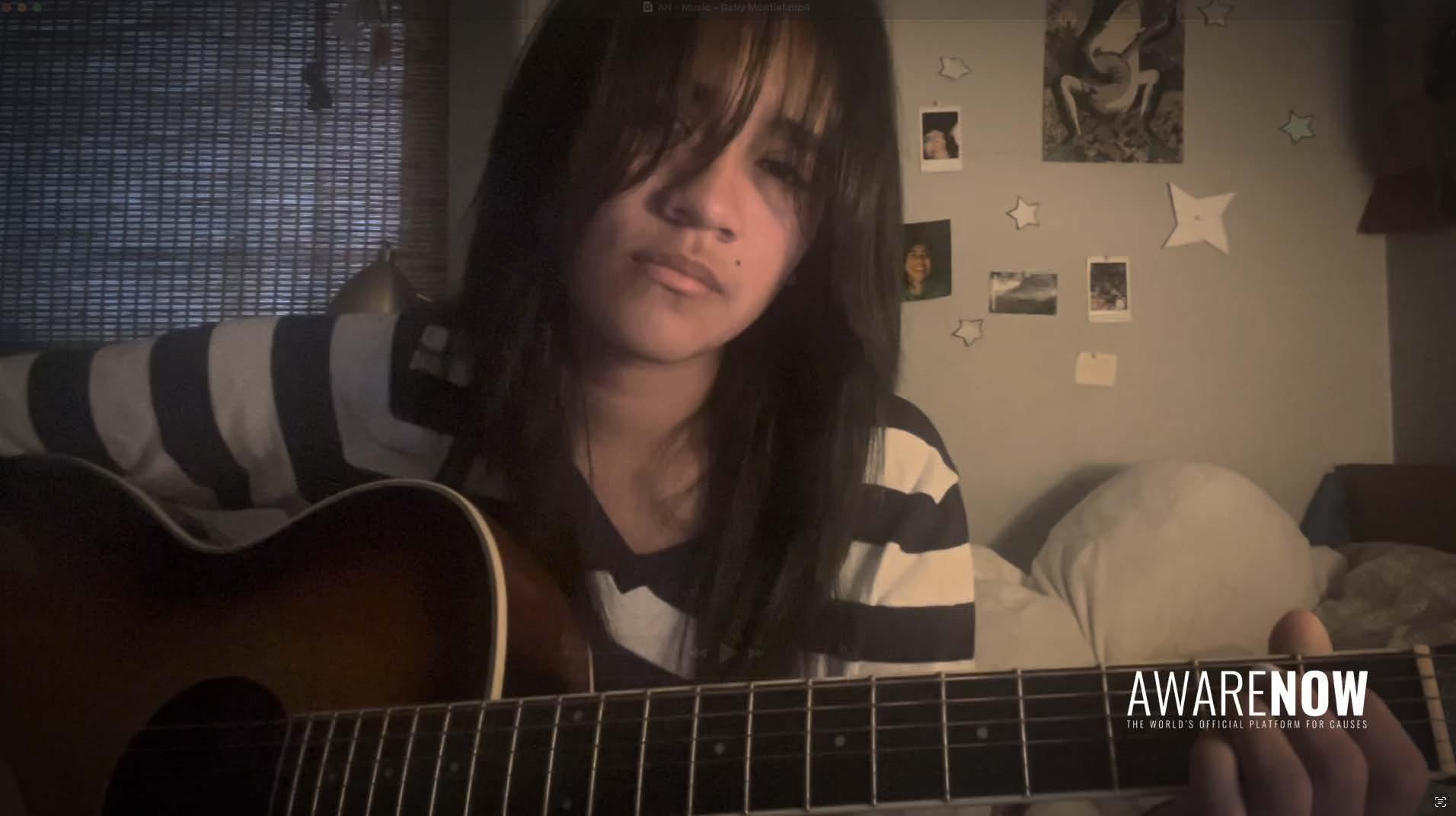
SINGER, SONGWRITER & OFFICIAL AWARENOW AMBASSADOR FOR MUSIC & ARTS
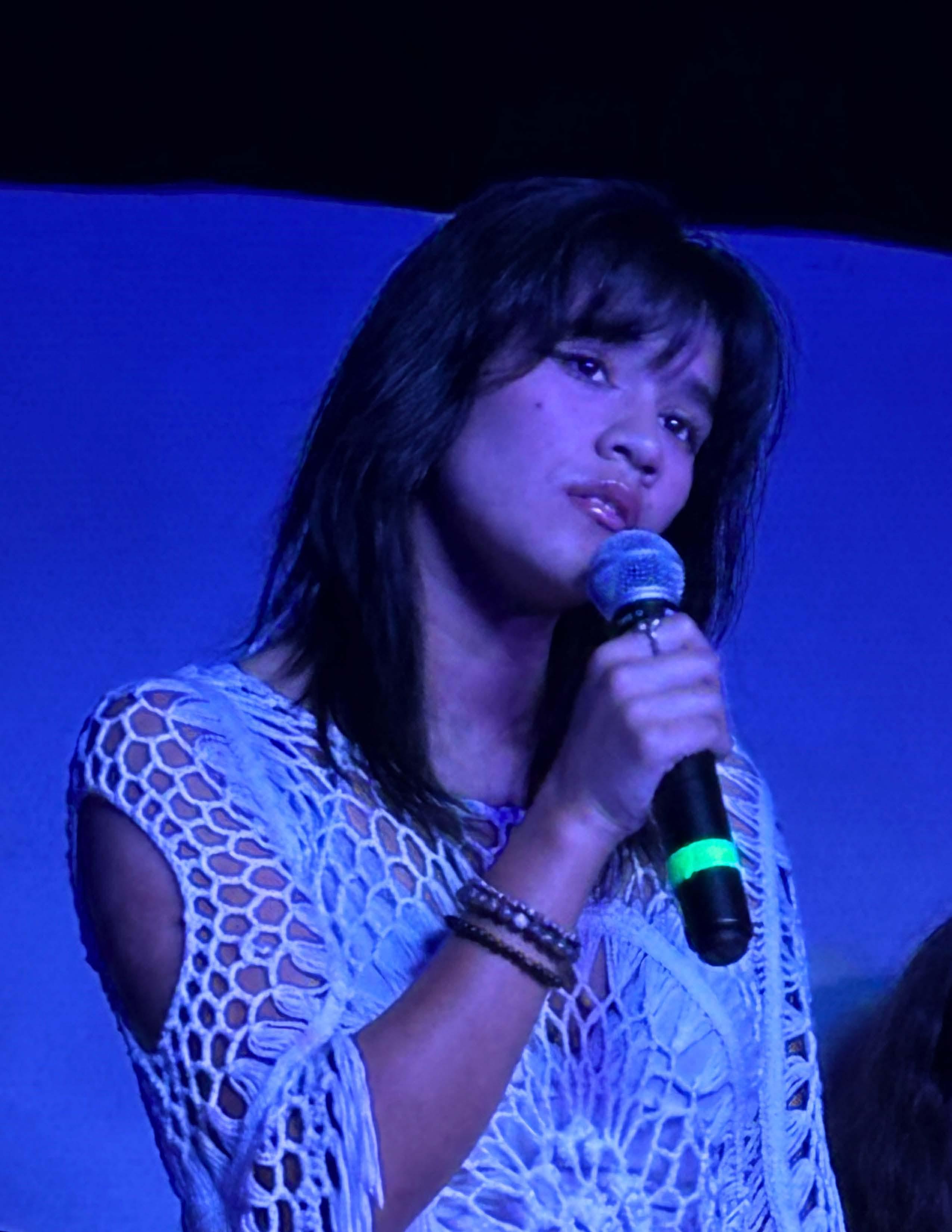
FEATURE STORY BY GABRIELLA MONTIEL
Ever since I understood my own name, I have been wondering who I am.
Am I a child? A musician? A girl? A daughter? A friend, a partner, a sister? Can I be all of these things? I became overwhelmed by the options before me, ripe as peaches in the summer, and I was always greedy for more. I believed that if I collected enough of these words, I would become full of potential and identity. All I ended up with were pockets full of useless words that have nothing to do with anything meaningful. I am a high school student, but that is a role, not who I am. I am a kind person, but I’ve said cruel things when I got upset. Apologies don’t make up for the brief unkindnesses I inflicted. Does that make me a kind person, or just someone who is capable of kindness? Can words, simple qualities or moments in time captured in these fleeting letters, truly represent the deepness and fullness I feel in my existence? I don’t believe they can.
We create labels for everything we do not understand. It is how we control the fear of never leashing what lies outside of our comprehension. We muzzle up the paradoxes, a very label for something unsolvable. We rope together the confusion, the frustration, the objects of our terrible fear of misunderstanding. Of course, the biggest avoidance we make is ourselves being misunderstood. Pick any word you want to de fine yourself, and you will find endless more. We are rich with labels, fresh for every hand to yank from the Earth and claim. So we become people of roles, of qualities. We are kind. We are independent. We are daughters and sons and lovers and parents. We are what we do for work, what we do within our family, what we do within school. We are de fined by every action, every belief, because being misunderstood must be the biggest crime.

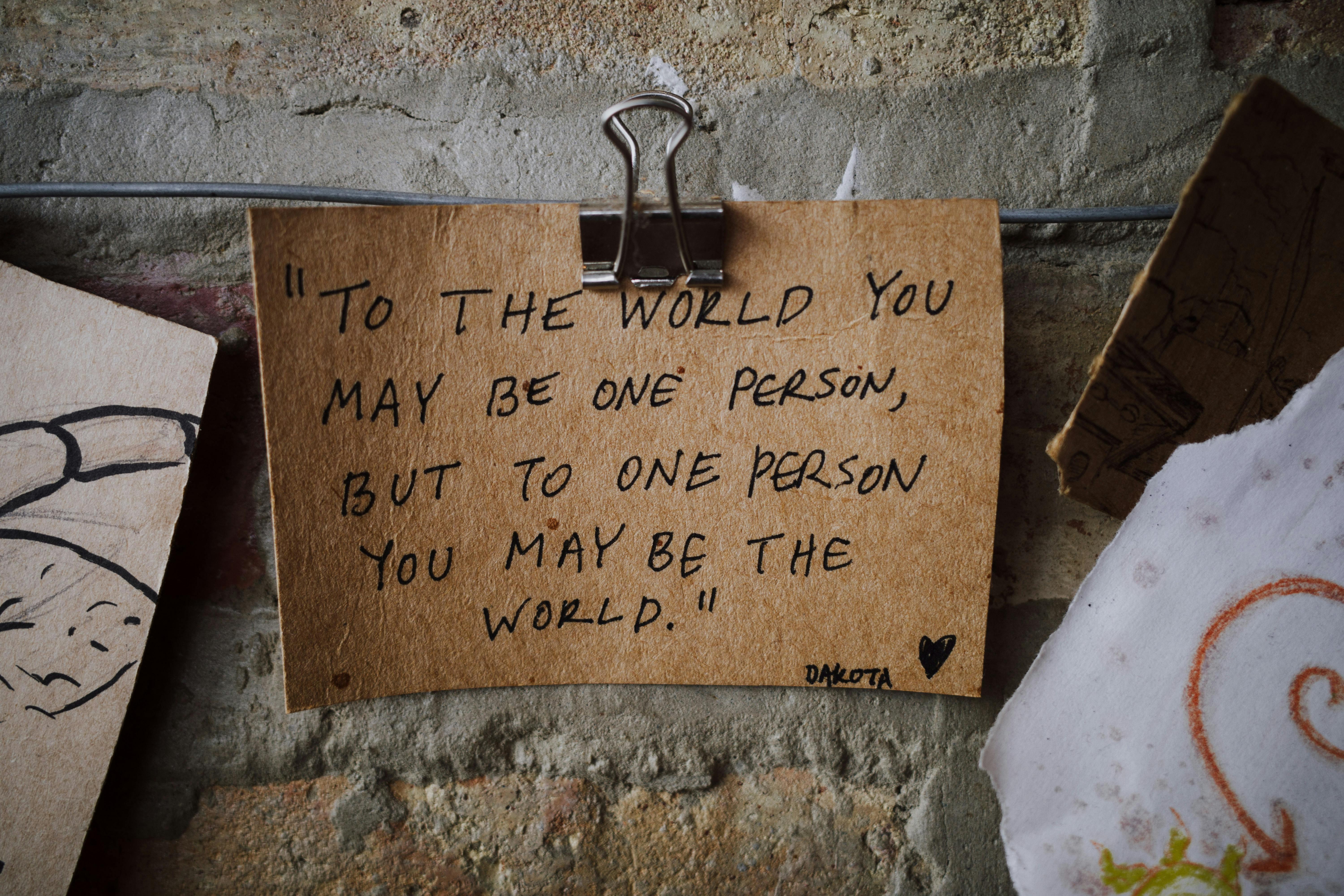
“Labels are how we communicate and connect with each other. However, they are dangerous to our weak backs, so prone to leaning against them for support.”
That is why these labels are the same which are used to hate. To understand what we fear, we must control it first. But we cannot control love. Love cannot be labeled, so therefore, it must be hated.
Labels are how we communicate and connect with each other. However, they are dangerous to our weak backs, so prone to leaning against them for support. We cannot stand on our own without our precious labels, and it is killing our love. It is killing our light.
You are more than a word. You have felt air within your lungs, felt the pulse in your blood. You are the universe itself. You cannot be defined by little letters telling you what your actions mean to the world. You have lived, you are alive. That is who you are. ∎
Another hit and run the bullets never miss
An audience undone, are we running out of hits?
If I love do I earn a badge of participation
Or will you strip, spit, sit me down, am I a member of this nation?
Am I sick? Is it so strange?
Does the name of my heart scare you?
Did a name extract this hate?
Am I sick? Is it so wrong?
Is a woman in love terrifying
Or is it the volume of her love song?
You fear a kiss
I fear your gun
One leaves honey-tainted lips
One kills a mama’s son
I don’t deserve the emblem
I don’t deserve the state
I’ll throw my heart to the engine
But soul never goes away
I’ll die my lover’s hero
I’ll die this cold man’s fool
I’ll let the bullets burrow
To slick my grave in the cruel
We gave a label a stage and lights
Produced its show
The crowd’s a stable, betting on all the horses
They refuse to know
Am I sick? Is it so weird?
Is my chest disgusting if it
Makes your lust disappear
GABRIELLA MONTIEL
Am I sick? Can I win?
Does a Lord’s name weigh more
Than the careful gaze of my sin?
I’ll rename all my soul
I’ll cast away my tongue
If it’s what it takes for control
I’ll never speak again
Just give me my love’s warm hold
And I’ll renounce I ever loved at all
I’ll let you rip from my mouth the labels
And I’ll die from my named love’s fall
Another hit and run and the bullets never miss
An audience undone,
Would I rather time or a cold kiss?
The bullets never miss
Singer, Songwriter & Official AwareNow Ambassador for Music & Arts www.awarenowmedia.com/gaby-montiel
Gaby Montiel has been nationally recognized as a soulful singer songwriter. As a recording artist, Gaby performs throughout southern California and has been requested to write and record songs for social advocacy organizations like AwarenessTies and Fear of Return. In April 2023, she performed as the youngest female music artist for the national Chick Singer Night Showcase at the Ventura County chapter. She recently performed for 300 art and music high school students in the Oxnard School District for the Oxnard Performing Arts Center, leading a songwriting workshop for 89 music students. She was also selected as the youngest singer songwriter for the West Coast Songwriter Association's Winter Showcase in 2024 as well as the only youth to be selected amongst 20 globally for Successfully Magazine. www.IamAwareNow.com

I was on the right path.
CURTISS COOK ACTOR & STORYTELLER
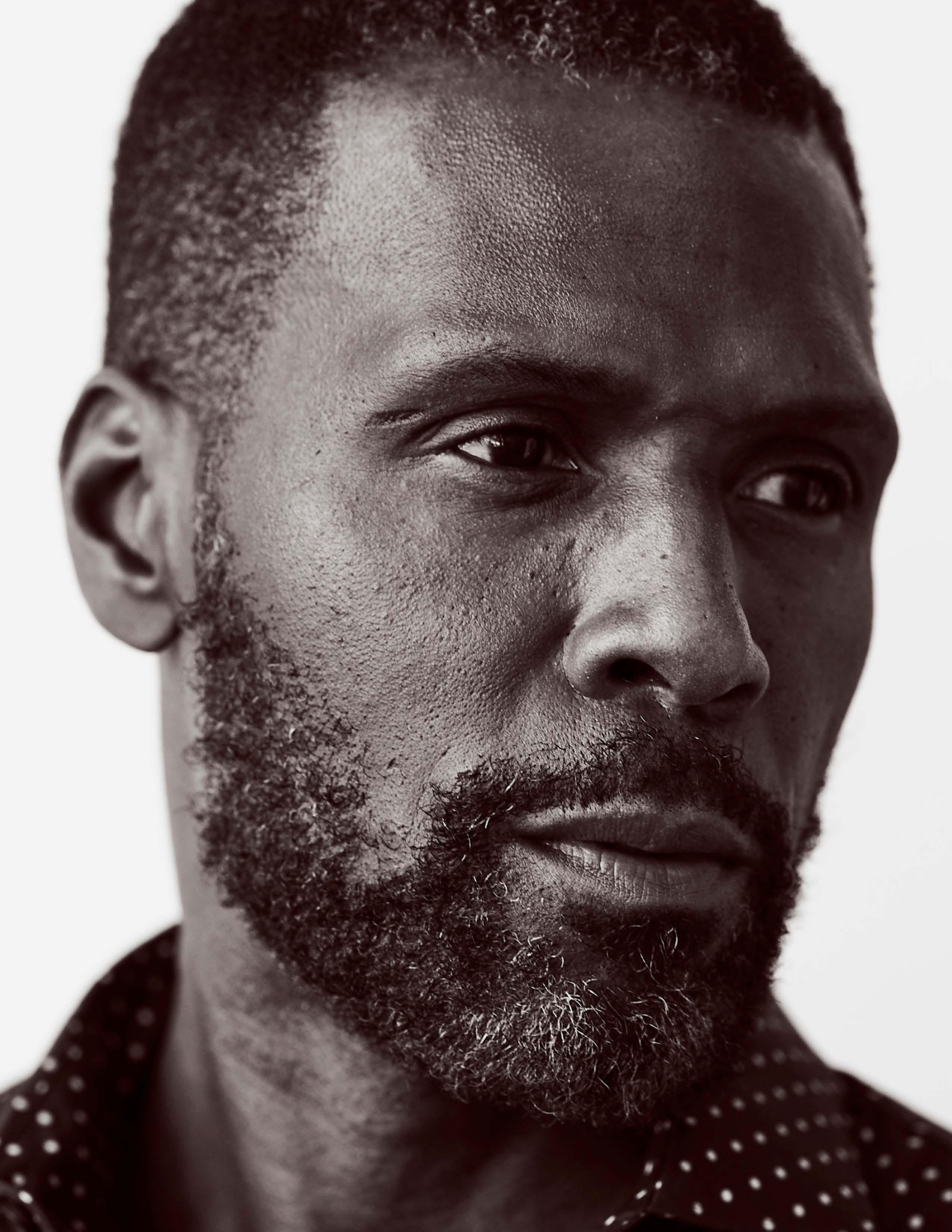
We see the characters. We remember the scenes. But we rarely stop to consider the life that shaped the man bringing them to life. In this intimate conversation, Curtiss Cook reflects on the years that tested him, the family that grounded him, and the purpose that carried him from survival to something more.
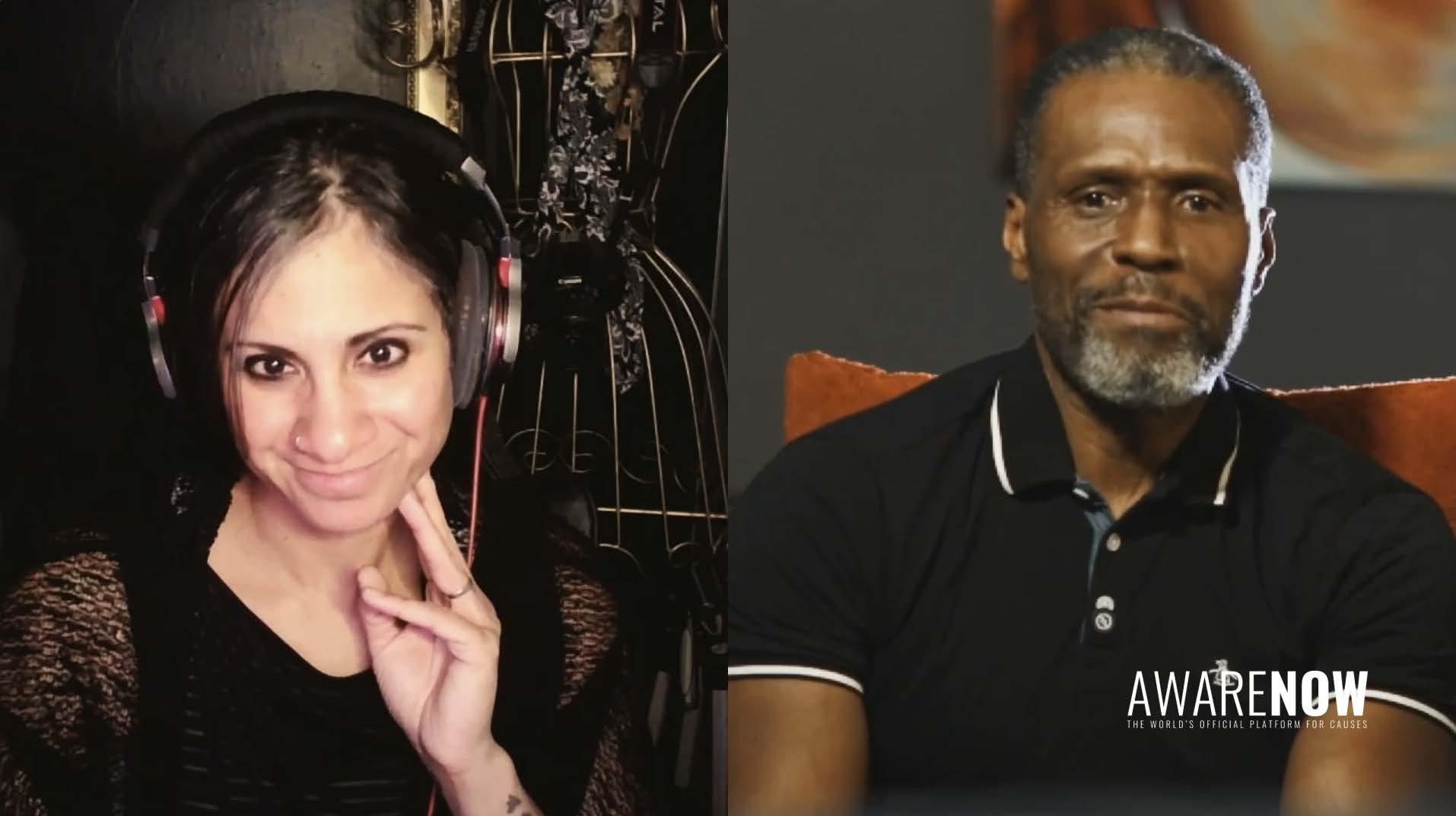
ALLIÉ: Before the stages, before the screens, before the roles that we know you for, who were you when this dream of acting first took hold? What was it about storytelling that made you believe it was worth everything?
CURTISS: Wow. Who was I? So, I grew up in Dayton, Ohio. I am the oldest of five. Alice and Clifton Cook are my parents. They were married until my mom passed a few years back. My dad is still kicking out there, still living in Dayton, Ohio. All of my siblings are still there. I went to elementary school and then middle school and then high school.
I always performed. I was in show choirs and all of that crazy stuff growing up. Then in junior high, we had these variety kinds of shows that I was always doing. I thought I was going to be a singer, Allié, primarily. I thought that was

CURTISS COOK
ACTOR & STORYTELLER
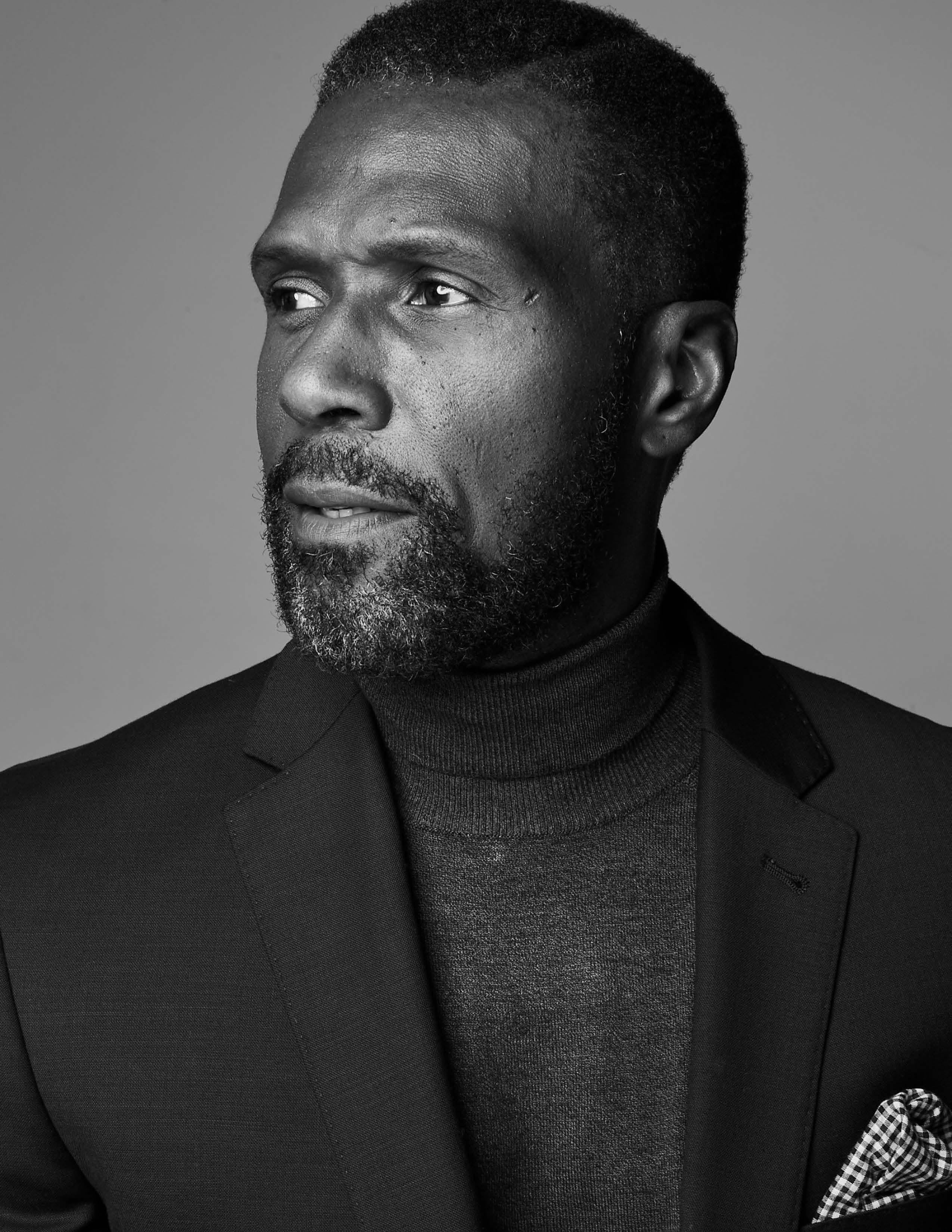
CURTISS: (continued) Then I got to do this big organization called The Muse Machine in high school, which was all these states put together, all these cities in Ohio coming together to audition these children. We did this huge production at the end of the year, every year. I did that from my sophomore year to my senior year. I got to go over to London. I got a scholarship for London Drama School. The reason why I’m saying all of this, I’m trying to condense the story, is because it wasn’t until I got to New York City and I just knew I was going to be this amazing singer, and then I heard this one man sing. I was like, “Okay, maybe that’s not my gift. Maybe singing is not my gift.”
I can hold a tune. I can talk a song better than anybody you know, Allié. But the way that he was singing right there, I was like, “No, no, no. He sings.” Thankfully enough, I had been doing drama all that time, and I had found my true passion, which was acting. I was rambunctious. I was loud. I was strong-headed as a child. I got into a little trouble, knock wood. But I think it was the arts that put me on my path, my straight and narrow.
In high school, I didn’t know that you could really make a living in the arts. I knew that people did it in the community centers in Dayton, but they all had jobs. They were teachers. They were something else. They were always something else. So, in high school, me and my best friend from kindergarten decided to join the Navy together.
It wasn’t until the woman who ran the high school production I did, said to me, “So, what are you going to do, darling, after high school?” And I was like, “I’m going to the Navy.” I was going to go to the Navy, come back, get me a job at Montgomery County Engineers doing streets, make about twenty or thirty thousand dollars a year, get me a little small house, get married, and just live on.
She was like, “No, darling. No. You have too much talent. You have too much talent to go to the Navy.”
I was like, “You don’t know what you’re talking about. I’m about to go here and get this twenty thousand dollars.”
Then she had the principal of Mountview School come to Dayton, Ohio, and I auditioned for them. They accepted me initially. And like I told you before, I’m the oldest of five. So, I went home to my parents, and I was like, “Oh my God, I just got accepted to this amazing conservatory in London.” At the time, it was the fourth highest drama school in the world.
They were like, “Oh, that’s great,” but their faces were drawn and not excited like I was. So, they let me go off for a couple of days or whatever, and then they called me back. They were like, “Curtiss, we all need to have a conversation.” My mom and dad said, “Yeah, that’s beautiful for you, but we can’t do it. We don’t have the money to do that.” I was like, “Okay. Well, I guess that’s how it goes.”
So, I went back to the woman who ran the high school production I did and said, “Thank you very much for the offer to go to this school, but unfortunately, I’m not going to be able to do it.”
She said, “No, darling. Hold on a second. Give me a minute. Let me try to figure something out.” A week or so later, she called me back into her office and told me to bring my parents. That’s when they offered me a full scholarship to the school in London. And dare I say, Allié, it changed my life forever.
I was there for three years. I had never flown on a plane before. The furthest I had been from Dayton, Ohio, was Pittsburgh. That’s the furthest I had really been from Dayton, Ohio ever. We used to drive there because that’s where my father was originally from. So, it was mind-boggling, all of the things I learned.
You don’t realize how much you’re learning while you’re living something. You’re just kind of going through the day and making it through. Then you step back sometimes and realize, “Oh my God, I know this. I know that. I knew this because of the environment and where I was.”
That’s a long answer to your question, but that’s kind of the origin of who Curtiss is, how he became, and how I got here to where I am now. It wasn’t by myself, by any means. I had a lot of angels helping me. First and foremost, my mother and father. Then another angel, Ms. Susie Cassani. Ms. Copeland, my drama teacher. I used to dance with DCDC, and Jodine Blunden, the founder of Dayton Contemporary Dance Company, also helped. So, I had a lot of assistance and a lot of help that helped me get to where I am.
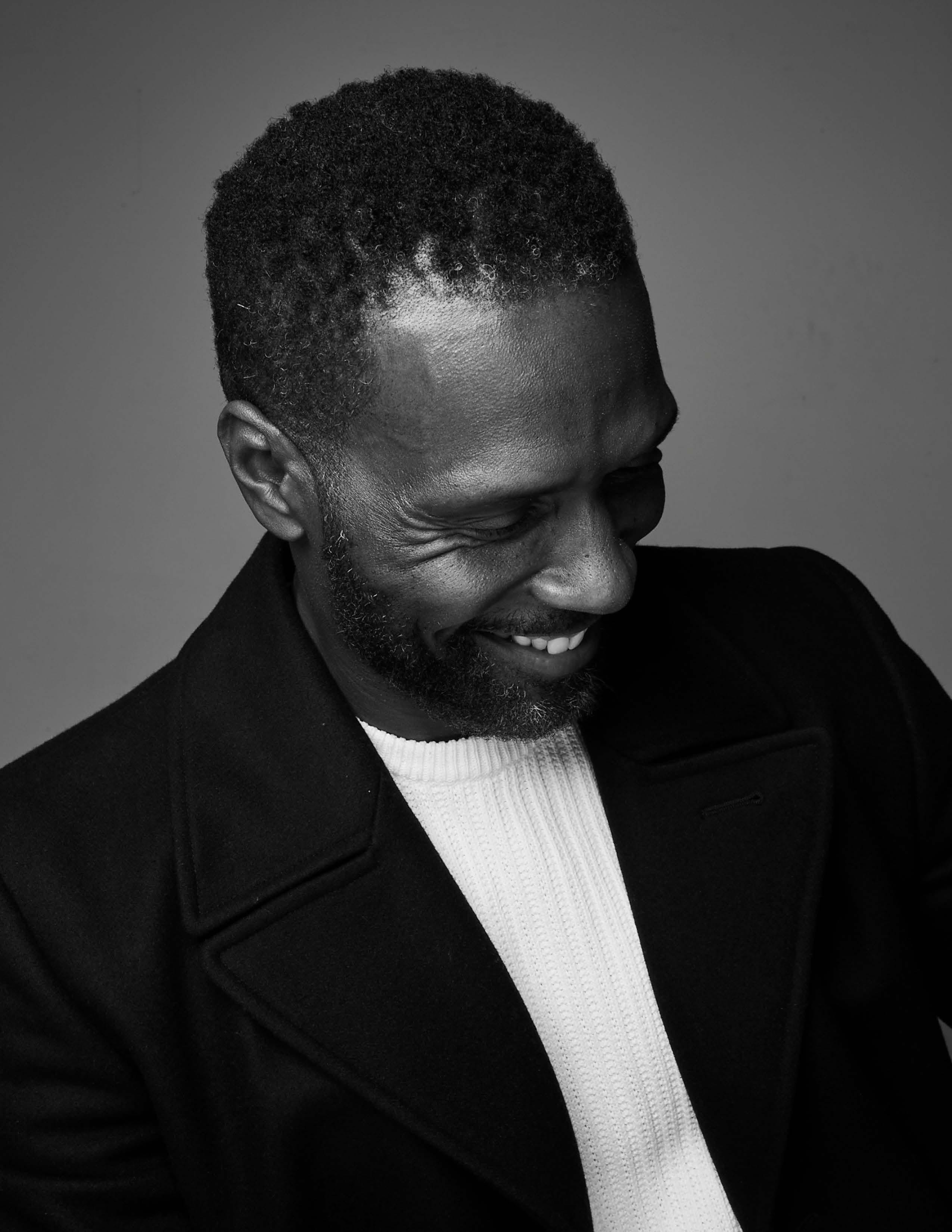
ALLIÉ: So, you pursued acting, and that’s a hard enough pursuit on its own, but then you were doing it while raising children. Let’s talk about that as a single father, which is both an extraordinary responsibility and an act of profound love. Can you take us into that chapter of your life? What did survival look like in those moments when the dream and the reality felt at odds at times?
CURTISS: Yeah. What did it look like? What did survival look like? It looked like survival, Allié. It felt like survival. There wasn’t much time to document or to have future aspirations. It was just about the now, right?
I was on tour at the time when everything kind of happened. I was just coming off a tour of Miss Saigon. I did the national tour of Miss Saigon. I had gotten back to New York City, and that’s when my wife and I had decided that this relationship was no longer for us. Dare I say, she decided that it was no longer for us.
Also, we had three children at the time, and she no longer wanted to be a mother at that time with them there, which always sounds weird because no matter what you do, you’re going to be a mother. You know what I mean? Because you have children. I understood her mindset. It was like she had different aspirations and what she needed and felt like she needed to do in life, and this was her taking control of that. I can’t speak for her. This is what I felt like it was about.
So, we parted ways. She left Curtiss Jr., Isis, and Kimani with me, primarily. Everything shifted. Everything stopped.
I would be sounding very pompous and know-it-all if I were to say to you that, in that moment, I figured out how to do it, and I knew what I needed to do, and I pulled myself up by my bootstraps, and I just forged through, and we made our way. It was not that at all. It was very scary. It was very frustrating. I was angry, and I was worried.
But the thing that I had at that time was them, right? Meaning that I could not act on any of those emotions or feelings at the time because they needed me to make sure that their day-to-day was taken care of. If I stopped, they were babies. Kimani, who is now going to be thirty years old in June, was two years old at the time. That was my baby. So that means Curtiss Jr. was six and Isis was five, right? They were very young children.
I don’t know how I did it, Allié, to be totally honest. I just know when I had an appointment, I got them in a stroller, and we went on the train, and we went to the appointment. When it was time to figure out what to have for dinner, we went over to the store. I do know that I got on public assistance. That was very humbling. That was very humbling at the time.
It taught me, in hindsight, that rough times will come, and rough times will be rough. If you stick to it, if you keep moving through it, you will get through it. It may not be the prettiest. It may not be how you want to live. But you will get through it if you keep going, if you keep pushing forward. You will make it.
That seems so simple, but those times are rough, right? You’re tired. You’re frustrated. You’re angry. All of that stuff. You just want to stop. But if you get up each day and just handle the business that is applied to that day and what you need to take care of, and that’s all you worry about, you’ll find yourself eventually on the other side of it.
With the help of friends, with the help of the universe, I don’t know what your faith belief is, God, creator, all of that being with you, it will turn out okay… It will turn out okay.
Eventually, I got into a show called The Lion King on Broadway. Then I met my wife, and then we got pregnant, and then we had twins. So, now I have five children. The twins, actually, at the time that we’re recording this, tomorrow is their birthday, and they will be twenty-two years old tomorrow. We’ve been together for a very long time.
Curtiss Jr. is doing well. He’s an actor. Isis and Kimani are living in New Jersey. Jade is one of the twins. She’s finishing her senior year at SUNY Purchase in the acting program. Harlem is working and lives here with us, where we are now in upstate on the East Coast. That’s a lot, right? That was a lot.
ALLIÉ: It’s a lot. I mean, that’s life. But you made such a good point to say what’s hard now won’t be always. This is the moment. It’s not the always, right? To just hold on to that.
CURTISS COOK ACTOR & STORYTELLER
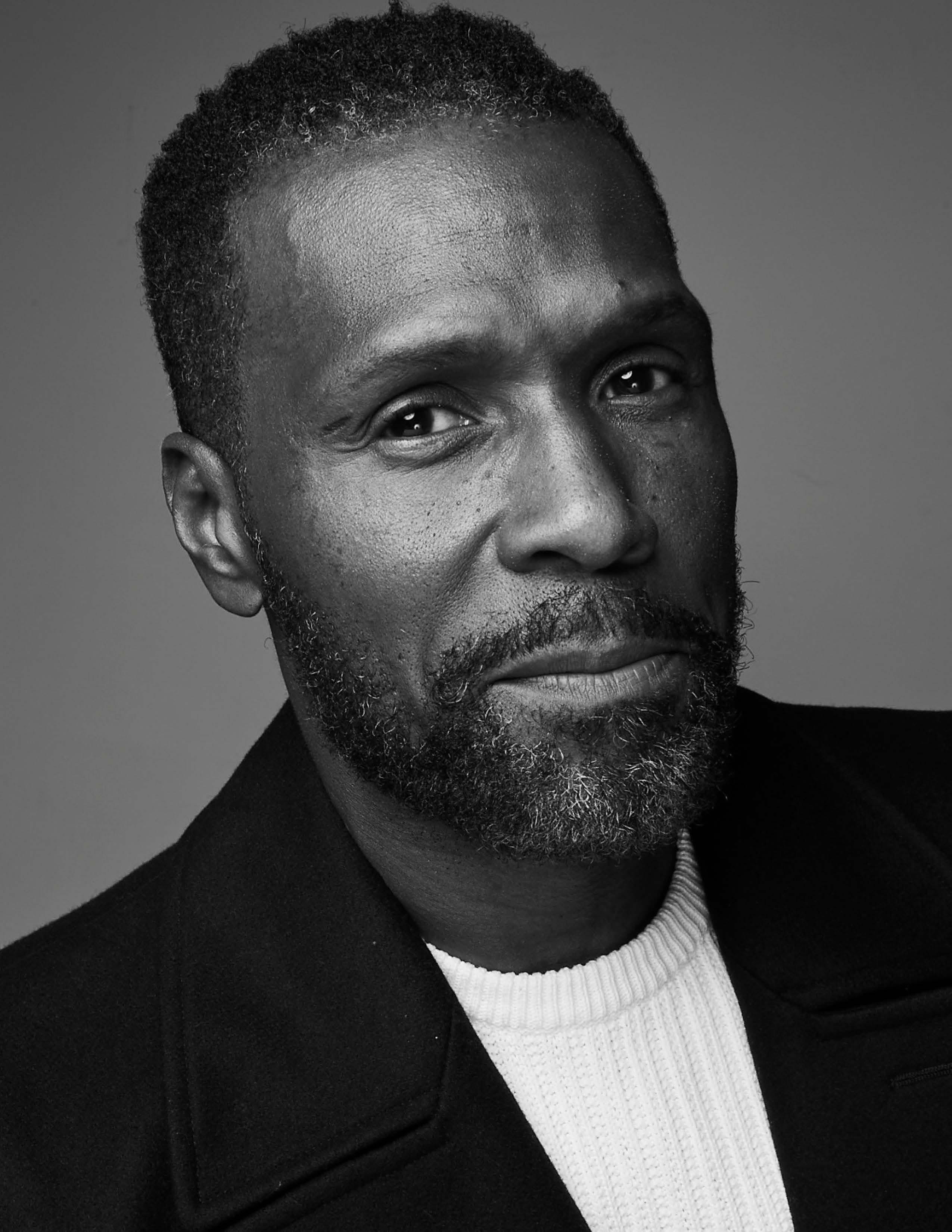
CURTISS: And it’s easy to say that when the time now isn’t hard. You know what I mean? It’s easy sometimes to be like, “Well, you know what? If I just stick through it, it’s fine.” But when you’re in the muck, and you’re like, “My goodness,” and that next hour just seems forever away, you’re just feeling like, “I can’t. I can’t. I can’t.”
But saying it now, you can. You can, and you will. You will. I’m very, very, very grateful. Very, very fortunate and grateful.
ALLIÉ: Yeah. So, let’s talk about sacrifices. There are sacrifices that people never see behind a lasting career. With your family depending on you, were there moments where you questioned if the path you chose was right, was fair to yourself, to your kids? How did you navigate those internal conversations? Tell me about the questioning times.
CURTISS: The questioning times. I don’t know if I ever felt like I was on the wrong path, right? If there were questions, the questions were really about how much longer it would take for me to get to where I feel like I need to be. You know what I mean? Not that I need to be off this path.
I had a friend one time, and she’s still a friend, but I remember she said this to me a long time ago, before any of us had our Broadway shows. I used to feel like people coming into the city were like a class, right? Like a class in high school, a class in college. You kind of always see the same people at auditions all the time. Eventually, somebody from that class gets a Broadway show, and they get a big movie, and they move on to the next grade, right?
So, there was a class of us. Everybody was starting to get their Broadway shows. I’m still doing regional productions here and there and whatever else. One day she said to me, “Oh my God, when are you going to get your Broadway show?”
I said, “Well, listen, I’m just out here paying my dues.”
She said, “Yeah, it seems like you’re paying everybody’s dues.”
I was like, “Okay, thank you.”
But I always felt like I was on the right path. It was just a matter of when that would happen. The sacri fices that my family had to make because of that, you would have to ask them because I really don’t know. I tried to make sure that, while in that process, the day-to-day was taken care of.
I’m sure if I got my children here now, they’d be like, “Yeah, there was that time, Dad, when such-and-such didn’t happen.” But I won’t speak for them. I’m sure my wife now would be like, “Yeah, well, sometimes when I called, you weren’t answering the phone like I needed you to be answering the phone.” I’m sure that would happen as well, Allié.
Those are small, minute things. At the time, they also seemed big. Like, “Oh my God, why won’t he just pick up the phone? I’m just trying to call to find out what’s happening.” But I’m probably in that process of figuring out this character, figuring out what I need to do, how to move it forward, how to stay in the bubble of the world of the show I’m doing at the time.
So, I’m sure they had their own types of frustrations from me pushing forward and being true to this thing that I’ve always loved. This is all I’ve ever done, Allié. Once I got to New York, I’ve had one nine-to- five job. I’ve had one nineto-five job. Once I left that, all of my work has been through acting, through performing.
That’s not to say that it’s all been roses, but that’s all. And I’m proud of that. It’s not a boast. It’s a feeling of determination, of knowing that I am in the right space and at the right time. I am a person, sometimes, that once I do something, I have to do it. I can’t just dabble here and do that for a while and then come back to this other thing because I had the children, first of all. I didn’t have a lot of time to jump around. I couldn’t say I was going to commit to this and then all of a sudden try to jump over there because I was doing that with the family.
I say that to say that stick-to-itiveness is a real thing. How fortunate and how blessed I am, I don’t take any of it for granted. I’m now in my latter fifties, and I’m an old dude. So, I’ve been very, very, very fortunate, and I still have a lot of ways to go. I’m ready for the ride.

CURTISS COOK ACTOR & STORYTELLER
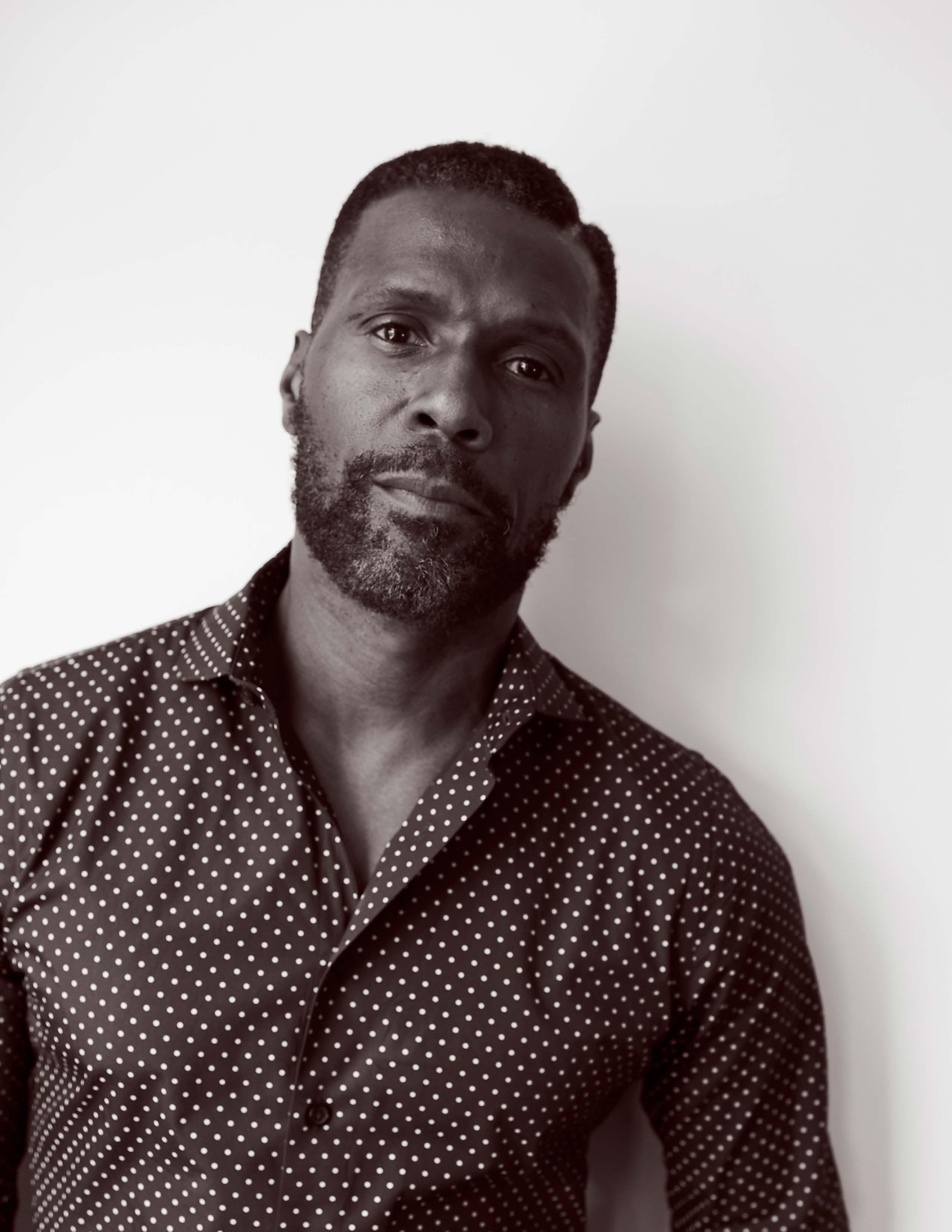

ALLIÉ: Yeah, that’s awesome. Thank you for sharing all of that. So, let’s talk roles. Your roles, especially as Duda, which so many of us know you as, carry a complexity that feels lived in, not performed. How has your journey as a father, as a man who endured, shaped the way you understand power, vulnerability, and humanity in the characters that you bring to life today?
CURTISS: You sound so amazing. I’m not, but thank you. That sounds so great.
I’ve always been, well, no, I haven’t always been, but I like to think that once I started to realize that this was really my journey, acting and being in this world, and that’s what I really wanted to do, I became an empath. I find myself watching people and things differently, meaning that I don’t take most things at face value.
I dream a lot. I used to play silly games on the back porch as a child. One reason I used to play a lot of games on the back porch by myself was because I was on punishment a lot because I got in trouble all the time. So, I had to figure out ways to entertain myself.
Finding complex characters, whenever I watch any movies or television shows, I like to imagine, “What would I do at that point? What else could have happened?” Even in reading books, like Walter Mosley books or James Patterson stuff, which I used to love a lot, they would send me into these worlds of, “What else is there?” I would just collect information.
I remember in drama school, we used to have these classes where we would go to the park as a group. We’d kind of break off in threes or whatever, and our job was to observe people in the park and then come back and create characters based on those people and the things that we saw them do and observed that day.
That’s something I’ve always taken with me, especially being in New York City or being in London. There’s just a plethora of characters no matter where you look or where you walk, right? So, I do that constantly still. Now it’s on automatic.
Once I begin to look at somebody, I’m watching their body language. I’m watching their eyes. I’m watching their mouth. I’m watching what they say, what they’re holding back to say, how they’re holding their head, if they move their hair, if they touch their lip, if they nod. I’m creating certain things about them, maybe true, maybe not. Then I’m collecting information.
If I sit here and I’m talking to you like this all the time, somebody might be like, “That’s odd.” But eventually you realize, “I’ve seen that somewhere,” and now this becomes a character, and it becomes real. Because I’m not halfway doing it. I’m living it.
I think a lot of times, some of the younger actors think that they need to come in knowing exactly what to do and how it’s supposed to be and what it’s supposed to sound like. I feel like sometimes their performances look like that. It’s like, “Yeah, I guess that is true, but it’s a little flat.” It’s a little on the nose. And in life, nobody’s on the nose, right?
That’s what I put into the characters, Allié. I like to put in real life. That was a push for me with Duda. In one aspect, I felt like the character, toward the latter years, was starting to turn into just this guy who was big, bad, and evil, right? Without any real personality. We’ve seen that done before, I think.
In my head, I’m like, “No, even those guys have bad days.” You know what I mean? Where they’re vulnerable, and they’re not the biggest person in the room. They think they are, but they’re not because of whatever else. How do you incorporate that in this moment to make them more of a three-dimensional being?
I would like to think that’s what the audiences gravitated toward. I think they appreciate it. Even if they didn’t see it initially, even if all they did see was the big, bad, evil dude, I think those other elements were added to the character. That’s what makes people go, “Wow, I dig this dude. He’s complex. He’s not just this or that. Let me watch and see how long this lasts that way.” So, I try to do that as often as I can.
“You can shovel for yourself. You can go that way. But behind me, there’s an easier road, and I’m making that road for you.”
ALLIÉ: Well, you do it very well.
CURTISS: Thank you.
ALLIÉ: I do have one more question for you today, my friend. Now, as you step into a big world like Monarch: Legacy of Monsters, your work reaches audiences on an entirely different scale, a different audience. So, here’s my last question. When your children look at your life, not just your career, what do you hope they understand about the choices you made and the man behind them?
CURTISS: You are not asking easy questions.
ALLIÉ: I thought I’d get a little deep, you know?
CURTISS: First of all, I hope that they know and feel and have felt that I love them very, very, very, very much. No matter how much it seems like this is singular shine or adornment, or it feels that way, it is because of them. It is for them. I think that should go without saying, but I’m saying it anyway.
As far as the example, I’ve always felt that people used to say this phrase, and it may be from the Bible, but I’m not sure. It’s something like, “Do as I say, but not as I do.” But I always wanted to be like, “Do as I do, as I’ve shown,” because I’ve learned through my failures that this is one of the better paths.
Meaning that I am shoveling in the snow, metaphorically. I’m shoveling this path for you, so when you walk, you have an easier way. That doesn’t mean that you have to go the whole path. You can shovel for yourself. You can go that way. But behind me, there’s an easier road, and I’m making that road for you. I hope they understand and feel that he was and is doing his best, his honest, God-fearing best, to be the best individual he can be, with all the flaws and all the mistakes.
I try every day to question everything, Allié. Sometimes it’s annoying. I kind of live on, “I don’t know about that.” That’s my default when I see anything. I kind of live there. Even for myself, right? It’s like, “I don’t know if that was good enough. Let me try a little harder.”
There are some downfalls to it, obviously, but I’ve learned that, for me, it sets a bar. It sets a standard. I would like to think that the standard I’m setting, and they’re watching, is one that they meet and then move past. Like you said, I’ve had a lot of good work that I’ve been able to participate in, and none of it have I taken lightly. You’ll be the first one to know because we’ll probably make an announcement not soon, but I don’t know when this will air, but you can probably print it. I just joined FBI, the television show on CBS. I started shooting yesterday. I’ll be there for a few episodes. Right now, it’s just a few episodes, but who knows? Those shows are one of those things.
So, that’s another thing where it came out of the blue. The discussions we had, sitting with Jeremy Sisto and Alana and Peter, some of the creators over there, and having them say how much they love my work. There was a time when I was in the city and I was just like, “If I can get on Law & Order, I made it.” You know what I mean? Back in the day, I was like, “That’s it.” And now these folks are saying this to me.
Exclusive Interview with Curtiss Cook https://go.awarenowmedia.com/podcast/more-than-a-role


CURTISS: (continued) It just, once again, affirms the fact that I’ve been doing what I set out to do once I got here. Not a lot of times do I, and I’m doing this now actually, but not a lot of times do I sit and do that to myself because I’m still doing. I feel like sometimes if I do that too much, you’re like, “Okay, you’ve been patting yourself for five months. You need to get up and go do something. What are you patting yourself for? Get up.”
In talking with you, so many emotions are going on right now. So many things are bubbling up, and it’s making me think of how fortunate I am and how hard I’ve worked to get to the space of where I am now, still knowing that there are still goals I will achieve very soon.
Monarch is great. The audience that I’m being introduced to, I don’t even know what that is yet. I mean, I know what that is, but I don’t know what it means to me yet because it just started airing. I try to stay away from social media, but some of the responses are like, “Oh, this is my show, and I can’t believe he’s on here,” and whatever else. It’s all of that. Of course, it’s one of those things that I really probably won’t know until next year or sometime when all of it kind of comes in.
It’s one of those things that’s like, “Wow, I can’t believe that I’m sitting here, and I’m acting with Godzilla and King Kong.” You know what I mean? It was also the same way when I worked with Martin Scorsese. I’m sitting here working with Leonardo DiCaprio, Ben Kingsley, Martin Scorsese, Michelle Williams… Or even working on my first big Hollywood movie, The Interpreter, with Sean Penn and Nicole Kidman. They had just come off their Oscar wins, and this was their next movie. Sidney Pollack was there. You know what I mean? It’s honestly weird to me because I don’t think about it often. Then I start to say it, and it’s like, “Oh my God, I did that. I was there. I lived that. I experienced that. I learned from that. I got this opportunity.”
So, it’s those things of my pursuit and stick-to-itiveness and passion about whatever I’m doing that I hope they see and understand. Once again, it was for them, but it is a way to move forward. Not the only way. There are multiple ways to do what you need to do. But hopefully, they’re like, “No, Dad was doing some great stuff. He cared about it, and he cared just as much about us.” ∎


ALLIÉ MCGUIRE CO-FOUNDER OF AWARENOW & PRODUCER OF BECAUSE I CAN
PERSONAL STORY BY ALLIÉ MCGUIRE
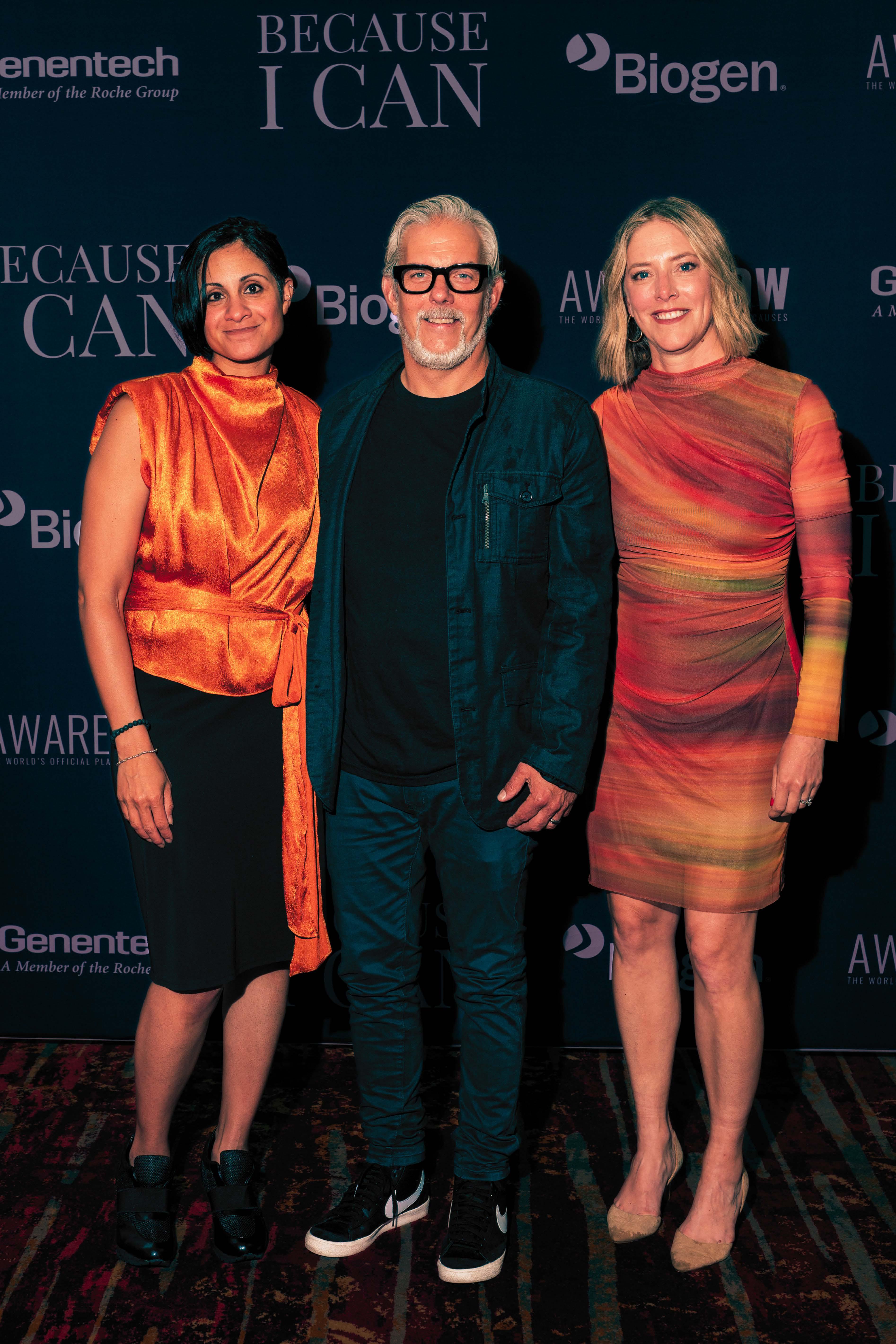
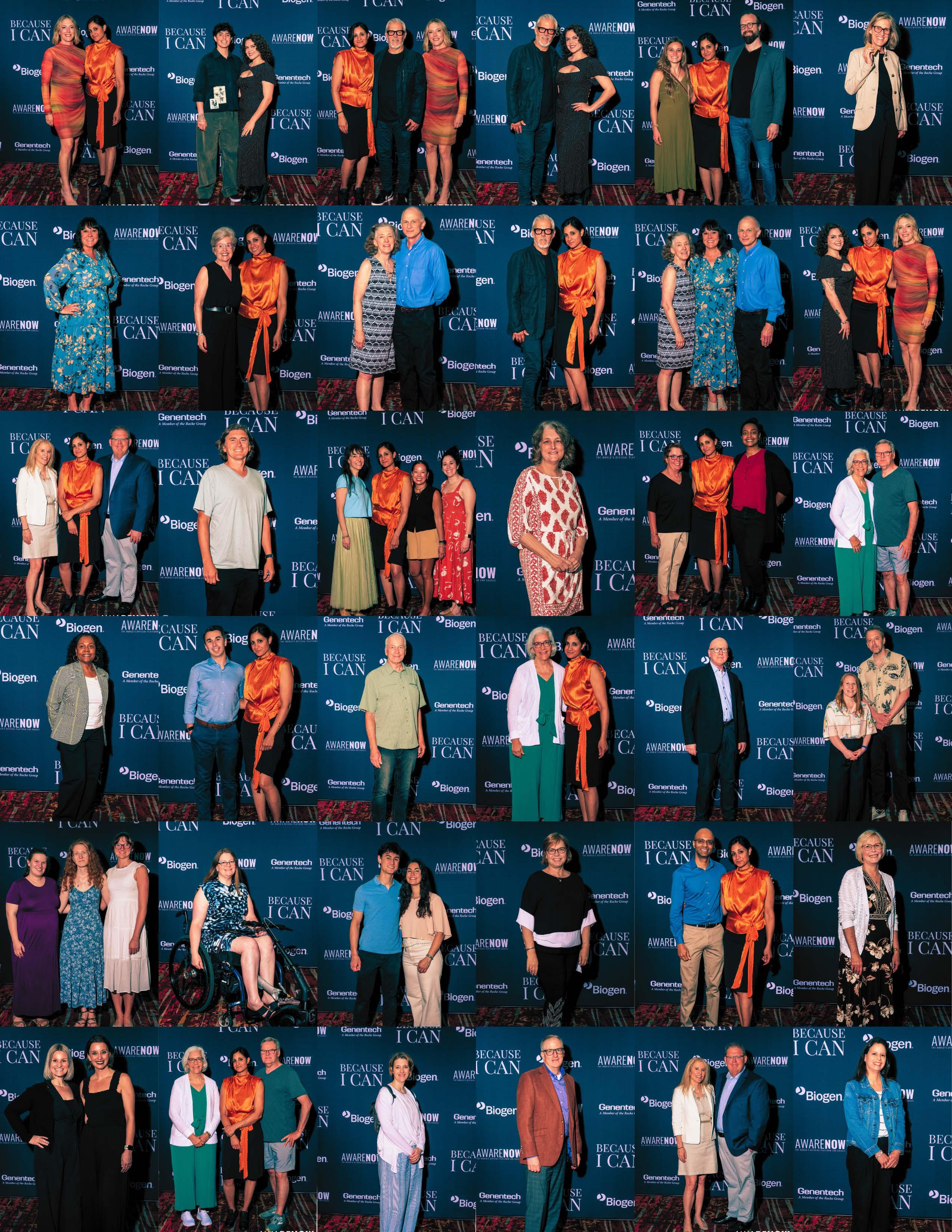
On May 26th, 2026, the world premiere of Because I Can at the CMSC 2026 Conference was more than a screening. It was a moment I will carry with me for the rest of my life.
There are some nights that do not feel like they belong to time. They feel suspended, sacred somehow, as if every person in the room understands, without anyone needing to explain, that something bigger than all of us is happening. That is what the premiere felt like.
For months, this film had lived in edits, conversations, memories, music, miles, tears, and hope. It lived in the story of a friendship that began when we were three years old. It lived in the reality of multiple sclerosis, in the weight of diagnosis, in the uncertainty of symptoms, in the invisible things people do not see, and in the visible ways we keep showing up anyway. It lived in the miles Angie ran for me, in the words she said that changed everything, and in the simple, powerful truth behind them: because I can.
But on May 26th, the film no longer belonged only to us. It belonged to the room. And that room was filled with the very community this story was created to serve.
To premiere Because I Can at CMSC, in the presence of MS clinicians, researchers, advocates, industry partners, people living with MS, care partners, and those who dedicate their lives to advancing care, was deeply meaningful in a way I am still trying to fully put into words. These were not passive viewers. These were people who understand the complexity of this disease. They understand that MS is not one thing. It is not one symptom, one story, one scan, one treatment path, one prognosis, or one face. They know that MS can be loud and devastating. They know it can also be quiet and hidden. They know it can take your balance, your vision, your strength, your memory, your energy, your confidence, your plans, and sometimes your sense of self. They know that behind every diagnosis is a person trying to live a life while learning to live with a disease they never asked for.
So to sit in that room and watch this story unfold with people who truly understand what was at stake was overwhelming. The enormity of the moment was felt in every silence, every tear, every laugh, and every conversation that followed. There were moments when I could feel the room holding its breath. There were moments when laughter broke through like light. There were moments when the emotion was so present, so honest, so human, that it felt like the film was no longer on the screen. It was in all of us.
That is what I hoped this film would do. I hoped it would make people feel seen. I hoped it would give language to something many of us carry quietly. I hoped it would remind people living with MS that we are more than our limitations, more than our medical charts, more than the hardest days we have survived. I hoped it would remind the people who love us that their presence matters more than they know. And I hoped it would remind the medical community that while treatment is essential, so is tenderness. So is listening. So is seeing the whole person behind the disease.
Because Because I Can is not just a film about MS. It is a film about friendship, purpose, and movement, in every sense of the word. It is about what happens when someone who loves you chooses to run with your story, not away from it. It is about the power of being carried by community when your own body feels uncertain. It is about grief and grit, fear and faith, science and soul. It is about what we can still do, even when we are forced to do life differently.
“This film was made to be seen, but more than that, it was made to be felt.”
For me, this story began in a deeply personal place. It began with my diagnosis. It began with the private devastation of hearing words that changed the way I understood my body and my future. It began with the strange loneliness of having a disease that people may not always see, but that I feel every single day. And then, like so many beautiful things in my life, Angie showed up.
She did not show up with all the answers. She did not show up pretending she could fix what could not be fixed. She showed up with love. She showed up with action. She showed up by running, by raising awareness, by refusing to let me feel alone in something that can feel incredibly isolating. When I asked her why she was doing it, her answer was simple: “Because I can.”
Those three words became more than an explanation. They became a promise. They became a call to action. They became the heartbeat of this film. And now, they are becoming a movement.
That is what made premiering at CMSC so powerful. We did not begin this journey in a traditional theater with celebrities and flashing cameras. We began it in a room rooted in education, connection, care, and progress. We began it with the people who spend their lives confronting MS from every angle. We began it with those who research it, treat it, fund it, advocate around it, live with it, and love through it. That mattered.
It mattered because this film was made to be seen, but more than that, it was made to be felt. It was made to open conversations. It was made to build bridges. It was made to remind us that awareness is not passive. Awareness is not simply knowing something exists. True awareness asks something of us. It asks us to care differently, speak differently, show up differently, and act differently.
That is why kicking off the Because I Can film tour at CMSC felt so right. It reminded us why this story matters and who it belongs to. It belongs to everyone living with MS. It belongs to everyone who loves someone with MS. It belongs to every clinician who sits across from a patient and chooses to see more than symptoms. It belongs to every researcher working toward answers they may never personally need, but that millions of others desperately do. It belongs to every advocate who raises their voice when others are too tired to raise theirs. It belongs to every person who has had to redefine strength. It belongs to every body that has changed and every spirit that refuses to disappear. It belongs to all of us who believe that awareness can become action.
After the screening, I had the honor of joining our director Bill McCullough, Robert Pace, MD, and Angela Bernard on stage for a real, raw conversation about the roles we played, not only in the film, but in life as it relates to MS. That conversation meant everything to me.
Bill brought the vision, the heart, and the extraordinary ability to tell this story with honesty and artistry. He did not simply direct a film. He listened deeply. He honored what was fragile. He followed the truth where it led. He understood that this story was not about making MS look easier than it is. It was about showing what is hard, what is beautiful, what is complicated, and what is possible.
Dr. Pace brought the clinical perspective, but also the humanity that every patient hopes to find in a physician. As someone living with MS, I know how much it matters to feel seen by the person guiding your care. I know how much it matters when a doctor understands that a patient is not just a diagnosis, not just an MRI, not just a treatment plan. We are whole people with families, fears, dreams, responsibilities, and lives that do not pause just because a disease enters the room.
And Angie brought what she has always brought into my life: love in motion. To sit beside her on that stage, after everything we have lived, after every mile run and every tear shed and every moment that brought us to that premiere, was almost impossible to process. How do you thank someone for carrying part of your story with such grace? How do you thank someone for turning friendship into advocacy? How do you thank someone for reminding you, again and again, that you are not alone? I don’t believe I’ll ever be able to thank her enough.
The evening was made even more unforgettable by the powerful live music performance from Caly Bevier, Shawn Corchado, and Bill McCullough. Their music did not simply close the night. It lifted it. It gave the room another way to feel what words could not fully hold. It turned an already emotional evening into something epic, intimate, and unforgettable. There are moments when music becomes memory as it is happening. That was one of them.
I am profoundly grateful to CMSC for giving Because I Can its first home. To be welcomed into that space, to be trusted with that stage, and to begin our film tour in a place so deeply committed to education, connection, and progress was an extraordinary gift.
I am also deeply grateful to our premiere and national tour sponsor, Genentech, and to our premiere’s presenting sponsor, Biogen. Their support helped make this unforgettable evening possible, and their belief in the power of this story allowed us to begin this journey in a way that honored the MS community with the care, dignity, and depth it deserves.
And to every person who sat in that room, watched with an open heart, asked a question, shared a tear, offered a hug, or told us what the film meant to them, thank you. You reminded me that stories matter. You reminded me that vulnerability has power. You reminded me that when we share what is personal, we sometimes create space for something universal.
I left the premiere with a full heart and a renewed sense of purpose. I also left with a deeper understanding that this film is no longer just something we made. It is something we are being asked to carry forward. Because the premiere was not the finish line. It was the starting line.
It was the beginning of a tour, yes, but also the beginning of a larger invitation. An invitation to see MS more fully. An invitation to talk about the emotional weight of chronic illness alongside the clinical realities. An invitation to honor the friendships, families, doctors, advocates, and communities that help people keep going. An invitation to move from awareness into action.
That is the work now. And I am ready for it. Because I can. Because Angie did. Because Bill believed. Because Dr. Pace cared. Because Caly, Shawn, and every person who helped bring this night to life gave their gifts to something bigger. Because CMSC opened the door. Because Genentech and Biogen helped make it possible. Because people living with MS deserve to be seen in the fullness of who we are. Because the people who love us deserve to know that what they do matters. Because awareness should not end when the credits roll.
Because this story is still moving. And so are we. ∎
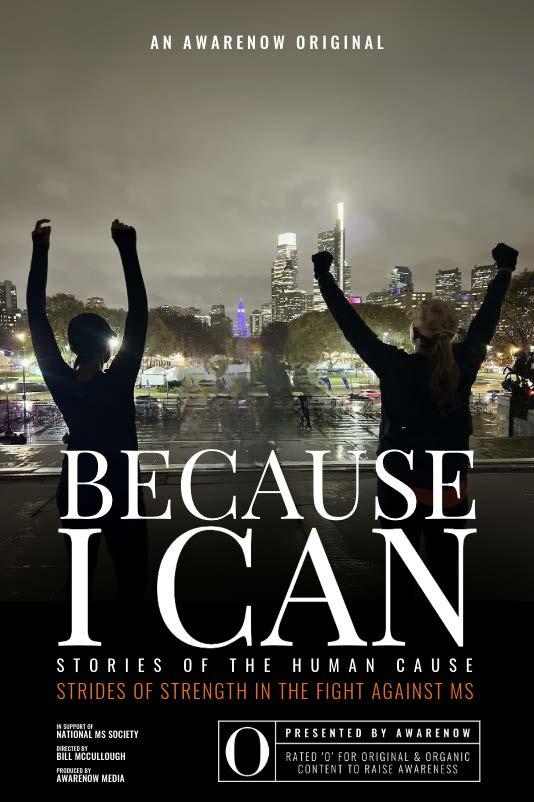
Bring Because I Can to your community
Sign up to be part of the tour: www.awarenowmedia.com/because-i-can-tour
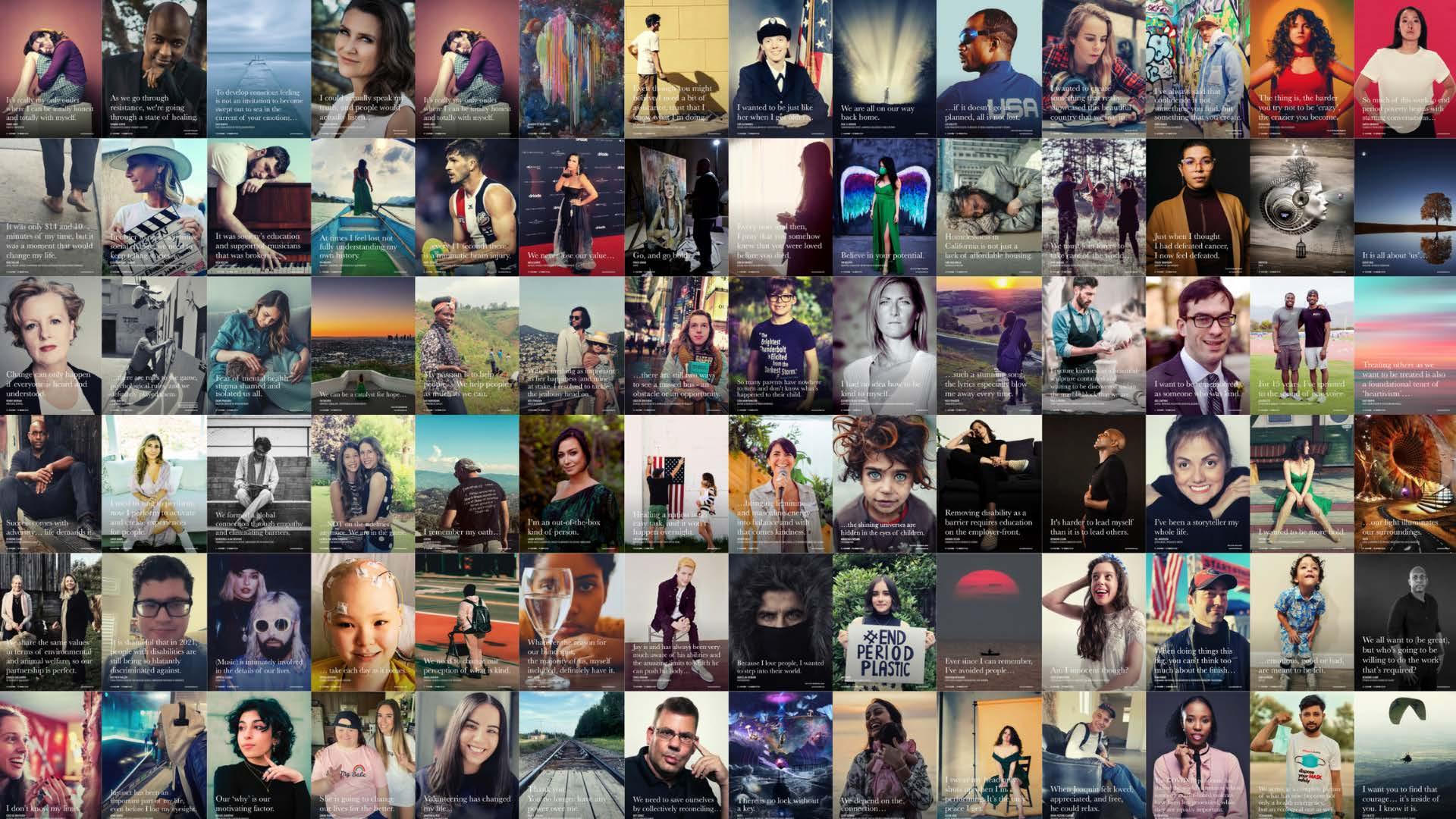
Every one is a part of everyone.


Miles to go before we sleep…


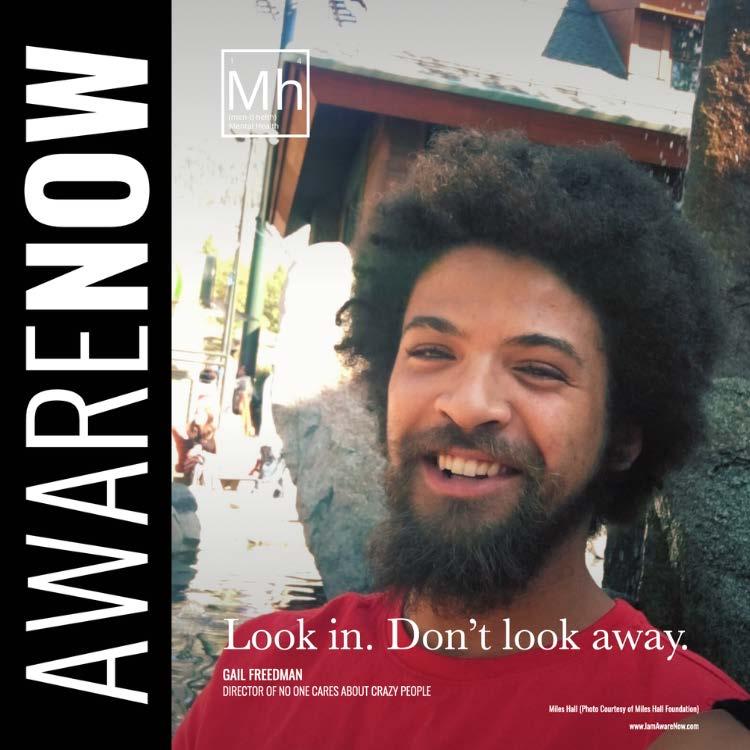
Look in. Don’t look away.
GAIL FREEDMAN DIRECTOR OF NO ONE CARES ABOUT CRAZY PEOPLE
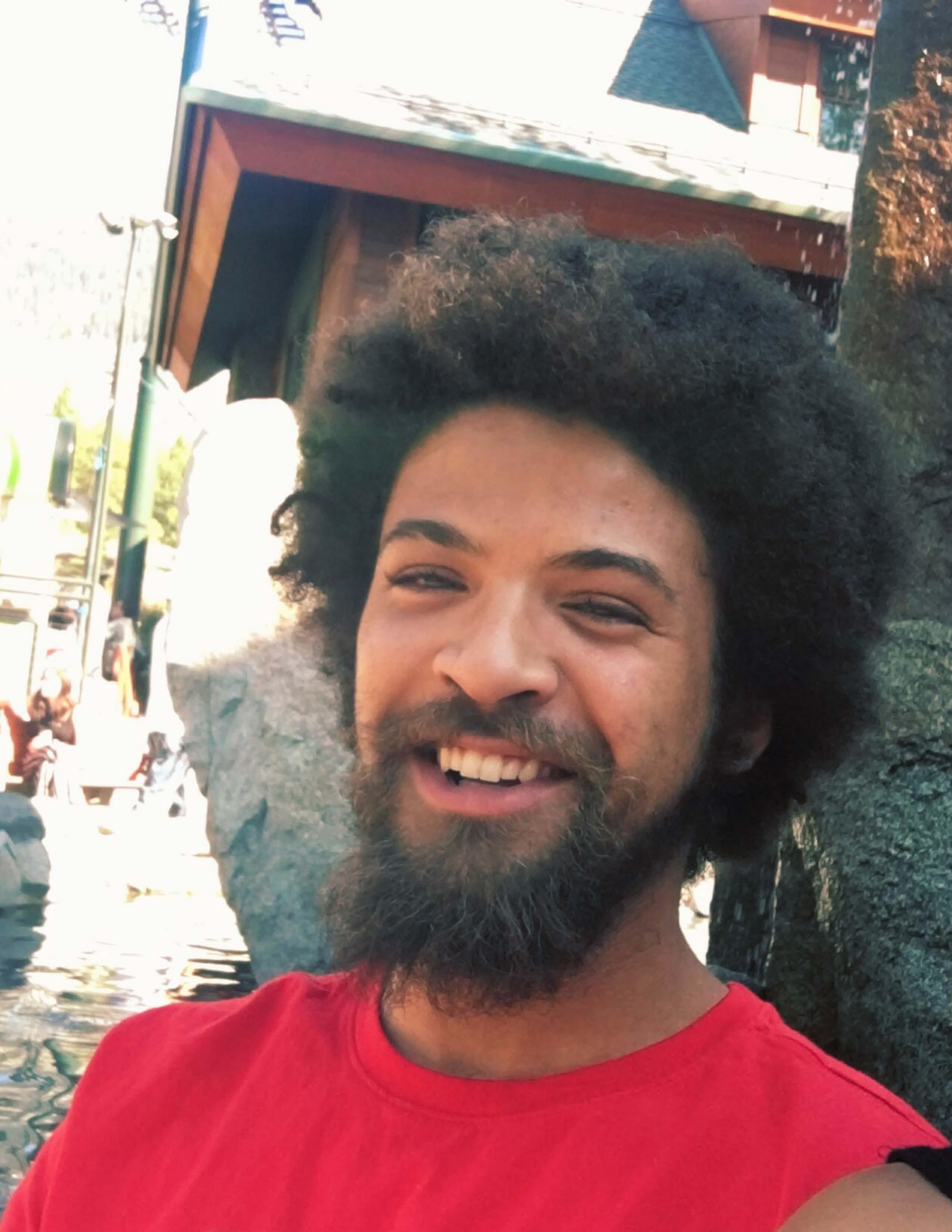
In the film No One Cares About Crazy People, director Gail Freedman invites us to look directly at the crisis of severe mental illness in America, not through statistics alone, but through the deeply human stories of those living inside it. Inspired by Ron Powers’ acclaimed book of the same name, the film confronts stigma, silence, and the systems that have failed too many families for too long. With honesty, urgency, and humanity, this documentary asks us not only to witness what has been overlooked, but to care enough to change it.
ALLIÉ: Gail, let’s begin with the title of the film: No One Cares About Crazy People. It is difficult to hear, and I imagine that is part of the point. As a director, how did you approach holding the weight of those words while creating a film that is not about judgment, but about humanity, urgency, and care?
GAIL: The title is politically incorrect, to be sure, and intentionally provocative. As you know from having watched the film, it is the same as the title of Ron Powers’ amazing book. The title, which we explain in the first minute of the film, comes from a quote from a craven politician.

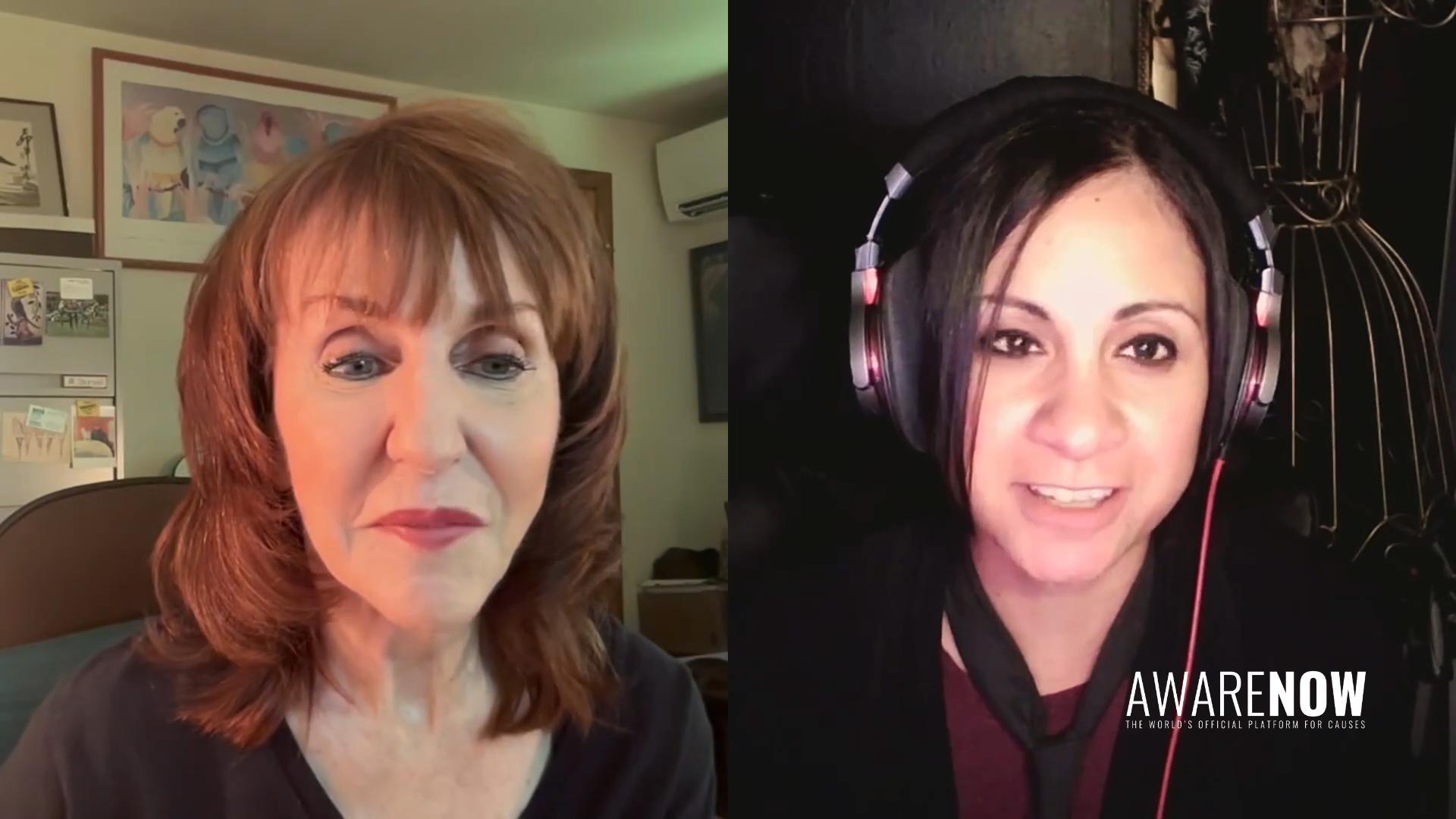

GAIL FREEDMAN DIRECTOR OF NO ONE CARES ABOUT CRAZY PEOPLE
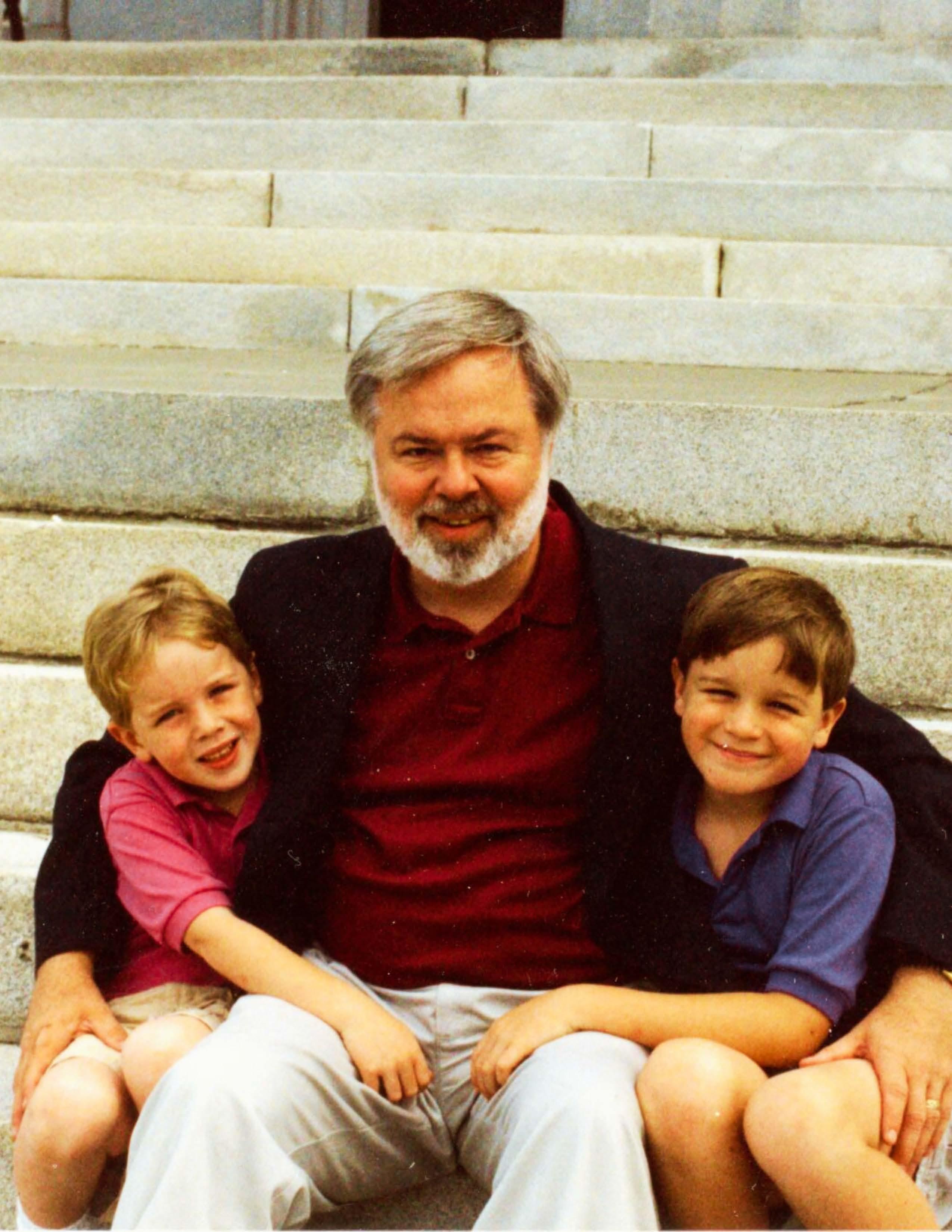

GAIL: (continued) Living in that caring space is what grounded me in the process. Obviously, this is a really intense subject. We followed some stories in real time without knowing what their ups and downs were going to be, and those turned out to be remarkably intense. Holding on to that caring notion helped me get through.
ALLIÉ: One of the most heartbreaking truths in the film is how many families are forced to become advocates because love alone is not enough to keep their loved ones safe. What did you learn from families like Mark Rippee’s, Miles Hall’s, Danny’s, and Kevin’s about the cost of caring inside a system that so often fails to care back?
GAIL: In many ways, that is the heart of the film. I do not know that it is necessarily where we began. This began with me being inspired by Ron’s book. The family aspect was something I learned about during the research phase, and it fascinated me.
Whether it is in our own family, a distant relative, a neighbor, a friend, a classmate, or a coworker, there are no degrees of separation. This issue affects all of us in our lives. That seems self-evident, and yet it was one of the greatest surprises over the five years it took to make this film. I really learned that firsthand.
There is sometimes this notion of, “Where is the family? How did the family let this person get to this point?” Then you come to learn that not everyone has a supportive family. Some people are struggling and suffering alone. But in more cases than not, there are incredible relatives who have been struggling and suffering right along with their loved one, trying to do heroic work in the face of a system that often seems to conspire against them.
That takes an incredible toll. It also makes people strong and fierce. It turns them into warriors and activists. Mark Rippee’s family is a case in point. I do not think they ever expected to be working in this space, fighting not only for their own relative, but for everyone who lives with these illnesses, sometimes called no-fault brain disorders. They are still doing that work.
It is hard enough to be a full-time, or close to full-time, caretaker for someone in your own familial orbit. But to then do that work as an activist on behalf of others as well, draining does not begin to cover it. There is a toll on one’s own physical, emotional, and psychic health. There is ongoing stress, trauma, worry, and a feeling of failure.
As one family member says in the film, this is an illness that affects everybody in the household, down to the youngest one. It also affects the quality of relationships. In her case, it is her husband who lives with severe bipolar disorder, and they have young children. Their marriage has taken a big hit.
They sometimes come with us to screenings, and we had a screening in New York in April. Someone in the audience asked, “What do you think is the most important thing you want people to take away from this film?” Carmelo, who lives with bipolar disorder, answered. It was not his wife who said this. He said, “I want people to understand how hard this is on a marriage.”
He knows. To live with the toll of that, to keep going, to keep the love flowing, and to try to maintain some kind of optimism and hope is a huge task. It is a toll on the person who lives with this, first and foremost, but also on anyone who cares about them. Anyone who has ever had a loved one with any kind of illness, whether it is a spouse, child, sibling, or anyone else, can relate to that.
ALLIÉ: There is a lyric in the song for the film by Jeff Tweedy that stayed with me: “I’m not well. I can’t tell.” The film speaks so powerfully to the catch-22 of severe mental illness, especially when someone may not know they are ill because of anosognosia. For those unfamiliar, anosognosia is a neurological condition in which a person is unaware of their own illness. How do we begin to have a more honest conversation about rights, autonomy, treatment, and protection when the illness itself can prevent someone from recognizing that they need help?
GAIL: That is a huge conversation, one that could probably take up more time than we have today. It is a question that comes up a lot, and one that, early on, took me unawares. I was not familiar with the notion of anosognosia when I began. It is an unpronounceable word, and we need some kind of shorthand for it.
The understanding of it as a concept has been around for a long time. Initially, it was applied to people with strokes and other conditions. We now know, even though some find it controversial, that it also exists in a significant subset of people who live with severe mental illness.
GAIL FREEDMAN DIRECTOR OF NO ONE CARES ABOUT CRAZY PEOPLE
GAIL: (continued) It is not denial. It is a different situation. It is literally a feature of the illness that the person does not know. So why would you go into treatment? Why would you take drugs that have side effects or possibly become an inpatient and be traumatized by that? Why would you put yourself through that if you are not sick?
That conundrum is difficult. If you had asked me early on in this process, as an old lefty progressive, whether anyone should ever be treated against their will, I probably would have said, “No, of course not.” Then you start to dig deeper. You start to look at nuance. You start to realize that it is not one size fits all.
We can all get into our philosophical silos, but that does not begin to tackle this question: Why are we applying a different standard to someone who has schizophrenia, schizoaffective disorder, or severe bipolar disorder than we would apply to someone in the middle of having a heart attack, a stroke, or a severe episode of dementia?
We would reach out and help that person. Yet somehow, with the great intention of preserving people’s civil liberties and personal agency, which are very important core concepts, we leave someone untreated, unhoused, suffering, possibly suicidal. We give them permission to destroy their own life under the guise of caring about their rights and freedom. That is a complex, thorny, difficult conversation. We did not start out planning to engage with that, but it became inevitable.
Mostly what I have heard from screenings is that people come away with an increased understanding that we do need to have a different kind of conversation. Is the solution to say that someone can only ever choose their own treatment? Or is the solution to improve the systems of care so that we do not traumatize people if it becomes necessary, in some cases, to help them get to a point where they can reassert their own agency and dignity?
Voluntary care is clearly better. That is the preferable outcome. That is what we all want for ourselves. But how do we help somebody who may desperately need help and not know they need help? How do we improve the systems?
Instead of saying no one should ever be inpatient, or there should never be locked units, I think we need to ask: How do we make those systems of care better, more humane, and more effective, so they are used minimally? Right now, the systems of care we have are woefully inadequate. Some things are getting better, and some things are getting worse.
CLICK, TAP OR SCAN TO WATCH NOW

GAIL FREEDMAN DIRECTOR OF NO ONE CARES ABOUT CRAZY PEOPLE

ALLIÉ: There is a line in the film that says, “There is not a breakdown in policing. It’s a breakdown of the mental health system.” From 988 to CARE Court to broader policy reform, where do you see the most urgent opportunity, not just need, but opportunity, to replace crisis response with actual care?
GAIL: I do not know that there is a single answer. You just enumerated several entry points where people are trying to change the system. I think it is both-and rather than either-or. There will always be crises and emergencies, and we do need to change the way we address those. It is easy to badmouth the police. As you saw in the film, there are certainly incidents where the police response has been tragic. But this is not a job for police. Police did not sign up to do this. Even when they have training, it is not sufficient. This is not a job for police.
Occasionally, there may be situations where someone from law enforcement needs to be present, but we need people who are trained, who have empathy, who understand, and whose work this is to be the ones who show up. That is one level. But we also need a whole continuum of care. I think that is where there is opportunity, if we can decide as a society that we have the will and are willing to commit the resources.
On a national level at the moment, things seem to be moving in the opposite direction. But at the state, regional, and local levels, there are places trying to do that kind of soup-to-nuts overhaul. We spent a lot of time in California, and they are trying. We will see how effective some of it is. The report card is not in yet.
How do you provide continuity of care so that, as advocate Teresa Pasquini says in the film, somebody gets the right care at the right time in the right place? How do you provide that whole continuum? For someone who may need to be an inpatient for a time and then step down, what do they step down to? Is there a step-down facility available? Is there adequate housing? Not just housing where someone is free to come and go but falls apart quietly behind their own four walls, but housing that comes with support, services, and caring human beings.
That notion of purpose, place, and community is key. I think we are understanding those needs better. There is a lot of opportunity, and there are more evidence-based practices. The challenge is whether we decide, as a society, that this is a priority.
COVID made people more aware of mental health struggles than perhaps ever before, especially with young people. That awareness has hung on. But for those who live with the most severe disorders, they got short shrift before, and they still do. They are the toughest cases. It is like doctors who do not want to treat the very sickest people because they like success and do not like failure.
ALLIÉ: When my sister was diagnosed with multiple sclerosis, I quickly became aware of the ripple effect of diagnosis. Yes, she was diagnosed, but there were so many of us affected: her sisters, her children, her parents, her friends. When I was diagnosed myself with MS, the circle of impact rippled even deeper and wider.
In the United States, there are about one million people living with MS. In your film, you share the powerful fact that there are 14 million people living with a serious mental illness. For every person living with serious mental illness, there is a circle of impact that includes families, friends, caregivers, communities, police of ficers, policymakers, and healthcare providers. Given the size and scale of this crisis, how do we begin to battle these ripples of systems that have become waves of failure for so many in need of care?
GAIL: It starts with awareness and understanding. Things can change, and things do change, but it begins with understanding. It begins with getting people to look in, not look away. People often ask me at screenings, “What is the one thing you want people to take away from this?” I always say, “I am not a professional advocate. I am a storyteller. But what I want is this: Look in. Don’t look away.”
Making this film transformed me. When I ride the New York City subway and there is somebody in the next car who is clearly in the middle of some kind of episode, I cannot look away the way I used to. A film allows people to begin looking in a safer way. There is an undeniable fascination, too. We have always been fascinated by madness. There are characters in fiction, literature, and film that draw us in. But when it is in real life, it becomes scary and terrifying, again because we are all affected by it, even if it is not us ourselves.
If we can get people to pay attention, to look, to understand, and to begin to feel compassion, that is step one. I also think there is a head of steam behind some of the advocacy that is going on now. On good days, I believe that maybe we are at a tipping point. There is more understanding. There is more pressure for change. There is this army of advocates, in many ways led by family members and caregivers, along with a handful of brave politicians.
GAIL FREEDMAN DIRECTOR OF NO ONE CARES ABOUT CRAZY PEOPLE
Podcast
Exclusive Interview with Gail Freedman https://go.awarenowmedia.com/podcast/the-human-cost

GAIL: (continued) That 14 million number includes the most severe illnesses. There is an even bigger number if you factor in anxiety, depression, and other kinds of suffering. Suffering is suffering. But when we look at the most severe disorders alone, it is a huge number.
I think change is possible. With AIDS, with breast cancer, with a whole series of other disorders, there have been movements that built public understanding, acceptance, and a desire for change. Whether that comes from compassion, which we hope it does, or from people seeing this in evidence in every city and town, wherever they live, I think that is how we start to make change.
It is always going to be a struggle. The fierce advocates have to keep being fierce, loud, and proud. We cannot just throw up our hands and say this is not possible.
ALLIÉ: Documentaries like yours are so important because they help people see themselves in someone else’s story, a story that could one day be their own. Mental illness does not discriminate. We do not choose it.
Caring and compassion can seem proximity-based. If we are not close enough to it, if it does not touch us, we can pretend it does not affect us. But what affects one of us affects all of us, or it should.
I do not have serious mental illness. My husband does not have serious mental illness. None of our six kids do. But I felt the pain of every single mother and wife in your film. I cried with them. I shared moments with them through your film. Your film gave me that gift because I am a mother and because I am a wife. Thank you for helping me, and so many others, see and feel that pain so that we may be part of a solution and not perpetuators of the problem.
GAIL: Thank you so much, Allié. That is beautiful, and I really appreciate it. This film is not an easy watch, but people come to it for a lot of reasons. I am gratified that we are reaching people beyond what I expected. We have been selling out screenings, and we have just begun our streaming launch. We are told that, at least in the first several weeks, we are one of the best performers, which I find astonishing.
This is not a popcorn movie. But it was very intentional for us to try to leave on a note of hope. We did not want to be only doomy and gloomy. There have been a number of good films in this space, and I made it my business to watch a number of them when I took this on. But many of them made me feel hopeless. I did not want to leave people with that. I wanted to leave people with a sense of possibility, optimism, and hope.
If we do not have hope, what do we have? If these individuals who live with this, and if their families, can keep going, keep laughing, and keep the faith, then we can too. ∎
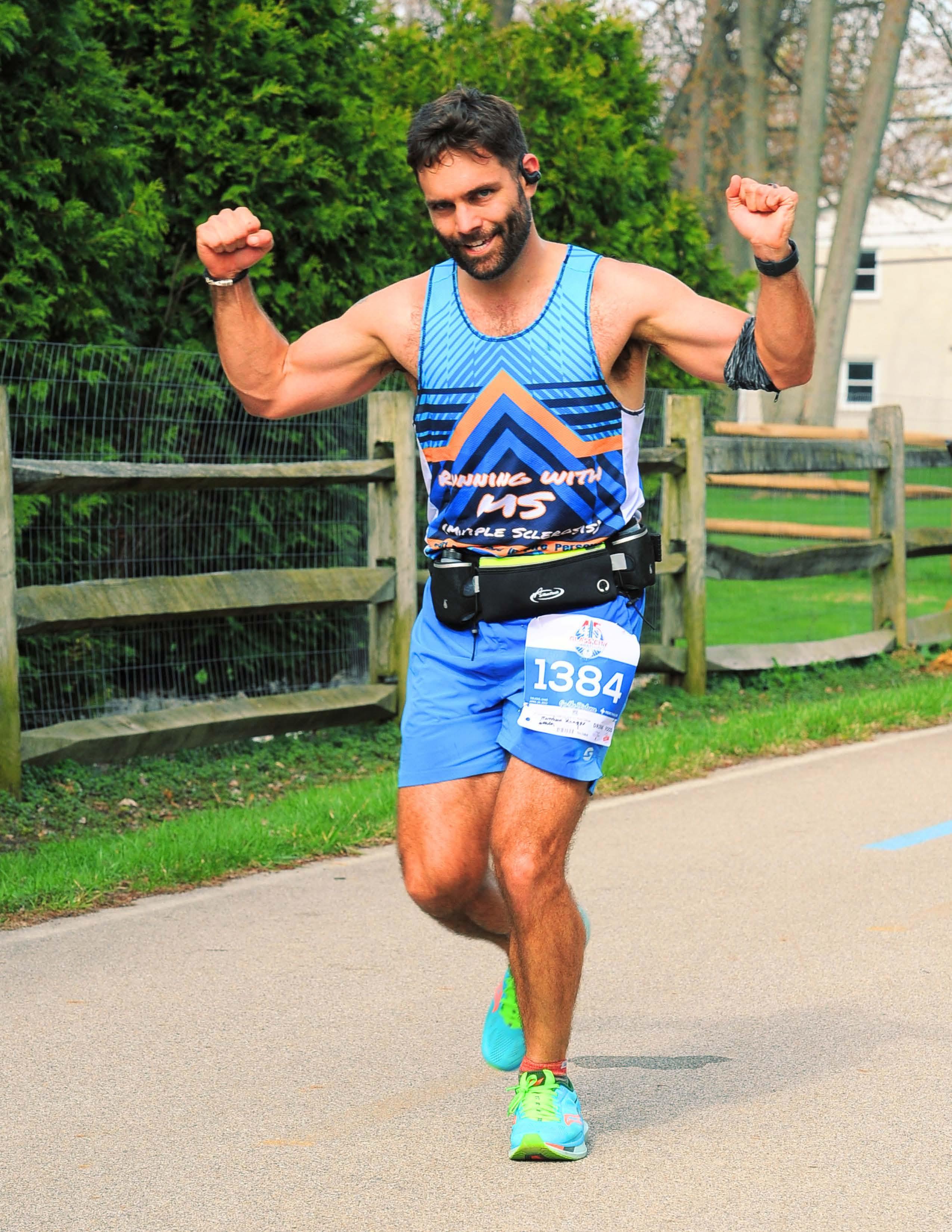
MATT KNAGGS RUNNER & MS ADVOCATE
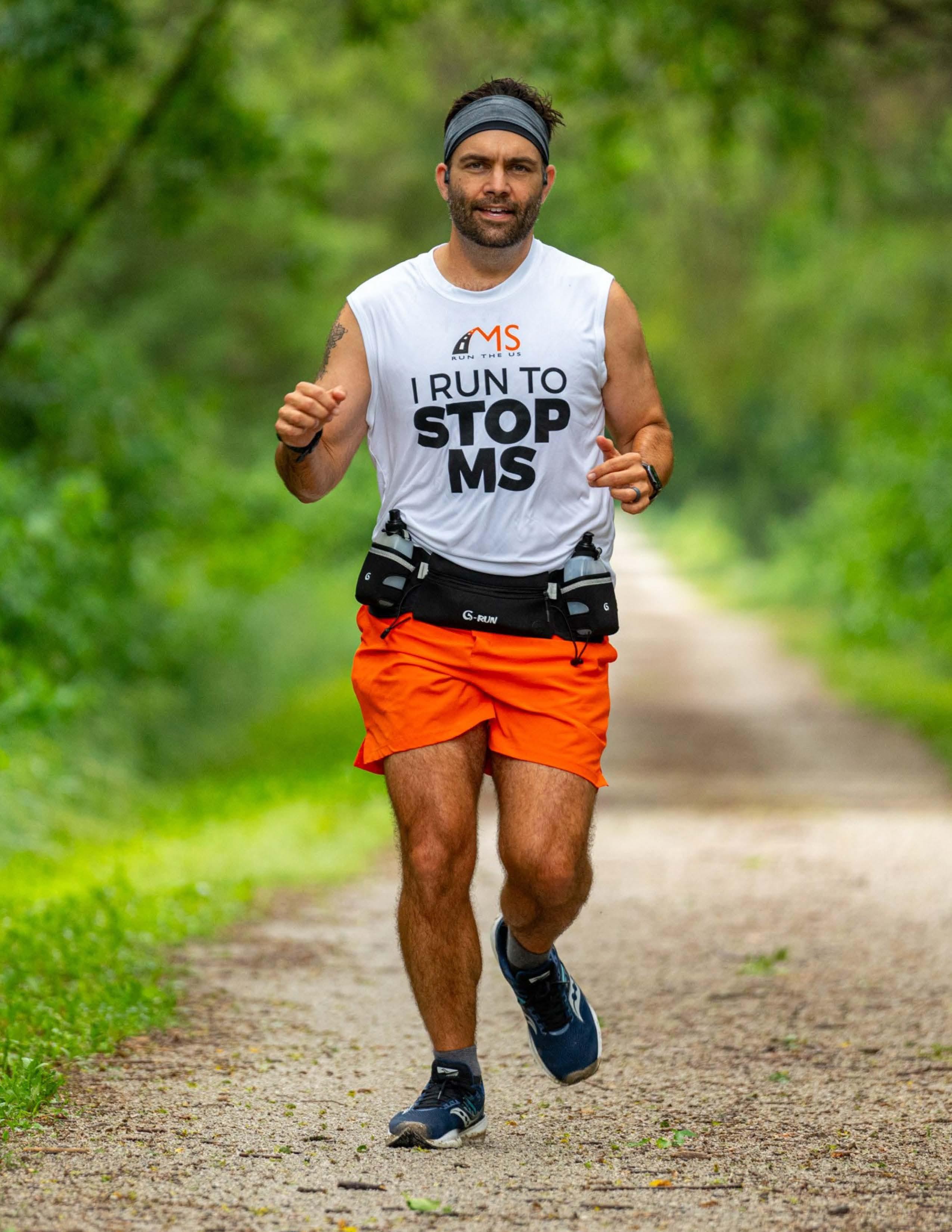
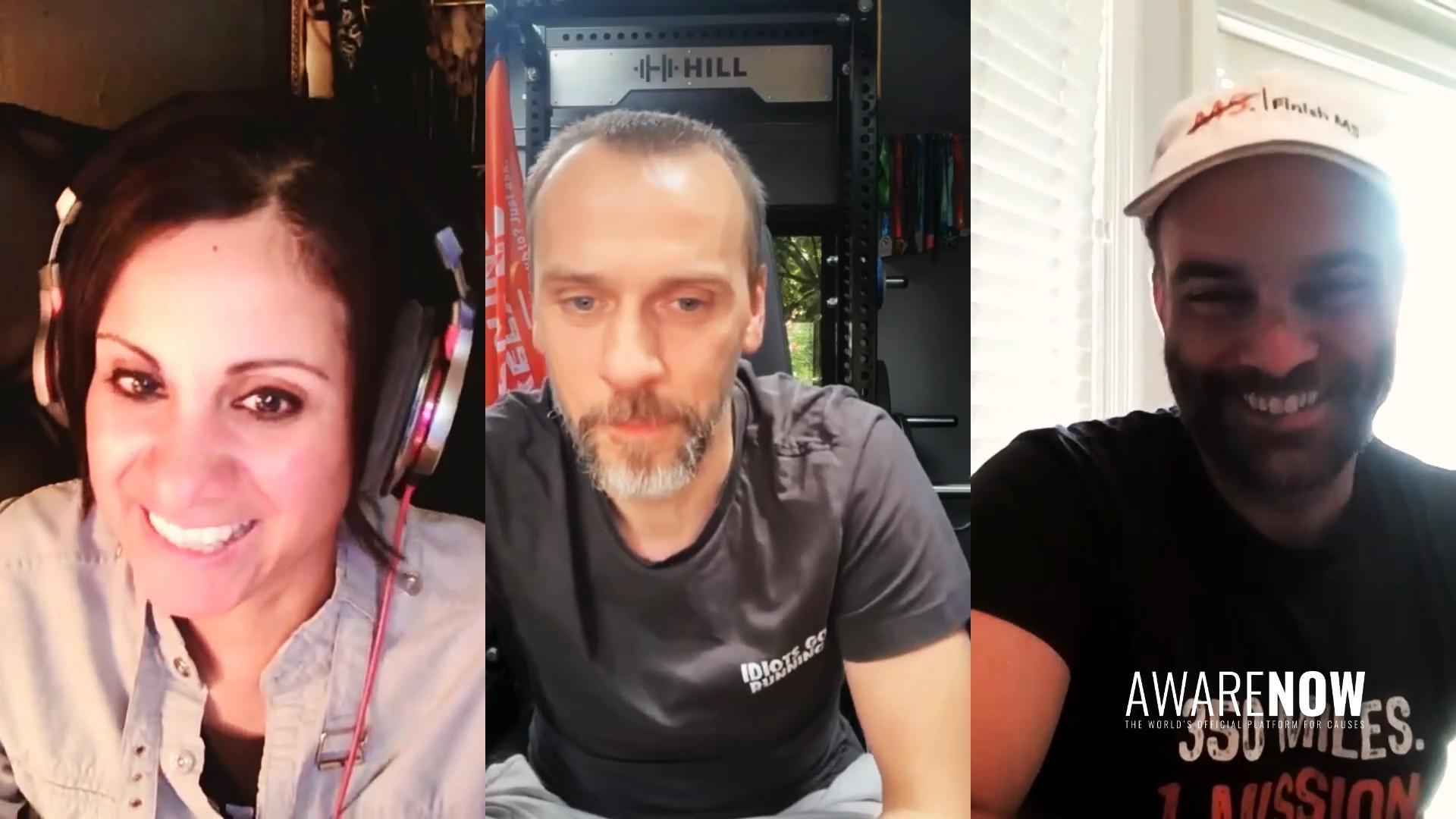
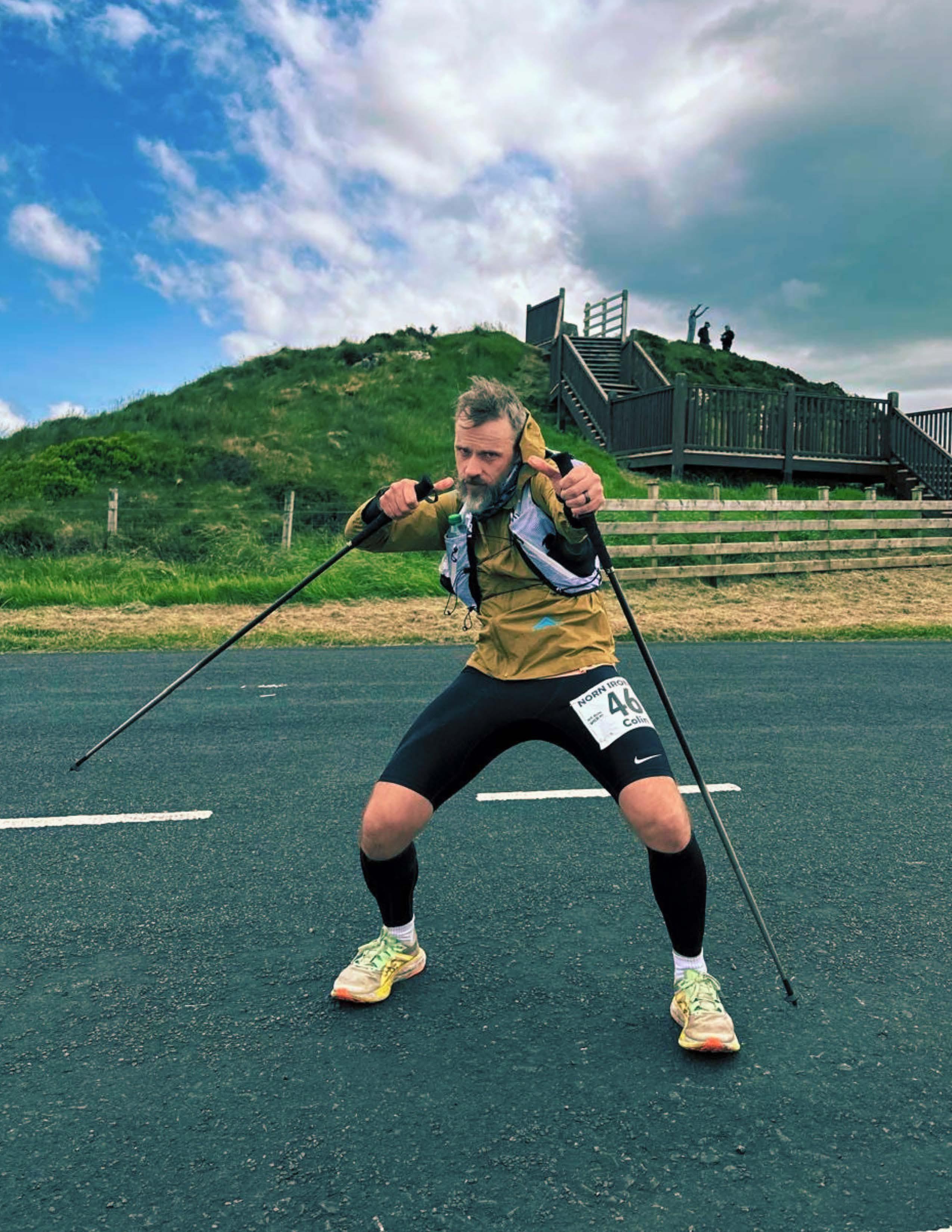
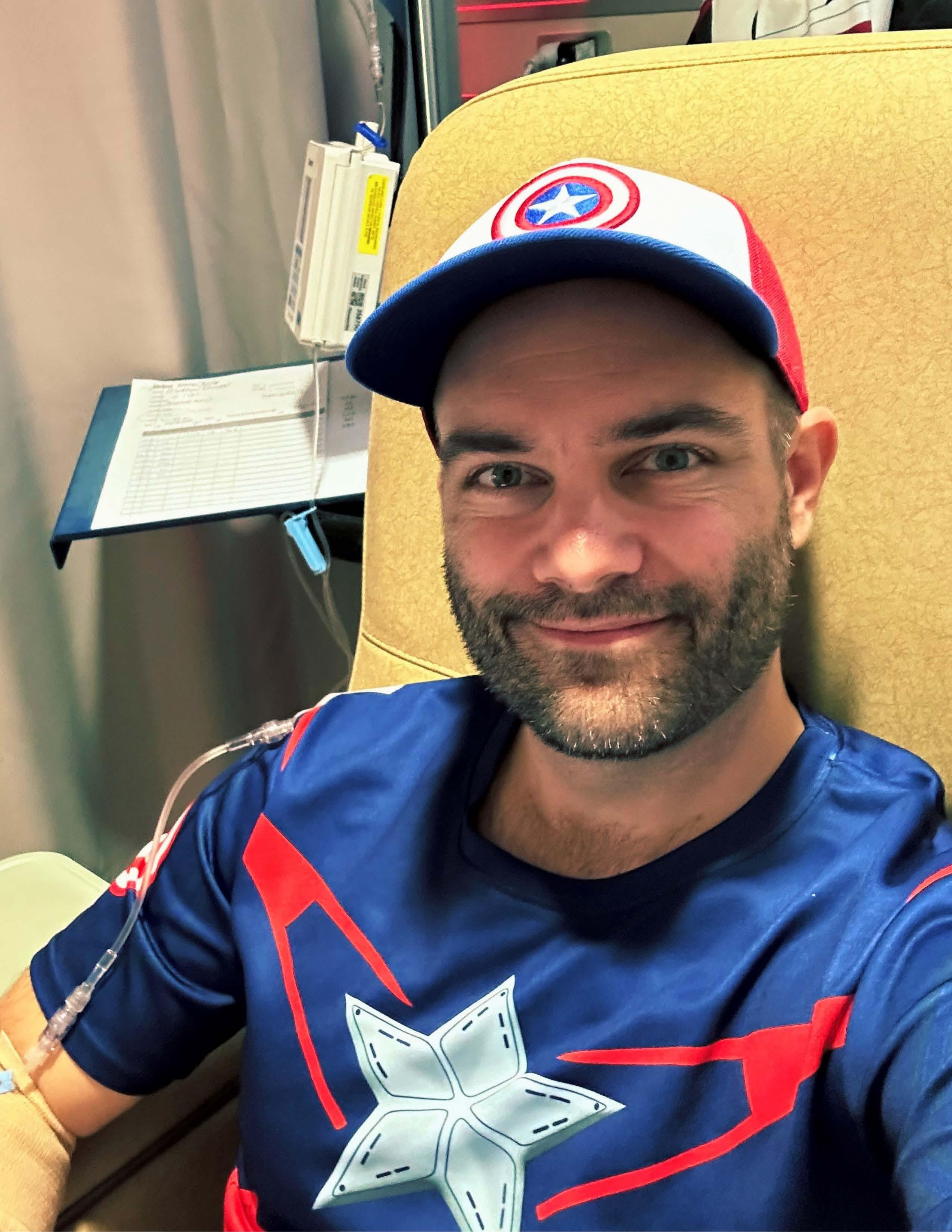
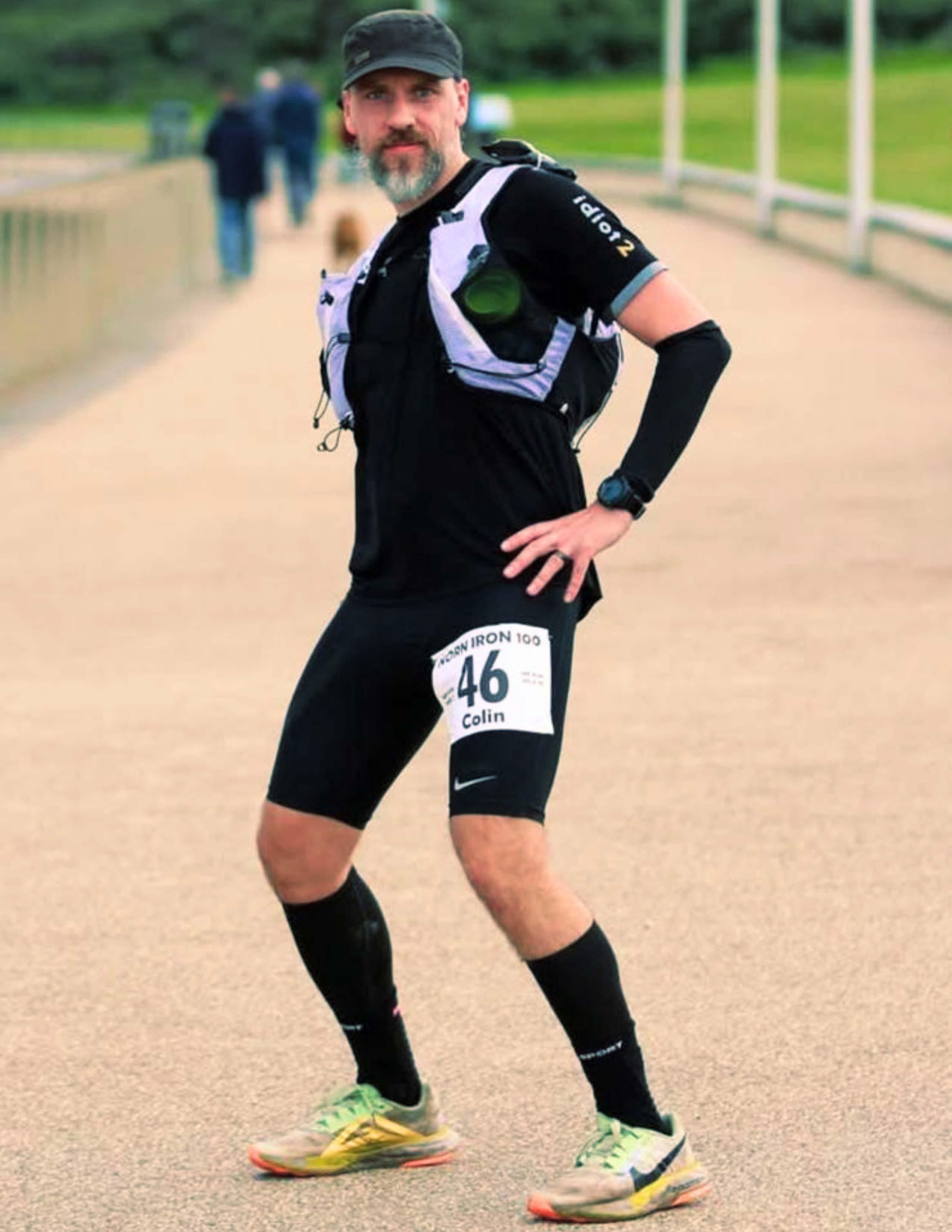
Matt Knaggs and Colin Goodman are friends divided by an ocean, but united by cause. Both live with multiple sclerosis. Both know the fear, uncertainty, fatigue, and fight that can come with diagnosis. And both have chosen to meet MS not by standing still, but by moving forward, one mile at a time. Together, they are preparing to run across Ireland from Mizen Head to Malin Head in pursuit of a Guinness World Record, raising awareness and funds for MS along the way. This is more than an ultra-marathon. This is a message in motion. This is what it looks like when friendship becomes fuel, purpose becomes pace, and hope learns how to run.
ALLIÉ: Matt, you were told after diagnosis that you might be in a wheelchair within five years. Colin, your first symptom showed up in such a disorienting way, like seeing two footballs while playing with friends. Can each of you take us back to the moment when MS became real for you and what changed inside you after that? Matt, let’s start with you.
MATT: I think the moment it became real for me was when I finally heard the words from a neurologist that I have MS. I had been having so many issues for about nine months leading up to that point and feeling as though doctors

GOODMAN RUNNER & MS ADVOCATE

MATT: (continued) Hearing time after time, “Nothing’s wrong, nothing’s wrong,” when you’re feeling all these crazy things going on inside your body, you can go a little bit crazy.
What changed for me was gradual. At first, there was this adjustment period of asking, “What do I need to stop doing, start doing, or do differently?” There was also a period of depression, saying, “My life is no longer going to be the same.” While that is true, I was viewing it through a negative lens at that point in time.
Thankfully, after a couple of months, I started to see things much more positively and decided, “Why stop doing all the things that my body may one day tell me I can no longer do before my body actually makes me stop?” I had this epiphany of, “No, I need to do everything I can for as long as I can and make the most out of my experience with MS.”
ALLIÉ: Absolutely. It’s doing what you can while you can, and I think that’s true for all of us, no matter our diagnosis, but certainly with MS. Colin, how about for you?
COLIN: This is where you see Matt explains things so chronologically and so nicely, and then there’s me, who will jump about. So good luck keeping up with me.
In the early days, I had double vision in one of my eyes. I went to the optician, and the optician said, “Your eyes are fine. We’ll give you a letter to the hospital.” I went to the hospital, and a girl checked my eye and did all these tests. I left not really knowing anything. Obviously, she didn’t discharge me, so she knew there was something there.
Then I had another appointment, which I missed. I can’t remember why. Just family life, as you do. You miss an appointment. But in a way, it was a good thing because later on I went back, and I must have been having a flare-up that I didn’t realize was happening. My eye was off the chart. I was seeing really bad double vision in one of my eyes.
She didn’t let me leave the hospital that day. She sent me down to the specialist eye people. They brought students in. They looked at my eye and said, “Check out this guy’s eye. It’s really messed up.” I kept thinking, “This isn’t great.” I was very lucky because she said, “We actually have a neurologist in the building today.” At that stage, I had been in the hospital for maybe four or five hours. My wife was back at home wondering what was going on, because at that stage I had three boys. I still have three boys and a wife, and everyone was wondering why Colin had been in the hospital all day.
I went up to the neurologist, and he did tests on me. He checked my legs, my eyes, this and that. I thought everything was fine. At the end of it, he said, “Yeah, it could be MS.” I was like, “What?” It was a bit of a shock.
A few months later, I got a letter telling me to go to City Hospital to see a neurologist. At that stage, I didn’t really know it was MS. I wasn’t sure. I went in to see the MS nurse, and she said, “How are you feeling, Colin?” I said, “I am feeling fantastic. I’ve been looking after myself. I’ve been getting better sleep. I’ve started working less. I’m feeling brilliant.”
She got up, walked out of the room, and said, “Can I come back in a wee second?” I said, “Yeah, crack on.” Then the neurologist came in. Brilliant guy, Gavin. He sat down and said, “How are you feeling, Colin?” I told him the exact same thing. I said, “A guy said I had MS. It’s a lie. I’m feeling great. Everything’s brilliant.”
He opened his book and said, “Well, your vitamin D levels are low.” And on an MRI, it did show that I had MS. By that stage, I had been through MRIs and everything. They said, “You do have MS, Colin.”
I said, “Okay.” At that stage, it was a bit of a shock. I obviously thought I had cured MS in the early days and I was fine. Long story short, I asked, “What drugs do I need to go on? What do I need to do? Where do I need to start?” From then, I just stuck my head in the sand and hit it straight on. I started running, and that was my diagnosis story.
ALLIÉ: I love that you were like, “No, I’m fine. This is good. I’ve got this.” But that also speaks to the fact that with MS, there are good days and bad days. On the good days, we can feel like, “Yeah, I’ve got this.” And those moments don’t always stay.
MATT KNAGGS RUNNER & MS ADVOCATE

ALLIÉ: (continued) I think both of you can relate to something I often say, which is, “I can’t run from MS, but I can run with it.” When you hear that, what does it mean to each of you personally? Matt, what does that mean to you?
MATT: You can’t change the diagnosis or the fact that you have it, but you can still do whatever it is you can with the diagnosis. Even running may not look the same as it might have once looked, and that’s okay. There is this adjustment and acceptance, which I’m terrible at, of saying, “Hey, it’s not going to be the same as it might have otherwise been.” But for me, it’s almost an act of defiance. Well, yeah, I’m not even supposed to be able to walk right now, so you’re darn right I’m going to run with MS. No problem. I’m going to do it for as long as I can.
ALLIÉ: For sure. Colin, anything to add to that?
COLIN: Before MS, I never ran a mile. I wasn’t a runner. Running wasn’t part of my life. I played a wee bit of football, but I had to run to a ball. That was my running. But with MS and running, as Matt says, it’s defiance. I saw it as a challenge, a challenge I accepted, a challenge I took straight on.
I think it’s part of my positivity. You don’t know what tomorrow brings, whether it’s MS or not MS. We all have our own challenges. We all struggle to run. Running isn’t easy anyway, but having that MS monkey on your back, I see it as a bit of a challenge. I can do something here to inspire people and to help people. Running with MS isn’t just me running for me. I’m running for everyone to show them that, like Matt said, we’re capable of incredible things.
ALLIÉ: Absolutely. The two of you are proving just that. You are friends divided by an ocean, but connected by diagnosis and purpose. How did your friendship begin, and when did you realize there was more of a connection than just running?
MATT: Colin, I feel like I always answer this one. I want to hear how you answer it.
COLIN: Unfortunately, me and Matt became friends. I’m only joking. I suppose you’ll see it from two sides. From my side, I started running, as we’ve said, and to promote my first-ever attempt at running Mizen to Malin, I thought there was this positive place online, this Running with MS group, where I could share my story and raise a bit of awareness.
I asked the guy who runs the page, “Any chance I can share my story? I don’t want to send everyone a message saying, ‘Look at me, give me money, I’m trying to raise money.’” And the guy called Matt said, “Yeah, no problem. That’s why we’re here. Go ahead, share your story.” He seemed like a really positive guy, and we still have that message to this day. We actually looked at it a few months back.
I tried to run the length of Ireland and failed. It’s now known as the Mizen to Nearly Limerick run because I didn’t even get to Limerick. From then, I settled into this Running with MS group on Facebook. I got chatting to Matt, got his WhatsApp, and every other week maybe we’d chat. That turned into more of a friendship. We had more in common. We both liked running. Matt is very similar to my brother, and my brother is one of my best mates. They’re both into Marvel and all this other weird stuff.
I think we just started to become friends. Even without MS, I believe if we had met in the street, we still would have become friends or connected in some shape or form.
As the story goes, Matt then wanted to take on a big adventure one day, and here we are. We just got talking more. Now, as I would put it, I talk to Matt more than my own wife at the minute. Matt, did I miss anything?
MATT: No, I think you covered it pretty well. The only thing I would add is where this run came from. After Colin made it to nearly Limerick, he had been saying for a while, “I’d like to try that again one day.” We had thrown it around for a good two years, like, “Maybe I’ll do it with you.” Then we got serious about it. “Okay, when are we going to do this?” It went from this imaginary thing to, “Wouldn’t it be cool if we did it, and we did it to raise awareness and raise money for MS charity?” Around July or August of last summer, 2025, we pulled the trigger, as they say, and decided to make it official.


COLIN: A year early from our initial plan, by the way. It’s like a wedding. Sometimes you just can’t wait and you have to move it a year forward. Matt decided to move our wedding day, which is our run, a year forward.
MATT: Ironically enough, both Colin and I had planned on getting married to our wives a year later than we actually did. We both moved our weddings up a year after getting engaged.
COLIN: It’s a true story. There’s a weird connection. Matt’s birthday is about two weeks after mine. I’m slightly older. I’m the wiser one of the two of us. You wouldn’t believe it, but I am.
MATT: Two weeks, but born in the same year. We’re both on Ocrevus. We both have three kids, roughly the same age. And we both moved our weddings up a year.
COLIN: We’re both idiots.
ALLIÉ: And you’re both going for a world record. But before we get to that, let’s talk for a moment about what people outside of you will see. They will see the physical miles, the roads, the climbs, and the resulting fatigue. But what is something invisible about MS that people won’t see or maybe just don’t always see? What is something that is not seen but really felt?
MATT: I have a wide range, really. Usually my challenges start off invisible, and then they’ll get to the point where someone would look at me and say, “There’s something wrong with that guy.” We’re crossing our fingers that doesn’t happen on the run.
For me, often what will happen is I’ll get numbness or tingling throughout various parts of my body. I’ll get blurred vision. Those are things nobody would typically see. Those are things I’ve become used to while running, so they no longer frighten me.
I’ll also still get what’s known as Lhermitte’s sign. The more active I am, if I look down and move my head downward, I’ll get shocks of electricity through my body. But again, most people wouldn’t recognize or see that as it happens.
If I’m having what I would call a bad MS moment, I typically get extremely weak to the point where visibly, you wouldn’t know what is wrong. You might think maybe that guy is hungover or had too much to drink the day before. Generally speaking, I’m a very happy, positive, outgoing guy. But in those moments, it’s like I don’t even have the strength to smile.
Hopefully we don’t have any of those moments, but MS is unpredictable, even more so when you’re pushing yourself physically to the extent that we will be. We’ll deal with that as it comes.
ALLIÉ: Colin, how about for you? What’s something invisible?
COLIN: It’s invisible, but not invisible…
Physically, I’m generally quite good. Running and everything else is fine. But it has happened on podcasts where I’ll break into tears. We now have a trigger where if Matt sees me breaking into tears, he takes over and it cuts away from me because he knows exactly what’s happening.
There must be an area in my brain, lesions that trigger it. I’ll start talking about something that’s remotely emotional. It doesn’t even have to be emotional. It can be something random.
For example, on one of my runs previously, I think I ran maybe five miles. If anyone had driven or walked past me and seen me by myself running about five miles in tears, they would probably think, “That guy’s having a tough day.” But inside, I actually wasn’t emotional. I wasn’t sad. I wasn’t down. It was just, “I can’t stop flipping crying.”

MATT KNAGGS RUNNER & MS ADVOCATE
COLIN: (continued) But it’s okay. That’s why I say it’s visible but invisible. I’ll get to an aid station, and people are like, “I need to give this guy a hug.” And I’m going, “I’m actually okay. It’s just my MS.” They ask, “Is it making you depressed? Is something wrong?” And I say, “No, it’s actually just the tears coming.”
It’s a weird part of the disease, which I never associated with myself. I was never emotional before. I would never have cried. Then all of a sudden, bang, I was hit with MS and floods of tears all the time.
It’s a strange one. It’s a hard one for me to deal with because I don’t like showing the vulnerabilities of me, I suppose. It’s hard for me, being a man, running, doing big miles, and crying. It’s a strange one to explain and talk to people about. But hey, I’m over it and I get on with it now.
ALLIÉ: You bring up such a good point because MS presents so differently in all of us who live with it. It is not a cookie-cutter disease. It shows up differently, not only in each of us, but in each of us differently every day.
Like you, Colin, I have a lot of tears. Mine are very emotional tears. Either way, tears are antifreeze for the soul. I fervently believe that.
Let’s switch gears and talk about this world record. You are pursuing a Guinness World Record for the fastest crossing of Ireland on foot by a team with MS. Beyond the record, what do you hope this run proves?
MATT: At this point, I don’t think there’s anything I’m trying to prove to myself. If it’s about proving anything, it’s more about showing others that life doesn’t have to be over because of MS.
No, it doesn’t mean everyone with MS is going to run 350 miles. But it does mean that you can find your Ireland, whatever the big thing is that is going to push you and motivate you, the thing you might say, “There’s no way I could ever do that.”
Before I was diagnosed, walking a mile seemed impossible. That’s where I was before my diagnosis.
For me, over the last six-ish years, it has been about extending myself, pushing myself farther, and realizing that we are capable of so much more than we often allow ourselves to believe. If we believe that we can, it’s going to push us to try much more than we otherwise would have.
Even if we don’t accomplish our goal, we’ll do more than we knew we were capable of.
ALLIÉ: I love that. Colin, how about you? What do you want to prove with this?
COLIN: I’m with Matt. I don’t think it’s about proving. It’s about showing and inspiring. It’s showing people that being diagnosed with MS, or any other disease, isn’t the end of the world.
For example, I got a message from someone in Ireland that hit me quite hard, especially because I have children of this age myself. His child had been diagnosed with MS at 12 years old. It was a recent diagnosis, about 18 months ago, which is really, really rare.
Getting into that parent’s head, he probably didn’t know where to turn. What is the future like for his child? But by seeing someone like myself and Matt doing what we’re doing, it gives hope. It lets him say, “Do you know what? They could actually run the length of Ireland.”
It’s not proving something to us. It’s proving, I suppose, to the world that you don’t have to stop because of some disease. You just keep going. You find what you enjoy. You find your Ireland.
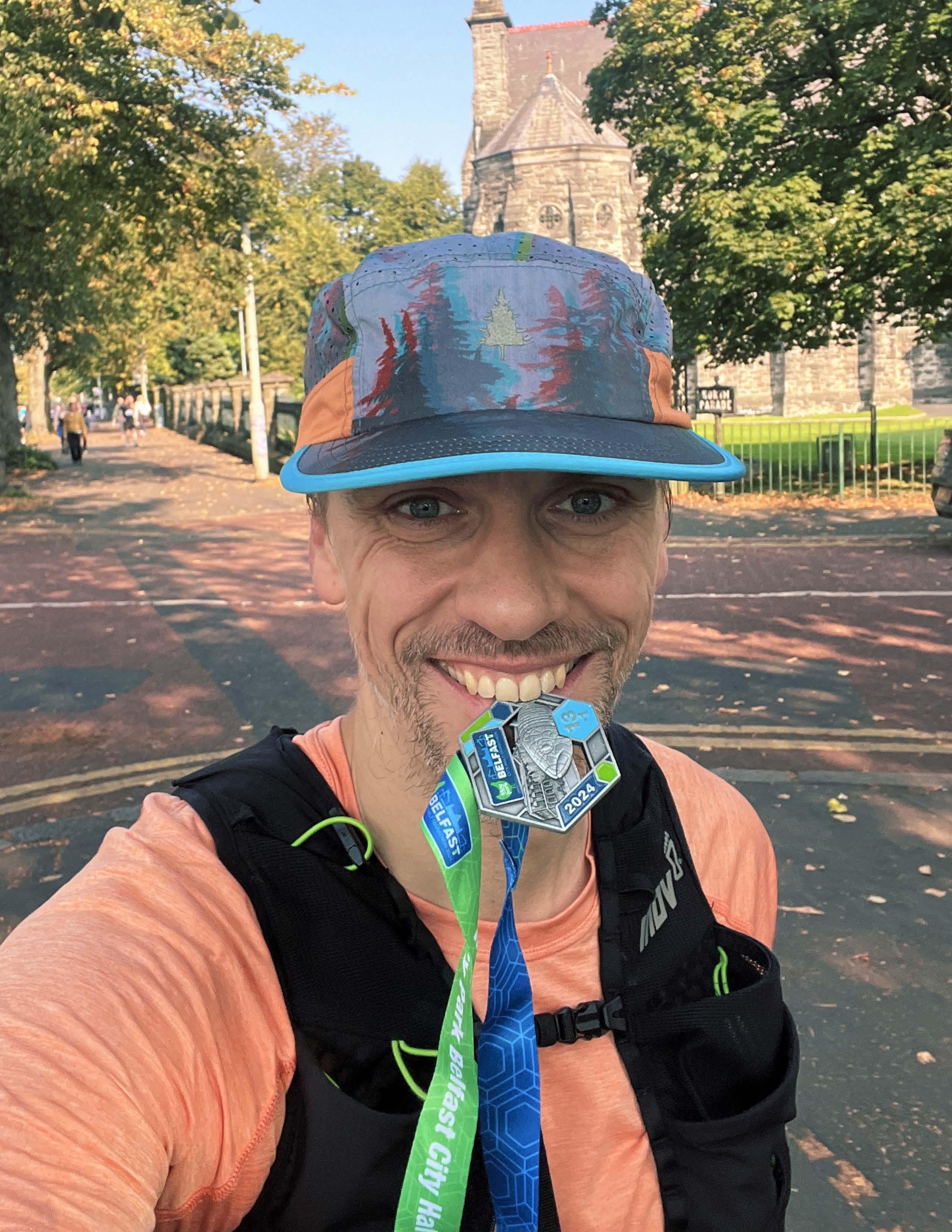
Exclusive Interview with Matt Knaggs & Colin Goodman https://go.awarenowmedia.com/podcast/miles-of-meaning

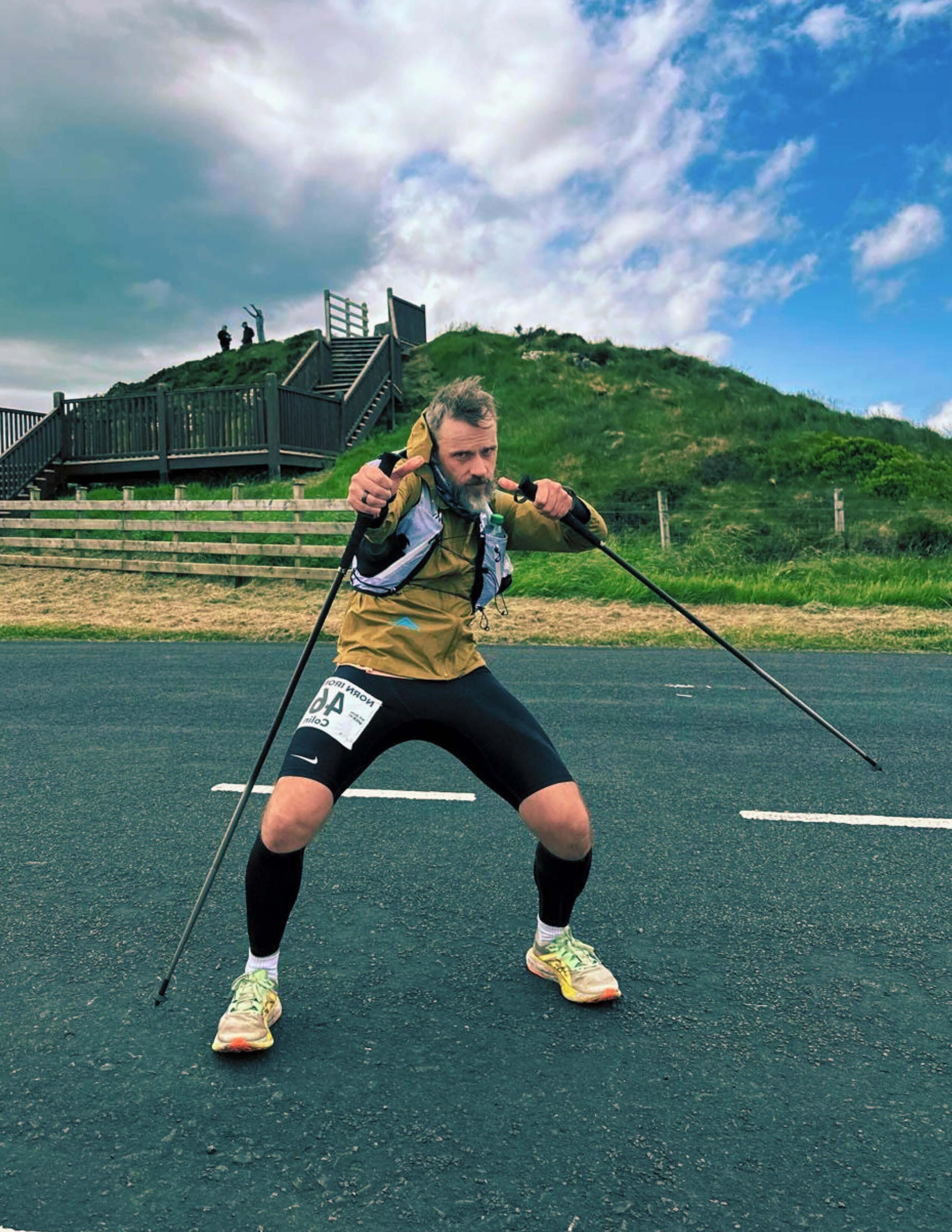
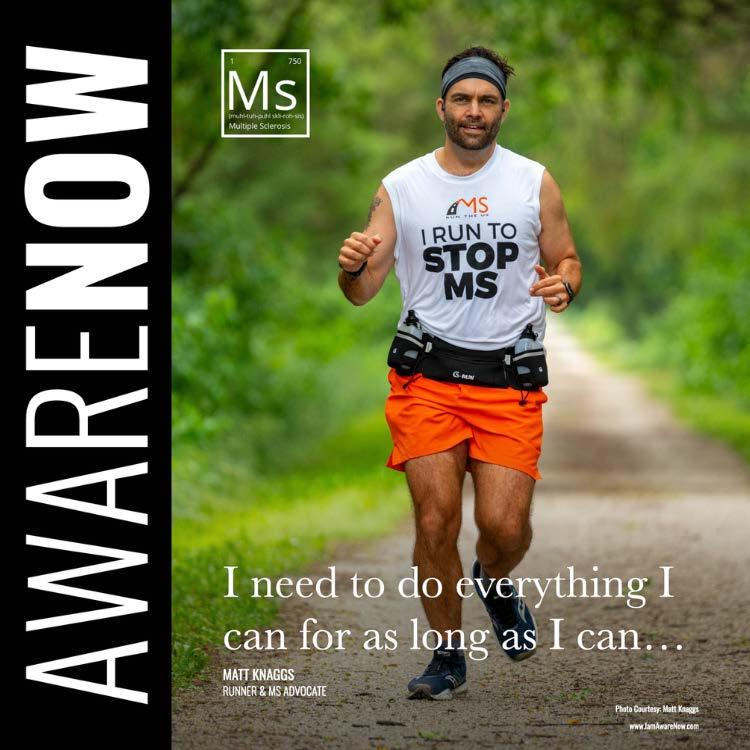
COLIN: (continued) We say we’re running the length of Ireland, but as we’ve kind of coined the phrase, we’re more having fun in the length of Ireland. It’s an adventure. Matt and I get to run together. We’re going to have fun. It’s going to be great craic, as we say over here. It’s going to be great banter.
So, nothing to prove. Just to show people: don’t hold back on what you can do with yourself.
ALLIÉ: With MS, the journey doesn’t stop. It continues. It looks a little different. Maybe it even gets better, especially with good friends.
When we talk about the tools we have in our toolkit with MS, there are different treatments and different approaches. But friendship, the bonds we build along the way, and the points of connection we find, that is everything.
Thank you both so much for taking the time to share more of your story and yourselves. Good luck as you find your Ireland, find great success along the way, and have a good time at the same time. Thank you for helping all of us become a bit more aware now.
MATT: Thank you. It was great talking with you.
COLIN: Thanks so much for your time and thanks for the opportunity to chat and spread our story. ∎
Follow Matt on Instagram: @runningwithms_official
Follow Colin on Instagram: @idiotsgorunning

SETH BLAUSTEIN CEO OF DOLLAR DONATION CLUB

What if changing the world wasn’t the responsibility of a handful of billionaires? What if it belonged to all of us? For years, Seth Blaustein has been exploring a simple but powerful question: How do we make meaningful impact accessible to everyone? As a filmmaker, futurist, entrepreneur, and storyteller, he has helped inspire millions of people to take action for causes that matter. But Seth believes the future of philanthropy isn’t about a few people giving a lot. It’s about millions of people giving a little.
Today, as the Founder and CEO of Dollar Donation Club, Seth is building a new

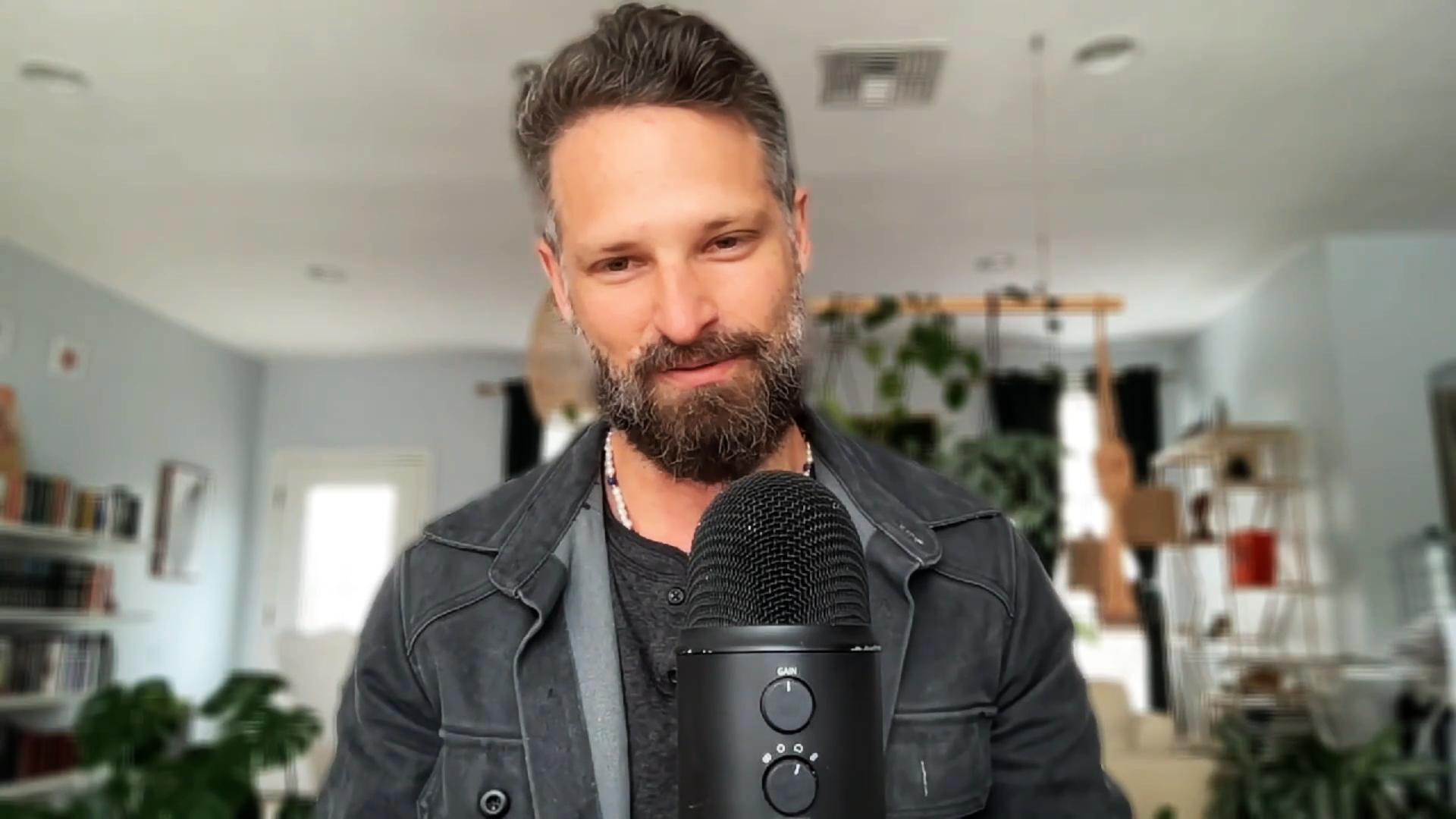
Businesses are stories that are being expressed.
SETH BLAUSTEIN CEO OF DOLLAR DONATION CLUB
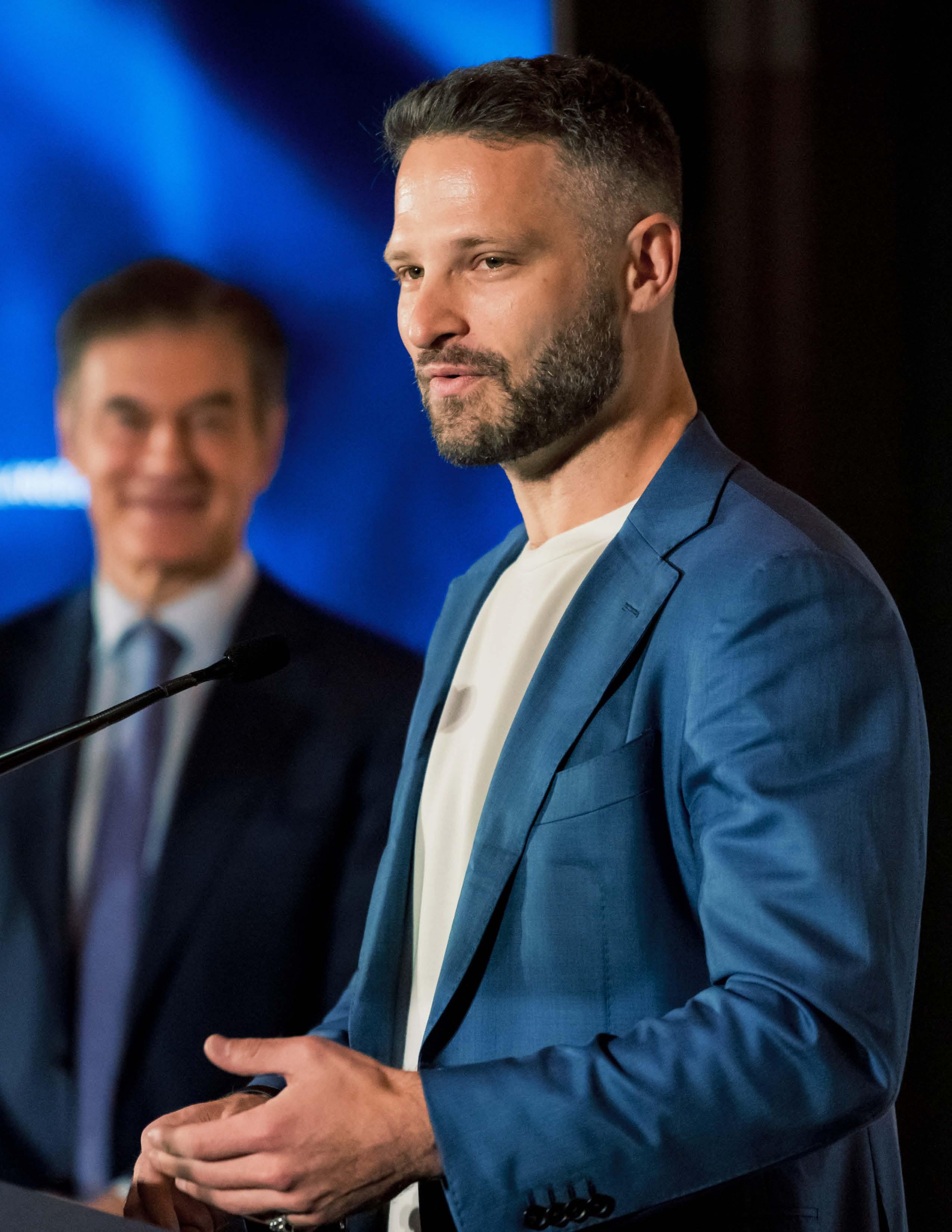
DAMKIANNA: Seth, thank you so much for joining me on the line for AwareNow Media. Before we dive into Dollar Donation Club, I’d love to learn more about you. I’d love to hear about your journey and some key moments or experiences that, at the time, may not have seemed significant, but were actually preparing you for everything you’re creating at this scale right now.
SETH: Yeah. What comes to mind is when I was 10 years old, the first time I laid my hands on a video camera. It was my dad’s video camera, and I immediately had this knowing that I am a storyteller and that I’m a filmmaker.
That led to becoming a filmmaker at a very young age. I made my first feature film at age 19. I got really into music videos, and I was just fascinated by how you can craft the perception of reality through storytelling.
At a young age, I made this connection. Storytelling is the most powerful technology on the planet. Everything that we experience as a civilization, as an individual species, is through the lens of story. How we create governments, how we create the concept of money and exchange, how we educate our children, all of these are storytelling frameworks and lenses.
I didn’t realize it at the time, but that became the way that I viewed the world. As I grew up and got older, I started asking: If storytelling is the most powerful technology in the world, how can it be used for the most good possible?
That led to reimagining. How do you reimagine the stories of the world? The way we govern, the way we educate, the way we enforce laws, the way we approach medicine even. That led me down the rabbit hole of studying all these paradigms of how we created the world, what the storytelling framework is underneath it, and how we can create new stories that emerge a new way of being that gives rise to human flourishing and planetary flourishing, which is ultimately the goal.
We have a short time on planet Earth. How do we maximize well-being, and how do we minimize suffering?
DAMKIANNA: That’s so beautiful, and I love how it ties all the way back to your childhood. Tell me a little bit about how you weave that storytelling into Dollar Donation Club and how this has become a mission. You really talked about zooming out and looking at, on a wide scale, how stories actually shape the world. How do all those pieces fit into what you’re doing here and now?
SETH: My journey of being a storyteller started with filmmaking, but at a young age, I also became fascinated with different mediums of storytelling. There are the traditional mediums: filmmaking, photography, theater, literature. These are what we think of when we think of storytelling.
But I became interested in alternative mediums of storytelling. One that I got very interested in was the medium of experience design. How do you tell a story through the way people move through space and have an experience?
That led me to starting a festival conference called Future Frontiers, which was an immersive story journey of a conference that took you into the future world that is possible with real thought leaders and innovators. It ran for about seven years in Austin, Texas, with about 700 attendees every year. It was at the intersection of reimagining the paradigms of the world and how we reimagine ourselves and our own consciousness.
It brought together a lot of interesting people, and it was a great experiment in a new medium of storytelling. I literally designed the conference as a hero’s journey with rising action, climax, resolution, etc. That idea of applying storytelling to alternative mediums became very interesting to me.
That also led me to seeing entrepreneurship and company as a medium. The idea that a company is a medium of storytelling fascinated me because a company is not in a movie theater, where you experience it and then go back to the “real world.” It actually is the “real world.” The way you interact with the business matters. Businesses are stories that are being expressed. They have consciousness. They have journeys that they invite you into.
That’s what led to me becoming an entrepreneur and a social entrepreneur.
It all converges together: the digital mediums of storytelling and seeing entrepreneurship as a medium of storytelling. I ran a creative agency called Telepathic, and we ended up niching into viral content campaigns for philanthropic projects. We raised around $20 million for different philanthropic initiatives over a five-year period.
I realized that I could craft stories that went viral and raised a lot of money for individual projects.
The idea that a company is a medium of storytelling fascinated me…
SETH BLAUSTEIN CEO OF DOLLAR DONATION CLUB
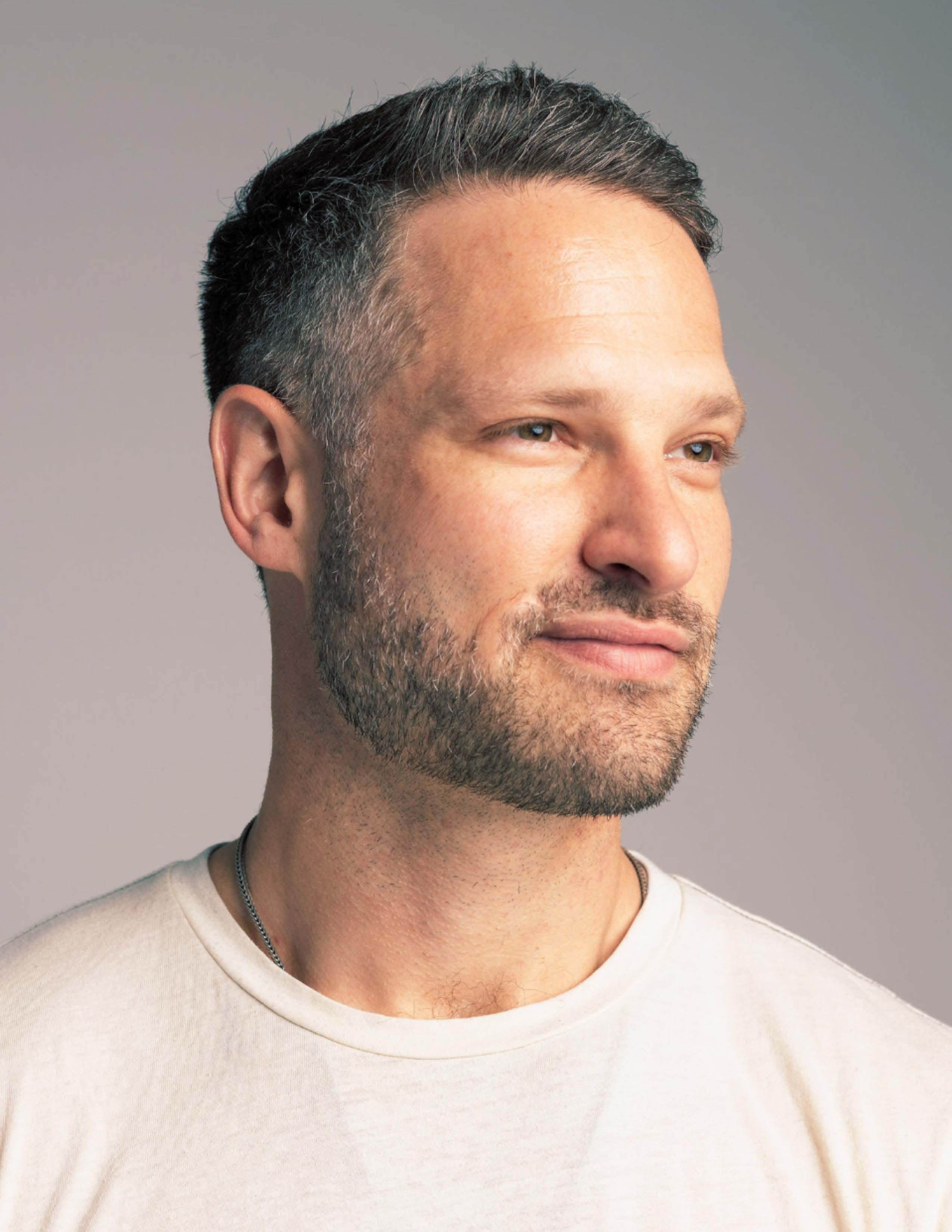
SETH: (continued) There was a moment when I was in India after I had published a campaign video. I got a text message that the video was going very viral. It ended up with 28 million views, completely organic, and helped raise $1 million for that cause.
As that was happening, I had seen this pattern over time where millions of people view the video, learn about the cause, and get involved. But each individual in the comments of those threads, whether it was a Facebook or Instagram video, was feeling individually disempowered. They were saying things like, “Someone should do something about this,” or “How do we get Jeff Bezos or Elon Musk to do something about it?”
There was this feeling of reaching for a billionaire, a government, or someone more powerful who could save the day. And yet, looking at the data of the campaign, 28 million people viewed this. Over 400,000 people shared it.
So what if all 28 million people unified together like a school of fish that could become bigger than a whale?
That’s where the idea led to Dollar Donation Club. What if we could make the school of fish of 28 million people selfaware so that it would swim in a direction together? What if all 28 million people who viewed it just gave a dollar, even one time? But why do it one time when you could give a dollar a month, and it would put no financial burden on any one person? As a whole, that network would create a much bigger monthly donation than an average billionaire’s donation.
Imagine that: $28 million a month without putting any real financial burden on any one person. And yet that school of fish, learning how to swim together, could be reforesting the planet, cleaning up the oceans, feeding children, educating children, and protecting pollinators every single month.
That was part one of the backstory that led to Dollar Donation Club and this idea of creating a collective billionaire philanthropist, which is unified humanity giving small amounts, but collectively solving big global challenges.
DAMKIANNA: That is so powerful, and the way that it evolved so naturally. I imagine you saw that the traditional model of philanthropy could be made more effective by empowering more people, which is what you’re doing.
I’d love to know a little bit about the community right now around Dollar Donation Club. How many people do you have right now? Also, what are some of the projects? You named some of the topics of what you’re supporting, but are there any particular projects you want to shout out or share that you’re supporting right now?
SETH: Dollar Donation Club proudly has 25,000 members. We have collectively planted over 3 million trees that help alleviate hunger and poverty. We’ve removed over a million pounds of ocean plastic, and we’ve funded over half a million days of education for children living in extreme poverty.
Our current project is funding underwater drones. They’re robots that plant seagrass because seagrass is under extreme danger from pollution and ocean acidification. We’re losing two football fields every hour of seagrass, and it sequesters more carbon per acre than the Amazon rainforest.
It’s a very critical marine ecosystem and Earth technology, as I call it. We don’t have any way of really scaling how to restore it at the rate that we’re destroying it. Right now, the way we plant seagrass is a human being with a seed in their finger and a snorkel, basically just bobbing up and down, planting with their finger. Sometimes they’re actually damaging the soil as they’re walking on it.
These robots cost less than $30,000, and they’re able to very safely and scalably plant seagrass. That’s one very interesting project.
To answer your question at a higher level, about how we’re changing philanthropy, most people have very little trust in the idea of charities or philanthropy. In fact, about 19% of Americans say they have high trust in charities. Most of us believe that it is very hard to understand where the money goes and what it actually does.
So we created the world’s best vetting system that helps you understand what a dollar actually accomplishes. What is the return on donation that actually happens and is measurable? You put money in. What comes out?
For example, a dollar on Dollar Donation Club can remove 2.2 pounds of ocean plastic. It can feed 16 people. It can plant four mangrove trees. It can protect around 187 bees per dollar.
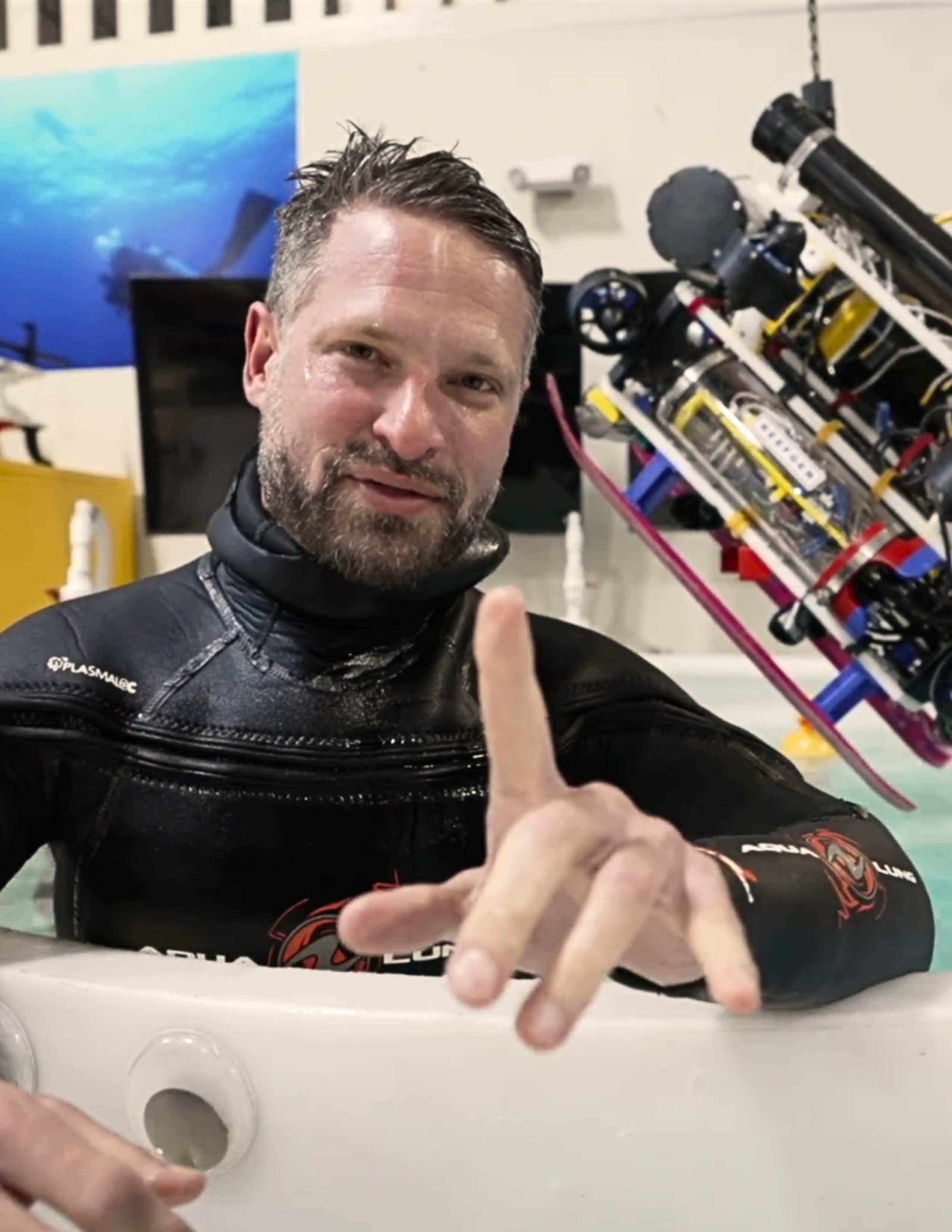

We are collectively pooling that into a laser beam of good every month.

SETH BLAUSTEIN CEO OF DOLLAR DONATION CLUB
SETH: (continued) We find the projects in the world that are the most effective, the most proven, the most scalable, where money goes in and impact goes out. They’re not just good at storytelling and marketing, which is how most nonprofits are raising money effectively. We cut through the noise of that to see who is actually solving the challenge.
And what is the challenge we want to solve? We call it humanity’s checklist.
If you go to Dollar Donation Club and look at humanity’s checklist, it is a big overarching set of goals that we’ve set for humanity across four different funds: Earth, ocean, wildlife, and humanity. It covers pretty much everything that any charity on the planet is covering that’s not political or ideologically divisive.
There are causes that unify everybody: replenishing forests, replenishing seagrass, feeding the hungry, ending curable diseases. There are a lot of people on this planet who are blind and don’t need to be, and roughly $20 to $25 could completely change their life so they wouldn’t be blind anymore.
We focus on goals like this that everybody can agree on. We might just find that if we solve all of those challenges together across political differences and ideological differences, maybe the things we disagree about as a species, the really big ones, would become less difficult to solve.
We’re focused on the things that we can solve together. For example, Donald Trump and Greta Thunberg both got on board with the idea of planting a trillion trees on the planet. We used to have six trillion trees on the planet. We now have three. There’s room for at least one more trillion. There are all kinds of ecosystem and economic bene fits to doing so. Great, let’s do that.
We can also feed people with those trees. There are so many different bene fits that we can bring through a project like that.
Bringing it all together, Dollar Donation Club is a school of fish, individuals giving as little as a dollar a month. We are collectively pooling that into a laser beam of good every month. We’re pooling those donations to make bigger, more powerful, more leveraged donations to projects that have really outsized impact.
Ideally, we find projects that we call acupuncture points of change, where a minimal amount of money creates the maximum amount of positive benefit.
DAMKIANNA: Yes, that’s so powerful. I love that there’s transparency and that you have a system for measuring impact. When you look at why people may not trust charities, a lot of donations are tied to tax deductions, but you’re talking about measurable impact and really circling back to empowering people. It is so easy to sit back and say, “There’s too much. How can I possibly make an impact?” You’ve created a system for many people to make a measurable, positive impact.
Like you said, a dollar a month is doable for a large majority of people. For people listening, this AwareNow Media community is made up of millions of people around the world who are really interested in human causes. Everything you’ve outlined here is exactly that. What you all support at Dollar Donation Club is beyond party lines. It’s about human betterment and making everything better for all humans.
How can people get involved?
SETH: Join Dollar Donation Club.
We say that the Dollar Donation Club is for those who give a buck, and we need to inspire everyone to give a buck about the world, about their neighbors, and about the planet.
You can join for as little as $1 a month. It’s very easy. We have eight-year-olds who give a dollar of their allowance every month, and they’re tracking how many trees they’ve planted and how many pounds of ocean plastic they’ve removed.
You’re right that we’re in a time where it feels like the problems are so much bigger than can be solved. That leads to this helplessness. These are big challenges that we care deeply about, and yet we feel more disempowered than ever about how we individually can make a difference.

Exclusive Interview with Seth Blaustein https://go.awarenowmedia.com/podcast/give-a-buck

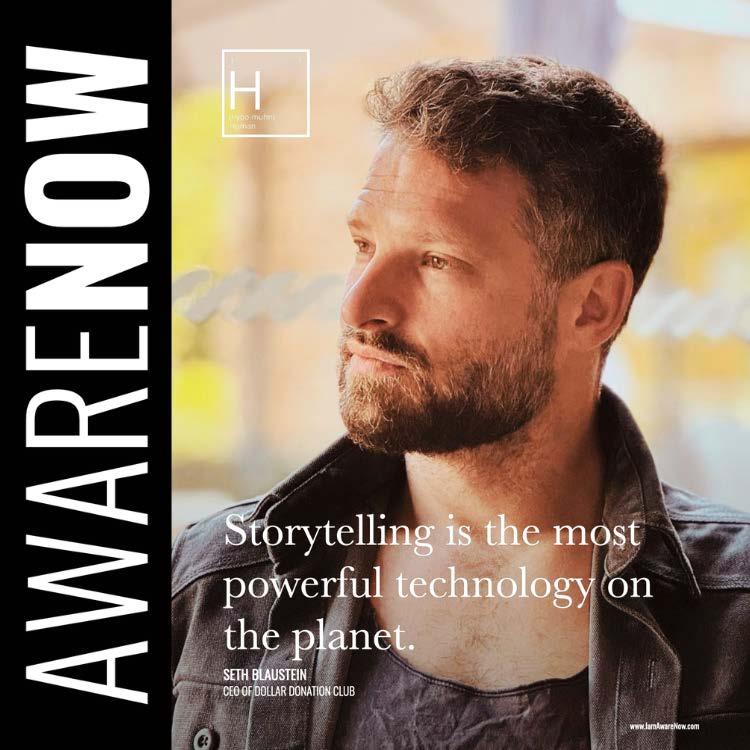
SETH: (continued) The paradigm shift is from me making a heroic difference myself, which is kind of the last epoch of history, to asking: What would happen if 5 million people cared about this together? That is exponentially more powerful than anything one individual could do.
We are moving into, I think, an age of the power of collectives and schools of fish, and how we create unified consensus around solving global challenges.
Let’s create a collective billionaire philanthropist that is not just leading their next business venture with philanthropy, which is often what philanthropy at scale does, unfortunately, but is truly for people and for the planet, for the soil, for the species, for the ocean, for all the ecosystems.
We are on a spaceship in this beautiful universe, and to keep the services of this spaceship thriving, there’s a lot of work to do. We can do it together. It really is possible to make massive shifts and massive change with as little as $1, $5, or $10 a month.
So I hope I inspire you, and I encourage you to join Dollar Donation Club. Join our school of fish and see how good it feels to give a buck. ∎
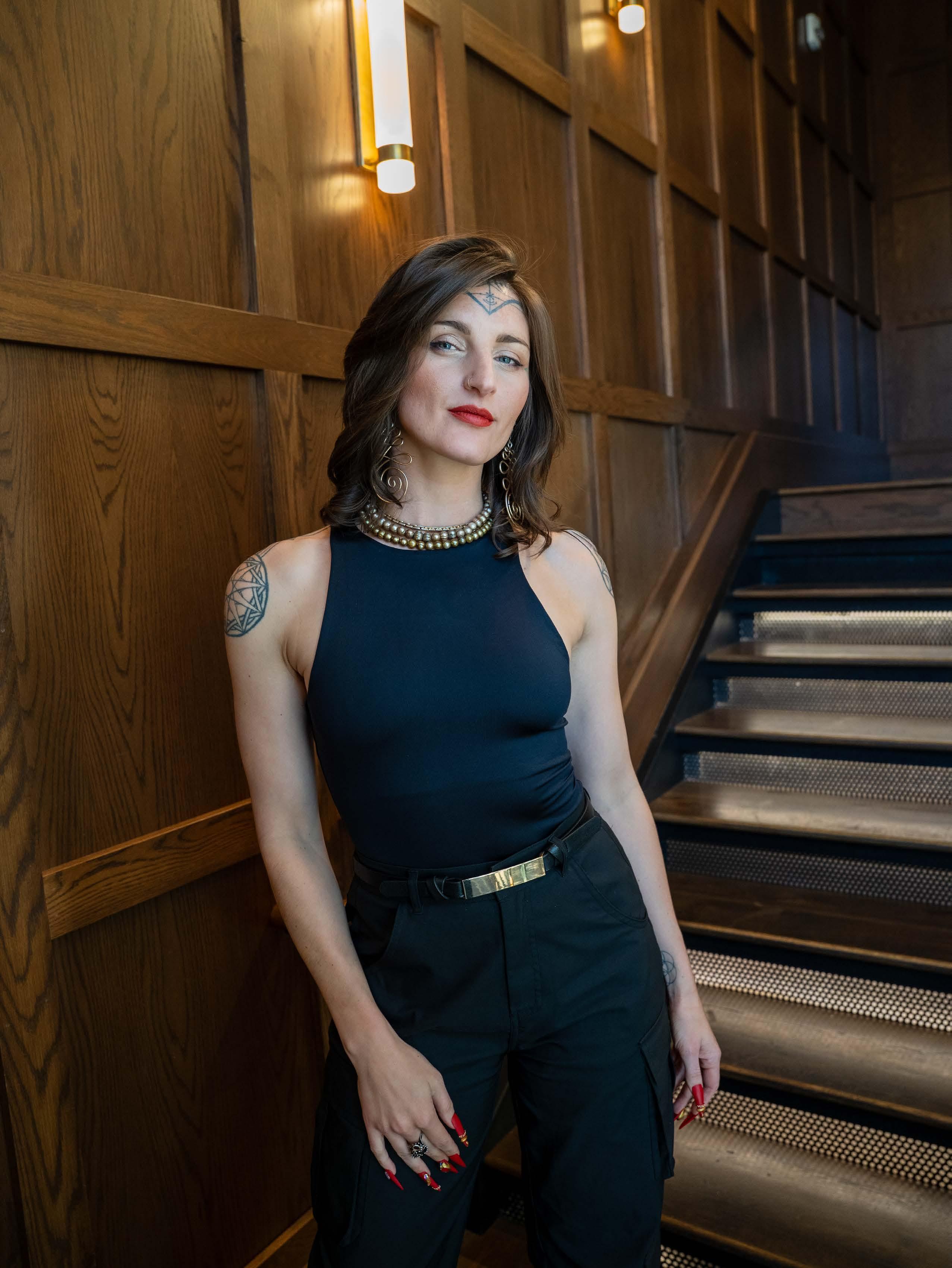
DAMKIANNA
Damkianna is a private advisor to visionary leaders and founders devoted to precision, presence, and higher intelligence. She is the creator of The ALIGN Method, a body-based approach that restores clarity, decisionmaking, and leadership from within. Through private council, speaking, music, and immersive experiences, her work supports leaders in moving with coherence rather than force.

PHOEBE WALKER FOUNDER OF DAMMS 411 & MS RISING
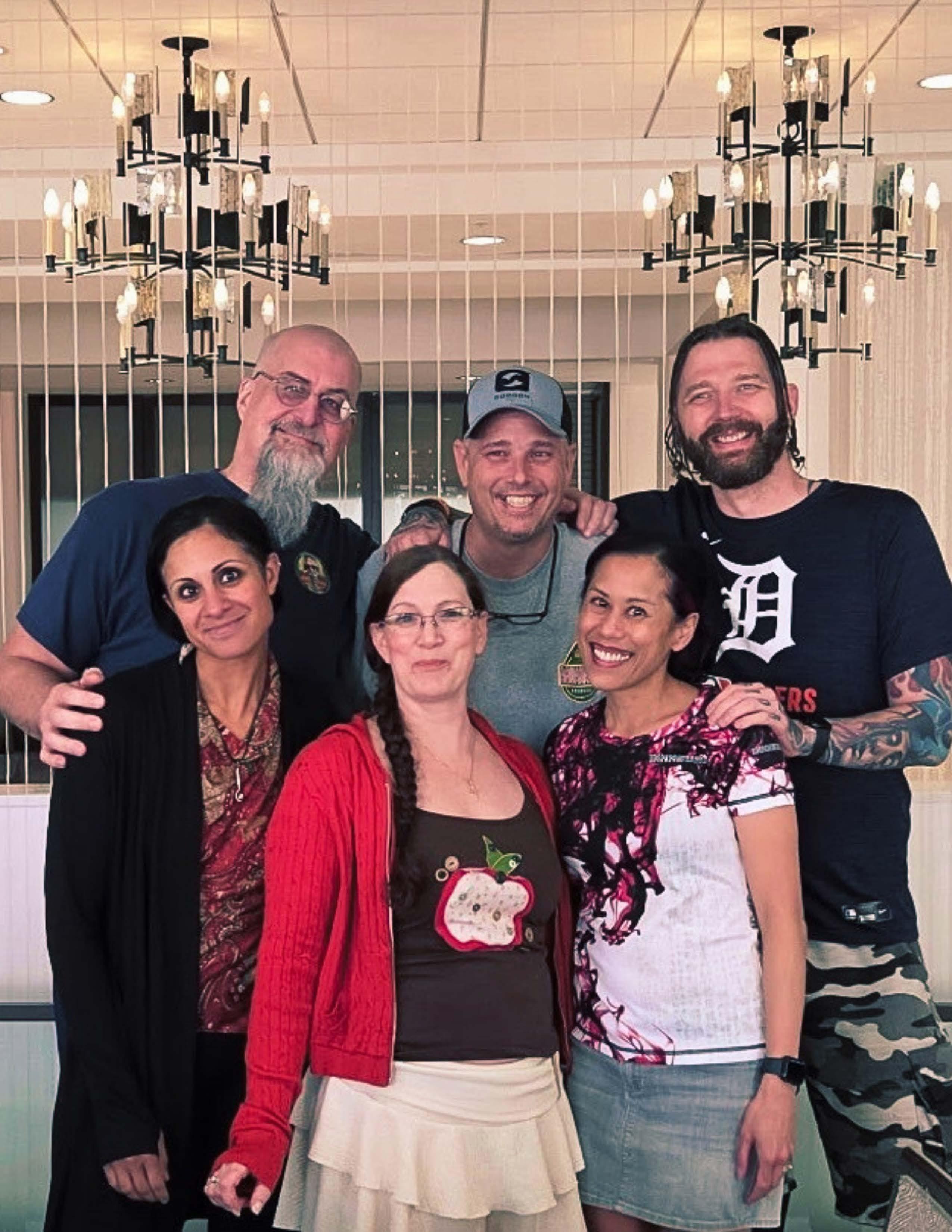

PERSONAL STORY BY PHOEBE WALKER
As the founder of MS Rising and organizer of this year’s inaugural World MS Day event, I can say the results far exceeded my expectations. Before I re flect on the event itself, I invite you to bear with me as I share the origin of the MS Rising movement.
During one of my emotional MS lows, feeling sorry for myself and trapped in a cycle of, “I can’t believe I am still living with this beast and the endless, relentless symptoms that surface at the most inopportune moments,” I questioned whether I had any worthwhile purpose left. It was at this low point that I came across a post from a powerhouse MS Warrior, Adam. Despite having primary progressive MS and being in a wheelchair within five months, Adam was living his best life and helping others. Another friend with MS runs every day and organizes events for fellow MSers. Then I realized that I, too, had exceeded my expectations by learning to ballroom dance, even competing at the national level in high heels. This realization sparked the idea for MS Rising. Others were living their best lives with MS, and I was too. I just needed to step out of my darkness and reach out to others who were also facing MS head-on.
I reflected on my diagnosis 20+ years ago: all the things I wish I’d known, the patient-to-patient resources I wish I’d had. I remembered podcasts and MS magazine articles where I longed to contact success-story interviewees, to ask them my own questions, to know that they were real, and to see that they had found ways to live fully despite the struggles. I wanted to connect, to befriend, and to let them help me out of the darkest places MS can take us, places even my closest loved ones can’t fully understand because they don’t live with MS.
That’s when I knew I was onto something beautiful. I assessed what was available to our community and realized we needed a platform for open discussion, not just with anyone with MS, but speci fically with those who could serve as encouragement and living examples of resilience in all circumstances. My goal became to foster an inclusive environment that respects each person’s unique journey, without comparison or judgment. Rather than drawing others into negativity, I wanted a supportive, nonjudgmental space where people could celebrate achievements, share their Wavecrest moments, and find strength through mutual support during wave breaks.
So, I created the MS Rising event to address a critical need: real-time peer connection. What I thought would be solely about connection and inspiration turned into so much more. The true purpose of MS Rising only became clear when I saw the panelists not as individuals, but as a collective. We needed to address and support mental and emotional health while promoting movement and fostering community. Peers helping peers is a critical need. There’s a unique safety in being vulnerable with someone who truly understands. Inspiration goes further when it comes from someone walking the same path as you, facing the same invasive beast.
Reflecting on the event, I’m filled with pride for our entire team. Allié, in particular, was a standout. She effortlessly guided the panel through tough, thought-provoking, and even downright silly questions, helping us tackle some of the “hot topics” of living with MS. I’ve really come to admire her for everything she brings to the table. She’s a bit mysterious, somehow always knowing exactly what’s going on, what needs to be done, and how she can help, often before anyone else realizes it. She doesn’t just anticipate needs; she acts on them. Honestly, I wish I’d had someone like Allié in my life long before this year. I feel truly blessed to have her and AwareNow in my inner circle now.
Jonathan is one of our two panel members with a medical background. He was our psych nurse with MS and our unofficial, non-keynote speaker. While he has had MS for the shortest time out of the group, he left us with a lot to think about when it comes to managing the mental and emotional sides of life with MS. His insights gave us practical ways to handle that part of our journey, with a focus on humor and rest.
One of the most eye-opening and relatable statements for many on the team, and for those watching, was his statement, “One’s perception becomes their reality.” That is one we can all marinate on.
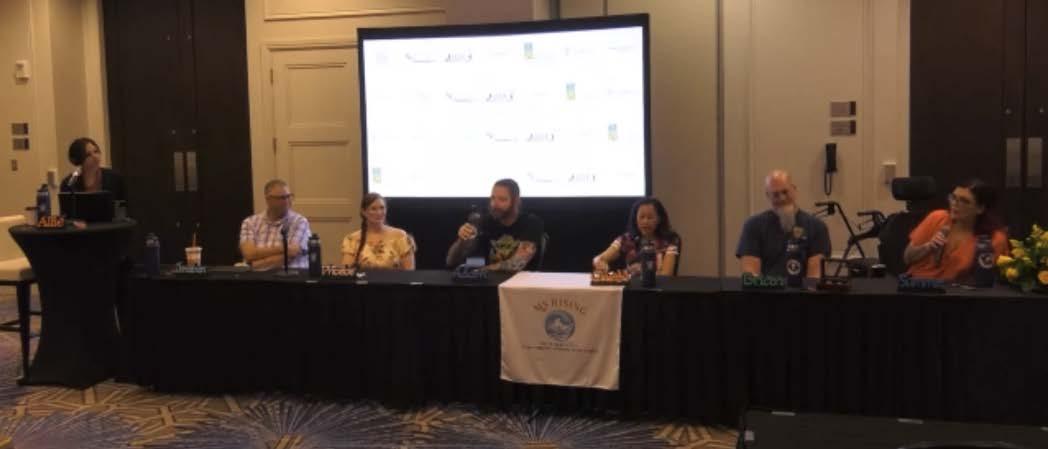
look great just yet, but that is his daily focus. I could relate. While I wasn’t diagnosed with paraplegia like Adam, I did lose the ability to stand and had to retrain myself to walk again before ever starting MS medications. Now, keeping my legs moving is a daily, intentional act. Adam is a powerful patient advocate despite his relatively recent diagnosis. This is what makes him a perfect lead for the MS newbie Zoom group that he holds regularly. He will be a strong advocate for anyone who wants to keep going with MS. (MSdwiththewrongMFr)
Cheryl was the person who helped me start moving again during the pandemic, which threatened to steal my mobility for a second time. She was the first MSer to inspire me in a way I could physically connect with. Cheryl’s journey is deeply inspiring, and her compassion is just as impressive. Hearing her share her experiences never gets old, and honestly, the same goes for the entire panel. Cheryl is the founder of Run A Myelin My Shoes (RAMMS), an incredible community of MS runners, walkers, dancers, and anyone who chooses movement. I can’t say enough about how she encouraged me and guided me back onto the right path when giving up seemed easier.
Brian, once a standout football player at the University of Michigan, faced the profound challenge of losing a part of his identity when multiple sclerosis took his job. He shared how he was forced to step back and reinvent himself yet again. Rather than give in to despair, Brian drew inspiration from his struggles and found a renewed purpose: helping others in the MS community.
With a heart of gold, Brian works tirelessly to encourage others living with MS, reminding them to keep doing what they can for as long as possible, and when it’s time to move on, to find the courage to transition to something new. Now, through his MichiganMan64 podcast, he shares powerful stories from people living with MS every week, inspiring listeners to persevere, adapt, and find hope in the face of life’s toughest challenges.
And then there’s Summer, our second panel medical professional. I’m still in awe of her. She was diagnosed with MS just four months before finishing her short white coat period after med school. For those unfamiliar, the long white coat comes after residency. Her MS progressed rapidly, and now she uses an electric wheelchair for work, but switches to her manual chair for fun. She crowd surfs, plays in mosh pits, goes skiing sitting down, and is working on tandem skydiving, all while working full-time as a doctor. For anyone who thinks you can’t have fun from a wheelchair, Summer proves otherwise.
All of these panelists exemplify why we need our community: to remind each other that even with MS, there’s still plenty of fun, and life, to be had. Within two weeks of the event, we reached over 800 individuals through relaxed conversations in a non-sterile, real-life setting filled with inspiring, vulnerable testimony. The raw conversations tugged at my heart, new lifelong friendships were formed, and a community was established. The vision quickly expanded into an evolving initiative, one that grows with the community, providing ongoing support and inspiration to “just keep moving.”
The overwhelming response to the inaugural MS Rising panel is humbling and underscores the need for this community. We now have a blueprint: MS Rising’s annual panel event, with raw, unscripted conversations where questions can be answered honestly. With our Facebook group (https://www.facebook.com/groups/msrising), there is 24/7 access to the community. Come talk about needs, share victories, or lift a peer. I am excited to see how this community will grow and adapt. The depth and power of our community is palpable when we stand together. Let’s join this movement and keep our waves moving forward, together. ∎
Watch the inaugural MS Rising Panel Discussion: msfocus.us/msrising Learn more about MS Rising: damms411.org/ms-inaugural-panel

DR. RICARDO ARAIZA COORDINATOR OF ENGLISH LEARNER PROGRAMS
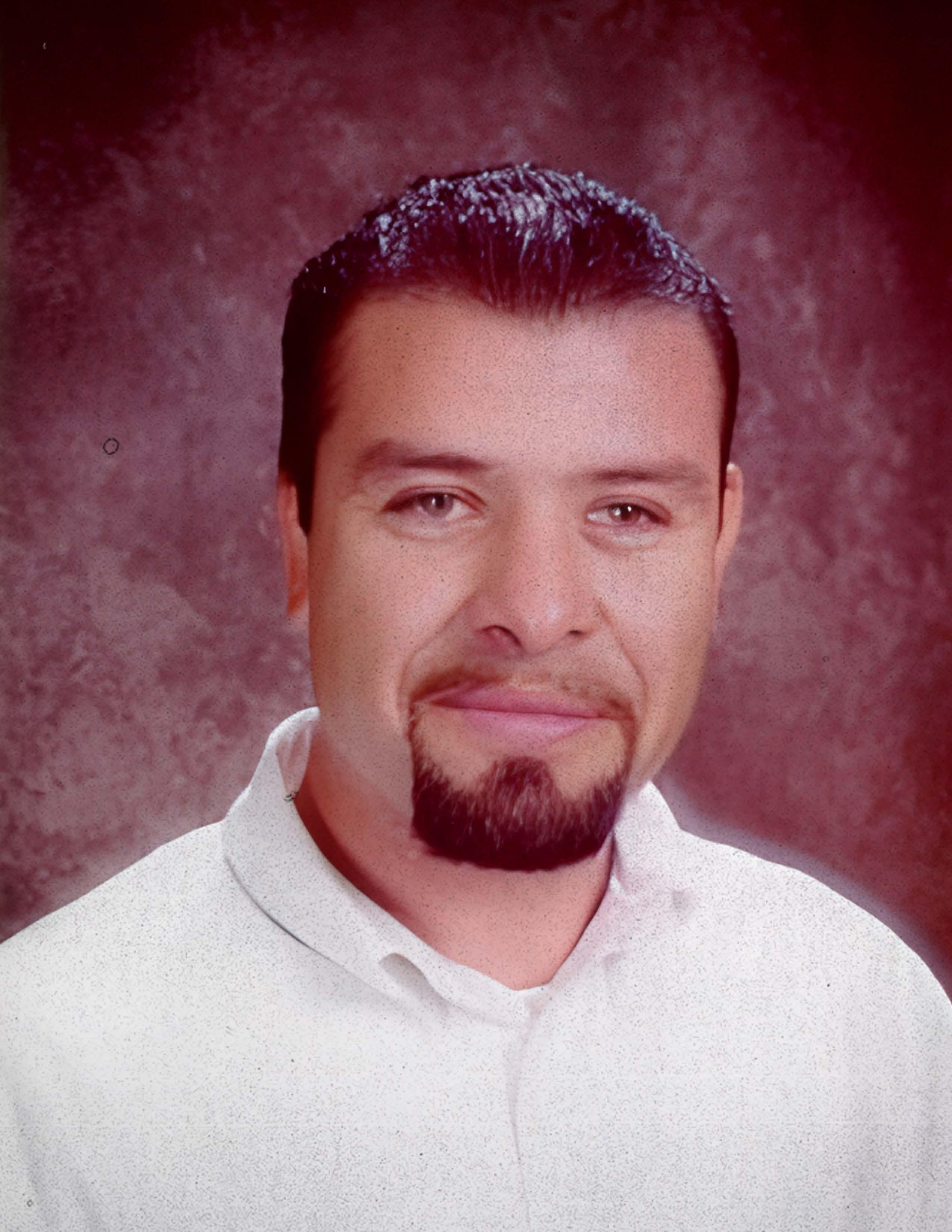
There was a moment in middle school when everything went quiet. The entire student body sat in assembly as student names were called for the end-of-year academic scholar acknowledgements. One student was expected. The second was not. When his name was announced - “Ricardo Araiza” - there was a brief, but heavy moment of silence. Hesitation, confusion, even disbelief filled the assembly hall. Ricardo stunned himself, slowly stood.
For much of his young life, Ricardo had been seen differently. Born in the United States, he spent his early school years moving between countries, first in American classrooms, then in the public school system of Tijuana, Mexico, after his family relocated out of financial necessity. When he returned to the U.S. in sixth grade, not only did he have to navigate through a new academic transition; he also had to carry the visible and invisible complexities of identity being a bilingual learner, a young person living with hearing loss shown clearly by his right ear deformity, and a student with a pronounced speech stutter.
In seventh grade, multiple surgeries on his right ear left him wearing a white patch secured by a blue band across his head for months. It drew attention he didn’t ask for. “In middle school, when you’re just trying to figure out who you are, that made everything more visible,” Ricardo recalls. Teasing was daily, and isolation followed at times. Despite the difficult experience, something became far more powerful.
Teachers noticed him.
Ricardo wasn’t the loudest voice in the room. He was the most persistent and consistent in his learning experience. Teachers noticed his unmistakable drive. That unexpected moment in the assembly, being named Scholar Athlete of the Year, became a turning point for Ricardo. “I didn’t realize people were seeing me that way,” he says, “They saw something I hadn’t yet fully seen in myself until that moment.”
His educational path was anything but traditional. In Mexico, Ricardo completed elementary school but was denied a diploma because he wasn’t a citizen, which became a moment that introduced him early to the realities of systems and belonging. Back in the U.S., he struggled with English while excelling in math. He navigated school without the guidance many students take for granted. As an English learner, he wasn’t steered toward honors or advanced placement early on. In fact, he later learned that students who looked like him were often directed away from college altogether. With parents who didn’t exceed elementary school education, Ricardo couldn’t rely on them to advocate on his behalf at a young age.
A middle school math teacher, Mr. Chavez, recognized his aptitude and planted a seed: You could be good at this. Years later, in high school, Ms. Osborn did something even more transformative by showing him how to get to college, how to apply, what to do next, and most importantly, what was possible. “If it wasn’t for her,” Ricardo reflects, “I probably wouldn’t have gone to college.”
At the University of San Diego, he entered a new world without a roadmap. His parents believed deeply in education, but they couldn’t guide the process. What they gave instead was unwavering support. He explored different paths from pre-med to engineering, before something clicked. “I didn’t want to be behind a computer or in a hospital,” Ricardo explains, “I wanted to work with people.”
DR. RICARDO ARAIZA COORDINATOR OF ENGLISH LEARNER PROGRAMS FOR PALM SPRINGS UNIFIED SCHOOL DISTRICT
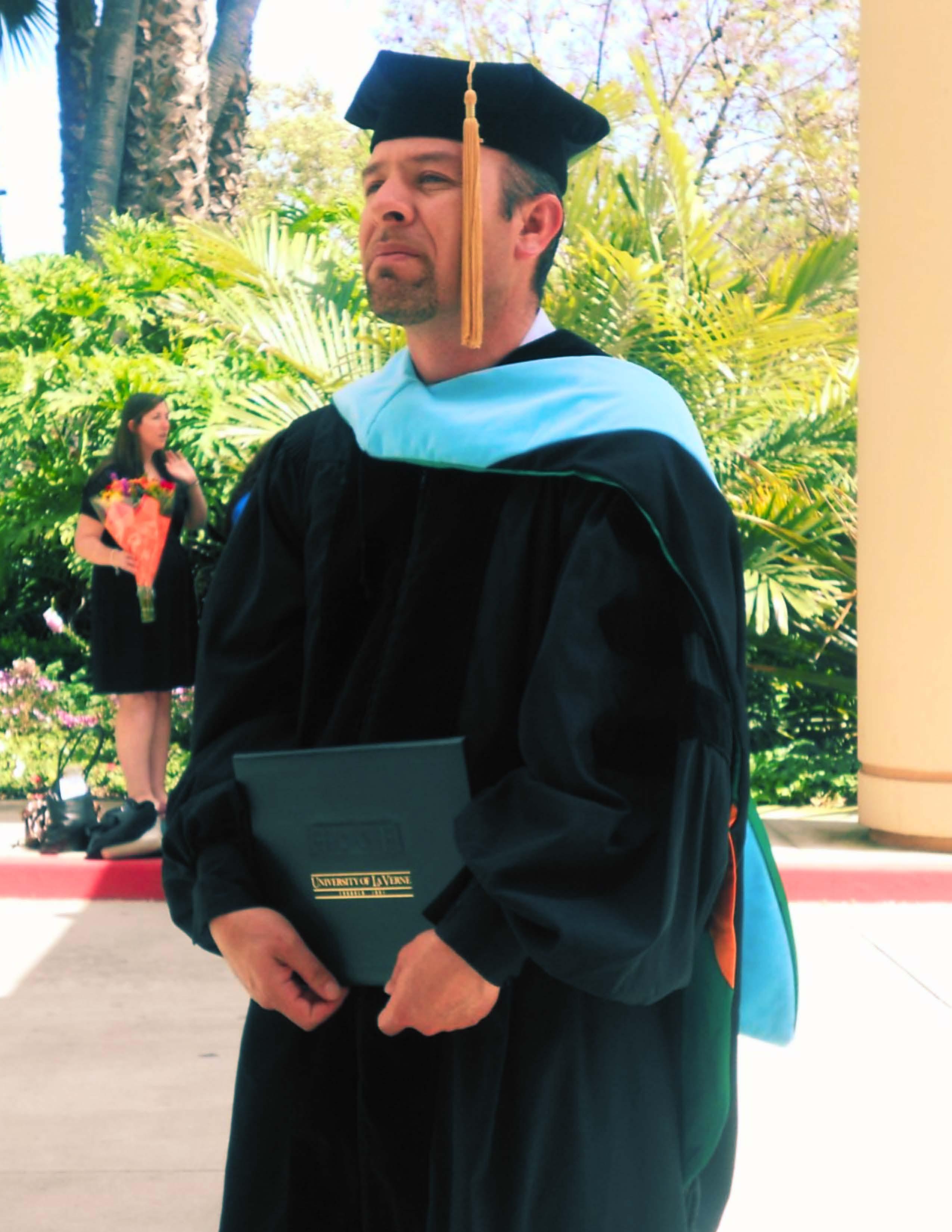
Written by Sonja Montiel & Narrated by Dr. Ricardo Araiza go.awarenowmedia.com/podcast/the-leader-who-sees-what-others-miss

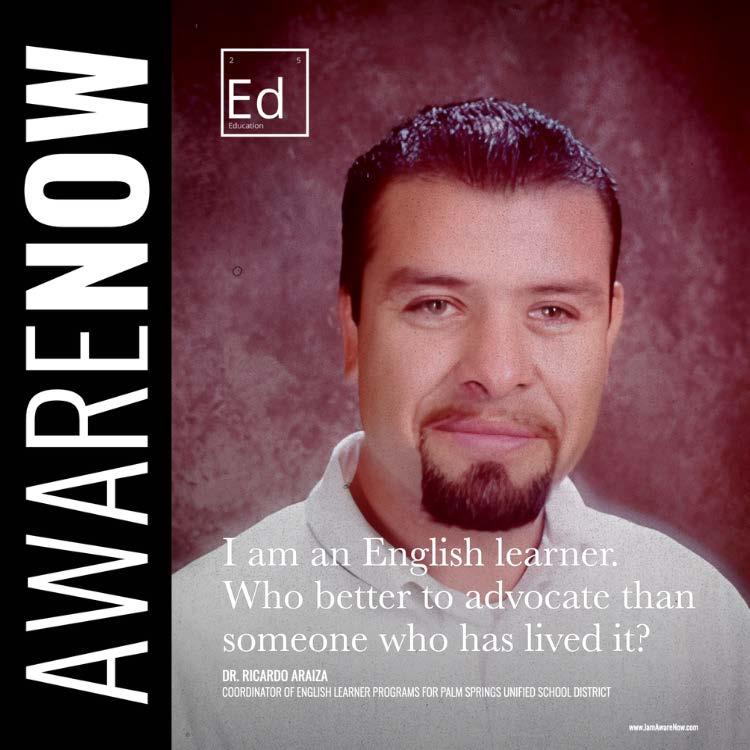
Teaching became personal. Ricardo wanted to become the person he once needed, someone students could see themselves in. As a bilingual educator, a leader with similar lived experience, and proof that their circumstances did not define their potential, Ricardo knew that he could teach young people what was possible for them.
However, he also understood that to make a sustainable impact for students, he would have to go to the next level. As a principal, and now as an English Learner Program Coordinator for Palm Springs Uni fied School District, Ricardo’s influence expanded beyond a single classroom to entire systems by supporting teachers, guiding principals, and shaping programs that affect thousands of students.
With assertiveness, advocacy, and justice, Ricardo’s leadership is rooted in a clear conviction that every decision must protect students, especially when it’s difficult. “Holding other teachers and leaders accountable to how we treat and protect students can lead to uncomfortable conversations and con flict. However, I know that if I don’t do anything just to avoid discomfort, I am approving behavior that harms students.”
Today, Ricardo’s work centers on supporting multilingual learners, students whose experiences mirror his own. “I am an English learner,” he says. “Who better to advocate than someone who has lived it?” His philosophy is both deeply personal and urgently relevant. Ricardo believes that a student’s zip code, native language, or physical differences should never determine their intellectual potential. Although he knows those biases exist in current systems, he remains a beacon of challenging those biases. He raises awareness that every student arrives with limitless capacity.
Ricardo hasn’t forgotten the boy sitting in that middle school assembly who arrived feeling overlooked, and left feeling seen. “My growth has never been alone. At every stage, there were people - teachers, mentors, leaders - who offered guidance, belief, and opportunity. My mission is to be that someone to students.” ∎
To learn more about Dr. Ricardo Araiza: ricardoaraiza@hotmail.com
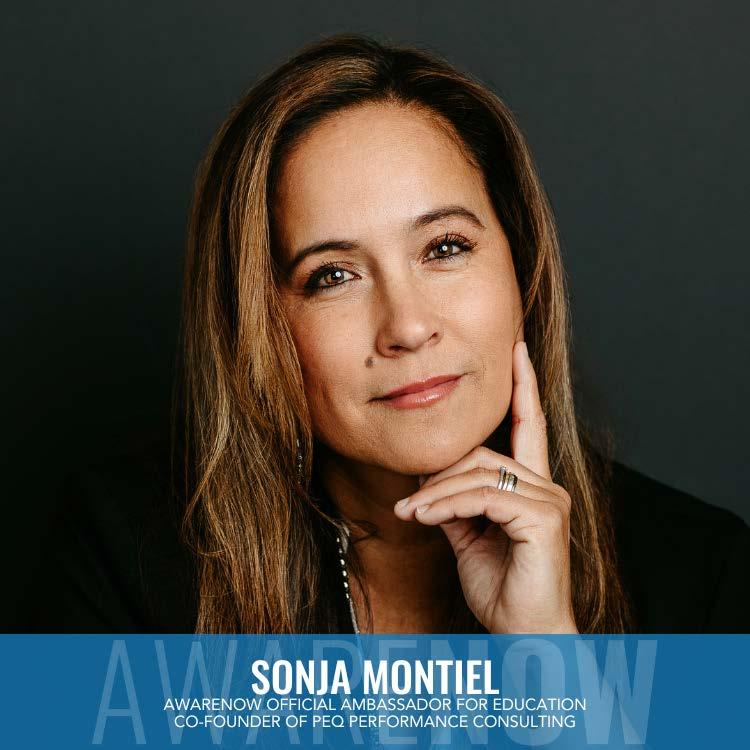
SONJA MONTIEL
Co-Founder of PEQ Performance Consulting www.awarenowmedia.com/sonja-montiel
SONJA MONTIEL (MA Education) is a cofounder of PEQ Performance Consulting LLC and cohost of “The DH Effect” podcast. She and her partner, Hilary Bilbrey, guide individuals, families, and teams to consistently reach successful outcomes through positive and emotional intelligence strategies. During Sonja’s 23 years working with thousands of teens and young adults worldwide, she began to witness many societies creating an unhealthy hyper-achieving culture that misguides our young people in their pursuit of living a life of fulfillment. Sonja is changing that narrative highlighting educators around the world who dare to think differently about education. (www.peq-performance.com)
www.IamAwareNow.com
DUFF ARCHIE FOUNDER OF EXPEDITION MS

The adjustable bed, the wheelchair, the shower chair, all of it was mostly donated or curbed within a week. We needed the equipment and disease out. You spend years watching a disease take hold in your house, and eventually, you want the house back.
Whether it actually works is a separate question.
It didn’t, entirely. MS has gravity. We removed every physical trace of disease, but sometimes it’s a ghost. It’s in how your family talks, in what you notice on the street, in the silence where a joke used to be. We tried anyway.
Then COVID happened.
It’s 2020, and the world is locked down. I’m on the couch doing what apparently millions of other Americans were also doing that year, discovering boats. More than 800,000 first-time boat buyers entered the market in 2020 and 2021. Boat sales hit a thirteen-year high. The country had collectively decided that if the world was going to end, it might as well end at sea.
I found solace in Sailing YouTube. SV Delos, Sailing La Vagabonde, Sailing Zatara, Sailing Uma, Project Atticus. Crews of regular people documenting ocean crossings, anchoring in turquoise water, fixing diesel engines in foreign ports, building audiences of millions. These were real people turning a boat and a camera into media companies, part of the $250 billion creator economy, whether they knew it or not.
At the time, OffWeGo, the travel-risk startup I’d co-founded and eventually shut down, was in the middle of its pivot from study abroad to corporate travel risk management. The startup was rocky but working. Something else was forming in the back of my head that I couldn’t shake.
OffWeGo taught me three things.
1. Behavior change was the actual product. The technology was just how we delivered it.
2. You build for mission, not for exit.
But the third lesson took longer to name.
I was instructing Basic Keelboat at the Naval Academy that same summer and picking up hours at Washington Sailing School to keep the lights on while we weathered the pivot. Lying there on the couch between sprints and sailboats, watching YouTube sailors cross oceans, I kept thinking about Dad. There was one conversation, from his last few months, where I mentioned something about sailing for MS, connecting the Bike MS rides to the water somehow. It wasn’t formed enough to be a plan, and he died before it was.
Life kept moving. Work, relationships, holidays, one thing after another. But the idea kept circling. When I was a kid in Maine, I watched a kayaker get caught on the edge of a whirlpool, unable to paddle away from the pull. That’s what this was for years.

DUFF ARCHIE FOUNDER OF EXPEDITION MS
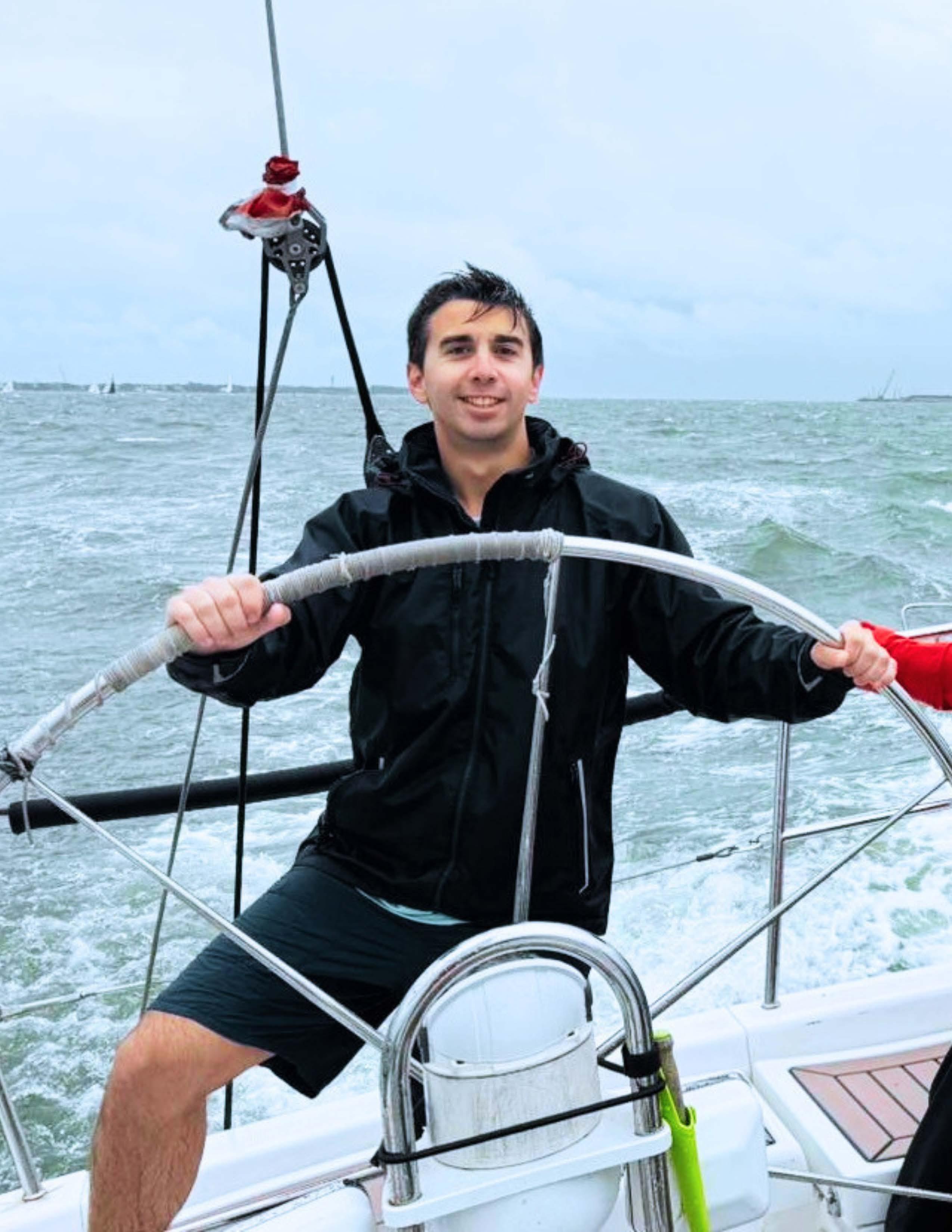

Then ChatGPT came out in November 2022. I spent a weekend talking to it like a co-founder, challenging it, iterating, applying everything OffWeGo had taught me about building something from nothing. By Sunday night, I had a business plan, a roadmap, and a first-step list.
I wasn’t even thinking of formal incorporation yet. The idea had just finally stopped circling.
The first thing I needed to know was who else was building this already.
Walk MS exists. Bike MS exists. There is no Sail MS in the formal, scalable sense. And there is little to no adventure travel content, let alone sailing content, built for the disability community. Everything that exists is either pity content or inspiration porn.
Nobody is making content that says, “This is for you,” not, “This is about you.” Nobody is building real experiences for people whose worlds get smaller every year while the rest of the internet chases sunsets.
A few months ago, someone left a comment on a sailing influencer’s YouTube video that just clicked.
“I was diagnosed with stage four cancer seven months ago. I’ve always dreamed of sailing to beautiful exotic places. But never had the means of making it happen. So I live vicariously through watching you living your dream. Keep it up, brother. I love what you’re doing.”
That comment is the person Expedition MS was built for, before it had a name. In reading it, the third lesson finally had one too.
Solve the problem that won’t let you go.
Many of those channels are disappearing. SV Delos, with 900,000 subscribers, hauled their boat and spent the last year in Australia building a custom catamaran. Sailing La Vagabonde, with nearly 2 million subscribers and the biggest sailing channel on YouTube, just announced they’re selling their $1.9M trimaran to homestead on a farm. Sailing Zatara, with 620,000 subscribers, now splits time between the boat and a Montana homestead. Project Atticus quit sailing entirely last September. Sold the boat. Moved inland.
That’s nearly four million subscribers across four channels, and all four creators are either off the water, leaving the water, or pivoting away from sailing content. The generation that built this category is cycling out.
And the audience they built is still there, and still watching, including people like the viewer with stage four cancer, who found meaning in content that was never made for them, and now has fewer places to find it.
Those channels served lifestyle content that, albeit beautiful and aspirational, is built for able-bodied couples chasing sunsets. The millions living with MS, ALS, spinal cord injuries, terminal diagnoses, or other progressive conditions were never the target audience. But they were there anyway, watching from the margins, writing comments that went mostly unread.
So I cold-emailed Echo Bay Media on a whim, the Emmy-winning Canadian production studio behind Departures, a docuseries I’d binged after studying abroad to keep the travel bug alive in the dreary North Country winters at St. Lawrence. I pitched them a global sailing expedition documenting the MS experience, and they got on a call that same month.
Their business partner had already produced a sailing series for National Geographic, which had been nominated for an Emmy in the Outstanding Camerawork category. They were immediately invested.
A world-class production team saying this story matters before I had a boat, a nonprofit, or a dollar raised.
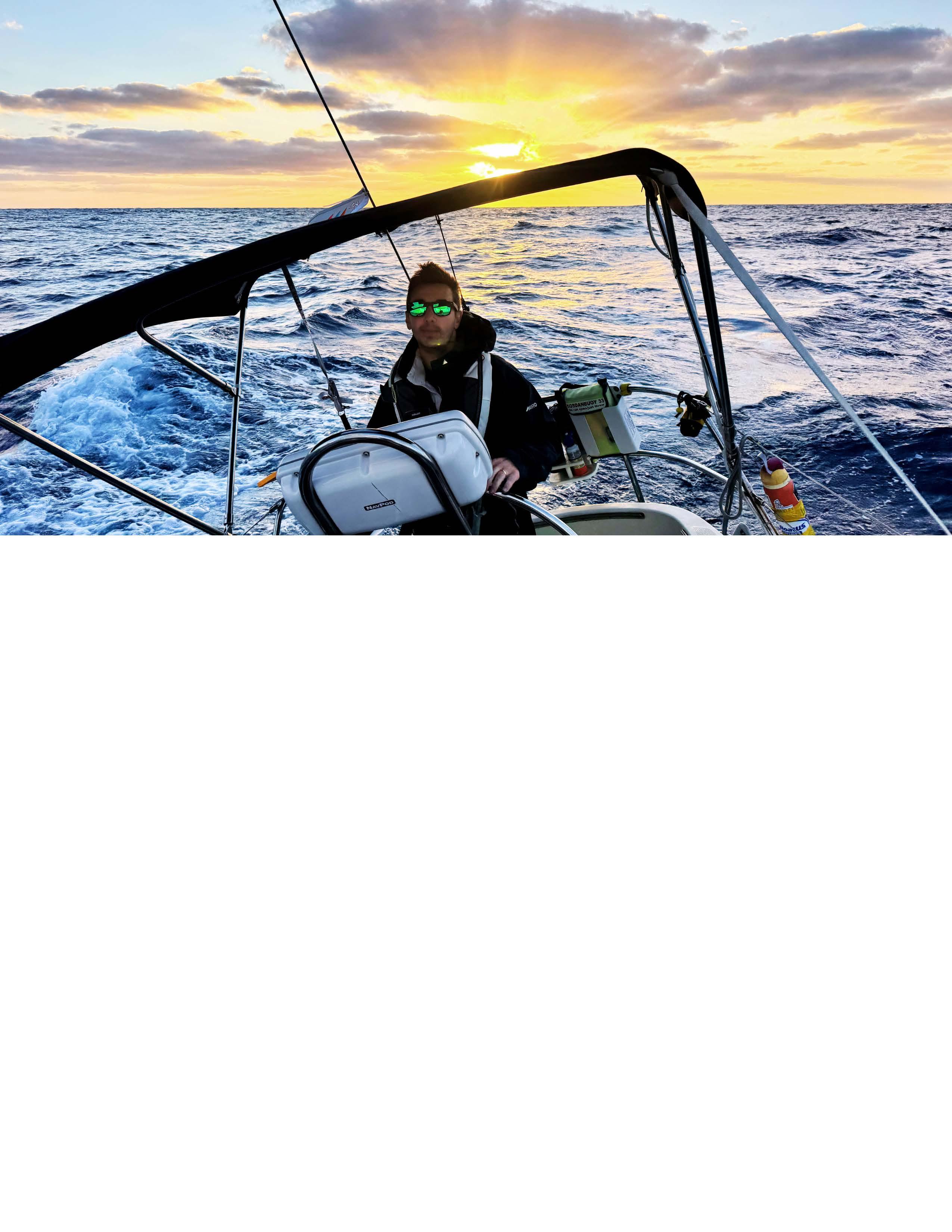
Written & Narrated by Duff Archie https://go.awarenowmedia.com/podcast/the-problem-that-wont-let-go


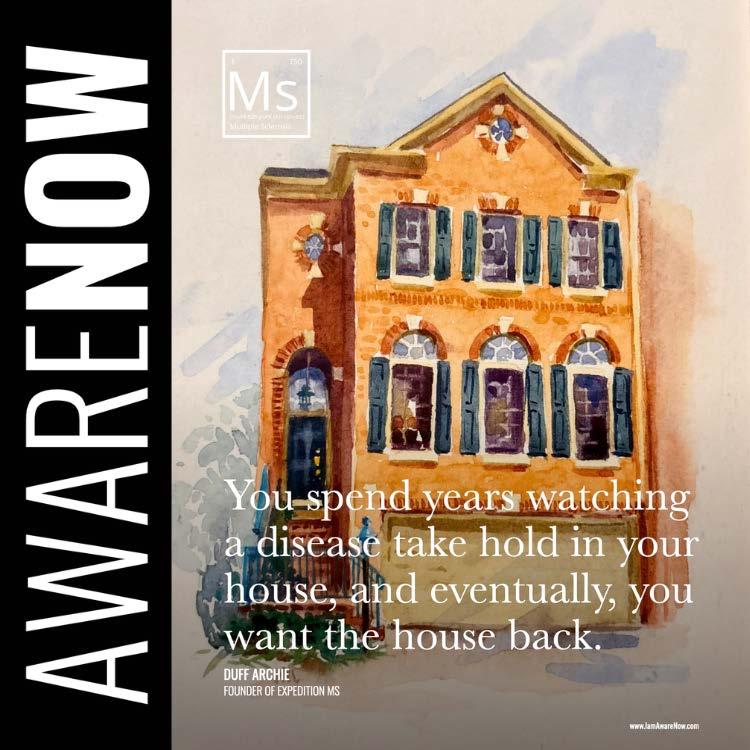
For people living with MS, the disease is one weight. The isolation is another. Sixty percent report loneliness as a direct result of the condition. More than half report unmet needs that have nothing to do with medication. One study called it being a “non-person to the rest of the world.”
My dad wrote a version of that down in 2012 and never showed it to anyone.
People who sail with Oceans of Hope don’t always come back talking about the sailing. They come back talking about cooking dinner for seven other people, standing watch at night, not thinking about the disease for most of it. For a week, the sea is the loudest thing.
The first Expedition MS voyage is what comes next. The crew is forming now. You are reading this in time to be on it. ∎
If any of this resonated, if you live with MS, if you love someone who does, if chronic illness or disability sits at your kitchen table, if grief has rearranged your family, or if you carry the particular itch of a problem that won’t let you go, this is the part where you do something about it.
If you’d want to sail with us someday, or give someone you love that chance, sign up for the first voyage. Share this with the person it made you think of, and subscribe to follow the build. Learn more here: www.expeditionms.org
The point of all of this is that fewer people are tired of being alone.
P.S. If you can help open doors for this, I can be reached at duff@expeditionms.org.
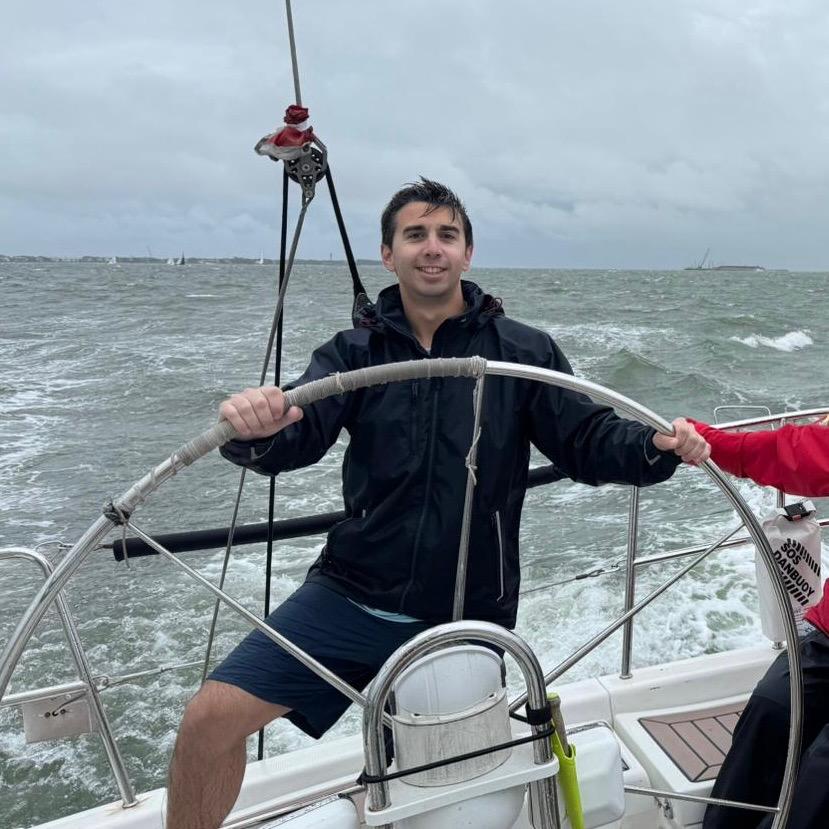
DUFF ARCHIE Founder of Expedition MS
www.expeditionms.org
Duff Archie is a writer and lifelong sailor whose essays move between the water and the living room, racing and yacht deliveries on one side, family and chronic illness on the other. He spent twenty years watching his father, Tim, live with Primary Progressive MS, and much of his work turns on what that taught him: that disability is more often a design problem than a tragedy, that humor is how a family survives a long decline, and that grief doesn't end so much as change shape. He's the founder of Expedition MS, a global sailing-and-storytelling nonprofit for the MS community, where every crew is mixed and every port is a community stop. His writing lives in the ordinary adjustments that hold people together when the body stops cooperating.
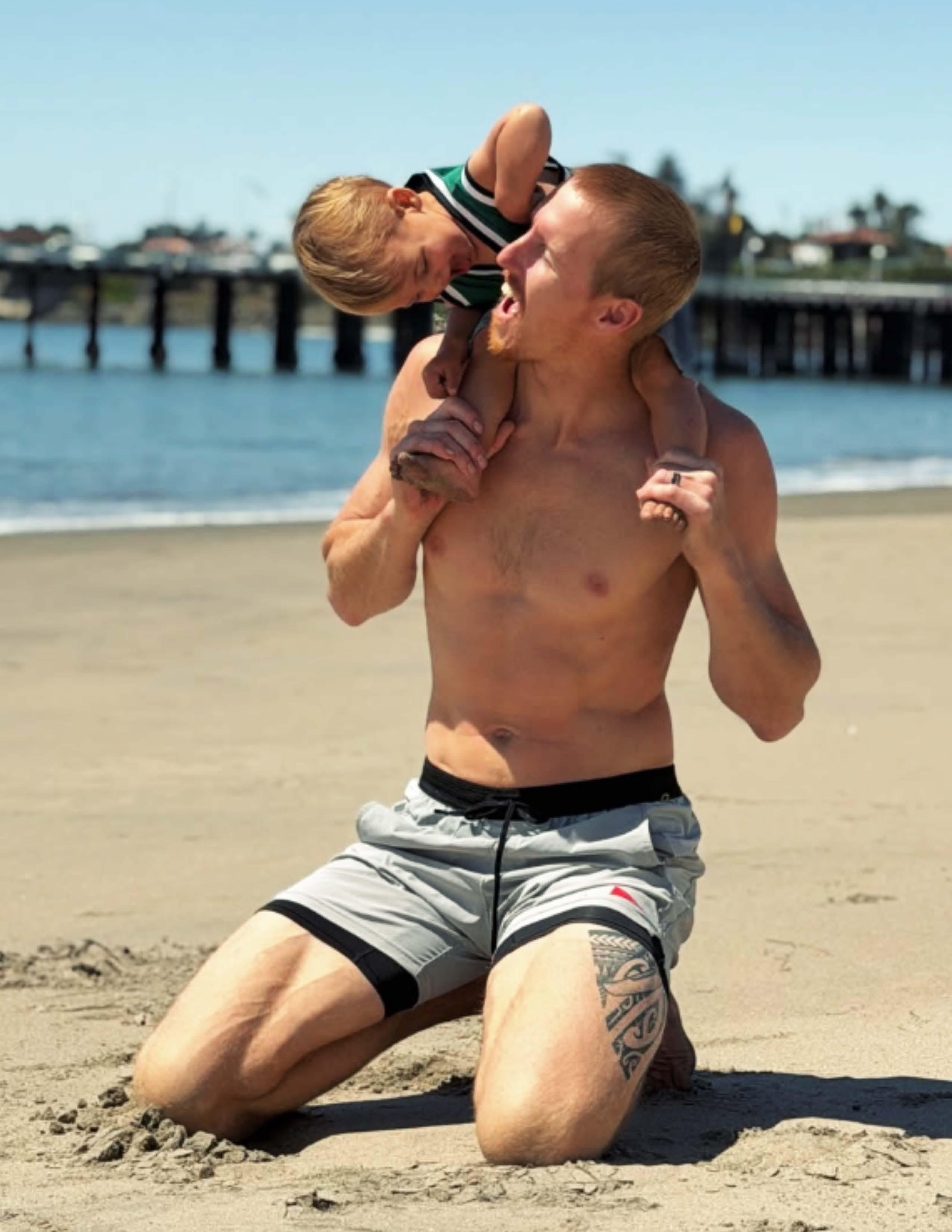

STORY BY TRI BOURNE
Almost 10 years ago, I started feeling symptoms that eventually led to me being diagnosed with an autoimmune disease—Dermatomyositis. After a few months of struggling and needing to step away from volleyball, I got a muscle biopsy that led to my diagnosis. I then lost about 30 pounds and was told not to play for nearly two years.
Until a few months ago, I had been doing IVIG infusions twice a month and taking methotrexate weekly since my diagnosis—all while traveling the world pursuing my beach volleyball dreams.
Taking these medications became part of my process, but it never became part of the long-term reality I saw for myself.
When I retired from beach volleyball, I decided to stop the infusions. Over the last few months, I’ve been lowering my methotrexate as well, with confidence that I could live normally and without any medications.
Well, I just got off the phone with my doctor, who has cleared me to stop taking the last of my meds. So today is the first Monday in almost a decade that I’m completely off medication.
Really excited that I’ve gotten to this point. I definitely don’t want to take it for granted, so I’m always going to listen to and respect the signs my body gives me moving forward. But wow, what a journey it’s been.
I hope this can be a source of inspiration for other people dealing with their own challenges. If there’s one thing I’ve learned, it’s that the body follows the mind. Whatever you believe tends to become your reality.
I never believed that I would rely on medications forever or that this disease would get the best of me.
I couldn’t be more grateful for the daily support of my wife, and for the support of all my family, friends, doctors and community. ∎

ELIZABETH BLAKE-THOMAS STORYTELLER, PHILANTHROPIST & OFFICIAL AMBASSADOR FOR HUMAN TRAFFICKING AWARENESS
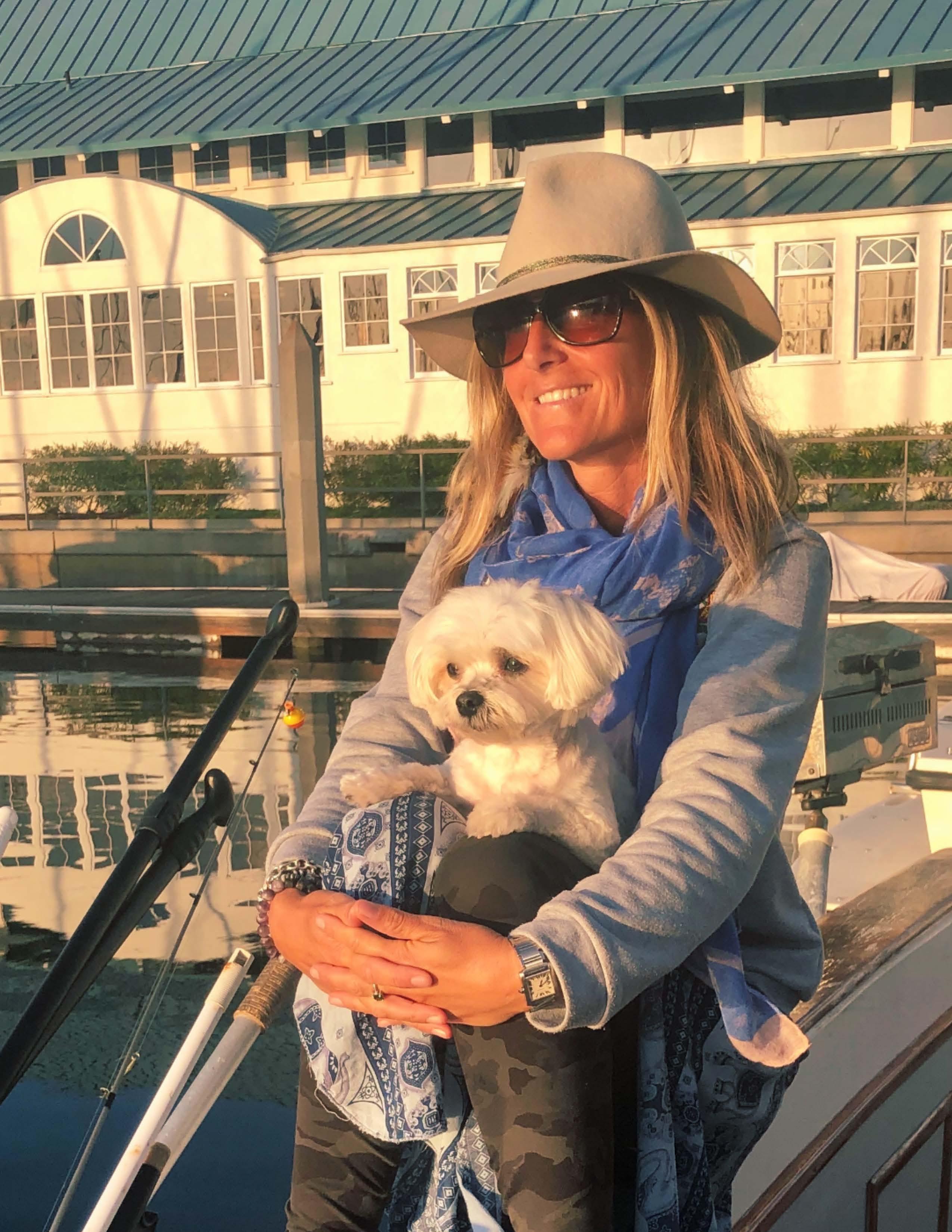
‘MEDICINE
The
last month has been an extraordinarily intense month of personal growth. I set myself mini missions and goals with deadlines. No one else was keeping me accountable, but I knew I had them and wanted to achieve them.
The first major goal was to fly for the first time, other than when I had to return from being away with Chai’s ashes, without my four-legged best friend, who left me 10 months ago. Habits and patterns that had been part of my life for the last 13 years were now forever changed. I had been invited to NYC to speak on a panel. I said yes and thought I’d worry about the details later. That “later” came around very quickly. So now what? Well, the only way this was going to work was if I was super organised and planned, choosing very speci fic flight times to cause the least distress and not having any luggage except a tiny bag for the one-night stay. Seeing other dogs at the airport, walking past the pet relief area, remembering how she slipped when walking around the airport floor. Knowing how much she loved being with me and sitting next to me on the flight brought an overwhelming sense of sadness. That’s what I feel, sad. I allowed myself to feel it, but reminded myself the whole time that I’m doing this for her. She would have wanted to come, and she would have been part of this. So I packed her rose quartz heart and a toy of hers, and off I went.
I haven’t been separated from her ashes since she passed, and I sleep with them on my heart every night. I couldn’t risk them being taken from me at the security point, so I left her with Isabella so she wouldn’t be alone. I recognise that finding comfort in things brings me the inner peace I need. Chai was with Isabella, so all was okay.
I managed to fly without much distress, and in all honesty, I am super proud of myself. I actually did something that I didn’t know if I could ever do again. In the words of my three-year-old neighbour, “I did it.”
My other task for the month was something I called 50 by 50. What does this mean? Well, I decided to write 50 children’s books, illustrate them, and start selling them by the time I turn 50. I will have actually completed this by my next birthday, aged 48. These books are my heart and soul laid bare, for children and the inner child inside every adult. I love every single story. Some were written when I was 19 years old; others, most of them, in the last six months, when I was feeling so grief-stricken I had to find an outlet or suffocate from grief.
Why have I created them? I had a download of sorts, where I wanted children to become children again. My grief was taking shape and coming from a place of understanding, as if I were a child. It was and is the only way I can comprehend what’s happened. Even then, I can’t actually understand the complexity and finality of death. So sharing this with the world is my legacy, my long-term mission. I’ve also created them as board books, not just any type of book, but tangible, tactile board books.
Not only have I experienced a couple of practical goals this month, but also emotional ones. I’ve had an explosion of understanding regarding my boundaries, my sense of self, and this new chapter I’ve found myself in. Due to the fact that I feel the worst has happened in my life by losing Chai, what have I got to lose now? So laying myself bare and being my authentic self is the only option. Receiving my autistic diagnosis five months ago has been life-changing. My quirks, habits, needs, and creativity are now flourishing. It’s like I’m able to water the plant every day, and by the end of the day, a new flower has grown. It doesn’t matter what that flower is, it’s just part of that plant.
Self-care has meant I have to look after me, now initially a foreign concept, but I treat myself like the plant and recognise that that is what matters. It opens me up to see the possibilities, finding peace and recognising with clarity what my success looks like and who I want to be in this success.
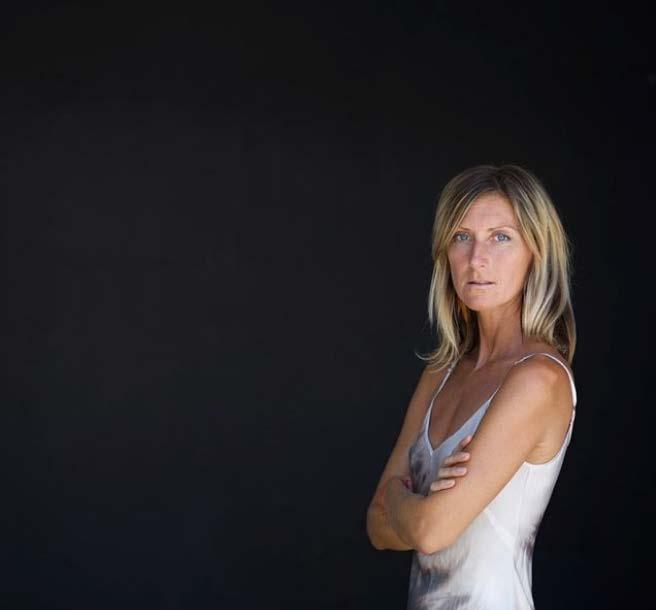



I curl into you, seeking comfort, seeking protection, seeking connection.
All the things that you provide when you are awake.
Your presence is the only thing that calms my mind when my thoughts keep me up at night.
I curl into you and concentrate on your breathing, listening to your gentle snores, the noise in my head disappears.
I close my eyes and rest easy.
With your leg thrown over mine.
I am safe.
I am loved.
I am okay. For now.
That is enough. ∎

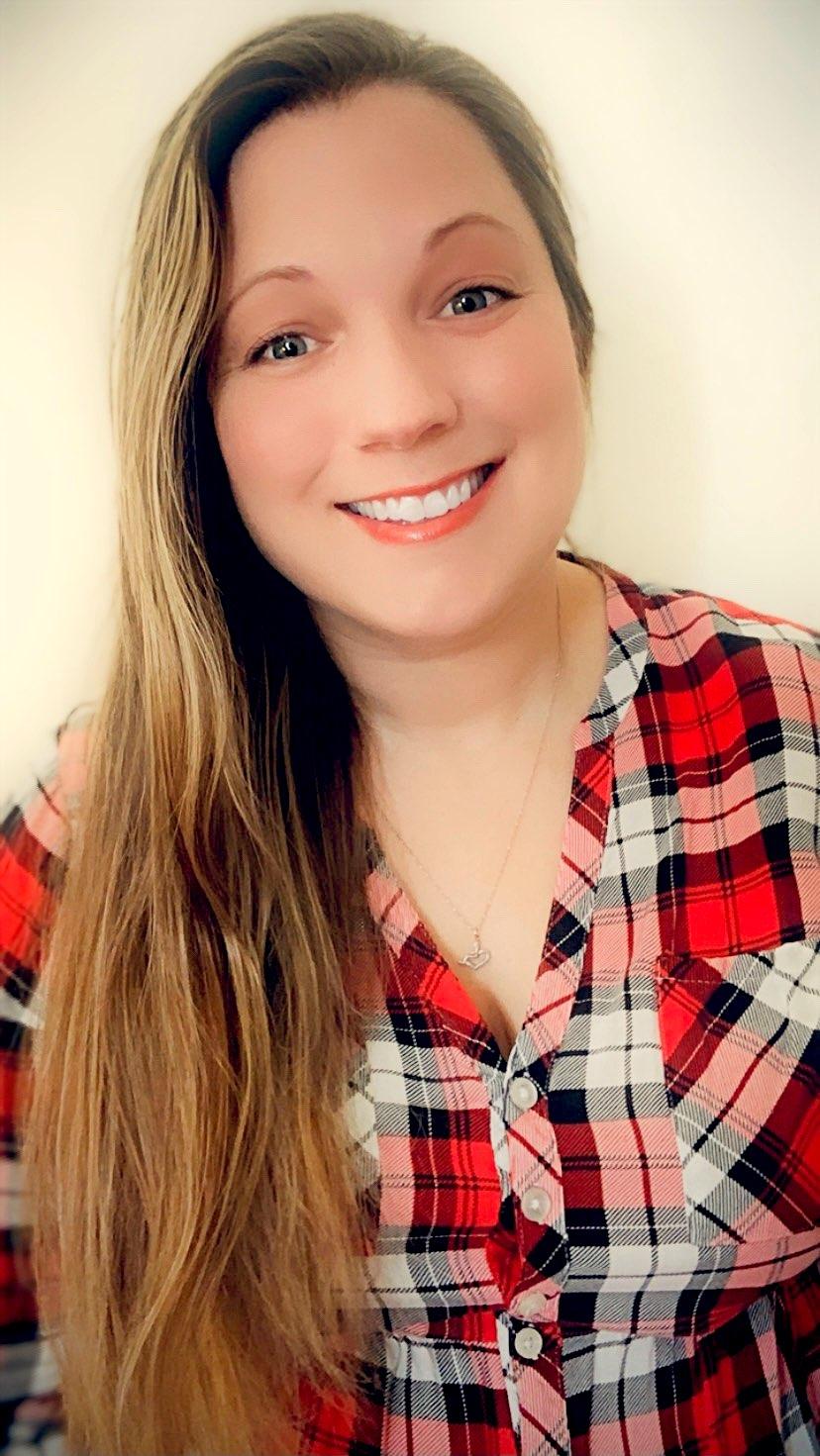
LORI BUTIERRIES
Author, Navy Veteran & Mother of 2 with Special Needs www.awarenowmedia.com/lori-butierries
Lori Butierries is a full-time caregiver to two children with special needs, one child being terminally ill and physically disabled. Lori uses her life experiences and the medical knowledge she gained while serving as a Hospital Corpsman in the United States Navy to help others facing similar hardships. Lori focuses primarily on advocating for and educating others about the special needs, mental health, and veterans communities. Her long-term goal is to reduce the stigma associated with disability by talking about it with people of all ages, thus minimizing the fear and the mystery attributed to the unknown in this regard.
ALEX SEARLE FOUNDER OF HUMBLE MIND
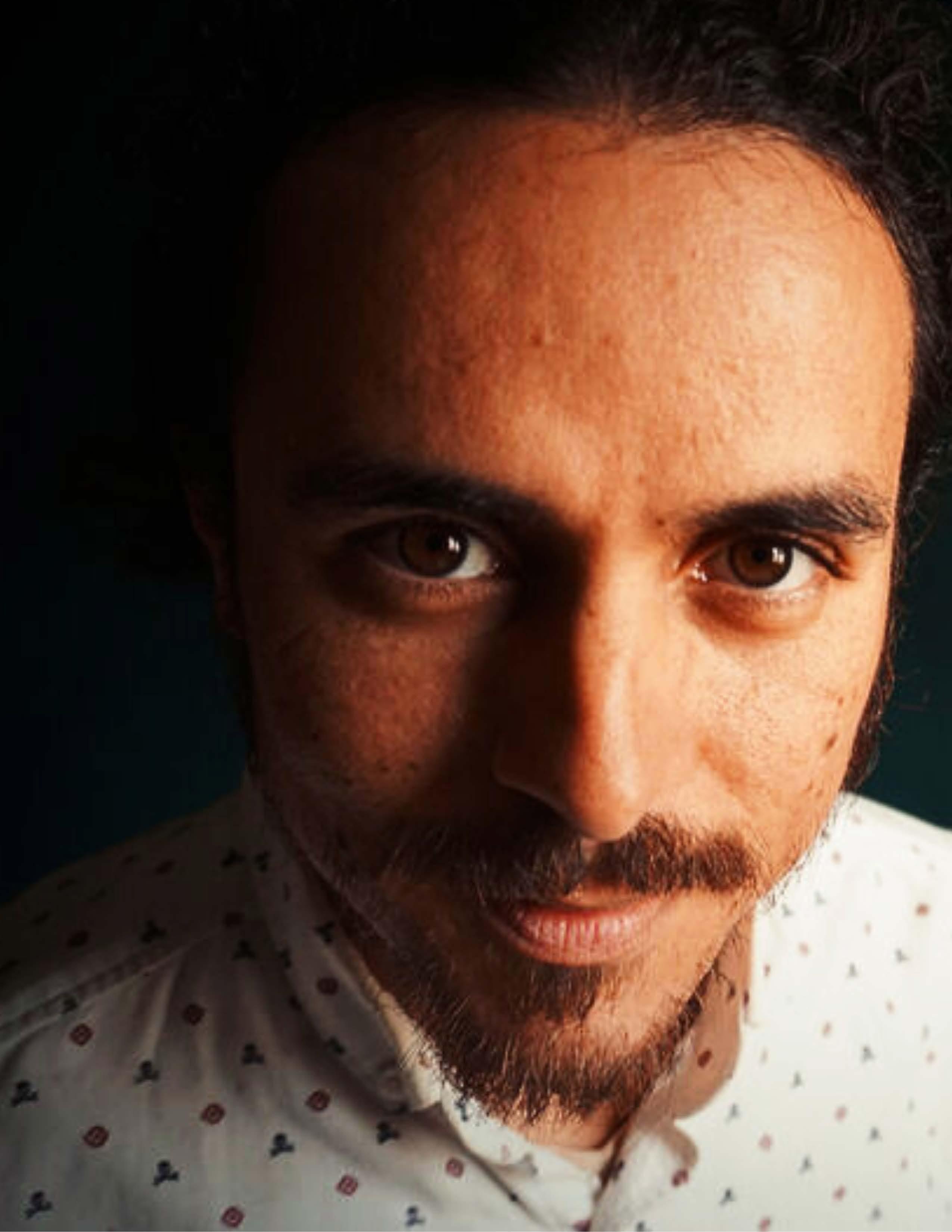
Your voice is not your brand.
In the past, we say 'voice' as an extension of the 'brand'
That was an inglorious tone-of-voice PDF or a set of content pillars. It's the five dead words your brand strategist wrote on a whiteboard to describe your personality.
Nope.
Your voice is the specific, irreducible way you see things.
It's the particular combination of what you've lived, what you've read, who you've lost, what's broken you open, what you've built from the rubble.
It can't be designed. It can only be lived.
What you can do is practise using it. That means:
- Write more than you publish
- Say the uncomfortable thing
- Notice when you reach for a polished phrase instead of the true one
The most interesting voices I've encountered - in business, writing, facilitation, leadership - don't sound like anyone else. Not because they tried to be different, but because they stopped trying to sound like what they thought they should sound like.
So, find the thing only you can say, then say it.
When you do, you'll hear something incredible: your voice. ∎

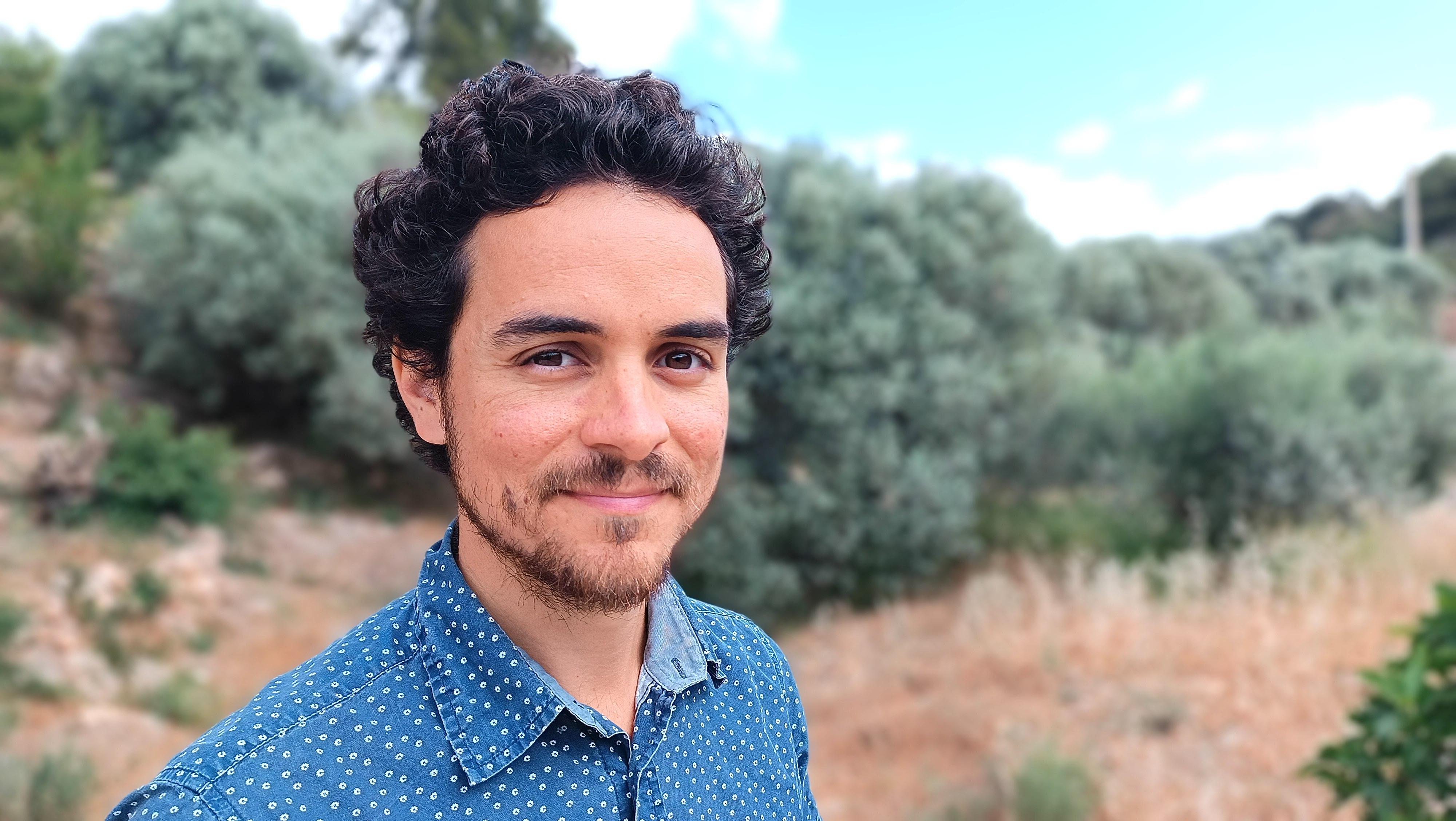
ALEX SEARLE is a father of three, an avid road-tripper, and a passionate enthusiast of music, guitar playing, vintage books, nature adventures, yoga, and Indian cuisine. A prolific entrepreneur, podcaster, writer, startup advisor, and community builder, Alex has spent over 12 years collaborating with ambitious startups, global brands, and diverse entrepreneurs and organizations worldwide. Over the course of his career, he has founded four businesses, crafted six- and seven-figure content campaigns in industries such as software, travel, and energy, advised boards and executive committees on international digital strategies, and developed milliondollar pitch decks for blockchain and healthtech startups. His expertise lies in building stronger businesses and communities through authentic connection, peer-to-peer skills development, and human-centric storytelling.


AALIA LANIUS NOVELIST, SPEAKER, PODCAST HOST & SOCIAL ENTREPRENEUR
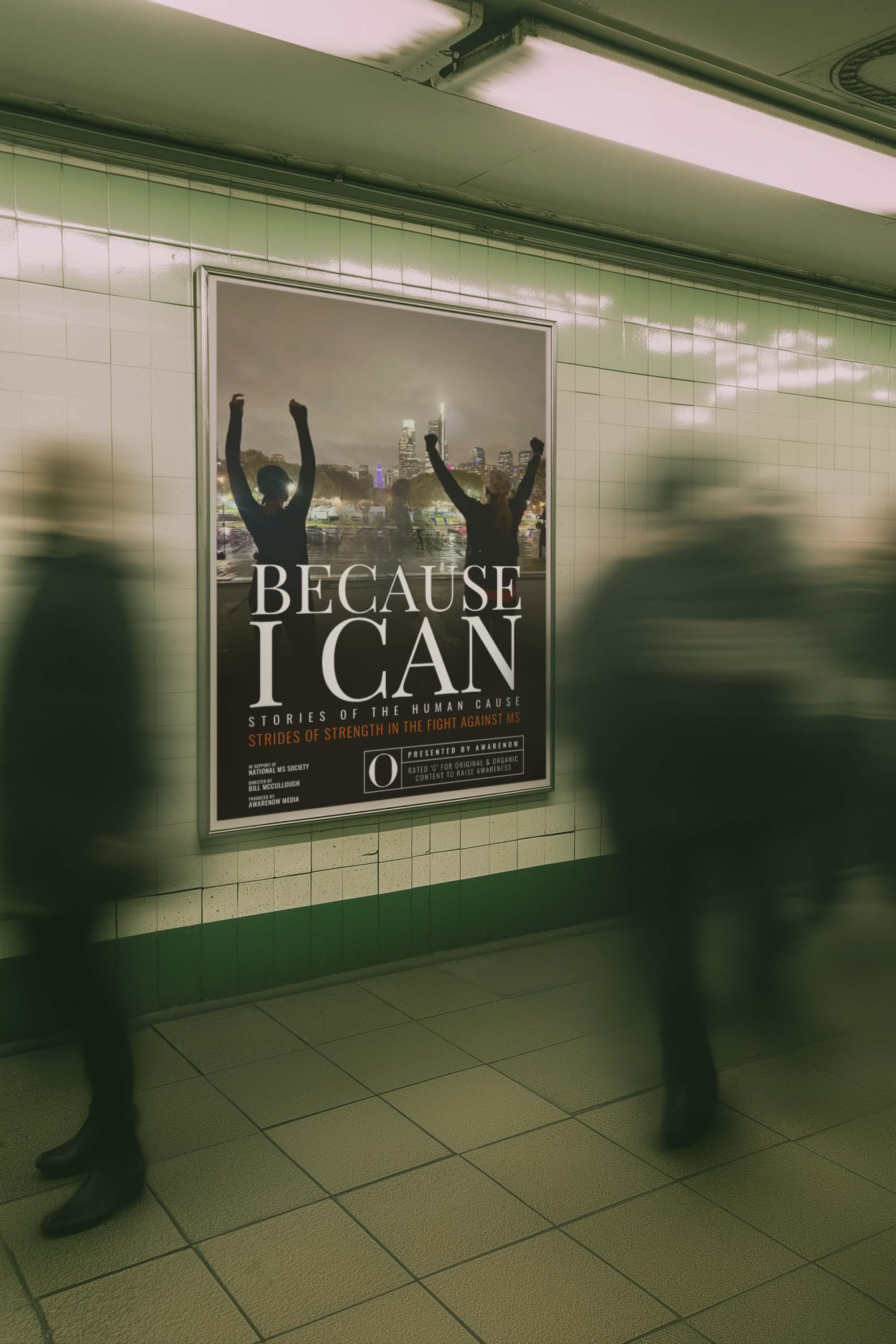
“The moment that anything is taken away, you'd wish for anything to have it back.”
There are documentaries that tell a story, and then there are documentaries that invite viewers to re flect on their own lives. Because I Can does both. It is currently available for all on YouTube.
I will be completely honest: I love being active. Long walks, time outdoors, and even a good jog are things I genuinely enjoy. However, because of my own health conditions—including POTS, Sjögren's syndrome, fibromyalgia, and the effects of previous cancer treatment—I have never completed a marathon. As a result, I have often wondered what motivates people to take on such a demanding challenge.
When I became part of the cancer community, marathons became something I was increasingly aware of. They were often connected to fundraising, awareness campaigns, and personal journeys. Because I Can offers a meaningful glimpse into why people choose to run, but it does so through a much deeper story than simply training for a race.
The documentary follows Allié McGuire and her lifelong friend Angela as they travel to Philadelphia for marathon weekend. What begins as a story about running quickly becomes a story about resilience, friendship, identity, and living with Multiple Sclerosis (MS). Through interviews, personal re flections, and conversations with others living with MS, viewers gain a deeper understanding of the realities of the disease while also seeing the many ways people continue to pursue meaningful lives despite its challenges.
One of the most powerful themes throughout the film is the idea of adapting to change. After her diagnosis, Allié is forced to confront the loss of abilities she once took for granted. Her reflection that "the moment that anything is taken away, you'd wish for anything to have it back" captures a truth that many people living with illness or disability understand immediately. The documentary does not ignore the dif ficulties of MS—fatigue, uncertainty, vision loss, and the emotional impact of diagnosis are all discussed openly. At the same time, it refuses to de fine people solely by their diagnosis.
Another quote that stayed with me was Allié's realization that success means learning "to not be tethered to the outcome, but the process." That perspective extends far beyond running. Whether someone is navigating illness, recovery, grief, or simply the challenges of everyday life, there is something universally relatable about finding value in the journey rather than measuring worth only through results.
The film also provides an opportunity to learn more about Allié and Jack McGuire, founders of Aware Now Media. For years, they have dedicated themselves to sharing stories that raise awareness about important social issues. In many ways, Because I Can turns that lens inward, allowing viewers to learn more about the people behind the platform. Their commitment to storytelling is evident throughout the documentary, particularly in the way they introduce other individuals living with MS, highlighting the diversity of experiences within the community.
“Hope
Perhaps the quote that best captures the heart of the film is: "If you don't have hope, you have nothing." Hope is woven through every aspect of the documentary—not as false positivity, but as a conscious decision to keep moving forward despite uncertainty. The film acknowledges pain and setbacks while still leaving room for possibility.
I believe many people facing life-changing diagnoses will find something meaningful in this story. More importantly, I think people without those experiences will gain a greater understanding of what it means to live with chronic illness. The message is simple, yet profoundly powerful: there are many reasons to do dif ficult things, but sometimes the most meaningful reason is also the simplest.
You do it because you can.
And for those who understand what it feels like to lose abilities, face limitations, or wonder what comes next, those words carry extraordinary weight. ∎
AALIA LANIUS Producer, Award-Winning Writer & Host
www.awarenowmedia.com/aalialanius
AALIA LANIUS is an International Multiple-Award Winning Novelist, Executive Producer, Publisher and host of the award-nominated globally top-rated social good show, UNSUGARCOATED with Aalia. As founder of UNSUGARCOATED Media, a 501(c)(3) media enterprise, Lanius is creating social impact through storytelling while building community, providing education, and ending isolation for trauma survivors. Aalia's role extends to leadership as a creative, and she is considered a thought-leader in approaches to media, believing that artists are pioneers of the human mind with great potential and responsibility to positively in fluence society through proper representation and accountability.
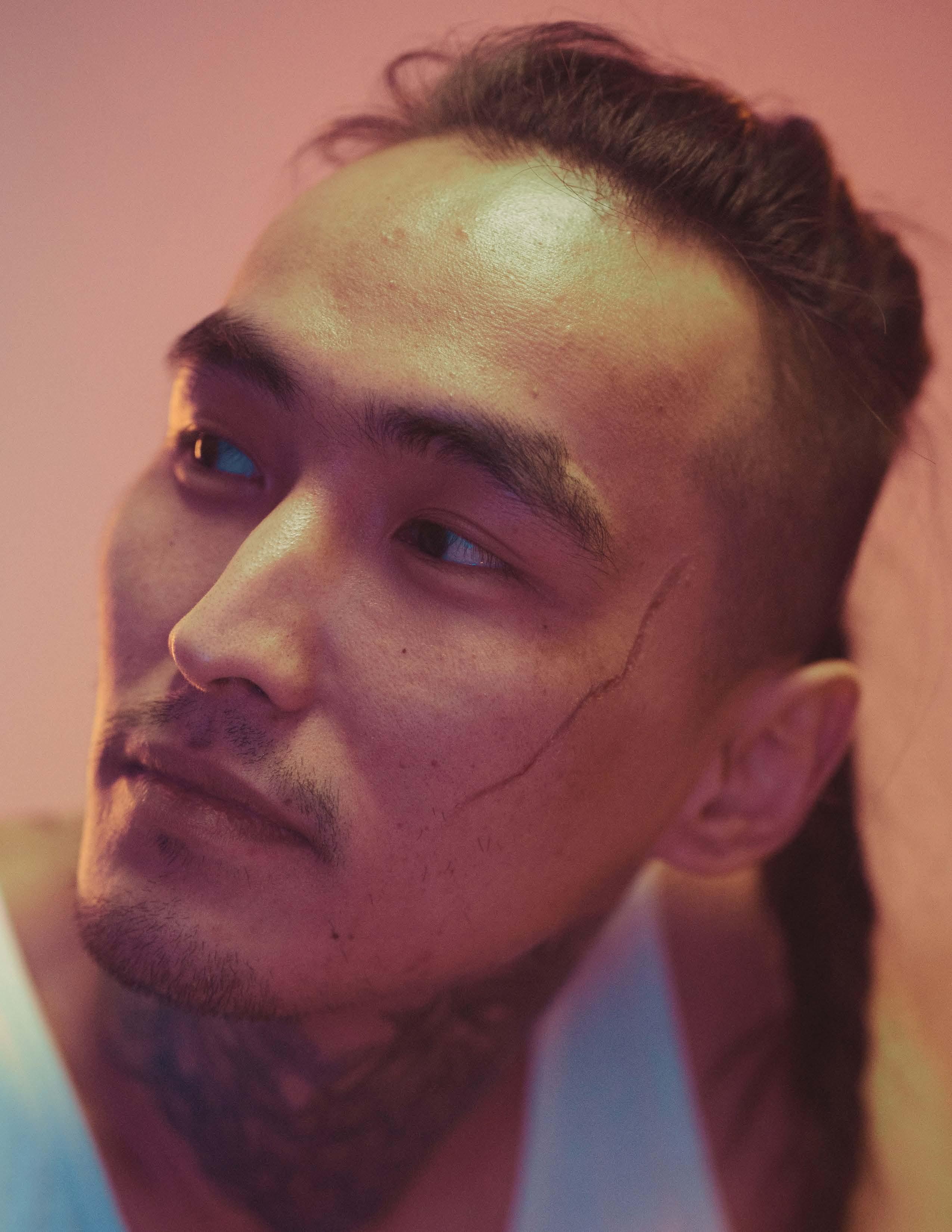
Release
The Genie knows what love’s got to do with it.
There is a quiet truth concealed behind many extraordinary lives: greatness is rarely born from comfort. Strength often comes from difficulty, wisdom from loss, and compassion from pain.
When we look at those who inspire us, leaders, artists, healers, visionaries, and everyday heroes, we discover stories of adversity, rejection, heartbreak, or struggle. It is rare to find a truly great person who has always lived an easy life.
Some endured poverty, discrimination, trauma, illness, or failure. Others battled inner demons: depression, addiction, loneliness, or self-doubt. Their greatness came not from suffering itself, but from how they responded to it. Pain changes people, but we always have a choice in our response. Some choose self-pity. Others transform pain into purpose.
Confronting adversity leads to a deeper understanding of life. Nothing is guaranteed, and every moment carries value. Challenges force people to evolve in ways comfort never could. Hardship develops resilience because survival demands it.
Struggle alone does not make someone wise or great. Many suffer and become bitter, but few use their struggles to grow. Greatness develops when pain becomes fuel for growth, not an excuse for destruction.
People who rise from difficult pasts develop qualities that comfort cannot teach. They learn empathy through suffering, resilience through necessity, courage by overcoming fear, and an understanding of failure through experience.
Adversity wipes away all illusions. With nowhere to hide, people are forced to discover who they really are beneath titles, possessions, or appearances.
Some of the kindest people you will ever meet have survived unimaginable pain. Some of the wisest people once felt completely lost. Some of the strongest people were once broken. This is one of life’s greatest paradoxes: the deepest wounds often become the birthplace of the deepest strength.
Someone who has walked through darkness appreciates light more deeply. Gratitude is stronger after loss, love more meaningful after heartbreak, and peace more precious after chaos. Those who have struggled carry a quiet awareness of life’s fragility, shaping how they move through the world.
Greatness also requires humility. Failure reminds us that we are human. Pain removes arrogance. Difficult experiences teach patience and perspective. They show us that everyone is fighting battles we cannot see. This understanding encourages compassion, which may be one of the greatest strengths a human being can possess.
Society often celebrates success without acknowledging the suffering behind it. We admire confidence without seeing the years of insecurity that preceded it. We praise resilience without understanding the pain that made resilience necessary. Yet behind almost every remarkable person is a chapter they rarely talk about, a season of struggle that shaped them forever. It is this hidden story that truly connects with us and speaks to us on a deeper level.
This truth should also bring hope to those currently facing difficult times. Your struggles do not disqualify you from becoming great. They may be preparing you for it. The very experiences that make you feel broken today may become the source of your wisdom tomorrow.
AwareNow Podcast
Written and Narrated by Paul S. Rogers
https://go.awarenowmedia.com/podcast/never-met-a-great-person

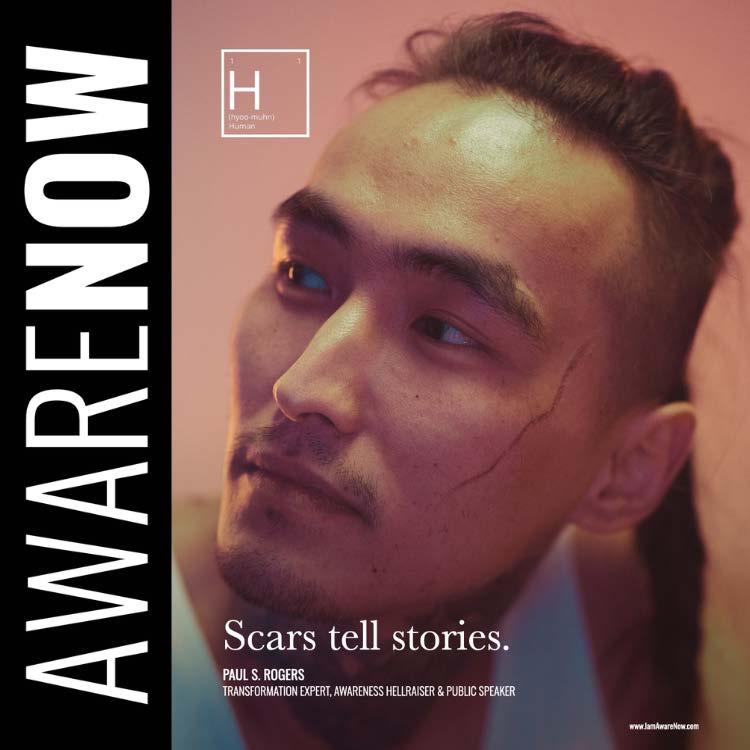
Scars tell stories. They remind us that healing is possible. A scar does not mean the wound never existed. It means the wound was survived. Great people often carry invisible scars that have shaped their perspective, softened their ego, and strengthened their spirit.
There is beauty in realizing perfection is not required for greatness. Many extraordinary people are deeply flawed, not inspiring because life was easy, but because they kept moving forward despite difficulty. They learned to rise after falling, to love after disappointment, and to hope after despair.
Perhaps this is why authentic greatness feels so human. It is not polished perfection. It is resilience wrapped in humility. It is wisdom earned through experience. It is a strength that remembers weakness. Truly great people rarely see themselves as superior because life has already taught them how vulnerable human beings can be.
The phrase “Never met a great person with an easy past” reminds us not to judge people solely by where they are now. We rarely know the battles someone fought to become the person standing before us. The calmest soul may have survived the loudest storm. The strongest person may once have felt completely shattered.
In the end, hardship is not something anyone would willingly choose, but it often becomes one of life’s greatest teachers. Perhaps true greatness is not about avoiding suffering altogether. Instead, it is about learning how to carry suffering with grace, transform it into wisdom, and use it to bring light into the lives of others. ∎
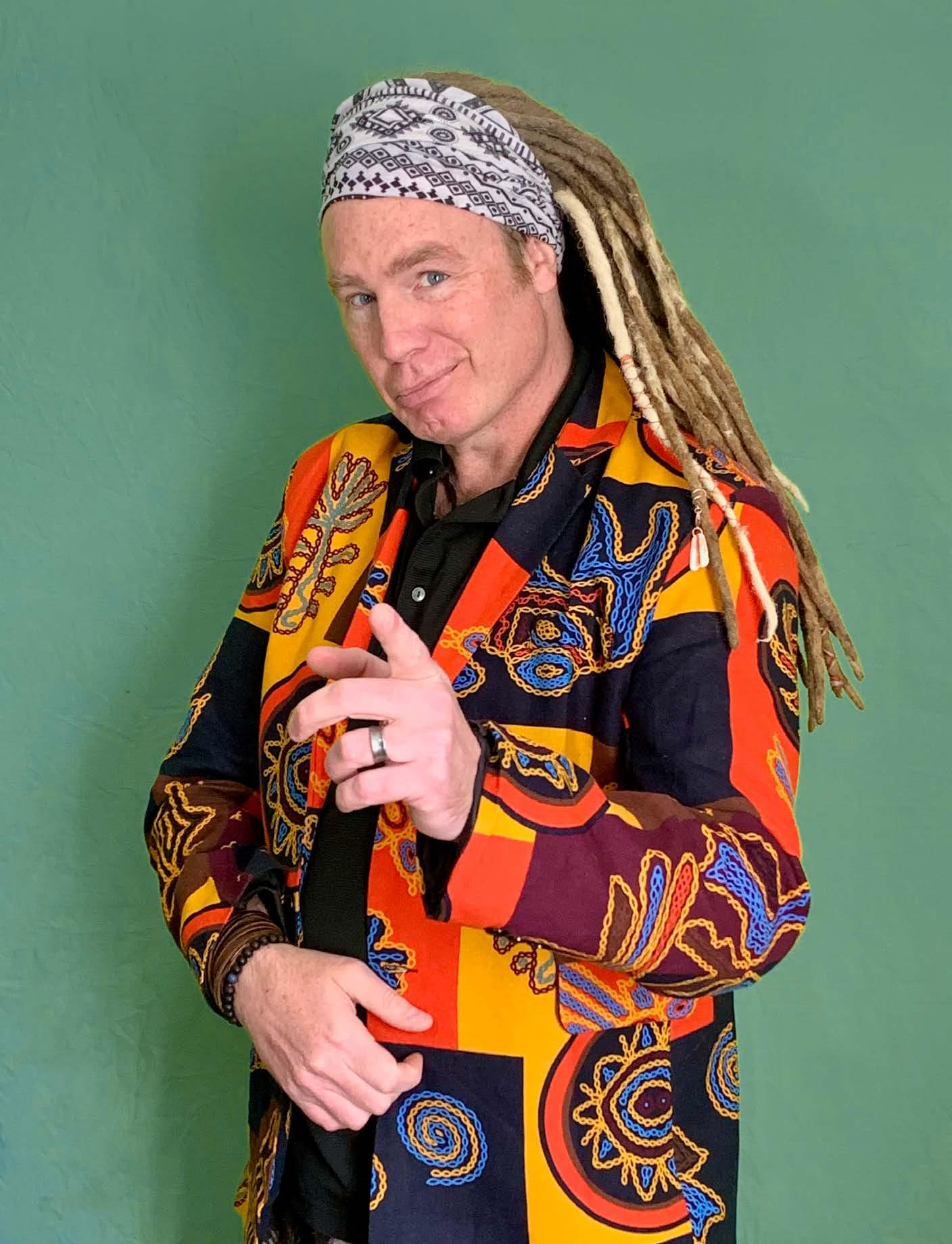
PAUL S. ROGERS
Transformation Expert, Awareness Hellraiser & Public Speaker www.awarenowmedia.com/paul-rogers
PAUL S. ROGERS is a keynote public speaking coach, transformation expert, awareness hellraiser, life coach, Trauma TBI, CPTSD mentor, train crash and cancer survivor, public speaking coach, Podcast host “Release the Genie” & best-selling author. His journey has taken him from corporate leader to kitesurfer to teacher on a first nations reserve to today. Paul’s goal is to inspire others to find their true purpose and passion.