Reprinting our books for free distribution is encouraged as long as the publication is reprinted in its entirety with no modifications (including this agreement clause), and credit is given to the author.
Please handle this Dharma book with utmost respect and care. Please pass this book to someone else if you do not need it anymore. May all have the opportunity to know the Dharma.
kong meng san phor kark see monastery kmspks_monastery
Please visit kmspks.org/awakenonline for a detailed list of our published books.
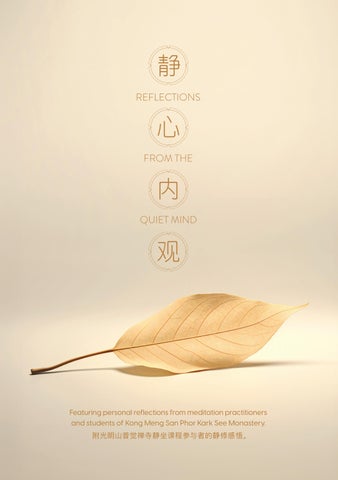
Featuring personal reflections from meditation practitioners and students of Kong Meng San Phor Kark See Monastery.
附光明山普觉禅寺静坐课程参与者的静修感悟。
意之清明
心之安定
身之安然
PREFACE
In a world that is constantly changing, where distractions are many and our minds are often overwhelmed, the importance of grounding ourselves in mindfulness and wisdom becomes ever more critical.
With heartfelt sincerity, I offer this book as a gift to those seeking inner peace, clarity and spiritual growth. This book connects the Buddha’s timeless wisdom with contemporary living, providing practical advice that fits into our daily life and supports us in cultivating a calm and balanced mind.
The motivation for this book arose from the many individuals I have been guiding and supporting in their meditation journey. This book reflects those experiences, shaped by the teachings of the Buddha and the wisdom of our lineage.
There are two main goals for this book. The first is to unveil the true essence and understanding of meditation that is both approachable and easy to adopt, whether you are just starting or
have been practising for years. Grounded in Buddhist teachings, this book aims to simplify meditation, making it accessible and practical for anyone in search of inner tranquillity.
Second, it is to promote the growth of mindfulness, compassion and wisdom. These are the qualities that are important not only for spiritual advancement but also for managing the challenges of modern life.
May this book serve as a source of inspiration and direction on your spiritual journey. May it assist you in reconnecting with your true self and living with constant mindfulness and compassion. In doing so, may we all play a part in creating more peace, understanding and kindness in the world.
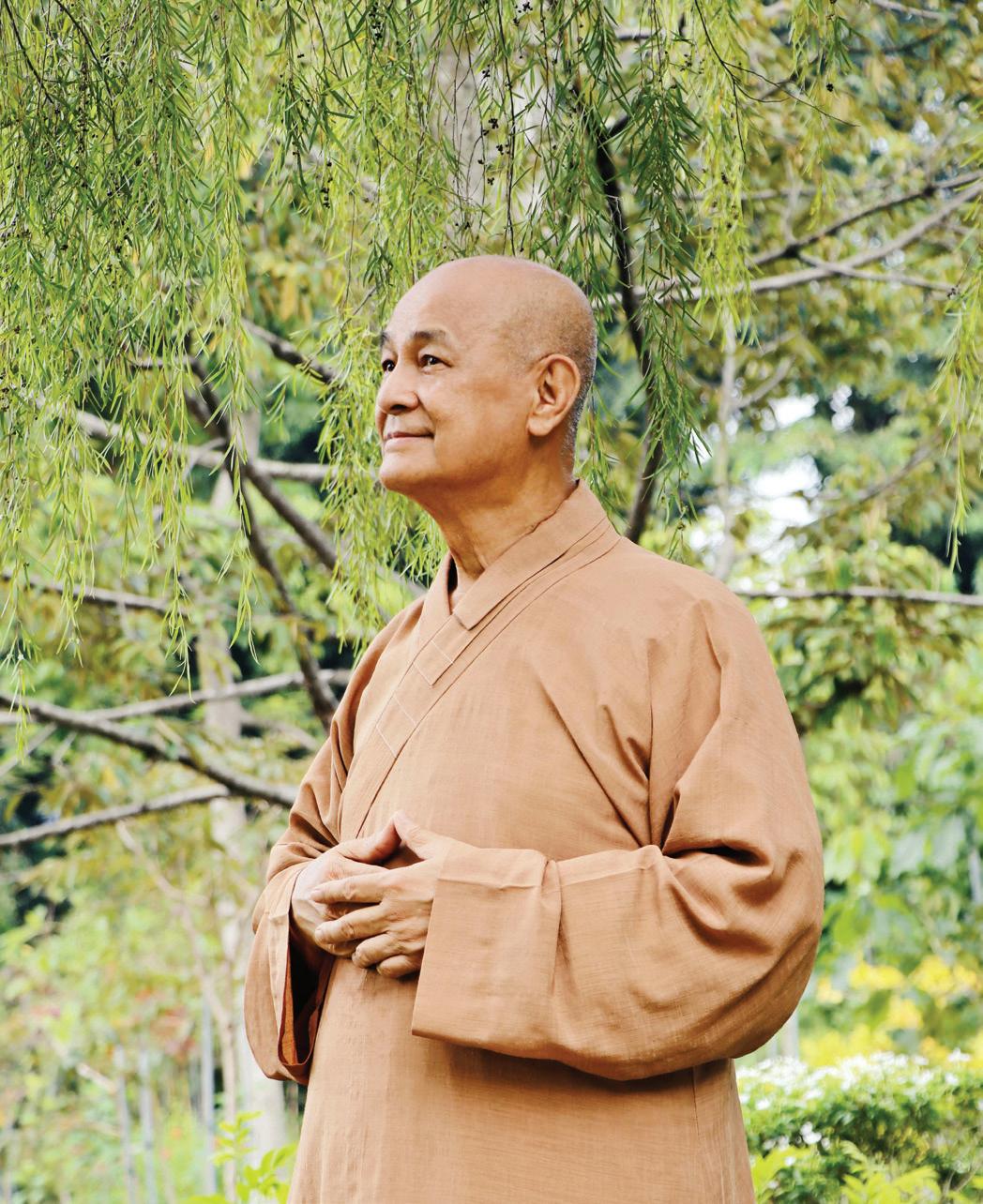
Venerable Kwang Sheng has been dedicated to the practice of Buddhism since his early years. He was ordained under Venerable Master Hong Choon in 1980. Over the years, to deepen his spiritual cultivation, he embarked on extensive travels across Myanmar, Thailand, Sri Lanka, Japan, and South Korea for further study and practice. He spent four years in an intensive meditation retreat at Songgwangsa Temple in South Korea, strengthening his spiritual foundation and commitment to the path of meditation.
In 1995, Venerable Kwang Sheng was appointed as the supervisor of Kong Meng San Phor Kark See Monastery. Recognising the importance of promoting Buddhism, he established the Dharma Propagation Department in 1998, spearheading various Buddhist events and activities. On 5 June 2004, he was formally installed as the sixth abbot of the monastery, continuing his dedicated mission to propagate the Dharma while walking the Bodhisattva path in service to the Buddhist community.
Believing in the importance of education and the need to nurture the next generation of Buddhist leaders, he founded the Buddhist College of Singapore (BCS) in 2005 and served as its Rector. In recognition of his visionary contributions, he was awarded an honorary Doctorate in Educational Administration by Thailand’s Mahachulalongkornrajavidyalaya University in 2011.
Additionally, Venerable Kwang Sheng served as the President of the Singapore Buddhist Federation (SBF) from July 2006 to June 2014. In tribute to his remarkable achievements in promoting Buddhism and fostering inter-religious harmony, he was awarded the Public Service Star (BBM) by the President of Singapore in September 2018.
Having walked the monastic path for decades, Venerable Kwang Sheng views meditation as a practice and a way of life. He believes it is the foundation for inner transformation, leading to awakening and peace. Thus, since the early stages of his spiritual journey, he embraced a
daily meditation practice, recognising it as a vital method to tame the mind and foster wisdom.
Over the years, fuelled by a profound interest in meditation, Venerable Kwang Sheng dedicated himself to exploring and studying a diverse range of meditation practices. He firmly believes that through consistent practice, anyone can experience transformative benefits cultivating a calmer, more positive and compassionate mind. Since 1995, he has shared the profound impact of meditation by conducting over a hundred meditation courses of six to eight lessons each at Kong Meng San Phor Kark See Monastery, helping countless individuals on their meditative journeys.
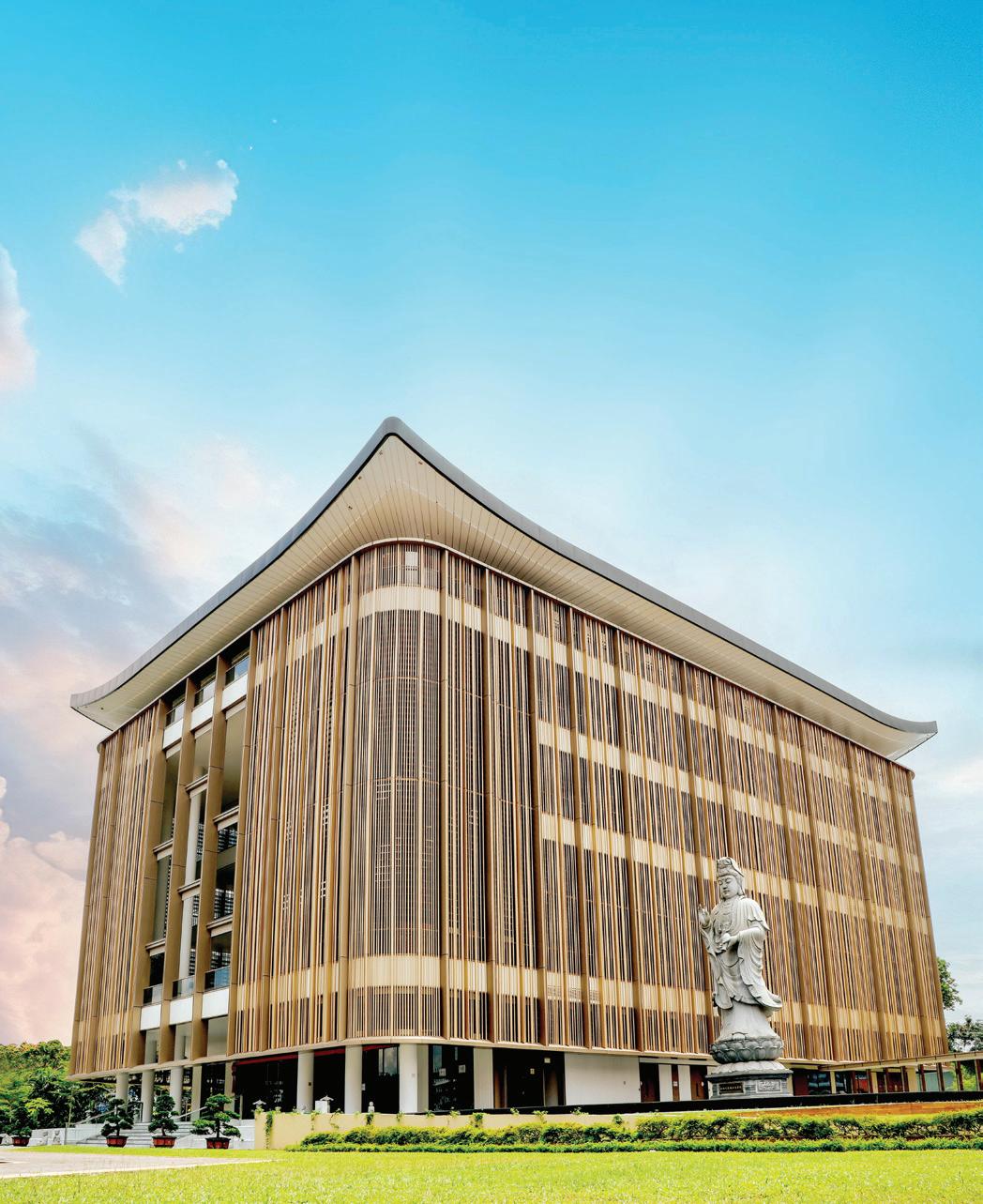
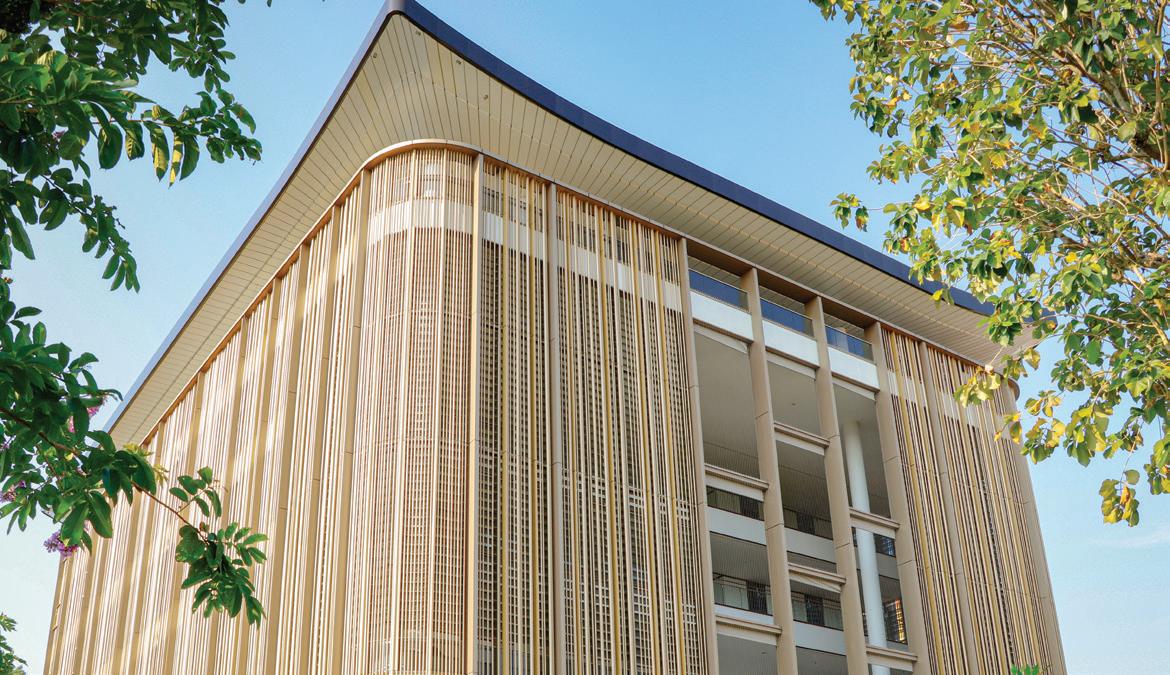
Recognising the growing public interest in meditation, Venerable Kwang Sheng saw the need for a dedicated, tranquil space to support deeper practice. In 2020, he established the Prajna Meditation Hall, a five-storey purpose-built facility designed to offer meditators a serene, comfortable and distraction-free environment, ideal for cultivating mindfulness and inner peace.
As our world grows increasingly complex and challenging, meditation has become widely sought after for its mental and spiritual benefits. In Buddhism, meditation is a foundational practice that allows us to delve into our inner selves, reduce stress and cultivate mindfulness. Addressing this rising interest, Kong Meng San Phor Kark See Monastery (KMSPKS) inaugurated the Prajna Meditation Hall on 5 October 2020 under the guidance of Abbot Venerable Kwang Sheng.
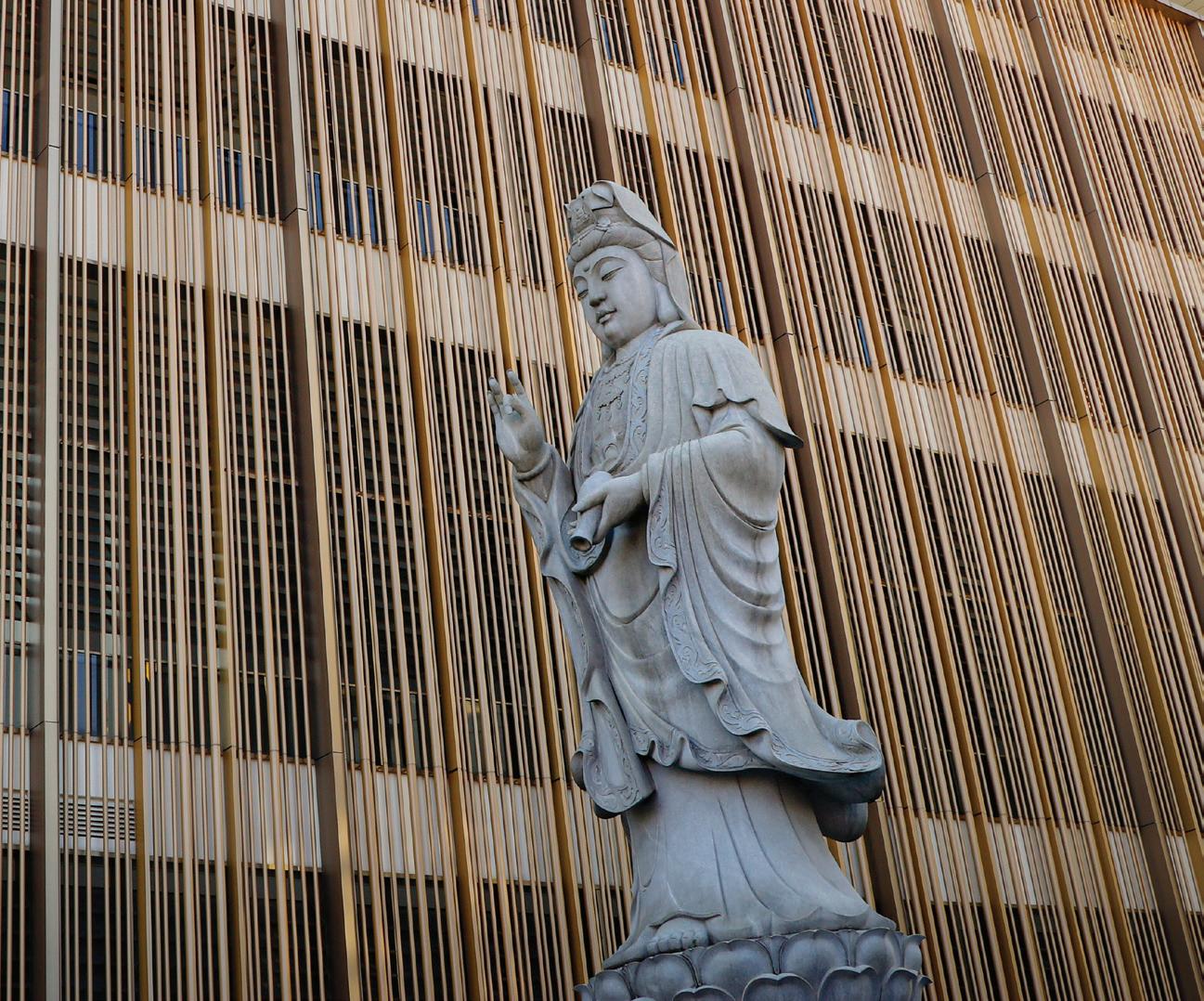
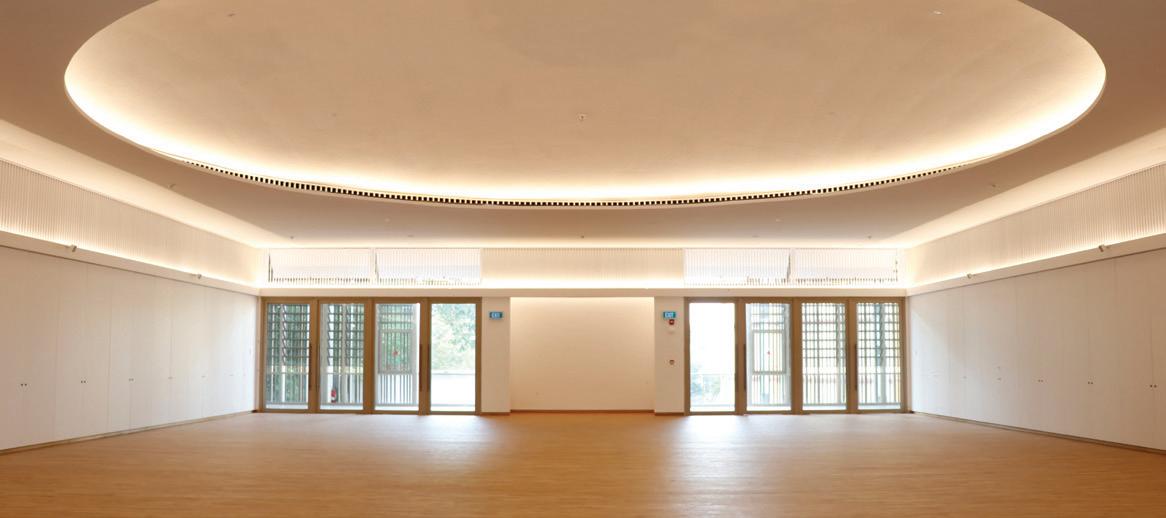
Nestled in a tranquil part of the monastery where the Dharma Hall once stood, the Prajna Meditation Hall is a five-storey facility that can accommodate up to 500 individuals. Its design elegantly merges traditional Chinese temple aesthetics with modern elements, emphasising energy efficiency through naturally ventilated spaces. The inclusion of bamboo plants around the building further enhances its serene atmosphere, seamlessly integrating nature into the meditation experience.
The building’s most distinctive feature is its gently curved roof, which, when illuminated at night, resembles a glowing lantern, contributing to the monastery’s tranquil ambience.
In honouring its cultural heritage, the building incorporates artefacts from the original Dharma Hall. These include the Qi Lin ceiling board, a symbol of protection and auspiciousness, prominently displayed on levels two to four. On Level One, symbolic elements such as the
Dharma wheel, representing the teachings of the Buddha, and the white elephant, symbolising strength and wisdom, are featured.
Since its establishment, the Prajna Meditation Hall has emerged as a prominent venue for both international and local meditation retreats.
Among its notable international events, the Hall hosted Luang Por Sumedho, a revered teacher from the Thai Forest Tradition, in February 2023. His seven-day retreat attracted 100 participants. In June 2023, Chanmyay Sayadawgyi, a direct disciple of Mahasi Sayadaw from Myanmar, conducted another seven-day retreat.
The Hall continues to be a sought-after location for distinguished teachers, including Ajahn Amaro, Abbot of Amaravati, whose highly anticipated 2024 retreat had to be relocated to the Hall of No Form due to high demand. Over the years, it has also had the privilege of hosting many revered monastics, including
Ajahn Cagino, Ajahn Dton, Ajahn Karuniko, Ajahn
Nyaniko, Ajahn Vajiro, Luang Por Sucitto, Luang Por Viradhammo, Sayadaw U Nyanaramsi, Sayadaw U Rewata, and Venerable Chan Pháp Từ.
Locally, the Hall has supported a range of retreats, including Venerable Kwang Sheng’s inaugural overnight Eight Precepts Meditation Retreat on Singapore’s National Day, 9 August 2024. This event, which welcomed 150 participants, underscored the Hall’s significant role in local meditation practice and its expanding range of offerings.
The Prajna Meditation Hall is more than just a meditation space; it is a sanctuary for spiritual practice and personal development. Its mission is to inspire Buddhists to deepen their meditation practice within a supportive and conducive environment. With its tranquil ambience and thoughtful design, the Hall provides an ideal setting for cultivating mindfulness, achieving inner peace, and embarking on a journey of self-discovery.
Since 2020, Venerable Kwang Sheng has led the “Relaxation and Mindfulness Meditation” sessions at the Hall. This programme creates a space for sharing experiences and knowledge, fostering meaningful interactions among meditators and positively influencing their daily lives.
Over time, many participants have continued their journey with Venerable Kwang Sheng’s classes, reflecting a sustained commitment to practice and learning.
If you are interested in exploring meditation or deepening your practice, please contact us at 6849 5346 or visit kmspks.org to learn more about our meditation programmes.
Prajna Meditation Hall 般若禅堂
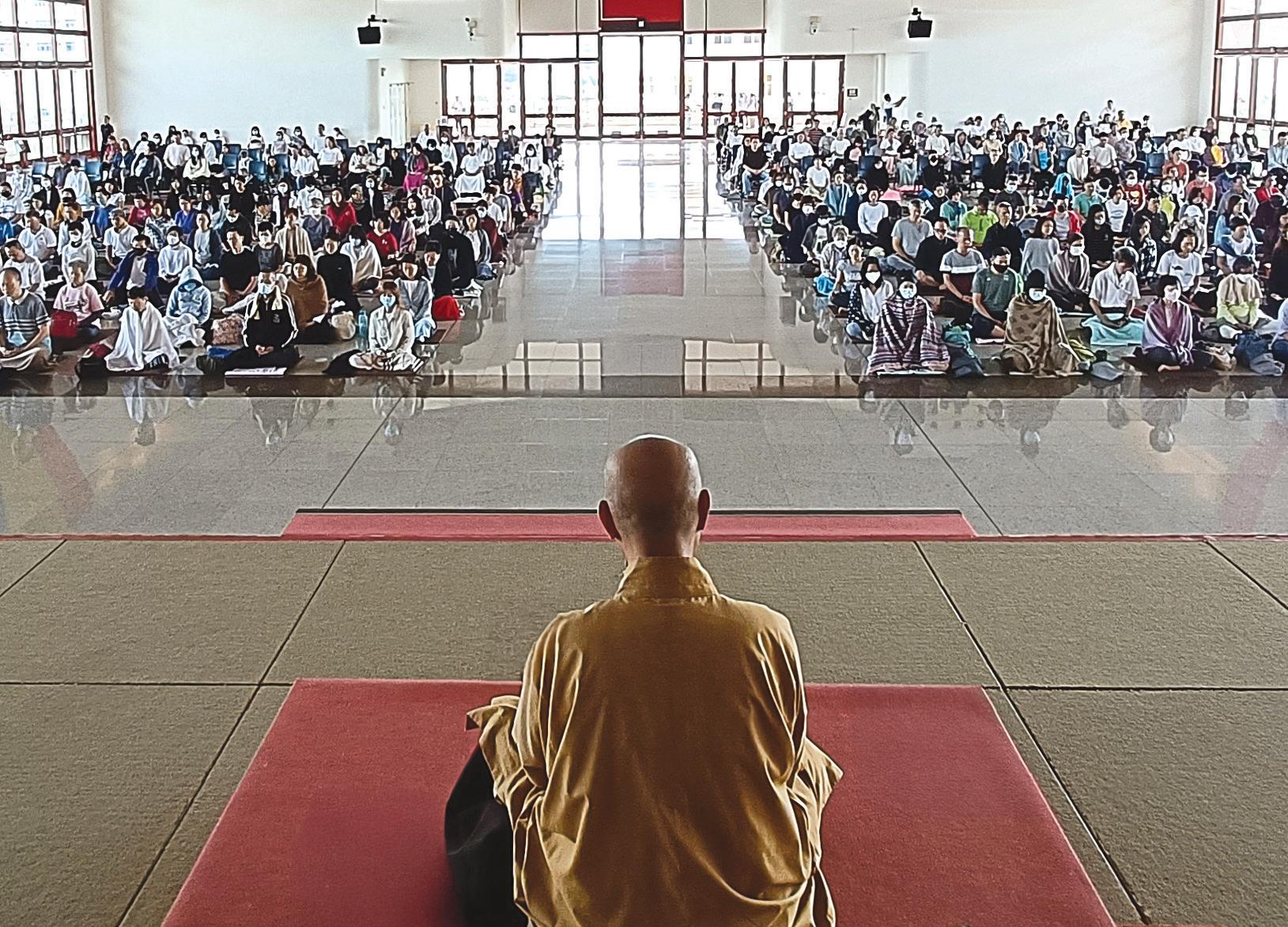
Group Meditation Practice at Hall of No Form by Venerable Kwang Sheng
Here is a collection of Venerable Kwang Sheng’s insightful teachings crafted to make meditation both accessible and enjoyable for all. These easy-to-understand tips and relatable analogies are designed to simplify meditation, making it a natural part of your daily life.
Through this practical and lighthearted wisdom, you will uncover fresh and engaging perspectives on meditation.
1. “Imagine your mind as a flowing stream. Thoughts are like leaves floating down this stream – constantly coming and going. Meditation is not about stopping these leaves from floating but about being aware of them without getting caught up in their flow.”
2. “Once you are comfortable with the basics of meditation, through consistent practice, meditation becomes a way of life. Embracing ‘the art of living’ is ‘the art of meditation’ – it brings inner peace and clarity amidst life’s chaos.”
3. “To make meditation a regular part of your life, nurture the practice as a daily habit, much like drinking water or going to the toilet. Regular practice helps integrate mindfulness into your daily routine.”
4. “Learning meditation is akin to riding a bicycle: it starts with initial guidance and support, but true mastery comes from finding your balance through dedication and practice over time.”
5. “Once you have mastered the meditation basics, it is like playing piano pieces you have memorised: you can fit it into your schedule and lifestyle, practising it anywhere, anytime.”
6. “Just as you regularly work out to build muscles and improve your physical fitness, meditation serves as a ‘gym for your mind’, training your mental faculties with consistent practice.”
7. “A TCM proverb states, ‘When everything flows, there is no pain.’ Pain often arises from blocked or stagnant energy in the body. While acupuncture and exercise can improve blood flow, meditation helps to unclutter the mind and promote relaxation and energy flow. With regular practice, you may notice a more relaxed and flexible body and mind.”
8. “Meditation is like learning to swim. Initially, staying afloat or moving through water might seem daunting. However, with persistent practice, you become proficient and capable of swimming longer distances. Similarly, with regular meditation, your mind develops the ability to remain calm and focused, even during extended periods of stress.”
Meditation:
A Path to Spiritual Cultivation
Meditation is a practice of focused attention and heightened awareness aimed at calming the mind and fostering mental clarity. It involves observing thoughts, emotions or physical sensations without attachment, leading to a deeper understanding of one’s inner self and the nature of reality.
For many, meditation serves as a powerful tool for training the mind and enhancing mindfulness, emotional balance and inner peace. Meditation is often regarded as the backbone of Buddhist practice. For Japanese Zen Master Dōgen Zenji (1200–1253), seated meditation (zazen) is not merely a practice but the very embodiment of Buddhism itself, expressing its essence in every moment of sitting.
Meditation and Neuroplasticity: Rewiring the Mind
Meditation trains the mind to break free from harmful, ingrained thought patterns, fostering healthier and more compassionate perspectives toward oneself and the world. This mental shift aligns with the Buddha’s teaching on the Four Noble Truths, guiding individuals from suffering to wisdom. With consistent practice, meditation enables individuals to recognise and transcend suffering, deepening their insight and nurturing greater wisdom.
In recent years, scientific research has begun to validate what meditators have long known: regular meditation can profoundly influence the brain. Neuroplasticity, the brain’s ability to reorganise itself by forming new neural connections, explains how our brain can reshape mental structures and alter habitual patterns of thought. Applied to meditation, this concept suggests that, over time, the mind can be rewired for greater clarity, focus, positivity, and inner peace.
Our physical body and mind are intricately connected, and meditation benefits them by nurturing this strong link between mental and physical well-being. For instance, meditation effectively reduces stress, which has a direct positive impact on physical health. With dedicated meditation practice, individuals can reframe their thought patterns, build resilience to stress, and cultivate emotional balance, all of which contribute to an enhanced overall health.
This transformation, grounded in both spiritual practice and scientific insight, enables individuals to cultivate a deeper and more meaningful connection with themselves and the world around them.
Overcoming Challenges in Meditation
Meditation is about embracing the journey of the practice rather than striving for a final destination. The aim is to maintain consistency. Along the way, obstacles like restlessness and distractions may arise, but it is crucial to meet these challenges with patience and self-compassion.
In meditation, it is important to recognise and acknowledge thoughts or distractions without judgement. Rather than resisting them, simply observe and allow them to pass. This gentle acceptance helps the mind naturally return to a state of calm and clarity.
A consistent mindfulness practice allows us to appreciate the small joys in life while cultivating kindness and compassion toward ourselves during challenging times by recognising their impermanence. With continued effort, meditation becomes a natural and enriching part of daily life, offering greater peace and balance.
The Importance of Guided Practice
In the digital age, many people use online resources such as videos, websites, apps, and books to learn meditation. While these tools can be beneficial, true progress often requires guidance from an experienced practitioner. Learning from someone with deep expertise helps navigate the subtle complexities of meditation and address obstacles that arise. Although online resources provide useful information, they cannot replace the wisdom and personalised instruction of a seasoned meditation master.
For those seeking to learn or deepen their meditation practice, seeking guidance from a seasoned instructor is highly recommended. An experienced teacher can help you avoid common pitfalls and deepen your understanding of the mind’s workings, offering valuable feedback and support to advance your practice.
The Joy of Meditation and Group Practice
Meditation fosters a unique sense of happiness and enlightenment. Research conducted in Korea has shown that meditation profoundly affects brain activity, particularly in regions associated with joy, optimism and creativity. This enhanced mental state results from a deepened meditation practice and fosters a more positive outlook on life.
Participating in group meditation can significantly develop your practice. Engaging with others, sharing experiences and gaining insights in a group setting can deepen your understanding and reinforce your commitment to meditation. As you
develop greater discipline, you might choose to maintain a regular practice on your own, aiming for a twenty to thirty-minute duration each day. If you find this time challenging, consider breaking it into shorter sessions. For instance, practising for ten to fifteen minutes three times a day can also be highly effective.
In Zen practice, the concept of “non-achievement” emphasises the importance of being fully present during the meditation journey rather than striving for a specific outcome. True accomplishment lies in embracing the process itself. This perspective alleviates the pressure of expecting particular results and allows you to enjoy the practice more deeply.
Meditation:
Dispelling Common Misunderstandings
Explore and gain a deeper understanding as we address and correct some prevalent myths about meditation, offering a more accurate and straightforward view of its true nature.
1. Meditation must be practised in complete silence.
While a tranquil environment can aid in reducing distractions, meditation can be practised in various settings. Ambient sounds, chanting or guided meditations can also enhance the practice. The essence lies in finding what harmonises best with your practice.
2. You must be sitting in a specific posture to meditate, like the lotus position. While sitting in a comfortable position is beneficial, it does not have to be the lotus posture. You can meditate while sitting on a chair, lying down, standing, or even walking. The key is to maintain a posture that is both comfortable and alert.
3. Meditation requires hours of practice to be effective.
Even a few minutes of daily meditation can yield significant benefits. The key is regular,
consistent practice. Starting with short sessions and gradually increasing the duration as you become more comfortable can help integrate meditation into your daily routine.
4. Meditation means being completely still and motionless.
Meditation can be practised in various postures and activities, including walking or mindful movement. The key is to maintain a mindful awareness, whether sitting still or engaging in gentle movements.
5. The goal of meditation is to clear your mind entirely.
Meditation in Buddhism is not about emptying the mind but rather about observing thoughts and feelings without attachment or judgement. The goal is to develop mindful awareness and a greater sense of presence, allowing you to fully experience the present moment.
6. Meditation will fix all mental health issues. While meditation can support mental health, it should complement other treatments and therapies, not replace them. It is one tool among many for promoting mental and emotional well-being.
7. Meditation is a quick fix for all problems. Meditation is not a quick fix but a supportive practice that contributes to long-term mental and emotional health. It can help you manage stress, improve focus and develop a greater sense of well-being, but it should be seen as one tool among many for overall health.
8. Meditation is too difficult to learn. Meditation can be simple and accessible to everyone. Starting with short sessions, even just a few minutes daily can help you build a routine. There are many resources
available, such as guided meditations, apps and books, to assist beginners in learning different techniques.
9. My mind is too busy to meditate.
It is natural to have a busy mind, especially when beginning meditation. The practice itself helps you gradually calm and focus your thoughts. By consistently returning to your point of focus, whether it is your breath, a mantra or a visual object, you can train your mind to become more settled over time.
10. Busy people cannot meditate. Meditation can be integrated into a busy lifestyle with short, mindful moments throughout the day. Even brief periods of meditation can provide significant benefits, making it accessible to everyone.
Reflections from Students: Journeys Through Meditation
Venerable Kwang Sheng’s teachings on meditation have guided many students towards a more stable and grounded way of living. The reflections begin with a longer personal account, followed by shorter experiences that reveal how the practice shapes the body, heart and mind.
In the reflections that follow, students recount their experience of practice: the guidance received, the conditions of the Prajna Meditation Hall, and the gradual deepening of their understanding. Through consistent training, meditation becomes not merely a technique, but a way of relating to life with greater awareness.
Goh Eng Yeow
7 years of meditation
63 years old
Enriching My Life with Meditation
Meditation allows the muddy sediment in our minds to settle, making them clear again.
I have been meditating with Kong Meng San Phor Kark See Monastery for seven years.
Some friends laugh at me for repeatedly attending Venerable Kwang Sheng’s beginners’ class. They feel that I should have moved on to a more advanced course by now.
But that is beside the point for me.
I enjoy the anonymity of a big crowd. The camaraderie of like-minded participants generates positive feelings. After seven years, I still find Abbot’s anecdotes refreshing. He rarely repeats them, and I have learned a lot from his stories.
One friend said I look radiant and younger than my age. He observes that I now speak more softly, walk more gently, and I am more thoughtful. This reminds me of Abbot’s teaching that meditation cultivates “优雅 ”(gracefulness).
Taking Three Deep Breaths
Abbot always starts lessons by telling participants to take three deep breaths. I can still remember
the blissfulness the first time I did it, engulfed in the silence of the meditation hall.
Breathing deeply is intoxicating. It makes me feel the life inside me and relish the joy of living.
Deep breathing has become a habit. I start the day sitting cross-legged in bed, listening to my breath for 30 minutes. During the day, I take deep breaths whenever I can as it has a calming effect.
The Monkey’s Mind
A major challenge in meditation is stray thoughts. The mind is like a wild monkey jumping around.
Abbot said that as a young monk, he tried to fight these thoughts, but it was injurious. Instead, he teaches awareness of them without resistance.
I find this useful. As I acknowledge intrusive thoughts, they pass, and I return to the present. This also helps me stay calm during crises, allowing me to focus on critical issues without distraction.
Combating Depression
Abbot teaches us to relax our bodies at the start of meditation, from the brain down to the legs. At first, I questioned this practice. How was I to relax organs I could not see?
But bringing awareness to different body parts uncovers stress areas. Often, we are unaware of how our behaviour affects others. When we contemplate ourselves, we see our flaws as others do, making us want to improve.
For years, I achieved fame and power as a stock market columnist. But meditation helped me realise that this role was temporary. When I retired, I was able to let go without going into a deep depression or suffering a chronic illness.
Walking Meditation
Abbot encouraged us to do walking meditation after seated meditation. Walking slowly and deliberately while observing our footfall heightens awareness of our surroundings.
As a writer, I sometimes experience writer’s block. But standing up and walking deliberately helps me find my voice again.
Walking barefoot on the beach or grass while meditating connects me to nature and makes me relish being alive.
Conclusion
I recently turned 63. Even though more than half my life has passed, I still feel like a young man inside me, grateful for each passing day. I was also the few amongst my peers not on medication for high blood pressure.
Another concern with ageing is dementia. Meditation allows the muddy sediment in our minds to settle, making them clear again. Great monks like Taiwan’s Reverend Hsing Yun meditate regularly. They live well past 90 and stay mentally active.
Seok Yee
Full-time Mother, Part-time Professional 8 years of meditation I Early 40s
From Pre-pandemic to Present
Venerable Kwang Sheng’s unwavering belief in the power of meditation and his patient guidance have been a constant source of inspiration and strength, helping me navigate the ups and downs of my meditation practice.
My meditation practice has been a journey of growth and resilience. It began years ago when I enrolled my eldest daughter in the Kong Meng San Phor Kark See Monastery Dharma school. Over the years, the teachings in Kong Meng San Phor Kark See Monastery (KMSPKS) deepened my understanding of Buddhism and introduced me to the benefits of regular meditation. One of the most memorable experiences was attending a 5-day Vipassana Meditation Retreat organised by KMSPKS in 2019. Venerable Sayadaw U Pyinnyarnanda conducted the session, which had a lasting impact on my mindfulness practice.
However, the pandemic brought unexpected challenges. Transitioning to online sessions helped initially, but over time, my motivation dwindled, leading to burnout from the mounting stresses of life and work, along with the lack of mindfulness. In 2023, meditation was no longer a part of me as I was consumed by worldly concerns and was unable to find my centre. It was not until mid-2024 that I rediscovered the
value of meditation, realising it could be the key to overcoming my struggles with anxiety, negativity and frustration.
Returning to weekly sessions and committing to a retreat have rekindled my practice, bringing back the inner calm I once knew. The positive effects on my relationships and overall wellbeing have been transformative, reminding me of the profound impact meditation can have on one’s life.
Han Shin Ping
Associate I 10+ years of meditation
59 years old
A Family Transformation Through Meditation
Goodbye to restless nights and groggy mornings — meditation has truly transformed my sleep quality.
Before discovering meditation, I struggled with poor sleep, frequent illnesses and a temperamental nature. After trying various unsuccessful methods to solve these problems, I turned to meditation as a last resort. The first three months of practice, consisting of weekly classes and daily 20-minute self-practice, brought noticeable improvements. My sleep quality improved, and the constant sense of fatigue lifted.
As my meditation practice deepened, it became a family affair. My husband, initially feeling skeptical, joined me after seeing the positive changes in me. When my son began his National Service and faced the physical and mental challenges that came with it, he too started attending classes, followed by his girlfriend. Meditation became a bonding experience for our family, allowing us to support each other in our practice and grow together.
For our family, Kong Meng San Phor Kark See Monastery (KMSPKS) is unquestionably the best place to attend meditation classes because it caters to both younger generations and English speakers. Weekly meditation sessions at KMSPKS have grown to be a much-loved family get-together. The practice has not only improved our well-being but also strengthened our connections with one another.
Anonymous
Teacher I Early 50s
Finding Solace in Meditation
Meditation offers a place where I can return to the simplicity of the present moment and find solace in my breath.
I began meditating with my late father at Kong Meng San Phor Kark See Monastery, hoping to use it as a particular time for us to spend together. We would practise together briefly and then discuss our experiences. However, as my work got more demanding, my practice grew irregular, but my father faithfully carried on without me.
I must admit, I often turned to meditation only when I felt unsettled or when negative emotions surfaced. In those moments, I needed some time alone, and I found that space through meditation. Since my father’s passing, meditation has become part of my daily routine, providing me with solace and comfort in a quiet and reflective space.
For me, meditation has developed into much more than a means of relaxation. When incorporated into daily life, it is a discipline that significantly alters my perception of the world. It teaches me to slow down, pause and
respond to life’s obstacles with greater wisdom and compassion. Through this practice, I am also able to connect with others and myself on a deeper level, nurturing an inner peace that naturally extends outward.
Belle Chong
Self-employed I 2 years of meditation
40+ years old
Learning About Acceptance and Awareness
Meditation, like running or swimming, is a mental exercise that requires practice.
During the pandemic, I ventured into futures trading. The immense pressure and the unpredictable gains and losses left my emotions in turmoil, leading to a prolonged state of anxiety and depression.
Everything changed when I discovered Venerable Kwang Sheng’s meditation class. Initially, I thought meditation was closely tied to a religion, but I soon realised that it is a spiritual exercise that anyone can benefit from, just like any physical exercise.
While I would not say that I have undergone a complete transformation, I think I have experienced a “shift” in mindset. I once believed that making more money was the focus in life, but now I understand the importance of being contented. This shift in thinking not only improved my sleep quality, it has also improved my relationships — especially with my husband. I am no longer irritable and can face situations
with greater tolerance and openness. I have also learnt to appreciate and cherish the present moment.
I vaguely remember a student confiding in Venerable Kwang Sheng about his longstanding sadness and struggle to let go of the past. He advised that learning to accept our emotions is essential. Only through the power of “acceptance” can we embrace our feelings and let go of the past. By being aware of our emotions, we can observe them as they come and go, without letting them affect us.
Carol Koh
Financial Controller I 1 year of meditation
60 years old
Overcoming Sadness and Restlessness
Only when our hearts are calm can we face challenges with composure.
About eight years ago, following my husband’s sudden stroke, I turned to meditation in search of peace of mind. While I attended several courses, discussions about “supernatural powers” left me feeling confused. Since I could not experience these so-called “miracles” like others, I began to doubt myself and stepped back.
After my husband passed away last year, I came across a meditation event while paying respects at Kong Meng San Phor Kark See Monastery and decided to reconnect with meditation. Gradually, I adjusted my mindset and started seeking inner healing. At first, I lacked a clear goal until Venerable Kwang Sheng encouraged me, saying, “Just sit; you will gradually feel it.”
Since then, attending meditation classes on Fridays has become the highlight of my week.
Meditation has significantly improved my insomnia, enhanced my focus at work, and alleviated my restlessness. In the past, I would
easily lose my temper with my subordinates at work. Now, when emotions arise, I take a moment to calm myself before addressing issues, making my work more organised and efficient.
Through meditation, I have learnt to view challenges more objectively. Although I still experience sadness, I can now face it calmly and learn from it. Meditation has truly brought me inner peace. My relationship with family and colleagues have thus improved significantly.
I would also dedicate extra time for exercise, so that I am healthy in body and mind. Meditation has indeed allowed me to rediscover inner peace.
Lee
An Hui
Office Worker I 8 months of meditation 33 years old
From Curiosity to Commitment
Meditation is a series of mindfulness sessions that cultivate the mind and spirit.
Previously, I thought Kong Meng San Phor Kark See Monastery was mainly a place for prayers. However, when I came across information about their meditation sessions, it sparked my curiosity. At first, I had always assumed that meditation required great patience and long periods of stillness. My friends had shared stories of “magical”, outof-body sensations during their meditative states, which further intrigued my interest. So, I decided to sign up for the course, and it has been eight months since then.
Through the sessions, I realised meditation is not about chasing “magical” experiences; it is about cultivating mindfulness. After my recent surgery, I continued attending classes and noticed a significant improvement in my focus and sleep. I now find myself more aware of my emotional fluctuations, striving to maintain inner calm without the urge to argue or seek validation, resulting in a more stable and pleasant mood.
The meditation environment is top priority for me. Upon entering the Prajna Meditation Hall, I can feel an immediate sense of calmness as if my body naturally wanted to rest. Compared to meditating at home, the absence of distractions in the hall allows me to meditate more deeply and find inner peace.
Huang Cai Xia
Secretary I 3 months of meditation
52 years old
Emotional Management with Meditation
I rediscovered my inner peace and strength through meditation.
Last year, I lost my husband to cancer. We chose to have him cremated at Kong Meng San Phor Kark See Monastery, and from that moment, I felt a deep connection to the monastery.
In search of inner peace, I began listening to Buddhist teachings on YouTube and keeping up with the monastery’s activities, eventually enrolling in a meditation course. Through meditation, along with attending Buddhist lectures and sutra readings, I gradually regained both my inner peace and strength.
Meditation has brought significant changes to my life. I am now 90% less angry and my fears and worries about the future have greatly reduced. While occasional worries still arise, I no longer dwell on things that have not happened. More importantly, I have gained the confidence to take on family responsibilities and care for my children independently. Meditation has also equipped me to better cope with the pressures of work and life.
I am still working through my grief over the loss of my husband. When feelings of sadness surface, I use breathing techniques to regulate my emotions and calm myself. I believe that with continued practice, my physical and mental well-being will keep improving, leading to a better life.
Reflections from Students:
Clarifying the Mind
An unsettled mind easily becomes entangled in worry, fear and habitual thinking. Meditation trains the mind to observe thoughts as they are — transient, conditioned and not inherently self. As awareness deepens, the tendency to be overwhelmed by these thoughts gradually weakens.
This clarity allows for a more accurate understanding of situations and a quieter relationship with one’s inner experience. Over time, anxiety softens, and the mind becomes less reactive, more stable and more at ease.
The following accounts reflect how students come to relate differently to stress, fear and uncertainty through sustained practice.
Roger
IT Consultant I 2 years of meditation Early 40s
Reshaping
My Approach to Life’s Challenges
Meditation has become a part of the self-care routine I follow daily.
Meditation became a pivotal part of my life especially when I faced challenges with sleep and anxiety due to a demanding work environment. It has helped me become more mindful of my thoughts and feelings, allowing me to control them without becoming overwhelmed. I have learnt to be composed and that has helped me navigate challenging situations with my family and at work. I am now more patient and can act after thoughtful contemplation rather than in the spur of the moment.
Beatrice Leow
Management Staff I 2½ years of meditation Mid-50s
Steadiness in Difficult Times
It
is not just the physical body that requires attention, the mind also needs to be ‘tamed’ and ‘calmed’.
Balancing a high-pressure job with caring for a mother diagnosed with dementia was overwhelming. I experienced high anxiety, restlessness and non-peaceful sleeps.
Through Venerable Kwang Sheng, I learnt the discipline of observing my thoughts without attachment. With increased awareness of my thoughts and emotions, as well as greater mindfulness of rising anxiety and agitation, I am able to approach situations and challenges with calmness and clarity.
JC
Housewife I 10 years of meditation 50s
Overcoming Anxiety
Calmness and peace should be sought from within — and that is meditation.
For over 20 years, I struggled with generalised anxiety disorder, experiencing overwhelming fear, sadness and constant worry. Panic attacks became a regular part of my life, even during public transport rides, causing breathlessness and severe acid reflux.
Meditation taught me to ground myself in the present, helping me manage my emotions better. We found great resonance in the Venerable’s teachings regarding the fight-or-flight response and the meditation techniques of relaxing, breathing and maintaining awareness. With time, my sleep improved and my panic attacks became less frequent.
TL Tan 10+ years of meditation
Being in the Moment
Meditation has influenced my self-care and self-compassion practices.
Initially, I joined the class to support my wife, who was dealing with anxiety. However, I soon found my own path to personal growth. Not only has meditation improved my sleep and helped me manage stress, it has also increased my self-awareness and emotional fortitude. I learnt to embrace self-compassion, live more in the moment, and confront life’s obstacles with empathy.
Wong Su Ju
Auditor I 1 year of meditation
51 years old
Embracing
Our
Thoughts
I noticed that I am more mindful of my speech and
behaviour.
I once faced overwhelming feelings that nearly led me to depression. Through meditation, I learnt to focus on my breath and be present. I found I could handle challenges that once felt insurmountable with a profound sense of calm.
Venerable Kwang Sheng taught us to embrace our thoughts, a concept that took time to fully grasp. Understanding that situations are shaped by various factors and embracing them has greatly enhanced my ability to navigate them. Meditation has also heightened my selfawareness, improving my interactions at home and work.
Wu Qian
Finance Manager I 8 months of meditation
46 years old
Navigating the Ebb and Flow of Emotions
I learnt to stay unaffected by distractions and my emotions have become more stable.
Before I started meditating, work-related stress would often trigger sudden heart palpitations and emotional tension. Now, I can observe my emotions without being overwhelmed by them. It was difficult at first, but over time I find that my emotions have improved.
Qiu Xue Li
Project Manager I 1 year of meditation
47 years old
Letting Go of Attachments
Inner peace is a journey of self-discovery and resilience.
Before starting meditation, I struggled with insomnia and anxiety. I had tried everything from reading boring books to counting sheep but to no avail.
Meditation classes helped me deepen my understanding of “letting go” and the concept of “cause and effect”. I am no longer easily swayed by emotions and can express myself more calmly. I have come to realise that there is no absolute right or wrong — only differing perspectives. Meditation has shown me that everything will pass, and nothing is worth clinging to.
Wong Hee Jinn
Lawyer I 2 years of meditation Late 20s
The Discipline of Practice
Just 15 minutes of meditation each day brings improved sleep and balance to my day.
Before practising meditation, I often found myself easily agitated. Now, dedicating just 15 minutes a day to meditation, I have seen significant improvements in my sleep quality and my ability to manage work-related anxieties. This brief period provides essential downtime, allowing me to reset for the next day. Most importantly, meditation has helped me put aside intrusive thoughts and distractions, giving me a much-needed pause in an otherwise busy day.
Lee Cheau Ling
Job Seeker I 2 months of meditation
45 years old
Cultivating Stillness
Meditation
brings balance to my body and mind.
For over a decade, insomnia has been a persistent part of my life. Mindfulness has been particularly impactful, teaching me to observe my thoughts and emotions without judgement. This has empowered me to manage stress more effectively and enjoy deep, restorative rest.
Under Venerable Kwang Sheng’s guidance, I can now meditate for 30 minutes during class and integrate mindfulness into my daily routine. Whether walking, eating or conversing, I am more present and aware of my body’s sensations. With continued practice, I hope to better understand my thoughts, improve focus and enhance memory.
Anonymous Retiree I 89 years old
A Life Sustained Through Meditation
I gained greater emotional balance and compassion, thanks to Venerable Kwang Sheng’s guidance.
One of the most profound discoveries in 20 years of meditation has been the unexpected improvement in my health. The breathlessness I used to experience doing simple activities like walking and climbing stairs had completely vanished.
I also find myself more reflective, tolerant and understanding, leading to greater compassion and stronger family bonds. Now, at nearly 90 years old, I credit meditation with contributing to my longevity and sustaining my health.
Goh Kim Hong
Technical Officer I 10+ years of meditation Early 60s
Improved Sleep and Mental Sharpness
Meditation has made me sleep more soundly and my mind is fresher when I wake up.
I used to find it hard to fall asleep, but meditation has made it easier for me to do so.
Practising different forms of meditation –walking, sitting and sleeping – has enhanced my focus and emotional control. It has sharpened my mind and increased my effectiveness at work, and I have more composure when handling challenges and anger.
Anonymous
Teacher I 2 years of meditation
Early 40s
The Essential Nutrient for Inner Well-being
Meditation is like vitamin C for the soul, just as vitamin C is essential for our physical health, meditation nurtures our inner well-being.
Meditation has become a crucial part of my life, providing peace and self-awareness in today’s fast-paced world. The guidance from Venerable Kwang Sheng has been invaluable, helping me to prepare my mind and body for meditation effectively.
Regular practice has brought clarity, reduced stress and improved my overall well-being — it calms my mind and heart. The practice allows me to disconnect from the noise of everyday life and to centre my thoughts.
Allowing Things to Be
Embrace everything. When thoughts arise, do not cling to them; they are merely a part of your mind.
I used to often struggle with work stress, which left me tense and anxious, unable to truly relax. At first, I struggled to focus and sit still during meditation, but Venerable Kwang Sheng’s wisdom shifted my perspective: “When thoughts arise, do not cling to them as they are merely part of your mind. Embrace everything.” This insight has helped me let go of the pressure to perform and achieve specific goals, allowing me to relax and accept myself. Over time, I noticed that I became less bothered by external changes, and my thoughts were clearer.
Reflections from Students:
Calming the Heart
Much of our difficulty lies not in what we experience, but in how we react. Through meditation, students begin to recognise the movement of emotions — how they arise, intensify and pass. Instead of being carried by them, they learn to remain present.
With consistent practice, reactivity softens. Space opens between stimulus and response. In that space, patience, tolerance and understanding naturally develop.
In the reflections that follow, students share how this steadiness supports their relationships work, and daily interactions.
Tai See
Manager I 3½ years of meditation
Late 40s
Responding with Greater Composure
I find it much easier to manage stress and emotions through the meditation techniques I have learnt.
Meditation taught me to maintain mindfulness in my daily activities. I learnt to accept every experience and remain in the moment. This practice has significantly reduced my stress levels, improved my emotional regulation, and made me more empathetic towards others.
I have noticed a positive change in the way I communicate, particularly under high-pressure situations. Instead of reacting with annoyance, I now approach challenges with composure and understanding, which result in more harmonious relationships.
Mr and Mrs TS Lim
IT Consultant & Full-time homemaker
1 year of meditation I Early 50s
Pausing Before Reacting
Meditation has improved our temperament and overall mental well-being.
Through improved self-awareness, meditation allows us to respond thoughtfully rather than react impulsively. It has helped increase our patience by cultivating mindfulness and present-moment awareness, helping us to see situations from different angles and cultivating greater tolerance towards others.
Anonymous
Teacher I 3 years of meditation
Late 40s
Everyday Mindfulness
Meditation has taught me to withhold judgement and allow situations to unfold before forming an opinion.
Meditation has enriched my daily life, enhancing my patience and emotional awareness. Simple practices, like observing my breath while waiting for the bus, have developed into effective strategies for handling emotions and frustrations. Even with my infrequent slip-ups, I feel that I can recover my composure more quickly. look forward to deepening my practice and continuing to embrace the peace and clarity it brings to my life.
Lim Teong Peng
Life Coach I 1 year of meditation
42 years old
Clearer Thinking and Better Relationships
Meditation has taught me to step back during moments of distress. This practice has made me more flexible in my responses and decisions.
Initially, I struggled with distractions and negative thoughts, but as I learnt to embrace compassion and loving-kindness, I grew stronger and more self-aware.
My ability to think clearly and handle stress has significantly increased. I understood that my thoughts do not always represent reality. By taking a more open and non-judgemental stance, I have improved my relationships with my friends and family.
Margaret Yap
Executive Assistant I Just started meditation 50 years old
From Aversion to Comfort
Learn to accept distracting thoughts and feelings without clinging to them.
After the pandemic, I finally joined a meditation class. I learnt that distracting thoughts and feelings naturally come and go. Venerable Kwang Sheng’s teachings also helped me realise that no matter how tough a situation seems, it will pass and there is no need to cling onto them.
New Geok Leng
Office Worker I 6 months of meditation
59 years old
Reorganising
Life’s “Desktop”
Meditation is like a weekly ‘desktop cleanup’, helping me organise life’s clutter and keep my priorities straight.
A few months ago, my daughter had a major surgery, and meditation helped me a lot. In the past, I would have been anxious, but meditation helped me stay calm and focused, making it easier to handle the situation with greater clarity.
I often think people are like computers, with emotions and thoughts scattered like disorganised files. Meditation feels like a weekly “desktop cleanup”, helping me declutter and keep my priorities in order.
Fam Yen Eng
Engineer I 9 months of meditation 47 years old
The Gift of Consistency
Free your mind of expectations, focus on observing, accepting and experiencing the present.
Venerable Kwang Sheng taught us that the key to meditation is not striving for perfection but in observing, accepting and being present with our mind. Gradually, I learnt to let go of my expectations and began to experience the present moment naturally.
At first, meditating for long periods was a challenge due to my back pain. However, through consistent practice, I knew how to observe my pain from a “third-person’s perspective”. Although the discomfort did not vanish, it no longer bothered or frightened me, and my mind grew calmer.
Doreen Goh
Finding Life’s Balance
Mindfulness helps to rejuvenate my body and mind, positively impacting the rest of my day.
I was a “kancheong spider” growing up; I was often anxious, overthinking and prone to selfdoubt. It eventually harmed my health as I was diagnosed with severe anaemia. I had multiple surgeries over a few years because of a weakened immune system. Meditation has been a source of balance and healing for me.
Starting each day with mindful practices like body scanning and mindful eating have rejuvenated my mind and body. As Venerable Kwang Sheng taught, “mindfulness is not something to be sought externally, but something to be cultivated from within.” He likened it to badminton: instead of chasing the shuttlecock, we learn to understand the patterns of the game and refine our skills. This has deepened my sense of well-being.
Anonymous
Renovation Contractor I 2 years of meditation
60 years old
Seeing beyond the Immediate
My mind is gradually clearer, and I realise that everything is shaped by the mind and transformed by perception.
Under Venerable Kwang Sheng’s guidance, I’ve gained insights into mindfulness, introspection and meditation. I now approach life’s challenges with a fresh perspective. When troubles arise, I no longer react with anger or complaints. Instead, I view situations through the lens of cause and effect, which helps me maintain a positive outlook. This has strengthened my relationships, as I respond with greater patience and understanding.
Anonymous
Semi-retired Accountant
71 years old
A Brief Respite for the Heart
Meditation has improved my stress management, emotional balance and sleep quality, bringing clarity and calm to my life.
My capacity to control my emotions and deal with stress has greatly increased since I started meditation. Taking a little meditation break helps me to clear my mind and relax whenever I feel anxious or stressed.
As a result, my sleep has significantly improved since I started meditating, enabling me to get a better night’s sleep.
Reflections from Students:
Settling the Body
Meditation begins with the body.
As the mind learns to settle, the body gradually releases accumulated tension. What was once held unconsciously — restlessness, tightness, fatigue — becomes visible through awareness. Over time, many experience improvements in sleep, pain management and physical comfort. More importantly, they develop a deeper sensitivity to the body — learning to respond to its signals with clarity rather than habit.
The following reflections show how practice supports a more balanced and grounded way of inhabiting the body.
Leong Wai Mun
Safety Officer I 3 years of meditation 50 years old
Calm Under Pressure
I am now more aware of shifts in my mood and body before I react.
Before I started meditating, I was struggling with poor sleep and found it difficult to unwind after a long day. Nothing seemed to work, but after I tried meditating, my sleep has improved significantly.
Meditation has helped me cultivate a calmer mindset to cope with stress and external triggers. I have also noticed a positive change in my temper, reacting less impulsively to situations that would have previously angered me. This shift in my emotional stability has been invaluable, especially in my professional life as a safety officer.
Anonymous
Medical Administrator I 2 years of meditation Late 50s
Learning to Unwind
Meditation has helped me cultivate a cooler and more relaxed mindset.
Taking meditation classes for more than a year has helped me develop a more relaxed mindset. I now experience fewer nightmares and enjoy better sleep. The weekly classes and Venerable Kwang Sheng’s teachings were a rare opportunity to sit still and unwind, which I find difficult to do at home.
Anonymous
Homemaker I 4 years of meditation
Late 40s
Soothing
Menopause with Presence
Meditation has made me more attuned to the subtleties of my emotional state.
Menopause often brings physical discomfort and emotional turbulence. But through meditation, my awareness of these emotions has increased, allowing me to manage this ordeal better.
I can pay attention to my emotions without acting on impulse. Viewing these symptoms with detachment and focusing on mindful breathing has helped ease some of my discomfort. My quality of life has greatly improved, making this transitional period more manageable.
Lee Chuay Noi
HR Specialist I 5 years of meditation 46 years old
Listening to the Body
It takes one to two hours to get to the monastery, but the benefits I gain are immeasurable.
I have always suffered from back pain and could not sit for long periods. After starting meditation, it has helped relieve my backaches and improved my blood circulation. Venerable Kwang Sheng often told the class that meditation is like having a conversation with our body, and in doing so, I have come to understand my body’s needs better.
After reading the works of other meditation teachers, I also gained a deeper understanding of “energy flow”. Meditation has improved my sleep quality, leaving me feeling more energised.
Acho Tan
Manager I 3 months of meditation 50 years old
Developing Healthy Habits
Meditation helps me stay focused, release stress and calm my mind.
For years, I struggled with insomnia, vivid dreams and nightmares, leading to poor sleep. Since learning meditation from Venerable Kwang Sheng’s class, my sleep has improved significantly.
Every night, I would meditate to relax my body, allowing me to fall asleep more easily. I have also experienced less hair loss and feel more relaxed. I also no longer got hung up over matters beyond my control.
Enhance your understanding with our carefully selected video and book recommendations, which will provide you with additional insights and valuable perspectives.
通过我们精心挑选的视频和书籍, 深化您对静坐的理解。希望您从中 获得宝贵的见解与启迪。
How Stress Affects Your Brain
Madhumita Murgia [TED-Ed]
Chronic Stress, Anxiety? — You Are Your Best Doctor!
Dr. Bal Pawa [TED x SFU]
Dream of Winter: Fall Asleep to Relaxing Sleep Music
Peder B. Helland
Mindfulness Manual
(Requires a Netflix account)
惜命更好的方式竟然不是养生, 惊喜无数人!
How to Tap
Nick Ortner
[The Tapping Solution]
情绪健康知多啲
李维恩教授分享开心秘诀
[健康旦]
通经络排浊气!前台大校长亲授
掐指功:老毛病都不药而愈了
李嗣涔 教授
[早安健康]
The Exercise Neuroscientist: NEW RE-SEARCH, The Shocking Link Between Exercise and Dementia! Dr. Wendy Suzuki
How Meditation can Reshape our Brains (with Mandarin Subtitles) 静坐会改变大脑
Dr. Sara Lazar [TED x Talks]
Interview of Dr. Herbert Benson about the Relaxation Response and how it Relates to Memory Lane TV
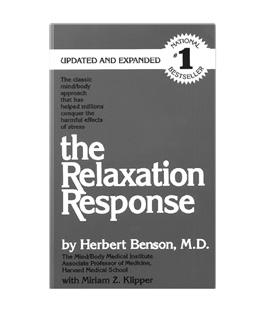
The Relaxation Response
Herbert Benson, M.D., and Miriam Z. Klipper
Published: 1975
ISBN: 978-0-38-081595-1
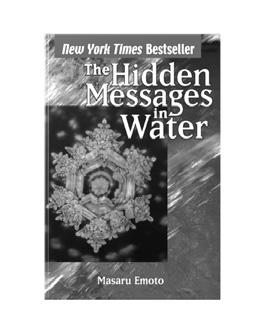
The Hidden Messages in Water
Masaru Emoto
Published: 2004
ISBN: 978-0-74-328980-1
捐款方式 | DONATION METHODS
佛说:一切布施中,法布施为最
The Gift of the Dharma Excels All Other Gifts. — Buddha
如果您想和大家分享无上布施(法施)的喜悦,您可赞助印刷结缘书籍与 免费佛教刊物。
Let us honour the Buddha and share his teachings with others by supporting the production cost of Dharma books and materials for free distribution.
无现金支付 CASHLESS
您可通过以下网站完成捐赠:
To make an online donation, please visit kmspks.org/make-a-donation
(*请在 “Printing of Dharma Materials” 栏目注明捐款数额)
(*Please select “Printing of Dharma Materials” and type in the donation amount.)
如何捐款 HOW TO DONATE
若您想要以支票方式捐款 印刷,只需将划线支票发予:
Please cross your cheque payable to “Kong Meng San Phor Kark See Monastery” and send it to:
Kong Meng San Phor Kark See Monastery Awaken Publishing 88 Bright Hill Road, Singapore 574117
*请在支票后方注明捐款姓名与 联系资料。
*Please include your name and contact details behind the cheque.
现金支付 CASH
可到访本寺的寺务处 现款捐献 。
Please visit our Front Office to make cash donations.
营业时间 Opening Hours: 9am — 4.30pm
完成捐款后,我们将会 签发正式收据。
You will be issued a receipt for the donation.
如有任何疑问,请拨电 (65) 6849 5342 或电邮至 publication@kmspks.org 了解更多。 If you have any enquiries, please call (65) 6849 5342 or e-mail publication@kmspks.org
您的善款将有助于佛法的弘扬与传播,感谢您与我们共赴这趟难忘的旅程。 愿佛法的人生伴随您,三宝的愿力加持您。祝法喜充满,一切圆满。 Every donation counts towards the propagation of the Dharma and we want to thank you for sharing this journey with us. May the blessings of the Triple Gem always be with you and your loved ones.
* By submitting this donation form, you agree that Kong Meng San Phor Kark See Monastery may collect, use and disclose your personal data for the purposes of processing donations and performing donor relations activities and communication in accordance with the Personal Data Protection Act 2012 and the monastery’s privacy policy available at kmspks.org/privacy
支票 CHEQUE
Meditation is a training that involves exploring one’s inner world, discovering oneself, grasping the nature of life and developing wisdom. Through persistent, long-term practice, and after accumulating enough training hours quantitatively, our lives will transform qualitatively, with promising effects and benefits beyond words or thoughts.