A year to remember
45 years 45 years
Celebrating of Avon Wildlife Trust
Common ground
Connecting communities through nature
Small but MIGHTY
We get in a flutter about small blue butterflies

A year to remember
45 years 45 years
Celebrating of Avon Wildlife Trust
Common ground
Connecting communities through nature
Small but MIGHTY
We get in a flutter about small blue butterflies

to your spring Wild Avon magazine, helping you to make the most of what this season has to offer. This is my first edition of the magazine as Avon Wildlife Trust’s Chief Executive Officer, having joined from London Wildlife Trust in March, and what an honour it is to be introducing you to our 45th anniversary special.
Avon has a rich history of grass-roots community action, and that’s something we’re exploring in depth in your spring magazine. You’ll be taken on a whistle-stop tour of over four decades’ worth of caring and advocating for local green spaces, with on-site vigils, nature reserve transformations and even a greater horseshoe bat called Boris!
This is a pivotal moment to be joining you in Avon. Not only is this a milestone year, but we can now share with you more details about our most ambitious land purchase yet: Ebdon Farm. A former dairy farm on the North Somerset Levels and Moors, this will be a testament to our dedication to nature’s recovery. We’re going to need your help, and I’m so excited to be taking the lead on this journey. You can read more about where the Trust has been and where our future lies from page 16. Bringing it back to local people, in recent years we’ve seen a real shift towards championing the little actions we can all take, which, in cumulation, make a massive difference for nature. One way we’re galvanising this spirit is by taking a community organising approach. Not heard of community organising before? You can learn all about it, what it means in practice and the difference it can make for people and wildlife on pages 20–22.
So, as I’m still new here, I’d love to get to know you – our most loyal supporters. How long have you been a member with us? What changes to wildlife have you seen during that time? And what gives you hope for the future? If you have any memories you’d like to share about your time as a member of the Trust, please send them to communications@ avonwildlifetrust.org.uk – we’re planning to continue the 45th birthday celebrations into our autumn magazine and I’d love to make sure you, our members, are given a platform to share your nature stories. In the meantime, thank you so much for your continued support.
Leah McNally Chief Executive of Avon Wildlife Trust
Wild Avon is the membership magazine for Avon Wildlife Trust, your local wildlife charity, working to secure a strong future for the natural environment and to inspire people to care for it. With the support of over 18,000 members and over 500 volunteers, the Trust cares for 27 nature reserves, runs educational and community programmes, advises landowners and campaigns on issues that threaten wildlife habitats.
Trust Office
17 Great George Street, Bristol BS1 5QT
Telephone 0117 917 7270
Email mail@avonwildlifetrust.org.uk
Website avonwildlifetrust.org.uk
Folly Farm Centre
Stowey, Pensford, Bristol BS39 4DW
Telephone 01275 331590
Email info@follyfarm.org
Website follyfarm.org
Grow Wilder
181 Frenchay Park Road, Bristol BS16 1HB
Telephone 0117 965 7086
Email growwilder@avonwildlifetrust.org.uk
Website avonwildlifetrust.org.uk/growwilder
Follow us on social media for the latest news and events. Please share your wildlife pictures and experiences! You can also subscribe to our monthly newsletter online through our website to hear about our latest news and events.


Editor: Abbie Hall
Abbie.Hall@avonwildlifetrust.org.uk
Designer: Kevin Lester
UK editor: Tom Hibbert
UK designer: Ben Cook
Cover photo: Chris Lawrence
Registered charity number 280422
Registered company number 1495108
Registered company address: Folly Farm Centre, Stowey, Pensford, Bristol BS39 4DW
4 Your wild spring
The best of the season’s wildlife and where to enjoy it 9
10
Actions for nature
Wild reserves
Marking 10 years of Bennett’s Patch and White’s Paddock and discovering other local nature sites to visit
13
Wild thoughts
Liz Bonnin, president of The Wildlife Trusts
14 Six places to see butterflies
16 Celebrating 45 years of Avon Wildlife Trust
Take a walk along the winding path of our history here in Avon, before getting a glimpse into the future of nature restoration
20 Bringing people together for nature
Our community organising approach 23 Focus on
Give a tip to Team Wilder 24
Wild Avon news 26 My wild life
Find out more about Tom Snowball, our Pollinator Recovery Manager 27 Volunteering
Help us to bring wildlife back across 30% of land and sea by 2030 by increasing your membership donation today, so that we can all benefit from nature on our doorstep: avonwildlifetrust.org.uk/ increasedonation
Be part of Team Wilder
Become a part of our growing community of local people who take action for nature as part of their everyday lives: avonwildlifetrust.org.uk/team-wilder
Campaign We need your voice to raise awareness for urgent local issues such as fighting the ecological emergency, reversing insect decline and creating a connected network of habitats for wildlife: avonwildlifetrust.org.uk/campaign
Fundraise
Set yourself a challenge or organise an event to fundraise with family and friends to help wildlife in our region: avonwildlifetrust.org.uk/ fundraise
Give the gift of land
Help to secure 30% of land for wildlife by 2030 by contributing land or the money to make a purchase: avonwildlifetrust.org. uk/gift-land
Include a gift in your will
Celebrate your love for local wildlife by giving a gift that could last for generations. A gift in your will, no matter how big or small, can make a real difference: avonwildlifetrust.org.uk/giftinwill
The best of the season’s wildlife and where to enjoy it across Avon
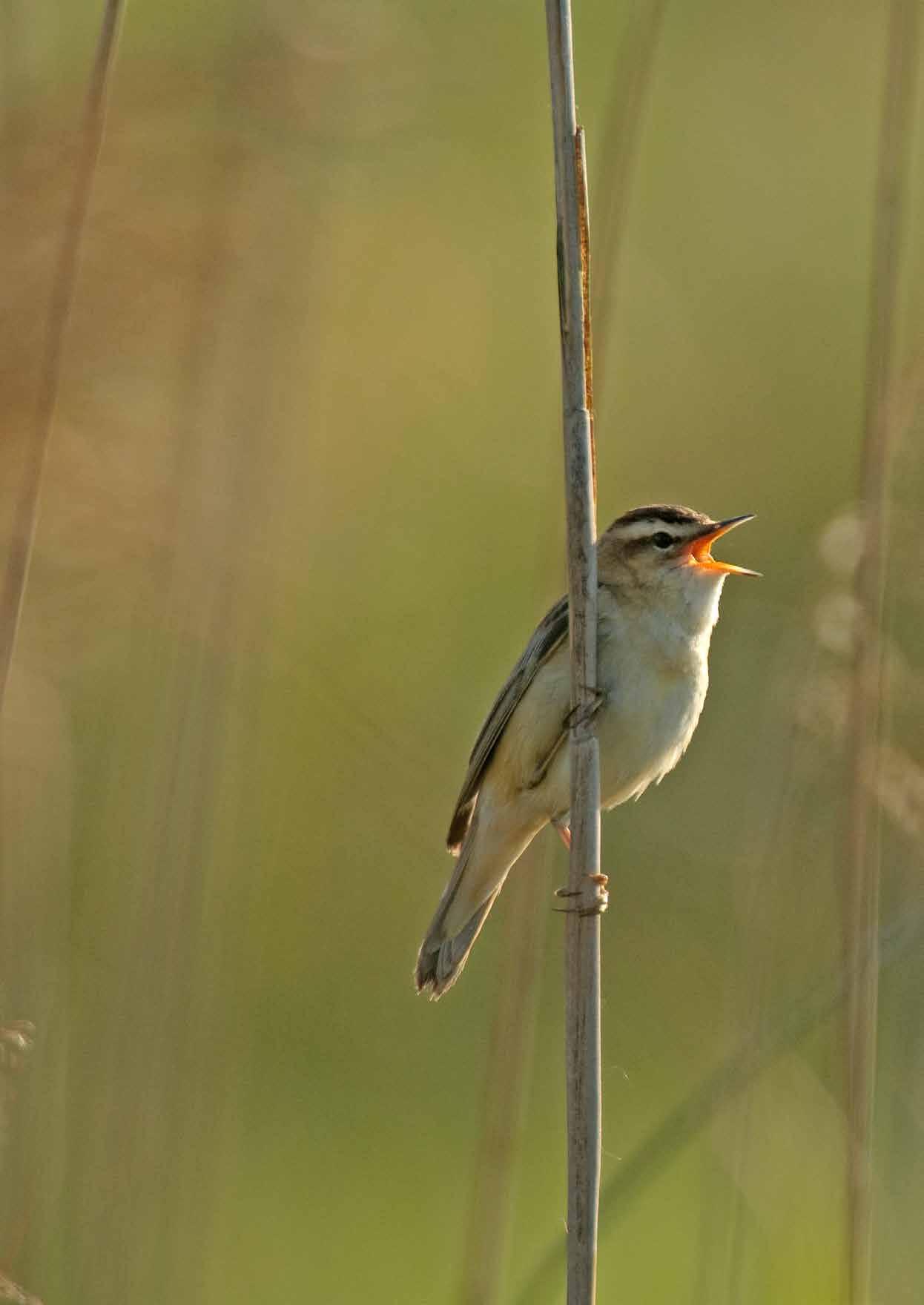
Sedge warblers arrive in April and sing until August. Males impress females by never repeating the same song!
Thanks to your membership we are managing land to protect habitats for warblers so they can continue to use our sites to feed and raise young.
Warblers are standout performers in the dawn chorus. What these plain birds lack in appearance, they make up for with the symphony of sounds that they contribute to spring – from the chiffchaff musically repeating its name, the willow warbler’s cascade of notes, and the grasshopper warbler’s insect-like trill that young listeners will hear best, to the rarer marsh warbler’s ability to mimic roughly 200 bird calls.
Starting in February, various species begin to arrive in the UK to breed and feed after wintering in regions such as the Mediterranean and Africa. However, climate change is impacting some species’ distribution, with willow warblers declining by 41% in England but increasing by 77% in Scotland.
This group of birds can be found in a variety of habitats, including woodlands, reed beds, marshes and heaths, so keep an ear out for warblers when venturing outside this spring. Well-reviewed bird song ID apps make pinpointing and appreciating their calls accessible to all.
Prior’s Wood is a 150-acre reserve featuring ancient broad-leaved woodland. Against the backdrop of bluebells, this is a great spot for garden warbler, willow warbler, chiffchaff and blackcap. Read more about it on page 12!
Chew Valley Lake is the largest artificial lake in the southwest. This reserve has extensive reedbeds that support a population of reed and sedge warblers.
Field margins are easily overlooked as a valuable habitat for nature. However, these strips of grassland have an increasingly important role in providing a wildlife corridor between different areas and helping to keep our watercourses healthy.
In the farmed landscape, well-managed field margins provide habitat and food for pollinating insects, and habitat for insects and birds that feed on crop pests.
Field margins near waterways help to slow the flow, which alleviates flooding downstream and drought conditions on arable land, and can prevent soil and pollutants from entering our watercourses.
SEE IT THIS SPRING
Best viewed from a distance to prevent trampling of these wildlife-rich grassland strips. Look out for wildflowers that will just be coming into bloom.
Our Pollinator Pathways project is helping to support landowners, businesses, farmers and community groups in creating and managing habitats for pollinators. avonwildlifetrust.org.uk/pollinator-pathways
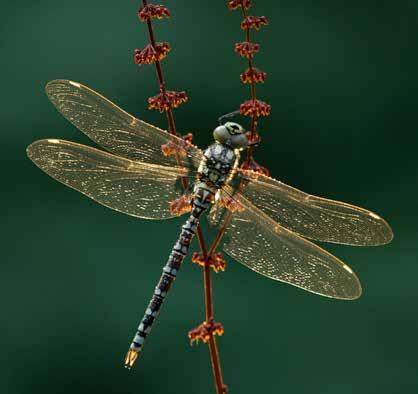
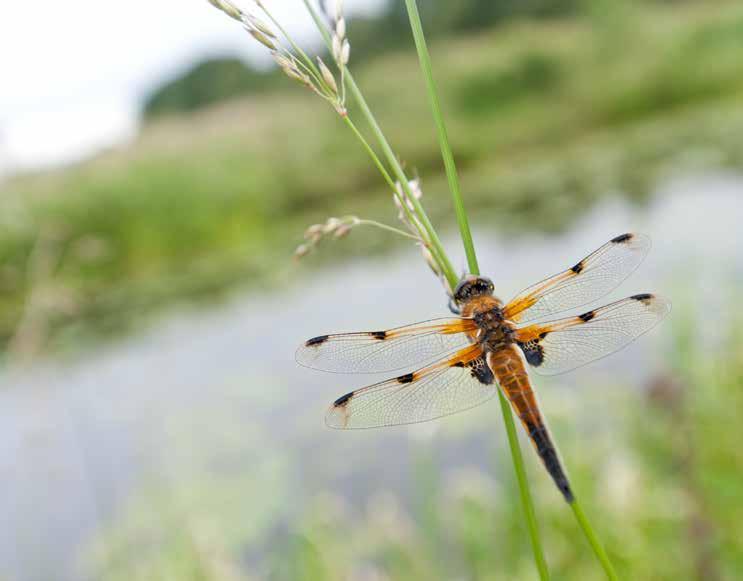
In prehistoric times, giant dragonflylike creatures evolved called griffinflies, with wingspans like eagles!
Before dinosaurs roamed the earth, there were dragonflies in the sky. Evolving some 300 million years ago, they’re part of the Odonata order, meaning ‘toothed ones’ – though they’re completely harmless to humans (less so for the likes of gnats, mosquitoes and other small insects!).
Dragonflies spend most of their lives in their larval stage – nymphs. As nymphs they look like small, wingless adults, with six legs and wing-sheaths. They go through a gradual change into adults, shedding their skins 5–14 times before they’re ready to leave their underwater homes.
Water: Adding an area of water, standing or flowing, in your green space is the perfect way to attract dragonflies and other waterloving invertebrates. Make sure it’s in a shaded area, as high water temperatures can be fatal to many invertebrates.
Get boggy: If you already have a pond, enhance the habitat around it by planting freshwater or wetland species such as marshmarigold, water avens and snake’s head fritillary that wetland invertebrates love.
River health: Advocate for cleaner rivers in your community. The health of our local waterways is vital, with this year’s Festival of Nature being dedicated to the importance of rivers for nature’s recovery. See how you can take action at avonwildlifetrust.org.uk/ team-wilder-resource-rivers
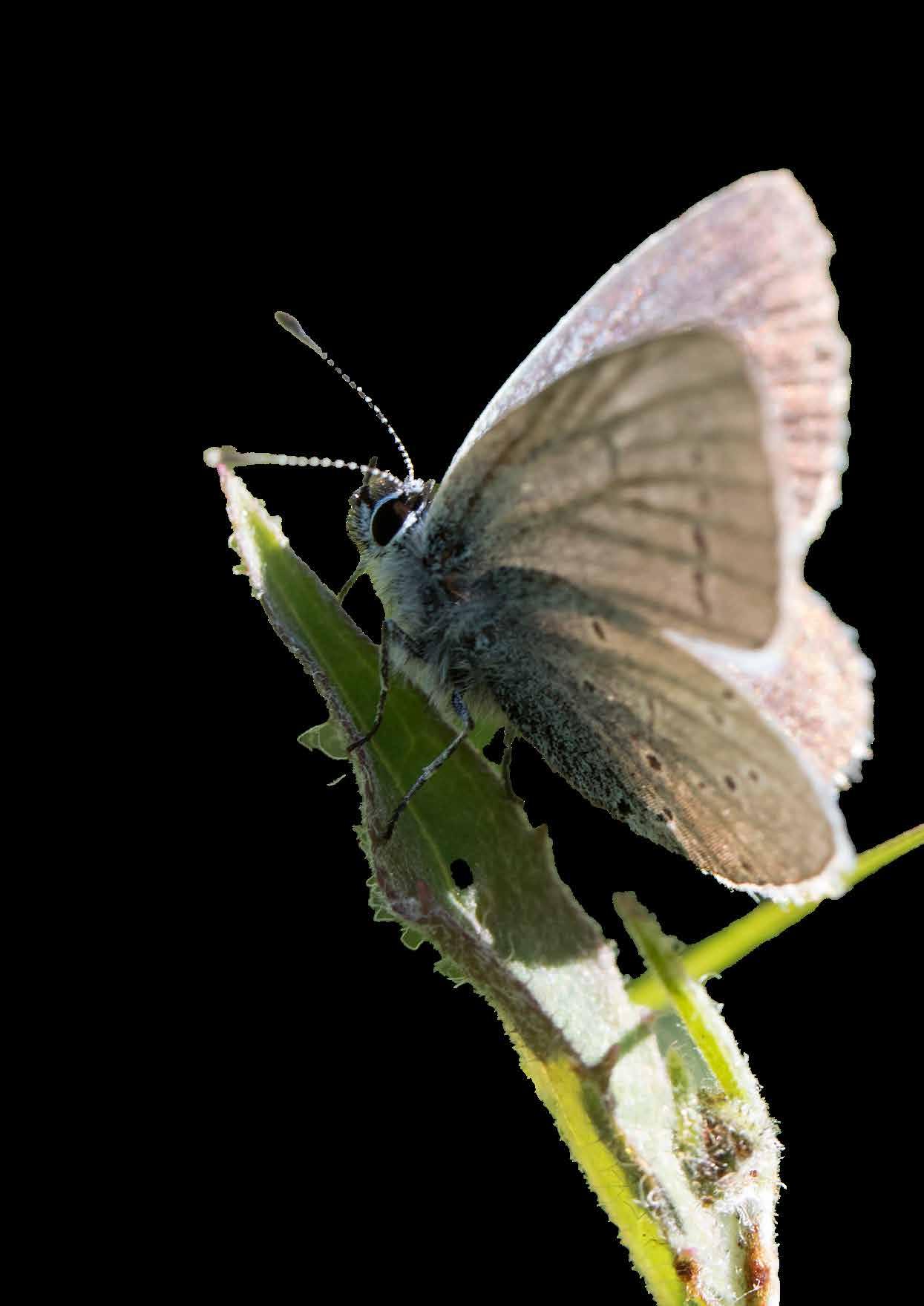
Cupido minimus literally translates to ‘the smallest cupid’, a delightfully apt name for our smallest butterfly. It’s uniquely attractive with dusky colouring and a dusting of vibrant blue. The small blue relies solely on kidney vetch, meaning that its range is confined to where the plant grows.
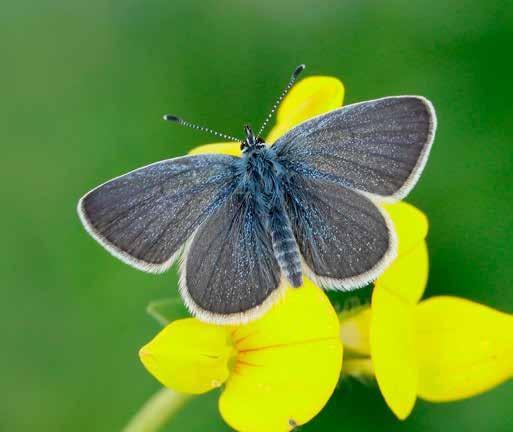
Size: measuring 18–27mm, the small blue is significantly smaller than any other blue butterflies
White border on wings
Colouring: small blues are much darker than any of the other blues, a beautiful dusky shade of grey/ brown with just a dusting of blue on the upper wing
The small blue relies on grassland habitats, specifically nutrient-poor/early successional meadows, that provide shelter and nectar for the adults and kidney vetch for the larvae. Such habitats include chalk and limestone grassland, especially with naturally occurring broken ground, as well as coastal grassland and dunes. More recently, man-made habitats such as quarries, gravel pits, road embankments, disused railways and other brownfield sites have provided valuable habitat, especially where kidney vetch thrives on disturbed rocky ground.
A not-so-common blue
The small blue is a rare butterfly, having lost 44% of its range since 1970. It’s protected by law and is a priority species for conservation. It’s mainly found in central/southern UK and sporadic coastal sites and its distribution is not helped by the fact it is relatively sedentary and doesn’t fly large distances. This, combined with the loss of nutrient-poor wildflower meadows and connectivity within the landscape, means it has become scarce. Luckily, its foodplant grows easily from seed and we can disturb the ground in suitable locations and sow kidney vetch to create small blue havens. This approach has led to many successful reintroduction attempts across the UK.
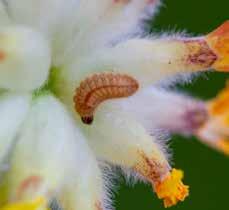
The adult butterfly tucks a single egg into the partially developed flower head of a kidney vetch. When the egg hatches, the caterpillar lives its life within the flower, devouring the
anthers and seeds. When fully grown, it descends to the ground to overwinter in crevices or under moss. Then, still at ground level, it pupates (forming its chrysalis) the following spring. A few weeks later, an adult butterfly will emerge, with its new superpower of flight allowing increased mobility to find a mate. Once mated, the females disperse to lay eggs on kidney vetch and the cycle starts again. They provide a valuable service pollinating flowers and also act as prey to bats, birds, spiders and other predators.
SEE THEM THIS SPRING:
Dolebury Warren: The small blue is on the wing from mid-May to late June, with a potential second small brood from July to the end of August. If you head out at this time you have a chance to spot the butterfly at Dolebury Warren, where the unique geology allows kidney vetch and many other wildflowers to flourish.
Lockleaze: The Really Wild Lockleaze project has helped local residents to grow kidney vetch and plant it throughout Lockleaze in gardens and council-owned verges. The hope is to link the populations along the railway line (the scree on railway banks is a common location for kidney vetch to flourish) with Stoke Park.
DID YOU KNOW?
The small blue is communal! It tends to live in small colonies of up to 30 individuals. Both sexes can be found in communal roosts, facing head down in the grass. The males are a dusky grey/black/blue whereas the females are more of a brown/blue colour.
Kidney vetch is easy to grow from seed! Purchase some seed and grow in a seed tray, then plant out into a planter, pot or garden border.
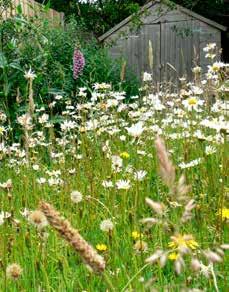
CREATE A MEADOW PATCH
Adult small blues will nectar on various wildflowers, aiding important pollination. Create your own patch using the Team Wilder ‘Mini Meadows’ resource online!
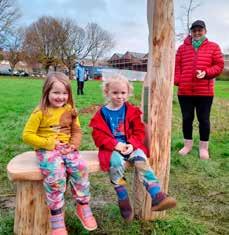
TEAM UP!
Help your neighbours to plant kidney vetch and create meadow patches –connectivity is key, so we need to work together and spread the good word!
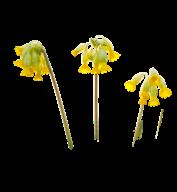
The delicious, apricot jam-like smell of cowslips in a meadow – catch them in April and May
Look out for swallows returning in April from their winter visit to Africa
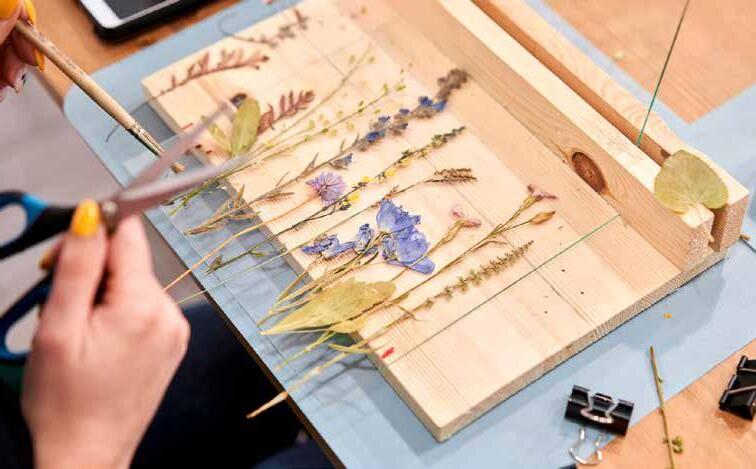
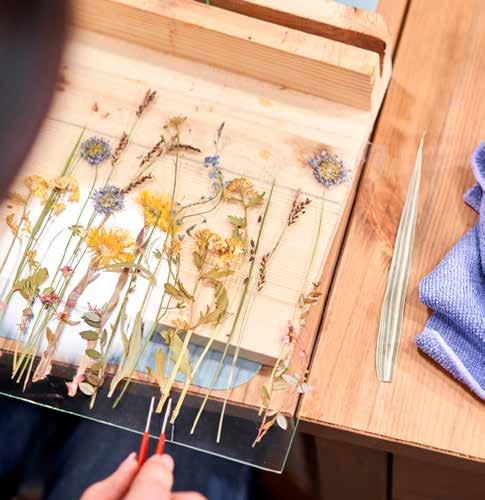
Spring is here, and the burst of colourful flowers signals the end of winter! On your local walks, mindfully gather these vibrant blooms (ensuring there are plenty left for our pollinator pals) to press and use for delightful crafts. Press them with a flower press or between two sheets of kitchen roll and heavy books. Create heartfelt homemade cards by glueing pressed flowers onto card or preserve them in epoxy resin to craft unique earrings or necklaces.
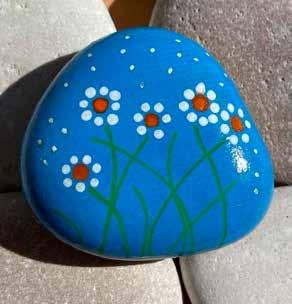
On your next spring walk, pick up a pebble, paint it with a picture or uplifting quote and place it in plain sight for someone else to discover. It’s a fun outdoor activity for kids and a delightful way to spread joy and creativity!
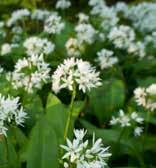
Alongside the long days and the warmer weather, spring offers a bounty of edible foliage, perfect for foraging. Foraging is best done with an experienced guide to ensure safety, while being mindful of not disrupting the local ecosystem by taking more than you need. One of the easiest plants to identify is wild garlic. Found in damp woodlands and shaded areas, its broad, shiny green leaves and unmistakable aroma make it a forager’s favourite. Add its edible white starshaped flowers to salads or whip up a quick wild garlic pesto by blending 100g of wild garlic, 50g of toasted pine nuts, 50g of parmesan (or vegan alternative), lemon juice and olive oil – perfect for pasta or as a vibrant dip!
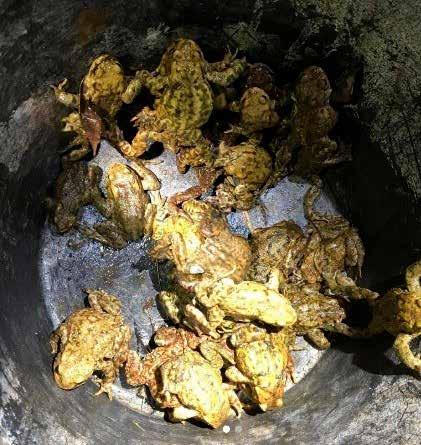
This season marks the awakening and migration of many animals. There are a number of national wildlife monitoring schemes that you can get involved with throughout the year, with spring being a great time to record garden birds, reptiles, amphibians and plants. You can even take part in the earthworm watch survey from March–May or join a local toad patrol to help migrating toads cross roads from February–April. The National History Museum’s ‘Survey Calendar for Beginners’ is a great place to find easy surveys that suit your schedule and interests.
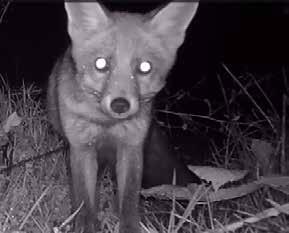
As young animals start to become more active in spring, this is the perfect time to set up a camera trap! A camera trap can help you observe creatures in their natural habitat without disturbing them. It’s an exciting way to document wildlife, discover species in your area, and contribute valuable information to conservation efforts.
Let the grass grow! Take part in No Mow May and allow your green space (or even just a strip!) grow wild for pollinators
Create a journey stick on your next nature walk –grab a stick and some tape or string, collect things which interest you on your way and get sticking!
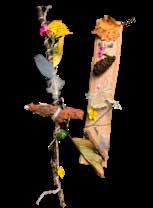
All over the region, members and supporters just like you are doing brilliant things for nature as part of #TeamWilder. Together these actions add up and make a real difference for wildlife. Thank you for everything you do for nature! Here are some of your fantastic actions for nature.
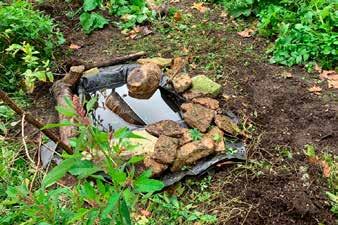
BA1 and BS20 Wildlife Champions Alison, Steve and Sue have been getting creative, building wildlife ponds out of an old wheelbarrow and bath! Having a pond is one of the best things you can do to support wildlife locally, so it’s great to see people re-purposing what would have been waste into mini aquatic hotspots!
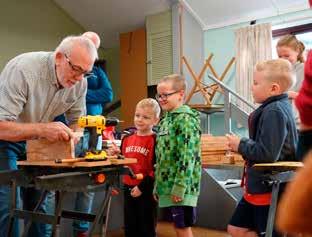
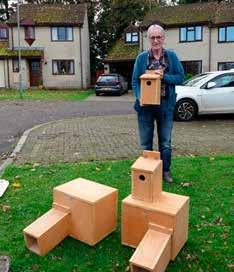
Tom and Jeff, from Writhlington in Somer Valley, have been using their carpentry skills to help their community come together. They’ve built hedgehog houses, bat and bird boxes, and fairy doors for a new nature trail, all to improve local habitats, connect people and inspire more folks to spend time outside.
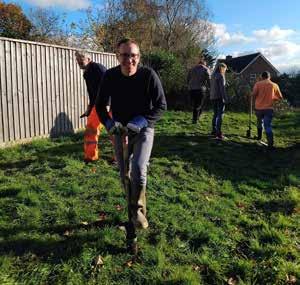
Members of the St Barnabus Church community, Warmley Park School and the visiting Archdeacon of Malmesbury, the Venerable Christopher Bryan, planted 1,000 spring bulbs at the church in Warmley! Paul, our Community Engagement Officer for the Warmley Nature Action Zone, was on hand to help bring to life their vision of creating a bank of colourful flowers to welcome pollinators in the spring.
Daniel and Heather Leach are taking on an epic challenge in 2025, running two ultra marathons each – all to raise money for Avon Wildlife Trust! So far, Daniel has completed his first race of the year, taking part in the winter edition of the Green Man Ultra this March. We wish them both the best on this amazing fundraising endeavour!

Are you doing something wonderful for wildlife? Fundraising for frogs? Planting for pollinators? Whatever you are up to, we would love to hear about it. Send in your #ActionsForNature to communications@avonwildlifetrust.org.uk or tag us on social media @avonwt
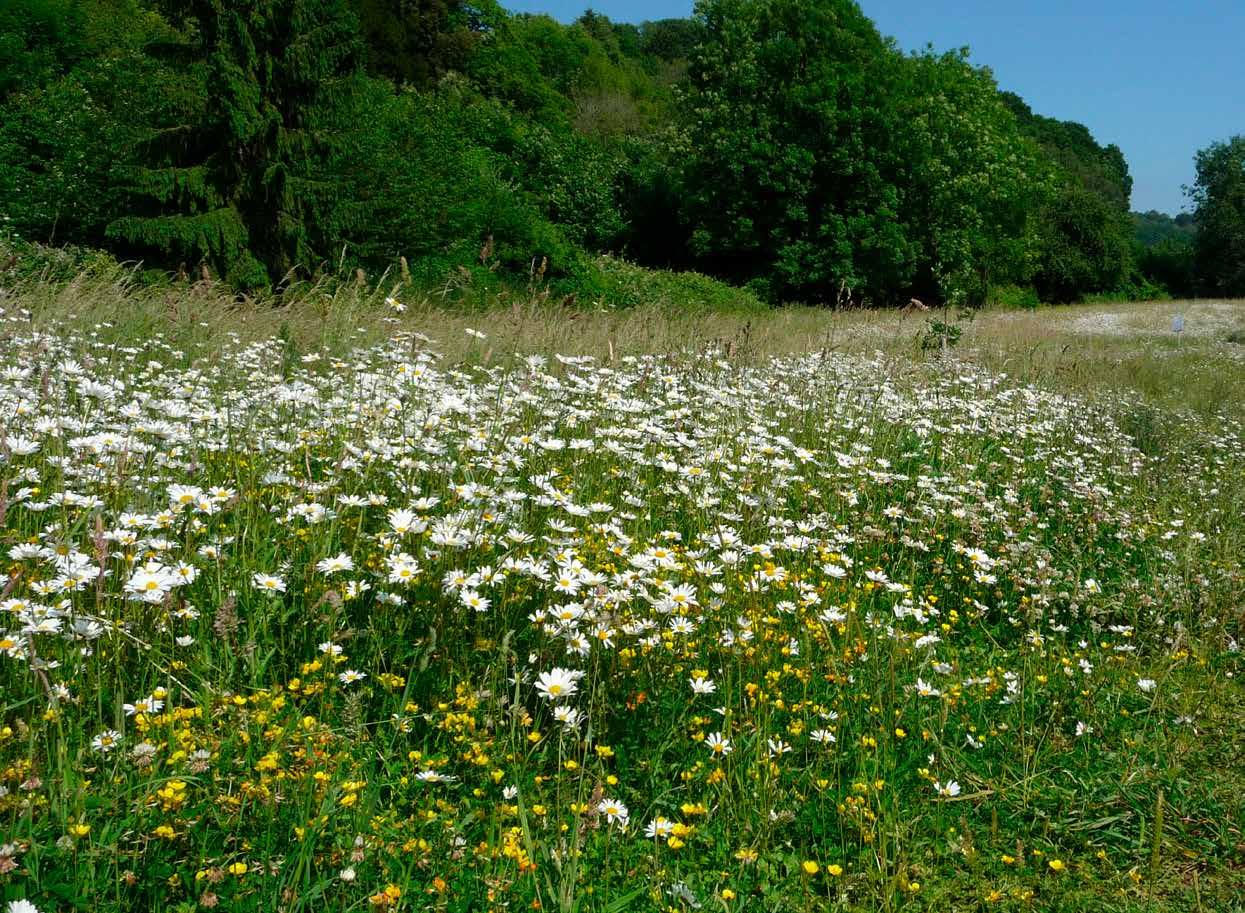
This north-west Bristol green space is celebrating its 10th anniversary under Avon Wildlife Trust’s care, after we transformed the 5-hectare derelict site into a vibrant nature reserve, teeming with butterflies and wildflowers.
Bennett’s Patch and White’s Paddock is a fantastic yearround destination for nature lovers of all experience levels. Its proximity to Bristol city centre makes it easily accessible for families, and the reserve’s predominantly level ground ensures easy walking, though access via a public footpath can be steep and muddy.
Nestled in the Avon Gorge, the reserve offers stunning views of the river Avon and Leigh Woods on the opposite bank. The diverse habitats – woodland, meadows, scrub and ponds – have been carefully nurtured to support a variety of wildlife, including birds, butterflies and insects.
© JOHN BRIDGES
Previously closed-cropped grassland used for sport recreation, Bennett’s Patch and White’s Paddock became derelict between 1999 and 2014. When Avon Wildlife Trust took on the site in 2014, efforts focused on restoring biodiversity. Thousands of trees were planted, and a variety of wildflower seeds and plugs were introduced to expand the nectar-rich meadows. Areas were left to naturally colonise, while green hay was used in some sections to encourage greater plant diversity. Ongoing management has included annual hay cuts, removal of invasive species, tree thinning and scrub control.
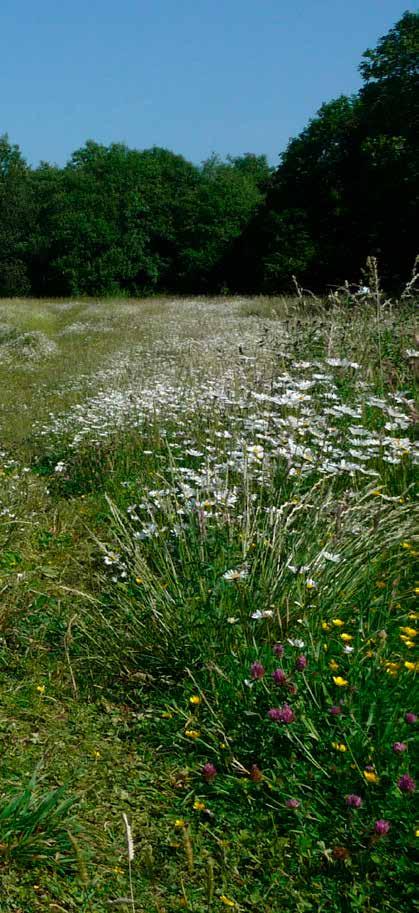
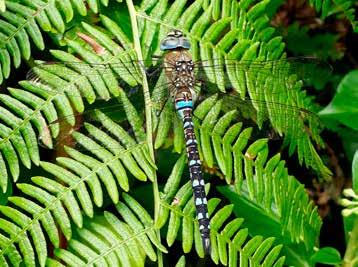
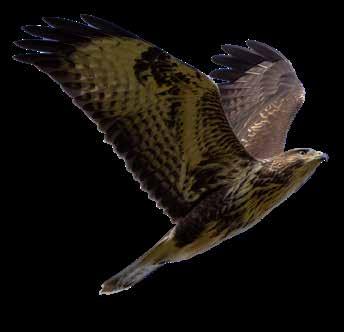
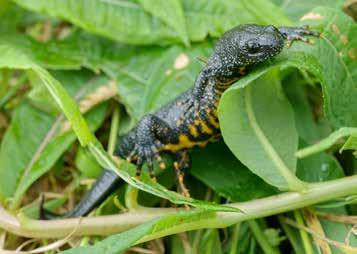
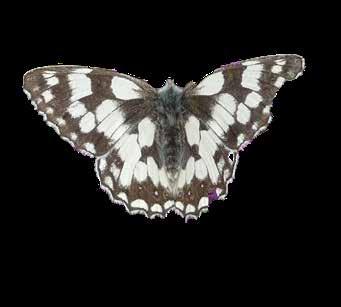
These management efforts have transformed the reserve into a rich and diverse habitat. The meadows now support a wide range of wildflowers, such as cowslips, ox-eye daisies and yellow rattle, which provide food for butterflies like the marbled white, meadow brown and small skipper. Establishing ponds has led to the site attracting vibrant populations of aquatic wildlife, such as newts, frogs and dragonflies. Consistent monitoring has provided valuable insights into the reserve’s growing biodiversity. Birdlife has also flourished, with species like wrens, tits, blackbirds and buzzards
Thanks to our members, fantastic volunteers and the Sneyd Park Residents Association for supporting us in enhancing this site for local wildlife.
regularly seen. Summer migrants, including blackcaps and chiffchaffs, add to the diversity, while weasels have been spotted, a sign of the reserve’s success as a wildlife corridor within the landscape and the abundance of small mammals as a food source (mice and voles).
The transformation of Bennett’s Patch and White’s Paddock has greatly enhanced the region’s biodiversity. As part of a larger ecological network, the reserve connects Old Sneyd Park, Bishop’s Knoll Wood and other sites, boosting the local conservation value. Managed primarily by dedicated volunteers, it now supports diverse wildlife through active habitat management, including pond maintenance, scrub management and meadow care. These efforts ensure the reserve thrives, supports local species and maintains vital ecological links within the wider Avon Gorge and its protected habitats.
DID YOU KNOW Until 2000, the site was home to the Bristol and West Building Society’s sports club. In 2015, its launch as a nature reserve marked Bristol’s European Green Capital year. Volunteers have planted over 4,200 trees on the site and created vibrant wildflower meadows, offering essential habitats for birds and insects. The reserve also boasts a thriving population of Britain’s only legless lizard, the slow worm, making it an ecological gem!
Location: The Portway, Bristol, BS9
How to get there: The reserve is easily accessed by public transport. It is a short walk back along the Portway from Sea Mills Station. You can use the number 9 Park & Ride service from Bristol city centre.
A pedestrian gate is accessible off the Portway next to the main gates to the north of the reserve. The main gates are always kept locked, except during special events. At the southern end there is a kissing gate leading from the Portway to a footpath. There is also a footpath from Bramble Drive, over the railway bridge onto the reserve.
Cyclists can use the shared-use pavement along the Portway and access via the pedestrian gate to the north or use the bike racks by the kissing gate to the south. There is open access to the meadow areas, and a surfaced path allows access for those who are less mobile.
Marbled white butterflies: The meadow areas are a great place to spot these striking insects on warm, sunny days in late June and July.
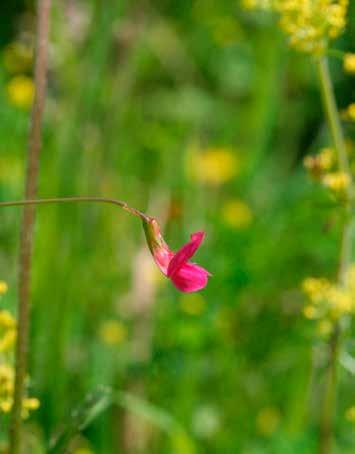
Grass vetchling: This delicate pink wildflower can be found amongst the ox-eye daisies and yellow rattle in the meadows.
Newts: The site supports excellent populations of newts which occupy the ponds during their breeding season.
Take a walk through the meadows to identify the wildflowers and to see how many of the 23 species of beautiful butterflies found on the reserve you can spot.
Come and see Ruth, the sculpture commemorating the life and significant contributions she and other women made to Britain’s war effort during World War II.
Spend some time on the platform at the main pond, where you can observe pollinating insects visiting the flowers of the marginal vegetation. You can also spot newts, dragonflies, damselflies and other fascinating invertebrates, such as pond skaters, backswimmers, whirligig beetles and diving beetles.
Why now?
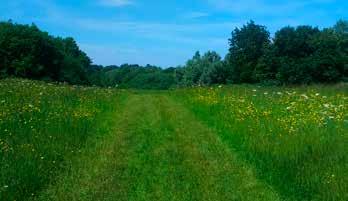
As the coldness of winter recedes, one of the biggest green spaces in Bristol, Stockwood Open Space, awakens into sunlight. Why not come along and see for yourself? One of the many sights that can be witnessed is the nationally rare Bath asparagus, also known as spiked star-of-Bethlehem.
Know before you go
Location: Stockwood Nature Reserve, Hungerford Gardens, Stockwood, BS14 8XX Open: Free entry all year, dawn to dusk Wildlife to spot: Brimstone and peacock butterflies, great crested newts, muntjac deer and glow worms.
Find out more: The ‘Friends Of Stockwood Open Spaces’ Facebook group
The lowdown
Prior’s Wood
Why now?
The spring months are a wonderful time to visit as the change of the season brings a burst of colour, with the mature trees coming into leaf and wildflowers emerging and carpeting the woodland floor. The violet glow of bluebells offers an incredible spectacle and is a must-see each spring.
Know before you go
Location: Prior Woods Path, Portbury, Bristol, BS20 7UF
Open: Free entry all year, dawn to dusk Wildlife to spot: Spotted flycatcher, garden warbler, English bluebell, early purple orchid, and the locally scarce hard fern
Find out more: avonwildlifetrust.org.uk/ nature-reserves/priors-wood
The lowdown
If you’re looking for a wildlife-rich and diverse woodland, then Prior’s Wood, located south of the Gordano Valley, certainly ticks all the boxes! This partially ancient woodland is home to a vast array of tree and plant species, ranging
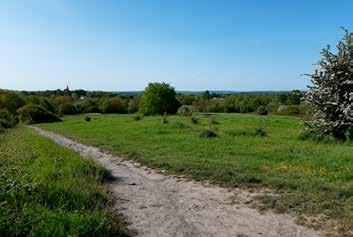
from mighty oaks to the breathtaking bluebells that carpet the woodland floor at this time of year.
The paths loop through the woodland, winding through areas of plantation and coppice coupes, and crossing a quaint little stream that runs through the reserve. Prior’s Wood is home to 14 locally important plant species, which support an abundance of insects and small mammals, making it a delightful spot for wildlife watching.
If bird spotting is more your thing, this reserve will keep you occupied for hours, with buzzards, tawny owls, spotted flycatchers and many more species to see!
Within this ancient woodland you can find an array of ferns and butterflies, particularly the stunning brimstone and peacock butterflies. Enjoy the vast swathes of grassland and explore the two pond areas, where you might be lucky enough to spot all three of the UK’s native newt species. Great crested newts are the biggest and nationally scarce, so it’s wonderful to know they’ve found a home in this urban wild space.
Walking through this woodland can transport you back to a time where it might have been common to see wolves or lynx roam the land – unsurprising, given that part of this site is mentioned in the Domesday book!
The space is managed by Bristol City Council workers and volunteers, along with two dedicated Facebook groups: Friends of Stockwood Open Spaces and Friends of Stockwood Nature. A variety of nature events take place across the year, including wildlife surveys, glow worm and bat walks, and forest therapy sessions.
Find out more at avonwildlifetrust.org.uk/ nature-reserves

Liz Bonnin
@lizbonnin
I’ve been incredibly lucky to have had wildlife encounters that left me feeling deeply connected to nature. Some of the most memorable were in Galápagos. This remote, volcanic archipelago and its nutrientrich waters have produced a magnificent abundance of life. Marine iguanas, fur seals and blue-footed boobies are entirely unphased by your presence here, so you feel like part of nature, not just an observer. In the water, I’ve spent hours playing with enigmatic sea lions as they invite you to chase them.
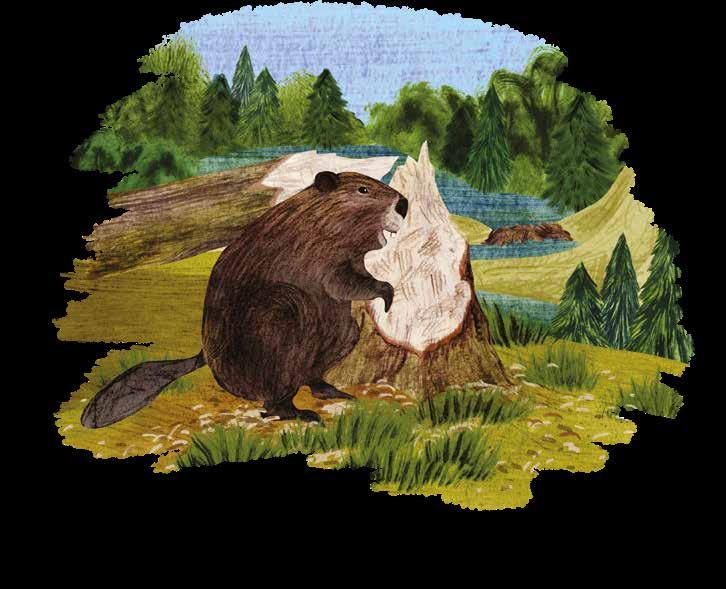
In the UK, one of my favourite wild places is Loch of the Lowes in Scotland – a truly magical place. For me it’s just as thrilling to see signs of beavers around the Loch, from coppiced vegetation to beaver chips, as it is to see them with my own eyes. It’s wonderful to witness these crucial ecosystem engineers recovering here and across the UK, after being hunted to extinction in the 16th century.
But in my work, I’ve also seen how nature is bowing under the pressures of the modern world. I’ve reported on mile-long rafts of waste flowing down the Citarum River in Indonesia, made up of plastic sent ‘away’ by the West, and of thousands of sachets sold by global corporations – despite developing countries having no recycling infrastructure to deal with it. This was one of the most eye-opening moments of my career. Our unrestrained cycles of production and consumption in the global north, and our throwaway culture, are all destroying nature, that we need to survive.
Every species on earth has evolved over millions of years to carry out a function that maintains the health of ecosystems. And ecosystems, in turn, keep the planet healthy,
as part of the interconnected web of life. We humans have a role to play too, but many of us have become so disconnected from nature that we’ve forgotten this simple truth.
To turn things around, we must place nature at the heart of every decision, across all sectors of society. It’s encouraging that ecological economists are working to transform our economic model, so that nature and societal well-being are prioritised above profits. I’m also bolstered by the traditional ecological knowledge of indigenous communities, who live in harmony with nature. This crucial knowledge system, combined with western conservation practices, can deliver better, collaborative outcomes for people and nature.
Collaboration is our superpower, and this is equally true of The Wildlife Trusts. Our collective strength as a federation of 46 Wildlife Trusts knows no bounds! The more we collaborate and combine our knowledge and experience, the faster the ripple effect of change can flow. As part of our community, you can play a very real part in the change our planet needs, by sharing our stories, supporting our campaigns and volunteering with us. Lastly, perhaps most importantly, in these challenging times, my advice is to take a break from the news and get outside. Notice the sunlight through the trees, the sound of birds, and breathe. Connect with nature and everything else follows.
In late 2024, Liz Bonnin interviewed Nemonte Nenquimo, a climate leader who has dedicated her life to defending of Indigenous ancestral territory and cultural survival in the Amazon. Watch over on our YouTube channel.
wtru.st/Liz-Bonnin-interview
Whilst beavers have been recognised as a native species by the UK and Welsh governments, we are still waiting for the steps to be put in place to allow them to properly return to England and Wales, where at the moment they live in enclosures. Read The Wildlife Trusts’ vision for their return: www.wildlifetrusts.org/ saving-species/beavers
Liz Bonnin is an explorer, naturalist and The Wildlife Trusts’ president. She is best known for documentaries including Galapagos, Wild Alaska and Blue Planet Live. Liz’s career has taken her around the world, studying animal behaviours and shining a spotlight on important environmental issues.

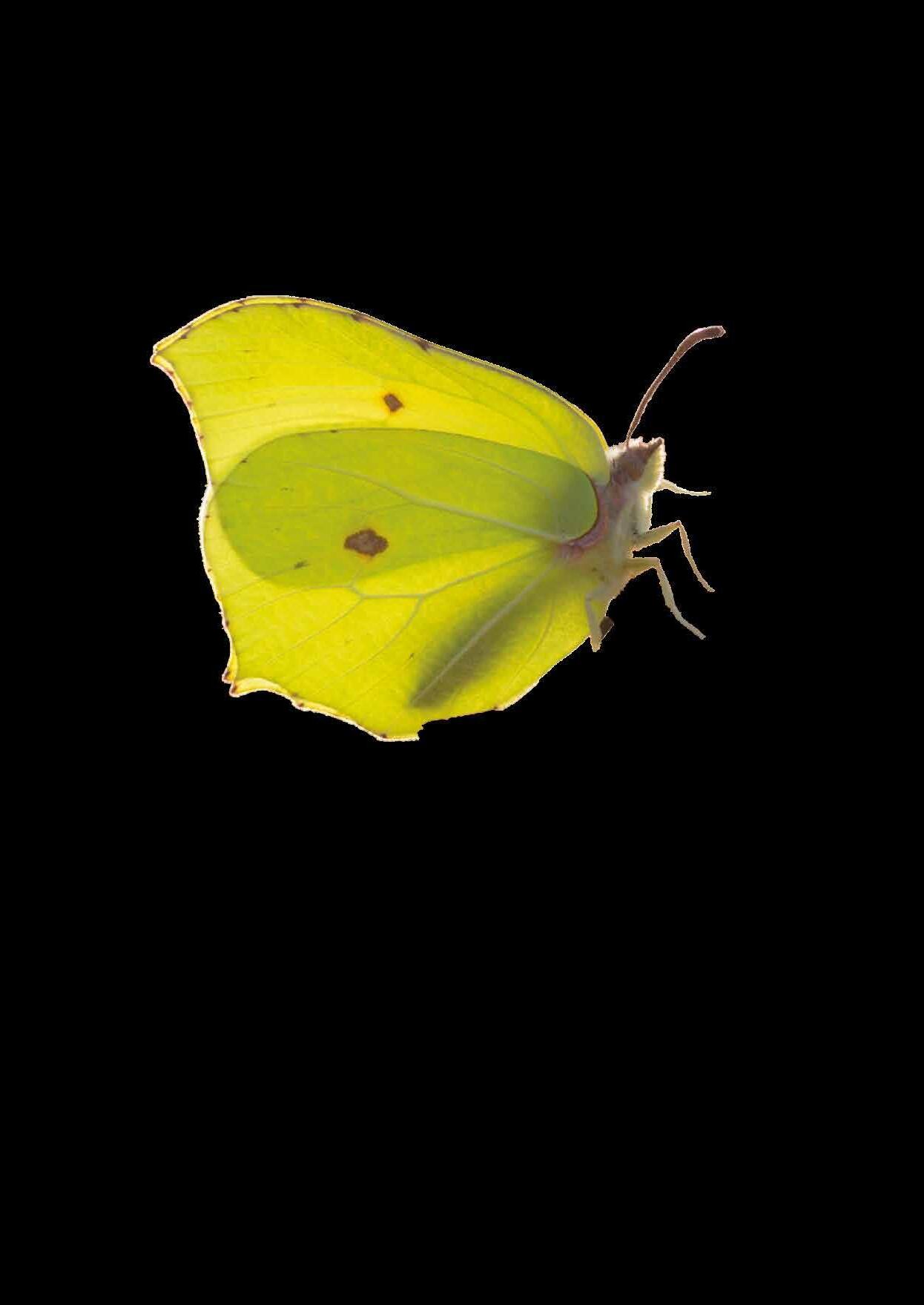
The first sight of bright lime yellow brimstone butterfly is a signal that spring is on its way. The comma, peacock, red admiral, small tortoiseshell and clouded yellow all make their fragile and fluttering first appearance as winter slips away.
Then each fluttering butterfly will emerge to feed on its favourite wildflowers, while skylarks and pipits fly overhead. The next arrivals are the speckled wood and grizzled skipper, followed by the holly blue, orange tip, painted lady and green veined white. By April on fine sunny days The Wildlife Trusts' nature reserves are coming to life with the beauty of butterflies on the wing. By May a kaleidoscope of butterflies are in flight.
With so many beautiful butterflies and pink, purple and yellow wildflowers on show, prepare to be blown away this spring. Here are six of our best nature reserves for spotting butterflies.
1 Maze Park Nature Reserve, Tees Valley Wildlife Trust

Maze Park is a green oasis right in the centre of Teesside. There is an abundance of herb species, such as yellow-wort and bird’s-foot trefoil which attract more than 12 species of butterfly, including the scarce grayling and dingy skipper.
Where: Thornaby, TS17 6QA
2 Hoe Grange Quarry, Derbyshire Wildlife Trust
The flower-rich short limestone grassland and woodland is a haven for butterflies, with 24 different species recorded. These include comma, peacock, red admiral, small tortoiseshell, speckled wood, orange tip, painted lady, large white and small heath, among others.
Where: Brassington, DE4 4HX
3 Llanymynech Rocks Nature Reserve, Montgomeryshire & Shropshire Wildlife Trusts
This former limestone quarry is a butterfly hotspot. Its once industrial landscape becomes a riot of wildflowers from spring. Keep your eyes peeled for the dingy and grizzled skippers from April and dark green and silver-washed fritillaries by June. Where: Llanymynech, SY22 6HD
4 Hexton Chalk Pit Nature Reserve, Herts and Middlesex Wildlife Trust
A small, chalk grassland reserve on the north-east Chilterns, colonised naturally by fine-leaved fescue grasses and chalk-loving plants, as well as five species of orchid. The site is a haven for butterflies, including green hairstreak, dingy skipper, brimstone, peacock, orange-tip and holly blue. Where: Hexton, SG5 3JP
5
Pamber Forest and Upper Inhams Copse Nature Reserve, Hampshire and Isle of Wight Wildlife Trust
Renowned for its ancient woodland, diverse flora and abundant wildlife, a variety of butterfly species and dragonflies thrive in the reserve's rich habitats. Spot purple emperor, white admiral, speckled wood and brimstone butterfly. Where: Tadley, RG26 3EQ
6 Queendown Warren, Kent Wildlife Trust
Nestled on the outskirts of the Medway towns, this hidden gem provides the perfect habitat for orchids, Kentish milkwort and the adonis blue butterfly, which was reintroduced to the site by Kent Wildlife Trust in 2002. They can often be seen at the site tumbling in the sky with the chalk hill and common blue butterflies.
Where: Sittingbourne, ME9 7XH
Did you spot any butterflies?
We’d love to know how your search went. Please share your best photos with us! See

This year marks Avon Wildlife Trust’s 45th anniversary and our rich history is something we should all be proud of. Rooted in community-based conservation, a group of nature entrepreneurs came together following the creation of the county of Avon in 1974. Their aim in 1980 remains at our core 45 years on – to safeguard Avon’s precious green spaces and promote the value of wildlife to our diverse population. Join us as we look back at some of what we’ve achieved together for nature, and introduce you to our next adventure…

1980 – Avon Wildlife Trust launches as Britain’s very first urban Wildlife Trust.
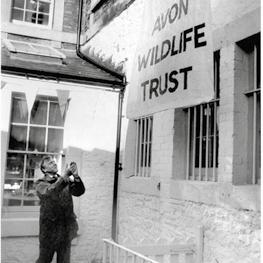

1983 – We take on our largest nature reserve to date, Dolebury Warren, at 230 acres
1982 – The Trust has grown from 800 to 3,000 members in the space of two years, with five nature reserves and three members of staff: an education officer, a conservation officer and a secretary. That conservation officer was Chris Johnson, who later became the Trust’s Director.


1985 – We move into our HQ building, an old police building on Jacobs Wells Road, right next door to Brandon Hill – the first nature reserve in a city park, created in 1981. Sir David Attenborough does the honours of ceremonially opening the building.

1986 – With the opening of Willsbridge Mill’s visitor centre, we are now managing 23 nature reserves.
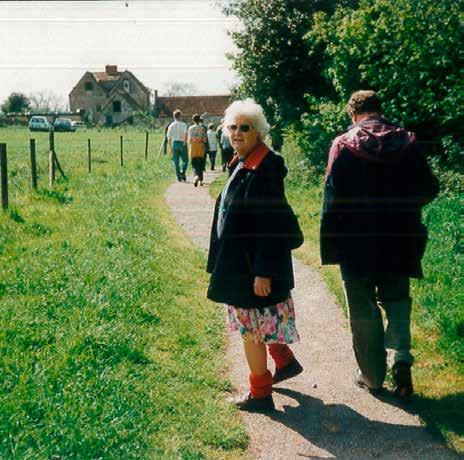
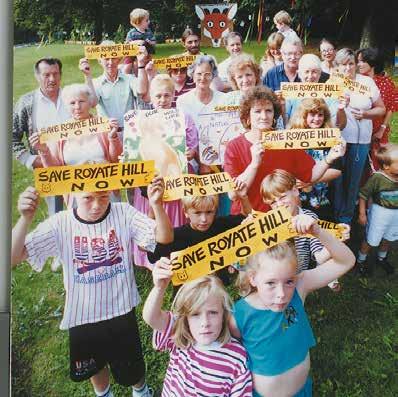
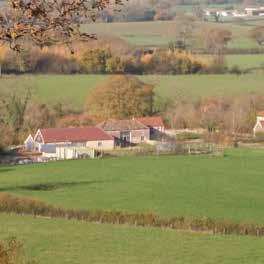

1987 – Following a major appeal, we acquire Folly Farm, a 250-acre reserve with woodland and wildflower meadows, untouched by fertilisers and pesticides. After the announcement that 35,000 new houses are due to be built in the wildlife-rich Gordano Valley, we publish a conservation strategy, involving local people, and ensure the document is incorporated into the planning strategy.

1991 – We begin a five-year campaign to save Royate Hill from the threat of development, resulting in the first compulsory purchase of a wildlife site in the UK after the Trust and local people held a constant on-site vigil. We also publish the Greater Bristol Nature Conservation Strategy, which lays out policies for the protection and enhancement of wildlife in the city.
1992 – The Trust starts creating wildlife areas in school grounds and training teachers in outdoor learning.


2005 – The acquisition of Prior’s Wood takes us up to 38 nature reserves, following almost three long years of negotiations.

2000 – By our 20th anniversary we look after 33 nature reserves. The annual bird count ‘Bristol Bird Watch’ is set up and runs for 10 years – during its first two weeks over 3,000 phone calls were taken from people who wanted to help record their garden birds! Meanwhile, at Browne’s Folly, 28-yearold Boris is discovered; he’s the second oldest greater horseshoe bat ever recorded.

1998 – We begin a project to raise water levels at Clapton Moor, encouraging an increase in birdlife like lapwing and snipe.
1996 – Walborough is the first nature reserve bought with funds from The National Lottery Heritage Fund.


2008 – Our Living Landscapes grassland initiative launches, working with landowners to protect and restore wildflower-rich areas in a joined-up way.
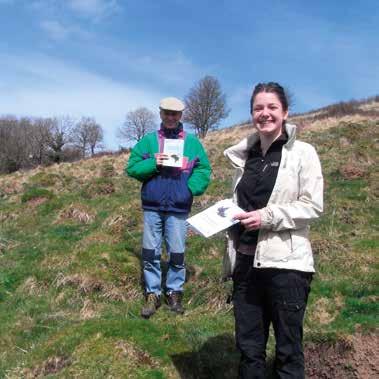


2009 – Our People and Wildlife programme begins, with a communitybased approach to engaging people across our region.

1995 – The North Somerset Levels Project launches to raise awareness of, and protect, the North Somerset Levels and Moors. Wildlife Action Groups of volunteers pick up their tools for the first time, carrying out practical tasks and learning traditional skills to help manage our reserves, which they continue to do for decades to come.
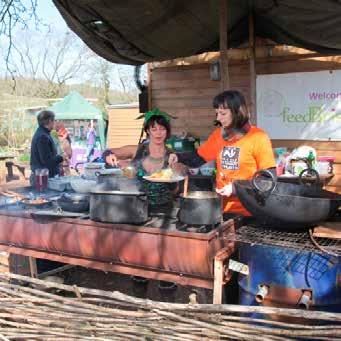
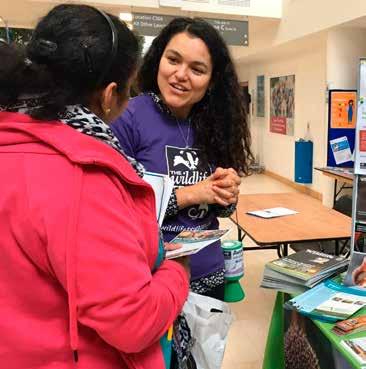

2012 – We play an instrumental role in setting up the West of England Nature Partnership. Feed Bristol, now known as Grow Wilder, is created to engage local communities and promote sustainable food growing.
2019 – We’re gifted Hutton Hill nature reserve by Mr Bernard Cole. My Wild City continues with three years of additional funding from The National Lottery Heritage Fund, allowing us to transform eight hidden wildlife havens across Bristol and connect hundreds of local people to the green spaces on their doorstep. 2016 – We’re awarded funding to create the Wellbeing with Nature project, focusing on connections to nature as a way of improving the health and wellbeing of people experiencing mental ill health and those living with long-term health conditions.


2015 – Bristol is the European Green Capital 2015, and Bennett’s Patch and White’s Paddock nature reserve is created with the involvement of local people. We launch the first iteration of the My Wild City project, taking habitat creation and restoration to the streets of Bristol. The West of England B-Lines project takes flight, working with the charity Buglife to create strips of wildflower-rich grasslands to connect our pollinators with existing green spaces.

2020 – We inspire Bristol to become the first city in the UK to declare an Ecological Emergency – Bath & North East Somerset and North Somerset councils shortly follow them. The One City Ecological Emergency Strategy for Bristol is developed, with the aim of securing 30% of land and sea for wildlife by 2030.

2021 – Our 10-year strategy is published, outlining our key goals leading up to 2030, focusing on three priority areas: Nature’s Recovery, Empower People and Nature-based Solutions. We gather new evidence which shows that wild beavers are thriving in the Avon catchment area for the first time in 400 years.
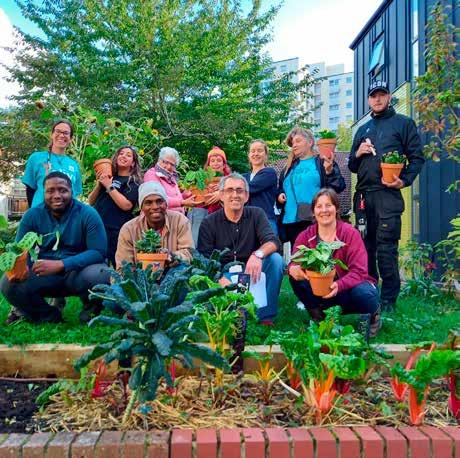

2022 – We introduce our new Team Wilder approach, aiming to inspire, empower and celebrate actions for nature, no matter how big or small. A network of Wildlife Champions is established across the region, facilitating community action for nature through peer-led advice and training. Our Team Wilder Ecological Advisory Service is set up, offering free, professional advice to anyone wanting to create more space for wildlife where they live.
CHEVRON-CIRCLE-RIGHT We launch our ash dieback appeal, as this devastating disease is predicted to severely affect or kill over 90% of ash trees.
CHEVRON-CIRCLE-RIGHT The Nextdoor Nature project begins, bringing a community organising approach to our work, co-creating ways to improve neighbourhoods for the benefit of people and wildlife.
CHEVRON-CIRCLE-RIGHT Bristol Community Climate Action Plans launch, including in Lockleaze and Lawrence Weston, where there is an Avon Wildlife Trust community ecologist embedded in the teams on the ground.

2023 – In September we begin an 18-month woodland regeneration project in North Somerset, including our Goblin Combe reserve, called Wilder Woodlands.
CHEVRON-CIRCLE-RIGHT We began working with Bristol Avon River Trust on the Wilder Waterways project.
CHEVRON-CIRCLE-RIGHT The south facing slopes of the Mendip Hills are announced as one of the ‘King’s Series’ of five new National Nature Reserves across the country.
CHEVRON-CIRCLE-RIGHT We express our disappointment in Bristol City Council’s decision to expand South Bristol Cemetery and Crematorium into Yew Tree Farm, a designated Site of Nature Conservation Interest (SNCI).

2024 – The Somerset Moor Futures project launches, bringing together farmers and landowners into groups known as Moor Associations in five deep peat moor areas across the North Somerset, Axe-Brue and Parrett catchments.
CHEVRON-CIRCLE-RIGHT We expand on our B-Lines work in a new project called Pollinator Pathways, funded by the West of England Mayoral Combined Authority.
CHEVRON-CIRCLE-RIGHT The Warmley Nature Action Zone is established, aiming to transform some of Warmley’s gardens and green spaces for nature while bringing communities closer to the wildlife on their doorstep.
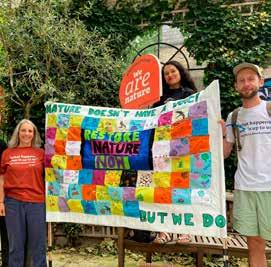
CHEVRON-CIRCLE-RIGHT We raise our voice for nature ahead of the general election by attending the Restore Nature Now march in London.
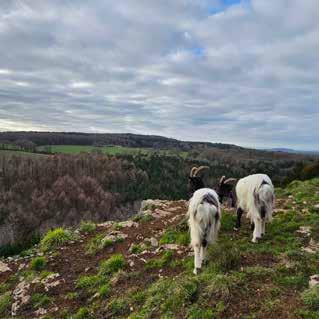

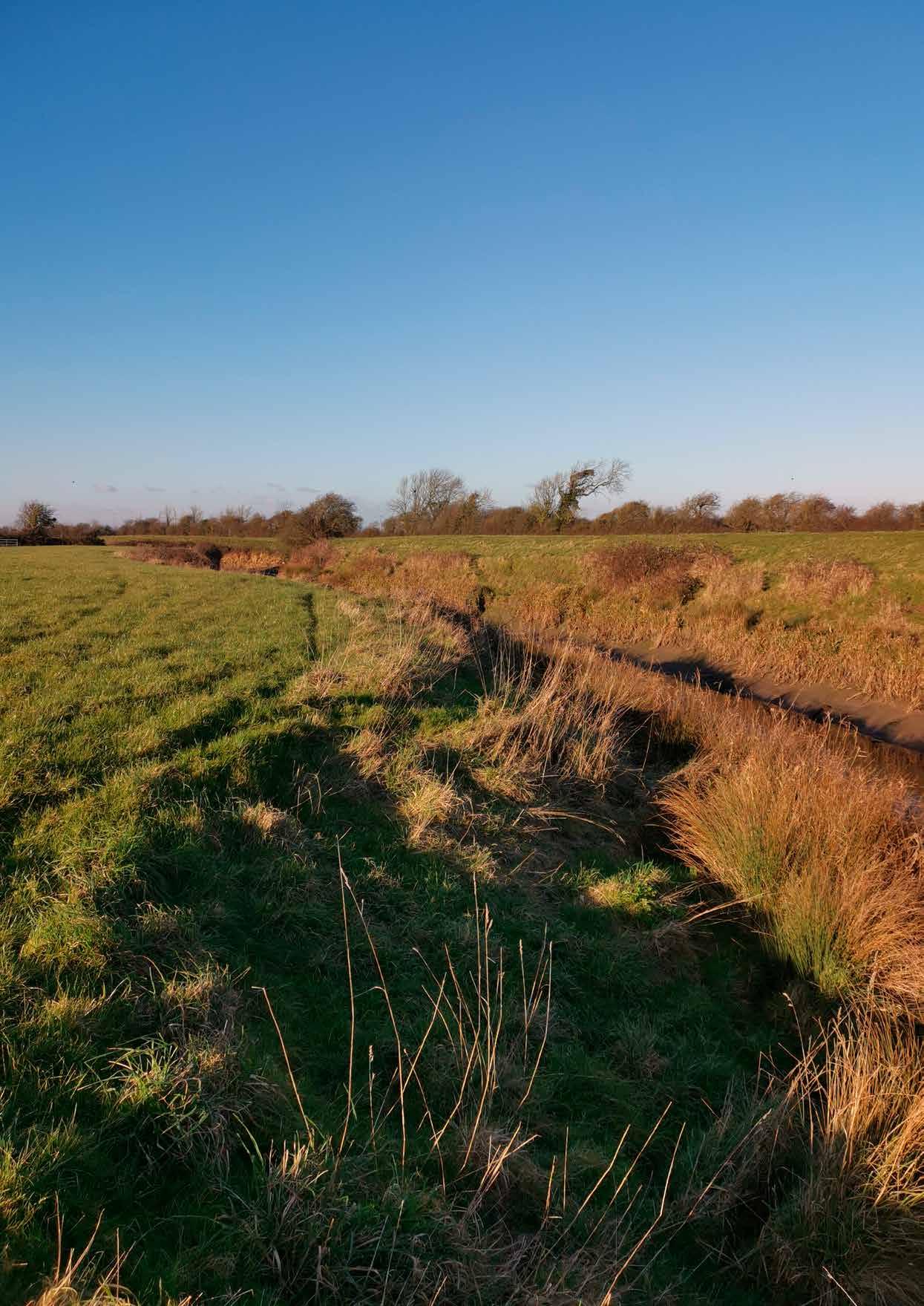


Avon Wildlife Trust’s vision of a future where nature is in abundance by 2030 requires bold action. Our commitment to nature’s recovery has received a significant boost with the purchase of a former dairy farm on the North Somerset Levels and Moors.
This is an ambitious project to transform the landscape at scale, letting nature lead the way.
Ebdon Farm is surrounded by ecologically important sites, and we have a chance to link them together to build a network for nature. The land also sit 1-2km from the coast, making it the perfect location for the Severn estuary’s wading birds and wildfowl to roost when the tide is high, supporting this internationally important, diverse habitat and its migratory species.
With the support of the Esmeé Fairbairn Foundation and The National Lottery Heritage Fund, we will transform the farm, making space for nature and allowing more species to flourish.
Achieving the best for nature and people requires a thoughtful approach.
We need to know which plants and animals already live on the farm and explore the options for improving the habitats.
The Ebdon Farm project is made possible with the support of the Esmée Fairbairn Foundation and The National Lottery Heritage Fund.
The Esmée Fairbairn Foundation has purchased the farm on behalf of Avon Wildlife Trust, which will be repaid through future fundraising.
Esmée Fairbairn Foundation aims to improve our natural world, secure a fairer future and strengthen the bonds in communities in the UK.
Local communities will play a key role in sharing what they love about their area, to help guide our work at Ebdon Farm, and we will take time to meet and talk to our new neighbours, local interest groups, businesses, and councillors.
We’re grateful to one of our long-standing supporters, Peter Lord CBE, animator, director, producer and co-founder of award-winning Aardman Animations. Peter has been a member and supporter of Avon Wildlife Trust for more than 20 years and has donated generously towards our ambitions to purchase new land for nature.
You too can support our work to create the next exciting chapter at Ebdon Farm. To find out more, and to follow our progress, visit avonwildlifetrust.org.uk/ebdon-farm
We will share progress and regular updates on our website, in our regular email newsletters, and on our social media channels. There will also be in-depth updates for our members in future issues of Wild Avon.
Avon Wildlife Trust has also secured an initial development grant from The National Lottery Heritage Fund to develop our plans for the site.
Using money raised by National Lottery players, The National Lottery Heritage Fund supports projects that connect people and communities with the UK’s heritage.
We now have two years to raise the funds to buy the farm from the Esmée Fairbairn Foundation.
STEPHANIE SHARKEY
As part of Team Wilder, we’ve been taking a community organising approach to our work with local people who want to play their part in nature’s recovery. This means building collective power to tackle issues that are important to them while looking at how wildlife and nature can be a part of the solution.
What is community organising?
Community organising is the work of bringing people together to take action around their common concerns and overcome social injustice. People in community organising roles listen, connect and motivate people to build their collective power.
Kelly Bray, our Nature Connections Manager, explains: “We’ve used a community organising framework to help map a process which starts with listening and always aims to build power through action. It doesn’t always follow a neat order and may involve repeating steps, but it reminds us of the journey required to achieve change for good.”
Community organising in action
A prime example of this way of working would be our Nextdoor Nature Somer Valley project, funded by the West of England Combined Authority through the UK Shared Prosperity Fund , administered by the West of England Combined Authority. We worked with
an ex-mining village community in Writhlington, near Radstock, where residents shared concerns about a lack of places for children to play outside. This was due to safety issues in a wooded area called The Plantation, as one resident explained: “There is a lot of fly tipping here, kids are using junk to build dens. One even stepped on a nail recently. We’d much prefer they use natural materials for their play.”
While door-knocking in the village, community organisers Rhea and Steph discovered a group of residents who had initially come together to address housing planning concerns. Over time, this group had expanded its efforts to include caring for the environment through monthly community litter picks, but were struggling to attract new volunteers. Rather
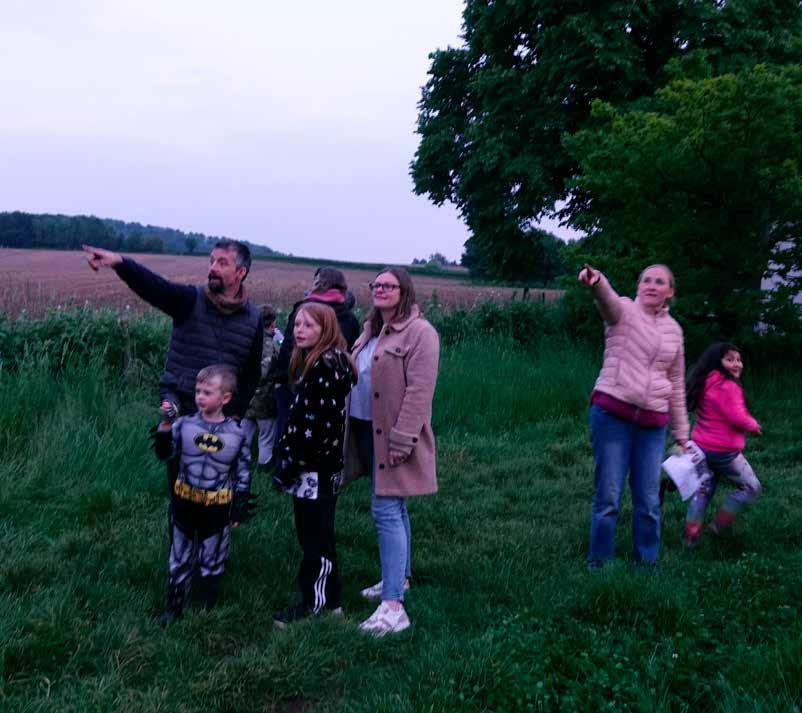
than starting something new, Rhea and Steph decided to build on this group’s momentum and joined their next event. Early conversations and a lot of listening to residents led to a deeper understanding of the community’s needs and a series of
events were organised, including a bat walk and a forest school with a picnic morning in The Plantation.
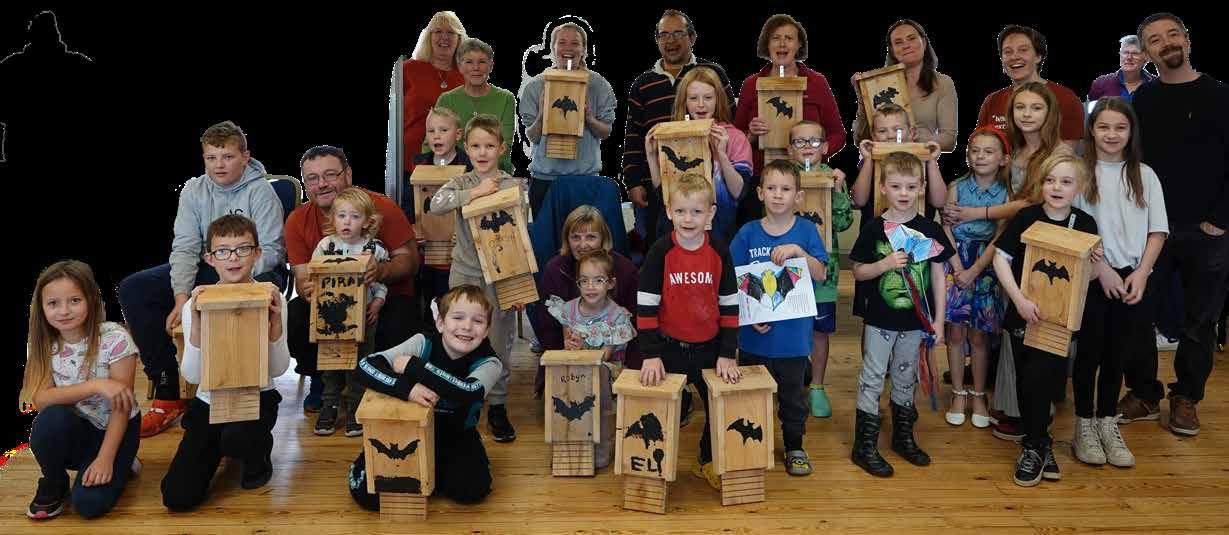
Local talent was encouraged to take the lead. The bat walk was hosted by Emma, a resident and ecologist eager to share her love of bats. At later events, Tom and Jeff, two residents with carpentry skills, were encouraged to use their expertise to build wildlife homes, crafting beautifully constructed bat, wren and robin boxes and hedgehog houses to support local wildlife.
These events proved invaluable in connecting neighbours, listening to their aspirations and identifying natural community leaders who could come together and develop solutions.
The community’s belief that things could be improved began to grow
A key step forward was engaging with Curo, the housing association that owns and manages The Plantation. By organising meetings with Curo and encouraging residents to share their concerns for wildlife and the local community, Rhea and Steph helped secure significant improvements to the space. This includes the removal of accumulated rubbish, creating a natural play area, planting a diverse native hedgerow, maintaining woodland footpaths and installing wildlife signage, all with the aim of inspiring love of the natural world and encouraging more residents to play their part in nature’s recovery.
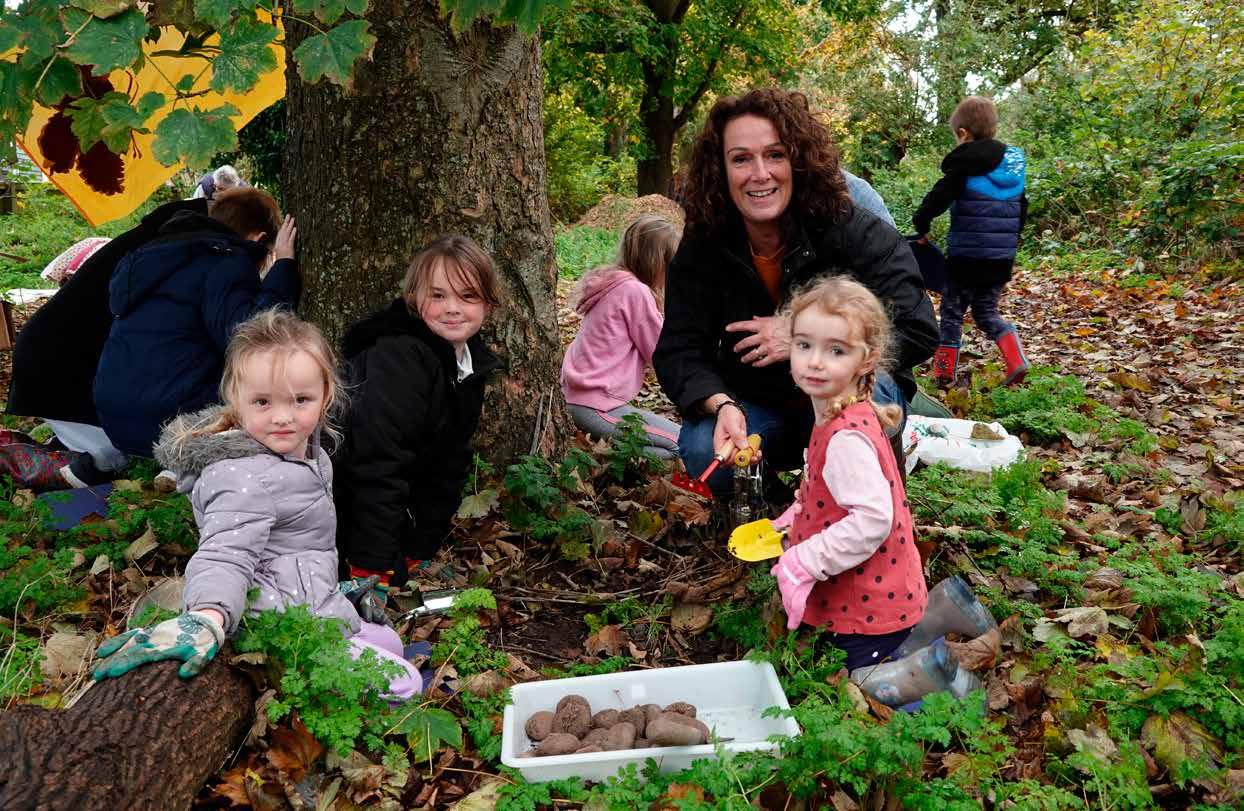
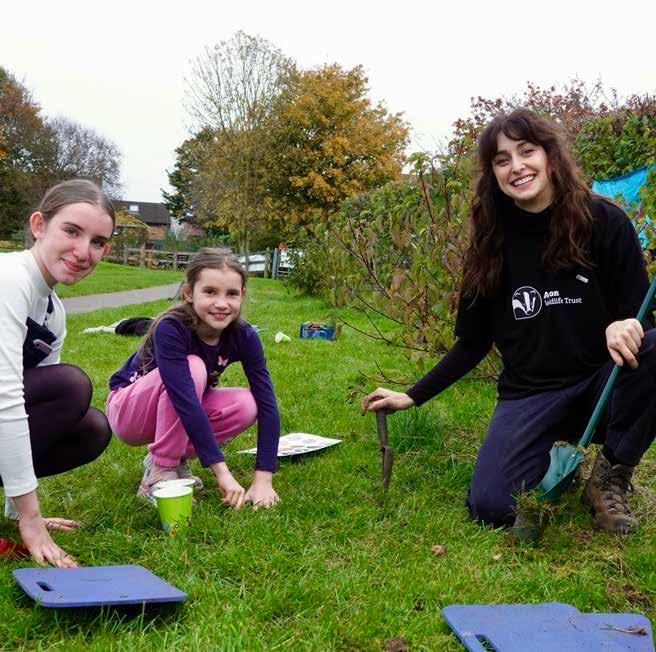
As these changes unfolded, the community’s belief that things could really be improved began to grow. People of all ages came together to plant bulbs, build more wildlife homes, pick litter and even create
a woodland fairy door trail. They began applying for funding and organising their own events, with one one resident now running a monthly ‘Nature Rangers’ event to inspire the next generation to care for their woodland play space.
What began as conversations and litter picks evolved into a resilient, resourceful community dedicated to looking after and enjoying the wild space their children like to play in. Seeing neighbours connect and work together in ways they hadn’t before demonstrates the lasting impact of listening, trust-building and community collaboration.
Under the Somerset Moor Futures project, funded by the Environment Agency’s Lowland Agricultural Peat Water
Discovery grant, we’ve been creating collectives of farmers and landowners known to us as Moor Associations.
The purpose of these Moor Associations is to bring together people who own and/ or manage land in specific areas across the North Somerset Levels and Moors, focusing in this case on peatland. Once formed, these Moor Associations can provide a supportive and inclusive forum for information and knowledge exchange, to help the members understand the challenges they face, such as climate change and future flood risk, carbon emissions from peatland and agricultural policy changes. They can also provide space to discuss the opportunities available to them, like alternative farming methods, agri-environment stewardship schemes
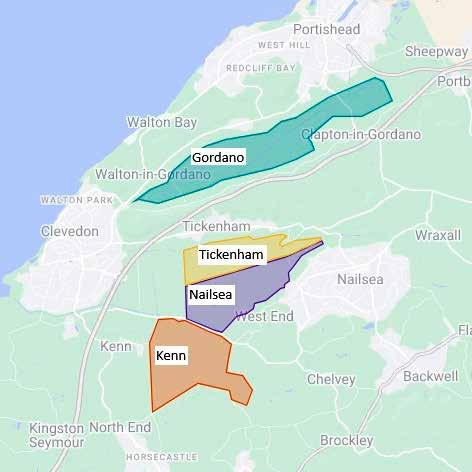
and nature markets. We want to support them in making the best decisions for their future land management and business, taking all these issues into account.
In the initial engagement phase, there was a noticeable amount of hesitation about the project. We quickly realised that we would need more than a flyer or introductory email to get people involved - this is where the community organising framework has been pivotal.
Jen Robertson, our Nature and Climate Officer leading on this project, used local knowledge and contacts in the region to seek out potential community leaders and arranged to meet with them early on. She spent a lot of time with them, learning about their history of working and living in this unique landscape.
As this continued, she felt they understood what we were hoping to
achieve and they recognised that there were huge potential benefits to getting involved. She asked them to chat with their neighbouring farmers and landowners and, if keen, to make some introductions.
Jen said: “I learnt that these communities had a lot to share! Biscuits at the ready and with a mind to listen more than talk, I toured farms, met many dogs, and learnt to factor at least an extra hour into these meetings.
“I heard many similar frustrations about changes they were continuing to face, and heard how passionately they felt as farmers – providing food, as well as being land stewards and protecting the environment. I also heard how the landscape they loved was becoming an increasingly difficult place to farm. Everyone I met had a common goal of finding solutions to these challenges.”
Over time, these chats resulted in new introductions to more people who understood the project’s goals in protecting our precious peatland and the families who farm them. More members of the farming community began to advocate for Moor Associations, even to their most reluctant neighbours. It took months for some to agree to meet with Jen, but we’ve now managed to form three Moor Associations across the project area, with over 80% of the landowners and farmers becoming Moor Association members.
Each Moor Association has met multiple times, and each has agreed to work together to plan their land use across a whole landscape. It’s early days on the journey to securing a sustainable future for the North Somerset Levels and Moors, but this has been a promising start.
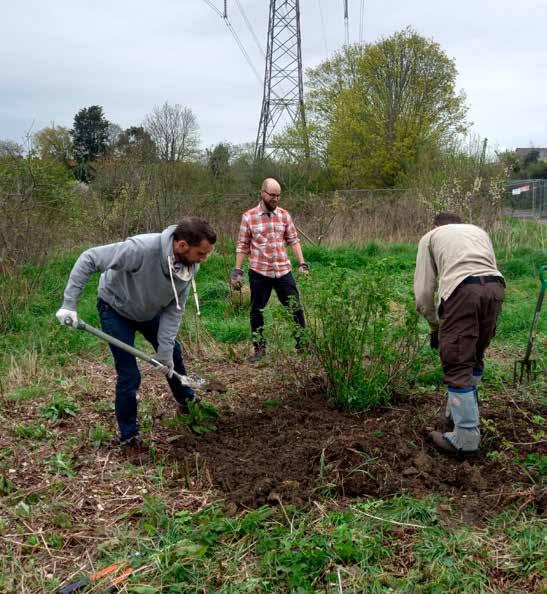
Really Wild Lockleaze, funded by the National Lottery Community Fund via Bristol Climate and Nature Partnership, has helped connect neighbours with each other to create habitats on the council owned green spaces where they live, bringing nature’s recovery right to people’s doorstep. Eric Swithinbank, Community Ecologist in Residence, explains their process:
“We start by coming together with residents who live around a housing green or roadside verge and meet on the green to discuss how people currently use it and how we can best improve the space for nature by creating more habitats.
“Next, we draw up our plan, and after getting permission from the council, put the plan into action creating meadows, planting trees and herbs – whatever the residents would like to see!
“We support the residents to take ownership and look after their new space, providing training where we can, producing a management plan and connecting them together on a WhatsApp group.
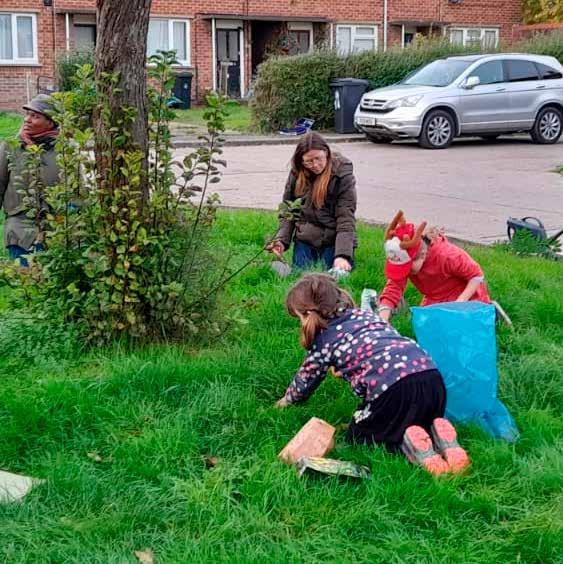
“The benefits to wildlife have been obvious, with bees enjoying the meadow flowers and hedgehogs spotted near the newly planted hedgerows. This work has also helped neighbours come together and meet each other socially, working together to improve their neighbourhood.
“With seven greens completed and another six underway, collectively we’re making a big impact for nature across Lockleaze!”
By using a community organising framework to connect local people, we’re helping to address immediate concerns while tackling wider issues impacting our environment. Through Team Wilder, these communities will be able to continue this work by sharing their resources, skills and experiences to create a ripple effect of people taking action for nature.
Be a part of Team Wilder and take action for the nature on your doorstep. Get inspired at avonwildlifetrust.org.uk/team-wilder
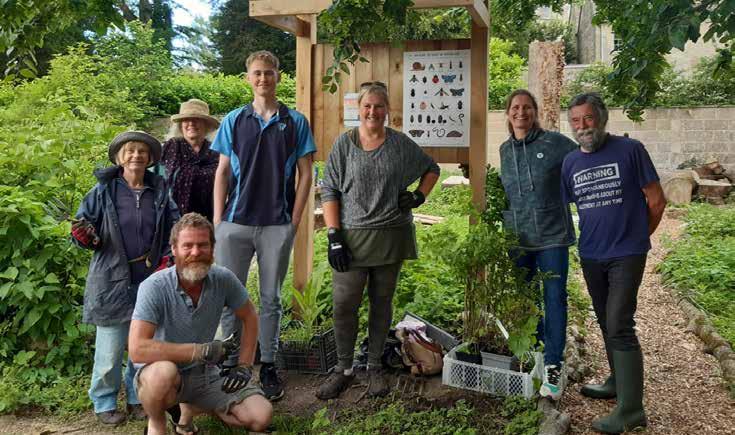
You can help empower and resource more local people to take action for nature by donating online from 22-29 April as part of Big Give’s Green Match Fund
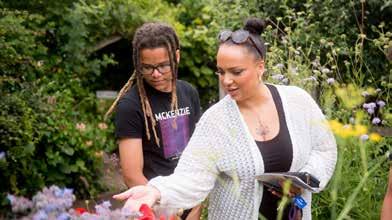
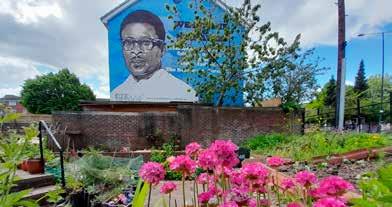
With 1 in 6 UK species at risk of extinction, it is vital that we act together now to nurture and protect the precious green spaces on our doorstep. Donate this spring and you could help local people to take action for nature in every postcode in Avon!
Whenfaced with climate change and the devastating impact of habitat loss, it can be hard to know what we can do to protect the wildlife we love. But small actions which make space for nature on a local level can make a big difference
Team Wilder is a growing community of people, working together to champion nature-friendly practices and create green corridors. Whether it’s a group coming together to practice wildlife-friendly food growing, or something simple like installing a bee hotel or window box with pollinator-friendly plants, every action creates valuable stepping stones for wildlife, linking up larger green spaces where nature can thrive.
So far, we have supported 20 wildlife champions as they developed community-led projects across 12 postcodes, and have worked with 118 local community groups as they take action for nature on their patch – but our work to create real, long-term change doesn’t stop here.
This spring, your generous gift could provide the tools, knowledge and skills communities need to transform their
local green spaces into dynamic, connected safe havens where wildlife can flourish.
£25 becomes £50: This could help a local wildlifelover to transform their garden into a blooming pollinator paradise by planting bee and butterfly-friendly flowers.
£50 becomes £100: This could help provide relevant resources and advice for communities looking to transform their local green space into a habitat haven for the wildlife on their patch.
£100 becomes £200: This could help a local Wildlife Champion to lead an innovative project to nurture nature in their neighbourhood.
Please join us this spring in creating a future where everyone is inspired to take action for the wildlife they love. Thank you.
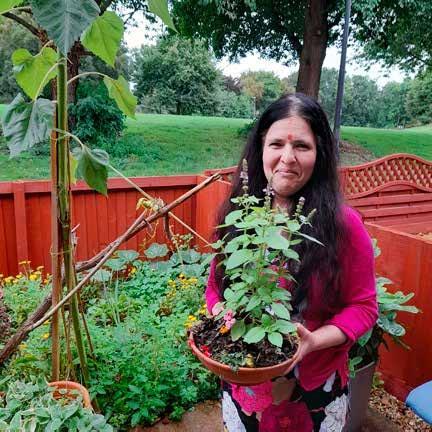
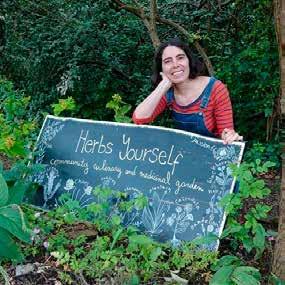
Bernie, local Wildlife Champion, has been the glue bringing her local community together to set up ‘Herbs Yourself’ – a culinary and medicinal herb garden grown from an abandoned patch of land at the edge of Eastville Park. Now, the community garden has become an oasis for both people and wildlife, with signs that slow worms, badgers and foxes call this place home! Your gift could help support wonderful Wildlife Champions like Bernie as they take community-led action to transform local green spaces, through providing site-specific advice, training and a network of peers who can work together to make Avon a wilder and more nature-friendly place.
Tuesday 22 April marks the beginning of Big Give’s Green Match Fund. If you donate online between midday 22 April and midday 29 April, your gift will be matched up to the first £8,000! Visit avonwildlifetrust.org.uk/tip-teamwilder
Thank you to everyone who chose to plant the seeds of a wilder future by donating to our Cache your Cash for Wildlife campaign. Together, we reached our initial target and raised £10,000 to help make Avon a wilder and more nature-friendly place.
Charity grants help fund our vital work with wildlife and the community, and are often unlocked by public donations. This ‘cache’ of donations from our dedicated supporters will ensure that we can act right away to unlock
funding when opportunities arise. It could also grow to as much as ten times its value –meaning we could unlock up to £100,000 in funding for future wildlife-saving projects!
Our vision is to secure 30% of land and sea for wildlife by 2030 – and our supporters’ generosity is helping to bring us a step closer to this goal. The kind contributions of our donors could help unlock funding to empower local people to take action for nature
in their communities and secure new land for the benefit of wildlife, creating connected, resilient habitats across our region where Avon’s wonderful wildlife can thrive. From everyone at Avon Wildlife Trust, thank you for helping to nurture the seeds of a wilder future for people and wildlife.
This project has been made possible thanks to National Lottery players. Action for Conservation, Avon Wildlife Trust and Heartwood have received over £870,000 from The National Lottery Community Fund, the largest community funder in the UK.
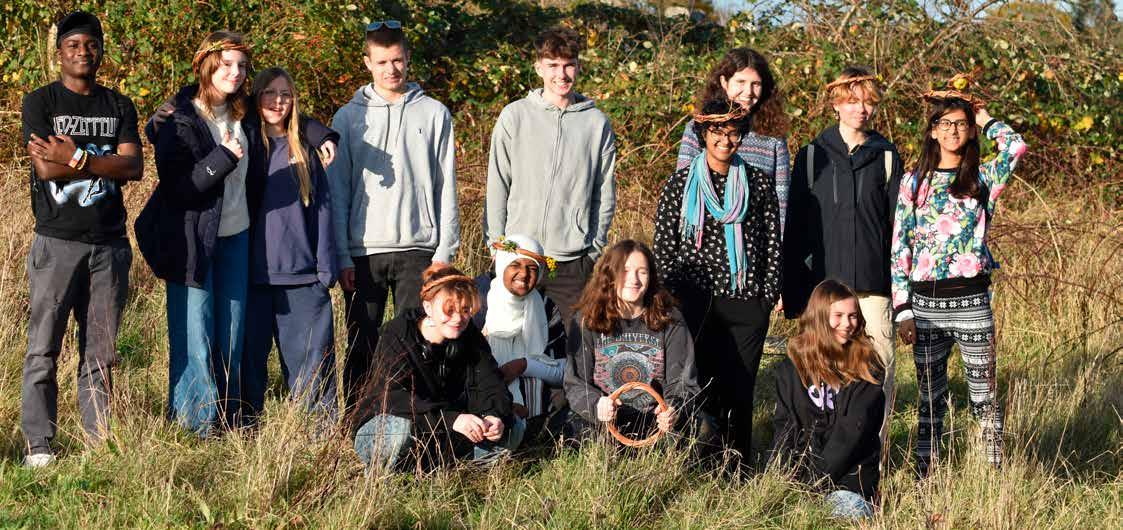
Since October, young people have been working on a project to improve a patch of underused land for nature and people.
The Youth Leadership Group (YLG) of young people aged 12–20 have been recruited as part of the new Intergenerational Action for Climate and Nature project, which Avon Wildlife Trust has partnered with Action For Conservation to deliver.
Over the next two and a half years, the
YLG will be learning from local experts and residents as they create plans to improve biodiversity and establish a welcoming space for their peers on the site, which is next to our urban foodgrowing hub Grow Wilder.
The first phase of the project involves learning from the land’s past and its present, before designing its future – so the young people have been exploring the site’s role across communities
throughout history.
Alongside this, the YLG has already carried out some important actions for the site, helping to create a new, more accessible entrance and beginning wildlife monitoring to explore which species the site is home to.
As part of the project, groups of young people will be restoring nature at two other sites – Penpont in Wales and Heartwood in Derbyshire.
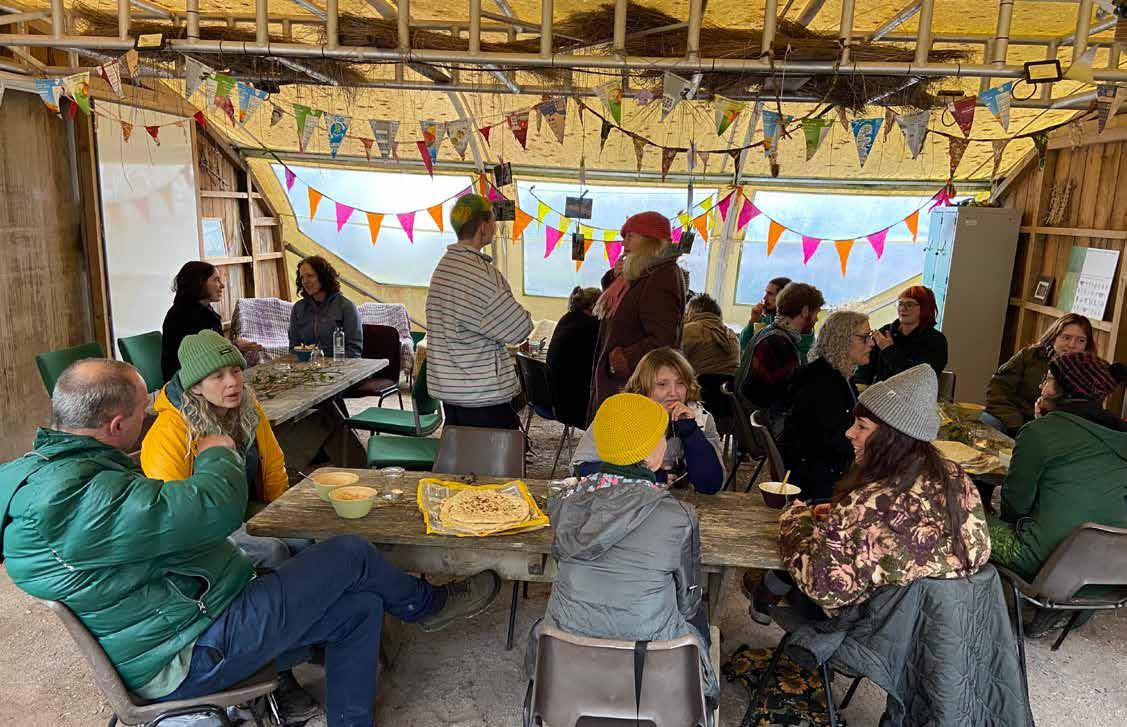
Since starting in March 2023, Wildlife Champions have been recruited from 12 postcodes across the region and the Team Wilder Ecological Advisory Service has advised on over 370 hectares of land ranging from small urban gardens to larger rural patches, which is equivalent to 555 football pitches!
Both elements of this work have inspired and upskilled local people to bring their nature-based ideas to life –through workshops, training sessions, ecological advice and the sharing the knowledge and skills through the Wildlife Champions peer support network.
Whilst this initial Wildlife Champions Project phase ended at the end of March, we are working towards securing funding to continue this vital work – to provide free ecological advice to individuals and communities and have a Wildlife Champion in every postcode by 2030.
Emma Fennell Hodson, Wildlife Champions Co-ordinator, said: “It’s been a joy to see the network of champions grow and develop, and the support, care and advice that the champions offer to each other is inspirational.”
Amie Cook, Team Wilder Community Ecologist, said: “Local actions for nature
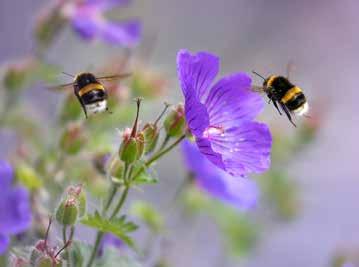
As our Pollinator Pathways project works with communities to create, restore and connect habitats for these vital species, they’ll be assisted by a cohort of trainees.
Over each of the two years of the project, which is funded by the West of England Combined Authority, two entry-level trainee placements will spend nine months learning about the nature restoration industry and training in relevant skills. Previous schemes, such as the ‘Wild Paths’ project, have shown there is a huge appetite for entrylevel environmental positions, further demonstrated by the 200+ applicants for
this first round of trainee recruitment.
Our first cohort of placements started on 6 January and have already begun to identify areas where they want to focus. They will be able to undertake training in areas such as hedge laying, brush cutting, habitat surveys, Geographic Information System programmes, public engagement and many other practices, which will help them prepare for a future career in nature conservation and restoration.
Alongside this training and coordinating the project delivery, the trainees also have one independent study day a week where they can develop an
are more important than ever in helping to tip the balance in nature’s favour. We can all do our bit to create a wilder, more nature-rich Avon for all.”
Alex Dommett, People and Wildlife Manager, said: “The Wildlife Champions have been and will continue to be instrumental in supporting and inspiring others to celebrate, notice and bring about a positive change for nature and people.”
The Wildlife Champions Programme is made possible with thanks to National Lottery players.
area of their own choosing that they are particularly interested in. It’s hoped this combination of training and experience within a nature restoration project will help the trainees kickstart a career in the environmental sector.
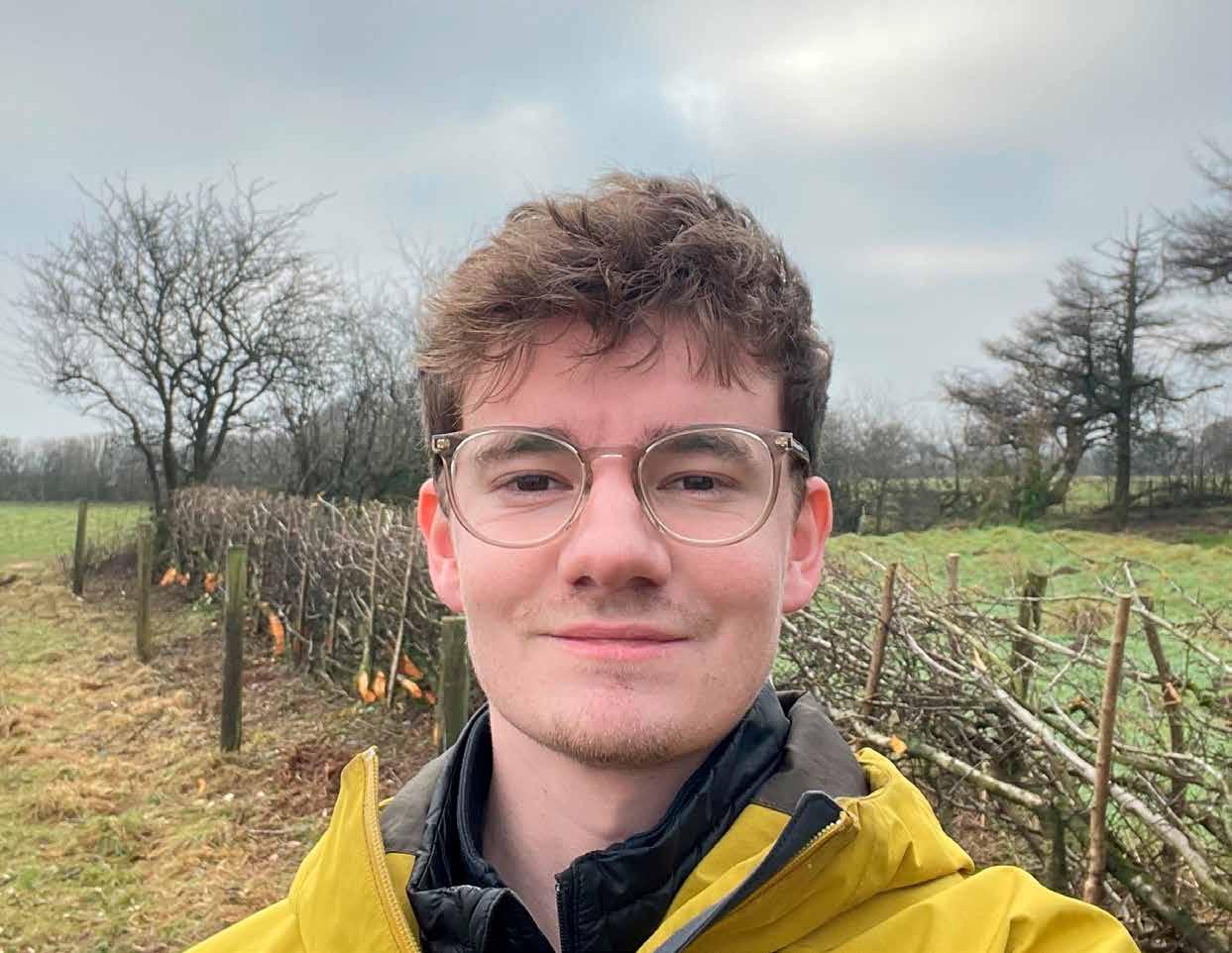
Tom joined Avon Wildlife Trust as Pollinator Recovery Manager last summer, working with the project team to create and restore pollen-rich habitats to support at-risk species whilst empowering local communities.
Growing up in a rural town surrounded by nature, I developed a deep, early love for the outdoors. My parents always encouraged me and my brothers to explore the natural world, and we spent much of our childhood on long family walks through nature reserves, many of which were the local Wildlife Trust’s!
This fascination with nature led me to study ecology at university, where I gained a deeper understanding of ecosystems, their dependencies and the infinitely complex network of interactions that we all rely on. After graduating, I joined the National Trust as a project coordinator, assisting with landscape-scale recovery projects. During my time there I also completed a project management apprenticeship, providing me with valuable skills in managing conservation projects and working with multiple teams, often from different organisations. When I saw that Avon Wildlife Trust was
looking for a Pollinator Recovery Manager, I knew it was the perfect opportunity to align my skills with my passion for landscape-scale nature recovery projects. Pollinators play such a crucial role in food chains and their dramatic decline has had far-reaching implications for almost all ecosystems, as well as our own food security. Working collaboratively with farmers and the public to reverse this decline is vital, and this project is perfect for me as it lays the foundations for future efforts and promotes a culture of working together for a better, more secure future for all.
Since joining Avon Wildlife Trust, I’ve had the privilege of working with a team of passionate experts and volunteers who share my commitment to nature recovery, and who are constantly teaching me new skills. One of my favourite moments so far has been when attending farm cluster meetings, where I spoke with local farmers and landowners about making
their land more pollinator-friendly whilst maintaining economic viability.
Welcoming the first cohort of trainee placements to the Pollinator Pathways team has been another highlight. These placements will spend the next nine months assisting the Pollinator Pathways project and will receive training in skills such as habitat surveying, coppicing, grassland management and brush cutting, preparing them for future careers in environmental restoration.
Working with the fantastic Avon Wildlife Trust team has reinforced my passion for ecological restoration and I’m excited to continue working with everyone to help restore and protect our natural world and make it accessible to people from all backgrounds.
To find out more about Pollinator Pathways, visit avonwildlifetrust.org.uk/pollinatorpathways
It’s thanks to the support and dedication from volunteers across the Trust, that we are able to do the work we do to restore nature across Avon.
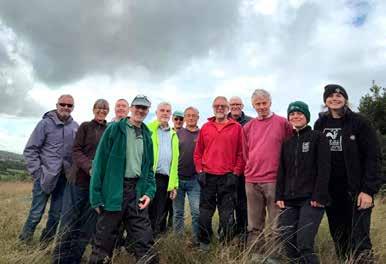
Our Nature Reserves Officer, Fern, shares reflections and thanks to the Dolebury Warren volunteers
We would like to express our sincere thanks to the outstanding volunteer group at Dolebury Warren, who have dedicated countless hours to managing and nurturing the reserve over the years. Their unwavering commitment has been instrumental in the success of the site, ensuring it remains a vibrant, thriving haven for wildlife. The group continued working on the reserve up until October last year, when the reserve was transferred back into the management of the National Trust.
From managing invasive species and maintaining infrastructure, to monitoring wildlife, scrub management and coppicing, their contributions have covered every aspect of the reserve’s upkeep. Each task, no matter how big or small, has been taken in their stride, ensuring the reserve not only supports a rich biodiversity but also provides a safe, welcoming environment for the many visitors who come each year.
They created and tended rich mosaics over the reserve and nurtured habitats with specialist knowledge of the species
those habitats support. They transported tools and materials great distances up the hill to carry out their tasks and diligently undertook surveys of the rich wildlife the site is home to, including glow worms and butterflies, and even had success monitoring small blue butterfly eggs. Not an easy task considering they’re only 0.4mm in diameter!
Thanks to their dedication, the reserve continues to flourish. Their efforts have made a lasting impact, preserving this species-rich landscape.
The group wanted to share these thoughts and memories:
“The original core of volunteers met monthly but by February 2018 the group became established on a weekly basis. Thus followed an ever changing and expanding experience until the group came to an end in September 2024. Whilst we can celebrate and thank the enthusiastic Avon Wildlife Trust staff who led us in the early days and beyond, our self-appointed chief was John Howard, who deserves significant recognition in guiding us through several years of hard work and extreme commitment. Our only interruptions were during the Coronavirus pandemic, though monitoring of the site continued.
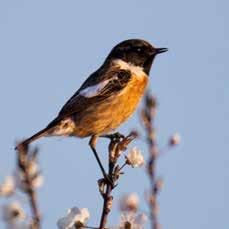
There were ongoing sightings of buzzards, stonechats and woodpeckers, with the occasional adder and grass snake, and even buzzards carrying reptiles!
“We have lovely memories of scything to song, sitting bottoms up looking for small blue butterfly eggs, using ropes and mending fences and steps, and of course, just clearing in all weathers. It was with great sadness that many of us ended our official relationship with Dolebury Warren after its handover to the National Trust in September 2024.”
We cannot thank the group enough for their dedication, care and tireless efforts. The reserve is a better place because of their commitment, and we are incredibly grateful for everything they’ve done. It was a pleasure to work with such a passionate group of people and we wish them the best with their West Mendip Wanderers volunteer group with Somerset Wildlife Trust.
An update from your Volunteer Manager, Abbie
“Our group remained a cohesive mixture of volunteers from all backgrounds, with its own developed sense of humour and individual wisdoms. We have witnessed some remarkable changes, unusual sightings of fungi, and the re-emergence of more wild flowers.
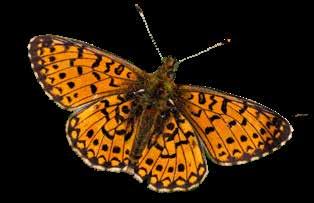
“The terrain is forever changing, and the southern slopes and northern fields can produce a wonderful array of heather, orchids, and summer flowers. Kidney vetch supports the rarely sighted small blue butterfly, and heather fields offer sightings of the small pearl bordered fritillary butterfly.
We have a range of volunteering opportunities available, from practical conservation to administrative roles. It’s a brilliant way to make a real difference to wildlife, improve wellbeing and meet other like-minded people who also want to help nature. To find out more about our opportunities, why not sign up for our volunteer newsletter? Visit avonwildlifetrust.org.uk/volunteering-opportunities to sign up and find out more about current opportunities to get involved.
I would like to say a huge thank you to all the volunteers that dedicate their time and energy to assisting Avon Wildlife Trust in the work that we do. In the last year I have been fortunate enough to see many of our groups and volunteers out and about, completing tasks that have helped our local wildlife. The help that you have given is felt throughout the Avon area and has improved all that we are doing. The volunteers that we have here at Avon Wildlife Trust are incredibly varied, ranging from outdoor conservation groups that volunteer across our many reserves, to our volunteers that attend events speaking about our work. We are grateful for all the help that you are able to provide.
If you’d like to find out more about our local groups, get in touch:
Chew Valley
Andy Davis: 01275 332 601
Gordano Valley
Sarah Kennedy : 01275 817 565/ 07853 248 476
Portishead
Cynthia Dorn: 01275 843 160

Portishead Local Group: ‘Glow worms’, an illustrated talk
25 April, 7.30pm
Folk Hall, BS20 6PR
Gordano Valley Conservation Group at Prior’s Wood
27 April, 10am,
Prior’ s Wood, BS48 1PE
Introduction to Permaculture
10 11 May
Grow Wilder, BS16 1EL
Find out how permaculture can help you and the planet on this accessible, friendly weekend course
Youth Event: Butterfly walk with Butterfly Conservation
11 May, 1 am
Brandon Hill, B 1 RR
Suitable for people aged 14
25, e plore wildflower habitats while observing butterflies
Portishead Local Group: Plant sale & afternoon tea
17 May, 2pm – 4 30pm
Folk Hall, BS20 6PR
Gordano Valley Conservation Group at Tickenham Hill
18 May, 10am
Tickenham Hill, BS21 6RQ
Grow Leader Course
From 6 June
Grow Wilder, BS16 1EL
On this eight week course, you ’ll develop your knowledge of fundamental growing techni ues and holistic landscape management to prepare you to grow food at allotment, community garden or small market garden scale
Festival of Nature
6 15 June
Bristol and Bath
The UK’ s largest free celebration of the natural world returns with a water-themed programme of events: festivalofnature org uk
Gordano Valley Conservation Group summer volunteering
29 June Walton Common
27 July Weston Moor
31 Au ust Moorend Spout
Grow Leader Course
From 5 Septem er
Grow Wilder, BS16 1EL
Introduction to Permaculture
20 21 Septem er
Grow Wilder, BS16 1EL
Portishead Local Group: Bristol region invertebrates
26 Septem er, 7.30pm
Folk Hall, BS20 6PR
Gordano Valley Conservation Group at Clapton Moor
28 Septem er, 10am
Clapton Moor, BS20 7RJ