
Kimberly Prost, International Criminal Court Judge

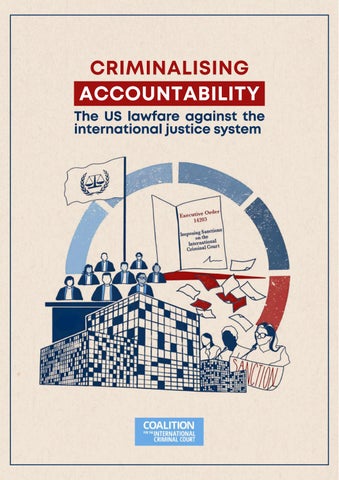
Inthisreport,theCoalitionfortheInternationalCriminalCourt(theCoalitionorCICC)delves into the complex web of the United States (US) sanctions regime and exposes how a domestic legal instrument is able to function as a transnational policy enforcement mechanism intended to dismantle international justice efforts at the International Criminal Court (ICC) and beyond Because of the extraordinary global reach of the US banking, Information Technology (IT) and service sectors, sanctions can be instrumentalised as part ofanattackoneffortsundertakenbytwo-thirdsoftheworldʼsstatesworkinginpartnership with civil society and survivors to tackle impunity for the most serious international crimes. Ostensibly a response to the ICCʼs investigations in Afghanistan and Palestine, sanctions targeting the Court threaten accountability efforts for victims and survivors across all ongoinginvestigationsintheBangladesh/Myanmar,DemocraticRepublicoftheCongo,Ivory Coast,Libya,Lithuania/Belarus,Mali,Burundi,Sudan,thePhilippines,UkraineandVenezuela.
While those affected by the sanctions imposed by the US administration are courageously striving to weather the storm, ensure the continuity of their work and limit disruptions, they have largely been left to do so without the needed collective backing of states and global institutions The intended impact of sanctions goes beyond those directly designated; they deterthebroaderjusticecommunity,includingUSandnon-US-basedcivilsociety,fromtheir work,andisolateanddividemembersofcivilsocietyfromoneanother,disruptingcollective work. They also send a clear message to survivors: crimes committed by powerful states should remain unpunished. The report describes the impact of the sanctions on the entire RomeStatutesystem,andthelegalandinstitutionalframeworksandactionsthatstatesand global institutions should urgently activate to help resist such attacks and shield those affected.
First,thereporttracesthehistoryofUSattacksonthe ICCsinceitsestablishmentin2002, culminatingwiththeunlawfuluseofthesanctionsregimeunderthetwoTrumppresidencies to coerce, punish and isolate organisations and individuals leading accountability efforts Next,basedoninterviewswithtechnicalandlegalexperts,thereportexplainsthemechanics of how an executive order issued by a US president can impact the lives of individuals and institutions from The Hague to Palestine. Due to the structural dependency of the global banking and financial systems on US technology, the US Dollar and US banks, sanctions imposed by the US on foreign individuals cut off sanctioned individuals from banking and credit card systems, even for transactions in foreign currencies outside the US. Similarly, nearuniversalrelianceonUScompaniesinIT,internetanddigitalservicestranslatesintoa sanctioned individual in The Hague being unable to book a flight or order an Uber, and a Palestinian human rights organisation having its website and social media accounts closed, even when these activities may not technically be prohibited by the sanctions, reflecting a pattern of over-compliance observed across all sectors The research shows that this dependency poses a threat not only to justice and accountability actors, but to the sovereignty,independenceandsecurityofstatesandtheirnationals.
BasedondetailedinterviewswithallindividualsandinstitutionsdesignatedunderPresident Trumpʼs 2025 Executive Order, the report then presents, in intervieweesʼ own words, the widerangingpersonalandinstitutionalimpactsofthesanctionsaswellastheirfearsatthe chilling effect they are having on international justice efforts around the world.
Several highlight that it is the victims and survivors who pay the ultimate price for the sanctions At the same time, what shines through in each and every interview is the extraordinary resilience and determination of those who are part of the international justice project,whetherattheICC,theUnitedNations(UN)orinaCivilSocietyOrganisation(CSO), to continue their work despite the pressure and despite the personal cost. Those targeted continue their work undeterred. In their own words: “We work with integrity and objectivity, thishasnotandwillnotchange;ˮ “WefollowthelawandtheJurisprudence;ˮ “Wewillnever give up;ˮ “We will continue to reject this abuse of power;ˮ “We need to stand for accountability;ˮ “Itisdowntoustoshowresilience.ˮ
6
Those involved are fully aware that what is under attack, and what is at stake, is not themselves as individuals or even the targeted institutions as such, but the rule of law and the principle that justice for atrocity crimes should not depend on the power of those responsible,butonrigorousandequalapplicationofthelawbasedonthefactsandthelaw. Judgesremainclear:“Therecannotbedifferentjustices.Thereisonejusticeforall.ˮ7
But without significant support from states, the consequences of the sanctions imposed by the US administration remain overreaching and jeopardise the rule of law internationally Thusfar,thestatesthatbuilttheCourtandtheinternationalsystemitispartofhavedeclined to activate the mechanisms specifically designed to enable it to withstand attack, including the European Union (EU) Blocking Statute. Further, states and institutions that should and could have immediately taken collective and systemic steps to oppose the sanctions and implementalternativesolutionstomitigatetheirimpacthavesofardeclinedtodoso “Thisis atestcaseforstates,whethertheyarereallystandingfortheprinciplesofjusticeandhuman dignity or not,ˮ reflected one civil society representative. Individuals, organisations and institutions are given ad-hoc responses from states and face different level of impacts on theirlives,theirworkandtheirfamilies.Thefinalpartofthereportdetailsthesefailures.
8
The report closes with a series of recommendations directed at states and the European Union(EU),theUnitedNations(UN),theInternationalCriminalCourt(ICC)anditsAssembly ofStatesParties(ASP),globalserviceprovidersandcivilsocietyorganisations.Solutionsto mitigate the consequences of the sanctions imposed by the US administration are feasible but require collective efforts and responsibility. Those solutions need to include all those designatedunderthesanctions,recognisingtheirunequaleffects,andnotrelyonanad-hoc, case by case, approach that excludes some It may not be possible to entirely shield those targetedfromallthedisruptiveimpactsoftheseunlawfulattacks,butstepscanandmustbe takentoensuretheworkcancontinueandthatprotectionsbuiltintothesystem,liketheEU blockingstatute,areactivated.
1 Luz del Carmen Ibáñez Carranza, Judge, ICC.
2 Nazhat Shameem Khan, Deputy Prosecutor, ICC
3 Issam Younis, General Director, the Al Mezan Center for Human Rights
4 Jamil Dakwar, Director of the Human Rights Program, American Civil Liberties Union (ACLU)
5 Shawan Jabarin, General Director, Al-Haq
6 Beti Hohler, Judge, ICC
7 Gocha Lordkipanidze, Judge, ICC
8 Raji Sourani, Founder and Director, Palestinian Centre for Human Rights (PCHR)
Civil society organisations and individual activists fighting for human rights and accountabilityarenostrangerstolawfare,ie theuseofapparentlylegitimatelegalmeasures to quash dissent, repress human rights work and silence calls for justice. Palestinian and Afghan organisations have borne the brunt of relentless attacks for decades for their work exposing serious human rights and international criminal law violations. Yet, the consequences of the recent sanctions extend far beyond these situations. Ultimately, it is victimsandsurvivorsoftheseviolationswhobeartheconsequences
The ICC itself is also no stranger to hostile actions against it. The US alone has initiated severalattacksagainsttheCourt,tovaryingdegreesovertimeandinterspersedwithperiods of support and cooperation when it suited US interests. President Trump sanctioned former ICC Prosecutor Fatou Bensouda and a member of her staff during his first administration Courts in the Russian Federation have gone so far as to try, convict and sentence ICC officials in absentia for their work on justice in Ukraine. “The reason is the same, some powers think that they are above the law,ˮ ICC Judge Ibáñez, designated by the US and convictedinabsentiabyacourtintheRussianFederation,toldtheCoalition;“our‘crimeʼisto deliverjusticeinalegalframeworkforthemostdefencelessvictimsaroundtheworld.ˮ
However,atthestartof2025,fewexpectedtheveryseriousturntheseattackswouldtake. ItbeganwiththedesignationofICCProsecutorKarimKhanforsanctionsinFebruary2025: “I was the first guinea pig of Donald Trump, to see how much we would be hurt by these sanctions.ˮBytheendofthatyear,afurther10ICCofficials,includingJudgesandDeputy Prosecutors, and a UN Special Rapporteur would be similarly sanctioned, while three Palestinian civil society organisations would be designated under the same sanctions regime, and a fourth designated under a different one. Judge Alapini-Gansou has been a victimofbothattacks:“Ihavebeensanctionedtwice,underarrestwarrantsbyRussia,and undereconomicsanctionsbytheUS.ˮ9
Theintentionisclear:to“targetafewwiththeaimofimpactingthewholeˮ Theimposition of sanctions triggers a transactional enforcement mechanism that instrumentalises the US banking,ITandservicesectorsasweaponsaimedatshuttingdownhumanrightsandjustice efforts. The consequenceshave beenimmediate, andthe impact onthe daily livesof those designated,andtheirfamilies,aswellasontheoperationsofthedesignatedCSOs,hasbeen striking There has been a secondary effect as the broader human rights and justice ecosystem struggles to adapt to an increasingly hostile environment where fear is the greatestrisk.AsoneICCjudgeputit,“Fearitselfunderminesjusticeefforts:decisionmakers, ministers,Europeancommissioners,NGOscanneverintegratefearintheirdecisions.ˮ 10 11
Yet there has been a consequence that those imposing sanctions perhaps did not foresee: designated individuals and organisations have refused to be cowed Driven by their mission and mandate to support victims seeking justice for the most serious crimes, designated individuals and organisations, and the broader ecosystem, have strengthened their resolve andfoundwaystoworkaroundtherestrictionsunjustlyimposedonthem.
9 Reine Alapini-Gansou, Judge, ICC
10 Agnès Callamard, Secretary General, Amnesty International
11 Nicolas Guillou, Judge, ICC
Judge Alapini-Gansou said: “These measures have no effect on our dedication to our work because we are assigned to this task and we must answer for it. The victims around the worldarewaitingforusandwatchingus.Asajudge,Icontinuetodomyjobtothebestof myabilityandconscience,evenifitisdifficult,anditisthesameformycolleagues.ˮ
Atthesametime,thosedesignatedunderthesanctionshaveexpectations:expectationsthat thestatesthatestablishedtheCourtandstillfundandguideitwillstepup;expectationsthat internationalinstitutionsdesignedtopreservetheinternationalrulesbasedorderwillusethe tools at their disposal to do so; and expectations that wider civil society and commercial entitieswilldeclinetojointheattackandinsteadwillstandupfor justiceandaccountability. Across all interviews, the ineffectiveness of the response of states to the sanctions was underlined.AsICCProsecutorKarimKhanputit:“Statesnotonlyhavealegalobligationthey haveamoralone.Somewanttoputtheirheadsinthesandandwaitforthestormtopass.In myview,thatisaverycomplacentapproach.ˮ
ThereportisbasedonresearchconductedbytheInternationalSecretariatoftheCoalitionfor theICCbetweenSeptember2025andMarch2026.Theresearchincludesaliteraturereview of executive orders, articles, including academic articles, op-eds, interviews and media pieces, and interviews conducted by the CICC Secretariat with 45 interviewees, including peopledirectlyaffectedbythesanctionsandsubjectmatterexperts.
BetweenOctober2025andMarch2026, theCICCSecretariatconductedinterviewswith: 12
All individuals designated under EO 14203 to assess the impact of sanctions on individuals,organisations,andtheirworkincluding:
TheeightICCjudges,theICCProsecutor,andtwoDeputyProsecutorsandthe UNSpecialRapporteuronhumanrightsintheoccupiedPalestinianterritories;
Representatives, employees, and former employees of the four Palestinian human rights organisations: Al-Haq, the Palestinian Centre for Human Rights (PCHR),AlMezanandAddameer;
The Registrar of the ICC and the Executive Director of the ICC Trust Fund for Victims(TFV)toassesstheimpactofthesanctionsontheCourtasawhole;
Representatives of two US organisations and two US nationals working on justice andaccountabilitytoassesstheimpactonUSnationalsandorganisations;
Representatives of five international human rights organisations working on justice and accountability, including with the designated organisations, to assess the secondaryimpactofsanctionsontheirwork;
ThreeUNandformerUNindependentexperts;and Nine subject matter experts, including on international law, sanctions, IT, victimsʼ representationandUSlaw.
The Secretariat of the Coalition conducted these interviews in person and online using secureplatforms Intervieweeswereinformedofthepurposeoftheinterviewandgiventhe option of providing their answers anonymously to minimise the risk of retaliation. Three interviewees requested anonymity. No interviewee received financial compensation for providing information. All quotations were shared with the respective interviewees in advanceofpublicationforthepurposesofverificationandformalauthorisationforinclusion inthisreport

“Thepurposeofthesanctionsregimeistodealwithdrugdealers,terrorismand terrorismfinancing.Itisashockingthingthatsanctionswouldbeusedtotargetlaw enforcement officials prosecuting the most serious crimes in the world. This undermineshowwefeelaboutourselves:thereisasenseofhurtthatweareputin the same category as terrorists and drug dealers by a country. But we have overcomethisfeelingofshockandinjustice.ˮ
Nazhat Shameem Khan, ICC Deputy Prosecutor
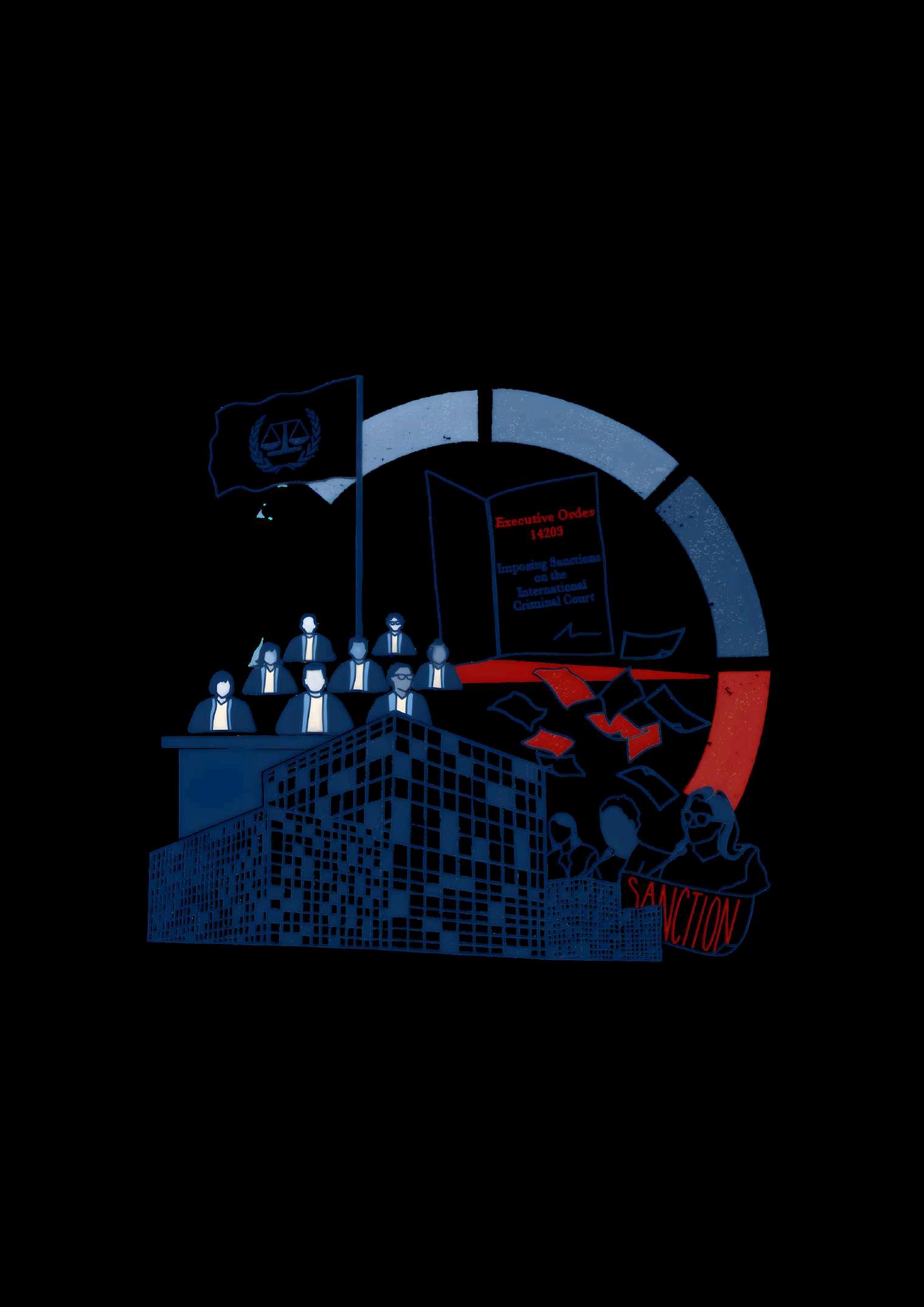
The US Congress passed the National Emergencies Act (NEA) in 1976 and the International EmergencyEconomicPowersAct(IEEPA)in1977,partofapackageofbillsthatwerepassed inthewakeofWatergateintendedasacheckonpresidentialpower13
Despite legal challenges, the IEEPA remains the basis of todayʼs US sanctions regime against the ICC. Very broadly drafted, it grants the President extensive powers to deal with any“unusualandextraordinarythreat( )tothenationalsecurity,foreignpolicy,oreconomy of the United Statesˮ The IEEPA empowers the US President to declare a national emergency, through an Executive Order (EO), and impose sanctions and other economic measuresonidentifiedcountries,individuals,groupsandprivateentitiestorespondtothose threats. Sanctions can include freezing assets in the US, preventing entry to the US, prohibiting US persons from engaging in any transactions, material support or provision of services with designated persons and blocking financial transactions that have a US nexus Travelbanscanbeimposedonthebasisofotherauthorities.
DifferentUSpresidentshaveusedtheIEEPAtoimposesanctionsonforeignstatestheyhave deemed a threat, in order to pursue their foreign policy agendas. In the context of the US so-called “war on terrorˮ and “war on drugsˮ, the IEEPA has increasingly been used to designate individuals, notably those “engaging in harmful activity, such as terrorists, international narcotics traffickers, weapons of mass destruction proliferators, and other malign actorsˮ. Those who have been sanctioned over the years include alleged terrorists 16
andwarcriminalsOsamaBinLaden,JosephKony,andAbuBakrAl-Baghdadi,andnon-state armedgroupssuchasAlQaeda,ISISandBokoHaram.Yet,fromthebeginning,“thescope oftheIEEPAwasverybroadandhadthecapacitytodrift,ˮsuchthatitcannowbeused“to authoriseemergencyexecutiveactionthateffectivelytargets‘ideologicalenemiesʼoftheUS administrationthatposeno‘realunusualandextraordinarythreatʼtonationalsecurity,ˮnoted Dr GavinSullivan,legalacademicandsanctionsexpert 20

“[TheUS]isfavourabletotheCourtwhenitisdirectedattheiropponents,but when the Court starts looking at them and their friends, like Israel, they get very hostile. In 2002, we did not know what the targets of the Court would be, so they were hostile. Once they saw that the first Prosecutor would not go against US interests,thentheyweremuchmorepositivetowardstheCourt.ˮ
Professor William Schabas21
During his two administrations, US President Donald Trump has weaponised and, as this reportwilldemonstrate,unlawfullyinstrumentalisedthesanctionsregimetoobstructjustice and accountability for crimes allegedly committed by US nationals (in Afghanistan) and US allies (so far, only Israeli nationals) The sanctions are the most direct action taken against theCourtinalonghistoryoffluctuatingUSpositionsrangingfromcautiousengagementto outright hostility when the US has deemed the Court not to be, or not to be acting, in its interests. Attacks against the Court have included the so-called Article 98 bilateral agreements between 2002 and 2006, designed to prevent states parties from transferring US nationals to the ICC; the 2002 American Service Membersʼ Protection Act of 2002 (nicknamed the “Hague Invasion Actˮ), which protects US military members from ICC prosecution,prohibitsmilitaryaidtoICCstatespartiesandauthorizestheuseof“allmeans necessaryˮ, including military force, to liberate any US national or citizen of a US-allied countryheldbytheCourt; andPresidentBushʼspurportedwithdrawaloftheUSʼssignature totheRomeStatutein2002. 22 23
The first Court-related sanctions date back to the first Trump administration. On 20 November 2017, then-Prosecutor Bensouda had requested authorisation from the PreTrialChambertoopenaformalinvestigationintothesituationinAfghanistaninaccordance withArticle15(3)oftheRomeStatute.Herrequestwasbasedonapreliminaryexamination intocrimesallegedlycommittedinrelationtothearmedconflictinAfghanistan,includingby US armed forces and by members of the Central Intelligence Agency (CIA) 24
25
Just under a year later, Trumpʼs National Security Adviser at the time, John Bolton, openly stated that the United States would use “any means necessaryˮ to protect its citizens and thoseofitsalliesfrom“unjustprosecutionbythisillegitimatecourt.ˮ On5March2020,the ICC Appeals Chamber decided unanimously to authorise the commencement of the investigationintothesituationinAfghanistan
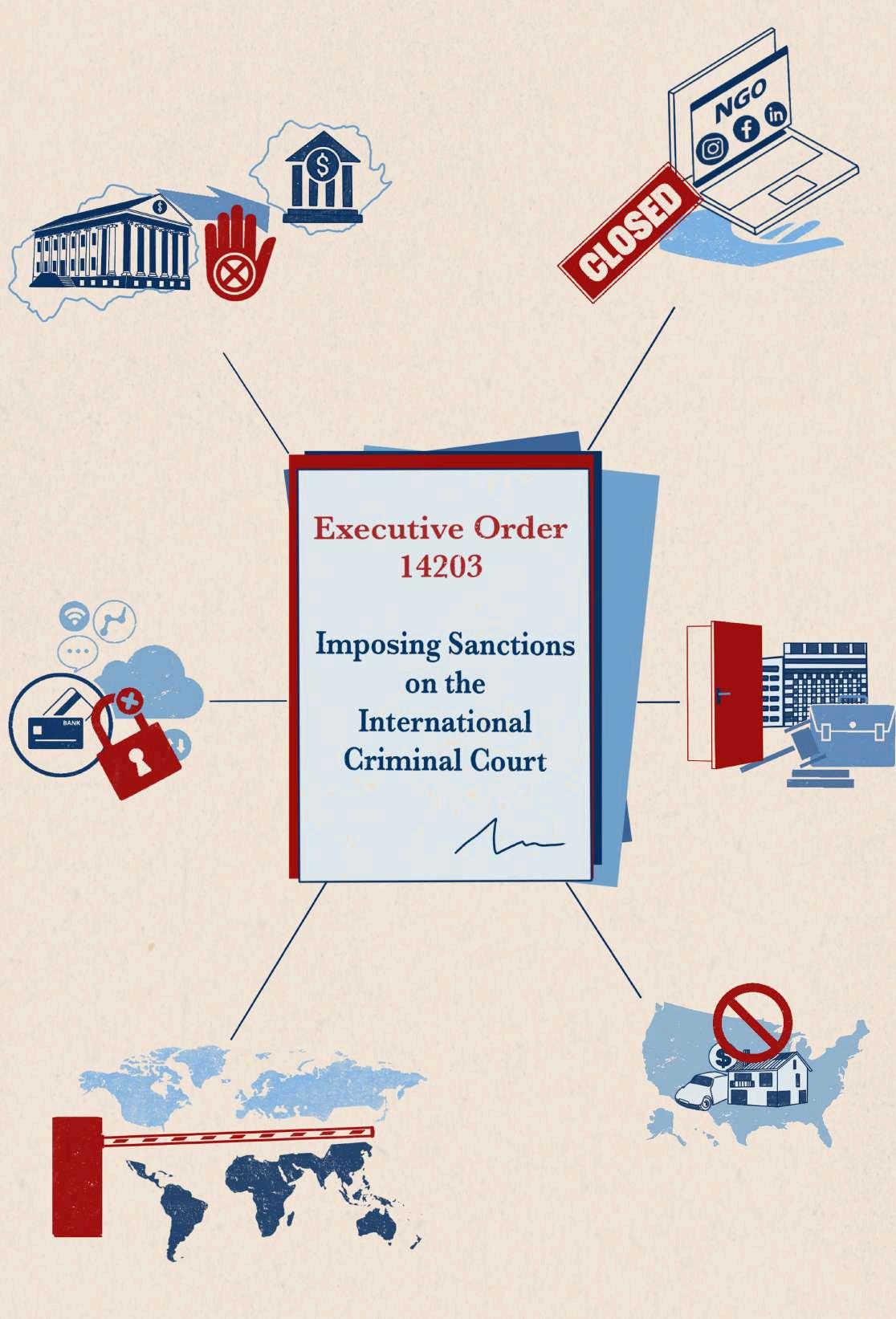
A few months later, after years of threats against the Court and the closure of the Palestine Liberation Organizationʼs office in Washington for their support of the ICC, the Trump administration took action on 11 June 2020. Executive Order 13928 laid the basis for sanctioningICCofficialsandstaffwhodirectlyengagedineffortstoinvestigateUSnationals for crimes allegedly committed in Afghanistan and those who materially supported these efforts. TheExecutiveOrderalsoreferredtoICCinvestigationsintoUSallies,withoutnaming any country, as a basis for the imposition of sanctions. On 2 September 2020, the Trump administrationsanctionedICCProsecutorFatouBensoudaandPhakisoMochochoko,asenior staff member in her office. While not referring specifically to Afghanistan, US Secretary of State Michael Pompeo announced the designation of Bensouda for having investigated US personnel,andMochochokoforhavingmateriallyassistedBensoudainthoseinvestigations.
TheUShasnotratifiedtheRomeStatuteand,despitetheclearprinciplesofinternationallaw underpinning the jurisdiction provisions in the Rome Statute, has consistently rejected the jurisdiction of the Court over its nationals and nationals of non-states parties to the Court generally The Rome Statute is clear: the ICC has jurisdiction over crimes committed on the territoryofastateparty,nomatterthenationalityoftheallegedperpetrator. Consequently, nationalsofnon-memberstates,includingUSnationals,canbetriedbytheCourtforcrimes committedontheterritoryofastateparty.SincebothAfghanistanandtheStateofPalestine ratified the Rome Statute in 2003 and 2014 respectively, the Court has jurisdiction to prosecute war crimes, crimes against humanity and genocide committed on the territory of bothcountries,evenbynationalsofnon-memberstates,suchastheUSandIsrael.TheRome Statutewasdesignedthiswaytogiveeffecttothejurisdictionofstatesparties.
AsWilliamSchabasunderlined,“Internationallawrecognisesthatstatescanprosecutecrimes on their territory, so they can certainly create an international court to prosecute those crimesˮ
While the sanctions against Bensouda and Mochochoko were later revoked by President Biden,“aprecedentwassetˮ fortodayʼssanctionsprogrammeagainstamuchbroaderrange of individuals. In ICC Judge Ibáñez‘s view, “a superpower threatening and attacking an institutionˮ that had been established as an expression of the will of the international community was “something that states and the international community had never envisaged.ˮ
“Thesanctionsareadirectattackonthemostimportantcriminaljusticeinstitution andthosewhoareattheforefrontofjusticemattersintheworld.Itisshockingthata state that portrayed itself as a leader in ending impunity in the world would conduct suchattacksˮ
Margaret Satterthwaite,
UN Special Rapporteur on the independence of judges and lawyers
TheprecedentsetunderthefirstTrumpadministrationhasescalatedduringTrumpʼssecond term: at the time of writing, 11 ICC elected officials have been sanctioned for fulfilling their judicial, prosecutorial, or administrative duties in spite of US pressure and demands. As Professor William Schabas noted, “We never experienced such an aggressive and hostile approach to the Court as under this second Trump administration.ˮ Shawan Jabarin, Executive Director of Al-Haq, explained how civil society perceived the announcement: “When they went as far as sanctioning ICC judges, it was like an earthquake, it shocked everyone. Judges who are carrying their mission, defend justice, and act according to the ruleoflaw Afterthatthereisnothingcalledaredline,thereisnolimitˮ
In September 2021, ICC Prosecutor Karim Khan announced that he had de-prioritised the investigation of crimes committed by US soldiers in the Afghanistan situation. However, Prosecutor Khan continued the investigations into the Situation in Palestine and on 24 May 2024, filed applications for warrants of arrest against three Hamas leaders, Israeli Prime Minister, Benjamin Netanyahu, and former Minister of Defence, Yoav Gallant, for crimes against humanity and war crimes. Warrants were issued against Netanyahu and Gallant by Pre-TrialChamberIinNovemberofthesameyear. 32 33
Amonthpriortotheapplicationforwarrants,agroupof12USRepublicansenators,including Marco Rubio, current US Secretary of State, sent a letter to Prosecutor Karim Khan threatening him and the Court with “severe sanctionsˮ against him and his institution if he were to go ahead with requesting arrest warrants for Israeli officials. The letter included the following:34


Soonaftertheapplicationforarrestwarrantswasannounced,andafterBenjaminNetanyahu publicly asked Israelʼs allies in a video statement “to use all the means at their disposal to stopthisdangerousmoveˮ, theUSHouseofRepresentativespassedtheIllegitimateCourt Counteraction Act, in June 2024 The Act, designed to enable the imposition of sanctions onanynon-USpersonthatparticipatesintheinvestigation,arrest,detentionorprosecution ofUSnationalsandalliedcountries,stillneededtopasstheUSCongress.Nonetheless,and based on the 2020 experience, once the legislation was proposed to Congress, the Court beganpreparingforpotentialsanctions. 35 36 37
InJanuary2025,Congressblockedthelegislation, asAdamKeithexplained: 38
“The Senate failed to pass the law on ICC sanctions last year not because enough DemocratssupportthePalestineinvestigation Theystoppedthepassingofthelawbecause oftheriskoftheimpactonUScompanies,whicharenowseenacrossEuropeasunreliable andanissuefortheirsovereignty.ˮ39
AfewdaysafterCongressblockedthelaw,andlessthanamonthafterthebeginningofhis second term, President Trump issued Executive Order 14203 “Imposing Sanctions on the International Criminal Courtˮ on 6 February 2025. The Annex to EO 14203 added the ICC ProsecutortothelistofSpeciallyDesignatedNationalsandBlockedPersons(the“SDNlistˮ) Likethepreviousone,thisnewEOcreatedadedicatedsanctionsregimeempoweringtheUS StateDepartmenttodesignateanynon“US-personˮthathasengagedineffortsbytheICCto investigate, arrest, detain or prosecute Israeli and US nationals (and potentially other US allies),orthathasmateriallyassistedtheCourtinsuchmatters. 40
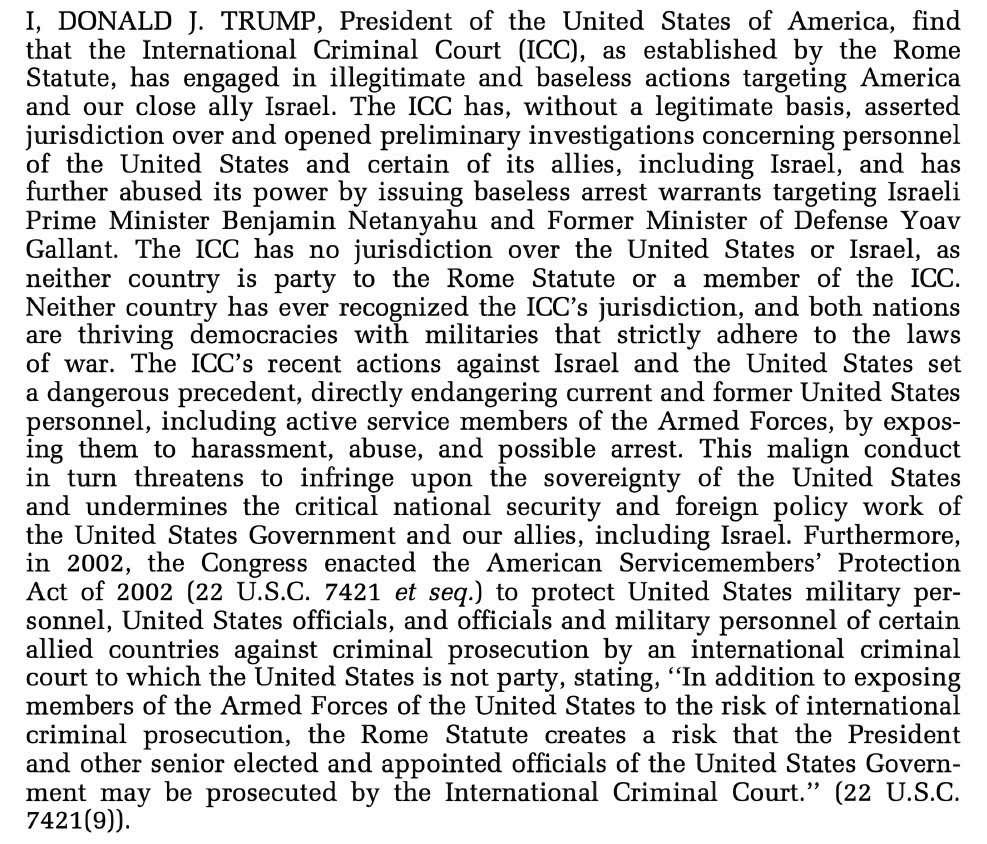
The sanctioning of ICC Prosecutor Khan was clearly linked to his decision to continue the investigationintothesituationinPalestineandtoapplyforarrestwarrantsagainstNetanyahu andGallantandaimedatpersuadinghimtoabandontheinvestigationsintothesituationsin Afghanistan and Palestine. Jamil Dakwar, Director of the American Civil Liberties Unionʼs (ACLU) Human Rights Program, commented on the vacuum that would be left if the ICC investigationonPalestinewereshutdown,giventhelackoftheIsraeligovernmentʼspolitical or judicial will to investigate war crimes and crimes against humanity committed in Palestine. ThelessonDakwardrawsfromthisisthat“USsanctionsarebecomingaweapon aimedatsilencingvictimsandadvocatesinholdingperpetratorsaccountable.ˮ
41
Later, in August 2025, both ICC Deputy Prosecutors, Nazhat Shameem Khan and Mame Mandiaye Niang, were designated under the EO “for continuing to support illegitimate ICC actions against Israelˮ and maintaining the arrest warrants against Netanyahu and Gallant.42
BothunderlinedtheincompatibilityoftheirmandateundertheRomeStatutewithanyformof political interference or coercion, and emphasised that they were maintaining their prosecutorialpolicy,despitethesanctionsandotherattacksontheirwork.
“Whatcharacterisesapolicyisitsgenericcharacter.Ifapolicycanbebentbecauseof tions, then you cannot call it a policy. Our prosecutorial policy remains what it is,ˮ explainedICCDeputyProsecutorNiang
ThepointwasfurtheremphasisedbyICCDeputyProsecutorKhan:
“The Rome Statute establishes how we do our work. We would be extremely poor lawyers if we did not abide by it. Every member of the Court believes that the ICC was created to uphold high ideals; if we donʼt protect those, the Court would be worth little morethanapieceofpaper,theRomeStatuteˮ
Prosecutors,judges,academicsandcivilsocietyorganisationsinterviewedforthisreportall emphasised the importance of defending the impartiality and independence of the Courtʼs investigations.Givingintothesedemandswouldnotjustmeantheendofoneinvestigation, itwouldmean“theendoftheCourt,ˮaccordingtoonelawprofessor. AsJudgeDamdinput it, “Some people express the suggestion that in order to survive, the Court should give up certaincases.Buttodosowouldmeancompromisingtheprinciplesofinternationalcriminal lawandjustice,inawaythatwouldquestionitscredibilityandrelevanceintheworldˮ 43 44
ICC judges then became the target of sanctions. On 5 June 2025, the US Department of State designated four judges for decisions they had taken prior to the issuance of the EO. Judge Bossa and Judge Ibáñez Carranza were designated for authorising the ICCʼs investigation against US personnel in Afghanistan five years previously; Judge Prost was sanctioned a few months later for her involvement in this decision Judge Alapini-Gansou and Judge Hohler were sanctioned for their participation in the authorisation of ICC arrest warrants against Netanyahu and Gallant, and Judge Guillou was designated later in August forparticipatinginthesamedecision. WhenICCjudgestakeuptheirpositions,theyswear an oath to exercise their powers as a judge of the International Criminal Court “honourably, faithfully, impartially and conscientiouslyˮ The US actions caused one judge to wonder, “Why are we being punished by the US administration for complying with our duties as judgesandadjudicatingonthebasisoftheRomeStatuteforatrocitycrimesthatcauseharm tomillionsofdefencelessvictimsaroundtheworld?ˮ
Inafurthermeasure,theTrumpadministrationsanctionedJudgesLordkipanidzeandDamdin forvotingwiththemajorityagainstanappealafterbyIsrael. Theappealconcernedwhether theOTPhadtonotifyIsraelanewafterinitiatinganinvestigationintothepost7October2023 events Thefactthatevenasimpleproceduraldecisionrenderedinthejudicialproceedings where all parties participate at will could provoke sanctions “shows the absurdity of these designations,ˮ as ICC Judge Lordkipanidze highlighted. Further, only four of the five AppealsChamberjudgessittingonthiscaseweredesignated.
Many interviewees underlined the threats that such designations represent to the independence of the judiciary, the security of judges and the rule of law Chris Sidoti, member of the UN Commission of Inquiry on Palestine and Israel, described them as like days of old when might, not right, ruled the world: “The sanctions are imposed in the same manner as when medieval criminal thugs kidnapped judges, burnt court houses and killed witnesses.ˮ One judge said the main reason judges are being sanctioned is because “we arenotdecidingmattersthewaytheywantustodecidethemˮ Thisgoesagainsttherole ofajudge,asJudgeBossastressed:“Judgestakedecisionsbasedonthelawandthefacts If we are punished for our decisions as judges, it is terrible for the rule of law and for the independenceofthejudiciary.ˮ
ThepointwasfurtheremphasisedbyJudgeDamdin:
“Atthenationalandinternationallevel,peopletendtoignorethemeaningoffairjustice, especially those who have the political power and want to use judicial institutions for their ownpurposes.Icomefromacountrythatexperiencedasovietregimeandjudicialsystem,I thereforeunderstandhowmuchindependencematterstothejudiciary.ˮ
ICCjudgesareclearthattheseindividualattacksagainstthemareattacksonthesystemasa whole andagainstoneofthefoundingprinciplesoftheCourt,whichisthatthelawapplies to all equally: “Here, they are asking us to be selective in how we apply the law. For us the meaning of equal before the law is a principle that underpins our decision-making and ensuresfairnessinourproceedings.Thatisthewholepurposeoftheworkwearedoing.ˮ
This was echoed by Judge Lordkipanidze, who said selectivity “affects, the whole raison dʼêtre of the ICC of having one single notion of justice for everybody. There cannot be differentjustices.Thereisonejusticeforall.ˮTheimpactgoesbeyondjudicialindependence, as Deborah Ruiz Verduzco, Executive Director of the ICC Trust Fund for Victims (TFV), underscored:“TheentireRomeStatutesystemisgearedtoservevictims.Anyattackagainst the ICC through any means or measure to impede the delivery of its mandate, directly impactsvictimsˮ
TheattackontheCourtmaynotstopatindividualsanctionsagainstICCofficials;theTrump administrationhasthreatenedtheCourtitselfwithinstitutionalsanctionsifitdoesnotaccede toUSdemands Statespartieshavebeeninstructed:stoptheinvestigationagainstUSand Israeli nationals and amend the Rome Statute to ensure that nationals of non-states parties cannot be prosecuted by the Court. This represents a further attack on the Courtʼs impartiality and independence, which, as Andreas Schuller of ECCHR urged, “States should resist strongly and not give in to these US demands and requests. There should be no compromise on the jurisdiction of the Courtˮ While the impact of the current sanctions alreadygoesbeyondtheAfghanistanandPalestinesituations,suchescalationwouldfurther extend the consequences of sanctions to all situations and cases before the Court and ultimately,allvictims.
“Sanctionsarealwaysimposedbystatesthatclaimtorespectinternationallaw. Butwhatwehavehereisatendencyforstates,inparticularonestate,tousesanctions againstpersonsworkinginthehumanrightsfield.ˮ
Victor Madrigal-Borloz,
former United Nations Independent Expert64
InJulyandSeptember2025,theTrumpadministrationexpandedthescopeofthesanctions even further by designating three Palestinian Civil Society Organisations (CSOs), Al-Haq, Al Mezan,thePalestinianCentreforHumanRights(PCHR), andFrancescaAlbanese, theUN SpecialRapporteuronhumanrightsintheoccupiedPalestinianterritory(oPt), inrelationto their advocacy work for justice and accountability for crimes committed in Palestine PalestinianNGOAddameerwasalsosanctioned,underaseparateUSsanctionsprogramme, broadening the scope of restrictions on Palestinian civil society beyond EO 14203. These sanctionsdidnotariseinavacuumbutfolloweddecadesofIsraelismearcampaigns,stateorganised surveillance, office raids, arrests and terrorism-related designations, as further detailed in part 52 of this report “They want to silence us, but we will not accept it,ˮ expressedShawanJabarinofAl-Haq.
This set of sanctions marked a turning point: punitive measures were not only being used againstindividualswithjudicialorprosecutorialpowersattheinternationallevel,butagainst individuals in the wider international ecosystem of justice and accountability for advocacy and speech: “That crossed a line, and it gave a lot of other NGOs reason to fear that they would be next.ˮ Raji Sourani commented: “We must not see these sanctions as targeting 69
ourorganisationsperse,butratherastheharshestattackontheveryideaofaccountability since Nurembergˮ On the threat of sanctions to the broader human rights framework, Professor Mariana Eudes noted that the CSOs and UN Special Rapporteur were designated simply for doing their human rights work, and that it “It is a very broad and excessive interpretationand,inthefuture,anyworkofthiskindcouldbeviewedasconstitutingathreat toUSsecurity.ˮ 70 71
UNSR Francesca Albanese is the first UN-mandate holder to be sanctioned in the UNʼs history. This despite the fact that under Article IV of the 1946 Convention on the Privileges and Immunities of the United Nations, her status grants her immunities while exercising her functions and during her missions. Those immunities should protect her from any form of legal process in relation to words spoken or written and all acts done in the role of independent expert While constituting a “direct attack on her mandateˮ, it shows that “she hasbeeneffectiveandhasgottentheattentionoftheworldinhercallforjusticeandtostop humanrightsviolationsinGaza,ˮMargaretSatterthwaiteobserved.Thesamecanbesaidof thedesignatedcivilsocietyorganisations.72

“WhatishappeningrightnowisnotonlyhappeningtotheCourt Weareseeing threats to sanction national judges in France, sanctions against Brazilian judges, and NGOs being designated. The international community needs to understand that protecting the Court goes beyond protecting this judicial institution. Unless we find solutionstodealwithitinaprincipledway,itwillhaveadominoeffect.ˮ
Osvaldo Zavala Giler, ICC Registrar
Beyond the ICC and those cooperating with it, the Trump administration has imposed sanctions against national judges, NGOs and advocacy groups and movements under separateExecutiveOrders Theseactionsdirectlyviolatethesovereigntyofindividualstates, theindependenceofnationaljudicialsystemsandthesecurityandrightsoftheirnationals
InJuly2025,theBrazilianJudgeAlexandredeMoraeswasdesignatedforhisroleinleading investigationsintoPresidentJairBolsonaroʼsattempttooverturnBrazilʼs2022electionalong with his wife, Viviane Barci de Moraes. In November 2025, the US State Department announceddesignationoffouranti-fascistgroupsfromGermany,ItalyandGreeceasForeign Terrorist Organisations, the first time the US has deemed “antifaˮ groups to be a foreign terrorist threat, and rumours emerged that sanctions against European magistrates involved inprosecutingextremeright-wingmovementswerebeingconsidered. Theseattackscould also extend to national prosecutors and judges, including those working on universal jurisdiction cases and in the end, it is the victims who will pay the heavy price ICC Judge Hohler noted that “international and national rule of law are closely connected Threatening one inevitably threatens the other. Moreover, if almost half of judges of an internationalcourtsupportedby125Statescanbetargetedinthisway,wheredoesitstop? Willotherinternationalandnationaljudgesbenextifandwhentheyissueadecisiondisliked byapowerfulstate?WehavealreadyseenajudgeinBrazilsanctioned Thisiswhyastrong reactionfromstatesisneedednowbeforeitistoolateˮ
On 23 December 2025, the Trump administration imposed US visa bans on five European individuals including former European Union Commissioner for Internal Market and Services, Thierry Breton, and representatives of NGOs fighting against disinformation and onlinehateintheUnitedKingdomandGermany Thebasiswastheirroleintheadoptionof the Digital Services Act, an EU digital regulation that requires online platforms to remove illegalcontentandonlinedisinformation.
77
This use of emergency powers beyond international justice threatens the sovereignty of statesovertheirjudiciaries,aswellastheirabilitytoregulatetechcompaniesandtoensure
freedomofassociation.ThisisthereasonICCJudgeGuilloudecidedtospeakup:“Irealised the issue of these sanctions went beyond the scope of the ICC and had the potential to becomeaconsiderablethreattotheruleoflawworldwideandinEurope.ˮ
In this context of threats and attacks against various judicial institutions at the national and international levels, Prosecutor Karim Khan warns about the risk that sanctions become a modelthatcouldbedeployedagain.Heasks“WhatwillhappentotheInternationalCourtof Justice,theEuropeanCourtofHumanRights,theInter-AmericanCourtofHumanRightsand other international organisations? We need to look at the whole architecture Can states accepttheinterferenceinthisvaluesystem?ˮ
Sanctions are defined by the Dictionary of Public International Law as “a range of reactions adopted unilaterally or collectively by states against the perpetrator of an internationally wrongful act to ensure compliance with and enforcement of a right or obligationˮ. In a narrower sense, they have been described as “coercive measures adopted by a state or internationalorganisationagainstoneofitsmembersorathirdstate.ˮ78
In the case of Executive Order 14203, sanctions have been issued neither in response to a wrongfulact,nortoensurecompliancewitharightorobligationunderinternationallaw.They have been imposed as a coercive and punitive measure against international actors perceived by the Trump administration as going against US national and foreign policy interests.ProsecutorKarimKhannotedthattheveryaimof“suchcoercivemeasuresˮis“the infliction of pain: that is the intent, not a byproductˮ An international law expert pointed out that the term “sanctionˮ reflects the punitive nature of the measures the US is imposing againstanyonewhodidorcouldhavedonesomethingagainsttheirinterests. Yetshealso warns that the use of the framework risks cloaking these coercive measures in a veneer of legitimacy.Sincesanctionsunderinternationallawareinherentlyapoliticaldecision,usually in response to an illicit act, the use of the term “suggests that a decision was taken in reactiontoillicitdecisionstakenbyjudges Itmaintainstheideathatthosedesignatedwould havedeservedthesedecisions,thattheywouldhaveviolatedanormofinternationallaw.ˮAs ICC Judge Lordkipanidze cautions, while these actions are undertaken under US law, they arenotcompatiblewithinternationallaw;instead,they“weakentheinternationallegalorder.ˮ 79
3.6.2. The use of emergency and executive powers and absence of judicial safeguards
“ItisonethingforacountrytonotcooperatewiththeCourtortorefusevisasto Courtofficials Itisanotherthingtousefinancialsanctionsasanon-prosecutiontool againsttheICC,thesametoolusedtogoafterterroristsandinternationaltraffickers.It hasaverystrongdetrimentalandlong-termimpactoninternationaljustice.ˮ
US lawyer and sanctions expert
EO14203wasadoptedbytheUSPresident,whohastheformalauthorityundertheIEEPAto imposesanctions.ThroughtheEO,PresidentTrumpqualifiesthelegitimateinvestigativeand judicial work of the ICC as a “threatˮ that requires the use of the Presidentʼs emergency power.AsnotedbyinternationallawyerTriestinoMariniello,however,underinternationallaw, emergencylawscanonlybeusedunderstrictconditions,including(interalia),whenthereis athreattothesecurityorthelifeofthenationand“nojudicialinstitutioncanbeathreattoa nationˮ This point had also been raised in a legal challenge to the EO targeting the Court issuedduringthefirstTrumpadministration.
80 81
Yet the scope for challenging such EOs through the US courts is narrow. The IEEPAʼs broad draftingprovidesthePresidentwithextremelywidediscretionarypowers Atthesametime, accordingtoasanctionsexpert, determinationsconcerningnationalsecurityissuesreceive a high degree of judicial deference, making challenges to the legality of an EO such as 14203highlycomplicated:“Ingeneral,courtsgivethePresidentandtheStateDepartmenta lotofspacewhenitcomestoforeignpolicy.Someonewouldhavetoprovethatthisisnota national emergency, and courts are often unwilling to make such assessments. I am not awareofanyEOonsanctionsthatwasoverturnedˮ
84
This makes it all the more critical for other states to assert strongly that “the investigations anddecisionsoftheICCdonotrepresentathreatandshouldberespected,ˮasUNSpecial RapporteurFrancescaAlbaneseunderlined.
The entire process of imposing and implementing sanctions is under the control of the US executive branch and does not include any of the judicial oversight or guarantees normally associatedwithjudicialprocesses,includingtherighttoafairtrial.TheUSDepartmentofthe TreasuryʼsOfficeofForeignAssetsControl(OFAC)isthebodyinchargeofimplementingthe sanctions, including adding individuals and organisations to the SDN list, and implementing civil penalties Decisions to designate often involve other government departments and agencies,includingtheUSDepartmentofState,whichalsohasdirectauthoritytoaddtothe SDNlistunderEO14203andisthemainactorinchargeofdecidingwhowillbedesignated, andintelligenceservices.
International lawyers underlined the incompatibility of these coercive measures with international human rights law Despite their profound, “corrosiveˮ impact on individualsʼ lives and their “afflictive natureˮ making it “hard to work, travel, have a normal life and relationsˮ, necessary safeguards are lacking due to the sanctionsʼ administrative nature.
When a person is designated, there are few, or no, due process protections. Designated personsdonotreceivepriornotice; meaningthatbeforetheirdesignationtheydonothave theopportunitytobeheard,eitherinwritingoratahearing,andhavenoaccesstoevidence. AsJudgeAlapini-Gansoureflected:“Itookanoathtodomyjobasajudge,andifthisisthe reason why sanctions that are neither judicial nor disciplinary and that have nothing to do withafaultareimposedonus,weacceptitˮTheonlyexplanationprovidedforadesignation isthetextoftheEOitselfandanyrelatedpressrelease.Thisisbydesign:“Themainpurpose ofthesanctionsistofreezeassets,sotheywanttotakepeopleoff-guard,ˮaUSlawyerand expert on sanctions explained. Furthermore, the administrative nature of sanctions means thattheevidentiarythresholdisrelativelylowastheusualstandardsofcriminalevidenceand dueprocessdonotapplytothesepreventativeadministrativemeasures: only“areasonable basistobelieveˮthatsomeonehasviolatedanEOisenoughtobedesignated,andclassified information, to which they and their lawyer have no access, can be used to support designation.
91
Intheory,sanctionscanbechallengedadministrativelyorthroughaUScourt,butthisistime consumingandlengthy,andinthemeantime,peopleʼsentirelivesareimpacted Inpractice, challenging sanctions in front of a US Court for designated individuals who are not “USpersonsˮ or do not have “substantial tiesˮ to the US, such as a US family member or a person with property in the US, is very difficult. Such persons do not have constitutional rights including to free speech or freedom of association and cannot bring constitutional challenges Atthesametime,onlynon-USpersonscanbedesignatedunderEO14203 This is“oneofthemostprofoundlyunjusteffectsoftheUSunilateralsanctionsregime,ˮsaidDr. GavinSullivan,yet:“TheUSarguesthatitssanctionsregimecomplieswithUSconstitutional law and international human rights law. That is the travesty.ˮ He further noted that he was onlyawareofahandfulofcaseswherenon-USnationalsmanagedtosuccessfullychallenge theirEOdesignationssince9/11:“Icancountthemonmyhandˮ
3.6.3. A violation of the UN Convention on Privileges and Immunities and the UN Headquarters Agreement
“SanctionsagainstaUN-mandateholderwereunthinkablebeforetheyhappened Under international law, we enjoy immunities, which has been confirmed by the International Court of Justice itself. The idea that the US will ignore that principle of internationallawandthatcaselawisshocking.ˮ
Margaret Satterthwaite, UN Special Rapporteur on the independence of judges and lawyers
Under Article VI section 22 of the UN Convention on Privileges and Immunities, experts performing missions for the UN are accorded privileges and immunities to enable them to
of every kind for words spoken or written in the course of their missions, immigration restrictions and currency or exchange restrictions. This is designed to shield UN mandate holders from undue interference in the exercise of their mandate, through safeguards and protections guaranteed by law. The ICJ has confirmed this principle in two separate cases. Despitetheabsenceofjudicialoversightpriortodesignation,thesanctionsagainst UNSR Francesca Albanese clearly amount to legal process against her for her words, whether spoken or written, pursuant to her mandate, in violation of the UN Convention on PrivilegesandImmunities,towhichtheUShasbeenapartysince1970.
UndertheUNHeadquartersAgreement,theUScannotimpedeaccesstoUNHeadquarters, includingbyindependentexpertsandCSOs However,inMay2025,ProsecutorKarimKhan was unable to brief the UN Security Council on Libya in person, and in January 2026, DeputyProsecutorKhanwasnotgrantedavisatotraveltoUNHeadquartersinNewYorkto brief the UN Security Council on the Darfur investigation. An international law expert termedthis“illegalbecausetheICChasbeenmandatedbytheUnitedNationstoinvestigate crimes committed in Darfurˮ. The UNSC had specifically tasked the ICC to brief it on investigations and prosecutions related to the situations of Darfur and Libya, which it had referredtotheCourtunderArticle13(b)oftheRomeStatute Thereisalsoabroaderimpact ontheCourt,whoseAssemblyofStatesPartiestakesplaceatUNHQeverythirdyear.
In October 2025, UNSR Francesca Albanese was unable to present her report on state complicity in genocide in person at the United Nations due to the travel ban included in the sanctions against her Members of the UN Commission of Inquiry on Palestine and Israel decidedtopresenttheirreportonlineratherthaninperson. Thesetypesofrestrictionson designated individuals, and on NGOs that have full accreditation with the UN but cannot travel to New York, represents a “clear violation of the USʼs international legal obligationˮ, placing“immediateanddirectrestrictionsonthefunctionalityoftheUNitself.ˮ
“Whensanctionsaffectaccesstobanksandotherservicesglobally,whatdoes thismeanforstatesandtheirindependencefromUSforeignpolicy?ˮ
Professor Alain Pellet103
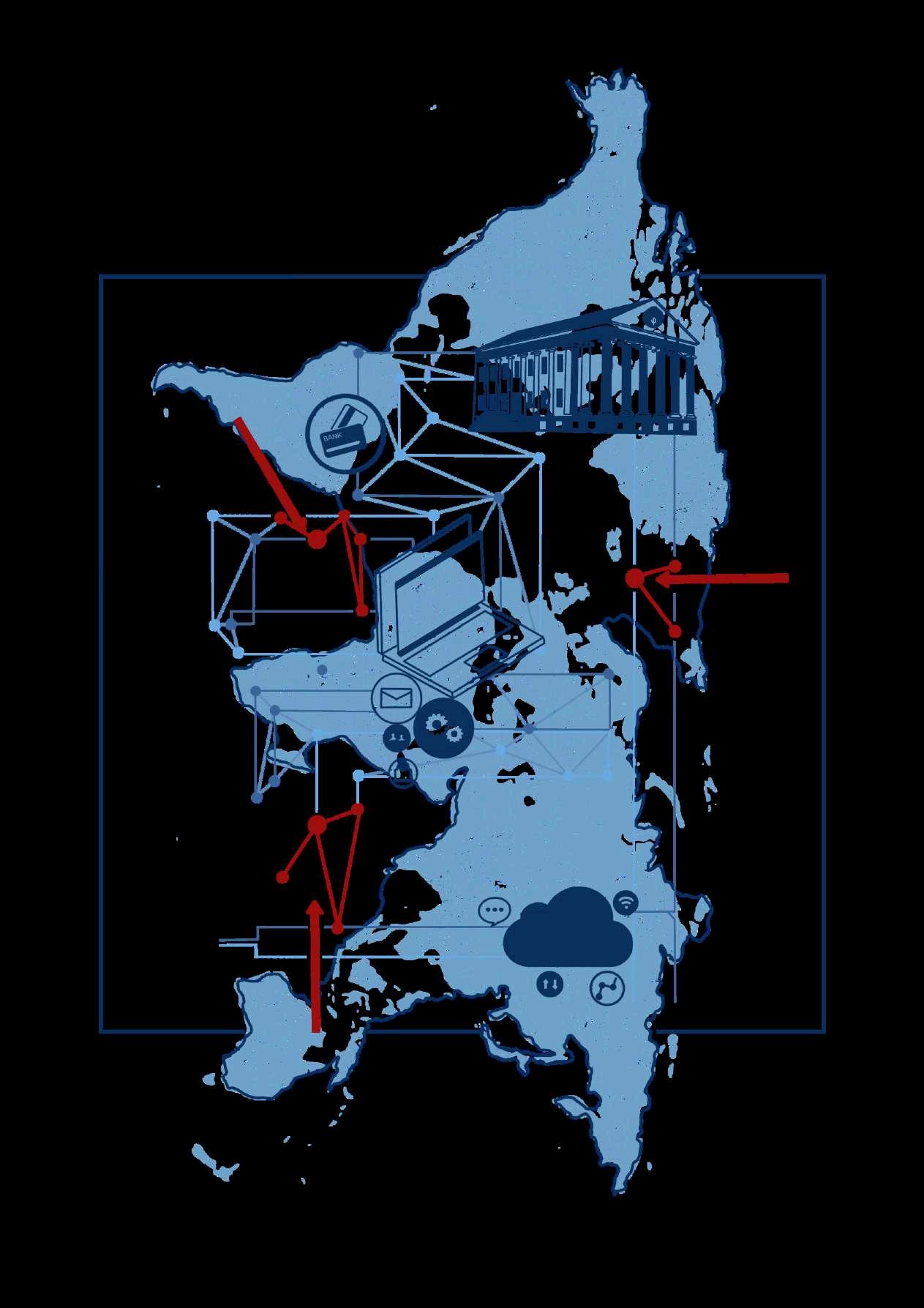
The implementation of sanctions beyond the territorial jurisdiction of the issuing state requires a mechanism that transcends borders. The global banking and financial system, whichstructurallydependsonUStechnology,theUSdollarandUSbanks,operatesassuch a mechanism for the US: “We are in a state of dependency.ˮ As underlined by Dr. Gavin Sullivan, sanctions were “designed and expanded in the aftermath of 9/11 to harness the asymmetricpowertheUShasovertheinternationalfinancialsystem,toexertanewformof financial warfare.ˮ The Trump administration has used this ability to operationalise the global banking and financial system to enforce the coercive and punitive measures beyond USterritory,makingsupporttotheCourt,itsofficialsandthosesupportingitswork,aliability everywhere. 104 105
BasedontheEO,anyforeignpersonsanctionedisaddedtotheSDNList.Theirentrytothe US, and the entry of their immediate family members, can be suspended. The EO also provides for a visa ban on any foreign national determined by the Secretary of State to be “employedby,oractingasanagentof,theICCˮ106
AnothereffectoftheEOisthatanypropertyintheUSinwhichadesignatedpersonholdsat least a 50% share, is “blockedˮ. The sanctioned person cannot exercise property rights, includingusingorsellingtheirpropertywithoutspecificauthorizationfromOFAC.
Yetasthefollowingsectionswillshow,duetotheworldʼsstructuralrelianceonUStechand financial markets, consequences extend far beyond visa restrictions and freezing of assets held in the US, and these sanctions are “expanding the regulatory force of one state to the globalscale.ˮ107
“Everybodywassohappywiththeideathattechnologyisavailabletoeveryone, butwemissedthefactthatalotofthesetechnologiesareUSbasedandUScontrolled. A large majority of our data is with META, most of our shopping activities are with Amazon.Wearereliantonthesetechnologies.ˮ
Data Security Expert
Like other sanctions-related EOs, EO14203 broadly prohibits any “material assistance, sponsororprovisionoffinancial,materialortechnicalsupportfor,orgoodsorservicesˮtoa designatedperson,orinsupportofanyactivityrelatedtotheinvestigationofany“protected personˮ. A “protected personˮ means any US national, or any current or former military/governmentofficialofaUSallythathasnotconsentedtotheICCʼsjurisdiction.
Being added to the SDN list therefore prevents any “US personsˮ located anywhere in the world from providing material assistance or services to or transacting with that person or entity. The term “US personsˮ encompasses US nationals or dual nationals, no matter their placeofresidence;peoplelawfullypresentintheUS;andcompaniesunderUSjurisdiction, includingtheirforeignbranches,subsidiaries,oremployeesofsuchentities.Asexplainedby a US-sanctions expert, “It becomes prohibited for any individual or organisation under US jurisdictiontoprovideasanctionedpartyalmostanybenefitwhatsoeverˮ108
If “US personsˮ violate the prohibitions set out under the EO, they face serious penalties, includingacriminalpenaltyofupto20yearsinprisonandafineofuptoonemillionUSD,as wellasacivilpenaltyofaround350,000USDpertransactionortwicethetotalamountofthe transaction The US Treasury Department implements civil penalties, and the US DepartmentofJusticecaninitiateprosecutionstopursuecriminalpenalties
109
The terms “material supportˮ and provision of “financial, material or technical supportˮ are not defined under this EO and have been broadly applied by the US Treasury, creating a chillingeffectonUScompaniesandindividuals,fearfuloftheextremelyheavyenforcement penalties In concrete terms, the consequences are that “US personsˮ, including companies like Visa, Mastercard and Microsoft, and banks, are prevented from providing services to designatedorganisationsandindividuals,evenfortheirprivateuse“suchastakinganUber, listeningtomusiconline,orwatchingamovie.ˮ110
Due to the heavy reliance on US companies globally in IT, internet and digital services sectors, including social media, e-commerce, financial technology and media, these prohibitions have impacted every aspect of the daily lives of designated persons.
The impact has ranged from the closure of their accounts with all US companies, including Amazon,AirbnbandPayPal,tohavinghotelbookingsandflightsintheirnamescancelled. ThisisparticularlypronouncedwhereUScompanieshavemonopolisedcertaintechnologies: “Companiessaythattheyhavetherighttostopprovidingservicestoindividuals,buttheyare overlookingthefactthattheyhavepurposefullymonopolisedcertaintechnologiesandwhen theecosystemismonopolised,itmakesitcomplicatedforhumanrightsdefenderstodotheir work.Theyareleftwithnootheroptions.ˮ 111 112
Facing risks of disruption or complete termination of services if designated, CSOs and institutions at risk have had to assess their dependency on US service providers Several have decided to search for alternatives in the face of US providersʼ unwillingness to guaranteethattheywillnotcomplywithsanctions,insteadincreasinglyrelyingonEUservice providers. Amnesty International, for example, made the decision to move away from US service providers due to the new wave of sanctions: “By the end of the year, Amnesty intends to have terminated our contracts with US companies or to have taken steps in that direction. Our assessment is that they pose too many risks for our work. We do not believe they can be relied upon to do the right thing if we are sanctioned. Every European actor should now have an exit strategy from US companies. This will not be enough as European companiesmayterminatetheirservicesoutoffearorpressure.Butitisastart.ˮ 113 114
In October 2025, the ICC confirmed media reports that it was moving its digital work environment from Microsoft Office to Open Desk, a German-developed open-source software owned by a publicly owned German company. Yet, solutions that are found continue to be ad-hoc, with each organisation, institution and individual finding its own solution to build resilience and limit dependency on US providers, and without a systemic approach that covers all those under attack For example, solutions the ICC has found in relation to IT, banking and other services have been limited to the Court and have not included organisations designated under the same EO, leaving the latter isolated and dangerouslyexposed,havingtofindtheirownsolutionswithlessfundingandsupportfrom states.
ICC judges, the Registrar and the Deputy Prosecutors all raised the impacts that the sanctionshavehadonpartnershipsandIT-relatedservices,whicharedescribedinsection5 below. They emphasised, however, that the sanctions have not paralysed the work of the Court,whichremainsoperationalanditsstaffundeterred.
“Theinternationalfinancialarchitectureiscentredonandfacilitatestheglobaluse oftheUSdollar.PaymentsystemssuchasVisaandMastercardareUSentities.That architecture is what gives the United States its leverage: beyond controlling dollar transactionsthroughOFAC,italsocontrolstheinfrastructurethatprocessesthemˮ
Antoine Madelin, International Advocacy Director, International Federation for Human Rights (FIDH)
AlmosteverycountryintheworldisdependentontheUSfinancialsystemandtheUSdollar to conduct international and even national financial operations This dependence creates a risk to national and regional sovereignty and seriously hampers the ability of designated individualsandorganisationstooperate,notonlyintheUS,butglobally.
US banks and financial institutions are required to freeze the assets of individuals and entitiesonSDNlistsandareforbiddenfromtransactingwiththemorprovidingthemwithany typeofservices,ortheywouldfaceseverecivilandcriminalpenalties Thisprohibitionalso coversallmajorcardnetworksincludingVisa,MastercardandAmericanExpress.Incaseof violation, they can be penalised even if they had no knowledge or intent in relation to the violationduetostrictliabilityforviolationsofsanctions.Themereactofviolatingsanctionsis enoughtotriggerliability,evenifitwasanaccident.
116
Furthermore, any property or funds that fall within US jurisdiction become subject to obligationsunderUSsanctionslawandcanbe“blockedˮ. Thisincludesmanytransactions denominated in dollars, even between two non-US counterparties, because such transactions frequently require processing through or clearing by US-based correspondent banks,bankswithaccesstotheUSFederalReservesystem. AndwhentheyfallunderUS jurisdiction,theymaybeblocked Itisthereforenotthemeredenominationofatransaction in US dollars that triggers jurisdiction but the existence of some kind of involvement or connection to the US, also called a “US nexus", including the involvement of US financial infrastructureinitsclearingorsettlement.
Thisistheresultofaninternationalfinancialarchitecturebuilton,andfacilitating,worldwide use of the US dollar, bringing with it a number of American facilities and services as explained by Antoine Madelin, Advocacy Director of the International Federation for Human Rights(FIDH):“Theinternationalfinancialarchitectureiscentredonandfacilitatestheglobal use of the US dollar. Payment systems such as Visa and Mastercard are US entities. That architecture is what gives the United States its leverage: beyond controlling dollar transactionsthroughOFAC,italsocontrolstheinfrastructurethatprocessesthemˮ
ThecentralityofUSfinancialinfrastructureeffectivelytransformsdomesticlegalprohibitions intodefactotransnationalconstraintswithfar-reachingpracticaleffects Thedominanceof the US over the financial system means that designated individuals and organisations lose accessnotonlytoUSbanksbutalsotothepaymentsystemsthatformthestructureofdaily economiclifeelsewhere. IncountrieswheredomesticbankdebitsystemsrelyonUS-linked networks, even basic banking instruments like debit cards may become inaccessible: “FranceisnolongercapableofdoingdebitcardsindependentlyofVISAorMastercard,so theyarenotabletocommercialisethe“CarteBleueˮcardˮ, explainedJudgeGuillou 121
As elaborated below, dependence on US-linked networks then leads to non-US financial institutions and banks over complying and cutting services to designated persons, even whendomesticlawdoesnotmandatetheterminationofservices
4.3.1. Consequences of the structural reliance where there is a US nexus
Non-US banks and financial institutions face potential penalties if the services they provide todesignatedpersonsinvolveaconnectiontotheUS,i.e.a“USnexus.ˮ Consequentlythey generallyprefertoavoidanytransactionsthatmayhavesuchnexus,whichwouldfallunder US jurisdiction and could be rejected, blocked or potentially give rise to heavy penalties According to a US lawyer and expert on sanctions, sanctions started to be widely enforced bynon-USbanksasaresultofsustainedeffortsbytheUSgovernmenttoensuresanctions are fully applied by anyone interested in using the US financial system: “In the 2000s, they issued massive fines of billions of dollars, and foreign companies agreed to pay because they needed the access to the US financial system This changed the US sanctions system foreverˮ He further explained how the prohibition on non-US persons “causingˮ US persons to violate sanctions has a particularly dissuasive effect. In the 2000s and early 2010s, OFAC penalised several major international banks for processing transactions from Iran, Cuba, Sudan or other countries under sanctions through the US financial system, but without disclosing the connection with countries under sanctions to US persons, including banks,thereby“causingˮthemtoviolatesanctionsunknowingly Thisledtosettlementsand finesofhundredsofmillionsofdollars.
124
As a result, any transaction involving a designated person and a US financial institution, or routed through the US financial system, is almost systematically refused (the transaction is turned away and the funds are returned to the sender) or blocked (the bank freezes the moneyandkeepsitinanaccountinsidethebank),eitherbyUSfinancialinstitutionsthatare requiredbylawtorejectorblocksuchtransactions,orbynon-USinstitutionsbyoperationof law or anticipatory compliance. In practice, this leads to effective exclusion from significant segmentsoftheglobalfinancialsystemfordesignatedpersons.
Judge Alapini-Gansou explained, “All my colleagues had banking problems, even with their local bank.ˮ Sanctions render cross-border transfers involving two different currencies extremelycomplex,ifnotimpossible,assuchtransfersoftengothroughUSbankingsystems
and many currency conversions or settlements depend on US-clearance and the US dollar infrastructure. Certain regions are particularly reliant on the US dollar and are consequently more impacted: “In Latin America all of our major trading is done in dollars I cannot send money in euros or have euro accounts in Peru.ˮ UNSR Francesca Albanese said these measuresrepresent“financialcensorshipˮ.
125 126
The impact is heightened for organisations with operations outside the Eurozone, including thedesignatedPalestinianorganisationsandtheCourt TransactionsinsidetheEurozoneare conductedthroughtheSingleEuroPaymentsArea(SEPA),aEuropeanpaymentnetworkthat enableseuro-denominatedbanktransfersbetweenparticipatingcountrieswithoutusingUS dollarsorroutingthroughtheUSbankingsystem. OutsidetheEurozone,transactionsmight usetheUSdollarortheSWIFTsystem,whichoftenpassesthroughUSbanks.ICCRegistrar Osvaldo Zavala Giler describes the consequences: “The risk to our operations that are outside of the Eurozone is higher Solutions will need to be found on a case-by-case basis, andthiswouldbeoneofthebiggestpotentialimpactsofinstitutionalsanctions.ˮ
127
4.3.2. Impact beyond the US nexus: over-compliance and de-risking
Exposure is not limited to transactions that clearly involve a US nexus. Banks and financial institutions have become increasingly compliant, or over-compliant, with sanctions imposed bytheUSasaresultofthemassivefinesissuedbyOFACagainstforeignbanksasexplained above. Further, financial institutions that provide “servicesˮ to designated entities and individuals, even where they do not involve a US nexus, may also fear liability under the broadlyframed“materialsupportˮprovisionsintheEOandtheriskofsecondarysanctions. Such exposure may include the blocking of assets within US jurisdiction, the loss of a relationshipwithUS-serviceprovidersincludingcorrespondentbanking,andexclusionfrom USfinancialmarkets.
128
129
These risks have led non-US banks and financial institutions to apply these coercive measures extraterritorially, even for transactions that do not include a nexus or any form of connection to the US or to the US dollar In simple terms, and due to this structural dependency, a US EO can lead a European bank, operating under European law and using onlytheeuro,toterminateitsservicestoajudgeresidinginEuropewhowassanctionedfor theirworkinaninternationaljusticeinstitution.
As a consequence, UN Special Rapporteur Francesca Albanese has been unable to open a bank account under her name, even in Italian and Dutch banks operating entirely under European legislation with transactions to and from her account in euros. She remains up until today, unbanked. A European bank, at which she had been a client for decades, announced the closing of Judge Hohlerʼs account within 24 hours of her designation: “I accept that American banks and other US persons may have to comply with the sanctions, 130
but the automatic compliance by some European banks and service providers is extremely worryingˮ Prosecutor Karim Khan saw all his accounts in the UK frozen, and his bank account in Malaysia closed As an even greater example of over-compliance, the bank account of his ex-wife was frozen when he tried to transfer money to her for their children “There is no legal basis to freeze her account, that is over-compliance and it poses a big issue of sovereignty.ˮ Other designated individuals also said they had money transfers between two European banks rejected where different currencies were involved. This leads toafeelingofuncertainty:asJudgeProstcommented,“everytimeyouwanttodoabanking operationyoudonotknowwhatwillhappen.ˮ
BeyondEurope,banksintheMiddleEasthaveclosedtheaccountsofdesignatedPalestinian CSOs, preventing them from keeping their funds in a bank account and from transacting in any currency, even in the euro, Jordanian dinar or Israeli shekel “We knew US sanctions would be a devastating blow because of the influence the OFAC has on banking systems internationally,ˮexplainedWesamAhmad,formerstaffmemberofAl-Haq.
The US sanctions regime operationalises the global banking system to exert its influence beyond its jurisdiction and leads financial institutions to over-comply and adopt de-risking strategies through the threat of sanctions or penalties Niccolò Figa-Talamanca noted how “thisrevealsthatthesanctionsregimeoperationalisestheglobalbankingsysteminpractice toenforcepolicyeffectswithoutassertingjurisdiction.AdomesticUSexecutiveorderforces aFrenchbank,operatingunderFrenchlaw,toterminateitsrelationshipwithaninternational courtthatFranceofficiallysupports.ˮ131
Banks all around the world choose over-compliance or use de-risking strategies to prevent theriskofexclusionfromUSfinancialmarkets,evenincaseswhereitputstheminpotential conflict with their national or regional legislation. According to an EU Directive adopted in 2014, which guarantees the right to a basic bank account for all legal EU residents, European banks are in breach of EU law if they refuse to open a basic bank account for someonelawfullyresidentintheEU,wherenolawfulexceptionapplies JudgeHohlernoted that it seems some banks “would rather risk violating EU law than to provide services to designatedindividuals.ˮ 132
In an open letter to the European Parliament, the European Federation of Ethical and Alternative Banks and Financiers (FEBEA) underlined the indirect impact of these extraterritorialmeasuresonEuropeanbanks,whichtheyargueunderminestheruleoflawin theEUanditslegalandfinancialautonomy:

Inthiscontext,andwithalackofguidanceorshieldingmeasuresbystatesandtheEU,each bank is left to assess which services it is willing to continue to provide to designated individuals or institutions, based on its own appetite for risk. These institutions had become used to complying with sanctions imposed by US administrations automatically when there was no major discrepancy between the US and the EU sanctions regimes, but as the ICC Registrar pointed out, “It should be different for service providers to deal with automatic compliance related to terrorist organisations than in cases concerning ICC judges who are designatedˮ134
Bankshaveyettoheedthiscall.Asnoted,whenthedraftlawonsanctionswaspassedinthe US House of Representatives, the Court mapped out their potential dependencies. They looked at implementing partners for reparations programmes, and contracts with forensic entities for their investigation work, IT systems and banks, to prevent any disruption that could fundamentally affect the continuity of the work of the Court. Some banks indicated they would block the accounts of the Court itself if individuals working at the Court were designated, leading the Court to pre-emptively close those accounts. Other banks that the Court used for transactions said they would fully comply with sanctions and “when individualsattheCourtweredesignated,theyimmediatelystoppedtheirrelationshipwiththe Courtitselfaswellˮ135
These coercive measures may not stop at the Rome Statute system; the sanctions regime targets the broader human infrastructure of justice, as Antoine Madelin of FIDH cautioned: “UScontroloverfinancialinfrastructurecanbeused,andhasbeenexplicitlycontemplatedin public statements, to discipline or block the wider ecosystem of accountability actors Even withoutformaldesignation,thecrediblethreatoffinancialexclusionreshapesbehaviour.ˮ
“WhenIlearnedthatIwasdesignatedIwasintotalshockanddisbelief,wecould not do anything. We knew about it too late, we were not able to prepare, even financially.ˮ
Solomy Balungi Bossa, ICC Judge
All the designated individuals interviewed for this report expressed the same feelings of hopelessness and shock Dealing with such coercive measures is time and resourceintensive,provokingstressfulandcomplexsituationsthatgravelyimpacttheireverydaylives: “Whilenotdirectlyaffectingourwork,theimpactofsuchcoercivenessonourpersonalwellbeing and family is simply unjustified.ˮ Judge Bossa described how “navigating sanctions isadifficultpartofourjobnow;wehavetomeetlawyers,communicatewiththeRegistry,the banks,itisanendlesstaskˮ,addingthattheexpandedto-dolistcomeswithanunexpected mentalload DeputyProsecutorKhanshared,“Itunderminesournormality:wehavetothink about whether our phone company will continue to work with us, what is the impact on Apple, Amazon. It slows you down and makes you fight battles that you should not have to fight.ˮ
136
Designated individuals also spoke about the difficulty of feeling uncertain about the future, thefeelingofconstantinsecuritynotknowingwhichpartoftheirlives,ortheirfamiliesʼlives, willbetouchednext,allofwhichleavestheminastateoflimbo.JudgeHohlerputitthisway: “Solutions that exist today may not exist tomorrow, a bank card that works today may not work tomorrow, a company that insures your house today may terminate your contract tomorrowˮ
Sanctioned individuals have described how their designations have affected their family members, which many identified as the most painful aspect. Prosecutor Karim Khan underlined how the impact of sanctions is “deeperˮ as it affects not only the subject of sanctions,“butoneʼslovedones,familymemberswhoarewhollyunconnectedwiththeICC or international justiceˮ As Deputy Prosecutor Niang explained, “As soon as you are on the list,yourUSvisaisrevoked,andthisisnotlimitedtousbutextendstoourfamilymembers.ˮ ThiswiderimpactwasfurtherunderlinedbyJudgeDamdin“itaffectsdailylife,butthemost severe effect is the impact on my family members. For instance, my children had their US visasrevokedimmediately.ˮ
Somedesignatedindividualsareunabletosendmoneytofamilymemberslivingoutsidethe Eurozone. Judge Lordkipanidze explained how “One of the most painful things about the
sanctions is the impact on my family, I cannot transfer money to my country to pay for the personwhoishelpingmyownfamilymemberwhoneedscareˮOthers,withfamilymembers who are US nationals, fear those family members may be accused of providing “material supportˮ and held criminally liable. UNSR Francesca Albaneseʼs daughter and husband are challenging the EO in a US court, asserting that the sanctions have turned their parental relationship "into criminal activity.ˮ Judge Ibáñez described the direct impact on her daughter, whose US visa was revoked and her Google, Apple and Amazon accounts cancelled:
“Sheisaseparateperson,shehasnoconnectiontotheCourt,sheisnotresponsible for my decisions. It saddens me because I am prejudicing my daughter by trying to do my job Howcanthisbepermitted?ˮ
Deputy Prosecutor Khan concurred: “The fact that it impacts our families and those around usisanunnecessaryburden.ˮ
Addingtothefeelingofhopelessness,thelackofstrongandsystemicprotectivemeasures bystatesandtheEuropeanUniontocountertheimpactofsanctionswasconstantlyraised bythoseaffected AsJudgeGuillouputit,“Europeneedstowakeup,wecannotstayinthis form of submission.ˮ He added that it was this realisation that the sanctions represented a wider threat to the rule of law, and an attack on the “digital and banking sovereigntyˮ of European states, that had made him decide to speak out, not only as a judge but also as a European citizen Judge Damdin said that like any judicial institution, the Court “cannot functionwithoutthepoliticalandeconomicsupportofstatesˮ
ICC Judge Prost also summed up the impact through a broader lens: “I have talked a bit about this publicly because it is important for people to understand it is serious; it is not symbolic.ItisnotjustthatyoucannottraveltotheUS,thisisaseriousattackontheruleof law,anditdoeshaveaparalysingimpactonyourdailylifeˮ
5.1.1. No geographical escape from US jurisdiction: access to information technology services, internet and digital services
“Thingsyoutookforgrantedliketransferringmoneytoyourchildren,preparingfor Christmas, Eid or other celebrations are impacted, it forces you to think before you makeanytransactionormovement.Especiallyatthistime,weneedthecomfortofour normal lives, to be able to go home, transfer money to our children, read our Kindle. Normalitybringsuscomfortinthecontextofthedifficultworkwearedoing.ˮ
Nazhat Shameem Khan, ICC Deputy Prosecutor
DuetothedominanceofUStechintheglobalmarket,sanctionshaveaffectedtheeveryday livesofdesignatedindividuals,fromorderingfoodtodoingonlineshopping,bookingahotel or a plane ticket Designated individuals identified barriers in accessing digital services as one of the two most significant impact of sanctions, along with the exclusion from banking
andpaymentservices.Theseimpactthembothatthenationalandinternationallevels,often resulting in financial isolation and digital exclusion Prosecutor Karim Khan explained this over-reachingimpact:“theextraterritorialreachoftheUSpenetrateseveryaspectofhuman life from the ability to fly, do financial transfers, get legal representation, or to use cloud storageanddownloadapps.ˮ
Almost all designated individuals saw their accounts with US companies closed, including Uber, Netflix, Airbnb, Bookingcom and PayPal UN Special Rapporteur Francesca Albanese lost her medical insurance in the US: “I was refused reimbursement for medical services; [these costs] will never be reimbursedˮ. Most designated individuals systematically face obstacles when trying to travel: "I simply could not make a reservation for a flight ticket", sharedJudgeIbáñez UNSRFrancescaAlbaneseandJudgeGuillouhadsimilarexperiences ofbookingcancelationinEurope ThelatterdescribedhowhetriedtobookahotelinFrance through Expedia and the company cancelled the reservations, citing compliance with sanctionsimposedbytheUSadministration:
SeveraldesignatedindividualsreportedhavingtheirAppleIDblocked,losingaccesstotheir iCloud and pictures, and being unable to download or update their apps. Judge Hohler recounts how “Different service providers, mostly US companies, like PayPal and Amazon, cancelledmyaccount ApplehasblockedmyIDandaccesstomyiCloud Atleasttwoother judgeshaveexperiencedthesamethingˮDesignatedindividualsalsosharedproblemswith maintaining their personal email accounts, despite having had the same email for several years, causing a “sense of panic.ˮ Sometimes, over-compliance has even led to other people's accounts being cancelled, just for mentioning the name of designated individuals: Judge Hohler said, “A friend sent me a present for Christmas through Amazon and all his Amazonaccounts,includingKindle,Audibleandotherswereblocked Ittookhimfiveweeks torecoverthem.ˮTheseexperiencesdemonstratehowtheUShasoperationalisedcorporate monopoliesasproxyenforcementarmsforsanctions.
Reine Alapini-Gansou, ICC Judge
All designated individuals lost immediate access to their credit cards, some within days of beingdesignated,andareunabletooperateanyonlinepayment,nomattertheirnationality, thecountryorthebankthatissuedthesecreditcards Intodayʼsworld,wheremostfinancial transactionsaredoneonline,thisheavilyrestrictsaccesstobasicservices.JudgeProst,for example, describes being unable to purchase a subway ticket while travelling, making her realisethefar-reachingeffectsofthesanctions:“Thelossofacreditcardinthisdayandage requires you to completely reorganise your life, you cannot access basic services, like bookingahotelortakinganUberˮ
Several designated individuals saw their bank accounts closed or frozen by European banks. Somehavestillnotbeenallowedtoopenabankaccountintheirhomecountriesin Europe. The banks in Georgia closed all of Judge Lordkipanidzeʼs accounts, in all currencies: “Because of over-compliance they closed all my existing accounts almost immediatelyevenbeforethelicenseperiodexpired,evenmyaccountinlocalcurrencyˮHis bankevenclosedhismortgage,requiringhimtopaytheentiremortgageimmediately:
“IfIdidnotrepaythemortgageinfull,thebankwouldhaveseizedmypropertyunder themortgage.ˮ
UNSRFrancescaAlbanesehasbeenunabletoopenabankaccountunderhernameinItaly and receive basic financial services. Despite the UN reaching out to several countries, including Switzerland and the Netherlands, banks have refused to allow her to open a bank account, expressing regrets and citing OFAC sanctions. She remains unbanked up until today, meaning she does not have any bank account, debit nor credit card and is unable to receivepayments ICCProsecutorKarimKhanhadallhisaccountsintheUKfrozenandhis accountinMalayiaclosed:“Icannotaccessmoneythathasbeenfrozenarbitrarily,andthere hasnotbeenanyrealattemptstounfreezeitbytheUKoranybody,Iwastoldthatisdownto OFACrulesandtheriskappetiteofbanks.ˮ
Other designated individuals have managed to maintain accounts, but they are unable to conductanytransactionwithaUSnexusandcontinuetofacechallengeseveninoperations not involving a US nexus. Aside from not necessarily knowing what transactions have a US nexus, they face restrictions, delays and uncertainty each time they use banking services, including making payments or transfers within the EU. Designated individuals have even facedissuestransferringfundstofamilyandfriendsinEurope,asEuropeanreceivingbanks
refuse the transaction. All the nationals of non-European states have had to change any moneyheldinlocalbanksintotheirlocalcurrencyimmediately;theyhavenotbeenallowed tokeepmoneyinanyothercurrency.
Correspondent banks have repeatedly blocked attempts to send money outside of the Eurozone, or the money has been frozen, including by institutions like Western Union. Several designated individuals, especially those from countries outside of the eurozone, spoke of the hardship this has caused: they receive their salaries in Europe but cannot transferthemtotheirhomecountries,andareunabletosendmoneytotheirfamiliesorpay bills in their home countries. “Sanctions slow you down in your personal life, the things you tookforgrantedliketransferringmoneytoyourchildrenˮ,notedDeputyProsecutorKhan.“I receive my salary in Europe, but I cannot send money anywhereˮ, explained Judge Bossa Theuncertaintyoverrisksofover-complianceevenwithfamilymembersheightensthisfear, “Ican'tsendmoneytomyfamily,Ifearitwouldfreezetheiraccounts.ˮexplainedProsecutor Karim Khan after the bank account of his ex-wife was frozen when he tried to transfer her money. Non-European judges whose tenure is finishing soon are concerned about their abilitytotransfermoneybacktotheirhomecountrieswhentheyleavetheCourt:“Wearein limboˮ Designatedindividualsraisedthefactthattheselimitationsonbankingrepresenta major challenge to state sovereignty; “I should be able to use my lawfully earnt assets in a mannerofchoosinginmyowncountry.ˮ
All those who had property and bank accounts in the US saw their assets frozen and are unabletoaccessthem,includingUNSRFrancescaAlbaneseʼshomeinWashington Judge Bossa explained, “The inconvenience started within 24 hours I received a message informingmethatduetotheEO,myaccountintheUSisblocked,andthereisnothingIcan do about it. They cancelled my credit card which I was using for everything. Then my bank accountsinmyowncountrywereclosedforatimeaswell.ˮ
5.1.3. The unequal impact of sanctions: a reflection of global inequalities
147
“MyselfandmycolleaguefromPeru,wesatasabenchoffivejudgeswhoissued a unanimous decision six years before the sanctions. Then the sanctions came and singledoutonlytwoofus.Theotherjudgeswerenotinitiallysanctioned.Wehadthe impressionthatweweresanctionedbecausewecomefromcountriesthatdonotcarry asmuchweightintheinternationalsphere,thediscriminationhurtalotˮ
Solomy Balungi Bossa, ICC Judge
SanctionedindividualsfromtheGlobalSouthandfromcountrieswithgreaterdependencyon the US have faced stronger challenges, reflecting global structural inequalities. The sequence with which sanctions were imposed also has a gender dimension, since only female judges were designated in the first wave Judge Bossa from Uganda and
148
Judge Ibáñez from Peru were designated for their votes in the Appeal decision authorising thecommencementofaninvestigationinthesituationinAfghanistan WhiletheBritishand Polish judges had already completed their terms, the Canadian judge that sat on the same bench was initially not designated. Judge Ibáñez said: “At the beginning they only targeted four women judges from small countries, from the Global South and one from Eastern Europe, even though the chambers were composed of other judges from bigger countries.ˮ Similarly,inthelastwaveofsanctions,theTrumpadministrationdecidedtoimposesanctions onsomejudgesinvolvedinthedecision,andnotothers
Today, judges from multiple countries have been designated, including from Global North countries, but the impact of sanctions remains greater for nationals from the Global South, given the stronger dependency of their currencies on the US dollar The judges themselves recognise these inequalities: “There is no question, it is an imbalanced system It is much moredifficultformycolleaguesthanme.Thisisanotherhorriblepartofthesesanctions.ˮ149
While Ministries of Foreign Affairs of some of the countries whose nationals have been designatedhavebeenveryvocalaboutsanctionsandsupportiveoftheirnationals,including stateslikeFrance,SloveniaandSenegal,othershaverefusedtoengage AccordingtoJudge Bossa,“MygovernmenthasnotevenreactedupuntiltodayˮAgovernmentʼswillingnessto engageandchallengeUSactionsoftenappearstodependonthepowerofthecountryinthe international sphere, its level of dependence on the US, and the governmentʼs political affiliation. This leaves designated individuals facing differing treatment. UNSR Francesca Albanese underlined the lack of support she received from UN member states and from Italyʼs current government: “Not a single member state called me to ask how they can help and the ones I reached out to for support to open a bank account said it was not possible. They should be protecting their own citizens against those attacks.ˮ Prosecutor Karim Khan underlined the lack of support and engagement from the British government “That is the danger of the special relationship between the UK and the US: it can too easily become subservientandcompliant,ratherthanforthrightandcloseˮ
Judge Hohler expressed concern about the potential impact of this inequality on the international nature of the Court: “This approach is concerning. It sends the message that officialsofsomestatesmightbebetterorworseoff,dependingonwhatpassporttheyhold andwhatistherelationshipbetweentheirStatesandtheUS,ˮshewarned
This inequality is also apparent to victims of international crimes who see opposition from some of the most powerful states to certain investigations, based on the nationality of the perpetrators. As underlined by a former staff member of Al-Haq, “the risks that come with theworkarelessnewtousPalestinians,butthesesanctionshaveshakentheideamanystill held that rights are universally applied and that that international mechanisms are isolated frompower.ˮWhilenotanewconcern,theapparentdiscriminationinsanctionsdesignations risksheightenedperceptionsofinequalityandselectivityamongvictimsofcrimeswithinthe ICCʼsjurisdiction.
“TheUSisattackingNGOs,whicharetheonlyorganisationswithaccessonthe ground,towitnessesandthefacts,aslongastheCourtcontinuestobedeniedaccess toPalestine.Whenorganisations,lawyers,judgesandprosecutorsaresanctioned,the pillarsofinternationaljusticeareparalysed.IfthishappensinPalestine,itcanhappen anywhere else. We will not allow Gaza and Palestine to be the graveyard of internationallawˮ
Raji Sourani, Founder and Director of the Palestinian Centre for Human Rights (PCHR)
The designation of Palestinian NGOs in June and September did not come in a vacuum PCHR, together with Al-Haq, Al Mezan and Addameer, have an extensive track record of documenting human rights violations and crimes under international law in the occupied Palestinian territories (oPt), leading accountability advocacy efforts, including around the State of Palestineʼs ratification of the Rome Statute, and providing support to victims of international crimes However, Palestinian organisations have been subjected to organised smear campaigns, intimidation, death threats, spying and hacking, raids, designations and attacksbyIsraelfordecades.“Butthatneverdeterredus.Wedidnotgiveupthenandwewill nevergiveuponaccountability.ˮ Sinceearly2002,Israeliforceshaveraidedtheofficesof Palestinianhumanrightsorganisationsmultipletimes,includingtheraidonAddameerʼsoffice in 2019, during which they stole laptops and memory cards Israel has also reportedly conductedasurveillancecampaignagainstthePalestinianNGOs,andtheICC,foryears 150 151 152
InFebruary2019,IsraelʼsMinistryofStrategicAffairsandPublicDiplomacypublishedareport “terrorists in suitsˮ in which they falsely accused PCHR, Al-Haq and Addameer and their Directors of supporting terrorism in an attempt to delegitimise their work and their organisations,andpushdonorstocuttheirfunding 153
In a continuity of this smear campaign, in May 2021, Israeli representatives sent a 74-page dossier prepared by the Shin Bet, the Israeli internal security service, to representatives of European countries urging them to stop funding six Palestinian human rights organisations, including Addameer and Al-Haq A few months later, in early October 2021, Front Line Defenders found that devices from Al-Haq and other Palestinian organisations had been infected by the Israeli spyware Pegasus for years. Less than a week later, on 22 October 2021, Israeli Minister of Defence, Benny Gantz, issued an executive order declaring
157
the six Palestinian human rights NGOs to be terrorist organisations, allegations that were rejectedbytheorganisations,UNexperts,EUmemberstatesandothersasunfounded.
Thoseinterviewedforthisreportdescribedhowthesedesignationsaimedtocriminalisethe organisations, terrorise their employees and render them inoperative by pressuring external partners to cut funding and cooperation: “When those indirect tactics did not work, that is whenIsraeldecidedtodesignatetheNGOsasterroristorganisations.ˮ158
Sincethen,Palestinianorganisationshavecontinuedtobesubjectedtoofficeraidsaimedat shuttingdowntheiroperations Staffmembershavebeenarrested,andsomedeported Israeli attacks completely destroyed all of PCHRʼs offices in Jabalya, Khan Younis and Gaza City, AlMezanʼsHeadquartersinGazacityandtheirofficesinJabaliaandRafah.Severalof PCHRʼsstaffmemberswerekilledduringIsraeliairstrikes,alongwiththeirfamilymembers.
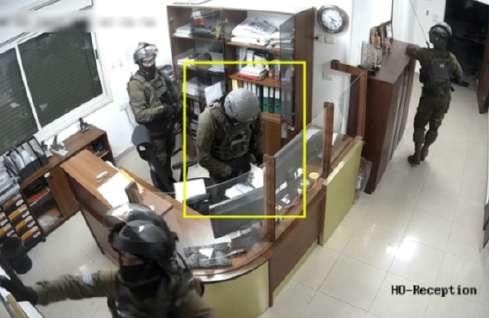
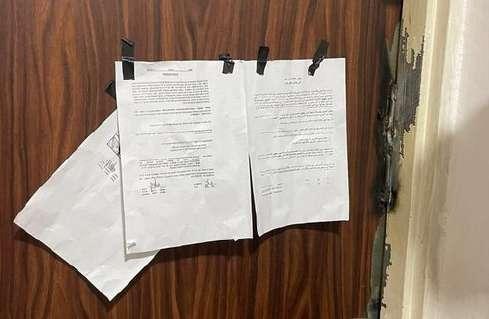
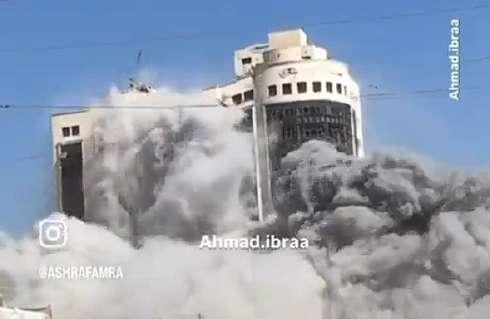
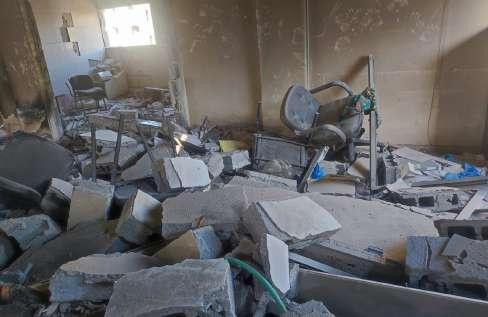
ThenewsanctionsimposedbytheUSin2025onAddameerandAl-Haq(basedintheWest Bank) and PCHR and Al Mezan (based in Gaza), compounded this pattern of sustained attacks against Palestinian organisations and had immediate and severe operational consequences.
Amnesty Internationalʼs Secretary General, Agnès Callamard, said targeting these CSOs is “clearly intended to support the Israeli authorities, to protect them and shield them from accountability; itʼs a logical step following the ‘terroristʼ labelling imposed by Israelˮ a few years prior. As FIDHʼs CEO Eléonore Morel observed, “The first people to be targeted are thosewhodocumentfactsˮ,describingthesanctionsas“acontinuationˮofIsraelʼsprevious “terroristˮdesignationsandofbroaderUSpoliticalbackingtoIsrael.MargaretSatterthwaite, UN Special Rapporteur on the Independence of Judges and Lawyers, similarly warned that the sanctions have “an incredible chilling effect on human rights work related to Palestineˮ, describingthemas“astrongattackˮagainst“NGOsthatarewellknowninthefieldandhave atrackrecordofdocumentinghumanrightsviolationsanddoingimportantwork.ˮ
Palestinian organisations themselves describe these designations as a means of crippling andsilencingthosepresentonthegrounddocumentingtheevidenceofIsraelʼsgenocide, andacontinuityofIsraelʼssystemofapartheid. 163 164
Sanctionshaveaffectedallaspectsoftheirworkandoperations,asdetailedinthesections below.
“Sanctions against [CSOs] are particularly horrible, I do not know how you can justifytryingtoblockpeoplefromhelpingvictimsandgatheringevidence.Wearevery dependentoncivilsocietyandthosegoingouttothecommunities,anditisatrociousto targetthem.ˮ
Thefirstandmostimmediateeffectofsanctionshasbeentheimmediateclosureofthebank accounts of the four designated Palestinian organisations Due to the policy of overcompliance,banksintheMiddleEasthaveshutdowntheiraccounts,andthustheirabilityto operate.Theorganisationshavebeenunabletoreceivefundsortoprocesspaymentssuch as salaries, rent and other office expenses essential to their operations: “Without staff or activitiesthereisnoorganisation.ˮ165
166
With the designation, Addameerʼs bank account was frozen in less than eight hours. Addameer was the only Palestinian organisation that did not benefit from a 30-day winddown period, which is a temporary authorisation by OFAC allowing companies to cease
operations or transactions with sanctioned entities without violating sanctions regulations. Withtheimmediatefreezingoftheirbankaccount,theywerenotallowedtotakemoneyout oftheiraccountandnevermanagedtoregainaccesstotheirfunds.Aformerstaffmember ofAddameerexplainedhowthesanctions“showtheextenttowhichtheUSisabletoaffect bankingeveninPalestine,asthewholebankingsystemisconnectedtotheUSdollarandthe SWIFT.Whatisthesolution?ˮ
Two days after the sanctions were announced, PCHRʼs bank asked them to empty their account by withdrawing all their funds in cash, with less than a weekʼs notice, fearing that maintainingtheaccountofadesignatedentitywouldleadtorepercussions.AlMezanʼsbank informedthemthattheycouldneithermakenorreceiveanyinternationaltransfersandhada month to withdraw all their funds These exclusions from financial services have an even stronger impact due to the situation of unlawful occupation and the constant destruction of infrastructureinGaza. Palestinianorganisationsexplainedthatmoneycannotbewithdrawn inGazaandwithdrawingsignificantsumsintheWestBankcouldincreasetheriskofarrest bytheIsraeliarmy.
167
This is taking place in a context of a 19 year-long Israeli land air, and sea blockade of the GazaStrip;thedestructionordamagingof92%ofhousing, 94%ofhospitals andaround 70%ofGazaʼsinfrastructure; theIsraeliKnessetʼsprohibitionofUNWRAintheoPt; anda series of complete blockades of humanitarian convoys. These violations have been characterisedasgenocidebytheUNCommissionofInquiryonPalestineandIsrael,theUN Special Rapporteur on human rights in the oPt, Amnesty International, Al-Haq, Al Mezan, PCHR and Addameer, FIDH and others Raji Sourani, director of PCHR, explained that for staff based in Gaza, these conditions mean their salaries are often a matter of survival for themandtheirextendedfamilymembers:
“PCHRhas65staff,including38stilllivinginGaza.EverypersonworkingatPCHRis part of the society, they were subjected to displacement, lost their homes, suffered from famine,lackofwaterandmedicine.Allourstafflostlovedones,someuptodozensoftheir extendedfamilymembers.AtPCHR,welostthreestaffmembers,includingtwolawyersand myassistantwhowerekilledwiththeirfamilies.Despitethisheavyprice,ourstaffcontinue to work for justice and accountability. We are part of the people; we have nothing special except our commitment to defend victims, to expose the reality and to seek accountability forthevictimsˮ
5.2.2. Loss of US and dual national staff and cutting of funds
ThesecondeffecthasbeentheimmediatelayoffofallUSanddualUSnationalsduetothe risk of prosecution and heavy civil penalties and other serious consequences for their personallivesintheUS.“Al-Haqhasbeenmyschoolandpartofthefamily,peopleyouwork with are not just colleaguesˮ, explained Wesam Ahmad, a US-Palestinian dual national who hadtoresignduetothesanctionsafterworkingforAl-Haqforalmosttwodecades.Al-Haq, Al Mezan and Addameer lost several US nationals or dual national staff members: “They directlyhadtoresign Iamtalkingaboutlegalresearchers,seniorstaffmemberswhohadto leave.ˮ174
Duetothechillingeffectofsanctionsandthefearoffacingindividualsanctions,severalnonUSstaffmembersalsoresigned.
Al-Haq,PCHRandAlMezanalsofacedthesuddenandimmediatesuspensionortermination of funds from US based donors. Even some Europe-based donors withdrew their funding, illustrating the practice of over-compliance and the chilling effect of sanctions. These organisations lost between 20 and 60% of their funding in less than 30 days as a direct effectofsanctions
5.2.3. Palestinian CSOs will not be silenced despite closure of websites, social media accounts and other IT services
“NGOshavehistoricalrecordscontainingawealthofinformationaboutspecific groups and individuals which are important for generations to come, but service providers can simply delete these It is like burning books and making sure that the information contained in them is not available. It is not just deleting advocacy; it is deleting a chain of information and events. For Palestinian NGOs they are already deletingthepeopleandthecountry,andtheyarenowdeletingthehistoricalbasisof thegroup.Ithinkitisdeliberatetoacertaindegree.ˮ
Data security expert
The designated Palestinian organisations were forced to switch all their services to non-US service providers immediately, including for emails, website domains and cloud services. While sharing and receiving information is exempted under the US sanctions regime, designatedorganisationshadtheiraccountsonkeysocialmediaplatformsdeleted,including YouTube, Mailchimp and META. This created a large gap in communications and meant the permanent deletion of hundreds, if not thousands, of videos, documentaries and victim testimonies about violations in Palestine, “ultimately silencing the voices of Palestinian victimsˮ In interviews conducted for this report, people emphasised how this represents an attempt to silence Palestinian organisations and victims, and erase evidence of internationalcrimes.
Immediatelyaftertheannouncementofsanctions,AddameerʼsMETAsocialmediaaccounts were deleted, as was their website. Since Addameer is one of the main organisations documentingthesituationofPalestiniandetainees,thishascreatedavacuumofinformation about violations committed against Palestinian prisoners: “The whole movement was seriously affected by Addameer disappearing from these platformsˮ. This takes place in a context where mass arbitrary arrests and the systematic use of torture by Israel have been reported by numerous local NGOs as well as by international NGOs and UN agencies relyingheavilyonlocalNGOdocumentation WhileAddameermanagedtoregainaccessto theirwebsite,theycouldlosetheirdomainname,astheUS-Canadiancompanythathosted their website refused to allow them to regain access to it; instead, they put it up for public purchasewithoutwarningtheorganisation.“Thenameispartoftheheritageandhistoryof Addameer,thewholeworldknowsAddameer.org,forthirtyyearsithasbeenassociatedwith Palestinianprisonersandtheworkwedo.Thisisatotalexploitationofthathistoryˮ,aformer Addameerstaffmemberexplained
At the time of writing, Addameer had still not regained access to its META social media accounts, Facebook and Instagram, where they had thousands of followers, nor to their domain name. The loss of a website goes beyond the loss of information: “A website is an address on the internet, so people cannot reach you any other way They are basically erasingyourexistence Sanctionsareverypolitical Itisanentirecountrytellingbusinesses not to engage with you.ˮ Addameer was also immediately blocked from their Microsoft accountsincludingtheiremails,Cloud,databaseonPalestinianprisonersandinternalshared folder.Atastroke,Addameerlostayearofdata,whichMicrosofthasstillnotsharedwiththe organisation.
182 183
YouTube also deleted the accounts of Al-Haq, PCHR, Al Mezan and Addameer along with more than 700 videos documenting human rights violations by Israel and other actors, and the channelʼs archive, amounting to thousands of pieces of information, some of which couldhaveconstitutedevidenceinlegalproceedings.Thesevideosincludeddocumentaries; investigativevideossuchastheoneaboutthekillingofjournalistShireenAbuAkleh;videos oftheGreatMarchofReturninGaza;testimoniesoftorturesurvivors;andvisualevidenceof Israelʼs destruction of Palestinian homes in the occupied West Bank. This despite the exemption under the sanctions regime for sharing and receiving information, making it anotherexampleofover-compliance.
184
Yet Palestinian organisations have been clear that they will not allow these sanctions to silence or deter them: “This decision is a testament that we are doing the right thing.
We will never give up and will continue our work in documenting and monitoring human rightsviolationsandpursuingjusticeincooperationwiththeICCandothercourts,ˮexplained Issam Younis of Al Mezan. Shawan Jabarin of Al-Haq noted the “constant risks of documenting Israeli crimes while working under a settler colonial regime,ˮ but stated that “theseareriskswearewillingtoacceptinsteadofjustgivinguporsteppingback.ˮPCHRʼs RajiSouraniechoedthis:“Fromthebeginningwewerevictimsofimprisonment,oppression, other risks, and we never gave up We were accused of being terrorists with suits, of misusing international law But that never deterred us and we continued with passion, with visionandwithastrongwilltodelivertheworkwearedoing.ˮ
5.2.4. Consequences for the support of victims and for the documentation and investigation of international crimes
“Sanctions against these organisations will have an enormous impact because theyarecriticalinprovidingevidencetoUNmechanisms,theICCandnationalcourts using Universal Jurisdiction. They are intermediaries, they are the ones collecting evidence and having access to witnesses. So ordinary people will lose access and communication to these states and to accountability mechanisms. Palestinian NGOs are amongst the best in the world, and the sanctioned organisations are among the bestPalestinianorganisations.ˮ
Chris Sidoti, Member of the UN Commission of Inquiry on Palestine and Israel
Those interviewed for this report commented that the clear aim of designating Palestinian NGOs was to cripple the viability of human rights organisations in Palestine and internationally,andtheirabilitytodocumentinternationalcrimesandsupportjusticeefforts.
UN staff, ICC investigators, and other independent monitoring bodies are largely unable to access the oPt due to Israelʼs systematic denial of entrance to independent experts and investigative teams, siege conditions in Gaza and the pattern of attacks against United Nationsstaff,journalists,civildefenceandhumanrightsdefendersgatheringevidence. In 2008, Israel detained and deported the then UN Special Rapporteur on the situation of humanrightsintheoPt,RichardFalk Sincethen,IsraelhasdeniedentrytoallUNSpecial Rapporteurs on the oPt, including the current Special Rapporteur, Francesca Albanese. Israel has also systematically refused entry into the oPt to other UN investigative mechanisms, such as the fact-finding mission documenting the 2019 “Great March of Returnˮ andtheUNCommissionofInquiry. TheUNCommissionofInquiryonPalestine andIsraelreportedlysentsixrequeststoaccesstheoPttothegovernmentofIsraelsince7 October 2023; all have gone unanswered. The Palestinian authorities, on the other hand,
have given their approval for the Commission to visit. According to Chris Sidoti, “What is unique in the situation of our Commission is that Israel not only denies access to Israel but alsodeniesaccesstoPalestine,whichisanotherstate.Thisisaviolationofinternationallaw, becauseit isdenyingthesovereignty of Palestine. But theUSandIsraelareoutlaws, inthe medievalsense,theyoperateoutsidethelaw.ˮ
The denial of access means Palestinian CSOs have been essential to documentation and victimidentificationrelatedtoaccountabilityefforts,sinceinvestigatorsarenotabletobeon theground.Internationalhumanrightsorganisationsalsocontinuetobedeniedaccesstothe oPt and depend on these organisations that continue to document violations under difficult conditions, including the lawfare waged against them: “They are the voice of Palestinian victims; they amplify stories, are present in places where international organisations cannot goˮ191
CSOsarealsoessentialtotheworkoftheICCʼsOTP,asDeputyProsecutorNiangexplained: “Thoseorganisationsdonotreplaceourownindependentactivities,buttheircooperationis crucial to what we are doing; seeing any attempt to paralyse this cooperation is difficult.ˮ Legal Representatives of Victims (LRVs) also rely on information collected by Palestinian CSOs When the CSOs have fewer resources, time and institutional capacity to collect evidence, this makes it more difficult for LRVs to reconstruct facts and undertake legal analyses, which is essential for their work making submissions to the Court on behalf of victims.192
TheimpactontheICCʼsworkrangesfromslowingdownArticle15Communications, which are important for investigations, to affecting the identifying and supporting of victims who canparticipateinproceedings. Thesanctionsthereforeriskcreatingvariousvacuumsthat willimpacttheentirejudicialprocess,includingtheaccessofvictimstotheCourt: 193 194
“TargetingNGOsisasadoccurrencebecausetheyplayaveryimportantroleasalink between the communities and the Court. NGOs are usually the first responders, and if they cannot gather the necessary information to highlight the plight of victims, it will have a detrimental impact on investigations. The Prosecutor relies on reports of NGOs on the ground,ˮhighlightsJudgeBossa.
For victims, it means that the organisations that have supported them for years are now criminalisedandimpactedintheiroperations.“Whoarevictimssupposedtoturnto?ˮasked SpecialRapporteurSatterthwaite,“Itisaformofsecondaryvictimisation.ˮ195
While sanctions against Court officials have had significant personal repercussions for the individuals affected, if sanctions were to be imposed against the Court as an institution, the consequenceswouldbeevenmorefar-reaching.
The most likely immediate impact, as designated Palestinian NGOs experienced, would be disruptions to the ICCʼs banking systems and financial transactions. The Court has been exploring this since June 2024, when the spectre of sanctions first arose. As a result, the ICC has already taken steps to minimise the likely financial impact of sanctions. Nonetheless, supportfromstatesisrequired:“Themorepoliticallyengagedstatesare,themoresupportthe ICCreceivesfromthebankingsystem.ˮ196
Second, if US IT companies were to cut off IT-related services to the ICC in case of an institutional designation, it would have a grave impact on the operations of the Court. This unpredictability with US service providers has left the Registry with no other choice than to searchforalternativenon-USIT-providers.197
BothdeputyprosecutorsalsounderlinedthenegativeimpactthatsanctionsontheCourtitself would have on their investigations and on victims and witnesses, across all situations Deputy ProsecutorKhannotedthatwhilevictimsintwooftheCourtʼsnewestcases,inthePhilippines and Libya, do not seem “dismayedˮ by the sanctions, disruptions to IT services would have a direct impact on how the Court communicates with those victims. Deputy Prosecutor Niang underscored the operational and concrete problems associated with the possibility of losing certainIT,bankingandinsuranceservices,notingthat:
“Only member states can help us. Having insurance, having financial institutions dealing withus,requiresleverageforthoseprivateentitiestokeepdoingbusinesswithus.ˮ
The ICC Trust Fund for Victims (TFV), in charge of implementing reparations and programmes for the benefit of victims of crimes under the jurisdiction of the Court, is administratively attachedtotheCourtandcontractspartnersthroughtheCourt'sjuridicalpersonality.IftheICC as a whole were to be designated, the TFV would be part of the designation and would suffer theconsequencesinthesamewayastheCourt.TheTFVʼsdependsontheRegistry'sfinancial, administrative and human resources services. In addition, it depends on the Court's field presencethroughCountryOffices,ontheCourt'sITinfrastructure,andduetothenatureofits work, on cooperation from different actors, including national authorities and implementing partners, to deliver reparations As such, “measures that protect the Court protect the Trust Fundˮ TheTFVhaspartnerswhoimplementCourt-orderedreparations,suchasinUganda,the Democratic Republic of Congo, Darfur and Mali These partnerships, essential to delivering reparationstovictims,areconcludedwithCSOsthatwouldneedtoweightheriskofsecondary sanctionsiftheCourtisdesignated.Further,mostoperationsoftheTFVtakeplaceoutsideof EuropeandtheSEPAbankingsystemand,therefore,arehighlydependentontheabilityofthe CourttotransfermoneyoutsideoftheEU,whichrisksentailingaUSnexus.Accordingly,“Any obstaclesinthefuturemightincludedelaysinprovidingreparations.ˮ
199
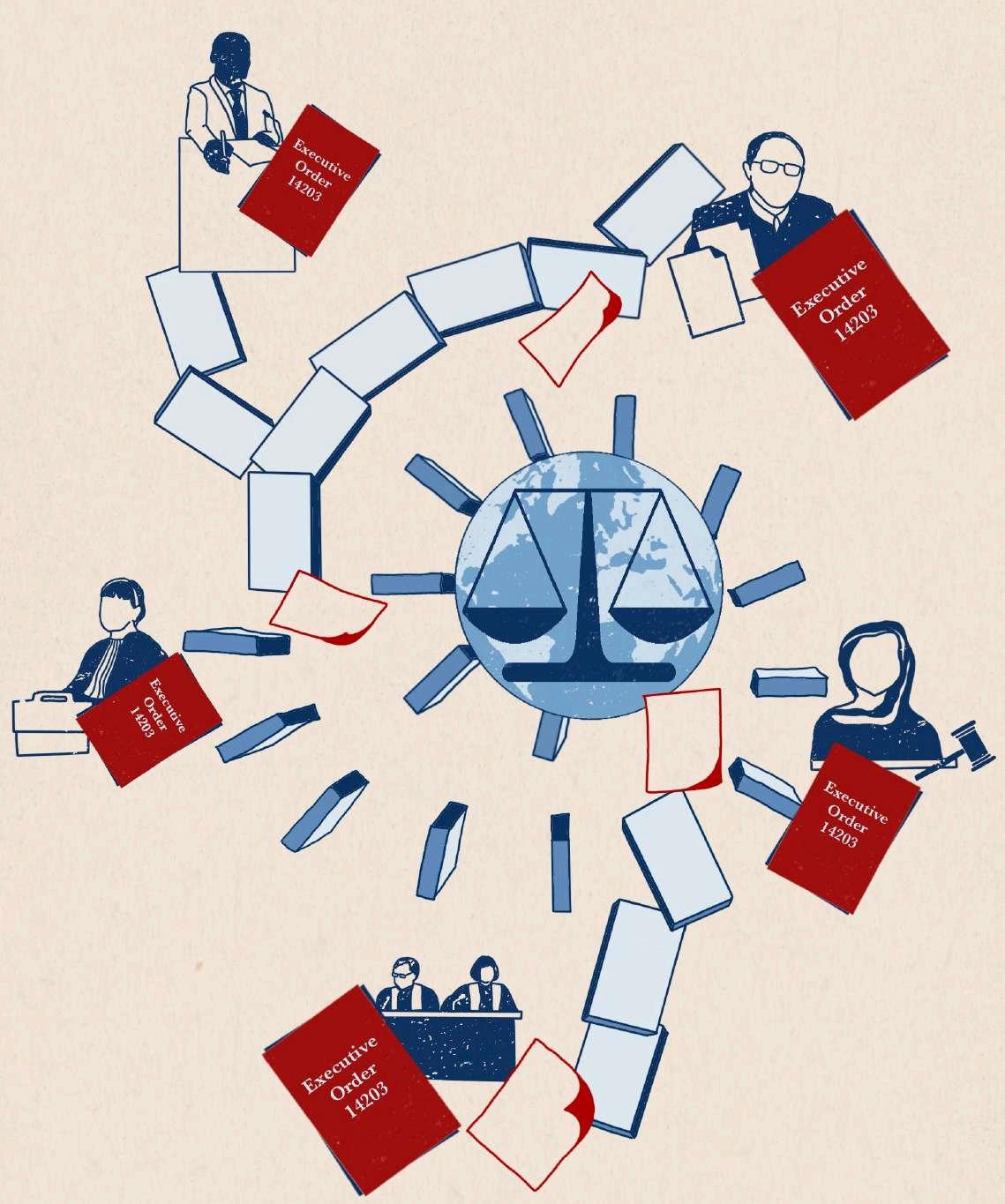
“The practice of sanctioning judges who are required to rule independently is notonlyaviolationofinternationallawinitself,butrunscountertothefundamental principleofruleoflawunderlyingjusticeatbothnationalandinternationallevels.ˮ
Alain Pellet, International Law Professor200
Besides the impact on the Court, its officials and staff, and designated individuals and organisations, the sanctions are having an impact on the broader international justice ecosystem. The sanctions affect civil society working in a range of areas in support of the Courtʼs mandate, including documenting international crimes; identifying and supporting victims and witnesses; collecting evidence, notably in areas investigators are unable to access; providing technical and contextual expertise; and conducting advocacy, both individuallyandcollectively.AsICCJudgeIbáñezexplains,civilsocietyhasbeen“oneofthe mostimportantactorssincethebeginningˮoftheglobalprojecttoestablishtheICCandhas continuedtosustainthesystem.IfCSOsarenowtargeted,shewarns,itbecomes“awayto weakenthesystemˮ
“[Thesesanctions]areanotherexampleoftheUSgovernment'sabuseofpower
Jamil Dakwar, Director of the Human Rights Program, American Civil Liberties Union (ACLU) andrepressiveactionagainstcivilsocietyandhumanrightsbodies.ˮ
ThesanctionshadanimmediateimpactontheworkofUSorganisations,andontheability of US nationals to continue working on justice and accountability and express their views safely Under the EO, US organisations, lawyers, prosecutors and donors face exposure to criminalliabilityforroutineactssuchasfilingbriefs,providingevidence,fundingactionsand projects,orcoordinatingadvocacywithdesignatedpersonsorforthebenefitofthePalestine and Afghanistan investigations. The definitions of the EO provisions on “servicesˮ and “materialsupportˮarebroadenoughtopotentiallycaptureawiderangeofservicesincluding legal representation, expert testimony, logistical support and financial transactions. This meansthat“anNGOʼscoremandate,aUSlawyerʼsprofessionalduty,oradonorʼsgrantcan become a federal crime.ˮ This has effects across all ICC investigations and cases, from VenezuelatoMyanmar. 201
US nationals interviewed for the report consistently mentioned the constant feeling of uncertainty,notknowinghoworiftheywouldbeabletocontinuetodotheirworksafelyand to engage with the Court and those unlawfully designated in the course of their work
202
As one put it: “The impact is already tangible Colleagues, researchers, and even victimsʼ advocates are recalibrating what engagement with the Court feels safe. While legal challenges are under way they are partial, slow-moving and uncertain, leaving many to operateinaspaceofprofoundambiguity.ˮ Thishasledindividualsaswellascivilsociety organisationstocarryoutconstantriskassessments,whichsometimeschangefromoneday tothenext,andregularlyseekcostlylegaladvice
AnimmediateimpactwasthelossofemploymentofallUSnationalsworkingwithdesignated organisations and individuals, including the four designated Palestinian organisations and UNSRFrancescaAlbanese.WesamAhmadisaPalestinianAmericanhumanrightsadvocate whowasbornintheUSandmovedtoPalestinein2006toworkwithAl-Haq Asmentioned above,withinafewdaysofthedesignationofAl-Haq,hehadtoresignduetofearofcriminal prosecution in the US: “As a US citizen, you are forced to take an immediate decision and resign. For me this was a place I have worked for two decades, where I found purpose, a placethatIcallhome.Itisdevastating.Thisrepresentsamicrocosmofthedenialoftheright to self-determinationˮ US nationals working with UNSR Francesca Albanese also had to immediately resign, including those working as researchers at European Universities, since they could not be guaranteed protection from prosecution. The Secretariat of the CICC had to let go of all its US staff due to the risks of civil and criminal penalties. An LRV in the Situation in Palestine reportedly had to step down after years of working alongside the designatedorganisations,promptinganothertosay:“Thisisaviolationofthebasicprinciple ofjusticeandrepresentationofvictimsofthemostseriouscrimesˮ 203 204
AsecondimpacthasbeenanimmediatehalttoallworkUSorganisationsandUSnationals hadbeendoingwithdesignatedindividualsandorganisations,includingonstrategiclitigation cases, legal representation, research and advocacy. US donors have immediately cut funding to designated organisations Several US-based networks and coalitions expelled themasmembers UScitizenswhohadprovidedtechnicalsupportfordecadeswereforced to disengage. The sanctions cast doubt on the ability to do everything from submitting evidence to the OTP, submitting an amicus curiae brief or a UN special procedure shadow report,toparticipatingintheannualAssemblyofStatesParties.Thechillingeffectevenled sometoremoveinformationfromtheirwebsitesandfromtheinternettoerasetheirlinkswith sanctionedentities DespitetheEOnotallowingretroactiveenforcementaction,sixoutof theeightdesignatedjudgesweredesignatedfordecisionstheyhadtakenyearspriortothe issuance of the EO, which has reinforced the sense of uncertainty. US nationals took themselves off group chats and completely stopped engaging with designated individuals. Even non-US organisations took steps to prevent their US staff from working with the designated organisations and individuals Adam Keith underlined “This is part of the harm done;peoplearebeingchilledoftheirfreespeechrightsˮ
“Both Georgetown and Columbia Universities stopped their research partnership with me,andIlostaccesstomyGeorgetownemail.SeveralUS-basedorganisationsworkingfor justice on Palestine have disengaged with me, including people who used to advise me. Therehavebeenattemptstostopthepublicationofmybookbecauseofthesanctions.ˮ208
FIDH, a federation of nearly 200 human rights member organisations, witnessed the impact of sanctions on its US member organisations including those active in litigation efforts on crimes committed in Afghanistan and Palestine. Those organisations had to stop all contact with the designated organisations, as well as documentation, research and litigation work: “Thisislimitingtheirfreedomofexpressionandaction,puttingastoptotheiractivitiesˮ209
Ultimately, the damage is to victims, as noted by Judge Hohler: “The sanctions against civil society organisations and human rights advocates impact victimsʼ access to the Court and thereforetojustice.TheyalsoimpactUSlawyersandorganisationsthathaveengagedwith the Court for years, making meaningful contributions.ˮ Palestinian organisations have noted the huge impact of this distancing by partners, donors, friends and colleagues: “I feel a deep,deeppaininmyheart,ˮexplainedShawanJabarin,asUSpartnersstoppedworkingor engagingwiththeirorganisation.
210 211
Civilsocietyhavestronglydenouncedthesanctions,describingthemasanall-outassaulton the Court, an attack an independent judicial institution, an attempt to intimidate the Court, an attempt to undermine the infrastructure of support for the most vulnerable communities and“anotherexampleoftheUSgovernment'sabuseofpowerandrepressive actionagainstcivilsocietyandhumanrightsbodies.ˮ Civilsocietyorganisationshavealso beenleadingstrategiclitigationeffortsatthenationallevel.Anumberoflawsuitshavebeen filedchallengingtheEOonbehalfofindividualAmericancitizens,notablylawprofessorsand human rights advocates, some successful, on the grounds it prevents them from providing legaladvice,analysisandevidencetotheICCProsecutor,violatingtheirrighttofreespeech undertheUSConstitution.
Atthesametime,theenvironmentoffearanduncertaintyhasbroadenedtheimpactofthe sanctions and the isolation of designated organisations and individuals The Coalition Secretariat contacted seven major US organisations and foundations specialising in human rights and justice requesting interviews for this report: five of them declined due to the perceived risks. There have been instances where US organisations have disinvited designated individuals from speaking on panels, including Judge Prost who felt
“very frustrated because it is part of my job to explain and speak about the Courtˮ. Others stoppedattendingmeetingsandeventswithdesignatedindividualsandorganisations,taking part in votes or discussing strategies when those organisations are present, and even left group chats with designated individuals. The fear and uncertainty created by the sanctions was reflected at the annual Assembly of States Parties in December 2025 where some US CSOs attended and spoke at meetings where designated entities were present; some attended and did not speak; some avoided such meetings; while others did not attend the Assemblyatall AdamKeithexplainedhow“somepeoplethoughttheywouldfacetheriskof enforcement penalties simply for being seen in the same room as sanctioned individuals or organisationsˮ. In the face of the “aggressiveness of this administration, people will change theirbehaviourevenwhenitviolatestheirownrights.ˮ218
“ForthoseofuswhohaveworkedalongsidetheCourt,thefearisnotabstract Itisabout whether the infrastructure of accountability can quietly be made unworkable, not by dismantling it outright, but by isolating it, stigmatising it and deterring those who sustain it,ˮ highlightsRebeccaA.Shoot,USlawyer,Co-Convener,WashingtonWorkingGroupfortheICC andImPactCoalitiononStrengtheningInternationalJudicialInstitution.219
Many commented on how the EO is part of a wider context of attacks by the Trump administrationonhumanrightsandcivilrights,inwhich“Theadministrationisdoublingdown on repression nationally and internationally.ˮ US nationals and organisations fear criminal investigations and penalties and other retaliatory measures, including being “put through an unjustifiedcriminalinvestigation:theyhaveseenayearofwhatthisadministrationthinksofthe lawˮ US nationals have shared that such investigations, in addition to costing tens of thousands of dollars in legal representation, can have career-ending consequences for those designatedandtheirfamilies.
“Thegreatestriskofsanctionsisnottothosewhohavealreadybeensanctioned, but to the hundreds of people who will not take the decisions they need to take because they are afraid. If judges are afraid to judge, prosecutors are afraid to prosecuteandlawyersareafraidtodefend,wearenolongerinastategovernedby theruleoflaw.Fearmeansthereisnojustice.ˮ
Nicolas Guillou, International Criminal Court Judge
Theannouncementofdesignationscreatedawaveoffearamongactorsworkingonjustice and accountability “The whole rationale of the sanctions was to silence us, stop us from doingourwork,terrifyusandterrifyothersˮ,underlinedIssamYounisofAlMezan.Non-US organisationssupportingtheCourthavealsohadtoembarkonlong,complexandcostlyrisk and vulnerability assessments, restructuring their work and their teams to continue
theirmissionswhilelimitingtheirvulnerabilitytosanctions.An“invisibleˮimpactwascreated, deterringinternationaljusticeactorsfrombeingvocalandpublicabouttheirwork:“Everyone iswonderingiftheywillsuddenlyfindthemselvesonalistovernight.“222
6.2.1. The intention to create an environment of fear across the Rome Statute System
“You can affect the system not only by designating institutions and forcing the institutiontogothroughhurdlesbutalsowhencivilsocietyandotheractorsareafraid. Whenfearbecomesafactor,thenthesystemisalsoatrisk.ˮ
Osvaldo Zavala Giler, the International Criminal CourtInternational Criminal Court Registrar
Sanctionsare designedto create, andhave to some extent created, anenvironment of fear particularly among those working on documenting, investigating or prosecuting crimes committed by US nationals and Israeli nations, who now fear retaliation At the ICC, the UN and within CSOs, people interviewed for this report have all witnessed it “The designation immediatelyraisedquestionswithinFIDH,asthesethreeorganisationsareourmembersand we work on the ICC, Palestine and Afghanistanˮ, shared Eléonore Morel. Deputy Prosecutor Niang said that US colleagues are anxious, which has an impact on the work environmentandtheworkitself.
223
225
Independent UN experts echoed this: “We are certainly conscious of sanctions, of the possibilityofsanctioningthatwillaffectourcapacitytodoourjobˮ,explainedChrisSidoti. Intervieweesraisedtheriskoffewerpeoplebeingwillingtotakeontherisksassociatedwith international justice work if such attacks are normalised. Victor Madrigal-Borloz said Independent Experts carry out their mandates on the understanding they are protected by immunities ButiftheUNConventiononPrivilegesandImmunitiesnowseemssimply“inkon paperˮ,hewonders,“onwhatbasiswillstatesaskpeopletoholdsuchmandates?Nobodyis compelled to take up a mandate for states at the risk of their personal lives, property, and those of their families. The disrespect of privileges and immunities established by law is a hugelyconcerningprecedentˮ
224
The environment of fear has also had a negative impact on victims and witnesses. Deputy ProsecutorKhanspokeofwhathappenswhenpeopleseediscussionaboutthesanctionson thenewsandfeartheCourtwillclose:
“It creates anxiety for victims who see us as their only hope It is something that we have to deal with day after day in the team; we have to deal with anxious victims on the phone,askingiftheyaresafe,iftheiridentityissafe,iftheCourt'stechnologyissecure.This hasanimpactonvictimsandonourwork.ˮ
6.2.2. Adapting
The new complex and hostile environment has forced some to divert from their missions to conduct time-consuming risk assessments, obtain costly legal advice and restructure their activities. They report having to engage with donors and service providers and look for strategies to prevent the prospect of future designations or to limit their impact. Organisationsreportthatsomedonorsarerequiringthemtocomplywithsanctionsinorder to maintain their funds, and fear that donors will be less inclined to provide funds to organisationsengagedinthiswork Federations,networksandcoalitionsfearmembersmay leave, believing they “cannot sustain the risksˮ of being part of a network with designated organisations. For others, risk management has had an impact on how they work: “We continueourworkbecausedefendinghumanrightsisnotoptionalforus,butsanctionsmake it significantly more complicated. We strictly comply with applicable sanctions regimes, yet their breadth and ambiguity generate a form of censorship: every initiative linked to designatedpersonsand/ororganisationsrequiresadditionalscrutinyandcaution Thereisa clearwilltosilenceus;andtosomeextent,itworks,becauseweareforcedtodevotemore timetolegalriskandlesstovictims.ˮ
227
Ultimately, non-US CSOs interviewed for the purposes of this report have managed to continue their work on justice and accountability, including with designated organisations, but aware of the risks: “International human rights organisations have a key role to play in supporting local organisations and defenders on the ground. The recent application of the sanctions system has, however, pushed many of these organisations to also consider how they shield themselves against risk and ensure their own continuity. This is unprecedented andworrying,ˮnotedRasmusAleniusBoserup,EuroMedsRightsExecutiveDirector.228
Non-US CSOs emphasised that the measures they have adopted to mitigate risks are not hindering the substance of their work, activities and partnerships. “It has not impacted me reachingouttoandworkingwiththesanctionedNGOs,actors,andSpecialRapporteurs,and I will never let that happen. In the US we know that the sanctions have had a silencing and paralysing effect, and it is up to the rest of the world to stand up and resistˮ, underlined Agnès Callamard Similar comments were made by FIDH, Euromed Rights, No Peace WithoutJusticeandtheECCHR.“NGOsshouldresistthesemeasuresandtakeaprincipled viewasmuchastheycan.PrivatedonorsandNGOsshouldalsoremainprincipledvisàvis the Palestinian organisations, continue to support them and not shy away: such pushbacks need to be met with resistanceˮ, Andreas Schüller stated Palestinian organisations have also all underlined the importance for civil society organisations across the world to "show their support, it is a matter of principle" and not to allow Palestinian organisations to be sacrificed or perceived as an exception, they are only the “starting point.ˮ Raji Sorani of PCHRfurtherunderlined“ThisisnotjustaboutPalestine;itisahumanitytestthatwecannot fail.ˮ Al-Haq Director Shawan Jabarin concurred that they are “just an example, and tomorrowsanctionswillcomeagainstothersˮ
232 233
TheICCʼsleadershiphasalsohadtodevotean“immenseamountoftimeˮtodealingwiththe sanctionsandtheriskofinstitutionaldesignation,whichhasanimpactonthetimeavailable for other priorities Despite this, the Courtʼs regular work continues: tracking suspects, holding confirmation of charges hearings, coordinating arrests and operations; even reparations continue. Many of those interviewed praised the extraordinary work done by the Registrar and his team to secure solutions to enable the work to continue and limit as muchaspossibletheimpactofsanctionsonICCofficialsdesignated.Thebiggestimpactis on the additional resources that need to be put into the IT, human resources and finance departments, among others, to build resilience and mitigating measures Judge AlapiniGansousimilarlynoted:
“Wearewastingtimedealingwiththeseissueswhenourdailyworkshouldbefocused onaddressingtheproblemsofvictims,detainees,andlegalproceedings.ˮ
The Trust Fund for Victims underlined that the efforts undertaken by states parties on sanctions has reduced their space to engage with the TFV in relation to voluntary contributionsandresourcemobilisation.234
“Whatissodangerousaboutthecurrentsituationisnottheimpactonindividuals whoweredesignated,butwhatwedonʼtsee.Thatistheinvisiblepart:allofthepeople, NGOs,activistsandacademicswhoarenotdoingthingsbecausetheyareafraidthat theymightbeharmedwithsanctions.Thisistheworstpartofit.ˮ
Professor William Schabas235
Manyindividualsinterviewedforthisreportexpressedconcernattheinvisibleimpactofthe sanctions: the risk that people and organisations that have not been designated would take decisions,ornottakethem,basedonfear.TheseconcernsrangedfromNGOsnotproviding evidence or amicus curiae briefs to senior experts not applying to be a judge or UN independent expert, potential partners deciding not to engage, or academics deciding to followadifferentspecialisation,“anintangibleandinvisiblebutveryimportantharmˮ This, in essence, is how a sanctions regime works, targeting few but impacting many. If it escalates further and more people are designated, “the chances of being sanctioned becomehigher,therewillbefewerpeoplewillingtobeappointed.ˮ
238
Overall, the sanctions are limiting the ability of local and international NGOs to work on advocacyandinternationalcriminaljusticeonthePalestineandAfghanistansituations.This is having a tangible, negative impact on their mandates, missions, and their support of victims, with the risk of a knock-on effect on victimsʼ rights, international justice and civic spaceasawhole,despiteacollectivedeterminationtocontinuethework.
233
“It
isaproblemcausedbyastateandshouldberesolvedbystates.ˮ
Francesca Albanese, United Nations Special Rapporteur on the situation of human rights in the oPt
“Iftheinternationalsystem,theorganisationsandthememberstates,acceptthis, itisanothernailinthecoffinofinternationallawandtheinternationalorderˮ
Chris Sidoti, Member of the United Nations Commission of Inquiry on Palestine and Israel.
States across the globe, and the European Union, widely denounced the sanctions against theCourtanditsofficials Mexicoledaninitiativetoissueastatementby59countriesin supportoftheindependence,impartialityandintegrityoftheICC. TheSenegaleseForeign Minister publicly condemned sanctions against Deputy Prosecutor Niang and called on the UStowithdrawthem. FrenchPresidentEmmanuelMacronsentalettertoPresidentTrump asking him to lift the sanctions against several European nationals, including Judge Guillou, and the French government publicly supports the adoption of the EU blocking statute ThePresidentofSloveniamadeapublicstatementstronglycondemningsanctions imposed by the US administration against ICC judges including Judge Hohler and issued anopenlettercallingfortheEuropeanUnionandstatestodomore. TheSlovenian and Belgian ForeignMinistershavepubliclycalledforactivationoftheEUblockingstatute.
Yet the sanctions implemented under the same EO against Palestinian human rights organisations have been met with a worrying silence. The Belgian Foreign Affairs Minister, Maxime Prévot, and the EU Special Representative on Human Rights, Kajsa Ollongren, were amongthefewEuropeanstakeholderswhopubliclyandclearlydenouncedthesesanctions
and called for their withdrawal. By contrast, UN Special Rapporteurs have remained consistentintheirdenunciationofsanctionsfromIsrael andtheUS. Moreover,whilethe ICC itself systematically issues statements denouncing the sanctions against Court officials asaflagrantattackagainsttheindependenceofjusticeandtheruleoflaw, ithasmadeno publicstatementstodenouncethesanctionsagainstthreeCSOsunderthesameEOfortheir cooperation with the Court. Similarly, the Bureau of the Assembly of States Parties has not released a public statement in support of the designated organisations. The impact of this silenceofsupposedallieshasbeenstronglyfeltbytheseorganisations
This silence on the part of ICC state parties and the EU is very different to their reaction to Israelʼs October 2021 designation of Al-Haq, Addameer and four other Palestinian organisationsas“terroristorganisationsˮ.Atthattime,therewereclearpublicstatementsand denunciation of the sanctions by individual states and the EU. After conducting an investigationintoIsrael'sallegations,nineEuropeangovernments,includingGermany,France andtheNetherlands,publiclyrejectedIsraelʼsactionanddeclaredtheywouldcontinuetheir cooperation and strong support of these organisations. On 19 August 2022, the day the Israeli army raided Al-Haq and Addameerʼs offices, the EUʼs Foreign Affairs and Security PolicySpokespersonpublishedastatementdenouncingtheraids,explainingthat“allegations of misuse of EU funds by these organisations have not been substantiatedˮ and reiterating theirsupporttotheorganisations ShawanJabarinexplainstheimportanceofsuchpublic displays of support: “The head of the EU mission contacted all EU representatives and gatheredaroundAl-Haqʼsmeetingtable.Wehadapressconference,theygavetheirreaction to the media using strong words, saying they will continue to stand with us. This helped to protect civil society in Palestine; not just one organisation or the six [designated] organisations,ithelpedgenerallyˮ
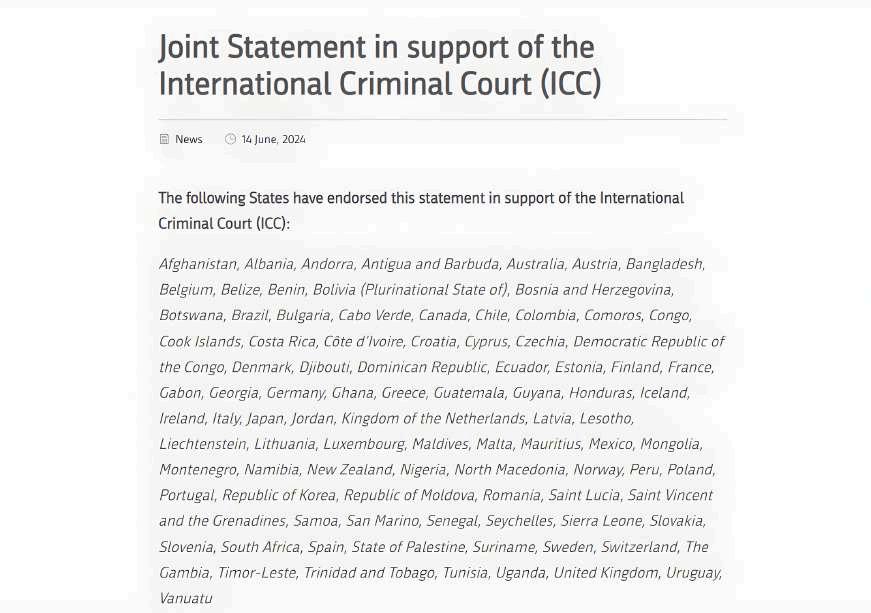
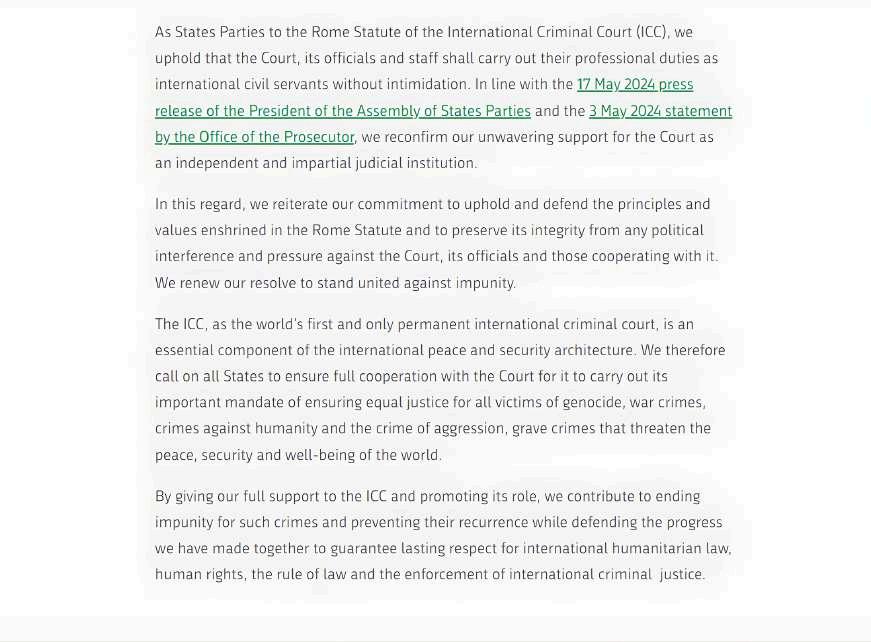
Jointstatementissuedby94StatesPartiestotheRomeStatuteoftheICC, 14June2024.
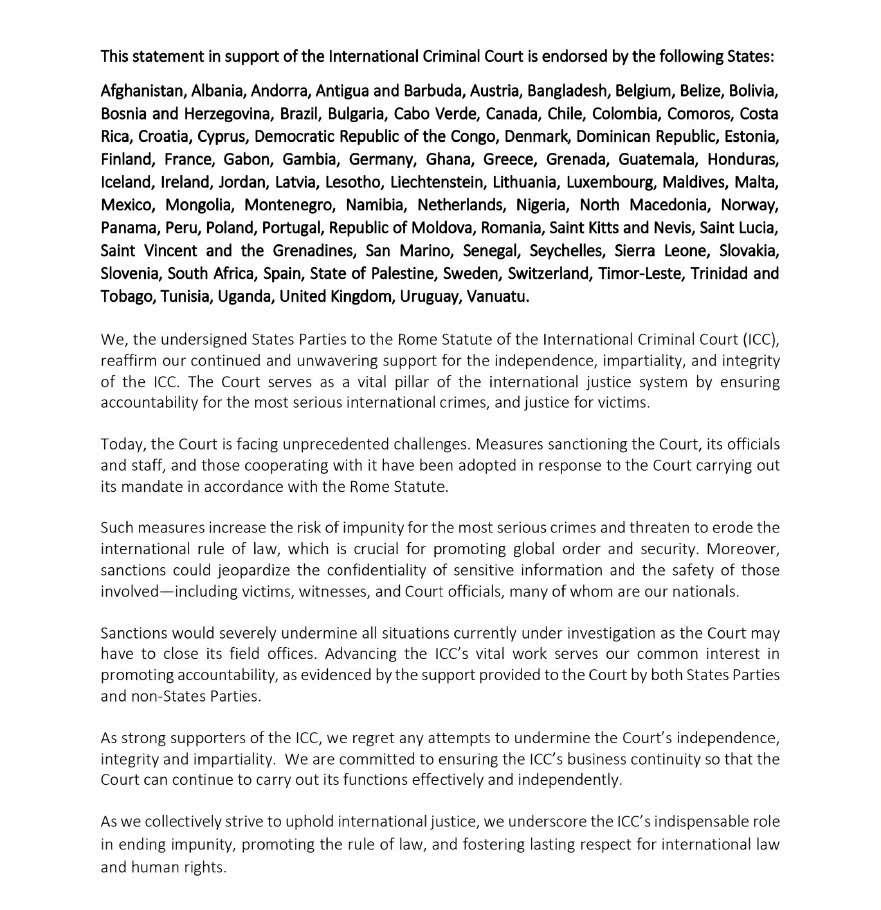
Jointstatementissuedby79StatesPartiestotheRomeStatuteoftheICC,7February2025.

StatementissuedbySouthAfrica,11June2025.
Jointstatementissuedby59StatesPartiestothe RomeStatuteoftheICC,11November2025.
JointLetterfromPrimeMinisterandPresidentoftheRepublicofSloveniain supportofInternationalCriminalCourtandJudgeBetiHohler,13March2026
Despite the statements issued following the recent US designations of ICC judges, prosecutors and others, many designated individuals and organisations interviewed for this reportsharedtheirfrustrationatICCstatespartiesʼlimitedresponse,inparticular,thelackof coordinatedandsystemiceffortstoidentifyandputinplacesolutionsthatwouldensurethat designatedindividualsandorganisationsareabletocontinuetheirwork Forinstance,many raised concerns about the lack of coordination among different ministries, and in particular, the lack of involvement of Treasury and Finance ministries that are considered essential to findingsolutionsforbankingandfinancialissues.255
ICCProsecutorKarimKhanputtheimpactsofinactionthisway:“ThisisabigtestfortheEU, they need to act as well as talk If domestic jurisdictions are muzzled, it makes national institutions such as banks more likely to respond to the person making the threats.ˮ In a nutshell, as Agnès Callamard noted, “whatever they are doing is not enough.ˮ This weighsheavilyonindividualsattheICC:“Thisissomethingwedidnotexpectasmembersof theCourt,wethought[states]wouldbetheretoprotectthesystemˮ,notedJudgeIbáñez.All those interviewed for this report called for states to take concrete measures to support the RomeStatutesystemandthoseunlawfullytargeted NiccolòFiga-Talamancaunderlinedthat “The silence of European states is not a separate failure; it is structural complicity allowing the entire sanctions regime. European states, or the European Commission, could just implement the EU blocking statute, or adopt legislation, regulatory directives, or public bankingalternatives.Instead,theychoosetosubcontractsovereignty.ˮ256
The designated Palestinian human rights organisations have also been clear about their expectations of states: to avoid a betrayal of justice, states must stand behind the justice system, meaning the Court, victims, CSOs and anyone supporting the Court. PCHR directorRajiSouranidescribedthisasadutyforICCstatesparties“todefendthosewhoare trying to apply the justice system, the rule of law and accountability on behalf of victimsˮ Shawan Jabarin of Al-Haq highlighted what is at stake: “If this system fails to protect the Courtandthosesupportingit,internationallawandtheruleoflawwillfail.Whathappenedto theprosecutorsandjudgesisunacceptable,weneedtostandforaccountabilityandtoend impunity.ˮAccordingtoIssamYounisofElMezan,thismeansaction,notjustsolidarity:“Itis timetotakeconcreteactionsandtocontinueandmaximizetheengagementwiththeCourt andthethreedesignatedorganisations,otherwiseitwillbeabetrayalofjusticeˮ 257
Onestepthatstatescouldtake,buthavenotyettakenistouseso-calledblockingstatutes atboththenationalandregionallevels.TheEUBlockingStatute(CouncilRegulation(EC)No 2271/96) could serve as a key instrument to mitigate the extraterritorial application of these sanctionswithintheEU ItaimstoprotectEUoperatorsfromtheextraterritorialapplicationof third-country laws by prohibiting compliance by EU operators with the specified laws For this framework to apply to US sanctions against the ICC, the European Commission should addEO14203totheannexoftheRegulationbymeansofadelegatedact.Thisactmaybe opposedbyeithertheEuropeanParliamentortheCounciloftheEUwithinaspecificperiod. Once added, EU-based companies, as well as EU nationals and residents, are prohibited fromcomplyingwiththelistedsanctionsunlessauthorisedtodoso
ActivationoftheblockingstatutewouldprovideclearguidancetoEUbusinessesandbanks; in the absence of such guidance, they “are left in limbo not knowing what to do.ˮ If the blocking statute were to be activated, in cases where the US Treasury fines a person or company for sanctions violation, the Statute would entitle them to recover any damages, including legal fees This measure would therefore provide guidance to service providers operating in the EU against the extraterritorial implementation of the sanctions and strengthentheirprotectionwhenengagingwithdesignatedpersons.
In February 2026, a year after the first sanctions designation, a European Commission spokesperson stated that the Commission was still considering whether to adopt the EU BlockingStatute(CouncilRegulation(EC)No2271/96) inrelationtosanctionsagainstthe Court. The spokesperson added that “diplomatic outreach and the pursuit of targeted solutions remain the preferred course of actionˮ, despite the Commissionʼs assertion that “theextraterritorialapplicationofsanctionsisillegalandincompatiblewithinternationallawˮ. The European Parliament adopted several resolutions calling for the activation of the EU BlockingStatutebytheEUCommission, including“toprotectEuropeanoperatorsfromthe effectsofUSsanctionsandhelpensurethattheICCʼsworkcancontinueunaffected.ˮIthas alsocalledonEUmemberstatesto“takeanyotherdiplomaticandpracticalstepsnecessary to defend the ICC and those cooperating with it.ˮ Members of the European Parliament also regularly asked Parliamentary questions to the EU Commission, including raising questions about the integrity of EU law and its ability to protect its citizens from extraterritorial sanctions and the failure to activate the EU blocking statute and protect the ICCandvictims.
In March 2026, the President and Prime Minister of the Republic of Slovenia sent a letter to the EU heads of state and governments denouncing the fact that “too often, concern for economic consequences has taken precedence over a principled defence of judicial
independenceandinternationaljusticeˮwhileinternationallawisbeingviolatedandchildren killed in armed conflicts, and calling for the EU to shoulder its responsibility: “They deserve more than cautious language. They deserve a Europe that acts and decisively protects the Courttofulfilitsmandate.ˮ264
YettheCommissionremainsunreactive,despitetheAgreementbetweentheEUandtheICC of 2006, in which the EU committed itself to cooperation and assistance (Article 4) and to provide such services as may be required (Article 14), upon the request of the Court and subjecttoavailability.265
Beyondthepracticalconsequences,activatingtheblockingstatutewould“sendanimportant political message of support to those targeted by the sanctionsˮ. As underlined by EuroMedsRightsʼRasmusAleniusBoserup,itistimefortheEuropeanUnion“totranslateits ideals into concrete actions to defend human rights defenders.ˮ UN Special Rapporteur FrancescaAlbanesequestionedtheinertiaoftheEUinthisregard:“Whatisthepurposeof theinstitutionifitcannotprotectitsowncitizens?ˮ 266
The impacts of the failure of states to take clear and coordinated steps to enable the Court and those cooperating with it to remain operational have been detailed in this report. Currently, the ability of designated organisations to operate, and the access of designated individuals to banking and other services, depends on the willingness of a few actors Any solutions are therefore precarious and not systemic This makes activating the blocking statute all the more important, as ICC Registrar Osvaldo Zavala Giler explains: “I am very grateful for political support from states, including in terms of allowing us to find banking solutions,butwhathappenswhenpoliticalsupportisnotenough?Thisiswhyweadvocate fortheEUblockingstatutetobeadopted:weneedsolutionsthataremorepermanent.ˮ
Finally, the effectiveness of statesʼ strategy of appeasement with the US has been questioned.JudgeHohlerunderlinedtheneedformoreactioninthefaceoftheescalationof sanctionsoverthepastyear:“Statesandinternationalorganisations,includingtheEU,must stand up for the rule of law and independent judiciary. They should send a clear message thattheywillnotaccommodatepressureonjudicialindependence,regardlessofitssourceˮ
Overall,theresponsesofstatespartieshavebeenad-hocandvaried,leavingindividualsand organisations better or worse off based on the engagement of their government. There has been no systemic approach aimed at shielding and supporting all those designated for sanctions, including CSOs. All those interviewed for this report agreed that this needs to change, that “the system should respond united,ˮ and that beyond statements, states should provide concrete solutions. Judge Guillou posed the following question: “If, during discussions between Russia and the US, Russia tells the US that it will not pursue a peace agreement in Ukraine unless all prosecutions and arrest warrants by the ICC are dropped, what will the European Union do if the US threatens to sanction the judges in charge of the situationinUkraine?ˮ
“When two other Special Rapporteurs were subjected to violations of their immunitiesinMalaysiaandRomania,onbothofthoseoccasionsareferralwasmade totheICJ,theUNSGappointedaspecialrepresentativetoliaisewiththegovernments thathadviolatedtheirimmunitiesandinbothsituationstheissuewasresolved.None oftheseactionshasbeentakenforFrancescaAlbaneseˮ
Chris Sidoti, Member of the United Nations Commission of Inquiry on Palestine and Israel
The unprecedented designation of a UN independent expert for words and writings done in her capacity as a UN-mandate holder created a shockwave in the human rights world. In response,UNindependentexperts andtheSpecialProceduresʼCoordinationCommittee issued strong and clear statements in support of UNSR Francesca Albanese and expressed their solidarity They qualified the measures as a direct attack on the integrity of the UN humanrightssystemandaviolationofinternationallaw,includingthe1946Conventiononthe Privileges and Immunities of the United Nations. These immunities are recognized as a “fundamental norm of international law and a norm of jus cogensˮ as Professor Alain Pellet explained, whichshouldprotectherfromlegalprocessofeverykind,whetherimmigration restrictions and currency or exchange restrictions, protections that have been unlawfully violated by the sanctions imposed by the US administration. The Special Procedures CoordinationCommitteecharacterisedthesanctionsasa“continuedassaultofthecurrentUS administration on the entire UN system and its core values of human rights, justice, accountabilityandtheruleoflaw.ˮ
TheresponseofboththeUNGeneralAssemblyandtheUNSecretaryGeneralhave,however, been muted. This is in stark contrast with two previous occasions where coercive measures wereusedagainstUNindependentexperts.In1987,DumitruMazilu,UNSpecialRapporteurof the Sub-Commission on the Prevention of Discrimination and Protection of Minorities and a Romaniannational,allegedthattheRomanianauthoritieswererefusinghimapermittotravel forthepurposesofhismandate.TheUNEconomicandSocialCouncil(ECOSOC)requested an Advisory Opinion from the ICJ, which found that as a Special Rapporteur, Mazilu enjoyed the privileges and immunities of a UN expert on mission. The ICJ further found that these privilegesandimmunitiescouldbeinvokedagainstMaziluʼsstateofnationality,whichhadnot enteredareservationtopreventthatoccurrence Similarly,inthe1990ʼs,thethen-UNSpecial Rapporteur on the independence of Judges and Lawyers, Param Cumaraswamy, faced four trialsinMalaysiaforaninterviewhegaveinhiscapacityasaUNindependentexpert. The UN Legal Adviser and UN Secretary-General Kofi Annan formally notified Malaysia that Cumaraswamy enjoyed jurisdictional immunity; the Secretary-General published several 272 273 274
public notes on the matter and appointed a special envoy to reach an agreement with the Malaysiangovernment;andECOSOCagainrequestedanadvisoryopinionfromtheICJwhen Malaysian authorities failed to act. The ICJ found that, as a UN Special Rapporteur, Cumaraswamywasentitledtoimmunityfromlegalprocessforhiswords 275
The response to sanctions imposed by the US administration against UNSR Francesca Albanesehasbeenverydifferent.InJuly2025,theUNLegalCounselsentalettertotheUS Mission to the UN on behalf of the UN Secretary-General, asserting UNSR Francesca Albaneseʼsprivilegesandimmunities Eightmonthslater,theUNLegalCounselhasstillnot challengedtheEOinaUScourt,eventhoughtheUShasbeenapartytotheConventionon PrivilegesandImmunitiesoftheUNsince1970,meaningitformspartofthe“SupremeLaw oftheLandˮpursuanttotheUSConstitution.TheUNGeneralAssemblyhasnotpassedany resolutions denouncing the sanctions or requested an ICJ Advisory Opinion. A former UN IndependentExpertsaid,“Thisisworrisome.TheUNisonlyasstrongasthestatesenableit tobe Statesshouldtakecollectiveactionstoprotectapersonthatwasgivenamandateby the community of nations.ˮ UN Secretary-General António Guterres has not himself said anything publicly about the sanctions. The general silence and lack of an ICJ referral have observers worried: “This is appalling… [it] is a direct attack on the work and freedom of expression of a person who has been mandated by the UN, and who has not exceeded the freedom of expression of her mandateˮ Others ponder where the UNʼs strength, commitment and resilience are, noting it is the UN that should be taking the lead, taking matters to a US court, doing their part to end the sanctions, and appointing a Special RepresentativetoliaisedirectlywiththeUSatthehighestlevels.
The lack of a UN response raises serious concerns for UN-mandate holders regarding the ability and willingness of the UN system to protect them during their mandate: “This should beontheiragendaallthetime,wearedoingthispro-bonobutthereisanunderstandingthat wewouldbeprotectedifsomethinghappens.ˮ281
TheinactionofUNmemberstatesissimilarlytroubling,sinceitisstatesthatdecidetogive UNSpecialProcedurestheirmandatesandhavethepowertoreferquestionstotheICJ,one former UN mandate holder said States seem to be turning a blind eye to the broader context,inwhichwhatisbeingquestionedistheinternationalorderandinternationalruleof lawasweknowthem,headded.
AccordingtoChrisSidoti,theinertiaoftheUNsystemandofUNmemberstatesrepresentsa failure of duty that abandons UN mandate holders and tolerates the US attacks, thereby endorsingtheviolationofUNprivilegesandimmunities:“Thisgreatlyimpactsthefunctioning oftheUNandhasachillingeffectontheUNandonindividuals,inparticularpeopleengaged ininvestigativework.ˮ
“Weareafraidforoursafety,weareinthefieldeverydayriskingourlives.Wecollect information We are afraid of being targeted by the occupation As researchers we are like journalistsandover250journalistshavebeenkilledfortheirwork Butwewillcontinue,we willbringjusticetovictims.ˮ
PCHR field researcher in Gaza
“ThearrestwarrantsbyRussiaareterribleattacksontheindependenceofthejudiciary and in national jurisdictions you see horrible attacks against judges, it is part of the bigger picture It cannot be allowed to continue; it is a frontal attack These are difficult times for theruleoflawandlegalbasedorder,butthisiswhenwehavetofightthehardest.ˮ
Kimberly Prost, ICC Judge
Everyone interviewed for this report underscored that now is the moment for clear, coordinated and principled action in support of international justice: states, institutions and otherswiththepowertoactivateprotectivemeasuresmustdemonstratethesameresilience asthosetargetedbysanctions.
“TheCourtfollowstheevidenceandthatshouldbetheonlyconsideration.Historywill judgeallofusifwelookawayfromtoughcases Stoppinganinvestigationoronlylookingat lowerrankingindividualsinordertoavoidsanctionswouldbetheendoftheCourt:infact,it should be the end, because then you are an instrument using the sword of justice solely againsttheenemiesofthepowerful.ˮ
Karim Khan, Prosecutor of the ICC
Thecurrentattacksontheinternationaljusticeecosystemarenotthefirstbutareamongthe most serious the ICC and those associated with its work have faced to date in their overall impact.Thatthecurrentmeasureshavebeenabletohavesuchfar-reachingconsequences is due, in part, to certain features of the global finance and service sectors which, as this report has demonstrated, mean that an executive order issued by a US President can affect the lives and ability to function of individuals and entities across the globe. Those with the responsibility to ensure that the Court and other actors seeking to ensure justice and accountabilityforthemostseriouscrimesareabletocontinuetheirworkneedtotakethese factors into account. At the same time, they also need to live up to their pre-existing responsibilitieswithintheRomeStatutesystem:
“ThemostvaluablewayforstatepartiestosupporttheICCistocontinuetocooperate withit,asrequiredundertheRomeStatute.Tosimplycarryoncooperatingwithus,toenable ustoinvestigateandbringpeoplebeforetheCourtsotheycanbetried.
Nazhat Shameem Khan, ICC Deputy Prosecutor
The actual and potential impacts of the sanctions described in this report can only be counteredifstates,institutionsandgovernmentsmakeastrong,coordinated,andprincipled response to such attacks. This, a Palestinian NGO leader said, means they must find collective and tangible solutions for all those that are targeted unlawfully, “including the judges,theprosecutorsandtheorganisations,becauseanattackonanyofthemisanattack on the Court they createdˮ. They have yet to do this. As many of those interviewed warned,thiswillnotendwiththeCourt,itwillexpandtoallthosewhostandbehinditorwho stand against the interests of powerful states, unless there is a clear and collective pushback.Asoneputit,thesystemmustuniteandrespondwithoutfear,asthisis“aredline thatshouldnotbecrossedˮ. 283 284
The recommendations that follow set out steps that are practical, doable and in many instances,arealreadypartoftheresponsibilitiesoftherelevantentities

States,includingblocssuchastheEuropeanUnion(EU)andAfricanUnion(AU),should:
PubliclyandfirmlydenouncetheunlawfulsanctionsagainsttheInternationalCriminal Court (ICC), its staff and officials, and organisations and individuals supporting its work, as well as the four designated Palestinian organisations and the UN Special RapporteurFrancescaAlbanese.
Continue to engage bilaterally with the United States Administration to call for the revocationofexistingsanctionsandtopreventfurtherdesignationstargetingtheICC, itspersonnel,theUN,civilsocietypartnersorotherscooperatingwiththeCourt.
Publicly and clearly oppose any initiatives aimed at weakening the Court, including attemptstoamendtheRomeStatutetolimititsjurisdictionorindependenceandattempts toinfluenceprosecutorialpriorities,includingeffortstosidelinespecificsituations,such asAfghanistanorPalestine.
Explore all possible diplomatic and legal avenues to revoke the sanctions, including through diplomatic protection and a referral to the International Court of Justice, and supportanylegalchallengeraisedbydesignatednationals.
Immediately adopt and implement national and regional blocking legislation to strengthen sovereignty and the security of residents and nationals, and ensure such legislation protect individuals, judicial bodies and organisations from the extra-territorial impactofthesanctions.InthecaseoftheEuropeanUnion:
MemberStatesoftheEuropeanUnionshouldusetheirpositionwithintheCouncil of the EU to call upon the European Commission to activate and ensure the effectiveimplementationoftheEUBlockingStatute.
The European Commission should immediately activate the European Union's BlockingStatute(CouncilRegulation(EC)No2271/96), in order to send a strong messageofsupporttothosedesignatedandtoclarifytoEUserviceprovidersand financialinstitutionsthatsuchsanctionsshouldnotbeappliedextra-territorially
Provide legal certainty and protection to service providers by taking a clear legal position on the non-extraterritorial application of sanctions imposed by the US administrationinoperationsthatdonotincludeaUSnexusandmakethislegalposition publiclyavailabletoserviceprovidersthroughlettersorwrittenstatements.
Engageproactivelywithbanks,financialinstitutions,ITcompaniesandotherservice providers to provide clarification on how they can, in compliance with European law, prevent the extra-territorial implementation of these coercive measures, without fear of repercussionandpenaltiesfromtheUS Intheseengagements,statesandtheEUshould reaffirm the unlawfulness of the sanctions, clarify that they should not be enforced extra-territorially, reject over-compliance or de-risking, and call on providers to stop automaticorexternalisedcompliancemechanisms.
Ensure designated individuals and institutions are not excluded from accessing essentialservicesfortheirmandatesandprivateuse
Immediatelyadoptnationalandregionallegislationprotectingtherighttoabankaccount tocitizens,residentsandnon-profitorganisationsinatimelyandeffectiveway.Atthe EU-level, ensure the current Payment Accounts Directive extends the right to a bank account and access to related payments services to legal persons with a non-profit purpose.
Buildandinvestineconomicsovereigntyandfinancialresiliencetoreducestructural dependencyonUS-controlledfinancialinfrastructure,includingby:
Developingandreinforcingpaymentsystems which function independently from USpaymentsystemsandcompaniesandensurethesesystemsallowforonlineand instorepayment,internationalpaymentsandtheissuanceofbothdebitandcredit cards. Initiatives such as the European Payments Initiative and the electronic euro shouldbesupportedandprioritised;
Developing and operationalising practical alternatives to the international USdollar-based transaction network, enabling international payments without US nexus.
Ensure through laws and policies the prevention of structural dependency on a third countryincriticalfinancialanddigitalservices, by using the model of the competition policyandanti-trustlawsintheEUpreventingabuseofdominantpositions.
Support the development of and invest in non-US tech and IT services to limit structural reliance on US technology and ensure data protection. A particular focus shouldbeputon:
ThedevelopmentofCloudinfrastructure,Cyber-security,securecommunication systemsandArtificialIntelligencetoclosethetechnologicalgap,
The development of actors which find collective solutions and can provide completeITservices.
Ensurethatallrelevantministries,includingforeignaffairs,justice,finance,treasury,and digitalaffairs,coordinate,includingattheEUlevelinrelevantworkinggroups,todevelop whole-of-governmentsolutions.
Strengthen cooperation and exchange of information and best practices between statesonhowtoprotectdesignatedindividualsandorganisationsmoreeffectively.
ReaffirmcommitmenttotheRomeStatuteoftheInternationalCriminalCourt,including by:
Respecting international obligations, including the execution of all arrest warrants and surrender of suspects, and the freezing and seizing of assets of individualspotentiallyliableforreparationsforthebenefitofvictims;
AvoidinganymessagedelegitimisingtheCourt,itsmandateandjurisdiction, includingstatementsofselectivenon-cooperation;
Continuing to cooperate with the Court on investigations, the search and surrenderofsuspectsandsigningcooperationagreementswiththeCourt;
Ratifying the Agreement on the Privileges and Immunities of the International CriminalCourt;
Providing full and timely financial contributions to the Courtʼs annual budget, advocating for a budget which reflects the needs of the Court, and maintain and increase contributions to the TFV as a concrete measure signalling support to victims;and
Ensuringasufficientlyfundedandflexiblebudgetlinetoaddressthreatsagainst theCourt,includinglegalchallengesofindividualandinstitutionaldesignations
Inordertopreventsanctionsfrominfluencingjudicialorprosecutorialdecisions:
PresentandelectcandidatesattheICCforjudicialandprosecutorialpositionswho demonstrate strong moral character, independence, and resilience to coercive measures;
Rejectanypoliticalpressureaimedatinfluencingprosecutorialpriorities;
Develop concrete measures at the national level to uphold the rule of law by safeguardingtheabilityofjudgestotakedecisionswithoutrepercussions.
Find concrete measures to mitigate the loss in funding to civil society organisations thathavelostfunds,orareatriskoflosingfundsduetosanctionsimposedbytheUS administration, to ensure they can continue to operate and to protect and support institutionspromotingtheruleoflawinAfghanistan,Palestineandelsewhere.
Demonstrateaclearandunifiedmessageofunwaveringsupporttoandprotectionofthe InternationalCriminalCourtandthosecooperatingwithit.
Immediately and continuously publicly acknowledge and condemn in the strongest terms possible the unlawful sanctions against the UN Special Rapporteur Francesca AlbaneseandcallontheUStoimmediatelyrevokeEO14203.
CallontheUStorespecttheirinternationalobligations,includingundertheConvention on the Privileges and Immunities of the United Nations of 1946 and the Agreement regardingtheHeadquartersoftheUnitedNationsof1947.
Mandate the Office of Legal Affairs to challenge the sanctions against Francesca AlbaneseinaUScourtimmediately,giventheblatantviolationofherimmunities
AppointaSpecialEnvoyoftheUNSecretary-GeneraltoengagewiththeUnitedStates at the highest level, based on lessons learned from previous violations of immunities of SpecialRapporteursbyRomaniaandMalaysia.
EnsureaccesstotheUnitedNationsHeadquarterstoallUNandICCstaffandofficials aswellasaccreditedcivilsocietyorganisations,includingthosedesignated
DesignateaseniorUNofficialtomonitorandreportannuallyonunlawfulmeasuresandto publish a UN annual report on unlawful measures taken against the UN,its staff and independent experts highlighting violations and those responsible and including recommendationsfortheUNGAandUNSC
TheUnitedNations(UN)GeneralAssemblyshould:
Immediately adopt a resolution condemning the unlawful sanctions, demanding their revocation and reminding states of their responsibility to ensure that sanctions are not applied extra-territorially and that all individuals and organisations designated for their workonjusticeareprotectedandshouldcontinuetohaveaccesstoallservices
Immediately request an Advisory Opinion to the International Court of Justice on the "US obligations in relation to the immunities of UN mandate holders, their access to the UNheadquartersandinrelationtothesanctionsagainsttheICCandthosecooperating withit."
Ensure that all UN staff, independent experts, and ECOSOC accredited NGOs can access the UN Headquarters safely and without restrictions as required under the Headquarters agreementandreportinpersontorelevantsubsidiaryorgansoftheUN General Assembly, including in particular the Third (Human Rights) and Sixth (Legal) Committees. Where this is not possible, decide to hold relevant meetings of subsidiary organsattheUNOfficeinGeneva.
Continueandrenewtheirsupporttothetargetedentitiesandtheirmandatesincluding theUNSpecialRapporteuronthesituationofhumanrightsintheoPt,theUNCommission ofInquiryonPalestineandIsrael,andthecivilsocietyorganisationsthatweredesignated becauseoftheirwork
Publicly, firmly and systematically denounce, including through public statements, sanctionsagainstCivilSocietyOrganisations(CSOs)designatedfortheirworkwiththe Court,inconsultationwiththeseorganisationstoensuretoensurethestatementsreflect theirneedsanddoesnotputthematfurtherrisk
Continue to firmly and systematically denounce sanctions against ICC officials and staff.
Continue to support ICC officials and staff who are designated under EO 14203, including beyond the end of their mandate or employment, notably by covering any legal advice and legal costs associated with the designation and legal challenges before UScourts.
Continue to find alternatives to US-service providers, including in IT and Cloud systems, to safeguard institutional continuity while preventing any future structural dependencyononecountryorserviceprovider.
Ensure that solutions found for enabling the continuity of the work of the Court, in particular for IT and banking services, canbenefitotheractorsdesignatedbecauseof theirworkinrelationtotheCourt,includingCSOs.
Formalise the Court's relations with CSOs and the responsibilities of the Court based on the Guidelines on intermediaries. Clarify with civil society organisations the measures taken by the ICC for NGOs that are or might be designated for their work with the Court, including public statements and sharing of best practices in the face of designations
Engageproactivelywithstateswhosenationalsweredesignatedunderthesanctions and that have less experience working with international organisations and more exposure to the US, to discuss how they can better support their citizens who were designatedandsharebestpractices.
If all sanctions are not revoked by the US, theASPshouldholdtheir25thAssemblyin TheHaguetoensuremeaningfulparticipationofdesignatedpersonsandcivilsociety
Continue to publicly condemn the sanctions in the strongest terms possible, demand their revocation, and express support to the ICC and those cooperating with it, including UN mandate holders, and all organisations targeted for their legitimate human rights and accountabilitywork.
Call upon governments to react in order to protect the Court and the international and national rule of law. Strong reactions from national associations of judges, prosecutors andlawyerscarryweightandhelpbuildpublicsupportfortheCourt
Continue partnerships, projects and collaborative work with the designated organisations, individuals and the ICC, and support mitigating the gaps in funding to organisationswhosefundingisaffectedbythesanctions.
EncouragedonorstousepaymentchannelsthatavoidUS-regulatedinfrastructureto supporthumanrightsorganisationsthroughlegallycompliantpathways.
Conduct a thorough risk assessment of dependence on US service providers. Build economicandITresilience,includingbydivertingfromUSserviceprovidersforessential IT and banking services and by avoiding dependency on one state or service provider. Ensurethealternativesprovidemorecontroloverdatasecurityandconfidentialityand arecompliantwithbusinessandhumanrights.
Worktogethertocollectivelyadvocateagainstunlawfulsanctionsandothercoercive measuresandsupportcivilsocietyorganisations that are more at risk or have already beentargetedbysanctions.
Continuetopubliclycondemnthesanctionsinthestrongesttermspossibleanddemand theirrevocation
Advocate for the amendment of the IEEPA to prevent US Presidents from abusing emergencypowers.
ContinueleadingandsupportingeffortstochallengetheEOinUScourts,includinglegal challengesbroughtbydesignatedindividualsandorganisations.
N hould:
Continue providing services to individuals and organisations wrongfully designated for theirworkforjusticeandaccountability,whennoUSnexusexists.
WherenoUSnexusexists,stopautomaticcompliance with sanctions imposed by the US administration and refrain from using externalised compliance systems to prevent andcountertheextraterritorialapplicationofthesanctions
AdvocatefortheadoptionoftheEUblockingstatuteandotherblockinglegislationand callongovernmentstoprovideclearlegalguidance.
The Report was researched, including conducting the interviews, and written by the AdvocacyCoordinatoroftheCICCSecretariat,ZoéParis.Itwasreviewedandeditedbythe CICCSecretariatʼsExecutiveDirector,AlisonSmith,andSeniorConsultant,FionaMcKay.The report was designed by the CICC Secretariatʼs Communications and Campaign Manager, Keila McFarland Dias The Interim Convenor of the Coalition, Niccolò A Figa-Talamanca (NPWJ), provided in-depth structural and conceptual support during the conception and drafting phases. Danya Chaikel and Ashley Wayne (FIDH) reviewed the report in full and providedin-depthfeedback;AntoineMadelin(FIDH)providedatechnicalreviewofthesubpartonthestructuraldependencyonUSbanking
TheCoalitionfortheICCthanksBradBrook-Rubinsforhislegalreviewofthereport.
The Coalition for the International Criminal Court extends its sincere thanks to illustrator Laura Rees for the artwork featured throughout this report (on pp. 1, 12, 30, 39, 55, 63 and 88) Foradetailedexplanationonthesymbolismoftheimages,pleaseseepages85and86
The Coalition extends its sincere gratitude to all those who contributed to the preparation, drafting,andreviewingofthisreport.
Wethankalltheintervieweesfortheirexpertiseandhelpinshapingthereport,includingcivil societyorganisations,ICCofficials,andIT,banking,sanctionsandinternationallawexperts
Inparticular,theSecretariatoftheCICCexpressesitsdeepestgratitudeandappreciationfor individualsandorganisationswhohavebeendirectlytargetedunderEO14203andagreedto be interviewed for the purpose of the report: the ICC Prosecutor and two Deputy Prosecutors: Karim Khan, Nazhat Shameem Khan, and Mame Mandiaye Niang, and eight judges of the ICC, Nicolas Guillou, Kimberly Prost, Beti Holer, Reine Alapini-Gansou, Erdenebalsuren Damdin, Gocha Lordkipanidze, Solomy Balungi Bossa, Luz del Carmen Ibáñez Carranza; the three Palestinian organisations, Al Haq, PCHR and Al Mezan; and the Special Rapporteur on the situation of human rights in the Palestinian territories occupied since 1967, Francesca Albanese Their perspectives and experiences were invaluable in informing the findings presented in this report and their resilience is a source of inspiration andhopeforjusticeandaccountability.
This publication was funded by the European Union under the Global Initiative Against ImpunityforInternationalCrimesandSeriousHumanRightsViolations(GIAI).Itscontentsare the sole responsibility of the Coalition and do not necessarily reflect the views of the European Union and the GIAI implementing partners. Further, while the report incorporates insights gathered from interviews with elected officials and other officials of the ICC, independent experts of the UN, and individuals with positions at academic and other institutions, the analysis and conclusions presented do not necessarily reflect the official positionoftheirrespectiveinstitutions
Illustration 1 (Featured in the cover and on page 12)
AtthecentreoftheillustrationisExecutiveOrder14203,representingthesanctionsimposedon the International Criminal Court. The surrounding papers, emerging from this central document, symbolisethecascadingeffectsofthesemeasuresonjusticeactors.
To the left, the eight sanctioned ICC judges are represented alongside the Courtʼs institutional presence,whileotherfiguresacrossthecompositionreflectthebroaderrangeofactorsaffected. These include UN mandate-holders, legal professionals and civil society representatives, anchoringtheillustrationinthehumandimensionofaccountabilitywork.
The composition is structured around a circular form resembling a pressure gauge. The central sanction drives this gauge into a critical zone, visually conveying escalation and the deliberate intensificationofpressure,symbolisingrisingpressureonthesystem.Thiscircularstructurealso suggests interdependence, reinforcing the idea that international justice operates as part of a connectedsystem,wherepressureappliedinoneareaaffectsthewhole.
Illustration 2 (Featured on page 30)
This illustration focuses on the structural role of global financial and digital infrastructure in enablinginternationaljustice.Anetworkresemblinganelectricalorcircuitsystemisoverlaidona worldmap,emphasisingtheinterconnectednatureofthesesystemsacrossborders.
The system includes elements representing financial services, digital platforms, communication tools,andinstitutionalframeworks,allofwhichenabletheday-to-dayfunctioningofinternational justicework.Justicecannotoperateinisolation,butdependsonaccesstoglobalsystems.Points of disruption are marked by red arrows and breaks in the network. These signify targeted sanctions and interventions within the financial and infrastructural system, showing how restrictions applied at specific nodes can interrupt the flow of resources, communication, and operational capacity The illustration highlights how pressure is exerted by targeting key points within this network, causing the effects to extend beyond individual actors but creating gaps within the entire structure. This reflects how the weaponisation of global financial infrastructure canconstrainandunderminethefunctioningofinternationaljusticeatasystemiclevel.
Illustration 3 (Featured on page 39)
Thisillustrationpresentsastructuredoverviewofthedirectconsequencesthatsanctionsimpose on individuals and organisations. Centred around Executive Order 14203, the composition expands outward in a diagrammatic format, mapping the different areas of impact across both personalandprofessionalspheres.
Ontheleft,fromtoptobottom,theillustrationrepresents:
1.Breakdownofcross-borderpayments;
2.Restrictedorfrozenindividualbankaccounts,includinglossofaccesstocreditcardsand onlinepaymentsystems;
3 Travelrestrictions,withastrongerimpactonindividualsfromtheGlobalSouth.
Ontheright,fromtoptobottom,theillustrationrepresents:
4 SilencingofNGOs,includingtheclosureofbankaccountsandtheblockingofsocialmedia platformssuchasFacebook,InstagramandLinkedIn;
5.Staff resignations and organisational fragmentation, leading to the isolation of designated individualsandentities;
6.BlockingofassetsintheUnitedStates.
Bypresentingtheseeffectsinastructured,almostdiagrammaticway,theillustrationemphasises the breadth and immediacy of the consequences, showing how sanctions extend beyond legal measurestoaffecttheeverydayfunctioningofjusticeactors.
Illustration 4 (Featured on page 55)
This illustration visualises the systemic impact of targeting ICC-related work. At its centre, a justicesymbolrepresentstheinternationaljusticesystemasaunifiedstructure.Fromthiscore,a seriesofinterconnected,domino-likechainsextendoutward,illustratingtheecosystemofactors andfunctionsthatsustainglobaljustice.
Eachbranchreflectsdifferentareasofworksuchaslegal,investigative,civilsociety,andjudicial, emphasisingtheinterdependenceofthesystem.Theuseofachainordominostructureconveys the idea of ripple effects, where disruption in one area can trigger consequences across the entirenetwork.
Red elements representing sanctions are placed along these chains, “activatingˮ points of disruption. These interventions do not remain isolated. Instead, they propagate through the system,illustratinghowthecriminalisationofspecificactorsoractivitiesgeneratesbroaderrisks. Thecompositionhighlightstheinterconnectedandcumulativenatureoftheserisks,showinghow targetedactionscandestabilisethewiderinternationaljusticeecosystem,createanenvironment offear,haveawiderchillingeffect,andtheneedforadaptationamongjusticeactors.
Illustration 5 (Featured on page 63)
This illustration highlights the consequences of institutional gaps and the absence of adequate responsewithintheinternationaljusticesystem.Thearchitecturalstructure,representingjustice, is shown in a state of imbalance, with weakened or displaced columns indicating a break in continuity and a lack of support where it would normally be expected. The image focuses on instability, but not collapse. The structure remains standing, but visibly strained, reflecting how inactionandinsufficientinstitutionalbackingplacethesystematrisk.
At the centre of the composition is a strong human dimension. A group of individuals actively work to hold the structure in place, representing justice actors who continue their work despite theseconstraints.Theirpresenceemphasisestheroleofhumanagencyinsustainingthesystem, evenwhenformalstructuresfailtoprovideadequatesupport.Thejusticesystemisnotinherently fragile,butbecomesvulnerablewhencollectiveresponsibilityisnotfulfilled.
Overall, the image communicates both strain and resilience, highlighting that justice endures throughthecontinuedeffortsofthosecommittedtomaintainingit,eveninthefaceofinsufficient institutionalresponse.