
Talking TURKEYS
Developments and Upgrades at Aviagen Turkeys Ltd for future production
Aviagen® Turkeys Ltd (ATL) are in the process of building and refurbishing pedigree rear and lay farms. Land in North Wales was purchased in 2024 and work has begun to develop a brand-new facility for a pedigree rear farm on one site and a pedigree lay farm at another site which will be utilised together.
Over in North Cheshire ATL has begun demolishing and rebuilding one of their pedigree laying farms which will bring it into line with the best biosecurity and technology features.
Denbighshire, North Wales
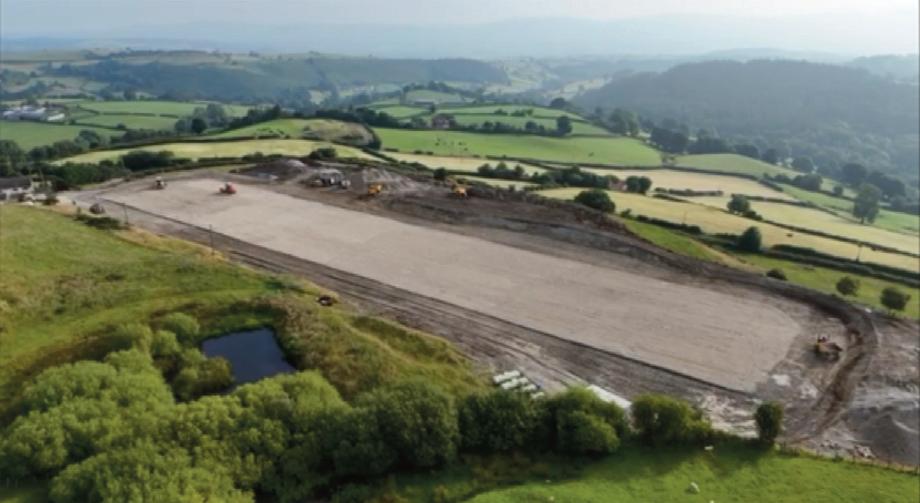
Built in one of the most picturesque farm locations in the UK and at a significant 350m above sea level is ATL’s new pedigree rearing farm. Designed with 6 air spaces (3 female and 3 male) to best fulfil the requirements of the pedigree programme. In a move away from traditional construction in the UK, the new rearing farm is constructed using structural composite panels to provide the best thermal efficiency at elevation. The farm is fully linked together for the highest possible biosecurity with one single point of entry/exit to control traffic. The site sits on solid rock which has had to be excavated to a depth of 1.8m to create a flat level site to start construction. Earth works started in June and will be complete by January 2025.
North Cheshire
ATL’s North Cheshire Farm is a full rebuild of one of the existing sites which was last rebuilt in 1986. This farm is a 6 airspace naturally ventilated pedigree lay site. It will feature the enhancements that have been made to farm design over the past decade to incorporate the best biosecurity practices and technology. The farm will feature a central linked control corridor and improved egg processing areas. Due for completion in March 2025.
Denbighshire, North Wales
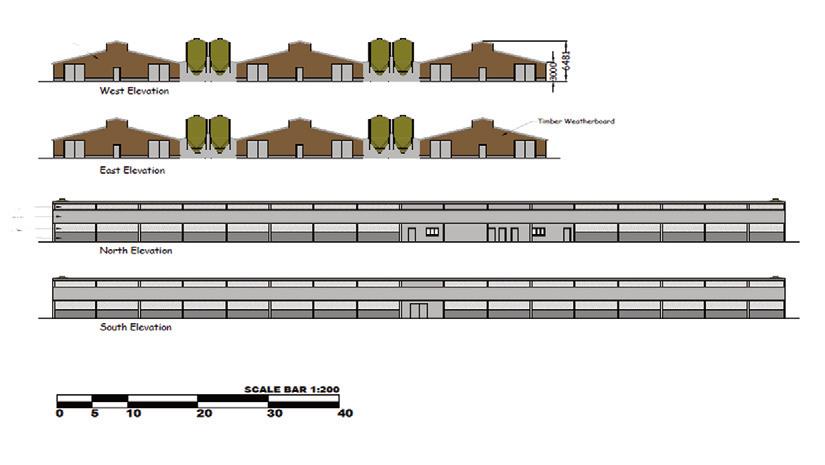
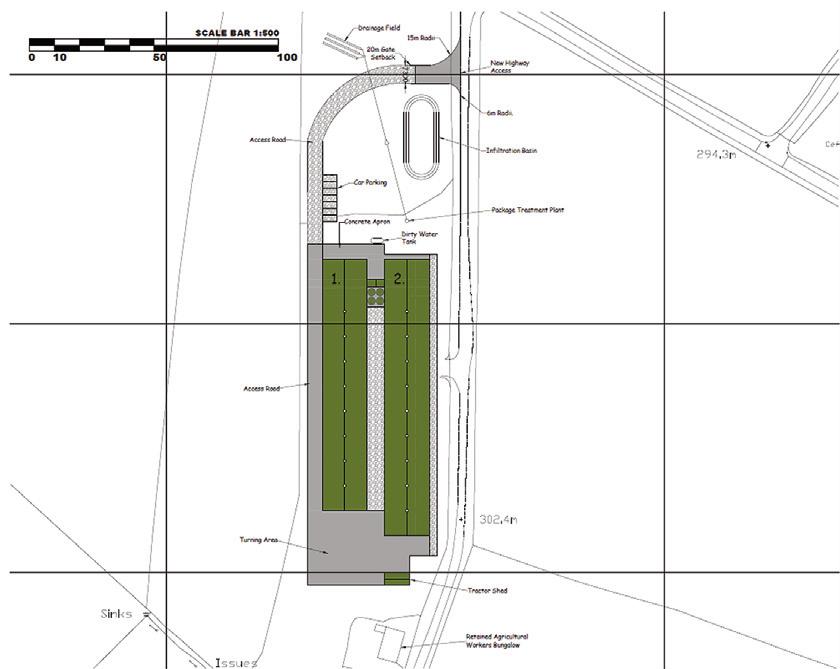

In addition to the pedigree rearing farm in Denbighshire, ATL are also building a pedigree laying farm in Denbighshire. Located at the same elevation it will feature many of the same construction techniques as the rearing farm.

Minimum Ventilation Management
A poultry house ventilation system is arguably the most important management tool for a farm manager to use. As the birds grow and climates change the system needs to be able to adapt and cope with the changing demands to keep the birds in their comfort zone which ensures optimal biological performance. During periods of cold weather or brooding when the house temperature is at or below the bird comfort temperature, it is essential that we provide the birds with good quality air while maintaining temperature set point.
The only way to determine if the ventilation system is set correctly is to look at bird behaviour. Always use climate control systems as a guide and never the sole gauge of a turkey house’s suitability for bird comfort. If bird behaviour indicates that changes to ventilation are required, those changes should be made swiftly to ensure birds are kept as comfortable as possible.
Purpose of ventilation:
Minimum ventilation is used when the house temperature is at or below the required house set-point temperature or bird comfort temperature. It is most commonly used during brooding or during cold weather.
In a well-sealed, air tight house, when an extraction fan is switched on, air will start to leave the house through the fan and then pressure inside the house will become different to that of outside the house. The outside pressure will remain the same, but the pressure inside the house will reduce; becoming less than the outside pressure, this is referred to as 'negative pressure'. When there is negative pressure in the house, air will enter evenly through all the inlets, regardless of where the fans are situated. The greater the negative pressure (the difference in pressure between outside and inside the house), the faster the speed of air coming in through inlet.
The setting and management of the side inlets is very important. Open inlets should be distributed evenly on both sides of the house as this helps produce a uniform environment. The type of inlet you use must direct the cold incoming air towards the peak of the roof where the warm air congregates. This helps warm the incoming air and in return will reduce the relative humidity of the air, making it easier for the air to absorb moisture which results in a drier house and litter. As a guide, for every 10oC the air is warmed, the relative humidity is halved.
Normally, not all air inlets will need to be opened during minimum ventilation and the inlets that are open must be opened equally to ensure a uniform air flow and distribution.
Most commonly used during brooding (poults) and periods of cold weather, or whenever house temperature drops below the set-point
Time driven process
Evenly distributed inlets
Inlets operate on the basis of “negative pressure”
Brings in fresh air from outside
Cold incoming air is directed to the peak of the roof
Used to remove excess moisture to control Relative Humidity (RH)
Exhausts stale in-house gases
Adequate well distributed heat required
Air movement at bird level very low 3 3 3 3 3 3 3 3 3 3 Air Direction for Minimim Ventilation
The recommended minimum inlet opening is approximately 5cm/2in. How many and how wide the inlets are opened will be based on the negative pressure is required, this will depend on:
House width
Ceiling shape/design
Type of inlet
Inlet opening size
As a guide for estimating operating pressure, you can assume that an increase of 3-4 Pascal (Pa) will throw the air roughly 1m further into the house. E.g., for a 15-meter-wide house, you can estimate that you’ll need a negative pressure of around 30Pa to ensure the air will arrive to the centre of the roof and give it chance to heat up.
If air inlets are open too much or too many are opened, negative pressure within the house will be reduced (the difference between pressure inside the house and outside will become less) and the speed at which the air enters the house will be too slow so that it falls directly on to the birds. Having fewer inlets that are open the "correct" amount (5 cm/2 minimum) is better than having all the inlets not open enough. Inlet management involves finding the best
combination of: the minimum opening size of inlets, the negative pressure in the house, the setting the direction of air.
Inlet air flow and operating pressure should be tested, checked and confirmed using a smoke test. Air should flow to the centre of the house (peak of the roof) before slowing and moving down towards the floor.
Another important area to manage is the minimum ventilation cycle timer. This is where the extraction fans come on for a certain period of time, it is crucial as this air exchange keeps air quality high. During brooding and when the birds are still young, be sure that the minimum ON time is enough for the air to reach the peak of the ceiling, and then start to travel down to the floor to ensure the cold incoming air does not drop directly onto
Examples of managing inlet air flow and operating pressure are below
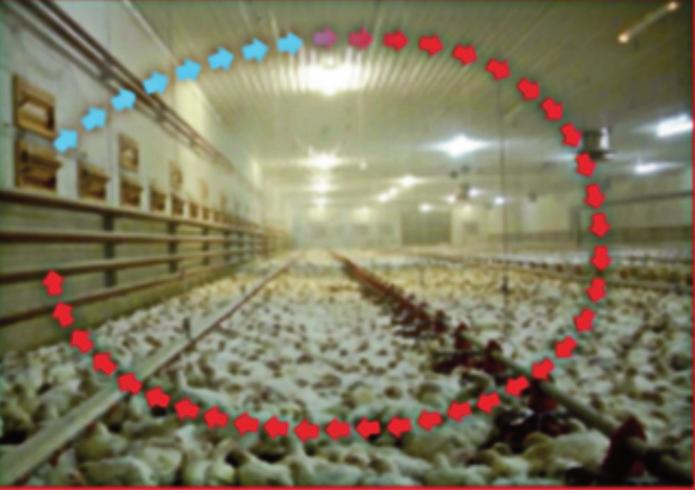
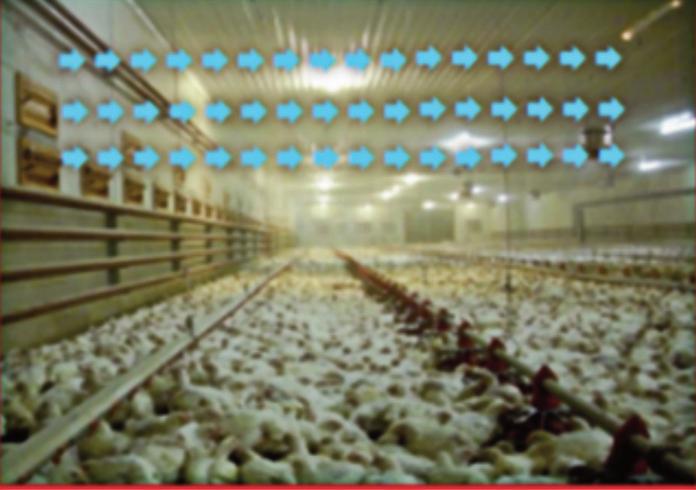
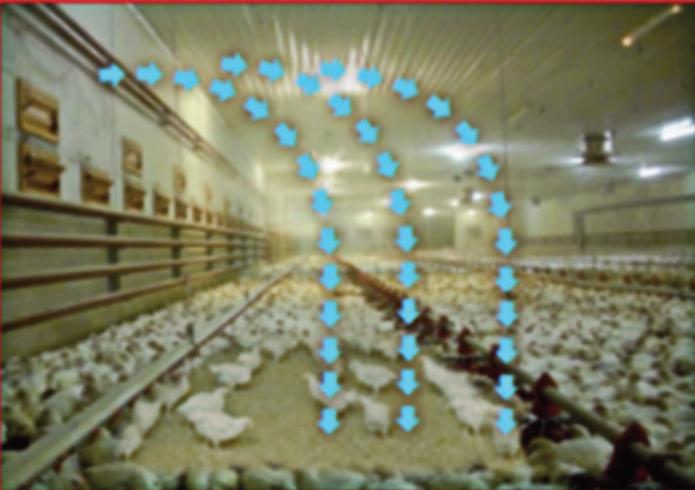
Smoke heads up to the peak of the roof before circling back down to the floor.
No Action Required
Air inlets open correctly, cold air will not fall onto the birds.
Smoke goes along the roof line and down the opposite side of the house.
Action Required
House pressure is too high at the given inlet opening size. Adjust pressure and/or inlet size accordingly and recheck the air flow.
Smoke falls directly to the floor.
Action Required
House pressure is too low. Inlets may be open too much, too many inlets may be open and/or pressure set-point may be too low. Adjust and recheck the air flow.
the birds. A cycle time of 500 seconds is widely used and in a 15m wide house, the minimum on time could be between 30 and 45 seconds but this should be checked with a smoke test. Minimum ventilation programs that are based on things like bird bodyweight should be only seen as a guide, its important to use the birds body language and your initial evaluation of the air to decide what changes to make. The following signs would suggest that the minimum ventilation rate should be increased:
High Relative Humidity (RH)
Air feels "stuffy"
High ammonia levels
Condensation on the incoming water lines
Condensation on the walls and/or ceiling
Wet litter
The best indicator of how well your ventilation is being managed is the bird’s behaviour and the air quality in the house. It’s important to access the situation of ventilation on a frequent basis and adjust the ventilation regularly to achieve the best environment for your birds to grow in.
Please see Aviagen Turkeys’ “Management Guidelines for Breeding Turkeys” publication for a more detailed description of ventilation management.
Aviagen Turkeys “Management Guidelines for Breeding Turkeys” Ventilation Page 76
Celebrating a remarkable 50 years’ service for Aviagen Turkeys
Aviagen® Turkeys Ltd (ATL) are honoured to have such long standing staff. 2024 celebrates 50 years’ service for two of our colleagues within the business.
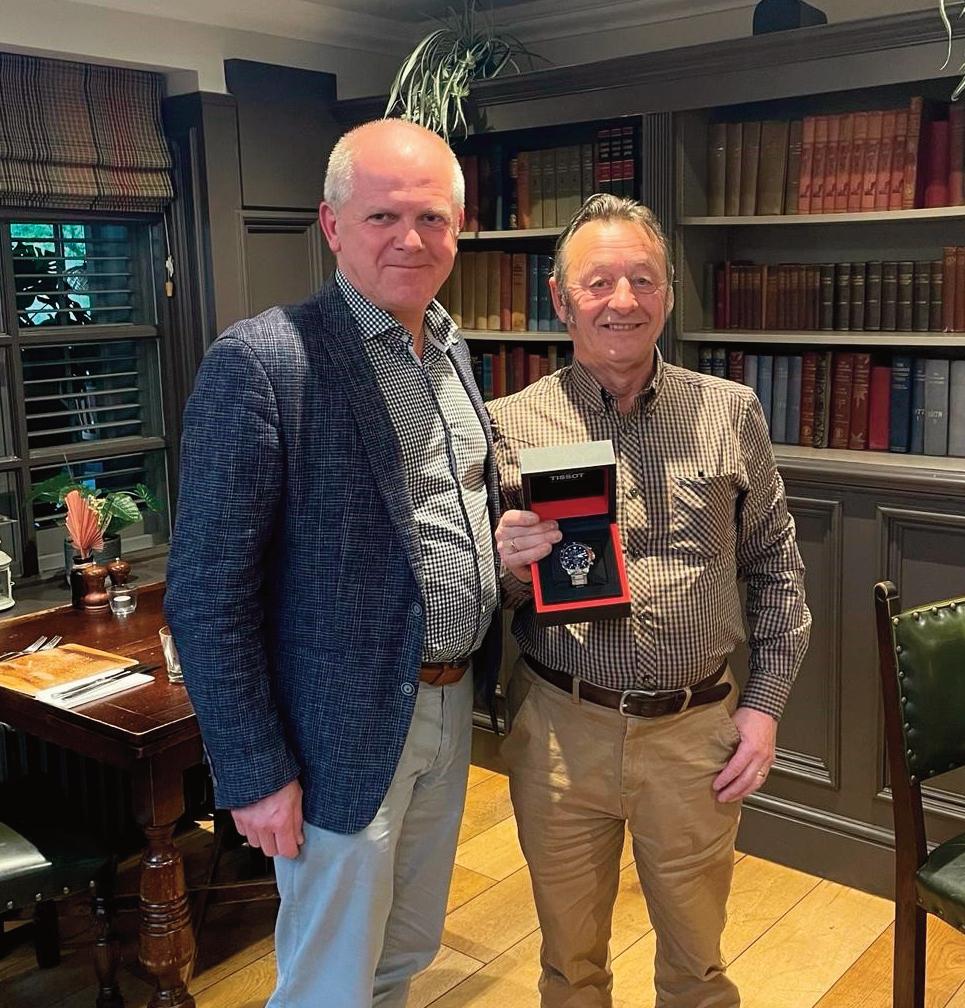
John Worrall started in 1974 on one of ATL’s farms in Cheshire as a farm worker. He progressed to become the supervisor at this farm before moving on to become a Pedigree Laying Farms Manager. John played a key role to the business and its one of the reasons to our success.
Kevin Roberts joined the company in 1974, following in his father’s footsteps who joined in 1949. Kevin started out on the Laying farms in Cheshire until 1990 when he then moved into the Research and Development team.
This job involved working mainly with feed trials but also got involved with projects in the hatchery and Hockenhull Turkeys. With plenty of experience Kevin was then promoted in 2007 and became ATL’s Senior FCR Technician.
ATL would like to thank them both for all their hard work and loyal service to the company over the years and we wish them all the best in their retirement.
SHOWS & EVENTS
Major events for the poultry industry in 2024/25 Dates are correct at time of publishing. For latest information please view exhibitors website.



SPACE FRANCE 17 – 19 Sept ‘24 www.space.fr


EuroTier GERMANY 12 – 15 Nov ‘24. www.eurotier.com
MOROCCO 3 – 5 Dec ‘24.
IPPE
USA 28 – 30 Jan ‘25. www.ippexpo.org
TSPC
UK 18 – 20 March ‘25 www.tspc-turkeys.com


Aviagen Turkeys Ltd congratulate SAVEL
Savel (Société d’abattage de volailles et de lapins) is a family business created in Brittany in Lannilis in 1968 by Gabriel and Madeleine Léon. The company specialises in the production of yellow and white skinned cockerels, yellow chicken, guinea fowl and turkey for the French market and export, which represents almost half of its production (48%).
It raises 44 million poultry slaughtered in the group's 3 slaughterhouses Lannilis (county 29), Carhaix (county 29) and Séguinière (county 49).
Last year SAVEL acquired the company La Toque Bretonne in Mellac (county 29), which specializes in cutup and ready to eat turkey products and employs around twenty people. The group also has a regional distribution activity via the company Terre et Plume at Hanvec (county 29) supplying butchers, delicatessens, caterers, regional social and commercial catering and supermarkets in Brittany.
Wishing to strengthen the new turkey meat activity, Savel has just announced the purchase of the Béziau company, established in Vendée south of Nantes at La Jaudonnière. SAS Béziau managed by Matthieu Beziau. It specialises in turkey cutting, marinated products and raw and cooked turkey-based products. Savel employs 420 people, and has a turnover of €150 million per annum. It has production contracts with 80 partner/growing farmers. The Béziau company employs 50 employees and achieves a turnover of €25 million per annum.
Aviagen® Turkeys Ltd congratulate SAVEL and thank them for their entry into the world of turkey.
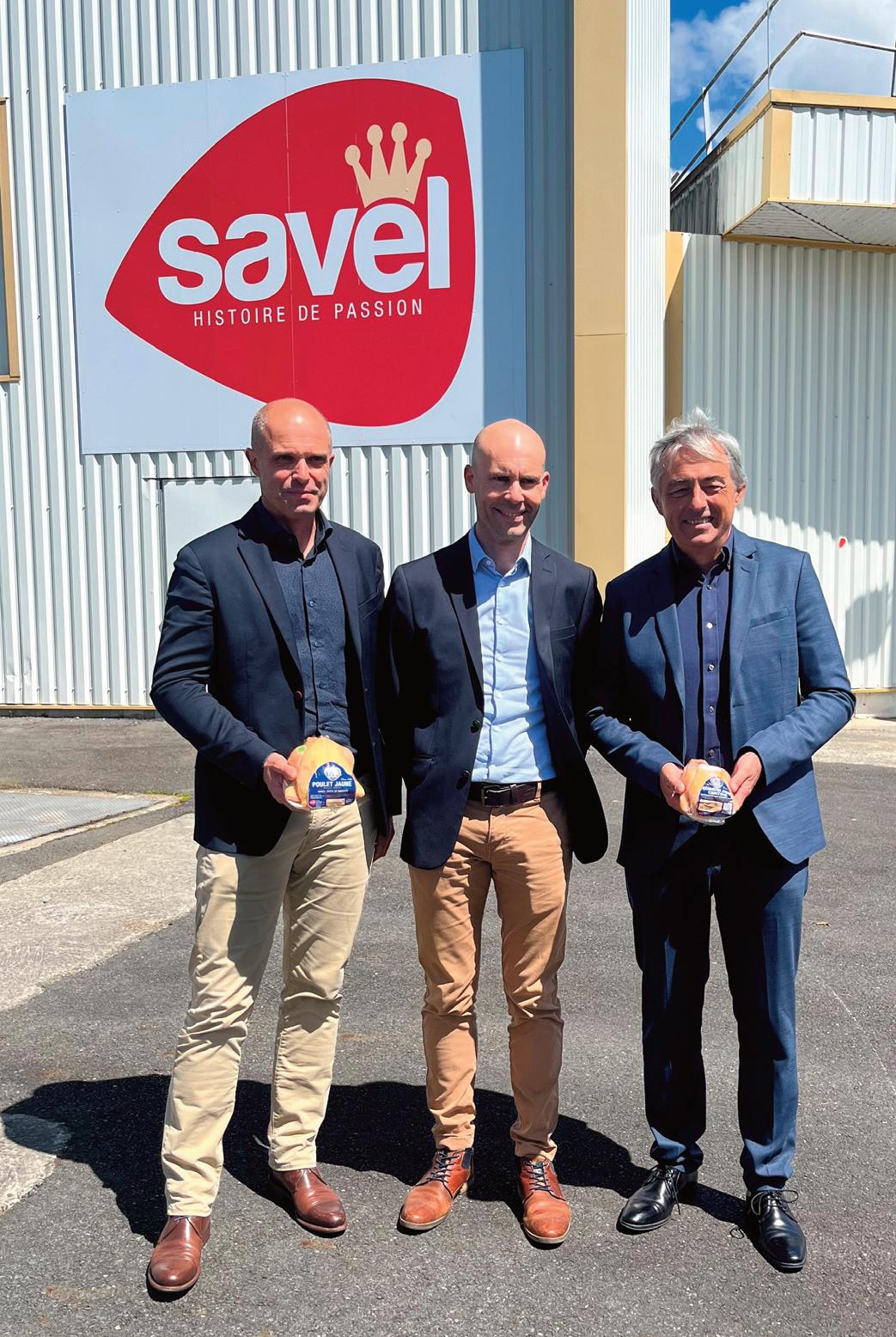


From right to left: Mr. Marc Léon, Mr. Matthieu Béziau and Mr. Eric Le Feuvre
Inspiring the Next Generation through Career Events
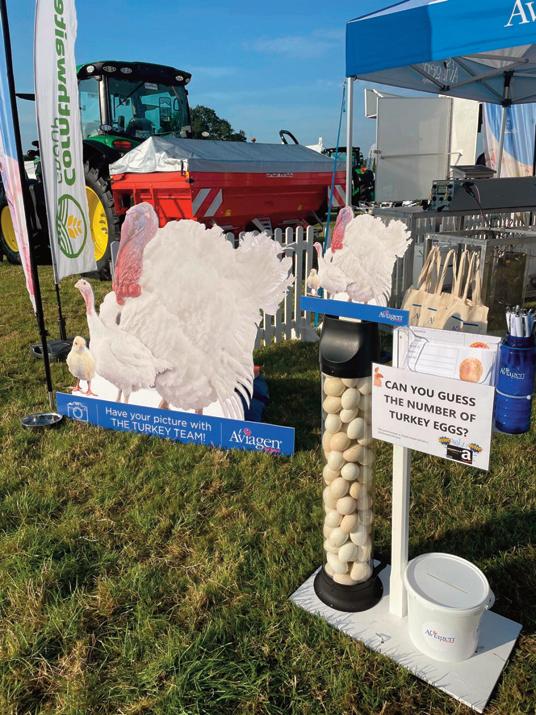
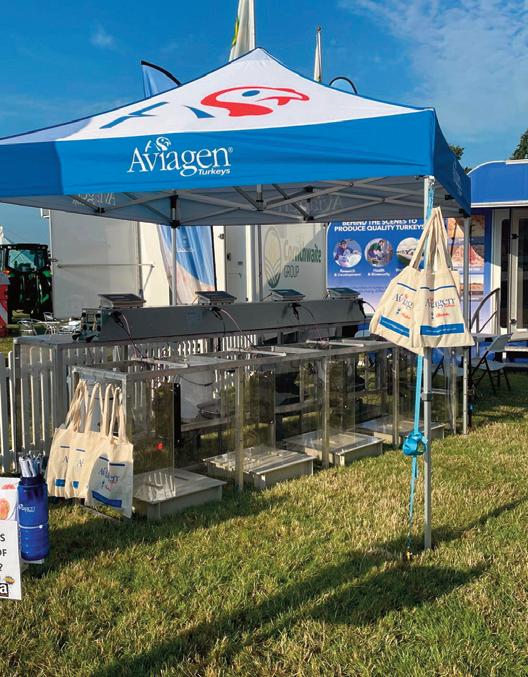
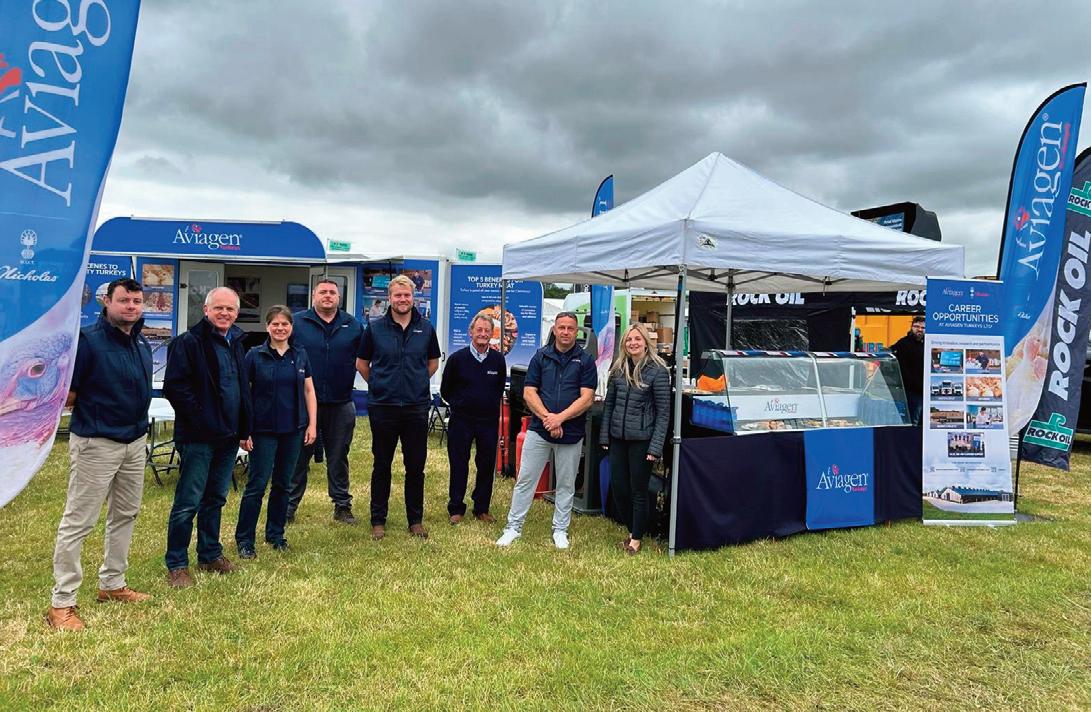
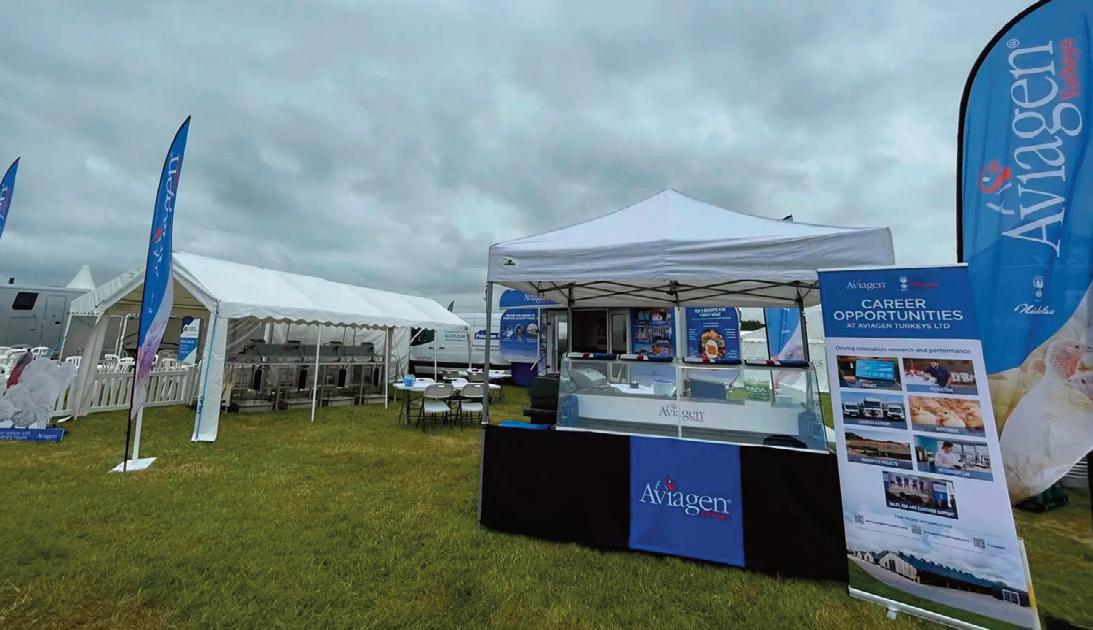
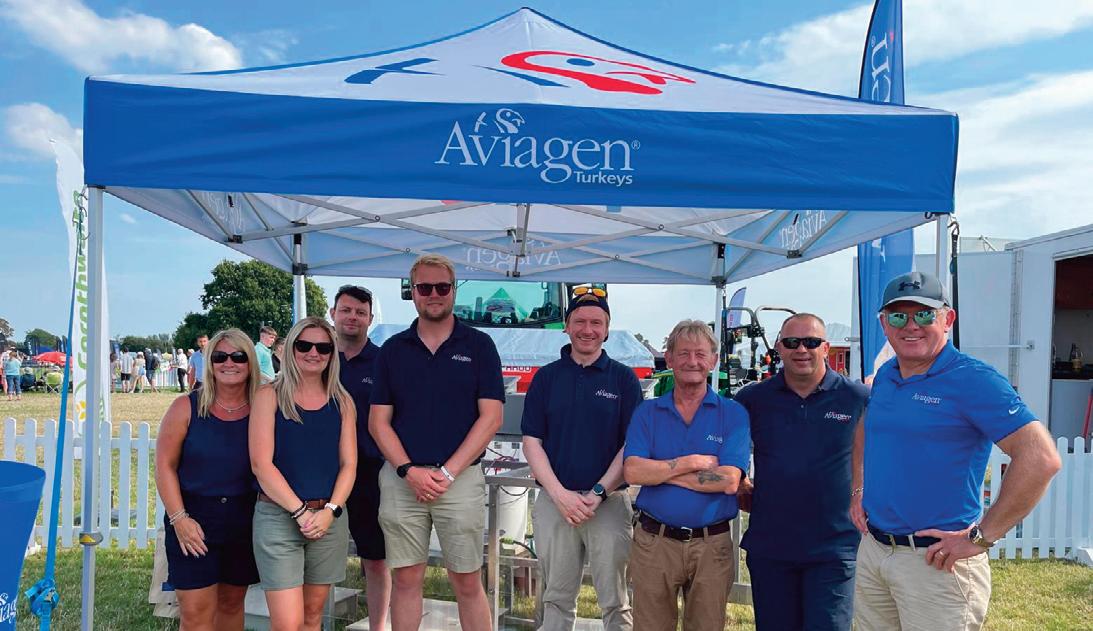
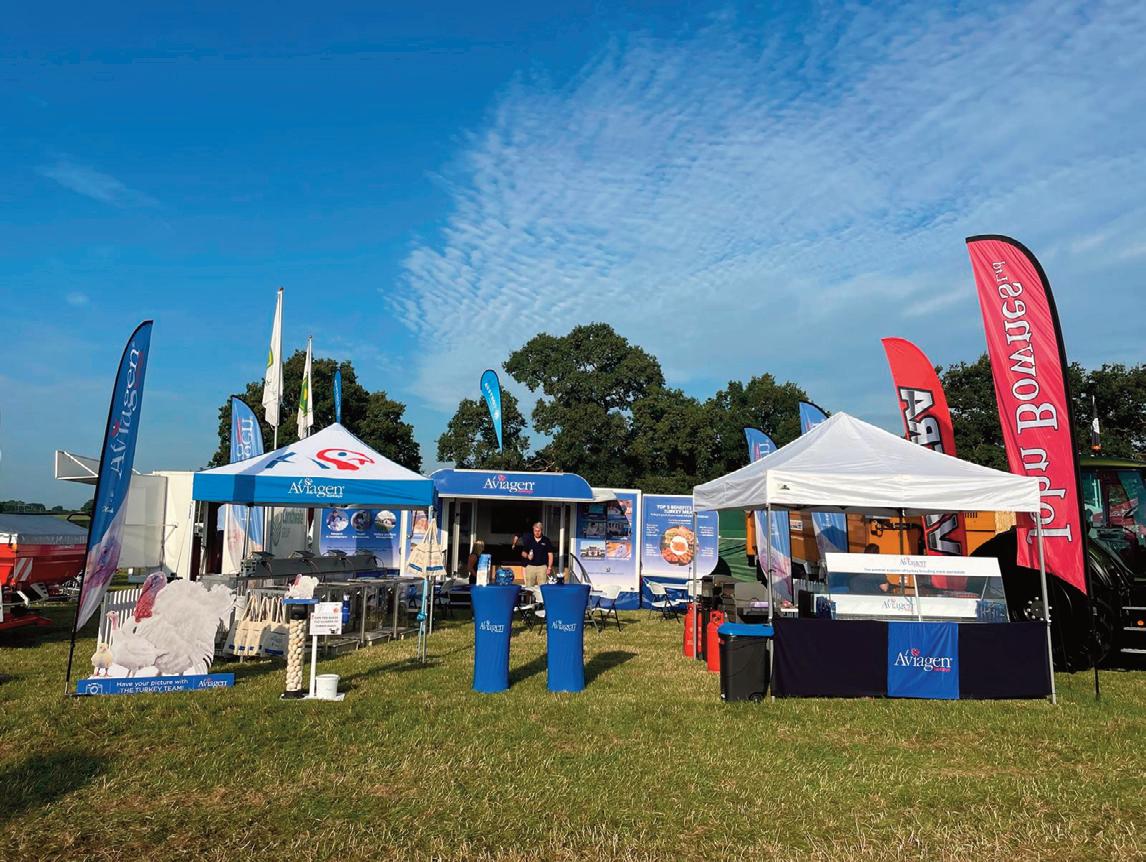
Aviagen® Turkeys Ltd (ATL) have been attending the local country shows to help recruit emerging talent and create a positive brand profile. These shows also gave the opportunity to showcase the different options for turkey meat, with the potential to eat it all year round and not just for Christmas, along with the top benefits for eating turkey in the UK. This included having samples produced by Buttercross Butchers of turkey sausages, turkey burgers and marinated turkey breast available for the public to try, along with turkey pies produced by The Pie Life. The samples were very well received with many visitors explaining they had never eaten or thought to have turkey in that form, as they just have it for Christmas.
The Royal Cheshire Show has been the premier summertime agricultural event in the North West of England for 186 years. Over 80,000 people visited the show over the two days in June 2024, which gave ATL a great opportunity to speak to a variety of people and explain about the turkey industry and the opportunities available. This show supports the younger generation with many Young Farmer interactions, giving ATL the chance to speak about poultry career paths and finding out if it could be of interest to the students studying agriculture.
The Nantwich Show has been an annual feature of the South Cheshire events calendar since 1897. The show is held at the Agricultural Reaseheath College grounds and brought in over 8,000 visitors for the day on 31st July 2024. This show especially helped ATL engage with the younger generation and the agricultural students, which was a great investment to enlighten them of the poultry industry opportunities.
Overall, the agricultural shows were a great success to inform people of Aviagen Turkeys and help promote turkey meat. For more information on careers at ATL visit the careers page on the website: www.aviagenturkeys.com/en-gb/careers

New Faces – Welcoming Samuel Sosa to the Aviagen Turkeys Team!
Aviagen® Turkeys Ltd (ATL) would like to welcome Samuel Sosa to our team, who has taken on the position of Research Geneticist. Samuel is originally from Panama; and, has lived in Spain (Valencia) for eight years, and in Edinburgh, Scotland, for the past two years. Samuel holds a bachelor’s degree in Animal Production (Zootechnical Agronomical Engineering), and his passion for this field led him to pursue a Master in Animal Breeding and Reproductive Biotechnology, and a PhD in Animal Production Science and Technology from the ‘Universitat Politècnica de València’.
He has a vast experience as a coordinator of agricultural projects in NGOs. Nevertheless, Samuel brings a robust research background in genomic analysis, statistical selection methods and modelling, particularly in rabbit and poultry breeding programmes. Over the last two years, he worked with Andreas Kranis’s group at Roslin Institute on estimating variance components over time, and the contribution of mutations to genetic variance of body weight in chicken breeding programmes.
Samuel will work in the R&D department at ATL, alongside Dr John Ralph (R&D Director) and Dr Valentin Kremer, (Genetic Programme Manager), in the day-today operations of the ATL pedigree programme along with the selection team. We are confident that Samuel will strive to further improve our turkey breeds, and to strengthen the excellent reputation of both ATL and Aviagen Turkeys Inc. (U.S.)
“Thank you for the warm welcome”, Samuel said. “I am eager to contribute and be a part of the team”.

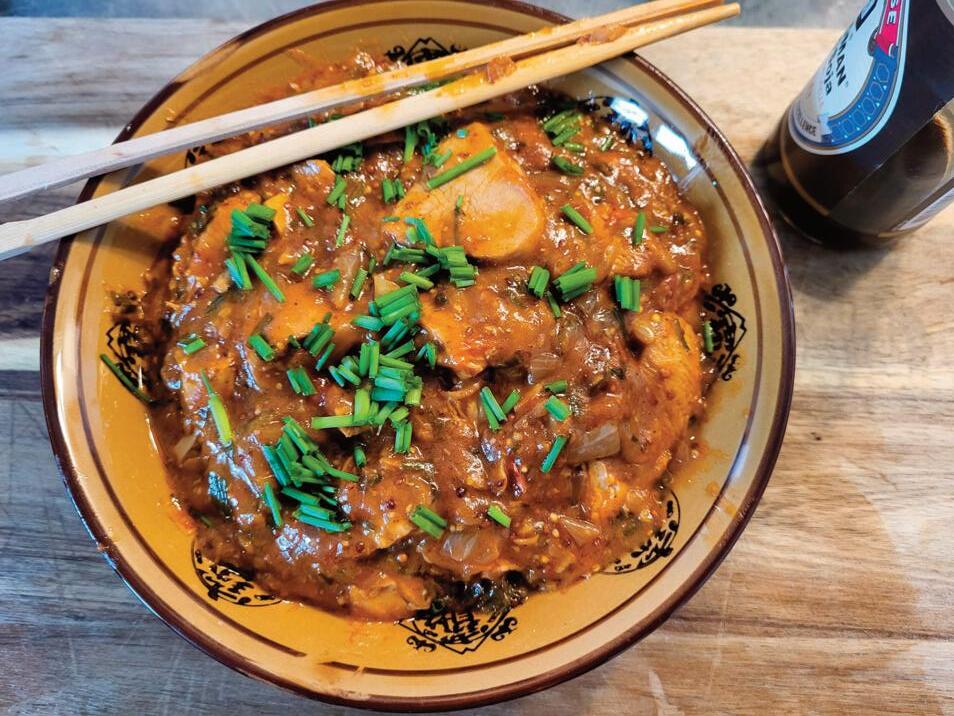
Mmmm, Chinese style turkey dish
Ingredients
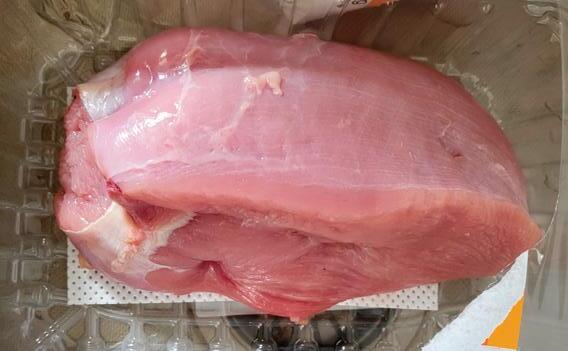
1 Kg Skinless Turkey Breast.
3 onions.
40g of butter.
1 spoon of oil.
3 onions sliced.
1 red bell pepper or a large tomato according to your preference.
1 clove of garlic.
5cl of soy sauce.
1 teaspoon sweet paprika.
1 tablespoon mustard.
Pinch of salt and pepper. Water.
How to make it
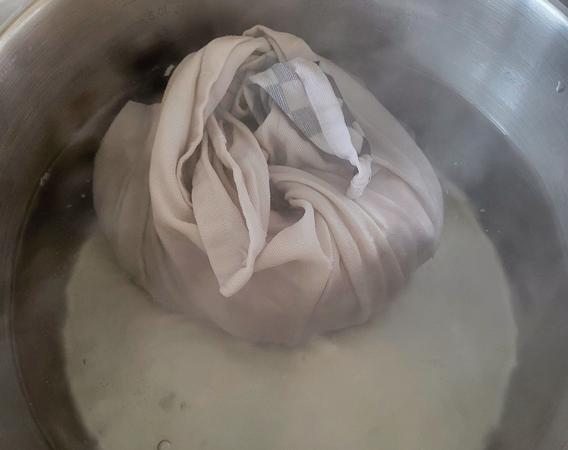
1 Wrap the turkey breast in a cloth and boil in hot, non-salted water for 3 minutes.
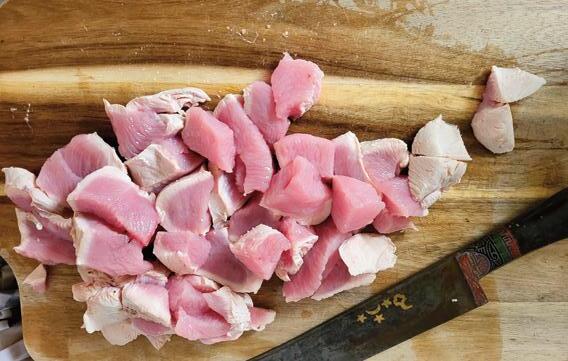
2 Cut in bite pieces.
3 Brown the meat pieces in butter and oil in a pan on the hob.
4 Take them out and keep for later.
5 Brown the onions in the meat juice on the hob.
6 Add the meat.
7 Add the red bell pepper (or the tomato) cut in
8 Add garlic.
9 Add 5cl of soy sauce.
10 Teaspoon of paprika.
11 Tablespoon of mustard.
12 Add salt and pepper.
13 Add 1 glass of water and let simmer for 45 minutes.
Bon appétit.

IT’S WHAT YOU DON’T SEE THAT SETS US APART
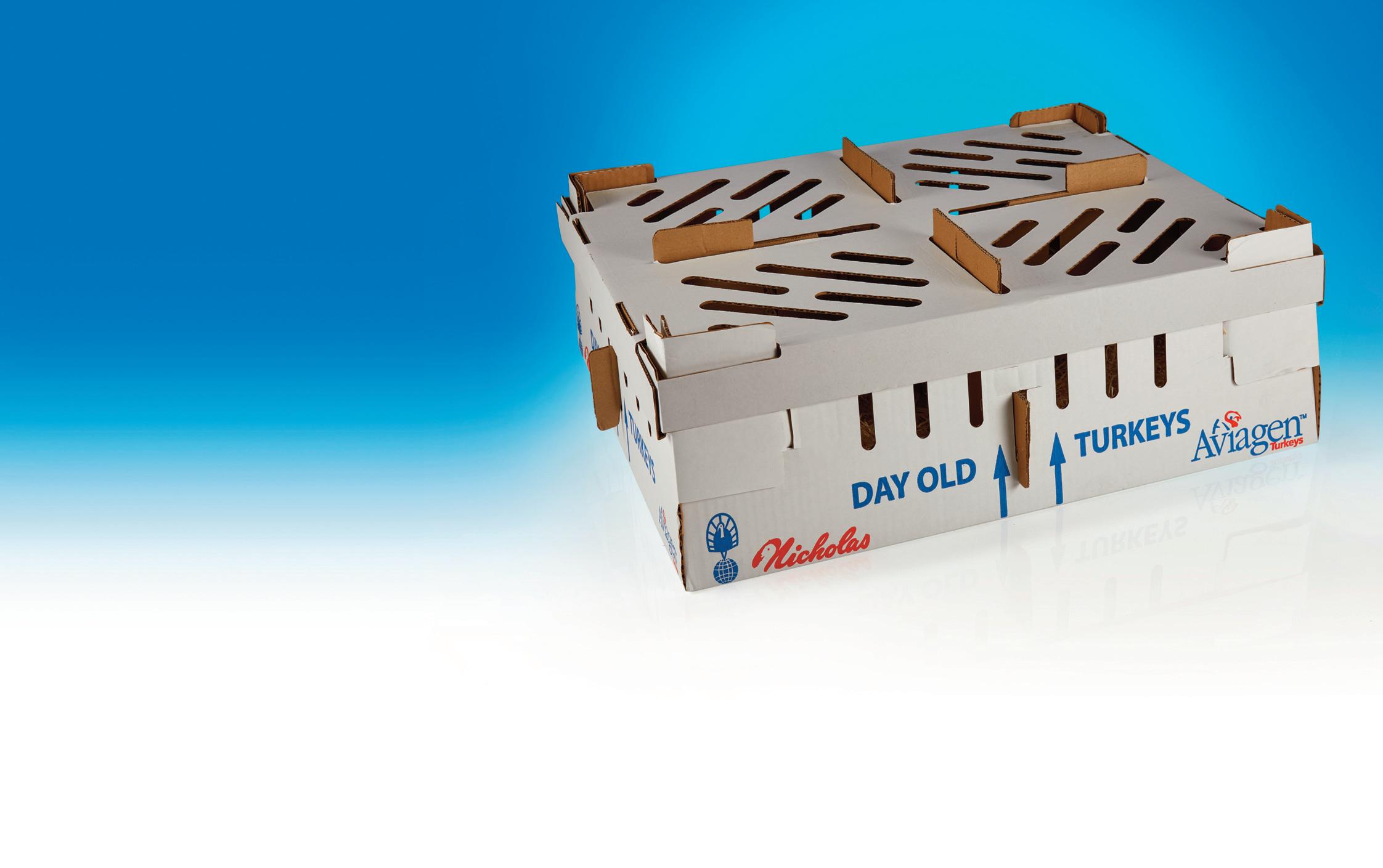
B.U.T. Premium
The B.U.T. Premium poult box is the start of something special. It’s the home of our well-bred and developed poults that will deliver top-performing results aimed at enhancing your bottom line. With high productive performance, exceptional welfare, enhanced liveability and improved FCR, B.U.T. Premium is your best choice for top profits.
For more information about our entire range, visit www.aviagenturkeys.com
Our top-performing birds deliver direct to your bottom line
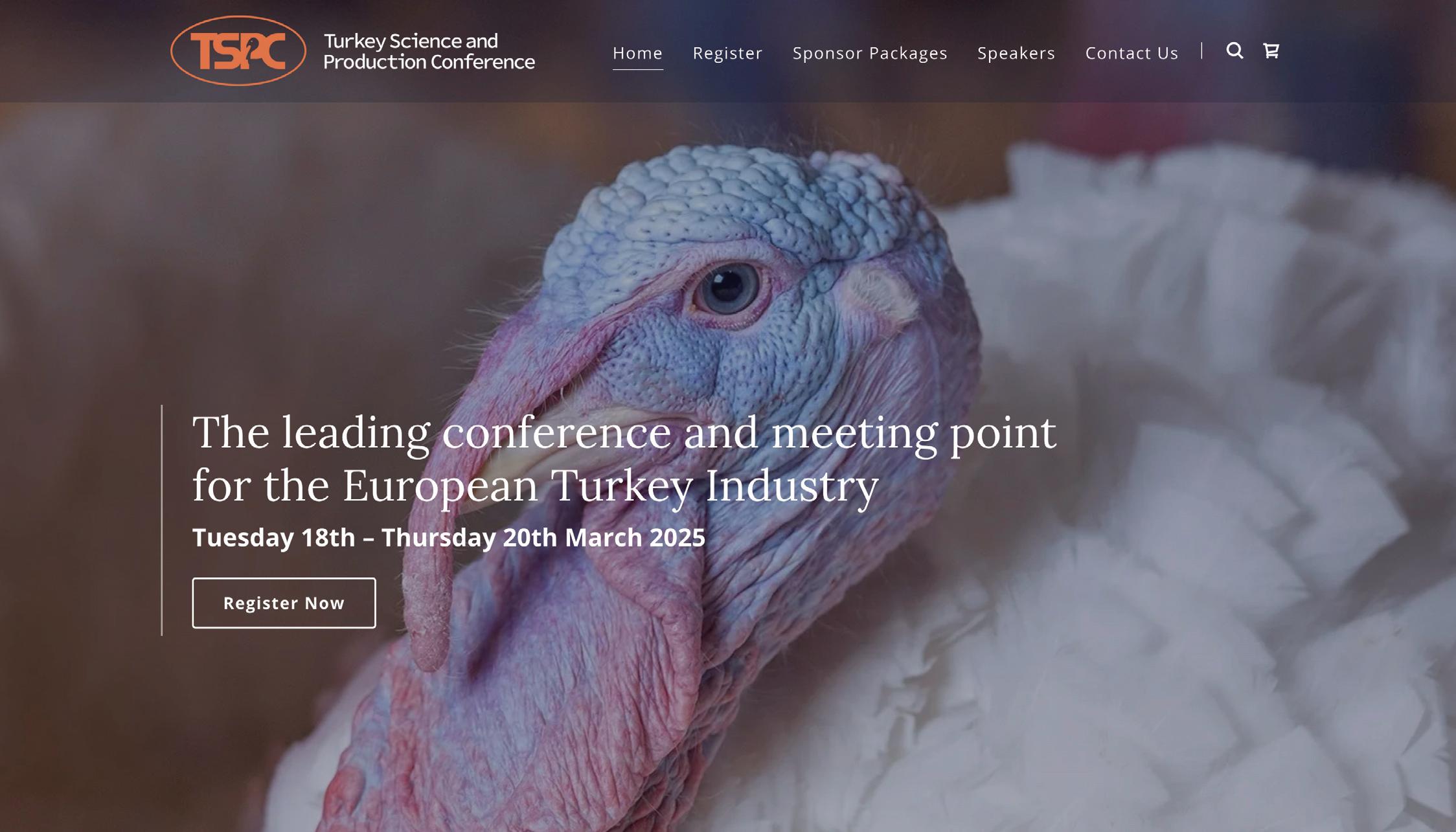
All information for the conference, including all the sponsorship packages and the delegate package can be found on the NEW website: