

Leading industry professionals represent Aviagen Turkeys Ltd at the Turkey Science & Production Conference
Aviagen® Turkeys (ATL) continues to support and sponsor the 18th TSPC conference, which will take place at Carden Park Hotel on the 10th to 12th of March 2026.
The annual Turkey Science and Production Conference (TSPC) is the leading meeting point for the European turkey industry. The 18th conference aims to provide an opportunity for members of the European turkey industry, suppliers, and ancillary bodies to update on the latest scientific developments and production trends. The conference also aims to provide an informal venue for delegates to meet colleagues and friends to discuss existing business or explore new opportunities.
Two representatives from ATL will present at the conference this year. These presentations will focus on critical topics that drive the ongoing development of the industry.
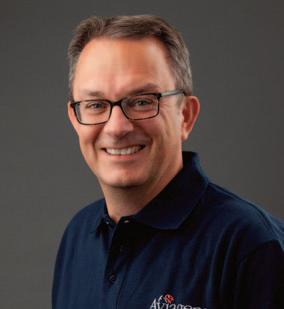
Clay Burrows, ATL’s Managing Director, will deliver ‘ Turkey Industry Production, Market Review and Outlook’.
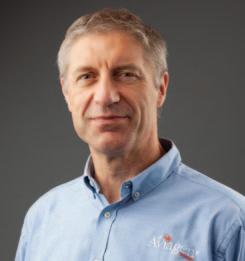
Luke Ramsay, Management Specialist at ATL, will discuss ‘Managing bodyweight in the modern female turkey: Effects on growth and egg production’.
TSPC Dates for 2027: 16th – 18th March 2027. Registration opens September 2026.
www.tspc-turkeys.com



SHOWS &
Dates are correct at time of publishing. For latest information please view exhibitors website.




Clay Burrows
Luke Ramsay
BREEDING EXPERTISE IN FOCUS
Discover a series of insightful articles, each exploring a different aspect of turkey breeding expertise. Together they share specialist knowledge, proven techniques and industry experience, offering valuable guidance for improving breeding performance, welfare and long-term flock success.
Breeder female management
by Peter Hunt
Achieving the genetic potential of Aviagen® Turkeys breeds depends on an appropriate environment, good feed and water quality, as well as an effective biosecurity and disease control programme. If any of these elements are sub-optimal, bird performance will be compromised.
Key Tips for improving female fertility and production
1 Ensure optimal lighting and nutrition
1 Closely monitor body weight and conditioning
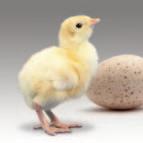
The environment in which turkeys are grown must take into account their needs and protect them from physical and thermal discomfort, fear and distress. A poult has basic needs in order to grow properly, these needs are fresh air, clean water, high-quality feed, good litter and heat. The actual brooder surround set-up will vary depending on house, brooder type, brooding equipment, past experience, company preference and the time of year. It is essential that the set-up of the house is finished adequately in advance of the poults arriving on the farm.
Lighting
1 Influences hormonal cycle, sexual maturity and egg production
1 A good lighting programme is a combination of three different parameters which control the shed environment:
1. Light spectrum
2. Intensity
3. Duration of light/dark period.


1 During the first 6 weeks of life, fundamental development of the digestive, skeletal, immune and cardiovascular systems takes place. In the first 24 –72 hours, it is important that poults consume as much feed as possible, to get off to a good start and to reach target body weights.
1 Care must be taken when selecting the type of artificial lighting as it needs to emit the red part of the light spectrum which is important for photo stimulation of egg production.
Seasonal breeding birds at hatch do not have the ability to respond to changes in the light intensity and day length. This is called photorefractoriness which can be overridden by exposing the birds to a period of short days. This is a natural mechanism to prevent the birds breeding when their young would have a poor chance of survival. i.e., Winter. Birds exposed to at least 10-12 weeks of artificial short days will respond to changes in photo-period and light intensity. Sexual maturation occurs when day length and light intensity are both increased. In turkeys this is generally at 29+ weeks when females are transferred to laying farm. It is important during the conditioning phase from 18 to 29 weeks of age to ensure that no external natural light enters the house during the dark period. House fans and air inlets must be dark proofed, we must also ensure that there is no light leakage from around doors and hatches.

The information in both male and female management articles are good practices that prevent disease and promote good health and production, to support good animal welfare. Whilst every attempt has been made to ensure the accuracy of the information presented, Aviagen Turkeys accepts no liability for the consequences of utilising this information within this newsletter.

Management of Broodiness
At the end of the 3rd week of egg production (17-20 days after first eggs), anticipate and begin broodiness management: Palpation method (Hens are palpated on the nest to check the pelvic bone condition), Spray system (Hens on the nest in the morning are marked with food dye and checked at the end of the day for broodiness if they are still sitting on the nest), At Artificial
Insemination (All hens are checked for broodiness), Pen switching after peak production.
During the life of the bird, the management of the birds must be individually adapted to their behaviour and activity. Optimising the environment (lighting, equipment, temperature, ventilation) is one of the best methods for controlling bird behaviour and ensuring optimal egg production.
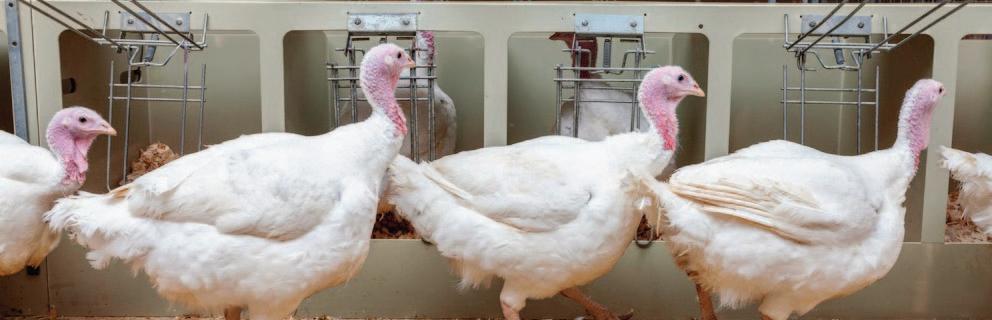
Best practices for male management
E
ffective male management is centred on two key areas:
1 Weight control
1 Lighting
Managing breeder male growth brings significant practical benefits, including lighter, easier-to-handle birds, improved fitness and liveability, better and longer semen production, and reduced risk of moulting during late production. Selection of healthy, strong males should take place between 18 and 20 weeks of age, with careful identification and removal of any birds showing abnormalities. Once males reach 20kg or 20 weeks old, quantitative feed management should be used to control growth, with birds receiving a defined daily feed allocation that is adjusted in 5% increments based on their weight relative to target. This method, where all birds eat from a single meal per day, is preferred over qualitative feed management because it ensures consistent, measurable results throughout the production period and allows for easy adjustments.
1 Lighting is a vital factor in maximising reproductive performance.
Males should be exposed to a minimum of 14 hours of light at 50 lux intensity, with lighting that provides the red spectrum (2700 Kelvin) for hormonal development. Once the males are 28 weeks of age, they should be mature at this stage we should start to

by Luke Ramsay
pre-milking, (the extraction of semen), at least twice but ideally up to 4 times before first insemination as it is essential to ensure good quality semen and allow males to become accustomed to the process. During peak production, maintaining sperm cell quality is vital; collecting semen from all males at least once weekly keeps them stimulated, with the first two ejaculations providing around 80% of the total semen collected and the highest sperm concentration.
1 By combining correct weight management, optimal lighting conditions, and consistent premilking protocols, producers can maintain superior semen quality for longer and achieve consistent fertility results.
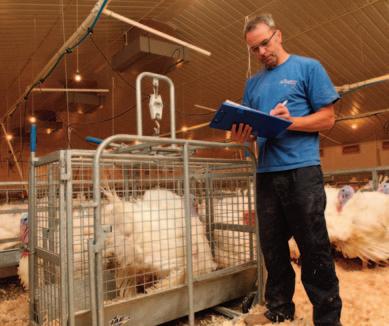

Genetic selection for breeders
by Dr. John Ralph
Primary breeders need to satisfy all players in the supply chain:
For parent stock operations this means the development of turkey breeds require the below to assure the needs of the commercial and processors are met:
1 Good egg production
1 Good hatchability
1 Good fertility
1 Good liveability potential
Overarching this is a requirement for improvements in robustness, health and welfare. Antagonistic genetic relationships exist between some traits such as weight and egg production and these need particular management to ensure progress is achieved across all traits, a process we call balanced breeding.

The addition of genomics to all pedigree lines has led at around a 30% improvement in accuracy for egg production meaning greater levels of improvement can be achieved.
The use of genomics for reproductive traits was applied to selections in 2022 and the first effects in parent stock were expected in 2025. We are continuing to adapt the selection process to meet the needs of the supply chain and address the wider turkey sector challenges through investment in new selection technologies. For example, first effects from the addition of novel traits such as egg quality, reduced pecking, crop fill scoring for improved early liveability are expected in 2026-27.
As equally important as the selection programme is a farming base which prevents losses due to health challenges and minimises environmental variation. With the looming threat of avian influenza, a modern, geographically distributed and replicated programme with weekly pedigree placements, whilst a significant investment, helps secure the genetic basis of the European turkey in sector.
Annual breeder depletions survey
Our annual breeder depletion surveys from 2024 through mid2025 present a mixed performance outlook across a broad range of European producers. While some operations have maintained stable egg output per breeder hen, average production for both the Premium and B.U.T. 6 breeds declined in 2024 compared to recent years in several locations. This decline is not uniform, and although the exact causes are still being analysed, several themes have emerged as possible explanatory factors.
Environmental and health factors have played a significant role.
Sudden warm spells have triggered increased broodiness, while health challenges—specifically Pasteurella, Avian Metapneumovirus (aMPV/TRT), and PMV3—have further impacted flock productivity. Some businesses attribute lower output to the transition from manual to automated nesting systems. While auto-nests are capable of matching manual nest output, refining the necessary management practices takes time.
We have also investigated potential genetic factors. Although the genetic trends predicted stable output, we have proactively adjusted selection pressure to bolster egg production. Simultaneously, our technical team is developing adapted nutritional and growth profiles to ensure breeder management is adapted to the latest genetic generations and support full reproductive potential.
Nutrition and feeding
by Marcus Kenny
An area of importance in managing flocks:
1 Nutrition in rear to achieve breed objectives whilst preventing excessive bodyweight development
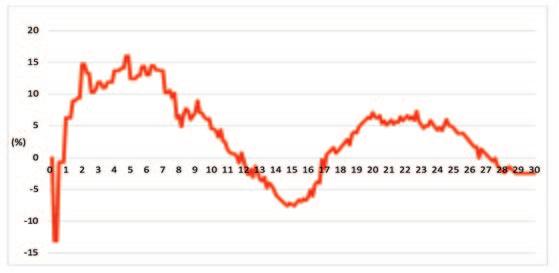
Many flocks encounter excessive growth development relative to the breed standard in the early stages of rear. Attempts to control this excessive growth later in rear often involves instruction of lower density diets at earlier ages than programmed (see figure 1 below). This approach results in dramatic changes in nutrient intake with potentially negative impacts on physiological development and in some cases can lead to behavioural issues such as feather pecking.
A combination of management practices and limiting the use of higher nutrient density starting diets can help to prevent excessive early growth thus avoiding the need to control excess growth later in rear. Use of a lower nutrient density starting diet may be further required to avoid excessive growth.
Male bodyweight in rear
1 Maintained as close as possible to the breed bodyweight targets
1 The same feed as females
1 Quality managed feeds for low density diets
1 If the nutrient density of the qualitative male diet cannot be reliably achieved then a quantity managed approach is preferred.
A benchmarking exercise comparing performance of European flocks shows that higher performing flocks tend to feed higher energy and amino acid density female diets. Micronutrient levels were similar across different flocks however organic trace minerals tended to be used in better performing flocks. This reinforces the need to ensure that high performing flocks are supported by feeding diets with sufficient nutrient density through the breeding period.

Figure 1: Female bodyweight development (%) relative to breed standard.
Biosecurity
by Dr. Wiebke Oellrich
This article starts with a definition of biosecurity, followed by why we need it, what the aspects of its implementation and compliance are, as well as looking at structural and procedural components.
Biosecurity is a health strategy aimed at protecting an animal population from transmissible infectious agents. Where a risk equals the likelihood of a hazard occurring multiplied by the severity, biosecurity aims at reducing the likelihood of a hazard occurring.

Risk = (Likelihood of a Hazard occurring) x (Severity)
Four Pillars build the foundations of biosecurity:
1 Conceptual refers to the farm layout within its geographical region or isolation from other poultry farms.
1 Structural components include the brick and mortar, the truck washes, the rock borders and other things in a producer’s operation that help exclude disease.
1 Procedural, the work instructions (SOPs), and employee interaction plan to ensure the most efficient production on the farms in an economical and protective way.
1 Cultural biosecurity refers to making sure employees in facilities are all following the same rules and understand the ultimate goal of protecting the poultry flocks.
The need for biosecurity is multifaceted. It eliminates background immunosuppressive agents, resulting in decreased background mortality and culling, increased weight gain, egg production, and fertility, as well as reduced downgrading at processing. It reduces the risk of infectious agents entering the sheds hence protecting birds, the business, the industry, and the community against infectious diseases. It plays a role in food safety, namely Salmonella and Campylobacter, leads to improved animal welfare and indirectly also to a positive consumer perception and better ethics. Overall, biosecurity is essential for a profitable production and business.
High Path Avian Influenza (HPAI) cases in poultry continue to be a major problem with wild bird and domestic bird reports following a related pattern. There are a wide range of potential routes of disease exposure to the poultry and cases have shown that more focus on consistent dedication to biosecurity and improved personnel training is needed to prevent HPAI on sites.
With regards to implementing biosecurity the first step is structural biosecurity – the physical construction and maintenance. A perimeter buffer area and line of separation are required. For an example see ATL’s poster “How to set up farm biosecurity”.
People act as mechanical vectors and preventative measures need systematic implementation to manage this risk. The main challenge in procedural biosecurity is to maintain compliance. Studies show people-related biosecurity measures as risk factors and simple preventative measures make a difference but are often not consistently followed.
When implementing farm biosecurity plans, four components: People – Environment – Communication – Guidance, create a biosecurity culture on a behaviour-based system. Here the differences between education and training matter due to different outcomes.
Compliance is the main factor in successful biosecurity where good structural biosecurity is given.
Compliance [%] = Applied biosecurity measures x 100 Required biosecurity measures
In a study by Racicot et al, 2011, it was shown that biosecurity compliance on poultry farms was linked to the behaviour of the people working there. With the help of hidden cameras, 883 visits by 102 individuals performing various biosecurity related tasks, were analysed and it was shown that compliance varied between tasks and individuals. A total of 44 different biosecurity errors were observed with an average of 4 errors per visit. Only in 3% of the visits (11 different employees) could no errors be observed. This clearly shows that errors must be learned from and that staff awareness and training is of tremendous importance.
Biosecurity breaches can be reduced with improved design, new technologies or implementation of control systems improving biosecurity through better compliance. For example, noncompliance with area demarcation is a significant risk as shown by studies relating to boot changing.
In summary:
a) Poultry farms need structural and procedural biosecurity;
b) Personnel and equipment are the No.1 risk factor in disease control, including AI;
c) Biosecurity compliance is a significant challenge;
d) Implementing a behaviour-based system creates a biosecurity culture: environment, people, guidance, communication; e) There is a need to learn from social and behavioural sciences as well as new technologies.
Racicot M, Venne D, Durivage A, Vaillancourt JP. Description of 44 biosecurity errors while entering and exiting poultry barns based on video surveillance in Quebec, Canada. Prev Vet Med. 2011 Jul 1;100(3-4):193-9.
Please


























Celebrating 45 years of service
On 30th January 2026, after an incredible 45 years of dedication we said a heartfelt thankyou and congratulations on a well earnt retirement to Heather Cox.
Heather joined the team back in 1980 and has remained a steady hand through decades of growth and change. Having been a familiar face across the business for over nearly half a century, she will be missed by all those who have worked alongside her.
We would like to thank Heather for her loyalty and contribution to the company & we wish her all the very best for a happy, healthy and very well-deserved retirement!

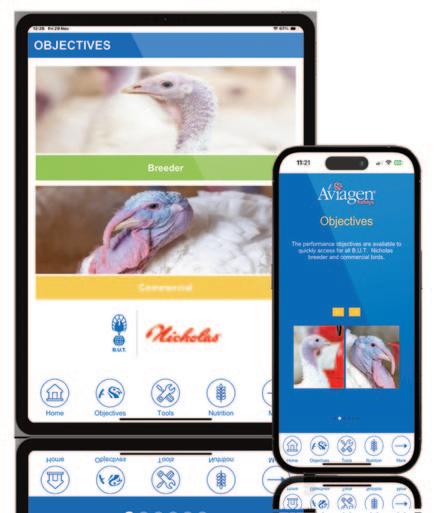
Our NEW Aviagen Turkeys Official Mobile App is now available!
This update includes the latest Breeder & Commercial Performance Objectives along with Nutritional Specifications.
The app is available to access in a range of languages; English, German, French, Spanish, Italian & Polish with English-US coming soon!


Yan Huby joins the ATL team

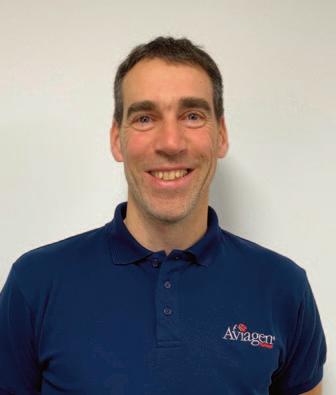
Aviagen® Turkeys is delighted to announce the appointment of Yan Huby as a Management Specialist within the Aviagen Turkeys Customer Support Team, from January 2026.
Based in Brittany, France, Yan is a highly experienced poultry specialist who joins the company with over 20 years of practical and managerial knowledge.
His extensive background across a wide range of turkey production areas allows him to bring a wealth of seasoned expertise to the role.
In this new position, Yan will focus on developing and providing tailored advice and support to customers across France and throughout Europe.
His appointment further enhances the breadth and depth of skills available to help Aviagen Turkeys customers achieve the full genetic potential of their breeds.
Farms of the future
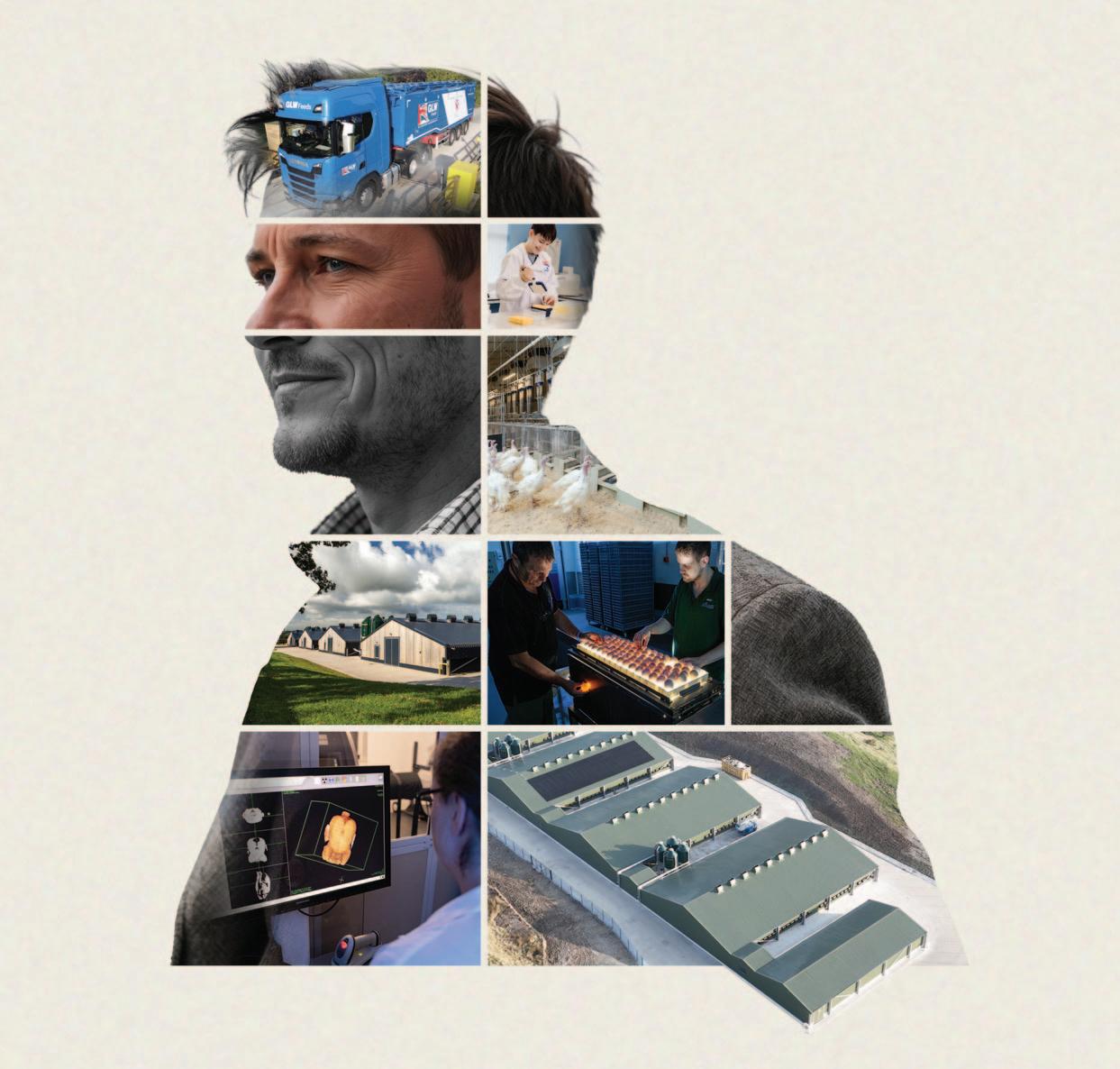
At Aviagen® Turkeys, our investments in genetics, innovation, and support are designed with your future in mind. By providing you with the best products and expertise, we help ensure your business’s long-term success — so you can prosper for generations to come.
