

Built for Balance
In 2026, multifamily refocuses on wellness, discipline, and returns that last

NEW NO NORMAL.
Certainty matters most when the market is anything but.
In a market that defies convention, success demands more than a formulaic approach. It takes a partner who understands your vision and can adapt as conditions shift. At Lument, we deliver solutions shaped by insight, innovation, and measurable results.
LEARN MORE About Our Multifamily Housing Team
The Heron Museum District, a new luxury residential development in Houston, exemplifies a refined blend of high-end hospitality and bespoke living.
January/February 2026 vol. 31 issue 1

24 2026 MULTIFAMILY OUTLOOK
As multifamily heads into a transitional 2026, experienced operators are prioritizing patience, disciplined underwriting, and operational precision amid uncertain capital markets and modest growth expectations.
32 SPACES WITH STAYING POWER
In 2026, multifamily amenities are being rightsized and reimagined around wellness, flexibility, and measurable ROI—ditching single-use spaces in favor of adaptable, experience-driven environments residents actually use.
MFE ONLINE
LENDER OUTLOOK
What’s on the horizon for debt financing? Executives from Berkadia, Newmark, and NewPoint Real Estate Capital discuss the landscape for 2026.

LEARN AND
SKI
Join industry leaders in Vail, Colorado, March 1-3, for the annual Multifamily Executive Leadership Summit. mfesummit.com
UP FRONT 6 Editor’s Note
8 The Buzz: Market Spotlight
Slowing deliveries and historically low new starts are helping Salt Lake City absorb excess supply.
12 The Buzz: Leadership
Hear from Meredith Wright, the new CEO of Mission Rock Residential, on her new role.
14 Best Practices
Multifamily operators are sharpening their 2026 playbooks with preventive maintenance, centralized services, and AI-driven efficiencies to control expenses.
20 Corner Office
As scrutiny of rental fees intensifies, technologydriven transparency offers a smarter way to build renter trust and protect affordability.
22 Technology
Three tech trends likely to define the multifamily sector in 2026.
LAST DETAIL
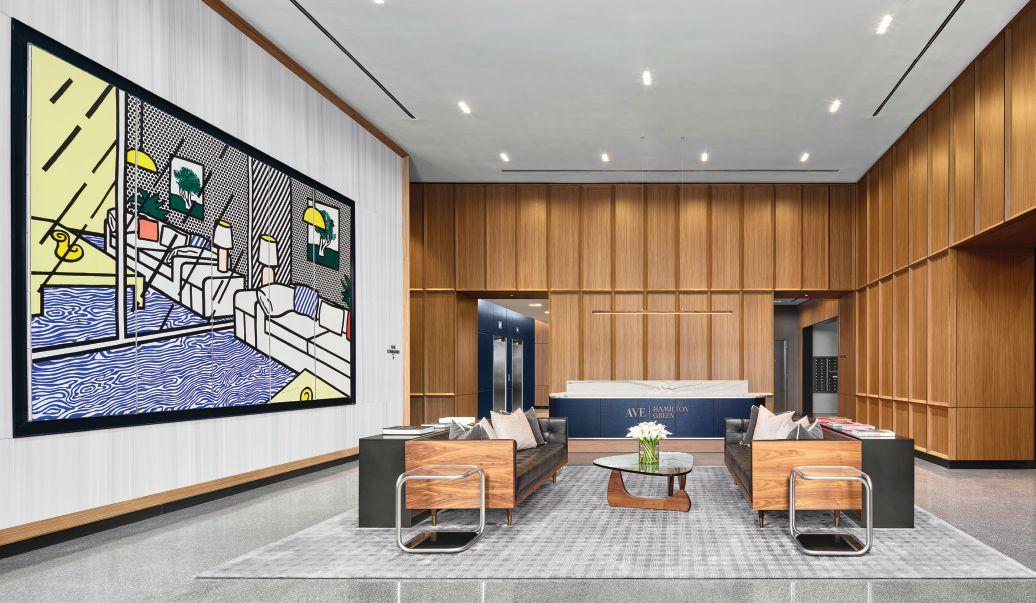
40 AVE Hamilton Green in White Plains, New York.

THE AI REVOLUTION
Delve into how autonomous property management is driving efficiency, boosting NOI, and redefining the resident experience.
Editorial
Christine Serlin / Editor, Multifamily Executive / cserlin@questex.com
Donna Kimura / Deputy Editor, Affordable Housing Finance / dkimura@questex.com
CONTRIBUTORS: Carolyn Sewell, Chris Wood
Production
Sue Gigliotti / Production Specialist / sgigliotti@questex.com
Sales
Robert M. Britt / Sales Director, US Operational Real Estate / Phone: 415-250-7328 / rbritt@questex.com
Michael DeAnzeris / Senior Director, Strategic Accounts, US Operational Real Estate / Phone: 857-472-2284 / mdeanzeris@questex.com
Tom Borsellino / Business Development Manager, US Operational Real Estate / Phone: 650-382-2986 / tborsellino@questex.com
Amie Leibovitz / Business Development Manager, US Operational Real Estate / Phone: 773-360-1179 / aleibovitz@questex.com
Jamie Steinheiser / Business Development Manager, US Operational Real Estate / Phone: 215-920-3334 / jsteinheiser@questex.com
Marketing
Ahna Holloran / Senior Marketing Manager / aholloran@questex.com
Mariya Gordon / Marketing Manager / mgordon@questex.com
Reproduction in whole or in part is prohibited without written authorization. Opinions expressed are those of the author or persons quoted and not necessarily those of multifamily executive magazine.
multifamily executive will occasionally write about companies in which its parent organization, Questex, has an investment interest. When it does, the magazine will fully disclose that relationship.
Subscriptions are available free of charge to qualified individuals in the United States. All others must pay these nonqualified one-year subscription rates: U.S., $40. Allow eight weeks for start of service.
Privacy of mailing lists: Sometimes we share our subscriber mailing list with reputable companies we think you’ll find interesting. If you do not wish to be included, please call 866-344-1315.
Corporate
Paul Miller / Chief Executive Officer
Patrick Nohilly / Chief Financial Officer
Kate Spellman / Chief Commercial Officer
Alexi Huntley Khajavi / Group President, Hospitality and Real Estate
Josh Brous / Vice President, Brand Leader, US Operational Real Estate
Volume 31, Issue 1
multifamily executive (ISSN 1089 4721; USPS 015-907) is published four times annually in January, April, June, and October by Questex, 1111B SS, Governors Ave., Ste. 25792, Dover, DE 19904-1809 and is printed in the USA. Copyright 2026 by Questex, a Delaware corporation. Periodicals postage paid at New York, NY 10199. POSTMASTER: Send address changes to multifamily executive, PO Box 484, Lincolnshire IL 60069-0484.



FROM THE EDITOR
However the year shapes up, Multifamily Executive will continue to be focused in 2026 on the strategies that matter most in print, online, and in person.

Christine Serlin Editor cserlin@questex.com
Resetting for What’s Next
As multifamily heads into 2026, the industry is shifting into a disciplined reset. This issue of Multifamily Executive takes a deep dive into the year ahead—from operations and design to capital markets and technology.
In our annual multifamily outlook on page 24, contributor Chris Wood shares how volatile capital markets, uneven rent growth, and the long absorption of new supply have pushed owners, developers, and investors to prioritize patience, balance-sheet strength, and execution over expansion.
Decelerating rent growth and rising costs are forcing a back-to-basics focus on operations. Several leading owners and operators share their strategies for cutting expenses and maintaining satisfaction to help you create your own operations playbook on page 14.
Technology will continue to be a big part of operations in 2026. In the Corner Office column on page 20, the Real Estate Technology and Transformation Center’s Daria Dudzinski and Lori Reeves tackle the issues around rental fee transparency. And, Christopher Yip from RET Ventures shares the most significant shifts and advancements in technology that are likely to help shape multifamily for the year ahead on page 22.
Finally, in our annual top design trends, page 32, architects and designers highlight a move toward adaptable layouts, plug-and-play elements, sustainability-first strategies, and experience-based amenities that function as true resident destinations.
Multifamily Executive also is planning for the year ahead. Don’t miss some of these highlights:
• The annual MFE Awards program will open for entries at the end of February at mfeconference.com;
• The Multifamily Executive Leadership Summit will be March 1 to 3 in Vail, Colorado. This is the perfect place to network and learn from peers in a more intimate and casual setting. Visit mfesummit.com for details; and
• The Multifamily Executive Conference will return to Newport Beach, California, Nov. 2 to 4. Find out more about this annual event at mfeconference.com.
However the year shapes up, Multifamily Executive will continue to be focused in 2026 on the strategies that matter most in print, online, and in person.






































SLC’s Oversupply Era Is Fading
Slowing deliveries are helping the market absorb years of heavy construction.
by CHRISTINE SERLIN
Wrobust in Salt Lake City, the metro has struggled to keep pace with an immense wave of supply, according to RealPage chief economist Carl Whitaker.
In the year-ending November, Salt Lake City rents fell 3.1%. Whitaker notes September saw rents fall by 1.2% during that 30-day window, the second largest monthly decline since November 2010. “The key driver behind retracting rent is clearly the metro’s prodigious block of apartment construction, which has grown Salt Lake City’s existing apartment inventory by an incredible 17% in just three years,” he says.
At the market’s peak in 2022, about 19,000 market-rate apartments were under construction—one unit under construction for every six existing units at the time. Whitaker shares that scale of inventory growth illustrates why it’s taken the local market so long to absorb the new supply.
“But the narrative of oversupply is quickly changing. At present, just 6,200 market-rate multifamily units are under construction—the smallest total in more than eight years,” he says. “As such, 2025’s still-elevated, though already cool-
ing, supply total of 4,400 units is expected to ease further with just 3,300 units delivering in 2026. And while new starts activity has ticked up slight from the late 2024 low point, the 2,600 units started in the past 12 months account for an 11-year low.”
Job growth has been strong, with Salt Lake City’s annual job growth trailing the U.S. average in just four of the past 36 months. According to Whitaker, economic diversification, in particular the growth in the local tech sector, has also helped the metro’s forward-looking growth trajectory and has been a factor for in-migration.
“The biggest headwind in Salt Lake City may be more of a nationally derived trend than a local one; if labor market fundamentals continue to show signs of slack, then that could weaken demand further,” he says. “It is also a market where resident turnover is almost always among the highest such rates in the nation. So unless there is a burst of new lease activity driven by labor market growth, then Salt Lake City occupancy may face some challenges as the turnover runs higher than the national norm.”






















FTC Warns 13 Rental Software Firms
after its settlement with greystar, the federal Trade Commission (FTC) warned 13 property management software providers in December that they may be violating the law if they hinder multifamily property managers and owners from conveying accurate pricing information in rental listings.
The FTC’s letters to the software providers noted that available information suggests they are limiting the ability of property managers and owners to accurately advertise total monthly rental prices by not including all mandatory fees. Companies engaging in this type of conduct could face legal action and federal district court injunctions as well as civil penalties of up to $53,088 per violation.
In addition, the letters urged the software providers to conduct a review of their practices, including website hosting platforms and software or coding that controls the flow of information to listings sites.
“We are monitoring the marketplace for potentially deceptive or unfair acts or practices relating to the marketing and advertising of rental housing and will take additional action as warranted,” the letters concluded.
The FTC also shared guidance from its lawsuit with Greystar for property managers, owners, and software providers:
• Advertise the total cost of renting a unit upfront since advertising a rental price that excludes mandatory charges is a violation of the law;
• Do a compliance check by reviewing websites and advertisements to confirm they advertise the true rental price and ensuring third-party vendors are accurately advertising the price on their platforms; and
• Know that the FTC is reviewing potentially harmful practices in the market and will take action against property managers and owners that hide mandatory fees.
$176B
The total 2026 multifamily loan purchase caps for Fannie Mae and Freddie Mac.
Source: Federal Housing Finance Agency

RentCafe Names
D.C. Most Livable Metro in 2026
RentCafe set out to find the most livable metros for renters in 2026, analyzing 149 markets across three key areas— socioeconomics, quality of life, and location and community. While the Midwest dominates as the region with the most livable metros in the top 20, Washington, D.C., comes out on top, ranking best for quality of life.
Climbing from No. 7 last year, the nation’s capital boasts a strong community network and wide range of arts and cultural venues. It also offers broad health care access, with 97% of residents younger than 65 insured. However, the local cost of living is 29% above the national average.
Portland, Maine, which ranked as the No. 1 livable metro in 2025, comes in second, scoring high for location and community. The metro has access to fresh food options and health care. Despite the cost of living being 12% above the national average, it has the Northeast’s second-lowest unemployment rate at 2.8%.
The Midwest metros of Kansas City, Missouri; Des Moines, Iowa; and Ann Arbor, Michigan, round out RentCafe’s top five.
1.2%
The modest advertised rent growth projection year over year nationwide.
Source: Yardi Matrix
94.7%
Apartment occupancy at the end of 2025, falling below the essentially full mark.
Source: RealPage




ARCHTYPE ™ A SMARTER WAY TO BTR
INTERESTED IN LEARNING MORE?
Q&A With Mission Rock’s Meredith Wright
Third-party property management firm Mission Rock Residential is undergoing an executive transition.
Meredith Wright, who served as president since 2021, has been named CEO. Founding CEO Pat Hutchison will assume the role as chair of the board of directors in an advisory capacity through 2026 as part of the succession plan. Wright discusses her new role and how she’s adapting for a more challenging rental market.
What excites you most about stepping into the CEO role at Mission Rock Residential?
It is an exciting and challenging time in multifamily right now, between the ongoing technology investment in this space and the evolving market conditions. Amid the innovation and change, the opportunity to continue working with the incredible team at Mission Rock gives me constant inspiration and motivation.
What are your key priorities for Mission Rock in 2026 and beyond?
Team mentality is one of our cultural foundations, and working together is how we will win each day. The challenges and stresses of this market environment have pushed people into very uncomfortable positions. It is ever more critical that we maintain our positivity and sense of humor. This work is not getting easier, and we need to find joy in what we do, because it is out there. I have been doing this longer than I would like to admit, and we recently had a scenario that made our entire team laugh and say, “Wow, never had this one before!” There is constant challenge, frequent humor, and never a lack of meaningful work here. Embedding that perspective throughout Mission Rock is a priority for me. Also, communication is key for us now and always will be. When that is missing, human nature is there to fill the void, regardless of accuracy or alignment. We need to overcommunicate the messaging that informs our team members, clients, and residents of where we

“What worked three years ago will not work in 2026. We must focus on what matters most in our business, refine our foundation, and adapt together.”
are now, where we are going, how to get there, and their role throughout the process—finally, developing our Rockers to weather these market conditions. What worked before is no longer working. As unfortunate and uncomfortable as this market is, these are the times that make us better and reframe priorities, and we need to take advantage of that, despite the pain.
What lessons from your time as president will guide you in leading the company as CEO?
Multifamily enjoyed a long run in the last cycle, and, as always, the return of hard times challenges us to do more with less, do it better than before, and find creative alternatives. A significant portion of our workforce has never experienced these conditions, and we, as an organization, recognized the need for stronger communication, clearer guidance, and prioritization. What worked three years ago will not work in 2026. We must focus on what matters most in our business, refine our foundation, and adapt together.
How do you see the current multifamily market, and what trends do you anticipate shaping the industry in the next few years?
The market is a slugfest right now. We’ve known this would come; yet knowing something is very different than being in it. The market is correcting, and with that comes change—changes in performance needs, expectations, and renter dynamics. That reset requires that we all learn to do more with less, and innovation and technology are the tools that will enable us to meet the expectations of renter, client, and team members. I expect one of our largest drivers in the industry will be regulatory and legislative compliance requirements. Compliance at the micro-market level is becoming increasingly complex and worsening by the day, so understanding how to resource, implement, and track it will be paramount.

When It Comes to Multifamily Execution
We Have You Covered


By successfully closing more multifamily transactions than any brokerage in North America, Marcus & Millichap connects you with an unmatched buyer pool, maximizing the value of your assets. Regardless of market cycles, property type, or location, we consistently execute at the highest level and deliver exceptional results.
Multifamily Results T-12 Through Q3 2025
2,676
$26.7B

$11.1B




Inside the 2026 Operations Playbook
Preventive maintenance, centralized services, and AI stand out as key tools for managing rising multifamily expenses.
by CHRISTINE SERLIN
Labor, insurance premiums, utilities, technology, and maintenance expenses driven by tariffs are just a few of the biggest cost pressures weighing on multifamily owners and operators in 2026.
“Labor costs, technology investments, and utilities will remain the most significant pressures in 2026,” says Juan Bueno, president of operations at Cortland. “Wage inflation and competitive labor markets will continue to challenge payroll budgets, while modernization initiatives—such as property management and financial systems upgrades—require upfront capital. Utilities and waste costs are also volatile, driven by sustainability mandates.”
However, industry leaders say many of these cost pressures can be mitigated by adopting smarter operations.
“In 2026, our focus will be on being preventive, proactive, and retention-focused,” says Joe Lubeck, CEO of American Landmark Apartments. “A preventive mindset emphasizes addressing issues before they become expensive problems, particularly in maintenance and utilities. A proactive approach means using data and technology to anticipate operational challenges rather than reacting to them after the fact.”
Leading industry operators and owners share some of their best practices to incorporate into playbooks for 2026.
QUALITY CONTROL
Utility monitoring and preventive maintenance are two foundational quality-control measures, says Lubeck.
Continuous monitoring of utilities enables the owner-operator to quickly identify leaks or system inefficiencies before they escalate into more costly issues. He adds this also supports sustainability goals and improves resident satisfaction.
Lubeck notes preventive maintenance is equally important to utility monitoring.
“Rather than reacting to failures, properties that follow disciplined maintenance schedules can extend the life of major systems, reduce emergency repair costs, and minimize service disruptions for residents,” he adds. “It’s an area we invest in to create operational consistency across our portfolio.”
Scott Ferguson, executive vice president of operations at Waterton, agrees every property operations playbook should include several key qualitycontrol measures.
“These include maintaining routine preventive maintenance schedules that are tracked digitally, ensuring strong vendor management and purchase order compliance, and conducting regular compliance checks for safety, fair housing, and brand standards,” he shares. “These practices can help maintain operational consistency and uphold a property’s reputation.”
MAINTENANCE MOVES
Elie Rieder, founder and CEO of Castle Lanterra, agrees a best practice for 2026 should include moving from reactive to predictive maintenance to better anticipate and plan for failures of HVAC systems, roofs, and plumbing.
“We will also focus on training and investing in current maintenance em-



















ployees to bring as much work in house as possible,” he notes. “Adopting and supporting a preventive engineering culture of ‘doing things right the first time’ increases the uptime and reliability of all building systems and reduces the frequency and increased monetary and reputational costs of unplanned service interruptions.”
Other strategies for Castle Lanterra to contain expense growth around maintenance is the regionalization of staff when and where multiple geographically proximate assets allow as well as the expanded use of artificial intelligence (AI) assistants for routine requests and inquiries.
PURCHASING POWER
Adopting centralized procurement processes for bulk purchasing and leveraging vendor partnerships to achieve economies of scale can be effective ways to reduce costs and improve efficiency, says Ferguson.
“We are expanding our procurement program by leveraging national purchasing for common supplies and services to capture volume discounts while consolidating larger contracts—such as landscaping, janitorial, and waste management—to one or two vetted local vendors per market,” he says. “We believe this approach will potentially reduce administrative overhead, improve pricing consistency, and strengthen vendor accountability across our portfolio.”
Bueno says Cortland is investing in its integrated facilities management, consolidating vendor relationships and leveraging group purchasing power to reduce costs. On the vendor side, it also is insourcing services, such as pest control and valet trash, to maintain quality while driving cost out of the system.
In addition, Rieder agrees that operators should consolidate vendors where possible as well as implement vendor performance scorecards with key indicators.
BEHIND-THE-SCENES IMPROVEMENTS
Centralization, automation, and AI are many of the behindthe-scenes tools that can help reduce costs and maintain or improve service.
“Labor costs can be managed more effectively by centralized services, shifting administrative tasks to a centralized team and reducing the on-site labor force,” notes Ferguson.
In addition, he adds that AI can help improve workflows and enhance front-facing customer interactions, ensuring that needs are met promptly and consistently.
According to Lubeck, the most effective silent efficiencies are often invisible to residents but felt through faster response times, fewer disruptions, and more consistent service delivery.
“From an ownership perspective, they quietly lower operating costs while maintaining or increasing resident satisfaction,” he says. “The biggest opportunities for si-
lent efficiencies lie in AI-driven implementations that operate behind the scenes. These can include automated work-order prioritization or smart-energy management systems. When deployed correctly, these tools enable staff to focus on higher-value, resident-facing activities.”
Bueno notes that automation in financial workflows is helping eliminate redundancies as well as deliver savings annually; in addition, AI-driven screening and renewals are helping to reduce fraud and accelerate approvals, ultimately driving occupancy.
“The continued use of new technology, such as automated rent reminders and collections, work order routing, renewal notices with follow-ups, and leasing with more use of virtual tours are also vital to lowering costs and improving services,” adds Rieder.
Ferguson shares that adopting smart building technologies like advanced HVAC systems and LED lighting upgrades can also boost operational effectiveness and savings.
EMPLOYEE AND RENTER RETENTION
Lubeck notes having a retentionfocused mindset is another important strategy not to be overlooked.
“Retaining both residents and employees is one of the most effective cost control strategies available,” says Lubeck. “High retention reduces turnover expenses, stabilizes cash flow, and preserves institutional knowledge at the property level, all to the benefit of residents.”
According to Rieder, with pressures on new lease rates, residents are being encouraged to move and the primary focus then turns to attracting new renters along with managing turnover expenses.
“Measures such as doing light touch-ups versus a full repainting are examples of ways to save money when it comes to turnover,” he adds.

Multifamily, Industrial, Retail and more View Our Research
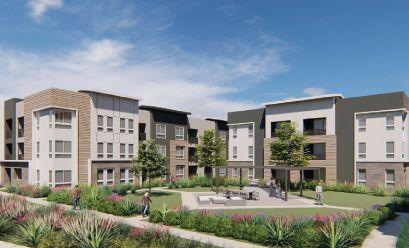
$66,150,000
Palm & Hollister Apartments
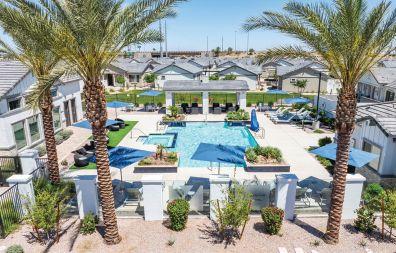
$55,236,000 Yardly Paradisi BTR | 193 units | Surprise, AZ Sale & Financing
Whether you’re buying, selling or financing commercial real estate, we are invested in your success. At Northmarq, we deliver a personalized experience, with unmatched access to lenders, investment sales experts, a best-in-class loan servicing platform, timely trends and insights, and much more.
Work with us today. We’re invested in your success.
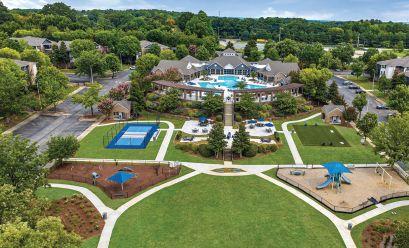
$55,000,000
403 West Apartments
438 units | Raleigh, NC Bridge Loan
198 units | San Diego, CA Construction + Mini Perm Loan These may look like transactions, but to us they’re more than that.
GREEN LIGHTS SIGNAL AN ENCOURAGING 2026 MULTIFAMILY OUTLOOK
It may be standard practice for some to greet the new year—any new year—with declarations of guarded, cautious or restrained optimism. Yet in many respects that fairly describes this moment for multifamily investors.
That’s a topline assessment from Walker & Dunlop’s Kris Mikkelsen, the firm’s executive vice president and cohead of their national Capital Markets group. Since assuming leadership of the investment sales team in 2020, he has helped grow it from a regional boutique to a nationally respected platform with over $70 billion of volume transacted during that time.
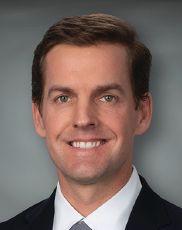
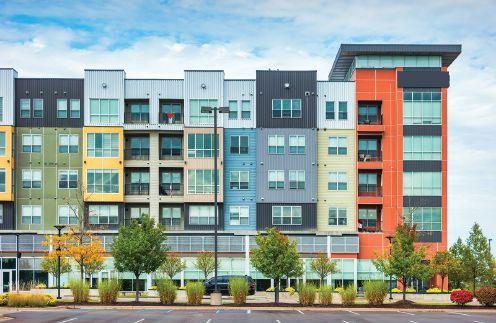
What’s Mikkelsen’s outlook for 2026? Will the new year continue on a similar trajectory as 2025? The veteran industry leader recently shared his views.
How did 2025 play out in your view? Did the year end on a high note?
For the most part, yes. The beginning of the year started slowly, despite a belief that a lot of deferred transaction activity from 2023 and 2024 would happen. It didn’t quite work that way. By mid-year volume numbers started to pick up again. Through September, transaction activity has improved by 40% over the same period in 2024. However, that growth is really more a statement about just how subdued 2024 was.
What role will interest rates play in 2026?
If you go back to our investor sentiment surveys of 2023 and 2024 you see a lot of hope around rate relief. There aren’t many decision makers making their 2026 plans based on that same hope. I think we’ve adjusted to this rate environment.
Given that, what is your outlook for 2026?
My approach is to look at the multifamily segment through two lenses: operating fundamentals and capital flows. Capital flows are largely positive. We’re seeing more liquidity coming back to the market every day. More retail capital is coming back into the market on the equity side. There’s more activity from separately managed accounts. There are more openended funds operating today than there were six to nine months ago. More closed-end fund raising is happening. Those are all very positive indicators.
And operating fundamentals?
That picture varies by region. In some Sunbelt markets you may be asking ‘Where is the near-term growth?’ It’s true those markets have absorbed a significant amount of inventory, but it took some heavy concessions to get there. That eats into NOI. The picture is better in the Midwest. If you have capital that’s trying to generate near-term cash flow, markets like Kansas City, Indianapolis, Columbus in the Midwest are a great place to be. Fundamentals in Gateway markets, where you saw supply constrained through the last development cycle, are healthy. Boston, for example, kept supply in check, maintained strong operating fundamentals, and was our most active sales market in 2025.
Any other signs you’re tracking for an improved 2026?
Capital flows are steadily improving. Equity capital flows are seeing more activity across both institutional and private capital. The increased caps from the agencies will be helpful for multifamily financing markets. After so many questions around the direction of the economy, we are seeing real resiliency. 4.3% GDP growth in Q3, unemployment ticked down to 4.4% and inflation decelerated through the second half of the year. Those are healthy indicators. We need that resiliency to continue into the new year and lay the foundation for recovery in operating fundamentals.
Bottomline: We have green lights around capital flows and now an even more positive outlook around a material recovery in operations. That paints a positive picture for 2026. We know the long-term demand for shelter will remain, even in the age of AI!
Learn how Walker & Dunlop multifamily experts can help you achieve your investment goals by visiting: walkerdunlop.com/capital-markets
Secure Your Opportunity
Over $200bn in Multifamily Debt and Sales Volume Since 2021
Our capital markets experts offer a comprehensive suite of services, delivering leading multifamily financing, capital advisory, and investment sales experience.

#1
FANNIE MAE DUS® LENDER1 in 2024
#3 HUD MULTIFAMILY LENDER2 in 2025
#3 GSE LENDER OVERALL1 in 2024 #4
OUR TRACK RECORD OF EXCELLENCE #7
FREDDIE MAC OPTIGO ® LENDER1 in 2024 #6
CRE OVERALL LENDER WITH MBA3 in 2024
MULTIFAMILY SALES BROKER WITH MBA3 in 2024

A Smarter Path to Fee Transparency
Examining the tools, standards, and regulatory attention influencing how renters see the full cost of housing.
For most american families, rent is the single-largest bill they pay each month. Before signing a lease, renters need to understand not just the base rent, but the full cost of living in a home. That clarity matters more than ever as housing costs continue to rise and household budgets are stretched thin. Technology can now provide that information, and operators agree it’s the right direction for rental housing.
The good news is that the tools to provide clear, upfront pricing already exist, and rental housing providers are working quickly to deploy them. At the Real Estate Technology and Transformation Center (RETTC), we see transparency as a practical way to strengthen trust in the rental market while supporting affordability. Done right, it helps renters make informed decisions without driving up costs or reducing choice.
Transparency is not a new concept for housing providers. For years, the industry has invested in technology and systems that make pricing information easier to share and easier to understand. One of the most important tools supporting this progress is the Multifamily Information and Transactions Standards, better known as MITS.

by DARIA DUDZINSKI and LORI REEVES
MITS establishes a common technical framework or shared “language” that allows rental housing systems to communicate consistently across platforms. In practical terms, its latest update helps ensure that rent and fees appear accurately, and the same way, wherever renters search.
Many housing providers and technology partners have already adopted MITS 5.0 because they recognize that transparency and affordability go hand in hand. These industry-led efforts demonstrate that meaningful transparency can be achieved without rigid, one-size-fits-all regulation. In fact, the continued push for MITS 5.0 adoption couldn’t come at a more critical time.
In early December, the Federal Trade Commission (FTC) and state of Colorado reached a settlement with
Greystar over fee disclosure. The FTC chair’s position is that fee transparency in housing is no longer optional, it is required:
“… The deceptive prices excluded several fixed, mandatory monthly fees, instead of the total monthly price that people would have to pay, in violation of the FTC Act, the Gramm-LeachBliley Act, and the Colorado Consumer Protection Act,” noted the FTC’s press release in early December.
Under the circumstances, RETTC strongly encourages rental housing providers to continue their work here and be sure to review the statements made by the FTC and the Attorney General of Colorado on rental housing fee transparency.
As part of RETTC’s ongoing effort to draw attention to the growing interest by federal, state, and local regulators in rental housing fees, visit rettc.org/resources/fee-transparency to find a timely new resource guide for RETTC members.
Despite the industry-led progress to date, some policymakers at the state and local levels are proposing new regulations to mandate rental fee transparency. While well intentioned, these proposals often assume that additional regulation can deliver transparency at no cost to renters. In reality, housing operations are complex, and new regulatory requirements rarely come without trade-offs.
Legislating and regulating fee transparency injects complexity and confusion into routine operations, slows down leasing, and diverts resources away from technology upgrades and resident-facing service improvements. Whether a regulation focuses on presentation or prohibition, the end result is often the same: higher costs that ultimately fall on renters.
Parking provides a clear example. Some regulations would require housing providers to advertise a single “total rent” that includes parking, even though a renter may not own a car.
Many providers charge separately for parking so that renters who do not need it can save money. For car-free households, this means lower housing costs. Requiring parking fees to be bundled into advertised rent forces providers to overstate prices for many renters and reduces, rather than improves, price transparency.
Policymakers can support technologydriven models like MITS, partner with housing providers, and avoid duplicative or conflicting rules that undermine accuracy and choice.
Daria Dudzinski is the director of advocacy at RETTC, where she leads advocacy efforts on Capitol Hill and with federal policymakers to advance industry interests.
Lori Reeves is an industry veteran with over 30 years’ experience working on all aspects of technology in the multifamily industry. Reeves has been working as a senior adviser for National Multifamily Housing Council since early 2023 focusing on the RETTC organization.
Similarly, proposals that ban parking fees altogether would require housing providers to roll the cost of parking facilities into base rents. That approach raises rents for everyone, including renters who do not use parking, and forces non-drivers to subsidize car owners. This outcome undermines both affordability and equity.
Pet fees illustrate the same dynamic. Data consistently show that pet-owning households often generate higher average property damage than households without pets. Pet fees and refundable pet deposits allow housing providers to ensure that only pet owners bear these additional costs. Banning pet fees does not eliminate the cost of pet-related damage. It simply shifts those costs into base rent, forcing renters without pets to subsidize those who have them.
Poorly designed, contradictory, and fragmented regulations across jurisdictions can also interfere with legitimate business practices and overlook rising and uncontrollable expenses facing housing providers today, including insurance premiums, property taxes, regulatory compliance costs, and increasing rental fraud. Ignoring these realities does not lower costs. It redistributes them in ways that ultimately harm renters.
A more effective path forward builds on what is already working. Policymakers can support technology-driven models like MITS, partner with housing providers, and avoid duplicative or conflicting rules that undermine accuracy and choice. This approach strengthens transparency without sacrificing affordability or housing supply. RETTC stands ready to work with policymakers to ensure transparency efforts truly serve renters and help address our housing affordability challenges.
3 Tech Trends Set to Define 2026
AI-powered leasing, centralized operations, and elevated resident experience are reshaping how owners create value in a shifting market.
by CHRISTOPHER YIP

2025 was a year of cautious optimism for the multifamily sector. Macroeconomic headwinds, including slowed rent growth, labor shortages, and rising operational costs, presented challenges but also spurred continued innovation. Real estate technology has remained a bright spot amid uncertainty, and startups focused on creating value by solving operational pain points have taken center stage.
As we enter 2026, the trends and technologies emerging will be critical in shaping the future of multifamily real estate. Here’s a look at the most significant shifts and advancements that are likely to define the sector in the coming year.
1. AI USHERS IN A NEW AGE OF LEASING
In the past year, multifamily operators have faced mounting pressure as they navigate a slowed rental market and higher resident expectations for speed and transparency during the leasing process. In response, owners and operators turned to artificial intelligence (AI)-enabled leasing technology to do more with leaner teams and reduce friction across the renter journey. Demand surged for solutions that embed directly into core workflows, including CRMs, screening platforms, marketing automation tools, resident experience apps, and geo-optimization technologies that demonstrate clear impact on lead quality, conversion rates, and operating efficiency.
We expect to see this trend proliferate in 2026 as AI fundamentally reshapes how renters discover and evaluate apartments. Early-stage search is already shifting away from traditional listing sites toward large language modelpowered guidance that synthesizes pricing, availability, amenities, and location context in real-time. As a result, operators will increasingly prioritize technology that optimizes how assets are interpreted and surfaced by AI-driven search and recommendation engines. In this next phase, leasing success will be defined not just by visibility but by how
effectively properties are understood and positioned with AImediated renter decision making.
2. CENTRALIZATION OF OPERATIONS AND TECH STACKS
It’s become clear that centralization has been solidified as a key operational strategy, especially as many owners and operators look inward for value creation amid uncertain market conditions. Owners have become increasingly aware that fragmented systems and disconnected workflows create inefficiencies, slow decision making, and dilute accountability. The result has been a growing push to rethink how people, processes, and technology platforms work together across a portfolio.
In 2026, property owners will continue to prioritize integrated technologies that automate manual work, reduce handoffs between teams, and support consistent execution at scale. Rather than layering new point solutions onto already complex ecosystems, owners will focus on consolidating their tech stacks around platforms that own core workflows end to end. While leasing has been an early focus of these efforts, the next wave of centralization is extending deeper into operations, particularly in maintenance, vendor management, and procurement, where fragmented systems often create outsized cost and inefficiency. Centralization will emerge as a foundational driver of efficiency, enabling leaner teams, clearer data visibility, and a more seamless experience across core functions like leasing, maintenance, capital planning, and resident engagement.
3. RESIDENT EXPERIENCE AS A KEY PERFORMANCE METRIC
As renters stay in place longer and expectations continue to rise, the resident experience is becoming a defining aspect of building performance. Owners and operators do not view retention as a simple leasing metric, but a critical operational strategy directly tied to net operating income. When a resident’s journey from application to move-in to lease renewal feels disjointed, it causes frustration and erodes loyalty.
To address this, operators are leaning into technology that removes redundancies and simplifies everyday interactions. Solutions that streamline amenity access, billing, maintenance, communication, and renewal workflows are gaining traction, particularly those that integrate cleanly into existing systems. The goal is to create a more intuitive, consistent experience that supports long-term retention and operational efficiency.
As we kick off 2026, the through line across real estate technology is clear. Progress will be defined less by novelty and more by execution. Whether through AI-enabled leasing, centralized operations, or a more seamless resident experience, the winners will be companies and operators focused on solving real problems with proven, integrated solutions.
Christopher Yip is a partner at RET Ventures.






















































the big








BY CHRIS WOOD
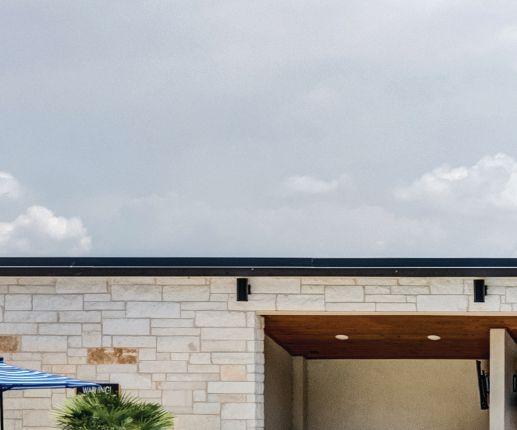


















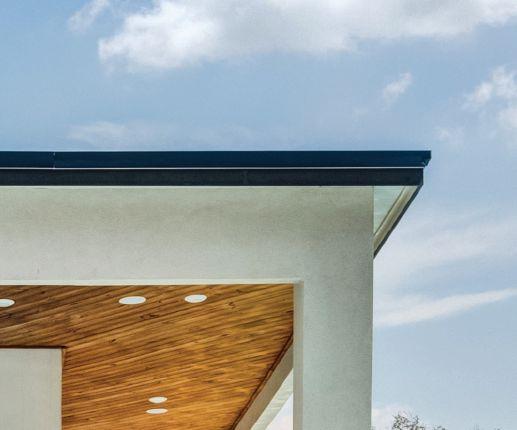

Why 2026 favors experienced and disciplined multifamily owners, operators, and developers.



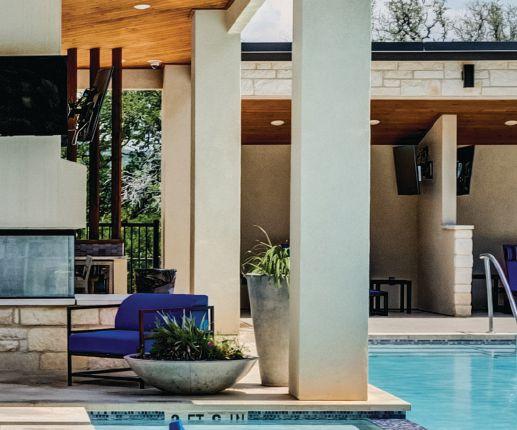



Lynd Co. is betting on fundamentals with the 324unit Amara in San Antonio, a luxury one- to three-bedroom community designed to hold occupancy through the cycle.
As jpi heads into 2026, the work looks less like chasing the next cycle and more like preparing for the one after that. After a year marked by volatile capital markets, uneven fundamentals, and a long digestion of new supply, the Dallas-based apartment developer is operating with a familiar mindset: patience, discipline, and a willingness to lean in when others pull back. For Mollie Fadule, the firm’s chief financial and investment officer, the year ahead is less about forecasting a dramatic rebound and more about positioning the platform to thrive once the noise fades.
“We’re disciplined in our underwriting and focused on the long game,” Fadule says. “When you look out 10 years, the math on housing demand is pretty straightforward. Our job right now is to stay selective, stay patient, and keep building high-quality product in markets where the fundamentals will ultimately reassert themselves.”
That back-to-basics mentality is emerging across the multifamily ecosystem as 2026 shapes up to be a transitional year that rewards experienced operators with deep balance sheets, institutional processes, and the conviction to underwrite beyond the current cycle. Capital is still cautious, pricing remains sensitive to interest rates, and transaction volume is finding its footing. But for sponsors with pedigree and perspective, the reset underway is creating the foundation for the next phase of growth, starting with how capital is sourced, structured, and deployed.
Capital Markets: Pricing Certainty in a Year Without It
For multifamily owners and investors heading into 2026, capital is no longer frozen, but it’s far from fully mobile. Across debt and equity markets, the past year has brought incremental improvement in liquidity, tighter spreads, and a growing willingness to transact. What it has not delivered is clarity around valuation, and that uncertainty continues to shape how capital is deployed, withheld, or structured.
Much of the hesitation traces back to the long end of the yield curve. While short-term rate cuts have helped relieve pressure on floatingrate debt and construction loans, most operators remain focused on where longer-term rates ultimately land. The 10-year Treasury, in particular, continues to anchor exit assumptions, cap rates, and forward pricing, especially in an environment where rent growth is expected to remain modest.
“Once buyers and sellers can agree on where values are headed, activity will pick up in a more meaningful way.”
—matthew rosenthal
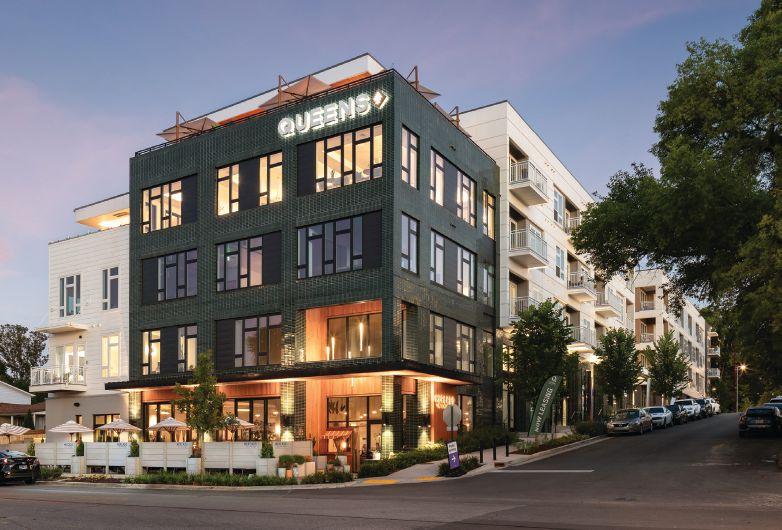
In Nashville, Tennessee, Origin Investments is positioning the 221-unit Queens Wedgewood Houston as a stabilized Class A community built for long-term operating durability.
Greg Bonifield, partner at Charleston, South Carolina-based Woodfield Development, points out that modest movements at the front end do little to resolve that challenge. “Every 25basis-point (bp) cut is helpful,” he says, “but it doesn’t really move the needle on whether a deal works or not. What matters more is what’s happening with five- and 10-year Treasury rates, because that’s what buyers are underwriting to. Until there’s more confidence there, it’s hard to close the gap between buyers and sellers.”
Debt markets, by contrast, have been quicker to respond. Agency lenders remain active, banks have become more competitive, and spreads have compressed meaningfully from their peak. Much of that activity has gone toward refinancing rather than acquisitions, as owners prioritize managing maturities and stabilizing balance sheets. Preferred equity and structured capital have also stepped in, particularly for sponsors seeking duration without locking in today’s values through a sale.
Equity capital, however, has been slower to reengage. That caution
reflects less concern about fundamentals than about exit math. David Scherer is co-founder and co-CEO of Chicago-based Origin Investments and says even relatively small changes in long-term rates can have an outsized impact on development and investment returns. “On a typical development deal, a couple hundred bps in interest rates can mean millions of dollars over the life of the loan,” he explains. “That difference can materially change your equity returns. So while people pay attention to Fed cuts, what really drives decisions is whether longterm rates feel stable enough to underwrite an exit with confidence.”
That emphasis on stability rather than stimulus is shaping behavior across the market. Many developers are using 2026 to rebuild pipelines, advance entitlements, and selectively position projects for delivery into a more supply-constrained 2027 and 2028. On the acquisition side, buyers are active but selective, targeting assets with discounted bases, operational upside, or recapitalization needs rather than relying on near-term cap rate compression.
Matthew Rosenthal, co-founder and managing director at Boca Raton, Florida-based Eastham Capital, sees that dynamic playing out in transaction timing. “Cap rates have come down a bit as interest rates have eased,” he says, “but the real unlock comes when the long end starts to feel more predictable. Once buyers and sellers can agree on where values are headed, activity will pick up in a more meaningful way.”
Until then, capital markets are reinforcing a broader return to fundamentals. With limited expectation of valuation-driven upside in the near term, owners are underwriting 2026 as a year to earn performance through execution by protecting occupancy, managing concessions, and controlling expenses. In that environment, certainty carries a premium, and capital is gravitating toward sponsors and strategies that can operate effectively while waiting for the next phase of the cycle to take shape.
“So much of the debt is sitting on debt funds’ balance sheets, and they don’t have regulators telling them to sell or mark assets down,” says David Lynd, president and CEO of Shavano Park, Texas-based Lynd Co. “What you end up with are zombie deals that should have reset by now but haven’t.”
Operations: Defending NOI in a Flat-Growth Environment
If capital markets in 2026 reward patience, operations demand precision, with owners and managers describing the coming year less as a recovery phase than as a period of disciplined execution, where protecting cash flow and resident relationships takes precedence over chasing rent growth. With many markets still digesting new supply, operators are underwriting 2026 as a year to defend value, not stretch assumptions.
That defensive posture begins with an acceptance of the operating reality. “On a lot of these assets where there’s a lot of supply, we’re playing more defense than offense,” says Philip Morgan, CEO of the Houston-based Morgan Group. Morgan notes the immediate goal is to stabilize occupancy and wait out the supply wave rather than force rate increases that the market will not support. For many portfolios, success in 2026 will be measured by consistency rather than growth.
Renewals, as a result, have become the most important revenue lever. Turnover is expensive in any environment, but in a concessionary market it can erase months of progress. “Retention is huge,” says Bonifield. “Turn costs are high, and, if you’re in a concessionary environment, you’re taking a step back on net effective rent as well. Avoiding those turns goes straight to the bottom line.” Operators are
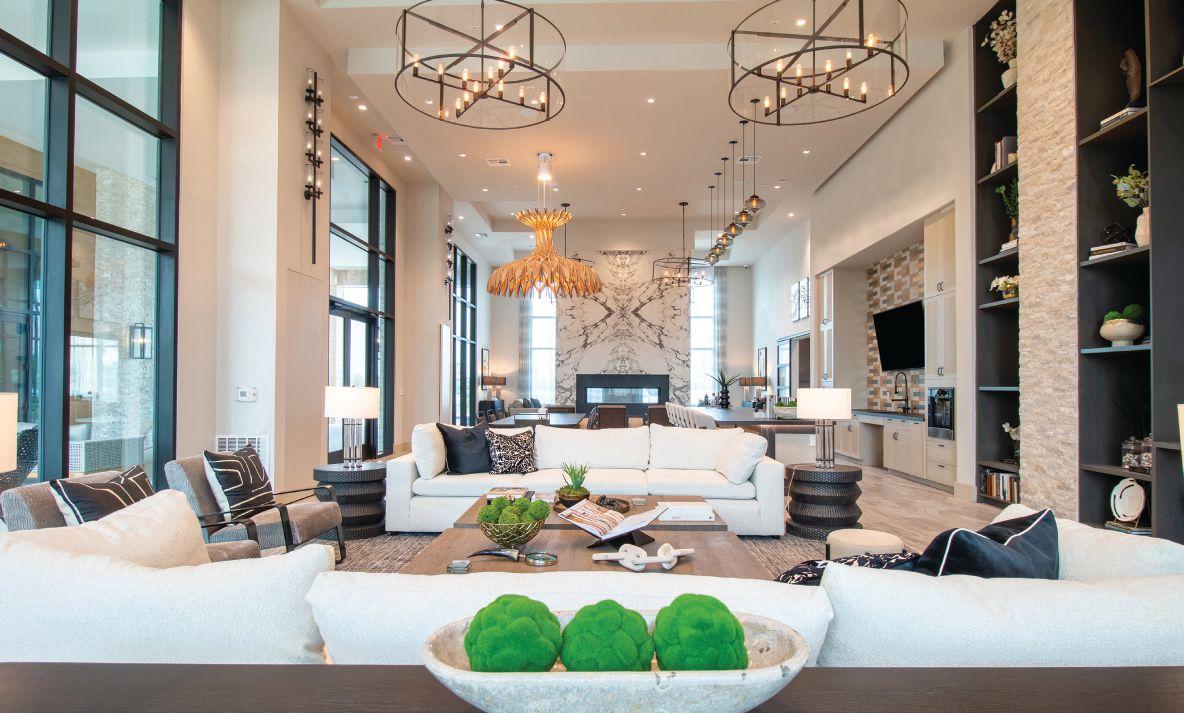
Eastham Capital repositioned and sold the 288-unit Monroe Apartments in Tallahassee, Florida, executing a value-add strategy that delivered strong investor returns in a reset market.
increasingly willing to be flexible on renewal pricing if it prevents vacancy and the need to reset rents through newlease incentives.
That focus has shifted attention away from asking rents and toward concessions, which many view as the real battleground for performance. Scherer notes that operators are making decisions that would have been unthinkable in prior cycles. “We’re having conversations we’ve never had before, like whether to offer concessions on renewals,” he says. “But if you don’t, you risk vacancy, downtime, and even more concessions on a new lease.”
Expense control also remains part of the equation, but most operators caution against cutting in ways that undermine long-term asset value. Insurance, payroll, and marketing are being scrutinized, yet the emphasis is on efficiency rather than austerity. As Ian Mattingly, president of Dallas-based owner-operator LUMA Residential puts it, “Asset value is primarily driven by revenue, and only distantly secondarily by expenses. We’re far more focused on maintaining a defensive posture on revenue than trying to cut our way to success.”
Technology is playing a supporting role in that effort, helping streamline maintenance workflows, communications, and administrative tasks. Still, operators are clear that tools are only as effective as the teams using them. “We’ll continue to incorporate artificial intelligence for operational efficiencies,” says Chris Coleman, president of the Mount Prospect, Illinois-based Nicholas Family Cos.,
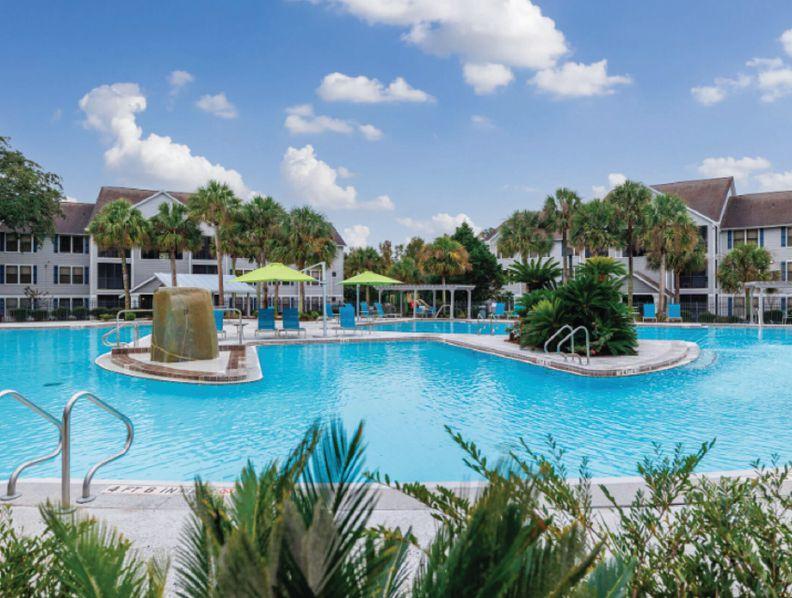
Lynd Co. developed the 360-unit Potranco Commons in San Antonio, a $70 million project focused on durable demand with resortstyle and familyoriented amenities.
“but the personal interaction between the on-site team and residents remains paramount.”
That human element ultimately brings operations back to the concept of community. As renting becomes a longer-term lifestyle choice for many households, owners are leaning into service, shared spaces, and on-site culture as retention strategies. Bonifield sees that as inseparable from the physical product itself. “People stay in buildings where they feel a sense of community,” he says. “We spend a lot of time thinking about shared spaces and experiences that make residents want to stay.”
Development: Building for the Market That Follows
For multifamily developers, 2026 is a year to prepare for rather than chase momentum, with builders describing a market defined by patience and foresight, where today’s decisions are shaped less by current leasing conditions and more by what supply, demand, and capital availability
LYND CO.
will look like when projects actually deliver. With construction timelines stretching two to three years, development strategy has shifted decisively toward building into the next cycle, not the last one.
“So even in markets that feel difficult today, the supply picture two to three years from now looks very different.”
—mollie fadule
At JPI, that long view has become foundational to how projects are evaluated and advanced. Fadule points out that current headlines often obscure what developers can already see coming. “If you look at 2026 and 2027, the starts that are projected are the lowest total supply in 10 years and well below the 10-year average,” she says. “So even in markets that feel difficult today, the supply picture two to three years from now looks very different. That’s why we’re still building.”
That visibility into future supply has encouraged disciplined developers to keep moving, even as others pull back. For JPI, that has meant continuing to start projects while competitors sit on the sidelines. “The cycle of our investments is about three years,” Fadule explains. “There are very few businesses where you can say with confidence what your competitive environment is going to look like when your product comes online, but, in multifamily, we can. The writing is pretty much on the wall for what supply will look like when these projects deliver.”
Capital constraints, however, are reshaping which projects actually make it out of the ground. Equity is selective, underwriting standards are tighter, and lenders are scrutinizing market depth and sponsor execution more closely than they have in years. As a result, scale and track record
matter. Bonifield says that reality has forced greater discipline across the board. “We’re encouraging capital to invest today in deals that will open over the next 12 to 36 months,” he explains, “but only in locations where we believe the long-term fundamentals are undeniable. This is not an environment to force starts just to stay busy.”
While cost control remains essential, developers are careful to distinguish efficiency from compromise. At JPI, design decisions increasingly focus on eliminating wasted space and aligning product with how residents actually live, rather than chasing amenity trends that inflate budgets without improving performance. That mindset extends to JPI’s growing mixed-income strategy, where operational durability is built into the product itself. “We build the workforce units exactly the same as the marketrate units,” Fadule says. “There’s no distinction in quality or experience, and residents don’t know who’s in which unit. That creates stronger communities and better longterm outcomes.”
That emphasis on community is increasingly shaping development decisions across the industry. Developers are designing projects not just to lease quickly, but to retain residents through multiple years of flat or uneven rent growth. Shared spaces, thoughtful layouts, and cohesive environments are now viewed as operational tools as much as design features.
In a cycle defined by caution rather than exuberance, development in 2026 is likely to be quieter but more intentional. The projects moving forward today are being built with the expectation that patience, discipline, and community-driven design will define the next phase of multifamily growth.
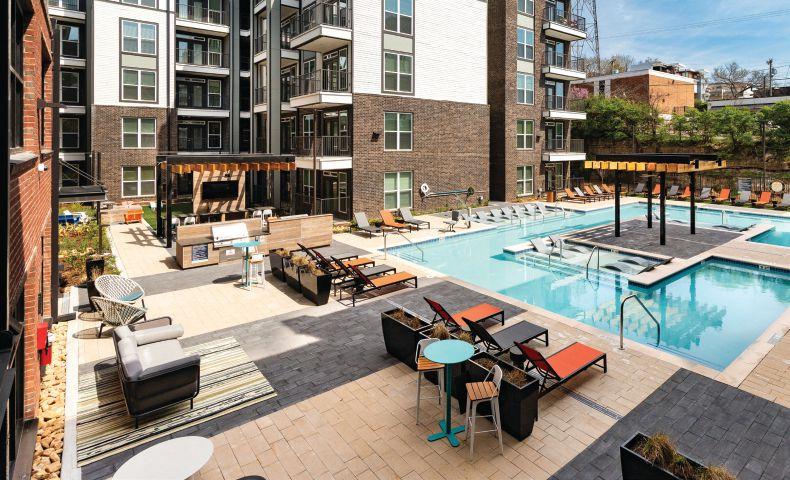
Origin Investments is positioning the 221unit Rye Charlotte Ave community in downtown Nashville as a stabilized urban asset with steady lease-up and longterm fundamentals.
Deal Flow: Selectivity Returns to the Foreground
After two years of stalled pricing and hesitant capital, multifamily deal flow in 2026 is also beginning to move again, albeit slowly, deliberately, and with far greater selectivity than in the previous cycle. Transactions are not accelerating because conditions have suddenly improved, but because buyers and sellers are increasingly underwriting from the same reality. Expectations have narrowed,
assumptions have reset, and experienced investors are finding room to transact where conviction and execution align.
One of the most meaningful shifts has been the reemergence of usable transaction data. Scherer notes that pricing clarity has improved even amid rate volatility. “Cap rates have been pretty stable the last six to 12 months,” he says. “What’s changed is that there’s actual transaction volume again, so people have real data to underwrite to. That alone makes a huge difference.”
Deal timing, however, reflects a more deliberate market. Rosenthal points out that extended closing periods have become the norm. “It used to be 60 days to close a deal. Now it’s 90 to 120,” he says. “That’s just the reality. But deals are getting done because expectations are more realistic, and the numbers actually work.” That realism is evident on both sides of the table, with sellers increasingly aligned to current pricing and buyers underwriting conservatively.
Much of today’s activity is being driven not by distress, but by capital fatigue and balance-sheet management. Morgan describes the opportunity set as nuanced rather than chaotic. “We don’t think it’s distress, but there are tired capital stacks and investors where it’s simply time to exit,” he says. “That’s creating opportunities to buy good assets at a basis that makes sense, even if the yield is still compressed.” As a result, recapitalizations, partial exits, and structured transactions are likely to be more common than outright fire sales.
Geography continues to shape where deals can clear, though national forces still frame the environment. Rosenthal highlights that divergence without overstating it. “The Midwest is a completely different planet from the Sun Belt right now,” he says. “They didn’t build much, so cash
Morgan Group is defending net operating income at Pearl on the River, a 356-unit gardenstyle apartment community in Pompano Beach, Florida, integrated with nearby retail and services.
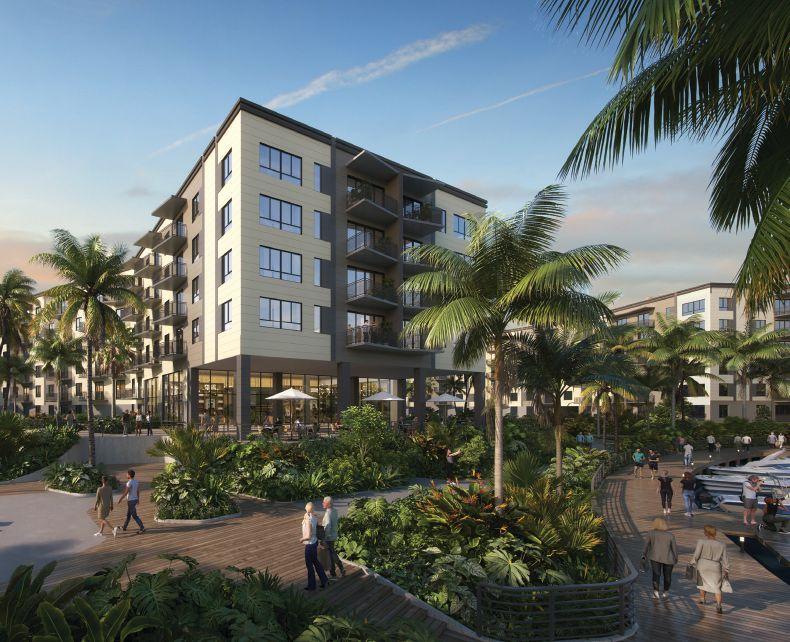
flow is real. We’re seeing rent growth there, while other markets are still absorbing supply.” That contrast has sharpened buyer focus on local fundamentals, submarket depth, and near-term cash flow.
Across markets, buyers are underwriting operations rather than exits. “The deals that work are the ones that can perform without needing the market to save you,” says Mattingly.
In that sense, deal flow in 2026 reflects a familiar pattern. The market is functioning closer to historical norms by rewarding discipline, pricing clarity, and operational capability while setting the stage for a steadier, more sustainable phase of multifamily investment activity.
Back to Fundamentals
If 2026 is not a year for bold predictions, it is a year for clarity. Across capital markets, operations, development, and acquisitions, the message from seasoned multifamily leaders is strikingly consistent: This is a business returning to fundamentals. Growth will be measured, capital will remain selective, and underwriting discipline will matter more than financial engineering. The excesses of the last cycle are still working their way through the system, but in their place is a quieter, more durable opportunity that favors experience, scale, and the ability to execute in unglamorous conditions.
As the industry resets, success in the year ahead will be defined less by timing the market and more by surviving it well: protecting downside, preserving assets, and positioning portfolios for the next turn of the cycle. For operators who have been here before, that playbook is familiar.
“At the end of the day, apartments always come back to fundamentals,” says Lynd. “You can reskin this business any way you want, but it still comes down to good locations, good product, collecting your rent, and watching your expenses. That’s how this business has always worked, and that’s how the winners are going to separate themselves again.”



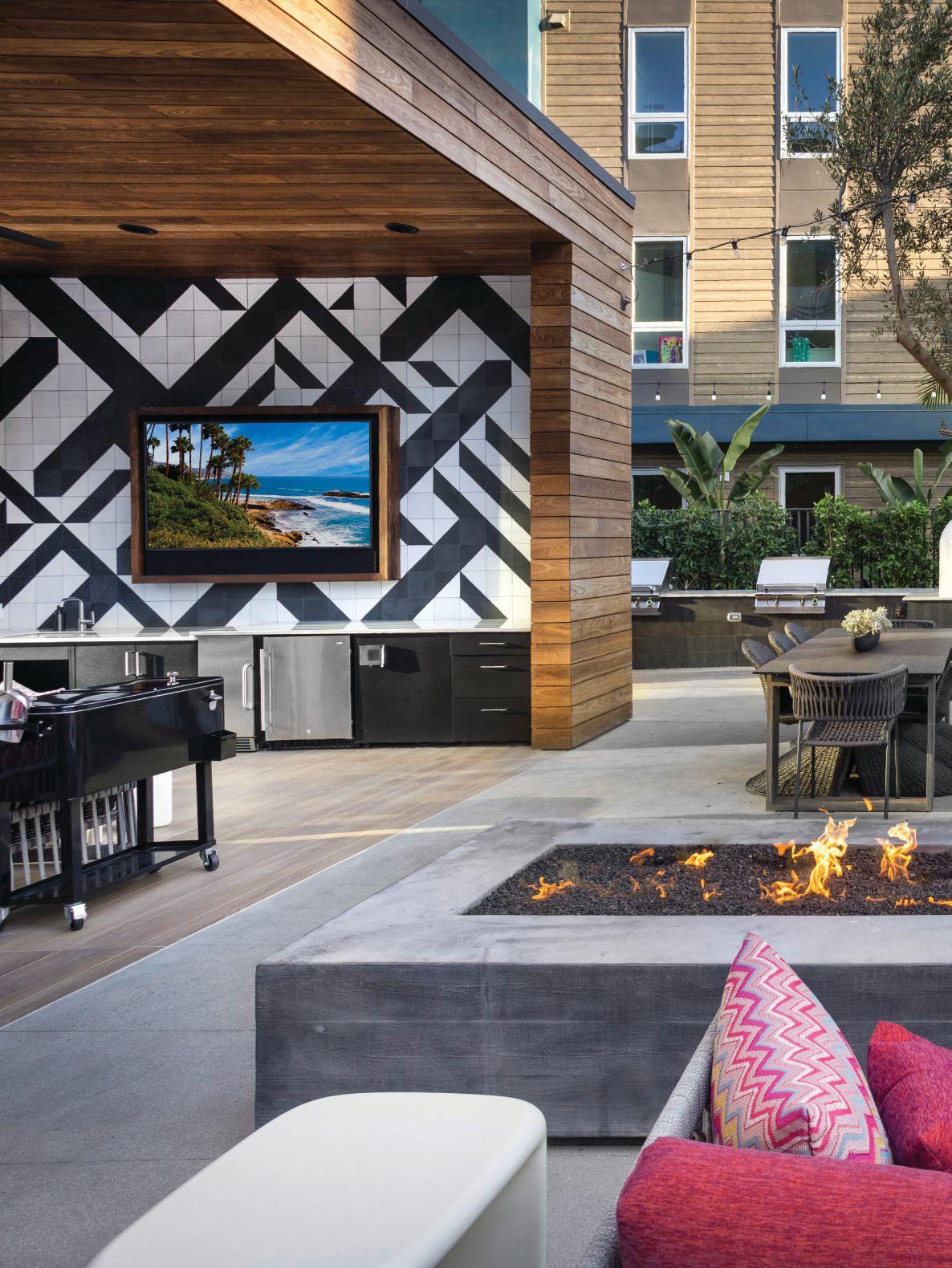
At Broadstone Edition in Irvine, California, outdoor amenities include a fire pit, a pizza oven, and shared dining spaces designed for comfort and social connection.
Club Room the Be Yond

Multifamily amenities in 2026 prioritize wellness, adaptability, and measurable ROI over oversized, underused spaces.
BY CHRISTINE SERLIN
In 2026, multifamily design is moving beyond check-the-box amenities. There’s growing consensus that underperforming spaces—large lounges, minimalistic gyms, and inflexible coworking areas—no longer justify their footprint. Instead, architects and designers are delivering more intentional amenities that combine wellness, convenience, flexibility, and hospitality to drive engagement and measurable return on investment (ROI).
“Traditional amenities like generic clubrooms, oversized lounges, or standard gyms are no longer performing at the level they once did. While still included, they are being reimagined to support today’s priorities: wellness, resident engagement, and physical use,” says Phyllis Hartman, founder and principal of Hartman Design Group. “Multifamily design in 2026 will be defined by a strong emphasis on resident well-being, long-term sustainability, and personalized comfort. It will move away from sterile minimalism toward more human-centered, authentic, and timeless environments.”
Megan Valentine, director of sustainability at KTGY, echoes the importance of flexibility when it comes to amenities and common areas.
Atwell on Spring is a 375-unit community in Silver Spring, Maryland, with art-driven design woven throughout its amenity spaces.
“Amenity trends shift so frequently that flexible spaces consistently outperform hyper-specific ones over the life of a building,” she notes. “Spaces that can adapt to future trends without major renovation are inherently more sustainable. This aligns with the movement toward self-contained elements that can be swapped out over time.”
Jonathan Delcambre, residential practice area leader at Gensler, shares that multifamily properties are evolving after having followed traditional models for hospitality and wellness for well over two decades.
“Today, the large conference room with one table and 10 chairs is being replaced with smaller spaces and quiet pods for privacy. Hybrid workers have introduced a new dynamic for the workday, requiring spaces in and around their residences to get tasks done, hold meetings, etc. Privacy,
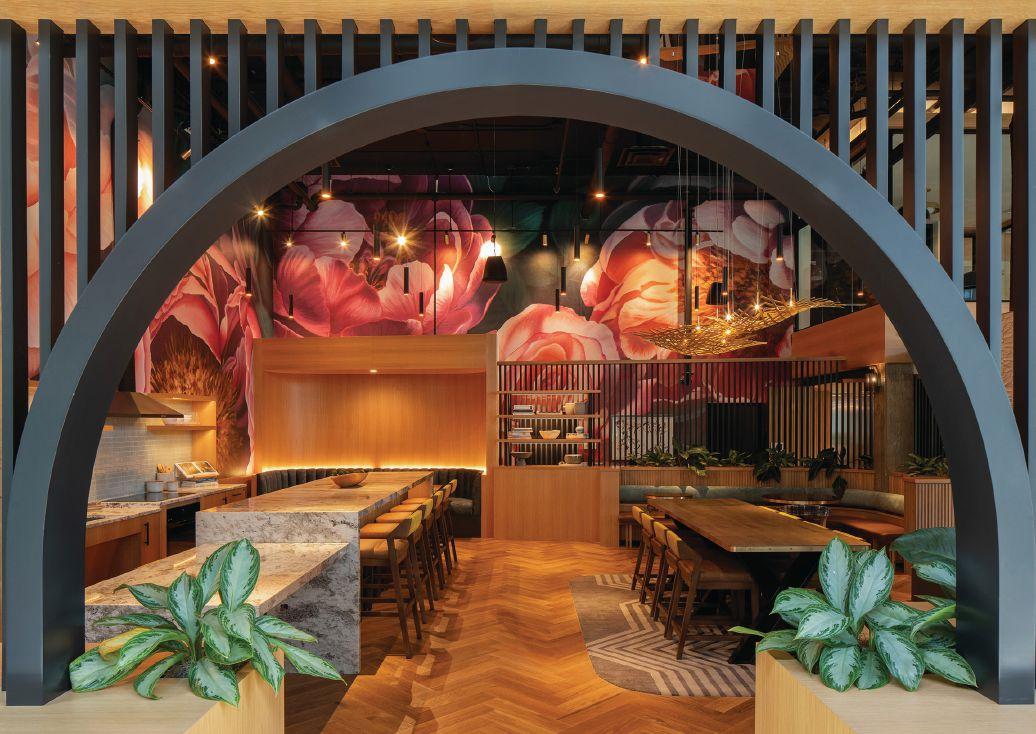
“Spaces that can adapt to future trends without major renovation are inherently more sustainable.”
—megan valentine
flexibility, and variety have become the norm,” he says. “This applies to wellness amenities in multifamily properties as well. Large resort pools have been replaced with lap pools, saunas, and even cold plunge pools.”
Delcambre also says you start to see positive ROI when a program of amenities becomes a destination for renters rather than another addon. “It becomes an attraction; something they look forward to revisiting repeatedly,” he says. “We tend to see this when amenity programs combine physical offerings with wellnessfocused programming. But we’re always after measurable outcomes backed by scientific validation and designed with transparency.”
Other design features and amenities are falling by the wayside.
“Amenity spaces are shifting away from built-in elements toward self-contained, plug-and-play units that can be swapped out as trends change,” notes KTGY principal Kyle Millar. “Rightsizing is critical: Fewer amenities executed well are preferable to many undersized or oversized spaces.”
Daniel Gehman, director of multifamily at Ware Malcomb, adds two popular trends that may be losing their appeal to renters and operators.
“I’ve heard recently about owners removing pickleball courts and replacing them with something that doesn’t create a noise nuisance,” he says. “I’ve also heard a little fatigue surrounding speakeasies and the extent to which they’re actually used.”
For Gehman, the must-have amenities include a fitness center, pet amenities, a lounge area with a vibe between a hotel lobby and hip coworking space, and a rooftop deck.
“I expect resident price sensitivity to continue to be a big driver for the next couple of years. With rents flat and/ or occasionally declining in some markets, developers are asking, ‘What’s the bare minimum of amenities we can provide without losing potential residents?’ No one has a crystal ball with which to answer this question; it’s really rather more like alchemy, in my opinion,” he adds.
Architects and interior designers reveal their top amenity and design trends shaping multifamily communities in 2026.
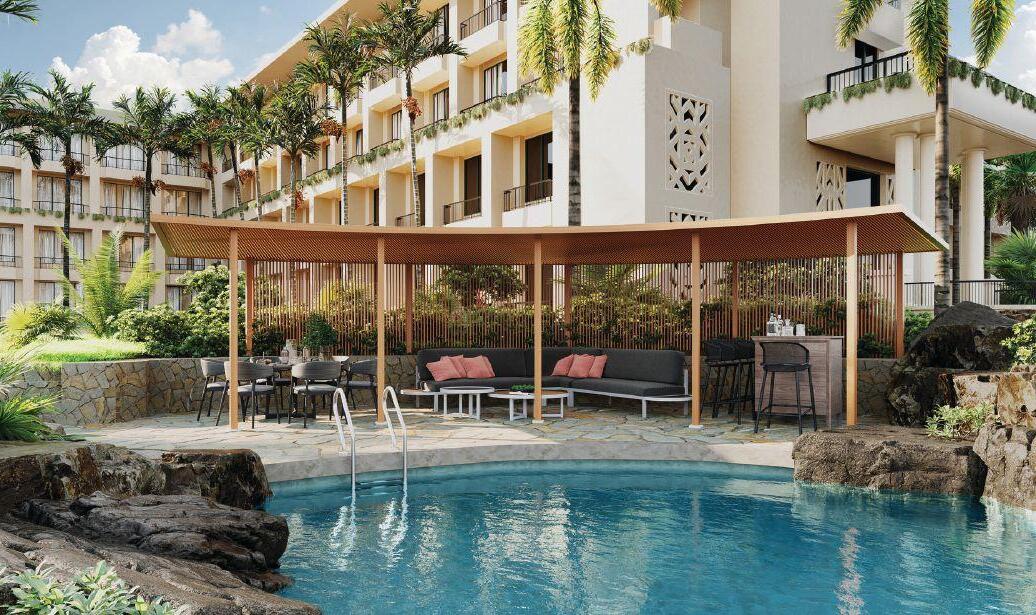
A pool deck design concept from architect Ware Malcomb.
1. FINISHING TOUCHES
Biophilic and natural elements remain strong in multifamily community designs, note Hartman and Millar.
“Expect intent-driven use of wood, stone, natural textures, murals that emulate nature, and indoor/outdoor connectivity,” says Hartman. “Large exterior views, operable walls, and curated plantings (real or synthetic) support the growing desire for a strong connection to nature.”
In addition to wood, plants, and earth tones integrated throughout, Millar says finishes are trending toward texture, including fluting, 3-D wall coverings, and busy wallpaper, used as accent walls instead of bold paint colors.
He notes murals are increasingly being incorporated into architecture as focal points.
According to Millar, decorative lighting also is more architectural, with cove lights, washes, and integrated elements complementing textured finishes and art. When it comes to smart lighting, Hartman adds that expansive windows maximize natural light and reduce energy use.
“Expect intent-driven use of wood, stone, natural textures, murals that emulate nature, and indoor/ outdoor connectivity.”
—phyllis hartman
Ovation
Paired with LED and occupancysensor systems, this can further reduce electrical costs.
When it comes to designing amenity and common spaces, Hartman suggests looking outside of the property.
“Multifamily interiors are increasingly reflecting local culture, geography, and history,” she says. “This elevates the experience beyond ‘general luxury’ and creates memorable, identity-rich environments.”
2. SUSTAINABILITY PRACTICES
Practices that improve building performance and resident comfort, with many being codified into requirements, continue to shape multifamily design.
Valentine says the biggest opportunity continues to be around the building envelope and orientation.
“This includes things like glazing ratios, window placement, and shading strategies that balance daylight, views, and heat gain,” she shares. “These aren’t new ideas, but they remain underutilized and have a substantial impact on operational costs and resident comfort.”
Valentine also points to low-carbon choices for structural and finish materials as well as all-electric systems.
“Electrification is accelerating in many markets due to regulation and incentives, though adoption remains uneven. High-performance heat pump systems and induction cooking improve indoor air quality and align with renewable energy goals,” she adds. “While this is arguably the most visible shift in sustainable design and construction today, it is difficult to call it a trend since adoption is being codified, making it mandatory in many regions rather than optional.”
3. WELLNESS DRIVERS
Amenities focused around wellness have evolved from an optional luxury to an expected necessity, says Delcambre.
“Beyond simply being functional, new spaces today must involve unique, tailored experiences for the user,” he says. “When it comes to wellness, we
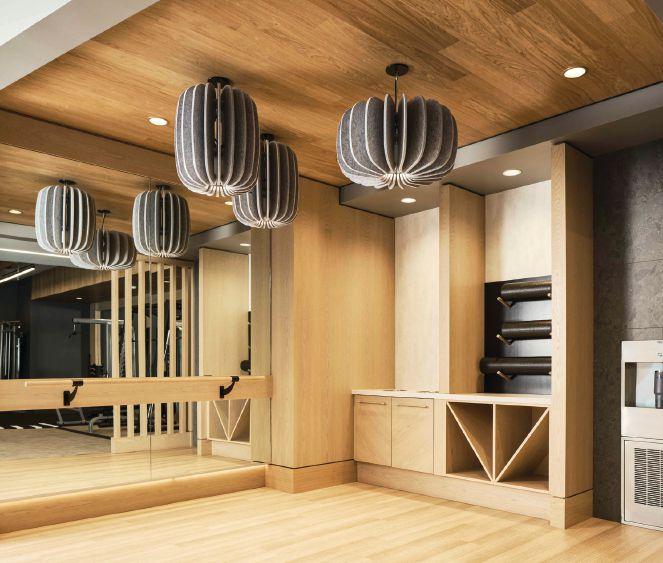
KIP DAWKINS
in McLean, Virginia, features a spa-inspired fitness studio defined by warm wood tones, acoustic pendant lighting, and clean architectural lines, creating a calming workout environment.

BACK TO COLOR


sustainability, wellness, connectivity, and biophilic design trends are influencing color preferences for the built environment.
“A desire for more authentic color stories and natureinspired motifs will see our paint selections shifting toward greens, blues, and browns accented by little pops of cheerful color like yellow,” say Lauren Hoferkamp, trends and color marketing manager, and Debbie Perkins, color marketing specialist at Dunn-Edwards. “We are seeking more color in our spaces to help create visual diversity and a connection to the natural world.”
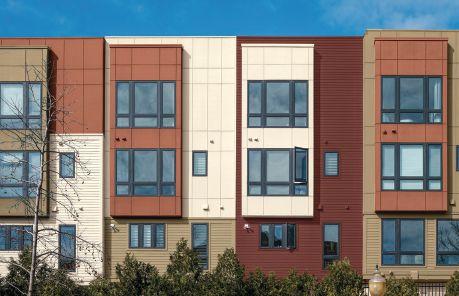
For 2026 and beyond, the Dunn-Edwards marketing executives share there’s been a continuing shift from the cool grays and blues of the past toward warmer earth tones in both interiors and exteriors on multifamily developments.
“Rich browns paired with creamy whites and soft beiges will be prominent, while deep greens and burgundy tones offer a nice visual contrast when used to highlight elements such as doors and trim,” they say.
Dunn-Edwards’ 2026 Color of the Year, Midnight Garden, is a deep earthy green that reflects the elegance of nature.
“Use Midnight Garden in common areas, like a fitness center or clubhouse, on walls or cabinetry to promote relaxation and bring a bit of the outdoors inside,” they add. “Midnight Garden is also a great color to feature on doors and window trim, adding a splash of color to a neutral palette without overpowering the space.”
Alyson Ferrari, assistant color marketing manager at The Pittsburgh Paints Co., says warm, bold tones will dominate the color space for multifamily interiors and exteriors this year.
“Grays were prevalent since the mid- to late 2000s, and just as quiet luxury brought us years of warm neutrals, our spaces now require a color that can feel both calming and adventurous,” she notes. “We’re seeing more vibrant and bold colors making a comeback.”
The Pittsburgh Paints Co. 2026 Color of the Year, Warm Mahogany, shifts to the warmer red side—bold enough to blend in, yet reserved enough to be a timeless statement. “Warm Mahogany has the adaptability to fit any style, space, and mood,” Ferrari shares. “Its versatility makes it well-suited for indoor and exterior multifamily, hospitality, and commercial spaces.”
While color trends can shift year over year, the experts say there are ways for multifamily designers to futureproof their paint choices.
“Using soft, warm neutrals alongside rich jewel tones will help to balance a more contemporary look with lasting appeal,” say Hoferkamp and Perkins. “Lean into natureinspired tones for highlighting unique features, especially in spaces promoting indoor-outdoor harmony. When building a color palette for a multifamily property, let the undertones of existing natural materials and textures inform your color selections.”
Ferrari echoes the advice, suggesting timeless, warm neutrals that can fit with any style for a wider appeal.
“It’s much easier to replace furniture and décor than to repaint a room, so we suggest choosing earthy, grounded colors like Warm Mahogany that are versatile and can stand the test of time,” she adds. “When selecting the paint, it’s also important to choose a long-lasting, durable product and finish that reduces upkeep and the need to frequently repaint.”
will see more integration of things like biophilic elements, acoustics (white noise integration), circadian lighting, enhanced air quality, and thermal comfort to prioritize sleep and stress reduction.”
Hartman agrees, saying spaces that support both physical and mental health will continue to expand in multifamily.
“This includes meditation rooms, yoga studios, sound therapy rooms, steam and aromatherapy showers, cold plunges, saunas, and advanced in-unit wellness features like enhanced air filtration and acoustic comfort.”
Delcambre adds that layouts are being designed for movable equipment and convertible studio spaces. “Spa zones, saunas, and massage therapy spaces are increasingly becoming the norm,” he says.
4. THE GREAT OUTDOORS
Exterior activity areas continue to be must-haves for renters, with Hartman noting the elements extend the usable amenity footprint and can serve as primary social hubs.
“Outdoor activity zones remain exceptionally desirable, including pickleball courts, outdoor fitness areas, fire pits, lounge zones, kitchens, and gaming areas,” she says.
Millar adds that outdoor yoga and ropes are gaining traction in multifamily communities, while pools, cabanas, barbecues, and year-round hot tubs remain popular.
In addition, he notes that rooftops continue to be among the most popular amenities for residents, “offering views, social space, and outdoor lifestyle appeal.”

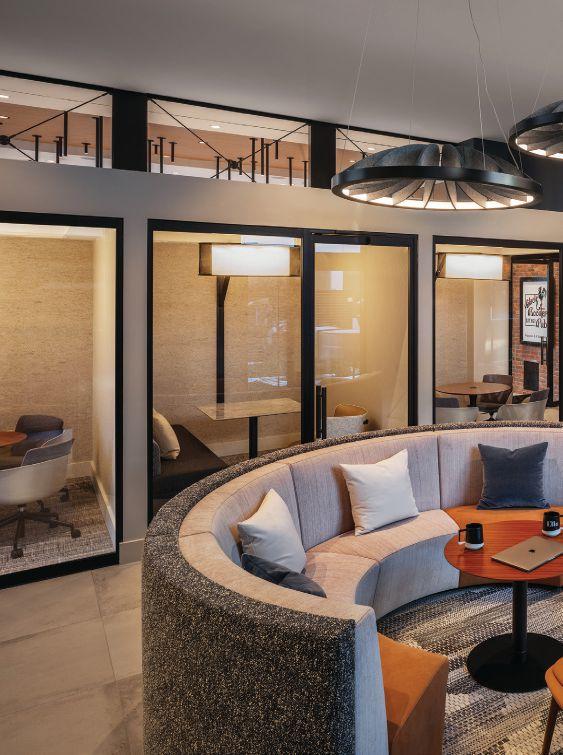
Left: Venture on Eye in Washington, D.C., has an open mailroom designed as a resident amenity, integrating package storage, a hospitality counter, and lounge seating.
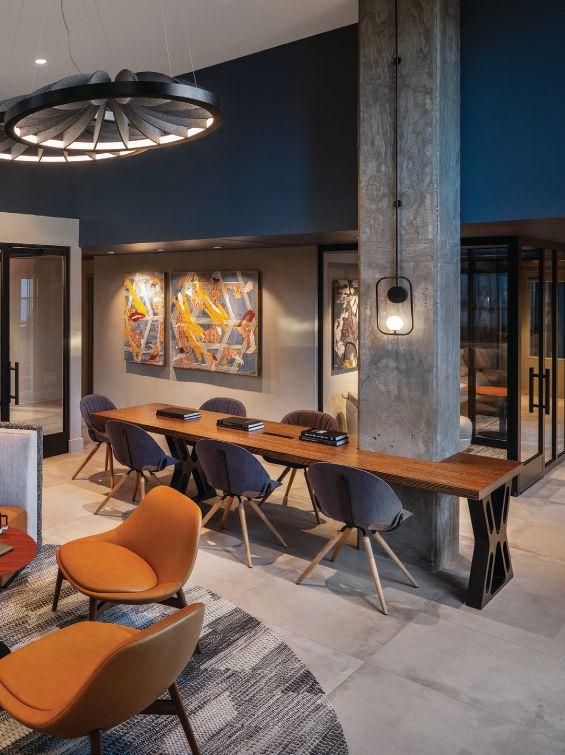
Above: Elle, also in Washington, D.C., features individual work pods, sculptural lighting, and a communal table.
In addition to the outdoor amenities on-site, according to Millar, properties are starting to incorporate gear rooms, allowing residents to borrow kayaks, paddleboards, lawn games, and camping equipment.
5. PET-CENTRIC PRIORITIES
Pet amenities for Fido and Fluffy are getting even more extensive in multifamily communities.
Hartman says beyond dog wash stations, she is seeing communities add full-service pet spas, plumbed hydration stations, indoor playrooms, and designated outdoor relief and play areas.
“Dog parks are being designed for legitimate play and socialization, with enough length for fetch and sprinting, fencing with vestibules, water features, waste stations, and seating for owners,” says Millar. “Ground-level placement
is preferred to minimize regulatory and operational challenges.”
6. DELIVERY DILEMMAS
Parcel storage continues to expand with lockers and overflow closets to handle peak demand, says Millar.
“With skyrocketing delivery volume, package rooms are being intentionally designed as secure, aesthetically integrated amenities rather than utilitarian afterthoughts,” notes Hartman.
Package solutions also are evolving to today’s instant delivery environment.
“Consumer behavior and expectations have evolved when it comes to food and parcel delivery. The accessibility and efficiency of delivery systems such as DoorDash and Amazon have intensified demand for those services and created new ways of enhancing them,” says Delcambre.
“Whereas dinner was previously left on the doorstep, multifamily properties are now creating temperature-controlled drop spaces for meals and groceries. Cold storage can also apply to non-food parcels that require refrigeration.”
7. CREATIVE SPACES
Hartman says a new feature emerging in multifamily communities is the addition of creative engagement spaces— such as areas for light woodworking, crafting, painting, gift wrapping, and culinary demonstrations—that reflect renters’ growing desire for mentally restorative activities.
“One of the most unique amenities we’ve seen integrated into multifamily developments has to be content creation rooms featuring acoustic and backdrop elements for TikTok, YouTube, and podcast influencers,” adds Delcambre. “These and other makerspaces have become especially attractive to millennials, who are heavily invested in online monetization.”
8. FLEXIBLE WORKSPACES
The designers and architects agree that underutilized tables are being transformed into micro-offices or pods with good lighting and acoustics.
“Coworking spaces are evolving into enclosed booths for one to three people, offering variety and privacy,” says Millar. “While in-unit workspaces are declining, community coworking areas remain popular, providing socialization and separation of work from home.”
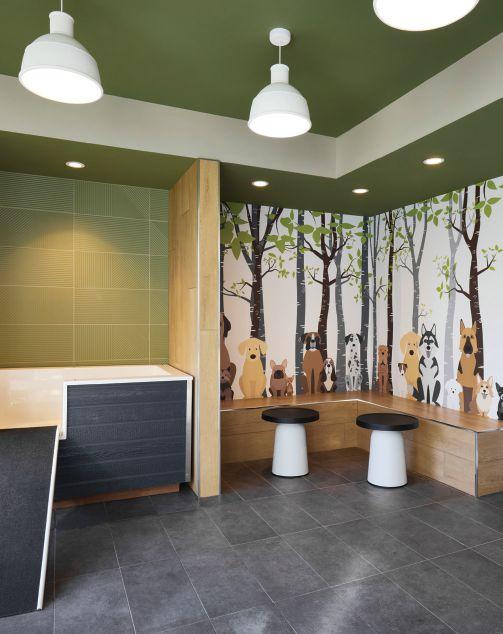
Aventon Huntington Station in Alexandria, Virginia, has a playful pet grooming space with a built-in dog bath with a ramp, themed wall art, and bench seating for pet owner engagement.
LAST DETAIL
Living in Color
AVE Hamilton Green blends pop art, premium service, and high-rise living in Westchester County.
by CHRISTINE SERLIN
Ave hamilton green in white plains, new york, is making a statement. The development from AVE by Korman Communities, in partnership with architect MdeAS and developers RXR and Capelli Organization, features two high-rise towers designed to redefine luxury living in Westchester County.
Delivered in 2025, the 307-unit 5 Cottage and 170-unit 25 Cottage provide ample living options for their residents. The 26-story 5 Cottage offers studio to three-bedroom residences, including unique penthouses, for those renters looking for more space. The 12-story 25 Cottage provides studio to two-bedroom apartments with luxurious finishes and high-touch hospitality. Both towers also feature a wealth of resort-style amenities, including 24/7 fitness centers with studio and spa spaces, an indoor pool, an outdoor courtyard, coworking spaces with an executive conference room as well as individual pods, and a curated art collection.
According to the team at AVE, the lobby at 5 Cottage has become the social heartbeat of the community. It’s home to AVE’s 24/7 resident services team, a complimentary beverage station, and a place for residents to pick up their packages and wait for ride-shares as well as for pets to snag a treat. The centerpiece of the lobby is a museum-quality screenprint of “Wallpaper with Blue Floor Interior,” 1992, from pop art icon Roy Lichtenstein.
“We believe an exceptional living experience is defined by attentive service, thoughtful design and amenities, and a strong sense of community,” says Lea Anne Welsh, president of AVE by Korman Communities. “At 5 Cottage at AVE Hamilton Green, this experience begins the moment you walk through our doors. Museum-quality art curated throughout our amenity spaces creates a sense of sophistication and inspiration, reflecting our commitment to hospitality and elevating everyday living.”
For more on art design elements in multifamily communities, visit multifamilyexecutive.com and search for “art.”













For 50 years, CPC has been meeting the unique financing needs of multifamily owners. As a nonprofit lender and investor, we specialize in affordable, workforce, and energy-efficient housing, and offer our customers a full suite of construction, bridge, and permanent mortgage products—as well as the opportunity to invest alongside us as equity partners in the long-term ownership of multifamily housing. $16 billion invested 5,400 units under ownership