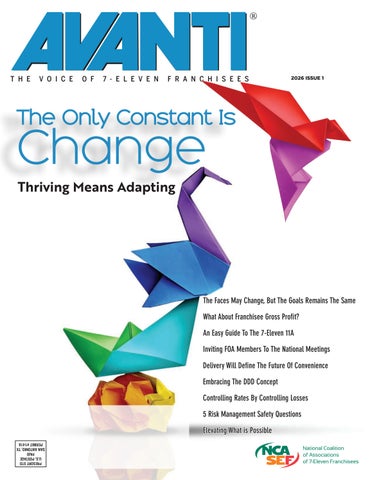
The Faces May Change, But The Goals Remains The Same
What About Franchisee Gross Profit?
An Easy Guide To The 7-Eleven 11A
Inviting FOA Members To The National Meetings
Delivery Will Define The Future Of Convenience
Embracing The DDD Concept
Controlling Rates By Controlling Losses
5 Risk Management Safety Questions
Elevating What is Possible
Member News
SEI Expands Remodel Strategy
7-Eleven plans to remodel more than 7,000 North American stores by 2030 as part of a broader transformation strategy, reported C-Store Dive. The company will retrofit existing locations with its larger, food-focused “new standard” format, building on earlier plans to open 1,300 new stores under the same design. These upgraded stores are already showing results, generating about 30 percent more traffic after one year and projected to deliver 44 percent higher sales within four years.
The aggressive remodel push comes alongside a major shift toward franchising, with about 2,600 company-operated stores expected to convert by 2030 to improve margins and reduce operating costs. At the same time, the company is navigating a challenging period that includes plans to close 645 stores in fiscal 2026 and a delayed IPO timeline.
“SEI plans to remodel more than 7,000 North American stores by 2030.”
Even with closures outpacing openings in the near term, leadership continues to position
modernized stores and a stronger franchise base as the foundation for long-term growth.
7-Eleven #1 In 2026 C-Store Rankings
7-Eleven remains the largest convenience-store chain in the United States, holding the No. 1 position in CSP’s 2026 ranking with 12,700 stores, reported
CSP Daily News
Despite a quieter year for mergers and acquisitions following the collapse of Alimentation Couche-Tard’s attempted takeover of parent company Seven & i Holdings, 7-Eleven is pushing forward with a major transformation strategy that includes plans to add 1,300 new large-format, food-focused stores across North America by 2030. The company is also sharpening its foodservice offer, expanding fresh items like its Japanese-style egg salad sandwich, and exploring a potential North American IPO as part of its long-term growth strategy.
Industry-wide, 2025 saw a slowdown in major deals as uncertainty tied to the failed takeover, shifting tax policies and
The National Coalition Office
The strength of an independent trade association lies in its ability to promote, protect and advance the best interests of its members, something no single member or advisory group can achieve. The independent trade association can create a better understanding between its members and those with whom it deals. National Coalition offices are located in Ceres, California.
3645 Mitchell Road Suite B Ceres, CA 95307 855-444-7711 nationaloffice@ncasef.com
NATIONAL COALITION OF ASSOCIATIONS OF 7-ELEVEN FRANCHISEES
NATIONAL OFFICERS & STAFF
Sukhi Sandhu NATIONAL CHAIRMAN 855-444-7711 sukhi.sandhu@ncasef.com
Nick Bhullar EXECUTIVE VICE CHAIR 626-255-8555 bhullar711@yahoo.com
Avanti Magazine is the registered trademark of The National Coalition of Associations of 7-Eleven Franchisees.
volatile fuel prices caused many buyers and sellers to pause, but activity did not stop entirely. Notable transactions included Sunoco’s $9.1 billion acquisition of Parkland and RaceTrac’s purchase of Potbelly, signaling continued interest in scale and foodservice capabilities. While competitors such as Circle K owner CoucheTard and Casey’s continue to grow through acquisitions and new builds, 7-Eleven’s scale, ongoing investments and strategic reset have kept it firmly at the top of the industry rankings heading into 2026.
C-Store Count Holds Steady
The U.S. convenience store count edged down slightly to 151,975 locations at the end of 2025, reported NACS Magazine. The total declined by just 280 stores, or 0.18 percent, reflecting a largely stable market, with small operators continuing to dominate—those with 1 to 10 stores made up 63 percent of all locations, unchanged from the prior year. Meanwhile, the largest chains (500+ stores) accounted for 22.2 percent of the market, a slight dip, and the cutoff to make the top 100 retailers fell to 66 stores, down from 67 the year before.
Growth among major players was driven largely by acquisitions and portfolio adjustments. Alimentation Couche-Tard expanded to 6,038 stores following its purchase of GetGo Café + Market, while RaceTrac grew to 605 locations and made a major move into foodservice with its $556 million acquisition of Potbelly.
Other operators reshaped their footprints through divestitures
and regional expansion, including Maverik reducing its store count as it absorbed Kum & Go assets, FEMSA entering the U.S. market through its purchase of Delek’s DK stores, and Jacksons Food Stores and Anabi Oil adding locations through targeted deals. The Kent Companies and Parker’s Kitchen also expanded their reach, closing the year with 132 and 105 stores, respectively.
“The U.S. c-store count edged down slightly to 151,975 locations at the end of 2025.”
Consolidation Expected To Continue
Convenience store mergers and acquisitions are expected to remain active in 2026, with most deal activity centered on small and midsize operators rather than industry mega-mergers, reported Convenience Store News. Industry analysts note that rising labor, technology and operating costs are pushing independent owners— many of whom are nearing retirement without succession plans—to sell their businesses, while larger chains continue acquiring regional operators to improve scale and spread expenses.
Although several headlinemaking transactions occurred in 2025, experts say acquisitions involving chains with roughly 10 to 50 stores now represent the bulk of activity and are likely to dominate the market moving forward, supported by favorable financing conditions and tax incentives tied to store acquisitions.
At the same time, operators are
increasingly pursuing geographic diversification and foodservicedriven growth strategies as competition intensifies and fuel margins remain under pressure. Companies are expanding beyond traditional territories to stabilize revenue across varying regional fuel-demand patterns, while regulatory divestitures tied to large mergers are creating expansion opportunities for midsize chains. Analysts also expect continued investment in foodservice integration, including acquisitions of established restaurant brands, as convenience retailers work to strengthen prepared food offerings and capture value-focused consumers seeking affordable meal options. Experts caution, however, that continued consolidation could reduce the number of independently owned stores, particularly in rural communities where convenience stores often serve as primary access points for food and essential goods.
Walmart Expands Fuel Footprint
Walmart is accelerating its push into fuel and convenience by rapidly expanding gas stations at its store locations while maintaining a low-price strategy, reported The U.S. Sun. The company opened 20 stations in 2025 and plans to add 40 to 45 more this year, with executives describing the move as part of an “aggressive” multi-year growth plan focused on adding as many locations as possible while refining operations along the way.
Member News
Leadership emphasized convenience as a key driver, noting that pairing fuel stations with existing stores allows customers to shop and fill up in one stop, while new builds—such as an eight-pump site in Tampa with an attached c-store—reflect a standardized model for future expansion. The company also plans to price fuel and in-store items at the low end of the market in line with its broader retail strategy.
Fuel Data Reveals Shopper Habits
Fuel purchase patterns can reveal clear differences in how convenience store customers shop inside the store, reported
Convenience Store News. An analysis by Paytronix found that diesel fuel buyers are the most likely to enter the store and make purchases, while premium fuel customers are less likely to come inside and regular gasoline buyers fall somewhere in between. The findings show that the type of fuel a customer buys can provide useful signals for understanding shopper behavior and shaping targeted
marketing efforts.
The research also uncovered distinct product preferences among the three groups. Diesel customers showed a strong preference for citrus soft drinks, with Mountain Dew accounting for roughly 15 percent to 20 percent of beverage purchases in that segment and citrus drinks overall making up about 30 percent of diesel soda spending. Premium fuel buyers showed strong loyalty to Red Bull energy drinks and were more likely to purchase six-pack beer formats, while regular fuel customers gravitated toward Monster energy drinks and value beer brands such as Natural Light. Paytronix said these patterns can help convenience retailers tailor promotions and loyalty offers to
better match the habits of different fuel-buying customers.
Higher-Income Shoppers Drive Dollar Store Growth
Dollar stores are attracting more higher-income shoppers as inflation pushes consumers across all income levels to seek value, reported Retail Dive. Chains like Dollar Tree, Dollar General and Five Below have expanded multi-price offerings beyond traditional $1 price points, allowing them to capture shoppers earning $80,000 or more, with Dollar Tree noting household growth “across all income cohorts” and stronger engagement with higher-priced items.
Data shows households making over $100,000 are increasingly shopping dollar stores for discretionary categories like home decor, beauty and snacks, while still relying on traditional grocers for essentials, reflecting a shift in how value is defined. Executives say ongoing economic pressure, including rising costs and potential fuel price increases, continues to drive this trade-down behavior, positioning dollar stores as a
“Dollar stores are attracting more higherincome shoppers as inflation pushes consumers across all income levels to seek value.”
key option for budget-conscious shoppers regardless of income.
Inflation Rate Rises
U.S consumer prices increased 3.8 percent from a year ago, topping economists’ expectations and marking the steepest singlemonth surge since May 2023. Prices rose 0.6 percent on a monthly basis, easing from March’s 0.9 percent pace, as the Iran war continued pushing fuel and food costs higher, according to new government data. Core inflation— which excludes energy and food— came in at 2.8 percent annually and 0.4 percent monthly, both above forecasts, suggesting price pressures are spreading beyond the pump. Airline fares jumped 20.7 continued on page 47
Optimized our entire service team to continue serving you better. Introduced location-based policies for seamless service everywhere you go and grow.
Launched our digital wallet to continue serving you better with the latest technology. Stores wont be cancelled due to losses We have additional Loss prevention, Employee retention and compliance tools MARKED 20 YEARS AS YOUR OFFICIAL WORKERS’ COMP INSURANCE AND EPLI BROKER!
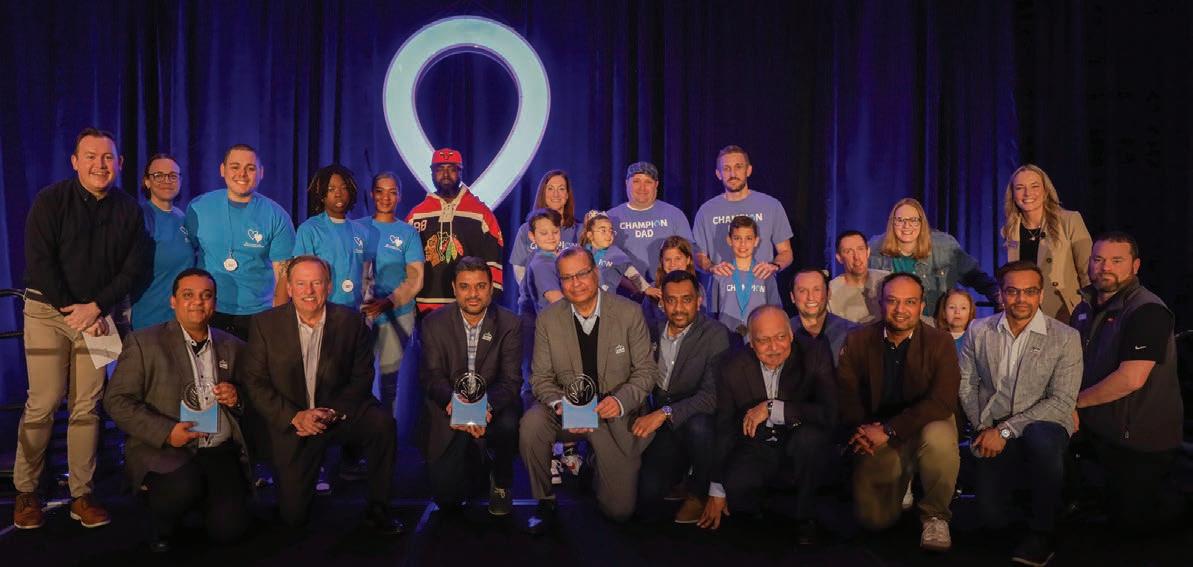
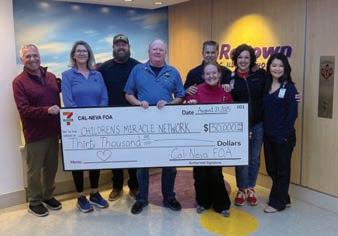
2025 was an extraordinary year of partnership between the National Coalition of Associations of 7-Eleven Franchisees (NCASEF) and Children’s Miracle Network. Through the combined efforts of the National Coalition and local FOA events, we have raised more than $550,000 to support children’s hospitals in our network across the U.S. These funds are vital—providing unrestricted support that allows local hospitals to address their communities’ most urgent needs. Whether it’s investing in research for life-changing treatments, providing specialized therapy, or ensuring families find comfort and strength on their unique health journeys, NCASEF members are at the heart of this mission.
“Thank you, NCASEF, for helping to make big change for all kids.”
Thank you, NCASEF, for helping to make big change for all kids. We are especially grateful to the 36 Franchise Owners Associations (FOAs) who championed this cause through convention pledges, vendor engagement, and local events. Your dedication ensures that kids in your communities have every chance to grow up strong.
Baltimore FOA
Cal-Neva FOA
Central Florida FOA
Central Valley FOA
Chicagoland FOA
Columbia Pacific FOA
Delaware Valley FOA
Detroit FOA
East Coast FOA
Eastern Virginia FOA
Greater Bay FOA
Greater Los Angeles FOA
Greater Northwest FOA
Greater Oregon FOA
Joe Saraceno FOA
Kansas City/St. Louis FOA
Keystone FOA
Metro New Jersey FOA
Michigan FOA
Midwest FOA
Northeast FOA
Northern California FOA
Rocky Mountain FOA
Sacramento Valley FOA
San Diego FOA
San Fran/Monterey Bay FOA
South Florida FOA
South Nev/Las Vegas FOA
South Texas FOA
Southern California FOA
Suburban Washington FOA
Texas FOA
UFOLI, NY FOA
United Franchise Owners of Florida FOA
Utah FOA
West Coast FOA
Something New is Here: A Bold Future for All Kids
As 2026 moves forward, you will begin seeing the new look of Children’s Miracle Network across events, campaigns,
“Whether you’re hosting a golf tournament, a trade show, or a community celebration, your local Program Director is ready to help you amplify your impact.”
and fundraising efforts throughout the year. We recently introduced refreshed branding, including an updated logo and new messaging focused on elevating what is possible for kids and families treated at local children’s hospitals.
While the look is new, the promise remains: 100 percent of your donations benefit the local children’s hospitals where your team members and customers live and work. We are reimagining a bold future, and we are proud to have NCASEF by our side.
Planning for a Miraculous 2026
With the summer event season already underway, now is the perfect time to continue planning your upcoming 2026 events. Whether you’re hosting a golf tournament, a trade show, or a community celebration, your local Program Director is ready to help you amplify your impact.
Make Big Change for all kids
Reach Out Early: Please contact your hospital Program Director now with your event dates—the sooner, the better.
Play Yellow: Looking to host a golf tournament? Connect with Kate Burgess (KBurgess@CMN.org) or your local Program Director to get tips on where to start, how to integrate Play Yellow branding, hosting a patient family attend, or adding fundraising opportunities to your event. We recommend connecting at least 8 weeks prior to your event.
Share Your Story: We want to hear about the incredible things your FOA is doing! Scan the QR code to share your story with us so we can celebrate your impact. Together, we are ensuring every child has the opportunity to thrive.
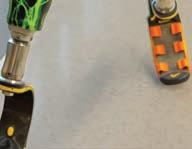
When Shine was born six weeks early, his parents were shocked to learn their baby had Popliteal Pterygium Syndrome, Bartsocas-Papas type, an extremely rare genetic condition caused by alterations in the RIPK4 gene which often leads to death before or shortly after birth. He was also diagnosed with a complicated disorder called ectodermal dysplasia. Urgently transferred to UC Davis Children’s Hospital, a Children’s Miracle Network hospital, Shine faced enormous challenges: his eyes and mouth were sealed shut, his legs and hands were webbed, and his breathing passages were blocked. Against the odds, he survived. Now 8 years old, Shine has undergone 22 surgeries, including a double leg amputation at age two for increased mobility, and hand reconstruction to give him two functional fingers on each hand. Despite these challenges, nothing slows him down: Shine runs on prosthetics, trains for triathlons, and lives up to his name every day.
All Together for all kids
Make Big Change for all kids
Shine Treated for a Genetic Mutation
Sign up for a GOLDEN OPPORTUNITY to get your company and your latest products in front of the largest c-store buying group in the country: 7-Eleven Franchisees!
Become an exhibitor at the two-day Trade Show or gain more visibility throughout the four-day event by becoming a Major Sponsor!
23-24
23-24
The Faces May Change, But The Goals Remains The Same
The past several months have brought significant changes to the leadership team at 7-Eleven, Inc. Longtime executives who were familiar faces to franchisees and FOA leaders—including former CEO Joe DePinto and Senior Vice Presidents Randy Quinn and Dennis
“Like many franchisees across the country, I was surprised by the management transition and have spent time reflecting on what it may mean for our system moving forward.”
Phelps—have departed the organization. Like many franchisees across the country, I was surprised by the management transition and have spent time reflecting on what it may mean for our system moving forward. Whenever leadership changes occur, questions naturally follow. Will priorities change? Will communication remain strong? Will progress continue? While none of us can predict exactly what the future holds, I believe it is important to focus on what has helped make our system successful and what must continue if franchisees, SEI, and the 7-Eleven brand are going to thrive together.
Throughout my tenure as Chairman of NCASEF, one principle has remained constant: meaningful progress occurs when franchisees and SEI engage in honest, respectful, and productive dialogue. That does not mean we always agree. In fact, some of the most important discussions have involved differing opinions and spirited debate. However, those conversations have been productive because both sides remained committed to finding solutions and moving the system forward.
Over the years, NCASEF has worked diligently to build strong working relationships with SEI leadership. At my invitation, senior executives regularly attended NCASEF Board meetings and participated in discussions
BY SUKHI SANDHU NCASEF Chairman
with FOA leaders from across the country. These meetings provided opportunities for franchisees to share concerns, ask questions, and offer recommendations directly to decision-makers. Just as importantly, they provided SEI leaders an opportunity to better understand the realities franchisees face every day in their stores.
The value of collaboration can be seen through several meaningful accomplishments.
One example is the successful passage of Proposition 36 in California. NCASEF worked alongside franchisees, local FOAs, business organizations, community leaders, and law enforcement advocates to support stronger measures aimed at combating organized retail crime and repeat theft offenses. Retail crime has had a direct impact on convenience stores and small businesses throughout California, and Proposition 36 represented an important step toward creating safer environments for our employees, customers, and communities. The overwhelming voter approval demonstrated what can be accomplished when stakeholders unite around a common objective.
Another example is the ongoing collaboration between NCASEF and SEI surrounding franchisee profitability initiatives, including the Earned Gross Profit Growth Sharing (EGGPS) program. While there have been differing viewpoints regarding program structure and opportunities for improvement, both NCASEF and SEI remained engaged in constructive discussions focused on increasing sales, improving execution, and enhancing profitability. Through those efforts, franchisees across the system have generated millions of dollars in additional earnings opportunities through EGGPS incentives. More importantly, the dialogue continues as we explore new ways to strengthen store economics and create sustainable growth opportunities for franchisees. These examples demonstrate an important truth: progress is rarely achieved through confrontation alone. It is achieved through communication, collaboration, and a willingness to work through challenges together.
The reality is that leadership transitions are part of
“While relationships matter, the long-term success of the 7-Eleven system cannot depend on any single executive, franchisee leader, or organization.”
every organization. Companies evolve, strategies adapt, and new leaders emerge. While relationships matter, the long-term success of the 7-Eleven system cannot depend on any single executive, franchisee leader, or organization. Success depends on maintaining a shared commitment to stronger stores, improved profitability, operational excellence, and delivering value to customers.
As new leaders assume key positions within SEI, NCASEF remains committed to building productive relationships with them. Trust is earned over time through open communication, mutual respect, and a
“Just as previous leaders took the time to understand franchisee concerns, we look forward to establishing those same relationships with the next generation of SEI leadership.”
willingness to listen. Just as previous leaders took the time to understand franchisee concerns, we look forward to establishing those same relationships with the next generation of SEI leadership.
I am encouraged that, since the transition, NCASEF has continued to maintain an open and constructive dialogue with SEI’s leadership team. We appreciate their willingness to engage in conversations regarding franchisee priorities and system opportunities. While there is always more work to do, these ongoing discussions reflect a shared understanding that the strongest systems are built when stakeholders work together toward common goals.
At the same time, the role of NCASEF and local FOAs remains as important as ever. Our responsibility is to ensure that franchisee voices are heard and that the realities of operating stores are clearly communicated. We must continue bringing forward practical solutions,
advocating for improvements, and helping shape the future of our business. Effective communication is a two-way street, and strong partnerships require active participation from all parties.
Although leadership may be changing, many of the challenges facing franchisees remain the same. Store profitability, labor costs, insurance expenses, technology reliability, operational efficiency, merchandising decisions, and regulatory pressures continue to impact franchisees across the country. These challenges do not disappear simply because new names appear on an organizational chart.
That is why NCASEF will continue to advocate aggressively on behalf of franchisees while maintaining a collaborative approach with SEI. We will continue providing candid feedback, identifying opportunities for improvement, and pursuing solutions that strengthen both franchisee businesses and the overall 7-Eleven system.
The foundation built over many years of dialogue and cooperation provides a strong starting point for the next chapter. We stand ready to work with SEI’s leadership team just as we have worked with previous leaders— in pursuit of a stronger, more profitable, and more successful future for all stakeholders.
The faces in leadership positions may change, but the goals remain the same.
“NCASEF remains committed to those goals and to the franchisees we represent.”
Franchisees want profitable stores. We want safe communities, reliable operations, strong brands, and opportunities to grow our businesses. We want a healthy partnership built on communication, trust, and shared success. NCASEF remains committed to those goals and to the franchisees we represent.
By continuing to engage in open dialogue, embrace collaboration, and focus on our common objectives, I am confident that together we can build an even stronger future for the next generation of 7-Eleven franchisees.
What About Franchisee Gross Profit, Net Profit And Goodwill Value?
BY ERIC H. KARP General Counsel To NCASEF
The parent company of 7-Eleven, Inc. (SEI) held an Investor Relations Day on April 23, 2026, based on a detailed PowerPoint presentation, 15 slides of which were devoted to SEI. On the following day, the parent company posted a video of a presentation to investors based on that PowerPoint deck. These presentations followed the decision of the parent company to delay the previously planned public offering of SEI shares to the first quarter of 2027, at the earliest. The presentation was designed to answer questions that investors may have about the financial condition and prospects for the parent company and SEI. But it raised more questions than answers about the role that franchisees will play in the future; questions that we invite SEI to answer.
I urge every reader of this column to review the PowerPoint and the video presentation, which you can find here: https://www.7andi.com/en/ir/library/ irday/202702.html.
“One of the presenters stated with accuracy that SEI has entered a decisive inflection point in the business.”
One of the presenters stated with accuracy that SEI has entered a decisive inflection point in the business. For that reason, the company has developed and presented a detailed plan to address the key challenges faced by the business. Some elements of this plan are already underway.
One of the key challenges identified in slide #2 is “Franchisee profitability.” And while the slides that follow contain detailed plans and goals to develop a modern store network, no concrete steps are identified to make unit level economics for franchisees better than
“And
while the slides that follow contain detailed plans and goals to develop a modern store network, no concrete steps are identified to make unit level economics for franchisees better than they are at present.”
they are at present. And some of the initiatives identified have the potential to reduce franchisee profitability and value; moreover, SEI does not claim that they will increase profitability or value.
Among the five priorities listed on slide #4 under the heading Modern Store Network are a remodel program, building new standard stores, franchising, restaurants, and digital & delivery.
Remodel Program
Slide #5 states that more than 7,000 stores will be remodeled by 2030. The stated rationale is that elevating the customer experience requires fundamentally improving existing stores first, which will unlock everything that follows. The presentation states that all stores will receive exterior remodeling and interior store simplification and that locations will be evaluated on a case-by-case basis relative to other program rollouts. Not stated is:
• How much money the company expects to spend on these remodels.
• How will remodels be prioritized in a United States network that includes nearly 12,000 total locations across the 7-Eleven, Speedway, Sunoco and Stripes brands.
• The potential competitive disadvantage for those stores that are deemed not appropriate or ineligible for other program rollouts.
• Whether these remodels can be carried out if the company does not actually sell shares to the public.
New Standard Stores
Slide #6 states that SEI will build 1,300 new stores by 2030, on the basis that new standard stores outperform the existing network with 30 percent more traffic and 44 percent more sales. But in some ways, that is an applesto-oranges comparison, because SEI concedes in slide #5 that its existing store network needs remodels and refreshes. Not stated is:
• How much capital will be required to build these stores?
• The rate at which they will be built, given that over 5 years, that works out to 260 new stores per year, compared to 122 new stores built in 2025.
• How many of these new stores will have restaurants and thus be counted towards the goal of 1,100 restaurants by 2030?
• Because it is reasonable to assume that building a new store entails costs materially more than remodeling an existing store, can this program be carried out in the absence of a public offering?
Franchising
Slide #7 addresses the goal of creating 2,600 corporate to franchise conversions by 2030, counting the 237 such conversions that occurred in 2025. That works out to approximately 472 such conversions per year over the next five years. According to its 2026 Franchise Disclosure Document, SEI sold an average of 238 franchises per year over the last five years.
“The slide indicates that ‘Franchising delivers stronger overall economics.’ but that appears to apply to improved economics for SEI.”
This slide appropriately lauds franchisees for their entrepreneurial spirit, local market insight and overall improved performance compared to corporate stores. The slide indicates that “Franchising delivers stronger overall economics,” but that appears to apply to improved economics for SEI. The current franchising model insulates SEI from increases in operating and labor costs. The slide accurately indicates that a strong franchise system enables SEI to grow more rapidly with lower capital intensity, meaning that some material portion of the capital is ultimately furnished by the franchisees through franchise fees. But it does not address:
• How unit level economics can be improved to incentivize franchisees to buy many more stores than they have in the recent past.
• How franchisee fees will be set or computed.
• Which stores will be part of this conversion? Will it include the newly built standard stores, stores with restaurants attached and/or existing other brands such as Sunoco, Speedway and Stripes?
• Will SEI furnish multi-year store level profit and loss statements for each corporate store its offers to franchisees, which is explicitly permitted under Section 436.5(s)(4) of the FTC’s Franchise Rule?
Restaurants
Slide #8 states that SEI will invest in 1,100 new restaurants by 2023, citing its data that locations where there are restaurants have 28 percent higher sales and 32 percent higher traffic. This initiative also raises many questions, not the least of which are:
“What qualifications will be applied to franchisees and their locations who wish to add a restaurant to their convenience store location?”
• What qualifications will be applied to franchisees and their locations who wish to add a restaurant to their convenience store location?
• To what extent will fresh food sales be cannibalized by the restaurant operation? Will SEI share its experience and data? Does such data take into account both Fast Food and Daily Food, disclosed by SEI’s parent as amounting to 13.2 percent and 3.8 percent of revenue in FY 2025, respectively?
• The potential competitive disadvantage for those stores that are deemed not large enough or otherwise not appropriate or ineligible for a restaurant operation.
• Where are the stores that are included in the data regarding sales and traffic? Are they all 7-Eleven stores? Are any of these locations retrofits?
• How many of these new restaurant locations will be retrofits as opposed to restaurants built in conjunction with new standard stores?
• What are the average merchandise sales, merchandise traffic counts, number of square feet and merchandise Net Margin of the locations with a restaurant, by brand?
• Will SEI provide detailed multi-year profit and loss statements for its existing locations that have restaurants?
• Are any of the locations cited on slide #8 retrofits, as opposed to new stores built with both merchandise and restaurant offerings?
• Will SEI provide any proposed contract for restaurant sales to be reviewed and commented on at least 30 days prior to issuance?
• Will SEI charge an advertising fee for restaurant sales?
• Will that revenue be segregated from advertising contributions from franchise locations that offer only merchandise?
• Will the advertising be market specific?
• Will corporate restaurants make the same contribution to the advertising fund, over and above advertising allowances, payments and credits received from vendors?
• Will franchisee leaders have input into strategic decisions regarding expenditures?
Private Brands
Slide #9 presents the goal of increasing private brand sales to $2.6B by 2030—double the sales in 2025—by focusing on high growth categories including nuts and seeds, hydration, Hispanic, and protein. The slide states that private brands yield a gross margin 18 percent higher than national brands.
Since SEI affiliate, 7-Eleven Distribution Company, sells private label and proprietary items, will SEI make a binding agreement to maintain these elevated margins? If not, how can franchisees be assured of the impact of private brands on their profit and goodwill value in the out years?
How will doubling private brand sales affect the relationships between SEI, as well as franchisees, with national brand manufacturers?
“The franchisee community leaders in the National Coalition are deeply concerned about the profitability of 7NOW transactions and how increasing the digital traffic will affect their labor costs.”
Digital and Delivery
Slide #10 states that 7NOW delivery time is down to an industry-leading 27.5 minutes, that the average basket is 80 percent higher than in-store sales, and that this channel has experienced 20 percent same store
sales growth. The stated goal is to increase sales to $1.8 billion by 2030 in part by extending the program to 8,500 stores and expanding the number of proprietary products sold. The question is not whether this franchise system needs to compete in this channel, but how the proceeds will be shared between the franchisor and its franchisees. The franchisee community leaders in the National Coalition are deeply concerned about the profitability of 7NOW transactions and how increasing the digital traffic will affect their labor costs. Nothing in this presentation addresses these questions:
• Will SEI share its internal analyses of 7NOW profitability in corporate stores?
• Will SEI share its internal analyses of 7NOW profitability in franchised stores?
• Will franchisees share in the revenue from sales of Gold Pass, offered at $95/year and $55/year as of 5.14.26?
• What portion of 7NOW customers are in the Gold Pass program?
• What portion of 7NOW revenue is derived from sales of private label and proprietary items?
• How are advertising allowances, payments and credits received from vendors and third-party delivery companies accounted for?
• Who pays for the free drinks, delivery savings, fuel discounts, product discounts, and cash back to Gold Pass subscribers?
Conclusion
At the end of 2017, before the Sunoco and Speedway transactions, SEI was nearly 90 percent franchised. By comparison, at the end of 2025, less than 60 percent of the locations in the system were franchised. It is heartening to see SEI’s parent company tell the investment world that franchisees bring stronger local execution and that this is good for the franchisor. Unanswered is the question of whether (a) the array of initiatives announced by the parent company will benefit franchisees by elevating their profit and goodwill value, and (b) any of the advantages to these initiatives, or specific and quantifiable improvements to franchisee profitability and value that may be offered in the future, are enshrined in contract and not in mere policies.
ITEM#SLIN: 103851
ITEM#SLIN: 103848
ITEM#SLIN: 105706
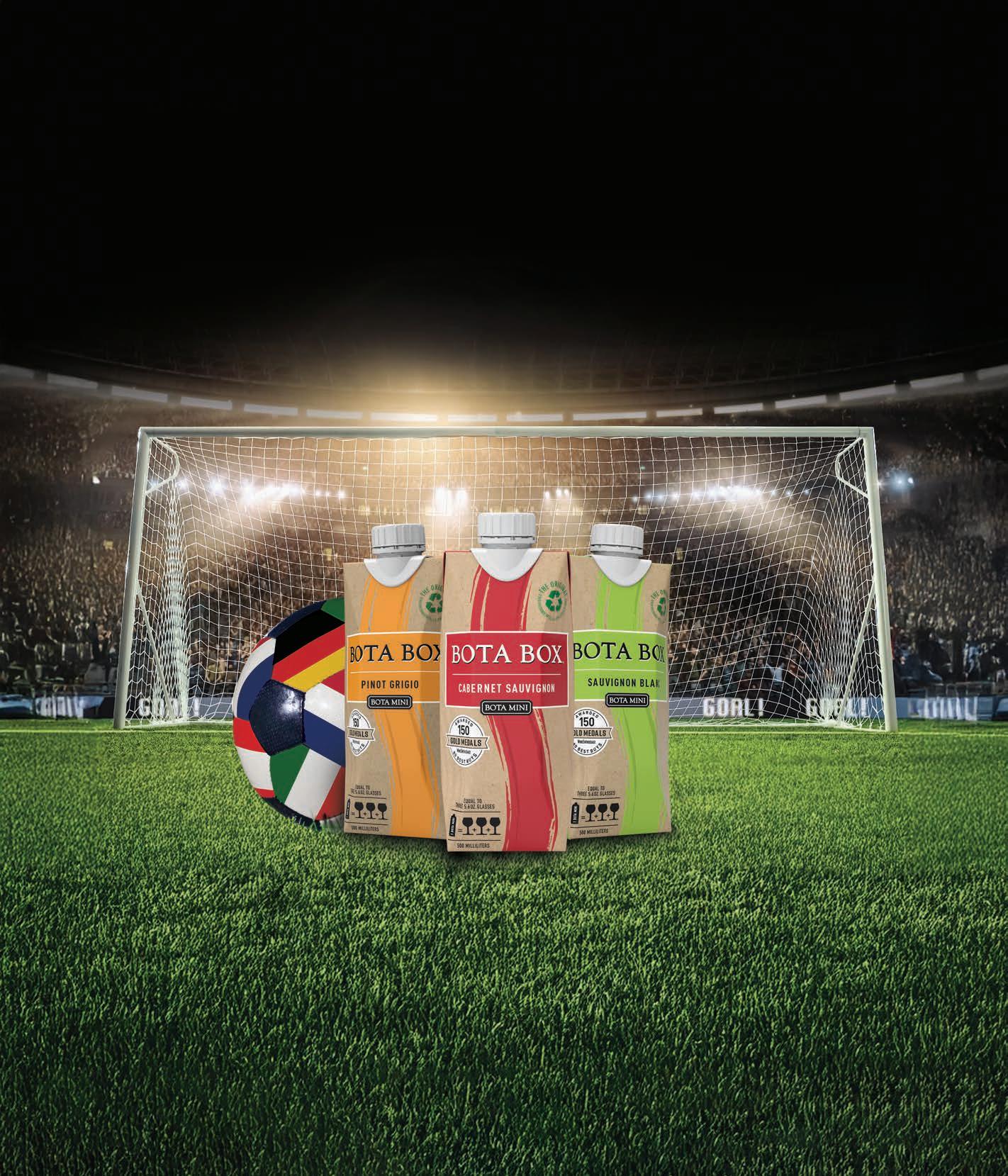
Pinot Grigio Sauvignon Blanc
Cabernet Sauvignon
7-Eleven 11A: An Easy Guide To The Detailed General Ledger Report
BY TEETO SHIRAJEE NCASEF Vice Chair
One of the most important things I always tell franchisees is that you cannot fully understand your store’s financial health unless you understand your reports. The 11A Detailed General Ledger Report is one of the most useful tools available because it gives you a complete breakdown of the charges, credits, adjustments, and account activity tied to your store each month. Yet many franchisees either overlook it or only review it when there is already a problem. I wanted to put together this simple guide to help franchisees better understand how to read the 11A, spot errors early, verify charges, and make sure their Franchise Statements stay accurate.
What This Report Is
The 11A is essentially a monthly record of all charges, credits, and adjustments made to your store’s accounts. I often describe it as a detailed receipt for the month because it allows franchisees to see exactly where money is moving and why certain balances change over time.
“One of the biggest reasons the 11A matters is because it helps franchisees catch mistakes before they become larger issues.”
Why It’s Important
One of the biggest reasons the 11A matters is because it helps franchisees catch mistakes before they become larger issues. Reviewing the report regularly can help you verify whether charges are correct, identify missing credits, confirm vendor invoices, and reconcile information with other reports like the Cash Report, Merchandise Report (DMR), and AP9/APD. When these reports do not match, the 11A is usually the best place to begin looking for the source of the problem.
What To Focus On
The first thing franchisees should review is the beginning balance. That number should match the previous month’s ending balance. If it does not, there may be an adjustment or error that needs further review. Even a small difference should not be ignored because it can lead to larger accounting discrepancies later.
From there, franchisees should carefully review each transaction line. Every line on the report provides information about where the entry originated (Cash Report, Merch Report (DMR), AP9/APD, etc.), what the charge or credit is for, how much the transaction changed the account, and the updated balance after the entry was posted.
The descriptions included on the report are extremely important because they usually tell you where supporting documentation can be found. For example, if an entry says “See AP9,” you should review the vendor invoice tied to that charge. If it says “See APD,” that refers to your Daily A/P. Entries tied to the Cash Report or Merchandise Report should also be verified against those corresponding reports—Cash Report or DMR—to confirm everything matches properly.
Also, make sure your End balance matches the same account total on your Franchise Statement.
How To Use The Report
I always encourage franchisees to pay close attention to charges they do not immediately recognize. Repairs, fees, supplies, insurance charges, and various adjustments should never simply be ignored or assumed to be correct. If something looks unfamiliar, review the AP9/APD and investigate it further, or ask Accounting. In many cases, what appears to be a small issue can actually reveal duplicate charges, missing credits, or posting errors.
Cash entries are another area that deserves careful attention. Franchisees should confirm that cash postings match bank deposits, lottery activity, and the Cash Report Summary. Any differences should be investigated
immediately because cash discrepancies can quickly create larger financial reporting issues.
Merchandise entries should also be reviewed carefully. Check your DMR report, costs, retail amounts, and credits. Watch closely for duplicate postings or missing credits. Small merchandise posting issues can significantly impact profitability over time if they continue month after month.
Adjustments are especially important because they often involve reversals, corrections, vendor disputes, or errors. Whenever you see an adjustment you do not fully understand, make note of the batch name and review the supporting details. If the issue still cannot be explained, franchisees should create an accounting case through 7-Hub so the matter can be reviewed further.
At the end of the review process, franchisees should confirm that the ending balances on the 11A match the balances shown on the Franchise Statement, AP9/APD totals, and Cash Report totals. If the numbers do not reconcile properly, the 11A usually provides the detail needed to identify where the discrepancy occurred.
Monthly Quick Check
Each month, franchisees should perform a quick
review of the report by checking new entries, flagging anything unusual credits, matching AP9/APD records to the 11A, reviewing all fees, looking for duplicate charges, reconciling ending balances, confirming vendor invoices, and making sure all cash and merchandise postings are accurate. Spending a little extra time reviewing the 11A each month can help franchisees avoid larger financial problems later.
“If the charge still cannot be explained, create an accounting case through 7-Hub and continue following up until the matter is resolved.”
The Easiest Rule
The simplest rule I can give franchisees is this: if you do not recognize a charge, do not ignore it. Check the batch name and description, review the AP9/APD, the Cash Report, or DMR, and investigate the issue until you fully understand it. If the charge still cannot be explained, create an accounting case through 7-Hub and continue following up until the matter is resolved.
The Benefits Of Inviting Rank & File FOA Members To The National Meetings
BY NISAR SIDDIQUI VICE PRESIDENT, MIDWEST FOA
The quarterly meetings conducted by the National Coalition of Associations of 7-Eleven Franchisees (NCASEF) continue to provide important updates, valuable business knowledge, and direct feedback from 7-Eleven, Inc. (SEI) to FOA leadership. These meetings create an opportunity for FOA leaders from across the country to discuss common challenges, hear updates from SEI executives, exchange ideas, and work together on issues affecting franchisees throughout the system.
“While these meetings provide meaningful information for FOA leadership, the next step is making sure that knowledge reaches franchisees at the local level in a more consistent and effective way.”
While these meetings provide meaningful information for FOA leadership—who constitute the NCASEF Board of Directors—the next step is making sure that knowledge reaches franchisees at the local level in a more consistent and effective way. FOA leaders are expected to return to their associations and share the information discussed during the meetings with their members. Many leaders already do an excellent job of keeping their members informed, including sharing updates in real time through group chats and other communication channels while the meetings are taking place.
Still, there is an opportunity to improve transparency, increase participation, and strengthen communication throughout the organization. One idea that deserves
“One idea that deserves serious consideration is allowing each FOA to bring one additional franchisee member to the quarterly NCASEF meetings alongside their FOA president and vice president.”
serious consideration is allowing each FOA to bring one additional franchisee member to the quarterly NCASEF meetings alongside their FOA president and vice president. This position would rotate each quarter among different franchisees within the FOA membership.
Creating a rotating attendance system would provide several important benefits. First, it would allow more franchisees to see up close how the organization operates and how discussions with SEI take place. Many franchisees hear summaries after the meetings end, but attending in person gives participants a much deeper understanding of the issues being addressed and the work being done on behalf of franchisees nationwide.
Second, rotating participation would help improve communication within local FOAs. Franchisees who attend the meetings would return to their associations with direct knowledge and firsthand experience that could be shared with fellow members. This would help strengthen trust, improve transparency, and encourage more active involvement at the local level.
Third, it would help develop future FOA leaders. Giving members the opportunity to attend NCASEF meetings allows them to better understand the organization, the challenges facing franchisees nationwide, and the importance of staying engaged. Leadership development is important for the long-term strength and stability of every FOA and for NCASEF.
“The goal is to expand participation and provide more franchisees with direct exposure to the organization’s work.”
There should also be consistency in how this opportunity is handled. Family members may continue to attend meetings as they currently do, but this additional seat should remain reserved specifically for a rotating franchisee member from the FOA. The goal is to expand participation and provide more franchisees with direct exposure to the organization’s work.
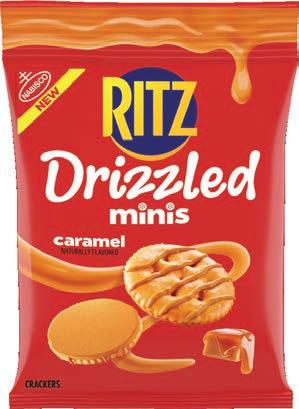
RITZ
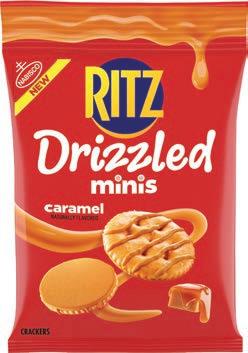
Drizzled Minis Caramel
Another idea that has recently been discussed within franchisee chat groups involves extending invitations to the upcoming NCASEF Convention and Trade Show in New York City to franchisees who are not currently members of any FOA. Allowing non-members to experience the convention firsthand could help demonstrate the value of becoming involved at both the local FOA and national levels.
At the same time, FOAs and NCASEF should continue finding creative ways to showcase the advantages of membership. Promoting benefits such as exclusive tradeshow incentives, member-only opportunities, and additional networking opportunities can help encourage non-members to join their local FOA and become more active participants in the franchisee community.
Opening more opportunities for rank-and-file franchisees to participate at the NCASEF level can strengthen communication throughout the entire system
“When more members have direct access to meetings and discussions, the information shared at the national level becomes more meaningful and effective at the local level.”
and help local FOA members stay more connected to the issues that matter most. When more members have direct access to meetings and discussions, the information shared at the national level becomes more meaningful and effective at the local level. Increased participation can also help build stronger future leadership within FOAs while encouraging more franchisees to become active supporters of both their local associations and NCASEF.
Nisar Siddiqui • nisarsid1@yahoo.com
BeatBox Honored For Strong Franchisee Support
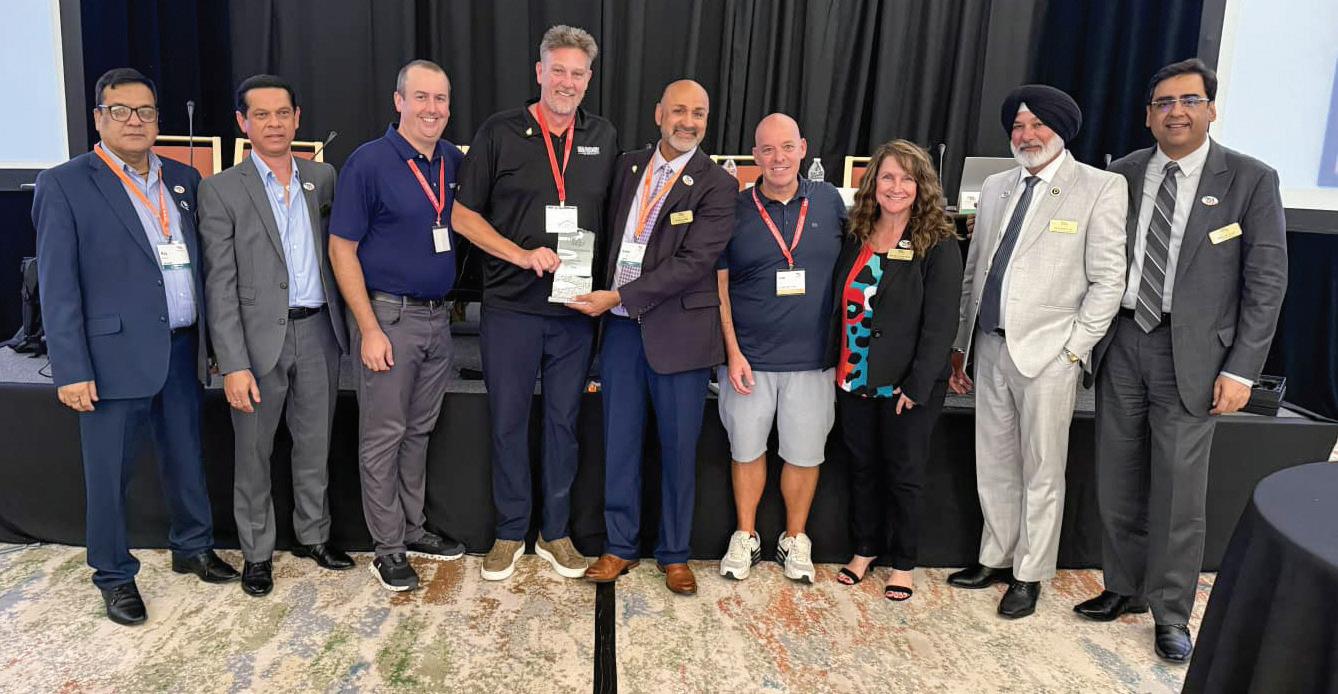
NCASEF officers presented the BeatBox Beverages team with a special “Legacy of Partnership” award during the First Quarter Board Meeting in Puerto Vallarta, Mexico, recognizing the company’s strong support of NCASEF, local FOAs, and 7-Eleven franchisees from the very beginning. Officers praised the BeatBox team for being active in the field, investing
resources directly into the franchise community, and working closely with franchisees and FOA leaders to strengthen the system. The recognition also marked a milestone as BeatBox transitions into the AnheuserBusch family, with NCASEF leaders thanking the team for its leadership, commitment, and hands-on partnership throughout the years.
Avanti Is Your Magazine
Avanti Magazine was created in 1981 by franchisees, for franchisees. It represents your voice within the 7-Eleven universe and requires your participation to remain relevant to the ideas, information, and knowledge floating about the franchisee community. You can contribute to the success of Avanti Magazine by submitting any of the following:
> Articles on any 7-Eleven topic that may be of interest to other franchisees.
> Your FOA events and Board meeting calendars.
> FOA event photos with a short description (who, what, where, when, and why).
> Store or community event photos with captions.
> Any combination of the above. Please send your submissions to avantimag@ncasef.com.
As former National Coalition Chairman Bill Schuessler famously said, “None of us is as great as all of us together, so let’s stay tightly knit together.”
Delivery Will Define The Future Of Convenience
As a 7-Eleven franchise owner and president of the Michigan FOA, I have watched this business evolve through many different phases over the years. We have adapted to changing customer habits, new technology, shifting product trends, and increasing competition.
“But today, no change is moving faster or carrying more long-term impact than delivery.”
But today, no change is moving faster or carrying more long-term impact than delivery. The reality is that the convenience store customer is no longer deciding where to shop based only on which store is nearby. More and more, that decision is happening on a smartphone screen.
“Companies like DoorDash understand this shift very well, which is why they continue to aggressively expand DashMart, their own digital convenience store concept.”
Companies like DoorDash understand this shift very well, which is why they continue to aggressively expand DashMart, their own digital convenience store concept. DashMart now operates more than 100 locations across the country and gives DoorDash direct control over inventory, pricing, and product placement inside its app ecosystem. DoorDash handled approximately 903 million orders during the fourth quarter of 2025 alone, an increase of roughly 30 percent compared to the previous year, while facilitating nearly $75 billion in total sales during 2025. Those numbers show the scale and power these technology-driven companies now have when it comes to influencing customer behavior.
But despite that growth, I do not believe 7-Eleven is behind. In fact, I believe we are in a very strong position if we execute correctly.
Our 7NOW platform already operates across the United States and Canada and offers delivery in approximately 30 minutes or less. Customers can order from more than 3,000 products across over 7,000 stores. In addition, 7-Eleven has built an enormous loyalty base through 7Rewards and Speedy Rewards, which together include more than 100 million members. That customer loyalty matters because repeat business is what drives long-term growth in delivery.
What makes our system especially powerful is something no warehouse model can easily replicate: proximity. Most 7-Eleven stores are already located within minutes of the customer. While competitors are investing heavily to build fulfillment centers and delivery infrastructure, our stores are already embedded in neighborhoods and communities throughout the country. That creates a natural last-mile advantage that many companies are still trying to develop.
Still, having the advantage on paper is not enough anymore. Execution is what separates success from failure in delivery.
When customers place an order through an app, expectations are extremely simple. They want the item
Navigating The Challenges Of The Retail Climate: Embracing The DDD Concept
The current retail landscape is undeniably challenging. As franchisees, we often find ourselves searching for innovative strategies to overcome these hurdles. One such strategy is DDD—Digging for Digital Dollars.
Harnessing the Power of Digital Platforms
7-Eleven has been at the forefront of digital innovation with two exceptional platforms: 7-Rewards and 7NOW. Over the past few years, both platforms have experienced remarkable growth, becoming integral to our business operations. You might already be familiar with customers frequently using their 7-Rewards points to save money, or perhaps you’ve heard the delightful chime of 7NOW orders, even echoing in your dreams. But what’s new? How can we leverage these platforms to dig deeper into digital dollars?
As the 7-Eleven Digital Ecosystem continues to strengthen, it presents franchisees with unprecedented opportunities to boost their profits. These opportunities were not available to us a few years ago, but now, as franchisees, we have transformed the 7-Eleven digital programs from their infancy into a formidable powerhouse.
BY MITTIN CHADHA BOARD MEMBER, EMPIRE STATE FOA/NBLC MEMBER
DDD is clear: franchisees should aim to increase their earnings while minimizing the profits of credit card companies like Visa and Mastercard.
Optimizing 7NOW
Similarly, while 7NOW is a fantastic service, the associated third-party delivery fees can be burdensome. By encouraging more customers to use Gold Pass, franchisees can effectively bypass these middlemen, thereby reducing delivery costs. The objective remains consistent: franchisees should aim to increase their earnings while reducing the profits of delivery services like Uber and DoorDash.
The DDD Concept: A New Approach to Profitability
Traditionally, increasing profits meant selling more products. However, the DDD concept introduces a novel approach: enhancing profitability by reducing expenses through the strategic use of 7-Eleven’s digital programs.
Maximizing 7-Rewards
The 7-Rewards platform offers a wallet feature that franchisees can utilize to encourage customers to load funds directly into it. By doing so, we can significantly reduce credit card transaction expenses. The goal of
The Financial Impact of DDD
The financial potential of implementing the DDD concept is substantial. By maximizing the use of 7-Rewards, franchisees could potentially see an increase of up to $300 per month, depending on your volume and your store’s engagement in pushing the program. Increasing 7-Reward wallet transactions will directly lower your monthly cost of goods, which will directly have an increase in your gross profit. Similarly, optimizing 7NOW could potentially yield an additional $300 monthly by getting more people on board with Gold Pass. In total, franchisees could boost their monthly income by $600 or more, provided these strategies are executed effectively and consistently.
Conclusion: Embracing the Digital Shift
By embracing the DDD concept and fully utilizing the 7-Eleven digital programs, we can not only weather the current retail climate but thrive within it. Let’s get our teams ready to dig deep and uncover the potential of digital dollars!
JSFOA Draws Strong Turnout For Charity Golf &Trade Show Events
The Joe Saraceno FOA held two well-attended events in Southern California this April, with franchisees and vendor partners supporting both charitable and business-focused activities.
The JSFOA Charity Golf Tournament took place April 8 at Brookside Golf Club in Pasadena, where participants enjoyed perfect weather and a sold-out field in support of Children’s Hospital Los Angeles. The event raised $5,711 for CHLA, with hospital representative Annie Cornforth attending to accept the donation and share information about the organization’s work. Golfers also took part in contests for closest to the pin and longest drive, while top teams were recognized during the evening banquet alongside raffle prize giveaways donated by vendor sponsors.
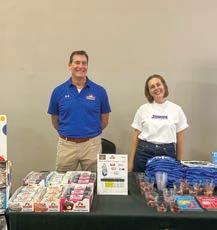
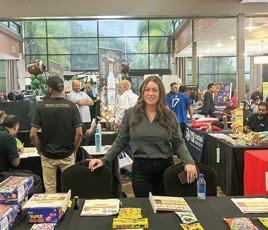
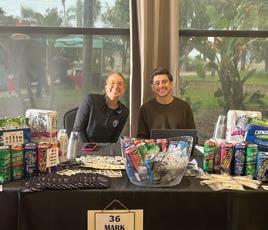
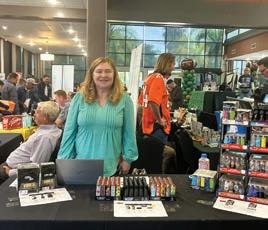
The following day, JSFOA hosted its 4th Annual Trade Show at Santa Anita Park in Arcadia. The soldout event featured more than 80 vendor partners and strong franchisee participation throughout the day. Franchisees had the opportunity to meet directly with suppliers, learn about new products and promotions, and take advantage of exclusive show offers. The event also included raffle prizes and more than $10,000 in cash giveaways for attendees.
BY JOHN WALES Program Manager AON
Controlling Rates By Controlling Losses
Last year, I attended more than 50 FOA events and spoke with over 900 franchisees. I asked one direct question: How can we help?
“The answer was consistent: Workers’ Compensation costs are rising, margins are tightening, and many owners don’t feel they’re getting real value for the premiums they pay.”
The answer was consistent: Workers’ Compensation costs are rising, margins are tightening, and many owners don’t feel they’re getting real value for the premiums they pay.
That feedback sent me back to the data. I analyzed several years of workers’ compensation claims and found a pattern that surprised even me: it wasn’t just the occasional catastrophic loss driving rates, but also a steady stream of smaller, frequent claims.
“In workers’ compensation, frequent smaller claims can increase your rate just as much, sometimes more than, a single large loss.”
In workers’ compensation, frequent smaller claims can increase your rate just as much, sometimes more than, a single large loss.
That insight reframed the issue. Instead of only trying to prevent big losses, there is a need to help reduce unnecessary claims at the moment an injury occurs.
To do that, we focused on first response. We worked with our carrier to create a centralized reporting line staffed by medical professionals who can:
• Triage injuries in real time.
• Recommend appropriate on-site care when possible.
• File claims on your behalf when medically necessary.
This speeds up treatment, improves outcomes for
“This speeds up treatment, improves outcomes for employees, and helps prevent avoidable claims that inflate your loss history and drive up your costs.”
employees, and helps prevent avoidable claims that inflate your loss history and drive up your costs.
On January 1, 2026, together with our carrier, AmCares, a program tailored specifically for 7Eleven franchisees, launched. By calling 8338480681, a clinician will:
• Walk through what happened.
• Collect your store number and the employees’ information.
• Determine whether a claim should be filed and handle that process if needed.
“Your feedback has shaped this program, and it will continue to help guide how it evolves.”
Early feedback shows fewer avoidable claims and faster, more appropriate care for injured employees.
This isn’t theory. It’s smarter claims handling that delivers tangible value.
I’ve genuinely enjoyed meeting so many of you on the road. Your feedback has shaped this program, and it will continue to help guide how it evolves. When carriers and franchisees collaborate, we don’t just trim costs, we protect people.
Please keep the ideas coming.
BY KALLI HOBEN Marsh Partner Manager
5 Risk Management Safety Questions To Ask Yourself To Protect Your 7-Eleven Store
Running a convenience store means operating in a high-traffic, fast-paced environment where small risks can quickly turn into big losses. From theft of a case of beer to a slip and fall on spilled coffee, a thoughtful risk management plan can protect both your bottom line and your business.
Here are five easy ideas to strengthen risk management in your store.
1. Reinforce Store Security and Surveillance
Question: Look around your store: Can you clearly see who is entering, exiting, and moving through your aisles?
Solutions: Install high-quality cameras covering entrances, exits, aisles, and cash wrap. Make sure lighting is bright inside and outside. Bonus: Encourage your staff to greet each customer, so that they can keep track of who enters and exits the store.
2. Reduce Slip, Trip, and Fall Hazards
Question: When was the last time you did a “floor safety walk?”
Solutions: Floor conditions are a major source of liability. Keep aisles clear, use non-slip mats near coolers and entrances, and respond immediately to spills.
Bonus: Add “Wet Floor” signs and schedule daily walk-throughs by your staff.
3. Enhance Parking Lot Safety
Question: Think about what customers see and feel before they step inside your store. Is the parking lot welllit and clearly marked?
Solutions: Good lighting, visible signage, and clear walkways reduce accidents and make customers and employees feel safer, especially at night.
Bonus: Trim back any overgrown shrubs or obstructions near entrances, and make sure security cameras cover the exterior.
4. Manage High-Risk Product and Food Safety Compliance
Question: Are your processes around food and high-risk items (tobacco, alcohol, lottery) clear and consistent?
Solutions: Implement strict safety routines for all food and age-restricted items. Verify IDs for age-restricted products and make sure they are clearly labeled and grouped together so staff remember to ask for ID with every purchase. For food, require staff to follow time and temperature controls, labeling, and handwashing procedures on every shift.
Bonus: Use a simple daily checklist (with opening, mid-shift, and closing tasks) so staff can quickly confirm which products require ID and ensure food is stored, heated, and held at safe temperatures.
5. Invest in Training and Incident Reporting
Question: How often do you talk about safety with your staff?
Solution: Your team is your first line of defense. Provide regular training on customer service, deescalation, safety procedures, and emergency response.
Bonus: Encourage employees to record all incidents, even “near misses,” in a simple log. Review this log monthly with your team to spot patterns and decide together on one or two improvements to implement. Scan the QR code in this article for a sample incident report form to aide in your formal incident reporting.
By focusing on the above five areas, you and your team can reduce risk and create a safer environment which can contribute to stable, long-term profitability.
Interested in learning more about your insurance options? Call (855) 546-5361 Hours: 8:00am - 5:00pm CST, Monday - Friday, or email 7-Eleven@marsh.com to speak with a licensed insurance advisor.
Scan this QR code to download a Sample Incident Report Form.
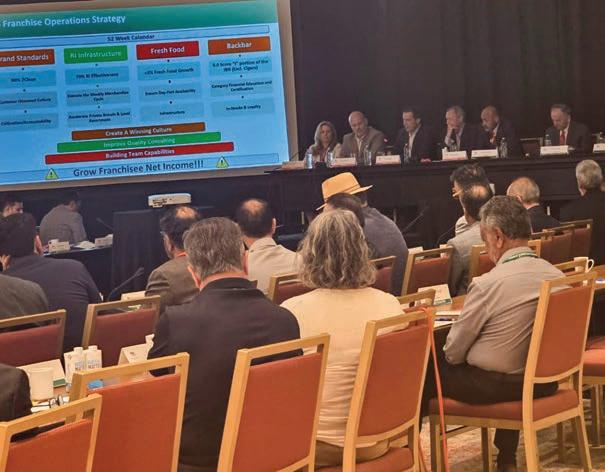
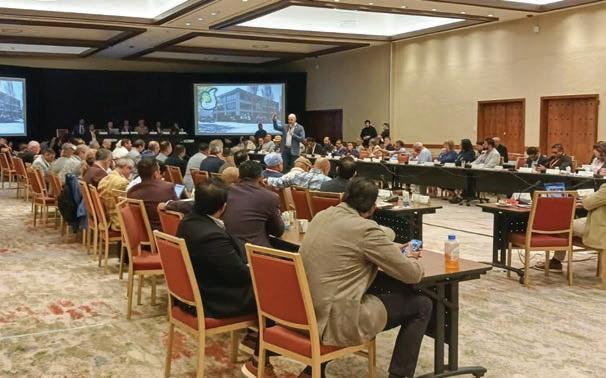
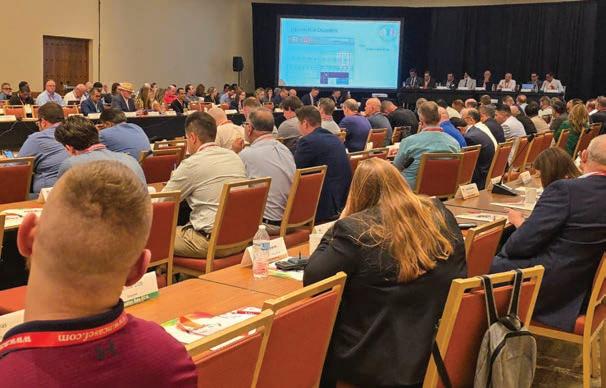
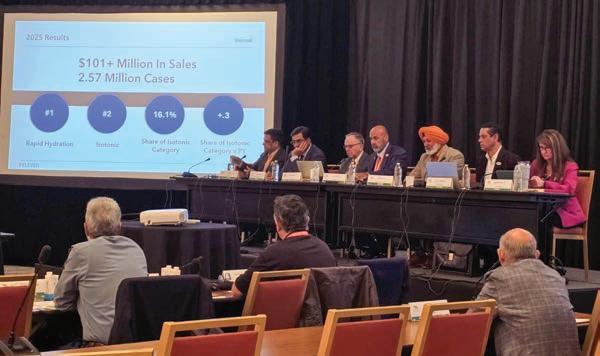
NCASEF First Quarter Meetings Address Issues & Profitability
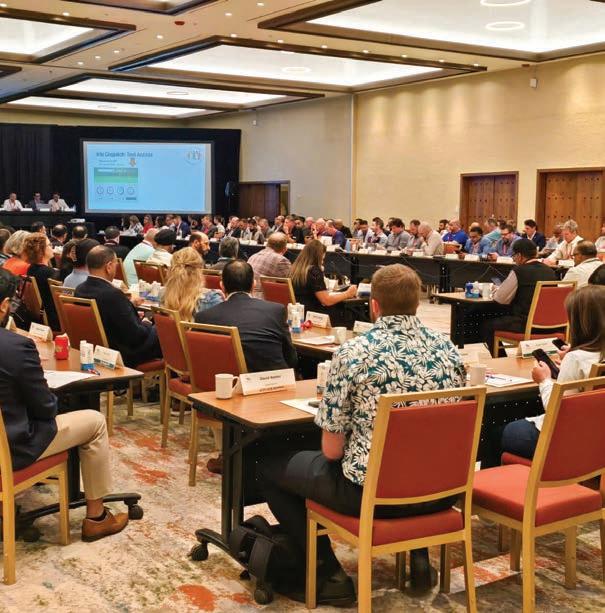
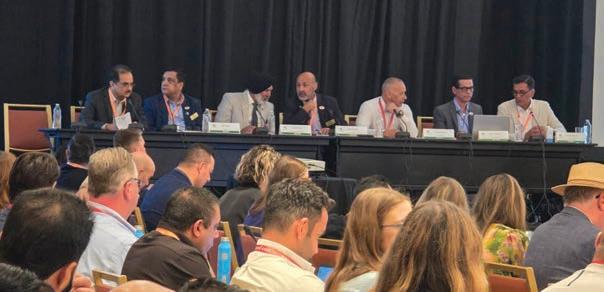
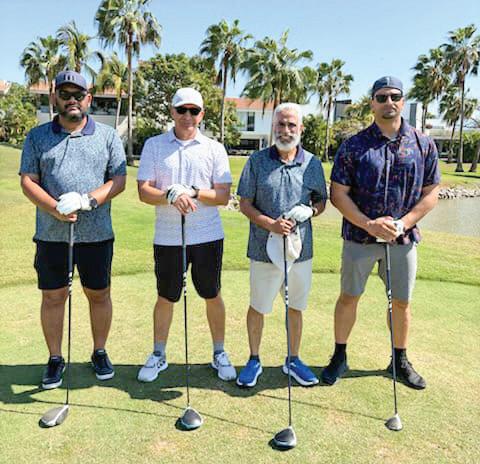
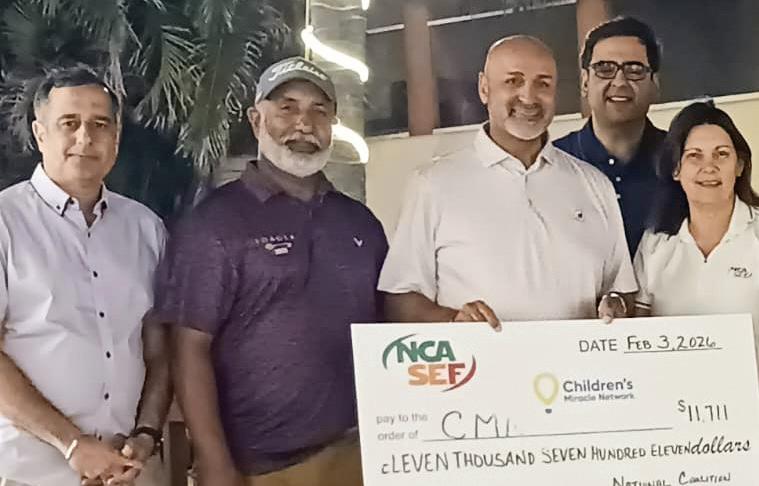
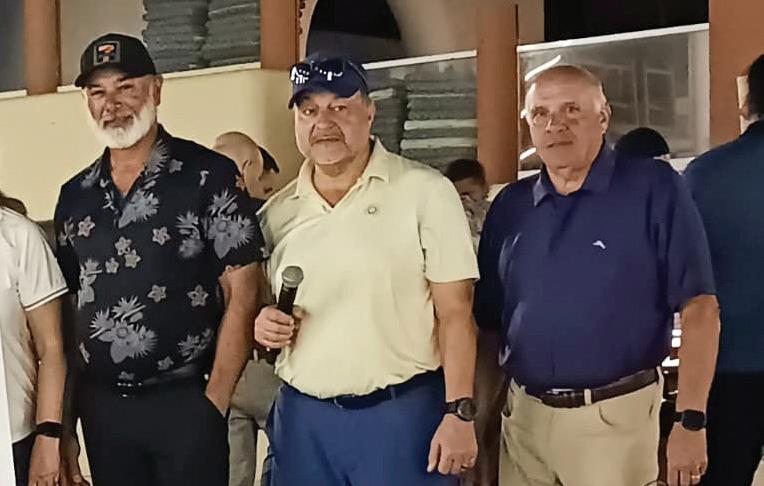
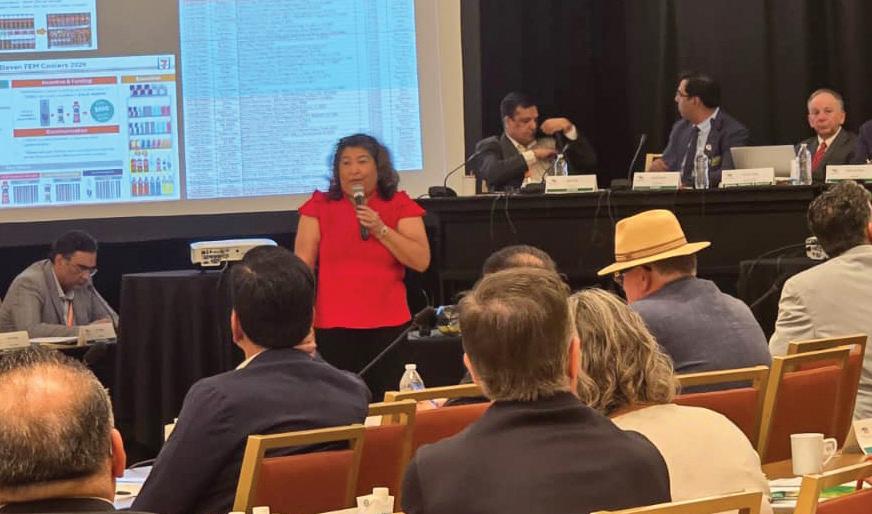
The NCASEF First Quarter Affiliate Member and Board of Directors meetings—held February 4–6, 2026 at The Westin Resort & Spa in Puerto Vallarta, Mexico—brought together franchisees, vendors, and industry partners to discuss operations and address system challenges. The meetings were preceded by a charity golf tournament on February 3, which raised funds in support of Children’s Miracle Network.
The Affiliate Member meeting on February 4 drew more than 230 attendees, with over 80 companies represented. NCASEF leadership provided an overview of current business conditions, noting that store performance remains under pressure across the broader retail landscape. Challenges such as rising costs and shifting consumer behavior continue to impact sales, reinforcing the need for improved execution and coordination across the system.
Breakout workshops were held during the meeting so franchisees and vendors could discuss operational topics in smaller groups, including product ordering processes, assortment flexibility, and communication. A Vendor Advisory Council concept was also introduced to provide a more structured platform for vendor input. Following the meeting, attendees participated in a tabletop trade show and networking session.
The Board of Directors meetings, held February 5–6, focused heavily on operational challenges, system performance, and governance matters. A central theme throughout the discussions was continued pressure on store profitability, driven by rising operating costs, inconsistent traffic, and execution challenges at the store level.
A significant portion of the Board meeting was dedicated to discussion with 7-Eleven, Inc. representatives, who addressed a range of operational topics and responded to questions from Board members. SEI leadership acknowledged that franchisees continue to face a challenging retail environment, citing rising labor, utilities, and product costs as key factors impacting performance. They also noted that broader economic conditions and declining traffic trends have contributed to ongoing pressure across the system.
During the session, the SEI representatives reviewed ongoing efforts to improve sales and traffic through promotional programs, pricing strategies, and value-focused initiatives. They emphasized the importance of consistent execution at the store level, including merchandising, cleanliness, and adherence to brand standards. Foodservice and proprietary beverage programs were also discussed as areas of focus, along with digital initiatives such as 7NOW and delivery partnerships, which are intended to generate incremental sales.
At the same time, Board members raised concerns about the effectiveness of these programs in practice, pointing to execution gaps and inconsistencies across markets. Issues related to 7NOW and delivery performance were discussed, including challenges with order fulfillment, timing, and overall reliability. Board members also highlighted concerns about inventory availability and distribution inconsistencies, noting that product shortages and delays can limit the impact of promotional programs.
Maintenance and equipment uptime were another major focus of the discussion. Board members reported ongoing
delays in repairs and inconsistent responsiveness from maintenance teams, which can affect store operations and customer experience. The SEI representatives acknowledged these concerns and stated that improving maintenance execution and response times remains a priority. They also noted efforts to strengthen coordination between maintenance teams and field support.
Communication between franchisees and field teams was discussed extensively, with Board members stressing the need for more consistent and timely responses to operational issues. Concerns were raised about gaps in communication, delayed follow-up, and lack of clarity in certain processes. The SEI representatives indicated that steps are being taken to improve alignment between field consultants and store-level needs, with the goal of providing more effective support.
Board members also addressed pricing consistency and promotional execution, noting that variations across markets can impact both sales and customer perception. Concerns were raised about the need for better alignment between pricing strategies and local market conditions, as well as more consistent implementation of promotional programs. These issues were identified as areas requiring continued attention and coordination.
Beyond the SEI session, the Board reviewed and approved the organization’s financials, including the treasury report and the 2026 budget. Governance discussions addressed bylaws and election procedures, with General Counsel providing clarification on existing processes and requirements for potential amendments.
The second day of the Board meeting included extended discussion of operational issues raised by FOA representatives. Topics included system functionality, pricing discrepancies, inventory adjustments, and communication protocols. Board members discussed ongoing challenges related to technology systems, pricing accuracy, and reporting processes, as well as the need for improved accountability in tracking and resolving open issues.
Additional governance discussion focused on proposed bylaw changes and the process for considering amendments, including debate over timing and scope. Motions related to tabling certain proposals were discussed and voted on, with further review expected at a future meeting.
The meetings provided a structured forum for franchisees, vendors, and SEI leadership to address ongoing operational and financial challenges facing the system. Discussions throughout the week reinforced the importance of improving execution, strengthening communication, and ensuring greater consistency across programs and support functions. With continued focus on store-level performance and follow-through on the issues raised, NCASEF will carry these discussions forward into future meetings and ongoing engagement with all stakeholders.
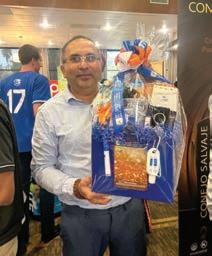
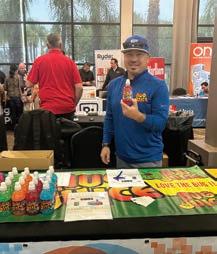
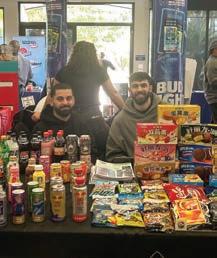
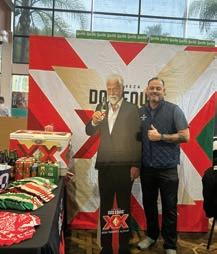
San Diego FOA Scores Big With Winter Trade Show
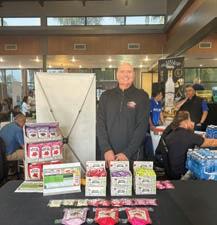
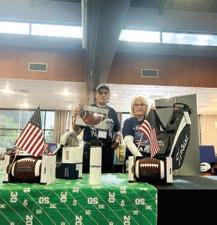
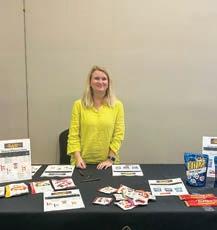
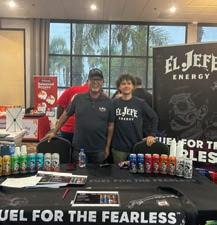
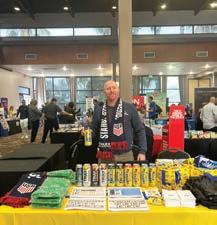
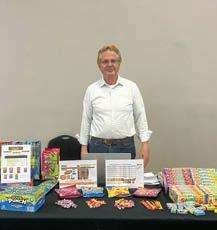
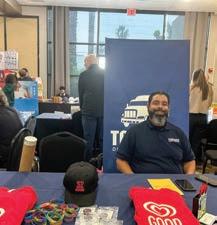
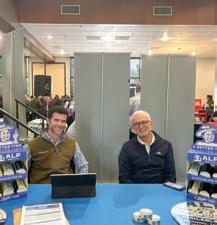
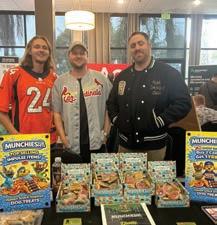
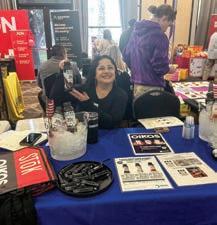
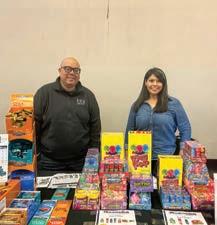
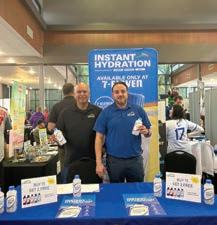
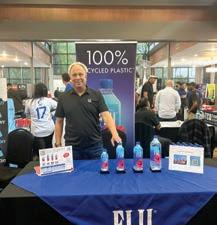
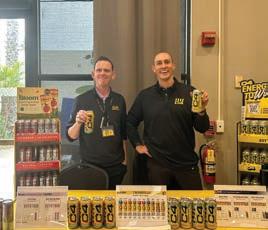
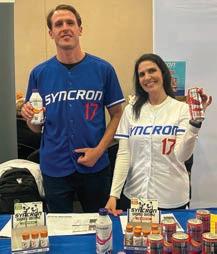
The San Diego FOA hosted its Winter Trade Show on January 21, 2026, at the Four Points by Sheraton San Diego, featuring an NFL-themed event that drew strong participation from both franchisees and vendor partners. The trade show included 70 vendor booths showcasing new products, promotions, and programs for 7-Eleven stores, while scores of franchisees attended throughout the day. The event provided vendors with direct access to franchisees in a lively setting centered around football-themed activities and networking opportunities.
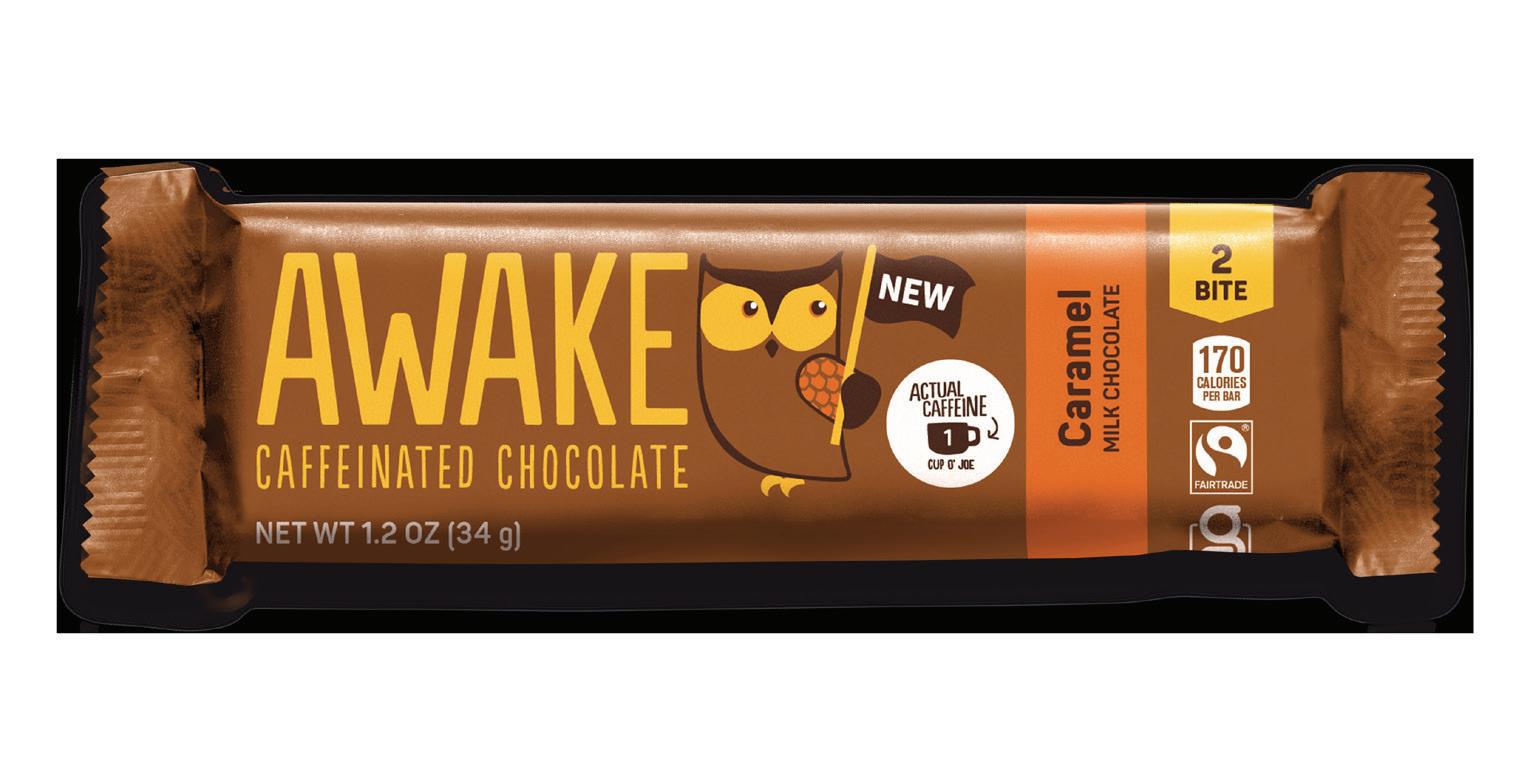
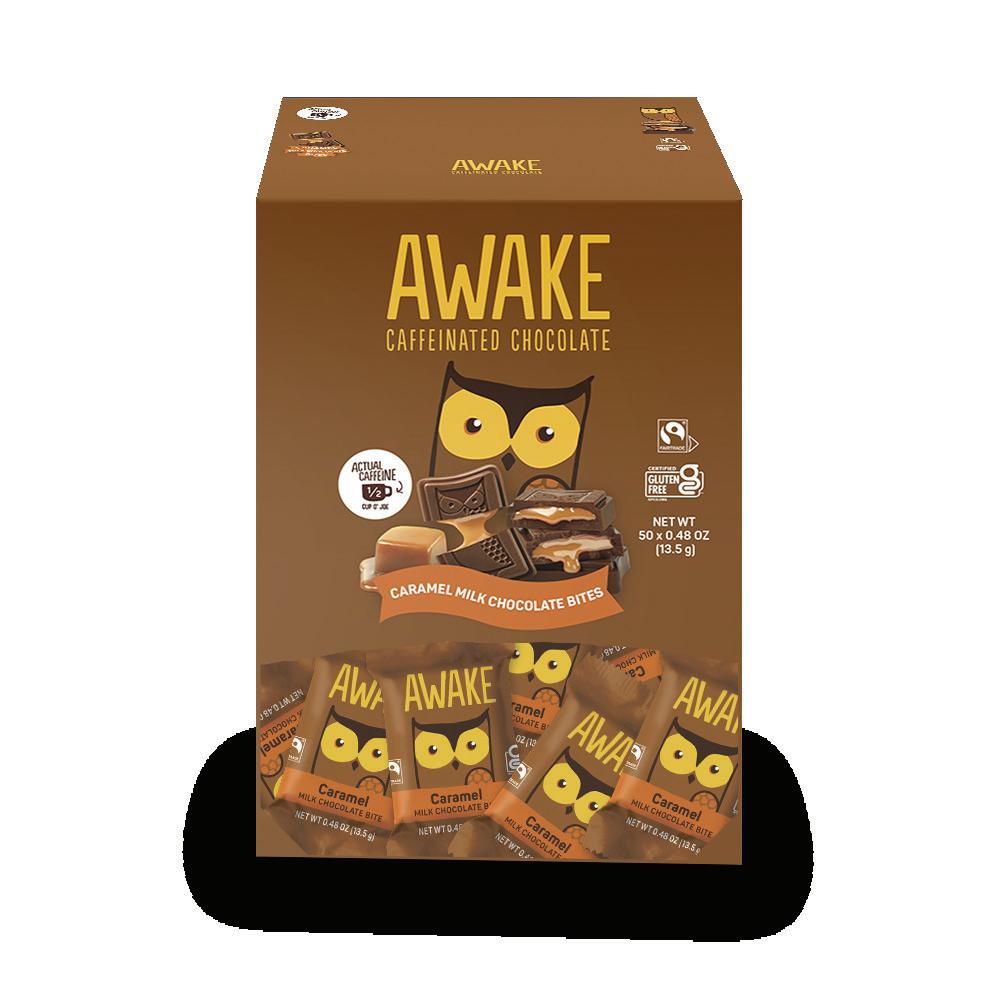
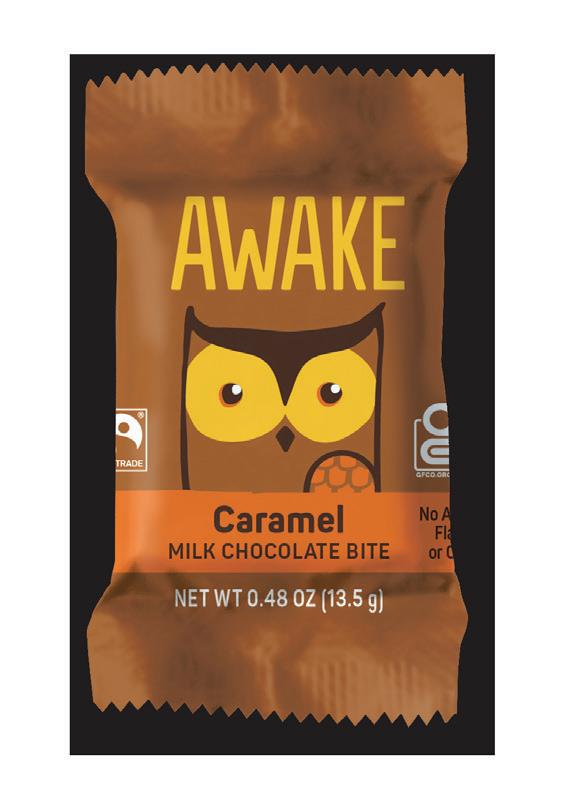
50%+ Margin Ranked 3rd in the Candy & Chocolate Gifts category on Amazon 70% of AWAKE consumption is early in the day, a 2X increase over conventional chocolate
Buc-ee’s plans to expand into seven new states—Ohio, Wisconsin, Arizona, Arkansas, Kansas, Louisiana, and North Carolina—bringing its total store count to at least 62 locations as part of a 2026–2027 growth push, reported SlashGear. The chain is known for massive stores, record-setting fuel stations, and 24/7 operations. • Amazon is expanding ultra-fast delivery with new 1-hour and 3-hour shipping options in U.S. cities, offering more than 90,000 items and targeting increased shopping frequency as it competes with Walmart, reported Reuters. • Over 1,200 U.S. retail stores are slated to close in 2026, as major chains including Macy’s, Pizza Hut, Kroger, Wendy’s, and Saks Off 5th shutter underperforming locations in what experts are calling a retail apocalypse, reported The Flyover • A Michelin-recognized chef is opening a Japanese-style convenience store concept at Mills Market in Orlando, report-
continued on page 48
percent over the past year as rising jet fuel costs were passed directly to travelers, while beef prices climbed 14.8 percent annually.
Grocery Visits Rise
Grocery store visits are increasing as shoppers make more frequent, targeted trips to manage higher food prices, according to new research from Placer.ai. The study found that low- and middleincome households are driving much of the growth as consumers stretch their budgets by buying smaller baskets and shopping across multiple stores to find better value and product availability. The
Avanti Is Your Magazine
Avanti Magazine was created in 1981 by franchisees, for franchisees. It represents your voice within the 7-Eleven universe and requires your participation to remain relevant to the ideas, information, and knowledge floating about the franchisee community. You can contribute to the success of Avanti Magazine by submitting any of the following:
> Articles on any 7-Eleven topic that may be of interest to other franchisees.
> Your FOA events and Board meeting calendars.
> FOA event photos with a short description (who, what, where, when, and why).
> Store or community event photos with captions.
> Any combination of the above.
Please send your submissions to avantimag@ncasef.com.
As former National Coalition Chairman Bill Schuessler famously said, “None of us is as great as all of us together, so let’s stay tightly knit together.”
shift means grocers are competing for portions of shoppers’ grocery lists rather than capturing the entire weekly basket, with customers increasingly choosing different retailers depending on price, selection, and specific shopping missions.
Data also shows that quick trips are becoming more common, with visits lasting under 15 minutes accounting for more than 40 percent of grocery trips in 2025, up from 37.9 percent in 2022. Expanded food offerings at discount and dollar stores, along with continued growth by wholesale clubs, have widened the number of places consumers can buy groceries, increasing overall engagement across the sector. Larger grocery chains are using their scale to invest in broader product assortments, stronger private-label programs, and competitive pricing, while smaller
continued on page 47
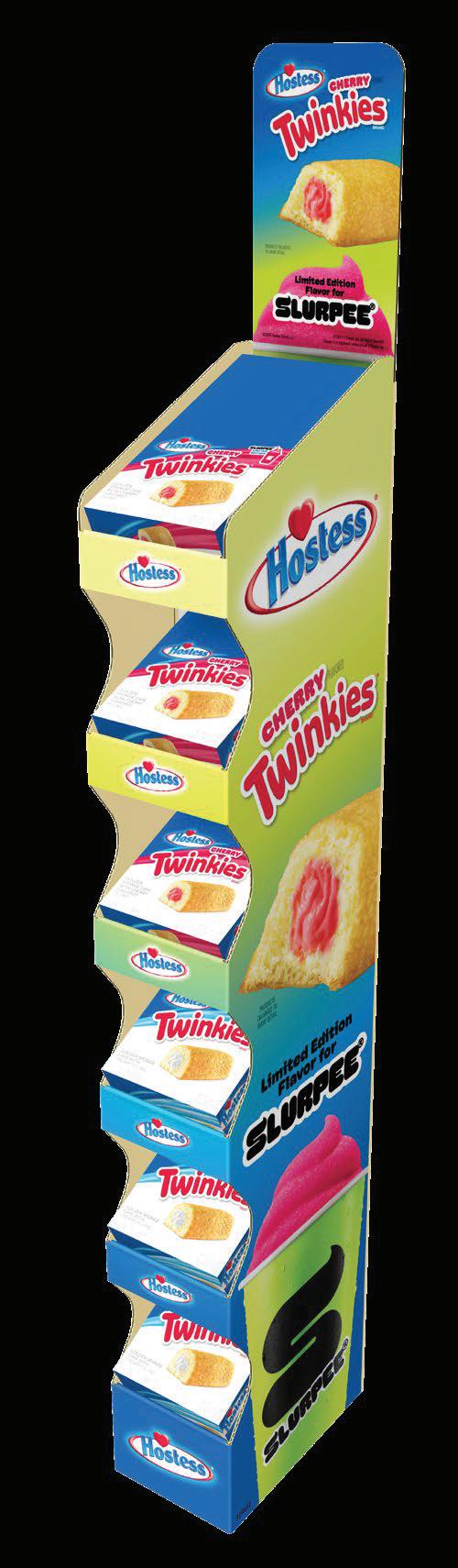
ORIGINAL TWINKIES® SLIN: 175407
CHOCOLATE TWINKIES® SLIN: 174934
CHERRY TWINKIES® LIMITED EDITION FLAVOR FOR SLURPEE® SLIN: PENDING
Member News
Industry observers say annual resets are no longer sufficient, recommending more frequent reviews — at least quarterly, with ongoing monitoring of regulations, taxes and product velocity.
Swipe Fees Hit Record High
Credit and debit card “swipe” fees reached a record $198.25 billion in 2025, according to the Merchants Payments Coalition. The total rose 5.9 percent from $187.2 billion in 2024 and has surged 80 percent since the pandemic, with credit card fees alone hitting $157.8 billion. Fees tied to Visa and Mastercard made up the majority at $118.8 billion, while the average credit card swipe rate climbed to 2.36 percent of each transaction. The coalition said these costs are now merchants’ second-highest expense after labor and add more than $1,200 a year to the average household’s expenses.
The report comes as lawmakers consider the Credit Card Competition Act, which would require large banks to enable transactions over at least one competing network alongside Visa
or Mastercard. Supporters say the measure could save merchants and consumers more than $17 billion annually by increasing competition on fees, security, and service. The coalition also pointed to growing bipartisan support for reform, noting backing from lawmakers, business groups, and consumer advocates as pressure builds for changes to the current payments system.
Consumers Question Rounding Practices
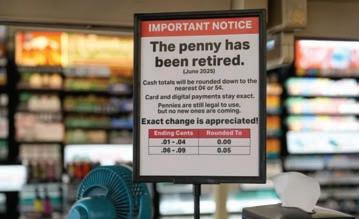
One in four consumers believe retailers benefit when transactions are rounded to the nearest nickel as the U.S. moves away from producing new pennies, reported NACS Daily. The survey, conducted in early February, found that by a more than 2-to-1 margin, shoppers think rounding up or down favors stores rather than customers, with concerns especially high among those who say their personal finances have worsened over the past year.
The lack of a national standard on rounding continues to create confusion, leaving many consumers worried they could be shortchanged without clear explanations at the point of sale. Industry leaders say that even if federal legislation
allows rounding, retailers will need to clearly communicate how the process works to build trust.
ed the Orlando Business Journal. The shop is designed to recreate the “konbini” experience popular in Japan, offering a new retail and food option inside the venue. • Sunoco Retail recently acquired 48 fuel and convenience store sites in the New York City metro area from Capitol Petroleum Group. The locations—branded under Shell, Exxon, Mobil and Citgo— bring Sunoco’s total acquisitions to 140 sites so far in 2026 as the company continues expanding its retail footprint. • Tar-
Milwaukee Franchisee
Takes Unique Approach To Retail Theft
A newly opened 7-Eleven near the University of WisconsinMilwaukee is taking an unconventional response to shoplifting, with owner Manjeet Singh Mangat choosing to offer food to struggling customers rather than report them to police, reported CBS 58 News Milwaukee. Despite experiencing repeated “One in four consumers believe retailers benefit when transactions are rounded to the nearest nickel.”
get is cutting prices on more than 3,000 items across categories like apparel, home goods, and essentials as it works to revive sales and attract budget-conscious shoppers, reported Reuters. The move comes as inflation, higher energy costs,
thefts, Mangat said he refuses to turn over security footage because he worries about the long-term consequences for students and young customers, instead focusing on building relationships and encouraging accountability through conversation and support. Mangat, who considers himself part of the surrounding college community, said he regularly engages with customers and even pays for meals out of his own pocket when needed, explaining that creating trust and showing compassion matters more than recovering short-term losses.
Digital End Caps
Reshape In-Store Advertising
Retailers including Kroger and CVS Pharmacy are installing digital advertising screens on store end caps as part of a broader expansion of in-store retail media networks, reported Modern Retail. CVS has already deployed digital end caps in more than 600 locations, typically placing three screens per store in high-traffic aisles, with company research showing that 70 percent of shoppers find the displays useful, while Kroger is focusing early installations in grocery and healthand-beauty categories to increase shopper engagement and dwell time. The screens allow retailers and brands to rotate promotions, recipes, seasonal messaging, and product information in real time while measuring impressions and shopper interaction through builtin sensors, turning traditional merchandising space into a measurable advertising channel.
Industry analysts note that end caps remain one of the most influential placements in stores because of their proximity to purchase decisions, though retailers must balance advertiser demand with preserving the customer experience as digital media becomes more integrated into physical store layouts.
Job Growth Revised Lower
U.S. job growth in 2025 was significantly weaker than first reported after federal benchmark revisions showed employers added just 181,000 jobs last year—about 69 percent fewer than the initial estimate of 584,000—leaving the economy with more than one million fewer jobs than previously believed, reported the New York Times. The revision marked the largest percentage adjustment since 2009 and reflected slower labormarket momentum throughout 2024 and 2025.
However, newer data suggests conditions may be improving as employers added a stronger-thanexpected 130,000 jobs in January, led largely by healthcare hiring while manufacturing posted modest gains after more than a year of
losses. The unemployment rate also edged down to 4.3 percent from 4.4 percent in December, with economists noting early signs of stabilization heading into 2026 as job gains broaden across sectors despite continued reductions in federal government employment.
Florida Seizes
Thousands Of Illegal Vape Products
Florida authorities recently seized more than 2,100 illegal vape products during a statewide enforcement effort targeting retailers selling unauthorized nicotine devices, reported CStore Decisions. The crackdown was led by a Vape Task Force formed by the Florida Attorney General’s Office and supported by the Florida Department of Agriculture and Consumer Services (FDACS), the Florida Department of Business and Professional Regulation and local law enforcement.
Across four operations in Clermont, Ocoee, Okaloosa County and Milton, officials confiscated 2,183 contraband vapes along with nitrous oxide canisters and related drug paraphernalia, while FDACS inspectors also removed thousands of additional illegal products from store shelves during regulatory inspections. State officials said the enforcement effort focused on products that violate Florida law and may appeal to minors, with Agriculture Commissioner Wilton Simpson stating that the state will continue working with law enforcement partners to remove unlawful nicotine products that
Member News
threaten public health and undercut legitimate retailers.
“Florida authorities recently seized more than 2,100 illegal vape products from retailers selling unauthorized nicotine devices.”
Retailers Test Bold Flavor Trends
Convenience retailers are embracing new flavor combinations as consumer tastes shift beyond traditional sweet profiles, with chains like 7-Eleven introducing spicier and globally inspired menu items, reported C-Store Dive. The company recently tested a Jalapeño Ranch Chicken Taquito featuring seasoned chicken, ranch dressing and jalapeños as part of a broader push toward bold flavors such as chili-lime, buffalo-style sauces and fermented chili pastes that can be added to familiar foods without increasing labor in stores.
Industry analysts say the “swicy” trend—blending sweet and spicy flavors—continues to gain traction through sauces like chili-maple or chili-date, while other emerging profiles include “swokey” (sweet and smoky), “swalty” (sweet and salty) and “swangy” (sweet and tangy). These flavors are typically added through sauces or seasonings on popular convenience foods like breakfast sandwiches, wraps, flatbreads and snackable sides, allowing retailers to introduce
new tastes while keeping core menu items familiar to customers.
Economic Growth Slows In Fourth Quarter
U.S. economic growth slowed sharply in the final months of 2025 as the economy felt the impact of a lengthy federal government shutdown, reported the Wall Street Journal. The Commerce Department said real gross domestic product (GDP) increased at a 1.4 percent annual rate in the fourth quarter, down from a strong 4.4 percent pace in the third quarter, as federal government spending plunged nearly 17 percent during the 43-day shutdown and consumer spending cooled from earlier levels.
Economists said the shutdown alone shaved about one percentage point from GDP growth, reflecting reduced government services and delayed federal payments. Consumer spending still rose about 2.4 percent, but slower exports and softer business investment also weighed on the overall figure, while analysts expect some of the shutdown-related drag to reverse in early 2026 as government operations resume.
Discount Grocers Drive Traffic Gains
Discount grocers are drawing stronger store traffic than the broader grocery sector, with Trader Joe’s and Aldi leading the category in visits per location, reported Chain Store Age. Data from Placer. ai shows Trader Joe’s visits per
location rose 4.0 percent in 2025 and Aldi increased 1.9 percent, both outperforming the grocery category’s 0.9 percent growth, while Lidl posted a modest 0.7 percent annual gain but finished the year with a 4.9 percent year-overyear jump in fourth-quarter visits.
The report also found traditional grocers recorded a higher share of quick trips, with 22.1 percent of visits lasting under 10 minutes, likely tied to curbside pickup and convenience-driven shopping.
Trader Joe’s saw a higher concentration of 10- to 30-minute visits, reflecting its smaller stores and tightly curated product assortment, while Aldi generated more visits in the 15- to 45-minute range due to its limited-SKU layout that simplifies navigation. Lidl stood out for longer shopping trips, with 11.7 percent of visits lasting more than 45 minutes, a trend linked to its larger stores, instore bakeries and broader product selection that encourage shoppers to spend more time in the aisles.
“Discount grocers are drawing stronger store traffic than the broader grocery sector.”
SNAP Stocking Rules Raise Concerns
A proposed USDA rule that would more than double the number of required staple food varieties for SNAP-authorized retailers is drawing strong opposition from convenience stores and small-format operators, reported Agri-Pulse. The plan would increase the requirement
from 12 to 28 varieties across key categories like dairy, grains, protein, and produce, but retailers argue the way those categories are defined makes compliance difficult, especially when items like different breads or cheeses count as just one variety.
Industry groups warn the changes could force thousands of stores out of the program, with one association calling the proposal “unworkable” and warning it could push “tens of thousands of stores out of SNAP.” Data from USDA shows smaller stores already struggle most with meeting dairy and protein requirements, raising concerns that tighter rules could reduce access to SNAP at neighborhood locations.
Retail Shifts Toward Profit Discipline
Retailers are facing mounting pressure to prioritize profitability as rising costs, weaker consumer confidence, and intense competition reshape the industry, reported Forrester. Higher wages and interest rates are squeezing margins across both low- and high-margin categories, leaving little room for error, while traditional business models struggle to keep pace with shifting consumer behavior and digital disruption.
The report warns that specialty retailers are especially vulnerable, predicting at least three U.S. chains could file for bankruptcy as debt burdens and competition from mass merchants and online players intensify. Even stronger players will need to sharpen their omnichannel strategies, rethink store footprints, and deliver in-store experiences
that stand apart from e-commerce.
At the same time, technology and policy changes are set to redefine how retailers operate and interact with customers. Forrester expects onequarter of shoppers to use AI-powered chatbots in 2026, as retailers invest in tools that guide product discovery, personalize recommendations, and streamline customer service while lowering costs.
Crypto ATMs Bring Opportunity & Risk
Crypto ATMs are gaining traction in convenience stores as a way to drive traffic and generate passive income, reported C-Store Dive. Retailers can benefit from increased foot traffic, access to unbanked customers, and lease or revenue-sharing income from ATM operators, with machines requiring minimal space and no staff involvement. Vendors often promote the kiosks heavily online, turning store locations into destinations, while the simplified process can introduce new customers to digital currency through hands-on support.
At the same time, the kiosks have been linked to scams due to irreversible transactions, raising concerns for both customers and store owners. Experts warn that
and increased competition from retailers like Walmart and Kroger continue to pressure consumer spending. • McDonald’s reported a 5.7 percent increase in global same-store sales for the fourth quarter, as its renewed focus on affordability drove higher customer traffic and stronger-than-expected revenue, reported the Wall Street Journal. U.S. same-store sales rose 6.8 percent during the period, while quarterly revenue climbed 10 percent to $7.01 billion.
• Murphy USA exceeded its goal of opening 50 new stores in 2025 and has already opened two additional locations this year, with 18 more currently under construction, reported Convenience Store News. The company posted full-year net income of $470.6 million while merchandise contribution dollars rose 4.2 percent to $869 million. • Circle K is expanding its Inner Circle loyalty program nationwide by focusing on fuel discounts, personalized rewards and simplified enrollment to deliver immediate value for cost-conscious shoppers, reported Convenience Store News. The free program now operates at more than 5,000 U.S. locations across 29 states. • Wawa has joined Tesla’s Supercharger for Business program and opened its first self-branded Tesla Supercharger site in Alachua, Florida, allowing the convenience chain to own and brand the charging station while Tesla handles installation and management, reported Electrek • While 86 percent of U.S. consumers are aware of artificial intelligence in smartphones and other technology devices, 35 percent remain hesitant to embrace it, according to Circana. Many skeptics say their devices already perform the tasks they need, and others cite privacy concerns or higher costs. • Walmart recently tested a new disaster response model in Dallas that deploys mobile resources such as 18-wheelers, tents, a mobile kitchen, pharmacy services, and drones to help communities recover after emergencies, reported the Dallas Morning News. The exercise also evaluated drive-
Member News
revenue-sharing agreements may expose retailers to greater liability, while growing federal and state regulations require ATM operators to register, monitor transactions, and follow stricter compliance rules. Retailers are encouraged to vet operators carefully and consider how the machines fit their customer base, especially as only about 14 percent of Americans currently own cryptocurrency.
“Crypto ATMs are gaining traction in c-stores as a way to drive traffic and generate passive income.”
Dollar Stores Grow Without Colliding
Dollar General and Dollar Tree are continuing to post positive same-store visit growth even as both chains expand their store counts, signaling that demand for value retail is increasing rather than shifting between competitors, reported Placer.ai. Dollar General saw mid- to high-single-digit traffic
through and walk-up meal distribution and support areas for people arriving on foot.
• When Spirit Airlines collapsed recently, it stranded 91 of its 114 yellow planes at 26 airports, reported The Autopian. Repossession crews have hired former Spirit pilots to fly the Airbus jets to desert storage in Arizona, where new buyers can pick them up. • QuikTrip recently opened its 1,200th store in Morrow, Georgia, marking a major milestone for the Tulsa-based convenience retailer and its
gains between September 2025 and January 2026 while deepening its reach in rural markets, while Dollar Tree added more than 300 locations and maintained flat to slightly positive traffic trends.
Shopper behavior shows clear differences between the two banners, with Dollar General driving more frequent, essentialsbased trips—25 percent of its visitors shop four or more times per month compared to 9.2 percent at Dollar Tree—along with longer visits averaging 20 minutes versus 13.6 minutes at Dollar Tree. The data suggests Dollar General is becoming a routine grocery stop with expanded fresh and consumables offerings, while Dollar Tree continues to attract shorter, mission-driven trips focused on discretionary and
seasonal items as it builds out its multi-price format.
Couche-Tard Q3 Earnings Climb
Alimentation Couche-Tard reported higher earnings and steady same-store sales growth across all regions in its third quarter of fiscal 2026. Net earnings rose to $757.2 million, up from $641.4 million a year earlier, while adjusted earnings per share increased 19.1 percent to $0.81, driven by stronger fuel margins, acquisitions, and continued momentum in convenience sales.
Merchandise and service revenues climbed 8.7 percent to $5.8 billion, with U.S. same-store sales up 2.8 percent and modest gains in Europe and Canada, even as fuel volumes declined slightly in most regions. The company also expanded its footprint with 37 new stores and continued investing in loyalty programs, meal deals, and in-store promotions, contributing to improved traffic and customer engagement.
continued expansion in the Atlanta metro area. The new store is the company’s 181st location in Georgia and part of a broader growth plan that includes more than 80 additional stores scheduled to open nationwide in 2026. • Since more than half of Starbucks’ company-operated U.S. store sales—about $12 billion annually—occur before 11 a.m., the company is trying to encourage afternoon visits by promoting lower-caffeine beverages and snacks, installing digital menu boards,
and redesigning seating areas, reported the Wall Street Journal. • CITGO Petroleum Corp. recently launched CITGO PlusPAY, a mobile payment option integrated into the Club CITGO app that allows customers to pay directly from their bank accounts while earning loyalty rewards. The system offers at least 10 cents per gallon in fuel savings, faster checkout with no debit holds, and an introductory promotion of four fill-ups with 25 cents-per-gallon savings for new us-
Shoppers Demand Ingredient Transparency
Half of U.S. shoppers are concerned about artificial ingredients in their food, according to Acosta Group. The company’s latest shopper study found that 58 percent of consumers check ingredient labels before buying, with that number rising to 87 percent among health-focused shoppers, while 50 percent overall—and as high as 79 percent of health-focused consumers—worry about health risks tied to artificial additives, chemicals, and preservatives. Interest in transparency continues to grow, with 40 percent of health-focused shoppers and 39 percent of Gen Z reporting they are reading labels more often than six months ago, and 62 percent of all shoppers saying stronger food safety regulations are needed. The study also found that 58 percent support banning certain synthetic ingredients and 71 percent favor aligning U.S. standards with stricter European rules, signaling increased pressure on brands to clearly communicate ingredient sourcing and product safety.
continued from page 52
ers. • Lawson recently opened its first convenience store designed to function as a disaster-support hub, equipped with solar panels, a well, an inhouse kitchen, and Starlink satellite Wi-Fi to provide communications and charging during crises, reported Japan Today. The company plans to expand the concept to 100 locations by fiscal 2030. • Burger King is rolling out an AI-powered assistant called “Patty” that listens to drive-thru orders and tracks employee language, using keywords like “welcome,” “please,” and “thank you” to measure customer service patterns, reported NBC News. The tool, part of the BK Assistant platform, also provides real-time coaching and operational support through employee headsets. • PepsiCo has lowered suggested retail prices on many of its snack brands—including Lay’s, Doritos, Cheetos and Tostitos—by up to nearly 15 percent as part of an effort to ease cost pressures on consumers. The new pricing is rolling out across the U.S., with retailers setting final shelf prices. • Pilot has introduced its new proprietary food brand, Pilot eats, alongside Pilot eats Express, expanding hot deli and grab-and-go offerings across hundreds of travel centers while also moving all company-operated quick-service restaurants to 24/7 service. • Five Below is successfully moving beyond its $5 price ceiling by introducing higher-priced items, simplifying pricing, and repositioning itself as a trend-driven specialty gift retailer, reported Forbes. Comparable sales surged from a 3 percent decline in late 2024 to double-digit growth through 2025 as the company leaned into impulse-driven merchandising, broadened its product mix, and accelerated store expansion. • Amoco has surpassed 1,000 locations across 26 states and Washington, D.C., after adding more than 160 sites since early 2025. The milestone reflects renewed investment in the brand since its 2017 relaunch, as bp continues expanding its U.S. retail network with a focus on premium fuels and digital tools like its earnify loyalty platform. • Walmart plans to roll out digital shelf labels across all
U.S. stores by the end of the year, allowing associates to update prices instantly, reduce errors, and locate items faster for restocking and online order fulfillment, reported Retail Dive • BJ’s Wholesale Club reported a strong fourth quarter with revenue rising 5.6 percent to $5.58 billion and net income reaching $125.9 million, while marking its 16th consecutive quarter of traffic growth, reported Chain Store Age. Membership fee income jumped 10.9 percent, and the company plans to continue its expansion pace of 25 to 30 new clubs in 2026. • Burger King recently upgraded its signature Whopper with a higher-quality bun, improved toppings like freshly cut onions and tomatoes, and new packaging designed to preserve freshness and presentation. The changes mark the first major update to the iconic sandwich in nearly a decade. • Costco beat earnings expectations in its latest quarter, reporting net income of $2.04 billion and a 9.1 percent increase in net sales to $68.24 billion, driven by strong in-store demand and a 22.6 percent jump in digitally enabled comparable sales, reported Chain Store Age. The retailer plans to open 28 net new warehouses this fiscal year and more than 30 annually in the coming years. • Reynolds American recently announced that it will invest more than $3.2 billion in its U.S. operations by 2030 to expand manufacturing, strengthen supply chains, and accelerate innovation across its smokeless product portfolio. The investment, which began in 2024, is expected to support more than 2,000 jobs and roughly $100 million in annual research and development spending. • Shell sold or closed about 800 underperforming branded convenience retail sites in 2025 as part of a broader plan to boost free cash flow, reported C-Store Dive. The company said none of the closures occurred in the U.S., which remains a key growth market, as Shell continues working toward its goal of divesting 1,000 sites globally by the end of 2026. • Consumers are joining QSR loyalty programs mainly to save money, with 85 percent citing savings as the
Legislative Update
Virginia Skill Games Veto
Skill games will remain illegal in Virginia after Gov. Abigail Spanberger vetoed legislation that would have legalized up to 25,000 machines statewide, reported WRIC ABC 8News. The bill would have allowed limited placements in convenience stores and restaurants while giving localities the option to ban the machines through referendums, but the governor cited concerns over the lack of a centralized regulatory system and the risk of inconsistent enforcement.
Spanberger also pointed to past data showing the machines were concentrated in lower-income communities and said legalization could worsen economic and social impacts without proper oversight. She emphasized that millions of dollars previously flowed out of vulnerable areas and maintained that any future expansion of gaming must include stronger regulatory safeguards before moving forward.
“SKILL GAMES WILL REMAIN ILLEGAL IN VIRGINIA AFTER THE GOVERNOR VETOED LEGISLATION THAT WOULD HAVE LEGALIZED THE MACHINES STATEWIDE.”
States Move To Set Cash Rounding Rules
State lawmakers are moving quickly to establish clear rounding rules for cash transactions as the use of the penny declines, reported the Associated Press. Several states—including Arizona, Florida, Oregon, Tennessee, Virginia and Washington—are considering or advancing legislation that would require totals to be rounded to the nearest five cents when customers pay with cash, while electronic payments would still be charged the exact amount. Supporters say the change would simplify transactions, with some proposals modeled after systems already used in countries that have phased out lowdenomination coins.
The push has also raised concerns among consumer advocates and retailers about consistency and fairness, particularly around whether rounding could disadvantage shoppers over time or create confusion at checkout. Lawmakers are working to standardize practices to avoid a patchwork of rules across states, with some bills outlining specific rounding thresholds and requiring clear signage at the point of sale. The outcome of these efforts will shape how retailers handle cash transactions if penny production
continued from page 53
top benefit and strong interest in discounts and free items, according to research firm Alchemer. Discounts (82 percent) and free items (77 percent) far outweigh perks like exclusive menu items or convenience, while 38 percent of respondents said they would switch programs for better deals. • Dollar General plans to introduce a new store format in 2026 designed to encourage browsing and “treasure hunting,” while also testing a subscription-based loyalty program to boost customer engagement, reported Retail Dive. The retailer also posted solid results, with Q4 net sales rising 5.9 percent to $10.9 billion and same-store sales up 4.3 percent, driven in part by higher average unit prices. • Molson Coors recently acquired the maker of Monaco Cocktails as it pushes deeper into the fast-growing ready-to-drink category beyond beer. The Monaco brand, which holds about 5 perent of the single-can RTD market and performs strongly in convenience stores, is expected to scale further through expanded marketing and distribution. • Kraft Heinz is pausing plans to split its condiment and grocery businesses and will instead invest hundreds of millions of dollars into marketing and product development to return to growth by 2027, reported the Wall Street Journal. T • Sheetz plans to open 14 new restaurant and convenience store locations across Southeast Michigan in 2026 as part of a $500 million investment, reported FOX 2 Detroit. The Pennsylvania-based chain said each store will employ at least 30 mostly full-time workers—creating roughly 400 new jobs—though some proposed stores have faced suburban pushback over traffic and noise concerns. • UPS plans to eliminate up to 30,000 additional operational jobs in 2026 as it winds down its partnership with Amazon and continues a multiyear turnaround strategy, reported CNBC. The company said the reductions will come through attrition and a second voluntary separation program for full-time drivers, while also cutting about 25 million operational hours tied to the Amazon decline.
continues to decline or is eventually eliminated.
DOL Revisits Contractor Classification Rule
The U.S. Department of Labor is proposing to roll back its current framework for determining whether workers are employees or independent contractors and replace it with a modified version of its earlier 2021 rule, reported Daily. The proposal would reintroduce an “economic reality” test focused on whether a worker is economically dependent on an employer or operating independently, with two core factors—control over the work and the opportunity for profit or loss—guiding the analysis. Additional considerations include skill level, permanence of the relationship, and whether the work is part of an integrated business operation, while placing greater weight on actual working conditions rather than contractual language.
accepting public comments through April 28, 2026.
Maryland Alcohol Sales Expansion Stalls Again
Efforts to allow beer and wine sales in grocery stores and other retailers—including convenience stores—are unlikely to advance this year, as key lawmakers signal the proposal lacks enough support to move forward, reported the Star Democrat. Senate President Bill Ferguson said he does not expect meaningful action this session, pointing to ongoing concerns and the need for a broader compromise, while a House bill that would expand sales to supermarkets, bigbox chains, convenience stores, and pharmacies continues to face resistance in committee.
are advancing a mix of stricter regulations and targeted tax changes on tobacco and nicotine products, reported Convenience Store News. In California, Richmond officials are moving to cap tobacco retailers at 50 stores citywide, limit tobacco shelf space to 20 percent, and impose fines up to $5,000 for flavored tobacco violations, while also enforcing 1,000-foot buffer zones around schools and allowing authorities to seize illegal products.
Delaware legislators are considering a major tax increase that would raise cigarette taxes from $2.10 to $3.60 per pack, along with higher taxes on moist snuff, vapor liquids, and other tobacco products, while expanding the definition of taxable items to include nicotine pouches.
The move follows the agency’s 2025 suspension of the current rule amid legal challenges and signals a shift toward a clearer, more employer-friendly standard. The Department also plans to extend this analysis to the Family and Medical Leave Act and the Migrant and Seasonal Agricultural Worker Protection Act, both tied to FLSA definitions, and is
Supporters argue the change could generate an estimated $75 million in new revenue and improve access for consumers seeking one-stop shopping. Opposition remains strong from small business owners, alcohol distributors, and some lawmakers who warn the shift could hurt locally owned liquor stores and related businesses.
“EFFORTS TO ALLOW BEER AND WINE SALES IN MARYLAND CONVENIENCE STORES ARE UNLIKELY TO ADVANCE THIS YEAR.”
States Push Diverging Tobacco Policies Lawmakers across several states
Other states are taking a more nuanced approach to regulation and taxation. Florida lawmakers are advancing legislation that would separate heated tobacco products from traditional cigarettes and tax them at a lower rate, with the proposal moving through key committees in both chambers. New Jersey is weighing a bill to cap cigar taxes at 50 cents per cigar, while Oregon has passed legislation redefining tobacco products to include nicotine pouches and restricting their sale to those under 21. In Washington, lawmakers are considering a $2 increase to the state’s cigarette tax, which would raise the current rate from $3.025 to $5.025 per pack if approved.
SEI NEWS
7-Eleven Owner Delays U.S. IPO
Seven & i Holdings has delayed the planned IPO of its U.S. convenience store business until at least fiscal 2027 as it works to improve performance and secure a stronger valuation, reported Bloomberg. The company said weaker fuel demand and softer consumer spending have reduced store traffic, exposing its reliance on gasoline-driven visits to boost higher-margin in-store sales, while ongoing challenges such as underperforming stores and a slower rollout of food offerings have weighed on results. CEO Stephen Dacus emphasized that the listing is intended to maximize shareholder value rather than raise capital, even as the company forecasts operating profit of ¥405 billion, below analyst expectations, and slightly lower sales.
“Seven & i has delayed the planned IPO of its U.S. 7-Eleven business until at least fiscal 2027.”
Store Closures Planned
SEI plans to close 645 stores across North America in fiscal 2026, far exceeding the 205 locations it expects to open during the same period, reported the Associated Press. Parent company Seven & i Holdings said some of these closures will involve converting sites into wholesale fuel locations, a
format that has steadily expanded and now includes more than 900 sites as of late 2025, while also noting that consumer spending—especially among lower-income households—has begun to soften under continued inflation pressures. The company did not specify which stores will be impacted, but the move follows a pattern of trimming underperforming locations as it shifts focus toward new formats, fresh food offerings, and delivery growth through its 7NOW platform.
SEI Reorganization Hits Senior Leadership
Three senior vice presidents have exited SEI as part of a company-wide reorganization impacting its merchandising and strategy teams, reported C-Store Dive. The departures include Randy Quinn, senior vice president of merchandising for vault and proprietary beverages; Dennis Phelps, senior vice president of center store and field merchandising; and Ken Hathaway, senior vice president of strategy and transformation. The restructuring, tied to SEI’s broader transformation plan, began in late April, with most affected employees notified shortly thereafter, though the total number of impacted workers remains unknown. The shakeup has extended beyond these roles, with additional leadership changes and shifting responsibilities across departments.
“Three senior vice presidents have exited SEI as part of a company-wide reorganization.”
Seven & i Completes Share Buyback
Seven & i Holdings recently completed a ¥600 billion share buyback as part of a broader plan to return up to ¥2 trillion to shareholders, reported The Globe and Mail. The company repurchased the shares under a program approved by its board that allows for the acquisition of as many as 400 million shares, or roughly 15 percent of its outstanding stock, through transactions conducted on the Tokyo Stock Exchange. Company leaders said the repurchase program is part of a long-term strategy to improve shareholder value while maintaining the financial flexibility needed to invest in future growth across its retail businesses, including the global 7-Eleven convenience store network. Seven & i confirmed it remains committed to the full ¥2 trillion buyback plan, signaling continued confidence in its financial position and long-term business outlook.
7-Eleven Expands In Las Vegas
SEI recently acquired 15 convenience stores in the Las Vegas area from Short Line Express Market, expanding its footprint in a market where it already holds a strong presence, reported C-Store Dive. The
locations are primarily in metro Las Vegas, with additional sites in Henderson and North Las Vegas, and the company has already completed rebranding the stores. The newly acquired locations will continue offering Thrifty Ice Cream and feature Chevron-branded fuel, maintaining key elements of the former chain, while Short Line retains two non-fuel sites.
7-Eleven Canada Shifts Toward Franchising
7-Eleven Canada is expanding its long-term growth strategy by introducing franchising and strengthening its foodservice program as competition intensifies across the convenience and quickservice retail landscape, reported TownAndCountryToday.com. Company leadership said the five-year plan focuses on transforming stores into quickserve restaurant destinations while expanding beyond its current base of roughly 550 corporately owned locations in Ontario and British Columbia, with franchising expected to support entry into Quebec and Atlantic Canada.
The strategy places heavier emphasis on fresh and prepared foods, including the upcoming Canadian launch of Japan’s popular tamago sando egg sandwich, alongside expanded hot food, proprietary beverages, dine-in seating, and in-store food production
supported by company-run commissaries. Executives said future growth will rely less on traditional convenience items and more on ready-toeat meals and globally inspired offerings already successful in Japan, as the company works to reposition stores as food-focused destinations while maintaining core convenience merchandise.
7-Eleven Bets On Australia For Growth
Seven & i Holdings is using Australia as a proving ground for the future of 7-Eleven’s global growth strategy, reported Bloomberg. The company believes the Australian market offers the right mix of urban density, car culture, and changing consumer habits to test whether its highly successful Japan-style convenience model can work outside Asia.
After acquiring the Australian 7-Eleven operator for about A$1.7 billion ($1.2 billion) in 2024, the company now plans to open hundreds of new locations— potentially reaching 1,000 stores by 2030, or roughly one new store per week. The expansion centers on transforming stores from fueldriven outlets into food-focused neighborhood destinations, featuring fresh meals, fried chicken, pizza, packaged ready-toeat items, and localized versions of Japanese staples like egg-salad sandwiches and onigiri rice balls. Early results in Australia show momentum, with food, snack,
drink, and grocery categories growing roughly 14 percent–15 percent in 2025, helping offset lost cigarette revenue.
SEJ Backs Regenerative Farming For Coffee Supply
Seven-Eleven Japan is supporting regenerative agriculture at a large coffee plantation in southeastern Brazil in partnership with Mitsui & Co. to help secure a stable supply of coffee beans for its stores, reported Nikkei Asia. The project will provide financial backing for sustainable farming practices across nearly 4,000 hectares, including the use of cover cropping that plants grasses such as Brachiaria between coffee trees to improve soil health, retain water, and reduce herbicide use while producing organic fertilizer when the vegetation is cut and reused in cultivation.
The initiative reflects growing concern about climate change shrinking suitable coffee-growing areas worldwide, a trend SEJ warned could cut global coffee farmland by about 30 percent by 2050 and potentially reduce the company’s sales by roughly ¥50 billion ($320 million). SEJ sources beans from countries including Brazil, Guatemala and Colombia for its fresh-brewed coffee program, while global food companies such as Nestlé and Danone are also investing in regenerative agriculture as demand rises for more resilient and sustainable supply chains.
Vendor FOCUS
Sweet Meets Crunch, Drizzle & Sour Power
It’s no secret that people who frequent convenience stores are frequently looking for a little something sweet. A snack to lift their day. Well, Mondelez offers four. Order these snacks and you can satisfy the sweet and salty tooth, the sweet and sour tooth, and the sweet and crunchy tooth of all your customers. For the sweet and crunchy consumer, there’s CHIPS AHOY!
Minis Candy Blast Big Bag big snacks in mini bites. Minis growth is outpacing the category at 124 index in 3Y GAGR1. When surveyed, 82 percent of consumers said they’d buy this flavor2, and Candy Blast is the #1 repeat among CA! mix-in portfolio and outperforms the competition3.
Looking for something sweet and salty? RITZ
Drizzled Minis Fudge and Caramel Big Bags are the perfect mix of snack favorites—bringing together the salty, buttery RITZ cracker with a sweet fudge or caramel drizzle for a treat that’s as delectable as it is delicate. RITZ Drizzled Minis are highly incremental (83 percent) with the potential to disrupt the cracker category4! Finally, for the sour then sweet crew, SOUR
PATCH KIDS Watermelon is now going on the 7Now Rack across 8,000 stores. These larger-size packs are sure to call to fans of sour gummy candies with an intense watermelon flavor!
1. NIQ Nielsen 3 YR GAGR L52 w/e 2/18/25
2. Suzy Minis Flavor Test 2024
3. Nielsen Homescan L52 w/e 8/24/24
4. NIQ BASES Ritz Sweet & Salty QP 04.10.24
The Bar That Brings Them In
Stock CLIF Bar, the #1 energy bar in dollar share1! With 86 percent brand awareness2, it’s the #1 bar brand in Convenience3! CLIF Bar brings in customers with flavor-forward energy in every bite. Every CLIF Bar is trusted by active people to deliver sustained energy for whatever adventure they pursue.
And the flavors! CLIF Bars have long-standing favorites like Chocolate Chip made with organic rolled oats and chocolate chips, and Crunchy Peanut Butter with crunchy, craveable peanuts and 11 grams of protein! Your customers can go sweet and go strong with CLIF Cookies & Creme and fuel their adventures the tasty way with CLIF White Chocolate Macadamia Nut.
Or, for something truly special for your customers, CLIF Bars has their Peanut Butter, Banana, and Dark Chocolate flavor. It’s made with organic peanut butter, rich dark chocolate, organic dried bananas, and crunchy organic peanuts and packed with 10 grams of protein to help your customers go the distance.
CLIF Bars have all the flavors your customers are looking for, packed with the protein they need, and ready for wherever their adventure takes them. No wonder it’s the #1 Bar Brand in Convenience3. Place your orders today!
1. Nielsen Total Bars xAOC Conv L52 w/e 10/06/2024
2. Source: Mondelez Brand guidance,
3. Source: Nielsen Total Bars, Total Conv, $ Share (All Bar Sub Brands) L52 w/e 7/05/2025 Stock the #1 bar in convenience and keep customers coming back.
A cool, high-demand flavor backed by performance—Cherry Ice is ready to drive sales.
Electrolit Turns Up The Flavor With Cherry Ice
Cherry Ice joins Electrolit’s lineup of already loved flavors, bringing a new option for those who want their hydration to taste as good as it works. Demonstrating strong consumer demand as the 5th largest flavor in the isotonic category, Cherry Ice is entering the roster with serious momentum. Cool, crisp, and undeniably satisfying, this category-driving flavor will drive foot traffic and sales.
Backed by science to deliver optimal results, Electrolit continues to raise the standard in the hydration category. Ranked the #2 sports drink at 7-Eleven, Electrolit is a trusted choice for quality and innovation. Cherry Ice expands that success with a bold new flavor crafted to drive trial, repeat purchase, and loyalty. Don’t miss the opportunity to stock this summer sensation early.
Vendor FOCUS
Tropical Hydration Has Arrived!
Pineapple Coconut joins Electrolit’s lineup of already loved flavors, delivering a refreshing tropical twist for those who want their hydration to taste as good as it works. Crafted to stand out in the isotonic category, this smooth, refreshing blend brings vacation energy to everyday hydration.
Backed by science to deliver optimal results, Electrolit continues to raise the standard in the hydration category. Ranked the #2 sports drink at 7-Eleven, Electrolit is a trusted choice for quality and innovation. Pineapple Coconut expands that success with a bold new flavor crafted to drive trial, repeat purchase, and loyalty. Don’t miss the opportunity to stock this summer sensation early.
Electrolit’s Pineapple Coconut flavor delivers tropical taste and science-backed hydration in every sip.
Make Big Change for all kids
When a high fever interrupted her second birthday celebration, Barbie’s family never imagined it would lead to a leukemia diagnosis. She began chemotherapy for acute lymphoblastic leukemia, but repeated infections and limited medical resources made her treatment dangerous. After relapsing during the COVID-19 pandemic, her family sought lifesaving care at Nicklaus Children’s, a Children’s Miracle Network hospital. Despite intense treatment cycles and side e ects, Barbie found comfort through programs like Child Life, music, and pet therapy. Over three years, she endured countless procedures with resilience, until she rang the bell to mark the end of treatment, surrounded by cheers from her care team. Now 11, she’s cancer-free, dancing, drumming, laughing, and making memories with her sister. Barbie is a bright, spirited reminder of hope, healing, and the expert medical care that changed her life. “She’s our miracle,” says her mom. “Nicklaus Children’s gave us back her smile, and her future.”
Treated for Leukemia
Texas FOA
Annual Trade Show
Plano Event Center
Plano, Texas
August 27, 2026
Phone: 469-237-9115
Charity Golf Tournament
Cowboys Golf Club
Grapevine, Texas
August 28, 2026
Phone: 469-237-9115
Baltimore FOA
TriState Trade Show
Venue TBD
September 10, 2026
Phone: 443-506-8380
Florida West Coast FOA
Trade Show
Venue TBD
September 23, 2026
Phone: 407-683-2692
Metro New Jersey FOA
Vendor’s Golf Outing
Venue TBD
September 22, 2026
Phone: 732-910-8854
Annual Tradeshow Expo
Royal Albert’s Palace Fords, New Jersey
September 24, 2026
Phone: 732-910-8854
San Diego FOA
FOA EVENTS
Trade Show & Vendor Party
AleSmith Brewing Company
San Diego, California
October 8, 2026
Phone: 619-672-1376
West Coast FOA
Annual Fun Shoot Event
Raahauge’s Shooting Range Eastvale, California
October 13, 2026
Phone: 213-344-7494
Chicagoland FOA
Winter Expo
Holiday Inn & Suites Chicago
North Shore (Skokie)
Skokie, Illinois
November 19, 2026
Phone: 847-595-1596
Metro New Jersey FOA
Annual Holiday Party
Venue TBD
November 21, 2026
Phone: 732-910-8854
Empire State FOA Trade Show
Long Island Marriott
Uniondale, New York
December 1, 2026
Phone: 631-664-8547
Midwest FOA
Holiday Show
Venue TBD
December 2, 2026
Phone: 847-999-5558
Greater Oregon FOA
Holiday Party
Venue TBD
December 3, 2026
Phone: 503-516-3483
Eastern Virginia FOA
Holiday Party & Table Top Event Venue TBD
December 3, 2026
Phone: 757-971-2828
FOA Of Greater Los Angeles
Holiday Party
Venue TBD
December 5, 2026
Phone: 562-567-1660
Michigan FOA
Holiday Party & Tabletop Show
Venue TBD
December 4, 2026
Phone: 517-219-5288
West Coast FOA
Holiday Party
Venue TBD
December 11, 2026
Phone: 213-344-7494
San Diego FOA
Holiday Party
The Heights Golf Club
San Diego, California
December 12, 2026
Phone: 619-713-2411
Joe Saraceno FOA
Holiday Party
Venue TBD
December 12, 2026
Phone: 619-726-9016
Baltimore FOA
TriState (SubWA/Baltimore)
Vendor Dinner
Venue TBD
May 11, 2027
Phone: 443-506-8380
Trade Show
Venue TBD
May 12, 2027
Phone: 443-506-8380
San Diego FOA
Annual Charity Golf Tournament
Rancho Bernardo Inn
San Diego, California June 9, 2027
NCASEF BOARD MEETINGS
NCASEF Board meetings are scheduled one per quarter. For information on Board Meeting sponsorship opportunities, please contact the National Office at 855-444-7711 or nationaloffice@ncasef.com
MARK YOUR CALENDAR!
NCASEF 50th Annual Convention & Trade Show
The Javits Center
New York, New York
July 21-24, 2026
National Coalition Board of Directors Meeting
New York Marriott Marquis
New York, New York
July 21, 2026
FOA EVENTS
San Fran/Monterey Bay FOA
Golf Tournament
Cinnabar Hills Golf Club
San Jose, California
June 16, 2026
Phone: 510-289-4948 Trade Show
Paradise Ballrooms: Banquet
Hall & Event Center
Fremont, California
June 17, 2026
Phone: 510-289-4948
Metro New Jersey FOA
Mini Spring Expo
Venue TBD
Edison, New Jersey
June 18, 2026
Phone: 732-910-8854
Rocky Mountain FOA Trade Show
Arapahoe County Fairgrounds Event Center
Aurora, Colorado
June 24, 2026
Phone: 719-661-1048
17th Annual Charity Golf Tournament
Green Valley Ranch Golf Club
Denver, Colorado
June 25, 2026
Phone: 719-661-1048
Delaware Valley FOA Trade Show
Venue TBD
July 1, 2026
Phone: 215-852-4738
National Coalition Affiliate Meeting
Omni Frisco Hotel At The Star Frisco, Texas
November 9-10, 2026
National Coalition Board of Directors Meeting
Omni Frisco Hotel At The Star Frisco, Texas
November 11-12, 2026
Chicagoland FOA
United Picnic (Chicagoland/Midwest) Forest Preserves—Busse Woods, Grove #27