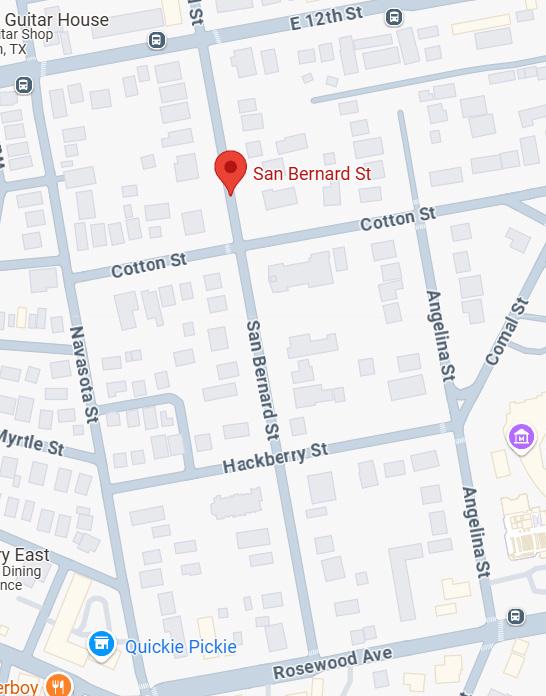
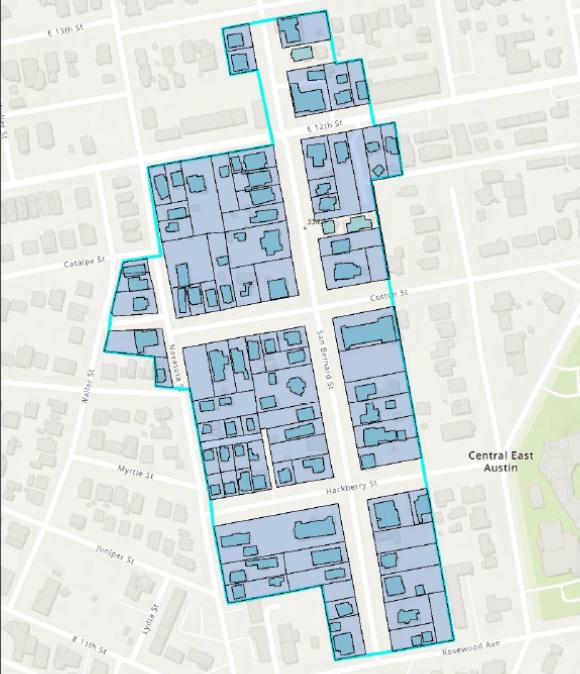
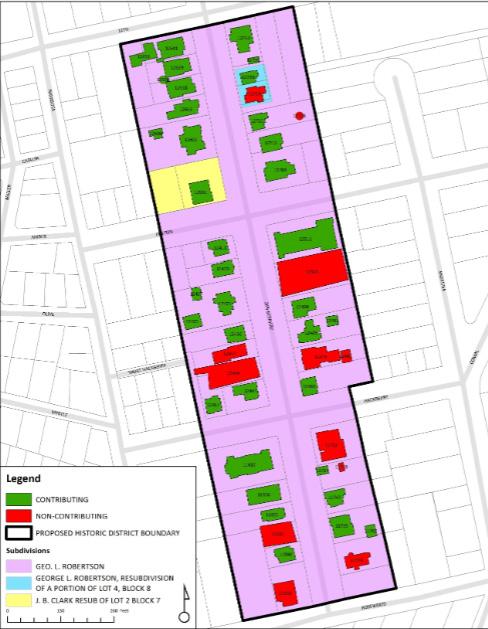
In the heart of Austin, San Bernard Street has been recognized as a historical corridor for its pivotal role in the city’s cultural and social development. San Bernard Street is home to various churches, residencies, and businesses that contribute to Austin’s rich heritage and culture. It is a crucial part of the city’s African American history and the development of East Austin. The 1928 Master Plan led to prominent black families living and working along San Bernard Street. The street features some of the oldest and most historically significant homes in Austin many of which dating back to the late 19th and early 20th centuries. San Bernard Street has now been added to the National Register of Historic Places ensuring preservation efforts. The buildings tell a story of resilience and community throughout Austin’s history.
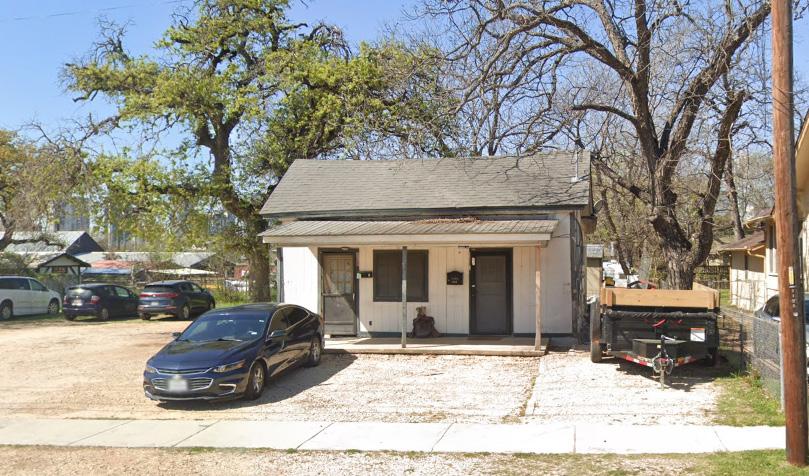
Date Built: 1935
Architect or Builder: Unknown
Primary Materials: Vertical wood board, Asbestos Siding
Historic Use: N/A
Current Use: Residential
Type: Building - Residential -
Duplex House
Stylistic Influence: No style
Historic Designations: San Bernard Historic District
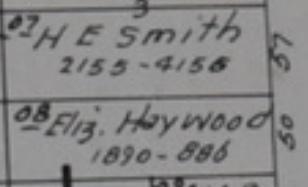
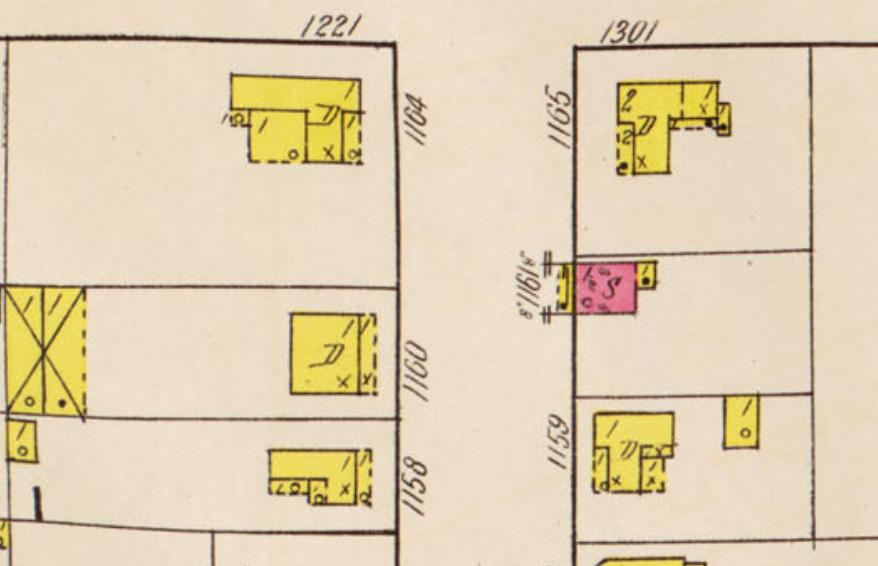
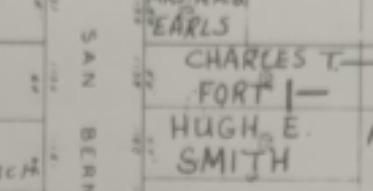
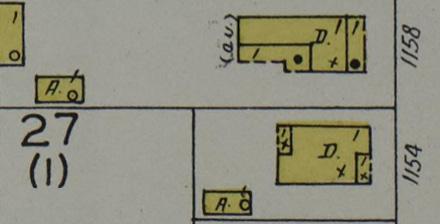
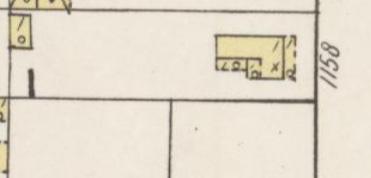
The property occupies an 8,750-square-foot lot (approximately 0.2 acres). The exterior walls are of vertical wood board with asbestos siding. Overtime, the property has experienced upkeep and alterations. It has multiple additions including a rear addition. The doors, windows, and exterior walls have been replaced. In 2018, the property was acquired by the Santa Cruz Jr Agreement Elidio from the Elidio S Cruz and Joel B. Mitchell. The assessed value in 2021 was $414,900.
1158 San Bernard Street is situated in the Central East Austin neighborhood, an area known for its rich cultural heritage and historical significance.
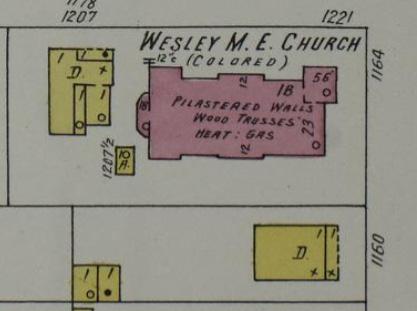
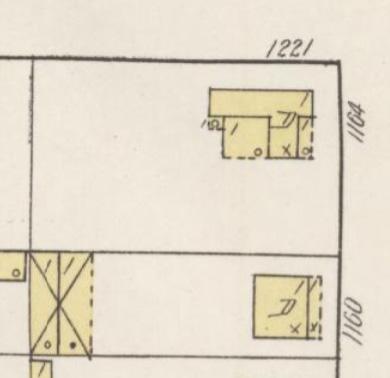
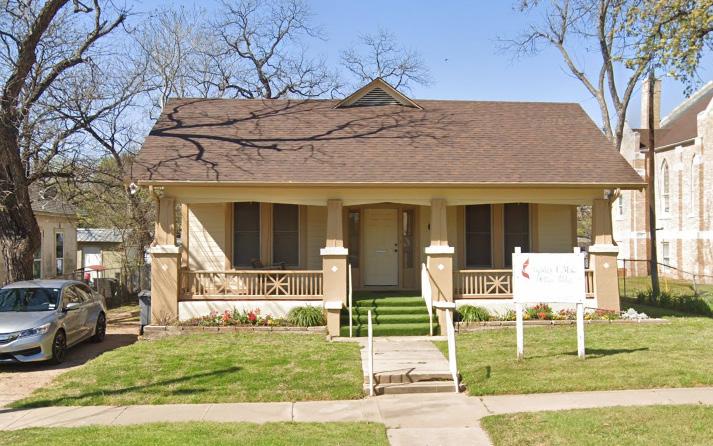
Date Built: 1909
Architect or Builder: Unknown
Primary Materials- Horizontal wood board exterior; wood structure
Historic Use: Residential
Current Use: Religious
Type: Building - ResidentialSingle-FamilyHouse - Center Passage
Stylistic Influence: Craftsman
Historic Designations: Local Landmark; San Bernard District
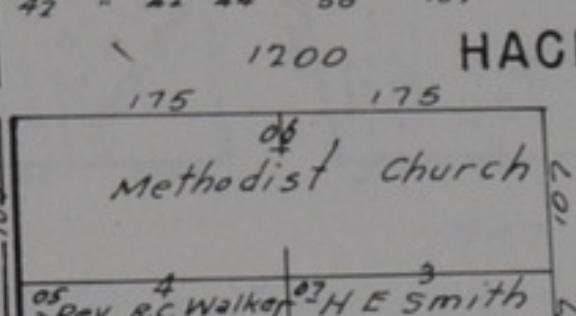
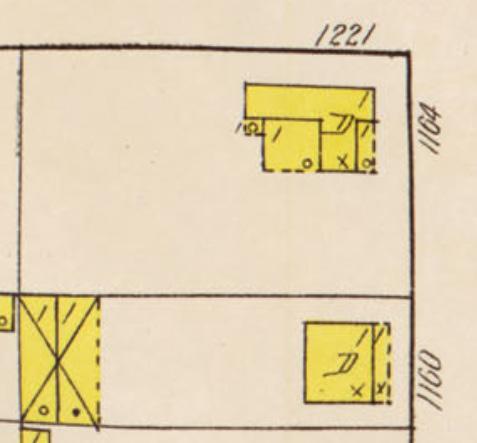
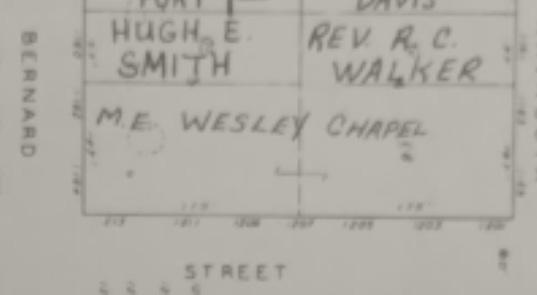
Historically, the building was residential and known as the Spinola-Smith house. The Spinola- Smith house was a local landmark. Now, it is the Wesley UMC office and is a religious building in the San Bernard Historic District.
The house uses wood both structurally and as external cladding. The craftsman style consist of a gabled roof with asphalt shingles. The property has a single story, wide porch in the front.
Constructed in 1915, this single-family residence encompasses approximately 2,362 square feet and is situated on a 9,975-squarefoot lot. Historically, the property was owned by Wesley United Methodist Church. In 2013, the property was valued at $132,189. but rose to $440,989 in 2021.
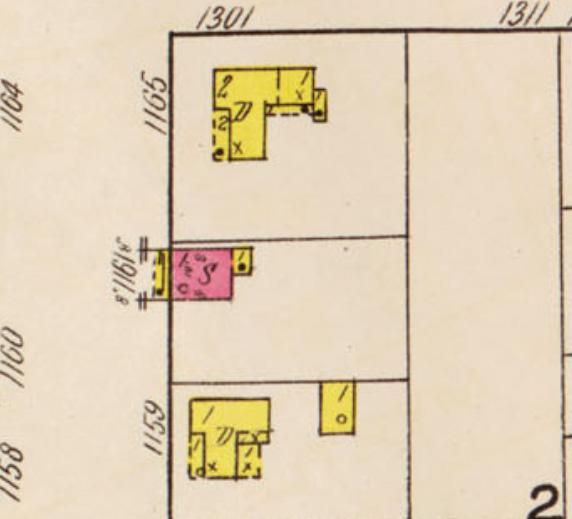
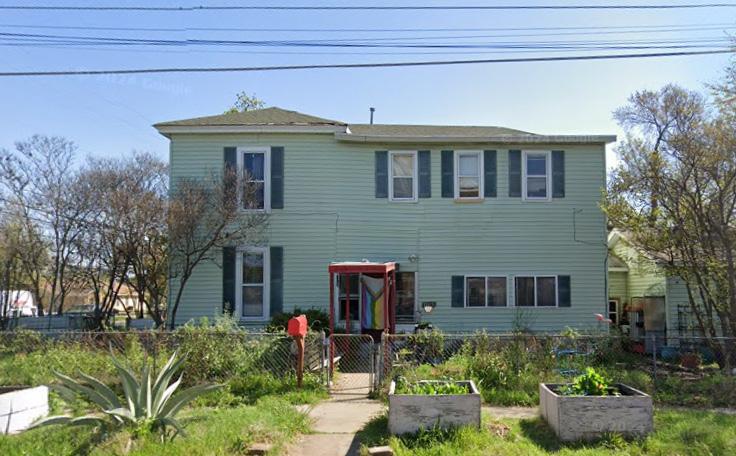
Date Built: 1920
Architect or Builder: Unknown
Primary Materials- Vinyl
Historic Use: Residential
Current Use: Residential
Type: Building - Residential
- Single-Family House -
L-PlanHouse - Center Passage
Stylistic Influence: No style
Historic Designations- San Bernard Historic District
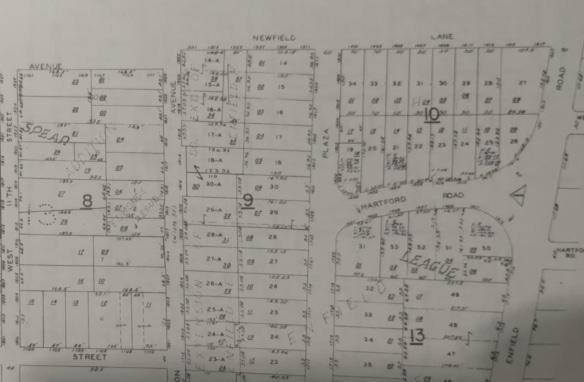
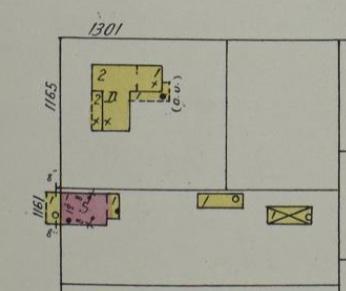
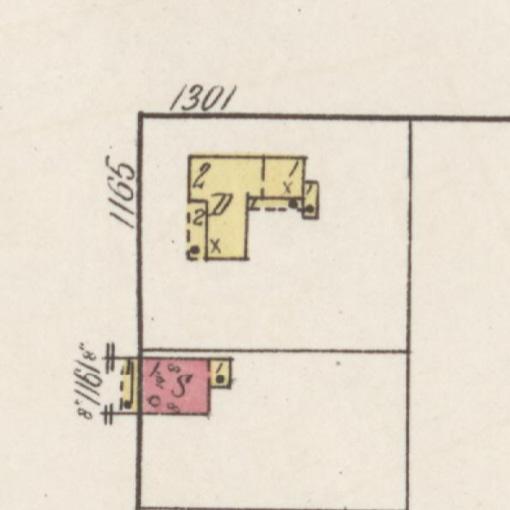
The property is situated within the Geo L. Robertson subdivision. It occupies a 11,194 square feet (approximately 0.26 acres) lot. The building is 5,068 square feet. The accessed valued in 2021 was $500,000.
The property doesn’t follow a specific style. The exterior wall material is vinyl. The house has a distinct green finish. The property has had front additions as well as side additions. The doors, windows, and exterior walls have all been replaces and the porch has been altered.
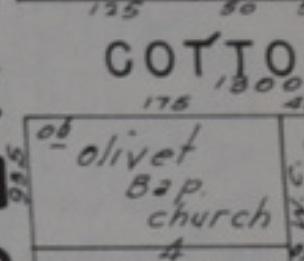
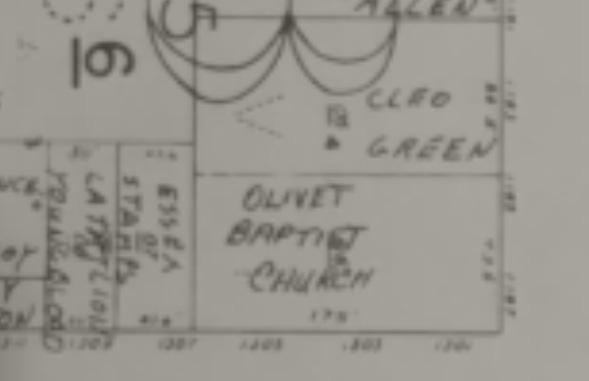
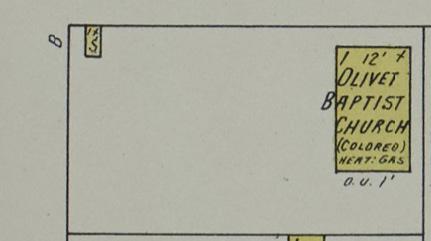
Date Built: 1961
Architect or Builder: John S. Chase
Primary Materials- Brick, Concrete block
Historic Use: Religious
Current Use: Religious
Type: Building - Religious -
ChurchStylistic Influence: Contemporary
Historic Designations: San Bernard Historic District
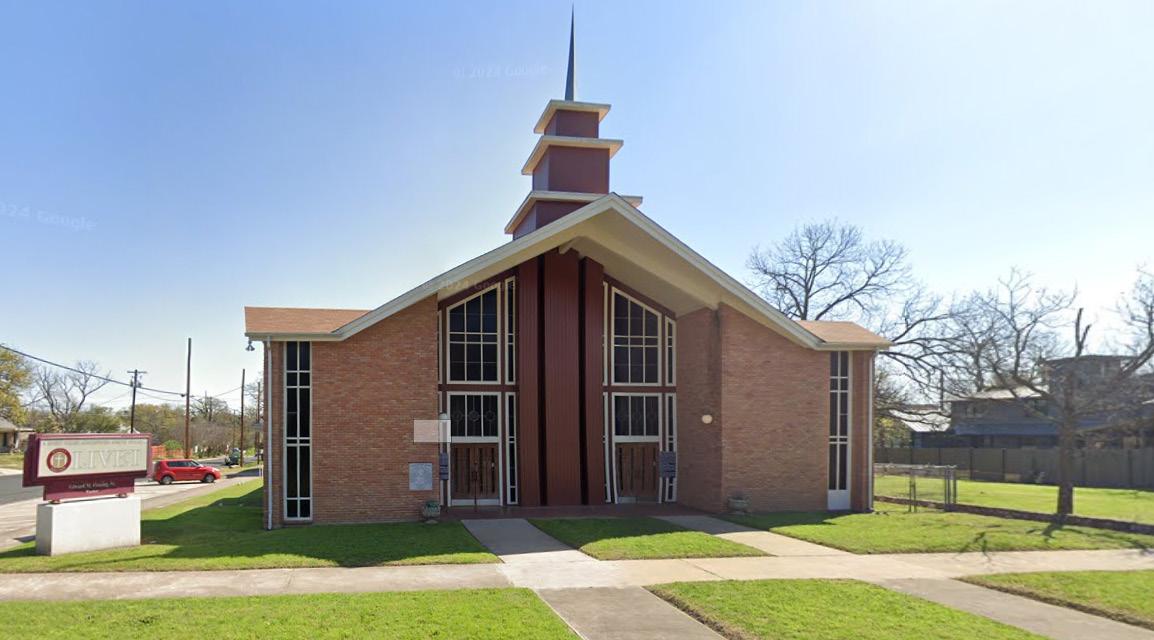
The current church building was designed by John S. Chase, the first African American architect licensed in Texas. He followed contemporary stylistic influences driving a steep, brick-clad structure with an angular roof.
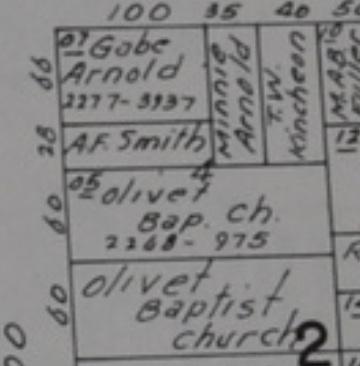
Olivet Baptist Church has played a pivotal role in the cultural and social fabric of East Austin. Beyond serving as a place of worship, it has been a hub for community events, educational programs, and civil rights activism.
1179 San Bernard Street in Austin, Texas, is the esteemed location of Olivet Baptist Church, a significant landmark within the city’s African American community. Founded in 1921, the church has been a cornerstone of spiritual guidance and community engagement for over a century.
HARDY∙HECK∙MOORE, INC. 2016. “FINAL REPORT.” CITY OF AUSTIN HISTORIC RESOURCES SURVEY, VOL. IV, APPX C: 543-562. AC CESSED FEBRUARY 25, 2025.
HARDY∙HECK∙MOORE, INC. 2016. “RECOMMENDED ELIGIBLE LOCAL HISTORIC DISTRICTS AND RECOMMENDED NRHP HISTORIC DIS TRICTS FORMS.” CITY OF AUSTIN HISTORIC RESOURCES SURVEY, VOL. V, APPX D: 65-70. ACCESSED FEBRUARY 25, 2025.
“PROPERTY VALUATION OF SAN BERNARD STREET, AUSTIN, TX: 1150 (PETER STAATS & FORMAN ANN STAATS), 1151 (BK BERNARD LLC), 1152 (WESLEY UNITED METHODIST CHURCH), 1153 (JEFFREY PEEK & ADRIANA PEEK), 1154 (WESLEY UNITED METHOD IST CHURCH), 1157, 1158 (JOEL B MITCHELL), 1159 (OLIVET BAPTIST CHURCH), 1160 (WESLEY UNITED METHODIST CHURCH), 1161 (OLIVET BAPTIST CHURCH) (TAX ASSESSMENTS).” CITY-DATA.COM, 2015, WWW.CITY-DATA.COM/AUSTIN-PROPERTIES/S/ SAN-BERNARD-STREET-1.HTML? ACCESSED 23 APR. 2025.
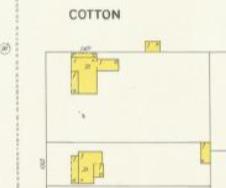
“SANBORN FIRE INSURANCE MAP FROM AUSTIN, TRAVIS COUNTY, TEXAS.” THE LIBRARY OF CONGRESS, 2015, WWW.LOC.GOV/ITEM/ SANBORN08415_006/. ACCESSED 23 APR. 2025.
SONDGEROTH, AMELIA. 1988. “C14H-1988-0018 HISTORIC ZONING CHANGE SUMMARY SHEET.” AUSTIN HISTORY CENTER CITY DI RECTORIES. ACCESSED FEBRUARY 25, 2025.
ZILLOW, INC. “1175 SAN BERNARD ST, AUSTIN, TX 78702 | ZILLOW.” ZILLOW, 2025, WWW.ZILLOW.COM/HOMEDETAILS/1175-SAN-BER NARD-ST-AUSTIN- TX-78702/29386776_ZPID/. ACCESSED 23 APR. 2025.