The Mechanic’s Ear: Solving the Mystery of
Engine Noises
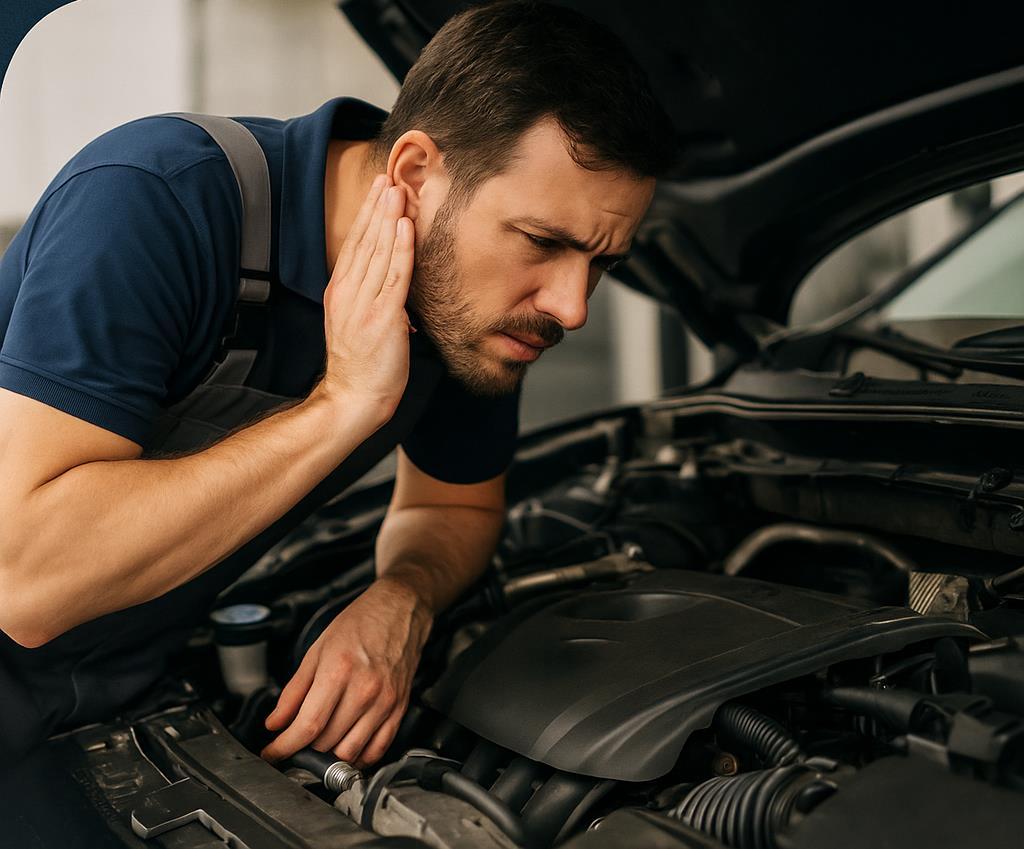
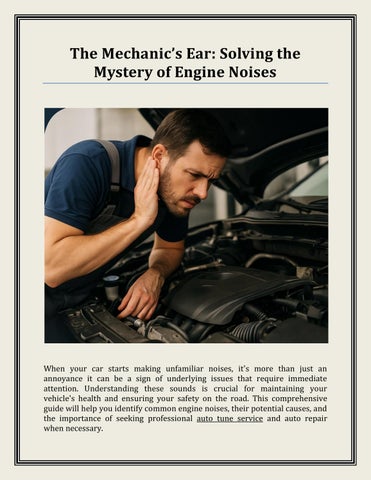
When your car starts making unfamiliar noises, it's more than just an annoyance it can be a sign of underlying issues that require immediate attention. Understanding these sounds is crucial for maintaining your vehicle's health and ensuring your safety on the road. This comprehensive guidewillhelpyouidentifycommonenginenoises,theirpotentialcauses,and the importance of seeking professional auto tune service and auto repair whennecessary.
1. Knocking or Pinging Sounds
A knocking or pinging noise often indicates detonation within the engine's combustion chamber. This occurs when fuel combusts unevenly, leading to prematureignition.Commoncausesinclude:
Low-Octane Fuel: Using fuel with an octane rating lower than recommendedcancauseknocking.
Incorrect Ignition Timing: If thespark plugs fireat thewrong time, it canleadtoinefficientcombustion.
Carbon Deposits: Accumulation of carbon in the combustion chamber canaffecttheair-fuelmixture.
Ignoring these sounds can lead to severe engine damage. It's essential to consultaprofessionalforanautotuneservicetoadjustthetimingandensure optimalperformance.
2. Squealing or Chirping Noises
High-pitched squealing or chirping sounds are often related to belt issues. Thesenoisestypicallyarisewhen:
Drive Belts Are Worn or Loose: Over time, belts can wear out or becomemisaligned,causingthemtoslipandproducenoise.
Pulley Misalignment: Misalignedpulleyscancausebeltstorubagainst edges,leadingtosquealing.
Regular maintenance and timely replacement of belts can prevent these issues.Anautorepairspecialistcaninspectandreplacewornbeltstorestore quietoperation.
3. Hissing or Sizzling Sounds
A hissing or sizzling noise usually indicates a fluid leak onto hot engine components.Potentialcausesinclude:
Coolant Leaks: A sweet smell accompanying the hiss suggests coolant isleakingontohotparts,riskingoverheating.
Vacuum Leaks: Aconstanthissingwhiletheenginerunsmaypointtoa vacuumleak,affectingengineperformance.
Oil Leaks: Oil dripping onto hot surfaces can produce a sizzling sound andmayleadtosmokeorfirehazards.
Addressing these leaks promptly with professional auto repair services can preventfurtherenginedamage.
4. Grinding Noises
Grinding sounds are serious and often signal metal-on-metal contact within theengine.Commoncausesare:
Worn Bearings: Bearings facilitate smooth movement of engine parts; whentheywearout,grindingoccurs.
Transmission Issues: Afailing clutch or transmissioncomponents can producegrinding,especiallyduringgearshifts.
Brake Problems: Wornbrakepadscancausegrindingwhenthemetal backingcontactstherotor.
Immediate attention from an auto repair technician is crucial to prevent extensivedamage.
5. Tapping or Clicking Sounds
Tapping or clicking noises often stem from issues in the valvetrain or low engineoillevels.Possiblereasonsinclude:
Low Oil Levels: Insufficient oil can cause components to tap due to inadequatelubrication.
Valve Train Problems: Worn camshaft lobes or defective lifters can producetappingsoundsthatincreasewithenginespeed.
Regular oil checks and timely auto tune services can help maintain proper lubricationandpreventthesenoises.
6. Rattling Sounds
Rattlingnoisescanbecausedbyvariousissues,suchas:
Loose Components: Parts like heat shields or exhaust brackets can becomelooseandrattle.
Exhaust System Issues: A damaged muffler or catalytic converter can causerattling,especiallyduringacceleration.
An auto repair professional can identify and secure or replace the affected componentstoeliminatethenoise.
7. Popping or Backfiring Sounds
Poppingsounds,especiallyfromtheexhaust,mayindicate:
Fuel Mixture Issues: An overly rich or lean air-fuel mixture can cause unburnedfueltoigniteintheexhaust.
Ignition Problems: Faulty spark plugs or timing issues can lead to backfiring.
These symptoms warrant an immediate auto tune service to adjust the fuel mixtureandignitiontiming.
8. Whining or Whirring Sounds
Awhiningorwhirringnoisethatchangeswithenginespeedcouldbedueto:
Power Steering Issues: Low fluid levels or a failing pump can cause whiningduringsteering.
Transmission Problems: Worn gears or bearings in the transmission canproducewhirringnoises.
Consulting an auto repair specialist can help diagnose and fix these issues beforetheyescalate.
9. Loud Banging or Explosive Sounds
Loud bangs, often referred to as backfires, can be alarming. They may result from:
Incorrect Fuel-Air Mixture: An imbalance can cause combustion outsidetheenginecylinders.
Exhaust System Leaks: Leaks can allow unburned fuel to ignite in the exhaustsystem.
Promptautorepairisnecessarytoaddressthesepotentiallydangerousissues.
10. Rumbling or Roaring Sounds
A deep rumbling or roaring noise, especially during acceleration, might indicate:
Exhaust System Damage: A hole or crack in the muffler or exhaust pipescanamplifyenginenoise.
Catalytic Converter Issues: A failing converter can cause a rumbling soundandaffectengineperformance.
Anautorepairtechniciancaninspectandrepairtheexhaustsystemtorestore normalsoundlevels.
Conclusion
Unusual engine noises are more than just a nuisance, they are your vehicle's way of signaling that something is wrong. Ignoring these sounds can lead to more significant problems and costly repairs. Regular auto tune services and promptattentiontorepairsareessentialformaintainingyourvehicle'shealth and ensuring your safety on the road. If you notice any of these noises, don't hesitate to consult a professional auto repair service to diagnose and fix the issuepromptly.
https://www.autonationservicecentre.com/
1606 Clark Dr, Vancouver, BC V5L 4Y2, Canada
6047060388
6042657158