


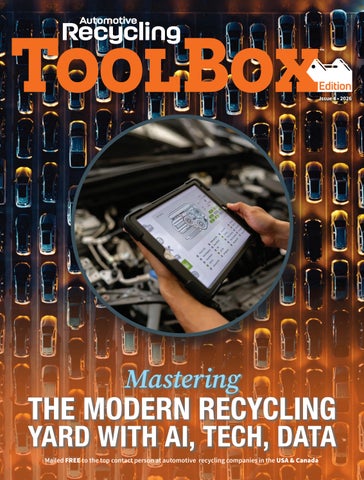
Automotive recycling has always been built on practical judgment. Experienced buyers know which vehicles are worth chasing. Skilled dismantlers know which parts deserve careful removal. Warehouse teams know which inventory turns quickly and which items sit too long. Sales teams know when a listing needs a better title, clearer photos, or more accurate fitment information.
But as the industry becomes more complex, experience alone is being asked to carry too much.
Modern recyclers now work across insurance auctions, VIN data, OEM part catalogs, marketplace pricing, customer messages, warehouse constraints, EV and hybrid components, scrap-metal markets, environmental rules, and changing buyer expectations. Each part of the business produces information. The problem is that this information often stays inside separate workflows.
That is where proprietary AI-based algorithms can create real value for automotive recyclers.
The opportunity is not simply to automate tasks. The larger opportunity is to turn the recycling operation into a connected decision engine—one that helps owners, buyers, dismantlers, inventory

Vladimir Sainciuc
teams, and eCommerce staff make better decisions earlier in the process.
The first decision happens before a vehicle is purchased.
For many yards, buying still depends on auction photos, damage assessment, historical instinct, and a rough estimate of parts value. Those inputs are still important, but they do not show the full recovery picture. A proprietary AI system can combine VIN decoding, trim-level data, historical sales, regional demand, marketplace velocity, warehouse capacity, return history, dis-mantling labor, and scrap-material value into a more complete purchasing view.
That changes the question from, “Can we sell parts from this vehicle?” to, “What is the total recoverable value of this vehicle after labor, storage, selling costs, material recovery, and time?”
Two vehicles may appear similar at auction. One may have a higher expected parts value but also carry slow-moving inventory, difficult shipping profiles, and high return risk. Another may have fewer premium parts but stronger material value, faster-moving components, and lower handling burden. A connected buying model can help identify that difference before capital is committed.
This is especially important as recyclers face higher labor costs and more expensive warehouse space.
A part that looks valuable in a database is not always valuable to the business if it sits for years, takes up space, creates fitment confusion, or requires repeated customer support. Predictive buying is not about removing human judgment. It is about giving experienced buyers a clearer view of the full recovery economics.
The same logic applies when the vehicle reaches the yard.
Dismantling has traditionally been one of the most experience-driven parts of the operation. That will not change. The best technicians still understand damage, fasteners, component condition, and safe removal better than any software. But AI can support those technicians by organizing information before the first part is pulled.
A guided recovery workflow can rank parts by expected demand, projected margin, storage burden, material content, and removal complexity. It can also flag components that should be tested, photographed in a specific way, routed to a special handling area, or moved directly into a material stream. In this model, the dismantler is not replaced. The dismantler is supported with a clearer work plan.
That support becomes more important as vehicles add electronics, sensors, aluminum structures, hybrid systems, and high-voltage components. Safe and
profitable recovery increasingly depends on knowing not only what can be removed, but what should be removed, when it should be removed, and where it should go next.
This is also where material recovery becomes a strategic issue rather than a back-end scrap decision.
For years, reusable OEM parts and scrap metal were often managed as separate businesses. In reality, they are two outputs from the same asset. Every vehicle contains a mix of resale parts, cores, aluminum, copper, steel, electronics, plastics, glass, and, in some cases, battery-related value. A proprietary recovery algorithm can help determine whether the highest value is in parts resale, material separation, core recovery, battery reuse pathways, or a combination of all of them.
For EVs and hybrids, that mindset is critical. Batteries, drive motors, inverters, charging components, and rare-earth material streams require more planning than traditional endof-life processing. The most successful operators will not wait until the end of the dismantling process to decide where value exists. They will identify recovery pathways before the vehicle is purchased and update those pathways as real condition data becomes available.
The photo and listing process is another area where AI can have immediate impact.
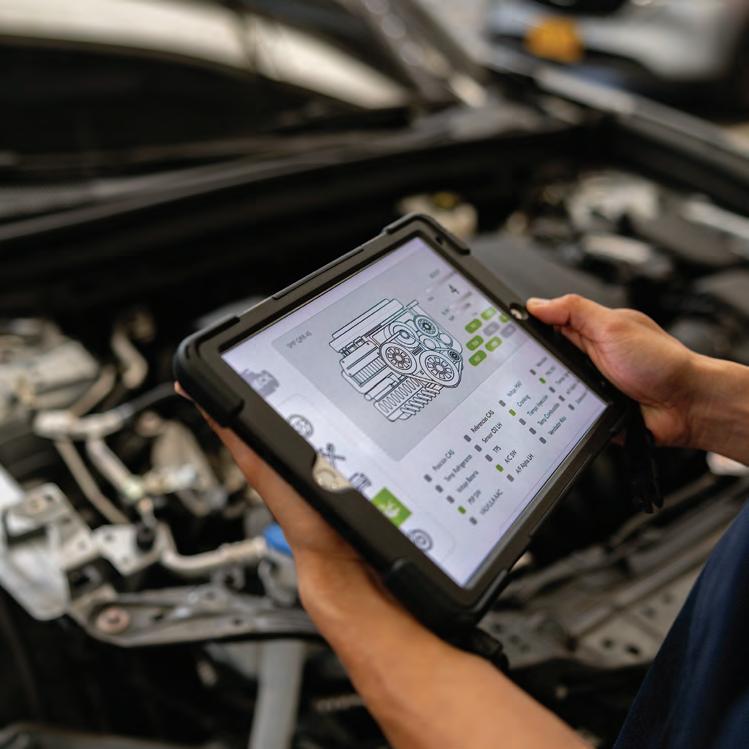
In a high-volume recycling operation, photos are not just marketing assets. They are operational data. Images can confirm condition, color, damage, part type, OEM numbers, trim details, and packaging needs. Computer vision tools can help group images by part, detect defects, standardize backgrounds, identify attributes, and prepare listings with more consistent information.
This matters because marketplace performance depends on accuracy and trust. Buyers want clean images, complete descriptions, correct fitment, fair shipping terms, and confidence that the part will arrive as represented. A listing that is missing a key attribute or uses

THAT CHANGES THE QUESTION FROM, “CAN WE SELL PARTS FROM THIS VEHICLE?” TO, “WHAT IS THE TOTAL RECOVERABLE VALUE OF THIS VEHICLE AFTER LABOR, STORAGE, SELLING COSTS, MATERIAL RECOVERY, AND TIME?”
poor photos may underperform even when the part is in demand.
A proprietary AI-based workflow can help generate stronger titles, item specifics, descriptions, compatibility logic, and pricing recommendations. When connected to marketplace data, it can also learn from search visibility, click-through rates, conversion rates, return reasons, and competitor positioning. Over time, the system can help the recycler understand not only what sold, but why it sold—and why other inventory did not.
That learning should flow back into the yard. If a certain component repeatedly creates returns because of unclear fitment, that information should improve future listings and buying assumptions. If a certain part type gets many views but few conversions, the issue may be pricing, photos, shipping cost, or compatibility data. If a warehouse location consistently slows fulfillment, the system should surface that friction. If a category has low sales velocity and high storage cost, future dismantling decisions should change.
This feedback loop is where AI becomes more than a tool. It becomes an operating system.
Procurement informs dismantling. Dismantling informs photos. Photos inform listings. Listings inform sales. Sales and returns inform future
purchasing. Warehouse analytics inform what should be stored. Commodity pricing informs what should be separated. Customer-service patterns inform descriptions, packaging, and quality control. Each department still does its own work, but the information no longer stays trapped within it.
For owners and managers, this creates a better way to run the business. Instead of relying only on monthly reports or after-the-fact profitability reviews, a connected system can show leading indicators: vehicles that may not reach break-even, inventory that should be repriced, parts that should be liquidated, categories with rising demand, employees who need training support, and processes that are creating hidden costs.
THE FUTURE OF AUTOMOTIVE RECYCLING WILL STILL BE PHYSICAL. VEHICLES WILL STILL BE BOUGHT, TRANSPORTED, DRAINED, DISMANTLED, PHOTOGRAPHED, STORED, SOLD, SHIPPED, AND PROCESSED.
The future of automotive recycling will still be physical. Vehicles will still be bought, transported, drained, dismantled, photographed, stored, sold, shipped, and processed. The difference is that the best operators will connect those physical steps through data.
AI will not replace the knowledge inside a good yard. It will make that knowledge easier to scale.
The yards that succeed in the next phase may not be the ones that simply process the most vehicles. They may be the ones that know sooner where the value is, which work is worth doing, which inventory deserves space, and how every vehicle can be routed toward its highest and best use.
Automotive recycling has always been about recovery. The next advantage will belong to recyclers who can make recovery predictive. TB


Today’s modern auto recycler has learned that innovation has become just as fundamental as one’s own intuition. What sold in bulk a few weeks ago may dry up today. Geopolitics and market shifts have us all riding the wave of financial scrutiny and insecurity. For fellow Northeast recyclers, let's not forget about the weather. The trends of today steer the trajectory of tomorrow.
If we are to continue to evolve, it is imperative that we transition our intuition into iterative innovation. What this means is that all of our team must learn how to access, understand and manipulate our yard’s data. And from there, we can use our tools and intuition to explore new avenues of innovation that will keep us relevant and resilient at the dawn of digitalization.
Are you a numbers person or one who simply goes with the flow? Maybe you are more of an operations overseer … observing the logistical train of events and making sure things continue to progress. Or perhaps you are more big-picture focused, empowering your team to do what is needed so you can better prioritize your time and efforts. Regardless of how you operate, the secrets to your success align with the numbers adding up in your favor. Simple addition, people, the numbers do not

lie. Yet it is a must, moving forward, that we figure out how to understand and manipulate the numbers so that the odds are ever in your favor. So what is our data telling us, and why is it so important to leverage this asset?
What is the average amount we spend on a vehicle? What determines how much we are willing to spend on said vehicles? Are we buying them to fully dismantle, or pull parts as we go, perhaps for our self-service lot, or maybe just to process for the shredder? Knowing these numbers within your operations is critical; it is buying power. Determining the types of vehicles you acquire based on the data you have is essential to knowing what you should buy and what you can afford.
All of this is dictated by the customer demographic and demand.
It is all about what we sell and what we sell well. What are we getting calls about and giving quotes for? And what are the bulk or high-dollar parts that we are brokering? All of this data can be accessed in your YMS system. Even with the gripes we all may have about each one of these tools, be it Powerlink, Checkmate, Pinnacle, etc., there are ways and tools available to export your data and create reports on it. And one of the key ways in the future to access, understand, and manipulate one’s own data is through Artificial Intelligence or AI.
Love it or hate it, use it or abuse it, it is time to accept that this tool can revolutionize our industry.
There are a few ways we can put our toes in the water with AI, while companies offer tools to dive right in. At the moment, there are free AI tools within reach of all our fingertips. Be it ChatGPT, OpenAI, Gemini, or whatever new app or online resource that you may have heard of. These tools, if we choose, are there on our smart devices and computers to help us think outside the box. AI may not be perfect, but with the right data and a structured set of rules, its machine-learning capabilities offer a revolutionary shift in how we do business. Do you want to create a report of the top 10 sales interchanges for engines? Then export your YMS data and plug it into an AI tool. Manipulate the tool to get the most out of your data. What about looking at a breakdown of your shop supply expenses so you can pinpoint excess or waste? Access your data and apply an AI tool to perform an analysis using the lenses and parameters you specify. We can find out where we are overspending, wasting, or not spending enough.

Our salespeople can plug in used part installation diagnosis issues into these
Brian Bachand is a second generation auto recycler, who helps own and operate Westover Auto Salvage in Belchertown, MA. He is on the Board of Directors for the Auto Recyclers Association of MA and a proud ARA Member. Brian has a Bachelor’s Degree in Accounting and paired with almost 25 years of auto recycling experience, will continue to implement ARA Advocacy for being a leader in the auto industry.

types of tools while on the phone with the customer. We can compare this afterward with our transmission shop or one of our techs to confirm its validity, but in the meantime, we now have the means to achieve more effective efficiency and recycling results.
This is just the tip of the iceberg.
If you have not tried one of these tools, I highly recommend it. There are tutorials and videos to accompany these tools, so you have a sense of how to get started. But do not be afraid to try and fail and to try again. These tools have called for the creation of a surplus of debatable data centers.
For recyclers, this trend, paired with geopolitics, what is going on in the Middle East and China, looks to influence the copper and perhaps the precious metals market as well. Just the other day, copper was up to $6.50 a pound, depending on the market. This benefits auto recyclers' wallets while giving modern recyclers leverage in the current transportation sector.
It all comes full circle: as we continue to evolve our operations, implementing these technological advances will help us drive the circular economic model
while advancing our campaign as stewards of sustainability.
The data you possess is one of your biggest assets, and there are so many beneficial ways of using it to maximize your profits. We are in business to make money. We are not running museums, nor are we deliberately throwing money away by buying the wrong vehicles or by not prioritizing inventory and sales. But as everyone knows, there are only so many hours in the workday, and it is crucial to make the most of our time.
Well, there are now tools and services out there to help us do just this.
Companies like Auto PARTnered Solutions (APS) are revolutionizing the auto recycling industry. Chris Daglis, Founder & CEO, has created this comprehensive service with a team that monitors its AI tools, enabling human judgment and oversight of this techsavvy software. APS has created a tool that can vet out sales calls, value parts at auction, price parts, and so much more. By breaking bottlenecks, this software streamlines your speed-to-market.
The team assigned to help you use this AI service delivers significantly higher success rates when implementing an
AI Tool on your data than just letting you fend for yourself. Not only are they placing these tools where and whenever you need them, but they will also help you increase efficiency, giving you the ultimate chance to maximize your profits and workflow.
Another tool in the works is Sabhi. Founder Lisa Samuel and her team have taken auto recyclers' cybersecurity to the upper echelon. They are working on a product that aims to capture, or rather funnel, all of your data into one spot. Communications, Operations, Payments, Reports, and Financials all in one place for all your team to access.
This tool pools your data so you do not miss anything due to what they have coined “Operational Loss Goblins.” This service protects the recycler's best interests by ensuring revenue does not leak out before you even reach the checkout point. Having spent many years advocating for auto recyclers' cybersecurity, Lisa is creating Sabhi to handle everything related to payments. A major advantage of this software is that it integrates easily with your YMS. Be on the lookout for this and other like-minded AI Tools such as Tractable, Intropy,
The data you possess is one of your biggest assets, and there are so many beneficial ways of using it to maximize your profits.
BidBuddy AI, PolyPerception, and other YMS companies' own AI Integrations.
Intuition tells us to go with our gut, to weather the storms and remain vigilant in our pursuit of automotive success. But for how redundant it may sound, why should we keep working harder instead of smarter? Pairing our data with AI tools enables us to provide support and resources to our operations. How far we take it in terms of implementation is for each of us to decide. Maybe you just want to try out core market research or an engine diagnosis on the Gemini App. Or perhaps you want to go full tilt and sign up to have Ari from APS be your virtual gatekeeper
or possibly integrate Sabhi into your YMS. What we cannot do is just go through the motions and begin to ignore, or rather not optimize and utilize our data. Understanding how these numbers translate into the hows and whys of our yard is the competitive advantage we all need to make better decisions. Better decisions equate to a better business that aims to create a brighter future.
Everyone has the time and, if they so choose, the access and means necessary to leverage their own data. Understanding your numbers will translate to where you are winning and where you are losing. Where you should be saving money and where you should be spending it. Not only that, but if you look at the big picture your data creates, you will begin to get a real idea of what your business does and where it spends
its time. From there, we can work out what we want to do and how we plan to get there.
AI tools allow us to analyze large amounts of data, perceptions, and facts that previous conversations, searches, and research have not allowed us to do as quickly or efficiently. AI will never replace the human element, but it can be used as a resource and even a complementary team member throughout our organizations.
If we are looking to continue driving deeper into the age of instant gratification while remaining thought leaders in our industry, it must be done through integration. Integrating your intuition with innovation, implementing strategies to optimize your data, and installing AI tools where and when you can to maximize your success. As President Dwight D. Eisenhower once said, “Neither a Wise man nor a Brave man lies down on the tracks of history to wait for the train of the future to run over him.” TB

HE AUTO RECYCLING BUSINESS OF TODAY IS FACING A LOT OF NEW CHALLENGES.
We are seeing new technologies in the cars we recycle; our customers are connecting with us in new and different ways, and the products that we are generating are changing. Artificial intelligence and new technologies that provide owners with the data they need will be an essential part of staying ahead of those changes. Learning how to use those technologies to modernize your business will be the difference between the yards that grow and the yards that don’t.
End-of-life-vehicle (ELV) recycling can have a small profit margin. Full-service yards spend thousands of dollars hoping that one day soon, you will be able to sell a few major components and clear a few thousand dollars per car. The self-service model is only working on a few hundred dollars per car from mostly scrap, so profit margins can be tight. That is why it is so important to have up-to-the-minute insight into your business’s operations in real time. As the

owner and operator of three self-service yards, I need to know how steel price drops will impact my bottom line. When one of my stores isn’t buying enough vehicles, I can’t wait until the end-of-month reports to see it; I need to be able to take action immediately. Technology has enabled me to stay connected with my stores and my team of managers and to be on top of what is going on in my business.
I use a cloud-based yard management system that gives me access to all the data on the sales and operations of my stores from anywhere in the world. I can see how much I have in receivables, my production stats, and all the activity on the sales counter at any time, from anywhere, and it is all up-to-the-second.
UNTIL THE END-OF-MONTH REPORTS TO SEE IT.
Importantly, a lot of this information is also available to my customers on our website. Technology has enabled us to show our customers pictures of the cars in the field. We have also started using a technology that automatically sends the customer a notification when the car they are looking for enters the field. The newest thing we are trying is a unique interchange function that will also notify the customer if a car with the same interchange arrives. It is a game changer!
Founder and CEO of YardSmart, Troy Webber, created a new paradigm for the auto recycling industry, due to an ability to predict what was needed, in order for his business to survive. YardSmart is the only cloud based software of its kind, worldwide. As a result of his background and experience, he successfully designed custom yard management software for the industry, beta tested it with his competitors for two years and now operates a SaaS company offering YardSmart. He is proud to be the third generation to own the auto recycling business and hopes one day to pass it on to the fourth generation to help serve the industry that his grandfather created in Richmond, VA 75 years ago.
One of the biggest things technology has enabled is giving us insights into the value of vehicles as a purchasing tool. The VIN will tell us the vehicle’s actual scrap value based on curb weight, aluminum content, and the value of the factoryinstalled catalytic converter. Then it will give you a retail value based on the parts’ interchangeability on the car, the actual inventory in my field, and the number of times someone has looked for an interchangeable part on that car.
The self-service auto recycling business operates on a low-margin/high-volume model, so generating enough revenue from scrap is essential to achieving those margins. Technology helps me stay in the know about global scrap markets. I can see what the price trends are doing for the various commodities we pull from the ELVs we recycle. When the price of Rhodium drops, I know the value of the catalytic converters we have in stock just went down. When the price of flattened autos drops, I won’t be surprised when my scrap buyer lowers my price. These insights are important for planning the next 30-90 days of business.
Mastering these technologies is not easy. Understanding how to use the tech and the data it provides is easy! You don’t have the time to become an expert in the technology because you are an automobile recycler. The time it would take to become an expert would be better spent expanding your business.
I am not an accountant, but I can read the income statement my accountant sends me. I am not an advertising expert, but I can understand the monthly advertising report from my ad guy. You don’t need to be the expert; you need to hire the expert. Why waste your talents as an automobile recycler? Be the boss you are and hire the expert. They have the know-how to give you what you are looking for in the most efficient and effective way; that’s why they are the experts!
Take advantage of the time, work, research, and money that someone else has already spent. The technology is out there to help you master your business. They have done the work to make your job as easy as possible. The tough part is taking the leap of faith. No one likes change, least of all junkyard owners! We spend years trying to perfect a process; I don’t want to have to change it and risk failure. That is why it is important to use a tried-and-true technology that you can see has made a difference. Ask business owners who have made the switch. Ask a recycler who has recently undergone a change what they think. Ask about the change and if they would do it again. Most of the time, the only regret they have is waiting as long as they did to switch! The only constant in this business is change. Nowhere is that more evident than in the cars’ technology. The products we sell are changing constantly. If we, as recyclers, are not willing and ready to change with the industry, we will be left behind. TB
Most recyclers are not losing revenue because they are not working hard enough. They are losing revenue because the same decision gets made differently depending on who is in the building that day.
One person answers the phone and gives a quote. Someone else answers and gives a different one. A customer calls about a part. One employee follows up. Another assumes someone else handled it. A vehicle comes in for purchase. The offer depends entirely on who walked out to look at it.
I know this because I lived it.
I operate a 125,000-square-foot indoor automotive recycling facility in Milwaukee, Wisconsin. Fourteen years in, the thing that threatened to slow us down was not competition or the economy. It was an inconsistency built on tribal knowledge.

When your business runs on what lives inside the heads of three or four key people, you are one resignation, retirement, or bad day away from a real problem.
That is why I started paying attention to AI. Not because I was looking for the newest technology. Not because I wanted to replace people. I wanted to build systems that made good decisions happen more consistently, regardless of who was in the building.
We began documenting processes, capturing decision-making logic, and creating systems that could support the team regardless of who was working that day. Onboarding became faster. Information became easier to find. Tasks that used to require my direct involvement no longer depend on my availability.
One of the biggest lessons I learned is that AI is most valuable when it supports the work people are already doing. It is not about replacing experience. It is about making that experience more accessible to the rest of the organization.

The recyclers reading this know exactly what I am describing.
You have watched a great employee leave and felt the gap they left behind. You have answered a customer call that should have been handled hours ago. You have corrected a pricing mistake that never should have happened. You have spent time solving problems that could have been prevented if the right information had been available at the right moment.
Those are not people problems.
They are systems problems.
Pricing. Follow-up. After-hours response. Onboarding. Every one of those is a systems problem.
AI gives us an opportunity to build better systems.
The automotive recycling industry has always adapted. We adopted inventory management systems. We embraced digital marketplaces. We learned how to compete in a more connected and datadriven environment. We continue to adapt as vehicles become more complex and customer expectations continue to rise.
AI is simply the next evolution of that process.
The operators who take it seriously today will not just become more efficient. They will become more resilient. Their businesses will be less dependent on memory, less dependent on any one employee, and better positioned to grow without losing consistency.
My advice is simple.
Don't start with AI.
Start with the places where money is leaking.
Start with the decisions that change depending on who is working. Start with the tasks that constantly require the owner's intervention. Start with the knowledge that only exists inside one person's head.
That is where AI belongs.
And that is why recyclers need to take it seriously. TB
Natasha Broxton is the Founder and CEO of Select Auto Parts & Sales, Milwaukee's only indoor automotive recycling facility, and Founder of Alitura Group, the only operator-led AI modernization firm focused specifically on automotive recycling. Every system she recommends has been built and proven inside her own 125,000-square-foot operation first. She helps recyclers identify where execution inconsistency is costing revenue and where AI can create operational leverage. Learn more at AlituraGroup.com/start.
Every major technology shift changes the interface through which people interact with information.
The internet changed how information was distributed. Mobile changed how it was accessed. Artificial intelligence is changing how information is understood and acted upon. Each shift arrived wrapped in noise, and each time the noise obscured the same quiet truth: the technology itself was never what separated the winners from everyone else. What separated them was whether the work underneath was organized well enough to use it.
I think that is the lens worth bringing to the current moment, because the con-
selling, and it is worth being clear-eyed that it is a feature, not a transformation.
The shift the technology world is actually focused on is different, and it has a name: agentic AI. Where a chatbot answers a question, an agentic system pursues a goal—it can gather information, make decisions, and take a sequence of actions across multiple steps with limited human intervention. The distinction is simple and it is everything. Traditional AI answers questions. Agentic AI executes processes. It is the difference between a tool that tells you what to do and a system that goes and does it.
The distinction is easiest to see outside auto recycling. Ask a chatbot to help you plan travel and it returns a list of suggestions you then go book yourself.
AI are far less impressed by chatbots than the market is. They understand the chatbot is the shallow end.
There is a deeper shift underneath, and it changes where the advantage lives. For the past few years the AI conversation was about models—which was most capable, who had access. That era is closing. Capability is commoditizing quickly, costs are falling, and the gap between competing systems is narrowing toward irrelevance for most practical uses. Intelligence is becoming infrastructure: something that runs quietly in the background, like electricity or connectivity, rather than a product you point at and admire.
versation in our industry has gotten loud and a little lost. The message from every direction is that artificial intelligence is about to transform recycling and you had better buy some before you are left behind. I want to offer a calmer read, and one I believe is more useful. Auto recycling does not have an AI problem. It has a workflow problem. AI is simply the thing that is starting to expose it— and the next wave of it will expose it far more sharply than the chatbots have.
Most of what gets called AI today is generative AI: you ask a question, you get an answer. It drafts, it summarizes, it responds. It is genuinely useful, and it is also fundamentally passive—it produces text and waits for a human to do something with it. That is the version of AI nearly every vendor in the space is

Give an agentic system the same goal and it works toward the outcome—comparing options, making the arrangements, handling the steps in sequence—rather than handing the work back to you. That is the leap: from a tool that produces an answer to a system that pursues a result. It is the direction the entire field is moving, which is why the people building frontier
When a capability becomes infrastructure, the advantage moves off the technology and onto what you have built to run it on. This is the part the marketing inverts. The model is becoming the easy part. The hard part—the part that actually determines whether any of it produces value—is the quality of the operation the intelligence has to work
inside. The wider market is learning this expensively right now: organizations are discovering you cannot simply bolt AI onto a disconnected business and expect it to work, and that if you treat AI as an add-on to a weak foundation, the foundation stops being neutral and becomes the impediment.
This is a pattern technology markets have followed repeatedly. As a capability becomes widely available, competitive advantage shifts away from access to the technology itself and toward how effectively an organization applies it. AI appears to be following the same path. The question is becoming less “Do you have AI?” and more “What does your business actually enable AI to do?”
have. Intelligence works. The operation underneath does not support it. That is the pattern auto recycling is on track to repeat, at the exact moment the technology is getting powerful enough to matter.
So where does this leave AI? As an accelerant, not a strategy. Point it at a sound, well-run process and it makes that process faster and lighter. Point it at a broken one and it accelerates the breakage—the same flawed process at higher speed, with a more sophisticated interface bolted to the front. Putting AI on top of a broken workflow is like putting a turbocharger on an engine with missing parts. Technology is not the bottleneck. The underlying system is.
sound operation is what every future system—agentic or otherwise—will require in order to do anything at all.
The limiting factor for AI in this industry over the next decade will not be model capability. It will be operational readiness. As AI moves from answering questions to executing increasingly complex processes, the businesses that benefit disproportionately will be the ones whose operations were sound enough to support it. The recyclers who win are unlikely to be the ones who bought the most AI. They will be the ones who removed the most friction from how they work, so that
This is exactly where auto recycling needs to pay attention, because agentic AI does not tolerate a broken operation the way a chatbot does. A chatbot can sit on top of a messy business and still answer a question, because all it has to do is talk. An agent has to act—and to act, it has to move reliably through the steps of a real process and trust what it finds at each one. Where a business runs on scattered tools and undocumented habits, where the same task is done five different ways depending on who is working, an agent has nothing dependable to act upon. It fails not because the intelligence is weak but because the ground beneath it is. Early enterprise data already suggests many agentic AI initiatives will fail—not because the models fail, but because organizations struggle to operationalize them on top of the businesses they actually
Agentic AI is simply the thing that is about to expose it.
Because capability is commoditizing so fast, recyclers should be cautious about long-term decisions made on short-term features. Chat, chatbots, drafting, summarizing, basic automation—these are becoming standard functionality, not durable advantages, and much of what commands a premium today will be ordinary within 12 to 24 months. The wiser place to put effort is the operation itself: how work flows, how consistent it is, how much of it depends on one person remembering to do something. Those improvements hold their value regardless of which model dominates next year, because a
when intelligence became infrastructure, they had something real for it to run on.
Auto recycling does not need more AI buzzwords. It needs better operational foundations. The unglamorous work— tightening how the business runs, making it consistent, letting people spend their time on the judgment only people can provide—is what turns the next generation of AI from an expensive disappointment into something that actually delivers. That work makes you a stronger business today, on your own terms, with or without AI. And it happens to be the only thing that makes you ready for what comes next. The future belongs to the businesses that can move information into decisions and decisions into action—which has surprisingly little to do with AI, and almost everything to do with the work we choose to do before it arrives. TB
Entrepreneurs embody boldness. They risk capital, time, and reputation to build businesses. Yet behind the curtain of growth and revenue, many of them face a hidden paradox: they can negotiate million-dollar deals but panic over a $5,000 emergency. They can manage dozens of employees but struggle to manage their own financial habits.
The reason is simple: running a business and managing personal wealth require different skill sets. The first demands vision and resilience. The second demands patience, discipline, and systems.
Smart money habits are not about being a Wall Street genius. They are about creating simple, repeatable routines that safeguard wealth, reduce stress, and open doors to freedom.
Here’s the Real Question: Why Many Entrepreneurs Stay Broke?
It’s not rare to meet a yard owner, contractor, or shop operator who shows high revenues but lives on a razor’s edge financially. Three culprits appear again and again:
1. Reinvesting Everything. Believing the business is the only investment worth making, they pour every dollar back in. This leaves no safety net.
2. Lifestyle Creep. As revenues climb, expenses climb faster. Bigger cars, bigger houses, bigger stress.
3. Lack of Diversification. Depending on a single business is like sitting on a one-legged stool. When markets shift, the fall is quick.

Napoleon Hill warned a century ago: “If you cannot save money, then the seeds of greatness are not in you.” Wealth is not just about earning. It’s about what remains and what grows after earning.
1. Pay Yourself a Salary. Too many entrepreneurs live off leftovers. One month they splurge, the next they scrape. Paying yourself a consistent salary enforces stability, helps with budgeting, and separates business from personal life.
2. Automate Investments. As James Clear writes in Atomic Habits, systems trump willpower. Automating transfers into retirement accounts, brokerage funds, or real estate ensures you don’t skip when cash flow feels “tight.”
3. Diversify Beyond Your Business. Benjamin Graham in The Intelligent Investor emphasized protection through diversification. The recycling yard may thrive, but what about real estate downturns, commodity price crashes, or regulation shifts? A blend of index funds, bonds, ETFs, and rentals spreads risk and ensures stability.
4. Build Credit and Protect Liquidity. Cash cushions and strong credit lines make the difference between survival and collapse in downturns. Entrepreneurs with liquidity don’t just survive crises; they exploit them, buying assets when others sell in fear.
5. Live Below Your Means. Warren Buffett famously still lives in the same Omaha house he bought in 1958. Not because he must, but because discipline
Carlos Barboza is the owner of Eco Green Auto Parts, Orlando, FL. Their website is https://ecogautoparts.com and they can be found on Facebook @ecogreenautoparts.
is the real luxury. As Morgan Housel writes: “Spending money to show people how much money you have is the fastest way to have less money.”
The Psychology of Smart Money
Money isn’t math, it’s emotion. Entrepreneurs often spend to signal success or relieve stress. They tie self-worth to revenue or possessions. But wealth that is flaunted disappears; wealth that is managed multiplies.
Napoleon Hill taught that desire without discipline breeds ruin. Housel echoes this truth for our era: real wealth is invisible, sitting quietly in accounts, compounding. The entrepreneur’s task is not to impress but to protect.
I’d like to compare two different owners. One operator expanded rapidly: new trucks, new facilities, new debt. When scrap prices fell, payments devoured profits. He sold assets at a loss just to survive. Another owner made a rule: 20% of all profits went into low-cost index funds. Ten years later, he had a multi-million-dollar cushion. His yard wasn’t just a job, it was a platform for freedom.
These contrasting outcomes prove the point: wealth grows not from ambition alone but from restraint, balance, and foresight.
Here’s my advice:
1. Create a Money Map – Separate accounts for salary, investments, reserves, and operations. Clear lanes prevent cash from being muddled.
2. Set Automatic Rules – Example: 10% profits to savings, 15% to debt reduction, 20% to investments. Rigid rules free the mind.
3. Schedule Money Dates – Review finances weekly with a partner, coach, or accountant. Small check-ins prevent big disasters.
4. Ask the 5-Year Question: Will this expense matter in 5 years? If not, think twice. Seneca once wrote: “Wealth is the slave of a wise man, the master of a fool.” Entrepreneurs must decide which role they want money to play.
Smart money today is not only about banks and budgets—it’s also about cybersecurity. Entrepreneurs store customer data, process digital payments, and are prime targets for hackers.
After my own experience with a breach, I learned this truth: financial security collapses without digital security. Tools like password managers, two-factor authentication, and employee training are as essential as bank accounts. Wealth without protection is simply bait.
Money managed wisely is not only security, it is also significant. With it,
investment
knowledge pays the best interest.”
— Benjamin Franklin
entrepreneurs fund their children’s education, retire with dignity, and give back to communities. Robin Sharma urged: “Live your life in such a way that the world will be better because you were here.”
Smart money empowers legacy. The disciplined yard owner not only builds a profitable company but also leaves behind scholarships, opportunities, and examples for the next generation. Try this framework: every month, divide profits into three slices—
• Wealth (Investments) – retirement funds, index ETFs, or property.
• Well-being (Family) – health, education, memorable experiences.
• Work (Reinvestment) –technology, staff, expansion. This triad ensures no area dominates, preventing the trap of over-committing to the business at the expense of life or freedom.
Smart money is not about hoarding or reckless risk; it is about freedom. Entrepreneurs who adopt smart money habits build resilience for their families, stability for their employees, and opportunity for their communities.
Wealth, handled wisely, becomes more than numbers. It becomes a tool for resilience, purpose, and legacy.
The intelligent investor, the disciplined entrepreneur, and the stoic philosopher all agree: smart money is not just about making a living; it’s about making a life, and I’ll end with this anonymous proverb: “Do not bite off more than you can chew, but never chew less than you are capable of.” Blessings. TB
Th e auto recycling industry has never lacked grit, ingenuity, or operational expertise. What it has lacked is a unified, purpose-built technology platform designed by operators, for operators.
That is the gap Crush Software Solutions set out to fill.
Launched in 2025, Crush represents the evolution of more than a decade of hands-on software development within the self-service automotive recycling space. The CRUSH® platform, originally developed through years of direct industry experience, now sits at the center of a broader vision: to modernize how recyclers buy vehicles, manage inventory, price parts, coordinate towing, and ultimately drive profitability.
What makes Crush different is not just the technology; it is the perspective. This is not software built in isolation. It is shaped by real operators who understand that the biggest challenges in this industry are not theoretical. They are daily realities: acquiring the right vehicles, pricing them correctly, turning them efficiently, and extracting maximum value from every unit.
Today, Crush is already delivering on several of these fronts.
The platform integrates real-time dashboards, VIN decoding capabilities, core-part valuation, quote tracking, and visibility into response times and conversion rates. These are the metrics operators need to improve buying decisions, measure performance, and understand where opportunity is being won or lost. CrushBuy adds another layer by giving recyclers a structured way to evaluate, quote, and source vehicles using data instead of instinct alone.
Equally important is the Crush Partner Network, a growing ecosystem designed to connect recyclers with trusted sourcing, service, data, logistics, payment, and marketplace partners. The goal is simple: help yards capture more opportunity while keeping the recycler at the center of the transaction. Through partner-sourced vehicles, national branded leads, direct-to-recycler relationships, and future integrations, the network is built to reduce friction, expand access to inventory, and return more value to operators.
And this is just the beginning. Looking ahead, Crush is investing in capabilities that can further transform the industry.
AI-driven tools are being explored for call handling, image recognition, and customer interaction. Towing coordination, payment integrations, enhanced YardOps, and expanded enterprise reporting are also part of the roadmap.
The long-term vision is clear: to become the operating system of the modern auto recycler.
That vision is ambitious, but it is grounded in a simple truth. This industry does not need more disconnected tools. It needs alignment between data, decisions, partners, and execution.
Crush is building that alignment.
As the platform continues to evolve, its success will not be measured solely by features or functionality, but by outcomes: faster turn times, better buying decisions, stronger vehicle sourcing, higher part yields, and healthier margins across the board.
In an industry defined by efficiency, those gains are not incremental; they are transformative. And for the first time, they are within reach. TB

Every business owner eventually launches a marketing campaign that doesn’t perform as expected. Maybe you sent postcards to local repair shops and received very few calls. Maybe you ran online ads promoting recycled engines and transmissions, but the response was disappointing. Maybe a promotion you were certain would work simply fell flat.
When this happens, many business owners react emotionally. Some panic and shut the entire campaign down immediately. Others do the opposite—they keep spending money hoping the campaign will somehow “turn around.” Neither approach is wise.
Smart marketers treat a failed campaign like a diagnostic exercise. Instead of reacting emotionally, they analyze what happened, identify what worked and what needs to change.
In the automotive recycling industry, where margins and marketing budgets must be carefully managed, this disciplined approach can make the difference between wasted money and long-term growth.
Here is a practical process for handling marketing campaigns that don’t deliver the results you expected.
Before assuming a campaign failed because of a bad headline or weak offer, check the details. Sometimes the real problem is something much simpler.


For example:
• A mailing list may have been incomplete or outdated.
• Contact information may have been printed incorrectly.
• A call-tracking number may not have been working properly.
• Emails may have landed in spam folders.
• It landed on a weekend or during a storm.
Small operational changes can have a surprisingly large impact. For automotive recyclers, imagine sending a direct-mail campaign to repair shops promoting your inventory of recycled transmissions—but the phone number was printed incorrectly, or the website link was broken. The campaign might appear to have failed when the real issue was simply a technical mistake. Before rewriting the entire marketing strategy, confirm that the campaign was executed exactly as planned.
Mike French is retired after 39 years of business in the automotive recycling industry. He is an author, publisher, consultant, and speaker. Mike is the founder and executive director of the Christian Auto Recyclers and Vendors Association (CARVA) and will be at upcoming recycler trade shows and events. Mike is available to speak at your group, conference, or event. He loves to share inspirational stories that demonstrate how the Word of God actively changes lives. He can be reached at mike@carva.group. Visit www.CARVA.group and/or www.PowerPackedPromises.com.
Sometimes the problem is not the campaign—it is the expectations. If a recycler expects a massive return from a small or poorly targeted campaign, disappointment is almost guaranteed.
FMaybe the ad attracted inquiries, but the landing page did not convert visitors into leads. The goal is to identify the pieces that performed well and preserve them.
or many years, I worked in the automotive recycling industry as a business owner. Most people knew me for my products and services, but few realized I was also a local pastor. I kept those roles separate. In business, I was Mike the recycler; at home, I was Pastor Mike. Over time, I discovered there were other believers in the industry, but like me, most kept a low profile. Unless faith came up in conversation, you’d never know. It felt like we were part of a “secret service” of Christians.
Marketing results depend heavily on factors such as:
• T he quality of the mailing or contact list
• The strength of the offer
• The competitiveness of the market
• The size of the campaign
For example, a recycler running ads for recycled auto parts might discover that:
• Engine and transmission ads generated inquiries
• Body panel ads produced little response
Association, and many others. It made sense for us, too. Honestly, I’m surprised it didn’t happen sooner.
Instead of abandoning the entire campaign, it may make more sense to focus marketing on the high-demand parts categories that are already generating interest. Separating strong from weak elements allows businesses to refine campaigns rather than discard everything.
For example, sending a few hundred postcards to repair shops may generate a handful of responses—not dozens. That does not necessarily mean the campaign failed. It simply means the results should be evaluated realistically. Successful marketing requires understanding the math behind response rates, conversion rates, and customer value. Without that, business owners may label a campaign as a failure when it is actually performing within normal expectations.
That’s when I realized how valuable it would be to create a way for believers in our industry to connect, encourage, and support one another.
CARVA’s purpose is simple: connect believers in the automotive recycling industry for fellowship and encouragement. We help each other represent Jesus well in both business and life. We provide gospel tracts and tools like our “People Can Be Recycled Too!” booklets and host early morning prayer meetings at trade shows and recycling events.
One of the biggest obstacles in evaluating marketing is emotional attachment. When business owners create a campaign themselves, they often become personally invested in the idea. That can make it difficult to see flaws objectively. Outside perspectives can be extremely valuable.
If you’re a believer in this industry, we’d love to connect. Visit www.carva.group, fill out the contact form, and stay in the loop on upcoming events. And if you’re at a trade show, stop by and say hello!
Consider asking:
• A marketing consultant
Rarely is an entire campaign completely ineffective. Often, some elements work while others do not. Maybe the offer generated interest, but the headline failed to grab attention.
After retiring, I started the Christian Auto Recyclers & Vendors Association (CARVA), a non-profit 501(c)3 organization. Some questioned it at first, asking, “Why do we need a religious group in this industry?” My answer: “Why not?” Christians in other fields gather for fellowship – the Fellowship of Christian Athletes, Evangelical Christian Publishers Association, Christian Educators
• A trusted industry colleague
Mike French – CARVA Founder & Chaplain
• A vendor or advertising partner
A fresh set of eyes may quickly spot problems that were

overlooked. Sometimes the issue is obvious to someone who was not involved in the original design.
Once the campaign has been analyzed, improvements should be prioritized. Not all changes have equal impact. For example, adjusting the color of a graphic may have very little effect on response rates. On the other hand, improving the offer or targeting a better customer list can dramatically improve results. Effective marketers focus first on changes that have the greatest potential impact.
Typical high-impact variables include:
• The strength of the offer
• The audience being targeted
• The headline or primary message
• The call to action
Addressing these factors first ensures time and resources are spent where they matter most.
Despite careful analysis and adjustments, some campaigns simply do not work. When that happens, the best decision may be to stop investing in that particular idea and move on.
Instead of reacting emotionally, they analyze what happened, identify what worked and what needs to change.
There is no shame in abandoning a strategy that does not perform. In fact, successful businesses often discontinue weak campaigns quickly so they can redirect their time and budget toward better opportunities. Clinging to a failing campaign because of pride or stubbornness only wastes valuable resources.
Every marketing professional has experienced both successful campaigns and unsuccessful ones. The difference between struggling businesses and thriving ones is not the absence of mistakes—it is how those mistakes are handled.
Therefore, instead of reacting emotionally, automotive recyclers should approach marketing failures the same way they approach mechanical problems: diagnose the issue, repair what can be fixed, and replace what cannot.
When marketing is treated as a process of testing and improvement, each campaign becomes a learning opportunity that strengthens the next one. TB



BY BRIAN BACHAND
Progress is impossible without change, and those who cannot change their minds cannot change anything.
—George Bernard Shaw
You are a professional automotive recycler representing the ARA and the interests of your fellow recyclers, advocating for changes that impact the industry in real time.
Imagine entering your United States Senator’s or House Representative’s office knowing very well that your advocacy agenda does not align with their political party, personal values, or even the least of their priorities. You are dressed for success, yet you understand that they might be merely fulfilling their obligation as your representative to hear your concerns.
How do we create productive meetings regardless of the factors and continue to progress toward the change we aim to see?
How do we educate and re-educate legislators and others that we are industry experts in vehicle dismantling and a necessary part of the automotive supply chain?
How do we take our place as integral and sustainable facilitators of the forward-thinking, eco-conscious circular economic model?
Fortunately for those of us who attend Hill Days each year, we are given the answers before we face this test at our meetings on Capitol Hill. It is a dedicated time when auto recyclers and vested parties from across the nation meet in our nation’s capital to discuss and brainstorm the immediate challenges, as well as pending and proposed legislation, impacting our industry.
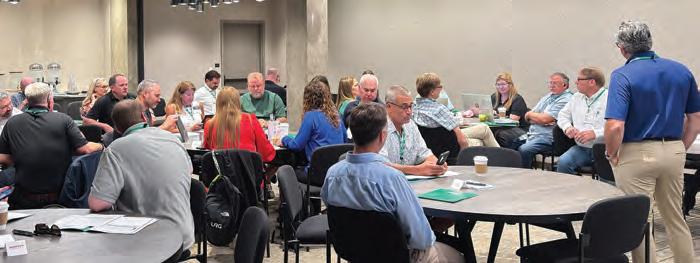
This year’s Hill Days were an advocacy adventure full of unforeseen circumstances and unexpected pleasantries. We had an excellent turnout, including associate members and leaders from several state associations and other industry organizations, as well as new faces joining the effort. It was great to see the attendees eager and invested in this year’s legislative agenda.
To be specific, it was incredible to see Hal Hoke of Wolfpack Industries and Bret Buike from National Reinsurance as the event sponsors, as well as representatives from URG, Hub Industrial, Automotive Recyclers of Michigan, and the state affiliate groups led by Sandy Blalock (NY,VA, PA, MN, NM, AZ, UT, IN, AL, and the Western Auto Recyclers Alliance), and other supportive companies and members. Attendance exceeded last year's numbers, and the evolving diversity of the members has strengthened our resolve to get the job at hand done.
As the Hill Day preparation meeting opened at the trendy ‘Yours Truly DC (an IHG hotel), things seemed on the up and up. Well, spirits were up, the
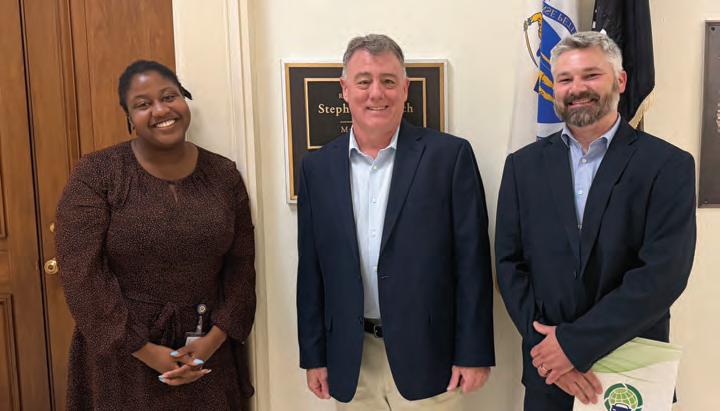
temperature outside was up, gas prices were up, copper was up, and our fearless executive director, Vince Edivan, was up … on the podium. He deserves special recognition for handling all the unforeseen agenda changes that required the skills of a ‘sumo wrestler’ during our time in DC. (If you attended the 2025 ARA Annual Convention, you might get the reference! Vince’s wrestling debut in a sumo costume, along with the sumo match with Jessica Andrews, ARA, and Amberay Novak, HUB Industrial, were favorite highlights mentioned by Hill Day attendees that provided a good 30 minutes of laughs and the needed event icebreaker to kick us off.)
Each year, the ARA staff prepares for this event to ensure everything flows smoothly. This year in particular, Jessica, Kelly Badillo, and Tiffany Jackson ran a tight ship and worked extremely hard to coordinate and facilitate everything that makes this such a meaningful, enjoyable, and impactful time. The prepared legislative packets included directions to the House and Senate buildings, scheduling information, and many other things; ARA thinks of everything.
However, no one in attendance foresaw that we would be holding the kick-off meeting without our two invaluable MVP-level leaders.
Emil Nusbaum, ARA’s Vice President of Government Affairs, and his wife had
just been blessed with a beautiful baby boy born just a few days prior to Hill Days. A big congrats to both of them on such wonderful news!
Government Affairs Committee
Chairman Slater Shroyer had his flight canceled the night before the event, delaying his arrival at the debriefing. (And, to make matters worse, they lost his luggage.)
Yet after the morning introductions, everyone was ready to go, and Vince did a phenomenal job of diving into the general directives while we waited for Slater's arrival from the airport. Four major asks were on the docket. He led the group in discussing what to expect, what to do, and what not to do or say, complemented by veteran attendee input throughout the conversations. Excellent pro tips were given by ARA President Shannon Nordstrom, Amber Kendrick,
and others who have attended the event before. At the same time, those new to Hill Days appreciated the input about what to expect from the proverbial gauntlet of meetings.
Strategies were given for making what we were saying relatable and comprehensible, especially to simplify so that everyone at the table could understand (i.e., without the recycler vernacular).
The sharing of experiences and the shedding of light on how to tailor what we were there to do proved invaluable to the training. The use of these techniques or strategies was aimed at maximizing our impact across party lines, and for many, it was the key to success.
Finally, Slater arrived to thunderous applause, and he wasted no time getting started on the heavy lifting by giving us the “cheat sheet” on the inner workings of the language in these bills and the issues we would address. As an oracle of knowledge on the topics we were to discuss, Slater found ways to put things in terms that made the points sink in and could be easily brought up and elaborated on.
Emil, Slater, the Government Affairs Committee (GC), and the ARA Executive Committee all worked very hard in preparation for these meetings, and it showed. The simplified but professionally fine-tuned questions and the supporting information we were to provide to our state representatives were ingeniously crafted.
The big ask this year was for help to include automotive recyclers on the Fair
Competition After Vehicles are Sold Advisory Committee – REPAIR Act (S. 1379/H.R. 1566). Current committee membership includes 11 sector seats ranging from aftermarket parts, OEMs, diagnostic tool manufacturers, consumer rights groups, insurers, and trucking companies. Auto recyclers were the only supply chain stakeholder group left off this list, yet in the actual bill, we were included as ‘impacted parties.’ And to add to that injustice, auto recyclers make up potentially more than 20% of the market for parts in collision and mechanical repairs. We need to be part of the group that decides how the Right to Repair will be regulated. Other requests from legislators included Catalytic Converter Theft –Support the PART Act (S. 2238/H.R. 5221), and help to revise U.S. Environmental Protection Agency’s (EPA) interim enforcement policy entitled “Sale and Use of Aftermarket Catalytic Converters” (1986 Enforcement Policy) because Vehicle Owners Need a Modernized Catalytic Converter Reuse Policy that Reflects Today’s Technologies. What made these asks different
from previous years was the effort put into their construction and the strategy behind crafting them. We were learning from experiences of years past and evolving with changing issues, capitalizing on immediate challenges we faced (such as the Right to Repair Advisory Board exclusion). ARA’s team found ways to drive the narrative to promote our agenda while aligning with the politics of those we were meeting.
The language and positions we proposed were reasonable, amicable, and achievable. In years past, we had asked for support on bills that were sometimes non-bipartisan or faced stronger adversaries and/or deeper pockets. Through this experience, we saw where we had gained traction and where issues sat idling. Shifting our paradigm changed the course of action, leading to continued progress in these meetings.
After lunch, allowing time for Slater to catch his breath, we had a very detailed and interesting presentation from Mark Bacchus and Tina Singh of Toyota of North America (TNA). From TNA’s really great work on automotive sustainability, we could see some of the results on
display during the debriefing session after our visits on the Hill, which gave us a better understanding of the work.
The sustainability significance of the automotive recycling industry is increasingly recognized by legislators and other stakeholders who influence our industry. Toyota of North America's presentation cemented this by calling for the implementation of ARA’s Battery Hierarchy. This division of Toyota realizes that EV batteries are a significant concern. The introduction of more EPR programs has led Toyota to change its perception of these vehicles and batteries when they reach the point of repair or compromise.
Recyclers and manufacturers are seeing eye to eye and agreeing on a path forward. This news may have been the most unexpected to occur during Hill Days.
This revelation was very important, especially with Toyota looking to roll out a pilot program that could strengthen relations, alleviate liabilities, and close the loop on keeping parts and profits in the United States. This was a major positive that not only served as a strong motivator but also as a supporting talking point in the meetings the next day.
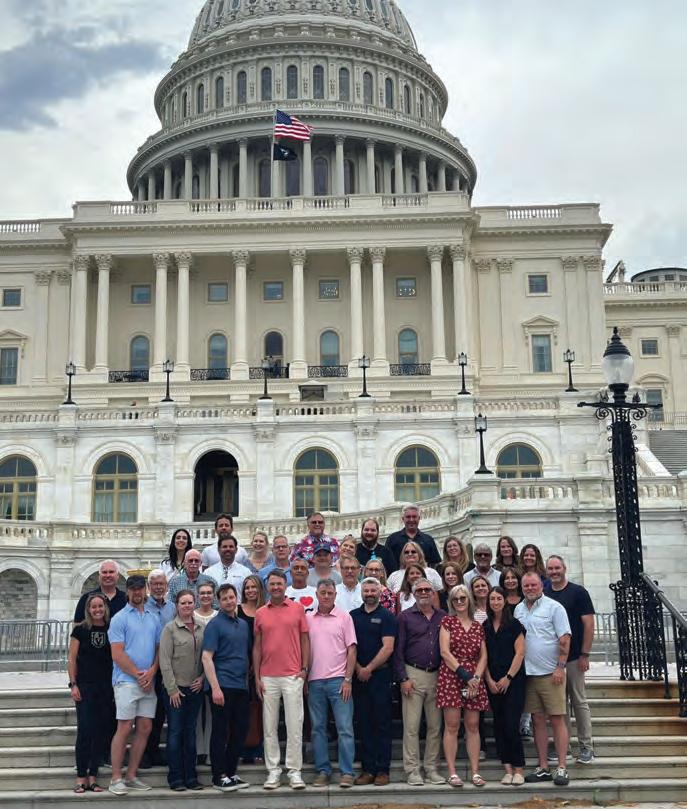
All work and no play makes me a dull boy. This was not the case following our day’s debriefing. ARA hosted the annual group picture in front of the Capitol Building, taken by photographer extraordinaire, Automotive Recycling Magazine’s own editor, Caryn Smith.
Loads of laughs and awesome pictures later, we made our way to DC’s F1 Arcade. This restaurant, bar, and entertainment spot was a hoot of a time. If you are ever in the area and have kids, I would definitely recommend checking it out. Fun for everyone, except on nights when Lance Thomas, from BYOT Auto Parts, is there racing. Then you are most likely to lose, for he won most of the races on our night out. After a great evening of networking and team fun, everyone retired for the night, ready and eager to take on the next day of meetings.
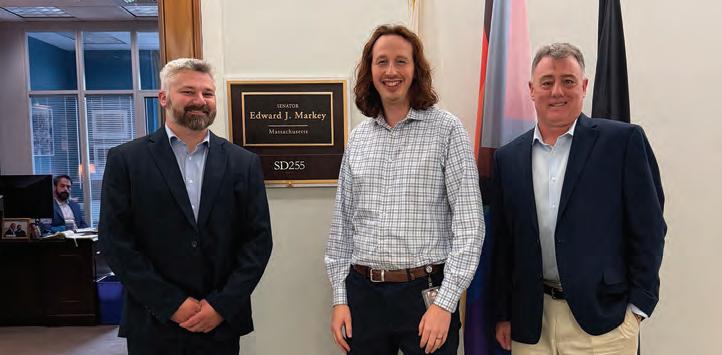
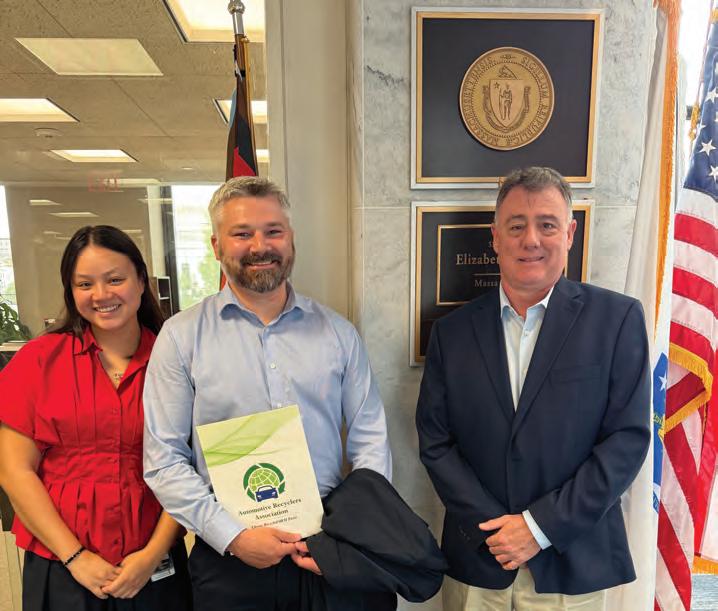
I can only speak to my experience with meetings with our Massachusetts representatives. Due to everyone’s mixed, scattered, and conflicting schedules and departures, we held the final debriefing session with only some of the attendees. However, from what I gathered from those recyclers, the major theme was Recycler Recognition. Auto recycling has become visible, not just an optic. Legislators and their staffers are beginning to realize the impact and importance of what we do.
ARA Vice President Tom Andrade, Everett's Auto Parts in Brockton, MA, and I made the absolute most of our meetings and came out with very productive conversations. We kept our thoughts on certain industry actors and topics in check and found ways for those we conversed with to relate to and empathize with our plight. All we had to do was figure out, based on who we met
with and their party or ideological affiliation, and then find common ground. Our training and prior experiences have conditioned us to read the room and to clearly communicate our asks, ensuring those in attendance understand the why and how. The offices we spoke to pledged support for our major ask of advocating for our representation on the Right to Repair Advisory Group. These constituents were also highly engaged in discussing the challenges and logistics of the correlation between specific pieces of legislation and their impact on auto recycling (EPR, Parts, and Right-to-Repair Acts).
A bonus endeavor was made by the office of Representative Stephen F. Lynch (D-MA) to attend Everett’s Auto Parts Anniversary this summer.
In conclusion, auto recycling is being taken seriously, and our image continues to improve. In recent years, we spent a lot of our meeting time
educating and re-educating about our role and our commitment to break the junkyard stigma. Now, when an auto recycler walks into these meetings, we are more likely to be met with intrigue instead of ignorance.
We, as an industry, are making persistent progress, and that progress is resulting in change. We have changed how we operate, how we think, and how we plan for our future trajectory. Hill Days continues to be an enjoyable event and an advantageous act of advocacy. The number of attendees each year continues to grow, as does our reputation within government affairs. Meetings are becoming more productive and impactful, as are the results and resources from this event.
ARA continues to lead the way as an agent of change and will continue to do so, as George Bernard Shaw said, “Don’t wait for the right opportunity; create it.” TB

BY SANDY BLALOCK
For many years, I have made the trip to Washington, D.C., for ARA Hill Days, and every year I am reminded why it matters. It is one thing to talk about the issues facing professional automotive recyclers among ourselves. It is another to sit across the table from members of Congress and their staff and explain, in real terms, how federal policy decisions affect our businesses, our employees, our customers, and the communities we serve.
This year’s Hill Days were another important opportunity to put the professional automotive recycling industry directly in front of federal legislators and key staff. I was honored to meet with Senator Amy Klobuchar of Minnesota, Senator Tina Smith of Minnesota and Ben Ellgen from her office, Jackson Thein in Representative Melanie Stansbury’s New Mexico office, Alexandra Parker in Senator Mark Kelly’s Arizona office, Wes King in Senator Martin Heinrich’s New Mexico office, Carmen Scurato and Shelby Boxenbaum in Senator Ben Ray Luján’s New Mexico office, and Samara Klotz in Senator Ruben Gallego’s Arizona office.
Each meeting was different, but the message was consistent: professional automotive recyclers are a vital part of the automotive supply chain, the repair economy, and the circular economy. We are not simply dismantling vehicles. We are providing affordable recycled original equipment parts, supporting consumers and repairers, recovering valuable materials, keeping end-of-life vehicles out of landfills, and helping manage increasingly complex vehicle technologies.
One of the most important issues we discussed was the need for our industry to be included in federal conversations around repair access and competition. The REPAIR Act includes a Fair Competition After Vehicles Are Sold Advisory Committee, but as currently
structured, the automotive recycling industry does not have a seat at that table. That is a serious gap. Recyclers are a primary source of recycled OEM replacement parts, and any discussion about repair competition, parts access, data access, and consumer choice is incomplete without our industry represented.
We also discussed catalytic converter theft and the importance of supporting policies that target criminals without creating unnecessary burdens for legitimate businesses. Professional auto recyclers are often victims of converter theft
Our facilities are targeted, our employees can be put at risk, and we often purchase vehicles expecting the converters to still be attached, only to find they have been stolen before the vehicle reaches us. That is why federal consistency and enforcement matter.
ourselves. Our facilities are targeted, our employees can be put at risk, and we often purchase vehicles expecting the converters to still be attached, only to find they have been stolen before the vehicle reaches us. That is why federal consistency and enforcement matter.
At the same time, we discussed the need for a modernized policy on the reuse of catalytic converters. The current EPA policy is decades old and does not reflect today's technology. With modern onboard diagnostics, emissions testing, and inspection capabilities, there should be a reasonable, performance-based pathway for the reuse of properly tested used OEM catalytic converters. This issue is about affordability, environmental responsibility, and common sense.
Another major topic was the handling of batteries for electric and hybrid
vehicle propulsion. As more of these vehicles reach the end of their road life, professional automotive recyclers will be among the first to handle these batteries. Policymakers need to understand that reality. Any future battery policy must recognize the recycler’s role and avoid creating unfunded mandates or unrealistic responsibilities for the businesses already doing the work at the front end of the end-of-life vehicle process.
For me, Hill Days is not just about policy. It is about relationships. It is about helping legislators and staff understand who we are before a problem arises or a bill is drafted without our input. It is about making sure they see professional auto recyclers as responsible business owners, employers, environmental stewards, and an essential part of keeping vehicles and critical
materials moving through the domestic supply chain.
I have participated in Hill Days for many years, and I can say without hesitation that these visits make a difference. Not every meeting results in an immediate commitment, and not every issue is solved in one conversation. But every meeting builds awareness. Every visit creates a connection. Every recycler who shows up helps strengthen the industry’s voice.
I also believe it is important for more recyclers to participate. No one tells
BY HAL HOKE, WOLFPACK ENTERPRISES
ARA Hill Days was a profoundly inspiring experience that instilled in me a deep sense of purpose and gratitude for being part of the Automotive Recyclers Association.
The collective passion for promoting freedom of choice for the American people was as solid as a 24-inch concrete slab for dismantling, serving as a powerful reminder of what can be achieved through unity and determination.
Walking the halls of Congress, engaging in meaningful discussions with my Congressman Scott DesJarlais, and the honor of sitting in the House Chamber left me with a profound sense of pride and hope for the future of our great nation.
our story better than the people who live it every day. Legislators need to hear directly from the businesses in their states and districts. They need to understand what it means to process end-of-life vehicles responsibly, to provide affordable parts to consumers, to comply with environmental and safety requirements, and to invest in training as vehicles become more complex.
Our industry has a strong story to tell, but we have to be willing to tell it. ARA Hill Days gives us that opportunity at the federal level. It gives us a chance to
be proactive instead of reactive. It gives us a seat in the conversation before decisions are made that could impact our future.
I am grateful for the time these offices gave us and for the opportunity to once again advocate for the professional automotive recycling industry. I encourage every recycler who cares about the future of this industry to consider participating in Hill Days. Your voice matters. Your experience matters. And when we show up together, our industry is stronger. TB
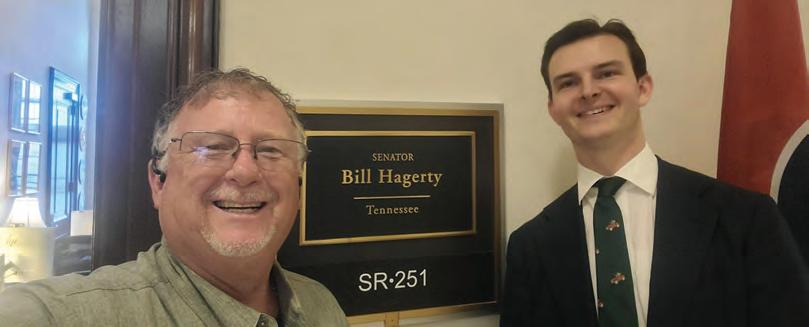
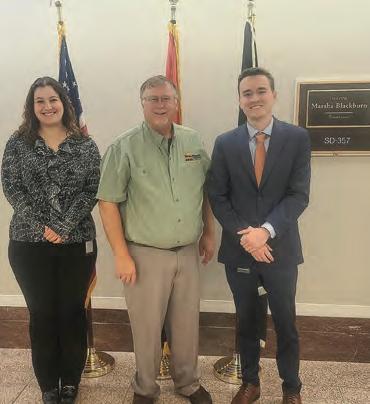
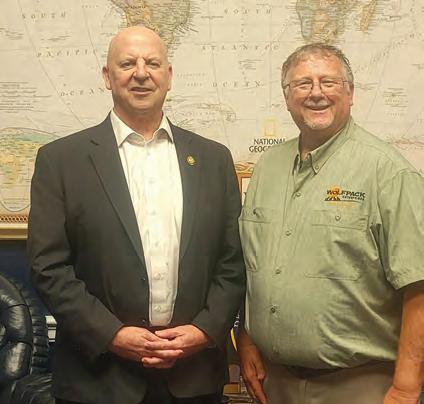



BY BRET BUIKE, NATIONAL REINSURANCE
There is something genuinely powerful about watching an entire industry put on its best shoes, walk the halls of Congress, and speak with one voice. That is exactly what happens every year at the Automotive Recyclers Association Hill Days—and if you have never participated, it is an experience worth making time for.
This was my second year attending Hill Days representing National Reinsurance, and if anything, the experience
to the capital, and sit down with elected officials to have substantive conversations. That kind of commitment deserves recognition, and it does not go unnoticed on Capitol Hill.
It was also great to see the URG team represented at Hill Days this year. Their presence alongside the ARA speaks volumes. When two major organizations in this space show up together for the same cause, it sends a clear message to legislators that this industry is unified and serious. That kind of collaboration
This is how policy gets shaped. Not just by lobbyists and trade organizations, but by real business owners who can look a lawmaker in the eye and say: Here is what this means for my yard, my employees, and my customers back home.
reinforced why we keep showing up. Supporting the ARA and the broader auto recycling industry is not just something we talk about—it is something we are committed to putting into action, and Hill Days is one of the most direct ways to do exactly that.
Hill Days brings together auto recyclers from across the country to Washington, D.C., to meet directly with members of the House and Senate and their staff. The goal is straightforward: make sure the people writing and voting on legislation that affects our industry actually understand what we do, what we need, and what is at stake for the businesses and communities we represent.
“Supporting the ARA and the broader auto recycling industry is not just something we talk about—it is something we are committed to putting into action.”
What impresses me most is the caliber of the people who show up. The yards that participate in Hill Days are not just the biggest or the loudest — they are the most engaged. These are owners and operators who care deeply enough about the future of this industry to take time away from their businesses, travel
is what real advocacy looks like, and it is something both organizations should be proud of. At National Reinsurance, we are proud to be a part of it.
A major reason those conversations go so well is the preparation that the ARA team puts in behind the scenes. Vince Edivan, Emil Nusbaum, and Slater Shroyer deserve particular credit here. Slater especially did an outstanding job, filling in for Emil (who was with his wife, who was having their first baby), of getting attendees ready before we ever walked through a congressional office door. He breaks down the issues clearly, explains the legislative context, and coaches everyone on how to deliver the message in a way that is concise, credible, and compelling. By the time you sit down across from a senator or a representative, you are not guessing — you know exactly what you are there to talk about and why it matters.
That preparation, combined with the leadership of this year's ARA President, Shannon Nordstrom, makes all the difference. Legislators and their staff are busy. They appreciate advocates who come in informed, stay on point, and
treat their time with respect. The ARA team ensures every attendee can do exactly that, whether it is their first Hill Days or their tenth.
For anyone in the automotive recycling industry who has not yet participated, I would strongly encourage you to consider it. This is how policy gets shaped. Not just by lobbyists and trade organizations working in the background, but by real business owners who can look a lawmaker in the eye and say: Here is what this means for my yard, my employees, and my customers back home. That authenticity matters, and the ARA gives us the platform and the tools to use it well.
The industry is well-served by the people who show up for Hill Days. My thanks to the ARA team, to URG for their continued partnership, and to every yard that makes the trip. You are doing important work—and we will be back. TB
ARA would like to thank National Reinsurance for being a Hill Days Sponsor!


BY SANDY BLALOCK
am excited to share that ARNE 2026 is already shaping up to be a strong and meaningful event for professional auto recyclers across the Northeast, Canada, and now Pennsylvania.
This year’s AUTO RECYCLERS NORTHEAST SUMMIT & EXPO will be held November 5–7, 2026, at Resorts World Catskills in Monticello, New York , and registration is now open.
For me, events like ARNE are about much more than just attending another meeting. They are about bringing recyclers together, sharing ideas, learning from one another, and strengthening the relationships that help move our industry forward. Every professional recycler knows how quickly this industry is changing, and it is more important than ever that we stay connected, informed, and involved.
The theme for ARNE 2026 is “Gearing Up for Success,” and I think that says exactly what this event is about. It is an opportunity to take time away from the day-to-day demands of the business and focus on the tools, knowledge, and connections that can help our facilities succeed.
ARNE has always been a valuable regional event for recyclers in New York and throughout the Northeast, and I am especially
pleased that it now includes Pennsylvania Recyclers, along with those from Canada and across the region. That broader participation makes this event even stronger. It gives all of us the chance to hear different perspectives, learn what others are doing, and build relationships beyond our own state lines.
As someone who has spent many years working with recyclers and state associations, I truly believe there is tremendous value in showing up for events like this. The conversations in the hallways, the time spent with vendors, the education sessions, and the chance to reconnect with industry friends all matter. These are the opportunities that help us grow stronger as businesses and as an industry.
Whether you are looking for new ideas, better ways to operate, compliance information, technology updates, vendor connections, or simply the opportunity to spend time with other professional recyclers who understand your business, ARNE 2026 is an event worth attending.
I hope you will make plans to join us November 5–7, 2026, at Resorts World Catskills in Monticello, New York, as we come together to continue Gearing Up for Success. TB
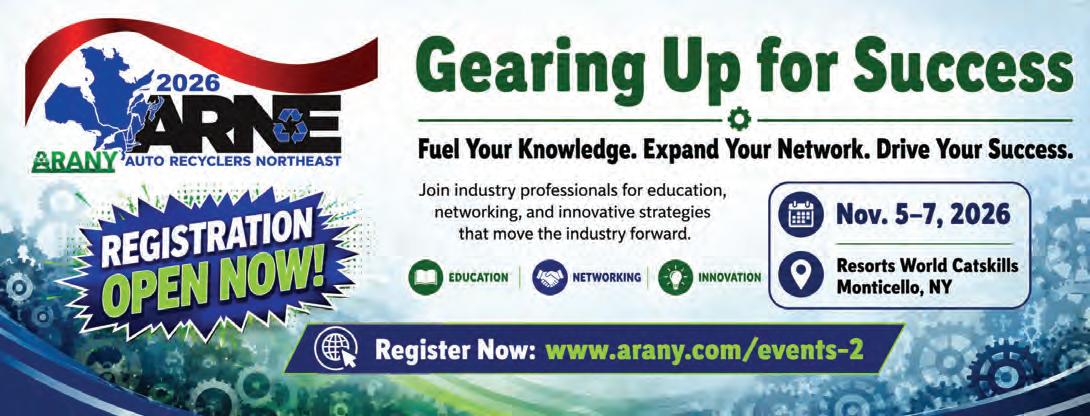
BY SANDY BLALOCK


Iam excited to see the 2026 MIDWEST AUTOMOTIVE RECYCLERS SUMMIT & EXPO continue to grow into a strong regional event for professional automotive recyclers. This year’s Summit will be held August 13–15, 2026, in Indianapolis, Indiana, and registration is now open.
What makes this event special to me is the spirit behind it. The Midwest Summit is not just about bringing people into a room for a few days. It is about recyclers, vendors, state associations, and industry partners coming together because we all know this industry is stronger when we work together.
The theme “Stronger Together” is a perfect fit. Professional auto recyclers are facing changing vehicles, new technology, compliance responsibilities, workforce challenges, and shifting customer expectations. None of us can afford to operate in a vacuum. Events like this give us the chance to step away from the daily demands of business, talk with others who understand what we are facing, and bring home ideas that can make a real difference in our operations.
I am especially pleased to see the Midwest Summit continue to expand. The 2026 event includes Indiana, Ohio, Kentucky, Missouri, and now Minnesota, showing how valuable regional
cooperation has become for our industry. While these states are helping lead the way, this event is open to all professional recyclers and vendors who want to be part of a practical, forward-thinking industry gathering.
For recyclers, this is a chance to learn from industry experts, discover new tools, visit vendors, reconnect with friends, and build relationships that matter long after the event is over. For vendors, it is an opportunity to spend meaningful time with recyclers from across the region and better understand the needs of today’s professional facilities.
I have always believed that some of the best ideas in our industry come from conversations between recyclers. Sometimes it happens during an education session, sometimes at a vendor booth, and sometimes in the hallway between meetings. That is why showing up matters.
I hope recyclers and vendors will make plans early to attend the 2026 Midwest Automotive Recyclers Summit & Expo, August 13–15 in Indianapolis. This is a growing regional event with a strong purpose: continue helping our industry connect, learn, and move forward and become Stronger Together. TB
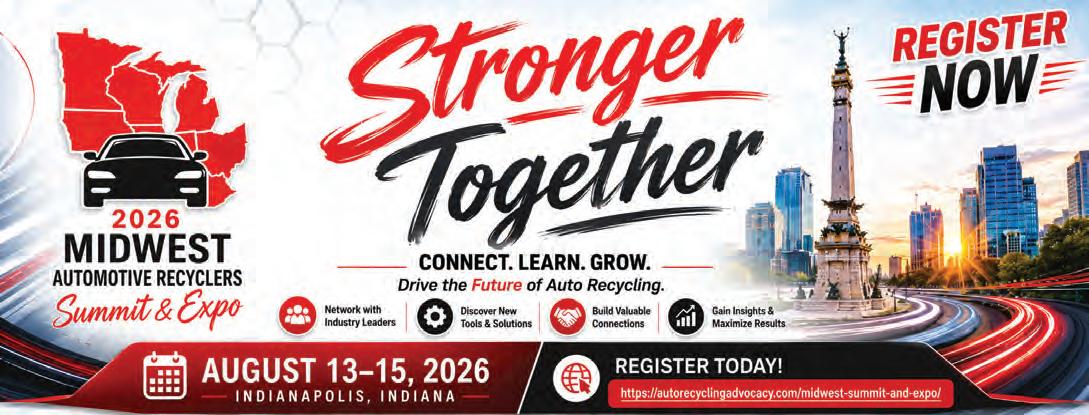
On May 27, a diverse group of stakeholders from across the automotive and regulatory landscape gathered for a firsthand look at a modern automotive recycling operation. Representatives from Toyota, the U.S. Environmental Protection Agency (EPA), the Department of Commerce, the State Department, the Automotive Recyclers Association (ARA), the Recycled Materials Association (ReMA), and the Alliance for Automotive Innovation were hosted by ARA Member M&M Auto Parts in Fredericksburg, VA.
The visit was designed with a clear objective: to demonstrate the complexity, sophistication, and efficiency of today’s professional automotive recyclers—
an aspect of the industry that many participants had not previously experienced firsthand.
The group began with a comprehensive tour of M&M’s facility by ARA Past President Jonathan Morrow, where they observed the full lifecycle of vehicle processing— from initial intake and dismantling to parts harvesting and resale. The tour highlighted the meticulous processes required to safely and efficiently remove valuable components, as well as the infrastructure and expertise necessary to support a highfunctioning recycling operation.
For many attendees, this was their first exposure to the scale and professionalism of an automotive recycling facility. The experience helped dispel common

misconceptions and provided a clearer understanding of the role recyclers play in extending vehicle life cycles, supporting affordability for consumers, and contributing to environmental sustainability.
Following the facility tour, the group attended a presentation from ReMA focused on shredder operations and the downstream processing of endof-life vehicles. This portion of the visit underscored the importance of coordinated systems across the recycling ecosystem—from parts recovery to material processing—in maximizing resource efficiency.
Reflecting on the experience, Mark Bacchus, Senior Manager of Chemical & Materials Stewardship in Regulatory Affairs and Environmental Sustainability at Toyota, offered high praise for the operation and the industry as a whole:
“One of many amazing vehicle component resellers in the U.S. We learned about dismantling, component reselling, shredding, research activities, among many other topics.
In the U.S., there is a robust ‘for profit’ vehicle end-of-life model that works very well. But there are remaining challenges that require robust collaboration between industry, research institutions, and government to achieve full circularity.”
His comments reinforce a key takeaway from the visit: the United States has developed an effective and economically sustainable model for managing end-oflife vehicles. However, continued progress toward a fully circular automotive economy will depend on deeper collaboration among industry leaders, policymakers, and research institutions.
Events like this play a critical role in bridging understanding between sectors. By opening their doors and sharing their operations, professional automotive recyclers help inform policy discussions, shape regulatory perspectives, and highlight the essential contributions of the industry.
As the push toward sustainability, electrification, and circularity accelerates, ensuring that decision-makers understand the realities on the ground will be more important than ever. This visit serves as a strong example of how transparency and engagement can move the industry forward. TB
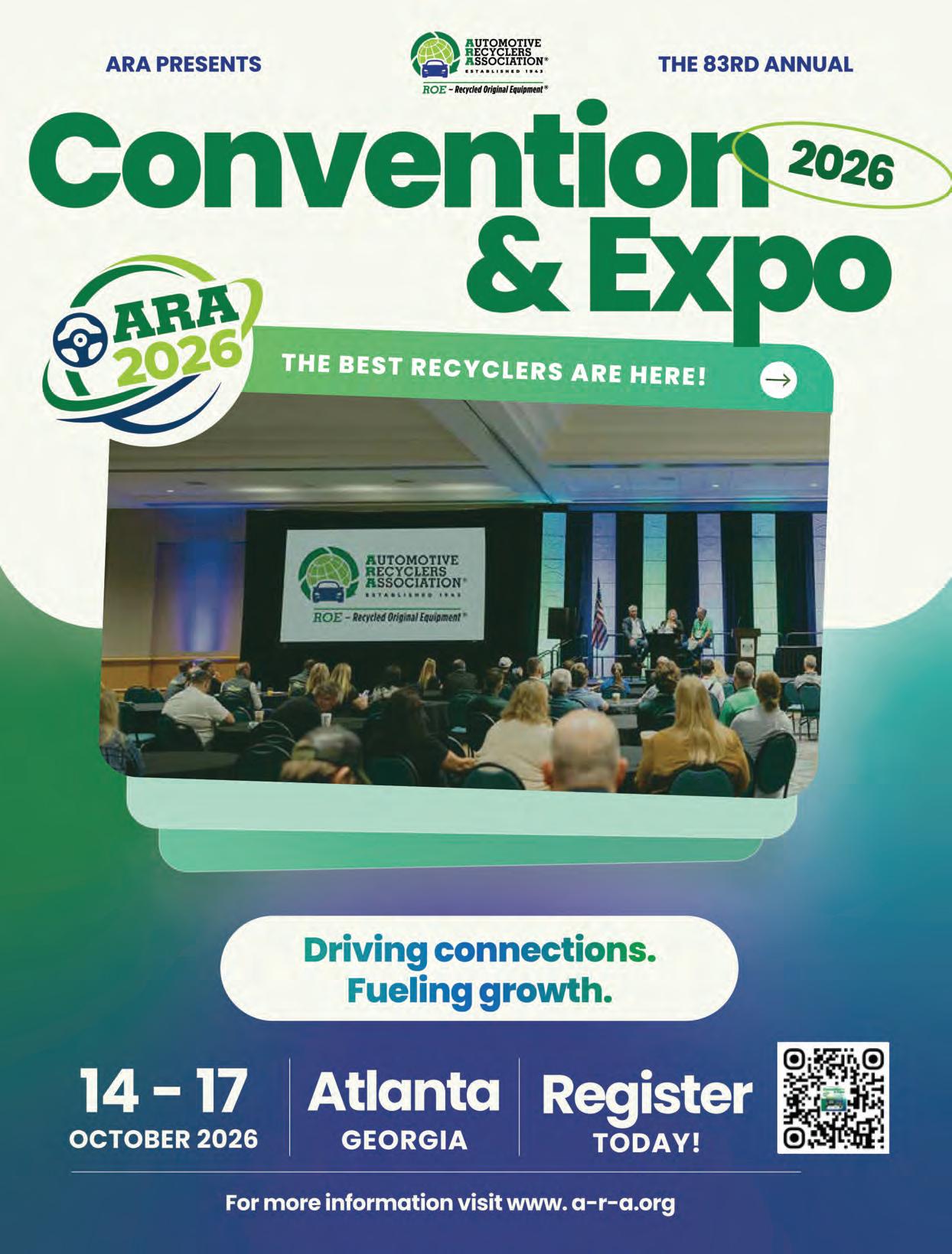

The Automotive Recycling ToolBox™ Edition delivers peer-to-peer articles with information that you would get while networking at industry events and trade shows. Our mission is to be current, educational and inspirational. We bring you:
• Educational and instructional “how-to” articles written by fellow recyclers, top industry professionals, leaders & trade show speakers.
• Information from providers of industry-related products and service you typically find at industry events and trade shows.






PUBLISHED 6 TIMES A YEAR AutoRecyclingNow.com/Toolbox
AUTOMOTIVE RECYCLERS ASSOCIATION OFFICERS
YOUR TOOLBOX TEAM
Published by Driven By Design LLC
EDITOR
Caryn Smith, Toolbox@a-r-a.org
ART DIRECTOR
Caryn Smith
ADVERTISING SALES
Jay Gooch, ToolboxAds@a-r-a.org
ARA OPERATIONS
EXECUTIVE DIRECTOR
Vince Edivan
Automotive Recyclers Association Vince@a-r-a.org
SENIOR DIRECTOR OF ASSOCIATE OPERATIONS
Jessica Andrews, Jessica@a-r-a.org
SENIOR DIRECTOR OF MEMBER SERVICES
Kelly Badillo, Kelly@a-r-a.org
VICE PRESIDENT OF STRATEGY AND GOVERNMENT AND REGULATORY AFFAIRS
Emil Nusbaum, Emil@a-r-a.org
CERTIFICATION CONSULTANT
Sue Schauls, Sue@a-r-a.org (319) 290-7843
ADMINISTRATIVE ASSISTANT
Tiffany Jackson, Tiffany@a-r-a.org
PRESIDENT Shannon Nordstrom Nordstrom’s Automotive, Inc. Garretson, SD shannon@nordstromsauto.com
2ND VICE PRESIDENT/TREASURER Tom Andrade Everett’s Auto Parts Brockton, MA tandrade@everettsautoparts.com
SECRETARY Emily Yancey Yancey Auto Parts Perry, MO eyancey@yanceyauto.com
IMMEDIATE PAST PRESIDENT Eric Wilbert Wilbert’s U-Pull-It, LLC Williamson, NY eric.wilbert@wilberts.com
ARA CONTACT INFORMATION
ARA Headquarters Manassas, VA (571) 208-0428 staff@a-r-a.org www.a-r-a.org
To reach readers with print & digital advertising, email ToolboxAds@a-r-a.org For editorial contributions, e-mail Toolbox@a-r-a.org or call (239) 225-6137