



As a leader or owner, do you find yourself making plans and setting goals that no one else in your business follows or cares about? I can relate. As a young, first-time general manager at Greenleaf Auto in the mid-2000s, I felt very confused and disappointed that my team wasn’t performing as I needed them to for “our” site to succeed. I had a boss who gave me my goals and “marching orders” for the month, the quarter, and the year, and I wanted to please and do a good job.

I was used to individual success as a former high-performing salesperson and sales manager. I thought I knew how to achieve high performance. Show up early, work harder than anyone else in the room, and take control of my own destiny. Well... as an employee responsible for their own little piece of the puzzle, that works just fine. As a leader of a facility with 50 employees, it's a different story.
Long story short, I struggled. My first gig as a general manager lasted only 3.5 years. I went back to sales, and it would be many years later before I realized and learned from my mistakes how to lead people and actually get the results I desired. It did not come from me getting “tougher” or getting better at

“laying down the law.” That type of leadership always made me very uncomfortable. Here's the rest of the story.
In 2015, I found a new home with Bessler Auto Parts in Wilder, KY. My role was to build a new marketplace and facility in Northeast Ohio. Here was my chance to lead and manage people and a facility, starting from the ground up.
I was excited about the opportunity, and the Bessler family and I had an instant connection and a growth mindset. We started the journey with a small warehouse, a delivery driver, and me.
I worked very hard just as I had in the old days when I was a salesperson. We were having success, and within 1.5 years, I had hired 4 salespeople and
Some of the most important things we learned in EOS were how to create clarity and reinforce our goals with our teams.
4 delivery drivers, quickly outgrowing our little hub. We decided to buy a fullfledged facility. It just so happened to be the same facility where I started my career (Greenleaf, OH). I was now building a dismantling crew, shipping staff, parts pullers, etc.
I started to feel the old pressure of, “Holy crap, how do I keep all these people motivated and getting the job done? HOW DO I NOT FAIL AGAIN?”
Jer Banta is a seasoned auto parts industry leader with over three decades of experience, having progressed from an entry-level delivery driver to senior leadership and consulting roles. His career spans privately held companies and consolidators, with notable achievements including building and scaling a dismantling facility in Northeast Ohio and helping position a company for acquisition. Currently with PTC, Jer leverages deep operational expertise, KPI-driven insight, and a strong passion for people and culture to help recyclers improve performance and develop high-performing teams across North America and beyond.
Fortunately for me, the leader I now worked for, John Bessler, was a forward-thinking coach and mentor. He also invested in his leadership team by sending us to culture and communication classes, private leadership coaching, and Vistage business meetings. John embraced EOS (Entrepreneurial Operating System). This gave us a roadmap and a structure to unify and motivate our teams across the business. Some of the most important things we learned in EOS were how to create clarity and reinforce our goals with our teams. Two of the methods we used were departmental scorecards and daily huddles.
Scorecards. What gets measured improves.
Not only do scorecards measure important KPIs and focus on the things that matter, but they also give our employees clarity on whether we are winning or losing. Keeping our folks who do the work motivated to win for the greater good and health of the company is key to creating a great place to work and growing together.

Keeping our folks who do the work motivated to win for the greater good and health of the company is key to creating a great place to work and growing together.
to convey your goals. Most importantly, UPDATE your scorecard frequently and share it with the team often to keep the focus high. Even if it feels redundant. People like to win, and if we are not winning, we need to know early so we can course correct NOW instead of waiting for the results at the end of the month and wondering why we did not achieve our goals. Create the goals, share the data, and most importantly, involve your team in creating solutions if you are not on track to hit the goal.
How do we find time to keep our teams on the same page?
One word, Huddles.
Scorecards help us justify raises, bonuses, and scaling up (or down sometimes). I will say that the most important scorecard is NOT made up of numbers. It’s a public, well-communicated set of core values and a business purpose that everyone knows and is held accountable to. If you can establish this part of the culture first, all other scorecards are relatable to the “cause.”
When creating scorecards, it’s important to find the KPI’s that really drive results for the team you are leading. Avoid measuring things just to measure things. Keep the scorecard easy to understand and concise
These are mini-meetings, 5-10 minutes in length, to update and convey important messages and areas of focus on a daily basis.
Daily huddles became the way I kept my team focused on the most important tasks. Not only for scorecard items but also for culture or core value reminders. On 4 out of 5 days during the week, from 7:50 to 8:00AM, I had a daily huddle with my sales staff. The 5th day was the 1-hour sales meeting. We used Microsoft Teams to bring everyone together. My team could log in from their phones or computers, no matter where they were.
Obviously, your various production folks are likely to be working in the same area, and you can do it live if you
prefer. I would spend 5 minutes on the team numbers, highlighting the wins. I would also address any areas we needed to improve. I would use the time as well for minor procedural reminders on things that may be slipping a bit (RMA creations, proper Credit card procedures, quote call backs, order follow-ups, the list goes on ...).
I also enjoyed finding short topics that reinforced our culture and core values through a story or event that was current and relevant. All in all, huddles kept my team on the same page and often spurred more in-depth communication afterward with individuals on how they could improve their own performance to help the team.
The moral of the story is that we need to give people clarity about expectations, and we must convey these messages frequently so that there is no doubt about where we are going, why we do it, and whether we are winning or losing. Scorecards and Huddles drive consistency and a high level of awareness within our business, making your job as the leader easier in the long run. TB

The prevalent yet persistent phrases heard across the nation are “Where do you find good help?” and “It’s so hard to get and keep quality employees.”
Just recently, at the annual membership meeting of the Automotive Recyclers of Massachusetts (ARM), I was privy to plenty of these wistful sentiments for the need for good help. One of the most discussed sidebars was the yearning for quality and dependable employees. This is happening everywhere, not just pertaining to auto recyclers, but it is proliferating throughout the entire workforce. We are all raising the S.O.S. flag of desperation, pleading for someone to “Please send good help!”
So how do we get it, attract it, or cultivate it? Where do we find it and how do we keep it? I, too, find myself with a surplus of vision, yet am matched with a greater deficit of disciples. It is only after some personal reflection and an insight from an amazing interview I recently read that I believe there is still a sufficient supply of good help out there. However, it is up to each of us to determine what we are willing to

do, pay, or sacrifice to get it, and how we will move forward to retain these quality employees.
The interview I referenced was recently conducted by ARA Executive Director Vince Edivan and featured in January/February’s Auto motive Recycling magazine. It featured Vin Match Pro’s own “Power Couple,” JC and Holly Cahill. This interview was sensational. JC Cahill was also on the new ARA Podcast, “Unscripted.” If you haven’t checked it out, you can find it on ARA’s YouTube Channel.
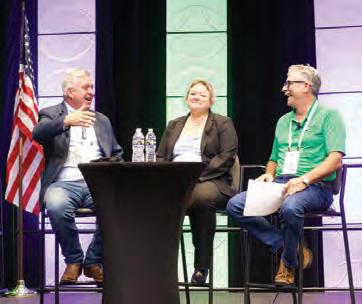
Featured in January/ February’s Automotive Recycling magazine, ARA Executive Director (right) Vince Edivan interviews Vin Match Pro’s own “Power Couple,” JC and Holly Cahill.
constantly battling, and surviving in this industry?
While listening to the couple’s history, what really resonated with me was how ridiculously relatable the struggles the Cahills have faced with their employees. How many are out there struggling,
Whether it’s a company with 5 employees or one that employs over 50, JC and Holly’s struggles and challenges resonate with all of us. From the top down, from those dismantling vehicles, inventorying cars, to shipping and delivering parts. We are all impacted by the attendance, performance, and quality of the personnel around and among us.
Whether we are making the sales, paying the bills, or managing the team. If you think about it, everyone who enters the arena of auto recycling has the potential to become “the good help.”
So, what is good help or a quality workforce? Has that changed in the last decade or so? I think so. Yet, whatever it is that each of us seeks in the coveted necessity of rank and reliable team members, our leaders must be able to vet, motivate, and continue to value the work of the entire team. This means that the metrics by which we determine and drive an employee's quality must be deployed and
implemented before we set and deliver expectations.
We must understand that each team member is different, yet consequences and rules must be laid down and adhered to by all. We can no longer hold back or compromise if we are to elevate our standards of consistency and performance. We must not hold back our company’s goals, our star players, or, most certainly, ourselves. In order to attract, ascertain, or advance the good help we seek, one must be willing to sacrifice and pay the necessary price. We must do what it takes to make it happen.
We must understand that each team member is different, yet consequences and rules must be laid down and adhered to by all.
I did not need to read the interview to know that the Cahills are an asset to the auto recycling industry and most certainly continue to move forward and make it happen. However, what I enjoyed most about the interview was Holly and JC’s candor and honesty. They did not hold back. From their debacles to their departure from New England Auto & Truck, which is now Fenix Auto Parts in Winchendon, MA, this couple always has each other’s back. Their shared guidelines of remaining in their own lanes while fully supporting each other have shown us that, even when the going gets tough, you can count on the tough to keep going and ultimately rise and rise again. However, what caught me off guard was how they were upfront when asked about obtaining and maintaining their “good help.” If you haven’t checked it out yet, spoiler alert, they paid above their budget for good help. They consistently overpaid for a resource that many view as in short supply. Not only that, but JC and Holly overpaid people outside the industry. Think about that. How many times have we hired salespeople who have talked the talk but didn’t walk the walk? How many times have we been burned by self-promoted “professional” loader operators, inventory specialists, or parts dismantlers? Or possibly worse, think of all the times that coworkers have been brought on that did not meet expectations and
have caused us more work and hardship than before they were hired.
The Cahills overpaid for quality employees, and they were people they could trust. Whether those people were in the industry or not. They overpaid for quality and trust, understanding the pieces are only as good as the whole. And with the right pieces in place, the Cahills were able to take their operations and dreams to an entirely new level of success. Bottom line: with expectations set, they paid and put the right people in place they could trust.
So, what is trust in the auto recycling world? Much harder to define, for the meaning is different for each recycler, I am sure. My idea of trust is the consistency of behavior, words, and actions that warrant the support and empowerment of the trustee to continue to make sound decisions and do what is in the best interest of the shared directive.
In the words of the immortal coach Bill Belichick, “Do Your Job.” Quality help comes in each and every day, does their job consistently at a higher level than most, with less drama than the rest. It is 2026, and it may seem a little crazy that we are asking ourselves this, but where do we find people who can do their jobs? How do we find people we can trust? Because we need to get past the belly aching of “no one wants to work” and “no one wants to work hard anymore.” Payroll is one of our biggest
expenses, but our employees should always remain our biggest asset and be seen and valued that way.
How do we find the best ROI or even a happy medium?
The Cahills did not succeed because they overpaid for people who did not contribute or failed to show up every day. It began with them and their leadership. This means the good help starts with you. Pledging yourself, regardless of your role, to the shared goal that hopefully the company and the team have created and continue to craft. Putting the right people in place, paying the right price, and prioritizing our efforts across our operations, when analyzed, should give us insight into who we want to be and where we want to go.
From time to time, many of us feel undervalued within the yard’s hierarchy. That should not happen. However, at the same time, maybe we should all ask ourselves, are we the “good help” or are we just doing better than the next person and putting it on a pedestal? Holding others and always ourselves accountable is crucial to moving forward.
Accountability is not negative; it is recognition, reinforcement, and reward for responsibility. Are we leading by example, or are we sitting back, expecting those around us to “do their jobs” without holding up our end? How can we expect people to be consistent while maintaining a go-above-and-beyond attitude if we are not embodying this visage? It is not reasonable.
A quality workforce starts at the top and must always be led by you. From there, we can figure out how each person in each role is to succeed. So everyone has the ability and opportunity to become “good help.” The problem usually lies in what is figured out after we hire or allow habits to set in.
Again, accountability, we are more to blame for hiring “subpar help” than the employee is for not meeting expectations. It is time we know better and do better. And here is how we do that.
Quality and dependable workers are out there waiting to be hired. They are working with us, for us, and among us right now.
What are we willing to do to attract and retain quality employees? Are they worth the price we should pay, or would we rather save a buck and keep going down the same road, dealing with poor performance and all the rest of the drama that comes with not surrounding ourselves with good help? Can we take time out to map out work tracks, job descriptions, and set expectations? And can we create a game plan, clearly communicate it, and receive feedback as to how we all plan to succeed together? To be blunt, are we just not making enough time, or not making our operations attractive or sustainable enough to acquire long-term quality team members? Things change all the time in this industry, and even more so in our own
day-to-day work lives. We are always making the moves and the time to sell the next part, score the next car, or serve the next customer.
Yet how are we to do all this without quality help? Two steps forward, three steps back sounds like movement, but not progress. Be done with the excuses and the rework, and begin focusing on how to get the quality assistance you need to surround yourself with.
Our need for quality help must start with our own assessment. If we are “the good help” and lead by example, we can unlock the potential to spread this by making time to invest in our expectations, employees, and our culture. We have the time if we choose to make it. Prioritizing how we can attract and keep good help is an absolute must in today’s work life. We must motivate ourselves to invest in our people while holding everyone, including ourselves, accountable.
Yes, there are plenty of people who do not want to work. So do not hire them. The mental capacity and dynamics of the current workforce have shifted dramatically compared to the bustle of hard work witnessed by the baby boomer generation and those since the turn of the millennium. Quality and dependable workers are out there waiting to be hired. They are working with us, for us, and among us right now.
We must shift our perspectives to attract and advance those we hope will take us to the next level. Value the work and the efforts of others by reinvesting in your team and your culture. Take care of yourself by taking care of those who take care of you. Whether you decide to spend above your budget, loosen the reins, allowing for the earning and giving of trust, or sacrifice elsewhere within the logistics of the business, the good help is out there ready to deliver you and the rest of the team to the productive and profitable used parts promised land. TB
As someone working in and around operational assessments in this industry, you’ve likely seen firsthand how much performance varies location to location. That variation is rarely about parts availability. It’s about process discipline.
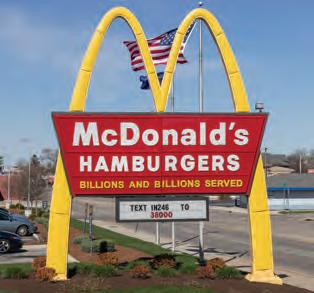
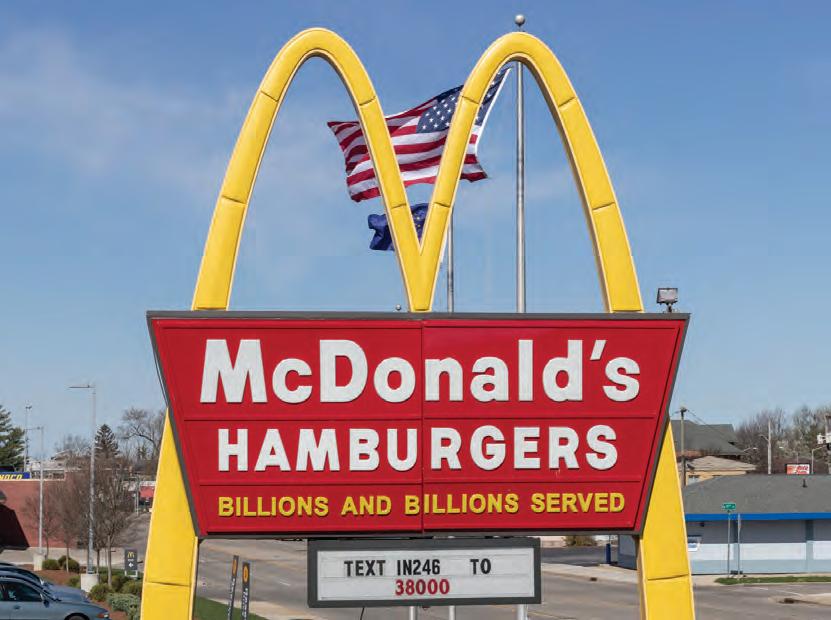
Few companies in the world are as operationally consistent as McDonald’s. Whether you walk into a store in Texas, Tokyo, or Toronto, the experience is remarkably similar. That consistency is
Estimates vary, but McDonald’s and its franchisees are widely believed to invest hundreds of millions of dollars annually in global training and development. When you break that down, the per-employee training investment is often estimated between $1,000 and $3,000 per employee per year, depending on role and geography. Corporate managers and franchise operators often receive significantly more through Hamburger University and advanced leadership programs.
Now compare that to the auto recycling
Most salvage yards and recycled auto parts businesses spend a fraction of that amount — often limited to basic safety training, forklift certification, and some point-of-sale system onboarding. Salespeople frequently learn on the job. Inventory teams develop processes informally. Managers are promoted because they’ve “been here the longest.”
The question isn’t whether McDonald’s spends more. The question is: What would happen if auto recyclers invested even half that level of structured training per employee?

QUALITY AND DEPENDABLE WORKERS ARE OUT THERE WAITING TO BE HIRED. THEY ARE WORKING WITH US, FOR US, AND AMONG US RIGHT NOW.
McDonald’s training investment produces four major outcomes:
1. Process Standardization
2. Speed and Consistency
3. Scalable Leadership
4. Predictable Financial Performance
Every crew member knows exactly how to assemble a product, handle a is an automotive industry lifer having grown up in his family’s new auto supply, paint body & equipment and machine shop. Following his college graduation, he entered the salvage industry as an installer for Auto Info. His love of the industry led to a successful career in building a large recycling facility in Fort Worth, Texas while being instrumental in the formulation and growth of the Team PRP program. Mike is a frequent speaker at industry events in various countries. Mike uses a basic and proven platform to analyze businesses. He provides an honest assessment of where a facility is and what steps need to be taken to grow both sales and profits. Mike is a proven leader who is highly regarded in the automotive industry.
customer complaint, upsell, manage waste, and follow safety procedures. Managers are trained not just in operations but also in financials, people development, and performance metrics.
Training is not a cost center at McDonald’s—it is an operating system.
In many auto recycling businesses:
• Sales processes vary by employee.
• Pricing decisions are inconsistent.
• Inventory descriptions lack uniform standards.
• Customer service depends heavily on personality.
• Follow-up discipline is uneven.
• Technology adoption is reactive rather than strategic.
This is not because recyclers lack intelligence or work ethic. It’s because the industry grew up operationally—not institutionally. Many businesses were built by strong entrepreneurs who learned through experience rather than formal systems.
But as the industry faces increasing pressure — online marketplaces, electronic procurement, consolidation, warranty expectations, and customer speed demands — informal knowledge becomes a competitive liability.
Let’s use a conservative benchmark: $1,500 per employee per year in structured training.
For a 40-person recycling operation, that’s a $60,000 annual investment.
To many operators, that sounds like a big number.
But here’s what it could realistically produce:
1. Sales Performance Gains
Structured training in:
• Phone skills
• Objection handling
• Value-based selling (warranty, quality grading)
• Quote follow-up discipline
• Electronic procurement response speed
If each salesperson increases the closing rate by just 5% or the average ticket by $20, the training often pays for itself within months.
In used auto parts, where margins are real but inconsistent, small behavioral improvements compound quickly.
Training yard and inventory teams on:
• Standardized grading systems
• Photo standards
• Accurate interchange documentation
• Dismantling quality control
Better inventory equals:
• Fewer returns
• Higher customer confidence
• Stronger online conversion
• Reduced friction between sales and operations
• What advancement requires
In many salvage operations, expectations are based on tribal knowledge. Investing in training sends a signal: “This is a professional industry. We operate with standards.”
That cultural shift matters as the industry competes for younger talent who expect development pathways— not just a paycheck.
TRAINING IS NOT A COST CENTER AT MCDONALD’S— IT IS AN OPERATING SYSTEM.
McDonald’s doesn’t let individual stores define their own burger assembly method. Why do recyclers allow each dismantler to define what “A-grade” means?
Management Development
Most recyclers promote their best operator or salesperson to management. Few train them to manage.
Structured leadership training could cover:
• Daily KPI review habits
• Coaching conversations
• Accountability systems
• Margin analysis
• Expense control
• Conflict management
McDonald’s invests heavily in the development of shift leaders and store managers because it understands that frontline leadership drives profitability.
In auto recycling, the difference between a disciplined manager and a reactive one can be hundreds of thousands of dollars annually.
One of McDonald’s greatest strengths is clarity. Employees know:
• What good looks like
• What the standards are
Electronic procurement platforms are compressing response times.
Online marketplaces are increasing price transparency.
Consolidators are building standardized multi-location operations.
Insurance relationships demand documentation and consistency.
The industry is no longer competing yard to yard locally. It is competing nationally and digitally.
McDonald’s built its training infrastructure to support scale and consistency. Auto recyclers now face similar pressures—but many are trying to scale without institutional systems.
Training also reduces:
• Employee turnover
• Workplace accidents
• Customer complaints
• Internal conflict
Turnover alone is expensive. Recruiting, onboarding, and lost productivity easily exceed several thousand dollars per employee.
If better training reduces turnover by even 10–15%, it significantly offsets the upfront cost.
“We Can’t Afford That”
The more accurate question may be: Can we afford not to?
Consider:
• One misgraded engine return can cost $1,500–$3,000.
• One poorly handled insurance relationship can cost recurring business.
• One underperforming salesperson may represent $250,000+ in missed annual revenue.
Training is rarely the biggest line item on a P&L. But undertraining silently erodes every other line.
If the broader auto recycling industry embraced structured training, we could see:
• Standardized grading language across companies
• Shared sales training models
• Technology adoption training
• Leadership development programs
• Industry-recognized certifications beyond compliance
Imagine if every yard operated with the same clarity McDonald’s brings to fast food.
The industry’s public perception would improve.
Insurance carriers would have more confidence.
Customers would experience consistency.
Margins would stabilize.
McDonald’s does not see training as optional.
It sees training as the foundation of brand value.
Auto recycling has historically been asset-heavy—land, equipment, and inventory.
But the future is capability-heavy— systems, speed, accuracy, and people development.
As someone working in and around operational assessments in this
industry, you’ve likely seen firsthand how much performance varies location to location. That variation is rarely about parts availability. It’s about process discipline.
And discipline is taught.
McDonald’s sells hamburgers.
Auto recyclers sell complex mechanical assemblies with warranty implications and logistical challenges.
If a burger chain invests $1,000–$3,000 per employee annually in structured training, what does that say about an industry selling engines, transmissions, and ADAS-equipped components?
The opportunity isn’t to copy McDonald’s.
The opportunity is to recognize that world-class execution requires world-class training.
The companies that treat training as an operating system—not an expense—will define the next era of auto recycling. TB
In an age of AI, smartphones, and 24/7 markets, it may seem strange to look for guidance from philosophers who lived 2,000 years ago. Yet the principles of Stoicism, practiced by leaders like Marcus Aurelius, Epictetus, and Seneca, remain timeless. They teach resilience, discipline, and clarity in the face of chaos.
For entrepreneurs, especially in industries that demand constant problem-solving, like automotive recycling or logistics, Stoic philosophy offers a practical playbook for leadership. Technology may change, but human emotions—fear, anger, uncertainty—remain the same. And that is exactly where Stoicism provides its greatest value.
The Core of Stoicism
At its heart, Stoicism teaches one central truth: we cannot control events, only our response to them. Markets crash, machines break, employees quit—these are beyond our control. But we can control our actions, thoughts, and decisions. Epictetus put it simply: “It’s not what happens to you, but how you react to it that matters.”
For a business owner, this principle is revolutionary. It shifts energy away from blame or panic and toward constructive action.
1. Control the Controllables. A Stoic leader focuses on effort, not outcomes. Instead of stressing over competitor moves, they ask: What can I do today that aligns with my values and goals?

“You have power over your mind, not outside events. Realize this, and you will find strength.” — Marcus Aurelius
2. Practice Negative Visualization. Seneca encouraged imagining the worstcase scenario—not to create fear, but to build resilience. When leaders mentally rehearse challenges (such as losing a major client or facing a cash crunch), they are less shocked and better prepared when adversity strikes.
3. Embrace Discomfort. Marcus Aurelius ruled during plagues and wars. He reminded himself: “The impediment to action advances action. What stands in the way becomes the way.” Leaders who embrace obstacles as opportunities for growth develop grit that competitors lack.
4. Daily Reflection. Stoics practiced journaling—writing each day about what they did well and what they failed at. This self-audit creates humility and continuous improvement. Modern leaders can do the same with a five-minute reflection each evening.
Today’s entrepreneurs live in a constant noise environment: emails, social media, and market volatility. Stoicism cuts through the noise by grounding leaders in what truly matters: clarity, virtue, and disciplined action.
Ryan Holiday’s bestselling book The Obstacle Is the Way has introduced
Carlos Barboza is the owner of Eco Green Auto Parts, Orlando, FL. Their website is https://ecogautoparts.com and they can be found on Facebook @ecogreenautoparts.
Stoicism to CEOs, athletes, and creatives alike. He argues that success is not about avoiding obstacles but transforming them into fuel.
Who are these two characters you identify with?
• The Reactive Owner: A yard operator panicked every time scrap prices fell. He slashed payroll, cut marketing, and froze operations. Employees felt unstable, morale dropped, and the company spiraled.
• The Stoic Leader: Another owner faced the same price drops but applied Stoic calm. He accepted what he could not control (market prices) and doubled down on what he could (efficiency, customer service). His team trusted his steadiness, and his business grew even in downturns.
The difference wasn’t strategy, it was mindset.
1. Morning Reminder. Begin the day with one Stoic phrase. Example: “I control only my choices.”
2. Evening Reflection. Journal one success, one failure, one lesson.
3. Pause Before Reacting. When anger or fear rises, count to ten and breathe before responding.
4. Memento Mori. Remember mortality. It sharpens priorities and keeps leaders humble.
5. Gratitude Exercise. Seneca advised appreciating what you have as if it might
be gone tomorrow. Gratitude reduces envy and boosts resilience.
Stress and burnout are rampant among entrepreneurs. Stoicism offers relief by teaching acceptance. When leaders stop fighting uncontrollable realities, anxiety decreases.
As Seneca wrote: “We suffer more often in imagination than in reality.” Much of stress comes not from events themselves, but from our exaggerated fears about them.
This philosophy doesn’t remove stressors; it reframes them, giving leaders peace of mind.
Consequently, coaching programs are increasingly drawing on Stoic tools to help leaders. For example:
• Reframing Setbacks: Coaches encourage leaders to treat every failure as a learning opportunity.
• Journaling: Writing daily reflections builds accountability.
• Control Mapping: In sessions, leaders list everything that worries them, then divide it into “within control” and “beyond control.”
These practices create leaders who are less reactive, more intentional, and ultimately more respected by their teams.
Stoicism doesn’t exist in isolation; it overlaps with many modern thinkers:
• Marcus Aurelius: “If it is not right, do not do it. If it is not true, do not say it.”
• Seneca: “Difficulties strengthen the mind, as labor does the body.”
• Napoleon Hill, author of Think and Grow Rich, echoed Stoic perseverance by teaching that definiteness of purpose is the first step to wealth.
• Benjamin Graham, in The Intelligent Investor, reminded us of the importance of temperament over brilliance—another Stoic principle of emotional control.
These voices, separated by centuries, all converge on one truth: inner mastery is the greatest edge.
I learned this the hard way when my business was hacked. The technical side was stressful, but the hardest decision wasn’t resetting servers; it was admitting vulnerability and taking bold steps to rebuild security.
The Stoic lesson was clear: I couldn’t control the fact that the hack happened, but I could control my response. Instead of panic, I chose disciplined rebuilding. Today, our systems are stronger than ever.

In summary, Stoicism is not only about ancient history, but it is also purest form. In a chaotic world, ciplined, and focused become wisdom, today’s business owners can lead not just with strategy, but with strength of character,
Blessings. TB
What if you were able to bring on a new hire in your recycling company, and all the candidates that applied were so good that you couldn't decide who to hire? They possess strong people skills, great character, are technologically inclined, and have outstanding attention to detail. Not only would you hire an individual like that on the spot, but chances are, you would also find room in the budget to hire as many as you could. You might even be willing to take a pay cut as an owner to bring in the very best people. If you could find them, that is.
The book of Matthew, chapter 13, verse 45 says, “Again, the kingdom of heaven is like a merchant in search of fine pearls, who, on finding one pearl of great value, went and sold all that he had and bought it.” Is that not the way we are, or should be, as managers and owners? When we see that salvage vehicle and recognize it as something special, such as a Cosworth Vega, or Yenco Camaro, would we not scrape together all available funds to make sure and purchase that before the opportunity is lost? How much more so should we be that way when we encounter those who would be entirely great team members?
It seems you cannot get together with a group of owners and managers in any industry without hearing about the problems companies face when trying to hire good people. It can be said that it is difficult to find these great people, but they are out there; some, if not many, are looking for a better opportunity than where they are. Some may even be unaware of the opportunity. That's where we come in. It is entirely up to us,


We called
him
Mr. Reliable, and that guy could always be counted on to get it done when needed to and stay late if it was important. These things are not exceptions; they are realities.
as owners, to ensure our companies are irresistible employment options.
We need to ensure the culture in our company's ecosystem is welcoming, fulfilling, and financially sound. Not competitive, excellent. If a good employee is miserable, they may very well take a pay cut to work at a less stressful place. If they are happy where they are but are having trouble making ends meet, they may feel forced to look elsewhere. We need to make sure they have it all. This is not always easy, of course; there are many factors that work against us. Money. It's going to take a lot of money.
It is also inevitable that at some point, there will be contentious people on the team, and conflict will happen. Unfortunately, we as managers and owners will have to navigate that. It is not fair when we have to, but it is one of the costs of ownership. More and more, we hear that flexibility and paid time off are big
factors. It used to be the good-ole-boy in the shop wanted forty hours a week, every week, except for that one week in the summer when he wanted to take off on a family road trip. We called him Mr. Reliable, and that guy could always be counted on to get it done when needed to and stay late if it was important.
Not too many people possess that mindset anymore. They want time off more frequently and for a huge variety of reasons. When it comes down to it, it really doesn't matter why or even how often they want time off. We need to be as accommodating as we possibly can be, as this benefit is one of the things that is most highly valued by employees. There are ball games and recitals, family gettogethers, and veterinary appointments scheduled at odd times on weekdays. It is the way our culture is, and if we can accommodate employees in that, to most, this will be seen as more valuable than monetary bonuses. Time is, after all, something we do not have any more of, and it is very difficult to buy.
And we, as owners, should understand this best of all, since that is what we are attempting to do by having employees in the first place. Buying time. So if you are already making sure you have a good culture at your business, are already paying very generously, and are getting people as much flexibility with time away, then keep up the good work. You and your work family will be happier, and I believe profits will be higher as production improves. If there is room for improvement, pick something and work on it. Maybe some outside perspective would be helpful.
ARA’s Mentor Program is a great way to do that, by the way, and it costs virtually nothing as an ARA member. Cheers! TB
Jake Nawrocki, with sister Katy Joles, own and operate Rocki Top Auto Recyclers in Glen Flora, Wisconsin. The company was formed in 1988, and Jake and Katy took over operations in 2009. Since that time, they have been working both in and on the company, in a region that is economically challenged. “Our goal is to make Rocki Top Auto a destination.” Contact Jake at 715-322-5774 or rockitopauto.com.
Have you ever felt that you were unprepared for what happened next because you didn’t stop to become appropriately trained on every aspect of your job?
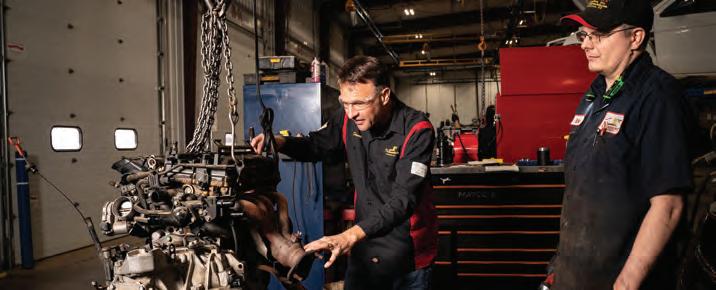
“How often do you train your team?" isn’t an I-gotcha question. How you answer my question will usually show how successful your business really is. If you’re training because something happened at your place, then it is too late to help that situation, but being trained today can certainly help your staff going forward, especially if it happens again. As an industry, we really don’t want that to happen because we're all in this business together. The more we train, the better we can do this business.
Here’s why training is important. Training is essential for enhancing employee productivity, boosting morale, and fostering company loyalty by equipping staff members with the skills needed to perform tasks efficiently.
Proper training also reduces errors, improves safety, and enables every business organization to adapt to new developments, whether they're new technologies or additional revenue streams. More importantly, training boosts profitability. Better yet, welltrained staff is more productive than untrained staff.
My Dad was probably glad he had been trained by that day in 1956 because his job depended on him being trained and knowing repair costs. Dad was always good with figures, and he surely

knew what repairs needed to be made. Here’s what happened that day in July of 1956.
The Swedish liner, MS Stockholm, collided with the Italian luxury liner, SS Andrea Doria, due to dense fog off the coast of Nantucket. Unfortunately, 51 people lost their lives that day—46 from the Andrea Doria and 5 on the Stockholm. The severely damaged Andrea Doria sank the following day, and it was my dad’s job at Bethlehem Steel to come as close as possible to the repair costs.
As a Marine estimator with a mathematics degree, Dad patiently and diligently worked until he arrived at the cost of repairs for Stockholm, as he saw it. I am proud to say that my dad came within $1,000 of the actual repair cost. Dad was always great with numbers and figures, but it was his training that helped him do it correctly. Diligently and patiently, Dad always
had a goal of doing a good job for his employer or his employees. He had been to school and was also trained by management at Bethlehem Steel, which gave him a solid working career. After Dad finally retired from Bethlehem Steel, he was able to get another master’s degree. The idea here is that Dad never quit learning and trying other things because he always wanted to better himself. Most assuredly, not everything went his way with damaged ships, but he always kept trying.
Training for your team is free with membership in ARA.
How about you? Have you ever felt that you were unprepared for what happened next because you didn’t stop to become appropriately trained on every aspect of your job? Maybe at some point, you had the wrong equipment or wished you had been trained on what was happening. At some point, it happens to all of us. The good news is we are part of an industry that wants us to
D.J. Harrington is the President and Chief Executive Officer of Phone Logic, Inc., an international training company based in Atlanta, GA. He serves as a consultant and trainer to over 1,000 privately-owned businesses throughout the country, training personnel at all levels of the company, from the dispatcher to the customer service and sales staff. Please visit his website for more information at www.djsays.com.
invest our time in training so we can be prepared for whatever happens next. Furthermore, it’s usually free training— like what is available at ARAUniversity. org or at industry shows.
So why not send your people to be trained by industry professionals? Being trained can help your bottom line.
Do what my dad did, even though you might be very busy these days. Take time out of your schedule to bring your team for training. Be on the lookout for any training within the industry because those who make the money are those who get trained, especially those who get trained on something that’s new.
Look at what’s coming up and then reserve your spot to train from the best in the industry by attending as many industry trade shows as you can. All it takes is time to get the training you need. Don’t forget to bring your team with you.
See you on the next podcast. TB
The 12‑video Parts Prep & Shipping Guidelines training series, developed with PRP, is officially live on the ARA YouTube channel.
▶ Available now—check them out! https://www.youtube.com/@ AutomotiveRecyclersAssociation
This playlist covers the complete Parts Preparation & Shipping Guidelines, designed to help automotive recyclers deliver the right part, on time, and as described. Each video walks through industry-standard best practices for inspection, preparation, cleaning, tagging & identification, and shipping, with part-specific guidance for common recycled components. Whether you’re training new team members or reinforcing standards across your operation, this series provides clear, practical instruction to improve consistency, reduce errors, and protect customer satisfaction.
This training reflects the Automotive Recycling industry-approved standard as recognized by the Automotive Recyclers Association (ARA), United Recyclers Group (URG), and Premium Recycled Parts (PRP), ensuring quality, safety, and regulatory compliance throughout the process.
The
After nearly 40 years of marketing automotive recyclers and vendors, and writing two marketing books for the industry, I’ve come to a clear conclusion: being better isn’t always better. In fact, in many cases, it’s the very thing holding businesses back. Let me explain.
Why “better parts” marketing leads to price pressure—and what the best recyclers do instead
For years, automotive recyclers have been told to differentiate by being better. Better recycled OEM parts. Better inventory systems. Better warranties. Better pricing.
On the surface, that sounds right. In practice, it creates a problem. The moment you position yourself as “better,” you place yourself squarely in the same category as every other recycler. You invite direct comparison—yard to yard, part to part, price to price. And once buyers start comparing, price becomes the tiebreaker. Even if your operation is significantly stronger—cleaner parts, better grading, faster fulfillment, fewer returns—the buyer rarely perceives that full difference. What feels like a major upgrade to you often looks like a modest improvement to them.
And modest improvements don’t justify premium pricing. So margins shrink. Discounts increase. And sales teams feel constant pressure to “sharpen the pencil.” That’s the trap.

most successful recyclers don’t try to be better than everyone else. They reposition themselves so they’re not directly comparable at all.
The most successful recyclers don’t try to be better than everyone else. They reposition themselves so they’re not directly comparable at all. Instead of selling parts, they sell outcomes. Instead of competing on inventory size or price points, they compete on what matters most to their customers’ businesses.
For example...
Rather than saying, “We sell highquality recycled OEM parts,” they position themselves as: “We help repair facilities complete jobs faster, reduce comebacks, and protect their reputation.” That’s a fundamentally different conversation. Now the buyer isn’t evaluating condition codes or asking who’s cheapest. They’re thinking about cycle time. Labor efficiency. Customer satisfaction. Profit per repair. The recycled part becomes a means to an end—not the product itself.
Consider how often friction occurs in the supply chain:
• The wrong part arrives.
• The condition doesn’t match expectations.
• Delays stall a repair.
• Labor time is wasted.
• Trust erodes between supplier and shop.
A recycler that positions itself as the safest, lowest-risk way to source OEM parts steps out of the commodity game entirely. Now they’re not competing with other recyclers. They’re competing with:
• Lost time
• Rework
• Frustration
• Comebacks
• Damaged relationships with insurers and customers
When framed this way, pricing objections fade. Because the buyer isn’t weighing cost per part—they’re weighing the cost of doing it wrong.
The strongest positioning in today’s automotive recycling market isn’t about having more parts. It’s about delivering:
• Reliability
• Speed
• Accuracy
• Confidence
• Peace of mind
When a recycler owns that position, the conversation shifts dramatically. Customers aren’t asking, “Can I get this cheaper somewhere else?”
Mike French is retired after 39 years of business in the automotive recycling industry. He is an author, publisher, consultant, and speaker. Mike is the founder and executive director of the Christian Auto Recyclers and Vendors Association (CARVA) and will be at upcoming recycler trade shows and events. Mike is available to speak at your group, conference, or event. He loves to share inspirational stories that demonstrate how the Word of God actively changes lives. He can be reached at mike@carva.group. Visit www.CARVA.group and/or www.PowerPackedPromises.com.
They’re asking, “Who helps me get this job done right the first time?” That’s when price stops being the focus—and value takes its place. Therefore ...
The 2026 ARA Annual Convention
or many years, I worked in the automotive recycling industry as a business owner. Most people knew me for my products and services, but few realized I was also a local pastor. I kept those roles separate. In business, I was Mike the recycler; at home, I was Pastor Mike. Over time, I discovered there were other believers in the industry, but like me, most kept a low profile. Unless faith came up in conversation, you’d never know. It felt like we were part of a “secret service” of Christians.
In a market where many still compete on “better,” the real opportunity lies in becoming incomparable. Stop asking how you can be 10% better than the recycler down the road. Start asking how you can be positioned so differently that comparison doesn’t even make sense. Clarify the outcome you truly deliver. Define the risk you remove. Articulate the problem you solve better than anyone else. Train your sales team to sell results, not recycled parts. Align your marketing around business impact, not inventory counts. Shift your messaging from price to performance.
Educational Programming Committee is now soliciting educational session proposals for the 83rd Annual Convention and Exposition taking place October 14-17, 2026 in Atlanta, Georgia.
Association, and many others. Honestly, I’m surprised it didn’t happen sooner.
CARVA’s purpose is simple: connect believers in the automotive recycling industry for fellowship and encouragement. We help each other represent Jesus well in both business and life. We provide gospel tracts and tools like our “People Can Be Recycled Too!” booklets and host early morning prayer meetings at trade shows and recycling events.
That’s when I realized how valuable it would be to create a way for believers in our industry to connect, encourage, and support one another.
ARA leaders are developing a strong educational program that appeals to the many interests and issues facing professional automotive recyclers. We are interested in discovering new speakers, sessions that focus on upcoming trends, market forces, techniques, best practices, and issues impacting Member businesses and the recycled parts market. We look forward to reviewing your proposal!
Because the recyclers who thrive in the next decade won’t be the ones who are slightly better. They’ll be the ones who are clearly different. And different wins! TB
After retiring, I started the Christian Auto Recyclers & Vendors Association (CARVA), a non-profit 501(c)3 organization. Some questioned it at first, asking, “Why do we need a religious group in this industry?” My answer: “Why not?” Christians in other fields gather for fellowship – the Fellowship of Christian Athletes, Evangelical Christian Publishers Association, Christian Educators
If you’re a believer in this industry, we’d love to connect. Visit www.carva.group, fill out the contact form, and stay in the loop on upcoming events. And if you’re at a trade show, stop by and say hello!
Submit your proposal through the link at: https://www.a-r-a.org/calendar-2/
Mike French – CARVA Founder & Chaplain
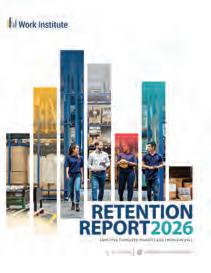
he 2026 Retention Report is an annual publication by Work Institute which provides a comprehensive overview of trends in employee turnover. Here is an overview excerpt that provides a summary from the report. Find the entire report at https://workinstitute. com/retention-reports/ or call them at 615-777-6400 to connect with them.
Established in 2000, Work Institute is the leader in employee retention programs, employee engagement strategies and workplace solutions.
We provide employee research, consulting, action planning, development courses, and evaluations of organizations of all sizes including many Fortune 500 clients across multiple industries and geographies.
Our workplace experts help companies reduce employee turnover, boost employee engagement, and develop a thriving workforce using evidence-based actionable insights.
Stability Does Not Equal Confidence
As organizations enter 2026, the labor market appears calmer than it has been in years. Quit rates have declined to pre-pandemic levels. Job openings have moderated. Headlines suggest a return to stability.
Turnover has slowed faster than confidence has recovered, creating a gap between perceived stability and underlying risk.
This is not a cooling labor market. It is a cautious one.
Employees are weighing uncertainty around career growth, leadership capability, workload, and job security. Economic pressure, shifting industry dynamics, and the rapid adoption of AI have changed how employees evaluate risk. Rather than making immediate moves, many are watching closely and deciding whether their current employer is prepared to support them through what comes next.
These dynamics matters because delayed decisions do not eliminate turnover risk. They concentrate it.
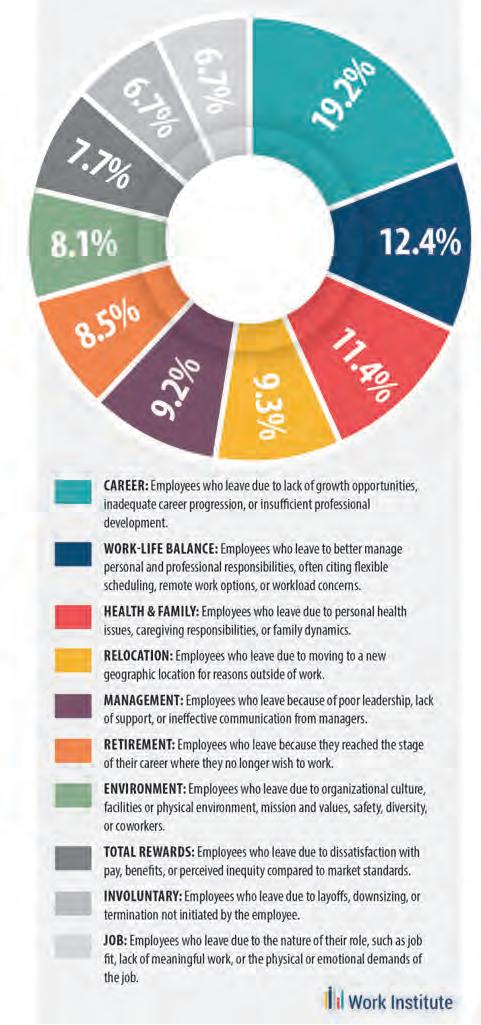
Career remains the primary driver of employee turnover. Career related exits account for nearly one in five departures, continuing a pattern that has persisted for more than a decade. Employees are not just seeking promotions. They are seeking clarity. When development pathways, advancement criteria, and future opportunities are unclear, dissatisfaction builds quietly until employees decide to leave.
Yet beneath the surface, the workforce remains under strain.
Work Institute data reveal a workforce that is staying put but not necessarily staying committed. Employees are delaying exits, not abandoning dissatisfaction.
Work-Life Balance has become a baseline expectation. Flexibility is no longer viewed as a perk or a pandemic accommodation. Scheduling consistency, workload manageability, commute impact, and hybrid capability are now core components of retention. Organizations that treat Work-Life Balance as optional face growing risk. Managers remain the most influential point of failure and opportunity.
Manager-related exits remain elevated and highly predictable. While some indicators suggest stabilization, dissatisfaction tied to professional behavior, communication, and expectation setting continue to rise. Employees do not separate their experience with their manager from their perception of the organization.
Job security concerns are reemerging. Job security has more than doubled as a reason for leaving over the past year. This increase is not driven by widespread job loss, but by anticipatory anxiety tied to AI, automation, and economic uncertainty. Employees are not panicking. They are recalibrating.
Turnover is becoming more expensive, not less. Even as quit rates decline, the financial exposure tied to each exit continues to grow. Higher wages, longer time to productivity, specialized skill requirements, and downstream disruption mean that fewer exits do not necessarily translate into lower cost. In many cases, risk is simply deferred.
The defining risk of 2026 is not mass resignation. It is quiet disengagement. Employees are staying longer while reassessing their future. Engagement may appear stable. Headcount may look secure.
But when expectations around growth, leadership, flexibility, and clarity are not addressed, dissatisfaction accumulates beneath the surface.
This creates a fragile workforce. When conditions shift, exits often come faster, in clusters, and at a higher cost.
At the same time, this moment presents a rare opportunity.
Organizations now have something they lacked during the Great Resignation era. They have time.
















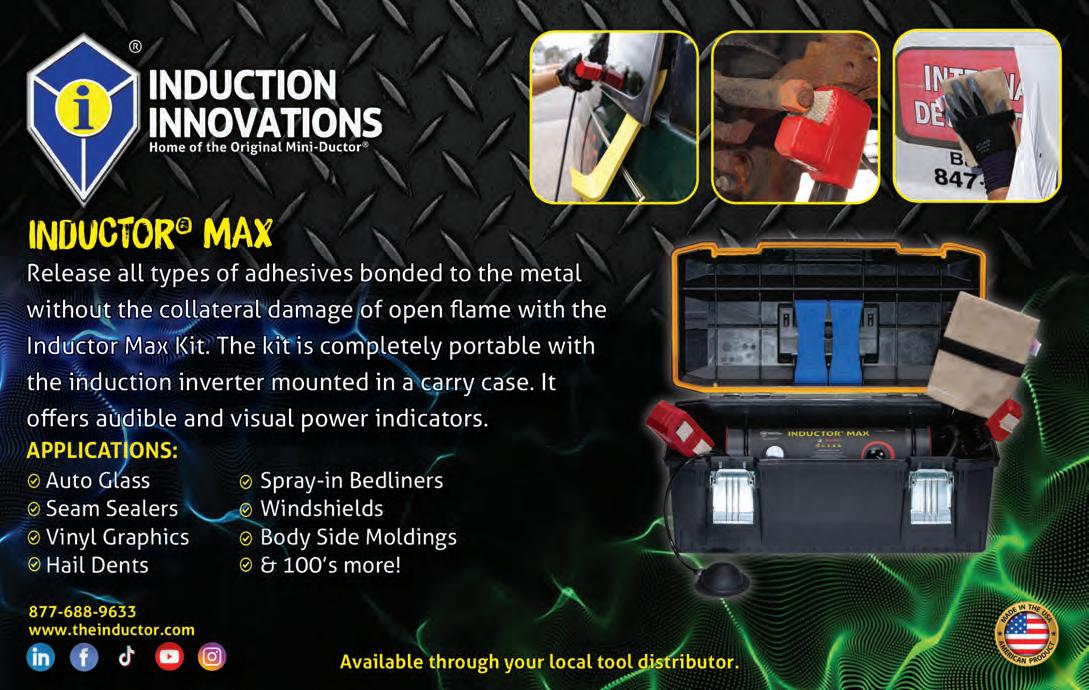
Diablo Steel Demon Auto Dismantling reciprocating saw blades are specifically designed for maximum performance in metal cutting applications. Available in 6”, 9”, and 12” we also stock a Carbide Tooth version of the Diablo blades... Our prices won’t be beat on these blades!




















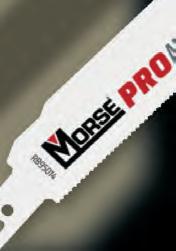














The M.K. Morse 9” x .050” x 14tpi Pro Auto/Fire & Rescue reciprocating saw blades are an industry favorite. These blades are specifically designed not only for auto repair shops, salvage and parts yards, but also for first responders in all fire and rescue applications. As always, our prices won’t be beat!



Use coupon code TOOLBOX during the checkout process and get FREESHIPPING on any size order!


BOSCH 6” EDGE METAL DEMO RECIPROCATING SAW BLADE



Swiss-made reliability add
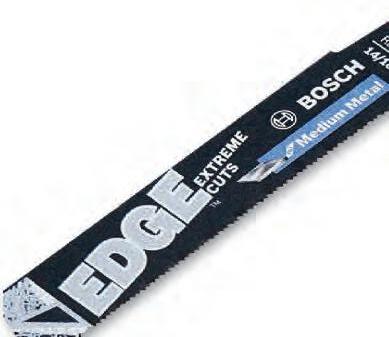
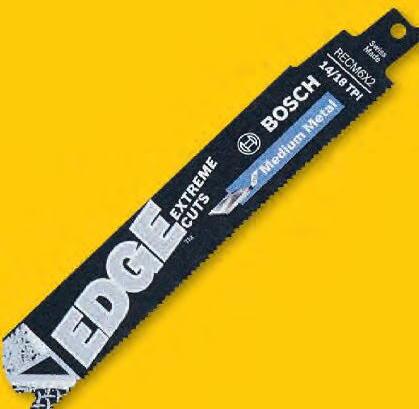
Bosch Edge Reciprocating Saw Blades start sharp, stay sharp, and with TurboTeeth technology last up to 3X longer than standard reciprocating saw blades. Designed for extreme cuts for tough construction uses, these blades deliver the best performance for pro cutting applications. The Edge’s exclusive Turbo-Teeth design, performanceoptimized blade geometry and Swiss-made reliability add up to a line of blades that deliver results.











the Morse Technology Center, where we tested


M. K. Morse Heavy Duty Bi-Metal Reciprocating Saw Blades are some of the best blades in the world for cutting wood and metal, including steel, stainless steel, iron, sheet metal and pipe. HD technology was painstakingly developed in the Morse Technology Center, where we tested the many variables affecting blade life, discovering a unique combination of features that tripled the life of standard reciprocating saw blades. As the longest lasting recips available, they cut more smoothly, more accurately and offer greater value.




















is


• Time to strengthen career systems instead of selling career promises.
• Time to equip managers to lead the workforce they have today, not the one they remember.
• Time to address AI related uncertainty with clarity rather than silence.
• Time to close the gap between employee expectations and organizational reality before turnover accelerates again. Retention has never been about preventing employees from leaving at all costs. It has always been about reducing preventable loss.
The message is clear: turnover is not accidental. It is the result of choices leaders make or avoid.
The organizations that succeed in 2026 will be those that use this period of relative stability to act intentionally, align expectations, and build trust that endures beyond the next shift in the labor market. TB
The secret to their success is to do it right the first time. By
Caryn Smith • Photos by Sonja Yearsley
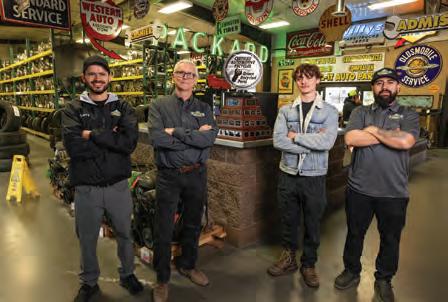
Mark Forcum started in the self-service sector for Foster Auto Parts and LKQ before he set out to apply that knowledge to his own venture. What started out as his “side hobby” has now become a top-notch three-location Certified Automotive Recycler (CAR) operation.
Mark began with one self-service business in Yakima, Washington in 2013 to owning two self-service and one hybrid location in Yakima, Pasco, and Kennewick, Washington. All are ARA Certified Automotive Recycler (CAR) facilities.
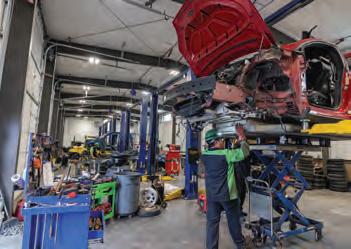
Not afraid of a construction project, Mark has extensively renovated and expanded each location, including a new production facility in Kennewick to support the strategic shift toward electric vehicles (EVs).
“I started my auto recycling career at Foster Auto Parts in Portland, Oregon, in 1980 where I gained experience in construction and facility development,” says Forcum. “In 2004, LKQ acquired Foster Auto Parts, and I worked for LKQ as a district manager, and then moved into business development.” He spent 7 years traveling around the country to locate existing self-service yards for LKQ to buy or property to develop as self-service yards from scratch.
In the fall of 2013, while still at LKQ, Forcum acquired the Yakima location, an existing auto recycling business requiring a major remodel. It opened in 2014 with help from an operating partner and store manager, while Mark worked on weekends.
He left LKQ in 2015 and purchased the Pasco location, also a downtrodden junkyard. He tore everything down, regraded the yard, and started from scratch. The facility was engineered for stormwater, with a block wall perimeter fence, new buildings, and equipment. It opened in March 2016.
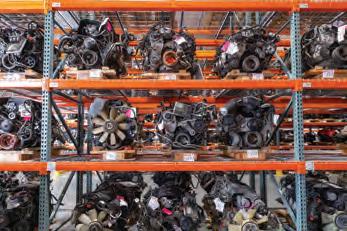
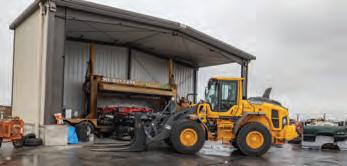
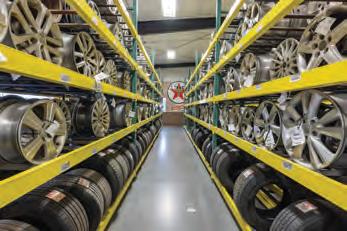
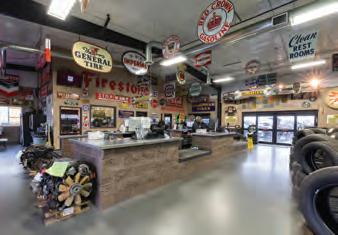
In 2019, the property next to the Yakima location was purchased to build new production facility, expanding the holding pen for incoming cars, and the customer parking.
In 2022, a scrapyard next to the Pasco location was purchased, demolished, and soil remediated. Mark built a brand-new production facility, a building to house a car crusher, and laid concrete over the whole two-acre property as a basis for hauling and processing.
In September of 2023, the Kennewick location was purchased as 20 acres of raw farmland, zoned heavy industrial.
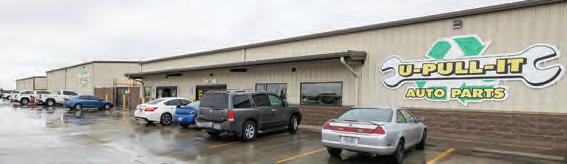
“We built it from the ground up, with civil engineering for grading and stormwater,” says Mark. “I built an all-new facility with 3 new buildings, a large car crush area for scrap, and a building to house a car crusher. It opened in May of 2025. This new location will co-locate U-Pull-It Auto Parts and Supreme Truck & Auto Parts [with full-service and EV dismantling capabilities].”
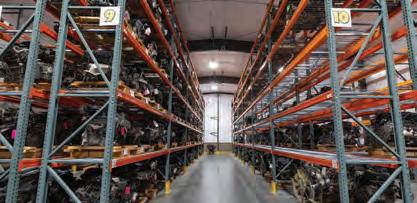
Yakima is 7 acres total, with 15 employees and 900 vehicles. Pasco is 8 acres, with 15 employees and 900 vehicles. Kennewick has 900 cars in stock for self-service (expanding eventually to 2,000 cars), is staffed with 25 employees. It also serves as the corporate headquarters.
Mark is joined by his son Mitchell Forcum, who been working full-time at the business for six years; he started when he was 19. “He’s an owner. He’s a boss,” says Mark. “We kick ideas around,
and I like listening to what he has to say. Sometimes I agree, sometimes I don’t, but it’s just great to run things by each other. I think it makes us both better.”
All locations are ARA CAR, RECALL, and HVV Certified for electric vehicle handling. “Housekeeping has always been very important to our operation,” says Mark. “Being CAR Certified has always been my number one goal; it’s just the way we run our business. We feel that having a clean facility promotes a better, safer work environment not only for our customers but also for our employees. The CAR Certified model of best practices also prioritizes environmental protection and workplace safety. That’s really the main goal.”
“We’re processing hybrid and electric vehicles. If we don’t train and want to
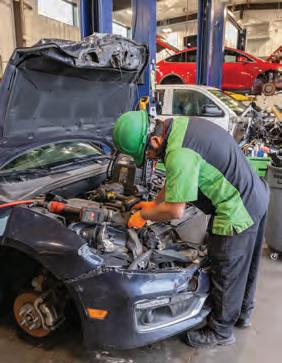
have employees certified to handle those cars, we shouldn’t buy those vehicles. We also use ARA University to train our employees on all aspects of safety protocol, forklift training, vehicle dismantling, and proper lifting.
“The RECALL certification is a consumer protection. We should be trained
to know which airbags we should and shouldn’t pull so the customer won’t receive recalled parts. We have always focused on mechanical parts, and this again gives us the opportunity to say yes more often.” TB


BY SANDY BLALOCK
I’ve spent a long time in this industry, first owning and managing a recycling facility, then working alongside recyclers across the country, and one thing has always stayed with me, when recyclers come together, good things happen. That’s not just something we say, it’s how this industry operates at its best. A few of us in the West started talking about what that could look like on a larger scale, not just within our own states, but across the entire region. We have recognized an opportunity to build something more connected, something that strengthens our industry and helps recyclers move forward together in a meaningful way.
At the end of the day, that’s what professional auto recyclers do best, we share ideas, solve problems, and support each other. That mindset is what opened the door to a new chapter for Western auto recyclers.
It also led to the creation of the Western Auto Recyclers Alliance, WARA, and the launch of our inaugural event, Synergy West, Education, Tech & Industry Showcase, which took place February 19–21, 2026, in Reno, Nevada.
“We didn’t build this to be different; we built it to be useful.” That statement, shared by Greg Daurio of Daurio Auto Truck and President of WARA, captures exactly what this effort is about. This wasn’t built to check a box or create something new for the sake of it. It was built to serve working recyclers, to deliver real value, and to reflect the way this industry actually operates.
Over the years, I’ve had the opportunity to work closely with state associations across the country. What became clear, especially in the West, is that while we have strong individual state organizations, we have not had a consistent way to connect, collaborate, and move forward together as a region.
At the same time, our industry continues to evolve at a rapid pace. Vehicles are more complex, EVs are entering our facilities, regulations are changing, and technology is reshaping how we buy, inventory, and sell parts. Many of our most
experienced people are also stepping away from the business. These are challenges every recycler is facing, and they do not stop at state lines.
In the West, we also face a unique set of legislative and regulatory issues that do not always mirror what is happening in other parts of the country. Whether it is environmental requirements, rural logistics, or emerging policies around EVs and materials handling, our region often operates under a distinct set of realities. Having a unified group that can focus on those issues, strengthen advocacy efforts, and ensure our voice is heard is a critical part of what WARA was built to do.
WARA was intentionally designed to work alongside state associations, not in place of them, adding strength through shared resources, stronger advocacy, and greater regional alignment that benefits every state involved.
WARA was created to bring Western states together in a way that strengthens everyone without replacing anyone. Each state maintains its independence, its identity, and its leadership. What we are doing is improving communication, aligning efforts where it makes sense, and creating the ability to share the strengths of each state across the region so we can move forward together instead of working in isolation.
Synergy West was a direct extension of that vision. We did not set out to create just another industry event. The goal was to build something that works for Western recyclers, something more focused, more practical, and more aligned with what actually happens in our operations every day.
The event began with an evening at the National Automobile Museum, which created an opportunity for attendees to reconnect, build new relationships, and set the tone for a collaborative and productive few days.
WARA is focused on expanding access to training, improving communication across states, strengthening vendor relationships, and supporting recyclers as they navigate increasingly complex vehicles and regulations...and creating a stronger, more unified voice when it comes to advocacy.
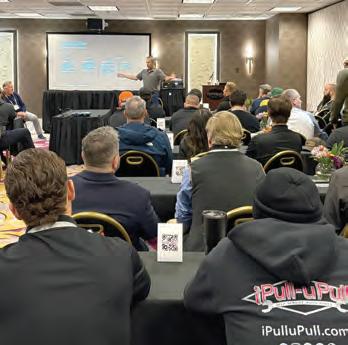
From there, the focus stayed on value. Friday was dedicated to hands-on workshops and user group sessions with the systems many recyclers rely on daily, including CRUSH, URG, Buddy, Car-Part.com, Solera and eBay, CCC, and EZ Suite. These were not
surface-level discussions, they were working sessions designed to help recyclers operate more effectively when they returned to their facilities.
Saturday delivered a full day of education centered on real-world challenges, including EV and hybrid vehicle handling, cybersecurity and operational efficiency, inventory control and parts yield, e-commerce strategy, and the role of artificial intelligence in our industry. The focus throughout was on practical application, not theory, and on providing takeaways that could be used immediately.
Everything behind WARA is grounded in real-world experience. This industry does not operate in theory, it operates in facilities, in parts rooms, and in day-to-day decisions that impact safety, compliance, and profitability. That is why every part of this effort is built with a clear purpose, if it does not help recyclers operate better, it does not belong.
WARA is focused on expanding access to training, improving communication across states, strengthening vendor relationships, and supporting recyclers as they navigate increasingly complex vehicles and regulations. It is also about creating a stronger, more unified voice when it comes to
advocacy, because the challenges we face are larger than any one business or any one state.
One of the most important aspects of WARA is the opportunity it creates for connection.
Some of the best ideas in this industry do not come from a stage, they come from conversations between recyclers who are dealing with the same challenges. They come from sharing what works, learning from what does not, and supporting each other along the way.
By creating more opportunities for those conversations, and by strengthening the network across the Western region, WARA is helping build a more connected and capable industry.
“This industry has always been strongest when we work together,” said one participant. That principle has guided this effort from the beginning, and it continues to shape what comes next.
The message behind WARA is straightforward, the Western region is stronger when it works together.
By aligning state associations, strengthening vendor partnerships, and creating meaningful opportunities for education and collaboration, we are building something
Do you often find yourself giving advice to your peers? Do you have ideas that could help others improve efficiency, reduce costs or boost profitability?
I have so many thoughts on that subject ... I better write them in the next ToolBox!
•
•
that supports the long-term future of the automotive recycling industry across the West. Our inaugural event, Synergy West, was the first step, and it demonstrated what is possible when recyclers come together with a shared purpose. We have laid the groundwork, and with a Board of Directors representing multiple Western states, WARA is positioned to continue driving collaboration, advocacy, and progress across the region.
At its core, WARA is about empowering recyclers for the future of this industry. We are committed to fostering collaboration and knowledge-sharing that improves efficiency, sustainability, and profitability, while strengthening advocacy to ensure our industry has a voice in the policies and regulations that shape our future.
Through education, networking, and coordinated advocacy, WARA is creating new opportunities, supporting responsible environmental practices, and helping professional auto recyclers stay ahead of evolving vehicles, technologies, and market demands.
WARA is about building something that lasts, something that supports recyclers not just today, but well into the future. If you are an automotive recycler in the West and believe in strengthening this industry through collaboration, advocacy, and shared experience, then you are already part of what WARA represents.
Because when Western auto recyclers move forward together, we don’t just keep up with change, we help lead it. TB
Western Canada Auto Recycling Show: Calgary AB September 25-26, 2026
Hosted by the Alberta Automotive Recyclers & Dismantlers Association with the BC Auto Recyclers, Saskatchewan Auto Recyclers Association, Automotive Recyclers of Manitoba and the Automotive Recyclers of Canada (ARC).
Trade Show
Facility Tours
Industry Roundtable
Panels & Presentations
Industry Training
Networking Reception
Sponsorship
Opportunities Too!
Call for presentations and training will be issued soon! Do you have an idea that you would like to present or train on. Let us know!
Contact Steve Fletcher for More Details 519-281-2767

The Automotive Recycling ToolBox™ Edition delivers peer-to-peer articles with information that you would get while networking at industry events and trade shows. Our mission is to be current, educational and inspirational. We bring you:
• Educational and instructional “how-to” articles written by fellow recyclers, top industry professionals, leaders & trade show speakers.
• Information from providers of industry-related products and service you typically find at industry events and trade shows.






PUBLISHED 6 TIMES A YEAR AutoRecyclingNow.com/Toolbox
AUTOMOTIVE RECYCLERS ASSOCIATION OFFICERS
YOUR TOOLBOX TEAM
Published by Driven By Design LLC
EDITOR
Caryn Smith, Toolbox@a-r-a.org
ART DIRECTOR
Caryn Smith
ADVERTISING SALES
Jay Gooch, ToolboxAds@a-r-a.org
ARA OPERATIONS
EXECUTIVE DIRECTOR
Vince Edivan
Automotive Recyclers Association Vince@a-r-a.org
SENIOR DIRECTOR OF ASSOCIATE OPERATIONS
Jessica Andrews, Jessica@a-r-a.org
SENIOR DIRECTOR OF MEMBER SERVICES
Kelly Badillo, Kelly@a-r-a.org
VICE PRESIDENT OF STRATEGY AND GOVERNMENT AND REGULATORY AFFAIRS
Emil Nusbaum, Emil@a-r-a.org
CERTIFICATION CONSULTANT
Sue Schauls, Sue@a-r-a.org (319) 290-7843
ADMINISTRATIVE ASSISTANT
Tiffany Jackson, Tiffany@a-r-a.org
PRESIDENT Shannon Nordstrom Nordstrom’s Automotive, Inc. Garretson, SD shannon@nordstromsauto.com
2ND VICE PRESIDENT/TREASURER Tom Andrade Everett’s Auto Parts Brockton, MA tandrade@everettsautoparts.com
SECRETARY Emily Yancey Yancey Auto Parts Perry, MO eyancey@yanceyauto.com
IMMEDIATE PAST PRESIDENT Eric Wilbert Wilbert’s U-Pull-It, LLC Williamson, NY eric.wilbert@wilberts.com
ARA CONTACT INFORMATION
ARA Headquarters Manassas, VA (571) 208-0428 staff@a-r-a.org www.a-r-a.org
To reach readers with print & digital advertising, email ToolboxAds@a-r-a.org For editorial contributions, e-mail Toolbox@a-r-a.org or call (239) 225-6137