
EBAY BEST PRACTICES CUSTOMER SERVICE ADVANTAGE POWER OF DAILY HABITS







EBAY BEST PRACTICES CUSTOMER SERVICE ADVANTAGE POWER OF DAILY HABITS
Online parts sales have evolved from a side channel into a primary revenue driver for many businesses. Whether you’re selling automotive parts, industrial components, electronics, or specialty equipment, mastering platforms like eBay — along with building your own digital ecosystem—can dramatically increase reach, efficiency, and profitability.
Below are proven best practices and strategic insights to help you build a scalable and sustainable online parts operation.
1. Best Practices for Photographing Parts for Sale
In online sales, your photos are your storefront. Buyers can’t touch, test, or inspect the part in person— so your images must build trust instantly.
n Use Clean, Consistent Backgrounds
• W hite or light gray backgrounds perform best.
• Avoid clutter, shop benches, or distracting elements.
• Consistency across listings builds professionalism and brand recognition.
n Show Every Angle
Transparency builds credibility and reduces returns. Include:
• Front, back, sides, and bottom
• Close-ups of labels, serial numbers, and part numbers
• A ny wear, scratches, or imperfections

n Use Proper Lighting
• Natural light or diffused LED lighting works best.
• Avoid harsh shadows.
• Do not rely on flash alone — it creates glare and hides detail.
n Capture Scale
Include a ruler or reference object when size may be unclear.
n Mobile Optimization is Critical & Resolution Matters
High-resolution images allow buyers to zoom in and inspect details — critical for used or specialty parts.
n Golden Rule
If a buyer could ask a question about the appearance, photograph it. Most buyers browse on mobile devices. Your listings must:
• Display clear images
2. How to Describe the Part to Sell Online
Your description does two things:
1. Helps search engines find your listing.
2. A nswers buyer questions before they ask them.
n Start With a Strong Title
Include:
• Brand
• Part number
• Model compatibility
• Condition (New, Used, Refurbished)
• Key feature
Example: “Bosch 0280151234 Fuel
Injector – OEM – Fits 2012–2016
BMW 328i – Tested.”
n Be Precise and Factual
Avoid vague language.
Instead include:
• Exact condition
• Known compatibility
• Test results (if applicable)
• Dimensions, weight, material
n Include Fitment Information
Compatibility drives sales. Buyers search by:
• Year
• Make
• Model
• Engine type
The more specific, the better.
n Disclose Defects Clearly Transparency reduces returns and negative feedback. Include:
• Cosmetic flaws
• Missing components
• Functional limitations
n Structure for Readability
Use:
• Bullet points
• Short paragraphs
• Clear headers People scan—they don’t read walls of text.
Not all inventory performs equally in online marketplaces.
n Use Data, Not Guesswork
Analyze:
• Sell-through rate
• Search volume
• Completed listings
• Seasonal trends
• Price competition On eBay, for example, completed listings show what actually sells— and at what price.

n Focus on High-Demand, Shippable Items
Ideal online parts:
• Lightweight or mid-weight
• Easy to ship
• Clear part numbers
• High replacement frequency Avoid:
• Oversized freight-only items (unless margins justify it)
• E xtremely low-value parts (unless bundled)
n Look for Problem-Solving Products
Parts that fix urgent issues (sensors, electronics, modules) tend to perform better than cosmetic upgrades.
n Watch Return Rates
If a category generates frequent returns due to compatibility confusion, adjust your listings or reconsider that segment.
Online parts sales is not just listing inventory — it’s a blend of analytics, marketing, logistics, and customer service.
People scan— they don’t read walls of text.
5. Key Qualities:
1. Data-Driven Thinking Must understand:
• Conversion rates
• Traffic sources
• Pricing strategy
• Inventory velocity
2. Marketplace Experience
Experience with:
• eBay
• SEO
• Listing optimization
• Sponsored listings or promoted ads
3. Customer-Centric Mindset Online reputation is everything. They must:
• Respond quickly
• Resolve disputes professionally
• Protect feedback scores
4. Technical Comfort
Knowledge of:
• Inventory management systems
• eCommerce integrations
• Reporting dashboards
And finally:
5. Prioritize Search Functionality
• VIN search (if applicable)
• Part number search
• Year/Make/Model filtering
6. Make Navigation Logical Organize by:
• Category
• Vehicle/application
• Brand
• Condition TB
Whether you’re new to eBay or you consider yourself a grandmaster of online sales, you’ve likely encountered several situations that left you scratching your head and wondering what move is the right one to make. From cases and returns to simply choosing the best wording for a listing’s title, it can be difficult to know if you are setting yourself up for success or failure until after you’ve fallen off the horse a few times. You don’t have to learn by trial and error, though! This industry is full of people who have seen it all, and most are happy to help out a fellow seller navigate the murky waters of online selling.
One obstacle many sellers face is the exorbitant time required to run a successful eBay store. You’ve probably noticed that it’s not as easy as just responding to messages. In addition to all the elbow grease that goes into actually interacting with the site and buyers, there is a ton of background work that takes place outside of eBay and can eat up more of your precious time than you may have originally anticipated. Taking pictures of parts, cleaning them for photos, figuring out interchanges, tagging and storing parts, uploading the photos, and so on.

Then there’s creating all your listings, running promos and coupons, dialing in your settings and pricing, and what to select for your business policies. If you find yourself working weekends just to tick away at the tip of the iceberg, then you’ve likely wondered if you should hire someone to take care of these tasks for you. Will it bring in enough revenue to justify a dedicated position? How do I even find someone who can do all this stuff?
Take a breath and start slow! Spend some time on the basics first. At Online Parts Depot, we tell all our clients there is one surefire practice everyone should follow to improve sales and reduce returns. PICTURES PICTURES PICTURES! Whether you are already selling on eBay or just getting started, taking part-level pictures is something
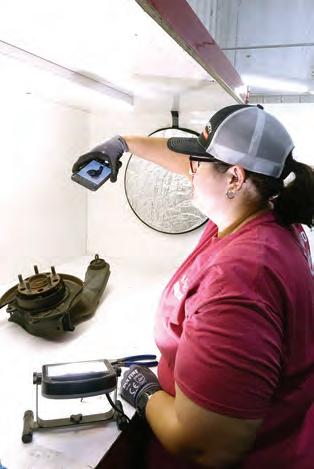
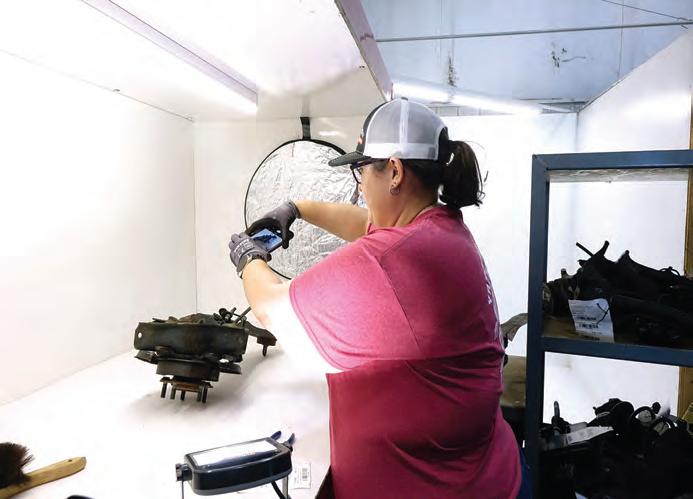
you should consider taking seriously. You don’t need a fancy camera or an over-the-top photo booth to get the job done, and it doesn’t take someone with a doctorate to snap photos of parts.
Some of our most successful clients have the simplest setups that work great for picturing parts. You can easily build a small wooden box with 3 sides, paint it white, place the cleaned parts inside, and fire away with your smartphone’s camera from multiple angles. Get a close-up of that part number written on the back of a receiver. Include a shot of the end of that wiring harness connector on a side view mirror. Do you have wheels that you’re scared to list because they aren’t perfect? Take pictures of the imperfections and list them all! Buyers will accept all kinds of imperfect parts as long as we manage their expectations in advance. It’s when we surprise them with a part that isn’t in the condition
Luke Wise is an account manager for Online Parts Depot. He has worked closely with many salvage yards and the eBay Motor’s development team, helping both sides identify issues and create solutions. You can sometimes catch him on stage as a panelist in one of the eBay sessions or find him at the OPD booth as a vendor at many of the conventions throughout the year.
Join a Facebook page that is dedicated to eBay talk. Frequent the forums and attend conventions. You might be surprised by how helpful it can be to talk to other sellers.
they assumed it was when they bought it that they get upset with us.
Adding part notes is always a good idea, but most people do not scour the listing details with a fine-tooth comb. Generally, they look at the pictures, the title, and whether it fits. They’ve already been looking at listings for what probably feels like an eternity to them. Make your listing an easy choice and end their suffering!
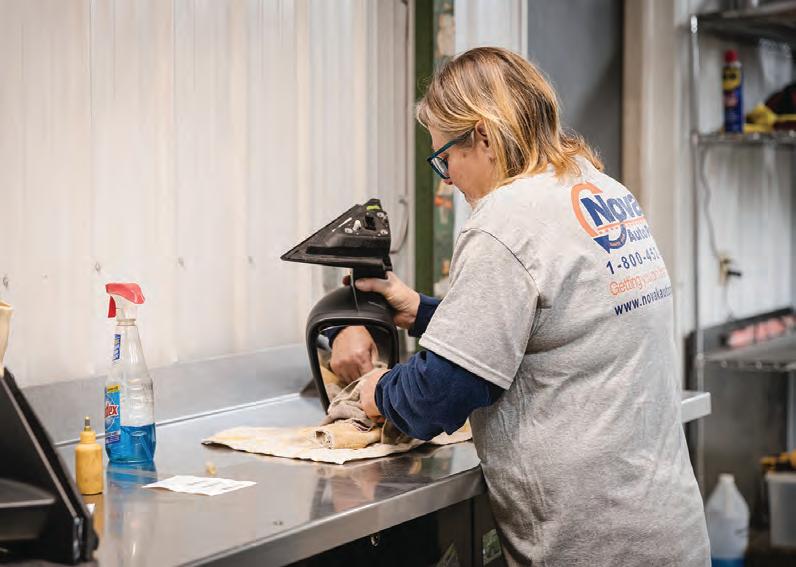
Where do I begin? What parts should I picture first? We recommend starting with a handful of the top-selling part types, such as radio parts, wheels, and side view mirrors. Start with the ones you already have pulled. Dust off or wipe down those parts, and get cracking. You may find that hiring someone as a dedicated picture taker is worth the reward of having your weekends free. It’s a menial task, but still very time-consuming.
Do you or one of your employees have a young person in the family who is ready to join the workforce? Maybe you can steal away a sandwich artist from your local Subway. This type of work is not complicated. Someone out there is built for this kind of thing. You might already have an employee who can fill this need. Whether it’s a temporary position until you get a satisfactory amount of your inventory pictured, or a full-time gig, fill that void and get the ball rolling.
Next up, you’ll probably want someone to handle your eBay needs for you. Where can you find such a person? What options are out there? Well, you can hire someone to work in-house, or you can hire a management company to handle everything for you. A management company can work remotely, as can someone you hire and train yourself. If you want a dedicated soldier in the trenches with you who can work onsite, they can double as your picture taker. Having them work behind the scenes as well as directly with your eBay buyers can only enrich their perspective and sharpen their approach to their tasks.
It can be quite difficult to locate a prospective employee who actually has an in-depth understanding of eBay’s inner workings and also knows car parts. We’ve encountered a few people who told us they “know eBay” only to find out that they most certainly did not. We’ve also trained people from scratch, which can take quite a bit of time, given how much there is to learn.
If you end up wanting to bring someone in who is capable but completely new to the space, take baby steps with them. Have them read eBay’s policy pages and other helpful articles on the site. Work with a management company or consultant at first to see how things are done. Have your new hire answer messages
and monitor returns for the first few days, then increase their workload once they have a handle on it. Things like cases, disputes, running promos, tracking your metrics, adjusting pricing, working with a listing tool, and all the other things you want them to take care of can be taken off your plate and moved to their daily to-do list over weeks or months.
Wherever you are on your eBay journey, remember that you are not alone. Tap into the wealth of knowledge and support that is available to you. Join a Facebook page that is dedicated to eBay talk. Frequent the forums and attend conventions. You might be surprised by how helpful it can be to talk to other sellers.
I never tire of discussing the ins and outs of this industry, and there is so much to talk about! So put yourself out there. Post a question online and see what the community has to say. Contact a consultant or eBay management company and let one of us take a closer look at your business practices or evaluate the selling potential of your inventory.
The best way to run your eBay store might be slightly different from what works best for other sellers. Join any of the many conversations happening online, lean on your fellow sellers, and develop a strategy to take the next step in improving TB
Selling on eBay can be a powerful revenue stream for auto recyclers, but success on the platform depends on more than just listing parts. Recyclers who consistently perform well tend to focus on three core areas: inventory accuracy, order processing, and customer service. Mastering these fundamentals not only improves seller metrics but it also reduces operational headaches and increases your business.
Inventory accuracy is the foundation for running a successful eBay operation. Nothing damages a seller’s performance faster than canceled orders caused by unavailable or incorrect parts.
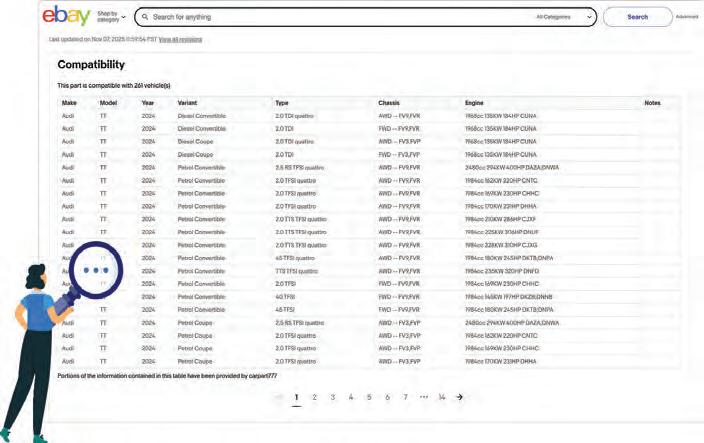
Focus on listing only parts that you have inventoried and verify that they are under the correct interchange, condition, or part number. Using eBay’s compatibility chart is also a major plus for fitment accuracy when selling on eBay. Ensure descriptions of wear, damage, or missing components are clear and honest. If a part is a B-grade part, list it as a B-grade part and explain the damage in the listing.
Provide quality photos of the actual part, not stock images, so buyers know exactly what they are buying. Customers want to verify that what they are buying is the same as what

they need. If the customer cannot verify the color, part number, or condition, they will move on to the next product. Imagine you are looking for a part or product online. Do you look for photos of what you are looking for, or do you look for a description that fits what you’re looking for?
You will almost always place an order with the company that has put in extra time to accurately list their items with photos. The biggest selling point of online marketplaces like eBay is photos; even if the parts aren’t the cheapest, customers can feel confident knowing they can verify that the part they are buying is exactly what they need. When inventory is correct, recyclers reduce cancellations, returns, and negative feedback—while improving eBay seller metrics and buyer trust.
Once a part sells, execution matters. eBay rewards sellers who ship quickly and accurately, and customers expect professional fulfillment.
Strong order processing habits include prompt order acknowledgment and quick picking of sold parts. Verification before shipping, ensuring the correct part number, side, and condition match the listing. Proper packaging to prevent damage in transit, especially for fragile or high-value items. Fast-tracking uploads so customers can follow their orders, and eBay recognizes on-time shipments. Efficient order processing reduces defects, minimizes returns, and keeps operations flowing smoothly— especially for recyclers handling high daily order volume.
eBay has two customers on every transaction: the seller and the buyer.
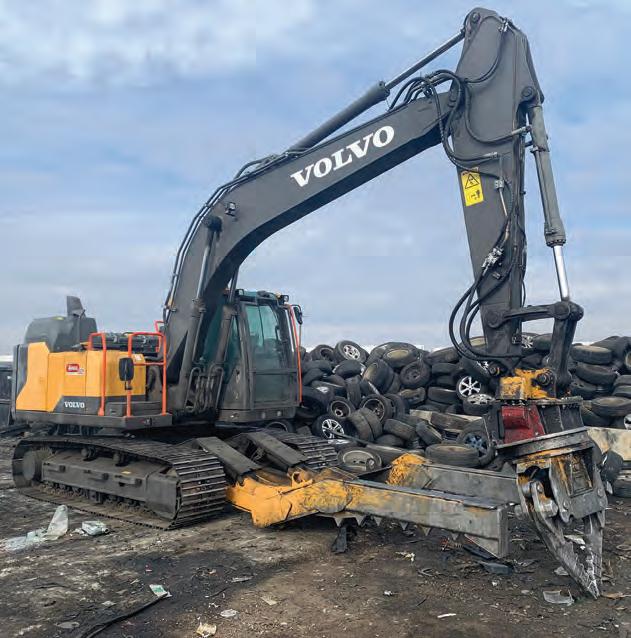
Our Customer has just bought New Volvo excavators and fitted them with our Raptor Vehicle Dismantling systems. They have asked us to help sell their Volvo excavators with the SAS Extreme Auto Processors.
This unit is available to view and demonstrate in their yard.
It will be available early to mid March 2026 and they are looking for offers around $190,000 for this 2017 model including the SAS Auto Processor.
This machine is in great condition, having had a pretty easy life. It has averaged less than 600 hours a year. Fully dealer maintained from new, with all service records available.
We highly recommend viewing this machine as soon as possible.
Give us a call to discuss more about this offer or to arrange a visit to demo the machine for yourself.
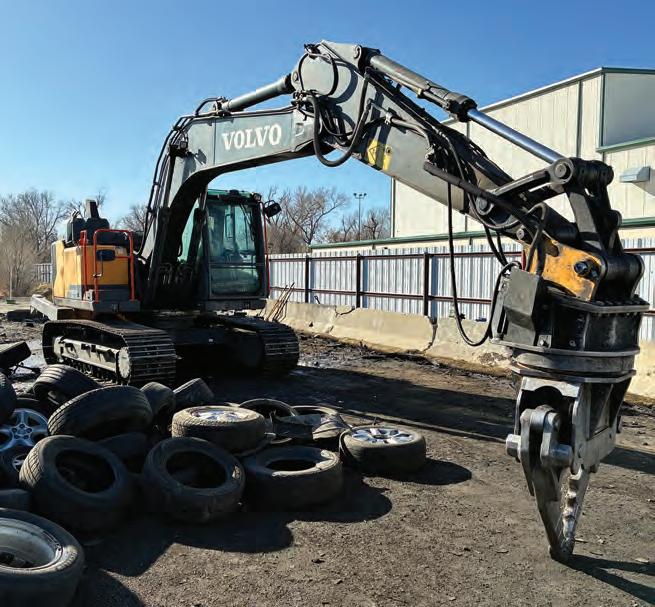
Our Customer has just bought New Volvo excavators and fitted them with our Raptor Vehicle Dismantling systems. They have asked us to help sell their Volvo excavators with the SAS Extreme Auto Processors.
This unit is available to view and demonstrate in their yard. It will be available early to mid March 2026 and they are looking for offers around $225,000 for this 2018 model including the SAS Auto Processor.
The machines have only had very light usage, around 500 hours a year, used mostly for breaking Aluminum wheels.
It has been fully dealer maintained and has all service records available.
Give us a call to discuss more about this offer or to arrange a visit to demo the machine for yourself.
eBay will hold all parties responsible for what they promised the other. If you have 1 day handling time on eBay, you will be measured by that time frame within eBay’s seller performance. You must hold a 95% shipping-time accuracy to be a top-rated seller. Make sure you don’t overpromise and underdeliver when setting up your business policies.
Customer service is where many auto recyclers either stand out—or fall behind.
On eBay, communication is just as important as the part itself. Provide clear, professional communication, even when addressing issues or complaints. Practice proactive problem resolution, such as offering replacements or refunds when appropriate.
Execute consistent return and warranty messaging, so buyers understand expectations before and after the sale. Good customer service protects feedback scores, encourages repeat buyers,
eBay has two customers on every transaction: the seller and the buyer. eBay will hold all parties responsible for what they promised the other.
and helps turn one-time eBay shoppers into long-term customers. Another aspect of customer service on eBay is answering as many questions within your listing as you can. If you routinely get the same question from customers, find a way to answer that question within your listing or photos.
Over 60% of sales on eBay come from the eBay app on phones. eBay highly suggests using infographics to explain warranty, condition, return policy, and condition. Finding ways to answer all questions within your photos and descriptions is optimal for selling on eBay. Some customers only look at photos, and some only look at descriptions. Being able to answer all questions for different customer types is strong customer service for all customer types.
eBay success isn’t about shortcuts or volume alone. It’s built on accurate inventory, disciplined order processing, and strong customer service.
Recyclers who commit to these three best practices create a reliable operation that eBay rewards and customers return to. Make sure all your processes are ready before selling on eBay. Otherwise, you will end up in eBay “jail” and sales will suffer.
If you are new to selling on eBay, take your time and list minimal part types to make sure that you can handle the quantity of orders coming in. eBay sends out information showing the top-selling part types on their platform. Starting with the highest-selling or highest-dollar-average is a great starting place for anyone new to the eBay selling market. TB
Words, Words, Words can mean as much as the time we put into crafting their order and mastering their meaning. Whereas a single well-lit, strategically positioned photograph can tell more about a subject in half the time it takes us to create a conditional description. So why then is it of the utmost importance that we pair prominent pictures with tenable, transparent descriptions, the best of both worlds, when selling used auto parts online?
be prepared. However, with a focus on a few key intangibles, it is no wonder that more and more recyclers are listing their parts via online platforms.
The Pivot is On
Online Marketplaces and the e-commerce industry as a whole are becoming increasingly pivotal to the auto recycling industry and the rest of the world. Recyclers are seeing the rise of new opportunities, allowing them to get their parts in front of and available to wider audiences and new customers.
As with purchasing anything online, it is buyer beware and supplier be prepared. However, with a focus on a few key intangibles, it is no wonder that more and more recyclers are listing their parts via online platforms.
The answer is simple. To successfully list and sell more parts by maintaining strong inventory control and enhancing our brand, while potentially and significantly lowering our return rates.
However, as anyone or any recycler who has weathered the world of e-commerce will let on about, there are more variables involved in online sales than your standard over-the-counter or yardto-yard transactions.
So, as with purchasing anything online, it is buyer beware and supplier

Associations and organizations are seeing the need to embrace them, and other entities are providing services that can price your parts or offer crucial digital security for these type transactions. Where once vehicle recyclers saw eBay as the lone powerhouse for online sales, we now see platforms serving B2B (Business2Business), B2C (Business2Consumer), and Export/Import and Wholesale/Retail markets.
Now, eBay is bigger than ever and continues to grow through its alignment
with aftermarket and auto recycling influencers. And new players are entering the arena, looking for a stake in the game, and allow recyclers to continue to sell their parts through different types of platforms.
Leaders throughout the auto recycling industry, along with the used parts and aftermarket sectors, are coming together to provide feedback to these online platforms on how to grow, evolve, and sustain these new opportunities.
Seeing the growth of additional revenue streams available to recyclers, such as the trending ShopEarle, Facebook Marketplace, PartsTrader, Car-Part, URG Parts Search, Hotlines, BParts, and Row52 platforms, what does this mean to those who haven’t yet embraced this shift? And why is it so important that, before getting involved with any of these entities, we review our own policies and operations?
For those looking to understand more about this hot topic, the answers we find may not only be solutions to better position us for significant online gains, but also strengthen our standard operating practices (SOPs), inventory control, and our own Business’s Brand.
Why sell our parts online? For those out there who focus on the cons and/
Brian Bachand is a second generation auto recycler, who helps own and operate Westover Auto Salvage in Belchertown, MA. He is on the Board of Directors for the Auto Recyclers Association of MA and a proud ARA Member. Brian has a Bachelor’s Degree in Accounting and paired with almost 25 years of auto recycling experience, will continue to implement ARA Advocacy for being a leader in the auto industry.

or potential challenges of this endeavor before even entertaining its pros, I applaud you. Do your research and get feedback from other reliable, comparable recyclers. Buyer beware is a cornerstone policy for anything that is sight unseen. Bottom Line: online sales are not to be taken lightly and may not be for every recycler.
As I spoke with Chris Daglis of APS (Auto Partnered Solutions) fairly recently, he had a great quote that I feel everyone should hear when thinking about e-commerce. Chris said, “If you are not prepared and have not researched what it means to take on e-commerce, such as eBay, do not do it.”
Chris went further into detail, stating that e-commerce, when done correctly and profitably, is a full-time job that requires proper resources, time, logistics, and reallocation and realignment of inventory. You cannot expect business to be carried out in the ways and
Chris said, “If you are not prepared and have not researched what it means to take on e-commerce, such as eBay, do not do it.”
means that your normal direct yard-toyard, in-person, or previous-existing-relations sales seem to transpire.
This challenge is just the start, for if you do think you have the ability to restructure your business operations to accommodate e-commerce sales, then enter the implementation challenge. What drawbacks or issues come with implementation, and once we go live, how do we navigate the cons that scare many, especially smaller recyclers, away from online marketplaces? These are the things we need to consider and address if we are to take on this new earning outlet.
Asking ourselves what our online goals are in terms of sales, brand
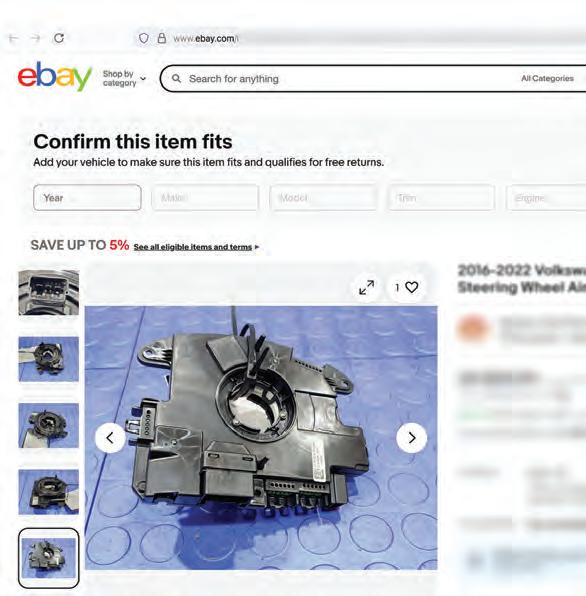
Are you selling AIRBAGS on eBay? Do you plan on doing so in the future? Then you must be an ARA Certified Auto Recycler (CAR) with Recall Certification!
Once you are an ARA Certified Auto Recycler, you can apply for your ARA CAR Recall Certification, which will require a written Recall Policy.
We have created a sample policy you can download at https://aracertification.com/recalls, along with an ARA Airbag Handling Protocol that must be signed by dismantlers handling airbags. Furthermore, your HazMat shipping staff must be certified within the last three (3) years.
There are three documents to upload for the Recall Certification: Samples of these are at https://aracertification.com/recalls
1) Written Recall Policy
2) Airbag Handling Protocol signed by the dismantler
3) HazMat Shipping Certificate for all shipping personnel
reputation, logistics, operations, and the dreaded returns is a must-consideration for how we plan to tackle the shift to and the variables of the online marketplace. So before we get to the usual cons and limitations of e-commerce, it is crucial to ask ourselves how we will coordinate this alternative sales prospect, and how we are prepared to deal with its variables, restraints, and prioritizing and restructuring of our own operations to fit them. Because if we do not have a strategic plan for success and readiness, then I wholeheartedly agree with Chris of APS that we should not enter the arena until we are fully prepared in every way.
4) A written HazMat Emergency Contact service provider such as INFOTRAC. Sign up at https://www.a-r-a.org/infotrac-form/ for $80 a year through the ARA discount subscription. For information on the ARA Certified Automotive Recycler Program, visit https://aracertification.com.
Let’s say you have researched, planned, and are ready to take on the world of e-commerce and want to know the best way to get started and the ultimate path to success. Unfortunately, the solution for navigating this additional revenue stream is not a one-size-fitsall. However, there are a few principles that, when applied, can help thwart or limit the cons that may have once been the red flags that had you steering clear of online sales.
That being said, with online sales, communicating with and vetting the customer is absolutely essential. The need to be able to correspond, be it messenger, text, email, or even over the phone, before any part leaves your facility is an absolute must. Now I know this may be impractical for high-volume online used part suppliers. But for those out there worried about sending the wrong part, a not-needed part, a questionable condition part, or having a part returned, the need to confirm expectations is the best tool for success, and if able, it must be applied.
Another necessity is to require a VIN from the buyer when they submit their order. Just like normal day-to-day business, always get a customer’s VIN so you can decode it and compare it to the part they have ordered. More often than not, the biggest online return will be from a customer who didn’t need the part (misdiagnosis) or who ordered it wrong (looked it up incorrectly). Protect yourself by getting the VIN and confirming before departure that it is the correct part they have ordered and that it is what they need.
“Insert here”—a shameless plug for Vin Match Pro. By subscribing to their services or a VIN Decoder program, you can compare your inventory and the customer’s vehicle side by side to confirm that we are supplying the correct part and to double-check that we have the part or that our vehicle inventory is correct.
Errors Can Be Costly
Online marketplaces are not free, nor should they be. After all, capitalism wouldn’t be such a driving force in the world if more markets and things were free. But I digress.
These markets require subscriptions and fees; the more you understand about them, the more you can act accordingly. Just like on SEO listings, the higher you are on the list, the greater the audience you are likely to be exposed to. Some of these platforms require certain qualifications, reviews, and certifications. For example, you cannot sell used airbags on eBay unless you are ARA Recall Certified. To be ARA Recall Certified, you must be an ARA Certified Auto Recycler (CAR) and a current member of the association.
Other expenses may include sales percentages, rating scores, and advertising boosting expenses. All of these costs affect not only the profit you take from online revenue, but they also alter how you are viewed by online users. Knowing the costs and potential expenditures for operating online is quite important. But when it comes to the main ingredients for online success and sustainability, it’s all about sticking to the basics. Ones that are often overlooked, for they are the absolute game changers when it comes to sales potential.
Prominent pictures paired with transparent descriptions translate to profitable subscriptions. This is true across all platforms and in every way we do business. Taking clear, well-lit, and direct pictures of the part you are listing is essential during our inventory process. Hiding stuff or misleading potential customers to squeeze blood from a stone is the devil’s work. Or just rather shady in my opinion.
Be honest and true, for the time and quality of work you put into your inventory, pictures, and descriptions will always be a huge part of what keeps customers coming back. This may require going back and taking those precise photos of each part we plan to list online. Making time and planning to curate your listing and pictures of each part or part type you want to list is definitely needed.
This may require reevaluating how you inventory a vehicle or the parts to be put on the shelf. Consumers want to see what they are buying to make sure it is the part they need. It is our job to step up our product presentation game and post professional photos of our parts that clearly show their current condition. Making sure they are cleaned and plugged, and that the photos show vital info like part numbers and any blemish or perceived discrepancy, goes hand in hand with formulating parts descriptions.
This brings us to transparency and accuracy of descriptions. Honest and best assessments of a part’s condition and description are always the best management practices. Including part numbers in our descriptions, as well as the ability to see our inventory’s VIN, is just as important as the consumer being able to see the part’s interchange and an accurate part type title listing with the correct keywords for searching. ARA Damage Codes are a must, and even having the ARA Damage Coder embedded somewhere in
your listing is a great decoder tool for consumers. Having the correct information about the part you are listing without writing an entire novel on it is most professional and preferred.
Making known any blemish, important observation of the condition or functionality, and any and all discrepancies for which such disclosure is needed is just good business.
Strengthen your parts listing with transparency and sustain your sales growth. And in return, your business’s brand and reputation simultaneously will continue to evolve and expand. These important policies are guaranteed to help increase your sales potential while reducing your return rate across all platforms.
Using these guidelines to broach the trend of e-commerce is just the kickoff to your journey in the digital market. The point is that the cons still exist, and these platforms are working hard alongside leaders and associations of the auto recycling community.
Whether you choose to enter the arena or not, the best way to prepare is to adapt
these practices to your inventory. Do your research and never hesitate to get feedback from other recyclers.
I know Brad Paisley may have said, “I am so much cooler online.”
But without the proper tools, resources, planning, and reflection for our business, it is more likely that we will be catfished, hung out to dry, or waste money on something we are not equipped to do.
So, take the time and reevaluate how you inventory, how you present your product, and what your operations flow looks like. Create a plan and make it happen. And even if you fail, be prepared to regroup, reevaluate, and rethink the best way for you to succeed in the e-commerce Arena. TB

In the automotive recycling industry, inventory matters. Pricing matters. Technology matters. But none of them create long-term success the way customer service does.
Most yards sell similar parts. Many use the same locating systems. Freight costs are what they are. So, what really separates the operations that grow from those that simply survive? The answer is simple—and often overlooked: how easy you make it to do business with you.
Today’s repair shops, dealerships, and collision centers are under more pressure than ever. They are fighting tight schedules, demanding vehicle owners, insurance timelines, and technician shortages. When they call an automotive recycler, they are not just buying a part. They are buying certainty, speed , and reduced stress. The recyclers who understand this—and build their operations around it—become indispensable partners instead of just another vendor.
Great customer service in our industry doesn’t start and end with friendly counter staff. It is built into daily processes. It shows up in:
• Accurate part descriptions
• Fast and reliable delivery
• Clear communication about the condition and warranty
• Easy ordering and invoicing
• Quick problem resolution

When these elements are consistent, customers shop around less often. They know what to expect, and that reliability is worth more than saving a few dollars on a single part.
In automotive recycling, trust is built transaction by transaction. Every correct part shipped, every call returned, every issue handled quickly adds to that trust account. Every mistake ignored or delayed results in unexplained withdrawals from it.

One of the most underestimated aspects of customer service in our industry is how returns—and especially core returns—are handled.
To a recycler, a return can feel like a problem. To a repair shop, it is simply part of doing business. Technicians misdiagnose. Insurance approvals change. Vehicles get totaled mid-repair. These things are not exceptions; they are realities.
How you respond in those moments defines your reputation.
Offering timely pickup for returns and core returns is not just a logistical decision—it is a customer service strategy.
Rob Rainwater is a consultant with https://www.profitteamconsulting.com. Find out more about Rob at www.robrainwaterconsulting.com or contact him at 518-257-0663.
When shops have to chase a recycler to get cores picked up, store bulky parts, or wait weeks for credits, frustration builds. That frustration doesn’t just apply to the return—it colors how they feel about every future order.
On the other hand, when you:
• Schedule return pickups quickly
• Make the process simple and clearly explained
• Issue credits promptly
• Treat returns as a normal part of the relationship
You remove a major pain point for your customers.
Core management, in particular, is an opportunity. A shop with engines, transmissions, or other cores sitting in the way is losing space and efficiency. When your team proactively coordinates core pickups, you are helping them run a better operation. That shifts you from “parts supplier” to “operational partner.” And partners are much harder to replace.
To a repair shop, it is simply part of doing business. Technicians misdiagnose. Insurance approvals change. Vehicles get totaled mid-repair. These things are not exceptions; they are realities.
Anyone can look good when the part is right and arrives on time. Real customer service shows up when something goes wrong.
A wrong part, shipping damage, or a warranty issue is a defining moment. The speed and attitude of your response matter more than the mistake itself. Shops know errors happen. What they measure is how hard they have to work to fix it.
If they have to argue, wait days for a callback, or chase paperwork, they start looking for another supplier. If they get
fast answers, clear next steps, and a sense that you’re taking ownership, loyalty actually increases. In many cases, a well-handled problem builds more trust than a routine transaction ever could.
Customer service is not only reactive— it is proactive. One of the biggest missed opportunities in automotive recycling is failing to stay visible to existing customers.
Many recyclers focus heavily on finding new buyers while unintentionally neglecting the ones they already have.
But your current customer base is your most valuable asset. They already know your company. They already buy recycled parts. They already trust you—at least enough to place orders.
Staying in front of them can be simple:
• Regular sales calls or check-ins
• Letting them know about new inventory types
• Following up after large orders
• Asking how your delivery and return processes are working for them
• Sending updates on policy or warranty improvements
These touchpoints are not about “selling harder.” They are meant to reinforce
that you are engaged and accessible. When a shop suddenly needs a hard-tofind part or a rush delivery, the recycler who has been consistently present in their mind is the one they call first.
Out of sight often means out of mind—and in our industry, that can happen fast.
At its core, customer service in automotive recycling comes down to one principle: Make it easy.
Easy to get accurate information.
Easy to place an order.
Easy to receive the part.
Easy to return it if needed.
Easy to get credit.
Easy to talk to someone who can help. Every step you simplify saves your customer time—and time is the one resource they never have enough of. When working with you feels smoother than working with others, and price becomes less of a deciding factor.
Strong customer service does not always appear on a single invoice. Its payoff is seen in:
• Higher repeat business
• Less price shopping
• More referrals
• Greater patience when issues arise
• Stronger long-term relationships
In an industry where margins are tight and competition is constant, these advantages are powerful.
Automotive recycling will always involve parts, vehicles, and systems. But the companies that grow consistently understand that they are really in the people business. When you combine solid operations with intentional, proactive customer service—including practical features like reliable return and core pickups—you create a level of value competitors struggle to match.
And that is where real, lasting success is built. TB

When we think of successful leaders and salespeople, we often imagine natural charisma, intelligence, or luck. Yet history and psychology show a different truth: daily habits outweigh raw talent. An operations and sales leader’s consistent small actions (more than occasional big decisions) create the culture, performance, and resilience of a business.
In automotive recycling and other demanding industries, leaders face endless unpredictability. But habits create stability, resulting in top performance. They anchor decision-making, shape energy levels, and influence team morale.
James Clear, in Atomic Habits, explains that habits are “the compound interest of self-improvement.” Just as small deposits grow into large sums, small behaviors repeated daily create exponential results. Neuroscience backs this up: the brain’s basal ganglia automates routines, freeing mental energy for higher-level thinking.
In contrast, leaders who lack habits waste energy deciding simple things— when to wake up, how to prioritize tasks, and whether to exercise. Decision fatigue creeps in, and productivity plummets.

“We are what we repeatedly do. Excellence, then, is not an act, but a habit.” —Aristotle

Keystone Habits for Leaders
Not all habits are equal. Charles Duhigg, in The Power of Habit, identifies “keystone habits”, routines that spark positive ripple effects across life and business:
1. Morning Rituals.
Leaders who start with meditation, exercise, or journaling set the tone for the day. These routines spill over into calmer decision-making and stronger leadership presence.
2. Daily Planning.
Spending 10 minutes every morning identifying the three most important tasks prevents distraction and keeps focus aligned with long-term goals.
3. Health Habits.
Regular exercise, hydration, and proper sleep keep leaders sharp. Burned-out leaders make poor decisions that cost far more than the time saved by skipping rest.
4. Learning Time.
Fifteen minutes of reading daily equals over a dozen books per year. This constant input sharpens thinking and sparks innovation.
5. Gratitude and Reflection.
Leaders who practice gratitude reduce stress, improve relationships, and create more positive workplace cultures.
Motivation is unreliable. It fluctuates with moods, weather, or news. Habits remove the need for constant motivation. As the proverb says: “Fall seven times and stand up eight.”

Auto Recycling Buyer’s Guide is the go-to resource for top decision-makers of auto recycling facilities!
SPACE RESERVATION DUE BY APRIL 3rd, 2026
This opportunity includes exposure in both the PRINT and ONLINE guides.
The print guide bundles with Automotive Recycling magazine, and the online guide runs 24/7 for one full year on www.autorecyclingbuyersguide.com
1. Choose the PREMIERE EXPOSURE, which is the top-level online exposure on the website with your logo front and center, and a webpage for your content.
PLUS: In the Print Guide, you get a FULL PAGE of text about your company and a FULL PAGE AD in the print guide!
2. Or, choose the GOLD TIER EXPOSURE, which is the next-level online exposure on the website with your logo located right below the Premiere Companies, and a webpage for your content.
PLUS: In the Print Guide, you get a HALF PAGE of text about your company and a HALF PAGE AD in the print guide!
Contact Jay@a-r-a.org for details!
https://autorecyclingbuyersguide.com!
“Each day, ask yourself what good you have done.” —Marcus Aurelius
Habits ensure you stand up, regardless of how you feel.
Stephen Covey emphasized in The 7 Habits of Highly Effective People that personal effectiveness is built not on goals alone, but on principles and disciplines practiced daily.
The Scattered Owner:
One yard operator admitted his mornings were chaotic: rushing, checking emails, and reacting to crises. His lack of routine bled into his leadership, leaving his team stressed and directionless.
The Disciplined Leader:
Another owner committed to starting each day with exercise, planning, and 30 minutes of uninterrupted strategy time. Within six months, employees noticed the difference—decisions were sharper, meetings shorter, and the business more focused.
1. Start Tiny
Instead of committing to an hour workout, start with 5 minutes. Instead of journaling a page, write one sentence. Small steps reduce resistance.
2. Anchor New Habits
Attach new behaviors to existing routines: meditate after brushing teeth, write goals after morning coffee, stretch before bed.
3. Track Progress
Use a simple calendar or app to mark daily wins. Visual streaks keep motivation alive.
4. Reward Consistency, Not Perfection
Celebrate showing up, even if imperfect. As Clear reminds us: missing one day doesn’t break a habit, but missing twice creates a new pattern.
The Stoic Approach to Habits
Marcus Aurelius wrote daily reflections in his Meditations, reminding
himself to live by virtue. This journaling habit shaped his leadership during one of Rome’s most turbulent times. Similarly, Seneca advised daily review: “Each day, ask yourself what good you have done.”
These ancient habits mirror modern coaching advice: consistency over intensity.
• “I don’t have time.” Start with 5 minutes. Time expands with better routines.
• “I get bored.” Rotate habits— try different exercises, books, or journaling prompts.
• “I forget.” Use reminders, alarms, or accountability partners.
The Ripple Effect in Business
Leaders’ habits influence team culture. An owner who arrives late signals that punctuality doesn’t matter. A leader who exercises discipline in personal life inspires employees to adopt their own. Culture is not what leaders say—it’s what leaders do, daily.
As Robin Sharma notes: “Small daily improvements over time lead to stunning results.”
Try the “Daily Three Framework”:
1. One habit for your body (exercise, hydration).
2. One habit for your mind (reading, journaling).
3. One habit for your business (planning, reviewing numbers).
Commit to 30 days. Watch how these small, consistent actions transform not only performance but identity.
Habits may seem small, but they are the foundation of greatness. Leaders who master their daily routines master their businesses. In the recycling yard, in the office, or at home, success is not built on one big breakthrough, it’s built on the quiet power of daily habits. TB
At the time of this writing, I find myself sitting in a great little Airbnb, hanging out with my brother in Monterey, California. Nothing about this is so special, but the reason for the epic road trip that brought us here is a once-ina-lifetime happening. We are entered in an endurance race at WeatherTech Raceway Laguna Seca. If you are not familiar, this is a world-class racing facility and a bucket-list event for both of us. As I reflect on this, I can’t help but wonder, “How did I get here?” I’m struck by the simplicity of what led to this; it all started with a little two-word question: what if?


It started out as a very small germ of an idea, “What if we were able to race at Laguna Seca? Wouldn’t that be great?” And of course, the answer is yes, it would be great, but there is no way we can do that. It’s 2000 miles away, there’s no way they would let a couple of nobodies just join a race at one of the country’s most prestigious racetracks, and we don’t even have a race car. And all those things were true.
Yet here we are. So how does this happen? It all started with “what if?” What if there was a race series for nobodies that went there? What if we found the perfect car on Copart that was hail-damaged and had no title, so it


would cost less? What if, what if, what if. The thing is, once we started seeking answers to these questions or answering them ourselves, it became apparent that it was, in fact, possible. Not only that, but it was also attainable. So, about a year later, here we are living out a dream come true.
It just very well may be possible that those two little words are some of the most powerful words we could use. What if the Wright brothers hadn’t asked, “What if?” Or, if Bell, Edison, Ford, Bezos, and Musk all dared to say “what if?,”

and the outcome was world-changing. What if that could be you? Not a single one of those individuals created something new; they took existing and made them bigger and better. They implemented changes to “the way it has always been done” and shifted everything. You can probably think of other examples of where average Joe types like you and I had the thought “what if” and took the next steps to explore and then implement.
Jake Nawrocki, with sister Katy Joles, own and operate Rocki Top Auto Recyclers in Glen Flora, Wisconsin. The company was formed in 1988, and Jake and Katy took over operations in 2009. Since that time, they have been working both in and on the company, in a region that is economically challenged. “Our goal is to make Rocki Top Auto a destination.” Contact Jake at 715-322-5774 or rockitopauto.com.

WHAT
IF we created an entirely new way
to extract meaningful
amounts of revenue from recycled vehicles? ... You fill in the blanks.
THERE IS ABSOLUTELY NO REASON THAT IT COULD NOT BE YOU!
This has me thinking how often we miss out on things because we fail to ask, “What if?”
What if…
We could find a way to increase sales by 10 percent without raising overhead?
We added to our delivery route?
We added a sales position?
We found a way to lower costs without hurting sales?
What if we created an entirely new way to extract meaningful amounts of revenue from recycled vehicles?
You fill in the blanks.
What if you were intentional about taking the time to ask your team, “What if?”
In this new year, I want to encourage you to be intentional about looking ahead and then implementing some of the solutions to the “what ifs.” Break it into baby steps. Just as we didn’t decide to do this race and then just show up, a multi-step plan was written and then executed in small, easily attainable steps. You can do this in your business and/or your personal life, and I am convinced that even if you do not become the next overnight success story, whatever you learn from it will open up a whole new world of “what if?” TB
It’s been said that people who have a healthy business life also have a successful career. As recyclers, we all strive for a successful business life. Some make it happen, and some don’t. A healthy business life means taking the time to learn what’s needed and the steps required to build a healthy recycling business. A recycler must commit to cultivating an attitude, fostering a growth mindset, and maintaining unwavering persistence.
Frankly, anyone in the recycling business these days should adopt a positive mindset and attitude to overcome any challenge they face. They should have a reaction plan for anything that might happen, whether simple or intricate. However, just in case you don’t, I would like to cover the traits you will need to accomplish a healthy business life. An attitude of “stay hungry” encourages continuous learning. Here are some traits that you’ll need for a healthy business life.
Customer Focus: Maintain a customer-focused approach with everyone who calls or enters your yard. Creating a unique value proposition that solves problems for any customer who needs a recycled part is vital for building loyalty. You’ll have every customer for life if you show your value. Be the person they can count on when they need something specific. Check to see if you have the part, and if you don’t, know where and when it can be readily available at your business. Then go get it for them.
Problem Solving: Try adding problem-solving, operational strength, to your business. Spending time building

a strong team, adding effective marketing, and implementing sound financial management should be a top priority for all recyclers. If any of those traits are missing in your business, make sure that you’re always working toward them. You might not have all of them from the very start, but always be working to solve any business challenge you face. Since you’ve committed to always working on your business, you’ll be surprised how soon it could REAPPEAR if you lose them at some point.
Exhibit Discipline and Adaptability: Successful businesspeople often exhibit discipline, continuous learning, and the ability to adapt to new information or feedback. These traits are also important for business health. Consider adding discipline and adaptability to whatever comes your way.
If you need new software to easily locate a recycled part for a customer, ask someone to help you find the right software if you can’t find it yourself. Wishing you had the right software doesn’t fix anything. So, give yourself a healthy recycling business by taking steps right now, even as you juggle everything.
Maintain Balance: Speaking of juggling…when a juggler works his magic, he takes a consistent amount of energy and balance to make sure he doesn’t let anything fall to the ground. He makes what he does look so easy. But it’s not. It takes a balancing act to keep all those balls in the air so none of them drop to the floor. It’s the same in your recycling business.

Achieving long-term success requires balancing hard work, family, and teamwork. It could be that you need to take a short break from business, and sometimes you must compromise or do whatever needs to be done later. That’s how you avoid burnout and stay healthy.
In all my years on this earth, I’ve heard several people say that they ran out of energy and quit what they supposedly loved to do. Hearing that made me sad. They quit the very thing that brought them joy and success because they “burned out.” Being a recycler takes energy, passion, and hard work, but it’s also okay to take a break from what you love. If taking a break keeps you sane, then take a break.
I want you to join your state association and ARA. If you qualify, look at URG and PRP too. Protecting your mental and physical health is important because you want to be around for those special moments with your family, friends, and team members. Always maintain balance.
If you’ve started your recycling business from scratch without the help of previous generations, then God bless you. You’re truly an entrepreneur and probably want a healthy business life. No matter what’s thrown your way, always keep striving for it. It won’t be long before your recycling business is a healthy one. Your state association and the Automotive Recyclers Association will help you grow. Remember, you might know your business, but your associations will help you GROW it.
See you next time. TB
D.J. Harrington is the President and Chief Executive Officer of Phone Logic, Inc., an international training company based in Atlanta, GA. He serves as a consultant and trainer to over 1,000 privately-owned businesses throughout the country, training personnel at all levels of the company, from the dispatcher to the customer service and sales staff. Please visit his website for more information at www.djsays.com.

BY SLATER SHROYER, SHROYER AUTO PARTS, VICE PRESIDENT, AUTOMOTIVE RECYCLERS OF MICHIGAN
In December we lost a dear friend and mentor with the passing of Barb Utter. For decades Barb was a fixture in the automotive recycling industry and as the Executive Director of the Automotive Recyclers of Michigan, she created her own legacy and helped guide some of the best and brightest in our industry and beyond.
Many years ago, she told me that whenever someone dies the world turns them into a saint, the best we can do is try to actually be deserving of the title. Most of the people I spoke with after Barb’s death described her as a confidante and mentor, and many of us considered her a second mom. She naturally gravitated to the role because she saw every person as deserving of grace, and she truly cared about our lives. She knew the names of everyone’s children and grandchildren. She sent handwritten cards on birthdays and after every event. When any of us got short with one another, she would remind us that most people are fighting battles we will never know about. Whenever we got full of ourselves, she reminded us where we all started. Barb was a treasure trove of experiences and guidance, and she had the ability to walk into a room full of strangers and walk out with fifty new best friends.
Barb hadn’t set out to become the face of ARM. She attended Michigan State and started off as a teacher. In the early 1960s women were expected to stop working when they got married and have children, so while raising four sons she joined volunteer organizations to stay engaged. At some point her husband, Kent Jr, needed a secretary at his salvage yard business and “wives came cheap” so she went to work. After they sold their business, Kent became the Executive Director for ARM and Barb moderated the long-line. They were a team in the truest sense of the word.
Kent died unexpectedly at an ARM event in 1995 at the age of 58. Barb stayed to help with the transition, but the new person lasted barely a year. She found herself in an emergency board meeting to discuss what to do and one of the members pointed out that the solution was “right under their noses.” Barb didn’t believe she was qualified. “The only thing I know about accounting is that you can’t spend more than you take in,” she told them. “You’re hired!” someone shouted across the room.
Barb threw herself into running the association. She joined MSAE to network with other administrators and attended ARA functions. She was the chair of the ARA Affiliate Chapters Committee for a period. Several of the state affiliate executive directors began a tradition of slipping off to lunch for informal conversations which allowed them to trade ideas and collaborate on projects.
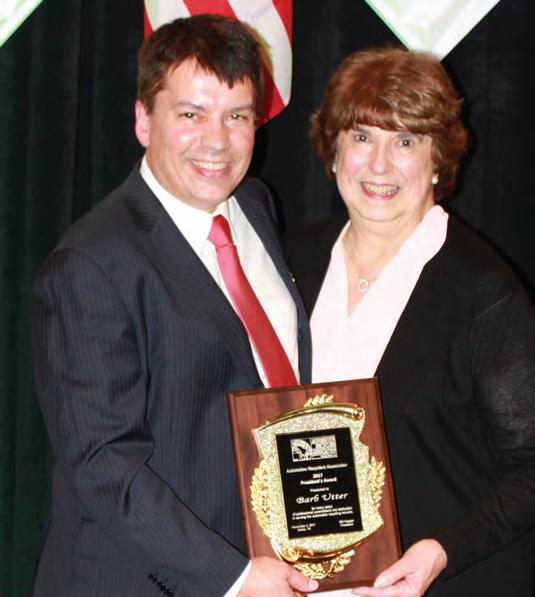
RIGHT: Barb in the early days.
By the time Barb convinced me to become a board member, she was well established in her own right. She had a philosophy that it is better to be at the table than to not have a voice, and when looking for volunteers she focused on people who were busy… “Busy people are the ones who get things done.” She told me to put my money where my mouth was and get involved rather than grousing from the sidelines. I later learned the inside joke at ARM: it was useless telling her “no” and once you’re in the Rolodex, no one ever really gets away.

I was lucky enough to travel extensively with Barb to ARM and ARA events all over the place. She would insist that we do something

interesting everywhere we went because you never know when you’ll be back there.
It’s one of those first trips that taught me who Barb was, how she carried herself, and how she could be effective. We went to Quebec City for the International Roundtable on Automotive Recycling. At the hotel we agreed to meet at the bar because Barb believed you learn as much from talking to people as you do from seminars. When we walked in, members of ARA’s Executive Committee were huddled together working on something. They all stopped what they were doing to stand up and talk to Barb. She asked after them and their families, she knew names and details, she cared about them as people.
Sitting alone at a table was a person recently ostracized from the group. Barb and I both knew that feelings were strong in the room. Being young and naïve, I asked her what we should do. “I don’t play politics,” Barb announced firmly and she went and sat down next to the outcast person and started talking. I followed her lead and as people trickled in, everyone in the room gravitated to Barb’s inclusive circle. Maybe it came from mediating four kids, but in that moment I understood her ability to transcend politics and gamesmanship. I didn’t know it at the time, but I would go back to Barb for advice on avoiding politics time and time again.
Kathy Cooper came to ARM in 2009, and I believe this kept Barb in the office for several more years. Barb grew up before personal computers, and now she was navigating a digital world. Kathy was her trusted confidante who could wade through things together when technology became overwhelming. Kathy joined so many of us who looked to Barb as a second mom. Even during her own health crises, she was our rock of stability.
Kathy found it amusing when Kent III, “the keeper of the parents” perpetually caught Barb indulging in a Filet-o-Fish and Shamrock Shake during Lent. For us she was a mentor and an independent force of nature, to her kids she was mom and they worried about her. Barb spoke very lovingly about all of her family: sons and daughters-in-law, children, grandchildren, great-grandchildren. She still spent time with her siblings and their families. She was an active member of her church and several volunteer organizations. Whenever we spoke about her retirement, she looked forward to spending time with family and friends, but she also prized her relationships with her work family. After she left the office, many of us kept calling her to catch up. She talked to her successor, Jackie, every other week. The day after she died, a handwritten Christmas card showed up in my mailbox.
Barb is the person who taught me how to talk to politicians and lobbyists because we went to meetings together. She knew so many people in and around the industry, but she also learned the names of every waitstaff and desk clerk along the way. I miss being able to call

or email her for advice or just to chat. On behalf of the industry, I want to thank Barb’s family for sharing her with us all of these years, and to acknowledge that they probably had very little say in the matter- did I mention she was an independent woman with a mind of her own?
So many of us have shared our sorrow at losing our friend and mentor while also being thankful to have known her. As Martha Cowell said to me, “To aspire to touch half as many lives as she did would be ambitious.”
We will miss you and try to carry on your work. TB

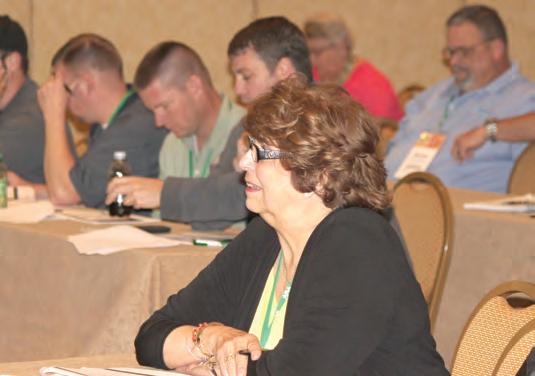
Do you often find yourself giving advice to your peers? Do you have ideas that could help others improve efficiency, reduce costs or boost profitability?
Your Expertise in Toolbox!
In Our Next Issue, We Need Articles About: Mastering Employee Recruiting, Retention & Training
• Recruiting & Keeping Great People
• Why Yards Can’t Find Good People — And What the Best Operations Are Doing Differently
• Onboarding That Actually Works
• Compensation Models That Boost Performance
• Using Daily Huddles & Scorecards To Drive Consistency
• Building Career Paths in Auto Recycling
DEADLINE MARCH 13
I have so many thoughts on that subject ... I better write them in the next ToolBox!
Space is limited per issue. Please email Caryn Smith prior to submitting for topic approval. Submitted content is subject to editorial approval, and could be edited for length or grammar. Ideal Word Count is 600-900 words. Longer format is 1200 if it is worth the subject matter.

We heard there are a lot of new buildings rising across the industry.
It is time to show off your hard work OR works in progress. We are featuring a “photo feature” of new construction projects over the past few years.
• Send your Facility Name
• Type of Recycler (full, self, hybrid)
• Number of Cars Processed Yearly
• Your Business Website URL
• Send up to 5 images of your project. You can send all finished photos or photos of “construction in process” and the completed building (if it is complete). [NOTE: Images need to be from a phone or camera or at least 1MB in file size. Social Media photos are often too small to print.]
• Provide a description of the project: What is it for? Why did you need the new building? How is it increasing efficiency or capacity? What is your “best tip” for anyone who wants to build a new building? What did you learn in the construction process that you wish someone had told you?
Your photos will be included in an upcoming issue!
Email your photos and descriptions to ToolBox@a-r-a.org | Deadline: March 13

The Automotive Recycling ToolBox™ Edition delivers peer-to-peer articles with information that you would get while networking at industry events and trade shows. Our mission is to be current, educational and inspirational. We bring you:
• Educational and instructional “how-to” articles written by fellow recyclers, top industry professionals, leaders & trade show speakers.
• Information from providers of industry-related products and service you typically find at industry events and trade shows.






PUBLISHED 6 TIMES A YEAR AutoRecyclingNow.com/Toolbox
AUTOMOTIVE RECYCLERS ASSOCIATION OFFICERS
YOUR TOOLBOX TEAM
Published by Driven By Design LLC
EDITOR
Caryn Smith, Toolbox@a-r-a.org
ART DIRECTOR
Caryn Smith
ADVERTISING SALES
Jay Mason, ToolboxAds@a-r-a.org
ARA OPERATIONS
EXECUTIVE DIRECTOR
Vince Edivan
Automotive Recyclers Association Vince@a-r-a.org
SENIOR DIRECTOR OF ASSOCIATE OPERATIONS
Jessica Andrews, Jessica@a-r-a.org
SENIOR DIRECTOR OF MEMBER SERVICES
Kelly Badillo, Kelly@a-r-a.org
VICE PRESIDENT OF STRATEGY AND GOVERNMENT AND REGULATORY AFFAIRS
Emil Nusbaum, Emil@a-r-a.org
CERTIFICATION CONSULTANT
Sue Schauls, Sue@a-r-a.org (319) 290-7843
ADMINISTRATIVE ASSISTANT
Tiffany Jackson, Tiffany@a-r-a.org
PRESIDENT Shannon Nordstrom Nordstrom’s Automotive, Inc. Garretson, SD shannon@nordstromsauto.com
2ND VICE PRESIDENT/TREASURER Tom Andrade Everett’s Auto Parts Brockton, MA tandrade@everettsautoparts.com
SECRETARY Emily Yancey Yancey Auto Parts Perry, MO eyancey@yanceyauto.com
IMMEDIATE PAST PRESIDENT Eric Wilbert Wilbert’s U-Pull-It, LLC Williamson, NY eric.wilbert@wilberts.com
ARA CONTACT INFORMATION
ARA Headquarters Manassas, VA (571) 208-0428 staff@a-r-a.org www.a-r-a.org
To reach readers with print & digital advertising, email ToolboxAds@a-r-a.org For editorial contributions, e-mail Toolbox@a-r-a.org or call (239) 225-6137