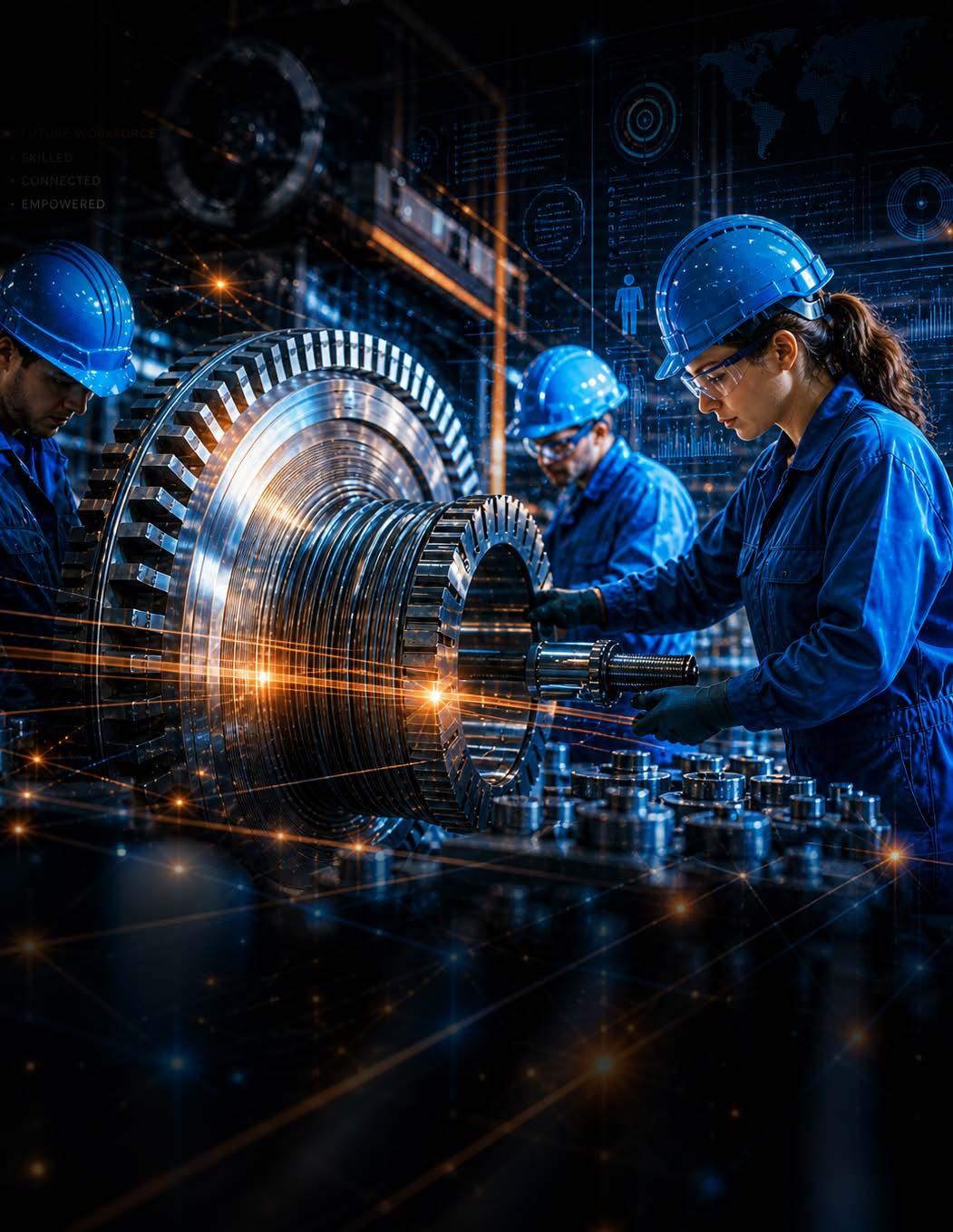


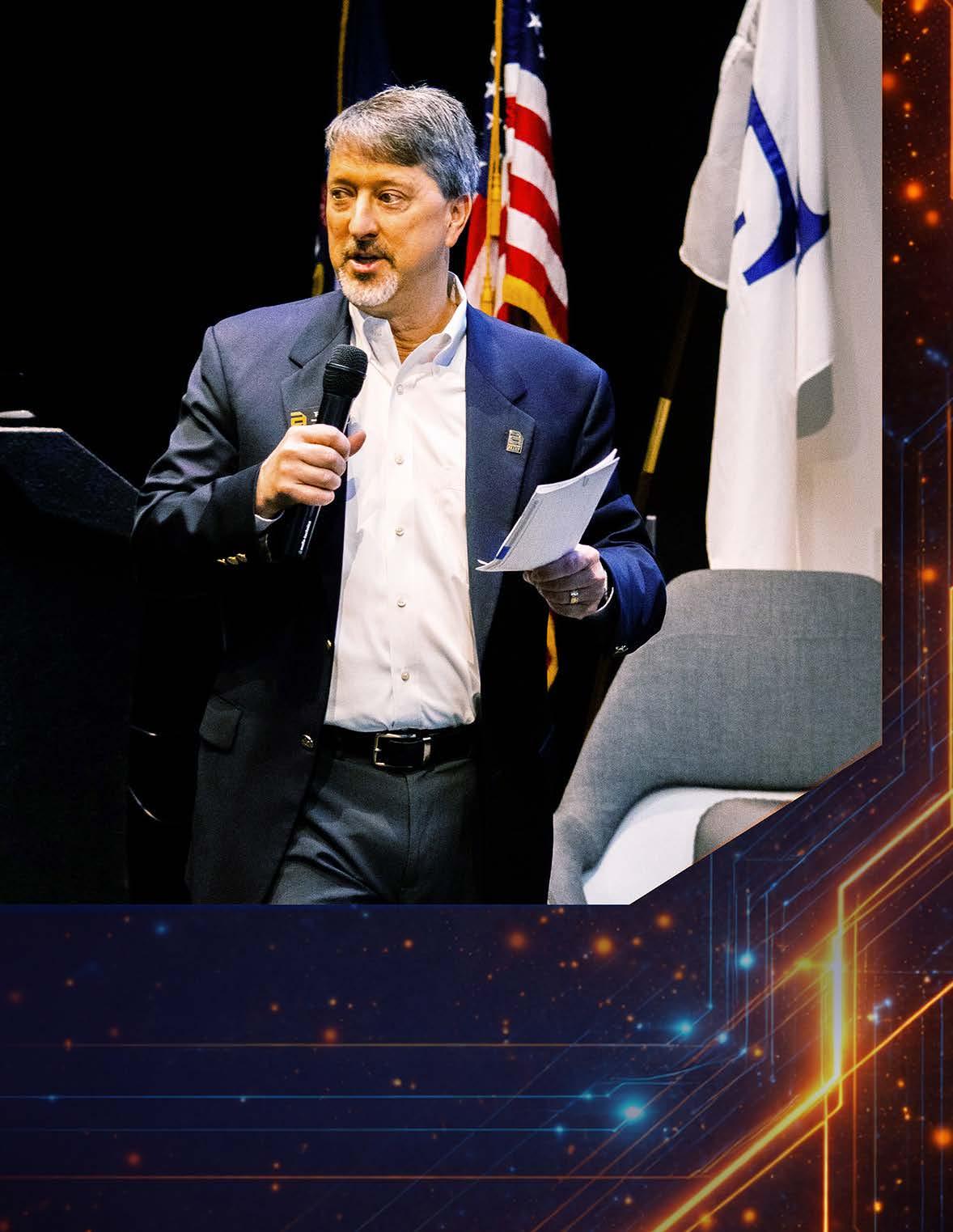
There is no meaningful discussion about the future of the workforce without addressing artificial intelligence. This transformative technology, capable of driving profound gains in productivity and insight, has reached every corner of the global economy and is reshaping how work is defined, performed and valued. The central question is no longer whether AI will influence the workforce, but how humanity will adapt to—and responsibly guide—its integration.
In many ways, the challenge before us is uniquely Promethean. We have placed an immensely powerful tool into human hands, one that will shape industries and livelihoods for generations. With that power comes responsibility. For employers, it raises questions of leadership, stewardship and trust at a pivotal moment of change. For employees, it demands curiosity, adaptability and a willingness to engage with systems that may not yet be fully understood.
Within manufacturing, this conversation is already well underway. Long before the rise of large language models in 2022, manufacturers were deploying artificial intelligence and machine learning to analyze data, optimize operations and drive industrial intelligence. The sector entered this new era with a degree of familiarity—but familiarity alone does not guarantee readiness.

So what has that head start delivered? And what gaps remain?
These are not simple questions, nor are they easily answered. They sit at the core of this Integr8 session on the workforce in the digital age. Here, industry leaders, educators and policymakers come together to explore what it means to succeed in a rapidly evolving workforce—and how that definition is changing in real time.
From the generational transfer of knowledge to the balance between technical and human-centered skills, from successful AI implementation to lessons learned through failure, this playbook reflects a broad spectrum of perspectives. It is a curated collection of insights from Automation Alley’s network of industry, academia and government partners, all working toward a more resilient, competitive and future-ready workforce in the United States.
Automation Alley extends its gratitude to all who have contributed to the Integr8 series throughout the year. The continued engagement of its members and partners makes this work possible and ensures that these conversations remain grounded, relevant and forward-looking.


Tom Kelly Executive Director & Chief Executive Officer Automation Alley

Attendee List:
Sponsors, Supporters and Roundtable Participants
Main Feature:
Workforce Transformation in the Age of AI: Key Insights from Industry Leaders
Expert Insights: Oakland County Michigan Works!
Registered Apprenticeship Programs in Workforce Spotlight
Expert Insights: Kelly
The Succession Problem Advanced Manufacturing Isn’t Planning For
Recommendations: Industry
Recommendations: Academia
Recommendations: Government
Industry Insight: Michigan Manufacturers Association
Building the Workforce Manufacturing Needs—On Purpose
Thought Leader: MetaOps
The Next Industrial Workforce Isn’t Coming: It’s Being Forced by a Permanent Labor Shortage
Key Takeaways: Main points from the Integr8 Roundtable Discussion
Sources

SPONSORED BY: Oakland County Michigan Works! & Kelly
SUPPORTED BY: Michigan Economic Development Corporation, Michigan Manufacturers Association, Michigan Manufacturing Technology Center and US Center for Advanced Manufacturing
Tom Kelly - Executive Director & Chief Executive Officer, Automation Alley
Phil Borchard - Chief Customer Officer, Satori XR
Sara Bozin - Professional Team Recruiting Manager, Kelly
Marc Callert - National Business Director, Engineering, Kelly
Ian Caullay - Director, Career and Life Design, Oakland University
Ron Crabtree - CEO, MetaOps Inc
Rosanne Craig - Market Director, Kelly
Ebbin Daniel - Founder & CEO, Machine AI Solutions
David Darbyshire - Engineer / Co-Owner, Cyb Llings, Inc.
Michael David - Business Advisor, CoStaff
Steve Ermak - Industry Leader - Automotive, Aerospace & Sustainable Mobility, Kelly Engineering
Emily Fleury - Industry Liaison, University of Detroit Mercy
Kelli Foskic - Director, Career and Life Design, School of Engineering and Computer Science, Oakland University
John Gnotek - Strategic AI Advisor, Gnotek AI
George Greenough - Technology & Operations Leader, G2 Create
Rey Guzman - Talent Development Liaison, Michigan Department of Labor and Economic Opportunity (LEO)
Jason Hamp - AI Technologist - Manufacturing, Lenovo
Kenneth Jordan - Founder & President, Blackhawk Additive Manufacturing
Amy Kitchen - Director of Strategic Growth, MetaOps Inc
Gary Krus - VP of Business Development and Operations, HIROTEC AMERICA
Hali Lenney - Senior Economic Development Specialist, Macomb County Government
Lauren Lepkowski - Director of Corporate Relations School of Engineering and Computer Science, Oakland University
JenniferLlewellyn - Manager, Workforce Development, Oakland County Michigan Works!
Kristie Lohmeier - Head of Marketing, Contract Professionals, Inc.
Eduardo Matas - Sales & Business Development Manager, VDL Steelweld USA
Paul Maurer - Associate, AIOLIX Inc
Dawn New - Clinical Associate Professor of Practice, University of Michigan - Flint
Julie Oldham - Business Growth Consultant, Michigan Small Business Development Center
Laura Preuss - Director of Talent Initiatives, Michigan Manufacturers Association
James Semerad - CEO, JMSI Vision LLC
Kevin Smith - Sales EngineerMark, forged, Inc.
Joe St. Henry - Digital Marketing and Communications Coordinator, Oakland County Michigan Works!
George Stasiw - Senior Account Executive, Samsung
Ryan Szymanski - Director of Strategic Partnerships & Growth, mCubed Staffing
Stanley Tan - Director, Jendamark Automation
Ingrid Tighe - President, Michigan Manufacturing Technology Center
Rick Venet - EIR Sterling Heighs, Velocity
Brian Watson - Consultant, ERA Group
Jeff Watt - Fractional CHRO, Chief Consultant, Real World HR Solutions
Denisha Williams - CEO, 3D Creative Designz LLC
James Williams - CIO, 3D Creative Designz LLC

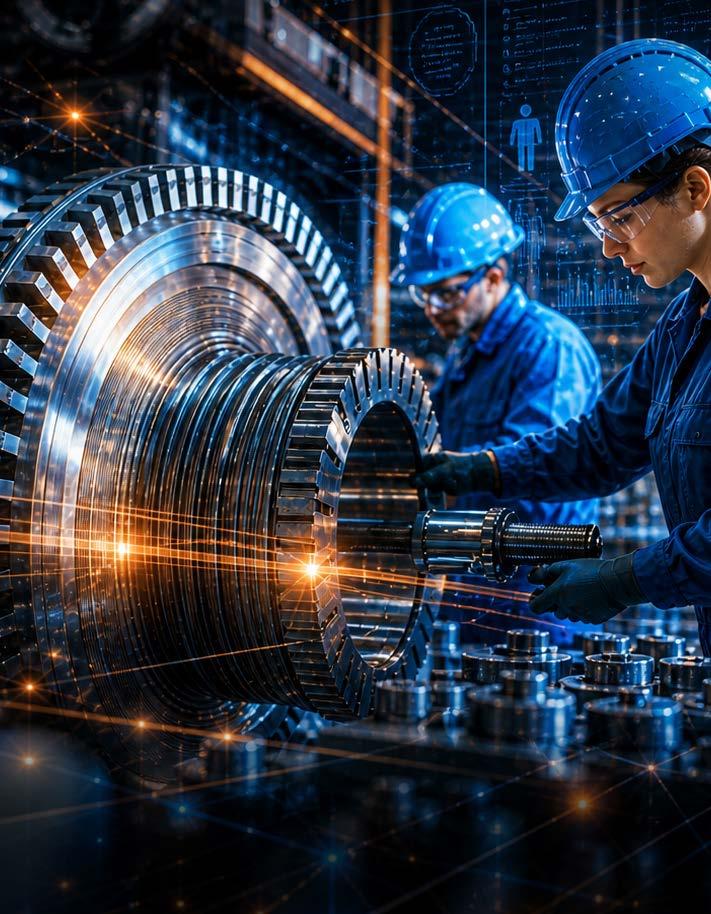

The future of the industrial workforce is not being shaped by a single force. It is emerging at the intersection of technological acceleration, shifting talent dynamics, and the intentional choices organizations make today.
Across Integr8 roundtable conversations with leaders from industry, academia and government, one theme rises above the rest. Workforce transformation is not a distant challenge. It is a present reality. And while the complexity is undeniable, there is growing alignment around what must happen next.

Leaders agree the current moment is unlike any before it.
“This is a dynamic environment. There are a lot of unknowns, and the workforce is evolving rapidly,” said Ingrid Tighe, president of the Michigan Manufacturing Technology Center.
That uncertainty is reflected in the data. The World Economic Forum estimates that 39% of workers’ core skills will change by 2030, signaling a rapid restructuring of job requirements across industries.
“The same can be said of the healthcare system,” said Jennifer Llewellyn, manager of workforce development at Oakland County and director of Oakland County Michigan Works! Agency. “Every organization is asking what AI means to them and how to protect their intellectual property. It is the wild west.”
At the same time, the economic stakes are rising. McKinsey estimates generative AI could contribute between $2.6 trillion and $4.4 trillion annually to the global economy, with manufacturing among the sectors most affected.
Yet even with this level of impact, many organizations are struggling to align execution with vision.
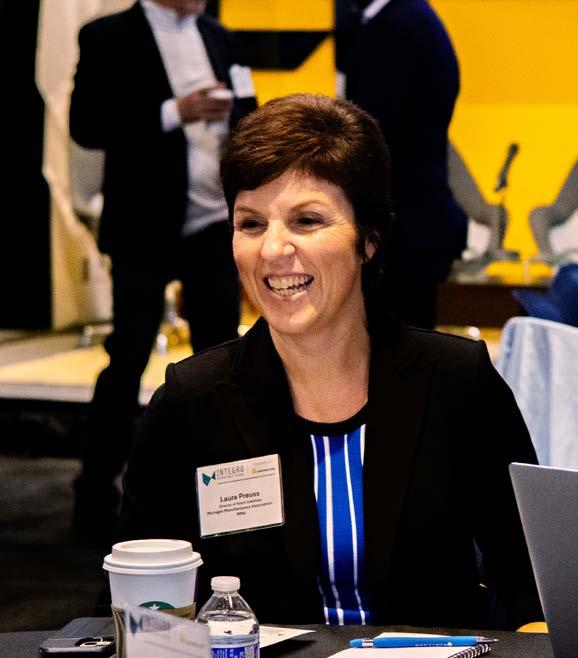
“We talk about intentionality. We say we want to fail fast, but do we? Are managers following CEOs’ visions?” said Laura Preuss, Ph.D., director of talent initiatives at the Michigan Manufacturers Association.
As technology becomes more embedded in manufacturing, digital fluency is quickly becoming a baseline requirement. The workforce, however, is not keeping pace.
According to Deloitte, nearly 70% of executives report moderate to severe skills gaps, particularly in digital and technology-related roles.
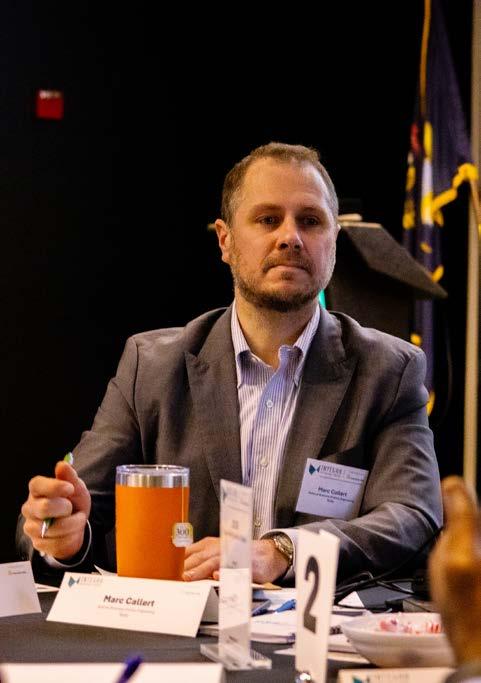
“Digital fluency is not trickling down, and it is hard to change attitudes on the shop floor,” said Marc Callert, national business director of Kelly Engineering.
This disconnect is not just about skills, but how transformation is implemented.
“There can be a disconnect when AI and digital transformation are pushed from the top down without taking into account the people on the floor who are getting products out the door every day,” Callert said.

70%
of executives report moderate to severe skills gaps

“I know manufacturers that are still halted with no AI implementation. I know others that are so far into AI that they are not implementing it effectively.”
Laura Preuss , Ph.D. Director of Talent Initiatives
Michigan Manufacturers Association
The data reinforces that point. McKinsey finds that companies investing in both workforce capability and technology are more than twice as likely to realize value from digital transformation compared to those focusing on technology alone.
At the same time, organizations are struggling to deploy AI effectively.
“I know manufacturers that are still halted with no AI implementation. I know others that are so far into AI that they are not implementing it effectively,” Preuss said.
The multigenerational workforce is often framed as a challenge. In practice, it is a complex dynamic that requires careful management.
“We are seeing a dichotomy between the seasoned employees and the new,” Tighe said. “The younger workforce is digital native. They are comfortable with technology in a way previous generations were not.”

Meanwhile, more tenured employees carry deep institutional knowledge. They understand not only how processes work, but why they were established in the first place.
Pew Research Center data reflects this divide. Younger workers are more likely to adopt and trust AI tools, while older workers express greater concern about their impact.
“These generational differences are assets to any company,” Preuss said. “None of this is a liability.”
Yet fear continues to slow progress.
“Our older generations can see it as a risk to share their knowledge,” she said.
Without intentional knowledge transfer, organizations risk losing decades of institutional expertise as retirements accelerate.
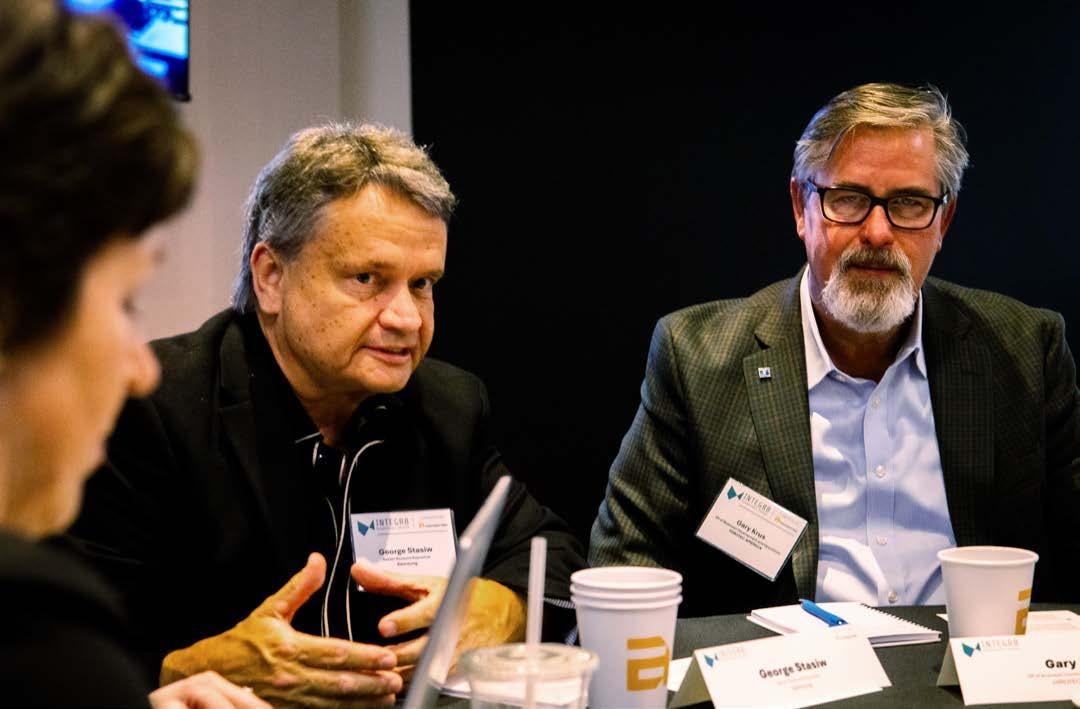

The skills required in manufacturing are evolving faster than traditional workforce systems can keep up.
The World Economic Forum reports that six in 10 workers will require reskilling by 2027, yet only about half have access to adequate training.
At the same time, the shortage is already being felt. The National Association of Manufacturers reports that 60.5% of manufacturers cite workforce shortages as their primary business challenge.
“A lot of times we look down on the folks running machines, but they often have more tribal knowledge than the engineers overseeing them,” Callert said.
Succession planning and knowledge transfer are not activities reserved for top leadership. Skilled trades professionals hold critical operational knowledge—the nuances of processes, the quirks of machines and production lines, and the unwritten ways teams collaborate to keep operations running.
Yet much of this knowledge is at risk of being lost.
According to a survey of 1,500 baby boomers by Express Employment Professionals, few employers are proactively capturing this expertise before retirement. Fifty-seven percent of respondents said they had shared less than half of the knowledge needed to perform their roles. Another 21% reported sharing none at all, while only 18% said they had fully transferred their expertise.
The implication is clear. Without structured knowledge transfer strategies, manufacturers risk losing decades of operational insight— knowledge that cannot be easily replaced by documentation or automation.
That tension points to a broader issue. Skills are not just missing. They are often misunderstood or undervalued. And that misunderstanding feeds directly into another barrier: resistance.

Even as adoption accelerates, fear remains a barrier.
Pew Research Center reports that 52% of U.S. workers are concerned about the future impact of AI on their jobs.
“The fear of AI leads to a lack of clear vision and direction for employees,” Preuss said.
That fear, combined with inconsistent leadership signals, often stalls progress.
“We need to stop the AI zig-zag with employees on the floor that leads to miscommunication,” she said.
Research from McKinsey suggests the reality is more nuanced. While some roles may be reduced, most are being redefined rather than eliminated, with tasks shifting as technology is adopted.
Clear communication is critical.
“When people understand why decisions are being made, they are more likely to buy in,” Callert said.
Workforce development remains fragmented across institutions.
The U.S. Bureau of Labor Statistics continues to highlight the disconnect between job openings and available skilled workers, particularly in manufacturing and technical fields, with more than 400,000 open positions.
“All of these challenges are solvable with stronger collaboration across K-12, postsecondary education, business and industry,” Llewellyn said.
That collaboration, however, is not yet happening consistently at scale.
“When people understand why decisions are being made, they are more likely to buy in.”
Marc Callert National Business Director Kelly Engineering
“Our job as employers is to ensure employees— from the shop floor to the C-suite—have AI and digital literacy skills.”
Despite the challenges, leaders see opportunity.
“These issues affect us every day, and we have the ability to influence them,” Callert said.
Organizations that move quickly will have an advantage.
The opportunity lies in aligning workforce capability with technological investment.
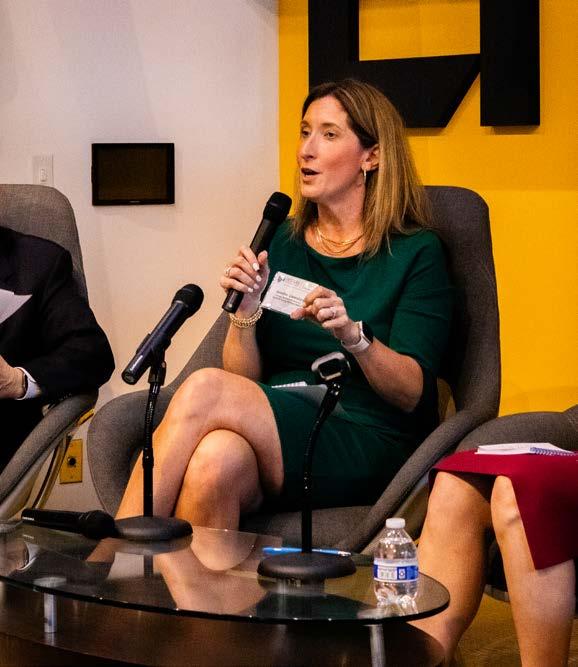
“Our job as employers is to ensure employees— from the shop floor to the C-suite—have AI and digital literacy skills,” Llewellyn said.

Jennifer Llewellyn Manager, Workforce Development Oakland County Michigan Works!
When approached strategically, generational diversity becomes a strength.
“When a company is at its best, seasoned employees serve as coaches, mentors and leaders,” Tighe said. “Apprenticeships are a strong model for facilitating that transfer.”
The urgency is increasing. A significant portion of the skilled trades workforce is approaching retirement age, raising the risk of knowledge loss.
At the same time, younger workers bring different strengths. They are comfortable with digital systems and rapid iteration, but often lack the contextual understanding developed through years of experience.
This creates a clear opportunity.

“When a company is at its best, seasoned employees serve as coaches, mentors and leaders, apprenticeships are a strong model for facilitating that transfer.”
Ingrid Tighe President Michigan Manufacturing Technology Center

As AI systems handle predictable tasks, workers are increasingly responsible for interpreting data, making decisions and solving complex problems.

Structured mentorship, apprenticeship programs and cross-generational teams allow organizations to capture institutional knowledge while accelerating digital adoption. These are not just workforce initiatives. They are operational strategies that improve continuity, reduce onboarding time and strengthen resilience.
Organizations that succeed will treat generational diversity not as a challenge to manage, but as an asset to deploy.
As automation takes over routine tasks, human capabilities become more valuable.
The World Economic Forum ranks analytical thinking, resilience and adaptability among the most critical skills for the future workforce.
“A lot of problems simply cannot be solved by technology alone. We need human connection to understand them,” Callert said.
This reflects a broader shift in how work is defined. As AI systems handle predictable tasks, workers are increasingly responsible for interpreting data, making decisions and solving complex problems.
On the factory floor, operators are no longer just executing tasks. They are diagnosing issues, collaborating across teams and driving continuous improvement.
Communication and adaptability are no longer soft skills. They are operational capabilities.
Organizations that invest in these areas are building more agile, future-ready workforces.
Intentionality remains the throughline.
“The businesses we see that are thoughtful and deliberate about workforce development are not experiencing these problems,” Llewellyn said.
The difference is not access to technology. It is alignment.
Organizations that succeed treat workforce strategy as a core business function, integrating it with digital investment and operational planning. This includes clear communication, structured upskilling and consistent leadership commitment.
Without that alignment, even well-funded transformation efforts can stall.

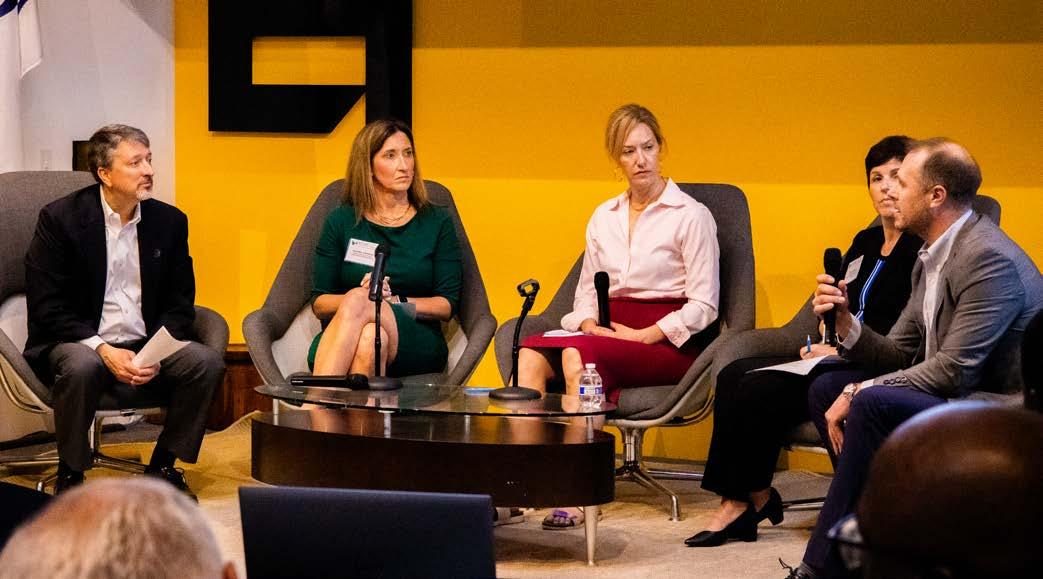
The industrial workforce is entering a new era.
The organizations that succeed will be those that recognize workforce transformation not as a constraint, but as an opportunity.
In the end, the future of manufacturing will not be decided by technology.
It will be decided by how effectively people are empowered to use it.



Joe St. Henry Digital
Marketing and Communications Coordinator
Oakland County Michigan Works!
Conversations across Michigan about the future of the state’s workforce today include plenty of excitement around the growth of Registered Apprenticeship Programs.
Once reserved for the skilled trades and construction, Registered Apprenticeship Programs and the “learn and earn” approach to building a skilled workforce are gaining rapid popularity in other fields, including advanced manufacturing, healthcare, information technology, education, agriculture, professional services and the public sector.
The number of Registered Apprenticeship Programs in Michigan has doubled over the past decade, with 20,600 active Registered Apprentices working in the state now, ranking Michigan fourth nationally.
In Oakland County, there are more than 2,200 Registered Apprentices across 83 active programs, according to the Michigan Center for Data and Analytics.
Upon completion of a Registered Apprenticeship, the average apprentice makes upwards of $80,000 annually .

“Building a highly skilled, competitive workforce is essential to Oakland County’s long-term economic success,” said Oakland County Executive David Coulter. “There are more Registered Apprenticeships available today than ever before.”
According to the U.S. Department of Labor (U.S. DOL), more than 1,200 occupations qualify for the Registered Apprenticeship training model. Apprentices who complete a Registered Apprenticeship Program, which can take up to five years to complete, obtain a portable, nationally recognized credential. Programs can be sponsored, or operated, by individual employers, joint employer and labor groups, and/or employer associations.
“A Registered Apprenticeship Program, which include both on-the-job training under the guidance of a mentor, as well as extensive related classroom instruction, is a great pathway to building a rewarding career,” said Jennifer Llewellyn, director of Oakland County Michigan Works!, a long-time partner and Foundation Member of Automation Alley. “Upon completion of a Registered Apprenticeship, the average apprentice makes upwards of $80,000 annually.”
For employers faced with a shortage of skilled workers, the opportunity to build their team from within through a customizable Registered Apprenticeship Program is well worth the investment, especially considering more than 90 percent of Registered Apprentices stay with their employer after the apprenticeship ends.
“Apprenticeships foster an immediate bond of loyalty between employees and employers, creating a foundation of trust and growth from day one,” said Jessican Keenan, project manager for the Workforce Intelligence Network (WIN).
Sarah Hug, business services professional at Oakland County Michigan Works!, put it more succinctly, “When someone earns a degree, what kind of skills do they really come away with that are applicable to a specific job? A Registered Apprenticeship helps an apprentice develop the skills for the job.”
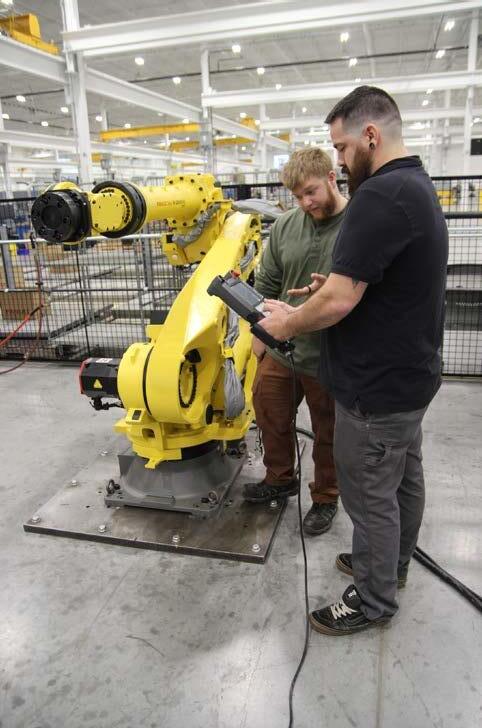
FANUC America Corporation, a global leader in robotic automation located in Rochester Hills, started its Registered Apprenticeship Program in 2023.
“This is a challenging time to build talent,” said Denise Scanlon, FANUC talent acquisition partner. “We took advantage of the opportunity to build a Registered Apprenticeship Program to build the skills sets of our workers and establish a long-term pipeline for talent.”
Barron Industries in Oxford manufactures precision machined metal castings for the aerospace, defense and automotive sectors. It launched a Registered Apprenticeship Program two years ago to address the challenge of a transitioning workforce.
“Some of our employees are nearing a wellearned retirement,” said Lissa Barron, director of communications, Barron Industries. “We are committed to growing our team by investing in professional development and promoting from within. Our Registered Apprenticeship Program is key to this effort, helping us train and mentor the next generation of skilled machinists.”
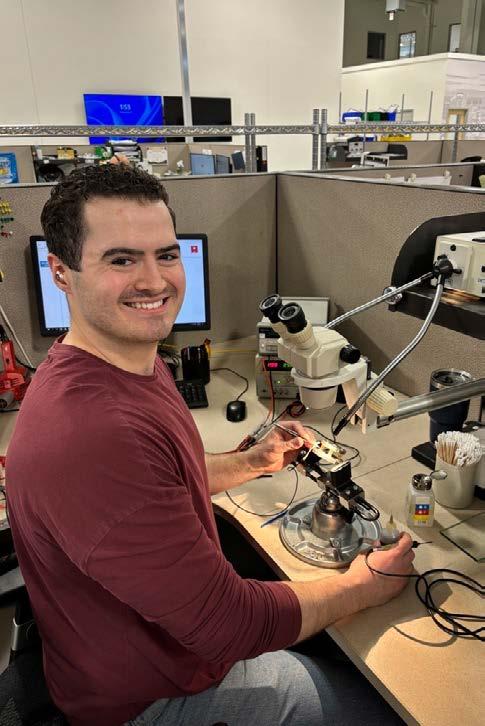
Farmington Hills-based Humanetics, a leading manufacturer of advanced safety and sensor technology for a variety of industries, launched its Registered Apprenticeship Program to train electronics technicians in 2022.
“We make sure the apprentice is successful dayin and day-out,” said David Danes, operations
manager. “The biggest difference between a standard onboarding process and a Registered Apprenticeship is the depth of education and skill building that goes into the two-year program.”
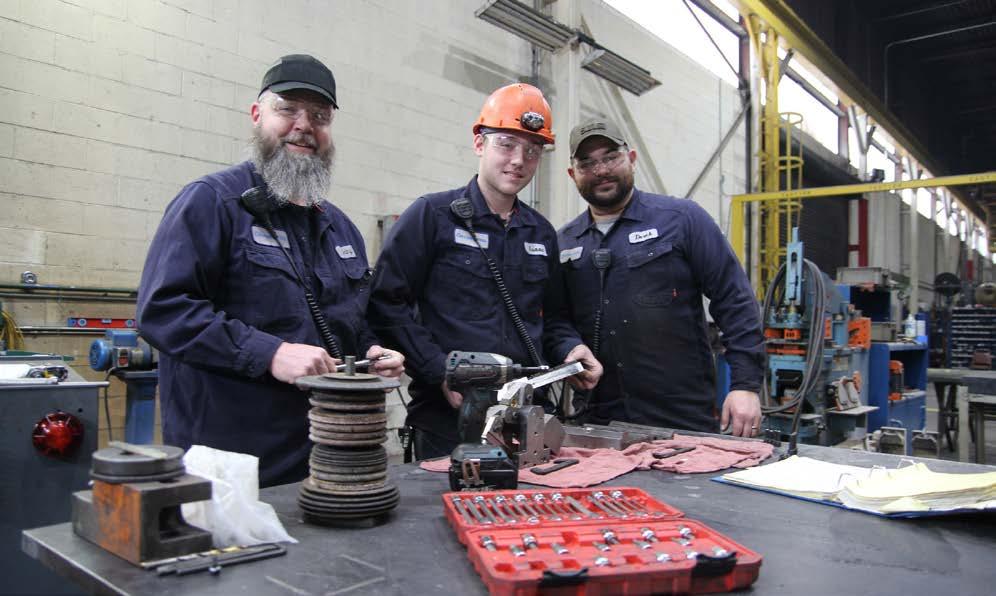
Mentors play a critical role in this in-depth training. Eaton Steel in Oak Park launched its Registered Apprenticeship Program in 2025, to train mechatronics technician apprentices. The company currently has one Registered Apprentice who works with a team of mentors on a daily basis, with plans to add more apprentices in the future.
“Our team of mentors goes beyond traditional training they serve as coaches, role models, and trusted guides who help apprentices translate technical knowledge into real world application,” said Carmen Patterson, human resources manager, Eaton Steel. “Their hands-on support not only builds critical skills, but also instills confidence, accountability, and a strong work ethic.”
FEV North America, located in Auburn Hills, is an engineering and digital mobility company that specializes in vehicle and powertrain technologies. There are five people participating in two Registered Apprenticeship Programs for welder-fitters and mechatronics technicians at the company.
“Our Registered Apprenticeship Programs with the skilled trades involve a lot of hands-on work, both at work and in the classroom,” said Julie Brown, senior technical recruiter – human resources, FEV North America. “It’s important for our apprentices to learn how to do things the right way and it’s great knowing they will hit the ground running to be successful on the job.”
Henry Ford Health, the largest healthcare provider in Southeast Michigan, currently has 31 Registered Apprentices on staff, to help address its skilled worker shortage. These include preparing people for roles as certified nurse assistants, medical assistants, pharmacy technicians, and surgical and radiologic technologists. The Registered Apprenticeships vary in length from ten months to two years.
More than 100 Registered Apprentices have completed their programs since Henry Ford Health started the apprentice program in 2017 with virtually of them still working there. Many of them have continued their education to further advance their healthcare careers, including nursing degrees.
“We empower our employees to grow their careers and continually evolve,” said Eleyna Montroy, manager of clinical care services, Henry Ford Health.
Oakland County Michigan Works! launched its Advantage: Apprenticeship program in 2021 to assist employers in developing and growing Registered Apprenticeship Programs.
In addition to providing valuable funding to help offset apprentice wages and classroom instruction, the six Oakland County Michigan Works! locations provide a variety of supportive services to eligible Registered Apprentices. This includes financial support to help address transportation and childcare needs, apprentice uniform and equipment purchases, books and supplies, and other related expenses.
“We love our relationship with Oakland County Michigan Works!,” said Cheria Thomas, workforce development manager, Henry Ford Health. “They help us launch or Registered Apprenticeship Programs, identify candidates to fill the cohorts and provide the additional wraparound services to set up our apprentices for success.”
Llewellyn’s team used $1,463,000 in State Apprenticeship Expansion (SAE) grants over the past five years to support 443 individual apprentices across 45 Oakland County-based employers.
This includes The Learning Experience in South Lyon, which recently launched a Registered Apprenticeship Program to train early childhood educators using SAE funds.
“The SAE grant has been instrumental in supporting our teachers as they enter the Registered Apprenticeship Program and work toward earning their Child Development Associate credential,” said Mollie Blixt, president of operations. “The credential not only provides a nationally recognized certification and certificate from the State of Michigan, but allows our educators to advance professionally and earn high wages.”
Another funding source for Registered Apprenticeship Programs is the State of Michigan’s popular Going PRO Talent Fund, administered locally by Oakland County Michigan Works! Last year, 604 new and existing apprentices in Oakland County benefited from short-term training paid for through the state program. Another 448 Registered Apprentices received training through the Going PRO Talent Fund during the first part of 2026.
“Our partnership with Oakland County Michigan Works! has been instrumental in meeting our workforce recruiting and training needs,” said Andy Barnum, director of training and development, at Lee Industrial Contracting in Pontiac. “Through the Going PRO Talent Fund and braided funding opportunities, we’ve provided targeted training through our Registered Apprenticeship Program that enhances skills, safety and efficiency across our operations, while developing the next generation of skilled trades professionals.”
K-Tec Systems in Ferndale employs 11 people and makes instrumentation that measures temperature, pressure and flow in the automotive, aviation and pharmaceutical industries. The small business launched a Registered Apprenticeship Program earlier this year.
“The Going PRO Talent Fund is an amazing program, especially for small, growing businesses like ours,” said Cathy Koch, CEO and president, K-Tec Systems, in Ferndale. “These training resources make us competitive by enabling us to train our employees and help them grow. A skilled workforce helps us stay competitive, expand business and stay at the forefront of our industry.”

According to the U.S. DOL – Office of Apprenticeship, employers realize an average return on investment of $1.47 for every $1 invested in a Registered Apprenticeship Program. Additionally, every $1 invested in apprenticeships leads to a public return of approximately $28 in benefits.
“The Registered Apprenticeship Program at Eaton Steel is a strategic investment in our workforce and our future,” Patterson said. “By creating structured pathways for skill development, we are empowering our employees to grow within the organization while building the technical expertise needed to remain competitive in today’s manufacturing environment.”
Oakland County Michigan Works! recently published the latest edition of the Oakland County Registered Apprenticeship Guide, featuring 72 programs in a variety of industries. To view the Guide online, visit www.oakgov.info/RAPGuide.
To request a printed copy or learn more about Registered Apprenticeships, contact Oakland County Apprenticeship Success Coordinator Elizabeth Rivard-Weston, rivardwestone@oakgov.com.

Marc Callert National Business Director, Automotive Engineering, Kelly
I recently spoke with a manufacturer who lost 120 years of institutional knowledge across five people. All within a few months. Leadership knew the employees were late in their careers, so the retirements weren’t entirely a surprise. But nobody had put hard timelines on the conversation, and when the announcements came, they came all at once. Most of the final months were spent on vacation days and send-off lunches, not documentation. Then the knowledge walked out the door.
That story isn’t unusual, but what makes it urgent is the environment in which it’s happening. Advanced manufacturers are facing a retirement wave and an automation wave at the same time, and most succession planning strategies were built to handle one of those pressures, not both.
What follows is a look at why traditional succession planning is failing under that double pressure, where the knowledge transfer gap is hiding, and what proactive workforce planning looks like for manufacturers who want to act before the next retirement wave hits.
Advanced manufacturers are facing a retirement wave and an automation wave at the same time.
Most succession planning strategies were built to handle one of those pressures, not both . “ “
Succession planning in manufacturing has historically assumed stable job definitions and long runways. A senior technician trained a junior over several years, while a maintenance lead taught the quirks of a specific piece of equipment to whoever was next in line. The pipeline moved at roughly the same speed as the work.
Automation broke that model from two directions. It changed what the job requires, and it shortened the runway for teaching it. A production line now needs hybrid skills: legacy equipment intuition combined with fluency in sensor data from the automated cells that were bolted on five years ago. That hybrid skillset rarely exists in a single candidate, which is how manufacturers end up searching for what I think of as a purple unicorn with orange spots. The job description reflects everything the retiring employee quietly started doing over the years, including the two adjacent roles they’d absorbed along the way. No single hire is going to absorb all of that scope on day one.
Automation was supposed to capture what used to live in people’s heads. In reality, it has produced more information than most manufacturers know what to do with. Sensors generate a flood of data on every machine, every cycle, every anomaly, and the analysis capability to act on it is a separate investment many smaller and mid-market manufacturers haven’t made.
Meanwhile, the maintenance tech who could walk past a 30-year-old press and hear when something was about to fail hasn’t been replaced by a dashboard. The dashboard is sitting there, unread, while the tech retires.
I talk to manufacturers who balk at the cost of a $150,000 data scientist as if that number lives in a vacuum. It doesn’t. A single unplanned shutdown, a missed customer shipment, or a production penalty can exceed that salary several times over. The people who understood how to prevent those shutdowns are leaving, and the technology that was supposed to prevent them is only as good as the team reading its outputs.
To plan for the collision instead of reacting to it, manufacturers need to:
1. Cross-train in both directions. A senior engineer with 25 years on mechanical systems can teach a younger colleague how to anticipate failures. A younger engineer who grew up on automated cells can teach the senior colleague how to interpret what the sensors are flagging.
2. Invest in structured knowledge transfer before it becomes urgent. When a new piece of equipment comes online, a dedicated group takes advantage of the equipment vendor’s training offering, with an expectation that whoever attends will bring the knowledge back and share it. Pulling someone off the floor for three or four days feels like a nuisance in the moment, but losing that knowledge two years later when they leave is significantly more expensive.
3. Build co-op pipelines years in advance. Some of our automotive customers bring in students as sophomores and juniors, cycle them through real production environments for two or three years, and hire them as full-time engineers the day they graduate. By graduation, those hires already have two or three years inside the organization’s systems, culture, and problems.
4. Hire for instinct, not credentials. Engineers who thrive in advanced manufacturing tend to share a particular habit: they tinker on their own time. They wrench on cars in the driveway, fix electronics for fun, write code for personal projects. The instinct to take something apart to figure out how it wants to work is what production floors actually need, and it’s something a transcript can’t tell you about.
5. Treat workplace culture as part of the succession plan itself. Culture rarely gets named in succession conversations, but it should. You can build the strongest cross-training program in the region, but if your organization has a reputation for burning people out — particularly in automation roles, where 60- and 70-hour weeks are common — your bench will keep emptying faster than you can fill it. Succession planning starts with being a place where skilled people want to come work, and stay. Every other tactic is downstream.
Building all five of these capabilities in-house is a tall order, especially for manufacturers operating with lean teams and tight budgets. That’s where a workforce partner earns its keep.
Most manufacturers reach out to Kelly after the crisis has already landed. Someone has given notice, the backfill is impossible, and the request is for help finding a replacement in three weeks. We do that work. But the more useful engagement starts earlier, when no one is scrambling to fill a hole.
Kelly helps manufacturers build that earlier engagement in a few ways, including managed engineering services, co-op pipelines, and contract-to-hire programs. But developing a contractor bench is the most practical place to start. A handful of skilled technicians or engineers working alongside your team on a contract basis gives you a pipeline of people who already know your environment, your equipment, and your expectations. When a full-time role opens up, the conversion is fast and the risk is low. You’ve already seen the work. In baseball terms, you’re building your bullpen. Instead of staffing a rotation and hoping no one gets hurt, you’re building depth before you need it.
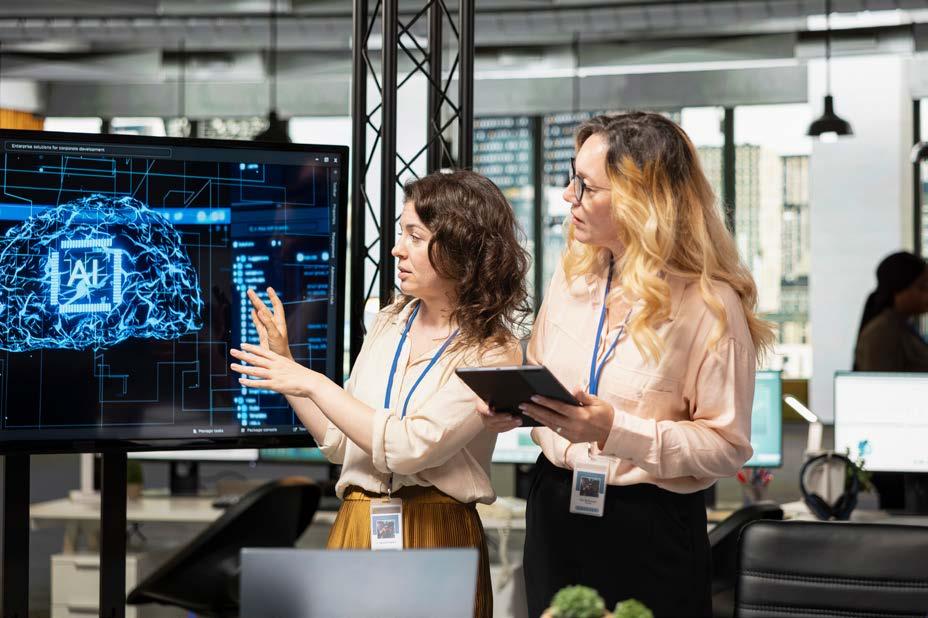
When an urgent need extends beyond replacing individual contributors, we can also plug consultants into your team or deliver solutions entirely, bringing in our experts to execute defined scopes of work while we take responsibility for delivery, resource management, and outcomes. This allows your internal team to stay focused on core priorities and hiring while critical engineering work continues to move forward.
Most manufacturers treat succession as a staffing question handled by HR in annual reviews and org charts. Really, it’s an operations risk, on par with equipment uptime and supply continuity, and it needs to be planned for in the same room, by the same people, on the same cadence.
The retirement wave is already here, and the automation wave is accelerating. Planning for both, together, is the work that separates the companies still running strong lines in 2035 from the ones stuck searching for unicorns.
At Kelly® (Nasdaq: KELYA, KELYB), we don’t just understand the future of work, we’re defining it. For over 80 years, we’ve sourced specialized talent, built agile workforces, and shaped growth strategies for employers around the world. Today, our recruiting, outsourcing, and consulting services provide the talent and solutions organizations need to move faster and grow smarter. We deliver meaningful impact by connecting people to work that enriches their lives, and companies to people who drive innovation and growth. Each year, we place more than 375,000 job seekers in new roles spanning science, engineering, technology, telecom, education, manufacturing, and more. To learn more, visit www.kellyservices.com.


As manufacturing becomes more technologydriven, collaboration across teams is becoming more important.

Industry leaders are navigating a rapidly evolving workforce landscape shaped by automation, artificial intelligence, and shifting skill demands. Companies are being called to rethink how they attract, train, and retain workers in roles that are increasingly augmented by advanced technologies.
The following recommendations reflect a growing emphasis on continuous learning, cross-functional collaboration, and stronger alignment between business strategy and talent development.
• Prioritize digital literacy and data skills for frontline workers. Advanced manufacturing technologies are generating more data than ever before. Workers increasingly need to understand dashboards, machine data, and connected production systems. Building digital literacy helps employees work more effectively with automation and AI tools. Companies that invest in these skills are better positioned to scale smart manufacturing initiatives. (Links: arminstitute.org & weforum.org)
• Integrate technical training with comprehensive soft-skill development. As manufacturing becomes more technology-driven, collaboration across teams is becoming more important. Workers need communication, teamwork, and problem-solving skills alongside technical expertise. These soft skills help employees adapt to new tools and contribute to continuous improvement efforts. (Link: nist.gov/mep)
• Foster a culture of ongoing learning on the shop floor. Manufacturing technology evolves quickly, which means workers must keep updating their skills and acquire new knowledge. To achieve these goals, companies should offer certifications and ongoing training. Fostering a learning culture allows the workforce and manufacturers to remain competitive. (Links: themanufacturinginstitute.

• Create mentorship programs that transfer institutional knowledge. Many experienced manufacturing workers are nearing retirement, making knowledge transfer a growing concern. Mentorship programs can pair veteran employees with newer workers to pass along institutional expertise. At the same time, younger employees often introduce digital tools and new technical approaches. (Links: themanufacturinginstitute.org & nist.gov/mep)
• Allow for hands-on technology training within the company. Using simulations, digital twins, and virtual reality tools can replicate production environments safely while allowing the workforce to practice complex tasks before performing them on the factory floor, possibly saving resources and money. (Link: sciencedirect.com & arxiv.org)
• Redefine jobs to emphasize system oversight and troubleshooting. Automation is shifting many manufacturing roles away from repetitive manual tasks. Workers are increasingly responsible for monitoring machines, analyzing data, and resolving technical issues. These responsibilities require analytical thinking and broader technical awareness. Updating job descriptions to reflect these new expectations helps employees transition into higher-value work. (Link: nist.gov)
• Develop cross-training programs to build multiskilled workers. Modern factories require employees who can work across multiple machines or processes. Cross-training helps workers develop broader technical capabilities and adapt to changing production demands, while creating operational resilience when staffing shortages or disruptions occur. (Link: weforum.org)
• Train workers to collaborate effectively with automation. Automation works best when humans and machines complement each other. Employees need to understand how to supervise, maintain, and optimize robotic systems, combining human judgement with the
Cross-training helps workers develop broader technical capabilities and adapt to changing production demands, while creating operational resilience when staffing shortages or disruptions occur.
precision of automation. (arxiv.org & arminstitute.org)
• Integrate learning tools directly into daily work. AI-supported guides and knowledge bases can help workers troubleshoot issues in real time. This approach shortens training cycles while reinforcing continuous learning. Integrating learning into daily operations helps employees build expertise more quickly. (Link: weforum.org)
• Make workforce development a strategic priority. Companies that assess skills gaps and build structured training pathways are better prepared for technological change. Partnerships with educational institutions can help strengthen talent pipelines. A proactive workforce strategy supports both innovation and long-term competitiveness. (Link: nist.gov/mep)

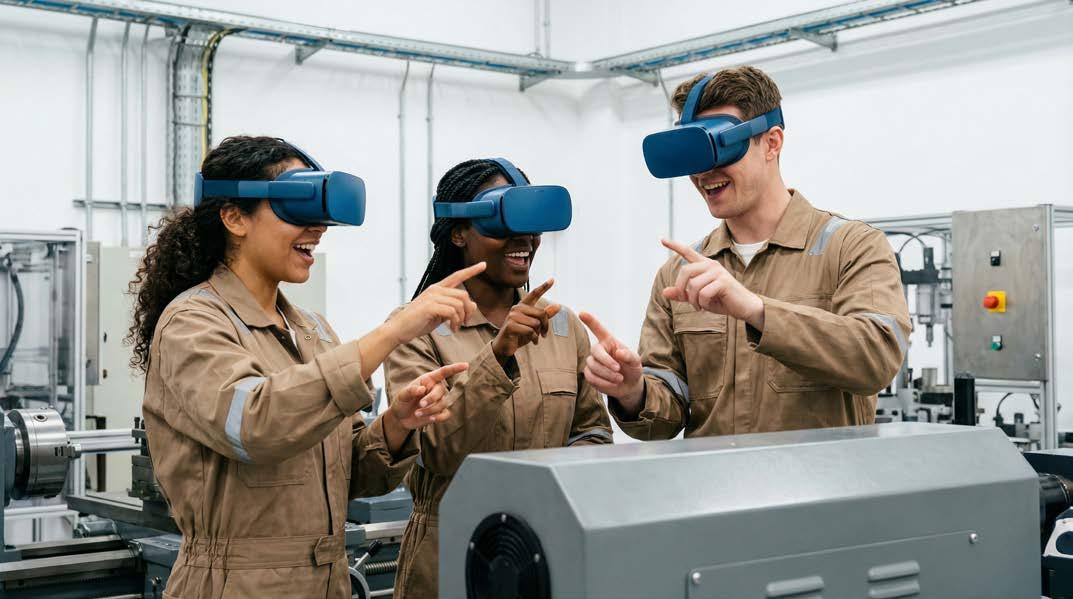


Combining manufacturing engineering with digital technologies teaches students production processes and software tools, increasing efficiencies that improve the transition from classroom to the factory floor.
Advanced manufacturing requires a nimble workforce that adapts to rapid change and developing technologies that shift responsibilities and demand updated institutional knowledge, including the inclusion of new, younger employees’ technical knowhow.
Academia can help prepare a technically proficient and adaptive workforce through the following initiatives and curriculum focus:
• Modernize manufacturing curricula to reflect Industry 4.0 technologies. Universities and technical colleges should regularly update manufacturing programs to reflect emerging technologies such as robotics, AI, additive manufacturing, and digital twins. Creating hands-on programs better prepares students to enter the workforce with relevant skills. Aligning programs with technology trends requires academia to work closely with industry leaders to keep the coursework relevant. (Link: nsf.gov & asee.org )
• Emphasize interdisciplinary education for manufacturing careers. Advanced manufacturing demands knowledge that spans engineering, computer science, and data analytics. Universities can prepare students by tearing down academic silos and developing interdisciplinary programs that combine various fields. Combining manufacturing engineering with digital technologies teaches students production processes and software tools, increasing efficiencies that improve the transition from classroom to the factory floor. (Link: ipc.mit.edu & nationalacademies.org )
• Expand experiential learning opportunities. Handson learning experiences help students better understand advanced manufacturing systems used in real-world settings. To strengthen training and skills development, academia should incorporate more laboratory work, internships, and cooperative opportunities that foster experiential learning, to allow students to experience real-world manufacturing environments. These types of experiences develop problem-solving skills that are valuable among industry leaders. (Links: nsf.gov & aacc.nche.edu )

• Integrate digital simulation and virtual learning technologies. Digital simulations allow students to experiment with processes without the cost or risk of physical production systems. Virtual labs and digital twin environments can replicate factory operations and help students understand complex workflows. These technologies provide valuable practice opportunities while expanding access to advanced training resources. (Link: nist.gov & arxiv.org )
• Strengthen research partnerships between universities and manufacturers. Collaborative research initiatives allow academic institutions and manufacturers to work together on emerging technologies and the latest manufacturing processes. Joint research programs, which also consider government regulations, accelerate innovation while immersing students in practical learning environments, preparing them for challenges they will encounter in the industry. Bringing academia and industry together requires both institutions to examine manufacturing trends and adapt learning objectives to prepare the future workforce to move smoothly from the classroom to the factory. (Link: manufacturingusa.com & nsf.gov )
• Develop microcredentials and short-term certification programs. Not all workers seeking manufacturing skills are pursuing traditional degree programs. Universities can support workforce development by offering short-term certificates and microcredentials focused on specific technologies. These programs allow workers to develop targeted skills quickly in areas such as automation, robotics, or data analytics. Flexible credential programs also support mid-career professionals looking to update current skills or learn new ones that would make them more versatile and valuable to their employers. (Links: nsf.gov & luminafoundation.org )
• Promote research on the future of manufacturing work. Academic researchers can help manufacturers and policymakers better understand how technology is reshaping the workforce. Studies examining automation, workforce transitions, and skill development provide valuable insights for industry leaders. This research can guide workforce training
Bringing academia and industry together requires both institutions to examine manufacturing trends and adapt learning objectives to prepare the future workforce to move smoothly from the classroom to the factory.

programs and inform public policy decisions. (Liks: nationalacademies.org & brookings.edu)
• Encourage collaboration between engineering and business programs. Manufacturing leaders increasingly need both technical expertise and business strategy skills. Universities can support this need by encouraging collaboration between engineering and business schools. Programs that combine manufacturing technology with management training prepare graduates for leadership roles. This approach helps develop professionals who understand both production systems and organizational strategy. (Links: ipc. mit.edu & asee.org )
• Introduce manufacturing career pathways earlier in education. Academic institutions can help address workforce shortages by introducing manufacturing concepts earlier in the education pipeline. Outreach programs in high schools and community colleges can expose students to modern manufacturing technologies. Early exposure helps students better understand the range of careers available in the sector. (Links: nsf.gov & pltw.org )



Governmentsupported apprenticeship initiatives can help manufacturers build strong talent pipelines while reducing training barriers for new employees.
The government plays a critical role in shaping a workforce ecosystem that can adapt to rapid technological change and evolving industry needs. By prioritizing development initiatives, modernizing infrastructure, and supporting reskilling efforts, public sector leaders can help close talent gaps and create a future-ready labor market.
The following recommendations emphasize the importance of policy alignment, targeted investment, and stronger collaboration with industry and educational institutions.
• Expand public workforce training programs. Programs that support training in robotics, automation, data analytics, and AI help workers stay competitive. Partnerships with community colleges and technical schools expand access to these training opportunities. Investing in workforce education ensures manufacturers have the skilled labor needed to support regional economic growth. (Link: dol.gov & nist.gov/mep )
• Support apprenticeship and earn-and-learn workforce programs. Apprenticeship programs allow workers to gain hands-on experience while earning a wage and learning new technical skills. Government-supported apprenticeship initiatives can help manufacturers build strong talent pipelines while reducing training barriers for new employees. These programs also allow experienced workers to pass along institutional knowledge to younger employees. (Links: apprenticeship.gov & themanufacturinginstitute.org)
• Foster stronger collaboration between industry and educational institutions. Collaborative workforce initiatives help make sure training programs reflect the skills needed in the manufacturing and technology industries. These partnerships also support research, internships, and technology transfer opportunities. (Links: nsf.gov & commerce.gov )
• Invest in reskilling programs for workers affected by automation. Government-supported training initiatives can help workers transition from manual tasks to higher-value technical roles. Programs that focus on digital tools, robotics, and machine monitoring skills can prepare employees for evolving job responsibilities. (Links: oecd.org & dol.gov )
• Offer workforce training incentives. Tax incentives, grants, and workforce development funding can encourage manufacturers to invest in employee training programs. These incentives reduce the financial burden of training for small and medium-sized manufacturers. Strategic funding programs strengthen both workforce capabilities and industrial competitiveness. (Link: commerce.gov & https://www.nist.gov )
• Promote regional manufacturing workforce initiatives. Regional workforce partnerships can bring together manufacturers, educational institutions, and government agencies. These collaborations align training programs with local industry needs and economic priorities, creating an infrastructure that helps small-to-medium-sized businesses stay competitive while strengthening the talent pipeline. (Link: eda.gov & https://www.nga.org )
• Expand digital skills training across the workforce. Government workforce programs can help ensure workers have access to training in data analysis, automation systems, and connected manufacturing technologies. A digitally skilled workforce supports the broaderader adoption of Industry 4.0 technologies. (Link: nist.gov & weforum.org )
• Support programs that are designed to capture and transfer institutional knowledge. Government-supported workforce initiatives can encourage mentorship and knowledge transform programs, ensuring operational expertise is passed along to the next generation of workers. Preserving institutional knowledge helps maintain productivity and innovation across the industry. (Link: themanufacturinginstitute.org & dol. gov )

Tax incentives, grants, and workforce development funding can encourage manufacturers to invest in employee training programs.
• Improve STEM education pipelines. Government investment in science, technology, engineering, and math education can help build the next generation of talent. Robotics, engineering, and manufacturing technologies are interesting to students, and an early introduction can lead them to careers in the industry. Partnerships between schools and manufacturers can provide students with real-world learning opportunities. (Link: nsf.gov & ed.gov )
• Develop national strategies for workforce development. Long-term workforce planning helps ensure manufacturing remains a key driver of economic growth. National strategies can coordinate education, workforce training, and industrial policy efforts while anticipating technical changes and labor needs within the industry. (Links: manufacturingusa.com & commerce.gov )


By any measure, manufacturing is in the midst of a profound transformation. Artificial intelligence, automation, and advanced technologies are not just changing how we produce goods, they are reshaping the very nature of work itself. For Michigan manufacturers, this moment presents both a challenge and an opportunity: how to ensure today’s workforce is prepared for tomorrow’s demands, while building a sustainable pipeline of talent for generations to come.
The answer is not passive. It is intentional.
As a community of manufacturers, we must move beyond reactive hiring and ad hoc training. Instead, we need purposeful, strategic workforce development plans that prioritize both durable technical skills and the humancentered capabilities that enable individuals— and organizations—to thrive in a rapidly evolving environment.
Too often, training is viewed as a cost center or a short-term fix—onboarding a new hire, addressing a skills gap, or implementing a new piece of equipment. In today’s environment, however, training must be seen as a core business strategy.
AI and automation are accelerating the pace of change. Roles once defined by manual, repetitive tasks are evolving into positions that require problem-solving, data interpretation, and collaboration with advanced systems. While some jobs may disappear, many more are being reshaped—and entirely new roles are emerging. This shift demands a workforce that is adaptable, curious, and continuously learning.
Manufacturers who invest in intentional training programs are better positioned to:
• Increase productivity and quality
• Improve employee retention and engagement
• Reduce turnover and recruitment costs
• Build internal leadership pipelines
• Stay competitive in a global marketplace

At its core, intentional training aligns workforce development with business strategy. It requires identifying the skills your organization will need—not just today, but five and ten years from now—and building pathways to develop those capabilities within your team.
Across the industry, a consistent theme emerges: the skills required in advanced manufacturing are evolving quickly, and the most successful employees combine technical expertise with strong “soft” skills.
Digital fluency is no longer optional. Frontline workers increasingly need to interact with automated systems, interpret data, and troubleshoot complex equipment. Skills related to robotics, programmable logic controllers (PLCs), data analytics, and AI-assisted decision-making are becoming foundational.
But technical skills alone are not enough. As roles become more complex and collaborative, human-centered skills such as communication, adaptability, critical thinking, and teamwork are rising in importance. Problem-solving, especially in ambiguous or rapidly changing situations— has become a defining capability.
Intentional training programs must therefore take a dual approach: building both technical competencies and durable, transferable skills that remain relevant regardless of how technology evolves.
One of the most pressing—and often overlooked—challenges in manufacturing is knowledge transfer.
Many organizations face the simultaneous retirement of experienced employees and the onboarding of younger workers with different skill sets and expectations. Institutional knowledge built over decades can be lost if it is not intentionally captured and shared. At the same time, newer employees often bring digital skills and fresh perspectives that accelerate innovation.
The most effective manufacturers create environments where this exchange happens intentionally. Mentorship programs, cross-training, and team-based problem-solving allow knowledge to flow in both directions. This is not a oneway street—it is a collaborative ecosystem that preserves strengths while enabling growth.
Redefining Roles in the Age of Automation
While internal training is critical, it is only one piece of the puzzle. Manufacturers must also look outward to build a sustainable talent pipeline. Many students and job seekers still hold outdated perceptions of manufacturing and are unaware of the industry’s evolution and career opportunities.
A common misconception about automation is that it eliminates jobs. In reality, it more often transforms them.
By partnering with schools, community colleges, workforce organizations, and local leaders, manufacturers can help reshape this narrative. Internships, apprenticeships, facility tours, and classroom engagement expose individuals to modern manufacturing environments and pathways. When manufacturers invest in their communities, they are not just filling immediate needs, they are cultivating future talent.
As machines take on repetitive or physically demanding tasks, human roles shift toward monitoring systems, analyzing data, improving processes, and making informed decisions. This transition requires a rethinking of job design. Upskilling and reskilling programs are essential. Employees need opportunities to learn new technologies, build analytical skills, and gain confidence navigating change. Clear career pathways—supported by training and mentorship—help employees see a future within the organization, increasing engagement and retention while reinforcing a culture of continuous improvement.
Building a Pipeline That Starts in the Community
The future of manufacturing will not be defined solely by technology. It will be defined by how effectively we prepare people to work alongside it.
Intentional training is no longer optional, it is imperative. Industry leaders must align workforce strategies with business goals, invest in technical and durable skills, enable knowledge transfer, redesign roles for automation, and engage communities to build strong talent pipelines.
Michigan has long been a leader in manufacturing innovation. By taking an intentional approach to workforce development, we can ensure that leadership continues—not just in technology, but in the strength and resilience of our people.
The workforce is already evolving. The question is whether we will shape that evolution—or be shaped by it.
Why the future of work in manufacturing will be defined by constraint, not choice.
There’s a fundamental assumption behind most conversations about the “future workforce” in manufacturing. People assume it’s something we can design, attract, and grow into over time. Unfortunately, that assumption is wrong.
What’s actually shaping the next industrial workforce isn’t strategy. It’s constraint. More specifically, a permanent labor shortage that is no longer cyclical, regional, or temporary. It is structural. And it’s here to stay.
This is the reality many leaders are beginning to confront, whether they admit it outloud or not.
The Integr8 Roundtable asks an important question: What jobs will the future demand?
But that question assumes we’ll have the workforce available to fill those roles.
The more pressing question is: What work will still get done when the workforce we expected never fully materializes?
Demographics, shifting workforce expectations, and declining participation in traditional industrial roles are all converging at the same time. The result is not just a talent gap, it’s a persistent capability gap.
And this gap forces a different kind of thinking. It’s not about backfilling roles faster. It’s about fundamentally redesigning how work gets done.
Most organizations are still operating with a workforce strategy built on replacement: hire, train, retain, repeat.
In a constrained labor environment, this model breaks down. What leading organizations are beginning to recognize is this: the future workforce isn’t defined by job titles, it’s defined by how effectively work can be simplified, automated, augmented, and redistributed.

This shifts the focus from:
“How do we find more people?” to
“How do we require fewer people to deliver the same—or better—outcomes?”
That’s not a technology conversation alone. It’s an operating model conversation.
And it requires leadership alignment at a level most organizations haven’t yet achieved.
In our work at MetaOps and MetaExperts, we see a consistent pattern.
Companies don’t struggle with understanding that labor is tight. They struggle with aligning on what to do about it.
Different leaders solve for the problem in different ways:
• Operations pushes for automation
• HR pushes for talent pipelines
• Finance pushes for cost control
All rational. All incomplete.
Without alignment, these efforts remain fragmented, and the organization never fully adapts to the reality of sustained labor scarcity.
The constraint persists, not because solutions don’t exist, but because they’re not integrated.

The next industrial workforce will be smaller than we once planned for. More cross-functional than we’re currently structured for. And more dependent on systems, not just people, to deliver performance.
This isn’t a future state to prepare for—it’s one already taking shape. The organizations that move first are not waiting for labor markets to recover. They are redesigning their operations to perform under constraint.
For leadership teams beginning to confront this reality, the starting point isn’t another hiring initiative. It’s alignment.
Alignment on where growth will come from. Alignment on what work matters most. Alignment on what must change in the operating model to support both.
That’s the foundation behind the Leadership Alignment for Growth Workshops we facilitate. The goal is to give leadership teams the tools they need to move from fragmented responses to coordinated action in the face of constraints like the Forever Labor Shortage.
Companies that will define the next industrial workforce aren’t the ones with the best hiring strategy. They’re the ones who learned how to operate without one.

1. Workforce transformation is happening now.
The convergence of AI, automation and shifting talent dynamics is not a future scenario, it is actively reshaping roles on the factory floor and in the front office. Manufacturers are already redefining how work gets done, who does it and what skills are required to stay competitive.
2. Technology alone is not enough.
Digital tools can unlock new capabilities, but without a workforce prepared to use them, their impact is limited. Organizations that pair technology investments with intentional upskilling and workforce development are far more likely to realize measurable returns.
3. Digital fluency is a baseline skill.
As advanced technologies become embedded in daily operations, the ability to understand and work alongside them is no longer optional. The widening gap between technological advancement and workforce readiness is quickly becoming one of the most immediate risks facing manufacturers.
4. Knowledge loss is an urgent risk.
A significant portion of institutional knowledge still resides with experienced workers nearing retirement. Without structured strategies to capture and transfer that expertise, manufacturers risk losing decades of operational insight that cannot be easily replaced.

5. Generational diversity drives performance.
A multigenerational workforce offers a unique advantage when managed intentionally. Experienced employees bring deep process knowledge, while younger workers often contribute digital fluency, creating a dynamic that can strengthen collaboration, innovation and problemsolving.
6. Human skills are increasing in value.
As automation takes over routine and repetitive tasks, the importance of distinctly human capabilities continues to rise. Skills such as critical thinking, communication and adaptability are becoming essential to navigating complex, technology-driven environments.
7. Leadership alignment determines outcomes.
Successful transformation requires more than isolated initiatives. Organizations that align leadership around clear strategy, consistent communication and long-term workforce development are better positioned to move forward with confidence while others struggle to keep pace.
World Economic Forum, The Future of Jobs Report 2023 https://www.weforum.org/reports/the-future-of-jobs-report-2023/
World Economic Forum, The Future of Jobs Report 2025 – Skills Outlook
https://www.weforum.org/publications/the-future-of-jobs-report-2025/ in-full/3-skills-outlook/
McKinsey & Company, The Economic Potential of Generative AI
https://www.mckinsey.com/capabilities/mckinsey-digital/our-insights/ the-economic-potential-of-generative-ai
McKinsey & Company, How AI Is (and Isn’t) Changing the Future of Work
https://www.mckinsey.com/capabilities/people-and-organizational-performance/our-insights/the-organization-blog/how-ai-is-and-isnt-changing-the-future-of-work
Deloitte, Global Human Capital Trends
https://www.deloitte.com/global/en/issues/work/content/global-human-capital-trends.html
Pew Research Center, AI and the Future of Work
https://www.pewresearch.org/internet/2023/ai-and-the-future-of-work/
Pew Research Center, U.S. Workers Are More Worried Than Hopeful About AI in the Workplace https://www.pewresearch.org/social-trends/2025/02/25/u-s-workersare-more-worried-than-hopeful-about-future-ai-use-in-the-workplace/
National Association of Manufacturers, Q1 2025 Manufacturers’ Outlook Survey
https://nam.org/wp-content/uploads/securepdfs/2025/03/Q1_2025_ Outlook_Survey.pdf
Association of Equipment Manufacturers, The Aging Workforce: 4 Ways Manufacturers Can Prepare
https://www.aem.org/news/the-aging-workforce-4-waysmanufacturers-can-prepare-themselves
U.S. Bureau of Labor Statistics, Job Openings and Labor Turnover Survey (JOLTS) https://www.bls.gov/news.release/jolts.nr0.htm
National Science Foundation (NSF), Workforce and Education Programs https://www.nsf.gov/
American Society for Engineering Education (ASEE), Engineering Education Resources https://www.asee.org/
MIT Industrial Performance Center, Manufacturing and Workforce Research https://ipc.mit.edu/
National Academies, Workforce and Education Studies https://www.nationalacademies.org/
American Association of Community Colleges, Workforce Development Initiatives https://www.aacc.nche.edu/
National Institute of Standards and Technology (NIST), Technology and Workforce Programs https://www.nist.gov/
arXiv, Research on Emerging Manufacturing and AI Technologies https://arxiv.org/
Manufacturing USA, National Manufacturing Innovation Institutes https://www.manufacturingusa.com/
Lumina Foundation, Workforce and Credentialing Research https://www.luminafoundation.org/
Brookings Institution, Workforce and Economic Mobility Research https://www.brookings.edu/
Project Lead The Way (PLTW), STEM Education Pathways https://www.pltw.org/
ARM Institute, Robotics and Workforce Development Initiatives https://arminstitute.org/
World Economic Forum, Workforce and Future of Jobs Insights https://www.weforum.org/
NIST Manufacturing Extension Partnership (MEP), Workforce Development Programs https://www.nist.gov/mep
The Manufacturing Institute, Workforce Development Initiatives https://www.themanufacturinginstitute.org/
University at Buffalo, Workforce and Manufacturing Research https://www.buffalo.edu/
ScienceDirect, Research on Manufacturing and Workforce Technologies https://www.sciencedirect.com/
U.S. Department of Labor, Workforce Development Programs https://www.dol.gov/
Apprenticeship.gov, Apprenticeship Resources and Programs https://www.apprenticeship.gov/
U.S. Department of Commerce, Workforce and Economic Development Initiatives https://www.commerce.gov/
Organisation for Economic Co-operation and Development (OECD), Workforce and Skills Development https://www.oecd.org/
U.S. Economic Development Administration (EDA), Regional Workforce Development https://www.eda.gov/
National Governors Association (NGA), Workforce Innovation Resources https://www.nga.org/
U.S. Department of Education, STEM and Workforce Programs https://www.ed.gov/
University of Buffalo https://www.buffalo.edu/
Science Direct https://www.sciencedirect.com/
Automation Alley is a nonprofit technology business association and Digital Transformation Insight Center focused on driving the growth and success of businesses in Michigan and beyond through innovation and automation. With a global outlook and a regional focus, we foster a vibrant community of manufacturing and technology innovators, entrepreneurs, and business leaders through opportunities for collaboration and learning. Our programs and services help businesses develop the skills and expertise needed to effectively jumpstart or accelerate digital transformation. By bringing together industry, academia, and government, we aim to create a dynamic ecosystem that drives innovation and growth across Michigan.
At Automation Alley, our mission is to help businesses thrive in the rapidly changing digital economy. We equip them with the knowledge, insights, and tools to develop a software-first mindset that leverages the power of automation, AI, and other cognitive technologies. We believe that by working together, we can build a stronger, more innovative, and more competitive economy for the future.
Wealth, prosperity and equality through technology.

Publication Credits
Editorial: Nicole Kampe, Dennis Burck and Joseph Gray
Graphic Design: Laura Gearhart
Photography: Corey Sims

















Made possible in part through ongoing support from the Thank you