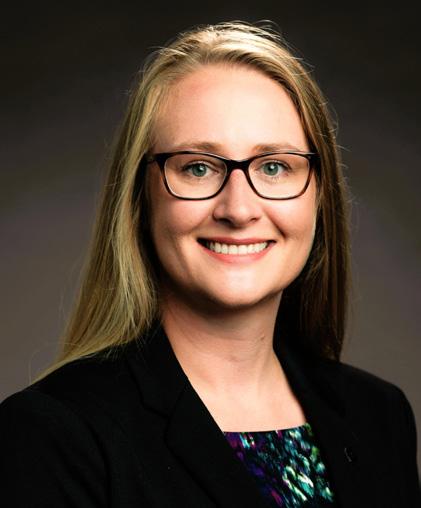
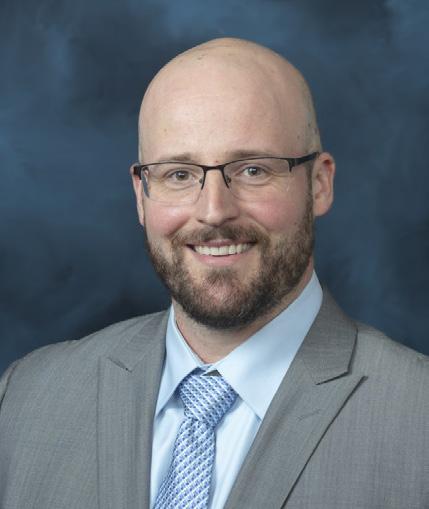
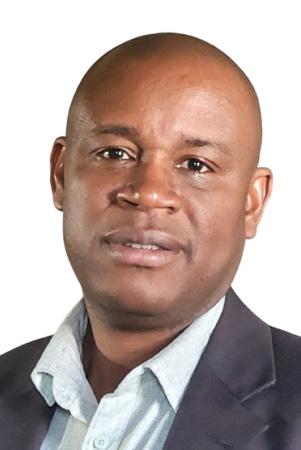
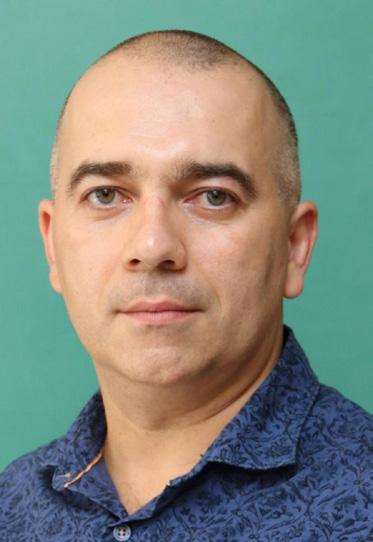
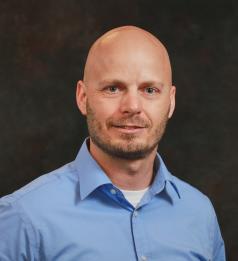
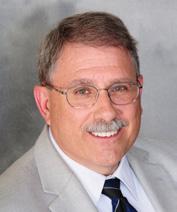
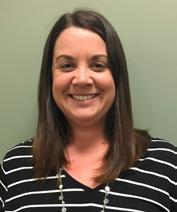
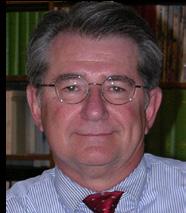
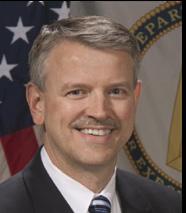
Andrea Nelson, FLC Marketing and Communications Director; Kimberley VandenBrook, FLC Awards and Marketing Manager; Nancy Watkins
WELCOME TO THE 2026 FLC AWARDS CEREMONY!
Our 2026 FLC Awards applicants — especially those winners whose submissions rose to the top — deserve a hearty round of applause. It takes exceptional determination to start with an idea and turn it into an innovation worthy of recognition by federal technology transfer’s most prestigious awards program.
This year, we honor 27 FLC Award winners and seven honorable mentions from five federal agencies. They were chosen from an outstanding group of 83 applicants, an impressive number given the lengthy government shutdown during the submission window. On behalf of the FLC Awards Subcommittee, we sincerely appreciate your participation in the process of acknowledging the best and brightest innovators in tech transfer.
Our federal laboratories are making essential innovations every day. American technological invention and advancement are the envy of the world and a boon for the general public. The mission-critical work that people like you do at our federal labs creates climate-friendly solutions, inspires future generations of research, secures innovative energy technology, improves veteran healthcare, and so much more. Thank you for doing the work you do and sharing it here on the biggest of federal tech transfer stages!
Congratulations to all our winners and to everyone who showcased their best efforts in this year’s submissions. Every single one of you is making America a smarter, safer, stronger place and, by extension, improving the federal tech transfer ecosystem.
Sincerely,
Charlotte Eng, Lawrence Livermore National Laboratory Chair, FLC Awards Subcommittee
EXCELLENCE IN
HONORABLE MENTIONS
Department of Energy
Lawrence Livermore National Laboratory: Monolithic Telescopes Bring Reliable Imaging From Lab to Orbit 18
National Laboratory of the Rockies: Commercialization of Intelligent Residential Heat Pump Water Heaters 19 National Laboratory of the Rockies: Technology Transfer
U.S. Department of Agriculture
AI-Enabled Breakthrough Expands
DEPARTMENT OF ENERGY
Lawrence
INTERAGENCY TRANS-DISCIPLINARY PARTNERSHIP AWARD
DEPARTMENT OF WAR | NATIONAL AERONAUTICS AND SPACE ADMINISTRATION
Defense Health Agency Research & Development, Medical Research and Development Command, Office of Medical Technology Transfer; Walter Reed Army Institute of Research; National Aeronautics and Space Administration, DoW Space Test Program, U.S. Space Force
STATE AND LOCAL ECONOMIC DEVELOPMENT AWARD
DEPARTMENT OF ENERGY
National Laboratories
Entanglement:
IMPACT AWARD
DEPARTMENT OF ENERGY
Idaho National Laboratory
National Laboratory of the Rockies
Laboratory
Awards by the Numbers
WINNERS BY REGION*
WINNERS BY AGENCY*
2 2
5
EXCELLENCE IN TECHNOLOGY TRANSFER
Honors outstanding work by federal labs in collaborating with industry, academia, or other labs to bring technologies from the lab to the marketplace.
Strategic Tech Transfer Turns Vaccine Innovation Into Global Health Solution
THE PROBLEM: Despite the critical role that vaccines play in global health, access to some of the most powerful ingredients is limited. Vaccines save millions of lives every year by protecting people against serious illness and death from preventable diseases. Efficacy is greatly improved by the inclusion of adjuvants, which help stimulate a stronger immune response in patients. Today, adjuvants are used in about half of the world’s vaccines. However, one of the most effective adjuvants, AS01, is restricted by its manufacturer to use in its own vaccines.
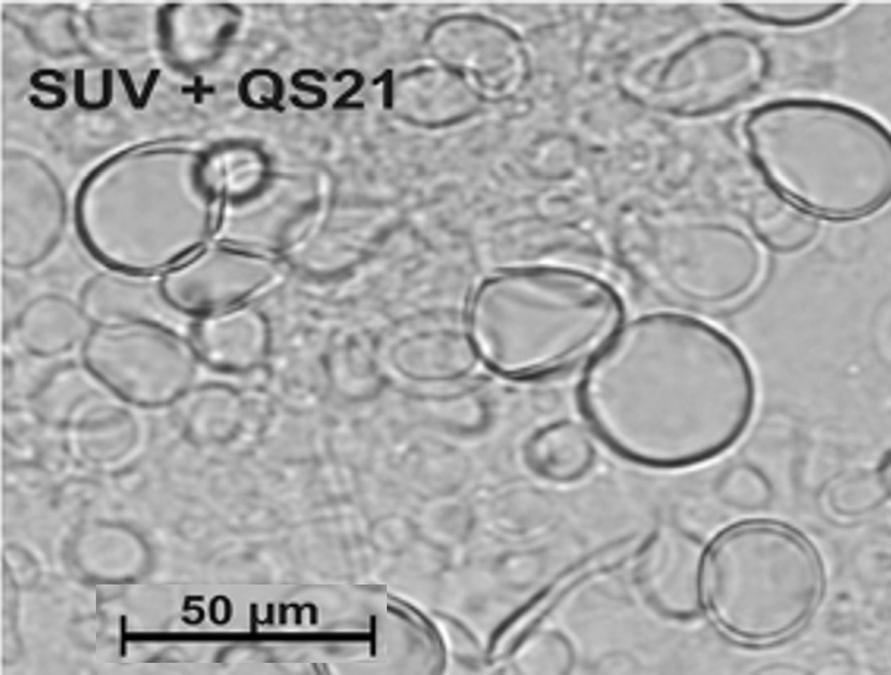
THE SOLUTION: Scientists at the Walter Reed Army Institute of Research (WRAIR) formulated and patented a new adjuvant called Army Liposome Formulation with QS21 (ALFQ) that can emulate and potentially even exceed the potency of AS01. Unlike AS01, ALFQ is made with more stable fat-based ingredients and contains a mix of small and large single-layer microscopic vesicles, ranging from nanometer scale to more than 30 microns in size. The issued patent supports the U.S. Army’s efforts to explore the development of novel vaccines with academic, government, and commercial partners for national defense. ALFQ also has “plug-and-play” versatility that allows it to be used in vaccines for countless diseases.
THE TECH TRANSFER MECHANISM: Over the past nine years, 140 requests have been initiated to enter into various types of agreements with WRAIR, resulting in:
• 42 nondisclosure agreements
• 36 CRADAs
• 32 material transfer agreements
• 10 CRADAs for clinical trials
• 10 research collaboration agreements
• 4 simple letters of agreement
• 3 memorandums of understanding
• 2 interagency agreements
• 1 commercial license agreement
THE TECH TRANSFER EXCELLENCE: The success of the Defense Health Agency Research & Development, Medical Research and Development Command Technology Transfer (T2) professionals in promoting ALFQ led to multiple collaborations and licensees, including an agreement with Pfizer that has been the most lucrative license to date. The T2 efforts maximized the value of the intellectual property by strategically securing patents in key global markets and bundling valuable technical and regulatory data into the licensing agreements, which significantly enhanced their attractiveness and overall value.
THE IMPACT: Ongoing research involving ALFQ is paving the way for the development of medical countermeasures for emerging and existing infectious diseases by the U.S. Army and outside partners. Six clinical trials in humans have been completed, five are active and five additional trials are in the pipeline. Preliminary data from the six completed Phase 1 trials with two malaria, HIV, Campylobacter, SARS-CoV-2 antigens showed that the ALFQ-adjuvanted vaccine was safe and well tolerated. Collaboration with the Henry M. Jackson Foundation for the Advancement of Military Medicine has led to the creation of SpFN-ALFQ, a next-generation coronavirus vaccine that may confer broader protection against a range of known and novel SARS-CoV-2 variants. A partnership between WRAIR and the U.S. Agency for International Development has led to the completion of two Phase I trials and one Phase Ib trial for two malaria vaccines. Commercially, Pfizer has achieved three clinical milestones for three different indications using ALFQ under a partially exclusive license that has generated significant royalty revenue that WRAIR is using to invest in R&D, reward scientists and inventors, and fund a community engagement program.
THE LABS:
Defense Health Agency Research & Development, Medical Research and Development Command, Office of Medical Technology Transfer; Walter Reed Army Institute of Research Department of War
THE TEAM:
Carl Alving WRAIR
Mangala Rao WRAIR
Gary Matyas WRAIR
Jasleen Shant WRAIR
David Humphrey DHA Marlana K. Chapin DHA
PHOTO CAPTION:
ALFQ liposomes under the microscope, showing vesicles of different sizes from small to large to huge. Credit: WRAIR
AI-Enabled Breakthrough Expands Lifesaving Care on the Battlefield and Beyond
THE PROBLEM: The objective of the “golden hour” policy at the Department of War (DoW) is to ensure that wounded soldiers receive surgical intervention within an hour of injury. However, in situations where immediate hospital evacuation is not possible, field medics often have to care for injured soldiers in the field for days without access to the specialty expertise or equipment required to perform lifesaving procedures, such as fluid resuscitation and endovascular intervention.
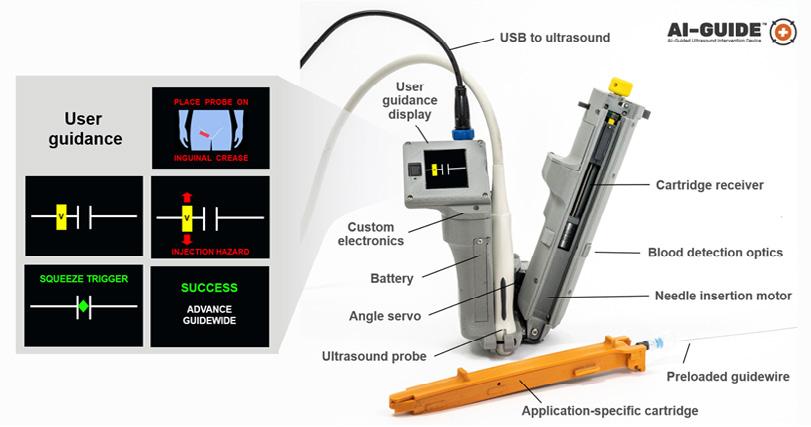
THE SOLUTION: AI-GUIDE is a technology that integrates commercial handheld ultrasound technology with custom AI software to help medical nonspecialists accurately insert a needle into a blood vessel and allow the placement of catheters for lifesaving care. The technology was created through a partnership between MIT Lincoln Laboratory (MIT LL) and clinicians at the Massachusetts General Hospital (MGH) Center for Ultrasound Research & Translation, in response to a directive and funding from the Defense Health Agency Combat Casualty Care Research Portfolio (CCC). Testing has proven that the AI-GUIDE prototype is fast and accurate when used by nonspecialists, earning it a Lincoln Laboratory Best Invention Award and an R&D 100 Award. By expanding access to care in austere environments, AI-GUIDE promises to save lives and improve outcomes for warfighters and civilians.
THE TECH TRANSFER MECHANISM: The MIT Technology Licensing Office and the Lincoln Laboratory Technology Transfer Office use a variety of technology transfer mechanisms, along with support from the CCC, an AFWERX Small Business Innovation Research (SBIR) grant, and private investor funding secured by AutonomUS Medical Technologies, a startup cofounded by MGH and MIT LL team members. They collaborate to transfer the AI-GUIDE technology, research and development insights, and clinical study results as they are developed. Much of the more mature work for vascular access has been transferred. Nerve-block technologies and others in development will be transferred as their efficacy is proven.
THE TECH TRANSFER EXCELLENCE: The MIT LL/MGH team developed an advanced medical technology from idea, to working proof of concept, to startup company within three years. They supported the startup company as it secured a Food & Drug Administration (FDA) Breakthrough Device designation and private investment and funding from the DoW and the National Institutes of Health (NIH). The strong connection with MIT LL and its Technology Transfer Office enables the team to continue researching new AI-GUIDE applications, test them with MGH partners, and transfer them to AutonomUS, establishing a translational pathway for future technologies.
THE IMPACT: Through the AI-GUIDE technology transfer process, the MIT LL and MGH teams have gained insights into the nonmilitary medical industry and have refined AI-GUIDE’s specifications through interactions with the FDA and potential customers. SBIR grant funding has enabled the team to mature the technology and transfer it to AutonomUS, boosting the startup’s growth. With substantial support from NIH, AI-GUIDE will be introduced to the civilian medical market, which will be crucial for its economic viability. Furthermore, the collaboration among MIT LL, MGH, and AutonomUS is a model example of how to progress a military innovation from concept to operational capability, establishing a framework for future collaborations.
THE LAB:
MIT Lincoln Laboratory Department of War
THE PARTNER:
Massachusetts General Hospital Center for Ultrasound Research & Translation
THE TEAM:
Brian Telfer MIT LL
Anthony Samir MGH and AutonomUS
Matt Johnson formerly MIT LL, now AutonomUS
Therese West CCC
Theodore Pierce MGH
Laura Brattain formerly MIT LL, now University of Central Florida
Samuel Kesner MIT LL
Lars Gjesteby MIT LL
Joshua Werblin MIT LL
Benjamin Roop MIT LL
Alec Carruthers MIT LL
Nancy DeLosa MIT LL
Lauren Foster MIT Technology
Licensing Office
Ben Rockney MIT Technology
Licensing Office
Asha Rajagopal MIT LL
Technology Transfer Office
Jordan Mizerak MIT LL
Technology Transfer Office
Melly Coronado MIT LL
Technology Transfer Office
Jonathan Dan MIT LL
PHOTO CAPTION:
AI-GUIDE’s user guidance display and components facilitate automatic insertion of a needle, guidewire, and catheter into a blood vessel. Credit: MIT LL
THE PROBLEM: Smartphones, electric vehicles, laptops, tablets, and other ubiquitous tech — not to mention data centers, wind turbines, and defense systems — rely on vital rare earth elements (REEs) for their production. However, REEs are difficult and costly to obtain, and traditional methods for purifying them are either small-scale and slow-moving, or large-scale but inefficient and polluting. REEs are largely imported, with China controlling over 95% of REE refining. This creates a significant bottleneck in the supply chain and places the United States in a vulnerable geopolitical position.
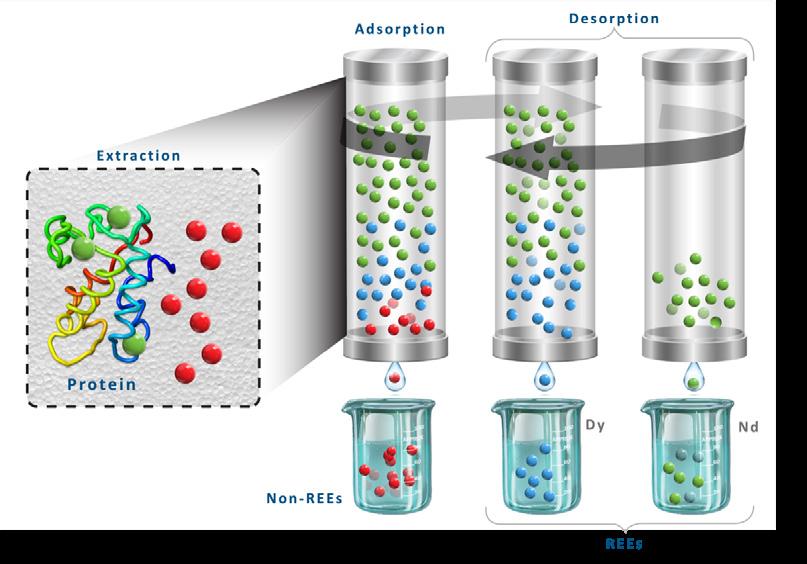
THE SOLUTION: Lawrence Livermore National Laboratory (LLNL) developed a groundbreaking technology called Lanmodulin-Based Rare Earth Purification (LanPure), which enables highly selective extraction and separation of REEs from diverse sources, including rare earth ores, mining waste, coal byproducts, and recycled electronics. The technology addresses purification and supply chain challenges by using proteins called lanmodulins, first discovered in bacteria, to separate the REEs. The lanmodulins can recognize and bind to specific REEs, even when present in trace amounts and mixed with other metal ions. LanPure is notable for its selectivity, speed, reusability, and sustainability. It is a highly durable system that allows for thousands of reuse cycles without loss of performance, lowering operational costs. It also could support increased domestic extraction of critical materials, reducing reliance on foreign supply chains.
THE TECH TRANSFER MECHANISM: The lanmodulin protein was discovered in 2018 by a team of researchers at Pennsylvania State University. Shortly thereafter, LLNL scientists leveraged the protein’s strong ability to bind and select REEs to create a new biomining technology, which yielded LanPure, an intellectual property related to the industrial use of the natural and engineered lanmodulin proteins. Technology transfer efforts were supported through two federal programs: the Critical Materials Innovation Hub, an Iowa-based Department of Energy research center focused on ensuring American technological competitiveness through efficient use of domestic materials; and the Department of War’s (DoW) Defense Advanced Research Projects Agency’s EMBER (Environmental Microbes as a BioEngineering Resource) program. To pursue technology commercialization, LLNL identified a licensing partner in Alta Resource Technologies, a Coloradobased company that applies biochemical techniques to critical mineral separation.
THE TECH TRANSFER EXCELLENCE: The LLNL Innovation and Partnerships Office determined that Alta was well positioned to advance LanPure technology through the commercialization process. Alta obtained encouraging test results on LanPure’s efficiency, reusability, and commercial viability. After opting into an exclusive licensing agreement within a defined field of use for technology development, Alta and LLNL worked closely to scale the technology, and the collaboration successfully raised three funding rounds during the licensing period.
THE IMPACT: By building a strong and sustainable REE supply chain domestically, U.S. manufacturing could reduce its reliance on imported resources. At the time of publication, Alta had raised more than $10 million in seed funding to pursue commercialization of the biobased separation method. Shovel-ready commercialization of the LanPure process is slated for mid-2027. In partnership with the DoW, Alta will bring commercial production online in 2027. Most importantly, Alta has demonstrated multiple REE separations at high purity levels and high yield in a single column run, proving the technology’s effectiveness.
THE LAB:
Lawrence Livermore National Laboratory Department of Energy
THE PARTNER: Alta Resource Technologies
THE TEAM:
Yash Vaishnav LLNL
Samantha Madru LLNL
Dan Park LLNL
Yongqin Jiao LLNL
Nathan Ratledge Alta
PHOTO CAPTION:
The use of immobilized Lanmodulin for the purification and separation of REEs. Credit: LLNL
EXCELLENCE IN TECHNOLOGY TRANSFER
Fuel Cell Innovation Unlocks Hydrogen Power for Hard-to-Electrify Sectors
THE PROBLEM: While hydrogen fuel cells have evolved to make great strides toward global decarbonization, technical limitations have constrained their widespread adoption. Hydrogen fuel cells generate clean, efficient, and reliable electricity through the chemical reaction of hydrogen and oxygen. The Ion Pair Membrane Electrode Assembly (MEA), developed at Los Alamos National Laboratory (LANL), improved adoption in some sectors by delivering greater energy output and efficiency while reducing weight, size, manufacturing costs, and reliance on expensive and harmful perfluorinated materials. Building on the success of the Ion Pair MEA, LANL turned its attention to targeting the industry sectors that remained the hardest to electrify: marine, aviation, and portable power applications.
THE SOLUTION: LANL entered into an enhanced license agreement with Advent Technologies to develop the Ion Pair MEA for marine, aviation, and portable power applications, while retaining non-exclusive rights in other markets. The partnership enables LANL scientists and Advent engineers to work side-by-side to refine the Ion Pair MEA design, test its performance, and explore commercial development pathways. The agreement represents the latest milestone in the decade-long partnership between LANL and Advent, which was formalized under the L’Innovator 1.0 program, a Department of Energy (DOE) initiative fostering lab-to-market technology transfer.
THE TECH TRANSFER MECHANISM: DOE support through the L’Innovator program facilitated early-stage technology transfer and collaboration. LANL and Advent initially entered into a broad non-exclusive license agreement that was later expanded to grant exclusivity for the targeted fields of use. Throughout the partnership, LANL and Advent have collaborated to continue researching and developing the Ion Pair MEA design.
THE TECH TRANSFER EXCELLENCE: The partnership between LANL and Advent integrates flexible licensing, multi-sector commercialization, and collaborative innovation. By granting Advent exclusivity in marine, aviation, and portable power fields — sectors with historically high barriers to adopting clean energy solutions — the enhanced license agreement has significantly shortened the time-to-market, compared with the DOE’s standard licensing processes, and it also ensures focus and accountability while maximizing societal benefit. By granting Advent exclusivity in strategically critical markets while retaining non-exclusive rights for other applications, LANL is able to ensure wide-ranging deployment of the Ion Pair MEA. This transfer process — which spans invention, joint development, recognition, and enhanced licensing — exemplifies a creative, multi-pronged pathway to societal impact, making it a model of excellence that now serves as a template for future DOE-industry collaborations in clean energy innovation.
THE IMPACT: At the time of publication, nearly 2,000 Ion Pair MEAs have been shipped to the U.S. Army for use in the development and testing of Advent’s Honey Badger 50™ ruggedized man-portable battery charger, designed to power radio and satellite communication gear, mobile surveillance systems, and other uses in rough environments. Stralis Aircraft has converted a light airplane to use the Ion Pair MEA for propulsion, and the first all-electric flight is projected for late 2026. Furthermore, Airbus has extended their Joint Development Agreement based on using Ion Pair technology for hydrogen powered flight, as the MEAs continue to achieve milestone performance. Advent anticipates that the Ion Pair MEA’s high power output and small size will be attractive to the marine and aviation industries for propulsion, auxiliary power, and external power, while warfighters and first responders will benefit from its ability to significantly reduce carried battery loads by up to 70% for three-day missions.
THE LAB:
Los Alamos National Laboratory Department of Energy
THE PARTNER:
Advent Technologies Holdings Inc.
THE TEAM:
Marc Witkowski LANL
Yu Seung Kim LANL
Emory De Castro Advent
Gary Herman Advent
Jim Coffey Advent
PHOTO CAPTION:
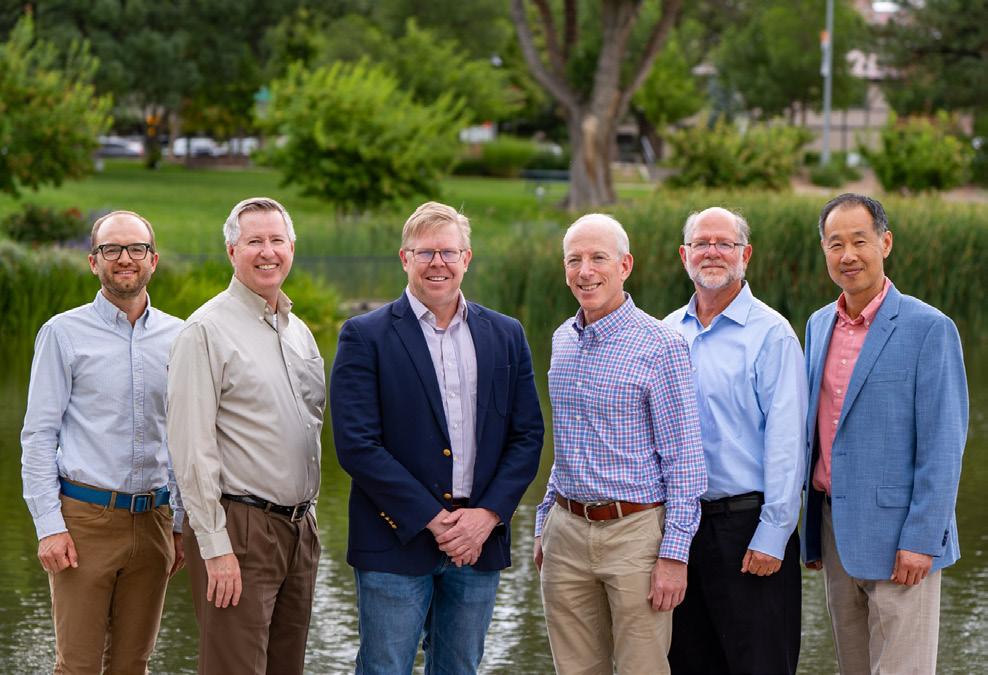
From Left:
Jon Cook, Marc Witkowski, and James Zahler of the Feynman Center for Innovation at Los Alamos National Laboratory, Chief Executive Officer Gary Herman and Chief Technology Officer
Emory DeCastro of Advent, and Yu Seung Kim, a LANL scientist, celebrate with a signing ceremony at Ashley Pond in Los Alamos, New Mexico.
Credit: Iggy Perez/LANL
NLR’s Groundbreaking Energy Storing and Efficient Air Conditioner
THE PROBLEM: Air conditioning is essential for maintaining comfortable, healthy temperatures in homes, schools, workplaces, and community spaces — but the technology is outdated, expensive, and environmentally harmful. By 2050, global air-conditioning use is expected to climb to five times what it is today. Every year, air conditioners cost Americans more than $29 billion in household energy costs. Many older air conditioning systems use refrigerants harmful to the environment, and the high energy demand can strain the electric grid, increasing costs for utilities and, ultimately, consumers.
THE SOLUTION: The Energy Storing and Efficient Air Conditioner (ESEAC) technology from the National Laboratory of the Rockies (NLR, formerly National Renewable Energy Laboratory) uses a liquid desiccant system that absorbs humidity directly from the air, requiring significantly less electricity and reducing operating costs. Additionally, ESEAC incorporates built-in energy storage, allowing it to consume far less electricity from the grid during peak times. By separating cooling and dehumidification from real-time electricity use, ESEAC provides a more grid-friendly alternative to conventional air conditioning at a much lower cost. ESEAC’s technology can cut electricity use for indoor cooling by up to 50%, while its integrated storage system could reduce peak demand by more than 90%.
THE TECH TRANSFER MECHANISM: In 2018, NLR and the startup Blue Frontier pursued a license agreement with key diligence milestones tied to capital raising, prototype development, and manufacturing obligations. Two years in, Blue Frontier received funding from Wells Fargo & Co. and the Department of Energy to continue ESEAC development and test prototype systems. In 2024, commercial real estate giant CBRE selected Blue Frontier to pilot ESEAC technology.
THE TECH TRANSFER EXCELLENCE: It took a highly collaborative, multi-year effort among federal researchers, licensing professionals, private entrepreneurs, and corporate partners to achieve this technology transfer. Overall, the license was amended five times to accommodate the company’s growth, 22 patents were secured, and nearly $3 million in joint project funding was developed. It was a dynamic, collaborative process that aligned public innovation with private execution to enable a breakthrough technology to impact the market.
THE IMPACT: ESEAC is a revolutionary cooling technology that combines cooling, dehumidification, and energy storage into one efficient system. Its design separates cooling and dehumidifying in the air conditioning process and features built-in energy storage — cutting electricity use by up to 50%, reducing peak energy demand by up to 90% or more, and easing strain on the grid. Since teaming up with NLR on this project, Blue Frontier has raised over $47 million in investment funds and expects to grow its staff, facilities, and research and development capabilities. Based on analyses of prototypes in Miami, the ESEAC system could save customers more than $165,000 each over its 15-year expected lifespan. That analysis is supported by trials at Fort Benning in Georgia, Bank of America branch offices in Delaware, an IMAX theater in Florida, and several grocery stores in California.
THE LAB:
National Laboratory of the Rockies Department of Energy
THE PARTNER:
Blue Frontier
THE TEAM:
Eric Payne NLR
Daniel Betts Blue Frontier
Bill Hadley NLR
Kristin Field-Macumber NLR
Trish Cozart formerly of IN2
Eric Kozubal NLR
Jason Woods NLR
Erin Beaumont NLR
Sarah Derdowski IN2
Catherine Dolezal IN2
Evan Rabb IN2
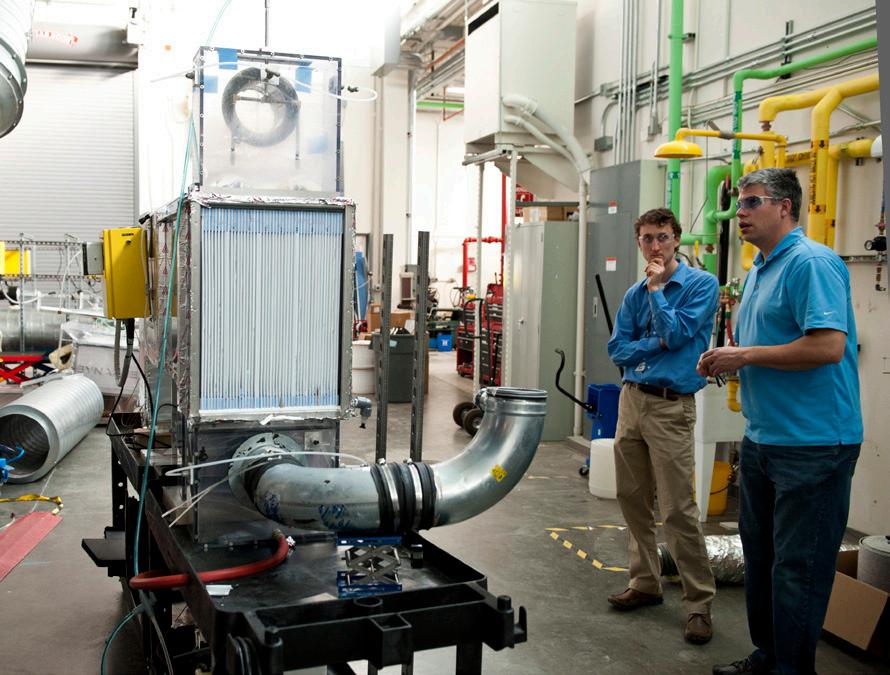
PHOTO CAPTION:
ESEAC inventors Eric Kozubal and Jason Woods working on the technology’s prototype. Credit: NLR
Transforming Secondary Wastewater Sources Into Battery-Grade Lithium for Energy Security
THE PROBLEM: Lithium is key to national security, energy, and communication industries in the United States, but access to it is critically limited. The U.S. relies almost completely on imports of the essential mineral: Less than 2% of the lithium needed for U.S. production comes from domestic sources, with major exporters like China, Argentina, and Chile creating supply chain vulnerabilities. Extraction of lithium is also technically challenging, costly, and inefficient for commercial viability.
THE SOLUTION: To create a domestic, reliable source of this precious commodity, Oak Ridge National Laboratory (ORNL) has partnered with Element3, a Texas-based company that transforms wastewater from oil and gas production into battery-grade lithium. For every million barrels of oil extracted, there are 4 million barrels of produced water, which is a complex solution of brine, injected water, and contaminants. ORNL’s technologies enable Element3 to extract lithium from produced water and will allow the company to establish the first domestic lithium production facility to open in nearly 60 years. ORNL licensed a suite of seven technologies to Element3 that collectively cover all facets of lithium extraction, purification, and concentration for battery-grade production.
THE TECH TRANSFER MECHANISM: The partnership between ORNL and Element3 began when both recognized that the lab’s extraction, concentration, selective absorption, and separation technologies — originally developed for other purposes — could be adapted for oil and gas wastewater applications. ORNL’s goal of advancing domestic production capabilities for critical minerals fit in neatly with Element3’s objective to create a resilient, domestic lithium supply chain at commercial scale. In July 2021, a non-disclosure agreement (NDA) established the foundation for the partnership, before ORNL filed patents covering the seven technologies from 2021 to 2023. An expedited licensing strategy was created, and the partners signed a commercial license agreement in 2025.
THE TECH TRANSFER EXCELLENCE: Transferring ORNL’s technologies to Element3 required a carefully orchestrated and rapid approach that combined multiple mechanisms. Around the establishment of an NDA, an expedited licensing strategy, and a commercial license agreement, ORNL also ensured that all intellectual property requirements were met, and that patents covering the seven technologies were filed and adapted specifically for oil and gas wastewater applications.
THE IMPACT: The transfer of ORNL’s technologies directly advances the mission of the Department of Energy’s Critical Materials Institute to provide scientific and technological breakthroughs that strengthen U.S. energy security and expand domestic manufacturing capability. The technology transfer will enable domestic lithium production at a scale not seen since 1967, and just in time: By 2030, U.S. battery plants are expected to require 40 times the current production of U.S. lithium, with forecasts showing current production satisfying only 25% of the demand. China currently controls 83% of processed lithium needed for lithium-ion batteries, leaving the U.S. vulnerable to foreign influence. In a demonstration, Element3 proved its ability to achieve over 85% lithium recovery from wastewater containing less than 40 parts per million, and third-party testing confirmed that the extracted elements met battery-grade standards.
THE LAB:
Oak Ridge National Laboratory Department of Energy
THE PARTNER:
Element3
THE TEAM:
Ramesh Bhave ORNL
Hood Whitson Element3
Jennifer Caldwell ORNL
Edna Gergel ORNL
Leslie Smith ORNL
Andreana Leskovjan ORNL
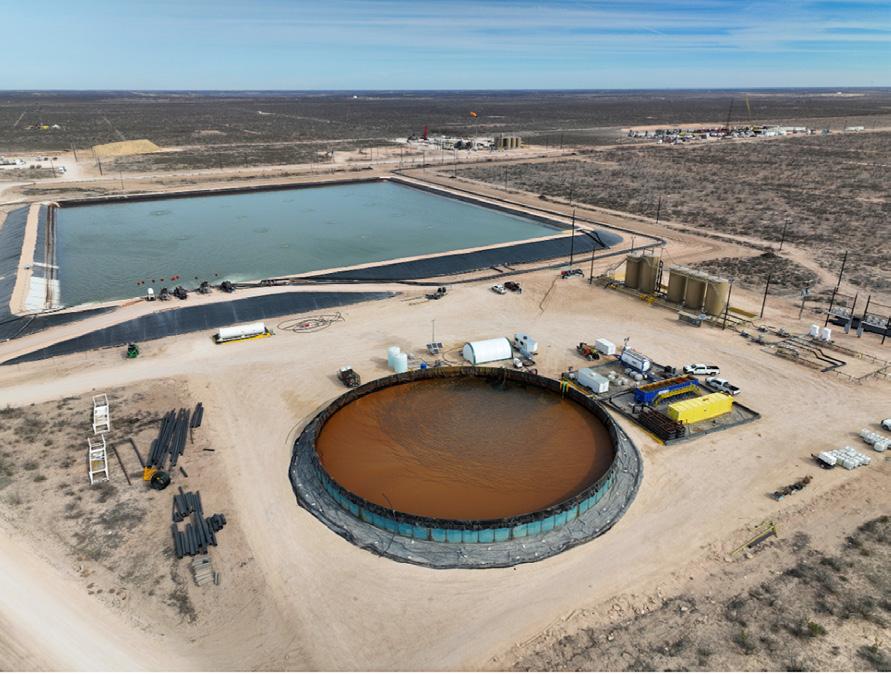
PHOTO CAPTION:
Element3 demonstrating the pre-pilot scale demonstration of direct lithium extraction using lithium sorbents in Midland, Texas, oil field brines. Credit: Element3
PNNL & SenseAI | Revolutionizing Electron Microscopy With Compressive Sensing
THE PROBLEM: Electron microscopes are critical for both engineering and medical sciences, but contain a harmful flaw. They are miracle tools for scientists and researchers, with widespread applications in fields like drug design, energy storage, and semiconductor optimization. However, electron microscopes cannot be used without damaging the material they’re magnifying, which alters its properties before an image can be captured. This issue has prevented entire classes of materials and processes from being studied at a molecular level, including living organisms, sensitive biological materials, and more.
THE SOLUTION: Pacific Northwest National Laboratory (PNNL) developed a new compressive sensing technology that overcomes this problem, significantly improving the performance of electron microscopes and other imaging devices. Compared with conventional imaging approaches, PNNL’s compressive sensing technology provides up to 100 times faster image capture and data processing with only 1% of the material damage and no loss of image fidelity. SenseAI Vision licensed this technology to create 2D and 4D scanning transmission electron microscopy (STEM) tool suites. The technology features a plug-and-play design, allowing it to be used with virtually any other analytical imaging device. This innovation transforms basic microscopes into state-of-the-art instruments, advancing today’s most sophisticated instruments to unlock unprecedented performance.
THE TECH TRANSFER MECHANISM: In 2019, PNNL began licensing discussions with Sivananthan Laboratories to explore the use of the lab’s technology in night vision and other defense applications. A subsidiary of Sivananthan, Nuxutra received an exclusive license to use PNNL’s technology for detectors in night vision cameras. In 2022, however, a research team at the University of Liverpool (UoL) discovered that the PNNL technology could be applied to all types of imaging devices. The UoL group joined with Nuxutra, and they were awarded several Small Business Innovation Research Phase I and Phase II projects by the Department of Energy and the National Aeronautics and Space Administration. These projects yielded new camera designs and patents for Nuxutra, and UoL patented several other applications of the technology. The two organizations recognized the implications of commingling their strengths and combined intellectual assets under a new company, SenseAI.
THE TECH TRANSFER EXCELLENCE: To make the technology transfer successful, all parties had to disclose their relevant intellectual property and its maturity to allow a fair assessment of how royalties should be distributed. They had to put aside competing issues and consider the greater impact that the technology would deliver from the combination of assets. Because the transfer involved licensing from both the U.K. and the U.S., SenseAI had to demonstrate economic benefits in each country.
THE IMPACT: Together, UoL and Nuxutra shaped a new vision of developing and commercially deploying AI-driven compressive sensing software that solved the problems in electron microscopy and enhanced the performance of all types of analytical imaging devices. This commercialization sets the stage for countless discoveries and significant advancements in imaging research capabilities across a wide range of fields in science, engineering, and medicine — and it opens the door to the study of entirely new materials and systems. In several case studies in the U.K., SenseAI software has helped institutes speed up analysis, resolve data management issues, increase processing power, and reduce sample damage.
THE LAB:
Pacific Northwest National Laboratory Department of Energy
THE PARTNERS:
SenseAI Vision Ltd.
University of Liverpool Nuxutra/Sivananthan Laboratories
THE TEAM:
Nigel Browning
Sivananthan Laboratories, SenseAI, and formerly PNNL/UoL
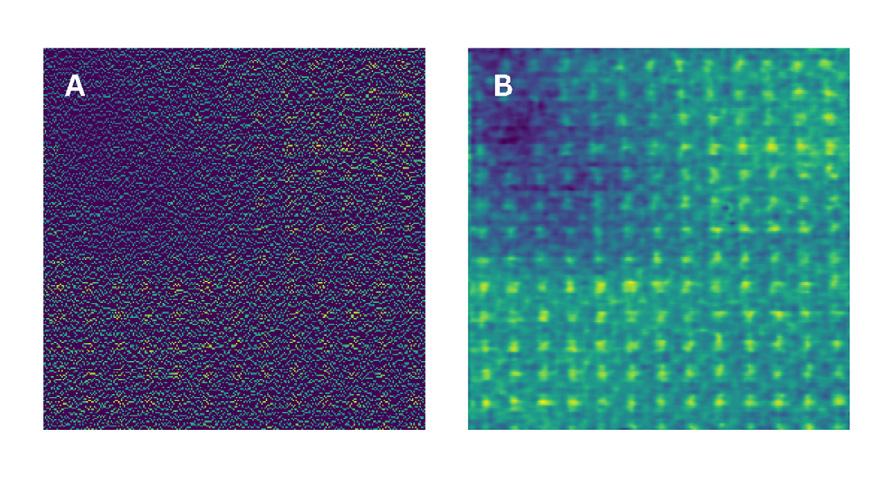
Left (A): Subsampled layer using 25% of original data points.
Right (B): Reconstruction using SenseAI. Total scan time is approximately 0.635 seconds. Generated from one 4D-STEM data set acquired by SenseAI Vision subsampling and inpainting software using the new JEOL GrandARM2 at the University of Liverpool and using a Direct Electron CeleritasXS camera by Mounib Bahri and Alex W. Robinson. The sample is [100] Strontium Titanate SrTiO3 prepared by FIB. Credit: SenseAI & Love Communications
VaporID: Portable,
Rapid, Non-Contact
Detection of Fentanyl and Drug Vapors
THE PROBLEM: Illicit substances like fentanyl threaten national security and human safety at borders and in highly populated places, but they are challenging to detect because their low vapor pressure make it hard to sense in the presence of other vapors like perfumes and fuels. Typical technologies detect harmful chemicals by using contact sampling for particles and residues, which is intrusive, time-consuming, and damaging to the flow of commerce. Ensuring that they can be quickly and effectively identified is essential to improving security.
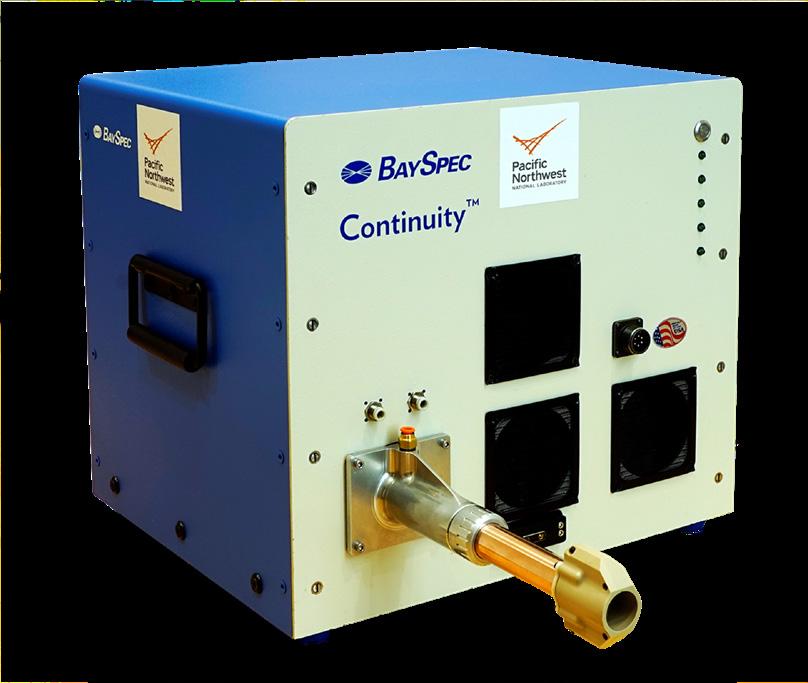
THE SOLUTION: Pacific Northwest National Laboratory (PNNL) developed VaporID to identify vapors at trace levels previously undetectable by any other technology. Detection takes merely seconds and is significantly faster, more accurate, and more sensitive than manual particle and residue collection. As a result, VaporID provides real-time, non-contact vapor detection of fentanyl and other dangerous chemicals without disrupting the flow of passengers, baggage screening, cargo, mail, and more. PNNL’s partner, BaySpec, developed a portable form of VaporID to take to market, allowing real-time detection of illicit materials that can cost thousands of lives each year. Once the size of a refrigerator, VaporID has been commercialized into a product weighing less than 50 pounds, about the size of a microwave oven, but still can sense the faintest wisp of fentanyl within seconds. VaporID, importantly, can also detect fentanyl analogs, or substances that are very similar but tweaked slightly in an attempt to avoid detection.
THE TECH TRANSFER MECHANISM: This transfer was over a decade in the making, culminating in a strategic partnership with BaySpec around 2021. VaporID was first developed in response to the 9/11 attacks, when an urgency for explosives screening became apparent in the United States. Industry began engaging with VaporID in 2015 and, in 2021, PNNL’s Technology Commercialization Office funded work to reduce the size and cost of VaporID. PNNL scientists participated in the Department of Homeland Security Science and Technology Directorate’s Commercialization Accelerator Program on several occasions, finally matching with BaySpec to integrate components of the new technology and demonstrate its ability to detect drugs and explosives at security-grade sensitivity. In 2023, BaySpec obtained a license to manufacture and sell VaporID instruments through a non-exclusive license.
THE TECH TRANSFER EXCELLENCE: After several years and partnerships that didn’t quite produce an appropriately sized, priced, or sensitive device, PNNL matched with BaySpec on the advice of a Department of War program manager. Once introductions were made, a non-disclosure agreement was quickly signed, funding was secured, and a license obtained. It took only a month for PNNL and BaySpec to negotiate a non-exclusive license for VaporID in 2023.
THE IMPACT: VaporID has delivered on a critical national security need that will have a great impact on the American public. The technology was named GeekWire’s 2020 Innovtaion of the Year and received the R&D 100 Awards Gold Medal as a Market Disruptor in 2019. VaporID achieved contactless, real-time fentanyl detection at one of the nation’s busiest border crossings and a demonstration at the largest conference for trace explosive detection in Ireland, earning international headlines. From an origin crafted in the wake of national tragedy, PNNL and BaySpec have advanced VaporID to a niche in the fight against the scourge of illicit fentanyl.
THE LAB:
Pacific Northwest National Laboratory Department of Energy
THE
PARTNER:
BaySpec Inc.
THE TEAM:
Robert Ewing PNNL
Elizabeth Denis PNNL
Kannan Krishnaswami PNNL
Elena Peterson PNNL
William Yang BaySpec
PHOTO CAPTION:
PNNL scientists, in collaboration with BaySpec, demonstrated the real-time detection of illicit drugs and portability of the detector, while analyzing samples collected by CBP officers at the Nogales, Arizona, border. PNNL’s fast analysis of seized drugs matched CBP’s laboratory results, identifying the presence of fentanyl at speed. Credit: BaySpec, Inc. & PNNL
Government Launch Software Takes Off in Commercial Space Industry
THE PROBLEM: Trajectory Analysis and Optimization Software (TAOS), developed and maintained by a team at Sandia National Laboratories (Sandia), has long been used by government agencies and their contractors because of its accuracy and ease of use. With so much commercial and government collaboration in the space sector, both government and industry have a high need for standardized, easy-to-use software for safety analysis.
THE SOLUTION: The National Aeronautics and Space Administration approved TAOS for use as part of its launch safety analysis program, and the software has been licensed by the Federal Aviation Administration, which has oversight of commercial launch safety. However, before commercially licensing the software, the TAOS and tech transfer teams at Sandia had to address concerns about licensing the software to private companies. Additionally, they had to develop a secure means of distributing the software without dedicated funding or a formal government mandate.
THE TECH TRANSFER MECHANISM: When Sandia and the Department of Energy agreed on the software’s benefit for all launches in the national interest, Sandia tech transfer specialists helped smaller companies gain access to TAOS by working with them to obtain approval from the Department of War Joint Certification Program. Without external funding, the TAOS technical team volunteered to train software users and to set up and maintain a secure external collaboration network for distributing software updates, training resources, and manuals.
THE TECH TRANSFER EXCELLENCE: Technical and licensing staff worked closely together to obtain approvals and determine how to effectively distribute and support the software commercially. The TAOS team configured a website on Sandia’s external collaboration network to host the software. The TAOS team continues to innovate ways to streamline the distribution of software updates that incorporate suggestions from users.
THE IMPACT: Originally created for Sandia’s national security mission requirements, TAOS is now being used by hundreds of government and private industry licensees to promote flight safety and address commercial space industry needs. To date, over 270 government use notices and commercial licenses have been issued for TAOS, and more than 84% of the commercial companies that launched rockets in the U.S. in 2024 have licensed it, including some of the largest and best known companies in the space industry. The commercial space sector accounted for 70% of all U.S. launches in 2024, and it is projected to grow from an estimated $630 billion in 2023 to $1.8 trillion by 2035. TAOS is helping to make rocket launches safer at a time of exponential growth in the industry.
THE LAB:
Sandia National Laboratories Department of Energy
THE TEAM:
Michael Sparapany Sandia
Michael Grant Sandia
Jon Christensen Sandia
Nathaniel Grady Sandia
Amanda Malherbe Sandia
Sandra Pino Sandia
Elisabeta Cosarca-Cordov Sandia
Victoria Martinez Sandia
David Salguero Sandia
David Wick Sandia
PHOTO CAPTION:
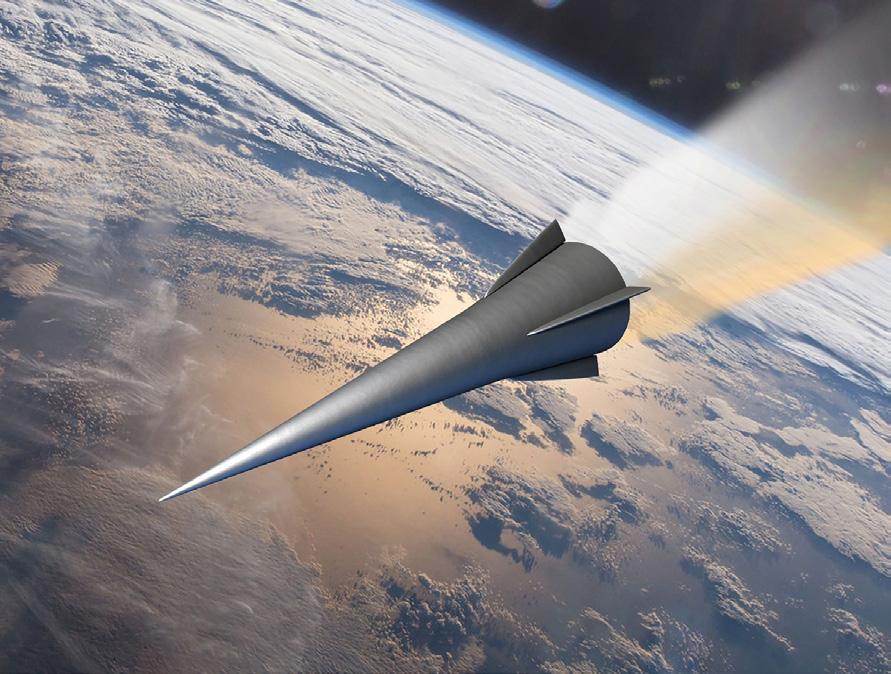
TAOS is used to model a variety of flight systems from hypersonic reentry vehicles, satellites, to subsonic cruise missiles, UAVs, and sensor darts. Credit: U.S. Military
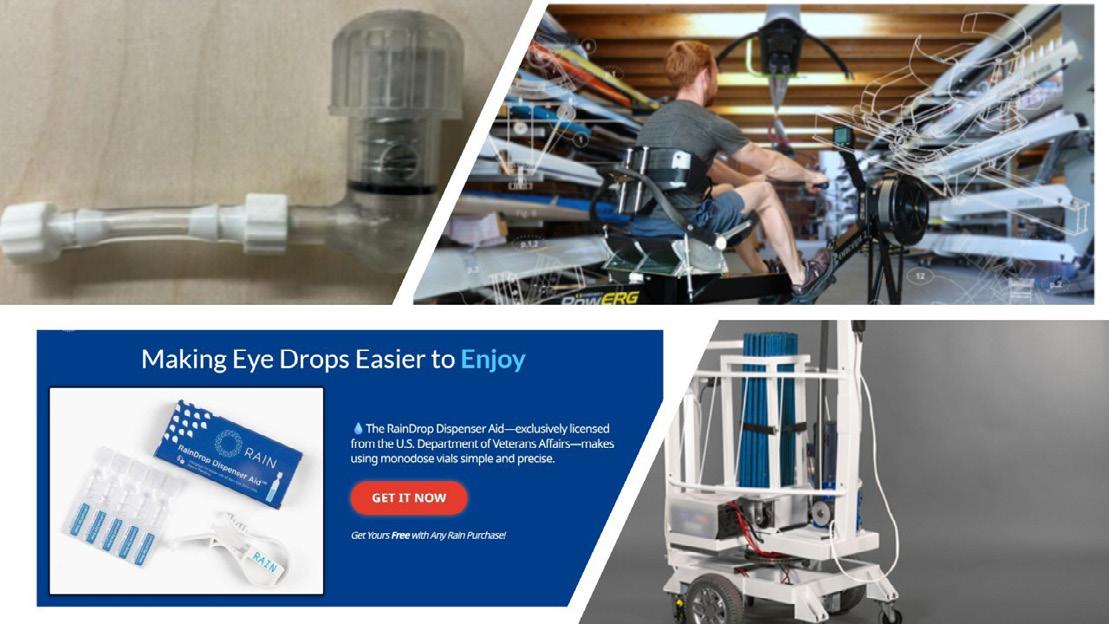
RainDrop Dispenser Helps Veterans With Eye Treatment
THE PROBLEM: Single-use eye-drop vials are a popular choice for long-term eye care because of the health advantages of their preservative-free formulas. However, the small vials are difficult to hold and squeeze with precision, particularly for veterans with arthritis or reduced hand dexterity. This results in wasted medication and lower compliance rates, which increases the risk of vision loss in patients.
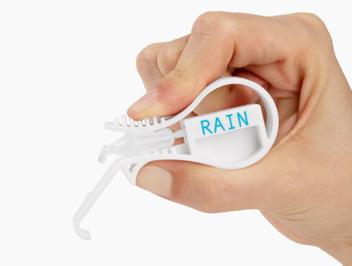
THE SOLUTION: At the San Francisco Veterans Affairs (VA) Medical Center, Julie Schallhorn observed the difficulties that her patients were having with the single-use vials, so she collaborated with the VA’s Technology Transfer Program (TTP) and the University of California to develop a solution. Schallhorn designed an ergonomic holder that stabilizes the vial on the patient’s cheekbone and allows the patient to release a controlled drop with medical precision.
THE TECH TRANSFER MECHANISM: Once a successful prototype was developed and a patent filed, the VA worked with its national technology transfer intermediary, TechLink, to identify Rain Eye Drops as an ideal commercialization partner. With TechLink’s guidance, Rain entered into a licensing agreement with the VA that supported the agency’s mission, preserved inventor rights, and ensured continued clinical benefit to veterans. Rain then worked with engineers and manufacturers to refine the design for scalable production, which involved optimizing the materials and manufacturing process, integrating feedback from clinicians, and preparing the product for consumer launch.
THE TECH TRANSFER EXCELLENCE: The technology transfer process facilitated by TechLink and supported by the VA TTP exemplified effective public-private collaboration: It was efficient, transparent, and focused on speed, accessibility, and mission alignment. From concept to commercialization, the VA and Rain worked together to ensure that an invention designed for veterans could also reach the broader population in a short time. Rather than licensing the technology solely to drive profits, the agreement ensured that the dispenser aid would be provided free with all Rain products, dramatically increasing access and impact.
THE IMPACT: In 2025, within two years of licensing the product, Rain launched the RainDrop Dispenser Aid nationwide. In addition to demonstrating how federal laboratories can quickly turn clinician-driven insights into scalable healthcare solutions that improve daily life for millions of people, the partnership also demonstrated the benefits of national exposure through product distribution, commercial partnership, online marketing, and printed articles in multiple industry-leading publications. The collaboration among the VA, the University of California, TechLink, and Rain demonstrated a model for ethical, transformative, clinician-driven inventions that can be replicated to benefit veterans and the public.
THE LAB:
VA Technology Transfer Program
Department of Veterans Affairs
THE PARTNERS:
Rain Eye Drops LLC
TechLink
University of California
THE TEAM:
Julie Schallhorn
San Francisco VA Medical Center
Grace Yeh
VA Technology Transfer Program
John Kaplan
VA Technology Transfer Program
TechLink Team
Mike Rain Rain Eye Drops
PHOTO CAPTION:
RainDrop Aid up close. Credit: Rain Eye Drops LLC
Monolithic Telescopes Bring Reliable Imaging From Lab to Orbit
THE PROBLEM: Satellites require telescopes that can survive high-acceleration launch loads, extreme temperature changes, and intense radiation. Conventional reflective telescopes, which consist of two or more separate mirrors and lenses, are often vulnerable to misalignment under such conditions.
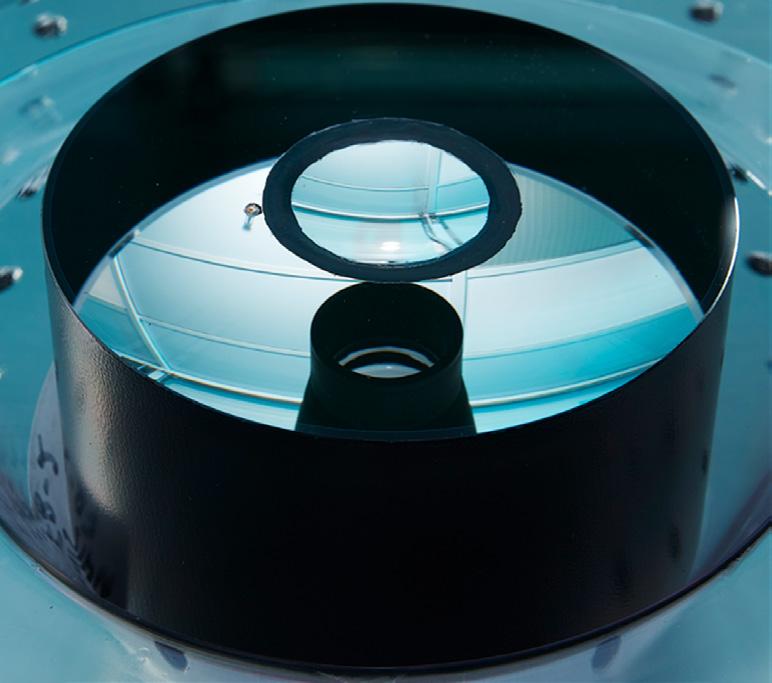
THE SOLUTION: The Monolithic Telescope, developed by Lawrence Livermore National Laboratory (LLNL), contains an entire optical system of mirrors in a single robust piece of fused silica. This increases protection for optical elements, improves mechanical stability, and reduces potential failure points. Furthermore, the optics can be tailored to mission requirements.
THE TECH TRANSFER MECHANISM: Following its first use, LLNL issued a government-use license to Starris: Optimax Space Systems in December 2024 to design and manufacture optics and full telescopes. LLNL executed a CRADA with Starris the following year to manufacture Monolithic Telescopes for proliferated satellite constellations. LLNL recently completed a four-year, $2 million CRADA with Tyvak International, and is fostering discussions and agreements with other commercial partners.
THE TECH TRANSFER EXCELLENCE: The transfer of Monolithic Telescope technology by LLNL’s Innovation and Partnerships Office has made the technology available to institutions that can scale production to meet critical national security and science objectives. LLNL’s discretion in selecting partners with prior space launch successes has resulted in outcomes beyond what the lab could have achieved on its own.
THE IMPACT: At least three missions have included Monolithic Telescopes in their payloads, one of which has been in orbit for over three years and has taken over 60,000 images of Earth and 94,000 images of deep space. Further scale-up of Monolithic Telescopes is likely as the partner companies continue to grow around missions using the technology.
THE LAB:
Lawrence Livermore
National Laboratory
Department of Energy
THE PARTNERS:
Terran Orbital
Starris: Optimax Space Systems
Redwire
Virgin Galactic
Firefly Aerospace
True Anomaly
Tyvak International
THE TEAM:
Anne Knapp LLNL
Clarence Cannon LLNL
Elsie Quaite-Randall LLNL
Charlotte Eng LLNL
Alex Pertica Scientific Contributor
Wim De Vries Scientific Contributor
Brian Bauman Scientific Contributor
Frank Ravizza Scientific Contributor
John Ganino Scientific Contributor
Peter Supsinskas Scientific Contributor
Jordan Smilo Scientific Contributor
Lance Simms Scientific Contributor
Alex Patton Scientific Contributor
Hilary Johnson Scientific Contributor
John Cortes Scientific Contributor
Collin Averill Scientific Contributor
Darrell Carter Scientific Contributor
Scot Olivier Scientific Contributor
Michael Pivovaroff Scientific Contributor
Robert Bickel Scientific Contributor
Bill Bruner Scientific Contributor
PHOTO CAPTION:
Up-close image of an 8.5-centimeters diameter monolithic optic, which offers the functionality of conventional reflective telescopes within a single, solid optic.
Credit: LLNL
Commercialization of Intelligent Residential Heat Pump Water Heaters
THE PROBLEM: Water heating accounts for roughly 15-20% of residential energy use. While heat pump water heaters are more efficient than conventional systems, many still rely on reactive controls, leading to suboptimal energy use and inconsistent hot water availability.
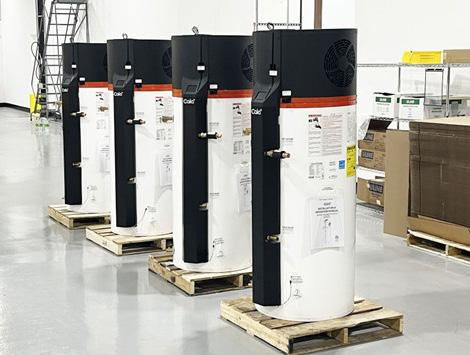
THE SOLUTION: Scientists at the National Laboratory of the Rockies (NLR) developed advanced control technology to optimize water heating based on household usage patterns and external signals, such as electricity pricing. Cala Systems licensed this technology to develop an intelligent heat pump water heater that plans ahead — improving efficiency, ensuring ample hot water, and enabling the system to act as a flexible thermal storage resource that adjusts to grid demands.
THE TECH TRANSFER MECHANISM: In 2020, Cala secured an option agreement for NLR’s Model Predictive Control (MPC) of Water Heaters portfolio. After meeting diligence milestones and securing state support, Cala executed patent and software licenses in 2022. Cala collaborated with NLR through the NLR Technical Assistance Program and raised a $5.6 million seed round in 2024 to support commercialization.
THE TECH TRANSFER EXCELLENCE: Cala identified the opportunity through a Department of Energy Lab Partnering Service listing and combined federal lab innovation with state funding and regional ecosystem support to bring the technology to market more quickly.
THE IMPACT: Cala publicly launched its product in 2024 and began installations in the fall of 2025. Cala estimates that a typical home could save up to $865 annually on utility bills with its technology, translating to $24 billion in savings each year throughout the U.S. The technology can unlock an additional $10 billion in savings annually from fully utilizing water heating flexibility nationally.
THE LAB:
National Laboratory of the Rockies Department of Energy
THE PARTNER:
Cala Systems
THE TEAM:
Michael Rigney Cala
Mike Ting Cala
Xin Jin NLR
Dane Christensen NLR
Jeff Maguire NLR
Erin Beaumont NLR
Jean Schulte NLR
Monali Mujumdar NLR
PHOTO CAPTION:
Cala Systems has developed a new water heating architecture that combines sensing, data, predictive controls, and precision hardware to heat water according to each home’s unique hot water habits and preferences. Cala is based on innovations licensed from NREL. Credit: Cala Systems
Technology Transfer Excellence Within the BOTTLE Consortium
THE PROBLEM: Less than 10% of plastics are recycled in the United States, partly because most plastics are prohibitively difficult and costly to separate, clean, and reprocess. Investment in bringing new recycling technologies to market will allow plastic waste to be converted cost-effectively into valuable resources.
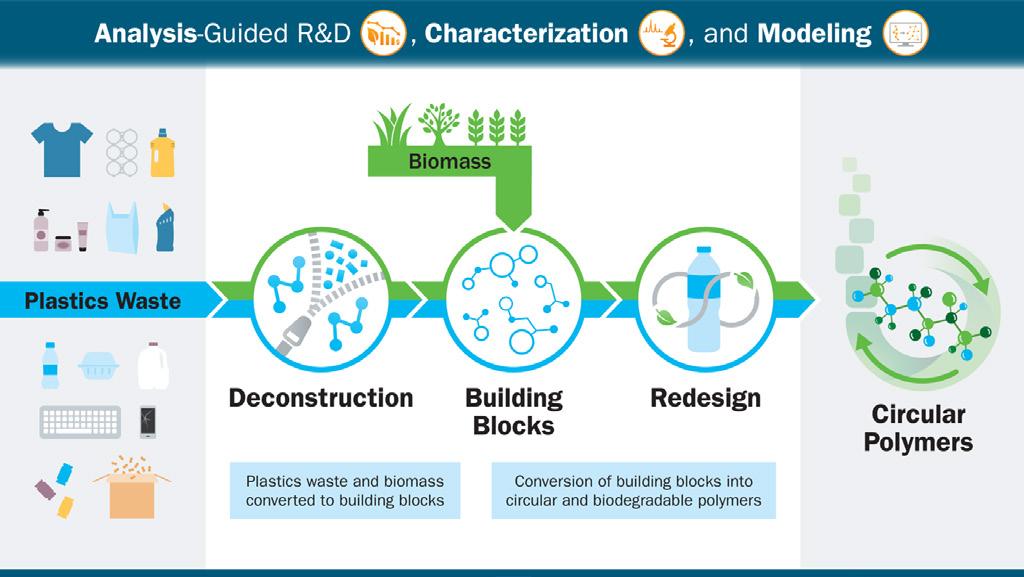
THE SOLUTION: Established in 2021 under the leadership of the National Laboratory of the Rockies (NLR), the BOTTLE consortium (Bio-Optimized Technologies to Keep Thermoplastics out of Landfills and the Environment) develops chemical upcycling strategies and redesigns plastics to be recyclable, leading to reduced energy use, simplified processing, and lower production costs.
THE TECH TRANSFER MECHANISM: With funding from the Department of Energy and industry partners, BOTTLE members have developed a portfolio of innovative chemical recycling technologies that have been transferred to the private sector for commercialization. BOTTLE also established three startup companies to commercialize its technologies.
THE TECH TRANSFER EXCELLENCE: BOTTLE’s commercial engagements have created a highly productive pipeline of promising chemical recycling technologies for the private sector. BOTTLE members have filed over 80 patent applications, established 14 CRADAs with industry, signed eight commercial patent license agreements, and launched three startup companies.
THE IMPACT: BOTTLE’s research is broadly influential and widely recognized, with over 10,000 citations across its published work. BOTTLE members have filed over 80 patent applications, which is important for accelerating innovations with the potential to reduce production costs and improve economic competitiveness. BOTTLE’s innovations and funding have also created new private sector jobs in its three startups.
THE LAB:
National Laboratory of the Rockies Department of Energy
THE PARTNERS:
Argonne National Laboratory
Oak Ridge National Laboratory
SLAC National Accelerator Laboratory
Colorado State University
Massachusetts Institute of Technology
Northwestern University
University of Puerto Rico
University of Wisconsin
THE TEAM:
Gregg Beckham NLR
Kat Knauer NLR
Michelle Reed NLR
Eric Payne NLR
Ron Schoon NLR
Robert Baldwin NLR
PHOTO CAPTION:
BOTTLE Overview. Credit: Eric Payne, NLR
Field Pennycress — Weed to Food, Fuel, and Feed
THE PROBLEM: With the growing demand for biodiesel fuels and lubricants, the Agricultural Research Service (ARS) found a new source of oil in the weed pennycress (Thlaspi arvense), from the mustard family. Pennycress seeds contain up to 35% oil high in erucic acid, a key ingredient in personal care and industrial products. To develop pennycress as a commercial cover crop, ARS had to improve pennycress germination and demonstrate its industrial value.
THE SOLUTION: ARS cultivated two new lines of pennycress and developed a pilot method of pressing seed oil. The team also converted oil from the pennycress plant into highervalue products and demonstrated that the nutritional value of the leftover plant material was comparable to soybeans and superior to canola. Researchers also demonstrated potential applications for its proteins and meal.
THE TECH TRANSFER MECHANISM: Through CRADAs, material transfer agreements, Biomass Research and Development Initiative grants, field days, and farmer and industry collaborations, ARS has transferred research in pennycress oil composition and germplasm analysis to universities and private companies.
THE TECH TRANSFER EXCELLENCE: ARS’ technology transfer efforts have stimulated pennycress research programs at several Midwestern universities and the launch of two commercial enterprises. The T2 effort also supported the Environmental Protection Agency’s inclusion of pennycress as an eligible feedstock for the Renewable Fuel Standard Program.
THE IMPACT: Pennycress’s hardiness allows for off-season production during the winter months, providing farmers with an additional cash crop and the ability to harvest three times in a two-year timeframe. Pennycress now serves as a feedstock in the U.S. for advancing biofuels, without competing with land for food production.
THE LAB:
Agricultural Research Service Department of Agriculture
THE
PARTNER:
University of Minnesota (UMN)
THE TEAM:
Steve Cermak ARS
Girma Biresaw ARS
Terry Isbell ARS
Roque Evangelista ARS
Steve Vaughn ARS
Frank Forcella ARS
Russ Gesch ARS
Don Wyse UMN
Samantha Wells UMN
Colin Cureton UMN
Carlson UMN
Ingrid Schneider ARS
Mila Hojilla-Evangelista ARS
PHOTO CAPTION:
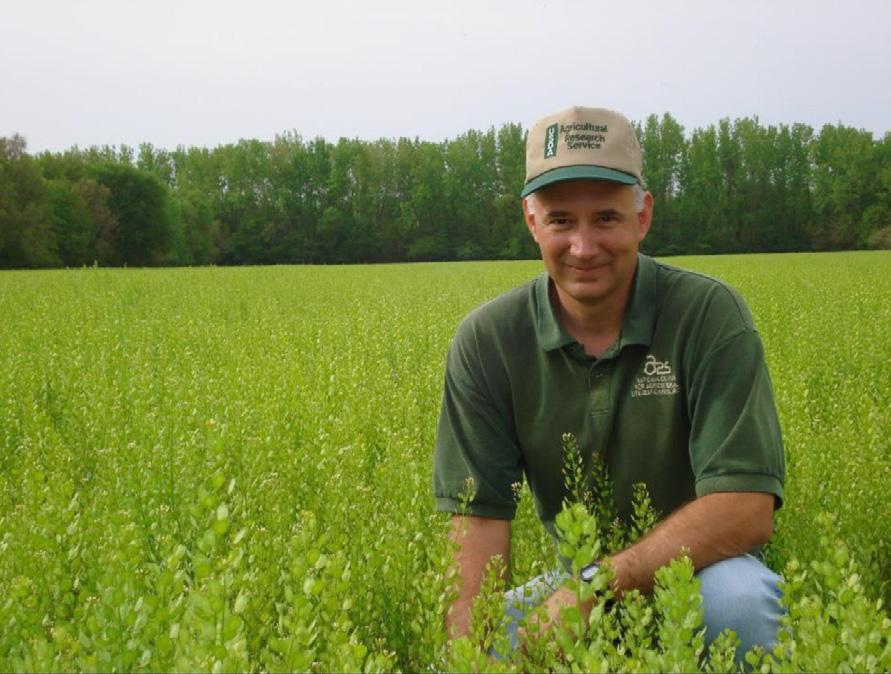
Researcher Terry Isbell in a field of ARS-developed field pennycress lines. Credit: ARS
INTERAGENCY TRANS-DISCIPLINARY PARTNERSHIP
Recognizes agency and/or laboratory employees from at least two different agencies who have collaboratively accomplished outstanding work in transferring technology.
First Animal Survival Surgery in Space Advances Human Health Research
THE PROBLEM: Spaceflight has a detrimental effect on astronauts’ skin, which acts as the body’s first line of defense against injury and is essential for regulating temperature and fluid balance. Astronauts experience accelerated aging, disrupted circadian rhythm, abnormal thinning of skin and other atypical changes that could pose health risks. As deep-space missions become more frequent, the National Aeronautics and Space Administration (NASA) Rodent Research program called upon the Walter Reed Army Institute of Research (WRAIR) to study how microgravity affects the healing of skin wounds by training astronauts to perform animal surgeries aboard the International Space Station (ISS).
THE SOLUTION: The ISS Program Office required a demonstration experiment, so the WRAIR scientists collaborated with the Medstar Health Research Institute (MHRI) at Washington, D.C., to develop Rodent Research-DEMO 1 (RR-D1), “Protocol Demonstration and Validation for Effects of Spaceflight on Tissue Regeneration.” Together, they developed a ground training program that included practical exercises and instructional videos, and they used this program to train the mission astronauts in the protocols and procedures. The team prepared guidance based on the outcomes of the training program and transferred the technology to NASA for future use. During the August 2021 ISS mission, MHRI personnel were stationed at the Kennedy Space Center to monitor the procedure and provide live feedback to the astronauts as they successfully performed survival wounding operations on mice.
THE TECH TRANSFER MECHANISM: The Integrative Systems Biology branch of WRAIR’s Center for Military Psychiatry and Neuroscience specializes in systems-based solutions for military-relevant health performance, resilience and readiness. Experts at MHRI developed the surgery protocols and monitored the project in real time to assist the astronauts. The Department of War Space Test Program oversaw the scope, planning, execution and control of the project. The WRAIR/MHRI team successfully transferred the technical knowledge gained through RR-D1 to NASA, which then delivered it to the ISS as a critical knowledge product to be used in future space missions.
THE IMPACT: RR-D1 was the first survival surgery ever performed on the ISS. Under the protocol, mice remained alive and healthy for more than two weeks before being humanely euthanized. The results from the RR-D1 project were used to support the design of a subsequent study, Rodent Research-22 (RR-22). During the RR-22 study in July 2022, ISS astronauts performed successful survival surgeries on nearly 30 mice. The interagency partnership, technology transfer and ongoing investigative efforts of RR-D1 have helped scientists develop a better understanding of the effects of spaceflight stressors on wound healing, provided insights into improving astronaut health, and contributed to improved therapeutic approaches on Earth. To date, more than 10 national and international research presentations have described RR-D1’s achievements.
THE LABS:
Walter Reed Army Institute of Research Department of War
Defense Health Agency R&D, Office of Medical Technology Transfer Department of War
National Aeronautics and Space Administration Department of War Space Test Program
THE
PARTNER:
Medstar Health Research Institute
THE TEAM:
Rasha Hammamieh WRAIR
Nabarun Chakraborty WRAIR
Aarti Gautam WRAIR
Allison Hoke WRAIR
David Trader WRAIR
Carmen Fernandez-Prada WRAIR
Jeffrey Shupp MHRI
Bonnie C. Carney MHRI
Lauren Moffatt MHRI
James McLeroy DoW Space Test Program
Carolynn Conley DoW Space Test Program
PHOTO CAPTION:
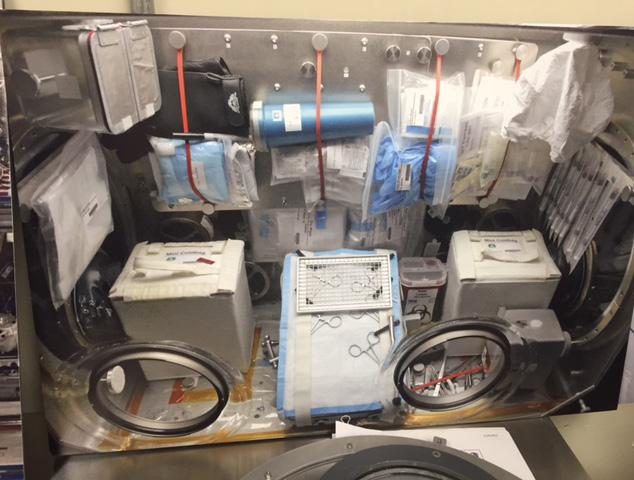
The training station for RR-D1, “Protocol Demonstration and Validation for Effects of Spaceflight on Tissue Regeneration. Credit: WRAIR
STATE AND LOCAL ECONOMIC DEVELOPMENT
Recognizes successful initiatives that involve partnerships between state or local economic development groups and federal laboratories for economic benefit that have occurred during the past five fiscal years.
STATE AND LOCAL ECONOMIC DEVELOPMENT AWARD
The Land of Entanglement: New Mexico’s Quantum Future
THE PROBLEM: With decades of experience leading pioneering research in quantum technologies for economic and national security applications, Sandia National Laboratories (Sandia) recognized an opportunity to leverage its expertise to strengthen New Mexico’s quantum ecosystem and help expand economic and workforce development in the state. By cultivating innovative partnerships with other national labs, academic partners, state institutions, and private firms, Sandia aimed to create an ecosystem that would help the state become a world leader in quantum information science innovation.
THE SOLUTION: Sandia has taken part in four major partnerships programs to train the next generation of quantum experts, participate in one of the nation’s major quantum computing initiatives, and to build up the quantum economy and ecosystem.
The Elevate Quantum tech hub is a public-private partnership with over 140 members that leverages contracts, grants, CRADAs, and memorandums of understanding to accelerate innovation and support the commercialization of new technologies. Funded by a $127 million grant from the U.S. Economic Development Administration, Elevate Quantum is the only grant-funded quantum tech hub in the country.
New Mexico has signed a memorandum of agreement with the Defense Advanced Research Projects Agency (DARPA) — only the third state to do so — to participate in DARPA’s Quantum Benchmarking Initiative (QBI), a major initiative to develop practical quantum computers. Through Strategic Partnership Program contracts and CRADAs, Sandia and its partners are laying the groundwork for the state’s quantum computer industry.
Sandia is teaming with a coalition led by Roadrunner Venture Studios to establish and operate Quantum Venture Studio, an innovation hub with its own dedicated investment arm. The studio received a $25 million grant from the Technology and Innovation Office at the New Mexico Economic Development Department to support startup companies seeking to collaborate with national labs.
Sandia partnered with Central New Mexico Community College to establish Quantum Leadership and Learning (QuLL), the nation’s first technician training program of its kind. By addressing workforce shortages in the quantum industry, QuLL is striving to position New Mexico as a key player in future quantum industry growth, particularly in manufacturing and system maintenance.
THE TECH TRANSFER MECHANISM: The leadership of Sandia’s business development and T2 offices made it possible for Sandia to help build and participate in the state’s quantum information science consortium, which has spurred high tech business growth, workforce training, and economic investment in the state. In turn, Sandia has benefited from participating in the consortium by obtaining large-scale grants, increasing T2 via CRADAs and memorandums of understanding, and building new capabilities for licensing and transferring technology and know-how to industry partners.
THE IMPACT: Thanks to the Quantum Venture Studio program and grants provided to startups and relocating companies, five quantum companies have moved to New Mexico. Over the next four years, the memorandum of agreement with DARPA’s QBI program could inject up to $120 million in funding to the state’s universities, private-sector innovators, and national laboratories. The funding can be used to expand research, engineering, and testing efforts in support of QBI’s mission to develop a utility-scale quantum computer by 2033. Furthermore, QuLL’s inaugural cohort completed the course in December 2025, and the program secured about $6 million to help launch its own dedicated lab. At the same time, a high school outreach program, QCaMP, has engaged more than 75 high school educators and 85 students across the state — laying the foundation for the next generation of quantum innovators.
THE LAB:
Sandia National Laboratories Department of Energy
THE TEAM:
Jake Douglass Sandia
Megan Ivory Sandia
Nora Meyers Sackett New Mexico
Economic Development Department
Alex Greenberg Office of New Mexico
Gov. Michelle Lujan Grisham
Maggie Newman Roadrunner
Venture Studios
Brian Rashap Central New Mexico Community College
PHOTO CAPTION:
Students join forces to tackle a challenge during an exercise at the 2025 QCaMP. The outreach program equips students and educators with essential tools for a quantum-powered future. Credit: Craig Fritz, Sandia
IMPACT
Honors FLC member laboratories whose technology transfer efforts have made a tangible lasting impact on the populace or marketplace ranging from a local to global scale.
Unlocking New Water Resources — Dimethyl Ether Desalination System
THE PROBLEM: Brackish groundwater — found in coastal aquifers when seawater mixes with fresh water and in inland aquifers with high mineral dissolution — is one of the largest untapped water resources in the western U.S. because its high mineral content makes it difficult and costly to purify. Conventional desalination technologies rely on energy-intensive reverse osmosis processes that create concentrated brine waste, requiring specialized and expensive disposal.
THE SOLUTION: Idaho National Laboratory (INL) researchers developed a new approach to desalination that dramatically reduces the energy required to purify brackish water while minimizing waste. The Dimethyl Ether Desalination System works by introducing dimethyl ether into brackish water. Dimethyl ether reduces the solubility of dissolved salts, causing them to precipitate out earlier in the purification process. The water is cleaner by the time it reaches the reverse osmosis stage, where it’s pushed through a filter-like membrane. Cleaner water requires less energy to move through membranes and reduces fouling. Because less water remains trapped in the concentrate, disposal becomes far simpler and, in some cases, the mineral-rich residue can be repurposed for agricultural or industrial purposes.
THE TECH TRANSFER MECHANISM: This process of dimethyl ether for desalination was developed through applied research funded by the Department of Energy. In 2023, INL entered into a license agreement with Trevi Systems, a California-based water treatment company specializing in high-efficiency desalination. INL provided Trevi with process data, analytical models, and system design support throughout the process to streamline development. A pilot system was then developed by Trevi and funded by the National Alliance for Water Innovation and the State of California. The pilot system was housed in a transportable container installed in a pistachio orchard to treat local brackish groundwater and produce clean irrigation water with minimal waste. INL and Trevi ensured that the technology addressed real-world needs while remaining economically viable by engaging farmers, municipal water providers, and others early in the process. This process took less than three years from idea to commercial solution, thanks to the strong partnership between INL and Trevi.
THE IMPACT: The Dimethyl Ether Desalination System has the potential to transform how the United States — and, ultimately, the world — produces freshwater from non-traditional sources. With droughts affecting over one-third of U.S. counties in the past decade, sustainable water treatment technologies are vital for food security, industrial productivity, and community resilience. INL’s technology addresses this challenge by offering a lower-cost, lower-energy, and lower-waste alternative to conventional desalination. Early pilot results in Coalinga, California, show that the system effectively removes minerals from brackish groundwater. The pilot produced clean irrigation water for crops like pistachios and simplified the waste disposal. The technology is modular, compact enough to fit inside a shipping container, and compatible with existing infrastructure, making it ideal for agricultural, municipal, and remote community applications.
THE LAB:
Idaho National Laboratory Department of Energy
THE
PARTNER:
Trevi Systems
THE TEAM:
Aaron Wilson INL
Ashini Jayasinghe INL
Caleb Stetson INL
Christopher Orme INL
Ryan Bills INL
PHOTO CAPTION:
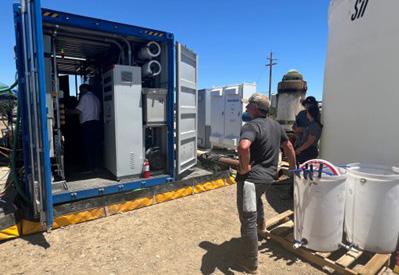
The DME system was designed to fit inside a shipping container for portability. Credit: INL
Licensing IViz-OT Intrusion Detection Tool for Grid Security
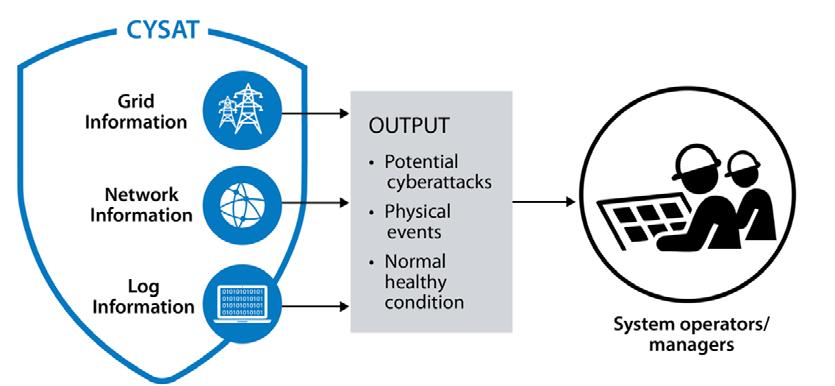
THE PROBLEM: To meet increasing demands for electrical power, modern power grid systems are increasingly adopting new decentralized energy technologies. These technologies rely on smaller energy substations located closer to the point of use — a shift that has blurred the traditional boundaries between information technology (IT) and operational technology (OT) infrastructures, increasing cybersecurity risks. Legacy security systems often fail to identify such threats because they either focus exclusively on IT systems or can’t manage OT-specific threats in real time.
THE SOLUTION: IViz-OT, developed at the National Laboratory of the Rockies (NLR), provides grid operators with real-time intrusion detection, visualization, and analysis of cyber and physical events, helping them mitigate threats and maintain system reliability. IViz-OT is hardware-agnostic, plugand-play compatible, and interoperable across a wide range of devices and OT settings to protect substation network boundaries. Built on a cost-effective open-source Python platform, IViz-OT is the only system on the market that fully integrates and correlates cyber and physical events in real time at the substation level.
THE TECH TRANSFER MECHANISM: In 2023, NLR partnered with Eaton Corp. on a project funded by the Department of Energy Technology Commercialization Fund to develop and refine IViz-OT. The following year, Eaton signed a technical services agreement to provide detailed documentation related to the implementation, configuration, and software development work that it performed on IViz-OT. NLR’s T2 team formally licensed IViz-OT to Eaton in 2025 for commercialization at scale. NLR and Eaton then successfully integrated IViz-OT with Eaton’s SMP substation automation platform, and NLR subsequently shared its final reporting and installation guidelines for real-time testing with Eaton.
THE IMPACT: Several utilities have tested and piloted IViz-OT, and the software has shortened response time by 30–50% and minimized operation downtime by 20%. Furthermore, the software is 25–30% better at detecting network anomalies, significantly improving the accuracy of network threat identification. In the long term, IViz-OT is expected to save millions of dollars per site by preventing cyberattack-related outages, drastically reducing downtime (by an estimated 50%), and reducing energy usage through faster fault isolation and more efficient dispatch. Evidence suggests that the internal rate of return over five years from using IViz-IT will be approximately 500%. The public — particularly in rural and underserved areas where robust grid security is crucial — will see fewer power outages as IViz-OT is rolled out over the next five years. As more utilities adopt IViz-OT, the societal benefits are expected to grow exponentially.
THE LAB:
National Laboratory of the Rockies Department of Energy
THE PARTNER:
Eaton Corp.
THE TEAM:
Vivek Kumar Singh NLR
NLR Technology Transfer Office
Dmitry Ishchenko Eaton
Soumyabrata Talukder Eaton
Nitasha Sahani Eaton
PHOTO CAPTION:
IViz-OT is an advanced threat finder that provides a trusted alarm system with detailed information about different types of intrusions in grid networks. Credit: Vivek Kumar Singh, NLR
Strategic Redesign: ORNL and Geovox’s Enduring Global Security Partnership
THE PROBLEM: At security checkpoints — from border crossings to maritime borders to airport security lines — detecting concealed individuals poses a difficult challenge. Detection dogs are inconsistent and impractical for long periods. X-ray systems are expensive, pose radiation concerns, and cannot distinguish between cargo and concealed humans. Technology was needed to fill these gaps to ensure the best possible security protocols.
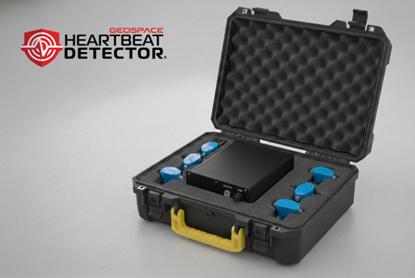
THE SOLUTION: Developed at Oak Ridge National Laboratory (ORNL) and licensed to Geovox Security (now Geospace Technologies) in 1996, the Heartbeat Detector can pick up a concealed person’s heartbeat, breathing, and associated movements through the frame of a vehicle. The technology uses a proprietary algorithm to provide rapid, non-invasive detection with 99% accuracy. It acts like a giant stethoscope when placed on a vehicle, separating the heartbeat’s rhythm from ground movement and wind to deliver results in 10 seconds — regardless of the type of materials surrounding a concealed person. In 2025, thanks to advancements in technology like cloud functionality, the Heartbeat Detector was redesigned to be smaller and offer enhanced features at a much lower cost. The technology also adds SMS alert features, eliminates bulky equipment requirements, automates accountability software, and accelerates diagnostic testing.
THE TECH TRANSFER MECHANISM: This is a story about sustained collaboration over multiple decades and adaptability while maintaining mission impact. In 1996, ORNL originally licensed the technology’s algorithm to Geovox, marking the beginning of a relationship that has spanned 30 years and evolved through 12 separate agreements. In fact, the agreements have outlasted the term of the original patent as the relationship continues under a copyright license. When it became apparent in 2023 that component obsolescence threatened the product’s viability, ORNL accepted shared risk in restructuring the license that allowed the technology and Geovox to grow with market demands by reducing guaranteed minimums and per-unit royalty rates, opting for terms that encouraged societal benefit through wider deployment.
THE IMPACT: The Heartbeat Detector addresses human trafficking, prevents prison escapes, secures nuclear facilities, and protects military installations. It is fast, accurate, portable, non-invasive, and affordable, making it the industry standard across four continents and more than a dozen countries, protecting both citizens and critical infrastructure. It has become the worldwide standard for concealed passenger detection, protecting millions of people across critical security domains.
THE LAB:
Oak Ridge National Laboratory Department of Energy
THE PARTNER:
Geovox Security Inc.
THE TEAM:
Jennifer Caldwell ORNL
Eugene Cochran ORNL
Colin Frazier Geospace Technologies
Andrew Soukup Geospace Technologies
PHOTO CAPTION:
The Heartbeat Detector Kit.
Credit: Geospace
Glare Analysis Software Protects Lives and Maximizes Solar Energy Production
THE PROBLEM: As the number of solar power installations continues to increase, so do the risks caused by the glare of sunlight on solar panels for pilots, air traffic controllers, motorists, and neighbors. To more accurately predict hazardous glare from solar panels, Sandia National Laboratories (Sandia) developed and patented an award-winning, web-based tool called the Solar Glare Hazard Analysis Tool (SGHAT), which allows users to assess the likelihood of hazardous glare at any given location, time, and date. SGHAT, which was developed with funding support from the Department of Energy (DOE), quickly became the de facto standard, and Sandia provided it free to over 6,000 users in 60 countries. When DOE funding expired, Sandia, DOE, and other stakeholders decided the time was right to commercialize SGHAT.
THE SOLUTION: Sandia licensed SGHAT to Sims Industries, established by a former Sandia graduate intern who had co-developed the software. Sims markets SGHAT as ForgeSolar, which is available free to homeowners and at a discount for government users. This approach has boosted public sector adoption of ForgeSolar while also recognizing the taxpayer support that was instrumental in SGHAT’s early development. Sims also broadened its global application by updating the software with new luminance calculations to satisfy regulatory requirements in the European Union and Australia.
THE TECH TRANSFER MECHANISM: Sandia began by obtaining all necessary conflict-of-interest reviews and approvals, then negotiated a five-year non-exclusive license for the software and underlying patent with Sims. The license permitted Sims to modify the user interface provided that the core analysis code remained unmodified. The following year, Sandia negotiated a license for an updated version of SGHAT, which Sims marketed as ForgeSolar. Two subsequent license amendments added new components developed at Sandia and extended the license through 2026. The license was recently extended again to 2031.
THE IMPACT: Solar energy developers, researchers, government agencies, non-profits, students, and homeowners throughout the U.S. and over 140 countries use ForgeSolar — a growth of nearly 10 times since its introduction. On average, ForgeSolar is used to evaluate around 85 megawatts of solar energy installations every day, enough to power 42,500 homes for a year. This represents potential energy and remediation savings ranging from thousands to millions of dollars for homeowners and developers, as well as lives saved by the prevention of glare-related accidents.
THE LAB:
Sandia National Laboratories Department of Energy
THE PARTNER:
Sims Industries LLC
THE TEAM:
Cliff Ho Sandia
Cianan Sims Sims
Andrea Sims Sims
Robert Westervelt Sandia
Debi Hudgens Sandia
PHOTO CAPTION:
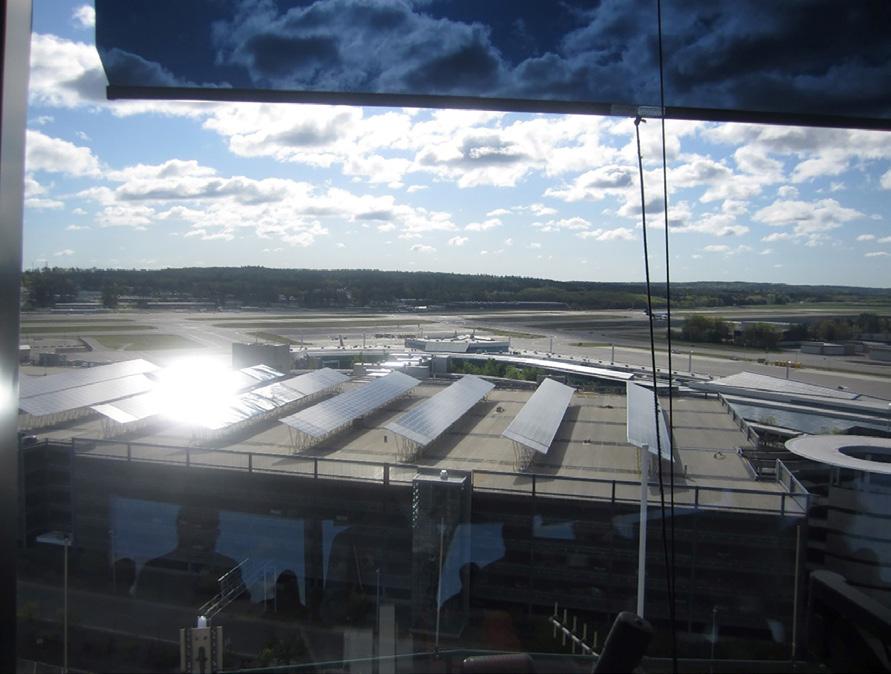
“Blinding” glare viewed from Air Traffic Control Tower at Manchester-Boston Regional Airport. The Solar Glare Hazard Analysis Tool developed by Sandia was used to identify a solution to mitigate the glare. The analysis was validated by studies from Massachusetts Institute of Technology and was hundreds of times faster than the traditional ray-tracing approach used by MIT. Credit: Steve Barrett and Harris Miller, Miller & Hanson
TECHNOLOGY TRANSFER INNOVATION
Recognizes the successful use of innovative or unconventional approaches, such as in-house competitions, to significantly increase the lab’s technology transfer partnerships and results.
Students and Startups Team Up to Accelerate ORNL’s Technology-Driven Commercialization
THE PROBLEM: Transferring technology from the laboratory to the marketplace requires not only technical readiness, but also clear market positioning, compelling messaging, and targeted audience engagement. However, many startups with strong scientific potential lack the funds to acquire those crucial resources. Although Congress has made funding available for market assessments, competitor analysis, and market planning through the Small Business Innovation Research and Small Business Technology Transfer programs, many startups do not — or cannot — take advantage of those funds to develop the marketing they need to succeed.
THE SOLUTION: In 2025, Oak Ridge National Laboratory (ORNL) and the University of Tennessee, Knoxville (UTK) launched an engagement program to help companies develop custom marketing plans and deliverables at no cost. The program paired 55 students in UTK’s Haslam College of Business with six startups from Innovation Crossroads, a Department of Energy LabEmbedded Entrepreneurship Program node at ORNL; the student teams worked with the startups to identify core business challenges, refine the product’s market fit, and develop comprehensive marketing communication strategies. Each startup received nearly $30,000 worth of branding kits, logos, audience segmentation data, marketing budgets, and execution strategies tailored to their individual goals — a significant asset for startups that are preparing to engage potential customers, partners, and investors.
THE IMPACT: The ORNL/UTK collaboration created a repeatable model that strengthens ORNL’s technology transfer pipeline and transforms scientific research into market-ready ventures. The program allows Innovation Crossroads entrepreneurs to gain access to marketing resources that complement and support their technical prowess. It also deepens collaborations and relationships among ORNL’s Technology Transfer Division, scientific researchers, and Innovation Crossroads alumni. Startups equipped with integrated marketing communications plans are better prepared to engage potential customers, partners, and funders, leading to improved job creation in Tennessee and across the nation.
The UTK students benefited from unique, hands-on experience in a structured environment where they could experience directly how marketing supports technology transition from the lab to the marketplace. The program exposed the students to possible careers in technical fields; in fact, several graduating students pursued jobs in the technology sector that they had not considered before participating in the program. ORNL and UTK anticipate expanding the program to include Innovation Crossroads alumni entrepreneurs, which will ensure ongoing access to marketing expertise beyond the initial student cohorts. Registration for the spring 2026 course reached near capacity shortly after opening, demonstrating the positive reputation the partnership has earned among the Haslam students.
THE LAB:
Oak Ridge National Laboratory Department of Energy
THE PARTNER:
University of Tennessee, Knoxville
THE TEAM:
Professor Christine White UTK
Jennifer Caldwell ORNL
Kelly Wampler ORNL
PHOTO CAPTION:
ORNL Innovation Crossroads and UTK’s inaugural cohort saw students partner with startups - reinforcing the link between academic learning and real-world commercialization. Credit: Christine White, University of Tennessee-Knoxville
Fusion Supply Chain Workshop: Scaling the Fusion Industry
THE PROBLEM: The Princeton Plasma Physics Laboratory (PPPL) is the nation’s leading research center for developing fusion energy as a clean power source and for applying plasma science in microelectronics and astrophysics. PPPL’s technology transfer office supports the fusion industry by forming startups, licensing technologies, and engaging with private companies in collaborative projects and research. While more than 50 startups have been founded around the world with the goal of developing fusion pilot plants, individually they are not well positioned to scale a supply chain to support the fusion industry as it becomes a major part of the world’s energy ecosystem.
THE SOLUTION: Representatives from PPPL, the Stellar Energy Foundation, the Fusion Industry Association, and the New Jersey Economic Development Authority organized the first Fusion Supply Chain Workshop in June 2025. Over 120 representatives from nonprofit organizations, private firms, academic institutions, and government agencies from around the world attended the two-day event. Presentations, panel discussions, networking sessions, and topical working groups focused on market challenges and opportunities, supplier and industry perspectives, and stakeholder engagement. The workshop not only demonstrated PPPL’s commitment to growing the fusion energy ecosystem but also represented a proactive and creative way for PPPL to engage with the industry. The workshop’s final report offered recommendations for vendor engagement, funding, skills training and risk mitigation, and issued a call to action to the industry that includes convening a second workshop in 2026.
THE IMPACT: The workshop led to several new partnerships for PPPL and its T2 office that have expanded their engagement with the fusion energy community. Rutgers University renewed its relationship with PPPL, leading to several joint research projects and collaborative discussions with PPPL’s Computer Science Department. Several companies that sent attendees to the workshop have entered into joint research programming with PPPL. Workshop participants determined that commercialization hubs would play a vital role in bringing together universities, national laboratories, and industry partners to engage in regional problem solving; as a result, a working group has formed to discuss the creation of a Regional Fusion Hub.
THE LAB:
Princeton Plasma Physics Laboratory Department of Energy
THE
PARTNERS:
Stellar Energy Foundation
Fusion Industry Association
New Jersey Economic Development Authority
THE TEAM:
David Zimmerman PPPL
Chantal Badre PPPL
Ahmed Diallo PPPL
PHOTO CAPTION:
A Keynote Panel
From Left: Moderator Matt Miller, Andrew Holland, Tim Sullivan, Duncan Turner, Steve Cowley. Credit: Michael Livingston, PPPL Comms Dept.
VA Technology Transfer Program Creates Commercial Development Support Program
THE PROBLEM: For over a century, the Department of Veterans Affairs (VA) has supported the R&D of medical devices and therapeutics designed to improve veterans’ health and well-being. In recent years, the VA Technology Transfer Program (VA TTP) recognized the need to improve the licensing potential of VA-owned technologies. Leaders determined that establishing an internal commercial development initiative would improve the agency’s return on investment in its T2 portfolio and thereby reduce the time it takes to bring healthcare innovations to market.
THE SOLUTION: The VA Technology Transfer Assistance Program (TTAP) connects VA innovators with the expert guidance, strategic funding, and resources they need to advance their early-stage inventions and reach market readiness. TTAP supports both VATTP and the internal VA Innovators Network by connecting inventors with engineers who design and create prototypes, perform design and cost analyses, and prepare technical documentation and patents. TTAP fosters medical innovation by improving manufacturability and reducing the costs of new technologies that show commercial potential, address veteran needs, and support the VA’s mission. Now active at VA sites in Cleveland, Minneapolis, and Pittsburgh, TTAP teams are establishing a universal workflow framework across all sites that will better define program operations, identify the materials required to use TTAP, and clarify what inventors can expect during the T2 process.
The Bringing Research Advancements for Veterans to Everyone (BRAVE) program, funded by the VA’s Office of Research and Development, provides eligible VA inventors with up to $100,000 to develop VA-owned or jointly owned intellectual property. It is designed to help bridge the “valley of death,” where promising technologies frequently stall due to a lack of resources. BRAVE funding supports prototype production and testing, clinical-grade prototypes, chemical synthesis, proof-of-concept studies, pharmacodynamic and pharmacokinetic testing, and clinical pilot studies to enable inventions to power through the valley of death and improve their commercialization prospects.
THE IMPACT: According to the VA TTP, VA technologies submitted to TTAP and BRAVE are 6% more likely to be successfully transferred, a significant increase that translates into improved care for veterans. At the time of publication, companies have licensed 19 TTAP and 11 BRAVE technologies and signed CRADAs for two TTAP technologies and one BRAVE technology. Additionally, two TTAP projects have been internally produced by the VA, and four have received additional VA grant funding to continue their progress to commercialization. Many of the projects funded by TTAP address veteran-centric issues such as limb loss and paralysis that are not as prevalent in the general population, meaning that it is often harder for those technologies to attract industrial and commercial partners to bring them to market. The BRAVE program has significantly benefited developers of higher-risk diagnostic, therapeutic, and clinical devices by funding pilot studies and proof-of-concept work that reduce uncertainty for potential investors and industry partners and help inventors be more competitive when applying for grant funding.
THE LAB:
VA Technology Transfer Program Department of Veterans Affairs
THE TEAM:
Garrett Grindle VA
Stephanie Bailey VA
Alexandra “Soleil” Bell VA
Brandy Wade VA
Terri Hunter VA
PHOTO CAPTION:
Examples of VA prototyped technologies generated through the VA commercial development program. Credits: VA TTAP and Rain Eye Drops LLC
INDIVIDUAL AND SMALL TEAM AWARDS
ROOKIE OF THE YEAR
Recognizes the efforts of an individual FLC laboratory technology transfer professional who has demonstrated outstanding work in the field of technology transfer and is new to technology transfer, with three years (or less) experience in a federal technology transfer position.
OUTSTANDING RESEARCHER/SMALL RESEARCH TEAM
Recognizes outstanding individual researchers or small research teams involved in technology transfer activities who have provided leadership and noteworthy support to the technology transfer process, furthering their agency’s mission and, thus, that of the FLC.
OUTSTANDING TECHNOLOGY TRANSFER PROFESSIONAL
Recognizes the efforts of an FLC laboratory technology transfer professional who has demonstrated outstanding work in transferring a technology in a manner significantly over and above what was called for in the normal course of their work.
LABORATORY DIRECTOR OF THE YEAR
The FLC National Advisory Council honors Laboratory Directors who have provided exemplary leadership in promoting, supporting, and executing the technology transfer mission of their organization. The award recognizes the critical importance of top-down leadership and support to the overall success of a laboratory’s technology transfer mission while the nominee has led this laboratory.
HAROLD METCALF SERVICE AWARD
Recognizes an FLC member laboratory employee who has provided sustained, significant service to the FLC as an organization.
Danielle Ferreira joined the Idaho National Laboratory (INL) as a technology transfer specialist in June 2023, and quickly established herself as a catalyst for researcher engagement, commercialization success, and cross-program coordination. As a former Department of Energy (DOE) Technology Commercialization Intern, she brought fresh perspective, process discipline, and a strong commitment to helping researchers translate discoveries into impact.
In addition to Ferreira’s formal duties at INL, she mentors interns, supports the Early Career Researchers Association, and volunteers as a STEM outreach instructor across Idaho, inspiring the next generation of scientists and engineers. Her early achievements demonstrate a clear understanding of the mission and mechanics of federal technology transfer. In just two years, she has contributed directly to dozens of successful funding awards and reinvigorated participation in multiple national DOE programs.
In fiscal year 2024, Ferreira supported 16 Technology Commercialization Fund projects, 11 of which were selected for funding totaling $11 million. She helped guide proposal development, crafted persuasive narratives, and coached research teams on aligning technical work with market and programmatic priorities. She also coordinated INL’s participation in the Energy I-Corps program, supporting 10 teams that collectively secured $1 million in funding through Energy I-Corps and over $10 million in follow-on funding after their participation.
Ferreira also facilitates INL’s response to the DOE Office of Technology Commercialization Voucher Awards, securing $950,000 and assisting 56 Small Business Innovation Research proposals in fiscal year 2024 alone. She supported 25 Technology Assistance Program projects and helped set up INL’s new Technology Demonstration Program, which has provided over $150,000 in funding for INL technologies. In total, her efforts have secured over $34 million in technology deployment activities since October 2023 — a remarkable impact for a newcomer to the profession.
Ferreira launched INL’s Individual Commercialization Consultation Model to conduct technology assessments, identify suitable funding streams, and co-develop one- to five-year tailored commercialization plans. She conducts weekly one-on-one sessions with about 15 researchers. This consultation program has strengthened proposal quality and win rates at INL. Most importantly, though, the program creates lasting cultural impact by institutionalizing mentorship, embedding commercialization thinking earlier in the research process, and fostering accountability through measurable progress tracking.
According to Ferreira, her ultimate goal is to make researchers’ lives easier. Through her outcome-driven leadership, Ferreira has not only elevated INL’s visibility within the DOE complex but also exemplified the mission of federal technology transfer — ensuring that publicly funded innovations deliver tangible benefits to industry, the economy, and society.
THE LAB:
Idaho National Laboratory Department of Energy Through her outcomedriven leadership, Danielle has not only elevated INL’s visibility within the DOE complex but also exemplified the mission of federal technology transfer — ensuring that publicly funded innovations deliver tangible benefits to industry, the economy, and society.”
ROOKIE OF THE YEAR: HONORABLE MENTIONS
Amanda McCullough
Amanda McCullough has quickly become a driving force behind technology transfer success at the Naval Surface Warfare Center, Crane Division (NSWC Crane). She joined NSWC Crane’s Technology Transfer Office in 2022 and immediately elevated the intellectual property capture, management, and planning approaches of the role, raising the number of invention disclosures by 169% from fiscal year 2023 to fiscal year 2025. Her focus on technology transfer outreach led to an 80% increase in new license agreements and a 36% boost in new partnership agreements in the same period.
McCullough impressed her colleagues and leadership with her ability to look at the lab’s work and see something visionary. In her first year, McCullough launched “Tech Talk Tuesday,” a podcast she hosts that shines a light on innovations from the lab that can be used in the public domain. She has a talent for taking this information and making it useful for both internal and external audiences. McCullough also revamped the invention disclosure process for NSWC Crane, cutting the time from four hours to 30 minutes and reversing a downward trend in the lab’s disclosure numbers. The form and process she implemented are being reviewed for implementation across the entire Department of the Navy.
Leanna DeMarre
Leanna DeMarre joined Fermilab’s Office of Partnerships and Technology Transfer in 2023 and has rapidly emerged as a highly capable technology transfer professional. She manages a broad portfolio of partnership agreements, supports researchers across high-impact mission areas, and demonstrates strong cross-functional communication and judgement. Within three years, DeMarre has assumed responsibilities typically held by senior staff, including leading meetings with the Department of Energy (DOE). DeMarre oversees about 75 agreements per year across new proposals, active agreements, and modifications. In fiscal year 2025 alone, she executed 29 new agreements that brought in nearly $20 million to the lab. Her leadership has been particularly significant in the quantum science portfolio. One example of DeMarre’s innovation is her development of comprehensive tracking systems for Fermilab’s DOE Technology Transfer data cells and the laboratory’s management and operating contract transition. She created an integrated workbook that consolidated nearly a decade of historical project information with data from Fermilab’s current system, which is now the lab’s primary resource for responding to those calls. DeMarre’s impact has increased the lab’s agreement capacity, reliability in DOE reporting, compliance strength, and more.
Mark Wienhold
Mark Wienhold has innovated tools that fundamentally strengthen technology transfer capabilities at Oak Ridge National Laboratory (ORNL). Wienhold joined ORNL in 2025 as a Strategic Partnership Agreement Specialist, serving as an intermediary between ORNL researchers and external partners and entities. In one year at ORNL, Wienhold has transformed the operations of the Strategic Partnership Office (SPO) through exceptional innovation, achieving efficiency gains that have transformed how the laboratory executes partnership agreements.
Wienhold developed a comprehensive suite of tools that address critical needs in SPO’s operations that collectively save hundreds of staff hours annually while improving quality and consistency. He also developed an AI-powered tool that analyzes Broad Agency Announcements to determine ORNL’s eligibility by examining solicitations against eligibility criteria and ORNL’s internal policies. The AI tool reduced solicitation review time from 30 minutes each to 10 minutes— a 67% time savings. Finally, Wienhold developed a tool to analyze Statements of Work for compliance with DOE orders, formatting standards, and technical quality. It reduces the time spent on each review from one hour to about 20 minutes. His innovations have generated quantifiable, transformative impact across SPO operations.
Multi-Drug Resistant Organism Repository and Surveillance Network (MRSN) Technology
The Walter Reed Army Institute of Research (WRAIR) Multi-Drug-Resistant Organism Repository and Surveillance Network (MRSN) uses cutting-edge genomics to detect disease outbreaks in near real time, maintains a global repository of multidrug-resistant organisms, and provides guidance on antibiotic use. As part of its mission, the network collects bacteria from military and civilian hospitals worldwide to enable research that protects the warfighter, their families, and healthcare professionals from bacterial diseases. Over the past 15 years, MRSN has amassed more than 170,000 bacteria that researchers around the world use to develop lifesaving therapeutics.
Recognizing the opportunity to extend MRSN’s reach in the international medical R&D community and support the fight against antibiotic resistance, COL Jason Bennett, the MRSN Director, and Patrick McGann, the MRSN Deputy Director partnered with BEI Resources and the National Institute of Allergy and Infectious Diseases repository for biological materials. They teamed up with WRAIR’s Senior Technology Transfer Officer, Carmen Fernandez-Prada, to develop interagency partnership agreements between WRAIR and BEI for the deposit of three MRSN panels to BEI, each containing 100 pure strains of Klebsiella pneumoniae, Acinetobacter baumannii, and Pseudomonas aeruginosa. The team quickly expanded to include Yoon Kwak of MRSN’s Laboratory Operations and David Humphrey, a Licensing Officer with the Office of Medical Technology Transfer at the Defense Health Agency.
MRSN’s unique collection of diverse bacteria helps BEI meet the high demand, particularly for panels containing pure strains of bacteria known to cause serious infections. To meet BEI’s requirements for these strains the MRSN team selects and characterizes the bacteria that form the eventual panel, which is then sent to BEI for distribution to researchers and institutions that want to use those panels for research use only and have entered into material transfer agreements (MTAs)
Since 2020, the MRSN team has used the interagency partnership agreements with BEI as well as no-cost (MTAs) and biological material licenses (BMLs) to ship over 3,600 MRSN’s bacterial isolates to 207 organizations in 26 countries around the world. The panels deposited at the BEI would greatly extend MRSN’s contribution to enable researchers to make crucial discoveries in disease prevention and diagnostics, novel therapeutics, and treatment of life-threatening bacterial infections. The need for such discoveries is truly urgent: A 2024 paper in The Lancet reported that more than a million people died from drug-resistant infections each year between 1990 and 2021, and it predicted that the number of deaths could reach almost 40 million by 2050.
Humphrey and Fernandez-Prada combine BMLs with MTAs to make access available to bacterial strains from the MRSN collection. For many of these MRSN bacterial strains, WRAIR has identified and isolated specific bacteriophages, or viruses that kill bacteria. The BMLs motivate companies to consider developing bacteriophage-based treatments for antimicrobialresistant strains.
In addition to the bacteria samples shipped around the world, MRSN has contributed to BMLs and companion MTAs with Eurofins Genomics Europe Applied Genomics GmbH in Germany and Adaptive Phage Therapeutics in the United States. MRSN has also contributed to the American Type Culture Collection by depositing an A. baumannii strain that has been claimed in a patent application — an impressive T2 record for such a small team.
THE LABS:
Defense Health Agency Research & Development, Medical Research and Development Command, Office of Medical Technology Transfer; Walter Reed Army Institute of Research Department of War
THE PARTNERS:
BEI Resources
National Institute of Allergy and Infectious Diseases
TEAM LEADERS :
COL Jason Bennett WRAIR
Patrick McGann WRAIR
Yoon Kwak WRAIR
Carmen Fernandez-Prada WRAIR
David Humphrey DHA R&D — MRDC
PHOTO CAPTION:
Genetic diversity of P. aeruginosa in the MRSN collection. Credit: WRAIR
OUTSTANDING RESEARCHER/SMALL RESEARCH TEAM AWARD
Ikenna Nlebedim & Denis Prodius
Outstanding Research Team Pioneers Acid-Free Recycling and Technology Transfer Impact
Ames National Laboratory, operated by Iowa State University, conducts research that requires exceptional engagement in the technology transfer process. Ikenna Nlebedim and Denis Prodius are exemplary leaders who have successfully matured, scaled, and transitioned multiple technologies to industry, benefiting U.S. economic competitiveness and national security.
The team’s most innovative technology transfer is its groundbreaking acid-free dissolution recycling process, an invention that has established a domestic supply of critical materials and mitigated reliance on foreign sources. The technology safely leaches rare earth elements and cobalt from water-based solutions, enabling the recovery of more than 99% pure rare-earth elements. Electronic waste is a key domestic source of dysprosium, a heavy rare-earth element vital for high-performance magnets used in motors and sensors in defense applications. Cobalt is used in making battery cathodes.
The team creatively guided the technology through the transfer pipeline; they partnered with the tech transfer office from the very beginning, targeting award opportunities to build industry traction. The researchers led the charge by drafting, submitting, and receiving notable awards from the FLC, the R&D 100 Awards, and TechConnect. They completed the year-long ISU Startup Factory program and received a Department of Energy Small Business Technology Transfer Award. Their innovation was also explicitly cited in the 2024 National Defense Authorization Act as a proven technology for recycling rare-earth elements from electronic waste at the Department of War. It was also cited by the Assistant Secretary of Energy Audrey Robertson as a successful U.S. DOE recycling invention.
Nlebedim and Prodius became fully engaged in the technology transfer process early in their careers, proactively collaborating with the laboratory and its partner, the Iowa State University Research Foundation. They continue to champion the federal laboratory technology transfer mission by applying a proactive approach to all their work. Their passion for early industry engagement, maturation, and demonstration work, coupled with their pursuit of scientific discovery, demonstrates that they are truly exemplary researchers committed to the Ames mission to deliver critical materials solutions to the nation.
Nlebedim has disclosed more than 30 inventions, resulting in nine U.S. patents and nine pending patents. He received the 2025 Iowa State University Award for Achievement in Intellectual Property in recognition for his contribution to technology transfer and regional economic development. Prodius holds six patents in Moldova, three in the U.S., and three pending patents. Together, they are co-inventors on two key innovations that were licensed to an Iowa-based company, directly contributing to local economic growth and job creation.
Their excellent technology transfer support has been instrumental in securing multiple prestigious awards for Ames over the last five years. This collaboration has led to CRADAs, industry-sponsored projects at the laboratory, two commercial licenses, a 2023 Mid-Continent FLC Award for Excellence in Technology Transfer, and numerous recognitions for innovative technology development.
THE LAB:
Ames National Laboratory Department of Energy Nlebedim and Prodius are exemplary leaders who have successfully matured, scaled, and transitioned multiple technologies to industry, benefiting U.S. economic competitiveness and national security.”
PHOTO CAPTION:
L: Ikenna Nlebedim; R: Denis Prodius.
Credit: Ames
OUTSTANDING RESEARCHER/SMALL RESEARCH TEAM AWARD
Vlastimil Kunc Architect of Applied Research Impact
Vlastimil Kunc’s leadership has strengthened collaborations between Oak Ridge National Laboratory (ORNL) and industry, and has expanded the technology transfer ecosystem, generating an estimated $1 billion in economic impact. As the Section Head for Composites Science and Technology at ORNL’s Manufacturing Science Division, he leads four research groups advancing composite manufacturing, from fiber precursor synthesis to parts fabrication and recycling. In five years, Kunc achieved 66 invention disclosures, 19 published patents, 10 executed non-disclosure agreements, 95 patent applications, and three executed licenses. He has received prestigious awards spotlighting ORNL’s cutting-edge research, including six R&D 100 Awards, eight CAMX Awards for Composites Excellence, a 2023 Battelle Distinguished Inventor Award, an ORNL Innovator of the Year Award in 2025, and two FLC Awards. In 2026, he was named an ORNL Corporate Fellow, the highest recognition for members of the ORNL research staff.
Kunc is a forward-thinking researcher with a strong track record of leading technology transfer efforts to bring innovations to the market. At the ORNL Manufacturing Demonstration Facility, Kunc was instrumental in developing a commercial ecosystem of equipment, materials, and software providers to commercialize ORNL innovations, collectively creating an estimated 10-figure economic impact.
Beyond his innovations, Kunc actively supports ORNL’s Technology Transfer Office as an advisor on strategic licensing opportunities and a connector between research and industry. He shares hundreds of commercial contacts for industry outreach efforts and is widely recognized for mentoring students and entrepreneurs through programs like Innovation Crossroads, a Lab-Embedded Entrepreneurship Program supported by the Department of Energy. Under his leadership and mentorship, the division he founded has grown from three researchers to nearly 60.
Kunc’s leadership in innovation has been instrumental in creating a thriving ecosystem for large-scale additive manufacturing across the entire supply chain. The global reach of his work is also evident in its widespread adoption. On a more granular level, he mentors new entrepreneurs through Innovation Crossroads and the Tennessee Valley Authority. By fostering entrepreneurship, driving collaboration with industry, and developing future scientific talent, Kunc reinforces ORNL’s mission to translate research into real-world impact that supports U.S. energy, security, and economic priorities. His technology transfer activities have had a profound and measurable impact, creating new manufacturing paradigms, engaging diverse stakeholders, spurring new product development and commercialization, and fostering impactful partnerships.
THE LAB:
Oak Ridge National Laboratory Department of Energy
[Vlastimil’s]
technology transfer activities have had a profound and measurable impact, creating new manufacturing paradigms, engaging diverse stakeholders, spurring new product development and commercialization, and fostering impactful partnerships.”
OUTSTANDING TECHNOLOGY TRANSFER PROFESSIONAL
Kathleen McDonald Reimagining Technology Transfer Strategy
Kathleen McDonald has made exceptional contributions to advancing the transfer of federally developed technologies at Los Alamos National Laboratory (LANL). Her leadership spans diverse and high-impact domains — national security and space, nuclear, quantum, and fusion — where she has spearheaded strategic partnerships, licensing, and innovative approaches to technology transfer. Her robust portfolio development directly enabled commercialization opportunities, and she has negotiated and managed numerous CRADAs, including more than eight umbrella CRADAs, many supporting five or more project task statements.
McDonald strengthened her broader technology transfer community through training. She has co-led the FLC’s national training course, “T2 for the ORTA,” which equips new professionals across the federal complex with the skills to navigate agreements, intellectual property management, and commercialization pathways. Internally at LANL, she mentors and trains both technical staff and technology transfer professionals, ensuring knowledge continuity and fostering a culture of innovation engagement.
McDonald’s superpower is in creatively advancing technology transfer with novel approaches to intellectual property strategy that go beyond traditional patent-focused models. Especially noteworthy is her ability to develop new frameworks for dataset protection and to pioneer copyright-based licensing strategies for nuclear safeguards technologies. McDonald recognized a critical gap in how federally generated datasets were managed and transferred, and she led efforts with LANL to create a path for protecting and licensing laboratory datasets, which is particularly significant for domains such as fusion and AI. Historically, lab data was either released publicly or remained controlled, with no mechanism to balance protection with commercialization. By working closely with the LANL Office of General Counsel, McDonald helped catalyze ongoing efforts to establish department-wide mechanisms that both safeguard sensitive data from foreign adversaries and enable U.S. industry to capitalize on the investments. This innovative approach is poised to become a new model of technology transfer, ensuring that data itself — one of the most valuable products of federally funded research — can directly fuel U.S. innovation and competitiveness.
McDonald led the implementation of a dual-licensing strategy for LANL software code that ultimately resulted in a successful commercial license with a Fortune 500 company. The software was initially released under a hereditary open-source license, which required that any modifications be distributed under the same terms. McDonald recognized that this presented a barrier to certain partners, and she structured the dual-version licensing model to be available for all kinds of users.
That type of creative thinking — applying dual-licensing to a national laboratory environment — shows McDonald’s willingness to bridge open-source accessibility with proprietary licensing requirements and exemplifies her innovative approach to technology transfer.
THE LAB:
Los Alamos National Laboratory Department of Energy McDonald’s superpower is in creatively advancing technology transfer with novel approaches to intellectual property strategy that go beyond traditional patent-focused models.”
OUTSTANDING TECHNOLOGY TRANSFER PROFESSIONAL
Eugene Cochran
Designing Smarter Paths to Commercialization
Eugene Cochran plays a pivotal role in advancing the Oak Ridge National Laboratory (ORNL) mission of exemplifying leadership in every dimension of technology transfer. As Group Leader of Technology Commercialization, Cochran and his team drive the commercialization of ORNL’s innovations. He personally manages complex intellectual property (IP) portfolios and negotiates high-value commercialization agreements while serving as the primary relationship manager between ORNL’s Technology Transfer Division and key research partners. Cochran’s integrity, expertise, and creativity have enabled ORNL to secure agreements with major industry players like Samsung, GE Additive, and Cummins.
Cochran’s influence at ORNL is significant. In five years, he directly licensed to industry more than a dozen high-impact technologies that earned prestigious awards, including eight FLC Awards. He evaluates 50 to 70 invention disclosures annually and develops strong licensing strategies due to his expertise across quantum information, manufacturing, energy storage, power electronics, and nuclear technologies.
One of ORNL’s most impactful technologies is Peregrine, an AI software that revolutionizes additive manufacturing by monitoring powder bed printers in real time, detecting defects for immediate correction to maintain production flow. The technology’s wide-ranging compatibility across 3D printers, inspection cameras, and materials led Cochran to develop a creative licensing strategy that prioritized broad industry adoption and partnership over immediate revenue maximization. The non-traditional license that Cochran implemented was a stroke of genius that has become ORNL’s most licensed software — with 64 academic, government, and industry partners at the time of publication.
Beyond Peregrine, Cochran led the commercialization of several breakthrough technologies, demonstrating exceptional skill in matching innovations with appropriate T2 strategies to accelerate market adoption. For instance, the Multimodal Autonomous Vehicle Network, enables users to operate uncrewed vehicles from anywhere in the world using only an internet connection. In 2023, Cochran negotiated an exclusive license with Horizon31, founded by ORNL staff members, to introduce the technology to the marketplace. He also negotiated an exclusive license for Safe Impact Resistant Electrolyte (SAFIRE), a collection of FLC Award-winning technologies that transform battery electrolyte liquid into a solid upon impact, preventing fires and explosions.
Cochran’s many transfers have generated substantial economic impact: SAFIRE, for one, raised $11 million. His skillful use of diverse mechanisms — like traditional exclusive licenses and staged licenses — demonstrates innovation in matching T2 methodology to partnership and market needs. Cochran has personally managed the licensing of over 150 technologies during his career, validating his visionary approach to maximizing impact and commercial success.
THE LAB:
Oak Ridge National Laboratory Department of Energy Cochran has personally managed the licensing of over 150 technologies during his career, validating his visionary approach to maximizing impact and commercial success.”
Laboratory Director of the Year & Harold Metcalf Service Awards: Honorees from the Last 10 years
Recipients of the prestigious Laboratory Director of the Year and Harold Metcalf Service Awards exemplify bold leadership, strategic vision, and outstanding service. Their contributions to the technology transfer industry have shaped federal innovation and created exceptional impact. Here, we honor the legacy of the past decade of winners in each category, celebrating the path of progress, knowledge, and discovery they have forged.
LABORATORY DIRECTORS OF THE YEAR
Captain Jeffrey T. Elder (2017)
Naval Surface Warfare Center, Crane Division, DoW
Paul Kearns, PhD (2020) Argonne National Laboratory, DOE
Brian J. Anderson, PhD (2021)
National Energy Technology Laboratory, DOE
Martin Keller, PhD (2024)
National Laboratory of the Rockies, DOE
Philip Perconti, PhD (2018) Army Research Laboratory, DoW
Walter Copan, PhD (2021)
National Institute of Standards and Technology, DOC
Bartley P. Durst (2022)
Geotechnical and Structures Laboratory, DoW
Angela D. Lewis, PhD (2025)
Naval Surface Warfare Center, Crane Division, DoW
HAROLD METCALF SERVICE AWARDEES
Mojdeh Bahar, JD, MA, CLP (2018)
Agricultural Research Service, USDA
John Eisemann (2023)
National Wildlife Research Center, USDA
Jeff DiTullio (2026)
U.S. Army Engineer Research & Development Center, DoW
Robert Griesbach, PhD (2020) Agricultural Research Service, USDA
Larry Clark, PhD (2019)
National Wildlife Research Center, USDA
David Pittman, PhD (2021)
Engineer Research and Development Center, DoW
Eric Moore, PhD (2023) DEVCOM Chemical Biological Center, DoW
Deana Jones, PhD (2026)
U.S. National Poultry Research Center, Agricultural Research Service, USDA
Jenna Dix (2024)
Naval Surface Warfare Center, Crane Division, DoW
John Dement (2022)
Naval Surface Warfare Center, Crane Division, DoW
Linda Burger (2025)
National Security Agency, Office of Research and Technology Applications, DoW
There were no recipients of the Harold Metcalf Service Award in 2017, 2019, and 2021.
LABORATORY DIRECTOR OF THE YEAR
Deana Jones Catalyst for Agricultural Innovation
Deana Jones, Center Director of the U.S. National Poultry Research Center (NPRC), has been instrumental in advancing the center’s impact and reputation, particularly in the area of technology transfer. Her leadership has strengthened NPRC’s culture, expanded its visibility, and ensured that scientific discoveries make their way to the people and industries that need them most. Thanks to Jones’s hands-on approach, technology transfer has become a central part of NPRC’s mission and daily operations.
Jones promotes open communication and active collaboration across the center. She regularly meets with scientists to learn about their findings and identify new technologies with potential for broader use. Because the center does not have dedicated on-site technology transfer staff, she advocates for NPRC researchers and works closely with the USDA Office of Technology Transfer to support agreements such as Material Transfer Research Agreements (MTRAs) and CRADAs. Her efforts help ensure that promising ideas move forward efficiently.
Her strong relationships with poultry integrators, feed companies, and biotechnology firms have opened the door to real-world sampling opportunities in commercial processing plants. These collaborations have helped NPRC scientists develop practical methods to reduce human pathogens in poultry products and have resulted in numerous MTRAs and exchange agreements. Jones has also supported companies interested in licensing NPRC technologies, helping secure patents and advancing commercialization discussions.
One notable success story under Jones’ leadership is the development of a non-destructive, real-time peanut moisture detection tool. NPRC scientists created a portable meter capable of quickly and accurately measuring moisture in unshelled peanuts at grading facilities. Jones guided the patenting and commercialization process, and through a CRADA, additional improvements were made before the technology was put to use in Georgia grading facilities. At the peanut industry’s request, the technology is now under final review for adoption in the USDA’s federal peanut grading program.
Jones’ leadership in technology transfer spans many areas, including stakeholder engagement, agreement development, commercialization, and accelerating the delivery of scientific solutions. The partnerships and agreements she has helped foster have strengthened the nation’s ability to detect and respond to threats such as highly pathogenic avian influenza, ultimately supporting producers, protecting consumers and bolstering the resilience of U.S. agriculture.
THE LAB:
U.S. National Poultry Research Center Agricultural Research Service, U.S. Department of Agriculture
The partnerships and agreements [Jones] has helped foster have strengthened the nation’s ability to detect and respond to threats such as highly pathogenic avian influenza, ultimately supporting producers, protecting consumers and bolstering the resilience of U.S. agriculture.”
HAROLD METCALF SERVICE AWARD
Jeff DiTullio Champion of the FLC Community
Jeff DiTullio has been involved with the FLC for 20 years, demonstrating long-term commitment and service to the organization and to the technology transfer community. He began as a laboratory representative and voting member in 2006 and completed his service to the FLC Executive Board in 2026 as Chair of the Educate Committee, which steers the National Meeting programming and professional development initiatives. From 2019 to 2021, DiTullio served as Co-Chair and Chair of the Program Committee, which is responsible for organizing the National Meeting each year. As Committee Chair in 2020, he played an essential role in transitioning the meeting to a free online format during the COVID-19 pandemic — a National Meeting that shattered attendance records and sent a strong demand signal for T2 training opportunities.
DiTullio aspires to see the next generation of technology transfer leaders get a head start and has made strides toward the goal of developing training for them. Bringing valuable insight from his role as Chair of the Department of War (DoW) Professional Development Working Group, DiTullio also spearheads a major FLC initiative to develop comprehensive, on-demand training content for technology transfer professionals across all government agencies. This multi-year project is considered one of the most important resources that the FLC can provide to its members.
DiTullio also served as a Small Business Innovative Research (SBIR) advocate, representing the FLC at the 2019 TechConnect World Innovation Conference during SBIR One-on-One meetings, Agency Briefings, and Agency Rapid Sessions. His contributions have significantly enhanced training resources, improved key events, and strengthened the FLC’s position as a crucial support organization for technology transfer professionals.
DiTullio’s diverse experience and dedication to service have had a substantial impact on the technology transfer profession, especially within the FLC. His two decades of participation and service demonstrate a resounding and wide-ranging influence, fostering innovation and collaboration across federal laboratories and the innovation ecosystem.
THE LAB:
U.S. Army Engineer Research & Development Center Department of War DiTullio’s diverse experience and dedication to service have had a substantial impact on the technology transfer profession, especially within the FLC.”
2027 FLC Awards Timeline
Who Will Be the Next History Makers? You Tell Us.
Thanks to all who submitted, judged, and participated in the 2026 FLC Awards. We name and celebrate awardees not only to honor those raising the bar in federal tech transfer, but also to learn from their ingenuity, be inspired by their persistence, and remember that greatness is among us.
Take notice of the history-makers around you — on your team, in your meetings, and among your collaborators. Submissions for the 2027 FLC Awards open in July 2026, but you can start now by reflecting on and gathering information about individual successes and your team’s standout achievements.
THE AWARDS CATEGORIES WILL INCLUDE:
• Excellence in Technology Transfer
• Harold Metcalf Service Award
• Impact
• Interagency Trans-Disciplinary Partnership
• Laboratory Director of the Year
• Outstanding Researcher/Small Research Team
• Outstanding Technology Transfer Professional
• Rookie of the Year
• State and Local Economic Development
• Technology Transfer Innovation
Make sure you’re subscribed to the FLC’s mailing list for Awards announcements, updates, and information. Contact info@federallabs.org for more.
2027 FLC Awards Program Timeline
July 2026
Call for submissions opens
October 2026
Submissions deadline and judging period
Winter 2026 – ‘27
Winners are notified and announced
Spring 2027
Awardees are honored at the FLC National Meeting
AWARDS JUDGES
The FLC expresses its gratitude to the members of the Awards Subcommittee and other volunteer judges for their tireless efforts in making the 2026 Awards program a success. Judges recuse themselves from judging submissions in which they participated.
Charlotte Eng Lawrence Livermore National Laboratory, DOE (Awards Subcommittee Chair)
Whitney Hastings Fermi National Accelerator Laboratory, DOE (FLC Chair)
Dick Paul FLC National Advisory Council (National Advisory Council Chair)
Michelle Atchison University of Texas San Antonio
Aida Cremesti National Institutes of Health, HHS
Maria Duran Naval Surface Warfare Center, Crane Division, DoW
Sevim Erhan Agricultural Research Service, USDA
Hannah Farquar Lawrence Livermore National Laboratory, DOE
Suzanne Frisbie National Institutes of Health, HHS
Bhoomija Hariprasad Department of Veterans Affairs
Sarah Hibbs-Shipp National Wildlife Research Center, USDA
Lydia Hierl National Security Agency, DoW
Amy Hiltabidel Glenn Research Center, NASA
Caitlyn Johnson Pacific Northwest National Laboratory, DOE
Jordan Mizerak
MIT Lincoln Laboratory, DoW
Jackie Kerby Moore Sandia National Laboratories, DOE (Retired)
Sangeetha Raghavan National Institutes of Health, HHS
Will Rarich
Princeton Plasma Physics Laboratory, DOE
Maria Restrepo-Hartwig Agricultural Research Service, USDA
Rebecca Roybal Jones Sandia National Laboratories, DOE
Michael Salgaller National Institutes of Health, HHS
Brandy Wade Department of Veterans Affairs
Paige Zimerman Department of Veterans Affairs
David Zimmerman Princeton Plasma Physics Laboratory, DOE
FLC: Promoting, Educating, and Facilitating T2 for You
PROMOTE YOUR WORK
FLC Awards:
Want to see yourself or your team in this publication next year? Apply for the 2027 FLC Awards! The Call for Submissions will open in this summer.
Planner:
Display your T2 work in full color for all to see. Submissions for the 2027 Planner open this summer.
Labs in Action:
These success stories highlight federal labs’ tech transfer activities. Tell us about your great work, and we’ll spread the word.
LabTech in Your Life:
See the power of tech transfer in everyday life. Submit your commercialized technologies to add to this interactive feature.
FLC Digest:
Share your news and stay informed. Subscribe and submit success stories, events, open positions, and more for our bi-weekly newsletter covering the federal technology transfer community.
The Transfer Files:
Listen to The Transfer Files podcast to stay connected to the latest in tech transfer — and join as a guest to share your own story and expertise.
Learn more about the offerings listed below by scanning here or visiting federallabs.org
GAIN AND SHARPEN T2 SKILLS
FLC Learning Center:
Expand your T2 skills and track your training with our online database of tools consisting of four categories and designed for beginner, intermediate, and advanced professional levels.
FLC National Meeting:
Learn and connect at the preeminent annual conference for federal T2, featuring a full day of training courses, two days of insightful sessions, and keynotes, social receptions, and networking opportunities.
T2 Resources:
Deepen your knowledge of T2 terminology, policies, mechanisms, and more by utilizing our digital publications.
Webinars:
Hear from experts across the innovation ecosystem on the latest trends, challenges, and ideas shaping federal technology transfer.
Careers:
Explore job lists curated specifically for T2.
CONNECT WITH T2 PARTNERS
FLC Business:
Showcase your lab’s technologies and facilities or search for other federal innovations and capabilities to connect and collaborate.
Industry and Tech Events:
These events connect federal labs with private partners to showcase innovations, facilities, and collaboration opportunities.
Lab Showcases:
This one-hour virtual event highlights a federal lab’s tech transfer work, featuring innovations and opportunities for collaboration.
Member Connect:
This 30-minute virtual event spotlights FLC labs and partners, creating new opportunities to connect and collaborate.