VOL 9 / A P R I L 2 02 5
environment / innovation / community / business / technical papers
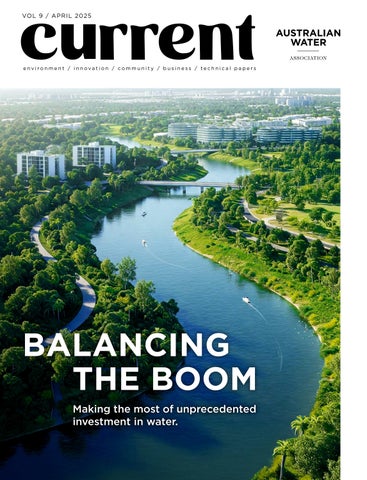
BALANCING THE BOOM Making the most of unprecedented investment in water.
We’re at Ozwater! Visit us at booth E25
At Interflow, we work to deliver on our purpose: to improve the lives of the people we work with, the communities we serve and the environment we work in, for generations to come. Since our inception in 1936, we have carved out our place as a leading provider of water and pipeline infrastructure solutions. Our services span the water, wastewater, stormwater and culvert sectors, where we customise our approach to achieve the most sustainable outcomes for our customers and our communities. Speak to us to find out how we can help you.
Together, we’re Creating the Future of Water
44 58 26 business 26
INVESTMENT BOOM Making the most of big water investments
34
HYBRID WORK ARRANGEMENTS Hybrid work strategy for engagement and retention
62 community
environment
38
54
62
44
58
70
COMMUNICATING CONTAMINATION Guiding community understanding of contamination risks
CONNECTING ON ARRERNTE COUNTRY Aboriginal leadership drives inclusivity and connection
50
COMMUNITY ENGAGEMENT Balancing planning and fairness with community insight
4
innovation AI IN THE WATER SECTOR Challenges and opportunities of AI in the water sector
OPTIMISING DESALINATION Boosting desalination efficiency without compromising quality
BIODIVERSITY PROTECTION Water solutions to restore nature and build resilience
SUPPORTING THE MEKONG Collaborating for the future of the Mekong River
74
WATER FOR HEALING COUNTRY Indigenous water management repairs Bendigo’s ecology
THE OFFICIAL MAGAZINE OF THE AUSTRALIAN WATER ASSOCIATION
12
technical papers 80
NATURE POSITIVE
81
SUSTAINABLE WATER USE
83 MITIGATING OVERFLOW RISK
84
COAGULANT APPLICATION
15
85
20 AWA news 12
VOICES FROM THE BUSH Working towards water justice in Australia’s remote communities
13
NATIONAL WATER WEEK The successful 2024 event and what’s planned next
14
NEW AWA DIRECTORS Welcoming the new Board of Directors
15
CAREERS IN WATER Careers in Water platform connecting talent with opportunity
events 18
OZWATER’25 Australia’s premier water conference and exhibition
20
AUSTRALIAN WATER AWARDS Celebrating excellence in 2025
RECYCLED WATER SAFETY
86
GROUNDWATER TREATMENT
87
MEMBRANE TECHNOLOGY
88
DAM WATER QUALITY
88
THERMAL TREATMENT
89
STUDENT PAPERS
Australian Water Association
5
EDITORIAL SUBMISSION: Acceptance of editorial submissions is at the discretion of the editors and editorial board. TECHNICAL PAPERS: Submissions should be 3000-4000 words long and accompanied by relevant graphics, tables and images. To submit a paper or for more detailed submission guides, please email: journal@awa.asn.au COPYRIGHT: Current is subject to copyright and may not be reproduced in any format without the written permission of the Association. DISCLAIMER The Association assumes no responsibility for opinions or statements of fact expressed by contributing advertisers. Mention of particular brands, products or processes does not contitute an endorsement.
CHIEF EXECUTIVE Corinne Cheeseman Head of Communications and Corporate Services Matthew Connor mconnor@awa.asn.au Editor and Content Marketing Lead Cecilia Harris charris@awa.asn.au Design and Brand Lead Briony Russell Content and Education Lead Jenny Hiller jhiller@awa.asn.au
TECHNICAL ADVISORY COMMITTEE: Daniel Visser, GHD (Chair) Robert Ford, rtd (Secretary) Dr Dharma Dharmabalan, rtd Prof Ted Gardner, rtd Dr Lionel Ho, SA Water Asoka Jayaratne, Yarra Valley Water Dr Tim Muster, CSIRO Land and Water Karen Rouse, Goulburn Valley Water Kala Senathirajah, Bureau of Meteorology Nick Swain, SA Water
current is the official magazine for members of the Australian Water Association
Suite 801, Help Sreet, Chatswood, Sydney, NSW, 2067 | Cammeraygal Country Phone: (02) 9436 0055 Email: news@awa.asn.au The Australian Water Association acknowledges the Traditional Custodians across Australia, where we live, work and play, for their deep connection to our precious waters and land. We pay our respects to Elders past and present, and the ancestors who have cared, protected and nurtured Country for many thousands of years.
6
GeoFlow
TM
Australia’s Leading Dewatering Tubes
GeoFlow
TM
Australia’s Leading Dewatering Tubes Tubes Australia’s Leading Dewatering Dewater sludges and fine silts Mining, industrial, marine & municipal solutions Dewater sludges and fine silts
High strength geotextiles - precludes rainwater ingress Mining, industrial, marine & municipal solutions
Low operating costs, high filling rates & odour mitigation High strength geotextiles - precludes rainwater ingress
Stock available across Australia
Low operating costs, high filling rates & odour mitigation www.dredgingsolutions.com.au | geoflowtubes@dredgingsolutions.com.au Stock available across Australia www.dredgingsolutions.com.au
FROM THE CEO providing funding and helping LOOKING BACK, MOVING FORWARD shape the strategic direction and As the water sector reflects on past lessons and priorities. We thank the Founding looks ahead to the challenges of the future, Corinne Partners for their collaboration and vision. We’re looking to involve Cheeseman shares how the Australian Water Association is driving impact through collaboration, more members who are passionate about shaping the future of innovation and commitment to sustainability. the water workforce. If your
A
s we progress into another year, I am reflecting on the progress our sector has made. Water is the foundation of thriving communities, resilient economies and a healthy environment. Yet, as we look back, it’s clear we are facing increasingly complex challenges. Climate change, population growth and shifting demands continue to put pressure on our sector. With the knowledge and experience we have gained, I am confident we are better prepared than ever to move forward with purpose. This year’s Ozwater’25 theme, Looking Back, Moving Forward, highlights the importance of learning from the past to shape the future. The lessons we’ve learned – through droughts, floods, policy shifts and technological advancements – are shaping how we respond. We know resilience is built through collaboration, that innovation comes from necessity and that securing our sustainable water future requires action today. The past year has been one of growth and impact for the Australian Water Association (AWA). Ozwater’24 set a new benchmark, with a record 5700 participants, including 415 international attendees from 36 countries. It was also a strong year financially for AWA, highlighting
8
the ongoing relevance of our work and the growing importance of addressing critical water challenges. In August 2024, we hosted the Voices from the Bush conference in Mparntwe (Alice Springs) on Arrernte Country. This gathering brought together Aboriginal and Torres Strait Islander and nonIndigenous Australians to address urgent water issues affecting regional and remote communities. With 20% of attendees identifying as First Nations people, we created a safe space for open, honest dialogue. The conference emphasised the critical importance of co-creation and co-design in sustainable water management and highlighted the disparities in access to safe and reliable water for First Nations communities. The dialogues from this event have reinforced our commitment to inclusive and equitable solutions across Australia. Last year we launched Careers in Water, an initiative about showcasing the meaningful and diverse pathways that exist across our sector, which faces a skills shortage. Careers in Water responds by raising awareness and inspiring a new generation of water professionals. It celebrates the essential role our sector plays in securing sustainable outcomes and aims to attract talent. We are proud to be working alongside a committed group of Founding Partners that are
organisation is interested in joining this effort, please reach out. Supporting career pathways also means nurturing professional growth within our community. AWA’s National Mentoring Program continues to be a powerful way we connect emerging and experienced professionals. This year, we’ve seen a record number of more than 300 mentoring pairs taking part in the enhanced national program. Participants are from all parts of Australia, connecting across state borders, regional communities and capital cities. The program’s dedicated platform not only makes these connections possible but also provides a suite of tools and resources to help mentors and mentees get the most from their experience. At its heart, this program fosters confidence, knowledge sharing and professional connection. Looking ahead, we remain focused on delivering the final phase of Strategy’25, including enhancing our digital capabilities, making more content available to members and developing new collaborative programs. Water connects us all. As we reflect on the past and move forward, our collective actions will shape a future where water is valued, protected and accessible to all. I look forward to working alongside our members, partners and the broader water community to continue this important journey.
Saltire_250x185mm_CurrentMag.pdf
1
20/3/2025
2:17 PM
LIVE INSERTION VALVE
LIVE WATER MAINS INSPECTION
WATER INFRASTRUCTURE C
M
Y
CM
MY
CY
CMY
K
LIVE FLOW STOPPING BYPASS
HOT TAPPING
Keep the Water Flowing™ At Saltire Infrastructure, we deliver complex water network solutions with precision and expertise. Using cutting-edge technology, we provide innovative and efficient infrastructure services. From design and construction on large water infrastructure projects, to asset condition assessment and emergency repairs, we solve challenges with smart, tailored solutions—keeping the water flowing when it matters most.
We innovate. We deliver. We excel.
CONTACT OUR TEAM TODAY
FROM THE PRESIDENT LOOKING AHEAD WITH CONFIDENCE As we look to the future, Peter Dennis reflects on the Australian Water Association’s achievements and the collective efforts driving progress across the water sector, emphasising the importance of collaboration, inclusivity and innovation.
T
he water sector is at an intersection of unprecedented challenges – it’s a time like no other. We’re starting to walk together and look at water differently with our Indigenous friends. Building resilience for all communities is urgent, especially for the regional, remote and Aboriginal communities still facing longstanding barriers. We are also are facing a critical skills shortage across the sector. At the same time, communities are calling for more liveable cities and cleaner waterways. Regulators need to adapt to a faster changing world, and we need to be able to take them on the journey. Utilities are working to meet net zero targets alongside new expectations for Nature Positive outcomes. We must achieve all this with affordability of customers front of mind – an almost unsolvable problem. Our vision of Connect, Share and Inspire is now more important than ever. Like never before, we need to collaborate across sectors for solutions – working with energy providers, city planners, regulators and government policy makers to become city and community shapers. The Australian Water Association (AWA) provides an important canvas for this
10
collaboration. Sharing knowledge and connecting people not only in our sector, but across sectors and geographies. Despite the challenges, I’m filled with both pride and optimism about where we are heading as a sector. Our work together over the last year has positioned us to embrace these challenges and opportunities that lie ahead, and I am confident that AWA will continue to lead the way in driving positive change. While 2024 saw significant achievements across the board, it is the foundation laid by our strategic focus in Strategy’25 that has enabled us to continue progressing. This vision, focused on innovation, collaboration and sustainability, guides everything we do. From driving global partnerships to securing the financial health of AWA, these efforts have positioned us as a central force in shaping a sustainable water future. We’ve made progress in addressing some of the sector’s most pressing issues, including climate resilience and understanding the challenges faced by our regional communities. Through collaborative forums like the 2024 Connected by Water Conference, we’ve provided a space for stakeholders from across different sectors to come together and discuss the complex issues that intersect water, energy, agriculture
and more. We are not able to solve our sustainability challenges unless we co-create solutions with these sectors. I look forward to further advancement at our next Connected by Water conference. Our ongoing commitment to diversity and inclusion also remains a top priority. We’ve seen positive steps in promoting Indigenous participation in the sector, and we are proud to continue advancing initiatives that foster equity and inclusivity. These efforts are not just important for the future of the water sector – they are essential for ensuring the sector remains reflective of and responsive to the diverse needs of our communities. Diversity in every way is vital to solve the complex challenges we face to create sustainable and resilient communities. As we move into the final phase of Strategy’25, our focus remains clear. We will continue to expand our capacity to support members through professional development, influencing policy around key water challenges and the critical sharing of knowledge. It has been a privilege to serve as President of AWA over the past two years, and I am proud of all that we have accomplished together. Following Ozwater’25, I will be stepping into the role of Immediate Past President, and I am grateful for the opportunity to have worked alongside so many dedicated professionals who are driving the necessary change. I extend my heartfelt thanks to our members, partners, volunteers and staff for their support, vision and dedication. Together, we will continue to build sustainable water future for all Australians.
Is your pipe spacer compliant?
HD, HDX and HDXT kwik-ZIP casing spacers successfully appraised by WSAA
KWIK-ZIP’S HDX & HDXT CASING SPACERS COMPLY WITH WSAA PRODUCT SPEC #324 - CASING SPACERS; REFER WSAA PRODUCT APPRAISAL REPORT #1523
Call us for details on ordering P (08) 9725 4678 sales@kwikzip.com
www.kwikzip.com
SHARE, CONNECT, INSPIRE VOICES FROM THE BUSH CONFERENCE 2024
H
eld in August 2024 on Arrernte Country in Mparntwe (Alice Springs), the second Voices from the Bush conference provided a vital platform for Aboriginal and Torres Strait Islander voices and nonIndigenous Australians to connect, listen and drive action on urgent water challenges impacting remote and regional communities. Hosted by the Australian Water Association (AWA) and Water Services Association of Australia (WSAA), the two-day conference brought together frontline practitioners, Indigenous leaders, policymakers and water sector experts to explore pathways for equitable and sustainable water outcomes. Under the leadership of Conference Committee Chair Kiara Johnson, a proud Aboriginal woman
from regional South Australia, the conference fostered honest and impactful dialogue. Johnson’s opening address set the tone, calling on all delegates to confront the ongoing injustices faced by remote Aboriginal and Torres Strait Islander communities. “We are here because each and every one of you has a responsibility to ensure every Australian, no matter their geographical location or socioeconomic status, is entitled to clean water every day,” Johnson said, challenging participants to bridge the stark water disparities across the country. The conference showcased examples of impactful collaboration, such as the Laramba Treatment Plant Project, and partnerships like the Ngarluma Water Project. These projects highlighted the potential of co-design and shared leadership in delivering sustainable water solutions. Delegates also
heard moving testimonies from Traditional Owners, underscoring the deep cultural and environmental connections to water. Sessions emphasised the need for a fundamental shift in water management, with Indigenous Knowledge at the forefront. Reflecting on the conference’s themes of co-creation, inclusion and action, Johnson urged attendees to maintain momentum beyond the event. Voices from the Bush served as both a rallying cry and a roadmap for the sector to unite in shaping a sustainable water future for regional and remote Australia. Through this conference, AWA and WSAA reaffirmed their commitment to amplifying diverse perspectives, driving practical progress and ensuring no community is left behind in achieving water security. The next Voices from the Bush conference will be held in 2026.
Kiara Johnson addressing delegates at the 2024 Voices from the Bush conference.
12
AWA News NATIONAL WATER WEEK
N
ational Water Week 2024, held in the third week of October, once again united communities, industry professionals, and water advocates in a shared mission to accelerate action on pressing water challenges. Hosted annually by the Australian Water Association (AWA), the 2024 theme, Accelerating Action, highlighted the urgency of collective efforts to protect our most precious resource and ensure equitable access for all. AWA Chief Executive Corinne Cheeseman officially launched National Water Week, emphasising the critical role of water in addressing the climate crisis. “Water and climate are intrinsically linked. Whether it’s unpredictable rainfall, or the impact of floods and droughts, we see that many of climate change’s challenges come down to water,” Cheeseman said, calling for urgent, transformative action. Throughout the week, a range of events were held across the country, encouraging Australians to engage with water’s value in their daily lives. Schools, communities, and industry leaders came together
2024 CHRIS DAVIS AM FELLOWSHIP
T
he 2024 Chris Davis AM Fellowship has been awarded to Dr Jessica Bohorquez, a Young Water Professional dedicated to transforming how Australians understand water’s value. The fellowship recognises individuals driving initiatives that contribute to sustainable water management in Australia.
to promote sustainable water practices, explore solutions, and inspire future water stewards. AWA’s Water Ambassador program played a pivotal role, connecting water professionals with students to boost water literacy and share career insights in the water sector. The launch also celebrated the achievements of Dr Jessica Bohorquez, recipient of the 2024 Chris Davis AM Fellowship, for her impactful work in raising awareness through her podcast ‘Our Water Connection’. Her efforts underscore the power of storytelling in fostering a broader understanding of water’s significance. National Water Week culminated in a powerful reflection on collaboration and leadership. Water Professional of the Year Professor Phil Duncan, a Gomeroi man and Galambany Professorial Fellow, reminded attendees that sustainable solutions require shared benefits and co-designed strategies. “Sometimes we need to slow down to speed up,” Duncan reflected. “We must pause to read the signposts along the road and ensure we are navigating the way forward together.” With a focus on community engagement, education, and
Launched in January 2024, Jessica’s ‘Our Water Connection’ podcast simplifies complex water issues to make them accessible and engaging for a wider audience. Covering topics ranging from PFAS to PRW, the podcast features leading water professionals and focuses on knowledge sharing, amplifying conversations and raising water’s profile. “My passion is very much focused on water sustainability,”
advocacy, National Water Week 2024 reaffirmed the importance of uniting diverse voices and accelerating meaningful action to secure a sustainable water future for all Australians. Want to get involved in National Water Week in October 2025? Find out how you can participate, become a Water Ambassador, or advocate within your community by visiting nationalwaterweek.org, or scan the QR code below.
Jessica said. “Water is essential to everything – without it, we can’t live or grow our economies. But many people don’t fully understand how crucial the water sector is.” The fellowship will enable Jessica to streamline podcast production and expand its reach. “Having support will allow me to focus on developing new ideas and improving the podcast’s presence. I’m excited; I can’t wait to reach a broader audience”.
Australian Water Association
13
SHARE, CONNECT, INSPIRE WELCOMING OUR NEW BOARD OF DIRECTORS
the Association. The SAC selected nine Directors to the Board, including four returning Directors, as well as President-Elect Kevin Werksman and current President Peter Dennis, who will continue as immediate past president for one year following Ozwater’25. The Association is pleased to announce that the new Board of Directors will commence
following Ozwater’25. The AWA would like to congratulate all the successful incoming Directors who will form the new Board and highlight the significant contributions that outgoing Directors Dr Sandra Hall, Daniel Sullivan, Eric Vanweydeveld and Immediate Past President Louise Dudley have made to the Association, including their steadfast dedication.
Kevin Werksman (President)
Peter Dennis (Immediate Past President)
Shelley Shepherd
Clare Porter
Chris Bulloch
Nina Braid
Glenn Stockton
Amy Dysart
Rod Naylor
T
he Strategic Advisory Council (SAC) of the Australian Water Association has elected the Board of Directors for the next two-year term, commencing in May 2025. The Directors were ratified at the Annual General Meeting held in November 2024, attended by members from across
AWA BOARD DIRECTORS FROM 23 MAY 2025
14
AWA News AWA INTERNATIONAL PROGRAM
O
ver the past year, AWA has fostered collaboration between members and international organisations, building climate resilience in the water sector across the AsiaPacific through the International Development Program. Key partners include the Vietnam Water Supply and Sewerage Association (VWSA), the Pacific Water and Wastewater Association (PWWA), the Cambodian Water Supply Association (CWA), and the Indonesian Water Supply Association (PERPAMSI). Members have also leveraged AWA’s trusted networks and longstanding relationships to establish connections, explore market opportunities, and grow their businesses through the International Trade Program. The Knowledge Exchange Partnership on Modern Urban Wastewater Service, funded by the Australian Government’s
CAREERS IN WATER
T
he Australian Water Association (AWA) is driving the future of the water sector with Careers in Water, an initiative designed to position water as a ‘sector of choice’ for prospective talent, and showcase career pathways and job opportunitie. By addressing the growing need for skilled talent, the program connects individuals with opportunities while supporting organisations to attract and retain talent. The program’s initial achievements include the launch
Partnerships for Infrastructure, established institutional and personal connections, and built capacity, between the Cambodian Ministry of Public Works and Transport and wastewater professionals from twelve AWA member organisations (TRILITY, Hunter Water, Yarra Valley Water, Frontier Economics, NSW Department of Climate Change, Energy, the Environment and Water, Sydney Desalination, Sydney Water, Jacobs, Melbourne Water, BMD and Beca HunterH20). Ten AWA members participated in CWA’s Biannual Conference and Exhibition, including representatives from John Holland, Osmoflo, Detection Services, Ricardo Australia, Clean TeQ Water Limited, Sunwater, Veolia Australia and New Zealand, ALS, Townsville City Council and TRILITY. Singapore International Water Week provided an opportunity to meet and hear from the international water community and showcase Australian perspective on global water issues. During a panel
session on building resilience in a changing climate, panelists Peter Dennis, Corinne Cheeseman, Dr Nicola Nelson, Dr Nerina Di Lorenzo, Francois Gouws and Dan Spackman showcased Australian leadership on these challenges. The Australian High Commissioner in Singapore, Allaster Cox, visited the Australian Pavilion and met with the AWA team, members and exhibitors, including James Cumming & Sons, Envirosuite, Quantum Filtration Medium DMI-65, Southern Commercial Divers, Kallipr, Matter and SpiralData. At Vietnam Water Week, AWA and VWSA celebrated the 10th anniversary of their partnership and collaboration, joined by Renée Deschamp, Chargé d’Affaires at the Australian Embassy in Hanoi. This event showcased Australia’s global expertise in water management, with support from Austrade and the Department of Foreign Affairs and Trade. To mark this milestone, AWA and VWSA re-signed their Memorandum of Understanding.
of the Careers in Water website – a platform offering career resources, sector insights and job listings to inspire and guide the next generation of water professionals. AWA has also partnered with the Water Services Association of Australia to develop a sectorwide Employee Value Proposition, delivering strong sector branding and tools to showcase the value of a career in water. AWA invites organisations to post job opportunities on the website and engage with this vital program. To further its success, we are seeking Partners to
contribute to the program’s growth. Partners gain exclusive benefits, including input into the program’s direction, enhanced brand recognition and leadership in workforce development. Join us in shaping the future of water careers. Learn more about posting jobs and becoming a Partner at careersinwater.com.au, or by scanning the QR code below.
Australian Water Association
15
20 - 22 May 2025 | Adelaide Convention Centre
As the water sector faces a pivotal shift in its history, Ozwater’25 will explore how lessons from the past can shape a sustainable and innovative future.
W
ith the Australian water sector at a critical crossroads, Ozwater’25 is an opportunity to reflect on past achievements and use those lessons to chart a path forward. This year’s theme – looking back, moving forward – emphasises the value of learning from the past to address modern challenges like climate change, water security and technological advancement. Reflecting on the theme, SA Water Chief Executive and Ozwater’25 Committee Chair David Ryan said this year’s event offers a chance to pause, reflect and continue building a sustainable future for the Australian water industry. “Everyone will have their interpretations of the theme, which a good theme will always allow. But in this, we’re at a really pivotal time for the Australian water sector,” Ryan said. “We’re seeing the need for significant investment, the impacts of climate change, as well as the opportunities presented by artificial intelligence and other technologies.
PRINCIPAL SPONSORS:
16
The future is both exciting and challenging.” Ryan highlighted the sector’s history of innovation and resilience, noting that while the challenges today are complex, they’re not unprecedented. “We’ve faced transformational challenges before,” he said. “Every state and territory around Australia has its own story of rising to the occasion when faced with difficulties. We’ve done it before and we can do it again.”
LEARNING FROM THE PAST Ryan emphasised the importance of collaboration and shared knowledge in shaping the sector’s future, pointing to Ozwater as a vital forum for this exchange. “As a sector, we are open to sharing and learning. I’ve benefited greatly from hearing about leadership and practical elements like asset management from others in the sector,” Ryan said. “Listening to experiences from both the past and present is critical.” The program will feature more than 300 technical presentations,
workshops and site tours, providing an array of opportunities for delegates to deepen their understanding and discover new ideas. Sessions in the rural, remote and regional stream will showcase both cutting-edge innovation and the critical work occurring within remote communities. “The work being done by this sector in partnership with remote communities across the country is just as vital as what’s happening in large urban centres,” Ryan said.
THE FUTURE ON DISPLAY One of the most dynamic aspects of Ozwater’25 will be its expansive trade exhibition, where the latest technologies and trends will be on full display. “The trade exhibition area is an unmissable part of the event,” Ryan said. “Every time I visit, I pick up something new, whether it’s a trend or a unique innovation.” With Adelaide as this year’s host city, attendees are encouraged to immerse themselves in the region’s offerings. “Come for more than just the conference,” Ryan said. “Adelaide
and South Australia have so much to offer. It’s a brilliant time of year to visit, and the state is brimming with optimism and innovation.”
BIG-PICTURE THINKING The spirit of Ozwater’25 encourages attendees to think beyond their usual areas of expertise and embrace diverse perspectives. “For attendees, my advice is to go beyond your area of expertise. Attend sessions outside your usual scope,” Ryan said. “Divergent thinking can spark ideas you’d never expect.” Ryan also shared his excitement for the Australian Water Awards, describing them as a celebration of the sector’s achievements. “I love the national awards. It’s a wonderful night where the sector comes together to celebrate the amazing work being done,” he said. “It’s also a great opportunity to catch up with familiar faces that you might only see at Ozwater.”
MOVING FORWARD TOGETHER
gratitude for the collective effort involved in bringing the event to life. “Chairing the committee has reaffirmed how much effort goes into making Ozwater happen,” he said. “From AWA staff to volunteers reviewing submissions, the hard work behind the scenes is immense. It’s something the whole sector should be proud of.” As delegates converge in Adelaide this May, Ozwater’25 offers a unique opportunity to honour the past while forging a brighter, more sustainable water future. “And don’t forget to wear comfortable shoes,” Ryan added. “Even with everything close together, you’ll still end up getting your steps in.”
EXPLORE THE OZWATER’25 PROGRAM
Chairing the Ozwater’25 Committee, Ryan expressed
“
We’ve faced transformational challenges before. Every state and territory around Australia has its own story of rising to the occasion when faced with difficulties. We’ve done it before and we can do it again.”
David Ryan, SA Water Chief Executive and Ozwater’25 Committee Chair
4 DAYS IN ADELAIDE 300+ PRESENTERS
8+ STREAMS PER DAY
12 SUB THEMES
150+ TECHNICAL PRESENTATIONS
200+ EXHIBITORS
Australian Water Association
17
AUSTRALIAN WATER AWARDS NATIONAL SPONSOR:
ORGANISATIONAL EXCELLENCE AWARD Managing Drinking Water Quality Risk Through a Catchment Bushfire Followed by Three Once in 100Year Floods SUEZ and Sydney Water (NSW) qldwater Consortium for Research and Advocacy on Contaminants of Concern Queensland Water Directorate and contributing organisations (Qld) Achieving Sustainable and Prosperous Futures for SelfSupplied Remote Communities Department for Environment and Water (SA) Managing Porronggitj Karrong, Place of the Brolga Wadawurrung Traditional Owners Aboriginal Corporation, Barwon Water and SMEC (Vic) WaterSmart Farms Water Security and Resilience in a Drying Climate Water Corporation, Department of Water and Environmental Regulation, Department of Primary Industry and Regional Development, Murdoch University and Curtin University (WA)
Proudly sponsored by:
18
R&D EXCELLENCE AWARD Smart Irrigation Management for Parks and Cool Towns (SIMPaCT) Sydney Water, Western Sydney University, NSW Department of Climate Change, Energy, the Environment and Water, University of Technology Sydney, Monash University, Sydney Olympic Park Authority and other contributing organisations (NSW)
Spoil to Topsoil – Local Circular Economy Outcomes with Global Implications Icon Water, Yass Earth Movers and ACT NoWaste Transport Canberra and City Services (ACT) Control of BGA bloom using EarthTec at Kinbombi Weir Gympie Regional Council (Qld)
Proudly sponsored by:
Benthic Cyanobacteria and Where to Hopefully Find Them SA Water (SA) Novel Low-field Nuclear Magnetic Resonance Monitoring of Anaerobic Digestate During Solid-liquid Separation Tessele Consultants, University of Western Australia and Australian Meat Processor Corporation (WA) Demonstrating the Cooling Benefits of Irrigating Green Space and Misting at Aquarevo House and Burnley South East Water, University of Melbourne and Water Sensitive Cities Australia (Vic) Beetaloo Strategic Regional Environment and Baseline Assessment (SREBA) Department of Environment, Parks and Water Security (NT)
WATER INDUSTRY SAFETY EXCELLENCE AWARD Aeration Engineering Water Corporation (WA) Optrel Swiss Air PAPR System Sunwater (Qld) Safer Working for Traffic Controllers on the Royal Parade Water Main Renewal Fulton Hogan Utilities (Vic) Facilitating Trenchless Rehabilitation with Midline Expansion Interflow (Australia wide) Asbestos Pipe Cutting Research and Improvement Project TasWater (Tas)
Proudly sponsored by:
Awards INFRASTRUCTURE PROJECT INNOVATION AWARD (METRO)
Bundle 17 Sewer Relining: Unlocking Sustainable Renewals in a Constrained Environment Interflow and Confluence Water (NSW) Breakout Creek Stage 3 Green Adelaide (Department for Environment and Water), SA Water and other contributing organisations (SA) Hobsons Bay Main Sewer Duplication Project John Holland Group and Melbourne Water (Vic) Restoring Caboolture River for Sustainable Sewerage Services Unitywater (Qld) Bespoke Indoor Modular Activated Carbon Cassette System for Trunk Sewer Odour Mitigation Aquatec, Icon Water and Diona (ACT)
INFRASTRUCTURE PROJECT INNOVATION AWARD (REGIONAL) Quipolly Water Project GHD and Liverpool Plains Shire Council (NSW) Flood Modelling in the Cooper Creek to Safeguard SA’s Energy Industry Ricardo and Beach Energy (SA) GWMWater’s First Fully Off-Grid Facility, The Elmhurst Water Treatment Plant Grampians Wimmera Mallee Water (Vic) Katherine PFAS Water Treatment Plant Power and Water Corporation and other contributing organisations (NT) Coolmunda Dam Variable Counterweight Project Sunwater, Abergeldie Complex Infrastructure, Munster Services Group and other contributing organisations (Qld) Bryn Estyn Water Treatment Plant Upgrade TasWater and Jacobs (Tas)
Proudly sponsored by:
Proudly sponsored by:
CUSTOMER EXPERIENCE AWARD Developer Services Transformation Project Urban Utilities (Qld) Osmoflo’s Continual Support of the Pacific Provides Valuable Customer-Centric Culture Osmoflo (International) Digital Transformation Program – The Use of Technology to Deliver Exceptional Customer Experiences SA Water (SA) Development Services Program Unitywater (Qld) Project Flow: Digital Transformation Riverina Water County Council (NSW) Water Saver App South East Water with the University of Melbourne (Vic) Upper South Creek Advanced Water Recycling Centre (AWRC) Pipelines John Holland with Sydney Water (NSW) Sydney Water Customer Charter Sydney Water (NSW)
Proudly sponsored by:
Australian Water Association
19
AUSTRALIAN WATER AWARDS NATIONAL SPONSOR:
STUDENT WATER PRIZE Enhance Site-Scale Stormwater Management Through Real-Time Adapter Control System Xuli Meng, University of Technology Sydney (NSW) Portable IC with Dual LED-Based Detectors and 3D-Printed PostColumn Heated Micro-Reactor for the Simultaneous Determination of Ammonium, Nitrite, and Nitrate Kurt Debruille, University of Tasmania (Tas) Utilising Alum-Based Water Treatment Residue in Producing Highly Durable Alkaline-Activated Material Weiwei Duan, University of South Australia (SA) Novel Low-field Nuclear Magnetic Resonance Monitoring of Anaerobic Digestate During Solid-liquid Separation Emanuel Bertizzolo, University of Western Australia (WA) Development of a Novel Grease Interceptor to Remove Fat, Oil and Grease from the Wastewater Generated from Food Service Establishments Nilufa Sultana, RMIT University (Vic) Trends in Swimming in Urban Waterways Over the Last 50 Years Cherie Blackburn, Australian National University (ACT)
The Effects of Urban Densification and Climate Change on Residential Urban Water Balance in Sub-Tropical Climate Sophie Barrett, University of Queensland (Qld) Proudly sponsored by:
YOUNG WATER PROFESSIONAL OF THE YEAR Maritsa Kacopieros GHD (ACT) Brendan Dagg Beca Hunter H20 (NSW) Dr Susannah Clement Department of Environment, Parks and Water Security (NT) Lindsay Stafford AECOM (Qld)
WATER PROFESSIONAL OF THE YEAR Nicole Vonarx Icon Water (ACT) Dammika Vitanage Nominated by the University of Technology Sydney (NSW) Kylie Collins Power and Water Corporation (NT) Cameron Jackson Urban Utilities (Qld) Jeff Tyler Tonkin (SA) Sarah Jones Pinion Advisory (Tas) Celeste Morgan Arup (Vic) Daniel Visser GHD (WA) Proudly sponsored by:
Dr Jessica Bohorquez Aurecon (SA) Josh Clark Tasmanian Irrigation (Tas) Dr Flora Markis Arup (Vic) Andres Mansilla SMEC (WA)
Proudly sponsored by:
AUSTRALIAN STOCKHOLM JUNIOR WATER PRIZE Winner announced at Ozwater’25 Gala Dinner Proudly sponsored by:
BEST WATER E-JOURNAL PAPER (IN HONOUR OF GUY PARKER) Winner announced at Ozwater’25 Gala Dinner
20
Awards
STATE & TERRITORY WINNERS We look forward to celebrating the outstanding achievements of all of our national awards finalists at the Ozwater’25 Gala Dinner.
VIC
WA
QLD
NT
ACT
SA
TAS
NSW Australian Water Association
21
MENTORING WITHOUT BORDERS
22
One recent AWA mentoring pair is proof that great mentoring doesn’t just shape careers – it strengthens the entire water sector.
NATIONAL MENTORING PROGRAM SUPPORTERS
Mentoring MENTOR: Eamonn Flynn CURRENT ROLE Program Director, Downer EXPERIENCE 25+ years
program, 2025 marks an exciting new chapter: the launch of AWA’s National Mentoring Program, supported by SMEC and AECOM. Removing geographical barriers, the new online program ensures that, no matter where you live, you can access expert guidance, structured career support and a water network to help you thrive. For more information on the National Mentoring Program, visit: awa.asn.au/programs/mentoring
HELEN LI
ENGINEER, SMEC
MENTEE: Helen Li CURRENT ROLE Engineer, SMEC EXPERIENCE 12 years
M
entorship is a gamechanger for career growth. For Young Water Professionals like Helen Li, it can open doors to sector exposure, professional connections and the confidence to step up. Helen’s journey with her mentor, Eamonn Flynn, highlights the transformative power of AWA’s Mentoring Program – helping her navigate career transitions, gain real-world experience and take the leap from mentee to mentor. As Helen and Eamonn reflect on their experience from last year’s
When I first moved to Australia from China, I wasn’t familiar with the local water community. My previous team lead had participated in the AWA Mentoring Program and recommended it to me to learn, build my network and transition from drafting into an engineering position. I’m naturally quite shy and not very confident in social situations, so joining the program was a challenge for me. It pushed me out of my comfort zone and encouraged me to talk to new people. The experience helped me better understand the sector and develop more confidence.
CHARTING A CAREER PATH When I first met Eamonn, he asked me to list my strengths, weaknesses and career goals for the next five to 10 years. From there, we mapped out a strategy to work towards my objectives, focusing on both technical and professional growth. One of our first major goals was to help me work towards my Chartered Engineer accreditation. With my background split between engineering in China and drafting in Australia, I had
gaps in experience that I needed to fill before achieving chartered status. Eamonn helped me identify these gaps and actively provided opportunities to gain exposure to areas I hadn’t worked in before. For example, I had limited experience in safety in design workshops, so he invited me to attend one at his company. This hands-on experience was invaluable in developing a better understanding of water sector expectations.
REAL-WORLD INDUSTRY EXPOSURE Another major challenge for me was that, while I had strong technical skills, I had limited site experience in Australia. Eamonn took the time to bring me to construction sites, showing me pump stations and pipeline installations. These visits allowed me to see the practical application of engineering work and provided insights I wouldn’t have gained in an office setting. Beyond the technical aspects, Eamonn also encouraged me to expand my professional network. He introduced me to people within the community, suggested sector events to attend and even encouraged me to start posting on LinkedIn – something I would never have done on my own. After visiting a site, I made my first LinkedIn post about my experience, which was a big step for me in becoming more visible among fellow water professionals.
BUILDING CONFIDENCE AND GIVING BACK One of the biggest takeaways from my mentorship experience has been the confidence it has given me. Eamonn constantly encouraged ▶
Australian Water Association
23
me to push myself, whether it was through sector involvement, networking or professional development. Because of his support, I’ve started attending events, joining engineering groups and even considering a future in design management. I’ve enjoyed the experience so much that I’m now thinking about becoming a mentor myself. While I still feel I have a lot to learn, I believe I could provide guidance to other engineers who are new to Australia and navigating similar challenges. My journey has shown me how valuable mentorship can be, and I’d love to pass that on to others. Looking back, the AWA Mentoring Program has played a big role in helping me with my career. The combination of technical exposure, professional guidance, and confidence-building has been transformative. I’d highly recommend it to anyone looking to develop their skills and expand their network – especially those who, like me, might hesitate to step out of their comfort zone.
EAMONN FLYNN
PROGRAM DIRECTOR, DOWNER I’ve been involved in the AWA Mentoring Program for several years now. Initially, my motivation for joining was twofold: I wanted to gain a broader understanding of the challenges faced by other professionals outside of my immediate work environment and I also wanted to give back. Reflecting on my own early career, I realised how beneficial it would have been to have someone to help me navigate my professional path.
24
When I first started out, I lacked direction and spent years figuring things out on my own. I wanted to help others avoid that uncertainty by providing guidance, structure and support. A good mentor can help bring clarity to career aspirations that might not yet be fully formed and that’s what I strive to do for my mentees.
WORKING WITH HELEN Helen and I were paired through the AWA Mentoring Program and, from the beginning, it was clear she was motivated and eager to grow. When we first met, she didn’t have a specific focus for our mentoring relationship, so we worked together to define clear goals. Through our discussions, we identified that her priority was achieving her RPQ (Registered Professional Engineer of Queensland) accreditation, which would be a crucial step in advancing her career. I helped Helen break down the RPQ requirements into manageable steps, guiding her through the process over an eight-month period. She wasn’t initially confident that she had the necessary experience, but together we identified gaps and worked on filling them. I arranged opportunities for her to gain exposure to critical areas, including safety in design workshops and site visits, to ensure she met the requirements. Eventually, she successfully obtained her RPQ and was subsequently promoted at SMEC, which was a fantastic outcome.
MENTORING BEYOND TECHNICAL SKILLS Beyond technical development, our mentoring relationship has been
about confidence building. Helen has grown immensely in her ability to engage with other water professionals and advocate for herself. When we first started, she was hesitant to network or share her achievements publicly. Now, she’s actively engaging with the professional community, attending events and even interested in mentoring others. One of the most rewarding moments was when Helen decided to become a mentor herself. She realised she could offer guidance to other engineers, particularly those who have migrated to Australia and are navigating a new professional landscape. Seeing her transformation from someone unsure about her own career path to someone ready to support others has been incredibly fulfilling.
MENTORING MATTERS I strongly encourage others to get involved in mentoring. It provides an opportunity to build relationships beyond your own organisation and niche, offering fresh perspectives and insights. A mentor outside your company can provide unbiased advice, free from internal politics or commercial interests. For me, mentoring is about creating a sustainable future for the water sector, too. By supporting the next generation, we ensure that knowledge and experience are passed on, fostering a strong and capable workforce. Seeing mentees like Helen grow into confident professionals is the greatest reward, and I look forward to continuing to guide and learn from future mentees.
insights from across the water community business 26
INVESTMENT BOOM How Australia’s booming water budgets are set to drive innovative investments that balance growth, affordability and risk.
34
HYBRID WORK ARRANGEMENTS When flexible hybrid work boosts engagement, retention and office utilisation through customised team approaches.
community 38
COMMUNICATING CONTAMINATION Heightened public scrutiny of PFAS is driving transparent water monitoring and community engagement.
44
CONNECTING ON ARRERNTE COUNTRY How Voices from the Bush 2024 nurtured transformative, Aboriginal-led dialogue, inspiring water sector change.
50
COMMUNITY MINDED Community-driven engagement reshapes priorities, fostering trust and fairness, while planning for future service needs.
innovation 54
AI IN THE WATER SECTOR AI is revolutionising water management, enhancing efficiency, sustainability and resilience, while addressing ethical and resource concerns.
58
OPTIMISING DESALINATION Innovative desalination research shows that higher bromide targets boost efficiency while ensuring safe, highquality water.
environment 62
BIODIVERSITY PROTECTION Innovative water management integrates rewilding, smart tech and collaboration to protect biodiversity and enhance resilience.
70
SUPPORTING THE MEKONG The Mekong River faces urgent challenges, but regional collaborations and Australian expertise offer hope for a sustainable future.
74
WATER FOR HEALING COUNTRY Collaborative water management revives Bendigo Creek, blending Indigenous Knowledge with innovative restoration for ecological health.
Australian Water Association
25
BALANCING THE BOOM Water sector investments are booming. So, what does it all mean for innovation, affordability, resilience and risk? Experts from across the water community weigh in on how they plan to make every cent count. By Chris Sheedy
26
Business Adelaide Desalination Plant, Lonsdale, South Australia.
T
he Australian water sector is navigating an unprecedented investment boom. With water utilities announcing staggering capital works programs reaching well into the billions, the focus is on preparing for population growth and the consequences of climate change. This surge in funding marks a shift in government priorities, as investment in water infrastructure eclipses other sectors, like transport and energy. In South Australia, SA Water’s $3.3 billion capital program for 2024-28 is worth double what it was in the prior four-year period. While this investment increase is unprecedented, there is a precedent in big spending from which a great deal of learning has been achieved.
SA Water General Manager Sustainable Infrastructure Amanda Lewry reminds us of the Millenium Drought, when there were also large spikes in spending during the “water security years”. “But this is certainly our biggest program for quite a long time,” Lewry said. “We’re also conscious that it’s happening at a time of dramatically increased cost of living, and at a time in which it’s costing us more to keep our very large infrastructure base operating. “If I compare our spending on infrastructure to service growth, from four years ago to the current period, it’s about a 10-times increase. About $1.5 billion of the current $3.3 billion capital program is purely dedicated to servicing growth across the state.” ▶
“
If I compare our spending on infrastructure to service growth, from four years ago to the current period, it’s about a 10-times increase.” Amanda Lewry, General Manager Sustainable Infrastructure, SA Water
Australian Water Association
27
STACKING UP Similar spending stories are being told across the Australian water sector. Data from Water Services Association of Australia’s submission to the Independent Pricing and Regulatory Tribunal’s review of New South Wales utility water prices shows the largest utilities doubled their capital expenditure between 2014 and 2022 (‘Invest to avoid a water crisis’, 2022). At Sydney Water, capital investment over the next decade is proposed to cost $32 billion, triple that of the previous 10 years. While climate change and water security remain major global challenges shaping the water sector, localised pressures are also driving significant increases in demand and investment. In South Australia, specific challenges come from managing the country’s longest operating pipe network. “We need to pump water, for example, hundreds of kilometres from the River Murray to places like Port Lincoln on the Eyre Peninsula and Ceduna on the state’s West Coast,” Lewry said. “We transport water a very long way to ensure the prosperity of the state. But at the same time, global factors have driven inflation. “That has had a significant impact on the cost for us to maintain and operate these essential services, as it has on all sectors.” Problems are further magnified by the fact that new residential areas requiring significant investment in water and wastewater services are being developed at pace to address the issue of housing availability. Often, those developments are at the periphery of the current network. WSP Managing Director Water, Power & Energy Charlie Jewkes said regions that support specific industries are also likely to experience increased demand for water. “A lot of the hydrogen plans we’re seeing, particularly in South
“
28
…the cooling demands of facilities like data centres are also significant. So, in some areas, industrial demand for water is higher than it has been before.” Charlie Jewkes, Managing Director Water, Power & Energy, WSP
Australia, are increasing water demand,” Jewkes said. “And the cooling demands of facilities like data centres are also significant. So, in some areas, industrial demand for water is higher than it has been before.” Population growth is also a constant motivator for the higher performance of water services.
Melbourne Water Executive General Manager Corporate Services Fiona Schutt said Melbourne is expecting an increase from just over five million residents in 2023 to more than six million in 2030. At the same time, these localised pressures intersect with broader challenges like ageing infrastructure and climate change, reinforcing the need for strategic investment in water services.
DEVELOPING NEW APPROACHES To ensure the current period’s investment pays dividends into the future, the water sector is taking lessons from past experiences to inform decisions. “Around 2008, the South East Queensland water grid had a massive spend in a short period,” said Shaun Kempton, National Water Manager and Acting General Manager for Strategy Customer Markets at John Holland Group. “It was necessary, because they were going to run out of water. But were the right investment decisions made? I think there’s a strong feeling that they were not.” Today, Kempton said he’s witnessing a far more careful
“
There’s a real desire to make sure the right money is spent on the right things at the right time, and that these decisions don’t cause constraint in the future.” Shaun Kempton, National Water Manager and Acting General Manager for Strategy Customer Markets, John Holland
toward purified recycled water and desalination plants, particularly in New South Wales and Western Australia. “There’s a big drive to take pressure off rainfall catchments,” he said. “To me, that’s the big shift over the last couple of years in terms of trying to bring greater resilience into the system.” TRILITY Managing Director Francois Gouws (past President of the Australian Water Association) said he has seen “magnificent” community engagement and public education programs around such solutions as purified recycled water. “It makes a powerful difference when utilities and water managers first go to the community before they present a solution to the regulator,” Gouws said. “If they can say, ‘the community supports this’, then they’re making the regulator’s job easier.” Other innovations include the use of new and advanced materials and coatings to extend pipeline lifespans, and the reduction of environmental impact through the integration of circular economy principles. Some water managers are increasingly employing technology to streamline their operations, to do more with less.
“
It makes a powerful difference when utilities and water managers first go to the community before they present a solution to the regulator.”
Business
and planned approach, and more considered investment. “There’s a real desire to make sure the right money is spent on the right things at the right time, and that these decisions don’t cause constraint in the future,” he said. Within this planning, Kempton is seeing a shift away from rainfalldependent water sources and
Francois Gouws, Managing Director, TRILITY
TAPPING TECHNOLOGY The water sector has long been comfortable with the concept of change, particularly when it comes to the use of new and pioneering technologies. That is now revealing itself, Jewkes said, in the broad adoption of AI and machine learning for key operational tasks. Utilities are using these technologies for leak detection and predictive maintenance, enabling early intervention before issues escalate. Water treatment plants are benefiting from optimised operations, allowing them to run above design capacity with the support of advanced forecasting tools. Meanwhile, automated inspections, whether carried out by robotic vehicles or AI-driven systems, are reducing the need for human entry into confined or hazardous spaces, while also eliminating low-value, monotonous tasks. “Today, we can alert the operator a couple of days before something’s going to happen, purely by looking at historical data and how water quality is changing,” Gouws said. “As a result, we have treatment plants that are 20 years old that we ▶
Australian Water Association
29
can operate above design capacity, purely because our predictive tools have become so much better.” Technology will also come to the aid of end users, according to Kate Miles, Sydney Water’s Head of System Planning and Land Acquisition.
“
We know that if we can improve [customers’] understanding of what they’re using … that will reduce their bills both now and into the longer term...” Kate Miles, Head of System Planning and Land Acquisition, Sydney Water
30
Sydney Water has completed trial runs of digital metering, which offers customers a much clearer understanding of their own water usage patterns, including how much they’re using on a daily or even hourly basis. “The water conserving behaviours of our customers have been fantastic since the Millennium Drought,” she said. “We know that if we can improve their understanding of what they’re using even further, and around wastewater too, they can conserve in both systems. That will reduce their bills both now and into the longer term, as we would need to augment fewer services.” Of course, when it comes to advanced technology, larger utilities have an advantage because they have scale, Gouws said. “However, the beauty of the water sector is that information is openly shared. As a result, the sector is embracing digital, which is transforming how we work,” he said.
AFFORDABILITY RISKS Increased infrastructure spending brings greater risk. But what form does that risk take, and what’s being done in terms of mitigation?
Lewry said the most obvious risk to focus on during a cost-of-living crisis is affordability: “While it might look to an outsider that doubling the spend was inconsiderate of affordability, it wasn’t”. “It’s a highly prioritised program of works that carefully balances what we need to keep services going and to support the growing demand for housing,” he said. “We work closely with our state government. They were also conscious of the impact of any cost increase on consumers. They took a decision to cap price increases for water and wastewater bills in our current regulatory period to 3.5%, plus CPI.” Schutt said the same considerations have been prioritised at Melbourne Water. “The community has informed us through extensive forums and surveys that they expect a level of service they can rely on, valuing safety, reliability and affordability,” she said. “We are collaborating with our partners in water retail and learning from organisations like Thriving Communities Australia to support vulnerable customers who
CHALLENGES REMAIN While there have been surges in spending in the past, experts agree that the current approach is more structured and planned, better advised from previous experience and more collaborative. It’s also data driven. As the sector embraces digital transformation, efficiencies improve. As desalination and wastewater reuse programs ramp up, the pressure on rainfall-dependent sources reduces. And while workforce challenges remain, the decrease in focus on transport infrastructure offers the opportunity for engineers, construction workers and more to be brought across to water. As it places affordability, innovation and sustainability at the front and centre of everything it does for the community, the water sector appears well placed to face a challenging future.
“
The community has informed us through extensive forums and surveys that they expect a level of service they can rely on, valuing safety, reliability and affordability.”
Business
are facing financial challenges.” Similarly, at Sydney Water one of the main influences on decision making has been maintaining a keen focus on affordability. “The level of investment didn’t begin at $32 billion in capital over the next 10 years – it started at nearly double that,” Miles said. “We went through an extensive customer engagement process over the course of two years and discovered that customers understood the need for an increase in their bills. But we also had to prioritise our investments to minimise that increase, which is $4.35 per week for 2025/26, and $2 per week for the following four years. “Importantly, we’ve also put in place a range of services to support customers, including increasing our hardship program, which itself is worth $1 billion over the five years, and other offerings such as extensions, payment plans and plumbing assistance.”
Fiona Schutt, Executive General Manager Corporate Services, Melbourne Water
Australian Water Association
31
SUEZ GROWTH
SMARTER, STRONGER, SUSTAINABLE With its deep expertise and innovative approach, SUEZ sees great opportunity for collaboration, partnership and investment in smarter, more sustainable networks and infrastructure. By Chris Sheedy
E
ach of the major pieces of infrastructure built and/or operated by SUEZ in Australia – including the Prospect Water Filtration Plant, the Perth Seawater Desalination Plant, water and resource recovery plants in South Australia, and Australia’s first biofactory at Boneo on the Mornington Peninsula – are much more than an advanced water facility. Each is an innovation incubator. Within SUEZ grounds and among its people there is constant research and development of new ideas and materials relating to membrane optimisation, circular economy solutions, energy efficiency, technological transformation, water security and more. In water sourcing, treatment and delivery, more sustainable, smarter and higher performing options are being produced and tested. It’s the way SUEZ has always worked with those in the water sector, says Stephanie Clarke, VP Growth and Innovation at SUEZ. And it’s currently fuelling rapid growth. The Victorian Desalination Plant is future-proofing Victoria’s water supply
Prospect Water Filtration Plant has been keeping Sydney’s taps flowing for more than two decades
“This business is 160 years old, having built the Suez Canal,” Clarke says. “In the early 20th century we took on the management of water treatment and network services in France and grew very successfully from there.” More recently, the SUEZ waste business was carved out across three separate companies in Australia, but the water business in Australia remained entirely intact, as it has been since the early 1990s. As global warming affects infrastructure via extreme weather events, and threatens the sustainable supply of source water, and as rapid technological advancement, rising operational costs, tightening budgets and ageing infrastructure, water managers are facing increasing challenges to do more with less. Success cannot only be about building new facilities. “Of course, we will need more better facilities, such as desalination plants,” she says. “But future success can only come if we make existing assets smarter, more robust, more efficient and more sustainable.” That’s where the SUEZ point of difference comes in. Having designed, built, maintained, operated and upgraded water facilities and networks, sometimes with full ownership and otherwise in collaborative partnerships with utilities and councils, SUEZ has the knowledge, experience and track record to unlock new efficiencies through investment and innovation.
SUEZ in Australia: innovation and impact For over three decades, SUEZ has designed, built and optimised some of Australia’s most vital water infrastructure.
Accelerating digital technology for sustainable water management
The Prospect Water Filtration Plant provides 85% of Sydney’s drinking water. SUEZ-built plants in Western Australia and Victoria are pioneering Australian desalination, bringing in lessons from the experiences of other countries. And the Boneo Water Recycling Plant is designed to include a climate mitigation strategy.
Smarter together
“At Boneo, with South East Water, we’re reusing wastewater, which means there’s actually no such thing as wastewater,” Clarke says. “We’re beginning to demonstrate truly circular processes.” So far, utilising breakthrough technologies, SUEZ has reduced air consumption at the Boneo Water Recycling Plant. The technologies being developed include: • enhanced primary treatment; • optimised anaerobic digestion using new metal digesters; • sludge dewatering by piston press to optimise solar drying methods, and; • nitrite bypass to reduce oxygen consumption. The production of biogas has increased, which fuels electricity generation at the Boneo site. At the Victorian Desalination Plant, the focus has moved beyond addressing immediate water crisis to long term and integrated strategy for sustainable and diversified water management approach. It is one of the world’s most technically advanced and energy-efficient desalination plants. “We’ve been doing a lot of work on driving energy and cost efficiencies,” Clarke says. “There’s a lot of detail to come.” “The market knows there’s a big desalination pipeline in Australia. It’s mature technology globally, so we can start in a very strong place and do it even better.”
As water infrastructure ages and demands for efficiency, sustainability and reliability increase, the best way forward will often be found in collaboration and partnership, Clarke says. Where traditional contracts sometimes focus on construction and handover, SUEZ thrives in an environment in which it is a part of the prudent, responsible investment process. “We see ourselves not just as operators, but as providers of water services, and as trusted advisors,” she says. “We have been involved in the considerable challenge of building assets, operating assets, providing a reliable and safe service to customers, making sure investments are responsible, making sure we’re providing value for money in capital delivery and operations, and thinking through the future of how to plan assets to maintain those reliable services.” “Responsible and prudent investment, as we go forward, will be more important than ever. And that’s in our DNA.” An increasingly important part of that investment will be in digital technology that helps make the design, construction, operation and maintenance of the infrastructure smoother, more automated and proactive, removing risk and boosting opportunity. “In other territories, we operate in networks with very highquality digital twins,” Clarke says. “In France and Italy, for example, we use digital twin technology for network monitoring. So, you can be looking at what is happening in the network and refining the model to understand where things are happening that shouldn’t be happening.” “When you’re losing water, why are you losing water? Is it because customer demand has suddenly spiked? Or is it because there’s been a leak, or something else has happened in the network? We’re very focused on advanced network management with the use of smart meters and digital twins.” Such technology should never be intrusive, Clarke says. It should simply enhance the process. In fact, the benefits often exceed the technology.
“Responsible and prudent investment, as we go forward, will be more important than ever. And that’s in our DNA.” Stephanie Clarke Growth and Innovation, SUEZ
“We do a lot of smart metering, and when we are implementing our smart metering offering, it’s not about the meters. It’s not about the bit of kit,” Clarke says. “It’s about how can the water utility start thinking digitally now they’re picking up that excellent data. How does that change the way the network can be managed and optimised, and what entirely new capabilities does it offer?” “Most importantly, now that data maturity means we’re no longer constantly reacting to unexpected events, where can we focus efforts to upgrade, optimise and add value? The future offers great opportunity, as long as we know where to look.”
CASE STUDY #1
MAKING HYBRID WORK Project: Working Better Together Region: South East Queensland Started: 2023 Leader: Unitywater
34
Unitywater’s flexible approach to hybrid work is boosting engagement, retention and office utilisation – while keeping teams connected and supported. By Elle Hardy
I
n February 2023, Unitywater introduced a hybrid working policy across the organisation. It not only improved workforce engagement and productivity, but increased office site utilisation and talent attraction. While transitioning to such an arrangement wasn’t without challenges, Unitywater found ways to make it work. “Leaders were asking for clarity around the organisation’s position on hybrid working and expectations on appropriate
messages to team members,” said Vic Chow, Unitywater Manager for Capability and Culture. “We realised that we needed a clear way of managing the balance between flexibility and working at home, with the obvious need of being a utility with feet on the ground.” In the post-COVID era, organisations have taken different approaches, from mandating that employees go back into the office to avoiding setting mandates with no clear expectations.
BALANCING ACT Unitywater found the best approach was to provide a set of common principles that provided clear guardrails for leaders, but also allow them space to find the best ways of working for their own teams. After all, a call centre team
“
Culturally, we needed to equip our leaders with more accountability and give them trust to manage their own teams, depending on the nature of the work to be done.” Vic Chow, Manager for Capability and Culture, Unitywater
is vastly different to an on-site operation. Chow said setting these principles empowers leaders to find their own ways of working with their teams, within an agreed framework. “It was fairly easy to implement, and everybody was receptive to it. The challenge was: how do we keep these conversations going as employees leave and join these teams?” To manage this, Unitywater pegged their approach to existing organisational processes, such as annual objective setting, and onboarding/offboarding processes. “When a new team member comes into a team or someone exits, it’s a reminder to the leader to revisit that conversation and their team charter, so that everyone is clear on their commitments, and that the differences in the changing team are reflected,” Chow said. Kenan Hibberd, Unitywater’s Executive Manager of People, Culture and Safety, added that “flexible working is not the same for everyone”, as the utility has a lot of people working out in the field each day. “We talked a lot about equity of opportunity rather than flexible work, because the flexibility was different for different cohorts,” he said. “When we started the program, around 87% of businesses were introducing mandates for people to come back to the office – and they were setting the number of days that people needed to be there.” Like many utilities competing for talent with engineering companies, petrochemical firms and the mining industry, Unitywater is a “mid-level payer in the market,” Hibberd said. “We’re not in the top
25% – we’re competing against others for the same trades and technical skills. We need to make sure our value proposition is leveraged in a good way, so that we can be attractive.” The challenge, then, is to both understand the employee marketplace, but balance that with safety. Hibberd said individual plans, such as safe workstations at home and emergency contact arrangements, became critical. It’s a challenge that asks: “how do you balance the health and safety element and not be seen as monitoring or being too intrusive?” Trialling different types of work patterns for the mechanical, electrical and reactive maintenance crews is a start. Unitywater introduced trials of nine-day fortnights, 19-day months, four-day work weeks, and staggered start and finish times for those field teams, allowing appropriate shift swapping so that field employees could have the flexibility that office staff are afforded. “Being upfront about the fact that there are different ways work has to be performed, but being willing and open to listen to those on-site teams has helped us to overcome what could have been a divisive issue,” Hibberd said.
Business
“We wanted to offer flexibility. Unitywater has always been known for that in our employee value proposition,” Chow said. As a utility, diversity of work and safety was paramount. “A one-size-fits-all approach just wasn’t going to work,” Chow said. “Culturally, we needed to equip our leaders with more accountability and give them trust to manage their own teams, depending on the nature of the work to be done.”
POSITIVE FEEDBACK Good intentions are one thing, but the proof is in the pudding. Hibberd said two key metrics highlight that Unitywater’s approach is working. “Between our last survey in 2024, and that of three years before, we saw a positive shift in all areas,” he said. A six-monthly metric assessing employees’ perceptions of the organisation’s key behaviours and ▶
Australian Water Association
35
CASE STUDY #1 values found having influence over work and how it was organised was crucial to employee satisfaction. “Our last culture survey showed an increase in ‘employee involvement’ by 8% and our turnover is down to 12%, compared to the national average of 15%,” Hibberd said. “Our people are feeling like they are more valued. Utilisation of office space is up 21% per square metre. Absenteeism is trending down, and we’ve got good outcomes on all diversity indicators.”
Another key indicator is moving the needle on employees under 30. “We cracked 25% for the first time in the last two years, and our hybrid working process is resonating with younger team members,” he said. For other utilities looking to replicate Unitywater’s success, Hibberd has a few pieces of advice. “Make sure whichever approach you take to hybrid working is aligned to your strategic goal,” he said. “For us, it was having a united culture, not separate businesses.”
“
Balancing performance and control are equally important, so that employees have the opportunity to have a say in their own working arrangements, but remain accountable. Finally, “leaders make everything happen,” Hibberd said. “They bring it all together. The most important thing is investing in your leadership team, giving them clear guidance around the principles, and supporting them to do this is what makes it all happen – they are the golden thread.”
Being upfront about the fact that there are different ways work has to be performed, but being willing and open to listen to those on-site teams has helped us to overcome what could have been quite a divisive issue.”
Kenan Hibberd, Executive Manager of People, Culture and Safety, Unitywater
36
Odour Control? We’ve got you covered! Odour Control? We’ve got you covered!
Clean TeQ Aromatrix is at the forefront of environmental air-quality management. Our innovations and technologies are based on more than 30 years of research and experience. Our technology suite comprises biological air treatment scrubbers, Clean TeQsystems, Aromatrixactivated is at thecarbon forefront of chemical scrubbers, degassers and regenerative environmental air-quality management. Our thermal oxidisers, together with innovations and technologies arefibreglass based on ducting and cover systems. more than 30 years of research and experience.
Our technology suitesuccessfully comprises biological airthe With numerous facilities installed globally, treatment activated carbon firm remainssystems, a leading innovator in air qualityscrubbers, management. As innovators in the industry, CleanTeQand Aromatrix has chemical scrubbers, degassers regenerative significantly enhanced the effectiveness of air treatment thermal oxidisers, together with fibreglass systems while simultaneously reducing both capital and ducting systems. operatingand costs.cover They have designed and delivered facilities
treating airflows ranging from as low as 500 m³/h to more We’ve installed many odour control facilities (OCF) around than 250,000 m³/h to suit individual industry needs. Australia. One such facility was for Melbourne Water’s Hoppers Crossing Pumping Station, which transports CleanTeQ Aromatrix were recently engaged by TasWater to approximately 50% of Melbourne’s wastewater to the retrofit an existing odour control system within the Reeves Western Treatment in Werribee. Street Sewage PumpPlant Station facility. This facility is a critical To prevent fugitive emissions the and sewer pumping station for the town offrom Burnie as system, such there 3 100,000 m /h of odorous air is extracted and treated is a large flow of sewage through the facility. Due to the through five biotrickling filters. public location of the SPS along the Burnie Esplanade, high
years and as such the odour treatment capability needed to be increased to match. The OCF now extracts 800 m3/h of foul air generated within the pump station. This exceeds the influent sewage flow and based on the sealing efficiencies within the well itself, a continuous vacuum is maintained within the pump station thereby preventing any fugitive emissions to the surrounding community. The inlet works area and prevent potential odour nuisanceand to preconditioning of the extracted foul air via filtration Brisbane’s new cruise ship terminal at the Port of Brisbane. dehumidification prior to treatment through the activated carbon system ensures effective treatment, long media life This facility comprises a combination of biotrickling and the discharge of no nuisance odour emissions. filters and activated carbon scrubbing to meet the very stringent odour abatement requirements. Our experience Our experience is extensive – from the simplest odour is extensive – from the simplest odour reduction problem reduction problem to the most complex emissions for strict toenvironmental the most complex emissions strict compliance – wefor can helpenvironmental engineer a solution compliance – your problem solved! for you!
Our technologies & services
treatment efficiencies are critical to prevent complaints from Another was installed at Queensland Urban Utilities’ citizens. Luggage Point Resource Recovery Centre (RRC). The RRC, located in Pinkenba, Queensland, treats CleanTeQ Aromatrix designed, engineered and constructed approximately 60% of Brisbane’s sewage. The a retrofitted solution to the existing odour control facilities 3 /h OCF was installed ashave part increased of a strategy 26,000m (OCF) as the demands on the SPS overtothe reduce hydrogen sulphide and odour emissions from the +61 7 3711 2694 www.clqa.com.au info@clqa.com.au
Odour Management Consulting
Come visit our stand C35 at 20 - 22 May 2025, Come visitConvention our standCentre Adelaide
M20 at
Odour Control Facility Service and Maintenance
TRUST, TRUTH AND CONTAMINATION PFAS contamination has been a concern for over a decade, but public scrutiny has surged in the past 18 months, highlighting issues of trust, transparency and water literacy. As Australia prepares to update its health-based guideline values, the water sector faces a major challenge: ensuring communities understand contamination risks and the efforts being made to safeguard public health. By Hamish Brooks
38
water utilities face a critical test: how to maintain public confidence in their water supplies. Australian utilities that have managed highprofile PFAS contamination cases say the key lies in transparency, community engagement and proactive investment in monitoring. Hunter Water Managing Director Darren Cleary is familiar with community concerns around PFAS contamination. Following the 2015 Williamtown groundwater contamination from use of firefighting foams at the local RAAF base, one of the first large-scale PFAS contamination issues in Australia, he was on the New South Wales PFAS expert panel that was set up to deal with the issue. “We learnt a lot through that process. The challenges of dealing with an emerging contaminant – at the time our ability to detect it was well in advance of what the science says about health impacts. We could tell you that it’s there, but we couldn’t tell you the impacts,” Cleary said. “Navigating that uncertainty while providing clear health
advisories and maintaining trust was very challenging, particularly given the way it was initially handled by federal agencies. “The principles of transparency and openness and giving people as much agency as you can is key to managing everything we do. These principles were certainly borne out in this situation.” With the focus on PFAS in the media and new health-based guideline values on the horizon, Cleary said any water corporation not investing in getting the data and sharing it with their communities will risk the social licence they need to successfully run their organisations. “My advice: get the data and make the data available. This is about your social licence. If the community doesn’t trust the water you supply is safe, that undermines all that you do.”
Community
C
ontamination from per- and polyfluoroalkyl substances (PFAS) has become one of the most pressing water quality challenges of the past decade, with increasing public scrutiny and tightening regulations worldwide. Known as ‘forever chemicals’ due to their persistence in the environment, PFAS compounds resist breaking down in water and soil, raising concerns over potential health risks and long-term contamination of water supplies. In Australia, water corporations have been monitoring and managing PFAS levels for years, but recent global shifts, including the United States drastically lowering its allowable limits, have intensified public debate. While most Australian utilities have remained within existing guidelines, some recorded PFAS levels above the new U.S. thresholds, triggering scrutiny and community concern. With updates to the Australian Drinking Water Guidelines (ADWG) underway to reflect evolving insight (see breakout box on page 41),
INCREASING WATER LITERACY Power and Water in the Northern Territory had a similar experience to that of Hunter Water, with ▶
“
My advice: get the data and make the data available. This is about your social licence. If the community doesn’t trust the water you supply is safe, that undermines all that you do.”
A PFAS community information session hosted by Defence in Katherine.
Darren Cleary, Managing Director, Hunter Water
Australian Water Association
39
“ The new PFAS treatment plant near Katherine.
groundwater contaminated due to the historic use of firefighting foams at the Tindal RAAF base near Katherine. Power and Water Strategic Communications Consultant Jane Dellow said it became evident early in the crisis that there wasn’t any trust in the information that was being provided. A lot of the messaging was being facilitated through federal agencies that were engaging consultants to present at community forums, which increased the sense of distrust. Dellow said trust had to be rebuilt from the ground up and it was a local approach that eventually won over community members, with pop-ups in local supermarkets attended by Power and Water employees who lived in Katherine helping to turn the tide. “I was there for a number of those early occasions. One of the places we held our pop-ups was at the local shopping centre and it was really disturbing because I would see people walking out
40
of the supermarket with trolleys full of bottled water and the shelves were literally bare and the supermarket just couldn’t keep up with it,” she said. “And those people who did come in and have a chat with us, they didn’t know who to believe and they didn’t even trust us as the authority that was providing the water.” Dellow said the experience was confronting and jolted the utility into action to build trust back within the community. “We did a lot of work in that space. We showed them how we were treating the water. We held an open day at the plant when the pilot treatment plant was operational to show them how it worked,” she said, “We engaged our local employees who work at the treatment plant and for Power and Water in Katherine. Basically, we were asking the locals to trust us as fellow members of the community.”
We engaged our local employees who work at the treatment plant and for Power and Water in Katherine. Basically, we were asking the locals to trust us as fellow members of the community.” Jane Dellow, Strategic Communications Consultant, Power and Water
They became the face of the campaign, which had the simple and direct message: “we’re doing everything that we can to ensure that the water that we’re providing you is safe because we live here too, we drink the water as well.” While community trust is critical, utilities also face a rapidly shifting regulatory landscape, with stricter guidelines and evolving health research prompting major changes.
REGULATING AT SPEED Given the public health implications, regulators are adapting quickly, leading to some of the fastestmoving contamination rules in recent memory. Denis O’Carroll, Professor in the School of Civil and Environmental Engineering at the University of New South Wales in Sydney, is leading research aimed at breaking down PFAS and eliminating the ‘forever’ in ‘forever chemicals’. While the water community has dealt with many chemical
“
Any messaging plan on PFAS has to be really, really carefully considered so there’s not a diminishment of trust.” Professor Denis O’Carroll, School of Civil and Environmental Engineering, UNSW
STRICTER PFAS LIMITS FOR DRINKING WATER
T
he National Health and Medical Research Council (NHMRC) has proposed stricter limits on per- and polyfluoroalkyl substances (PFAS) in drinking water, with changes proposing significant reductions in allowable levels. Under the draft updates to the Australian Drinking Water Guidelines, the limit for perfluorooctanoic acid (PFOA) is set to decrease from 560 nanograms per litre (ng/L) to 200 ng/L. Meanwhile, perfluorooctane sulfonic acid (PFOS) will be reduced from 70 ng/L to just 4 ng/L, and a new limit of 30 ng/L is being introduced for perfluorohexane sulfonic acid (PFHxS). These proposed changes reflect growing global concern over PFAS contamination and its potential health impacts. PFAS chemicals, commonly found in firefighting foams, industrial applications and many everyday consumer products, have been linked to environmental persistence and possible health risks. The draft limits align with evolving international standards and are designed to strengthen protections for public health. While these guidelines are advisory rather than legally enforceable, state and territory governments may adopt them within their regulatory frameworks. The NHMRC held a public consultation on the draft changes, which closed in November 2024, with final updates expected in May 2025.
Community
contamination issues in the past, O’Carroll said what is happening in the sector now in terms of PFAS regulation has no comparison. “In my career, no contaminant has been regulated to this extent so rapidly,” he said. “It was 2009 when PFOS and PFOA levels first started being regulated, one through the Stockholm Convention and the other by the US EPA at 400 nanograms per litre in water. “Fast forward 15 years, and now the discussion includes the sum of all PFAS [14,000 compounds], with many added to the Stockholm Convention and much stricter acceptable limits. “That’s lightspeed in terms of regulation.” ▶
Inside the PFAS treatment plant near Katherine.
Australian Water Association
41
O’Carroll said the response to the issue needs to be nuanced – it can’t be “carte blanche”. “When it comes to public health, some sections of the media can supersize the issue, so public concern becomes disproportionate to the problem,” he said. “That’s not to say there isn’t one and we shouldn’t be responding. We need to be clear that we are responding and the response is proportionate.” Last year’s revelation of PFAS in some drinking water storages in the Blue Mountains showed how the issue could leave consumers’ heads spinning when it came to messaging, O’Carroll said. “In August 2024, when information was released about PFAS in the Blue Mountains, the water authority said the PFAS levels were below ADWG levels, so it’s fine. But the NHMRC regularly reviews PFAS guidelines and those
guidelines were set to become more strict, which they are,” he said. “And then now, in 2025, the proposed guidelines have changed. So, the public is left with spinning heads. The water hasn’t changed, but the regulation has. “Any messaging plan on PFAS has to be really, really carefully considered so there’s not a diminishment of trust.”
NEW GUIDELINES National Health and Medical Research Council CEO Professor Steve Wesselingh said there had been a lot of support for the new draft guidelines from the water community and the public during the submissions period last year. “There was pretty good support from the community and industry for the approach we’ve taken,” he said. While water accounted for only a small percentage of people’s
PFAS exposure, Wesselingh said the sector had an opportunity to lead the way in protecting public health. “Water is a more consistent exposure. We don’t know people’s exposure from dust or other avenues when walking along Bourke Street, but with water we can calculate guidelines based on assumptions of daily water consumption,” he said. “The guidelines are based on very conservative figures. We then apply safety factors to reduce the figure we think is safe (for example, by 30 times for PFOA) to establish the threshold. There’s a bit of science behind why that is but that’s a simple way of putting it. “I believe we are well within the safe range.” Wesselingh said there could be the view the new guidelines were being too conservative, due to the uncertainty levels in some of the
Power and Water Corporation employees talking with community members.
42
responding to the best available science at the time. “And that’s where transparency is important, we don’t want to say we’ve looked at it and there’s nothing to see here or nothing to worry about. “It’s important with PFAS and any contaminant to try to avoid an ‘us and them’ divide – the PFAS issue is a society-wide issue and something we’re all in together. “We’re responding through the ADWG, but that needs to
be one part of what is a societywide response.” As regulation continues to evolve, the challenge will not just be about compliance, but about earning and maintaining public trust. Meeting new standards is just one part of the response – ongoing transparency, investment in monitoring and clear public communication will be essential to maintaining trust and ensuring safe water supplies into the future.
“
It’s a really important point that when we work with the community, they understand that the science isn’t static; we don’t always have all the information but we are responding to the best available science at the time.”
Community
science, but community concern about contamination is increasing all the time. “There is an increasing concern in the community about these things and we need to be better at responding to their concerns. We need to be responding in a way that is clear and not patronising,” he said. “It’s a really important point that when we work with the community, they understand that the science isn’t static; we don’t always have all the information, but we are
Professor Steve Wesselingh, Chief Executive Officer, National Health and Medical Research Council
Reliable Solutions for wastewater
Visit us at Ozwater25‘ on stand B09!
Tackle the toughest wastewater challenges with KSB‘s range of pumps and mixers, including the AmaRex Pro, Amarex KRT, Amamix, and AmaProp. Designed for efficiency, durability, and minimal maintenance, our products ensure smooth operation in all wastewater applications.
AmaRex Pro
Amarex KRT
Amamix
AmaProp
Discover Now
Australian Water Association
43
IGNITING CHANGE ON ARRERNTE COUNTRY 44
By Cecilia Harris
W
hile not everyone within the water community was present for Voices 2024, the generosity and collaborative thinking of Aboriginal leaders present created a ripple through the entire sector. Last year’s two-day conference emphasised the importance of co-creation and co-design for sustainable water management and highlighted inequality in access to safe, reliable water for Aboriginal communities. Hosted by the Australian Water Association (AWA) and the Water Services Association of Australia (WSAA), the second conference was led by Kiara Johnson, Conference Committee Chair and proud Aboriginal woman from regional South Australia, who helped shape and foster a safe space for challenging and moving conversations. Founder of KSJ Consulting, Platinum Civil and Argyle Recruitment, Kiara is a Peter Cullen Trust Fellow, 2023 Vicky Cullen Scholarship recipient, Leith Boully Award recipient and winner of the 2024 40 Under 40 Social Impact Award.
Building on lessons from the 2022 conference, the 2024 event made cultural safety, truth-telling and authentic engagement central to its approach. Delegates were challenged to confront ongoing barriers to reliable water access for Aboriginal communities and to recognise the fundamental importance of early, meaningful consultation with Aboriginal people. Feedback from all participants highlighted the transformative power of centring Aboriginal and Torres Strait Islander voices, fostering hope and a renewed commitment to creating meaningful change.
Community
Held in Mparntwe (Alice Springs) on Arrernte Country, Voices from the Bush 2024 has transformed since its first iteration in 2022. Under Aboriginal leadership, Voices 2024 made space for inclusivity and vulnerability. The result was unforgettable.
CREATING INCLUSIVITY Reflecting on her decision to take on the role of Voices 2024 Committee Chair, Kiara said she spoke with the AWA about creating an advisory committee to ensure Voices 2024 allowed Aboriginal people to feel safe and have open conversations. “At the first conference, non-Indigenous people talked a lot about what they were doing for Aboriginal and Torres Strait Islander people. It wasn’t culturally safe, and there were very few Aboriginal speakers,” she said. ▶
Australian Water Association
45
Kiara agreed to be part of Voices 2024 only if AWA was able to be honest and open to feedback. “To their credit, they were,” Kiara said. “This allowed the advisory group to stretch our thinking around what this conference should look like, how it needs to include varied opinions, and the need to be bold.” Crucial to the shift was a dedication to getting the right people into the room, Kiara said, including removing economic barriers to Aboriginal attendance. “Many Aboriginal communitycontrolled organisations don’t have the funding that larger companies
HOZAUS CLAIRE | KEEP THE FIRE BURNING
I
grew up on the Martuwarra (Fitzroy River). That’s my home, a deeply special place. Water is life – it’s what we all need. But water isn’t just a resource; it holds memory and history. If we look after Country, Country will look after us. When people ask what caring for Country means, I say it’s about using it the way it’s meant to be used. Every time I come to a conference like this, I feel connected. There’s this sense of hope, like something good is going to happen. Why do we only feel this here? Because we go home and return to our separate lives. We need to find a way to walk out of these conferences and keep striving and wanting for more. Otherwise, we lose this energy, the strength inside this room right now. We need to keep putting logs on the fire. What are you going to do when you leave here today to keep the fire burning?
46
do to send people to events,” she said. “AWA sought sponsorship to cover costs to become more inclusive. That was probably the biggest difference – we had significant Aboriginal representation in the room.”
COMMUNITY FIRST Chair of the Torres Cape Indigenous Councils Alliance and Kowanyama Aboriginal Shire Council Mayor Territa Dick presented at Voices 2024 on the need for communitydriven solutions to train Aboriginal people in managing water services. “First, it’s not closing the gap – it’s not a gap, it’s a hole. And
water is the foundation. It unlocks everything else. And the home is the starting point to life,” she said. “Everyone should have access to clean drinking water and sustainable water services. We need to ensure homes are healthy and safe places to live for everybody. “A key challenge for the Kowanyama community is investing in our own people. We have good essential services, but it’s all fly-in, fly-out. We want our own people to be trained, working here and taking over the operation of these services. It’s more sustainable and it’s good for the economic growth of our communities.”
Community
“
Early engagement is critical, and organisations need to own their mistakes and work collaboratively to ensure these issues don’t arise again.”
Kiara Johnson, Founder, KSJ Consulting, Platinum Civil and Argyle Recruitment, and 2024 Voices Committee Chair
Kiara agreed, stating it was also important to prioritise Aboriginal businesses when funding for communities become available. “Too often funding goes to non-Indigenous organisations. They’ll then do some box-tick consultation and move on,” she said. “That’s not meaningful engagement and it doesn’t help our communities in the long term. Early engagement is critical, and organisations need to own their mistakes and work collaboratively to ensure these issues don’t arise again. “Capital investment into water should benefit Aboriginal communities through opportunities like water testing, maintenance contracts, and even community ownership of water assets.” This isn’t just about solving water supply issues, but also fostering continuous economic sustainability for Aboriginal communities, Kiara said.
“I want to see a circular economy where Aboriginal people are central to the solutions, not sidelined,” she said. And when it came to good co-design and collaboration, Territa said strong and regular communication was key. “Keep in touch, keep having the conversation,” she said. “And get together. When you’re face-to-face, the engagement is real, and that’s where the real stuff happens. It’s crucial to recognise the strength and resilience of First Nations people. When we build together, we make a difference. That’s how it has to be.”
REAL TALK Being the first time Territa attended the Voices conference, she said it was an eye-opener and felt meaningful due to the safety that had been purposefully created. “As Mayor, I go to a lot of conferences and, honestly, many
are just talk fests. But this one hit home for me because it was real talk,” she said. “This conference was different. We could put our hand up, grab the mic and speak freely. It was very comforting to be able to engage this way. Being able to freely speak and genuinely connect created space for real, raw conversations. And that’s where change is made, when people speak from the heart and have honest discussions.” Kiara said cultural safety and space for honesty should never be underestimated – and was something that required bravery, from both Aboriginal and non-Indigenous people alike. “Our communities consistently offer intellectual property, time and emotional energy. Most of us are volunteers. We’ve already invested so much to share our knowledge and improve inclusivity across the water sector, so when things don’t change, it’s traumatic,” she said. ▶
Australian Water Association
47
“As Indigenous people, we’re asking ourselves to be brave, but we’re also asking non-Indigenous people to be brave, too. “We need leaders in the water sector to call out poor engagement and ensure their actions match their words. It’s critical for peak bodies to promote good practices and support Indigenous economic opportunities. “When people ask: what can I do for reconciliation? I tell them: you need to be a part of the solution, not the problem. It’s about taking meaningful action, standing up against poor practices and supporting Aboriginal communities in tangible ways.”
WATER FOR ALL Looking back on her experience of attending Voices from the Bush 2024, Territa said she left Mparntwe knowing she had made friends for life.
“Those connections will guide me in my leadership,” she said. “When I came back, I spoke for weeks about the relationships I built and the friendships I made. It was a very meaningful experience.” As Voices 2024 Committee Chair, Kiara said it was her intention that delegates left with personal and professional commitments to create change and implement learnings within their own projects and organisations. “We need to sustain the momentum and keep the fire burning through regular education and engagement,” she said. “Our people have sustained water for over 70,000 years. We are the first scientists and engineers, yet our intellectual property is often overlooked. Water doesn’t just belong to people with money – it belongs to everyone. “It’s everyone’s responsibility to care for it.”
“
Being able to freely speak and genuinely connect created space for real, raw conversations. And that’s where change is made, when people speak from the heart and have honest discussions.” Mayor Territa Dick, Kowanyama Aboriginal Shire Council
UNCLE BILL WILSON | IN TWO WORLDS
I
didn’t expect to feel this emotional – maybe it’s my age. Looking out, I see a community of people from two different worlds, sharing stories about their lives. This conference offers a chance to integrate Western science with Traditional Knowledge, to care for our communities through shared decision-making. Yesterday, I didn’t know some of you; now, I feel connected. That’s a successful outcome – a room full of people who will return to their cities, towns, and remote communities with a deeper sense of belonging and purpose.
48
Shape the future. Build your team. Connect with talent across the water sector. Careers in Water is the go-to platform for water sector recruitment. Post job ads directly and reach a highly engaged audience of professionals, graduates and skilled talent across science, engineering, operations, policy and more. Whether you’re hiring now or building your future workforce, Careers in Water connects you with the people who will help your organisation thrive.
Post a job or become a partner today. Visit www.careersinwater.com.au or scan the QR code.
CASE STUDY #2 LEANING INTO COMMUNITY VALUES Project: Water. It’s Tasmania’s Thing Region: Tasmania Started: 2024 Leader: TasWater
50
TasWater’s biggest-ever customer engagement project set out to balance future planning with fairness today. By listening deeply to Tasmanians, the utility strengthened trust, reshaped priorities and put customers at the heart of its strategy. By Jen Walker
H
ow to plan for tomorrow while being fair to customers today was the big question facing TasWater before it began work on its Price and Service Plan last year. To find the answer, the utility ran the largest customer engagement project in its history, which ended up delivering much more than a tick from the regulator. Unlike many states or territories in Australia, it is not compulsory for Tasmania’s only water utility to undertake deep engagement with their customers and community about their pricing, service and infrastructure plans. However, TasWater General Manager of Customer and Community Matt Balfe said the past few years had seen significant changes in the utility’s strategy and direction, which had shifted its focus from being asset-centric to putting the customer at the centre of service delivery.
A BALANCED VIEW “Consultation during TasWater’s previous price submission five years ago was viewed mainly as a ‘tick a box’ project. But, this year, we wanted a deep dive,” Balfe said. “The 18-month project is about making sure that we really understand, from a true representation of Tasmanians, what people want to see in the next five years, and also what’s important to them beyond that.” The engagement project – ‘Water. It’s Tasmania’s Thing.’ – was co-designed with a variety of groups, including community advocacy organisations, local councils, developers and local businesses. It officially launched in March 2024 with an extensive marketing campaign, including TV, online and outdoor advertising, community pop ups and school visits, to encourage registrations. The campaign reached 200,000 people (TasWater serves 460,000) resulting in more than
“
Then we had 1900 people take part in our billing simulator. This gave people the opportunity to see how moving dials up and down on various aspects of service would affect not only their bills, but the bills of other cohorts within the community, too.”
3500 people registering and 2000 engagement surveys completed. “We also had a ‘less-heard voices forum’, which was really crucial to making sure that we’re not just understanding the average customer. We wanted to hear from those facing hardship, customers speaking languages other than English, the elderly, people with low literacy – people who might not traditionally get a say,” Balfe said. “Then we had 1900 people take part in our billing simulator. This gave people the opportunity to see how moving dials up and down on various aspects of service would affect not only their bills, but the bills of other cohorts within the community, too.”
SHIFTING PRIORITIES The importance of providing support for people struggling to pay bills was one of the surprisingly strong learnings from the engagement project. “In the past, we’ve offered the required services [to help people pay their bills], but we haven’t been actively promoting them,” Balfe said. “Now we’re being told loud and clear, and it certainly aligns with our new strategy, to make sure that we’re very proactive in knowing when customers are falling into the risk of hardship, and taking action.”
The project also involved a panel of 45 diverse community members spending five days discussing the results of the main engagement activities and presenting TasWater with their suggested priorities and strategies. After board approval, this will form the basis of the utility’s Price and Service Plan, which will be submitted to the Tasmanian Economic Regulator in June 2025. Balfe said that while many of the priorities emerging from the final report were obvious – core services such as keeping bills affordable, fixing things quickly when they break, reliable service and water security – there were also new topics coming to the fore. “Protecting Tasmania’s precious rivers and catchments; that environmental perspective has not been as strong in the past. People are fiercely proud of Tasmanian environments and want us to do more to protect those catchments,” he said.
“A pre- and post-survey meet with the panel participants showed the movement in sentiment around trust went from very, very low to mid to high 90s,” Balfe said. “We also saw a 7% boost in trust over the whole customer demographic. This shows the power of engagement. “More organisations should be this in touch with the community. At the end of the day, we’re here to serve current and future generations of Tasmanians. So of course we should know what they expect of us and get them really involved in the process. “We’re just here to ensure our service meets community expectations, now and in the future.”
Community
Matt Balfe, General Manager of Customer and Community, TasWater
UNEXPECTED OUTCOMES Balfe said the main challenges of the project were distilling the vast amount of feedback to avoid overwhelming the community panel while maintaining transparency and objectivity to ensure they weren’t influencing responses. In return, there were unexpected benefits.
Australian Water Association
51
At the turn of the 21st century, water management in Australia looked very different to what it does today. Australia was navigating increasing demands on its water supply, yet the technologies available to measure, manage, and conserve this vital resource were limited. Fast forward 25 years, the landscape is transforming, and as we celebrate our progress, we must continue to look ahead. With global water demand in 2050 projected to exceed supply by 55%, how can Australia ensure a sustainable and resilient water future?
Looking Back to Move Forward: Itron Celebrates 25 Years of Helping Australian Utilities and Cities to Better Manage Water.
Australia’s Water Industry 25 Years Ago The early 2000’s saw growing awareness about water conservation in Australia, with the ‘Millennium Drought’ and accompanying water restrictions putting water scarcity firmly in the public consciousness. Amid compelling water conservation campaigns, water utilities were overly reliant on manual processes, making it difficult to monitor, manage, and respond to consumption patterns in real time. Metering was basic, and much of the data used by utilities was gathered manually or through infrequent readings. Itron’s journey in Australia began with the need to respond to these challenges 25 years ago. In that time we’ve worked hand-in-hand with water utilities to introduce innovative technologies—including Automated Meter Reading (AMR) and water digital metering—that help deliver cleaner, more efficient, and more
reliable water services to Australians across both cities and rural regions. Sydney and Melbourne both face water challenges. Sydney depends on a network of reservoirs, dams, and desalination plants to meet its water needs. The city is often subject to water scarcity during periods of drought, necessitating careful management and conservation efforts. Melbourne faces similar challenges with its reliance on catchment areas in the surrounding mountains and balancing increasing water demands with environmental preservation. Meanwhile, the Australian outback faces unpredictable rainfall patterns, harsh sun and long dry spells. Communities here depend on ancient underground aquifers, often drawing on resources that can take thousands of years to replenish. Maintaining a sustainable water supply is not only difficult but requires innovative and resilient solutions.
Itron’s Role in Shaping the Water Sector Itron has worked with Australian utilities over the past 25 years to help manage these complexities, including improved safety by remote reading, planning improvements, reduction in non-revenue water, improved customer service and network improvement. Itron solutions are found from metropolitan Australia to remote regions that extend from Yunyarinyi to Mimili in South Australia, Milingimbi to Gunbalanya in the Northern Territory and in the West, from Leonara to the Pilbara.
Bruce Kain, Director of Water – Australia, New Zealand and Pacific Islands
Measuring water consumption through manually read meters enabled improved insights for customer engagement for greater awareness of water conservation, such as Target 150, which encourages Melburnians to limit their water consumption to 150 litres a day. Continuing this trend, we have AMR today (such as in Victoria) and then water digital metering trials (such as in Kalgoorlie) removing the need for meter readers and enabling remote monitoring and different ways to manage the data. More recently, we introduced our Temetra Meter Data Management (MDM) solution, giving utilities the ability to read multiple AMR, digital meters and loggers and manage data across their fleet to better manage the customer side and their networks. Itron’s Temetra solution helps utilities collect granular data from digital meters, providing real-time consumption data that helps in accurate billing and enhances operational efficiency. The MDM system helps utilities streamline processes such as data retrieval, validation, and reporting. This reduces manual efforts and enables better decision-making based on accurate, up-to-date information. Utilities can use the insights to offer customers better service, such as providing detailed consumption data and notifications about usage. At the same time, the system simplifies compliance with regulations by ensuring accurate, timely reporting and helping utilities meet standards for data security and reliability.
MOVING FORWARD: THE ROLE OF TECHNOLOGY AND AI In this evolving landscape, technology, particularly artificial intelligence (AI), will be pivotal in managing water resources more effectively and sustainably over the next 25 years. One of the primary areas where AI can make a difference is in predictive modelling. By using AI algorithms, water managers will be able to analyse vast datasets in real-time, identifying patterns in weather, water usage, and environmental factors. This could lead to more accurate forecasting, enabling better planning for water storage and distribution, particularly in regions facing variable rainfall. As water management becomes more complex, technology will allow for more integrated and holistic approaches to resource allocation. Machine learning models will track and predict water usage patterns across entire regions, allowing water authorities to implement more dynamic and flexible policies. This means better balancing of supply and demand in real-time, reducing waste and ensuring equitable access to water, especially during periods of drought. Furthermore, AI-powered decision support systems can assist policymakers in evaluating the environmental, economic, and social impacts of water management strategies. This will be particularly important as communities continue to
grapple with the trade-offs between water conservation, agricultural needs, and industrial use. The next 25 years in the Australian water sector will be marked by significant challenges, but technology—particularly AI—will be instrumental in navigating this uncertain future. Through smarter infrastructure, predictive analytics, and more efficient water use, Australia has the opportunity to transform its water management practices. As these technologies evolve, they will play an integral role in ensuring that the nation’s water resources are conserved, optimised, and distributed equitably for future generations. By embracing innovation now, Australia can secure a more sustainable and resilient water future. Visit us www.itron.com
Q&A WATER AND THE POTENTIAL OF AI Artificial intelligence (AI) is already transforming the water sector, enhancing efficiency, reducing failures and optimising operations. But as adoption grows, so do questions about sustainability, ethics and long-term impact. According to SpiralData Chief Data Scientist Dr Ram Balachandran, AI’s role in water management is still evolving, but its potential to improve resilience and conserve resources is undeniable. As told to Cecilia Harris Dr Ram Balachandran is the Chief Data Scientist at SpiralData, where he leverages his engineering background to drive automation, precision and performance in complex systems.
54
Tell us how AI is reshaping assetintensive sectors like water. When we talk about AI, people often think of large language models like ChatGPT, but AI has been around for a long time. Essentially, AI is about pattern matching – identifying patterns in data, validating them and then productionising them to extract value. In asset-heavy sectors like water, AI improves efficiency in multiple ways – labour efficiency, energy efficiency and water conservation. There’s also the renewal of capital investments, including finding ways of prolonging the life of an asset, ensuring ongoing operations and minimising impacts.
At SpiralData, we focus on transient detection. Transients are pressure surges in pipes; they are a major problem, responsible for about 50-60% of asset failures. If we can reduce unexpected failures by even 5%, that significantly shifts the economic outcome. We detect pressure surges, identify the root causes, measure their impact on pipes, and work to mitigate them to reduce leaks and breaks. This also means fewer emergency callouts for repairs, which is a major operational benefit. Other companies are also using AI for efficiency gains, including applying AI for asset inspections. Traditionally, engineers would spend hours reviewing footage to identify cracks and leaks, but AI-driven
because their state is unknown. There is significant opportunity for AI-driven network optimisation. Traditional numerical simulations struggle to run complex scenarios, but AI can model these efficiently, helping to optimise how pumps and valves interact. Currently, most AI work in water focuses on individual assets, but there’s still untapped potential at the network level. By creating digital twins – virtual models of water networks – we can optimise systems holistically rather than in isolated parts. This shift to systemwide efficiency is what I find most exciting about this work.
What other operational improvements can AI provide?
AI has been criticised for its energy and water footprint, particularly models like ChatGPT. How does the AI used in the water sector compare?
AI can help predict asset usage more effectively. Many network assets – such as 100-year-old pipes and valves – are not fully utilised
I think the key question is: how much energy or water does AI consume versus how much does it save?
“
I think the key question is: how much energy or water does AI consume versus how much does it save?”
The AI used at SpiralData is not energy intensive. We run it on CPUs (central processing units), rarely needing GPUs (graphic processing units) except for initial training. Most of the processing runs on lowenergy cycles. More importantly, the energy savings from extending asset life, preventing leaks and improving operational efficiency far outweigh the AI’s energy consumption. For instance, undetected leaks lead to significant water wastage and unnecessary pumping costs. AI helps mitigate that, reducing both water and energy waste. Regarding ChatGPT and large AI models: yes, they have high energy demands. There is also a considerable amount of water required for cooling in data centres. However, improvements are underway – miniature AI models can now run on laptops with far lower power consumption. AI usage should be judged case by case: what problems does it solve and is it worth the trade-off? For the water sector, AI provides tangible savings in water, energy and emissions, making it a net positive rather than a drain on resources. ▶
Australian Water Association
Innovation
computer vision can automate much of that process. Energy efficiency is another area where AI has potential. In wastewater treatment, blowers consume significant energy. AI can help optimise energy use by responding to demand, water quality and other factors. AI is making its way into the sector, but unlike a simple chat interface, its adoption is still at a technical level. Over time, solutions will become more holistic, helping both capital efficiency and operational efficiency. Even for end consumers, AI could help prevent issues before they happen, making water management more predictive rather than reactive.
55
Q&A What are the risks and ethical concerns of adopting AI in the water sector? This is something I think about a lot. There are two major concerns. The first is human oversight. AI does not inherently understand the laws of physics or conservation. That’s why AI should always be a decision-support tool, not an autonomous decision-maker. The responsibility for final decisions must always rest with a human expert. AI can provide insights, but it should not be making operational control decisions, such as adjusting
“
AI does not inherently understand the laws of physics or conservation. That’s why AI should always be a decisionsupport tool, not an autonomous decision-maker.”
56
valves or pumps. The second is data privacy. Water-use data is incredibly sensitive. It can reveal personal behaviours, and it must be carefully anonymised and aggregated before being used in AI models. Data governance frameworks in Australia and Europe are improving, but they must also evolve to address AI-specific concerns. In my opinion, the water sector must ensure strong data governance while keeping humans in control of AI-assisted decision-making. How can AI help water managers anticipate and navigate future challenges, like climate change and resource scarcity? AI is a powerful forecasting tool. For climate change, AI can model various future scenarios, predicting which areas will be most affected. Sydney Water, for instance, is dealing with salt accumulation in sewer outlets due to salt-water ingress. AI can help forecast such impacts and develop mitigation strategies. For population growth, AI can simulate how increased demand will stress existing water networks, helping planners optimise infrastructure investment. There are also advances in AI-driven weather forecasting. Google has developed WeatherNext, which forecasts weather as accurately as traditional numerical simulations, but at a fraction of the computational cost. These improvements will extend to climate forecasting and water planning. The major challenge isn’t the technology – it’s human collaboration. Different stakeholders need to align on worst-case
scenarios and mitigation strategies. The best AI tools are useless if people don’t understand or trust them. This is why AI literacy across the water sector is essential. AI is just another tool, like engineering models or numerical simulations. The real challenge is getting people to use it effectively. What steps should the water sector take to ensure responsible AI implementation? I’d flip the question around: what is the cost of not adopting AI? Water is a conservative sector, for good reason – safety is paramount. But there is also a risk in not adopting new tools. AI will never be perfect, but waiting for it to be 95% accurate (like traditional engineering tools) may mean missing out on valuable efficiencies. The water sector should focus on education and improving AI literacy so that professionals understand its capabilities and limitations. For example, TAFE NSW has created courses to introduce AI to people from all backgrounds. But incremental adoption is also an important focus. Running small AI trials across different use cases to build confidence and refine best practices is a safe way to work through new approaches. Iterative improvement is another approach that should be kept front of mind in the years to come. AI implementation should be an ongoing process, continuously refining approaches rather than waiting for a ‘perfect’ solution. The goal isn’t to let AI take over but, to integrate it responsibly, making small, iterative improvements that lead to major efficiency gains over time.
DELIVERING
DELIVERING PROJECTS DELIVERING PROJECTS SUSTAINABLY PROJECTSDriven by a passion for SUSTAINABLY SUSTAINABLY project sustainability,
Aqua Metro is driving sustainability
Aqua has operational resilience. Initiatives andisn’t the commitment also supporting our clients and Drivensmall by a passion for MetroSustainability From beginnings a to theenhancing areby implemented for the use of 100% assembled a diverse journey of “Beyond Net Zero” communities in smart sustainable sustainability, recycled paperconstruction products, solutions capturing implementing impactful initiatives right from toproject big impact – team of industry buzzword – it’s built in Aqua Metro is driving sustainability Along with theseand initiatives weeco-friendly are optimisation such as: material selection, stormwater, utilising Aqua Metro has ofclients the construction footprint, and the commitment to the engineering a experts to excel alsoproducts. supporting ourprioritise and We low-carbon GeoKrete Sustainability is embedded intoInnovation: Leveraging rehabilitation resulting in “delivering assembled a diverse journey of “Beyond Net GeoKrete Zero” by technology, we’ve communities smart customer expectations materials,insuch assustainable GeoKrete for sewer everything we do – from the way we sustainable future projects sustainably”. implementing impactful successfully initiatives reduced carbon construction solutions crushed right fromrock for site relining, recycled team of industry
in the watersuch sector. plan projects to the materials we source as: material selection,tracks optimisation emissions by an impressive 4000 Scan the Code below to compounds, andQR tank foundations, and the systems we design. Whether Every story has beginning. For Aqua experts toaexcel tonnes! To put this intoof perspective, the footprint, find out more about our culture, andconstruction recycled material geotextiles. Aqua Metro is an GeoKrete integrated service Innovation: Leveraging it’s reducing the carbon footprint Metro, it started with a clear vision, 4,000 tonnes of CO2e-rehabilitation is equivalent resulting sustainability, diversity and purpose. in “delivering provider offering turnkey solutions customer expectations Additionally, we maximise resource GeoKrete technology, we’ve of construction, improving to 22.3energy million kilometres travelled by determined team, and a commitment projects sustainably”. in the Water and Civil sector. It has recovery by rehoming pallets and recycling successfully reduced carbon carororsupporting 1,500 trips around Australia! efficiency in operations the local water sector. toin solving water challenges significant capability and experience steel emissions by anuse, impressive the staircases. QR Code below to thepractical, GeoKrete Scan relining circular of water weUtilising look4000 for in designFast and construction water through simple, practical solutions. technology also includes less use tonnes! To put this into perspective, high-impact and wastewater treatment plants,opportunities to make our find out more about our culture, Aqua Metro is anand integrated service forward to today, we’re proud to compared to curing with Metro’s 4,000 tonnes of sustainable. CO2e- of is water equivalent sustainability, diversity and purpose. Aqua comprehensive and holistic pump stations, dam construction, projects more provider offering turnkey solutions be recognised as a leader in delivering traditional cement That’s to 22.3 million kilometres travelled by products. approach to sustainability encompasses water and sewer rehabilitation in the Water and Civil sector. It has around 40 backyard swimming complex infrastructure projects that or 1,500 trips around Australia! works, water maincar maintenance everything we do to minimise our By embedding sustainability significant experience pools! principles are shapingcapability the futureand of sustainable works, pipeline works and program Utilising the GeoKrete relining environmental impact while ensuring the in our operations, construction and Powered in design and construction ofmanagement. water water management. Solar and Battery Site technology also includes less use best outcomes to our clients. and wastewater treatment plants, supply chain we can assist our clients Amenities: We have invested in of waterthe compared to curing with Aqua Metro was awarded CCF pump stations, dam construction, towards achieving their net zero solar and battery powered site Our portfolio now spans some of traditional cement Employer of the Year Award 2023 for products. That’s Aqua Metro’s leadership resulted in water and sewer rehabilitation amenities replacing traditional emission goals. the most technically demanding their outstanding around focus on40 People, backyard swimming long-term diesel generator powered units. This benefits for the environment, works, water main maintenance and Development, projects in the water, energyTraining and civil pools! Mental transition significantly diminishes our and communities. Our workforce works, pipeline works and programand Wellbeing In 2023, Aqua Metro moved into a and Social infrastructure sectors. From Health largecarbonSite footprint during construction. comprehensive and holistic approach management. Solar and Battery Powered Impact. NABERS-rated office with 5.5 water scale treatment facilities to integrated Amenities: We have invested inFleet: Beyond ourhas inspired our suppliers and clients to Electric office and energy ratings, featuring Aquawater Metromanagement was awarded systems the CCF and “Winning this award will4.5 further urban walls, we are transitioning adopt into solar and battery powered site or accelerate best practices. Our Aqua Metro is an award-winning solar PVs, EV chargers and efficient motivate to continue Employer of the Year Awardassets, 2023 forAqua Metro major renewables-enabling electric vehicles for our fleet one sets a benchmark amenities replacing traditional work forservice environmental integrated provider raising the bar and is a true appliances. We introduced five waste their outstanding focus on People, we thrive on complexity. Our clients vehicle at This a time, reducing our diesel generator powered units. specialising in the water sector. stewardship, social responsibility testament to our unwavering streams in our head office to maximise Training andcomplex Development, environmental setting a trust us with worksMental because The team at Aqua transition significantly diminishes ourimpact and and commitment to fostering a positive economic viability in the civilMetro resource recovery, and our warehouse Health and Wellbeing and Social positive example. we consistently deliver – on time, on bring significant capability work environment and investing in carbon footprint during construction. construction industry. Impact.and with an unwavering is our powered by 100% renewable energy. and experience in design and budget focusIt reflects our team. collective Green Partnerships: Collaborating Electric Fleet: our vehicles office Wea added EV and hybrid our construction of civil, mechanical, efforts in developing positive andBeyond with our clients,towe actively on“Winning safety, quality andwill collaboration. this award further walls, are transitioning into our and electrical works to the water fleet, we aiming to decarbonise fleet initiatives inspiring work environment, where support tree-planting Aquaon Metro is an award-winning motivate Aqua Metro to continue utility industry with excellent electric vehicles forwe ourbanned fleet one our employees thrive, grow and wetlands, contributing to positive by 2026. In 2022 singleThe utility industry integrated service provider raising the bar andisisevolving, a true feelwith valued”, a proud vehicle atManish a time, reducing useCEO plastic bottles on environmental ourour projects,change. specialising in the results. water sector. increasing on customer testamentemphasis to our unwavering Pancholi states. environmental impact and setting a Aquaat Metro an awardhighly skilled Aqua Metro staff saving 25,000 bottles annually. We also The team AquaisThe Metro service, sustainability andaenvironmental commitment to fostering positive positive example. have aservice demonstrated track record winning integrated bring significant capability work environment and investing responsibility. Customers expectinreliable continue to engage with partners that of delivering the highest quality provider specialising in the pursuePartnerships: innovation and sustainability, like and experience in design and our team. It reflects ourpersonalised collective Green Collaborating services, cost savings, coreteam services water sector. The at allowing Aqua Metro our our recent partnership to upcycle used construction of civil, mechanical, efforts in developing a positivepractices. and with clients, we actively engagement and sustainable to service key water customers Aqua Metro is an awardAqua Metro bring significant and electrical works the water Aqua Metro isservice antoaward winning PPE clothing. inspiring workmulti-faceted environment, approach where support tree-planting initiatives on winning integrated service lines including: Aqua Metro’s capability andwith experience provider specialising in the provider integrated service utility industry with excellent our employees thrive, grow and wetlands, contributing to positive and focus on sustainability and water sector. The team at in design and construction specialising in the water sector. The results. Aqua Metro bring significant Aqua Metro has introduced solar feel valued”, a proud CEO Manish environmental change. customer satisfaction positions us of civil,and mechanical, and Design and Construct capability experience team at Aqua Metro bring significant OurWellbeing business and purpose toSolar create a Battery Health and and Powered Pancholi and is battery-powered site officesSite in design skilled and construction well withinstates. thisMental evolving landscape. electrical works to the water The highly Aqua Metro staff supporting capability andand experience in design Social Impact. sustainable organisation Amenities: We have invested in solar of civil, mechanical, construction which aim to utility industry with excellent Mental on Health and Wellbeing and sites, Solar and Battery Powered Site haveand a demonstrated track record Driven by a electrical works to the water the health and wellbeing ofand our battery powered construction site amenities Social Impact. Amenities: We have invested in solar needs, meet 100% of the site office’s utility industry withhighest excellent quality results. Program Management of delivering the passion “Winning for project people, to and battery powered site amenities of civil, mechanical and electrical this award will creating further opportunities replacing traditional diesel generatorresults. “Winning award will further replacing traditional diesel generator- core services allowing Aqua Metro delivertosocial valuesthisand delivering sustainability, works to the water utility industry motivate Aqua Metro continue This transition motivate Aqua Metropowered to continue units.powered units. This transition The highly skilled Aqua The highly skilled Aqua quality services for our customers key waterresults. customers raising the bar and is a true testamentdiminishes significantly diminishes our carbon to service with excellent raising the bar and is a true testament Aqua Metro has significantly our carbon Metro staff have a Metro staff have a Technology to our unwavering commitment to footprint during construction. and communities. with service lines demonstrated trackincluding: record to our to a positive work footprint during construction. assembled a unwavering commitment fostering environment CCF
CCF
CCF
VERING JECTS TAINABLY
ven by a ssion for project tainability, ua Metro has embled a erse team of ustry experts excel customer pectations in the er sector.
s to anisation ell-beingisofan integrated Metro portunities e provider offering turnkey and es forin ourthe Water and Civil ons nities.
r. It has significant capability xperience in design and ruction of water and water treatment plants, stations, dam construction, and sewer rehabilitation , water main maintenance , pipeline works and program gement.
Metro was awarded the CCF
Along with these initiatives we are
and investing in our team. It reflects Electric Fleet: Beyond our office Manish fostering workPancholi environment diverse team of a positive our collective efforts in developing walls, we are transitioning into electric Executive Officer Electric and investing in Chief our team. It reflects office positive and inspiring work Fleet: Beyond vehicles for our our fleet one vehicle at industry Aqua Metro is notexperts just building infrastructure,aenvironment, our employees a time, reducing our environmental Our businessour purpose is toefforts create collective in a developing where walls, we are transitioning into electric it’s engineering future where sustainability is to excelacustomer thrive, grow and feel valued” a proud impact and setting a positive a positive and inspiring work sustainable organisation supporting vehicles for our fleet one vehicle at example. standard, innovation isin expected, and every CEO Manish Pancholi states. expectations the environment, where employees a time, reducing our environmental the health and wellbeing of our ourand project creates lasting value for people Aqua Metro is driving sustainability Green Partnerships: Collaborating water sector. thrive, grow and feel impact and setting a positive people, creating opportunities to valued” a proud and the commitment to the journey of with our clients, we actively support the planet. As an Australian owned, integrated implementing tree-planting initiatives on wetlands, CEO Manish Pancholi states.“Beyond Net Zero” by example. deliver social values and delivering engineering services provider, we prioritise impactful initiatives such as; contributing to positive environmental Aqua Metro is an integrated quality services for our customers sustainability and innovation in the industry. change. service provider offering turnkey GeoKrete Innovation: Leveraging Aqua Metro driving sustainability solutions in the Watertowards and Civil isgreater Green Partnerships: Collaborating Asand expectations shift communities. GeoKrete technology, we’ve Along with these initiatives we are sector. It has significant capability and the commitment to the journey of with our clients, we actively support environmental responsibility and customersuccessfully reduced carbon also supporting our clients and and experience in design and Manish Pancholi “Beyond Netresponds Zero” by with implementing 4000 communitieson in smart sustainable tree-planting initiatives wetlands, construction ofAqua water and centric delivery, Metro aemissions by an impressive tonnes! construction solutions right from wastewater treatment plants, Chief Executive Officerinitiatives impactful such as; contributing to material positive environmental bold, integrated approach that champions net selection, optimisation of the pump stations, dam construction, zero targets, change. 4,000 construction footprint, rehabilitation water andenvironmental sewer rehabilitation stewardship and To put this into perspective, tonnes of CO2e- is equivalent to 22.3 resulting in “delivering projects works, water main maintenance industry transformation. GeoKrete Innovation: Leveraging million kilometres travelled by car or sustainably”. works, pipeline works and program Along Utilising with these initiatives we are management.GeoKrete technology, we’ve1,500 trips around Australia! technology also Scan QR Manish Pancholi successfully reduced carbonthe GeoKrete reliningalso supporting ourtheclients and includes less use of water compared Code on the right Aqua Metro was awarded the CCF Chief Executive Officer emissions by an impressive to4000 communities intosmart sustainable curing with traditional cement find out more Employer of the Year Award 2023 products. That’s around 40 backyard about our culture, for their outstanding focus on tonnes! construction solutions right from swimming pools! sustainability, diversity and purpose. People, Training and Development, material selection, optimisation of the To put this into perspective, 4,000 construction footprint, rehabilitation tonnes of CO2e- is equivalent to 22.3 resulting in “delivering projects million kilometres travelled by car or sustainably”. 1,500 trips around Australia! Utilising the GeoKrete relining technology also Scan the QR includes less use of water compared Code on the right
CCF
demonstrated track record of delivering the highest The highly skilled Aqua Metro staff quality core services of delivering the highest allowingaAqua Metro to have demonstrated track record Maintenance quality services service keycore water customers Design and Construct of delivering theMetro highest with service lines including: allowing Aqua to quality core services allowing Metro to service key water Aqua customers service key water customers with with service lines including: Design and Construct Program Management service lines including: Program Management
Technology Design and Construct Technology
Maintenance Maintenance Program Management Technology Maintenance
CASE STUDY #3
SMARTER DESALINATION FOR A CHANGING CLIMATE Project: Bromide Criteria in Seawater Desalination Plants Region: Perth Started: 2018 Leaders: Water Corporation and Curtin University
58
A groundbreaking study by Water Corporation and Curtin University has uncovered new ways to boost desalination efficiency without compromising water quality. With desalination playing an increasing role in Australia’s water security, these findings could shape the future of sustainable water production. By Hamish Brooks
A
seven-year research project undertaken by Water Corporation and Curtin University in Perth has shown exciting possibilities for improved efficiency and productivity of desalinated water production at the state’s desalination plants. The research, titled ‘Bromide Criteria in Seawater Desalination
Plants’, looked at whether it was possible to increase bromide concentration in water produced at the Perth (PSDP) and Southern (SSDP) seawater desalination plants without impacting customer experience of the water when it arrived at their taps. The existing limit on the bromide concentration in desalinated water from both
HIGHER TARGETS Higher bromide targets reduce the volume of water required to go through the second reverse osmosis pass, resulting in energy and water production benefits. “Treating the water in this way improves the efficiency and longterm sustainability of seawater
desalination. For a 45 GL/yr plant, operation at 0.2 mg/L bromide could result in an additional 1.34 GL/yr of water, approximately +3% of its capacity, at an overall reduced operating cost,” Domingos said. These are exciting possibilities, but they can only be realised if customers and regulators are happy with the final product. In positive results from the study, researchers found increasing the bromide concentration in desalinated water from 0.1 to 0.2 mg/L resulted in no water quality impact in terms of disinfection byproduct (DBP) compliance with the current Australian Drinking Water Guideline values, potential corrosion in the distribution system and the number of customer complaints. “This is particularly significant as the implementation and planning for future seawater desalination plants progress in WA and the proportion of desalinated water increases in Perth’s Integrated Water Supply Scheme through the new Alkimos Seawater Desalination Plant and regional areas, as there is a new plant planned in the Pilbara at Onslow,” Domingos said.
UNDERSTANDING RISKS As with any adjustment to treatment, it is important that any health and aesthetic risks associated with bromide from desalination plants is well understood. “This project has delivered the underpinning science to have a clear understanding of these risks by demonstrating no water quality impact in terms of DBP and metals compliance and aesthetic
“
The chemistry of the plastic taste formation was not fully understood at the time, but it was established that the plastic taste was caused by a suite of bromophenols.” Sergio Domingos, Research and Development Team Senior Technical Adviser, Water Corporation
issues when the bromide target is increased to 0.2 mg/L at PSDP or SSDP,” Domingos said. Domingos added that the research results could change how Water Corporation designs and runs its plants into the future. “Subject to further planning, Water Corporation is considering a full-scale operational trial of a higher bromide target for SSDP and this will be undertaken with additional water quality monitoring,” he said. “The success of this project has also provided the opportunity for new research to determine the best practical bromide limit for future desalination plants in the Pilbara region, where warmer waters are prevalent and the DBP risk profile is different. In relation to plant design, incorporation of ▶
Australian Water Association
Innovation
plants is 0.1 mg/L. This figure was based on research undertaken in collaboration with Curtin University (Heitz et al., 2004) at the time PSDP was being scoped. “At that time, Water Corporation experienced customer complaints in the northern suburbs related to ‘plastic taste’ in water boiled in plastic kettles,” said Sergio Domingos, Water Corporation Research and Development Team Senior Technical Adviser. “The chemistry of the plastic taste formation was not fully understood at the time, but it was established that the plastic taste was caused by a suite of bromophenols. “In drinking water, bromophenols form through reactions of bromine, which is produced from the oxidation of bromide by chlorine, with phenol, from plastic appliances.” Due to the importance of seawater desalination to future water security in Western Australia, Water Corporation was cautious that no plastic tastes could be associated with desalinated seawater, leading to the setting of the conservative bromide limit in the desalinated water. To get bromide levels to 0.1mg/L, partial two-pass reverse osmosis (RO) configurations are used at both the PSDP and SSDP
59
CASE STUDY #3 features to facilitate operation at a range of bromide concentrations may be considered.” Domingos said that similar principles could be applied to other treatment criteria for similar benefit. “These are looked at on a caseby-case basis given the geographic spread and diversity of water sources in WA,” he said. “In the case of bromide in seawater desalination, there is a limit on how high you can push, as the concentration of other parameters of interest such as boron, chloride and total dissolved solids will also increase as more water is bypassed around the second pass RO.” The bromide research is just one of up to 100 projects each year that Water Corporation runs through its well-established Research and Development
60
Program where it works collaboratively with universities, research institutions, like CSIRO and WaterRA, and other utilities. “In inland WA, desalination of brackish groundwater may have an important role to play in community water supply,” Domingos said. “In this space, we are investigating emerging technologies such as integrated forward osmosis reverse osmosis (FO-RO), looking at the potential to combine electrodialysis reversal (EDR) with sonication to minimise membrane fouling and utilising recycled seawater RO membranes in solar powered desalination for brackish water treatment.”
LEAD BY EXAMPLE With annual rainfall in many places around Australia declining compared to long-term averages,
and becoming more unpredictable, natural replenishment of surface water and groundwater sources has slowed. In Perth, which has been experiencing this since the 1970s, the impact of climate change combined with population growth has resulted in the city becoming increasingly reliant on desalinated seawater to meet demand, an experience shared by many places around Australia today. The importance of desalinated seawater to drinking water supplies is only going to increase in the coming years and decades, making research collaborations like this one invaluable. The energy and water production benefits found through the research offers an example for many water corporations around Australia to follow.
CCB Envico, part of the Reeves Envico Group, is a specialist infrastructure contractor with over 20 years’ experience building Water and Wastewater Facilities throughout Australia and the Pacific. CCB Envico has been proudly delivering Our team has experience in and current capabilities with environmental infrastructure across Australia and the the design, construction, and commissioning of: Pacific for over 20 years. • Water and Sewage Treatment Plants We have successfully completed over 130 • Pumping Stations Environmental infrastructure projects involving the • Water Retaining Structures treatment or transmission of water and wastewater in • Inlet Works and Screening Australia and in some of the most remote parts of the • Sludge Handling world. • Pipelines and associated Civil Infrastructure • Climate change responses including Coastal Some of our recent and current projects include: Protection and Sand transfer. • Warrnambool Sewage Treatment Plant • • • • •
Upgrade (pictured) Wodonga Wastewater Treatment Plant Drouin Wastewater Treatment Plant Echuca Water Treatment Plant Upgrade Bulk Water Transmission Main and Water Supply improvement in the Solomon Islands South Tarawa Desalination Plant
Contact us today: tenders@ccbenvico.com +61 (0) 3 9320 4800 Visit our website: reevesenvico.com LinkedIn: linkedin.com/company/reeves-envico
NATURE POSITIVE WATER’S ROLE IN COMBATING BIODIVERSITY LOSS Biodiversity loss and water management are deeply connected, but the sector is stepping up with bold solutions. From rewilding landscapes to using smart technology, water professionals are finding new ways to restore ecosystems, protect species and build resilience. As climate change intensifies, how can the sector drive a nature-positive future? By Jen Walker
62
“
There’s still work to be done to shift the perception of biodiversity from a ‘nice-to-have’ or co-benefit to a key priority with tangible advantages.” Natalie Hackett, Senior Engineer, Yarra Valley Water
and collaborative strategies for ecological resilience. With biodiversity loss accelerating under climate change, the challenge is clear: how can the sector lead the charge toward a nature-positive future?
DIFFERENT REASONS, SAME GOAL Biodiversity and healthy ecosystems are critical to the water sector’s ability to deliver safe and affordable services. As some of the country’s largest landholders, water utilities manage vast areas of biodiverse land – including protected catchments, treatment wetlands and riparian zones. These natural systems are essential for water extraction, treatment and discharge, making utilities both stewards of and stakeholders in environmental health. Yarra Valley Water Senior Engineer Natalie Hackett said water utilities collectively manage over a million hectares in Australia, including protected catchments that safeguard drinking water quality, riparian corridors and land surrounding treatment plants. This gives the sector a unique opportunity to enhance biodiversity at scale. “Unfortunately, the World Economic Forum lists water management and its use as one of the top 10 threats to biodiversity, so we’re also part of the problem. But we have an opportunity with the available land at many of our facilities, and the availability of recycled water, to create climate resilience,” she said. Urban Utilities Principal Environmental Scientist Cameron Jackson agrees. He believes it was about 10 years ago that his organisation realised how dependent it was on healthy ecosystems to keep their services affordable. “We essentially extract all of our fresh water from Mother Nature, which drives very low-cost drinking water, and then at the other end, we put most of our treated effluent
into the waterways, and rely on those waterways to safely process that residual pollution,” he said. “If we have to look at other methods, it’s going to be a lot more expensive. That’s why we have to have a role in biodiversity conservation and ecosystem protection.” For Hackett, the drive to halt biodiversity loss goes beyond wishful thinking – healthy ecosystems are fundamental to sustainable water management, and restoring them supports environmental and cultural outcomes. “In 2024, I presented a paper at the International Water Association Congress in Canada, highlighting the opportunities and benefits for water utilities in prioritising biodiversity,” she said. “There’s still work to be done to shift the perception of biodiversity from a ‘nice-to-have’ or co-benefit to a key priority with tangible advantages. Endemic species are part of a nation’s culture, but there’s little distinction made between a nation’s loss of biodiversity and the impact it is having on Traditional Custodians. We have a great opportunity here. Part of enabling caring for Country is to help restore that Country, so the Traditional Custodians can then manage that land on everyone’s behalf.”
WATER IN ALL ITS FORMS While the water sector’s role in providing drinking water and wastewater services is well known, its impact on biodiversity extends beyond these to include the management of stormwater, which directly affects the health of waterways and the species that depend on them. Professor Tim Fletcher, part of the Waterway Ecosystem Research Group at the University of Melbourne, said it wasn’t until the 1990s that the link was made between runoff from urban areas and the degradation of streams, and even longer before the significance of the problem was realised. ▶
Australian Water Association
Environment
T
en years ago, the UN Convention on Biological Diversity highlighted a crucial intersection between water management and biodiversity. Its Water and Biodiversity report called on the sector, including potable water supply, wastewater treatment and stormwater management, to not only mitigate its impact on ecosystems, but also harness the benefits biodiversity provides. The message was clear: water security and conservation could – and should – go hand in hand. In 2025, this principle is no longer a lofty ambition, but the starting point. Australia’s water sector has moved well beyond regulatory obligations, embracing bold innovations to reverse species loss and regenerate ecosystems. From rewilding waterways to integrating nature-based solutions, areas of the water sector are actively shaping a future where water management drives environmental renewal. Water professionals are driving biodiversity conservation through habitat creation, endangered species protection,
63
“It’s been shown in research, here and in the US, that if even just half a percent of a catchment is an impervious area directly connected into the stream, there will be substantial degradation and loss of many of the species,” he said. “One of the delays in tackling the issue has been that we initially thought, ‘Oh, it’s just a pollution problem’. Yes, there is pollution generated on these impervious surfaces, but even if that water was clean, you’re still getting degradation, because the amount and the timing of that water is completely changed.” Fletcher said there was research that showed how the water in many streams is decades old; the natural environment acts as a sponge and releases water gradually. Urbanisation removed this process, creating peak flows that can wash away species in the waterway, as well as erode their habitat.
REGENERATING ECOSYSTEMS Hackett’s project involves using recycled water to create more than 35 hectares of woodland and wetlands around the Upper
64
Yarra Sewage Treatment Plant, aimed especially at creating habitat for endangered Helmeted Honeyeaters and Leadbeater’s Possums. Recycled water from the plants will support swamp forest habitat. Working with Traditional Custodians, Greening Australia and Zoos Victoria, the site will become not only a rewilding site, but also contribute to wildlife corridors that give nature space to adjust to climate change. “We are evolving in our thinking, and our action on climate change cannot be uncoupled from biodiversity loss. They are deeply intertwined,” she said. “This project is a great example of where we are not only enhancing biodiversity, but we’re sequestering carbon and mitigating the effects of climate change, as well as supporting endangered species.” Urban Utilities bought a farm adjoining its Helidon Sewage Treatment Plant that was a repository for its recycled water and is turning it into a blue gum forest. Almost 3000 seedlings have been planted on seven hectares in the first phase of the project.
“
It’s been shown in research, here and in the US, that if even just half a percent of a catchment is an impervious area directly connected into the stream, there will be substantial degradation and loss of many of the species.” Professor Tim Fletcher, Waterway Ecosystem Research Group, University of Melbourne
“We can irrigate that sustainably for 25 years, and we have enough land to be able to replicate the forest up to about 33 hectares, which gives us about 60 to 80 years of servicing,” Jackson said. The property adjoins 100 hectares of existing, conserved koala habitat. “It’s operationally cheap; after the first five years, the trees tend to look after themselves. It is a great biodiversity outcome.” Large-scale examples of biodiversity-focused wastewater management also exist, such as Melbourne Water’s Western Treatment Plant, where treatment wetlands now provide critical habitat for thousands of waterbirds.
BEYOND GUMBOOTS AND SPADES Biodiversity projects don’t all involve planting trees. Many reflect innovative uses of technology to save our natural environment. Fletcher is working on a system
of smart water tanks and urban lakes to protect platypus habitat in Monbulk Creek in Victoria. “We’re building a network similar to that of solar energy, where you give excess energy back to the grid,” he said. “Our software will control hundreds of water tanks so that when enough rain is predicted to make tanks overflow, it will start a controlled release, reducing the risk of flooding and subsequent erosion of waterways. And when there is very little water in the creek, we will take a pre-agreed amount out of those tanks to provide enough water to support platypus habitat.” The aim is to have 300 households connected, as well as three to four large urban lakes, to provide a greater ability to regulate the flows provided to the creek. In Queensland, Urban Utilities wanted to learn more about its receiving environment as part of its environment strategy.
“Previously, we’ve relied on the regulator to tell us what to do. Now we have a digital twin of the whole Brisbane River and Moreton Bay which we use to do all of our environmental planning,” Jackson said. “It is helping us to better understand the impacts our sewerage assets might have on local biodiversity and guides us on the best use of our dollar for environmental improvement. It’s taken us five years to build, but now it gives us a science-based platform to make investment decisions that benefit the environment.”
A HOLISTIC APPROACH
Environment
Urban Utilities’ four-hectare blue gum forest at the Helidon Sewage Treatment Plant in Lockyer Valley.
Jackson believes one of the main challenges for the water sector is rethinking the role of wastewater treatment plants – not just as infrastructure for waste processing, but as active contributors to local ecosystems. “The light on top of the hill is urban ecological mutualism. How do we use a wastewater treatment ▶
Australian Water Association
65
plant to enhance local aquatic ecosystem services?” he said. “Maybe it’s releasing selected nutrients into the natural system at the right time to stimulate phytoplankton growth and the higher food chain. It’s about how we can fine-tune and optimise existing water sector infrastructure in a nature-positive way.” In Fletcher’s ideal world, developers would be incentivised to use nature-based solutions to support biodiversity. “My dream would be for all stormwater to be used as much as makes sense at the source, so people are harvesting it, using it and integrating it into their water supply system,” Fletcher said. “We’d be able to manage flows into streams so they’re close
to natural, and that harvested stormwater is transported back up to a treatment plant and into one of the existing reservoirs and be treated to potable. And in the streetscapes, water is filtered back into the ground at the natural rate to support vegetation. “If you think about it, why does a water utility exist? The boringly obvious answer is to supply water and water services, but actually it’s more profound than that. “They are there to improve the life of society in their area; to provide health, to provide recreation, and if you can do so in a way that’s preserving a really nice environment, you’re not just protecting biodiversity, you’re protecting the community.”
“
The light on top of the hill is urban ecological mutualism. How do we use a wastewater treatment plant to enhance local aquatic ecosystem services?” Cameron Jackson, Principal Environmental Scientist, Urban Utilities
SUSTAINABILITY. IT’S UP TO US.
RESEARCH RETHINK
REDUCE
REPAIR
At KAESER, our approach - Research, Rethink, Reuse, Repair ensures that we minimise resource consumption from the ground up. Every step, from product development to production and maintenance, is designed with environmental responsibility in mind. au.kaeser.com/company/sustainability
Join AWA’s
SPECIALIST NETWORKS
and help shape the future of water.
Connect. Collaborate. Lead. The big challenges in water need collective expertise. AWA’s Specialist Networks bring together professionals from every corner of the sector.
Whether you want to share insights, tackle water challenges or drive change, there’s a network for you. Connect with likeminded peers, access exclusive knowledge and be part of the conversation that shapes our sustainable water future.
Scan the QR code to find your network today.
Leader in wastewater treatment By drawing on its technical know-how and expertise gained over the years, TEKNOFANGHI is able to offer innovative and sustainable solutions to customers all over the world. Here, CEO Roberto Lagreca and Chairman Massimiliano Lagreca define the mission behind the company.
W
ater stress is a well-known issue today, indicating a demand for clean water that exceeds its natural availability. The urgency of improving water quality by 2030 is clear. We need to reduce pollution and halve the quantity of untreated wastewater, increasing recycling and safe reuse. Thanks to continuous investments in R&D and constant attention to environmental issues, Teknofanghi, led by Roberto and Massimiliano Lagreca, is recognised as a leading operator at an international level and stands out for the quality, sustainability and long-life solutions provided in the field of water and wastewater treatment. What are the distinctive skills of Teknofanghi? ROBERTO: “Since 1987, Teknofanghi has specialised in the design, manufacture and supply of equipment for municipal and industrial sludge and wastewater treatment plants. We mainly specialise in the treatment, dewatering and thickening of sludge and microfiltration of water. We tend to focus on what we know best, and what sets us apart is our degree of expertise in what we do. Teknofanghi’s offer is aimed at both the public sector, mainly municipal and civil plants, and the private sector, with applications in a variety of industries, including chemical-pharmaceutical, food, fish-farming, textile and paper mills, hotels and resorts, wineries and breweries.” What about your growth strategies? MASSIMILIANO: “Teknofanghi’s growth has always followed an organic process. We have two main lines of growth: one related to new products, which maintain a clear positioning and is based on core competencies, meaning that we do what we do best. The other direction is markets. Since its origins, Teknofanghi has always had an international orientation and can now boast a global presence, as foreign markets represent today over 90% of the entire production. We are present in more than 100 countries around the world, spread across six continents, and have a strong presence in emerging markets, including India, Egypt and Brazil. These are countries where urbanisation is increasing greatly, the demand for clean water is growing accordingly and, consequently, our technology is increasingly needed. Moreover, aiming to provide better service and respond more effectively to local market demands, in 2023, Teknofanghi opened
Roberto Lagreca, CEO
Massimiliano Lagreca, Chairman
its own headquarters in India. In addition to in-house technical and sales staff, Teknofanghi operates through an international network of agents and distributors, so as to ensure a widespread presence in every territory and offer customer support in product selection and effective after-sales service. Australia is a growing and promising market, with high focus in sustainability and innovation. In order to reinforce our presence we are looking for Australian partners to cover the territory.” What are your strengths on the market? ROBERTO: “We stand out for quality, innovation and customer orientation. Quality and reliability have always been our strengths. As we sell our equipment globally, we make sure that it works properly, is operator-friendly and helps to consolidate our reputation, which is well recognised internationally. Through our R&D department we aim to constantly improve new and existing technology. When customers buy their first unit from us, they usually become a loyal customer and come to us for subsequent projects as well, precisely because of the reliability of our products. Plug and play is another pivotal aspect. When our machinery is on the plant, it does not require any special work to assemble. People care is part of our DNA. Collaboration and partnership are founding values for us.”
How can Teknofanghi be considered sustainable? MASSIMILIANO: “In the process of developing new products, Teknofanghi takes environmental sustainability into high consideration. Every product stands out for its quality and durability and each choice is driven by the goal of optimising available resources, water and energy, as well as limiting the use of chemicals. Furthermore, the entire consumption of electricity used in production processes since 2010 derives exclusively from energy produced by a photovoltaic system. Finally, we participate in initiatives that promote ecological regeneration and actively support reforestation promoted by Tree-Nation. New forests planted by Teknofanghi are growing in California, Australia and within the Amazon rainforests. For Teknofanghi, environmental sustainability is not just a goal but a key pillar for long-term success.”
EXPERIENCE AND PASSION IN SLUDGE AND WATER TREATMENT
“EVERY STEP FORWARD IS A STEP TOWARDS A SUSTAINABLE FUTURE, A PATH THAT WE HAVE BEEN WALKING SINCE 1987.”
DEWATERING
THICKENING
MONOBELT ®
TEKNOBAG-DRAIMAD ®
SCRUPRESS ®
SCRUDRAIN ®
BELT FILTER PRESS WITH THICKENER
BAG DEWATERING SYSTEM
AUTOMATIC SCREW PRESS
DYNAMIC DRUM THICKENER WITH INTERNAL ARCHIMEDEAN SCREW
MICROFILTRATION
MIXING
TEKNODISK ®
SCRUFILTER ®
POLYDILUTION ®
TEKNOMIX +
CONTINUOUS MICROFILTRATION FOR MEDIUM/LARGE PLANTS
CONTINUOS MICROFILTRATION SYSTEM FOR SMALL PLANTS
POLYELECTROLYTE PREPARATION AUTOMATIC UNITS
DYNAMIC MIXER
TEKNOFANGHI s.r.l. Via Brescia, 18 - 20063 Cernusco Sul Naviglio - Milan, Italy. +39 02 92143037 / info@teknofanghi.com / www.teknofanghi.com
CARING FOR A river IN CRI S
IS
The Mekong River is facing extraordinary environmental challenges, with climate change, hydropower dams and rapid development altering its natural flow. Collaborative efforts, including Australian partnerships, experience and expertise, are critical to supporting ecosystem integrity, equitable livelihood opportunities, and a sustainable, stable future for the Mekong region. By Hamish Brooks
70
CHALLENGES ON THE RISE Hydropower dams and rapid development are significantly altering the mighty waterway’s natural flow, including the necessary outcomes of natural flood pulses that fill lakes and aquifers, and deposit sediment on floodplains and the Mekong Delta. Nguyen Son Tung, Deputy Director of National Center for Rural Water Supply and Environmental Sanitation in Vietnam, has seen first-hand how climate change is amplifying rural water supply challenges in the Mekong Delta. “Sea-level rise and reduced freshwater flow escalate saline
intrusion, contaminating water sources used for domestic and industrial supply,” he said. “Prolonged droughts diminish water availability, while extreme rainfall events cause flooding that spreads pollutants into rivers and reservoirs, degrading water quality. “Higher temperatures lead to faster evaporation rates and promote algal blooms, complicating water treatment. Infrastructure faces frequent damage from extreme weather, causing operational disruptions and financial strain.” Tung said industrial and climatic interferences were creating permanent changes to the identity of other water bodies dependent on the river’s natural cycles. On the basin-wide scale, Cambodia’s Tonle Sap, or Great Lake, is dependent on the annual Mekong flood pulse, which is so great as to cause the Tonle Sap River to reverse its flow, carrying the Mekong’s floodwater upstream to the lake and generally increasing its surface area six-fold to 15,000 square kilometres. Climate change and dam building along the Mekong are threatening the flood pulse, jeopardising a range of dynamic environmental benefits that support ecosystems, fish life and rice farming in Cambodia, including recharging aquifers and preventing saltwater intrusion in the Mekong Delta as the flooding recedes. Cambodian Water Supply Association Executive Director Minh Lim said that, while there were pressing basin-wide issues to address, local level wastewater treatment, community education
and drinking water catchment protection remained a crucial focus. “Protecting water sources from contamination from industrial factory discharges and human effluent is very important,” he said. On a visit to Australia supported by the Australian Water Association (AWA), Lim learnt much about wastewater treatment technologies being explored here and identified opportunities for application in Cambodia. “The way wastewater is treated before it’s discharged to the river or other environments is one of the areas where Australian water expertise can help,” he said. “Also, they can share information about protecting drinking water catchments – preventing people from accessing them to protect water quality. We ▶
“
The way wastewater is treated before it’s discharged to the river or other environments is one of the areas where Australian water expertise can help.” Minh Lim, Executive Director, Cambodian Water Supply Association
Australian Water Association
Environment
T
he Mekong River is facing unprecedented challenges. Amid pressures from climate change, hydropower development and rapid industrial growth, innovative solutions are emerging across the region. Millions of people who depend on the river are adapting to its evolving rhythms, prompting local water authorities and communities to rethink sustainable water management. Stretching across six countries – China, Cambodia, Laos, Myanmar, Thailand, and Vietnam – tens of millions of people rely on the Mekong River for water, energy and commerce needs. Despite mounting pressures, the Mekong remains the lifeline of South East Asia. How can regional and international collaborations, including contributions from Australian water professionals, networks, and institutions, drive efforts to secure a resilient and sustainable future for the river?
71
need to build the communities’ knowledge.” Nguyen also highlighted the necessity of localised, context-specific approaches to water challenges in the Mekong River Delta. “The diversity of issues across provinces demands tailored solutions to address saline intrusion, pollution and fluctuating water availability,” he said. Alluvium Group Technical Lead (Mekong) Tarek Ketelsen has also witnessed the challenges facing the Mekong River, its tributaries and other river systems in the region. Ketelsen said that, while climate change was intensifying vulnerabilities, it was the combined impact of this with transboundary issues really causing concern. Transboundary water retention has increased with large dam building on the Mekong mainstream, which now has 13 hydropower dams along its length and many more on its tributaries. “This growing cascade of dams on the Mekong has fundamentally altered the dynamics of the Mekong River, regulating flow, disrupting the monsoon flood pulse, blocking
“
The diversity of issues across provinces demands tailored solutions to address saline intrusion, pollution and fluctuating water availability.” Nguyen Son Tung, Deputy Director, National Center for Rural Water Supply and Environmental Sanitation
72
important sediment and nutrient transport processes, as well as fish migrations,” Ketelsen said.
INVESTING IN THE REGION Ketelsen noted that while the Mekong River Commission – established in 1995 by Cambodia, Laos, Thailand and Vietnam – had played a crucial role in notifying and informing neighbouring states about transboundary projects, decision-making still needed to be elevated to the regional level. While the challenges are felt intensely across Vietnam and Cambodia, water managers in other countries along the Mekong are facing challenges in providing essential services that help maintain healthy, stable societies in the region. So pressing is the issue, the Australian Government has formed the Mekong-Australia Partnership (MAP) with the Mekong sub-region countries of Vietnam, Cambodia, Laos, Myanmar and Thailand, and has committed nearly $500 million dollars over the past five years. While the Australian Government describes the MAP as “a flexible program that responds to shared regional and transboundary challenges, and emerging needs”, the MAP recognises water security as a key issue for the region, particularly in relation to the impacts of transboundary water issues, climate change and rapid development on the Mekong River.
AN INTEGRATED APPROACH The Nam Xam Basin lies outside the Mekong Basin and is a vital water resource in Laos, flowing into Vietnam’s Ma River. Important lessons from integrated basin management in the Nam Xam Basin can inform broader transboundary water governance in the Mekong region. The Integrated River Basin Management Plan for the Nam Xam Basin in the Lao People’s Democratic Republic, partially funded through the MAP and supported by Alluvium, is a strong example. Laos Department of Water Resources representative Singthong Panthamala said the Nam Xam River Basin Management Plan documented the basin context, including hydrology, biodiversity and socioeconomics, and would determine the overall direction of projects or activities to be undertaken within the river basin area. “With our neighbours in Vietnam, it will help us manage, protect and develop the basin water resources in accordance with the special characteristics of the basin and mitigate issues of concern such as floods and droughts,” he said. “It stands as an example of what’s possible when countries work together on transboundary river management for the benefit of all.”
MEKONG-AUSTRALIA WATER PARTNERSHIPS While capacity-building and training programs like those running in partnership with AWA were important in supporting Mekong-based professionals to manage complex challenges, Nguyen said partnerships
with research institutions and technology providers further supported innovation in areas such as sediment management, groundwater sustainability and flood risk modelling. “Through these efforts, Australian water professionals can help ensure long-term resilience
“
This growing cascade of dams on the Mekong has fundamentally altered the dynamics of the Mekong River, regulating flow, disrupting the monsoon flood pulse, blocking important sediment and nutrient transport processes, as well as fish migrations.”
and sustainability for water supply services in the Vietnam Mekong River Delta,” he said. Ketelsen said Australian water managers had a lot to offer countries of the Mekong region, both through the MAP, and other industry collaborations like The Australian Water Partnership, which recently funded programs led by the AWA in Vietnam. Ketelsen said that while the effect of climate change on local ecosystems had been perceived as a nascent future threat, “...it is clear today that many of the ecological systems on which Mekong urban and rural communities depend, are at or close to major environmental tipping points”. The region needs support to position ecosystem integrity and equitable livelihood opportunities as the basis for managing the Mekong River sustainably and peacefully into the future.
Tarek Ketelsen, Technical Lead (Mekong), Alluvium Group
One conversation could change your career.
Discover the AWA National Mentoring Program. Whether you’re looking for guidance or eager to share your expertise, the AWA National Mentoring Program connects water professionals at all career stages. Water is a connected community – let’s grow together.
Learn more today. Scan the QR code.
CASE STUDY #4
COLLABORATIVE CULTURE FOR COUNTRY Project: Bendigo Creek Region: Central Victoria Started: 2024
Over 170 years ago, the promise of untold wealth drew fortune-hunters from around the world to Bendigo, leaving a devastating impact on the boomtown’s ecology. A local Aboriginal corporation now guides other organisations in the repair. By Chris Sheedy
Leader: DJAARA
74
H
istory leaves scars. For the Bendigo Creek in central Victoria, crossing the land of the Dja Dja Wurrung and Barapa Barapa Peoples, those scars came from the days of the gold rush, when the flow of the river was heavily modified to
remove obstructions and channel sludge away, contaminating soils across the landscape. As urban development continued since that era, several unhealthy sections of waterway remained. One area, had become the equivalent of the “town tip”, according to Rodney Carter, CEO
COLLABORATION BRINGS SUCCESS The management of a water system for a single purpose, such as agriculture, urban growth or as fuel for a gold rush, is always going to have a negative effect. In fact, the very concept of humans owning water and choosing how much to give back to the environment, or for any other purpose, is itself a challenging perspective, Carter said. By shifting the perspective from a single-purpose, locally managed, “giving water to the environment” one, to instead taking a holistic and collaborative approach that acknowledges the natural cycle with “Sky Country providing water for Land Country”, constant improvement of the water system can be achieved, Carter said. Numerous organisations are subscribing to DJAARA’s point of view, coming together several times a year to synchronise water management, align stakeholders, improve coordination of projects and strategies, and ensure respect for cultural, community and environmental values.
These organisations include: • Department of Environment, Energy and Climate Action • Victorian Environmental Water Holder • North Central Catchment Management Authority • Coliban Water • Grampians Wimmera Mallee Water • Central Highlands Water • Greater Western Water • Goulburn Murray Water In aligning such entities, from regulators to water managers, DJAARA helps develop a common, unified strategy grounded in traditional perspectives and knowledge. It means there are numerous projects in which Dja Dja Wurrung collaboration with partners is restoring waterways for the benefit of the plants and animals that depend on them, and to improve water quality and supply for the community. To begin the restoration and reimagination process for Bendigo Creek, DJAARA’s Gatjin (Water) team explored traditional ecological knowledge to help solve challenges such as filtration and biodiversity. Guided by principles from the organisation’s 20-year Country Plan, the approach included Aboriginal water assessments to evaluate the health of the ecosystem through cultural indicators, Carter said. “You look at locations and make assessments around what you see in the system,” he said. “Is it good? Is it healthy? What is missing? What are the ingredients that are needed to come together ▶
Australian Water Association
Environment
of DJAARA (the Dja Dja Wurrung Clans Aboriginal Corporation). Here, rubbish was regularly dumped. When stormwater flowed through, trash was deposited into the river system, further compounding the ecological problem. Water was not just undrinkable, but also unswimmable as a result of silting, littering and pollution, sometimes from contaminated groundwater accruing in former gold mines. Previously plentiful wildlife disappeared. Indigenous vegetation died off. Pest animals multiplied. The result was a total disconnection between community and creek, between people and water. Carter and his colleagues at DJAARA, who manage the collaboration of a group of water regulators, managers and authorities with the aim of constantly improving the region’s waterways, are now reversing some of the ecological damage done over so many years. The project demanded a long-term restorative approach, including buy-in from several water management agencies.
75
CASE STUDY #4 as a recipe for good health? There is rigour around this process.” The DJAARA team also engaged Elders, younger Indigenous generations and members of stakeholder groups in knowledge transfer, creating a dynamic exchange of insights and discussions around the traditional way of doing things, and potential innovations. Along the way, the DJAARA crew engaged stakeholders and community members on a personal level. “Organisations are institutions, and institutions naturally operate separate from each other,” Carter said. “We’re trying to deinstitutionalise organisations and lead a more intimate, personal approach to the natural world. “Some might say that’s a bit quaint, but it allows us to instil a recognition of responsibility, the responsibility that traditional owners have. And, actually, it’s good for your soul and spirit. We get great satisfaction and pleasure from allowing ourselves to think in a more holistic way about the restorative management of Country in all its forms.”
NATURE’S FILTERS One part of the solution, implemented at the point of Bendigo Creek that had become an unofficial rubbish tip, was to slow the water down and create a natural filtration point. “We were a new kid on the block at the time,” Carter said. “We spoke with the State regulator, built a relationship with North Central CMA and spoke with the City of Greater Bendigo. “We knew we could heal a part of Country here, by bringing some
76
selective food and fibre plants and design it in a way that the water can be present for longer periods, but at the same time, move it in a fashion that uses engineering design to help clean the water. “We were able to turn that into some sketches, bring the community together behind the project, talk to our partners and get some investment. It has become an exemplar site for us.” Stormwater now runs through Wanyarram Dhelk (‘good waterhole’), a chain of stepped ponds that helps silt settle and makes the water healthy. The long-term vision of the Bendigo Creek is focusing on a 21-kilometre urban stretch of water, including tributaries, to bring the waterways back to health and reconnect the people with the creek. A program of retrofitting along the catchment has reduced impervious surfaces, added greater vegetation cover and encouraged responsible landscaping, including rain gardens and rainwater tanks to collect stormwater from parks and properties by the creek. The project is not only significant for residents of Bendigo. It also means the Dja Dja Wurrung people are meeting their own responsibilities of passing on good water to their neighbours downstream. The project is already paying dividends, making Bendigo a watersensitive city, more resilient and better able to face the challenges of climate change. “There is a rippling along the Bendigo Creek, there is now undulation. Sounds, when there was none,” according to the Greater Bendigo City Council report Reimagining Bendigo Creek.
“There is a familiar sense of reawakening as we walk along the banks. There is open, clean water, verged by grasses and reeds that are strong and healthy like us. The Creek is healing and so are we. “Activity and conversation, voices of the community, people and children, looking for and anticipating life and movement within the Creek, hoping for new interactions. We now have a place to gather, to listen and to share.”
“
We’re trying to deinstitutionalise organisations and lead a more intimate, personal approach to the natural world.” Rodney Carter, Group CEO, DJAARA
Wastewater Plant Hire Australia’s Trusted Provider of Screens, Pumps and Clarifiers
Dredging Solutions has over 35 years’ experience providing wastewater solutions across industrial and municipal applications, supplying dependable pumps, screens, and clarifiers when you need them most.
If you require high-performance equipment, to ensure efficient and reliable wastewater processing, contact us to hire: Screens
Pumps
Clarifiers
• Rotary Drum Screens
• Wastewater
• Lamella
– Ideal for inlet work diversion
• Submersible
• Sedimentary
• D-MAX Mobile Screening Station
• Slurry
• Containerised
– Suited to digesters/aeration tanks
• Macerator
www.dredgingsolutions.com.au | info@dredgingsolutions.com.au
technical The latest technologies and insights for water professionals
80
86
Water utilities strategically integrate biodiversity and community engagement for sustainable ecosystem resilience.
Regenerable ion exchange resin offers effective PFAS remediation with cost-saving sustainability benefits.
81
87
Promoting proactive water efficiency to enhance community resilience and sustainability.
Biomimetic membranes enhance resource recovery, supporting sustainability and circular economy advancements.
83
88
Optimised sewage overflow management protects ecosystems, public health and utility reputation.
Climatic impacts on water quality reshape management strategies for Sydney’s Warragamba Dam.
84
88
Tannin-based coagulants improve wastewater treatment, sustainability and resource recovery in food processing.
PYROCO thermal treatment transforms biosolids, addressing PFAS and advancing sustainable problem-solving.
85
89
NATURE POSITIVE
SUSTAINABLE WATER USE
MITIGATING OVERFLOW RISK
COAGULANT APPLICATION
RECYCLED WATER SAFETY
Risk framework minimises Taenia hazards, securing recycled water safety and cattle production.
GROUNDWATER TREATMENT
MEMBRANE TECHNOLOGY
DAM WATER QUALITY
THERMAL TREATMENT
STUDENT PAPERS
The latest edition of the Water e-Journal Student Edition showcases exceptional research from students across Australia.
Australian Water Association
79
Nature Positive – opportunities for utilities A water utility’s journey to understand their biodiversity performance and build a case for change
Kathryn Naylor and Natalie Hackett
Integrating biodiversity goals into water management for environmental resilience.
T
he health of our communities and economies is intrinsically linked to the vitality of the natural world. However, biodiversity is declining at an unprecedented rate, with Australia ranking among the top nations for species extinctions. Recognising this crisis, the Kunming-Montreal Global Biodiversity Framework, adopted by 188 countries including Australia in 2022, sets ambitious targets for the sustainable use, restoration, and conservation of biodiversity by 2030. This framework emphasises the importance of integrating biodiversity considerations into all sectors, including water utilities. Water utilities play a pivotal role in biodiversity conservation, as water management practices directly impact numerous threatened species. The World Economic Forum identifies water management as one of the top 10 threats to biodiversity, affecting approximately 3,000 threatened
or near-threatened species. Consequently, water utilities have a significant responsibility and opportunity to adopt nature-positive practices that contribute to biodiversity restoration and conservation. Yarra Valley Water has embarked on a comprehensive journey to understand and enhance its biodiversity performance. This initiative aligns with emerging frameworks such as the Taskforce for Nature-related Financial Disclosures and the Science-Based Targets for Nature, which guide businesses in addressing their biodiversity impacts. Key actions undertaken by Yarra Valley Water include: • Development of a 2030 Corporate Strategy: Integrating biodiversity goals into the company’s long-term planning to ensure nature-positive outcomes are prioritised alongside operational objectives. • Independent Biodiversity Audit: Conducting thorough assessments to identify current impacts on biodiversity and areas for improvement within operations and supply chains. • Community Engagement: Utilising mechanisms such as a
Citizens’ Jury and willingnessto-pay studies to align initiatives with customer expectations and values. • Field Projects: Implementing programs like remnant site improvement, habitat restoration for endangered species, and conservationfocused social enterprises. These efforts underscore the importance of place-based approaches, partnerships, and corporate governance in achieving biodiversity outcomes. Collaborations with Traditional Custodians have been particularly impactful, highlighting the value of integrating Indigenous knowledge and practices into conservation efforts. In summary, water utilities have a critical role in advancing biodiversity conservation. By adopting nature-positive practices, they can enhance the value they provide to communities, contribute to global biodiversity goals, and ensure the sustainability of the ecosystems upon which they depend. These initiatives offer a model for how utilities can proactively engage in biodiversity restoration, demonstrating that environmental stewardship and operational success are mutually reinforcing objectives.
TO READ THE FULL ARTICLE VISIT THE WATER E-JOURNAL AT BIT.LY/WATER_E_JOURNAL OR SCAN THE QR CODE 80
Resilient and thriving communities – a proactive approach to sustainable water use Sandra Brady and Jacinta Burke
Proactive water efficiency initiatives save water, boost resilience, and enhance community wellbeing.
S
with customers and stakeholders has been vital, ensuring initiatives meet community needs and expectations while fostering a sense of shared responsibility for sustainable water use. The plan’s success reflects the value of a holistic, communityfocused strategy. With lessons learned from the 2018–2023 period, Barwon Water has prepared a refreshed SWUP for 2023–2028, integrating digital innovation and customer insights to drive further water savings. The utility’s proactive efforts serve as a model for embedding water sustainability into long-term planning, offering an ‘insurance policy’ against future population growth and climate variability. Barwon Water’s Sustainable Water Use Plan illustrates the potential of proactive water management to support resilient communities and secure long-term water resources while addressing the evolving challenges of a growing population and changing climate.
Technical Papers
aving water is often a reactive measure during droughts, but Barwon Water’s Sustainable Water Use Plan (SWUP) demonstrates that proactive, yearround initiatives are essential for resilient and thriving communities. Developed in response to strong community support for improved water efficiency, the SWUP combines tailored programs, regional campaigns, stakeholder collaborations, and state government initiatives to
promote sustainable water use as a cornerstone of Barwon Water’s Strategy 2030. Between 2018 and 2023, the SWUP achieved significant results, saving nearly 960 million litres of water while delivering additional benefits, including reduced wastage, lower energy consumption, and enhanced customer wellbeing. Key initiatives include digital meter technology for early leak detection, placebased demand management, and promoting advancements in waterefficient fixtures and appliances. These efforts align with customer expectations and provide high value for investment, with strong community willingness to support such programs financially. Barwon Water’s approach underscores the importance of sustainable water use beyond crisis periods. By embedding water efficiency as an everyday practice, the SWUP also reduces environmental impacts and positions the utility as a leader in resource management. Engagement
TO READ THE FULL ARTICLE VISIT THE WATER E-JOURNAL AT BIT.LY/WATER_E_JOURNAL OR SCAN THE QR CODE Australian Water Association
81
THANK YOU FOR THE SUPPORT OF OUR
PRINCIPAL AND PLATINUM MEMBERS OUR PRINCIPAL MEMBERS
OUR PLATINUM MEMBERS
Upgrade your corporate membership at:
www.awa.asn.au/membership/corporate
Containment and removal of sewage overflows from impacted surface waters Sydney Water’s current practices and optimisation opportunities
Yaode Yan
Enhanced tools mitigate sewage overflow risks, protecting ecosystems and public trust.
S
making them ideal for difficult-toaccess areas. The research highlighted the importance of tailoring response methods to specific environments, such as wetlands, tidal estuaries, or stormwater canals, each requiring unique considerations for effective overflow management. Insights from the benchmarking and literature review further emphasised the need for adaptable and practical solutions to address diverse scenarios. By integrating these findings into its standard operating procedures, Sydney Water can enhance the effectiveness and safety of its sewage overflow response while reducing environmental and reputational risks. The outcomes of this research provide a valuable resource for utilities seeking to refine their approaches, ensuring that waterways are protected, and communities are safeguarded.
Technical Papers
ewage overflows are an ongoing challenge, posing significant risks to the environment, public health, and the reputation of water utilities. This research project, undertaken in collaboration with Sydney Water, sought to evaluate and optimise the utility’s current methods for managing sewage overflows, focusing on containment and removal techniques. The findings offer valuable insights for water utilities looking to improve their response strategies.
The project adopted a comprehensive approach, including evaluations of Sydney Water’s practices, benchmarking against six other major water utilities, a literature review of best practices, and field trials of recommended techniques. While Sydney Water’s current containment, pumping, flushing, and aeration methods were found to be generally robust, opportunities for improvement were identified in the containment and aeration phases. Field trials demonstrated the effectiveness of silt curtains for containment, offering an easy-to-deploy and practical solution to prevent the spread of contaminants. Similarly, low-spray surface aerators proved superior to existing bar aerators in restoring dissolved oxygen levels in impacted waterways. These aerators not only minimise sediment disruption and environmental damage, but are also lightweight and highly portable,
TO READ THE FULL ARTICLE VISIT THE WATER E-JOURNAL AT BIT.LY/WATER_E_JOURNAL OR SCAN THE QR CODE Australian Water Association
83
Tannin-based coagulants application in the food processing industry Fabiana Tessele, Jessica Hales and Lucas Moreno
Tannin-based coagulants enhance wastewater treatment efficiency, sustainability and environmental outcomes.
T
his study assesses the efficacy of Tanfloc, a tannin-based coagulant derived from acacia tree bark, in wastewater treatment within the food processing sector. The food processing industry produces large volumes of wastewater containing suspended solids, nutrients, and organic matter, posing significant treatment challenges. Traditional coagulants like aluminium and iron salts have long been used to address these issues. However, they come with drawbacks such as excessive sludge production, high disposal
costs, and potential residual metal contamination in treated water. This study highlights tannin-based coagulants as a sustainable, high-performing alternative, offering significant environmental and operational benefits. Tannin-based coagulants are derived from renewable plant sources and are biodegradable, making them an environmentally friendly choice. Through laboratory jar tests and full-scale trials at red meat and dairy processing facilities, this research evaluated their ability to reduce pollutants in wastewater. Results showed that tannin-based coagulants effectively reduced total suspended solids (TSS) by up to 95% and achieved significant removal of chemical oxygen demand (COD), oil and grease, and nutrients such as nitrogen and phosphorus. These results consistently matched or exceeded the performance of conventional metal-based coagulants. One standout benefit of tanninbased coagulants is their ability to produce up to 30% less sludge compared to traditional options. This reduction improves dewatering efficiency and lowers disposal costs,
significantly enhancing overall treatment processes. Furthermore, the absence of residual metals in treated water makes tannin-based coagulants a safer option for discharge or reuse, aligning with circular economy principles. Trials also demonstrated their potential to support nutrient recovery and biogas production, contributing to more sustainable wastewater management practices. The study underscores that tannin-based coagulants are not only an effective solution for pollutant removal, but also offer tangible environmental and economic advantages. Their versatility across diverse wastewater profiles makes them an ideal candidate for widespread adoption in the food processing industry and beyond. By combining sustainability, efficiency, and cost effectiveness, tannin-based coagulants represent a forward-thinking approach to addressing industrial wastewater challenges. Their application supports compliance with regulatory standards while fostering innovation in resource recovery and sustainable practices.
TO READ THE FULL ARTICLE VISIT THE WATER E-JOURNAL AT BIT.LY/WATER_E_JOURNAL OR SCAN THE QR CODE 84
A risk management framework for Taenia saginata eggs in recycled water to minimise the risk of Cysticercus bovis in cattle – Implications for the production and use of recycled water in Australia Daryl Stevens, Ann McDonald and Andrew Pointon
Risk-based strategies link recycled water safety with sustainable cattle production.
R
and cattle industries. For instance, integrating water treatment audits with cattle production and inspection processes offers streamlined management practices and enhances overall resource sustainability. This study also demonstrates how adopting such an approach can increase the availability of recycled water for agricultural purposes without compromising safety. By enabling cattle producers to confidently utilise recycled water, the framework supports sustainable practices while mitigating public health risks. In conclusion, this risk management framework represents a proactive and scalable solution to a critical challenge, bridging scientific insights with practical applications. It promotes sustainable water use, safeguards meat quality, and strengthens the resilience of both the water and cattle production industries.
Technical Papers
ecycled water is an increasingly valuable resource for agriculture, but its safe use requires stringent management to mitigate risks to public health and food safety. One significant concern in using recycled water for cattle production is the potential presence of Taenia saginata eggs, which originate from human faeces and can infect cattle, leading to Cysticercus bovis (CB). This zoonotic disease compromises meat quality and safety, impacting both domestic and export markets.
This research proposes a comprehensive risk management framework that integrates recycled water treatment with cattle production systems and meat inspection protocols. By evaluating recent industry advancements, the study identifies log reduction values that enable the production of low-risk recycled water suitable for use in cattle production. A multibarrier approach is central to the framework, incorporating critical control points to maintain and verify water safety throughout the supply chain. Key findings highlight the significant role of quantitative risk assessments, connecting processes from paddock to plate to create a rational and scientifically grounded approach to CB management. The framework ensures compliance with food safety standards, while also improving operational efficiencies and reducing costs across the water
TO READ THE FULL ARTICLE VISIT THE WATER E-JOURNAL AT BIT.LY/WATER_E_JOURNAL OR SCAN THE QR CODE Australian Water Association
85
The treatment of PFAS-impacted groundwater using novel regenerable ion exchange resin: a five-year case study David M. Kempisty, Charlie Gordon, Jessica Haxen, Omid Mowla, Michael G. Nickelsen and Steve Woodard
Regenerable ion exchange resin offers efficient, sustainable PFAS remediation.
T
he persistent and hazardous nature of per- and polyfluoroalkyl substances (PFAS) presents a significant challenge for water utilities and environmental managers worldwide. PFAS contamination, stemming from industrial activities and firefighting foam, has raised widespread concern due to its persistence in the environment and associated health risks. This study evaluates the performance of a regenerable ion exchange resin (RIEX) system for PFAS removal from groundwater over five years, demonstrating its sustainability, cost-effectiveness and reliability.
Since its commission in March 2019, the RIEX system has undergone 26 regeneration cycles and removed over 22.2 kilograms of PFAS species, consistently achieving compliance with stringent regulatory limits. The resin’s regenerable nature allows for its reuse without significant physical or functional degradation, even after multiple regeneration cycles. Laboratory and field evaluations confirmed the system’s effectiveness in maintaining operational integrity and high removal efficiency, making it a viable alternative to single-use media like granular activated carbon. Key findings highlight significant operational benefits, including reduced waste generation, lower disposal costs, and greater adaptability to evolving PFAS regulations. The centralised regeneration facility further enhances cost-effectiveness by distributing operational expenses across multiple sites. Detailed
analyses of regeneration efficiency showed high recovery rates, ensuring economic feasibility and sustainability. This study also emphasises the RIEX system’s future-proof nature. As regulatory standards for PFAS become stricter, the ability to regenerate resin provides an economical pathway for achieving compliance. By reducing the need for frequent media replacement and minimising waste, the system aligns with broader sustainability goals. This five-year case study demonstrates that RIEX technology is a robust and forward-thinking solution for PFAS remediation in groundwater. Its consistent performance, adaptability, and sustainability benefits position it as a leading choice for utilities and environmental managers. By integrating this technology, stakeholders can effectively address the challenges of PFAS contamination while promoting environmental and public health outcomes.
TO READ THE FULL ARTICLE VISIT THE WATER E-JOURNAL AT BIT.LY/WATER_E_JOURNAL OR SCAN THE QR CODE 86
Biomimetic membrane technology developments relevant to sustainable reuse of resources – recycling opportunities involving membrane technologies Maja Arsic, Caitlin Byrt, Annamaria De Rosa, Pollyanna Hilder, Shagufta Iqbal, Samantha McGaughey, Shiva Prasad Nandala, Cathryn O’Sullivan, Xing Wu and Zongli Xie
Biomimetic membranes advance resource recovery, supporting sustainability and circular economy goals.
M
sustainable agriculture, and renewable energy production. Despite their significant potential, scaling biomimetic membrane technologies for widespread industrial use presents challenges. Stabilising biological components like aquaporins within synthetic membranes remains a key hurdle, along with ensuring long-term durability and performance under operational conditions. Innovations in surface modifications, hybrid materials, and advanced manufacturing techniques are helping to overcome these barriers, paving the way for broader application. In addition to technical advancements, biomimetic membranes align closely with the principles of the circular economy. By facilitating the recovery and reuse of valuable resources, they contribute to reducing waste, minimising environmental impact, and promoting sustainable industrial practices. These technologies demonstrate the potential to decouple resource consumption from environmental degradation, ensuring critical resources like water and nutrients are efficiently recycled and reused.
Technical Papers
embranes are integral to industries such as water treatment, desalination, energy generation, and resource recovery. This paper examines biomimetic membrane technologies, which draw inspiration from biological systems to deliver advanced separation, filtration, and resource recovery solutions. These technologies have the potential to transform industrial processes and drive sustainability by mimicking the efficiency and selectivity of natural membranes. Biological membranes, particularly those in plants and microbes, have evolved over billions of years to perform critical functions such as nutrient
recycling, water filtration, and energy conversion. These systems provide inspiration for creating highly selective and efficient manufactured membranes. For example, aquaporins, proteins found in cell membranes, can transport billions of water molecules per second while effectively excluding contaminants. This natural selectivity has been adapted into biomimetic membranes, allowing precise separation of ions, nutrients, and valuable resources from wastewater and other complex liquid streams. Recent advancements in biomimetic membranes, including aquaporin-based systems, have shown exceptional promise. Laboratory studies demonstrate their ability to achieve superior water permeability, contaminant rejection, and reduced energy consumption compared to traditional membranes. Their role extends beyond water purification, enabling resource recovery processes that extract critical nutrients, metals, and minerals from waste streams. These capabilities are particularly valuable in addressing global challenges such as nutrient scarcity,
TO READ THE FULL ARTICLE VISIT THE WATER E-JOURNAL AT BIT.LY/WATER_E_JOURNAL OR SCAN THE QR CODE Australian Water Association
87
Climatic influences on Warragamba water quality
Quinn Ollivier, Lorena Oliveira and Lisa Hamilton
Climate-driven rainfall influences Warragamba Dam’s water quality, reshaping management strategies.
U
nderstanding the impact of a changing climate on the drinking water quality of Sydney’s storage system is critical for long-term strategic supply
planning. Warragamba Dam, which accounts for approximately 80% of Sydney’s drinking water storage, faces significant challenges from climatic events, including rainfall and fire. This study uses Bayesian Hierarchical Models and 22 years of water quality data (2000–2022) to quantify long-term trends in water quality and evaluate the influence of extreme climatic events. The findings reveal that the combined effects of rainfall and fire contributed to an estimated 78.5% of water quality concentration changes in Warragamba Dam over the study period. Rainfall was identified as the primary driver of these changes, particularly influencing parameters such as
dissolved organic carbon, total organic carbon, and true colour (400 nm). Contrary to previously held beliefs, the burning of vegetation during fire years did not significantly affect these concentrations. Instead, heavy rainfall events following fires were found to be the primary factor exacerbating water quality challenges by washing ash, nutrients, and other debris into the reservoir.
Thermal treatment of South East Water biosolids to solve disposal challenges
Eamon Casey and Aravind Surapaneni
Solving biosolids challenges with PYROCO: South East Water’s innovative thermal treatment solution
T
he tightening of regulations on perand polyfluoroalkyl substances (PFAS) has made traditional biosolids land application practices increasingly untenable. Other emerging contaminants, including microplastics and pharmaceuticals,
further complicate long-term biosolids management. In response, South East Water has embraced a transformative approach, exploring advanced thermal treatment technology to destroy contaminants while creating value-added products. At the heart of this initiative is PYROCO, a novel heat recovery fluidised bed pyrolysis reactor developed in collaboration with RMIT University. PYROCO offers a sustainable, cost-effective solution to biosolids management challenges. Pilot plant trials in 2021 and 2023 demonstrated the reactor’s ability to achieve near-complete destruction of PFAS and other contaminants,
produce high-quality biochar, and operate efficiently with minimal energy input. PYROCO represents a significant leap forward in biosolids management, addressing regulatory requirements while advancing environmental and economic goals. By turning waste into high-quality carbon materials, the technology aligns with principles of sustainability, resource recovery, and carbon sequestration.
TO READ THE FULL ARTICLE VISIT THE WATER E-JOURNAL AT BIT.LY/WATER_E_JOURNAL OR SCAN THE QR CODE 88
Water e-Journal Student Edition
The latest edition of the Australian Water Association’s Water e-Journal Student Edition is now available. Featuring an array of outstanding technical papers produced by students across Australia, here is the full list of published papers. Metagenomic analysis of foaming anaerobic digesters — Timothy Micallef
Impact of organic contents on sludge rheology and dewaterability — Seyedali Tabatabaei
Transforming land use management to enhance water quality in catchments
— Sana Ajaz
Per- and polyfluoroalkyl substances (PFAS) degradation and defluorination involving ultraviolet and ultrasonication activated advanced oxidation and reduction — Dushanthi Wanninayake
Collaborative governance for managing water in a changing climate: a systems thinking approach — Jenelle Bartlett
Quantifying the multidimensional impacts of extreme weather events on water quality — Jiatan Liang
An innovative and sustainable water treatment technique using repurposed organic wastes
Transitioning towards water sensitive regions: just an aspiration or an achievable vision? — Callym Dunleavy
Investigation of microplastic fibre (MPF) removal through coagulation-flocculation and microbubble introduction via traditional and green coagulants — Jayasuriya Arachchilage Nimesha Thathsarani
Exploring sustainable drinking water management with discrete Indigenous communities through intercultural collaboration — Samantha Guy
Real-time water quality monitoring for Homeland communities — Raymond Fielden
Highly efficient, selective and reusable technology for long-term implementation of PFAS capture — Zhuojing Yang
— Nusrat Rezwana Binte Razzak
Technical Papers
— Gebiaw T. Ayele
Integrated assessment of biological activated carbon filters with UV/peracetic acid pretreatment for the removal of organic micropollutants and reduction of toxicity
TO READ THE FULL ARTICLE VISIT THE WATER E-JOURNAL AT BIT.LY/WATER_E_JOURNAL OR SCAN THE QR CODE Australian Water Association
89
THANK YOU TO OUR VOLUNTEERS AWA BOARD Peter Dennis (President) Louise Dudley (Immediate Past President) Chris Bulloch Clare Porter Daniel Sullivan Eric Vanweydeveld Kevin Werksman Dr Sandra Ridge (Hall) Shelley Shepherd
STRATEGIC ADVISORY COMMITTEE Annalisa Contos Christopher Seccull Emma Milburn Erin Cini Garth Walter Kruti Patel Margit Connellan Maritsa Kacopieros Michael Storey Nanda Altavilla Natalie Muir Nic Morgan Stephen Westgate Steve Adamthwaite Steven Morton Suzanne Knight Ursula Taylor
MEMBER EXPERIENCE SUBCOMMITTEE Clare Porter Eric Vanweydeveld Kevin Werksman Dr Sandra Ridge (Hall) Shelley Shepherd
YWP TASKFORCE Dinuka Ginige (Chair) Elliot Cichero (past Chair) Bridget Lindsay Christopher Lee Clint Jose Curtis Gordon Emily Hill Isaac Probert Jake Faranda Jemma Lawrence
90
Rebecca Pink Rigo Manahan Skye Haigh Zak Leonhard
ACT BRANCH Nic Morgan (President) Maritsa Kacopieros (Vice President) Advait Madav Ana Remedios Anthony Slatyer Cherie Blackburn Curtis Gordon Janice Green Klaus Joehnk Nicole Vonarx Oliver Maennicke Patty Chier Paul Everett Rose McKenna Sabrina Moir Scott Seddon
NSW BRANCH Nanda Altavilla (President) Steve Adamthwaite (Vice President) Angus Wilkie Ashley Webb Brendan Guiney Catherine Port Clarissa Phillips Katherine Marshall Lisa Andersons Matt Renshaw Matthew Schnelle Michael Carter Nicole Harvey Omar Kabbara Rebecca Baldwin Sally Rewell Sarah Board Sascha Moege Stuart Khan Zena Smith White
NSW YWP SUBCOMMITTEE Trevor Sultana (Chair) Danika Smith (Vice Chair) Andres Mansilla Annabel Biddulph Chirayu Raj Subedi
Christopher Butson Dane Naiker Elliot Chichero Emily Hill Isobel McDonald Jasmine Gray Michael Wilson Sharolt Kicsi Shaun Guilfoyle Suzannah Keene Zhaozhi Zheng
NEWCASTLE SUBCOMMITTEE Brendan Dagg (Chair) Clarissa Phillips Deni Hourihan Dominic Rankin Jena Cahill Kirsty Jones Lee-Anne Sylva Marnie Coates Michael Carter Rasika Mhetre Rebecca Carlier Sally Rewell Shaun Guilfoyle Simon Rocco Stephen Shinners Steve Adamthwaite Tessa Tamplin Tim McGilchrist Vanessa Trzcinka Virginia Rivas Zambrano
NT BRANCH Kruti Patel (President) Clare Taylor (Vice President) Amie Leggett Andrea Georgiou Darryl Day Martin Loipersberger Michael Guirguis Michael Smith Rebecca Pink Rowan Reilly Skye Haigh Tina Hamden
QLD BRANCH William Speirs (President) Natalie Muir (Vice President) Charlene Wong
Chris Manning Declan Hearne Janice Wilson Johanna Johnson Joshua Goman Justin Simonis Leah Sertorio Margit Connellan Olivia Newman Purvi Midwinter Shihu Hu Toni Veronese Zak Floyde-Smith
QLD YWP SUBCOMMITTEE Jonathan Jo (Vice Chair) Alexander Wang Chantal Keane Cherry Wang David Stevens Dinuka Ginige Himanthi Mendis Ming Zhou Natascha Rossi Nina Clark Richard Bladon Samantha Guy Thomas Devlin Valentina Zheng
SA BRANCH Carly Soutter (President) Steve Morton (Vice President) Andrew Wilkins Ben Thwaites Brett Reichstein Brionne Gay Carmen Wentrock Christina Bruno Danni Haworth Edward Stewart Elsie Mann George De Cicco Jodieann Dawe Julien Anese Justin Brookes Kelly Hill Dr Lionel Ho Madeleine Greenlee Marc Doyle Nicole Hughes
SA YWP SUBCOMMITTEE Jack Carbone (Chair) Jessica Bohorquez (Vice Chair) Ali Ahmadi Amelia Skeer Brayden Jenke Bridget Lindsay Chris Bennett Claire Hayward David Murillo Florence Choo George Hill Michelle Wilson Mrunal Patil Natalia Cotes-Gomez Sushrut Kulkarni Tamsin Woods
TAS BRANCH Rod Flynn (President) Stephen Westgate (Vice President) Ursula Taylor (immediate past President) Andrew Swan Annette De’Emden Bradley Gibbins Cassie Tickner-Smith Isaac Probert Jesse Webster Kathryn Pugh Liese Fearman Mark Rippon Meaghan Volker Sarah Jones Sean Fisher
VIC BRANCH Emma Milburn (President) Frederic Blin (Vice President) Shay Xie (immediate past President) Aby Eapen Alex Amy Gason Christopher Lee David Kirby Digna Nichols Dominic Murray-Fiume Flora Markis James Gong Jonathan Arulappen
THANK YOU TO OUR VOLUNTEERS Julien Tauvry Justin O’Donnell Keith Dimech Michael Evans Sam Beer Sam Skinner Savalan Pour Warwick Bishop Zoe Walsh
VIC YWP SUBCOMMITTEE Ali Rahimi (Co-Chair) Sophie Barton (CoChair) Matt Sullivan (Vice Chair) Alex Medich Brooke Barr Catherine Corkhill Chelsea Burgess Deepak Mallya Flor Sanchez Jacki Dunn Jingwen Zhang Latham Silsby Maria Radovici Marian Maty Michael Zhao Miranda Rey-Fleming Mohamed Ali Pratik Bhandari Rex Ho Rigo Manahan Sohan Raj Will McLean
WA BRANCH Helen McGettigan (President) Fabiana Tessele (Vice President) Amir Vahdani Cristiano Carvalho Daniel Ferguson Daniel Visser David Hughes-Owen Don Crawford Garth Walter Helen McGettigan Ian Kininmonth Jamie Porteous Kathryn Heaton Mehdi Khiadani Peter Moore Peter Spencer
Sarah Lambert Shafiq (Muhammad) Alam Soner Bekir Stephanie Thompson Steven Paradiss
WA YWP SUBCOMMITTEE Ivonne Tshuma (Chair) Andres Mansilla (Vice Chair) Clint Jose Fariba Ebrahimiazarkharan Griffin Mathias Ivonne Tshuma Jake Faranda James Glover Leticia Marinho Lukas Wimmler Peter Rice Phillip Meng Tom Hughson Zak Leonhard
IWAA Dr Annalisa Contos (Chair) Dr Michael Storey (Vice Chair) Kathryn Silvester (immediate past Chair) Chelsea Hayward Chris Philpot Cris Carvalho Dami Chandrasekera Daniel Deere Darryl Day Elaina Doris Lobendahn Helen Stratton Ivan Reolon Jason Mingo Kathryn Heaton Dr Kuruvilla Mathew Lorena Oliveira Mark Lewis Forbes Matthew Redshaw Patrick Schnelle Soner Bekir Tom Mollenkopf
Patrick Schnelle (Vice Chair) Akshay Kashyap Annabel Biddulph Chris Lee Conan Peterson Elliot Cichero Elyssa Kirton Mal Perera Miranda Rey-Fleming Phillip Meng Rex Ho
ASSET MANAGEMENT SPECIALIST NETWORK Clarissa Phillips (CoChair) Derek Boo (Co-Chair) Adam Audley Amy Spark Brad Thompson Fiona Mackay Frederic Blin Gerald Barr Mehul Patel Michael Marinovich Norbert Schaeper Peter Haylock Peter Slabber Shahzad Orakzai Shane Harrison Stephen Devlin Thomas Carpenter Tom Stephanou
CATCHMENT MANAGEMENT SPECIALIST NETWORK Kim Markwell (CoChair) Dr Kelly Hill (Co-Chair) Andrew Watkinson Ben Dunn Clairly Lance Dushanthi Wanninayake Emily Cotterill Philip Birtles
DESALINATION IWAA YWP SPECIALIST SUBCOMMITTEE NETWORK Chelsea Hayward (Chair)
George De Cicco (CoChair)
Scott Murphy (Chair) Andrew Head Andrew Shek Blair Shackleton Daniel Visser Dharma Dharmabalan Gary Crisp George De Cicco Julien Tauvry Matt Blaikie Matthew Brannock Mehdi Khiadani Mohamed Roomi Subair Neil Palmer Reinhardt Koch Robert Heilbronn Rodney Glocer Scott Chalmers Sean McCagh Sophie Leterme
OPERATIONS SPECIALIST NETWORK Sally Rewell (Co-Chair) Charles Swain (CoChair) Brendan Cantlon Christina Feenstra James Neeson James Thonder Kate Simpson Kathryn Turner Sabina Todd
REGIONAL, RURAL & REMOTE WATER SPECIALIST NETWORK Ben Kele Bradley Elliott Cara Beal Celeste Swain Damayanthi (Dami) Chandrasekera Daniel Lane Darren Szczepanski Emma Marr Heleen Lindeque James Porteous Janice Wilson Josh Tickell Lloyd Eley-Smith Lorenzo Sposito
Mel Rowe Michael Carter Samantha McGufficke Sandra Henville Shaun Smith Soner Bekir Trevor Sultana
WATER FOR ALL SPECIALIST NETWORK Martina De Zilva (Chair) Lachlan Guthrie (CoChair) Brian Ashworth Glenn Fernandes Gowri Pincombe Jacqueline Frizenschaf Janath Caldera Janath Chandrasekera Kala Senathirajah Kym Cherry Meg Cummins Nadeem Akram Norman Walker Paul Mulley Rebecca Pink Richard Clark
INDUSTRAL WATER & TRADE WASTE SPECIALIST NETWORK Bradley Elliott (CoChair) Andy McKechnie (CoChair) Aaron Schultz David Mason Deena Diedricks James Hall Jennifer Ison John Zhao Meena Yadav Miti Bovoro Nick Gandy Oswald Lee Paul Hudson Peter Segura Sharon Armstrong Yang Liu
Australian Water Association
91
THANK YOU TO OUR VOLUNTEERS WATER LITERACY & EDUCATION SPECIALIST NETWORK Stefano Freguia (Chair) Tracey Willingham (Cochair) Adrian Blinman Chelsea Heyward Cherie Salmon Desire Gralton Fernando Garcia Laura Montano Victoria Zdraveski Zoe Walsh
WATER EFFICIENCY SPECIALIST NETWORK Dr Simon Fane (Chair) Sandra Brady (CoChair) Adam Jones Andre Boerema Andrew Grocott Bernard Emby Chris Philpot Damien Postma Ian Johnson Janice Moody Jethro Laidlaw Jim Fear Michael Smit Russell Beatty Tasneem Khomusi Tori Hampton
WATER QUALITY SPECIALIST NETWORK Sally Williamson (CoChair) Sarah Schroeder (CoChair) Yulia Shutova (CoChair) Akshay Kashyap Alan Furtado Andrea Gonzalez Chris Aspinall Chris Owens Dean Puzey Emily Quek Hannah Sassi Heather Lacey
92
Jennifer Wain Neil McCabe Omar Kabbara Phillip Fox Stuart Rutledge Tania Strixner-Harvey
WATER RECYCLING SPECIALIST NETWORK Yunal Kumar (Co-Chair) Jonathan Knudsen (CoChair) Alex Sommer Azam Tahmasebi Chiew Wong David Colley David Colley Farhana Rifat Jacques Gouws Jacques Gouws Dr John Radcliffe Karen Lazo Dr Kathy Northcott Lalji Rathod Marty Hancock Pam Kerry Rebecca Gunn Richard Mamone Shane Tyrell Tom Stephanou Umakant Badeti
WATER E-JOURNAL TECHNICAL COMMITTEE Daniel Visser (Chair) Asoka Jayaratne Dr Dharma Dharmabalan Kala Senathirajah Karen Rouse Dr Lionel Ho Nick Swain Prof Ted Gardner Robert Ford Dr Tim Muster
WATER E-JOURNAL REVIEWERS Adam Medlock Alex Czura Ali Rostamiiranagh Ashok Sharma Barrett Moulds
Ben van den Akker Brooke Swaffer Catherine Dent David Le Duncan Wallis Greg Ryan Heath Georgeff Johnny Au Joseph Foley Kathryn Linge Leon van der Linden Michael Lawrence Mitchell Laginestra Patrick Maiden Po Zhang Ross Knee Rudi Regel Sanjeev Srivastava Steve Shinners Thomas Kuen Timothy Hurse
OZWATER’25 COMMITTEE David Ryan (Chair) Bridget Lindsay Clare Porter Darryl Day Helen Forte Joanne Chong Kellie McDonald Lionel Ho Nina Braid Sally Armstrong Thanh Cao
OZWATER’25 PAPER REVIEWERS Adam Prescott Afrooz Bayat Alexus Van Der Weyden Ali Ahmadi Allen Gale Anna Crump Anthony Domanti Antoine Brault Aprilia Vellacott Ariane Liu Bob Ma Brendan Dagg Bridget Lindsay Bruce Atkinson Cassandra Mai Christopher Lee Clare Porter Clarissa Phillips Daniel Healy
Darryl Day David Ryan David Sheehan Don Sirikhant Don Williams Ehsan Farno Elaine Pang Elyssa Kirton Emily Quek Emily Buncombe Emma Struys Emma Sun Florence Choo Francis Pamminger Glen Luscombe Greg Mashiah Guenter HauberDavidson Hadi Karami Helen Edmonds Helen Forte Helen Mcgettigan Ingrid Emery Isaac Probert Janaka Weeraratne Jenneli Mink Joanne Chong Johanna Johnson John Radcliffe Jordan Mayne Jordi Bates Julien Anese Kate Kernaghan Kellie Mcdonald Keng Han Tng Linda Brook-Franklin Lionel Ho Luong Ngoc Nguyen Mani Manivasakan Marco Van Winden Mark Harvey Mehdi Haj Sardar Mohammad Helmy Nicole Arbon Nina Braid Nirmal Kumar Balaraman Niruban Chakkaravarthy Dhanasekaran Omar Kabbara Pak Lum Lee Phillip Meng Rajendran Shobha Ajin Reba Paul Rigo Manahan Rob Mann Rod Flynn Ruijie Liang
Simon Fane Sophie Kenway Stephen Znautas Thanh Cao Toni Veronese Ursula Taylor Zac Floyde Smith Zlatko Tonkovic
VOICES FROM THE BUSH 2024 COMMITTEE Kiara Johnson (Chair) Alec Rolston Uncle Alywn McKenzie Cara Beale Dan Daree Darryl Day Eric Vanweydeveld Jimmy Cocking Jordin Payne Taylor Hayward
NATIONAL BIOSOLIDS CONFERENCE COMMITTEE Amanda Binks Annette D’Emden Cameron Staib Gokul Bharambe Hilton Henning Jeremy Verdouw Lauren Randall Peter Hillis Rob Tinholt
INDEPENDENT ASSESSMENT PANEL Andrew Chapman Clarissa Phillips David Kirby Erin Cini Justin Simonis
DIGITAL LIBRARY FOCUS GROUP Andrew Chapman Caroline Baxter Holly Dowse Ivan Reolon Janice Wilson Kerstin Preston Sophie Kenway Yasaman Boroumand
GRP FROM AUS Amiblu Flowtite is the only Australian-made GRP system, and it’s available exclusively from Reece and Viadux.
The system is made locally which helps to reduce production lead times and creates on-site efficiencies.
Projects that require local parts and products are easier to win, as the system is manufactured in Lonsdale, South Australia.
The system is backed by Reece, and it comes with added global backing from Amiblu, a worldleader in GRP systems.
BACK TO THE FUTURE PIONEERING INNOVATION IN WATER TREATMENT 2024 Lifetime Achievement Award recipient Keith Craig explores the innovations that have transformed water treatment and the challenges driving future advancements.
I
nnovation has been central to my 45-year journey in the water sector, spanning new technologies, operational breakthroughs and research milestones. It’s also the key to solving the challenges we face today, including climate change, emerging contaminants and the need for sustainable processes. One of the highlights of my career was working on the Bendigo Water Treatment Plant in 2000. At the time, it was the world’s largest submerged membrane plant, a project that underscored the transformative power of membrane technology. Similarly, my early involvement in Australia’s nascent desalination industry, including pilot plant development, was both exciting and impactful. These advancements laid the foundation for how we tackle water scarcity today. My career began with pilot plant testing for direct filtration in the 1970s. New to Australia at the time,
94
this approach reduced costs while improving efficiency. The Dungog Water Treatment Plant became the first major plant to adopt this method, and it marked another first: the use of Australian filter coal, a material now adopted nationwide. These developments have proven remarkably durable, with the designs still in use decades later. Later in my career, I turned my attention to cyanobacteria and their toxins. My work in the 1990s led to pioneering research on algal toxin treatment using ozone and biologically activated carbon (BAC). Introducing this technology to Australia at the Noosa plant was a highlight, and it remains a cornerstone for managing algal challenges. Looking ahead, the water sector must innovate to meet growing pressures. Climate change is reshaping raw water quality, bringing higher organics, taste and odour issues, and algal toxins. Resilient and adaptable treatment systems will be critical, as will addressing emerging contaminants like PFAS and microplastics. Reducing greenhouse gas emissions and increasing the use of renewable energy are other urgent priorities. The future also holds exciting opportunities. Digital transformation and AI will enhance operational efficiency and decision-making, enabling smarter and more resilient treatment systems. Innovations in nanotechnology promise to revolutionise membranes and other treatment processes. Advances in oxidation, UV treatment and ceramic membranes also show
significant potential. Throughout my career, I’ve been inspired by the ingenuity and commitment of the water sector’s professionals. Seeing the passion and skills of the next generation reassures me that we are in good hands to address these challenges. I’m proud to see the Australian Water Association continuing to foster these connections and innovations, ensuring we’re ready for whatever lies ahead.
I
n 2024, Keith Craig was honoured with the Lifetime Achievement Award at Ozwater’24, recognising his dedication to advancing water treatment technology. A pioneer in the field, Keith has been instrumental in innovations such as direct filtration, media filtration and the introduction of ozone BAC technology in Australia. Currently Technical Manager at Veolia, he has published over 40 papers, contributed to industry committees, and mentors engineers while sharing his expertise with community groups.
Smarter data flowing easier. Bluecurrent’s Metering-as-a-Service takes care of all your smart data needs end-to-end, from deployment to data management and communications. Our scalable, cost-effective solutions provide accurate consumption data, helping you optimise operations, detect leaks, and meet your sustainability goals. It’s that easy.
2.6
15
2
Smart meters across Australasia
Years of smart metering experience
Data intervals processed daily in Australasia
M+
+
Visit bluecurrent.com.au/our-services/ smart-water for smarter data solutions.
BILLION+