VOLUME 29, NO.3 OCT–DEC 2026
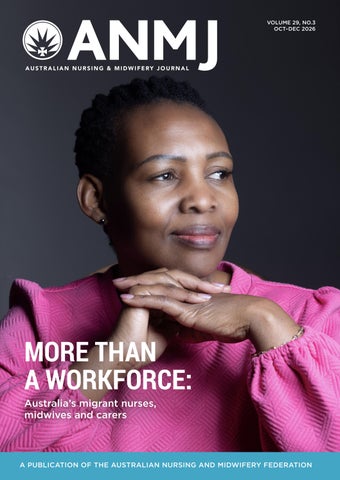
MORE THAN A WORKFORCE: Australia’s migrant nurses, midwives and carers
A PUBLICATION OF THE AUSTRALIAN NURSING AND MIDWIFERY FEDERATION
Clear medicines information for confident patient care. AMH provides practical medicines information to support day-to-day care across a range of clinical settings. - Clear medicines summaries - Practical guidance - Australian clinical context - Easy to use at the point of care
Explore AMH at amh.net.au
editorial
Aged care has undergone significant reform in recent years, but the message from frontline nurses and care workers is clear: the system is still not fixed.
Annie Butler ANMF Federal Secretary
The ANMF’s new ‘Aged Care Pulse Check – The Real Impact of Reforms’ survey heard from more than 3,550 registered nurses, enrolled nurses and care workers. It found serious systemic problems persist, including poor staffing ratios, rising workplace violence, and lack of transparency over billions of dollars in taxpayer funding meant for residents’ care. Almost half of workers surveyed reported inadequate ratios of nursing staff to care staff and not having enough time to deliver the care residents need. Alarmingly, nearly all (96.43%) had experienced or witnessed violence and aggression in their workplace over the previous 12 months, with most identifying residents as the perpetrators. The findings also exposed cost-cutting and lack of financial transparency over how providers spend taxpayer funding meant for care. One in five workers said a lack of funding/budget meant residents didn’t receive the services they need. While reforms such as 24/7 registered nurses have delivered welcome improvements, the evidence tells us mandated care minutes simply aren’t delivering the staffing levels and skill mix needed to consistently provide safe, quality care. It’s why, last month, the ANMF launched a new national campaign at Parliament House in Canberra – Australia Needs Care You Can Count On – calling for mandated staffing ratios and skill mix, strengthened measures to prevent and eliminate workplace violence and aggression, and improved accountability and transparency over government funding. Ratios would provide a clearer, more enforceable staffing standard, and reduce the manipulation of the current care minutes system by some providers. We have fought hard for meaningful aged care reform, and important progress has been made. But we cannot stop until every nurse and care worker has the staffing and support to provide safe, dignified care.
Australia relies heavily on internationally trained nurses, midwives and carers, yet many face significant barriers, including poor recognition of their skills and experience, limited career progression, and racism and discrimination. Established late last year, the ANMF Migration Strategy Reference Group continues to build a clearer picture of the common challenges migrant workers face so that we can strengthen support mechanisms and develop strategic policy responses. For example, one current priority is reviewing the Memoranda of Understanding (MOUs) used under aged care labour agreements to develop a consistent framework with stronger protections against exploitation. I would like to acknowledge Sally McManus and Michele O’Neil as they step down from their ACTU roles to make way for a new generation of union leaders. Sally and Michele were elected to the ACTU leadership in 2017 and 2018 respectively and are the longest serving leadership team since 1969. Together, they have been formidable advocates for working people, leading the union movement through some of its most challenging years. Under their leadership, unions have secured better wages and conditions, stronger rights and protections, bolstered collective bargaining, and important progress towards gender equality. On behalf of the ANMF, I thank Sally and Michele for their outstanding contributions and wish them both well for what comes next. I also welcome Melissa Donnelly on her appointment as the new ACTU Secretary. We look forward to working closely with Melissa as the union movement continues to stand together to advocate for working people across Australia.
This issue of the ANMJ looks at the important contribution migrant nurses, midwives and care workers make to Australia’s health and aged care systems.
Oct-Dec 2026 Volume 29, No. 3 1
directory
ANMF FEDERAL & ANMJ
FEDERAL SECRETARY Annie Butler
Level 1, 365 Queen Street, Melbourne Vic 3000 anmffederal@anmf.org.au
FEDERAL ASSISTANT SECRETARY Catelyn Richards
To contact ANMJ: anmjadmin@anmf.org.au
ACT
NT
SA
VIC
BRANCH SECRETARY
BRANCH SECRETARY
BRANCH SECRETARY
BRANCH SECRETARY
Carlyn Fidow
Heidi Crisp
Elizabeth Dabars
Maddy Harradence
OFFICE ADDRESS
OFFICE ADDRESS
OFFICE ADDRESS
OFFICE ADDRESS
2/53 Dundas Court, Phillip ACT 2606
16 Caryota Court, Coconut Grove NT 0810
191 Torrens Road, Ridleyton SA 5008
535 Elizabeth Street. Melbourne Vic 3000
POSTAL ADDRESS
POSTAL ADDRESS
POSTAL ADDRESS
POSTAL ADDRESS
PO Box 4, Woden ACT 2606 Ph: 02 6282 9455 Fax: 02 6282 8447 anmfact@anmfact.org.au
PO Box 42533, Casuarina NT 0811 Ph: 08 8920 0700 Fax: 08 8985 5930 info@anmfnt.org.au
PO Box 861 Regency Park BC SA 5942 Ph: 08 8334 1900 Fax: 08 8334 1901 enquiry@anmfsa.org.au
PO Box 12600, A’Beckett Street. Melbourne Vic 8006 Ph: 03 9275 9333
NSW
QLD
TAS
WA
BRANCH SECRETARY
BRANCH SECRETARY
BRANCH SECRETARY
BRANCH SECRETARY
Michael Whaites
Sarah Beaman
Emily Shepherd
Romina Raschilla
OFFICE ADDRESS
OFFICE ADDRESS
OFFICE ADDRESS
OFFICE ADDRESS
50 O’Dea Avenue, Waterloo NSW 2017 Ph: 1300 367 962 Fax: 02 9662 1414 gensec@nswnma.asn.au
106 Victoria Street West End Qld 4101
182 Macquarie Street Hobart Tas 7000 Ph: 03 6223 6777 Fax: 03 6224 0229 Direct information 1800 001 241 toll free enquiries@anmftas.org.au
260 Pier Street, Perth WA 6000
POSTAL ADDRESS
GPO Box 1289 Brisbane Qld 4001 Phone 07 3840 1444 Fax 07 3844 9387 qnmu@qnmu.org.au
MEMBER ASSISTANCE
records@anmfvic.asn.au
POSTAL ADDRESS
PO Box 8240 Perth BC WA 6849 Ph: 08 6218 9444 1800 199 145 (toll free) membership@anfiuwp.org.au
contents Front cover RN and registered Psychiatric Nurse, Julie Photo: Jessica Hromas Editorial Editor: Kathryn Anderson Journalist: Robert Fedele Journalist: Natalie Dragon Production Manager: Cathy Fasciale Level 1, 365 Queen Street, Melbourne Vic 3000 anmjadmin@anmf.org.au
OCT-DEC 2026 VOLUME 29, NO.3
8
Advertising Chris Masters cmasters@anmf.org.au 0428 052 138 Design and production Graphic designer: Isabelle Lineham isabelle@mycreativeagency.com.au The Australian Nursing & Midwifery Journal is delivered free quarterly to members of ANMF Branches other than New South Wales, Queensland, Western Australia and ACT. Subscription rates are available via ANMJadmin@anmf.org.au. Nurses and midwives who wish to join the ANMF should contact their state or territory branch. The statements or opinions expressed in the journal reflect the view of the authors and do not represent the official policy of the Australian Nursing & Midwifery Federation unless this is so stated. Although all accepted advertising material is expected to conform to the ANMF’s ethical standards, such acceptance does not imply endorsement. All rights reserved. Material in the Australian Nursing & Midwifery Journal is copyright and may be reprinted only by arrangement with the Australian Nursing & Midwifery Journal
REGULAR COLUMNS
FEATURE
Note: ANMJ is indexed in the cumulative index to nursing and allied health literature and the international nursing index ISSN 2202-7114 Online: ISSN 2207-1512
1
Editorial
8
2
Directory
4
News Bites
Moving state.
6
Alana
13
Industrial
18
Reflection
22
Issues
24
Strategic Programs & Engagement
25
Research & Policy
27
Legal
28
Viewpoint
30
Astrid
32
Aged Care Campaign
38
Social Justice
56
Appetite for Life
Transfer your ANMF membership If you are a financial member of the ANMF, QNMU or NSWNMA, you can transfer your membership by phoning your union branch. Don’t take risks with your ANMF membership – transfer to the appropriate branch for total union cover. It is important for members to consider that nurses who do not transfer their membership are probably not covered by professional indemnity insurance. Printing: IVE Group Distribution: D&D Mailing Services ANMJ is printed on A2 Gloss Finesse, PEFC accredited paper. The Journal is distributed by D&D Mailing Service and is wrapped in post consumer recycled (PCR) plastic which reduces environmental waste
PEFC Certified Paper from sustainably managed forests and controlled sources PEFC/21-31-119
pefcaustralia.org.au
More than a workforce: Australia’s migrant nurses, midwives and carers
CLINICAL UPDATE 14
Building nursing education capacity in paediatric procedural sedation: Evaluating a Train-theTrainer Model across NSW
FOCUS 40
Midwifery and Maternal Health
The ANMJ acknowledges the Traditional Owners and Custodians of this nation. We pay our respects to Elders past, present and emerging. We celebrate the stories, culture and traditions of Aboriginal and Torres Strait Islander Elders of all communities. We acknowledge their continuing connection to the land, water and culture, and recognise their valuable contributions to society.
@ANMJAUSTRALIA
NEWS
The organisational side of nurse and midwife wellbeing Workforce wellbeing isn’t just an individual responsibility. Growing evidence shows healthcare organisations play a major role in shaping nurses’ and midwives’ health, safety and wellbeing. The OWL-WELL project, led by the ANMF with Adelaide University’s Rosemary Bryant AO Research Centre, is launching a 2027 education module to help nurses and midwives improve wellbeing for themselves, colleagues, and workplaces. Participants will be trained and mentored to run small research projects tackling real-world challenges they identify. Ahead of the module, the project team is publishing ANMJ articles exploring health, safety and wellbeing. Researcher Clinton
Fildes says burnout, job dissatisfaction and intention to leave are common indicators of poor wellbeing, driven by organisational factors - inadequate staffing, unmanageable workloads, poor leadership, weak environments and patient-safety cultures - rather than individual ones. “Workforce wellbeing is not simply an individual responsibility. It is fundamentally shaped by the organisation,” he said.
Earlier social media use linked to poorer adolescent mental health The age children first use social media may matter more to adolescent mental health than simply whether they have an account, new Australian research suggests.
OWL-WELL will support nurses and midwives to design and test practical workplace solutions, while contributing to a national study on what makes workplaces healthier and more sustainable. For more information, please contact the project’s Chief Investigator Associate Professor Micah Peters micah.peters@adelaide.edu.au The project is supported by a Teachers Health Foundation Grant.
UNSW Sydney researchers surveyed 365 Australian adolescents aged 10–15 and a parent of each child in the six weeks before Australia’s social media ban took effect in December 2025. Around 70% of young people had used social media and about half already had an account. The average age of first use was 11. Those who started younger reported more symptoms of anxiety and depression, while simply having a social media account showed a weaker association with these symptoms. “What surprised us was that the age children first started using social media appeared to matter more for their mental health than simply whether they had an account,” said chief investigator Associate Professor Susanne Schweizer. “It suggests that delaying children’s first exposure may be a promising policy, especially if paired with training good digital hygiene and citizenship during the delay.” The study also found only one in four adolescents intended to stop using social media following the ban. About 35% said they planned to find a way around the restrictions, while 34% intended to continue using platforms without an account. Researchers say parents, educators and health professionals have an important role in helping young people develop healthier digital habits. The team will follow participants for the next 12 months to examine changes in social media use, mental health, attitudes and exposure to online harms.
4 Oct-Dec 2026 Volume 29, No. 3
news
ACTU changes leadership The ANMF has welcomed Melissa Donnelly, pictured, as Secretary-elect of the Australian Council of Trade Unions (ACTU) and paid tribute to outgoing ACTU Secretary Sally McManus and President Michele O’Neil for their leadership and advocacy on behalf of Australian workers.
More Australian girls and women receiving hospital care for endometriosis The rate of endometriosis hospitalisations has increased by 23% (from 145 to 180 hospitalisations per 100,000) over the past decade. The Australian Institute of Health and Welfare’s (AIHW) Endometriosis hospital procedures report provides new insights into surgical procedures commonly used to treat the condition. Of 24,700 endometriosis hospitalisations in 2024–25, more than nine in 10 involved a procedure. Almost two-thirds (62%) involved laparoscopic excision or ablation, up from 58% in 2015–16. The rate of laparoscopic excision increased from 57 to 93 hospitalisations per 100,000 females, while laparoscopic diathermy decreased from 32 to 25. Hospital IUD insertions also increased from 19 to 29 per 100,000 females, aligning with clinical guidelines recommending hormonal treatments to help reduce the recurrence of symptoms following laparoscopic surgery. There were 3,200 hysterectomies performed for endometriosis in 2024–25. The rate of abdominal hysterectomy doubled over the decade, from 11 to 23 per 100,000 females, with more than nine in 10 performed in women aged over 35. AIHW spokesperson Amy Young said the findings would help improve understanding of changing treatment and care pathways for people affected by endometriosis.
Ms Donnelly, served as National Secretary of the Community and Public Sector Union (CPSU) for the past seven years and is one of the youngest ACTU Secretaries in the union’s history. She helped secure landmark work-from-home rights, improved pay and conditions, expanded paid parental leave, and led efforts to reverse the outsourcing of government services to major consultancy firms. Ms McManus said Ms Donnelly had overwhelming support across the union movement to become the ACTU’s 11th Secretary and represented a new generation of leadership. “The average union member is a 44-year-old working mother and so is Melissa. With two school-aged children and having led a large union, she well knows the pressures working people are under.”
in addressing gender inequity and helping secure historic increases to award and minimum wages that have benefited lowpaid care workers across the country.” Their leadership had strengthened unity across the union movement and delivered lasting improvements for working Australians, Ms Butler said. Ms McManus and Ms O’Neil, elected in 2017 and 2018 respectively, are the ACTU’s longest-serving leadership team since 1969. Ms McManus stepped down on 28 August, while Ms O’Neil will remain ACTU President until later this year to support the leadership transition.
ANMF Federal Secretary and ACTU Vice President Annie Butler praised Ms McManus and Ms O’Neil for their significant contribution to industrial relations reform. “Sally and Michele have demonstrated an unwavering commitment to securing fairer wages and conditions, safer workplaces and stronger workplace rights. “As a predominantly female union, the ANMF particularly commends their achievements
McGrath Foundation adds prostate cancer nurses The McGrath Foundation Cancer Care Nurse service will be expanded to include prostate cancer nurses from 1 July 2027. The Albanese Government is providing $46.5 million over five years (2027-28 to 2031-32) to support 60.5 (FTE) prostate cancer nurse positions in health and hospital services around Australia. Male cancer incidence rates in Australia remain high, with almost one in two Australian men diagnosed with cancer by age 85. On 1 July 2026, the 128 new McGrath Cancer Care Nurses, placed since the McGrath Foundation announced it was taking its care to all cancers, had supported 7,522 patients nationally, comprising 4,200 males (56%) and 3,322 females (44%). This latest expansion of the McGrath service will add to existing cancer care.
Nurses which support a range of cancers including breast, gastrointestinal, gynaecologic, genitourinary, multi-tumour, lung and mesothelioma, brain, liver and bile, sarcoma, blood, head and neck, myeloma, melanoma and skin cancers. Prostate cancer represents around a third of all male cancer diagnoses, with more than 28,000 Australian men estimated to be diagnosed with prostate cancer in 2025. The McGrath Cancer Care Nurses will continue to work with the Prostate Cancer Foundation Australia (PCFA) Specialist Support Service, recognising the ongoing value of PCFA’s support, particularly in providing survivorship care for men living with and beyond prostate cancer.
Oct-Dec 2026 Volume 29, No. 3 5
ALANA
Fixing aged care: There is still more to do Alana Ginnivan Assistant to the Federal Secretary (Strategy & Campaigns)
One of the things I value most about my role is hearing directly from members. In every conversation I have with nurses and care workers in aged care, I am inspired by their kindness and the extraordinary commitment they bring to supporting residents, their families and each other. Their dedication is unwavering, and so too is their determination to improve the system around them. Their stories remind us why we continue to fight for better staffing, stronger accountability and greater investment in aged care. For more than two decades, the ANMF worked tirelessly alongside members to improve aged care, advocating for better standards, greater accountability and safer care. Together we built a movement for reform, gaining significant change in the sector. Yet while these reforms laid important foundations, too many nurses and care workers continue to face the daily challenges of staffing shortages, growing workloads and constrained resourcing. Over the past few months ANMF Federal Secretary Annie Butler, Federal Assistant Secretary Catelyn Richards and I had the opportunity to connect with members across the country through state and territory branch delegate conferences. These conferences bring together delegates to raise the issues that matter most to members, discuss and debate motions developed by delegates, and connect with colleagues from across their professions. They are always a powerful reminder of the commitment, expertise and passion our members bring to improving health and aged care in Australia. The conferences also gave Annie and me the opportunity to hear directly from aged care members across the country and learn about their experiences, concerns and hopes for the future. Some were new to the workforce, bringing fresh perspectives and enthusiasm, while others had spent years championing for a better aged system and played a vital role in shaping the reforms achieved so far. To better understand the impact of recent and ongoing reforms, the ANMF surveyed aged care members through the Aged Care Pulse Check: The Real Impact of Reforms. The response was significant, with members providing extensive feedback about the realities they continue to face in their workplaces. On 11 August 2026, the ANMF released its report, Pulse Check of the Aged Care Sector: The Real Impact of Reforms. The findings paint a concerning picture and reinforce what aged care members have been telling us for some time.
6 Oct-Dec 2026 Volume 29, No. 3
Members told us three key things they were experiencing at work: inadequate staffing levels and skill mix, increasing incidents of workplace violence and aggression, and a lack of transparency regarding how funding is being spent. While the findings are confronting, they will come as no surprise to those working in the sector every day. Following the report’s release, Annie and I, along with NSW Nurses and Midwives’ Association Assistant General Secretary Katrina Bough, Queensland Nurses and Midwives’ Union Assistant Secretary Grant Burton, and aged care members from across the country, travelled to Parliament House in early September to take these concerns directly to decision-makers. Members met with the Minister for Aged Care and Seniors, the Hon Sam Rae, as well as health advisers and parliamentary representatives, to share their firsthand experiences of working in aged care and the challenges that remain despite recent reforms. These conversations are critical. The true measure of aged care reform lies in the lived experiences of nurses and care workers, whose day-to-day perspectives provide a clear signal of whether reforms are delivering meaningful change. While the findings of the Pulse Check report highlight significant challenges, they also point to what needs to happen next. The experiences shared by members continue to inform our discussions with government and decision-makers and strengthen our advocacy for meaningful change. The conversations I’ve had with members across the country leave me hopeful. Despite the challenges they face, their commitment to residents remains strong. Their passion, professionalism and determination are what drove the reforms we have achieved, and they will continue to guide our work in the years ahead.
A super fund for health workers
Aware Super has been a major fund of choice for health workers since 1992. Today, over 200,000 members working in health trust us with their super. Caring for others is your super power. Being super helpful is ours.
Join today at aware.com.au
Consider if Aware Super is right for you and read the PDS and TMD at aware.com.au/pds. Issued by Aware Super Pty Ltd (ABN 11 118 202 672, AFSL 293340) trustee of Aware Super (ABN 53 226 460 365). AS481 0926
FEATURE
More than a workforce Australia’s migrant nurses, midwives and carers
Australia’s health and aged care systems increasingly rely on migrant nurses, midwives and carers to fill critical workforce gaps. Yet many continue to face barriers to recognition, career progression and belonging. Natalie Dragon reports.
Kenyan-born aged and disability care worker Sheila migrated to Australia four years ago on a student visa to study tourism. “My brother was already living here, and I thought Australia would be a good opportunity for study and work.” After struggling to find employment in tourism on graduation, Sheila turned to aged and disability care. “It wasn’t my first choice, but I love the people and the work. Now I’m thinking about studying nursing.” Australia relies heavily on internationally trained nurses, midwives and carers to fill workforce shortages, especially in aged care, disability support and rural and remote health services. Over the past 15 years, Australia has become one of the world’s leading destinations for overseas-trained health professionals, remaining among the top 10 OECD countries with the highest proportion of foreign-trained health workers.
8 Oct-Dec 2026 Volume 29, No. 3
ETHICAL MIGRATION A Senate Inquiry established in 2025 is examining the value of skilled migration to Australia, including the program’s economic, social and cultural contributions, its effectiveness in addressing workforce shortages, and opportunities to strengthen public understanding of the role migration plays in supporting Australian communities. In its submission, the Australian Nursing and Midwifery Federation (ANMF) called for an ethical, principles-based approach to skilled migration. “Ethical migration means considering the impact on the countries nurses, midwives and carers leave behind,” ANMF Federal Secretary Annie Butler says. “While individuals should have the opportunity to pursue careers in Australia, recruitment should not come at the expense of healthcare systems in countries already experiencing workforce shortages.”
FEATURE
“When people feel supported and valued, they can thrive and contribute to their full potential. By investing in people’s wellbeing and recognising their potential, organisations create stronger teams and better outcomes for everyone. Policies that promote inclusion, safety and equity are important, but they must also be implemented and enforced in practice.” RN AND REGISTERED PSYCHIATRIC NURSE, JULIE
RN and registered psychiatric nurse, Julie Photo by Jessica Hromas
Oct-Dec 2026 Volume 29, No. 3 9
FEATURE feature
migrant workers are unaware of the advice, advocacy and resources available to them, particularly those on temporary visas who may be reluctant to speak up about workplace concerns,” Ms Maguire says. “It’s not just someone’s job that’s at stake. For many migrant workers, it’s also their visa, their livelihood and their future in Australia.”
“
The ANMF reference group is working towards a consistent framework, including stronger protections against exploitation and greater safeguards for migrant workers. “In South Australia, we’ve taken the position that we will not sign an MOU unless there is clear evidence that workers are being paid above-award rates and the employer is prepared to engage in an enterprise agreement or already has one in place,” says ANMF South Australian Branch Professional Practice Nurse Lead Jo Wagner.
While individuals should have the opportunity to pursue careers in Australia, recruitment should not come at the expense of healthcare systems in countries already experiencing workforce shortages.
“Ultimately, our goal is to create fair opportunities for locally trained and migrant nurses, midwives and carers while maintaining a responsible and sustainable approach to workforce planning.” Australia must strike a balance between strengthening the domestic workforce and supporting internationally recruited health professionals, Ms Butler says. “We need to ensure Australian graduates have opportunities to develop and progress, while also ensuring migrant workers can practise at a level that reflects their skills, qualifications and experience. Many arrive with extensive expertise but find their skills are not fully recognised, limiting opportunities for career advancement.” ANMF MIGRATION STRATEGY REFERENCE GROUP
Many workers recruited from overseas come from countries where union ANMF Federal Secretary Annie Butler membership and collective action are less common. At the same time, their visa status can leave them feeling powerless and reluctant to speak Migrant workers can be particularly out. That’s why it’s important that robust vulnerable to exploitation because safeguards are in place, says Ms Wagner. of insecure employment, limited knowledge of workplace rights, and “Before supporting an employer’s reduced bargaining power, Ms Maguire application, we undertake site visits and says. “That exploitation can have serious speak directly with staff. We want to know consequences, including financial hardship, whether current workers are receiving stress and fear about the future.” the shifts they were promised, whether AGED CARE The high proportion of migrant workers in aged care has been driven, in part, by government workforce initiatives designed to address chronic staffing shortages. Programs such as the Pacific Australia Labour Mobility (PALM) scheme, Designated Area Migration Agreements and the Aged Care Industry Labour Agreement have created pathways for employers to recruit workers from overseas.
To better understand and address the experiences of migrant nurses, midwives and carers, the ANMF established a Migration Strategy Reference Group late last year. The group brings together representatives from ANMF branches across Australia to identify common issues, strengthen support mechanisms and develop policy responses.
While aged care labour agreements can provide a pathway to permanent residency, they can also leave workers vulnerable. Some migrant workers report feeling pressured to work additional hours, avoid taking sick leave or meet unreasonable demands because their future visa prospects are tied to their employer.
“The aim is to build a clearer picture of the challenges migrant workers face and develop targeted strategies to address them,” says ANMF National Workforce Strategic Lead Jillian Maguire.
Addressing these risks has become a key focus of the ANMF Migration Strategy Reference Group. One of its priorities is reviewing the Memoranda of Understanding (MOUs) used under aged care labour agreements. Providers seeking streamlined access to overseas workers are required to enter into an MOU with the union.
A key focus is raising awareness of the support available through the union. “Many
10 Oct-Dec 2026 Volume 29, No. 3
“We see our sign-off as a vote of confidence that the provider is doing the right thing by its workforce, and we take that responsibility seriously.”
they’re being treated fairly, and whether they’re genuinely being recruited to address workforce shortages rather than simply being used as a source of cheap labour.
“We also look at the practical supports being provided. Is accommodation available? Are workers being helped to settle into the local community? Are they being supported beyond the workplace? In regional locations, that’s particularly important.” There are also broader concerns about temporary visa arrangements. Workers may become tied to a single employer, limiting their ability to leave unsafe or exploitative workplaces. Access to healthcare is another issue, with some visa holders reliant on private health insurance rather than Medicare. Another concern is the lack of certainty around pathways to permanent residency. In some cases, workers are sponsored for limited periods without a clear pathway to permanency, leaving them dependent on their employer to remain in Australia. Workers may feel unable to refuse unreasonable demands because they fear jeopardising their ability to remain
feature
in Australia. We’ve seen examples where workers have been pressured to work excessive hours or double shifts under the explicit or implied threat that their visa sponsorship could be affected. Union representation plays an important role in reducing the risk of exploitation, says NSWNMA Professional Officer Helen Macukewicz. “That’s why it’s so important that we continue to engage with and support migrant workers, including encouraging them to join their union. Ensuring workers understand their rights and have access to collective support is critical to addressing exploitation, challenging racism and creating safer workplaces.” In its submission to the skilled migration Inquiry, the ANMF argued that migrant workers must be able to leave an employer without jeopardising their visa status. “It is essential that migrant workers have a clear understanding of the options available under their visa arrangements. “Clear and accessible information about temporary visas, permanent residency pathways and pathways to permanency is critical so workers can make informed decisions about their future.” BARRIERS TO PROGRESSION “While nurses and midwives who migrate to Australia bring a considerable wealth of skills and knowledge that strengthen the healthcare system, the system does not always support these skilled workers to fully integrate within the workplace,” says ANMF Federal Secretary Annie Butler. Many arrive to find their qualifications, expertise and years of experience are not fully recognised. Nurses and midwives who held senior roles in their home countries can find themselves starting again at entry-level classifications. Racism and discrimination also remain significant challenges. The NSWNMA’s 2025 Standing Together Against Racism report found 70% of nurses, midwives and care workers believed racism exists in their workplace, perpetrated by patients, colleagues and managers. Members reported a lack of cultural safety, limited career development opportunities, social isolation and frequent experiences of racism and microaggressions.
RN and registered psychiatric nurse Julie migrated to Australia from Zimbabwe in 2004. Her sponsoring employer, a private mental health facility in Sydney, provided a welcoming and supportive environment. She was paired with a buddy from South Africa, and managers regularly checked on her wellbeing. “I came into a welcoming environment with a very good induction and was embraced as one of their own. People took an interest in my wellbeing, my family and how I was adjusting to life in Australia.” However, after moving to another organisation, Julie says she encountered racism, discrimination and barriers to career progression. Despite gaining
70%
OF NURSES, MIDWIVES AND CARE WORKERS BELIEVE RACISM EXISTS IN THEIR WORKPLACE perpetrated by patients, colleagues and managers MEMBERS REPORTED A lack of cultural safety
Social isolation
Limited career development opportunities Frequent experiences of racism and microaggressions
NSWNMA’s 2025 Standing Together Against Racism report
experience, completing postgraduate study and mentoring junior colleagues, she was repeatedly overlooked for advancement opportunities. “At times, it felt as though my contribution was valued when staffing was needed, but not when leadership opportunities arose. That had a significant impact on my sense of belonging and professional wellbeing.” However, Julie had positive experiences when management and organisation culture was supportive and invested in her career progression. “Under supportive, inclusive management, I flourished
professionally and personally. I was healthy, engaged, and progressing in my career.” Similar findings emerged from research conducted by RN and NSWNMA member Loveness, who explored career progression among culturally and linguistically diverse (CALD) nurses who migrated to Australia through skilled migration pathways. Drawing on interviews with nurses from Zimbabwe, India, Nepal, the Philippines, Germany and South Africa, her study found that while migrant nurses generally felt welcomed into the Australian healthcare system, barriers often emerged when they sought promotion or leadership opportunities. Language and accent were among the most commonly reported obstacles. “There can be an unconscious linguistic bias where people form assumptions about how you should speak before you’ve even said a word,” she says. Accents were sometimes perceived as indicators of lower competence, despite qualifications, experience and clinical expertise. While equal opportunity is often promoted as a workplace value, many participants felt that career progression was hindered simply because they were migrant nurses. “Neither Australian experience nor Australian qualifications necessarily guaranteed career progression for migrant nurses. Even after establishing extensive local experience and obtaining Australian credentials, many participants felt they continued to face barriers to advancement,” says Loveness. Loveness experienced some of those challenges herself. After migrating from Zimbabwe more than 20 years ago, she initially worked in supportive and inclusive workplaces in New South Wales and Western Australia, where mentoring opportunities helped her progress professionally. However, after returning to Sydney more than a decade later, she noticed a lack of diversity in leadership positions. “By then, I had Australian experience and qualifications, yet I noticed a very different workplace culture. At first, I questioned whether the problem was me. However, as I looked around, I realised there was very little cultural diversity in leadership positions, particularly for women of colour.”
Oct-Dec 2026 Volume 29, No. 3 11
feature
Repeated challenges eventually prompted Loveness to move from a permanent clinical role into academia. Along the way, she became involved in advocacy through the NSWNMA CALD Reference Group. “Migrant nurses, like anyone else, want to contribute, learn and advance in their careers. As our population becomes more diverse, it’s important that healthcare leadership reflects that diversity. Otherwise, we risk missing valuable perspectives that can improve policy and patient care.” A report released in July highlighted that these experiences extend beyond healthcare. The RISE Project, a four-year initiative led by Diversity Council Australia, Settlement Services International (SSI) and Chief Executive Women, called on organisations to address the systemic barriers preventing culturally and racially marginalised (CARM) women from progressing into leadership roles. “In many organisations, the higher you move up the leadership pipeline, the less diverse it becomes,” says SSI CEO Violet Roumeliotis. “That pattern reflects the structural and attitudinal barriers that CARM women continue to face in Australian workplaces. “If organisations want different leadership outcomes, they need to ask different questions, listen more carefully to the women most affected, and be willing to change the systems that hold inequity in place.” ANTI-RACISM COLLABORATIVE Within healthcare, efforts are underway to tackle racism more directly. The Australian Human Rights Commission and the NSWNMA have established the NSW Anti-Racism Collaborative, which brings together employers, community organisations
and workers with lived experience of racism to develop practical responses. The ANMF is advocating for the model to be expanded nationally. Stronger accountability measures are needed, says Ms Macukewicz. “Ultimately, we would like to see the introduction of a positive duty clause in legislation requiring employers to take proactive steps to prevent and mitigate the psychosocial harms associated with workplace racism. “Rather than responding only after incidents occur, employers should have a clear obligation to create safe and inclusive workplaces. Genuine prevention and culture change require sustained investment, and too often that investment is lacking.” The collaborative is also working with organisations including Filipino International Nurses Diaspora and Nepalese Health Professionals Australia to develop evidence-informed approaches to addressing racism in healthcare settings. Looking ahead, the NSWNMA wants anti-racism embedded more explicitly as a core standard of professional practice across all health professions. “While awareness is growing, racism can be difficult to identify if you have not experienced it yourself, and for many people it remains largely invisible,” says Ms Macukewicz. “Greater visibility, stronger accountability and more proactive approaches to identifying, measuring and addressing racism are essential. The better we understand the problem, the better equipped we are to develop effective solutions.” Julie believes organisations must do more than simply recruit internationally qualified nurses and midwives to fill workforce gaps. “When people feel supported and valued, they can thrive and contribute to their full potential. By investing in people’s wellbeing and recognising their potential, organisations create stronger teams and better outcomes for everyone. Policies that promote inclusion, safety and equity are important, but they must also be implemented and enforced in practice.”
“
Migrant nurses, like anyone else, want to contribute, learn and advance in their careers. As our population becomes more diverse, it’s important that healthcare leadership reflects that diversity. Otherwise, we risk missing valuable perspectives that can improve policy and patient care. RN and NSWNMA member, Loveness
12 Oct-Dec 2026 Volume 29, No. 3
INDUSTRIAL
We hear you. We are here for you. Primary healthcare nurses and midwives Jillian Maguire ANMF Strategic Lead Workforce
Recently, I had the opportunity to talk to fellow nurses working in primary healthcare and the common question asked of me was “does the ANMF cover me in primary healthcare?” Primary healthcare nurses, the answer is yes: we’re here for you. Nursing and midwifery in primary healthcare has never been more important. Conversations about Australia’s health system needs to shift from episodic treatment to prevention and community-based care. Primary healthcare nurses and midwives are central to the success of that transition. Every conversation about improving access, reducing hospital demand or addressing health inequity should include primary healthcare nurses and midwives. The ANMF Strategic Plan 2026-2028 provides our framework for representing and advancing the interests of nurses, midwives and care workers, with a strong focus on workforce reform, healthcare equity and safe working conditions as well as enabling nurses and midwives to work to their full scope of practice. This plan guides our work in primary healthcare by providing a clear framework for advocacy and representation that supports a strong, sustainable workforce and promotes nurse and midwives’ roles in delivering accessible, high-quality care. The challenges facing Australia’s health system demand accessible, relationship-based, preventive care, something that nurses and midwives already provide every day. Nurse practitioners, endorsed midwives, nurseand midwife-led clinics help fill critical workforce gaps and improve access to primary healthcare in underserved communities, yet their contribution continues to be undervalued. It is time for policy and funding to catch up with the evidence. Strengthening nurse- and midwife-led models of care will not only improve access for communities but also better support our professions in primary healthcare to work to their full scope of practice.
That is why the ANMF work to support primary healthcare members. To action this, the ANMF has formed the Primary Health Care Committee which consists of representatives from the Branches and Federal Office who meet on a regular basis to discuss and plan our advocacy work to support members. Some of the areas our strategic team focusses on includes: • Breaking down the barriers to working to full scope of practice for all nurses and midwives; • Advocating for improved funding models, particularly that support nurse- and midwifeled models of care; and • Advocating opportunities for professional development, advanced practice training pipelines and improved pay and conditions for our members in primary healthcare.
The ANMF also leads industrial advocacy to secure better pay and conditions that recognise and value the contribution of nurses and midwives working in primary healthcare. We have leveraged a landmark nurses and midwives Work Value case at the Fair Work Commission. The ANMF represents the interests of primary healthcare nurses and midwives at commonwealth committees such as the Strengthening Medicare Taskforce and prepares submissions to government that advocates for policies that strengthen the workforce and improve access to high-quality, person-centred care.
From my conversations with members, I know many of you are already delivering these solutions. As the largest professional and industrial representative of nurses and midwives in Australia, the ANMF is ideally placed to advocate for members working in primary healthcare. The ANMF advocates for you at the local level, through your branch, as well as on national platforms.
This is just some of the work that is ongoing and building at the ANMF to support our members working in primary healthcare.
We recognise that for far too long, primary healthcare nurses and midwives have felt isolated from their colleagues due to geographical spread and the sheer fact that in primary healthcare, nurses and midwives may be the only one in their practice.
We hear you, and we want to know more from you, our members, to shape our conversations and action in primary healthcare so we can achieve the best outcomes possible for you and shed a light on the work you do for your communities every day.
The question should no longer be how nurses and midwives are involved in primary healthcare. The question is why the scope and value of their contribution remains largely invisible within Australia’s health system.
Oct-Dec 2026 Volume 29, No. 3 13
CLINICAL UPDATE
Building nursing education capacity in paediatric procedural sedation: Evaluating a Train-the-Trainer Model across NSW By Elizabeth Evans, David Anderson, Carolyn Smith, Abbie-Lee Cannings and Carly Griffin
ABSTRACT Workforce capability in procedural sedation relies not only on clinical guidelines but on robust, scalable education frameworks. This report evaluates a Train-theTrainer (TTT) education model designed to strengthen educator capacity in delivering and sustaining accreditation programs for nurse-administered nitrous oxide procedural sedation in paediatric settings across New South Wales (NSW). The workshop targeted Clinical Nurse Educators (CNEs), Clinical Nurse Consultants (CNCs), and senior nurses,
14 Oct-Dec 2026 Volume 29, No. 3
equipping them with curriculum resources, simulation design skills, and accreditation tools to implement or refine local training programs. Immediate and longitudinal evaluation demonstrated increased educator confidence, expansion of local training activity, enhanced standardisation of competency frameworks, and broader application of simulation-based teaching strategies beyond sedation education. Findings support the TTT model as an effective, scalable approach to building nursing education capability across metropolitan, regional and rural health districts.
WHY EDUCATION REFORM WAS NEEDED Nitrous oxide is widely used for paediatric procedural sedation under established guidelines.1,2 Suitably accredited registered nurses may administer free-flow titratable nitrous oxide to children aged one year and older within defined protocols. However, across NSW Local Health Districts (LHDs), there was significant variability in how nurse accreditation was delivered, assessed and maintained. In some districts, no formalised accreditation pathway existed. In others, education packages were locally developed but inconsistent in structure, assessment methods and simulation exposure.
Clinical UPDATE CLINICAL update
Clinical Nurse Educators in regional and rural settings reported:
• Lack of structured accreditation templates.
demand for simulation-based learning and educators’ competence in developing and assessing simulations.4,5 Overall, TTT approaches in healthcare serve as scalable strategies to build educator and leadership capacity, enhance clinical and educational competencies, and promote knowledge dissemination within healthcare systems.5,6
• Difficulty aligning practice with evolving evidence.
The NSW Paediatric Nitrous Oxide Train the Trainer program was designed to:
Rather than deliver centralised training to frontline staff, a decision was made to strengthen the educators themselves creating sustainable local capacity.
• Equip CNEs and CNCs with structured accreditation frameworks.
THE EDUCATION STRATEGY: A TRAIN-THE-TRAINER MODEL
• Build simulation design and facilitation capability.
Train-the-trainer (TTT) approaches in nursing are utilised to enhance the capacity of nurse educators and practitioners to disseminate knowledge and skills effectively within their professional settings. These programs often focus on specific competencies such as primary care principles, simulation education, leadership development, and debriefing techniques.3 In simulation education, TTT models address the gap between the
• Strengthen confidence in delivering sedation education.
• Limited access to standardised teaching resources. • Variable simulation expertise.
• Provide adaptable education and competency templates.
• Promote cross-district collaboration and resource sharing. Workshop content was developed in partnership with staff from local LHDs. The workshop aimed to disseminate insights gained from the redevelopment of the nitrous oxide program at Sydney Children’s Hospital Randwick, share relevant
resources, and co-create teaching materials - including simulation scenarios tailored to the needs of participating centres (see Figure 1). A central objective of the Train-the-Trainer program was to facilitate collaborative discussion on strategies to streamline and formalise nitrous oxide accreditation processes to enhance safety and support professional practice. A secondary objective was for participants to design a simulation scenario informed by case presentations commonly encountered in their clinical context. Scenario development involved addressing identified learning objectives, utilising local resources, and creating a safe and supportive learning environment. These scenarios were then tested in the Kids Simulation Australia Centre at Sydney Children’s Hospital Randwick to appraise scenario flow, educational value, and alignment with intended learning outcomes. Participants were subsequently able to adapt these scenarios for use within their own centres to support the development of local accreditation pathways. Between 2023 and 2025, 43 educators from eight LHDs across approximately 300,000 square kilometres of NSW participated in the program.7
FIGURE 1: Train-the-Trainer workshop content example
SIMULATION AS AN EDUCATOR CAPABILITY BUILDER
2. Developed learning objectives aligned to accreditation requirements.
A distinguishing feature of the workshop was its strong simulation pedagogy component. Participants did not simply experience simulation - they designed it.
3. Built structured simulation cases.
Working collaboratively, educators: 1. Identified common paediatric sedation scenarios from their local context.
4. Tested scenarios at the Kids Simulation Australia Centre. 5. Refined debriefing approaches.
Longitudinal feedback showed that participants subsequently adapted the simulation templates for broader emergency department and paediatric education programs, demonstrating transferability beyond nitrous oxide training.
This process moved educators from simulation consumers to simulation designers.
Oct-Dec 2026 Volume 29, No. 3 15
clinical UPDATE CLINICAL update
EVALUATION FINDINGS
Immediate post-workshop evaluation
2. Improved educator confidence
• 100% of participants reported the workshop met their learning needs.
CNEs described enhanced confidence in:
• Participants valued practical resource sharing and co-design.
• Running simulations.
• Simulation development was identified as the most impactful component. • Educators reported increased clarity in structuring accreditation pathways.
• Teaching sedation principles. • Updating competency frameworks. • Leading accreditation reform.
One participant reflected that the workshop acknowledged differences in local resources while providing adaptable frameworks rather than prescriptive rules.
“It really increased my confidence as a CNE to train staff, and sharing of resources made updating local resources much more efficient.”
Longitudinal impact (6–24 months post-workshop)
3. Standardisation of accreditation frameworks
Although response numbers were modest (10/42), findings showed meaningful education system change.
Educators reported:
1. Increased local training activity
• Introduction of pre-course quizzes.
Participants reported conducting multiple local training sessions, with some educating 20+ staff members. Several districts redeveloped or standardised district-wide learning packages.
• Clearer competency assessment tools.
• Development of LHD-wide procedures. • Formalised simulation requirements. This reduced variation in educational delivery and supported safer, evidence-informed practice.
“Staff that attended have come together to develop a standardised
4. Transferability beyond sedation education
learning package for the district.”
A significant educational outcome was the broader application of simulation design skills.
“I continue to use the simulation template for multiple ED scenarios in my education planning.” This ripple effect suggests the TTT model strengthened overall educator capability, not just sedation-specific knowledge.
WHY THE TRAIN-THE-TRAINER MODEL WORKED Several elements contributed to the success of the model:
❶
❷
CAPACITY BUILDING OVER CONTENT DELIVERY
CO-DESIGN RATHER THAN TOP-DOWN INSTRUCTION
Rather than central experts repeatedly delivering sedation training, the program empowered local educators to sustain programs independently.
Participants adapted materials to their own contexts, increasing ownership and implementation success.
❸
❹
PRACTICAL RESOURCE PROVISION
PROFESSIONAL NETWORKING
Templates, competency documents, and simulation structures reduced duplication of effort across districts.
Cross-LHD collaboration fostered peer support and shared problem-solving - particularly valuable for rural educators.
16 Oct-Dec 2026 Volume 29, No. 3
clinical UPDATE CLINICAL update
EDUCATION IMPLICATIONS FOR NURSING PRACTICE This initiative demonstrates that: • Structured TTT models can strengthen rural and regional nursing education capability. • Simulation design skills are transferable and sustainable. • Sharing resources reduces inefficiency across districts. • Educator confidence directly influences workforce training capacity. For nursing leaders, investing in educator development may offer greater long-term impact than isolated clinical skills workshops. CHALLENGES AND FUTURE DIRECTIONS Rural participants identified travel costs to metropolitan workshops as a barrier. Future directions include: • Delivering workshops in rural LHDs. • Hybrid or virtual simulation educator training models. • Ongoing educator communities of practice. Expanding access will be critical to equitable workforce development across NSW. CONCLUSION The Nitrous Oxide Train-the-Trainer program demonstrates that strengthening nursing education capability can drive sustainable clinical accreditation reform across geographically diverse health districts. By focusing on educator empowerment, simulation pedagogy, and shared resource development, this initiative built confidence, standardised competency frameworks, and increased local training activity across NSW. Although developed within the context of paediatric procedural sedation, the principles underpinning this initiative are transferable. Any clinical area requiring structured accreditation, simulation-based competency assessment, and educator leadership may benefit from a similar Trainthe-Trainer framework. As healthcare continues to evolve, scalable and sustainable education models will be essential to maintaining high standards of nursing practice across Australia. This project demonstrates that when we invest in nurse educators, we strengthen the entire system.
Acknowledgements
References
Sydney Children’s Hospitals Network acknowledges that our facilities are built on the lands of the Bidjigal, the Cammeraygal, the Burramattagal, Cabrogal, Wangal, and the Woddi Woddi. Our services extend across the lands now known as New South Wales. Aboriginal people believe these lands hold the ancestral spirits of those who have come and gone before them. We acknowledge this is, was, and always will be, Aboriginal land.
1. ANZCA (2023) PG09(G) Guideline on procedural sedation 2023. [Online] https://www.anzca.edu.au/ getContentAsset/3faa17f6a6e0-4719-99929d67acef952b/80feb437d24d-46b8-a8584a2a28b9b970/ PG09(G)-Sedation-2023. pdf?language=en[accessed 9/12/25]
We acknowledge the support of Kids Simulation Australia, Sydney Children’s Hospital and the participating LHDs in supporting this workshop and Quality Improvement project. AI acknowledgement: This report was produced with the help of AI (ChatGPT) to summarise and format findings, language refinement and idea organisation. All content was reviewed and verified by the authors. Authors Elizabeth Evans RN, MN is a Clinical Nurse Consultant, Paediatric Pain Management Service, Sydney Children’s Hospital, and an Associate Lecturer, University of Sydney David Anderson RN is a Clinical Nurse Consultant, Paediatric Pain Management Service, Sydney Children’s Hospital Carolyn Smith is a RN, NE. Simulation Coordinator, Kids Simulation Australia, Sydney Children’s Hospital Abbie-Lee Cannings RN is a Clinical Nurse Consultant, Paediatric Pain Management Service, Sydney Children’s Hospital Carly Griffin RN is a Clinical Nurse Specialist, Outpatients Department, Sydney Children’s Hospital
2. The Royal Children’s Hospital Melbourne (2021). Clinical Practice Guidelines: Nitrous Oxide - oxygen mix [Online] https://www.rch.org.au/ clinicalguide/guideline_ index/Nitrous_Oxide_ Oxygen_Mix/ [accessed 9/12/25] 3. De Rezende, H, Martins, MS, & Sirlei dos Santos Silva M. (2025). Empowering nursing educators to teach patient safety: Insights from a Train the Trainer workshop in Brazil. Nurse Educator, 50(1), E12–E12. https://doi.org/10.1097/ NNE.0000000000001668 4. Akselbo I. (2023). How can we use simulation to improve competencies in nursing? (Iben. Akselbo & Ingvild. Aune, Eds; 1st ed. 2023.). Springer International Publishing. https://doi.org/10.1007/9783-031-10399-5 5. Woda A, Bradley CS, Johnson BK, Hansen J, Pena S, Cox N, & Dreifuerst KT. (2023). Early evidence for using a Train-theTrainer program to teach debriefing for meaningful learning. Clinical Simulation in Nursing, 83, Article 101447. https://doi.org/10.1016/j. ecns.2023.101447 6. Servey J, Bunin J, McFate T. McMains C, Rodriguez R & Hartzell J. (2020). The Ripple Effect: A Train-the-Trainer Model to Exponentially Increase Organizational Faculty Development [version 1]. MedEdPublish 2020, 9:158 (https://doi.org/10.15694/ mep.2020.000158.1) 7. Health Consumers NSW (2025) List of Local Health Districts, Primary Health Networks, Specialty Networks and Affiliated Health Services [Online] https://hcnsw.org.au/wpcontent/uploads/2025/02/ LhdPhn_list2024.pdf [accessed 9/12/25]
Oct-Dec 2026 Volume 29, No. 3 17
REFLECTION
Embedding research where it matters: How NaMREC is strengthening nursing and midwifery research in Western NSW By Catherine Leahy, Ashleigh Ralph, Luke Marks, Sharon Laver, Samantha Jakimowicz and Kathleen Tori
Across Australia, nurses and midwives are increasingly recognised as central to improving health outcomes, particularly in regional, rural, remote and very remote communities.
Yet many of these clinicians still face practical barriers to engaging in research, including limited time, limited access to mentoring, reduced confidence and variable organisational support.1,2 The Nursing and Midwifery Research Excellence Centre (NaMREC) is addressing these challenges head on, by embedding research in everyday clinical practice. NaMREC offers a practical response to long-standing barriers that prevent nurses and midwives from leading and sustaining research, particularly in rural and regional settings. Established in mid 2025, NaMREC is led by Western New South Wales Local Health District (WNSWLHD) in partnership with Charles Sturt University (CSU). Its purpose is clear: to build and sustain research capacity, capability and culture among nurses and midwives working across the largest and most geographically dispersed health district in New South Wales.3 Rather than creating a traditional, university driven research centre, NaMREC has been intentionally designed as a nursing/midwifery - academic partnership. This approach recognises that nurses and midwives are not only users of evidence but are positioned to generate meaningful, clinically relevant research when the right support structures are in place.4 A PARTNERSHIP GROUNDED IN PRACTICE NaMREC operates on the principle that the most valuable research questions emerge from clinical practice. Nurses and midwives working in Western NSW understand the needs of their communities, the realities of service delivery and the gaps in
18 Oct-Dec 2026 Volume 29, No. 3
existing evidence. By partnering with CSU academics, NaMREC creates a space where these questions can be refined, explored and translated into meaningful research projects. This collaborative model moves away from the idea of research as an “add on” to clinical work. Instead, research is embedded within professional roles, and supported by academic expertise in methodology, ethics, governance and dissemination. The partnership is deliberately reciprocal: nurses and midwives bring local knowledge and lived experience, while academics provide mentorship and technical guidance.5,6 Importantly, NaMREC is neither a top down directive nor a stand alone academic initiative. It is a shared endeavour that values inclusive leadership, co design and mutual respect; key elements for building trust and sustaining long term engagement. SUPPORTING ADVANCED PRACTICE NURSES AND MIDWIVES At the heart of NaMREC’s work to date are WNSWLHD Advanced Practice Nurses and Midwives (APN/Ms). These clinicians play a critical leadership role within their services and are well placed to drive research that influences both practice and policy. NaMREC fellows and mentees are supported to develop research skills in a structured, supported way. Each nurse/midwife is paired with an experienced CSU academic mentor, forming a longitudinal relationship focused on building confidence, capability and leadership. Mentors work alongside
clinicians to shape research questions, develop proposals, navigate ethics and governance processes and plan dissemination of findings. This mentoring relationship is central to NaMREC’s philosophy, emphasising sustained development rather than isolated research projects, and enabling nurses and midwives to build confidence and lead research over time. Embedding academic mentoring with NaMREC fellows and mentees supports nurses and midwives to integrate research into their professional practice rather than it being perceived as a siloed academic pursuit. THREE PILLARS GUIDING NaMREC’s WORK Since its inception, NaMREC has focused on three interconnected initiatives designed to strengthen research engagement and research culture across WNSWLHD: journal clubs, a fellowship program and a mentoring program.
Journal clubs: Making research part of everyday work NaMREC’s journal clubs provide a structured, supportive environment for nurses and midwives to engage with current research. These sessions are nurse led and supported by CSU academics, encouraging critical appraisal, discussion and reflection on how evidence applies to local practice. Importantly, the journal clubs connect nurses and midwives across a vast
REFLECTION
NaMREC Fellows and Leads
geographic area, creating shared learning spaces that foster conversation and curiosity. By normalising discussions about research, journal clubs help build confidence and embed evidence informed thinking into day to day practice. For example, clinicians have used journal club discussions to critically review existing practices, prompting local changes to care processes and increasing confidence in applying evidence within their own services.
Fellowships: Growing research capability The NaMREC fellowship program supports advanced practice nurses and midwives to develop and lead applied research projects that are directly relevant to their clinical roles and communities. With a strong focus on APN/Ms, the program aims to build research capability, confidence and engagement over time. Through the fellowships, NaMREC is also evaluating what enables research involvement to be sustained in regional, rural, remote and very remote contexts. By tracking changes in research knowledge,
skills and participation, the program will help inform future workforce development and research strategies.
Mentoring: Sustaining growth and leadership Mentoring underpins all NaMREC activities. Fellows and mentees are paired with CSU based mentors in structured relationships designed to support learning, problem solving and leadership development. Mentoring focuses not only on completing projects, but on understanding research processes, navigating barriers and translating findings into practice. This deliberate investment in mentoring strengthens individual capability while also contributing to a broader research positive culture within services. BUILDING CAPACITY AND CAPABILITY WHERE IT’S NEEDED MOST Research capacity refers to the systems, resources and opportunities that enable research to occur.7 Capability reflects the knowledge, skills and confidence clinicians bring to research roles.8,9 Both are essential,
particularly in regional and rural contexts where access to research infrastructure can be limited.7 NaMREC responds to known barriers faced by nurses and midwives outside metropolitan centres, including time pressures, geographic isolation and reduced access to academic support. By embedding research development within clinical practice and partnering closely with CSU, NaMREC creates accessible pathways for engagement that are realistic, relevant and sustainable. This approach recognises the realities of clinical workloads and positions research as part of everyday practice, rather than an additional expectation placed on already stretched clinicians. Evidence consistently shows that research active clinicians are better equipped to implement evidence based practice, demonstrate stronger critical thinking and contribute to improved patient outcomes.8 For nurses and midwives, research involvement also supports professional growth, job satisfaction and leadership development.10,11
Oct-Dec 2026 Volume 29, No. 3 19
REFLECTION
References 1. King OA, Sayner A, Beauchamp A, Hitch D, Aras D, Wong Shee A. Translating research into rural health practice: A qualitative study of perceived capabilitybuilding needs. Rural and Remote Health. 2023;23(4):1-10. 2. Quilliam C, Wong Shee A, Corboy D, Glenister K, King O, Mc Namara K, et al. Design and implementation characteristics of research training for rural health professionals: a qualitative descriptive study. BioMed Central Medical Education. 2023;23(1):200-12. 3. Western NSW LHD. About Western NSW Local Health District 2026 [cited 2026 12 May]. Available from: https://www. nsw.gov.au/departments-and-agencies/ wnswlhd/about-us. 4. Chen Q, Sun M, Tang S, Castro AR. Research capacity in nursing: A concept analysis based on a scoping review. British Medical Journal. 2019;9(11):e032356. 5. Valdez CR, Petruzzi L, Schnarrs PW, Banks T, Coombe CM, Israel BA. Forging partnerships for health equity research: transformative capacity-building for community-academic teams. Frontiers in Public Health. 2025;13:1617711.
NaMREC Fellows with DONM
STRENGTHENING RESEARCH CULTURE ACROSS WESTERN NSW Beyond individual skill development, NaMREC is intentionally building a visible research culture within WNSWLHD, where inquiry is expected and supported. A positive research culture values curiosity, reflection and inquiry, and actively supports nurses and midwives to question how care is delivered.12,13 By embedding research conversations through journal clubs, providing supported fellowship pathways and investing in mentoring, NaMREC is helping to create environments where research is expected and valued as part of professional nursing and midwifery practice.
Authors Catherine Leahy, Nursing and Midwifery Research Excellence Centre, Quality Clinical Safety and Nursing, Western New South Wales Local Health District, Orange, New South Wales, Australia; School of Nursing, Paramedicine and Healthcare Sciences, Charles Sturt University, Bathurst, New South Wales, Australia; Susan Wakil School of Nursing and Midwifery, Faculty of Medicine and Health, University of Sydney, Sydney, New South Wales, Australia Ashleigh Ralph, Nursing and Midwifery Research Excellence Centre, Quality Clinical Safety and Nursing, Western New South Wales Local Health District, Orange, New South Wales, Australia; School of Nursing, Paramedicine and Healthcare Sciences, Charles Sturt University, Bathurst, New South Wales, Australia; Dubbo Health Service, Western New South Wales Local Health District, Dubbo, New South Wales, Australia
This focus is particularly important in regional, rural and remote communities, where locally generated evidence is essential to ensure care is responsive to community needs.1 Research conducted by clinicians who live and work in these communities has the potential to influence practice directly, service delivery and policy.13,14
Luke Marks, Nursing and Midwifery Research Excellence Centre, Quality Clinical Safety and Nursing, Western New South Wales Local Health District, Orange, New South Wales, Australia; School of Nursing, Paramedicine and Healthcare Sciences, Charles Sturt University, Bathurst, New South Wales, Australia
LOOKING AHEAD
Samantha Jakimowicz, School of Nursing, Paramedicine and Healthcare Sciences, Charles Sturt University, Bathurst, New South Wales, Australia
As NaMREC continues to grow, its vision is to develop a confident, research capable nursing and midwifery workforce across Western NSW. By strengthening nursing and midwifery leadership in research, fostering academic partnerships and embedding inquiry into practice, NaMREC is laying the foundations for sustained improvement in health outcomes for regional communities. In doing so, NaMREC demonstrates what is possible when research is embedded where it matters most, alongside nurses and midwives delivering care every day.
20 Oct-Dec 2026 Volume 29, No. 3
Sharon Laver, School of Nursing, Paramedicine and Healthcare Sciences, Charles Sturt University, Bathurst, New South Wales, Australia
Kathleen Tori, School of Nursing, Paramedicine and Healthcare Sciences, Charles Sturt University, Bathurst, New South Wales, Australia
6. Gunay D, Asunakutlu T, Yildiz O. University-industry collaboration strategies in the digital era. Hershey, Pennsylvania: IGI Global; 2021. 7. Pu D, Gill S, Field M, Buccheri A, King OA, Huggins CE, et al. Research capacity and culture development in a small rural health service. The Australian Journal of Rural Health. 2026;34(2):e70165. 8. D’Arrietta LM, Vangaveti VN, Crowe MJ, Malau-Aduli BS. Rethinking health professionals’ motivation to do research: A systematic review. Journal of Multidisciplinary Healthcare. 2022;15:185-216. 9. King O, West E, Alston L, Beks H, Callisaya M, Huggins CE, et al. Models and approaches for building knowledge translation capacity and capability in health services: a scoping review. Implementation Science. 2024;19(1):7-44. 10. Castro M, Petry H, Naef R. Nursing research capacity building programmes in acute care hospitals: A scoping review. Journal of Advanced Nursing. 2026;82(2):1055-75. 11. Henshall C, Greenfield DM, Jarman H, Rostron H, Jones H, Barrett S. A nationwide initiative to increase nursing and midwifery research leadership: Overview of year one programme development, implementation and evaluation. Journal of Clinical Nursing. 2023;32(15-16):5369-81. 12. Janerka C, Leslie GD, Gallagher O, Mellan M, Lane M, Gill FJ. Understanding research capacity and culture of nurses and midwives in two health services in Western Australia. Collegian. 2024;31(3):137-43. 13. Lieschke G, Giles M, Ball J, Ohr SO, Parker V. Towards translational research participation for nurses and midwives: A mixed method study. BioMed Central Nursing. 2022;21(1). 14. Moran A, Haines H, Raschke N, Schmidt D, Koschel A, Stephens A, et al. Mind the gap: is it time to invest in embedded researchers in regional, rural and remote health services to address health outcome discrepancies for those living in rural, remote and regional areas? Australian Journal of Primary Health. 2019;25(2):104-7.
A top performing fund working for real world impact. At HESTA, we believe in providing strong long-term returns while having an impact on the world our members retire into. Learn more at hesta.com.au
ADVERTISING
Issued by H.E.S.T. Australia Ltd ABN 66 006 818 695, Trustee of HESTA ABN 64 971 749 321. Consider whether this product is appropriate for you by reading the PDS and TMD at hesta.com.au/pds. Past performance does not indicate future performance. Based on HESTA’s analysis of SuperRatings 10 Year Platinum Performance 2016-2026 (MySuper), see superratings.com.au/ratings. Product ratings and awards are only one factor to be considered. For more information on Super with impact™, see hesta.com.au/impact.
ISSUES
My Journey Needs Round Team, 2025. From left to right, Dr Sheree Cross Palliative Care Consultant, Zena Bonney Aboriginal Cultural Advisor & Gage Brewer Palliative Care Nurse Practitioner Candidate.
“My journey needs round”: Lessons learnt from an Aboriginal and Torres Strait Islander palliative care initiative By Gage Brewer and Zena Bonney
As a specialist palliative care nurse practitioner candidate, I attended a monthly aged care residents’ meeting alongside Zena our Aboriginal Cultural Advisor to discuss how our palliative care service can support the residents’ end-of-life care needs.
22 Oct-Dec 2026 Volume 29, No. 3
ISSUES
One Elder quietly stated, “we want to be listened to when we finish up”, and another added “it’s our journey, our life”. Those quiet words sit at the heart of a quality improvement project co-designed between the Northern Adelaide Palliative Service and the only Aboriginal and Torres Strait Islander aged care facility within their state’s metropolitan Local Health Networks. The Elders’ humble statements pose an honest question to every nurse when it comes to culturally safe care – “how can we walk alongside, rather than ahead?” A GAP IN APPROACH Palliative Care Needs Rounds (hereafter mentioned as Needs Round) are well evidenced in residential aged care facilities. The Needs Rounds are monthly triage meetings which are led by specialist palliative care nurses who assist in identifying residents who are at risk of deteriorating without a clear plan of care in place, provide symptom management advice and support best practice education and care planning.1 Needs Rounds have demonstrated to reduce hospital admissions, improve quality of death, increase anticipatory care planning and build care staff confidence in delivering end of life care.2 A literature search was conducted across multiple databases in 2024 and 2025 and found no published Needs Round adaptations for the Aboriginal and Torres Strait Islander communities. With this clear gap, the nurse practitioner candidate worked alongside an Aboriginal Cultural Advisor, a palliative care consultant and key stakeholders to develop the “My Journey Needs Round”, a culturally grounded Needs Round delivered within an Aboriginal community controlled aged care facility. CO-DESIGN The success of the quality improvement project was not what was produced, but rather because of how it became. The palliative care clinical team did not begin with a specific model of care in mind, but rather with a question. The aged care facility staff, residents and residents’ families/caregivers were asked, “how can we help?” This was asked in a residents meeting, one-on-one and via phone. The feedback shaped everything, from the language used, cultural considerations, communication style and tools and how the outreach delivery was undertaken (the Needs Round).
The residents chose the name “My Journey Needs Round”, to signify the continuation of the life cycle. The resident’s also chose “finishing up” and “getting too sick” over words such as “palliative care”, “end of life” and “death and dying”. These wordings reflected much more than just cosmetic changes, but rather it provided cultural insights into appropriate communication. The My Journey Needs Round approach expands on the traditional model of a Needs Round however utilises the Palliative Care Australia Aboriginal and Torres Strait Islander Discussion Starter Booklet to guide advance care planning discussion points and Clinical Yarning, an overarching communication approach combining Aboriginal and Torres Strait Islander cultural preferences of communication with the clinicians biomedical viewpoint.3,4 The co-design approach required the nurse practitioner candidate to not only work alongside the residents, families and care staff but also alongside cultural expertise. The Aboriginal Cultural Advisor was present at every resident review and family discussion as an essential authority on safe and culturally appropriate care. THE QUESTION THIS RAISES FOR OUR NURSING COMMUNITY This quality improvement project has led to the need to more formally understand the impacts of this new model of care approach and is subject to a formal qualitative research study. The outcomes are not formally known yet, however verbal feedback has been extremely positive, and a preliminary audit has demonstrated a 50% increase in advance care planning documentation 12 months post implementation. This process highlights that all nurses across all settings should be willing to listen and self-reflect on cultural safety. In Australian healthcare, consultation approaches and clinical frameworks are usually built within the Western biomedical structure, that is often disease focused and individualistic. These viewpoints can carry assumptions, such as a person’s language, level of education or literacy, who and what a family structure is and what “good care” looks like.
should be asking, “What framework of care is this built on?” “Whose language does it use?” “Who has decided on what good care outcomes look like here?” and “How can I be culturally safe?” The My Journey Needs Round was built on the needs of a small residential community. Communities are diverse and can be shaped by different cultures, customs, histories, and needs. What this reflection offers is not a specific model of care, but a transferable question, “How can I help?” Culturally safe care begins when nurses genuinely ask this question and shape their care from what is being shared. Authors Gage Brewer, Bachelor of Nursing, Postgraduate Diploma in Palliative Care, Master of Nurse Practitioner (Palliative Care), Palliative Care Nurse Practitioner Candidate, Northern Adelaide Palliative Service (SA Health - Northern Adelaide Local Health Network). Zena Bonney is a proud Kaurna, Ngarrindjeri and Boandik woman, South Australia Indigenous Health-Centred Diploma of Leadership and Management, Certificate IV in Aboriginal and/or Torres Strait Islander Primary Health Care, Aboriginal Cultural Advisor, Northern Adelaide Local Health Network, Division of Aged Care, Rehabilitation and Palliative Care.
References 1. Samara J. Palliative Care Needs Rounds; influencing policy, funding and practice [Internet]. CareSearch; 2021 [cited 2026 Jun 5]. Available from: https://www.caresearch.com. au/About-Us/Newsroom/Sector-News/ArtMID/17960/ ArticleID/2888/Palliative-Care-Needs-Rounds-influencingpolicy-funding-and-practice 2. Koerner J, Johnston N, Samara J, Connolly M, Larkin P. Context and mechanisms that enable implementation of specialist palliative care Needs Rounds in care homes: results from a qualitative interview study. BMC Palliat Care. 2021;20:118. 3. Palliative Care Australia. Aboriginal and Torres Strait Islander discussion starter – working out what’s right for you [Internet]. Canberra: Palliative Care Australia; 2021 [cited 2026 Jun 5]. Available from: https://palliativecare.org.au/ campaign/aboriginal-torres-strait-islander-discussionstarter/ 4. Lin I, Green C, Bessarab D. ‘Yarn with me’: applying clinical yarning to improve clinician-patient communication in Aboriginal health care. Aust J Prim Health. 2016;22(5):377–82. 5. Verbunt E, Luke J, Paradies Y, Bamblett M, Salamone C, Jones A, et al. Cultural determinants of health for Aboriginal and Torres Strait Islander people – a narrative overview of reviews. Int J Equity Health. 2021;20(1):1–9.
For Aboriginal and Torres Strait Islander people, health is often seen via a holistic community lens, which focuses on health of the whole community and is deeply tied to culture, country and family.5 Clinicians caring for Aboriginal and Torres Strait Islander people in all contexts of practice
Oct-Dec 2026 Volume 29, No. 3 23
Strategic PROGRAMS STRATEGIC Programs & ENGAGEMENT Engagement
Learning from the international context Naomi Riley Strategic Lead – Midwifery
The United Kingdom is currently undertaking the most comprehensive review ever conducted of the NHS maternity and neonatal services in England.
Preliminary reports highlight maternity system problems eerily similar to those described in Australia; women, birthing people, newborns and families are experiencing birth trauma, staff are stretched and struggle to meet the needs of women and birthing people in their care, the system is outdated and does not deliver what it needs to. Postnatal care has been eroded, maternity care providers are not receiving the psychological support they need, and there is chronic understaffing and under resourcing, just to name a few. These reports also emphasise the harm of not listening to women, birthing people and their families. WHAT CAN WE LEARN FROM THIS? Australia’s national maternity strategy, Womancentred care: Strategic directions for Australian maternity services (2019) (the Strategy) identifies four core values – safety, respect, choice and access. However, there appears to be a disconnect between policy and practice, with rising criticism of the Australian maternity care system, that it does not listen to women, birthing people and their families nor uphold their values and care preferences. Furthermore, due to the absence of an implementation plan, critiques of the Strategy have questioned its utility. Listening to women, birthing people and their families is the core foundation of respectful maternity care, which care is essential to address preventable harm. As identified in the UK reviews, there are many system failures that hinder this. Implementation requires system change to be achieved, not just idealised views. HOW DO WE CLOSE THIS GAP BETWEEN HIGH LEVEL POLICY AND CLINICAL REALITY? Across Australia, a common dilemma of respectful maternity care dialogue centres around informed consent, particularly when women and birthing people make decisions about their care that differs from clinical recommendations. Australia does not have a national policy to guide practice in these circumstances; this was identified as a system pitfall in the UK reports. Can the four values of the Strategy be used to guide a framework to navigate these situations? How can the Australian system be strengthened to ensure practitioners are supported to listen and respond accordingly?
24 Oct-Dec 2026 Volume 29, No. 3
I recently attended the Consultative Council on Obstetric and Paediatric Mortality and Morbidity and Victorian Perioperative Consultative Council Consent, Ethics and Responsibility symposium in Victoria in the hope that there may be some answers. Panellists examined the challenges of providing care when there is clinical urgency to prevent harm, yet the woman or gender diverse person makes an informed decision that differs from recommended care. These situations are a delicate balancing act: upholding a person’s right to choice and autonomy while practitioners hold their own moral distress and clinical fear for the potential outcomes. I came away from the day appreciating that all interactions need a refocus on shared decisionmaking, from seemingly routine care to those situations with added pressure and complexity. Shared decision making represents an important shift in the way healthcare is conceptualised. It is embedded in principles of person-centred care, autonomy, informed choice and respect and requires practitioners to re-examine who drives care pathways. Healthcare relationships are inherently unequal as health professionals possess specialised knowledge and influence access to services and resources. Shared decision making involves moving away from a traditional approach of healthcare users being recipients of professional expertise, towards recognising them as active participants in their treatment decision making. Additionally, recognising that healthcare decisions are not solely based on clinical evidence and care decisions may vary between two individuals depending on what matters most to them. This is a key element of the respectful maternity care discussion. However, there are very real practical barriers to implementing shared decision making. Time constraints, staffing pressures, systems that prioritise efficiency. Sound familiar? What we can learn from the UK is that to achieve safety, respect, choice and access in the Australian maternity care system, system wide changes are needed to address the underlying barriers impacting on care. These changes are essential and a significant focus of professional advocates, including the ANMF. We as practitioners can also question the systems behind informed consent in our place of work, and ask ourselves whether anything needs to change to uphold safety, respect, choice and access?
Research & POLICY RESEARCH Policy
Nurses and midwives as workplace health and wellbeing leaders Clinton Fildes (RN)
Assoc Prof Micah Peters PhD Clinton Fildes (RN) and Assoc Prof Micah Peters PhD are based in the ANMF National Research and Policy Unit (Federal Office) in the Rosemary Bryant AO Research Centre, College of Health, Adelaide University
References 1. Holland PJ, Tham TL, Gill FJ. What nurses and midwives want: Findings from the national survey on workplace climate and well-being. Int J Nurs Prac. 2018;24(3):e12630. 2. Patrician PA, Bakerjian D, Billings R, et al. Nurse wellbeing: A concept analysis. Nurs Outlook. 2022;70(4):63950. 3. Aiken LH, Lasater KB, Sloane DM, et al. Physician and nurse well-being and preferred interventions to address burnout in hospital practice: factors associated with turnover, outcomes, and patient safety. JAMA Health Forum. 2023;4(7):e231809. 4. ANMF. 2026-27 Pre-Budget Submission. ANMF. 2026. Online: https://anmf.org. au/media/u3rhknbw/202601-30-anmf-pre-budgetsubmission-2026-27-final. pdf 5. Safe Work Australia. Australian Work Health and Safety (WHS) Strategy 2023– 2033. 2023. Online: https:// www.safeworkaustralia. gov.au/sites/default/ files/2024-06/australian_ whs_strategy_2022-32_ june2024.pdf 6. Department of Health, Disability and Ageing. National Nursing Workforce Strategy. Australian Government. 2026. Online: https://www.health.gov. au/our-work/nationalnursing-workforcestrategy?language=en
The people best placed to improve our workplaces are the people who work in them every day.
Nurses and midwives are the backbone of the healthcare system. Many are immensely proud to be nurses and midwives, yet up to one in three report an intention to leave the professions.1 While intention to leave might not be realised, what is driving so many nurses and midwives from the professions? Experiences in the workplace impact the health, safety, and wellbeing of every nurse and midwife every day. Until recently, organisations largely shifted responsibility for managing workplace harms onto individual workers, expecting them to withstand these risks by simply ‘being more resilient’. While health and maternity care expose staff to many common risks (eg. musculoskeletal injury, workplace violence, insufficient resources, and moral distress), there is a growing shift towards recognising organisational responsibility. Research shows that workplace wellbeing is shaped by both individual and organisational factors.2,3 Individual wellbeing includes attributes such as experiencing positive emotions and moods, high life satisfaction, being cheerful and optimistic, and demonstrating self-awareness and mindfulness.2 Organisational wellbeing reflects the quality of the workplace and includes cohesion, trust, teamwork, engagement, a sense of purpose, and social integration.2 The ANMF strongly advocates for reforms that support nurses and midwives to be safe, healthy, and well in and outside of work.4 Healthy workplaces benefit everyone. When nurses and midwives work in safe, supportive, and well-resourced environments they are better able to provide high-quality, person-centred care. Conversely, poor work environments and excessive workloads can contribute to burnout, job dissatisfaction, and intentions to leave.3 When nurses and midwives do leave, this places additional pressure on those who remain, further straining an already stretched workforce. Addressing the workplace conditions that contribute to poor wellbeing is therefore important, not only for supporting nurses and midwives to remain in the profession, but for creating workplaces where clinicians can thrive and patients can receive safe, high-quality care. Growing recognition of the importance of workplace health, safety, and wellbeing is reflected in our national policies and strategies. Safe Work Australia’s Work Health and Safety Strategy 20232033 prioritises the prevention of worker injury and illness and identifies healthcare as one of six industries requiring particular attention due to high
rates of harm.5 Additionally, the National Nursing Workforce Strategy recognises that supporting and retaining nurses and midwives demands sustained investment in healthy workplaces and clinician leadership.6 While these broader reforms are important groundwork, locally targeted and practical improvements are urgently required. Nurses and midwives understand the risks, challenges, and opportunities for improvement within their own workplaces better than anyone. They are therefore uniquely placed to identify practical solutions that improve their own and their colleagues’ safety, health, and wellbeing. Practically, it will take education, time, and support to plan, implement, and evaluate changes. Supporting clinician-led workplace improvement turns these broader strategic policies into clinical practice and action.4-6 The ANMF Federal Office, in partnership with Adelaide University’s Rosemary Bryant AO Research Centre and funded by the Teachers Health Foundation, will launch a new national project in 2027. Based on the successful ‘Outstanding Workforce Leaders’ program, the project will support nurses and midwives from around Australia to develop their research skills. Participants will design, implement, and evaluate local research projects addressing workplace issues they identify as affecting the health, safety and wellbeing of themselves and their colleagues. Improving workplace health, safety, and wellbeing doesn’t have to begin with large-scale change. Nurses and midwives can start by identifying local issues, talking with others about shared concerns, and considering what could be improved. This might mean raising unsafe workloads or practices with managers, reporting workplace hazards, speaking with health and safety representatives, identifying policy or information gaps, or changing how care is organised and delivered. Nurses and midwives should not be expected to make these changes alone. Organisations have a responsibility to provide the time, resources, education, and support needed for clinicians to meaningfully contribute to workplace improvement.
Oct-Dec 2026 Volume 29, No. 3 25
FREE TRAINING ON SEXUAL VIOLENCE RESPONSE For Healthcare Workers. Monash University’s Department of Forensic Medicine delivers accredited training on recognising and responding to adult disclosures of sexual violence. In-person intakes are delivered nationally in both metro and regional areas. Online intakes are delivered over 6 weeks with selfpaced learning and two online workshops.
REGISTER TODAY This program is funded by the Department of Social Services under the National Plan to End Violence Against Women and Children 2022-2032.
LEGAL Legal
Who owns the record? A mental health nurse sits down with a new patient for an initial assessment. Dr Rebecca Millar Dr Rebecca Millar is a forensic mental health nurse and lawyer and is in the nursing program in the school of Health and Biomedical Sciences at RMIT
A laptop on the desk is already recording and transcribing the conversation. The patient has been told, in passing, that the service uses a system to help with notes. What the patient hasn’t been told is what happens to the recording afterwards: who can access it, how long it is retained, or what to do if they would rather not be recorded at all. For a first mental health consultation, where disclosures might touch on trauma, suicidality, family violence or substance use, that omission is not a minor administrative failing. The scenario engages four separate obligations: an obligation under privacy law, a requirement of informed consent, a question of equitable access to care, and a standard of nursing practice. In many practice areas, the adoption of AI scribes in nursing is outpacing any settled professional consensus on their proper use. On 20 May 2026 the Australian College of Mental Health Nurses published a position statement on AI scribe use in mental health nursing practice, prompted in part by a report (later corroborated by federal briefing documents obtained by Guardian Australia) that a Melbourne psychiatrist had refused to accept new patients who would not consent to AI notetaking. The College’s position is that mental health nurses must not make access to clinically indicated care conditional on a person consenting to an AI scribe. The legal issues sit in two related but separate places. The first is privacy law. An AI scribe collects and processes sensitive health information within the meaning of the Privacy Act 1988 (Cth). Australian Privacy Principle 3 requires that sensitive information generally only be collected with consent. Australian Privacy Principle 6 then confines the AI scribe vendors’ use of the recording only to the purpose for which the data was collected. In theory, this prevents misuse, such as to train its own model, unless the patient separately agrees. The second, related but distinct legal issue, is the doctrine of informed consent itself. Consent to an AI scribe cannot be assumed from a person’s attendance, and cannot be bundled into a general intake form, any more than a person’s consent to a general physical assessment extends to an invasive procedure, which clearly requires its own separate consent. A person needs to know, specifically, what is being recorded,
why it is being recorded, how it is stored, who can access it, whether it leaves Australia, and whether it is used for anything beyond their own clinical record, before that consent can be treated as valid. This is where the equity issue becomes sharpest. Patients are already in a vulnerable category of people. There is an undeniable power imbalance between a healthcare provider and a patient, not least of which because of the dependency that often results from a patient being in pain or in some kind of need. Obtaining genuine informed consent is already the first hurdle for any patient, however this challenge is compounded when working with people with psychosocial disability, cognitive disability, trauma histories, or low English proficiency. Making care conditional on a person clearing that hurdle risks breaching the Disability Discrimination Act 1992, and in Victoria also engages the Charter of Human Rights and Responsibilities Act 2006. Reviewing an AI-generated note is an exercise of clinical judgement, not mere clerical proofreading. The Nursing and Midwifery Board of Australia’s Registered Nurse Standards for Practice require nurses to exercise critical thinking and independent judgement, and that obligation does not lessen because a machine produced the first draft. A nurse who signs off on an AI-generated note remains accountable for what it says, including anything it gets wrong, omits or subtly misrepresents about a person’s mental state or risk. None of this counsels against the use of AI scribes in nursing practice. It counsels against treating their adoption as administratively neutral. Consent to their use should be sought as its own discrete matter, not folded into consent to treatment. A genuine non-AI pathway should remain available, at no additional cost or delay, to any patient who prefers it. Importantly, whatever a transcript records, the clinical judgement behind the note, and the accountability for it, remain the nurse’s own, not the software’s. Whoever transcribes the consultation, the nurse remains the author of the care and must remain the author of the record.
Oct-Dec 2026 Volume 29, No. 3 27
VIEWPOINT
Image: © Vrx1234| Dreamstime.com
More than a checklist: Rethinking nurses’ attitudes towards MET preparedness
THE HIDDEN RISK OF ROUTINE MET trolley checks are a routine part of clinical nursing practice. In busy clinical environments, nurses may focus on quickly completing routine documentation tasks rather than actively verifying that equipment is present, functional, and ready for use. This “tick-box” approach can create a false sense of security.
By Clare O’Kane
A MET call is activated. The team responds quickly and begins preparing for intervention. As equipment is gathered, a nurse discovers that a critical item is missing from its designated location. Another piece of equipment is present but no longer functioning. Precious seconds are lost while alternatives are sourced. Although clinical outcomes are rarely determined by a single factor, situations such as these highlight the importance of emergency preparedness and the often-overlooked role of MET trolley checks. When a Medical Emergency Team (MET) call is activated, nurses are expected to respond quickly, confidently and effectively. In these high-stress situations, emergency equipment must be readily available, functional and familiar to staff. Yet the readiness of MET trolleys cannot always be assumed. For many nurses, MET trolley checks are among those tasks that can easily fade into
28 Oct-Dec 2026 Volume 29, No. 3
the background of a busy shift. Between admissions, deteriorating patients, medication rounds and documentation obligations, it can be tempting to view them as another item on an already lengthy task list. Yet the value of these checks often becomes most apparent when a patient’s condition suddenly deteriorates and every second counts. The Australian Commission on Safety and Quality in Health Care (ACSQHC) identifies access to appropriate emergency equipment as a key component of systems designed to recognise and respond to acute deterioration.1 However, compliance with checking processes does not always translate into genuine preparedness.
Competing clinical priorities further shape attitudes towards emergency preparedness. Nurses frequently balance multiple patients, competing demands and increasing administrative responsibilities. Research suggests that non-nursing tasks and workload pressures can reduce the time available for activities that support patient safety, despite their importance to quality care.2 In this context, MET trolley checks may be considered less urgent than immediate bedside care, even though they play a critical preventive role. Nurses may also rely on the assumption that equipment has already been checked by another staff member, particularly in highturnover environments. While emergency preparedness is a shared responsibility, accountability for patient safety remains with every nurse. MORE THAN KNOWING WHERE THINGS ARE MET preparedness is about more than ensuring equipment is available. It also involves familiarity and confidence in
VIEWPOINT
using that equipment during a clinical emergency. For early-career nurses, MET trolley checks may focus on confirming the presence of equipment rather than understanding its purpose or location. Without regular, purposeful engagement, the ability to confidently locate and use equipment during an emergency may be compromised. This gap often becomes apparent under pressure, where hesitation can delay critical interventions. Readiness to practise safely in acute situations develops through experience, education and repeated exposure to emergency equipment and processes.3 MET trolley checks therefore have a dual function: verifying readiness and reinforcing familiarity with essential emergency resources. When deterioration occurs, nurses should not be learning where equipment is stored or how it
Nurses must continually anticipate deterioration and prepare to respond. Simulation-based education can help strengthen this connection. Research demonstrates that simulation improves nurses’ confidence, preparedness, and familiarity with emergency situations.4 Regular interdisciplinary simulation sessions allow staff to move beyond checking equipment and practise using it in realistic clinical scenarios. Visibility and accountability are also important. Strategies such as peer verification, documented checking processes, and regular feedback can help create a culture in which safety practices are valued and embedded in everyday care. These approaches should aim to encourage meaningful engagement rather than simply increasing administrative burden.
“Readiness is not measured by a completed checklist, but by the confidence that equipment will perform when a patient’s condition deteriorates.” Nurse leaders play a key role in shaping workplace
culture. Through role modelling, coaching and reinforcing expectations around emergency preparedness, they can influence how teams prioritise safety activities. Creating opportunities for staff to understand the purpose behind MET trolley checks, rather than simply completing the task, can foster greater ownership and engagement. Clinician engagement has been identified as a critical component of successful safety and quality initiatives.5 A culture of readiness is not built through compliance alone. It develops when nurses understand that preparation is a patient safety intervention.
Author Clare O’Kane RN, Grad Cert Advanced Practice Nursing is a Registered Nurse working in paediatric acute care in Queensland and is currently completing a Master of Nursing. Her professional interests include patient safety, clinical governance, emergency preparedness and nursing education.
References 1. Australian Commission on Safety and Quality in Health Care. Recognising and responding to acute deterioration standard. Sydney: ACSQHC; 2026. 2. Saifan AR, Aldarawsheh AA, AlYateem N, Alharbi HF, Ahmed FR, Saleh ZT, et al. Beyond the bedside: unravelling the impact of non-nursing tasks on clinical nurses and healthcare delivery. BMC Nurs. 2025;24(1):1362. 3. Martin B, LaVigne R. Readiness to Practice Indicators: Accelerating new graduate nurses toward independent practice. Nurse Leader. 2023;21(4):455-62. 4. Sterner A, Nilsson MS, Eklund A. The value of simulationbased education in developing preparedness for acute care situations: An interview study of new graduate nurses’ perspectives. Nurse Educ Pract. 2023;67:103549. 5. Fischer S, Patterson K, Marr C. Enabling clinician engagement in safety and quality improvement. Aust Health Rev. 2021;45(4):455-62.
WHY PREPAREDNESS MATTERS
Clare O’Kane RN
functions. Those decisions need to have already been made. Familiarity built through routine engagement can help reduce hesitation and support a more coordinated emergency response. CREATING A CULTURE OF READINESS Improving MET trolley compliance requires more than increasing auditing requirements. It requires a change in how nurses view these checks. Rather than being seen as a routine task, MET trolley checks should be recognised as an assessment of clinical preparedness. Checking emergency equipment is not separate from clinical reasoning; it is an extension of it.
The consequences of inadequate MET preparedness can be significant. Delays in accessing equipment, uncertainty about its location or failure to identify faulty stock may affect the timeliness of emergency interventions. While adverse outcomes are rarely attributable to a single factor, small system failures can combine to create substantial risk. Every nurse has experienced the pressure of responding to a deteriorating patient. In those moments, emergency equipment should be the last thing requiring attention. Effective MET trolley checks help ensure nurses can focus on what matters most: delivering timely, safe care to patients. In moments of clinical deterioration, nurses should not have to wonder whether the equipment they need is available and working. By moving beyond a tick-box mentality and fostering a culture of preparedness, nurses can help ensure that emergency response systems perform as intended when patients need them most. Preparation is not separate from patient care; it is patient care.
Oct-Dec 2026 Volume 29, No. 3 29
ASTRID astrid
Supporting menopause in nursing and midwifery Astrid S Tiefholz RNM ANMF Federal Vice President
The Australian nursing and midwifery workforce is at a critical juncture. As our healthcare system faces ever increasing demand, we are simultaneously at risk of losing our most experienced clinicians to a natural biological transition that has long been shrouded in silence: menopause. Recent data from the Nursing and Midwifery Board of Australia (NMBA) 2024/25 summary reveals that our workforce is not only predominantly female - 87.9% of nurses and 98.8% of midwives - but also significantly aged. Over 32% of nurses and nearly 40% of midwives are aged 45 or older, placing a massive segment of our colleagues directly within the window for perimenopausal and menopausal symptoms. The peri/menopausal impact on professional practice is an occupational health and gender equity issue. For clinicians, symptoms such as hot flushes, insomnia, and the cognitive challenge of ‘brain fog’ are not merely personal inconveniences; they are workplace hazards that interface with clinical performance. Research highlights that nurses often feel a professional pressure to persist, choosing to endure symptoms silently rather than risk being perceived as weak or less competent.
Taking control of your health can help offset some of the effects of this transition. Some practical tips include: • Knowing your numbers: Prioritise health checks including blood pressure, cholesterol, blood glucose, and vitamin D levels. • Nutrition: Vasomotor symptoms (hot flushes and night sweats) are often exacerbated by alcohol, caffeine, smoking, and spicy food. • Movement: Aim for 30 minutes of heart-rateelevating exercise five times a week to improve mood, ease joint aches, and protect bone health. • Cognitive aids: Use written, digital, or other reminders to manage memory lapses and reduce the anxiety associated with brain fog.
The cognitive impact is particularly distressing in high-stakes environments. Nurses have reported fearing that memory lapses or fatigue could lead to clinical errors, potentially impacting their professional registration and license to practice. This crisis of confidence can lead skilled practitioners to demote themselves, avoid seeking career advancement, or exit patient-facing roles altogether at the peak of their institutional wisdom.
It is important to advocate for yourself at work but given the historical lack of peri/menopausal activism, it can sometimes be challenging to know how to start.
The economic and workforce retention cost of inaction is staggering. The Australian College of Midwives (ACM) and the Australian Council of Trade Unions (ACTU) estimate that unmanaged menopausal symptoms result in $15.2 billion in lost income and productivity annually across the national economy. For the individual, early retirement due to a lack of workplace support can cost a nurse earning an average salary approximately $500,000 in lost income as well as impacting superannuation savings. Local data confirms this trend: over 50% of menopausal midwives have reported taking leave, reducing their hours, or retiring early due to distressing symptoms.
• Request rostering flexibility: Seek adjustments to shift patterns, such as avoiding rotating night shifts which can worsen symptoms due to circadian disruption.
If you are struggling, it is essential to recognise that peri/menopause is a natural biological stage, not a medical condition to be fixed or a sign of declining professional ability. The experience is a spectrum; while some have minimal symptoms, 75% of women report symptoms that impact their ability to function. Feeling overwhelmed, anxious, or less confident is a documented
30 Oct-Dec 2026 Volume 29, No. 3
psychological effect of fluctuating hormone levels, not a reflection of your clinical expertise.
When seeking support for yourself: • Use a Wellbeing Action Plan or Adjustment Passport: Record agreed-upon workplace modifications in a formal document to ensure support continues even if your manager changes.
• Modify your environment: Advocate for access to cold drinking water, individually controlled fans, and breathable, moisture-wicking cotton uniforms. You have the right to access support to remain in employment, and if you have concerns about peri/ menopausal stigma or discrimination at work, please seek guidance from the ANMF Member Support Team in your state or territory. Supporting nurses and midwives in peri/menopause is not a “special interest” issue; it is a necessity for the sustainability of the Australian healthcare system. By acknowledging the unique needs of our midlife workforce, we demonstrate that we value their health, their expertise, and their future in the profession. It is time to break the silence and ensure that no nurse or midwife has to choose between their health and their career.
enurse.com.au
AGED CARE CAMPAIGN campaign
Aged care is not fixed: ANMF launches national aged care campaign, ‘Australia needs care you can count on’ Photo credit: Ben Appleton
Aged care nurses and care workers from across Australia gathered at Parliament House in Canberra last month for the launch of the ANMF’s new national aged care campaign calling on the federal government to deliver further reforms to address the deepening crisis facing the sector.
32 Oct-Dec 2026 Volume 29, No. 3
AGED CARE CAMPAIGN campaign
The campaign, ‘Australia needs care you can count on’, follows the ANMF’s recent ‘Pulse Check’ survey of more than 3,500 frontline aged care workers, which found the sector is still experiencing systemic understaffing, rising workplace violence, cost-cutting and a lack of transparency for billions of dollars in taxpayer funding meant for resident care.
While significant reforms have been introduced following the Royal Commission into Aged Care Quality and Safety, the ANMF campaign demands further reform across three critical areas to ensure older Australians receive the care they deserve:
Mandated staffing ratios and skills mix across all shifts to replace the current care minutes system and align with evidence-based benchmarks, delivering higher quality care and mandating a proper framework for aged care providers to meet.
Preventing workplace violence and aggression by implementing a 10-point plan and person-centred care planning to better protect nurses and care-workers from physical, verbal and emotional violence.
Accountability and transparency for $25 billion in aged care funding by introducing public reporting of aged care providers’ financial performance and use of public funding.
Oct-Dec 2026 Volume 29, No. 3 33
AGED CARE campaign
“I believe that if we were to look at ratios in aged care, I believe that we would have better outcomes, and more dignified outcomes. I think that we would be able to provide care that is respectful, that is safe, and is lawful, that ensures that the residents’ interests are at heart.” QNMU member, Laura Johnson
“We know that over the past couple of years we’ve seen big changes in aged care, and we’re grateful for the changes and improvements we’ve seen, but aged care is still not fixed.” NSWNMA aged care member Bronwyn Pillardth
34 Oct-Dec 2026 Volume 29, No. 3
AGED CARE campaign
At the campaign launch at Parliament House, aged care nurses and care workers met with politicians, including Minister for Aged Care and Seniors, Sam Rae, sharing what conditions are really like on the ground – and why further reform cannot wait. For QNMU member Laura Johnson, a thirdgeneration personal carer in aged care, the opportunity to speak directly to decision-makers was an important one. “I love what I do, but I struggle to do what I do,” she said. “I struggle each and every day without the right number of staff, without the right number of care minutes, and without the right number of supports that I need to do my job safely and in a dignified manner in the best interests of the residents that I have devoted 15 years of my life to serving and will continue to serve so long as I am able to do so. “I believe that if we were to look at ratios in aged care, I believe that we would have better outcomes, and more dignified outcomes. I think that we would be able to provide care that is respectful, that is safe, and is lawful, that ensures that the residents’ interests are at heart.” Care minutes need to be urgently reviewed, added Laura. “It’s ok to say it’s on paper, it’s not ok to not put it into practice. It puts me at risk. It puts your loved ones at risk. I think it would be great if we could look into those things and improve on our systems. Speaking at the launch, NSWNMA aged care member Bronwyn Pillardth said occupational violence was common across the sector. “We know that members across our state and across the country working in aged care, every day are exposed to workplace violence and aggression. We need to see it completely eliminated for our workplace,” she said.
“We know that over the past couple of years we’ve seen big changes in aged care, and we’re grateful for the changes and improvements we’ve seen, but aged care is still not fixed.” QNMU aged care member Dianne Power, who has worked in the sector for 14 years, said care minutes weren’t working. “It’s been turned around and used in ways it was never meant to,” she said. “The lack of staff really means that we’re opening ourselves up to violence and aggressive residents because we haven’t got the staff, we haven’t got the support. “It’s just a matter of making sure that the money that is supposed to be going into aged care for the use of the residents and to pay staff to make sure that we’ve got enough people to be able to look after and give them a bit of dignity and the care that they need to have a dignified end to their lives.”
“The lack of staff really means that we’re opening ourselves up to violence and aggressive residents because we haven’t got the staff, we haven’t got the support. QNMU aged care member Dianne Power
Oct-Dec 2026 Volume 29, No. 3 35
The Nurses Journal
Selling the Property of the Nursing Community. A business dedicated to helping members sell their homes. Contact Luke Lawlor 0414 757 705
Meet Luke Lawlor – Founder and Director of Emergency Services Property Advisors There are dedicated banking institutions, health providers, superannuation and other services tailored to the needs of emergency services workers. But, until now, there has never been one dedicated to helping members sell their homes and navigate the often complex world of real estate. Emergency Services Property Advisors was launched in 2020 by long-time real estate agent, Luke Lawlor. The concept became a reality after returning from a ‘bucket list’ trek of the Kokoda Track alongside some friends, who are emergency services workers.
Luke says, “It makes sense because emergency services workers are time poor, they’re working shift work, they’ve got families, they’re in high-stress jobs and if someone can take the stress of selling a house away from them and make sure they get the best price without having to do much, then it’s really a ‘no-brainer’. So, after returning from the Kokoda Track, Emergency Services Property Advisors became a reality. There are other property advocates out there, but I’m dedicated solely to emergency service workers and that’s my only purpose. I’m not out there trying to service a million clients - I’m a boutique business.” Luke has spent the past 26 years owning and operating real estate businesses on the Mornington
Peninsula, where many of his clients have been emergency services workers. “I had a very good base of friends that were in the emergency services when I started in real estate, school friends, guys I played footy with, etc. They were really my core clients, so they often bought and sold houses through me and introduced me to their friends and work colleagues to do the same. Over the years the client base built, the referrals built and they became my core clients and best referrers. I’ve always enjoyed working with emergency services workers because they’re hard working, they tell you what they want, they’re honest, so there are no dramas when dealing with them and that’s similar to me,” states Luke.
Luke knows the real estate game back to front and leans on more than two decades of nous and knowledge to streamline the home selling experience for clients.
Luke’s approach is based on six key pillars:
“The information that’s out there, to be able to research an area, find the comparable sales, source the best local agents, look at their track record, that’s very easy for me. I’ve been doing it for over 25 years.”
2. Source the best local agents
There’s a bit of work involved in it, but like anything, if you know what you are looking for you can do it efficiently,” he says.
5. Getting you the highest price the
1. Research recent and comparable sales
3. Eliminating wasted costs and high fees
4. Keeping it stress and risk free market will pay
6. Helping you through to settlement.
For more information on Emergency Services Property Advisors Call Luke 0414 757 705 or visit the website espropertyadvisors.com.au
Importantly, Luke’s services, which extend to retired members as well, come at no cost to his clients. ESPA takes a minor share of the agent’s commission. The best agents welcome working with ESPA, as they only have to do about 50% of the work they would normally do when selling a home. “I’ve got a track record of dealing with the emergency services community for over 25 years. I’m here to look after them,” says Luke. ESPA also supports the emergency services community with donations and organising charitable events.
social JUSTICE SOCIAL justice
Attacks on healthcare in conflict zones continue to escalate A decade after the world pledged to better protect healthcare in war, the situation is moving in the opposite direction. Across today’s conflicts, attacks on hospitals, ambulances and healthcare workers are increasing in frequency and severity, despite clear protections under international humanitarian law. Kathryn Anderson reports. Attacks on healthcare, are increasingly being used as a tactic of war rather than remaining an unintended consequence of conflict, according to leading authorities. This shift has placed civilians and those providing life-saving care at grave risk while raising profound concerns about the erosion of international humanitarian law and the protections it affords healthcare.
and, in many contexts, intensified”, stating that the failure to protect healthcare as both a humanitarian crisis and a crisis of humanity. MSF Legal Director Claude Mahon said the promise of Resolution 2286 “lies in ruins”, arguing that attacks on healthcare have become normalised in modern conflict. “The normalisation was not inevitable, but permitted incident by incident, year after year,” he said in a separate statement to the UN Security Council. “It’s as if attacks on healthcare were an acceptable cost of war.” “Every attack on humanitarian personnel that passes without consequence allows this insidious pattern to continue,” Permanent Observer to the United Nations at the UN Security Council, Elyse Mosquini said in a statement. “Each such attack signals to others that the lives of aid workers are expendable, and that the rules of war and the protections they are designed to provide are disposable,” she said. Adding to the concern, experts have warned that attacks on healthcare are also entering a new phase. The increasing use of drones, autonomous
The consequences are far reaching beyond the war wounded. According to the International Committee of the Red Cross (ICRC), it profoundly disrupts an essential civilian service. For example, over 400 attacks on maternal healthcare services have harmed pregnant women and newborns and have left families and communities devastated. While attacks on healthcare services have increasingly become widespread, they are not a new phenomenon. Recognising the growing severity of the issue the United Nations Security Council adopted Resolution 2286 in 2016 to strengthen the protection of healthcare workers, patients and medical facilities during armed conflict. Ten years later, however, the resolution has not achieved the level of protection it sought. In fact, attacks on healthcare have continued to increase over the years. In 2025 alone, the World Health Organization (WHO) recorded 1,348 attacks on healthcare worldwide, resulting in almost 2,000 deaths - more than twice the number reported in 2024. Further, the failure to ensure meaningful accountability for many of these assaults has fuelled concerns that international humanitarian law is being increasingly disregarded, undermining the protections it was designed to provide. On the 10th anniversary of Resolution 2286, leading humanitarian organisations including the WHO, Médecins Sans Frontières (MSF) and the ICRC in a joint statement, highlighted these failings, warning that as violence against healthcare has “continued
38 Oct-Dec 2026 Volume 29, No. 3
“Every attack on humanitarian personnel that passes without consequence allows this insidious pattern to continue”
Social JUSTICE SOCIAL justice
systems and other emerging AI military technologies is making hospitals, ambulances and healthcare workers more vulnerable than ever, raising fears that without stronger accountability and enforcement, attacks on healthcare will continue to escalate. “New risks are also emerging. The use of AI-enabled systems in military operations may influence targeting and operational decisions, but this must not undermine the protection owed to civilians, medical personnel and facilities,” Ms Mosquini said. AUSTRALIA’S ROLE Australia is a signatory to the Geneva Conventions and has long committed to upholding international humanitarian law. The Australian Government has reaffirmed that medical and humanitarian personnel must be respected and protected in all conflicts when in 2025, it helped launch the Declaration for the Protection of Humanitarian Personnel, aimed at strengthening protection and
1,348
TOTAL ATTACKS
Verified incidents targeting medical facilities, staff, and transport.
1,981 TOTAL DEATHS
Fatalities among patients and medical personnel.
Deaths more than doubled compared to 944 fatalities in 2024.
accountability for attacks on aid and health workers. To date 112 Member states have endorsed the declaration, however the declaration is not legally binding. In a recent Statement to the 79th World Health Assembly, the Co-Chair of the group driving the Declaration (Friends of the Declaration to the Protection of Humanitarian Personnel) reiterated in the face of increasing attacks on healthcare that now was the time to act on their collective commitment to respect and uphold international law. Around the launch of the Declaration in 2025, nurses and midwives concerned by the growing number of attacks on healthcare, joined the ANMF’s Nurses and Midwives for Peace campaign, signing a petition calling on the Australian Government to do more to protect healthcare workers and facilities in conflict zones. The petition urged the Government to condemn attacks on healthcare, support accountability for violations of international humanitarian law and advocate for stronger protection of healthcare workers globally. The ANMF forwarded the petition to the Department of Foreign Affairs and Trade (DFAT), seeking a response on what action Australia is taking to uphold the protection of healthcare in conflict. In its response, DFAT outlined Australia’s longstanding commitment to international humanitarian law, support for the Geneva Conventions and efforts through diplomatic channels to promote the protection of civilians, humanitarian personnel and healthcare services during armed conflict. The response also highlighted Australia’s support for international initiatives aimed at improving compliance with international humanitarian law and strengthening accountability mechanisms. However, while acknowledging Australia’s commitments, it’s evident that attacks on healthcare continue to rise globally and that more needs to be done to ensure health personnel and their patients are protected. The ANMF is now considering its next steps in advocating for stronger protections for healthcare workers, patients and health facilities affected by conflict. As nurses and midwives witness firsthand the importance of safe access to healthcare, the campaign serves as a reminder that protecting healthcare in war is not only a legal obligation under international law but a fundamental humanitarian responsibility. Healthcare should never be a target.
Oct-Dec 2026 Volume 29, No. 3 39
FOCUS
MIDWIFERY & MATERNAL HEALTH
40 Oct-Dec 2026 Volume 29, No. 3
FOCUS
Normalising conversations around maternal mental health: Pathways to earlier intervention and better outcomes By Taylor Yousiph, Christopher Patterson and Lorna Moxham
Maternal health is often framed in terms of physical wellbeing with a strong focus on prenatal care, safe delivery and postpartum recovery. However, its mental health dimensions are equally critical. The transition into motherhood is one of the most profound psychological shifts a person can experience, involving identity changes, emotional adjustment and new responsibilities. When this dimension is overlooked, the consequences can extend beyond the mother to affect infants, families and the broader community. During pregnancy and the postpartum period, women are particularly vulnerable to mental health challenges such as anxiety and depression. Postpartum depression is among the most common complications of childbirth, affecting roughly 10–20% of new mothers worldwide.1 It can manifest as persistent sadness, fatigue, feelings of inadequacy and difficulty bonding with the baby.2 Left unrecognised or untreated, it may interfere with caregiving and have long-term implications for both mother and child.3 Although less common, postpartum psychosis (PPP) represents a far more acute and potentially lifethreatening condition, occurring in approximately 1 to 2 per 1,000 births.4 PPP often emerges rapidly within the first weeks after delivery and may include symptoms such as confusion, hallucinations, delusions and severe mood disturbances. Because of its sudden onset and severity, postpartum psychosis is considered a psychiatric emergency requiring immediate intervention. These incidences highlight the importance of early detection and informed care. Midwives,
who are often the primary point of contact for mothers during pregnancy and the postnatal period, play a pivotal role in identifying early warning signs. Their close, continuous interactions with mothers position them uniquely to notice subtle behavioural and emotional changes that may indicate emerging mental health concerns. However, this responsibility requires adequate education and training. Midwives must be equipped not only with clinical knowledge of symptoms but also with the confidence to initiate sensitive conversations and escalate care when necessary. The importance of maternal mental health also lies in its direct influence on child development. A mother’s emotional wellbeing shapes her ability to engage in responsive caregiving, which is essential for secure attachment and healthy cognitive and emotional growth.3 When mental health challenges go untreated, disruptions in bonding and communication can have lasting developmental effects.5 Social factors such as isolation, financial strain and societal expectations can further exacerbate these conditions. Many mothers feel pressure to appear to be coping and may hesitate to disclose their struggles, making the vigilance of trained healthcare professionals even more crucial. Ultimately, integrating mental health awareness into maternal care is not optional, it is essential. Educating midwives, improving screening practices and normalising conversations around maternal mental health can lead to earlier intervention, enhanced knowledge, and better outcomes.6,7 Every antenatal appointment is a chance to support a mother’s mental health, if midwives have the education to spot when things are not quite right. Authors Dr Taylor Yousiph, Associate Lecturer, Mental Health Research and Impact Group, School of Nursing, Faculty of Science, Medicine and Health, University of Wollongong NSW Professor Lorna Moxham RN; MHN; PhD(CQU); MEd(UNSW); BHSc(UWS); DASc(MIHE); Cert OH&S(CQU); Cert Qual Mngmt(CQU); Cert IV Training & Assessment(CQIT); FACMHN; FACN; MAICD, Professor of Mental Health Nursing, Credentialed MHN, School of Nursing, University of Wollongong, NSW
References 1. Vogel J, Jung, Lavin T, et al. 2023. Neglected mediumterm and long-term consequences of labour and childbirth: a systematic analysis of the burden, recommended practices, and a way forward. The Lancet Global Health, 12, e317330 www.thelancet.com/ journals/langlo/article/ PIIS2214-109X(23)00454-0/ fulltext 2. Suryawanshi O, 4th, & Pajai S. 2022. A comprehensive review on postpartum depression. Cureus, 14(12), e32745. https://doi. org/10.7759/cureus.32745 3. Cafiero PJ & Zabala PJ. 2024. Postpartum depression: Impact on pregnant women and the postnatal physical, emotional, and cognitive development of their children. An ecological perspective. Archivos Argentinos de Pediatria, 122(3), e202310217. https:// doi.org/10.5546/aap.202310217.eng 4. Perry A, Gordon-Smith K, Jones L & Jones I. 2021. Phenomenology, epidemiology and aetiology of postpartum psychosis: A review. Brain Sciences, 11(1), 47. https://doi.org/10.3390/ brainsci11010047 5. Eitenmüller P, Köhler S, Hirsch O & Christiansen H. 2022. The impact of prepartum depression and birth experience on postpartum mother–infant bonding: A longitudinal path analysis. Frontiers in Psychiatry, 13, 815822. doi. org/10.3389/fpsyt.2022.815822 6. Dubreucq M, Dupont C, Lambregtse-Van den Berg MP, Bramer WM, Massoubre C & Dubreucq J. 2024. A systematic review of midwives’ training needs in perinatal mental health and related interventions. Frontiers in Psychiatry, 15, 1345738. https://doi.org/10.3389/ fpsyt.2024.1345738 7. Jairaj C, Seneviratne G, Bergink V, Sommer IE & Dazzan P. 2023. Postpartum psychosis: A proposed treatment algorithm. Journal of Psychopharmacology, 37(10), 960-970. doi:10.1177/02698811231181573 8. Karitane. (2026). Mental Health Services. https:// karitane.com.au/service/ mental-health-services
Associate Professor Christopher Patterson RN; BN(Hons)(UOW); MN(Mental Health)(UOW); PhD(Uni SA), Associate Professor, School of Nursing, University of Wollongong, NSW This image is credited to Karitane, an Australian organisation offering maternal mental health service support.8
Oct-Dec 2026 Volume 29, No. 3 41
FOCUS
and, at the time of writing, eagerly await the outcome of this commitment. Some states have established Chief Midwife Officer positions within their government departments of health. QUEENSLAND Queensland’s Chief Midwife Officer position was established in 2024 following successful campaigning by the QNMU. The Qld Chief Midwife Officer is working on projects such as scholarships to address rural midwife shortages, and a guide for graduate midwives working in continuity of care. NEW SOUTH WALES
Midwives’ leadership wins By Jasmine Kirk, ANMF Strategic Lead – Midwifery
Different states and territories have recently started developing Chief Midwife Officer positions. Historically, midwifery was viewed as a specialisation of nursing and organisational leadership for midwifery has been under a nursing or nursing and midwifery banner. As midwifery is increasingly recognised as a separate profession to nursing there have been calls to establish midwifery leadership at every level of an organisation that either employs midwives or sets direction and policy for midwives and provision of maternity care. Midwifery professional leadership ensures that midwifery expertise informs governance, policy and system reform relating to maternity and newborn services. The establishment of Chief Midwife Officer at every level of government is considered an important step to create visible and effective midwifery leadership. This is supported by the World Health Organization’s State of the World’s Midwifery Report (2021) which identified three overarching themes: to grow and promote midwifery leadership; to scale up midwifery led models; and to develop the midwifery workforce. Developing Chief Midwife Officer positions and placing midwives at high level policy decision making tables will go towards Australia achieving these recommendations. Chief Midwife Officers act as a bridge between government and professional clinicians. They offer government advice on high level policy decisions
42 Oct-Dec 2026 Volume 29, No. 3
and can also influence maternity policy and workforce planning. Investing in midwife leaders ensures the right systems, structures, and people are in the right places, growing Australia’s maternity services and ensuring that the system is prepared to meet the needs of women, birthing people, and their families. The ANMF has been an advocate for, and integral to, the push for Chief Midwife Officers. As stated by ANMF (Vic Branch) Assistant Secretary Nicole Allan, in response to the recent appointment of a Victorian Chief Midwife, the establishment of a chief midwife role is significant - “To know that there is a midwife, who understands the maternity system, at the table speaking for midwives and leading when maternity care is discussed and decisions are made is an important achievement.” Chief Midwife Officers are well positioned to provide advice to government regarding the unique challenges that face the midwifery workforce and complexities of maternity services (eg. rural and remote service delivery, increasing acuity), and advocate for midwifery-led innovations to address these challenges. Whilst recognising that there are still many organisations without embedded midwifery leadership from the bottom to the top, there have been recent wins for the midwifery profession and leadership. The ANMF successfully advocated for the Albanese Government to commit to a Federal Chief Midwife Officer in 2025
The NSW Chief Midwife position has recently been developed in response to the NSW Birth Trauma Inquiry. The Chief Midwife will provide expert midwifery advice to the Minister for Health and the NSW Health Secretary. They will work closely with universities, and the health service to support the growth and development of midwife-led care throughout the public health service. The NSWNMA recently met with the new NSW Chief Midwife to discuss ongoing plans for midwifery in the state. VICTORIA In November 2025, the Victorian Health Minister announced the state’s first Chief Midwife position. The Victorian Chief Midwife will bring evidence-based clinical leadership to maternity and newborn services. This position was developed following a landmark maternity taskforce established to address complex challenges facing Victoria’s maternity services, and will work closely with the ANMF Vic Branch to implement the recommendations from the Victorian Maternity Taskforce Report. Chief Midwife Officers not only bring the midwifery voice to the policy table but also create visible midwifery leadership. Visible midwifery leadership validates the profession and creates a roadmap for career progression and growth where clinical expertise is utilised to influence broader health systems. The ANMF will continue to advocate for visible midwifery leadership across organisations and Chief Midwife Officers in all jurisdictions whilst working closely with the established Chief Midwife Officers and Chief Nursing and Midwifery Officers for the ongoing development of midwifery in Australia.
Focus
The need for a review of antenatal probiotic supplementation and the potential impact on Group B Streptococcus (GBS) rates By Rachel Granger and Mary Steen
Group B Streptococcus (GBS) is a common bacterium, found in 20-30% of adult gastrointestinal and reproductive tracts.1-3 Though often asymptomatic in the antenatal period, the concern for pregnant women relates to ascending infection and the potential for vertical transmission to their fetus/neonate once amniotic/chorionic membranes rupture.1,2 In Australia, global screening is recommended at approximately 36 weeks of pregnancy, with intrapartum intravenous antibiotic prophylactic (IAP) administration recommended as gold standard care.4 Antimicrobial use is among the biggest global threats to healthcare; between 2015–2050, 10,430 Australians are predicted to die due to antimicrobial resistance (AMR).5 In 2019, AMR was directly responsible for 1.27 million deaths globally.6 AMR impacts the ability to treat infections, and increases the risks associated with medical procedures.6 In 2021, Antimicrobial Use and Resistance in Australia (AURA) called for “urgent improvement strategies”,5 particularly in hospital settings, to improve appropriate antimicrobial use. The National Safety and Quality in Health Service (NSQHS) standards include ‘Preventing and Controlling Infections’ standard which promotes the prevention of infections,7 however Australian antibiotic use continues to be much higher than our global counterparts.8 In Western Australia, only 0.03% of babies born to a GBS positive mother may develop early onset GBS
(EOGBS) sepsis, however the recommendation is for all GBS positive mothers receive IAP.4 Midwives and nurses, as uniquely placed champions of primary healthcare interventions, must assess whether there is more we can do to protect our mothers from increasing AMR, while safeguarding our vulnerable babies from EOGBS. Eradicating GBS by the time of routine screening would significantly reduce the use of IAP. Antenatal probiotic supplementation promotes the proliferation of Lactobacillus in the vaginal microbiome and may be protective against pathogenic bacteria. An abundance of one species of Lactobacillus increases the release of lactic acid, increasing acidity of the vagina, creating an environment which cannot sustain pathogenic life. Probiotic use is considered “non-invasive and [a] cost-effective approach to support women’s health and prevent obstetric complications”.9,10 Systematic reviews of probiotic use and the impact on GBS status by time of birth continually emphasise the need for large scale, multicentre randomised controlled trials (RCT); given the ongoing evidence, the national and global goals for reduced AMR, and the number of women exposed to IAP for a relatively low risk of EOGBS in the neonate, we argue the time for this RCT is now. Authors Rachel Granger, BA MMid, Registered Midwife, North Metropolitan Health Service, Perth, Western Australia Professor Mary Steen, OBE RGN RM BHSc PGCRM PGCertMWSDP PGDipMH PGDipHE MCGI PhD, Professor of Maternal and Family Health, Edith Cowan University Perth, Western Australia
References 1. Fang S B. Can the administration of probiotics in pregnant mothers reduce Group B streptococcus maternal colonization and mother-to-infant transmission? Pediatrics & Neonatology. 2024 Mar; 65(2): 109-110. https://www. pediatr-neonatol.com/article/S18759572(24)00018-4/fulltext doi:10.1016/j. pedneo.2024.002.001 2. Farr A, Sustr V, Kiss H, Rosicky I, Graf A, Makristathis A, Foessleitner P, & Petricevic L. Oral probiotics to reduce vaginal group B streptococcal colonization in late pregnancy. Scientific Reports. 2020; 1019745. https:// www.nature.com/articles/s41598-02076896-4#citeas doi:10.1038/s41598020-76896-4 3. Hanna M, & Noor A. Streptococcus Group B. StatPearls. 2025 Dec 1. https:// www.ncbi.nlm.nih.gov/sites/books/ NBK553143/ 4. Royal Australian and New Zealand College of Obstetrics and Gynaecology (RANZCOG). Maternal Group B Streptococcus in pregnancy: screening and management. 2022, Jul. https:// ranzcog.edu.au/wp-content/uploads/ Maternal-Group-B-Streptococcus-inPregnancy-Screening-Management. pdf 5. Antimicrobial Use and Resistance in Australia (AURA). AURA 2021; Fourth Australian report on antimicrobial use and resistance in human health. Australian Commission on Safety and Quality in Health Care. 2021. https:// www.safetyandquality.gov.au/sites/ default/files/2021-09/aura_2021_-_ report_-_final_accessible_pdf_-_for_ web_publication.pdf 6. World Health Organization (WHO). Antimicrobial Resistance. 2023. https:// www.who.int/news-room/fact-sheets/ detail/antimicrobial-resistance 7. Australian Commission on Safety and Quality in Health Care. The National Safety and Quality in Health Service (NSQHS) Standards: Preventing and Controlling Infections Standard. 2026 Apr 29. https://www.safetyandquality. gov.au/standards/nsqhs-standards/ preventing-and-controllinginfections-standard 8. Australian Commission on Safety and Quality in Health Care. New report on antimicrobial use and resistance in Australia. 2021 Aug 27. https:// www.safetyandquality.gov.au/sites/ default/files/resources/attachments/ media_release_-_aura_2021_new_ report_on_antimicrobial_use_ and_resistance_in_australia_-_27_ august_2021.pdf 9. Shiroda, M, Aronoff DM, Gaddy JA, & Manning SD. The impact of Lactobacillus on group B streptococcal interactions with cells of the extraplacental membranes. Microb Pathog. 2020; 148:104463. https://pmc.ncbi.nlm.nih.gov/ articles/PMC7683368/ doi: 10.1016/j. micpath.2020.104463 10. Wu LY, Yang TH, Ou YC, & Lin H. The role of probiotics in women’s health: An update narrative review. Taiwan J Obstet Gynecol. 2024; 63(1): 29-36. https://www. sciencedirect.com/science/article/ pii/S1028455923003017?via%3Dihub doi:10.1016/j.tjog.2023.09.018
Oct-Dec 2026 Volume 29, No. 3 43
Virtual midwifery caseload: An innovative approach to authentic learning in midwifery education By Nicki Hartney
Continuity of Care (CoC) is recognised as a key contributor to improved maternal and neonatal outcomes.1 Caseload midwifery, where a woman or birthing person receives care from a known midwife throughout their maternity journey, is a model central to CoC. Despite some exposure to caseload and CoC, many midwifery student placements occur in fragmented models of maternity care, limiting opportunities to experience continuity in practice.2 To address this gap, Deakin University has embedded a virtual caseload model throughout their midwifery programs. Building on the wellestablished use of case based learning, the virtual caseload approach allows students to follow a representative group of women across the continuum of care, mirroring the longitudinal relationships central to caseload midwifery. Students engage with
44 Oct-Dec 2026 Volume 29, No. 3
these cases from their first unit of midwifery study through to course completion. Students interact with their virtual caseload through videos that depict the women throughout pregnancy, labour, birth, and the postnatal period in simulations, seminars, and assessment tasks. This repeated engagement enables students to develop a deeper understanding of each woman as an individual, including their family context, cultural background, social circumstances, and health needs. By revisiting the same women across the continuum, students learn to place the woman at the centre of care rather than focusing solely on conditions or complications. They are encouraged to consider how each situation affects the woman and their family, and how care can be tailored to meet individual needs. The complexity of scenarios increases progressively across the four-year program, exposing students to increasingly
challenging clinical and professional concepts. This approach was developed to support critical thinking, clinical judgement, the principles of holistic, woman-centred care and an appreciation of continuity of care. Its effectiveness in delivering on these objectives will be evaluated in the near future. Engaging with a virtual caseload provides a safe and supportive environment in which students can apply clinical reasoning, build confidence, and prepare for realworld interactions with women and their families. Through these experiences, students can practise refining their ability to deliver compassionate, professional, and evidence-informed maternity care. Author Nicki Hartney RN, RM, MProfEd&Tng, Senior Lecturer, Discipline Head, Midwifery Programs, Deakin University, Geelong Victoria Australia
References 1. Gamble J, Browne J, Creedy DK. Hospital accreditation: Driving best outcomes through continuity of midwifery care? A scoping review. Women and Birth [Internet]. 2021 Mar 1 [cited 2026 Jul 10];34(2):113–21. 2. Davis D, Carter A, Hainsworth N, Brady S, Tickle N, Mollart L, et al. Midwifery student experiences in continuity and public hospital models of care: A cross-sectional survey. Women and Birth [Internet]. 2026 Feb 1 [cited 2026 Jul10];39(1).
Focus
and ease their transition from novice practitioner to a level of proficiency while on clinical placement.
Deakin University students Taylor Handley and Grace Simoni demonstrate the use of the NeHPS during newborn blood spot sampling.
Deakin’s midwifery students gain a foothold in skill development: The Neonatal Heel Prick Simulator (NeHPS) By Melissa Blake, Rosie Rose and Monique Vermeulen
Developing precision and confidence with midwifery skills can be challenging and stressful for many students, particularly when the skills involve invasive procedures. Opportunities for midwifery students to experience a hands-on approach to neonatal blood sampling prior to clinical placement can help students familiarise themselves with the skill and consolidate theoretical knowledge. At Deakin University’s School of Nursing & Midwifery, a novel device known as the neonatal heel prick simulator (NeHPS) has been developed to facilitate student learning and skill development during simulation activities. In the Bachelor of Nursing/Bachelor of Midwifery and Postgraduate Diploma of Midwifery courses, students learn skills related to postnatal care in preparation for clinical placement. One learning outcome required for postnatal care is to explain the midwifery role in relation to newborn bloodspot screening and to demonstrate the skill. The NeHPS is used by students across all campuses during midwifery simulations of newborn bloodspot screening. Midwifery simulation activities have been shown to enhance students’ knowledge1 when they are situated in a safe learning environment.2 Authentic learning experiences such as simulations help students contextualise theoretical knowledge, improve their confidence, and prepare them for the clinical environment.3 The purpose of developing the NeHPS was to facilitate student learning
The team leader of Deakin University’s Simulation Centre, Rosie Rose, devised a skin-safe, realistic, and flexible silicone sleeve for use over a newborn simulator leg. The new design was in response to previous inauthentic models which were messy and didn’t allow students to control the simulated ‘blood’ flow. However, over a twomonth period, Rosie and her team designed and refined a new footshaped silicone version. Each silicone sleeve is individually manufactured, requiring approximately half a day to mould, cure, and plumb a simulated blood delivery line. Students use the NeHPS while simulating a blood sampling activity when role playing as a midwife or as a postnatal woman. While the NeHPS model has been a welcome addition to the midwifery students’ immersive learning experience, design modifications to the existing NeHPS are ongoing.
The NeHPS has been in use at Deakin University since 2024, supporting the learning of approximately 240 undergraduate and postgraduate students across all midwifery programs. A formal evaluation of the NeHPS is currently in progress. The NeHPS has been a positive addition to the midwifery program by enhancing the immersive simulation experiences of midwifery students. This novel design fosters Deakin University’s innovative and impactful educational philosophy of ensuring our students are exposed to realistic experiences, are highly skilled, and well-prepared for the midwifery workforce.
Authors Dr Melissa Blake, RN, Midwife, GCHELT, MPET, PhD, Lecturer, Chair Academic Integrity & Progress Committee, School of Nursing & Midwifery, Faculty of Health, Deakin University, School of Nursing and Midwifery, Centre for Quality & Patient Safety Research in the Institute for Health Transformation, Geelong, Australia Rosie Rose, B.Sc, Post Grad Dip Forensic Science, Team Leader Deakin University’s Simulation Centre, School of Nursing & Midwifery, Faculty of Health, Burwood, Australia Monique Vermeulen, RN, Midwife, GDipMid, MPET, PhD Candidate, Course Director Graduate Diploma of Midwifery, School of Nursing & Midwifery, Faculty of Health, Deakin University, School of Nursing and Midwifery, Centre for Quality & Patient Safety Research in the Institute for Health Transformation, Burwood, Australia
References 1. Lendahls L, Oscarsson MG. Midwifery students’ experiences of simulation- and skills training. Nurse Education Today. 2017;50:12-6. 2. Maskálová E, Urbanová E, Bašková M, Kvaltínyová E. Experience of lecturers with simulation training in midwifery education in Slovakia. Midwifery. 2018;59:1-3. 3. Sanders R, Thorne J. A day in the life of a maternity unit: immersive simulation for final year midwifery students. British Journal of Midwifery. 2024;32(10):570-3.
Rosie Rose, Team Leader of Deakin University’s Simulation Centre and creator of the NeHPS
Oct-Dec 2026 Volume 29, No. 3 45
Focus
Low Level Laser Therapy (LLLT) as an innovative treatment for nipple pain and trauma in postpartum women By Tegan Chapman and Mary Steen
Breastfeeding is considered the ‘gold standard’ in infant nutrition with a plethora of health benefits for both the infant and mother.1-4 Initiation rates for breastfeeding at birth in Australia are high at 96%, however, by hospital discharge, exclusive breastfeeding rates decline to 71%.5,6 One of the barriers to exclusive or any breastfeeding in the early postpartum period is the presence of nipple pain and trauma. Australian studies have reported the phenomenon of nipple pain to be anywhere from 36-79%, with nipple trauma between 58-62%.7-9 Correct positioning and attachment at the breast are considered a first-line method in preventing pain and trauma.10,11 Whilst a Cochrane’s 2014 systematic review and meta-analysis found limited evidence to recommend any intervention for nipple pain treatment other than expressed breastmilk there was an insufficient number of studies of low level laser therapy (LLLT) to be included at the time of synthesis.12 Over the last 10 years, the use of LLLT in the treatment of nipple pain and trauma has
46 Oct-Dec 2026 Volume 29, No. 3
internationally increased, particularly in countries such as Brazil.13-16 It is postulated that LLLT operates at a cellular level, triggering photochemical reactions to stimulate tissue repair, decrease local inflammation, and modulate nerve conduction to mitigate pain.17-19 In Australia, one case series looking into LLLT treatment at the Mater Hospital (QLD) has been reported,20 with King Edward Memorial Hospital (WA) currently the only public facility continually utilising LLLT for nipple pain and trauma, circumstantially reporting positive outcomes. A recent meta-analysis from Brazil suggested LLLT to be a promising mode of treatment, however further larger studies are needed to confirm the efficacy, safety, and strategies to best address heterogeneity of treatment parameters.21 The use of LLLT as an intervention to positively improve early breastfeeding postpartum outcomes is in its infancy in Australia. A large RCT is urgently needed to provide evidence and also reassurance to breastfeeding mothers suffering from nipple pain and trauma, that LLLT may assist them to continue their breastfeeding journey, thus providing healthier long-term outcomes for mother and baby.
References 1. Victora CG, Bahl R, Barros AJD, França GVA, Horton S, Krasevec J, et al. Breastfeeding in the 21st century: epidemiology, mechanisms, and lifelong effect. Lancet Lond Engl. 2016 Jan 30;387(10017):475–90. doi:10.1016/S01406736(15)01024-7 PubMed PMID: 26869575. 2. Camacho-Morales A, Caba M, García-Juárez M, CabaFlores MD, Viveros-Contreras R, Martínez-Valenzuela C. Breastfeeding contributes to physiological immune programming in the newborn. Front Pediatr. 2021;9:744104. doi:10.3389/fped.2021.744104 PubMed PMID: 34746058; PubMed Central PMCID: PMC8567139. 3. Patnode CD, Henrikson NB, Webber EM, Blasi PR, Senger CA, Guirguis-Blake JM. Breastfeeding and health outcomes for infants and children: A systematic review. Pediatrics. 2025 Jul 1;156(1):e2025071516. doi:10.1542/peds.2025-071516 PubMed PMID: 40240318. 4. Rameez RM, Sadana D, Kaur S, Ahmed T, Patel J, Khan MS, et al. Association of maternal lactation with diabetes and hypertension: A systematic review and meta-analysis. JAMA Netw Open. 2019 Oct 2;2(10):e1913401. doi:10.1001/ jamanetworkopen.2019.13401 PubMed PMID: 31617928; PubMed Central PMCID: PMC6806428. 5. Australian Institute of Health and Welfare [Internet]. 2011 [cited 2026 Jun 13]. 2010 Australian national infant feeding survey: indicator results, Summary. Available from: https:// www.aihw.gov.au/reports/mothers-babies/2010-australiannational-infant-feeding-survey/summary 6. Meedya S, Hocking J, Atchan M, Burns E. Publicly available Australian hospital data on infant feeding: A review and comparative analysis of outcomes. Women Birth. 2024 Sep;37(5):101658. doi:10.1016/j.wombi.2024.101658 7. Buck ML, Amir LH, Cullinane M, Donath SM, for the CASTLE Study Team. Nipple pain, damage, and vasospasm in the first 8 weeks postpartum. Breastfeed Med. 2014 Mar 1;9(2):56–62. doi:10.1089/bfm.2013.0106 8. Kent J, Ashton E, Hardwick C, Rowan M, Chia E, Fairclough K, et al. Nipple pain in breastfeeding mothers: Incidence, causes and treatments. Int J Environ Res Public Health. 2015 Sep 29;12(10):12247–63. doi:10.3390/ijerph121012247 9. Thompson R, Kruske S, Barclay L, Linden K, Gao Y, Kildea S. Potential predictors of nipple trauma from an in-home breastfeeding programme: A cross-sectional study. Women Birth. 2016 Aug;29(4):336–44. doi:10.1016/j.wombi.2016.01.002
Authors
10. Douglas P. Re-thinking lactation-related nipple pain and damage. Womens Health. 2022 Jan;18:17455057221087865. doi:10.1177/17455057221087865
Tegan Chapman, RN, CM, IBCLC, Hons, MPhil, Women’s and Children’s Hospital, Adelaide, South Australia
11. Wang Z, Liu Q, Min L, Mao X. The effectiveness of the laid-back position on lactation-related nipple problems and comfort: a meta-analysis. BMC Pregnancy Childbirth. 2021 Dec;21(1):248. doi:10.1186/s12884-021-03714-8
Professor Mary Steen, OBE RGN RM BHSc PGCRM PGCert MWSDP, PGDipMH PGDipHE MCGI PhD, Professor of Maternal and Family Health, Edith Cowan University (ECU), Perth Western Australia.
12. Dennis CL, Jackson K, Watson J. Interventions for treating painful nipples among breastfeeding women. Cochrane Pregnancy and Childbirth Group, editor. Cochrane Database Syst Rev. 2014 Dec 15;2014(12). doi:10.1002/14651858.CD007366. pub2
FOCUS
13. Elseody MHAA, Mohamed MAER, Alsharnoubi J. Could photobiomodulation help lactating women and their newborns? Lasers Med Sci. 2024 Jul 24;39(1):192. doi:10.1007/ s10103-024-04132-w 14. Coca KP, Marcacine KO, Gamba MA, Corrêa L, Aranha ACC, Abrão ACFDV. Efficacy of Low-Level Laser Therapy in relieving nipple pain in breastfeeding women: a tripleblind, randomized, controlled trial. Pain Manag Nurs. 2016 Aug;17(4):281–9. doi:10.1016/j. pmn.2016.05.003 15. Camargo BTS, Coca KP, Amir LH, Corrêa L, Aranha ACC, Marcacine KO, et al. The effect of a single irradiation of low-level laser on nipple pain in breastfeeding women: a randomized controlled trial. Lasers Med Sci. 2020 Feb;35(1):63– 9. doi:10.1007/s10103-019-02786-5 16. Gaitero MV, Mira TA, Gondim EJ, Gonçalves AV, Nascimento SL, Surita FG. Low-level laser therapy for breastfeeding women with nipple pain in the early postpartum period: a r. J of Maternal-Fetal Neonatal Med. 2026;39(1). doi:doi.org/10.1080/1 4767058.2026.2636360 17. Mosca RC, Ong AA, Albasha O, Bass K, Arany P. Photobiomodulation therapy for wound care: a potent, noninvasive, photoceutical approach. Adv Skin Wound Care. 2019 Apr;32(4):157–67. doi:10.1097/01. ASW.0000553600.97572.d2 PubMed PMID: 30889017. 18. Farivar S, Malekshahabi T, Shiari R. Biological effects of Low Level Laser Therapy. Vol. 5. 2014;5(2). 19. Fulop AM, Dhimmer S, Deluca JR, Johanson DD, Lenz RV, Patel KB, et al. A meta-analysis of the efficacy of laser phototherapy on pain relief. Clin J Pain. 2010 Oct;26(8):729–36. doi:10.1097/ AJP.0b013e3181f09713 20. Ralph M, Hurst C, Guyatt S, Goldsmith K, Laakso EL. In postnatal women with nipple pain, does photobiomodulation therapy (PBMT) at 660 nm compared with sham PBMT reduce pain on breastfeeding? A case series during COVID-19. Laser Ther. 2023 Apr 18;30(1). doi:10.4081/ltj.2023.315
Preparing women for recovery, not just birth By Peta Titter
Every year, thousands of Australian women complete antenatal education and walk into birth prepared. Many walk out of hospital unprepared for everything that comes next. The focus on foetal safety and birth outcomes is appropriate and necessary. The gap is what comes after. This is not a failure of individual clinicians. It reflects how the system is set up. Clinical guidelines, education frameworks, and time pressures all prioritise foetal safety. Broader societal expectations reinforce this. We aim for a healthy baby and an alive mother. Recovery is overlooked. Recent national conversations, including the NSW Birth Trauma Inquiry, are starting to recognise the longer-term impacts on women.3 Yet in day-to-day practice, antenatal education still rarely covers these realities in a consistent or practical way. Women report being unprepared for the physical changes that affect how they move, work, and care for their families.1,2 Musculoskeletal pain, pelvic floor dysfunction and urinary incontinence are common postnatal outcomes, yet routinely normalised rather than prevented or treated.4,5 When symptoms arrive without warning, women have no framework to understand them. “Nobody told me” and “why didn’t anyone explain this to me.” They accept them as part of motherhood rather than something that can be prevented, managed, or treated. The inconsistency is not random. What women receive depends on the clinician’s
knowledge, confidence, and the priorities of the hospital or health service. Addressing that gap requires better resources. Through Women’s Health Education Network, in collaboration with Continence Health Australia, updated evidence-based resources on pelvic floor health across pregnancy and the postnatal period will be available on the Continence Health Australia website from September 2026. Expanding the scope of antenatal education to include non-reproductive physical changes is not about adding more content. It is about aligning education with the full experience of recovery. An alive mother is not the same as a recovered one. We will continue to overlook what happens to women after birth, as long as a healthy baby remains the only measure of a successful outcome. Author Peta Titter, RN, Graduate Certificate in Continence Nursing, Advanced Diploma of Pilates (Principal Practitioner), Honours by Research (diastasis recti and exercise guidelines in pregnancy). PhD Candidate, University of Tasmania, examining whether antenatal education adequately prepares women for the postnatal period and the physical changes to her body. Peta is the founder and CEO of Women’s Health Education Network (WHEN).
References 1. Keedle H, Lockwood R, Keedle W, Susic D, Dahlen HG. What women want if they were to have another baby: the Australian Birth Experience Study (BESt) cross-sectional national survey. BMJ Open. 2023;13:e071582. doi:10.1136/bmjopen-2023-071582 2. Keedle H, Keedle W, Thomson G, Dahlen HG. “We shouldn’t have to beg to be heard” - A qualitative framework analysis of the public submissions to the NSW Birth Trauma Inquiry. Women and Birth. 2026;39:102209. doi:10.1016/j.wombi.2026.102209 3. New South Wales Parliament Legislative Council Select Committee on Birth Trauma. Birth trauma: Report 1. Sydney: NSW Legislative Council; 2024. Available from: https://www.parliament.nsw.gov.au 4. Dai S, Chen H, Luo T. Prevalence and factors of urinary incontinence among postpartum: systematic review and meta-analysis. BMC Pregnancy Childbirth. 2023;23:761. doi:10.1186/s12884-023-06059-6 5. Wiezer M, Hage-Fransen MAH, Otto A, Wieffer-Platvoet MS, Slotman MH, Nijhuis-van der Sanden MWG, Pool-Goudzwaard AL. Risk factors for pelvic girdle pain postpartum and pregnancy related low back pain postpartum: a systematic review and meta-analysis. Musculoskelet Sci Pract. 2020;102154. doi:10.1016/j.msksp.2020.102154
21. De Oliveira Alves R, Faccioli Ragghianti MH, Nunes LP, Ferreira MF, Alves De Toledo PT, Ferrisse TM, et al. Photobiomodulation as a promising approach in the management of nipple lesions during breastfeeding: a systematic review and metaanalysis of randomized clinical trials. Lasers Med Sci. 2025 Jun 12;40(1):276. doi:10.1007/s10103025-04531-7
Oct-Dec 2026 Volume 29, No. 3 47
FOCUS
The central role of nurses and midwives in abortion care provision By Tahlee Stevenson
My journey into nursing followed a less than traditional route. I first trained in reproductive biology and public health, where I developed an early interest in the social determinants that shape access to healthcare. I am now working at the Pregnancy Advisory Centre (PAC) in South Australia, a unique clinical service specialising in abortion care provision. The PAC is the only freestanding public abortion clinic nationally, and has consistently provided the majority of abortion care for the state since opening its doors 34 years ago.1 This service provides medical and surgical abortion options, and is home to the only providers in Australia that routinely provide access to surgical abortion beyond 16 weeks’ gestation, in line with legislative frameworks.2 The 2023 national senate Inquiry into reproductive healthcare showcased just how difficult accessing care can be, even within the public system; and how systemic barriers or delays to timely care can have significant impacts on women’s healthcare experiences and outcomes.3 This is something that I have seen firsthand at the PAC, but working in this space has also supported me to realise just how influential nurses and midwives can be, not only in their capacity as clinicians, but also as advocates for stronger systems that support the delivery of personcentred care. Evidence consistently demonstrates that nurses and midwives are well placed to provide and expand access to abortion care.4,5 Our training in holistic, personand women-centred care, underpinned by clinical assessment and therapeutic communication, along with expertise in health education and medication counselling, positions us as key providers in this area. This sentiment has long been reflected within the model of care at the PAC, in which nurses and midwives play a central role in supporting women throughout all stages of their abortion care journey. This starts in the clinic setting, where nurses and midwives meet with all clients to provide information about abortion and contraception options to facilitate informed decision-making, provide education about what each procedure entails, what to expect in the recovery period and conduct holistic pre-procedural assessments to identify clinical or psychosocial needs requiring escalation of care. This model is further
48 Oct-Dec 2026 Volume 29, No. 3
strengthened by onsite collaboration with multidisciplinary professionals, including medical consultants and social workers, enabling women to access comprehensive, coordinated care in a single setting and care episode. It is the same dedicated team of nurses and midwives who then staff the perioperative setting, working across admissions, anaesthetics, scrub/scout, and recovery to ensure continuity of care for those who choose or are clinically required to access surgical abortion care. This also provides a unique opportunity for nursing and midwifery staff, enabling continuity of involvement and support for women across the entirety of their care journey, which is not always achievable in other clinical settings. Internationally, the value of these models of care is increasingly recognised, with many services moving toward nurse- and midwife-led models through endorsed nurse practitioner and midwife prescribing roles.6,7 This shift reflects a broader global movement towards task-sharing in reproductive health services, supported by evidence that appropriately trained nurses and midwives can deliver highquality, safe, and effective care equivalent to other healthcare providers.8 Despite this,
education about abortion and reproductive healthcare more broadly are all too often absent from tertiary education curriculum in Australia.9 This absence reflects a broader lack of knowledge and comfort in discussing these essential areas of healthcare, consequently leaving nurses and midwives unprepared to provide this care and perpetuating ongoing stigma.10 The Nursing and Midwifery Board of Australia Code of Conduct, outlines nurses’ obligations to respect self-determination, dignity, informed choice, and human rights in all care delivery.11 This framework stipulates that we are expected to deliver care that is non-judgemental, culturally safe, and grounded in the best available evidence; regardless of the clinical context or our personal beliefs. Regarding abortion care specifically, this requires the provision of accurate, evidence-based information and compassionate support that recognises women as best placed to make informed decisions about their own reproductive health. In the context of ongoing global rollbacks on women’s healthcare rights, which are being increasingly mirrored by coordinated efforts within Australia, it will be essential that we adequately educate, prepare and support all nurses and midwives to lead in this area, and deliver safe, evidencebased care that upholds women’s selfdetermination and bodily autonomy.
Author Tahlee Stevenson, Registered Nurse - Interim ANUM, Pregnancy Advisory Centre, Central Adelaide Local Health Network, South Australia
FOCUS
References 1. Stevenson T, Moore V. Abortion care in South Australia: a retrospective review of service provision and trends from 2003 to 2023. Women’s Reproductive Health. 2026. doi:10.1080/23293691.2025.2593864 2. Millar E. Abortion provision in Australian public hospitals. Crit Public Health. 2025;35(1):2500627. doi:10.1080/09581596.2025.2500627 3. Parliament of Australia, Senate Community Affairs References Committee. Inquiry into universal access to reproductive healthcare: report. Canberra (ACT): Parliament of Australia; 2024. Available from: https://www. aph.gov.au/Parliamentary_Business/Committees/Senate/ Community_Affairs/ReproductiveHealthcare/Report
4. Mainey L, O’Mullan C, Reid-Searl K, Taylor A, & Baird K. 2020. The role of nurses and midwives in the provision of abortion care: A scoping review. Journal of Clinical Nursing, 29(9–10), 1513–1526. https://doi.org/10.1111/jocn.15218
8. World Health Organization. 2015. Health worker roles in providing safe abortion care and post-abortion contraception. World Health Organization. https://iris.who.int/handle/10665/181041
5. World Health Organization. 2022. Abortion care guideline. World Health Organization. https://www. who.int/publications/i/item/9789240039483
9. Shi Y, Fooladi E, Dean JA, & James S. 2025. Sexual and reproductive health content in Australian preregistration nursing and midwifery programs: A review of curricula. Nurse Education in Practice, 83, 104267. https://doi.org/10.1016/j.nepr.2025.104267
6. Carson A, Cameron ES, Paynter M, Norman WV, Munro S, & Martin-Misener R. 2023. Nurse practitioners on ‘the leading edge’ of medication abortion care: A feminist qualitative approach. Journal of Advanced Nursing, 79(2), 686–697. https://doi.org/10.1111/jan.15487 7. Endler M, Cleeve A, Sääv I, & Gemzell-Danielsson K. 2020. How task-sharing in abortion care became the norm in Sweden: A case study of historic and current determinants and events. International Journal of Gynecology & Obstetrics, 150(S1), 34–42. https://doi.org/10.1002/ijgo.13003
10. Mainey L, O’Mullan C, & Reid-Searl K. 2024. Australian nursing and midwifery curriculum design blind spots through the prism of unplanned pregnancy. Teaching and Learning in Nursing, 19(4), e654–e660. https://doi.org/10.1016/j.teln.2024.05.014 11. Nursing and Midwifery Board of Australia. 2018. Code of conduct for nurses and Code of conduct for midwives. https://www.nursingmidwiferyboard.gov.au/CodesGuidelines-Statements/Professional-standards.aspx
Free RSV vaccine available during pregnancy A free vaccine to help protect babies against Respiratory Syncytial Virus (RSV) is available for eligible pregnant women in Australia. RSV is a common virus that affects the airways and lungs and can lead to serious respiratory illnesses in newborns and infants, such as bronchiolitis and pneumonia. The RSV vaccine is free under the National Immunisation Program (NIP) for women from 28 weeks of pregnancy.
IT’S AS EASY AS 1, 2, 3 TO PROTECT BUB IN PREGNANCY
This program provides free vaccines against certain diseases, to increase national immunisation rates and reduce vaccine preventable disease. Vaccinations take place from birth through to adulthood, including during pregnancy. Getting vaccinated during pregnancy helps protect babies from birth, with studies showing it can reduce the risk of severe RSV illness in babies aged under six months by 70%.1 These immunisations will reduce hospitalisation rates and keep an estimated 10,000 infants out of hospital each year. Pregnant women can safely receive the maternal RSV vaccine at the same time as the other recommended maternal vaccines, influenza and whooping cough, which are already available for free on the NIP for eligible pregnant women. To learn more, speak with your healthcare provider or visit: health.gov.au/maternalvaccinations
All Aboriginal and Torres Strait Islander women can get FREE vaccinations in pregnancy for:
1 Flu 2 Whooping cough 3 Respiratory syncytial virus (RSV) Yarn to your midwife or health worker about getting your free maternal vaccinations.
Reference 1. Source: Australian Government Department of Health, Disability and Ageing, Maternal RSV immunisation consumer fact sheet, May 2026. Available at health.gov.au.
health.gov.au/maternalvaccinations
Oct-Dec 2026 Volume 29, No. 3 49
of Australia’s nursing, midwifery and care worker workforce are women. As the private health insurer for the nursing, midwifery and care worker community, we know women’s health matters. That’s why we’re the first to introduce a dedicated peri+menopause benefit through Extras cover*.
*Eligibility criteria and conditions apply. Subject to your level of cover and remaining limits. Teachers Federation Health Ltd ABN 86 097 030 414 trading as Nurses & Midwives Health. A Registered Private Health Insurer. NMH-ANMF-FED-10/26
Carly, ANMF and Nurses & Midwives Health member
FOCUS
Preserving placental transfusion while obtaining cord blood gases By Amanda Burleigh and Mary Steen
Deferred cord clamping is recognised as an increasingly important non-intervention that improves neonatal outcomes. However, in many maternity units, routine collection of cord blood gases may encourage earlier clamping than current evidence recommends. This dilemma creates a tension between two evidencebased practices.
perinatal asphyxia6 Chafer-Pericas et al. concluded it is possible to accurately identify new-borns who will develop HIE by combining clinical and metabolic data, facilitating early initiation of therapeutic hypothermia.7 However, midwives are increasingly reporting the use of standard protocols requesting routine cord blood gases at all births, regardless of gestation, mode of birth or neonatal status. Olofsson has explained and given reasons why routine analysis of cord blood gases should be undertaken; this test shows the rate of neonatal acidosis, is a measure of quality assurance and comparisons within regional and national maternity units can be assessed, and data utilised as a perinatal audit tool.8 Olofsson demonstrated that if cord blood sampling was delayed due
Research has reported that when clamping is deferred for three minutes, placental transfusion increases haemoglobin levels and haematocrit, improving iron stores, preventing anaemia and supporting infant health and neurodevelopment.1 Mercer et al. showed that delaying cord clamping for five minutes resulted in higher haematocrit and increased myelin at 12 months of age which has been associated with improved neurodevelopmental outcomes.2 Andersson et al. Permission for use of this photo obtained from Mehreen Zaigham12 conducted a randomised controlled trial and found infants who to delaying cord clamping, this results in received deferred cord clamping (DCC) for altered blood gas and lactate values.(8) He 2-3 minutes, demonstrated improved iron described a solution to this dilemma of 3 status at 4–6 months of age. When the same practicing, ‘needle puncture’ of unclamped children were followed up at four years of cord vessels immediately after birth.8 age, the results of the DCC group showed Nevertheless, concerns regarding altered better motor and social development, blood gas and lactate values following 4 particularly in males. Farrar et al. estimated delayed sampling have traditionally led to placental transfusion by measuring infant the practice of cord blood samples being weight gain while the cord was left intact obtained from clamped vessels.9 and reported that the mean amount of placental transfusion over five minutes was Deferring cord clamping for at least 2-3 81mL or 25mL/kg.5 minutes is an important non-intervention The value of cord blood sampling when assessing compromised babies who may develop hypoxic ischaemic encephalopathy (HIE) is not disputed. O’Boyle et al. demonstrated improved prediction of HIE in 15 neonates when examining the cord blood of 27 neonates, with signs of
that improves neonatal outcomes, and there is increasing evidence to support intact cord resuscitation.10,11 However, cord blood gas analysis remains a valuable measure for assessing neonatal wellbeing. These two clinical practices should not be viewed as competing priorities.
In 2023, Andersson and Zaigham developed a comprehensive table to describe a procedure, equipment and steps for health professionals to carry out when collecting cord blood from an intact cord.12 It is therefore essential that maternity units review existing protocols and develop guidance to ensure routine cord blood sampling remains evidence-based practice but does not compromise placental transfusion. Authors Amanda Burleigh, RM, RGN, BSc (Hons), Senior Clinical Advisor, Midwife/Nurse, Yorkshire Ambulance Service, NHS, UK Professor Mary Steen, OBE RGN RM BHSc PGCRM PGCertMWSDP PGDipMH PGDipHE MCGI PhD, Professor of Maternal and Family Health, Edith Cowan University Perth, Western Australia
References 1. Andersson O, Mercer JS. Cord management of the term newborn. Clin Perinatol. 2021;48(3):447470. 2. Mercer JS, Erickson-Owens DA, Deoni SCL, Dean DC III, Tucker R, Parker AB, et al. The effects of delayed cord clamping on 12-month brain myelin content and neurodevelopment: a randomized controlled trial. Am J Perinatol. 2022;39(1):37-44. 3. Andersson O, Hellström-Westas L, Andersson D, Domellöf M. Effect of delayed versus early umbilical cord clamping on neonatal outcomes and iron status at 4 months: a randomised controlled trial. BMJ. 2011;343:d7157. 4. Effect of delayed cord clamping on neurodevelopment at 4 years of age: a randomized clinical trial. JAMA Pediatr. 2015;169(7):631-638. 5. Farrar D, Airey R, Law GR, et al. Measuring placental transfusion for term births: weighing babies with cord intact. BJOG. 2011;118(1):70-75. 6. O’Boyle DS, Dunn WB, O’Neill D, Kirwan JA, Broadhurst DI, Hallberg B, et al. Improvement in the prediction of neonatal hypoxic-ischemic encephalopathy with the integration of umbilical cord metabolites and current clinical markers. J Pediatr. 2021;229:175-181.e1. 7. Chafer-Pericás C, Cernada M, Rahkonen L, Stefanovic V, Andersson S, Vento M. Preliminary case control study to establish the correlation between novel peroxidation biomarkers in cord serum and the severity of hypoxic ischemic encephalopathy. Free Radic Biol Med. 2016;97:244249. 8. Olofsson P. Umbilical cord pH, blood gases, and lactate at birth: normal values, interpretation, and clinical utility. Am J Obstet Gynecol. 2023;228(5 Suppl):S1222-S1240. 9. Armstrong L, Stenson BJ. Effect of delayed sampling on umbilical cord arterial and venous lactate and blood gases in clamped and unclamped vessels. Arch Dis Child Fetal Neonatal Ed. 2006;91(5):F342-F345. 10. Katheria AC, Brown MK, Faksh A, et al. Delayed cord clamping in newborns born at term at risk for resuscitation: a feasibility randomized clinical trial. J Pediatr. 2017;187:313317.e1. 11. Andersson O, Rana N, Ewald U, et al. Intact cord resuscitation versus early cord clamping in the treatment of depressed newborn infants during the first 10 minutes of birth (Nepcord III): a randomized clinical trial. Matern Health Neonatol Perinatol. 2019;5(1):15. 12. Andersson O, Zaigham M. Cord clamping – ‘hold on a minute’ is not enough, and sample your blood gases while waiting. Semin Perinatol. 2023;47(4):151739.
Oct-Dec 2026 Volume 29, No. 3 51
FOCUS
PROMoting meaningful data in maternity care By Emily Leefhelm, Lauren Spark, Meghan Bohren, Karen Schlage and Zoe Bradfield
Midwives know when the focus of care moves to documentation. A coffee goes cold while antenatal screening scores, birth details, complications and feeding information are entered into a record. It can feel administrative, even routine. Yet those entries are more than documentation. On local, state and national levels, services use the data that midwives enter, day in and day out, to assess quality of care and target areas for improvement.1 Key indicators such as preterm birth and breastfeeding initiation rates shape national priorities and service planning.2-4 Perinatal data that midwives collect everyday really matters to how Australia’s maternity system functions, adapts and improves. Midwives are uniquely aware of the human stories behind each data entry, creating a familiar tension between the demands of data collection and the provision of high-quality midwifery care. Statistics on perineal trauma, mode of birth and postpartum complications do not reflect the entire perinatal experience, or by itself, what constitutes high-quality care. Without embedding women’s self-reported outcomes into routine data collection, inequity and low-value care continue unseen. One possible response to this tension is by adopting “strategic feminist engagement”5 p357 with health data. Described by United Nations Women, this approach recognises the influence of data while
52 Oct-Dec 2026 Volume 29, No. 3
insisting on equitable, person-centred approaches to data collection. For midwifery, this means not stepping away from outcome data, but asking hard questions around which outcomes are measured, whose priorities they reflect, and how data systems can become more just, equitable and representative of women’s priorities and experiences. Patientreported outcome measures (PROMs) offer a path forward. PROMs are self-report tools for women to directly report their own health outcomes.6 The collection and reporting of maternity PROMs has potential to embed women’s voices into routine health data, providing a missing lens on safety and quality assessment. However, to capture the outcomes that truly matter most, PROMs must be co-designed with those who give birth.7 Genuine partnerships between women, clinicians and policymakers will support the potential of PROMs to impact meaningful quality assessment and system improvement. As a profession grounded in respect for individual values and contexts, midwives are critical to this partnership. Measuring what Matters to Australian Mothers (MMAMs) and Measuring what Matters After Birth (MMAB) are Australian studies led by a multidisciplinary partnership of midwives and maternity consumers. MMAMs is developing world-leading co-designed patientreported measures for maternity care, and MMAB will lay foundations for outcome data collection throughout the first year after birth, directly from the perspectives of women. The voices of women and gender diverse people cannot be invisible in the data that drives Australia’s maternity care system. Every woman needs a midwife, and in 2026, every dataset also needs a midwife. While collecting data itself is not enough, finding ways to hear the voices that matter most is a worthy place to start.
READ MORE ABOUT THE MMAMS AND MMAB STUDIES BY SCANNING BELOW:
FOCUS
Authors Emily Leefhelm RM RN GradCertWomHMed PGradDipMidwifery BNurs, PhD Candidate/ Registered Midwife, Curtin University, Perth, Australia and Royal Prince Alfred Hospital, Sydney Local Health District, Sydney, Australia Lauren Spark, Curtin University, Perth, Australia Meghan Bohren Gender and Women’s Health Unit, Nossal Institute for Global Health, School of Population and Global Health, University of Melbourne, Melbourne, Australia Karen Schlage, Curtin University, Perth, Australia Zoe Bradfield, Curtin University, Perth, Australia and Women and Newborn Health Service, Perth, Australia
Still a midwife, now a researcher: Navigating dual identity in rural maternity care
References 1. Royal Australian and New Zealand College of Obstetricians and Gynaecologists. Maternal and perinatal data collection. 2021. 2. COAG Health Council. Australian national breastfeeding strategy 2019 and beyond. 2019. 3. Newnham JP, Vernon BA, Ward SV, Brown K, Lehner C, Kane SC, et al. Reducing rates of preterm and early-term singleton births safely in Australia: Results of the national prevention programme. The Lancet Obstetrics, Gynaecology, & Women’s Health. 2025;1(4):e291-e301. 4. Perrella S, Abelha S, Vlaskovsky P, McEachran J, Prosser S, Geddes D. Australian women’s experiences of establishing breastfeeding after caesarean birth. International Journal of Environmental Research and Public Health. 2024;21(3). 5. Rose Taylor S. UN Women’s feminist engagement with governance by indicators in the Millennium and Sustainable Development Goals. Global Social Policy. 2020;20(3):352-66. 6. Australian Commission on Safety and Quality in Health Care. About PROMs 2024 [Available from: https://www. safetyandquality.gov.au/ourwork/indicators-measurementand-reporting/patientreported-outcome-measures/ about-proms. 7. Battershell M, Vu H, Callander EJ, Slavin V, Carrandi A, Teede H, et al. Development, women-centricity and psychometric properties of maternity patient-reported outcome measures (PROMs): A systematic review. Women and Birth. 2023;36(6):e563-e73.
By Jane Reynolds
It happened in the middle of a night shift, annoyed and alone, my inner monologue of frustrations crystallised into something more useful – an idea. Suddenly the clinical gap, which felt like a neverending source of frustration, now seemed more like a question that needed to be answered. What if we could do it better? As is so often the case with turning points, there was nothing outwardly remarkable about that moment, but in that wild dark night in remote Western Australia, my PhD was born. Now part way through a doctoral candidature, I am simultaneously conscious of the long road ahead and feeling reflective on the steps I have taken to get to this point. Supported through a bespoke WA Country Health Service Midwifery scholarship, my research is focussed on the role of advanced midwifery practice in rural maternity sustainability – a project born in part from my own feelings of isolation, but more importantly from the personal stories of women who didn’t have choice, and whose access to pregnancy and birth care close to home was often limited and sometimes non-existent. Partway through the research process, the results so far are not those that can be presented in a table or highlighted with a graph but are real nonetheless. For the first time in WA, a rural health service has committed to building midwifery research capacity from within, a move that seeks to align evidence for real time fit and applicability in rural maternity service practice. Increasingly, conversations around the impact of midwife led research are happening, both within my local midwifery community and
across the service. These early signals light the way for impactful midwifery led research in the future. Sitting at the intersection of maternity service strategic priority, professional advocacy fuelled by curiosity and a drive to better meet the needs of women and communities, this project is teaching me more than just the foundations of research. Sixteen months in and I am still learning to navigate the experience of holding two professional identities. In the health service, I am still a midwife, embedded in the relationships and rhythms of a small rural team. But I am also an emerging researcher, and this new lens has added perspective to my clinical role in ways that I had not expected. The emerging researcher drives me to question clinical practice, chasing the evidence that underpins the why and always looking for the gaps in what we know and how we could do it better. Sitting in the birth suite that night, feeling powerless and alone, I never would have imagined that I would be on a path that seeks to make a difference for the women yet to come. To all the rural midwives who have ever felt that frustration, that drive to do it better, I encourage you to follow it. Rural clinicians offer a perspective that is equally important for evidence development. For clinical practice to fit the needs of rural maternity services, it needs to be informed by a rural perspective, and who better to drive that perspective, than rural midwives; for they are clinicians at the forefront of rural maternity care. Author Jane Reynolds, Curtin University, Perth, Western Australia and WA Country Health Service, Western Australia
Oct-Dec 2026 Volume 29, No. 3 53
FOCUS
Support through prenatal genetic testing: Integrating perinatal mental health support into genetic care By Emma Snelgar, Kathryn Solanki and Alison D Archibald
Advances in prenatal genetic testing have expanded opportunities to identify chromosomal conditions, fetal anomalies and inherited genetic conditions earlier in pregnancy. For many pregnant people and their families, this information provides reassurance and supports informed decision-making. For others, unexpected or uncertain results can trigger shock, anxiety, grief, uncertainty and decisional conflict, even when people value the information testing provides.1-4 Pregnant people receiving an unexpected result often experience significant emotional distress while making complex decisions within tight timeframes. Midwives and nurses are frequently the first clinicians to witness this distress, supporting patients through periods of waiting, further testing and difficult conversations. Genetic counsellors also play a vital role in explaining complex genetic information, facilitating informed decision-making and providing psychosocial support. However, these cases can require more intensive therapeutic support than can reasonably be provided within a genetic counselling consultation alone.1-4
54 Oct-Dec 2026 Volume 29, No. 3
GenoCare (www.genocare.com.au) developed an integrated model combining genetic counselling with perinatal mental health support where psychosocial care is embedded within the genetic testing pathway. The model was informed by evidence showing that many people need ongoing support to manage anxiety, grief, trauma responses and adaptation throughout pregnancy.2-4
Authors
A key feature of the model is the integration of mental health nurses with expertise in perinatal mental health and previous experience as midwives. Working alongside genetic counsellors and medical specialists, CMHNs provide assessment of emotional wellbeing, therapeutic counselling, trauma-informed care and practical support as pregnant people and their partners navigate uncertainty, complex decisions and, for some, pregnancy loss. This complementary approach enables genetic counsellors to focus on specialised genomic care while ensuring those requiring more intensive psychosocial support receive timely mental healthcare. The model uses Medicare-funded non-directive pregnancy support counselling items, enabling eligible patients to access counselling without out-of-pocket costs.
Alison D Archibald, Certified Genetic Counsellor, Co-Founder & Chief Clinical Officer, FHGSA, PhD, GDipGenetCouns, GDipArts(Psychology), BBMedSc
As prenatal genetic testing becomes increasingly common, maternity care must address both the clinical and emotional needs of pregnant people and their families. Integrating perinatal mental health support into genetic care offers one practical approach to delivering more holistic, person-centred care and highlights the important contribution nurses, midwives and genetic counsellors can make through multidisciplinary practice.
Emma Snelgar, MHN, PGDip(Mid), PGDip(MHNurs), BSc(Nurs) Kathryn Solanki, Credentialed Mental Health Nurse, GradDip(Mid), MMH(Perinatal & Infant), BN
References 1. Lewit-Mendes MF, Robson H, Kelley J, Elliott J, Brown E, Menezes M, Archibald AD. Experiences of receiving an increased chance of sex chromosome aneuploidy result from non-invasive prenatal testing in Australia: “A more complicated scenario than what I had ever realized”. J Genet Couns. 2023;32(1):213–223. 2. Shakes P, Cashin A. Mental health nursing and the prenatal diagnosis of a congenital anomaly: A narrative of experience. J Psychiatr Ment Health Nurs. 2021;28(2):271–277. 3. Shakes P, Cashin A, Hurley J. Threat and adaptation: The maternal lived experience of continuing pregnancy after receiving a prenatal diagnosis of agenesis of the corpus callosum. Soc Sci Med. 2023;339:116391. 4. Tutty E, McClaren BJ, Lewis S, Barlow-Stewart K, Boughtwood T, Caruana J, et al. Revising the reproductive story: Psychosocial and reproductive impacts 12 months after reproductive genetic carrier screening. Eur J Hum Genet. 2025; 33(8):1035-1043.
FOCUS
Turning questions into change: The impact of embedded midwifery research By Linda Sweet, Vidanka Vasilevski, Stephanie Cowdery and Cate Nagle
The Deakin University Centre for Quality and Patient Safety Research (QPS), was established 17 years ago with a focus on patient experience; patient safety; and the health workforce. Since its inception, QPS has grown to include successful and thriving partnerships with six metropolitan health services across Victoria. In 2019, Professor Linda Sweet was appointed as the inaugural Chair in Midwifery Deakin University (Western Health Partnership) and in 2025, Professor Cate Nagle was appointed as the inaugural Chair in Midwifery Deakin University (Barwon Health Partnership). Both chairs are supported by Senior Research Fellows, Dr Vidanka Vasilevski (Western Health Partnership) and Dr Stephanie Cowdery
(Barwon Health Partnership). The teams are undertaking midwifery research to address priority issues for their respective health services and participate in multidisciplinary collaborative research across Australia to improve clinical and workforce outcomes. The appointment of Clinical Chairs enables strong support for postgraduate research. Supporting clinicians to undertake higher degrees by research is both rewarding and an important investment in workforce development. Guiding Joint appointments present a win staff through the complexities of ethics, recruitment, data collection, – win for both the health service and analysis is far more effective and the university. There is much when co-located. The opportunity to be gained by developing strong to share enthusiasm for research, provide guidance, and help break collaborations between clinicians down barriers to undertaking and academics. midwifery-led research is vital for building research capability across Professor Cate Nagle the workforce. Linda uses her role to ensure that Western Health midwives are actively involved in midwifeled research, ensuring those who participate become co-authors in her publications. Linda’s work has been cited in more than 30 countries, and she has worked with counterparts in Hong Kong, Turkey, Italy, and Indonesia. Clinicians regularly seek her advice on translating research findings into practice. A key example being the Mercy Hospital home birth program based off pioneering research evaluating 10 years of outcomes of the Western Health homebirth program.
That’s just what I love, seeing midwives come through, take up research, and then go out and change the system.
Authors
Professor Linda Sweet
Vidanka Vasilevski, PhD, BSc(Psych)Hons, BSc(Psych), GradCert(TertEd), Senior Research Fellow, Deakin University School of Nursing and Midwifery Centre for Quality and Patient Safety Research and Western Health Partnership
Cate is committed to building research capabilities in the midwifery workforce and ensuring that midwives’ practice is underpinned by innovative and robust evidence to improve maternal and neonatal outcomes.
Linda Sweet, Midwife, RN, PhD, BNg, MNgS (Mid), GradCert(HigherEd), Chair in Midwifery, Deakin University School of Nursing and Midwifery Centre for Quality and Patient Safety Research and Western Health Partnership
Stephanie P Cowdery, PhD(Medicine), BHSc(Psych/ HlthProm), Honours, DipLang (Indonesian), GDipPsych, Senior Research Fellow, Deakin University School of Nursing and Midwifery Centre for Quality and Patient Safety Research and Barwon Health Partnership Cate Nagle, PhD, Midwife, RN, BApplSc, MPH, GradCert Diabetes Education, Chair in Midwifery, Deakin University School of Nursing and Midwifery Centre for Quality and Patient Safety Research and Barwon Health Partnership
In addition, Cate contributes to the leadership of the health service and Research Directorate through senior advisory, governance and strategic committee membership.
Oct-Dec 2026 Volume 29, No. 3 55
APPETITE FOR LIFE
Welcome to Appetite for Life Each issue we will be featuring a recipe from Maggie Beer’s Foundation, which ensures research, education and training will lead to better outcomes and the delivery of nutritious and flavoursome meals to our ageing population in nursing homes. Maggie’s vision is not only to improve nutrition and wellbeing for the aged, but also for all who enjoy good wholesome food.
Banana and chia cake Prep time 30 mins / Cook time 50 mins / Portions 10
Banana cake with a subtle twist. INGREDIENTS Cake: 167g Banana, flesh, ripe 133g Eggs 1.7g Vanilla 33g Sugar, brown 37g Honey 17g Skim milk powder 125g Almond meal 2g Baking powder 10g Chia seeds Icing (optional): 83g Cream cheese, room temperature 33g Butter, room temperature 33g Icing sugar 17g Skim milk powder 1.7g Vanilla 0.67g Lemon zest 17g Greek yoghurt
M E T HO D Cake:
Icing:
1. Preheat oven to 170°C, grease and line trays with baking paper.
1. Beat the cream cheese and butter until pale and creamy.
2. Add the banana, eggs, vanilla, sugar, honey and skim milk powder to a food processor, blend until smooth.
2. Add the icing sugar, skim milk powder, vanilla and lemon zest and whip until smooth.
3. Add the almond meal, baking powder and chia seeds, pulse to mix then let the cake batter sit for 10 minutes.
3. Fold through the yoghurt and ice the cake once it’s cooled.
4. Pour into baking tins and bake for 45 to 50 minutes or until a skewer comes out clean from the cake. 5. Turn out onto a wire rack to cool.
We invite you to try Maggie’s recipes. Send a photo of you and your creation from this issue, and in a sentence, let us know what you liked about it. If we pick your entry, we’ll publish it in the next ANMJ and reward you with Maggie’s Savoury Platter Essentials Gift Pack. Send your entry to: appetiteforlife@ anmf.org.au Nicely done Stephen on making the hearty bacon and corn chowder published last issue. We hope you enjoy your gift pack. “It was soup-er delicious! Had the whole family coming back for more”.
56 Oct-Dec 2026 Volume 29, No. 3
Master of Advanced Nursing Practice
The University of Sydney’s Master of Advanced Nursing Practice is designed for Registered Nurses seeking to develop their advanced practice capabilities. Delivered fully online and part-time, the program allows nurses to continue working while developing advanced knowledge, critical thinking and leadership capabilities needed to navigate increasingly complex healthcare environments. Students can tailor their study by choosing a specialisation in Gerontological Nursing, Cancer and Haematology Nursing, Primary and Community Health Nursing, Emergency Nursing or Intensive Care Nursing, or follow a generalist pathway.
CRICOS 00026A TEQSA PRV12057
sydney.edu.au/nursing
Produced September 2026. The information in this document is provided as a guide only, and is subject to change. Before you apply to the University, make sure you check our website for the most up-to-date information.
Your partner in property
www.espropertyadvisors.com.au