When they put their trust in you, it’s vital to have information you can trust.
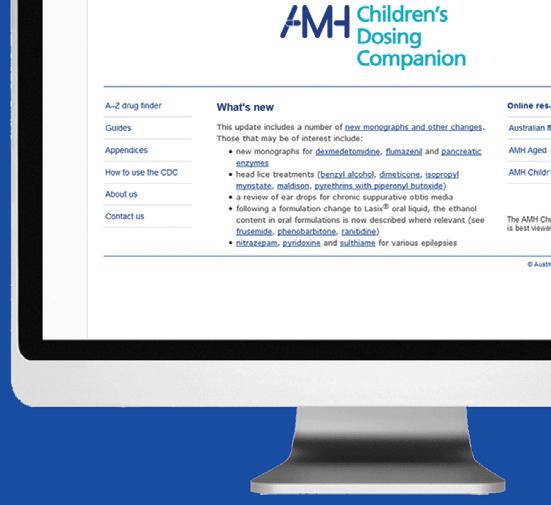
AMH Children’s Dosing Companion
NATIONAL DOSING GUIDE FOR PAEDIATRICS
Australia’s national independent dosing guide for medicine use in children.
DOSING SOLUTIONS
Addresses the unique challenges of prescribing for children by providing evidence-based, peer-reviewed dosing recommendations for over 500 drugs.
COMPREHENSIVE INFORMATION
Provides details on drug treatments, off-label prescribing, adverse effects, and relevant practice points.
OPTIMISE HEALTH OUTCOMES
Enhance the quality use of medicines in children by reducing the risk of medication errors and contributing to high-quality care.
Annie Butler
ANMF Federal Secretary
For too many nurses, midwives and carers, the idea of owning a home has become increasingly out of reach.
The very people who care for us in hospitals, aged care homes, clinics and communities every day — the people who work weekends, nights, public holidays and overtime to keep our health system going are being priced out of the communities they work in.
We are hearing from members across the country who cannot afford to live anywhere near their workplace and are spending hours commuting between shifts.
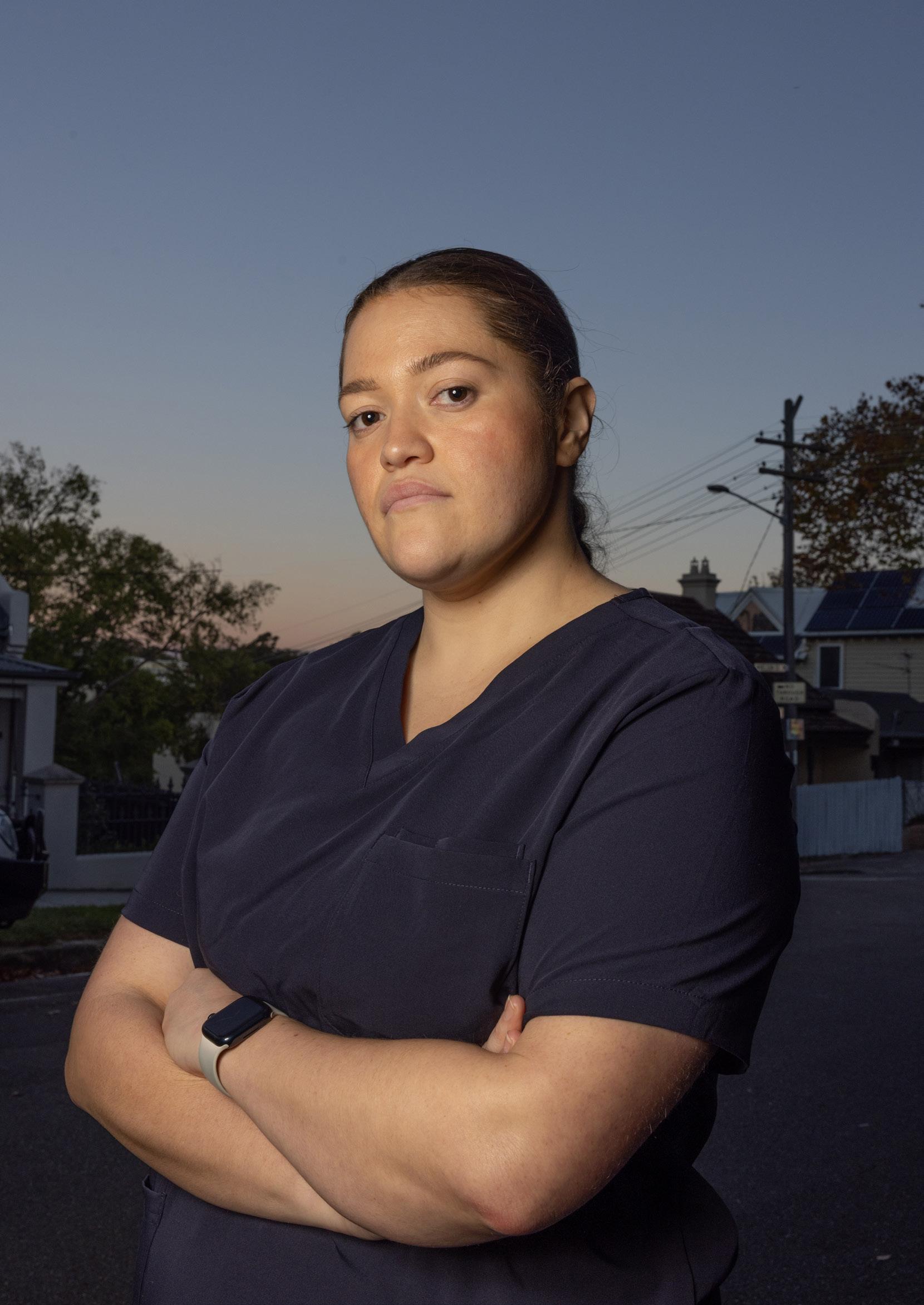
Members like NSW EN Talei Williams, who is living pay cheque to pay cheque and has been forced to live with her parents more than an hour from her workplace, with little hope of entering the housing market or affording rent closer to work.
Also, NT early career registered nurse Jacinta McGaffin, who can barely afford rent even while living half an hour from her workplace but feels moving any further away would make the demands of commuting and shift work unsustainable.
In this issue of the ANMJ, we hear directly from these nurses and examine the growing cost-ofliving pressures facing our members — pressures that are increasingly threatening their ability to remain in the professions they love.
This is not just a housing issue. It is a workforce issue.
When healthcare workers cannot afford stable housing, when they are carrying growing financial stress on top of already demanding workloads, it contributes directly to burnout, exhaustion and people leaving the professions altogether.
At a time when Australia is facing workforce shortages across healthcare and aged care, we simply cannot ignore the growing pressures facing the people we rely on to care for the community.
That is why the ANMF welcomed the Government’s proposed tax reforms in the May Budget, aimed at improving fairness in the housing market.
These reforms will not solve the housing crisis overnight, but they are an important acknowledgment that the current system is not working for everyone. Proposed changes to negative gearing, capital gains tax concessions and family trust taxation are intended to help rebalance a system that has increasingly favoured wealth accumulation through property investment over access to affordable housing for working Australians.
Right now, many nurses and midwives are questioning why working people who pay tax on every dollar they earn can face a significantly higher tax burden than wealthy investors able to minimise tax through concessions, offsets and investment structures. For workers already struggling with rising rents and housing insecurity, that imbalance only deepens the sense that the system is stacked against them.
The ANMF’s landmark application to improve wages and conditions under the federal Nurses Award 2020 continues to move forward through the Fair Work Commission. This important case seeks to address the long-standing undervaluation of nursing and midwifery work by increasing minimum award wages for nurses, midwives and care workers employed outside aged care, while also recognising midwives through a proposed name change to the Nurses and Midwives Award. This case matters because nursing and midwifery work has changed significantly over recent decades. The complexity, responsibility and skill required of nurses and midwives continues to grow, yet award wages have not kept pace with the realities of modern practice. As nurses and midwives deliver increasingly complex and person-centred care in a wide range of settings, and it is only right that this work is properly recognised and valued. Importantly, this case has the potential to benefit members working in smaller workplaces not covered by enterprise agreements, including GP clinics, specialist practices, day procedure centres and other private health services. By the time this edition goes to print, the ANMF’s submissions and witness statements will have been filed and hearings are expected to have commenced in Melbourne. We will continue to keep you updated through ANMJ online as the matter progresses.
The work of the ANMF remains critical as we continue to advocate for reforms that improve fairness, strengthen workforce retention and properly recognise the vital contribution nurses, midwives and carers make every day. Because the decisions made now will not only shape the future of these professions, but the future of healthcare in Australia itself.
The Australian Nursing & Midwifery Journal is delivered free quarterly to members of ANMF Branches other than New South Wales, Queensland, Western Australia and ACT. Subscription rates are available via ANMJadmin@anmf.org.au. Nurses and midwives who wish to join the ANMF should contact their state or territory branch. The statements or opinions expressed in the journal reflect the view of the authors and do not represent the official policy of the Australian Nursing & Midwifery Federation unless this is so stated. Although all accepted advertising material is expected to conform to the ANMF’s ethical standards, such acceptance does not imply endorsement. All rights reserved. Material in the Australian Nursing & Midwifery Journal is copyright and may be reprinted only by arrangement with the Australian Nursing & Midwifery Journal
Note: ANMJ is indexed in the cumulative index to nursing and allied health literature and the international nursing index ISSN 2202-7114
Online: ISSN 2207-1512
Moving state.
Transfer your ANMF membership
If you are a financial member of the ANMF, QNMU or NSWNMA, you can transfer your membership by phoning your union branch. Don’t take risks with your ANMF membership –transfer to the appropriate branch for total union cover. It is important for members to consider that nurses who do not transfer their membership are probably not covered by professional indemnity insurance.
Printing: IVE Group
Distribution: D&D Mailing Services
ANMJ is printed on A2 Gloss Finesse, PEFC accredited paper.
The Journal is distributed by D&D Mailing Service and is wrapped in post consumer recycled (PCR) plastic which reduces environmental waste
The ANMJ acknowledges the Traditional Owners and Custodians of this nation. We pay our respects to Elders past, present and emerging. We celebrate the stories, culture and traditions of Aboriginal and Torres Strait Islander Elders of all communities. We acknowledge their continuing connection to the land, water and culture, and recognise their valuable contributions to society.
High blood pressure impacts 2 in 5 Australian adults, but many aren’t aware
Constant hypertension, affects 2 in 5 Australian adults, according to a new report by the Australian Institute of Health and Welfare (AIHW).
The common but serious condition can increase the risk of many chronic conditions such as stroke, coronary heart disease, heart failure, chronic kidney disease and dementia.
In 2022, nearly 2 in 5 Australians aged 18 and over (39% or 7.2 million) had hypertension. It affects around 85% of people aged 75 and over, but also affects many middle-aged adults, including 39% of people aged 45-54, and 57% of those aged 55-64.
According to the report, about 40% of people living with hypertension had their condition under control and were taking antihypertensive medication.
However, hypertension often presents with no obvious symptoms. Almost 2 in 3 (63%) of adults with hypertension did not self-report the condition, indicating they may have
been unaware they had the condition. This can lead to missed opportunities for early treatment. Hypertension contributed to around 247,00 deaths in 2023.
“Because high blood pressure can go unnoticed, regular checks are essential for people to manage it early and reduce their risk of serious illness,” AIHW spokesperson Heidi Dietz said.
“Checks can be done in a range of settings including GP clinics or other primary healthcare services and repeated measurements are often needed to confirm hypertension.
“Healthy habits such as eating a balanced diet, being physically active, not smoking, limiting alcohol intake and managing stress can help prevent or manage high blood pressure.”
Joint action to strengthen health workforce response to family violence
Around one in five women who experience violence from a current or former partner turn to a general practitioner or health professional for advice or support.
Accordingly, Australian Health Practitioner Regulation Agency (Ahpra), National Boards and Accreditation Authorities have issued a joint statement committing to building the health workforce’s ability to recognise and respond to family, domestic and sexual violence (FDSV).
Regulatory frameworks will be updated to clarify expectations of health practitioners to ensure consistent, appropriate response across the health professions. This includes supporting practitioners by providing practical guidance on their professional obligations to recognise and respond.
According to the statement, health practitioners understanding the complexity of FDSV is essential to providing good care, including through early detection, support, referral where appropriate, documentation of incidents, and enabling access to effective, traumainformed and culturally safe care.
Ahpra CEO Justin Untersteiner said health practitioners were uniquely positioned to support victim survivors and help address family violence.
“Health practitioners are often the first – and sometimes only – trusted professionals that victim survivors can turn to for help,” he said.
More information visit: ahpra.gov.au
Nominations open for 2026 Australian Mental Health Prize
Nominations are now open for the 2026 Australian Mental Health Prize, recognising Australians who have made outstanding contributions to mental health through leadership, advocacy, research, education and care.
Now in its 11th year, the prize celebrates individuals and organisations helping to improve mental health and wellbeing across the country. It is presented
through a partnership between UNSW Sydney’s School of Psychiatry and Mental Health, the Black Dog Institute and Neuroscience Research Australia (NeuRA). Awards are presented across four categories: Aboriginal and Torres Strait Islander, Lived Experience, Professional and Community Hero.
NeuRA Chief Executive Officer
Scientia Professor Matthew Kiernan
AM said the prize highlights both the significant impact of mental ill-health and the efforts of those working to improve outcomes for Australians.
“Last year’s winners encapsulated the broad spotlight of the prize, from
Australians exposed to asbestos may be missing out on life-saving lung cancer screening
Thousands of Australians at increased risk of lung cancer may not be identified through current screening programs because past asbestos exposure is not being adequately considered, according to researchers from Curtin University.
The findings raise concerns that many people exposed to asbestos through industries such as construction, mining and manufacturing could be diagnosed only after the disease has progressed, reducing treatment options and survival outcomes.
Lead author Dr Chellan Kumarasamy said the gap represents a significant missed opportunity for earlier detection.
“Asbestos exposure remains a major driver of lung cancer risk in Australia, yet it is not being properly accounted for in the screening criteria,” Mr Kumarasamy said. Lung cancer remains Australia’s leading cause of cancer death, with
late diagnosis continuing to be a major contributor to poor outcomes.
Senior author Dr Kim Betts, from Curtin’s School of Population Health, said expanding screening criteria could have a significant public health impact.
“If we don’t properly account for asbestos exposure, we risk leaving behind a group of Australians who would benefit most from early detection,” Dr Betts said.
The researchers want asbestos exposure to be recognised in the design and implementation of the national screening program.
grassroots campaigns to bring dignity to those suffering mental ill-health, to decades of national advocacy – as well as the vital area of indigenous mental health.”
Nominations are open nationwide, to anyone wishing to recognise an individual or organisation making a significant contribution to mental health in Australia. Nominations are encouraged from regional, rural and remote communities, to ensure diverse contributions to mental health are recognised.
For more information go to australianmentalhealthprize.org.au
Nominations close on 31 July 2026.
First national menopause campaign for Australian women
The federal government has launched Australia’s first national Menopause and Perimenopause campaign to help women better understand their symptoms, access trusted information and feel more confident seeking support. Perimenopause and menopause can affect women differently, with symptoms ranging from hot flushes and sleep problems to anxiety, brain fog and changes to mental health and wellbeing.
The campaign was developed in consultation with experts and communities and is informed by extensive research with a diverse group of women with lived experience.
It follows recommendations from the Senate Inquiry into Menopause and Perimenopause, which found many women entered this stage of life without enough information about symptoms, treatment or available support. The Inquiry also highlighted the stigma many women continue to face.
A new website has been developed to provide women with trusted health information, practical resources and help to find support available if they need it.
For more information visit health.gov.au/perimenopause
Catelyn Richards ANMF Federal Assistant Secretary
Shift work: The invisible hours
The legal definition of what constitutes a ‘shift worker’ is remarkably narrow. It is time this changed.
I still think about the rare quiet moments on the ward.
Stillness blankets the corridors. The last of your patients are tucked away, drifting toward that quiet place beyond the pain and fear. The beeps and buzzes dissolve into a mechanical background hum. For a few fleeting moments, you rest your feet. Your hands. You massage your temples and the tension held in your jaw.
These moments, where patients are however briefly comfortable and free from suffering, are among the most precious we carry as nurses, midwives and carers. They are the moments where we have brought genuine relief to people at their most frightened and vulnerable.
As a nurse, I have been fortunate to experience many of them.
I experienced many more where I was afraid, where the precarity of mortality pulsed in front of me and decisions had to be made in seconds. Equally difficult were the moments defined not by urgency, but by waiting. Time stretching unbearably long as patients waited for theatre, only to be bumped from lists. Seconds becoming hours for those fasting, in pain, and without answers. Where no apology ever felt sorry enough.
And then there are the moments where we hold what cannot be easily seen: grief, complexity, uncertainty. We hold complex medical plans and speak complex words, so patients do not have to. We hold hands.
All of these moments happen across the full span of the clock. Shift work teaches you to live in fragments of time. Meals happen whenever you can find a gap in between your patients’ needs. Sleep is a negotiation rather than routine. Birthdays, weekends and public holidays lose much of their meaning. You learn to function under fluorescent lights at 3am… while the rest of the world sleeps. Then, somehow, you return home and immediately try to exist like everyone else.
Yet despite how dependent society is on the commitment of nurses, midwives and carers to this type of work - the legal definition of what constitutes a ‘shift worker’ remains remarkably narrow.
Under the Nurses Award 2020, to access an extra week of annual leave, in lieu of performing ‘shift work’, nurses must be regularly rostered across a 24-hour, seven-day-a-week service and routinely required to work weekends.
When looking at regular rostering practices, however, the practical absurdity of this is difficult to ignore. As an example, regular night shift work not only impacts on psychological health, but as discussed in the column “The cumulative impact of night shift work on breast cancer risk” in this issue of the ANMJ has impacts on physical health outcomes too. Despite this: a nurse, midwife or carer who works exclusively night shifts from Monday to Friday, week after week, accumulating every physical cost of disrupted sleep and inverted rhythms, may not qualify as a shift worker simply because Sundays never appeared on their roster. There are countless other exampleswhere nurses, midwives and carers have been unable to access an extra week of leave due to loopholes that render the toll of shift work under-recognised.
The recent submission made by the ANMF to the federal Inquiry into the National Employment Standards calls for something fairer: the baseline for a shift worker should be anyone whose ordinary hours of work are not confined to 6am to 6pm, Monday to Friday. We argued that nurses, midwives and carers deserve leave loading of at least 17.5% locked into national standards, and leave paid at their full rate of pay, not a base rate that strips out the shift penalties and loadings that many workers rely on as their living wage.
The community does not think of hospitals as places that ‘close’.
Shift workers have always understood this. And as a result - nurses, midwives and carers don’t experience time as a straight line running from nine to five. They experience it as something lived in rotation, in interruption, in the hours that the rest of the world sleeps through.
Conversations about shift workers have for too long focused on penalty rates as though they were perks, rather than recognition of what irregular work costs workers over time.
The additional week of leave is intended to compensate workers for the disutility of working unsociable and irregular hours.
Those quiet moments at 3am, when patients finally sleep and nurses finally breathe, are carried home long after the shift ends. The law should reflect this too.
LOCKED OUT: NURSES AND MIDWIVES THE HOUSING CRISIS FACING
Nurses, midwives and carers are being priced out of the communities they work in, with rising rents, unaffordable homes and cost-of-living pressures taking a growing toll on the workforce. Robert Fedele reports.
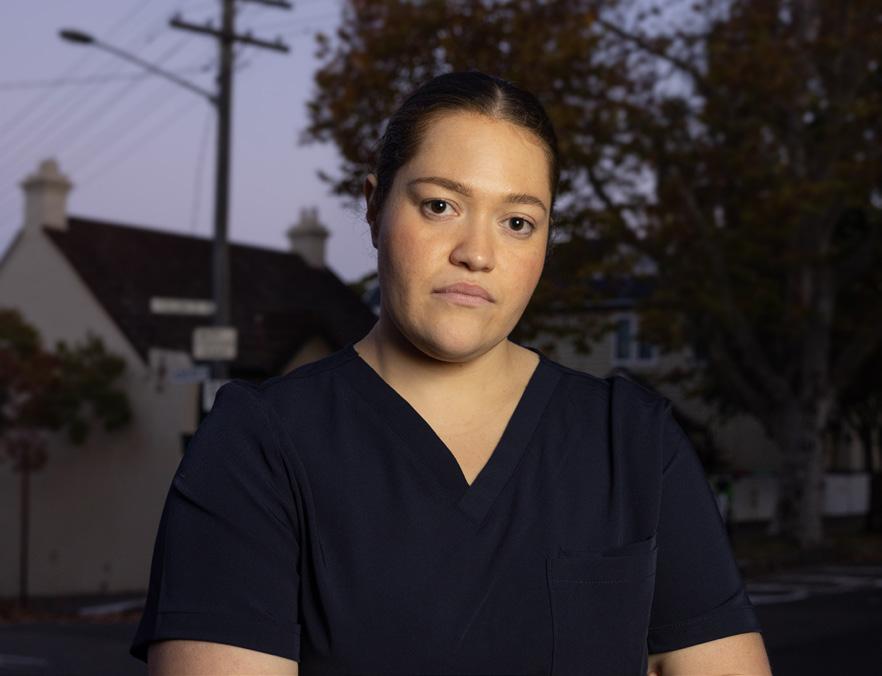
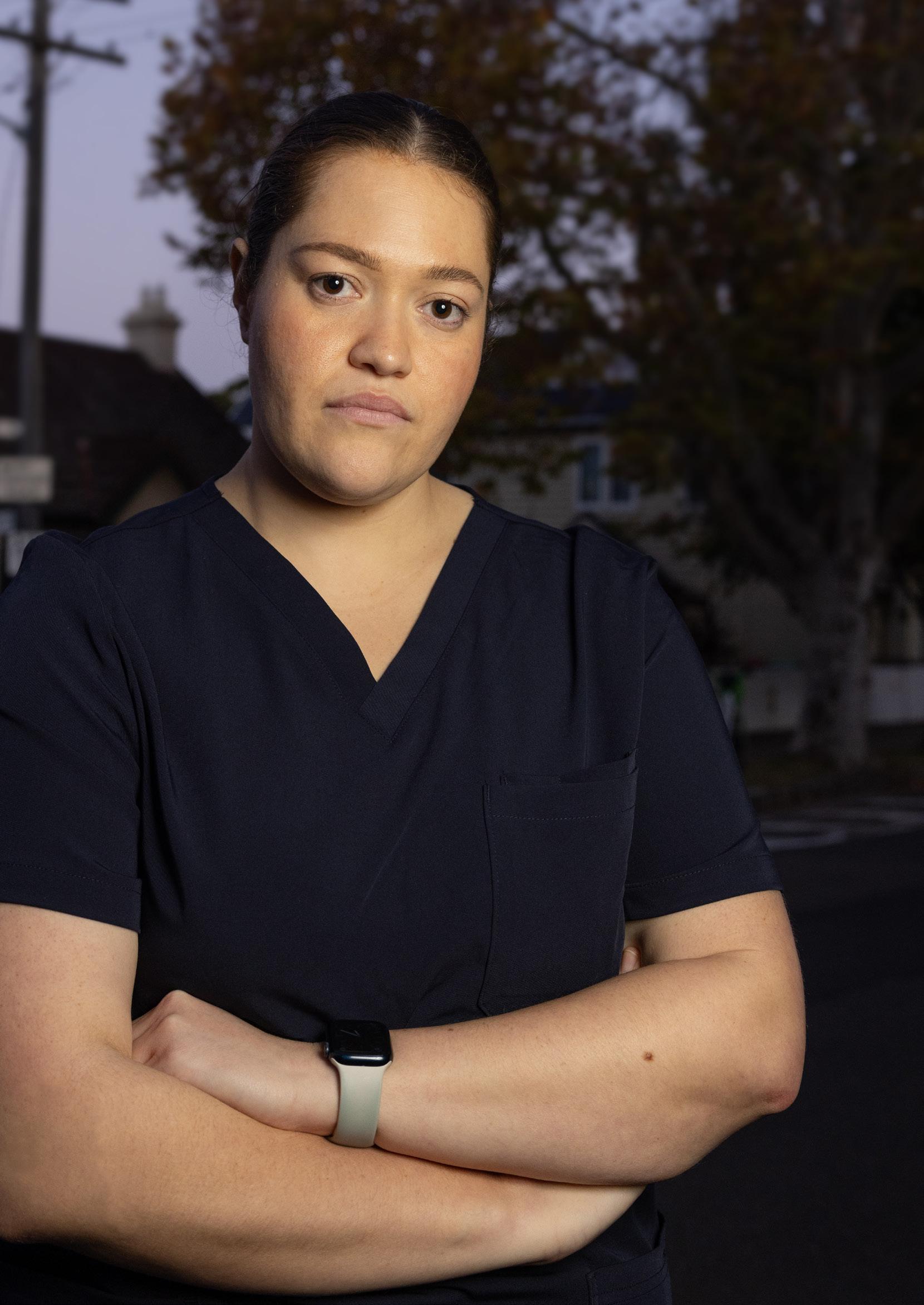
After finishing a shift at Royal Prince Alfred (RPA) Hospital, enrolled nurse Talei Williams faces a dreaded commute stretching well over an hour.
By the time she gets home to Waterfall, Sydney’s southernmost suburb, the 30-yearold nurse and student feels exhausted – not just from the demands of caring for others, but from the cumulative toll of simply getting to and from work.
Like many nurses and midwives, Talei cannot afford to live near where she works, squeezed by soaring housing prices and rents, rising living costs, and wages that have failed to keep pace. The suburbs surrounding RPA, such as Camperdown, Newtown, Balmain, and Annandale, are far beyond her reach, with median house prices well beyond $1 million.
“I’m basically living pay cheque to pay cheque,” says Talei.
“Essentially, at the moment, it’s almost impossible [to afford a house]. My wage wouldn’t even come close to covering paying off a mortgage on any of the houses in, and around, where I work.
“The rental market is just as bad. I have looked a few times, when I get sick of my ridiculously long commute to and from work, and even a run-down one-bedroom studio apartment is like $700 a week. That would chew up about 80-90% of my fortnightly income.”
Instead, Talei lives at home with her parents – a decision not shaped by choice, but by financial necessity. She had previously tried to balance rent and work, and study,
but it pushed her into what she describes as “a terrible financial and mental health situation”, forcing her to move back home.
Now in her third year of a Bachelor of Nursing degree at the University of Technology Sydney (UTS), Talei splits her time between study and shifts at RPA – a demanding routine that leaves little time for anything else.
Her commute typically takes more than two hours each day.
THE COST OF CARING
“I’m pretty lucky in that I don’t do night shift, but there have been a few times where I’ve had to in order to pick up as many extra hours as I can,” says Talei.
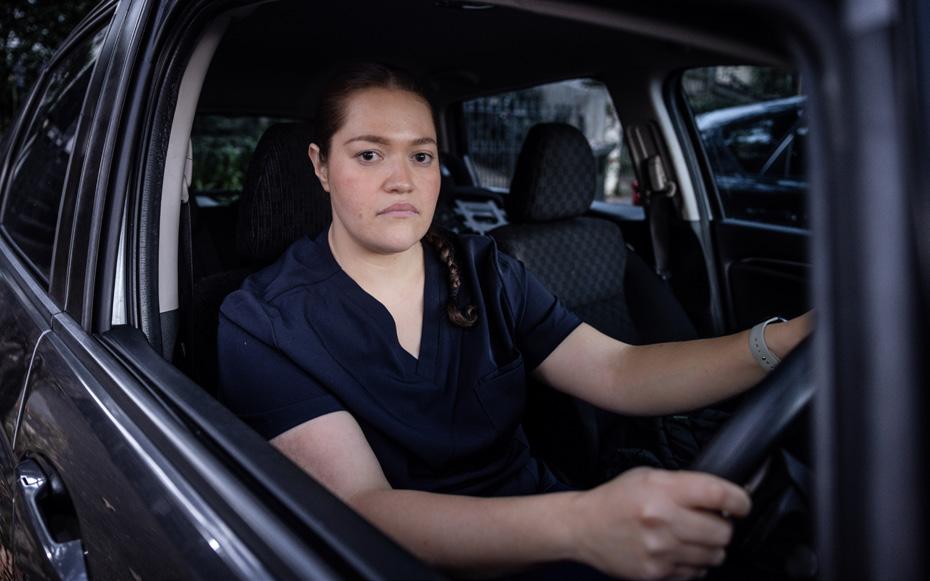
“Driving that distance home after being awake all night is challenging. You always see the advertisements everywhere that say driving tired is dangerous and yet healthcare staff are driving tired because we’re overworked, working long hours, and then expected to drive home.
“There is the option of public transport, but it can be very unreliable and unsafe. There were times where I was catching the train and then all of a sudden, the trains had a massive breakdown and I was stuck in the city for three hours and didn’t get home until nine o’clock that night when I’d finished at 4.30 in the afternoon. All those little things kind of chip away slowly at your ability to function day to day.”
Talei’s experience is far from unique, with many of her colleagues around the same age turning to multi-generational
“At the moment, it’s almost impossible [to afford a house]. My wage wouldn’t even come close to covering paying off a mortgage on any of the houses in, and around, where I work.”
NSW ENROLLED NURSE TALEI WILLIAMS
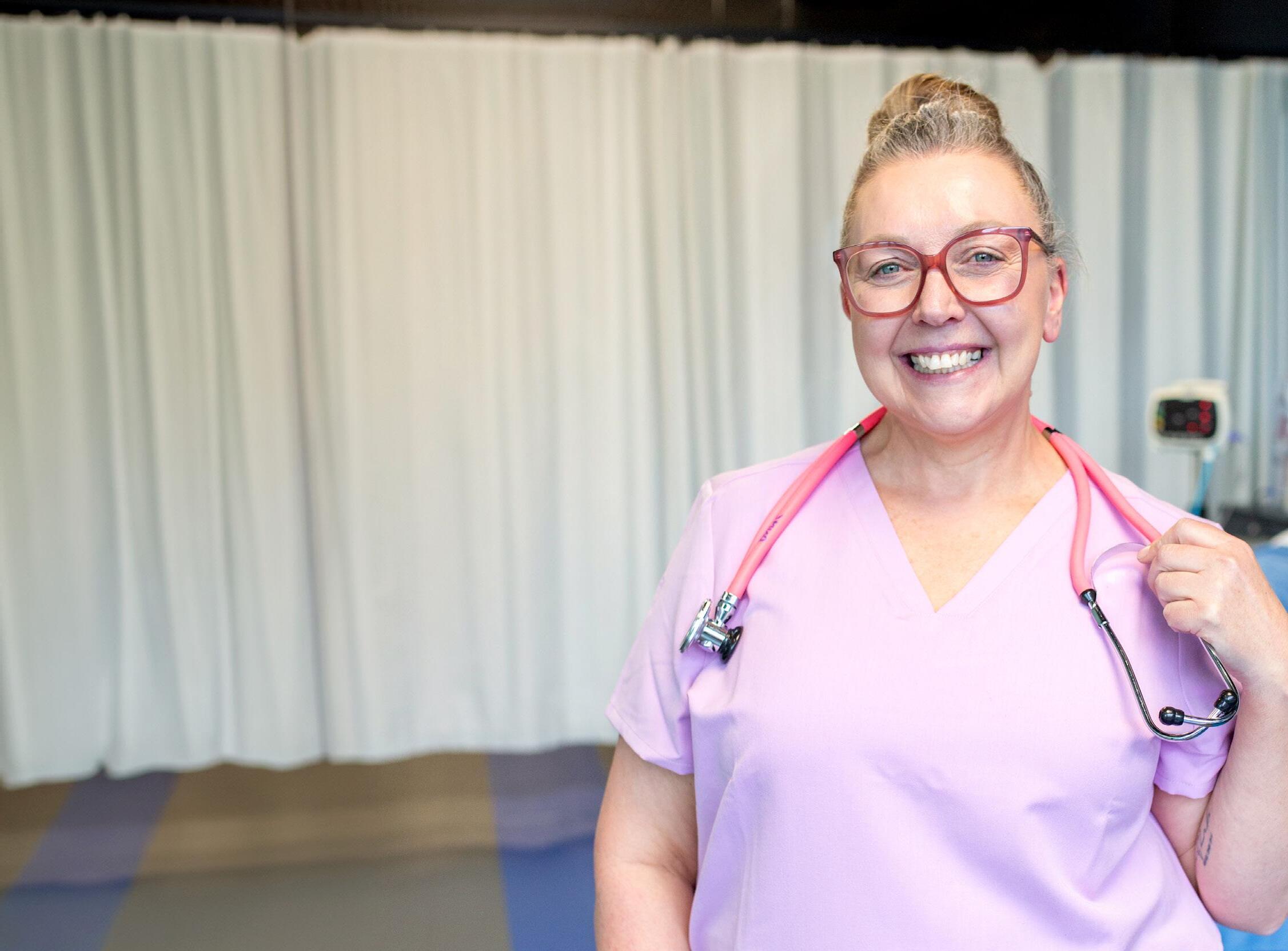
Enrolled nurse Talei Williams
Photo by Jessica Hromas
FEATURE
living arrangements or crowded share houses to stay afloat against a backdrop of rising cost-of-living pressures including fuel, parking and groceries.
Talei is supportive of stronger reforms to tackle Australia’s housing affordability crisis so that essential workers like nurses and midwives can afford to live near their job.
“At the end of the day, it’s in the best interests of the health of the general public,” she says.
“If you have staff who are travelling over an hour every day into work and then working eight, 10, 12 hours of physical labour, you would have to wonder whether or not that nurse that is looking after the patient is actually being looked after themselves.
“They always talk about the fact there’s such a shortage of healthcare staff in a lot of the major city hospitals and it’s likely because no one can afford to live nearby.”
While Talei supports housing reforms, she says meaningful wage growth would make the biggest difference in her ability to one day enter the housing market.
ESSENTIAL WORKERS LOCKED OUT
Anglicare’s Rental Affordability Snapshot –Essential Workers Report 2025 underscored the harsh reality of the country’s housing crisis and cost-of-living pressures on essential workers such as nurses, teachers, ambulance officers, and childcare workers.
The study examined more than 51,000 rental listings across Australia, assessing affordability across 16 frontline occupations by analysing how many properties workers on full-time award wages could afford in regions across the country.
The report found nurses could afford just 1.5% of available rental properties, while 1.7% were affordable for aged care workers, despite the sector recently securing historic pay rises.
“Communities rely on nurses, teachers, cleaners and hospitality staff, yet these workers cannot afford to live in the communities where they are needed,” the report said.
“Many of these are highly skilled professions that require years of training, qualifications and ongoing professional development. The fact that people in these roles cannot afford housing shows just how deep the crisis has become.”
The report argued that simply increasing housing supply is not a “silver bullet”, calling for broader reform including phasing out the Capital Gains Tax discount, building at least 25,000 new
public and community homes annually over the next two decades, stronger renter protections, and wage growth that keeps pace with housing costs.
“When essential workers cannot afford to live near the people they serve, schools, hospitals, aged care homes, and emergency services struggle to recruit and retain staff,” the report said.
“When renters are forced to spend more than half their income on housing, they cut back on food, healthcare and other essentials.”
UNIONS LOBBY FOR HOUSING REFORM
Earlier this year, the Australian Nursing and Midwifery Federation (ANMF), alongside the Australian Council of Trade Unions (ACTU), made submissions to a Senate Inquiry into the operation of the capital gains tax discount.
Unions called for the scaling back of the CGT discount from 50 to 25%, arguing the current system advantages investors over younger workers trying to buy their first home.
Reforming the CGT discount, together with imposing limiting negative gearing tax breaks, was put forward as part of a broader response to the national housing crisis.
“Too many workers can no longer afford to live near where they work, leaving them stuck with long and costly commutes and less time to spend with their families,” ACTU President, Michele O’Neil said.
“Under our proposal to scale back the CGT discount, a first-time home buyer would be more likely to win out against professional landlords and be able to get into home ownership.”
In its submission to the Inquiry, the ANMF said meaningful reform was “urgently needed”, warning nurses, midwives and care workers were increasingly being locked out of affordable housing and pushed further away from the communities they serve.
Recent survey findings from the New South Wales Nurses and Midwives’ Association (NSWNMA) reinforced the scale of the problem. More than 3,000 participants surveyed said housing affordability pressures were intensifying over time and, while most more acute in metropolitan areas, remained a widespread issue across the state.
“We cannot save for a deposit to buy our own home, so we’re trapped into renting,” one respondent said.
“I currently pay 40% of my take home pay on rent. This makes it very difficult to save money and means if we have a week where a lot of bills come at once, or something bad happens such as the car breaks down, we have to go without groceries that week.”
NSWNMA survey respondent
Enrolled nurse Talei Williams. Photo by Jessica Hromas
NSW HOUSING AFFORDABILITY SNAPSHOT
Nearly
90%
of participants deemed housing affordability an important factor in deciding where they want to work
1/2
of all participants were renters
More than
80% drove to work with 47% spending an hour or more travelling for each shift
Nearly
1 IN 3 had previously left employment to access more affordable housing
More than
30% lived 20km or more from their workplace
9
respondents were homeless and 47% were worried about losing their place to live in the future
2 respondents reported living in their cars with dependent children
69% of respondents indicated they were experiencing rental stress
In landmark changes announced in the May Federal Budget 2026–27, the Australian Government will replace the 50% Capital Gains Tax (CGT) discount with a new inflationlinked system and introduce a 30% minimum tax rate on capital gains from 1 July 2027.
The reforms will apply only to gains accrued after 1 July 2027. Investors purchasing new builds will be able to choose between the existing 50% CGT discount and the new model.
The government will also restrict negative gearing to newly built properties from 1 July 2027, in a move designed to direct tax incentives toward increasing housing supply.
Existing investment properties purchased before Budget night will be grandfathered, meaning current negative gearing arrangements will continue to apply for as long as those properties are owned.
The government estimates the reforms will support an additional 75,000 homeowners over the next decade. It also announced a new $2 billion Local Infrastructure Fund to help local governments and state utilities build essential infrastructure to support new housing.
The ANMF welcomed the reforms, saying the measures would help level the playing field for the next generation of nurses, midwives and carers struggling to find secure and affordable housing.
Earlier this year, the ANMF also wrote to Prime Minister Anthony Albanese, calling for the establishment of a Commonwealth-funded housing program for key workers, including capital grants for accommodation and rental subsidies in regional, rural, remote and metropolitan areas where housing is scarce.
“A growing number of ANMF members, particularly younger nurses, midwives and carers starting their career, have been locked out of affordable housing,” ANMF Federal Secretary Annie Butler explained following the Budget.
HOME OWNERSHIP OUT OF REACH – FOR NOW
Early career registered nurse Jacinta McGaffin, who works at the Royal Darwin Hospital’s Alan Walker Cancer Care Centre, became a first-time renter in October last year after moving out of home.
“I was living with my parents, but it took me about 45 minutes to get from home to the hospital in the morning, and when I was doing night shifts, that was just murder on me,” she recalls.
The 26-year-old now lives in Palmerston, closer to work, but still faces a daily commute of around half-an-hour.
Securing a rental came with trade-offs, including cutting back on discretionary spending on hobbies such as gaming, and volunteering at the Territory Wildlife Park in Berry Springs due to rising fuel costs. Rent now consumes roughly 44% of her income.
“It was difficult to find an affordable place,” says Jacinta.
“I had to keep lowering my expectations a bit when it came to rent. I’d been looking for a couple of years, and I remember when I first started out, twobedroom units were probably around $350-$400 a week. By the time I became serious about moving out, the cheapest I could find was $500 a week.”
Jacinta says she regularly picks up extra shifts just to stay on top of rent, groceries, and other day-to-day expenses.
“We’re a Monday to Friday unit and we get public holidays off. Sometimes, the manager will put out expressions of interest asking if anyone would like to work the public holiday, and I always throw my hand up for that, to get some extra money and help with the rent.”
When Jacinta first began looking for a rental, she tried to access the National Rental Affordability Scheme, an Australian Government initiative aimed at increasing affordable private rental housing, but missed out because of the income threshold.
She believes similar schemes should be expanded, particularly for essential workers like nurses and midwives.
“They’re being forced to commute long distances to get to and from work because they can’t afford to live in the communities they serve. Accelerating rents and a lack of affordable housing supply across the country are making it almost impossible for them to save for a deposit.”
ANMF Federal Secretary Annie Butler
“What’s concerning is that this financial pressure is contributing to stress, burn-out and attrition across the health and aged care workforce.”
For now, like many younger nurses, midwives and carers starting out in their careers, Jacinta is balancing her commitment to healthcare with the economic reality of trying to afford to live near where she works. Saving for a home deposit remains out of reach.
“I would love to own my own house, but I cannot see myself ever owning a house in this economy. I’ve just completely given up on that dream.”
Alana Ginnivan Assistant to the Federal Secretary - Strategy & Campaigns
On the ground in aged care and why it matters
Over recent weeks, I have had the opportunity to travel with ANMF Federal Secretary Annie Butler and Federal Assistant Secretary Catelyn Richards, across different states and territories, hearing from members about all things aged care.
Annie and I attended the New South Wales Nurses and Midwives’ Association (NSWNMA) Aged Care Summit in Sydney, and Catelyn and I had the privilege to present to members at the Australian Nursing and Midwifery Federation Tasmania Branch’s Aged Care Conference. These conversations were filled with both courage and vulnerability and stayed with me beyond the conference bustle. Because these conversations aren’t just a snapshot in time; they are a story, described with such detail it feels as though you are walking along beside them during that shift.
You can see the clock as you walk down the dimly lit corridor; it’s getting closer to the end of the shift, almost home time. When nearing the care home coordinator’s door, you overhear a low, murmured one-sided conversation followed by a pause of silence and then the door opens. The coordinator comes out and tells you with a sigh, there has been another staff sick call, and asks if you can stay for a double shift.
The range of emotions undulate between frustration and fatigue; another sick leave shift not being covered, then it changes to feelings of compassion and devotion for the residents and dedication to your peers.
I too recall these emotions, and the fatigue that comes from caring. Though my clinical experience as a nurse, has mostly been focused on emergency care, these stories take me straight back to being on the floor, anchored by a deep sense of purpose, compassion, fatigue, and commitment to those we care for.
These conversations have reinforced something that unfortunately can be overlooked during policy discussions. The reality is that aged care is quietly shaped every day, by those that provide care, not only those that receive care.
I heard from members that despite the recommendations and welcomed reforms arising from the Royal Commission into Aged Care Quality and Safety, ANMF members continue to experience challenging working environments. Being asked to provide more care with less time, and the invisible toll this takes when leaving a shift feeling you weren’t able to provide the level of care deserved. One of the strongest messages I heard was the deep commitment our members have for the work they do; despite how long they have worked in aged care, the provider name or their workplace location, there was a clear sense of pride and professionalism in delivering care. Members spoke passionately about the importance of having experienced staff, and the challenges of balancing providing care to residents with enough time to mentor and educate junior nurses, carers or students. These conversations flowed into solution focused ideas, not only identifying challenges but developing ideas from lived perspectives on how to address them.
Despite the challenges, these conversations reinforced how integral it is to hear directly from members, and just how critical it is to keep these voices and lived experience at the centre of policy development and in decision making.
There are clear opportunities to continue building on progress and achievements to ensure that aged care reform delivers lasting and meaningful change for residents and the care workforce. Conversations and lived experiences shared by members will continue to play a key role in shaping the direction of ANMF’s work ahead.
G-Up: How to level up your nursing students’ gerontology skills
By Ang SGM, Munk S, Stewart E, Scott L, Smyth A and Bail K
Positive clinical placements are formative experiences which impact future preferences and career direction in nursing students.1
Creating positive supported learning environments involves preparing preceptor (‘buddy’) Registered Nurses (RNs) as positive role models. This is particularly important for future gerontological workforce given the growing ageing population and increased need for nurses in residential aged care. 2,3 This paper describes a scaffolding document used to guide student clinical activities and clinical facilitators implementing the Clinical Placements with Older People (CPOP) program and evaluation, funded by the Australian Government Department of Health Disability and Ageing.
CPOP has been developed and implemented in four universities (University of Canberra, University of Wollongong, Edith Cowan University, and Curtin University), commencing in 2023 and to date has provided more than 2,000 CPOP placements providing student nurses with positive and well supported placement experiences with older people. CPOP is expanding across Australia 20252027 to include University of the Sunshine Coast, Central Queensland University, University of Tasmania, Southern Cross University, and The University of Sydney.
BACKGROUND
The Australian population is ageing, and the proportion of older people is projected to reach 21-23% by 2066.4 As life expectancy increases, there is a need for more Registered Nurses trained in gerontological nursing to provide care for older Australians, who may experience multiple health conditions and have complex health needs. Gerontological nursing is a complex specialty, with skills and knowledge applicable in multiple settings, and is the largest specialisation in Australia.5 The RN workforce faces an uphill challenge of attracting and retaining staff leading to an undersupply of RN in aged care.6 This workforce shortage has been further
impacted by issues such as historical low pay, poor conditions, lack of professional development, and limited career advancement opportunities.7 Students have been found to have negative perceptions of aged care, impacting recruitment of new graduate nurses.8-12
Quality clinical placements and Clinical Facilitators are important in changing these perceptions. However, most clinical placements for student RNs are offered in acute care settings.13 Aged care clinical placements are often used for learning foundational skills,14 or as a backup when acute care placements are unavailable.10 Additionally, the student nurse may not be supervised by a RN buddy, but instead accompany the ‘assistant in nursing’. Thus visibility and accessibility of a career as a specialised gerontological RN has been limited for these student nurses with traditional approaches to clinical placement.15
Structured clinical placements are important to change negative perceptions about working with older people,16 and the potential career opportunities in aged care.17,18
The role of RNs working in residential aged care includes the supervision of
junior nurses and assistants in nursing, management and leadership, monitoring and reporting quality indicators, and responding, escalating and coordinating care.19 CPOP was designed to help respond to this need for positive learning experiences in aged care and highlight the complex, rewarding, person-centred potential of working with older people for students early in their career pathway. The program, is part of the Aged Care Nursing Clinical Placements Program (health.gov.au/ our-work/aged-care-nursing-clinicalplacements-program), which is funded by the Australian Government Department of Health, Disability and Ageing.
CPOP PROGRAM OUTLINE
The CPOP program provides gerontological upskilling for clinical facilitators, and a structured supported placement for 2nd and 3rd year undergraduate nursing and Graduate Entry Masters (GEM) students on placements where older people were at least 50% over the of age 65. The one-day CPOP Clinical Facilitator training was adapted from the Gerontological Nursing Competencies program.20 The online modules consisted of learning activities that enhance gerontological nursing knowledge and
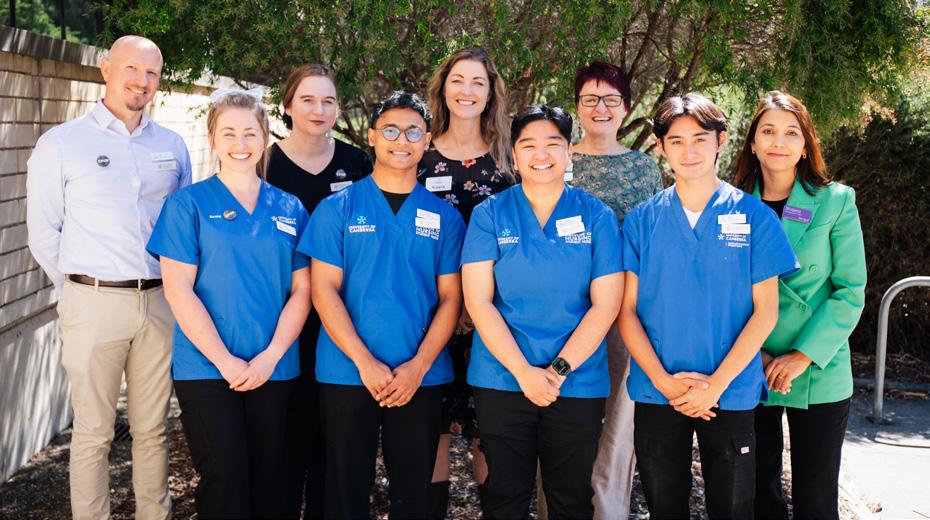
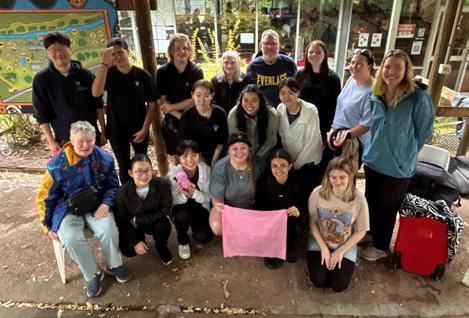
UC CPOP students, graduates, team members and Warrigal industry partner (back row L-R): Lee Karsson, Amy Cornelia-Boceanu, Kasia Bail, Stephanie Munk, and Shrijana Gautum, (front row L-R) Becky Pilledge, Fardin Ahmed, Xanthe Armamento, and Amir Tubalinal
skills, including dementia, delirium, dignity of risk, supported decision making, legal and ethical frameworks, as well as learning styles and mentoring skills in supporting student RNs. The clinical facilitators also completed an online Murra Mullangari Cultural Safety program provided by the Congress of Aboriginal and Torres Strait Islander Nurses and Midwives (CATSINaM). So far, CPOP upskilled more than 270 educators, supporting 2,227 nursing placements at 206 different health service locations ranging from inpatient hospital settings to residential aged care to community settings across Australian Capital Territory, New South Wales, Tasmania, Victoria and Western Australia.
CPOP FEEDBACK
The Clinical Facilitators were enthusiastic and able to see the benefits of the program, with comments such as:
‘CPOP is helping students understand the complexity and depth of knowledge needed when working with older people.’
CLINICAL FACILITATOR
‘Students have been quite surprised – aged care is not what it’s made out to be in media and other places.’
CLINICAL FACILITATOR
Unique to the CPOP program was the provision of a reflective workbook that the Clinical Facilitators and students would work on together which facilitated learning for the students. Students who used the workbook provided positive feedback such as:
‘I saw it [the structured workbook] as a great opportunity to structure my learning and reflect more deeply…Given my passion for advocating and caring for older people, the CPOP workbook greatly assisted in my learning outcomes for this placement.’
Reflections on leadership in gerontological nursing highlighted greater awareness among students about advanced leadership skills demonstrated by gerontological RNs in coordination, communication, teamwork, and management and complexity of gerontological nursing skills.
‘What I have additionally learned about the role of an RN in aged care is the leadership role that is undertaken by the nurse, in making sure that every aspect of the ward runs smoothly.’
‘What stood out after this placement was the complexity of the nurse’s role in addressing every aspect of health such as emotional, cognitive, social, wellbeing and physical health.’
‘My placement deepened my appreciation for the complexities of gerontological nursing.’
The need for therapeutic, person-centred, and empathetic nursing were also discussed as surprisingly complex psychosocial aspects of gerontological nursing.
‘What surprised me most was the strong emotional connection they [gerontological RNs] build with residents when balancing medical care with compassion. Overall, this experience has deepened my understanding of how RNs work holistically to improve both the physical and emotional wellbeing of older adults.’
Some students stated that participating in the CPOP placement had resulted in their changed perceptions about gerontological nursing:
‘This has been an eye-opening experience. I’ve learned so much over these four weeks that I will carry with me throughout my nursing career.’
‘This placement led me to consider specialising in aged care and think that aged care nurses are valuable and professional.’
‘Week 1 I didn’t want to work in aged care, but I really enjoyed my placement and now I am open to it.’
‘Overall, during my placement, I learned a lot of valuable lessons regarding importance of person-centred care. In the future I might work as a gerontological nurse and would be grateful if I get a chance.’
‘I came to this placement with low expectations and leaving with greater knowledge. Aged care will definitely be on my mind when choosing a specialty.’
‘The CPOP program offered invaluable opportunities that enriched my personal growth and helped me learn about older persons nursing but also advanced my career development. The professional relationships developed on this placement helped me secure my current job in aged care.’
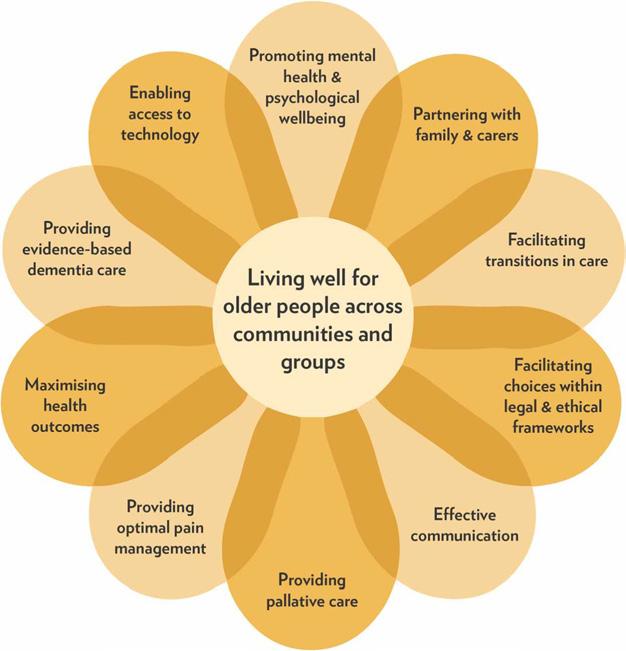
FIGURE 1: Gerontological Nursing Competencies
CPOP universities partnered with over 90 organisations or locations to deliver quality placements with older people. Feedback from industry partners included:
‘One of your CPOP students enjoyed their experience so much they applied and were offered a carer role [with us] and will then apply for an RN position when they graduate - how amazing!’
INDUSTRY PARTNER
5. Facilitating choices within legal and ethical framework
GNC 8. Providing evidence-based dementia care
THE DEVELOPMENT OF THE ‘CLINICAL SCAFFOLDING DOCUMENT’
Clinical Facilitators highlighted that the difficulty to identify the difference between the scope of practice for a 1st year and a 3rd year nursing student. This issue becomes particularly challenging when they were assigned to an unfamiliar area of aged care, where they lacked the clinical imagination to negotiate nursing learning opportunities with the RN buddies.
• Demonstrate awareness of aged care legislative framework.
- EG: advanced care planning, living wills, power of attorney and legal guardianship. Assist in ensuring care is planned and delivered in respect to legislative framework.
• Recognise every interaction requires consent and is part of an iterative process of rapport and relationship that supports decision making.
• Recognise the difference between autonomous, supported and substitute decision making.
• Recognise that all individuals are equal before the law, including people with disabilities and dementia. Every person is entitled to equal protection of the law without discrimination.
Understand presentations of dementia.
• Use evidenced-based non-pharmacological strategies to address unmet needs.
-
EG: reminiscence, life stories, and meaningful engagement.
• Demonstrate knowledge regarding ‘behaviours of unmet need’, also known as ‘responsive behaviours’ or Behavioural and Psychological Symptoms of Dementia (BPSD).
• Understand the use of cognitive screening and assessment tools for dementia care.
-
EG: MMSE, RUDAS and MOCA.
• Assess for environmental impacts such as sensory deficit, environmental stress, and loneliness.
• Assess for sensory deficits and create plans for interventions.
Consequently, a living ‘clinical scaffolding document’ was developed. The CPOP team comprises gerontological nursing academics, Clinical Facilitators, project officers and Work Integrated Learning managers who created a scaffolding document and incorporated feedback from the CPOP expert advisory committee (which includes student and new graduate nurses, consumer and carer representatives, Aboriginal and Torres Strait Islander nurses, national and international gerontological nursing researchers, and aged care union representatives).
The document was tested with the Clinical Facilitators during a monthly ‘Community of Practice’ workshop.
The scaffolding document was then presented as a living document21 via the CPOP website to facilitate ongoing discussions and updates on clinical placement expectations and experiences. The clinical examples may help with ideas to illuminate clinical practice opportunities relevant to students working with older people in different settings such as residential aged care, acute care, community, sub-acute, rehabilitation, mental health, or palliative care. The ideas are scaffolded against the Gerontological Nursing Competencies (GNC) domains
• Educate older person, family carers on aged care legislation.
• Intervene to eliminate or minimise the use of physical, chemical, and environmental restraints.
• Understand and implement ‘dignity of risk’ in relation to choice, independence, self-determination, and self-esteem, and identify the nursing roles that can promote self-determination and supported decision making.
- EG: James had a public advocate who wouldn’t support him to leave the facility and go for walks because of fear of absconding. The nurse leaders stepped in and advocated so that he had access to the whole grounds, his right to decision making and freedom of movement was supported, and his quality of life was improved
- EG: Two widows who met in a secure memory unit and developed a romance. The family were concerned. The nurses worked with the families to come to share understanding that promoted the daily happiness of the couple.
Understand the main types of dementia.
-
EG: Alzheimer’s Disease, Vascular, Lewy Body etc
- EG: Differentiate between dementia and health factors that can exacerbate dementia.
- EG: Infection, pain, malnutrition
Assist in developing, implementing, and evaluating support strategies for a person with dementia whilst fostering antipsychotic stewardship.
-
EG: review dementia support plan and implement measures for calming/de-escalation.
- EG: assess efficacy of measures/ support plan and refer for review of plan where necessary.
- EG: liaison with pharmacist, GP, family, care workers regarding antipsychotic use and minimisation, consent.
• Develop awareness of evidenced-based therapies and interventions available to support wellbeing of person with dementia.
- EG: Complementary therapy, reminiscence, music and aromatherapy, access to sunlight, sleep hygiene, and meaningful daytime activities.
• Identify possible triggers and strategies to minimise them
-
EG: Environmental temperature - too hot or cold, bright lights, busy/overstimulating environment.
- EG: Environmental changes, reduction of noise and pain.
• Be able to recognise the need for, and place referrals.
- EG: Physio and OT referral.
GNC Domains Early in degree
Later in degree (eg CPOP)
GNC
TABLE 1: Example of scaffolding document
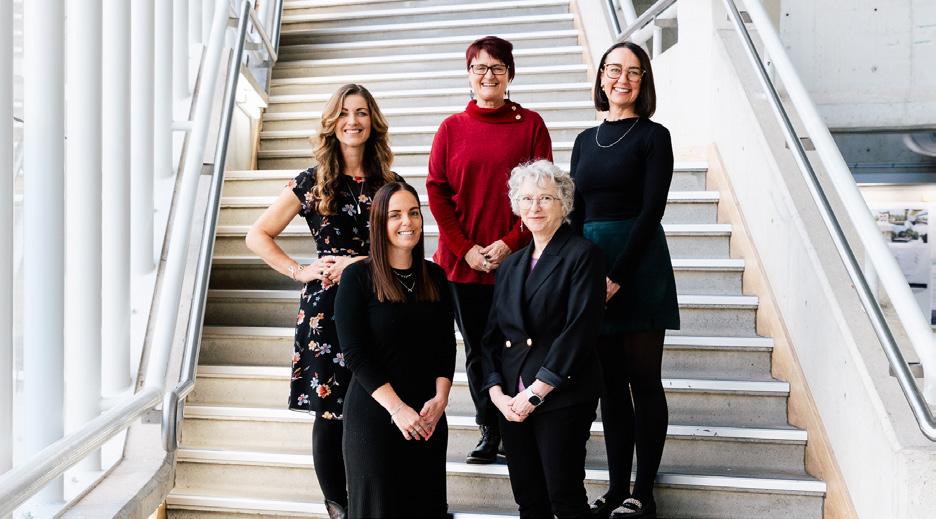
The University of Canberra CPOP leadership team, L-R Kasia Bail, Steph Munk, Ash Smyth, Kelly Marriott-Statham, and Diane Gibson
of practice (Figure 1) (adhere.org.au/ gerontological-nursing-competencies)22 and the Nursing Domains Data Standards (Table 1). 23
An example of two of the 11 core GNC competencies that the Scaffolding Document highlights can be seen in Table 2. The preceptor RN and/or Clinical Facilitator could identify clinical activities from the scaffolding document relevant to the student depending on the stages of their nursing program and prior experience and knowledge to optimise learning opportunities during their placement. The scaffolding document is freely available to nurses through the CPOP website canberra.edu.au/faculties/health/ carat/cpop under ‘Resources’. The CPOP team hope that learning more about gerontological nursing can be positively supported on any clinical placement that involves older people.
CONCLUSION
Over the next 20 years there will be a significant increase in the amount of older people with complex health issues and comorbidities requiring care from RNs. Increasing the confidence and competence of students and staff to work with complex, older people will bolster the aged care workforce, has the potential to increase satisfaction with career opportunities and support the positive perception of
References
1. Naughton C, O’Shea KL, Hayes N. Incentivising a career in older adult nursing: The views of student nurses. Int J Older People Nurs. 2019;14(4):e12256. doi:10.1111/opn.12256
2. Bail K, Lambert E, Smyth A, Gibson D. Four pillars for professionalization of gerontological nursing in response to the “nursing shortage”. Nursing & Health Sciences 2024;26(3):e13141. doi:10.1111/nhs.13141
3. Cooke J, Greenway K, Schutz S. Learning from nursing students’ experiences and perceptions of their clinical placements in nursing homes: An integrative literature review. Nurse Educ Today. 2021;100:104857. doi:10.1016/j. nedt.2021.104857
4. Australian Institute of Health and Welfare. Older Australians [Internet]. 2024 [cited 2025 Jul 16]. Available from: aihw. gov.au/reports/older-people/older-australians/contents/ summary
5. Australian Institute of Health and Welfare. Nursing and midwifery workforce 2015 [Internet]. 2016 [cited 2025 Jul 16]. Available from: aihw.gov.au/reports/workforce/nursingand-midwifery-workforce-2015/data
6. Department of Health and Aged Care. Nursing supply and demand study 2023-2025 [Internet]. 2024 [cited 2025 Jul 16]. Available from: hwd.health.gov.au/resources/primary/ nursing-supply-and-demand-study-2023-2035.pdf
7. Australian Nursing & Midwifery Federation. Aged Care workforce strategy taskforce submission [Internet]. 2018 [cited 2025 Jul 16]. Available from: anmf.org.au/media/3mig3ota/anmfsubmission_ agedcareworkforcestrategy_march2018.pdf
8. Algoso M, Peters K, Ramjan L, East L. Exploring undergraduate nursing students’ perceptions of working in aged care settings: A review of the literature. Nurse Educ Today. 2016;36:275-280. doi:10.1016/j.nedt.2015.08.001
TABLE 2: Nursing Data Domain Standards (nine domains informed by nursing theories and frameworks)
Domain Standards
Fundamental Functional Domains
1. Psychosocial 2. Nutrition and Hydration
3. Mobility and falls
4. Hygiene and skin integrity
5. Continence and toileting
Clinical Domains 6. Cognition
7. Pain
8. Medication risks
9. Clinical changes
gerontological nursing. The scaffolding document provides greater clarity and guidance for Clinical Facilitators and RNs about the specific clinical activities relevant to the stages of student RNs participating in placements with older people and may be used in placements outside of the CPOPaffiliated universities to further promote the specialty.
Authors
Ang SGM - is a Senior Lecturer at the Centre for Research in Aged Care, Edith Cowan University, and a Nurse Researcher at Hollywood Private Hospital, where he supports gerontological nursing research.
Munk S - is a Registered Nurse, sessional academic and research assistant at the University of Canberra. Since mid-2023, she has been the CPOP lead program manager with the Centre for Ageing Research and Translation (CARAT)
9. Dahlke S, Davidson S, Kalogirou MR, Swoboda NL, Hunter KF, Fox MT, et al. Nursing faculty and students’ perspectives of how students learn to work with older people. Nurse Educ Today. 2020;93:104537. doi:10.1016/j.nedt.2020.104537
10. Foster P, Payne D, Neville S. An exploration of how nurse education practices may influence nursing students’ perception of working in aged care as a registered nurse: A Foucauldian discourse analysis. Nursing Praxis in Aotearoa New Zealand. 2022;38(2):23-31. doi:10.36951/27034542.2022.10
11. McAllister M, Ryan C, Dodd L, Goldenberg M, Brien DL. A thematic literature review of innovative strategies to prepare nursing students for aged-care. Nurse Educ Today 2020;87:104355. doi:10.1016/j.nedt.2020.104355
12. Gallo V. Ageism in nursing education: A review of the literature. Teaching and Learning in Nursing. 2019;14(3):208-215. doi:10.1016/j.teln.2019.04.004
13. Lea E, Mason R, Eccleston C, Robinson A. Aspects of nursing student placements associated with perceived likelihood of working in residential aged care. J Clin Nurs. 2016;25(5-6):715724. doi:10.1111/jocn.13018
14. Fetherstonhaugh D, Rayner J-A, Solly K, Beattie E, Harrington A, Jeon Y-H, et al. Teaching the care of older people in Australian nursing schools: Survey findings. Collegian 2022;29(6):873-879. doi:10.1016/j.colegn.2022.02.007
15. Ozaydin T, Kocoglu-Tanyer D, Akın B. Normative solidarity and compassion as determinants of ageism in nursing students: An analysis of mediation and moderation. Collegian. 2023;30(2):400-406. doi:10.1016/j.colegn.2022.11.004
16. Splitgerber H, Davies S, Laker S. Improving clinical experiences for nursing students in nursing homes: An integrative literature review. Nurse Educ Pract. 2021;52:103008. doi:10.1016/j.nepr.2021.103008
Stewart E - RN, is a Clinical Liaison Nurse, University of Canberra, who supports nursing students across multiple practice settings, with a focus on clinical reasoning, professional judgement, and neuroscience informed clinical education.
Scott L - is a Clinical Liaison Nurse/Registered Nurse with the University of Canberra and has over 20 years of experience working in a range of clinical and management roles supporting the care of older people across residential, community, and acute care settings.
Smyth, A is Associate Professor in Aged and Disability Care and the UWA-Brightwater Research Fellow. Her research focuses on gerontological nursing and optimising outcomes for older adults across care settings.
Bail K - is Professor of Nursing at the Centre for Ageing Research and Translation, University of Canberra, has worked in gerontological nursing and research for the last 20 years and leads the CPOP program with partner organisations across the country.
17. Garbarino JT, Lewis LF. The impact of a gerontology nursing course with a service-learning component on student attitudes towards working with older adults: A mixed methods study. Nurse Educ Pract. 2020;42:102684. doi:10.1016/j. nepr.2019.102684
18. Moquin H, Seneviratne C, Venturato L. From apprehension to advocacy: a qualitative study of undergraduate nursing student experience in clinical placement in residential aged care. BMC Nursing. 2018;17(1):8. doi:10.1186/s12912-018-0277-z
19. Australian College of Nursing. The role of registered nurses in residential aged care facilities position paper [Internet]. 2016 [cited 2025 Jul 16]. Available from: acn.edu.au/wpcontent/uploads/position-statement-role-rn-residentialaged-care-facilities.pdf
20. Traynor V, Burns P, Clissold K, Britten N, Chenoweth L. The development of the Australian gerontological nursing competencies. Collegian. 2024;31(2):107-119. doi:10.1016/j. colegn.2023.12.005
21. Bail K, Traynor V, Moroney T, Ang SGM, Bala N, Munk S. CPOP Student Activities - Scaffolding Document (Version 1) [Internet]. 2024 [cited 2025 Jul 16]. Available from: canberra. edu.au/faculties/health/carat/cpop
22. Aged Dementia Health Education and Research. Gerontological Nursing Competencies (GNCs) [Internet]. 2025 [cited 2025 Jul 16]. Available from: adhere.org.au/ gerontological-nursing-competencies
23. Bail K, J. FBdM, Hants L, Isbel S, D’Cunha N, SheldonStemm M, et al. A digital alert feedback system (Aged Care Electronic Dashboard Information Tool ACED-IT) to enhance quality nursing care: Participatory action research. J Clin Nurs. 2025;In Press
School health must move from best effort to best practice: Nurses are the key
Kirstie Cribb, RN & Anita Moyes, RN PhD
Kirstie and Anita met through a shared interest in school nursing. Kirstie is a registered nurse and qualified teacher. Anita was a school nurse for 20 years and is now a postdoctoral researcher in school nursing.
They discuss the state of school nursing in Australia, exposing a system under strain where increasingly complex student health needs are being managed without consistent clinical oversight leaving schools, staff and students navigating invisible risks in the absence of a national approach.
ANITA
In many Australian schools, health supports are provided informally by school staff such as teachers and teacher assistants,1 even though the World Health Organization recommends school health services be provided by health workers.2 Australia is a high resource country yet we don’t have a national school health policy or national approach to health service supports in schools.3 This is concerning given that many schools are navigating increasingly complex student health needs.
KIRSTIE
I’ve worked as both a nurse and a classroom teacher across education sectors and states. As a school nurse I saw that school health systems could easily fail in the absence of clinical expertise, creating invisible risks for students as well as school staff. Efforts to strengthen school health systems such as medication management processes and escalation pathways weren’t always viewed as system improvements and often weren’t prioritised by school leadership. Not because staff lacked care, but because risk was interpreted without the benefit of health professional training.
ANITA
Australian schools are managing complex health conditions including diabetes, epilepsy, asthma, anaphylaxis, concussion, mental health problems and disability.4 Yet some schools perceive that the school nurse is primarily a first aider or a gatekeeper for minor illness, rather than a health professional trained to identify and manage health risks. Without mandated health professional expertise and the support of school principals, school nurses can’t fully apply the expertise they’re qualified to bring to system level safety and oversight. While concerning, this issue isn’t unique to school nursing: it reflects a wider problem where primary healthcare nurses experience significant barriers working to their full scope of practice.5
KIRSTIE
As a classroom teacher, I know school staff can manage acute medical conditions and complex health needs well, but they’re often driven by personal commitment and a strong sense of responsibility. Reliance on the goodwill of individuals isn’t reasonable though and it’s not the same as system design. Many school staff providing health supports receive basic training and are then expected to manage increasingly complex medical conditions in what is typically already a full workload. It’s not fair to expect school staff to carry this extra responsibility.
ANITA
Principals, teachers and school staff are under enormous pressure just delivering on the core business of education. The demands are so great that the wellbeing of school staff is declining.6 Although this can be attributed to a range of issues, at least some emerging evidence suggests that the demand for student health supports in schools is increasingly burdensome,7 especially as the acuity and complexity of student health needs grow.
KIRSTIE
As a nurse, I’m acutely aware of the risks that sit quietly in schools… the vulnerabilities, particularly in high consequence events such as hypoglycaemia, and severe asthma and anaphylaxis. As a teacher, I’m conscious that many of my colleagues wouldn’t have the same confidence, training and ability to manage acute health crises, and that inconsistent or unclear procedures leave teachers exposed in moments where minutes matter. The risk isn’t always visible, but it’s real and it’s carried by school staff who didn’t train for this level of health responsibility.
ANITA
These reflections raise a central question: Does even the most experienced school leader have sufficient expertise to recognise and safely govern complex health risks, without health professionals embedded in system design and oversight? Australian principals are managing a growing range of serious crises,8 but ideally student health crises would be avoided. In the case of student health needs, it’s unrealistic to expect school principals to be able to identify gaps in infection control, medication safety and standards, and crisis escalation pathways. Educational leaders are experts in curriculum, staffing and pedagogy. Expecting principals to also hold in-depth health knowledge, assume responsibility for complex or acute student health concerns and oversee complex health management systems is neither reasonable nor sustainable.
KIRSTIE
We don’t really need to look far for alternative approaches. Early childhood education and care services operate within the National Quality Framework,9 with explicit, mandated standards governing children’s health and safety. Policies for managing diabetes, asthma and anaphylaxis are regulatory requirements. These requirements sit within structured assessment and rating cycles, with clear consequences for non-compliance. In childcare, children’s health isn’t managed on the good intention of staff or by the interpretation of leadership. It’s governed, documented, audited and embedded in the system itself. Yet once children enter primary school, those protections largely fall away.
KIRSTIE CRIBB
ANITA
Australia has had school nurses for decades, but we could be using them better.10 School nurses are trained to identify health risks and help schools manage important aspects of child health including medication management systems, infection control protocols, documentation audits, review cycles, and escalation pathways. Australian school nurses provide a wide range of health supports,3 but they’re not well-embedded in education policy, regulation, or system design, as in some countries. In Japan11 and Sweden12 school nursing isn’t an optional support service or reactive first aid function. It’s integrated into public health strategy. School nurses have an extensive portfolio that contributes to safeguarding frameworks, school health and safety policy and procedure, staff education and training, chronic disease management pathways, immunisation programs, mental health early intervention and population health surveillance. Their role is defined, funded and embedded in regulatory structures. Evidence from other countries shows that embedding school nurses in education systems improves children’s health outcomes and strengthens the safety of school-based care.13
KIRSTIE
To align with World Health Organization recommendations school health services should be provided by health workers.2 It’s time for school health in Australia to move from best effort to regulated best practice, with school nurses key to delivering these services.
Authors
Kirstie Cribb is a registered nurse and qualified primary teacher with over 20 years’ experience across health and education, currently working as a grade 3 teacher. She has also worked in acute hospital settings and as a Clinical Facilitator in tertiary education.
Dr Anita Moyes is a nurse academic at Edith Cowan University. She was a practising school nurse for almost 20 years and now leads the Australian Nurses Working in Schools Project.
References
1. Rossi T, Pavey A, Macdonald D, McCuaig L. Teachers as health workers: patterns and imperatives of Australian teachers’ work. British Educational Research Journal 2015;42(2):258-276. doi:10.1002/berj.3197
2. World Health Organization. WHO guideline on school health services. 2021. who.int/ publications/i/item/9789240029392
3. Moyes A, Williams C, Rankin E, Hoodcamp I, Potter E-J, Hayward BA. Scope of nursing work and models of service delivery in Australian primary and secondary schools: a scoping review. Journal of Advanced Nursing. 2026; online first. doi:10.1111/jan.70562
4. Williams C, Rankin E, Moyes A. Scope of nursing work and models of service delivery in Australian primary and secondary schools: a scoping review protocol. JBI Evidence Synthesis. 2025;23(5):967-974. doi:10.11124/JBIES-24-00151
5. Cormack, M. Unleashing the potential of our health workforce – scope of practice review. 2024. health.gov.au/our-work/scopeof-practice-review
6. Carroll A, Forrest K, Sanders-O’Connor E, et al. Teacher stress and burnout in Australia: examining the role of intrapersonal and environmental factors. Social Psychology of Education. 2022;25:441–469. doi:10.1007/s11218022-09686-7
7. Australian Primary Principals Association. Press release – medication management in schools. 2025. appa.asn.au/general-news/ medication-management-in-schools
8. Striepe M, Cunningham C, Devi M, et al. Lessons from Australasian principals’ experiences with crises: adapting, learning and transforming. School Leadership & Management, 2025;45(4):344–366. doi:10.1080/ 13632434.2025.2546094
9. Australian Children’s Education &Care Quality Authority. National quality framework. (nd). acecqa.gov.au/nationalquality-framework
10. Moyes A. Australia has had school nurses for more than 100 years – but we don’t use them enough. 2023. theconversation.com/ australia-has-had-school-nurses-for-morethan-100-years-but-we-dont-use-themenough-210058
11. Shizume E, Tomokawa S, Miyake K, Asakura T. Factors enabling systematized national school health services in Japan. Pediatrics International. 2021;63:1151-1161. doi:10.1111/ ped.14864
12. Petersson C, Falk J, Lunquist M, Stahl YV. Measuring school children’s experiences of the school health services in Sweden: a pilot study. Journal of Family & Child Health 2022. familyandchildhealth.com/content/ research/measuring-school-childrensexperiences-of-the-school-health-servicesin-sweden-a-pilot-study
13. Best NC, Oppewal S, Travers D. Exploring school nurse interventions and health and education outcomes: an integrative review. The Journal of School Nursing. 2018;34(1):14-27. doi:10.1177/1059840517745359
Grow your skills. Advance your career. On your terms.
ACN’s Microcredentials are short, flexible courses designed to fit busy schedules.
Why choose ACN’s Microcredentials?
• Practical skills that can be immediately used in practice.
• Flexible online learning: Study when it suits you, balancing work, and life.
• Build qualifications over time: Combine three courses into one Single Unit of Study. Stack four units to earn a postgraduate certificate.
Finding my voice in the operating theatre: A migrant nurse’s journey
By Indra Jolayemi
The memory of my first shift in an operating theatre in Australia remains vivid. I was surrounded by unfamiliar accents, unfamiliar protocols, and a quiet fear that my silence would be mistaken for incompetence.
I was a young nurse from Asia, trained in a system where silence signifies respect and speaking up can feel like crossing a line. What I did not yet understand was that in Western healthcare systems, silence has often appeared to be misinterpreted not as humility, but as a lack of confidence or capability.
My perioperative professional journey has taken me from my country of origin to the United Kingdom, and ultimately to Australia. I have worked in highacuity operating theatres alongside some of the country’s leading surgeons, including teams pioneering robotic and minimally invasive surgery. Alongside advanced clinical skills, I carried cultural expectations, language barriers, and the burden of being perceived as “different” at times because of my race and accent.
I began my nursing education in a healthcare system deeply rooted in discipline, precision, and respect for hierarchy. From the earliest days of training, nurses were taught that professionalism meant humility, obedience, and maintaining harmony. Questioning authority was discouraged, and silence was often interpreted as competence. While this training fostered resilience and attention to detail, it also conditioned me to suppress my voice even in situations where speaking up was critical to patient safety and professional collaboration.
Transitioning into Western healthcare environments was confronting at times. Although I had limited prior exposure to Western culture through volunteer work supporting people with disabilities, nothing prepared me for the pace, accents, colloquial language, and assertive communication expected in Western hospitals.
In the operating theatre where anticipation, decisiveness, and verbal communication are essential, I struggled. My hesitation was sometimes met with impatience or dismissal, reinforcing a perception that my quietness reflected incompetence rather than cultural difference.
There were moments that profoundly affected me. I recall a senior colleague questioning my capability in front of others: “Do you even understand what’s going on?” It was not simply a matter of language proficiency; it was the cumulative impact of being judged through the lens of accent, ethnicity, and culturally ingrained communication styles. I was spoken over, excluded from informal learning spaces, and at times made to feel invisible. Racism was not always overt, but it existed in subtle assumptions, lowered expectations, and unequal opportunities. As my career progressed across multiple hospitals, I realised that cultural bias did not disappear, it merely presented itself in different forms. At the same time, I
began to change. I learned to speak up, not aggressively, but with clarity and intention. I developed confidence without abandoning my cultural identity. I found allies who valued diversity and recognised the strength that varied perspectives bring to healthcare teams. Over time, I became not just a nurse who adapted, but one who led quietly, consistently, and with conviction. Importantly, I also witnessed positive change. Many healthcare organisations have recognised the impact of unconscious bias and systemic racism and have implemented strategies to address these challenges. Initiatives such as cultural safety training, diversity and inclusion frameworks, anti-racism policies, and structured reporting pathways reflect genuine organisational commitment to creating safer and more equitable workplaces. These efforts matter. They signal progress and provide a foundation upon which meaningful change can occur. However, policy alone is not enough. Lived experience reveals that the effectiveness of these strategies depends on how deeply they are embedded into everyday practice, through leadership behaviour, mentorship, accountability, and psychological safety. For migrant nurses, true inclusion is felt not only in policy documents, but in whether their voices are invited, respected, and acted upon during clinical care, education, and decision-making.
Each country I worked in shaped me differently. My country-of-origin instilled discipline, patience, and humility. The Western healthcare system can at times reveal how easily voices can be silenced in unfamiliar systems due to my difference. Australia challenged me to step into my professional voice and advocate not only for myself, but for others navigating similar journeys. I came to understand that being quiet does not equate to lacking knowledge, and that cultural difference should never be mistaken for weakness. Through years of navigating bias and breaking through invisible barriers, I have come to believe that nursing education and leadership must continue
to evolve. Learning environments must be intentionally inclusive, where students and staff from diverse backgrounds feel seen, supported, and safe to develop confidence. Diversity is not a symbolic gesture, it is fundamental to patient safety, workforce sustainability, and innovation in healthcare.
Not long ago, after a demanding surgical case, a junior nurse from overseas approached me and asked, “How do you stay so calm and confident?” I smiled, not because confidence comes easily, but because I recognised myself in her. I replied, “I used to be just like you. You will find your voice and when you do, use it to lift others.” In that moment, I realised how far
I had come not only across continents, but into a sense of professional belonging I once believed was unattainable.
My journey has not been easy, but it has been transformative. I carry my culture, my scars, and my growth with pride. By sharing my story, I hope to empower migrant nurses, challenge persistent inequities, and contribute to a more compassionate and inclusive nursing culture. It is time to listen to voices that have long been unheard. It is time to teach differently, lead differently, and care more deeply not only for our patients, but for one another.
This story is about the experiences of a colleague of Indra who shared this story one day in the tearoom. Indra felt this story needed to be shared as she believes we can educate ourselves to be better people and nurses for a better world.
Indra Jolayemi
Running on empty: The fuel crisis hitting the health sector
by Remy Shergill – Climate and Health Alliance
It’s clear that many healthcare workers and services are under pressure right now due to the spike in price of diesel and petrol, and the uncertainty about future energy supply.
Recently, the Climate and Health Alliance asked its audience of diverse health professionals for insights into how the fuel crisis is playing out for health workers.
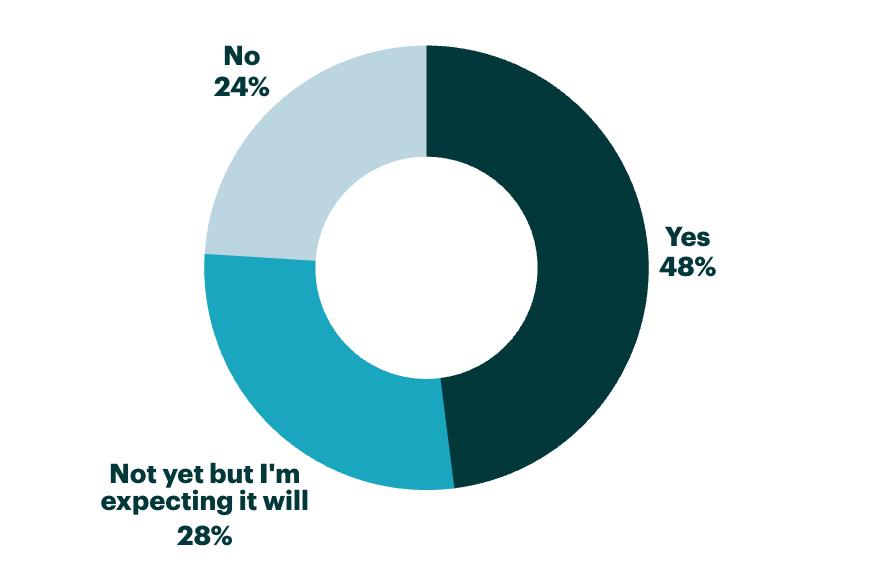
Over three-quarters* of respondents indicated their work has been impacted already or expect it will be. Their stories have common threads – suppliers raising their prices, patients cancelling appointments, and pressure on healthcare workers from fuel prices. The starkest difference appears between cities and the regions. People in urban centres were more likely to be able to access reliable public transport, or to walk or cycle to work. Outside of the cities, however, the impact was more acute – to the point that one health worker shared they were left with little choice but to resign their position because it was no longer affordable.
“Healthcare can be one of the first things to go when people are feeling the cost-of-living crisis acutely… We are expecting higher numbers of ‘did not attend’ for appointments.”
HEALTH SERVICE
“I work casually at multiple sites and am now only choosing shifts closer to home to avoid long commutes.”
VICTORIAN
NSW HEALTH WORKER
“I live in a rural town and without good public transport, I’m dependent on my car – I’d rather not be. I wish there was an excellent public transport system.”
RURAL HEALTH WORKER
“The fuel crisis has increased transport costs and disrupted service delivery, particularly for outreach work.”
NSW HEALTH RESEARCHER
Talking with health workers and providers has brought into focus how directly the fuel crisis is affecting their day-to-day work. With everything else rising, it’s putting pressure on what was already stretched.
Dependence on fossil fuels exposes us to volatility in a rapidly shifting world. But healthcare can break this cycle by reducing its dependence on petrol, diesel and gas. Patient transport, hospitals and health services can be powered cheaply by renewable energy bolstered with battery storage. At the same time, we can save petrol and diesel for those who still need it, like large trucks and air transport.
This solution is at our fingertips, if governments, industry and the health sector can work together.
In the meantime, it is uplifting to hear the many stories of resilience from health workers, both from those who are changing their own behaviour and from those who have invested in electrification.
“Workers are carpooling or looking into alternative ways to commute including purchasing electric vehicles.”
QUEENSLAND NURSE
“We transitioned our vehicle fleet to EVs a couple of years ago and that has helped us avoid the increase in fuel costs.”
“I am personally reducing my use of my car to get to work to reduce the burden and allow others that need it to use the fuel available.”
WA HEALTH WORKER
Has the fuel crisis had an impact on your workplace?
BENEFITS OF ELECTRIFYING HEALTHCARE AND TRANSPORT
ZERO EMISSIONS – Electric vehicles produce no tailpipe emissions, reducing the carbon footprint of patient transport and health services.
CLEANER AIR – Lower levels of air pollution and particulate matter improve community health outcomes.
QUIETER COMMUNITIES – Electric vehicles reduce noise pollution around hospitals, health services and residential areas.
GREATER EFFICIENCY – Electric technologies are typically three to five times more efficient than fossil-fuel-based systems.
LOWER COSTS – Electrification, particularly when paired with solar and battery storage, can reduce energy costs and reliance on volatile fuel prices.
HEALTH BENEFITS – Electric appliances and vehicles eliminate harmful pollutants associated with combustion, improving indoor and outdoor air quality.
MORE SUSTAINABLE HEALTHCARE – Supports emissions reduction goals and helps create a cleaner, more resilient health system.
While the fuel crisis is placing real strain on health workers and services, it is also accelerating conversations about how we build a more resilient health system. The stories shared by health workers show that change is already underway and that with the right support, the transition away from fossil fuel dependence can strengthen both our health system and the communities it serves. *As of
VICTORIAN HEALTH SERVICE PROVIDER
Dr Rebecca Millar
Dr Rebecca Millar is a forensic mental health nurse and lawyer and is in the nursing program in the school of Health and Biomedical Sciences at RMIT
New powers, new accountability: The legal landscape of designated RN prescribing
In September 2025, the Nursing and Midwifery Board of Australia (NMBA) Registration Standard: Endorsement for Scheduled Medicines, Designated Registered Nurse Prescriber came into effect, enabling suitably qualified and experienced registered nurses to prescribe Schedule 2, 3, 4 and 8 medicines in partnership with an authorised health practitioner (NMBA, 2025).
With the first graduates from NMBA-approved programs expected from mid-2026 (Ahpra, 2025), designated registered nurse prescribing (DRNP) is no longer a future concept. Nurses across the country are beginning to step into this role, making it important to understand the legal considerations before they are tested in practice.
The model itself is straightforward. To gain endorsement, a registered nurse must complete an NMBA-approved postgraduate qualification, demonstrate at least 5,000 hours of clinical experience within the previous six years, and undertake a six-month clinical mentorship with an authorised health practitioner. Prescribing occurs under a formal agreement with a partner prescriber, usually a medical practitioner or nurse practitioner, which outlines the medicines and clinical settings in which the nurse may prescribe (NMBA, 2025).
The NMBA Guidelines state the endorsed RN is responsible and accountable for prescribing within their scope of practice and authorisation, and the prescribing agreement defines the boundaries of that practice rather than distributing responsibility for individual clinical decisions between the nurse and the partner prescriber (NMBA, 2025). What this means in practice is that when a DRNP prescribes, the legal accountability for that decision rests with them.
The legal framework governing what happens when a prescribing decision causes harm is not new.
Australian negligence law already provides the tools that courts and tribunals will reach for when the first DRNP cases arise, and two principles in particular warrant attention. The first concerns the standard of care. Across Australian jurisdictions, civil liability legislation provides that a professional does not breach their duty of care if they acted in a manner widely accepted by peer professional opinion as competence professional practice. The standard itself is well understood: a DRNP will be judged against what a reasonably competent designated nurse prescriber would have done in the same circumstances. What remains unsettled is how that standard will operate in practice. The role is new, there are no established protocols specific to prescribing errors in this context, and there is not yet any case law to draw on.
A question that will inevitably arise in the first contested cases is the extent to which careful compliance with the terms of a prescribing agreement constitutes evidence of reasonable practice. That relationship between the prescribing agreement and the negligence standard has not yet been tested in an Australian court, and it is one that DRNPs and the health services that employ them would do well to keep in mind as governance frameworks continue to develop.
The second principle arises from the High Court’s decision in Rogers v Whitaker (1992) 175 CLR 479, which established that a prescriber’s duty of care extends beyond the prescribing decision itself to informing patients of material risks associated with treatment. Correctly prescribing a medicine within a prescribing agreement is not enough if the patient has not been adequately informed of those risks. Importantly, inexperience does not reduce the expected standard of care: a newly endorsed DRNP will be judged against the standard of a competent practitioner in that role, not a lower standard because they are new to prescribing.
There is also an important legal distinction to understand. NMBA endorsement alone does not authorise prescribing in every state or territory, as prescribing rights are also governed by local medicines and poisons legislation, which varies across Australia (NMBA, 2025). The scope of practice is further shaped by the prescribing agreement and partner prescriber, making it essential that nurses clearly understand what they are authorised to prescribe before commencing practice.
Designated RN prescribing represents a significant advance for the profession, expanding access to timely care in communities that need it most. While the legal framework surrounding the role is still evolving, the principles that will guide future cases are already well established: the duty to exercise reasonable care, inform patients of material risks, and practise to an appropriate standard of competence. For nurses stepping into this role, understanding those principles will be essential to building safe and confident prescribing practice.
Why I’m studying to become a Designated RN Prescriber
By Robert Fedele
As part of Australia’s first wave of registered nurses studying to become designated RN prescribers, Tasmanian mental health nurse Emily Brinckman is already picturing what the expanded scope of practice could mean for patients.
Working as a Clinical Nurse Specialist (CNS) at Royal Hobart Hospital’s Emergency Department, Emily assesses patients presenting primarily with mental health concerns. Her role involves providing support and specialist expertise to both patients and ED staff so that this vulnerable cohort receives the most appropriate treatment and care planning.
Emily is studying to become an endorsed designated RN prescriber through the
University of Tasmania, one of five approved courses currently offered nationwide. She believes being able to prescribe Schedule 2, 3, 4 and 8 medicines in partnership with an authorised health practitioner could significantly improve patient flow and timely access to treatment within the ED.
“I’m excited for when I see a patient in distress and can be able to promptly get them some medication in addition to the
non-pharmacological support we already provide,” she says.
Emily has worked across a wide range of mental health settings throughout her career. Beginning as an enrolled nurse in private mental health, she later moved into forensic mental health before completing her RN qualification. She secured a new grad Transition to Practice program in mental health, then undertook a Post Graduate Diploma in Mental Health Nursing.
Tasmanian mental health nurse
Emily Brinckman is studying to become a designated registered nurse prescriber
Since then, she has worked in inpatient mental health, community mental health, and correctional health and forensic settings, before joining Royal Hobart Hospital’s busy ED.
Emily first became aware of the landmark introduction of RN prescribing in Australia late last year as the Nursing and Midwifery Board of Australia’s (NMBA) registration standard officially came into effect. Around the same time, she had begun considering further study to become a nurse practitioner (NP) but shifted her focus after learning that the University of Tasmania would be offering an RN prescribing course because she believes it provides a solid foundation for undertaking their Masters’ program.
“Anyone who knows me knows that I’m always studying something. I’ve always got something that I’m working on,” she says. “So, it was just a natural progression for me.”
For Emily, the potential day-to-day benefits of RN prescribing are clear.
“In my role, for example, I’m already doing a best possible medication history,” she explains.
“I’m already cross-referencing that across various sources. Then I write down the list of medications that I need to be charted and then I take them to the emergency doctor because there’s not necessarily a psychiatrist on site after hours. So, I take them to the ED doctor, who might have never met the patient and isn’t involved in their care, to check.”
Once up and running, Emily believes the designated RN prescribing model will cut a lot of red tape and optimise care.
“The benefit is it’s going to improve patient flow, reduce the need for me to tap those emergency doctors on the shoulder and say, ‘Oh, can you actually do this for me?’” she says.
“I’m doing 90% of the work, the next 10% is just charting those medications.”
Emily says the ability to prescribe medications through an expanded scope of practice will improve the experience of patients experiencing acute mental health distress.
“If I was able to prescribe them, say an anxiolytic medication, then that’s going to improve their experience in the emergency department,” she argues.
“It’s going to reduce the need for me to go and involve other clinicians, which just takes longer. It takes longer for the service; it takes longer for the patient.”
The University of Tasmania’s Graduate Diploma level RN Prescribing Pathway, delivered fully online and part-time, covers eight units. In year one, the four units of study relate to the student’s area of speciality. In year two, a further four units – evidence-informed practice, medical principles for advanced nursing and midwifery, advanced health assessment, and clinical perspectives of therapeutic medication management are completed.
As debate continues across the profession, Emily believes many concerns about RN prescribing will ease once nurses and other health professionals understand the safeguards built into the model, such as the six-month mentorship.
“The guardrails are there for patient safety and for our professional safety,” she says. “Once that’s explained, people seem to get on board.
“The benefit is it’s going to improve patient flow, reduce the need for me to tap those emergency doctors on the shoulder and say, ‘Oh, can you actually do this for me?’”
To apply for the endorsement after completing an NMBA-approved course, nurses must have three years’ full-time post initial registration clinical experience (5,000 hours) as an RN within the past six years. Once endorsed, and in clinical practice, they are required to complete a six-month clinical mentorship with an authorised health practitioner such as a nurse practitioner or doctor.
So far, Emily has undertaken units focusing on physical health assessment and pharmacology, which she says has deepened her understanding of medications she already administers regularly.
“It’s really helped me to understand the psychiatric medications that I’m already giving to patients,” she says.
Emily was fortunate to secure scholarships under the University of Tasmania’s industry partner agreement, as well as and the Tasmanian Government, to support her study.
In its early days of implementation, Emily acknowledges there is considerable work ahead before designated RN prescribers are fully integrated into health services.
“I expect with such a significant change, services will be moving slowly and cautiously to ensure patient safety.”
One of the biggest unresolved questions from nurses remains whether they will be paid more for taking on additional clinical responsibility and risk.
Emily is hopeful that nurses who become RN prescribers will receive higher pay. Promisingly, the ANMF is pursuing appropriate remuneration for increased skills and responsibilities.
“I think it would be unreasonable to expect nurses to undertake the additional work and the additional risk … without appropriate remuneration,” she says.
“Some of the concerns I’ve heard nurses raise include, ‘Oh, I don’t want this extra responsibility.’ Well, that’s fine – it’s optin. No one is forcing registered nurses to prescribe medications.”
Emily also rejects suggestions that designated RN prescribing could threaten the role of nurse practitioners, instead viewing it as part of nursing’s broader professional evolution.
“I think it’s important to recognise that nurse practitioners can work without a partnership arrangement with a doctor and designated nurse prescribers cannot,” she points out.
“Nurse practitioners are safe. We still really need nurse practitioners in the service. My ultimate hope is that the option to do the nurse prescribing course will make the path to becoming a nurse practitioner in the future feel more accessible for nurses.
“Ultimately, this is just one pathway and as nurses, we should all be lifting each other up. We should be aiming to collectively raise our scope, our voice, and contribution to the healthcare service.”
Looking ahead to completing the course in October this year, Emily says she remains excited about what the future could hold — both for patients and for the profession itself.
“I think when I first write on a medication chart, I might feel really naughty. I’ll have to remind myself that I’m actually allowed to do that.”
Dr Khalil Sukkar
Aged Care Lead, ANMF Federal Office
When the cost of care is the cost of getting there
As fuel costs rise, aged care workers are absorbing the burden, providers are reshaping services, and older Australians in regional and outer metropolitan areas are at a growing risk of losing care at home.
Petrol prices are not usually seen as an aged care issue. But for a sector built on a mobile workforce, they are fast becoming one.
As fuel prices rise sharply, in some regions approaching $3.00 per litre at peak cycles, a quiet pressure is building across home and community aged care, a pressure which is not visible in compliance data or funding reports.
Instead, the pressure is absorbed by workers, reshaped by providers, and felt most acutely by older Australians receiving care at home. ANMF members’ feedback consistently identifies travel costs and unpaid travel time as significant sources of financial and workforce pressure, particularly for those working in community settings.
Home care depends on nurses and carers travelling between multiple clients across communities each day. Mobility is not incidental to care; it is central to how care is delivered. Yet travel remains one of the least recognised components of the delivery of home care. Consequently, travel time between clients is frequently unpaid or inconsistently compensated, and per-kilometre allowances often fall below the ATO cents-per-kilometre rate (currently 99 cents per km for 2025–26). The allowance is a minimum benchmark amount, intended to cover basic fuel and vehicle running costs
The workforce response is gradual but significant. Due to the rising fuel costs, nurses and carers are declining shifts requiring travel, favouring closer clients and more efficient rosters, or leaving travel-intensive roles altogether. Aged Care Providers, in turn, cluster client visits, reduce scheduling flexibility, and compress time with each client. On paper, services continue. In practice, our members are concerned that their capacity to provide care is being compromised by providers. A 45-minute visit becomes 30 minutes, with the “saved” time spent travelling rather than providing care.
The impact is not evenly distributed. Regional and outer metropolitan areas face the greatest pressure, with lower client density comes longer travel distances, and fewer workforce alternatives. In metropolitan areas, services are tightened. In regional Australia, they risk disappearing altogether.
The Australian Institute of Health and Welfare (AIHW) data shows that older Australians in remote and very remote areas already experience significantly
poorer access to home care services; rising travel costs compound an access gap that existing funding models were not designed to consider. For Aboriginal and Torres Strait Islander communities and people in rural areas with limited transport infrastructure, the consequences are particularly acute.
These pressures carry direct clinical consequences, missed and shortened visits translates to reduced capacity for nurses and carers to monitor chronic health conditions, support medication management, and maintain the social connection that underpins wellbeing at home. Over time, the cumulative effect of these gaps in preventative care delivery can result in an increased risk of unwitnessed falls, hospitalisation, and earlier admission into residential care. These increased risks reflect preventable outcomes. What begins as a travel cost in home care becomes a cost shift to acute care, directly undermining the policy intent of the Support at Home program, which commenced in July 2025 with a stated goal of supporting older Australians to remain at home longer.
At its core, this reflects a structural misalignment. Home care funding is largely unit-priced and activitybased, while service delivery is inherently geographydependent. Travel is not an optional extra; it is a core component of care. The Independent Health and Aged Care Pricing Authority’s (IHACPA) pricing work to date has not adequately resolved how geographyweighted costs should be reflected in service pricing, and the gap between funding design and operational reality is widest in the areas that can least afford it.
Addressing this requires action on two fronts. First, workplace standards must be strengthened: travel time between clients must be counted as paid working time, and per-kilometre allowances should be benchmarked to and updated in line with the ATO rate. Second, funding design must catch up with operational reality: IHACPA should be tasked with developing a geography-weighted pricing adjustment for home care services that reflects the true cost of delivery in regional, rural, and remote areas.
If Australia is serious about supporting older people to remain at home, it must recognise and reflect the reality of providing care at home: care does not begin at the doorstep. It begins with the getting there, and with funding and protecting workplace conditions that make that possible.
The cumulative impact of night shift work on breast cancer risk
Shift work is an unavoidable reality for many nurses, midwives, and care workers.
Across healthcare settings, around-the-clock staffing is essential to ensure safe, timely, and continuous care. However, while shift work is necessary for patient safety, it carries significant long-term health risks for the workforce.
Research suggests one such risk of working night shift may be an increased risk of cancer, particularly breast cancer. In 2019, the International Agency for Research on Cancer classified night shift work as “probably carcinogenic to humans”, and in 2021, the National Toxicology Program concluded that there is strong (though not conclusive) evidence that persistent night work contributes to female breast cancer.
Given the essential role of night work in healthcare, eliminating these shifts is not a realistic option. However, there are practical steps that can be taken to reduce risk and better support nurses, midwives, and care workers.
References
1. Esposito G, Bravi F, Santucci C, Zunarelli C, Violante FS, La Vecchia C, et al. Night shift work and breast cancer risk in healthcare workers: a systematic review and meta-analysis. Occup Med (Lond). 2025;75(9):596607. doi:10.1093/occmed/ kqaf040.
2. Hong J, He Y, Fu R, Si Y, Xu B, Xu J, et al. The relationship between night shift work and breast cancer incidence: a systematic review and meta-analysis of observational studies. Open Med (Wars). 2022;17(1):712731. doi:10.1515/med-20220470.
3. Pahwa M, Labrèche F, Kim J, Harris MA, Song C, Peters CE, et al. The impact of night shift work on breast cancer: results from the Burden of Occupational Cancer in Canada Study. Am J Ind Med. 2019;62(8):635642. doi:10.1002/ajim.22999.
4. Purdue MP, Hutchings SJ, Rushton L, Silverman DT. The proportion of cancer attributable to occupational exposures. Ann Epidemiol. 2015;25(3):188192. doi:10.1016/j. annepidem.2014.11.009.
A 2026 review found that women in healthcare who had worked night shifts for 20 years or more had a 25% increased breast cancer risk compared with those who had never worked night shifts.1 The authors concluded that prolonged exposure to night shift work has a cumulative long-term effect, with risk increasing over time. Similarly, a 2022 review reported that while there was no increase in breast cancer incidence among women working one to five night shifts per week, working more than five night shifts per week was associated with an increased incidence of breast cancer.2 Together, these studies indicate that frequent and prolonged exposure to night shift work may increase breast cancer risk, representing a significant occupational risk of cancer among women. Epidemiological studies from the United States and Canada estimate that approximately 5% of all breast cancer cases may be attributable to long-term night shift exposure.3,4
One possible explanation for this association is the effect of exposure to artificial light at night on melatonin levels. Melatonin is a hormone that regulates the body’s natural sleep–wake cycle. It is released in response to darkness, signalling when to wind down and helping to promote sleep. Exposure to light at night can therefore suppress melatonin production. Importantly, growing evidence suggests melatonin may help suppress tumour growth, particularly in hormone-dependent cancers such as breast cancer. Reduced melatonin levels may therefore increase breast cancer risk. In addition to biological mechanisms, night shift work is associated with several behavioural risk factors, including higher rates of obesity, an increased likelihood of smoking, poorer dietary patterns, and greater sedentary behaviour. Each of these factors has been independently linked to an elevated risk of cancer.
If given the opportunity, nurses, midwives, and care workers should consider submitting roster preferences that limit long stretches of consecutive night shifts and favour forward-rotating schedules (morning to evening to night), which are generally better aligned with natural sleep patterns. It is also important to maintain healthy habits during night shifts, including a balanced diet and remaining physically active when possible. Maintaining sleep hygiene is also essential, including getting the recommended amount of sleep, keeping a consistent sleep routine, and creating a good sleep environment. If your workplace offers health or wellbeing programs, consider using these services to access guidance on improving sleep quality. Additionally, participating in early detection through recommended screening programs, such as regular self-checks and biennial mammograms for women aged 50–74 years, can assist in early detection and prevention of harm.
As many nurses, midwives, and care workers have limited control over their rostering, the responsibility is on policymakers and organisations. Where possible, permanent night shift arrangements should be avoided, the number of consecutive night shifts should be capped, and forward-rotating schedules should be prioritised. Rostering practices must ensure nurses, midwives, and care workers have adequate recovery time between shifts. This includes additional leave entitlements for those regularly working nights.
Organisations should promote good health among night shift workers through initiatives such as providing access to healthy food options, creating opportunities for physical activity, and supporting smoking cessation. Providing sleep hygiene and fatigue management education and encouraging participation in screening programs, particularly for workers with long-term exposure to night shifts can support healthy decisionmaking. Additionally, workplace design, such as optimising lighting conditions to better align with circadian rhythms, may offer further benefits.
Embedding protective policies, supporting informed decision-making, and actively minimising long-term risk are essential if we are to sustain a healthy and resilient healthcare workforce.
Jarrod Clarke
Jarrod Clarke is based in the ANMF National Policy Research Unit (Federal Office) in the Rosemary Bryant AO Research Centre, College of Health, Adelaide University
The failure of humanity and the moral obligation to take a stand: A nursing response to the Middle East conflict
By Dr Megan-Jane Johnstone AO
The war in the Middle East is inflicting intense human suffering and extreme hardship on non-combatant conflict-affected communities.
The daily deluge of news media reports of the horrors and humanitarian crises that have spread across the region are difficult to watch, prompting many to ‘turn their eyes away’. People are averting their gaze not only because of the horrific images they are seeing, or the deep feelings of moral angst evoked by the brutality they are witnessing. People (nurses among them) are turning away because of their profound sense of impotency, hopelessness, and lack of moral agency to do anything about what they are seeing - not least to demand and achieve an end to the hostilities observed.
There comes a point when a situation is so confronting, so unconscionably intolerable, so unjust that taking a stand becomes a necessity. History is full of examples of people standing up against an intolerable status quo and risking everything to try and change it. However, history has also silently witnessed many who, when faced with the decision to take a stand, have instead opted for the comfort and convenience of hiding on the sidelines among morally passive bystanders.
It is not clear why some people will take a stand on an issue or situation even when doing so poses a serious risk of retaliation including threats to their own lives, while others will just walk away and hide in the shadows of banal convenient indifference. One explanation is that people might simply be disinterested, indifferent, or apathetic. Or they may find the prospect of taking a stand daunting due to overwhelming feelings of moral ambivalence about what to do. Or their reticence might be driven more seriously by a deep fear that by taking a stand they will be seen as taking sides and judged accordingly placing themselves uncomfortably in the line of targeted retaliation. But is taking a stand, the same as taking sides?
PRINCIPLED ETHICS VERSUS FACTIONAL ALLEGIANCE
It is important to state at the outset that there is a fundamental distinction between taking a stand and taking sides and it is a mistake to equate or conflate the two. It is also important to clarify that taking a stand is not the same as opting for neutrality (ie. being indifferent to the claims of opposing sides or differing ethical viewpoints). Taking a stand in the context of war is generally understood as supporting ethical principles that promote human dignity, a sympathetic and compassionate stance toward all human suffering, achieving justice and promoting peace – the principles of which are espoused in documents like the Universal Declaration of Human Rights1
and International Humanitarian Law (IHL).2 Taking sides, in contrast, involves aligning oneself with a specific faction, ‘tribe’, or ideology often demonising the opposition. Rather than promoting an ethical response to human suffering and promoting peace, taking sides fuels further conflict, polarises communities, drives families and friends apart, and forces the abandonment of a morally just approach to resolving the conflict at hand. In short, whereas taking a stand involves speaking up against an injustice regardless of who commits it, taking sides involves claiming the moral high ground (‘we are right, they are wrong’) and only speaking out against the actions of the opposition and characterising them as being inherently evil.
NURSE ADVOCACY FOR PEACE
In 2023, the ANMJ published an online article ‘Bombing hospitals, destroying ambulances and the ethics of (un)just war’3 in which attention was drawn to the mayhem of war and the devastating attacks and destruction of healthcare infrastructure (including hospitals, ambulances, and healthcare workers) in conflict zones across the globe. It also called on nursing organisations to support the International Council of Nurses (ICN) #nursesforpeace campaign4 and the activities of other organisations such the Safeguarding Health in Conflict Coalition5 and the Health Care in Danger Initiative (HCiD).6
Despairingly, at the time of writing this article, despite these worthy initiatives, little has changed. According to the World Health Organization (WHO) Surveillance System for Attacks on Health Care (SSA), 12 countries and territories continue to be attacked by combatants.7 The dangerous escalation of conflict in the Middle East has been particularly dire imposing unimaginable consequences for nurses, their co-workers, hospitals, and the region’s general healthcare infrastructure as drones and bombs decimate their services. In response to the gravity of this situation, the ICN convened an urgent meeting of nursing leaders across the Middle East and Gulf Regions to address the fear and uncertainty they are facing and to pledge solidarity.8 The ICN reiterated its condemnation of violence in all forms, demanded adherence to International Humanitarian Law, sought direct financial assistance and practical support to nurses in the region, and encouraged nurses and organisations around the world to share messages of solidarity and to support its #nursesforpeace campaign.
Other nursing organisations such as Royal College of Nursing (RCN-UK) and the Australian Nursing and Midwifery Federation (ANMF), heeding the ICN’s repeated calls for action, have similarly taken a stance on the conflict in the Middle East. The RCN-UK, for example, has released a 30 page report on Care amongst the chaos: The voices of nurses working in conflict 9 And March 2026, the ANMF reiterated in a media release that it ‘stands in solidarity with our colleagues affected by this conflict and work alongside international partners to promote peace, protection, humanitarian justice and for a peaceful, diplomatic resolution to the war’.10
THE ADOPTION OF A PASSIVIST STANCE
It should be noted that the nursing profession’s passivism and structured advocacy for peace and the prevention of war is not new. Dating back to the experiences of nurses during the outbreak of the first world war (1914-1918), nurses who became profoundly disillusioned with the war and suffering burnout after seeing the pain and despair caused by the war and its aftermath, adopted a pacifist stance.11 Some early nurse leaders at the time also became progressive activists and ‘radical voices of dissent’ (as they had been on other social issues12) actively promoting nurse involvement in anti-war activities (see, for example, Jane Addams Address given on 10 January 1915 at the Women’s Peace Party Conference13).
Nurses have a long history of providing humanitarian aid in conflict zones. However, their peace activism has been primarily in response to the immense devastation and excessive, needless,
pointless suffering which they have witnessed first-hand in war zones.
The aftermath of war and the ‘delayed mortality’11(p33) caused by malnutrition, infectious diseases, and untreated/ undertreated illnesses and injuries in civilian populations (most of them women, children and the elderly) due the destruction of life-sustaining civilian community infrastructures (eg. energy systems powering water supply and sewerage treatment plants, transport of food and medical supplies) has also driven nurses and their leaders to actively campaign for peace and the prevention of war.
BEYOND THE WAR
In many ways, what is happening in the Middle East and other regions wracked by war is so awful, so horrific that it is beyond words to describe. Mere words may seem, at first glance, inadequate to the task of fully capturing the gravity of the humanitarian disasters that have unfolded in the current theatres of war and the immense irremediable human suffering being caused, and which will continue even after the hostilities have stopped. Yet words must be found. Because if words are not found to describe and account for the unspeakable, then the unspeakable will remain silent, hidden, misremembered, ignored, sanitised, and forgotten, and the lessons of our failed humanity forfeited. Words must, however, also be distilled into actions, else they risk counting for nothing. Action, in this instance, fundamentally includes taking a stand on upholding the principles of humanitarian concern. But action must not –cannot end– with pacifist advocacy alone, although such advocacy is and will always remain essential.
Conversations must now also begin on how, when all this is over, the world –we/ us/they– can and will provide practical resources as well as moral support to help our fellow nurses rebuild their shattered lives, restore their broken profession, heal their broken hearts, treat their injured bodies, overcome their disillusionment, recover from their burnout, manage their PTSD, and reengage with a ‘normal’ life. It is understandable that some might discount the value of the nursing profession’s calls for peace and the ending of wars, arguing that such calls are mere rhetoric that cannot and will not achieve very much. But as diplomacy channels show, as dignified and magnanimous diplomatic dialogue between opposing parties demonstrates, words matter – the ‘right words’ matter. And documenting the right words also matter (whether through petitions, letters, commentaries in nursing journals, social media), as they will stand as an historical record of taking a stand and thus ensure they are not forgotten. And so, we must continue to hope that our collective voices will succeed in influencing public opinion and the policies of our political leaders and will ultimately succeed in ending the madness that is rocking our taken-for-granted world.
Author
Dr Megan-Jane Johnstone AO, independent scholar and Adjunct Professor in the School of Nursing and Midwifery, La Trobe University, Melbourne. She is also the author of the widely acclaimed text Bioethics: a nursing perspective, 8th revised edition.
References
1. United Nations. General Assembly. Universal declaration of human rights. Department of State, United States of America; 1949. [Cited April 28, 2026]. Available from: un.org/ en/about-us/universal-declaration-of-human-rights
2. International Committee of the Red Cross, Advisory Service on International Humanitarian Law. What is International Humanitarian Law? (IHL); 2004. [Cited April 28, 2026]. Available from: icrc.org/sites/default/files/document/ file_list/what-is-ihl-factsheet.pdf
3. Johnstone M-J. Bombing hospitals, destroying ambulances and the ethics of (un)just war. Australian Nursing and Midwifery Journal (i) [Internet]. 2023, November 10. [Cited April 28, 2026]. Available from: anmj.org.au/bombinghospitals-destroying-ambulances-and-the-ethics-of-unjustwar
4. International Council of Nurses (ICN). Humanitarian Fund #nursesforpeace; 2026. [Cited April 28, 2026]. Available from: icn.ch/how-we-do-it/campaigns/humanitarian-fundnursesforpeace
5. Safeguarding Health in Conflict Coalition; 2024. [Cited April 28, 2026]. Available from: safeguarding-health.com/ about-the-coalition
6. Health Care in Danger Initiative (HCiD); 2025. [Cited April 28, 2026]. Available from: healthcareindanger.org
7. World Health Organization (WHO). WHO Surveillance System for Attacks on Health Care (SSA); 2026. [Cited April 28, 2026]. Available from: extranet.who.int/ssa/Index.aspx
8. International Council of Nurses (ICN). ICN convenes nursing leaders across the Middle East as conflict deepens; 2026. [Cited April 28, 2026]. Available from: icn.ch/news/ icn-convenes-nursing-leaders-across-middle-east-conflictdeepens
9. Royal College of Nursing (RCN-UK). Care amongst the chaos: The voices of nurses working in conflict [Internet]. London: RCN; 2025. 31p. [Cited April 28, 2026]. Available from: rcn.org.uk/Professional-Development/publications/rcncare-amongst-the-chaos-uk-pub-012-203
10. Australian Nursing and Midwifery Federation (ANMF). Media release: ANMF statement on Middle East conflict; 2026. [Cited April 28, 2026]. Available from: anmf.org.au/ media/media-releases/anmf-statement-on-middle-eastconflict-1
11. Boyle JS, Bunting SM. Horsemen of the Apocalypse: lessons from the Gulf War. Advances in Nursing Science. 1998 Dec 1;21(2):30-41.
12. Attenborough J, Reynolds L, Nolan P. The nurses that roared: nurses from history who found their voices and challenged the status quo. Creative Nursing. 2019 Feb;25(1):67-73.
13. Addams, Jane. Address at the WPP Conference, Washington, 1915. [Internet]. Woman’s Peace Party. Addresses Given at the Organization Conference of the Woman’s Peace Party, Washington, DC, January 10, 1915. Chicago: Woman’s Peace Party; 1915, pp. 10-12. [Cited April 28, 2026]. Available from: janeaddams.omeka.net/items/show/9841
Astrid S Tiefholz RNM
Federal Vice President
Medicare’s rural blind spot: How funding structures are fragmenting healthcare in the bush
In our recent submission to the Senate Standing Committee on Rural Regional Affairs and Transport on Rural, regional and remote Medicare Access and Funding - the ANMF called for better support for rural and remote health access - warning that Medicare is failing the bush
For decades, the Australian healthcare system has relied on the clinical courage of nurses in rural and remote areas to bridge the gap between urban-centric policy and rural reality. However, the latest data reveals a system at a breaking point: rural Australians now face an annual health expenditure deficit of $8.35 billion, or $1,090 per person. This “rural blind spot” in Medicare’s funding architecture leads to fragmented care and is delaying life-saving diagnoses for millions of people living rurally.
THE TELEHEALTH BARRIER: NECESSITY VS CONVENIENCE
The most immediate threat to rural care continuity is the 1 November 2025 change to Medicare Benefits Schedule (MBS) telehealth rules. The new regulation requires patients to have had at least one face-toface consultation with their practitioner within the previous 12 months to claim a rebate for nurse practitioner (NP) telehealth services. Compounding this fragmentation is the structural exclusion of NPled clinics from the MyMedicare registration system. Under current rules, patients are only exempt from the 12-month face-to-face telehealth requirement if they are registered with a GP-led practice. This creates a perverse incentive that undermines nurseled models, which are often the sole providers in communities where GP wait times exceed three months or where no GP exists at all.
While intended to support “high-quality care,” this rule fails to recognise that for many in the bush, telehealth is the only clinically viable pathway to access care. In oncology, the impact is devastating. Cancer survivors in remote areas must either take on the massive financial burden of traveling hundreds of kilometres for a compliance check or forego surveillance altogether. This arrangement also disrupts established therapeutic relationships in mental health follow-up and chronic disease management, where service stability is essential. NPs and midwives remain locked out of the Bulk Billing Incentive Program and key advanced diagnostic MBS items. Even more baffling is the exclusion of NPs from the Repatriation Pharmaceutical Benefits Scheme (RPBS), which
forces veterans to see a different prescriber solely to access subsidised medications. This is an administrative hurdle that serves no clinical purpose.
SCOPE OF PRACTICE VS FUNDING REALITIES
The Unleashing the Potential of our Health Workforce Scope of Practice Review identified that nearly all health professions face barriers unrelated to their education or competence. Nurses in very remote areas Modified Monash Model (MM7) are already 17% more likely to work to their full scope of practice than their urban counterparts, yet they do so despite the system, not because of it.
The current fee-for-service model is the primary barrier. It incentivises high-turnover, episodic care rather than the complex, multidisciplinary coordination required for rural health. The solution lies in shifting toward blended funding models, a recommendation from the Scope of Practice Review that would provide block funding for nurse-led clinics to deliver comprehensive, team-based care.
A CALL FOR INDUSTRIAL AND PROFESSIONAL EQUITY
The ANMF has called for reforms that are consistent with the expansion of service delivery through the Nurse Practitioner Workforce Plan and removing limitations to the funding mechanisms that make that workforce sustainable.
We must move beyond praising the resilience of rural nurses and start funding their expertise. This means authorising direct referral pathways to specialists, such as psychiatrists and geriatricians, and ensuring that legislative language moves away from naming specific medical practitioners to acknowledging all competent health professionals.
If we are to close the $8.35 billion rural expenditure gap, Medicare must evolve. We need a system that reflects the workforce we actually have: one where nurses and midwives are professionally and industrially empowered to lead remote healthcare delivery. The health of seven million rural Australians is at stake.
Paul Yiallouros ANMF Industrial Officer
Motor Vehicle Allowance
For weeks, the world has watched on in horror as war has raged between the United States of America and Iran. It is the longstanding position of the ANMF that war and violence both within and between nations should be opposed, noting that healthcare workers including nurses and midwives are inevitably called upon to clean up the brutal aftermath.
Conflicts in other countries impact us in Australia in different ways. For some, it is the constant stream of articles and images flowing from overseas that provide a grim window into the human cost of war. For others, it is the fear that friends and relatives are among the casualties or in very real danger. Memories of past conflicts, such as the Vietnam War and the Rwandan Genocide, may flood back as though they had only occurred yesterday.
This conflict has felt less distant as the economic impact of war has sent shockwaves through the global economy. The closure of shipping traffic through the Strait of Hormuz has caused oil prices to soar, and Australia has not been immune to this.
The cost of filling up the car with petrol has become unaffordable to many. Running errands, going to work, and taking kids to and from school has become more expensive. Australians are bearing the cost of a war in which we have no direct involvement.
Some workers are required to use their personal vehicles during the course of their work. Community health workers drive to see patients who are otherwise unable or unlikely to receive care from other parts of the health system. Their work is vital for extremely vulnerable members of the community.
The longstanding way that the industrial system has compensated employees for using their own car for work is through a motor vehicle allowance. The Nurses Award 2020 says that where an employee is required to use their own vehicle for work, they will receive an allowance of 99c for each kilometre of work-related travel. The allowance is designed to cover the cost of fuel, wear and tear, registration and insurance.
That allowance historically has only been increased on 1 July each year at the same time as the annual wage review where the Fair Work Commission sets the minimum rates of pay across the entire workforce.
Until recently fuel prices have been relatively stable, so there has been little need for urgent changes to the allowance outside of the annual review. That all changed in February this year when the Middle East conflict started.
ANMF members report that a 99c per kilometre allowance barely covers the cost of petrol and leaves very little for other vehicle expenses. Nurses, midwives and carers are being forced to cover the cost of urgent repairs just so they can do their job.
Some employers have recognised they need to do more than the bare minimum to shield their workers from spiking fuel prices and are voluntarily increasing their vehicle allowance payments. Others continue to pay the legal minimum, meaning their workers have to absorb the fuel cost increase.
The ANMF and other unions have filed a case in the Fair Work Commission calling for an urgent change to the vehicle allowance. We are calling for three things:
1. That the vehicle allowance be increased immediately – workers should not have to wait until 1 July 2026 for relief from a crisis that is hitting hard right now;
2. That for the next 12 months, the vehicle allowance should be adjusted monthly (rather than annually) to make sure that workers are appropriately compensated for work-related driving, with additional money left over for other car-related expenses;
3. That the vehicle allowance should not go backwards over that 12-month period, even if fuel prices start to come down.
The hearing dates for this case were held in May. At the time of print, the parties were awaiting the Fair Work Commission’s ruling.
A win here would be a small step to protecting workers from the financial cost of surging fuel prices. For workers covered by an enterprise agreement, there will be no immediate increase to the vehicle allowance. Agreements negotiated before the fuel crisis hit do not reflect the current economic environment.
The ANMF will nonetheless press employers to do the right thing and follow the Fair Work Commission’s decision in raising the vehicle allowance in a way that is fair to employees who use their own car for work.
MENTAL HEALTH
The digital shift era: Does electronic platform reduce workload for nurses in acute mental health settings
By Priseena Radha
In the ever-evolving realm of healthcare, the significance of digital technology has become paramount, as the demand for quality care often stretches the limits of nursing resources.
The workload is multifaceted in highacuity mental health settings, and nurses utilise their critical thinking in conducting complex assessments, managing medication administrations, and managing care plans, all of which require meticulous record-keeping. In addition to this, the increase in the complexity of mental health presentations in patients along with other physical health concerns, high rate of patient-to-nurse ratios, and shortages in staff ratios result in significant distress and emotional toll among nurses. The introduction of digital platforms is intended to alleviate this pressure and improve patient safety in mental healthcare settings, offering promising results in standardising workflows and streamlining communication between healthcare professionals, thereby optimising positive outcomes.1 These technological advancements in healthcare facilitate seamless communication between staff, enabling interdisciplinary team members to work more cohesively and deliver optimal care to patients.1,6
DIGITAL HEALTH PLATFORMS - A PROMISING SOLUTION
In recent years, within high-acuity mental health settings, digital platforms, including Electronic Health Records, have been heralded as an optimal solution for modernising documentation, enhancing the communication process, and improving legibility. These electronic health records are predominant in centralising consumer data, patient biographic data, medical history and treatment regimen. Beyond these records, there are other digital tools, such as secure message systems, designed to facilitate collaboration among multidisciplinary teams thereby,
streamlining the decision-making process2. The recent advancement in technology has developed several mobile applications that deliver emotional regulation programs and have been trialed successfully. The healthcare professionals involved in these pilots reported that such tools serve as a contemporary complement to face-to-face consultations. Moreover, telehealth has emerged as a game-changer service, facilitating online consultations and follow-ups remotely, which potentially reduces delays for face-to-face consultations and therapy sessions.6 Nurses are competent in a robust triage system by effectively prioritising performing comprehensive assessments and identifying the patients who require critical interventions. This improves clinical outcomes, thereby streamlining the efficacy of care delivery. Another standard digital tool in hospitals is the digital medication management system that is intended for safe medication administration, minimises errors, and simplifies the audit process. However, it is of utmost importance to address the challenges in integrating these tools and ensure that they are aligned effectively with the existing workflows in the workplace.5 Despite all the above potential benefits, do these platforms reduce nurses’ workload, or is it merely a shift in the system?
CHALLENGES AND WORKLOAD
In digital technology and its platforms, system downtimes and crashes in software systems embedded in these tools hinder the workflow, resulting in revert to paper documentation.2 In mental health settings, there are separate files in electronic health records to maintain care plans, risk
assessment, and mental state examination; and nurses must record the same data multiple times in these files. This results in a lack of time available for direct patient care and therapeutic engagement, which is a crucial component in mental health settings.3,4 Notably, consent and the sensitive nature of psychiatric illness of patients require additional caution in maintaining this information in software.
RECOMMENDATIONS FOR PRACTICE
Mental health settings are crisis-driven and have dynamic environments responding to acutely ill patients. If the integration of technology on digital platforms is not developed with adequate resources, it can inadvertently increase the workload, including double documentation and stress, for healthcare professionals. Therefore, the software should be meticulously designed to integrate multiple systems across these platforms, thereby eliminating the need for repeated data entry.6 Organisations should involve frontline professionals, including nurses, while selecting and customising these platforms. Nurses also require structured training and technical support while implementing digital health in the wards.3 Hence, it is clear that the ultimate goal in prioritising digital health is to optimise it by integrating and involving healthcare professionals, including nurses, as these platforms improve workflow efficiency and reduce workload.
CONCLUSION
Digital health has emerged as a promising platform in acute mental health settings, providing several tools for delivering care efficiently. However, their introduction
does not reduce the workload in nurses; instead it shifts the performance of work by increasing the demand for documentation and navigating the record system. Therefore, nurses’ perspectives are prominent in the selection, design and optimisation of digital health systems in mental healthcare settings. Thus, digital health platforms hold significant promise in improving the delivery of care in the current era of technological advancements in mental health settings.
Author
Priseena Radha, Registered Nurse (Cardiology and mental health).
References
1. Senbekov M, Saliev T, Bukeyeva Z, Almabayeva A, Zhanaliyeva M, Aitenova N, et al. The recent progress and applications of digital technologies in healthcare: a review. Fayn J, editor. International Journal of Telemedicine and Applications. 2020 Dec 3;2020(1):1–18.
2. Wosny M, Livia Maria Strasser, Hastings J. The paradoxes of digital tools in hospitals: A qualitative interview study (preprint). Journal of Medical Internet Research [Internet]. 2024 Jan 8; Available from: ncbi.nlm.nih. gov/pmc/articles/PMC11287097
3. Topaz M, Pruinelli L. Big data and nursing: Implications for the future. Stud Health Technol inform 2017; 232:165-70
4. Chen J, Wang Y, & Magrabi F. Downtime in digital hospitals: An analysis of patterns and causes over 33 months. Studies in health technology and informatics, 2017; 239, 14–20.
5. Ebo TO, Clement David-Olawade A, Ebo DM, Egbon E, Olawade DB. Transforming healthcare delivery: A comprehensive review of digital integration, challenges, and best practices in integrated care systems. Digital Engineering [Internet]. 2025 Jul 10;6:100056. Available from: sciencedirect.com/science/article/pii/ S2950550X25000226
6. Lustgarten SD, Garrison YL, Sinnard MT, Flynn AW. Digital privacy in mental healthcare: Current issues and recommendations for technology use. Current Opinion in Psychology [Internet]. 2020 Apr;36(1):25–31.
Evolving perspectives
By Elissa-Kate Jay, Lorna Moxham and Christopher Patterson
With mental health stigma being prevalent, it is time for Australians to develop evolving perspectives towards people with a lived experience of mental illness.
Fortunately, a goal of mental health clinical placements for nurses has become changing the attitudes that nursing students have towards consumers of mental healthcare.1
A PhD study by Jay et al.2 found that when nursing students spent time as equals with mental health consumers doing therapeutic recreation (TR) in an immersive environment, their perspectives towards mental health consumers evolved in respectful, compassionate and benevolent ways. Students’ focus shifted from a focus on diagnostic labels to gaining an understanding of consumers as holistic individuals. Shared experiences of TR fostered shared human connections between the groups. Students adopted a more open-minded and inclusive attitude as an outcome of the shared experience, seeing consumers as “us” rather than “other”.
They evolved to understand consumers as real people facing unique struggles with unique personal goals.
Jay et al.2 also found that by the end of the placement experience, students reported that being amongst mental health consumers felt safe, they were grateful for consumers’ company, and they had respect for consumers’ lived experiences. Therapeutic recreation and in particular the mental health clinical placement known as Recovery Camp, enhanced respect by focusing on everyone’s strengths and capabilities and by allowing and encouraging equality between all participants.3 Light-hearted environments such as during TR activities lead to feelings of safety.4 Specifically, there was a sense of unity, comfort and belonging. Students overwhelmingly disclosed that their gratitude for the company of mental health consumers helped them to see all mental health consumers in a positive, holistic light. As demonstrated by evidence collected at Recovery Camp, the rich affirming experiences that students have with consumers enables them to appreciate the need for more inclusive societies for people with mental illness. Students leave this placement equipped with new perspectives to create
healthcare systems that cater to mental health consumers’ true needs, the greatest of these being to be treated as unique human beings.
“I loved that we had to personally connect with the experts (consumers) and get to experience living and staying with them on this camp.” Student, October 2025.
Authors
Dr Elissa-Kate Jay RN, Bachelor of Nursing (UTS), Bachelor of (Hons)(UOW), Grad Cert Mental Health Nursing (UOW), PhD(UOW), Casual Academic School of Nursing, Midwifery and Paramedicine, Australian Catholic University and Research Assistant, School of Nursing, University of Wollongong, NSW
Professor Lorna Moxham RN; MHN; PhD(CQU); MEd(UNSW); BHSc(UWS); DASc(MIHE); Cert OH&S(CQU); Cert Qual Mngmt(CQU); Cert IV Training & Assessment(CQIT); FACMHN; FACN; MAICD, Professor of Mental Health Nursing, Credentialed MHN, School of Nursing, University of Wollongong, NSW
Associate Professor Christopher Patterson RN; BN(Hons)(UOW); MN(Mental Health)(UOW); PhD(Uni SA), Associate Professor, School of Nursing, University of Wollongong, NSW
References
1. Giralt Palou R, Prat Vigue G, Tort-Nasarre G. Attitudes and stigma toward mental health in nursing students: A systematic review. Perspectives in Psychiatric Care. 2020; 56(2): 243-255. doi: 10.1111/ppc.12419.
2. Jay, E-K. Exploring the experiences of mental health consumers and nursing students at a therapeutic recreation camp: A novel arts-based methodological study. Doctoral Thesis. University of Wollongong.2025 doi: 10.71747/uow-r3gk326m.30038635
3. Tapsell A, Patterson C, Moxham L, et al. Informing workintegrated learning through Recovery Camp. International Journal of Work-Integrated Learning. 2021; 22(1): 73-81. ijwil.org/ files/IJWIL_22_1_73_81.pdf
4. Plester BA, Lloyd R. Happiness is ‘being yourself’: Psychological safety and fun in hybrid work. Administrative Sciences. 2023; 13(10): 218. doi: 10.3390/admsci13100218
Group of consumers and students at Recovery Camp
Educating students about cultural safety and trauma informed practice when caring for Aboriginal and Torres Strait Islander Peoples experiencing mental health challenges
By Naomi Howell and Lynne Stuart
In Australia, mental health statistics for Aboriginal and Torres Strait Islander people remains deeply disproportionate.
In 2018–19, over a third of Indigenous People (37%) reported having a current mental health condition,1 with suicide remaining a devastating issue highlighted in Closing the Gap targets.2 Current data indicate that suicide rates among Aboriginal and Torres Strait Islander people are three times higher than those of non-Indigenous Australians.3 These statistics sit alongside a broader historical and social context, where Indigenous
Peoples’ mental health outcomes are shaped by the ongoing impacts of invasion, colonisation, and racism.4
Getting mental health assessment right is therefore critical. Students must be educated about what Westerman,5 an Aboriginal psychologist, identifies as the three serious issues, misdiagnoses, overdiagnoses and underdiagnoses. Westerman5 emphasises when an Indigenous patient is assessed incorrectly, the treatment that follows will inevitably be inappropriate. She urges clinicians to recognise the complexity of Indigenous Peoples mental health and emphasises the importance of approaching assessment with cultural humility, accuracy, and care.5
Nursing and midwifery students play a crucial role in national efforts for ‘Closing the Gap,” in mental health and suicide particularly through the delivery of culturally safe care.2 To do this effectively, students must receive education that deepens their understanding of Indigenous People’s cultural determinants of health.4 Equally important is the need for students to resist deficit-based narratives and instead recognise the resilience, cultural strengths and protective factors that underpin Aboriginal and Torres Strait Islander Peoples social and emotional wellbeing.6 For students, understanding of social and emotional wellbeing demands more than symptom checklists, it requires asking about connection to family/kin, community, culture and country, spirituality, trauma and loss, and acknowledging experiences of racism in healthcare, alongside immediate clinical risk.7 When students integrate these cultural considerations into care planning, they contribute to mental health approaches that are holistic, culturally grounded and aligned with Indigenous Peoples perspectives of health.8
The Nursing and Midwifery Board of Australia (NMBA) Code of Conduct9 outlines clear expectations for culturally safe practice across the nursing and midwifery professions. These expectations must be embedded in undergraduate education, with students taught, supported, and assessed on their understanding, as adherence to the Code is a professional requirement rather than an option. Cultural Safety and respectfulness are responsibilities shared by all nurses and midwives. By embracing these principles, the professions play a vital leadership role in shaping a health system that is free of racism and inequality.10
In addition to Cultural Safety, Tujague and Ryan11 emphasises that Trauma-Informed Practice is critical to supporting the healing journeys of Indigenous People. TraumaInformed Practice must be embedded across nursing and midwifery education, promoting a strength-based framework that shifts the focus from “What’s wrong with you?” to “What happened to you?”, enabling care that is nonjudgemental.11 Furthermore, Cultural Safety and Trauma Informed Practice are strengthened through collaborative approaches to care.12 This includes involving Indigenous health workers with mental health expertise, engaging family where appropriate, and ensuring clear referral pathways for ongoing support after discharge.
RECOMMENDATIONS
The following six recommendations outline key cultural considerations for students caring for Aboriginal and Torres Strait Islander People experiencing mental health challenges.
❶ Students must: understand Indigenous People’s current mental health statistics and the reasons why they are so dire.4
❷ Students must: recognise the complexity of Indigenous People’s mental health, and approach assessment with cultural humility, accuracy, and care.5
❸ Students must: acknowledge Indigenous People’s resilience and protective factors underpinned by cultural determinants of health.6
❹ Students must: employ cultural considerations that contribute to mental health approaches that are holistic, culturally grounded and aligned with Indigenous Peoples perspectives of health.8
❺ Students must: By embracing these principles of Cultural Safety, the professions play a vital leadership role in shaping a health system that is free of racism and inequality, and genuinely accessible to all.10
❻ Students must: In addition to Cultural Safety practice, acknowledge that Trauma-Informed Practice is critical to supporting the healing for Indigenous People.12
Students who embrace these recommendations help build a more just, and culturally safe health system. By doing so, our professions shift from merely reacting to the mental health crises toward actively supporting the social and emotional wellbeing of all Aboriginal and Torres Strait Islander People.
Authors
Naomi Howell (Eora/Wiradjuri Woman) Lecturer – Nursing, School of Health, UniSC, Sippy Downs Campus, Qld
Lynne Stuart (Mandandanji Woman) - Senior LecturerNursing, School of Health, Academic Lead – Aboriginal and Torres Strait Islander Curriculum Advisor, UniSC, Sippy Downs Campus, Qld
References
1. Australian Bureau of Statistics. National Aboriginal and Torres Strait Islander Health Survey, 2018-19 [Internet]. Canberra: ABS; 2019 [cited 2026 Mar 25]. Available from: abs. gov.au/statistics/people/aboriginaland-torres-strait-islander-peoples/ national-aboriginal-and-torresstrait-islander-health-survey/2018-19
2. Australian Institute of Health and Welfare. Closing the Gap targets: key findings and implications. Canberra: AIHW; 2025. doi:10.25816/gqtf-2k57.
3. Australian Institute of Health and Welfare. First Nations people. Suicide & self-harm monitoring. Canberra: AIHW; 2025 Aug 8.
4. Ward R. Cultural understandings of Aboriginal suicide from a social and emotional wellbeing perspective. In: Best O, Fredericks B, editors. Yatdjuligin: Aboriginal and Torres Strait Islander nursing and midwifery care. 3rd ed. Cambridge: Cambridge University Press; 2021. p. 307-329.
5. Westerman T. Culture-bound syndromes in Aboriginal Australian populations. Aust Psychol 2021;56(1):27-39. doi:10.1080/13284207. 2020.1843967.
6. Australian Institute of Health and Welfare. Indigenous evaluation: Best practices for social and emotional wellbeing and suicide prevention Canberra: AIHW; 2025. Cat. no. IMH 32. doi:10.25816/gwf9-k613.
7. Dudgeon P, Blustein S, Bray A, Calma T, McPhee R, Ring I. Connection between family, kinship and social and emotional wellbeing. Canberra: Australian Institute of Health and Welfare; 2021. doi:10.25816/jx22-vq08.
8. National Aboriginal Health Strategy Working Party. A national Aboriginal health strategy. Canberra: Australian Government Publishing Service; 1989.
9. Nursing and Midwifery Board of Australia. Code of conduct for nurses [Internet]. [cited 2026 Mar 25]. Available from: nursingmidwiferyboard.gov.au/ Codes-Guidelines-Statements/ Professional-standards/Code-ofconduct-for-nurses.aspx
10. Congress of Aboriginal and Torres Strait Islander Nurses and Midwives, Nursing and Midwifery Board of Australia. NMBA and CATSINaM joint statement on culturally safe care; 2018. Available from: nursingmidwiferyboard.gov.au/ codes-guidelines-statements/ position-statements/jointstatement-on-culturally-safe-care. aspx
11. Tujague NA, Ryan KL. Ticking the box of ‘cultural safety’ is not enough: Why trauma-informed practice is critical to Indigenous healing. Rural Remote Health. 2021;21:6411. doi:10.22605/RRH6411.
12. Gupta H, Tari-Keresztes N, Stephens D, Smith JA, Sultan E, Lloyd S. A scoping review about social and emotional wellbeing programs and services targeting Aboriginal and Torres Strait Islander young people in Australia: understanding the principles guiding promising practice. BMC Public Health 2020;20(1):1625. doi:10.1186/s12889020-09730-1.
Naomi Howell and Lynne Stuart
Ethical decision aids help clinicians’ mental anguish when navigating dilemmas
By Sara Bayes and Thomas Bayes
If nurses and midwives do not have a way of resolving ethical tensions, they can experience moral distress and mental anguish, which can ultimately lead to them leaving or considering leaving their job.1
The use of ethical decision-making models (EDMs) is routine in some health professions and mandated, for example, in counselling2 but are not commonly used in nursing and midwifery. Several EDMs exist3 but most focus on resolution of a dilemma faced by service users and/or lay carers rather than clinicians. There are, however, EDMs designed specifically for healthcare professionals, such as the Ethical Grid developed by contemporary philosopher David Seedhouse4 for all health professions (Figure 1), and the later variation for midwifery, titled the ‘woman centred ethical grid’5 (Box 4).
Both Grids are analytical tools for use in healthcare; their purpose is to help healthcare practitioners facing clinical dilemmas to reach an ethically defensible clinical decision and reduce the decision maker’s moral distress. There are four layers to both Grids, and within each layer is a number of ethical consideration statements in boxes (see Figures 1 and 2). Although the Grids can be applied in a number of ways, Seedhouse4 recommends a stepwise approach:
❶ Consider the issue without reference to the grid;
❷ Express a specific question or state a clear hypothesis;
❸ Consider the Grid: either start at the outside and work in, or begin with the layer that feels most significant;
❹ Consider all other levels of the Grid; and
❺ Consider all relevant factors and arrive at the most ethical course of action.
FIGURE 1: Seedhouse’s Ethical Grid 4
FIGURE 2: Woman-Centred Ethical Grid 5
Not every item applies every time, but if all that do apply have been considered, an ethical decision will be the result. Of note, healthcare professionals can use the Grids hypothetically (ie. in isolation) to ‘test’ their own ideas for resolving a situation, but Seedhouse4 does propose that in real world scenarios, “…everyone with an interest in a problem…” should be involved in this process, including patients and their support person(s) where possible. With regard to the application of EDMs, Johnston & Stevens6 provide a useful navigation of the original Grid in their article related to oncology nursing, Buchanan et al. include clear guidance in their open access article,5 and other demonstration scenarios are available, or can be proposed, at Seedhouse’s ‘Values Exchange’ sandbox website.7 Nurse and midwife attrition due to the imposition of the work on mental health is a serious concern, not least because
Australia is facing a shortfall of 70,000 full time equivalent nurses by 2035,8 and the world is expected to have almost a million fewer midwives than it needs in that timeframe.9 Using an EDM to navigate professional dilemmas and allay the distress associated with them goes some way towards helping this workforce attrition factor, and the EDMs by Seedhouse4 and Buchanan et al.5 offer a useful starting point.
Authors
Sara Bayes DipHENurs, PGDipMid, MMid, PhD, Professor, School of Nursing & Midwifery, Edith Cowan University, Western Australia
Thomas Bayes Cert IV Enrolled Nursing, Enrolled Nurse (Mental Health), Ramsay Health Care, Western Australia
References
1. Jansen T-L, Hem MH, Danbolt LJ, Hanssen I. Coping with moral distress on acute psychiatric wards: A qualitative study. Nursing Ethics. 2022;29(1):171-180. doi. org/10.1177/09697330211010246
2. Burkholder J, Burkholder D, Gavin M. 2020. The role of decision-making models and reflection in navigating ethical dilemmas. Counseling and Values, 65(1), 108–121.
3. Johnson MK, Weeks SN, Peacock GG, Domenech Rodríguez MM. 2021. Ethical decision-making models: a taxonomy of models and review of issues. Ethics & Behavior, 32(3), 195–209. doi.org/10.1080/10508422.2021.1913593
4. Seedhouse D. 2008. Ethics - The Heart of Health Care (3rd ed). Wiley & Sons.
5. Buchanan K, Bygraves D, Ritchie E, Toneycliffe K, Bayes S, & Seedhouse D. 2025. Woman-centred ethical grid for midwifery education: A content analysis. Nurse education today, 153, 106825. doi.org/10.1016/j.nedt.2025.106825
6. Johnston B, Stevens E. 2021. Exploring the dilemma of ethical issues using the lens of Seedhouse can help oncology nurses to gain a different perspective on caring for older adults with cancer. Seminars in Oncology Nursing, 37(6). doi. org/10.1016/j.soncn.2021.151231
7. Values Exchange (nd) vx.vxcommunity.com
8. Australian Government: Department of Health and Aged Care. 2024. Nursing Supply and Demand Study 2023-2035). hwd. health.gov.au/resources/primary/nursing-supply-anddemand-study-2023-2035.pdf
9. United Nations Population Fund [UNFPA], International Confederation of Midwives [ICM] and World Health Organization [WHO] (2021) State of the World’s Midwifery unfpa.org/sites/default/files/pub-pdf/21-038-UNFPASoWMy2021-Report-ENv4302_0.pdf
The effect of mental health placement experiences on nursing students’ career pathway
preferences
By Kristina Griffin
Rural and remote nursing continues to evolve, with growing emphasis on diverse educational pathways that better prepare students for the complexities of contemporary healthcare environments.¹ A recent systematic review of health students found placement experiences impact long term career decisions, with mental health and aged care settings associated with negative experiences.² Nontraditional placement opportunities, including those in community health, research, and other emerging settings, are increasingly recognised for their potential to expand students’ knowledge, perspectives, and clinical competencies.³
Researchers from Charles Sturt University undertook a cross-sectional study of undergraduate nursing students who completed a mental health placement as part of their clinical learning experiences to explore the influence of their experiences on their career pathway preferences. A studyspecific survey was designed and distributed to participants using Qualtrics™ between July 2024 and January 2025, n = 50 participants, with a mean age of 32 years, who participated in 10 different mental health placement types responded.
Two key themes were identified: how university and clinical staff influenced students’ experiences, and the development of greater self-awareness. The way staff supported participants - especially
through positive, supportive relationships played a major role in shaping their learning and emotional experiences. Good interactions with mentors and educators were linked to greater confidence, stronger skills, and a developing sense of professional identity. These experiences also helped participants settle into the mental health setting and feel more in control of their learning.4
Participants explained that meeting different people in a variety of settings helped them see the world from new perspectives, which enriched their emotional intelligence. As they came across mental health challenges, they learned to adjust to unfamiliar situations, building their problemsolving skills and resilience. The experience also strengthened their communication and teamwork abilities - skills that are important both during their placement and in their future careers.
The influence of both groups of educators showed how important collaboration between universities and healthcare settings is for providing nursing students with the best possible learning experience.5 This shared support system helps ensure students receive not only hands-on training but also the emotional and academic guidance they need to grow and succeed in their careers.6
Good preceptorship deepens students’ understanding of mental health conditions and supports the development of empathy and more meaningful patient interactions.7 Placements support critical thinking and enable students to apply theory in real-world settings, helping connect academic learning with clinical practice.³ However, this study found no difference in learning experiences or career preferences between students who undertook immersive recovery camp placement types and those who undertook other mental health placement types.
Author
Dr Kristina Griffin, RN, MN, PhD Senior Lecturer, Course Director – Postgraduate Nursing School of Nursing, Paramedicine and Healthcare Sciences, Charles Sturt University, NSW
References
1. Rusaanes V, Eide H, Brembo EA, Gladhus L, Oswald BM, Heyn LG. Educating nursing students for sustainable future rural healthcare services: An umbrella review. International Journal of Nursing Studies. 2024;151:104688.
2. Griffin K, Jakimowicz S, Robinson A, Mc Kittrick A. The impact of mental health placement experiences pathway preferences for nursing students: A systematic review. 2024.
3. Griffin K, Jakimowicz S, Robinson A, Mc Kittrick A. The impact of mental health placement experiences pathway preferences for nursing students. 2026. 10.1016/j. teln.2026.03.021
4. Patterson C, Roberts M, Yousiph T, Robson G, Lewer K, Jay EK, et al. Non-traditional mental health clinical placements: An effective means for reducing self-stigma in pre-registration nursing students. Journal of Psychiatric and Mental Health Nursing. 2025;32(1):143-51.
5. Wiggins D, Downie A, Engel RM, Brown BT. Factors that influence scope of practice of the five largest health care professions in Australia: a scoping review. Human Resources for Health 2022;20(1):87.
6. Hurley J, Lakeman R, Moxham L, Foster K, Hazelton M, Happell B. Under Prepared for Practice: A Qualitative Study of Mental Health Nurse Undergraduate Workforce Preparation in Australia. Issues in Mental Health Nursing. 2024:1-7.
7. Hepburn S-J, Fatema SR, Jones R, Rice K, Usher K, Williams J. Preparedness for practice, competency and skill development and learning in rural and remote clinical placements: A scoping review of the perspective and experience of health students. Advances in Health Sciences Education 2025;30(3):935-72.
Vicarious resilience, a strength-based approach to wellbeing and mental health for nurses and midwives
By Paul Cooper and Nicole Snaith
Clinicians who experience high levels of empathy alongside a significant patient load can be exposed to vicarious trauma thereby finding themselves responding to trauma that is not ‘theirs’.
This is identified as vicarious trauma (VT),1 these are forms of transference and countertransference. This is a term that many (if not all) nurses and midwives will be familiar with.
This is one of the psychosocial hazards that are associated with the roles we hold. Psychosocial hazards are experiences and perceptions held by employees that have a hazardous effect on their health outcomes.2 Rolene et al.3 discusses the harm that psychosocial hazards cause by outlining the impact on long term sick leave.
What is not explicit in this idea of transference and countertransference, is that this exchange is not exclusively the realm of the negative.
A person’s transference could easily be one of hope, safety and resilience. Herein lies the premise of this paper. If we are willing to see and accept the guidance of the consumer, we are exploring true partnership and the hierarchical imbalance that is endemic in healthcare.
What needs to be understood is the impact of this response to trauma, recognising that there are many people who show resilience and strength despite the traumas that they have experienced.4 When we as clinicians understand this, we can use this to the benefit of the person in care and ourselves — we are able to look to true partnership.
Vicarious resilience (VR) is a concept aimed to advance the idea that the strengths of a person who has experienced trauma, their sense of hope, perseverance, and growth through their lived experience are foundational for getting through difficult circumstances.4 It can be seen as an extension of the strengths-based approach to mental healthcare that is encouraged in clinical settings. Within the context of healthcare, we, as nurses and midwives, view strengths-based approach to be one where the clinician acknowledges the unique strengths, knowledge and skills of the consumer for their recovery.5 When a strengths-based approach is being utilised in healthcare provision, the partnership with the person is likely to be increased, allowing for the outcomes to lead the recover process and dimmish the power imbalance that harms the consumer/clinician relationship.6
Whilst VR is not a new concept, it appears to have less traction within mental wellbeing within healthcare conversations, where VT is often referred to – be it burnout, compassion fatigue, or one of many other terms commonly used to explain this phenomenon.7
Where our language as nurses and midwives inform our thoughts and behaviours, a shift to positive language addressing VR, creating improved partnership with people in our care, presenting a higher value of trauma survivors and improved clinical outcomes could be achieved. This would generate a space of true partnership where power imbalance and clinician burnout can be minimised.
Authors
Paul Cooper Master of Nursing (Mental Health), Grad Dip MHN, Bachelor of Nursing, Lecturer, School of Nursing and Midwifery, College of Health, Adelaide University, South Australia
Dr Nicole Snaith PhD, Master of Nursing (Mental Health), Grad Dip MHN, Bachelor of Nursing, Lecturer, School of Nursing and Midwifery, College of Health, Adelaide University, South Australia
References
1. Finklestein M, Stein E, Greene T, Bronstein I & Solomon Z. 2015. Posttraumatic stress disorder and vicarious trauma in mental health professionals, Health & Social Work, 40, 2, e25–e31. doi. org/10.1093/hsw/hlv026
2. Manapragada A, Bruk‐Lee V, Thompson AH & Heron LM. 2019. When safety climate is not enough: Examining the moderating effects of psychosocial hazards on nurse safety performance, Journal of Advanced Nursing, 75, 6, 1207–1218. doi.org/10.1111/jan.13911
3. Roelen CAM, van Hoffen MFA, Waage S, Schaufeli WB, Twisk JWR, Bjorvatn B, Pallesen S. 2018. Psychosocial work environment and mental health-related longterm sickness absence among nurses, International Archives of Occupational and Environmental Health, 91, 2, 195–203. doi. org/10.1007/s00420-017-1268-1
4. Jun J. 2020. Vicarious resilience: Cultivating Internal strength through external support, The American Journal of Nursing, 120, 11, 13–13. doi.org/10.1097/01. NAJ.0000721872.42520.2b
5. Xie H. 2013. Strengths-based approach for mental health recovery. Iranian Journal of Psychiatry and Behavioral Sciences, 7(2), 5–10.
6. Scholz B, Bocking J, PlataniaPhung C, Banfield M & Happell B. 2018. “Not an afterthought”: Power imbalances in systemic partnerships between health service providers and consumers in a hospital setting, Health Policy (Amsterdam), 122, 8, 922–928. doi.org/10.1016/j. healthpol.2018.06.007
7. Puvimanasinghe T, Denson LA, Augoustinos M & Somasundaram D. 2015. Vicarious resilience and vicarious traumatisation: Experiences of working with refugees and asylum seekers in South Australia, Transcultural Psychiatry doi. org/10.1177/1363461515577289
Redesigning the consultation liaison psychiatry nurse consultant role: A practice development reflection
By Melanie Gough
In 2023, a health service in Northern Metropolitan South Australia redesigned the model of care for a position titled Consultation Liaison Psychiatry Nurse Consultant (CLNC), strengthening its nursing focus.
The CLNC is a member of the Consultation Liaison Psychiatry (CL) team which provides expert assessment, advice and treatment to patients who have comorbid mental health issues admitted to the general hospital environment. This article reflects on the CLNC role using the Australian Advanced Practice Nursing Self-Appraisal framework1 which explores practice across five domains. This reflection highlights the complexities of this advanced mental health nursing role, its contribution to improved patient outcomes and emphasises the CLNC role as a valuable and desirable career pathway for mental health nurses.
DOMAIN 1: CLINICAL CARE
Clinical care is a core and highly observable component of the CLNC role. During the initial implementation of the redesigned model, clinical care was prioritised to establish the role. On reflection this high level of visibility and approachability was vital in achieving positive responses from general nurses. Clinical care includes conducting mental health assessments, collaborative care planning, and performing specialist mental health procedures such as administering long-acting intramuscular antipsychotic injections. While providing clinical care, the CLNC discusses CL team assessments and
recommendations with nurses on the acute care wards and how this translates to practice. This approach supports nurses to increase their skills, knowledge, and confidence in providing care to patients requiring mental health support in a general ward setting. CLNC led collaborative clinical care with general and mental health nurses is highly effective when patients are being prepared to be moved from acute care to mental health wards. At this stage a specialist mental health nursing assessment is completed to review the patients’ ongoing general nursing needs. This assessment is important in the context of the environmental considerations of a mental health ward and ensures the patient’s general nursing needs can be safely met after transfer. The CLNC works closely with the mental health nurses to support the patient transfer following this assessment through comprehensive handovers and where appropriate, education and recommendations for patient support aids.
DOMAIN 2: OPTIMISE HEALTH SYSTEMS
The CLNC role is uniquely positioned to contribute to optimising health systems through leading and participating in quality improvement initiatives and procedure development across the network. By identifying service gaps and collaborating with stakeholders, the CLNC has implemented practical improvements to enhance service delivery. These initiatives have included the development of a CLNC orientation package, supporting role sustainability and the collaborative creation of an inter-hospital transfer worklist for mental health patients transferring between approved treatment centres to enhance safety. The CLNC has also heavily contributed to an organisational wide Mental State Deterioration procedure and connected educational package to support with timely recognition and response to a patient’s mental state deterioration. Whilst these activities are largely unobservable, this reflection reinforces that the role contributes effectively to enhanced service delivery systems.
DOMAIN 3: EDUCATION
Education, both formal and informal, is a vital and observable component of the CLNC role. This requires an expert level of knowledge of mental health and systems that support patients. The regular presence of the CLNC on the acute care wards was essential for opportunistic and informal education on mental healthcare for nurses and other health disciplines. Reflecting on this educational approach, relationship-based education contributes to reducing stigma and promoting mental health as a desirable career option. The CLNC routinely undertakes informal point of care education for nurses on topics including the Mental Health Act, diagnosis, complex behaviours and medications. Where appropriate the patient and family members join in the discussions with the nurses. In addition, the CLNC also delivers formal education initiatives
called ‘Ask the Mental Health Nurse a Question’. These sessions are complemented with tours to mental health wards to reduce stigma and enhance interdisciplinary collaboration and understanding.
DOMAIN 4: RESEARCH
The research domain requires the nurse to engage in scientific inquiry such as clinical research to generate evidence to challenge existing practice and improve patient care. The CLNC has commenced an exploratory research phased project in collaboration with senior mental health nurses and a South Australian University Professor focusing on identifying priority areas including peer support in clinical leadership.
DOMAIN 5: LEADERSHIP
Leadership is an observable component of the CLNC role, displayed through consultation, role modelling and influencing practice change to enhance patient outcomes and build collaborative networks. The CLNC regularly role models mental health nursing practice including assessments, communication, and therapeutic approaches, therefore increasing ward nurses’ skills and confidence in providing basic mental healthcare to patients while in hospital. The CLNC also influences improved patient outcomes through timely responses to concerns about a patient’s mental health and critical incident reviews which are at times professionally challenging. In addition, the CLNC founded a community of practice for metropolitan hospital CLNCs, facilitating knowledge sharing, peer support and an opportunity for reflective practice to continue to develop the role.
CONCLUSION
Guided by the Australian Advanced Practice Nursing Self-Appraisal framework1 this reflection demonstrates that the CLNC role is a complex and advanced level of nursing practice with the capacity to bridge systems and services. The impact of the role extends across the hospital environment, strengthening nurses’ confidence, competence, and capabilities to support patients experiencing mental health issues in the general hospital settings. This reflection highlights the positive impact of the CLNC role and enhances understanding of mental health nurses’ contributions to patient care and recovery.
Author
Melanie Gough RN, ADNS (Mental Health), BA (Hons), MSc (Mental Health Nursing) is Consultation Liaison Psychiatry Nurse Consultant at Northern Adelaide Local Health Network (NALHN), South Australia
Reference
1. Gardner G, Duffield C, Gardner A, Batch M. The Australian Advanced Practice Nursing Self-Appraisal Tool (ADVANCE Tool) [Internet]. Queensland University of Technology; 2017. Available from: doi.org/10.6084/m9.figshare.4669432
Why NOT mental health nursing? Understanding the factors influencing undergraduate nursing students’ decisions pursuing this specialty
By Nicole Snaith, Paul Cooper and Monika Ferguson
Recruitment and retention of mental health nurses is a significant issue worldwide.
In Australia, there is a predicted 18,500 shortage within this specialty by 2030.1 With over four million Australian’s experiencing a mental illness each year,2 the demand for the mental health workforce is growing beyond current capacity. Mental health nurses are the largest cohort of the mental health workforce, and shortfall of this speciality is likely to have a profound impact on the access and quality of mental healthcare received by all Australians.
Mental health nursing is viewed as one of the least desirable career options for nurses.3,4 Public perception and stigma toward people with a mental illness, known as ‘stigma by association’ is a significant challenge in recruitment.5 Stigma toward people with a mental illness and mental health nursing, negative stereotypes of mental health nurses; negative and stressful clinical experiences and lack of preparation and awareness of mental illness are identified as significant issues in the literature.3,4
A recent scoping review6 on the preparation of Australian undergraduate nursing students to work in mental health settings, found that well-organised and supported placements can reduce stigma, student concerns and increase interest in mental health nursing; simulation can improve confidence and teaching by experts by experience can reduce stigma. Recommendations specifically for improving interest in mental health nursing were around the importance of carefully designed clinical placements, for example Recovery Camps.7
While we have a growing understanding of how to prepare students for mental health nursing, we still do not know enough about how students decide to pursue this specialty. International research8 on the experiences of transitioning into mental health nursing from a global context found that personal interest and prior experiences with mental health, positive experiences on placement, academic staff and educators promoting mental health, and desire to stop stigma and provide holistic care as key factors influencing interest in pursuing mental health nursing. The Australian specific context and voice of students who did not pursue this speciality remains unclear.
As a group of university educators, we are keen to understand the unique and complex factors influencing Australian undergraduate nursing students’ decisions to pursue mental health nursing. The authors are currently developing a scoping review to map the existing evidence to identify gaps and plan future research to address this significant issue in the Australian context. We aim to identify the key issues in recruitment and develop further research and recommendations in teaching, learning and education strategies, mentorship and recruitment initiatives.
Authors
Dr Nicole Snaith PhD, Master of Nursing (Mental Health), Grad Dip MHN, Bachelor of Nursing, Lecturer, School of Nursing and Midwifery, College of Health, Adelaide University, South Australia
Paul Cooper Master of Nursing (Mental Health), Grad Dip MHN, Bachelor of Nursing, Lecturer, School of Nursing and Midwifery, College of Health, Adelaide University, South Australia
Dr Monika Ferguson PhD, Grad Cert Suicide Prevention Studies, Bachelor of Psychology (Honours), Senior Lecturer Mental Health, School of Nursing and Midwifery, College of Health, Adelaide University, South Australia
References
1. Health Workforce Australia. 2014. Australia’s future health workforce – Nurses Detailed. health.gov.au/resources/ publications/nurses-australias-future-health-workforcereports
2. Australian Institute of Health and Welfare. 20 May 2025. Mental health - Prevalence and impact of mental illness aihw.gov.au/mental-health/overview/prevalence-andimpact-of-mental-illness
3. Hastings T, Kroposki M, & Williams G. 2017. Can completing a mental health nursing course change students’ attitudes? Issues in Mental Health Nursing, vol. 38 (5) pp. 449-54. doi.org/1 0.1080/01612840.2017.1278810
4. Slemon A, Jenkins E, Bungay V, & Brown H. 2020. Undergraduate students’ perspectives on pursuing a career in mental health nursing following practicum experience. Journal of Clinical Nursing, 29 (1-2), pp. 163–171. doi.org/10.1111/ jocn.15074
5. Stanley N. 2021. Associative stigma against mental health nursing: Ways forward. Creative Nursing, vol. 27(3), pp. 172-7. doi.org/10.1891/CRNR-D-20-00040
6. Hazelton M, Lakeman L, Happell B, Moxham L, Foster K & Hurley J. 2024. A scoping review of australian new graduate nurse preparation to work in mental health settings, Issues in Mental Health Nursing, vol 45 (12), pp. 1327-1339. doi.org/10.108 0/01612840.2024.2408573
7. Tapsell A, Patterson C, Moxham L, & Perlman D. 2021. Informing work-integrated learning through Recovery Camp. International Journal of Work-Integrated Learning, 22(1), pp. 73-81.
8. Foster K, Jacob S, Schapiro S. et al. 2025. Transitioning into mental health nursing: A scoping review. International Journal of Mental Health Nursing, vol. 34 (5): e70144. doi. org/10.1111/inm.70144
The Adelaide University Research team, Dr Nicole Snaith, Mr Paul Cooper and Dr Monika Ferguson
Holmesglen’s revamped simulation model boosts student engagement and confidence
By Jasmin Rigby-Day, Liz Yenson, Meredith Galati and Ian Balducci
Holmesglen Institute integrates 20 hours of simulation into the second year Bachelor of Nursing’s practical subject, preparing students for six weeks of Professional Experience Placement (PEP), including four weeks of mental health PEP, at the end of the semester.
Historically, mental health simulation has enabled up to six active participants (per class of 30) per session, supporting peer learning and reflection but not active engagement with a simulated patient (SP) for all students. To increase active participation, student confidence, and experiential learning, the simulation was redesigned so that all students could participate with an SP during the session. The redesign aligned with the Holmesglen Simulation Framework, which provides a structured, standards-aligned approach to simulation-based education.1
The redesign ensured alignment with curriculum expectations and strengthened experiential learning, as effective simulation design directly influences educational outcomes.2,3 To address gaps in mental-health practical learning, the new
simulation focused on nursing assessment of four patients presenting with mood, thought-content, and behavioural disturbances, ensuring student exposure to essential mental health assessment skills across varied contexts. Students participated in small groups of 7–8, working in pairs to care for each SP for 15 minutes and rotating between SP interactions. This ensured all students engaged directly with an SP. The redesign centred on enabling all learners in the cohort to participate to achieve consistent, high-quality learning experiences and support preparation for clinical practice.4
The restructuring of the Mental Health Simulation led to noticeably positive outcomes for both students and staff in the practical subject. The simulation environment provided a safe, authentic space that strengthened students’ preparation for OSCEs and PEP. Staff observed that small-group facilitation felt more personal and enabled students to develop real-world skills at an appropriate pace. Importantly, even students initially reluctant to participate became fully engaged, supported by the smaller group format and immediate reflection and feedback after each scenario. Overall, students appeared more focused, demonstrated deeper reflection and clinical reasoning, and expressed fewer signs of anxiety or emotional overwhelm. Many students appeared to enjoy the simulation and displayed increased confidence in their communication skills for the mental health setting.
Following the redesign, Holmesglen Institute is evaluating all simulations within the faculty and exploring the use of multi-station simulation while maintaining alignment with the Holmesglen Simulation Framework.
Authors
Jasmin Rigby-Day, Bachelor of Nursing Lecturer, Holmesglen Institute
Victoria
Liz Yenson, Bachelor of Nursing Lecturer, Holmesglen Institute
Victoria
Meredith Galati, Bachelor of Nursing Lecturer, Holmesglen Institute
Victoria
Ian Balducci, Simulation Lead, Holmesglen Institute
Victoria
References
1. Holmesglen Institute of TAFE. Framework for Simulation at Holmesglen Institute. Faculty of Health Science, Community & Social Studies; 2024.
2. Oliveira Silva G, Fonseca LMM, Siqueira KM, de Góes F dos SN, Ribeiro LM, Aredes N. The simulation design in health and nursing: A scoping review. Nurs Open. 2022;10(4).
3. Kolb DA. Experiential learning: Experience as the source of learning and development. Englewood Cliffs (NJ): Prentice Hall; 1984.
4. Koukourikos K, Tsaloglidou A, Kourkouta L, Papathanasiou I, Iliadis C, Fratzana A, et al. Simulation in clinical nursing education. Acta Inform Med 2021;29(1):15–20. doi:10.5455/ aim.2021.29.15-20.
Retired nurses and midwives support community to solve loneliness: Generativity in action
By Jodie Scott, Nadia Corsini and Marion Eckert
After decades tending to patients’ health and welcoming newborns into the world, a growing group of retired nurses and midwives are discovering a new kind of caregiving – one centred on building connection, community and belonging. For these women, volunteering with Spark offers a new chapter of contribution defined by generativity: the deep human desire to give back, nurture others and leave their community stronger.
Spark creates community-led solutions to loneliness by engaging volunteers, activating places and spaces, and building local connection systems. In the Adelaide Hills, retired nurse-midwife ‘Sparkies’ Jenny, Stephanie and Jacqui help people who may be lonely or simply seeking stronger connections, find their spark, through coffee catch-ups, active walks and creative sessions. Sparkies are the social wiring, ensuring connections thrive by building trust and a sense of belonging. The women
have diverse experience across neonatal care, infection control, aged care, intensive care, cardiac and cancer. One thing unites them – the capacity and need to care for others, with Jenny noting “the caring never leaves you”.
We are facing an epidemic of loneliness. One in three Australians feel lonely,1 costing the economy $2.7 billion annually through increased healthcare costs and lost productivity.2 It was declared a public health priority by the World Health Organization, describing wellbeing as a balance of physical, mental and social health – whereby addressing loneliness will benefit health and mental wellbeing.3 Jenny has seen how loneliness affects people – they may stop caring for themselves, and their physical or mental health can decline. The impact of loneliness on mortality is equal to that of smoking, obesity, and physical inactivity.3 Their careers have empowered these women with transferable skills – active listening, emotional support, and problem-solving. For Jacqui, nursing has taught her to listen deeply, creating space for people to tell their story in their own time. She focuses on being present rather than offering advice or trying to ‘fix’ someone.
When the opportunity arose to be part of Spark, nurse-midwife Jenny immediately loved the idea – bringing skills in engaging effectively with different personalities, deescalating situations and listening deeply. Stephanie loves inspiring confidence in others and seeing them flourish. She notes that cultural change in the digital age, and lesser emphasis on community, had huge implications for the high rates of loneliness we now see.
Generativity, coined by psychologist Erik Erikson, is driven by social interaction and is important for emotional wellbeing as we age.4 Generativity has always been woven through nursing and midwifery; professions built on trust, listening and care across generations. Retirement doesn’t erase those instincts – it simply redirects them. Volunteers report a sense of purpose that has a significant, evidence-based preventive effect on mental health,5 while also supporting positive mental health for others. The impact ripples outward.
Through Spark, nurses and midwives continue what they have always done best, help people feel seen, supported and connected. This is generativity in action: volunteers investing in the social fabric, strengthening bonds across age, culture and circumstance.
Learn more at sparkconnection.org.au
Acknowledgements
With heartfelt thanks to volunteer Sparkies Jenny Semczuk, Jacqui McLean, and Stephanie Richards for their time and insights on this important topic.
Authors
Dr Jodie Scott BPsych(Hons), PhD, Research Fellow, Rosemary Bryant AO Research Centre, Adelaide University, South Australia
Associate Professor Nadia Corsini PhD, Senior Research Fellow, Rosemary Bryant AO Research Centre, Adelaide University, South Australia
Professor Marion Eckert DNurs, MPH, MNSc, Industry Professor of Health Innovation and Enterprise, Rosemary Bryant AO Research Centre, Adelaide University, South Australia
References
1. Ending loneliness together. State of the Nation ReportSocial Connection in Australia 2023. 2023.
2. Duncan A, Kiely D, Mavisakalyan A, Peters A, Seymour R, Twomey C. & Vu L. Stronger together: Loneliness and social connectedness in Australia. Bankwest Curtin Economics Centre; 2021.
3. World Health Organization. Social isolation and loneliness among older people: Advocacy brief. Geneva: Switzerland; 2021.
4. Erikson EH. Childhood and society: Norton New York; 1963.
5. Pfund GN, Spears I, Norton SA, Bogdan R, Oltmanns TF, Hill PL. Sense of purpose as a potential buffer between mental health and subjective cognitive decline. International Psychogeriatrics. 2022;34(12):1045-55.
Nurse/midwife Sparkies supporting community to solve loneliness (L–R)
Jacqui McLean, Stephanie Richards and Jenny Semczuk
Truth and Action in Mental Health Nursing Report for Aboriginal and Torres Strait Islander
nurses, midwives and peoples
By Adam Price, Mary-Claire Balnaves and Ali Drummond
The Congress of Aboriginal and Torres Strait Islander Nurses and Midwives (CATSINaM1) and the Australian College of Mental Health Nurses (ACMHN2) co-convened the Truth and Action for Mental Health Nursing workshop in October 2024 in Walyalup (Fremantle).
As a prerequisite to the ACMHN Apology to Aboriginal and Torres Strait Islander peoples,3 this collaborative session aimed to foster meaningful dialogue and partnership between the organisations. The focus was on addressing historical and contemporary harms experienced by Aboriginal and Torres Strait Islander peoples in mental healthcare and nursing.
The workshop was designed and sequenced to ensure discussions happened on Aboriginal and Torres Strait Islander terms. It was guided by Rigney’s Indigenist research principles,4 which centre Indigenous leadership, make visible the ongoing impacts of colonialism and racism, and create protected space for Aboriginal and Torres Strait Islander peoples to speak truthfully about past and present injustices.
The first session involved CATSINaM members yarning and sharing experiences of harm within mental health systems. The second brought together CATSINaM and ACMHN representatives, with Aboriginal and Torres Strait Islander participants. Yarning circles facilitated the sharing of experiences within small groups, reflecting Indigenous ways of knowing, being and doing. Trauma-aware and healinginformed practices, including sensory activities and access to a counsellor, supported participants.
From the workshop, the Truth and Action Mental Health Nursing Workshop Report5 was launched at the ACMHN Conference in September 2025 in Meanjin (Brisbane). The report shares insights into past and current harms experienced by Aboriginal and Torres Strait Islander peoples in mental health nursing and health systems.
Participants drew confronting parallels between past ‘protection’ policies and contemporary Mental Health Acts and practices, describing experiences of imposed treatment, restraint and sedation.
Aboriginal and Torres Strait Islander mental health nurses spoke of moral distress working in systems of care which reproduce harmful outcomes. NonIndigenous nurses also reflected on the need to examine white privilege and racism in their practice, and the risks of silence on these matters.
The Truth and Action for Mental Health Nursing workshop and report calls for a commitment to action in our profession, to ensure culturally safe, anti-racist, and trauma-aware healing-informed practices remain critical for all mental health nursing for Aboriginal and Torres Strait Islander peoples.
CATSINaM’s President, Vanessa Browne, in response to ACMHN’s 2024 apology, stated that CATSINaM’s acceptance of the apology is dependent on ACMHN’s commitment to action the report recommendations. Truth followed by action is essential to real change.
Dr Ali Drummond RN, BNSc, GradDip (Acad Prac), MIPH, PhD, CATSINaM Chief Executive Officer
References
1. Congress of Aboriginal and Torres Strait Islander Nurses and Midwives. (nd). Who we are catsinam.org.au/Web/Web/ About-Us/Who-We-Are.aspx
2. Australian College of Mental Health Nurses. (nd). About the ACMHN acmhn.org/Web/Web/ About/About-the-ACMHN. aspx?hkey=3d8ef668-2b41-47f186f1-8e4c0498f988
3. Australian College of Mental Health Nurses. 2024. Apology to Aboriginal and Torres Strait Islander People. acmhn.org/ common/Uploaded%20files/ PDFs/Position%20statements/ Apology.pdf
4. Rigney, L-I. 1999. Internationalization of an Indigenous anticolonial cultural critique of research methodologies: A guide to Indigenist research methodology and its principles. Wicazo Sa Review, 14(2), 109–121. doi.org/10.2307/1409555
5. Congress of Aboriginal and Torres Strait Islander Nurses and Midwives. 2025. Truth and Action Mental Health Workshop Report 2024 catsinam.org.au/ resource?resource=112
Truth Telling and Action Workshop embedded trauma-aware and healing-informed practices, including sensory activities
Imposter syndrome - Feel like you’re faking it at work?
By Celeste Pinney
If you feel like a fraud, experience persistent feelings of self-doubt about your knowledge and skills, and fear being exposed as incompetent, you are not alone.
This is called imposter syndrome, and it is more common than you may think. In fact, a study done on global rates of imposter syndrome found a prevalence of 62%. Research has shown that imposter syndrome can affect anyone at any stage of life or career.
The Nursing and Midwifery Health Program often works with nurses and midwives who struggle with these thoughts and feelings. Because it is not something we speak openly to others about, we can feel isolated, alone, and may wonder if there is something wrong with us for feeling this way! One thing we do know is that feeling this way can significantly affect mental wellbeing, causing anxiety, stress, and burnout.
SIGNS THAT YOU MAY BE EXPERIENCING IMPOSTER SYNDROME:
• Being perfectionistic.
• Feeling like you must prove yourself - this can lead to overworking or stretching yourself beyond your limits.
• Avoiding taking on new challenges for fear of failure.
• Second guessing yourself or attributing success to external factors.
GENTLE WAYS TO OVERCOME IMPOSTER FEELINGS:
• Speak to someone about what you are going through - either a trusted friend or family member, psychologist, or a nurse/midwife at NMHPV or NMHPA.
• Reframe how you view failure - it can be helpful to view challenges as stepping stones rather than proof you are ‘not good enough’.
• Focus on your own journey - comparing yourself to others can lead to ongoing feelings of self-doubt and even shame because you feel like you are not good enough.
• Be kind to yourself - mistakes do not make you a failure; they are part of learning and growing, particularly in a new environment.
• Know your strengths - reflect on past successes and milestones. Sometimes it can be helpful to keep a journal and document all of your successes.
Feeling like an imposter does not mean you are not capable - it just means you are human. Confidence is not about never doubting yourself; it is about moving forward even when you do.
You are not alone, and you do not have to do this by yourself. Every nurse and midwife will or has experienced moments of doubt - what matters is how you care for yourself and keep going.
Author
Celeste Pinney, Senior clinician, Midwife, Nursing & Midwifery Health Program Victoria
Reference
Global prevalence of imposter syndrome in health service providers: a systematic review and meta-analysis - PMC
Welcome to Healthy Eating
Each issue we will be featuring a recipe from Maggie Beer’s Foundation, which ensures research, education and training will lead to better outcomes and the delivery of nutritious and flavoursome meals to our ageing population in nursing homes. Maggie’s vision is not only to improve nutrition and wellbeing for the aged, but also for all who enjoy good wholesome food.
Hearty bacon and corn chowder
Prep time 10 mins / Cook time 35-60 mins / Makes 2.5kg finished soup 10x 250g portions
A creamy, textured, meal in one soup, bringing together the delightful flavours of cooked onion, bacon, thyme, corn and potato.
INGREDIENTS
40ml olive oil
2 (250g) large onions, finely diced
100g bacon, finely diced
4g fresh thyme leaves, finely chopped
400g potatoes, peeled and diced roughly 1.5cm
1.6L chicken or vegetable stock
800g creamed corn
150ml cream
150ml milk
80g fresh kale, picked and shredded Salt and pepper
METHOD
1. Place a large pot over medium high heat, add the oil, onion and a large pinch of salt, gently cook without colour for 10-15 minutes or until transparent.
2. Add the bacon and thyme, cook for 2-3 minutes, then stir in the stock and potatoes, bring to the boil.
We invite you to try Maggie’s recipes.
Send a photo of you and your creation from this issue, and in a sentence, let us know what you liked about It. If we pick your entry, we’ll publish it in the next ANMJ and reward you with a Maggie’s Savoury Platter Essentials Gift Pack. Send your entry to: healthyeating@anmf.org.au
Nicely done Tanya on making the pumpkin, feta & almond dip published last issue. We hope you enjoy your gift pack.
“This healthy & flavourful dip brings together nutty, salty flavours with sweet roasted pumpkin, and was a real hit with family and friends.”
3. Simmer until the potatoes are just tender, add the corn, cream and milk and simmer for a further 5 minutes.
4. Remove from the heat, stir in the kale and check seasoning, serve warm.
A Nurse, A Spare Room, and a Big‑Hearted
Yes: Jess’ journey to foster care
After 17 years in nursing, from remote four bed emergency departments in the Northern Territory to a busy Melbourne ED, Jess had long seen how health, disadvantage and child protection intersect.
But three years ago, she made a decision that extended her impact beyond the hospital: she became a foster carer.
“I’d always thought about it,” Jess says. “Working in paediatric emergency, you realise not all kids are born with the same opportunities.”
A quiet thought became a phone call to check the requirements, and soon an application. “I’m a young profes-
supporting a boy she lovingly calls “T man,” who lives in long term care with another carer family.
The Power of Respite
Part-time care offers planned breaks which give valuable respite for long term carers. It’s a flexible model that suits nurses juggling rotating rosters.
“I work seven days a fortnight. MacKillop gives me a heads up about potential dates and I can roster around that. Sometimes I have to say no, and that’s fine. MacKillop has been very supportive.”
She wants nurses to know foster care isn’t only long term, full time care. “You can choose an age group. You can say no if timing is not right. You can pick the type of care that works for you. It’s low stakes.”
What if more nurses said yes?
ADVERTISING
sional with a spare room and love to give. I understand the system. So, I thought, why not?”
Jess now provides part-time care and occasional emergency care through www.mackillop.org.au/fostercare,
Why Nurses Are Uniquely Placed
Nurses understand trauma, systems, advocacy and communication. They collaborate daily with families, allied health, and services, skills that are mirrored in foster care.
But Jess is clear: “You don’t have to be extraordinary. You just have to be willing.”
“Just Make the Call.”
When colleagues ask about fostering, her message is simple.
“Just make the call. The process is straightforward, and you can stop at any time if it’s not right for you.”
Outside of nursing and caring, Jess swims with the “Red Witches Hats,” sings with Find Your Voice Collective who recently performed with the Melbourne Symphony Orchestra, and spends time with her golden retriever, Elka, “part dog, part seal, part human, and the kids love her.”
Her life is full. Foster care fits beautifully into it.
“It’s been nice to know I’ve done something for a kid at a tricky time. To give them stability.”
Across Australia, children and young people need safe, stable adults, not only forever families, but part-time carers, emergency carers and shortterm supports.
“Nurses already step toward vulnerability every shift. We are skilled in holding complexity. We are comfortable with uncertainty. We understand that healing happens in relationship,” Jess adds.
Sometimes, the next step isn’t a new clinical qualification or leadership role.
Sometimes, it’s a phone call.
As Jess puts it:
“I had a spare room and love to give. I understood the system. So, I thought why not?”
Find out if foster care could work for you at www.mackillop.org.au/fostercare