1-10
1-10
MOZART’S SPRING
MARCH
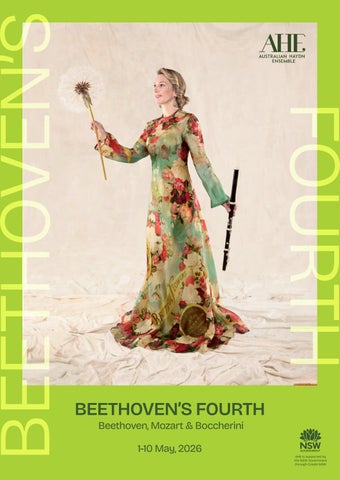
BEETHOVEN’S FOURTH
APRIL / MAY
DIVINE BOHEMIANS
JULY / AUGUST
1/2 “...ELEGANCE, INVENTION AND EMOTIONAL DEPTH.”
Limelight,2025
STATE LIBRARY OF NSW
SEPTEMBER
HAYDN’S OXFORD
OCTOBER / NOVEMBER
18TH CENTURY UNPACKED
PRE-CONCERT EVENTS
MOZART & HAYDN
MARCH
BOHEMIAN COMPOSERS IN VIENNA
JULY
HAYDN’S LONDON CONNECTION
OCTOBER
ARTISTS
Skye McIntosh, violin
Matthew Greco, violin
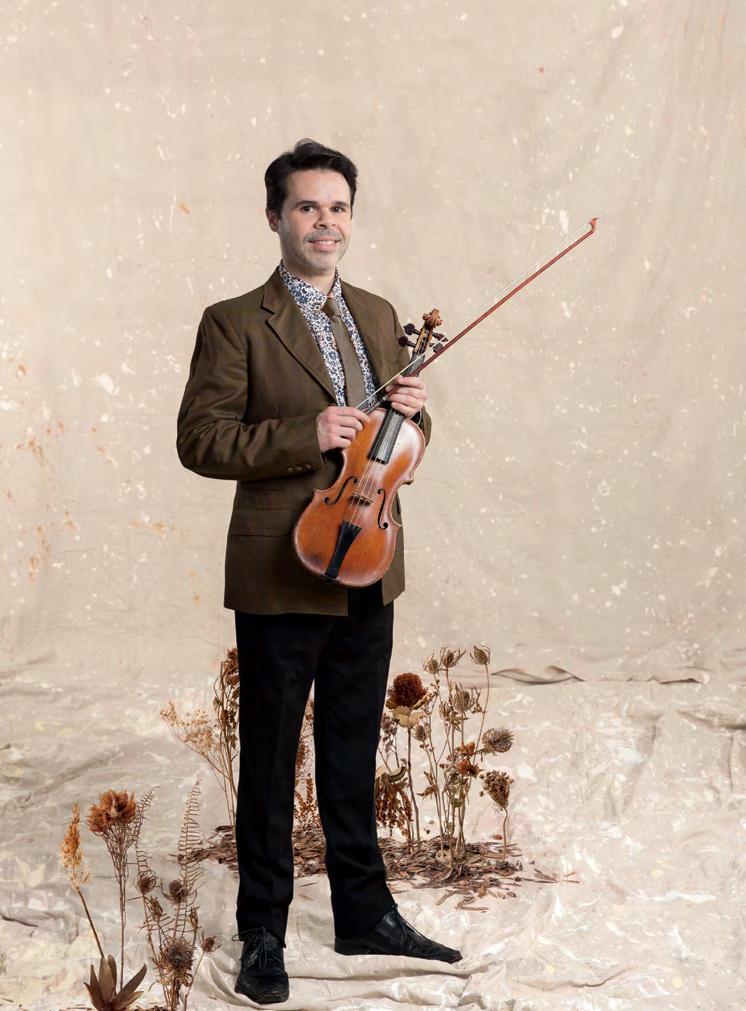
Rafael Font, viola
John Ma, viola
Daniel Yeadon, cello
Pippa MacMillan, double bass
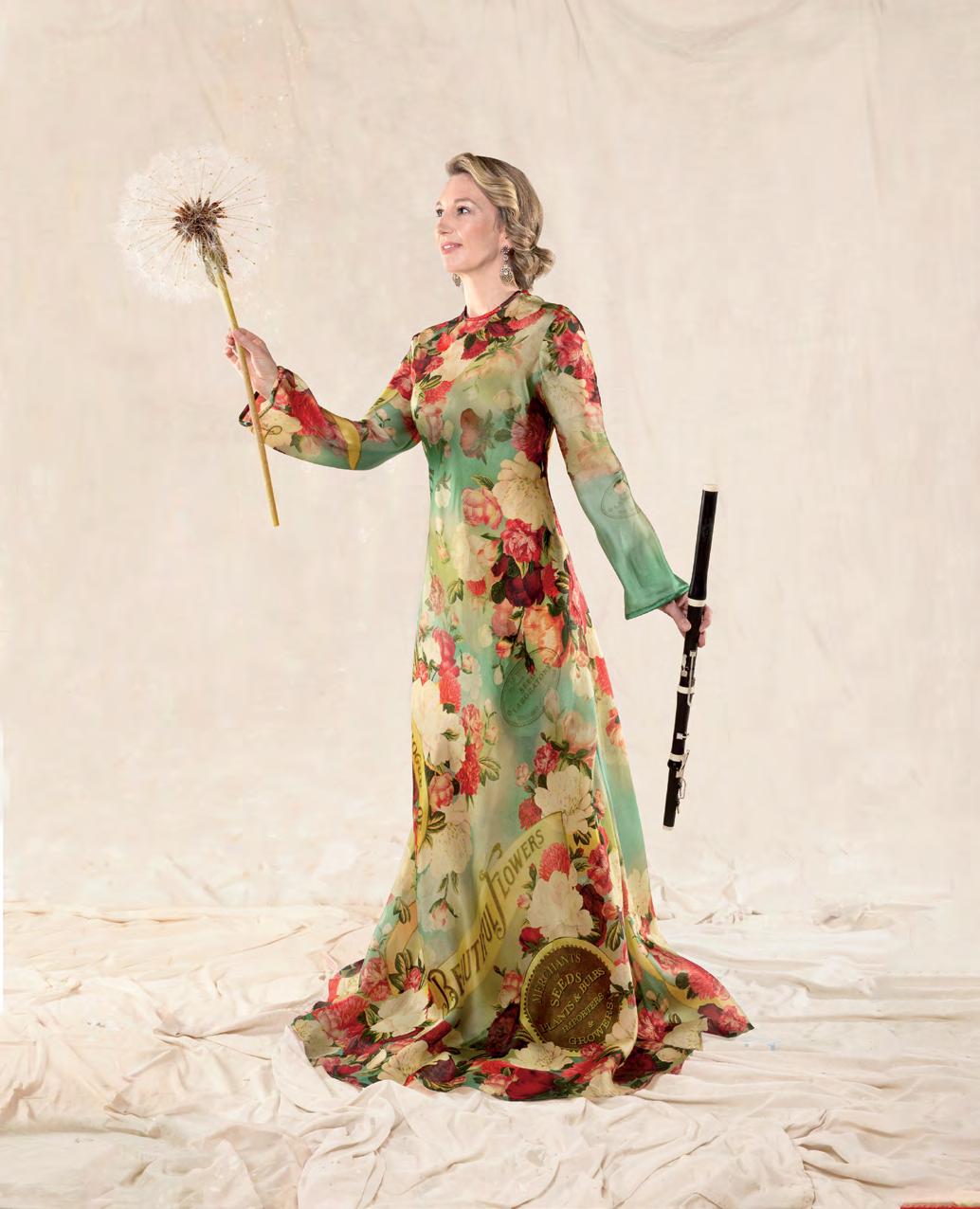
Melissa Farrow, flute
PROGRAM
BOCCHERINI
String Quintet in A minor Op. 25 No. 6
MOZART
Symphony No. 35 in D Haffner arr. Septet (Cimador)
Interval 20 mins
BEETHOVEN
Symphony No. 4 in B flat arr. Septet (Watts)
PERFORMANCES
BERRY
Friday 1 May, 7pm
Berry Uniting Church Hall
SOUTHERN HIGHLANDS
Saturday 2 May, 4pm Bowral Memorial Hall
SYDNEY
Sunday 3 May, 4pm The Neilsen ACO On The Pier
CANBERRA
Thurs 7 May, 7pm Gandel Hall, National Gallery of Australia
BATHURST
Sunday 10 May, 3pm
Bathurst Memorial Entertainment Centre
The concert duration is approximately 1 hr 50 mins
There’s something quietly exciting about the way music travelled in the late 18th and early 19th centuries. Before recordings, before radio, before any of the infrastructure we now take for granted, the primary way most people encountered orchestral music was not in a concert hall - it was at home, often a drawing room, played by various combinations of available musicians and instruments. They also might have heard a work for the first time at one of the many public chamber music concert series.
Beethoven had mixed feelings about chamber arrangements of his works. Apparently, some he loathed. But William Watt’s arrangements of his symphonies are of a high quality and show a deep respect and understanding of Beethoven’s craft. They were commissioned by the Philharmonic Society, who also commissioned Beethoven’s Ninth Symphony - so one can be led to believe that Beethoven might (hopefully!) have approved of these as well.
There was nothing second-rate about these arrangements or the so-called ‘amateur’ musicians who performed them as part of the Philharmonic Society’s concerts for the first time. They had to be both talented and highly experienced to play these works and the historical chamber arrangements of Beethoven and Mozart we now present to you.
At the time they were written, chamber arrangements of symphonies were neither a compromise nor a curiosity: they were simply how the music circulated. The Spotify of their age, they were made precisely to bring this still-unfamiliar, almost dauntingly brilliant music within reach of audiences.
William Watts’s arrangement of Beethoven’s fourth symphony, along with his similar arrangements of the fifth and sixth, was dedicated to the Duke of Cambridge and available for purchase on New Bond Street - definitely the high-end option. Watts also made arrangements for the piano, which capture the essence of the works equally well. Meanwhile, Cimador’s arrangement of Mozart’s Haffner symphony arrives full of celebration and barely-contained energy. All these arrangements offer renewed clarity and insights.
We have explored these demanding works in these historical chamber arrangements over time and found them a joy to play. Our audiences have often commented that hearing them in this way has been a revelation to them as well. We hope you will relish this experience of what it might have felt like to encounter this incredible music for the very first time.
Thank you for joining us!
— Skye McIntosh Artistic Director & Violin
The Australian Haydn Ensemble (AHE) was founded in 2012 by Artistic Director and Principal Violinist Skye McIntosh and is now in its fifteenth year. AHE has established itself as one of Australia’s leading periodinstrument groups, specialising in the repertoire of the late Baroque and early Classical eras. It takes its name from the great Joseph Haydn, a leading composer of the late 18th century.
AHE’s flexibility and inventiveness are inspired by Haydn’s fabled originality and the virtuosic musicians he worked with at the court of Esterházy for almost 30 years. It performs in a variety of sizes and combinations, ranging from quartet, quintet or septet, to chamber orchestra with special guest soloists to a full orchestra with choir.
The Ensemble has developed a flourishing regular series in Sydney, performing at the City Recital Hall, ACO On The Pier, and the Utzon Room, Sydney Opera House; in Canberra, at the National Gallery of Australia. AHE also performs
throughout regional NSW and presents education workshops to students of all ages, focusing on imparting 18th-century historical performance techniques.
AHE is particularly interested in presenting unusual programs of 18th-century chamber versions of works by Haydn, Mozart and Beethoven, as well as presenting the music of emerging composers and lesser-known composers, such as Boccherini, Wranitzky and Mysliveček.
To commemorate its 10th anniversary, the Ensemble recorded its third CD, entitled The Mozart Album, released in 2024. In October 2023 AHE undertook its first international tour of the United States, including performances at Carnegie Hall and at the opening of the new Australian Embassy in Washington DC, garnering full houses, standing ovations and glowing reviews. The Ensemble is delighted to be presenting its first subscription season at the Melbourne Recital Centre in 2026.
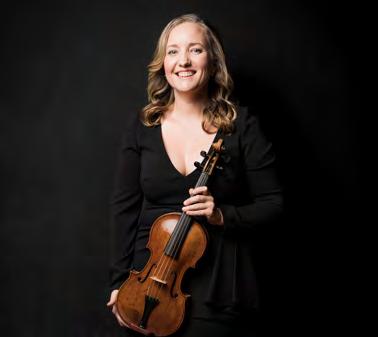
Skye McIntosh violin
______
Skye is the founder and Artistic Director of the Australian Haydn Ensemble, now in its fifteenth year. This audacious undertaking is a testament to Skye’s musicianship and entrepreneurial spirit. AHE, known for its innovative and ambitious programming, was delighted to perform at the Adelaide Festival in 2022 and Canberra International Music Festival in 2022 and 2023, as well as continuing to tour to Canberra and across regional New South Wales each year.
Skye attended the Royal Academy of Music in London, the Queensland Conservatorium and the Sydney Conservatorium of Music, has made numerous concert appearances as soloist and director, and led the AHE on its first tour to the US in 2023, including a performance at Carnegie Hall. She has also toured nationally with the Australian Brandenburg Orchestra, as well as performing with the Orchestra of the Antipodes (Pinchgut Opera) and the Australian Romantic & Classical Orchestra. In 2024 ABC Classics released AHE’s third CD, featuring Skye performing Mozart’s Violin Concerto in G major.
Skye is playing a violin by Tomaso Eberle, 1770, Naples
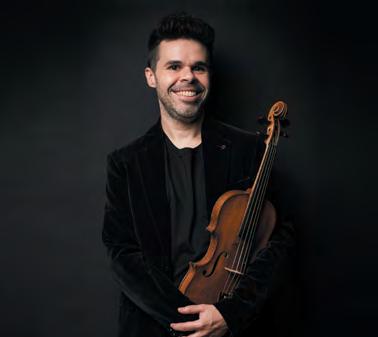
______ Matthew Greco violin 2
Matthew is a concertmaster, soloist and core member of some of the world’s leading period instrument ensembles. He has been a regular member of the Australian Brandenburg Orchestra and concertmaster of the Orchestra of the Antipodes (Pinchgut Opera) since 2006. In 2010 he moved to The Netherlands where he studied Baroque violin at The Royal Conservatoire of The Hague and worked with leading European ensembles including De Nederlandse Bachvereniging and Les Talens Lyriques (France). He is a founding member of the Sydney-based ensemble The Muffat Collective. Matthew enjoys teaching baroque violin at the Sydney Conservatorium of Music as well as performing with a variety of international ensembles and festivals in Australia and Europe. Committed to producing a unique and individual sound based on historical performance practices, Matthew believes that 17th- and 18th-century music is full of vitality and emotions that speak to us now, as much as they did in the past.
Matthew is playing a violin by David Christian Hopf, 1760, Quittenbach
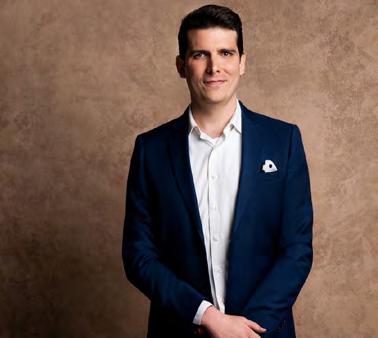
______ Rafael Font viola
Rafael Font is a violinist and violist specialising in historically informed performance (HIP) of music from the baroque to the romantic periods, and is highly acclaimed for his virtuosity and improvisational skills.
Rafael started learning the violin at the age of five in his hometown of Caracas, Venezuela, with advanced studies at the Guildhall School of Music and Drama in London and the Royal Conservatoire of The Hague.
Now based in Sydney, Rafael regularly performs with many of the leading HIP ensembles in Australia, such as the Australian Haydn Ensemble, the Australian Brandenburg Orchestra, the Australian Romantic & Classical Orchestra and Bach Akademie Australia. Rafael is also a founding member of the chamber ensemble The Muffat Collective.
______
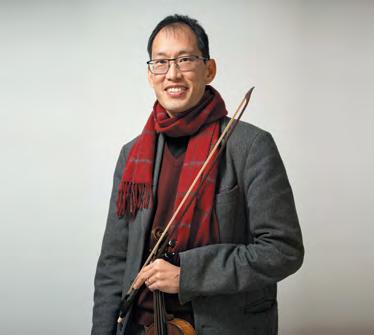
John Ma viola
John Ma is a violinist, violist and viola d’amore player based in Canberra, specialising in Early Music. He appears regularly with groups such as Orchestra of the Antipodes (Pinchgut Opera), Australian Brandenburg Orchestra, Australian Romantic and Classical Orchestra, Salut! Baroque, Canberra Symphony Orchestra, and Sinfonia Australis.

Rafael is playing a viola by Simon Brown, 2010, Sydney
He has performed with groups around the world including Amsterdam Baroque Orchestra (NL), Orchestra of the Age of Enlightenment (UK), Academia Montis Regalis (IT), Bach Collegium Japan (JP), B’Rock (BG), Musica Poetica (NL), Collegium 1704 (CZ), Fantasticus (NL), New Collegium (NL), Helsinki Baroque Orchestra (FIN), Orkest Nord (NOR), and Apollo Ensemble (NL). John is on staff at the Australian National University (ANU), where he teaches the Early Music Ensemble, and is a co-founder of Apeiron Baroque in the ACT.
John is playing a viola by Simon Brown, 2000, Sydney
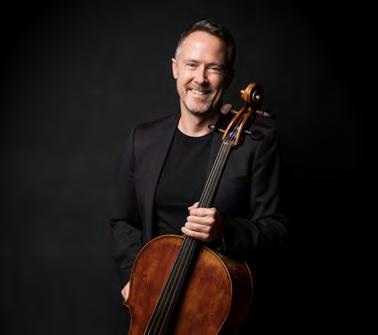
______ Daniel Yeadon cello*
Dr Daniel Yeadon is a Senior Lecturer at the Sydney Conservatorium of Music, University of Sydney, where he coordinates the Masters Performance program, teaches cello and viola da gamba, and coaches chamber music. Daniel also engages in research into learning, teaching and historical performance practices. Originally from the UK, Daniel read physics at Oxford University and then completed his postgraduate studies at the Royal College of Music in London.
Daniel has a love for a wide range of musical genres and is an exceptionally versatile cellist and viola da gamba player, performing repertoire from the Renaissance through to Contemporary. Daniel is a passionate chamber musician, playing regularly with Australian Haydn Ensemble, Ironwood, Australian Romantic & Classical Orchestra, and Bach Akademie Australia. For many years Daniel was a member of the renowned Fitzwilliam String Quartet and the exuberant period instrument ensemble Florilegium. He has made many award-winning recordings.
Daniel is playing a cello by William Forster II, 1781, London
*Dr Daniel Yeadon appears courtesy of the Sydney Conservatorium of Music
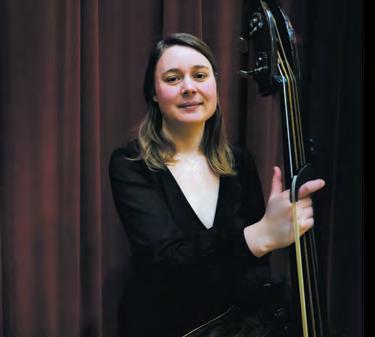
______Pippa Macmillan Double Bass
Pippa Macmillan is a renowned specialist of historical bass instruments. After three years as a core member of Tafelmusik Baroque Orchestra, she moved to Australia in 2022 and performs regularly with Australian Brandenburg Orchestra, Orchestra of the Antipodes (Pinchgut Opera), Australian Romantic and Classical Orchestra, and Australian Haydn Ensemble. As the first undergraduate of the Royal Academy of Music, London, to specialise in Baroque Double Bass, she went on to complete a Masters in Historical Performance at The Juilliard School, New York. Between 2015 and 2019 she was Professor of Baroque Double Bass at the Royal College of Music, London.
In her native UK, she has performed regularly with The English Concert, the Orchestra of the Age of Enlightenment, Orchestre Révolutionnaire et Romantique, English Baroque Soloists, Academy of Ancient Music, and Florilegium. In 2015 she appeared in London’s West End in the Globe Theatre’s production of Farinelli and the King , as well as in the play’s Broadway transfer in 2017. Pippa is playing a bass by Unknown, mid-18th century, Italy
______
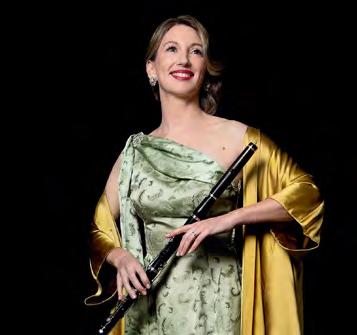
Melissa Farrow flute**
Melissa has been Principal Flute with the Australian Brandenburg Orchestra since 2003, and a core member of the Australian Haydn Ensemble since its formation. She performs and records regularly with groups including the Orchestra of the Antipodes (Pinchgut Opera), the Australian Chamber Orchestra, the Australian Romantic & Classical Orchestra, Ironwood, The Marais Project and Latitude 37 among others. Her numerous solo performances have been with the AHE, NZ Barok, the Australian Brandenburg Orchestra, and Pinchgut Opera. She is featured as concerto soloist in AHE’s digital film
Sacro Amor , Gretry’s L’ament jaloux for Pinchgut Opera, and in the Australian Brandenburg Orchestra’s Brandenburg Celebrates.
After graduating from the Sydney Conservatorium, Melissa undertook post-graduate study in modern flute, recorder, and traverso in Amsterdam. She teaches period flute at the Sydney Conservatorium and is a tutor for educational programs and workshops including ABO Mentorship Program, AHE Spring Academy, Adelaide Baroque, ARCO and Apeiron Baroque, and in 2025 was a guest artist with the Australian Flute Festival.
Melissa is playing a flute by M. Wenner, 2008, Singen, after A. Grenser, c.1790, Dresden
**Melissa Farrow appears courtesy of the Australian Brandenburg Orchestra.
“Sublime music beautifully performed!”
Sydney
“Dynamic playing, beautiful ensemble” Canberra, ACT
“High quality performances and great programs” Southern Highlands “Exciting, innovative, brave, refreshing and wonderfully musical.” Sydney
“AHE shows an exceptional commitment to their craft & showcasing inspiring music. It is wonderful that they are bringing this high standard to smaller rural areas.” Berry
Luigi Boccherini (1743-1805)
String Quintet in A minor, Op. 25 No. 6
Allegro non molto
Minuetto e Trio
Largo cantabile
Allegro giusto
Born in Lucca near Florence, Luigi Boccherini was one of the classical era’s great all-rounders: a virtuoso cellist, a skilled teacher and composer of symphonies, concertos and countless smaller works. He travelled first to Vienna (and later to Paris) as a performer and composer, settling in Madrid in 1768, where he spent much of the rest of his career under the patronage of various members of the Spanish royal family, and later (in a form of classical-era remote working) the cello-playing King Friedrich Wilhelm II of Prussia. But he remained based in Madrid for the rest of his life, performing and composing until the last.
Understandably enough, string chamber music in all its forms simply flooded from Boccherini’s quill: nearly 100 string quartets as well as 70-plus string trios, and quintets with flute, guitar, piano and second cello (a form he made his own, with more than 140 examples). To the modern ear, Boccherini’s musical language is reminiscent of his more familiar contemporaries Mozart and Haydn (both of whom admired him). But to listeners in his own age, his expressive warmth and lyrical gift gave him a sound that was all his own – one that was, to the 18th-century ear, distinctly feminine. For that reason alone, music lovers across Europe (and his music really did travel) nicknamed Boccherini “the wife of Haydn”.
Boccherini had trained in the instrumental tradition of Corelli, and he had an irrepressible lyrical
impulse - even today, there’s something operatic about the singing melodies and swirling, rococo ornamentation that are such a feature of his music. That goes double in his cello quintets, works designed to let the first cello (and there’s every reason to suppose that Boccherini played that part himself) sing and preen as brilliantly as any violin. His six quintets Op. 25 were composed in 1778, though this final work in the set would not be published until 1813.
It’s hard to see why: with its urgent, bittersweet outer movements framing a graceful central Minuet and Largo cantabile , it’s intensely characterful – a feisty, Mediterranean-flavoured product of the brief Europe-wide outburst of intense emotion that we now call sturm und drang (“Storm and Stress”). A virtuoso player himself, Boccherini understood the colour and power that even five instruments could generate – from the castanet-like clatter of bow on wood, to the flashing - almost Vivaldi-like – brilliance of a rapid-fire finale. You can take the composer out of Italy…
Pocket Symphonies –an explanation…
If you’ve been to our concerts before, you won’t be surprised to find the Australian Haydn Ensemble playing miniaturised versions of classical symphonies. If you haven’t…well, allow us to explain. In the era before recorded sound, and unless you lived near a major city, opportunities to hear music played by a full orchestra might come around only a few times in a decade. Orchestral works circulated primarily through arrangements for smaller groups and solo instruments: piano, wind octet, string quartet, trio - any sort

of ensemble, in short, that you could pull together at home from friends and family.
It was a booming market. Piracy was rife, but most composers (if they had any head for business) knew that this was a vital means of promoting their large-scale music. Beethoven himself made several scaled-down arrangements of his own works, and authorised countless others. Mozart’s only regret, when another composer made a chamber arrangement of hits from his opera Don Giovanni, was that he hadn’t done so (and banked the profits) himself.
musicians of the King’s Theatre, Haymarket had refused to play Mozart’s symphonies – they were apparently too difficult. And so, “he arranged six of them as sestets [sic] for strings and flute. The work was well done, and the symphonies first made known in this form speedily took their proper place with the public”.
But why play them today, when a thousand recorded versions of these masterpieces are ours to enjoy at the click of an app? For one thing, they’re a refresher course for the ears. For another, they’re a glimpse into a vanished world. Without taking anything away from the orchestral originals, they offer a delightfully vivid opportunity to hear this music in the way that many (probably most) of its contemporaries would first have encountered it. And while they’re very demanding to play, we’ve been delighted to know our audiences enjoy them as much as we do. Great music really can come in small packages.
Wolfgang Amadeus Mozart (17561791), arr. G. Cimador
Symphony No. 35 in D K. 385 Haffner
The world of 18th-century music moved quickly, and without much regard for national boundaries. Mozart never made it to London but the Venetian composer and multi-instrumentalist Giambattista Cimador (1761-1808) certainly did. Arriving in Britain in 1791 as a singing teacher he was outraged (or so the 19th-century scholar Mary Catherine Hamilton tells us) to hear that the
Cimador was an eminently practical musician: a skilled string player, he was well aware that the flute – cheap, portable and (by the standards of the time) relatively easy to play - was probably the single most popular instrument with amateur musicians in the late 18th century. Its presence was certain to increase the popularity of his Mozart arrangements, as well as adding a splash of colour, even if the arrangement as a whole could only hint at the wondrous light and shade of Mozart’s orchestral woodwinds. Still, it offered an accessible path into what was still strange and ultramodern music.
And Mozart himself had willingly adapted his Haffner symphony as needs required. It was originally composed in huge haste (“I’ll have to work through the night!” he told his father Leopold) for the prosperous Haffner family of Salzburg in July 1782 (their son had been ennobled), and despatched in instalments by post from Mozart’s rented flat in Vienna. By the time it emerged as the symphony we know today, in February 1783, it had undergone substantial rewrites. Still, it’s unmistakably a work of celebration. The flamboyant opening sets the tone for a bravura first movement – to be played (said Mozart) “with great fire”.
The Andante provides a moment of graceful reflection amidst the glittering ceremonial of this grand
civic occasion. A stately Menuetto yields to a gently swaying central trio section (Salzburgers loved their dance tunes). And to launch his finale, Mozart recycles Osmin’s bombastic aria from his recent hit
Die Entführung aus dem Serail –“Oh! How I shall triumph”. Mozart insisted that it should be played “as fast as possible!”
Ludwig van Beethoven (1770-1827), arr. W. Watts
Symphony No. 4 in B flat, Op. 60
Adagio – Allegro vivace
Adagio
Allegro vivace
Allegro ma non troppo
Cimador knew what he was doing when he moved to London. The city was filled with music-lovers, both amateur and professional, and its Philharmonic Society presented regular orchestral concerts, The secretary of the Society, the violinist William Watts, was himself an enthusiastic arranger of orchestral music for smaller combinations. Watts made piano versions of Beethoven’s symphonies and Leonora Overture No. 3, and threw in optional extra parts for flute, violin and cello – “well adapted for drawing room concerts”, commented the newspaper The Atlas.
But the deluxe option – and surely the highlight of any Regencyera soirée – was one of Watts’ arrangements of Beethoven’s Fourth, Fifth or Sixth symphonies for string sextet (with the option of double bass instead of second cello) plus flute. Dating from around 1810, and dedicated to the Duke of Cambridge, these arrangements were initially performed at the Philharmonic Society’s concerts. But they could be purchased by any adventurous
amateur musician from the New Bond Street shop of Mori & Lavenu. So, if you bought the printed parts and could muster the necessary performers, there was no reason why you couldn’t create a very passable representation of Beethoven’s Fourth Symphony of 1807 for your friends and family. What a night that would have made! The symphony is charged with energy from the very opening –the background rhythm of the spacious, deceptively sombre Adagio introduction ticking away like a timer - before two mighty flourishes herald an Allegro melody that seems to rev its engine, pull back, and then rocket forward with unstoppable velocity.
What follows is pure exhilaration, and the same restlessness is present in the opening bars of the second movement Adagio too, jerkily ticking away even as Beethoven unfolds one of his warmest and most songful slow movements. Only Beethoven’s buccaneering cross-rhythms and mysterious harmonic sideslips keep that unstoppable energy in check in the Allegro vivace third movement (huge vistas quietly open up in its serene central section). And then in the finale the whirlwind rushes quietly up out of nowhere and swells into a rollicking, racing moto perpetuo in which Beethoven takes the knockabout wit of his old master, Haydn and magnifies it to explosive proportions. The electricity that drives the whole symphony finally discharges its way to earth: the ending comes with a final sly joke and a bravura flourish. Pure sunlight.
Richard Bratby

It’s not solely about historical accuracy. It’s about bringing the music to life in a way that the composers would have heard it and giving old music a fresh, vibrant feel today. It adds colour and vitality.
One of the key things to know about AHE is that we play on period instruments or accurate replicas from the time the music was composed.
___So, what does that mean exactly?
It means that when we perform works by Haydn or Mozart, we use instruments and techniques from the mid to late 18th century that Haydn and Mozart would have known.
For baroque music, by composers like Vivaldi, we switch to instruments set up as they would have been in the earlier part of the 18th century, which means using baroque bows. And when we play Beethoven, we adjust our instruments to match those from the early 19th century.
___Why do we do this?
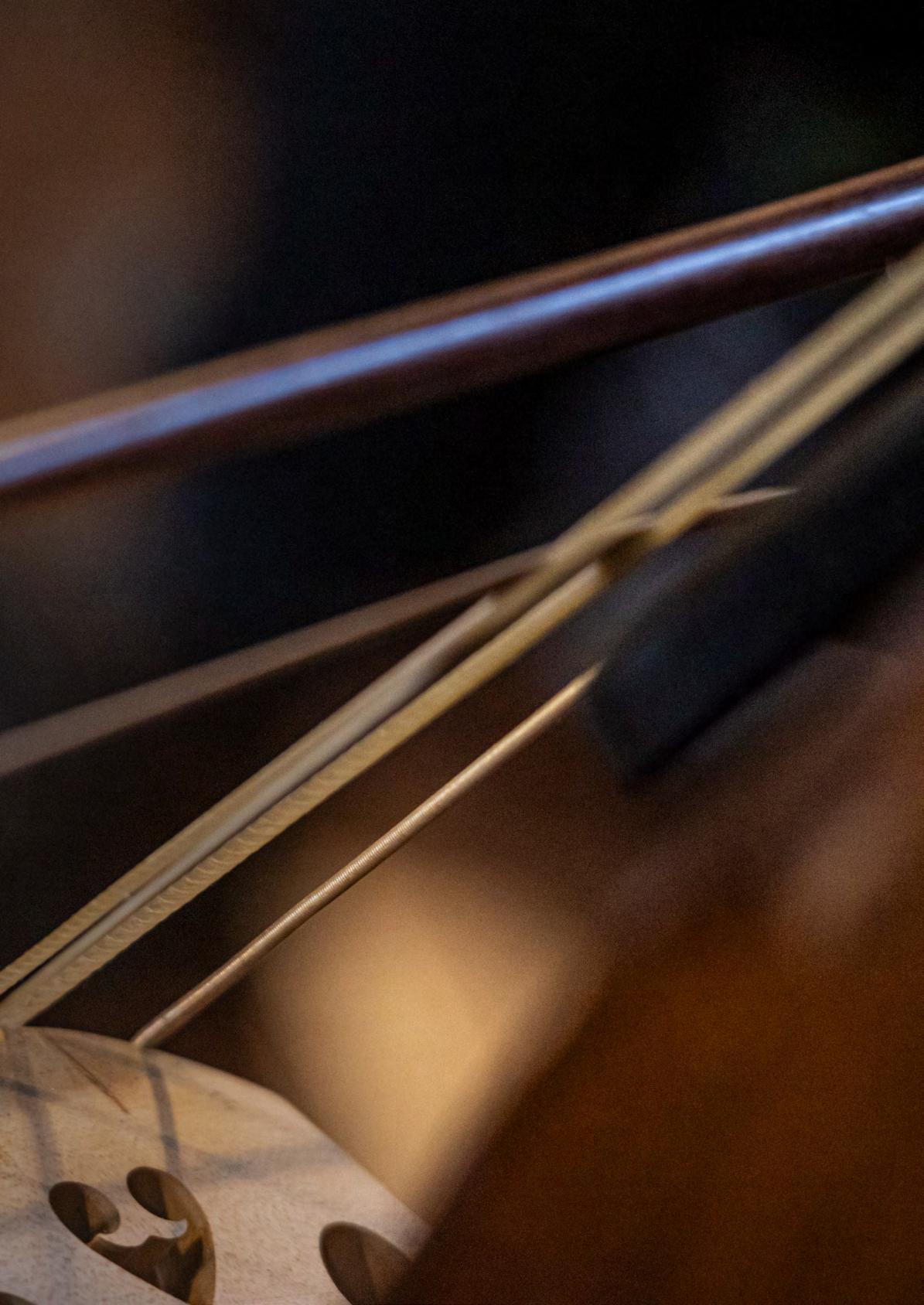
There are significant differences between period instruments and modern ones. For instance; our strings are made of sheep gut instead of metal; our brass instruments often lack the valves found on their modern counterparts; and our wind instruments are often made of wood rather than metal. All these elements change the colour and tone of the sound significantly. This approach helps recreate the original listening experience of that time.
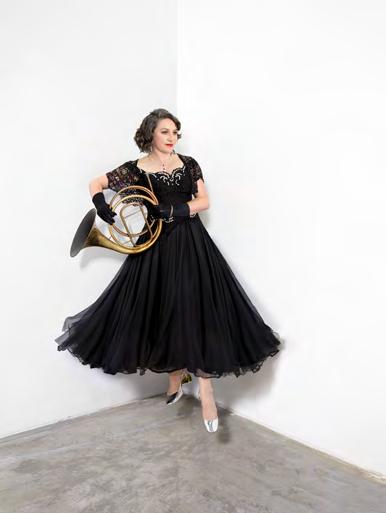
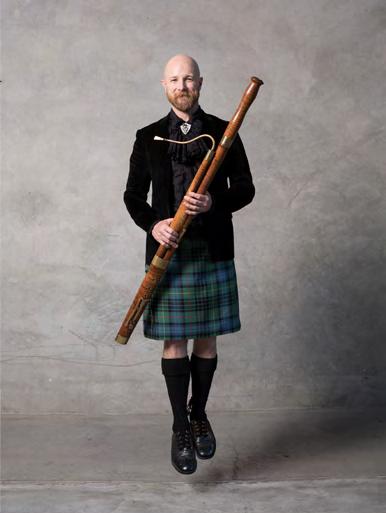
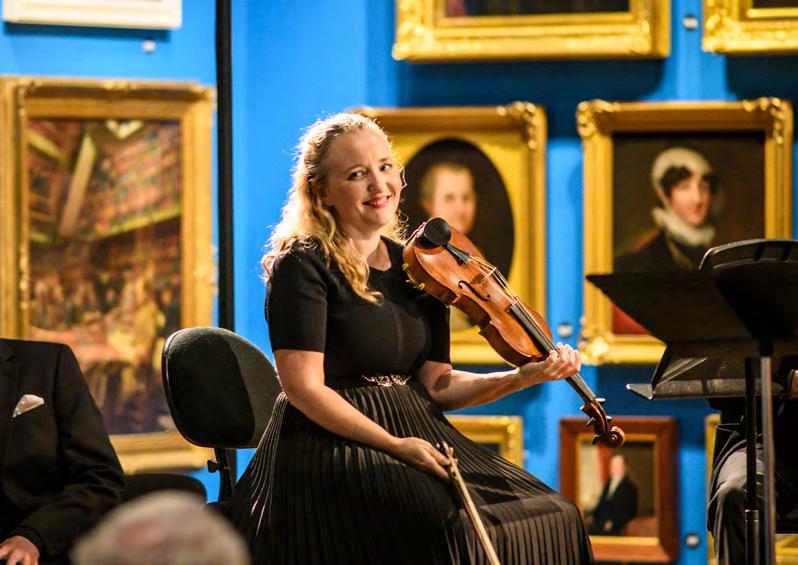
Since the very beginning AHE has been strongly committed to bringing beautiful music to the regions of New South Wales and beyond.
And we can’t do it the way we do it without you! Your support is vital and all gifts are very much appreciated.
You can even make a recurring gift over 12 months, and any amount over $2 is tax deductible.
Thank you!
Skye McIntosh Artistic Director

WAYS TO DONATE__
Online: use the QR code
• Online: go to australianhaydn.com.au/donate
• Call us on 1800 334 388
Our patrons enable us to continue presenting wonderful concerts, and we could not do what we do without them - we are so grateful to them all.
AHE donor categories are named after famous 18th-century patrons who supported and commissioned many of the works of Haydn, Mozart, Beethoven and others that we are re-discovering today.
About our Patron Categories
Maria Theresa
The Queen was a patron of Viennese music, and Haydn wrote his Te Deum at her request.
Esterházy
Prince Esterházy was the main patron of Haydn.
Waldstein
Count Waldstein was an early patron of Beethoven.
Van Swieten
He was a keen amateur musician and patron of Haydn, Mozart, and Beethoven
Galitzin
He was an amateur musician and is known particularly for commissioning three Beethoven string quartets
Op. 127, 130 and 132.
Lobkowitz
He was a Bohemian aristocrat and a patron of Beethoven.
Razumovsky
He commissioned Beethoven’s Op. 59 String Quartets.
Patron
Her Excellency the Honourable
Margaret Beazley AC KC
Governor of New South Wales
Founding Patron
The Late Dr Timothy Pascoe AM
Musicians Chair
Skye McIntosh, Artistic Director & Leader’s Chair
Supported by Mrs W.G. Keighley
The Chair’s Circle
The Chair’s Circle is a group of dedicated supporters who have made a multi-year commitment to supporting the long-term vision of the Australian Haydn Ensemble.
APS Foundation
Marco Belgiorno-Zegna AM & Angela Belgiorno-Zegna
Sherry and the late Tom Gregory
Karin Keighley
Peter & Lisa Macqueen
Kevin McCann AO & Deidre McCann
Ian & Pam McGaw
Anthony Strachan
Peter Young AM & Susan Young
Anonymous (1)
The Artistic Directors Circle is a group of passionate supporters who have made a commitment to supporting the education program of the Australian Haydn Ensemble and the vision of the Artistic Director
Carolyn Fletcher AM
Adrian Maroya
Jon & Susanne North
Peter & Vivienne Skinner
Maria Theresa $25,000
Sherry & the late Tom Gregory Howarth Foundation
Karin Keighley
Kevin McCann AO & Deidre
McCann
The McLean Foundation Anonymous (1)
Esterházy $15,000 - $24,999
—
Coles Danziger Foundation
David & Anne Eustace Foundation
Peter & Lisa Macqueen
Anthony Strachan
Peter Young AM & Susan Young
Waldstein $10,000 - $14,999 —
APS Foundation
Marco Belgiorno-Zegna AM & Angela Belgiorno-Zegna
Carolyn Fletcher AM Ian & Pam McGaw
Van Swieten $5,000 - $9,999
—
Martin & Ursula Armstrong
Jeremy Eccles FRSN & Kate
Eccles OAM
Richard Fisher AM & Diana Fisher
Reg & Kathie Grinberg
Adrian Maroya
Jon & Susanne North
Peter & Vivienne Skinner
In memory of Tom Gregory & Timothy Pascoe
Galitzin $1,000 - $4,999
Antoinette Albert
James Ashburner
Mark Bethwaite AM & Jill Bethwaite
Clive Birch
Keith & Louise Brodie
Dr Andrew Byrne & Allan Gill
Jason Catlett
Chapman Eastway Charitable Foundation
George H. Clark
Robert & Carmel Clark
Dr Terry & Julie Clarke
Jean Cockayne
Christine Cooper
Peter & Prudence Davenport
Rob Diamond
Dr Meredith Edwards
David, Katrina & Madeline Evans
Ralph Evans AO & Maria Evans
John Fairfax AO & Libby Fairfax
Dr Marguerite Foxon
Bunny Gardiner-Hill
Prof Pru Goward AO
Sharon Green
James Hardigg
The Hon Don Harwin
Ann Hoban
Sarah de Jong
David Kent OAM & Angela Kent
Celia Lillywhite
David Maloney AM & Erin Flaherty Jeremy Morris & Kate Guilfoyle
Trevor Parkin
Nick Payne
David & Elizabeth Platt
Kay Vernon
The Hon. Anthony Whealy K.C. & Annie Whealy
David Whitehouse
Anonymous (6)
Lobkowitz $500 - $999
Priscilla Adey
Mary Ashton
Jock Baird
Tony Barnett
Lloyd Capps & Mary Jo Capps AM
Dr Michael & the late Dr Colleen Chesterman
Richard & Cynthia Coleman
Stuart & Felicity Coughlan
Dr
Anonymous (4)
Razumovsky $250 - $499
Ann Armstrong
Wayne Arthur
Patrick Batho MBE & Janet Batho
Richard Bloor
Jeffrey Bridger
Wendy Cobcroft
Michael Fong
Stephen & Jillian Goggs
Paul Hopmeier & Janice King
Diana MacDonell
Heather Nash
Henry O’Connor
Dr Richard Sippe
Jeremy Wainwright
Alicia Williams
Anonymous (3)
Foundations
APS Foundation
Chapman Eastway Charitable Foundation
Coles Danziger Foundation
David & Anne Eustace Foundation
Howarth Foundation
Jibb foundation
Key Foundation
Sinsay Pty Ltd
Stoneglen Foundation
The McLean Foundation
This listing is correct as of 21 April 2026, and we gratefully recognise all donations received since 1 January 2025.


Board —
Kevin McCann AO (Chair)
Carolyn Fletcher AM (Deputy Chair)
Adrian Maroya
Skye McIntosh (Artistic Director)
Jon North
Vivienne Skinner
Peter Young AM
Marco Belgiorno-Zegna AM (Emeritus Chair)
The Australian Haydn Ensemble acknowledges the traditional custodians of the lands on which we perform. We pay our respects to Elders past and present. The Australian Haydn Ensemble is a not-for-profit organisation
ABN 26 202 621 166
PO Box 400
Strawberry Hills NSW 2012 1800 334 388 (Freecall) | australianhaydn.com.au

Behind the Scenes —
Skye McIntosh
Artistic Director & CEO
Ailsa Veiszadeh
Administrator
Alison Dunn
Marketing & Communications
Roderick van Gelder
Production Manager & Lighting Design
Marguerite Foxon
Front of House & Administration*
*In Kind Support
In Kind—
John Dearn, Canberra
Jean Gifford, Canberra
Greg & Wendy See, Berry
Stuart & Felicity Coughlan, Berry
Steve & Mary Beare, Berry
Keith & Louise Brodie, Berry
Rob & Antoinette Sampson, Bowral
Images—
Images throughout by Helen White, except page 6 & 7:James Mills, supplied; Page 7 Martin Ollman; Page 15 (background) & Page 17 Oliver Miller.