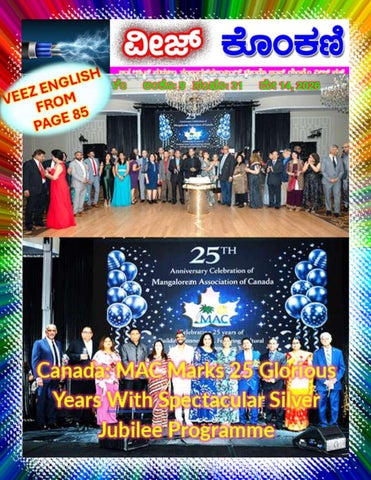
Canada: MAC Marks 25 Glorious Years With Spectacular Silver Jubilee Programme
Canada: MAC marks 25 glorious years with spectacular Silver Jubilee programme
Pics:JersonMarques
MediaRelease
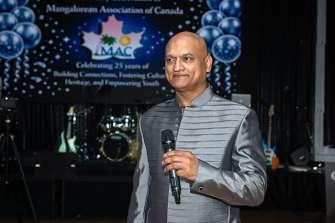
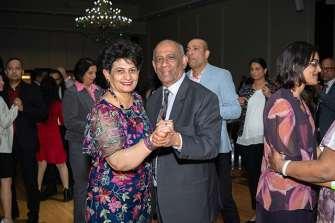
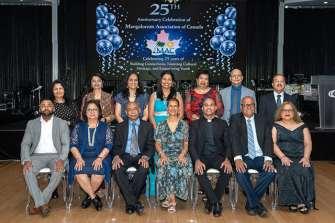
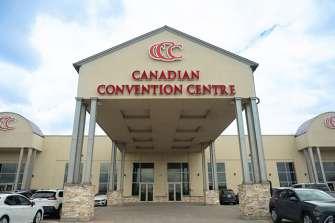
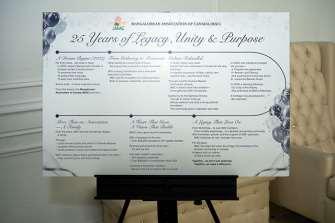
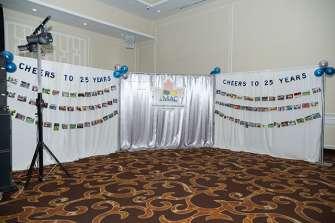
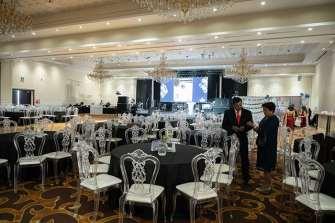
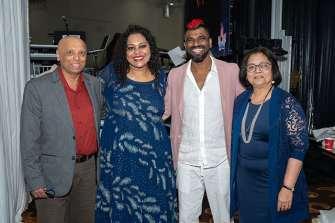
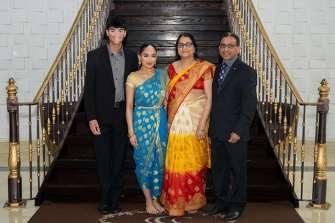
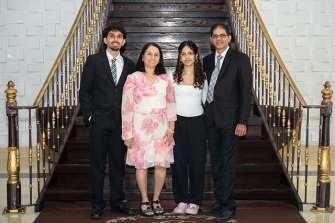
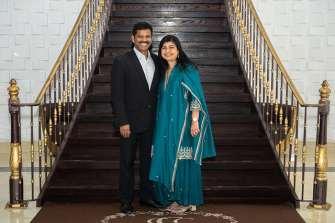
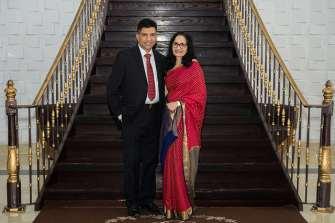
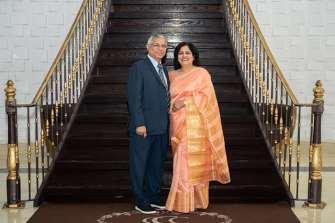
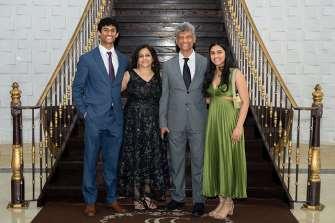
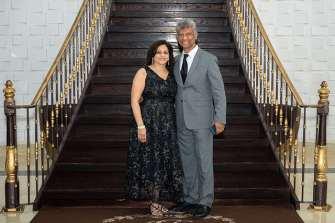
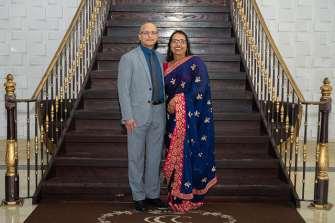
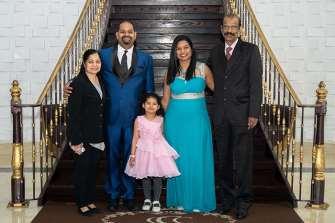
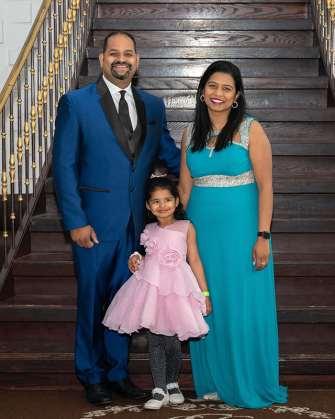
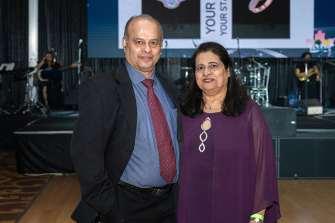
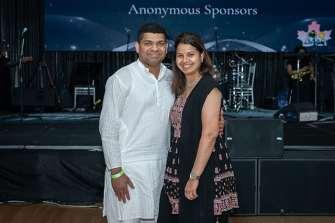
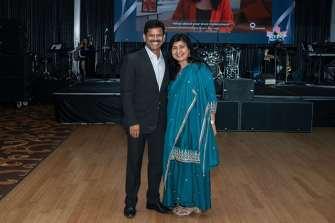
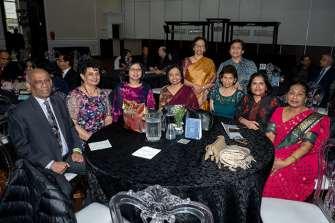
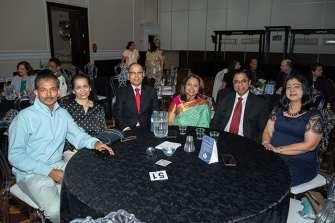
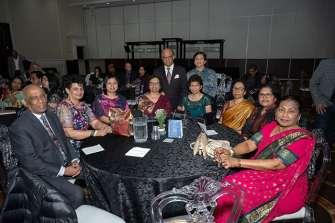
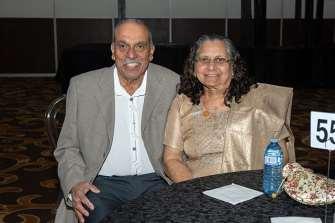
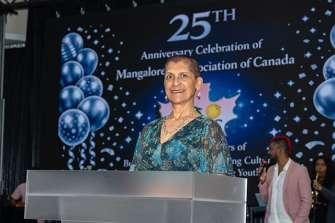
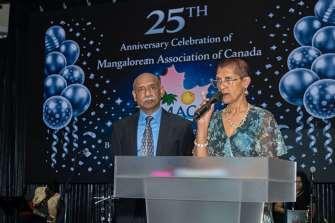
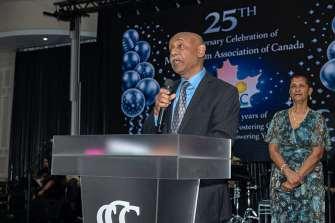
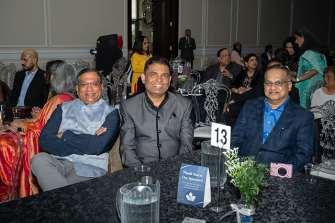
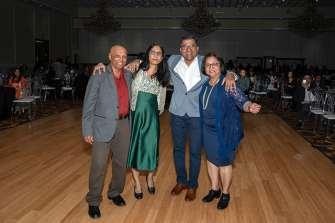
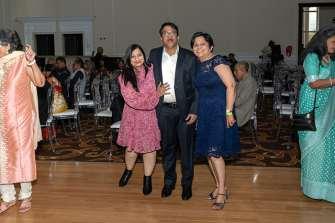
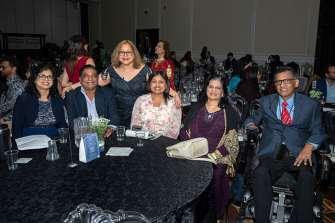
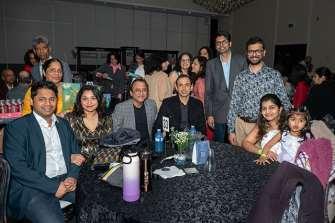
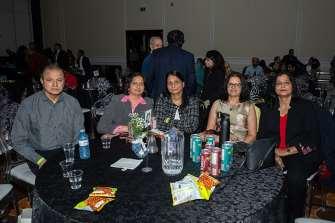
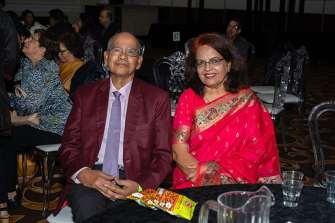
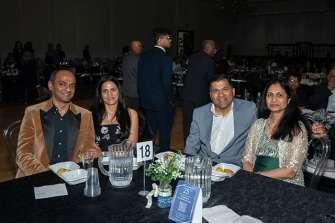
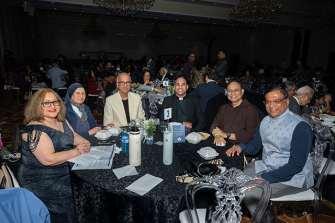
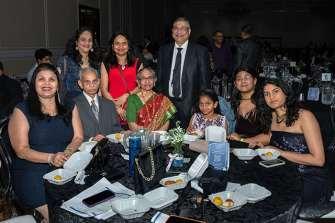
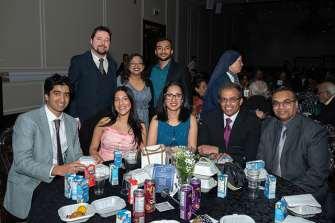
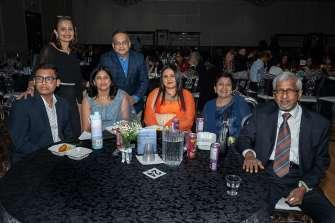
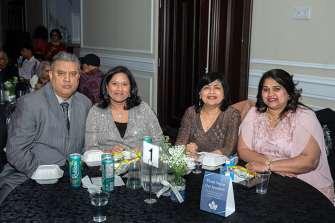
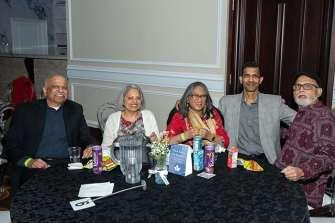
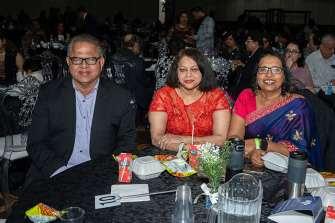
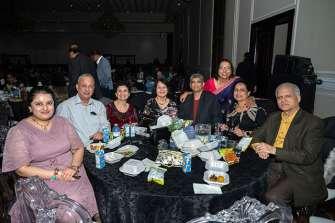
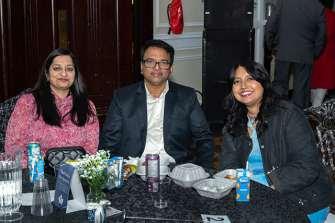
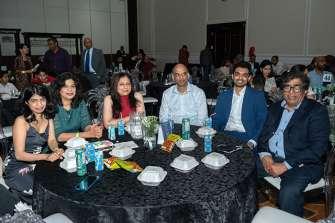
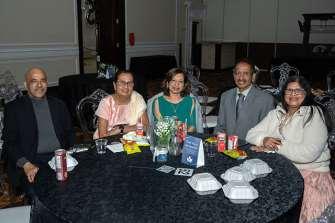
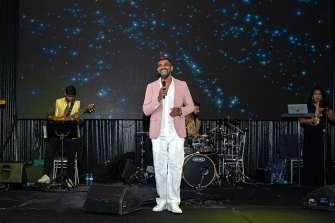
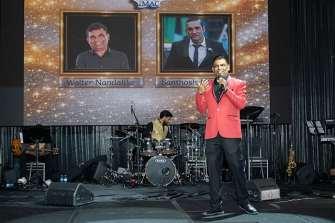
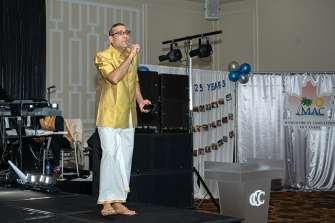
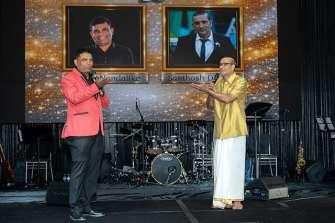
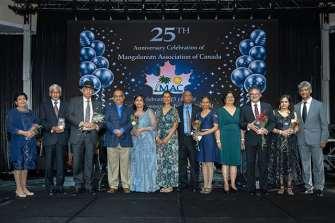
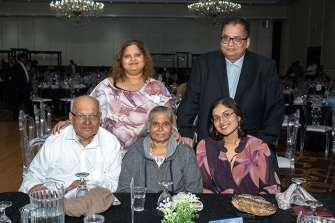
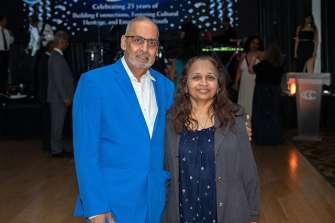
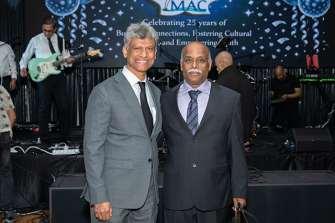
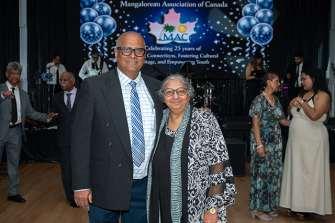
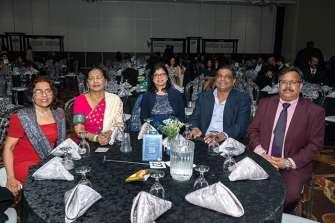
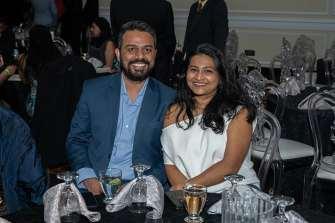
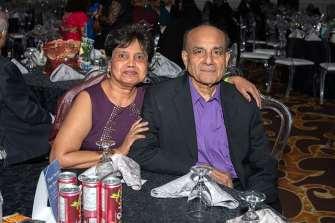
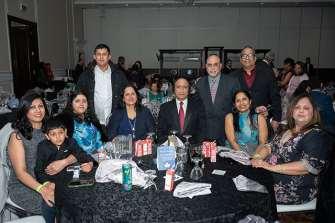
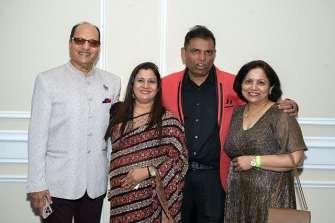
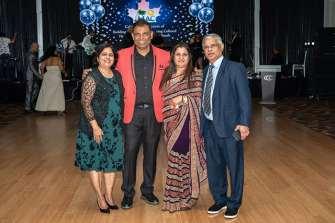
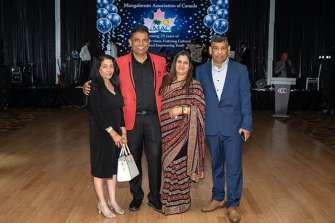
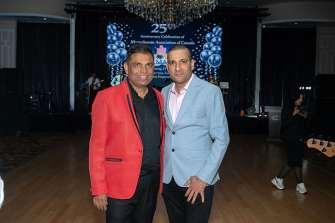
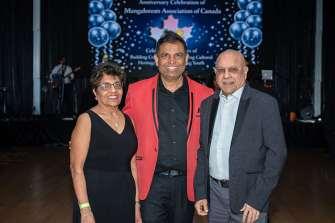
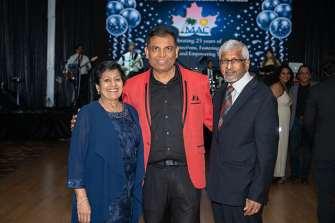
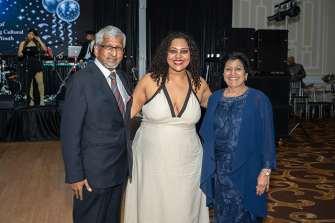
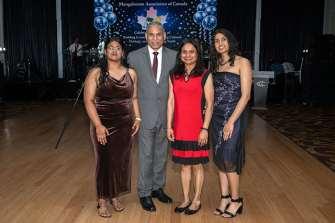
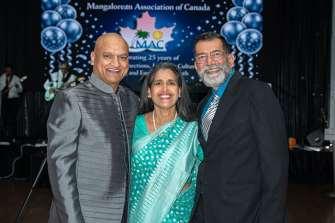
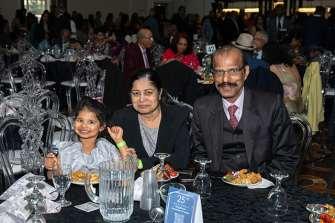
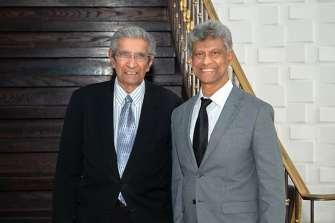
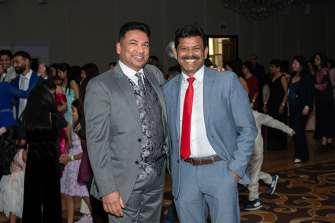
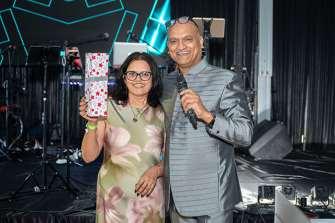
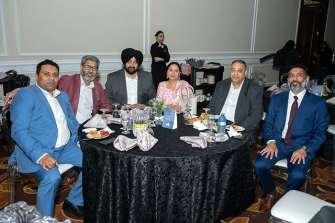
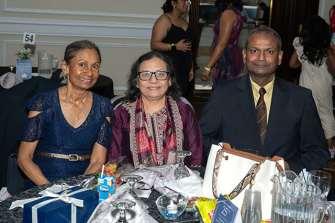
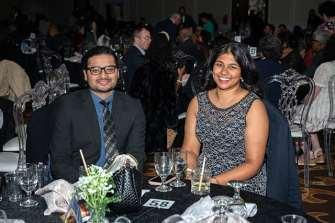
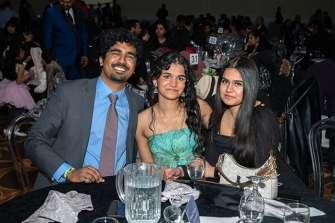
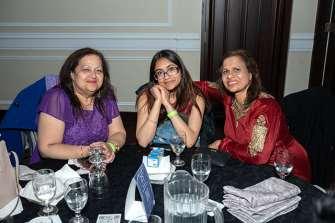
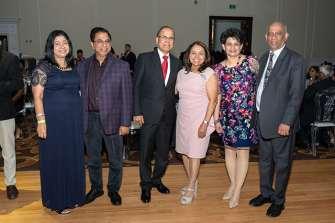
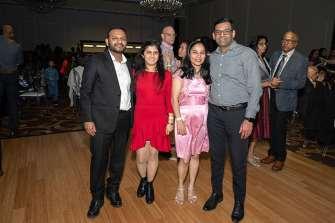
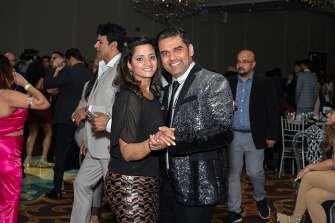
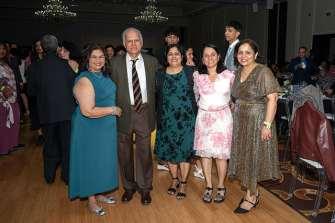
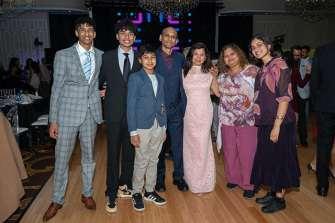
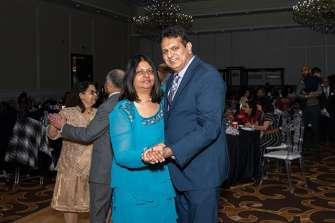
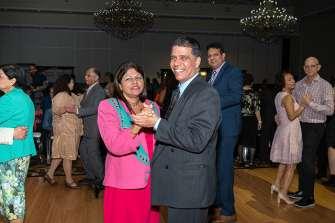
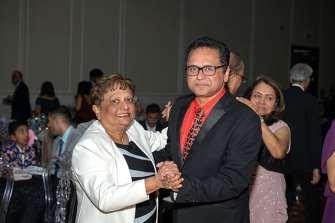
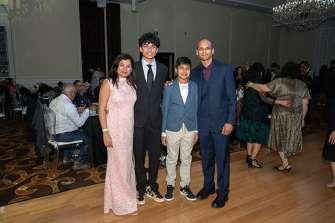
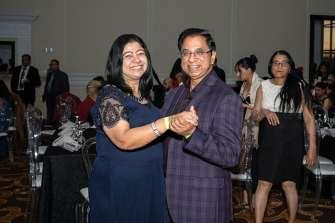
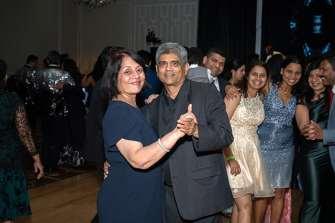
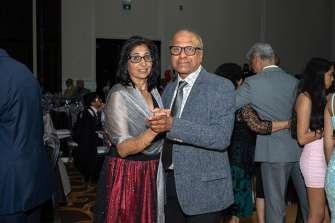
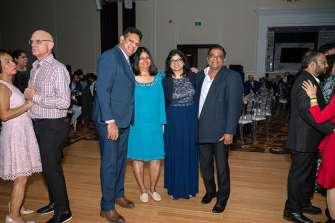
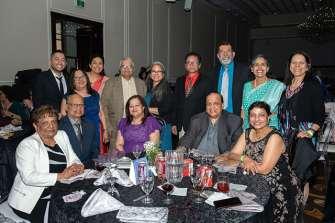
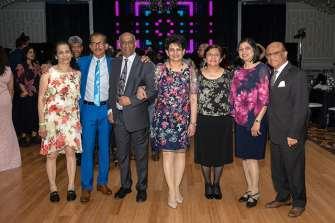
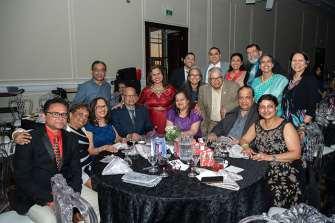
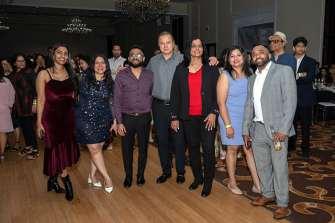
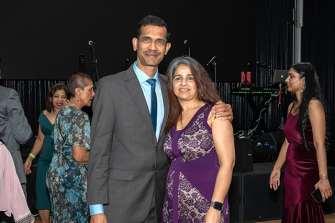
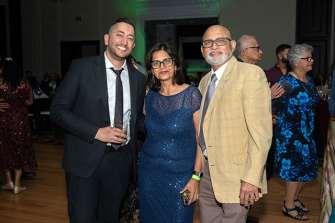
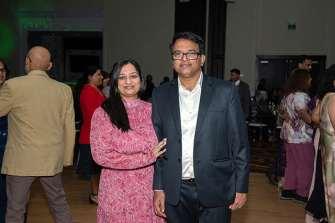
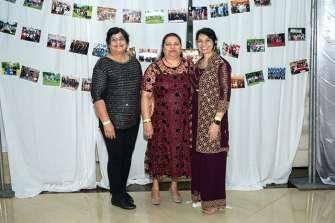
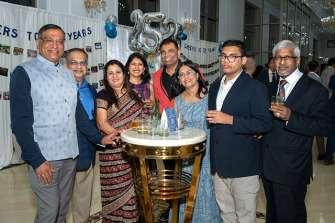
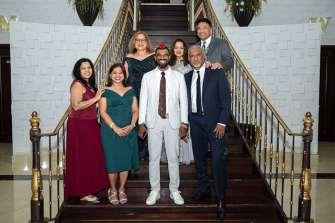
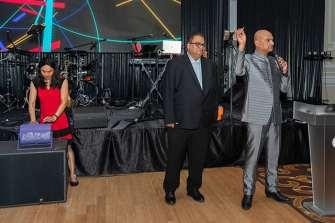
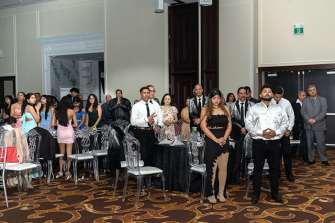
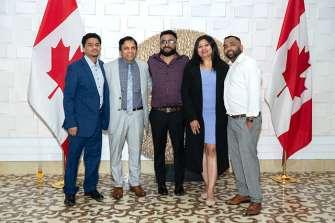
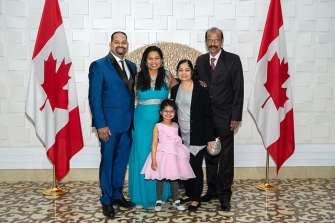
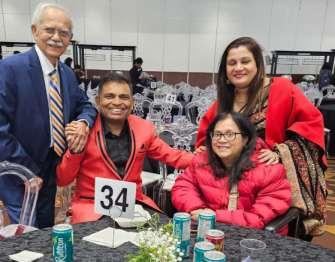
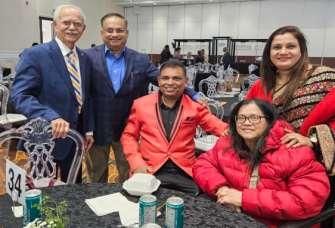
Toronto, May 7: The Mangalorean Association of Canada (MAC) Silver Jubilee – a celebration marking 25 remarkable years – unfolded on May 2, at the Canadian Convention Centre as an unforgettable evening of culture, community, and celebration. From the moment the doors opened, there was apalpable sense of pride and anticipation, as members and guests gathered to honor alegacy built over decades. Theprogramme began with awarm and inspiring welcome from
president Janet D’Souza, whose dynamic address set the tone for thecelebration. Herwords reflected both gratitude forthejourneysofar
and a compelling vision for the future, energizing theaudience and uniting everyone in a shared purpose. The evening also included a moment of reverence, offering
thanks to Our Lady of the Rosary, MAC’s patroness, and acknowledging Fr Roshan Loy D’Souza, the Chaplain, along with
theclergypresentfortheirblessings andguidance.
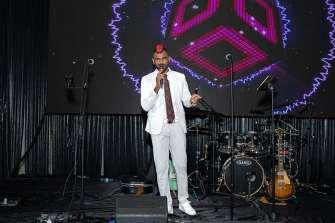
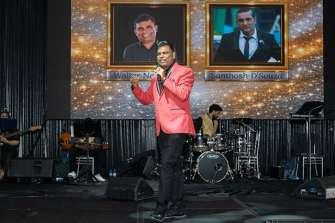
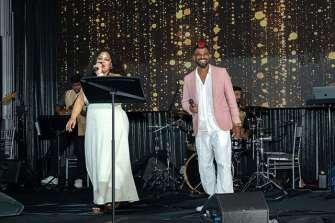
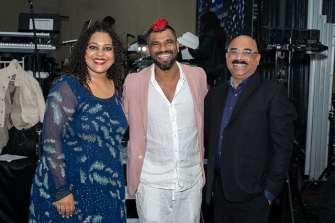
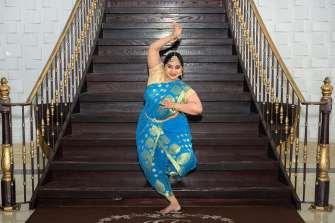
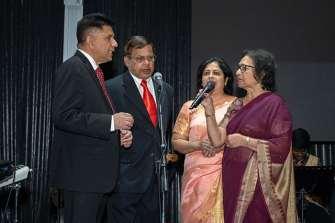
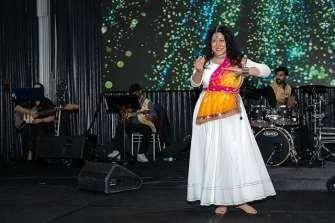
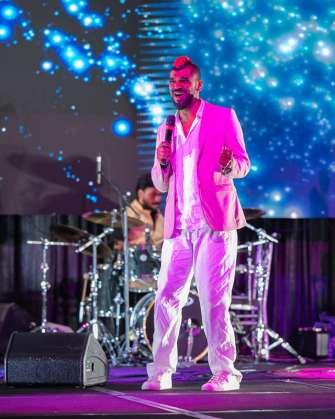
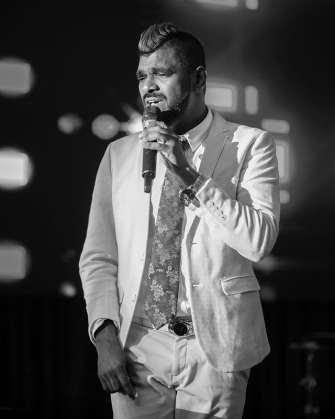
The cultural programme commenced, setting a vibrant tone for the day. It was a showcase of artistic excellence and community spirit, brought to life by an extraordinary lineup of performers and contributors. The stage sparkled with thedynamic presence of Jacqueline Fernandes, Mark Revlon, Walter Nandalike, Denver Pinto, orchestra band Mega Tuners, and music director Joyson D’Souza. Each brought their own unique flair—whether through soulful vocals, energetic musical arrangements, or commanding stage presence creating a rich tapestry of performances that captivated the audience. Complementing these featured artists were the community’s own singers, dancers, and performers, whose passion and dedication added authenticity and warmth to theprogramme. Theirperformances reflected notjusttalent, butadeeprooted connection toMAC’sjourney andidentity.
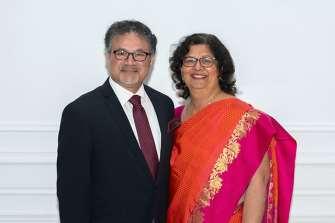
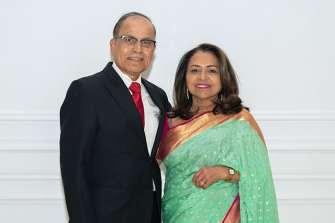
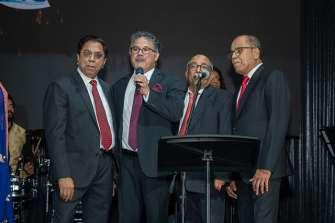
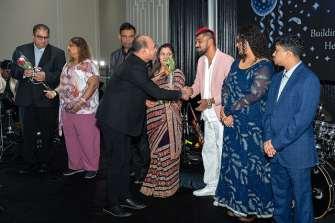
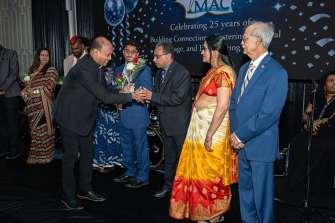
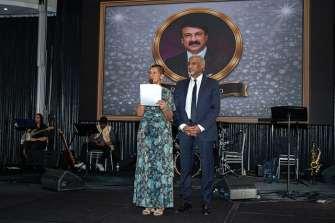
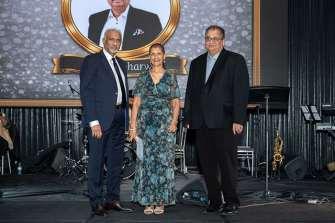
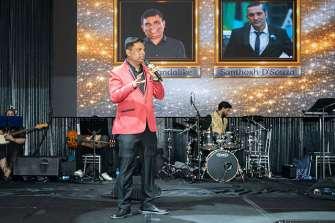
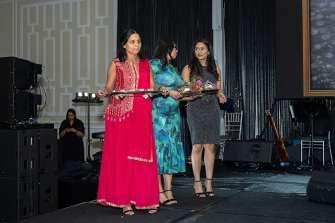
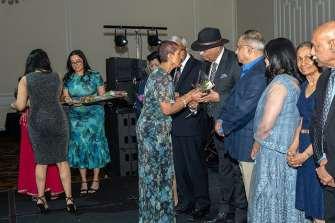
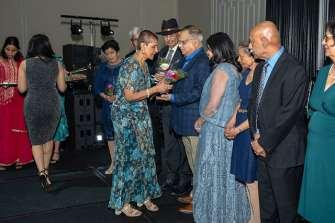
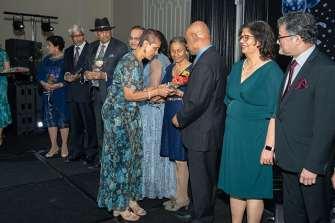
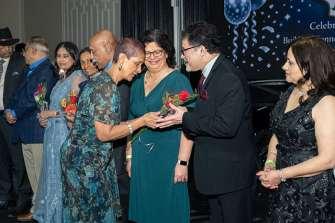
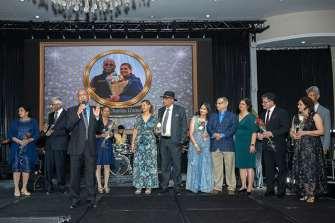
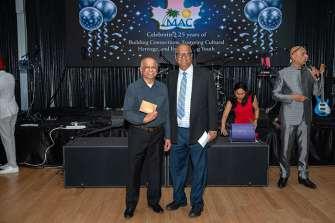
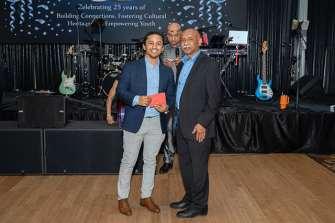
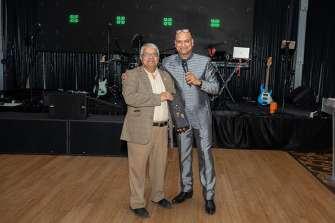
The evening featured a special moment dedicated to honoring an extraordinary group of individuals whose contributions have continuously uplifted the community and inspired generations. Representing the very bestinleadership andservice, these distinguished honorees and champions havemadetheir markas sponsors, entrepreneurs, philanthropists, humanitarians, and advocates of thearts. Through their efforts, they have supported talent, nurtured dreams, strengthened cultural identity, and fostered meaningful connections within the community. Ronald Colaco was recognized in absentia for his invaluable contributions. Those present and honored on stage included Jacob Thomas, Manoj and Rashmy D’Cunha, P K Sabharwal, Walter Nandalike and Wilma D’Souza, Mark Revlon, Jacqueline Fernandes, Ravi Fernandes, Ronald and Dorothy Rego, Frank and Clara Serrao, Vincent and Prescilla Machado, and Dr Austin D’Souza Prabhu. Building on this legacy, another group of dedicated supporters was also acknowledged for their significant role in strengthening and sustaining the organization’s journey over the years. Maxim and Prescilla D’Mello, Everest Vijay and Prema Dante, Ronald and Cynthie Fernandes,
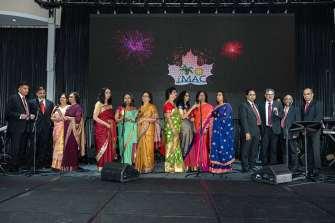
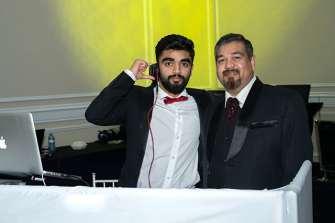
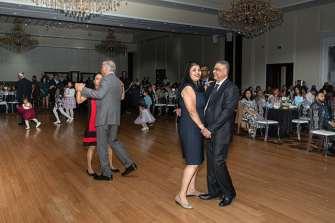
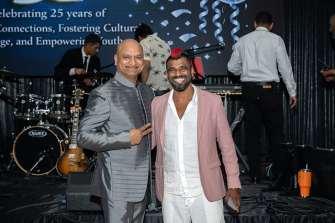
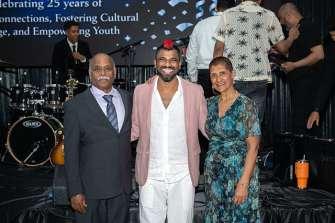
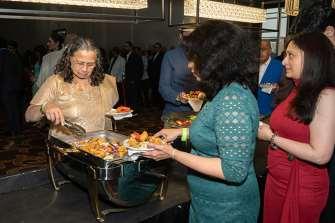
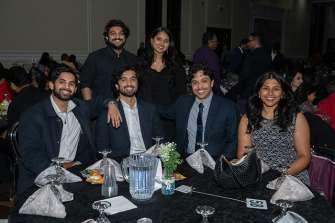
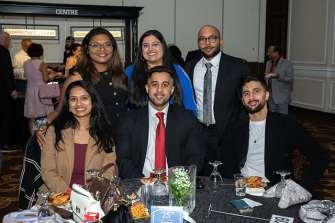
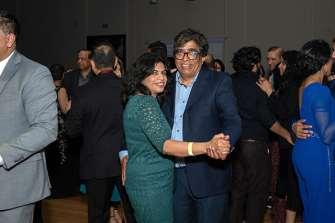
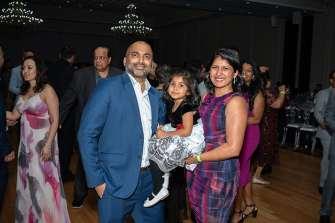
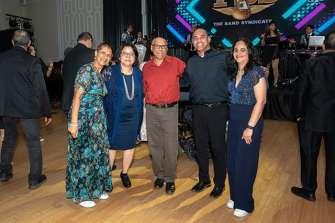
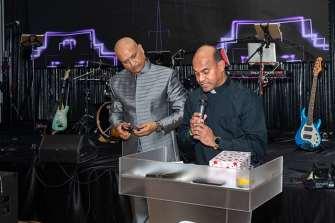
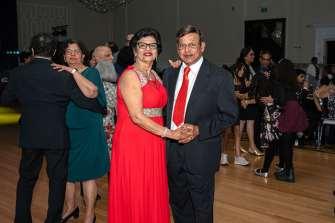
Manohar and Violet Pais, Melwyn and Eryl Menezes and Janet and Charles D’Souza were invited to the stage to receive tokens of appreciation, marking the collective gratitude ofthecommunity fortheir enduring support andcommitment. The evening transitioned into a lively Dinner Dance, with Band Syndicate, DJ Joyson and Ronan, and EmceeIvan D’Lima keeping the energy high. Mark Revlon once again stood out, captivating the audience and keeping the dance floor alive. Hisnatural charisma and magnetic stage presence drew people effortlessly, creating an electric connection with the crowd. With an intuitive ability to read the room, Mark delivered exactly what the audience needed, ensuring the energy never dipped. Delicious food, exciting prizes, and a vibrant atmosphere fostered connection and celebration, while photographer Jerson Marques and videographer, Ashwin Crasta of Ash Cinematics Studio captured lasting memories. Aspecial highlight of the evening was the ceremonial cake cutting led by Fr. Roshan Loy D’Souza alongside President Janet D’Souza and vice-president Ronald
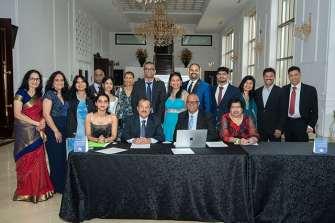
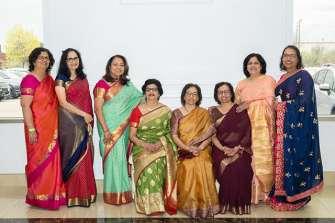
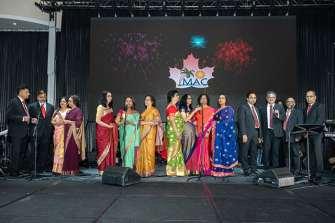
Fernandes, joined on stage by the current Executive Committee, past presidents and the 16 founder members with their spouses, marking a heartfelttribute toMAC’s enduring legacy.
Adding to the elegance and brilliance of the evening was the enthusiastic participation of a large group of community members who came together to perform for the Silver Jubilee. Their collective spirit, energy, and dedication shone through each performance, reflecting the unity and vibrancy of the community. Participants included Gerry and Lucy D’Mello, Merlyn and Lancy Rodrigues, Irene and Paul Mathias, Manohar and Violet Pais, Edwin D’Souza, Lavina D’Souza, Lydwin Lobo, Marina Fernandes, Marita Correa, Prescilla D’Cunha, Sonia D’Souza, Lawrence Pinto, Seneca Rego, Vaishavi Sathyamoorthi, and Jwalitha Joshi. Also contributing to the performances, program management, décor, and choreography were Melanie and Darryl Vaz, Abigail Peres, Allison Peres, Adelyn Mathias, Aidan Mathias, Xenia Pinto, Lillian Lobo, Deborah Lewis, Anitha Castelino,
Louella Cardoza, Suneetha D’Souza, Chris D’Souza, Jasmine Monteiro, Jasmine D’Souza, Carol Lobo, Carol Pinto, Steffi Fernandes, Melissa Pinto,ChrisGoveas,StevanPais,and Santosh D’Souza, among many others who helped bring the stage to life.
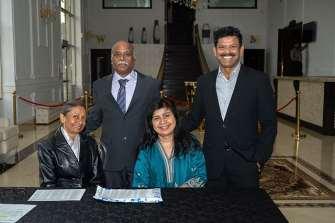
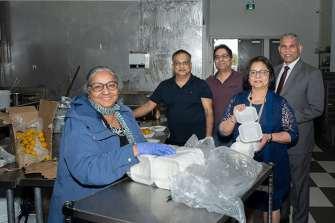
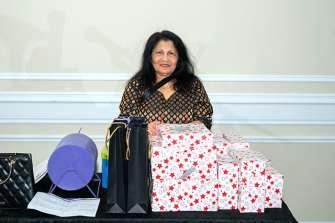
The visual experience, led by Noel D’Souza’s LED presentations, elevated the event with immersive storytelling. Behind the scenes, dedicated teams ensured seamless execution—from choreography and coordination to décor, mementoes, and program flow. The tireless efforts of the organizing teams including ticketing, PR, logistics, sponsorship, and the Executive, management, and auxiliary committees, along with their spouses—ensured the seamless successof thecelebration. A plethora of door and spot prizes added to the excitement, bringing joy and delight to attendees throughout the evening. The 50/50 draw, held in support of Unity
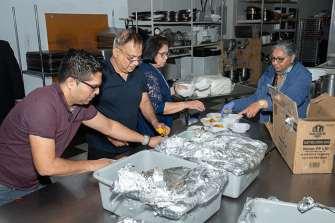
Health Toronto (including Providence Healthcare, St Joseph’s Health Centre, and St Michael’s Hospital), highlighted the community’s commitment togiving back by supporting vital programs in rehabilitation, palliative, and long-term care. During the intermission, guests enjoyed delicious snacksfromUdupi Madras Café,complimentary juicescourtesy of Rubicon, and small packs of munchies from Telugu Foods, addingadelightfulculinarytouchto thefestive evening.
The MAC Silver Jubilee was more than just an event; it was a celebration of community, resilience, and shared achievement. Itstood asa testament to what can be accomplished through passion, teamwork, andacollectivevision.As the evening ended, one thing was clear: this was not just a reflection on 25 years past, but a powerful steppingstone toward an even brighter future.
Beyond the Passbook: When Safety Alone Is Not Enough
- Mervins
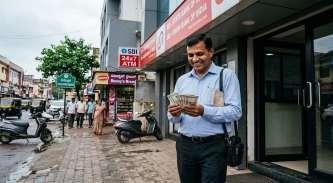
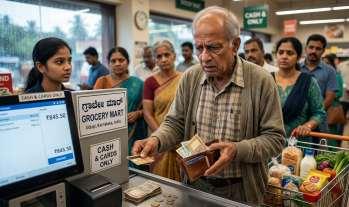
Itwasa Sunday in September, and the rain was coming down heavily. My friend and I had ducked into a bakery to escape the downpour. As we waited, Rolf, a mutual friend, came rushing in, cursing the weather. Rolf is now retired, having worked intheGulfforthreedecades alongside his wife. He iswhat you’d call 'well-off' he owns a posh villa andall thetrappings of asuccessful life. Being Sunday, and since we Christians can’t imagine a weekend without pork, Rolf bought 2kg. When thebill cameto ₹1,000, Rolf’s frustration shifted from the rain to the price. He looked at us, shaking his head. 'When I first got married, thissamepork costme just₹50!' he exclaimed.Thatisatenfoldincrease. Seeing arelatively wealthy man like
Rolf genuinely unsettled by the price of pork got me thinking. [Disclaimer: This article is for informational and educational purposes only. I have no commercial interests or affiliations with any of the companies mentioned herein. Readers are advised to perform their own due diligence]
Now, with the disclaimer out of the way, let’slook athowbank deposits serve us. Having had frequent, friendly chats with Rolf over the years, I knew his financial position well. By parking large sums in various Fixed Deposits (FDs), Rolf believed he had built a "futureproof" and"shock-proof" fortress of wealth. Yet, here he was, complaining about a ₹1,000 pork bill. Something didn't add up.
Most banks offer the same interest rates, ranging from 3% to 7%, depending on the tenure. Rolf’s case is typical of his generation; many people his age prefer bank deposits becausetheyareperceived as "safe." There’s an emotional connection to the bank, a sense of security, and the comfort of knowing the money is liquid if an emergency arises. Rolf has his deposits, insurance, gold jewellery, and property. But he has no shares, bonds, Mutual Funds, or ETFs. Whenever I raised the subject, he’d dismiss me, saying, "Shares are just gambling," and insist he was perfectly satisfied with his FDs. So, if FDs are so satisfying, why was a manwho hasenough wealth tobuy an entire pig farm complaining aboutthepriceoftwo kilosof pork? Let’s dive deeper and see what is happening beneath the surface.
Note, I’m assuming the highest possible interest rates for FD.
The Reality of FD: Appearances
can
bedeceiving
Let’slook atthemath. Suppose you deposited ₹1 lakh for 5 years at a standard 7.5% interest rate with quarterly compounding. After 5 years, your ₹1,00,000 grows to ₹1,44,995. Total Interest Earned: ₹44,995."Wow, 45k! That’s not bad atall!"Onpaper, heseesa45%gain andfeelssuccessful.Butthencomes theTax Leak. InIndia,banksdeduct 10% TDSifinterest exceeds ₹40,000 (₹50,000 for seniors). After this 10% cut, his ₹1.45 lakh shrinks to ₹1,40,496.
Now, the enterprising reader might think: "What if I make multiple smaller deposits in different branchesorbankssoIdon'thitthe TDSlimit?"That was a clever idea,
worked fine, but decades before!.
Today, with Aadhaar and PAN linking every account, the Income
Tax Department’s computers arefar smarterthantheyweretwentyyears ago. Whether you have one big FD or ten small ones, the taxman will find his due. If Rolf is in a 20% or 30% tax slab, the "leak" is even bigger thanheimagines.
The "Inflation" Thief. This brings us to the most important part: The Inflation Reality. We must adjust that₹1.40 lakh fortherising priceof pork, rice,taxesandmedicine. Using a conservative 6% average inflation rate,the Real Value of Rolf’smoney after five years is just ₹1,04,986. Wait a minute... what happened to the profit? Rolf completely missed the"devil" called Inflation. Here’sa simple analogy: If you put ₹1,000 under your mattress in 2004, it was
still₹1,000 in2024. Butin 2004, that ₹1,000 could buy 20kg of pork. In 2024, thatsame₹1,000 canonlybuy 2kg of pork. The "devil" (inflation) swallowed 18kg of pork from your mattresswithoutevertouchingyour ₹1,000 note!
Thisisexactlywhat mostpeople fail to understand. Rolf’s health insurancesaysitall:In2020, hepaid roughly ₹15,000 for a comprehensive plan.Today, justfive years later, he is being asked for ₹55,000 for thesamecoverage!
Whilehismoney wassitting "safely" in the vault, the world moved on. Taxes, Food, Labour, medical, electricity, and transport costs have gone up astronomically. Now we know whyRolfiscomplaining about the price of pork! Remember, “A shipinharbourissafe,butthatis notwhatshipsarebuiltfor!”
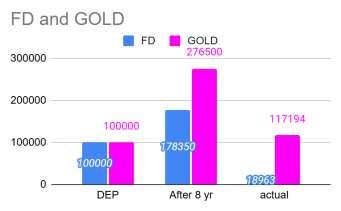
FD vs GOLD: a golden opportunity NOTto bemissed: The "Gold Standard" , If Rolf had bought ₹1,00,000 worth of gold in April 2021, here is how his wealth would look today: April 2021 Price: ~₹48,720 per 10g,Gold Owned: ~20.5 grams, April 2026 Price:
~₹1,50,000 per 10g.Maturity Value: ₹3,07,500,Total Gain: ₹2,07,500 (A 207% increase!). FD is taxed every year (TDS/Income Tax). gold Taxed only when sold (LTCG). FDs' real value barely moved. Gold hands down Wins. After 5 yrs Rolf had made a paltry 5k! In his FD of 1 lakh. But had he invested in gold, he could have made ₹ 1,10,435 after deducting forinflation!!
SGBs in "Series" (tranches) a few times a year. When you buy one, you receive a formal Certificate of Holding (Form 'C'). This is a professional document that includes your name, Investor ID,the number of grams you own, and the maturity date. You can buy them easily through Net Banking (SBI, HDFC,etc.),designated PostOffices, orevenstockbrokers likeZerodha. If you buy online, the RBI even gives you a ₹50 per gram discount. They’ve fixed Tenure of 8 years. Unlike physical gold that just sits in a locker, the RBI pays you 2.5% interest per year on your initial investment amount.
The SGB Solution: For someone like Rolf, Sovereign Gold Bonds (SGBs) are the perfect middle ground. They are issued by the Reserve Bank of India (RBI) on behalf of the Government, so they are as safe as a bank deposit, but they perform exactly like gold. It’s like owning gold without the constant fear of theft though, of course, you can’t flaunt it like a heavygold chainor bracelet!
● Liquidity: There is a 5-year lock-in period. After the 5th year, the RBI opens a "withdrawal window." If you haveaDemataccount,youcan even sell them on the stock market like shares at any time (though selling before maturity mayattract tax).
AtMaturity: Atthe end of 8 years, the RBI looks at the average gold price of the previous 3 days and credits that value directly to your bank account. Example: If you
bought 10g at ₹50,000 and 8 years later gold is at ₹1.5 Lakh, the RBI sendsyouthefull₹1.5 Lakh.Bestof all? For the original buyer, zero tax
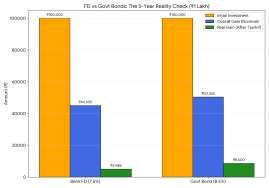
is deducted on those capital gains. Youraccountcloses;it’sassimpleas that. It'smuch easier to understand with a chart. (actual after deducting fortax/inflation)
So its clear physical gold or paper gold (SGB) is always better than FD.here reader must know that I do NOT advise putting all your money into gold. Divide the sum you’ve & portion of itput into gold, that'sall. For example, 10 can be lakh, split into a 50/50 or a 60/40 would be better.
thesethingswillbegiventoyouas well.”
FDvs. MF:HiringaProtoBeatthe Bank:
(mutual fund),MFs are essentially a pool of money from people like us, used to buy shares of top companies. The key difference? We don't buy or sell shares,based on rumors or day-to-day stress. Instead, we hire a Professional Fund Manager (for a small fee known as the Expense Ratio. Usually ranging from 0.1% to 2.25% of your total investment. If you have ₹1 Lakh in a fund with a 1% expense ratio, the company takes ₹1,000 over the course of the year,deducted automatically from thefund'svalue)whousesthorough researchanddatatodecidewhento buy andwhento exit.There aretwo versions of the exact same MFs:Regular Plan: Youbuythrough
a local agent or bank. The expense ratio is higher (e.g., 1.5%), Direct Plan:Youbuydirectlyfromthefund house (via their website or an app like Zerodha/Groww). The expense ratio is lower (e.g., 0.5%).
COMPARING:
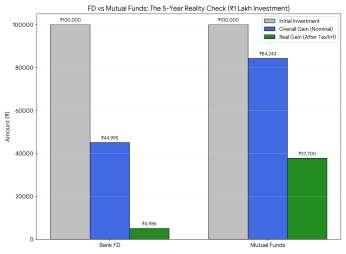
Bank FD (at 7.5%)), Value after 5 Years₹1,44,995, MF (at 13%, projected), ₹1,84,243,12.5% LTCG (on gains > ₹1.25L/year), Real Profit (After Inflation): FD₹4,986,MF-₹37,700.
How to Buy: You can buy "Direct" plans through apps like Zerodha, Groww, or Kuvera or banks to avoid paying commissions to agents. You just need a PAN and a bank account.
The "Golden Rule" of Holding: To make a "meaningful profit", you must hold for at least 5 to 7 years. This allows the market's ups and downs to smooth out. You can sell (redeem) anytime. The money hits your bank account in23 working days. There is no "lockin".
TAX: If you hold for more than 1 year, it is Long-Term Capital Gains (LTCG). Thefirst₹1.25Lakh ofprofit every year is completely tax-free. Anything above that is taxed at 12.5%.
Some of the MFsfor beginners, Index Funds (Nifty 50): Invests in the top 50 companies in India. Very safeandlow cost.
But, unlike an FD, an MF does not guaranteereturns.There’salways Market Risk: Iftheglobal economy crashes (like in 2020), your ₹1 Lakh might temporarily show as ₹80,000.The Solution: If you don't panic and wait for a year, it usually bounces back higher.
Flexi-Cap Funds: The manager moves money between big and small companies based on the market.
Large-Cap Funds: Only invests in the biggest, "blue-chip" companies (like SBI, ICICI, Infosys).
Balanced Advantage Funds: Automatically moves money to FDs/Gold when the stock market is too high (Perfect for nervous beginners).
Aggressive Hybrid Funds:Amixof 70% Stocks and30% FDs. Debt-related funds: which exclusivelyfocusongovt/corporate bonds.better thanFD&secure. But beware, there are also worse performing MFs, which give negative returns. always study which one works well for your needs.
Even though, like gold, MFs too are clear winners (if chosen wisely). But I suggest Rolf NOT to be greedy!
He may put₹10 Lakh in a 60-3010 Balanced Split. i.e 6-lakh in FD,3-lakh in MF, 1 lakh in gold. That’ll give him peace of mind & at the same time decent growth. satisfaction that he didn't miss the growth bus.
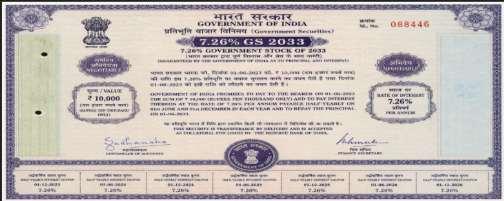
FDvs. Bonds:name isBond G-Sec Bond: Types: Government Bonds (GSecs):The"Gold Standard" ofsafety. SincetheGovtof Indiaisborrowing, the risk of not getting paid back is
practically zero.Corporate Bonds : You lend to private companies. These pay higher interest than FDs (often 8% to 10%) but come with "Credit Risk".Whenyoubuya Bond, youarelending your moneydirectly to the Government (G-Secs) or Corporations (Tata, SBI,etc.) fora fixedperiod. Inreturn, they payyou a fixed interest, known as a "Coupon." Why Bonds beat FDs: Locked-in High Rates: Ifyou buy a10-year Bond at 8%, you get 8% for10 years, evenif bank FDrates drop to 5% nextyear. Tradability: Unlike an FD, where you pay apenalty to "break" it, you
cansell your Bond to someone else on the stock market if you need cashurgently.
Where to Buy: Use the RBI Retail Direct portal (for Govt Bonds) or apps like GoldenPi or Zerodha (for Corporate Bonds).
The "Golden Rule": Only buy "AAA" or "AA+" rated corporate bonds. These are the safest companies.
Tax: Interest is added to your income and taxed at your slab. However, thereisusuallynoTDS on listed bonds.
So even the safest bond wins over FD.if you want in a "Safety First" Order, 1st is Fixed Deposit.,2nd Government Bonds 3rd Sovereign Gold Bonds & lastly Mutual Funds. But if your risk-taking ability is a bit higher then, reverse theorder. advice, youcanputyour 10 lakhs in FD-3Lakh, MF-3Lakh, Bond-3Lakh & finally 1-Lakh in gold.
FD vs Real Estate, real value with agood deal of headache:
To consider investing in real estate, youmusthaveasubstantialamount of money. An empty land nearby Udupi outskirts costs anywhere between 2 lakhs to 5lakh per CENT. (1 Cent= 435.6 sq. Ft).
So, weincreaseourimaginary funds to say 15 lakh. & buy a property of 5 cents (3 lakh/cent). Let’s see how itworks out.
● Purchase Price: ₹15,00,000 (5Centsat₹3L/cent).
● Entry Costs (Karnataka 2026):
○ Stamp Duty (2% for <₹20L): ₹30,000.
○ Registration Fee (2%): ₹30,000.
○ Legal/Documentation/Br okerage: ~₹25,000.
● Maintenance &Protection:
○ Fencing (Barbed Wire + Stone Posts): ~₹25,000.
○ (Note:ACompoundWall for 5 cents would cost ₹1.5L–₹2L;fencingisthe smarter choice for an investmentplot).
While 15 lakh FD in a bank at 7.5% after 5 years gives a guaranteed ₹21,74,925 & afterdeducting taxFD
NetProfit:~₹5.5 Lakhs,theproperty may not be aguaranteed source of profit-making. It's common knowledge that, like gold, property prices also rise. But they are dependent on demand, location & many other things. Assuming asafe 12.5% rise, a 15-lakh property may yield 27 lakhs. But selling itmaynot besoeasy.There’salwaysaliquidity issue. While FDs can be liquidated instantly, selling a property is a tricky business. But given all the constraints, it still makes Net Profit on Property: ~₹9.4 Lakhs (Preinflation), while FD’s Net Profit remains at ~₹5.5 Lakhs (Preinflation). But this is purely an assumption, NOT guaranteed.
Property prices depend on a lot of variables & clarity of documents. & itfollows boom&bustcycle.It'snot for everyone. I advise Rolf to be cautious when dealing with property, it'sadark webof agents/ brokers &lawyers.
Buyingaflatas an investment is not agood idea unless you have a pile of unutilized cash. In places like Udupi or Mangalore, aflatcan cost anywhere from ₹40 lakh to ₹1.5 crore, yetthe rentoften won't evencovertheinterest incurred on thepurchase.
Never buy aflaton aloan with the soleintention of relying onrent and future resale value; it is a financial trap. While you struggle to repay thebank,someoneelsewillbeliving there worry-free! Furthermore, renting out a property brings its own set of maintenance issues and headaches. However, if you have surplus cash that you won't need anytime soon, buying a flat is acceptable. Just keep in mind that resale value depends on many factors. In prominent Indian urban areas, residential property typically appreciates at a rate of 4% to 7% per year. But after 20 years, a flat's
value might stop appreciating entirely. Whenyouaddupthe'pain' of acquisition and compare itto the actual returns, you’ll realize that, at best, you’ve performed an act of charity!" Recently, a bungalow in Mumbai sold at 220 crore, Total Area: Approximately 33.48 cents. Cost Per Cent: approximately ₹6.6 crore. Doyouknow howmuchgovt earned in that transaction without doing anything? ₹45 crore in tax!!! So, buy or sell, it's the govt that makes themoney.
FD vs SHAREs: Donot wait for opportunity.Createit (Matthew 25:14–29) Forwhoever haswillbegivenmore…
Inthe classic1987 film WallStreet , Gordon Gekko (played by Michael Douglas) famously tells a shareholders' meeting of Teldar Paper, “The point is, ladies and gentlemen,thatgreed,forlackofa betterword,isgood…”!Wall Street is where the New York Stock Exchange(US) islocated, boasting a market capof over $45 trillion!Itis the"big daddy" of allexchanges. By comparison, DalalStreet, where the Bombay Stock Exchange (India) functions, has a market cap of
around $4.5 trillion (Note: $1 Trillion is approx. ₹100 Lakh Crore!). & the invitation is open to all; anybody can participate in this ocean!In2026 around7%ofIndians (roughly, it'sstillonly about1outof 20) had invested in stocks, while thatnumber ismorethan60%ofUS adults!
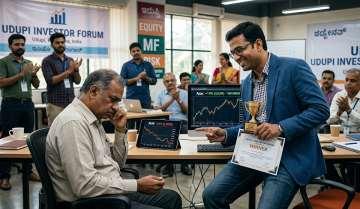
But for Rolf, and many like him, the ultimate "red rag" shares. Greed is NOT good. For them, dealing in shares is akin to sin. Whenever I mention the‘S’ word, herecoils asif he’sstepped on asnake! Yet, Rolf is not a timid person at all. He goes hiking, swims in lakes in unknown countryside, and drives asporty car on Indian roads anyone who has sat beside him will tell you what a hell of a ride that is! So, why is Rolf scared of shares? To invest, Rolf doesn'tneedtobeageniusorknow everything; he just needs a few
basics,andthelawof compounding willtakecareof therest, I’dtold him afewtimes.
Fear often comes from a lack of knowledge. Manyofusbelieve what we hear without cross-checking. Dealing in shares is NOT illegal and certainly not unchristian. Look at what Jesus said about investment and growth in the Parable of the Talents: A master entrusts his servants with "talents" (a large unit of currency). Those who invested and grew the resource were rewarded,whiletheonewhohidit outoffearwasrebuked.Thelesson emphasizes active, faithful management of resources (Matthew 25:14–30).Itconcludes: "For whoever has will be given more... Whoever does not have, evenwhattheyhavewillbetaken fromthem"(Matthew 25:29).The messageisnotto‘takebigrisks,’ but‘don’tletfearparalyzeyouinto doingnothing.’
1ststep:Demat(Dematerialized) Account.
Shares, if operated with a little caution, can be a great source of income and stability. To buy or sell, you must open a Demat
(Dematerialized) Account. Youneed a Trading Account (to buy/sell) and a Demat Account (to hold). Companies like Zerodha, Groww, Sharekhan, orUpstoxhaveappsand websites providing both in one place,withofficesallover India.You just need your PAN, Aadhaar, and a bank account. It can be done in less than half an hour! The number of Demat accounts in India recently crossed 15 crores!
In fact, most major banks (SBI, HDFC, ICICI, Axis) would love to open a "3-in-1 Account" for Rolf. However, banks usually charge much higher Brokerage Fees and Account Maintenance Charges (AMC) compared to "discount brokers." Once your account is ready, get acquainted with Indian companies and news affecting the market. There is awealth of info on YouTube and websites like Screener.in, Tickertape.in, or Moneycontrol toname afew.
1stBUY
The official exchanges are the BSE (www.bseindia.com) and NSE (www.nseindia.com), regulated by SEBI (www.sebi.gov.in). To check a price, look atthe NIFTY index (NSE)
or SENSEX(BSE). or anybusiness TV channels (CNBCTV18/CNBC AWAZ//ZEEbiz/ETetc),newspapers. Or mobile apps, or even YouTube. Remember, there is no hurry. Take your time, observe, and start small even just one share of Canara Bank, Tata Chemicals, or Infosys. As you get comfortable, increaseto 10or 100 shares. Always diversify across sectors like Auto, Pharma, Bank, IT, and FMCG. Also, on their market cap, have a mix of large, mid, and small caps in your portfolio. Therearepennystocks for aslow as₹0.50! But stay away from them. A stock isusually cheap for a very bad reason. For that reason, buying an MRF (Approximately ₹1,30,000 to ₹1,40,000 for one single share!) is a lot safer. There are 100s of good co’s available at affordable prices from ₹150 to ₹ 2000. Besides, they give decent dividends. Whenacompany makes a profit, it can share a portion of it with the people who own its stock as a dividend. If a stock costs ₹100 andpays₹5 in dividends per year, it has a 5% Dividend Yield. This is often comparable to or better than a bank's savings account interest. Co’s sometimes also come up with
bonus issues, like if you hold 100 shares, Co may give you another 100 free of cost!
FEWTIPS
Once you are in the stock market, don't worry about day-to-day market fluctuations. A 0–2% fall in the share market is like removing a flyfrom ateacup!A20% fallisoften just a"healthy reset." Youare here forthelonghaul 5to20years so don't panic. Volatility is built into the market. Good companies like Tata,Reliance, Cipla, Maruti, L&T, or SBI will ALWAYS bounce back. Finally, never buy or sell based on rumours; always do your own research. Do NOT try to time the market. Although the fundamental isto"buy low andsellhigh,"noone has ever truly succeeded in timing the market perfectly. Even legendary investors andtraders (like Warren Buffett, Vijay Kedia, et al) have faltered. So, just observe, invest, and stay calm! There will always be those "had-I" moments, but that is part and parcel of investing in shares. Lastly, don't mistake thesharemarket fora'getrich-quick' scheme. You won't turn 100 into 200 overnight; it simply doesn't work that way. Even the
luckiest streak eventually comes to anend.
BEES (Benchmark Exchange TradedScheme)
Still Confused, which co to invest?
Worry no more. Ifpicking individual stocks is too much, there are BEES (Benchmark Exchange Traded Scheme) or ETFs. For example: NIFTYBEES: Tracks the Nifty 50. It’s like buying a slice of India's top 50 giants. Or BANKBEES: Tracks the Nifty Bank Index. If the economy grows, banks win. &there are more on eachtheme. (like metal, pharma, auto, etc)
With ETFs, you don't worry about a single company; youinvest inentire sectors or the whole Indian economy. Theyarebought andsold at the same outlets like Zerodha or Sharekhan, justlike regular shares.
SIP(SystematicInvestmentPlan)
(Luke 16:10) “Whoever can be trustedwithverylittlecanalsobe trustedwithmuch…”
For persons like Rolf, who have plenty of cash locked in lowyielding bank FDs but are scared of the stock market, there’s an ideal solution called an SIP (Systematic InvestmentPlan).Insteadoftryingto
"time" the market and buy when prices are low (which even the pros failat),youcommittobuyingafixed amount of a stock every month, regardless of the price. Your fixed monthly investment buys more shares when the price is low and fewer shares when the price is high.Example:Month 1: Stock price is ₹100. You invest ₹1,000 and get 10 shares. Month 2: Market dips! Stock priceis₹50. You invest₹1,000 and get 20 shares.so on. Indian retail investors are now pouring over ₹20,000 crore every single month into the market through Systematic Investment Plans(SIPs). Since the investment is automatic, you don't have to "decide" to buy! It’sa case of Discipline over Genius. Youcanstart anSIPinanETF foras little as₹100 or₹500 a month.
How to Set ItUp
: Mostof theapps mentioned Zerodha, Groww, Sharekhan, or Upstox have a dedicated "Stock SIP" or "Basket" feature.
1. Choose the Stock/ETF: Select something stable like NiftyBEESor HDFC Bank.
2. Set the Frequency: Choose a specificdate(usuallyrightafter your salary orincome arrives).
3. Set the Amount: Decide how many shares or what fixed rupee amount to buy.
4. Mandate: Link your bank accountsothemoneyispulled automatically. That’s it you are done. Stay back andrelax!
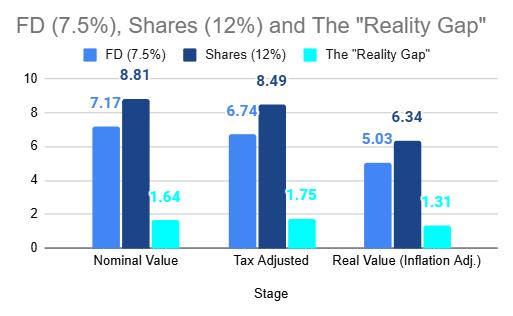
TRUTH: FD vs SHAREs, if invested 5 lakhs in FD & the same amount in shares for 5 years.
Asyoucansee,inrealtermsFDafter 5 years has given you just around ₹4000, while shares have delivered bumper ₹1,35, 000! &thisisforonly 5 lakh/5 yr, more cash/year’s your savings will be huge. Here I’m adding FDs return is guaranteed while shares are expected. So, however tempting, DO NOT put all your hard-earned money into shares. My advice is to follow the formula,
1. Nominal Value (Total in Hand) ₹7,17,815 ₹8,81,171
2. Tax Adjusted (After Govt. Cut) ₹6,74,252 ₹8,49,150(L TCG, 1st 1.25 lak tax free) Shares lead by ₹1.74 Lakh
The Formula: (100 - Age) = Percentage in Shares, Example for Rolf (he is 56):100 - 56 = 44% in Shares/ETFs, The remaining 56 %staysinFDs/Fixed Income. i.e.,ina 10lakh, 5.6L in FD remaining in shares.
3. Real Value (Adjusted for Inflation6%) ₹5,03,839 ₹6,34,538 You beat FD by ₹1,30,000!!
OR, You can use the Bucket System to ensure henever feels"atrisk."
● Bucket 1 (Emergency - 100%
FD): Keep 6–12 months of livingexpensesinaliquid bank FD. This is the "Spare Tire" he never touches unless there's a crisis.
● Bucket 2 (Short Term - 70%
FD / 30% Shares): For money he might need in 3–5 years (like a car upgrade or home repair).
● Bucket 3 (Long Term - 30%
FD / 70% Shares): For money he won't touch for 10+ years. This is where the law of compounding does theheavy lifting.
i.e.,outof say 30 lakhs, hemayput: emergency-10 LinFD, Shortterm7LinFD /3Linshares, long term3L inFD/7L inshares. Ithink this is thebest way togo.
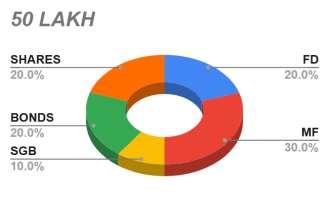
Forasumof₹50lakhs,consider dividing it as follows: FD: 20% —
₹10L.Andthe bestpart? Youdo not need to do this all at once. Move the money gradually, slowly, and steadily, at your own pace. But do act before it is too late.
As the cost of living becomes unbearable — with the price of everything rising at rocket speed whileoursalariesandIncomescrawl along like a bullock cart stuck in mud — every Christian must think seriously about alternative ways of earning and growing their money. Remember, in Scripture, Jesus never praised those who did nothing. He consistently rewarded hard work, wisdom, andtimelydecisions . Thisprinciple applies notjusttoChristian families, but equally to our institutions and churches.
Don'tbelike,“Callingforthefire brigade after the house has burneddown”!
As the Christian population in India steadily declines with many choosing toemigrate to theEU, US, Canada, or Australia fewer affluent Christians remain in the country. This creates a very real problem: a growing shortage of funds, even for the day-to-day runningandupkeepofourchurches and institutions. Chasing a very few people again & again for contribution will not be healthy for any organization. Compounding this, since India is likely to remain under an extremely right-wing government for the foreseeable future, foreign funding has virtually dried up for various welfare/charitable programmes. We are already seeing its effects in some of our educational/special care institutions. Apart from that, many are facing a severe crunch in student enrolment, also due to administrative challenges and stiff competition, and are on the verge of closing, shutting down some of the courses or running vastly below capacity. This downtrend is unlikely to change & may become even worse. The vast properties churches/institutions hold face many hurdles to development for
commercial gain due to the nature of the property, documentation, various governmental hindrances, or location. It is high time our
churches, religious orders, families, & individuals seriously explored other meansof generating asteady income by investing their surplus funds judiciously. Jesus Himself addressed this in (Matthew25:14–30)— The Parable of the Talents.
Theservant whosimply buried his gold received no praise for his inaction. Instead, the master declared: "Takethebagofgold fromhimandgiveittotheone whohastenbags…throwthat worthless servant outside, into thedarkness."
None of us wants to be thrown into thedarkness. Certainly, Jesus never wanted us to live in misery & pain. He wants all of us to use ourintelligence & behappy.
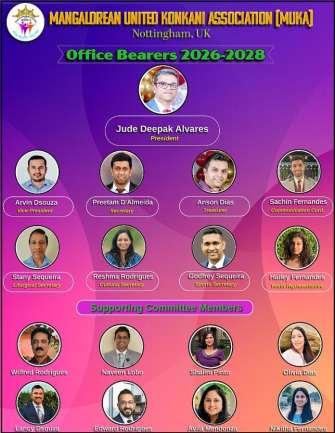
MUKA General Body Meeting 2026 – Deepak Alvares Elected as New President
By MediaRelease
May3,2026
The Mangalorean United Konkani Association (MUKA), Nottingham, UK, held its General Body Meeting on Sunday, 12April 2026. Theevent began with a Thanksgiving Mass at
St. Teresa’s Church, followed by the meeting atSt. Thomas More Hall. Akeyhighlight ofthegathering was the successfulformation of thenew committee for the 2026–2028 term. Following nominations and active member participation, the newly elected committee isasfollows:
President: Deepak Alvares
Vice-President: Arvin D’Souza
Secretary: Preetam D’Almeida
Treasurer: Anson Dias
Liturgy Coordinator: Stany
Sequeira
Sports Secretary: Godfrey
Sequeira
Cultural Secretary: Reshma
Rodrigues
Communication Coordinator: Sachin Fernandes
Youth Representative: Hailey Fernandes
Additional Committee Members:
Wilfred Rodrigues, Nikitha Fernandes, Avila Mendonza, Olivia Dias, Lancy D’Souza, Naveen Lobo, Edward Joy Rodrigues, and Shalini Pinto.
The outgoing President, Godfrey Sequeira, expressed his gratitude and reflected on his tenure. Members also shared valuable feedbackandsuggestions forfuture initiatives.
for the betterment of MUKA and carry forward its legacy.
The incoming President, Deepak Alvares, addressed the committee andmembers, promising towork
MUKA extends its congratulations tothenewlyformed committee and looks forward to their leadership in continuing to strengthen community engagement and cultural activities over the coming term.
Mangalorean.com
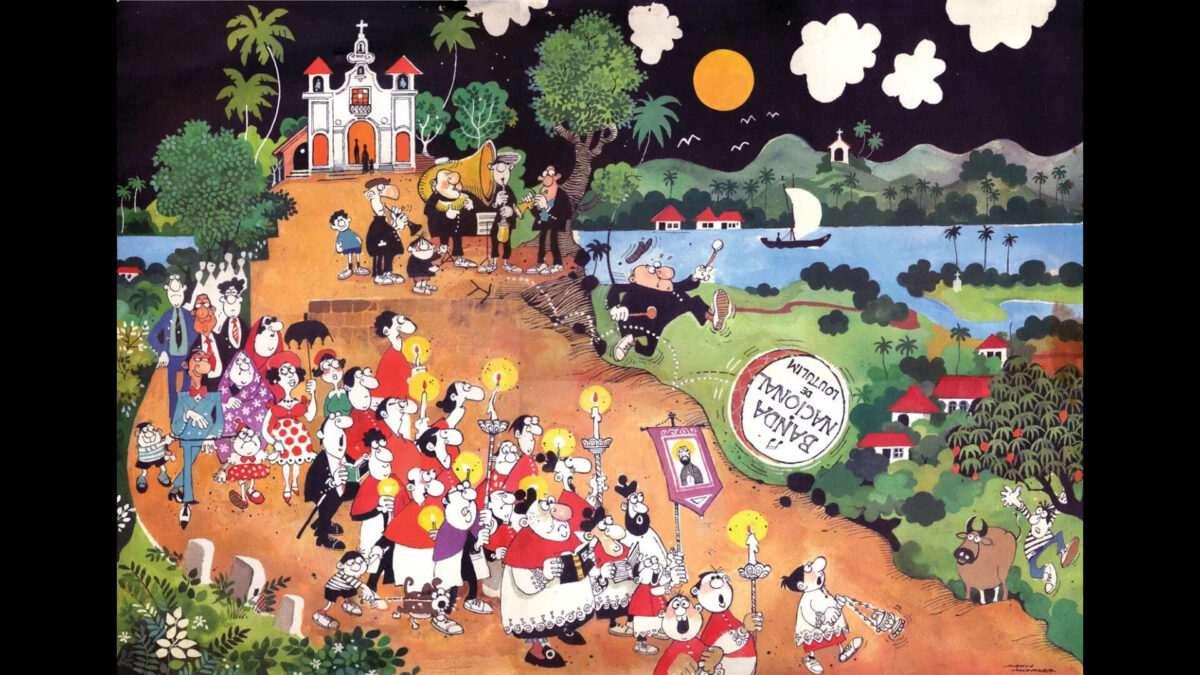
“I guess I happened to be at the right place at the right time.” Mario Miranda (1926-2011)
aninterviewconductedinJanuary 2011, several months before his passing in December 2011. Repostedhereon7May2026, on the Mario Miranda centenary celebrations.
Atthe recent launch of five of his books, illustrator, artist and cartoonist Mario Miranda, though frailat84, wasverymuch thecentre of attention. Hovering on the sidelinesforawhile,Ifinallywentup and introduced myself. I’d done a couple of stories on Mario, interviewed him over the years on his restoration projects when he headed the Goa chapter of heritage foundation INTACH, but he was unlikely to remember. When I said “journalist”, Mario’s witty comeback was “Ah,so you’re the one who has been creating all that trouble”. I smiled. Despite itsphysicaltoll, time had done little to dim the humour and worldly astuteness of one of India’s most admired, and certainly most endearing cartoonist and illustrator.
who promptly answered, as he always did. So a day later I drove to meet Mario in his Loutolim lair, thegrand 330-year-old ancestral mansion thathadbeenin thefamily for generations. Because Mario’s drawings weresomuchapartofmy childhood, one hadalways been slightly in awe of the tall, gracious artist who had so unforgettably chronicled Mumbai of the seventies andeighties, whose drawings in the venerable TheIllustratedWeeklyof Indiahad made him an icon.
Obviously, age can sometimes be a deceptive box that would like to shut the brightest minds inside it, much before their time. “I don’t think about it (age). If you do, it becomes a trap” says Mario sagely, as he sits at his desk, his water colours and art material before him. “I get too many assignments. I’m sitting here trying to complete some”, he tells me.
On the telephone to seek an interviewforthisarticle,itwasMario
“Ilove doing drawings, but Itendto get into a bad mood, if I am doing something anditdoesnotcomeout the wayI want it…that puts me off,” hesays.
Getting around andmeeting people has always been inspiration for Mario’s work. And he isn’t about to give that up either, if he can help it.
So Marioand hiswifeHabiba, make it to as many social occasions as they can, driving miles from Loutolim in South Goa into the capitalPanjiminthenorth, andeven further oftentimes, determined not to let distance be a deterrent and surmount other physical limitations. “People say I’m a partygoer. But I love people. It’s a question of moving around and meeting people. I learn a lot from watching others,” he explains.
Oneisreminded ofjusthowsharpa people-watcher Mario was, when going through his recent books, released in January 2011. Mario’s Bombay has hilarious, animated studies of people tourists, gourmets, high-society types, common folkatrailway stations, the Bombay dhabbawalla , the BEST bus conductor and so on. From 1953 until 1977, Mario drew, cartooned
and illustrated for the Times Grouppublications The IllustratedWeeklyofIndia,Evening News, Filmfare, Femina, The EconomicTimes producing avast body of work. His funny and witty takes on the politics of that era provide an incredible insight, though he has always been more a socialcartoonist thanapoliticalone. His sketches done for the Pune Board Maharashtra schooltexts,like theBalBharatistamped hisartdeep into the psyche of an entire generation.
InGoa, oneissurrounded byhisart, every souvenir shop stocks curios with Mario’s drawings on them, much of it lifted without his permission. “It’s really a shame the way people copy him, without paying himanyroyalty” saysfellowvillager and musician, Emiliano da Cruz. People tend tovisit Mario and casually seek oral permissions to usethis orthat drawing, and before long, awhole line ofproducts isout in the market. “He’s always been generous toafault,hecanneversay no, and a lot of people have taken advantage ofthat”,da Cruztellsme.
Mario himself shrugs off the plagiarism and has never made a big deal of it. “It can be flattering when the artist improves on my drawing, but it’s annoying when the humour is bad”, he jokes instead. It’s not unusual to visit a restaurant andsitbeneath ablowup of Mario’s drawings, sometimes done without hispermission.
always been grateful to its then editor D F Karaka. A year later he joined The Times of Indiagroup. Young and restless then, he left for ayear’sstintin Portugal andspenta couple of years in London; before returning to The Times . “If I have any knowledge of humour and cartooning, it is due to my mixing with the English cartoonists mainly in London. I was lucky enough to meet Shultz, and Sir Ronald Searle, whose work I admire most.”
It struck me during the interview that I was in the same house and village where Mario began his calling as an illustrator and cartoonist. The story goes that as a boy; an irrepressible young Mario was given a notebook by his wise mother to keep him from drawing on the house walls. Though Mario opted out of Bombay’s JJ School of Art after a single day, choosing insteadtopursue agraduate course in the history of English literature at St. Xavier’s College, Mumbai - he returned toLoutolim oftentosketch numerous diaries thatsurvive today as an invaluable pictorial chronicle of those colonial times. The diaries also landed him his first job doing cartoons for The Currentand he’s
“Mario’s best cartooning work is really the work he did at The IllustratedWeeklyofIndiawhen he returned back from London” opines Gerard da Cunha, publisher and editor of six books on Mario’s work, including a 285 page glossy magnum opus on the artist, published in 2008.
Thesecond leapin Miranda’scareer camewhen he toured the USA on a United States Information Service (USIS) invitation in 1972. Mario’s drawings and illustrations from that tripwentintoanexhibition thatsold out. Since then, his stature as an illustrator grew, more so overseas; andhehasbeeninvited to sketch in
over two dozen countries, including Spain in 2007, when he was 81. The catalogue and book of that last trip and exhibition is as good as any of his earlier work. A couple of years later,however, Mario’shealth tooka turn. “Everybody who sees my work, prefers my illustrations and drawings to my cartoons”, he pointedly tells me.
Architect-Publisher Gerard Da Cunha began a search for all of Mario’s work around 2006; delving intoprivatecollectionsandarchives, aside from Mario’s own limited collection.
already collected. In it are all the memorable cartoon characters Mario created the Bollywood heroine Rajani Nimbupani, the matinee star Balraj Balram, the archetypal politician Bundlebass,andtheofficesecretary Miss Fonseca. “Ifyou look athisvastbody of work, you realise just what a genius he is, he’s so versatile, his drawings are done in different styles. Sadly, he is recognised by the public only as a cartoonist, because of his huge popularity then, but his drawings mark him as a great artist”, says da Cunha.
The result is a collection of 8000 prints that are on view at a small museum in Goa. It’s a work-inprogress, a larger museum is in the offing. There are only small gaps in the archive of his work, says da Cunha;some ofitdoneforthe MiddayandAfternoon Dispatch and Courier , calendars he illustrated for the National Safety Council and some of his work forFilmfare to add to the 30 volumes of material
The originals of much of Mario’s cartoons are lost, some by his own carelessness he admits. Some of it when the family moved out of Mumbai in 1996. “Sometimes you take a lot of trouble over a drawing andthat’s theend; you don’t see its lasting value. It goes to the press and is completely lost,” Mario tells me ruefully.
It wasn’t easy to move out of Mumbai, his wife Habiba tells me. For manyyearsshemissed thebuzz
ofthecity,herfriendsandthesocial circuit they were part of there. “We couldn’t go back; we only ever rented a place there” she says of their flat in Colaba’s Oyster Apartments. Habiba had been steadily restoring the Loutolim house, buying back family furniture heirlooms overtheyears.Whilethey may have found living in Goa a tad quiet initially, Mario never ever wanted for commissions. He kept right on with his assignments, with The Economic Times , illustrating books and book covers. “Mario is unbelievably popular, a much-loved guy.
Even now people clamour to have him illustrate their books or draw something”, says da Cunha, who took the ‘Mario exhibition’ to severalIndiancities,onlytodiscover a steady flow of even middle-class viewers, not just the glitterati set who normally frequent art shows.
Connoisseurs havepointed out itis Mario’s humour and lack of malice in depicting situations and people, that endears him to his audience. Goa-based cartoonist and friend Alexyz calls him India’s ambassador
ofhumour. Attheapexofhiscareer, Mario still found time to introduce AlexyzaroundMumbai’snewspaper world, helping Alexyz get a break inSportsweek,herecalls. “Above all he’sagreat human being andhelps rank juniors if he can” says Alexyz.
Over the past decade, Mario has used his influence in many spheres, helping where he could. He was instrumental in launching the Museum of Christian Art in Goa. In Loutolim, hehelped thelocalschool and would have done more for the villageif redtapehadnotstalled his plans, says his friend Emiliano da Cruz. His plans to see the Reis Magos Fort restored, for which he worked a great deal, may yet come through.
In themeanwhile, one sensesMario willnotgiveup, whenlesser mortals would. He reminisces to me about evenings in Mumbai’s coffee house culture, now long gone; the wonderful years he spent working with Pritish Nandy, Khushwant Singh, C R Mandy, Walter Langhammer, Behram and Farzana Contractor, andfriend DomMoraes. “I was lucky to have had the
encouragement and support of great editors. I guess I happened to be at the right place at the right time”, Mario tells me. Hedoes notonly lock himself in the past either, happy to engage with young artists. “There are a lot of bright young people. I like to meet them; many new acquaintances have become a part of my life”.
Giving up in not in Mario’s lexicon, it would seem. “I would like to
paint; I never had the opportunity really to paintoil paintings orwater colours even. So, when I have the chance of doing something like that, I jump at the idea,” he says. And he’s got plans for yet another book. Sowhy stop?
See also: https://www.bbc.com/news/w orld-asia-india-36220327 https://frontline.thehindu.com/othe r/obituary/article30163954.ece
- GOD'"s Gift - Mangalore's
Fr. Muller's & The History.
-By: Ivan Saldanha-Shet.
GOD's Gift through the years, since 1880, the super services and compassion at the Father Muller Medical College Hospital, the mission and vision of the hospital are held valid even to this day.
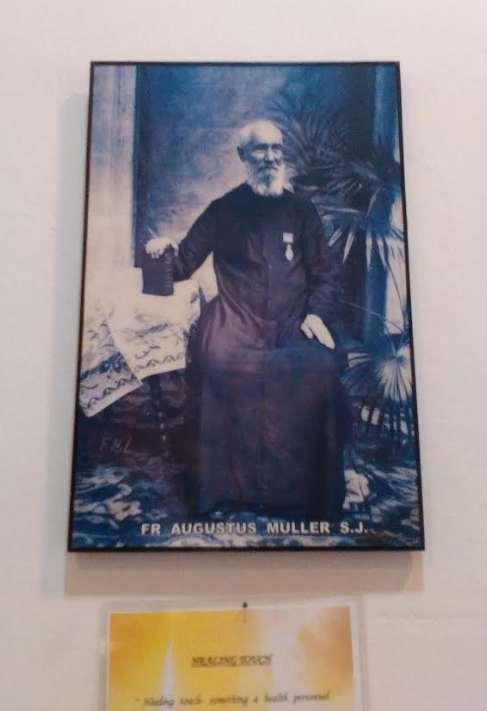
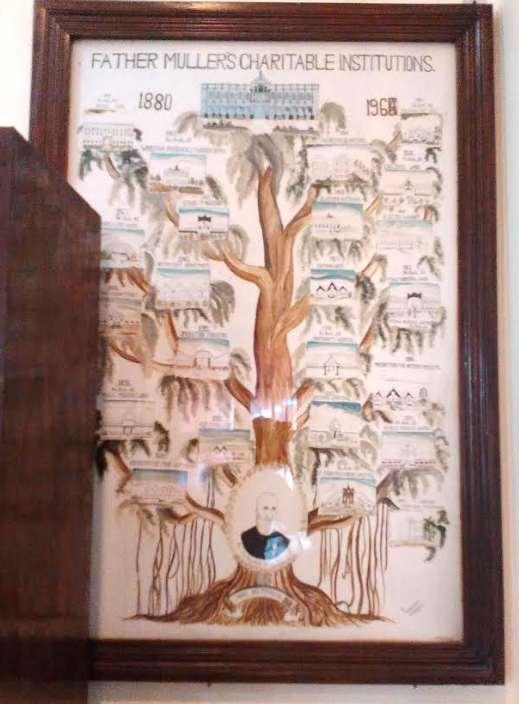
Established in the year 1880 by Fr AugustusMullerSJ, (Born 13March 1841 in Westphalia, Germany and died on 1 November 1910 at Kankanady) under a banyan tree dispensing homeopathic medicines on Idgah hill in central Mangaluru, of Karnataka has branched out into various medical and allied health institutions but firmly rooted in the mission of healing, caring and charity, now a full-fledged hospital. TheSchoolofNursingwhichoffered diplomas in General Nursing and
Midwifery (GNM), and later College of Nursing which offered degree in Bachelor of Nursing Science.
In 1989, Fr. Muller Institute of Medical Education and Research was duly constituted. Fr. Muller's Institute of Medical Education and Research (FMIMER) started in 1991 withpostgraduate courses andthen went on to include other courses under its banner, including the Bachelors in Physiotherapy (1994–95), M.ScinHospital Administration (1996) and Bachelor of Medicine and Surgery (MBBS) course in 1999. Itwasthereby raisedtothestatusof Medical College. Nearing 140 years of service, the institution has become aleader among the few to benationallyaccreditedinIndiaand thefirsttointhestatewithNational Assessment and Accreditation Council (NAAC) A+, National Accreditation Board for Hospitals
and Healthcare Providers (NABH) certification, +, National Accreditation Board for Testing and ClinicalLaboratories (NABL) andthe Pharmacie De Quality by Bureau Veritas. Theadministration isanonprofit organisation which caters to the needs of the economically poor but offers an array of sophisticated and next-gen technology in health care, becoming a beacon to all in search of health. The accreditations and honours bestowed on the institute has arisen out of the singular dedicated quality services put in by the management and the staff in consistently providing efficient services with a human touch, to 'heal and Comfort' as it's motto.
Currently, over 3,000 doctors, nurses, technical staff, paramedical and other health care providers are working forFMCI,RevDr.PeterPaul Saldanha, the bishop of Mangaluru is at the helm of the institution being its president. It is a shining modern state-of-the-art super specialist Medical Centre of the region set to develop and gain renown for the best medical carewith a special atmosphere of
generous classic medical facility.
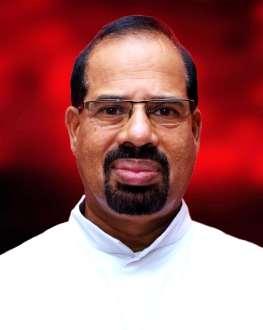
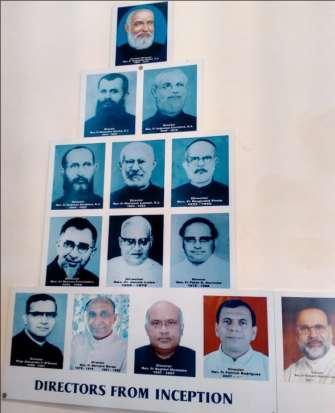
Current Director: The incumbent Director of this Medical College Hospital since 2025, is seen as a Divine Blessing. Rev. Fr. Faustine Lucas Lobo: Born on 22nd of April 1963 at Berva, Thumbe of Bantwal parish, Fr Faustine did his early education in Modankap. He did his early studies in Bantwal’ and Manasagangotri, Mysore. A postgraduate in Sociology Fr Faustine earned Diploma in Social Development from the Coady International Institute, Canada. He also did his Diploma in Formation, certificate course in Journalism and certificate course in Participatory Approaches toDevelopment.
Fr Faustine had joined the St.
Joseph’s Seminary, Jeppu in 1981 and was ordained as priest in 1990 at the Milagres Church, Mangalore. Fr Faustine has been a renowned resource person on several subjects inSocialDevelopment andisknown for his excellent communication skills. Hewastheonlydelegatefrom Karnataka to participate in the ‘Asian Mission Congress’ held at Chiang Mai, Thailand in 2006. As Director of the Pontifical Mission Societies inIndia, FrFaustineLLobo responsibly worked for helping the causeofthemissionsatthenational level. He also monitored the projects proposed and sanctioned by the congregation. Endowed with therichexperience hehasgained in his diverse capacities atthe diocese and under his able stewardship Fr Faustine was an asset to the Pontifical Mission Service which served as Director. Among Designations held so far:Assistant and acting Director : Bhalki Mission, Bidar (19901991), Assistant Parish Priest: Vittal Parish, Mangalore Diocese (19921994), Parish Priest: Miyapadav Parish, Mangalore Diocese (19951996), Member: Editorial Board of
Mangalore diocesan weekly ‘RAKNNO’ (1994-1996), Director: Canara Organization for Development and Peace (CODP), Nanthoor - Mangalore (1998-2005) &Director: CatholicCharities(19982005), Director: Joseph, the Worker Agricultural School, Vamanjoor (1998-2002), Director: Institute for SocialDevelopment (ISD), Nanthoor (2002 -2005), Director: RUSEMP, Pakshikere. (2003-2005), Member: Karnataka Regional Organization for Social Service (KROSS), Bangalore (1998-2005) & honorary member since then.
Caritas India (1999 - 2005) Member: Regional Resource Team (RRT), Karnataka - Caritas India (1999 - 2005), Member: Steering Committee, Joseph Engineering College, Vamanjoor (20022005). Member: District Vigilance Committee, Dakshina Kannada (2003-2005), Long term invitee: General Body and Governing Board of KROSS Bangalore (2005 - 2024), Delegate: ‘Asian Mission Congress’ Chiang Mai, Thailand (18th-22nd of Oct. 2006). Convener: KRISTHOTSAVA’ (Karnataka Mission Congress), Bangalore (8th -10th 2007). Theprogramme wasforthree days and over 800 delegates from all over Karnataka participated. Member: Executive Committee, Mangalore Diocesan Legal Cell (June 20102012), Coordinator (First): Karnataka Region Pastoral Plan Implementation Committee (KRPPC), Bangalore (28.06.2005-31.03.2012). Public Relations Officer (First): Karnataka Region Catholic Bishops’ Council –KRCBC (01.09. 2008 –30.06.2010). Coordinator: Dealings with the ‘Justice B. K. Somashekara Commission of Enquiry’ inquiring
about the Church attacks in Karnataka (2009 – 2011),. {recently, holding most of these and more. Prominently featured in many TV and media programmes and many more prized activities.
Immediate Past Director: Rev RichardACoelho, settheballrolling in the day-to-day affairs of the institution and its sister concerns, continuing the legacy of Fr Augustus Muller. His acumen and work ethics come from serving the institutions as an administrator for seven years and then adorning the office of the director. The administrators of each sister are concerned with working independently yet cohesively and meticulously in enhancing the infrastructure and the upkeep of human resources.
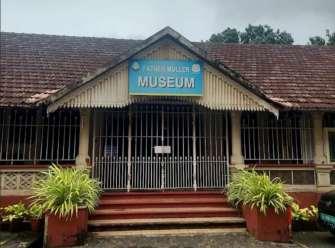
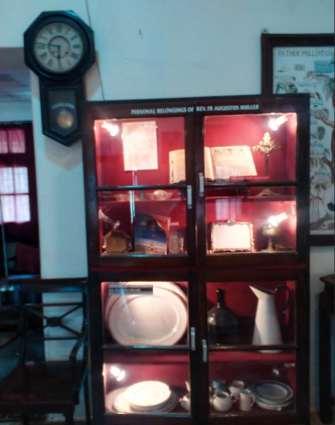
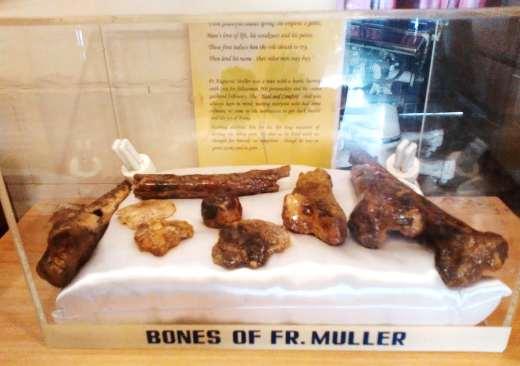
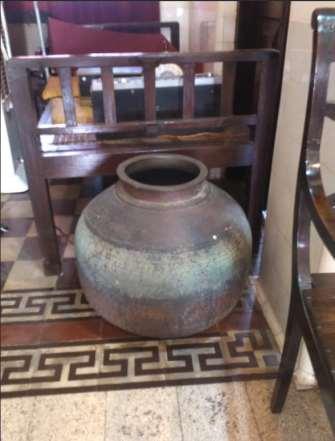
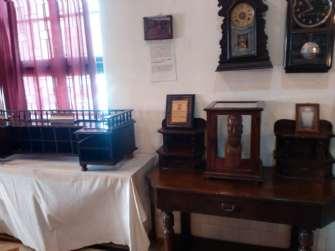
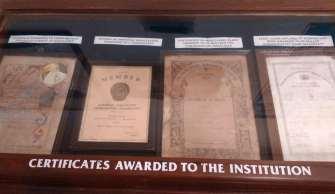
FrMullerMuseumwassetupbythe Medical College, at Kankanady, Mangalore inmemory ofitsfounder Fr Augustus Muller SJ. The Museum was inaugurated as a part of the centenary celebrations (1910–2010), just on the way to the new sprawling 'chapel'. This museum housed in the very house
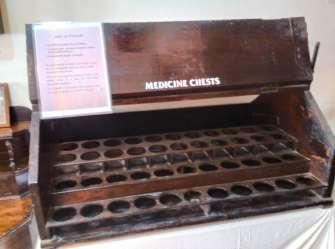
that the saintly German priest and hisassociateslivedforawhileiswell preserved. House holds the belongings, furniture he used, crockery, cutlery and stationery of Fr. Augustus Muller, a German by Birth, his medical tools and homeopthic medicine chests are a wonder. It also has The Vatican calendar from 1800 to 2050,
homoeopathic textbooks written by thelate Fr. Muller, italso
of marriage grant certificates which Fr. Muller granted to eight couples between 1890 and 1892. There are many curios which highlight the culture and thinking of the times goneby, apartfromreligious habits. It is generally open on Sundays; requests can be made as per requirements. Thissimple collection is amust see for all connected with this august institution. This expose enhances the deep admiration for the founder who is seenas avirtual saint.
Fr Muller Institutions since inception has been a bright beacon of hope formany, thesickand even job seekers in the city. Challenges have been overcome and opportunities haveappeared. Ithas provided care from birth to death with dignity and compassion to many. Amid huge competition it still upholds hope and compassion. The overwhelming support from benefactors from far and near, it marches on to 150 years of admiration andCelebration in2030.
Rayan, the Ruler!
“Father, letuswindupfortoday.”
The most senior member of the team, which had come along with me for house blessing ritual- the sanctification of the homes, Mr Colaco quipped.
“YesFather, Itisalmosteight P.M. And we will go to the remaining houses to-morrow” another senior member of the team Mr Keeritappa supported the demand of Mr Colaco.
The other two members- youth, the fresher to college studies, looked at me in agesture of asking me `what next?’ by that time I was busy, in keeping prayer book, a smallholywaterbottle andthestole inmy sidepockets of the cassock.
That was Saturday, last week of the month of March. The previous week was the holy week. The last Sunday was Palm Sunday. That Sunday is marked to remember the biblical account of Jesus’s entry to Jerusalem, where he was welcomed by crowds worshiping him and
laying down palm leaves before him.
Holy Week in Christianity is the week justbefore Easter.Itisalsothe lastweekof Lent,andincludes Palm Sunday, Holy Wednesday, Maundy Thursday- the day Jesus Christ washed the feet of his disciples, Good Friday- the day Jesus Christ crucified and Holy Saturday. This is followed by Easter Sunday. It is on this day, the Resurrection of Jesus Christiscelebrated. EasterVigilwith the Easter fire, the lighting of the paschal candle, the reading of salvation history, the celebration of the sacraments of initiation for catechumens and renewal of baptismal promises with blessed water are an integral part of this Holy Week celebrations.
This is followed by the sanctification of the homes by a priest, with prayers and the sprinkling of holy water. When the priest comes, all who are present in the house, gather before altar with the candle to offer prayers. Then a
family member leads the priest through the house with the candle. Asthepriest goes, hesprinkles holy water andprays for ablessing upon each.There isalso apractice togive thepriest agiftwhichisgivenatthe conclusion of the service as he leavesthe house.
As our parish is very big, immediately, after Easter mass the parish priest had announced that, from the very next week, sanctification of homes w0uld be conducted and asked the parishioners to drop their residential address details and mobile numbers in a box placed at the entrance of the church. After two, three days, heprepared the list of houses to be blessed and the route map to carry out the sanctification of houses of our parish limits which had spread in differentlocalities. Heallotted some areasto thejunior priests like usfor the house blessings. He had also constituted fewteamsincludingtwo elderly persons and two youth to assist us in our house sanctification work.
“Ok then, let us wind up” I also made up my mind to put anend to thehouseblessingritualfortheday.
One of the youths in our team volunteered saying, “Then Father, I will drop you near thechurch.”
The elderly person in the house, came forward and said in dignified manner.
“Father, if you don’t mind, why don’t you have dinner with us today?”
AsIcould notmakeout, whatthe elderly person was telling, his son, explained to me that his father is requesting me to join them for dinner that night.
“No, no it is not possible today. When, we go for house blessing we priests don’t eat or drink in any house. It would not be proper for our health; at the same time, it would give a wrong message.”
Mystraightforward words seemto have offended the elderly person. I could see his reactions in his facial expressions. ButI could not help, as itwasapolicy of theparish.
Meantime, hisson offeredawhite packet containing his contribution to the church support activities and it was a token of gratitude for the priest who cameforhouse blessing. Mr Keeritappa was entrusted with
the work of collecting such offered packets from the respective houses today. After collecting the packets, he took the parish family book containing the details of the family members like baptism, confirmation etc. and gave it to me to make houseblessing date entryinthelast page of the book. After handing over the family book issued by our church, wishing them good night, Mr Keeritappa went home along with Mr Colaco. Out of the fourmember team only two youth were left with me. I opened last page of the family book of parish issued to this family and entered the date of the house blessing and signed. AccidentlyIopenedthefirstpageof the book and noticed that name of theheadof thefamilywasrecorded asMr.Joaquim.Rayan.Fernandez.
This is a family with surname Fernandes. No no, the spelling is different. Usually, we Konkani Christians of Konkani region use to write Fernandes, but here it has become Fernandez. The name Fernandes made me feel that this familymaybefrommynativeplace. Otherwise, they may be natives of Udupi, Dakshina Kannada or from Uttara Kannada districts. And, if my
guessiscorrect,theymaybenatives ofGoa. But, theirappearancewasof little dark complexion. Anyway, I was very much eager to know their native place.
“Tumchogaon khoncho?” which is your native place? I asked in Konkani a regular language used in Konkani area.
Konkani areaisusually referred to the coastal area of Karnataka state. Whereas Konkan includes western coastalareas covering Maharashtra, Goa and Karnataka state. As far as Karnataka state is concerned, it is Karavali area.
The elderly person Mr. Rayan or his son Mr. Joaquim did not follow my tongue it seems. None of them responded to me. I once again asked them, “Tumacho gaon khoncho?”
“Excuse me father, we are not getting youproperly. Wearefinding difficulty to understand what you are talking. For us, it is appearing Latin and Greek” Mr Joaquim uttered.
“You are not Konkani Christians?” I returned to English tongue for conversation.
Now, Igot afeeling thatmy guess went wrong.
“No father, we are not Konkani Christians. We are Kanarese, I mean Kannada Catholics, natives of Tamil Nadu”.
“……!”
I got confused. Reading my expression on my face, Mr Joaquim repeated hiswords onceagain.
“WearenotKonkani Christians.We are Kanarese, Kannada Catholic Christians natives of TamilNadu”.
“How can itbe?”
The kind of Kannada they were speaking was quite different. Their Kannada was not nearer to anyone of the different styles of Kannada in Karnataka -namely Mumbai
Karnataka Kannada, Hyderabad Karnataka Kannada and old Mysore Kannada.Theirspoken Kannadawas different from the Kannada being spoken by Telugu Reddy’s of Bangalore, who claimed themselves that they were immigrants from the areas ruled by East India Company of yester years. However, our conversation wascontinued.
“Yes father, we are native of Thoothukkudi districtinTamilNadu.
We,theKannadaCatholicChristians native of Thoothukkudi, were once upon a time belonged to a ruling clan.Wearedecedents offeudatory chiefs of Pandya rulers. And we are staunch disciples of Mother Mary presiding deity of Our Lady of Snows Basilica, Thoothukkudi”.
“Tuticorin? A major Catholic Christian centre of Southern India, now in news for locals’ protest Sterlite Copper factory, a subsidiary of Vendeta an Indian owned London based company. The plant operates in city limits. People are adversely affected by its toxic fumes. And the area has reported increase in casesof cancer.”
“Yes, father. In the recent police firing on protesters eleven people died and among them four were Catholics.”
“I read about the incident in the newspapers. One Father was also injured in thefiring.”
“Father, itisnaturalforus,thevery traditional Catholicstogo tochurch and consult in the parish when we face social issues. But the protest was nothing to do with thefaith we follow.”
I asked the youth to sit beside me. And told them, “Any way I am not going to take my dinner in this house. But the elderly person claiming that they are descendants of feudal chiefs of Pandya rulers. And their name appears to be of Portuguese origin. I will be here for some more time. If you are getting late,youcangonow. Iwillstayback. They bid good night to me and family members of the house and lefttheplace.
Now, after making myself comfortable, “Mr Rayan, you are telling about Kannada Catholics of Tamil Nadu coast, and you are claiming that you belonged to the royal family of feudal lords under thePandyarulers. Andyoualsosaid,
we are staunch disciples of Mother Mary, the presiding deity of Our Lady of Snows Basilica, Thoothukkudi. How could it be possible? Sir,Iamahistory student. I am doing M.Phil. And the subject istitled as`thedark daysofKonkani Christians of Mangalore district under the rule of Mysore ruler, Mr Tippu Sultan’.
(To be continued nextweek)
Points to Ponder, May 2026
Citrini Apocalypse; Any Escape?
Althoughthe Citrini report makes a timely and cogent case of how the advent of AI agentic tools woulddestroy jobsandcause the deathofintermediation,adeeper analysisofthesame revealssome flaws.
An important issue that Citrini seems to haveglossed overisthe crucial fact that while AI capabilities advance every 6-10 months, university curricula update every 5 years or so. This creates anirreconcilableskill gap. Whilethistemporal asymmetry is real,itoverlooksacriticalnuance: enterprise adoption lags significantlybehindmodelrelease. Gartner’s 2024 HypeCycle for AI notes that only 12 to 18% organizationshavemovedbeyond pilot stages to full workflow integration, due to compliance, data security, change management and legacy system dependencies. So, the Citrini timeline for the arrival of the AI
CitadelSecuritiespointsoutthatif themarginalcostofcomputerises abovethemarginalcostofhuman labour for certain tasks, substitution will occur, creating a natural economic boundary. This point is worth noting, as Citrini's basic premises are based on a scenario where compute costs keep sliding down significantly fromcurrentlevels.Butasofnow, the ensemble comprising AI infrastructure, such as data centers, is an energy guzzler and poses major threat to environmental sustainability. As the ‘Big Tech’ league seeks to establishwhatmaywellemergeas “AIColonizationoftheGlobe”and as demand for AI applications surges, the likesofGoogle, Meta, Amazon, et al, are putting their heft behind next gen (modular) nuclear power. But the cost of such energy often ignores
(presumablyconveniently),endof lifedecommissioningcostsofsuch nuclear plants, which could be prohibitivelyhigh.Therehavealso beeneffortstoharvest“stranded” renewable energy, particularly from the less developed global south. But storing this powerand wheeling it in a grid compliant mannerwillnotbe cheap. Clearly then, assuming progressive and significant reduction in cost of energytokeepitalwaysandin all situations, lower than the cost of labourisunrealistic.
Well known economists, whose ideas have been tested time and againandhave prevailed,provide some contrarian clues to Citrini report.
The remarkable insight by Joseph Schumpeter, which is called Creative Destruction, while acknowledging the disruption as predicted by Citrini report, does not, unlike in the report ignoring theunpredictableandunexpected creative possibilities that AI disruptionmay throw up. Citrini’s assumption of “human intelligence displacement spiral” where no new jobs emerge,
because AI is superior at every task, does not consider Schumpeter’s entrepreneurial innovation,which invariablyfinds new combinations of knowledge giving rise to entirely new industries and jobs. The unravelling of the Citrini report essentiallyhingesonwhetherAIis a Schumpeterian tool that augments/complements human agency (leading to higher productivityandwages)ora pure substitute that renders human labourredundant.
Much depends on how AI develops. Will countries adopt commonprotocolsorguardrailsas inthecaseofgeneticengineering, which has almost resulted in mankind losing its adolescence. ToolslikeCRISPR – Cas9thatallow scientiststoeditDNAby actingas molecular scissors to cut, delete, or correct genetic sequences, can compresstodaysormonthswhat evolution would have achieved over millions of years. Before genetic labs could produce unpredictable “monsters”, countries (regulators) have imposed certain restrictions on
such research. Similarly, for instance,untilnowwhensoftware vulnerabilities were discovered, attackers often required days or weeks to weaponize them. That window allowed defenders to patch systems, issue advisories and contain damage. Anthropic’s latest AI model Claude Mythos which possesses the ability to autonomously discover and exploit previously unknown software vulnerabilities, now threatens to collapse this protective lag from weeks to hours. Thishasforced thefinance ministries, banking and other regulators globally to begin assessing whether financial institutions and systems can withstand AI-accelerated cyberattacks. Thechallengeisnot the technology per se, but who controls these capabilities, under what safeguards and with what international coordination. It is developments like these that are prompting more countries to consider putting in place commonlyagreeduponguardrails before AI takes over human agency.
Anotherwell-knowneconomist,F. A. Hayek argued that economic data is never “given” to a single central entity, but is dispersed, localized and tacit. AI cannot centralizethis “knowledgeof the particular circumstances of time andplace”inrealtime.Therefore, AI cannot fully replace the localized, human-driven decisionmaking necessary for economic activity. The “bottleneck” is not just intelligence, but the inability tofullydigitizethereal-worldtacit knowledge. This “Knowledge Problem” coupled with Hayek’s theory of superiority of Spontaneous Order over central planning, refutes the dystopian outcomes suggested by Citrini report. A la Schumpeter’s “Creative Destruction”, SpontaneousOrdertheoryimplies that as AI makes goods and services cheaper (more efficient), it releases resources (capital and labour) for new unpredicted and unexpected uses rather than causing a permanent collapse in demand.The“GhostGDP”maybe just that, a ghost, as the market through price signals
A plausible scenario is where highly empowered workers coexist with AI, becoming 10 or 20 times more productive than before.TheCitrinireportdoesnot alsoaccountforlikelywidespread pushback by stakeholders and even governments, when a crisis ofsuch alarge scaleunravels.For instance, Citrini blithely assumes Stable Coins to become legal tender, when most centralbanks, including RBI, have vehemently voiced their opposition to their adoption.
Eventuallycommunitiesmayeven come to regard that the Citrini apocalypse,ifatallitcomesabout, asa blessingindisguise. To those who are blinded by the GDP calculus,thecollapseofgrowthas conceived by them, namely, ever increasingdemandleadingtoever increasingproduction,might truly be an apocalypse.But growth for thesakeofgrowthistheideology
ofthecancercell!Asfarbackasin the 1970’s, The Club of Rome cameoutwithitsprescientreport: The Limits to Growth, which questioned the sustainability of the development model that had taken hold of humanity. In this context, Citrini provides an opportunity to communities to pauseandexamineifthekindof development model that is being pursuedisultimatelydestroyingus and our habitat, even before AI leadstothelossofhumanagency.
Norbert M Shenoy
Arunanjali Securities
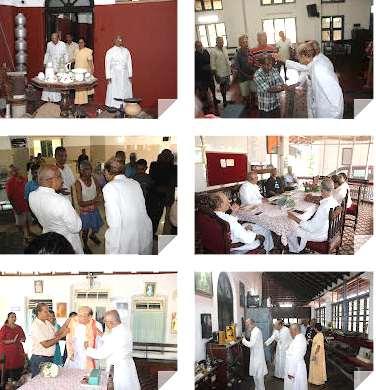
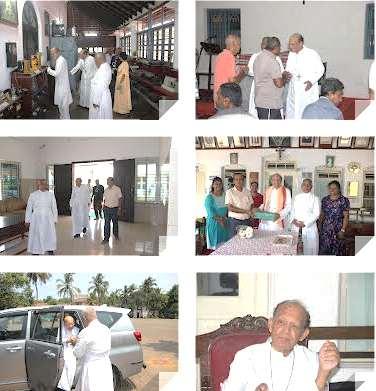
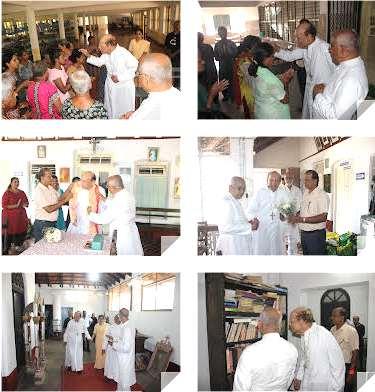
Cardinal Oswald Gracias Visits St. Anthony’s
Charitable Institutions, Jeppu; Blesses Residents
MANGALURU: His Eminence
Oswald Gracias, the Archbishop of Mumbai and a member of the
Pope's Council of Cardinals, paid a pastoral visit to St. Anthony’s Charitable Institutions, Jeppu, on
Thursday, 30 April 2026. The visit served as a significant moment of spiritual encouragement for the residents and the administration of the century-old institution.
Upon his arrival, the Cardinal was formally received by the Director
and the management team. He was honored with a traditional shawl, following which the Director presented a concise briefing on the historical evolution of the Ashram and its current administrative functions. Thereport highlighted
the institution's commitment to providing care for the destitute and themarginalized sectionsof society.
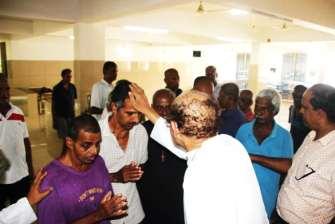
During his tour of the campus, Cardinal Gracias visited the psychiatric ward as well as the general wards for men and women. Hespenttimeinteracting personally with the residents, offering them words of solace and hope. Before concluding hisvisit to thewards, he imparted his apostolic blessings
upon the inmates and the staff members dedicated totheir care.
The visit concluded with a fraternal gathering where His Eminence
shared a meal and interacted with thepriests of theinstitution. Hewas accompanied during the visit by Rev. Fr Praveen Martis (Administrator), Fr Gilbert, Fr Vivian, andFr Rudolph Andrade.
Though brief, the Cardinal’s visit underscored theChurch'smission of charity and provided a renewed sense ofvigour to themission of St. Anthony’s Institutions.