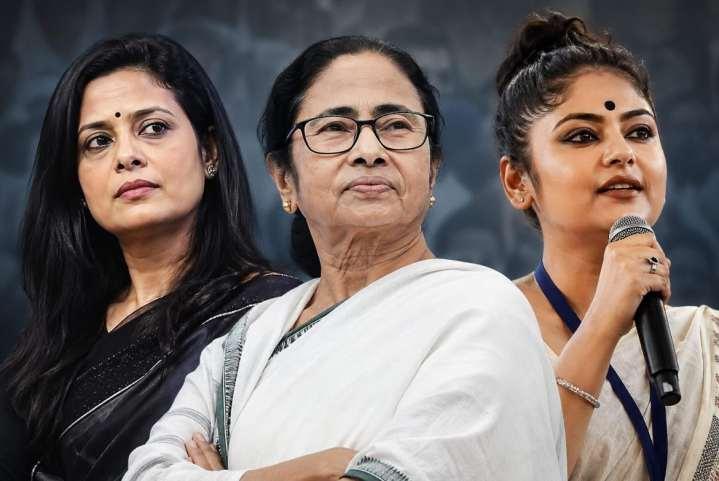
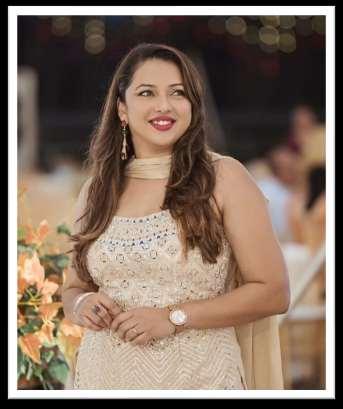
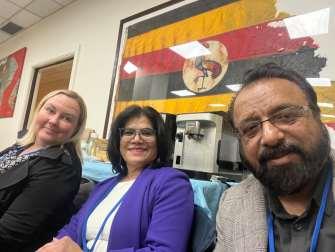
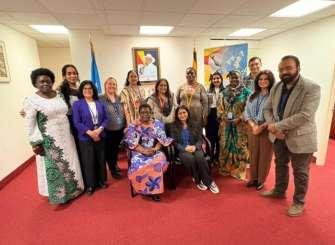
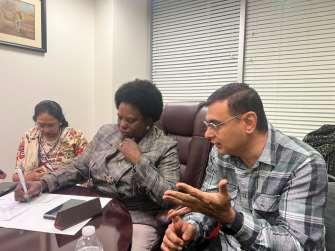
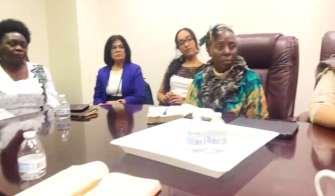
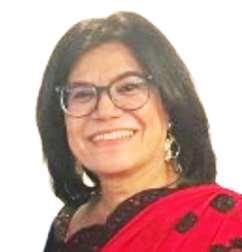
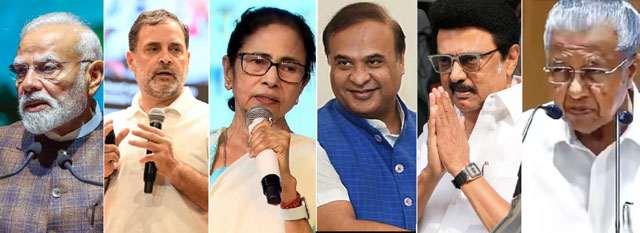
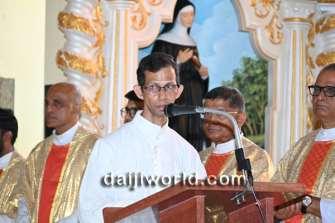
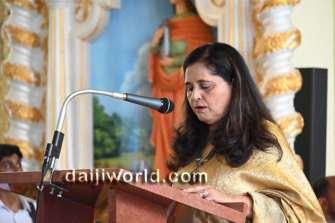
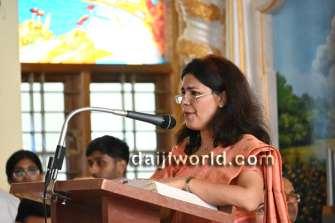
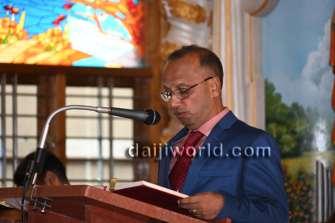
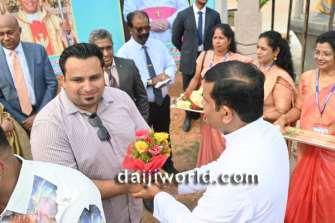
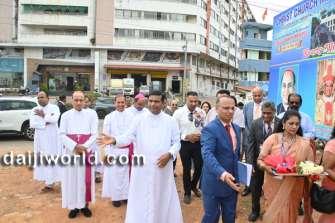
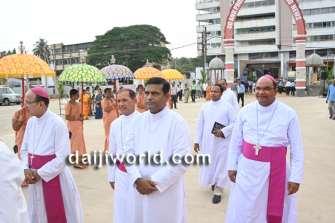
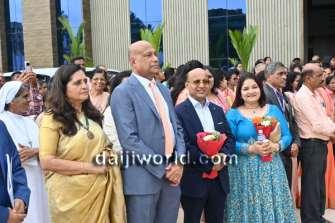
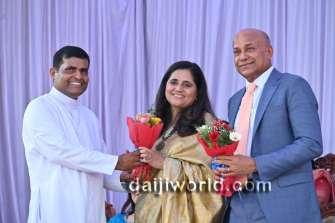
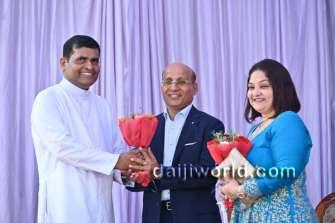
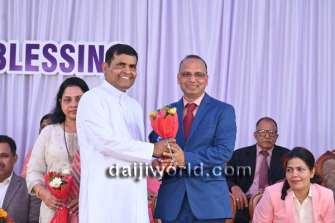
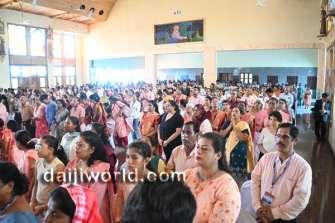
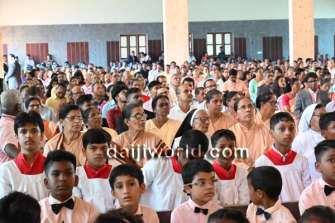
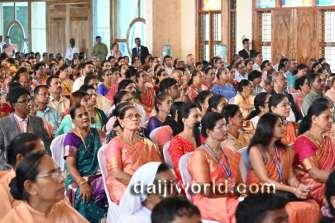
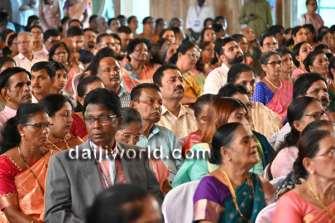
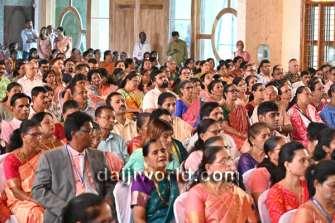
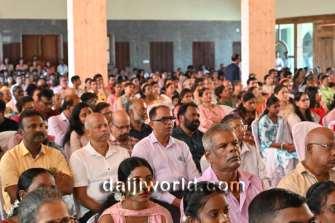
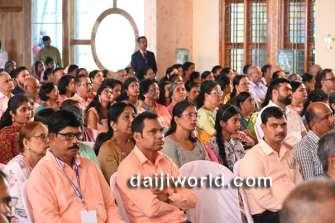
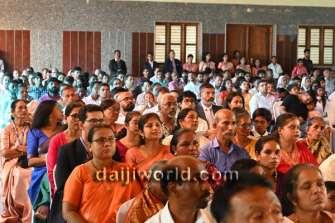
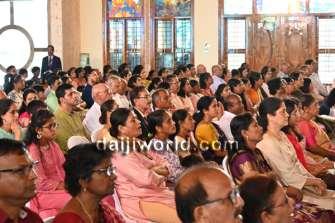
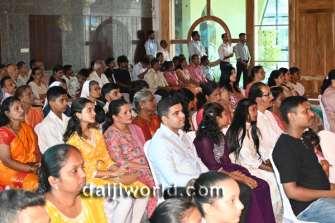
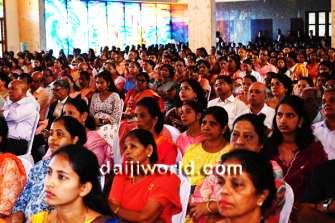
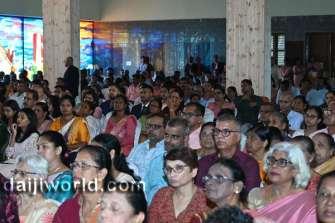
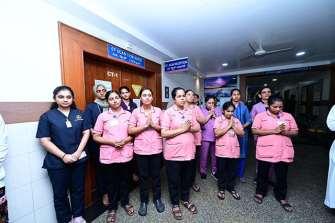
Foraspacelongdominated bymen and rooted in patriarchy, these women standasareminderthatthe script can be rewritten and that politics, too, canfinallystartmaking room for women on their own terms.
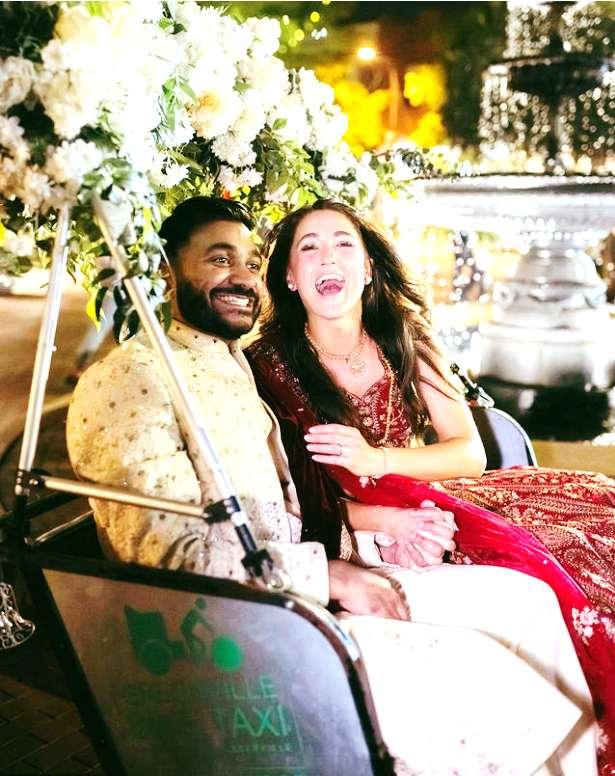
Our Nephew, son of Stan & Vissia DsouzaDr. Shawn DSouza Weds Marae Ashmore in South Carolina
Workers Cry for Justice!
-Fr.Cedric Prakash SJ
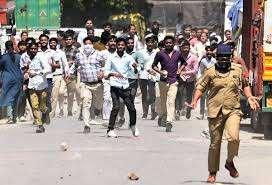
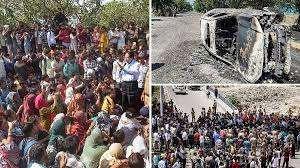
The latest issue (dtd. 25 April 2026) of thepopular magazine ‘Frontline’ hasanincisivearticleentitled,‘What Noida’s worker strikes tell usabout theLabourCodes’ broken promise’. Written by T K Rajalakshmi, the summary statement says, “The protestsbyindustrialworkersacross the National Capital Region and adjoining areas and the violence andpolicerepressionthatfollowed aretellingevidencethatdespitethe hollowpromisesthataccompanied the newLabour Codes, little has changedontheground”.
Theopening paraofthe article says itall,“Itwaswaitingtohappen.Only the “when” was not clear. The buildingsintheindustrialareasof theNationalCapitalRegion(NCR), withtheirglitzyinteriors,couldnot camouflagethesimmeringangerof workers inside any longer. When whatstartedasasmallbubbleof frustrationtook ontheforceofa volcanic eruption, fuelled by the oppressive conditionsimposedby hostileemployers andabettedby compliant governments, nothing couldputalidonit…Thus,inmidApril,workerspouredoutoftheir factories, striking work in the industrial area of theNew Okhla Industrial Development Authority (Noida) in Uttar Pradesh, fully consciousofthereprisalsandthe heavyhandofthestatethatwould come into play as the official reactiontotheiraction.Butitwasa moment that the workers truly owned, andtherewasnofactory thatwasunaffected….Therewasno coordinatedaction,nodirectunion involvement. Yet, it seemed like magic.Aspersomeofficialreports, workers across82factoriesstruck workprotestingthe12-hour,7-day working weekandtheharshand
unsafe working conditions within the factories, all for a measly monthlywageofRs.11,000toRs. 12,000.”
On 21 November 2025, the Government began implementing the four Labour Codes (on Wages, Industrial Relations, Social Security, andOccupational Safety, Health and Working Conditions). Concerned citizens, trade unions and opposition parties label them ‘anti-worker.’ Most regard these codes as favouring the corporate sector. Their ‘anti-worker’ dimensionsinclude‘thehireandfire policy’; ‘curtailing right to strike’; ‘expansion of Fixed-Term Employment (FTE); ‘diluted safety& welfare’
The way the NOIDA workers came out in droves to protest their grim reality is a case in point! The Uttar
Pradesh government announced a 21% wage hike, but many workers andunionsdeemedthisinsufficient. The police have taken legal action against those (apparently several thousands) involved intheviolence.
On expected lines, the godified media did not highlight the plight and the protest of the NOIDA workers. The situation of the ordinary worker (particularly casual labourers and migrant workers) in India leaves much to be desired: most of them are at the mercy of employers whoare exploitative and corrupt. Workers are often denied just wages and have long hours of work.Manydonotgetappointment letters nor are there the mandatory ‘ServiceConditions.’TradeUnionsin India have become almost nonexistent.TheCOVIDperiodrevealed the miserable conditions of the working class.
The month of May begins with the ‘International Workers’ Day’. This
Daynormally focuses on honouring the global workforce, promoting labour rights, and fighting exploitation. The Catholic Church has consistently championed the causeandthe rights ofworkers. On 15May1891, PopeLeoXIIIgavethe world his path-breaking encyclical, ‘RerumNovarum’(‘OfNewThings’), regarded as the foundational document of modern Catholic Social Teaching. The encyclical addressed the plightoftheworking class during the Industrial Revolution. It advocates for worker dignity, the right to form unions, and a just wage, while defending private property and rejecting both socialism and unrestrained capitalism.
Inhis Encyclical‘Laborem Exercens’ (On human work), dtd. 14 September 1981, Pope John Paul writes, “theChurchconsidersither taskalwaystocallattentiontothe dignity and rights of those who work, to condemn situations in whichthatdignityandthoserights areviolated,andtohelptoguide [social] changes soas toensure authentic progress by man and society.”Later, on 1 May 1991, he
promulgated another Encyclical ‘Centesimus Annus’ (‘The Hundredth Year’) to commemorate the historic anniversary of ‘Rerum Novarum’. It reiterated the fundamental vision, of ‘Rerum Novarum’and expoundedissuesof social and economic justice, including a defense of private property rights and the right to form private associations, including labourunions
In keeping with the significance of the day, the Catholic Church celebrates it as the Feast of St. Joseph the Worker. Pope Pius XII established it in 1955, to honour Josephasthepatron ofworkers and to celebrate the dignity of human labour.
Ayearago, on8May,Pope LeoXIV was elected to succeed Pope Francis; he assumed office on 18 May. When asked to explain his choice of name, Pope Leo said, “I chosetotake thenameLeoXIV. Therearedifferentreasonsforthis, butmainlybecausePopeLeoXIIIin his historic Encyclical ‘Rerum Novarum’ addressed the social questioninthecontextofthefirst
great industrial revolution. Inour own day, the Church offers to everyonethetreasuryofhersocial teaching in response to another industrial revolution and to developments in the field of artificialintelligencethatposenew challenges for the defence of humandignity,justiceandlabour." The Catholic Church has been consistentindefendingtherightsof workers for a more dignified, just and humane life. Cardinal Joseph Cardijn (1882-1967), founder of the Young Christian Workers, left no stone unturned to focus on the plight of workers and ensure that the teachings of ‘Rerum Novarum’ are mainstreamed in the life and mission ofthe Church.
Pope LeoXIIIsaysitverystrongly in his ‘Rerum Novarum’, “(Wemust)
save unfortunate working people fromthecrueltyofmenofgreed, who usehuman beings asmere instrumentsformoney-making.Itis neitherjustnorhumantogrindmen downwithexcessivelabour.”
The point is: isanyonelistening? Workers mustunite! We mustheed theircryforjustice!Weareallcalled to be in solidarity with workers, to ensure that they have better working conditions, withjustwages, normalworkinghoursandaboveall, toliveindignity!
30April2026
*(Fr Cedric Prakash SJ is a renowned human rights, reconciliation andpeace activist.He is also a prolific writer. Contact cedricprakash@gmail.com)
The Veez5Youth Icons
Intoday’sfast-moving digital world, recognizing true talent matters morethanever.Withthisidea,Veez brings a new segment to celebrate the energy, creativity, and achievementsofMangalore’syouth.
Mangalore, a cityknown forits rich culturalheritageanddynamictalent pool, has always nurtured individuals who go on to achieve remarkable milestones. However, many such stories often remain untold.
This special edition will feature five talented young individuals from Mangalore & Coastal Karnataka who are making a mark in their fields and inspiring others through their hard work andcreativity. They representageneration thatdaresto dream, try new ideas, and make a positive impact.
We also invite our readers to be a partofthisjourney. Your support in
promoting and encouraging this edition will not only amplify these voices but also contribute to building aculturethatvaluestalent, hard work, and innovation. Together, let us celebrate the changemakers of tomorrow and inspire a wave of positivity and ambition withinourcommunity.
Here are the five individuals featured, presented in noparticular order.
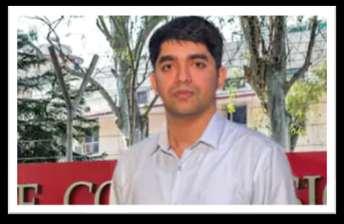
1)ShreyansGomes
Shreyans Gomes from Murudeshwar, Karnataka, sonofMr. SantyagJujeGomesandMrs.Mable Shanthi Gomes, has set a
remarkable example for young minds through his academic achievements.
Shreyans secured an All-India Rank of 372 inthe UPSC 2024- 25 on his third attempt, preparing entirely through self-study and online resources without any formal coaching. Despite early setbacks, clearing prelims in his first attempt but not mains and then by not clearing prelims in his second, he remained determined and refined his strategy. In his fourth attempt, heimproved hisrankto169.
Inspired during his engineering days to pursue civil services, Shreyans is currently serving in the IndianRevenueServiceIncomeTax.
Shreyans completed his early schooling in his hometown before moving to Alva’s College, Moodbidri, for his pre university education. He later went on to pursue engineering at the prestigious R V College of Engineering inBengaluru.
His father works with Konkan Railways, while his mother is a homemaker. He also hasa younger brother who iscurrently studying in Manipal.
2)Dr.LenonD’Souza
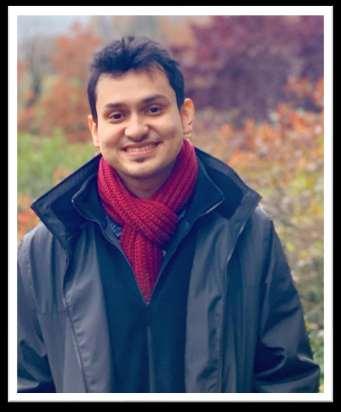
Dr.Lenon Jason D’Souza is a highly regarded vascular specialist, endovascular surgeon, and interventional radiologist based in Mangalore, holding a key position at Father Muller Medical College andtheVascularCenter.
Born in Kuwait to Mr. Ronald D’Souza, originally from Nakre in Karkala Taluk, and Mrs. Gracy D’SouzaofBajpe,Dr.LenonD’Souza is known for his elegance, humility, and a warm smile that has left a lasting impression on many. His passion for medicine led him to pursue his education at Father
His academic excellence was recognized when he was awarded theGold MedalinRadiology bythe Rajiv Gandhi University of Health Sciences,wherehegraduatedasthe university topper across Karnataka. He further pursued a fellowship in Vascular and Interventional Radiology at the esteemed KEM Hospital and Seth GS Medical College inMumbai.
Dr.Lenonhascontributed toseveral pioneering medical procedures, including complex interventional radiology cases that have been recognized as first-of-their-kind in theregion.
He recently tied the knot with Dr. Lisa J. D’Souza; a skilled dermatologist admired for her compassionatecareandexpertisein skincare.
Beyond hismedical career,hehasa keen interest in music and takes pleasure in playing the guitar and writing insightfulblogs.
3)RayanMagneto
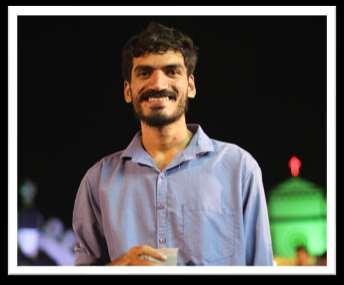
Rayan Fernandes, popularly known as Rayan Magneto, gained huge fame among Konkani speakers in Coastal Karnataka for his comedy movie Lucky Draw 777 which was originally released in 2023. He gained recognition for his multifaceted role as a director, writer,producer, andeditor.
Through its light-hearted storytelling, the film not only explores human greed and how people can change in the face of suddenfortunebutalsotoucheson certain social issues in a gentle, humorous way. “Lucky Draw 777” had its international premiere on January 28, 2024, in Mississauga, Canada.
Thesuccessof‘Lucky Draw777’led to the release of a standalone
sequel, Fondacho Misther,’ in 2025. The success of ‘Fondacho Misther’ exceeded all expectations. While it became a massive hit in Coastal Karnataka, the film also gained widespread recognition among the Konkani-speaking diaspora across the world, including the GCC countries, Australia, the USA, Canada, and various European nations.
Hailing from Kirem and born to Mr. Roni and Mrs. Molly Fernandes, he is a key driving force behind Trending Shield, contributing as a writer,director,andfrequentactorin its creative productions. Rayan Magneto, Kelvin Saldanha (Kellam), andLestonNazareth(Lestu)forman immensely popular trio whose content under Trending Shield has earned widespread admiration for both its creativity and impeccable comedic timing.
RayanMagneto’sthird filmisallset for release, marking yet another important milestone in his journey as a filmmaker. We sincerely hope that this venture receives wide appreciation from audiences and contributes to the growing recognition of the Konkani film industry.
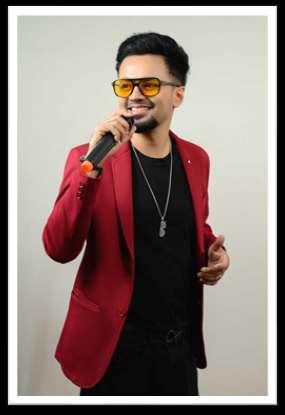
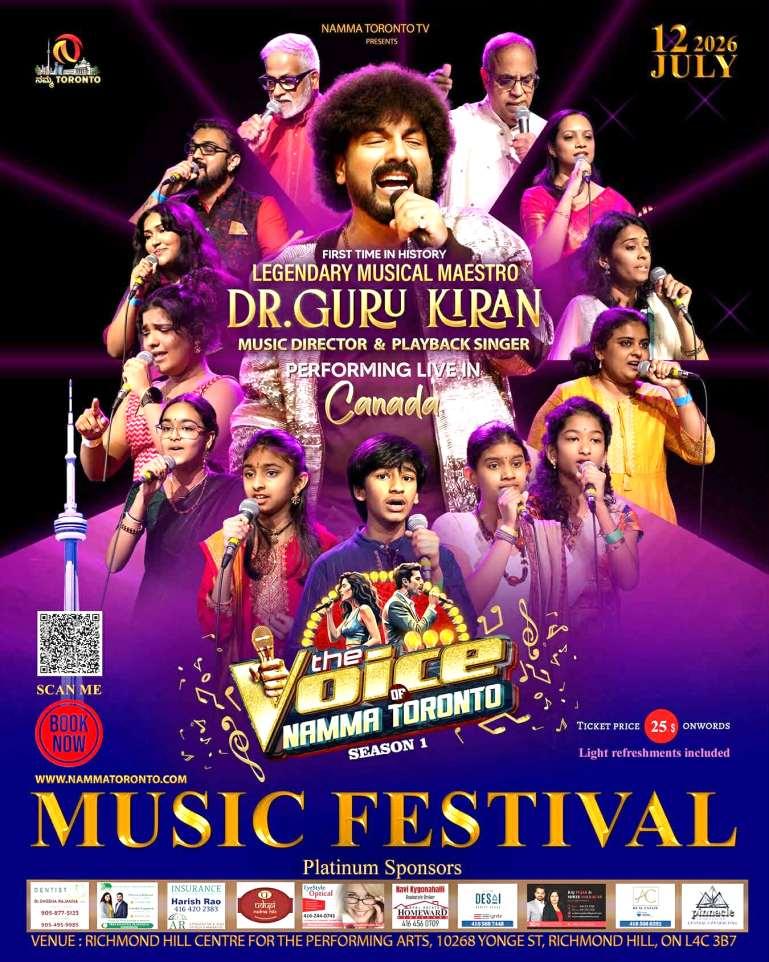
AshwinD’CostaisapopularKonkani singer, composer, and performer, widely recognized for his contributions to modern Konkani music throughindependent albums and music videos. He has lent his voice to several well-loved tracks, including Eklench Tum , Ritya Botaann , Tunch Tum , and Jeeva Mhoja1,among others. Inaddition to playback singing for three Konkanifilms,healsoshowcasedhis musical versatility by composing tunes for songs like Eklench Tum, JeevaMhoja1&2,Manglura&many more.
4)AshwinD’Costa
He holds an intermediate-level certification in Carnatic music from Kelvin Jayakanth Studios, Malaysia, and has performed in over 400 stage shows across India and abroad. Over the years, he has shared the stage with renowned artists such as Usha Uthup, Anuradha Paudwal, Remo Fernandes, and Guru Kiran, along with several celebrated Konkani music legends. Notably, he has performed in the presence of former President of India, Mrs. Pratibha Patil and former Chief Minister of Goa, Mr. Digambar Kamat.
Beyond his musicalpursuits, hehas alsogained recognition asanactor, having played the lead role in the Konkani film Osmitay , which was released across more than 15 countries and screened at the DC South Asian Film Festival 2023 in Washington, D.C. He earned the title of Mr. Photogenic 2011 at the Cultural World Convention, receiving the award from former Karnataka Chief Minister, Mr. H. D. Kumaraswamy.
Based in Bengaluru, Ashwin is a Senior Software Engineer by profession and currently holds the
position of Manager atKPMG India Pvt. Ltd. His academic background includes an MSc in Software Technology from St. Aloysius College, Mangaluru.
Seamlessly balancing his corporate career with his artistic passions, he continues to build a dynamic and inspiring journey in the world of performing artsandmusic.
Ashwinisalsoknown forbeing part of the growing wave of modern Konkani independent music, where artistscombinetraditionallanguage and themes with contemporary musical styles, helping the genre reachyounger audiences.
His debut musical concert will be held on7th June 2026 atthe iconic Chowdiah Memorial Hall in Bengaluru, marking akeymilestone in his journey. Hosted by the Konkani Catholic Association of Mathikere for their Diamond Jubilee, the event reflects his growth, experience, and readiness totakethestage.
Despite his remarkable success, Ashwin retains a “boy-next-door” charm and is deeply respected in the industry for his humility, politeness, andgentlenature.
5)HeraPinto
Hera Pinto is a renowned Mangalorean compere, actress, singer, dancer, and creative performer, known for her strong presence in the Konkani entertainment industry. With her vibrant stage presence and strong communication skills, she has hosted several cultural and musical events across India and overseas, widely appreciated for her natural ability to engage with audiences. She is also active in the creative space beyond anchoring, having worked in Konkani music videos, acting projects, and even contributed lyrically to songs in both Konkani and English. Her
versatilityasaperformerhashelped her build a strong identity in the regionalentertainment scene.
She is also the founder of Konkan Fiesta, a platform for musical and cultural events, and a trained fashion designer who often creates her own stage outfits, adding a unique personal touch to her performances.
Alongside her work on stage and screen, she is admired for her vibrant personality and her signature approach of “spreading smiles”. However, her journey has notalwaysbeeneasy.Shehasfaced personal and professional challenges, including thedifficulties of divorce in her first marriage as well as the ups and downs of her career. Despite these experiences, she has consistently risen above adversity and continues to shine brightly with resilience and grace. Hersimplicityandhumilitycontinue to define her personality, making her even more admirable beyond herprofessionalsuccess.
For the next edition, we will be introducing five more youth icons whocontinuetoinspirenotonlythe youngergeneration butalsopeople
acrossallagegroups. Wehopeyou will enjoy this new segment and look forward to your valuable feedback.Wedeeply appreciatethe thoughts and suggestions of our readers.
- By Prinson Agnel D’lima
My United Nations CSW70 Journey
MomentsofLearning,Partnership, andPurpose
Introduction
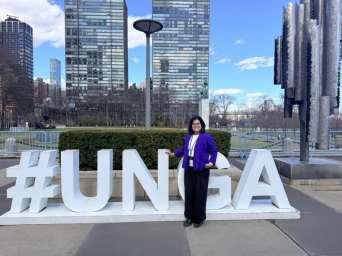
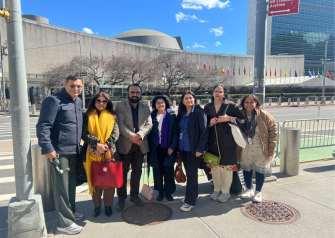
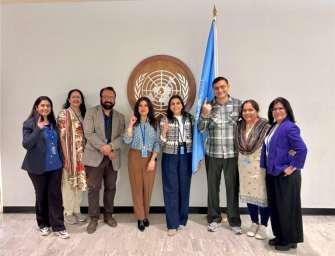
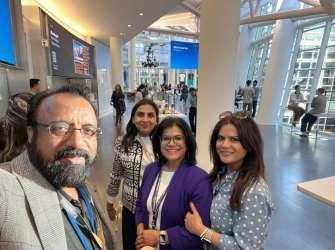
Attending the 70th session of the Commission on the Status of Women, CSW70, at the United Nations Headquarters in New York was once again a deeply meaningful experience for me. This wasmysecondtimeattendingCSW,
andIfelttrulygratefultobepartof suchanimportant global gathering where leaders, advocates, and organizations came together to discussissuesthatmatterdeeply to womenandgirlsaroundtheworld. Thefocusof CSW70 wasimproving access to justice for women and girls. Discussions highlighted the importance of fair and inclusive legal systems, ending violence against women, removing barriers to equality, and ensuring that youngergenerationsarealsopartof shaping the future. More than anything, the session underscored the urgent need to turn global commitments into real and lasting action.
What made this journey especially meaningful for me wasthat itwent beyond attending sessions at the United Nations. It became a wider experience of learning, sharing, connection, andreflection, fromour
side panel discussion to the invitation to Uganda House, to the
IDF annual charity event where we shared our UN experience, and Finally the privilege ofmeetingMr. RatanjitSondhe.
My
Experience
at CSW70 at the UnitedNations
Being at the United Nations for CSW70 was a powerful reminder of the importance of global dialogue and collective action in uplifting womenandcommunities. Itwas both inspiring and humbling to witness conversations centered on justice, equality, dignity, and opportunity for women and girls. Whatstoodouttomemostwasthe
shared sense of purpose in the room, the understanding that real andlastingchangerequiresnotonly conversation, butalsocommitment, collaboration, andaction.
For me, this experience was not simply about attending an internationalgathering. Itwasabout being present in a space where voicesfrom around theworld came together with a common hope, to
build a more just, inclusive, and compassionate future for women andgirls.
Side Panel Discussion: Women andGreenJobs
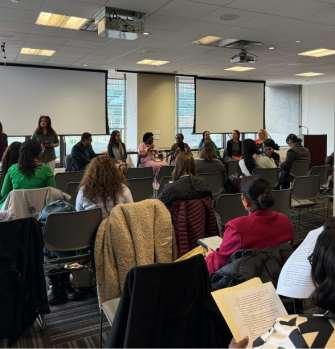
Another especially meaningful part of this journey was our team’s side panel discussion, organized by CompassionShip Edu-Tech Foundation, on Women and Green Jobs. Itwas inspiring to see women leaders come together to speak about sustainability, opportunity, innovation, and the important role women play in shaping a greener and more equitable future.
The collective force of leaders and innovators, Nikita Khosla, Hon. Sarah Opendi, Hon. Flavia Kabahenda, Dr. Radhika Srinivasan (Ph.D), Emma Gardephe, and Laura Richards, sparked hopeforcreatingpathways toward a more sustainable and equitable future. Together, they reflected change across socio, political, financial, economic, environmental, educational, and researchfields.
What made this panel especially memorable was not only the strength of the ideas shared, but also the spirit in theroom. It wasa reminder that when women are included in innovation, sustainability, and leadership, they donotsimply contribute tochange. They help shape it in meaningful andlastingways.
Invitation to Uganda House: Exploring What More Can Be Done
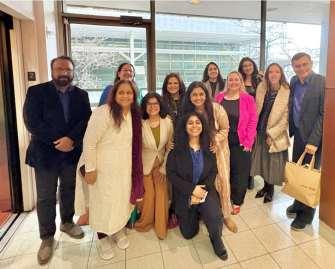
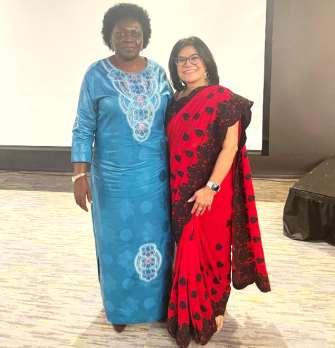
One of the most meaningful experiences for me at CSW70 was being invited to Uganda House, theHighCommission Office, fora meeting with high level policymakers andrepresentatives from Uganda. Itwasa very special moment for our team because it reflected both recognition of the work already done and a shared interestinexploringwhatwecando together inthefuture. We were not there simply to introduce ourselves. Our work had already been seen and acknowledged. Our IDF USA team had previously visited Uganda, and our footprint is already there
through our social impact projects. Sothismeetingwasreallyaboutthe future, about how we can build on that foundation and how the same models that have worked in India can be adapted to uplift communities inUganda.
Our IDF USA team, together with CompassionShip Edu-Tech Foundation, cametogether forthis important meeting because Ugandan ministers strongly expressed the need for sustainable menstrual hygiene solutions, skill development, and nutritional support for young girls and underserved women.
That openness and willingness to hear from the top members of Parliament was both encouraging andinspiring. Itshowedthatthereis genuine interest in meaningful collaboration. The work already done may sound simple,butsimplethingscanhavea profoundimpact. Threesolarpanel borewells wereinstalled,benefiting about two villages and two schools and impacting more than 3,000 lives. This gave communities access to clean drinking water,
something so basic to life, yet still beyond reachformany.Shoeswere alsogiventochildrenwhohadbeen walking barefoot, and support was provided to help build a small classroom. These may not seem like grand gestures, but to the people receiving them, they are life changing. Apairofshoesisnotjust footwear for a child who has never had them. It is dignity, protection, andcomfort. Aclassroomisnotjust a structure. It is a doorway to education, confidence, and opportunity. A solar panel borewell ishope.
Because that foundation already exists,therealdiscussionatUganda Housewasaboutwhatmorecanbe done. One of thestrongest themes thatcamethrough wastheneedto uplift women and children. In many communities, women have beenheldbackbylimited accessto support, education, opportunity, and necessities. If we truly want to uplift a country, we must uplift its womenandprotect andinvestinits children.
That is why we spoke about the
importance of partnership between government, private sector, and NGOs. It takes all of us to work together with shared responsibility andcompassion.
ThreeProposed FocusAreas
First, a pilot sustainable sanitary pad manufacturing plant using bananafibers abundantly available in the country. This idea felt especially meaningful because it is simple, sustainable, practical, and deeply impactful. Something as basic as a sanitary pad can determine whether a girl stays in school with dignity and confidence or misses valuable days of educationevery month.
Second, a pilot mid-day meal project, witha kitchento besetup usingthesamemodel already used successfully in India. We know that food security and education go handinhand.Ahungrychildcannot focus,cannotlearnfully,andcannot dreamfreely.
Third, economic development ideas, including proposals around digital currency and a UPI style model, so that the economy can become more digital, accessible,
and inclusive. These may be larger ideas, but they areallconnected to the same vision of helping communities grow with dignity, sustainability, andopportunity. Whatstayedwithmemostfromthis experience is something very simple. Weoftenunderestimate the power of helping others with the most necessities. We waste water without thinking. We buy colorful shoeswedonotreallyneed.Wego about our daily lives without imagining what it means for someone to live without clean drinking water, without a proper meal, without shoes, or without something as basic as a sanitary pad.
For us, these may seem like small things. But for them, they mean dignity, comfort, health,confidence, thechancetogotoschool, andthe chancetodream. Andthatiswhy thesematters. That is why we seek support. Because sometimes the simplest act of kindnesscanbecomethebeginning ofsomeone’s future.
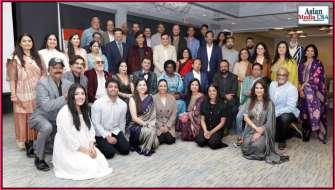
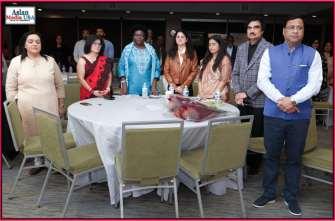
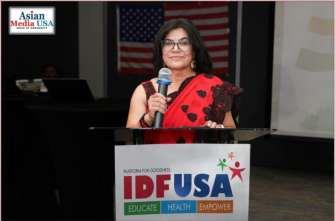
Another meaningful part of this journeywastheIDFAnnualCharity Event, where we had the opportunity to share our United Nations experience with a wider audience.
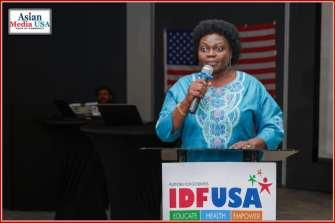
The evening was honored by the presence of Somnath Ghosh, ConsulGeneral ofIndia, and Hon. Sarah Achieng Opendi, Member of Parliament, Uganda, who attended as Chief Guests. Jayakumar Nair, Delhi State Co Convener, BJP South Indian Cell, joined asa SpecialInvitee.
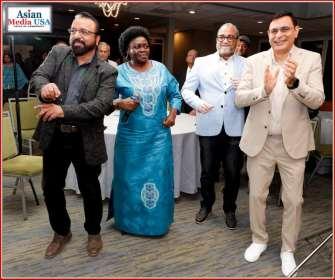
One of the most memorable moments of the evening waswhen Hon. Sarah Achieng Opendi addressed the gathering and then sang “Jambo Bwana,” warmly inviting everyone onto the floor to join her in dance. It brought so much joy, warmth, and togetherness to the room, and beautifully reflected the spirit of unityandsharedpurpose. The event became a lovely opportunity not only to celebrate, but also to reflect on our CSW70
journey and share how meaningful theseexperiences hadbeen forour team.
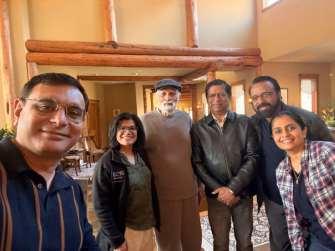
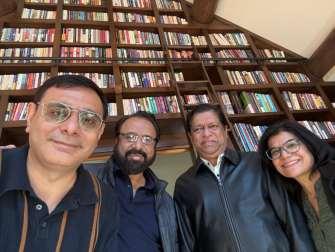
A Meaningful Meeting with Mr. RatanjitSondhe
Another special part of thisjourney was the opportunity to meet Mr. Ratanjit Sondhe. Spending time with him was both anhonor and a privilege.
Amid such a full and meaningful journey, this meeting brought a personal and reflective dimension that I deeply appreciated. His humility, wisdom, and spirit of oneness made the experience especially memorable. Itwasoneof those moments that stay quietly in yourheartbecauseofhowdeeply it touchesyou.
ClosingReflection
AsIreflectonthisCSW70journey, I feel deeply grateful for the many moments that made it so meaningful, the experience at the United Nations, the powerful side panel discussion, the invitation to
Uganda House, the opportunity to shareour journey attheIDFannual charity event, and the memorable meeting withMr.RatanjitSondhe. Eachoftheseexperiencesreminded me in a different way that real change begins with connection, compassion, and action. Whether through ideas, dialogue, partnerships, or simple acts of service, every effort has the potential to uplift lives and open newpossibilities. This journey left me inspired, humbled, and hopeful about what more can be done when people cometogetherwithsharedpurpose.
-Queenie Mendonca, Veez Weekly, USA
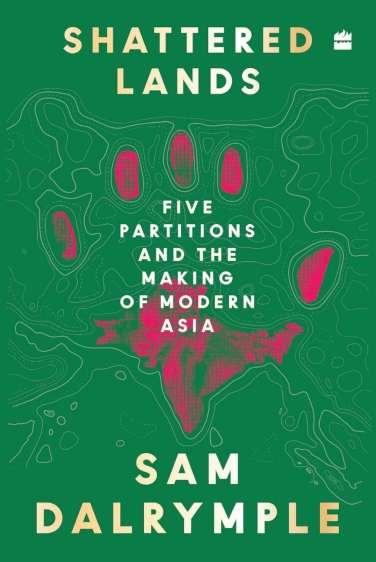
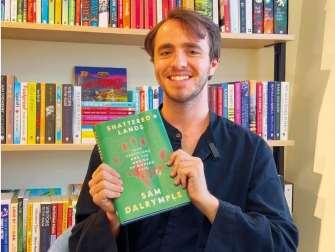
A REVIEW OF SAM DALRYMPLE’S ‘SHATTERED LANDS’ BOOK.
‘ShatteredLands’ , narrates how the “Crown Jewelin the British Crown -
A vast swathe of Asia, stretching from the Red Sea to the jungles of SouthEastAsia&hometoaquarter of the world’s population” –shattered in just 50 years & 5 partitions into the 12 nations of India, Pakistan, Bangladesh, Burma, Bhutan, Nepal, Bahrain, Kuwait, OmanQatar,UAE&Yemen.
TheauthorSamDalrymple provides detailed information on all the five partitions & has cast their prime aspects into historical perspective. Thistestifies tohisdeep knowledge ofhistory&widespectrumresearch and enhances this book’s value & impact.However,thegreatsurfeitof
detailineverychapterhasgiventhis bookitsmammoth 520-page size& made itadaunting challenge togo through &review.
Examplesofthesurfeitofdetails are the 3 pages given to The Simon Commission (SC) ’s five-week travel from London to New Delhi with even quotes from Sir John Simon’s letterstohismotherenroutetoNew Delhi, included in them. Jinnah is given five pages & among the innumerable details about him are his initial keenness to be a Shakespearean actor, “scandalizing BombayHigh Societybycourting& marrying 18 year old Ruttie Petit, the most envied debutante of her generation”, his great disappointment that Gandhi’s “religious politics” proved more popularthanhis&hisfinallyleaving the Congress Party “after many monthsof despair”. &.twentyyears later, this “former Ambassador of Hindu Muslim Unity” founding of “theWorld’s firstIslamicrepublic”
The first chapter, titled ‘The Great Uprising’, isabout Burma’spartition from India & the fifteen months ‘anti-partition Saya San Rebellion it spawned’. It is averred to be “the
biggest & most sustained revolt in post1857 BritishRaj”..
The following notable factsare also pointed out:
a) In its entire fourteen-month travel from Bombay to Rangoon February 1928 –April 1929, the Simon Commission (SC) “conspicuously failed to meetMahatmaGandhi,who along with Jinnah would change the face of Asia forever”.
b) Gandhiwas“oneof the last few people to traverse the vast distance from Aden to Rangoon while it was still part of the BritishEmpire.”
c) Gandhi visited Rangoon to meet his law school friend Pranjivan Mehta who had"bankrolled his Satyagraha activities in South Africa as also the Burma wing of the Congress. Party.”
d) The Burmese were greatly disappointed that Gandhi did not support them on the Partition issue. Worse still in an address to
Rangoon’s Gujarati community he averred "Burma was not a part of India’sancientgeography”.
e) Gandhi’s 1930 Salt Satyagraha islauded“anact of political genius & one of the last major political movements to unite Indian &Burmesenationalists”; itis averred that for him “the political & spiritual were inseparable & his message of nonviolent struggle transformed himintoapanIndian figure & perhaps the single most famous person intheworld”.
f)Surprisingly, nomentionis made of Gandhi’s March 2, 1930, letter to Viceroy Lord Irwin, written on the eve of theSaltSatyagraha,inwhich he rued British rule as a "curse” which had “impoverished India through economic exploitation, reduced its people to political serfdom, undermined their culture & degraded them spiritually”
In the chapter titled ‘The First PartitionsofIndia’,theseparation of itseastern & western wings is presented & the following notable developments pointed out:
A)"Brandnewquestions aroseinthe newly fragmented Indian Empire. What would happen to Indians in Burma,toBurmese inAden&Arabs inIndia”
b) With Burma’s separation from India, one fifth of the Nagas were left in Burma & four fifths in India. This created the thorny problem of cross border insurgency
In the chapter titled ‘The Drums of War’, it is averred that within five years of its separation from India "Burmese politics took on a dark turn & embarked on theroad toan ethno-nationalistic state”. In this context the following notable facts arepointed out:
a) In December 1939 U Saw’s Myochit Party received the ‘Seal of Approval fromVolkeischer Beobachter, the Nazi Party newspaper.
b) Indians were systematically boycotted. Inthefirsttrickle of Indians departing Burma, was future Nobel Laureate Amartya Sen, whose father was a Visiting Fellow at MandalayUniversity.
c) EveninIndiatheWWIIstory is still told as if itwas Eurocentric despite itbeing “the most widespread conflict in Asian history since the Mongol conquest” In a few months it had spread from eastern China to western India & had claimed 30 million lives”.
In the chapter titled ‘The Long March’, the hasty evacuation from Rangoon ofdiverse communities as Japan’s Army advanced towards it, is presented & the following notable factsarepointed out:
a). WhereasBritish citizens, Anglo –Indians, Goans, “big merchant Chettis & Gujarati banias” were evacuated by air & ship, 'ordinary Indians'hadtodothis‘LongMarch’ toIndiaoverthePatkaiHills onfoot. Atthattime, itwas“thelargestmass migration & refugee crisis recorded.”
b) “The speed of Japan Army’s advance towards Rangoon was astonishing”. Withinamonthof the Pearl harbour bombing, half of Burma’ssouthern isthmushadbeen captured. Itssuccesswaspartlydue to the 20,000 strong, Burmese Independence Army. (BIA) led by the ‘Heroic Thirty Comrades’ which accompanied it
a)"The year 1971 remains the most significant in the history of postcolonial South Asia. In just nine months, ten million Bengali refugees crossed into India, thousands were rendered homeless, Pakistan was cut in half, USA & Soviet Union risked nuclear war & South Asia map was entirely changed".
b) Time Magazine reported that 563 Bengali women were forced into sex camps at Pak Army’s Dacca cantonment. Subsequently more evidence emerged to corroborate this report. This made these sex camps “the vilest &
contemptible aspect of the 1971 Bangladeshwar.”
c) The 1971 Bangladesh War is the first sub-continental war sinceWorldWarII. Initsfirst3 days (Dec. 3-5) India established supremacy in the eastern sector; in the western sector its success initially looked uncertain but “by December 7, President Nixon felthe was"backing the losing side”. He instructed Kissinger to prepare a plan to counter this. The plan the latter made envisaged Iran & Jordan sending American aircraft to assist Pakistan, China massing troops on the Indian border & theUSS Enterprise aircraft carrier being moved into the Bay of Bengal. This “hare brained plan if implemented. would have brought South Asia & the world tothemostcriticalpoint since the Cuban Missile crisis as this aircraft carrier was beingtailedbyaSovietnuclear submarine”. Luckily, for South Asia&theworld,PremierZhou en Lai assessed East Pakistan could not be saved & by the
time the mentioned carrier entered the Bay of Bengal “Bangladeshwasalreadyafact, Pakistan was half its size & India had emerged as South Asia’sonly major power. Most ironic of all, Pakistan once billed as homeland for South Asia’sMuslims now had fewer Muslims than India & Bangladesh.!”
In the Epilogue, the author has averred;
a) “Injust50yearsbetween 1931 – 1971 five partitions divided the Indian Empire into 12 separate nation states. Today these lines have become so embedded in our consciousness that it is easy to forget there were other possibilities for a post-colonial South Asia.
b)Prominent SouthAsianleaders likeJawaharlalNehru&AungSan had spoken of an “Asiatic Federation in the not distant future encompassing India, Pakistan, Burma & Ceylon. But Asia’s new states were born resentful of one another & suspicious oftheir minorities.
c) “For almost two millennia, South Asian communities & cultures had spread across Asia from east Africa to Southeast Asia. As European empires collapsed these ancient links could have been rekindled; instead, new national identities have been hardened & many communities have been left on thewrong sideof newborders & suppurating wounds that bleed into the present have been created.”
d) Bengal was annexed by the British East India Company in 1757,just50yearsaftertheActof UnionwithScotland&nearlyfifty years before the Act of Union with Ireland. The region of modern Bangladesh was once crucial to the very formation of GreatBritain yettoday mostBrits areunawareofthis.”
These assertions of the author, along with his earlier ones extolling the benefits of a "vast swathe of Asia,which used the Indian Rupee, issued Indian Empire’ passports & enabled people holding them to travel
freely through all parts of it", “modern Bangladesh being crucial to the very formation of GreatBritain”&“thenewborders having created suppurating wounds that bleed into the present”areclearindicationsthat theprime purpose of thisbook’s author is to extol the benefits of the ‘Raj’ & ensconce its many evils. That he has made no mention of Gandhi’s March 2, 1930, letter toViceroy Lord Irwin aboutBritish ruleofIndiabeinga "curse”, despite it having been written on the eve of the salt Satyagraha,whichhehasextolled as a “stroke of genius” is further weighty proof ofthis.
Reputed scholars who have researched why British rule of India was a "curse” have written asunder:
a) Angus Maddison, in his book ‘ContoursoftheWorldEconomy’ :"India'sshareofworldincomein 1700 was 22.6% & was comparable to Europe's share of 23.3%. In 1950 India's share had fallento3.8%"
b) Nobel Laureate Amartya Sen, inhisTheIdeaofJusticeBook has pointed out that in the 1770 –1947 period there were 11 major famines in India in which 46 million people died, 4 million of them in the 1943 'Great Bengal Famine'. He has averred “Famines, a persistent feature ofthe British IndianEmpire, ended quite soon after Indiaindependence”
c) Will Durant, in his ‘TheCase forIndia’ book has written "InIndia, I saw a great peopleone fifth of the human racesuffering poverty & oppression greaterthananyfoundelsewhere on earth.The British conquest ofIndiawas the invasion & destruction of a great civilisation by a trading company utterly withoutscruple&greedyofgain"
d) Hugh Tinker, in his book’ A New System of Slavery: The ExportofIndian LabourOverseas 1830-1920’ has pointed out that during the mentioned period British India transported 1.6million Indianstolabour inits plantations & railway projects in
colonies as farapartas Fiji in the east&theCaribbean inthe west, “as a substitute for slave labour, following abolition of the slave trade in the British Empire in1833.” He has also indicated the first such transportation was on theAtlasvoyage toMauritius in 1834.
Regarding the author's assertion that“newnationalidentities have createdsuppurating wounds that bleed into the present", thefacts arefollows:
a) Indiawas partitioned on religious lines by the British despite it being a multireligious society for many centuries & its Gandhi led non-violent freedom struggle being waged by patriots from allitsreligious communities.
b) The new state of Pakistan created for India's Muslims had two parts, one in Punjab, the other in Bengal with 1500 miles ofIndianterritory between th em! This amazing geographical surgery was made based on a “Partition Line” drawn by a British
Cartographer who had never been inIndia & knew nothing of its political & social complexities. Worse still, the ‘PartitionLine’wasannounced two days after India& Pakistan attained Independence. This was the primecauseforthemasspanic & exodus of Hindus & Sikhs from Pakistan toIndia&Muslims fromIndiato Pakistan & the ensuing worst communal massacres in India’s long history, in which at least 600,000 were killed.
c) Despite being divided on religious lines India adopted a secular constitution based on universaladultfranchise.Ithas steadfastly safeguarded it despite attempts byambitious & bigoted politicians to replace it.
d) Within 15 years of India's Independence Jawaharlal
Nehru created the nonaligned movement & brought over100Asian,African&Latin American countries into it . It was&stillistheworld's largest “anti-war” peacemovement.
e) Gandhi’s ‘Soul Force’ revolution ended not only the British “Raj” but all European Empires. Between 1947 – 1997 over100oftheircolonies were decolonized. This was the mostradicaltransformation of the global power structure & its democratization & trajectories of progress, in history.
-Alan P. Nazareth, Ambassador
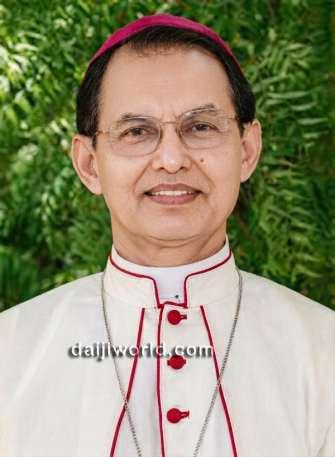
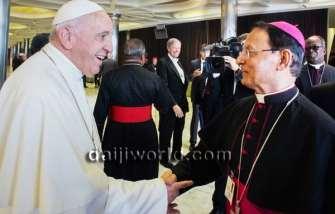
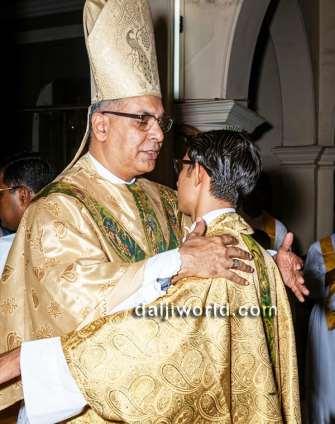
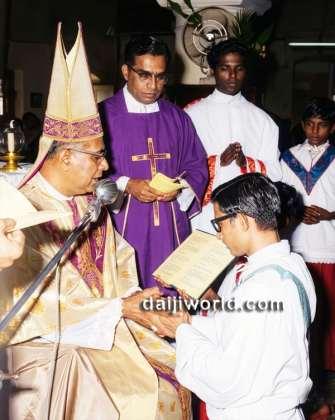
Shepherd with Golden Heart: Bishop Dr Henry D’Souza,
priest of Jesus for 50 years
• Mon,May042026
• ByProfArchibaldFurtado May4,2026
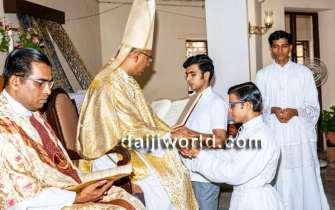
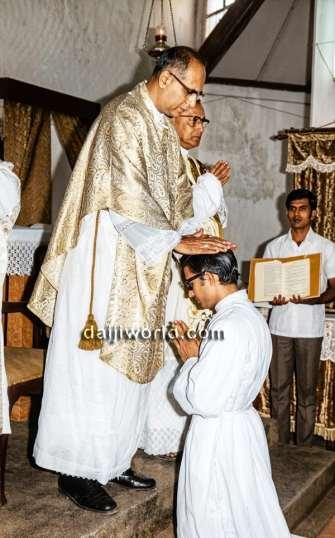
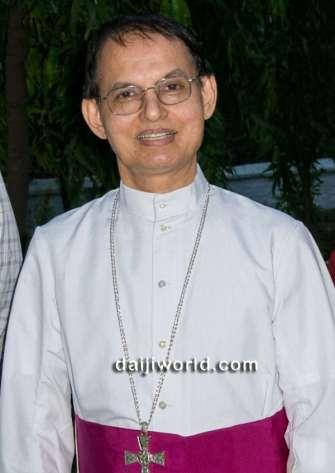
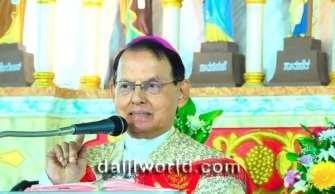
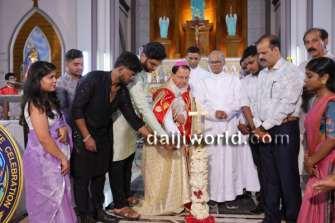
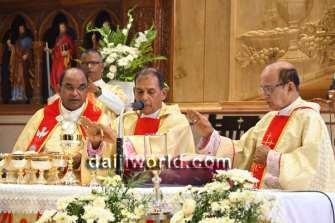
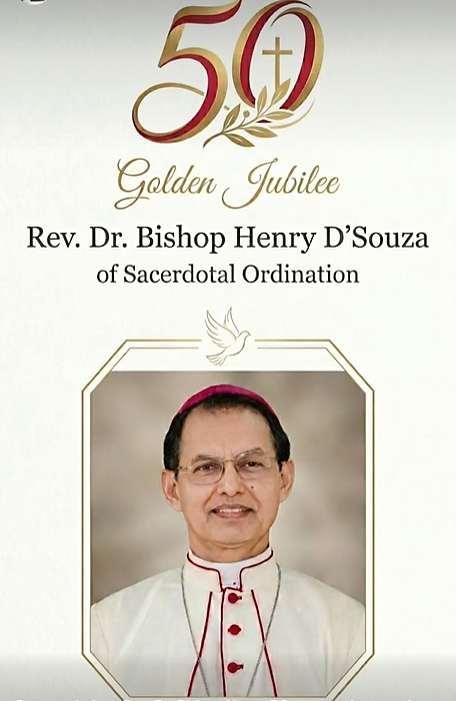
On the joyous and grace-filled occasion of his Sacerdotal Golden Jubilee on May 5 2026, the faithful and admirers offer profound gratitude to the Almighty for the preciousgiftofDrHenryD’Souza ashepherd whose liferadiates faith, selflessservice, andunwavering
commitment toGod’speople.
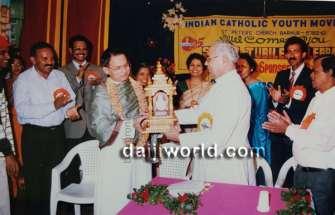
Ordained on May 5, 1976, Bishop D’Souza began his priestly journey withremarkable zealandmissionary spirit. His early years as assistant parish priest at St Peter’s Church, Barkur (1976–1978) revealed a dynamic andvisionaryyoungpriest. Even in that brief period, he leftan enduring mark. He founded CYM Barkur in 1976, nurturing young
minds in faith, leadership, and responsibility. His vision also gave Barkur its Open Stage, inaugurated onMay14,1978,whichcontinuesto serve as a vibrant symbol of
community life and cultural harmony.
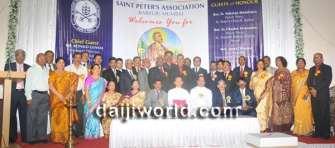
Helaterguidedtheformation ofthe St Peter’s Association, Barkur–Mumbai(1988)andtheICYMBarkur Ex-Members Association (2002), uniting Barkurians across the globe in bonds of faith andfraternity. For the people of Barkur, his name still evokes deep pride, affection, and reverence.
A Visionary in Service and Communication
Returning to Mangalore, he served as director of Mangala Jyothi, shaping formation and spiritual growth. As director of the Canara Communication Centre, his foresight and creativity strengthened Catholic media outreach, blossoming into Sandesha a respected and
influential media apostolate that continues to serve the church and societywith distinction.
Apioneerinsocialcommunications, Bishop Henry D’Souza has championed cultural and interfaith dialogue. Blending faith with creativity and innovation, he has inspired countless individuals. As founder of Sandesha and architect of several transformative initiatives, he has left an indelible mark on media,education,andpastoralcare. A gifted orator and powerful communicator, heiswidelyadmired for his engaging preaching. His words simple yet profound carry the depth of the Gospel and the warmth of a shepherd’s heart. Fearlessinstandingagainstinjustice and endowed with deep compassion forthepoor,youth,and children, he truly embodies the spiritofChristthe Good Shepherd.
A Humble Bishop Close to His People
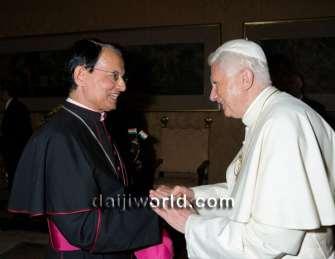
His appointment as Bishop of Bellary on March 15, 2008 recognised a life wholly dedicated to service. With administrative ability, pastoral sensitivity, and genuine love for people, he has
guided his flock with wisdom, humility, andinclusiveness. His dedicated ministry has spanned Barkur, Mangalore, CBCI Delhi, Shimoga, Bangalore, and the Diocese of Bellary since 2008. Wherever he has served, he has been a guiding light, empowering communities andfostering unity. Despite the heights hehasreached, Bishop D’Souza remains a man of striking simplicity. He remembers names and stories, shares in people’s joys and struggles, and reaches out with genuine warmth. His enduring personal bond with Barkur and its people stands as a touching witness that no distance can diminish authentic love and connection.
Ashecelebrates 50blessedyears in thevineyard oftheLord, wehonour alife lived with purpose, grace, and quiet dedication. His journey inspires thefaithfultowalkthepath of faith with courage and conviction.
Dear Bishop Henry D’Souza, Your lifeis a blessing, your ministry an inspiration, and your legacy a treasure to the church and society. We feel especially privileged that theCYMBarkur, whichyou founded
in your veryfirstparish assignment, now stands at the threshold of its own Golden Jubilee. Throughout this jubilee year, various programmes are planned, with the grand finale envisioned for December 2026 and January 2027.
Your gracious presence on that occasion wouldmultiply ourjoy. May the Lord, whom you have served so faithfully, bless you with good health, abundant grace, and many more fruitful years in His service.
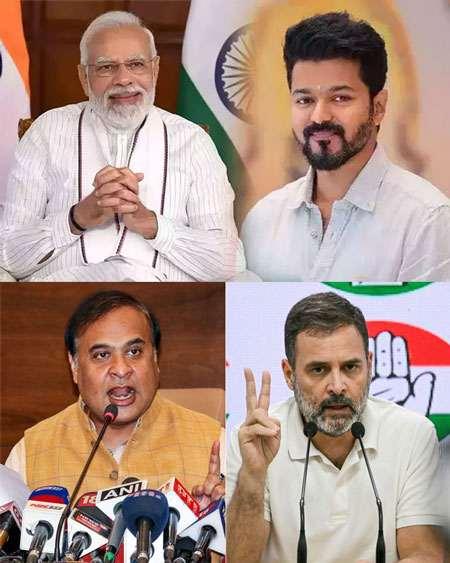
votes for the 2026 assembly elections in West Bengal, Tamil Nadu, Kerala, Assam, and Puducherry is underway, throwing upmajorpolitical shiftsandhistoric upsets. Early trends and declared results indicate a dominant performance by the BJP in West Bengal and Assam, a spectacular debut by actor Vijay’s TVK in Tamil Nadu, and a decisive comeback for theCongress-led UDFinKerala.
West Bengal: BJP breaches TMC fortress
In a monumental political shift, the BJP is poised to end the Trinamool Congress's (TMC) 15-year rule in West Bengal. According to early trends,theBJPisleadinginover200
seats, comfortably surpassing the majority mark of 148 in the 294member Assembly, while the Mamata Banerjee-led TMC trails significantly with leads or wins in around 90 seats. While the BJP dethrones the TMC, Chief Minister Mamata Banerjee is maintaining a narrow lead in the Bhabanipur constituency against BJP's Suvendu Adhikari.
Tamil Nadu: TVK's dramatic debut
Tamil Nadu is witnessing a major upset as actor-politician Vijay's debutant party, Tamilaga Vettri Kazhagam (TVK), has emerged as the single largest force. TVK is leading or winning in nearly 110 of the 234 seats, pushing the ruling DMK to the second position. Vijay himself has registered victories in both the Perambur and Tiruchirappalli Eastconstituencies.
Kerala: UDFreturns topower
The Congress-led United Democratic Front (UDF) ismaking a decisive return to power in Kerala, crossing the halfway mark of 71 in the 140-member Assembly and halting the incumbent LDF's bid for a third term. The UDF is hovering
near the 100-seat mark, registering its best-ever show. Meanwhile, the BJP has also notched its best performance inthestate,remaining oncourse towinthree seats.
Assam: Third termforNDA
TherulingBJP-ledNDAisoncourse forahistoric thirdconsecutive term in Assam. Under the leadership of Chief Minister Himanta Biswa Sarma, the NDA has crossed the 100-seat mark in the 126-member Assembly, leaving the Congress-led opposition trailing far behind. AssamCongress chiefGauravGogoi suffered a major defeat, losing the Jorhat seat to BJP's Hitendra Nath Goswami byover23,000 votes.
Puducherry: NDAretains control
In Puducherry, the NDA is in command and set to form the government. The All India N.R. Congress (AINRC), led by Chief Minister N Rangasamy, along with the BJP, has secured the necessary numbers in the 30-member House.
Chief Minister N Rangasamy has been re-elected from the Thattanchavadyconstituency.
LiveUpdates
West Bengal: (Total seats 293, Target 147)
TMC+ -80(11 lead, 69 won)
BJP -207(7 lead, 200 won)
Cong -2 (won)
Left - 2 (won)
Others -2(won)
Tamil Nadu: (Total seats 234, Target 118)
DMK+ -74 (2 lead, 72 won)
AIDMK+ - 53 (1 lead, 52 won)
TVK -107 (3 lead, 104 won)
Others -0
Assam: (Total seats 126, Target 64)
BJP+ -102 (won)
Cong+ - 21 (won)
Others -3(won)
Kerala: (Total seats 140, Target 71)
LDF - 35 (won)
UDF -99 (won)
BJP+ -3 (won)
Others -3(won)
Puducherry: (Total seats 30, Target 16)
BJP+ - 18 (won)
Cong+ -6 (won)
Others -6(won)
Earlier report
Counting for highstakes elections in West Bengal, Kerala, Tamil Nadu, Assam & Puducherry assemblies onMay4
DaijiworldMediaNetwork–New Delhi
New Delhi,May 4: The stage is set for the high-stakes counting of votes tomorrow for the assembly elections in West Bengal, Kerala, Tamil Nadu, Assam, and the Union Territory of Puducherry. According totheElectionCommission ofIndia, the counting process is scheduled to begin at 8 am across all designated centers.
InAssam, counting forall126 seats will take place at 40 centers across 35 districts under a multi-layered security blanket. The political future of722 candidates, whoparticipated in a high-turnout election of 85.96%, will be decided. West Bengal officials have established 77 counting centers throughout the state with robust security measures to maintain transparency. In Tamil Nadu, a massive workforce of 10,545 counting personnel and 4,624 micro-observers has been deployed, while 234 counting observers will monitor the
proceedings. PuducherryandKerala have alsofinalized all logistical and security arrangements for a transparent process.
Exit polls released by major agencies suggest a diverse political landscape across the regions. In
Readers key to
sustaining
Tamil Nadu, a decisive sweep is predicted for the DMK-led alliance, while Kerala appears poised for a historic trend-breaker with most pollsters favouringtheLDFtoretain ledNDAis expected to hold its ground and e. The most intense battle remains in West Bengal, where exit polls are divided; some predict anarrow edge for the TMC, while others suggest the BJP could emerge as the single largest party.
In Puducherry, the AINRC-BJP allianceislargelyexpectedtosecure amajority.
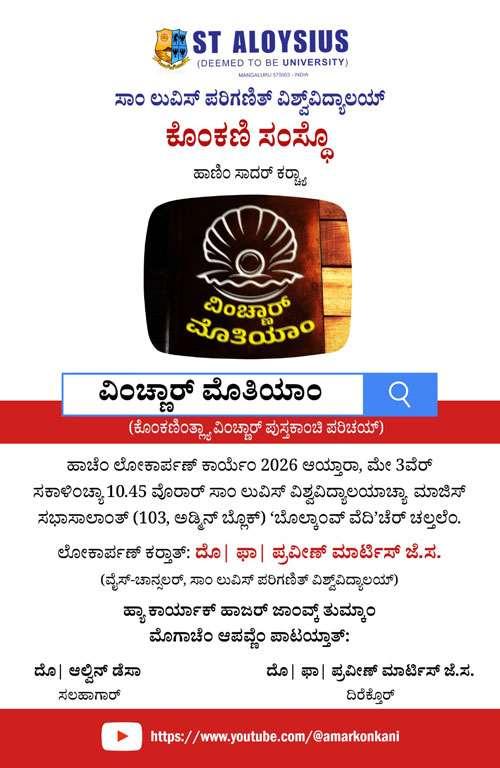
literature, says Fr Praveen Martis; ‘Vinchnar Motiyam’ series launched
MediaRelease
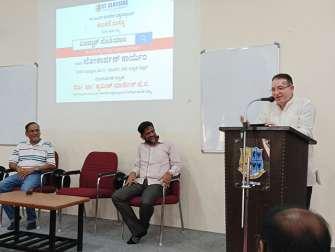
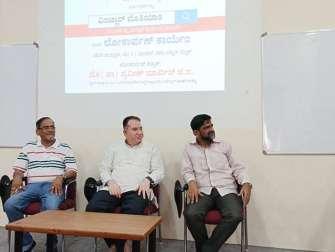
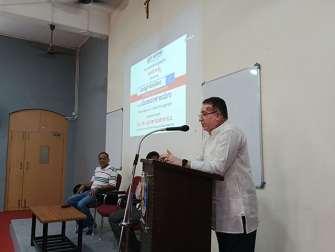
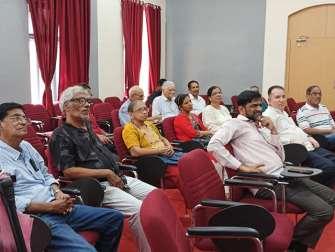
Mangaluru, May3: “Thesurvivalof any language’s literature depends on its readers,” remarked Dr Fr
PraveenMartis,vice-chancellorofSt Aloysius University, as he inaugurated the new video series
Vinchnar Motiyam (Selected Pearls) attheUniversity’s KonkaniInstitute. The initiative aims to revive the declining reading habit in Konkani
by introducing a new medium. Through this series, readers will share their reflections on their favorite literary works. Episodes will be broadcast on the University’s officialYouTube channelonthefirst and third Saturday of every month,
serving as a valuable resource for students and teachers engaged in Konkani literarystudies.
For over 46 years, the Konkani Institute has been dedicated to the promotion ofKonkanilanguageand literature. In the past year, it has successfully hosted Bolkanv (Balcony), auniqueprogramme that engaged audiences in literary
discussions. The new Vinchnar Motiyam series builds on this legacy, offering readers a platform toconnectwith classicworks. Dr Martis also highlighted that the Institute has been publishing the research journal Amar Konkani for the past 44 years. Under the leadership of DrFr Vijay D’Souza, a new Konkani language research project issettobegin shortly.
Introducing the program’s framework, Dr Alwyn D’Souza, advisor to the Konkani Institute, explained the design and vision behind Vinchnar Motiyam. He expressedconfidencethattheseries would nurture a culture of reading. He further revealed that another upcomingserieswillsimplifyliterary criticismtheories forreaders.
The inaugural event was hosted by noted writer and journalist H M Pernal, who welcomed the gathering and anchored the programme. Pinto Vamanjoor proposed the vote of thanks, with assistancefromVanitha.
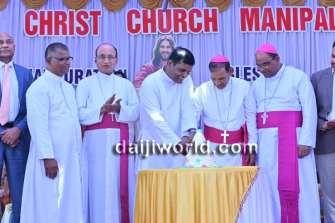
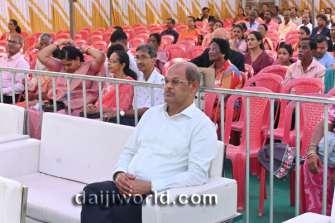
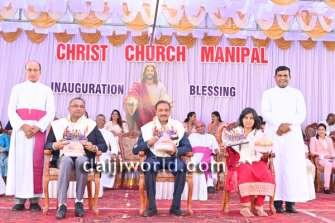
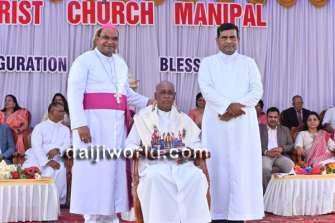
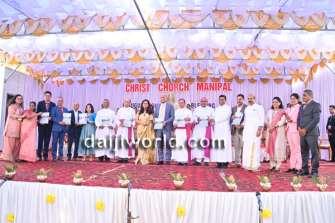
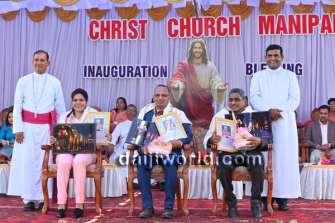
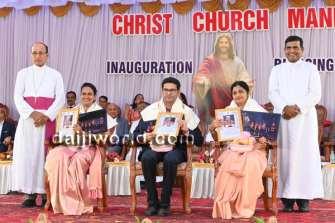
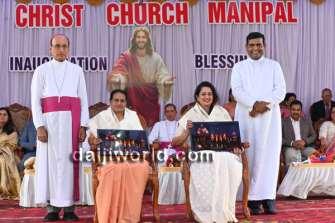
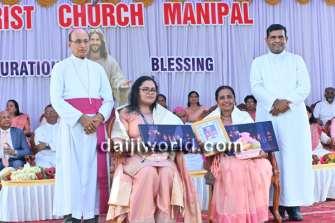
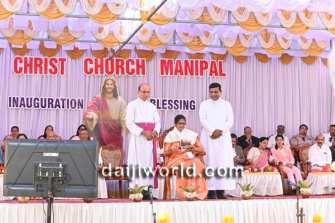
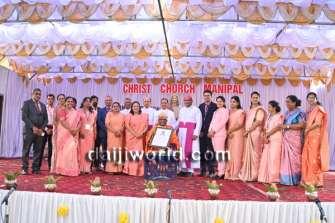
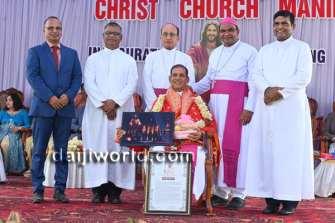
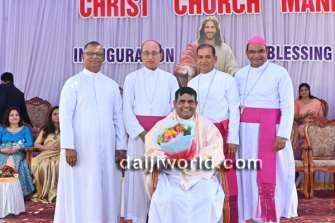
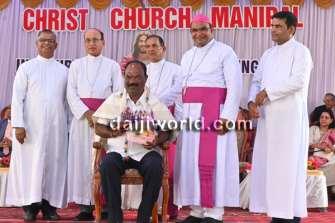
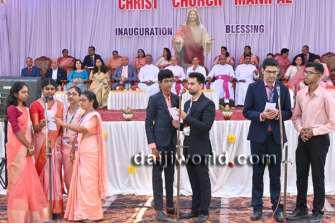
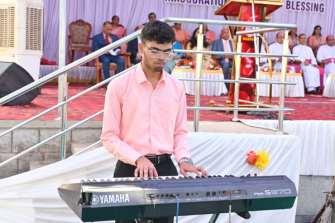
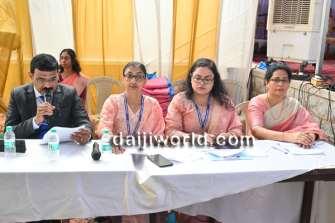
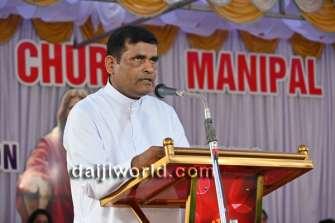
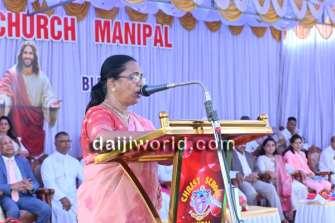
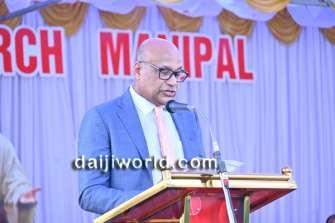
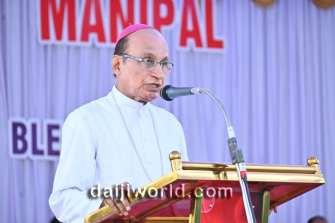
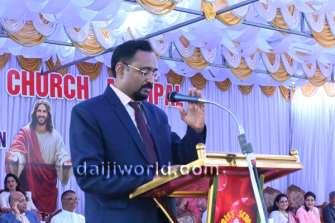
Udupi: Newly renovated Christ Church
Manipal inaugurated with grand celebrations
Daijiworld Media Network –
Udupi(NP)
Pics:NithinPereira
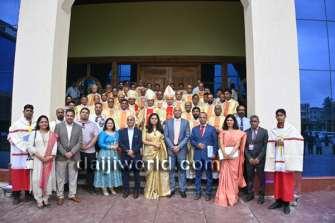
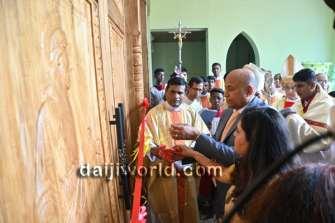
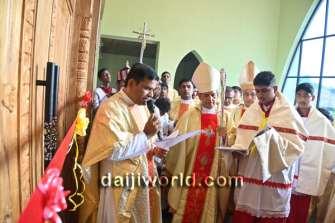
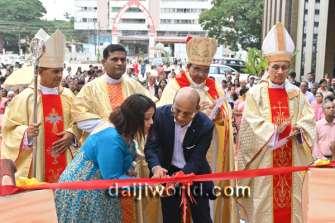
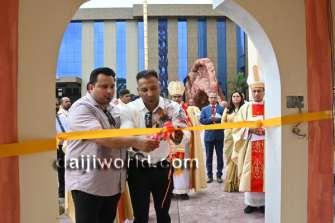
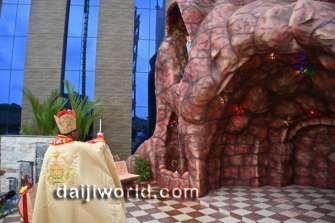
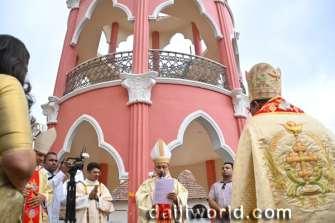
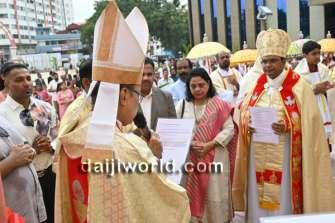
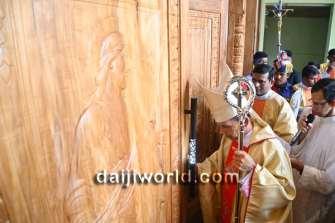
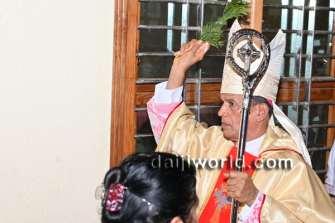
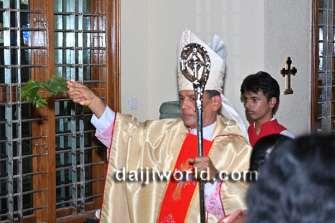
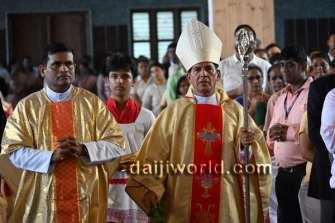
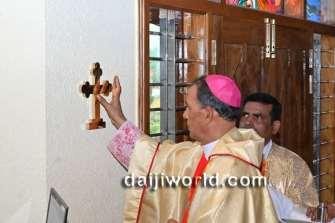
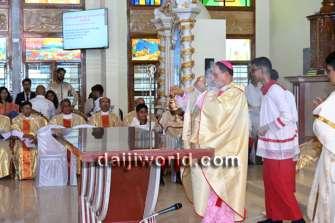
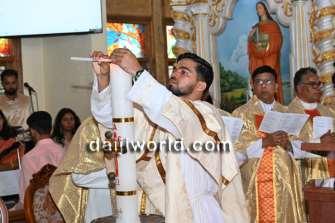
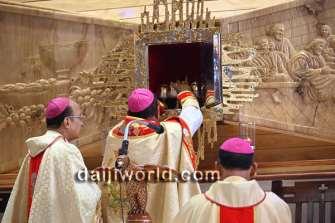
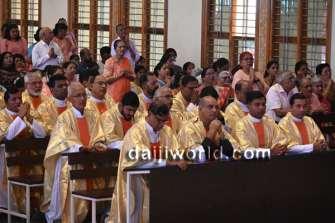
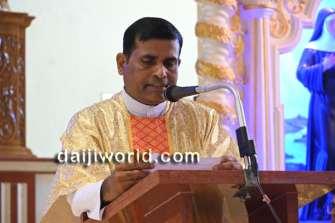
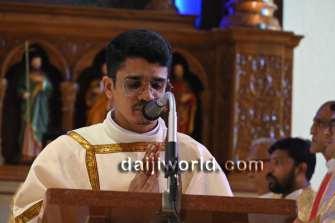
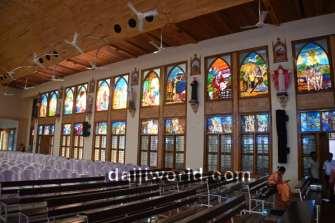
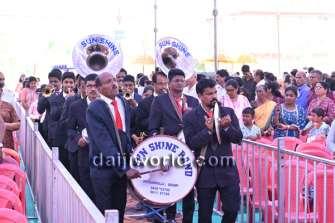
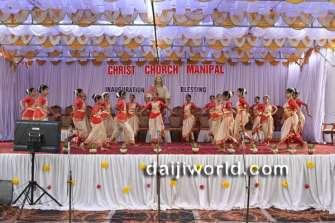
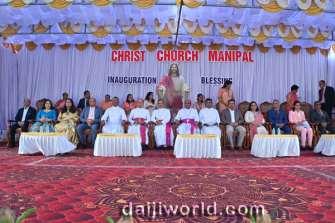
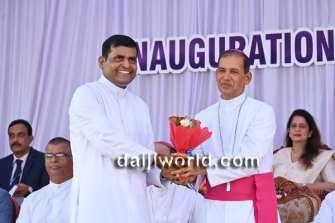
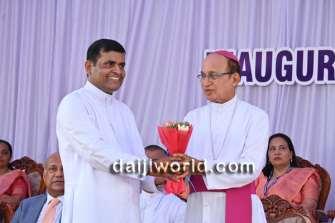
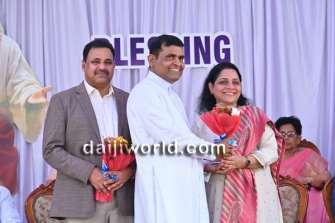
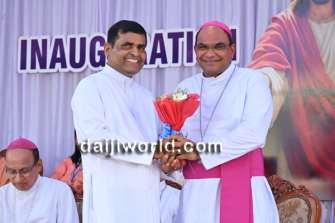
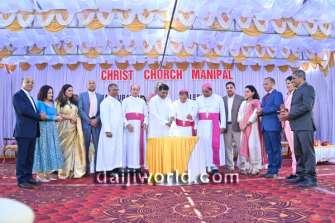
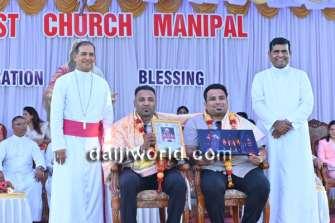
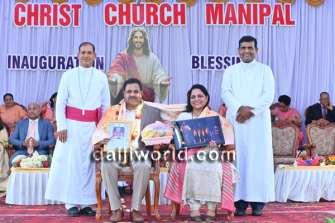
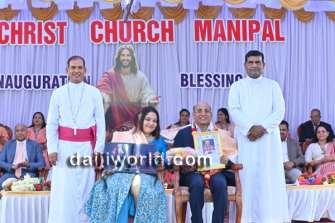
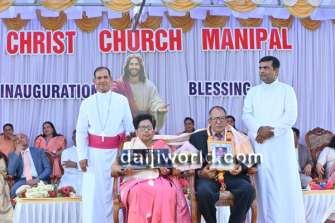
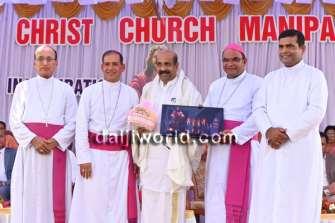
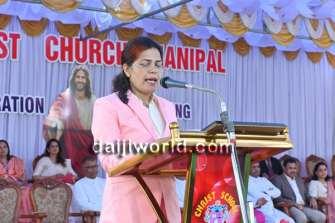
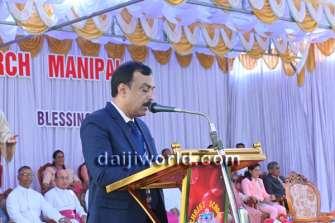
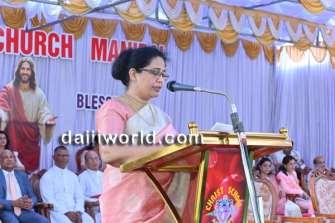
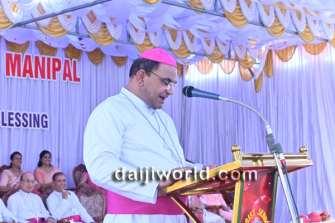
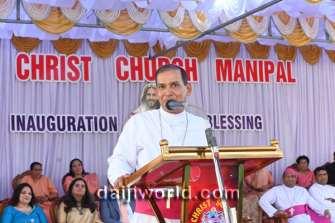
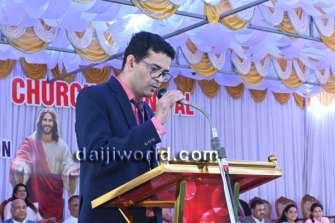
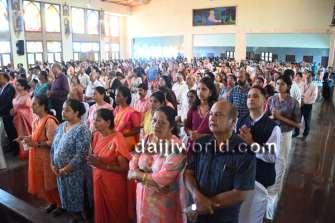
Udupi, May 1: The inauguration andblessingofthenewlyrenovated
ChristChurchManipalwasheldwith greatgrandeur on Friday, May1.
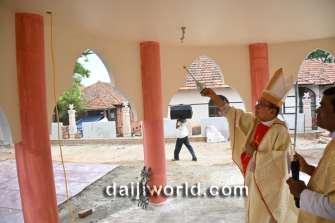
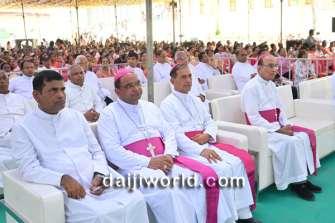
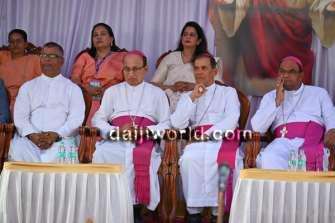
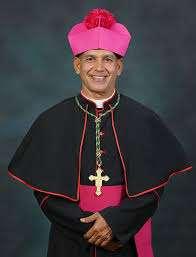
DrLeslie CliffordD'Souza,Bishopof Udupi Diocese, blessed the renovated church building. Dr Gerald IsaacLobo, Bishop Emeritus,
blessed the belfry tower, while Dr James Patteril, Bishop of Belthangady, blessed the Our Lady ofLourdes grotto.
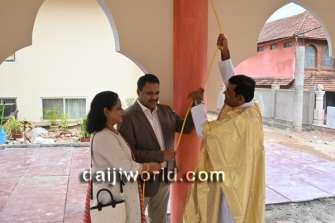
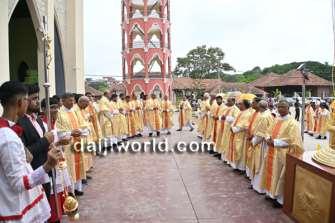
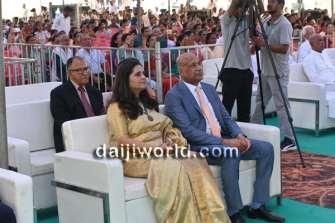
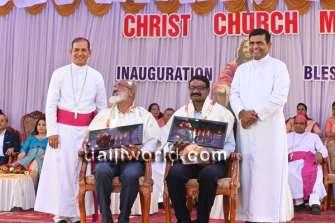
The grotto was inaugurated by Walter and Telma Almeida, while Glen Dias and Jason Dias inaugurated the belfry tower. The newly renovated church was inaugurated by Martin Aranha and Philomena Aranha. Parish priest Fr Romeo Lewis, parish pastoral council vice-president Alwyn Saldanha, secretary Dr Sabitha Mendonca, coordinator Lawrence D'Almeida,andotherswerepresent. Fr Wilson D'Souza compered the ceremonial rituals. Inhishomily,BishopofBelthangady Dr James Patteril stated, "On this faithful day, we are witnessing the handing over of the renovated church to the people. This is the responsibility God has given us to follow Him. A physical church is made of wood and bricks, crafted with artistic beauty, but the real Church is built on faith and a true recognition of who God is. Without His foundation, even the most beautiful structure remains empty. Letthisrenovatedchurchrenewour faith and inspire us to be the living Church strong infaithlike StPeter and united in love like the early Christians."
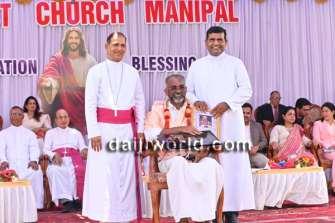
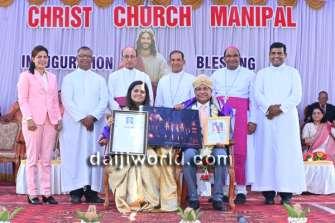
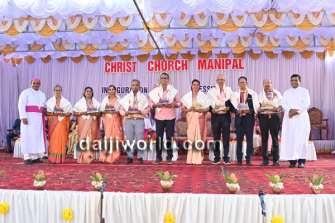
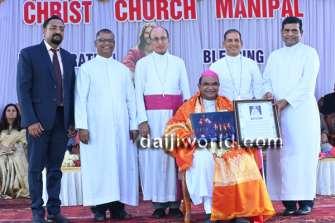
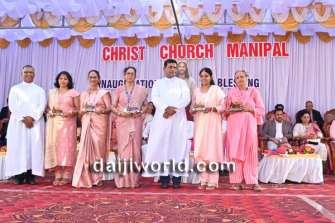
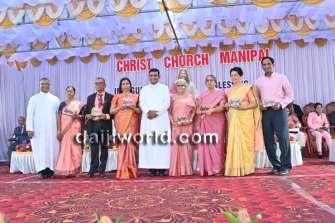
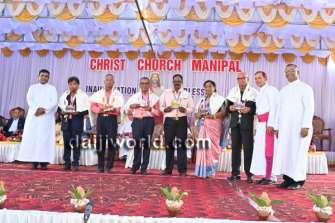
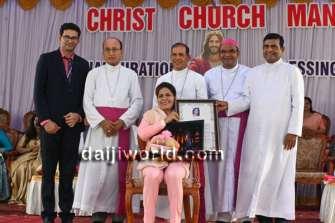
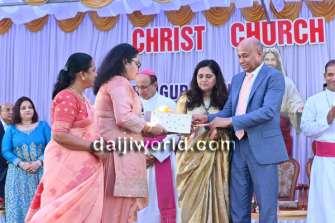
Following the Eucharistic celebrations, a felicitation programme was held at the school grounds. Prime donors, including Martin andPhilomena Aranha,Glen Dias, Jason Dias, Manohar Shetty, Walter and Telma Almeida, Francis and Cynthia D'Souza, Benedicta Menezes, Edwin and Maria Gomes, and Benny and Lavina Quadros, were felicitatedbytheBishop.
Bishop of Udupi Dr Leslie Clifford D'Souza remarked, "I congratulate and appreciate the entire Manipal parish. Fr Romeo, with the support of generous donors, has achieved what once seemed impossible renovating the church into such a beautiful place of worship. Today, we are gathered here to celebrate the house of God, where we spirituallylive,love,andreceivelight fromHim.Ithankallthedonors and parishioners whose support helped bring thischurchtocompletion."
Major donor Martin Aranha added, "Manipal has developed not only into an educational center but also into a place of architectural and religious significance.We allneeda
churchtoexpress ouremotions and find peace of mind. Under the leadership of Fr Romeo Lewis, this work has been successfully completed. I thank everyone from the parish council to the architects whohelpedmakethistaskareality."
Fr Romeo Lewis was felicitated by theUdupiDioceseforhisleadership in overseeing the renovation. Architects, parish council members, and other prominent contributors were alsohonored.
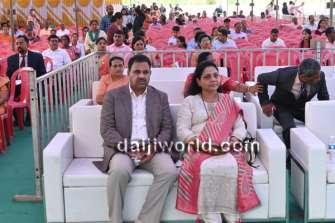
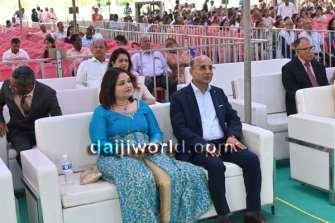
The event saw the presence of Fr Charles Menezes,vicarvarofUdupi deanery; Raghupati K Bhat, former MLA; Suresh Shetty Gurme, MLA of Kaup; Jecinta Rego, superior of Cluny Convent; Dr Vijay Fernandes, convener; Simple Cutinha and RaynaD'Souza, co-conveners; Mary Shrestha, former vice-president of theparish pastoralcouncil;DrLeslie Lewis and Vinet D'Souza, parish finance council members; and Eliza Vaz, principal of Christ School Manipal.
Dr Augustine Barboza, Dr Lydia Andrade, and Nikitha Menezes compered the programme.
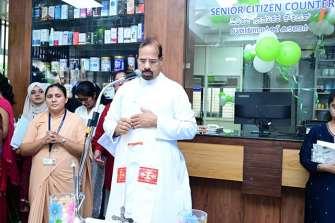
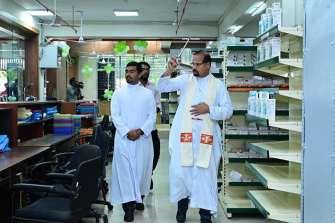
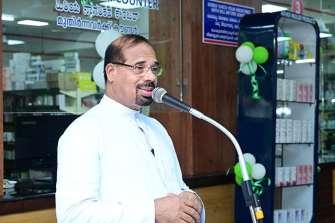
Healing made seamless: Revamped medical store at Father Muller opens to public
MediaRelease
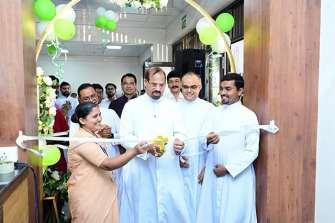
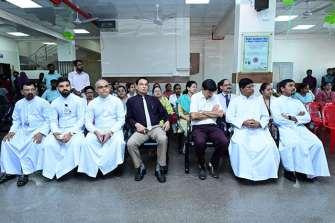
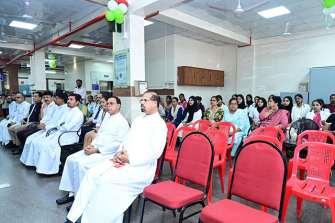
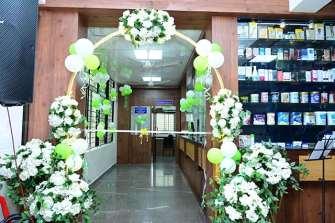
Mangaluru, May 1: In a progressive stride towards enhancing patient experience and service efficiency, Father Muller Medical College Hospital unveiled its revamped medicalstore (No. 70) atthe Utility Building, ushering in a new era of swift, accurate, and patient-friendly pharmaceutical care. The facility was formally blessed and Inaugurated by Fr
In his address, Fr Faustine Lucas Lobo emphasized the collective responsibility of every healthcare facilitator administrators, doctors, and pharmacists in ensuring that each patient encounter reflects compassion and efficiency. He noted that the medical store represents the finaltouchpoint in a patient’shospitaljourney,andwhen
Faustine LucasLobo, director, FMCI.
managed with careandprecision, it leaves a lasting impression of the institution’sethos,‘Heal&Comfort’. Thenewlyredesigned medicalstore introduces aSingleWindow – Single Dispensing System, a transformative approach that significantly reduces turnaround timeandenhancesserviceclarity.By integrating the Kranium Hospital ManagementSystem,thepharmacy has effectively transitioned into a paperless dispensing model, ensuring accuracy, transparency, andenvironmental responsibility. Key highlights of the revamped facility:
• Reduced turnaround time: Streamlined workflows to ensure faster dispensing of medications.
• Single window dispensing: Consolidation of Medical Store 1 and 2 into a unified system, eliminating patient confusion and delays.
• Enhanced accessibility: Thoughtfully designed pathways cater to all patients, including the speciallyabled,ensuringdignityand ease of access.
• Weather-protected connectivity: Direct internal access
from the OPD block allows uninterrupted movement regardless of external conditions.
• QR code-enabled medicines: Introduction of QR-based verification to minimize dispensing errors and enhance patient safety.
• Affordable & competitive pricing: Commitment to making quality medicines accessible at patient-friendly costs.
• Health card registration: Dedicatedsupport forFatherMuller Health Card enrolment, simplifying futurevisits.
The reorganization also addresses previous spatial and operational challenges, ensuringacohesive and efficient dispensing process. The unified counter system eliminates earlier inconveniences caused by fragmented services, thereby significantlyimproving patientflow.
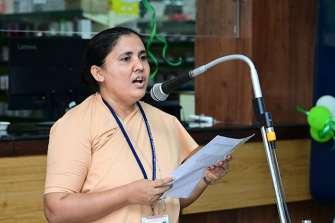
Sr Mary Zeenath Suares, Iin-charge of the medical store, expressed her gratitude to the management for their unwavering support and guidance. She reaffirmed her commitment to implementing the
director’s vision of a patient-centric pharmacy that prioritizes efficiency andcare.
She also extended heartfelt thanks to Fr George Jeevan Sequeira, administrator, FMMCH, Fr Rohan Dias,assistant administrator, andFr Nilesh Crasta, former assistant administrator, fortheirinstrumental role in the successful renovation andconsolidation ofthefacility. The blessing ceremony was attended by Dr Michael Sathumayor, Fr George Jeevan
Sequeira, members of the management committee, and the dedicated staffofthemedicalstore, all of whom witnessed this significant advancement in patient service delivery. With this revitalized facility, Father Muller Medical College Hospital reaffirms its commitment to combining innovation with compassion ensuring that every patient departs not only with the right medication, but also with a senseofcare,dignity, andcomfort.
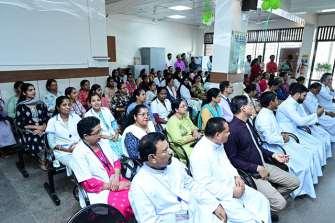
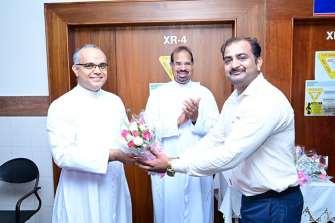
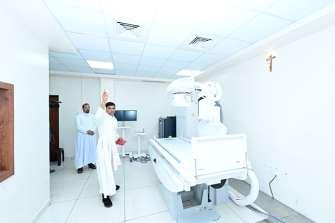
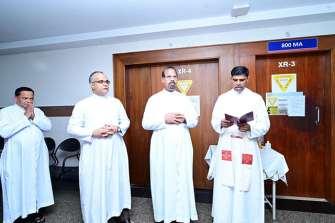
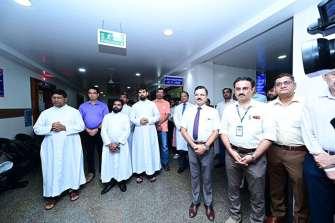
New vision of care: Blessing, commissioning of advanced radiography system at FMMCH
MediaRelease
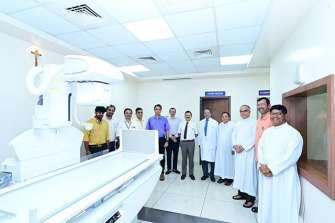
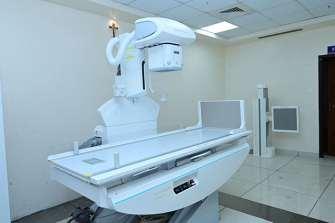
Mangaluru, May 1: Father Muller Medical College Hospital (FMMCH) marked asignificantmilestone inits commitment to patient-centered care with the blessing and commissioning of its latest
radiography equipment, the FLEXAVISION F4 Digital Fluoroscopy System, on May1. The occasion coincided meaningfully with the feast of St Joseph the Worker the patron saint of the diocese of Mangalore, the FMCI
chapel, and all who labour (International Labour Day) — invoking divine grace upon this advancementinhealingministry.
The festal Mass and the rite of blessing were led by Fr Vincent
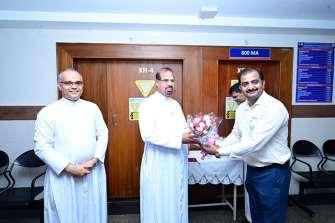
Vinod Saldanha, manager, Codialbail Press, Yeyyadi, Mangaluru. Fr Faustine Lucas Lobo, director, FMCI, concelebrated the Eucharistic celebration along with other priests of the Father Muller management. The clergy later joined in the solemn blessing and commissioning oftheequipment.
In his address, Fr Faustine Lucas Lobo dedicated this acquisition to theservice of patients,emphasizing that the integration of this advanced system would enhance diagnostic efficiencyandstreamline radiographic processes, thereby benefiting theever-growing patient influxattheinstitution.
The gathering was formally welcomed by Prof Dr Ram Shenoy Basti, head of the department of radio-diagnosis & imaging. The eventwasgracedbythepresenceof Prof Dr H B Suresh, head of interventional radiology, Prof Dr Krishna Kiran, faculty members, staff,andpostgraduate students. Fr George Jeevan Sequeira, administrator, FMMCH, and Fr Nilesh Crasta, administrator, FMHMCH, were also present, extending their blessings andgood wishes. Representative from Shimadzu Sudhir Kumar Dubey, assistant manager sales was also present during the blessings.
Elaborating on the technological excellence of the system, Prof Dr Bastihighlighted thattheShimadzu FLEXAVISIONF4series isastate-ofthe-art,compact,remote-controlled digitalradiography andfluoroscopy (R/F) system marking its distinction as the first of its kind in the region. Designed for comprehensive clinical versatility, it supports gastrointestinal, orthopaedic, urological, paediatric, and emergency imaging.
Key features ofthe FLEXAVISION F4System:
• Dualfunctionality:Equippedwith a detachable 17"×17" wireless Flat PanelDetector(FPD), enablingboth fluoroscopic and general radiographic imaging within a single unit.
• High-resolution imaging: Advanced digital imaging with a 1megapixel CCD camera and 12-bit (4096 gradation) processing for superior contrast and real-time clarity.
• Low-dose technology: Incorporates pulsed fluoroscopy to significantly reduce radiation exposure while maintaining diagnostic precision.
• Compact & flexible design: Facilitates swift patient positioning andaccommodates awide range of examinations with ease.
• Versatile clinical applications: Ideal for gastrointestinal studies, orthopedic evaluations, urological imaging, and emergency diagnostics, especially beneficialfor patients with limited mobility. Department of radio-diagnosis & imaging FMMCH, in its vision is to become a state of the art imaging
centre providing affordable diagnostic andtherapeutic facilities, while being a coveted center for innovative learning and ethical research, responsive to society needs.
This addition reinforces Father Muller Medical College Hospital’s unwavering dedication to integrating cutting-edge technology with compassionate care, continuing its legacy of excellencein healthcareservice.
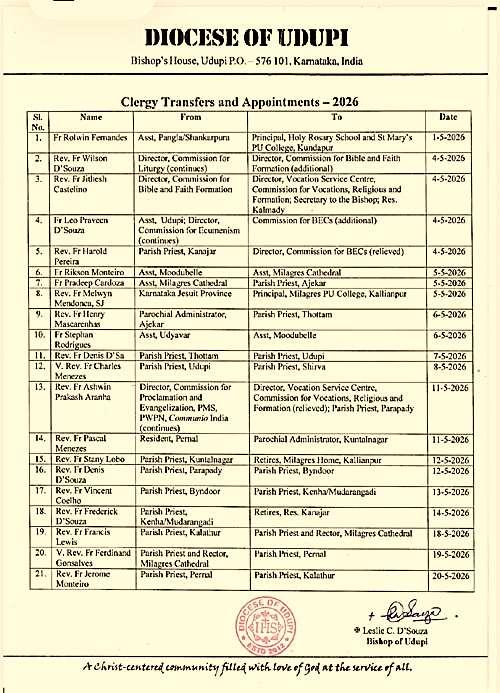
Bishop Dr Leslie Clifford D'Souza announces Udupi diocese priest transfers for 2026
Daijiworld Media Network –Udupi
Udupi, Apr 27: Dr Leslie Clifford D'Souza, bishop of the Diocese of Udupi, has announced the official transfers and appointments of priests fortheyear2026.
Inthemajortransfersannounced,Fr
Denis D'Sa, currently the parish priest of Thottam, has been transferred as the parish priest of Mother of Sorrows Church, Udupi.
Fr Charles Menezes, the parish priest of Udupi, has been
transferred as the parish priest of Shirva.
Fr Pascal Menezes will take charge as the parochial administrator of Kuntalnagar, while Fr Stany B Lobo
will retire and reside at Milagres Home, Kallianpur.
FrFerdinand Gonsalves, whoserved as the parish priest and rector of Milagres Cathedral, has been transferred as the parish priest of Pernal. Fr Francis Lewis, the parish priest of Kalathur, will succeed him
at Milagres Cathedral as the new rector.
Fr Rolwin Fernandes, the assistant parish priest of Pangla, will take charge as the principal of Holy Rosary School and St Mary's PU College, Kundapur.
This is a beautiful option for the replacement of regular tea/coffee we are drinking. Tea/Coffee are acidic and our body is alkaline. Our body will notbe happy if we inhale
acidic foods. It is recommended to give-up tea/coffee and have such drinks which helps to lead a medicine free life.
FortheMasala
Ingredients
❖ 4green cardamoms
❖ 11/2” stickcinnamon
❖ 6-8blackpeppercorns (kali mirchi)
❖ 4-5cloves
❖ ½staranise
Method
Grind allingredients together toa coarse powder. RoshanDsouza,Kinnigoli
There areplenty ofsuchrecipes available. Website iswww.sharan.com.
This isasmall effort to aware about thevegan recipes andto live alife withoutmedicines.
Magnetic Wristbands: Miracle Cure or Marketing Myth?
-Mervin Vas
After a long time, one of my close friends, Francis, came to visit. After exchanging pleasantries, my gaze fellon astrange butstylish bracelet on his wrist. Curious, I asked, “What’sthat?”Heproudly explained itwasa magneticbracelet thathad nearly eliminated his shoulder pain. He even insisted I get one— scolding me for not having one already! while adding its better for me if i use a magnetic-mattress! evenhis wifeusesone hetold. Afterhe left,Ididmyown research. MuchofwhatIfoundconfirmedmy suspicions.
WhatAreMagnets?
Magnets produce magnetic fields, measuredintesla(T)—like weightin kg or distance in km. Everyday
permanent magnets (e.g., neodymium orferrite) are common in phones, smartwatches, toys, and fridge doors we barely notice them. Their field strength is usually low, around 0.1 T or less.curiously, while the Earthitselfactsasagiant magnet, its field is thousands to millionsoftimes weaker thanMRI scanners (1.5–3 tesla)or even some strong consumer magnets.But its direct effect on human physiology orhealthis negligible tozero. Magnets respond in three ways: ferromagnetic (strongly attracted, like iron), paramagnetic (weakly attracted, like aluminum), and diamagnetic (weakly repelled, like water and most biological tissues, including blood).
What Are Magnetic Bracelets, Belts, andMattresses?
These consumer products embed smallpermanent magnets (typically 0.01–0.2 T atthe surface) in fabric, jewelry, or padding. Bracelets/belts are worn near painful areas (wrist, knee, back); mattresses have magnet arrays under the sleeping surface. They use static (nonpulsing) fields of low to moderate strength—far weaker than MRI scanners(1.5–3T).
Types ofMagnetic Therapy
● Static Magnetic Field (SMF) therapy: Fixed fields from permanent magnets (bracelets, belts, mattresses, insoles).
Strengths: usually 0.01–0.5T.
● Pulsed Electromagnetic Field (PEMF)therapy: Usespulsingfields
to induce weak electric currents (differentfromstatic products). The products in question fallunder static magnetic fieldtherapy. WhatMarketers Claim Sellers promote theseforpainrelief (arthritis, back pain, headaches), better circulation, reduced inflammation, clot prevention/dissolution, bioenergy balancing, diabetes control, and recovery from paralysis or wounds. They cite effects on ions for blood flow. Ads feature testimonials, patient photos, YouTube videos, "hi-tech" factories, and whitecoated figures with smiling "patients"—none of which we've seeninrealclinicalsettings! Our Body & Iron: How Magnets TrulyInteract withUs
No human tissues are strongly attractedtoorrepelled byeveryday magnets. Infact,thehumanbody is primarily diamagnetic (weakly repelled). This includes our waterrich tissues, muscles, organs, and even our blood.A common myth is that magnets "pull" on the iron in our blood. However, the iron in hemoglobin is not in a form that responds tomagnetism like apiece of metal would. It does not get
pulled, aligned, or moved by these weak fields even inside powerful MRI machines (1.5–3 T). Decades of MRI safety data confirm that blood flow, viscosity, and cell orientation remain completely unchanged during scans. To affect blood flow noticeably, you would needamassive magnetic fieldof 4–10 T or more.By comparison, a typical magnetic bracelet has a surfacestrength ofonly 0.1Tto0.2
T.Becausemagnetic strength drops off sharply with distance, that field decreases to almost zerojust a few millimeters away. It doesn't even penetratetheskindeeplyenoughto reach significant blood flow, let alone "heal"it.
● recommended forpainrelief.
● Richmond et al. (2009)
Randomized crossover trial on magnetic and copper bracelets in osteoarthritis (hip/knee) patients over 16 weeks. Results: No meaningful improvement in pain, stiffness, or function beyond placebo.
Many other high-quality trials echo this: static magnetic products have no real effect on blood, pain, inflammation, ororgans.
What Isthe Placebo Effect? – The RealReason SomeFeelBetter
Note: Ingesting metallic iron or copperisdangerousandprovides zerohealthbenefits. Donottryit! WhatScientificEvidence Shows Major studies consistently find no benefitbeyond placebo:
● Pittler et al. (2007) Systematic reviewandmeta-analysisof29trials (including 9 placebo-controlled ones using visual analogue scales).
Conclusion: No significant pain reduction; staticmagnets cannotbe
The placebo effect is a genuine improvement in symptoms caused by an inactive treatment (like a sugar pill or a magnetic bracelet). This happens because of belief, expectation, and context not just "imagination."Psychology plays a massive role here. A doctor in a white coatwith astethoscope often inspires more confidence than one in casual clothes, even if their medicaladviceisidentical. Thetime spent being examined, the color of a pill, or even a reassuring tone of voice can all amplify this effect.Expectation physically activates the brain, triggering the release of endorphins (natural pain
relief)and dopamine (pleasure and motivation). While this can significantly reduce perceived pain or provide a temporary boost in energy, the underlying medical issues such as joint damage, high blood sugar, or infections remain unchanged. A placebo can dull the pain, but it won't shrink a tumor or dissolve a blood clot.Interestingly, thisisn'tlimitedtohumans;animals have been shown to exhibit placebo-like responses too, often conditioned by the care and attention oftheirowners!
Risks,Costs, &FinalThoughts
Risks of Relying on These Products
● Staticmagnets areharmlessdirectly (too weak), but delaying real treatment worsens conditions like arthritis (joint damage progresses), diabetes (complications like kidney/eye issues), or neurological problems.
● Placebo "relief" creates a false senseofsecurity, leadingpeopleto skip doctors, meds, physio, or checks.
Costs
● Bracelets:₹300–₹7,000 (oftenhyped
as"premium" at₹5,000+).
● Mattresses/pads: ₹10,000–₹50,000+.
This money could fund actual care: consultations, medicines, or therapy.
Awordofcaution
Don’t buy blindly. Research first. Beforeyoureachforyourwallet,ask yourself a few questions: Do I actuallyneedthis?Whatare the seller’squalifications?Whyarethey so much more eager about my healththanmyowndoctoris?
We’ve all seen them: the salesmen peddling "specialtonics"andherbal lotions with legendaryorigins inthe HimalayasortheAmazon.Thepitch is always the same: drink this for a few weeks, and your health will be dramatically transformed. The same applies to magnetic bracelets and mattresses. At the end of the day, these sellers are after your money, notyourhealth.
Conclusions
Scientific evidence from rigorous trials across the UK, Australia, and the US shows that static magnetic bracelets, belts, and mattresses have no effecton blood flow, pain, inflammation, orchronic conditions
like diabetes and paralysis. Any "relief" experienced is real but brain-driven powered by belief and expectation rather than tiny magnets (0.01–0.2 T).Consider the logic: even massive MRI machines (1.5–3 T), which are thousands of times stronger and cost crores, are used only for imaging; they do not heal or alter tissues. If the magnets in our phones and smartwatches don'taffectourhealth,howcoulda cheapbracelet fixaserious medical condition?As the Bible wisely instructs: "Test everything; hold fast what is good" (1 Thess. 5:21) and "Seek wisdom" (James 1:5). We should honor our bodies as temples (1 Cor. 6:19–20) by choosing proven care—doctors, medicine, proper diet, exercise, prayer, and community support— over unproven gadgets.Many who buy these products fall victim to post-purchase rationalization. To avoid the discomfort of "cognitive dissonance" the feelingthatwe’ve wasted our money we
retroactively justifythedecision.We convince ourselves, and tell others, thatitwasa"smartinvestment,"but deepdownweknowit’sjustawaste ofmoney!
Since you know the truth now: the power is in your mind, not the magnet.Don’tfallforthehype.Stay healthy, think critically, and avoid unnecessary products. And here’sa last word: to have any meaningful effect on body tissue, blood flow, bones, or muscles etc., you MUST have magnets much more powerful than3tesla forget0.2Tbracelets or mattresses!To get that much magnetic strength from natural magnets, you MUST carry a big mountain completely made of magnets!!!In fact, it is physically impossible to make a 3 Tesla permanent magnet using only natural magnetic material (like magnetite/lodestone), no matter howbigyou make it. Wishingyou andyourloved ones averyHappyMothers’Day!
“International No Diet Day"
Article dedicated for International NoDietDayon06/05/2026.
History of International no Diet Day
International No Diet Day was first started by Mary Evans Young in 1992. Thepurpose ofthedaywasto help men and women around the world to appreciate their own bodies.
Importance oftheDay
❖ Educatingpeople abouttheright way to diet responsibly and effectively
❖ Celebrating the diversity of differentshapes andsizes
Self-Love
Celebrating International No Diet Dayisbestdonebyrecognizingthat your own body is beautiful exactly asitis.De-emphasizing yourefforts to shed weight to look a particular way, it is farbetter to celebrate the holiday with efforts atbeginning to live a healthier lifestyle altogether. Worry less about your final goal, and more about getting out and beingactiveandkeepingyourbody healthy.
Losing weight rapidly or shooting for unrealistic body types is an excellent way of causing yourself harm in the pursuit of greater health. Instead, love your body by finding active hobbies and love yourself the wayyou look.
Fewtipsforgettinginvolvedwith International NoDietDay
❖ Trytoincreasemore plant-based foods and reduce animal-based foods. Adopting a whole food,
plant-based lifestyle naturally regulates weight.
❖ Be adventurous and cook something thatyou have always wanted to, but you have never cooked before.
❖ Includesprouts inyourdiet-They contain Omega-3. Help in boosting the immune system and cleanse the body. They are richinfibre andprotein.
❖ Include raw foods (Salads) on yourmeal.
EatingJunkfoodissocommon that when someone starts eating Healthy, its instantly labeled as
dieting.Arightdietwillhelptokeep a healthy life. On this International Nodietday,letusadoptarightdiet andlive ahealthylife.
-RoshanDsouza, Kinnigoli
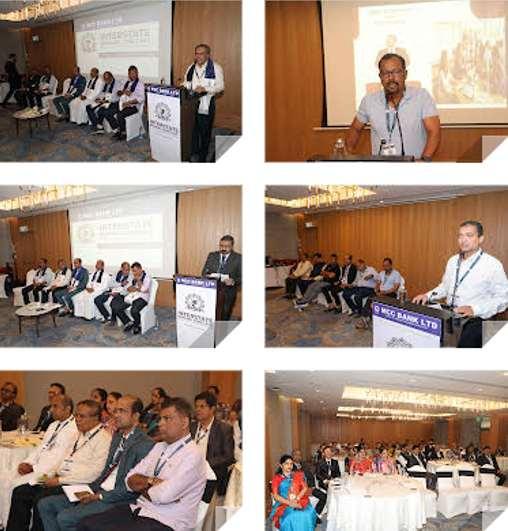
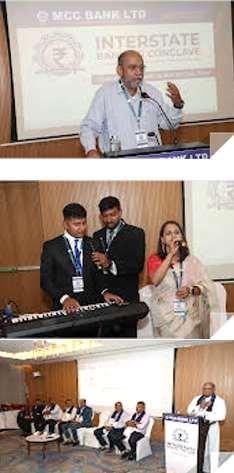
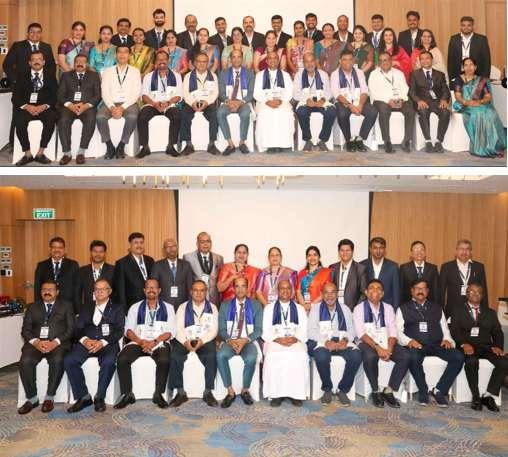
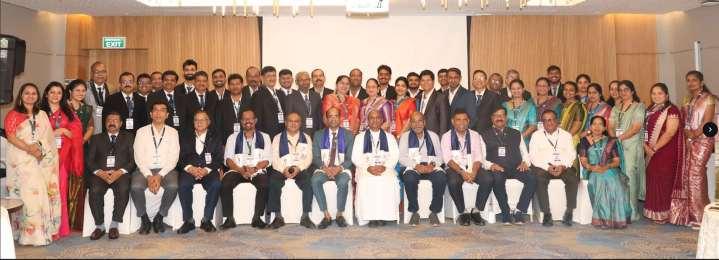
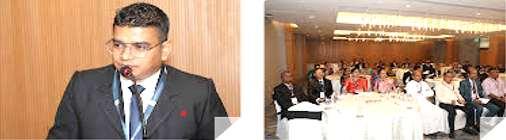
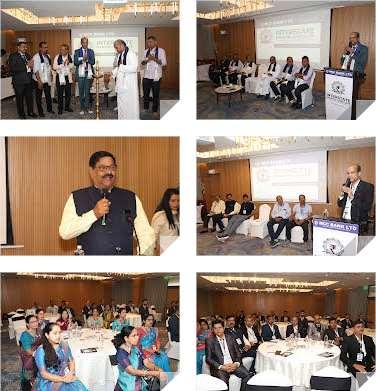
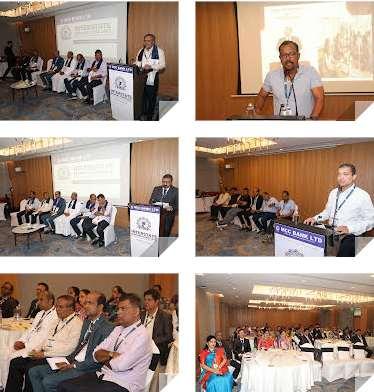
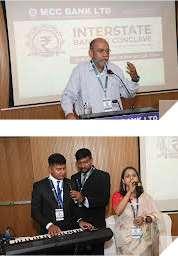
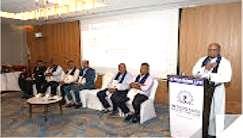
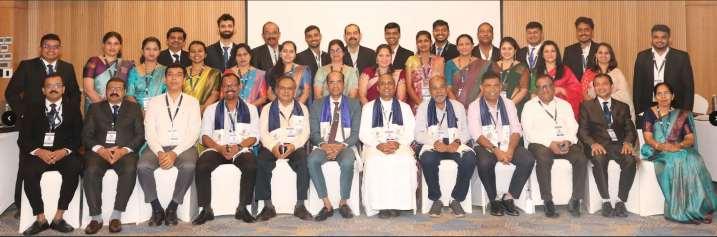
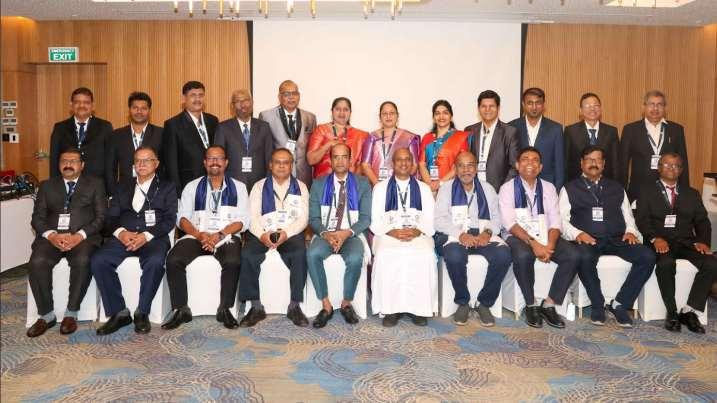
MCC Bank Ltd Hosts Interstate Banking Conclave
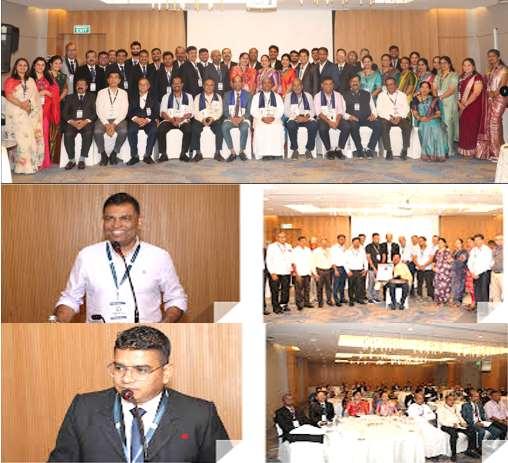
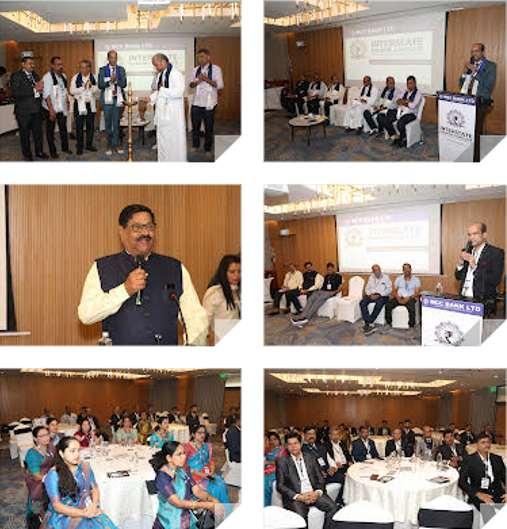
MCC Bank Ltd held an Interstate Banking Conclave at Courtyard by Marriott, Goa, on 25 and 26 April 2026 for the top Management, Branch Managers, Credit Officer, upcoming Managers along with Board of Directors. The event gathered prominent banking professionals, leaders, and community representatives to
discuss the changing banking landscape and promote interstate cooperation.
The conclave was chaired by Sahakara Ratna Mr Anil Lobo, Chairman of MCC Bank Ltd.
Attendees included Rev. Fr Vijay Machado,ExecutiveSecretaryofthe Commission for Catechetics, Benaulim, Goa; Mr Gopal Krishna Y. Nayak, Managing Director of Goa Urban Cooperative Bank Ltd.; CA LionelAranha,Chartered
Accountant, Arbitrator, and Visiting Professor at IIM Kozhikode; Mr Walter Nandalike, Managing Director of Daijiworld Media Pvt. Ltd.; Dr Vincent Alva, Principal of MilagresCollege,Kallianpur;andMr
Sunil Menezes, General Managerof MCCBankLtd.
Inhispresidential address,Sahakara Ratna Mr Anil Lobo warmly welcomed all dignitaries, speakers, and participants. He appreciated
their presence at the conclave and highlighted the steady growth of MCC Bank over the years, attributing its success to strong leadership, dedicated staff, and the unwavering trustofitscustomers.
Discussing the Bank’s future vision, he stressed the importance of a progressive, forward-looking
mindset amid rapid changes in the banking sector. He noted that traditional banking is evolving and that institutions must be ready to embrace innovation, digital transformation, and improved customer service standards. He emphasised the significance of strategic planning,timelyexecution, and adaptability for sustained growth andcompetitiveness.
Mr Anil Lobo also discussed the Bank’s ambitions for multistate expansion. He stated that such growth requires notonlyregulatory compliance and financial strength but also a unified and committed team effort. He urged employees and stakeholders to align themselves with the Bank’s longterm vision and work together towards higher standards of excellence.
Highlighting the importance of internal strength, he emphasised capacity building, staff training, accountability, andtransparency.He encouraged the team to stay proactive, embrace change positively, and uphold the core values of trust, integrity, and customer-centred service.
Motivating the gathering, he observed that every person connected with the Bank plays a vital role in shaping its future. He said, “We are the chosen ones entrusted with the responsibility of taking MCC Bank to greater heights.” He concluded by expressing confidence that, with dedication, unity, andaclearvision,
the Bank would continue to grow andreachnewmilestones.
Inhisinauguraladdress,Rev.FrVijay Machado praised MCC Bank for its consistent growth, sound management, and dedication to trustandservice.Hehighlighted the Bank’s role in strengthening the community andurged stakeholders tostep outside their comfort zones
with clarity of vision and mission. Emphasising the importance of values in a competitive world, he outlined ten guiding principles for success, including faith, teamwork, prudence, ongoing evaluation, and apositiveattitude.
Mr Gopal Krishna Y. Nayak discussed the challenges faced by cooperative banks amid increasing competition frompublic sector and new-generation banks. He commended MCC Bank’s resilience in adapting to technological advancements, digital transformation, and cybersecurity needs despite rising operational costs. He underlined the significance of capital adequacy, sound governance, and strategic decision-making at theBoard level, noting that customer trust remains the cornerstone of sustainable banking. Healso voiced confidence thatMCC Bank hasthe potential to become a strong interstate bank soon.
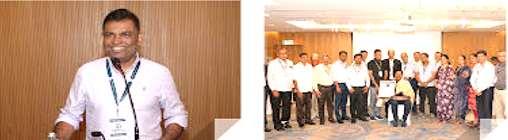
Mr Walter Nandalike, Managing Director of Daijiworld Media Pvt. Ltd., led a session on “Leadership without Title”, while CA Lionel Aranha conducted a session on “A VigilantManager”on25April2026.
During his session, Mr Nandalike appreciated the organisers for running the programme systematically. Sharing his leadership experiences, he explained that in any organisation, including banking, there are three types of employees: disengaged, actively disengaged, and engaged. Referring to asurvey, henoted that about 63% of employees are disengaged, 24% are actively disengaged, and13%areengaged.
He offered several practical tips to managers, emphasising that every staffmember should berecognised and appreciated for their work. He advised managers not to underestimate anyone and reminded them that the greatest limitations are often mental rather than physical. He encouraged the participants to think positively and nurture future leaders. He concluded with the concept of the three U’s: Update, Upgrade, and Uplift.
CA Lionel Aranha, in his session titled “A Vigilant Manager," discussed CTRandSTR compliance, TDS obligations, credit risk, gold loan management, maintaining personal relationships with
customers, marketing strategies, and the use of artificialintelligence in banking. He emphasised the importance of writing down every suggestion and idea for implementation inadiary.Henoted that this practice is useful when a manager is transferred to another branch, as it helps the incoming manager with easy reference and avoids unnecessary blame on the previous manager.
Dr Vincent Alva, Principal, Milagres College, Kallianpur, conducted a sessiontitled“SpeaktoYourself and NotforSelf”on26April2026. Inhis session, he spoke on communication andhighlighted the importance of self-reflection. He stated that experience is the best teacher and urged participants to dream and progress, not merely to sleep. He described non-verbal communication asone of the most effective forms of communication today andunderscored thevalueof diplomatic communication in banking. He also emphasised that silence can be a powerful form of communication and that open communication with colleagues is crucial, especially when managers facestress.
The conclave concluded with a valedictory programme held on 26 April 2026. The programme was presidedoverbySahakaraRatnaMr Anil Lobo. The dignitaries on the dais included CA Lionel Aranha, Mr Walter Nandalike, Dr Vincent Alva, and General Manager Mr Sunil Menezes.
MrAndrewDsouza,DirectorofMCC Bank who celebrated his platinum birthday, his75th, on4March2026, was honoured with a shawl, a felicitationletter,andfruits.MrDeril Lasrado, Senior Manager, read out the felicitation letter. Mr Andrew Dsouza expressed his gratitude for being honoured at the conclave held in Goa and thanked the Chairman, Board of Directors, and stafffortherecognition.
In his presidential address at the valedictory programme, Chairman Mr Anil Lobo stated that such conclaves are essential for branch managers. He described the event ashistoric, being thefirstofitskind intheBank’shistory.Heappreciated the performance of the branch managers and noted that their effortshadsignificantlycontributed totheBank’sgrowth. Headdedthat the conclave had enhanced their
knowledge andthanked God for its success.
He emphasised that branch managersshouldstrivetobuildfully engaged teams. As customers increasingly visit branches directly, managers should welcome them warmly, attend to their needs carefully, and train their colleagues to do the same. He stated that customers shouldalwaysbetreated with dignity. He further observed that managers are leaders in their respective branches and should work towards creating highly engaged employees.
He advised branch managers, especially those recently transferred, to familiarise themselves with customers at their new branches by obtaining customer lists and introducing themselves. Maintaining records through diaries and email correspondence, he said, would helpinformulatingeffectivepolicies for the Bank’s growth. He also suggested that queries should be directed to the concerned departments and, where necessary, totopmanagement. Headded that if branches achieve their targets in the coming year, the Bank might
consider organising similar conclavesinfuture.
The branch managers, along with their staff, collectively achieved the targets set for the financial year 2025–26 and delivered commendable performance. The Bank achieved 100% of its targets and crossed a business turnover of ₹1,525 crores. Based on the strong performance through December 2025, management had decided in Januarytoorganisetheconclave.
MrAnilLobo reiterated thatbranch managers play a vital role in achieving targets, as they oversee 21branches,whiletopmanagement andtheBoard ofDirectorsfocuson evaluation and guidance. He encouraged the branch managers to keep striving for excellence and wished them success in reaching futuretargets. Healsoconveyed his wishestoMrAndrewDsouza onhis platinum birthday and expressed appreciation for Mr Dsouza's valuablecontribution totheBankas aDirector.
Speakingontheoccasion,theguest speakers, Mr Walter Nandalike, CA Lionel Aranha, and DrVincent Alva, thankedthemanagementforgiving
them the opportunity to deliver sessions outside the state. They notedthattheprogramme waswell managed and well attended by participants.
On behalf of themanagers,Mr Sandeep Quadros, Senior Manager, Kundapur Branch; Mrs Shiny Lasrado,BranchManager,Kulshekar Branch; Mrs Wilma J. Sequeira, Branch Manager, Surathkal Branch; and Mr Alwyn Xavier Dsouza, IT Head, shared their feedback. They stated that all the sessions were informativeandusefulfortheirdaily work and for achieving branch targets. They thanked the management for organising such a meaningful conclave outside the stateandexpressedgratitudetothe guest speakers for their valuable sessions.
On behalf of the Directors, Mr Anil Patrao, Mr Sushanth Saldanha, Mr Melwin Vas, Mr Felix D’Cruz, and Mrs Irene Rebello shared their feedback. They stated that such conclaves are essential for branch managers to upgrade their skills, develop their mindset, andimprove communication while working at their branches. They also thanked the Chairman and the guest speakersfortheirvaluableinsights.
The Chairman distributed certificates to all participants. He also presented mementoes to the ChiefGuestandtheguestspeakers.
The General Manager presented a certificate of participation and a memento to the Chairman as a tokenofgratitude.
The inaugural and concluding programmes ended with votes of thanks delivered by General Manager Mr Sunil Menezes and Deputy General Manager Mr Raj Menezes, respectively. They expressed gratitude to all guests, speakers, and participants for their presence and contributions, which ensuredthesuccessoftheconclave.
Mr Ovin Rebello, Branch Manager, Brahmavara Branch, welcomed the guests and the gathering and compered both programmes. The programmes commenced with a prayer and the ceremonial lighting ofthelamp.
The Interstate Banking Conclave served as a significant platform for knowledge-sharing and dialogue, reaffirming MCC Bank’s commitment to innovation, governance, and community-